



Ted Schwerzler
-
Posts
5,149 -
Joined
-
Last visited
Content Type
Profiles
News
Minnesota Twins Videos
2026 Minnesota Twins Top Prospects Ranking
2022 Minnesota Twins Draft Picks
Minnesota Twins Free Agent & Trade Rumors, Notes, & Tidbits
Guides & Resources
2023 Minnesota Twins Draft Picks
The Minnesota Twins Players Project
2024 Minnesota Twins Draft Picks
2025 Minnesota Twins Draft Pick Tracker
2026 Minnesota Twins Draft Tracker: Picks & Bonuses
Forums
Blogs
Events
Store
Downloads
Gallery
Everything posted by Ted Schwerzler
-
This
-
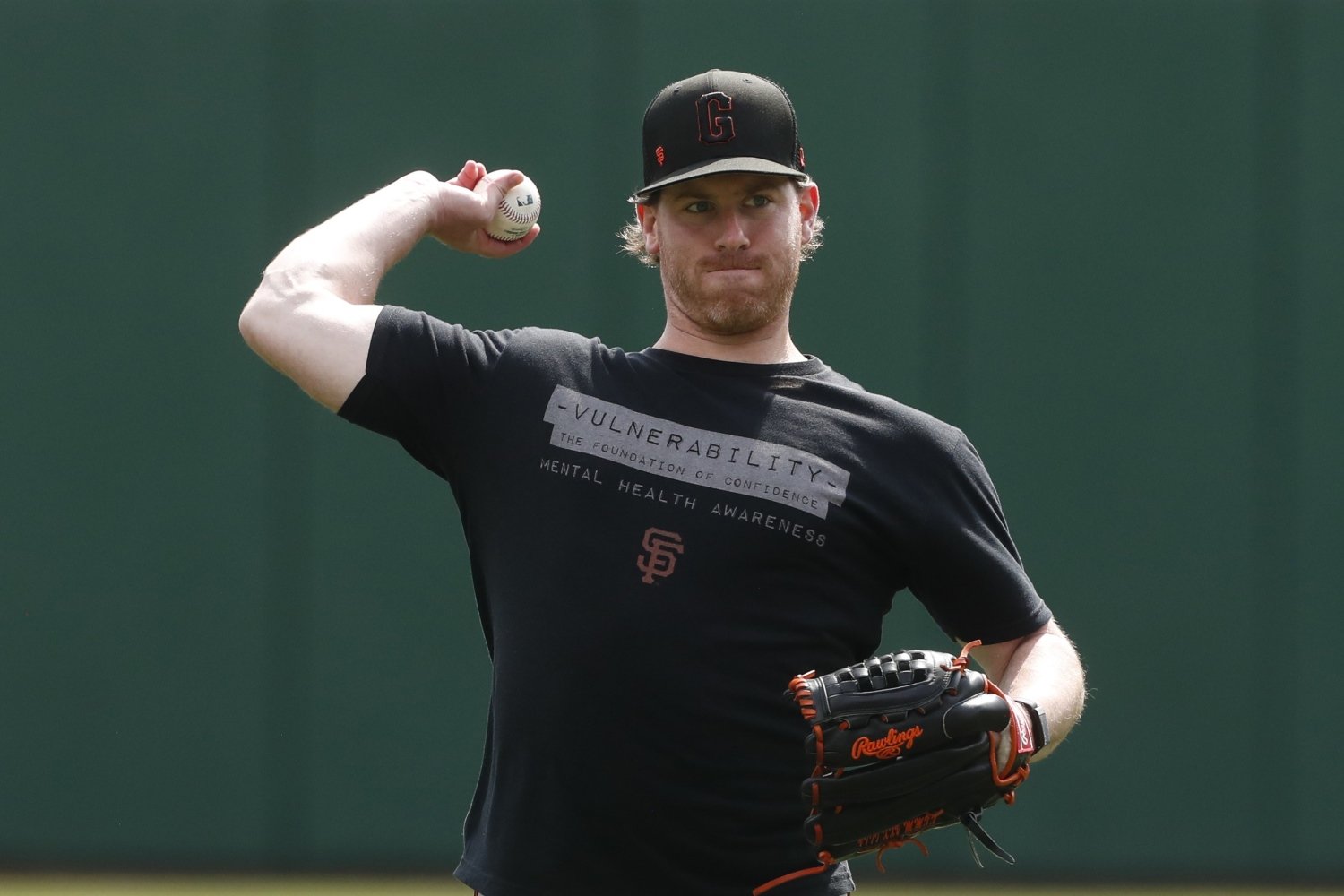 A year ago the Twins saw Rocco Baldelli use his starters more than virtually any other manager in Major League Baseball. The short starts comments became laughable, as Minnesota possessed high-level talent, and pitchers were implored to go deep in games. Now, with Sonny Gray and Kenta Maeda having departed for greener contracts, the group will need to re-establish itself behind Cy Young candidate Pablo López. López will be joined in the rotation by Joe Ryan, Bailey Ober, and Chris Paddack. Those are the holdovers from 2023, and with Paddack now fully healthy, he is expected to show why the Twins targeted him a couple of years ago in the Taylor Rogers trade. What happens in the fifth spot remains to be seen, and there are a couple of scenarios that could play out. The Frontrunner: Anthony DeSclafani The Twins made the Jorge Polanco deal with Seattle mostly to acquire Justin Topa and Gabriel González. Getting a solid reliever continues to prop up what could be baseball’s best bullpen, and González adds a fringe top-100 player to the farm system. Still, since they also needed a starter to round out the rotation, adding DeSclafani at a significantly reduced rate has value. Minnesota isn’t substantially invested in the former Giants starter; they're paying him just $4 million for 2024. That said, the hope would be that he can reprise the successful season he had in 2021. During his first season with the Giants, DeSclafani posted a 3.17 ERA with a 3.62 FIP, and tallied 152 strikeouts across 167 2/3 innings. The past two seasons combined have seen DeSclafani pitch just 118 2/3 innings, as he has battled injury issues. Effectiveness is half of the battle for the favorite to land Minnesota’s fifth spot, but availability is a must as well. If he makes it through spring training, then there’s almost no scenario in which he doesn’t break camp in the rotation. How long of a leash he has remains to be seen, but giving him the first shot seems to be little more than a formality. The Challengers: Louie Varland, Randy Dobnak, Brent Headrick, Simeon Woods Richardson Minnesota brought in 19 non-roster invitees for spring training, but just two of them are starting pitchers. On the 40-man roster, the trio of Varland, Headrick, and Woods Richardson are the candidates to consider. The Twins are probably waiting on someone to emerge, but they're not banking on any of them. Varland would be the most logical candidate to step in should there be an injury, and that’s why he doesn’t look to be a real bullpen candidate right now. The Twins want to keep him stretched out to start, and while his stuff does play up in the bullpen, the greater need right now is in the rotation. He hasn't put it all together as a starter; he's been especially vulnerable to the long ball. Still, there's a path for him to remain a starter, and if he can elevate to a third or fourth option, that would be a great outcome. Beyond Varland, it’s a trio of guys who have had varying degrees of success. Dobnak is still being paid on a major-league contract, and while the numbers weren’t great in 2023, he had periods of very strong performance. Another year removed from the finger injury could have him vaulting back into a position of relevance, and that would be a good depth option. Headrick didn’t start for Minnesota last year, but has done so on the farm. How he is used remains to be seen. Woods Richardson wasn’t great as a whole last year, but posted a 3.03 ERA with a .635 OPS against across his final 71 1/3 innings at Triple A. If he continues down that path, this may be the year he sees some real run at the big-league level. Waiting in the Wings: David Festa, Marco Raya, Cory Lewis If some of the veteran options have muted ceilings, the opposite could be said for the prospects ready to make an impact. Whether it is Festa or Raya that is perceived to be the better of the pair, both could push to be a frontline arm in the rotation. Festa is already at Triple-A St. Paul and should be among the first people leaned upon when the big league club needs help. He pitched in the Futures Game last year, and looks very close to a finished product. Raya has been handled with kid gloves for the majority of his pro career thus far, and while injuries have necessitated that, allowing him to fly this year could vault him substantially. It remains unlikely that he pitches in the majors, but starting at Double-A, he’s at least within sniffing distance. Even further away than Raya is Lewis, but after quickly climbing the prospect charts and looking likely to start at Double-A, Lewis could find himself with a chance. He is a college arm and already built to more than 100 innings last season. The stuff is exciting and he has a unique repertoire. Like Raya, it remains unlikely we see him for the Twins in 2024, but putting a cap on his rise doesn’t seem necessary, either. DeSclafani as the Twins' fifth starter seems to leave the door open for others. Who do you think is most expected to step up, and who would be your dark horse to get big league innings in the rotation?
- 46 comments
-
- 7
-

-
- anthony desclafani
- louis varland
- (and 5 more)
-
The Minnesota Twins starting rotation was among the best in baseball last year. They are looking to replicate that reality despite losing 40% of the production. Who steps up remains to be seen, but there are a handful of internal options. A year ago the Twins saw Rocco Baldelli use his starters more than virtually all of Major League Baseball. The short starts comments became laughable as Minnesota possessed high-level talent, and pitchers were implored to go deep in games. Now with Sonny Gray and Kenta Maeda having departed for greener pastures, the group will need to re-establish itself behind Cy Young candidate Pablo Lopez. It should be all but guaranteed that Lopez will be joined in the rotation by Joe Ryan, Bailey Ober, and Chris Paddack. Those are the holdovers from 2023, and with Paddack now fully healthy, he is expected to show why the Twins targeted him a couple of years ago in the Taylor Rogers trade. What happens in the fifth spot remains to be seen, and there are a couple of scenarios that could play out. The Starter: Anthony DeSclafani It’s probably fair to suggest that Minnesota made the Jorge Polanco deal with Seattle in an effort to acquire Justin Topa and Gabriel Gonzalez. Getting a solid reliever continues to prop up what could be baseball’s best bullpen, and Gonzalez adds a fringe-top 100 player to the farm system. Still, needing a starter to help round out the rotation, adding DeSclafani at a significantly reduced rate has value. Minnesota isn’t substantially invested in the former Giants starter as they are paying him just $4 million for 2024. That said, the hope would be that he can find some of the success that stood out for him in 2021. During his first season with the Giants, DeSclafani posted a 3.17 ERA with a 3.62 FIP, and tallied 152 strikeouts across 167 2/3 innings. The past two seasons combined have seen DeSclafani pitch just 118 2/3 innings as he has battled different injury issues. Effectiveness is half of the battle for the favorite to land Minnesota’s fifth spot, but availability is a must as well. If he makes it through spring training, then there’s almost no scenario in which he doesn’t break camp in the rotation. How long of a leash he has remains to be seen, but giving him the first shot seems to be little more than a formality. The Backups: Louie Varland, Randy Dobnak, Brent Headrick, Simeon Woods Richardson Minnesota brought in 19 non-roster invitees for spring training, but just two of them are starting pitchers. On the 40-man roster, the trio of Varland, Headrick, and Woods Richardson are the candidates to consider. When it comes to ideal options, the Twins are probably waiting on someone to emerge more than they are banking on an arm to take DeSclafani’s spot. Varland would be the most logical candidate to step in should there be an injury, and that’s why he doesn’t look to be a real bullpen candidate. The Twins want to keep him stretched out to start, and while his stuff does play up in the bullpen, the greater need right now is in the rotation. He hasn't put it all together when in the rotation, and avoiding the longball would help him substantially. Still, there's a path for him to remain a starter and if he can elevate to a third or fourth option, that would be a great comeup. Beyond Varland it’s a trio of guys that have shown differing degrees of success. Dobnak is still being paid on a major league contract, and while the numbers weren’t great in 2023, he had periods of very strong performance. Another year removed from the finger injury could have him vaulting back into a position of relevance, and that would be a good depth option. Headrick didn’t start for Minnesota last year, but has on the farm. How he is used remains to be seen. Woods Richardson wasn’t great as a whole last year, but posted a 3.03 ERA with a .635 OPS against across his final 71 1/3 at Triple-A last year. If he continue down that path, this may be the year he sees some real run at the big league level. Waiting in the Wings: David Festa, Marco Raya, Cory Lewis If some of the veteran options have muted ceilings, the opposite could be said for the prospects ready to make an impact. Whether it is Festa or Raya that is perceived to be the better of the pair, both could push to be a top-half arm in the rotation. Festa is already at Triple-A St. Paul and should be among the first people leaned upon when the big league club needs help. He pitched in the Futures Game last year, and looks very close to a finished product. Raya has been handled with kid gloves for the majority of his pro career thus far, and while injuries have necessitated that, allowing him to fly this year could vault him substantially. It remains unlikely that he pitches in the majors, but starting at Double-A, he’s at least within sniffing distance. Even further away than Raya is Lewis, but quickly climbing the prospect charts and likely to start at Double-A, Lewis could find himself with a chance. He is a college arm and already built to more than 100 innings last season. The stuff is exciting and he has a repertoire that is both unique and works. Like Raya, it remains unlikely we see him for the Twins, but putting a cap on his rise doesn’t seem necessary either. DeSclafani as the Twins fifth starter seems to leave the door open for others. Who do you think is most expected to step up, and who would be your dark horse to get big league innings in the rotation? View full article
-
2024 Minnesota Twins Position Battles: The Final Bench Spot
Ted Schwerzler posted an article in Twins
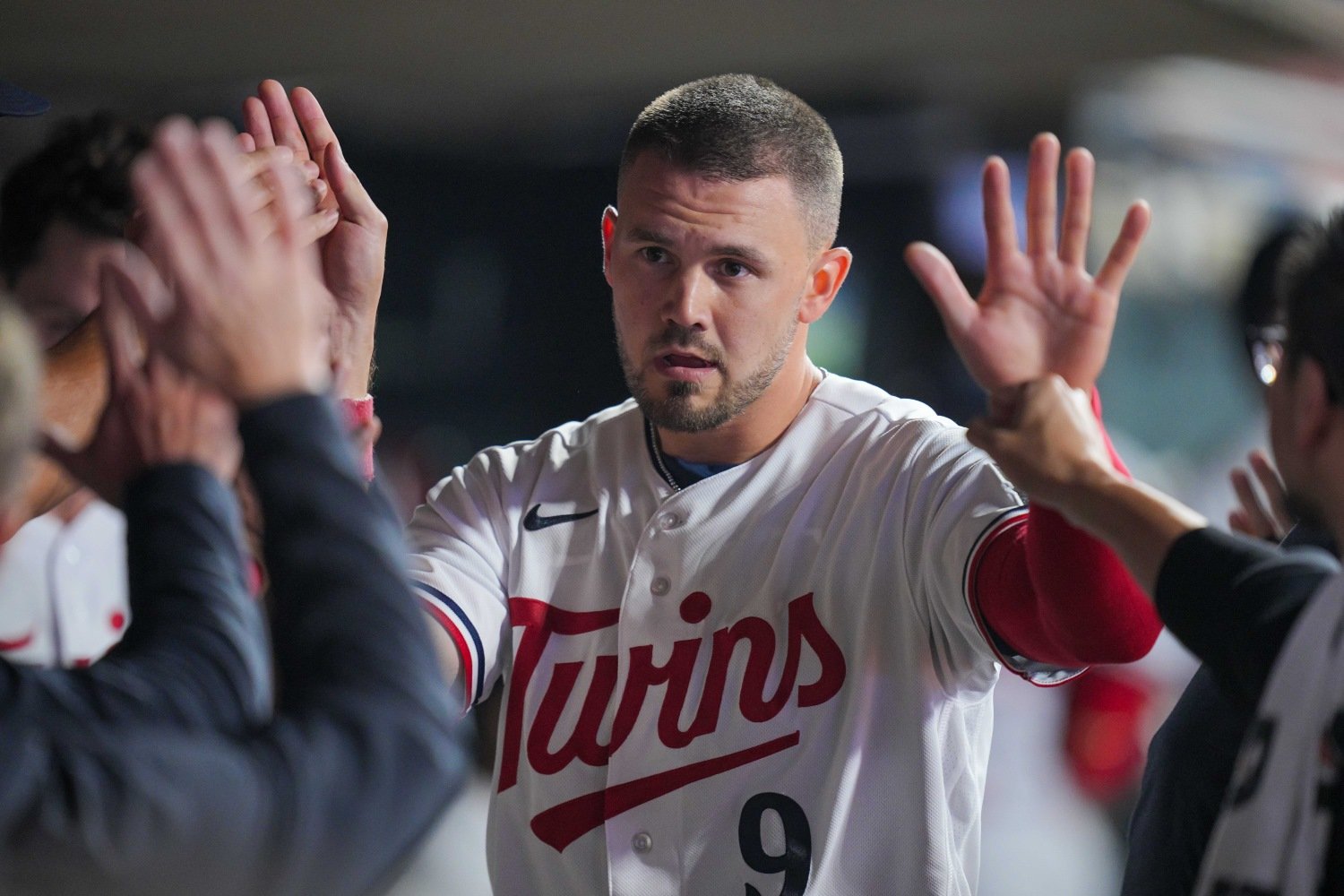 Plenty has been done to the Twins' pitching staff this offseason, even if they're not the kind of moves for which we all hoped. With Anthony DeSclafani joining the rotation and Justin Topa, Jay Jackson, Josh Staumont, and Steven Okert inserted into the bullpen, new arms have been added. Jorge Polanco and Nick Gordon have been subtracted from the player group in that process, which opens up opportunities for new names to fill their roles. Heading into spring training, the expectation should be that three of the four bench roles are filled. Kyle Farmer, Willi Castro, and Christian Vázquez will all make Rocco Baldelli’s roster, barring some unforeseen circumstances. That means one final bench spot is open, and who gets it remains up in the air. The Favorite: Trevor Larnach At this point, it stands to reason that Larnach is the favorite to land the 26th spot on the Twins' Opening Day roster. He was the starting left fielder to begin the campaign a season ago, but has been overtaken by Minnesota native Matt Wallner. There’s a path forward for Larnach, but it involves him finding his footing exceptionally quickly. The power has not translated to his professional game, and with just 20 home runs in 188 career games, he hasn’t shown enough punch to make up for the punchouts. Now 27 years old, Larnach has been shuttled between the minors and majors and had miserable injury luck, which hasn’t given him a great opportunity to settle in. Still, though, he is running out of chances, and now, in his final option year, this may be the last look he gets. As a rotational player, he’ll need to be ready to go any time his number is called, and that’s a tough ask. Of course, a free agent could replace Larnach. He is a left-handed hitter, as are both Wallner and Max Kepler. His inclusion on the roster risks redundancy, and he doesn’t play center field. As long as Michael A. Taylor remains unsigned, Larnach’s spot could be threatened most by someone currently outside of the organization. The Contenders: Niko Goodrum, Austin Martin, José Miranda Brought in as a non-roster invitee, Goodrum returns to the Twins organization with over 400 big-league games to his credit. He hasn’t gotten a real run at the major league level since 2021, and he’s been below-average offensively every season outside of 2018. Still, he provides a substantial amount of utility, and Minnesota may find that valuable from three of their four bench spots. Unlike Goodrum, Martin and Miranda are both on the 40-man roster. The former is nearly a finished product on the farm, and he could be immediately expected to play center behind Byron Buxton. Both are right-handed hitters, but Buxton is a reverse-split hitter, allowing Martin to filter in. Martin will likely go to Triple-A briefly to start the year, but a strong spring could change those plans. A year ago, there was hope that Miranda could follow up on his impressive rookie campaign with a solid sophomore season. However, he was hurt during spring training and never got it right. Now first base is expected to be manned by Alex Kirilloff and Carlos Santana, while the hot corner has become Royce Lewis’s position. Miranda could be a post-hype player who forces himself back into the equation, but he’s facing an uphill battle almost everywhere, and that’s without considering the adjustments he needs to make. Waiting in the Wings: Anthony Prato, Michael Helman, DaShawn Keirsey Jr., Yunior Severino This group includes a host of non-roster guys who could be deployed as bench options. Severino is the outlier, but he, too, isn’t a prospect who would need to be promoted for guaranteed playing time. Massive power has also come with substantial strikeout rates, and he’s not a good defender. Severino could eventually be promoted as a rotation type, requiring him to sit for stretches. With Prato and Helman, Minnesota has a pair of high-performing prospects who are relatively tapped out. Their ceilings aren’t immense, but they have shown an ability to produce on the farm. Both have seen significant success at Triple-A, and despite Prato being awful at Double-A before his promotion last year, he was among the Saints' best hitters. Injuries have held back Helman, but expecting him to return to form seems logical. Keirsey has hit more than expected, and he’s a strong defender in center. If the Twins need someone as a defense-first outfielder and Keirsey has a strong spring, he could fit the bill. Who ultimately takes the final bench spot, and which of the other names mentioned do you think we see at Target Field this season?
- 90 comments
-
- 5
-
-

-
- trevpr larnach
- austin martin
- (and 5 more)
-
When the Minnesota Twins break camp next month, they will seek a well-rounded 26-man roster. The group has an opportunity to be better than a season ago, which means getting quality production from every player on the roster. Who will round out the bench? Image courtesy of © Brad Rempel-USA TODAY Sports Plenty has been done to the Twins' pitching staff this offseason, even if they're not the kind of moves for which we all hoped. With Anthony DeSclafani joining the rotation and Justin Topa, Jay Jackson, Josh Staumont, and Steven Okert inserted into the bullpen, new arms have been added. Jorge Polanco and Nick Gordon have been subtracted from the player group in that process, which opens up opportunities for new names to fill their roles. Heading into spring training, the expectation should be that three of the four bench roles are filled. Kyle Farmer, Willi Castro, and Christian Vázquez will all make Rocco Baldelli’s roster, barring some unforeseen circumstances. That means one final bench spot is open, and who gets it remains up in the air. The Favorite: Trevor Larnach At this point, it stands to reason that Larnach is the favorite to land the 26th spot on the Twins' Opening Day roster. He was the starting left fielder to begin the campaign a season ago, but has been overtaken by Minnesota native Matt Wallner. There’s a path forward for Larnach, but it involves him finding his footing exceptionally quickly. The power has not translated to his professional game, and with just 20 home runs in 188 career games, he hasn’t shown enough punch to make up for the punchouts. Now 27 years old, Larnach has been shuttled between the minors and majors and had miserable injury luck, which hasn’t given him a great opportunity to settle in. Still, though, he is running out of chances, and now, in his final option year, this may be the last look he gets. As a rotational player, he’ll need to be ready to go any time his number is called, and that’s a tough ask. Of course, a free agent could replace Larnach. He is a left-handed hitter, as are both Wallner and Max Kepler. His inclusion on the roster risks redundancy, and he doesn’t play center field. As long as Michael A. Taylor remains unsigned, Larnach’s spot could be threatened most by someone currently outside of the organization. The Contenders: Niko Goodrum, Austin Martin, José Miranda Brought in as a non-roster invitee, Goodrum returns to the Twins organization with over 400 big-league games to his credit. He hasn’t gotten a real run at the major league level since 2021, and he’s been below-average offensively every season outside of 2018. Still, he provides a substantial amount of utility, and Minnesota may find that valuable from three of their four bench spots. Unlike Goodrum, Martin and Miranda are both on the 40-man roster. The former is nearly a finished product on the farm, and he could be immediately expected to play center behind Byron Buxton. Both are right-handed hitters, but Buxton is a reverse-split hitter, allowing Martin to filter in. Martin will likely go to Triple-A briefly to start the year, but a strong spring could change those plans. A year ago, there was hope that Miranda could follow up on his impressive rookie campaign with a solid sophomore season. However, he was hurt during spring training and never got it right. Now first base is expected to be manned by Alex Kirilloff and Carlos Santana, while the hot corner has become Royce Lewis’s position. Miranda could be a post-hype player who forces himself back into the equation, but he’s facing an uphill battle almost everywhere, and that’s without considering the adjustments he needs to make. Waiting in the Wings: Anthony Prato, Michael Helman, DaShawn Keirsey Jr., Yunior Severino This group includes a host of non-roster guys who could be deployed as bench options. Severino is the outlier, but he, too, isn’t a prospect who would need to be promoted for guaranteed playing time. Massive power has also come with substantial strikeout rates, and he’s not a good defender. Severino could eventually be promoted as a rotation type, requiring him to sit for stretches. With Prato and Helman, Minnesota has a pair of high-performing prospects who are relatively tapped out. Their ceilings aren’t immense, but they have shown an ability to produce on the farm. Both have seen significant success at Triple-A, and despite Prato being awful at Double-A before his promotion last year, he was among the Saints' best hitters. Injuries have held back Helman, but expecting him to return to form seems logical. Keirsey has hit more than expected, and he’s a strong defender in center. If the Twins need someone as a defense-first outfielder and Keirsey has a strong spring, he could fit the bill. Who ultimately takes the final bench spot, and which of the other names mentioned do you think we see at Target Field this season? View full article
-
The Table Setter, Feb. 19, 2024: Grichuk Gone, Taylor Going?
Ted Schwerzler posted an article in Twins
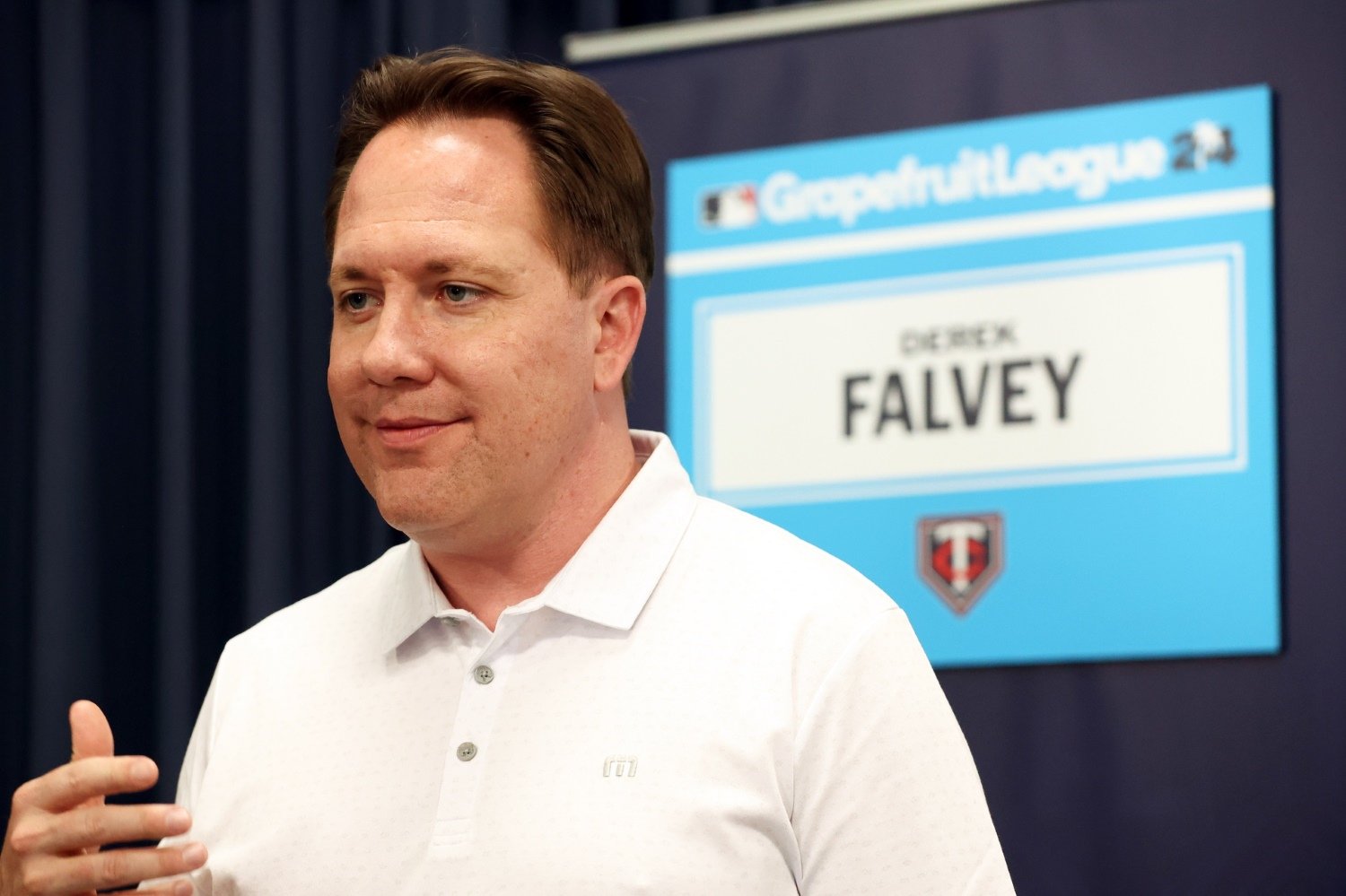 The talk of the weekend was unquestionably the good health of center fielder Byron Buxton. He is coming into camp with no restrictions and is ready to get back on the grass this season. Without the feeling of a knife in his knee anymore, the Twins are cautiously optimistic they’ll get the best version of their superstar back. Who flanks Buxton seems to be set. Max Kepler will start in right field, and Matt Wallner appears to have taken over the starting left field spot. There isn’t an ideal backup for Buxton in center though, and another right-handed outfield option makes a good deal of sense. The Arizona Diamondbacks agreed to a deal with Randal Grichuk, and did so for only a $2-million guarantee. That modest payday has to make Minnesota excited when sorting out their options. It remains likely that a free agent would take the roster spot of Trevor Larnach. Michael A. Taylor is a familiar option, and despite initially being projected for something like $10 million in free agency, his market may be half of that now. Both Adam Duvall and Tommy Pham could fit too, for rates not far distant from what Taylor is seeking. There hasn’t been a ton of chatter regarding the Four Borasmen. Cody Bellinger is a left-handed outfielder, but I’d guess Minnesota would find room for him on a one-year deal, or even a slightly longer-term, creatively structured one. He'd probably play a lot of first base for them, and be an injury backstop for both Buxton and Alex Kirilloff. Both Jordan Montgomery and Blake Snell also figure to be attractive on short deals, though they seem less likely to sign one. The front office failed to acquire a postseason starter capable of slotting in behind Pablo López, and both would represent sizable rotation upgrades. As one of the most active teams this offseason, the Kansas City Royals continued to make moves as well. Trading minor leaguer David Sandlin to the Boston Red Sox, Kansas City acquired John Schreiber. Adding to a bullpen that is now without Josh Staumont (among others), the Royals needed to beef up that part of their pitching staff. Seth Lugo and Michael Wacha were already acquired to supplement the rotation, and Matt Quatraro's squad is looking to put a much better foot forward in 2024. Despite the steam flowing from the Kansas City faithful, it remains likely that the chief competition for Minnesota this year will be the Cleveland Guardians and Detroit Tigers. The Twins are definitely the favorites to win the division, and with good reason, but they could bolster their chances with a final piece. Derek Falvey has shown an ability to wait out the market, and it shouldn’t be expected that this year is any different. Another move seems to make a good deal of sense. The Twins will have just three days of full-squad workouts before matching up against the Minnesota Golden Gophers to kick off game action. With plenty of buzz surrounding a team looking to repeat as AL Central champions, the building blocks for that reality get laid down now in Fort Myers. What's your mood as the position players get going in earnest? Which outfield target are you most interested in? Join the conversation.
 -
The Minnesota Twins still appear to need a right-handed outfield on their roster, and while they have yet to make that move, the Arizona Diamondbacks took an option out of play. Minnesota is gearing up for their first full squad workout on Tuesday, and games kick off later this week. The talk of the weekend was unquestionably the good health of centerfielder Byron Buxton. He is coming into camp with no restrictions and is ready to get back on the grass this season. Without the feeling of a knife in his knee anymore, the Twins are cautiously optimistic they’ll get the best version of their superstar back. Who flanks Buxton seems to be set. Max Kepler will start in right field, and Matt Wallner appears to have taken over the starting left field spot. There isn’t an ideal backup for Buxton in center though, and another right-handed outfield option makes a good deal of sense. The Arizona Diamondbacks agreed to a deal with Randal Grichuk, and did so for only a $2 million guarantee. That modest payday has to make Minnesota excited when sorting out their options. It remains likely that a free agent would take the roster spot of Trevor Larnach. Michael A. Taylor is a familiar option, and despite initially being projected for something like $10 million in free agency, his market may be half of that now. Both Adam Duvall and Tommy Pham could fit too, and they shouldn’t expect much more than what Grichuk got from an eventual payday. There hasn’t been a ton of chatter regarding the Boras Four, but making Minnesota part of the market is something that the super agent hasn’t taken advantage of either. Cody Bellinger is a left-handed outfielder, but I’d guess Minnesota would find room for him on a one-year deal. The same could probably be said for both Jordan Montgomery and Blake Snell. The front office failed to acquire a postseason starter capable of slotting in behind Pablo Lopez, and both would represent sizable rotation upgrades. As one of the most active teams this offseason, the Kansas City Royals continued to make moves as well. Trading minor leaguer David Sandlin to the Boston Red Sox, Kansas City acquired John Schreiber. Adding to a bullpen that is now without Josh Staumont among others, the Royals needed to beef up that part of their pitching staff. Seth Lugo and Michael Wacha were already acquired to supplement the rotation, and Matt Quatraro's squad is looking to put a much better foot forward in 2024. Despite the steam flowing from the Kansas City faithful, it remains likely that the chief competition for Minnesota this year will be both the Cleveland Guardians and Detroit Tigers. The Twins are definitely the favorites to win the division, and with good reason, but they could help to bolster their chances with a final piece. Derek Falvey has routinely shown an ability to wait out the market, and it shouldn’t be expected that this year is any different. Another move seems to make a good deal of sense, and it coming before much of the spring gets ripped off the calendar could be a good choice as well. The Twins will have just three days of full squad workouts before matching up against the Minnesota Golden Gophers to kick off game action. With plenty of buzz surrounding a team looking to repeat as AL Central champions, the building blocks for that reality get laid now down in Fort Myers. View full article
-
Pablo López and the Path to a Cy Young
Ted Schwerzler replied to Ted Schwerzler 's topic in Twins Daily Front Page News
To be fair, those things aren't mutually exclusive. It's beyond fair to think that Ryan or Ober could step up in a big way. It's also fair to have hoped for something better than DeSclafani or banking on 125+ innings from Paddack would be occupying the 4/5 spots. -
Pablo López and the Path to a Cy Young
Ted Schwerzler replied to Ted Schwerzler 's topic in Twins Daily Front Page News
I don't think they are incapable of having solid players, but the organization doesn't have a solid track record (especially recently) for being at the forefront of anything. I don't think you were suggesting the deal wasn't worthwhile, absolutely it was. I do think it's hard to believe that Lopez has found his ceiling though, especially with another year to work with Minnesota's staff.- 19 replies
-
- 1
-
-
- pablo lopez
- sonny gray
- (and 2 more)
-
Pablo López and the Path to a Cy Young
Ted Schwerzler replied to Ted Schwerzler 's topic in Twins Daily Front Page News
I think one thing you are massively discrediting is the organization he came from in relation to the one he joined. The next investment the Marlins make in serious player development will be their first. Lopez taking a steal forward joining Minnesota from Miami isn’t a mistake.- 19 replies
-
- 1
-
-
- pablo lopez
- sonny gray
- (and 2 more)
-
Pablo López and the Path to a Cy Young
Ted Schwerzler replied to Ted Schwerzler 's topic in Twins Daily Front Page News
You aren’t wrong. There was a significant stretch that I would’ve argued him as the Twins leading Cy Young candidate over Gray.- 19 replies
-
- 2
-
-
- pablo lopez
- sonny gray
- (and 2 more)
-
The talk of the offseason was how the Minnesota Twins would address their starting rotation and where they would find the firepower to replace Sonny Gray and Kenta Maeda. The former finished runner-up in the Cy Young voting, and now it’s the front-of-rotation leftover, Pablo López, set to make his mark. Image courtesy of Jesse Johnson - USA TODAY Sports Ultimately, the Minnesota Twins failed to bring in another playoff-caliber starting pitcher over the winter, whether by design or availability. Held back by payroll constraints, the only addition to the starting rotation was Anthony DeSclafani. While he isn’t going to touch the production of Sonny Gray, and maybe not even that of Kenta Maeda, it’s Pablo López where Rocco Baldelli’s hope lies. Taking the ball on Opening Day and then hopefully at least 30 more times the rest of the season, López is near the top of the discussion when it comes to 2024 American League Cy Young candidates. Oddsmaker Bovada has him at +950, which trails only the Yankees Gerrit Cole, Blue Jays Kevin Gausman, and Astros Framber Valdez. MLB.com correspondent Sarah Langs called him the favorite, as the former Marlins starter looks to improve upon his seventh-place finish from 2023. When the Twins sent Luis Arraez to Miami in exchange for López (and Jose Salas), they had a decent idea of what they were getting. López had shown a certain level of durability, and the stuff had always been impressive, if not trending towards elite. Acquiring him from an organization not known to develop players to their fullest extent, Minnesota also had an internal opportunity. Immediately signed to a four-year extension to create familiarity and future continuity, both sides got to work. The Twins helped López unlock another level, and he flashed signs of becoming a true ace across the game. Introducing a sweeper that elevated his entire arsenal, the righty became a dominant force. His 3.33 FIP was impressive, and his 10.9 K.9 was a career-high. López walked a career-low 2.2 per nine, and neither his homers nor hits allowed were problematic. For the first year, it was an excellent baseline with a new organization. At 28 years old in 2024, ZiPS projects López for a 3.68 ERA and 3.7 fWAR. Both of those numbers would come in behind 2023’s output, but projection systems are often conservative in nature. As a starting point, those projections seem to give Lopez an excellent opportunity to reach a new level. In 2023, López generated a career-low 3.28 xFIP, and his xERA sat at a sparkling 3.00. His 3.37 SIERRA was also a career-best, and he gave up the lowest barrel rate over a full season in his career. In short, López found a way to completely dominate hitters while missing bats and keeping them off balance. As has been the case with previous acquisitions, Minnesota found a way to add velocity as well. López sat 94.9 mph on his fastball, nearly a full MPH above where he had been ever before and almost 1.5 mph harder than he was throwing during his final season in Miami. That translated to a career-best 37.7% chase rate and a 14.5% whiff rate. An already good pitcher was continuing to show signs of becoming elite. For López to continue expanding upon his abilities in 2024, another level must be unlocked. Despite Gray earning the higher percentage of Cy Young votes, Lopez looked to be the better pitcher over consistent stretches of the season, and especially in the playoffs. If he can put that together for the bulk of the season, he will not only be everything the Twins need but also find himself picking up hardware. Last season, Lopez earned a trip to the All-Star Game for the first time in his career, and the Cy Young votes were the first he had also received. He should be able to repeat both of those feats this time, and starting the All-Star Game or earning his first Cy Young isn’t even close to out of the question. It’s fair to have concerns about the totality of the Twins rotation and, specifically, how they will make up for the lost production. Being uncertain about the man at the top isn’t something to worry about. A Cy Young for Lopez would give Minnesota their first since Johan Santana won his second in 2006, and it would be fitting for a fellow Venezuelan to end the drought. Do you think Pablo López has a legitimate shot at winning the Cy Young this year? Where would you rank him among the AL's favorites? View full article
-
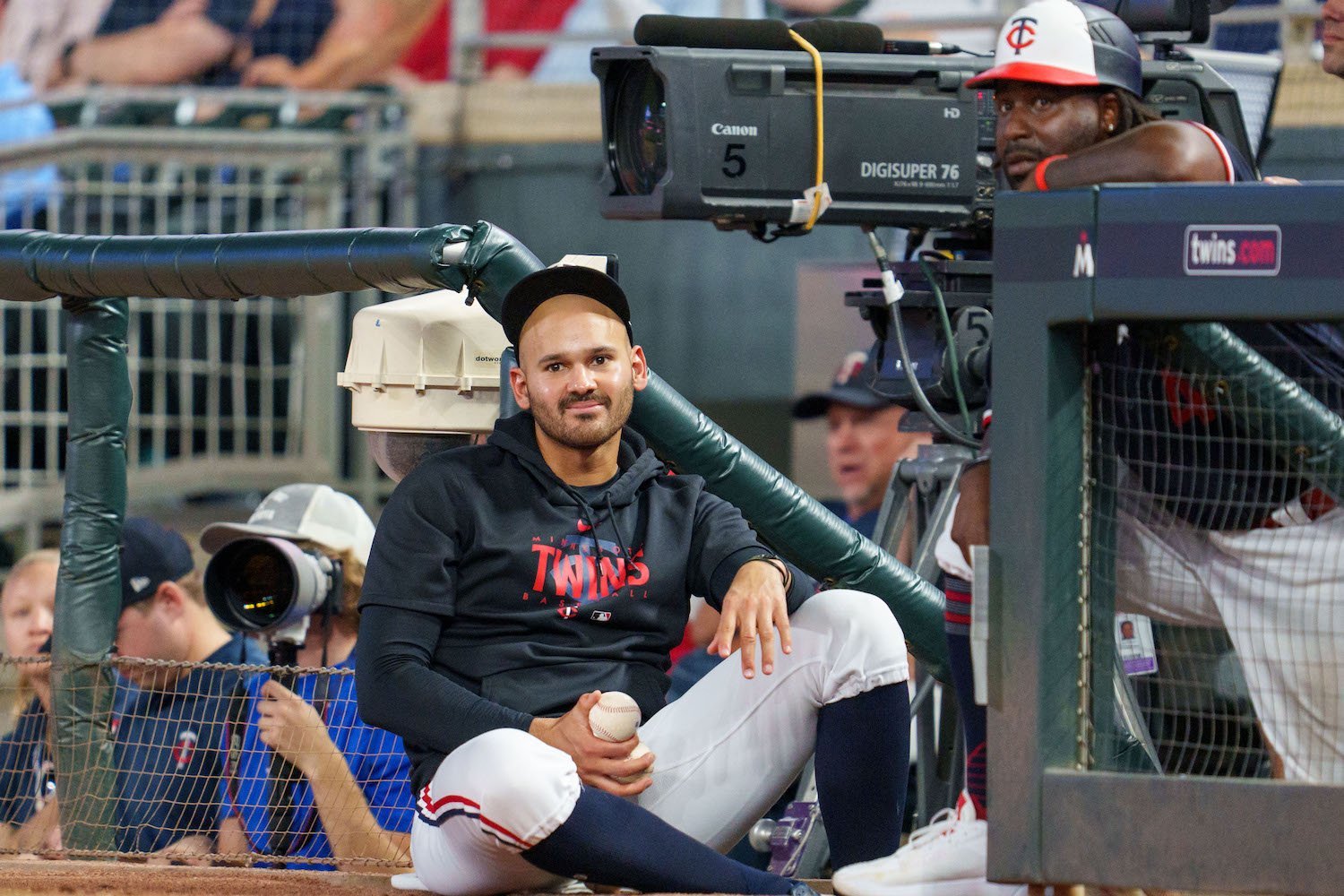 Ultimately, the Minnesota Twins failed to bring in another playoff-caliber starting pitcher over the winter, whether by design or availability. Held back by payroll constraints, the only addition to the starting rotation was Anthony DeSclafani. While he isn’t going to touch the production of Sonny Gray, and maybe not even that of Kenta Maeda, it’s Pablo López where Rocco Baldelli’s hope lies. Taking the ball on Opening Day and then hopefully at least 30 more times the rest of the season, López is near the top of the discussion when it comes to 2024 American League Cy Young candidates. Oddsmaker Bovada has him at +950, which trails only the Yankees Gerrit Cole, Blue Jays Kevin Gausman, and Astros Framber Valdez. MLB.com correspondent Sarah Langs called him the favorite, as the former Marlins starter looks to improve upon his seventh-place finish from 2023. When the Twins sent Luis Arraez to Miami in exchange for López (and Jose Salas), they had a decent idea of what they were getting. López had shown a certain level of durability, and the stuff had always been impressive, if not trending towards elite. Acquiring him from an organization not known to develop players to their fullest extent, Minnesota also had an internal opportunity. Immediately signed to a four-year extension to create familiarity and future continuity, both sides got to work. The Twins helped López unlock another level, and he flashed signs of becoming a true ace across the game. Introducing a sweeper that elevated his entire arsenal, the righty became a dominant force. His 3.33 FIP was impressive, and his 10.9 K.9 was a career-high. López walked a career-low 2.2 per nine, and neither his homers nor hits allowed were problematic. For the first year, it was an excellent baseline with a new organization. At 28 years old in 2024, ZiPS projects López for a 3.68 ERA and 3.7 fWAR. Both of those numbers would come in behind 2023’s output, but projection systems are often conservative in nature. As a starting point, those projections seem to give Lopez an excellent opportunity to reach a new level. In 2023, López generated a career-low 3.28 xFIP, and his xERA sat at a sparkling 3.00. His 3.37 SIERRA was also a career-best, and he gave up the lowest barrel rate over a full season in his career. In short, López found a way to completely dominate hitters while missing bats and keeping them off balance. As has been the case with previous acquisitions, Minnesota found a way to add velocity as well. López sat 94.9 mph on his fastball, nearly a full MPH above where he had been ever before and almost 1.5 mph harder than he was throwing during his final season in Miami. That translated to a career-best 37.7% chase rate and a 14.5% whiff rate. An already good pitcher was continuing to show signs of becoming elite. For López to continue expanding upon his abilities in 2024, another level must be unlocked. Despite Gray earning the higher percentage of Cy Young votes, Lopez looked to be the better pitcher over consistent stretches of the season, and especially in the playoffs. If he can put that together for the bulk of the season, he will not only be everything the Twins need but also find himself picking up hardware. Last season, Lopez earned a trip to the All-Star Game for the first time in his career, and the Cy Young votes were the first he had also received. He should be able to repeat both of those feats this time, and starting the All-Star Game or earning his first Cy Young isn’t even close to out of the question. It’s fair to have concerns about the totality of the Twins rotation and, specifically, how they will make up for the lost production. Being uncertain about the man at the top isn’t something to worry about. A Cy Young for Lopez would give Minnesota their first since Johan Santana won his second in 2006, and it would be fitting for a fellow Venezuelan to end the drought. Do you think Pablo López has a legitimate shot at winning the Cy Young this year? Where would you rank him among the AL's favorites?
- 19 comments
-
- 2
-
-
- pablo lopez
- sonny gray
- (and 2 more)
-
The Minnesota Twins come into the 2024 Major League Baseball season with plenty of starting positions on the roster established. Some spots remain at least partially fluid as spring camps open. Left field is among them. Image courtesy of © Jordan Johnson-USA TODAY Sports Rocco Baldelli comes into Spring Training with a relatively clear plan for his outfield. The hope would be that there is more consistency out there this season, and that starts in center field, with Byron Buxton. While Max Kepler has been in right field for the better part of the past nine years, the left fielder is new. Probable Starter: Matt Wallner After playing in the 2022 American League Futures Game, the Forest Lake native made his big-league debut for an 18-game cameo to end the season. It took a bit for the Twins to promote him during 2023, but the 2019 first-round pick forced their hand as much as he could at Triple-A. Wallner ultimately posted a .927 OPS across 67 games last season for the Saints. While there is plenty of swing-and-miss to his game, the exceptional .403 OBP provided a significant amount of confidence for the next level. In 76 games with the Twins, Wallner found that success, to the tune of an .877 OPS with an equally impressive .370 OBP. Presumably taking over for 2023 starter Trevor Larnach, Wallner will be tasked with playing a high level of defense. He posted a -2 DRS (Defensive Runs Saved) and OAA (Outs Above Average) in a small 308-inning sample, but the arm has always been his calling card. With two outfield assists in just his first 57 starts, teams immediately could see the cannon that made him a solid starting pitcher in college. If Wallner is going to remain at the big-league level and be a productive regular, working on the 31.5% strikeout rate is a must. Had he qualified, that would have been the fifth-highest total in the majors last year, and not far off from Brent Rooker’s leading 32.7%. It is a positive that Wallner drew walks 11% of the time, but there is room to improve upon a 28.7% chase rate and 15.4% swinging-strike rate (whiffs as a share of all pitches seen). Overall, the 65-game sample after mid-July was solid, but it included a few dreadful stretches. He can hold down the position, but the top depth behind him should make him earn it. The Backups: Trevor Larnach, Willi Castro The chief competition for Wallner will be the 2023 starter, Larnach. The 2018 first-round pick is a very similar player to Wallner, but he hasn't enjoyed the same kind of steady success we just saw from the younger slugger over any meaningful period. Larnach hasn’t had consistent opportunity, thanks in part to injuries, but he has also failed to show much of the promise expected from his skillset. Across 188 big-league games, Larnach has only hit 20 homers. His .315 OBP isn’t enough to carry him, and a .385 SLG isn’t anywhere near what should be his ceiling. Larnach’s career 33.6% strikeout rate is a huge issue, and while he doesn’t chase quite as often as Wallner, he whiffs at about the same frequency. If he’s going to get what could be a final shot to make it work, figuring out a way to tap into the power potential is a must. There’s almost no scenario in which Castro doesn’t make the Opening Day roster, but there shouldn’t be one in which he starts at any position, barring a failure to thrive for both Wallner and Larnach. After playing a pivotal role last season as a utility player, Castro will probably see some regression from the career-best 106 OPS+. He is just 27 years old, so there might be more to unlock, but his value is derived from being capable across the board, rather than being exceptional anywhere. If he does rise to yet another level, it'll be a pleasant surprise, but the emphasis will be on the second word of that phrase. Waiting in the Wings: Emmanuel Rodriguez, Austin Martin, DaShawn Keirsey Jr., Kala'i Rosario It’s pretty unlikely the Twins will bring Rodríguez up for his debut this season. Still, he is the only other corner outfielder on the 40-man roster (without putting Alex Kirilloff back in the grass). In 99 games at High-A last season, he posted a solid .863 OPS, but a .400 OBP heavily propped that up. The 134 strikeouts at that level don't advertise his big-league readiness, but his ability to take walks has always been exceptional. Playing more than 100 games, staying healthy, and continuing the power surge as he hones in his approach at the plate is a must. Rodríguez may begin the season at Double-A, and despite being just 21 years old, a strong start would have him knocking on the major-league door by season’s end. Additional options are relatively light, in that they aren’t ideal corner fits, and Minnesota doesn’t have much of a veteran presence to speak of at the Triple-A level. Martin is best utilized as a center fielder, where his speed can play up and there's less pressure on his bat to produce power. Keirsey is in a similar boat. He doesn’t have an immediate path to the parent club, not being on the 40-man roster, and the same rings true for Rosario, whom the Twins sent to the Arizona Fall League after last season and who thereupon paired with Aaron Sabato to lead the league in home runs. He’ll be at Double-A this year as a 21-year-old, and while the .832 OPS for Cedar Rapids was nice, it would be a modest surprise for him to even reach Triple-A in 2024. With Wallner as the most likely starter and Larnach as his chief competition, can the 2023 rookie do enough to hold down the job? Will he take considerable strides forward in 2024 and reach new heights at the highest level? Those are the questions fans gathered down the left-field line at Hammond Park this spring can spend their time debating and discussing. Spring performance will inform playing-time decisions at this spot, even if it's unlikely to completely upend the Twins' plans. View full article
-
2024 Minnesota Twins Spring Training Position Battles: Left Field
Ted Schwerzler posted an article in Twins
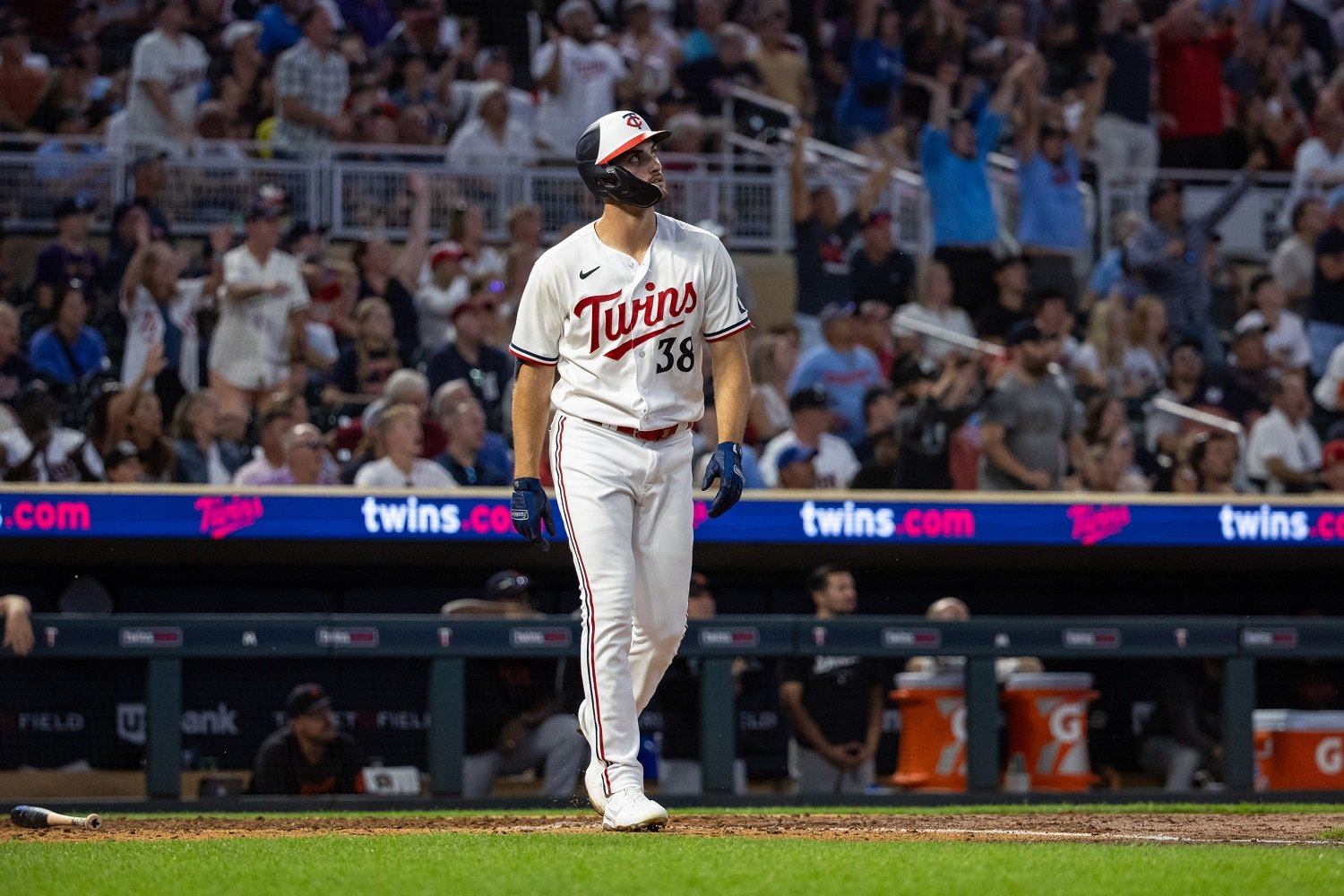 Rocco Baldelli comes into Spring Training with a relatively clear plan for his outfield. The hope would be that there is more consistency out there this season, and that starts in center field, with Byron Buxton. While Max Kepler has been in right field for the better part of the past nine years, the left fielder is new. Probable Starter: Matt Wallner After playing in the 2022 American League Futures Game, the Forest Lake native made his big-league debut for an 18-game cameo to end the season. It took a bit for the Twins to promote him during 2023, but the 2019 first-round pick forced their hand as much as he could at Triple-A. Wallner ultimately posted a .927 OPS across 67 games last season for the Saints. While there is plenty of swing-and-miss to his game, the exceptional .403 OBP provided a significant amount of confidence for the next level. In 76 games with the Twins, Wallner found that success, to the tune of an .877 OPS with an equally impressive .370 OBP. Presumably taking over for 2023 starter Trevor Larnach, Wallner will be tasked with playing a high level of defense. He posted a -2 DRS (Defensive Runs Saved) and OAA (Outs Above Average) in a small 308-inning sample, but the arm has always been his calling card. With two outfield assists in just his first 57 starts, teams immediately could see the cannon that made him a solid starting pitcher in college. If Wallner is going to remain at the big-league level and be a productive regular, working on the 31.5% strikeout rate is a must. Had he qualified, that would have been the fifth-highest total in the majors last year, and not far off from Brent Rooker’s leading 32.7%. It is a positive that Wallner drew walks 11% of the time, but there is room to improve upon a 28.7% chase rate and 15.4% swinging-strike rate (whiffs as a share of all pitches seen). Overall, the 65-game sample after mid-July was solid, but it included a few dreadful stretches. He can hold down the position, but the top depth behind him should make him earn it. The Backups: Trevor Larnach, Willi Castro The chief competition for Wallner will be the 2023 starter, Larnach. The 2018 first-round pick is a very similar player to Wallner, but he hasn't enjoyed the same kind of steady success we just saw from the younger slugger over any meaningful period. Larnach hasn’t had consistent opportunity, thanks in part to injuries, but he has also failed to show much of the promise expected from his skillset. Across 188 big-league games, Larnach has only hit 20 homers. His .315 OBP isn’t enough to carry him, and a .385 SLG isn’t anywhere near what should be his ceiling. Larnach’s career 33.6% strikeout rate is a huge issue, and while he doesn’t chase quite as often as Wallner, he whiffs at about the same frequency. If he’s going to get what could be a final shot to make it work, figuring out a way to tap into the power potential is a must. There’s almost no scenario in which Castro doesn’t make the Opening Day roster, but there shouldn’t be one in which he starts at any position, barring a failure to thrive for both Wallner and Larnach. After playing a pivotal role last season as a utility player, Castro will probably see some regression from the career-best 106 OPS+. He is just 27 years old, so there might be more to unlock, but his value is derived from being capable across the board, rather than being exceptional anywhere. If he does rise to yet another level, it'll be a pleasant surprise, but the emphasis will be on the second word of that phrase. Waiting in the Wings: Emmanuel Rodriguez, Austin Martin, DaShawn Keirsey Jr., Kala'i Rosario It’s pretty unlikely the Twins will bring Rodríguez up for his debut this season. Still, he is the only other corner outfielder on the 40-man roster (without putting Alex Kirilloff back in the grass). In 99 games at High-A last season, he posted a solid .863 OPS, but a .400 OBP heavily propped that up. The 134 strikeouts at that level don't advertise his big-league readiness, but his ability to take walks has always been exceptional. Playing more than 100 games, staying healthy, and continuing the power surge as he hones in his approach at the plate is a must. Rodríguez may begin the season at Double-A, and despite being just 21 years old, a strong start would have him knocking on the major-league door by season’s end. Additional options are relatively light, in that they aren’t ideal corner fits, and Minnesota doesn’t have much of a veteran presence to speak of at the Triple-A level. Martin is best utilized as a center fielder, where his speed can play up and there's less pressure on his bat to produce power. Keirsey is in a similar boat. He doesn’t have an immediate path to the parent club, not being on the 40-man roster, and the same rings true for Rosario, whom the Twins sent to the Arizona Fall League after last season and who thereupon paired with Aaron Sabato to lead the league in home runs. He’ll be at Double-A this year as a 21-year-old, and while the .832 OPS for Cedar Rapids was nice, it would be a modest surprise for him to even reach Triple-A in 2024. With Wallner as the most likely starter and Larnach as his chief competition, can the 2023 rookie do enough to hold down the job? Will he take considerable strides forward in 2024 and reach new heights at the highest level? Those are the questions fans gathered down the left-field line at Hammond Park this spring can spend their time debating and discussing. Spring performance will inform playing-time decisions at this spot, even if it's unlikely to completely upend the Twins' plans.
- 54 comments
-
- 6
-
-
- matt wallner
- trevor larnach
- (and 5 more)
-
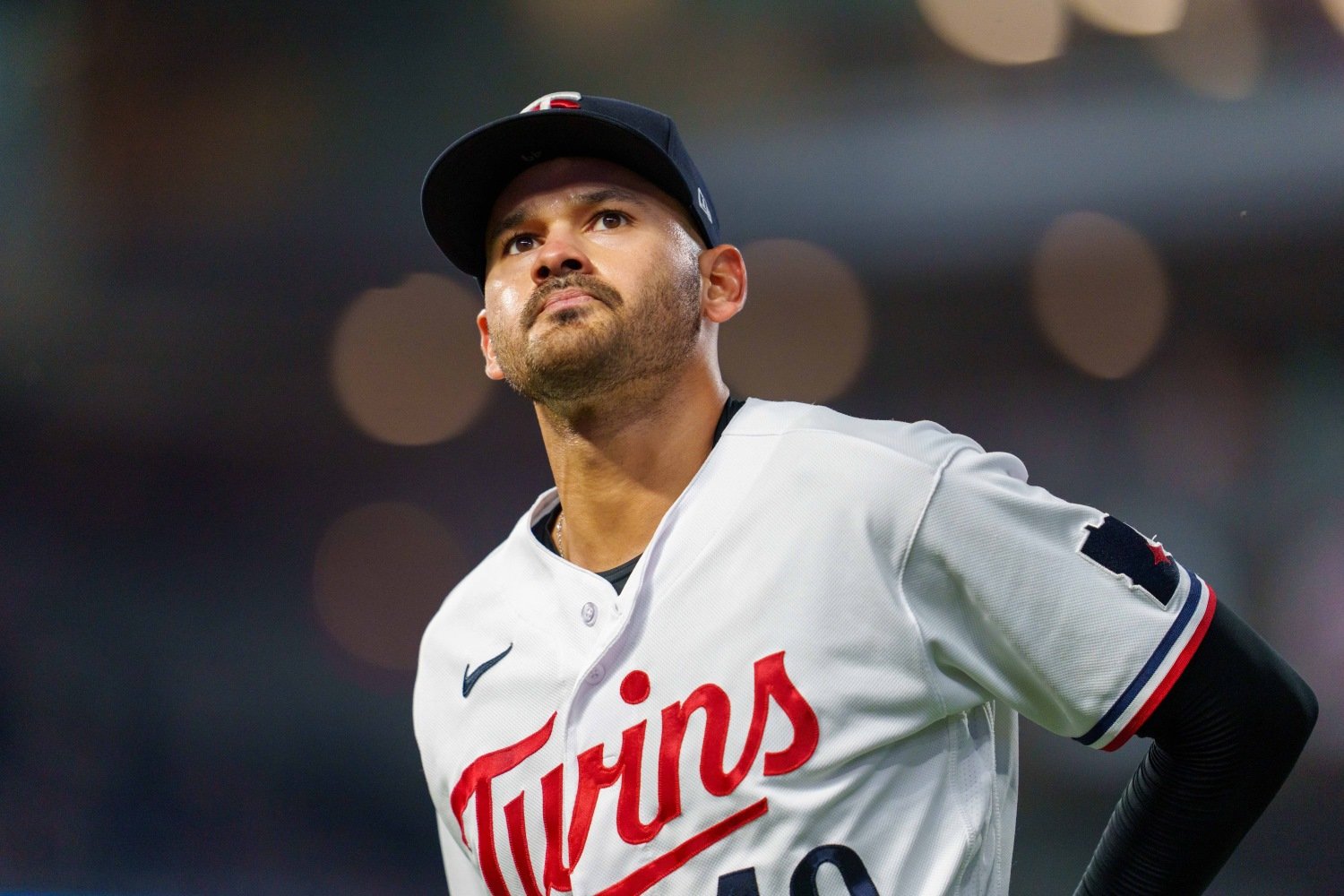 When the dust settled on the 2023 Major League Baseball regular season, the Minnesota Twins had generated 16.5 fWAR from their starting rotation. That was the most in the American League, coming in ahead of the Tampa Bay Rays and trailing only the Philadelphia Phillies across the entire sport. Flipping Luis Arráez for Pablo López during the offseason rounded out a group that should have been expected to be good, and he certainly took them over the top. Not only was López incredibly productive during his first year with the Twins, but Sonny Gray pitched at a level that warranted Cy Young Award consideration. Joe Ryan had a stellar first half, and Bailey Ober pitched himself back into an indispensable role at the highest level. Kenta Maeda also returned and pitched well after Tommy John surgery, and Louie Varland was a key member as a rotational depth option. This winter, Minnesota has turned over two-fifths of that rotation. Gray and Maeda are gone, with only López, Ryan, and Ober remaining from the heavy-lifting core. Now fully healthy, Chris Paddack is expected to slide into Maeda’s role. He's hard to depend on much, having thrown just 27 1/3 innings since 2021, but he has flashed significant talent when right. Beyond Paddack, rather than add at the top, Minnesota opted for veteran Anthony DeSclafani to eat innings at the bottom of the rotation hierarchy. For Paddack, the expectation is pretty straightforward. His inclusion among the group should be expected to rival Maeda's a season ago. It was his arm that the Twins traded Taylor Rogers to the San Diego Padres to get, and knowing the injury risks, they still wanted to be able to unleash him eventually. Before the blowout in 2022, Paddack was Minnesota’s top starter in terms of fWAR, and ZiPS projects him to be worth 1.5 fWAR in 2024. That’s marginally better than Maeda’s 1.3 fWAR projection and precisely equal to what the new Detroit Tigers starter gave Minnesota last year. The plan to replace Gray’s production never needed to be a one-for-one swap, but the thought process had Minnesota acquiring a number two or three pitcher to add to the group. Someone who could slot in alongside, or ahead of, Ryan would have made sense. The Twins went as conservative as possible, though, dealing for DeSclafani in the Jorge Polanco trade. Pitching at age 34 this season, it shouldn’t be expected that DeSclafani will completely reinvent the wheel. The Twins need to get something better out of him, though. The last time he was a usable arm came in 2021, which not coincidentally also came with his last clean bill of health. He is projected to provide just under 100 innings and 0.9 fWAR this season. Even with some positive changes, he’s a longshot to pitch like more than fourth starter, and the limits to his abilities are capped by a lack of strikeouts and a propensity to give up the long ball. The Twins' rotation is projected to tally 14.5 fWAR. That’s a solid number, but it puts considerable pressure on López to be everything he was last year and more. As the unquestioned ace of the staff, it will be on the recently extended arm to dominate for a second season in a row. It wouldn’t be shocking for him to do so, but it’s a need (rather than just a hope) this time around. Without Gray in the picture, Ryan and Ober also need to take substantial steps forward. Ryan’s 2023 season turned ugly, as his home run problem spiraled out of control. If he can return to 2022 levels or better, then there is a path for a legitimate number-two arm based on his stuff. Ober goes from a depth piece to an integral part, but he's been consistent enough to merit that job. There isn’t much more needed from him to be what Minnesota is hoping for, but it would be unfair to assume he’s also a finished product. Paddack and DeSclafani are not bad options, in and of themselves. If things break correctly, the group can definitely hold serve. The problem is that having two dice rolls on the back end forces Varland, David Festa, Simeon Woods Richardson, and other prospects to dive into spots where they are immediately relied upon, rather than eased in. Last year, the Twins gave themselves some ability to withstand unfortunate circumstances should they arise. This time around, they are threading a needle and need to be nearly perfect. It can work, but there’s also a relatively significant probability they are left looking for answers much sooner than they had hoped. How are you feeling about the Twins rotation entering spring training? Join the conversation below.
- 79 comments
-
- 10
-
-
- sonny gray
- kenta maeda
- (and 5 more)
-
Heading into spring training, it is officially prospect list season. The big three have all already published theirs, and we are rolling on here at Twins Daily. When it comes to Minnesota pitchers, should David Festa be ahead of Marco Raya? Image courtesy of © Steven Bisig-USA TODAY Sports Baseball America, MLB Pipeline, ESPN, The Athletic, and Baseball Prospectus have each posted their preseason top prospect lists for 2024, including top-100 lists. None of them had David Festa or Marco Raya among them, and as the Twins' fourth- and fifth-ranked prospects universally, the consensus is Minnesota has just three top-100 inclusions. However, Baseball Prospectus had Raya at 53 a year ago, before dropping him off the chart. As we work through our top-20 countdown here at Twins Daily, Festa debuted at number five, while Raya checked in at the fourth spot. Is that the correct order, though? First, look at Raya. We made him the higher-rated prospect because of a perceived ceiling. A fourth-round pick in 2020, Raya didn’t throw a single professional pitch until the 2022 season. He was 90-94 mph as a prep arm committed to Texas Tech, and he had a slider and curve projected to be above-average. With a three-pitch mix at an early age and good velocity to his credit, a frontline starter immediately became a discernible possible outcome. It was just a 65-inning sample in 2022, but the 19-year-old Raya posted a 3.05 ERA with a 76/23 K/BB at Low-A Fort Myers. Success that soon is always going to get noticed, and that’s precisely what took place. Pushed to High-A Cedar Rapids out of the gate last year, he found success again despite being incredibly young for the level. His 2.94 ERA and 39-to-8 strikeout-to-walk ratio across 33 2/3 innings earned him a promotion to Double-A Wichita. That’s when things slowed. Starting 11 games for the Wind Surge, Raya was lit up. He allowed 19 runs (17 earned) in 29 innings, and the strikeout-to-walk ratio fell all the way to 26:14. Nearly five years younger than the competition, it wasn’t unexpected that Raya would face challenges. Still, with only 127 2/3 professional innings to lean on, it’s hard to evaluate how he will adjust to them. The kid gloves with which the Twins have handled Raya will need to come off in 2024, if they're to find out whether he can be a viable long-term starting pitcher. He needs to see the sixth inning and the third time through an opponent's lineup in order to test his mettle for the role. How Raya responds to that type of workload can shed some light on what his actual ceiling may look like, but for now, it’s hard to ignore what Festa is doing out of the spot behind him. Considered Minnesota’s second-best pitching prospect by some, Festa’s success has been a story of development. He was a 13th-round pick out of Seton Hall in the 2021 MLB Draft, and he saw time at both Rookie ball and Low A in his first professional season. Although he came into the pros at 21 years old, he's climbed two levels each season--impressive, to say the least. His 2.43 ERA between both levels of A-ball in 2022 made a mockery of the challenge, and while he was on par age-wise with his competition, it was clear he could have done more. Last season, Festa posted a mediocre 4.39 ERA at Double A, but his 104 strikeouts in 80 innings were eye-popping. Getting a late-season promotion to Triple-A St. Paul placed him on the doorstep of the big leagues, and it’s hard not to like what looks like a recipe for success. He has pushed the fastball toward triple digits and routinely sits in the mid-90s with the offering. The fastball is a plus pitch, and he pairs it with two major league-quality offerings in a slider and changeup. The combination of all three has resulted in significant strikeout numbers, but he has also put up ground ball rates north of 46% at every stop in pro ball. There are still minor tweaks to make, and Seth Stohs outlined a couple of them in Festa’s top prospect piece. Getting a bit more crisp and working against upper-level hitters to start the year at Triple A will be helpful. He’s going to come with Minnesota to big-league camp, though, and working with pitching coach Pete Maki should give him concrete marching orders to take back to the minor league side when the season starts. If Raya’s positioning ahead of Festa is about the ceiling, then the claim for a swap between the two involves the floor. We may never see Raya become a big-league starter, and the expectation for Festa should be that he fills a back-end rotation role at worst. He isn’t going to be an ace, but an arm like Joe Ryan or Bailey Ober who can slide into the middle of a group is plenty possible here. The Twins knowing they have that kind of arm so close to ready goes a long way when trying to figure out the depth for Rocco Baldelli’s group this year. I have Festa pegged for an August debut, but we could see him sooner. The assumption should be that Louie Varland is the first starter to come over from St. Paul, but Festa won’t be far behind. With uncertain production from Chris Paddack or Anthony DeSclafani out of the gate, Minnesota will need arms ready to step up at a moment's notice. Festa has the makings of that guy. Undoubtedly, it’s fun to dream on ceilings for prospects, and what Raya may be is exciting. Teams also need a level of certainty from future contributors, and what Festa already is should bring plenty of warm thoughts to dream about as well. Where do you fall in the Festa-Raya debate? Does the looming presence of Festa make you more ok with the team's failure to add a frontline starter this winter? View full article
-
Minnesota Twins Prospects: The Case for David Festa Over Marco Raya
Ted Schwerzler posted an article in Twins
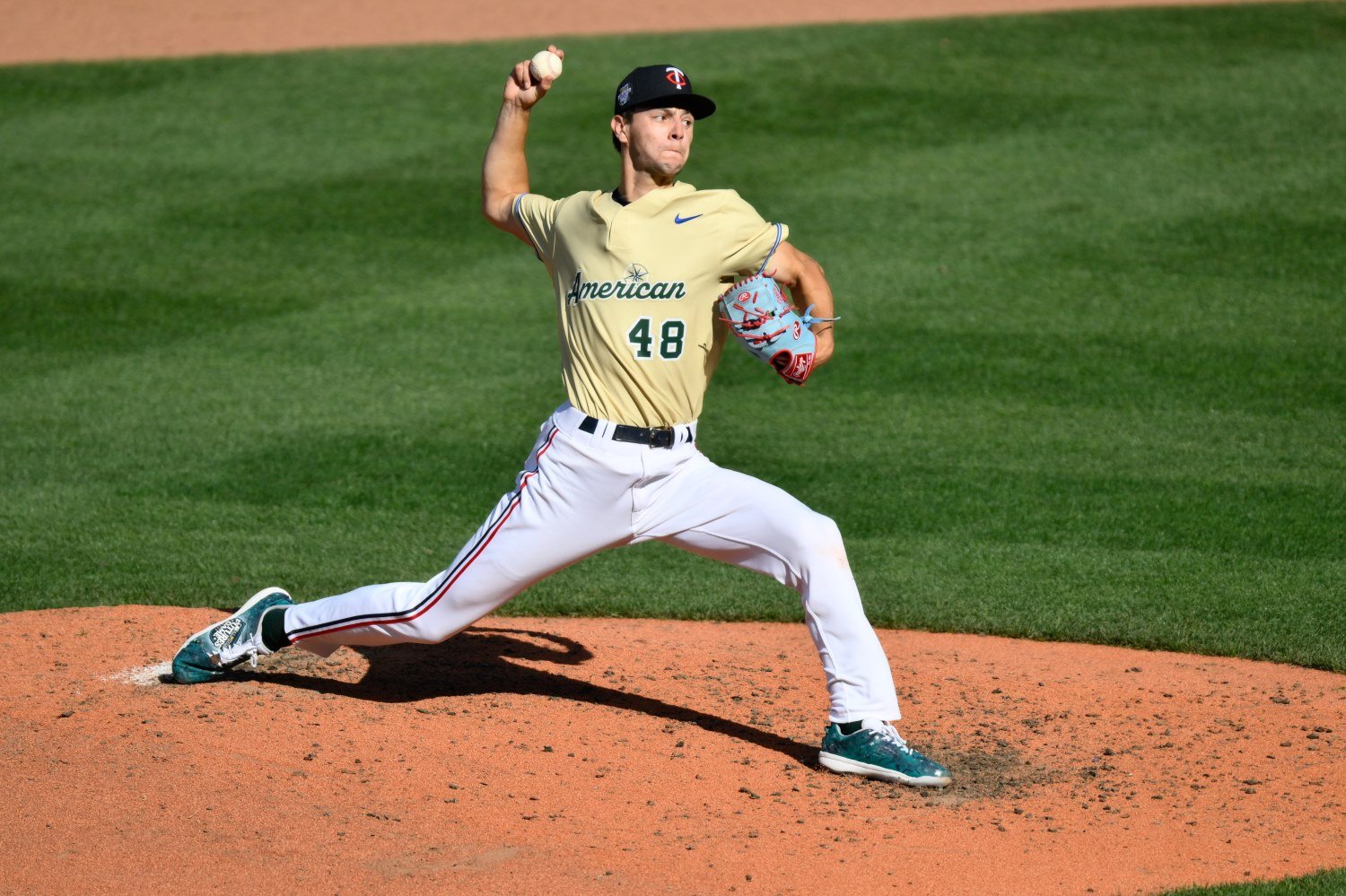 Baseball America, MLB Pipeline, ESPN, The Athletic, and Baseball Prospectus have each posted their preseason top prospect lists for 2024, including top-100 lists. None of them had David Festa or Marco Raya among them, and as the Twins' fourth- and fifth-ranked prospects universally, the consensus is Minnesota has just three top-100 inclusions. However, Baseball Prospectus had Raya at 53 a year ago, before dropping him off the chart. As we work through our top-20 countdown here at Twins Daily, Festa debuted at number five, while Raya checked in at the fourth spot. Is that the correct order, though? First, look at Raya. We made him the higher-rated prospect because of a perceived ceiling. A fourth-round pick in 2020, Raya didn’t throw a single professional pitch until the 2022 season. He was 90-94 mph as a prep arm committed to Texas Tech, and he had a slider and curve projected to be above-average. With a three-pitch mix at an early age and good velocity to his credit, a frontline starter immediately became a discernible possible outcome. It was just a 65-inning sample in 2022, but the 19-year-old Raya posted a 3.05 ERA with a 76/23 K/BB at Low-A Fort Myers. Success that soon is always going to get noticed, and that’s precisely what took place. Pushed to High-A Cedar Rapids out of the gate last year, he found success again despite being incredibly young for the level. His 2.94 ERA and 39-to-8 strikeout-to-walk ratio across 33 2/3 innings earned him a promotion to Double-A Wichita. That’s when things slowed. Starting 11 games for the Wind Surge, Raya was lit up. He allowed 19 runs (17 earned) in 29 innings, and the strikeout-to-walk ratio fell all the way to 26:14. Nearly five years younger than the competition, it wasn’t unexpected that Raya would face challenges. Still, with only 127 2/3 professional innings to lean on, it’s hard to evaluate how he will adjust to them. The kid gloves with which the Twins have handled Raya will need to come off in 2024, if they're to find out whether he can be a viable long-term starting pitcher. He needs to see the sixth inning and the third time through an opponent's lineup in order to test his mettle for the role. How Raya responds to that type of workload can shed some light on what his actual ceiling may look like, but for now, it’s hard to ignore what Festa is doing out of the spot behind him. Considered Minnesota’s second-best pitching prospect by some, Festa’s success has been a story of development. He was a 13th-round pick out of Seton Hall in the 2021 MLB Draft, and he saw time at both Rookie ball and Low A in his first professional season. Although he came into the pros at 21 years old, he's climbed two levels each season--impressive, to say the least. His 2.43 ERA between both levels of A-ball in 2022 made a mockery of the challenge, and while he was on par age-wise with his competition, it was clear he could have done more. Last season, Festa posted a mediocre 4.39 ERA at Double A, but his 104 strikeouts in 80 innings were eye-popping. Getting a late-season promotion to Triple-A St. Paul placed him on the doorstep of the big leagues, and it’s hard not to like what looks like a recipe for success. He has pushed the fastball toward triple digits and routinely sits in the mid-90s with the offering. The fastball is a plus pitch, and he pairs it with two major league-quality offerings in a slider and changeup. The combination of all three has resulted in significant strikeout numbers, but he has also put up ground ball rates north of 46% at every stop in pro ball. There are still minor tweaks to make, and Seth Stohs outlined a couple of them in Festa’s top prospect piece. Getting a bit more crisp and working against upper-level hitters to start the year at Triple A will be helpful. He’s going to come with Minnesota to big-league camp, though, and working with pitching coach Pete Maki should give him concrete marching orders to take back to the minor league side when the season starts. If Raya’s positioning ahead of Festa is about the ceiling, then the claim for a swap between the two involves the floor. We may never see Raya become a big-league starter, and the expectation for Festa should be that he fills a back-end rotation role at worst. He isn’t going to be an ace, but an arm like Joe Ryan or Bailey Ober who can slide into the middle of a group is plenty possible here. The Twins knowing they have that kind of arm so close to ready goes a long way when trying to figure out the depth for Rocco Baldelli’s group this year. I have Festa pegged for an August debut, but we could see him sooner. The assumption should be that Louie Varland is the first starter to come over from St. Paul, but Festa won’t be far behind. With uncertain production from Chris Paddack or Anthony DeSclafani out of the gate, Minnesota will need arms ready to step up at a moment's notice. Festa has the makings of that guy. Undoubtedly, it’s fun to dream on ceilings for prospects, and what Raya may be is exciting. Teams also need a level of certainty from future contributors, and what Festa already is should bring plenty of warm thoughts to dream about as well. Where do you fall in the Festa-Raya debate? Does the looming presence of Festa make you more ok with the team's failure to add a frontline starter this winter?
 -
A Look Back at Nick Gordon’s Time With Minnesota
Ted Schwerzler replied to Ted Schwerzler 's topic in Twins Daily Front Page News
Spot on. Knowing that this was the reality though, impressive they got something so usable in return for a guy that simply could have been a DFA casualty.- 6 replies
-
- 3
-
-
- nick gordon
- tom gordon
- (and 1 more)
-
In a small trade this weekend, the Twins moved on from Nick Gordon, just shy of a decade after making him the fifth overall pick in the 2014 MLB Draft. Let's take a moment to reflect on Gordon's Twins tenure. Image courtesy of © Kamil Krzaczynski-USA TODAY Sports There was plenty of uncertainty regarding Nick Gordon’s roster spot for Rocco Baldelli’s 2024 Minnesota Twins, and Derek Falvey dealt with that before spring training kicked off. Out of options and redundant after the emergence of Willi Castro a season ago, Gordon's roster utility and trade value were each limited, but the front office found a good match in trade. Steven Okert adds to what could be baseball’s best bullpen, and Gordon heads home to Florida. Drafted out of high school, Gordon’s pedigree was heavily built around bloodlines. Father Tom Gordon and half-brother Dee Strange-Gordon had substantial major-league careers. Although the youngest is not a pitcher like pops (though he did have a cameo) and never possessed the same speed as his elder brother, there was plenty to like as a prep star out of Olympia High School. Starting in the Appalachian League as an 18-year-old, Gordon put up a .294 batting average during his first 57 professional games. There wasn’t ever much hope that power would become part of his game. The idea was that his instincts could keep him at shortstop, and the solid debut landed him as a consensus top-100 prospect heading into the 2015 season. In the next two years, Gordon spent the entirety of the season at a single level. As with most high-school players, remaining available and healthy through the rigors of 100-plus games in a season became an immediate challenge. He answered the call by playing in 120 with Cedar Rapids and following that up with 116 games played for Fort Myers. He also went to the Arizona Fall League following the 2016 season, and his .862 OPS across 21 games was solid. At 21 years old, Gordon reached Double-A Chattanooga in 2017. His nine home runs were the first flash of power he had shown during his career, and while the average dipped with some added strikeout totals, he still posted a robust .341 OBP. In 2018, the Twins had Gordon repeat Double A to start the year, and he responded with a .906 OPS that earned a promotion to Triple A after just 42 games. The following 99 games at Triple-A Rochester yielded an ugly .544 OPS, but he was 4.5 years below the league's average age. Establishing some solid footing in 2019, Gordon again repeated a level, this time going back to Rochester. Despite playing in only 70 games due to injury, he put up an .801 OPS and carved out a .298 batting average. It looked as though the arm strength might limit him at shortstop, and the power wouldn’t jump off the page, but he had started to round out into a player who could possess a safe floor at the highest level. The entire world dealt with the COVID-19 pandemic in 2020, and things started adding up for Gordon. Not only was the minor-league season canceled, but Gordon tested positive for Covid-19 in July as summer camp opened. He didn’t clear the necessary protocols until August, and then dealt with chronic gastritis. His body changed drastically as he lost weight, and full health evaded him for months. Battling through the setbacks physically and dealing with the emotions mentally, Gordon returned in 2021 with a vengeance. He debuted in MLB on May 6, 2021, and played in 73 games for the Twins that year. He worked at six different positions and carved out opportunities as a utility player. After a lackluster debut season, Gordon shined in 2022. Minnesota needed help all over the field, and Gordon had long ago ditched his shortstop-centric profile. He played center field as Byron Buxton’s replacement and eventually emulated his dad on the mound in garbage time. Playing everything but catcher, first base, and right field, Gordon also contributed a 111 OPS+. He batted .272, and his nine home runs were a welcome surprise for Minnesota. Off to a slow start last season, Gordon suffered a fractured tibia after fouling a Dylan Covey pitch off of his leg. He wound up playing in just 34 games, and watched as Willi Castro slid into the utility role he once held. Working his way back to health throughout the season, Gordon made it back to action with the St. Paul Saints just before the Twins went on their playoff run. Ultimately, he was left off the postseason roster, but his determination to make himself available was impressive. Gordon spent a decade in the organization and went from a young kid to a father and an adult. While he only played 243 games in a Twins uniform, the infectious smile and upbeat personality were something fans could always count on, during two seasons that were otherwise full of gloom and glower. A move back home to Florida should present further opportunity, and he reunites with former teammate Luis Arráez in the process. The next chapter in Gordon’s baseball story begins in 2024, and Twins Territory can cheer him on from afar. The Marlins also come to Target Field this season and will be in the visiting dugout September 24-26. Do you have any favorite specific memories of Gordon? What's your take on the trade this weekend? Join the conversation in the comment section. View full article
-
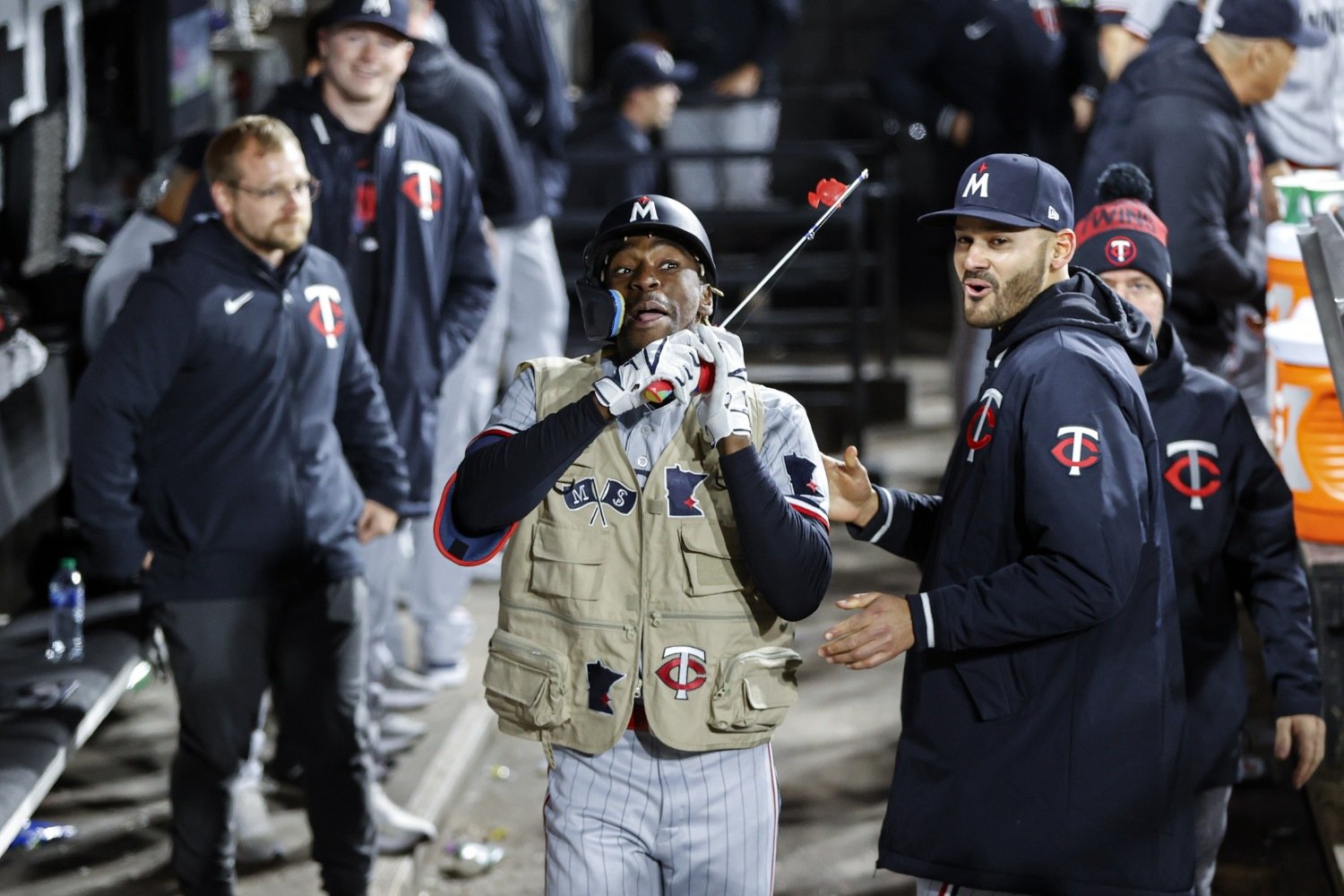 There was plenty of uncertainty regarding Nick Gordon’s roster spot for Rocco Baldelli’s 2024 Minnesota Twins, and Derek Falvey dealt with that before spring training kicked off. Out of options and redundant after the emergence of Willi Castro a season ago, Gordon's roster utility and trade value were each limited, but the front office found a good match in trade. Steven Okert adds to what could be baseball’s best bullpen, and Gordon heads home to Florida. Drafted out of high school, Gordon’s pedigree was heavily built around bloodlines. Father Tom Gordon and half-brother Dee Strange-Gordon had substantial major-league careers. Although the youngest is not a pitcher like pops (though he did have a cameo) and never possessed the same speed as his elder brother, there was plenty to like as a prep star out of Olympia High School. Starting in the Appalachian League as an 18-year-old, Gordon put up a .294 batting average during his first 57 professional games. There wasn’t ever much hope that power would become part of his game. The idea was that his instincts could keep him at shortstop, and the solid debut landed him as a consensus top-100 prospect heading into the 2015 season. In the next two years, Gordon spent the entirety of the season at a single level. As with most high-school players, remaining available and healthy through the rigors of 100-plus games in a season became an immediate challenge. He answered the call by playing in 120 with Cedar Rapids and following that up with 116 games played for Fort Myers. He also went to the Arizona Fall League following the 2016 season, and his .862 OPS across 21 games was solid. At 21 years old, Gordon reached Double-A Chattanooga in 2017. His nine home runs were the first flash of power he had shown during his career, and while the average dipped with some added strikeout totals, he still posted a robust .341 OBP. In 2018, the Twins had Gordon repeat Double A to start the year, and he responded with a .906 OPS that earned a promotion to Triple A after just 42 games. The following 99 games at Triple-A Rochester yielded an ugly .544 OPS, but he was 4.5 years below the league's average age. Establishing some solid footing in 2019, Gordon again repeated a level, this time going back to Rochester. Despite playing in only 70 games due to injury, he put up an .801 OPS and carved out a .298 batting average. It looked as though the arm strength might limit him at shortstop, and the power wouldn’t jump off the page, but he had started to round out into a player who could possess a safe floor at the highest level. The entire world dealt with the COVID-19 pandemic in 2020, and things started adding up for Gordon. Not only was the minor-league season canceled, but Gordon tested positive for Covid-19 in July as summer camp opened. He didn’t clear the necessary protocols until August, and then dealt with chronic gastritis. His body changed drastically as he lost weight, and full health evaded him for months. Battling through the setbacks physically and dealing with the emotions mentally, Gordon returned in 2021 with a vengeance. He debuted in MLB on May 6, 2021, and played in 73 games for the Twins that year. He worked at six different positions and carved out opportunities as a utility player. After a lackluster debut season, Gordon shined in 2022. Minnesota needed help all over the field, and Gordon had long ago ditched his shortstop-centric profile. He played center field as Byron Buxton’s replacement and eventually emulated his dad on the mound in garbage time. Playing everything but catcher, first base, and right field, Gordon also contributed a 111 OPS+. He batted .272, and his nine home runs were a welcome surprise for Minnesota. Off to a slow start last season, Gordon suffered a fractured tibia after fouling a Dylan Covey pitch off of his leg. He wound up playing in just 34 games, and watched as Willi Castro slid into the utility role he once held. Working his way back to health throughout the season, Gordon made it back to action with the St. Paul Saints just before the Twins went on their playoff run. Ultimately, he was left off the postseason roster, but his determination to make himself available was impressive. Gordon spent a decade in the organization and went from a young kid to a father and an adult. While he only played 243 games in a Twins uniform, the infectious smile and upbeat personality were something fans could always count on, during two seasons that were otherwise full of gloom and glower. A move back home to Florida should present further opportunity, and he reunites with former teammate Luis Arráez in the process. The next chapter in Gordon’s baseball story begins in 2024, and Twins Territory can cheer him on from afar. The Marlins also come to Target Field this season and will be in the visiting dugout September 24-26. Do you have any favorite specific memories of Gordon? What's your take on the trade this weekend? Join the conversation in the comment section.
- 6 comments
-
- 4
-
-
- nick gordon
- tom gordon
- (and 1 more)
-
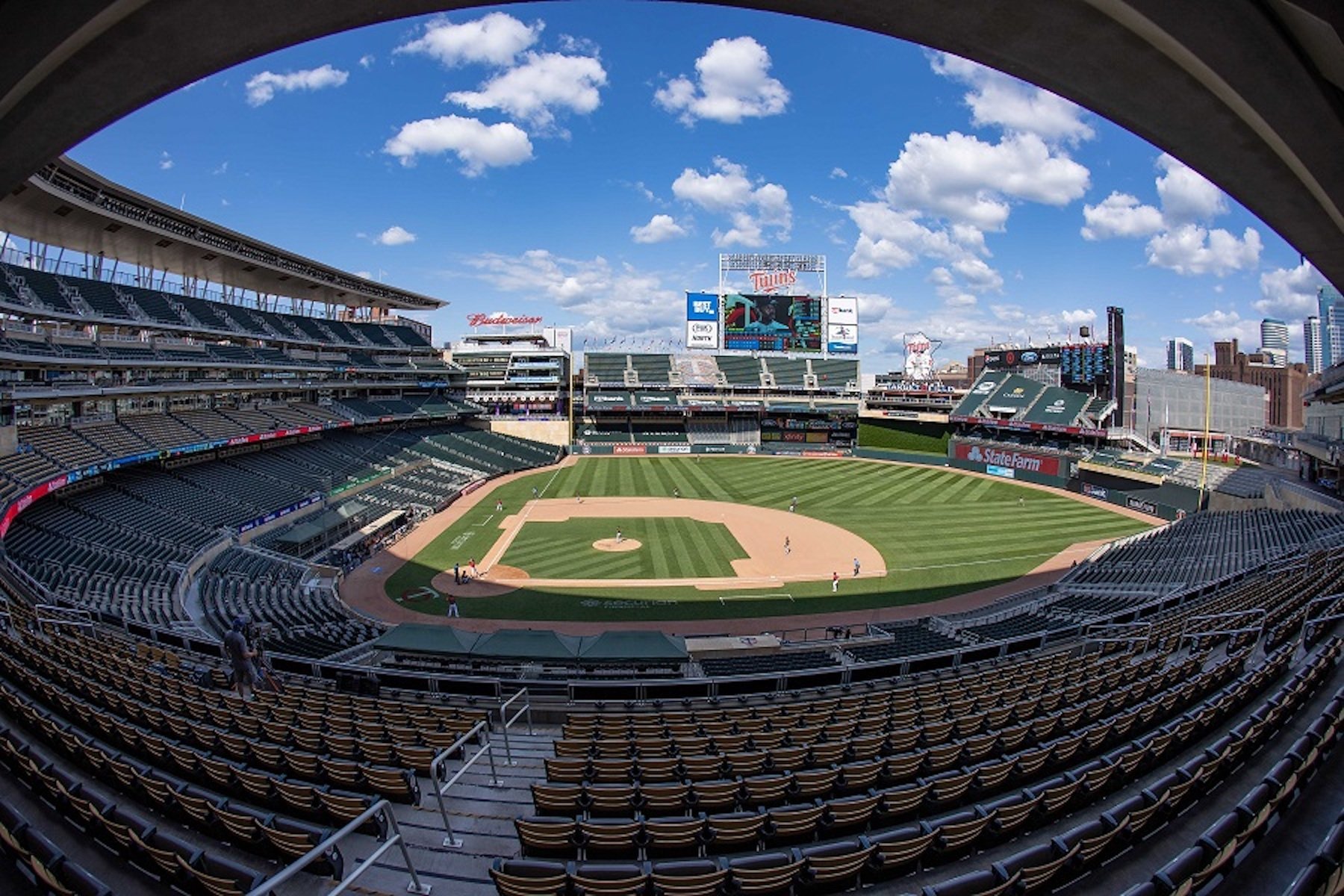 Coming off of their best season in three decades, the Minnesota Twins had plenty of momentum to take into the offseason. Having swept the Toronto Blue Jays during the Wild Card round and stolen a road game from the Houston Astros, the core of Rocco Baldelli’s team was set to return for another run. Youth litters the active roster, and injured stars Carlos Correa and Byron Buxton had ample time for healing over the winter. Rather than ride that wave, the organization let it push them under. Before the first free agent had even been signed, Sonny Gray had departed for a bigger payday, and the dust had even settled on the postseason excitement the Twins ran to the presses. Payroll was going to decrease, sizably even. There was no reason or benefit to announce this so publicly, and baseball reasons would have facilitated some of it, but the organization wanted the reality to sink in. With players like Alex Kirilloff, Royce Lewis, Edouard Julien, Matt Wallner, Joe Ryan, Bailey Ober, and the bulk of the bullpen making the major league minimum, the payroll could have logically decreased. Last season, the Opening Day roster had ten players making the major league minimum. That same number looks reachable this year but includes a veteran group that could consist of six contracts below $3.5 million. Uncertainty surrounding Bally Sports and what would happen with a television contract was the reason, but that has now seemingly fallen flat. Not only did Minnesota fail to put together any other alternatives, but the one-year deal is expected to be a more modest hit and keep streamers at bay. With revenues from broadcast rights and revenue sharing pouring in before any gate fees are collected, the 2024 doom and gloom could be largely unfounded. Of course, the Twins still needed to play it smart in free agency. Paying Gray at this stage of his career could go horribly wrong. Kenta Maeda's production could be replaced, and even Jorge Polanco had redundancy in his roster spot. Alternatively, they needed willing parties to entertain them as well. While Carlos Correa shocked the world twice, those realities aren’t typical for the Twins. Shohei Ohtani wasn’t going anywhere but the Dodgers, and even with Blake Snell or Cody Bellinger twisting in the wind, Minnesota is not their preferred destination. However, they didn’t need to wait out the bottom of the market either. Josh Staumont may have a nice resurgence with a clean bill of health. Maybe Jay Jackson is a late-bloomer who can be lightning in a bottle. The front office has never spent on relief help, but Carlos Santana didn’t need to be the choice at first base, and the starting rotation is where things hurt the most. Anthony DeSclafani doesn’t represent the most imperative addition the Twins needed to make this offseason, and they kneecapped themselves from the get-go. Pitching comes with significant costs, and as Minnesota has seen in recent seasons, those additions can be made in deals rather than just dollars. The Twins got great value in trading Polanco, but how far did they shy away from parting with the pieces that would have acquired Tyler Glasnow or Corbin Burnes because of the cost? They could have easily done the two-year deals for Lucas Giolito or Marcus Stroman. Looking at their preferred one-year pacts, playing in the Frankie Montas, Jack Flaherty, or even James Paxton pools would have been up their alley. All that is true had ownership not self-imposed a cap on the spending. Major League Baseball is an uncapped sport, and while there will never be a level playing field when it comes to spending, thresholds should be adjusted while windows of opportunity are present. The Pohlad’s committed to increasing payrolls each of the past few seasons, with a franchise record in 2023, and then they reversed course in the ugliest way when the team could have used it most. Spending doesn’t guarantee victories, and we’ll see the Royals reflective of that in 2024. Still, additions enhance an overall chance, and Minnesota is rolling the dice when the only voice that told them to was themselves. A year from now, the payroll should increase. Correa, Pablo Lopez, and Chris Paddack each see sizable bumps. There will be more handed to pre-arb guys, and those reaching a second year of arbitration will command more. Still, we have even less television uncertainty a year from now and more mouths to feed in that regard across the sport; it seems the time was now and logic went out the window. Minnesota remains the favorite to win the division, but what could have been is a few pieces short and something that only ownership can shoulder the blame if that would have made a difference.
- 69 comments
-
- 12
-
-

-
- pohlad
- anthony desclafani
- (and 4 more)
-
When the Minnesota Twins take the field at Kauffman Stadium on March 28, their payroll will be close to $30 million less than on Opening Day a year ago. Ownership has blamed declining television revenues, but in reality, things didn’t have to work out this way. Image courtesy of Jordan Johnson-USA TODAY Sports Coming off of their best season in three decades, the Minnesota Twins had plenty of momentum to take into the offseason. Having swept the Toronto Blue Jays during the Wild Card round and stolen a road game from the Houston Astros, the core of Rocco Baldelli’s team was set to return for another run. Youth litters the active roster, and injured stars Carlos Correa and Byron Buxton had ample time for healing over the winter. Rather than ride that wave, the organization let it push them under. Before the first free agent had even been signed, Sonny Gray had departed for a bigger payday, and the dust had even settled on the postseason excitement the Twins ran to the presses. Payroll was going to decrease, sizably even. There was no reason or benefit to announce this so publicly, and baseball reasons would have facilitated some of it, but the organization wanted the reality to sink in. With players like Alex Kirilloff, Royce Lewis, Edouard Julien, Matt Wallner, Joe Ryan, Bailey Ober, and the bulk of the bullpen making the major league minimum, the payroll could have logically decreased. Last season, the Opening Day roster had ten players making the major league minimum. That same number looks reachable this year but includes a veteran group that could consist of six contracts below $3.5 million. Uncertainty surrounding Bally Sports and what would happen with a television contract was the reason, but that has now seemingly fallen flat. Not only did Minnesota fail to put together any other alternatives, but the one-year deal is expected to be a more modest hit and keep streamers at bay. With revenues from broadcast rights and revenue sharing pouring in before any gate fees are collected, the 2024 doom and gloom could be largely unfounded. Of course, the Twins still needed to play it smart in free agency. Paying Gray at this stage of his career could go horribly wrong. Kenta Maeda's production could be replaced, and even Jorge Polanco had redundancy in his roster spot. Alternatively, they needed willing parties to entertain them as well. While Carlos Correa shocked the world twice, those realities aren’t typical for the Twins. Shohei Ohtani wasn’t going anywhere but the Dodgers, and even with Blake Snell or Cody Bellinger twisting in the wind, Minnesota is not their preferred destination. However, they didn’t need to wait out the bottom of the market either. Josh Staumont may have a nice resurgence with a clean bill of health. Maybe Jay Jackson is a late-bloomer who can be lightning in a bottle. The front office has never spent on relief help, but Carlos Santana didn’t need to be the choice at first base, and the starting rotation is where things hurt the most. Anthony DeSclafani doesn’t represent the most imperative addition the Twins needed to make this offseason, and they kneecapped themselves from the get-go. Pitching comes with significant costs, and as Minnesota has seen in recent seasons, those additions can be made in deals rather than just dollars. The Twins got great value in trading Polanco, but how far did they shy away from parting with the pieces that would have acquired Tyler Glasnow or Corbin Burnes because of the cost? They could have easily done the two-year deals for Lucas Giolito or Marcus Stroman. Looking at their preferred one-year pacts, playing in the Frankie Montas, Jack Flaherty, or even James Paxton pools would have been up their alley. All that is true had ownership not self-imposed a cap on the spending. Major League Baseball is an uncapped sport, and while there will never be a level playing field when it comes to spending, thresholds should be adjusted while windows of opportunity are present. The Pohlad’s committed to increasing payrolls each of the past few seasons, with a franchise record in 2023, and then they reversed course in the ugliest way when the team could have used it most. Spending doesn’t guarantee victories, and we’ll see the Royals reflective of that in 2024. Still, additions enhance an overall chance, and Minnesota is rolling the dice when the only voice that told them to was themselves. A year from now, the payroll should increase. Correa, Pablo Lopez, and Chris Paddack each see sizable bumps. There will be more handed to pre-arb guys, and those reaching a second year of arbitration will command more. Still, we have even less television uncertainty a year from now and more mouths to feed in that regard across the sport; it seems the time was now and logic went out the window. Minnesota remains the favorite to win the division, but what could have been is a few pieces short and something that only ownership can shoulder the blame if that would have made a difference. View full article
- 69 replies
-
- 2
-
-
- pohlad
- anthony desclafani
- (and 4 more)
-
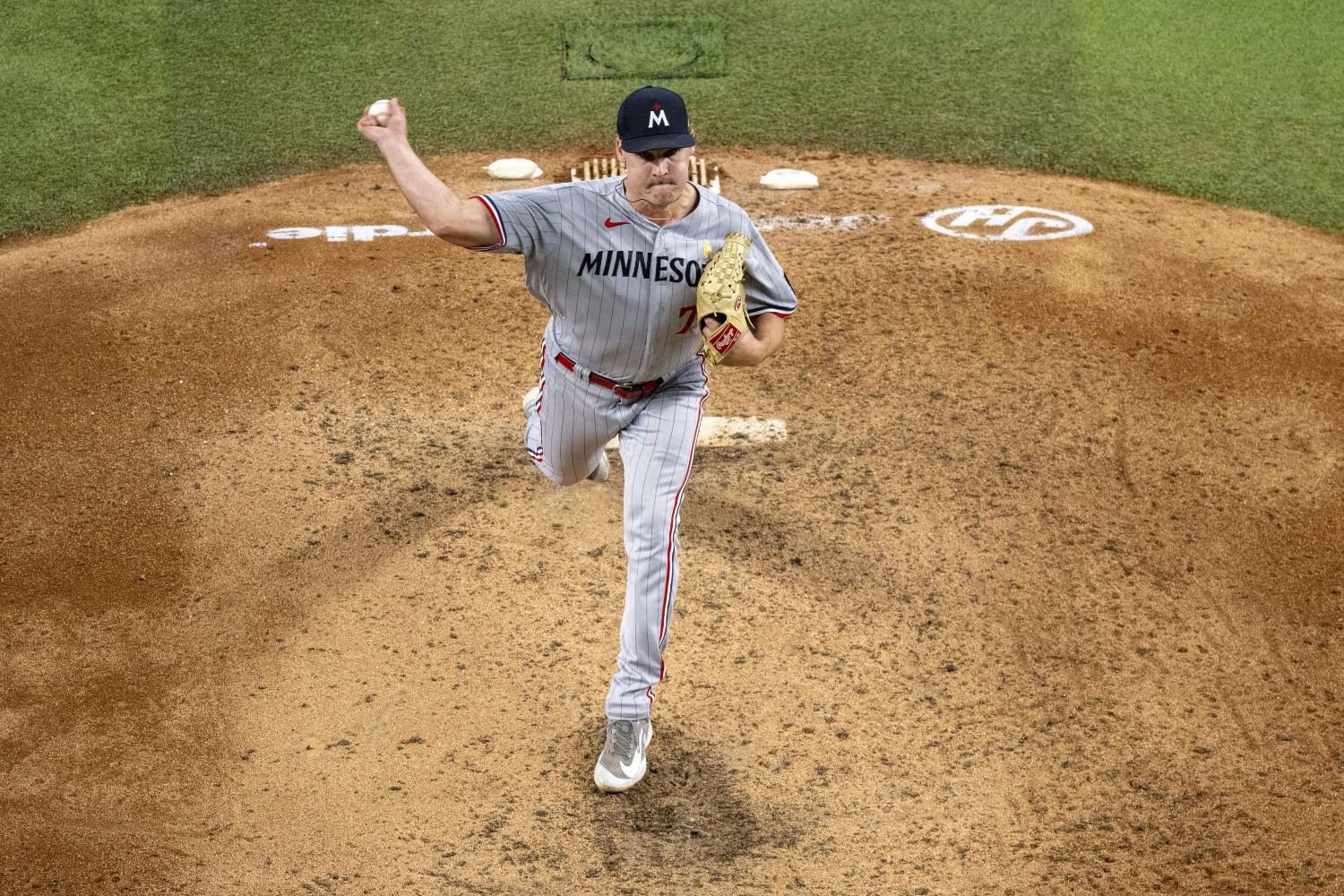 Cole Sands got more than a cameo during his rookie year in 2022. Working 30 2/3 innings split between three starts and eight relief appearances, he posted an ugly 5.87 ERA. Last year, he made the Opening Day roster and worked 21 2/3 innings, with a much better 3.74 ERA. You’d be hard-pressed to find many outings remembered fondly, though. The problem for Sands last season was the free passes. He was constantly walking a tightrope, with a pedestrian 21:13 strikeout-to-walk ratio. He also allowed four home runs in the limited action, and with traffic on the bases, they burned him (and the Twins) even more than that number might imply. Below the surface of his seasonal numbers, though, there’s a path to a nice leap forward in 2024. The Twins optioned Sands to Triple-A St. Paul three different times in 2023, and a rehab assignment made it four distinct stints for him there. With CHS Field just a few miles away from Target Field, he had to have a constant feeling of not knowing to which ballpark he would need to report from one week to the next. Beyond that, his role was constantly in transition. Kept on the roster out of Rocco Baldelli’s desire for a long reliever, he worked multiple innings a handful of times, but was often lifted after just three outs. Later in the season, he’d also go weeks with minimal usage. Despite the uncertainty, Sands kept things consistent on the farm. Across 30 2/3 innings for St. Paul, he maintained a dazzling 1.47 ERA with a 12.0 K/9. He gave up just two home runs, walked 10, and allowed a paltry 5.0 H/9. To say that would be a usable major league arm is putting it lightly. Sands can be a high performer, and it doesn’t have to happen on Opening Day. He settled in quickly at Triple A last season, and although that success doesn’t always translate to the big leagues in a straightforward manner, it's a reminder that there's something here worth mining. Giving him a routine and sticking to a plan could help Sands tap more fully into his potential. Finding more success may require tweaks in his arsenal or pitch usage. As a former starter, Sand has more than just two pitches at his disposal. With his four-seamer and sinker each sitting south of 94 miles per hour, he might need to start leaning more heavily on other options. His curveball plays well off his heat, thanks to the spin mirroring you can see above. The curve presents like his fastball before dropping off fairly sharply. The cutter and splitter utilize seam-shifted wake to generate deception, with similar spin axes to his sinker and fastball out of the hand but divergent actual movement. Last season at Triple A and in the big leagues, Sands threw the four-seamer and sinker over 45% of the time, and against lefties alone, he went with the mediocre fastball nearly 50% of the time. On the flip side, the curveball and cutter were used a total of 30% of the time. The splitter was thrown heavily against left-handed hitters, but the cutter got used only 6.7% of the time. There's an opportunity to take away a lot of that fastball usage and put it into the cutter. It seems as though Sands has been given enough information to suggest that his traditional fastball isn't a terribly useful pitch in the big leagues, if only in the form of hitters teeing off on it. Finding a way to use tunneled and paired pitches that play off of each other, while keeping hitters off balance, could help to push him through the current ceiling holding him back. There are mental and emotional hurdles to clear, too. For a guy who gets animated and shows plenty of emotion on the mound, figuring out a way to be more even-keeled is part of the process. Never allowing himself to get too high or low can keep him locked in on a pitch-by-pitch basis. The environment of a minor-league stadium can help with that, but plenty of the work can also be done internally. It was never a given that Sands would be a starter as he started to show his arm talent on the backfields in Fort Myers, but it was clear his stuff was MLB-caliber. If that now comes to fruition in relief, then Minnesota will have another high-quality option at their disposal out of the bullpen.
 -
Last season, the Minnesota Twins constructed one of the best starting rotations in all baseball. Derek Falvey put together a group that had top-end talent and depth to contribute throughout the season. They now appear light in both areas, but how much of a dropoff has there been? When the dust settled on the 2023 Major League Baseball regular season, the Minnesota Twins generated 16.5 fWAR from their starting rotation. That was the most in the American League, coming in ahead of the Tampa Bay Rays and trailing only the Philadelphia Phillies across the entire sport. Flipping Luis Arraez for Pablo Lopez during the offseason punctuated a group that should have been expected to be good, and he certainly took them over the top. Not only was Lopez incredibly productive during his first year with the Twins, but Sonny Gray pitched at a level that warranted Cy Young consideration. Joe Ryan had bouts of effectiveness, and Bailey Ober pitched himself back into an immediate need at the highest level. Kenta Maeda also returned and showed effectiveness after Tommy John surgery, and Louie Varland was a key member as a rotational depth option. Fast forward to where we are now: Minnesota has turned over two-fifths of its rotation from a year ago. Gray and Maeda are gone, with only Lopez, Ryan, and Ober remaining from the heavy-lifting core. Now fully healthy, Chris Paddack is expected to slide into Maeda’s role, and the hope would be that he can provide both innings and effectiveness. The former might be a monumental task, having thrown just 27 1/3 innings since 2021, but he has flashed significant talent when right. Beyond Paddack, and rather than add at the top, Minnesota opted for veteran Anthony DeSclafani to eat innings out of the five-spot in the group. For Paddack, the ask is fair and straightforward. His inclusion among the group should be expected to rival Maeda's a season ago. It was his arm that the Twins traded Taylor Rogers to the San Diego Padres to get, and knowing the injury risks, they still wanted to be able to unleash him eventually. Before the blowout in 2022, Paddack was Minnesota’s top starter in terms of fWAR, and ZiPS projects him to be worth 1.5 fWAR in 2024. That’s marginally better than Maeda’s 1.3 fWAR projection and precisely equal to what the new Detroit Tigers starter gave Minnesota last year. ZiPS only sees Paddack contributing 68 innings, though, and while other systems are double that, his lack of consistent availability is concerning. The plan to replace Gray’s production never needed to be a one-for-one swap, but the thought process had Minnesota acquiring a number two or three pitcher to add amongst the group. Someone who could slot in alongside, or ahead of, Ryan would have made sense. The Twins went as conservative as possible when dealing for DeSclafani in the Jorge Polanco trade. Pitching at age 34 this season, it shouldn’t be expected that DeSclafani will completely reinvent the wheel. The Twins certainly need to get something better out of him, though. The last time he was a usable arm came in 2021, which not coincidentally also came with a clean bill of health. He is projected to provide just under 100 innings and 0.9 fWAR this season. Even with some positive changes, he’s a longshot to push his totals to mid-rotation values, and the limits to his abilities are capped by a lack of strikeout numbers and a propensity to give up the long ball. The Twins' rotation is projected to tally 14.5 fWAR by ZiPS. That’s a solid number, but it puts considerable pressure on Lopez to be everything he was last year and more. As the unquestioned ace of the staff, it will be on the recently extended arm to elevate for a second season in a row. It wouldn’t be shocking for him to do so, but it’s a need and something the Twins are banking on rather than just a hope this time around. Without Gray in the picture, Ryan and Ober also need to take substantial steps forward. Ryan’s season turned ugly as his home run problem continued to balloon out of control. If he can return to 2022 levels or better, then there is a path for a legitimate number two arm to emerge from his stuff. Ober goes from a depth piece to an integral part, and his body of work has shown a strong level of consistency as a whole. There isn’t much more needed from him to be what Minnesota is hoping for, but it would be unfair to assume he’s also a finished product. The inclusion of Paddack and DeSclafani is not bad in and of themselves. If things break correctly, the group can definitely hold serve with what was shown in 2023. The problem is that having two dice rolls on the back end forces Louie Varland, David Festa, Simeon Woods Richardson, and other prospects to dive into spots where they are immediately relied upon rather than eased in. Last year, the Twins gave themselves some ability to withstand unfortunate circumstances should they arise. This time around, they are threading a needle and need to be nearly perfect in doing so. It can work, but there’s also a relatively significant probability they are left looking for answers much sooner than they had hoped. View full article

