Ted Schwerzler
-
Posts
5,149 -
Joined
-
Last visited
Content Type
Profiles
News
Minnesota Twins Videos
2026 Minnesota Twins Top Prospects Ranking
2022 Minnesota Twins Draft Picks
Minnesota Twins Free Agent & Trade Rumors, Notes, & Tidbits
Guides & Resources
2023 Minnesota Twins Draft Picks
The Minnesota Twins Players Project
2024 Minnesota Twins Draft Picks
2025 Minnesota Twins Draft Pick Tracker
2026 Minnesota Twins Draft Tracker: Picks & Bonuses
Forums
Blogs
Events
Store
Downloads
Gallery
Everything posted by Ted Schwerzler
-
When the Minnesota Twins postseason run ended in October last year, it was hard to feel too down about the season. The franchise was riding a high it hadn’t seen in three decades, and plenty of youth was carrying the club. This offseason has put a damper on plenty of that, but can the spring warm fans up again? Image courtesy of © Amanda Inscore/The News-Press USA Today Network-Florida / USA TODAY NETWORK With spring training action underway in Fort Myers, the Twins will start a slate of games to prepare for the 2024 regular season. They enter the year as favorites to win the American League Central Division, and there is plenty of hope that they can again make a run during the postseason. Those realities exist, but they may be lost on fans after how ownership has handled the winter. Running a pair of recent polls on X, both a grade for the offseason and excitement heading into the year, has fans responding lukewarm at best. Following multiple offseasons of record spending and acquisitions of names like Carlos Correa and Pablo Lopez, this incoming class could not be less thrilling. The bullpen has been added to, and that could be among the best groups in baseball, but $5.25 million for Carlos Santana and the insertion of Anthony DeSclafani into the rotation do little to move the needle. It’s fair to suggest that this team is roughly as good as last year, but that relies heavily upon internal options carrying a much heavier load. With Sonny Gray, Kenta Maeda, and Tyler Mahle gone from the rotation, that group looks worse from a quality and depth standpoint. That can be mitigated by steps forward from Joe Ryan and Bailey Ober or Correa and Byron Buxton remaining healthy, but plenty of things need to go right. When the offseason began, the Twins set the tone with a message that funds wouldn’t be there to supplement the roster. Derek Falvey and Thad Levine had their jobs made more difficult by ownership, and it was that message put out as what seemed to be a public relations misstep that caused a cloud to hang over everything that followed. Grading the offseason in terms of moves is mainly subjective. What Minnesota did will, without question, help them to compete in 2024. However, none of the moves on their own deserve better than a “C” grade. If you are to include anything unrelated to the roster, it’s understandable why the “activity” takes a hit. There’s no reason that the start of the 2024 Minnesota Twins season shouldn’t be met with unbridled excitement. Following how last year’s team finished and the emergence of Royce Lewis, there couldn’t be more for fans to get behind. Brooks Lee should be coming this year, and Edouard Julien looks like a legitimate regular. A case can be made that Pablo Lopez could win the Cy Young, and Correa being healthy, may earn MVP votes. Even with all of that being true, fans were split, and indifference reared its head. Plenty of eyeballs around Twins Territory are still unable to watch the games, which may be the greatest downer. Even though ownership backed off supporting the on-field product, the easiest way to spread excitement is by making the product consumable. With the franchise publicly stating that removing blackouts and finding a new home was their goal, only to reverse course, it’s understandable why plenty would be chafed. Overall, the offseason problems can largely be swept under the rug when actual games start being played, and seeing home runs hit and strikeouts thrown from Hammond Stadium should bring joy to the faces of many. How much momentum can be created over the next month is something that the franchise should be looking to capitalize on. Turning the page from the doldrums of winter is a must, mainly because the Twins did so little to keep what they had rolling. View full article
-
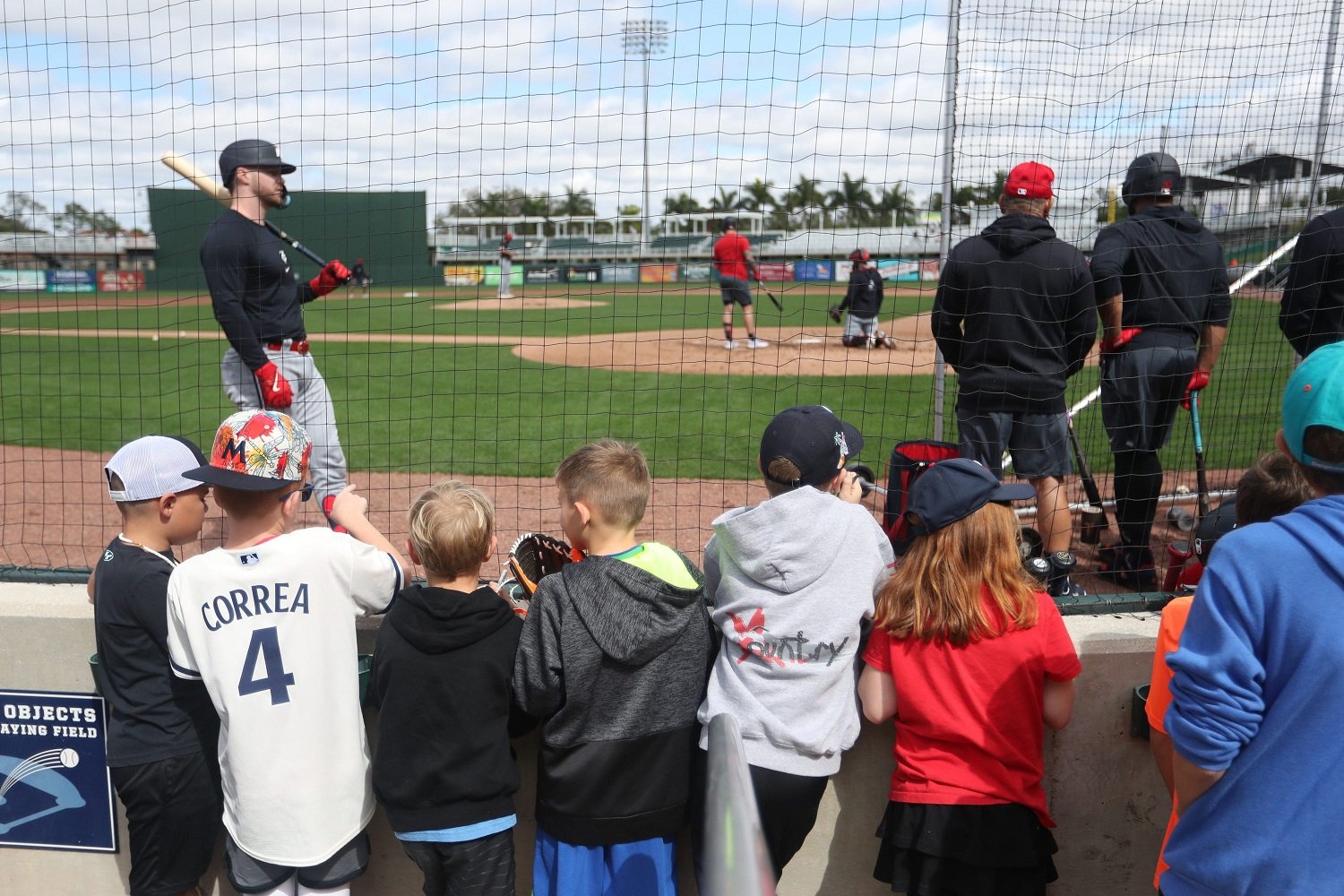 With spring training action underway in Fort Myers, the Twins will start a slate of games to prepare for the 2024 regular season. They enter the year as favorites to win the American League Central Division, and there is plenty of hope that they can again make a run during the postseason. Those realities exist, but they may be lost on fans after how ownership has handled the winter. Running a pair of recent polls on X, both a grade for the offseason and excitement heading into the year, has fans responding lukewarm at best. Following multiple offseasons of record spending and acquisitions of names like Carlos Correa and Pablo Lopez, this incoming class could not be less thrilling. The bullpen has been added to, and that could be among the best groups in baseball, but $5.25 million for Carlos Santana and the insertion of Anthony DeSclafani into the rotation do little to move the needle. It’s fair to suggest that this team is roughly as good as last year, but that relies heavily upon internal options carrying a much heavier load. With Sonny Gray, Kenta Maeda, and Tyler Mahle gone from the rotation, that group looks worse from a quality and depth standpoint. That can be mitigated by steps forward from Joe Ryan and Bailey Ober or Correa and Byron Buxton remaining healthy, but plenty of things need to go right. When the offseason began, the Twins set the tone with a message that funds wouldn’t be there to supplement the roster. Derek Falvey and Thad Levine had their jobs made more difficult by ownership, and it was that message put out as what seemed to be a public relations misstep that caused a cloud to hang over everything that followed. Grading the offseason in terms of moves is mainly subjective. What Minnesota did will, without question, help them to compete in 2024. However, none of the moves on their own deserve better than a “C” grade. If you are to include anything unrelated to the roster, it’s understandable why the “activity” takes a hit. There’s no reason that the start of the 2024 Minnesota Twins season shouldn’t be met with unbridled excitement. Following how last year’s team finished and the emergence of Royce Lewis, there couldn’t be more for fans to get behind. Brooks Lee should be coming this year, and Edouard Julien looks like a legitimate regular. A case can be made that Pablo Lopez could win the Cy Young, and Correa being healthy, may earn MVP votes. Even with all of that being true, fans were split, and indifference reared its head. Plenty of eyeballs around Twins Territory are still unable to watch the games, which may be the greatest downer. Even though ownership backed off supporting the on-field product, the easiest way to spread excitement is by making the product consumable. With the franchise publicly stating that removing blackouts and finding a new home was their goal, only to reverse course, it’s understandable why plenty would be chafed. Overall, the offseason problems can largely be swept under the rug when actual games start being played, and seeing home runs hit and strikeouts thrown from Hammond Stadium should bring joy to the faces of many. How much momentum can be created over the next month is something that the franchise should be looking to capitalize on. Turning the page from the doldrums of winter is a must, mainly because the Twins did so little to keep what they had rolling.
- 32 comments
-
- 2
-

-
- carlos correa
- royce lewis
- (and 3 more)
-
A season ago, Byron Buxton's tone in spring conversations with reporters was somber. Things clearly weren’t right, and following an offseason knee procedure, it was announced that he was behind his teammates in terms of readiness to play. This year, things couldn’t feel more different. Image courtesy of © Joe Nicholson-USA TODAY Sports Byron Buxton signed a seven-year, $100-million extension with the Minnesota Twins before 2022 and produced an All-Star season that summer. He was limited to just 92 games, though, and a knee procedure left his status uncertain for 2023. He did not play in spring training games last year, and the team announced he would not play in the outfield even once the season began. The goal for Rocco Baldelli was to see his starting center fielder back on the grass eventually, but it was going to be a process. Playing in just 85 games, all as the designated hitter, Buxton never made it back to his defensive role. Though Buxton ranks among the best outfield defenders in the game, that was a skillset that the Twins never saw last season. Pregame knee treatment became constant, and working with only his bat, Buxton failed to produce a league-average OPS+ for the first time since 2017. While cautious optimism is probably the most anyone can muster at this point, Buxton is trending in the right direction. Speaking with reporters as camp opened in Fort Myers, the smile had returned, and it was evident that a renewed sense of excitement was there for the outfielder. “I’m excited," Buxton said to a cadre of reporters including Twins Daily's John Bonnes. "Now that I know I’m not DH’ing, knowing I’m going to go out there and do what I was doing before all the injuries. I’m nervous for that first fly ball; I haven't seen a fly ball in a couple of years. That’s pretty nerve-wracking, but in a couple of weeks, I’ll be back to normal.” It’s not just being back out there that excites Buxton, though, it’s that he can do it without restrictions. “I’m fully healthy, and that puts my mind at ease to be able to go out and have a normal spring training.” That is something the Twins are excited about, too. His contract structure is a constant reminder of the risk tied in with his injury history. Still, Minnesota wasn’t thinking they’d be getting just a portion of Buxton’s services, and having him back in the fold as an everyday player certainly makes the team better. When talking about his desire to remain on the field during the uniform unveiling last offseason, Buxton noted his 92 games played being the most in a single season since 2017. After trying to gut it out and provide availability last season, a clean bill of health should energize him to take on the game as a whole. It was clear that playing the designated hitter role last season was tough on Buxton. It’s a skillset not every player has, and his defense certainly sets him apart. “I missed being able to help the team. I’m a big defensive person. Any way to get an out for our pitchers is a way for me to flip a game or turn the page on a situation. I didn’t have that last year.” It’s not lost on Buxton that being able to play defense could also help his offense. “Last year, if I had a couple of games where I didn’t get a hit, one diving catch could help to take my mind off of it. When you don’t have that distraction, which is something I tried to find all last year, it’s harder to do that when what you love to do is taken away from you. You try to tell yourself you have to flip the page because you have to go back up there; you have to trick your mind a lot when you DH because you have all that time to think.” At his best, Minnesota employs a former Platinum Glove winner, and Buxton has shown that he can provide some of the best defensive value in the sport. That is something of a calling card for his game, and it wouldn’t be unexpected to see him flourish while being able to contribute in multiple facets again. The Twins didn't necessarily prioritize a backup plan for Buxton, as they did last year in acquiring Michael A. Taylor. The late addition of Manuel Margot fits that bill, though, and with him not projected to be a regular, the starter should be all systems go. Health isn’t something Buxton is taking for granted, and after having to deal with plenty of pain and heartache last year, he’s just happy to be where he is now. “The pain is gone. The last couple of years were painful. Waking up feeling like a knife was in your knee every morning," Buxton said. "Mentally, I wanted to play. This past year, you start realizing that’s not helping the team, because you can’t go and do the things you want to do even if it’s in a limited role.” Having had an arthroscopic procedure that removed the plica in his right knee, the thought process is symptoms of knee tendinitis will subside. While he has had knee procedures previously, this is a stone that was otherwise unturned. While he will still be eased back into action (as most veterans are during spring training), the restrictions are removed for Buxton, which could make an immense difference for Minnesota. Carlos Correa and Buxton were shells of themselves last season, and getting healthy versions of each should only help the Twins pursue a repeat division title. Derek Falvey filled the DH spot in other ways this offseason, signing Carlos Santana to play first base and push Alex Kirilloff into the DH role more often. Only Margot represents true insurance for center field. If there’s an internal belief bubbling up in Buxton being both a difference maker in the field and at the plate, the upside for the roster is huge. Watching Buxton get back to a Gold Glove and MVP-caliber level is something all of Twins Territory is pulling for, and this may be the best opportunity to watch it come to fruition that we have seen in years. View full article
-
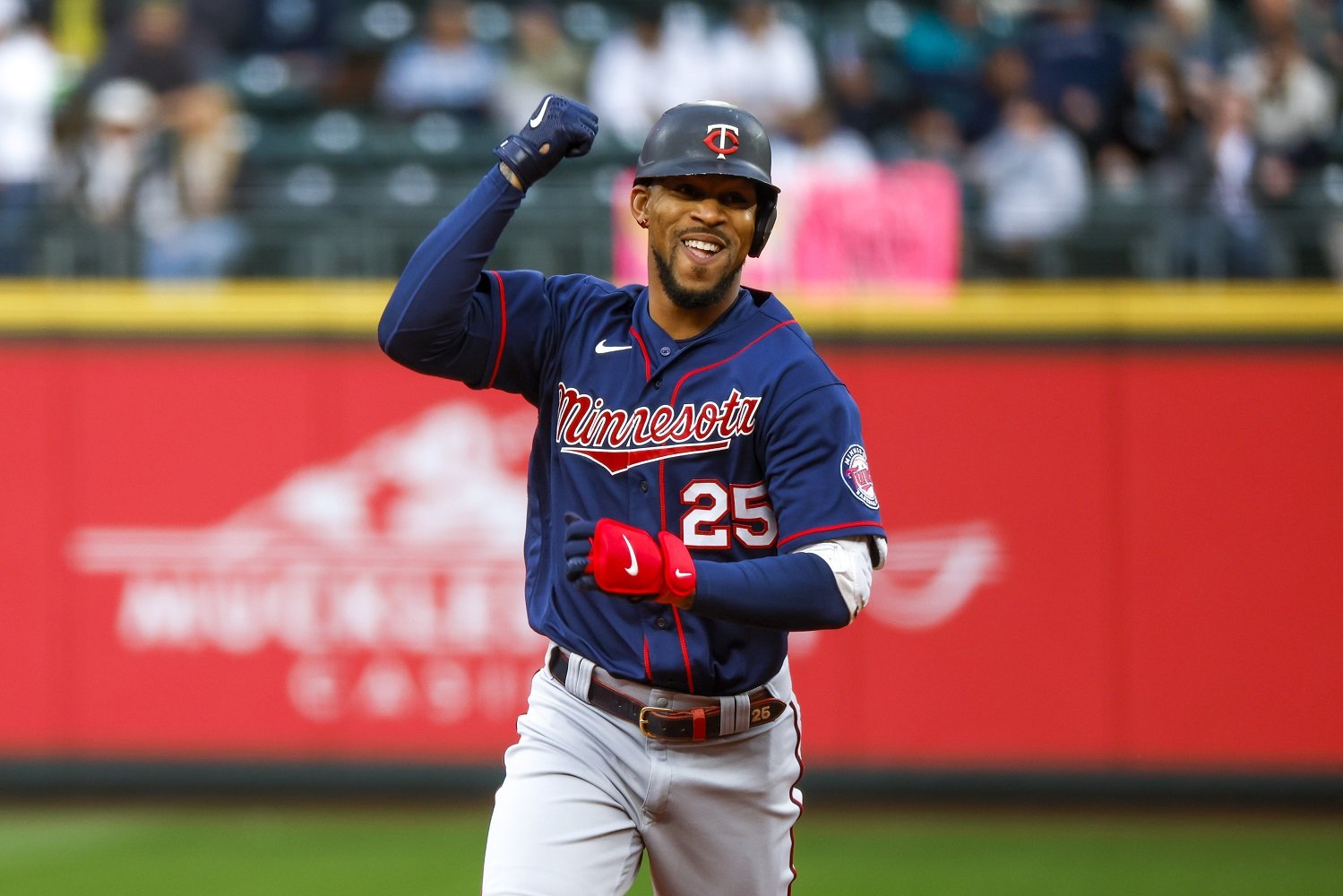 Byron Buxton signed a seven-year, $100-million extension with the Minnesota Twins before 2022 and produced an All-Star season that summer. He was limited to just 92 games, though, and a knee procedure left his status uncertain for 2023. He did not play in spring training games last year, and the team announced he would not play in the outfield even once the season began. The goal for Rocco Baldelli was to see his starting center fielder back on the grass eventually, but it was going to be a process. Playing in just 85 games, all as the designated hitter, Buxton never made it back to his defensive role. Though Buxton ranks among the best outfield defenders in the game, that was a skillset that the Twins never saw last season. Pregame knee treatment became constant, and working with only his bat, Buxton failed to produce a league-average OPS+ for the first time since 2017. While cautious optimism is probably the most anyone can muster at this point, Buxton is trending in the right direction. Speaking with reporters as camp opened in Fort Myers, the smile had returned, and it was evident that a renewed sense of excitement was there for the outfielder. “I’m excited," Buxton said to a cadre of reporters including Twins Daily's John Bonnes. "Now that I know I’m not DH’ing, knowing I’m going to go out there and do what I was doing before all the injuries. I’m nervous for that first fly ball; I haven't seen a fly ball in a couple of years. That’s pretty nerve-wracking, but in a couple of weeks, I’ll be back to normal.” It’s not just being back out there that excites Buxton, though, it’s that he can do it without restrictions. “I’m fully healthy, and that puts my mind at ease to be able to go out and have a normal spring training.” That is something the Twins are excited about, too. His contract structure is a constant reminder of the risk tied in with his injury history. Still, Minnesota wasn’t thinking they’d be getting just a portion of Buxton’s services, and having him back in the fold as an everyday player certainly makes the team better. When talking about his desire to remain on the field during the uniform unveiling last offseason, Buxton noted his 92 games played being the most in a single season since 2017. After trying to gut it out and provide availability last season, a clean bill of health should energize him to take on the game as a whole. It was clear that playing the designated hitter role last season was tough on Buxton. It’s a skillset not every player has, and his defense certainly sets him apart. “I missed being able to help the team. I’m a big defensive person. Any way to get an out for our pitchers is a way for me to flip a game or turn the page on a situation. I didn’t have that last year.” It’s not lost on Buxton that being able to play defense could also help his offense. “Last year, if I had a couple of games where I didn’t get a hit, one diving catch could help to take my mind off of it. When you don’t have that distraction, which is something I tried to find all last year, it’s harder to do that when what you love to do is taken away from you. You try to tell yourself you have to flip the page because you have to go back up there; you have to trick your mind a lot when you DH because you have all that time to think.” At his best, Minnesota employs a former Platinum Glove winner, and Buxton has shown that he can provide some of the best defensive value in the sport. That is something of a calling card for his game, and it wouldn’t be unexpected to see him flourish while being able to contribute in multiple facets again. The Twins didn't necessarily prioritize a backup plan for Buxton, as they did last year in acquiring Michael A. Taylor. The late addition of Manuel Margot fits that bill, though, and with him not projected to be a regular, the starter should be all systems go. Health isn’t something Buxton is taking for granted, and after having to deal with plenty of pain and heartache last year, he’s just happy to be where he is now. “The pain is gone. The last couple of years were painful. Waking up feeling like a knife was in your knee every morning," Buxton said. "Mentally, I wanted to play. This past year, you start realizing that’s not helping the team, because you can’t go and do the things you want to do even if it’s in a limited role.” Having had an arthroscopic procedure that removed the plica in his right knee, the thought process is symptoms of knee tendinitis will subside. While he has had knee procedures previously, this is a stone that was otherwise unturned. While he will still be eased back into action (as most veterans are during spring training), the restrictions are removed for Buxton, which could make an immense difference for Minnesota. Carlos Correa and Buxton were shells of themselves last season, and getting healthy versions of each should only help the Twins pursue a repeat division title. Derek Falvey filled the DH spot in other ways this offseason, signing Carlos Santana to play first base and push Alex Kirilloff into the DH role more often. Only Margot represents true insurance for center field. If there’s an internal belief bubbling up in Buxton being both a difference maker in the field and at the plate, the upside for the roster is huge. Watching Buxton get back to a Gold Glove and MVP-caliber level is something all of Twins Territory is pulling for, and this may be the best opportunity to watch it come to fruition that we have seen in years.
 -
You and me both. More on that later. Crazy he already has 4 years of service time.
- 20 replies
-
- 1
-
-
- jorge alcala
- jhoan duran
- (and 2 more)
-
To have a back end that already includes Duran, Jax, Stewart, and Thielbar is impressive. Topa is solid. If either Jackson or Staumont hit, that’s huge. Starting a guy like Funderburk in Triple-A is impressive depth.
- 20 replies
-
- 5
-
-
- jorge alcala
- jhoan duran
- (and 2 more)
-
I feel like a good example of this is Trevor May. He had back issues when going to the pen and attributed it to a lack of being able to get warm. Worked through it and made a lucrative career being a leverage guy.
- 20 replies
-
- 3
-
-
- jorge alcala
- jhoan duran
- (and 2 more)
-
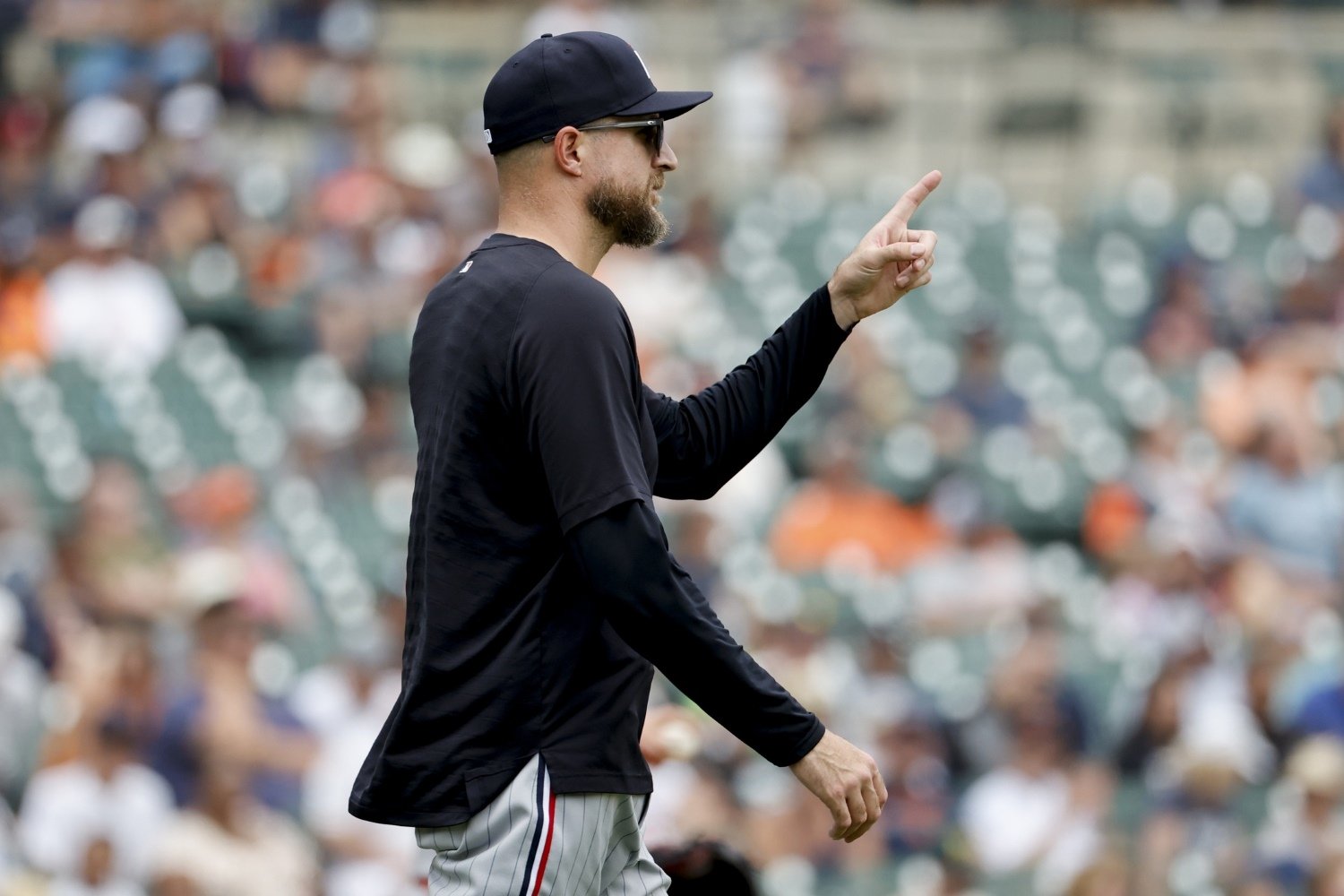 It is often assumed that some of the best relievers are failed starters. When looking back over Twins history, the first names that get thrown out are players like Glen Perkins or, more recently, Griffin Jax. Jhoan Durán was brought along as a starter, before having enough of an elbow issue to nudge him into the reliever bin and being too dominant to return, and Louie Varland could find himself experiencing a similar fate. Boiling the scenario down to relief, being a fallback for a starter, isn’t that straightforward, however. Rocco Baldelli might employ the best bullpen in baseball this season, but in doing so, he will need to have the utmost confidence in each person sitting beyond the outfield wall. Last week, when talking to reporters in Fort Myers, Baldelli was asked about Jorge Alcalá and where he is coming into spring training. Of course, the goal for a guy who has missed so much time is for them to be healthy, but this is equally about preparation. “I think a lot of it always comes back to strike-throwing and consistency in his pitches," Baldelli said. "When he is in the zone and has found his release point, if he’s not afraid to throw any of his pitches in any count and can do that successfully, he’s good. He’s got good stuff and can succeed. His spring is going to revolve around that type of consistency.” When looking at an arm that has missed so much time, it's natural to assume that’s a large piece of the puzzle, but when there are limited spots in a good unit, high-level performance will reign supreme. Baldelli is confident that Alcalá is now healthy, and he’s looking to focus on performance. Although the role to which he's trying to stake a new claim is technically less demanding than that of a starter, though, there will be hurdles for Alcalá to clear, as well. The Twins saw the emergence of Brock Stewart last season, and despite having suffered a career marred with injury, he transformed himself into a high-leverage reliever. While he worked just 28 innings for Minnesota, the Twins got some of their best bullpen value from the former Dodgers pitcher. His 0.65 ERA and 12.7 K/9 weren’t just the reflection of a failed starter making things work, but of the fact that he had settled into a relief role and found ways to excel. After coming into spring training last year with some uncertainty surrounding his eventual role, things may be slightly different for Stewart this season. That said, knowing his performances are evaluated on a short-cycle basis, he is preparing the same way. “It’s like a tryout every day, and that’s kind of how I treat every outing.” Such is life; such is the plight of a reliever. When pitchers struggle with durability, it is fair to question if a lesser workload would allow them a heightened level of performance. One of Minnesota’s best pitching prospects, Marco Raya, falls into this category. The problem is that the standard for per-batter performance is higher, and that that demand for more excellence comes along with less certainty about when you'll be called upon--and therefore, less capacity to work on things between outings or do simple conditioning and maintenance. Those principles aren’t lost on Stewart, or on Alcalá. Remaining healthy and durable in a bullpen role is a worthwhile goal, but no simple one--not even relative to doing the same as a starter. Stretching toward the number of outings Stewart would like to have would also reflect a consistent level of performance. “I want to be available and healthy. I want to be vigilant with my training and preparation every day," he told Bonnes. "I would love to have 75 appearances this year. One day at a time is the biggest thing.” During the spring slate, relievers can work to find what helps them, availing themselves of a very predictable schedule. Once the regular campaign gets underway, though, and without the ability to circle a date every five games on the calendar, their usage is sporadic. A couple of years ago, Durán had to figure that out on the fly. Guys who manage to strike the delicate balance of being ready to pitch on any given night and doing the work between appearances to promote good health and in-season improvement are the ones who find the greatest level of success. With the expectation of a good bullpen on paper, Baldelli must have confidence in his arms and (most importantly) their ability to execute. During the season, he can’t worry if a reliever loses a pitch or whether they can find the strike zone on a given night. During spring training, each individual can prove this to the manager, and the guys getting just a few outs to do so will face more pressure than those with a few innings to settle into a routine and make things work. Developing good relievers isn’t as straightforward as shifting a stretched-out arm to the bullpen, and the teams and individuals who do it well harness much more than additional velocity or shelving a specific pitch. Reporter credit: @John Bonnes
- 20 comments
-
- 8
-
-
- jorge alcala
- jhoan duran
- (and 2 more)
-
The Minnesota Twins might have assembled the best bullpen across Major League Baseball for this season. That’s a great asset to have, but simply slotting former starters into those roles isn’t a straightforward way to build the group, and finding success isn’t as easy as it may be assumed. Image courtesy of © Rick Osentoski-USA TODAY Sports It is often assumed that some of the best relievers are failed starters. When looking back over Twins history, the first names that get thrown out are players like Glen Perkins or, more recently, Griffin Jax. Jhoan Durán was brought along as a starter, before having enough of an elbow issue to nudge him into the reliever bin and being too dominant to return, and Louie Varland could find himself experiencing a similar fate. Boiling the scenario down to relief, being a fallback for a starter, isn’t that straightforward, however. Rocco Baldelli might employ the best bullpen in baseball this season, but in doing so, he will need to have the utmost confidence in each person sitting beyond the outfield wall. Last week, when talking to reporters in Fort Myers, Baldelli was asked about Jorge Alcalá and where he is coming into spring training. Of course, the goal for a guy who has missed so much time is for them to be healthy, but this is equally about preparation. “I think a lot of it always comes back to strike-throwing and consistency in his pitches," Baldelli said. "When he is in the zone and has found his release point, if he’s not afraid to throw any of his pitches in any count and can do that successfully, he’s good. He’s got good stuff and can succeed. His spring is going to revolve around that type of consistency.” When looking at an arm that has missed so much time, it's natural to assume that’s a large piece of the puzzle, but when there are limited spots in a good unit, high-level performance will reign supreme. Baldelli is confident that Alcalá is now healthy, and he’s looking to focus on performance. Although the role to which he's trying to stake a new claim is technically less demanding than that of a starter, though, there will be hurdles for Alcalá to clear, as well. The Twins saw the emergence of Brock Stewart last season, and despite having suffered a career marred with injury, he transformed himself into a high-leverage reliever. While he worked just 28 innings for Minnesota, the Twins got some of their best bullpen value from the former Dodgers pitcher. His 0.65 ERA and 12.7 K/9 weren’t just the reflection of a failed starter making things work, but of the fact that he had settled into a relief role and found ways to excel. After coming into spring training last year with some uncertainty surrounding his eventual role, things may be slightly different for Stewart this season. That said, knowing his performances are evaluated on a short-cycle basis, he is preparing the same way. “It’s like a tryout every day, and that’s kind of how I treat every outing.” Such is life; such is the plight of a reliever. When pitchers struggle with durability, it is fair to question if a lesser workload would allow them a heightened level of performance. One of Minnesota’s best pitching prospects, Marco Raya, falls into this category. The problem is that the standard for per-batter performance is higher, and that that demand for more excellence comes along with less certainty about when you'll be called upon--and therefore, less capacity to work on things between outings or do simple conditioning and maintenance. Those principles aren’t lost on Stewart, or on Alcalá. Remaining healthy and durable in a bullpen role is a worthwhile goal, but no simple one--not even relative to doing the same as a starter. Stretching toward the number of outings Stewart would like to have would also reflect a consistent level of performance. “I want to be available and healthy. I want to be vigilant with my training and preparation every day," he told Bonnes. "I would love to have 75 appearances this year. One day at a time is the biggest thing.” During the spring slate, relievers can work to find what helps them, availing themselves of a very predictable schedule. Once the regular campaign gets underway, though, and without the ability to circle a date every five games on the calendar, their usage is sporadic. A couple of years ago, Durán had to figure that out on the fly. Guys who manage to strike the delicate balance of being ready to pitch on any given night and doing the work between appearances to promote good health and in-season improvement are the ones who find the greatest level of success. With the expectation of a good bullpen on paper, Baldelli must have confidence in his arms and (most importantly) their ability to execute. During the season, he can’t worry if a reliever loses a pitch or whether they can find the strike zone on a given night. During spring training, each individual can prove this to the manager, and the guys getting just a few outs to do so will face more pressure than those with a few innings to settle into a routine and make things work. Developing good relievers isn’t as straightforward as shifting a stretched-out arm to the bullpen, and the teams and individuals who do it well harness much more than additional velocity or shelving a specific pitch. Reporter credit: @John Bonnes View full article
-
Correct
-
We have editors, and authors don't handle the images...
- 56 replies
-
- 1
-
-
- manuel margot
- noah miller
- (and 1 more)
-
Unfortunately, we have editors and they handle images.
- 56 replies
-
- 1
-
-
- manuel margot
- noah miller
- (and 1 more)
-
I think his market has basically bottomed out, but it's more knowing that he'd be in a true reserve role this year and doesn't have to choose that.
-
-3 DRS and 3 OAA doesn't really qualify as "pretty bad." He's stretched as a RF with the arm, but should play well in CF/LF for the Twins. He also has positive platoon splits against LHP
- 56 replies
-
- 1
-
-
- manuel margot
- noah miller
- (and 1 more)
-
Yeah, definite typo there. The first paragraph should have said Wallner flanking Buxton, not Larnach. Evident of the mistake in the paragraph about defensive limitations as well. Larnach is ticketed for Triple-A
-
The Minnesota Twins appeared to have one hole remaining with the bats on their roster, and they filled it on Monday. Image courtesy of © Brian Fluharty-USA TODAY Sports Byron Buxton will be back in center field this season, after missing more than a year of action on the grass. Max Kepler will flank him on one side, with Matt Wallner set to take the other spot. Backup outfield options only included Willi Castro, and with no Michael A. Taylor this time around, a right-handed hitter who could also be a strong defender in center was missing. Manuel Margot filled the need when Derek Falvey swung a deal Monday with the Los Angeles Dodgers. The 29-year-old is an above-average defender, although not the Gold Glove-level type to whom Minnesotans have been treated in recent seasons. He would not be stretched if he were forced to start many games in Buxton’s absence. Offensively, Margot has never lived up to the billing that would have been expected from a consensus top-25 prospect back in 2017. With a career 91 OPS+, he’s been below-average, even for his position. While that could be a bad thing, his floor remains safe, as his worst tally was an 83 OPS+ in 2019 with the San Diego Padres. The hope for the Twins here is that Margot can also find some expanded success against southpaws. Although Buxton bats right-handed, he has traditionally dominated righties. Margot has an OPS nearly 100 points higher against left-handed pitching, and his average of .281 and on-base percentage of .341 both would play. Given the left-handed nature of Minnesota’s corner outfielders and Matt Wallner's defensive limitations, Rocco Baldelli also has a late-game replacement at his disposal. The specific profile that Margot has also complements the Twins' current assets well. His arm is not the calling card, and that means he’s best positioned for center and left field. Kepler isn’t a candidate to be replaced for defensive purposes, and Wallner has familiarity with Target Field’s overhang should he need to shift. If there was a perfect last-minute addition, then Falvey may have hit the nail on the head. Falvey didn’t make this trade as a one-for-one, either. Along with Margot, Minnesota netted Rayne Doncon. The 20-year-old was an international free agent signed by the Dodgers, and debuted in 2021 as a 17-year-old. Ben Badler of Baseball America wrote at the time, “Doncon is 6-foot-1, 177 pounds with long limbs, a high waist and big physical upside, with a variety of paths his future could go depending on his physical development. He has the body type where early on it looked like he could outgrow shortstop, but so far, he has remained lean and agile enough for the position while getting stronger, showing good defensive instincts and a nose for the ball.” In 2023, Doncon completed his first full season of pro ball, playing 107 games at Low-A. He posted just a .651 OPS, but was over two years younger than the league average, and he showed pop with 14 long balls. He split time evenly throughout the infield, working at second, third, and short. As the Twins front office accomplished in the Luis Arráez and Jorge Polanco trades, they sought to add firepower beyond the major-league talent that was their primary target. Doncon isn’t the prospect that José Salas was coming into the organization, but there’s reason to like the upside here. This is where thoughts from True Blue LA landed on Doncon after last year. In grabbing Doncon along with Margot, the Twins hedge their bet of losing former 36th overall pick Noah Miller. The younger brother of Milwaukee Brewers infielder Owen Miller, Noah is already MLB-ready with the glove. The defense has been his calling card since he was drafted, and unfortunately, the bat hasn’t developed. He is still just 21 years old, and time remains on his side, but he produced a .648 OPS with little power at High-A Cedar Rapids a season ago. As has been a theme in Twins deals this offseason, they are also money-conscious. Getting $6 million from the Dodgers is significant, with Margot’s contract checking in at $10 million this season. He has a $12-million option for 2025, with a $2-million buyout that would be paid by the Rays if the Twins don't exercise the option. The additional dollars should bring Minnesota’s payroll to almost $130 million, which still sits about $25 million below the 2023 outlay. From a high-level view, it’s hard not to like this deal for the Twins. Margot is a definite upgrade defensively over Castro in the outfield, and there’s a chance he could hit in a platoon situation. Giving up a prospect in Miller who may never hit enough to reach the majors is hardly an overpay, and adding dollars and a flier helps sweeten the pot. Expect Minnesota to be out on a reunion with Taylor at this point, and Hernández has since announced he is returning to Los Angeles. Although Minnesota was in the running for his services, they may have dodged a bullet and directly benefited from him taking a roster spot with their trade partner. Are you satisfied with Margot as the final piece of the Twins' roster puzzle? How much faith do you have in the team's nimble maneuvering, around a caved-in payroll? Let us know. View full article
-
What Does the Manuel Margot Trade Bring to the Minnesota Twins?
Ted Schwerzler posted an article in Twins
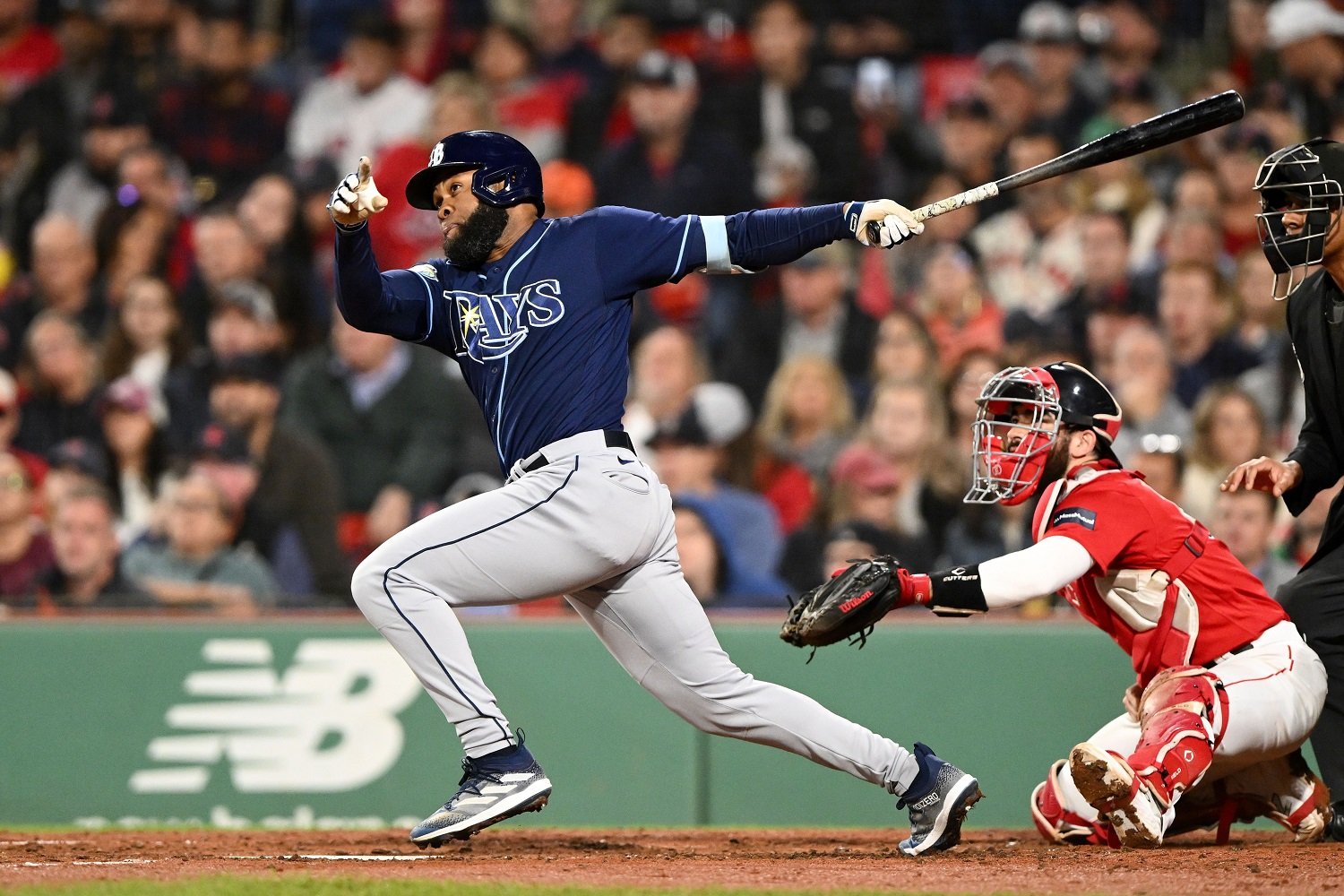 Byron Buxton will be back in center field this season, after missing more than a year of action on the grass. Max Kepler will flank him on one side, with Matt Wallner set to take the other spot. Backup outfield options only included Willi Castro, and with no Michael A. Taylor this time around, a right-handed hitter who could also be a strong defender in center was missing. Manuel Margot filled the need when Derek Falvey swung a deal Monday with the Los Angeles Dodgers. The 29-year-old is an above-average defender, although not the Gold Glove-level type to whom Minnesotans have been treated in recent seasons. He would not be stretched if he were forced to start many games in Buxton’s absence. Offensively, Margot has never lived up to the billing that would have been expected from a consensus top-25 prospect back in 2017. With a career 91 OPS+, he’s been below-average, even for his position. While that could be a bad thing, his floor remains safe, as his worst tally was an 83 OPS+ in 2019 with the San Diego Padres. The hope for the Twins here is that Margot can also find some expanded success against southpaws. Although Buxton bats right-handed, he has traditionally dominated righties. Margot has an OPS nearly 100 points higher against left-handed pitching, and his average of .281 and on-base percentage of .341 both would play. Given the left-handed nature of Minnesota’s corner outfielders and Matt Wallner's defensive limitations, Rocco Baldelli also has a late-game replacement at his disposal. The specific profile that Margot has also complements the Twins' current assets well. His arm is not the calling card, and that means he’s best positioned for center and left field. Kepler isn’t a candidate to be replaced for defensive purposes, and Wallner has familiarity with Target Field’s overhang should he need to shift. If there was a perfect last-minute addition, then Falvey may have hit the nail on the head. Falvey didn’t make this trade as a one-for-one, either. Along with Margot, Minnesota netted Rayne Doncon. The 20-year-old was an international free agent signed by the Dodgers, and debuted in 2021 as a 17-year-old. Ben Badler of Baseball America wrote at the time, “Doncon is 6-foot-1, 177 pounds with long limbs, a high waist and big physical upside, with a variety of paths his future could go depending on his physical development. He has the body type where early on it looked like he could outgrow shortstop, but so far, he has remained lean and agile enough for the position while getting stronger, showing good defensive instincts and a nose for the ball.” In 2023, Doncon completed his first full season of pro ball, playing 107 games at Low-A. He posted just a .651 OPS, but was over two years younger than the league average, and he showed pop with 14 long balls. He split time evenly throughout the infield, working at second, third, and short. As the Twins front office accomplished in the Luis Arráez and Jorge Polanco trades, they sought to add firepower beyond the major-league talent that was their primary target. Doncon isn’t the prospect that José Salas was coming into the organization, but there’s reason to like the upside here. This is where thoughts from True Blue LA landed on Doncon after last year. In grabbing Doncon along with Margot, the Twins hedge their bet of losing former 36th overall pick Noah Miller. The younger brother of Milwaukee Brewers infielder Owen Miller, Noah is already MLB-ready with the glove. The defense has been his calling card since he was drafted, and unfortunately, the bat hasn’t developed. He is still just 21 years old, and time remains on his side, but he produced a .648 OPS with little power at High-A Cedar Rapids a season ago. As has been a theme in Twins deals this offseason, they are also money-conscious. Getting $6 million from the Dodgers is significant, with Margot’s contract checking in at $10 million this season. He has a $12-million option for 2025, with a $2-million buyout that would be paid by the Rays if the Twins don't exercise the option. The additional dollars should bring Minnesota’s payroll to almost $130 million, which still sits about $25 million below the 2023 outlay. From a high-level view, it’s hard not to like this deal for the Twins. Margot is a definite upgrade defensively over Castro in the outfield, and there’s a chance he could hit in a platoon situation. Giving up a prospect in Miller who may never hit enough to reach the majors is hardly an overpay, and adding dollars and a flier helps sweeten the pot. Expect Minnesota to be out on a reunion with Taylor at this point, and Hernández has since announced he is returning to Los Angeles. Although Minnesota was in the running for his services, they may have dodged a bullet and directly benefited from him taking a roster spot with their trade partner. Are you satisfied with Margot as the final piece of the Twins' roster puzzle? How much faith do you have in the team's nimble maneuvering, around a caved-in payroll? Let us know.
- 56 comments
-
- 6
-
-

-
- manuel margot
- noah miller
- (and 1 more)
-
What Light Does Diamondbacks Deal Shed on the Minnesota Twins?
Ted Schwerzler posted an article in Twins
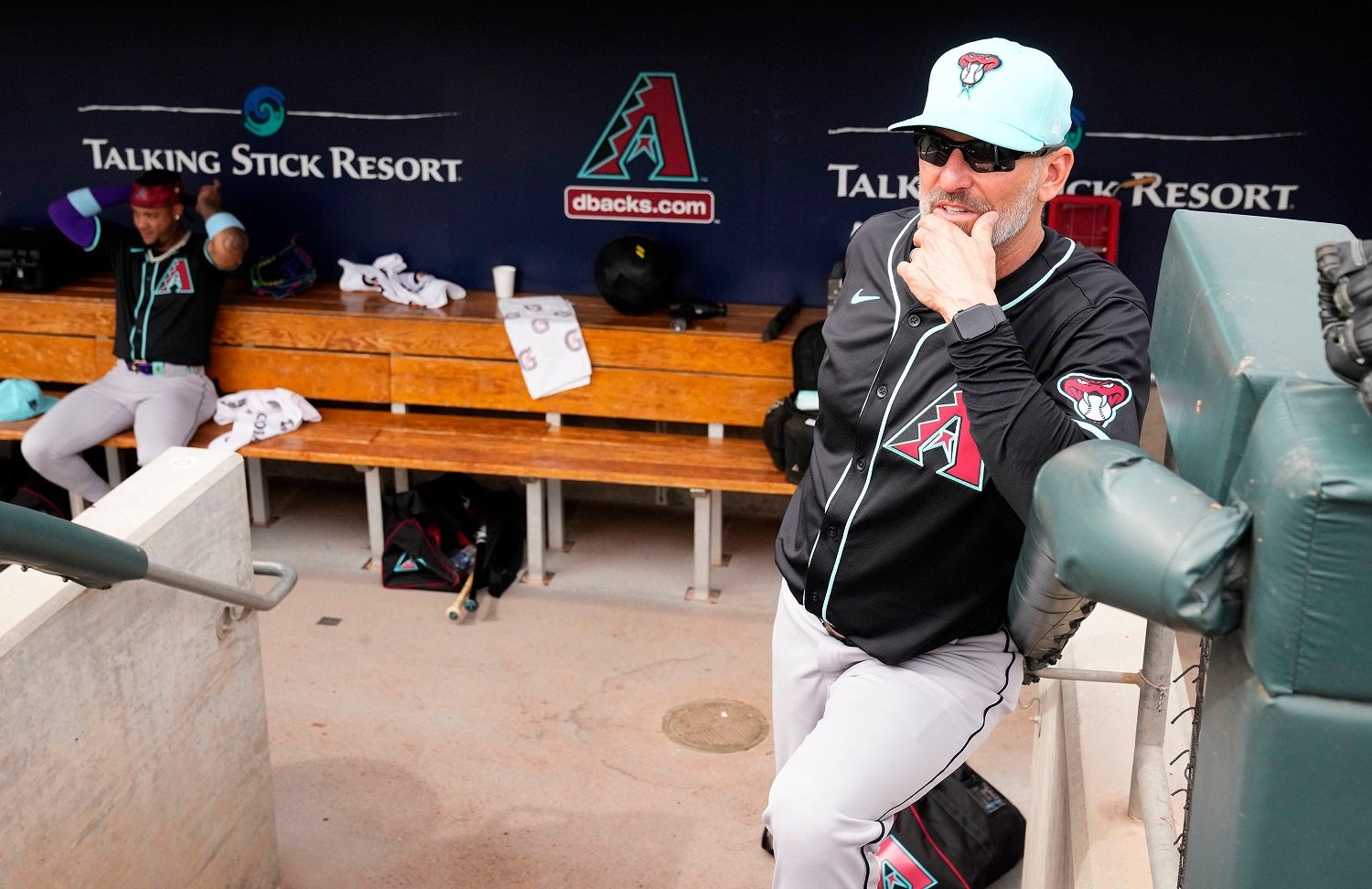 When the Minnesota Twins sent Cory Provus to the microphone to announce that he would be taking over as the TV voice of the Twins, the significant promise was that blackouts were going away. The Twins said they may be cash-strapped this offseason because they would be losing their (somewhat) lucrative television rights fees from Bally Sports North. Fast-forward to where we are now, and they instead re-upped with Bally for close to the same amount while streaming ceases to exist and blackouts remain. The Arizona Diamondbacks felt a similar situation just a year ago. As Bally Sports defaulted on their rights payments, the TV contract with the company ended over the summer. The franchise was set to receive more money than the Twins at $61.2 million, and they were suddenly out in the cold looking for answers. Of course, the Diamondbacks went on to play in the World Series, ending the year on a note with their franchise riding a substantial-high. Heading into the 2024 season, fans needed to know where and how they could consume Arizona baseball. On February 22, it was announced that the Diamondbacks would offer a full-year streaming package through MLB.tv that would come in at $99.99. The package was dubbed DBACKS.TV and allows in-market users to watch the games with no blackouts. For an additional $100, they could also get every out-of-market game through an expanded level of service. The hit in revenue from a $61.2 million regional sports network rights fee to whatever is generated by the new streaming service will be felt. However, it isn’t something that stopped Arizona ownership. Spending at lackluster thresholds as recently as 2002, the Diamondbacks have upped their payroll from sub-$100 million to $143 million in 2023 and currently sit around $140 million for 2024, potentially expanding roughly $20 million beyond that. Phoenix is a similar market to Minneapolis, and 2023 Forbes valuations have Arizona as the 23rd most valuable franchise, one place behind Minnesota. Despite this, the spending and present situations couldn’t be more different. Where the Twins have slashed payroll by over $30 million, the Diamondbacks brought in Eduardo Rodriguez, Joc Pederson, and Randal Grichuck. They also re-signed Lourdes Gurriel Jr. and extended Corbin Caroll for the long haul. All of those things happened with depressed present money, and Minnesota is out just roughly $8 million from rights fees from a year ago. It is worth noting that Ken Kendrick has followed that up by talking about a new stadium and leaving the door open to all avenues. Chase Field was opened in 1998, and the Diamondbacks owner is looking for his spending on the roster to be met with public funding for a new place to play. That is a contentious tradeoff but one that typically happens anyway. Ownership groups seek public funding for stadiums almost exclusively, and doing so before a commitment towards the on-field product would be quite the way to go about it. Even with the strings attached to the dollars, it remains clear that Arizona is focused on capitalizing on the run they just went on. A trip to the World Series had the fan base buzzing, and an offseason of excitement has continued that momentum. Rather than ride the wave of postseason success for the first time in years and the best season in three decades, the Twins immediately threw water on it. Next season, there will be a more significant commitment of dollars in Twins Territory as the rising costs of arbitration and extended players kick in. That shouldn’t make anyone feel comforted, with lesser revenues derived from viewership, and already backing off spending when the money is the same. The Twins ownership group has been the culprit of an ugly offseason, and when they finally follow through on enhancing viewership, stripping down the team even further could commence.
 -
The Minnesota Twins said back in November that their finances would be strapped this offseason due to uncertain television revenues. Ultimately, the situation remains status quo for 2024, but the Arizona Diamondbacks recently unveiled what should be expected for Minnesota in 2025. Image courtesy of © Rob Schumacher/The Republic / USA TODAY NETWORK When the Minnesota Twins sent Cory Provus to the microphone to announce that he would be taking over as the TV voice of the Twins, the significant promise was that blackouts were going away. The Twins said they may be cash-strapped this offseason because they would be losing their (somewhat) lucrative television rights fees from Bally Sports North. Fast-forward to where we are now, and they instead re-upped with Bally for close to the same amount while streaming ceases to exist and blackouts remain. The Arizona Diamondbacks felt a similar situation just a year ago. As Bally Sports defaulted on their rights payments, the TV contract with the company ended over the summer. The franchise was set to receive more money than the Twins at $61.2 million, and they were suddenly out in the cold looking for answers. Of course, the Diamondbacks went on to play in the World Series, ending the year on a note with their franchise riding a substantial-high. Heading into the 2024 season, fans needed to know where and how they could consume Arizona baseball. On February 22, it was announced that the Diamondbacks would offer a full-year streaming package through MLB.tv that would come in at $99.99. The package was dubbed DBACKS.TV and allows in-market users to watch the games with no blackouts. For an additional $100, they could also get every out-of-market game through an expanded level of service. The hit in revenue from a $61.2 million regional sports network rights fee to whatever is generated by the new streaming service will be felt. However, it isn’t something that stopped Arizona ownership. Spending at lackluster thresholds as recently as 2002, the Diamondbacks have upped their payroll from sub-$100 million to $143 million in 2023 and currently sit around $140 million for 2024, potentially expanding roughly $20 million beyond that. Phoenix is a similar market to Minneapolis, and 2023 Forbes valuations have Arizona as the 23rd most valuable franchise, one place behind Minnesota. Despite this, the spending and present situations couldn’t be more different. Where the Twins have slashed payroll by over $30 million, the Diamondbacks brought in Eduardo Rodriguez, Joc Pederson, and Randal Grichuck. They also re-signed Lourdes Gurriel Jr. and extended Corbin Caroll for the long haul. All of those things happened with depressed present money, and Minnesota is out just roughly $8 million from rights fees from a year ago. It is worth noting that Ken Kendrick has followed that up by talking about a new stadium and leaving the door open to all avenues. Chase Field was opened in 1998, and the Diamondbacks owner is looking for his spending on the roster to be met with public funding for a new place to play. That is a contentious tradeoff but one that typically happens anyway. Ownership groups seek public funding for stadiums almost exclusively, and doing so before a commitment towards the on-field product would be quite the way to go about it. Even with the strings attached to the dollars, it remains clear that Arizona is focused on capitalizing on the run they just went on. A trip to the World Series had the fan base buzzing, and an offseason of excitement has continued that momentum. Rather than ride the wave of postseason success for the first time in years and the best season in three decades, the Twins immediately threw water on it. Next season, there will be a more significant commitment of dollars in Twins Territory as the rising costs of arbitration and extended players kick in. That shouldn’t make anyone feel comforted, with lesser revenues derived from viewership, and already backing off spending when the money is the same. The Twins ownership group has been the culprit of an ugly offseason, and when they finally follow through on enhancing viewership, stripping down the team even further could commence. View full article
-
This offseason, the Minnesota Twins needed to focus on making a significant pitching addition to supplement the starting rotation. They largely ignored that reality and go into the season with some questions, but could pitching prospect David Festa provide plenty of the answers? Image courtesy of Rob Thompson, St. Paul Saints There is no denying that the Minnesota starting rotation is substantially weaker than it was a season ago. Sonny Gray and Kenta Maeda are both gone. Gray signing for significant dollars into his late thirties would always make him a non-starter for the Twins front office. Maeda could have been retained on a one-year deal, but he sought security and got that with the Detroit Tigers. The back end of Rocco Baldelli’s rotation has many more questions than it did a season ago. While Chris Paddack should be able to produce at least, if not better, than what Maeda did a year ago, his durability remains a question. Acquired in the Taylor Rogers trade with San Diego, Paddack was great for Minnesota before blowing out and needing Tommy John surgery, but how much he looks that part remains to be seen. Acquiring Anthony DeSclafani in the Jorge Polanco trade was representative of total value. Derek Falvey did a great job extracting something from Seattle in exchange for Polanco, but it’s hard to see the current roster being better for it, and DeSclafani isn’t going to move the needle even if he’s healthy. Last year, Minnesota saw how much depth can help prop up a team, and with a lesser group at the top, they’ll likely need to rely on that even more. Jordan Balazovic and Simeon Woods Richardson were there before him, but David Festa is the latest in the line of top Twins pitching prospects looking to make their mark. It’s debatable whether he’s the best starting prospect in the organization, but there’s no questioning that he could be the next man up. A former 13th-round pick and never having appeared on a major top 100 prospect list, Festa got his flowers as a selection for the Futures Game last year. He posted a 4.39 ERA at Double-A, and his 11.7 K/9 reflected stuff that could get good hitters out. His time at Triple-A St. Paul was brief, and although he made just three starts to end the year, the 15 strikeouts across just 12 1/3 innings were noteworthy. Although he is in big-league camp as a non-roster invitee, there isn’t an immediate path for him to make the major-league roster. He may be behind Louie Varland regarding Triple-A call-ups from the rotation, but a strong run of double-digit starts could have him immediately in the Twins plans. While Festa doesn’t have the ceiling of an ace in Minnesota, he shouldn’t be expected to be just a mop-up, back-end guy. As with any prospect promotion, there is plenty of promise and excitement until the league suggests otherwise. Festa’s eventual start should rival something like Kyle Gibson’s debut. Although there was more national fanfare for Gibson, Festa could command a number two or three role in Minnesota’s rotation. That would go a long way toward supplementing Pablo Lopez, Joe Ryan, and Bailey Ober. A year ago, Baldelli could get length from his starters and turned to just 10 different players at the beginning of a game. Six of the 10 starters made at least double-digit appearances, and any franchise would sign up for that level of consistency. This Twins group isn’t as guaranteed, and seeing more arms necessary is a likely outcome. The bullpen is a much better group, so they could be relied upon heavily, but adding double-digit turns from Festa because the results warranted it would be great to see. Despite being available on the open market, Minnesota isn’t signing Jordan Montgomery or Blake Snell. They may find a way to add a top-tier arm at the trade deadline, but they’ll need to hold serve internally before getting there. Festa parlaying some spring training success into quick production out of the gate with St. Paul would be awesome. Entering his fourth year in pro ball and looking to set a new career-high in innings pitched, Festa will have every opportunity to show that the bulk of them can come at Target Field. A late-season addition of a Dallas Keuchel type, or consistently cycling players to the mound as in 2022, becomes less necessary if the depth is capable of more than just availability. Festa may be a prime reflection of that, and the hope is we see the minor league success translate to the next level. View full article
- 22 replies
-
- 1
-
-
- david festa
- simeon woods richardson
- (and 2 more)
-
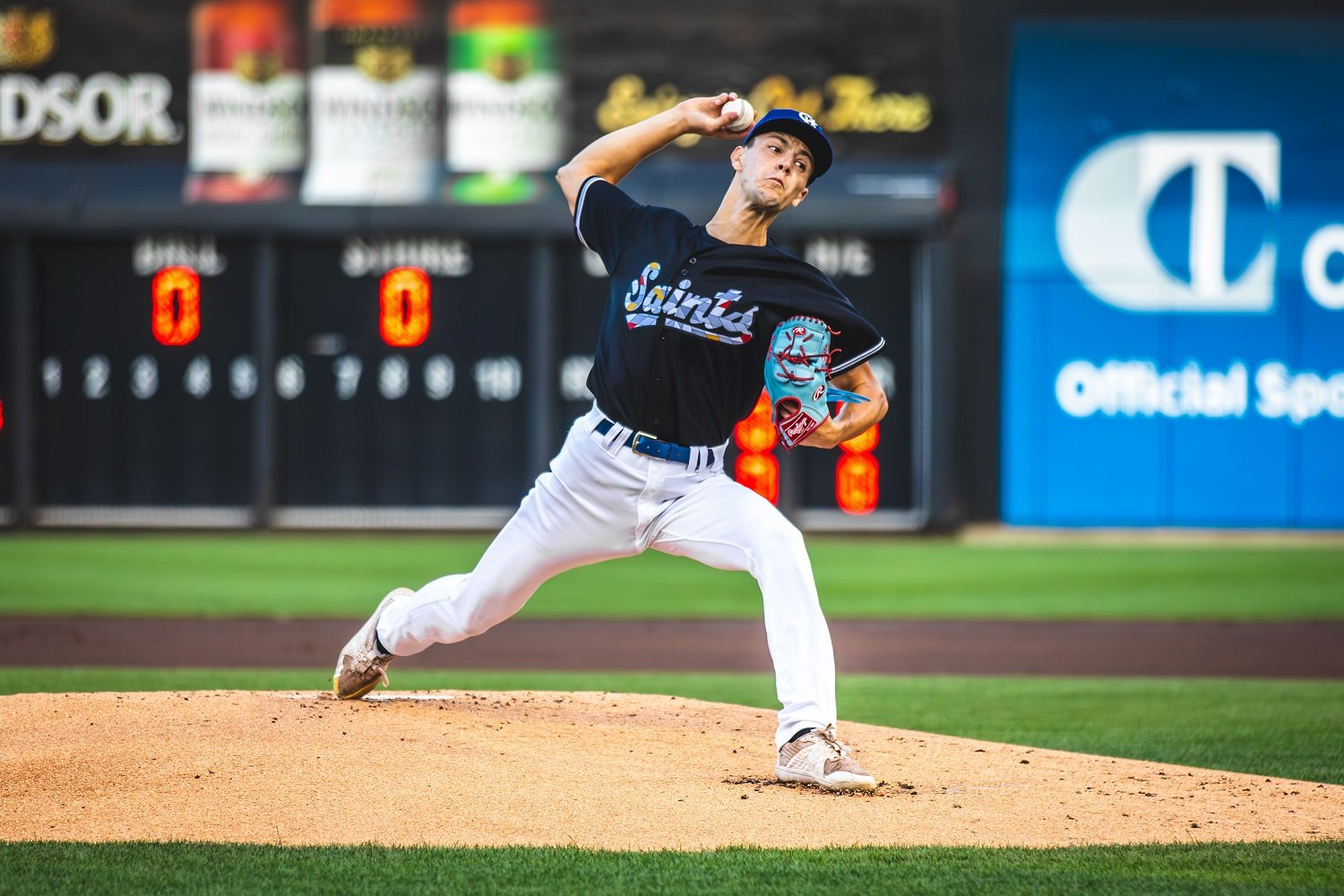 There is no denying that the Minnesota starting rotation is substantially weaker than it was a season ago. Sonny Gray and Kenta Maeda are both gone. Gray signing for significant dollars into his late thirties would always make him a non-starter for the Twins front office. Maeda could have been retained on a one-year deal, but he sought security and got that with the Detroit Tigers. The back end of Rocco Baldelli’s rotation has many more questions than it did a season ago. While Chris Paddack should be able to produce at least, if not better, than what Maeda did a year ago, his durability remains a question. Acquired in the Taylor Rogers trade with San Diego, Paddack was great for Minnesota before blowing out and needing Tommy John surgery, but how much he looks that part remains to be seen. Acquiring Anthony DeSclafani in the Jorge Polanco trade was representative of total value. Derek Falvey did a great job extracting something from Seattle in exchange for Polanco, but it’s hard to see the current roster being better for it, and DeSclafani isn’t going to move the needle even if he’s healthy. Last year, Minnesota saw how much depth can help prop up a team, and with a lesser group at the top, they’ll likely need to rely on that even more. Jordan Balazovic and Simeon Woods Richardson were there before him, but David Festa is the latest in the line of top Twins pitching prospects looking to make their mark. It’s debatable whether he’s the best starting prospect in the organization, but there’s no questioning that he could be the next man up. A former 13th-round pick and never having appeared on a major top 100 prospect list, Festa got his flowers as a selection for the Futures Game last year. He posted a 4.39 ERA at Double-A, and his 11.7 K/9 reflected stuff that could get good hitters out. His time at Triple-A St. Paul was brief, and although he made just three starts to end the year, the 15 strikeouts across just 12 1/3 innings were noteworthy. Although he is in big-league camp as a non-roster invitee, there isn’t an immediate path for him to make the major-league roster. He may be behind Louie Varland regarding Triple-A call-ups from the rotation, but a strong run of double-digit starts could have him immediately in the Twins plans. While Festa doesn’t have the ceiling of an ace in Minnesota, he shouldn’t be expected to be just a mop-up, back-end guy. As with any prospect promotion, there is plenty of promise and excitement until the league suggests otherwise. Festa’s eventual start should rival something like Kyle Gibson’s debut. Although there was more national fanfare for Gibson, Festa could command a number two or three role in Minnesota’s rotation. That would go a long way toward supplementing Pablo Lopez, Joe Ryan, and Bailey Ober. A year ago, Baldelli could get length from his starters and turned to just 10 different players at the beginning of a game. Six of the 10 starters made at least double-digit appearances, and any franchise would sign up for that level of consistency. This Twins group isn’t as guaranteed, and seeing more arms necessary is a likely outcome. The bullpen is a much better group, so they could be relied upon heavily, but adding double-digit turns from Festa because the results warranted it would be great to see. Despite being available on the open market, Minnesota isn’t signing Jordan Montgomery or Blake Snell. They may find a way to add a top-tier arm at the trade deadline, but they’ll need to hold serve internally before getting there. Festa parlaying some spring training success into quick production out of the gate with St. Paul would be awesome. Entering his fourth year in pro ball and looking to set a new career-high in innings pitched, Festa will have every opportunity to show that the bulk of them can come at Target Field. A late-season addition of a Dallas Keuchel type, or consistently cycling players to the mound as in 2022, becomes less necessary if the depth is capable of more than just availability. Festa may be a prime reflection of that, and the hope is we see the minor league success translate to the next level.
- 22 comments
-
- 6
-
-
- david festa
- simeon woods richardson
- (and 2 more)
-
This is the Carlos Correa Minnesota Paid For
Ted Schwerzler replied to Ted Schwerzler 's topic in Twins Daily Front Page News
I think a lot of the defensive shortcomings are a product of range, so you don't see the impact as the plays aren't being made (think Jeter). Agree though, those two carrying this team as once expected would be a blast.- 23 replies
-
- 3
-
-
- carlos correa
- rocco baldelli
- (and 5 more)
-
This is the Carlos Correa Minnesota Paid For
Ted Schwerzler replied to Ted Schwerzler 's topic in Twins Daily Front Page News
Agree with all of this. Not sure the 2021 was that huge of a deviation though. He was being pained by back issues for a time with Houston. Completely healthy he definitely has MVP talent.- 23 replies
-
- 2
-
-
- carlos correa
- rocco baldelli
- (and 5 more)
-
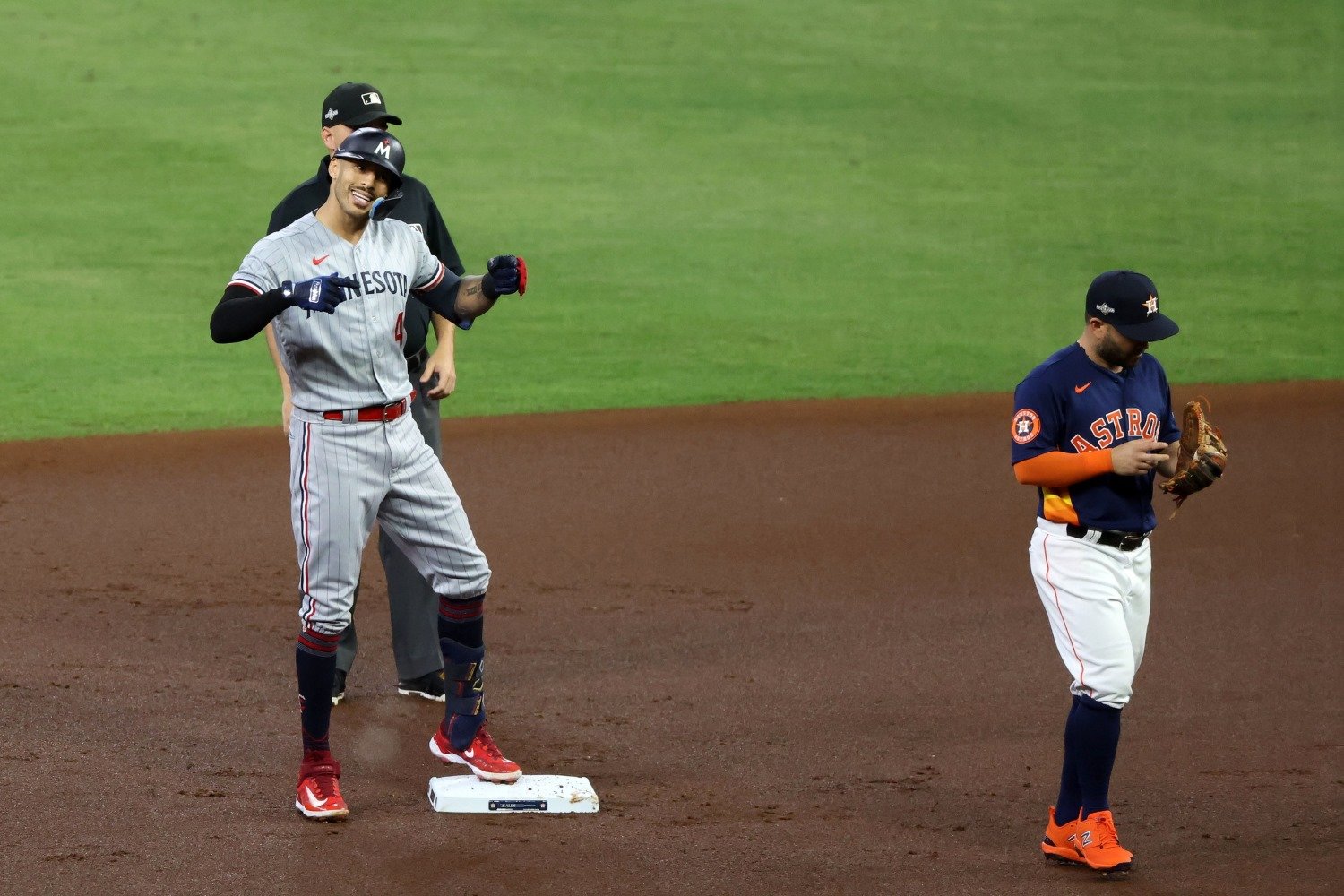 The offseason talk has been about the production lost in the rotation. How the Twins replace arms like Sonny Gray, Kenta Maeda, and even Tyler Mahle is not yet clear. They added Anthony DeSclafani and get Chris Paddack back, but the group certainly isn’t the same. However, the best version of Carlos Correa helps to supplement the roster in a big way. Plenty has been made about the health of Byron Buxton in recent seasons, and with good reason, but Correa coming into spring training with familiarity and a clean bill of health is equally important. Last season, Minnesota got 135 games out of their starting shortstop. That was just one shy of his 2022 mark, but Correa really wasn’t the same player. Dealing with nagging plantar fasciitis, Correa was a shell of himself, working to remain on the field as a veteran presence. When the dust settled, Correa produced a career-low 1.1 fWAR. Across eight full seasons (excluding 2020), the former Houston Astros shortstop had never produced a season with less than 3.4 fWAR. He put up a 4.4 fWAR tally in his debut with the Twins, and in 2021, he finished fifth in the American League MVP voting with a 6.2 fWAR. The ZiPS projection system certainly sees last season as an outlier, with a 4.0 fWAR forecast for 2024. None of this is lost on Correa. Speaking to reporters (including Twins Daily's John Bonnes) during his initial conversations down in Fort Myers, it was evident he also knows there’s a difference. “[An offseason without worrying about free agency] was great. It was so chill," Correa said. "I know there are a lot of free agents out there that haven’t signed yet, a lot of big names. I know what that’s like; I went through it a few years, and it’s tough. This was a great offseason for me.” Focusing on playing with his kids and connecting with his wife, Daniella, while just putting in the work was a nice change for the superstar. It’s not just the mental aspect of not knowing where you will end up, though. He was dealt a tough hand during the 2023 regular season. Er, maybe we should say, it got off on the wrong foot. It clearly impacted him in the field, and that could be why he posted his first negative DRS (Defensive Runs Saved) total of his career. The strong arm has never been a question from the shortstop position, but Correa was merely average on the dirt for the first time as a big leaguer. With the plantar fasciitis (hopefully) behind him, there’s good reason to believe a defensive resurgence is in store. “It took a little longer than I expected [to go away], but I tested it running and doing the infield work," Correa said. "I’m very positive moving forward. It took a couple of months, but now we’re good.” Being able to come into spring training as the player he has been, with no distractions, has given the star a new outlook. It’s not just Correa himself who has noticed a difference, either. Rocco Baldelli has worked with Correa for two seasons, and he has seen him deal with the mental side of free agency and uncertainty in each of those years. As a player who experienced health setbacks of his own, the manager can sympathize with what Correa has dealt with as well. “I think it was a much easier offseason for him to focus on all the little things you need to do to get ready," said Baldelli. "We know he’s very attentive to his body and his needs, but there’s no way around the fact that he had a ton going on last winter. I think he had a good, full, solid offseason. I think he’s ready to go.” Baldelli also touched on what he saw from his starting shortstop last year, and in having experienced two different seasons from him, it’s not lost on the manager how much Correa dealt with in 2023. “You have to allow guys space to work through things. He was hurt, but until the end of the season with us in a good spot, that was the only time he was going to allow himself time to [recuperate]. If it took him playing [until] the last day of the regular season for us to make the playoffs, he would’ve done that, too.” There isn’t much need to daydream about what a healthy version of Correa looks like. A glance at the back of his baseball card shows he is among the most talented players in the game, and it’s why he has a World Series ring already. Baldelli talked about Correa’s mental toughness, allowing him “the ability to still be successful at his job even if he can’t physically do a lot of what he normally would do.” Hearing sentiments like that and knowing both the player and organization see the path forward as normal should excite Twins fans. A high level of health and availability is something that major league teams hope for across their 26-man roster. The reality is that players will get hurt throughout the season, but the goal is to manage the injuries and avoid those that are serious or that afflict your key players. All being at their peak performance, Correa, Byron Buxton, and Royce Lewis should propel Minnesota well above any lost production from the pitching side of things. The Twins saw Correa show out as a superstar in 2022. It’s why he was able to step away from the final two years of his contract and pursue another, bigger deal. It’s also why he was given a six-year pact worth $200 million, even after medical concerns scuppered two larger ones, and it’s why the excitement for his production to reach new heights as a 29-year-old could be among the season's biggest storylines. What would rate as a successful season from Correa, in your book? What do you need to see from him in Grapefruit League and early regular-season play to begin to trust in his health? Join the conversation below. Reporter credit: @John Bonnes
- 23 comments
-
- 8
-
-
- carlos correa
- rocco baldelli
- (and 5 more)
-
The two previous offseasons have been a whirlwind for Carlos Correa. Signing what amounted to a one-year deal and having two contracts fall through before returning to Minnesota, 2023 didn’t go as planned either. It’s now, in 2024, that the Twins are finally set to get what they paid for. The offseason talk has been about the production lost in the rotation. How the Twins replace arms like Sonny Gray, Kenta Maeda, and even Tyler Mahle is not straightforward. They added Anthony DeSclafani and get Chris Paddack back, but the group certainly isn’t the same. However, the best version of Carlos Correa helps to supplement the roster in a big way. Plenty has been made about the health of Byron Buxton in recent seasons, and with good reason, but Correa coming into spring training with familiarity and a clean bill of health is equally impactful. Last season, Minnesota got 135 games out of their starting shortstop. That was just one contest shy of his 2022 mark, but it was beyond evident that it wasn’t the same player. Dealing with a nagging plantar fasciitis injury, Correa was simply a shell of himself working to remain on the field as a veteran presence. When the dust settled, Correa produced a career-low 1.1 fWAR. Across eight full seasons (excluding 2020), the former Houston Astros shortstop had never produced a season with less than 3.4 fWAR. He put up a 4.4 fWAR tally in his debut with the Twins, and in 2021, he finished fifth in the American League MVP voting with a 6.2 fWAR. The ZiPS projection system certainly sees last season as an outlier with a 4.0 fWAR designation for 2024, and the conservative nature of those statistics means the reality could be much higher. None of this is lost on Correa either. Speaking to reporters during his initial conversations down in Fort Myers, it’s evident he also knows there’s a difference. “It [an offseason without worrying about free agency] was great. It was so chill. I know there are a lot of free agents out there that haven’t signed yet, a lot of big names. I know what that’s like; I went through it a few years, and it’s tough. This was a great offseason for me.” Focusing on playing with his kids and connecting with his wife, Daniella, while just putting in the work was a nice change for the superstar. It’s not just the mental aspect of not knowing where you will end up, though, for Correa. He was dealt a tough hand during the 2023 regular season while putting up with a nagging foot injury. It clearly impacted him in the field, and that could be why he posted his first negative DRS (defensive runs saved) total of his career. The strong arm has never been a question from the shortstop position, but Correa was merely average on the dirt for the first time as a big leaguer. With the plantar fasciitis behind him, there’s a good amount of reason to believe a defensive resurgence is in store. “It took a little longer than I expected [to go away], but I tested it running and doing the infield work. I’m very positive moving forward. It took a couple of months, but now we’re good.” Being able to come into spring training as the player he has been, and with no distractions, is something that Correa will undoubtedly sign up for. It’s not just the player who has noticed a difference, either. Rocco Baldelli has worked with Correa for two seasons, and he has seen him deal with the mental side of free agency and uncertainty in each of those years. As a player who experienced health setbacks on his own, the manager can sympathize with what Correa has dealt with as well. “I think it was a much easier offseason for him to focus on all the little things you need to do to get ready. We know he’s very attentive to his body and his needs, but there’s no way around the fact that he had a ton going on last winter. I think he had a good, full, solid offseason. I think he’s ready to go.” Baldelli also touched on what he saw from his starting shortstop last year, and in having experienced two different seasons from him, it’s not lost on the manager how much Correa dealt with in 2023. “You have to allow guys space to work through things. He was hurt, but until the end of the season with us in a good spot, that was the only time he was going to allow himself time to recoup. If it took him playing til the last day of the regular season for us to make the playoffs, he would’ve done that too.” There isn’t much need to daydream about what a healthy version of Correa looks like. A glance at the back of his baseball card shows why he is among the most talented players in the game, and it’s why he has a World Series ring to show for it. Baldelli talked about Correa’s mental toughness, allowing him “the ability to still be successful at his job even if he can’t physically do a lot of what he normally would do.” Hearing sentiments like that and knowing both the player and organization see the path forward as normal should excite Twins fans to have an MVP-caliber talent back in the lineup on a regular basis. A high level of health and availability is something that major league teams hope for across their 26-man roster. The reality is that players will get hurt throughout the season, but the goal is to manage the injuries and avoid those that are serious or to your key players. All being at their peak performance, Correa, Byron Buxton, and Royce Lewis should propel Minnesota well above any lost production from the pitching side of things. The Twins saw Correa show out as a superstar in 2022. It’s why he was able to step away from the final two years of his contract and play for $35.1 million on a one-year deal. It’s also why he was given a six-year pact worth $200 million, and it’s why the excitement for his production to reach new heights as a 29-year-old could be among the season's biggest storylines. View full article