



Greggory Masterson
-
Posts
819 -
Joined
-
Last visited
-
Days Won
2
Content Type
Profiles
News
Minnesota Twins Videos
2026 Minnesota Twins Top Prospects Ranking
2022 Minnesota Twins Draft Picks
Minnesota Twins Free Agent & Trade Rumors, Notes, & Tidbits
Guides & Resources
2023 Minnesota Twins Draft Picks
The Minnesota Twins Players Project
2024 Minnesota Twins Draft Picks
2025 Minnesota Twins Draft Pick Tracker
2026 Minnesota Twins Draft Tracker: Picks & Bonuses
Forums
Blogs
Events
Store
Downloads
Gallery
Everything posted by Greggory Masterson
-
It's an offseason... off-day? Sweet Lou and Ol Gregg kick off the offseason with a little of everything: takeaways from the final week of the season, discussion of what the core of this team is, and a check-in in on some of fans' free agent wish lists from a year ago. Lou also commandeers Greggory's Gripes and they answer a few listener questions. Listen using Apple Podcasts: https://podcasts.apple.com/us/podcast/the-twins-off-daily-podcast/id1741266056 Listen using Spotify: https://open.spotify.com/show/4tb78XlurcPTYYSsARdbD7 View full article
-
 As the Sheriff prepares to ride once again, will it be into the Twin Cities? And will he be confined to the stables? Image courtesy of © Kamil Krzaczynski-Imagn Images Chris Paddack and the Twins are at a crossroads. The Sheriff has, unfortunately, become a little redundant in this rotation. This town ain’t big enough for the six of them, if you will. Unlike a revolver, a rotation only has room for five. The Twins best get a wiggle on. Okay, I’ll do my best to refrain from engaging in Old West parlance. Paddack was acquired in a much-ballyhooed 2022 trade that sent future All-Star Brent Rooker and previous All-Star Taylor Rogers to San Diego. Alongside Paddack, the Twins received Emilio Pagan, a name not brought up around polite company. The Twins saw something in Paddack, who, as a greenhorn rookie in 2019, threw 140 innings to the tune of a 3.33 ERA (126 ERA+), striking out more than a batter per inning. His performance was lackluster in the 2020 shortened season (4.73 ERA) and didn’t improve in an injury-shortened 2021 (5.07 ERA), though his underlying metrics were far more favorable. Stop me if you’ve heard this before, but the Twins saw something in an injury-plagued player with team control and made a deal for him. He lasted all of five starts in 2022 prior to his maladies catching up with him, as he went under the knife for his second Tommy John surgery. Upon returning from the apothecary, he pitched in four games between the regular season and the playoffs, all out of the bullpen. In 2024, he opened the season as a rotation arm, making 17 starts before being shut down for the season after July. Normally, after six full seasons in the league Paddack would have been a free agent. However, the Twins signed him to a three-year, $12.5 million deal ahead of 2022 to pay him approximately $2.5 million per season as he came back from Tommy John and $7.5 for the final year, buying out a year of his free agency. And that’s how we’ve come to the place we are now. As the team continues to run a budget in the bottom third of the league, that $7.5 million contract looms large. It was a fair gamble at the time, and it’s at a price that Paddack could potentially go for on the open market, but it’s a questionable use of the team’s resources, especially with arms like Simeon Woods Richardson, David Festa, and Zebby Matthews who could arguably be better options than Paddack for a tenth of the price. The quick ascension of players like Matthews and Andrew Morris, as well as the resurgence of Woods Richardson’s prospect stock probably weren’t foreseen, either. So, let’s review the options. Keep Paddack in the Rotation This is the most straightforward move and the path of least resistance. Paddack could return to his place in the rotation, moving a younger starter out of the pitcher to begin the year. The most likely candidate to lose a spot would probably be Festa, as Woods Richardson has the longer track record, but Festa could be given the nod due to his higher ceiling. Either way, one of the two would be bumped (assuming that Matthews will finally be given a chance to get some Triple-A innings.) Although both Festa and Woods Richardson have impressed and seem destined for MLB careers, there’s precedent for these Twins to stash depth rotation arms, which are seen as MLB-ready in the minors to begin the year. This year, they had planned on keeping Louie Varland in St. Paul before the announcement that Anthony DeSclafani would not pitch in 2024. (At the time, many saw Varland as having some potential to be a rotation piece, and he had 15 starts under his belt). In 2023, they held Bailey Ober out of the rotation, which was far more egregious. So the Twins could open the season with a rotation of Pablo Lopez, Joe Ryan, Ober, Paddack, and Woods Richardson or Festa—with the other being the first line of defense against injury. They’d also have Zebby Matthews on call and other high-minors pitchers like Cory Lewis, Andrew Morris, and Marco Raya if the straits become too dire. This gambit might be getting too cute by half, and it could be argued that it’s time to hand the rotation over to the kids and reallocate those funds. At the same time, you can never have too much starting pitching depth. Move Paddack to the Bullpen What in tarnation? Paddack has a minimal history of bullpen work, coming out of the pen just five times in his MLB career. However, one was incredibly memorable: He recorded seven outs, struck out four, and allowed just one baserunner in Game 4 of the 2023 ALDS against Houston. He returned for the last couple of weeks of the season and pumped up his stuff in shorter bursts, and the stuff played. It wasn’t all success for him, as he did have an appearance where he gave up three runs in two innings during the regular season, but it was only one of his four outings. Paring down his pitch mix to an upper-90s fastball, a good changeup, and one of his breaking pitches could be a recipe for success one or two innings at a time, and it’s a role he was preparing for if the Twins reached the postseason in 2024. The bullpen may be his best chance at success for the rest of his career. Verily, he wouldn’t be expected to slot in among the top bullpen arms, at least until the team saw more from him. He’d also probably need some convincing, and if the team is worried about his salary as a starter, they’re definitely going to be wary of paying him $7.5 million to come out of the bullpen. Trade Paddack If the Twins don’t see him as worth the (admittedly paltry) sum he’s owed in the rotation or bullpen, the last resort would be to get rid of him. $7.5 million isn’t an unreasonable salary for one year of an up-and-down, injury-plagued pitcher still in his 20s with a bit of promise, but that figure means more to some teams than others. What could the Twins get for Paddack? Well, probably not a ton. He doesn’t provide much in surplus value, though all teams value players differently, and some teams might be high on Paddack—seeing him as a tweak or a healthy stretch away from being a mid-rotation starter. As it stands, though, fans shouldn’t hold their breath on an exciting prospect package. The club’s primary objective would probably be to find a team willing to take on Paddack’s salary and then decide amongst returns if there are multiple offers. They could run into another DeSclafani-Jorge Polanco situation in which a player from the other team, such as a first baseman or a right-handed platoon bat, is added to the deal to balance salary. How do you want to see the Twins handle Chris Paddack in 2025? Tell us in the comments below. Yeehaw. View full article
 -
Twins Offseason Decision Point: What's Next for Chris Paddack?
Greggory Masterson posted an article in Twins
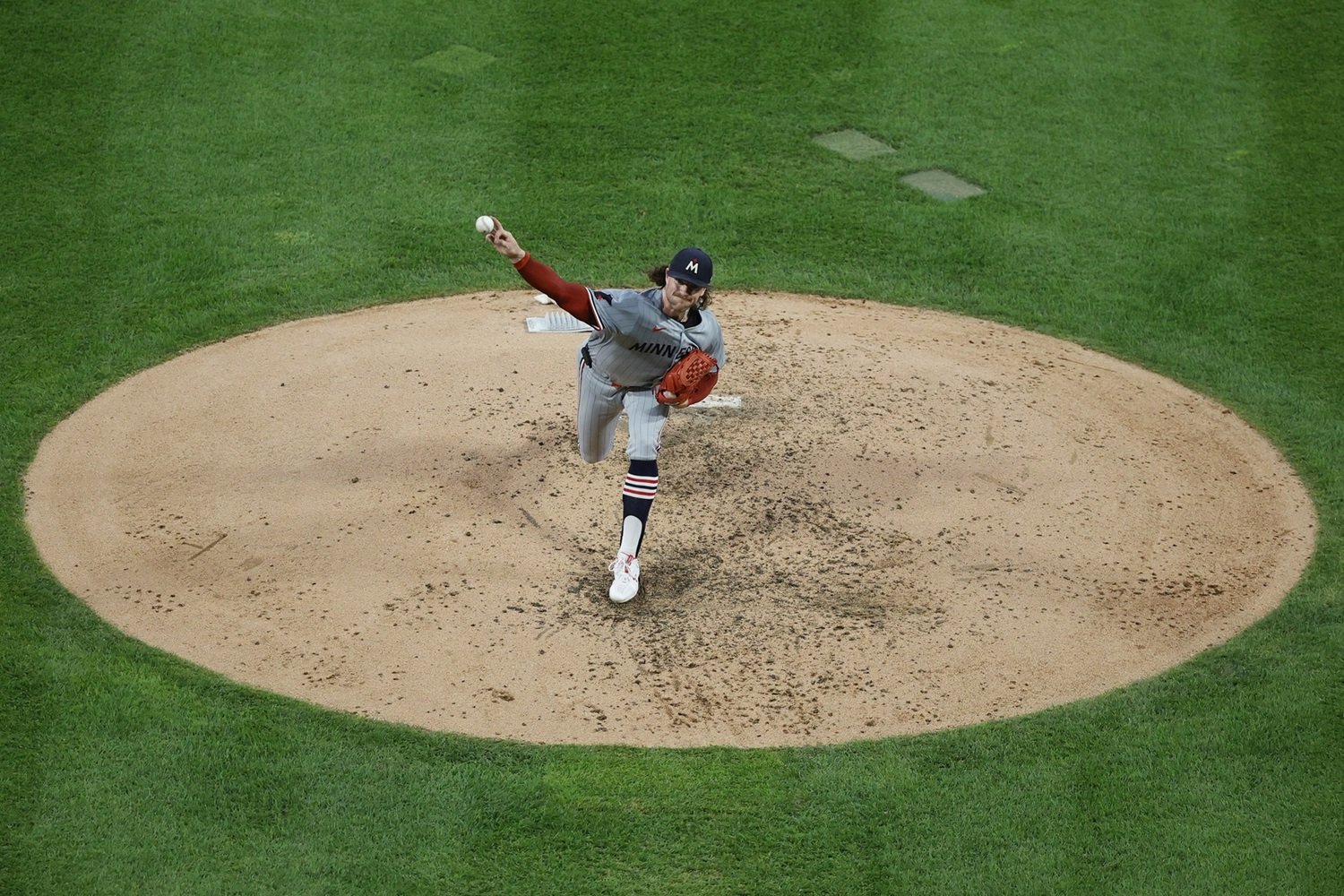 Chris Paddack and the Twins are at a crossroads. The Sheriff has, unfortunately, become a little redundant in this rotation. This town ain’t big enough for the six of them, if you will. Unlike a revolver, a rotation only has room for five. The Twins best get a wiggle on. Okay, I’ll do my best to refrain from engaging in Old West parlance. Paddack was acquired in a much-ballyhooed 2022 trade that sent future All-Star Brent Rooker and previous All-Star Taylor Rogers to San Diego. Alongside Paddack, the Twins received Emilio Pagan, a name not brought up around polite company. The Twins saw something in Paddack, who, as a greenhorn rookie in 2019, threw 140 innings to the tune of a 3.33 ERA (126 ERA+), striking out more than a batter per inning. His performance was lackluster in the 2020 shortened season (4.73 ERA) and didn’t improve in an injury-shortened 2021 (5.07 ERA), though his underlying metrics were far more favorable. Stop me if you’ve heard this before, but the Twins saw something in an injury-plagued player with team control and made a deal for him. He lasted all of five starts in 2022 prior to his maladies catching up with him, as he went under the knife for his second Tommy John surgery. Upon returning from the apothecary, he pitched in four games between the regular season and the playoffs, all out of the bullpen. In 2024, he opened the season as a rotation arm, making 17 starts before being shut down for the season after July. Normally, after six full seasons in the league Paddack would have been a free agent. However, the Twins signed him to a three-year, $12.5 million deal ahead of 2022 to pay him approximately $2.5 million per season as he came back from Tommy John and $7.5 for the final year, buying out a year of his free agency. And that’s how we’ve come to the place we are now. As the team continues to run a budget in the bottom third of the league, that $7.5 million contract looms large. It was a fair gamble at the time, and it’s at a price that Paddack could potentially go for on the open market, but it’s a questionable use of the team’s resources, especially with arms like Simeon Woods Richardson, David Festa, and Zebby Matthews who could arguably be better options than Paddack for a tenth of the price. The quick ascension of players like Matthews and Andrew Morris, as well as the resurgence of Woods Richardson’s prospect stock probably weren’t foreseen, either. So, let’s review the options. Keep Paddack in the Rotation This is the most straightforward move and the path of least resistance. Paddack could return to his place in the rotation, moving a younger starter out of the pitcher to begin the year. The most likely candidate to lose a spot would probably be Festa, as Woods Richardson has the longer track record, but Festa could be given the nod due to his higher ceiling. Either way, one of the two would be bumped (assuming that Matthews will finally be given a chance to get some Triple-A innings.) Although both Festa and Woods Richardson have impressed and seem destined for MLB careers, there’s precedent for these Twins to stash depth rotation arms, which are seen as MLB-ready in the minors to begin the year. This year, they had planned on keeping Louie Varland in St. Paul before the announcement that Anthony DeSclafani would not pitch in 2024. (At the time, many saw Varland as having some potential to be a rotation piece, and he had 15 starts under his belt). In 2023, they held Bailey Ober out of the rotation, which was far more egregious. So the Twins could open the season with a rotation of Pablo Lopez, Joe Ryan, Ober, Paddack, and Woods Richardson or Festa—with the other being the first line of defense against injury. They’d also have Zebby Matthews on call and other high-minors pitchers like Cory Lewis, Andrew Morris, and Marco Raya if the straits become too dire. This gambit might be getting too cute by half, and it could be argued that it’s time to hand the rotation over to the kids and reallocate those funds. At the same time, you can never have too much starting pitching depth. Move Paddack to the Bullpen What in tarnation? Paddack has a minimal history of bullpen work, coming out of the pen just five times in his MLB career. However, one was incredibly memorable: He recorded seven outs, struck out four, and allowed just one baserunner in Game 4 of the 2023 ALDS against Houston. He returned for the last couple of weeks of the season and pumped up his stuff in shorter bursts, and the stuff played. It wasn’t all success for him, as he did have an appearance where he gave up three runs in two innings during the regular season, but it was only one of his four outings. Paring down his pitch mix to an upper-90s fastball, a good changeup, and one of his breaking pitches could be a recipe for success one or two innings at a time, and it’s a role he was preparing for if the Twins reached the postseason in 2024. The bullpen may be his best chance at success for the rest of his career. Verily, he wouldn’t be expected to slot in among the top bullpen arms, at least until the team saw more from him. He’d also probably need some convincing, and if the team is worried about his salary as a starter, they’re definitely going to be wary of paying him $7.5 million to come out of the bullpen. Trade Paddack If the Twins don’t see him as worth the (admittedly paltry) sum he’s owed in the rotation or bullpen, the last resort would be to get rid of him. $7.5 million isn’t an unreasonable salary for one year of an up-and-down, injury-plagued pitcher still in his 20s with a bit of promise, but that figure means more to some teams than others. What could the Twins get for Paddack? Well, probably not a ton. He doesn’t provide much in surplus value, though all teams value players differently, and some teams might be high on Paddack—seeing him as a tweak or a healthy stretch away from being a mid-rotation starter. As it stands, though, fans shouldn’t hold their breath on an exciting prospect package. The club’s primary objective would probably be to find a team willing to take on Paddack’s salary and then decide amongst returns if there are multiple offers. They could run into another DeSclafani-Jorge Polanco situation in which a player from the other team, such as a first baseman or a right-handed platoon bat, is added to the deal to balance salary. How do you want to see the Twins handle Chris Paddack in 2025? Tell us in the comments below. Yeehaw.
 -
Thankfully for me, you, and business owners everywhere, I'm not providing a managerial analysis. I'm exploring a problem using rough figures that are rounded (mathematically-sound from the figures I started with). I'd appreciate that you not use the discrepancy between the numbers that I chose and the numbers that you'd prefer as an opportunity to grind an axe. Instead, I encourage you to engage with the content of the writeup, which doesn't meaningfully change whether I use $127.3-153.7 or $130-160 or whichever payroll snapshots that you'd prefer. The problem remains the same. I didn't discuss the BAM financial anomaly because that tangent doesn't address the topic of this article--the difficulty in operating with nearly 60% sorry, 56.6717% of an estimated payroll to three players. I have never once written an article to get readers "wound up." Including the reasoning, if this indeed was the reason, doesn't change the problem, nor does it make it seem like decision-makers were not blindsided. The big contracts signed make it seem like they were either surprised by the reduction or planned poorly for an oncoming reduction that they should have seen. That's in the opening paragraph. In terms of an article discussing percentage of spend to the rest of the league, I assume you mean percent of revenue that goes into player salary? We as fans are even more in the dark about revenue than we are just about anything else. I wouldn't write that, nor would I read that, because no one has that information. regardless of what Forbes reports.
- 55 replies
-
- 6
-

-

-
- carlos correa
- pablo lopez
- (and 1 more)
-
To be clear, is your issue that I described a $30 million pay cut, based on a rounding from the total payroll allocations as available from Spotrac in both years (rounding 156.1 to 160 and 130.9 to 130) instead of a $26 million cut from an opening day salary of 153.7 to 127.3? When talking about an approximate payroll for 2025, it’s helpful to describe it round numbers that can be taken as more of an idea than an exact total. I’d appreciate the grace to not assume some sort of nefarious intent on my end.
- 55 replies
-
- 6
-
-
- carlos correa
- pablo lopez
- (and 1 more)
-
Whether it be through poor forecasting, the rug being pulled out from under the front office, or both, the Twins’ payroll is too lopsided to provide the necessary flexibility. Image courtesy of © Matt Blewett-Imagn Images This is the first piece in a series of articles to kick off the offseason, here at Twins Daily. Each day, we'll tackle a different aspect or element of the team's predicament and their collapse at the end of this season--a different place where the buck might stop, and why, and what makes the assignment of blame complicated. We're calling it Ripple Effects. In 2024, the Minnesota Twins had an estimated payroll of approximately $130 million (21st in MLB), down from $160 million in 2023 and lower than their 2018 number (which ranked only 18th in the league). Spending in the bottom third of the league is no reliable way to put a winning team on the field, but it's perfectly possible to do so. Alas, this Twins team is seemingly built on the assumption of being somewhere in the middle of the league. There's a mismatch that matters just as much as the raw dollar number or payroll ranking. Payrolls are not created equally. Even similar payrolls can be distributed in wildly varying ways. The 2024 Twins—and, to an even greater extent, the 2025 Twins—could be described as a stars-and-scrubs distribution. Over the weekend, anonymous reports surfaced suggesting that the Twins could be facing a similar payroll limit in 2025 as they did in 2024. Although this is better than news that payroll would drop further, the club could be facing a less flexible situation than the one that forced them to cut $30 million in salaries ahead of 2024. In 2025, Carlos Correa will earn $36 million, Pablo López will earn $21.5 million, and Byron Buxton will earn $15 million--before any of his $10,000,000 in performance bonuses are potentially met. These three salaries add up to $72.5 million. If the Twins indeed have a payroll limit of $130 million again, that leaves $56 million to fill the other 23 roster spots. Other guaranteed contracts will eat up about $20.5 million of that leftover money, and players in arbitration will eat up more still. But even without those immediate expenditures, it’s hard to fill 23 spots with $56 million in today’s league. Buxton’s extension ahead of 2022 could be classified as team-friendly, as the team bought low on an oft-injured but supremely talented player, only paying top dollar if he played full seasons and won awards. Correa’s contract is the largest in team history, and López’s extension is the most the club has ever doled out to a pitcher—both deals conveniently being struck in 2023, during the highest payroll season in team history. From the outside, it seems clear that those deals were struck based on the belief that payroll would, at a bare minimum, stick around that $160 million range, if not increase. If the club had held pat at the $160 million mark, they would be looking at $86 million to divide between players not named Correa, López, or Buxton. That’s far more manageable, as the big three would only constitute 46% of the team’s salaries, rather than the 57% they project to soak up in 2025 based on a $130 million budget. It matters, too, that the team (mostly) knowingly made such heavy investments in three players who don't play a high volume of baseball and impact as high a percentage of the team's action as one might hope. Using the most generous math possible (counting all plate appearances taken by both Buxton and Correa and all the balls hit to each in the field, even ground ball singles to Buxton in center, as well as all López's batters faced), the trio played a role in 17.4% of the team's combined batting and pitching plate appearances this year. Obviously, that number pales in comparison to the percentage of the payroll they take up, but that's normal. You pay an outsize rate for established stars whom you can confidently project to be above-average, knowing you'll pay a bargain-basement rate for the guys who are just getting started. It's how baseball economics work, and it's not even necessarily irrational. But the ratio of 57% to 17% is much different than that of 46% to 17%--and crucially, there's another number to consider. If both Buxton and Correa were closer to everyday players, like many expensive stars (think Juan Soto, Bobby Witt, José Ramírez, etc.), that 17% number could scale up close to 24%. López's impact is bounded by the way all teams now use starting pitchers, and he provides plenty of volume for his cost and position, but if you're going to pay north of $50 million for two players against a total payroll south of $150 million, you'd like them to consistently qualify for the batting title. The teams who can afford to hold onto low-volume players with concentrated impact in less playing time are the ones spending north of $200 million, so investing in Buxton and Correa this way seemed to signal a belief that payroll would steadily increase. It immediately did the opposite. Of the nine teams with lower payrolls than the Twins have in 2024, only two have a single player with a higher salary than Buxton’s—Kansas City’s Salvador Perez, and Washington’s Patrick Corbin and Stephen Strasburg. Many of the teams above them don’t have a López-level contract, let alone Correa’s—which currently ranks sixth-largest in all of baseball heading into 2025. These salaries would provide some strain on the $160 million number, but at $130 million, the roster is being stretched to its limits, especially as prominent players like Joe Ryan, Bailey Ober, Griffin Jax, and Jhoan Durán are entering their arbitration years and will no longer be making the league-minimum salary of roughly $750,000. If the front office was aware of the impending payroll reductions, this was poor planning—or at least, an unusual show of risk acceptance from a highly risk-averse group. If the decision-makers were blindsided entirely by ownership over this change, it’s a disservice to the team and the fans, and I don’t say that lightly. One common refrain amid the Twins’ collapse in 2024 was that ownership’s unwillingness to meet last year’s spending, or even 90% of it, was a crucial factor in the team’s fate. One common retort to that complaint was that the Twins outspent the Guardians, Royals, and Tigers—each of whom finished ahead of Minnesota in the final standings. However, due to the constraints associated with beginning the offseason with more money on the books than they were allowed to commit by Opening Day, the club was restricted from making the adjustments that every club needs to make every year. No matter the payroll, there’s no team that doesn’t enter the offseason with some sort of hole on the roster that needs addressing. A payroll number for a given season matters, but the direction in which it's moving from previous years matters, too. A shrinking payroll changes the implications of every contract on the books, and all for the worse. For example, the Twins needed a starting pitcher. Instead of having $15 million in flexibility to spend on a Michael Wacha- or Seth Lugo-caliber replacement for their outgoing arms, they were consigned to taking on Anthony DeSclafani to balance out Jorge Polanco’s salary and calling the hole filled. At the trade deadline, reports indicated difficulty bringing on any player’s salary over $1 million. Regardless of the salary the team starts the offseason with, there needs to be some flexibility to fill holes, either over the offseason or during the season via trade. It does not matter what the total salary is when the team, for example, needs one more reliable reliever. That’s something that needs to be fixed now, not last year. And so when a team enters a season committing $74 million of their $130 million payroll to three players, they’re kneecapped, regardless of what everyone else is spending around them. That concentration of salary is built for a $160-million payroll, or an even greater one, given the specific identities of those three players. The team cannot truly address needs when so few funds remain to fill in the rest of the roster. Instead, they’re bound to build from within. Building from within isn’t a bad thing—it’s what every team should be trying to do. But filling every hole on the roster year-to-year with internal pieces leaves a lot up to fate, hoping that your Austin Martins are ready on time to step in as a fourth outfielder. And that highlights an important piece—these holes don’t always necessitate a Nelson Cruz-level addition. But even a Carlos Santana or Michael A. Taylor can be a nearly impossible acquisition, when that signing makes up 10% of a team's remaining payroll. You can miss a bit on your other moves when you have a middle-of-the-road payroll and those three big salary earners. When you’re in the bottom third, you need to hit on 95% of your other decisions to properly build around them. No one is that good, in the fiercely competitive world of professional baseball. It's not possible to be. View full article
- 55 replies
-
- 1
-
-
- carlos correa
- pablo lopez
- (and 1 more)
-
Ripple Effects: This Team Wasn’t Built For This Payroll
Greggory Masterson posted an article in Twins
.png.486c4e6138a57a2f4d5dcf50ca018094.png) This is the first piece in a series of articles to kick off the offseason, here at Twins Daily. Each day, we'll tackle a different aspect or element of the team's predicament and their collapse at the end of this season--a different place where the buck might stop, and why, and what makes the assignment of blame complicated. We're calling it Ripple Effects. In 2024, the Minnesota Twins had an estimated payroll of approximately $130 million (21st in MLB), down from $160 million in 2023 and lower than their 2018 number (which ranked only 18th in the league). Spending in the bottom third of the league is no reliable way to put a winning team on the field, but it's perfectly possible to do so. Alas, this Twins team is seemingly built on the assumption of being somewhere in the middle of the league. There's a mismatch that matters just as much as the raw dollar number or payroll ranking. Payrolls are not created equally. Even similar payrolls can be distributed in wildly varying ways. The 2024 Twins—and, to an even greater extent, the 2025 Twins—could be described as a stars-and-scrubs distribution. Over the weekend, anonymous reports surfaced suggesting that the Twins could be facing a similar payroll limit in 2025 as they did in 2024. Although this is better than news that payroll would drop further, the club could be facing a less flexible situation than the one that forced them to cut $30 million in salaries ahead of 2024. In 2025, Carlos Correa will earn $36 million, Pablo López will earn $21.5 million, and Byron Buxton will earn $15 million--before any of his $10,000,000 in performance bonuses are potentially met. These three salaries add up to $72.5 million. If the Twins indeed have a payroll limit of $130 million again, that leaves $56 million to fill the other 23 roster spots. Other guaranteed contracts will eat up about $20.5 million of that leftover money, and players in arbitration will eat up more still. But even without those immediate expenditures, it’s hard to fill 23 spots with $56 million in today’s league. Buxton’s extension ahead of 2022 could be classified as team-friendly, as the team bought low on an oft-injured but supremely talented player, only paying top dollar if he played full seasons and won awards. Correa’s contract is the largest in team history, and López’s extension is the most the club has ever doled out to a pitcher—both deals conveniently being struck in 2023, during the highest payroll season in team history. From the outside, it seems clear that those deals were struck based on the belief that payroll would, at a bare minimum, stick around that $160 million range, if not increase. If the club had held pat at the $160 million mark, they would be looking at $86 million to divide between players not named Correa, López, or Buxton. That’s far more manageable, as the big three would only constitute 46% of the team’s salaries, rather than the 57% they project to soak up in 2025 based on a $130 million budget. It matters, too, that the team (mostly) knowingly made such heavy investments in three players who don't play a high volume of baseball and impact as high a percentage of the team's action as one might hope. Using the most generous math possible (counting all plate appearances taken by both Buxton and Correa and all the balls hit to each in the field, even ground ball singles to Buxton in center, as well as all López's batters faced), the trio played a role in 17.4% of the team's combined batting and pitching plate appearances this year. Obviously, that number pales in comparison to the percentage of the payroll they take up, but that's normal. You pay an outsize rate for established stars whom you can confidently project to be above-average, knowing you'll pay a bargain-basement rate for the guys who are just getting started. It's how baseball economics work, and it's not even necessarily irrational. But the ratio of 57% to 17% is much different than that of 46% to 17%--and crucially, there's another number to consider. If both Buxton and Correa were closer to everyday players, like many expensive stars (think Juan Soto, Bobby Witt, José Ramírez, etc.), that 17% number could scale up close to 24%. López's impact is bounded by the way all teams now use starting pitchers, and he provides plenty of volume for his cost and position, but if you're going to pay north of $50 million for two players against a total payroll south of $150 million, you'd like them to consistently qualify for the batting title. The teams who can afford to hold onto low-volume players with concentrated impact in less playing time are the ones spending north of $200 million, so investing in Buxton and Correa this way seemed to signal a belief that payroll would steadily increase. It immediately did the opposite. Of the nine teams with lower payrolls than the Twins have in 2024, only two have a single player with a higher salary than Buxton’s—Kansas City’s Salvador Perez, and Washington’s Patrick Corbin and Stephen Strasburg. Many of the teams above them don’t have a López-level contract, let alone Correa’s—which currently ranks sixth-largest in all of baseball heading into 2025. These salaries would provide some strain on the $160 million number, but at $130 million, the roster is being stretched to its limits, especially as prominent players like Joe Ryan, Bailey Ober, Griffin Jax, and Jhoan Durán are entering their arbitration years and will no longer be making the league-minimum salary of roughly $750,000. If the front office was aware of the impending payroll reductions, this was poor planning—or at least, an unusual show of risk acceptance from a highly risk-averse group. If the decision-makers were blindsided entirely by ownership over this change, it’s a disservice to the team and the fans, and I don’t say that lightly. One common refrain amid the Twins’ collapse in 2024 was that ownership’s unwillingness to meet last year’s spending, or even 90% of it, was a crucial factor in the team’s fate. One common retort to that complaint was that the Twins outspent the Guardians, Royals, and Tigers—each of whom finished ahead of Minnesota in the final standings. However, due to the constraints associated with beginning the offseason with more money on the books than they were allowed to commit by Opening Day, the club was restricted from making the adjustments that every club needs to make every year. No matter the payroll, there’s no team that doesn’t enter the offseason with some sort of hole on the roster that needs addressing. A payroll number for a given season matters, but the direction in which it's moving from previous years matters, too. A shrinking payroll changes the implications of every contract on the books, and all for the worse. For example, the Twins needed a starting pitcher. Instead of having $15 million in flexibility to spend on a Michael Wacha- or Seth Lugo-caliber replacement for their outgoing arms, they were consigned to taking on Anthony DeSclafani to balance out Jorge Polanco’s salary and calling the hole filled. At the trade deadline, reports indicated difficulty bringing on any player’s salary over $1 million. Regardless of the salary the team starts the offseason with, there needs to be some flexibility to fill holes, either over the offseason or during the season via trade. It does not matter what the total salary is when the team, for example, needs one more reliable reliever. That’s something that needs to be fixed now, not last year. And so when a team enters a season committing $74 million of their $130 million payroll to three players, they’re kneecapped, regardless of what everyone else is spending around them. That concentration of salary is built for a $160-million payroll, or an even greater one, given the specific identities of those three players. The team cannot truly address needs when so few funds remain to fill in the rest of the roster. Instead, they’re bound to build from within. Building from within isn’t a bad thing—it’s what every team should be trying to do. But filling every hole on the roster year-to-year with internal pieces leaves a lot up to fate, hoping that your Austin Martins are ready on time to step in as a fourth outfielder. And that highlights an important piece—these holes don’t always necessitate a Nelson Cruz-level addition. But even a Carlos Santana or Michael A. Taylor can be a nearly impossible acquisition, when that signing makes up 10% of a team's remaining payroll. You can miss a bit on your other moves when you have a middle-of-the-road payroll and those three big salary earners. When you’re in the bottom third, you need to hit on 95% of your other decisions to properly build around them. No one is that good, in the fiercely competitive world of professional baseball. It's not possible to be.
This is the first piece in a series of articles to kick off the offseason, here at Twins Daily. Each day, we'll tackle a different aspect or element of the team's predicament and their collapse at the end of this season--a different place where the buck might stop, and why, and what makes the assignment of blame complicated. We're calling it Ripple Effects. In 2024, the Minnesota Twins had an estimated payroll of approximately $130 million (21st in MLB), down from $160 million in 2023 and lower than their 2018 number (which ranked only 18th in the league). Spending in the bottom third of the league is no reliable way to put a winning team on the field, but it's perfectly possible to do so. Alas, this Twins team is seemingly built on the assumption of being somewhere in the middle of the league. There's a mismatch that matters just as much as the raw dollar number or payroll ranking. Payrolls are not created equally. Even similar payrolls can be distributed in wildly varying ways. The 2024 Twins—and, to an even greater extent, the 2025 Twins—could be described as a stars-and-scrubs distribution. Over the weekend, anonymous reports surfaced suggesting that the Twins could be facing a similar payroll limit in 2025 as they did in 2024. Although this is better than news that payroll would drop further, the club could be facing a less flexible situation than the one that forced them to cut $30 million in salaries ahead of 2024. In 2025, Carlos Correa will earn $36 million, Pablo López will earn $21.5 million, and Byron Buxton will earn $15 million--before any of his $10,000,000 in performance bonuses are potentially met. These three salaries add up to $72.5 million. If the Twins indeed have a payroll limit of $130 million again, that leaves $56 million to fill the other 23 roster spots. Other guaranteed contracts will eat up about $20.5 million of that leftover money, and players in arbitration will eat up more still. But even without those immediate expenditures, it’s hard to fill 23 spots with $56 million in today’s league. Buxton’s extension ahead of 2022 could be classified as team-friendly, as the team bought low on an oft-injured but supremely talented player, only paying top dollar if he played full seasons and won awards. Correa’s contract is the largest in team history, and López’s extension is the most the club has ever doled out to a pitcher—both deals conveniently being struck in 2023, during the highest payroll season in team history. From the outside, it seems clear that those deals were struck based on the belief that payroll would, at a bare minimum, stick around that $160 million range, if not increase. If the club had held pat at the $160 million mark, they would be looking at $86 million to divide between players not named Correa, López, or Buxton. That’s far more manageable, as the big three would only constitute 46% of the team’s salaries, rather than the 57% they project to soak up in 2025 based on a $130 million budget. It matters, too, that the team (mostly) knowingly made such heavy investments in three players who don't play a high volume of baseball and impact as high a percentage of the team's action as one might hope. Using the most generous math possible (counting all plate appearances taken by both Buxton and Correa and all the balls hit to each in the field, even ground ball singles to Buxton in center, as well as all López's batters faced), the trio played a role in 17.4% of the team's combined batting and pitching plate appearances this year. Obviously, that number pales in comparison to the percentage of the payroll they take up, but that's normal. You pay an outsize rate for established stars whom you can confidently project to be above-average, knowing you'll pay a bargain-basement rate for the guys who are just getting started. It's how baseball economics work, and it's not even necessarily irrational. But the ratio of 57% to 17% is much different than that of 46% to 17%--and crucially, there's another number to consider. If both Buxton and Correa were closer to everyday players, like many expensive stars (think Juan Soto, Bobby Witt, José Ramírez, etc.), that 17% number could scale up close to 24%. López's impact is bounded by the way all teams now use starting pitchers, and he provides plenty of volume for his cost and position, but if you're going to pay north of $50 million for two players against a total payroll south of $150 million, you'd like them to consistently qualify for the batting title. The teams who can afford to hold onto low-volume players with concentrated impact in less playing time are the ones spending north of $200 million, so investing in Buxton and Correa this way seemed to signal a belief that payroll would steadily increase. It immediately did the opposite. Of the nine teams with lower payrolls than the Twins have in 2024, only two have a single player with a higher salary than Buxton’s—Kansas City’s Salvador Perez, and Washington’s Patrick Corbin and Stephen Strasburg. Many of the teams above them don’t have a López-level contract, let alone Correa’s—which currently ranks sixth-largest in all of baseball heading into 2025. These salaries would provide some strain on the $160 million number, but at $130 million, the roster is being stretched to its limits, especially as prominent players like Joe Ryan, Bailey Ober, Griffin Jax, and Jhoan Durán are entering their arbitration years and will no longer be making the league-minimum salary of roughly $750,000. If the front office was aware of the impending payroll reductions, this was poor planning—or at least, an unusual show of risk acceptance from a highly risk-averse group. If the decision-makers were blindsided entirely by ownership over this change, it’s a disservice to the team and the fans, and I don’t say that lightly. One common refrain amid the Twins’ collapse in 2024 was that ownership’s unwillingness to meet last year’s spending, or even 90% of it, was a crucial factor in the team’s fate. One common retort to that complaint was that the Twins outspent the Guardians, Royals, and Tigers—each of whom finished ahead of Minnesota in the final standings. However, due to the constraints associated with beginning the offseason with more money on the books than they were allowed to commit by Opening Day, the club was restricted from making the adjustments that every club needs to make every year. No matter the payroll, there’s no team that doesn’t enter the offseason with some sort of hole on the roster that needs addressing. A payroll number for a given season matters, but the direction in which it's moving from previous years matters, too. A shrinking payroll changes the implications of every contract on the books, and all for the worse. For example, the Twins needed a starting pitcher. Instead of having $15 million in flexibility to spend on a Michael Wacha- or Seth Lugo-caliber replacement for their outgoing arms, they were consigned to taking on Anthony DeSclafani to balance out Jorge Polanco’s salary and calling the hole filled. At the trade deadline, reports indicated difficulty bringing on any player’s salary over $1 million. Regardless of the salary the team starts the offseason with, there needs to be some flexibility to fill holes, either over the offseason or during the season via trade. It does not matter what the total salary is when the team, for example, needs one more reliable reliever. That’s something that needs to be fixed now, not last year. And so when a team enters a season committing $74 million of their $130 million payroll to three players, they’re kneecapped, regardless of what everyone else is spending around them. That concentration of salary is built for a $160-million payroll, or an even greater one, given the specific identities of those three players. The team cannot truly address needs when so few funds remain to fill in the rest of the roster. Instead, they’re bound to build from within. Building from within isn’t a bad thing—it’s what every team should be trying to do. But filling every hole on the roster year-to-year with internal pieces leaves a lot up to fate, hoping that your Austin Martins are ready on time to step in as a fourth outfielder. And that highlights an important piece—these holes don’t always necessitate a Nelson Cruz-level addition. But even a Carlos Santana or Michael A. Taylor can be a nearly impossible acquisition, when that signing makes up 10% of a team's remaining payroll. You can miss a bit on your other moves when you have a middle-of-the-road payroll and those three big salary earners. When you’re in the bottom third, you need to hit on 95% of your other decisions to properly build around them. No one is that good, in the fiercely competitive world of professional baseball. It's not possible to be.- 55 comments
-
- 17
-
-
-
- carlos correa
- pablo lopez
- (and 1 more)
-
I'll always take an opportunity to try to apply psychological principles to real-life teams when it presents itself. Working through them in writing, even if it's seen as filler, is a good exercise.
-
I referenced this in the article, but I'll go into it a bit more here. The counter to this argument is probably something like: it seems more that Baldelli trusts people to fulfill their roles rather than to succeed no matter what. If your role is 4th outfielder who crushes lefties, you're going to get those PAs. You'll get them over other players whose role is everyday but platoon outfielder. If you're the fresh lefty in the bullpen, he's going to trust you to get lefties out. If my assumptions in this writeup are true (and I'm not so arrogant as to believe they have to be), the concern here isn't that he doesn't distrust his Wallners more than he trusts his Margots; it's that the roles he trusts them in are too limited, misguided, etc.
- 63 replies
-
- 2
-
-
- manuel margot
- willi castro
- (and 4 more)
-
Any manager’s most head-scratching moves can be interpreted in any number of ways. The most charitable interpretation for many of Twins manager Rocco Baldelli’s worst moves? He trusts his guys. Image courtesy of © Charles LeClaire-Imagn Images Pending one last week of games, Manuel Margot just set the record for the worst pinch-hitting season in baseball history. He has both the most plate appearances (35) and the most at-bats (30) as a pinch-hitter without a hit in baseball history, within a single season. You might be tired of hearing about this, especially from me. But Margot's situation has officially become unprecedented. As long as he doesn’t get a hit as a pinch-hitter in the next six games, he’ll go down as the record-holder. On the same night on which Margot crossed that legendary threshold, Twins utility infielder Willi Castro also made history, becoming the first player in MLB history to appear at five positions 25 or more times in a single season. Castro set this record in one of the most challenging configurations—shortstop and center field (the two most critical defensive positions beyond catcher), then second base, left field, and third base. Rocco Baldelli deployed these two players to the tune of two of the most unique seasons in history. Baldelli does nothing if not keep us and his players on their toes. However, both cases, by some interpretations, can be chalked up to the same core Baldelli trait: trust. By all accounts, Baldelli trusts his guys--perhaps to a fault. The Twins’ skipper will put nearly anyone in any position. Look no further than the next game after Margot and Castro each made their niche history. In the bottom of the fifth inning, with a runner on second and two outs, Baldelli removed rookie starter Zebby Matthews from the game for a reliever—a reasonable choice to protect his young arm from a quick blowup. But the reliever that he chose was Cole Irvin. If you haven’t paid attention to Twins baseball over the last week, you might not have even known Irvin was in the organization. The lefty slop-thrower and recent starter had been waived by the Orioles and claimed by the Twins last week, reportedly to provide length out of the pen. This was the guy that Baldelli went to with the tying run at home plate. A few pitches later, the Red Sox took the lead on a three-run homer, and never looked back. By all appearances, if you’re on Baldelli’s team and you fit the mold for what he wants (in this case, a lefty reliever), he’s going to use you as if he trusts you. The same could be said about Ronny Henriquez, who had 29 unspectacular MLB innings at the time but was given a save opportunity a week ago against division rival Cleveland in the bottom of the 10th inning. If you want to go back even further, you could recall his moves to bring in rookies Zack Littell and Cody Stashak to hold a lead during Game 1 of the 2019 ALDS at Yankee Stadium. Baldelli is going to trust his guys, through and through, to fill the roles he sees as necessary. Crucially, too, he views all 26 or 28 players on the active roster as his guys. You can probably play the Uno Reverse card here and claim that his ballyhooed quick hooks for starters could be a sign of a lack of trust—but getting into that discussion is another topic, so my quick counter here is that he wouldn’t choose fledgling relievers over starters if he didn’t trust the fledgling relievers to do their job. Trust is important. That almost goes without saying, but it’s also held up to empirical scrutiny from team scientists. Social scientists define trust as holding a belief that another person will essentially hold up their end of the bargain, and then acting according to that belief—putting your money where your belief is. Believing that your reliever will get you key outs, that your bench bat will be able to hit in a big spot, or that your utility player can reliably play any of five positions, then making a move to play them in that spot would be an example of trust. This type of trust is generally referred to as cognitive trust—believing that someone else has the required abilities and the right intentions to use them. This definition contrasts with other types of trust, like affective trust—trust that another person has your best interests, can keep a secret, whatever. This distinction might seem trivial, but think about how you trust your coworkers versus your family. You might trust your mother to love you and look out for you, but not to change the oil like your mechanic coworker Jim. The effects of cognitive trust might be intuitive, but there are clear benefits that might not come to mind immediately. Beyond the confidence that, say, the manager can instill in an individual, he also instills confidence in that individual’s teammates. If the manager never wavers in his belief that, let’s just say, Manuel Margot can pinch-hit, it’s easier for teammates to also trust Margot. This means they are free to focus on their role, rather than worrying about whether their teammate will hold up their end of the bargain. And that’s where you want players to be: controlling what they can control and not worried about their teammates’ shortcomings. Their cognitive resources are focused on their job, not that of their teammate. That’s the manager’s job. Willi Castro himself had a nice quote alluding to this. But that goes much farther when those trusted teammates hold up their end of the bargain. There have been a ton of reports about just how much the players like their manager. Trust can be part of it. But there’s probably a limit to how much trust is responsible. Not every great manager in baseball history has offered this near-unconditional trust to their whole roster. Sparky Anderson, Tony La Russa, Casey Stengel, and Earl Weaver are prominent examples of managers who placed a huge amount of trust in specific players in specific circumstances, but were open about the exclusiveness of that trust and the way it was limited and bounded by the response of those players to that trust in those situations. In one framing, Baldelli is showing more trust in his own employers--a fundamentally self-serving trust, since it tends both to ingratiate him to his superiors and to give him cover when things go wrong--than in the actual players in whom he's ostensibly investing that faith. If you trust everyone, do you really trust anyone? Or are you just nodding along? Anderson, especially, would say the latter. Baldelli might need to be a little more honest with himself, and embrace the affective trust that comes from experience and emotion, rather than continuing to silo his trust in the cognitive realm and give it indiscriminately. With one week to go, the stakes of his leadership and his tactical choices over the final six games are sky-high, and when the chips are down, not everyone is to be trusted. View full article
- 63 replies
-
- 1
-
-
- manuel margot
- willi castro
- (and 4 more)
-
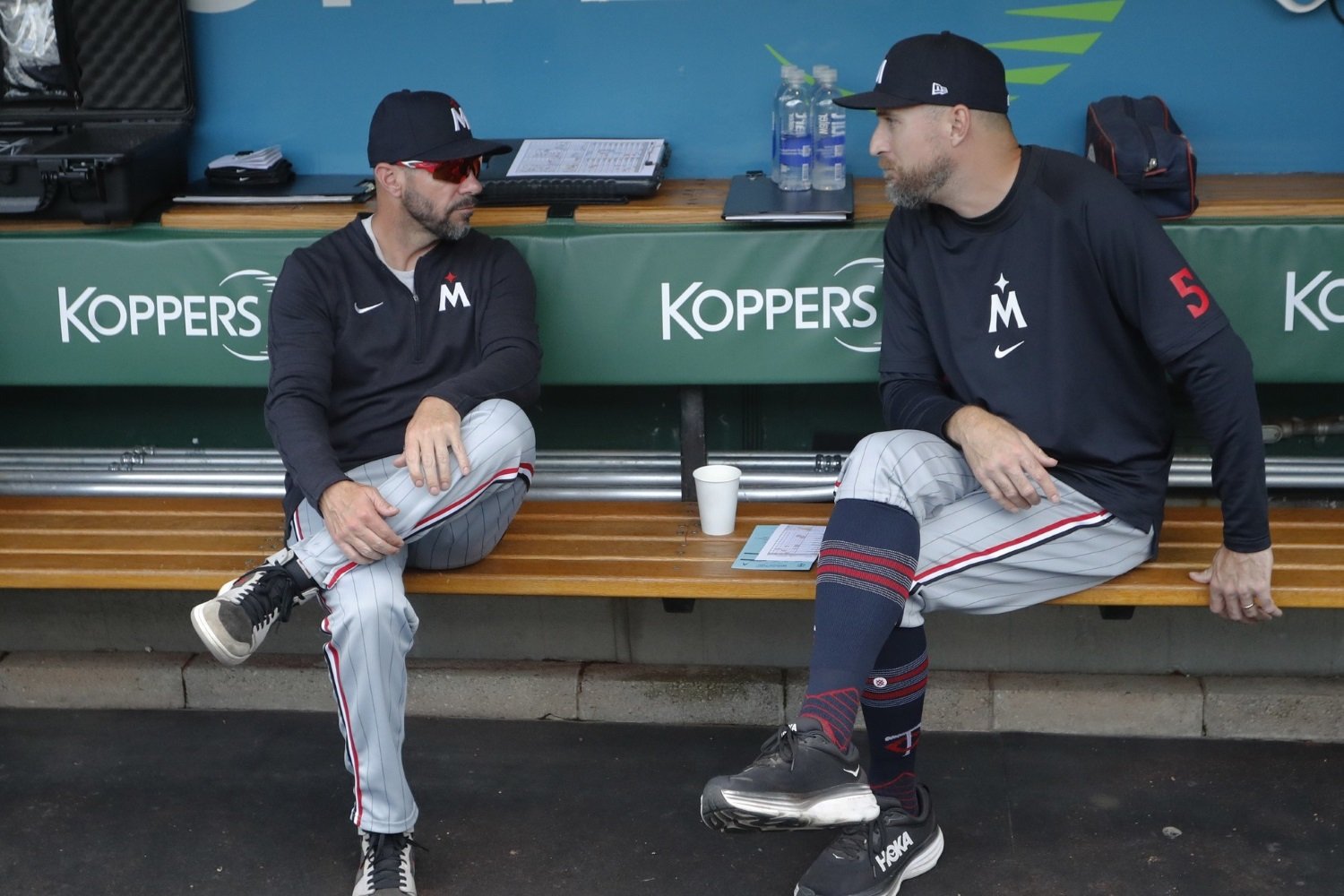 Pending one last week of games, Manuel Margot just set the record for the worst pinch-hitting season in baseball history. He has both the most plate appearances (35) and the most at-bats (30) as a pinch-hitter without a hit in baseball history, within a single season. You might be tired of hearing about this, especially from me. But Margot's situation has officially become unprecedented. As long as he doesn’t get a hit as a pinch-hitter in the next six games, he’ll go down as the record-holder. On the same night on which Margot crossed that legendary threshold, Twins utility infielder Willi Castro also made history, becoming the first player in MLB history to appear at five positions 25 or more times in a single season. Castro set this record in one of the most challenging configurations—shortstop and center field (the two most critical defensive positions beyond catcher), then second base, left field, and third base. Rocco Baldelli deployed these two players to the tune of two of the most unique seasons in history. Baldelli does nothing if not keep us and his players on their toes. However, both cases, by some interpretations, can be chalked up to the same core Baldelli trait: trust. By all accounts, Baldelli trusts his guys--perhaps to a fault. The Twins’ skipper will put nearly anyone in any position. Look no further than the next game after Margot and Castro each made their niche history. In the bottom of the fifth inning, with a runner on second and two outs, Baldelli removed rookie starter Zebby Matthews from the game for a reliever—a reasonable choice to protect his young arm from a quick blowup. But the reliever that he chose was Cole Irvin. If you haven’t paid attention to Twins baseball over the last week, you might not have even known Irvin was in the organization. The lefty slop-thrower and recent starter had been waived by the Orioles and claimed by the Twins last week, reportedly to provide length out of the pen. This was the guy that Baldelli went to with the tying run at home plate. A few pitches later, the Red Sox took the lead on a three-run homer, and never looked back. By all appearances, if you’re on Baldelli’s team and you fit the mold for what he wants (in this case, a lefty reliever), he’s going to use you as if he trusts you. The same could be said about Ronny Henriquez, who had 29 unspectacular MLB innings at the time but was given a save opportunity a week ago against division rival Cleveland in the bottom of the 10th inning. If you want to go back even further, you could recall his moves to bring in rookies Zack Littell and Cody Stashak to hold a lead during Game 1 of the 2019 ALDS at Yankee Stadium. Baldelli is going to trust his guys, through and through, to fill the roles he sees as necessary. Crucially, too, he views all 26 or 28 players on the active roster as his guys. You can probably play the Uno Reverse card here and claim that his ballyhooed quick hooks for starters could be a sign of a lack of trust—but getting into that discussion is another topic, so my quick counter here is that he wouldn’t choose fledgling relievers over starters if he didn’t trust the fledgling relievers to do their job. Trust is important. That almost goes without saying, but it’s also held up to empirical scrutiny from team scientists. Social scientists define trust as holding a belief that another person will essentially hold up their end of the bargain, and then acting according to that belief—putting your money where your belief is. Believing that your reliever will get you key outs, that your bench bat will be able to hit in a big spot, or that your utility player can reliably play any of five positions, then making a move to play them in that spot would be an example of trust. This type of trust is generally referred to as cognitive trust—believing that someone else has the required abilities and the right intentions to use them. This definition contrasts with other types of trust, like affective trust—trust that another person has your best interests, can keep a secret, whatever. This distinction might seem trivial, but think about how you trust your coworkers versus your family. You might trust your mother to love you and look out for you, but not to change the oil like your mechanic coworker Jim. The effects of cognitive trust might be intuitive, but there are clear benefits that might not come to mind immediately. Beyond the confidence that, say, the manager can instill in an individual, he also instills confidence in that individual’s teammates. If the manager never wavers in his belief that, let’s just say, Manuel Margot can pinch-hit, it’s easier for teammates to also trust Margot. This means they are free to focus on their role, rather than worrying about whether their teammate will hold up their end of the bargain. And that’s where you want players to be: controlling what they can control and not worried about their teammates’ shortcomings. Their cognitive resources are focused on their job, not that of their teammate. That’s the manager’s job. Willi Castro himself had a nice quote alluding to this. But that goes much farther when those trusted teammates hold up their end of the bargain. There have been a ton of reports about just how much the players like their manager. Trust can be part of it. But there’s probably a limit to how much trust is responsible. Not every great manager in baseball history has offered this near-unconditional trust to their whole roster. Sparky Anderson, Tony La Russa, Casey Stengel, and Earl Weaver are prominent examples of managers who placed a huge amount of trust in specific players in specific circumstances, but were open about the exclusiveness of that trust and the way it was limited and bounded by the response of those players to that trust in those situations. In one framing, Baldelli is showing more trust in his own employers--a fundamentally self-serving trust, since it tends both to ingratiate him to his superiors and to give him cover when things go wrong--than in the actual players in whom he's ostensibly investing that faith. If you trust everyone, do you really trust anyone? Or are you just nodding along? Anderson, especially, would say the latter. Baldelli might need to be a little more honest with himself, and embrace the affective trust that comes from experience and emotion, rather than continuing to silo his trust in the cognitive realm and give it indiscriminately. With one week to go, the stakes of his leadership and his tactical choices over the final six games are sky-high, and when the chips are down, not everyone is to be trusted.
- 63 comments
-
- 6
-
-

-
- manuel margot
- willi castro
- (and 4 more)
-
These are dark days in Twins Territory. Sweet Lou and Ol Gregg are joined by Theo Tollefson to discuss how it's somehow gotten worse in Twins Territory. What went wrong, what chances do they have to make the postseason, are there any more reinforcements, and what would we do if the Twins did make the playoffs? Listen using Apple Podcasts: https://podcasts.apple.com/us/podcast/the-twins-off-daily-podcast/id1741266056 Listen using Spotify: https://open.spotify.com/show/4tb78XlurcPTYYSsARdbD7 View full article
-
 Sweet Lou and Ol Gregg are joined by Theo Tollefson to discuss how it's somehow gotten worse in Twins Territory. What went wrong, what chances do they have to make the postseason, are there any more reinforcements, and what would we do if the Twins did make the playoffs? Listen using Apple Podcasts: https://podcasts.apple.com/us/podcast/the-twins-off-daily-podcast/id1741266056 Listen using Spotify: https://open.spotify.com/show/4tb78XlurcPTYYSsARdbD7
 -
The Twins won a series! Lou, Cody, and Gregg recap a deceptively 6-8 stretch of futility and look ahead to the stretch run. What hope do the Twins have for turning this ship around? What players are most important to the rest of the season? And why does everyone keep talking about Scott Boras? Listen using Apple Podcasts: https://podcasts.apple.com/us/podcast/the-twins-off-daily-podcast/id1741266056 Listen using Spotify: https://open.spotify.com/show/4tb78XlurcPTYYSsARdbD7 View full article
-
 Lou, Cody, and Gregg recap a deceptively 6-8 stretch of futility and look ahead to the stretch run. What hope do the Twins have for turning this ship around? What players are most important to the rest of the season? And why does everyone keep talking about Scott Boras? Listen using Apple Podcasts: https://podcasts.apple.com/us/podcast/the-twins-off-daily-podcast/id1741266056 Listen using Spotify: https://open.spotify.com/show/4tb78XlurcPTYYSsARdbD7
 -
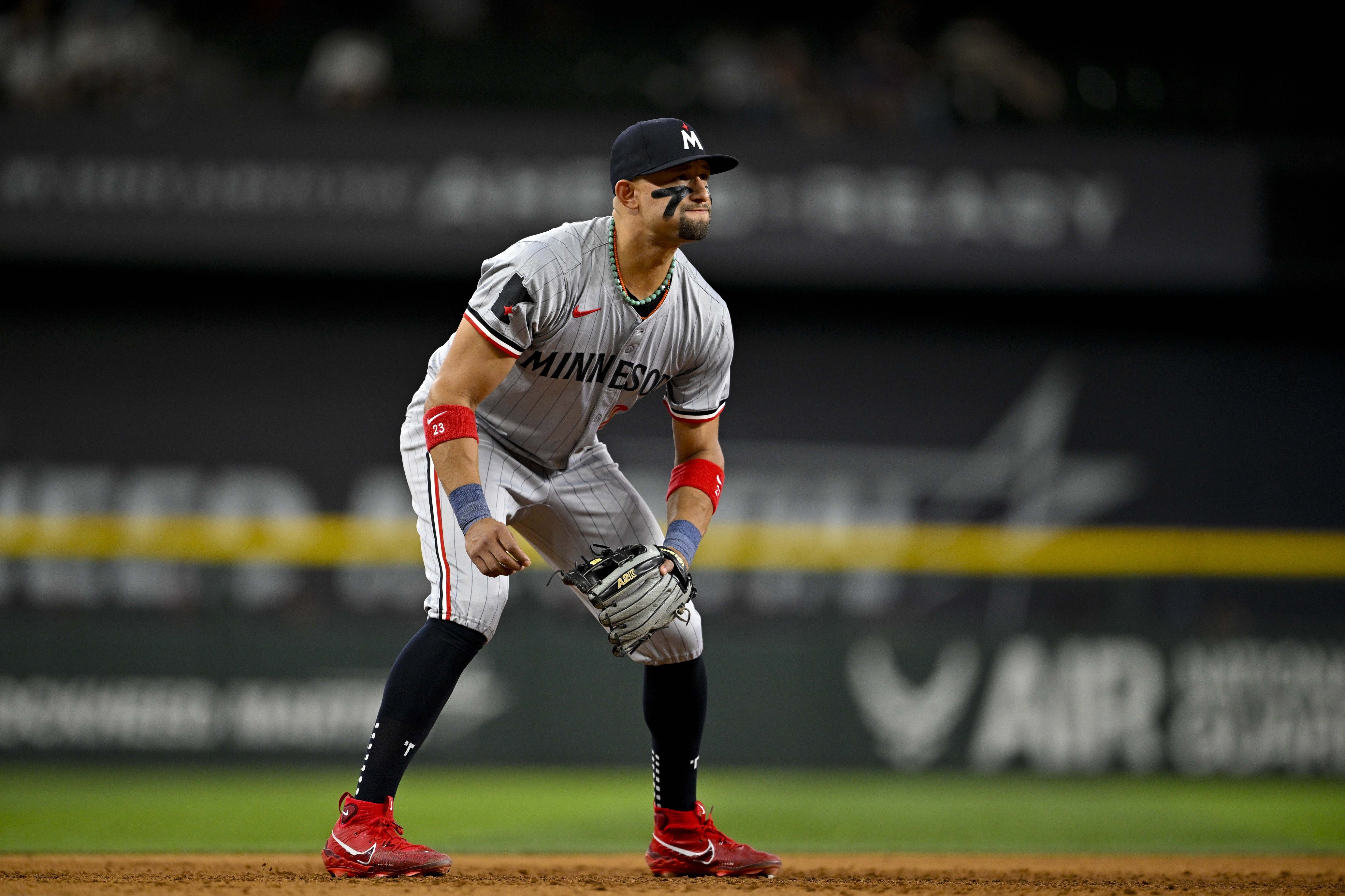 On Monday night, Royce Lewis played three innings at second base during a tight win over the Tampa Bay Rays. On Wednesday night, the Twins’ Opening Day third baseman and franchise building block started a game at second base for the first time in his MLB career. What gives? Why is Royce Lewis playing second base? The most straightforward answer is that the Twins are playing a numbers game, and it’s been dogging them for a few months now. They have too many corner-only bats but not enough corner spots. On any given night, it would be nice to have Lewis, Jose Miranda, Carlos Santana, Matt Wallner, Trevor Larnach, and Max Kepler (if healthy) in the lineup against a righty. Unfortunately, that group only plays left field, right field, third base, and first base. Add the DH spot, and you’ll have six players for five positions. Every night, one of those guys has to sit. If any come off the bench to pinch hit, they probably have to come right back out, or one of the starters needs to trade places with them on the pine. That’s an issue when a player like Austin Martin or Michael Helman are starting games and might require a late pinch hitter. Lewis having the ability to move over to second base fixes many problems. Who would it be if it wasn’t Lewis who added another position to his bag of tricks? Jose Miranda: Second Baseman? (Miranda has actually played more second base as a professional than Lewis has played third) Of course, you might say that Max Kepler shouldn’t be playing as much as he is, but I guess that’s a different conversation. And moot for the time being, since he placed on the injured list on Thursday. So is Royce Lewis a second baseman now? Probably not, but like we saw with Jorge Polanco down the stretch in 2023 filling in at third base to even out the lineup, we might see him start there occasionally or move over when the team is making a move in-game. He’ll likely still see plenty of action at third and DH. In the future, his long-term home might be second base. Both he and Brooks Lee appear to be around for the long haul, so they need to find an alignment that suits them. Lewis’s worst tool has always been his arm, and second base might suit him better, though he’s been playing at least some third base since high school. Lee looks a natural at either. It’s anyone’s guess how that shakes out. So why isn’t Brooks Lee moving to second instead? Brooks is kind of occupied right now. The Twins are missing both Carlos Correa and Byron Buxton at present. Willi Castro has been moved to center field since Lee’s return from injury last week, and Lee is planted at short until Correa’s eventual return. Lewis was a shortstop in the minor leagues, but he’s since bulked up and has blown out his knee twice in the interim. It appears the Twins have stopped viewing him as an option at short, to the extent that Jose Miranda finished a game at shortstop over him last week. You can disagree with the decision to move Lewis off shortstop permanently, but it looks like his days there are over. Lee needs to stick at shortstop for the time being. I’m sure that if the Twins had their way, Lee would be the one bouncing around, and Lewis would be entrenched at a spot. But that's not what they need right now. I get teaching a new position in spring training, but why during a pennant race? They’re doing this because they’re in a pennant race. They’re trying to get as much offense and in-game flexibility out of their sputtering lineup as possible. Ideally, this is an offseason and spring project, but they don’t have that luxury. We’ve already discussed the corner position crunch, but here’s another way to think of it. The other options at second base right now are Edouard Julien, Kyle Farmer, Martin, and Helman. You can throw Castro into that mix, but that would require Martin or Helman to be in center field. None of those names excite you offensively right now, yeah? If Lewis can play a few innings at second or start there now and then, the Twins doing what they can to inject offense into this team. They desperately need it now, and desperate times call for desperate measures. The best lineup requires Lewis to be able to play somewhere up the middle, at least occasionally. Lewis has also gotten some work at second base before. It’s not a ton, but he did play second base four times in the 2019 Arizona Fall League, and the Twins worked him out there in 2022 as they were trying to find ways to get him on the field. Also, it’s not like learning second base after playing at shortstop and third is the same as teaching him to catch. They’re all infield positions. "Tell him, Wash." What if Royce Lewis gets hurt playing a new position? Fortunately the center field wall is hundreds of feet behind second base. Perhaps Lewis is at a higher risk of landing awkwardly at the bag or making throws that he’s not used to. Sure. But the Twins are aware of whatever minimal injury risk that incurs, and it seems like the rewards outweigh the risk. If this decision directly leads to an injury (i.e., something unique about second base, not any injury, because we've seen the frequency that happens already), I guess you can say "I told you so." It’s also not a completely new position. But Rocco said … Managers say things because the media needs an answer. Situations evolve. Coaches change their minds. It’s not a conspiracy. I’d honestly recommend not listening to 90% of what they say in the first place. Maybe 100%. Royce said he’s uncomfortable over there. Shouldn’t we listen to him? Royce also says a lot of things. He at least appears to be more forthcoming with his thoughts than a lot of players, but it’s bad practice to take his responses (or anyone’s) as gospel truth or a crystal picture of reality. Lewis probably is uncomfortable over there, but how uncomfortable? We can’t be definitively sure. It’s a daunting challenge. Picking up a new position in the September of a playoff push is probably nerve-wracking. It might even be an annoying distraction. But life isn’t always perfect, and sometimes you need your stars to go above and beyond to put your best players on the field as much as possible, or at least in an optimal way. Lewis strictly playing third base handcuffs the team to an extent. It’s okay to be uncomfortable. Won’t jerking him around like this make him less likely to come back in free agency? Talk to me after the 2028 season when he’s a free agent. He’s a Boras client, anyway. But beyond that, come on. If asking him to sporadically cover a position in the short term or begin his transition to being a full-time second baseman a little early is enough for him to put his foot down and decide he doesn’t want to stick around Minnesota, do you really want to see him stay? It’s on the organization to do what they see necessary to win games, not grovel to their stars, hoping they take a sweetheart deal to stick around four years from now. Also, this is just a scenario in your head. There’s no indication that this is a real conversation going on right now.
 -
…is a question you might be asking. There are answers to this question and others inside. Maybe you’ll like the answers; maybe you won’t. Image courtesy of Jerome Miron-Imagn Images On Monday night, Royce Lewis played three innings at second base during a tight win over the Tampa Bay Rays. On Wednesday night, the Twins’ Opening Day third baseman and franchise building block started a game at second base for the first time in his MLB career. What gives? Why is Royce Lewis playing second base? The most straightforward answer is that the Twins are playing a numbers game, and it’s been dogging them for a few months now. They have too many corner-only bats but not enough corner spots. On any given night, it would be nice to have Lewis, Jose Miranda, Carlos Santana, Matt Wallner, Trevor Larnach, and Max Kepler (if healthy) in the lineup against a righty. Unfortunately, that group only plays left field, right field, third base, and first base. Add the DH spot, and you’ll have six players for five positions. Every night, one of those guys has to sit. If any come off the bench to pinch hit, they probably have to come right back out, or one of the starters needs to trade places with them on the pine. That’s an issue when a player like Austin Martin or Michael Helman are starting games and might require a late pinch hitter. Lewis having the ability to move over to second base fixes many problems. Who would it be if it wasn’t Lewis who added another position to his bag of tricks? Jose Miranda: Second Baseman? (Miranda has actually played more second base as a professional than Lewis has played third) Of course, you might say that Max Kepler shouldn’t be playing as much as he is, but I guess that’s a different conversation. And moot for the time being, since he placed on the injured list on Thursday. So is Royce Lewis a second baseman now? Probably not, but like we saw with Jorge Polanco down the stretch in 2023 filling in at third base to even out the lineup, we might see him start there occasionally or move over when the team is making a move in-game. He’ll likely still see plenty of action at third and DH. In the future, his long-term home might be second base. Both he and Brooks Lee appear to be around for the long haul, so they need to find an alignment that suits them. Lewis’s worst tool has always been his arm, and second base might suit him better, though he’s been playing at least some third base since high school. Lee looks a natural at either. It’s anyone’s guess how that shakes out. So why isn’t Brooks Lee moving to second instead? Brooks is kind of occupied right now. The Twins are missing both Carlos Correa and Byron Buxton at present. Willi Castro has been moved to center field since Lee’s return from injury last week, and Lee is planted at short until Correa’s eventual return. Lewis was a shortstop in the minor leagues, but he’s since bulked up and has blown out his knee twice in the interim. It appears the Twins have stopped viewing him as an option at short, to the extent that Jose Miranda finished a game at shortstop over him last week. You can disagree with the decision to move Lewis off shortstop permanently, but it looks like his days there are over. Lee needs to stick at shortstop for the time being. I’m sure that if the Twins had their way, Lee would be the one bouncing around, and Lewis would be entrenched at a spot. But that's not what they need right now. I get teaching a new position in spring training, but why during a pennant race? They’re doing this because they’re in a pennant race. They’re trying to get as much offense and in-game flexibility out of their sputtering lineup as possible. Ideally, this is an offseason and spring project, but they don’t have that luxury. We’ve already discussed the corner position crunch, but here’s another way to think of it. The other options at second base right now are Edouard Julien, Kyle Farmer, Martin, and Helman. You can throw Castro into that mix, but that would require Martin or Helman to be in center field. None of those names excite you offensively right now, yeah? If Lewis can play a few innings at second or start there now and then, the Twins doing what they can to inject offense into this team. They desperately need it now, and desperate times call for desperate measures. The best lineup requires Lewis to be able to play somewhere up the middle, at least occasionally. Lewis has also gotten some work at second base before. It’s not a ton, but he did play second base four times in the 2019 Arizona Fall League, and the Twins worked him out there in 2022 as they were trying to find ways to get him on the field. Also, it’s not like learning second base after playing at shortstop and third is the same as teaching him to catch. They’re all infield positions. "Tell him, Wash." What if Royce Lewis gets hurt playing a new position? Fortunately the center field wall is hundreds of feet behind second base. Perhaps Lewis is at a higher risk of landing awkwardly at the bag or making throws that he’s not used to. Sure. But the Twins are aware of whatever minimal injury risk that incurs, and it seems like the rewards outweigh the risk. If this decision directly leads to an injury (i.e., something unique about second base, not any injury, because we've seen the frequency that happens already), I guess you can say "I told you so." It’s also not a completely new position. But Rocco said … Managers say things because the media needs an answer. Situations evolve. Coaches change their minds. It’s not a conspiracy. I’d honestly recommend not listening to 90% of what they say in the first place. Maybe 100%. Royce said he’s uncomfortable over there. Shouldn’t we listen to him? Royce also says a lot of things. He at least appears to be more forthcoming with his thoughts than a lot of players, but it’s bad practice to take his responses (or anyone’s) as gospel truth or a crystal picture of reality. Lewis probably is uncomfortable over there, but how uncomfortable? We can’t be definitively sure. It’s a daunting challenge. Picking up a new position in the September of a playoff push is probably nerve-wracking. It might even be an annoying distraction. But life isn’t always perfect, and sometimes you need your stars to go above and beyond to put your best players on the field as much as possible, or at least in an optimal way. Lewis strictly playing third base handcuffs the team to an extent. It’s okay to be uncomfortable. Won’t jerking him around like this make him less likely to come back in free agency? Talk to me after the 2028 season when he’s a free agent. He’s a Boras client, anyway. But beyond that, come on. If asking him to sporadically cover a position in the short term or begin his transition to being a full-time second baseman a little early is enough for him to put his foot down and decide he doesn’t want to stick around Minnesota, do you really want to see him stay? It’s on the organization to do what they see necessary to win games, not grovel to their stars, hoping they take a sweetheart deal to stick around four years from now. Also, this is just a scenario in your head. There’s no indication that this is a real conversation going on right now. View full article
-
Lighten up, Francis
-
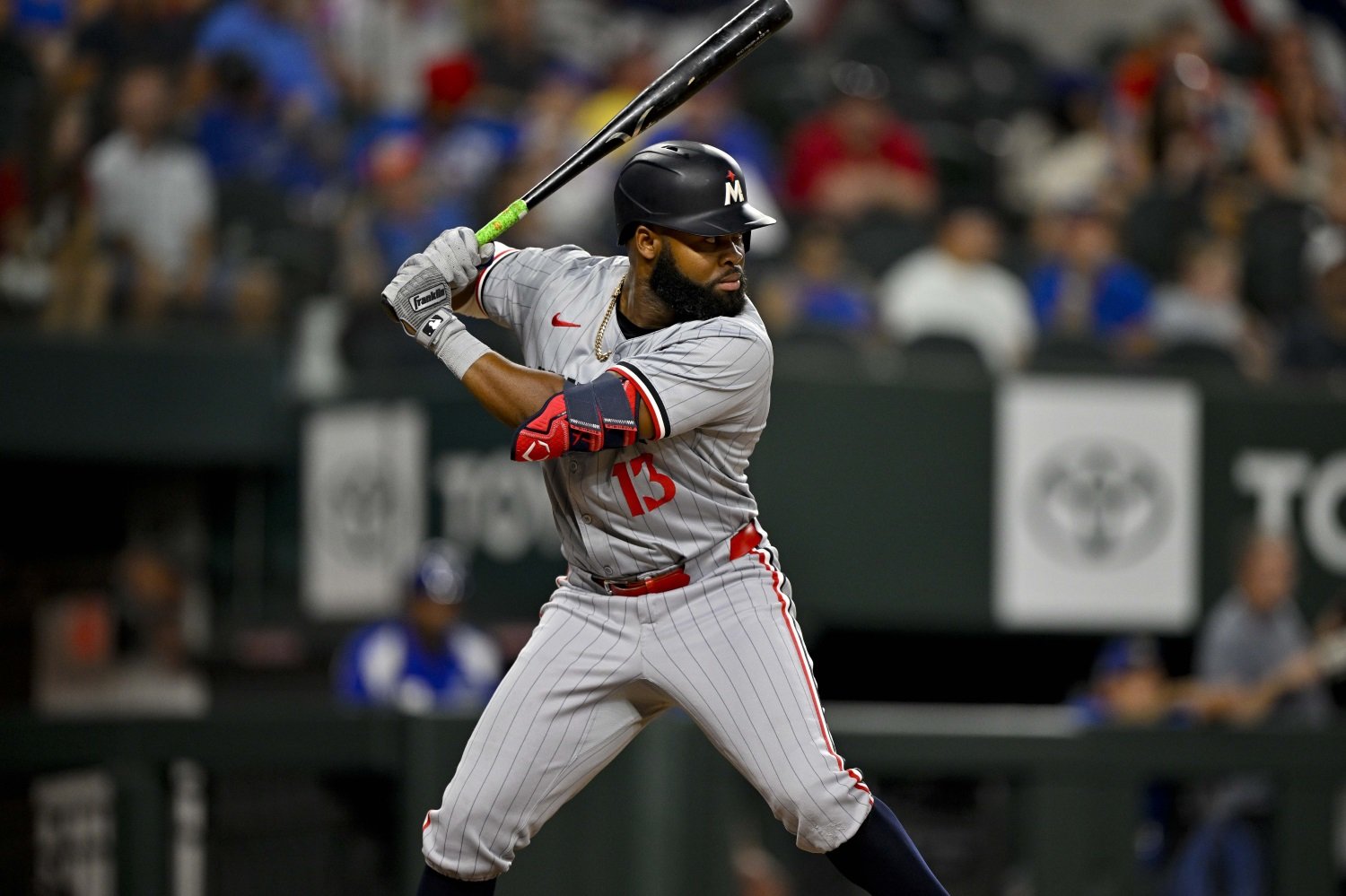 Maybe this is what we deserve. During Saturday’s blowout game against the Blue Jays, Manuel Margot was replaced in the sixth inning with groin tightness. Sunday morning, Margot landed on the 10-day injured list. A particular type of fan—we’ll affectionately refer to them as “sickos” henceforth—is devastated. Why, you ask? History. Our friend Margot has been chasing history, if you weren't aware. I wrote about it a month ago. In addition to his exploits in the field, Margot has been historically bad as a pinch-hitter. Only two players in MLB have been asked to pinch-hit more often than Margot, yet Margot has no hits as a pinch-hitter. Sickos and disgruntled fans have been tracking this story all year, though probably for different reasons. And now, it’s been taken away from us, just on the cusp of history. On Aug. 30, Margot dug in as a pinch-hitter for the 33rd time all season, and worked a walk. That’s 33 pinch-hitting plate appearances without a hit. The record for most plate appearances as a pinch-hitter without a hit in a season? Thirty-four, by Jonny Gomes in 2011. In a typical year, the least successful pinch-hitter has around 15 appearances. Now, with just a couple dozen games to play, Margot’s odds of breaking the record look bleak. Manager Rocco Baldelli, who started the year by using Margot as a pinch-hitter in five of the first six games, has scaled back Margot’s usage off the bench in recent months. Still, Margot only needed one more unsuccessful trip to the plate to tie the record, and then one more to break it. Even if Margot only misses the minimum of 10 days, he’ll have just 17 games in a pennant race. Each game he misses beyond the minimum makes it less likely, and recovery from groin injury is hard to predict. This actually marks the second time in the past two years that the injury bug has let down the sickos. In 2023, Carlos Correa was hobbled by plantar fasciitis that, along with bad luck, contributed to a league-leading 30 double plays grounded into. That injury led to Correa sitting out the final 11 games of the season. At one point, Correa was on track to break the single-season record, but his “production” also slowed, and his season was cut short. Correa was less likely than Margot to set a new record, needing to ground into six double plays in the team’s final 11 games, but it’s frustrating he didn’t have the full opportunity to go for it. Even when the Twins have managed to set unfortunate records in the past couple of years, it’s been for naught. In 2023, behind the bats of Joey Gallo, Michael A. Taylor, Byron Buxton, and Edouard Julien, the Twins set the all-time record for strikeouts as a team with 1,654. As we speak, the 2024 Seattle Mariners are on pace to challenge that record with a projected 1,649 for the season (they currently sit at 1,430, with 21 games to go), and Colorado could also compete for the record, sitting at 1,393 (on pace for 1,600). And don’t even get me started on the Twins ending their run of 18 straight playoff losses. That’s a record that won’t be broken anytime soon, but it would take the squad a decade to get another streak to 19. Why do bad things happen to sick fans? We, Minnesota sports fans, are so bad at being cursed that we can’t even hold on to curses. The sickos among us mourn.
- 11 comments
-
- 9
-
-
-

-
- manuel margot
- carlos correa
- (and 2 more)
-
Minnesota sports fans are cursed. How cursed are they? They’re so cursed that even when their favorite players are on the cusp of breaking records for all the wrong reasons, those moments get ruined for them, too. Image courtesy of © Jerome Miron-Imagn Images Maybe this is what we deserve. During Saturday’s blowout game against the Blue Jays, Manuel Margot was replaced in the sixth inning with groin tightness. Sunday morning, Margot landed on the 10-day injured list. A particular type of fan—we’ll affectionately refer to them as “sickos” henceforth—is devastated. Why, you ask? History. Our friend Margot has been chasing history, if you weren't aware. I wrote about it a month ago. In addition to his exploits in the field, Margot has been historically bad as a pinch-hitter. Only two players in MLB have been asked to pinch-hit more often than Margot, yet Margot has no hits as a pinch-hitter. Sickos and disgruntled fans have been tracking this story all year, though probably for different reasons. And now, it’s been taken away from us, just on the cusp of history. On Aug. 30, Margot dug in as a pinch-hitter for the 33rd time all season, and worked a walk. That’s 33 pinch-hitting plate appearances without a hit. The record for most plate appearances as a pinch-hitter without a hit in a season? Thirty-four, by Jonny Gomes in 2011. In a typical year, the least successful pinch-hitter has around 15 appearances. Now, with just a couple dozen games to play, Margot’s odds of breaking the record look bleak. Manager Rocco Baldelli, who started the year by using Margot as a pinch-hitter in five of the first six games, has scaled back Margot’s usage off the bench in recent months. Still, Margot only needed one more unsuccessful trip to the plate to tie the record, and then one more to break it. Even if Margot only misses the minimum of 10 days, he’ll have just 17 games in a pennant race. Each game he misses beyond the minimum makes it less likely, and recovery from groin injury is hard to predict. This actually marks the second time in the past two years that the injury bug has let down the sickos. In 2023, Carlos Correa was hobbled by plantar fasciitis that, along with bad luck, contributed to a league-leading 30 double plays grounded into. That injury led to Correa sitting out the final 11 games of the season. At one point, Correa was on track to break the single-season record, but his “production” also slowed, and his season was cut short. Correa was less likely than Margot to set a new record, needing to ground into six double plays in the team’s final 11 games, but it’s frustrating he didn’t have the full opportunity to go for it. Even when the Twins have managed to set unfortunate records in the past couple of years, it’s been for naught. In 2023, behind the bats of Joey Gallo, Michael A. Taylor, Byron Buxton, and Edouard Julien, the Twins set the all-time record for strikeouts as a team with 1,654. As we speak, the 2024 Seattle Mariners are on pace to challenge that record with a projected 1,649 for the season (they currently sit at 1,430, with 21 games to go), and Colorado could also compete for the record, sitting at 1,393 (on pace for 1,600). And don’t even get me started on the Twins ending their run of 18 straight playoff losses. That’s a record that won’t be broken anytime soon, but it would take the squad a decade to get another streak to 19. Why do bad things happen to sick fans? We, Minnesota sports fans, are so bad at being cursed that we can’t even hold on to curses. The sickos among us mourn. View full article
-
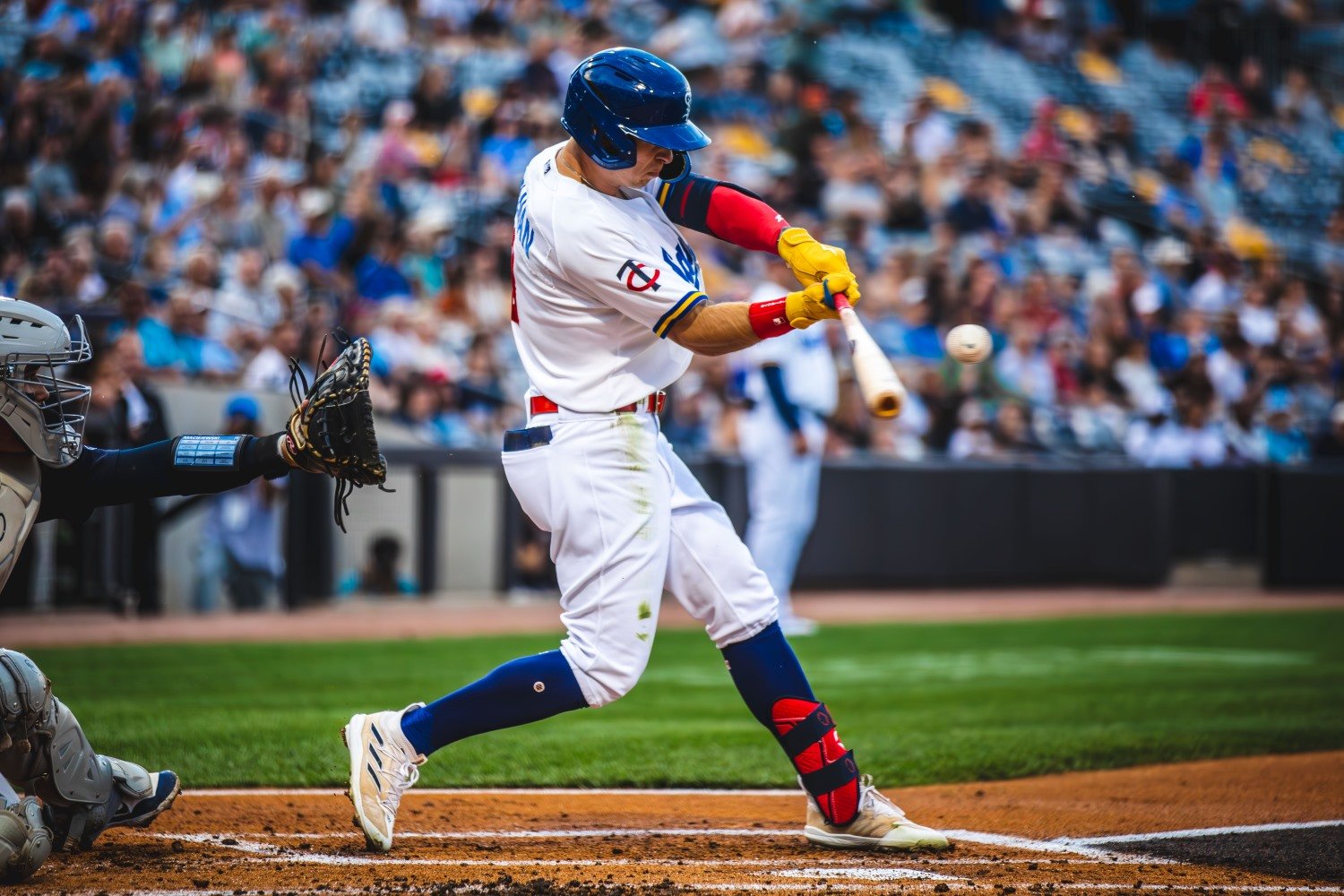 Ahead of Sunday’s September roster expansion—the day that MLB teams' active rosters move from 26 to 28 players—most expected the Twins’ lone hitting addition to be the rehabbing prospect, Brooks Lee. Lee was, indeed, activated from his rehab stint in Triple-A, but an unexpected second move was made, too: the Twins selected the contract of Michael Helman. Helman, an 11th-round draft pick out of Texas A&M in 2018, probably can’t be labeled a prospect anymore, as he turned 28 in May. Even as a prospect, he rarely cracked organizational top-30 lists. He comes with little fanfare. However, he has a tremendous opportunity in front of him. Helman was selected to replace injured platoon outfielder Manuel Margot. Without a Margot injury, we probably wouldn’t see Helman, but opportunities are hard to come by when you’re a 28-year-old in his third year at Triple-A. Helman has hit well this season, carrying the fourth-highest OPS on St. Paul’s squad at .876. He’s been about 25 percent better than an average hitter in the International League over the past two seasons. This trip may be a standard cup of coffee for a minor-league veteran—something of a “thank you” from the organization. Byron Buxton’s return from injury may be imminent, which would jeopardize Helman’s spot. Still, Helman should have some opportunity to make an impression on the big-league club. It’s vital for any player in the same archetype as Helman (middle-round draft pick with little prospect pedigree, now in his late 20s) to do so. However, Helman is precisely positioned to have a shot at a big-league role in Minnesota next season. We all know the current payroll situation. There are no signs of it improving this offseason, and with the contracts on the books for 2025 already projected to exceed the 2024 payroll, it’s hard to see the front office being permitted to throw much money around. Most (read: all, including the players affected) expect the club to decline team options on Margot and platoon infielder Kyle Farmer, among other cost-saving measures. Margot and Farmer's all-but-certain departures are especially pertinent to a player like Helman. Helman is right-handed, like those two, and he has been playing shortstop, third base, second base, center field, and left field in St. Paul. Those five positions combine for 79 percent of Margot and Farmer’s innings (with the remaining 21% being Margot’s 220 innings in right field). It’s debatable exactly how well Helman can play those positions, but that flexibility is valuable for a player whose best-case scenario is that of a utilityman. And the Twins are a club that loves righty bench players who can fill the weak side of a platoon. Add his speed into Helman’s profile (he’s stolen bases with an 81 percent success rate), and he can provide value in a number of different ways. His .875 OPS in the hitter-friendly International League doesn’t guarantee success, but if he can hit lefties competently, he could be an option for Minnesota in 2025 and beyond as a platoon bat. This season, he’s been worse against lefties than righties, but he’s historically hit marginally better against southpaws. Reverse splits for hitters are rare, and it's very unlikely that Helman is such a player. The unfortunate truth for Helman is just how limited this opportunity is. Next season, he’ll be 29. He has no standout tool, though his speed is respectable. He has internal competition for this hypothetical righty utility player spot, too. You don’t need to look further than Austin Martin, another speedy youngster who can play in the outfield and on the dirt. Helman is slower than Martin, and there’s less confidence in the 28-year-old’s bat, though Helman possesses more skill in the field and positional flexibility. He’s also three years older than Martin. Beyond that, this cup of coffee may only last days, as the return of Byron Buxton or Carlos Correa likely squeeze Helman out of work, assuming no other injuries manifest (then again: who are we kidding?). However, this is his moment. The next one isn’t guaranteed. If Helman impresses in any way whatsoever over the next month of baseball, his future can be drastically changed. Twenty-eight-year-old minor leaguers are often on the chopping block over the offseason, as players are taken off the 60-day injured list, get protected ahead of the Rule 5 Draft, or are otherwise acquired by the organization. When the team is trying to reduce payroll, though, that pressure tends to lighten a bit. There is a role for Helman to step into next year, amid the loss of veteran role players and a limited budget. It’s the perfect storm for Helman to latch on to a major-league job, if even for a season or two. Is it likely? Probably not. He’s thus far avoided the Drew Maggi-Moonlight Graham treatment as he’s in the lineup for Tuesday night’s game. It’s a chance, for a man who’s worked his keister off to get this far.
- 16 comments
-
- 8
-
-
- michael helman
- kyle farmer
- (and 2 more)
-
September call-ups provide a moment for minor leaguers to seize everything they ever wanted. Will this one capture it, or just let it slip? Image courtesy of Rob Thompson, St. Paul Saints Ahead of Sunday’s September roster expansion—the day that MLB teams' active rosters move from 26 to 28 players—most expected the Twins’ lone hitting addition to be the rehabbing prospect, Brooks Lee. Lee was, indeed, activated from his rehab stint in Triple-A, but an unexpected second move was made, too: the Twins selected the contract of Michael Helman. Helman, an 11th-round draft pick out of Texas A&M in 2018, probably can’t be labeled a prospect anymore, as he turned 28 in May. Even as a prospect, he rarely cracked organizational top-30 lists. He comes with little fanfare. However, he has a tremendous opportunity in front of him. Helman was selected to replace injured platoon outfielder Manuel Margot. Without a Margot injury, we probably wouldn’t see Helman, but opportunities are hard to come by when you’re a 28-year-old in his third year at Triple-A. Helman has hit well this season, carrying the fourth-highest OPS on St. Paul’s squad at .876. He’s been about 25 percent better than an average hitter in the International League over the past two seasons. This trip may be a standard cup of coffee for a minor-league veteran—something of a “thank you” from the organization. Byron Buxton’s return from injury may be imminent, which would jeopardize Helman’s spot. Still, Helman should have some opportunity to make an impression on the big-league club. It’s vital for any player in the same archetype as Helman (middle-round draft pick with little prospect pedigree, now in his late 20s) to do so. However, Helman is precisely positioned to have a shot at a big-league role in Minnesota next season. We all know the current payroll situation. There are no signs of it improving this offseason, and with the contracts on the books for 2025 already projected to exceed the 2024 payroll, it’s hard to see the front office being permitted to throw much money around. Most (read: all, including the players affected) expect the club to decline team options on Margot and platoon infielder Kyle Farmer, among other cost-saving measures. Margot and Farmer's all-but-certain departures are especially pertinent to a player like Helman. Helman is right-handed, like those two, and he has been playing shortstop, third base, second base, center field, and left field in St. Paul. Those five positions combine for 79 percent of Margot and Farmer’s innings (with the remaining 21% being Margot’s 220 innings in right field). It’s debatable exactly how well Helman can play those positions, but that flexibility is valuable for a player whose best-case scenario is that of a utilityman. And the Twins are a club that loves righty bench players who can fill the weak side of a platoon. Add his speed into Helman’s profile (he’s stolen bases with an 81 percent success rate), and he can provide value in a number of different ways. His .875 OPS in the hitter-friendly International League doesn’t guarantee success, but if he can hit lefties competently, he could be an option for Minnesota in 2025 and beyond as a platoon bat. This season, he’s been worse against lefties than righties, but he’s historically hit marginally better against southpaws. Reverse splits for hitters are rare, and it's very unlikely that Helman is such a player. The unfortunate truth for Helman is just how limited this opportunity is. Next season, he’ll be 29. He has no standout tool, though his speed is respectable. He has internal competition for this hypothetical righty utility player spot, too. You don’t need to look further than Austin Martin, another speedy youngster who can play in the outfield and on the dirt. Helman is slower than Martin, and there’s less confidence in the 28-year-old’s bat, though Helman possesses more skill in the field and positional flexibility. He’s also three years older than Martin. Beyond that, this cup of coffee may only last days, as the return of Byron Buxton or Carlos Correa likely squeeze Helman out of work, assuming no other injuries manifest (then again: who are we kidding?). However, this is his moment. The next one isn’t guaranteed. If Helman impresses in any way whatsoever over the next month of baseball, his future can be drastically changed. Twenty-eight-year-old minor leaguers are often on the chopping block over the offseason, as players are taken off the 60-day injured list, get protected ahead of the Rule 5 Draft, or are otherwise acquired by the organization. When the team is trying to reduce payroll, though, that pressure tends to lighten a bit. There is a role for Helman to step into next year, amid the loss of veteran role players and a limited budget. It’s the perfect storm for Helman to latch on to a major-league job, if even for a season or two. Is it likely? Probably not. He’s thus far avoided the Drew Maggi-Moonlight Graham treatment as he’s in the lineup for Tuesday night’s game. It’s a chance, for a man who’s worked his keister off to get this far. View full article
-
Episode 19: The Unluckiest Fans on the Face of the Earth
Greggory Masterson posted an article in Podcasts
 Sweet Lou and Ol Gregg are joined by Nick Nelson to proclaim that the season is over, but Naive Cody says it's fine. They also answer listener questions and play an Immaculate Gregg. Listen using Apple Podcasts: https://podcasts.apple.com/us/podcast/the-twins-off-daily-podcast/id1741266056 Listen using Spotify: https://open.spotify.com/show/4tb78XlurcPTYYSsARdbD7
 -
It's a tough time to be a Twins fan. Sweet Lou and Ol Gregg are joined by Nick Nelson to proclaim that the season is over, but Naive Cody says it's fine. They also answer listener questions and play an Immaculate Gregg. Listen using Apple Podcasts: https://podcasts.apple.com/us/podcast/the-twins-off-daily-podcast/id1741266056 Listen using Spotify: https://open.spotify.com/show/4tb78XlurcPTYYSsARdbD7 View full article
.png.486c4e6138a57a2f4d5dcf50ca018094.png)
