Parker Hageman
-
Posts
4,152 -
Joined
-
Last visited
-
Days Won
6
Content Type
Profiles
News
Minnesota Twins Videos
2026 Minnesota Twins Top Prospects Ranking
2022 Minnesota Twins Draft Picks
Minnesota Twins Free Agent & Trade Rumors, Notes, & Tidbits
Guides & Resources
2023 Minnesota Twins Draft Picks
The Minnesota Twins Players Project
2024 Minnesota Twins Draft Picks
2025 Minnesota Twins Draft Pick Tracker
2026 Minnesota Twins Draft Tracker: Picks & Bonuses
Forums
Blogs
Events
Store
Downloads
Gallery
Everything posted by Parker Hageman
-
 Was going to do a short blurb on this topic but Matthew covers it well. The main reason for his passivity is that teams are targeting the lower third of the strike zone on him: If you go back to the Caretakers post I did at the end of spring training, Julien told me that he's basically spitting on pitches that are down, regardless of if they are in the zone or not. You can read that conversation here 👇 You can see here his 2024 swing rate: When you combine where teams are pitching him and where he's swinging, he's getting himself behind in the count and also rung up on pitches down in the zone. He's at a point where he likely needs to make a decision about whether he tries to swing at more pitches down in the zone or delivers on pitches up in the zone more often.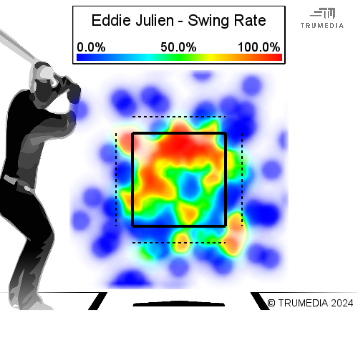
-
Obviously what is value to one person might not be to the next. We're clear that our Caretakers program is not entirely about the content -- although I would argue that you get access to in-depth analysis in this space from John, Matthew and myself that you will not get anywhere else, Athletic included. But that is not for everyone. Obviously as a non-subscriber, you have not had the full Caretaker experience so you are basing this on a partial and a slightly misguided view of what our funding supports. Our Caretakers -- over 250 strong (thank you @Karbo) -- have supported our efforts to deliver events, pay writers, and get additional content in return. The funding from Caretakers has also helped us add TruMedia's database to our toolbox, giving us access to more data that other mainstream outlets do not have access to. In the end, we will always offer free content from our great stable of creators. That will never go away. You can always find topics to comment on. We know people are asked to pay for various subscriptions in life and adding one more is not always palpable for everyone, so the Twins content will keep flowing from our end. That's why we are extremely appreciative for those who choose to help make this a better community.
- 11 replies
-
- 2
-

-
- bailey ober
- simeon woods richardson
- (and 1 more)
-
Spring training is full of little victories. For Chris Paddack, making a pitch move three inches to the left made him very happy, and now, he gets the chance to convert that into the bigger victories that come in the regular season. For most of the spring, Paddack would throw his slider with a typical grip along the horseshoe of a baseball and try to manipulate the ball by pulling down on the side. This resulted in inconsistent glove-side movement. The new grip would be similar to a two-seam fastball, but with a notable difference – he moved his thumb up the side of the ball. View full article
-
Chris Paddack, Matt Daniels, and the Thumb of Destiny
Parker Hageman posted an article in Caretakers
.png.e7bedf804c599e8f66fa67ca01571878.png) As a young pitcher in the Padres organization, Chris Paddack knew he needed something that would move to his glove side--away from a right-handed batter, and in on a left-handed one. He had a fastball with ride and a changeup with fade. He did not have a pitch that moved away from righties, though. He eventually landed on a curveball, but even that offering broke more vertically than horizontally. It was also thrown at 78-80 miles per hour, leaving a big gap between its speed and that of his other two pitches. The main reason Paddack could not throw a slider effectively was that the way he naturally released the ball (having his hand and wrist twist to the left of the ball and imparting spin that moved toward righties, or pronation) prevented him from throwing a traditional slider--a pitch on which right-handed pitchers would have to get around the right side of the baseball with their fingers, or supinate. "I'm a pronator," Paddack said about how his hand twists upon release. This makes producing the spin that would help pitches move to the glove side challenging. Paddack has a much easier time creating arm-side movement, as seen in his two-plane fastball or his changeup that sinks and fades. One aspect of how he got the new slider to move in the direction he wanted stems from the grip to which the Twins staff introduced him. The Twins' pitching development staff is extremely adept at optimizing pitches. The tech guys, as Paddack refers to the people who interpret the data, helped figure out a way to get him to that movement. "We actually changed the grip late spring," he said. "[Now it's] more of a two-seam cutter." Paddack cited Matt Daniels as the coach who aided in the new grip. Daniels has become an increasingly vital and visible part of the team's instruction group recently. For most of the spring, Paddack would throw his slider with a typical grip along the horseshoe of a baseball and try to manipulate the ball by pulling down on the side. This resulted in inconsistent glove-side movement. The new grip would be similar to a two-seam fastball, but with a notable difference – he moved his thumb up the side of the ball.
As a young pitcher in the Padres organization, Chris Paddack knew he needed something that would move to his glove side--away from a right-handed batter, and in on a left-handed one. He had a fastball with ride and a changeup with fade. He did not have a pitch that moved away from righties, though. He eventually landed on a curveball, but even that offering broke more vertically than horizontally. It was also thrown at 78-80 miles per hour, leaving a big gap between its speed and that of his other two pitches. The main reason Paddack could not throw a slider effectively was that the way he naturally released the ball (having his hand and wrist twist to the left of the ball and imparting spin that moved toward righties, or pronation) prevented him from throwing a traditional slider--a pitch on which right-handed pitchers would have to get around the right side of the baseball with their fingers, or supinate. "I'm a pronator," Paddack said about how his hand twists upon release. This makes producing the spin that would help pitches move to the glove side challenging. Paddack has a much easier time creating arm-side movement, as seen in his two-plane fastball or his changeup that sinks and fades. One aspect of how he got the new slider to move in the direction he wanted stems from the grip to which the Twins staff introduced him. The Twins' pitching development staff is extremely adept at optimizing pitches. The tech guys, as Paddack refers to the people who interpret the data, helped figure out a way to get him to that movement. "We actually changed the grip late spring," he said. "[Now it's] more of a two-seam cutter." Paddack cited Matt Daniels as the coach who aided in the new grip. Daniels has become an increasingly vital and visible part of the team's instruction group recently. For most of the spring, Paddack would throw his slider with a typical grip along the horseshoe of a baseball and try to manipulate the ball by pulling down on the side. This resulted in inconsistent glove-side movement. The new grip would be similar to a two-seam fastball, but with a notable difference – he moved his thumb up the side of the ball.- 2 comments
-
- 5
-
-
- chris paddack
- matt daniels
- (and 1 more)
-
The pull heavy approach certainly was a weakness for him. It wasn’t just about distance traveled, it was also about not being to drive outside pitches away. Most power is to the pull side, true, (“It’s the quickest way off the field,” Dozier told me in 2017) but when you have a pull heavy approach, you leave yourself open to pitches on the outer-third which was a huge probably for him in his final year with the Twins. It cuts both ways in your argument. Dozier’s rookie season was not great and he continued to improve. Most hitters make strides. There are plenty of rookie hitters that take steps back but, again, to Julien’s point, if hitters 4-5 years ago did not have the same scrutiny that today’s hitters do in terms of analytics teams coming up with new plans of attack. So where a rookie hitter 7 years ago might not get that league-wide treatment until year 2, rookies now get that almost from week-to-week. To me, Julien has shown elite levels of plate discipline at a rookie level and strong exit rates on pitches in his zone/count. I’d hedge bets that those traits play well going forward. I’m not discounting your point about outperforming his expected numbers. It has merit. Plus, he could get more treatment of left-handed relievers this year (like teams did against Miranda at the end of 2022) and exploit some of his weaknesses (down in the zone)
-
Couple of thoughts: Why wouldn't there be more in the tank for Julien? He's coming off his first year in the league. He outperformed his batted ball expected metrics but certainly not by a margin that was out of the norm. Dozier, compared to Julien, was a one dimensional hitter. Dozier tried to exclusively pull the ball down the left field line. He did this successful for multiple seasons but it eventually caught up to him, either because he tried to pull too many pitches he shouldn't have or because teams exploited this tendency and he refused to adjust. Regardless, Julien has much more hitterish tendencies than Dozier did. Final thought, I do believe a lot of what Julien said about experiencing teams adjusting in his rookie season. I also think front offices now have had an entire offseason to design an attack plan. So he might be seeing something different this year. That said, he's extremely good at spitting at pitches not in his zone and pitchers are not *that* good at hitting their spots.

-
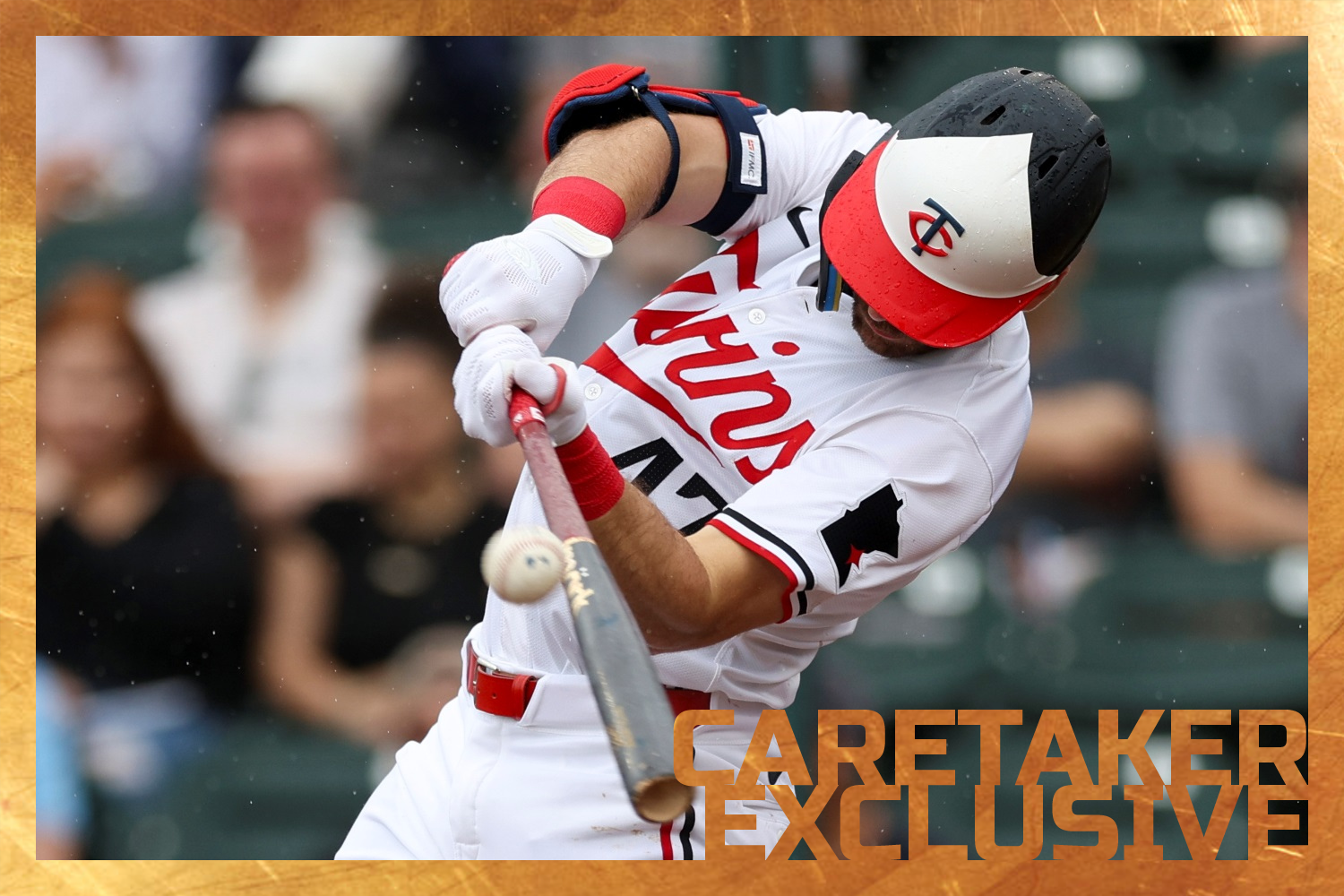 On Saturday, as a solid volume of people were making their way to their assigned section at JetBlue Park in Ft. Myers, Edouard Julien dug into the batter’s box, destroying the painstaking work of turning the home plate area into a clean slate that six grounds crew members completed just 15 minutes earlier. Almost as soon as he entered the box, Julien was running out of it, having deposited Nick Pivetta’s first pitch of the game cleanly into right field for a base hit. In his next two at-bats, Julien followed the same script: He swung at a first-pitch curveball and then a first-pitch slider. The results were not the same as his opening at-bat: he fouled off the curveball and bounced the slider harmlessly to Enmanuel Valdez at second. Following the game, Rocco Baldelli was asked why the trend has gone away from the patient, count-working approach by leadoff hitters. “The pitching is so good,” he said. “If you get a really good pitch to hit on the first pitch of the bat, you better freaking swing at it, because you may get nothing like that again the rest of the bat.” But Julien doesn’t just "freaking swing at it;" he impacts it. He’s becoming an ambush artist: a patient but lethal assailant. From a fundamental standpoint, Julien’s swing is somewhat atypical for a left-handed hitter. A high percentage of lefties have shown the tendency to drive fastballs in the lower third for power. Think of Ken Griffey Jr’s swing. Overall, lefties slugged .455 on fastballs in the lower third. Julien, meanwhile, posted a .108 slugging percentage on those same pitches. On the plus side, while the rest of his lefty-swinging brethren slugged .387 against fastballs up in the zone, he drives those pitches better than average (.468). Of course, like most hitters, Julien also makes meals out of being thrown pitches in the middle third (.345/.389/.642) and it’s where he produces the most hard contact (50% of contact is 95+ MPH). So it probably shouldn’t come as a surprise that, when Julien enters the batter’s box, this is almost exclusively his first-pitch swing location.
 -
If you arrive late to a ball game, you might miss an opportunity to witness Edouard Julien’s biggest offensive attributes. Image courtesy of © Nathan Ray Seebeck-USA TODAY Sports On Saturday, as a solid volume of people were making their way to their assigned section at JetBlue Park in Ft. Myers, Edouard Julien dug into the batter’s box, destroying the painstaking work of turning the home plate area into a clean slate that six grounds crew members completed just 15 minutes earlier. Almost as soon as he entered the box, Julien was running out of it, having deposited Nick Pivetta’s first pitch of the game cleanly into right field for a base hit. In his next two at-bats, Julien followed the same script: He swung at a first-pitch curveball and then a first-pitch slider. The results were not the same as his opening at-bat: he fouled off the curveball and bounced the slider harmlessly to Enmanuel Valdez at second. Following the game, Rocco Baldelli was asked why the trend has gone away from the patient, count-working approach by leadoff hitters. “The pitching is so good,” he said. “If you get a really good pitch to hit on the first pitch of the bat, you better freaking swing at it, because you may get nothing like that again the rest of the bat.” But Julien doesn’t just "freaking swing at it;" he impacts it. He’s becoming an ambush artist: a patient but lethal assailant. From a fundamental standpoint, Julien’s swing is somewhat atypical for a left-handed hitter. A high percentage of lefties have shown the tendency to drive fastballs in the lower third for power. Think of Ken Griffey Jr’s swing. Overall, lefties slugged .455 on fastballs in the lower third. Julien, meanwhile, posted a .108 slugging percentage on those same pitches. On the plus side, while the rest of his lefty-swinging brethren slugged .387 against fastballs up in the zone, he drives those pitches better than average (.468). Of course, like most hitters, Julien also makes meals out of being thrown pitches in the middle third (.345/.389/.642) and it’s where he produces the most hard contact (50% of contact is 95+ MPH). So it probably shouldn’t come as a surprise that, when Julien enters the batter’s box, this is almost exclusively his first-pitch swing location. View full article
-
very underrated arm.
-
Twins Reassign Top Prospect Brooks Lee
Parker Hageman replied to Parker Hageman's topic in Twins Daily Front Page News
2-for-9 with a double this spring. -
Twins Reassign Dinged-Up Top Prospect Brooks Lee to Minors Camp
Parker Hageman posted an article in Twins
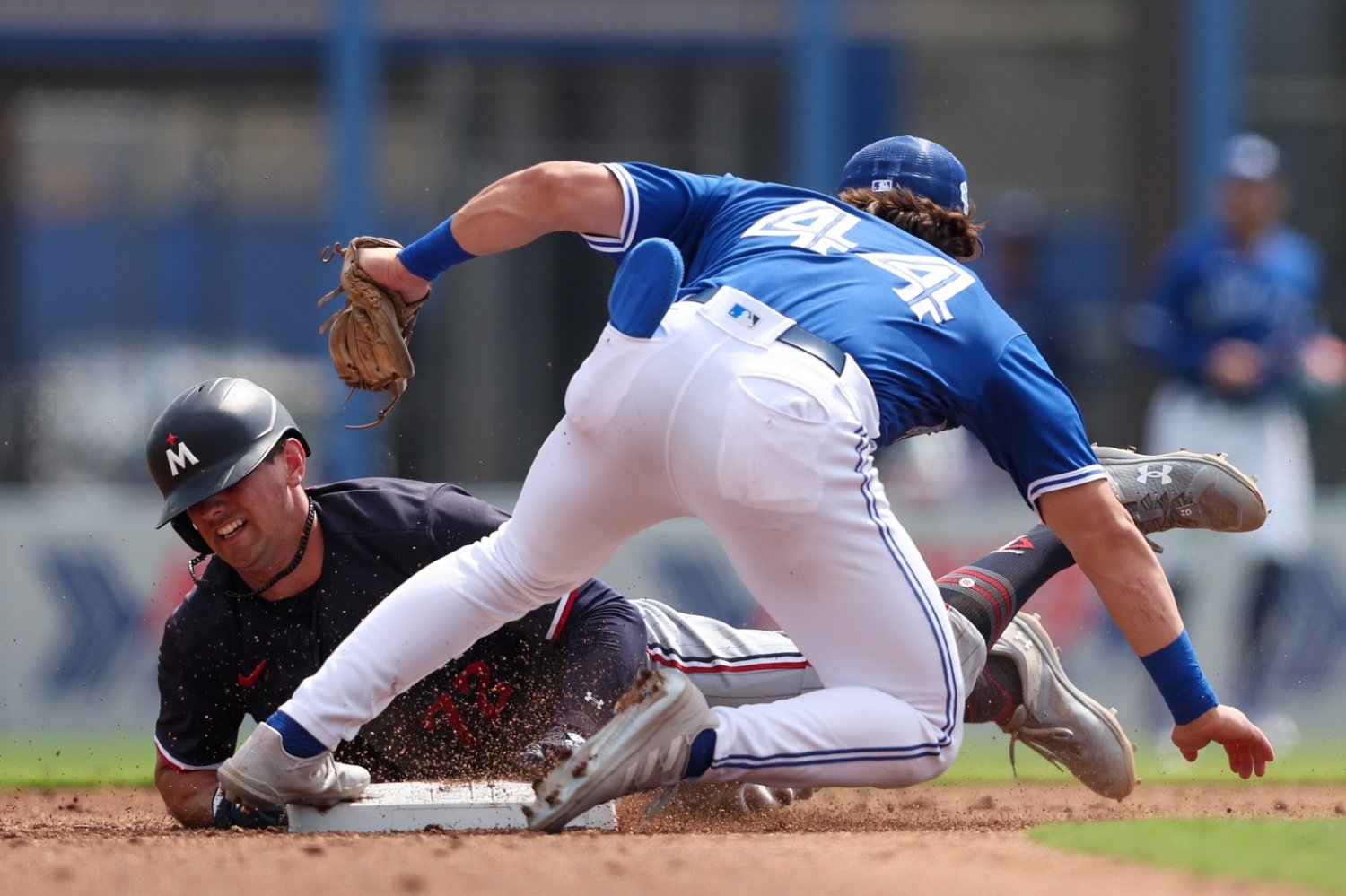 Brooks Lee, Twins Daily’s second-ranked prospect, left Thursday’s game against the Nationals with back spasms. He will be looked at by the Twins’ training staff to determine the next course of action. His reassignment is unrelated to the injury, but he is unlikely to play in any games between now and the start of the regular season. It's not ideal to have this expected demotion happen in the shadow of a potentially nagging injury, but Lee acquitted himself gorgeously in his time with the big-leaguers. He's not on the 40-man roster and wasn't a serious candidate for the Opening Day roster, but assuming he gets healthy at back in action soon for St. Paul, he could still factor into the team's plans during the first half of the season. “I think he had a better than a good camp,” Rocco Baldelli said of Lee’s spring performance. “I think he had a great camp. He showed us that he can go out there and play shortstop. He left everyone with an excellent feeling with his time here.” It's interesting to hear the skipper call out the work Lee put in at shortstop, specifically. Because of Carlos Correa's long-term contract, many have glossed over any possibility that Lee will stick at the six as he matriculates to the majors. It's still likely that he plays mostly at another position, but impressing Baldelli and the coaches with his defensive work on the left side ensures that Lee will be in position to be called up and installed, should Correa battle injuries again and a need arise at short. We've been assuming Kyle Farmer would be the de facto starter in such a situation, and that could still be true, but Lee showing out has increased his chances of being the one to whom the team turns in case of a need that stretches beyond a day or two, toward a month or two. In combination with the glove, he also proved he can hit big-league pitching in competitive settings--and perhaps that he can bring a different dynamic to the homers-and-strikeouts mad Twins lineup. The switch-hitting infielder hit .333/.351/.611 with seven extra-base hits in 13 Grapefruit League games. He made some modifications to his swing that have produced favorable results. The Twins’ roster is now down to 40 players in camp. Were you holding out hope for Lee to make the Opening Day roster? What do you want to see from him early on in Triple A? Join the discussion below, as the season draws into sight on the horizon.
 -
Fort Myers, FL – The Minnesota Twins announce that they have sent infielder Brooks Lee to minor league camp. Lee, Twins Daily’s number 2 ranked prospect, left Thursday’s game against the Nationals with back spasms. He will be looked at by the Twins’ training staff to determine the next course of action. His reassignment is unrelated to the injury but he is unlikely to play in any games between now and the start of the regular season. “I think he had a better than a good camp,” Rocco Baldelli said of Brooks Lee’s spring performance. “I think he had a great camp. He showed us that he can go out there and play shortstop. He left everyone with an excellent feeling with his time here.” The switch-hitting infielder hit .333/.351/.611 with seven extra base hits in 13 Grapefruit League games this spring. He made some modifications to his swing that have produced favorable results. The Twins’ roster is now down to 40 players in camp. View full article
-
I'll start with the last part first: The main difference between Blyleven's days and now is that a lot of the guess work has been taken out. Rather than pitchers feeling their way through bullpens with a pitching coach, they have the cameras and data and, hell, an entire development staff dedicated to trying to optimize each pitcher. Frank Viola talked about discovering his changeup after trying 12+ grips over a course of a few seasons. That process is shaved down to several bullpen sessions since they can capture seam direction, spin rate, and a slo-mo of the release. Plus, they now have a much, much more detailed plan for ramping but also, in talking with retired pitchers, there used to be the notion that spring training was the time to shake off rust. They stayed off the mound for longer stretches in the offseason. (This could be a good/bad thing.) Pitchers now have offseason schedules that include plenty of live bullpens designed to ramp them into the spring (as opposed to using the P&Cs reporting as the starting line). But across the game now, I do feel that we've reached a point that most organizations do similar ramping things (as I discussed in the article). Teams have different ways of capturing, distilling, and disseminating the information to players. Teams have different emphasis too. The Twins have done a lot more of streamlining mechanics, both in the way pitchers uses their lower half and how their arm spiral functions, to try to gain a little velo and command consistency. Driveline, Tread, & the Baseball Ranches (TX & FL), have permeated so much of the game that the vast majority of pitchers are following routines that once were thought of as weird. Kyle Gibson came into camp a few years back after developing with the Florida Ranch and was using the throwing sock, connection ball, and other things that are now almost universal in the game but it was thought of as out of the ordinary at that time. I don't know who the outliers are anymore. If someone starting throwing a bullpen with a parachute attached to his arm, I don't know if anyone would bat an eye anymore after some of the other things became common practice.
-
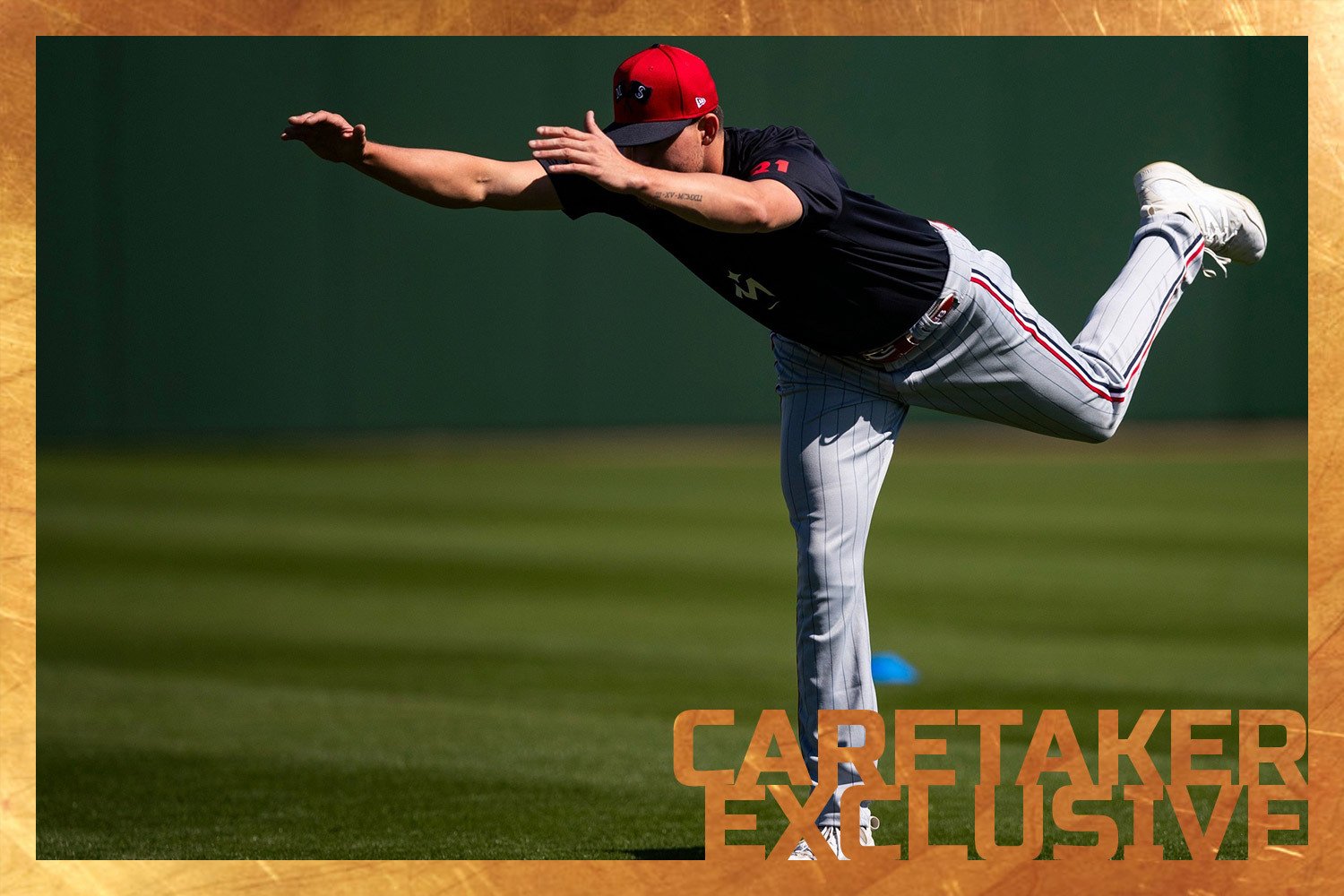 As spring training season kicks into gear, the Minnesota Twins' pitchers are honing their craft with a meticulously planned routine to optimize performance for the upcoming season. While the casual observer might only catch glimpses of players on the field during games, the behind-the-scenes regimen is organized to ensure peak physical condition and mental acuity. Let's delve into what, precisely, the pitchers' spring training schedule entails and the objectives they aim to accomplish. At the core of the Twins pitchers' spring training routine is a structured three-day throwing cycle. The cycle consists of one side day (a bullpen with just a catcher or a live session with a hitter in the box) and two non-side days. This cycle is a common practice to ensure pitchers can maintain their skills. "This is what spring training is for. It's just kind of getting us broken in," said incoming reliever Josh Staumont. Staumont, who spent his career in the Royals organization, said this program is nothing new. "A three-day kind of thing that's just the standard practice field." Staumont added that pitchers might work toward a four-day cycle later in camp, including back-to-back live side days to replicate getting called to pitch in consecutive games. However, the three-day schedule is king as arms are ramping at the beginning of spring. During "side" days, not in-game action, pitchers focus primarily on bullpen sessions or live batting practice (BP). Side days are the time for pitchers to fine-tune their mechanics, work on specific pitches, and simulate game-like scenarios under the guidance of pitching coaches. The bullpen sessions allow pitchers to concentrate on their individual needs, whether that be refining their fastball command, perfecting the break on their curveball, or experimenting with new pitch grips. These bullpen sessions also have a Fogo De Chao amount of technology involved. There are cameras, Trackman units, and biomechanical tools. Everything (seen and unseen) is measured. Collecting data is essential for pitchers working on a new pitch, or refining an existing one. When the Twins asked Pablo López to add a sweeper to his arsenal, they were looking for a precise amount of break, spin direction, and velocity. It was in spring training sides that he honed those. This process is vital in a strong pipeline of developing pitchers. "You see some of these young pitchers who have interesting pitches, interesting skills or traits, maybe velo, maybe something with the two-seamer, something with the slider. But the difference between a successful major-league pitcher with that talent and a guy who's right on the edge of that is so, so thin," Derek Falvey told reporters early in camp. "We've found that if you can find a way to get a little more consistency out of the strike-throwing or a little more consistency out of the slider, whatever you've got that separates you, all of a sudden it turns into something."
 -
We often mistake routine for inaction. Let's stop doing that. What do the Twins do with their pitchers during spring training, and how does it get them ready for Opening Day? Image courtesy of © Jonah Hinebaugh/Naples Daily News/USA Today Network-Florida / USA TODAY NETWORK As spring training season kicks into gear, the Minnesota Twins' pitchers are honing their craft with a meticulously planned routine to optimize performance for the upcoming season. While the casual observer might only catch glimpses of players on the field during games, the behind-the-scenes regimen is organized to ensure peak physical condition and mental acuity. Let's delve into what, precisely, the pitchers' spring training schedule entails and the objectives they aim to accomplish. At the core of the Twins pitchers' spring training routine is a structured three-day throwing cycle. The cycle consists of one side day (a bullpen with just a catcher or a live session with a hitter in the box) and two non-side days. This cycle is a common practice to ensure pitchers can maintain their skills. "This is what spring training is for. It's just kind of getting us broken in," said incoming reliever Josh Staumont. Staumont, who spent his career in the Royals organization, said this program is nothing new. "A three-day kind of thing that's just the standard practice field." Staumont added that pitchers might work toward a four-day cycle later in camp, including back-to-back live side days to replicate getting called to pitch in consecutive games. However, the three-day schedule is king as arms are ramping at the beginning of spring. During "side" days, not in-game action, pitchers focus primarily on bullpen sessions or live batting practice (BP). Side days are the time for pitchers to fine-tune their mechanics, work on specific pitches, and simulate game-like scenarios under the guidance of pitching coaches. The bullpen sessions allow pitchers to concentrate on their individual needs, whether that be refining their fastball command, perfecting the break on their curveball, or experimenting with new pitch grips. These bullpen sessions also have a Fogo De Chao amount of technology involved. There are cameras, Trackman units, and biomechanical tools. Everything (seen and unseen) is measured. Collecting data is essential for pitchers working on a new pitch, or refining an existing one. When the Twins asked Pablo López to add a sweeper to his arsenal, they were looking for a precise amount of break, spin direction, and velocity. It was in spring training sides that he honed those. This process is vital in a strong pipeline of developing pitchers. "You see some of these young pitchers who have interesting pitches, interesting skills or traits, maybe velo, maybe something with the two-seamer, something with the slider. But the difference between a successful major-league pitcher with that talent and a guy who's right on the edge of that is so, so thin," Derek Falvey told reporters early in camp. "We've found that if you can find a way to get a little more consistency out of the strike-throwing or a little more consistency out of the slider, whatever you've got that separates you, all of a sudden it turns into something." View full article
-
With roster jockeying coming down to the last minute before pitchers and catchers report, the Minnesota Twins flipped out-of-options Nick Gordon for left-handed reliever Steven Okert from the Miami Marlins. Okert had been a fixture in Miami’s pen over the last three seasons. His ERA was an inflated 4.45 in 2023, but the underlying numbers suggest that he is better than that. His strikeout rate (29.6%) was the highest of his career, while his walk rate (9.7%) was the lowest. He had an elevated home run rate (3.9%) and a near .300 BABIP. A fastball/slider arsenal, Okert has been formidable against lefties but has fared well against either side. The Twins likely envision Okert's slider as a suitable weapon the organization can incrementally improve upon. From the far left side of the rubber, Okert's release point comes closer to the first base line than most, giving hitters a tough angle to see pitches. Combine that with a slider that has over 10 inches of horizontal movement and it is easy to see why left-handed batters have struggled. He has been in the high-end of throwing the pitch in the zone, so there is likely more chase and swing-and-miss potential available with some adjustments. He's set to make $1.1 million in 2024, which makes this move virtually a wash financially. The Marlins have much more roster space for Gordon; the Twins have more for a left-handed arm like Okert. Though he's appeared in six different MLB seasons, Okert still has three years of team control left, should the Twins want him for that long. More to come. View full article
-
Twins Trade Nick Gordon to Marlins for Left-Handed Reliever Steven Okert
Parker Hageman posted an article in Twins
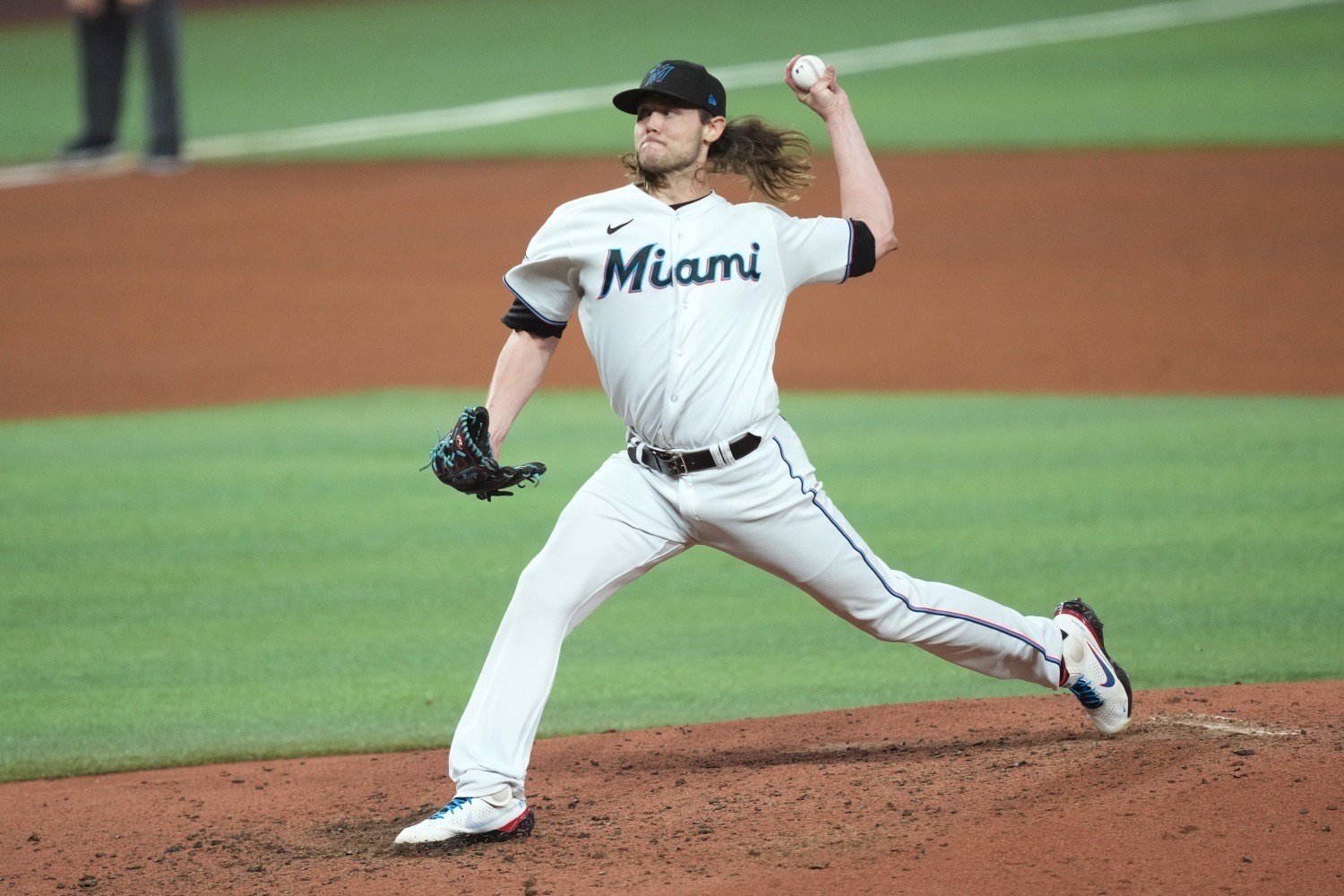 For the price of a player who was unlikely to make the roster, the Twins added another arm to their growing bullpen staff, the 32-year-old Steven Okert from the Marlins. Nick Gordon had something of a breakout year as a utility player for the Twins in 2022, posting a .272/.316/.427 slash in 136 games. More importantly, he filled spots in the outfield and infield and even threw 3 2/3 innings of garbage-time relief that season, proving his value as a highly versatile component. A foul ball off his shin in May of last year resulted in a fracture that limited him to just 34 games. Without options remaining and younger prospects pushing for playing time, Gordon’s spot on the roster was precarious heading into the 2024 season. Perhaps an indication of their views on his role, the Twins took him to arbitration, where the 28-year-old sought a $1,250,000 contract for the coming season. The three-judge panel ruled in the Twins’ favor, earning a $900,000 salary. Okert had been a fixture in Miami’s pen over the last three seasons. His ERA was an inflated 4.45 in 2023, but the underlying numbers suggest that he is better than that. His strikeout rate (29.6%) was the highest of his career, while his walk rate (9.7%) was the lowest. He had an elevated home run rate (3.9%) and a near .300 BABIP. A fastball/slider arsenal, Okert has been formidable against lefties but has fared well against either side. The Twins likely envision Okert's slider as a suitable weapon the organization can incrementally improve upon. From the far left side of the rubber, Okert's release point comes closer to the first base line than most, giving hitters a tough angle to see pitches. Combine that with a slider that has over 10 inches of horizontal movement and it is easy to see why left-handed batters have struggled. He has been in the high-end of throwing the pitch in the zone, so there is likely more chase and swing-and-miss potential available with some adjustments. He's set to make $1.1 million in 2024, which makes this move virtually a wash financially. The Marlins have much more roster space for Gordon; the Twins have more for a left-handed arm like Okert. Though he's appeared in six different MLB seasons, Okert still has three years of team control left, should the Twins want him for that long. More to come.
 -
This is definitely an emphasis of the Falvine front office. One of the first huddles Falvey did right before the 2017 season started, he talked about why they brought in the players they did: “I think we talked a lot about the culture we wanted to create in the clubhouse and how that leads to what we want on the field, guys like Matt Belisle, Chris Geminez and Craig Breslow, guys who have been around other organizations and some really successful moments in time, they know they have to hold themselves to high standards at two o’clock in the afternoon when no one is paying attention or nine oclock in the morning on the backfield in Fort Myers. That’s part of the approach here to make sure we embrace that, we wanted to make sure that we made clear it was a priority.”
- 54 replies
-
- 15
-
-
- jay jackson
- kyle farmer
- (and 2 more)
-
I'll push back on this statement because as we've seen in recent years, the trend is to throw fastballs in the upper third and sinkers have started to follow their 4-seam brethren up there as well. While it is common to see more home runs, it also gets lower batting average in play, more swinging strikes, and more foul balls (strikes overall). Random convo here but the interesting development over the last 10 years is how the 4-seam went from a pitch that was 50/50 on upper half and lower half in 2013 to one that is now 65/35 in 2023 and the sinker went from a pitch that was 42/58 inner half/outer half to 53/47 in/out this past year. Down is now up and outside is now inside. Baseball is fun.
-
Yes and no. What it tells me is that Varland's late season velocity increase/command improvement has some potential to be tied to his mechanics and not just the role. Again, the Twins are very good at getting pitchers to gain more velo through tweaks like that. He seemed to have better command of the cutter as well. The question for the Twins & Varland this offseason is whether he could be able to maintain that output over 5 innings. (IMO, he still needs to find a third pitch to make that jump and he's been working on a few things this winter so far.)
-
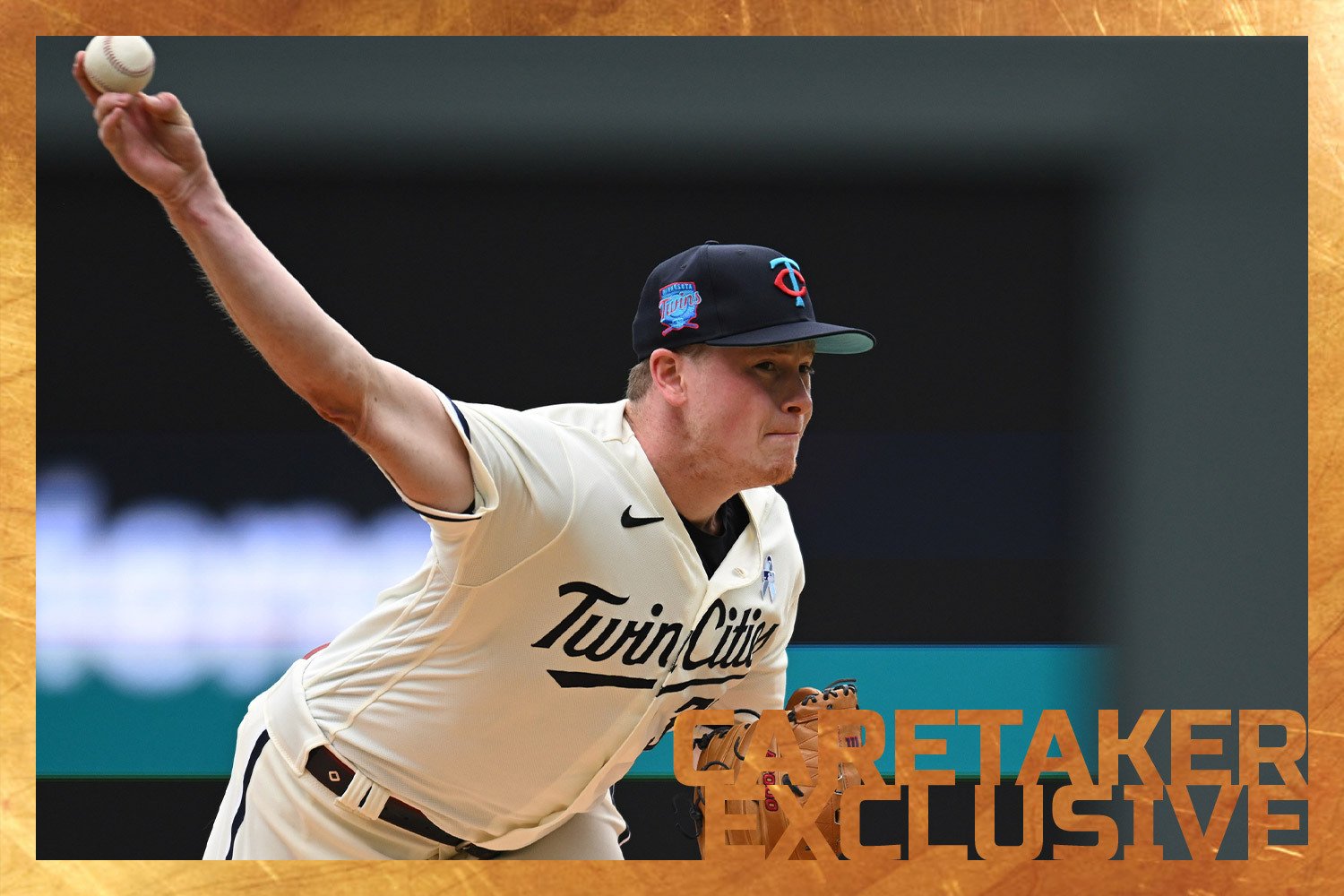 Martial arts legend Bruce Lee has a famous quote that says people should be more like water. Water, Lee said, can be many things. Water takes the shape of whatever is required. Put it in a cup, and it's a cup. A bottle? It's a bottle. An enormous Stanley taking up a Willians Astudillo-sized space in my cabinet? It's that, too. It's formless and highly adaptable. Louie Varland needs to be water. "My biggest takeaway from this past season was the importance of always adapting," Varland said, shortly after finishing one of his offseason workouts. "The league adapts to you, and you need to be ready for that." Varland had to adapt, all right. The Twins asked him to adapt to pitching well after the start of the game. They needed an electric arm in late-inning situations. They needed someone to subdue any potential uprisings. They needed someone to hand the ball over to Jhoan Durán and give the coaching staff confidence they would still have the lead intact. It's not always easy embracing the role of wait-and-see arm. Starters know their schedule. They have the luxury of going through their mechanical checklists with the precision of a shuttle launch, fully knowing when they have go-time. And that's just the game day experience. Between outings, starters, for the most part, know when their next appearance will be. Relievers have more mystery, and that makes it more challenging to recover and to work on things. Cleveland reliever and fellow Minnesotan Sam Hentges said that one of his biggest obstacles upon his relocation to the late show was that he could no longer "blow it out" in the weight room during his workout routine. As a starter, he had time for his body to heal from an outing and the between-start regimen. Instead, he had to relearn how to go about his important off-field work to keep his body ready to appear multiple days in a row. There's a plan, a cadence to everything pitchers do, and the work done on the field is just the tip of the iceberg. In addition to the all-important conditioning routines, there are side pens that pitchers rely on to hone their stuff. These can be incredibly important for young pitchers. Starting pitchers can set their watch to them. Routine is everything.
 -
While the hype and hoopla are rightfully on the native son who will enter baseball's Hall of Fame in a Minnesota Twins uniform, another St. Paul(-adjacent)-born player could play a vital role in the team’s 2024 season. It's just a matter of how. Image courtesy of © Matt Blewett-USA TODAY Sports Martial arts legend Bruce Lee has a famous quote that says people should be more like water. Water, Lee said, can be many things. Water takes the shape of whatever is required. Put it in a cup, and it's a cup. A bottle? It's a bottle. An enormous Stanley taking up a Willians Astudillo-sized space in my cabinet? It's that, too. It's formless and highly adaptable. Louie Varland needs to be water. "My biggest takeaway from this past season was the importance of always adapting," Varland said, shortly after finishing one of his offseason workouts. "The league adapts to you, and you need to be ready for that." Varland had to adapt, all right. The Twins asked him to adapt to pitching well after the start of the game. They needed an electric arm in late-inning situations. They needed someone to subdue any potential uprisings. They needed someone to hand the ball over to Jhoan Durán and give the coaching staff confidence they would still have the lead intact. It's not always easy embracing the role of wait-and-see arm. Starters know their schedule. They have the luxury of going through their mechanical checklists with the precision of a shuttle launch, fully knowing when they have go-time. And that's just the game day experience. Between outings, starters, for the most part, know when their next appearance will be. Relievers have more mystery, and that makes it more challenging to recover and to work on things. Cleveland reliever and fellow Minnesotan Sam Hentges said that one of his biggest obstacles upon his relocation to the late show was that he could no longer "blow it out" in the weight room during his workout routine. As a starter, he had time for his body to heal from an outing and the between-start regimen. Instead, he had to relearn how to go about his important off-field work to keep his body ready to appear multiple days in a row. There's a plan, a cadence to everything pitchers do, and the work done on the field is just the tip of the iceberg. In addition to the all-important conditioning routines, there are side pens that pitchers rely on to hone their stuff. These can be incredibly important for young pitchers. Starting pitchers can set their watch to them. Routine is everything. View full article
-
Obviously his big frame was one of the reasons he did not get the low strike but also technique-wise, he wasn’t taught was is being used now — going from underneath the pitch to bring it to the middle. Here’s an example: copy_578D4A91-5879-43E1-95A5-F48A8636C965.mov His glove comes down to the pitch and then back up. Some umpires are better than others at calling a zone but a catcher’s movements win/lose strikes at the edges.
-
Height does not necessarily equal extension. Sean Hjelle is 6'11" and gets 6.59 feet down the mound, which is well below average for pitchers who are 6'6" and above. There are other similar pitchers blessed with altitude that do not get down the hill well. Extension (and the improvement of) is a product of the rear leg. The Twins development has been really good at getting pitchers to use their bodies better and ride the slope down longer and that helps create extension and velocity. What's interesting to me is that the Twins' pitchers in St. Paul are often below average in this area (18 of 30 teams).
- 44 replies
-
- 3
-
-
- pablo lopez
- bailey ober
- (and 2 more)
.png.e7bedf804c599e8f66fa67ca01571878.png)