



Nick Nelson
-
Posts
8,322 -
Joined
-
Last visited
-
Days Won
56
Content Type
Profiles
News
Minnesota Twins Videos
2026 Minnesota Twins Top Prospects Ranking
2022 Minnesota Twins Draft Picks
Minnesota Twins Free Agent & Trade Rumors, Notes, & Tidbits
Guides & Resources
2023 Minnesota Twins Draft Picks
The Minnesota Twins Players Project
2024 Minnesota Twins Draft Picks
2025 Minnesota Twins Draft Pick Tracker
2026 Minnesota Twins Draft Tracker: Picks & Bonuses
Forums
Blogs
Events
Store
Downloads
Gallery
Everything posted by Nick Nelson
-
 Right, they but they could just move Canterino to the 60-day IL. I understand there's some downside to doing that but they'll need to eventually unless they plan to operate with a 39-man roster all season.
 -
This is true. As we saw last year, things can easily change at the last minute. What I tried to balance with this article was, 1) providing an overview of the team's situation to start the season, and 2) giving people a full day to explore all the content and links, since there is a ton! This meant publishing before the final roster becomes crystallized, We'll update if anything changes. Re: the roster. Actually I believe Canterino is the only long-term injured player who hasn't been placed on the 60-day IL. Paddack and Lewis have. And even with him still active, they only have 39 spots accounted for the on the 40-man, so they could add Castro without another move. (This is why I found it odd they chose to part with both Coulombe and Hoffman. They could've kept one and still had Sands readily available at Triple-A.)
-
Ah yes, good correction, thank you! I will fix in the copy.
-
I linked to this in the article but it was kinda hidden so I will present it here in case you're interested: I tried to review the way things went down to evaluate where things went wrong with this approach for the Twins last year. Basically, what I concluded was: They needed a deeper/better bullpen They needed at least one workhorse type in the rotation who could eat some innings every fifth day to offset the shortened workloads elsewhere They needed pitchers whose performance actually played up a little more in the short starts (Archer and Bundy weren't very good even in this favorable capacity, and the analysis that "they weren't that bad, they got pulled several times when they were cruising" overlooks that this was probably the very reason their stats weren't that bad)
-
That's a pretty standard build-up. I don't think anyone's generally throwing 100 pitches in spring training games.
-
The rebranded Minnesota Twins will take the field in Kansas City on Thursday sporting a very different look, epitomizing a 2023 season that will introduce new uniforms, new MLB rule changes, and – we're all hoping – a new winning chapter in the franchise's story. Image courtesy of Thiéres Rabelo, Twins Daily As baseball fans, we've grown accustomed to things changing from year to year: a new scoreboard at the stadium, a new alternate uniform on Sundays, a subtle tweak to the game's rules. Never before have we seen this much drastic change, occurring all at once. The 2023 season will introduce, at a league-wide level, rule changes that fundamentally affect the fabric of the game, including a pitch clock, pickoff limit, shift reduction, and enlargement of bases. Oh, plus a completely reconfigured schedule that includes less intra-division and more interleague play. The Minnesota Twins will be wearing all-new uniforms with revamped branding, playing at Target Field beneath a newly supersized scoreboard and ... LED baseball medallion? All part of what team president Dave St. Peter called "the largest off-season project in the history of this ballpark." Par for the course, in 2023. The year of brand new. Breaking Down the 2023 Minnesota Twins Roster There are plenty of new faces on the Twins team this year, but for all of the offseason roster churn and upheaval, the biggest shocker is what stays the same: Carlos Correa is back at shortstop. His free agent odyssey led to agreements falling through with the Giants and Mets before Correa found his way back to Minnesota on a six-year, $200 million deal. Now, he'll bear the full weight of a franchise that's positioned to compete but plagued by huge question marks around him. Correa gives them a second superstar talent alongside Byron Buxton to complement a strong position-player core with several proven standouts. The Twins are hoping the returning duo of Correa and Buxton, along with mainstays like José Miranda, Jorge Polanco, Max Kepler, and Alex Kirilloff can elevate Minnesota back into the upper tier of run-producing teams. While Christian Vázquez and Joey Gallo are now aboard as regulars, the story of the offseason was adding high-caliber depth. Minnesota's front office insured its most prized assets to an admirable degree. Kyle Farmer, acquired from Cincinnati after starting 200 games for the Reds at shortstop over the past two years, will be Correa's top backup. Michael A. Taylor, acquired from Kansas City after starting 250 games in center field over the past two years, will be Buxton's top backup. Both Farmer and Taylor provide valuable depth elsewhere, too. They're contingencies at worst, and bonus contributors at best. It's a good place for Rocco Baldelli to be following a season where he ran out of both, and was reduced to routinely fielding makeshift lineups as contention slipped away in September. Health situations for key players already trending in a troubling direction, with Polanco and Kirilloff both opening on the injured list, so this added high-level depth will undoubtedly come into play early and often. Building depth was also the focus of Minnesota's biggest and most controversial offseason trade, which sent batting champ Luis Arraez to Miami in exchange for Opening Day starter Pablo López. It was a bold move by the front office, removing one star-caliber bat from the offensive equation in order to bolster a rotation plagued by its own health concerns. López, who gets the nod on Opening Day, joins Sonny Gray, Joe Ryan, Tyler Mahle, and Kenta Maeda in the starting five. Bailey Ober will stand by as an impact reinforcement at the ready in Triple-A – very important given the uncertainties attached to Mahle and Maeda especially. You can click through to in-depth analysis of the outlook and depth at each position below, or keep reading for more 2023 Twins storylines. The 2023 Twins, Position by Position Position Analysis: Catcher Position Analysis: First Base Position Analysis: Second Base Position Analysis: Third Base Position Analysis: Shortstop Position Analysis: Left Field Position Analysis: Center Field Position Analysis: Right Field Position Analysis: Designated Hitter Position Analysis: Starting Pitcher Position Analysis: Relief Pitcher Youth Movement: Twins Top Prospects to Arrive in 2023 The Twins are in an interesting period of generational transition, with a position-player core that comprises basically three eras of top prospects. First, an established class of veterans, and another of developing talents without much experience: The Old Guard: Buxton, Polanco, Kepler (and Correa, albeit not a former Twins prospect) Entering Their Prime: Kirilloff, Miranda, Larnach, Jeffers, Gordon Then, an intriguing wave of strong prospects who are, by and large, ready to enter the fold. Royce Lewis, Edouard Julien, Austin Martin, Matt Wallner and Brooks Lee are all players ranked near the top of the Twins' system who could be in line for significant MLB playing time this year. Read: Twins Daily Top 20 Prospects: Recap and Analysis This intermingling of youth is one of the season's main sources of intrigue for me. Should things generally go well, the Twins will find themselves swimming in quality depth, with high-performing prospects slamming on the door. And if things don't go so well, fans should get a prolonged look at the next generation of talent, as a silver lining. Key Storylines for the 2023 Twins We've been writing here at Twins Daily all spring and offseason about some of the team's biggest priorities, narratives, and question marks heading into this pivotal season. Click through the stories below to explore these topics in depth: Can Kenta Maeda shake off an underwhelming season and recapture something resembling his 2020 form, as he comes back from a lost year at age 34 with free agency bearing down? Read: Kenta Maeda's Discouraging Spring, by Cody Pirkl How big of an impact can top prospect Royce Lewis have in the second half of the season, as he works back from a second straight knee surgery? Read: Royce Lewis Is Ready to Rock, by Ted Schwerzler With injuries to key players already being established as a major 2023 storyline before the season has even begun, how will the Twins make up for the loss of absent stars? Read: Here Are Five Options If Alex Kirilloff Misses Time, by Adam Friedman How good can this starting rotation – so deep in quality options that a clearly capable big-leaguer will open at Triple-A – really be? Read: The Best Twins Rotations of the Last 25 Years, by Hans Birkeland For that matter, what does the future of this rotation look like? Three of the four veteran starters are due for free agency at year's end. Read: How Likely Are the Twins to Extend Their Veteran Starting Pitchers? by Cody Christie Will the Twins benefit from MLB's rule changes, which seemed to play a role in how the front office went about building this year's team? Read: Twins Roster Built on Defense and Rule Changes, by Alex Boxwell Assuming he can stay healthy (knock on wood), will Durán get enough late-inning support to protect leads and avoid some of the costly bullpen lapses from last year? Read: Can Jorge López Rediscover His First-Half Success? by Lou Hennessy Charting the AL Central Competition The Guardians are generally viewed by betting odds and projection systems as the favorites in the AL Central, but not by a huge margin. This division forecasts (once again) as a mediocre one where the crown is there for the taking. The Twins probably won't need everything to go right to make the playoffs. Catch up on how the rest of the Central shapes up in 2023 with Matt Braun's "check-in" series: Cleveland Guardians Chicago White Sox Kansas City Royals Detroit Tigers Celebrate Opening Day with Twins Daily Got plans for the game on Thursday afternoon? Well if not, you do now: Twins Daily will be hosting a watch party for the season opener against the Royals at Forgotten Star Brewing in Fridley. Join the "Twins Daily Social Club" for free beer, meat raffles, prizes, and most importantly: REAL LIVE BASEBALL! Here are the details: What: Twins Daily’s Social Club Season Opener When: 3 PM – 6 PM, March 30th, 2023 Where: Forgotten Star, 38 Northern Stacks Drive Fridley, MN 55421 Cost: FREE View full article
- 35 replies
-
- 1
-

-
- carlos correa
- byron buxton
- (and 1 more)
-
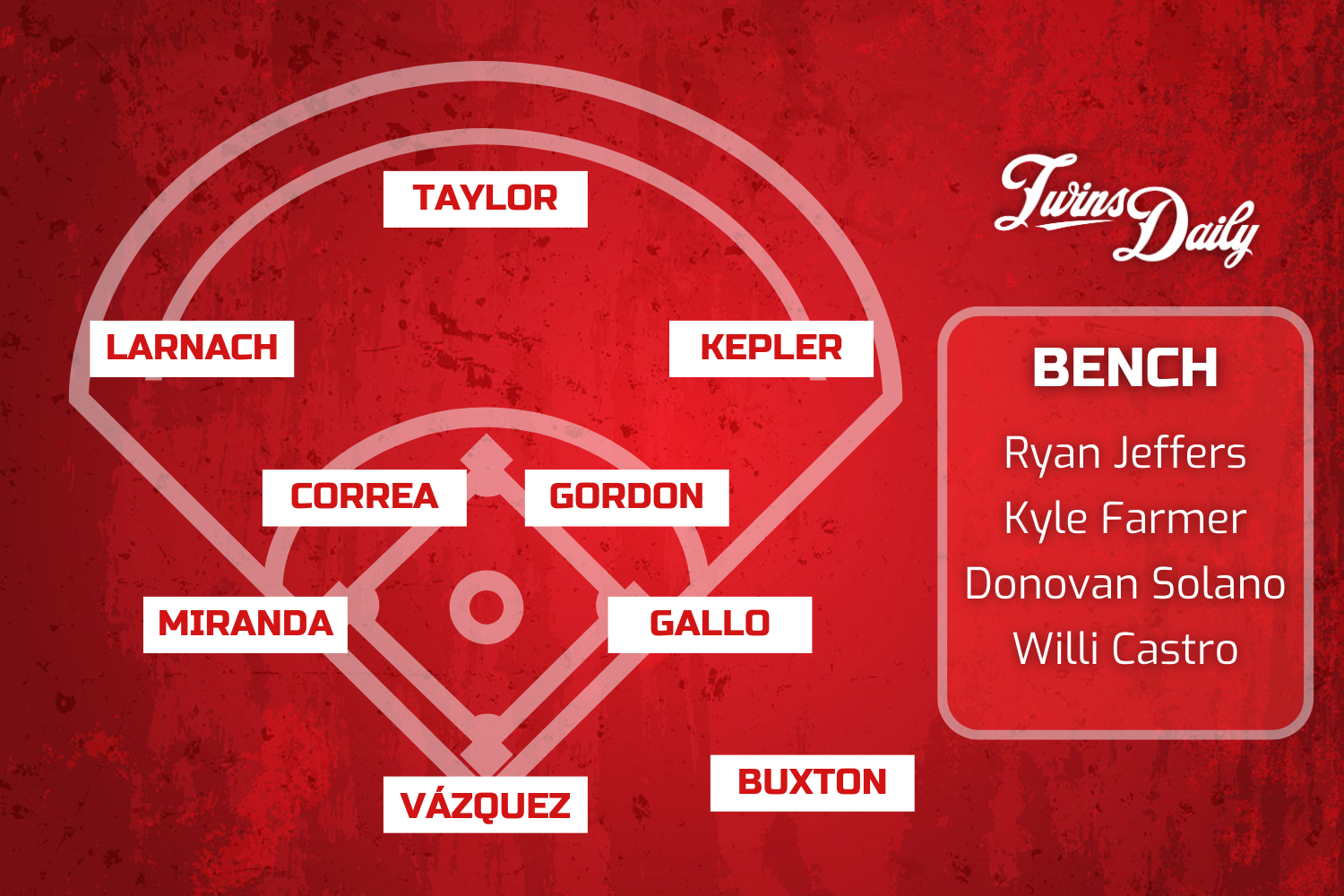 As baseball fans, we've grown accustomed to things changing from year to year: a new scoreboard at the stadium, a new alternate uniform on Sundays, a subtle tweak to the game's rules. Never before have we seen this much drastic change, occurring all at once. The 2023 season will introduce, at a league-wide level, rule changes that fundamentally affect the fabric of the game, including a pitch clock, pickoff limit, shift reduction, and enlargement of bases. Oh, plus a completely reconfigured schedule that includes less intra-division and more interleague play. The Minnesota Twins will be wearing all-new uniforms with revamped branding, playing at Target Field beneath a newly supersized scoreboard and ... LED baseball medallion? All part of what team president Dave St. Peter called "the largest off-season project in the history of this ballpark." Par for the course, in 2023. The year of brand new. Breaking Down the 2023 Minnesota Twins Roster There are plenty of new faces on the Twins team this year, but for all of the offseason roster churn and upheaval, the biggest shocker is what stays the same: Carlos Correa is back at shortstop. His free agent odyssey led to agreements falling through with the Giants and Mets before Correa found his way back to Minnesota on a six-year, $200 million deal. Now, he'll bear the full weight of a franchise that's positioned to compete but plagued by huge question marks around him. Correa gives them a second superstar talent alongside Byron Buxton to complement a strong position-player core with several proven standouts. The Twins are hoping the returning duo of Correa and Buxton, along with mainstays like José Miranda, Jorge Polanco, Max Kepler, and Alex Kirilloff can elevate Minnesota back into the upper tier of run-producing teams. While Christian Vázquez and Joey Gallo are now aboard as regulars, the story of the offseason was adding high-caliber depth. Minnesota's front office insured its most prized assets to an admirable degree. Kyle Farmer, acquired from Cincinnati after starting 200 games for the Reds at shortstop over the past two years, will be Correa's top backup. Michael A. Taylor, acquired from Kansas City after starting 250 games in center field over the past two years, will be Buxton's top backup. Both Farmer and Taylor provide valuable depth elsewhere, too. They're contingencies at worst, and bonus contributors at best. It's a good place for Rocco Baldelli to be following a season where he ran out of both, and was reduced to routinely fielding makeshift lineups as contention slipped away in September. Health situations for key players already trending in a troubling direction, with Polanco and Kirilloff both opening on the injured list, so this added high-level depth will undoubtedly come into play early and often. Building depth was also the focus of Minnesota's biggest and most controversial offseason trade, which sent batting champ Luis Arraez to Miami in exchange for Opening Day starter Pablo López. It was a bold move by the front office, removing one star-caliber bat from the offensive equation in order to bolster a rotation plagued by its own health concerns. López, who gets the nod on Opening Day, joins Sonny Gray, Joe Ryan, Tyler Mahle, and Kenta Maeda in the starting five. Bailey Ober will stand by as an impact reinforcement at the ready in Triple-A – very important given the uncertainties attached to Mahle and Maeda especially. You can click through to in-depth analysis of the outlook and depth at each position below, or keep reading for more 2023 Twins storylines. The 2023 Twins, Position by Position Position Analysis: Catcher Position Analysis: First Base Position Analysis: Second Base Position Analysis: Third Base Position Analysis: Shortstop Position Analysis: Left Field Position Analysis: Center Field Position Analysis: Right Field Position Analysis: Designated Hitter Position Analysis: Starting Pitcher Position Analysis: Relief Pitcher Youth Movement: Twins Top Prospects to Arrive in 2023 The Twins are in an interesting period of generational transition, with a position-player core that comprises basically three eras of top prospects. First, an established class of veterans, and another of developing talents without much experience: The Old Guard: Buxton, Polanco, Kepler (and Correa, albeit not a former Twins prospect) Entering Their Prime: Kirilloff, Miranda, Larnach, Jeffers, Gordon Then, an intriguing wave of strong prospects who are, by and large, ready to enter the fold. Royce Lewis, Edouard Julien, Austin Martin, Matt Wallner and Brooks Lee are all players ranked near the top of the Twins' system who could be in line for significant MLB playing time this year. Read: Twins Daily Top 20 Prospects: Recap and Analysis This intermingling of youth is one of the season's main sources of intrigue for me. Should things generally go well, the Twins will find themselves swimming in quality depth, with high-performing prospects slamming on the door. And if things don't go so well, fans should get a prolonged look at the next generation of talent, as a silver lining. Key Storylines for the 2023 Twins We've been writing here at Twins Daily all spring and offseason about some of the team's biggest priorities, narratives, and question marks heading into this pivotal season. Click through the stories below to explore these topics in depth: Can Kenta Maeda shake off an underwhelming season and recapture something resembling his 2020 form, as he comes back from a lost year at age 34 with free agency bearing down? Read: Kenta Maeda's Discouraging Spring, by Cody Pirkl How big of an impact can top prospect Royce Lewis have in the second half of the season, as he works back from a second straight knee surgery? Read: Royce Lewis Is Ready to Rock, by Ted Schwerzler With injuries to key players already being established as a major 2023 storyline before the season has even begun, how will the Twins make up for the loss of absent stars? Read: Here Are Five Options If Alex Kirilloff Misses Time, by Adam Friedman How good can this starting rotation – so deep in quality options that a clearly capable big-leaguer will open at Triple-A – really be? Read: The Best Twins Rotations of the Last 25 Years, by Hans Birkeland For that matter, what does the future of this rotation look like? Three of the four veteran starters are due for free agency at year's end. Read: How Likely Are the Twins to Extend Their Veteran Starting Pitchers? by Cody Christie Will the Twins benefit from MLB's rule changes, which seemed to play a role in how the front office went about building this year's team? Read: Twins Roster Built on Defense and Rule Changes, by Alex Boxwell Assuming he can stay healthy (knock on wood), will Durán get enough late-inning support to protect leads and avoid some of the costly bullpen lapses from last year? Read: Can Jorge López Rediscover His First-Half Success? by Lou Hennessy Charting the AL Central Competition The Guardians are generally viewed by betting odds and projection systems as the favorites in the AL Central, but not by a huge margin. This division forecasts (once again) as a mediocre one where the crown is there for the taking. The Twins probably won't need everything to go right to make the playoffs. Catch up on how the rest of the Central shapes up in 2023 with Matt Braun's "check-in" series: Cleveland Guardians Chicago White Sox Kansas City Royals Detroit Tigers Celebrate Opening Day with Twins Daily Got plans for the game on Thursday afternoon? Well if not, you do now: Twins Daily will be hosting a watch party for the season opener against the Royals at Forgotten Star Brewing in Fridley. Join the "Twins Daily Social Club" for free beer, meat raffles, prizes, and most importantly: REAL LIVE BASEBALL! Here are the details: What: Twins Daily’s Social Club Season Opener When: 3 PM – 6 PM, March 30th, 2023 Where: Forgotten Star, 38 Northern Stacks Drive Fridley, MN 55421 Cost: FREE
- 35 comments
-
- 8
-
-
- carlos correa
- byron buxton
- (and 1 more)
-
I'd say it's as simple as this: Lopez pitched deeper into games because he was good enough and physically capable. This combination was rarely in place for Twins starters last year. The idea that Baldelli obsesses over this kind of thing is overblown, IMO. Jose Berrios, as one example, had big workloads under Baldelli because he was good enough and physically capable.
-
Count me in as very intrigued by this series and eager for more installments! (Even though I already got to read the second. It's great!)
-
Talent-wise they are definitely in a much better place. Whether that translates to results remains to be seen. But on paper this rotation is night-and-day compared to last year at this time.
-
Sonny Gray's Criticism of Last Year's Rotation Shows How Far We've Come
Nick Nelson posted an article in Twins
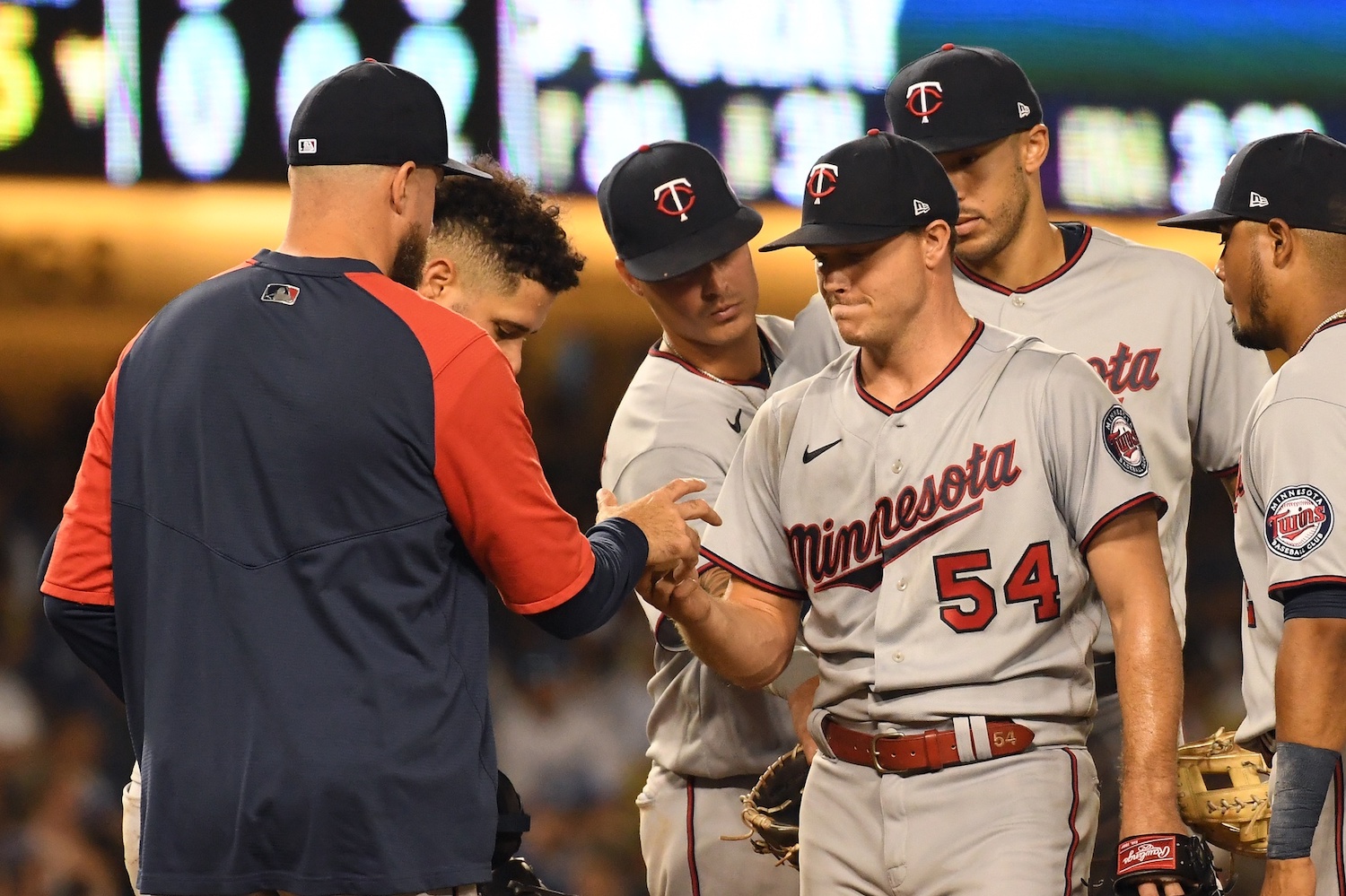 Over the weekend, we learned that Sonny Gray will not be the Twins' Opening Day starter – that honor will instead go to newcomer Pablo López on Thursday in Kansas City. Gray will, however, get the nod for the home opener a week later. There's little question he is viewed as the veteran leader on this starting staff, one year after establishing himself as its top performer. As such, Gray's comments following his final spring start on Sunday are noteworthy. After throwing three shutout innings against the Red Sox, the 33-year-old opened up on a bit of a vent session regarding last year's norm of shorter outings for Twins starters. “I don’t think we’re interested in going four innings and being happy,” Gray told reporters. “I feel like we had a group last year that was pretty content with going four innings, and [where] going four innings and five innings is considered a good start. I disagreed with that then, I disagree with that now.” Gray was channeling the frustrations a lot of fans felt with last year's team. And those frustrations are understandable, even if they were often misdirected. There's no doubt that Rocco Baldelli generally had a quick trigger with starters in 2022, more so than ever before. But it wasn't due to some sudden philosophical shift on his part. As I see it, this tendency owed to two different factors: The league in general has trended toward shorter outings for starters and more innings for specialized relief pitchers. The Twins had a particularly bad starting staff last year, with both Chris Archer and Dylan Bundy members of the rotation on Opening Day and all year long. The first part is what it is, and it's not likely to change in the age of high-powered, optimization-obsessive baseball pitching strategy. Baldelli might be more apt than some others to embrace the analytical logic of "times through the order" penalties and matchup-based advantages, but he's hardly some outlier egghead on this topic. It's the way of the game. Last year, eight MLB pitchers threw more than 200 innings and one (Sandy Alcantara) threw more than 210. Twenty years earlier (2002), those numbers were 42 and thirty. Gray himself is sort of a poster child for the modern MLB starting pitcher. While an accomplished multi-time All-Star, and a guy who's rightfully earned "borderline ace" designation, Gray has averaged 140 innings per season over the past seven years, and has never topped even 180 during that span. He hasn't thrown a complete game since 2017. That said, I don't think Gray's expectations for himself or others in the rotation are tethered to some outdated standard, even if some fans still long for the prototypical workhorse of yesteryear. He just wants starting pitchers around him who get the job done. Which brings us to my second point above: the Twins were just flat-out lacking in pitching talent last year. To some extent, they deserve a bit of grace on that part. Losing Kenta Maeda to Tommy John surgery and trading José Berríos at the deadline left them in an extremely tough spot with no easy answers. The front office signaled early on that they might get experimental in terms of pitcher usage as a way to navigate this challenge, so no one should've been all that surprised that they basically did just that. Ultimately there were some fatal flaws in the execution of this plan, but that doesn't mean it a was conceptually bad idea. And anyway, what needs to be emphasized here is that it was a matter of circumstance: the Twins were in a uniquely bad position with their short-term rotation depth. Fast-forward one year, and the makeup of this unit is very different. Gray now has had a full, normal spring – no lockout-trade combo disrupting his buildup routine – so hopefully that helps lead him to a healthier year and continued excellent performance on the mound. Joe Ryan is now fully established as a quality mid-rotation starter. On top of those two, you've got these additions to the mix: Tyler Mahle, who threw 180 innings in his last full season (2021), López, who threw 180 innings last season, and Maeda, who averaged 5.4 IP/start for the Twins before undergoing Tommy John surgery These are hurlers who you can expect to pitch into the sixth inning with regularity, if healthy. That was never a particularly reasonable expectation for the likes of Archer or Bundy. It's easy to read Gray's comment at a glance and say, "He's taking a shot at his manager and the way this staff was a run last year." In reality, I think what he's saying is, "It sure is nice to be surrounded by competent talent in the rotation now." While I'm sure he meant no specific offense to Archer with his comment, it's understandable how Gray might've been baffled (as we all were) watching the Twins go through an extensive orchestrated routine to get four mediocre innings out of the guy every fifth day. The situation this year will be a far cry from that, which is one of the main reasons fans should feel confident in a significantly better on-field product in 2023.
 -
After making his final spring tune-up start on Sunday, Twins starter Sonny Gray was blunt in expressing his view on the 2022 rotation and its shortcomings. Lucky for him (and us), there's good reason to expect a big change in the season ahead. Image courtesy of Richard Mackson-USA TODAY Sports Over the weekend, we learned that Sonny Gray will not be the Twins' Opening Day starter – that honor will instead go to newcomer Pablo López on Thursday in Kansas City. Gray will, however, get the nod for the home opener a week later. There's little question he is viewed as the veteran leader on this starting staff, one year after establishing himself as its top performer. As such, Gray's comments following his final spring start on Sunday are noteworthy. After throwing three shutout innings against the Red Sox, the 33-year-old opened up on a bit of a vent session regarding last year's norm of shorter outings for Twins starters. “I don’t think we’re interested in going four innings and being happy,” Gray told reporters. “I feel like we had a group last year that was pretty content with going four innings, and [where] going four innings and five innings is considered a good start. I disagreed with that then, I disagree with that now.” Gray was channeling the frustrations a lot of fans felt with last year's team. And those frustrations are understandable, even if they were often misdirected. There's no doubt that Rocco Baldelli generally had a quick trigger with starters in 2022, more so than ever before. But it wasn't due to some sudden philosophical shift on his part. As I see it, this tendency owed to two different factors: The league in general has trended toward shorter outings for starters and more innings for specialized relief pitchers. The Twins had a particularly bad starting staff last year, with both Chris Archer and Dylan Bundy members of the rotation on Opening Day and all year long. The first part is what it is, and it's not likely to change in the age of high-powered, optimization-obsessive baseball pitching strategy. Baldelli might be more apt than some others to embrace the analytical logic of "times through the order" penalties and matchup-based advantages, but he's hardly some outlier egghead on this topic. It's the way of the game. Last year, eight MLB pitchers threw more than 200 innings and one (Sandy Alcantara) threw more than 210. Twenty years earlier (2002), those numbers were 42 and thirty. Gray himself is sort of a poster child for the modern MLB starting pitcher. While an accomplished multi-time All-Star, and a guy who's rightfully earned "borderline ace" designation, Gray has averaged 140 innings per season over the past seven years, and has never topped even 180 during that span. He hasn't thrown a complete game since 2017. That said, I don't think Gray's expectations for himself or others in the rotation are tethered to some outdated standard, even if some fans still long for the prototypical workhorse of yesteryear. He just wants starting pitchers around him who get the job done. Which brings us to my second point above: the Twins were just flat-out lacking in pitching talent last year. To some extent, they deserve a bit of grace on that part. Losing Kenta Maeda to Tommy John surgery and trading José Berríos at the deadline left them in an extremely tough spot with no easy answers. The front office signaled early on that they might get experimental in terms of pitcher usage as a way to navigate this challenge, so no one should've been all that surprised that they basically did just that. Ultimately there were some fatal flaws in the execution of this plan, but that doesn't mean it a was conceptually bad idea. And anyway, what needs to be emphasized here is that it was a matter of circumstance: the Twins were in a uniquely bad position with their short-term rotation depth. Fast-forward one year, and the makeup of this unit is very different. Gray now has had a full, normal spring – no lockout-trade combo disrupting his buildup routine – so hopefully that helps lead him to a healthier year and continued excellent performance on the mound. Joe Ryan is now fully established as a quality mid-rotation starter. On top of those two, you've got these additions to the mix: Tyler Mahle, who threw 180 innings in his last full season (2021), López, who threw 180 innings last season, and Maeda, who averaged 5.4 IP/start for the Twins before undergoing Tommy John surgery These are hurlers who you can expect to pitch into the sixth inning with regularity, if healthy. That was never a particularly reasonable expectation for the likes of Archer or Bundy. It's easy to read Gray's comment at a glance and say, "He's taking a shot at his manager and the way this staff was a run last year." In reality, I think what he's saying is, "It sure is nice to be surrounded by competent talent in the rotation now." While I'm sure he meant no specific offense to Archer with his comment, it's understandable how Gray might've been baffled (as we all were) watching the Twins go through an extensive orchestrated routine to get four mediocre innings out of the guy every fifth day. The situation this year will be a far cry from that, which is one of the main reasons fans should feel confident in a significantly better on-field product in 2023. View full article
-
Did the Twins Lose Money Last Year?
Nick Nelson replied to Nick Nelson's topic in Twins Daily Front Page News
This could very well be true but I found it enlightening at least because it gives me insight into the basis DSP and Twins officials are using when talk about payroll being "not commensurate with their revenues." And to be clear, I'm not arguing that the Twins are doing something special or noble here, by accepting an annual "operating loss" in the name of bettering the product. I'm saying it's what all teams should be doing. The Forbes data brings to light what we all know: most are not. And that's why I'm not inclined to brush it aside. -
Did the Twins Lose Money Last Year?
Nick Nelson replied to Nick Nelson's topic in Twins Daily Front Page News
Wouldn't this be true of most owners/ownership groups? I know the Pohlads are on the wealthier end but they're all very rich and vested in multiple ventures. -
Did the Twins Lose Money Last Year?
Nick Nelson replied to Nick Nelson's topic in Twins Daily Front Page News
Care to elaborate? I'm not saying these are completely accurate, and certainly not sticking up for Forbes as a publication in general here, but the methodology seems pretty sound to me and the numbers jibe more or less with what I'd expect. It's not like the overall report paints some extremely rosy or favorable analysis of anyone -- they show most owners pocketing a ton of revenue. I'm less interested in specifically what money the Twins "lost" and more interested in how they're operating compared to other teams. -
Did the Twins Lose Money Last Year?
Nick Nelson replied to Nick Nelson's topic in Twins Daily Front Page News
To be clear, the Twins have not directly claimed they were "losing money" to my knowledge. This comes from an independent analysis showing they are losing money compared to other teams. -
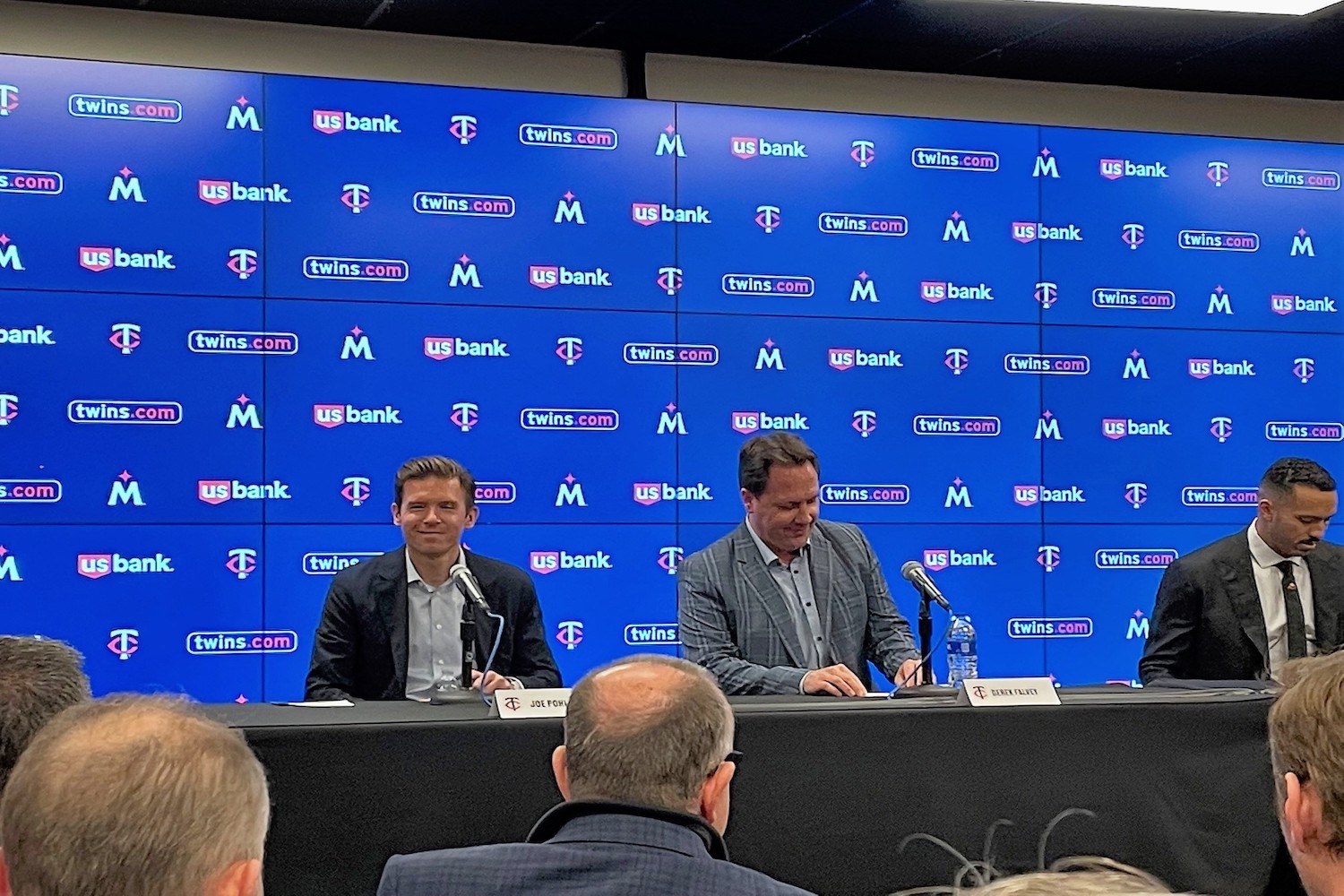 We as fans don't get a lot of clear insight regarding the profits and losses of major-league franchises, even though team revenues are inherently tied to payroll spending. That's the nature of a business where all clubs (save Atlanta) are privately owned, their books shielded from the public eye. But each year, Forbes attempts to calculate and rank the value of all 30 teams, and the 2023 list just dropped. The methodology assesses "enterprise values (equity plus net debt) based on historical transactions and the future economics of the sport and each team." There's a whole lot more explanation and detail in the article if you're interested. The most striking finding, from the local standpoint, is that according to Forbes, the Twins lost $30.3 million last year. They had the fifth-highest losses of any team. At the end of last season, when asked about payroll expectations for 2023, Twins president Dave St. Peter raised some eyebrows with his response, which suggested the team had surpassed the standard for investing in the roster based on their revenues. "Our payroll has not been commensurate with our revenues for some time,” he said. “That’s a reality. Our payroll is well north of where revenues suggest it would be." This data from Forbes would appear to corroborate his statement, at least to some extent. By signing Carlos Correa and pushing payroll to a new height in the wake of two COVID-affected seasons, the Twins apparently took a sizable loss. Now they've pushed that payroll even higher here in 2023. Will it stop the "Cheap Pohlads" birds from chirping? Probably not. And to be clear, it's not like ownership is necessarily losing money here; so much of their ultimate profit from the franchise is derived from its ever-growing overall valuation (see below). But personally, as a fan, I can appreciate that the team is putting its money where its mouth is when it comes to investing in a better product and winning back the fans. Will it pay off? That remains to be seen. Some other noteworthy findings from the Forbes report: The Twins, worth $1.39 billion, rank as the 22nd-most valuable franchise in baseball. They didn't increase their valuation from last year. Carl Pohlad bought the team for $44 million back in 1984. The New York Mets took a reported operating loss of $138.5 million last year. Steve Cohen's a hell of a drug. According to Forbes and Nielsen data, the Twins had a pretty strong TV viewership at 47,000 households on average, but don't seem to getting a great deal on the rights fee. (Compare to markets like Detroit and Colorado below.
 -
If new data from Forbes is to be believed, then yes. Image courtesy of Theo Tollefson We as fans don't get a lot of clear insight regarding the profits and losses of major-league franchises, even though team revenues are inherently tied to payroll spending. That's the nature of a business where all clubs (save Atlanta) are privately owned, their books shielded from the public eye. But each year, Forbes attempts to calculate and rank the value of all 30 teams, and the 2023 list just dropped. The methodology assesses "enterprise values (equity plus net debt) based on historical transactions and the future economics of the sport and each team." There's a whole lot more explanation and detail in the article if you're interested. The most striking finding, from the local standpoint, is that according to Forbes, the Twins lost $30.3 million last year. They had the fifth-highest losses of any team. At the end of last season, when asked about payroll expectations for 2023, Twins president Dave St. Peter raised some eyebrows with his response, which suggested the team had surpassed the standard for investing in the roster based on their revenues. "Our payroll has not been commensurate with our revenues for some time,” he said. “That’s a reality. Our payroll is well north of where revenues suggest it would be." This data from Forbes would appear to corroborate his statement, at least to some extent. By signing Carlos Correa and pushing payroll to a new height in the wake of two COVID-affected seasons, the Twins apparently took a sizable loss. Now they've pushed that payroll even higher here in 2023. Will it stop the "Cheap Pohlads" birds from chirping? Probably not. And to be clear, it's not like ownership is necessarily losing money here; so much of their ultimate profit from the franchise is derived from its ever-growing overall valuation (see below). But personally, as a fan, I can appreciate that the team is putting its money where its mouth is when it comes to investing in a better product and winning back the fans. Will it pay off? That remains to be seen. Some other noteworthy findings from the Forbes report: The Twins, worth $1.39 billion, rank as the 22nd-most valuable franchise in baseball. They didn't increase their valuation from last year. Carl Pohlad bought the team for $44 million back in 1984. The New York Mets took a reported operating loss of $138.5 million last year. Steve Cohen's a hell of a drug. According to Forbes and Nielsen data, the Twins had a pretty strong TV viewership at 47,000 households on average, but don't seem to getting a great deal on the rights fee. (Compare to markets like Detroit and Colorado below. View full article
-
Twins 2023 Position Analysis: Relief Pitcher
Nick Nelson replied to Nick Nelson's topic in Twins Daily Front Page News
Good Q. I still would've liked them to add one more piece but I've come around on the group they have after, A) seeing neutral projections and rankings that almost uniformly have them in the top 10, and B) seeing guys like Alcala and Moran throw as well as they have this spring. Basically, what it comes down to is Pagan. If he is bad and they committed $4M to him that could've gone to another reliever, they blew it. If he's as good as they think he can be, they'll look smart. That decision is what it is at this point.- 47 replies
-
- 4
-
-
- jhoan duran
- jorge lopez
- (and 2 more)
-
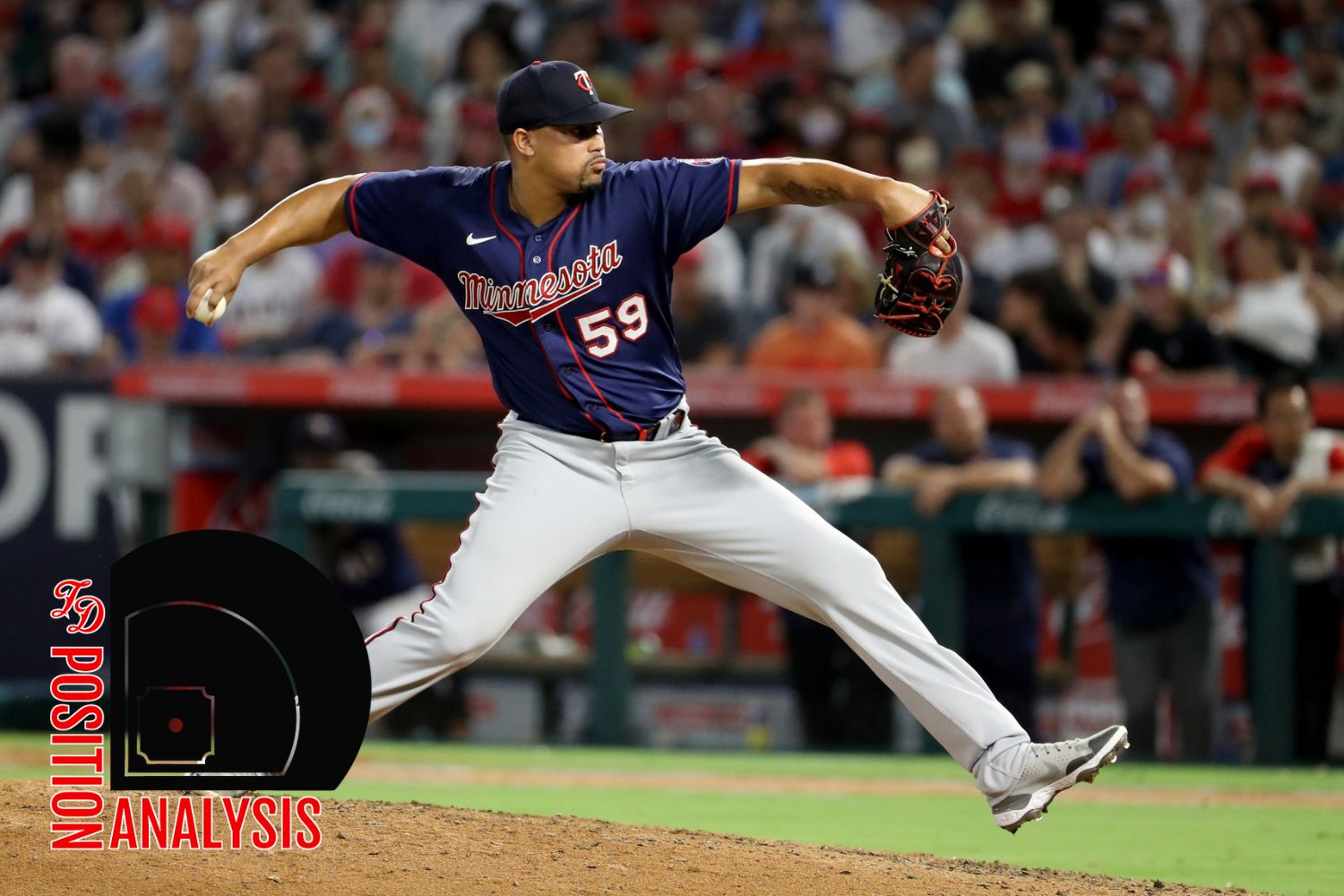 Projected Bullpen: Jhoan Durán, Jorge López, Griffin Jax, Caleb Thielbar, Emilio Pagán, Jovani Morán, Jorge Alcalá, Jeff Hoffman Depth: Trevor Megill, Josh Winder, Danny Coulombe, Oliver Ortega, Randy Dobnak Prospects: Matt Canterino, Ronny Henriquez, Brent Headrick THE GOOD Most of the negative associations people have with last year's Twins bullpen are tied to the first half of the season, when it was legitimately very bad. Through the end of June, Minnesota relievers ranked dead-last in all of baseball with negative-0.3 fWAR. Only the heroics from Durán kept them in the middle of the pack (15th) for Win Probability Added. But from July 1st onward, the Twins ranked 8th out of 30 teams in fWAR (3.1) and if we cut that down to post-trade deadline, they were sixth. The only clubs ahead of them? Essentially all pitching powerhouses: Houston, Cleveland, Dodgers, Mets, Seattle. That second-half group what mostly carries over to the 2023 season. The front office bypassed significant bullpen additions during the offseason, and it's justifiable when you take a step back. They Twins have equipped themselves with a deep collection of trustworthy high-powered arms. It all starts, of course, with Durán. He's coming off one of the great rookie seasons in Twins history. He dominated opponents consistently in a role where extreme late-game leverage was routine. The big righty's fastball velocity set Twins records and his "offspeed" velocity set major-league records. So long as he is healthy and throwing the way he has, it's tough to envision a scenario where Durán is anything less than a top reliever in the game. That's a hell of a foundation for your bullpen. He also figures to have much better support in the eighth and ninth this year. López was not a factor in the bullpen's late improvement, as he struggled following a deadline trade, but the Twins are hoping he can take them to the next level in 2023. That's a plausible belief, based on his high-octane stuff and overall performance last season (2.54 ERA in 71 IP). He really feels like the pivot point in the outlook for the relief corps. The Twins bullpen can still be good if López is ordinary, like he was after the trade last year. But if he returns to something approximating his form shown in the first half with Baltimore, this unit can be absolutely elite. It might be a stretch to say López's turnaround is a luxury, but with Alcalá returning alongside Jax and Thielbar, there are several proven setup options on hand to share the load. Morán can easily join them at that level if he throws enough strikes. It'll be exciting to see him finally get a full-fledged opportunity in the majors. Outsiders and projections have the Twins pegged as a top 10 bullpen this year on the basis of these strengths. You don't often find relief aces as great as Durán, nor supporting casts as deep. THE BAD In both of the past two seasons, Minnesota had a very bad bullpen in the early months and a very good one thereafter. They've shown the ability to course-correct and make adjustments along the way, but decisions like signing Joe Smith and sticking too long with Tyler Duffey illustrate a troubling lack of judgment that has been costly. Granted, those two are gone. But the other reliever who must invariably be mentioned alongside them is not. The Twins remain apparently committed to seeing through their double-down bet on Pagán coming off a frustrating season full of crushing lapses. Pagán undeniably has the stuff to be a real asset, supplementing the team's cadre of high-end arms for the late innings, but execution has been a persistent shortcoming. His showings this spring haven't inspired confidence that is about to change. How long will Rocco Baldelli and the Twins stick with Pagán if April and May bring more of the same? For that matter, what does the leash look like for López if his post-trade command struggles endure? What if Alcalá experiences a tough curve in returning from the year off? Relief pitchers are volatile. Even the ones you think you can count on. Teams have got to be ready to react and adapt quickly, and they've got to have reinforcements at the ready. This points to the most striking area of concern with the bullpen: Minnesota's best prospects lined up to impact this unit are hurt. Canterino is out for the year, Winder has once again been limited by his shoulder this spring, and Henriquez has yet to pitch due to elbow soreness. THE BOTTOM LINE For the most part, this bullpen has everything you could want: elite talent at the back end, multiple overpowering lefties, potential setup-caliber arms in middle relief. What it lacks, at the moment, is relievers capable of providing substantial length – are we trusting any of the guys in the projected Opening Day mix to throw more than one inning regularly? – and readymade reinforcements for when things inevitably go awry. The good news, I guess, is that the front office has been fairly adept at working out the in-season kinks. Building the right group from the start has been their biggest issue, and without question, this bullpen mix is worlds better than those they brought into either of the past two seasons. Catch Up On Our Position Preview Series: Position Analysis: Catcher Position Analysis: First Base Position Analysis: Second Base Position Analysis: Third Base Position Analysis: Shortstop Position Analysis: Left Field Position Analysis: Center Field Position Analysis: Right Field Position Analysis: Designated Hitter Position Analysis: Starting Pitcher
- 47 comments
-
- 7
-
-

-
- jhoan duran
- jorge lopez
- (and 2 more)
-
Trepidations about the bullpen are natural, especially after some of last year's low points, but this unit actually performed quite well in the second half and shapes up as a sneaky strength for the Twins in 2023. Image courtesy of Kiyoshi Mio-USA TODAY Sports Projected Bullpen: Jhoan Durán, Jorge López, Griffin Jax, Caleb Thielbar, Emilio Pagán, Jovani Morán, Jorge Alcalá, Jeff Hoffman Depth: Trevor Megill, Josh Winder, Danny Coulombe, Oliver Ortega, Randy Dobnak Prospects: Matt Canterino, Ronny Henriquez, Brent Headrick THE GOOD Most of the negative associations people have with last year's Twins bullpen are tied to the first half of the season, when it was legitimately very bad. Through the end of June, Minnesota relievers ranked dead-last in all of baseball with negative-0.3 fWAR. Only the heroics from Durán kept them in the middle of the pack (15th) for Win Probability Added. But from July 1st onward, the Twins ranked 8th out of 30 teams in fWAR (3.1) and if we cut that down to post-trade deadline, they were sixth. The only clubs ahead of them? Essentially all pitching powerhouses: Houston, Cleveland, Dodgers, Mets, Seattle. That second-half group what mostly carries over to the 2023 season. The front office bypassed significant bullpen additions during the offseason, and it's justifiable when you take a step back. They Twins have equipped themselves with a deep collection of trustworthy high-powered arms. It all starts, of course, with Durán. He's coming off one of the great rookie seasons in Twins history. He dominated opponents consistently in a role where extreme late-game leverage was routine. The big righty's fastball velocity set Twins records and his "offspeed" velocity set major-league records. So long as he is healthy and throwing the way he has, it's tough to envision a scenario where Durán is anything less than a top reliever in the game. That's a hell of a foundation for your bullpen. He also figures to have much better support in the eighth and ninth this year. López was not a factor in the bullpen's late improvement, as he struggled following a deadline trade, but the Twins are hoping he can take them to the next level in 2023. That's a plausible belief, based on his high-octane stuff and overall performance last season (2.54 ERA in 71 IP). He really feels like the pivot point in the outlook for the relief corps. The Twins bullpen can still be good if López is ordinary, like he was after the trade last year. But if he returns to something approximating his form shown in the first half with Baltimore, this unit can be absolutely elite. It might be a stretch to say López's turnaround is a luxury, but with Alcalá returning alongside Jax and Thielbar, there are several proven setup options on hand to share the load. Morán can easily join them at that level if he throws enough strikes. It'll be exciting to see him finally get a full-fledged opportunity in the majors. Outsiders and projections have the Twins pegged as a top 10 bullpen this year on the basis of these strengths. You don't often find relief aces as great as Durán, nor supporting casts as deep. THE BAD In both of the past two seasons, Minnesota had a very bad bullpen in the early months and a very good one thereafter. They've shown the ability to course-correct and make adjustments along the way, but decisions like signing Joe Smith and sticking too long with Tyler Duffey illustrate a troubling lack of judgment that has been costly. Granted, those two are gone. But the other reliever who must invariably be mentioned alongside them is not. The Twins remain apparently committed to seeing through their double-down bet on Pagán coming off a frustrating season full of crushing lapses. Pagán undeniably has the stuff to be a real asset, supplementing the team's cadre of high-end arms for the late innings, but execution has been a persistent shortcoming. His showings this spring haven't inspired confidence that is about to change. How long will Rocco Baldelli and the Twins stick with Pagán if April and May bring more of the same? For that matter, what does the leash look like for López if his post-trade command struggles endure? What if Alcalá experiences a tough curve in returning from the year off? Relief pitchers are volatile. Even the ones you think you can count on. Teams have got to be ready to react and adapt quickly, and they've got to have reinforcements at the ready. This points to the most striking area of concern with the bullpen: Minnesota's best prospects lined up to impact this unit are hurt. Canterino is out for the year, Winder has once again been limited by his shoulder this spring, and Henriquez has yet to pitch due to elbow soreness. THE BOTTOM LINE For the most part, this bullpen has everything you could want: elite talent at the back end, multiple overpowering lefties, potential setup-caliber arms in middle relief. What it lacks, at the moment, is relievers capable of providing substantial length – are we trusting any of the guys in the projected Opening Day mix to throw more than one inning regularly? – and readymade reinforcements for when things inevitably go awry. The good news, I guess, is that the front office has been fairly adept at working out the in-season kinks. Building the right group from the start has been their biggest issue, and without question, this bullpen mix is worlds better than those they brought into either of the past two seasons. Catch Up On Our Position Preview Series: Position Analysis: Catcher Position Analysis: First Base Position Analysis: Second Base Position Analysis: Third Base Position Analysis: Shortstop Position Analysis: Left Field Position Analysis: Center Field Position Analysis: Right Field Position Analysis: Designated Hitter Position Analysis: Starting Pitcher View full article
-
Twins 2023 Position Analysis: Starting Pitcher
Nick Nelson replied to Nick Nelson's topic in Twins Daily Front Page News
Whoops, sorry about the typo 😅 Re; Dobnak. I get the sense that his only path back to the majors (at least this year) is as a length guy out of the bullpen. -
Twins 2023 Position Analysis: Starting Pitcher
Nick Nelson replied to Nick Nelson's topic in Twins Daily Front Page News
His four-seamer was the single most valuable pitch on the staff last year! "Overpowering" isn't all about velocity.- 42 replies
-
- 4
-
-
- joe ryan
- sonny gray
- (and 3 more)
-
The Twins are as deep in starting pitching as they've been in at least 15 years. Which is good, and necessary, because the top end of their depth chart is riddled with question marks. Image courtesy of Ken Blaze, Nathan Ray Seebeck, Sam Navarro-USA TODAY Sports Projected Starters: Sonny Gray, Pablo López, Tyler Mahle, Kenta Maeda, Joe Ryan Depth: Bailey Ober, Louie Varland, Cole Sands, Chris Paddack, Aaron Sanchez Prospects: Marco Raya, Simeon Woods Richardson, Connor Prielipp, David Festa, Jordan Balazovic THE GOOD The Twins have at least five pitchers in their projected rotation who could realistically be viewed as top-of-rotation starters. Not aces, mind you, and maybe not even convincing number ones, but clearly a cut above the "mid-rotation" categorization. When's the last time we could say that? Never? Gray, who figures to get the nod on Opening Day, is an accomplished veteran with a 117 career ERA+, and four straight seasons of good performance. Mahle and Ryan are strikeout machines with overpowering fastballs and strong recent results. Maeda was the Cy Young runner-up in his last full season. (To the extent 2020 was a "full season," anyway.) You take that group, add López – a borderline No. 1/2 himself – and the level of established quality depth here is really something special. Being able to send out an above-average starter for every single game is not something most teams can do, but the Twins are aiming to make a habit of it this year. It would be a far cry from a 2022 campaign where Dylan Bundy and Chris Archer made one-third of their starts. For all of the top five Twins starters to hold up all season is wishful thinking, of course. That's true in any given year, but especially with a quintet carrying the number of injury concerns this one does. The front office recognized this and built sturdy depth with the addition of López, who pushes the very capable Ober into sixth starter status. I've got Varland listed as "Depth" at the top of this article even though he still qualifies as a prospect (No. 9 on our list) because he more or less feels like an established option, and is next in line after Ober. The reigning back-to-back Twins Minor League Pitcher of the Year had a strong showing in five MLB starts last year, and has nothing left to prove on the farm. Varland's merely waiting his turn. Other pitching prospects like Woods Richardson, Festa, and Balazovic seem likely to factor in this year as well, with varying levels of promise. I compare the depth chart of this position to last year and it's night-and-day. THE BAD Durability concerns plague this rotation from top to bottom. Mahle might be their highest-upside starter, but he was derailed by a mysterious shoulder injury shortly after being acquired. It's ... hopefully better now? There's no real way to know. Gray has surpassed 140 innings only once in the past five years, and posted the second-lowest full-season total of his career (119.2 IP) last year. Maeda is coming off Tommy John surgery, hasn't pitched since August of 2021, and turns 35 next month. (He has also looked pretty rough this spring.) López was healthy last year, but was bogged down by a shoulder injury in 2021. Ober was limited to 56 innings last year by a groin injury, and has struggled to stay healthy throughout his pro career. The only starter in the Twins mix with no significant known injury risk is Ryan, who was a rookie last year. The rotation is destined to experience some level of attrition. The question is: how much? The Twins have set themselves up to afford a certain degree of it, but if a few serious issues or setbacks emerge, they'll quickly find themselves stretched thin. That's hardly a unique situation, but few teams are riddled with as many questions marks in the starting five. THE BOTTOM LINE While it weakened the team's outlook at first base and designated hitter, the Arraez trade significantly bolstered the rotation depth, and one can make a pretty easy argument that matters more for the Twins in their current state. López adds a crucial veteran layer to hedge against injury while also raising the unit's ceiling via his front-end upside. Catch Up On Our Position Preview Series: Position Analysis: Catcher Position Analysis: First Base Position Analysis: Second Base Position Analysis: Third Base Position Analysis: Shortstop Position Analysis: Left Field Position Analysis: Center Field Position Analysis: Right Field Position Analysis: Designated Hitter View full article
-
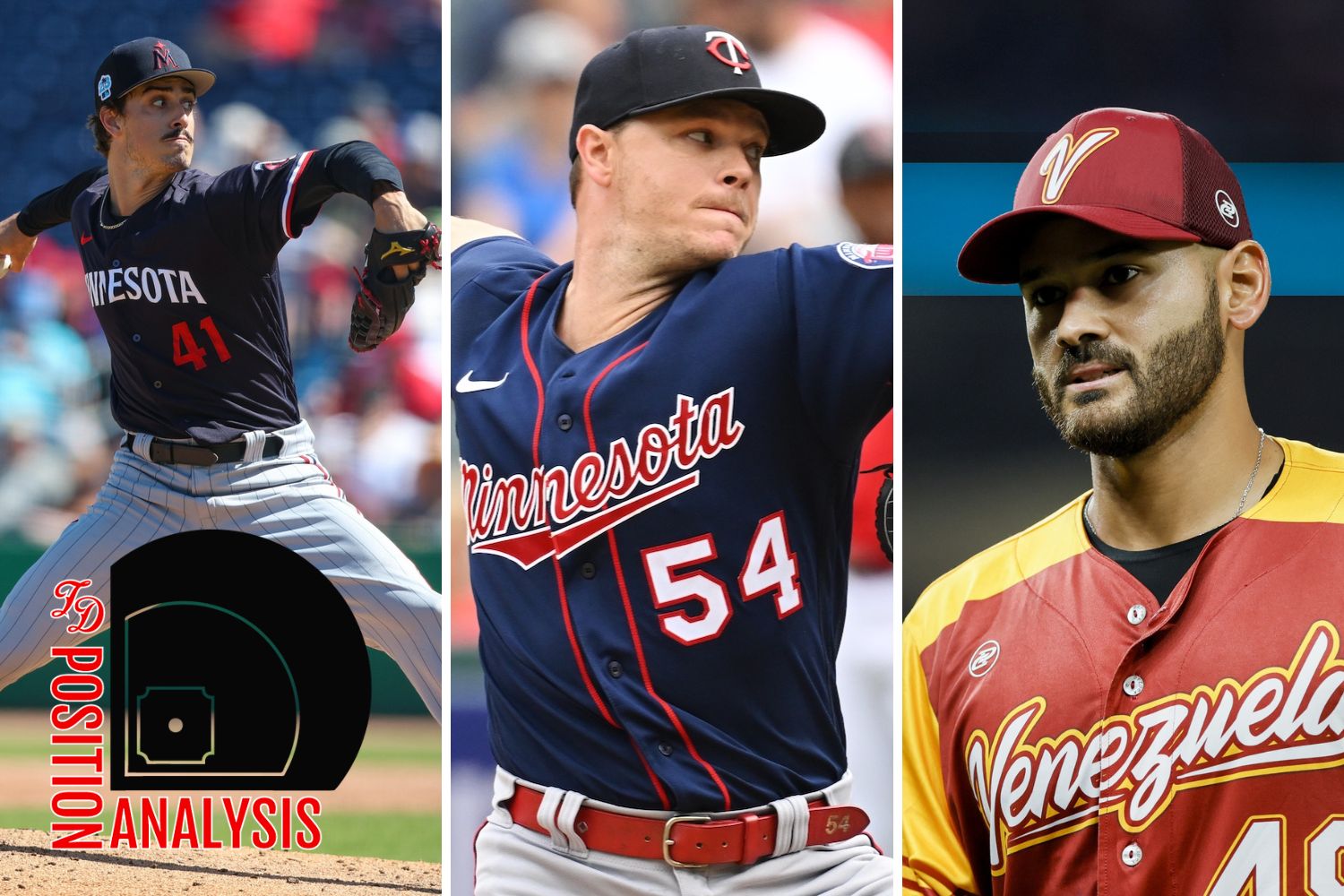 Projected Starters: Sonny Gray, Pablo López, Tyler Mahle, Kenta Maeda, Joe Ryan Depth: Bailey Ober, Louie Varland, Cole Sands, Chris Paddack, Aaron Sanchez Prospects: Marco Raya, Simeon Woods Richardson, Connor Prielipp, David Festa, Jordan Balazovic THE GOOD The Twins have at least five pitchers in their projected rotation who could realistically be viewed as top-of-rotation starters. Not aces, mind you, and maybe not even convincing number ones, but clearly a cut above the "mid-rotation" categorization. When's the last time we could say that? Never? Gray, who figures to get the nod on Opening Day, is an accomplished veteran with a 117 career ERA+, and four straight seasons of good performance. Mahle and Ryan are strikeout machines with overpowering fastballs and strong recent results. Maeda was the Cy Young runner-up in his last full season. (To the extent 2020 was a "full season," anyway.) You take that group, add López – a borderline No. 1/2 himself – and the level of established quality depth here is really something special. Being able to send out an above-average starter for every single game is not something most teams can do, but the Twins are aiming to make a habit of it this year. It would be a far cry from a 2022 campaign where Dylan Bundy and Chris Archer made one-third of their starts. For all of the top five Twins starters to hold up all season is wishful thinking, of course. That's true in any given year, but especially with a quintet carrying the number of injury concerns this one does. The front office recognized this and built sturdy depth with the addition of López, who pushes the very capable Ober into sixth starter status. I've got Varland listed as "Depth" at the top of this article even though he still qualifies as a prospect (No. 9 on our list) because he more or less feels like an established option, and is next in line after Ober. The reigning back-to-back Twins Minor League Pitcher of the Year had a strong showing in five MLB starts last year, and has nothing left to prove on the farm. Varland's merely waiting his turn. Other pitching prospects like Woods Richardson, Festa, and Balazovic seem likely to factor in this year as well, with varying levels of promise. I compare the depth chart of this position to last year and it's night-and-day. THE BAD Durability concerns plague this rotation from top to bottom. Mahle might be their highest-upside starter, but he was derailed by a mysterious shoulder injury shortly after being acquired. It's ... hopefully better now? There's no real way to know. Gray has surpassed 140 innings only once in the past five years, and posted the second-lowest full-season total of his career (119.2 IP) last year. Maeda is coming off Tommy John surgery, hasn't pitched since August of 2021, and turns 35 next month. (He has also looked pretty rough this spring.) López was healthy last year, but was bogged down by a shoulder injury in 2021. Ober was limited to 56 innings last year by a groin injury, and has struggled to stay healthy throughout his pro career. The only starter in the Twins mix with no significant known injury risk is Ryan, who was a rookie last year. The rotation is destined to experience some level of attrition. The question is: how much? The Twins have set themselves up to afford a certain degree of it, but if a few serious issues or setbacks emerge, they'll quickly find themselves stretched thin. That's hardly a unique situation, but few teams are riddled with as many questions marks in the starting five. THE BOTTOM LINE While it weakened the team's outlook at first base and designated hitter, the Arraez trade significantly bolstered the rotation depth, and one can make a pretty easy argument that matters more for the Twins in their current state. López adds a crucial veteran layer to hedge against injury while also raising the unit's ceiling via his front-end upside. Catch Up On Our Position Preview Series: Position Analysis: Catcher Position Analysis: First Base Position Analysis: Second Base Position Analysis: Third Base Position Analysis: Shortstop Position Analysis: Left Field Position Analysis: Center Field Position Analysis: Right Field Position Analysis: Designated Hitter
- 42 comments
-
- 5
-
-
- joe ryan
- sonny gray
- (and 3 more)
