



Nick Nelson
-
Posts
8,326 -
Joined
-
Last visited
-
Days Won
56
Content Type
Profiles
News
Minnesota Twins Videos
2026 Minnesota Twins Top Prospects Ranking
2022 Minnesota Twins Draft Picks
Minnesota Twins Free Agent & Trade Rumors, Notes, & Tidbits
Guides & Resources
2023 Minnesota Twins Draft Picks
The Minnesota Twins Players Project
2024 Minnesota Twins Draft Picks
2025 Minnesota Twins Draft Pick Tracker
2026 Minnesota Twins Draft Tracker: Picks & Bonuses
Forums
Blogs
Events
Store
Downloads
Gallery
Everything posted by Nick Nelson
-
Great piece, John. That blog from Souhan was quite incredible. Especially this excerpt: Since people don’t seem to know who to believe, let me help. Here are the people you should and shouldn’t listen to when it comes to the Twins: ... Columnists: It’s our job to write opinion. There are two columnists in town who have covered the Twins for decades, who can call up Tom Kelly or Hrbek or Torii Hunter whenever we like, who have spent hours jousting with Andy MacPhail and Terry Ryan about things we’ve written. The two: Patrick Reusse and myself. Nothing here about the quality or credibility of his own writing. In a strange, self-important rant filled with typos and specious reasoning, he argues that he and his buddies are the only writers worth paying attention to, solely for one reason. In a diatribe about accountability, he deflects criticism (which came from many sources, including City Pages and NBC Sports) and acts like the backlash against his column was solely from "untethered bloggers," and not from readers – whom he evidently respects so little he believes they need him to tell them what's worth reading. He obliquely addresses the fair points that were widely made against his original piece, but instead of saying "I could've done this better," he turns it into an opportunity to rehash the same tired "Access" argument that no one really cared about to begin with. That's not accountability. It's either obliviousness or something worse.
-

Article: Whiff Of Success: Gibson Making Bats Miss
Nick Nelson replied to Nick Nelson's topic in Twins Daily Front Page News
I didn't really focus that much on results, and that was intentional. What I'm looking at here is the underlying trends, and what it might mean about Gibson's efforts to get right physically and fine-tune his revamped approach. It's not about the results, it's about his execution, his big increase in whiff rate, his velocity (highest since he was a rookie). To say, "Gibson hasn't been good over the past two seasons so he's a bad pitcher" is an oversimplification for the reasons laid out. Anyway, at no point did I say that he's locked up a job for next year. Only that he's setting himself up well to do so in September. -
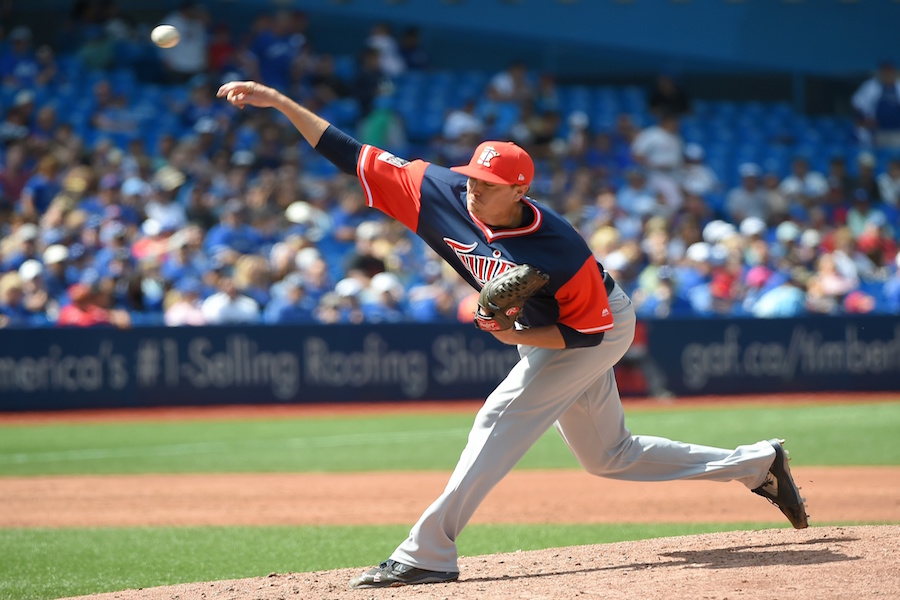
WHIFF. Ahh, that sweet onomatopoeia: the sound of a pitch whooshing past a bat untouched. Music to a hurler's ears. It's a song Kyle Gibson hasn't heard as often as one would hope, or expect. Until lately.In 2005, the Twins used their first-round pick to draft Matt Garza, a pitcher who has gone on to throw 1,700 major-league innings in an altogether successful career (albeit one spent mostly outside of Minnesota). Since then, the organization has used 10 first-round selections (including supplemental picks) on arms, with a woefully low hit rate. The list is a collection of washouts, disappointments and case studies in the perils of prospecting young pitchers – with two exceptions. Jose Berrios and Kyle Gibson. The former has entrenched himself as an ongoing rotation staple. The latter had seemingly erased himself from that conversation during the past two seasons. But now, when the team needs him most, Gibson is making a late case by – at long last – getting the most out of his stuff. I've always counted myself as a Gibson fan. I remember on draft day in 2009, when the Twins landed him with the 22nd overall pick, thinking what a steal he was. Following an outstanding career at the University of Missouri, he slid to the late first round due to concerns about a forearm issue, enabling Minnesota to snag a talent worthy of going in the Top 15. He was the prototype of a quality pitcher: tall and lanky, with a hard sinker that careened downhill from his big frame. He made the Twins look smart with a phenomenal first year in the pros, rising all the way to Triple-A in 2010. He was on track for a fast MLB debut before Tommy John surgery in 2011 stalled his momentum, but came back strong and joined the big-league ranks in 2013. Gibson followed the same progressive path that many young players do. He struggled mightily in his first exposure to the majors, then showed moderate improvement in Year 2, and finally seemed to come into his own the following season (Byron Buxton, anyone?). That third year – 2015 – signaled that the right-hander was putting together all the pieces: he ranked among the top 10 grounder rates in the majors, posted the best strikeout rate of his career, and averaged more than six innings over 32 starts. At age 28, he appeared poised to keep growing in 2016, but much like the team as a whole, it was Total System Failure for Gibson. All of his promising trends turned the wrong way as he struggled through a tumultuous campaign, finishing with a 5.07 ERA and 1.56 WHIP. Afterward, he acknowledged he'd been dealing with back and shoulder discomfort for much of the summer, even outside of his five-week trip to the disabled list. He battled through 25 starts, frequently relying on anti-inflammatory meds. Searching for answers, Gibson went through an offseason program that involved completely overhauling his routine and mechanics. As Star Tribune's Phil Miller put it, the revamp was "an entirely new way of delivering the baseball, about as fundamental a change as a pitcher can make." Sounds like something that could take a while to coalesce, but during spring training it looked as though Gibson's efforts were paying immediate dividends. In Grapefruit League play, he was as good as ever, dominating opposing lineups while flashing electric stuff and, by his account, feeling great. Once the season started, however, things went totally off the rails for Gibson. He didn't record a quality start for the Twins until June 8th, spending much of May in Triple-A. By late July, when he and his 6.08 ERA were sent back to Rochester in order to make room for newly acquired Jaime Garcia, it appeared Gibson had essentially played his way out of the team's plans. But in August, the embattled starter came back with a vengeance. With an excellent outing in Toronto on Sunday, Gibson wrapped up the best month he's had in a long time. Suddenly, he had resolved the issues that plagued him for the better part of two years. He was throwing in the zone (seven walks in five starts). He was keeping the ball down (only three homers). And most notably, Gibson was finally missing bats. His 12.8% swinging strike rate towered over his career norm, and is in line with the season rates for top-tier strikeout artists like Stephen Strasburg and Zack Greinke. In his August 22nd start against the White Sox, when he tossed seven innings of one-run ball, Gibson induced 17 swings and misses. Only two Twins have produced more whiffs in a start this year: Ervin Santana (26 in a complete game win against the Padres on 8/2) and Berrios (19 in his 11 K game against Colorado). With his hard sinker and sharp slider, Gibson always seemed like a guy who should get more hitters to miss. This month, it's been happening in fairly consistent fashion, and the results are beginning to reflect a pitcher with renewed confidence and legit comfort on the mound. Is it possible his alterations and adjustments just took a few months to fully reach fruition? It is still too early to draw such conclusions, but lately Gibson is truly looking as good as he has in years. And he's doing it at a time where the Twins, in the thick of the postseason race, desperately need it. Whiffs, grounders and wins. Music to their ears. Click here to view the article
-
 In 2005, the Twins used their first-round pick to draft Matt Garza, a pitcher who has gone on to throw 1,700 major-league innings in an altogether successful career (albeit one spent mostly outside of Minnesota). Since then, the organization has used 10 first-round selections (including supplemental picks) on arms, with a woefully low hit rate. The list is a collection of washouts, disappointments and case studies in the perils of prospecting young pitchers – with two exceptions. Jose Berrios and Kyle Gibson. The former has entrenched himself as an ongoing rotation staple. The latter had seemingly erased himself from that conversation during the past two seasons. But now, when the team needs him most, Gibson is making a late case by – at long last – getting the most out of his stuff. I've always counted myself as a Gibson fan. I remember on draft day in 2009, when the Twins landed him with the 22nd overall pick, thinking what a steal he was. Following an outstanding career at the University of Missouri, he slid to the late first round due to concerns about a forearm issue, enabling Minnesota to snag a talent worthy of going in the Top 15. He was the prototype of a quality pitcher: tall and lanky, with a hard sinker that careened downhill from his big frame. He made the Twins look smart with a phenomenal first year in the pros, rising all the way to Triple-A in 2010. He was on track for a fast MLB debut before Tommy John surgery in 2011 stalled his momentum, but came back strong and joined the big-league ranks in 2013. Gibson followed the same progressive path that many young players do. He struggled mightily in his first exposure to the majors, then showed moderate improvement in Year 2, and finally seemed to come into his own the following season (Byron Buxton, anyone?). That third year – 2015 – signaled that the right-hander was putting together all the pieces: he ranked among the top 10 grounder rates in the majors, posted the best strikeout rate of his career, and averaged more than six innings over 32 starts. At age 28, he appeared poised to keep growing in 2016, but much like the team as a whole, it was Total System Failure for Gibson. All of his promising trends turned the wrong way as he struggled through a tumultuous campaign, finishing with a 5.07 ERA and 1.56 WHIP. Afterward, he acknowledged he'd been dealing with back and shoulder discomfort for much of the summer, even outside of his five-week trip to the disabled list. He battled through 25 starts, frequently relying on anti-inflammatory meds. Searching for answers, Gibson went through an offseason program that involved completely overhauling his routine and mechanics. As Star Tribune's Phil Miller put it, the revamp was "an entirely new way of delivering the baseball, about as fundamental a change as a pitcher can make." Sounds like something that could take a while to coalesce, but during spring training it looked as though Gibson's efforts were paying immediate dividends. In Grapefruit League play, he was as good as ever, dominating opposing lineups while flashing electric stuff and, by his account, feeling great. Once the season started, however, things went totally off the rails for Gibson. He didn't record a quality start for the Twins until June 8th, spending much of May in Triple-A. By late July, when he and his 6.08 ERA were sent back to Rochester in order to make room for newly acquired Jaime Garcia, it appeared Gibson had essentially played his way out of the team's plans. But in August, the embattled starter came back with a vengeance. With an excellent outing in Toronto on Sunday, Gibson wrapped up the best month he's had in a long time. Suddenly, he had resolved the issues that plagued him for the better part of two years. He was throwing in the zone (seven walks in five starts). He was keeping the ball down (only three homers). And most notably, Gibson was finally missing bats. His 12.8% swinging strike rate towered over his career norm, and is in line with the season rates for top-tier strikeout artists like Stephen Strasburg and Zack Greinke. In his August 22nd start against the White Sox, when he tossed seven innings of one-run ball, Gibson induced 17 swings and misses. Only two Twins have produced more whiffs in a start this year: Ervin Santana (26 in a complete game win against the Padres on 8/2) and Berrios (19 in his 11 K game against Colorado). With his hard sinker and sharp slider, Gibson always seemed like a guy who should get more hitters to miss. This month, it's been happening in fairly consistent fashion, and the results are beginning to reflect a pitcher with renewed confidence and legit comfort on the mound. Is it possible his alterations and adjustments just took a few months to fully reach fruition? It is still too early to draw such conclusions, but lately Gibson is truly looking as good as he has in years. And he's doing it at a time where the Twins, in the thick of the postseason race, desperately need it. Whiffs, grounders and wins. Music to their ears.
 -
Article: Miguel Sano And Negativity Bias
Nick Nelson replied to Nick Nelson's topic in Twins Daily Front Page News
That's a reasonable critique, but I want to be clear: I am NOT saying I have an issue with negative media coverage, and I don't think columnists or writers should be required/expected to serve as cheerleaders for the team. Not by a long shot. I would hope anyone who's read my articles for any length of time understands that. I just think criticism should be fair and warranted. I don't see these examples as such. Have Souhan and Reusse heard rumblings to this effect from within the organization? I have no doubt. Does that mean they're exercising good journalistic judgment by publishing them with so few supporting quotes/facts, and with such extremely questionable timing? Not in my belief. I'm certainly not suggesting Sano will leave one day because he's pissy about a column Jim Souhan wrote. But over time, these kinds of pieces contribute to the overall fan perception of a player. It aids the negativity bias. I see Joe Mauer as a clear example of this. It can. I just haven't seen any remote evidence of it being the case here. There was none presented in the column. The injury was sloppily thrown in as some way to build timely relevance for his point, at least as I read it. -
Article: Miguel Sano And Negativity Bias
Nick Nelson replied to Nick Nelson's topic in Twins Daily Front Page News
Putting his numbers with runners on next to his numbers with the bases empty and pointing out the sharp contrast is not negativity bias or "cherry-picking," it's analysis. If all I ever did was harp on Dozier's weaknesses you'd have a point but this isn't the case, is it? The only other thing you pointed to was someone else's HR total prediction for him. I'm not saying there's no validity to the concern. The issue, as others have noted, is with the timing. Reusse's column dropped while Sano was bumbling around in RF last spring, making it seem like a lack of preparation was responsible for the disastrous outcome rather than the terrible idea itself. And now Souhan's piece comes out right after Sano goes on the DL due to a foul ball in the shin, while alluding with no evidence that his weight contributed to the injury and a slow recovery. Thus, an idea is planted in readers' minds that Sano's weight is negatively impacting the team right now, rather than potentially limiting his long-term ceiling (and even that still isn't very "obvious" to me). -
Article: Miguel Sano And Negativity Bias
Nick Nelson replied to Nick Nelson's topic in Twins Daily Front Page News
Phrased that way, sure it is. But here's an honest question: what if working toward those goals sapped some of his power, or prevented him from focusing on improving his strengths? "David Ortiz is a good player. That said, it would be nice if he hit the ball the other way more." -
Article: Miguel Sano And Negativity Bias
Nick Nelson replied to Nick Nelson's topic in Twins Daily Front Page News
Interesting. You should check out the dozens of replies to the Strib's tweet linking to the article. I'm hardly the only one who perceived it as such. Huh? -
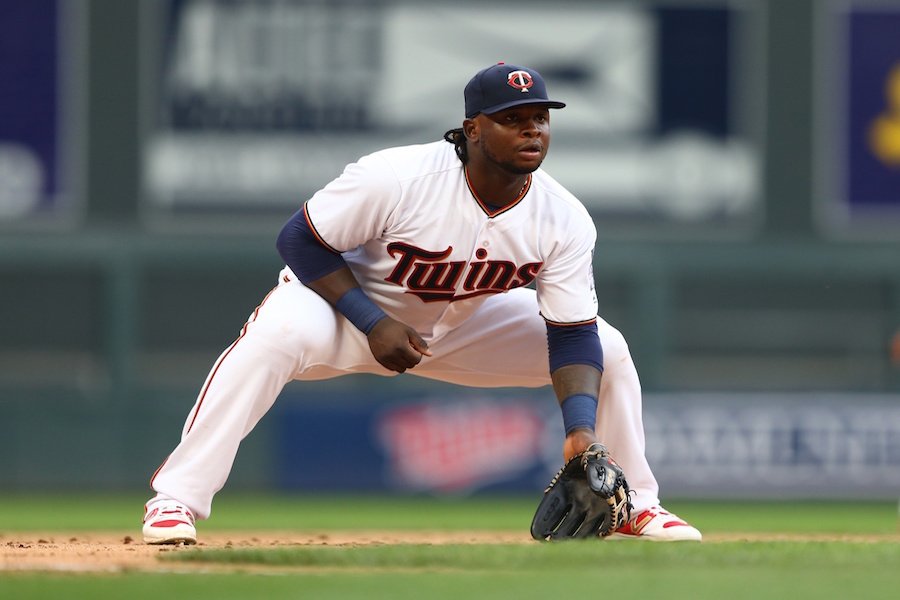
We've been down this road before. Miguel Sano comes under siege from a local columnist who finds specious reasoning to grind an ax over the young slugger's purported lack of commitment. Patrick Reusse did it last spring, and a week ago Jim Souhan published a similarly toned piece. Are these scribes calling Sano lazy? They'll say no, but the columns undoubtedly lead the reader in that direction. Which is ironic, since what's truly lazy is the story line these veteran newspapermen keep peddling.Sano is an easy target for errant criticism, because he is big, and he strikes out a ton. You could argue both are inhibiting factors, but they are part of who he is. Every player has his inhibiting factors, and in this case, they also contribute to what makes Sano great. And let's make no mistake about it: he is great. Already, at age 24, and he's likely on his way to becoming even better. There is much to celebrate about where Sano is and where he's going. He surpassed 70 career home runs when he went deep twice against Arizona last weekend, just before going on the disabled list. He reached that mark quicker than anyone in franchise history, by a longshot: Sano's historic power is enabled by his size and strength, his ferocious cuts – the very same things criticized by anyone who's looking for a grievance to air. "He's getting too big." Well, that's who he is, a large man. "He strikes out too much." Well, that's what he is, a hard swinger prone to strikeouts as well as tape-measure shots. It is well established in psychology that humans have an implicit negativity bias; we are more apt to remember something bad than good, an evolutionary trait. It is, as the linked article states, "the same reason political smear campaigns outpull positive ones." By hounding upon Sano's ostensible weight control issues, these columnists are guilty of succumbing to negativity bias, while also planting it in the minds of their readers. The Strib platform entails a certain level of responsibility, and there are consequences for actively working to shape perceptions like this. I much prefer the way new Twins GM Thad Levine is openly embracing the overwhelming positives of the Miguel Sano experience. Here's how he talked about his inherited All-Star at the Baseball Prospectus Target Field event a few weeks ago: I will tell you, he wants to be great. This is a guy who has an amazing amount of energy, loves the game of baseball, is smiling from ear to ear. Leaders come in different shapes and forms, but I'll tell you, from an energy standpoint, this guy's love of the game is palpable and will get us through a 162-game season. That, and he also can hit the ball a very, very long way. The key to that statement: "Leaders come in different shapes and forms." Sano's physical shape and form do not define him, nor do they preclude him from being productive or healthy. I'm sure people made the same "dietary discipline" remarks about Prince Fielder but from age 24 through 29 he missed three total games and hit 200 home runs. Sano is, in Souhan's own words, "remarkably agile for a large man." He gets the job done at the hot corner and moves well enough around the base paths. He leads the Twins in OPS, and even during his slumps he's still a relatively solid performer, never a liability. His absence has certainly been felt since the DL move, with Eduardo Escobar representing a severe drop-off in the cleanup spot, and games like Thursday's 5-1 loss to Chicago feeling strongly impacted by his non-presence. But Sano had played in 111 of the team's 121 games before going on the shelf due to a foul ball in the shin. He has taken approximately 35 fastballs to the left wrist, and kept on chugging along. To write these kinds of columns for a Minnesota sports audience almost feels treacherous, and hugely ill-advised when you think about the big picture. We should all collectively be trying to woo this generational hitting talent into sticking around. One day in the not-too-distant future, Sano will be approaching free agency, and will more than likely have suitors lining up for his services. If he chooses to go elsewhere, Souhan and Reusse will surely be lamenting another star player who left the small market via free agency to chase the spotlight and the big dollars. Maybe they could've tried harder to appreciate what they had, while they had it. Click here to view the article
-
 Sano is an easy target for errant criticism, because he is big, and he strikes out a ton. You could argue both are inhibiting factors, but they are part of who he is. Every player has his inhibiting factors, and in this case, they also contribute to what makes Sano great. And let's make no mistake about it: he is great. Already, at age 24, and he's likely on his way to becoming even better. There is much to celebrate about where Sano is and where he's going. He surpassed 70 career home runs when he went deep twice against Arizona last weekend, just before going on the disabled list. He reached that mark quicker than anyone in franchise history, by a longshot: https://twitter.com/AaronGleeman/status/898736488749256705 Sano's historic power is enabled by his size and strength, his ferocious cuts – the very same things criticized by anyone who's looking for a grievance to air. "He's getting too big." Well, that's who he is, a large man. "He strikes out too much." Well, that's what he is, a hard swinger prone to strikeouts as well as tape-measure shots. It is well established in psychology that humans have an implicit negativity bias; we are more apt to remember something bad than good, an evolutionary trait. It is, as the linked article states, "the same reason political smear campaigns outpull positive ones." By hounding upon Sano's ostensible weight control issues, these columnists are guilty of succumbing to negativity bias, while also planting it in the minds of their readers. The Strib platform entails a certain level of responsibility, and there are consequences for actively working to shape perceptions like this. I much prefer the way new Twins GM Thad Levine is openly embracing the overwhelming positives of the Miguel Sano experience. Here's how he talked about his inherited All-Star at the Baseball Prospectus Target Field event a few weeks ago: I will tell you, he wants to be great. This is a guy who has an amazing amount of energy, loves the game of baseball, is smiling from ear to ear. Leaders come in different shapes and forms, but I'll tell you, from an energy standpoint, this guy's love of the game is palpable and will get us through a 162-game season. That, and he also can hit the ball a very, very long way. The key to that statement: "Leaders come in different shapes and forms." Sano's physical shape and form do not define him, nor do they preclude him from being productive or healthy. I'm sure people made the same "dietary discipline" remarks about Prince Fielder but from age 24 through 29 he missed three total games and hit 200 home runs. Sano is, in Souhan's own words, "remarkably agile for a large man." He gets the job done at the hot corner and moves well enough around the base paths. He leads the Twins in OPS, and even during his slumps he's still a relatively solid performer, never a liability. His absence has certainly been felt since the DL move, with Eduardo Escobar representing a severe drop-off in the cleanup spot, and games like Thursday's 5-1 loss to Chicago feeling strongly impacted by his non-presence. But Sano had played in 111 of the team's 121 games before going on the shelf due to a foul ball in the shin. He has taken approximately 35 fastballs to the left wrist, and kept on chugging along. To write these kinds of columns for a Minnesota sports audience almost feels treacherous, and hugely ill-advised when you think about the big picture. We should all collectively be trying to woo this generational hitting talent into sticking around. One day in the not-too-distant future, Sano will be approaching free agency, and will more than likely have suitors lining up for his services. If he chooses to go elsewhere, Souhan and Reusse will surely be lamenting another star player who left the small market via free agency to chase the spotlight and the big dollars. Maybe they could've tried harder to appreciate what they had, while they had it.
 -
Those two will get their chances eventually, it's a matter of when not if. But with guys like Turley and Melville, it's kind of now or never, so pushing them ahead in line makes sense in the scope of seeing and evaluating as many arms as you can.
-
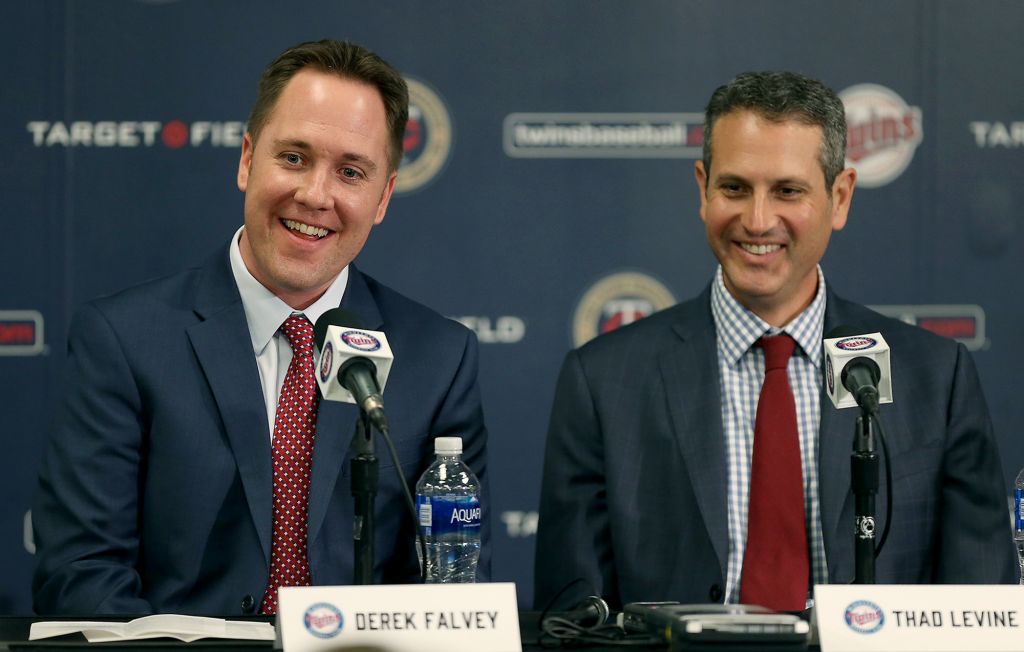
During his ball-playing career at Trinity College, Derek Falvey was a pitcher – albeit not a very good one, by his own admission. He hasn't thrown baseballs for quite a while, but since taking over the Minnesota Twins front office, Falvey has shown a proclivity for throwing stuff against the wall to see what sticks, particularly where the club's pitching staff is concerned.When he made his Twins debut in starting the first half of Monday's doubleheader, Tim Melville became the 34th pitcher to make an appearance for Minnesota in 2017. We've still got a week left in August, but already this team has shattered the franchise record for pitchers used in a season (29), set last year during a catastrophic 103-loss campaign. It speaks to the willingness of the new Chief Baseball Officer and this new front office to experiment, which I personally enjoy. Falvey has a reputation as an exceptional pitching evaluator, so there is value in having the opportunity to see these players first-hand and assess them against big-league competition. The Twins have acquired arms through just about every avenue imaginable: major-league trade (Jaime Garcia), minor league trade (Dietrich Enns), free agency (Bartolo Colon and Dillon Gee), home-grown prospects (Felix Jorge and Aaron Slegers), independent leagues (Melville and Nik Turley), waiver pickups (Adam Wilk and Chris Heston), Rule 5 draft (Justin Haley). Frankly, it's the right approach with a staff that last year was one of the worst in team history. All options should be on the table and all channels should be explored. I'd be less enthused with this pattern if the Twins were consistently trotting out garbage, but – with a few exceptions – pretty much everyone that's gotten a shot has carried some level of legitimate intrigue. Even guys like Melville and Turley, who have struggled mightily, have flashed impressive enough velocity and spin rates to make you think there could be something there. The previous regime had a tendency to stubbornly adhere to a non-working plan, and showed little imagination when it came to searching for solutions, so this newfound creativity is refreshing. Finding pitching is hard, especially in-season, but you give yourself a chance by playing the numbers game and trying out as many interesting arms as you can. The key is in evaluating those arms and deciding which ones are keepers. Falvey and Co. will have the next six weeks (and maybe beyond?) to appraise what they have on hand before heading into their first full offseason running the show. They'll have no shortage of impressions to draw from as they proceed. Click here to view the article
-
 When he made his Twins debut in starting the first half of Monday's doubleheader, Tim Melville became the 34th pitcher to make an appearance for Minnesota in 2017. We've still got a week left in August, but already this team has shattered the franchise record for pitchers used in a season (29), set last year during a catastrophic 103-loss campaign. It speaks to the willingness of the new Chief Baseball Officer and this new front office to experiment, which I personally enjoy. Falvey has a reputation as an exceptional pitching evaluator, so there is value in having the opportunity to see these players first-hand and assess them against big-league competition. The Twins have acquired arms through just about every avenue imaginable: major-league trade (Jaime Garcia), minor league trade (Dietrich Enns), free agency (Bartolo Colon and Dillon Gee), home-grown prospects (Felix Jorge and Aaron Slegers), independent leagues (Melville and Nik Turley), waiver pickups (Adam Wilk and Chris Heston), Rule 5 draft (Justin Haley). Frankly, it's the right approach with a staff that last year was one of the worst in team history. All options should be on the table and all channels should be explored. I'd be less enthused with this pattern if the Twins were consistently trotting out garbage, but – with a few exceptions – pretty much everyone that's gotten a shot has carried some level of legitimate intrigue. Even guys like Melville and Turley, who have struggled mightily, have flashed impressive enough velocity and spin rates to make you think there could be something there. The previous regime had a tendency to stubbornly adhere to a non-working plan, and showed little imagination when it came to searching for solutions, so this newfound creativity is refreshing. Finding pitching is hard, especially in-season, but you give yourself a chance by playing the numbers game and trying out as many interesting arms as you can. The key is in evaluating those arms and deciding which ones are keepers. Falvey and Co. will have the next six weeks (and maybe beyond?) to appraise what they have on hand before heading into their first full offseason running the show. They'll have no shortage of impressions to draw from as they proceed.
 -
Article: Twins In Driver's Seat In Wild-Card Race
Nick Nelson replied to Nick Nelson's topic in Twins Daily Front Page News
The Twins can survive without Sano if Buxton keeps doing what he's doing, especially if Vargas can provide. He was hitting .419 for Rochester since his most recent option. -
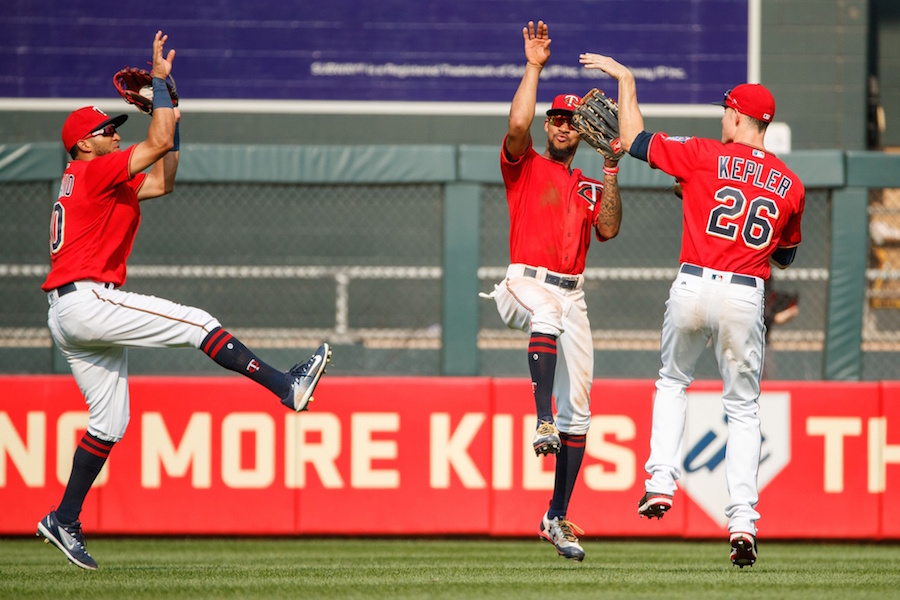
Some have criticized Major League Baseball's new postseason format, with two wild-card entrants in each league, as a celebration of mediocrity. Looking around at the teams racing against Minnesota for those spots, it's hard to disagree. When you examine the Angels, Mariners, Rangers, Royals, and basically the entire AL East after Boston, you don't see many stacked lineups or deep staffs. But that's exactly why the flawed Twins have a very realistic shot, in the driver's seat even, three weeks after a deflating slump pushed them into seller mode at the deadline.The Twins haven't really been able to experience the perks of the new system; outside of 2015 they've never been remotely close to the second wild-card since it was added six seasons ago. But we all know the feeling of a single everything-on-the-line contest, after witnessing back-to-back Game 163s in 2008 and 2009. Those Twins teams, too, were flawed. But that didn't take away from the exhilaration of the moments, the magnitude of the stakes, the brightness of the spotlight. Here's why they have a good shot at making it happen this year: 1) They Face a Relatively Easy Remaining Slate The Twins have the softest remaining schedule of any American League club, and it's especially light over the next few weeks, with 20 of their next 27 games coming against teams below .500 (the other seven are against the Royals, just one game above). This gives them an inherent advantage over opponents angling for the second wild-card slot, and in fact the Twins could make a run at earning home-field for the play-in game because the Yankees (currently leading the WC standings by 2.5 games) are facing contenders almost exclusively the rest of the way. New York will get the Indians and Red Sox next week, as Minnesota wraps up a stretch of eight games in 11 days against the AL-worst White Sox, and their best bullpen weapon is currently out of order; Aroldis Chapman was yanked from the closer role following a fourth consecutive shaky outing Friday. 2) They're Playing Really Well It's no secret the Twins have had a hard time overcoming quality teams this year, and that's why this past weekend's showing was so very promising. The Diamondbacks came into town with a record 13 games above .500 and left 10 games over after a thorough dismantling at Target Field. The Twins roster's ability to contend was always going to be reliant on the offense making up for an unspectacular pitching staff, and as the calendar flipped from July to August the lineup was failing to rise to the occasion. But here in August, the hitters have answered the call, averaging 5.7 runs per game – second-best in the AL. Their recent hot streak was punctuated by a nine-run first inning on Sunday that showed everything the unit is capable of: top-to-bottom production, big power, explosive outbursts. That they've been scoring so effectively even with Miguel Sano in a bit of a slump only underscores the potential for the Twins offense down the stretch. They'll need to keep it up with Sano landing on the disabled list Sunday. To that end, the emergence of Byron Buxton at the plate cannot be overstated. With his bat alive, he's among the handful of most valuable players in the game. Only one other team in the race – the Angels – has a player capable of making a similar day-to-day impact. We've seen a huge swing over the past couple weeks, from "Oh, maybe the Twins will hang around and keeps things interesting into September" to "They're on track to enter September as wild-card favorites." Driver's seat. No reason to take the foot off the pedal now. Click here to view the article
-
 The Twins haven't really been able to experience the perks of the new system; outside of 2015 they've never been remotely close to the second wild-card since it was added six seasons ago. But we all know the feeling of a single everything-on-the-line contest, after witnessing back-to-back Game 163s in 2008 and 2009. Those Twins teams, too, were flawed. But that didn't take away from the exhilaration of the moments, the magnitude of the stakes, the brightness of the spotlight. Here's why they have a good shot at making it happen this year: 1) They Face a Relatively Easy Remaining Slate The Twins have the softest remaining schedule of any American League club, and it's especially light over the next few weeks, with 20 of their next 27 games coming against teams below .500 (the other seven are against the Royals, just one game above). This gives them an inherent advantage over opponents angling for the second wild-card slot, and in fact the Twins could make a run at earning home-field for the play-in game because the Yankees (currently leading the WC standings by 2.5 games) are facing contenders almost exclusively the rest of the way. New York will get the Indians and Red Sox next week, as Minnesota wraps up a stretch of eight games in 11 days against the AL-worst White Sox, and their best bullpen weapon is currently out of order; Aroldis Chapman was yanked from the closer role following a fourth consecutive shaky outing Friday. 2) They're Playing Really Well It's no secret the Twins have had a hard time overcoming quality teams this year, and that's why this past weekend's showing was so very promising. The Diamondbacks came into town with a record 13 games above .500 and left 10 games over after a thorough dismantling at Target Field. The Twins roster's ability to contend was always going to be reliant on the offense making up for an unspectacular pitching staff, and as the calendar flipped from July to August the lineup was failing to rise to the occasion. But here in August, the hitters have answered the call, averaging 5.7 runs per game – second-best in the AL. Their recent hot streak was punctuated by a nine-run first inning on Sunday that showed everything the unit is capable of: top-to-bottom production, big power, explosive outbursts. That they've been scoring so effectively even with Miguel Sano in a bit of a slump only underscores the potential for the Twins offense down the stretch. They'll need to keep it up with Sano landing on the disabled list Sunday. To that end, the emergence of Byron Buxton at the plate cannot be overstated. With his bat alive, he's among the handful of most valuable players in the game. Only one other team in the race – the Angels – has a player capable of making a similar day-to-day impact. We've seen a huge swing over the past couple weeks, from "Oh, maybe the Twins will hang around and keeps things interesting into September" to "They're on track to enter September as wild-card favorites." Driver's seat. No reason to take the foot off the pedal now.
 -
He did "cut through opposing lineups with little to no resistance." He allowed three earned runs, 14 hits and 1 HR in 23 innings with 23 K. Then he moved up to Class-A, which plenty of 4th-round picks fail to do in their first year. You're striking an odd balance by saying "this sample is meaningless, but I'm going to apply advanced predictive stats and act like they're the only way to evaluate it"
-
I don't think anyone can reasonably deny that Rooker has already moved ahead of Diaz in the pipeline. Not really debatable. It's fine that people want to be cautious in drawing conclusions from these small initial samples, but let's stop with the ridiculous minimizing statements. Barnes' peripherals (9.1 K/9, 3.6 BB/9, 1.18 WHIP, 54% GB) are "awful"? What?? No, not by any stretch, regardless of context. Rooker's .802 OPS (which includes a 1.015 OPS in August) in his first taste of High-A "isn't good"? Come on. These guys are hitting the ground running, almost without exception. It's rare you see that so consistently through the top end of any draft class, especially with the Twins the past few years. That's the only point here, no need to bend over backwards to spew negativity on a harmless set of observations.
-
When Derek Falvey and Thad Levine took over the Minnesota Twins front office, they inherited a tremendous gift: the first overall pick, along with the largest signing pool ever, in the upcoming MLB Draft. This gift was also a potential curse, because if they didn't get it right, the new top execs were going to be judged harshly on their choices in this first draft for many years to come. We're still a long way from being able to make any truly meaningful assessments, but here in the early going, the team's decisions could hardly look better.In his recent Q&A at the Baseball Prospectus Target Field event, the general manager Levine shared some insights on the front office's drafting process, which featured an increased emphasis on analytics: For the first time, the organization had the analytics department put together a model to kind of inform us of some of the decisions we can make in the draft, and just big picture, without getting into too many details. If you tell us what the percentage chance was of the player appearing in one of the next three picks that we had, if you don't take them in the second round, what are the chances he'll be in the third, fourth, or fifth round. This method likely helped facilitate the key maneuver that defined Minnesota's draft: making a surprise pick at No. 1 in Royce Lewis, then using the savings from that selection to later take high school right-hander Blayne Enlow at the top of the third round and sign him with a hugely over-slot bonus. Those two teenagers are both experiencing incredible success in their introductions to the pro ranks, making the Twins look very savvy. Lewis reported to the rookie-level Gulf Coast League and dominated at the plate over 39 games before earning a promotion to Class-A Cedar Rapids last weekend. For a prep pick to reach a full-season league in the same year he was drafted is exceedingly rare (not even Carlos Correa, who we're all dreaming on as a Lewis comp, did it), but it speaks to the 18-year-old's extremely advanced game. The shortstop has made himself right at home as one of the Midwest League's youngest players, going 7-for-13 in his first three games with the Kernels. The last top draft pick for the Twins, Joe Mauer, reached the majors shortly before his 21st birthday, and no younger player has debuted for the franchise since. Lewis is now on track to beat him – maybe handily. Enlow, too, has been sensational in his initial sample. Through four appearances in the GCL, he has a 1.29 ERA and 0.74 WHIP. The righty has faced 54 batters and allowed only three walks and seven hits (five of them singles) while striking out 14 with a 57 percent grounder rate. It doesn't get much better than that. It was surprising that Enlow, ranked as the 33rd best prospect in the class by Baseball America ahead of the draft, fell all the way to the Twins at No. 76 overall, especially because he was widely reputed to have the best curveball of any high schooler in the draft and that pitch has increasingly become a central focus in the game. But it worked out, and the analytics system Levine alluded to may have played into that. Oh, and about that beautiful curveball. Enlow himself likes to admire it, and who can blame him? Looking beyond Lewis and Enlow, nearly every other high-end draft pick from this class is showing positive early signs. Brent Rooker, the collegiate slugger taken with their second pick at No. 35, has already moved up to High-A Fort Myers, and was just named Player of the Week in the Florida State League following a monster stretch for the Miracle. The polished 22-year-old hitter is on the fast track and could conceivably be in Minnesota next year. His presence looms large since the Twins have an upcoming vacancy at first base, and had no particularly attractive long-term solution before Rooker joined the organization. Second-round prep right-hander Landon Leach has looked very sharp in the GCL. Fourth-round left-hander Charlie Barnes has excelled and earned a promotion from Elizabethton to Cedar Rapids. Fifth-rounder Andrew Bechtold, a third baseman out of the University of Maryland, is hitting .311/.414/.472 through 32 games in the Appalachian League. Other pitchers taken in the top 10 rounds, Ryley Widell (7th), Bryan Sammons (8th) and Calvin Faucher (10th) are – without exception – off to terrific starts as pros, racking up strikeouts and shutting down opponents. We're barely two months past the 2017 MLB Draft, and these players have sample sizes so small it would be absurd to draw any definitive conclusions from what we've seen. Still, it's impossible to look at Minnesota's class at this point and not be reaffirmed in your belief in this new regime. The Twins followed a strategy that was viewed by many at the time as unconventional and controversial. Right now, it's looking awfully smart. So far, their batting average in this draft is even higher than Lewis's in the Midwest League. Click here to view the article
-
Feeling The Draft: Analyzing Minnesota's Stellar Early Returns
Nick Nelson posted an article in Twins
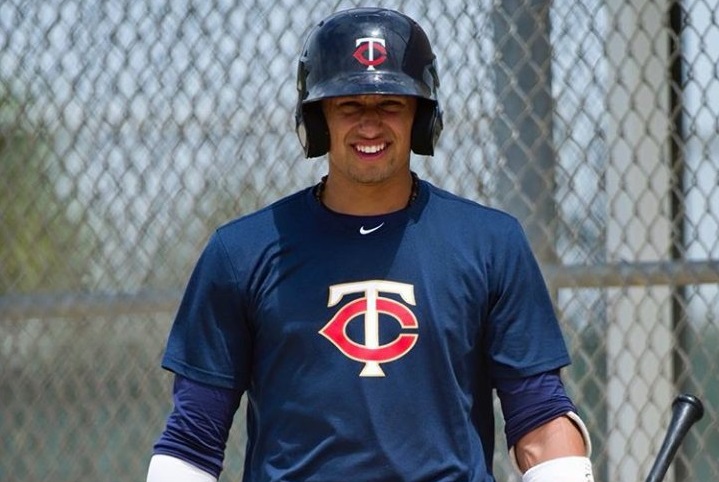 In his recent Q&A at the Baseball Prospectus Target Field event, the general manager Levine shared some insights on the front office's drafting process, which featured an increased emphasis on analytics: For the first time, the organization had the analytics department put together a model to kind of inform us of some of the decisions we can make in the draft, and just big picture, without getting into too many details. If you tell us what the percentage chance was of the player appearing in one of the next three picks that we had, if you don't take them in the second round, what are the chances he'll be in the third, fourth, or fifth round. This method likely helped facilitate the key maneuver that defined Minnesota's draft: making a surprise pick at No. 1 in Royce Lewis, then using the savings from that selection to later take high school right-hander Blayne Enlow at the top of the third round and sign him with a hugely over-slot bonus. Those two teenagers are both experiencing incredible success in their introductions to the pro ranks, making the Twins look very savvy. Lewis reported to the rookie-level Gulf Coast League and dominated at the plate over 39 games before earning a promotion to Class-A Cedar Rapids last weekend. For a prep pick to reach a full-season league in the same year he was drafted is exceedingly rare (not even Carlos Correa, who we're all dreaming on as a Lewis comp, did it), but it speaks to the 18-year-old's extremely advanced game. The shortstop has made himself right at home as one of the Midwest League's youngest players, going 7-for-13 in his first three games with the Kernels. The last top draft pick for the Twins, Joe Mauer, reached the majors shortly before his 21st birthday, and no younger player has debuted for the franchise since. Lewis is now on track to beat him – maybe handily. Enlow, too, has been sensational in his initial sample. Through four appearances in the GCL, he has a 1.29 ERA and 0.74 WHIP. The righty has faced 54 batters and allowed only three walks and seven hits (five of them singles) while striking out 14 with a 57 percent grounder rate. It doesn't get much better than that. It was surprising that Enlow, ranked as the 33rd best prospect in the class by Baseball America ahead of the draft, fell all the way to the Twins at No. 76 overall, especially because he was widely reputed to have the best curveball of any high schooler in the draft and that pitch has increasingly become a central focus in the game. But it worked out, and the analytics system Levine alluded to may have played into that. Oh, and about that beautiful curveball. Enlow himself likes to admire it, and who can blame him? https://twitter.com/BlayneBlaynee/status/894946011587727361 Looking beyond Lewis and Enlow, nearly every other high-end draft pick from this class is showing positive early signs. Brent Rooker, the collegiate slugger taken with their second pick at No. 35, has already moved up to High-A Fort Myers, and was just named Player of the Week in the Florida State League following a monster stretch for the Miracle. The polished 22-year-old hitter is on the fast track and could conceivably be in Minnesota next year. His presence looms large since the Twins have an upcoming vacancy at first base, and had no particularly attractive long-term solution before Rooker joined the organization. Second-round prep right-hander Landon Leach has looked very sharp in the GCL. Fourth-round left-hander Charlie Barnes has excelled and earned a promotion from Elizabethton to Cedar Rapids. Fifth-rounder Andrew Bechtold, a third baseman out of the University of Maryland, is hitting .311/.414/.472 through 32 games in the Appalachian League. Other pitchers taken in the top 10 rounds, Ryley Widell (7th), Bryan Sammons (8th) and Calvin Faucher (10th) are – without exception – off to terrific starts as pros, racking up strikeouts and shutting down opponents. We're barely two months past the 2017 MLB Draft, and these players have sample sizes so small it would be absurd to draw any definitive conclusions from what we've seen. Still, it's impossible to look at Minnesota's class at this point and not be reaffirmed in your belief in this new regime. The Twins followed a strategy that was viewed by many at the time as unconventional and controversial. Right now, it's looking awfully smart. So far, their batting average in this draft is even higher than Lewis's in the Midwest League.
 -
With seven wins in their past eight games, the Minnesota Twins have stormed back into the postseason mix. Entering play on Monday, they're a half-game away from a wild-card position, and they'll have a chance to put a dent in Cleveland's 4.5-game division lead when the Indians come to town this week. Let's take a look at some key players who've been trending upward and downward of late, with an eye on long-term implications.WHO'S HOT? 1. Eddie Rosario Brian Dozier could've easily topped this list, of course – he's got 10 homers and a .630 slugging percentage since the All-Star break – but his second-half surging almost feels routine now. A dominant Dozier down the stretch is like clockwork these days. I've been much more surprised by Rosario's torrid stretch, which extends back even further. By the time Dozier started finding his groove about a month ago, Rosario was already in the midst of a prolonged breakout at the plate. His four-hit, three-homer game against Seattle on June 13th proved to be a launching point for what's been the Summer of Eddie. Twelve days later he collected three hits and scored three runs in a sweep-clinching 4-0 victory over Cleveland. A week after that he tallied five knocks in a win at Kansas City. He had eight multi-hit games in July. More recently, his power has been fueling Minnesota's winning ways. Rosario has ripped five homers during the club's latest 7-1 stretch. Altogether, the 25-year-old outfielder has hit .344/.390/.617 since the three-homer outburst in Seattle, quietly emerging as one of the league's most dangerous hitters. It hasn't always been pretty, and his mental lapses can still be utterly confounding (his fine 2-for-3 day on Sunday was marred by one of the ugliest swinging strikeouts you will ever see), but they're happening less and less. Rosario has always had the rare gift of being able to drive a pitch almost anywhere it's thrown, but he's doing a better job of resisting the compulsion to always do so. As Aaron Gleeman tweeted last week, he has dramatically cut down on his swing rate at pitches outside the zone: The results speak for themselves. Two months ago Rosario's long-term viability was beginning to look somewhat suspect, but he has turned a corner in a big way. We should all be celebrating the Summer of Eddie. 2. Trevor Hildenberger J.T. Chargois. Nick Burdi. Tyler Jay. As Minnesota's much-hyped, hard-throwing relief prospects have gone down, one after another, Hildenberger has continued to do the same thing he's always done: fly under the radar and get people out. Twins Daily readers were plenty familiar with our two-time Minor League Relief Pitcher of the Year, but Hildenberger isn't the kind of flashy young gun who garners lofty prospect rankings or hyperbole-packed spring newspaper columns. He's certainly making his name known since arriving in the majors, though. Hildenberger has been an absolute revelation for the Twins bullpen. On Sunday, he recorded his first MLB save, dispatching four hitters with a strike-throwing clinic – only two of his 17 offerings missed the zone. That's been the story for the sidearmer more or less since he joined the team. Hildenberger has now gone 14 straight appearances without issuing a walk. He's averaging more than strikeout per inning. He has an outstanding 57.1% ground ball rate. The Twins certainly weakened their bullpen by trading away Brandon Kintzler two weeks ago, but they might actually have found a superior option for the ninth inning in Hildenberger – certainly from a big-picture view. 3. Byron Buxton Hildenberger has made it look easy, arriving in the majors and instantly finding a comfort level. As we all know, it wasn't quite so smooth for Buxton. Anointed the team's No. 3 hitter coming out of camp this year, the 23-year-old sputtered out of the gates, flailing away at the dish and quickly falling back to his customary spot at the bottom of the order. Yet, he shows real signs of figuring it out, albeit not as auspiciously as Rosario. Buxton's story has been one of slow and steady growth. After striking out at a 37% rate in April, he's cut that down to 28% since. He has found much more consistency at the plate since the season's midpoint, with a .347/.407/.458 slash line in 23 games since the start of July. He's also 7-for-7 on steals during that span, and 19-for-20 on the season. So what you have in Buck right now is an on-base machine who can pretty much take second at will whenever he gets on. The power hasn't come yet, but it only feels like a matter of time. WHO'S NOT? 1. Miguel Sano The exhilaration of Buxton's progression has been tempered somewhat by a troubling backslide from his fellow franchise centerpiece. Sano has been striking out a ton, which isn't unusual, but lately he's paired it with an uncharacteristic lack of patience. He walked in 12.7% of his plate appearances up until the All-Star break but that figure has dropped to 4.5% since, and in his past 22 games Sano has drawn only two walks while striking out 40 times. The slugger impressively still has .255 average and .737 OPS during that span, because a slump for him qualifies as average production for mere mortals, but it's concerning to see him so bewildered at the plate. Sano is far too talented a player to be giving away at-bats as frequently as he has. The regressing discipline has been especially noticeable in contrast with the improvements we've seen playing out with Buxton and Rosario. If Sano can find a way to get back into that zone from those early months, the Twins are a legit threat in the playoff race. If he can't, it's really hard to envision. 2. Jose Berrios When Berrios made his triumphant return to the Twins in May and proceeded to torch two high-caliber lineups, it looked like a potential turning point for the rotation. Finally, a vaunted young arm fulfilling his potential and becoming a true impact addition. It was the perfect way to wash away the bad aftertaste of Berrios' nightmarish 2016 debut. His recent outings, however, have had an all-too familiar flavor. In eight starts since the beginning of July, he has a 6.28 ERA and 1.55 WHIP. He's failed to pitch into the sixth frame in five of those outings. While his command hasn't been stellar, the issue this time around plainly is not a lack of control, as it was last year. The problem, oddly, is his stuff. The right-hander's reputed arsenal of hard, darting pitches has been completely hittable over the past several weeks. He hasn't induced double-digit swinging strikes in any of his past seven starts, and on Saturday he mustered only three whiffs on 72 pitches. Berrios had double-digit swinging strikes in seven of his first 10 starts. So what's going on? Why are hitters barreling him up so much more successfully? He hasn't been losing velocity, or any evident bite on his breaking balls. Are teams simply coming up with better plans to attack him? Is he tipping? Are there sequencing issues at play? Whatever the case, he and the coaching staff need to get it fixed in a hurry because it's been ugly lately and Saturday's clunker in Detroit might have been the most unsightly yet. 3. Max Kepler One of the most encouraging things about Kepler's breakthrough campaign at Chattanooga in 2015 was that he finally overcame one of the most crippling flaws in his game: severe vulnerability to same-sided pitchers. In 2013, at Cedar Rapids, he posted a .117/.232/.133 against left-handed pitchers. In 2014, he managed to bat .273 against southpaws but still had a dreadful 26-to-3 K/BB ratio against them in 83 plate appearances. So to see him move up to Double-A and bat .319 with an .863 OPS, and nearly as many walks as strikeouts, was big – a sign that perhaps Kepler could have a future as more than a platoon corner outfielder. His rookie year with the Twins put a ding in those hopes, as he batted .203 with a .595 OPS against lefties, and now as a sophomore he is sitting at a brutal .138/.211/.172. It puts Paul Molitor in a tough position, because right now Kepler doesn't look like a palatable option against left-handed pitchers, but he's young enough that you're doing him a disservice by taking away opportunities to face them. And at this point Robbie Grossman – another slumping hitter who could be listed here with his .205 average and .301 slugging percentage since the break – isn't framing himself as a superior alternative. Which trending Twins have caught your attention lately? Click here to view the article
- 30 replies
-
- 3
-

-
- eddie rosario
- byron buxton
- (and 3 more)
-
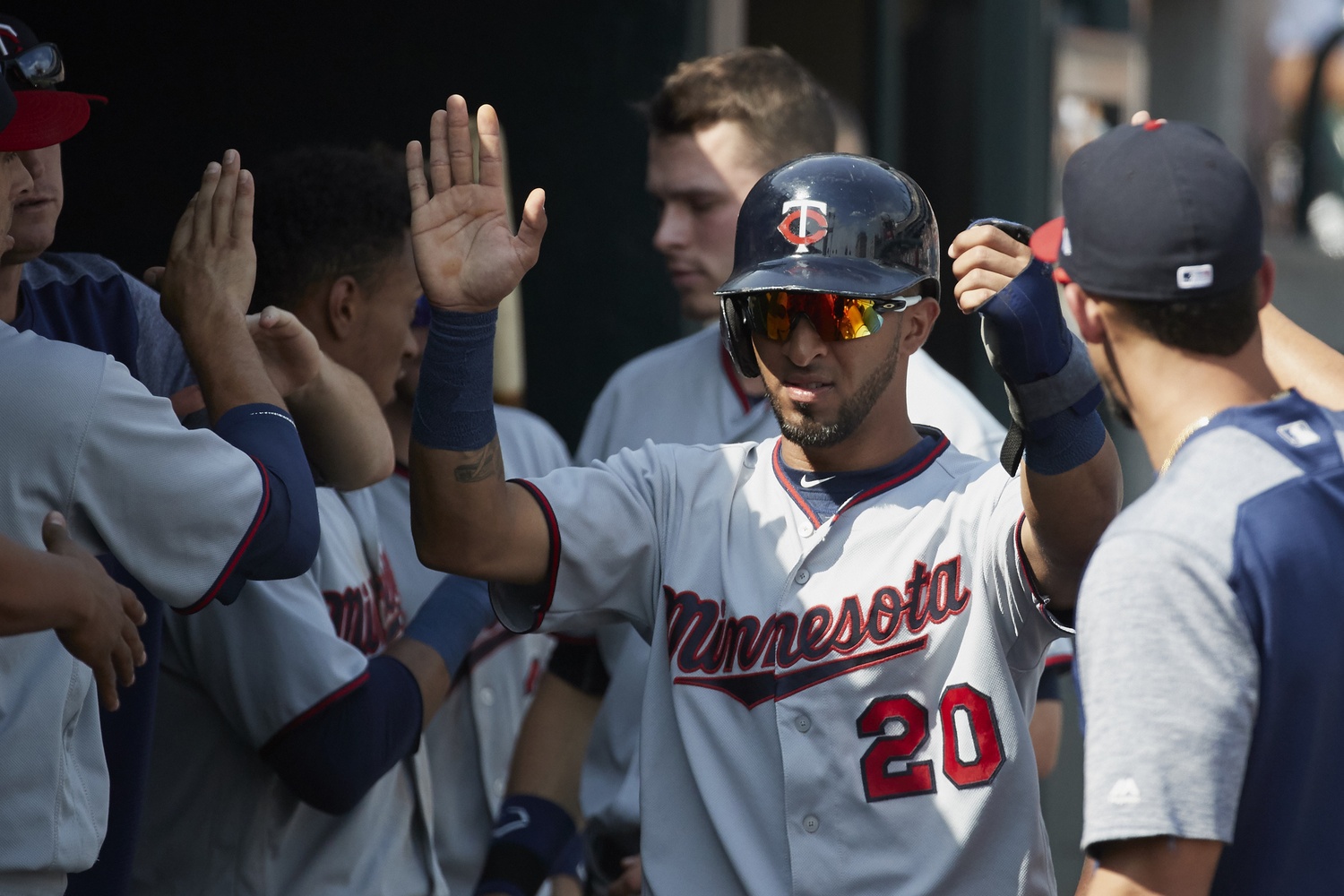 WHO'S HOT? 1. Eddie Rosario Brian Dozier could've easily topped this list, of course – he's got 10 homers and a .630 slugging percentage since the All-Star break – but his second-half surging almost feels routine now. A dominant Dozier down the stretch is like clockwork these days. I've been much more surprised by Rosario's torrid stretch, which extends back even further. By the time Dozier started finding his groove about a month ago, Rosario was already in the midst of a prolonged breakout at the plate. His four-hit, three-homer game against Seattle on June 13th proved to be a launching point for what's been the Summer of Eddie. Twelve days later he collected three hits and scored three runs in a sweep-clinching 4-0 victory over Cleveland. A week after that he tallied five knocks in a win at Kansas City. He had eight multi-hit games in July. More recently, his power has been fueling Minnesota's winning ways. Rosario has ripped five homers during the club's latest 7-1 stretch. Altogether, the 25-year-old outfielder has hit .344/.390/.617 since the three-homer outburst in Seattle, quietly emerging as one of the league's most dangerous hitters. It hasn't always been pretty, and his mental lapses can still be utterly confounding (his fine 2-for-3 day on Sunday was marred by one of the ugliest swinging strikeouts you will ever see), but they're happening less and less. Rosario has always had the rare gift of being able to drive a pitch almost anywhere it's thrown, but he's doing a better job of resisting the compulsion to always do so. As Aaron Gleeman tweeted last week, he has dramatically cut down on his swing rate at pitches outside the zone: https://twitter.com/AaronGleeman/status/895651094436528130 The results speak for themselves. Two months ago Rosario's long-term viability was beginning to look somewhat suspect, but he has turned a corner in a big way. We should all be celebrating the Summer of Eddie. 2. Trevor Hildenberger J.T. Chargois. Nick Burdi. Tyler Jay. As Minnesota's much-hyped, hard-throwing relief prospects have gone down, one after another, Hildenberger has continued to do the same thing he's always done: fly under the radar and get people out. Twins Daily readers were plenty familiar with our two-time Minor League Relief Pitcher of the Year, but Hildenberger isn't the kind of flashy young gun who garners lofty prospect rankings or hyperbole-packed spring newspaper columns. He's certainly making his name known since arriving in the majors, though. Hildenberger has been an absolute revelation for the Twins bullpen. On Sunday, he recorded his first MLB save, dispatching four hitters with a strike-throwing clinic – only two of his 17 offerings missed the zone. That's been the story for the sidearmer more or less since he joined the team. Hildenberger has now gone 14 straight appearances without issuing a walk. He's averaging more than strikeout per inning. He has an outstanding 57.1% ground ball rate. The Twins certainly weakened their bullpen by trading away Brandon Kintzler two weeks ago, but they might actually have found a superior option for the ninth inning in Hildenberger – certainly from a big-picture view. 3. Byron Buxton Hildenberger has made it look easy, arriving in the majors and instantly finding a comfort level. As we all know, it wasn't quite so smooth for Buxton. Anointed the team's No. 3 hitter coming out of camp this year, the 23-year-old sputtered out of the gates, flailing away at the dish and quickly falling back to his customary spot at the bottom of the order. Yet, he shows real signs of figuring it out, albeit not as auspiciously as Rosario. Buxton's story has been one of slow and steady growth. After striking out at a 37% rate in April, he's cut that down to 28% since. He has found much more consistency at the plate since the season's midpoint, with a .347/.407/.458 slash line in 23 games since the start of July. He's also 7-for-7 on steals during that span, and 19-for-20 on the season. So what you have in Buck right now is an on-base machine who can pretty much take second at will whenever he gets on. The power hasn't come yet, but it only feels like a matter of time. WHO'S NOT? 1. Miguel Sano The exhilaration of Buxton's progression has been tempered somewhat by a troubling backslide from his fellow franchise centerpiece. Sano has been striking out a ton, which isn't unusual, but lately he's paired it with an uncharacteristic lack of patience. He walked in 12.7% of his plate appearances up until the All-Star break but that figure has dropped to 4.5% since, and in his past 22 games Sano has drawn only two walks while striking out 40 times. The slugger impressively still has .255 average and .737 OPS during that span, because a slump for him qualifies as average production for mere mortals, but it's concerning to see him so bewildered at the plate. Sano is far too talented a player to be giving away at-bats as frequently as he has. The regressing discipline has been especially noticeable in contrast with the improvements we've seen playing out with Buxton and Rosario. If Sano can find a way to get back into that zone from those early months, the Twins are a legit threat in the playoff race. If he can't, it's really hard to envision. 2. Jose Berrios When Berrios made his triumphant return to the Twins in May and proceeded to torch two high-caliber lineups, it looked like a potential turning point for the rotation. Finally, a vaunted young arm fulfilling his potential and becoming a true impact addition. It was the perfect way to wash away the bad aftertaste of Berrios' nightmarish 2016 debut. His recent outings, however, have had an all-too familiar flavor. In eight starts since the beginning of July, he has a 6.28 ERA and 1.55 WHIP. He's failed to pitch into the sixth frame in five of those outings. While his command hasn't been stellar, the issue this time around plainly is not a lack of control, as it was last year. The problem, oddly, is his stuff. The right-hander's reputed arsenal of hard, darting pitches has been completely hittable over the past several weeks. He hasn't induced double-digit swinging strikes in any of his past seven starts, and on Saturday he mustered only three whiffs on 72 pitches. Berrios had double-digit swinging strikes in seven of his first 10 starts. So what's going on? Why are hitters barreling him up so much more successfully? He hasn't been losing velocity, or any evident bite on his breaking balls. Are teams simply coming up with better plans to attack him? Is he tipping? Are there sequencing issues at play? Whatever the case, he and the coaching staff need to get it fixed in a hurry because it's been ugly lately and Saturday's clunker in Detroit might have been the most unsightly yet. 3. Max Kepler One of the most encouraging things about Kepler's breakthrough campaign at Chattanooga in 2015 was that he finally overcame one of the most crippling flaws in his game: severe vulnerability to same-sided pitchers. In 2013, at Cedar Rapids, he posted a .117/.232/.133 against left-handed pitchers. In 2014, he managed to bat .273 against southpaws but still had a dreadful 26-to-3 K/BB ratio against them in 83 plate appearances. So to see him move up to Double-A and bat .319 with an .863 OPS, and nearly as many walks as strikeouts, was big – a sign that perhaps Kepler could have a future as more than a platoon corner outfielder. His rookie year with the Twins put a ding in those hopes, as he batted .203 with a .595 OPS against lefties, and now as a sophomore he is sitting at a brutal .138/.211/.172. It puts Paul Molitor in a tough position, because right now Kepler doesn't look like a palatable option against left-handed pitchers, but he's young enough that you're doing him a disservice by taking away opportunities to face them. And at this point Robbie Grossman – another slumping hitter who could be listed here with his .205 average and .301 slugging percentage since the break – isn't framing himself as a superior alternative. Which trending Twins have caught your attention lately?
 -
When rebuilding a broken pitching staff, it's necessary to seek out solutions on all fronts. These include free agency, trades, draft, international, and... independent leagues? That last one isn't necessarily a conventional avenue for adding legitimate talent, but the Minnesota Twins have had some success there, and may have more yet to come.For those who enjoy the human element of the game, there's something special about independent ball. Players in these leagues are a long way from the majors, whether undrafted or trying to make their way back into an MLB system. But they're chasing their dreams, often playing in front of paltry crowds for tiny paychecks. When a guy playing in an independent league is able to catch the attention of a major-league organization and work his way to the bigs, it's always a great story. Rich Hill is the most prominent example in the game today. After washing out of affiliated ball in his mid-30s, he signed with the Long Island Ducks in 2015, where he gained notice from the Boston Red Sox. They signed him, he excelled, and two years later he has a $48 million deal with the Dodgers. The Twins haven't had a success of Hill's magnitude, but they've had some notable hits. Minnesota didn't sign Brandon Kintzler out of an independent league, but the former 40th-round draft pick did spend time playing in the Northern League in 2007 and 2008, then with our local St. Paul Saints in 2009, before latching on with the Brewers and finding his way to the big leagues. He would of course later sign with the Twins and turn into an all-star closer, and now he's in line to be pitching in the playoffs in two months. Kintzler's experience in independent ball is now ancient history, but the Twins have a few players who've been there much more recently. Buddy Boshers caught the team's eye while pitching for Somerset in the Atlantic League and is now a fixture in the Minnesota bullpen. Nik Turley was pitching for that same Somerset club last summer, and inked a minor-league deal with the Twins during the offseason, precipitating a major-league debut this year. Things obviously haven't gone smoothly for the southpaw in his three MLB starts, but he continues to dominate at Rochester and will almost surely get more chances. He could become an asset in the bullpen. Tim Melville may be the next name to watch. The Twins signed him in June from the Long Island Ducks team where Hill re-established himself, and he has been tremendous since joining the Class-AAA Red Wings with a 2.55 ERA and 1.07 WHIP through 60 innings. In his latest start for Rochester on Monday, Melville hurled seven innings of one-hit, one-run ball with nine strikeouts. The 27-year-old right-hander is interesting not just because of his recent journey, but because of his history: he's a former fourth-round pick of the Royals who was once ranked among the organization's best young talents and appeared in Baseball Prospectus' Top 100 prospects in 2010. He has flashed good stuff when healthy, with scouts lauding the spin on his breaking balls, and right now it's shining through. If he can keep it up, he may get a look before the year is over. Will he be the next Rich Hill? Not likely. But Melville has a chance to make a real impact, as Boshers has and Turley hopefully still can. At the very least, the former independent leaguer will be another story worth rooting for. Click here to view the article
-
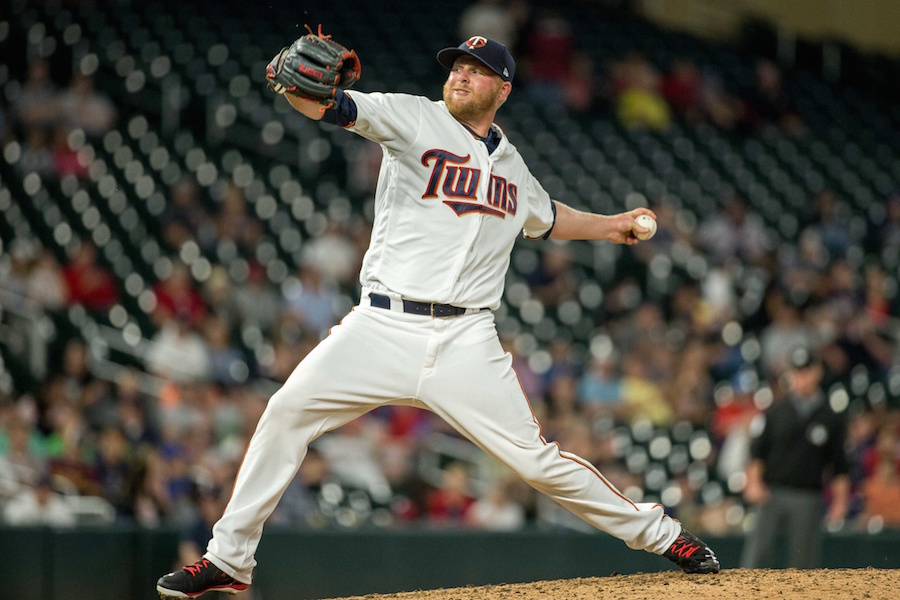 For those who enjoy the human element of the game, there's something special about independent ball. Players in these leagues are a long way from the majors, whether undrafted or trying to make their way back into an MLB system. But they're chasing their dreams, often playing in front of paltry crowds for tiny paychecks. When a guy playing in an independent league is able to catch the attention of a major-league organization and work his way to the bigs, it's always a great story. Rich Hill is the most prominent example in the game today. After washing out of affiliated ball in his mid-30s, he signed with the Long Island Ducks in 2015, where he gained notice from the Boston Red Sox. They signed him, he excelled, and two years later he has a $48 million deal with the Dodgers. The Twins haven't had a success of Hill's magnitude, but they've had some notable hits. Minnesota didn't sign Brandon Kintzler out of an independent league, but the former 40th-round draft pick did spend time playing in the Northern League in 2007 and 2008, then with our local St. Paul Saints in 2009, before latching on with the Brewers and finding his way to the big leagues. He would of course later sign with the Twins and turn into an all-star closer, and now he's in line to be pitching in the playoffs in two months. Kintzler's experience in independent ball is now ancient history, but the Twins have a few players who've been there much more recently. Buddy Boshers caught the team's eye while pitching for Somerset in the Atlantic League and is now a fixture in the Minnesota bullpen. Nik Turley was pitching for that same Somerset club last summer, and inked a minor-league deal with the Twins during the offseason, precipitating a major-league debut this year. Things obviously haven't gone smoothly for the southpaw in his three MLB starts, but he continues to dominate at Rochester and will almost surely get more chances. He could become an asset in the bullpen. Tim Melville may be the next name to watch. The Twins signed him in June from the Long Island Ducks team where Hill re-established himself, and he has been tremendous since joining the Class-AAA Red Wings with a 2.55 ERA and 1.07 WHIP through 60 innings. In his latest start for Rochester on Monday, Melville hurled seven innings of one-hit, one-run ball with nine strikeouts. The 27-year-old right-hander is interesting not just because of his recent journey, but because of his history: he's a former fourth-round pick of the Royals who was once ranked among the organization's best young talents and appeared in Baseball Prospectus' Top 100 prospects in 2010. He has flashed good stuff when healthy, with scouts lauding the spin on his breaking balls, and right now it's shining through. If he can keep it up, he may get a look before the year is over. Will he be the next Rich Hill? Not likely. But Melville has a chance to make a real impact, as Boshers has and Turley hopefully still can. At the very least, the former independent leaguer will be another story worth rooting for.
 -
'It does suck.' Brian Dozier was blunt in expressing his feelings about the front office's deadline approach, with the decisions to flip Jaime Garcia and Brandon Kintzler symbolizing a white flag of sorts. Dozier's frustration is understandable, the culmination of a career's worth of surrender. The clock is ticking on the veteran second baseman if he's ever going to accomplish anything with the team that drafted and developed him.Since he arrived in the majors in 2012, Dozier has been party to an awful lot of losing. He hasn't sniffed the playoffs in five seasons, and that will now more than likely extend to six. Next year is his last under contract with Minnesota, and given the organization's depth in young middle infielders, it seems unlikely they'll pony up to keep him around. Derek Falvey and Thad Levine are taking a pragmatic big-picture view, but to Dozier, the big picture is this: he's been doing his part – and then some – for half of a decade, and he's barely experienced a hint of serious contention. This year the team spent much of the first half in first place, and made a move toward going for it, then turned around and traded away their rental starter and best reliever. Joe Mauer hasn't been as vocal (say what??), but he can certainly relate to Dozier's discontent. Mauer is the only longer-tenured Twin, whose career at least merits Hall of Fame arguments, and he has not one single postseason victory to show for it. On the one hand, his journey as a hometown kid turned MVP is the stuff of storybooks. On the other hand, the wasting of his generational talents by a team that could never build enough around him to go anywhere... it's kinda heartbreaking. Of course, as far as 2017 is concerned, Dozier and Mauer would both be wise to look inward before directing their angst at the front office. They've been having perfectly solid years, but the Twins need more from them than that, and they have to recognize it. Dozier and Mauer are supposed to be the experienced, veteran cornerstones of the league's youngest lineup, but each has been downright ordinary. Dozier has been his usual self: one of the game's better power-hitting middle infielders, and a fine defender, but not an upper-echelon player. Last year he was vastly better with the bases empty than with men on, and this year the contrast has only been sharper (stats entering Sunday): Bases Empty: 295 PA, .268/.342/.517, 17 HR Runners On: 169 PA, .208/.302/.318, 2 HR Dozier's production with no ducks shouldn't be downplayed, because everything helps. But he hasn't risen to the occasion enough. Overall his performance doesn't amount to anything special; he ranks 13th out of 22 MLB-qualified second basemen in OPS, 14th in WAR. And Mauer? It's still a pleasure to watch the man take an at-bat, and he's been exquisite with the mitt at first, but his offensive results are as pedestrian as ever. He ranks 22nd among 25 qualified MLB first basemen in OPS. He's still a nice enough piece to have in the lineup, but more of a role player than a game-changer, and that doesn't do much for this team right now. Dozier and Mauer have been in the Twins organization for a combined 24 years, and it's commendable if they are adamant about winning before their tenures simultaneously come to an end next year. Is that realistic, though? And does their presence prevent the team from moving forward with a blueprint that, by necessity, doesn't include them? Barring an improbable late-season charge this year, the 2018 season is shaping up as the first in Minnesota's true winning cycle. But for Dozier and Mauer, it will mean a lot more. Will they be able to make a run with the rising core before departing? Click here to view the article
