



Nick Nelson
-
Posts
8,327 -
Joined
-
Last visited
-
Days Won
56
Content Type
Profiles
News
Minnesota Twins Videos
2026 Minnesota Twins Top Prospects Ranking
2022 Minnesota Twins Draft Picks
Minnesota Twins Free Agent & Trade Rumors, Notes, & Tidbits
Guides & Resources
2023 Minnesota Twins Draft Picks
The Minnesota Twins Players Project
2024 Minnesota Twins Draft Picks
2025 Minnesota Twins Draft Pick Tracker
2026 Minnesota Twins Draft Tracker: Picks & Bonuses
Forums
Blogs
Events
Store
Downloads
Gallery
Everything posted by Nick Nelson
-
 http://m.mlb.com/video/topic/6479266/v235274983/balmin-dozier-hits-a-walkoff-tworun-homer-in-10th http://m.mlb.com/video/topic/70087564/v249094283/detmin-doziers-threerun-homer-wins-it-in-the-9th
 -
No one’s denying that Kintzler has been very effective in the role up to this point. But I stand by my reservations about his poor fit there going forward. 5.3 K/9. .255 BABIP. 6.3% HR/FB. 86% LOB. Those numbers aren’t going to hold up. The things you’re saying about coming in with a clean inning, and requiring multiple hits in succession to score runs, are true for any reliever. I just believe that with all the contact allowed he’s more susceptible than most to giving up a run or two, even on a good day.
- 33 replies
-
- 1
-

-
- miguel sano
- jose berrios
- (and 1 more)
-
I have some bad news. You probably already know it, at least in the back of your mind. The success of the Minnesota Twins up to this point is not sustainable. At least, not in its current form. They are playing better, without question, but probably not well enough to stay above .500 or near the top of the division. The good news, though, is that their play could easily improve to a point where winning baseball over the balance of the summer is perfectly plausible.As Rotoworld’s Matthew Pouliot pointed out on Twitter, the Twins have the fourth-best record in the American League despite ranking 12th in runs allowed per game and dead last in FIP. By Pythagorean W/L, their expected record would be below .500 at 17-18. Outside of newcomer Jose Berrios, the only starters with an ERA south of five are Ervin Santana and Hector Santiago. The bullpen had the makings of a ticking time bomb, and we’ve already seen some hiccups. On the other end, Miguel Sano has been their only truly outstanding hitter. To this point, almost any other regular has been disappointing in some sense. Reviewing Minnesota’s roster and its performance through mid-May, this doesn’t look like a contender. A far cry from the 100-loss abomination in 2016, of course, but not a team that’s likely to hang with the big boys through September. That could change. While present trends portend it, a drop-off is not necessarily inevitable. That's because certain factors would serve to offset any imminent decline or regression to the mean. For instance, there is the arrival of Jose Berrios. If his sensational season debut on Saturday was any indicator of things to come, he's a big game-changer for the tenability of this starting corps. With two immediate needs in the rotation following Wednesday's rainout (Saturday and Monday), Adalberto Mejia and Kyle Gibson could both be heading back. At least one of them will be. At the end of camp, some believed Mejia and Gibby could be the staff's two best starters. If either of them benefitted from a reset and comes out on track, that's a major boost. Both pitched well in Triple-A. Phil Hughes is maintaining a delicate junkball balancing act, but he's going to hang in there unless things really go off the rails. What the Twins need is enough true mid-rotation guys to make him effectively their No. 5 starter. It's not a huge stretch. The bullpen is a tough nut to crack. Either Matt Belisle has gotten his worst ball of the season out of the way, or he's cooked. We'll see. These dire control issues are absurdly uncharacteristic. Ryan Pressly's stuff is way too good for that ERA. He was utterly filthy his last time out, hopefully a good omen. But he's awful tough to trust right now. Brandon Kintzler is very solid, though I maintain skepticism about his outlook at closer. Taylor Rogers and Craig Breslow are proving well suited for their roles. Justin Haley is Justin Haley. This bullpen could use a reinforcement or two, and they may be available in short order. J.T. Chargois was at last check starting a rehab assignment in Florida. Nick Burdi has been beyond dominant in Chattanooga, with a 0.61 ERA and 19-to-4 K/BB in 15 innings. He's a candidate for a direct promotion to Minnesota. A sleeper might be Alan Busenitz, the hard-throwing 26-year-old acquired along with Hector Santiago in last year's Ricky Nolasco trade. After tossing 3 1/3 innings of one-hit, scoreless relief for Rochester Wednesday night, he has a 2.25 ERA and 21-to-8 K/BB with with five hits allowed in 15 frames. The Twins have some fire to call upon in the late innings. Granted, it's wild fire. But as any Game of Thrones fan will tell you, wild fire can be an excellent way to ambush opponents. On offense, the cavalry isn't as strong, but it doesn't need to be. The Twins lineup figures to improve on its own. Miguel Sano isn't going to slow down at this rate. Brian Dozier has brought a good approach to the plate and should start seeing more results. Same for Max Kepler and Jorge Polanco. Joe Mauer is on the upswing. Eduardo Escobar is an awfully nice plug to have around. Things have shaken out favorably for the Twins thus far, sure, but the wins are already in the book. If they merely play .500 from here on out they're an 83-win team. It doesn't exactly take a blind leap of faith to see them exceeding that clip from here on out with just a few good breaks. Click here to view the article
- 33 replies
-
- 2
-
-
- miguel sano
- jose berrios
- (and 1 more)
-
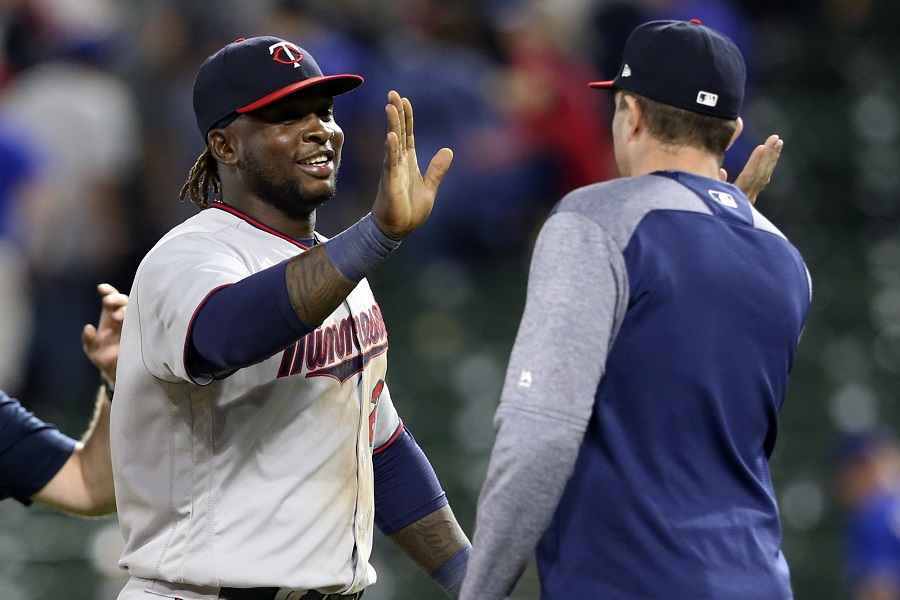 As Rotoworld’s Matthew Pouliot pointed out on Twitter, the Twins have the fourth-best record in the American League despite ranking 12th in runs allowed per game and dead last in FIP. By Pythagorean W/L, their expected record would be below .500 at 17-18. Outside of newcomer Jose Berrios, the only starters with an ERA south of five are Ervin Santana and Hector Santiago. The bullpen had the makings of a ticking time bomb, and we’ve already seen some hiccups. On the other end, Miguel Sano has been their only truly outstanding hitter. To this point, almost any other regular has been disappointing in some sense. Reviewing Minnesota’s roster and its performance through mid-May, this doesn’t look like a contender. A far cry from the 100-loss abomination in 2016, of course, but not a team that’s likely to hang with the big boys through September. That could change. While present trends portend it, a drop-off is not necessarily inevitable. That's because certain factors would serve to offset any imminent decline or regression to the mean. For instance, there is the arrival of Jose Berrios. If his sensational season debut on Saturday was any indicator of things to come, he's a big game-changer for the tenability of this starting corps. With two immediate needs in the rotation following Wednesday's rainout (Saturday and Monday), Adalberto Mejia and Kyle Gibson could both be heading back. At least one of them will be. At the end of camp, some believed Mejia and Gibby could be the staff's two best starters. If either of them benefitted from a reset and comes out on track, that's a major boost. Both pitched well in Triple-A. Phil Hughes is maintaining a delicate junkball balancing act, but he's going to hang in there unless things really go off the rails. What the Twins need is enough true mid-rotation guys to make him effectively their No. 5 starter. It's not a huge stretch. The bullpen is a tough nut to crack. Either Matt Belisle has gotten his worst ball of the season out of the way, or he's cooked. We'll see. These dire control issues are absurdly uncharacteristic. Ryan Pressly's stuff is way too good for that ERA. He was utterly filthy his last time out, hopefully a good omen. But he's awful tough to trust right now. Brandon Kintzler is very solid, though I maintain skepticism about his outlook at closer. Taylor Rogers and Craig Breslow are proving well suited for their roles. Justin Haley is Justin Haley. This bullpen could use a reinforcement or two, and they may be available in short order. J.T. Chargois was at last check starting a rehab assignment in Florida. Nick Burdi has been beyond dominant in Chattanooga, with a 0.61 ERA and 19-to-4 K/BB in 15 innings. He's a candidate for a direct promotion to Minnesota. A sleeper might be Alan Busenitz, the hard-throwing 26-year-old acquired along with Hector Santiago in last year's Ricky Nolasco trade. After tossing 3 1/3 innings of one-hit, scoreless relief for Rochester Wednesday night, he has a 2.25 ERA and 21-to-8 K/BB with with five hits allowed in 15 frames. The Twins have some fire to call upon in the late innings. Granted, it's wild fire. But as any Game of Thrones fan will tell you, wild fire can be an excellent way to ambush opponents. On offense, the cavalry isn't as strong, but it doesn't need to be. The Twins lineup figures to improve on its own. Miguel Sano isn't going to slow down at this rate. Brian Dozier has brought a good approach to the plate and should start seeing more results. Same for Max Kepler and Jorge Polanco. Joe Mauer is on the upswing. Eduardo Escobar is an awfully nice plug to have around. Things have shaken out favorably for the Twins thus far, sure, but the wins are already in the book. If they merely play .500 from here on out they're an 83-win team. It doesn't exactly take a blind leap of faith to see them exceeding that clip from here on out with just a few good breaks.
 -
The Twins lost big on Sunday, but not before making a statement in Cleveland by notching a pair of impressive victories against the defending league champs to take the series. Let's focus in on three top storylines as we head into the second half of May with a first-place club.* On Friday, I wrote about the adjustments Jose Berrios had been making in Triple-A, and wondered if they would translate to the majors. Specifically, his latest starts in Rochester suggested Berrios was effectively adhering to a blueprint of attacking the zone relentlessly rather than trying to throw past hitters or maximize the gas. In essence, the Twins were asking him to pitch to contact. And while that's a term that probably makes a number of local fans shudder, it's sage guidance for the young righty, and might have helped him put forth easily his best big-league outing in Saturday's return. The blowback against Minnesota's "pitch to contact" mantra, which to my recollection reached a high point as Rick Anderson futilely attempted to rein in a wayward Francisco Liriano in 2012, was always overblown. It is understandable enough that the phrase would induce a visceral reaction given the chronic and crippling inability of Twins staffs to miss bats over the years, but to take the words at face value is to misunderstand the nature of the concept. Asking a guy to pitch to contact is not a literal instruction to throw over the middle of the plate and let 'em nail it. It is instead about instilling a mentality wherein the pitcher trusts his stuff and stops worrying about actively trying to blow everyone away. And here's the thing with Berrios: he doesn't need a huge strikeout rate. He has proven extremely tough to square up at every level, with the exception of his rookie stints in the majors where he was so often behind the in the count he was forced to pitch to contact in the bad way. In 591 minor-league innings he has allowed only 472 hits and 35 homers. His K-rate in Triple-A dropped from 28.9 percent in 2016 to 25.7 percent in six starts this year, yet his opponents' average dropped from .188 to .167. If he's getting ahead in counts the whiffs will come naturally, but much like his new mentor Ervin Santana, Berrios doesn't need to strike out a batter per inning to be successful at this level. Saturday's start, in which he allowed one run on two hits in 7 2/3 innings despite only four strikeouts, reinforces this. Go ahead and keep on pitching to contact, Jose. * At the end of a sluggish April that registered as one of the least productive months in his career, Joe Mauer expressed minimal concern. “I feel like I’m striking the ball pretty well,” he told Mike Berardino of the Pioneer Press. “You’ve got to try to stick with the process, and hopefully those results change.” Guess the grizzled vet knew what he was talking about after all. Since the start of May, Mauer's results have taken a turn. In 41 plate appearances this month, he is slashing .324/.390/.514. His batting average on balls in play, which sat at an uncharacteristically low .243 at the end of April, has swung to .385 over the past two weeks. Mauer still has a long way to go before he's even at an average level of output (his OPS ranks second-to-last among qualified AL first basemen) but at least he's moving in the right direction. * The penchant for Minnesota's lineup to hit the ball over the fence has been a major topic during the first leg of the season. Miguel Sano has himself on pace to approach 50 bombs, and Jorge Polanco's long ball on Sunday marked the 15th consecutive game where a Twin has homered, one short of a franchise record. But it's been the pitching staff's ability to keep it in the yard that has been more essential to the team's success. Last year the Twins allowed 221 home runs, most in the American League. This year, they entered Sunday's finale in Cleveland with 40 allowed – fewer than all but six AL teams. Of course, Hector Santiago then went out and gave up three, with Adam Wilk adding another for good measure. But the Twins remain on pace to finish short of last year's total despite homers trending dramatically upward across the league. Is this containment sustainable? It's certainly worth tracking, and there's fair reason for skepticism. Ervin Santana has historically been susceptible to the long ball but he's mostly kept them in check. Ditto Phil Hughes despite lackluster velocity. Berrios, who can't generate much downward plane from a 6'0" frame, gave up 12 in 58 innings with the Twins as a rookie. And the rotation's best ground ball pitcher, Kyle Gibson, is presently in Triple-A. Clearly the pitchers have benefitted tremendously from the exceptional defensive outfielder alignment, but if more balls start traveling beyond the wall it's a different story. As we saw on Sunday. Click here to view the article
-
Three-Bagger: Berrios Brilliance, Mauer's Rebound & Containment
Nick Nelson posted an article in Twins
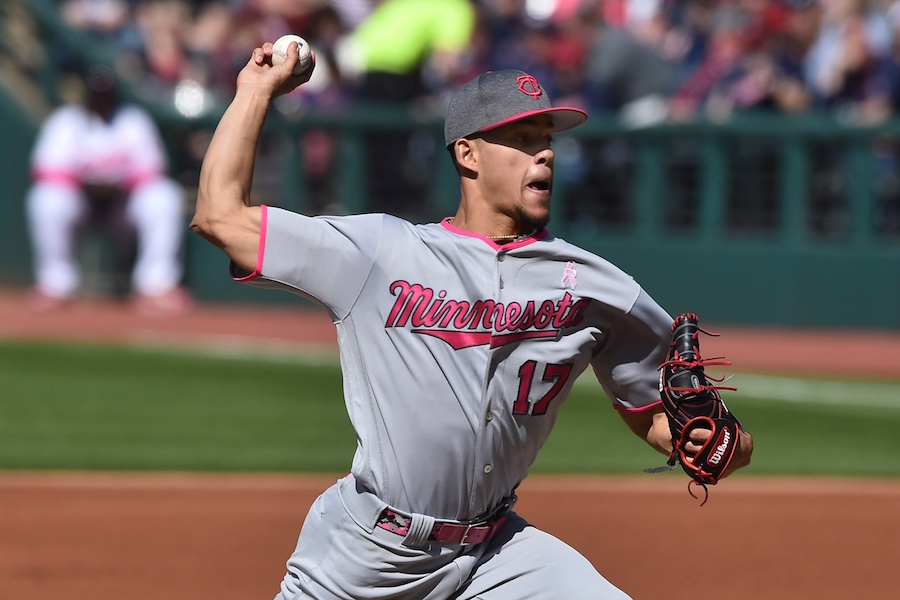 * On Friday, I wrote about the adjustments Jose Berrios had been making in Triple-A, and wondered if they would translate to the majors. Specifically, his latest starts in Rochester suggested Berrios was effectively adhering to a blueprint of attacking the zone relentlessly rather than trying to throw past hitters or maximize the gas. In essence, the Twins were asking him to pitch to contact. And while that's a term that probably makes a number of local fans shudder, it's sage guidance for the young righty, and might have helped him put forth easily his best big-league outing in Saturday's return. The blowback against Minnesota's "pitch to contact" mantra, which to my recollection reached a high point as Rick Anderson futilely attempted to rein in a wayward Francisco Liriano in 2012, was always overblown. It is understandable enough that the phrase would induce a visceral reaction given the chronic and crippling inability of Twins staffs to miss bats over the years, but to take the words at face value is to misunderstand the nature of the concept. Asking a guy to pitch to contact is not a literal instruction to throw over the middle of the plate and let 'em nail it. It is instead about instilling a mentality wherein the pitcher trusts his stuff and stops worrying about actively trying to blow everyone away. And here's the thing with Berrios: he doesn't need a huge strikeout rate. He has proven extremely tough to square up at every level, with the exception of his rookie stints in the majors where he was so often behind the in the count he was forced to pitch to contact in the bad way. In 591 minor-league innings he has allowed only 472 hits and 35 homers. His K-rate in Triple-A dropped from 28.9 percent in 2016 to 25.7 percent in six starts this year, yet his opponents' average dropped from .188 to .167. If he's getting ahead in counts the whiffs will come naturally, but much like his new mentor Ervin Santana, Berrios doesn't need to strike out a batter per inning to be successful at this level. Saturday's start, in which he allowed one run on two hits in 7 2/3 innings despite only four strikeouts, reinforces this. Go ahead and keep on pitching to contact, Jose. * At the end of a sluggish April that registered as one of the least productive months in his career, Joe Mauer expressed minimal concern. “I feel like I’m striking the ball pretty well,” he told Mike Berardino of the Pioneer Press. “You’ve got to try to stick with the process, and hopefully those results change.” Guess the grizzled vet knew what he was talking about after all. Since the start of May, Mauer's results have taken a turn. In 41 plate appearances this month, he is slashing .324/.390/.514. His batting average on balls in play, which sat at an uncharacteristically low .243 at the end of April, has swung to .385 over the past two weeks. Mauer still has a long way to go before he's even at an average level of output (his OPS ranks second-to-last among qualified AL first basemen) but at least he's moving in the right direction. * The penchant for Minnesota's lineup to hit the ball over the fence has been a major topic during the first leg of the season. Miguel Sano has himself on pace to approach 50 bombs, and Jorge Polanco's long ball on Sunday marked the 15th consecutive game where a Twin has homered, one short of a franchise record. But it's been the pitching staff's ability to keep it in the yard that has been more essential to the team's success. Last year the Twins allowed 221 home runs, most in the American League. This year, they entered Sunday's finale in Cleveland with 40 allowed – fewer than all but six AL teams. Of course, Hector Santiago then went out and gave up three, with Adam Wilk adding another for good measure. But the Twins remain on pace to finish short of last year's total despite homers trending dramatically upward across the league. Is this containment sustainable? It's certainly worth tracking, and there's fair reason for skepticism. Ervin Santana has historically been susceptible to the long ball but he's mostly kept them in check. Ditto Phil Hughes despite lackluster velocity. Berrios, who can't generate much downward plane from a 6'0" frame, gave up 12 in 58 innings with the Twins as a rookie. And the rotation's best ground ball pitcher, Kyle Gibson, is presently in Triple-A. Clearly the pitchers have benefitted tremendously from the exceptional defensive outfielder alignment, but if more balls start traveling beyond the wall it's a different story. As we saw on Sunday.
 -
After a month of non-stop struggles with the Twins, Kyle Gibson reported to Rochester and finally produced his first quality start of the season on Tuesday. Pounding the strike zone and inducing tons of whiffs and grounders, suddenly everything was going exactly to plan for the veteran right-hander who could hardly have looked more out of sorts through six starts in Minnesota. It's so much easier in Triple-A. Nobody knows that better than Jose Berrios, who will get another shot at translating his game to the big leagues on Saturday.Berrios has, of course, proven his mastery of the minors beyond any shadow of doubt. That has been more true than ever in the early portion of 2017 as the right-hander has eviscerated International League lineups while registering a 1.13 ERA in six starts. On paper, he has checked every box. If the directive was "trust your stuff and and attack," then the numbers tell us he has answered it to a tee. Berrios has traded in strikeouts for weak contact. The K-rate is down slightly but so are the walks, and he has been remarkably efficient. Twice in his six turns he has completed eight innings. He did so while needing fewer than 100 pitches on both occasions. Only once has he failed to get through six. Opponents are batting .169 with a .471 OPS. It's hard to dominate much more than that, but of course, Berrios has always dominated at Triple-A. His ugly MLB stints last year, between sterling stretches with the Red Wings, made it clear that certain issues afflicting him don't necessarily manifest against minor-league lineups. Asking a guy to tweak those issues while they're not manifesting is a tall order. Berrios can do his best to follow the specific blueprint that Twins officials have laid out for him, but how could he really negatively assess his progress while routinely shutting down opponents and winning games? For what it's worth, there are some signs he's making a few adjustments that could help alleviate his troubles at the highest level. In particular, there is this: in his last two starts with Rochester, Berrios allowed only one run on eight hits in 14 2/3 innings. Across the two turns he got 44 called strikes against just 14 swinging. That's not a guy who is getting outs by nibbling around the edges or inducing chases out of the zone. He's succeeding by throwing it over the plate, early in counts, which is precisely what the Twins want to see him do at the next level. The only way for the 22-year-old to get over the hump is to be thrown into the fire, and now he will. We saw the benefit of this approach with Byron Buxton, who hung in there through weeks of maddening results at the plate before turning things around. Granted, in his case, showing patience was a little easier given all that he was chipping on on the defensive side. But the Twins have managed to stay around .500 thus far even with Gibson delivering clunkers every fifth day and without any real contribution from a fifth starter. They can live through further growing pains from Berrios. Hopefully, they won't need to. He had a plan that he executed over four weeks at Triple-A; there's really not much to criticize in his performance if unless you're nitpicking. If he can shake off the nerves and execute that same plan on Saturday afternoon in Cleveland, it'll be a first pitch strike to open his return to the majors. A year ago at this time the already irrelevant Twins were wrapping up an eight-game losing streak and Berrios was wrapping up the first of multiple disappointing attempts in Minnesota. Now he'll join a team that's looking very competitive, and he's bringing more momentum than ever. Here's to new beginnings. Click here to view the article
-
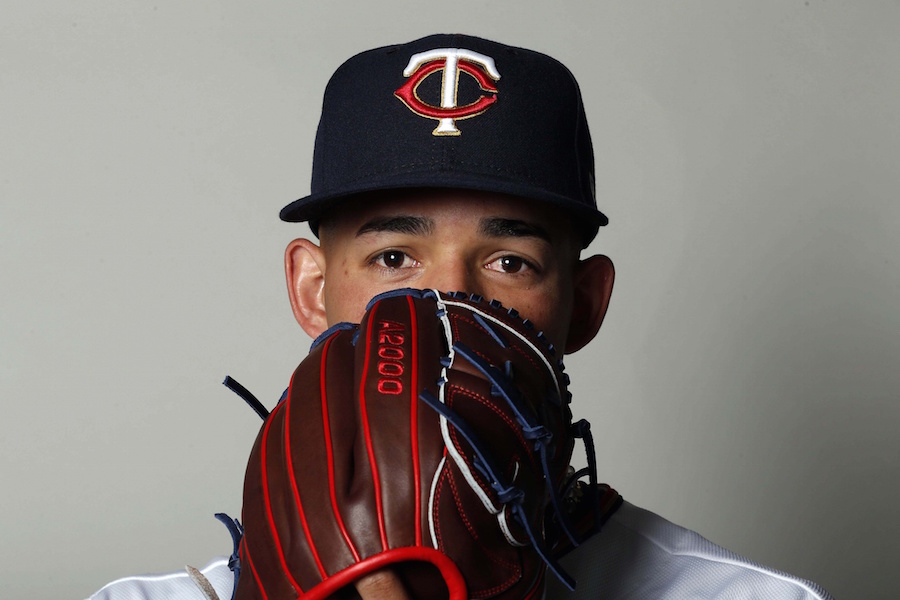 Berrios has, of course, proven his mastery of the minors beyond any shadow of doubt. That has been more true than ever in the early portion of 2017 as the right-hander has eviscerated International League lineups while registering a 1.13 ERA in six starts. On paper, he has checked every box. If the directive was "trust your stuff and and attack," then the numbers tell us he has answered it to a tee. Berrios has traded in strikeouts for weak contact. The K-rate is down slightly but so are the walks, and he has been remarkably efficient. Twice in his six turns he has completed eight innings. He did so while needing fewer than 100 pitches on both occasions. Only once has he failed to get through six. Opponents are batting .169 with a .471 OPS. It's hard to dominate much more than that, but of course, Berrios has always dominated at Triple-A. His ugly MLB stints last year, between sterling stretches with the Red Wings, made it clear that certain issues afflicting him don't necessarily manifest against minor-league lineups. Asking a guy to tweak those issues while they're not manifesting is a tall order. Berrios can do his best to follow the specific blueprint that Twins officials have laid out for him, but how could he really negatively assess his progress while routinely shutting down opponents and winning games? For what it's worth, there are some signs he's making a few adjustments that could help alleviate his troubles at the highest level. In particular, there is this: in his last two starts with Rochester, Berrios allowed only one run on eight hits in 14 2/3 innings. Across the two turns he got 44 called strikes against just 14 swinging. That's not a guy who is getting outs by nibbling around the edges or inducing chases out of the zone. He's succeeding by throwing it over the plate, early in counts, which is precisely what the Twins want to see him do at the next level. The only way for the 22-year-old to get over the hump is to be thrown into the fire, and now he will. We saw the benefit of this approach with Byron Buxton, who hung in there through weeks of maddening results at the plate before turning things around. Granted, in his case, showing patience was a little easier given all that he was chipping on on the defensive side. But the Twins have managed to stay around .500 thus far even with Gibson delivering clunkers every fifth day and without any real contribution from a fifth starter. They can live through further growing pains from Berrios. Hopefully, they won't need to. He had a plan that he executed over four weeks at Triple-A; there's really not much to criticize in his performance if unless you're nitpicking. If he can shake off the nerves and execute that same plan on Saturday afternoon in Cleveland, it'll be a first pitch strike to open his return to the majors. A year ago at this time the already irrelevant Twins were wrapping up an eight-game losing streak and Berrios was wrapping up the first of multiple disappointing attempts in Minnesota. Now he'll join a team that's looking very competitive, and he's bringing more momentum than ever. Here's to new beginnings.
 -
Article: The Lurking Late-Inning Limbo
Nick Nelson replied to Nick Nelson's topic in Twins Daily Front Page News
This isn't really about advanced metrics, it's about basic probabilities. There is some variance, but in the long haul a certain percentage of balls in play are going to turn into hits against any pitcher. When you allow contact at such extremes, you're going to be far more prone to rallies materializing when those hits come in succession. It doesn't make Kintzer a bad pitcher. In fact I think he's a very nice fit earlier in the game, where a string of bloopers and bleeders doesn't necessarily turn into a loss. Also, when he's going good he's very efficient, certainly capable of pitching multiple innings frequently. He just strikes me as a poor fit as closer. But anyway, the point of this article wasn't really that he should be taken out of the ninth. It's that they need to establish some better alternative options for if/when that time comes. -
Article: The Lurking Late-Inning Limbo
Nick Nelson replied to Nick Nelson's topic in Twins Daily Front Page News
Here's another fact to chew on: since the start of 2016, Kintzler's 15.0% K rate ranks fifth-worse among relievers with 60+ IP. Two other pitchers in the bottom 15 on that list opened this season as their team's closers: Jeanmar Gomez (PHI) and Sam Dyson (TEX). Both have already lost their jobs after immense early struggles. -
Article: The Lurking Late-Inning Limbo
Nick Nelson replied to Nick Nelson's topic in Twins Daily Front Page News
I figured some might see it this way. True story though: I usually post on Wednesdays and switched with Seth this week to take Thursday, so I already that this post written well ahead of last night's game and it was going up today either way. I mean, Kintzler has done absolutely nothing to deserve losing the job up to this point. So if we're talking about fairness, I'm not sure stripping him of closer duties based on the things discussed here adds up. But my hope is that the manager recognizes his ill-fitting skill set and keeps the leash short. Of course, that requires having a replacement on hand. -
When you look at this Twins team, hovering around .500 after a month of play in a mediocre division, it's not all that hard to see them hanging in the race throughout the summer. The rotation should remain respectable at least, with legitimate options on hand to replace faltering starters and Big Erv leading the way. The offense, powered by Miguel Sano, also can sustain as above-average – maybe better if Byron Buxton keeps coming on and Joe Mauer gets it going. The one unit that fails to inspire much confidence at this point is, ironically enough, one that has experienced few misfires thus far. Despite its sufficiency up to this point, the back end of Minnesota's bullpen is quite suspect.No one can take away from Brandon Kintzler what he has accomplished in the closer role thus far. He was extremely reliable after taking over for Glen Perkins last year, at least up until a September slide, and he's been nails over the first four weeks of 2017. Through 12 appearances Kintzler has held opponents to a .227 average while converting all seven of his save chances. He has shown tremendous poise on the mound, buckling down in tense situations and making big pitches when needed. But poise only goes so far, and ultimately there are a number of signs suggesting that the veteran righty is on precarious footing in the ninth inning. Entering Wednesday's game, he had been benefiting from a .188 BABIP, stranding 100 percent of base-runners. Those kinds of fortuitous trends simply do not sustain, and we saw a glimpse of it in his rocky ninth inning against Oakland last night. This isn't to say a complete collapse is necessarily imminent, but the same weaknesses that always made Kintzler an iffy bet for the closer job persist, and eventually they're going to become problematic. Mainly, there is the sky-high contact rate. Last year, Kintzler finished 124th out of 130 relievers (min 50 IP) in K-rate at 15.6 percent. Early this year he has moved in the wrong direction despite an uptick in velocity, with his six strikeouts in 12 1/3 innings equating to a 12 percent clip. When so many batters are putting the ball in play, hits are going to start bleeding through even if you're limiting hard contact and getting ground balls. Again, this doesn't mean Kintzler is going to fall off a cliff, because he has some legit skills that compensate for the lack of whiffs. But when you're relying on batted balls finding gloves so much, there are inevitably going to be costly mishaps with the stakes so high and the margins so thin. I feel he's better suited for a middle relief or setup role and I do believe that eventually the Twins are going to reach the same conclusion. It might take some turbulence to get there, but unless Kintzler can fundamentally change his peripheral composition, it's almost bound to happen. And when it does, where do the Twins go? This leads us to a more troubling matter, which is the lack of quality late-inning depth behind Kintzler. Ryan Pressly was bringing gas in spring training, leading some to conclude he might succeed Kintzler in the closer role at some point this summer. Pressly is indeed throwing harder than ever this season, with a lively fastball averaging nearly 96 MPH in April, but he's still failing to establish himself as a truly dominant reliever. Last year Pressly's numbers were more good than great and he appears to be headed down that same path. His slider, despite its premium velocity, hasn't been a very strong pitch for him and he's been reluctant to throw it. And opponents are generating hard contact, with six of the nine hits he's allowed going for extra bases. Tyler Duffey might have the stuff for the task, but the team still seems to be wavering on his destiny as a starter or reliever. Matt Belisle is making a case for less leverage instead of more, with his best asset – control – looking shaky in the early going (with seven walks, he has already matched year's total in 40 appearances). Michael Tonkin is probably on the verge of being designated for assignment. So we turn to the minors. JT Chargois is the best candidate in line to take over a ninth-inning role, given that he's done it successfully at every level. He's a closer in waiting. But now he's on the disabled list with an elbow impingement, which sounds a little ominous for someone who's had his battles with arm issues. Tyler Jay, another former collegiate closer who seemingly moved onto the fast track when the organization switched him back to a relief role this spring, still hasn't pitched in a game due to biceps tendinitis. A promising relief pipeline stalling out due to health and performance setbacks? Stop me if you've heard it before. One way or another, the Twins need some options to emerge. The back end of the bullpen is likely to become a problem soon and right now there is a shortage of options available to address it. Click here to view the article
-
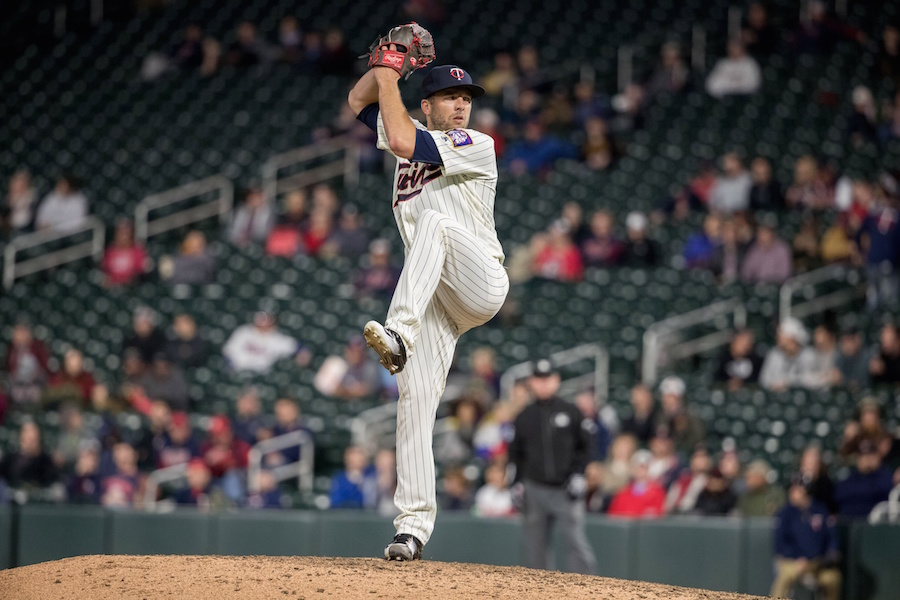 No one can take away from Brandon Kintzler what he has accomplished in the closer role thus far. He was extremely reliable after taking over for Glen Perkins last year, at least up until a September slide, and he's been nails over the first four weeks of 2017. Through 12 appearances Kintzler has held opponents to a .227 average while converting all seven of his save chances. He has shown tremendous poise on the mound, buckling down in tense situations and making big pitches when needed. But poise only goes so far, and ultimately there are a number of signs suggesting that the veteran righty is on precarious footing in the ninth inning. Entering Wednesday's game, he had been benefiting from a .188 BABIP, stranding 100 percent of base-runners. Those kinds of fortuitous trends simply do not sustain, and we saw a glimpse of it in his rocky ninth inning against Oakland last night. This isn't to say a complete collapse is necessarily imminent, but the same weaknesses that always made Kintzler an iffy bet for the closer job persist, and eventually they're going to become problematic. Mainly, there is the sky-high contact rate. Last year, Kintzler finished 124th out of 130 relievers (min 50 IP) in K-rate at 15.6 percent. Early this year he has moved in the wrong direction despite an uptick in velocity, with his six strikeouts in 12 1/3 innings equating to a 12 percent clip. When so many batters are putting the ball in play, hits are going to start bleeding through even if you're limiting hard contact and getting ground balls. Again, this doesn't mean Kintzler is going to fall off a cliff, because he has some legit skills that compensate for the lack of whiffs. But when you're relying on batted balls finding gloves so much, there are inevitably going to be costly mishaps with the stakes so high and the margins so thin. I feel he's better suited for a middle relief or setup role and I do believe that eventually the Twins are going to reach the same conclusion. It might take some turbulence to get there, but unless Kintzler can fundamentally change his peripheral composition, it's almost bound to happen. And when it does, where do the Twins go? This leads us to a more troubling matter, which is the lack of quality late-inning depth behind Kintzler. Ryan Pressly was bringing gas in spring training, leading some to conclude he might succeed Kintzler in the closer role at some point this summer. Pressly is indeed throwing harder than ever this season, with a lively fastball averaging nearly 96 MPH in April, but he's still failing to establish himself as a truly dominant reliever. Last year Pressly's numbers were more good than great and he appears to be headed down that same path. His slider, despite its premium velocity, hasn't been a very strong pitch for him and he's been reluctant to throw it. And opponents are generating hard contact, with six of the nine hits he's allowed going for extra bases. Tyler Duffey might have the stuff for the task, but the team still seems to be wavering on his destiny as a starter or reliever. Matt Belisle is making a case for less leverage instead of more, with his best asset – control – looking shaky in the early going (with seven walks, he has already matched year's total in 40 appearances). Michael Tonkin is probably on the verge of being designated for assignment. So we turn to the minors. JT Chargois is the best candidate in line to take over a ninth-inning role, given that he's done it successfully at every level. He's a closer in waiting. But now he's on the disabled list with an elbow impingement, which sounds a little ominous for someone who's had his battles with arm issues. Tyler Jay, another former collegiate closer who seemingly moved onto the fast track when the organization switched him back to a relief role this spring, still hasn't pitched in a game due to biceps tendinitis. A promising relief pipeline stalling out due to health and performance setbacks? Stop me if you've heard it before. One way or another, the Twins need some options to emerge. The back end of the bullpen is likely to become a problem soon and right now there is a shortage of options available to address it.
 -
Article: Miguel Sano Taking Step Into Stardom
Nick Nelson replied to Nick Nelson's topic in Twins Daily Front Page News
Home runs don't count as balls in play so that's also a factor. In the case of someone like Barry Bonds, that's an awful lot of hits that aren't figuring into BABIP. -
I've long been a believer in Miguel Sano's transcendent talent. His prodigious major-league debut at age 22 only reinforced that belief, to the point where I felt emboldened to predict the Dominican slugger would win AL MVP in his second season with the Twins. I was wrong. Very wrong. But... maybe just a little early on the call?There were many astonishing aspects of Sano's rookie campaign in 2015, which included a .916 OPS and 18 homers in just 80 games. Of course, those numbers were stellar, but there were deeper indicators of an elite offensive player in the making. Specifically, I'm talking about his uncommonly advanced approach at the plate. As an MLB newbie, Sano worked the count full in a higher fraction of his plate appearances than Joey Votto or Mike Trout. And once he got there he capitalized, posting a 1.281 OPS against 3-2 offerings. That's the sign of a dominating hitter, evidenced by the fact that Votto and Trout were the qualified leaders in their respective leagues. In the same season where Byron Buxton was reminding us how difficult and demoralizing the task of facing MLB pitching can be, even for the most gifted of players, Sano was making it look easy. He had the designs of a 40-homer slugger and premier run producer. Maybe, I thought, as soon as his first full season. It wasn't meant to be. A number of different factors contributed to a trying sophomore campaign. I don't know how to individually weigh the various things that played him against him – starting the year in the outfield, dealing with adjustments from opposing pitchers, battling injuries, maybe not putting in the necessary work – but it all likely played a part. The result was a disappointing (though hardly terrible) season in which Sano nearly set an all-time record for strikeout rate. Perturbingly, his line on full counts dropped from .240/.581/.700 to .123/.373/.288. The first month of 2017 represented a resounding return to form for Sano. In 23 games, he batted .316/.443/.684 with seven homers and 25 RBI. His strikeout rate is down a tad (all he needs, really) while his walk rate is higher than Bryce Harper's or Paul Goldschmidt's. Sano is once again controlling the zone at a remarkable level. And when he's hitting the ball, he is hitting it HARD. According to MLB's StatCast data, Sano leads all of baseball in average exit velocity, and is the only player in triple digits. He is smashing everything, and that was evident enough on Friday night. In a game where Royals starter Ian Kennedy was stingy with the hits, Miggy delivered a big one in the fourth, putting a beautiful swing on an outside fastball and sending it over the fence in right. Later, he came through a with a game-breaking drive in the eighth with the bases loaded, facing another hot pitcher (Joakim Soria hadn't allowed an extra-base hit all year) and taking him off the top of the wall in left. Sano narrowly missed a grand slam but his two-run double knotted the score and set up another one for Mauer that proved decisive. Then on Sunday, he added another mammoth homer and drove in five, carrying the Twins offense in a 7-5 victory that pushed the team's final April record above .500. A year ago they were 10 games under at this time. Hey, it's only one month. But there's nothing superficial about Sano's immense success thus far. Every underlying element suggests that his emergence as one of baseball's best hitters is completely legitimate. He is swinging less at pitches outside of the zone, and more in the zone. He is blasting rockets to all fields. He is rising to the occasion in big spots. Oh, and on top of it all, he's looking pretty damn decent defensively over at third base. MVP? If he keeps up at this rate, he'll easily be in the conversation. But either way, Sano is establishing himself as a star and there is a sense that he's only getting started. Giddy up. Click here to view the article
-
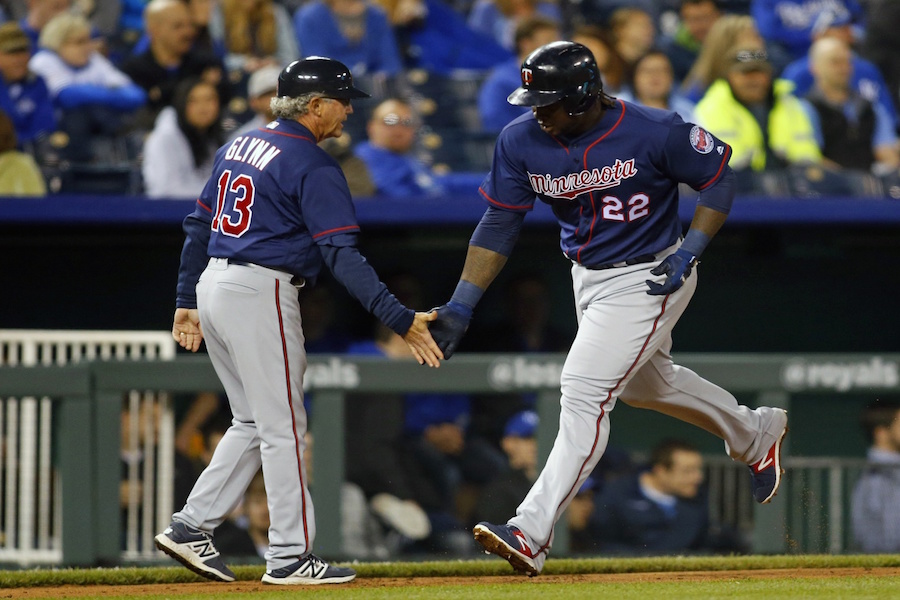 There were many astonishing aspects of Sano's rookie campaign in 2015, which included a .916 OPS and 18 homers in just 80 games. Of course, those numbers were stellar, but there were deeper indicators of an elite offensive player in the making. Specifically, I'm talking about his uncommonly advanced approach at the plate. As an MLB newbie, Sano worked the count full in a higher fraction of his plate appearances than Joey Votto or Mike Trout. And once he got there he capitalized, posting a 1.281 OPS against 3-2 offerings. That's the sign of a dominating hitter, evidenced by the fact that Votto and Trout were the qualified leaders in their respective leagues. In the same season where Byron Buxton was reminding us how difficult and demoralizing the task of facing MLB pitching can be, even for the most gifted of players, Sano was making it look easy. He had the designs of a 40-homer slugger and premier run producer. Maybe, I thought, as soon as his first full season. It wasn't meant to be. A number of different factors contributed to a trying sophomore campaign. I don't know how to individually weigh the various things that played him against him – starting the year in the outfield, dealing with adjustments from opposing pitchers, battling injuries, maybe not putting in the necessary work – but it all likely played a part. The result was a disappointing (though hardly terrible) season in which Sano nearly set an all-time record for strikeout rate. Perturbingly, his line on full counts dropped from .240/.581/.700 to .123/.373/.288. The first month of 2017 represented a resounding return to form for Sano. In 23 games, he batted .316/.443/.684 with seven homers and 25 RBI. His strikeout rate is down a tad (all he needs, really) while his walk rate is higher than Bryce Harper's or Paul Goldschmidt's. Sano is once again controlling the zone at a remarkable level. And when he's hitting the ball, he is hitting it HARD. According to MLB's StatCast data, Sano leads all of baseball in average exit velocity, and is the only player in triple digits. He is smashing everything, and that was evident enough on Friday night. In a game where Royals starter Ian Kennedy was stingy with the hits, Miggy delivered a big one in the fourth, putting a beautiful swing on an outside fastball and sending it over the fence in right. Later, he came through a with a game-breaking drive in the eighth with the bases loaded, facing another hot pitcher (Joakim Soria hadn't allowed an extra-base hit all year) and taking him off the top of the wall in left. Sano narrowly missed a grand slam but his two-run double knotted the score and set up another one for Mauer that proved decisive. Then on Sunday, he added another mammoth homer and drove in five, carrying the Twins offense in a 7-5 victory that pushed the team's final April record above .500. A year ago they were 10 games under at this time. Hey, it's only one month. But there's nothing superficial about Sano's immense success thus far. Every underlying element suggests that his emergence as one of baseball's best hitters is completely legitimate. He is swinging less at pitches outside of the zone, and more in the zone. He is blasting rockets to all fields. He is rising to the occasion in big spots. Oh, and on top of it all, he's looking pretty damn decent defensively over at third base. MVP? If he keeps up at this rate, he'll easily be in the conversation. But either way, Sano is establishing himself as a star and there is a sense that he's only getting started. Giddy up.
 -
His metrics in those 400 innings were beyond horrendous and they matched the eye test. It's one thing to start giving a guy some experience at another position if you think he might end up there. It's another thing to start playing him there exclusively, giving him zero reps at SS, especially when there's nothing resembling a top prospect occupying the position. To say the concerns over Polanco at SS are "literally based on nothing" is outrageous. Twins officials have acknowledged and validated those concerns on plenty of occasions.
-
Good stuff. The left side of the infield has definitely been a very pleasant surprise. Big part of the reason the Twins are now 4th in defensive efficiency rating after finishing second-to-last in 2016.
-
Phil Hughes has a reputation around the game as a guy who will constantly experiment, tweak and tinker with his game in efforts to improve and gain an edge. We have certainly seen that early on this year, as he has introduced a prominent changeup to his repertoire while waiting for his fastball to (hopefully) regain life. Although the righty's lagging stuff is a cause for concern, his cerebral approach and superior feel for pitching provide some reassurance, and they were on display once again in his victory over the Rangers on Monday.In the eyes of some, Hughes' start in Detroit on May 17th of last year was deserving of criticism – the sign of a player who wasn't invested in a team that had already gone off the rails. As you might recall, the righty had gotten through 6 1/3 innings with one run allowed before reportedly pulling himself at 75 pitches during a mound visit, giving way to a bullpen collapse that led to a lopsided loss. Whether Hughes asked out or simply allowed Paul Molitor to take the ball from him, various fans and members of the media – particularly those of the old-school bulldog mindset – implied that the incident demonstrated softness. No fiery competitor would willingly leave a close game in which he was seemingly in control at that pitch count. Right? I saw it differently, and wrote as much at the time. Noting that Hughes clearly didn't have much that night, I commended him for recognizing that he was out of gas and letting the manager go to fresh arms for the last eight outs. It didn't work out, but it easily may not have worked out the other way. Hughes put up a 6.61 ERA while allowing a 1.011 OPS over his next four starts, then broke his leg, and then underwent thoracic outlet surgery to address a longstanding shoulder issue that had sapped his pitches of zip and left him to rely upon control and guile to navigate through outings. Sometimes, it worked. More often, it didn't, as his increasingly unsatisfactory numbers in 2015 and 2016 showed. The early portion of his 2017 season has been reminiscent of those last two campaigns. Nine months removed from his operation, Hughes hasn't gotten his fastball back, not yet anyway. Through four starts, his heater has been registering under 90 MPH on average per FanGraphs, lower than any other point in his big league career and nearly three full ticks below where he was at during that sensational 2014 season. It seems the veteran had been preparing himself for such a reality. During spring training, one big storyline was his heavy usage of the changeup, a pitch he'd rarely thrown in 10 MLB seasons. "You're always trying to stay ahead," Hughes said after one Grapefruit start in which he threw the pitch a ton. "I don't just want to hope that I come back healthy and surgery did its job and I'm back to where I was. "I wanted to do something proactively to facilitate that ... I truly believe that adding a changeup is going to do nothing but help." Indeed, Hughes has gone to the change an unprecedented 20 percent of the time thus far while greatly reducing reliance upon his fastball, seemingly an acknowledgement that his top pitch isn't close to where it needs to be. To that end, the 30-year-old told Brandon Warne of Zone Coverage recently that he's been trying to add spin to his fastball so as to get more out of it. While the overall results haven't been great – he has a 4.71 ERA and hasn't yet pitched past the sixth – Hughes is certainly out-pitching his stuff, which is frankly just plain unimpressive. On Monday in Texas, he managed to induce only one swinging strike on 86 pitches, but still battled his way through six innings of two-run ball en route to his third victory in four turns. It was the same kind of crafty and gritty outing as we saw on that evening in Detroit last May – right down to the skepticism about his coming out on a low pitch count. This is both a good and bad thing. It's nice to see Hughes craftily finding ways to get the job done while lacking much sizzle on his pitches. But that lack of sizzle is certainly troubling, and as long as his arsenal continues to drag, every start is going to be an adventure. Hopefully, as he further distances himself from surgery, Hughes will gradually regain arm strength and the velocity will begin to creep upward. Until the fastball catches up, he'll need to keep searching for ways to stay ahead. Click here to view the article
-
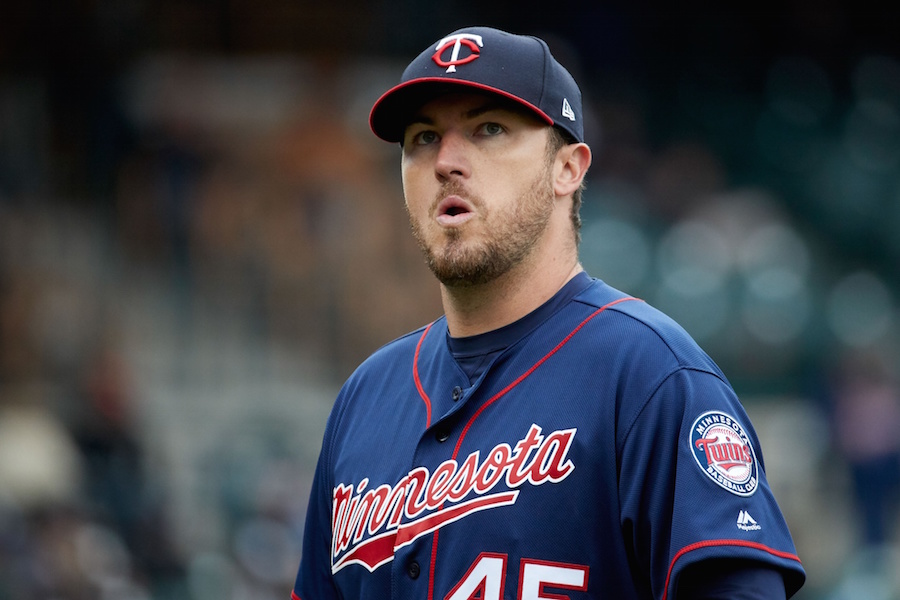 In the eyes of some, Hughes' start in Detroit on May 17th of last year was deserving of criticism – the sign of a player who wasn't invested in a team that had already gone off the rails. As you might recall, the righty had gotten through 6 1/3 innings with one run allowed before reportedly pulling himself at 75 pitches during a mound visit, giving way to a bullpen collapse that led to a lopsided loss. Whether Hughes asked out or simply allowed Paul Molitor to take the ball from him, various fans and members of the media – particularly those of the old-school bulldog mindset – implied that the incident demonstrated softness. No fiery competitor would willingly leave a close game in which he was seemingly in control at that pitch count. Right? I saw it differently, and wrote as much at the time. Noting that Hughes clearly didn't have much that night, I commended him for recognizing that he was out of gas and letting the manager go to fresh arms for the last eight outs. It didn't work out, but it easily may not have worked out the other way. Hughes put up a 6.61 ERA while allowing a 1.011 OPS over his next four starts, then broke his leg, and then underwent thoracic outlet surgery to address a longstanding shoulder issue that had sapped his pitches of zip and left him to rely upon control and guile to navigate through outings. Sometimes, it worked. More often, it didn't, as his increasingly unsatisfactory numbers in 2015 and 2016 showed. The early portion of his 2017 season has been reminiscent of those last two campaigns. Nine months removed from his operation, Hughes hasn't gotten his fastball back, not yet anyway. Through four starts, his heater has been registering under 90 MPH on average per FanGraphs, lower than any other point in his big league career and nearly three full ticks below where he was at during that sensational 2014 season. It seems the veteran had been preparing himself for such a reality. During spring training, one big storyline was his heavy usage of the changeup, a pitch he'd rarely thrown in 10 MLB seasons. "You're always trying to stay ahead," Hughes said after one Grapefruit start in which he threw the pitch a ton. "I don't just want to hope that I come back healthy and surgery did its job and I'm back to where I was. "I wanted to do something proactively to facilitate that ... I truly believe that adding a changeup is going to do nothing but help." Indeed, Hughes has gone to the change an unprecedented 20 percent of the time thus far while greatly reducing reliance upon his fastball, seemingly an acknowledgement that his top pitch isn't close to where it needs to be. To that end, the 30-year-old told Brandon Warne of Zone Coverage recently that he's been trying to add spin to his fastball so as to get more out of it. While the overall results haven't been great – he has a 4.71 ERA and hasn't yet pitched past the sixth – Hughes is certainly out-pitching his stuff, which is frankly just plain unimpressive. On Monday in Texas, he managed to induce only one swinging strike on 86 pitches, but still battled his way through six innings of two-run ball en route to his third victory in four turns. It was the same kind of crafty and gritty outing as we saw on that evening in Detroit last May – right down to the skepticism about his coming out on a low pitch count. This is both a good and bad thing. It's nice to see Hughes craftily finding ways to get the job done while lacking much sizzle on his pitches. But that lack of sizzle is certainly troubling, and as long as his arsenal continues to drag, every start is going to be an adventure. Hopefully, as he further distances himself from surgery, Hughes will gradually regain arm strength and the velocity will begin to creep upward. Until the fastball catches up, he'll need to keep searching for ways to stay ahead.
 -
Painfully well put
-
All fair points, but I lean the other way. In 2014/15, he posted a 3.88 FIP over 374 innings. Everything was trending up heading into 2016, when it unraveled, but then I don't think he was ever right physically last summer. Of course, possibly he'll never really be right physically again, despite his tinkering efforts during the offseason aimed to that end. So maybe it's all moot.
-
Few things worth noting in Gibson's numbers: .362 BABIP (.306 career) 26.3% HR/FB (11.9%) 12.9% IF hit% (5.7%) 60.7 LOB% (69.2%) Not to mention the disproportionate number of poor defensive plays that have occurred behind him. I'm not saying he's been great, but the GB, FB, K and BB rates are more or less in line with career norms. He's been very unlucky. Based on underlying trends, I'd be much more concerned about Hughes going forward.
-
One of the biggest reasons for positivity coming out of spring training was the fact that two players hugely critical to the Twins' success were on top of their games, seemingly poised to take big steps forward and help lead the team's turnaround. But since coming north, both players have seen their play go south, and now they've become perhaps Minnesota's two greatest sources of concern during an 8-10 start.We all know that spring exhibition statistics are to be taken with a grain of salt. But certain traits, developments and observable trends can provide valid reasons for optimism and belief. Byron Buxton and Kyle Gibson were exhibiting all of them throughout the month of March. The drop-off that both these key pieces experienced as soon as the games started mattering have left the Twins reeling, and searching futilely for answers. Buxton's spring was an extension of his breakthrough September in 2016. Once again, the young outfielder was flashing visible confidence, regularly connecting with good pitches and putting together solid at-bats. His performance was impressive enough to convince Paul Molitor that Buxton was ready to bat third in the lineup. But in April, the self-assured hitter who finished last season on a blistering hot streak and piled up a team-leading 10 extra-base hits in the ensuing spring has inexplicably gone amiss. Buxton looks as timid and clueless in the box as he did as a green MLB newcomer, if not more so. With each horrendous plate appearance, the issues only seem to further compound and snowball. The strategy of letting him try to fight through his struggles is yielding no discernible progress. Although the strikeouts have subsided somewhat, Buxton continues to be an exceedingly easy out, with mediocre or worse pitchers consistently having their way. In his first nine games he went 3-for-34. In eight games since, he's 3-for-31. According to FanGraphs, only one ball put in play this year by Buxton has qualified as a line drive. His 47 percent K-rate is 12 points higher than MLB pitchers have produced at the plate. You would literally expect better from a random Single-A scrub thrown onto the big-league stage. From a player of such immense talent who posted an .880 OPS in the minors, it boggles the mind. And considering Buxton's monumental importance to the franchise, it's a highly disquieting dilemma. Gibson isn't as vital to Minnesota's big-picture outlook, but he is quite crucial in the short-term. With all the question marks that surrounded (and continue to surround) Phil Hughes as well as the fifth starter spot, the Twins badly needed the veteran righty to rebound and join Ervin Santana as a reliable asset atop the rotation. Gibson showed every sign of doing so in camp, with an authoritative presence on the mound carrying more relevance than his stellar numbers. Throughout spring competition, Gibson worked ahead in counts, snapped off nasty sliders and cruised through efficient outings. When batters made contact, they were hitting everything into the ground. He was executing his gameplans to a tee. Utilizing altered mechanics, Gibson reported feeling as good as he has in a long time. But that version of the 29-year-old has vanished in four regular-season starts. All of the deepest flaws that held him down during a challenging 2016 campaign have been frustrating mainstays. Gibson's command has been terrible and his outings have routinely unraveled at the the first sign of trouble. Things reached a new low on Sunday when Gibson endured the worst start of his career before horrified home fans at Target Field. An eight-run shellacking at the hands of Detroit left him 0-3 with a 9.00 ERA, and leaves the Twins contemplating a demotion to the bullpen or even the minors. Ultimately, removing Buxton or Gibson may prove necessary but won't do much to brighten the team's fortunes. In the outfield, they lack compelling alternatives for Buxton, and almost any reconfiguration that takes him out of the picture will dramatically reduce the unit's defensive aptitude, diminishing one of the roster's only clear strengths. In the rotation, the Twins are already seeking to fill another vacancy following the demotion of Adalberto Mejia, and Hughes has done little to establish himself as any kind of stable presence. Minnesota desperately needs Gibson to figure it out, though patience is wearing thin and with good reason. In both cases, it seems clear that the ability and tools are inherently there to get the job done. What's holding them back? Why are these two critical cogs so profoundly overmatched? Where has the sharpness and confidence they exuded throughout the spring ramp-up period gone? And if those elements don't return soon, at least to some extent, what in the world are the Twins to do? Click here to view the article
-
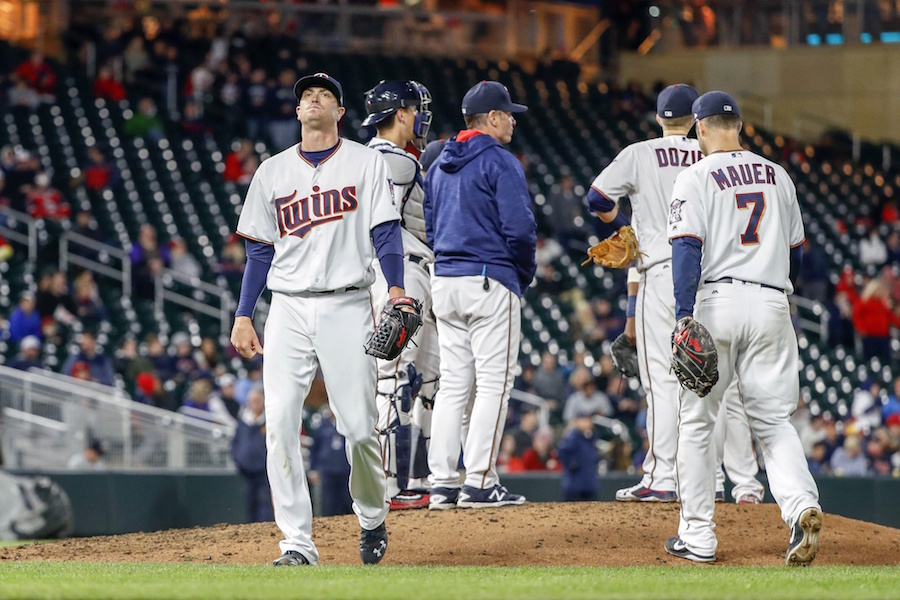 We all know that spring exhibition statistics are to be taken with a grain of salt. But certain traits, developments and observable trends can provide valid reasons for optimism and belief. Byron Buxton and Kyle Gibson were exhibiting all of them throughout the month of March. The drop-off that both these key pieces experienced as soon as the games started mattering have left the Twins reeling, and searching futilely for answers. Buxton's spring was an extension of his breakthrough September in 2016. Once again, the young outfielder was flashing visible confidence, regularly connecting with good pitches and putting together solid at-bats. His performance was impressive enough to convince Paul Molitor that Buxton was ready to bat third in the lineup. But in April, the self-assured hitter who finished last season on a blistering hot streak and piled up a team-leading 10 extra-base hits in the ensuing spring has inexplicably gone amiss. Buxton looks as timid and clueless in the box as he did as a green MLB newcomer, if not more so. With each horrendous plate appearance, the issues only seem to further compound and snowball. The strategy of letting him try to fight through his struggles is yielding no discernible progress. Although the strikeouts have subsided somewhat, Buxton continues to be an exceedingly easy out, with mediocre or worse pitchers consistently having their way. In his first nine games he went 3-for-34. In eight games since, he's 3-for-31. According to FanGraphs, only one ball put in play this year by Buxton has qualified as a line drive. His 47 percent K-rate is 12 points higher than MLB pitchers have produced at the plate. You would literally expect better from a random Single-A scrub thrown onto the big-league stage. From a player of such immense talent who posted an .880 OPS in the minors, it boggles the mind. And considering Buxton's monumental importance to the franchise, it's a highly disquieting dilemma. Gibson isn't as vital to Minnesota's big-picture outlook, but he is quite crucial in the short-term. With all the question marks that surrounded (and continue to surround) Phil Hughes as well as the fifth starter spot, the Twins badly needed the veteran righty to rebound and join Ervin Santana as a reliable asset atop the rotation. Gibson showed every sign of doing so in camp, with an authoritative presence on the mound carrying more relevance than his stellar numbers. Throughout spring competition, Gibson worked ahead in counts, snapped off nasty sliders and cruised through efficient outings. When batters made contact, they were hitting everything into the ground. He was executing his gameplans to a tee. Utilizing altered mechanics, Gibson reported feeling as good as he has in a long time. But that version of the 29-year-old has vanished in four regular-season starts. All of the deepest flaws that held him down during a challenging 2016 campaign have been frustrating mainstays. Gibson's command has been terrible and his outings have routinely unraveled at the the first sign of trouble. Things reached a new low on Sunday when Gibson endured the worst start of his career before horrified home fans at Target Field. An eight-run shellacking at the hands of Detroit left him 0-3 with a 9.00 ERA, and leaves the Twins contemplating a demotion to the bullpen or even the minors. Ultimately, removing Buxton or Gibson may prove necessary but won't do much to brighten the team's fortunes. In the outfield, they lack compelling alternatives for Buxton, and almost any reconfiguration that takes him out of the picture will dramatically reduce the unit's defensive aptitude, diminishing one of the roster's only clear strengths. In the rotation, the Twins are already seeking to fill another vacancy following the demotion of Adalberto Mejia, and Hughes has done little to establish himself as any kind of stable presence. Minnesota desperately needs Gibson to figure it out, though patience is wearing thin and with good reason. In both cases, it seems clear that the ability and tools are inherently there to get the job done. What's holding them back? Why are these two critical cogs so profoundly overmatched? Where has the sharpness and confidence they exuded throughout the spring ramp-up period gone? And if those elements don't return soon, at least to some extent, what in the world are the Twins to do?
