



Nick Nelson
-
Posts
8,326 -
Joined
-
Last visited
-
Days Won
56
Content Type
Profiles
News
Minnesota Twins Videos
2026 Minnesota Twins Top Prospects Ranking
2022 Minnesota Twins Draft Picks
Minnesota Twins Free Agent & Trade Rumors, Notes, & Tidbits
Guides & Resources
2023 Minnesota Twins Draft Picks
The Minnesota Twins Players Project
2024 Minnesota Twins Draft Picks
2025 Minnesota Twins Draft Pick Tracker
2026 Minnesota Twins Draft Tracker: Picks & Bonuses
Forums
Blogs
Events
Store
Downloads
Gallery
Everything posted by Nick Nelson
-
 Over the last two weeks, Twins Daily unveiled its choices for the Top 20 prospects in the Twins system. Today, we'll review that list and shake out some key takeaways gleaned from a look at the current state of the farm.We were spoiled. For a run of several years, Minnesota was constantly gracing national top prospect lists with premier names. Byron Buxton has been near the top of every ranking since he became a pro, with kids like Miguel Sano, Jose Berrios and Max Kepler also scoring high placements. Now, each of those bright young talents has graduated to the majors, leaving this once-elite system looking rather ordinary. At least, from an outside perspective. It's been a long time since the Twins have been so sparsely represented on these national lists. But when you account for the high-caliber players who are no longer eligible, and the sneaky starpower this system offers, there's more here than meets the eye. Here's a recap of our Top 20, with one-sentence synopses for each: 20. Justin Haley, RHP: Polished righty could make fast, albeit limited, impact. 19. Ben Rortvedt, C: Raw teenage catcher is a potential fast riser on the list. 18. Engelb Vielma, SS: Defensive whiz with minimal offensive punch. 17. Nick Burdi, RHP: Fireballing reliever must get healthy after lost year. 16. Zack Granite, OF: Speedster has makings of a versatile fourth outfielder. 15. LaMonte Wade, OF: Perhaps the system's most disciplined hitter. 14. Daniel Palka, OF: Enormous power hindered by severe contact issues. 13. JT Chargois, RHP: Closer potential if he commands ferocious stuff. 12. Felix Jorge, RHP: Exquisite control, but will pitches play at high levels? 11. Mitch Garver, C: Bolstered stock both at plate and behind it in 2016. 10. Lewin Diaz, 1B: Will slugger's huge raw power translate to games? 9. Travis Blankenhorn, 2B: Standout prep bat holding up well in pros. 8. Kohl Stewart, RHP: Scouts bullish despite lack of K's and iffy control. 7. Adalberto Mejia, LHP: Burly southpaw will go as far as improving slider. 6. Wander Javier, SS: 18-year-old infielder oozes upside as two-way asset. 5. Tyler Jay, LHP: FB/SL combo beyond legit, though SP transition in doubt. 4. Nick Gordon, SS: Well-rounded skill set with excellent pedigree and genes. 3. Alex Kirilloff, OF: Hitting tools are off the charts, but has a long way to go. 2. Stephen Gonsalves, LHP: Lanky southpaw has dominated everywhere. 1. Fernando Romero, RHP: Possesses body and repertoire of workhorse SP. Positional Breakdown Catchers: 2 Infielders: 5 Outfielders: 4 RH Pitchers: 6 LH Pitchers: 3 With nine pitchers and 11 position players, the Twins strike a good organizational balance. The one unrepresented spot is third base, but Blankenhorn could end up there and so could any of the three shortstops (though Vielma's bat seems unlikely to play). There is a dearth of 1B/DH types, which would seem to increase the need for Diaz to develop. But many suspect Kirilloff will end up at the position, and either way, sluggers who can stand at first are not in short supply these days. Starters on Deck There was quite a bit of consternation over the front office's lack of action during the offseason when it came to addressing the rotation, but the truth is that it makes little sense to crowd the unit with veterans right now. Starting pitchers comprised half of our Top 10. One finished the year at Triple-A and three at Double-A. The one who finished in Single-A, Romero, is catching up after missed time and could beat everyone else to the majors. The Twins need to maintain flexibility so that they can usher these arms into the big leagues as they become ready. Ace in the Hole I can see how Romero is not a particularly compelling No. 1 prospect in the context of his placements on national lists. But this is a byproduct of the lack of data on him; he has made only 31 starts in five years as a pro. The big right-hander finally got healthy and showed his stuff last year, and it appears likely his injury troubles are behind him (knocks furiously on wood). If that progression continues, I fully believe he will be viewed as a better asset than Jose De Leon – the coveted prospect Minnesota passed up in Brian Dozier trade talks – a year from now. Maybe even three months from now. That really changes the complexion of this system in a big way. More Help on the Way Beyond the potential for Romero and a few others to rise fast, the Twins are also set to add more top-tier prospect talent this summer. Obviously they have the top selection in June's draft. They'll also get a competitive balance pick (35) and the first pick in the second round (37), not to mention the first selection in every subsequent round. The recently restructured amateur scouting department could hardly ask to be dealt a more favorable first hand. Arrival Timelines Based on the ETAs we laid out, here's a loose idea of when you can expect these 20 players to start contributing to the big-league club: 2017: Mejia, Garver, Chargois, Palka, Haley 2018: Romero, Gonsalves, Gordon, Jay, Stewart, Jorge, Granite, Burdi, Vielma 2019: Wade, Diaz 2020: Kirilloff, Blankenhorn 2021: Rortvedt 2022: Javier Again, this reinforces the mindset behind avoiding hard commitments in the rotation. Romero, Gonsalves, Jay, Mejia and Stewart all figure to arrive within the next two years, and all are Top 10 prospects with very legitimate shots at panning out in the majors. As a rebuilding club, the Twins are wise to avoid setting up additional roadblocks. The Clearest Weakness The evident strength of this system right now is pitching, and that's exactly how it should be. But suddenly there's not a whole lot of assurance on incoming bats. There is some significant upside with guys like Kirilloff, Diaz and Javier, but they are all several years away. With the closer players like Gordon, Garver, Granite and Vielma, it's not totally clear they'll hit enough to be impact big-leaguers. Quite the reversal from years past when names such as Sano, Buxton and Kepler led the way, but therein lies the relief: the projected Twins lineup features six regulars 26 and under. Final Thoughts I can honestly say that, in my view, this is the most exciting time for the Twins system since I've been closely following the team. Not just because of the players currently coming through the pipeline, but even more so because the prospects we've been following so obsessively over the past few years have arrived. Buxton, Sano, Kepler and Polanco will all probably be in the Opening Day lineup. Jose Berrios ought to be in the rotation. Each has taken some initial lumps in the majors. The heralded core looks ready to jell, and there is plenty of intriguing talent on the way, with a critical opportunity to reload coming up in June. Click here to view the article
- 23 replies
-
- 3
-

-
- fernando romero
- stephen gonsalves
- (and 3 more)
-
 We were spoiled. For a run of several years, Minnesota was constantly gracing national top prospect lists with premier names. Byron Buxton has been near the top of every ranking since he became a pro, with kids like Miguel Sano, Jose Berrios and Max Kepler also scoring high placements. Now, each of those bright young talents has graduated to the majors, leaving this once-elite system looking rather ordinary. At least, from an outside perspective. It's been a long time since the Twins have been so sparsely represented on these national lists. But when you account for the high-caliber players who are no longer eligible, and the sneaky starpower this system offers, there's more here than meets the eye. Here's a recap of our Top 20, with one-sentence synopses for each: 20. Justin Haley, RHP: Polished righty could make fast, albeit limited, impact. 19. Ben Rortvedt, C: Raw teenage catcher is a potential fast riser on the list. 18. Engelb Vielma, SS: Defensive whiz with minimal offensive punch. 17. Nick Burdi, RHP: Fireballing reliever must get healthy after lost year. 16. Zack Granite, OF: Speedster has makings of a versatile fourth outfielder. 15. LaMonte Wade, OF: Perhaps the system's most disciplined hitter. 14. Daniel Palka, OF: Enormous power hindered by severe contact issues. 13. JT Chargois, RHP: Closer potential if he commands ferocious stuff. 12. Felix Jorge, RHP: Exquisite control, but will pitches play at high levels? 11. Mitch Garver, C: Bolstered stock both at plate and behind it in 2016. 10. Lewin Diaz, 1B: Will slugger's huge raw power translate to games? 9. Travis Blankenhorn, 2B: Standout prep bat holding up well in pros. 8. Kohl Stewart, RHP: Scouts bullish despite lack of K's and iffy control. 7. Adalberto Mejia, LHP: Burly southpaw will go as far as improving slider. 6. Wander Javier, SS: 18-year-old infielder oozes upside as two-way asset. 5. Tyler Jay, LHP: FB/SL combo beyond legit, though SP transition in doubt. 4. Nick Gordon, SS: Well-rounded skill set with excellent pedigree and genes. 3. Alex Kirilloff, OF: Hitting tools are off the charts, but has a long way to go. 2. Stephen Gonsalves, LHP: Lanky southpaw has dominated everywhere. 1. Fernando Romero, RHP: Possesses body and repertoire of workhorse SP. Positional Breakdown Catchers: 2 Infielders: 5 Outfielders: 4 RH Pitchers: 6 LH Pitchers: 3 With nine pitchers and 11 position players, the Twins strike a good organizational balance. The one unrepresented spot is third base, but Blankenhorn could end up there and so could any of the three shortstops (though Vielma's bat seems unlikely to play). There is a dearth of 1B/DH types, which would seem to increase the need for Diaz to develop. But many suspect Kirilloff will end up at the position, and either way, sluggers who can stand at first are not in short supply these days. Starters on Deck There was quite a bit of consternation over the front office's lack of action during the offseason when it came to addressing the rotation, but the truth is that it makes little sense to crowd the unit with veterans right now. Starting pitchers comprised half of our Top 10. One finished the year at Triple-A and three at Double-A. The one who finished in Single-A, Romero, is catching up after missed time and could beat everyone else to the majors. The Twins need to maintain flexibility so that they can usher these arms into the big leagues as they become ready. Ace in the Hole I can see how Romero is not a particularly compelling No. 1 prospect in the context of his placements on national lists. But this is a byproduct of the lack of data on him; he has made only 31 starts in five years as a pro. The big right-hander finally got healthy and showed his stuff last year, and it appears likely his injury troubles are behind him (knocks furiously on wood). If that progression continues, I fully believe he will be viewed as a better asset than Jose De Leon – the coveted prospect Minnesota passed up in Brian Dozier trade talks – a year from now. Maybe even three months from now. That really changes the complexion of this system in a big way. More Help on the Way Beyond the potential for Romero and a few others to rise fast, the Twins are also set to add more top-tier prospect talent this summer. Obviously they have the top selection in June's draft. They'll also get a competitive balance pick (35) and the first pick in the second round (37), not to mention the first selection in every subsequent round. The recently restructured amateur scouting department could hardly ask to be dealt a more favorable first hand. Arrival Timelines Based on the ETAs we laid out, here's a loose idea of when you can expect these 20 players to start contributing to the big-league club: 2017: Mejia, Garver, Chargois, Palka, Haley 2018: Romero, Gonsalves, Gordon, Jay, Stewart, Jorge, Granite, Burdi, Vielma 2019: Wade, Diaz 2020: Kirilloff, Blankenhorn 2021: Rortvedt 2022: Javier Again, this reinforces the mindset behind avoiding hard commitments in the rotation. Romero, Gonsalves, Jay, Mejia and Stewart all figure to arrive within the next two years, and all are Top 10 prospects with very legitimate shots at panning out in the majors. As a rebuilding club, the Twins are wise to avoid setting up additional roadblocks. The Clearest Weakness The evident strength of this system right now is pitching, and that's exactly how it should be. But suddenly there's not a whole lot of assurance on incoming bats. There is some significant upside with guys like Kirilloff, Diaz and Javier, but they are all several years away. With the closer players like Gordon, Garver, Granite and Vielma, it's not totally clear they'll hit enough to be impact big-leaguers. Quite the reversal from years past when names such as Sano, Buxton and Kepler led the way, but therein lies the relief: the projected Twins lineup features six regulars 26 and under. Final Thoughts I can honestly say that, in my view, this is the most exciting time for the Twins system since I've been closely following the team. Not just because of the players currently coming through the pipeline, but even more so because the prospects we've been following so obsessively over the past few years have arrived. Buxton, Sano, Kepler and Polanco will all probably be in the Opening Day lineup. Jose Berrios ought to be in the rotation. Each has taken some initial lumps in the majors. The heralded core looks ready to jell, and there is plenty of intriguing talent on the way, with a critical opportunity to reload coming up in June.
 -
Article: TD Top Prospects: #1 Fernando Romero
Nick Nelson replied to Nick Nelson's topic in Twins Daily Front Page News
^^ Arbitrary endpoint I admit but I just think it's very relevant to look at the way he finished, given the circumstances. -
Article: TD Top Prospects: #1 Fernando Romero
Nick Nelson replied to Nick Nelson's topic in Twins Daily Front Page News
Not at all, especially in light of the looong layoff. He got better as the summer went on. In his last 7 starts with Fort Myers, Romero struck out 45 in 39 innings (10.3 K/9, 30.4%). No pitcher in the FSL with 100+ innings even had a 24% K-rate. -
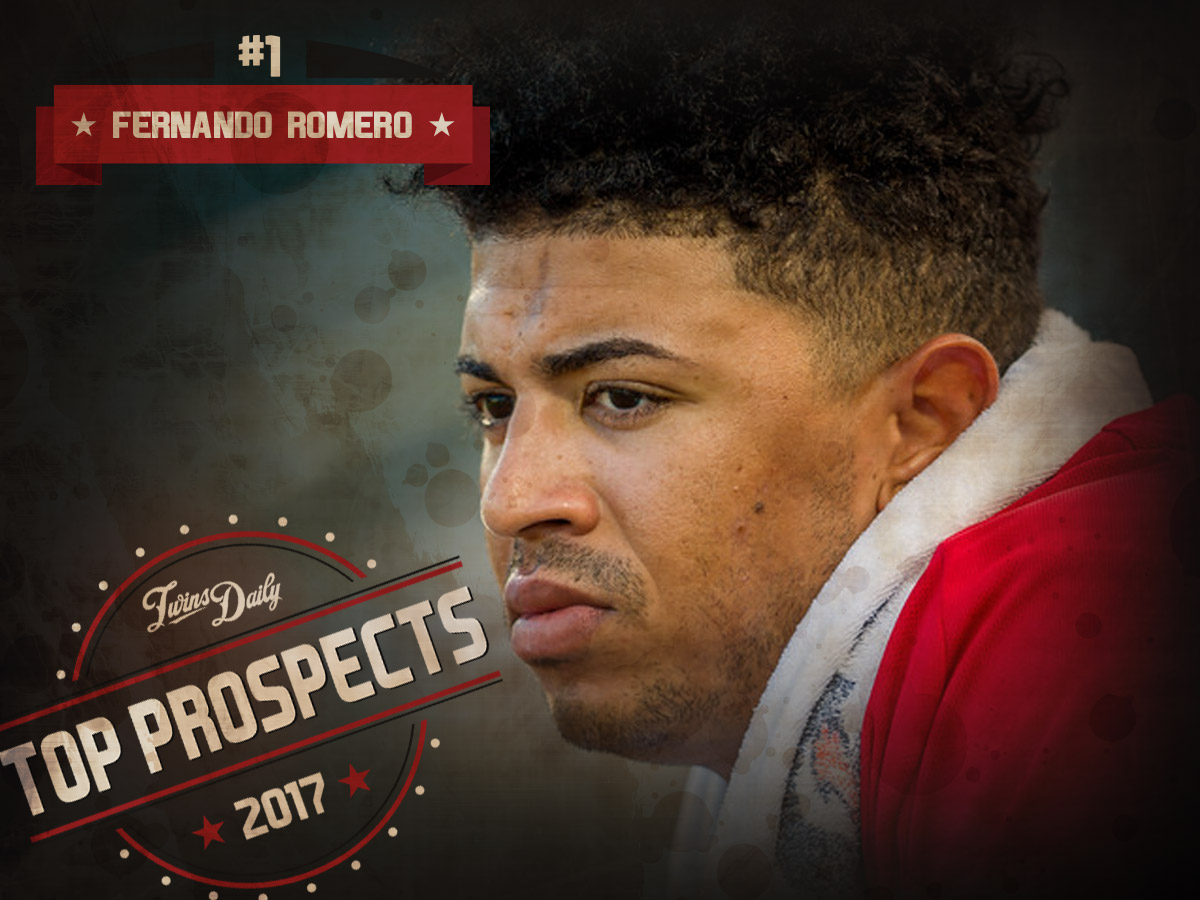
Ever since Byron Buxton broke out in his first full season in the minors, he's been an easy choice as the top piece in Minnesota's system. From 2014 through 2016, Buxton was named either the No. 1 or No. 2 prospect in the game on basically every preseason prospect list, making his placement atop Twins-specific rankings a mere formality. Last year, Buxton graduated out of qualifying status, opening up this distinction for the first time in what feels like ages. In this new world, Twins Daily's choice for the top Twins prospect goes against the grain.Age: 22 (DOB: 12/24/94) 2016 Stats (A/A+): 90.1 IP, 1.89 ERA, 90/15 K/BB, 0.90 WHIP ETA: 2018 2016 Ranking: NA National Top 100 Rankings BA: NR | MLB: NR | ESPN: 65 | BP: NR Fernando Romero presents, I think, a unique situation in my time writing about the Twins. The process of creating our TD rankings involves congregating national perspectives, factoring in our personal preferences, and making adjustments based on what we've seen or heard directly. We found more variance across all those facets this year than I can ever recall. There was no obvious pick for the top billing on this list, and if there was, it certainly wouldn't be Romero. He does not appear in three of the four national Top-100 rankings that we lean on for outside context. Even Keith Law of ESPN, who favors him, had the right-hander outside his top fifty. In the 2017 Prospect Handbook, each of the three collaborators (Seth, Jeremy and Cody) had different picks for No. 1 in the system – none chose Romero. Yet, when the time came for our editorial group to settle on the official Twins Daily rankings, he felt like the natural choice despite being completely absent from last year's Top 20 (and even Aaron Gleeman's Top 40). So just what is it about this 22-year-old with fewer than 200 pro innings that earns him our nod as best Minnesota Twins prospect? At the end of the day, the buzz is just too loud to ignore. What's To Like In late 2011, the Twins signed Romero as an international free agent out of the Dominican Republic when he was 16. They outbid at least two other teams who were deeply interested, locking him up for a reported $260,000. That's a fairly hefty sum and Romero made good on it with some promising early returns in rookie ball. Minnesota put him on the fast track by sending him to Class-A Cedar Rapids as a 19-year-old in 2014, but the righty lasted only three starts before succumbing to a barking elbow. He underwent Tommy John surgery in June and went on to miss the entire 2015 season. For a long time, Romero was simply out of sight. Even if you consider yourself a well-informed Twins fan, there's a decent chance you've never heard his name before. But his return to the scene in 2016 was so impressive, and such a vivid reminder of his immense potential, that there's now no ignoring his huge presence (both figuratively and literally) in Minnesota's pitching pipeline. In November, when the time came to shield minor-leaguers from Rule 5 eligibility, Romero was among the prospects elevated to a precious 40-man roster spot. For many unfamiliar onlookers, it was a curious move. For anyone who followed his resurgent campaign, it was the opposite of a surprise. After opening the year in extended spring, Romero was unleashed upon the Midwest League in late May, and needed only a month there to convince the front office he was ready for the next step. At Fort Myers, he put together a brilliant 11-start stretch, allowing just one home run over 62 innings with a 65-to-10 K/BB ratio. His best work came at the end of the summer, when he rattled off three consecutive scoreless starts with 28 strikeouts and two walks before hitting a predetermined inning limit. These are extraordinarily encouraging signs from a kid who is coming back from reconstructive elbow surgery and almost a two-year absence. He exhibited zero rust, bypassing the initial control issues that often plague Tommy John survivors. And the stuff? It caught everyone's attention. "He's an extremely special talent," said Jeff Smith, manager of the Miracle. "Talent like he has doesn't come along very often." "He's probably got some of the best stuff in our organization," opined Henry Bonilla, the pitching coach for Fort Myers. Brice Zimmerman, who recently moved on from the Miracle's media department, took his praise a step further, calling Romero the "best arm I've seen in six years" with the team. The positive reviews are contagious, and why wouldn't they be? Even over long outings, Romero can maintain mid-90s velocity with the heater and he's been known to dial it up to 100 MPH. He adds a hard cutter, and locates a power slider that consistently puts hitters away with two strikes. Even his changeup is more advanced than most at his age. Romero delivers from a large sturdy frame, which presents a cautionary factor in the eyes of some. At 6-feet-even, he surely weighs a good bit more than his listed 215. He's a big boy. I've heard exaggerated physique comparisons to Bartolo Colon and I don't think they were intended to be flattering. But then again, Colon is still pitching effectively in the majors at age 43 and continues to pile up huge inning totals year after year. This isn't to say Romero should be content to let himself balloon, but as long as he stays on top of his conditioning I don't see his build as a mark against him; quite the contrary in fact. Big pitchers with tree trunk legs who generate power from the lower half tend to hold up better against the punishing workload demands of starting in the majors. Romero combines the stuff, command, intuition, poise and physical foundation to project as a workhorse at the front of the rotation. That can't be said about anyone else in the organization, and arguably there hasn't been a Twins prospect to embody all those qualities in many years. This is why we feel confident in labeling Romero as the cream of the system's prospect crop heading into the 2017 season. What's Left To Work On All that remains is for Romero stay healthy and do his thing. His arsenal will play at any level and any mild concerns over his control evaporated over the course of the season (he walked six of 170 batters in his final eight starts). Obviously, any guy who hasn't yet totaled 100 innings in a season has much to prove in the durability department, but Romero gives little reason for concern. He handled everything thrown at him in his first year back and got stronger as the summer wore on. I will note there has been some apprehension expressed over his delivery. Said Law: "Romero over-rotates in his delivery and lands wide open, which often causes a pitcher to yank pitches to his glove side. Romero hasn’t had that problem yet, but for command’s sake and the health of his elbow, he should be landing online to the plate." This is an area where where the developmental impact of Derek Falvey, a noted student of pitching mechanics, could be particularly beneficial. What's Next Where the Twins choose to start Romero could prove quite telling with regard to their plans for him. No one would blame the organization for sending him back to High-A, with an eye on repeating the strong start, then earning a midseason promotion to Double-A and maybe a late trip to Rochester or even a September call-up. But his 11 starts with the Miracle last year made it pretty clear he's ready for the next challenge. If he starts in Chattanooga, a fast start immediately puts him on the big-league radar, since he's already on the 40-man roster. He'd potentially be ahead of guys like Tyler Jay and Kohl Stewart – who already have experience in Double-A – in line for an MLB debut. ~~~ Read up on our previous installments in the Twins Daily top prospects series: TD Top Prospects: #20-16 TD Top Prospects: #15-11 TD Top Prospects: #10 Lewin Diaz TD Top Prospects: #9 Travis Blankenhorn TD Top Prospects: #8 Kohl Stewart TD Top Prospects: #7 Adalberto Mejia TD Top Prospects: #6 Wander Javier TD Top Prospects: #5 Tyler Jay TD Top Prospects: #4 Nick Gordon TD Top Prospects: #3 Alex Kirilloff TD Top Prospects: #2 Stephen Gonsalves TD Top Prospects: #1 Fernando Romero Click here to view the article
-
 Age: 22 (DOB: 12/24/94) 2016 Stats (A/A+): 90.1 IP, 1.89 ERA, 90/15 K/BB, 0.90 WHIP ETA: 2018 2016 Ranking: NA National Top 100 Rankings BA: NR | MLB: NR | ESPN: 65 | BP: NR Fernando Romero presents, I think, a unique situation in my time writing about the Twins. The process of creating our TD rankings involves congregating national perspectives, factoring in our personal preferences, and making adjustments based on what we've seen or heard directly. We found more variance across all those facets this year than I can ever recall. There was no obvious pick for the top billing on this list, and if there was, it certainly wouldn't be Romero. He does not appear in three of the four national Top-100 rankings that we lean on for outside context. Even Keith Law of ESPN, who favors him, had the right-hander outside his top fifty. In the 2017 Prospect Handbook, each of the three collaborators (Seth, Jeremy and Cody) had different picks for No. 1 in the system – none chose Romero. Yet, when the time came for our editorial group to settle on the official Twins Daily rankings, he felt like the natural choice despite being completely absent from last year's Top 20 (and even Aaron Gleeman's Top 40). So just what is it about this 22-year-old with fewer than 200 pro innings that earns him our nod as best Minnesota Twins prospect? At the end of the day, the buzz is just too loud to ignore. What's To Like In late 2011, the Twins signed Romero as an international free agent out of the Dominican Republic when he was 16. They outbid at least two other teams who were deeply interested, locking him up for a reported $260,000. That's a fairly hefty sum and Romero made good on it with some promising early returns in rookie ball. Minnesota put him on the fast track by sending him to Class-A Cedar Rapids as a 19-year-old in 2014, but the righty lasted only three starts before succumbing to a barking elbow. He underwent Tommy John surgery in June and went on to miss the entire 2015 season. For a long time, Romero was simply out of sight. Even if you consider yourself a well-informed Twins fan, there's a decent chance you've never heard his name before. But his return to the scene in 2016 was so impressive, and such a vivid reminder of his immense potential, that there's now no ignoring his huge presence (both figuratively and literally) in Minnesota's pitching pipeline. In November, when the time came to shield minor-leaguers from Rule 5 eligibility, Romero was among the prospects elevated to a precious 40-man roster spot. For many unfamiliar onlookers, it was a curious move. For anyone who followed his resurgent campaign, it was the opposite of a surprise. After opening the year in extended spring, Romero was unleashed upon the Midwest League in late May, and needed only a month there to convince the front office he was ready for the next step. At Fort Myers, he put together a brilliant 11-start stretch, allowing just one home run over 62 innings with a 65-to-10 K/BB ratio. His best work came at the end of the summer, when he rattled off three consecutive scoreless starts with 28 strikeouts and two walks before hitting a predetermined inning limit. These are extraordinarily encouraging signs from a kid who is coming back from reconstructive elbow surgery and almost a two-year absence. He exhibited zero rust, bypassing the initial control issues that often plague Tommy John survivors. And the stuff? It caught everyone's attention. "He's an extremely special talent," said Jeff Smith, manager of the Miracle. "Talent like he has doesn't come along very often." "He's probably got some of the best stuff in our organization," opined Henry Bonilla, the pitching coach for Fort Myers. Brice Zimmerman, who recently moved on from the Miracle's media department, took his praise a step further, calling Romero the "best arm I've seen in six years" with the team. The positive reviews are contagious, and why wouldn't they be? Even over long outings, Romero can maintain mid-90s velocity with the heater and he's been known to dial it up to 100 MPH. He adds a hard cutter, and locates a power slider that consistently puts hitters away with two strikes. Even his changeup is more advanced than most at his age. Romero delivers from a large sturdy frame, which presents a cautionary factor in the eyes of some. At 6-feet-even, he surely weighs a good bit more than his listed 215. He's a big boy. I've heard exaggerated physique comparisons to Bartolo Colon and I don't think they were intended to be flattering. But then again, Colon is still pitching effectively in the majors at age 43 and continues to pile up huge inning totals year after year. This isn't to say Romero should be content to let himself balloon, but as long as he stays on top of his conditioning I don't see his build as a mark against him; quite the contrary in fact. Big pitchers with tree trunk legs who generate power from the lower half tend to hold up better against the punishing workload demands of starting in the majors. Romero combines the stuff, command, intuition, poise and physical foundation to project as a workhorse at the front of the rotation. That can't be said about anyone else in the organization, and arguably there hasn't been a Twins prospect to embody all those qualities in many years. This is why we feel confident in labeling Romero as the cream of the system's prospect crop heading into the 2017 season. What's Left To Work On All that remains is for Romero stay healthy and do his thing. His arsenal will play at any level and any mild concerns over his control evaporated over the course of the season (he walked six of 170 batters in his final eight starts). Obviously, any guy who hasn't yet totaled 100 innings in a season has much to prove in the durability department, but Romero gives little reason for concern. He handled everything thrown at him in his first year back and got stronger as the summer wore on. I will note there has been some apprehension expressed over his delivery. Said Law: "Romero over-rotates in his delivery and lands wide open, which often causes a pitcher to yank pitches to his glove side. Romero hasn’t had that problem yet, but for command’s sake and the health of his elbow, he should be landing online to the plate." This is an area where where the developmental impact of Derek Falvey, a noted student of pitching mechanics, could be particularly beneficial. What's Next Where the Twins choose to start Romero could prove quite telling with regard to their plans for him. No one would blame the organization for sending him back to High-A, with an eye on repeating the strong start, then earning a midseason promotion to Double-A and maybe a late trip to Rochester or even a September call-up. But his 11 starts with the Miracle last year made it pretty clear he's ready for the next challenge. If he starts in Chattanooga, a fast start immediately puts him on the big-league radar, since he's already on the 40-man roster. He'd potentially be ahead of guys like Tyler Jay and Kohl Stewart – who already have experience in Double-A – in line for an MLB debut. ~~~ Read up on our previous installments in the Twins Daily top prospects series: TD Top Prospects: #20-16 TD Top Prospects: #15-11 TD Top Prospects: #10 Lewin Diaz TD Top Prospects: #9 Travis Blankenhorn TD Top Prospects: #8 Kohl Stewart TD Top Prospects: #7 Adalberto Mejia TD Top Prospects: #6 Wander Javier TD Top Prospects: #5 Tyler Jay TD Top Prospects: #4 Nick Gordon TD Top Prospects: #3 Alex Kirilloff TD Top Prospects: #2 Stephen Gonsalves TD Top Prospects: #1 Fernando Romero
 -
Article: TD Top Prospects #3: Alex Kirilloff
Nick Nelson replied to Seth Stohs's topic in Twins Daily Front Page News
I've seen several scouting reports that envision him ending up at first base. That's not necessarily the worst thing, though. Twins don't have a long-term answer there after Mauer. -
Article: TD Top Prospects #3: Alex Kirilloff
Nick Nelson replied to Seth Stohs's topic in Twins Daily Front Page News
I don't believe Seth mentioned this but Kirilloff was named Appy League Player of the Year: http://www.milb.com/news/article.jsp?ymd=20160823&content_id=197222708&fext=.jsp&vkey=news_milb The hitting tools for this kid are crazy. Very excited. -
Article: TD Top Prospects #4: Nick Gordon
Nick Nelson replied to Jeremy Nygaard's topic in Twins Daily Front Page News
Well my issue is that Thrylos was projecting all this improvement for one and not the other, but yes, I think it's much more realistic to expect significant strength gains for Gordon. Bob mentions the tremendous athleticism genetics, and NG has also shown a record of progressively developing power with his IsoP improving every year. This hasn't been the case for Vielma, who has stagnated in the department and managed only 11 XBH in 90 games last year. -
Article: TD Top Prospects #4: Nick Gordon
Nick Nelson replied to Jeremy Nygaard's topic in Twins Daily Front Page News
You should check and see how some other prospects with zero power in the minors had their OBPs translate to the majors. Ben Revere lost 60 points. Dee Gordon lost 35 points. The idea that we can simply expect Vielma to reproduce his career-high OBP as a big-leaguer, while also beating his precedent for steals and almost doubling his Isolated Power is inexplicably optimistic and baseless.- 68 replies
-
- 10
-
-
Article: TD Top Prospects #4: Nick Gordon
Nick Nelson replied to Jeremy Nygaard's topic in Twins Daily Front Page News
Using 90-game samples as your sole data without any context is not substantive analysis. Gordon is 18 months younger, has a superior OBP/OPS in the minors, and offers vastly more offensive potential in the eyes of any scout. If you want to make the point that players can be valuable without hitting much that's fine but referencing someone who is widely considered the best defensive SS of all time isn't an effective way to illustrate it. -
Article: TD Top Prospects #4: Nick Gordon
Nick Nelson replied to Jeremy Nygaard's topic in Twins Daily Front Page News
Based on what? The fact that he did so as a 22-year-old at AA? You can't make these kinds of claims without any supporting evidence and expect them to be taken seriously, especially when you follow it with comparisons to Ozzie Smith. -
Article: TD Top Prospects #4: Nick Gordon
Nick Nelson replied to Jeremy Nygaard's topic in Twins Daily Front Page News
A player who you can comfortably project as a capable MLB starting SS at the age of 21 is very valuable. I think most people believe he will keep maturing physically and add more muscle. National lists seem more presumptive to that end, which is why they're ranking him higher than we did. -
Article: TD Top Prospects #4: Nick Gordon
Nick Nelson replied to Jeremy Nygaard's topic in Twins Daily Front Page News
In my view, Gordon needs to take a physical step forward before he can surpass the three guys ahead of him on our list. He's a very safe bet to become a decent big-league regular, but it'll be hard to see him as more than that until he starts showing standout skills in a few areas. If he fills out and adds some strength that reflects on both his bat and arm, he can jump to the top of these rankings quickly. -
Article: TD Top Prospects: #5 Tyler Jay
Nick Nelson replied to Nick Nelson's topic in Twins Daily Front Page News
Not a pitcher, but Benintendi went with the next pick and he's now Baseball America's No. 1 prospect in the game. -
Article: TD Top Prospects: #5 Tyler Jay
Nick Nelson replied to Nick Nelson's topic in Twins Daily Front Page News
But, did he really dominate opponents there? His K-rate ranked 23rd among pitchers with 50+ innings and his control was middle of the pack. This from a first-round draft pick out of college in Single-A. I agree that some of the assumptions you're pointing out would be hasty without context, but when a guy who really doesn't look physically equipped to be a starter breaks down before 90 innings, after good-not-great performance, it reinforces existing concerns. No one's saying "give him one more year and then write him off as a prospect." It's a matter of finding the proper role for him to succeed. -
I was right about Crede too, given that his body proved to have a whole 90 games total left in it. But who's keeping track?
-
In retrospect, arguing the merits of a Buscher/Harris platoon versus a barely upright Joe Crede represents a low point of my time as a both a blogger and Twins fan. I could have mentioned that in the story but things would have turned real depressing, real quick. I'm trying to keep it uplifting here, guys.
-
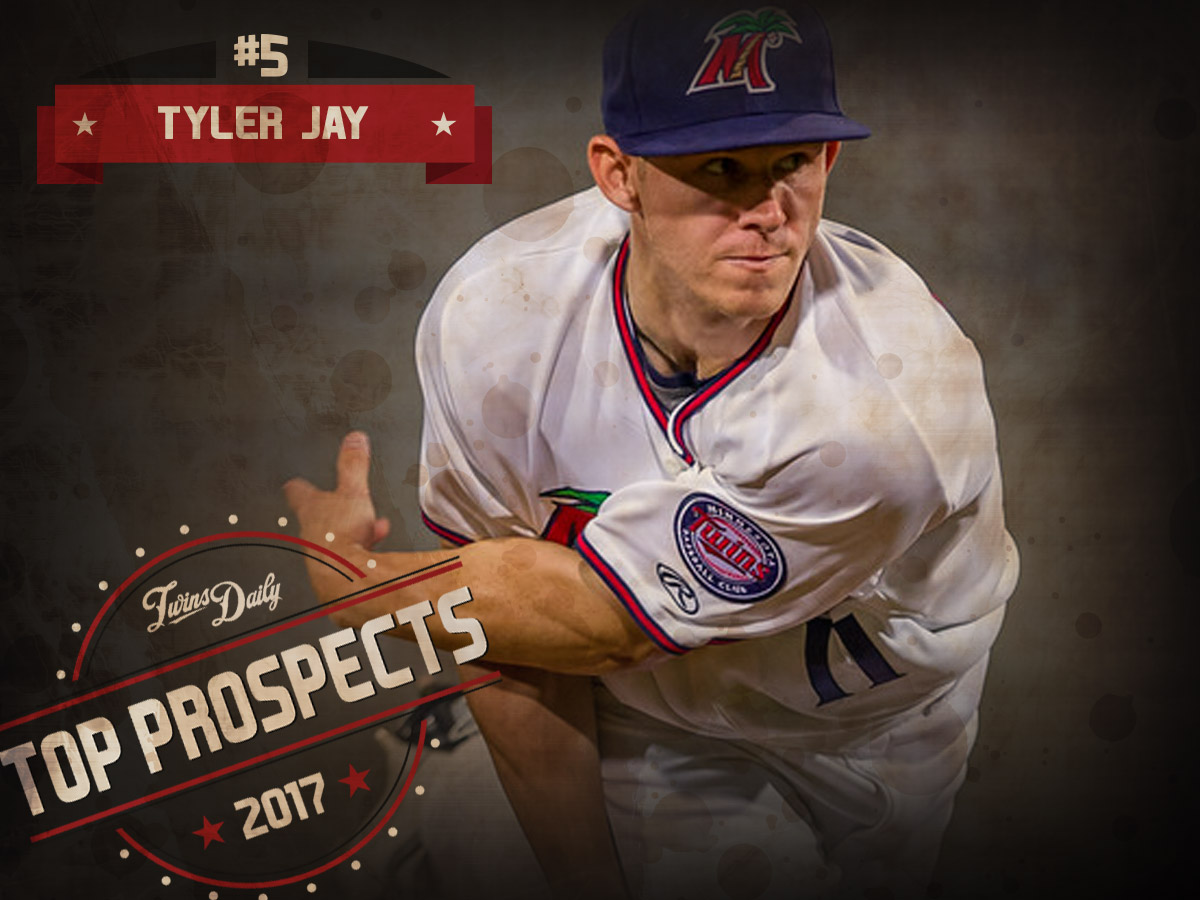
There's no doubting the potency of Tyler Jay's top two pitches. His hard fastball and filthy slider – trademarks during a tremendous tenure at the University of Illinois – are high-quality offerings that will induce swings and misses in the big leagues. Does he have the full arsenal, and the physical makeup, to pan out as a starter? No shortage of doubt there.Age: 22 (DOB: 4/19/94) 2016 Stats (A+/AA): 83.2 IP, 3.33 ERA, 77/26 K/BB, 1.23 WHIP ETA: 2018 2016 Ranking: 5 National Top 100 Rankings BA: NR | MLB : NR | ESPN: NR | BP: 98 Jay received a $3.8 million signing bonus when the Twins selected him sixth overall in the 2015 draft. Committing such a high pick and hefty sum to a pitcher who threw almost exclusively out of the bullpen in college – a non-traditional move, to say the last – was driven partially by the realities of a weak draft class, and partially by the organization's need for fast-tracked impact pitching. Right from the start, Minnesota's front office made clear its intentions to convert the star collegiate closer into a starter. Perhaps they were emboldened by their results with Tyler Duffey, the former Rice University reliever who was enjoying a terrific season in Rochester's rotation and would later deliver a sterling 10-start debut in the majors. But Duffey is a rare example of a hurler who made that jump successfully, and at this point it's generous to label his experiment a success, given that he'll probably end up heading back to the bullpen following a trainwreck 2016. The Twins face long odds on this project, but the attractive contingency plan is part of what made Jay a solid gamble. What's To Like The 22-year-old southpaw throws a very good fastball with movement, although the mid-90s velo he regularly flashed in late relief lost a few ticks with the switch to starting. His slider is considered a potential plus-plus pitch out of the bullpen but also loses some of its bite over extended outings. As a core recipe, that combo is undoubtedly a winner. He's a gamer who rises to the occasion, which played a big part in the somewhat controversial decision by Dan Hartleb, his coach at Illinois, to have him close games rather than start. Jay did take the ball for the final contest of his last season, a loss to Vanderbilt in the playoffs. The ceiling is there, if he can command his changeup and prove himself in the durability department, for Jay to become a quality mid-rotation starter in the majors. But what really bolsters his prospect status is the relatively high floor. There is little doubt the hard-throwing lefty can succeed as a reliever in the majors. Baseball Prospectus, in naming him the organization's second-best prospect, suggested he could even become a "poor man's Andrew Miller." And if the Twins were to commit to that path, they could probably have him up helping the big-league club by the second half of this year. What's Left To Work On For now, Minnesota is committed to bringing Jay along as a starting pitcher. To that end, much work remains. Last year was the first step in orchestrating this tricky transition. Jay opened in the Fort Myers rotation. The previous season, after signing, he made 19 appearances out of the Miracle bullpen, logging a 27.2 percent K-rate amid mostly strong results. In the first half of 2016 he made 13 starts against the same level of competition and watched that rate drop to 23.6. It reflected a diminishment in stuff, but alas, he performed well enough to earn a midseason promotion to Double-A. There, things began to unravel for him. Jay opened with two rocky starts for Chattanooga, yielding nine runs over 10 innings, and was then sent to the bullpen in an effort to manage his workload. He made three relief appearances before being shut down due to "muscle weakness in his neck and shoulder." Now, we knew this wasn't going to be an instantaneous process, but it's hard to look at Year 1 of Jay's transition as anything other than a setback. During his 15 starts with the Miracle and Lookouts, he never reached 100 pitches. He wasn't yet at 80 innings in mid-July when the org sent him to the bullpen citing workload concerns, and finished with less than 85. At best, it sets him behind in the build-up toward readiness for 200 innings. At worst, it's a more ominous indicator. Jay, listed at 6-foot-1 and 180 pounds, is slight in frame. There were questions about his physical capability to take on an MLB starter's workload, and his first full pro season only served to magnify those uncertainties. Add in the questions as to whether his third or fourth pitches will be enough to get him through lineups multiple times and... yeah, like I said: long shot. What's Next He'll open the season at Chattanooga, where he'll need to show he can pitch deep into games routinely. Perhaps he comes into camp with some extra meat on the bones, and his offseason strength conditioning pays off on the mound. There is still hope he can figure it out as a starter and maximize his value. But if things aren't looking good early on, the Twins don't have much more time to dink around with this experiment. Minnesota could use a power bullpen arm like his in the short term, and in that capacity, they know what they've got in the former All-American closer. Click here to view the article
-
 Age: 22 (DOB: 4/19/94) 2016 Stats (A+/AA): 83.2 IP, 3.33 ERA, 77/26 K/BB, 1.23 WHIP ETA: 2018 2016 Ranking: 5 National Top 100 Rankings BA: NR | MLB : NR | ESPN: NR | BP: 98 Jay received a $3.8 million signing bonus when the Twins selected him sixth overall in the 2015 draft. Committing such a high pick and hefty sum to a pitcher who threw almost exclusively out of the bullpen in college – a non-traditional move, to say the last – was driven partially by the realities of a weak draft class, and partially by the organization's need for fast-tracked impact pitching. Right from the start, Minnesota's front office made clear its intentions to convert the star collegiate closer into a starter. Perhaps they were emboldened by their results with Tyler Duffey, the former Rice University reliever who was enjoying a terrific season in Rochester's rotation and would later deliver a sterling 10-start debut in the majors. But Duffey is a rare example of a hurler who made that jump successfully, and at this point it's generous to label his experiment a success, given that he'll probably end up heading back to the bullpen following a trainwreck 2016. The Twins face long odds on this project, but the attractive contingency plan is part of what made Jay a solid gamble. What's To Like The 22-year-old southpaw throws a very good fastball with movement, although the mid-90s velo he regularly flashed in late relief lost a few ticks with the switch to starting. His slider is considered a potential plus-plus pitch out of the bullpen but also loses some of its bite over extended outings. As a core recipe, that combo is undoubtedly a winner. He's a gamer who rises to the occasion, which played a big part in the somewhat controversial decision by Dan Hartleb, his coach at Illinois, to have him close games rather than start. Jay did take the ball for the final contest of his last season, a loss to Vanderbilt in the playoffs. The ceiling is there, if he can command his changeup and prove himself in the durability department, for Jay to become a quality mid-rotation starter in the majors. But what really bolsters his prospect status is the relatively high floor. There is little doubt the hard-throwing lefty can succeed as a reliever in the majors. Baseball Prospectus, in naming him the organization's second-best prospect, suggested he could even become a "poor man's Andrew Miller." And if the Twins were to commit to that path, they could probably have him up helping the big-league club by the second half of this year. What's Left To Work On For now, Minnesota is committed to bringing Jay along as a starting pitcher. To that end, much work remains. Last year was the first step in orchestrating this tricky transition. Jay opened in the Fort Myers rotation. The previous season, after signing, he made 19 appearances out of the Miracle bullpen, logging a 27.2 percent K-rate amid mostly strong results. In the first half of 2016 he made 13 starts against the same level of competition and watched that rate drop to 23.6. It reflected a diminishment in stuff, but alas, he performed well enough to earn a midseason promotion to Double-A. There, things began to unravel for him. Jay opened with two rocky starts for Chattanooga, yielding nine runs over 10 innings, and was then sent to the bullpen in an effort to manage his workload. He made three relief appearances before being shut down due to "muscle weakness in his neck and shoulder." Now, we knew this wasn't going to be an instantaneous process, but it's hard to look at Year 1 of Jay's transition as anything other than a setback. During his 15 starts with the Miracle and Lookouts, he never reached 100 pitches. He wasn't yet at 80 innings in mid-July when the org sent him to the bullpen citing workload concerns, and finished with less than 85. At best, it sets him behind in the build-up toward readiness for 200 innings. At worst, it's a more ominous indicator. Jay, listed at 6-foot-1 and 180 pounds, is slight in frame. There were questions about his physical capability to take on an MLB starter's workload, and his first full pro season only served to magnify those uncertainties. Add in the questions as to whether his third or fourth pitches will be enough to get him through lineups multiple times and... yeah, like I said: long shot. What's Next He'll open the season at Chattanooga, where he'll need to show he can pitch deep into games routinely. Perhaps he comes into camp with some extra meat on the bones, and his offseason strength conditioning pays off on the mound. There is still hope he can figure it out as a starter and maximize his value. But if things aren't looking good early on, the Twins don't have much more time to dink around with this experiment. Minnesota could use a power bullpen arm like his in the short term, and in that capacity, they know what they've got in the former All-American closer.
 -
It all began with a Wednesday night poli-sci class. I’m not going to lie, the story of how I've reached this point traces back to sheer laziness. I might never have ended up here if I wasn't a teenager who liked to sleep in.This story is part of a series from the Twins Daily owners sharing their personal feelings and reflections on the site in honor of its five-year launch anniversary – which happens to fall today, February 19th! You can also read Seth's retrospective on a path that began with Seth Speaks, John's inside story of Twins Daily, and Brock's writings on the challenges and successes of merging his own online forum into TD. -------------------- In fall of 2004, I was a freshman at the University of Minnesota. When the time had come to select classes over the summer, I was fascinated by having the ability to completely structure my own schedule. A night class? That's one less day I have to wake up early. Wednesday evenings at Political Science 101 sounded marvelous when I lined it up, but less so when the Twins – owners of my diehard allegiance since childhood – matched up against the Yankees (again) in October. Behind a masterful outing from Johan Santana, Minnesota had taken Game 1 in Yankee Stadium. Despite the magnitude of Game 2, I dutifully trudged across Washington Avenue Bridge to Anderson Hall on the West Bank. The downside of these three-hour night classes (aside from them being three-hour night classes) was that you could not afford to skip one. You needed to be there, and paying close attention. So naturally, I got there, pulled out my laptop, popped on the GameCast, and tuned out. My exaggerated reactions to innocuous updates on the screen probably would have given me away, but fortunately I had a cohort. Another guy in the class turned out to also be a pretty big Twins fan. His name was also Nick. We covertly followed the action until the professor got done lecturing, and then I rushed home to catch the end of the game. You might recall how this one played out. The Twins tied it late and sent it to extra innings. Torii Hunter hit a go-ahead homer in the 12th. Joe Nathan – visibly gassed – was sent out by Ron Gardenhire for a third inning of work, and he gave it away. I was mad. I had... OPINIONS. So did my pal Mr. Mosvick from Poli Sci 101. When spring training rolled around the next year, we decided to start writing about the team online. We called our little venture “Nick & Nick’s Twins Blog." ~~~ I went to journalism school at an interesting time, hearing in one ear about how to write in inverted pyramid format and work within physical page space constraints, while hearing in the other ear about the impending doom of the newspaper medium. Nevertheless, my innate passions for writing and sports led me down the path of reporting and covering games. I got a gig covering the Gophers men's hockey team my junior year, enthused about getting free entry to the game and inside access. I can thank David McCoy, always a grinder and now a WCCO sports reporter, for giving me the opportunity. He's currently living out the dream that I once thought I shared. But then I did it a few times. I found myself stifling reactions to goals in the press box, in observance of the unwritten code. I frantically worked through tech problems while recording or editing. I lamented deadlines, rooted against overtime, treasured an easy story over a compelling final twist. In short, I came to a painful realization: once it became work, it was no longer fun. ~~~ Baseball, and sports in general, were my diversions from the rigors and stresses of forging a career. It didn’t take long for me realize I didn’t want to make them one and the same, especially if meant trying to break into a newspaper industry steeped in uncertainty. Besides, around this time I was developing much more of an interest in the online tribes of smart and engaged fans that were starting to gain traction. My fascination with baseball grew as I aged into my mid-20s, fueled by the razor-sharp analysis at AaronGleeman.com, the unapologetic embrace of the inner nerd at Twins Geek, the informative prospect reports at Seth Speaks, the endless banter at Stick and Ball Guy, the gut-busting message board snark at Battle Your Tail Off. In particular, John Bonnes opened my eyes with his envisionment of an online fan hub driven by destination content, constant community interaction, and independence from the forces that suppressed mainstream coverage. His Twins Territory site was ahead of its time, a bastion of witty baseball discussion, but before long the burden became too much for one man. The management, the tech, the time consumption… The level of commitment required for these side hobbies ended up derailing many a promising blog. I was heading in that direction myself, finding it increasingly difficult to justify carving out the time it took to research and write worthwhile stories. Then, TwinsCentric happened. ~~~ After I graduated from college, my little blog kept rolling along. The other Nick had gone off to law school so it was just me running the ship, trying to post at least a few times per week. There were many rewarding moments that fed my resolve. Readership steadily increased, to the point where many regulars faithfully checked in daily, often providing their own enlightening insights. In 2009, Rob Neyer reached out to me personally and invited me to represent the Twins on ESPN’s SweetSpot blog network – an incredible honor. Most importantly, I began to develop relationships with some of those pioneering fan bloggers who had inspired me. John’s long-running desire to make something more out of this whole venture, rather than falling by the wayside like so many, was something I bought into. So did Seth and Parker. I had the pleasure of getting to know all three over the years. Guided by John’s entrepreneurial vision, things evolved naturally. We started joining forces to create and sell books and premium digital content. We organized events. Eventually, we reached the inevitable conclusion that it was only logical to combine our four blogs into one central go-to destination. Twins Daily was born. Shortly after it launched, Brock joined the fold, adding technical expertise we desperately needed while also bringing along many of my favorite personalities from BYTO. It was a pivotal turning point for our forums, helping them develop into the single most indispensable part of the site. People compliment me about Twins Daily often, and it's always appreciated, but there is one endorsement I hear more than any other. In the age of "DON'T READ THE COMMENTS," here they are a highlight of the experience. I'll never forget my dad, an old-school type who I would never expect to keep scanning beyond the end of an article, one time telling me how much he enjoyed the comments on my stories, and how much more he learned about the subject from them. It was the common goal, in all of our eyes: bringing together the cohesive energy, knowledge and passion of this huge population of Twins diehards in Minnesota and across the country. Still today, five years later, this community manages to surprise me. When I log on and see 100 comments on an inane offseason post, or show up at the Winter Meltdown to a packed house of enthusiastic faces, or see dozens of people voluntarily chipping in more than the expected contribution to download an Offseason Handbook, it's all the justification I need to keep pouring my heart into this thing. And yeah, the fact that we've managed to turn Twins Daily into a business, albeit a modest one, is rewarding. My incredibly supportive girlfriend Rachel, who I'm lucky enough to live with, recently told me how vividly she recalls the first time I opened a letter from John and pulled out a check compensating a few hundred bucks for contributions to the website. "I can't believe I get paid for this," I told her. That was awhile back now, but the feeling hasn't changed. It's not my full-time job. It probably never will be, and that's OK – I'm happily building a career in content marketing that brings great variety to my days and keeps baseball writing in the "side hobby" category where I always felt it belongs. But at this point that description hardly feels fitting. Twins Daily is an important part of my life. I hope it'll stay that way for another five years and beyond. Mine is a strange tale of finding a platform in the new age of digital media. It wouldn't have been possible if I'd come along 10 years earlier, or if I hadn't been fortuitous enough to encounter just the right people along the way. I am very lucky and recognize that everyday. But there's a takeaway here that, I think, is applicable to everyone. If you love something, wear it on your sleeve. Don't be secretive about the nerdy passions that make you happy. If I hadn't been so frontal about my love of the Twins and baseball, I probably never would have met the other Nick in that Wednesday night class, nor would I have met John, Parker, Seth, Brock or any of the numerous other people involved with Twins Daily that I now consider close friends and cherished colleagues. And also, don't be afraid to sleep in. Download attachment: tdowners.jpg Click here to view the article
-
 This story is part of a series from the Twins Daily owners sharing their personal feelings and reflections on the site in honor of its five-year launch anniversary – which happens to fall today, February 19th! You can also read Seth's retrospective on a path that began with Seth Speaks, John's inside story of Twins Daily, and Brock's writings on the challenges and successes of merging his own online forum into TD. -------------------- In fall of 2004, I was a freshman at the University of Minnesota. When the time had come to select classes over the summer, I was fascinated by having the ability to completely structure my own schedule. A night class? That's one less day I have to wake up early. Wednesday evenings at Political Science 101 sounded marvelous when I lined it up, but less so when the Twins – owners of my diehard allegiance since childhood – matched up against the Yankees (again) in October. Behind a masterful outing from Johan Santana, Minnesota had taken Game 1 in Yankee Stadium. Despite the magnitude of Game 2, I dutifully trudged across Washington Avenue Bridge to Anderson Hall on the West Bank. The downside of these three-hour night classes (aside from them being three-hour night classes) was that you could not afford to skip one. You needed to be there, and paying close attention. So naturally, I got there, pulled out my laptop, popped on the GameCast, and tuned out. My exaggerated reactions to innocuous updates on the screen probably would have given me away, but fortunately I had a cohort. Another guy in the class turned out to also be a pretty big Twins fan. His name was also Nick. We covertly followed the action until the professor got done lecturing, and then I rushed home to catch the end of the game. You might recall how this one played out. The Twins tied it late and sent it to extra innings. Torii Hunter hit a go-ahead homer in the 12th. Joe Nathan – visibly gassed – was sent out by Ron Gardenhire for a third inning of work, and he gave it away. I was mad. I had... OPINIONS. So did my pal Mr. Mosvick from Poli Sci 101. When spring training rolled around the next year, we decided to start writing about the team online. We called our little venture “Nick & Nick’s Twins Blog." ~~~ I went to journalism school at an interesting time, hearing in one ear about how to write in inverted pyramid format and work within physical page space constraints, while hearing in the other ear about the impending doom of the newspaper medium. Nevertheless, my innate passions for writing and sports led me down the path of reporting and covering games. I got a gig covering the Gophers men's hockey team my junior year, enthused about getting free entry to the game and inside access. I can thank David McCoy, always a grinder and now a WCCO sports reporter, for giving me the opportunity. He's currently living out the dream that I once thought I shared. But then I did it a few times. I found myself stifling reactions to goals in the press box, in observance of the unwritten code. I frantically worked through tech problems while recording or editing. I lamented deadlines, rooted against overtime, treasured an easy story over a compelling final twist. In short, I came to a painful realization: once it became work, it was no longer fun. ~~~ Baseball, and sports in general, were my diversions from the rigors and stresses of forging a career. It didn’t take long for me realize I didn’t want to make them one and the same, especially if meant trying to break into a newspaper industry steeped in uncertainty. Besides, around this time I was developing much more of an interest in the online tribes of smart and engaged fans that were starting to gain traction. My fascination with baseball grew as I aged into my mid-20s, fueled by the razor-sharp analysis at AaronGleeman.com, the unapologetic embrace of the inner nerd at Twins Geek, the informative prospect reports at Seth Speaks, the endless banter at Stick and Ball Guy, the gut-busting message board snark at Battle Your Tail Off. In particular, John Bonnes opened my eyes with his envisionment of an online fan hub driven by destination content, constant community interaction, and independence from the forces that suppressed mainstream coverage. His Twins Territory site was ahead of its time, a bastion of witty baseball discussion, but before long the burden became too much for one man. The management, the tech, the time consumption… The level of commitment required for these side hobbies ended up derailing many a promising blog. I was heading in that direction myself, finding it increasingly difficult to justify carving out the time it took to research and write worthwhile stories. Then, TwinsCentric happened. ~~~ After I graduated from college, my little blog kept rolling along. The other Nick had gone off to law school so it was just me running the ship, trying to post at least a few times per week. There were many rewarding moments that fed my resolve. Readership steadily increased, to the point where many regulars faithfully checked in daily, often providing their own enlightening insights. In 2009, Rob Neyer reached out to me personally and invited me to represent the Twins on ESPN’s SweetSpot blog network – an incredible honor. Most importantly, I began to develop relationships with some of those pioneering fan bloggers who had inspired me. John’s long-running desire to make something more out of this whole venture, rather than falling by the wayside like so many, was something I bought into. So did Seth and Parker. I had the pleasure of getting to know all three over the years. Guided by John’s entrepreneurial vision, things evolved naturally. We started joining forces to create and sell books and premium digital content. We organized events. Eventually, we reached the inevitable conclusion that it was only logical to combine our four blogs into one central go-to destination. Twins Daily was born. Shortly after it launched, Brock joined the fold, adding technical expertise we desperately needed while also bringing along many of my favorite personalities from BYTO. It was a pivotal turning point for our forums, helping them develop into the single most indispensable part of the site. People compliment me about Twins Daily often, and it's always appreciated, but there is one endorsement I hear more than any other. In the age of "DON'T READ THE COMMENTS," here they are a highlight of the experience. I'll never forget my dad, an old-school type who I would never expect to keep scanning beyond the end of an article, one time telling me how much he enjoyed the comments on my stories, and how much more he learned about the subject from them. It was the common goal, in all of our eyes: bringing together the cohesive energy, knowledge and passion of this huge population of Twins diehards in Minnesota and across the country. Still today, five years later, this community manages to surprise me. When I log on and see 100 comments on an inane offseason post, or show up at the Winter Meltdown to a packed house of enthusiastic faces, or see dozens of people voluntarily chipping in more than the expected contribution to download an Offseason Handbook, it's all the justification I need to keep pouring my heart into this thing. And yeah, the fact that we've managed to turn Twins Daily into a business, albeit a modest one, is rewarding. My incredibly supportive girlfriend Rachel, who I'm lucky enough to live with, recently told me how vividly she recalls the first time I opened a letter from John and pulled out a check compensating a few hundred bucks for contributions to the website. "I can't believe I get paid for this," I told her. That was awhile back now, but the feeling hasn't changed. It's not my full-time job. It probably never will be, and that's OK – I'm happily building a career in content marketing that brings great variety to my days and keeps baseball writing in the "side hobby" category where I always felt it belongs. But at this point that description hardly feels fitting. Twins Daily is an important part of my life. I hope it'll stay that way for another five years and beyond. Mine is a strange tale of finding a platform in the new age of digital media. It wouldn't have been possible if I'd come along 10 years earlier, or if I hadn't been fortuitous enough to encounter just the right people along the way. I am very lucky and recognize that everyday. But there's a takeaway here that, I think, is applicable to everyone. If you love something, wear it on your sleeve. Don't be secretive about the nerdy passions that make you happy. If I hadn't been so frontal about my love of the Twins and baseball, I probably never would have met the other Nick in that Wednesday night class, nor would I have met John, Parker, Seth, Brock or any of the numerous other people involved with Twins Daily that I now consider close friends and cherished colleagues. And also, don't be afraid to sleep in.
 -
Article: TD Top Prospects: #7 Adalberto Mejia
Nick Nelson replied to John Bonnes's topic in Twins Daily Front Page News
Baseball America had him as the No. 5 prospect in the Giants system at midseason last year. I don't think you should be disappointed by this. I get that people want the huge prospect upside, but as lefty with good control and the ability to miss some bats, Mejia is a very safe bet to contribute positively in some form. And based on reports I've heard about his improving slider, I think his ceiling is a tad higher than John suggests. But (as you can see from Seth's breakdown of individual rankings above) I'm higher on this one than most. -
Article: TD Top Prospects: #8 Kohl Stewart
Nick Nelson replied to Nick Nelson's topic in Twins Daily Front Page News
Oops, those numbers got mixed up somehow. I fixed them, thanks for pointing out. -
Article: TD Top Prospects: #8 Kohl Stewart
Nick Nelson posted a topic in Twins Daily Front Page News
In June of 2013, the Minnesota Twins made perhaps their most important draft pick of the past decade and beyond. With the No. 4 selection in hand after a dreadful 2012 season that reinforced the organization's desperate need for pitching talent, they gambled on a Texas high school hurler named Kohl Stewart. Nearly four years later, the jury is still out.Age: 22 (DOB: 10/7/94) 2016 Stats (A+/AA): 143.2 IP, 2.88 ERA, 91/63 K/BB, 1.34 WHIP ETA: 2018 2016 Ranking: 9 National Top 100 Rankings BA: NR | MLB: NR | ESPN: 87 | BP: NR At St. Pius X High School in Houston, Stewart was a legendary athlete. A star quarterback, he was widely recruited before signing a letter of intent with Texas A&M. Calling signals on Saturday for the Aggies was undoubtedly a dream of his while growing up 90 minutes away from campus, but ultimately he decided to follow his golden right arm in another direction. When the Twins drafted Stewart fourth overall, the allure of a $4.5 million signing bonus was too much to pass up. It was a major leap of faith for Minnesota's draft department, which had long had its sights set on the prized pitching talent. Much has been made of the fact that Hunter Greene, a teenage phenom out of California, could be the first prep right-hander to ever be selected with the first overall pick this June. There's a reason for that; such players bring a relatively higher level of risk and uncertainty. But Stewart had all the requisites. A football player's build. A hard-moving fastball to go along with a potentially dominant slider. The prototypical bulldog demeanor on the mound. Ace upside. What's To Like Those aforementioned traits remain intact. Stewart has checked one very important box off the list by staying healthy and on the field. That is hardly a given for young kids who throw in mid-90s or above. Tyler Kolek, the fireballing righty selected second overall by the Marlins a year after Stewart's draft, just lost his entire 2016 campaign to Tommy John surgery. It's a major setback in a budding career. Stewart has avoided such pitfalls and thus has progressed about exactly as one would hope. Since starting full-season ball in 2014 he has ascended to a new level each year, finishing last season as a 21-year-old in the Class-AA Southern League, where the average player was about three years his elder. From year to year, the right-hander has increased his inning totals from 87 to 129 to 143, prepping his arm to be ready for 200 frames once he reaches the majors. You compare that to a guy like Jose De Leon, who at 24 still hasn't thrown even 120 innings in a season, and it's easy to see the value. While reliably taking his rotation turns, Stewart has produced. He has a shiny 2.84 ERA as a pro and hasn't finished above 3.20 at any level. Opponents have struggled to square him up, with only 12 home runs in 1,600 plate appearances. Last year he made what many consider the toughest jump in the minors, but hardly looked overmatched in Double-A, picking up wins in nine of his 16 starts while posting a 3.03 ERA. What's Left To Work On In the entirety of his minor-league career, Stewart has struck out 15.4 percent of the batters he has faced, and walked 8.4 percent. I couldn't figure out an efficient way to do the definitive research, but I can say with confidence that there are very few, if any, successful starting pitchers in the majors who registered such low rates in both categories as prospects. For a more manageable exercise, let's compare Stewart's established K and BB rates in the minors with those of each pitcher who made a start for the Twins last year. Kohl Stewart: 15.4% K / 8.4% BB Ervin Santana: 23.4% / 8.4% BB Kyle Gibson: 21.7% K / 6.7% BB Tyler Duffey: 20.2% K / 5.2% BB Ricky Nolasco: 23.3% K / 7.0% BB Tommy Milone: 22.7% K / 4.0% BB Jose Berrios: 25.3% K / 7.6% BB Pat Dean: 14.0% K / 4.8% BB Hector Santiago: 24.3% K / 10.7% BB Phil Hughes: 28.8% K / 6.4% BB Andrew Albers: 18.4% K / 5.3% BB Alex Meyer: 27.3% K / 10.0 % BB So, on an historically poor starting unit, only three players had minor-league walk rates worse than Stewart has (Santana, Santiago, Meyer) and each made up for it with plenty of missed bats. The only one with a lesser K-rate in the minors was soft-tossing lefty Pat Dean, who balanced the heavy contact with pinpoint control. Of course, this is an incomplete picture. Stewart is still a 22-year-old with, perhaps, multiple full minor-league seasons ahead of him yet. But up to this point he has logged 380 professional innings with a K/BB ratio below two. You just don't see effective big-league starters with that in their track record. The core tenet of pitching, in modern analysis, is that there are two things a guy can directly control, with no luck or external factors involved: how many he strikes out, and how many he walks. If you can't do either particularly well, it almost always ends up biting you. What's Next Stewart will likely start the season in Chattanooga, where he must prove that his sterling ERA was more legit than his underwhelming peripherals. It's not unthinkable he could continue to plow through lineups with pedestrian strikeout and walk numbers, given that his sharp bending pitches always seem to to miss the sweet spot. Perhaps he earns another midseason promotion and reaches Triple-A. But as you climb the ladder, eventually inducing weak contact stops being enough on its own. What he needs to do is start missing more bats. It isn't a huge stretch to believe he will. ESPN's prospect guru Keith Law suggested that Stewart could easily increase whiffs by leaning more heavily on his four-seamer and slider. The righty has mostly been a pitch-to-contact sinkerballer, and given the results it's hard to complain. So what if this has all been part of some ingenious plan by the organization to preserve his arm, and Stewart is getting ready to unleash the true extent of his arsenal as he approaches the majors? It sounds far-fetched, and I'll believe it when I see it. But the fact is this: many analysts – even those who emphasize statistics and recognize the red flag his K/BB ratio represents – still see Stewart as an eventual mid-rotation starter or better. Until someone actually starts hitting him, it's hard to disagree with that notion, in spite of the dubious underlying indicators. ~~~ Read up on our previous installments in the Twins Daily top prospects series: TD Top Prospects: #20-16 TD Top Prospects: #15-11 TD Top Prospects: #10 Lewin Diaz TD Top Prospects: #9 Travis Blankenhorn Click here to view the article
