



Nick Nelson
-
Posts
8,327 -
Joined
-
Last visited
-
Days Won
56
Content Type
Profiles
News
Minnesota Twins Videos
2026 Minnesota Twins Top Prospects Ranking
2022 Minnesota Twins Draft Picks
Minnesota Twins Free Agent & Trade Rumors, Notes, & Tidbits
Guides & Resources
2023 Minnesota Twins Draft Picks
The Minnesota Twins Players Project
2024 Minnesota Twins Draft Picks
2025 Minnesota Twins Draft Pick Tracker
2026 Minnesota Twins Draft Tracker: Picks & Bonuses
Forums
Blogs
Events
Store
Downloads
Gallery
Everything posted by Nick Nelson
-
 At the end of the MLB Draft's first day, most Minnesota Twins fans found themselves in a state of confusion. The team surprisingly chose Royce Lewis first overall, seemingly with the intention of saving bonus money for a later splash, but neither of their next two picks qualified as such. Brent Rooker and Landon Leach, selected at 35 and 37, did not stand out as the kinds of players requiring an aggressive over-slot bid to sign. As it turns out, the true key to their strategy wouldn't become apparent until the first pick of day two. With their top selection in the third round, 76th overall, the Twins selected Blayne Enlow, a prep righty from Louisiana.The interest in Enlow does not come as a surprise, at least not for those who've been following our coverage. In his 10-round Twins mock, Jeremy Nygaard had Minnesota taking the prep right-hander with their second pick at No. 35. They ended up taking him 41 spots later, and then immediately agreed to terms on a bonus of $2 million. That's a bit higher than the slot value at 35 and 37, and nearly three times the set figure at 76 ($755K). The Twins paid Enlow like a first-round talent, and they're hardly the only ones who viewed him as one. The righty had been ranked as the 29th-best player in the draft by MLB, and 33rd by Baseball America. Either because he slid on other boards, or because he already had a deal in place with the Twins, Enlow went undrafted through the first 75 picks, allowing Minnesota to land him after already adding three other prospects they coveted. Putting all the pieces together, it looks like Enlow was the key target for Derek Falvey's front office all along. And when we take a closer look at the pitcher's defining traits, there's really only one way to spin this story. The Unteachable Skill Last week, Parker Hageman wrote here about one of the main hold-ups with Hunter Greene: his trouble with the curve. In short, while the fireballing phenom makes headlines for his hellacious heater, his breaking balls are lagging behind due to insufficient spin. There is a growing body of evidence that a great curveball cannot really be taught. After a certain age, a fairly early one, your ability to spin the ball kind of is what it is. You either have it, or you don't. The subject gained national steam when spotlighted by Tom Verducci in a recent feature for Sports Illustrated: So inscrutable is the magic of a curveball that it is accepted wisdom in the game that, while pitchers can learn to sink a baseball (with a two-seamer) and cut it (with a cutter or slider), they generally cannot learn how to throw a great curve. It is not a projectable pitch. Organizations have learned that if someone does not show an aptitude to spin the baseball as an amateur, it’s foolish to expect him to acquire the skill. As it happens, this is Enlow's speciality. Twins scouting director Sean Johnson told reporters after the draft, "He may have I think the best curveball in the high school group ... He can spin the ball, which is hard to teach." The Twins aren't alone in that assessment. MLB.com draft guru Jim Callis had named Enlow's as the best curveball in this class, describing it as "a 12-to-6 hammer in the low 80s." We see him break off quite a few here, and here: In the recipe for a big-league starter, Enlow might already bring the most important ingredient. Following the Leaders I wrote earlier this week that Minnesota took a page out of the Houston Astros playbook from 2012 with their approach at No. 1 overall this year. But not until I looked closer did I realize the nearly identical blueprints. Five years ago, Houston passed on a high school star widely heralded as a generational talent, favoring a prep shortstop with a lesser profile. They used the savings from that under-slot signing to lure a an underdrafted teenage pitcher away from his college commitment. That pitcher? Lance McCullers. And wouldn't you know, he also happens to be known for his curve. In fact, he was one of the focal points of Verducci's aforementioned SI piece, which included this nugget from the Houston righty: “I don’t view my curveball as complementary stuff. Whereas old school was more like, ‘No, establish the fastball, pound the heater and wait until they prove they can hit it.’ Well, what if I have two guys on and I’m trying to establish my heater, and he hits it out of the ballpark? You saw it in the postseason: Now it’s about pitchers challenging guys with their best pitch, and that means a lot of curveballs.” By going against convention, the Astros ended up with one of the most successful draft outcomes in recent memory, reeling in McCullers and Carlos Correa who are now both key contributors for the best team in baseball. The Big Picture In essence, it looks like the pitching-needy Twins decided to bet on Enlow's curveball rather than Greene's fastball. As you might expect with this analytical new front office leadership, there is plenty of data to back up that mindset. Evidence tells us an 18-year-old kid like Enlow can add velocity and learn sink after joining the pro ranks, but Greene may struggle to round out his repertoire. There's also a case to be made that the latter carries more injury risk. By making Enlow rather than Greene the featured prep arm in their draft class, the Twins also managed to net a potential star in Lewis with their top pick. It's a bold strategy, to be sure, and one that will open this organization up to a great deal of hindsight criticism if it flounders. Then again, if the Astros worried about such things a half-decade ago, they might still be spinning their wheels instead of dominating the league. Click here to view the article
 -
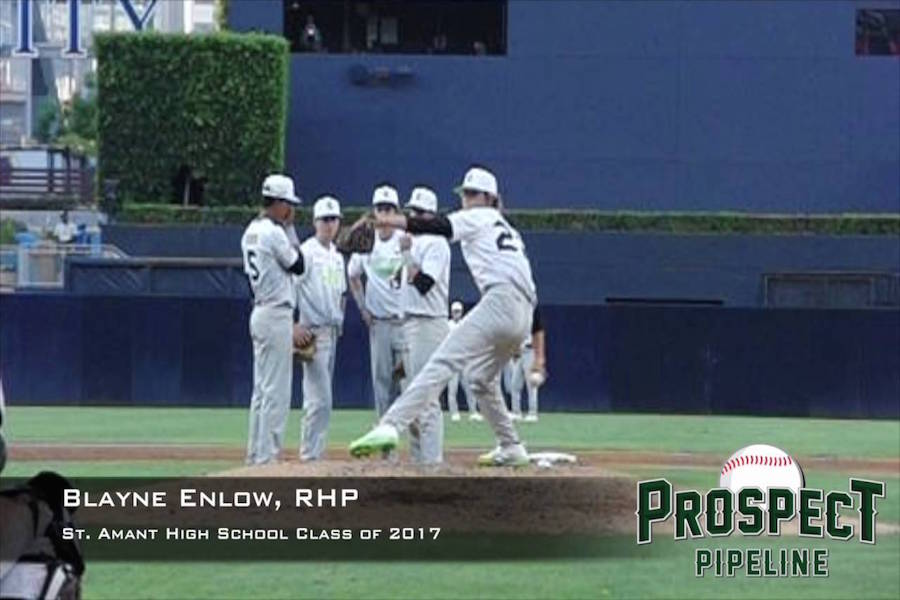 The interest in Enlow does not come as a surprise, at least not for those who've been following our coverage. In his 10-round Twins mock, Jeremy Nygaard had Minnesota taking the prep right-hander with their second pick at No. 35. They ended up taking him 41 spots later, and then immediately agreed to terms on a bonus of $2 million. That's a bit higher than the slot value at 35 and 37, and nearly three times the set figure at 76 ($755K). The Twins paid Enlow like a first-round talent, and they're hardly the only ones who viewed him as one. The righty had been ranked as the 29th-best player in the draft by MLB, and 33rd by Baseball America. Either because he slid on other boards, or because he already had a deal in place with the Twins, Enlow went undrafted through the first 75 picks, allowing Minnesota to land him after already adding three other prospects they coveted. Putting all the pieces together, it looks like Enlow was the key target for Derek Falvey's front office all along. And when we take a closer look at the pitcher's defining traits, there's really only one way to spin this story. The Unteachable Skill Last week, Parker Hageman wrote here about one of the main hold-ups with Hunter Greene: his trouble with the curve. In short, while the fireballing phenom makes headlines for his hellacious heater, his breaking balls are lagging behind due to insufficient spin. There is a growing body of evidence that a great curveball cannot really be taught. After a certain age, a fairly early one, your ability to spin the ball kind of is what it is. You either have it, or you don't. The subject gained national steam when spotlighted by Tom Verducci in a recent feature for Sports Illustrated: So inscrutable is the magic of a curveball that it is accepted wisdom in the game that, while pitchers can learn to sink a baseball (with a two-seamer) and cut it (with a cutter or slider), they generally cannot learn how to throw a great curve. It is not a projectable pitch. Organizations have learned that if someone does not show an aptitude to spin the baseball as an amateur, it’s foolish to expect him to acquire the skill. As it happens, this is Enlow's speciality. Twins scouting director Sean Johnson told reporters after the draft, "He may have I think the best curveball in the high school group ... He can spin the ball, which is hard to teach." The Twins aren't alone in that assessment. MLB.com draft guru Jim Callis had named Enlow's as the best curveball in this class, describing it as "a 12-to-6 hammer in the low 80s." We see him break off quite a few here, and here: In the recipe for a big-league starter, Enlow might already bring the most important ingredient. Following the Leaders I wrote earlier this week that Minnesota took a page out of the Houston Astros playbook from 2012 with their approach at No. 1 overall this year. But not until I looked closer did I realize the nearly identical blueprints. Five years ago, Houston passed on a high school star widely heralded as a generational talent, favoring a prep shortstop with a lesser profile. They used the savings from that under-slot signing to lure a an underdrafted teenage pitcher away from his college commitment. That pitcher? Lance McCullers. And wouldn't you know, he also happens to be known for his curve. In fact, he was one of the focal points of Verducci's aforementioned SI piece, which included this nugget from the Houston righty: “I don’t view my curveball as complementary stuff. Whereas old school was more like, ‘No, establish the fastball, pound the heater and wait until they prove they can hit it.’ Well, what if I have two guys on and I’m trying to establish my heater, and he hits it out of the ballpark? You saw it in the postseason: Now it’s about pitchers challenging guys with their best pitch, and that means a lot of curveballs.” By going against convention, the Astros ended up with one of the most successful draft outcomes in recent memory, reeling in McCullers and Carlos Correa who are now both key contributors for the best team in baseball. The Big Picture In essence, it looks like the pitching-needy Twins decided to bet on Enlow's curveball rather than Greene's fastball. As you might expect with this analytical new front office leadership, there is plenty of data to back up that mindset. Evidence tells us an 18-year-old kid like Enlow can add velocity and learn sink after joining the pro ranks, but Greene may struggle to round out his repertoire. There's also a case to be made that the latter carries more injury risk. By making Enlow rather than Greene the featured prep arm in their draft class, the Twins also managed to net a potential star in Lewis with their top pick. It's a bold strategy, to be sure, and one that will open this organization up to a great deal of hindsight criticism if it flounders. Then again, if the Astros worried about such things a half-decade ago, they might still be spinning their wheels instead of dominating the league.
 -
Article: Ode To Byron Buxton
Nick Nelson replied to Nick Nelson's topic in Twins Daily Front Page News
So you send him down to Triple-A, and he rakes again for several weeks, meanwhile the MLB team is worse-off without him. Then what? Bring him back up and hope it's different from the last handful of times they tried the same thing? Buxton needs to stay up here, getting everyday reps against big-league pitching, working with James Rowson, and helping these pitchers. I don't even really see it as debatable. -
Article: Draft Theories
Nick Nelson replied to Jeremy Nygaard's topic in Twins Daily Front Page News
My theory? They wanted Enlow. Had him lined up at 35 or 37 (where the bonuses are 1.9m/1.8m) but told him they would give him a little more if he informed other teams he wasn't going to sign so he could slide and the Twins could use those picks on other guys they liked. Then, they draft him at 76, give him a bonus higher than either the 35 or 37 slot (I hear $2M?) and come away with what they feel are four 1st/2nd-round talents. I like it.- 57 replies
-
- 11
-

-
The opening moments of Monday night's MLB Draft played out quite similarly to the one that took place five years prior. The Minnesota Twins, holding the first overall pick, went against the grain by selecting prep shortstop Royce Lewis, whom few regarded as the best available player. Meanwhile, the consensus top talent, Hunter Greene, fell to a grateful Cincinnati Reds organization at two. In 2012, it was the Twins who were beneficiaries in a similar slot-allocation play at No. 1, when Houston's surprising selection of Carlos Correa dropped top-ranked Byron Buxton to Minny. Obviously the Astros are feeling good about their decision, and we'll all be thrilled if Lewis even approaches Correa's brilliance, but today I wanted to recognize the player who landed here. Buxton may not be matching Correa's ridiculous pace, and has certainly had his troubles, but he is an absolute treat to watch and – I will argue – already a star at age 23 in spite of a cringeworthy .200/.271/.291 hitting line.Clearly, the bat hasn't yet come around for Buxton. He has taken a step backward following last year's late surge, and sits with the fifth-worst OPS in the majors as we approach the halfway point. Nevertheless, he is maintaining a positive WAR (0.8 according to BR, 0.5 according to FG). He is managing to make himself an essential everyday player, by chipping in defensively in ways that are extraordinary – though difficult to fully appraise. Fielding metrics love him. FanGraphs has the center fielder tied with Colorado's DJ LeMahieu for fifth in the majors in defensive runs saved (DRS), at nine. The site also has Buck in the Top 10 for Ultimate Zone Rating (UZR). According to StatCast, he leads the league in four-star plays (26-50% probability) and is 12-for-12 on such opportunities. Some of these statistics try to quantify the tangible value of Buxton's defensive contributions, and do so generously. But can they truly encompass the extent of his impact? Sure, a calculation can spit out a "runs saved" number by comparing plays against baseline probabilities and running them through scoring matrixes (as DRS does), but Buxton helps the Twins in ways that go beyond measurement. Consider this scenario. A shaky pitcher is struggling with his command in the early innings. He's got a runner on first with one out. He hangs one over the plate, and the batter drives it deep into a gap. After a great read, Buxton makes a catch at full speed that virtually any other center fielder fails to make. Most don't come close. The baserunner, already rounding second, slams the brakes and scurries back. The pitcher, pounding his mitt in celebration, now has a runner on first with two outs rather than a run in, a man on second or third, and one out. (In other words, a rally.) He gets a grounder and escapes the inning. Buxton has not only saved runs, but also further physical and mental taxation for his teammate on the mound. This isn't a hypothetical situation. It has played out, in some form, time and time again. I don't feel like I'm stretching it to say that Buxton's consistent presence in center has been THE biggest difference-maker for Twins pitching this year. Although the team ERA has improved, from 5.08 to 4.87, the FIP (Fielding Independent) mark has inflated substantially from 4.57 to 5.05. You can make a good case the staff has actually pitched worse, just with much better support. Other players are doing nice things defensively, and Jason Castro deserves his share of credit, but no one has changed games like Buxton. He deserves way more credit for this team's position five games above .500 than he is generally receiving. And that's without providing much of anything with his bat. We will have to keep waiting on that, and cases like Aaron Hicks remind us these things can take time, but I continue to believe Buxton is far too talented and eminently capable to not figure things out at the plate rather soon. Once he does, his rise to elite stardom will be as direct as his path to silencing a screaming liner. Click here to view the article
-
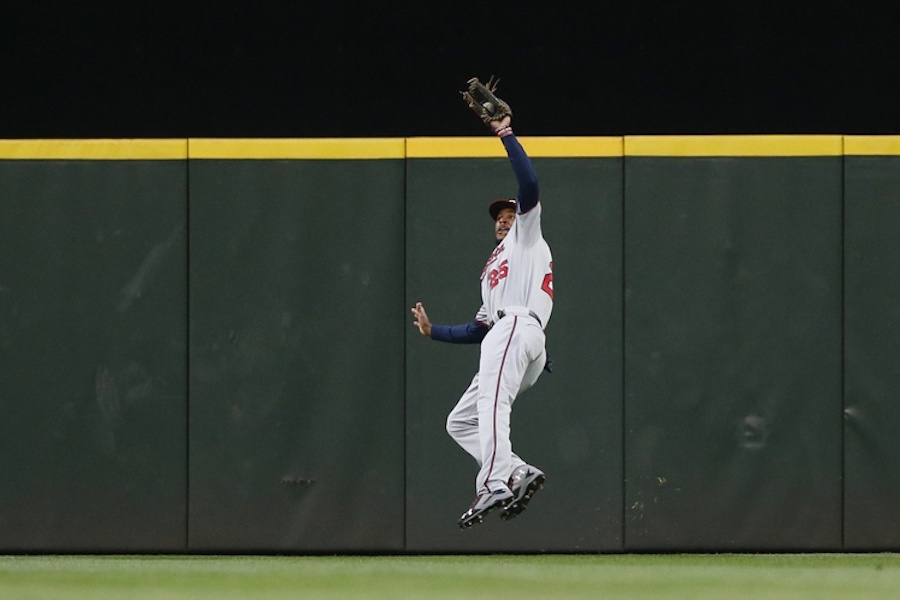 Clearly, the bat hasn't yet come around for Buxton. He has taken a step backward following last year's late surge, and sits with the fifth-worst OPS in the majors as we approach the halfway point. Nevertheless, he is maintaining a positive WAR (0.8 according to BR, 0.5 according to FG). He is managing to make himself an essential everyday player, by chipping in defensively in ways that are extraordinary – though difficult to fully appraise. Fielding metrics love him. FanGraphs has the center fielder tied with Colorado's DJ LeMahieu for fifth in the majors in defensive runs saved (DRS), at nine. The site also has Buck in the Top 10 for Ultimate Zone Rating (UZR). According to StatCast, he leads the league in four-star plays (26-50% probability) and is 12-for-12 on such opportunities. Some of these statistics try to quantify the tangible value of Buxton's defensive contributions, and do so generously. But can they truly encompass the extent of his impact? Sure, a calculation can spit out a "runs saved" number by comparing plays against baseline probabilities and running them through scoring matrixes (as DRS does), but Buxton helps the Twins in ways that go beyond measurement. Consider this scenario. A shaky pitcher is struggling with his command in the early innings. He's got a runner on first with one out. He hangs one over the plate, and the batter drives it deep into a gap. After a great read, Buxton makes a catch at full speed that virtually any other center fielder fails to make. Most don't come close. The baserunner, already rounding second, slams the brakes and scurries back. The pitcher, pounding his mitt in celebration, now has a runner on first with two outs rather than a run in, a man on second or third, and one out. (In other words, a rally.) He gets a grounder and escapes the inning. Buxton has not only saved runs, but also further physical and mental taxation for his teammate on the mound. This isn't a hypothetical situation. It has played out, in some form, time and time again. I don't feel like I'm stretching it to say that Buxton's consistent presence in center has been THE biggest difference-maker for Twins pitching this year. Although the team ERA has improved, from 5.08 to 4.87, the FIP (Fielding Independent) mark has inflated substantially from 4.57 to 5.05. You can make a good case the staff has actually pitched worse, just with much better support. Other players are doing nice things defensively, and Jason Castro deserves his share of credit, but no one has changed games like Buxton. He deserves way more credit for this team's position five games above .500 than he is generally receiving. And that's without providing much of anything with his bat. We will have to keep waiting on that, and cases like Aaron Hicks remind us these things can take time, but I continue to believe Buxton is far too talented and eminently capable to not figure things out at the plate rather soon. Once he does, his rise to elite stardom will be as direct as his path to silencing a screaming liner.
 -
On Monday evening, the Minnesota Twins will make the No. 1 selection in the MLB Draft for the first time since 2001. By all accounts, their choice comes down to three main names, with a few outside possibilities in play. This primer will get you completely up to speed on all the latest news, rumors and rumblings as we head toward a pivotal moment for the franchise. LAST CALL Saturday was monumental for Brendan McKay and Kyle Wright. Each collegiate hurler took the hill as starting pitcher for his team in a critical Super Regionals game. Both were televised on ESPN. And on top of all that, the draft prospects know they were making their closing arguments for the distinction (and signing bonus) of becoming the first player taken Monday. For their teams and for them personally, the stakes could not have been higher for McKay and Wright. McKay rose to the occasion in a big way, leading his Louisville Cardinals to a series-clinching victory over Kentucky with 6 2/3 scoreless innings. His impressive performance came on the heels of this report from MLB.com's Jim Callis: "Though the teams selecting behind the Twins think they're leaning toward Vanderbilt right-hander Kyle Wright, I started hearing whispers Thursday night that Minnesota prefers Louisville two-way star Brendan McKay. That noise is getting louder Friday, and I now believe the Twins will take McKay No. 1, as a left-handed pitcher rather than a first baseman, unless California high school righty Hunter Greene overwhelms them in his visit to Target Field on Friday afternoon." Did Greene overwhelm them? Will McKay's final impression push him over the edge? And how did Wright's Saturday evening go in an elimination game against a daunting opponent? The latest on all three, below (click names for full in-depth profiles): Brendan McKay: LHP/1B, Louisville While cruising through his outing against Kentucky, McKay didn't flash the kind of velocity that catches your eye, but showed immense polish. He struck out nine and walked none, looking much like a guy who could go out and get it done on a big-league mound right now. McKay peppered the zone with good breaking balls, and is putting the finishing touches on a two-way collegiate career for the ages. Though he went 0-for-5 at the plate, his abilities at the plate as a lefty-hitting first baseman are well established. That would be less useful in the American League but there's a real possibility he could be a pinch-hitting option between starts, a la Madison Bumgarner. McKay's jump to the head of the pack, if the Callis report is accurate, comes after weeks of speculation that Wright was the favorite. Kyle Wright: RHP, Vanderbilt Wright had his work cut out for him, guiding his unranked Commodores against the nation's No. 1 team, Oregon State. He battled 6 2/3 innings, and while the numbers don't impress – he was charged with seven earned runs, three coming on a big homer in the third inning – he threw pitches with a ton of life while showing smooth and consistent mechanics. It's hard to hold the way he finished against him; Wright loaded the bases and walked in a run before being pulled at 122 pitches (two more would score afterward, adding to his ledger). He was laboring but answering the call as the ace of a team on the brink of elimination. There was plenty to like about the righty's outing, in which he struck out eight and threw some truly filthy sliders. Mike Berardino's comparison to a young Kevin Brown seems apt in many ways. Wright has everything you look for in a prospective frontline starting pitcher, and he could speed through the minors. As I wrote last week, his potential for rapid ascent would be a nice timeline fit for a team that appears to be at the front end of its contention window. Despite the recent steam for McKay, I still see Wright as the most likely pick. It's this simple: the Twins need fast-tracked pitching and he is pretty clearly the best college arm in the country. Historically, those are fairly safe picks. McKay, by the admission of his own coach at Louisville, may not be the best pitcher or hitter in college baseball (he places the two-way star "top three to five" in both categories). In contrasting the clear-cut top two collegiate talents in the nation, the choice seems fairly clear to me. But then there's Greene, who makes as strong a case to be taken first overall as any prep right-handed pitcher has in history. And he put it all on display during a Friday workout in Minneapolis late last week. Hunter Greene: RHP/SS, Notre Dame HS (Sherman Oaks, CA) As expected, and as usual, Greene wowed onlookers during a session at Target Field on Friday. He reportedly hit 101 MPH from the mound and put on show at the plate, launching four home runs. The 17-year-old oozes potential, and a level of upside that few draft prospects in recent history could match. It feels like, if the Twins pass on him, we will be doomed to a future of "what-ifs." We'll follow his progression closely, lamenting every fast promotion and extraordinary achievement. Of course, on the flip side, if they pass and Greene doesn't work out, the front office ultimately comes away looking really, really good. This kid has a set of skills and tools rarely seen on the diamond. He gave the Twins a final reminder of that on Friday. If they choose to go another direction, it's on them, for better or worse. OTHER POSSIBILITIES? There remains a distinct chance that Minnesota could pass on all three of the names above. If they're not enamored with McKay, Wright or Greene as a true No. 1 talent, then they could aim to strike a deal with someone slightly lower on the board to save pool money on one of their ensuing picks. Jeremy Nygaard explained how this might work in his latest edition of The Scouting Skinny, which went out to newsletter subscribers last week. Basically, we keep hearing that that the Twins have six players on their radar for the first pick, not just the three mentioned above. The idea is that by signing someone like MacKenzie Gore or Pavin Smith, who wouldn't normally be under consideration at the top, the Twins could sign that player below slot and then have more money available for bonuses at, say, No. 35 or No. 37. This was the approach Philadelphia took last year, signing No. 1 pick Mickey Moniak for about $3 million under slot and then luring their second pick, prep righty Kevin Gowdy, away from a UCLA commitment by offering almost double the slotted amount at No. 42. This turns our attention toward a subject we haven't yet broached in this primer: Minnesota has two more picks within the Top 40, and those also figure to be of enormous importance. It gets cumbersome to preview and break down those selections, because the number of realistic candidates goes from a handful to several dozen, but there is one name in particular that people around the Twins Cities will be following very closely. LOCAL ANGLE He is not in consideration to go first overall, but it sounds like the Twins would be more than happy to grab Burnsville's Sam Carlson if he makes it back to them at 35. This seems unlikely. The big right-hander ranks 15th on MLB.com's board and 21st on Baseball America's. He's in the conversation for best high school arm in the country, and reports suggest many teams are eyeing him in the first round. But Carlson has a scholarship from the University of Florida in his pocket, so money talks. For Minnesota to have a realistic shot at Carlson, it would require him slipping – probably due to signability concerns – and the Twins having extra cash in hand from cutting a deal at No. 1 to alleviate such concerns. Something to keep an eye on. LATEST PREDICTIONS Here's what the most recent mocks from major prospect publications are projecting for Monday: Baseball America Mock Draft 4.0 Twins #1 pick: Kyle Wright, RHP (Vanderbilt) Twins #35 pick: Brent Rooker, 1B (Mississippi State) Keith Law (ESPN) Mock Draft 3.0 Twins #1 pick: Brendan McKay, LHP/1B (Louisville) Bleacher Report Twins #1 pick: Brendan McKay, LHP/1B (Louisville) CBS Sports Twins #1 pick: Kyle Wright, RHP (Vanderbilt) Jeremy Nygaard/Twins Daily Twins #1 pick: Kyle Wright, RHP (Vanderbilt) Twins #35 pick: Blayne Enlow, RHP (LA prep) Twins #37 pick: Jacob Heatherly, LHP (AL prep) Twins #76 pick: Riley Adams, C (University of San DIego) Twins #106 pick: Michael Baumann, RHP (Jacksonville University) Twins #136 pick: Bryce Montes de Oca, RHP (University of Missouri) Twins #166 pick: Seth Lonsway, LHP (OH prep) Twins #196 pick: Griff McGarry, RHP (CA prep) Twins #226 pick: Dalton Guthrie, SS (University of Florida) Twins #256 pick: J.J. Schwarz, C (University of Florida) Twins #288 pick: Reed Rohlman, OF (Clemson University) MORE TWINS DAILY COVERAGE Check out Jeremy Nygaard's 10-round Twins mock draft to learn more about the players listed above. Previous Draft Profiles: Draft Profile: Hunter Greene, SP/SS by Nick Nelson Draft Profile: Kyle Wright, SP by Jeremy Nygaard Draft Profile: Brendan McKay, SP/1B by Cody Christie Draft Profile: MacKenzie Gore, LHP by Steve Lein Draft Profile: Royce Lewis, SS/OF by Nick Nelson Draft Profile: Pavin Smith, 1B by Tom Froemming Click here to view the article
-
 LAST CALL Saturday was monumental for Brendan McKay and Kyle Wright. Each collegiate hurler took the hill as starting pitcher for his team in a critical Super Regionals game. Both were televised on ESPN. And on top of all that, the draft prospects know they were making their closing arguments for the distinction (and signing bonus) of becoming the first player taken Monday. For their teams and for them personally, the stakes could not have been higher for McKay and Wright. McKay rose to the occasion in a big way, leading his Louisville Cardinals to a series-clinching victory over Kentucky with 6 2/3 scoreless innings. His impressive performance came on the heels of this report from MLB.com's Jim Callis: "Though the teams selecting behind the Twins think they're leaning toward Vanderbilt right-hander Kyle Wright, I started hearing whispers Thursday night that Minnesota prefers Louisville two-way star Brendan McKay. That noise is getting louder Friday, and I now believe the Twins will take McKay No. 1, as a left-handed pitcher rather than a first baseman, unless California high school righty Hunter Greene overwhelms them in his visit to Target Field on Friday afternoon." Did Greene overwhelm them? Will McKay's final impression push him over the edge? And how did Wright's Saturday evening go in an elimination game against a daunting opponent? The latest on all three, below (click names for full in-depth profiles): Brendan McKay: LHP/1B, Louisville While cruising through his outing against Kentucky, McKay didn't flash the kind of velocity that catches your eye, but showed immense polish. He struck out nine and walked none, looking much like a guy who could go out and get it done on a big-league mound right now. McKay peppered the zone with good breaking balls, and is putting the finishing touches on a two-way collegiate career for the ages. Though he went 0-for-5 at the plate, his abilities at the plate as a lefty-hitting first baseman are well established. That would be less useful in the American League but there's a real possibility he could be a pinch-hitting option between starts, a la Madison Bumgarner. McKay's jump to the head of the pack, if the Callis report is accurate, comes after weeks of speculation that Wright was the favorite. Kyle Wright: RHP, Vanderbilt Wright had his work cut out for him, guiding his unranked Commodores against the nation's No. 1 team, Oregon State. He battled 6 2/3 innings, and while the numbers don't impress – he was charged with seven earned runs, three coming on a big homer in the third inning – he threw pitches with a ton of life while showing smooth and consistent mechanics. It's hard to hold the way he finished against him; Wright loaded the bases and walked in a run before being pulled at 122 pitches (two more would score afterward, adding to his ledger). He was laboring but answering the call as the ace of a team on the brink of elimination. There was plenty to like about the righty's outing, in which he struck out eight and threw some truly filthy sliders. Mike Berardino's comparison to a young Kevin Brown seems apt in many ways. Wright has everything you look for in a prospective frontline starting pitcher, and he could speed through the minors. As I wrote last week, his potential for rapid ascent would be a nice timeline fit for a team that appears to be at the front end of its contention window. Despite the recent steam for McKay, I still see Wright as the most likely pick. It's this simple: the Twins need fast-tracked pitching and he is pretty clearly the best college arm in the country. Historically, those are fairly safe picks. McKay, by the admission of his own coach at Louisville, may not be the best pitcher or hitter in college baseball (he places the two-way star "top three to five" in both categories). In contrasting the clear-cut top two collegiate talents in the nation, the choice seems fairly clear to me. But then there's Greene, who makes as strong a case to be taken first overall as any prep right-handed pitcher has in history. And he put it all on display during a Friday workout in Minneapolis late last week. Hunter Greene: RHP/SS, Notre Dame HS (Sherman Oaks, CA) As expected, and as usual, Greene wowed onlookers during a session at Target Field on Friday. He reportedly hit 101 MPH from the mound and put on show at the plate, launching four home runs. The 17-year-old oozes potential, and a level of upside that few draft prospects in recent history could match. It feels like, if the Twins pass on him, we will be doomed to a future of "what-ifs." We'll follow his progression closely, lamenting every fast promotion and extraordinary achievement. Of course, on the flip side, if they pass and Greene doesn't work out, the front office ultimately comes away looking really, really good. This kid has a set of skills and tools rarely seen on the diamond. He gave the Twins a final reminder of that on Friday. If they choose to go another direction, it's on them, for better or worse. OTHER POSSIBILITIES? There remains a distinct chance that Minnesota could pass on all three of the names above. If they're not enamored with McKay, Wright or Greene as a true No. 1 talent, then they could aim to strike a deal with someone slightly lower on the board to save pool money on one of their ensuing picks. Jeremy Nygaard explained how this might work in his latest edition of The Scouting Skinny, which went out to newsletter subscribers last week. Basically, we keep hearing that that the Twins have six players on their radar for the first pick, not just the three mentioned above. The idea is that by signing someone like MacKenzie Gore or Pavin Smith, who wouldn't normally be under consideration at the top, the Twins could sign that player below slot and then have more money available for bonuses at, say, No. 35 or No. 37. This was the approach Philadelphia took last year, signing No. 1 pick Mickey Moniak for about $3 million under slot and then luring their second pick, prep righty Kevin Gowdy, away from a UCLA commitment by offering almost double the slotted amount at No. 42. This turns our attention toward a subject we haven't yet broached in this primer: Minnesota has two more picks within the Top 40, and those also figure to be of enormous importance. It gets cumbersome to preview and break down those selections, because the number of realistic candidates goes from a handful to several dozen, but there is one name in particular that people around the Twins Cities will be following very closely. LOCAL ANGLE He is not in consideration to go first overall, but it sounds like the Twins would be more than happy to grab Burnsville's Sam Carlson if he makes it back to them at 35. This seems unlikely. The big right-hander ranks 15th on MLB.com's board and 21st on Baseball America's. He's in the conversation for best high school arm in the country, and reports suggest many teams are eyeing him in the first round. But Carlson has a scholarship from the University of Florida in his pocket, so money talks. For Minnesota to have a realistic shot at Carlson, it would require him slipping – probably due to signability concerns – and the Twins having extra cash in hand from cutting a deal at No. 1 to alleviate such concerns. Something to keep an eye on. LATEST PREDICTIONS Here's what the most recent mocks from major prospect publications are projecting for Monday: Baseball America Mock Draft 4.0 Twins #1 pick: Kyle Wright, RHP (Vanderbilt) Twins #35 pick: Brent Rooker, 1B (Mississippi State) Keith Law (ESPN) Mock Draft 3.0 Twins #1 pick: Brendan McKay, LHP/1B (Louisville) Bleacher Report Twins #1 pick: Brendan McKay, LHP/1B (Louisville) CBS Sports Twins #1 pick: Kyle Wright, RHP (Vanderbilt) Jeremy Nygaard/Twins Daily Twins #1 pick: Kyle Wright, RHP (Vanderbilt) Twins #35 pick: Blayne Enlow, RHP (LA prep) Twins #37 pick: Jacob Heatherly, LHP (AL prep) Twins #76 pick: Riley Adams, C (University of San DIego) Twins #106 pick: Michael Baumann, RHP (Jacksonville University) Twins #136 pick: Bryce Montes de Oca, RHP (University of Missouri) Twins #166 pick: Seth Lonsway, LHP (OH prep) Twins #196 pick: Griff McGarry, RHP (CA prep) Twins #226 pick: Dalton Guthrie, SS (University of Florida) Twins #256 pick: J.J. Schwarz, C (University of Florida) Twins #288 pick: Reed Rohlman, OF (Clemson University) MORE TWINS DAILY COVERAGE Check out Jeremy Nygaard's 10-round Twins mock draft to learn more about the players listed above. Previous Draft Profiles: Draft Profile: Hunter Greene, SP/SS by Nick Nelson Draft Profile: Kyle Wright, SP by Jeremy Nygaard Draft Profile: Brendan McKay, SP/1B by Cody Christie Draft Profile: MacKenzie Gore, LHP by Steve Lein Draft Profile: Royce Lewis, SS/OF by Nick Nelson Draft Profile: Pavin Smith, 1B by Tom Froemming
 -
Great article format. Love this. Nice work Tom!
-
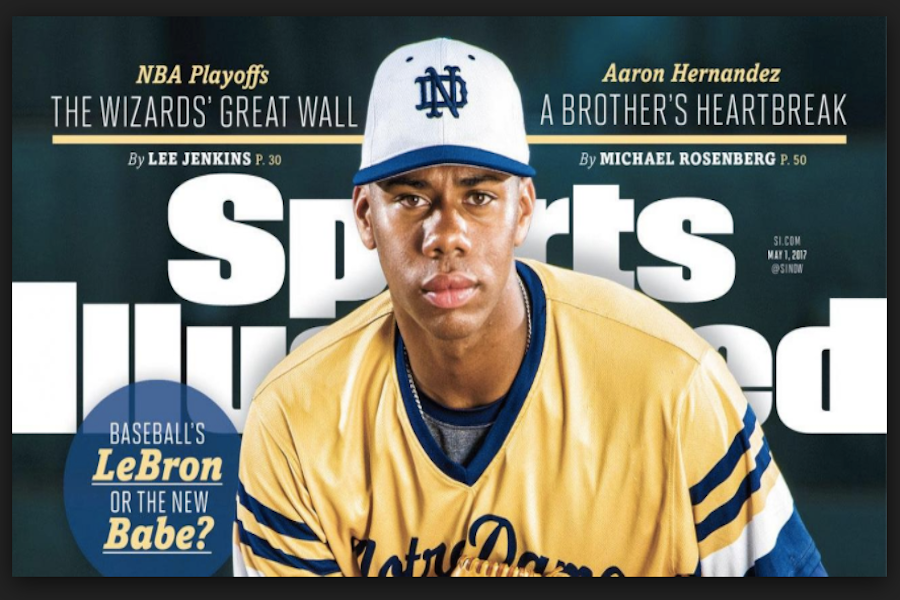 Who Is He? We have been following Greene for a long time here on Twins Daily. Ever since the 2016 season ended and Minnesota officially claimed the top pick in this June's draft, he has fronted the list of candidates to become their selection. Many months later, he remains in the high esteem of scouts and analysts. Baseball America has him at the top of their board. So does MLB.com. The reasons are evident. As a pitcher, Greene has the makings of a generational stud. His fastball has been clocked at triple digits many times, and he routinely maintains high-90s velocity deep into games. What's more, he brings this heat with an easy motion that doesn't raise alarms about mechanical issues down the line. In his prep career with Notre Dame High School in Sherman Oaks, CA, Greene posted a 1.62 ERA over 121 innings. As a senior he struck out 41 percent of the batters he faced. He belongs in the conversation for best high school right-hander ever. And then there is the other side of his game. Greene is also a smooth defensive shortstop, one who obviously has the arm to make every throw. He swings hard and generates a ton of power. There's a general belief that he could easily be an all-star as a position player, even if he doesn't stick at short. However, in that capacity Greene is more first-round pick material than first pick material. Here are some highlights via LA Daily News from his 2017 debut for Notre Dame, in which he blew several hitters away from the hill and ripped a grand slam at the plate: Greene has a commitment to UCLA but it's highly unlikely he'll honor it, unless things go awry and he falls out of the top three. Why The Twins Will Pick Him I mean, how do you pass this up? The Twins could desperately use an elite pitching prospect in their pipeline, and Greene has a chance to become THE elite pitching prospect very quickly. If he maintains his purported ability to work in the upper 90s with good command throughout entire starts, and he develops his secondary offerings at all, he can transform into an MLB rotation-fronter in fairly short order. You miss on that, and go with a safer collegiate option who proves to be merely good (or not even), and it's a mistake that haunts for many years to come. These are the stakes for Derek Falvey and Thad Levine, just nine months into the job. They recognize this, and their scouts have been all over Greene every step of the way. He has been analyzed from every angle, by numerous sets of eyes. If the Twins, through their rigorous evaluations, agree with the widely held opinion that Greene is essentially a can't-miss – particularly with the fallback as a talented position player should pitching not work out – then they will take him. Why The Twins Will Not Pick Him Unless we're getting smokescreens, it would appear the Twins are in fact not reaching that conclusion. In mid-May, USA TODAY's Bob Nightengale tweeted that the Twins were "leaning toward passing on" Greene. Ten days later, Jon Heyman of FanRag Sports reported this more firmly, "barring a late change." If true, it's not clear what would happen to reverse their mindset at this stage, other than someone else on the board getting hurt. Here's the thing: Greene is really, really risky. And with the aforementioned stakes at play, it may just be too much risk to handle at this pick. No right-handed prep pitcher has ever gone first overall, and there is a reason for it: they are really difficult to project from this stage. Kohl Stewart was considered the best high school hurler in the nation when the Twins took him fourth overall in 2013. His stuff never developed enough to dominate in the pros, however, and four years later he's completely off the prospect radar. The following year, Tyler Kolek – a Texas HS righty who, like Greene, was known for his eye-popping velocity as a teen – went second overall to Miami. He required Tommy John surgery at the age of 20, and is still now rehabbing. When he has pitched, the numbers haven't been good. Greene is on a higher plane than either, to be sure, but the cautionary tales still resonate. And like any high school player, he has question marks. Opinions differ on whether his secondary pitches are up to par. Commanding the zone at his level of competition is vastly different from doing so against professional hitters. And while he is well built physically, with relatively sound mechanics, you cannot help but wonder how throwing hundreds of 95-plus MPH pitches at such a young age is cumulatively affecting his arm. The Twins, and other organizations, haven't seen that arm in action since mid-April, when Greene was shut down for precautionary reasons. There's simply a lot more data available on guys like Kyle Wright and Brendan McKay. This new front office likes data. Then again, everyone likes triple-digit heat and seemingly endless potential. Will Greene's uniquely high ceiling rule out? Or have the Twins seen enough in their extensive examinations to scare them away? Reports suggest the latter, but we shall see how it plays out on Monday. Make sure to check out Jeremy Nygaard's 10-round Twins mock draft. He's been known to get a few right in the past. Previous Draft Profiles: Brendan McKay, SP/1B by Cody Christie Royce Lewis, SS/OF by Nick Nelson Pavin Smith, 1B by Tom Froemming
 -
The hype is real for Hunter Greene. At age 17, he has already attained legendary status, gracing a Sports Illustrated cover with the magazine hailing him as the star baseball needs. Baseball's LeBron James or the new Babe Ruth? Those comparisons aren't made lightly. It would seem that Greene, a two-way phenom who throws 100 MPH on the mound and dominates at shortstop, is a no-brainer at No. 1 overall. But he's not. Far from it.Who Is He? We have been following Greene for a long time here on Twins Daily. Ever since the 2016 season ended and Minnesota officially claimed the top pick in this June's draft, he has fronted the list of candidates to become their selection. Many months later, he remains in the high esteem of scouts and analysts. Baseball America has him at the top of their board. So does MLB.com. The reasons are evident. As a pitcher, Greene has the makings of a generational stud. His fastball has been clocked at triple digits many times, and he routinely maintains high-90s velocity deep into games. What's more, he brings this heat with an easy motion that doesn't raise alarms about mechanical issues down the line. In his prep career with Notre Dame High School in Sherman Oaks, CA, Greene posted a 1.62 ERA over 121 innings. As a senior he struck out 41 percent of the batters he faced. He belongs in the conversation for best high school right-hander ever. And then there is the other side of his game. Greene is also a smooth defensive shortstop, one who obviously has the arm to make every throw. He swings hard and generates a ton of power. There's a general belief that he could easily be an all-star as a position player, even if he doesn't stick at short. However, in that capacity Greene is more first-round pick material than first pick material. Here are some highlights via LA Daily News from his 2017 debut for Notre Dame, in which he blew several hitters away from the hill and ripped a grand slam at the plate: Greene has a commitment to UCLA but it's highly unlikely he'll honor it, unless things go awry and he falls out of the top three. Why The Twins Will Pick Him I mean, how do you pass this up? The Twins could desperately use an elite pitching prospect in their pipeline, and Greene has a chance to become THE elite pitching prospect very quickly. If he maintains his purported ability to work in the upper 90s with good command throughout entire starts, and he develops his secondary offerings at all, he can transform into an MLB rotation-fronter in fairly short order. You miss on that, and go with a safer collegiate option who proves to be merely good (or not even), and it's a mistake that haunts for many years to come. These are the stakes for Derek Falvey and Thad Levine, just nine months into the job. They recognize this, and their scouts have been all over Greene every step of the way. He has been analyzed from every angle, by numerous sets of eyes. If the Twins, through their rigorous evaluations, agree with the widely held opinion that Greene is essentially a can't-miss – particularly with the fallback as a talented position player should pitching not work out – then they will take him. Why The Twins Will Not Pick Him Unless we're getting smokescreens, it would appear the Twins are in fact not reaching that conclusion. In mid-May, USA TODAY's Bob Nightengale tweeted that the Twins were "leaning toward passing on" Greene. Ten days later, Jon Heyman of FanRag Sports reported this more firmly, "barring a late change." If true, it's not clear what would happen to reverse their mindset at this stage, other than someone else on the board getting hurt. Here's the thing: Greene is really, really risky. And with the aforementioned stakes at play, it may just be too much risk to handle at this pick. No right-handed prep pitcher has ever gone first overall, and there is a reason for it: they are really difficult to project from this stage. Kohl Stewart was considered the best high school hurler in the nation when the Twins took him fourth overall in 2013. His stuff never developed enough to dominate in the pros, however, and four years later he's completely off the prospect radar. The following year, Tyler Kolek – a Texas HS righty who, like Greene, was known for his eye-popping velocity as a teen – went second overall to Miami. He required Tommy John surgery at the age of 20, and is still now rehabbing. When he has pitched, the numbers haven't been good. Greene is on a higher plane than either, to be sure, but the cautionary tales still resonate. And like any high school player, he has question marks. Opinions differ on whether his secondary pitches are up to par. Commanding the zone at his level of competition is vastly different from doing so against professional hitters. And while he is well built physically, with relatively sound mechanics, you cannot help but wonder how throwing hundreds of 95-plus MPH pitches at such a young age is cumulatively affecting his arm. The Twins, and other organizations, haven't seen that arm in action since mid-April, when Greene was shut down for precautionary reasons. There's simply a lot more data available on guys like Kyle Wright and Brendan McKay. This new front office likes data. Then again, everyone likes triple-digit heat and seemingly endless potential. Will Greene's uniquely high ceiling rule out? Or have the Twins seen enough in their extensive examinations to scare them away? Reports suggest the latter, but we shall see how it plays out on Monday. Make sure to check out Jeremy Nygaard's 10-round Twins mock draft. He's been known to get a few right in the past. Previous Draft Profiles: Brendan McKay, SP/1B by Cody Christie Royce Lewis, SS/OF by Nick Nelson Pavin Smith, 1B by Tom Froemming Click here to view the article
-
The Minnesota Twins will select first in the MLB Draft next Monday, and right now, signs point to them choosing Vanderbilt right-hander Kyle Wright. You'll be able to read an in-depth profile of Wright here from draft guru Jeremy Nygaard on Thursday, but for today let's jump forward and contemplate how the collegiate ace would fit in for a rebuilding Twins franchise.Obviously anything can change in the next week, but right now all indications point to Minnesota passing on heralded prep phenom Hunter Greene at No. 1 overall. Derek Falvey and Thad Levine have undoubtedly received countless glowing scouting reports, and seen his unique greatness on display in person, but ultimately it appears the upside/risk balance is too heavily skewed for a pick that could well define their tenure. That leaves college stars Wright and Brendan McKay as the remaining members of the consensus top three. Everything I'm hearing leads me to believe the Twins are leaning away from McKay, a two-way threat with some questions on both sides. Wright is who Baseball America has the Twins taking in their latest mock. Ditto Keith Law of ESPN. And our guy Jeremy. The signs are pretty clear. The Twins have been all over the 6-foot-4 righty for many months and have watched him hit his stride leading up to the draft, including a nine-strikeout performance against Clemson in the NCAA Tournament on Saturday that saw him touching 95-96 MPH as late as the sixth inning. Wright is a big-time talent, and as a more defined commodity than Greene or McKay, he carries less relative risk. There is also this: If the Twins feel they are currently at the front end of their rebuild coming to fruition, Wright fits rather nicely into the timeline they have going. Jose Berrios has arrived, and shows no signs of wanting to go back. Adalberto Mejia is flashing very positive signs. Minnesota has the beginnings of a young stable to move forward with, but obviously they'll need plenty more. The organization's top two prospects are not far away. Fernando Romero is coming on at Chattanooga following an inconsistent start. He has allowed two earned runs with a 20-to-5 K/BB ratio in 19 innings over his past three turns. Meanwhile, Stephen Gonsalves has joined him in the Lookouts rotation after shoulder issues cost him the first six weeks. He lowered his ERA to 2.45 with five shutout frames in his fourth start Monday. Romero and Gonsalves both are 22. Wright, as a 21-year-old college product, would probably head straight to Single-A upon signing. If things play out the right way he could be reaching the majors very shortly after they do, if not simultaneously. For some context, here's what the timeline looks like if you get it right with a collegiate ace at the No. 1 pick: In June 6th, 2011, the Pirates took Gerrit Cole (UCLA) first overall. His major-league debut came two years and five days later, on June 11th, 2013. He was immediately very good. On June 9th, 2009, the Nationals took Stephen Strasburg (SDSU) first overall. His major-league debut came 364 days later, on June 8th, 2010. He was immediately very good. On June 7th, 2007, the Rays took David Price (Vanderbilt, just like Wright) first overall. His major-league debut came in September of 2008. He was – yep – immediately very good. Now, obviously, these are lofty examples but Wright is an advanced arm with all of the attributes you're looking for. If the Twins feel he has a shot to follow that precedent and rocket to the big leagues, it would be quite favorable in the scope of their big-picture contention efforts. Is he that guy? You can draw your own conclusions when Jeremy gives you the full breakdown later this week. In the meantime, check out the rest of our latest coverage previewing Minnesota's top pick next Monday: Jeremy's 10 Round Twins Mock Draft Profile: Brendan McKay, SP/1B by Cody Christie Draft Profile: Royce Lewis, SS/OF by Nick Nelson Draft Profile: Pavin Smith, 1B by Tom Froemming Click here to view the article
-
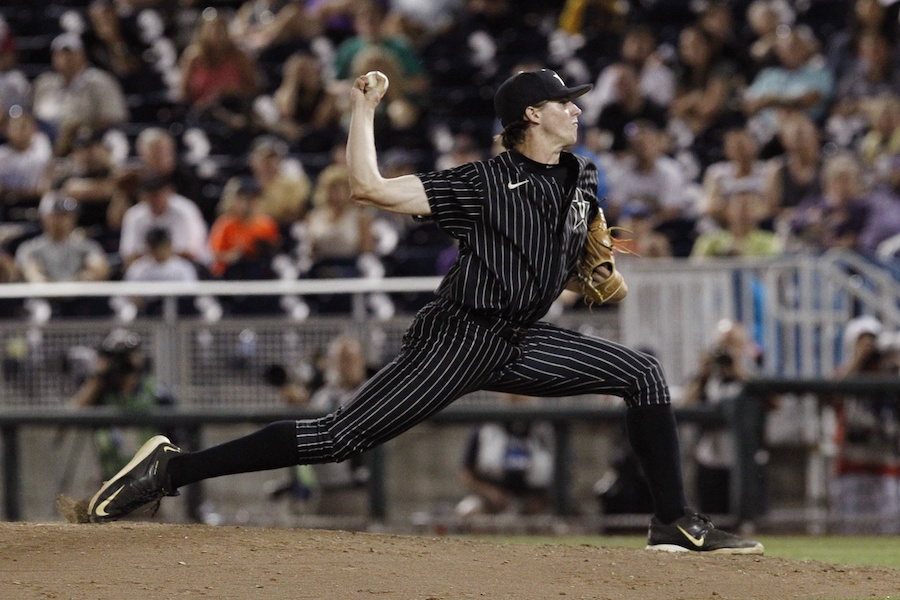 Obviously anything can change in the next week, but right now all indications point to Minnesota passing on heralded prep phenom Hunter Greene at No. 1 overall. Derek Falvey and Thad Levine have undoubtedly received countless glowing scouting reports, and seen his unique greatness on display in person, but ultimately it appears the upside/risk balance is too heavily skewed for a pick that could well define their tenure. That leaves college stars Wright and Brendan McKay as the remaining members of the consensus top three. Everything I'm hearing leads me to believe the Twins are leaning away from McKay, a two-way threat with some questions on both sides. Wright is who Baseball America has the Twins taking in their latest mock. Ditto Keith Law of ESPN. And our guy Jeremy. The signs are pretty clear. The Twins have been all over the 6-foot-4 righty for many months and have watched him hit his stride leading up to the draft, including a nine-strikeout performance against Clemson in the NCAA Tournament on Saturday that saw him touching 95-96 MPH as late as the sixth inning. Wright is a big-time talent, and as a more defined commodity than Greene or McKay, he carries less relative risk. There is also this: If the Twins feel they are currently at the front end of their rebuild coming to fruition, Wright fits rather nicely into the timeline they have going. Jose Berrios has arrived, and shows no signs of wanting to go back. Adalberto Mejia is flashing very positive signs. Minnesota has the beginnings of a young stable to move forward with, but obviously they'll need plenty more. The organization's top two prospects are not far away. Fernando Romero is coming on at Chattanooga following an inconsistent start. He has allowed two earned runs with a 20-to-5 K/BB ratio in 19 innings over his past three turns. Meanwhile, Stephen Gonsalves has joined him in the Lookouts rotation after shoulder issues cost him the first six weeks. He lowered his ERA to 2.45 with five shutout frames in his fourth start Monday. Romero and Gonsalves both are 22. Wright, as a 21-year-old college product, would probably head straight to Single-A upon signing. If things play out the right way he could be reaching the majors very shortly after they do, if not simultaneously. For some context, here's what the timeline looks like if you get it right with a collegiate ace at the No. 1 pick: In June 6th, 2011, the Pirates took Gerrit Cole (UCLA) first overall. His major-league debut came two years and five days later, on June 11th, 2013. He was immediately very good. On June 9th, 2009, the Nationals took Stephen Strasburg (SDSU) first overall. His major-league debut came 364 days later, on June 8th, 2010. He was immediately very good. On June 7th, 2007, the Rays took David Price (Vanderbilt, just like Wright) first overall. His major-league debut came in September of 2008. He was – yep – immediately very good. Now, obviously, these are lofty examples but Wright is an advanced arm with all of the attributes you're looking for. If the Twins feel he has a shot to follow that precedent and rocket to the big leagues, it would be quite favorable in the scope of their big-picture contention efforts. Is he that guy? You can draw your own conclusions when Jeremy gives you the full breakdown later this week. In the meantime, check out the rest of our latest coverage previewing Minnesota's top pick next Monday: Jeremy's 10 Round Twins Mock Draft Profile: Brendan McKay, SP/1B by Cody Christie Draft Profile: Royce Lewis, SS/OF by Nick Nelson Draft Profile: Pavin Smith, 1B by Tom Froemming
 -
The Twins bullpen situation has turned catastrophic, and there's nothing to be gained by wringing hands over how we got here. These are the facts: Minnesota is above .500 and very much in the mix as we enter June, but the Twins won't likely hang around unless they do something to address the relief corps. That "something" doesn't need to be drastic nor detrimental to the big picture.The Twins aren't in any position to make an Andrew Miller-type splash, and would be ill-advised to dangle any of their better prospects – even a Chih-Wei Hu type – for relief help (insofar as any high-impact relievers are being made available this far from the deadline). In order to meaningfully improve their chances in the late innings, the front office might need to get creative. Sure, they can try someone like Alan Busenitz or Trevor Hildenberger, but you can't just count on green rookies with iffy scouting reports to come up and shut down the eighth inning. By the same token, newly promoted farmhands Alex Wimmers and Randy Rosario are more band aids than plugs. The following suggestions are aimed at creating a more dramatic short-term impact, without forfeiting anything of import. Move Phil Hughes to the Bullpen Hughes is currently on the disabled list but there have been indications he won't stay there too terribly long. When he returns, the Twins might be wise to bring him back in a relief role. There are multiple beneficial outcomes this route could achieve. His fastball has been humming in at the lowest velocity of his career, and getting pounded as a result. It's possible Hughes could add a few ticks in shorter stints. Of course, he's had tremendous success out of the bullpen before, serving as Mariano Rivera's top setup man when the Yankees won the World Series in 2009. Hughes' numbers that season: 86 IP, 3.03 ERA, 1.12 WHIP, 96/28 K/BB. He isn't likely to regain that level of superior efficacy, especially not right away, but maybe Hughes will surprise us. He has the command and poise that so many other Twins relievers are lacking, so even a slight uptick in heat – and perhaps a reduced reliance on his lesser offerings – could make a big difference. Swap Tyler Duffey and Brandon Kintzler This isn't so much a denouncement of what either right-hander has done in his current role – they've been the bullpen's two best weapons – as it is an assertion they may be best suited for a reversal. Kintzler has done an admirable job in the ninth, but always struck me as a guy better equipped for the middle innings. His penchant for inducing ground balls on command would make him an excellent fireman, called upon in a tough spot with runners on base. He has also proven fairly durable, and could likely handle multiple innings on a frequent basis. Meanwhile, Duffey is much more of a prototypical closer, with his bat-missing stuff, and has experience in the role from his collegiate days at Rice University. Call up Fernando Romero Minnesota's legit relief prospects can't seem to get healthy. Nick Burdi is out for the season after undergoing Tommy John surgery. JT Chargois went on the disabled list in April with an elbow impingement and still hasn't returned. Tyler Jay missed the first seven weeks with a shoulder injury, came back a week ago, made two appearances and then landed back on the DL. I'm starting to lose hope that any of these guys will be available to the Twins at any point this year. That's a huge problem because they are THE minor-league arms that could actually bring game-changing shutdown ability to the table. If the Twins want to find that now, they may need to consider calling up Romero from Double-A. Twins Daily's No. 1 prospect has gotten on a roll in Chattanooga lately, firing 12 scoreless innings over his past two starts, and as someone who works in the mid-90s as a starter he could really dial it up in short stints. The additional benefit is that this might help manage the 22-year-old's workload; he's already more than halfway to last season's total of 90 innings. The downside is that it would essentially remove him as a potential rotation reinforcement, unless the coaching staff wanted to stretch him out after he arrives. (Wouldn't be the first time.) Mine for Spare Parts in Other Organizations While we've ruled out giving up a prospect of Wilson Ramos' or even Hu's caliber, the Twins might be able to inherit a project that some other organization is ready to give up on. Maybe there is a fifth/sixth starter out there that Derek Falvey and Thad Levine view as a particularly good candidate for a role switch. Or perhaps there is a Michael Tonkin or Ryan Pressly type, with big stuff and disappointing results, who they believe they can turn around with a specific fix. The cost of such an acquisition would be negligible. It would be a good opportunity for the new regime, especially Falvey with his reputation as an innovative pitching mind, to flex some muscle. What are your creative fixes for Minnesota's wayward bullpen? Click here to view the article
-
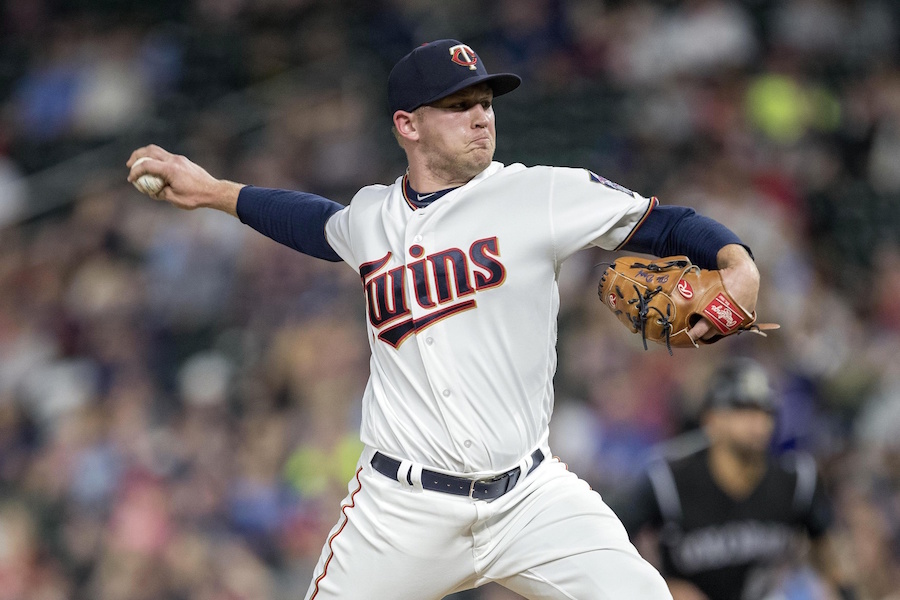 The Twins aren't in any position to make an Andrew Miller-type splash, and would be ill-advised to dangle any of their better prospects – even a Chih-Wei Hu type – for relief help (insofar as any high-impact relievers are being made available this far from the deadline). In order to meaningfully improve their chances in the late innings, the front office might need to get creative. Sure, they can try someone like Alan Busenitz or Trevor Hildenberger, but you can't just count on green rookies with iffy scouting reports to come up and shut down the eighth inning. By the same token, newly promoted farmhands Alex Wimmers and Randy Rosario are more band aids than plugs. The following suggestions are aimed at creating a more dramatic short-term impact, without forfeiting anything of import. Move Phil Hughes to the Bullpen Hughes is currently on the disabled list but there have been indications he won't stay there too terribly long. When he returns, the Twins might be wise to bring him back in a relief role. There are multiple beneficial outcomes this route could achieve. His fastball has been humming in at the lowest velocity of his career, and getting pounded as a result. It's possible Hughes could add a few ticks in shorter stints. Of course, he's had tremendous success out of the bullpen before, serving as Mariano Rivera's top setup man when the Yankees won the World Series in 2009. Hughes' numbers that season: 86 IP, 3.03 ERA, 1.12 WHIP, 96/28 K/BB. He isn't likely to regain that level of superior efficacy, especially not right away, but maybe Hughes will surprise us. He has the command and poise that so many other Twins relievers are lacking, so even a slight uptick in heat – and perhaps a reduced reliance on his lesser offerings – could make a big difference. Swap Tyler Duffey and Brandon Kintzler This isn't so much a denouncement of what either right-hander has done in his current role – they've been the bullpen's two best weapons – as it is an assertion they may be best suited for a reversal. Kintzler has done an admirable job in the ninth, but always struck me as a guy better equipped for the middle innings. His penchant for inducing ground balls on command would make him an excellent fireman, called upon in a tough spot with runners on base. He has also proven fairly durable, and could likely handle multiple innings on a frequent basis. Meanwhile, Duffey is much more of a prototypical closer, with his bat-missing stuff, and has experience in the role from his collegiate days at Rice University. Call up Fernando Romero Minnesota's legit relief prospects can't seem to get healthy. Nick Burdi is out for the season after undergoing Tommy John surgery. JT Chargois went on the disabled list in April with an elbow impingement and still hasn't returned. Tyler Jay missed the first seven weeks with a shoulder injury, came back a week ago, made two appearances and then landed back on the DL. I'm starting to lose hope that any of these guys will be available to the Twins at any point this year. That's a huge problem because they are THE minor-league arms that could actually bring game-changing shutdown ability to the table. If the Twins want to find that now, they may need to consider calling up Romero from Double-A. Twins Daily's No. 1 prospect has gotten on a roll in Chattanooga lately, firing 12 scoreless innings over his past two starts, and as someone who works in the mid-90s as a starter he could really dial it up in short stints. The additional benefit is that this might help manage the 22-year-old's workload; he's already more than halfway to last season's total of 90 innings. The downside is that it would essentially remove him as a potential rotation reinforcement, unless the coaching staff wanted to stretch him out after he arrives. (Wouldn't be the first time.) Mine for Spare Parts in Other Organizations While we've ruled out giving up a prospect of Wilson Ramos' or even Hu's caliber, the Twins might be able to inherit a project that some other organization is ready to give up on. Maybe there is a fifth/sixth starter out there that Derek Falvey and Thad Levine view as a particularly good candidate for a role switch. Or perhaps there is a Michael Tonkin or Ryan Pressly type, with big stuff and disappointing results, who they believe they can turn around with a specific fix. The cost of such an acquisition would be negligible. It would be a good opportunity for the new regime, especially Falvey with his reputation as an innovative pitching mind, to flex some muscle. What are your creative fixes for Minnesota's wayward bullpen?
 -
The Minnesota Twins will have their choice of every amateur player in the nation when they pick first in the MLB Draft in two weeks. Most attention has swirled around three names: collegiate stars Brendan McKay and Kyle Wright, and California high schooler Hunter Greene. But there's another prep talent from the Golden State whose name needs to be mentioned in the discussion at 1:1. Royce Lewis offers big speed and might be the best high school hitter in the country. He would be a justifiable top pick under one condition.Who Is He? Hailing from JSerra Catholic High School in San Juan Capistrano, CA, Lewis is a lean and athletic specimen at 6-foot-2 and 190 lbs. He played third base as an underclassman before sliding to shortstop last summer to replace a departing senior. His ability to stick there will define his ceiling, because at short his offensive tool set is beyond tantalizing. Baseball America has him ranked as the fifth-best draft prospect but calls him "arguably the best position player prospect in this year’s class," citing a "unique combination of explosive tools, top-of-the-scale makeup and up-the-middle defensive profile." A righty swinger, the 17-year-old has an advanced feel for hitting and generates a ton of bat speed. You can see some footage of his smooth swing in action below, courtesy of Prospect Pipeline: Last year the Los Angeles Times named Lewis high school player of the year, ahead of Greene mind you, after he captured a second straight Trinity League MVP award by batting .429 as a junior. Analysts envision a 20-plus home run guy after he matures. While the power potential is enticing, the speed is already there. Most scouts peg Lewis around 70 on the 20-80 scale in this category, and with his superior first-step quickness he looks like a guy who will steal a ton of bases as a pro. He is committed to play collegiately at UC Irvine, but obviously that could change with the right offer at the right spot. Why The Twins Will Pick Him Lewis hasn't gotten a ton of national steam as a contender to go No. 1, but he's been connected to the Twins by multiple reports. To be sure, Minnesota's front office is keeping a close eye on him. Of course, the last high school infielder to be taken first overall was Carlos Correa, who developed into a franchise player for Houston within three years of his selection in 2012. There aren't many player types more valuable than a shortstop who can excel both offensive and defensively. Lewis has the characteristics of a guy that'll do both. A recent report from Jon Heyman of FanRag Sports suggests the Twins are leaning toward passing on Greene with their top pick. The two college players under consideration both have their warts. Brendan McKay's floor is more appealing than his ceiling, whether as a pitcher or first baseman, and that's never ideal at the highest draft slot. Vanderbilt righty Kyle Wright is also seen as a "safer" choice, but it's not clear he has that realistic ace upside that would make him an easy choice. If the Twins firmly believe Lewis will stick at short – and that's a big if, with opinions varying based on the source – he may offer more assurance than anyone else in the mix. Why The Twins Will Not Pick Him Yes, Correa was a big success story. But the three prep shortstops preceding him as first overall picks present cautionary tales. In 2008, the Rays selected Tim Beckham. He never evolved past being a decent hitter in the minors and eventually moved off short; now, he's a mediocre second baseman for Tampa. In 2005, the Diamondbacks selected Justin Upton. He moved to the outfield as soon as he joined the pro ranks, and while his offensive performance in 11 big-league seasons would be spectacular for a shortstop, he's merely been good as a corner outfielder. The prior year, Matt Bush went No. 1 to San Diego. Off-the-field issues have consumed much of his career, but he didn't last long as a shortstop or even a position player, switching to the mound after struggling mightily at the plate for three years. Uncertainty looms large when dealing with teenage ballplayers, and with their first top No. 1 pick in 16 years, the stakes may be too high for the Twins to gamble on Lewis despite his lofty ceiling. The same ambiguity that has evidently soured Minnesota on Greene is in play with Lewis, who lacks the pedigree of No. 1 shortstops like Correa and Alex Rodriguez that panned out successfully. Click here to view the article
-
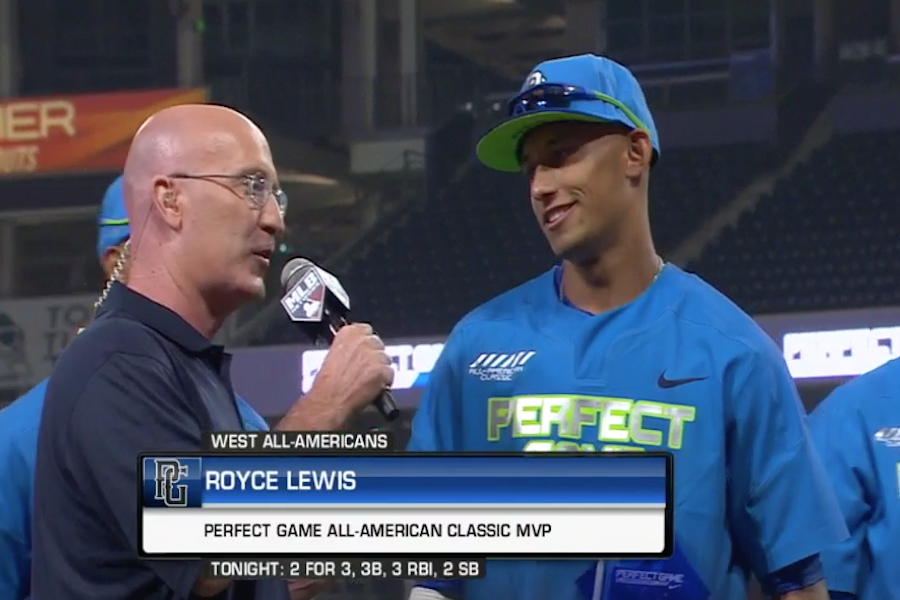 Who Is He? Hailing from JSerra Catholic High School in San Juan Capistrano, CA, Lewis is a lean and athletic specimen at 6-foot-2 and 190 lbs. He played third base as an underclassman before sliding to shortstop last summer to replace a departing senior. His ability to stick there will define his ceiling, because at short his offensive tool set is beyond tantalizing. Baseball America has him ranked as the fifth-best draft prospect but calls him "arguably the best position player prospect in this year’s class," citing a "unique combination of explosive tools, top-of-the-scale makeup and up-the-middle defensive profile." A righty swinger, the 17-year-old has an advanced feel for hitting and generates a ton of bat speed. You can see some footage of his smooth swing in action below, courtesy of Prospect Pipeline: Last year the Los Angeles Times named Lewis high school player of the year, ahead of Greene mind you, after he captured a second straight Trinity League MVP award by batting .429 as a junior. Analysts envision a 20-plus home run guy after he matures. While the power potential is enticing, the speed is already there. Most scouts peg Lewis around 70 on the 20-80 scale in this category, and with his superior first-step quickness he looks like a guy who will steal a ton of bases as a pro. He is committed to play collegiately at UC Irvine, but obviously that could change with the right offer at the right spot. Why The Twins Will Pick Him Lewis hasn't gotten a ton of national steam as a contender to go No. 1, but he's been connected to the Twins by multiple reports. To be sure, Minnesota's front office is keeping a close eye on him. Of course, the last high school infielder to be taken first overall was Carlos Correa, who developed into a franchise player for Houston within three years of his selection in 2012. There aren't many player types more valuable than a shortstop who can excel both offensive and defensively. Lewis has the characteristics of a guy that'll do both. A recent report from Jon Heyman of FanRag Sports suggests the Twins are leaning toward passing on Greene with their top pick. The two college players under consideration both have their warts. Brendan McKay's floor is more appealing than his ceiling, whether as a pitcher or first baseman, and that's never ideal at the highest draft slot. Vanderbilt righty Kyle Wright is also seen as a "safer" choice, but it's not clear he has that realistic ace upside that would make him an easy choice. If the Twins firmly believe Lewis will stick at short – and that's a big if, with opinions varying based on the source – he may offer more assurance than anyone else in the mix. Why The Twins Will Not Pick Him Yes, Correa was a big success story. But the three prep shortstops preceding him as first overall picks present cautionary tales. In 2008, the Rays selected Tim Beckham. He never evolved past being a decent hitter in the minors and eventually moved off short; now, he's a mediocre second baseman for Tampa. In 2005, the Diamondbacks selected Justin Upton. He moved to the outfield as soon as he joined the pro ranks, and while his offensive performance in 11 big-league seasons would be spectacular for a shortstop, he's merely been good as a corner outfielder. The prior year, Matt Bush went No. 1 to San Diego. Off-the-field issues have consumed much of his career, but he didn't last long as a shortstop or even a position player, switching to the mound after struggling mightily at the plate for three years. Uncertainty looms large when dealing with teenage ballplayers, and with their first top No. 1 pick in 16 years, the stakes may be too high for the Twins to gamble on Lewis despite his lofty ceiling. The same ambiguity that has evidently soured Minnesota on Greene is in play with Lewis, who lacks the pedigree of No. 1 shortstops like Correa and Alex Rodriguez that panned out successfully.
 -
On Monday, the Minnesota Twins endured their worst loss of the year, melting down after Ervin Santana left with a six-run lead on the way to an embarrassing 16-8 loss against Houston. Still, they are 26-21, in first place, and miles ahead of their pace from a year ago. Let's run through some of the latest noteworthy trends and attention-grabbing tidbits – both good and bad.Bullpen Blowout Yep, that was a spectacular implosion from the Twins relief unit in front of the home crowd. Ryan Pressly, Craig Breslow, Matt Belisle and one-day call-up Drew Rucinski combined to remarkably allow 14 runs – all earned – on 13 hits and three walks while recording six outs. It came one day after a costly blown save from Brandon Kintzler. Pressly, initially tabbed as the club's top setup man out of spring training, opened the floodgates by entering in the eighth inning, up 8-2, and allowing five of six batters to reach. He's been a perplexing case this season. His elite velocity has been giving batters fits, as the righty owns a 31.8 percent K-rate that towers over his 18.3 percent career mark. At times he looks completely unhittable, including the stretch leading up to Monday's disaster. Over his previous five appearances, he allowed two knocks over 6 1/3 innings with 12(!) strikeouts. But on numerous occasions this season he has completely unraveled, and the latest is tough to forgive. I think Pressly has at least one option left, and perhaps a demotion or DL stint is in order. But at least there is enough there to be worth keeping around. I'm not sure I can say the same for Belisle. There have been no redeeming qualities in the veteran's performance. He was a contact-prone pitcher who relied on pinpoint command to get by, and now that's gone amiss. Through two months he has issued 13 walks, putting him on pace to more than double his career high as a reliever. In fact, his 15.5 percent BB rate ranks as one of the highest in the league. Belisle was either hurting or lacking Paul Molitor's trust over the two-week stretch between May 12th and 26th, during which he made only one appearance. In three outings since re-entering the fold, he has allowed two homers. It's time to move on, but to what? Searching For Relief They've made many good decisions since taking over, but the biggest blunder committed by Derek Falvey and Thad Levine as heads of the front office was their approach with the bullpen. Now, the team is hurting for it. Minnesota's sole major-league signing to address the unit, Belisle has ruled himself out as a reliable option in the late innings. Now, the Twins need to find a superior option to replace him. While they have some candidates in the minors worth trying out, there's no one that can be thrown straight into a setup role with any kind of expectation. For a more substantive fix, Falvey and Levine must look to the trade market, meaning they'll need to pay in talent rather than money. One wonders how quickly a move could come given the increasingly dire state of affairs. On one hand, it's tougher to find sellers this early with fewer teams feeling out of contention. On the other hand, if you're going to give up a prospect for an impending free agent, you might as well maximize the return. With Nick Burdi gone for the year, JT Chargois stuck in injury limbo, and Glen Perkins a poor bet to return and make an impact, the Twins can't afford to count on internal reinforcements to bail out this battered bullpen. They'll need to look outside. Santana's Stolen Spotlight The painful ending of Monday's game took away the headline from Ervin Santana, who should have cruised to his eighth victory by holding a potent Astros offense to two runs over seven innings (one of those runs owed to a head-scratching defensive gaffe by Eddie Rosario). Dating back to the start of last year, Santana has a 2.90 ERA over 258 1/3 innings. He continues to defy luck on batted balls in astonishing fashion. From Batting Cleanup to Clean Out Your Stuff Eleven days ago, Kennys Vargas enjoyed perhaps his biggest moment in a Twins uniform, clutching victory from the jaws of defeat with a game-tying two-run homer in the bottom of the ninth against Kansas City. He followed by batting .429 over six games, lifting his OPS to .837 on the season. On Sunday, he was filling Miguel Sano's customary spot in the starting lineup, sandwiched between Joe Mauer and Max Kepler. Then, he went 0-for-8 in a 15-inning affair, and found himself optioned to the minors following the game. Life comes at you fast, huh? It's an unfortunate break for Vargas, the victim of circumstance as the Twins needed extra arms having gone through nine in the game. But his perceived expendability speaks to the thin margin for error his profile entails. Vargas offers minimal defensive value and doesn't run well, so he needs to be carried by his power and patience combo. The former has been on display but he has fallen back into an old habit of chasing too often outside the zone, resulting in just three walks in 93 plate appearances. While the demotion surely had more to do with the roster crunch than his performance, the Twins are surely looking for Vargas to demonstrate better strike zone control in Rochester. More May Magic For Mauer The month of May has almost always treated Joe Mauer well, most notably in his MVP 2009 season when he put up a ridiculous .414/.500/.838 line with 11 homers. Now, he's wrapping up another great one: with June two days away, Mauer's line for the month sits at .351/.451/.545. He has gone hitless in a start only once since the end of April. If he finishes strong in the next couple of days, Mauer could complete a month with a four-digit OPS for the first time since 2013, when he put up a 1.026 mark in – you guessed it – May. His strong showing over the past four weeks comes on the heels of a terrible April, and carries several indicators that the first baseman is on top of his game. He's back to drawing walks (14.3 percent BB rate) and spraying liners to all fields. Say what you will about Mauer, but there's no denying this: the lineup is far more dangerous when he's going good. Lately he's looked like the vintage version and while time has told us that can be fleeting, I'll enjoy it as long as it lasts. Click here to view the article
- 56 replies
-
- 4
-
-
- ryan pressly
- matt belisle
- (and 3 more)
-
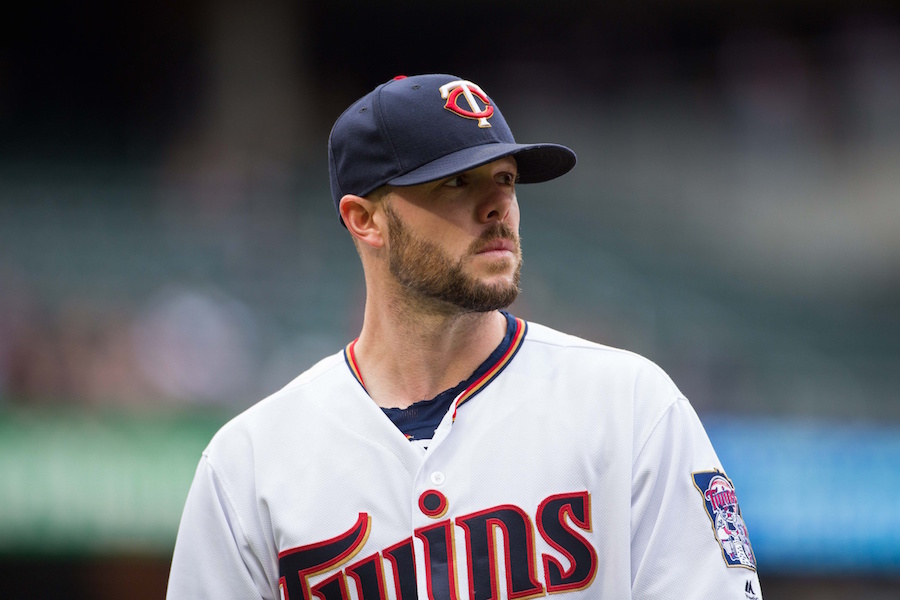 Bullpen Blowout Yep, that was a spectacular implosion from the Twins relief unit in front of the home crowd. Ryan Pressly, Craig Breslow, Matt Belisle and one-day call-up Drew Rucinski combined to remarkably allow 14 runs – all earned – on 13 hits and three walks while recording six outs. It came one day after a costly blown save from Brandon Kintzler. Pressly, initially tabbed as the club's top setup man out of spring training, opened the floodgates by entering in the eighth inning, up 8-2, and allowing five of six batters to reach. He's been a perplexing case this season. His elite velocity has been giving batters fits, as the righty owns a 31.8 percent K-rate that towers over his 18.3 percent career mark. At times he looks completely unhittable, including the stretch leading up to Monday's disaster. Over his previous five appearances, he allowed two knocks over 6 1/3 innings with 12(!) strikeouts. But on numerous occasions this season he has completely unraveled, and the latest is tough to forgive. I think Pressly has at least one option left, and perhaps a demotion or DL stint is in order. But at least there is enough there to be worth keeping around. I'm not sure I can say the same for Belisle. There have been no redeeming qualities in the veteran's performance. He was a contact-prone pitcher who relied on pinpoint command to get by, and now that's gone amiss. Through two months he has issued 13 walks, putting him on pace to more than double his career high as a reliever. In fact, his 15.5 percent BB rate ranks as one of the highest in the league. Belisle was either hurting or lacking Paul Molitor's trust over the two-week stretch between May 12th and 26th, during which he made only one appearance. In three outings since re-entering the fold, he has allowed two homers. It's time to move on, but to what? Searching For Relief They've made many good decisions since taking over, but the biggest blunder committed by Derek Falvey and Thad Levine as heads of the front office was their approach with the bullpen. Now, the team is hurting for it. Minnesota's sole major-league signing to address the unit, Belisle has ruled himself out as a reliable option in the late innings. Now, the Twins need to find a superior option to replace him. While they have some candidates in the minors worth trying out, there's no one that can be thrown straight into a setup role with any kind of expectation. For a more substantive fix, Falvey and Levine must look to the trade market, meaning they'll need to pay in talent rather than money. One wonders how quickly a move could come given the increasingly dire state of affairs. On one hand, it's tougher to find sellers this early with fewer teams feeling out of contention. On the other hand, if you're going to give up a prospect for an impending free agent, you might as well maximize the return. With Nick Burdi gone for the year, JT Chargois stuck in injury limbo, and Glen Perkins a poor bet to return and make an impact, the Twins can't afford to count on internal reinforcements to bail out this battered bullpen. They'll need to look outside. Santana's Stolen Spotlight The painful ending of Monday's game took away the headline from Ervin Santana, who should have cruised to his eighth victory by holding a potent Astros offense to two runs over seven innings (one of those runs owed to a head-scratching defensive gaffe by Eddie Rosario). Dating back to the start of last year, Santana has a 2.90 ERA over 258 1/3 innings. He continues to defy luck on batted balls in astonishing fashion. From Batting Cleanup to Clean Out Your Stuff Eleven days ago, Kennys Vargas enjoyed perhaps his biggest moment in a Twins uniform, clutching victory from the jaws of defeat with a game-tying two-run homer in the bottom of the ninth against Kansas City. He followed by batting .429 over six games, lifting his OPS to .837 on the season. On Sunday, he was filling Miguel Sano's customary spot in the starting lineup, sandwiched between Joe Mauer and Max Kepler. Then, he went 0-for-8 in a 15-inning affair, and found himself optioned to the minors following the game. Life comes at you fast, huh? It's an unfortunate break for Vargas, the victim of circumstance as the Twins needed extra arms having gone through nine in the game. But his perceived expendability speaks to the thin margin for error his profile entails. Vargas offers minimal defensive value and doesn't run well, so he needs to be carried by his power and patience combo. The former has been on display but he has fallen back into an old habit of chasing too often outside the zone, resulting in just three walks in 93 plate appearances. While the demotion surely had more to do with the roster crunch than his performance, the Twins are surely looking for Vargas to demonstrate better strike zone control in Rochester. More May Magic For Mauer The month of May has almost always treated Joe Mauer well, most notably in his MVP 2009 season when he put up a ridiculous .414/.500/.838 line with 11 homers. Now, he's wrapping up another great one: with June two days away, Mauer's line for the month sits at .351/.451/.545. He has gone hitless in a start only once since the end of April. If he finishes strong in the next couple of days, Mauer could complete a month with a four-digit OPS for the first time since 2013, when he put up a 1.026 mark in – you guessed it – May. His strong showing over the past four weeks comes on the heels of a terrible April, and carries several indicators that the first baseman is on top of his game. He's back to drawing walks (14.3 percent BB rate) and spraying liners to all fields. Say what you will about Mauer, but there's no denying this: the lineup is far more dangerous when he's going good. Lately he's looked like the vintage version and while time has told us that can be fleeting, I'll enjoy it as long as it lasts.
 -
Article: The 5 Most Shocking Twins Stats So Far
Nick Nelson replied to Nick Nelson's topic in Twins Daily Front Page News
He's at 93.27, which pales in comparison to Sano's 99.9 but does rank 15th in MLB. If you haven't yet, I recommend tooling around with the leaderboards and profile pages on MLB.com. They do a really good job of making the Statcast stuff prominent and easy to find.- 33 replies
-
- 1
-
-
- joe mauer
- miguel sano
- (and 2 more)
-
We are now more than seven weeks into the MLB season and the Minnesota Twins are in first place at 24-18. Who would have guessed? Taking a deeper dive, let's break down some of the craziest and most jarring individual stats from Twins players thus far as we near the end of May.1) Joe Mauer's GB/FB ratio: 1.25 Mauer has changed significantly as a hitter over the years, and there aren't many traits that have remained completely consistent over the course of his career. This one has: he has always hit the ball on the ground far, far more often than in the air. He has a lifetime 2-to-1 ratio and hasn't had a fly ball rate above 25 percent since his MVP season in 2009. This year, it stands at 34.2 percent and is nearly even with his career-low grounder rate (42.7 percent). What does it mean? Well, theoretically Mauer should be in line for more extra-base hits and homers, though up to this point many of his liners have been falling short of the wall and finding gloves. His HR/FB ratio, at 5.1 percent, is due for some upward movement. Don't be surprised to see a mid-summer surge. 2) Miguel Sano's batting average: .310 This is nuts. Sano is striking out at a 35 percent rate, fourth-highest in baseball, and he is hitting well above .300. No one else in the top 10 for K-rate is batting over .270, and four are below the .200 mark. Last year, nobody in the top 10 finished with an average over .253. There is a reason for this: it's really hard to hit for a decent average when you're failing to put the ball in play so often. Sano has been able to do so with a .479 BABIP that – somehow – doesn't seem all that fluky. He is absolutely crushing the ball every time he makes contact. One of my favorite writers, Joe Posnanski, had a great piece over the weekend on Sano's astonishing superiority to the rest of the league in average exit velocity. On Monday night, the slugger put the ball in play four times and each one came off his bat at more than 100 MPH. It's quite the show. 3) Jorge Polanco's UZR/150: 9.5 It should go without saying that the small sample size disclaimer applies to all of these snapshot stats, and that's especially true here. Ultimate Zone Rating is considered one of the better defensive metrics, but its accuracy can be questionable even in large samples. Over less than two months, it can be almost meaningless. But still. Polanco as everyday shortstop has a positive UZR thus far (0.9) and the UZR/150 stat, which extrapolates for 150 games to provide a rough full-season projection, has him at 9.5 runs above average as we cross the schedule's quarter-point. Last year, nine MLB shortstops finished with a higher rating. Polanco, as a rookie for the Twins, rated at -10.9 in 406 innings with a UZR/150 of -32.3. I'd be quicker to dismiss this if the eye test didn't so strongly back it up. He's been very solid out there. 4) Robbie Grossman's strikeout rate: 16.0% Ever the patient specimen, Grossman has always been able to take a walk, but in the past his penchant for passing on pitches has resulted in plentiful punchouts. He entered this season with a 25 percent career K-rate, and even in his breakout 2016 campaign he struck out almost twice for every walk. If his current 16 percent rate were to hold, it would be Grossman's lowest ever – even in the minors. Meanwhile, he's drawing more free passes than ever. The 27-year-old is proving to be an extremely tough out, and an underrated component of Minnesota's offensive attack. 5) Ervin Santana's batting average against: .134 Entering Tuesday's game with a .144 batting average on balls in play, it sure looked like Santana was due for some regression, especially against a ticked off Baltimore lineup that looked to be a poor matchup with its top-tier power. Nah. Erv went out and tossed a two-hit shutout. Twenty-three batters put the ball in play against him and 21 were put out. His .134 OBA through 10 starts is absurd. Here's some perspective: Santana now has 70 innings in the books. Last year, among all pitchers – starters and relievers – with 70-plus innings, Andrew Miller led all of baseball with a .159 average against. Santana is on track for his lowest strikeout rate since 2006, and his highest walk rate ever. And he might start the All Star Game. What. The. Hell. Click here to view the article
- 33 replies
-
- 9
-
-
- joe mauer
- miguel sano
- (and 2 more)
-
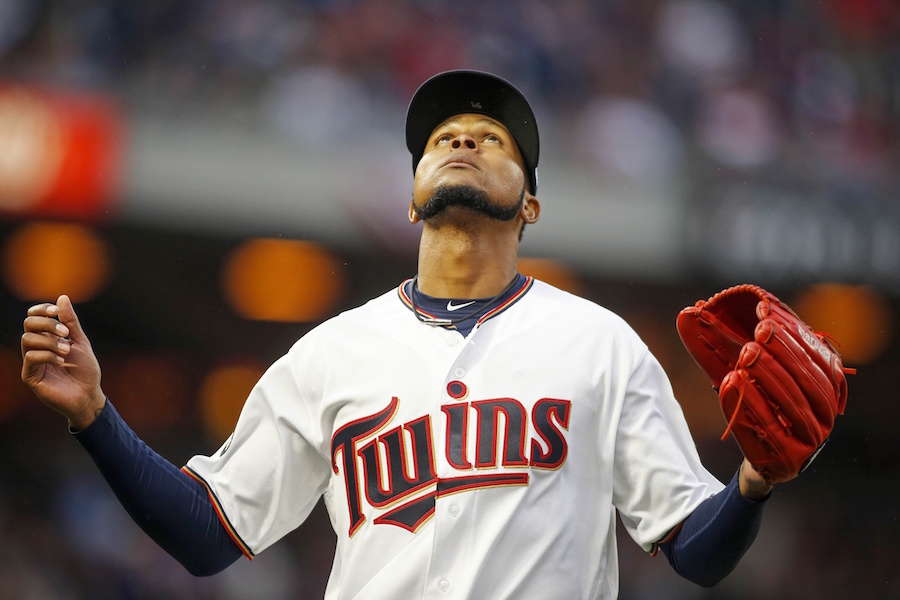 1) Joe Mauer's GB/FB ratio: 1.25 Mauer has changed significantly as a hitter over the years, and there aren't many traits that have remained completely consistent over the course of his career. This one has: he has always hit the ball on the ground far, far more often than in the air. He has a lifetime 2-to-1 ratio and hasn't had a fly ball rate above 25 percent since his MVP season in 2009. This year, it stands at 34.2 percent and is nearly even with his career-low grounder rate (42.7 percent). What does it mean? Well, theoretically Mauer should be in line for more extra-base hits and homers, though up to this point many of his liners have been falling short of the wall and finding gloves. His HR/FB ratio, at 5.1 percent, is due for some upward movement. Don't be surprised to see a mid-summer surge. 2) Miguel Sano's batting average: .310 This is nuts. Sano is striking out at a 35 percent rate, fourth-highest in baseball, and he is hitting well above .300. No one else in the top 10 for K-rate is batting over .270, and four are below the .200 mark. Last year, nobody in the top 10 finished with an average over .253. There is a reason for this: it's really hard to hit for a decent average when you're failing to put the ball in play so often. Sano has been able to do so with a .479 BABIP that – somehow – doesn't seem all that fluky. He is absolutely crushing the ball every time he makes contact. One of my favorite writers, Joe Posnanski, had a great piece over the weekend on Sano's astonishing superiority to the rest of the league in average exit velocity. On Monday night, the slugger put the ball in play four times and each one came off his bat at more than 100 MPH. It's quite the show. 3) Jorge Polanco's UZR/150: 9.5 It should go without saying that the small sample size disclaimer applies to all of these snapshot stats, and that's especially true here. Ultimate Zone Rating is considered one of the better defensive metrics, but its accuracy can be questionable even in large samples. Over less than two months, it can be almost meaningless. But still. Polanco as everyday shortstop has a positive UZR thus far (0.9) and the UZR/150 stat, which extrapolates for 150 games to provide a rough full-season projection, has him at 9.5 runs above average as we cross the schedule's quarter-point. Last year, nine MLB shortstops finished with a higher rating. Polanco, as a rookie for the Twins, rated at -10.9 in 406 innings with a UZR/150 of -32.3. I'd be quicker to dismiss this if the eye test didn't so strongly back it up. He's been very solid out there. 4) Robbie Grossman's strikeout rate: 16.0% Ever the patient specimen, Grossman has always been able to take a walk, but in the past his penchant for passing on pitches has resulted in plentiful punchouts. He entered this season with a 25 percent career K-rate, and even in his breakout 2016 campaign he struck out almost twice for every walk. If his current 16 percent rate were to hold, it would be Grossman's lowest ever – even in the minors. Meanwhile, he's drawing more free passes than ever. The 27-year-old is proving to be an extremely tough out, and an underrated component of Minnesota's offensive attack. 5) Ervin Santana's batting average against: .134 Entering Tuesday's game with a .144 batting average on balls in play, it sure looked like Santana was due for some regression, especially against a ticked off Baltimore lineup that looked to be a poor matchup with its top-tier power. Nah. Erv went out and tossed a two-hit shutout. Twenty-three batters put the ball in play against him and 21 were put out. His .134 OBA through 10 starts is absurd. Here's some perspective: Santana now has 70 innings in the books. Last year, among all pitchers – starters and relievers – with 70-plus innings, Andrew Miller led all of baseball with a .159 average against. Santana is on track for his lowest strikeout rate since 2006, and his highest walk rate ever. And he might start the All Star Game. What. The. Hell.
 -
Over the six-year period from 2011 through 2016, during which the Twins won at a miserable .419 clip and finished last in the division four times, here's how many times a starting pitcher under the age of 27 threw 100-plus innings with a better than average ERA: one. Scott Diamond, in 2012, posted a fluky 3.54 ERA over 27 starts at age 25. He fizzled out after one more big-league season and is now pitching in Korea.Minnesota rotations of the last half-decade have featured a couple of impressive veteran campaigns and few other positives. For an organization with such emphatic focus on acquiring and developing young arms to receive not one convincing standout season from a youthful starter over such a span is damning. It also tells you all you need to know about the club's perpetual run prevention problems. In this light, what we've seen from Jose Berrios and Adalberto Mejia over the past week has been borderline revelatory. It's important to not get carried away on the basis of three starts, but there's plenty of legitimate reason for encouragement. Obviously, Berrios has been nothing short of incredible in two starts since rejoining the team. He has gone 7.2 in both turns, and the only run scored against him came on a wild pitch. Opponents have not been able to muster anything against his blazing heater and bendy breaking balls. This is the player we expected based on Berrios' mastery of the minors and truly special pitch arsenal. He obviously won't sustain an ERA below one, and he may not ultimately pan out as a true No. 1 type, but Berrios is clearly becoming more comfortable and doesn't turn 23 for a few more days. After generating some doubt with a disastrous debut in 2016, the Puerto Rican righty is regaining his status as a rotation building block that the Twins sorely need. He may be joined by Mejia, who picked up his first big-league victory in the second half of Sunday's double-header with a strong effort against the Royals. The southpaw had a couple of pitches tail into the sweet spot of Salvador Perez's righty bat and leave the yard, but was otherwise exceptional, cruising through seven innings on 89 pitches while throwing 67 percent strikes. Mejia doesn't have the lofty ceiling of Berrios, but seems to have a pretty high floor, which might have factored into the Twins surprisingly handing him a rotation spot out of camp. The left-hander's erratic April audition in the rotation was quite uncharacteristic, and on Sunday he looked much more like the pitcher his numbers advertise. The guy with a 1.21 WHIP and 86-to-19 K/BB in 93 innings at Triple-A. If he's throwing his mid-90s fastball and mid-80s slider for strikes, and getting anything from his changeup, Mejia has a reliable formula for success. He executed the plan on Sunday, as he did in four starts for Rochester during his demotion. He turns 24 next month. Pitching is the currency of baseball – more specifically, young and controllable pitching. The Twins have been bankrupt in this area for entirely too long, leading to the destitute state that triggered a front office overhaul. But Berrios and Mejia are harbingers of a shifting tide, and on another note of optimism, Twins Daily's No. 2 prospect Stephen Gonsalves finally made his season debut at Chattanooga on Saturday, tossing four solid innings while easing back into action. Gonsalves missed the first six weeks rehabbing a sore shoulder, but all signs point toward him being back at full strength. If he picks up where he left off with the Lookouts last year (8-1 with a 1.82 ERA following a June promotion) he'll quickly be in the mix as an option for the Twins. Same goes for his Double-A rotation-mate and fellow 22-year-old Fernando Romero, who has been inconsistent but is most importantly healthy. He possesses the ability to get on a roll at any time, and is already on the 40-man roster. It's been a long time since the Twins have had such volume of available or tangibly close good young arms. And given the state of their rotation, the timing couldn't be better. Mejia's redemptive performance on Sunday followed a deflating one from Phil Hughes, who lasted only four innings while coughing up five runs on three homers. It was his third straight crummy start, and afterward the veteran landed on the disabled list with shoulder discomfort. He'd been throwing with the lowest velocity of his career and allowing loud contact at an extraordinary rate, so at this stage there's no evident beneficial impact from offseason shoulder surgery. In fact, Hughes spoke after the game of a "dead feeling" very similar to the symptoms that led to his thoracic outlet syndrome diagnosis. Quite troubling. Fortunately, the budding emergence of Berrios and Mejia enables the Twins to give Hughes a break without worrying too much. It also lessens the urgency of a successful return for Kyle Gibson on Monday night, though that would certainly help. Click here to view the article
-
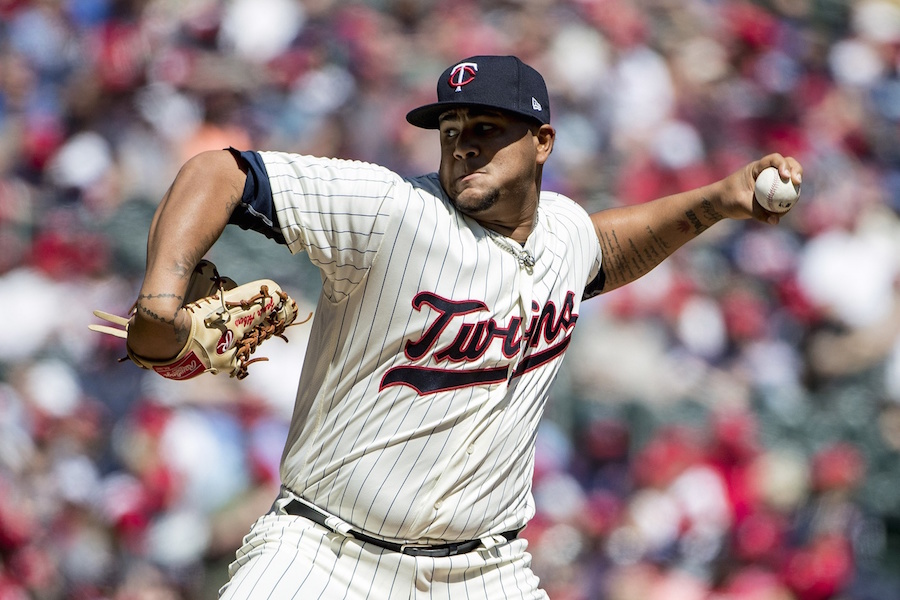 Minnesota rotations of the last half-decade have featured a couple of impressive veteran campaigns and few other positives. For an organization with such emphatic focus on acquiring and developing young arms to receive not one convincing standout season from a youthful starter over such a span is damning. It also tells you all you need to know about the club's perpetual run prevention problems. In this light, what we've seen from Jose Berrios and Adalberto Mejia over the past week has been borderline revelatory. It's important to not get carried away on the basis of three starts, but there's plenty of legitimate reason for encouragement. Obviously, Berrios has been nothing short of incredible in two starts since rejoining the team. He has gone 7.2 in both turns, and the only run scored against him came on a wild pitch. Opponents have not been able to muster anything against his blazing heater and bendy breaking balls. This is the player we expected based on Berrios' mastery of the minors and truly special pitch arsenal. He obviously won't sustain an ERA below one, and he may not ultimately pan out as a true No. 1 type, but Berrios is clearly becoming more comfortable and doesn't turn 23 for a few more days. After generating some doubt with a disastrous debut in 2016, the Puerto Rican righty is regaining his status as a rotation building block that the Twins sorely need. He may be joined by Mejia, who picked up his first big-league victory in the second half of Sunday's double-header with a strong effort against the Royals. The southpaw had a couple of pitches tail into the sweet spot of Salvador Perez's righty bat and leave the yard, but was otherwise exceptional, cruising through seven innings on 89 pitches while throwing 67 percent strikes. Mejia doesn't have the lofty ceiling of Berrios, but seems to have a pretty high floor, which might have factored into the Twins surprisingly handing him a rotation spot out of camp. The left-hander's erratic April audition in the rotation was quite uncharacteristic, and on Sunday he looked much more like the pitcher his numbers advertise. The guy with a 1.21 WHIP and 86-to-19 K/BB in 93 innings at Triple-A. If he's throwing his mid-90s fastball and mid-80s slider for strikes, and getting anything from his changeup, Mejia has a reliable formula for success. He executed the plan on Sunday, as he did in four starts for Rochester during his demotion. He turns 24 next month. Pitching is the currency of baseball – more specifically, young and controllable pitching. The Twins have been bankrupt in this area for entirely too long, leading to the destitute state that triggered a front office overhaul. But Berrios and Mejia are harbingers of a shifting tide, and on another note of optimism, Twins Daily's No. 2 prospect Stephen Gonsalves finally made his season debut at Chattanooga on Saturday, tossing four solid innings while easing back into action. Gonsalves missed the first six weeks rehabbing a sore shoulder, but all signs point toward him being back at full strength. If he picks up where he left off with the Lookouts last year (8-1 with a 1.82 ERA following a June promotion) he'll quickly be in the mix as an option for the Twins. Same goes for his Double-A rotation-mate and fellow 22-year-old Fernando Romero, who has been inconsistent but is most importantly healthy. He possesses the ability to get on a roll at any time, and is already on the 40-man roster. It's been a long time since the Twins have had such volume of available or tangibly close good young arms. And given the state of their rotation, the timing couldn't be better. Mejia's redemptive performance on Sunday followed a deflating one from Phil Hughes, who lasted only four innings while coughing up five runs on three homers. It was his third straight crummy start, and afterward the veteran landed on the disabled list with shoulder discomfort. He'd been throwing with the lowest velocity of his career and allowing loud contact at an extraordinary rate, so at this stage there's no evident beneficial impact from offseason shoulder surgery. In fact, Hughes spoke after the game of a "dead feeling" very similar to the symptoms that led to his thoracic outlet syndrome diagnosis. Quite troubling. Fortunately, the budding emergence of Berrios and Mejia enables the Twins to give Hughes a break without worrying too much. It also lessens the urgency of a successful return for Kyle Gibson on Monday night, though that would certainly help.
 -
Dozier drove in 99 runs last year and had an .856 OPS with RISP. What are you people talking about
