



Nick Nelson
-
Posts
8,326 -
Joined
-
Last visited
-
Days Won
56
Content Type
Profiles
News
Minnesota Twins Videos
2026 Minnesota Twins Top Prospects Ranking
2022 Minnesota Twins Draft Picks
Minnesota Twins Free Agent & Trade Rumors, Notes, & Tidbits
Guides & Resources
2023 Minnesota Twins Draft Picks
The Minnesota Twins Players Project
2024 Minnesota Twins Draft Picks
2025 Minnesota Twins Draft Pick Tracker
2026 Minnesota Twins Draft Tracker: Picks & Bonuses
Forums
Blogs
Events
Store
Downloads
Gallery
Everything posted by Nick Nelson
-

Article: Charting A Twins Playoff Rotation
Nick Nelson posted a topic in Twins Daily Front Page News
What once seemed unthinkable is now a crystallizing reality: The Twins are in all likelihood headed toward a one-game Wild Card showdown against the Yankees in New York on October 3rd. And while they will be heavy underdogs in such a contest – especially after what we saw in the Bronx last week – in one game, anything can happen. Let's start looking ahead.As long as the Twins avoid total collapse in the final week, they will be able to wrap up a pretty cool distinction as the first team ever to qualify for the postseason one year after losing 100-plus games. But while it would technically count as a playoff appearance, the Twins won't really be in it unless they can win that Wild Card game against New York and make the ALDS. It's been as evident in head-to-head match-ups as it is in the overall records: The Twins are not as good as the Yankees, nor any of the three other American League playoff teams. (Yet.) But as mentioned above, the one-game Wild Card format is ripe for upsets and even in the sample of a short playoff series, a lesser club can sometimes emerge. All it takes is a few well-timed hits and some good pitching performances. We know the lineup is capable of producing the former, but they will be facing very tough assignments. So the emphasis will be on the arms, as it often is in October. With this in mind, let's map out the Twins starters for the remaining six games of the regular season and into the playoffs. Based on La Velle's report that Paul Molitor has Bartolo Colon, Adalberto Mejia and Ervin Santana lined up to go in Cleveland this week, here's how I foresee the rotation playing out for the rest of the regular season, then in to a Wild Card game and hypothetical ALDS: @CLE 9/26: Colon @CLE 9/27: Mejia @CLE 9/28: Santana DET 9/29: Gibson DET 9/30: Berrios DET 10/1: Colon AL WC 10/3: Santana ALDS G1 10/5: Gibson ALDS G2 10/6: Berrios ALDS G3 10/8: Santana You're welcome to share your thoughts on this layout in the comments below. Here are a few things that stick out to me: Game 1 Gibby We can talk about how ridiculous it seems, or how horribly overmatched he will be against Corey Kluber or Justin Verlander, but we should also acknowledge how incredible this is. Kyle Gibson was one of the league's worst starting pitchers during the first half. He spent time in Triple-A in May, and produced only two quality starts in the first three months. His ERA was above 6 most of the summer, and as late as mid-August. But Gibby has been a different man in his last seven turns, guiding to the team to seven victories. Granted, he has gotten plenty of offensive support during that span, but the righty has also just pitched really well. He has gone at least six innings every time out, posting a 2.56 ERA and holding opponents to a .236 average (they hit .308 against him in his first 21 starts). Things are clearly clicking for the 29-year-old. I theorized at the end of August his wholesale mechanical adjustments might finally be gelling, and the theory remains plausible after five more convincing starts in September. With Ervin Santana being needed for the WC play-in, Gibson is a fairly easy choice for Game 1 in the event of an ALDS berth. The more pressing question is whether Molitor would call on Gibson again for Game 4 on three days' rest. Which leads us to another matter: No Bartolo? Not so long ago, the idea of rounding out a four-man playoff rotation with Bartolo Colon (hold your jokes please) would have seemed reasonable enough. He had a 3.94 ERA through 10 starts with the Twins, and was pitching deep into almost every game. Plus, he's got more experience than anyone in the game, and the big stage is not unfamiliar to him – he's made 10 postseason starts and has generally been up to the task (3.49 ERA). But lately Colon has appeared cooked, as though the magic that buoyed him through an initial resurgence with Minnesota has run dry. He has allowed 16 earned runs over 11 innings in his past three starts, delivering non-competitive efforts in Kansas City and New York. I'm not sure you could really justify starting him against the high-octane Astros or Indians, even if you had a series lead and the alternative was Gibson on short rest. And if you can't start him, is there really a reason to have Colon on the postseason roster? Wondering About Workloads Santana went over 200 innings in his last start, and if he throws five against Cleveland on Thursday he'll finish at 211 for the campaign. That's his highest total since 2013, so it's worth pondering how his arm will hold up going into October. The Twins could ask him to pitch three if they win the Wild Card and push the ALDS to five games. Erv has looked as sharp as ever his last three times out – including a very impressive outing against the Yanks – so there's seemingly not much cause for concern. Jose Berrios is another case. He's an intriguing piece in this equation because if he's on his game, he might give Minnesota the best chance of anyone for a dominating, shut-down performance. But Berrios has been rather inconsistent at this late stage of the season and it might owe to his career-high workload. Between Triple-A and the majors, he's currently at 179 innings, which is 10 more than last year's benchmark. The 23-year-old's velocity is holding up well into late September (he averaged 94.58 MPH with the heater in his last turn, per Brooks Baseball) but his command has gone amiss of late. You could make a case for him in Game 1 but I think Molitor is wise to shield him a bit at this point. What are your thoughts? Do you think a playoff rotation would, or should, shake out differently? And isn't it wild that we're talking about this? Sound off in the comments. Click here to view the article- 78 replies
-
- 3
-

-
- ervin santana
- jose berrios
- (and 2 more)
-
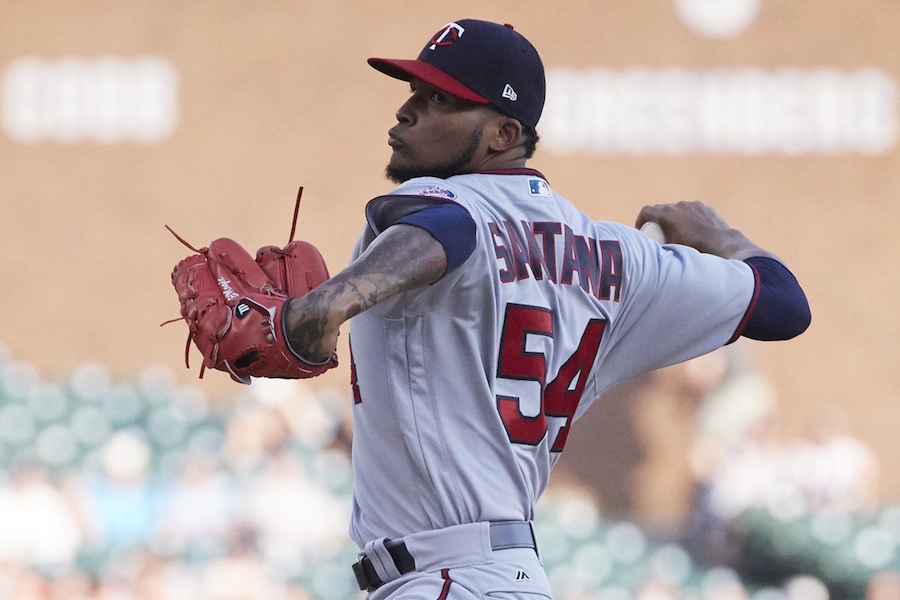 As long as the Twins avoid total collapse in the final week, they will be able to wrap up a pretty cool distinction as the first team ever to qualify for the postseason one year after losing 100-plus games. But while it would technically count as a playoff appearance, the Twins won't really be in it unless they can win that Wild Card game against New York and make the ALDS. It's been as evident in head-to-head match-ups as it is in the overall records: The Twins are not as good as the Yankees, nor any of the three other American League playoff teams. (Yet.) But as mentioned above, the one-game Wild Card format is ripe for upsets and even in the sample of a short playoff series, a lesser club can sometimes emerge. All it takes is a few well-timed hits and some good pitching performances. We know the lineup is capable of producing the former, but they will be facing very tough assignments. So the emphasis will be on the arms, as it often is in October. With this in mind, let's map out the Twins starters for the remaining six games of the regular season and into the playoffs. Based on La Velle's report that Paul Molitor has Bartolo Colon, Adalberto Mejia and Ervin Santana lined up to go in Cleveland this week, here's how I foresee the rotation playing out for the rest of the regular season, then in to a Wild Card game and hypothetical ALDS: @CLE 9/26: Colon @CLE 9/27: Mejia @CLE 9/28: Santana DET 9/29: Gibson DET 9/30: Berrios DET 10/1: Colon AL WC 10/3: Santana ALDS G1 10/5: Gibson ALDS G2 10/6: Berrios ALDS G3 10/8: Santana You're welcome to share your thoughts on this layout in the comments below. Here are a few things that stick out to me: Game 1 Gibby We can talk about how ridiculous it seems, or how horribly overmatched he will be against Corey Kluber or Justin Verlander, but we should also acknowledge how incredible this is. Kyle Gibson was one of the league's worst starting pitchers during the first half. He spent time in Triple-A in May, and produced only two quality starts in the first three months. His ERA was above 6 most of the summer, and as late as mid-August. But Gibby has been a different man in his last seven turns, guiding to the team to seven victories. Granted, he has gotten plenty of offensive support during that span, but the righty has also just pitched really well. He has gone at least six innings every time out, posting a 2.56 ERA and holding opponents to a .236 average (they hit .308 against him in his first 21 starts). Things are clearly clicking for the 29-year-old. I theorized at the end of August his wholesale mechanical adjustments might finally be gelling, and the theory remains plausible after five more convincing starts in September. With Ervin Santana being needed for the WC play-in, Gibson is a fairly easy choice for Game 1 in the event of an ALDS berth. The more pressing question is whether Molitor would call on Gibson again for Game 4 on three days' rest. Which leads us to another matter: No Bartolo? Not so long ago, the idea of rounding out a four-man playoff rotation with Bartolo Colon (hold your jokes please) would have seemed reasonable enough. He had a 3.94 ERA through 10 starts with the Twins, and was pitching deep into almost every game. Plus, he's got more experience than anyone in the game, and the big stage is not unfamiliar to him – he's made 10 postseason starts and has generally been up to the task (3.49 ERA). But lately Colon has appeared cooked, as though the magic that buoyed him through an initial resurgence with Minnesota has run dry. He has allowed 16 earned runs over 11 innings in his past three starts, delivering non-competitive efforts in Kansas City and New York. I'm not sure you could really justify starting him against the high-octane Astros or Indians, even if you had a series lead and the alternative was Gibson on short rest. And if you can't start him, is there really a reason to have Colon on the postseason roster? Wondering About Workloads Santana went over 200 innings in his last start, and if he throws five against Cleveland on Thursday he'll finish at 211 for the campaign. That's his highest total since 2013, so it's worth pondering how his arm will hold up going into October. The Twins could ask him to pitch three if they win the Wild Card and push the ALDS to five games. Erv has looked as sharp as ever his last three times out – including a very impressive outing against the Yanks – so there's seemingly not much cause for concern. Jose Berrios is another case. He's an intriguing piece in this equation because if he's on his game, he might give Minnesota the best chance of anyone for a dominating, shut-down performance. But Berrios has been rather inconsistent at this late stage of the season and it might owe to his career-high workload. Between Triple-A and the majors, he's currently at 179 innings, which is 10 more than last year's benchmark. The 23-year-old's velocity is holding up well into late September (he averaged 94.58 MPH with the heater in his last turn, per Brooks Baseball) but his command has gone amiss of late. You could make a case for him in Game 1 but I think Molitor is wise to shield him a bit at this point. What are your thoughts? Do you think a playoff rotation would, or should, shake out differently? And isn't it wild that we're talking about this? Sound off in the comments.
 -
The cast of characters may have changed, but the story never does. The Twins went into Yankee Stadium this week and endured a beatdown. They are now 33-89 against the Bombers since Ron Gardenhire first took over in 2002, including 2-12 in the playoffs, and Wednesday's loss was their eighth in nine tries at Yankee Stadium under Paul Molitor.All right, I admit it was too harsh to say Minnesota cowered against the Yanks. They competed (Joe Mauer had one of his most epic ABs ever on Wednesday afternoon), and have given us zero reason this year to doubt their resiliency or resolve. But from the very start of the series, which commenced with a dizzying flurry of whiffs against Jaime Garcia, the Twins looked intimidated and overmatched. New York's superiority only seemed to crystalize as the games progressed. And that just serves to reinforce an inescapable narrative – that a mental block is at play, and this Little Team That Could shrinks in the Big Apple. It's a bit hard to buy into this. There is basically zero continuity that holds over from the beginning of this era of ineptitude in the rivalry. But in a game as random as baseball, you'd expect more successes out of sheer luck and variance than the Twins have been able to stumble into. Rarely has the talent between these teams been as lopsided as the outcomes have suggested over the past 15 years, but those outcomes reliably never change. Minnesota hasn't won a season series against New York during that span, and their winning percentage against them is roughly on par with the 2003 Tigers, who lost 119 games. This week's series just brought more of the same, and gave little reason to believe we should expect anything else in the near future. Incidentally, reliving this nightmare is now basically the best thing we can hope for, as the Twins will likely be heading back to Yankee Stadium for a Wild Card showdown if they can hold their ground the rest of the way (though Boston is also a possibility). We've seen this group respond positively to setbacks time and time again this year. Maybe another Bummer in the Bronx will provide the fuel they need to pull it together in these final 11 days. A chance to return and make it right. A chance to squash this narrative that nags at the franchise like an ache that won't go away. Speaking of which, if they do get that chance, the Twins had better hope they have Miguel Sano back to help out. Under those bright lights, the flashy star's absence was more noticeable than ever. To that end, signs are as ominous as a late deficit with Mariano Rivera – er, Aroldis Chapman – warming in the pen. Click here to view the article
-
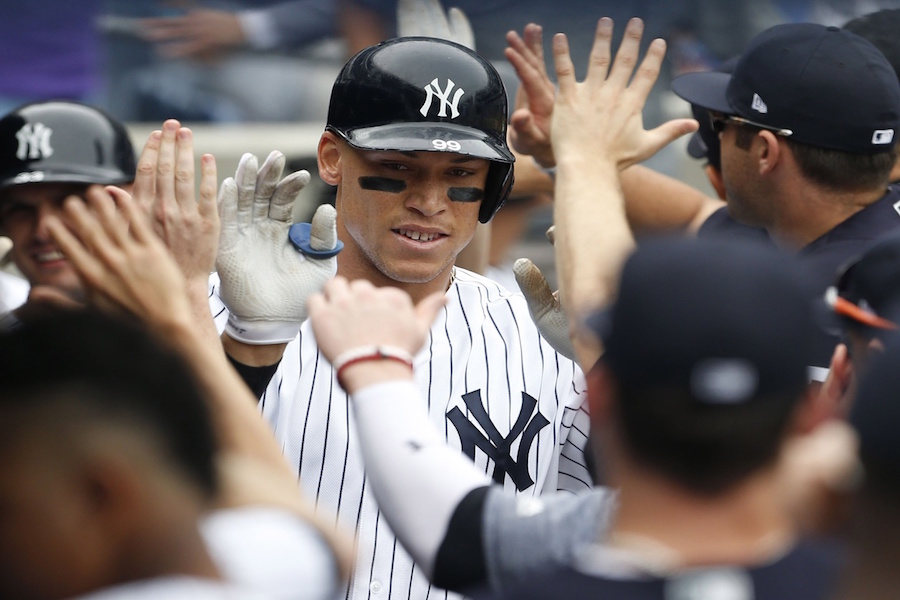 All right, I admit it was too harsh to say Minnesota cowered against the Yanks. They competed (Joe Mauer had one of his most epic ABs ever on Wednesday afternoon), and have given us zero reason this year to doubt their resiliency or resolve. But from the very start of the series, which commenced with a dizzying flurry of whiffs against Jaime Garcia, the Twins looked intimidated and overmatched. New York's superiority only seemed to crystalize as the games progressed. And that just serves to reinforce an inescapable narrative – that a mental block is at play, and this Little Team That Could shrinks in the Big Apple. It's a bit hard to buy into this. There is basically zero continuity that holds over from the beginning of this era of ineptitude in the rivalry. But in a game as random as baseball, you'd expect more successes out of sheer luck and variance than the Twins have been able to stumble into. Rarely has the talent between these teams been as lopsided as the outcomes have suggested over the past 15 years, but those outcomes reliably never change. Minnesota hasn't won a season series against New York during that span, and their winning percentage against them is roughly on par with the 2003 Tigers, who lost 119 games. This week's series just brought more of the same, and gave little reason to believe we should expect anything else in the near future. Incidentally, reliving this nightmare is now basically the best thing we can hope for, as the Twins will likely be heading back to Yankee Stadium for a Wild Card showdown if they can hold their ground the rest of the way (though Boston is also a possibility). We've seen this group respond positively to setbacks time and time again this year. Maybe another Bummer in the Bronx will provide the fuel they need to pull it together in these final 11 days. A chance to return and make it right. A chance to squash this narrative that nags at the franchise like an ache that won't go away. Speaking of which, if they do get that chance, the Twins had better hope they have Miguel Sano back to help out. Under those bright lights, the flashy star's absence was more noticeable than ever. To that end, signs are as ominous as a late deficit with Mariano Rivera – er, Aroldis Chapman – warming in the pen.
 -
Article: Twins Playoff Push A Truly Cohesive Effort
Nick Nelson replied to Nick Nelson's topic in Twins Daily Front Page News
Well determining a 2nd-half MVP is inherently an exercise in small-sample analysis, but it seems relevant given Buxton's role in driving the Twins' unlikely playoff push. The three you mentioned are certainly deserving candidates but it's not a given by any means. Buxton's production is comparable to them and he has a sizable edge in defensive value (not to downplay Trout and Lindor in this area but Buxton's is in his own world). -
Article: Twins Playoff Push A Truly Cohesive Effort
Nick Nelson replied to Nick Nelson's topic in Twins Daily Front Page News
I was tossing it out there to make a point about overreacting to small-sample occurrences, which you consistently have a tendency to do. And no, trading Buxton for prospects is and was not a "viable" option; he's been arguably the AL MVP in the second-half, and he's the biggest reason this team is even in position for the "unacceptable" losses you're talking about to matter. Also, Granite is not a major-league starter. Respectfully, I don't really need to hear lecturing about "mean spirited" from someone who is constantly on these boards and elsewhere clamoring for people with the Twins to be fired. If you're going to spew vitriol nonstop that's fine but at least be ready to be held accountable for the things you write.- 73 replies
-
- 4
-
-
- brian dozier
- byron buxton
- (and 2 more)
-
Article: Twins Playoff Push A Truly Cohesive Effort
Nick Nelson replied to Nick Nelson's topic in Twins Daily Front Page News
Well, the fact that you would let a three-game series loss (which was actually a four-game series split) entirely alter your perception of the team's effort and cohesion for the entire season probably means you're alone in that stance. Making these kinds of rash, snapshot judgments on the basis of tiny samples is the kind of thing that would lead a person to conclude Zack Granite is a superior option to Byron Buxton in center field.- 73 replies
-
- 4
-
-
- brian dozier
- byron buxton
- (and 2 more)
-
On Sunday, when the Twins stormed back after falling behind early against the Blue Jays, it was fittingly a collective effort. The offense rallied with a seven-run second inning and Kyle Gibson settled in after a shaky start, combining with three relievers to help guide Minnesota to a much-needed victory. Throughout the season, this team has been receiving help from just about everyone involved.Going from 100 losses to 80-plus wins requires an all-hands-on-deck kind of effort, and that's exactly what the Twins have gotten. As you look up and down the roster, outside of rookie cups of coffee and spare bullpen parts, nearly every player has contributed in some type of positive way. Let's run through the cast of characters, by order of WAR via Fangraphs: Brian Dozier (3.7 WAR): Dozier has taken the lead and set the tone for this scrappy club, with his thunderous pop, making life immediately uncomfortable for opposing starters. He won't reach last year's total of 42 home runs but he's still a force to be reckoned with, and he's been a key figure in the team's success since the start of August with an OPS approaching 1.000. Byron Buxton (3.2 WAR): In the early going he looked hopeless, whiffing at a catastrophic rate and making himself a candidate for another demotion to the minors. But the Twins stuck with him, and they've been richly rewarded by a scorching hot second half that continued Sunday with a double and homer. By many metrics Buxton has been the most valuable defender in all of baseball. Jose Berrios (2.6 WAR): It's been a bit of an up-and-down year for the 23-year-old but we've definitely seen more good than bad. Berrios arrived with a bang, tossing gems in his first two starts with the Twins in May. He went through a bit of a downswing in the middle months but has heated up during the stretch run with a 2.68 ERA in his past six turns. His past two have been arguably his most impressive, as Berrios has been able to succeed despite lacking his best stuff (7 innings of 2-run ball against KC despite one K and five swinging strikes) or his best control (5.2 innings of one-run ball against Toronto despite four walks). Ervin Santana (2.5 WAR): He's playing at the highest end of his ability, and has been for most of the season. Santana should surpass 200 innings within his next start or two, and would join Phil Hughes (2014) as the only Twins pitchers to do so since Carl Pavano left town. Big Erv has been a steady, durable stud atop the Twins rotation, and gives Minnesota a legit shot in the event of a one-game Wild Card playoff. Miguel Sano (2.4 WAR): He carried the offense through much of the first half, with his All-Star output helping to offset slow starts elsewhere. He was on pace for 38 home runs and 104 RBI before going down with a shin injury in mid-August that continues to sideline him. Sano's absence has been felt in the lineup, but the fact that the Twins have been one of baseball's highest-scoring teams without him speaks to the depth and balance of this offense. Eddie Rosario (2.1 WAR): He has turned a corner at the plate. He launched his 25th bomb on Sunday to spark Minnesota's huge second inning, then later added his 26th. Since Sano went down on August 19th, Rosario has slugged 11 home runs and driven in 26 in 27 games. He has routinely batted cleanup of late and is an imposing threat every time he steps in. Joe Mauer (2.0 WAR): It's been overshadowed by the huge breakouts of Buxton, Rosario and Jorge Polanco, but Mauer has done his part in the club's late-season surge, batting .350 since the start of August and .380 in last thirty days. As usual, Mauer is taking some of the best at-bats of anyone in the game, and he's also stroking the ball as well as he has in years. It once looked like the days of Mauer being a .300 hitter were over, especially with the feat becoming rarer across baseball, but Joe is currently one of 10 AL hitters in that class. His defense at first has been among the game's best. Eduardo Escobar (1.3 WAR): Someway, somehow, Escobar has managed to render Sano's absence almost unnoticeable. Since stepping in as everyday third baseman when the big man got hurt, Escobar has launched a Sano-ian eight jacks with 21 RBI in a month. He's also a slick fielder at third, upgrading on the serviceable glove work Sano had been providing. Jorge Polanco (1.3 WAR): On the one hand, it's kind of crazy Polanco only has 1.3 WAR – he's been hitting like Mike Trout for the past six weeks, as a shortstop! But that speaks to the monstrous rut that plagued him for the first four months. Through the end of July, he was a total drain on the team, yielding a lowly .570 OPS. But Polanco turned it on in a huge way at the start of August and is now validly the No. 3 hitter in arguably baseball's best lineup. What a turnaround. Kyle Gibson (1.2 WAR): Speaking of turnarounds, who'd have guessed at the All- Star break that by mid-September Gibson would have even a positive WAR, much less the third-highest mark on the staff? Gibson's start against Toronto on Sunday was emblematic of his season as a whole: he struggled early on, giving up five runs in the first two innings, but bounced back and dominated the next four frames after the Twins rallied and gave him a lead. Even with those five runs charged, Gibson has a 3.30 ERA in his past 10 starts. Generating whiffs and grounders in bunches, the right-hander is fulfilling his potential at last, and now would clearly slot into a playoff rotation. Heck, he might start Game 1 of the ALDS. Jason Castro (1.2 WAR): The new front office's first free agent acquisition is a hit. Castro has once again been one of the league's most effective pitch framers, helping facilitate all-around improvements from the pitching staff. At the plate he's been about average, and the nine homers – most for a Twins catcher since Mauer left the position – have been a nice bonus. Max Kepler (1.1 WAR): Kepler hasn't had the kind of breakout year we saw hints of last year, but not everyone can do it at once. His immense difficulties against left-handers (.382 OPS) have held him back, both in terms of playing time and overall production, but he's still been a very solid asset with 17 home runs and 63 RBI (the exact numbers he finished with last year) and he rounds out an elite defensive outfield. Chris Gimenez (0.9 WAR): He's been about everything you could want in a backup catcher, handling the staff well and providing a bit of value at the plate with six homers and an OPS around .700. He even made six pitching appearances, providing an oft-embattled relief corps with some needed relief of its own. Ehire Adrianza (0.9 WAR): When they grabbed him off waivers this spring, the Twins looked to be getting a no-bat defensive specialist, which has value on its own. But Adrianza has been plenty respectable with the stick, hitting .270 with a .718 OPS. His defense at shortstop has graded out very well as usual, and he's even looked OK during a few appearances in left. Very useful bench piece. Adalberto Mejia (0.8 WAR): He made the rotation out of camp, looked a bit rocky over three starts, went down to Triple-A, returned in May, and then posted a 3.84 ERA over 13 starts through the end of July. The lefty scuffled in early August and then spent more than a month on the disabled list before returning Saturday. Mejia hasn't really been a factor in Minnesota's emergence over the past six weeks but he helped keep the rotation afloat during the middle months. He needs to clean up his control, but the sharp slider and mid-90s fastball definitely play in the majors. Looks like a nice find from last year's deadline. Trevor Hildenberger (0.8 WAR): Brandon Kintzler was an all-star closer in the first half, putting up a 2.78 ERA and 28 saves in his four months with the Twins. He rated at 0.7 WAR during that time. Hildenberger has accrued a higher number in less than three months. His 0.84 WPA is the highest of any pitcher presently on the Twins roster other than Santana. With tremendous control and stellar K/GB rates, Hildy looks like a long-term bullpen piece. Robbie Grossman (0.7 WAR): His .369 on-base percentage is among the best in the league. Grossman hasn't been a great hitter but he's been perfectly adequate as a frequent DH and occasion spell in the corner outfield, where his defense has been far less of a liability than last year. Tyler Duffey (0.7 WAR): The 4.66 ERA doesn't look so great, but it also doesn't encapsulate what he's done. He has the second-highest WAR among Twins relievers for a reason: Duffey has pitched better than his bloated earned run average suggests. His 64-to-17 K/BB ratio in 66 innings is excellent, and opponents have only hit .266/.310/.395 against him. Keep in mind it's his first time pitching in relief since he switched to starting in 2013. Matt Belisle (0.5 WAR): Much like Polanco and Gibson, Belisle has redeemed himself in a big way, and at an absolutely crucial time. He looked like a free agent flop for most of the first half, but then went through the entire month of July without allowing a run, and since taking over the closer role after Kintzler's departure, he has a 1.73 ERA with seven saves in nine chances. Incredibly, he has turned into a strikeout pitcher with 30 K's in 26 innings since the start of July. He had a 6.8 career K/9 rate coming into this season Kennys Vargas (0.4 WAR): I'm sure some would argue that Vargas is dead weight, but he's been an average MLB hitter (100 OPS+) and has delivered some huge home runs – both figuratively and literally. There are plenty worse guys you could be forced to plug in at DH or first. Dillon Gee (0.4 WAR): His venture as a starter fizzled, but of his seven relief appearances for the Twins six have been scoreless. And he almost always goes multiple innings. Having a quality arm you can call on to keep you in the game following a short start is hugely important, and this is a guy they signed off the street in June. Speaking of which... Bartolo Colon (0.3 WAR): What a get. Colon was bad enough for the Braves that they ate millions and cut him in June, and the Twins brought him in for the veteran minimum. He opted for Minnesota over the familiar Mets, and it turned out to be a great call because now the 44-year-old finds himself pitching huge games in a race, and mostly pitching quite well. He has a 4.80 ERA in 12 starts as a Twin, although if you take out last weekend's clunker against KC that drops to 4.12. He has completed at least six innings in all but two of his starts. and consistently gives the team a decent chance to win while also being extremely entertaining to watch. Taylor Rogers (0.3 WAR): For some time he was the Twins' most reliable reliever, period. At the All-Star break he had a 2.14 ERA and ranked among the league leaders in WPA. He ran into some trouble during the rest of July and August, perhaps owing in some way to his heavy first-half usage, but Paul Molitor backed off a bit and Rogers has settled back into a groove here in September with eight scoreless appearances. He continues to be almost automatic against lefties. Alan Busenitz (0.2 WAR): His WAR understates how effective he has been. In 23 appearances the rookie has a 1.65 ERA and 0.99 WHIP. His 95.7 MPH fastball hasn't produced the strikeouts one might expect but hitters haven't been able to do much against Busenitz. Another good find from the 2016 deadline paying quick dividends. Ryan Pressly (0.1 WAR): It's just been an odd, unlucky, cursed season for Pressly. His premium heat has produced plenty of strikeouts – one per inning, on average – and his control has mostly been good with only 16 walks in 56 frames. And yet he's been hard to trust, allowing crooked numbers 10 times. But Pressly has come around since the Kintzler trade, with a 2.18 ERA and .471 opponents' OPS in August and September. Buddy Boshers (-0.2 WAR): He's the one significant contributor currently on the roster who you can argue hasn't had any real positive impact for the Twins. Boshers has a 5.18 ERA in 33 innings, but that mostly ties to overuse against right-handers. In same-sided matchups the southpaw has held opponents to a .216/.255/.412 line. He's fine as a second bullpen lefty. There you have it. Those are the 27 present Twins players who have played a consequential role for the Twins this year (100+ PA or 20+ IP). All but one have a positive WAR, and each has a narrative reinforcing his role in getting the club to where it is. That's pretty amazing, and not at all common. Even great teams usually have a few clear anchors slowing them down. For reference, the 2010 Twins had five players meet the aforementioned playing time criteria with negative WAR. The 2009 team had six. And those were playoff squads. Now these Twins are trying to get back. They stand two games clear in the Wild Card standings with two weeks and 13 games remaining. They'll be going to war with a group that is, almost to a man, worthy of trust. They've earned it. Click here to view the article
- 73 replies
-
- 4
-
-
- brian dozier
- byron buxton
- (and 2 more)
-
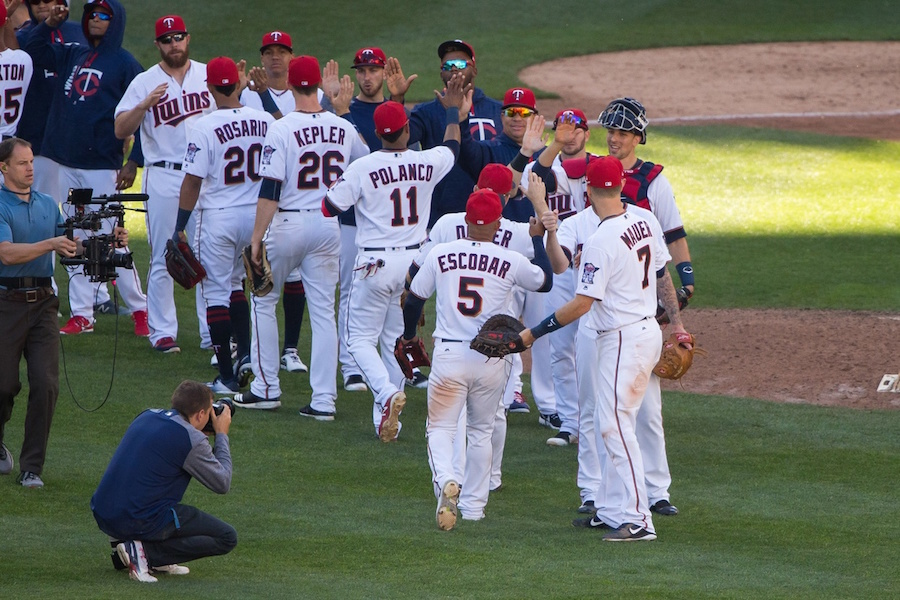 Going from 100 losses to 80-plus wins requires an all-hands-on-deck kind of effort, and that's exactly what the Twins have gotten. As you look up and down the roster, outside of rookie cups of coffee and spare bullpen parts, nearly every player has contributed in some type of positive way. Let's run through the cast of characters, by order of WAR via Fangraphs: Brian Dozier (3.7 WAR): Dozier has taken the lead and set the tone for this scrappy club, with his thunderous pop, making life immediately uncomfortable for opposing starters. He won't reach last year's total of 42 home runs but he's still a force to be reckoned with, and he's been a key figure in the team's success since the start of August with an OPS approaching 1.000. Byron Buxton (3.2 WAR): In the early going he looked hopeless, whiffing at a catastrophic rate and making himself a candidate for another demotion to the minors. But the Twins stuck with him, and they've been richly rewarded by a scorching hot second half that continued Sunday with a double and homer. By many metrics Buxton has been the most valuable defender in all of baseball. Jose Berrios (2.6 WAR): It's been a bit of an up-and-down year for the 23-year-old but we've definitely seen more good than bad. Berrios arrived with a bang, tossing gems in his first two starts with the Twins in May. He went through a bit of a downswing in the middle months but has heated up during the stretch run with a 2.68 ERA in his past six turns. His past two have been arguably his most impressive, as Berrios has been able to succeed despite lacking his best stuff (7 innings of 2-run ball against KC despite one K and five swinging strikes) or his best control (5.2 innings of one-run ball against Toronto despite four walks). Ervin Santana (2.5 WAR): He's playing at the highest end of his ability, and has been for most of the season. Santana should surpass 200 innings within his next start or two, and would join Phil Hughes (2014) as the only Twins pitchers to do so since Carl Pavano left town. Big Erv has been a steady, durable stud atop the Twins rotation, and gives Minnesota a legit shot in the event of a one-game Wild Card playoff. Miguel Sano (2.4 WAR): He carried the offense through much of the first half, with his All-Star output helping to offset slow starts elsewhere. He was on pace for 38 home runs and 104 RBI before going down with a shin injury in mid-August that continues to sideline him. Sano's absence has been felt in the lineup, but the fact that the Twins have been one of baseball's highest-scoring teams without him speaks to the depth and balance of this offense. Eddie Rosario (2.1 WAR): He has turned a corner at the plate. He launched his 25th bomb on Sunday to spark Minnesota's huge second inning, then later added his 26th. Since Sano went down on August 19th, Rosario has slugged 11 home runs and driven in 26 in 27 games. He has routinely batted cleanup of late and is an imposing threat every time he steps in. Joe Mauer (2.0 WAR): It's been overshadowed by the huge breakouts of Buxton, Rosario and Jorge Polanco, but Mauer has done his part in the club's late-season surge, batting .350 since the start of August and .380 in last thirty days. As usual, Mauer is taking some of the best at-bats of anyone in the game, and he's also stroking the ball as well as he has in years. It once looked like the days of Mauer being a .300 hitter were over, especially with the feat becoming rarer across baseball, but Joe is currently one of 10 AL hitters in that class. His defense at first has been among the game's best. Eduardo Escobar (1.3 WAR): Someway, somehow, Escobar has managed to render Sano's absence almost unnoticeable. Since stepping in as everyday third baseman when the big man got hurt, Escobar has launched a Sano-ian eight jacks with 21 RBI in a month. He's also a slick fielder at third, upgrading on the serviceable glove work Sano had been providing. Jorge Polanco (1.3 WAR): On the one hand, it's kind of crazy Polanco only has 1.3 WAR – he's been hitting like Mike Trout for the past six weeks, as a shortstop! But that speaks to the monstrous rut that plagued him for the first four months. Through the end of July, he was a total drain on the team, yielding a lowly .570 OPS. But Polanco turned it on in a huge way at the start of August and is now validly the No. 3 hitter in arguably baseball's best lineup. What a turnaround. Kyle Gibson (1.2 WAR): Speaking of turnarounds, who'd have guessed at the All- Star break that by mid-September Gibson would have even a positive WAR, much less the third-highest mark on the staff? Gibson's start against Toronto on Sunday was emblematic of his season as a whole: he struggled early on, giving up five runs in the first two innings, but bounced back and dominated the next four frames after the Twins rallied and gave him a lead. Even with those five runs charged, Gibson has a 3.30 ERA in his past 10 starts. Generating whiffs and grounders in bunches, the right-hander is fulfilling his potential at last, and now would clearly slot into a playoff rotation. Heck, he might start Game 1 of the ALDS. Jason Castro (1.2 WAR): The new front office's first free agent acquisition is a hit. Castro has once again been one of the league's most effective pitch framers, helping facilitate all-around improvements from the pitching staff. At the plate he's been about average, and the nine homers – most for a Twins catcher since Mauer left the position – have been a nice bonus. Max Kepler (1.1 WAR): Kepler hasn't had the kind of breakout year we saw hints of last year, but not everyone can do it at once. His immense difficulties against left-handers (.382 OPS) have held him back, both in terms of playing time and overall production, but he's still been a very solid asset with 17 home runs and 63 RBI (the exact numbers he finished with last year) and he rounds out an elite defensive outfield. Chris Gimenez (0.9 WAR): He's been about everything you could want in a backup catcher, handling the staff well and providing a bit of value at the plate with six homers and an OPS around .700. He even made six pitching appearances, providing an oft-embattled relief corps with some needed relief of its own. Ehire Adrianza (0.9 WAR): When they grabbed him off waivers this spring, the Twins looked to be getting a no-bat defensive specialist, which has value on its own. But Adrianza has been plenty respectable with the stick, hitting .270 with a .718 OPS. His defense at shortstop has graded out very well as usual, and he's even looked OK during a few appearances in left. Very useful bench piece. Adalberto Mejia (0.8 WAR): He made the rotation out of camp, looked a bit rocky over three starts, went down to Triple-A, returned in May, and then posted a 3.84 ERA over 13 starts through the end of July. The lefty scuffled in early August and then spent more than a month on the disabled list before returning Saturday. Mejia hasn't really been a factor in Minnesota's emergence over the past six weeks but he helped keep the rotation afloat during the middle months. He needs to clean up his control, but the sharp slider and mid-90s fastball definitely play in the majors. Looks like a nice find from last year's deadline. Trevor Hildenberger (0.8 WAR): Brandon Kintzler was an all-star closer in the first half, putting up a 2.78 ERA and 28 saves in his four months with the Twins. He rated at 0.7 WAR during that time. Hildenberger has accrued a higher number in less than three months. His 0.84 WPA is the highest of any pitcher presently on the Twins roster other than Santana. With tremendous control and stellar K/GB rates, Hildy looks like a long-term bullpen piece. Robbie Grossman (0.7 WAR): His .369 on-base percentage is among the best in the league. Grossman hasn't been a great hitter but he's been perfectly adequate as a frequent DH and occasion spell in the corner outfield, where his defense has been far less of a liability than last year. Tyler Duffey (0.7 WAR): The 4.66 ERA doesn't look so great, but it also doesn't encapsulate what he's done. He has the second-highest WAR among Twins relievers for a reason: Duffey has pitched better than his bloated earned run average suggests. His 64-to-17 K/BB ratio in 66 innings is excellent, and opponents have only hit .266/.310/.395 against him. Keep in mind it's his first time pitching in relief since he switched to starting in 2013. Matt Belisle (0.5 WAR): Much like Polanco and Gibson, Belisle has redeemed himself in a big way, and at an absolutely crucial time. He looked like a free agent flop for most of the first half, but then went through the entire month of July without allowing a run, and since taking over the closer role after Kintzler's departure, he has a 1.73 ERA with seven saves in nine chances. Incredibly, he has turned into a strikeout pitcher with 30 K's in 26 innings since the start of July. He had a 6.8 career K/9 rate coming into this season Kennys Vargas (0.4 WAR): I'm sure some would argue that Vargas is dead weight, but he's been an average MLB hitter (100 OPS+) and has delivered some huge home runs – both figuratively and literally. There are plenty worse guys you could be forced to plug in at DH or first. Dillon Gee (0.4 WAR): His venture as a starter fizzled, but of his seven relief appearances for the Twins six have been scoreless. And he almost always goes multiple innings. Having a quality arm you can call on to keep you in the game following a short start is hugely important, and this is a guy they signed off the street in June. Speaking of which... Bartolo Colon (0.3 WAR): What a get. Colon was bad enough for the Braves that they ate millions and cut him in June, and the Twins brought him in for the veteran minimum. He opted for Minnesota over the familiar Mets, and it turned out to be a great call because now the 44-year-old finds himself pitching huge games in a race, and mostly pitching quite well. He has a 4.80 ERA in 12 starts as a Twin, although if you take out last weekend's clunker against KC that drops to 4.12. He has completed at least six innings in all but two of his starts. and consistently gives the team a decent chance to win while also being extremely entertaining to watch. Taylor Rogers (0.3 WAR): For some time he was the Twins' most reliable reliever, period. At the All-Star break he had a 2.14 ERA and ranked among the league leaders in WPA. He ran into some trouble during the rest of July and August, perhaps owing in some way to his heavy first-half usage, but Paul Molitor backed off a bit and Rogers has settled back into a groove here in September with eight scoreless appearances. He continues to be almost automatic against lefties. Alan Busenitz (0.2 WAR): His WAR understates how effective he has been. In 23 appearances the rookie has a 1.65 ERA and 0.99 WHIP. His 95.7 MPH fastball hasn't produced the strikeouts one might expect but hitters haven't been able to do much against Busenitz. Another good find from the 2016 deadline paying quick dividends. Ryan Pressly (0.1 WAR): It's just been an odd, unlucky, cursed season for Pressly. His premium heat has produced plenty of strikeouts – one per inning, on average – and his control has mostly been good with only 16 walks in 56 frames. And yet he's been hard to trust, allowing crooked numbers 10 times. But Pressly has come around since the Kintzler trade, with a 2.18 ERA and .471 opponents' OPS in August and September. Buddy Boshers (-0.2 WAR): He's the one significant contributor currently on the roster who you can argue hasn't had any real positive impact for the Twins. Boshers has a 5.18 ERA in 33 innings, but that mostly ties to overuse against right-handers. In same-sided matchups the southpaw has held opponents to a .216/.255/.412 line. He's fine as a second bullpen lefty. There you have it. Those are the 27 present Twins players who have played a consequential role for the Twins this year (100+ PA or 20+ IP). All but one have a positive WAR, and each has a narrative reinforcing his role in getting the club to where it is. That's pretty amazing, and not at all common. Even great teams usually have a few clear anchors slowing them down. For reference, the 2010 Twins had five players meet the aforementioned playing time criteria with negative WAR. The 2009 team had six. And those were playoff squads. Now these Twins are trying to get back. They stand two games clear in the Wild Card standings with two weeks and 13 games remaining. They'll be going to war with a group that is, almost to a man, worthy of trust. They've earned it.
 -
Thrylos calling for mass firings, must be a day ending in Y.
- 80 replies
-
- 4
-
-
- trevor hildenberger
- byron buxton
- (and 1 more)
-
They were still in the initial stages of getting to know Molitor last offseason. Now they've had a full season of working closely with him in a collaborative manner. I think such conversations would be much more in-depth and substantive this winter.
- 80 replies
-
- 3
-
-
- trevor hildenberger
- byron buxton
- (and 1 more)
-
In the context of winning baseball games they can be. I don't think I implied that Hildenberger cured cancer.
- 80 replies
-
- 11
-
-
- trevor hildenberger
- byron buxton
- (and 1 more)
-
An unlikely bullpen savior. A front-runner to become the first Minnesota Gold Glove winner since 2010. And a manager who just might stick around after all. Let's dig in on these three trending September story lines...* Michael Tonkin. Pat Light. J.T. Chargois. Neil Ramirez. Alex Wimmers. These are all right-handed relievers that the Twins tried to bring along last year, with little-to-no success. Minnesota's whiff rate on bullpen reinforcements (and the lack of significant offseason moves on this front) is a primary reason the unit developed into such a frustrating liability – one that went unaddressed at both the July and August trade deadlines. But in Trevor Hildenberger, the Twins have found a rare internal solution, and a player whose impact exceeds anything they could've hoped to acquire in a deadline deal. When the team shipped out Brandon Kintzler, it looked like a move that could cripple an already vulnerable unit. His departure left behind a group of righties who were all either extremely inexperienced or extremely difficult to trust. Some members of that latter category – namely, Matt Belisle and Ryan Pressly – deserve plenty of credit for stepping up, as does another rookie newcomer, Alan Busenitz. But no one has been quite as impressive as Hildenberger, the side-arming slinger who hit the ground running in late June and hasn't slowed his pace since. Hildy's overall numbers are stellar: 35.1 IP, 2.29 ERA, 0.96 WHIP, 58.5 GB%, 36-to-4 K/BB. But what has really stood out are the moments. The 26-year-old rookie has been used in numerous high-leverage spots, where many green arms would wilt, and he has consistently delivered. Friday night may have been his most dazzling performance yet: he entered in the seventh inning with the bases loaded and no outs, and somehow escaped unscathed. Then he cruised through a clean eighth, the sixth time this year he's given Minnesota two full innings out of the pen. According to Win Probability Added, Hildenberger has been the third-most impactful Twins pitcher behind Ervin Santana and Kintzler. Hard to argue if you've been watching him put out fires over the past few months. His delivery might be deceptive (especially with his quirky tendency to switch it up on occasion) but his numbers are not. The young right-hander has a strong recipe for sustainable success, with outstanding control, a feel for missing bats, and the ability to get grounders on command. Whether he's a future closer or setup man, the Twins are extremely lucky to have him. Hildenberger single-handedly changes the outlook of the bullpen going forward dramatically. * For a long time, Twins players were regular fixtures on the Gold Glove ballots. Thanks mostly to Joe Mauer and Torii Hunter, Minnesota was represented in the awards for a decade straight, from 2001 through 2010. No Twin has taken one home since, and while we can certainly criticize the voting system that elects winners, it's hard to deny that this is an apt reflection of the team's plight over the past six years – bad defenses making poor pitching staffs look even worse. The Gold Glove drought is almost certain to end at the conclusion of this 2017 season, because Byron Buxton is essentially a shoe-in for what will likely be his first of many. We all know that GG voters are creatures of habit, but Tampa Bay's Kevin Kiermaier, the AL's center field honoree in each of the past two seasons, missed 10 weeks this summer with a wrist fracture, which should take him out of the running. (Though this is not a guarantee; Hunter won in 2005 despite playing only 98 games.) Buxton would be the deserving recipient anyway. He's been all over the highlight reels, he dominates defensive metrics, and his contribution to Minnesota's stunning improvement this year is well known nationally. He further solidified his case on Friday night with a game-changing grab at the warning track to end the fifth inning and preserve a slim lead. This recent tweet from Aaron Gleeman puts some context behind what Buxton's glove has meant to the Twins this year: Wow. The Twins could easily have multiple players earn hardware. Joe Mauer should be at the top of the list for first basemen, and there's a decent argument to be made for Brian Dozier. But I'd rate each of their chances at less than 50/50. Buxton, though? He's got this thing wrapped up. Now let's just hope his hand starts feeling better soon. * Lame duck. It's a term no manager wants attached to his name, but Paul Molitor wore it openly and candidly coming into 2017. He has never shied away from the stakes of this season for him personally, with 2016's scars still fresh and a new front office group likely eager to install its own preferred choice for the gig. The year started on a redeeming note for Molitor and the Twins, but as the trade deadline came and went, the skipper's outlook began to take an ominous turn. The team was sinking out of contention, and while he was still on track for a big step forward, it wasn't necessarily the type that would save his job. But Molitor's role in the turnaround we've seen over the past six weeks should not be downplayed. Sure, there are some things to take issue with from a tactical standpoint – the propensity for bunting and some occasionally head-scratching bullpen decisions come to mind – but to the extent that a manager functions as captain of the ship and motivator of men, there is really no knocking the work he has done. This Twins team has proven incredibly resilient, rebounding from setbacks time and time again. Even when things have looked grim, the players haven't gotten down and fallen into a funk the way they did in 2016. His club's response to the deadline sell, a 20-win August, was quite the statement. We know ownership likes Molitor. And his players have been going to battle for him in a big way. With both those things being the case, Derek Falvey and Thad Levine may be hard-pressed to go another direction, especially if this strong late-season run culminates in a postseason berth. If the team re-ups with Molitor, I do hope that Falvey and Levine have a long sit-down with him during the offseason to go over run-scoring matrixes, statistical probabilities and sacrifice bunting. Click here to view the article
- 80 replies
-
- 1
-
-
- trevor hildenberger
- byron buxton
- (and 1 more)
-
Three-Bagger: Heroic Hildy, Golden Buck & Molitor's Last Stand
Nick Nelson posted an article in Twins
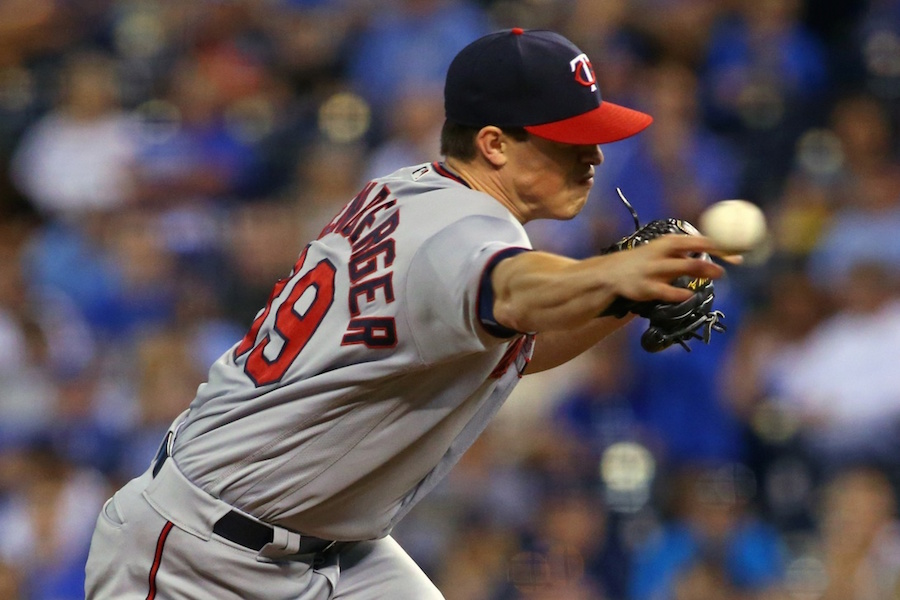 * Michael Tonkin. Pat Light. J.T. Chargois. Neil Ramirez. Alex Wimmers. These are all right-handed relievers that the Twins tried to bring along last year, with little-to-no success. Minnesota's whiff rate on bullpen reinforcements (and the lack of significant offseason moves on this front) is a primary reason the unit developed into such a frustrating liability – one that went unaddressed at both the July and August trade deadlines. But in Trevor Hildenberger, the Twins have found a rare internal solution, and a player whose impact exceeds anything they could've hoped to acquire in a deadline deal. When the team shipped out Brandon Kintzler, it looked like a move that could cripple an already vulnerable unit. His departure left behind a group of righties who were all either extremely inexperienced or extremely difficult to trust. Some members of that latter category – namely, Matt Belisle and Ryan Pressly – deserve plenty of credit for stepping up, as does another rookie newcomer, Alan Busenitz. But no one has been quite as impressive as Hildenberger, the side-arming slinger who hit the ground running in late June and hasn't slowed his pace since. Hildy's overall numbers are stellar: 35.1 IP, 2.29 ERA, 0.96 WHIP, 58.5 GB%, 36-to-4 K/BB. But what has really stood out are the moments. The 26-year-old rookie has been used in numerous high-leverage spots, where many green arms would wilt, and he has consistently delivered. Friday night may have been his most dazzling performance yet: he entered in the seventh inning with the bases loaded and no outs, and somehow escaped unscathed. Then he cruised through a clean eighth, the sixth time this year he's given Minnesota two full innings out of the pen. According to Win Probability Added, Hildenberger has been the third-most impactful Twins pitcher behind Ervin Santana and Kintzler. Hard to argue if you've been watching him put out fires over the past few months. His delivery might be deceptive (especially with his quirky tendency to switch it up on occasion) but his numbers are not. The young right-hander has a strong recipe for sustainable success, with outstanding control, a feel for missing bats, and the ability to get grounders on command. Whether he's a future closer or setup man, the Twins are extremely lucky to have him. Hildenberger single-handedly changes the outlook of the bullpen going forward dramatically. * For a long time, Twins players were regular fixtures on the Gold Glove ballots. Thanks mostly to Joe Mauer and Torii Hunter, Minnesota was represented in the awards for a decade straight, from 2001 through 2010. No Twin has taken one home since, and while we can certainly criticize the voting system that elects winners, it's hard to deny that this is an apt reflection of the team's plight over the past six years – bad defenses making poor pitching staffs look even worse. The Gold Glove drought is almost certain to end at the conclusion of this 2017 season, because Byron Buxton is essentially a shoe-in for what will likely be his first of many. We all know that GG voters are creatures of habit, but Tampa Bay's Kevin Kiermaier, the AL's center field honoree in each of the past two seasons, missed 10 weeks this summer with a wrist fracture, which should take him out of the running. (Though this is not a guarantee; Hunter won in 2005 despite playing only 98 games.) Buxton would be the deserving recipient anyway. He's been all over the highlight reels, he dominates defensive metrics, and his contribution to Minnesota's stunning improvement this year is well known nationally. He further solidified his case on Friday night with a game-changing grab at the warning track to end the fifth inning and preserve a slim lead. This recent tweet from Aaron Gleeman puts some context behind what Buxton's glove has meant to the Twins this year: https://twitter.com/AaronGleeman/status/906340946618368000 Wow. The Twins could easily have multiple players earn hardware. Joe Mauer should be at the top of the list for first basemen, and there's a decent argument to be made for Brian Dozier. But I'd rate each of their chances at less than 50/50. Buxton, though? He's got this thing wrapped up. Now let's just hope his hand starts feeling better soon. * Lame duck. It's a term no manager wants attached to his name, but Paul Molitor wore it openly and candidly coming into 2017. He has never shied away from the stakes of this season for him personally, with 2016's scars still fresh and a new front office group likely eager to install its own preferred choice for the gig. The year started on a redeeming note for Molitor and the Twins, but as the trade deadline came and went, the skipper's outlook began to take an ominous turn. The team was sinking out of contention, and while he was still on track for a big step forward, it wasn't necessarily the type that would save his job. But Molitor's role in the turnaround we've seen over the past six weeks should not be downplayed. Sure, there are some things to take issue with from a tactical standpoint – the propensity for bunting and some occasionally head-scratching bullpen decisions come to mind – but to the extent that a manager functions as captain of the ship and motivator of men, there is really no knocking the work he has done. This Twins team has proven incredibly resilient, rebounding from setbacks time and time again. Even when things have looked grim, the players haven't gotten down and fallen into a funk the way they did in 2016. His club's response to the deadline sell, a 20-win August, was quite the statement. We know ownership likes Molitor. And his players have been going to battle for him in a big way. With both those things being the case, Derek Falvey and Thad Levine may be hard-pressed to go another direction, especially if this strong late-season run culminates in a postseason berth. If the team re-ups with Molitor, I do hope that Falvey and Levine have a long sit-down with him during the offseason to go over run-scoring matrixes, statistical probabilities and sacrifice bunting.
 -
Article: Brian Dozier Is Taking The Lead
Nick Nelson replied to Nick Nelson's topic in Twins Daily Front Page News
Yeah, I think if things continue to go the way they are, the smart plan is to keep Dozier for 2018 and offer a QO. I like him and I'm obviously very impressed with what he's doing right now, but throwing down huge money to lock up him up in his mid-30s doesn't seem like the savvy move with so much quality middle-infield talent rising through the system. Hopefully by the time Dozier's contract expires we'll see some of the younger guys stepping into that vocal leader role. -
He leads off in the lineup. He leads the club in home runs. And most importantly, Brian Dozier is leading by example."Leadership" has always been an ambiguous term in pro sports. It's one of those intangible, immeasurable factors that is impossible to quantify. But no one can deny its import, especially on a team full of inexperienced players still learning how to be big-leaguers. Many in and around the organization have suggested that a leadership void was, in some way, responsible for the disaster that played out in 2016. Torii Hunter's absence in the clubhouse was felt, says this line of thought. Upon taking over the front office, Derek Falvey and Thad Levine almost immediately cited this as a need. You could excuse Dozier for bristling a bit at this talk. All he did last year was go out and hit 42 home runs, a Herculean individual effort amidst a total organizational failure. He did his job and then some. Still, it does appear that he's taken it upon himself to embrace a more vocal and commanding role as clubhouse leader this year. In spring training, he rarely camped at his corner locker, instead spending nearly all his time moving about and interacting with other players. When the Twins decided to sell key assets at the deadline, he expressed frustration on behalf of the group – "It does suck ... I can speak for everybody and say that." On at least one occasion this summer, he has reached out to a local writer directly to express displeasure over what he viewed as unfair coverage of a young teammate. I'm not going to say these things are out of character or unprecedented for Dozier, but from my view he's shifted it up a gear noticeably. How much of an impact has it had? Who knows. Again, it's impossible to quantify, and pretty pointless to speculate about, especially from the outside. But what's been truly striking over the past month is the way Dozier has let his play do the talking. When he griped about the front office, it fell a little flat; the Twins had fallen to seven games out of first place by dropping five of six on a West Coast road trip through LA and Oakland, and Dozier had gone 5-for-29 (.172) over the two series. In the last game before the deadline, he struck out five times in an extra-inning affair they lost by one. A week later, I pondered whether the Twins could really make a run with Dozier and Joe Mauer, their two most-tenured players who both have contracts expiring after next year. The conclusion was that for this to happen both would need to raise their level of production and turn from role players to driving forces. Both veterans have done just that, answering the call when things were slipping away. Mauer suddenly reverted to vintage form in August, slashing .336/.405/.458 in 28 games. And Dozier? Just a couple days after announcing "No white flags here," he embarked on an epic power binge with five home runs in six games (the Twins went 5-1). His OPS since the deadline sell is over 1.000. On Wednesday, with the Twins again on the ropes after losing five of six to the Royals and Rays, Dozier confronted the urgency of their series finale in Tampa: “It’s a game we really need to win." So what does he do, coming off an 0-fer in Tuesday's dispiriting 2-1 setback? He goes out and rips a leadoff homer, setting the tone in a much-needed 10-6 victory. These Twins have proven to be, above all, a tremendously resilient team. They're just following the leader. Click here to view the article
-
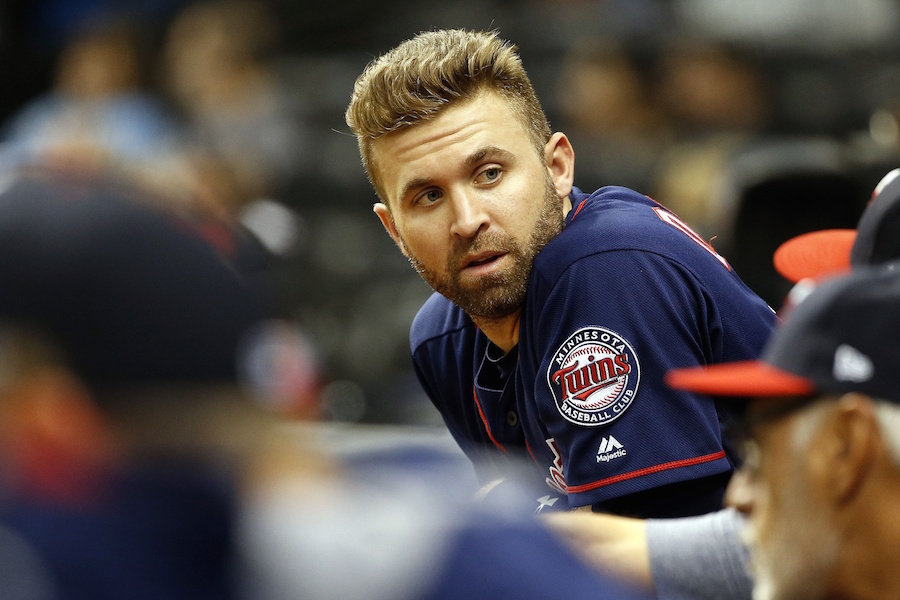 "Leadership" has always been an ambiguous term in pro sports. It's one of those intangible, immeasurable factors that is impossible to quantify. But no one can deny its import, especially on a team full of inexperienced players still learning how to be big-leaguers. Many in and around the organization have suggested that a leadership void was, in some way, responsible for the disaster that played out in 2016. Torii Hunter's absence in the clubhouse was felt, says this line of thought. Upon taking over the front office, Derek Falvey and Thad Levine almost immediately cited this as a need. You could excuse Dozier for bristling a bit at this talk. All he did last year was go out and hit 42 home runs, a Herculean individual effort amidst a total organizational failure. He did his job and then some. Still, it does appear that he's taken it upon himself to embrace a more vocal and commanding role as clubhouse leader this year. In spring training, he rarely camped at his corner locker, instead spending nearly all his time moving about and interacting with other players. When the Twins decided to sell key assets at the deadline, he expressed frustration on behalf of the group – "It does suck ... I can speak for everybody and say that." On at least one occasion this summer, he has reached out to a local writer directly to express displeasure over what he viewed as unfair coverage of a young teammate. I'm not going to say these things are out of character or unprecedented for Dozier, but from my view he's shifted it up a gear noticeably. How much of an impact has it had? Who knows. Again, it's impossible to quantify, and pretty pointless to speculate about, especially from the outside. But what's been truly striking over the past month is the way Dozier has let his play do the talking. When he griped about the front office, it fell a little flat; the Twins had fallen to seven games out of first place by dropping five of six on a West Coast road trip through LA and Oakland, and Dozier had gone 5-for-29 (.172) over the two series. In the last game before the deadline, he struck out five times in an extra-inning affair they lost by one. A week later, I pondered whether the Twins could really make a run with Dozier and Joe Mauer, their two most-tenured players who both have contracts expiring after next year. The conclusion was that for this to happen both would need to raise their level of production and turn from role players to driving forces. Both veterans have done just that, answering the call when things were slipping away. Mauer suddenly reverted to vintage form in August, slashing .336/.405/.458 in 28 games. And Dozier? Just a couple days after announcing "No white flags here," he embarked on an epic power binge with five home runs in six games (the Twins went 5-1). His OPS since the deadline sell is over 1.000. On Wednesday, with the Twins again on the ropes after losing five of six to the Royals and Rays, Dozier confronted the urgency of their series finale in Tampa: “It’s a game we really need to win." So what does he do, coming off an 0-fer in Tuesday's dispiriting 2-1 setback? He goes out and rips a leadoff homer, setting the tone in a much-needed 10-6 victory. These Twins have proven to be, above all, a tremendously resilient team. They're just following the leader.
 -
Where in that article was it implied I expected Sano to be anything other than a liability in RF? The idea was that if he hit enough, voters might be inclined to overlook it or even credit him for doing the club's bidding, as silly as that bidding may have been. Had you clicked on the link in the first sentence of that piece, you'd have come across this remark in bold lettering: "Yep, the Miguel Sano in right field experiment is going to be rough."
-
He wrote it while Sano was bumbling around in right field, creating the impression that the player -- not the team -- was at fault for his all-but-certain failure at a position he was grossly unequipped to play. Timing was very much a factor in the reaction to that column.
-
I'd argue that the "when" was more impactful than the "who" or "what" in this case, but let's not act like Souhan hasn't earned a reputation for being unfair to injured players.
-
Well yeah, it is his job. The point of that post was to give Souhan a little credit, and dispute the notion some people seem to have that he just made it up. I'm not sure what the "cuts both ways" comment is about here. My issue is with the idea that having those relationships is essential to creating credible content about the team, or that writers who don't routinely go into the clubhouse/press box due to full-time jobs and life commitments outside of blogging don't do so because they're cowards.
-
Article: Where To Find Great Twins Content
Nick Nelson posted a topic in Twins Daily Front Page News
'Here are the people you should and shouldn’t listen to when it comes to the Twins.' With that, Jim Souhan laid out his rigid directive in a scattered rant about the pitfalls of independent blogging and new media. I won't respond to the post (John did so with eloquence yesterday), but I thought I'd offer up a more comprehensive and balanced guide to quality Twins content, with the team giving us plenty to discuss late in the season.For starters, let's get this out there: You don't need me to tell you what to read. You're smart enough to make that decision for yourself. These are simply my suggestions, with the underlying current being this: read everything! We are lucky to have access (er, Access?) to so many different perspectives and voices in this market. I consider myself an enthusiast of writing even more so than baseball, so I tend to evaluate the craft as much as the analysis/reporting when I read. Maybe that's why Souhan's clumsily constructed diatribe struck me in an especially bad way. But Souhan is, in most cases, a pretty dang good writer. So I'll lead with him. Jim Souhan, Star Tribune: He was right about this much in his blog post: Souhan has been covering the team intensively for decades. He's written many great columns. That, much more than having Tom Kelly's phone number, earns him credibility. He also has his occasional off-days and whiffs, as we all do. The profile linked below is undeniably stellar work. Piece Worth Checking Out: Twins' Corrigan a Hall of Fame scout who can't quit the game Patrick Reusse, Star Tribune/1500ESPN: Like Souhan, Reusse has been around the game forever and his writing is colored by a depth of experience few can match. One of the most enjoyable parts of being in the Hammond Field press box is Reusse occasionally passing through and announcing his latest hot take to whomever will listen. He's an entertaining guy and a quality scribe, even if he falls into the vitriol-stirring trap a bit too often. Piece Worth Checking Out: Falvey's smartest move? Bring back Molitor Phil Miller, Star Tribune: I have had the chance to read a lot of different beat guys and gals regularly since first taking an interest in baseball as a kid. I truly don't think I've ever encountered a better pure writer than Miller. His words capture the magic and spirit of the game so effectively. It's always a joy to read game stories and longform pieces. Piece Worth Checking Out: Talented Twins outfield trio has finally come together La Velle E. Neal III, Star Tribune: The longest-tenured Twins beat writer and an institution in the press box. A veteran journalist and a pro's pro. Piece Worth Checking Out: Rebuilding White Sox waiting for tide to rise Mike Berardino, Pioneer Press: Mike's a hustler who grinds all day, and serves the hardcore baseball junkie like no one else on this beat. The amount of content he churns out, on his own, is truly amazing to me, and he has strong writing chops as the Bartolo Colon column below illustrates. Piece Worth Checking Out: Bartolo Colon provides levity, wisdom in Twins clubhouse John Shipley, Pioneer Press: I haven't seen many people talking about Shipley this summer. Maybe it's because he doesn't go out of his way to attract attention. I hope he's not being overlooked because I believe he's been writing some of the best Twins columns of anyone in the mainstream press. Piece Worth Checking Out: Twins are ticked. They should be, says Derek Falvey Derek Wetmore, 1500ESPN: Derek does a nice job covering the beat in a full-digital format, and manages to find unique story lines others miss. His article linked below – discussing a delivery flaw that Byron Buxton spied while standing in against Kyle Gibson – uncovers a great nugget. Buxton went from being unable to recognize any pitches in April, to diagnosing critical issues in Twins pitchers in September. That tells you how far he's come. Piece Worth Checking Out: Byron Buxton may have helped Kyle Gibson take the next step Jake Depue, 1500ESPN: You may know him better by his old moniker, "Curse of Punto." Depue is a success story for the blogging age: he toiled anonymously to hone his craft and develop an audience, then eventually found a prominent platform. He deserves it, and his presence gives 1500ESPN's minor-league coverage some teeth. Jake is currently in Tampa covering the Twins/Rays series so keep an eye on his stories. Piece Worth Checking Out: Zack Littell, prospect in Jaime Garcia trade, prides himself in command, durability Rhett Bollinger, MLB.com: Rhett is pretty much everything you could ask for in a team-employed beat writer. He tweets a bunch. He's very interactive with fans. He provides useful insights, routinely supplementing the viewing experience with Statcast measures and other tidbits. He doesn't dogmatically toe the company line (evidence). We're lucky to have him. Piece Worth Checking Out: Buxton returns, records fastest triple in 2017 Aaron Gleeman, Baseball Prospectus: His days of churning out daily Twins content on his own site are long gone, but AG still frequently focuses on the team in his columns at Baseball Prospectus, and he's got a book coming out next spring. Forever one of the most skilled writers and sharpest analysts on the local scene, he's a must-read for the hardball intellectual. [insert Cinnabon joke.] Piece Worth Checking Out: A Child Shall Lead Them Twinkie Town Team: Myjah runs the show and fosters a playful, light-hearted atmosphere with TT's big stable of writers and commenters. Stu's weekly satirical submissions (like the one linked below) are always worth your time. Louie Opatz also does really nice work. Piece Worth Checking Out: Area woman realizes how many of her kids she likes less than Byron Buxton Zone Coverage Team: Tom Schreier's venture into New Journalism has produced Zone Coverage, which functions as a hybrid of the modern and traditional media models. It's access-driven beat-style coverage without the space constraints of print, and with heavy multimedia infusion. Schreier and Brandon Warne work hard. Piece Worth Checking Out: 9/3 GAME NOTES: Swing, Swing, Swing — Twins Drop Game, Series to Royals with 5-4 Loss on Sunday Twins Daily Team: You're already here, so if you're new I'll encourage you to explore the articles, blogs and forums, and judge for yourself. We take a lot of pride in the community we have here – smart, passionate baseball fans from all over the globe. It makes engaging with people on TD a truly enriching experience. Plus, there is simply a ton of high-caliber writing to be found virtually every day. Whether it's Seth, Jeremy, Cody, Ted, Steve, Tom or one of our many other frequent contributors, you're going to find something worthwhile. I highly recommend staying up on Mr. Froemming's daily game recaps and all of the minor-league reports. Piece Worth Checking Out: The Perfect Crime: A Look Back at the Twins' Trade for Joe Nathan by Dan Wade I'm surely still missing some (and would love if you all added them in the comments section below) but this is a quick-and-dirty list I put together of prominent local people writing regularly about the Minnesota Twins. They've all earned their platforms and there's no need to bicker about hierarchies or velvet ropes. There are a lot of content sources out there. The good news is that there's a hungry audience, and it's likely to grow in the coming years if the product on the field continues to trend the way we all hope. The guiding mission of Twins Daily has always been to highlight and promote great Twins writing, wherever it resides – whether a downtown skyscraper or mom's basement. Here's to more and more talented folks entering the scene and adding to the well. If you'd like to try your hand, I can't urge you enough to utilize the blogging feature on our site and get your own thoughts out there. There's never been a better time. Click here to view the article -
 For starters, let's get this out there: You don't need me to tell you what to read. You're smart enough to make that decision for yourself. These are simply my suggestions, with the underlying current being this: read everything! We are lucky to have access (er, Access?) to so many different perspectives and voices in this market. I consider myself an enthusiast of writing even more so than baseball, so I tend to evaluate the craft as much as the analysis/reporting when I read. Maybe that's why Souhan's clumsily constructed diatribe struck me in an especially bad way. But Souhan is, in most cases, a pretty dang good writer. So I'll lead with him. Jim Souhan, Star Tribune: He was right about this much in his blog post: Souhan has been covering the team intensively for decades. He's written many great columns. That, much more than having Tom Kelly's phone number, earns him credibility. He also has his occasional off-days and whiffs, as we all do. The profile linked below is undeniably stellar work. Piece Worth Checking Out: Twins' Corrigan a Hall of Fame scout who can't quit the game Patrick Reusse, Star Tribune/1500ESPN: Like Souhan, Reusse has been around the game forever and his writing is colored by a depth of experience few can match. One of the most enjoyable parts of being in the Hammond Field press box is Reusse occasionally passing through and announcing his latest hot take to whomever will listen. He's an entertaining guy and a quality scribe, even if he falls into the vitriol-stirring trap a bit too often. Piece Worth Checking Out: Falvey's smartest move? Bring back Molitor Phil Miller, Star Tribune: I have had the chance to read a lot of different beat guys and gals regularly since first taking an interest in baseball as a kid. I truly don't think I've ever encountered a better pure writer than Miller. His words capture the magic and spirit of the game so effectively. It's always a joy to read game stories and longform pieces. Piece Worth Checking Out: Talented Twins outfield trio has finally come together La Velle E. Neal III, Star Tribune: The longest-tenured Twins beat writer and an institution in the press box. A veteran journalist and a pro's pro. Piece Worth Checking Out: Rebuilding White Sox waiting for tide to rise Mike Berardino, Pioneer Press: Mike's a hustler who grinds all day, and serves the hardcore baseball junkie like no one else on this beat. The amount of content he churns out, on his own, is truly amazing to me, and he has strong writing chops as the Bartolo Colon column below illustrates. Piece Worth Checking Out: Bartolo Colon provides levity, wisdom in Twins clubhouse John Shipley, Pioneer Press: I haven't seen many people talking about Shipley this summer. Maybe it's because he doesn't go out of his way to attract attention. I hope he's not being overlooked because I believe he's been writing some of the best Twins columns of anyone in the mainstream press. Piece Worth Checking Out: Twins are ticked. They should be, says Derek Falvey Derek Wetmore, 1500ESPN: Derek does a nice job covering the beat in a full-digital format, and manages to find unique story lines others miss. His article linked below – discussing a delivery flaw that Byron Buxton spied while standing in against Kyle Gibson – uncovers a great nugget. Buxton went from being unable to recognize any pitches in April, to diagnosing critical issues in Twins pitchers in September. That tells you how far he's come. Piece Worth Checking Out: Byron Buxton may have helped Kyle Gibson take the next step Jake Depue, 1500ESPN: You may know him better by his old moniker, "Curse of Punto." Depue is a success story for the blogging age: he toiled anonymously to hone his craft and develop an audience, then eventually found a prominent platform. He deserves it, and his presence gives 1500ESPN's minor-league coverage some teeth. Jake is currently in Tampa covering the Twins/Rays series so keep an eye on his stories. Piece Worth Checking Out: Zack Littell, prospect in Jaime Garcia trade, prides himself in command, durability Rhett Bollinger, MLB.com: Rhett is pretty much everything you could ask for in a team-employed beat writer. He tweets a bunch. He's very interactive with fans. He provides useful insights, routinely supplementing the viewing experience with Statcast measures and other tidbits. He doesn't dogmatically toe the company line (evidence). We're lucky to have him. Piece Worth Checking Out: Buxton returns, records fastest triple in 2017 Aaron Gleeman, Baseball Prospectus: His days of churning out daily Twins content on his own site are long gone, but AG still frequently focuses on the team in his columns at Baseball Prospectus, and he's got a book coming out next spring. Forever one of the most skilled writers and sharpest analysts on the local scene, he's a must-read for the hardball intellectual. [insert Cinnabon joke.] Piece Worth Checking Out: A Child Shall Lead Them Twinkie Town Team: Myjah runs the show and fosters a playful, light-hearted atmosphere with TT's big stable of writers and commenters. Stu's weekly satirical submissions (like the one linked below) are always worth your time. Louie Opatz also does really nice work. Piece Worth Checking Out: Area woman realizes how many of her kids she likes less than Byron Buxton Zone Coverage Team: Tom Schreier's venture into New Journalism has produced Zone Coverage, which functions as a hybrid of the modern and traditional media models. It's access-driven beat-style coverage without the space constraints of print, and with heavy multimedia infusion. Schreier and Brandon Warne work hard. Piece Worth Checking Out: 9/3 GAME NOTES: Swing, Swing, Swing — Twins Drop Game, Series to Royals with 5-4 Loss on Sunday Twins Daily Team: You're already here, so if you're new I'll encourage you to explore the articles, blogs and forums, and judge for yourself. We take a lot of pride in the community we have here – smart, passionate baseball fans from all over the globe. It makes engaging with people on TD a truly enriching experience. Plus, there is simply a ton of high-caliber writing to be found virtually every day. Whether it's Seth, Jeremy, Cody, Ted, Steve, Tom or one of our many other frequent contributors, you're going to find something worthwhile. I highly recommend staying up on Mr. Froemming's daily game recaps and all of the minor-league reports. Piece Worth Checking Out: The Perfect Crime: A Look Back at the Twins' Trade for Joe Nathan by Dan Wade I'm surely still missing some (and would love if you all added them in the comments section below) but this is a quick-and-dirty list I put together of prominent local people writing regularly about the Minnesota Twins. They've all earned their platforms and there's no need to bicker about hierarchies or velvet ropes. There are a lot of content sources out there. The good news is that there's a hungry audience, and it's likely to grow in the coming years if the product on the field continues to trend the way we all hope. The guiding mission of Twins Daily has always been to highlight and promote great Twins writing, wherever it resides – whether a downtown skyscraper or mom's basement. Here's to more and more talented folks entering the scene and adding to the well. If you'd like to try your hand, I can't urge you enough to utilize the blogging feature on our site and get your own thoughts out there. There's never been a better time.
 -
Let's be clear: Souhan didn't make up these things about Sano or Perkins. There are people within and around the organization saying these things and expressing these concerns. You don't have to be in the clubhouse, or deeply immersed in sources, to hear it. The issue is with the judgment displayed by how he timed and executed the column (and the Perkins potshot). People (at least those who know what they're talking about) aren't accusing him of lying, which is why his "defense" misses the mark.
-
Article: Whiff Of Success: Gibson Making Bats Miss
Nick Nelson replied to Nick Nelson's topic in Twins Daily Front Page News
FWIW – Gibson's swinging strike rate in his first September start was 12%, right in line with the exceptional mark from August.
