



Nick Nelson
-
Posts
8,326 -
Joined
-
Last visited
-
Days Won
56
Content Type
Profiles
News
Minnesota Twins Videos
2026 Minnesota Twins Top Prospects Ranking
2022 Minnesota Twins Draft Picks
Minnesota Twins Free Agent & Trade Rumors, Notes, & Tidbits
Guides & Resources
2023 Minnesota Twins Draft Picks
The Minnesota Twins Players Project
2024 Minnesota Twins Draft Picks
2025 Minnesota Twins Draft Pick Tracker
2026 Minnesota Twins Draft Tracker: Picks & Bonuses
Forums
Blogs
Events
Store
Downloads
Gallery
Everything posted by Nick Nelson
-
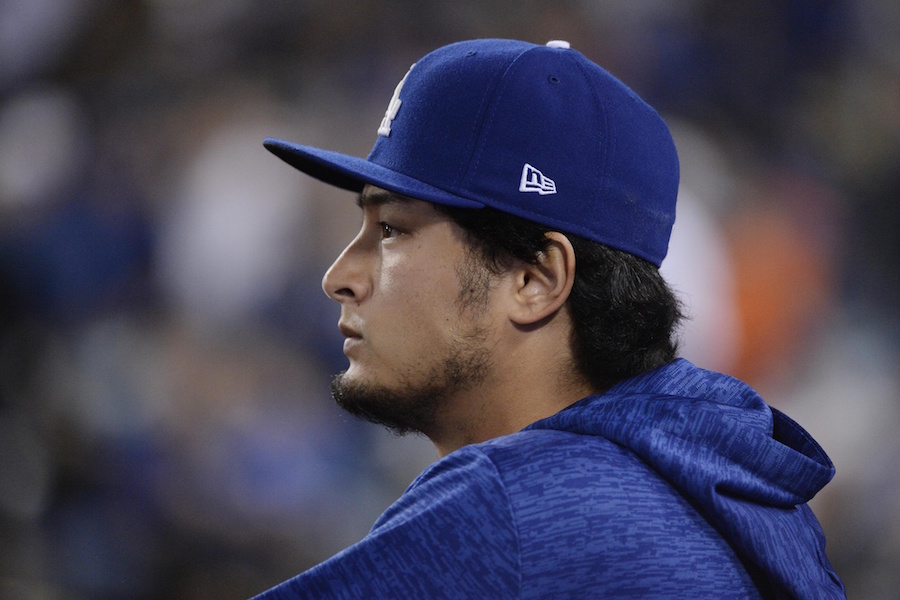 1) Darvish Market Heats Up In late November, Jim Bowden reported that there were six teams legitimately "in" on free agent starter Yu Darvish. It's reasonable to believe the Twins are one of those teams. Thad Levine, who has ties to the right-hander from his days in Texas, has called Darvish a priority. The 31-year-old makes plenty of sense as a fit for Minnesota. He'd fulfill their need for a frontline starter, and as one of the game's best strikeout pitchers, he aligns with the organization's growing emphasis on missing bats. But can the Twins swing it financially? Signing Darvish will likely require an investment roughly three times larger than the one Terry Ryan made in Ervin Santana, who became the franchise's biggest free agent splurge ever ($54 million) three years ago. But it's not like such commitments are unprecedented for the Twins; they did pony up $184 million to lock up Joe Mauer one year ahead of his free agency, and that contract is on the verge of expiring. The problem is that even if Levine is prepared to come to the table as a serious bidder, he'll face stiff competition for arguably the most coveted free agent on the market. However, it is worth noting that a few of the big-market heavy hitters seem limited or less urgent in their pursuit. The Yankees would be hard-pressed to go all in on Darvish after taking on Stanton's $250 million contract. The Dodgers must save up with an eye on re-signing Clayton Kershaw, who can opt out of his deal after next year. The Cubs appear to be focusing their attention on another free agent starter, Alex Cobb. 2) Rays Trade Talks Speaking of Cobb, Tampa doesn't appear to have any intention of trying to bring him back, and in fact, it sounds like a bit of a fire sale might be in the works. Bob Nightengale of USA Today wrote the following: "The Rays, who have seen the disparity grow even greater in the AL East with Stanton coming aboard, are listening to anyone and everyone." It was reported earlier this offseason that the Twins had discussed Jake Odorizzi with the Rays, and plenty of other intriguing names could be in play. Their closer Alex Colome led the American League in saves this season and has three years remaining of team control. And of course, their ace Chris Archer would be the prize of all prizes. Can Levine muster an offer to make that happen? If it means giving up four of the team's top ten prospects, should he? 3) Cole in the Stocking? Another noteworthy trade target is Pittsburgh's Gerrit Cole. The Twins have reportedly shown interest in the righty, who could conceivably slot ahead of Santana as Minnesota's No. 1 starter. He's two years away from free agency and in his prime at age 27. Because of these facts, Cole won't come cheaply, but he's more realistic than Archer. 4) Rule 5 Rumblings The Rule 5 draft will take place on Thursday morning, giving teams around the league an opportunity to poach unprotected players from other organizations. The Twins have a few prospects who are candidates to get taken (I have a suspicion someone's going to grab Nick Burdi and stash him on the DL while he rehabs from Tommy John Surgery), but they also have flexibility to acquire someone, with four open spots on the 40-man roster. J.J. Cooper of Baseball America listed his top five Rule 5 candidates and, unsurprisingly, the first three are relief pitchers. Burch Smith, Mason McCullough and Cale Coshow all have big fastballs, and could be impact additions. It also bears noting that Justin Haley, Minnesota's Rule 5 pick from a year ago, is once again available. He pitched very well at Pawtucket after being returned to the Red Sox organization this past summer, posting a 2.66 ERA and 0.96 WHIP in seven starts.
 -
 This was a fantastic reference, props
 -
If "literally" every other front office would have done it, why didn't they? Why didn't the Yankees flip their international money to teams angling for Ohtani and acquire two new prospects? Why didn't anyone else hire James Rowson or Jeff Pickler? Why didn't anyone else bring in John Manuel, or this highly touted Pitch F/X specialist the Twins just hired? "Crushing it" is an opinion, and one you can disagree with, but it's not click bait. There is plenty of back it up. This group is clearly differentiating itself.
-
In what world are these goals at odds?? Is it Freaky Friday or something? 1) They did win. Enough to make the playoffs one year after losing 100 games. The players they gave up were nonessential (clearly). 2) Adding talent is how you keep winning. The Twins have added quite a bit over the past several months while giving up essentially nothing to get it. I mean are you guys really advocating for making 'Buy' moves at the deadline anytime you have a fraction of a chance to make the playoffs? Because that's a pretty terrible and short-sighted way to run a franchise like this one.
-
I mean the comment has already been addressed and that's not the intended takeaway at all, but ok? Saying that casual Twins fans aren't going to be excited much by these kinds of roster moves is not the same as saying everyone who's not impressed is a casual fan. Chill out.
-
Do you really believe this? The Twins were not built to make a championship run this year. Another bat and relief pitcher weren't getting them past the Yankees, and certainly not past anyone else. If they made the moves you suggested they likely end up with the same result, and they're in worse shape today. I don't even see how this is debatable.
-
What evidence do we have that other teams would've made the same moves in this case? Are there examples of any team making moves like this -- where they traded solely international cap space to acquire legitimate young prospects? Honest question. I have never seen it before so that's a dubious assertion to me.
-
I dunno man. Claiming that this is spin, when you're somehow portraying their deadline decisions as a "blunder," is something else. It didn't look like one at the moment and certainly doesn't look like one in hindsight. And while "missing out" on top international talent they've acquired players who are arguably better prospects than any available (sans Ohtani), and certainly better fits for the team's needs. They've actually done phenomenally well considering the circumstances. Leveraging teams against one another while they're all angling for Ohtani? (Granted, this required some help from his side because clearly he's making all these teams believe they're in it, and urging them to build up cap space to strengthen their cases.) Yes, forgot to mention this. But another great example of making something out of nothing.
-
I didn't mean to imply that at all. Only saying that casual fans of the team aren't even going to much notice stuff like this. And those are the people the Twins really need to reel back in. If you're waiting to judge them on the bigger moves I don't hold it against you. But I like much of what I'm seeing – roster shuffling, front office and coaching hires, low-key additions... I find myself nodding my head a lot. This definitely was not the case in the latter half of TR's run.
-
Major League Baseball is in uncharted waters. Executives around the league are still acclimating to the complicated international bonus pool system, and now to make matters more jarring, there are two completely unprecedented situations playing out on that front. With Shohei Ohtani hitting the open market, alongside a dozen freshly released players from the Braves organization, teams are scrambling to get in on the action. Meanwhile, the Twins and their increasingly impressive front office leadership appear to be a step ahead of the pack.When the Twins traded Brandon Kintzler to Washington at the deadline, they added $500,000 in international slot cap space. They later recouped another $3 million by voiding their agreement with Dominican shortstop Jelfry Marte, who failed a physical due to vision issues. These developments enabled Minnesota to build up flexibility for a run at Ohtani, but it quickly became apparent this wasn't in the cards. The Mariners and Angels, among the finalists in the Ohtani Derby, both wanted to sweeten their monetary offerings. The Twins dealt $1 million to each, and in return acquired two high draft picks from this past June's draft. Seattle and Los Angeles both bolstered their cases for Ohtani, but only one can sign him. Maybe neither will. And yet the Twins were able to extract valuable assets from both, and to do so, they gave up... nothing, really. Yes, that money could've been spent on international talent – and still can be, after one or both teams come up short on Ohtani – but probably not one matching the caliber of these newly acquired prospects. Certainly not anyone as far along. Derek Falvey and Thad Levine are showing a masterful ability to navigate this new MLB landscape, and the rate at which they've pumped quality talent into the farm system is incredible. They already brought in arguably the best haul of any organization during their first draft in June (granted, they were gifted with very favorable circumstances). Now they've reeled in two more promising players from the top five rounds. Plus, Falvey and Levine were able to acquire Zack Littell, Dietrich Enns and Tyler Watson during the season, all in exchange for two players they could now sign as free agents. These aren't blockbuster moves that are going to garner glitzy headlines. The Twins haven't signed Yu Darvish, and until something of that nature takes place, casual fans at large will probably not buy into the notion anything has really changed. But make no mistake, this franchise has entered a new era of strategic, data-driven, opportunistic baseball operations. We heard those kinds of terms tossed around often when Falvey and Levine came aboard; now we are seeing they were more than buzzwords. Over the past decade at least, the Twins have consistently been criticized for lagging behind the times – justifiably so. It's been frustrating to watch from the outside. Now, no one could credibly accuse them of such. The latest series of savvy maneuvers fits with an established pattern of supplementing the pipeline, and building a sustainable long-term winning engine. But as far as winning in 2018 is concerned, Falvey and Levine haven't done much of anything. This doesn't make them unique – all of baseball has sleepwalked through the first five weeks of the offseason – but it would sure be nice to see this team fire up the Hot Stove before the holidays arrive. With the Winter Meetings on tap in Orlando next week, I suspect we'll have some higher-profile developments to discuss. And I hope the Twins will come away from them looking as good as they do now. Click here to view the article
-
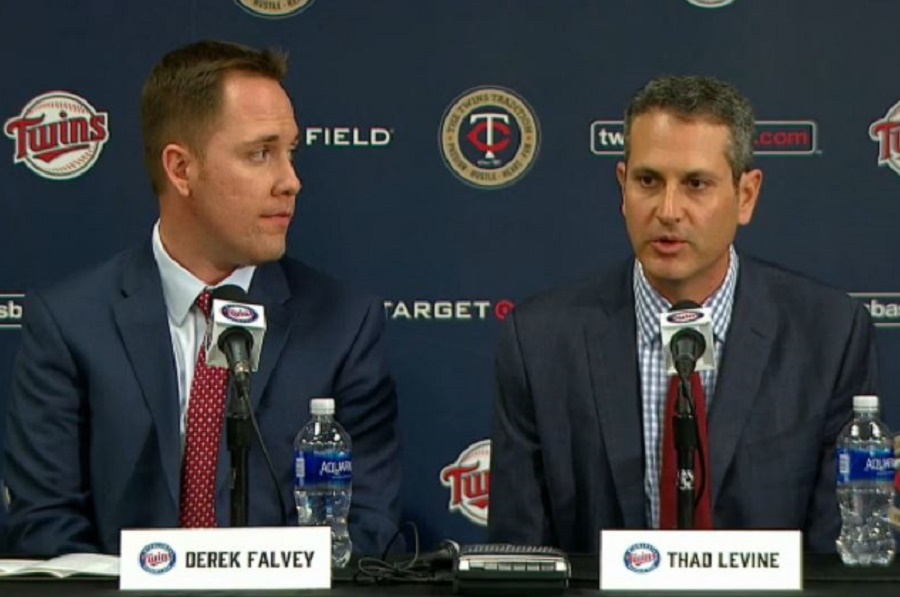 When the Twins traded Brandon Kintzler to Washington at the deadline, they added $500,000 in international slot cap space. They later recouped another $3 million by voiding their agreement with Dominican shortstop Jelfry Marte, who failed a physical due to vision issues. These developments enabled Minnesota to build up flexibility for a run at Ohtani, but it quickly became apparent this wasn't in the cards. The Mariners and Angels, among the finalists in the Ohtani Derby, both wanted to sweeten their monetary offerings. The Twins dealt $1 million to each, and in return acquired two high draft picks from this past June's draft. Seattle and Los Angeles both bolstered their cases for Ohtani, but only one can sign him. Maybe neither will. And yet the Twins were able to extract valuable assets from both, and to do so, they gave up... nothing, really. Yes, that money could've been spent on international talent – and still can be, after one or both teams come up short on Ohtani – but probably not one matching the caliber of these newly acquired prospects. Certainly not anyone as far along. Derek Falvey and Thad Levine are showing a masterful ability to navigate this new MLB landscape, and the rate at which they've pumped quality talent into the farm system is incredible. They already brought in arguably the best haul of any organization during their first draft in June (granted, they were gifted with very favorable circumstances). Now they've reeled in two more promising players from the top five rounds. Plus, Falvey and Levine were able to acquire Zack Littell, Dietrich Enns and Tyler Watson during the season, all in exchange for two players they could now sign as free agents. These aren't blockbuster moves that are going to garner glitzy headlines. The Twins haven't signed Yu Darvish, and until something of that nature takes place, casual fans at large will probably not buy into the notion anything has really changed. But make no mistake, this franchise has entered a new era of strategic, data-driven, opportunistic baseball operations. We heard those kinds of terms tossed around often when Falvey and Levine came aboard; now we are seeing they were more than buzzwords. Over the past decade at least, the Twins have consistently been criticized for lagging behind the times – justifiably so. It's been frustrating to watch from the outside. Now, no one could credibly accuse them of such. The latest series of savvy maneuvers fits with an established pattern of supplementing the pipeline, and building a sustainable long-term winning engine. But as far as winning in 2018 is concerned, Falvey and Levine haven't done much of anything. This doesn't make them unique – all of baseball has sleepwalked through the first five weeks of the offseason – but it would sure be nice to see this team fire up the Hot Stove before the holidays arrive. With the Winter Meetings on tap in Orlando next week, I suspect we'll have some higher-profile developments to discuss. And I hope the Twins will come away from them looking as good as they do now.
 -
Article: The Impending Rochester Rotation Crunch
Nick Nelson replied to Nick Nelson's topic in Twins Daily Front Page News
He still had a 13% swinging strike rate in those final three starts, and struck out 20 hitters in 17 innings. That matters more than the results in my eyes, and helps to answer your final question.- 102 replies
-
- 3
-

-
- aaron slegers
- stephen gonsalves
- (and 1 more)
-
Who is going to help move the needle for the Twins rotation? We know it won't be Shohei Ohtani. It probably won't be Phil Hughes. There are plenty of other options out there to be explored, and I assume they will be. But when I opined it was a myth that the Twins absolutely must add an impact starter, it was for this reason: The Rochester rotation is overflowing with potential reinforcements. And I don't mean the types of Quadruple-A journeymen that have often occupied the Red Wings ranks in recent years. We're talking legitimate prospects, ready to help.Much can change between now and spring training, but as things stand, one would expect at least these pitchers to be tentatively slotted for the Triple-A rotation: Aaron Slegers, Felix Jorge, Dietrich Enns, Stephen Gonsalves, Zack Littell, Fernando Romero. That's six, and I can't see much of a case for sending any of them back to Double-A. Maybe Romero, who wore down in August and didn't make it through the whole season with Chattanooga, but when healthy he was dominating hitters at that level, so even if he starts there it probably won't last long. Then there is Kohl Stewart. It's possible the former first-round pick, left unprotected for next week's Rule 5 draft, will be taken by another team, but that seems really unlikely. While his pedigree is pristine, the 23-year-old hasn't sustained any kind of success above Single-A. It wouldn't serve him, or his new team, to stick him in the back of an MLB bullpen. If he sticks around, it further complicates things. He has already made 32 starts at Double-A. It's sink-or-swim time at Rochester for him, but as things stand, the pool is full. And that's before we account for any other circumstances, such as Trevor May and/or Hughes needing to open in the minors to build strength, or Adalberto Mejia requiring a bit more seasoning. Looking at this impending logjam of arms, a few particular questions come to mind. I'll unpack them a little here, and then I'm curious to hear your thoughts in the comments. 1. What to Make of Aaron Slegers? To me, Slegers is a particularly interesting case as we look ahead to 2018. With relatively little fanfare, he has stayed healthy and climbed the organizational ladder since being selected as a fifth-round pick out of Indiana University in 2013. Though he's never achieved impressive strikeout rates, the 6'10" righty has consistently put up good numbers with a 3.50 ERA and 1.19 WHIP in 600 minor-league innings. As you may recall, Slegers got his first taste of the majors this year, pitching brilliantly in his MLB debut (6.1 IP, 2 H, 2 ER) and then struggling in three September appearances. The 25-year-old appears big-league ready, and while he doesn't produce the velocity or whiffs you'd like to see from his sky-scraping frame, there are some things to like about him. Chief among the positives is his ability to locate. Control is often one of the last things to come along for big lanky throwers like Slegers, but he has been exceptional in this regard ever since joining the pro ranks. This has been a huge part of his success in the minors, and could give him a reasonably high floor as a big-leaguer. Unfortunately, the ceiling isn't so high unless he can find a way to miss more bats. But here's an intriguing nugget: In his second start back at Rochester following his August 17th debut with the Twins, Slegers tied a career high with 10 strikeouts, inducing a whopping 20 swinging strikes. In his next start he once again struck out 10, this time with 15 whiffs. The total of 35 swings and misses in two successive starts is an impressive feat, especially for someone with his track record (Jose Berrios, who's made 30 total starts at Triple-A, has only surpassed that number in consecutive starts at the level once, when he tallied 36 in late 2015). And that was the last we saw of Slegers at Rochester. I'm very curious to see if he can pick up where he left off, and what type of untapped potential might lie in him yet, especially if he returns to the Twins and jibes with new pitching coach Garvin Alston. 2. Is It Time for Any of These Hurlers to Make a Bullpen Transition? As we know, the Twins need help in the bullpen as well as the rotation. And as we also know, many of the best relievers in the game are former starters who switched roles somewhere along the way. Several of the pitchers in the mix we're discussing here are somewhat fringy. So is it time to consider proactively sliding one or two of these guys into relief, with hopes of upgrading their stuff and accelerating their paths to major league impact? This would potentially help alleviate the rotation logjam, but the problem is that it feels too soon to give up on any of these guys as starting pitchers. The only one I could really see it happening with right now is Enns, who has fluctuated roles quite a bit in his pro career and dealt with shoulder inflammation late last year. 3. Could Someone Sneak Into the Opening Day MLB Rotation? This would be another method of thinning out the crowd, but again, it seems very unlikely. Jorge, Slegers and Enns have a bit of MLB experience but neither would be a credible choice to open the season in the Twins rotation. Gonsalves and Romero would be more legit choices, and are very close to ready, but they need prove themselves (and their shoulders) in Triple-A. But all five are on the 40-man roster (as is Littell) so it's not impossible that one could find his way into the picture. After all, Mejia had almost zero major-league experience last spring when he won Minnesota's fifth rotation spot. 4. Should the Twins Be Shopping Pitching Prospects? This question is sort of inevitable after looking at all the angles. Unless multiple prospects being discussed here get hurt, move to the bullpen, or make the big-league team, the Twins are going to be facing a real numbers crunch with their almost-ready starters. The old saying about how "you can never have too much pitching" isn't exactly true. This situation will be a substantial factor in how the coming offseason is handled. As I see it, there are two ways to move forward: A ) Condense Flip quantity and upside for quality and readiness. If the Twins could package a couple of these arms and get back a quality addition to the MLB rotation, it would kill two birds with one stone. The problem is that it's risky. You've got to really trust your evaluations. Minnesota can ill afford to let one of these guys fulfill his potential elsewhere while getting back a few years of fairly expensive league-average performance from, say, Jake Odorizzi. B ) Youth Movement Take a pass on the bloated starting pitching market and let the kids take the reins. Go with a rotation of Erv, Berrios, Gibson, Mejia and [OPEN] with the final job being up for grabs among a wide cast. If the Twins truly want to build from within, and have belief in their group of young arms, then this would be the logical path. But it's not exactly one that thrusts your team forcefully into championship contention. We'll see how it plays out. This could be a point of divergence between the new mentality and the old. I suspect Terry Ryan's regime would have leaned toward the latter approach, while the Falvine Machine might opt for the former. I don't know if they're all that sold on this crop of pitchers – all good enough to be genuinely interesting assets, but not one a true top-tier prospect in the game. Click here to view the article
- 102 replies
-
- 2
-
-
- aaron slegers
- stephen gonsalves
- (and 1 more)
-
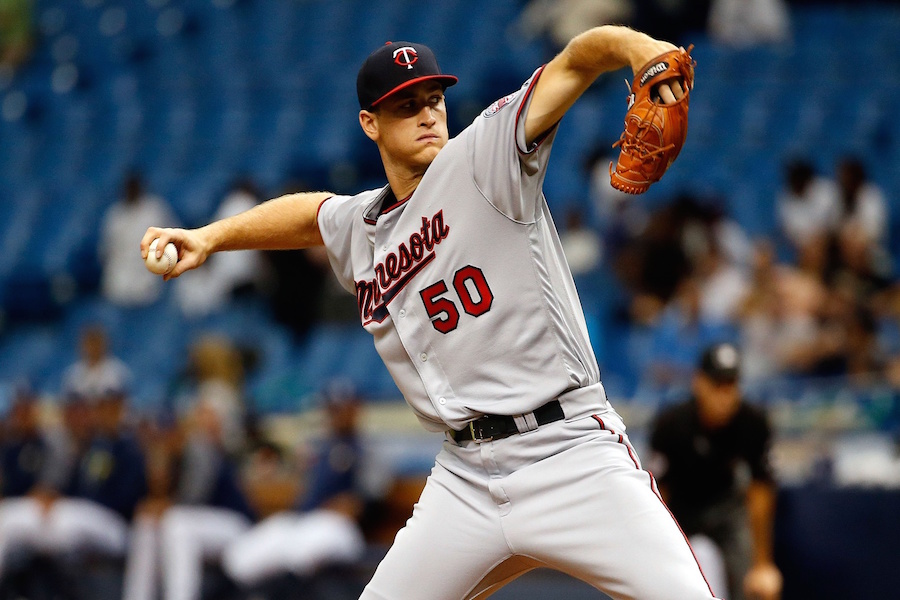 Much can change between now and spring training, but as things stand, one would expect at least these pitchers to be tentatively slotted for the Triple-A rotation: Aaron Slegers, Felix Jorge, Dietrich Enns, Stephen Gonsalves, Zack Littell, Fernando Romero. That's six, and I can't see much of a case for sending any of them back to Double-A. Maybe Romero, who wore down in August and didn't make it through the whole season with Chattanooga, but when healthy he was dominating hitters at that level, so even if he starts there it probably won't last long. Then there is Kohl Stewart. It's possible the former first-round pick, left unprotected for next week's Rule 5 draft, will be taken by another team, but that seems really unlikely. While his pedigree is pristine, the 23-year-old hasn't sustained any kind of success above Single-A. It wouldn't serve him, or his new team, to stick him in the back of an MLB bullpen. If he sticks around, it further complicates things. He has already made 32 starts at Double-A. It's sink-or-swim time at Rochester for him, but as things stand, the pool is full. And that's before we account for any other circumstances, such as Trevor May and/or Hughes needing to open in the minors to build strength, or Adalberto Mejia requiring a bit more seasoning. Looking at this impending logjam of arms, a few particular questions come to mind. I'll unpack them a little here, and then I'm curious to hear your thoughts in the comments. 1. What to Make of Aaron Slegers? To me, Slegers is a particularly interesting case as we look ahead to 2018. With relatively little fanfare, he has stayed healthy and climbed the organizational ladder since being selected as a fifth-round pick out of Indiana University in 2013. Though he's never achieved impressive strikeout rates, the 6'10" righty has consistently put up good numbers with a 3.50 ERA and 1.19 WHIP in 600 minor-league innings. As you may recall, Slegers got his first taste of the majors this year, pitching brilliantly in his MLB debut (6.1 IP, 2 H, 2 ER) and then struggling in three September appearances. The 25-year-old appears big-league ready, and while he doesn't produce the velocity or whiffs you'd like to see from his sky-scraping frame, there are some things to like about him. Chief among the positives is his ability to locate. Control is often one of the last things to come along for big lanky throwers like Slegers, but he has been exceptional in this regard ever since joining the pro ranks. This has been a huge part of his success in the minors, and could give him a reasonably high floor as a big-leaguer. Unfortunately, the ceiling isn't so high unless he can find a way to miss more bats. But here's an intriguing nugget: In his second start back at Rochester following his August 17th debut with the Twins, Slegers tied a career high with 10 strikeouts, inducing a whopping 20 swinging strikes. In his next start he once again struck out 10, this time with 15 whiffs. The total of 35 swings and misses in two successive starts is an impressive feat, especially for someone with his track record (Jose Berrios, who's made 30 total starts at Triple-A, has only surpassed that number in consecutive starts at the level once, when he tallied 36 in late 2015). And that was the last we saw of Slegers at Rochester. I'm very curious to see if he can pick up where he left off, and what type of untapped potential might lie in him yet, especially if he returns to the Twins and jibes with new pitching coach Garvin Alston. 2. Is It Time for Any of These Hurlers to Make a Bullpen Transition? As we know, the Twins need help in the bullpen as well as the rotation. And as we also know, many of the best relievers in the game are former starters who switched roles somewhere along the way. Several of the pitchers in the mix we're discussing here are somewhat fringy. So is it time to consider proactively sliding one or two of these guys into relief, with hopes of upgrading their stuff and accelerating their paths to major league impact? This would potentially help alleviate the rotation logjam, but the problem is that it feels too soon to give up on any of these guys as starting pitchers. The only one I could really see it happening with right now is Enns, who has fluctuated roles quite a bit in his pro career and dealt with shoulder inflammation late last year. 3. Could Someone Sneak Into the Opening Day MLB Rotation? This would be another method of thinning out the crowd, but again, it seems very unlikely. Jorge, Slegers and Enns have a bit of MLB experience but neither would be a credible choice to open the season in the Twins rotation. Gonsalves and Romero would be more legit choices, and are very close to ready, but they need prove themselves (and their shoulders) in Triple-A. But all five are on the 40-man roster (as is Littell) so it's not impossible that one could find his way into the picture. After all, Mejia had almost zero major-league experience last spring when he won Minnesota's fifth rotation spot. 4. Should the Twins Be Shopping Pitching Prospects? This question is sort of inevitable after looking at all the angles. Unless multiple prospects being discussed here get hurt, move to the bullpen, or make the big-league team, the Twins are going to be facing a real numbers crunch with their almost-ready starters. The old saying about how "you can never have too much pitching" isn't exactly true. This situation will be a substantial factor in how the coming offseason is handled. As I see it, there are two ways to move forward: A ) Condense Flip quantity and upside for quality and readiness. If the Twins could package a couple of these arms and get back a quality addition to the MLB rotation, it would kill two birds with one stone. The problem is that it's risky. You've got to really trust your evaluations. Minnesota can ill afford to let one of these guys fulfill his potential elsewhere while getting back a few years of fairly expensive league-average performance from, say, Jake Odorizzi. B ) Youth Movement Take a pass on the bloated starting pitching market and let the kids take the reins. Go with a rotation of Erv, Berrios, Gibson, Mejia and [OPEN] with the final job being up for grabs among a wide cast. If the Twins truly want to build from within, and have belief in their group of young arms, then this would be the logical path. But it's not exactly one that thrusts your team forcefully into championship contention. We'll see how it plays out. This could be a point of divergence between the new mentality and the old. I suspect Terry Ryan's regime would have leaned toward the latter approach, while the Falvine Machine might opt for the former. I don't know if they're all that sold on this crop of pitchers – all good enough to be genuinely interesting assets, but not one a true top-tier prospect in the game.
 -
The forgotten man in the Minnesota Twins 2018 pitching blueprint was supposed to be among its centerpieces. When Terry Ryan signed the right-hander to a reworked five-year contract following his brilliant 2014 campaign, the idea was that Hughes would now be thriving as a rotation fixture entering Year 4. Instead, as we all know, things have gone a very different direction – a gradual yet consistent downturn ever since. But the veteran is still locked in, lined up as the roster's third-highest earner at $13.2 million; a total afterthought in discussions of a revamped Twins staff. He'll either be a lost cause or a pleasant surprise. Let's explore the latter scenario, and what it would mean.Over the past three seasons, while the condition of his shoulder has deteriorated, Hughes has tried just about everything to offset the decline of a fastball that was once his calling card. He's thrown more changeups. He's attempted adding spin to his heater. He has undergone surgery for thoracic outlet syndrome not once, but twice. Ultimately, nothing else will matter much if his latest operation – dubbed a "revision" on the first – doesn't take. Last year, he came back from the initial surgery experiencing the same symptoms of fatigue that necessitated it in the first place. There was no improvement. His fastball velocity registered at a new career low. Mum's been the word on Hughes lately as he rehabs from an August 10th procedure that involved removing the remainder of his rib (half was taken out the first time) along with scar tissue, while cleaning up scalene muscles in the area. If you're having a hard time counting on Hughes, that's more than understandable. He hasn't been a particularly effective pitcher since that 2014 season, which now feels like a very distant memory. But it's important to remember how good he was then, and at other times. Does that ability still does reside within him? The new Twins front office, saddled with a $26.4 million commitment through the next two years, has no choice but to focus on his still-existent upside, no matter how remote the likelihood of achieving it at this point. How should the team's decision-makers be planning around Hughes as they look ahead to next spring, when he's expected to be ready to roll? I see two options, and one is clearly preferable in my mind. 1) Rotation Depth It goes without saying that the Twins must come to camp with at least five starting pitchers slotted ahead of Hughes. Anything less would be grossly irresponsible. So, if the plan is to bring back Hughes as a starter, he's nothing but insurance. Presumably he wouldn't be able to supplant one of the five proven commodities in front of him, even with a decent spring showing. When the season starts and he's on the outside of the rotation looking in, where do you go from there? Try sending him to Rochester so he can add to – dare I say – a starting logjam? Throw him into long relief, where he'll pitch sporadically in unpredictable bursts and struggle to build stamina? It could be that Hughes is no longer built to throw 100 pitches every fifth day. So maybe it's time to commit to another path. 2) Return in Relief Once upon a time, Hughes was the dominating setup man who paved way for Mariano Rivera in a championship season for the Yankees. That was a long time ago now – almost a decade – but he has shown he can do it. Most likely the 31-year-old's days as a flamethrowing weapon in the late innings are over, but his best bet to provide value could be in a middle relief role. This would enable Hughes to throw in shorter stints, perhaps reducing repetitive wear on his arm, maybe even helping him regain strength. It would also be easier to make room for him in the pen than in the rotation. Even if he doesn't approach the 94 MPH gas he was bringing back in 2009, Hughes has the control and aptitude to be an effective reliever if this surgery restores even a semblance of his previous zip. The Twins, of course, will take whatever bullpen depth they can get. An optimist could even venture to think bigger. Other pitchers have been written off due to recurring injuries around the same age, only to bounce back resoundingly in a different form. That list includes Hughes's good friend Glen Perkins, who appeared cooked after shoulder issues wrecked back-to-back seasons and ended his career as a starter. Perk wasn't all that much younger when he reemerged as a reliever than Hughes is now. It's a lofty hope, but one that is grounded in low expectations. Therein lies the beauty. Hughes has all the potential to surprise and little chance to disappoint. One thing feels clear, though: If the Twins try to bring him along as a starter, again, hoping he can regain velocity over long outings and make it through lineups multiple times, we're destined to get what we expect. Click here to view the article
-
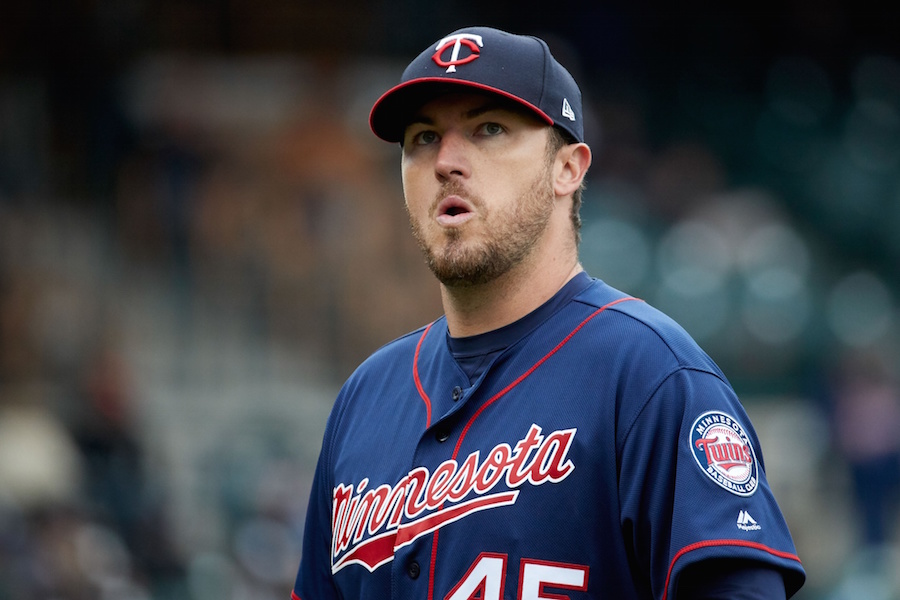 Over the past three seasons, while the condition of his shoulder has deteriorated, Hughes has tried just about everything to offset the decline of a fastball that was once his calling card. He's thrown more changeups. He's attempted adding spin to his heater. He has undergone surgery for thoracic outlet syndrome not once, but twice. Ultimately, nothing else will matter much if his latest operation – dubbed a "revision" on the first – doesn't take. Last year, he came back from the initial surgery experiencing the same symptoms of fatigue that necessitated it in the first place. There was no improvement. His fastball velocity registered at a new career low. Mum's been the word on Hughes lately as he rehabs from an August 10th procedure that involved removing the remainder of his rib (half was taken out the first time) along with scar tissue, while cleaning up scalene muscles in the area. If you're having a hard time counting on Hughes, that's more than understandable. He hasn't been a particularly effective pitcher since that 2014 season, which now feels like a very distant memory. But it's important to remember how good he was then, and at other times. Does that ability still does reside within him? The new Twins front office, saddled with a $26.4 million commitment through the next two years, has no choice but to focus on his still-existent upside, no matter how remote the likelihood of achieving it at this point. How should the team's decision-makers be planning around Hughes as they look ahead to next spring, when he's expected to be ready to roll? I see two options, and one is clearly preferable in my mind. 1) Rotation Depth It goes without saying that the Twins must come to camp with at least five starting pitchers slotted ahead of Hughes. Anything less would be grossly irresponsible. So, if the plan is to bring back Hughes as a starter, he's nothing but insurance. Presumably he wouldn't be able to supplant one of the five proven commodities in front of him, even with a decent spring showing. When the season starts and he's on the outside of the rotation looking in, where do you go from there? Try sending him to Rochester so he can add to – dare I say – a starting logjam? Throw him into long relief, where he'll pitch sporadically in unpredictable bursts and struggle to build stamina? It could be that Hughes is no longer built to throw 100 pitches every fifth day. So maybe it's time to commit to another path. 2) Return in Relief Once upon a time, Hughes was the dominating setup man who paved way for Mariano Rivera in a championship season for the Yankees. That was a long time ago now – almost a decade – but he has shown he can do it. Most likely the 31-year-old's days as a flamethrowing weapon in the late innings are over, but his best bet to provide value could be in a middle relief role. This would enable Hughes to throw in shorter stints, perhaps reducing repetitive wear on his arm, maybe even helping him regain strength. It would also be easier to make room for him in the pen than in the rotation. Even if he doesn't approach the 94 MPH gas he was bringing back in 2009, Hughes has the control and aptitude to be an effective reliever if this surgery restores even a semblance of his previous zip. The Twins, of course, will take whatever bullpen depth they can get. An optimist could even venture to think bigger. Other pitchers have been written off due to recurring injuries around the same age, only to bounce back resoundingly in a different form. That list includes Hughes's good friend Glen Perkins, who appeared cooked after shoulder issues wrecked back-to-back seasons and ended his career as a starter. Perk wasn't all that much younger when he reemerged as a reliever than Hughes is now. It's a lofty hope, but one that is grounded in low expectations. Therein lies the beauty. Hughes has all the potential to surprise and little chance to disappoint. One thing feels clear, though: If the Twins try to bring him along as a starter, again, hoping he can regain velocity over long outings and make it through lineups multiple times, we're destined to get what we expect.
 -
Article: The Twins Should Be Shopping Ervin Santana
Nick Nelson replied to Nick Nelson's topic in Twins Daily Front Page News
I view it through the same lens as the Royals trading Wil Myers for James Shields following a 4th straight 90-loss season. Eventually, when a rebuild is stalling out, you need to do something to kick it into gear. Especially true for the Reds, who are wasting what remains of Votto's prime. Cincy's leading starter in IP in 2017 (Adleman) threw 120, and just signed with a Korean team. What's it worth for them to gain some desperately needed stability in the rotation? Maybe not Stephenson, but I think more than some people here are presuming. -
Article: The Twins Should Be Shopping Ervin Santana
Nick Nelson replied to Nick Nelson's topic in Twins Daily Front Page News
I didn't say he's a pumpkin. My expectation is that he'll perform up to his career trends going forward (~4.00 ERA, ~4.20 FIP), maybe even a little better if he's truly turned a late corner, making him a fine pitcher and a desirable target for other teams. I simply think it's logical to swap him out for a younger arm with a lower likelihood of attrition from age and wear. The money reallocation and the prospects coming back are what make this concept appealing to me. I'm not trying to just dump Santana because I think he's guaranteed to implode. I assume he'd be a very capable, valuable pitcher for a team like the Reds. -
Article: The Twins Should Be Shopping Ervin Santana
Nick Nelson replied to Nick Nelson's topic in Twins Daily Front Page News
I'm not worked up. It just seems like you're trying really hard to convince me of something I already agree with Trust me, I'm personally more partial to the metrics you cited. I just wouldn't call someone wrong for saying Ervin's year was better, and might make that case myself if we're looking strictly at results and outcomes. Also, for what it's worth, here's how WAR shakes out for those three pitchers if we use Baseball Ref's version instead of FG: Santana: 4.6 Liriano: 4.4 Hughes: 4.3 -
Article: The Twins Should Be Shopping Ervin Santana
Nick Nelson replied to Nick Nelson's topic in Twins Daily Front Page News
I don't know why you're pushing this so hard. I was responding to the idea that Santana's season wasn't even "arguably" better than Hughes or Liriano. An argument can be made both ways, and you're making a fine one for the other side. As I've already said, I probably lean more in that direction myself. But not everyone thinks FIP matters more than ERA, not everyone thinks BABIP is a complete function of luck and defense, and not everyone gives a darn about fWAR for pitchers. In fact, I'd say the majority of baseball fans probably don't. Santana threw more innings and while allowing fewer baserunners and fewer runs. It's that simple. -
Article: The Twins Should Be Shopping Ervin Santana
Nick Nelson replied to Nick Nelson's topic in Twins Daily Front Page News
1) Lance Lynn is 5 years younger than Santana and his career ERA/FIP are both substantially lower. I see zero chance Erv would be more coveted than him, and Cobb would also be higher on almost every list. 2) This point keeps getting repeated but it's far from a given. Per the example I cited in the post above, Pavano threw 220 innings in 2011 as a 35-year-old with a 4.30 ERA, declining velo, and the most hits allowed in the league. Did anyone really feel great about bringing him back in 2012 at that point? Is it that hard to envision a similar scenario with Santana? Again: his 2017 season was very similar to Pavano's 2010 in a number of ways. -
Article: The Twins Should Be Shopping Ervin Santana
Nick Nelson replied to Nick Nelson's topic in Twins Daily Front Page News
My issue is that this is the same kind of thinking that prompted Bill Smith and Company to go out and re-sign Carl Pavano after the 2010 season. You can't get caught up in what a guy did; you need to focus on what he's going to do. Much like 2017 Erv, 2010 Pavano was a popular veteran workhorse who helped lead MN to the postseason. Threw 220 innings, 7 complete games, outperformed his peripherals. He was the same age as Santana is now (34). The Twins felt like they needed to "let [Pavano] help them get to the postseason again." They signed him to a two-year deal, forfeiting draft compensation they'd have received by letting him land elsewhere. But, as it tends to go, a 35-year-old well-worn Pavano was far less effective in 2011, swinging to the opposite side of his FIP, and in 2012 at age 36 he broke down. Not saying the situations are identical (obviously Pavano had a much worse long-term health history) but the similarities are hard to ignore. I want a front office that is proactive and anticipatory. This is an opportunity to do just that, IF you can find the right match. -
Article: The Twins Should Be Shopping Ervin Santana
Nick Nelson replied to Nick Nelson's topic in Twins Daily Front Page News
Those are fine arguments, and I'd probably be inclined to agree, but they're not definitive by any means. I'd say Hughes and Liriano pitched better but they did not stack up in terms of results. Santana has both of them beat in IP, ERA, WHIP, CG, shutouts, etc. Was an All Star and got a bunch of CY votes. I'm a fan of using peripherals and fielding-independent numbers for predictive purposes, but when we're assessing a guy's season in retrospect I think it's fair to just judge him by what he accomplished on the field. And from that standpoint, Erv's 2017 was arguably (maybe even unarguably) the best for a Twin since Johan's 2006. -
Twins general manager Thad Levine has not been secretive regarding his pursuit of top available pitching talent. He recognizes a need to bolster the front end of his rotation. In the Offseason Handbook, I wrote a blueprint suggesting that the Twins trade Ervin Santana and sign Yu Darvish to replace him as the club's veteran No. 1 starter. Today I'll dig deeper into the rationale behind dealing Santana, because while it's partially about clearing his 2018 salary to make a big-money signing more palatable, there are other factors to consider as well.First, let's acknowledge the obvious: Santana was spectacular in 2017. He had arguably the best season for a Twins starting pitcher since Johan left town. Big Erv made the All Star team, finished seventh in Cy Young voting, and buoyed an otherwise shaky rotation. But that's exactly why his value is at an all-time high. Historically, career years at the age of 34 don't often become trends, and Santana's in particular carried many indicators of being aided by luck (evidenced by a 4.46 FIP). He's still a reliable, proven workhorse and that's why he has value to any team – including the Twins – but right now his value is peaking. Derek Falvey talked when he came aboard about being "opportunistic," and this would be the definition. Santana has only one guaranteed year left on his contract, but here's the thing: His 2019 option triggers if he throws 200 innings next year. In the event he regresses to his FIP – or even his 4.02 career ERA – but still reaches that milestone, you're locked into him for $14 million at age 36, right in the middle of a peak window for winning with Byron Buxton and Co. Santana's team-friendly contract can turn into a hindrance rather quickly. It might be easier to sell ownership on a $150 million splash for Darvish (already named by Levine as a priority target) if you can get that potential $27 million commitment to Santana off the books. And swapping out a 34-year-old with one/two years of team control for a 31-year-old with five/six makes plenty of sense in the greater team-building scheme. But even beyond the financials, there is an obvious sell-high angle at play here. Of course, other GMs will notice that as well. You can only be opportunistic if there are opportunities to exploit. Who might actually be interested in Santana, and at what price? In my mind, it won't be a World Series contender looking to add that final rotation piece. Many can afford to pursue a top free agent arm, and few would actually view the veteran starter as a meaningful upgrade to their playoff rotation. Instead, I look at teams trying to claw their way back into contention, and in desperate need of a veteran who can provide quality innings. My suggested match in the Handbook was the Cincinnati Reds, who have been withering away a Hall of Fame career for Joey Votto with three straight 90-loss seasons. There's pressure to get things turned around in a hurry, but the Reds aren't exactly positioned to go get Jake Arrieta. Santana would represent a modest financial commitment, and he'd immediately slot next to young fireballer Luis Castillo atop the rotation. Erv has been credited as a mentor in Minnesota – that factors as well with the 24-year-old Castillo being a fellow Dominican. In the blueprint I tossed out right-hander Robert Stephenson as a hypothetical return for Santana. He's a high-upside young pitcher, and former first-round pick, who has struggled with control thus far in the majors (5.10 ERA, 1.60 WHIP in 120 innings). He did, however, put together an excellent late run in the Cincy rotation. Given his organization's scarcity of promising arms, Stephenson might be asking too much. But he's just one name. The Reds have a number of prospects capable of enriching the Twins system. There's also Raisel Iglesias. Jon Morosi reported Minnesota's interest in the Reds closer a couple of weeks ago, and while it'd take plenty more to pry him loose (Romero? Gonsalves?), Santana's presence might help move the needle. It's all speculation, of course, but therein lies the fun. Which other teams do you view as possible partners in a Santana trade? What would you be looking to get in return? Click here to view the article
-
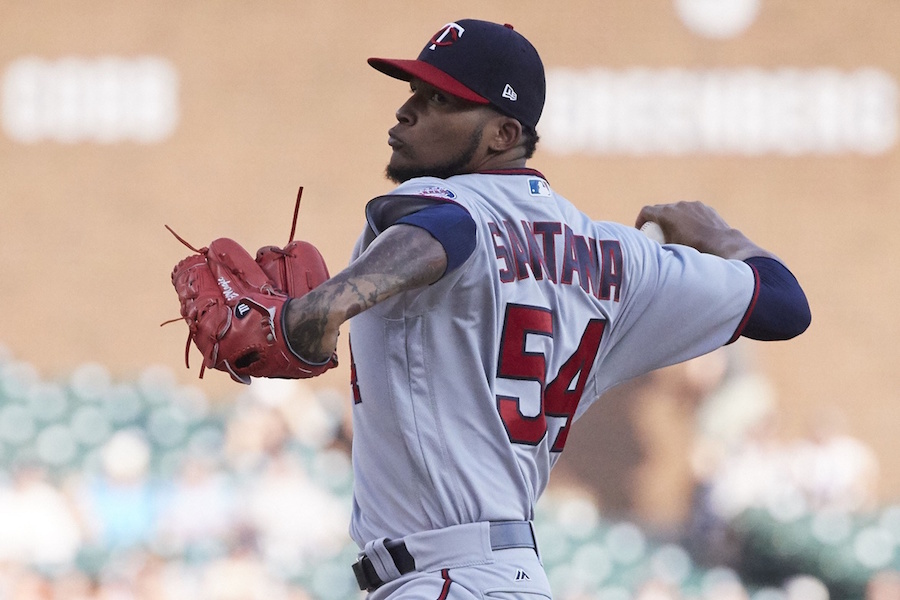 First, let's acknowledge the obvious: Santana was spectacular in 2017. He had arguably the best season for a Twins starting pitcher since Johan left town. Big Erv made the All Star team, finished seventh in Cy Young voting, and buoyed an otherwise shaky rotation. But that's exactly why his value is at an all-time high. Historically, career years at the age of 34 don't often become trends, and Santana's in particular carried many indicators of being aided by luck (evidenced by a 4.46 FIP). He's still a reliable, proven workhorse and that's why he has value to any team – including the Twins – but right now his value is peaking. Derek Falvey talked when he came aboard about being "opportunistic," and this would be the definition. Santana has only one guaranteed year left on his contract, but here's the thing: His 2019 option triggers if he throws 200 innings next year. In the event he regresses to his FIP – or even his 4.02 career ERA – but still reaches that milestone, you're locked into him for $14 million at age 36, right in the middle of a peak window for winning with Byron Buxton and Co. Santana's team-friendly contract can turn into a hindrance rather quickly. It might be easier to sell ownership on a $150 million splash for Darvish (already named by Levine as a priority target) if you can get that potential $27 million commitment to Santana off the books. And swapping out a 34-year-old with one/two years of team control for a 31-year-old with five/six makes plenty of sense in the greater team-building scheme. But even beyond the financials, there is an obvious sell-high angle at play here. Of course, other GMs will notice that as well. You can only be opportunistic if there are opportunities to exploit. Who might actually be interested in Santana, and at what price? In my mind, it won't be a World Series contender looking to add that final rotation piece. Many can afford to pursue a top free agent arm, and few would actually view the veteran starter as a meaningful upgrade to their playoff rotation. Instead, I look at teams trying to claw their way back into contention, and in desperate need of a veteran who can provide quality innings. My suggested match in the Handbook was the Cincinnati Reds, who have been withering away a Hall of Fame career for Joey Votto with three straight 90-loss seasons. There's pressure to get things turned around in a hurry, but the Reds aren't exactly positioned to go get Jake Arrieta. Santana would represent a modest financial commitment, and he'd immediately slot next to young fireballer Luis Castillo atop the rotation. Erv has been credited as a mentor in Minnesota – that factors as well with the 24-year-old Castillo being a fellow Dominican. In the blueprint I tossed out right-hander Robert Stephenson as a hypothetical return for Santana. He's a high-upside young pitcher, and former first-round pick, who has struggled with control thus far in the majors (5.10 ERA, 1.60 WHIP in 120 innings). He did, however, put together an excellent late run in the Cincy rotation. Given his organization's scarcity of promising arms, Stephenson might be asking too much. But he's just one name. The Reds have a number of prospects capable of enriching the Twins system. There's also Raisel Iglesias. Jon Morosi reported Minnesota's interest in the Reds closer a couple of weeks ago, and while it'd take plenty more to pry him loose (Romero? Gonsalves?), Santana's presence might help move the needle. It's all speculation, of course, but therein lies the fun. Which other teams do you view as possible partners in a Santana trade? What would you be looking to get in return?
