



Nick Nelson
-
Posts
8,326 -
Joined
-
Last visited
-
Days Won
56
Content Type
Profiles
News
Minnesota Twins Videos
2026 Minnesota Twins Top Prospects Ranking
2022 Minnesota Twins Draft Picks
Minnesota Twins Free Agent & Trade Rumors, Notes, & Tidbits
Guides & Resources
2023 Minnesota Twins Draft Picks
The Minnesota Twins Players Project
2024 Minnesota Twins Draft Picks
2025 Minnesota Twins Draft Pick Tracker
2026 Minnesota Twins Draft Tracker: Picks & Bonuses
Forums
Blogs
Events
Store
Downloads
Gallery
Everything posted by Nick Nelson
-
 OK, let's be clear on this: I'm not professing to be some sort of insider. I'm not a reporter out here dropping scoops. I talk occasionally to people who cover the team, or who seem to have a good grasp of what's going on. I take in news and tidbits from all possible sources and give more weight to things that align. I connect the dots as best I can and I try to reflect those vibes in the things I write here. I don't mean to say they gave up on Darvish or ruled out the chance of him coming here. I just got a sense in mid-to-late January that optimism was waning, and that a union with the Cubs was beginning to seem likely. Wrote as much at the time. If you want to "mistrust" a front office that – according to documented reports – offered 100M+ to the top FA on the market and has also taken a shot the top trade candidate, go for it. I, myself, am going to wait and continue advising people not to panic. It's ONE free agent off the board. The release from the Twins said "Major League game activity." Seems pretty explicit that they're including a rehab stint in that estimate, no?
 -
Well, I didn't. Someone else brought up a post where I suggested the idea of signing him in an effort to lure Darvish. And there's no reason to think the Twins didn't explore that avenue.
-
Your mileage may vary. Aging baseball scout spots flaw in a young player that goes undetected by hotshot young stat-head. He's proven right in a laughably predictable and contrived climactic scene. Every character is a complete stereotype. Yada yada.
-
I'm just theorizing here, but my guess is that Darvish's camp was coming close to a decision, and communicated to all remaining suitors "Submit your best offer" so the Twins did, despite knowing it probably wasn't enough.
-
No one's selling that idea. Again, the portion on Santana led with this statement: "Losing your top starter for a chunk of the season hurts, there's no other way to slice it." Giving Santana's arm extra rest, creating more ST flexibility, and forcing the front office to plan around not having a top-of-rotation impact from him (rather than planning around the possibility) are legit silver linings. That doesn't mean the development in general is a good thing -- it's not. I'm pretty tired of rehashing these inaccurate interpretations. If you want to argue that Santana's injury is nothing but a crippling, devastating hit to the team's fortunes so be it. I don't see it that way. Here's an example: There were a number of similar allusions from the press around that time in late January.
-
The Cubs can afford to absorb a few bad years at the end of that deal much more easily than the Twins. This is a very basic market reality. Epstein understands this. Not much else to be said. It is not hard to understand and no one is telling you not to be disappointed. I'm disappointed. But there are more productive things to do than sit around and sulk about how disappointed we are. This thread was meant to be a counterbalance to the aforementioned 20-page misery fest in the forum but sadly it's just been turning into the same thing. Come on people: Buck up!
-
If you need to have it explained to you why starting a thread called "Are we wasting our time? Will the Twins ever sign a top free agent?" -- which turns into a 20-page airing of grievances (to put it kindly) -- immediately after they came up short by offering someone $100M+ comes off as petulant, I dunno what to tell ya. You were wrong about the Dozier deal last year. They were right. Maybe give them a little credit that they know what they're doing?
-
This "sold hope" narrative makes it seem like there was something dishonest or misleading going on. It is pretty clear here that the Twins DID make a 5-year offer worth $100M+, which would be unprecedented in the franchise's history. I know everyone has these built-in suspicions about the Twins brass but why is to hard to accept that they were legitimately interested, gave legitimate pursuit, and legitimately got beat out by a franchise that always had an intrinsic edge over them? Be frustrated, sure. But there's so much "woe is me, we're screwed" going on here, as if Darvish was the only player out there with a chance to improve this club. The point of this article was to look forward and extract a few positives from a bummer of a situation.
-
Why are you oversimplifying things so much? They weren't going to sign Gimenez in the blind hope that it'd prompt Darvish to sign, creating another roadblock for Garver in the process. I wish people would stop operating under the assumptions that A) The Twins had complete control over this situation, and B ) They were unaware at all times of Darvish's mindset/leaning. By all accounts they'd moved on from Darvish weeks ago and have been working other angles. Last offseason you'd convinced yourself the Twins were going to trade Dozier to the Dodgers. This offseason you apparently convinced yourself they'd sign Darvish. On both occasions, when it didn't happen, you had a little meltdown on this forum. Maybe your own unrealistic expectations are the cause of your being disappointed and hoodwinked? The Twins made earnest efforts to pull off a Dozier trade that makes sense, and to sign Darvish. There is zero evidence that either of these things aren't true. The front office drew lines in the sand (we're not giving up Dozier for any less than X, we're not going to add a sixth year for a 32-year-old non-elite pitcher), and they stood by them. These are good things. They aren't obliged to do whatever's necessary to pull off a move you want to see.
-
It's not that people don't want old players. They don't want old bad players. That's more or less the only one the Twins could end up with in 2020-2023 under these terms. The likelihood of Darvish becoming an old bad player is more palatable to a team like the Cubs, who won't be restricted by his salary in the same way as the Twins will – at a time where they're trying to retain their emerging core players, many of them (hopefully) established stars by then knocking on free agency's doors. If you truly believe in Darvish, then yeah you take that risk. Maybe the Twins tried it and still got reneged. Who knows. Levine saying in December that he prefers not to engage in opt-out discussions is not the same as him ruling it out.
-
Trouble with the curve: An old baseball phrase as trite and cliché as the Clint Eastwood movie titled after it. But as the game has evolved, that cliché has never lost its relevance. The curveball remains a mystical entity, difficult for pitchers to master and even more so for hitters to solve. Blayne Enlow, still just 18 years old, has no trouble with the curve. His special ability to spin the baseball helps him hook a spot among our Top 10 Twins prospects fresh off his pro debut.Age: 18 (DOB: 3/21/99) 2017 Stats (Rookie): 20.1 IP, 1.33 ERA, 19/4 K/BB, 0.69 WHIP ETA: 2021 2017 Ranking: NR National Top 100 Rankings BA: NR | MLB: NR | ESPN: NR | BP: NR What's To Like "He can spin the ball, which is hard to teach." Those were the words of Twins scouting director Sean Johnson when first in the 2017 draft. And it's very true. Last summer, Tom Verducci penned a big feature for Sports Illustrated on the resurgence of the curveball as a premier pitch in MLB. "Organizations have learned," he wrote, "that if someone does not show an aptitude to spin the baseball as an amateur, it’s foolish to expect him to acquire the skill." Enlow is ahead of all peers in this regard. Prior to last June's draft, MLB.com's Jim Callis dubbed his curveball the best in the entire class, which included plenty of vaunted college arms. The Twins followed the Louisiana prep closely all spring, and basically framed their entire draft strategy around landing him. (Maybe they wanted Royce Lewis no matter what, but signing him below-slot at No. 1 gave them the flexibility to lure Enlow away from an LSU commitment with a gaudy $2 million bonus.) It is, of course, still very early, but so far Minnesota's scouting department looks to have hit the bullseye and added one hell of a pitcher. Enlow made only six appearances in the Gulf Coast League after signing, totaling just 20 1/3 innings, but his performance was almost spotless. The projectible 6-foot-4, 180 lb right-hander turned in a 1.33 ERA with 19 strikeouts and four walks, allowing just 10 hits and one home run with a 55% grounder rate. As a high school senior at St. Amant, he had fanned 101 over 76 frames with a 0.92 ERA. His signature curve is already making waves in the pros. Baseball America recently ranked it as the best in the Twins system. GCL hitters were overmatched and couldn't do much with it. The pitch breaks so hard that some see it as more of a slurve, and TD community member Bob Sacamento went so far as to say in September that "[Enlow] showed me the grip and it's a slider." Regardless of what you want to call it, it's a phenomenal pitch, and Enlow's ability to combine it with a power fastball with stellar command at the age of 18 is beyond promising. What's Left to Work On You might be asking yourself: If this kid's so good, why did he slip to the third round of the draft? Well, that's a little misleading, because he signed for late-first-round money. It is quite likely that other teams were aware of his arrangement with Minnesota. But there were legitimate concerns cropping up around Enlow that caused his draft stock to drop a bit. Namely: a dip in fastball velocity, from 94 MPH during his junior year to the upper-80s early in his senior season. That can be a very troubling sign, but the velo rebounded as the draft approached (likely alleviating any reservations for the Twins), and he was reportedly back to touching 94 in the GCL. Of course, the problem with dominating so thoroughly on the strength of two pitches is that he's never had much need to work on a third. Enlow's changeup lags behind his heater and breaking ball, but that's not rare for a pitcher at this stage, and most believe he can develop his third offering into something at least usable. That question mark, and all others that generally apply to a teenage pitcher who hasn't yet played above rookie ball, keep Enlow's prospect standing in check... for now. What's Next The temporary decline in arm strength late in his prep career might help explain why the Twins took it quite easy on Enlow during his first foray into the pro ranks, using him almost exclusively in relief and always with big breaks in between outings. They'll probably continue to exercise caution in the next couple of years, but as he fills out, there's little reason to doubt his ability to stay healthy and maintain velo. Turning 19 next month, Enlow will likely start the season at the next step of rookie ball in Elizabethton, but it would surprise no one if he surfaced quickly in Cedar Rapids. Any level of success there, as a teenager, would put him on track to beat out our (fairly aggressive) estimate of an MLB arrival in 2021. Catch Up on the Rest of Twins Daily's Top Prospect Countdown: TD Top Prospects: 16-20 TD Top Prospects: 11-15 TD Top Prospect: #10 Akil Baddoo, OF TD Top Prospects: #9 Brusdar Graterol, RHP TD Top Prospects: #8 Blayne Enlow, RHP TD Top Prospects: #7 - Coming Tuesday! Click here to view the article
-
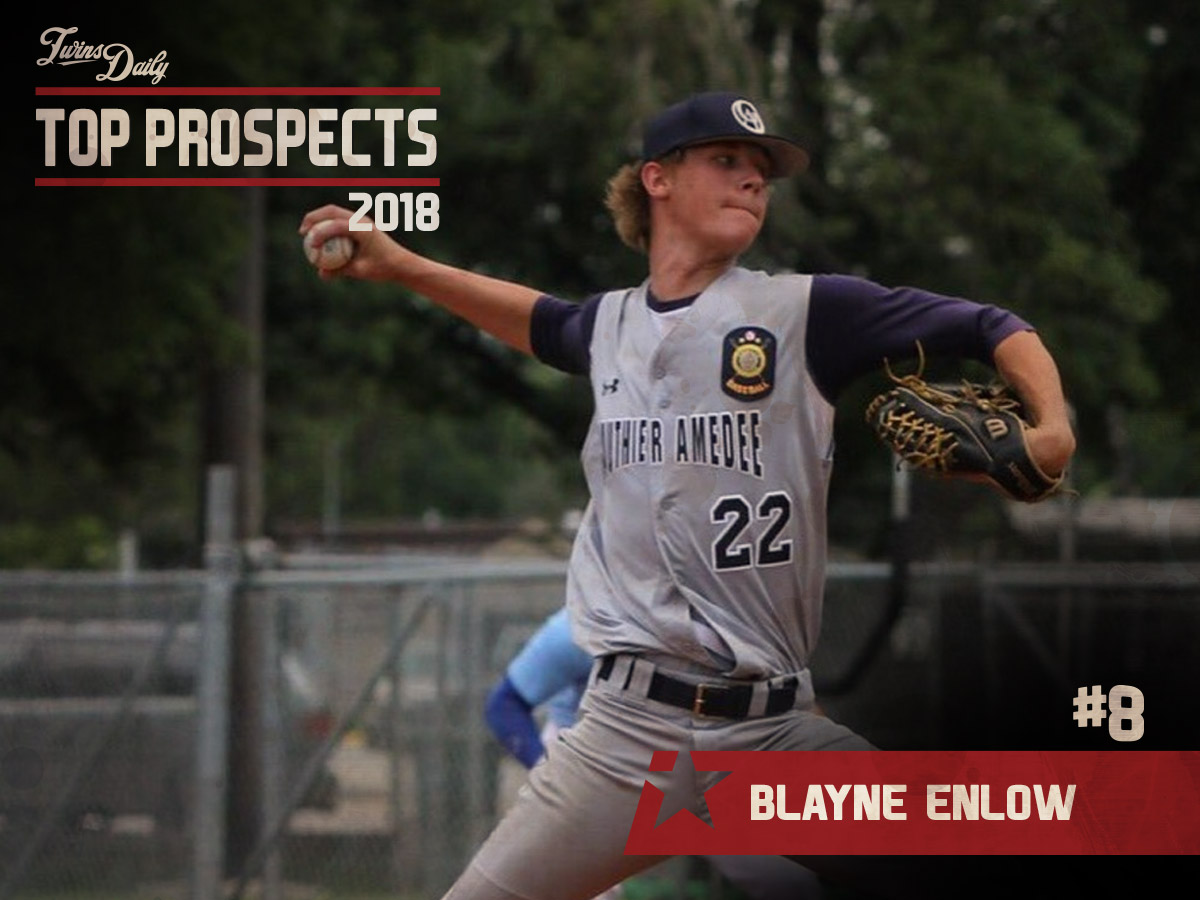 Age: 18 (DOB: 3/21/99) 2017 Stats (Rookie): 20.1 IP, 1.33 ERA, 19/4 K/BB, 0.69 WHIP ETA: 2021 2017 Ranking: NR National Top 100 Rankings BA: NR | MLB: NR | ESPN: NR | BP: NR What's To Like "He can spin the ball, which is hard to teach." Those were the words of Twins scouting director Sean Johnson when first in the 2017 draft. And it's very true. Last summer, Tom Verducci penned a big feature for Sports Illustrated on the resurgence of the curveball as a premier pitch in MLB. "Organizations have learned," he wrote, "that if someone does not show an aptitude to spin the baseball as an amateur, it’s foolish to expect him to acquire the skill."Enlow is ahead of all peers in this regard. Prior to last June's draft, MLB.com's Jim Callis dubbed his curveball the best in the entire class, which included plenty of vaunted college arms. The Twins followed the Louisiana prep closely all spring, and basically framed their entire draft strategy around landing him. (Maybe they wanted Royce Lewis no matter what, but signing him below-slot at No. 1 gave them the flexibility to lure Enlow away from an LSU commitment with a gaudy $2 million bonus.) It is, of course, still very early, but so far Minnesota's scouting department looks to have hit the bullseye and added one hell of a pitcher. Enlow made only six appearances in the Gulf Coast League after signing, totaling just 20 1/3 innings, but his performance was almost spotless. The projectible 6-foot-4, 180 lb right-hander turned in a 1.33 ERA with 19 strikeouts and four walks, allowing just 10 hits and one home run with a 55% grounder rate. As a high school senior at St. Amant, he had fanned 101 over 76 frames with a 0.92 ERA. His signature curve is already making waves in the pros. Baseball America recently ranked it as the best in the Twins system. GCL hitters were overmatched and couldn't do much with it. The pitch breaks so hard that some see it as more of a slurve, and TD community member Bob Sacamento went so far as to say in September that "[Enlow] showed me the grip and it's a slider." Regardless of what you want to call it, it's a phenomenal pitch, and Enlow's ability to combine it with a power fastball with stellar command at the age of 18 is beyond promising. What's Left to Work On You might be asking yourself: If this kid's so good, why did he slip to the third round of the draft? Well, that's a little misleading, because he signed for late-first-round money. It is quite likely that other teams were aware of his arrangement with Minnesota. But there were legitimate concerns cropping up around Enlow that caused his draft stock to drop a bit. Namely: a dip in fastball velocity, from 94 MPH during his junior year to the upper-80s early in his senior season. That can be a very troubling sign, but the velo rebounded as the draft approached (likely alleviating any reservations for the Twins), and he was reportedly back to touching 94 in the GCL. Of course, the problem with dominating so thoroughly on the strength of two pitches is that he's never had much need to work on a third. Enlow's changeup lags behind his heater and breaking ball, but that's not rare for a pitcher at this stage, and most believe he can develop his third offering into something at least usable. That question mark, and all others that generally apply to a teenage pitcher who hasn't yet played above rookie ball, keep Enlow's prospect standing in check... for now. What's Next The temporary decline in arm strength late in his prep career might help explain why the Twins took it quite easy on Enlow during his first foray into the pro ranks, using him almost exclusively in relief and always with big breaks in between outings. They'll probably continue to exercise caution in the next couple of years, but as he fills out, there's little reason to doubt his ability to stay healthy and maintain velo. Turning 19 next month, Enlow will likely start the season at the next step of rookie ball in Elizabethton, but it would surprise no one if he surfaced quickly in Cedar Rapids. Any level of success there, as a teenager, would put him on track to beat out our (fairly aggressive) estimate of an MLB arrival in 2021. Catch Up on the Rest of Twins Daily's Top Prospect Countdown: TD Top Prospects: 16-20 TD Top Prospects: 11-15 TD Top Prospect: #10 Akil Baddoo, OF TD Top Prospects: #9 Brusdar Graterol, RHP TD Top Prospects: #8 Blayne Enlow, RHP TD Top Prospects: #7 - Coming Tuesday!
 -
Ah, I thought you were referencing a different article. My bad. Who's to say the Twins didn't attempt to sign Gimenez or include an opt-out? We don't know what they offered, only that they did make an offer. I'm not going to deal in hypotheticals for the sake of lament and self-pity. They didn't get him. Being beat out by the Cubs is not incriminating, it happens. Time to move on. Contrary to all the grumbling on this thread, there are other upgrades still available. Arrieta or Cobb or Lynn, on the right terms, could easily be a better fit than Darvish at 6 years. Tons of trade candidates out there. Nowhere did I say anything was "fine," despite your choice to put it in quotes. These are bad things that happened, as was clearly acknowledged (in the title!), and I'm just looking for silver linings to take forward. I don't see any value in brooding over presumptions about what played out or what's going to play out.
-
I guess my issue here is the idea that Darvish is drastically more likely to "really good pitcher" than anyone else the Twins still have access to. Why are we being so presumptive about what they're doing with their "saved" money? And why are we all treating Darvish like he's a bona fide ace? Thanks, and good question. I realize I've swung quite a bit since writing the piece you mentioned. While I was clearly optimistic a month ago, through talking to some people around the team as January progressed, it became fairly clear to me that Darvish wasn't gonna happen. So I'm past the denial and anger stages. And now, seeing the deal he ended up with, it's easier to find acceptance. I get why people disagree, but to me that's an unattractive contract for a team in Minnesota's position. Seems to me they made a solid effort to get him and came up short against a legendary big-market franchise. Doesn't necessarily reflect poorly on the Twins nor doom them.
-
I'd like to at least have the possibility that he pitches really damn well and plays out the deal he signed. This setup basically eliminates it. IMO when a guy pushes for a contract like this he's betting against himself, and it doesn't strike me right. We all know he could easily sign a 3/4-year deal worth ~33% more annually and have yet another shot at getting paid afterward. He's looking for a team to take on all his risk, and now the Cubs are doing so.
-
What would lead you to believe this? When is the last time the Twins had this much quantity of MLB-ready (or extremely close) pitching prospects? This is a good point I hadn't considered. As I said in the article, I'd have been fine with signing Darvish to the same deal he got from the Cubs. But it's not at all hard for me to say the downside. Opening Day? I don't think there have been any signals that the Twins are content to go forward with what they've got now.
-
I get why people tend to jump to this seemingly great outcome. But from a strategic standpoint, this kind of arrangement is just a real drag. You can't plan around him opting out, so in practical terms there isn't much benefit to the possibility of a 2 year/$42 million deal. They WOULD, however, have to plan around the reality that if he doesn't opt out, it probably means they're stuck with a declining and not super-effective pitcher consuming ~20% of their payroll for four more years. You know I'm with you in being put off by extreme risk-aversion, but I don't think this exemplifies that.
-
If you're freaking out about the Twins rotation right now, that's understandable. The past week has brought a couple of seemingly grave developments. Ervin Santana will probably miss the first month of the season, and Minnesota has officially lost out in the Yu Darvish sweepstakes. No one could deny that the present layout of the rotation looks grim. But there are some silver linings at play here.First, let's talk about Santana. Losing your top starter for a chunk of the season hurts, there's no other way to slice it. It's troubling to imagine where the Twins might have been at the end of May last year without Santana carrying the staff through the first two months, when he logged 77 innings with a 1.75 ERA over 11 starts. But here's the thing: Minnesota absolutely should NOT have been counting on the same impact in 2018. For a variety of reasons, Santana was all but certain to see regression this year. I've been banging that drum all offseason, and the recently released PECOTA projections from Baseball Prospectus express similar reservations, forecasting Erv for a 4.76 ERA and 1.41 WHIP. Even before this injury news came out, expecting the same Ervin Santana from 2017 to return in 2018 was folly. If the Twins held any such expectations (and their lack of urgency to add rotation help would seemingly suggest it), those are now out the door. Even if the right-hander rejoins the team after a relatively short absence, there's no assurance his surgically repaired middle finger will enable him to throw sliders with the same superior spin and command. Any diminishment for that pitch – easily the most critical in his arsenal – would be very bad news. The Twins have to recognize this risk, and it should theoretically increase their motivation to add another high-caliber starting pitcher. That's good. Also, the timing of Santana's missed time could be viewed as a hidden blessing. Some fans have expressed frustration that the issue wasn't dealt with surgically last fall, but getting it done ahead of spring training should minimize his lost regular-season time, and might even prove helpful in ways for him and the club. For a veteran player like Santana, spring training doesn't have much value. Obviously he needs to ramp up his pitch counts and prepare for the summer's workload, but as far as actually competing in games? He's just throwing hundreds of meaningless pitches, and taking away innings from younger players who have something to prove, and to gain. Now, Santana will rehab and ramp up on his own terms. The team's official statement asserts that the hurler's "expected return to Major League game activity is 10-12 weeks" from the date of the surgery. That phrasing is a little odd, but if we take it at face value, then the Twins anticipate having Santana back on the mound starting games before the first of May. Meanwhile, his innings in spring training can go to others, and Santana's well-traveled arm gets an extra break to open the campaign, potentially keeping him fresh later on. That's good. One final thing to note: Santana has a clause in his contract that would have guaranteed his $14 million salary in 2019 if he reached 200 innings this season. That was a possibility Twins decision-makers needed to account for in their planning, and it might've made them more hesitant to commit payroll for next year. Now, as it it will be virtually impossible for Santana to eclipse the 200 mark, Minnesota has a true team option for 2019, when he'll be 36. That's good. Of course, as mentioned above, the Twins absolutely do need to add at least one more starter to the mix. And sadly, the dream of Darvish has ended. The most coveted player on the free agent market finally found a home on Saturday, agreeing to terms with the Cubs on a six-year deal worth $125 million plus incentives. In terms of total money, that sure looks like a figure the Twins could have responsibly beat, leading to some familiar lamentations. But when you zoom out, and look at all that Chicago's contract for Darvish entails, you see an arrangement that is far from team-friendly. The Cubs are now committed to the righty through 2023. He'll be 37 when the pact expires. Although $21 million in annual salary is lower than most expected but it still becomes a hindrance quickly if he underperforms or battles injury. And those are legitimate apprehensions since Darvish is arguably a bigger long-term health risk than many of his peers. Darvish's huge pitch counts in Japan were a much-discussed topic when he initially came over to the States. As recently as last season, writers in Texas were noticing his workload – especially the heavy slider usage – and wondering if it was cause for concern. He was healthy and throwing hard last summer, quieting any serious alarm sirens, but Darvish was pretty clearly wearing down by the time the World Series rolled around. And the fact remains: he hasn't reached 190 innings since 2013. Darvish reportedly has an opt-out built into his deal after just two years, so if he does outperform his pay in 2018 and 2019, there's not really much upside for his team. He'd go back to the market in pursuit of more money and the Twins would be once again in search of a frontline starter to replace him, at the crux of their winning window. To be clear, I certainly wouldn't have been disappointed by any means if the Twins gave Darvish the same deal he got from Chicago, because in my mind the upfront benefit outweighs the overall downside. But I can't fault them for refusing to match it – and that's IF he'd have signed here on the very same terms, which... probably not. For all the consternation we're seeing right now, it's important to keep in mind that Minnesota still has plenty of options left on the table for addressing its rotation. They have money to spend and prospects to dangle in trade talks. They won't get a pitcher as good as Darvish, probably, but they can still find a decisive upgrade who gives them more flexibility. The combination of Darvish signing and finally setting a high-end market baseline, along with spring camps getting underway this week, should put things into motion quickly. These ought to be an interesting few days ahead before team workouts kick off in Ft. Myers on Wednesday. Click here to view the article
-
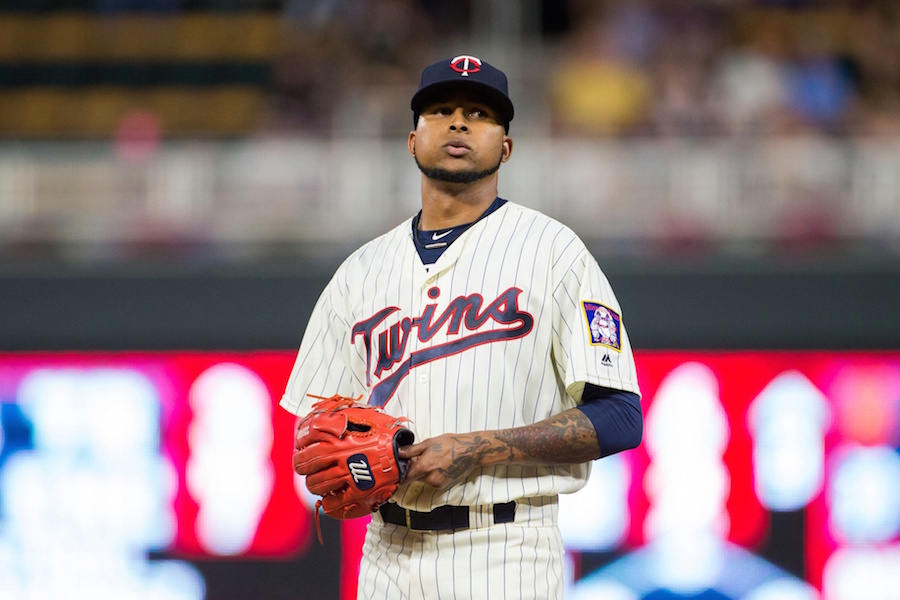 First, let's talk about Santana. Losing your top starter for a chunk of the season hurts, there's no other way to slice it. It's troubling to imagine where the Twins might have been at the end of May last year without Santana carrying the staff through the first two months, when he logged 77 innings with a 1.75 ERA over 11 starts. But here's the thing: Minnesota absolutely should NOT have been counting on the same impact in 2018. For a variety of reasons, Santana was all but certain to see regression this year. I've been banging that drum all offseason, and the recently released PECOTA projections from Baseball Prospectus express similar reservations, forecasting Erv for a 4.76 ERA and 1.41 WHIP. Even before this injury news came out, expecting the same Ervin Santana from 2017 to return in 2018 was folly. If the Twins held any such expectations (and their lack of urgency to add rotation help would seemingly suggest it), those are now out the door. Even if the right-hander rejoins the team after a relatively short absence, there's no assurance his surgically repaired middle finger will enable him to throw sliders with the same superior spin and command. Any diminishment for that pitch – easily the most critical in his arsenal – would be very bad news. The Twins have to recognize this risk, and it should theoretically increase their motivation to add another high-caliber starting pitcher. That's good. Also, the timing of Santana's missed time could be viewed as a hidden blessing. Some fans have expressed frustration that the issue wasn't dealt with surgically last fall, but getting it done ahead of spring training should minimize his lost regular-season time, and might even prove helpful in ways for him and the club. For a veteran player like Santana, spring training doesn't have much value. Obviously he needs to ramp up his pitch counts and prepare for the summer's workload, but as far as actually competing in games? He's just throwing hundreds of meaningless pitches, and taking away innings from younger players who have something to prove, and to gain. Now, Santana will rehab and ramp up on his own terms. The team's official statement asserts that the hurler's "expected return to Major League game activity is 10-12 weeks" from the date of the surgery. That phrasing is a little odd, but if we take it at face value, then the Twins anticipate having Santana back on the mound starting games before the first of May. Meanwhile, his innings in spring training can go to others, and Santana's well-traveled arm gets an extra break to open the campaign, potentially keeping him fresh later on. That's good. One final thing to note: Santana has a clause in his contract that would have guaranteed his $14 million salary in 2019 if he reached 200 innings this season. That was a possibility Twins decision-makers needed to account for in their planning, and it might've made them more hesitant to commit payroll for next year. Now, as it it will be virtually impossible for Santana to eclipse the 200 mark, Minnesota has a true team option for 2019, when he'll be 36. That's good. Of course, as mentioned above, the Twins absolutely do need to add at least one more starter to the mix. And sadly, the dream of Darvish has ended. The most coveted player on the free agent market finally found a home on Saturday, agreeing to terms with the Cubs on a six-year deal worth $125 million plus incentives. In terms of total money, that sure looks like a figure the Twins could have responsibly beat, leading to some familiar lamentations. But when you zoom out, and look at all that Chicago's contract for Darvish entails, you see an arrangement that is far from team-friendly. The Cubs are now committed to the righty through 2023. He'll be 37 when the pact expires. Although $21 million in annual salary is lower than most expected but it still becomes a hindrance quickly if he underperforms or battles injury. And those are legitimate apprehensions since Darvish is arguably a bigger long-term health risk than many of his peers. Darvish's huge pitch counts in Japan were a much-discussed topic when he initially came over to the States. As recently as last season, writers in Texas were noticing his workload – especially the heavy slider usage – and wondering if it was cause for concern. He was healthy and throwing hard last summer, quieting any serious alarm sirens, but Darvish was pretty clearly wearing down by the time the World Series rolled around. And the fact remains: he hasn't reached 190 innings since 2013. Darvish reportedly has an opt-out built into his deal after just two years, so if he does outperform his pay in 2018 and 2019, there's not really much upside for his team. He'd go back to the market in pursuit of more money and the Twins would be once again in search of a frontline starter to replace him, at the crux of their winning window. To be clear, I certainly wouldn't have been disappointed by any means if the Twins gave Darvish the same deal he got from Chicago, because in my mind the upfront benefit outweighs the overall downside. But I can't fault them for refusing to match it – and that's IF he'd have signed here on the very same terms, which... probably not. For all the consternation we're seeing right now, it's important to keep in mind that Minnesota still has plenty of options left on the table for addressing its rotation. They have money to spend and prospects to dangle in trade talks. They won't get a pitcher as good as Darvish, probably, but they can still find a decisive upgrade who gives them more flexibility. The combination of Darvish signing and finally setting a high-end market baseline, along with spring camps getting underway this week, should put things into motion quickly. These ought to be an interesting few days ahead before team workouts kick off in Ft. Myers on Wednesday.
 -
Was that celebration the one where Hocking got pretty badly spiked by someone, and was (understandably) real bitter about it? I seem to have some vague recollection of that.
-
As we run through the rest of Twins Daily's second tier of highest-rated prospects before kicking off one-by-one Top 10 profiles on Thursday, you'll find some familiar faces with serious breakthrough potential in 2018.15. Mitch Garver, C Age: 27 (DOB: 1/15/91) 2017 Stats (AAA): 372 PA, .291/.387/.541, 17 HR, 45 RBI ETA: 2018 2017 Ranking: 11 A year ago, we ranked Garver 11th on this list. He went on to post the second-highest OPS in the International League (behind only Rhys Hoskins), rightfully earning Twins Minor League Player of the Year honors. So what's with the slide? In part, this speaks to the general quality of Minnesota's farm system. But it also points to Garver's ticking clock. He's the oldest player on this list by a big margin. It gets difficult to call someone a top prospect when he's 27 and still hasn't made an impact in the majors. Garver got his feet wet last year but struggled to a .196 average and .636 OPS in 50 plate appearances with the Twins. In 2018 he is primed to get his full shot, lined up as Jason Castro's timeshare partner behind the plate (a role that got Chris Gimenez plenty of tread). Garver's defense is well regarded and he's proven he can hit at the highest level of the minors, particularly against left-handed pitching. We'll see now if he can do the same in the big leagues. It's not implausible the former 9th-round pick could yet develop into Minnesota's primary long-term catcher after Castro moves on. 14. LaMonte Wade, OF Age: 24 (DOB: 1/1/94) 2017 Stats (AA): 519 PA, .292/.397/.408, 7 HR, 67 RBI ETA: 2019 2017 Ranking: 15 Like Garver, Wade was a 9th-round pick who has healthily exceeded expectations as a pro. A lefty-swinging outfielder whose lack of outstanding speed now limits him to the corners, he has made his name on one key skill: getting on base. He posted a .402 OBP between two levels of Single-A in 2016, and last year made the jump to Double-A with a .397 mark that ranked him third in the Southern League. With his somewhat limited defensive profile, Wade needs to keep producing at the plate, and that will probably require him to add more power. Stellar walk rates in the low minors tend to erode as prospects move closer to the majors, unless they are giving pitchers a reason to fear throwing them strikes. The 24-year-old put up a career-low slugging percentage at Chattanooga, managing only 32 total extra-base hits in more than 500 plate appearances. That probably won't cut it. But with his sturdy lower half, Wade has the build to necessary to start driving the ball with more authority. Notable slugging improvement at Rochester in 2018 would greatly increase Wade's outlook as an asset, though perhaps more as a trade chip than a future piece. He will have a hard time breaking into Minnesota's outfield as things currently stand. 13. Lewin Diaz, 1B Age: 21 (DOB: 11/19/96) 2017 Stats (Low A): 508 PA, .292/.329/.444, 12 HR, 68 RBI ETA: 2021 2017 Ranking: 10 Since being signed out of the Dominican Republic for $1.4 million at age 16, Diaz has always maintained a level of lowkey hype in the Twins system despite failing to put up eye-catching numbers. With his big 6-foot-3 frame beginning to fill out as he ages into his 20s, Diaz is turning into the physical prototype for an intimidating force at the dish. But if his numbers don't start reflecting that potential soon, he is doomed to continue his slide on this list after dropping out of the 2017 Top 10. It wasn't a bad season for Diaz necessarily. Taking on full-season ball for the first time in Cedar Rapids at age 20, he nearly batted .300 and kept the strikeouts in check, with his 15.7% K-rate placing among the ten lowest in the Midwest League. The lefty swinger actually performed better against southpaws, quieting those usual concerns. But while his ability to make contact and stroke line drives was impressive, Diaz didn't show many other dimensions to his game. Making 321 more plate appearances than he did the previous season in Elizabethton, he hit only three more home runs. He also showed minimal patience, with his 4.9% walk rate ranking second-worst MWL among players with 500+ PA (only 18-year-old Padres prospect Hudson Potts was lower). Offering minimal defensive value, Diaz needs to hit – and hit a lot – to become a valuable big-leaguer. The Twins still believe he'll get there, but he needs to prove it this year, especially since he'll be Rule 5 eligible again following the season if they don't dedicate a 40-man roster spot to him. 12. Lewis Thorpe, LHP Age: 22 (DOB: 11/23/95) 2017 Stats (A+/AA): 83 IP, 3.36 ERA, 91/33 K/BB, 1.21 WHIP ETA: 2019 2017 Ranking: NR The Twins did make the 40-man commitment to Thorpe last fall, despite not having a ton of information to go on. He threw only 83 total innings in 2017, and that was his highest total since signing out of Australia in 2012. The talented southpaw has been plagued by injuries, which sidelined him for both the 2015 and 2016 seasons in their entirety. But Thorpe's return to the mound last summer went very smoothly. Spending most his campaign at Ft. Myers after opening in extended spring training, he continued to silence opposing bats as he had before all the missed time, striking out 84 hitters in 77 innings while allowing only three homers. Bringing a potent repertoire from the left side, he induced double-digit whiffs in seven of his final 13 turns, including an August spot start at Double-A where he struck out seven over six frames. He'll probably start his year at Chattanooga, so Thorpe could quickly emerge as an option for the MLB club. It's not difficult to see parallels between him and Fernando Romero, who returned in 2016 after missing basically two full seasons and has since established himself as one of the team's very best prospects. 11. Zack Littell, RHP Age: 22 (DOB: 10/5/95) 2017 Stats (A+/AA): 157 IP, 2.12 ERA, 142/41 K/BB, 1.12 WHIP ETA: 2018 2017 Ranking: NR Even in an age where the valuation of the almighty "W" among analysts has thankfully diminished greatly, it's hard not to look at Littell's shiny 19-1 record in 2017 and say, "whoa." The right-hander, acquired from the Yankees at the deadline when Minnesota flipped Jaime Garcia, picked up a win in 19 of his 25 starts, a reflection of his masterful performance (17 quality starts). Littell's numbers have outpaced his prospect luster; he hasn't had any presence on national lists and didn't even make Minor League Ball's Top 20 for the Yankees last year despite going 13-6 with a 2.66 ERA between two levels of A-ball in 2016. But at this point those numbers are getting harder to ignore. He transitioned to Double-A without a hitch, working at least six innings in all but two of his 14 starts with Trenton and Chattanooga while, obviously, delivering sterling results. Having said that, Littell comes close to cracking the Top 10 more because of his floor than his ceiling. As good as his numbers have been in the minors, few believe he'll achieve remotely similar outcomes in the bigs with his 89-91 MPH fastball and unspectacular secondaries. Having a great feel for the craft of pitching shouldn't be overlooked, as it can make up for shortcomings with stuff. That's certainly been the case for Littell the past two years. We'll see if he can carry it over to Triple-A and – perhaps, in the latter half of the summer, Target Field? Twins Daily Top 20 Prospects 2018 20. Felix Jorge, RHP 19. Tyler Jay, LHP 18. Yunior Severino, 2B 17. Travis Blankenhorn, 2B/3B 16. Ben Rortvedt, C 15. Mitch Garver, C 14. LaMonte Wade, OF 13. Lewin Diaz, 1B 12. Lewis Thorpe, LHP 11. Zack Littell, RHP 10. Coming Thursday! Read profiles of 16-20 here Click here to view the article
-
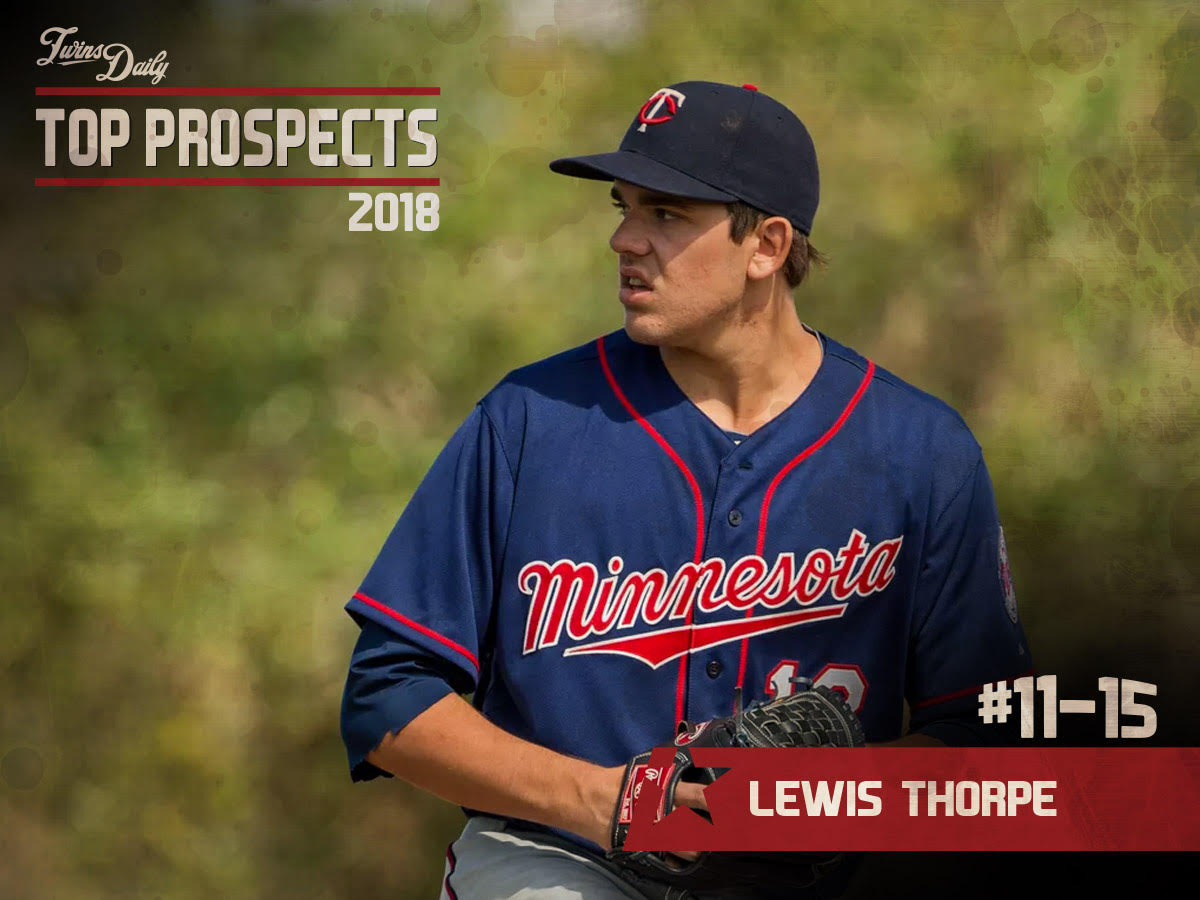 15. Mitch Garver, C Age: 27 (DOB: 1/15/91) 2017 Stats (AAA): 372 PA, .291/.387/.541, 17 HR, 45 RBI ETA: 2018 2017 Ranking: 11 A year ago, we ranked Garver 11th on this list. He went on to post the second-highest OPS in the International League (behind only Rhys Hoskins), rightfully earning Twins Minor League Player of the Year honors. So what's with the slide? In part, this speaks to the general quality of Minnesota's farm system. But it also points to Garver's ticking clock. He's the oldest player on this list by a big margin. It gets difficult to call someone a top prospect when he's 27 and still hasn't made an impact in the majors. Garver got his feet wet last year but struggled to a .196 average and .636 OPS in 50 plate appearances with the Twins. In 2018 he is primed to get his full shot, lined up as Jason Castro's timeshare partner behind the plate (a role that got Chris Gimenez plenty of tread). Garver's defense is well regarded and he's proven he can hit at the highest level of the minors, particularly against left-handed pitching. We'll see now if he can do the same in the big leagues. It's not implausible the former 9th-round pick could yet develop into Minnesota's primary long-term catcher after Castro moves on. 14. LaMonte Wade, OF Age: 24 (DOB: 1/1/94) 2017 Stats (AA): 519 PA, .292/.397/.408, 7 HR, 67 RBI ETA: 2019 2017 Ranking: 15 Like Garver, Wade was a 9th-round pick who has healthily exceeded expectations as a pro. A lefty-swinging outfielder whose lack of outstanding speed now limits him to the corners, he has made his name on one key skill: getting on base. He posted a .402 OBP between two levels of Single-A in 2016, and last year made the jump to Double-A with a .397 mark that ranked him third in the Southern League. With his somewhat limited defensive profile, Wade needs to keep producing at the plate, and that will probably require him to add more power. Stellar walk rates in the low minors tend to erode as prospects move closer to the majors, unless they are giving pitchers a reason to fear throwing them strikes. The 24-year-old put up a career-low slugging percentage at Chattanooga, managing only 32 total extra-base hits in more than 500 plate appearances. That probably won't cut it. But with his sturdy lower half, Wade has the build to necessary to start driving the ball with more authority. Notable slugging improvement at Rochester in 2018 would greatly increase Wade's outlook as an asset, though perhaps more as a trade chip than a future piece. He will have a hard time breaking into Minnesota's outfield as things currently stand. 13. Lewin Diaz, 1B Age: 21 (DOB: 11/19/96) 2017 Stats (Low A): 508 PA, .292/.329/.444, 12 HR, 68 RBI ETA: 2021 2017 Ranking: 10 Since being signed out of the Dominican Republic for $1.4 million at age 16, Diaz has always maintained a level of lowkey hype in the Twins system despite failing to put up eye-catching numbers. With his big 6-foot-3 frame beginning to fill out as he ages into his 20s, Diaz is turning into the physical prototype for an intimidating force at the dish. But if his numbers don't start reflecting that potential soon, he is doomed to continue his slide on this list after dropping out of the 2017 Top 10. It wasn't a bad season for Diaz necessarily. Taking on full-season ball for the first time in Cedar Rapids at age 20, he nearly batted .300 and kept the strikeouts in check, with his 15.7% K-rate placing among the ten lowest in the Midwest League. The lefty swinger actually performed better against southpaws, quieting those usual concerns. But while his ability to make contact and stroke line drives was impressive, Diaz didn't show many other dimensions to his game. Making 321 more plate appearances than he did the previous season in Elizabethton, he hit only three more home runs. He also showed minimal patience, with his 4.9% walk rate ranking second-worst MWL among players with 500+ PA (only 18-year-old Padres prospect Hudson Potts was lower). Offering minimal defensive value, Diaz needs to hit – and hit a lot – to become a valuable big-leaguer. The Twins still believe he'll get there, but he needs to prove it this year, especially since he'll be Rule 5 eligible again following the season if they don't dedicate a 40-man roster spot to him. 12. Lewis Thorpe, LHP Age: 22 (DOB: 11/23/95) 2017 Stats (A+/AA): 83 IP, 3.36 ERA, 91/33 K/BB, 1.21 WHIP ETA: 2019 2017 Ranking: NR The Twins did make the 40-man commitment to Thorpe last fall, despite not having a ton of information to go on. He threw only 83 total innings in 2017, and that was his highest total since signing out of Australia in 2012. The talented southpaw has been plagued by injuries, which sidelined him for both the 2015 and 2016 seasons in their entirety. But Thorpe's return to the mound last summer went very smoothly. Spending most his campaign at Ft. Myers after opening in extended spring training, he continued to silence opposing bats as he had before all the missed time, striking out 84 hitters in 77 innings while allowing only three homers. Bringing a potent repertoire from the left side, he induced double-digit whiffs in seven of his final 13 turns, including an August spot start at Double-A where he struck out seven over six frames. He'll probably start his year at Chattanooga, so Thorpe could quickly emerge as an option for the MLB club. It's not difficult to see parallels between him and Fernando Romero, who returned in 2016 after missing basically two full seasons and has since established himself as one of the team's very best prospects. 11. Zack Littell, RHP Age: 22 (DOB: 10/5/95) 2017 Stats (A+/AA): 157 IP, 2.12 ERA, 142/41 K/BB, 1.12 WHIP ETA: 2018 2017 Ranking: NR Even in an age where the valuation of the almighty "W" among analysts has thankfully diminished greatly, it's hard not to look at Littell's shiny 19-1 record in 2017 and say, "whoa." The right-hander, acquired from the Yankees at the deadline when Minnesota flipped Jaime Garcia, picked up a win in 19 of his 25 starts, a reflection of his masterful performance (17 quality starts). Littell's numbers have outpaced his prospect luster; he hasn't had any presence on national lists and didn't even make Minor League Ball's Top 20 for the Yankees last year despite going 13-6 with a 2.66 ERA between two levels of A-ball in 2016. But at this point those numbers are getting harder to ignore. He transitioned to Double-A without a hitch, working at least six innings in all but two of his 14 starts with Trenton and Chattanooga while, obviously, delivering sterling results. Having said that, Littell comes close to cracking the Top 10 more because of his floor than his ceiling. As good as his numbers have been in the minors, few believe he'll achieve remotely similar outcomes in the bigs with his 89-91 MPH fastball and unspectacular secondaries. Having a great feel for the craft of pitching shouldn't be overlooked, as it can make up for shortcomings with stuff. That's certainly been the case for Littell the past two years. We'll see if he can carry it over to Triple-A and – perhaps, in the latter half of the summer, Target Field? Twins Daily Top 20 Prospects 2018 20. Felix Jorge, RHP 19. Tyler Jay, LHP 18. Yunior Severino, 2B 17. Travis Blankenhorn, 2B/3B 16. Ben Rortvedt, C 15. Mitch Garver, C 14. LaMonte Wade, OF 13. Lewin Diaz, 1B 12. Lewis Thorpe, LHP 11. Zack Littell, RHP 10. Coming Thursday! Read profiles of 16-20 here
 -
We'll see. The thing about make-good deals is that sometimes people make good.
-
Plus everyone who signs a one-year deal this offseason. Which, as alluded, could be a large group.
-
I didn't say that. Quite the opposite in fact. "The Twins shouldn't hesitate to take that leap for someone they truly believe in." I'm just far from convinced that they believe in any of those other top 4 guys. And I'm not certain they should. They're fallback options. The downside that's overlooked by saying "Just spend the dang money" is that it pretty much deprives them of being able to make a similar (or even bigger) splash next offseason, when they have more spending flexibility and a clearer idea of their long-term needs.

