



Nick Nelson
-
Posts
8,326 -
Joined
-
Last visited
-
Days Won
56
Content Type
Profiles
News
Minnesota Twins Videos
2026 Minnesota Twins Top Prospects Ranking
2022 Minnesota Twins Draft Picks
Minnesota Twins Free Agent & Trade Rumors, Notes, & Tidbits
Guides & Resources
2023 Minnesota Twins Draft Picks
The Minnesota Twins Players Project
2024 Minnesota Twins Draft Picks
2025 Minnesota Twins Draft Pick Tracker
2026 Minnesota Twins Draft Tracker: Picks & Bonuses
Forums
Blogs
Events
Store
Downloads
Gallery
Everything posted by Nick Nelson
-
 He has batted over .300 in three different stints at Triple-A, dating back to when he was 23. All just coincidence and luck, eh? I don't think you'll find a single person on the ground or in the scouting community who agrees with this assessment. Escobar is sure-handed and capable but lacks the range and arm to be any kind of asset at short.
 -
Adrianza has slugged .382 in 250 PA over his past two seasons in majors. Simply continuing at that level would probably make him at least a borderline starting candidate. No one is saying he's gonna start launching 20 homers a year.
-
If you played ball growing up, there's a good chance at least one of your coaches invoked the story of Wally Pipp. The legend goes like this: Back in 1925, Pipp asked for a day off due to a minor headache. Yankees skipper Miller Huggins acquiesced. The guy who started in Pipp's place went by the name of Lou Gehrig, and would take a hold of the position with an iron grip for the next 13 years, starting 2,130 consecutive games. Pipp, meanwhile, faded from relevance. The story as it's told is not actually accurate, but that doesn't stop it from being repeated ad nauseum by mentors and instructors – the ultimate cautionary tale. In the big leagues, someone is always behind you, angling for your job. At this level, you cannot afford to lapse.On Sunday, the Minnesota Twins and their fans were stunned to learn that Jorge Polanco, fresh off a breakout finish in 2017, was being hit with an 80-game suspension after testing positive for the steroid stanozolol. Not only will he miss the first half of the season, but the shortstop will also be unavailable for a theoretical playoff run. It's a crushing blow after Polanco's offensive emergence in August and September last year helped carry the Twins to a postseason berth. He batted either third or fourth in all but two of Minnesota's final 33 games. The switch-hitter figured to provide thump near the bottom of the lineup this season, as well as insurance for injury or regression near the top. Now, the Twins must plan around life without him. It's a huge bummer. But for Ehire Adrianza, the unfortunate situation presents a huge opportunity. The 28-year-old was penciled in as a utility man destined for sporadic playing time, but now could seize a regular job. This would prove very advantageous for both him and the club. Adrianza's lackluster offensive performance in parts of four seasons with the Giants landed him on waivers, where Minnesota was able to claim him last spring. His outstanding glove at short has kept getting him chances in the majors, but during his tenure in San Francisco, Adrianza just didn't hit enough to make himself an asset. Then again, he rarely received steady at-bats for any length of time. And Adrianza's career .303/.385/.412 line in 115 games at Triple-A is hard to ignore, even if it was accrued in the hitter-friendly Pacific Coast League. In his first season with the Twins, Adrianza received a career-high 186 plate appearances, and posted a career-high .707 OPS. Like Polanco, he's a switch-hitter who rarely strikes out. And while his light production in the past had cast him in a certain mold, Adrianza took steps to alter his reputation last summer. "I was thinking 'Good field, no-hit shortstop' when we got him," Molitor said early in camp. "I was wrong. He hit the ball hard quite a bit. And he looks stronger this spring." Despite making a good first impression, Adrianza had little shot at becoming a lineup fixture this year. Until now. The Twins don't seem to love Eduardo Escobar's defense at shortstop, the infield's most vital position, so they could turn to Adrianza often. Especially if he and hitting coach James Rowson can build upon last year's progress at the plate. Adrianza's defensive aptitude is such that if he can establish himself as a moderately above-average hitter – last year the average OPS for an MLB shortstop was .735, so that bar is not terribly high – he suddenly turns into a very valuable regular. Whether that's for the Twins or somebody else, it figures to benefit the club. If Adrianza can back up his encouraging 2017, as well as his promising 2018 spring (he's slashing .294/.333/.529 in Graprefruit play), Polanco could return to a very different landscape at the shortstop position in July. Situations like this are exactly why the myth of Wally Pipp's plight continue to endure. Click here to view the article
-
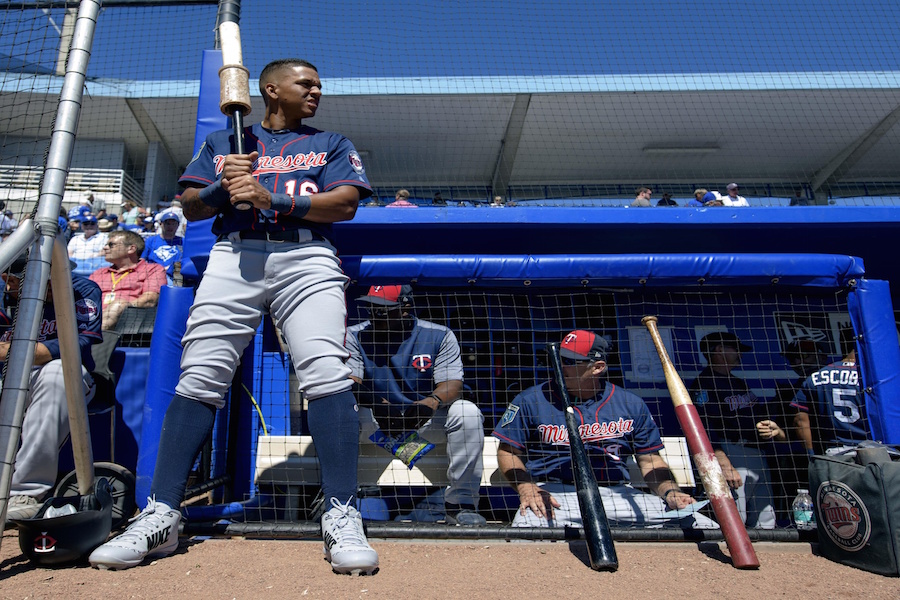 On Sunday, the Minnesota Twins and their fans were stunned to learn that Jorge Polanco, fresh off a breakout finish in 2017, was being hit with an 80-game suspension after testing positive for the steroid stanozolol. Not only will he miss the first half of the season, but the shortstop will also be unavailable for a theoretical playoff run. It's a crushing blow after Polanco's offensive emergence in August and September last year helped carry the Twins to a postseason berth. He batted either third or fourth in all but two of Minnesota's final 33 games. The switch-hitter figured to provide thump near the bottom of the lineup this season, as well as insurance for injury or regression near the top. Now, the Twins must plan around life without him. It's a huge bummer. But for Ehire Adrianza, the unfortunate situation presents a huge opportunity. The 28-year-old was penciled in as a utility man destined for sporadic playing time, but now could seize a regular job. This would prove very advantageous for both him and the club. Adrianza's lackluster offensive performance in parts of four seasons with the Giants landed him on waivers, where Minnesota was able to claim him last spring. His outstanding glove at short has kept getting him chances in the majors, but during his tenure in San Francisco, Adrianza just didn't hit enough to make himself an asset. Then again, he rarely received steady at-bats for any length of time. And Adrianza's career .303/.385/.412 line in 115 games at Triple-A is hard to ignore, even if it was accrued in the hitter-friendly Pacific Coast League. In his first season with the Twins, Adrianza received a career-high 186 plate appearances, and posted a career-high .707 OPS. Like Polanco, he's a switch-hitter who rarely strikes out. And while his light production in the past had cast him in a certain mold, Adrianza took steps to alter his reputation last summer. "I was thinking 'Good field, no-hit shortstop' when we got him," Molitor said early in camp. "I was wrong. He hit the ball hard quite a bit. And he looks stronger this spring." Despite making a good first impression, Adrianza had little shot at becoming a lineup fixture this year. Until now. The Twins don't seem to love Eduardo Escobar's defense at shortstop, the infield's most vital position, so they could turn to Adrianza often. Especially if he and hitting coach James Rowson can build upon last year's progress at the plate. Adrianza's defensive aptitude is such that if he can establish himself as a moderately above-average hitter – last year the average OPS for an MLB shortstop was .735, so that bar is not terribly high – he suddenly turns into a very valuable regular. Whether that's for the Twins or somebody else, it figures to benefit the club. If Adrianza can back up his encouraging 2017, as well as his promising 2018 spring (he's slashing .294/.333/.529 in Graprefruit play), Polanco could return to a very different landscape at the shortstop position in July. Situations like this are exactly why the myth of Wally Pipp's plight continue to endure.
 -
Statcast technology was introduced to all 30 major-league stadiums in 2015, the very same year Byron Buxton made his MLB debut. It's our coolest new toy and already Buxton is threatening to break the dang thing, pushing past hypothetical human limits with his mind-boggling athleticism. But in all seriousness, we are awfully lucky that Buck has arrived in an era where we can – for the first time – tangibly measure the utterly ridiculous things he does on a baseball field.Projected Starter: Byron Buxton Likely Backup: Max Kepler Depth: Eddie Rosario, Zack Granite, Jake Cave Prospects: Granite, LaMonte Wade, Royce Lewis THE GOOD On August 18th of last season, Buxton drove a high fly ball off the right-center field wall at Target Field and sprinted around the bases for an inside the park homer. His total time from home-to-home registered at 13.85 seconds – a new Statcast record that broke (of course) his own, set the previous October. Last year Buxton put up the fastest sprint speed in the majors, which comes into play both on the base paths and in the outfield. At 24, he doesn't seem to be at risk of losing a step anytime too soon. And in fact, Buck's foot speed continues to play up more and more as he improves his reads on fly balls and opposing pitchers. Of course, while Buxton's defense has been elite from the start, his offensive game has been held back by a lack of contact. Strikeout issues carried over into the early part of 2017, when the outfielder dug a deep hole with his voluminous whiffs in April. But he consistently cut down his strikeout rate each month, to the point where he was contributing at an MVP-caliber level down the stretch. Buxton's .298/.342/.541 slash line in August and September, coupled with a perfect 13-for-13 rate on steals and unsurpassed defensive impact, made him arguably the most transformative single player in the game during that stretch. He was instrumental in Minnesota's unlikely sprint to the postseason, earning him some down-ballot AL MVP love (he finished 18th in the balloting). For a guy who was batting .195 with a .550 OPS at the end of June, causing some to wonder if additional minor-league seasoning might be required, that's flat-out incredible. The idea of getting second-half Buxton for a full year in 2018 is exhilarating. The way he can help a pitching staff and propel an offense is unique within today's game. Still only realizing his near-limitless potential, Buxton is the organization's most valuable asset, and fortunately the front office seems fully aware. He's the only young core player with whom they are known to have engaged in extension negotiations. Hopefully they'll get something done and lock him as the long-term centerpiece he should be. I believe they will. But doing so would not eliminate the importance of quality depth behind him. THE BAD There are basically two concerns around Buxton. The first is that he'll relapse and revert to his whiffing ways – certainly possible, but unlikely given the progressive and convincing nature of his evolution in this regard. The second is that the speedster's all-out playing style will lead to injuries, and that's a very legitimate apprehension. I wrote about this last spring when I was in camp, and while Buxton went on to mostly to buck his trend (yes yes pun intended) of missing significant chunks of time – save for a two-week hiatus in July due to a groin strain – his season did end with a hazardous crash into Yankee Stadium's outfield wall. Injuries are always a reality of the game, and in Buxton's case no one could deny that the risk is heightened. He's obviously irreplaceable but the Twins are well served to put multiple solid contingencies in place. Perhaps that factored in to a trade they made on Friday. The Twins acquired outfielder Jake Cave from the Yankees and designated Kennys Vargas for assignment in the process. Although Cave profiles "best in the corners," according to chief baseball officer Derek Falvey, he has mostly played center in the minors and is considered capable there, giving Minnesota another option. His first day after coming over, Cave started in center against Pittsburgh in Bradenton on Saturday. But Zack Granite is clearly contingency No. 1. He was the regular in center while Buxton was sidelined by his groin strain after the All-Star break, and played well. Granite is the only natural center fielder in line behind Buxton at this point. Max Kepler or Eddie Rosario could fill in as short-term plugs but neither is really suited for the position for an extended stretch. Prospect LaMonte Wade, much like Cave, has played primarily center in the minors but will likely end up in a corner. The next impact center fielder in the pipeline might actually be Royce Lewis, the 2017 first overall pick who's currently playing shortstop but could well switch positions as he rises through the ranks. His speed and instinctual savvy would surely make him an asset out there. But if Buxton sticks around for another seven or eight years, he's not getting supplanted by anyone. Should Lewis move off short, I'm sure the Twins won't have much trouble finding something to do with him. THE BOTTOM LINE Buxton is already the best defensive center fielder in baseball and could be fast on his way to challenging Mike Trout as the best all-around. He produced 3.5 WAR in a 2017 campaign marred by a brutal first half at the plate, so that almost feels like his floor going forward if healthy. Granted, that's a bigger "if" than you get with most players in the game today, but the Twins will live with the risks inherent to his aggressive and spectacular playing style. They've got multiple short-term fallback options and hopefully won't be seeking a permanent replacement for a long, long time. ~~~ Catch up on the rest of the series: Twins Daily Position Analysis: Catcher Twins Daily Position Analysis: First Base Twins Daily Position Analysis: Second Base Twins Daily Position Analysis: Third Base Twins Daily Position Analysis: Shortstop Twins Daily Position Analysis: Left Field Click here to view the article
-
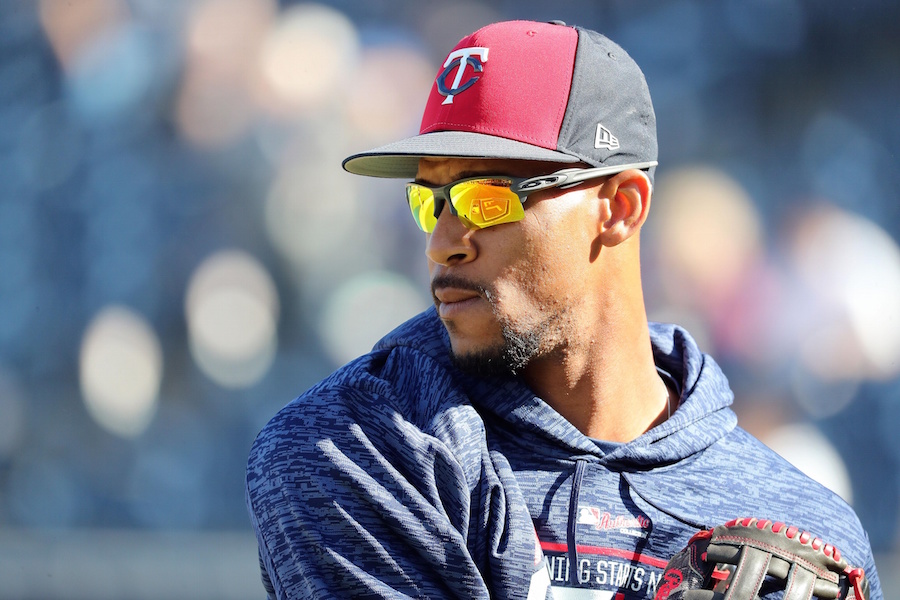 Projected Starter: Byron Buxton Likely Backup: Max Kepler Depth: Eddie Rosario, Zack Granite, Jake Cave Prospects: Granite, LaMonte Wade, Royce Lewis THE GOOD On August 18th of last season, Buxton drove a high fly ball off the right-center field wall at Target Field and sprinted around the bases for an inside the park homer. His total time from home-to-home registered at 13.85 seconds – a new Statcast record that broke (of course) his own, set the previous October. Last year Buxton put up the fastest sprint speed in the majors, which comes into play both on the base paths and in the outfield. At 24, he doesn't seem to be at risk of losing a step anytime too soon. And in fact, Buck's foot speed continues to play up more and more as he improves his reads on fly balls and opposing pitchers. Of course, while Buxton's defense has been elite from the start, his offensive game has been held back by a lack of contact. Strikeout issues carried over into the early part of 2017, when the outfielder dug a deep hole with his voluminous whiffs in April. But he consistently cut down his strikeout rate each month, to the point where he was contributing at an MVP-caliber level down the stretch. Buxton's .298/.342/.541 slash line in August and September, coupled with a perfect 13-for-13 rate on steals and unsurpassed defensive impact, made him arguably the most transformative single player in the game during that stretch. He was instrumental in Minnesota's unlikely sprint to the postseason, earning him some down-ballot AL MVP love (he finished 18th in the balloting). For a guy who was batting .195 with a .550 OPS at the end of June, causing some to wonder if additional minor-league seasoning might be required, that's flat-out incredible. The idea of getting second-half Buxton for a full year in 2018 is exhilarating. The way he can help a pitching staff and propel an offense is unique within today's game. Still only realizing his near-limitless potential, Buxton is the organization's most valuable asset, and fortunately the front office seems fully aware. He's the only young core player with whom they are known to have engaged in extension negotiations. Hopefully they'll get something done and lock him as the long-term centerpiece he should be. I believe they will. But doing so would not eliminate the importance of quality depth behind him. THE BAD There are basically two concerns around Buxton. The first is that he'll relapse and revert to his whiffing ways – certainly possible, but unlikely given the progressive and convincing nature of his evolution in this regard. The second is that the speedster's all-out playing style will lead to injuries, and that's a very legitimate apprehension. I wrote about this last spring when I was in camp, and while Buxton went on to mostly to buck his trend (yes yes pun intended) of missing significant chunks of time – save for a two-week hiatus in July due to a groin strain – his season did end with a hazardous crash into Yankee Stadium's outfield wall. Injuries are always a reality of the game, and in Buxton's case no one could deny that the risk is heightened. He's obviously irreplaceable but the Twins are well served to put multiple solid contingencies in place. Perhaps that factored in to a trade they made on Friday. The Twins acquired outfielder Jake Cave from the Yankees and designated Kennys Vargas for assignment in the process. Although Cave profiles "best in the corners," according to chief baseball officer Derek Falvey, he has mostly played center in the minors and is considered capable there, giving Minnesota another option. His first day after coming over, Cave started in center against Pittsburgh in Bradenton on Saturday. But Zack Granite is clearly contingency No. 1. He was the regular in center while Buxton was sidelined by his groin strain after the All-Star break, and played well. Granite is the only natural center fielder in line behind Buxton at this point. Max Kepler or Eddie Rosario could fill in as short-term plugs but neither is really suited for the position for an extended stretch. Prospect LaMonte Wade, much like Cave, has played primarily center in the minors but will likely end up in a corner. The next impact center fielder in the pipeline might actually be Royce Lewis, the 2017 first overall pick who's currently playing shortstop but could well switch positions as he rises through the ranks. His speed and instinctual savvy would surely make him an asset out there. But if Buxton sticks around for another seven or eight years, he's not getting supplanted by anyone. Should Lewis move off short, I'm sure the Twins won't have much trouble finding something to do with him. THE BOTTOM LINE Buxton is already the best defensive center fielder in baseball and could be fast on his way to challenging Mike Trout as the best all-around. He produced 3.5 WAR in a 2017 campaign marred by a brutal first half at the plate, so that almost feels like his floor going forward if healthy. Granted, that's a bigger "if" than you get with most players in the game today, but the Twins will live with the risks inherent to his aggressive and spectacular playing style. They've got multiple short-term fallback options and hopefully won't be seeking a permanent replacement for a long, long time. ~~~ Catch up on the rest of the series: Twins Daily Position Analysis: Catcher Twins Daily Position Analysis: First Base Twins Daily Position Analysis: Second Base Twins Daily Position Analysis: Third Base Twins Daily Position Analysis: Shortstop Twins Daily Position Analysis: Left Field
 -
FT. MYERS – Around this time last year, it was reasonable to feel a little alarmed about Jose Berrios. Following a tumultuous rookie campaign, the brightest hope for Minnesota's rotation was once again struggling to command his dazzling repertoire. His spring ended with a thud when he started for Rochester in an exhibition against the big-league club on March 31st and allowed five walks with an HBP in just 2 1/3 innings. But of course, Berrios was still only 22 – a fact easily forgotten due to his meteoric rise through the minors. His growth over the past 12 months has been clearly on display this spring.Heading into his fourth start of the spring on Friday afternoon, Berrios had yet to allow a single walk in Grapefruit League action. He broke that streak against Tampa Bay, issuing a pair of free passes in the second inning of a game where his final line failed to reflect his performance. Berrios got through only 3 2/3 innings on 72 pitches while allowing three runs, but two were unearned and the other should've been; Brandon Snyder scored after tripling to lead off the fourth when left fielder Chris Heisey lost the ball in the sun. That was one of four outs that Minnesota squandered behind the starter. Despite all that, Berrios notched four strikeouts and came away from the outing with a 1.64 ERA. Hard work appears to be paying off for one of the most relentless grinders in the organization. He's noticed a difference compared to last spring. "I feel great. I feel better," he said. "Every year I get to know my body and myself more." Indeed, by all appearances, Berrios has smoothed his mechanics and improved his fastball command – an utmost priority for setting up his physics-bending secondary offerings. Paul Molitor believes the best is yet to come in that regard. "He's throwing fairly well, but I still think that we're going to see a little bit more sharpness command-wise from him," the manager said after Friday's game. Berrios is a crucial component in Minnesota's starting pitching equation, and not just because of his youth and a ceiling that exceeds that of all other players currently in the rotation mix. (Though that's huge.) His particular skill set fits well on this team. Despite some improvements with missing bats in 2017, Twins pitchers still ranked near the bottom of the league in strikeouts. Berrios led all Minnesota starters in K-rate at 22.6%, and did so as one of the youngest starters in the majors, still learning how to fully harness his stuff. There is also this: Berrios, like the rotation's elder statesman Ervin Santana, is a fairly extreme fly ball pitcher. But whereas this has often proven a weakness for Santana, leading to many of those flies leaving the yard, Berrios has generally been able to keep them in the park. In the minors, the former first-round pick out of Puerto Rico allowed only 35 home runs in almost 600 innings while coming up through the minors. During his time in the majors last year, Berrios was taken deep just 15 times in 145 frames – good for a 0.9 HR/9 rate that ranked as the lowest among all Twins starters, and in fact 12th-lowest among all MLB starters (140+ IP). Pretty impressive in a season where long balls were way up across the league. With Minnesota boasting arguably the best outfield defense in the game, getting a high percentage of hitters to put the ball in the air, but inside the fence, is a very good recipe. Especially when you're putting away so many guys without needing to rely on your fielders at all. If Berrios is staying in the zone and hitting his spots, he's going to be a force. I have zero doubt. And as he enters his first full season as a big-leaguer, there are plenty of signs that he is poised to do just that. Click here to view the article
-
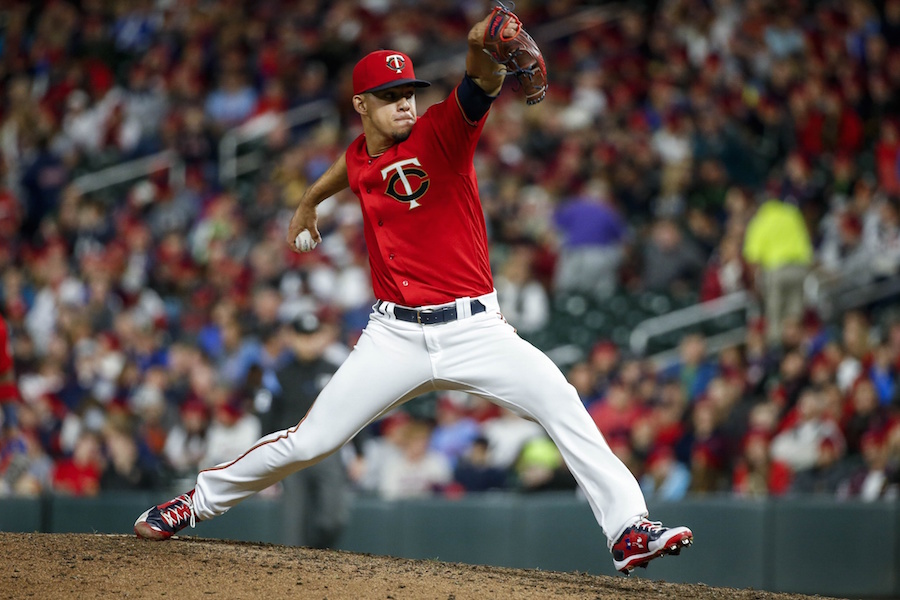 Heading into his fourth start of the spring on Friday afternoon, Berrios had yet to allow a single walk in Grapefruit League action. He broke that streak against Tampa Bay, issuing a pair of free passes in the second inning of a game where his final line failed to reflect his performance. Berrios got through only 3 2/3 innings on 72 pitches while allowing three runs, but two were unearned and the other should've been; Brandon Snyder scored after tripling to lead off the fourth when left fielder Chris Heisey lost the ball in the sun. That was one of four outs that Minnesota squandered behind the starter. Despite all that, Berrios notched four strikeouts and came away from the outing with a 1.64 ERA. Hard work appears to be paying off for one of the most relentless grinders in the organization. He's noticed a difference compared to last spring. "I feel great. I feel better," he said. "Every year I get to know my body and myself more." Indeed, by all appearances, Berrios has smoothed his mechanics and improved his fastball command – an utmost priority for setting up his physics-bending secondary offerings. Paul Molitor believes the best is yet to come in that regard. "He's throwing fairly well, but I still think that we're going to see a little bit more sharpness command-wise from him," the manager said after Friday's game. Berrios is a crucial component in Minnesota's starting pitching equation, and not just because of his youth and a ceiling that exceeds that of all other players currently in the rotation mix. (Though that's huge.) His particular skill set fits well on this team. Despite some improvements with missing bats in 2017, Twins pitchers still ranked near the bottom of the league in strikeouts. Berrios led all Minnesota starters in K-rate at 22.6%, and did so as one of the youngest starters in the majors, still learning how to fully harness his stuff. There is also this: Berrios, like the rotation's elder statesman Ervin Santana, is a fairly extreme fly ball pitcher. But whereas this has often proven a weakness for Santana, leading to many of those flies leaving the yard, Berrios has generally been able to keep them in the park. In the minors, the former first-round pick out of Puerto Rico allowed only 35 home runs in almost 600 innings while coming up through the minors. During his time in the majors last year, Berrios was taken deep just 15 times in 145 frames – good for a 0.9 HR/9 rate that ranked as the lowest among all Twins starters, and in fact 12th-lowest among all MLB starters (140+ IP). Pretty impressive in a season where long balls were way up across the league. With Minnesota boasting arguably the best outfield defense in the game, getting a high percentage of hitters to put the ball in the air, but inside the fence, is a very good recipe. Especially when you're putting away so many guys without needing to rely on your fielders at all. If Berrios is staying in the zone and hitting his spots, he's going to be a force. I have zero doubt. And as he enters his first full season as a big-leaguer, there are plenty of signs that he is poised to do just that.
 -
FT. MYERS – In his latest update from Twins spring training, Nick breaks down Minnesota's trade for a Yankees outfielder, as well as the resulting Kennys Vargas DFA. Plus, notes on Jorge Polanco's defensive struggles, Jose Berrios' fourth spring start, Miguel Sano's knee injury and more. Listen here!If you haven't yet, you can find step-by-step instructions to subscribe via your iPhone podcast app here. If you have any suggestions for improving these nightly wrap-up mini-podcasts, please feel free to share them in the comments. I'm literally talking to myself so any outside guidance is much appreciated. We are down here to dig up and deliver the details you all want, so please don't hesitate to help shape this content! Click here to view the article
- 3 replies
-
- 2
-

-
- kennys vargas
- jake cave
- (and 3 more)
-
 If you haven't yet, you can find step-by-step instructions to subscribe via your iPhone podcast app here. If you have any suggestions for improving these nightly wrap-up mini-podcasts, please feel free to share them in the comments. I'm literally talking to myself so any outside guidance is much appreciated. We are down here to dig up and deliver the details you all want, so please don't hesitate to help shape this content!
 -
FT. MYERS – It was only a matter of time until the Minnesota Twins moved on from Kennys Vargas, whose redundancy following the Logan Morrison acquisition combined with a lack of remaining options essentially punched his ticket off the 40-man roster. So it was no surprise to see the Twins announce on Friday they'd designated the slugger for assignment. It was, however, a bit surprising that the move made room for a newly acquired player: 25-year-old outfielder Jake Cave, who comes over from the Yankees organization.The Twins traded 19-year-old pitcher Luis Gil for Cave, who joins Zack Granite and Robbie Grossman in the mix for a backup job in the outfield. Paul Molitor indicated that he might get Cave, who had recently been designated for assignment himself when the Yankees signed Neil Walker earlier this week, into the lineup as soon as Saturday. A sixth-round draft pick out of high school back in 2011, Cave owns a career .767 OPS in the minors but experienced a breakout of sorts last summer with Class-AAA Scranton/Wilkes-Barre, slashing .324/.367/.554 with 15 home runs in 72 games. He had previously never reached double-digits in the homer column. "He made some adjustments that we thought led to the power surge that he had, and we think those will continue going forward," said Derek Falvey, who added that the scouting staff gained familiarity with Cave while scouring New York's system during Jaime Garcia trade discussions last July. Gil had thrown only 65 innings in the Twins system, all in the Dominican Summer League, in which he posted a 3.32 ERA, 10.1 K/9 rate, and 6.4 BB/9 rate. He missed the 2016 season after undergoing shoulder surgery. Falvey described him as a "hard-throwing right-hander." "He certainly has some upside and I think that's what they identified." Cave has played all three outfield positions in the minors but more center than anything else. Falvey suggested that he profiles better in the corners, but is usable in center. A left-handed swinger whose 1.000 OPS against righties towered over his .638 mark against southpaws last year, Cave seems a somewhat odd fit on a 40-man roster that already features Eddie Rosario, Max Kepler and Zack Granite. Falvey said that such considerations are secondary when trying to add a desirable talent. "With the way we're structured there're a few non-roster candidates or otherwise who fit on the other side of the coin there," explained Minnesota's chief baseball officer. "To just add another position player with three options remaining who we like has value to us, whether it's for now or in the future." Reading between the lines, it seems likely Cave will head to Rochester to open the season but he could be a useful depth piece, especially if the power strides stick as Falvey hopes. Meanwhile, the team will try to work out a trade with Vargas, or else see if he lands somewhere on waivers. The Rays, who beat the Twins 11-1 at Hammond Stadium on Friday, appear to be a logical fit and multiple Tampa media members noted as much in the press box. Click here to view the article
-
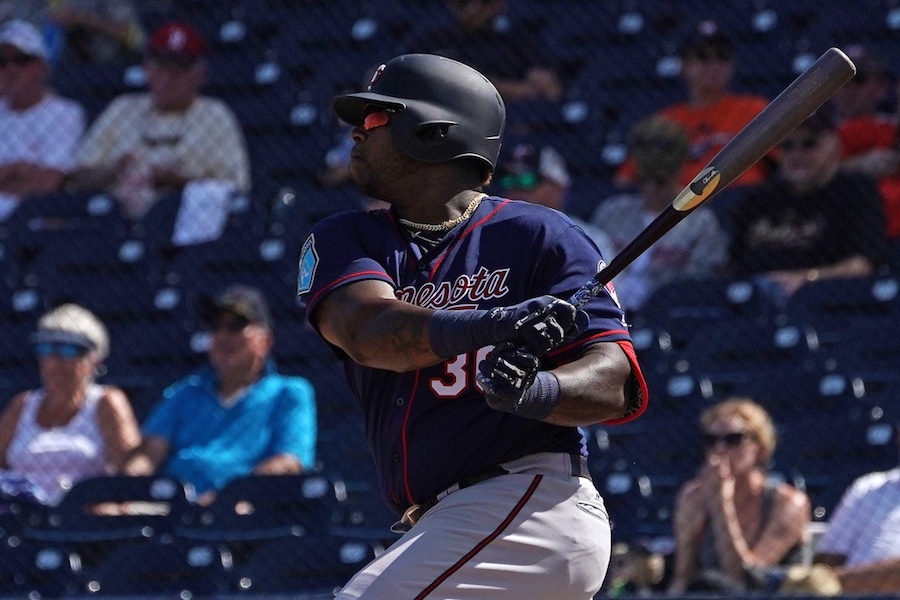 The Twins traded 19-year-old pitcher Luis Gil for Cave, who joins Zack Granite and Robbie Grossman in the mix for a backup job in the outfield. Paul Molitor indicated that he might get Cave, who had recently been designated for assignment himself when the Yankees signed Neil Walker earlier this week, into the lineup as soon as Saturday. A sixth-round draft pick out of high school back in 2011, Cave owns a career .767 OPS in the minors but experienced a breakout of sorts last summer with Class-AAA Scranton/Wilkes-Barre, slashing .324/.367/.554 with 15 home runs in 72 games. He had previously never reached double-digits in the homer column. "He made some adjustments that we thought led to the power surge that he had, and we think those will continue going forward," said Derek Falvey, who added that the scouting staff gained familiarity with Cave while scouring New York's system during Jaime Garcia trade discussions last July. Gil had thrown only 65 innings in the Twins system, all in the Dominican Summer League, in which he posted a 3.32 ERA, 10.1 K/9 rate, and 6.4 BB/9 rate. He missed the 2016 season after undergoing shoulder surgery. Falvey described him as a "hard-throwing right-hander." "He certainly has some upside and I think that's what they identified." Cave has played all three outfield positions in the minors but more center than anything else. Falvey suggested that he profiles better in the corners, but is usable in center. A left-handed swinger whose 1.000 OPS against righties towered over his .638 mark against southpaws last year, Cave seems a somewhat odd fit on a 40-man roster that already features Eddie Rosario, Max Kepler and Zack Granite. Falvey said that such considerations are secondary when trying to add a desirable talent. "With the way we're structured there're a few non-roster candidates or otherwise who fit on the other side of the coin there," explained Minnesota's chief baseball officer. "To just add another position player with three options remaining who we like has value to us, whether it's for now or in the future." Reading between the lines, it seems likely Cave will head to Rochester to open the season but he could be a useful depth piece, especially if the power strides stick as Falvey hopes. Meanwhile, the team will try to work out a trade with Vargas, or else see if he lands somewhere on waivers. The Rays, who beat the Twins 11-1 at Hammond Stadium on Friday, appear to be a logical fit and multiple Tampa media members noted as much in the press box.
 -
One of the most pleasant surprises for the 2017 Minnesota Twins literally came out of left field. With newfound discipline at the plate, Eddie Rosario turned the corner and went from frustrating underachiever to fearsome slugger. But with Rosario slowed by injury this spring, the depth behind him could quickly come into play.Projected Starter: Eddie Rosario Likely Backup: Robbie Grossman Depth: Ehire Adrianza, Zack Granite, Nick Buss Prospects: Alex Kirilloff, Akil Baddoo, LaMonte Wade THE GOOD Rosario's approach at the plate improved by leaps and bounds in 2017. Just take a look at how the strikeout and walk rates compare to his previous major-league campaigns: YEAR | K% | BB% --------------------------------------- 2015 | 24.9% | 3.2% 2016 | 25.7% | 3.4% 2017 | 18.0% | 5.9% That walk rate still wasn't good by any means, ranking as the 26th-lowest in the majors, but it was a massive step up from his stagnant bottom-of-the-barrel marks during those first two campaigns. With his quick wrists and outstanding hand-eye coordination, Rosario has always been capable of putting the bat on almost anything thrown his way. But as the Baseball Prospectus Annual 2018 puts it, he "started learning to separate the pitches he can hit from those he should hit." The result was a career-high .290 batting average despite a career-low .312 BABIP. He also slugged .507 with 27 home runs, surpassing his prior cumulative totals of .443 and 23. That might've had something to do with the juiced balls but also speaks to Rosario's highly impressive ability to drive scorching liners with authority from his 6'1", 180 lb frame. And here's the best part: Rosario isn't necessarily done fine-tuning his approach. Keep in mind the kid is only 26, and coming off a revelatory year with a new hitting coach who seems to be getting through. If Eddie can get those K/BB rates trending further in the right direction, continued offensive growth may be yet to come. An enticing proposition for a player who finished with the third-best OPS+ on the team in 2017. Even if those rates remain the same, simply gravitating back toward his .335 BABIP from 2015/16 could push Rosario's average past .300 and his OPS into the 900-range. Finally tapping into his true potential at the plate as he enters his fourth MLB season, Rosario represents one of the biggest reasons to love Minnesota's offensive upside this summer. THE BAD While Rosario has mostly erased any doubts surrounding his outlook with the bat, he still has some work to do defensively. He possesses all the tools to be an excellent left fielder, but brazen aggressiveness continued to lead to questionable decisions that hurt the team in 2017. Hopefully the more disciplined approach at the plate will carry to the outfield this year. Unfortunately, he hasn't had much chance to work at it this spring, with triceps tendinitis keeping him off the field for nearly two weeks. He finally returned to the lineup on Thursday, finishing 0-for-3 against the Rays as designated hitter, but there's no specific target date to get him back in the outfield. Paul Molitor did mention that the outfielder came away from throwing sessions pain-free this week and the manager expects to see him back in left soon. If there are any setbacks or hiccups in Rosario's recovery, Robbie Grossman and Ehire Adrianza would likely consume the balance of reps in left field. That's a major drop-off, both offensively and defensively, but it's not a disastrous fallback plan. In the event of a lengthier absence, Zack Granite would probably be called upon to fill in as a regular, likely providing superior glovework to Rosario with a good approach at the plate (albeit MUCH less power) and speed on the basepaths. THE BOTTOM LINE Though his arm ailment has kept him off the field for much of March, Rosario indicated on Thursday he is now throwing from 90 feet with no issue, so he should be back in the outfield soon and good to go by Opening Day. As things stand now, he is the present and future in left field, with a heightened floor and a lofty ceiling still within reach. Down the line, Alex Kirilloff and Akil Baddoo stand out as the brightest hopes to potentially succeed Rosario, who's four years away from free agency (though many feel Kirilloff profiles better in right). In the shorter-term, one player to watch is LaMonte Wade. Twins Daily's No. 14 prospect has put his signature patience on display this spring; he drew his team-leading seventh walk on Thursday. Click here to view the article
-
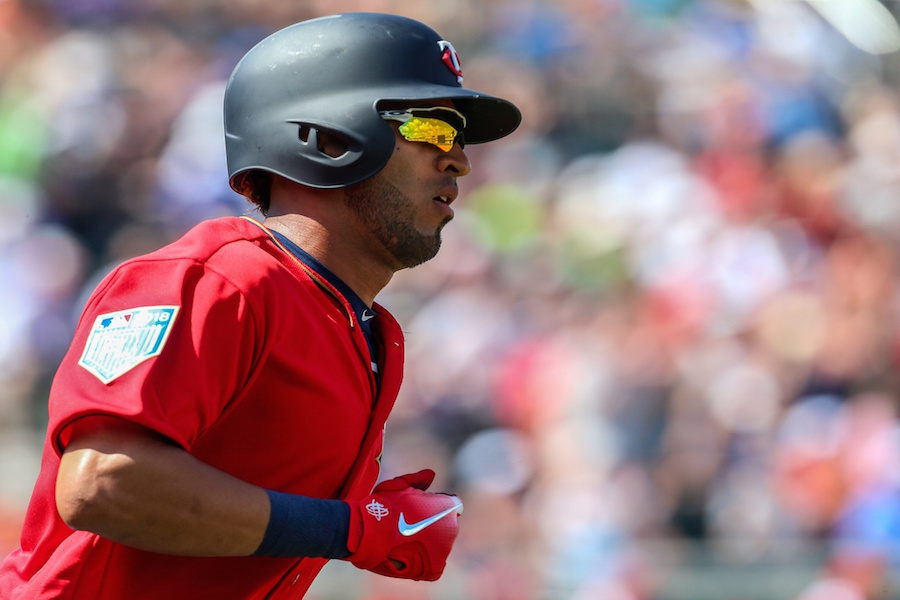 Projected Starter: Eddie Rosario Likely Backup: Robbie Grossman Depth: Ehire Adrianza, Zack Granite, Nick Buss Prospects: Alex Kirilloff, Akil Baddoo, LaMonte Wade THE GOOD Rosario's approach at the plate improved by leaps and bounds in 2017. Just take a look at how the strikeout and walk rates compare to his previous major-league campaigns: YEAR | K% | BB% --------------------------------------- 2015 | 24.9% | 3.2% 2016 | 25.7% | 3.4% 2017 | 18.0% | 5.9% That walk rate still wasn't good by any means, ranking as the 26th-lowest in the majors, but it was a massive step up from his stagnant bottom-of-the-barrel marks during those first two campaigns. With his quick wrists and outstanding hand-eye coordination, Rosario has always been capable of putting the bat on almost anything thrown his way. But as the Baseball Prospectus Annual 2018 puts it, he "started learning to separate the pitches he can hit from those he should hit." The result was a career-high .290 batting average despite a career-low .312 BABIP. He also slugged .507 with 27 home runs, surpassing his prior cumulative totals of .443 and 23. That might've had something to do with the juiced balls but also speaks to Rosario's highly impressive ability to drive scorching liners with authority from his 6'1", 180 lb frame. And here's the best part: Rosario isn't necessarily done fine-tuning his approach. Keep in mind the kid is only 26, and coming off a revelatory year with a new hitting coach who seems to be getting through. If Eddie can get those K/BB rates trending further in the right direction, continued offensive growth may be yet to come. An enticing proposition for a player who finished with the third-best OPS+ on the team in 2017. Even if those rates remain the same, simply gravitating back toward his .335 BABIP from 2015/16 could push Rosario's average past .300 and his OPS into the 900-range. Finally tapping into his true potential at the plate as he enters his fourth MLB season, Rosario represents one of the biggest reasons to love Minnesota's offensive upside this summer. THE BAD While Rosario has mostly erased any doubts surrounding his outlook with the bat, he still has some work to do defensively. He possesses all the tools to be an excellent left fielder, but brazen aggressiveness continued to lead to questionable decisions that hurt the team in 2017. Hopefully the more disciplined approach at the plate will carry to the outfield this year. Unfortunately, he hasn't had much chance to work at it this spring, with triceps tendinitis keeping him off the field for nearly two weeks. He finally returned to the lineup on Thursday, finishing 0-for-3 against the Rays as designated hitter, but there's no specific target date to get him back in the outfield. Paul Molitor did mention that the outfielder came away from throwing sessions pain-free this week and the manager expects to see him back in left soon. If there are any setbacks or hiccups in Rosario's recovery, Robbie Grossman and Ehire Adrianza would likely consume the balance of reps in left field. That's a major drop-off, both offensively and defensively, but it's not a disastrous fallback plan. In the event of a lengthier absence, Zack Granite would probably be called upon to fill in as a regular, likely providing superior glovework to Rosario with a good approach at the plate (albeit MUCH less power) and speed on the basepaths. THE BOTTOM LINE Though his arm ailment has kept him off the field for much of March, Rosario indicated on Thursday he is now throwing from 90 feet with no issue, so he should be back in the outfield soon and good to go by Opening Day. As things stand now, he is the present and future in left field, with a heightened floor and a lofty ceiling still within reach. Down the line, Alex Kirilloff and Akil Baddoo stand out as the brightest hopes to potentially succeed Rosario, who's four years away from free agency (though many feel Kirilloff profiles better in right). In the shorter-term, one player to watch is LaMonte Wade. Twins Daily's No. 14 prospect has put his signature patience on display this spring; he drew his team-leading seventh walk on Thursday.
 -
FT. MYERS – Who will be the starter on Opening Day for the Twins, now just two weeks away? What did Kyle Gibson have to say about his spring up to this point? How did Eddie Rosario look in his return to the lineup? Listen here and find out.If you haven't yet, you can find step-by-step instructions to subscribe via your iPhone podcast app here. If you have any suggestions for improving these nightly wrap-up mini-podcasts, please feel free to share them in the comments. I'm literally talking to myself so any outside guidance is much appreciated. We are down here to dig up and deliver the details you all want, so please don't hesitate to help shape this content! Click here to view the article
-
Nightly Wrap: Opening Day Starter, Gibby K & Rosario's Return
Nick Nelson posted an article in Twins
 If you haven't yet, you can find step-by-step instructions to subscribe via your iPhone podcast app here. If you have any suggestions for improving these nightly wrap-up mini-podcasts, please feel free to share them in the comments. I'm literally talking to myself so any outside guidance is much appreciated. We are down here to dig up and deliver the details you all want, so please don't hesitate to help shape this content!
 -
FT. MYERS – Carl Lewis once said that if you don't have confidence, you'll always find a way not to win. As the Twins try to finally work Mitch Garver into the fold as a big-league catcher, they can be confident they've at least checked that box in the quest to set him up for success.A year ago, Garver was a fringe candidate for the backup catcher job that eventually went to Chris Gimenez. He was realistic about his chances at the time. "I'm excited to get the opportunity," Garver told me last March. "If that means I've gotta be in Triple-A for the year, that's fine with me. I just want to improve my game and be ready when I get there." Sure enough, that's about exactly how it went down. The Twins sent Garver to Rochester, and improve his game he did. In the International League, the 26-year-old experienced a breakout of epic proportions, slashing .291/.387/.541 to rank second in OPS (min. 350 PA). The only superior IL producer was Philadelphia's Rhys Hoskins, who of course went on to bash 18 homers in 50 games for the Phillies and place fourth in NL Rookie of the Year balloting. To what does Garver owe his sudden offensive elevation? "I think it was just that confidence that kind of grew throughout spring training and then the early parts of last year," he said. "It carried over throughout the rest of the year." Now, it's the team's confidence in him that is most conspicuous. The Twins let Gimenez walk during the offseason and didn't add anyone with significant big-league experience in his place. Garver rebuts the notion that the job is his – "By no means do I have a backup spot or a spot on this roster locked up" – but the reality is that he pretty much does, even with a .105 batting average thus far in Grapefruit play. And while the club's faith is both logical and commendable, it presents a key point of uncertainty for an offensive unit that is otherwise quite solidified. Garver was called up to the majors in August last year and went on to make 52 plate appearances, batting just .192 with a .636 OPS. During his six weeks with the big-league club, he started only three games at catcher. "When you’re in a playoff push, you’re not really going to throw a rookie behind the plate too often," he acknowledged. Of course, he's still got his rookie status heading into 2018 and the Twins hope to be making a playoff push from the get-go. But you've got to take the leap sometime, and the team is ready to do so. With confidence. A BETTER PLACE Asked for an assessment of Garver's performance behind the plate this spring, you'll never guess what Paul Molitor led with. "I think he's a lot more confident back there," the manager said. "You kind of watch him how he’s handling signal-calling and blocking and framing pitches. He watches [Jason] Castro. He’s learned a lot and he’s in a lot better place than he was even a year ago." Garver started at catcher in Port Charlotte on Thursday, with Kyle Gibson on the mound. Developing rapport and gaining the confidence of his pitching staff is a key priority for the backstop, even more so than carrying over his strides at the plate from last year. And at a time where even the incumbent starter Castro is in learning mode with recent additions Jake Odorizzi and Lance Lynn, Garver's going through an intensive crash course this month. Thursday's game represented his first time working with Gibson this spring, but the two do have history. "When I got sent down he was the guy in Triple-A and I felt like I developed a pretty good relationship with him there," Gibson explained, adding that he also had a chance to work with Garver a bit when both were in the majors late in the season. For what it's worth, the right-hander had his best outing of the spring Thursday, firing five innings of one-run ball with five strikeouts and no walks. Garver is also well acquainted with another critical member of the Twins rotation. He and Jose Berrios worked together a few times at Triple-A early last season, and one of Garver's three starts at catcher in Minnesota came with Berrios on the mound. It happened to be Berrios' best performance of the second half: seven shutout innings with 11 strikeouts against the White Sox on August 30th. Those are the kinds of results that'll inspire confidence on both ends. THE RIGHT STUFF? As I mentioned on Wednesday's Nightly Wrap podcast, Garver is a pivotal piece of the Twins roster because of his defensive flexibility and right-handed bat. In addition to catcher, he spent time at first base, left field and designated hitter with the club in 2017. The Twins have lefty-swinging starters at all those positions. If Garver can prove himself an asset against southpaws he has a chance to increase his own playing time and reduce the lineup's vulnerability versus tough left-handed pitchers. Last year in Rochester, Garver was especially effective against opposite arms, slashing .290/.408/.530 with a disciplined plate approach evidenced by his 33-to-20 K/BB ratio in 120 appearances. And despite his lack of overall success in Minnesota, he did put up a .762 OPS against lefties, compared to .530 against righties. This will be a decisive factor in Garver's ability to provide substantial value. The Twins can live with middling results against right-handed pitching so long as he keeps delivering the goods in platoon situations. Fortunately, his history in that department should give him plenty of confidence. ALL SYSTEMS GO Coming off the best season of his career, with endorsements from rotation members and the full faith of an organization that's going all-in on him in a crucial role, Garver has every reason to be feeling as confident as ever. Best of all, he's beyond confident in the group around him, especially after some of the late additions. "You look around this locker room, we have a team that’s going to win a pennant," Garver said. "This is the team that’s gonna do it. So I’m really excited to be a part of it, we’ve really got a shot." Click here to view the article
-
Report From The Fort: Can Confidence Carry Garver To Success?
Nick Nelson posted an article in Twins
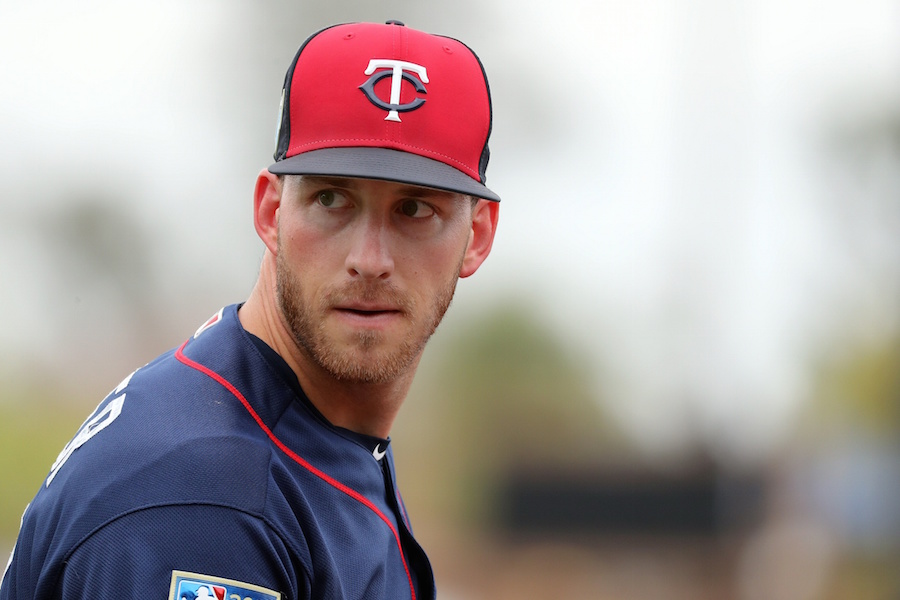 A year ago, Garver was a fringe candidate for the backup catcher job that eventually went to Chris Gimenez. He was realistic about his chances at the time. "I'm excited to get the opportunity," Garver told me last March. "If that means I've gotta be in Triple-A for the year, that's fine with me. I just want to improve my game and be ready when I get there." Sure enough, that's about exactly how it went down. The Twins sent Garver to Rochester, and improve his game he did. In the International League, the 26-year-old experienced a breakout of epic proportions, slashing .291/.387/.541 to rank second in OPS (min. 350 PA). The only superior IL producer was Philadelphia's Rhys Hoskins, who of course went on to bash 18 homers in 50 games for the Phillies and place fourth in NL Rookie of the Year balloting. To what does Garver owe his sudden offensive elevation? "I think it was just that confidence that kind of grew throughout spring training and then the early parts of last year," he said. "It carried over throughout the rest of the year." Now, it's the team's confidence in him that is most conspicuous. The Twins let Gimenez walk during the offseason and didn't add anyone with significant big-league experience in his place. Garver rebuts the notion that the job is his – "By no means do I have a backup spot or a spot on this roster locked up" – but the reality is that he pretty much does, even with a .105 batting average thus far in Grapefruit play. And while the club's faith is both logical and commendable, it presents a key point of uncertainty for an offensive unit that is otherwise quite solidified. Garver was called up to the majors in August last year and went on to make 52 plate appearances, batting just .192 with a .636 OPS. During his six weeks with the big-league club, he started only three games at catcher. "When you’re in a playoff push, you’re not really going to throw a rookie behind the plate too often," he acknowledged. Of course, he's still got his rookie status heading into 2018 and the Twins hope to be making a playoff push from the get-go. But you've got to take the leap sometime, and the team is ready to do so. With confidence. A BETTER PLACE Asked for an assessment of Garver's performance behind the plate this spring, you'll never guess what Paul Molitor led with. "I think he's a lot more confident back there," the manager said. "You kind of watch him how he’s handling signal-calling and blocking and framing pitches. He watches [Jason] Castro. He’s learned a lot and he’s in a lot better place than he was even a year ago." Garver started at catcher in Port Charlotte on Thursday, with Kyle Gibson on the mound. Developing rapport and gaining the confidence of his pitching staff is a key priority for the backstop, even more so than carrying over his strides at the plate from last year. And at a time where even the incumbent starter Castro is in learning mode with recent additions Jake Odorizzi and Lance Lynn, Garver's going through an intensive crash course this month. Thursday's game represented his first time working with Gibson this spring, but the two do have history. "When I got sent down he was the guy in Triple-A and I felt like I developed a pretty good relationship with him there," Gibson explained, adding that he also had a chance to work with Garver a bit when both were in the majors late in the season. For what it's worth, the right-hander had his best outing of the spring Thursday, firing five innings of one-run ball with five strikeouts and no walks. Garver is also well acquainted with another critical member of the Twins rotation. He and Jose Berrios worked together a few times at Triple-A early last season, and one of Garver's three starts at catcher in Minnesota came with Berrios on the mound. It happened to be Berrios' best performance of the second half: seven shutout innings with 11 strikeouts against the White Sox on August 30th. Those are the kinds of results that'll inspire confidence on both ends. THE RIGHT STUFF? As I mentioned on Wednesday's Nightly Wrap podcast, Garver is a pivotal piece of the Twins roster because of his defensive flexibility and right-handed bat. In addition to catcher, he spent time at first base, left field and designated hitter with the club in 2017. The Twins have lefty-swinging starters at all those positions. If Garver can prove himself an asset against southpaws he has a chance to increase his own playing time and reduce the lineup's vulnerability versus tough left-handed pitchers. Last year in Rochester, Garver was especially effective against opposite arms, slashing .290/.408/.530 with a disciplined plate approach evidenced by his 33-to-20 K/BB ratio in 120 appearances. And despite his lack of overall success in Minnesota, he did put up a .762 OPS against lefties, compared to .530 against righties. This will be a decisive factor in Garver's ability to provide substantial value. The Twins can live with middling results against right-handed pitching so long as he keeps delivering the goods in platoon situations. Fortunately, his history in that department should give him plenty of confidence. ALL SYSTEMS GO Coming off the best season of his career, with endorsements from rotation members and the full faith of an organization that's going all-in on him in a crucial role, Garver has every reason to be feeling as confident as ever. Best of all, he's beyond confident in the group around him, especially after some of the late additions. "You look around this locker room, we have a team that’s going to win a pennant," Garver said. "This is the team that’s gonna do it. So I’m really excited to be a part of it, we’ve really got a shot."
 -
As I said in the piece, surprises are always possible. But I don't see Aybar or Granite making the roster unless there's an injury. My read on Hildenberger is that the Twins are (wisely) valuing 42 strong innings in the 2017 regular season over a half-dozen bad innings in spring training. Possibly if he can't put together a clean outing the rest of the way he'll be left out. But I'd say he's pretty close to a lock. Those aren't position battles though. Those are contingencies.
- 33 replies
-
- 1
-
-
- tyler duffey
- tyler kinley
- (and 2 more)
-
You see incorrectly. I'm not sure what else to tell you. To suggest that this front office (or any front office, but ESPECIALLY this one) is going to let 6 roster spots be dictated by the last 2 weeks of spring training results is beyond absurd.
- 33 replies
-
- 4
-
-
- tyler duffey
- tyler kinley
- (and 2 more)
-
FT. MYERS – Nick reports on the battle for the final bullpen spot, Tyler Duffey's trouble with the change, Byron Buxton's run at history, and a whole lot more. Listen here!If you haven't yet, you can find step-by-step instructions to subscribe via your iPhone podcast app here. If you have any suggestions for improving these nightly wrap-up mini-podcasts, please feel free to share them in the comments. I'm literally talking to myself so any outside guidance is much appreciated. We are down here to dig up and deliver the details you all want, so please don't hesitate to help shape this content! Click here to view the article
-
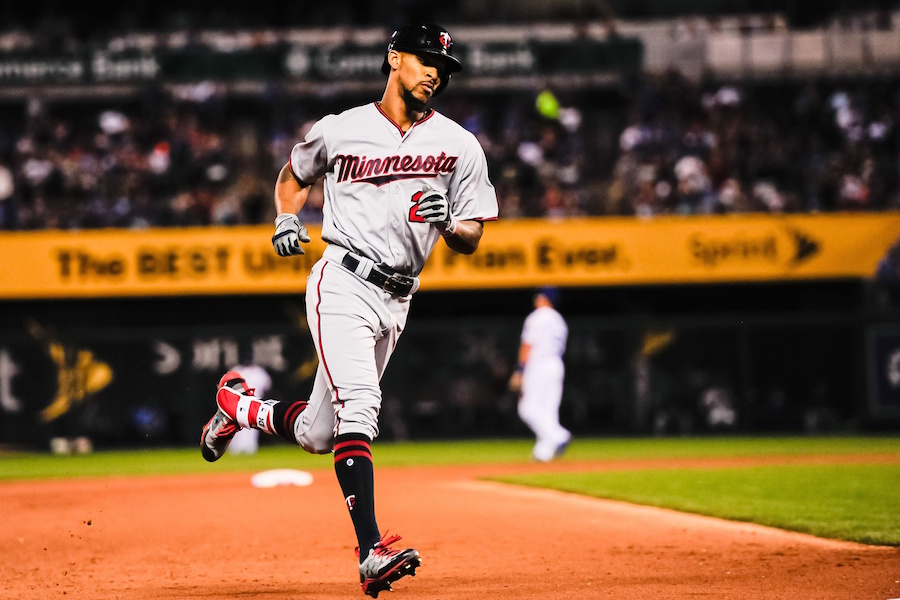 If you haven't yet, you can find step-by-step instructions to subscribe via your iPhone podcast app here. If you have any suggestions for improving these nightly wrap-up mini-podcasts, please feel free to share them in the comments. I'm literally talking to myself so any outside guidance is much appreciated. We are down here to dig up and deliver the details you all want, so please don't hesitate to help shape this content!
 -
FT. MYERS – There's been no shortage of intrigue at Twins camp, and even a little drama. But if you like to follow position battles during spring training, you've probably found yourself a little disappointed. Surprises are always possible, but realistically, there is only one spot on the 25-man roster up for grabs. On Wednesday, a prime contender took the hill looking to build his case.The first four slots in the Minnesota rotation are set with Jose Berrios, Lance Lynn, Jake Odorizzi and Kyle Gibson. The fifth spot is almost certain to go to Phil Hughes, who figures to function as sort of a starter/long reliever hybrid in the early going. With five off days in the first three weeks, the team's schedule is such that they can get through April while only needing a fifth starter two or three times. And by the time they'll require one on a more regular basis, Ervin Santana should be close to returning if not back already. That means barring injury, someone from the Opening Day staff will be bumped by Santana in late April or early May. So the competition doesn't end once camp breaks. Whoever wins that final bullpen job will need to prove his worth throughout the early part of the schedule. As things stand, there are four relievers remaining in camp to vie for that last relief gig. One could argue it's really a two-man race. Let's first take a look at the two longshots: Alan Busenitz, RHP Busenitz has a couple of very attractive numbers working in his favor: 1.99, and 95.7. The first is his ERA in 28 appearances during a sparking 2017 debut with the Twins. The second is his average fastball speed during that stint. Of the 462 pitchers to throw at least 30 innings in the majors, only 54 threw harder, placing Busenitz near the 10th percentile. But here's the problem with the 1.99 ERA: it came attached to a 4.20 FIP and 4.80 xFIP, owing to the fact that Busenitz benefitted from a .212 BABIP and 86.6% strand rate. Minnesota's analytically minded front office surely recognizes the suspect sustainability of those numbers. And as for the 95-MPH heater, it was really the sole pitch he used effectively. His other offering is a curveball and it was nothing special, helping explain why the righty produced just 6.5 K/9 and a 7.2% swinging strike rate, which nestled between relative soft-tossers Hector Santiago (7.4%) and Phil Hughes (7.2%). As a fly ball pitcher who allows quite a bit of contact, Busenitz walks a dangerous line. Only one qualified MLB reliever finished with a FB rate above 45% and a K-rate below 20% last year – Seattle's Nick Vincent, and he succeeded with a very different formula, drawing weak contact with a high-80s cutter. So there's reason for concern around Busenitz's long-term outlook unless he can crank up the K's or cut down the flies. But in the short-term, the biggest thing working against him is that – since he has multiple options remaining – the Twins have nothing to lose by sending him down to Rochester to work on those things. Gabriel Moya, LHP On the other end of the whiff spectrum lies Moya, whose 12.4% swinging strike rate during a very brief stint in Minnesota last year tied Pressly for best on the staff. Moya has also had an extremely impressive spring up to this point, allowing just one run (a solo homer in his first appearance) on three hits in six innings of work. Something that could work in Moya's favor is the Twins going with five right-handers in the rotation. Theoretically this might increase Paul Molitor's desire to have a third southpaw in the bullpen, but Moya – who relies heavily on an excellent changeup – has never had big platoon splits, and in fact last year he was much better against righties. Like Busenitz, he has options remaining so there's no harm in sending him to Triple-A to start the season. But I am confident Moya will be a solid weapon at some point. And now, the two leading contenders: Tyler Duffey, RHP On Wednesday, Duffey made his first start in almost exactly one calendar year, allowing two runs (one earned) over three innings with two strikeouts and two walks. Molitor indicated afterward that the team plans to have him make another start in five days, on March 19th. The right-hander has basically no shot at a rotation spot, so why is he getting starts? The answer is easy enough to see. "I've been told I've been just lengthened out," Duffey said. "That's just to make sure I'm ready for that long role and maybe if something happens like a rainout or whatever and they need a guy." In this capacity, Duffey looks like a very obvious fit. One thing lacking in the current bullpen makeup is a pitcher with such a profile. In 2017 he got six or more outs in 15 of his 56 relief appearances. He even completed three full innings a couple of times. "We know he can be that guy, he did it last year quite a bit," Molitor said of Duffey's capability to fill the long relief role. The manager didn't have an especially positive review of the 27-year-old's performance against a tough Boston lineup – "Overall you have to say that he battled really well, I don't think he had his best stuff" – and Duffey has generally been unspectacular on the mound this spring, but that seems almost immaterial. They need him. Or do they? Tyler Kinley, RHP Ah, the Rule 5 pick. Always fun for a skipper to deal with in spring camp. Kinley has certainly caught some eyeballs with his big velocity, including a heater that reaches 99 and a slider that can touch 90. His Grapefruit numbers have been about what you'd expect based on his track record; six innings, six strikeouts, five walks. It's becoming a little easier to understand what the Twins saw in Kinley – and Molitor had high praise for the 27-year-old earlier this month – but how does he fit? Another one-inning guy in a unit full of them? Isn't his signature short-burst velo a bit redundant with Pressly? Can a team with hopes of contending really dedicate a roster spot to such an unproven commodity? One would surmise no. But of course, if the Twins don't carry Kinley on the active roster or trade for him, they'll have to ship him back to Miami. That wouldn't be the biggest deal but Molitor is well aware of what Minnesota's front office has invested in the righty. Not financially, mind you, but with Kinley occupying a 40-man slot they've had to let some other promising players slip away – most recently J.T. Chargois, who is having a strong spring with the Dodgers. As such, the Twins owe it to themselves to get a good long look at Kinley. Could that mean bringing him north, even if it means sending Duffey down (he does have an option) and forgoing a traditional mop-up option? It's not unthinkable. Hughes can ostensibly handle that long relief role between his sporadic starts in April. I don't think Molitor's going to go with a guy he flat-out can't rely on in a key spot, but if Kinley is able to convince the manager he's worth counting on? Like I said, not unthinkable. But also not at all likely. If the team is sold on Kinley I suspect they'll try to work out a trade with Miami that would allow them to send him to Triple-A. Duffey is in the driver's seat until further notice. His flexible arm is just too useful to be sent away. Sorry to put the kibosh on whatever minimal suspense existed around the lone "position battle" in camp. But if you're into such things, the good news is that Duffey will essentially be locked in a battle with Hughes to maintain that long relief role upon Santana's return. Click here to view the article
- 33 replies
-
- 2
-
-
- tyler duffey
- tyler kinley
- (and 2 more)
-
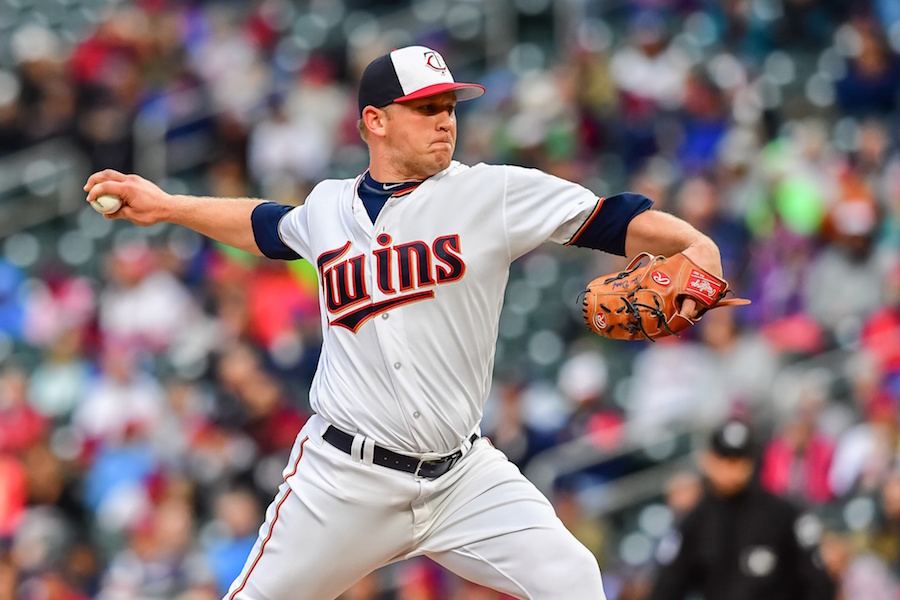 The first four slots in the Minnesota rotation are set with Jose Berrios, Lance Lynn, Jake Odorizzi and Kyle Gibson. The fifth spot is almost certain to go to Phil Hughes, who figures to function as sort of a starter/long reliever hybrid in the early going. With five off days in the first three weeks, the team's schedule is such that they can get through April while only needing a fifth starter two or three times. And by the time they'll require one on a more regular basis, Ervin Santana should be close to returning if not back already. That means barring injury, someone from the Opening Day staff will be bumped by Santana in late April or early May. So the competition doesn't end once camp breaks. Whoever wins that final bullpen job will need to prove his worth throughout the early part of the schedule. As things stand, there are four relievers remaining in camp to vie for that last relief gig. One could argue it's really a two-man race. Let's first take a look at the two longshots: Alan Busenitz, RHP Busenitz has a couple of very attractive numbers working in his favor: 1.99, and 95.7. The first is his ERA in 28 appearances during a sparking 2017 debut with the Twins. The second is his average fastball speed during that stint. Of the 462 pitchers to throw at least 30 innings in the majors, only 54 threw harder, placing Busenitz near the 10th percentile. But here's the problem with the 1.99 ERA: it came attached to a 4.20 FIP and 4.80 xFIP, owing to the fact that Busenitz benefitted from a .212 BABIP and 86.6% strand rate. Minnesota's analytically minded front office surely recognizes the suspect sustainability of those numbers. And as for the 95-MPH heater, it was really the sole pitch he used effectively. His other offering is a curveball and it was nothing special, helping explain why the righty produced just 6.5 K/9 and a 7.2% swinging strike rate, which nestled between relative soft-tossers Hector Santiago (7.4%) and Phil Hughes (7.2%). As a fly ball pitcher who allows quite a bit of contact, Busenitz walks a dangerous line. Only one qualified MLB reliever finished with a FB rate above 45% and a K-rate below 20% last year – Seattle's Nick Vincent, and he succeeded with a very different formula, drawing weak contact with a high-80s cutter. So there's reason for concern around Busenitz's long-term outlook unless he can crank up the K's or cut down the flies. But in the short-term, the biggest thing working against him is that – since he has multiple options remaining – the Twins have nothing to lose by sending him down to Rochester to work on those things. Gabriel Moya, LHP On the other end of the whiff spectrum lies Moya, whose 12.4% swinging strike rate during a very brief stint in Minnesota last year tied Pressly for best on the staff. Moya has also had an extremely impressive spring up to this point, allowing just one run (a solo homer in his first appearance) on three hits in six innings of work. Something that could work in Moya's favor is the Twins going with five right-handers in the rotation. Theoretically this might increase Paul Molitor's desire to have a third southpaw in the bullpen, but Moya – who relies heavily on an excellent changeup – has never had big platoon splits, and in fact last year he was much better against righties. Like Busenitz, he has options remaining so there's no harm in sending him to Triple-A to start the season. But I am confident Moya will be a solid weapon at some point. And now, the two leading contenders: Tyler Duffey, RHP On Wednesday, Duffey made his first start in almost exactly one calendar year, allowing two runs (one earned) over three innings with two strikeouts and two walks. Molitor indicated afterward that the team plans to have him make another start in five days, on March 19th. The right-hander has basically no shot at a rotation spot, so why is he getting starts? The answer is easy enough to see. "I've been told I've been just lengthened out," Duffey said. "That's just to make sure I'm ready for that long role and maybe if something happens like a rainout or whatever and they need a guy." In this capacity, Duffey looks like a very obvious fit. One thing lacking in the current bullpen makeup is a pitcher with such a profile. In 2017 he got six or more outs in 15 of his 56 relief appearances. He even completed three full innings a couple of times. "We know he can be that guy, he did it last year quite a bit," Molitor said of Duffey's capability to fill the long relief role. The manager didn't have an especially positive review of the 27-year-old's performance against a tough Boston lineup – "Overall you have to say that he battled really well, I don't think he had his best stuff" – and Duffey has generally been unspectacular on the mound this spring, but that seems almost immaterial. They need him. Or do they? Tyler Kinley, RHP Ah, the Rule 5 pick. Always fun for a skipper to deal with in spring camp. Kinley has certainly caught some eyeballs with his big velocity, including a heater that reaches 99 and a slider that can touch 90. His Grapefruit numbers have been about what you'd expect based on his track record; six innings, six strikeouts, five walks. It's becoming a little easier to understand what the Twins saw in Kinley – and Molitor had high praise for the 27-year-old earlier this month – but how does he fit? Another one-inning guy in a unit full of them? Isn't his signature short-burst velo a bit redundant with Pressly? Can a team with hopes of contending really dedicate a roster spot to such an unproven commodity? One would surmise no. But of course, if the Twins don't carry Kinley on the active roster or trade for him, they'll have to ship him back to Miami. That wouldn't be the biggest deal but Molitor is well aware of what Minnesota's front office has invested in the righty. Not financially, mind you, but with Kinley occupying a 40-man slot they've had to let some other promising players slip away – most recently J.T. Chargois, who is having a strong spring with the Dodgers. As such, the Twins owe it to themselves to get a good long look at Kinley. Could that mean bringing him north, even if it means sending Duffey down (he does have an option) and forgoing a traditional mop-up option? It's not unthinkable. Hughes can ostensibly handle that long relief role between his sporadic starts in April. I don't think Molitor's going to go with a guy he flat-out can't rely on in a key spot, but if Kinley is able to convince the manager he's worth counting on? Like I said, not unthinkable. But also not at all likely. If the team is sold on Kinley I suspect they'll try to work out a trade with Miami that would allow them to send him to Triple-A. Duffey is in the driver's seat until further notice. His flexible arm is just too useful to be sent away. Sorry to put the kibosh on whatever minimal suspense existed around the lone "position battle" in camp. But if you're into such things, the good news is that Duffey will essentially be locked in a battle with Hughes to maintain that long relief role upon Santana's return.
 -
Thanks! I believe Phil Miller had us covered in that capacity. Just don't tell him I said so
- 7 replies
-
- 3
-
-
- lance lynn
- miguel sano
- (and 1 more)
