



Nick Nelson
-
Posts
8,327 -
Joined
-
Last visited
-
Days Won
56
Content Type
Profiles
News
Minnesota Twins Videos
2026 Minnesota Twins Top Prospects Ranking
2022 Minnesota Twins Draft Picks
Minnesota Twins Free Agent & Trade Rumors, Notes, & Tidbits
Guides & Resources
2023 Minnesota Twins Draft Picks
The Minnesota Twins Players Project
2024 Minnesota Twins Draft Picks
2025 Minnesota Twins Draft Pick Tracker
2026 Minnesota Twins Draft Tracker: Picks & Bonuses
Forums
Blogs
Events
Store
Downloads
Gallery
Everything posted by Nick Nelson
-
 I would say the surge is already underway. In April/May Bechtold hit .172/.259/.200 with 4 doubles and 0 HR in 41 games. Since the start of June he's at .288/.408/.413 with 7 doubles and 1 HR in 24 games. Overall numbers are unimpressive, yes, but that's the kind of progression you're looking for.
- 12 replies
-
- 6
-

-
- tyler watson
- dashawn keirsey jr
- (and 3 more)
-
The strength of Minnesota's highly regarded farm system is in its depth. Yes, the Twins boast a few top-tier talents that will be profiled at the end of this series, but this organization's intrigue and upside extend beyond the Top 10 and even beyond the Top 30, as the five players below exemplify.35. Tyler Watson – LHP Age: 21 ETA: 2021 2018 Stats (A-/A+): 56.1 IP, 4.47 ERA, 1.54 WHIP, 7.3 K/9, 3.4 BB/9, 2.33 K:BB 2018 Ranking: NR | 2017 Ranking: NR Seth: 36 | Tom: 28 | Cody: 44 When a late-July swoon caused them to pivot into seller mode last year, the Twins flipped All-Star closer Brandon Kintzler to the Washington Nationals for Tyler Watson, a former 34th-round draft with a tall frame and a short track record. The 6'5", 200 lb southpaw has a physique any scout can love, and the Nats lured him away from college in 2015 with a $400K signing bonus. Watson blew hitters away in rookie leagues, but was struggling a bit in A-ball when the Twins acquired last summer. That hasn't changed, as the numbers above illustrate, but Derek Falvey views the burly left-hander as a long-term project. "Tyler is a young left-handed starter we feel is just scratching the surface of who he can be," Minnesota's chief baseball officer said at the time. "Taller pitchers can take a little longer to develop, but we feel there's more in the tank." Right now he's a fairly hittable starter with a low-90s fastball and a developing curve, neither of which he commands all that consistently. But Watson is still only 21, with an almost ideal build and an 8.9 K/9 rate through his 250 innings as a pro. I'm definitely curious to see what else is in the tank. 34. DaShawn Keirsey Jr. – OF Age: 21 ETA: 2021 2018 Stats (Rk): .258/.303/.419 (.722 OPS), 1 2B, 2 3B, 0 HR, 3 K, 2 BB 2018 Ranking: NR | 2017 Ranking: NR Seth: 43 | Tom: 30 | Cody: 29 Bill Kinneberg, head baseball coach at the University of Utah, knew DaShawn Keirsey Jr. was destined to be an early-round MLB draft pick from the first time he watched him play. "I remember him running faster than anyone we've ever had, and you add that to his 6-foot-2 frame — yeah, it was evident right away." Last June, he was the 124th player to come off the board when Minnesota took him in the fourth round, and it's possible he would've gone earlier if not for a major injury in 2017 where the aggressive and speedy center fielder collided with an outfield wall (sound familiar?) and came off the field in an ambulance, his hip dislocated and the socket fractured. "Nobody could give us a timetable. That was a scary deal,” said Coach Kinneberg. It was a very tough break for a player whose game was built around speed, but Keirsey rehabbed hard and bounced back this spring with an outstanding junior season, batting .386 with a 1.049 OPS while leading the PAC-12 in doubles and reaching base in 45 of 50 games. He's a speedy gamer with good contact skills from the left side and an excellent defensive rep (he was three-time PAC-12 All Defense in center), so comparisons to Zack Granite or even Ben Revere are apt, but some foresee more power in Keirsey's future. 33. Gabriel Moya – LHP Age: 23 ETA: 2018 2018 Stats (AAA): 33.0 IP, 1.64 ERA, 1.15 WHIP, 10.4 K/9, 2.5 BB/9, 4.22 K/BB 2018 Ranking: NR | 2017 Ranking: NR Seth: 40 | Tom: 35 | Cody: 22 Whereas Tyler Watson, profiled above, was clearly more of an acquisition guided by scouting, the Twins were pretty clearly going by the numbers when they picked up Gabriel Moya from Arizona in exchange for catcher John Ryan Murphy around the same time. The rare example of a lefty reliever whose changeup is his best pitch, Moya won't wow you with his high-80s fastball and modest breaking stuff. He'll more likely confuse you with his unique and twitchy mechanics. But his stats? Those'll wow you. Moya had a 0.82 ERA and 14.0 K/9 rate in Double-A last summer when the Twins acquired him, and he has kept the magic going in Minnesota's system with a 1.32 ERA and 57-to-12 K/BB ratio in 48 innings between Chattanooga (last year) and Rochester (this year). He has only received limited chances in the majors so far, amounting to 11 1/3 total innings with less than wow-worthy results, but is clearly deserving of an extended opportunity. Maybe it will come if the Twins open a spot by trading Zach Duke before the deadline. 32. Andrew Bechtold – 3B Age: 22 ETA: 2021 2018 Stats (A): .217/.320/.281 (.601 OPS), 11 2B, 0 3B, 0 HR, 67 K, 32 BB 2018 Ranking: NR | 2017 Ranking: NR Seth: 27 | Tom: 41 | Cody: 42 A righty-swinging infielder who grew in the Philly suburbs, Bechtold has followed a winding path to reach this point. He was selected by the Rangers in the 37th round of the 2014 draft following a strong senior year in high school, but elected not to sign, heading instead to the University of Maryland where he'd join fellow current Twins prospects LaMonte Wade and Alex Robinson. Due to injuries and other factors, things just didn't work out for Bechtold at Maryland. After two years, he transferred to Chipola, a junior college, where he got his baseball career back on track. He hit .419 with 12 home runs and 24 steals in 60 games, impressing the Twins enough that they drafted him in the fifth round and went well above slot to sign him at $600K. Bechtold's power hasn't shown up yet, as he's managed just three homers and a .337 slugging percentage in 107 games between Elizabethton and Cedar Rapids, but he has shown a solid plate approach and an ability to get on base (he posted a .426 OBP for the Kernels in June). Ultimately the third baseman's development will hinge on his adding muscle and turning it into game power, but as a skilled defender with a good idea of what he's doing at the plate, Bechtold has the right foundation. 31. Jordan Balazovic – RHP Age: 19 ETA: 2022 2018 Stats (A): 26.2 IP, 2.36 ERA, 1.09 WHIP, 13.8 K/9, 2.4 BB/9, 5.86 K/BB 2018 Ranking: NR | 2017 Ranking: NR Seth: 20 | Tom: 40 | Cody: 34 One year before taking Bechtold in the fifth round, the Twins used that selection on Jordan Balazovic, a Canadian right-hander who was catching some eyes north of the border. Like Bechtold, the Twins went over-slot to sign Balazovic, coaxing him out of a commitment to Auburn. The organization has taken it slow with Balazovic, who was only 17 when drafted in 2016. He spent two seasons in the rookie Gulf Coast League, with decidedly mixed results. This year he's made the move to Cedar Rapids, and things have really come together. He has struck out 41 in 26 2/3 innings of work, and in his most recent outing on Saturday, hurled six innings of one-hit ball with 10 strikeouts. Balazovic is a teenager who's thrown less than 100 official innings since being drafted, so all standard caveats apply, but he's a very live arm, and his arrow is pointing directly upward and flashing at this moment. PREVIOUS INSTALLMENTS: 2018 Twins Midseason Top Prospects: 36-40 Click here to view the article
- 12 replies
-
- 1
-
-
- tyler watson
- dashawn keirsey jr
- (and 3 more)
-
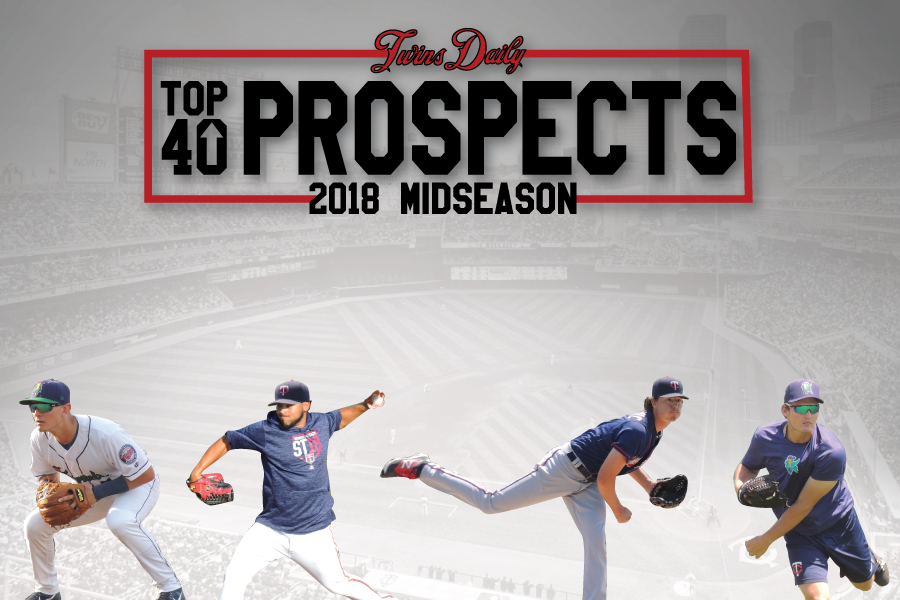 35. Tyler Watson – LHP Age: 21 ETA: 2021 2018 Stats (A-/A+): 56.1 IP, 4.47 ERA, 1.54 WHIP, 7.3 K/9, 3.4 BB/9, 2.33 K:BB 2018 Ranking: NR | 2017 Ranking: NR Seth: 36 | Tom: 28 | Cody: 44 When a late-July swoon caused them to pivot into seller mode last year, the Twins flipped All-Star closer Brandon Kintzler to the Washington Nationals for Tyler Watson, a former 34th-round draft with a tall frame and a short track record. The 6'5", 200 lb southpaw has a physique any scout can love, and the Nats lured him away from college in 2015 with a $400K signing bonus. Watson blew hitters away in rookie leagues, but was struggling a bit in A-ball when the Twins acquired last summer. That hasn't changed, as the numbers above illustrate, but Derek Falvey views the burly left-hander as a long-term project. "Tyler is a young left-handed starter we feel is just scratching the surface of who he can be," Minnesota's chief baseball officer said at the time. "Taller pitchers can take a little longer to develop, but we feel there's more in the tank." Right now he's a fairly hittable starter with a low-90s fastball and a developing curve, neither of which he commands all that consistently. But Watson is still only 21, with an almost ideal build and an 8.9 K/9 rate through his 250 innings as a pro. I'm definitely curious to see what else is in the tank. 34. DaShawn Keirsey Jr. – OF Age: 21 ETA: 2021 2018 Stats (Rk): .258/.303/.419 (.722 OPS), 1 2B, 2 3B, 0 HR, 3 K, 2 BB 2018 Ranking: NR | 2017 Ranking: NR Seth: 43 | Tom: 30 | Cody: 29 Bill Kinneberg, head baseball coach at the University of Utah, knew DaShawn Keirsey Jr. was destined to be an early-round MLB draft pick from the first time he watched him play. "I remember him running faster than anyone we've ever had, and you add that to his 6-foot-2 frame — yeah, it was evident right away." Last June, he was the 124th player to come off the board when Minnesota took him in the fourth round, and it's possible he would've gone earlier if not for a major injury in 2017 where the aggressive and speedy center fielder collided with an outfield wall (sound familiar?) and came off the field in an ambulance, his hip dislocated and the socket fractured. "Nobody could give us a timetable. That was a scary deal,” said Coach Kinneberg. It was a very tough break for a player whose game was built around speed, but Keirsey rehabbed hard and bounced back this spring with an outstanding junior season, batting .386 with a 1.049 OPS while leading the PAC-12 in doubles and reaching base in 45 of 50 games. He's a speedy gamer with good contact skills from the left side and an excellent defensive rep (he was three-time PAC-12 All Defense in center), so comparisons to Zack Granite or even Ben Revere are apt, but some foresee more power in Keirsey's future. 33. Gabriel Moya – LHP Age: 23 ETA: 2018 2018 Stats (AAA): 33.0 IP, 1.64 ERA, 1.15 WHIP, 10.4 K/9, 2.5 BB/9, 4.22 K/BB 2018 Ranking: NR | 2017 Ranking: NR Seth: 40 | Tom: 35 | Cody: 22 Whereas Tyler Watson, profiled above, was clearly more of an acquisition guided by scouting, the Twins were pretty clearly going by the numbers when they picked up Gabriel Moya from Arizona in exchange for catcher John Ryan Murphy around the same time. The rare example of a lefty reliever whose changeup is his best pitch, Moya won't wow you with his high-80s fastball and modest breaking stuff. He'll more likely confuse you with his unique and twitchy mechanics. But his stats? Those'll wow you. Moya had a 0.82 ERA and 14.0 K/9 rate in Double-A last summer when the Twins acquired him, and he has kept the magic going in Minnesota's system with a 1.32 ERA and 57-to-12 K/BB ratio in 48 innings between Chattanooga (last year) and Rochester (this year). He has only received limited chances in the majors so far, amounting to 11 1/3 total innings with less than wow-worthy results, but is clearly deserving of an extended opportunity. Maybe it will come if the Twins open a spot by trading Zach Duke before the deadline. 32. Andrew Bechtold – 3B Age: 22 ETA: 2021 2018 Stats (A): .217/.320/.281 (.601 OPS), 11 2B, 0 3B, 0 HR, 67 K, 32 BB 2018 Ranking: NR | 2017 Ranking: NR Seth: 27 | Tom: 41 | Cody: 42 A righty-swinging infielder who grew in the Philly suburbs, Bechtold has followed a winding path to reach this point. He was selected by the Rangers in the 37th round of the 2014 draft following a strong senior year in high school, but elected not to sign, heading instead to the University of Maryland where he'd join fellow current Twins prospects LaMonte Wade and Alex Robinson. Due to injuries and other factors, things just didn't work out for Bechtold at Maryland. After two years, he transferred to Chipola, a junior college, where he got his baseball career back on track. He hit .419 with 12 home runs and 24 steals in 60 games, impressing the Twins enough that they drafted him in the fifth round and went well above slot to sign him at $600K. Bechtold's power hasn't shown up yet, as he's managed just three homers and a .337 slugging percentage in 107 games between Elizabethton and Cedar Rapids, but he has shown a solid plate approach and an ability to get on base (he posted a .426 OBP for the Kernels in June). Ultimately the third baseman's development will hinge on his adding muscle and turning it into game power, but as a skilled defender with a good idea of what he's doing at the plate, Bechtold has the right foundation. 31. Jordan Balazovic – RHP Age: 19 ETA: 2022 2018 Stats (A): 26.2 IP, 2.36 ERA, 1.09 WHIP, 13.8 K/9, 2.4 BB/9, 5.86 K/BB 2018 Ranking: NR | 2017 Ranking: NR Seth: 20 | Tom: 40 | Cody: 34 One year before taking Bechtold in the fifth round, the Twins used that selection on Jordan Balazovic, a Canadian right-hander who was catching some eyes north of the border. Like Bechtold, the Twins went over-slot to sign Balazovic, coaxing him out of a commitment to Auburn. The organization has taken it slow with Balazovic, who was only 17 when drafted in 2016. He spent two seasons in the rookie Gulf Coast League, with decidedly mixed results. This year he's made the move to Cedar Rapids, and things have really come together. He has struck out 41 in 26 2/3 innings of work, and in his most recent outing on Saturday, hurled six innings of one-hit ball with 10 strikeouts. Balazovic is a teenager who's thrown less than 100 official innings since being drafted, so all standard caveats apply, but he's a very live arm, and his arrow is pointing directly upward and flashing at this moment. PREVIOUS INSTALLMENTS: 2018 Twins Midseason Top Prospects: 36-40
 -
During a sweltering week in Chicago, the 2018 Twins saw their fleeting hopes further melt away. Granted, half of the season still remains. But as Minnesota staggers into July trailing Cleveland by nine games in the Central, and behind seven others in the Wild Card standings, certain realities are at play as the trade deadline looms. Following another week of tremendously uninspiring play, one need not look at postseason odds to reach an inescapable conclusion: This ship isn't sinking anymore; it's sunk. So where do we go from here? Weekly Snapshot: Mon, 6/25 through Sun, 7/1 *** Record Last Week: 1-5 (Overall: 35-45) Run Differential Last Week: -18 (Overall: -34) Standing: 2nd Place in AL Central (8.0 GB) HIGHLIGHTS This might have been the worst week of baseball the Twins have put forth all year (really saying something!) so extracting highlights isn't easy, but there were a few standouts worth mentioning amidst the wreckage. Firstly, it was great to see Joe Mauer finally flashing some pop. After a quiet series against the White Sox, he busted out at Wrigley Field, going 5-for-10 with two doubles, a home run and eight RBIs on Friday and Saturday. In those two games, Mauer drove in more runs than he had in his previous 39 combined, and collected half as many extra-base hits. That of course speaks to the lack of any power dimension in Mauer's game this year – he entered the Cubs series with an egregiously bad .322 slugging percentage. It's been disappointing to see after he slugged .417 with 36 doubles last season, both his highest marks since moving to first base. But over the weekend he at least showed that some hint of pop remains in his bat, which was very much in doubt. Making a potentially more important offensive statement was Ehire Adrianza, who's been producing at the plate for a while now. His week included a four-hit game at Guaranteed Rate Field, and saw him go 9-for-21 (.429) overall while striking out only once. Back in March, when the Jorge Polanco news came down, I wrote about Adrianza and his big opportunity to prove that last year's solid showing at the plate was no fluke. Having shaken off a slow start, he's basically doing that, as his .724 OPS is a notch above last year's (.707) with his 100+ OPS pegging him as a league-average hitter. That might not sound too special, but for a defensive specialist who can play shortstop regularly it's nice, and there is reason to believe Adrianza is still developing at the dish. The 28-year-old has launched four home runs in his past 26 games; previously, he'd hit five total in 224 major-league games. I'll admit to being at the end of my rope with Adrianza during his blunderous April and May, but I'm glad the Twins showed patience and stuck with him. He's making a very good case to return next year as Polanco's backup or possibly even a starter. Speaking of Polanco, he is set to return this week and looked very sharp during his ramp-up in the minors. After a quick stint in Fort Myers, the shortstop moved up to Rochester and went 6-for-13 in four games, so he appears locked in and ready to go. Twins fans could really use some good news, and a big second half for Polanco back in the fold would certainly qualify. One week ago I mentioned that "Willians Astudillo sure seems deserving of a shot," and on Friday he got it, called up to join the Twins ahead of the Cubs series. Astudillo singled in his first MLB at-bat on Saturday and picked up two more hits – including a two-run triple – in his first start on Sunday. A stout free swinger capable of getting the bat on almost any pitch, he plays third base and catcher (and center field, apparently). He was responsible for the . Now, at 26, with more than 2,300 minor-league plate appearances, he's finally getting his first chance in the big leagues. Astudillo will be a fun one to root for as the rest of this season plays out. LOWLIGHTS It's hard to choose. Last week the "Lowlights" section of this column covered a majority of the roster and this time the same is warranted. Pitchers were terrible, lit up for eight or more runs in four of the six games. The lineup struggled against lousy White Sox pitching, managing seven runs in 31 innings. They were able to get it going a little in the scorching heat at Wrigley but couldn't keep pace with the home squad's relentless attack. Even players among the select group who've reliably gotten it done for Minnesota this year fell into this contagious spiral. Eduardo Escobar went 3-for-23. Trevor Hildenberger allowed a hit or walk to eight of the nine batters he faced on Saturday, and was charged with five earned runs while recording one out; he'd entered the appearance with a 0.92 WHIP. Jose Berrios looked as bad as he has all season on Friday, inducing only four swinging strikes on 78 pitches. But at least those guys have all done their part for the bulk of the first half. The same cannot be said for Brian Dozier, who drove in two runs on the week with solo homers in his first and second-to-last plate appearances. In between, he produced two singles. The first half has been a slog for Dozier, who holds a .221/.311/.397 slash line through 79 games. His power has gone amiss and he's been dreadful in key spots, with a -1.67 WPA that ranks as the team's worst. What has happened to Dozier, who'd seemingly evolved into a steady veteran stalwart? It's clearly not a question of effort or motivation, given the extremely high personal stakes for him this season. The most likely explanation is that age is catching up as Dozier moves past his ostensible prime at age 31. But perhaps there's something more going on. I found this cryptic quote from the second baseman in a recent piece from Dan Hayes at The Athletic to be a curious one: He backed up that last promise on Sunday when he nearly blew out his leg stretching for an infield single with the team down 9-1, going on to score three times as Minnesota mounted a late (but failed) comeback. On balance, however, even 100 percent of Dozier isn't nearly adequate right now, because it's a mere fraction of the player he's been for the past half-decade. The bright side, I guess, is this: It's already been more or less ordained that Dozier isn't in the plan beyond 2018. So while his ill-timed drop-off is a major bummer for him and his financial future, it doesn't really alter the club's big-picture outlook. More perturbing on that front is Byron Buxton's continued inability to find a workable approach at the plate. While he claims to now be pain-free, Buxton's numbers rehabbing haven't reflected it. He did have a two-hit game in Rochester on Sunday, but it raised his average to .214. In 11 games, he has two doubles and one homer to go along with 15 strikeouts and two walks. Yes, it is a small sample size. But keep this in mind: When Buxton was last in Triple-A, rehabbing in 2017, he went 5-for-12 (.417) with two homers in three games. In 2016 during his brief time there he hit .400 /.441/.545 in 13 games. Now at age 24 he's failing to gain traction, striking out in one-third of his plate appearances. His rehab window is approaching its end, and you've gotta think if all remains as is, the Twins will option Buxton and keep him in the minors. They've already taken that step with Miguel Sano, who remains on an every-other-game regimen in Fort Myers. He actually had a good week down there as he collected eight hits in five games, including a home run Sunday – his first since May 31st in Minnesota. But it's clear that the 25-year-old has a long way to go. TRENDING STORYLINE Now that we're in July, the trade deadline is visibly on the horizon. Their inability to get anything going over the past few weeks has placed Minnesota firmly in the "seller" category, and even though he's having a tough season, Dozier is the most likely candidate to go among core players. His sterling reputation around the league, as well as his known penchant for getting hot and powering up an offense, will boost his value beyond the lackluster stats. That's not to say the Twins will get a haul for him but someone is gonna make it worth their while, especially because – unlike fellow impending free agent Escobar – Dozier's viability as a qualifying offer candidate is no longer really part of the equation. By dealing their back-to-back-to-back team MVP, the Twins can signal the start of a new era by ushering in Nick Gordon alongside Polanco in the middle-infield, or they could keep giving Adrianza regular ABs. But it's a sad way for one of the best careers in recent franchise history to come to an end. It'll be interesting to keep an eye on Dozier's trade market as it starts to take shape in the coming weeks. DOWN ON THE FARM Let's brighten things up a little bit. The Twins have got some absolutely premium bats rising through the system. When Baseball America released its midseason top 100 prospects list last week, Alex Kirilloff moved up 50 spots from the preseason rankings. The 2016 first-round pick is garnering plenty of national attention with his spectacular return from a yearlong absence due to Tommy John surgery. After a quiet first half of the week with Fort Myers, Kirilloff got back to business with a trio of two-hit games against Lakeland. He's batting .341 for the Miracle. Kirilloff was the second-highest Twins prospect on BA's midseason list, behind Royce Lewis, who has now graduated to elite territory at No. 12 overall. Lewis enjoyed another stellar week in Cedar Rapids, tallying 10 hits, including four doubles and a homer, while drawing five walks and swiping three bases on three tries. Fort Myers awaits. Brusdar Graterol, who you can expect to find jockeying with Lewis and Kirilloff for top-three positioning in Twins Daily's midseason top 40 (now underway!), received his promotion from Low-A to High-A and made his debut for the Miracle on Sunday, though it didn't go well as he coughed up five runs on nine hits over three innings. LOOKING AHEAD It'll be a full week, bisected by the holiday on Wednesday. The four-game home set against Baltimore in the latter portion would look like a huge opportunity if the Twins hadn't already essentially buried themselves. That Orioles team is really, really bad. MONDAY, 7/2: TWINS @ BREWERS – RHP Kyle Gibson v. LHP Brent Suter TUESDAY, 7/3: TWINS @ BREWERS – RHP Jake Odorizzi v. RHP Junior Guerra WEDNESDAY, 7/4: TWINS @ BREWERS – RHP Jose Berrios v. RHP Chase Anderson THURSDAY, 7/5: ORIOLES @ TWINS – RHP Andrew Cashner v. LHP Adalberto Mejia FRIDAY, 7/6: ORIOLES @ TWINS – RHP Dylan Bundy v. RHP Lance Lynn SATURDAY, 7/7: ORIOLES @ TWINS – RHP Kevin Gausman v. RHP Kyle Gibson SUNDAY, 7/8: ORIOLES @ TWINS – RHP Alex Cobb v. RHP Jake Odorizzi Catch Up On Twins Daily Game Recaps Game 75 | CHW 8, MIN 4: South Side SlipGame 76 | CHW 6, MIN 1: Gibby Gets GotGame 77 | MIN 2, CHW 1: Walking Away With a WinGame 78 | CHC 10, MIN 6: Hey, Remember Joe Mauer?Game 79 | CHC 14, MIN 9: It’s Not the Heat, it’s ... Actually, It Is the Heat This TimeGame 80 | CHC 11, MIN 10: Epic Comeback Falls Short Click here to view the article
-
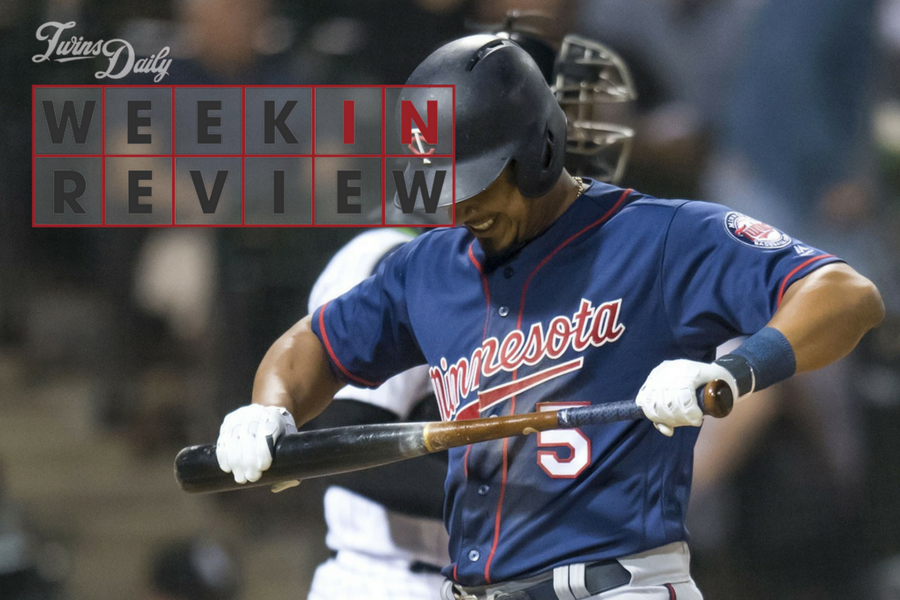 Weekly Snapshot: Mon, 6/25 through Sun, 7/1 *** Record Last Week: 1-5 (Overall: 35-45) Run Differential Last Week: -18 (Overall: -34) Standing: 2nd Place in AL Central (8.0 GB) HIGHLIGHTS This might have been the worst week of baseball the Twins have put forth all year (really saying something!) so extracting highlights isn't easy, but there were a few standouts worth mentioning amidst the wreckage. Firstly, it was great to see Joe Mauer finally flashing some pop. After a quiet series against the White Sox, he busted out at Wrigley Field, going 5-for-10 with two doubles, a home run and eight RBIs on Friday and Saturday. In those two games, Mauer drove in more runs than he had in his previous 39 combined, and collected half as many extra-base hits. That of course speaks to the lack of any power dimension in Mauer's game this year – he entered the Cubs series with an egregiously bad .322 slugging percentage. It's been disappointing to see after he slugged .417 with 36 doubles last season, both his highest marks since moving to first base. But over the weekend he at least showed that some hint of pop remains in his bat, which was very much in doubt. Making a potentially more important offensive statement was Ehire Adrianza, who's been producing at the plate for a while now. His week included a four-hit game at Guaranteed Rate Field, and saw him go 9-for-21 (.429) overall while striking out only once. Back in March, when the Jorge Polanco news came down, I wrote about Adrianza and his big opportunity to prove that last year's solid showing at the plate was no fluke. Having shaken off a slow start, he's basically doing that, as his .724 OPS is a notch above last year's (.707) with his 100+ OPS pegging him as a league-average hitter. That might not sound too special, but for a defensive specialist who can play shortstop regularly it's nice, and there is reason to believe Adrianza is still developing at the dish. The 28-year-old has launched four home runs in his past 26 games; previously, he'd hit five total in 224 major-league games. I'll admit to being at the end of my rope with Adrianza during his blunderous April and May, but I'm glad the Twins showed patience and stuck with him. He's making a very good case to return next year as Polanco's backup or possibly even a starter. Speaking of Polanco, he is set to return this week and looked very sharp during his ramp-up in the minors. After a quick stint in Fort Myers, the shortstop moved up to Rochester and went 6-for-13 in four games, so he appears locked in and ready to go. Twins fans could really use some good news, and a big second half for Polanco back in the fold would certainly qualify. One week ago I mentioned that "Willians Astudillo sure seems deserving of a shot," and on Friday he got it, called up to join the Twins ahead of the Cubs series. Astudillo singled in his first MLB at-bat on Saturday and picked up two more hits – including a two-run triple – in his first start on Sunday. A stout free swinger capable of getting the bat on almost any pitch, he plays third base and catcher (and center field, apparently). He was responsible for the . Now, at 26, with more than 2,300 minor-league plate appearances, he's finally getting his first chance in the big leagues. Astudillo will be a fun one to root for as the rest of this season plays out.LOWLIGHTS It's hard to choose. Last week the "Lowlights" section of this column covered a majority of the roster and this time the same is warranted. Pitchers were terrible, lit up for eight or more runs in four of the six games. The lineup struggled against lousy White Sox pitching, managing seven runs in 31 innings. They were able to get it going a little in the scorching heat at Wrigley but couldn't keep pace with the home squad's relentless attack. Even players among the select group who've reliably gotten it done for Minnesota this year fell into this contagious spiral. Eduardo Escobar went 3-for-23. Trevor Hildenberger allowed a hit or walk to eight of the nine batters he faced on Saturday, and was charged with five earned runs while recording one out; he'd entered the appearance with a 0.92 WHIP. Jose Berrios looked as bad as he has all season on Friday, inducing only four swinging strikes on 78 pitches. But at least those guys have all done their part for the bulk of the first half. The same cannot be said for Brian Dozier, who drove in two runs on the week with solo homers in his first and second-to-last plate appearances. In between, he produced two singles. The first half has been a slog for Dozier, who holds a .221/.311/.397 slash line through 79 games. His power has gone amiss and he's been dreadful in key spots, with a -1.67 WPA that ranks as the team's worst. What has happened to Dozier, who'd seemingly evolved into a steady veteran stalwart? It's clearly not a question of effort or motivation, given the extremely high personal stakes for him this season. The most likely explanation is that age is catching up as Dozier moves past his ostensible prime at age 31. But perhaps there's something more going on. I found this cryptic quote from the second baseman in a recent piece from Dan Hayes at The Athletic to be a curious one: He backed up that last promise on Sunday when he nearly blew out his leg stretching for an infield single with the team down 9-1, going on to score three times as Minnesota mounted a late (but failed) comeback. On balance, however, even 100 percent of Dozier isn't nearly adequate right now, because it's a mere fraction of the player he's been for the past half-decade. The bright side, I guess, is this: It's already been more or less ordained that Dozier isn't in the plan beyond 2018. So while his ill-timed drop-off is a major bummer for him and his financial future, it doesn't really alter the club's big-picture outlook. More perturbing on that front is Byron Buxton's continued inability to find a workable approach at the plate. While he claims to now be pain-free, Buxton's numbers rehabbing haven't reflected it. He did have a two-hit game in Rochester on Sunday, but it raised his average to .214. In 11 games, he has two doubles and one homer to go along with 15 strikeouts and two walks. Yes, it is a small sample size. But keep this in mind: When Buxton was last in Triple-A, rehabbing in 2017, he went 5-for-12 (.417) with two homers in three games. In 2016 during his brief time there he hit .400 /.441/.545 in 13 games. Now at age 24 he's failing to gain traction, striking out in one-third of his plate appearances. His rehab window is approaching its end, and you've gotta think if all remains as is, the Twins will option Buxton and keep him in the minors. They've already taken that step with Miguel Sano, who remains on an every-other-game regimen in Fort Myers. He actually had a good week down there as he collected eight hits in five games, including a home run Sunday – his first since May 31st in Minnesota. But it's clear that the 25-year-old has a long way to go. TRENDING STORYLINE Now that we're in July, the trade deadline is visibly on the horizon. Their inability to get anything going over the past few weeks has placed Minnesota firmly in the "seller" category, and even though he's having a tough season, Dozier is the most likely candidate to go among core players. His sterling reputation around the league, as well as his known penchant for getting hot and powering up an offense, will boost his value beyond the lackluster stats. That's not to say the Twins will get a haul for him but someone is gonna make it worth their while, especially because – unlike fellow impending free agent Escobar – Dozier's viability as a qualifying offer candidate is no longer really part of the equation. By dealing their back-to-back-to-back team MVP, the Twins can signal the start of a new era by ushering in Nick Gordon alongside Polanco in the middle-infield, or they could keep giving Adrianza regular ABs. But it's a sad way for one of the best careers in recent franchise history to come to an end. It'll be interesting to keep an eye on Dozier's trade market as it starts to take shape in the coming weeks. DOWN ON THE FARM Let's brighten things up a little bit. The Twins have got some absolutely premium bats rising through the system. When Baseball America released its midseason top 100 prospects list last week, Alex Kirilloff moved up 50 spots from the preseason rankings. The 2016 first-round pick is garnering plenty of national attention with his spectacular return from a yearlong absence due to Tommy John surgery. After a quiet first half of the week with Fort Myers, Kirilloff got back to business with a trio of two-hit games against Lakeland. He's batting .341 for the Miracle. Kirilloff was the second-highest Twins prospect on BA's midseason list, behind Royce Lewis, who has now graduated to elite territory at No. 12 overall. Lewis enjoyed another stellar week in Cedar Rapids, tallying 10 hits, including four doubles and a homer, while drawing five walks and swiping three bases on three tries. Fort Myers awaits. Brusdar Graterol, who you can expect to find jockeying with Lewis and Kirilloff for top-three positioning in Twins Daily's midseason top 40 (now underway!), received his promotion from Low-A to High-A and made his debut for the Miracle on Sunday, though it didn't go well as he coughed up five runs on nine hits over three innings. LOOKING AHEAD It'll be a full week, bisected by the holiday on Wednesday. The four-game home set against Baltimore in the latter portion would look like a huge opportunity if the Twins hadn't already essentially buried themselves. That Orioles team is really, really bad. MONDAY, 7/2: TWINS @ BREWERS – RHP Kyle Gibson v. LHP Brent Suter TUESDAY, 7/3: TWINS @ BREWERS – RHP Jake Odorizzi v. RHP Junior Guerra WEDNESDAY, 7/4: TWINS @ BREWERS – RHP Jose Berrios v. RHP Chase Anderson THURSDAY, 7/5: ORIOLES @ TWINS – RHP Andrew Cashner v. LHP Adalberto Mejia FRIDAY, 7/6: ORIOLES @ TWINS – RHP Dylan Bundy v. RHP Lance Lynn SATURDAY, 7/7: ORIOLES @ TWINS – RHP Kevin Gausman v. RHP Kyle Gibson SUNDAY, 7/8: ORIOLES @ TWINS – RHP Alex Cobb v. RHP Jake Odorizzi Catch Up On Twins Daily Game Recaps Game 75 | CHW 8, MIN 4: South Side Slip Game 76 | CHW 6, MIN 1: Gibby Gets Got Game 77 | MIN 2, CHW 1: Walking Away With a Win Game 78 | CHC 10, MIN 6: Hey, Remember Joe Mauer? Game 79 | CHC 14, MIN 9: It’s Not the Heat, it’s ... Actually, It Is the Heat This Time Game 80 | CHC 11, MIN 10: Epic Comeback Falls Short
 -
Article: The Rise and Fall of Miguel Sano
Nick Nelson replied to Nick Nelson's topic in Twins Daily Front Page News
Hey, if you don't like it, you're welcome to not read, and certainly welcome to not comment! Your whole shtick forever has been calling for managers/coaches/front office types of be fired. You grind your axes against players that you don't like ad nauseam. We all know this. And you're whining about "too much drama"? Who do you think you're kidding? If you wanna actually tell me what specifically is unfair about this article, instead of making ridiculous exaggerations about how I'm "crucifying" Sano, or being "malicious," or suggesting the team should get rid of him, then go for it. But if that's all you've got, drop it. I'm really tired of hearing it. -
I've never cared much about the Home Run Derby. In the past I might have watched it in passing, with Chris Berman's grating 'back-back-back' calls muted, but it's never been destination viewing for me. Last year, that changed. After running a baseball practice on a Monday evening in July, I raced home to catch the majority of the event. Following his breakout first half for the Twins, I needed to see Miguel Sano's majestic power on the national stage. Boy did he deliver. And boy, does that night – somehow less than one year ago – now feel like a distant memory, as Sano's ensuing regression has led him back-back-back to Single-A.At Marlins Park, no one could keep up with Aaron Judge and his inhuman display of strength. But Sano came close. He edged Mike Moustakas and Gary Sanchez before facing off against Judge in the final round of the Derby, ultimately coming up a little short. The view from Minnesota was blindingly bright. As Sano leisurely slugged baseballs far beyond Miami's outfield walls, he grinned and reveled in the moment, looking as natural in the spotlight as he always had. Having carried into the All-Star break 21 homers and a .906 OPS, there he was, alongside Judge, two young stars of the game basking in their glory. The best part? It seemed as though we were only scratching the surface. Sano was a year younger than Judge – still just a 24-year-old gaining comfort and familiarity with major-league pitching. The sky was the limit. But instead, the sky has fallen. Sano's collapse has spanned three dimensions: his performance, his physical condition, and his attitude. While it's tough to know exactly how to weigh each individually, it seems clear that all three are problematic, which helps explains the organization's drastic reparative measure. PERFORMANCE Since the 2017 All-Star break, Sano has batted .206 and slugged .416, striking out at a 40% rate while watching his once-pristine walk rate drop to an utterly mediocre 7.9%. The power is still there, and occasionally evident when he manages to guess right and get a hold of one, but his approach at the plate has completely unraveled. Before his demotion, Sano was an immensely easy assignment for opposing pitchers, who were by then executing the "get ahead and spin it outside" formula so consistently it brought about deja vu. Defensive metrics rated his glove as terrible. He lumbered around the bases sluggishly. Overall, he was a sub-replacement level player. PHYSICAL CONDITION Sano's weight has been a subject of public scrutiny since at least March 2016, when Patrick Reusse called him out in the Star Tribune. "He is heavier this spring than last," Reusse wrote. "He is at 270-plus when the Twins were hoping to have him at 260-minus as they go forward with the plan to play him in right field." Oh yeah, that plan. That great, brilliantly conceived plan. Anyway, by the end of 2017, Sano's weight had reportedly risen to 290-plus, and he was in the same range this spring. Many factors have contributed to his burgeoning bulk – diet, downtime recovering from injuries, and natural genetics all likely play a role – but there's no denying the trend. Sano's size has unquestionably affected his play, and has very likely affected his ability to stay on the field. It's not unheard of for a player to miss six weeks due to a stress reaction (as Sano did late last year), or a month due to a hamstring injury of mysterious origin (as Sano did early this year). But for both to happen in such quick succession, for a player whose physical conditioning already had become a known issue, is conspicuous to say the least. When the Twins sent Sano down to Fort Myers, part of their rationale - according to Derek Falvey – was this: “We can do a lot of things with the facility we have there, around strength and conditioning and the work you can do from that side.” ATTITUDE When Reusse took Sano to task for showing up at camp larger than expected in 2016, he wasn't just reporting. He also included some insinuations and barbs, suggesting that a lack of commitment and maturity on the slugger's end were partially to blame. Fellow Strib columnist Jim Souhan followed suit in a similarly toned piece last August, asserting that a hefty Sano needed to show some dietary discipline. I'm not the only one who found these digs irksome. Never did I doubt the veracity of the reporting, in that Reusse and Souhan were relaying actual concerns that existed within the organization, but was it necessary reporting? Internal rumblings about perceived character weaknesses in the past have eventually led to some unfortunate narratives and very bad personnel decisions. It all felt very gossipy. Unfortunately, no one can deny that the grievances aired through Reusse and Souhan appear valid in retrospect. Even as someone who has tried to give Sano the benefit of doubt at every turn, I can't ignore the insurmountable evidence of a man who just doesn't get it. Whether or not these should be perceived as "character issues" varies based on who you're listening to, but without question Sano's troubles are to some extent his own doing. Anecdotes like this one from Mike Berardino speak well enough to that. At best, Sano has been aloof and passive at a time where he needs to be working diligently to regain an edge. Hopefully the latter is now occurring in Fort Myers. It's so strange, this state of affairs: When he was last playing for the Miracle in 2013, Sano was a rising 20-year-old superstar, posting a 1.079 OPS during a brief 56-game stint en route to Double-A. Five years later he's back there, a broken and banished oddity. On Friday night, as the surrounding Fort Myers hitters teed off for 20 hits, five homers and 14 runs around him, Sano went 0-for-4 with two strikeouts as the cleanup hitter. It's one game, yes, but it seems to say a whole lot. Perhaps down the line we'll look at this current juncture as the rock-bottom point in his playing career, instead of looking at the fleeting memory of that All Star weekend last summer as the high point. Click here to view the article
-
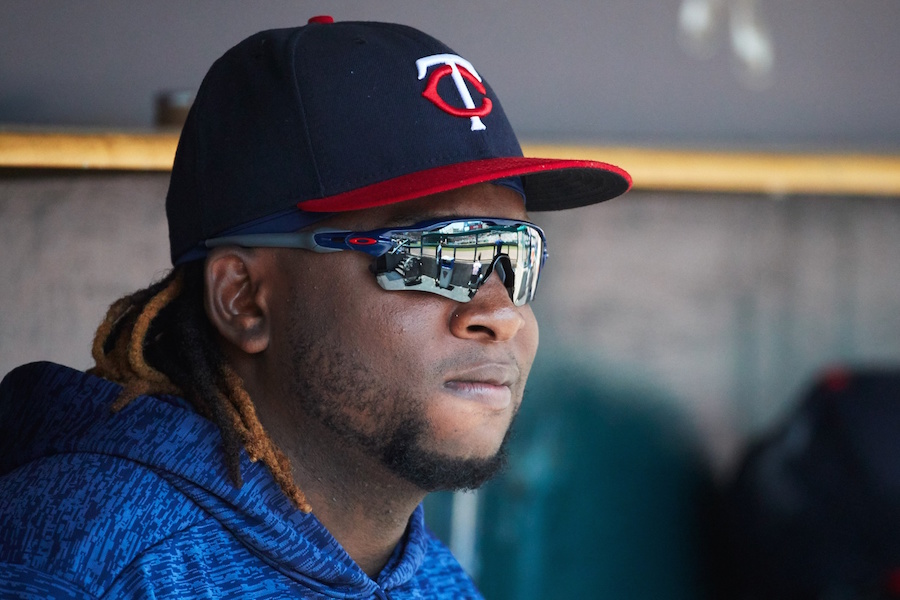 At Marlins Park, no one could keep up with Aaron Judge and his inhuman display of strength. But Sano came close. He edged Mike Moustakas and Gary Sanchez before facing off against Judge in the final round of the Derby, ultimately coming up a little short. The view from Minnesota was blindingly bright. As Sano leisurely slugged baseballs far beyond Miami's outfield walls, he grinned and reveled in the moment, looking as natural in the spotlight as he always had. Having carried into the All-Star break 21 homers and a .906 OPS, there he was, alongside Judge, two young stars of the game basking in their glory. The best part? It seemed as though we were only scratching the surface. Sano was a year younger than Judge – still just a 24-year-old gaining comfort and familiarity with major-league pitching. The sky was the limit. But instead, the sky has fallen. Sano's collapse has spanned three dimensions: his performance, his physical condition, and his attitude. While it's tough to know exactly how to weigh each individually, it seems clear that all three are problematic, which helps explains the organization's drastic reparative measure. PERFORMANCE Since the 2017 All-Star break, Sano has batted .206 and slugged .416, striking out at a 40% rate while watching his once-pristine walk rate drop to an utterly mediocre 7.9%. The power is still there, and occasionally evident when he manages to guess right and get a hold of one, but his approach at the plate has completely unraveled. Before his demotion, Sano was an immensely easy assignment for opposing pitchers, who were by then executing the "get ahead and spin it outside" formula so consistently it brought about deja vu. Defensive metrics rated his glove as terrible. He lumbered around the bases sluggishly. Overall, he was a sub-replacement level player. PHYSICAL CONDITION Sano's weight has been a subject of public scrutiny since at least March 2016, when Patrick Reusse called him out in the Star Tribune. "He is heavier this spring than last," Reusse wrote. "He is at 270-plus when the Twins were hoping to have him at 260-minus as they go forward with the plan to play him in right field." Oh yeah, that plan. That great, brilliantly conceived plan. Anyway, by the end of 2017, Sano's weight had reportedly risen to 290-plus, and he was in the same range this spring. Many factors have contributed to his burgeoning bulk – diet, downtime recovering from injuries, and natural genetics all likely play a role – but there's no denying the trend. Sano's size has unquestionably affected his play, and has very likely affected his ability to stay on the field. It's not unheard of for a player to miss six weeks due to a stress reaction (as Sano did late last year), or a month due to a hamstring injury of mysterious origin (as Sano did early this year). But for both to happen in such quick succession, for a player whose physical conditioning already had become a known issue, is conspicuous to say the least. When the Twins sent Sano down to Fort Myers, part of their rationale - according to Derek Falvey – was this: “We can do a lot of things with the facility we have there, around strength and conditioning and the work you can do from that side.” ATTITUDE When Reusse took Sano to task for showing up at camp larger than expected in 2016, he wasn't just reporting. He also included some insinuations and barbs, suggesting that a lack of commitment and maturity on the slugger's end were partially to blame. Fellow Strib columnist Jim Souhan followed suit in a similarly toned piece last August, asserting that a hefty Sano needed to show some dietary discipline. I'm not the only one who found these digs irksome. Never did I doubt the veracity of the reporting, in that Reusse and Souhan were relaying actual concerns that existed within the organization, but was it necessary reporting? Internal rumblings about perceived character weaknesses in the past have eventually led to some unfortunate narratives and very bad personnel decisions. It all felt very gossipy. Unfortunately, no one can deny that the grievances aired through Reusse and Souhan appear valid in retrospect. Even as someone who has tried to give Sano the benefit of doubt at every turn, I can't ignore the insurmountable evidence of a man who just doesn't get it. Whether or not these should be perceived as "character issues" varies based on who you're listening to, but without question Sano's troubles are to some extent his own doing. Anecdotes like this one from Mike Berardino speak well enough to that. At best, Sano has been aloof and passive at a time where he needs to be working diligently to regain an edge. Hopefully the latter is now occurring in Fort Myers. It's so strange, this state of affairs: When he was last playing for the Miracle in 2013, Sano was a rising 20-year-old superstar, posting a 1.079 OPS during a brief 56-game stint en route to Double-A. Five years later he's back there, a broken and banished oddity. On Friday night, as the surrounding Fort Myers hitters teed off for 20 hits, five homers and 14 runs around him, Sano went 0-for-4 with two strikeouts as the cleanup hitter. It's one game, yes, but it seems to say a whole lot. Perhaps down the line we'll look at this current juncture as the rock-bottom point in his playing career, instead of looking at the fleeting memory of that All Star weekend last summer as the high point.
 -
A glimmering spark of hope, snuffed out forcefully by a demoralizing backslide: This recurring cycle has defined the 2018 season for the Twins, and last week epitomized it. Following perhaps its best stretch of baseball all year – four wins in five games against a pair of top-flight teams – Minnesota followed with perhaps its worst, getting outscored 26-9 in three straight losses that further whittled the club's already slim hopes as Cleveland separates itself atop the division. Weekly Snapshot: Mon, 6/18 through Sun, 6/24 *** Record Last Week: 3-3 (Overall: 34-40) Run Differential Last Week: -8 (Overall: -16) Standing: T-2nd Place in AL Central (8.0 GB) HIGHLIGHTS The Twins rotation has mostly been a pleasant surprise this year, and delivered one of its strongest showings over the first half of last week against Boston. Taking on arguably the most dangerous lineup in baseball, Minnesota fought its way to pitching-fueled victories on Tuesday and Wednesday; Jose Berrios and Lance Lynn teamed up with the bullpen to silence all those potent bats as the Red Sox were held to three runs total. Kyle Gibson followed with another fine effort on Thursday, but struggles from the offense and an implosion from the relief corps saddled him with a loss. On Sunday, Berrios delivered his second masterful outing of the week, firing seven shutout innings against Texas with 12 strikeouts. The trio of Berrios, Lynn and Gibson has combined to produce a 2.15 ERA across 13 total starts in June. They've been awesome. Unfortunately, they've been getting little help. It's a feeling that Eddie Rosario knows all too well. He went 6-for-20 with three extra-base hits last week, driving in four runs on Saturday while the surrounding hitters failed to provide much aid in a loss. On the relief front, Trevor Hildenberger continues to string together clean outings – four more last week, as he twirled 3 2/3 hitless innings. He hasn't allowed a run since May 18th and his ERA is down to 2.11 on the season. Fernando Rodney also came through with another spotless stretch, picking up his 16th and 17th saves while making three one-inning appearances and striking out the side in two of them. LOWLIGHTS At the end of May, I wrote about the all-around excellence of the Twins pitching staff through the first third of the season. In the bullpen, much praise was concentrated on Ryan Pressly, who'd been otherworldly to that point: Incidentally, the "odd tendency to get knocked around despite dazzling stuff" has suddenly reemerged. In nine appearances since that May 28th article was posted, Pressly has an 11.74 ERA with 12 hits and three home runs allowed in 7 1/3 innings. As amazing as Pressly's numbers looked through two months, he now sits with a sub par 4.17 ERA and 1.44 WHIP, joining the many laggards who have dragged this team to the brink of irrelevance. That group also includes: * Logan Morrison, whose two-run homer on Saturday was one of only three hits in 15 at-bats last week. He's slashing .191/.293/.347 on the year and a look of perpetual dejection has become etched into his face, but unfortunately, the Twins have had little choice but to keep running Morrison out in the middle of the lineup. * Brian Dozier, whose signature midseason surge just hasn't come to offset all the slumping. Granted, last week was better than most others for him, as it included three doubles, a home run and four walks, but he still batted just .238 while driving in one run. As Aaron Gleeman notes, we're past Dozier's usual slow-start territory: * Robbie Grossman, who has failed to execute his most reliable skill – getting on base – and therefore is providing little value for the Twins. To his credit, Grossman did collect as many extra-base hits last week (3) as he had in the previous five, but that speaks to the general lack of thunder in his bat, and he also failed to draw any walks. The 28-year-old has put up a punchless .232/.313/.346 line for the Twins and, per FanGraphs, his WAR ranks 205th out of 209 MLB hitters with 200+ PA. * Joe Mauer, who has resumed leadoff duties since returning to the lineup, but hasn't been able to find much of anything at the plate. Mauer went 3-for-18 (.167) in five games and is batting .195 since coming off the disabled list. Perhaps most perturbingly, he has drawn only one walk in 34 plate appearances after exhibiting such a keen eye in the early going. * The catcher duo of Mitch Garver and Bobby Wilson, which combined to produce five singles in 18 at-bats last week, and has primarily contributed to Minnesota's AL-worst .567 OPS at catcher. The position has become a total non-factor for this club and you've gotta think some kind of shakeup is imminent. Cameron Rupp has done nothing since joining Rochester (batting .154 with 1 HR and 20 K in 46 PA) but his teammate Willians Astudillo sure seems deserving of a shot – he has an .807 OPS for the Red Wings and is a .309 career hitter in the minors. I tend to think a more drastic move is warranted. * Jake Odorizzi, whose absolute clunker on Saturday (1.2 IP, 6 ER) was the low point in a season that's been progressively unraveling. Odorizzi hasn't completed six innings in a start since May 14th - eight turns ago. He has a 5.66 ERA over his last 10 starts, in which the Twins have gone 3-7. * Last and also least, there is newly acquired Matt Belisle, who has been outrageously bad since joining the Twins on a major-league deal after Cleveland cut him loose. The move, on its surface, was a bit mysterious since Minnesota had no real on-field need, but most understood that wasn't the real point. In any case, he's already worn out his welcome by coughing up seven runs on nine hits over two innings on Thursday and Friday, turning losses into embarrassing home blowouts. Belisle has been tasked simply with getting outs in games that are already decided, and is showing he can't fulfill even that modest role, so any perceived leadership qualities are moot. TRENDING STORYLINE With Pressly, Belisle and Addison Reed all looking shaky, Paul Molitor finds himself in a bind when it comes to right-handed relief options. Rodney's usage is restricted in the closer role, and Hildenberger is already being ridden hard with four appearances in the last six days. Matt Magill, while solid, is tough to trust in high leverage. So the manager was undoubtedly happy to see Alan Busenitz's face in the clubhouse on Sunday morning. The righty was recalled over the weekend, while Fernando Romero was demoted following another underwhelming start. We've remarked in this space several times about the sensational success Busenitz has experienced in Rochester, where he had a 1.27 ERA and 32-to-5 K/BB ratio in 28 frames. As his team heads out for a nine-game road trip, Molitor will be equipped with a deep and very well rested relief corps, thanks to the day off after Berrios went deep on Sunday. The Twins can run with a nine-man bullpen for a bit, but they'll need a fifth starter on Saturday, at which point they'll some interesting decisions. Which reliever goes out to make room? Frankly, it seems ludicrous at this point to keep Belisle around at the expense of anyone else, but the Twins did just hand him a guaranteed chunk of change. And which starter comes up? Aaron Slegers is a candidate – he continues to log quality innings for Rochester and will be roughly on schedule after starting this past Saturday. Zack Littell, who's been the only outsider to crack the Twins rotation (for a spot start in a double-header) since Phil Hughes was shipped out, is another possibility. And we'll touch on one more in the next section. DOWN ON THE FARM After leading our rundown of the system's hottest bats in this section last week, Alex Kirilloff participated in the Midwest League All-Star Game on Tuesday, batting third for the West and going 1-for-4. Two days later he was promoted to High-A Ft. Myers. Upon departing the Midwest League, Kirilloff ranked first in home runs (13), third in batting average (.333), and second in OPS (.999). This is a 20-year-old getting his first taste of full-season leagues after missing all of last year. Awfully impressive. More so when you account for his phenomenal start with the Miracle; Kirilloff has started 8-for-19 (.421) at the new level and drove in five runs in his second game. What a hitter. Royce Lewis hasn't gotten the call to join Kirilloff yet, but did accompany him at the MWL All-Star Game, starting at short and batting leadoff. He went 1-for-2 and swiped a base. Lewis has been battling through patellar tendinitis, and if you're wondering what that means, our resident orthopaedic specialist Heezy has the scoop for you. Meanwhile, in Triple-A... Adalberto Mejia. I know, I know (*extremely Obi Wan voice*) there's a name I've not heard in a long time. But on Thursday night, he fired seven shutout innings with eight strikeouts, allowing only three hits and one walk. The gem lowered his ERA to 2.91, including 1.38 over four June starts. Mejia made 21 starts for the Twins last year and looked altogether impressive. He's been excellent at Triple-A, and has the makings of a long-term rotation cog. If Romero's absence is expected to be a lengthy one, then Mejia strikes me as the obvious choice to replace him. LOOKING AHEAD The Twins will spend all of next week in the Windy City, and could really use the winds of fortune blowing in their favor. Now eight games behind Cleveland in the AL Central, the Twins basically need to be taking every series in order to keep their hopes alive. That'll be an easier ask in the South Side than the North. TUESDAY, 6/26: TWINS @ WHITE SOX – RHP Lance Lynn v. RHP Reynaldo Lopez WEDNESDAY, 6/27: TWINS @ WHITE SOX – RHP Kyle Gibson v. RHP Lucas Giolito THURSDAY, 6/28: TWINS @ WHITE SOX – RHP Jake Odorizzi v. RHP James Shields FRIDAY, 6/29: TWINS @ CUBS – RHP Jose Berrios v. RHP Tyler Chatwood SATURDAY, 6/30: TWINS @ CUBS – ??? v. LHP Mike Montgomery SUNDAY, 7/1: TWINS @ CUBS – RHP Lance Lynn v. LHP Jon Lester Catch Up On Twins Daily Game Recaps Game 69 | MIN 6, BOS 2: Bats Get to Boston BullpenGame 70 | MIN 4, BOS 1: For Grossman and Kepler, The Price Was RightGame 71 | BOS 9, MIN 2: There Go Those Shiny Pitching StatsGame 72 | TEX 8, MIN 1: Circling the DrainGame 73 | TEX 9, MIN 6: Odorizzi Lays an EggGame 74 | MIN 2, TEX 0: La MaKKKKKKKKKKKKinaMore on Twins Daily Jamie Cameron pondered the oddity that is Twins reliever Matt MagillParker Hageman broke down Eduardo Escobar's evolution at the plateTed Schwerzler wrote that Kyle Gibson's success is no mirageRob Pannier pointed out that the St. Paul Saints have been tapping into the local college ranks for talentAndrew Thares argued that now that he's locked in, Lance Lynn was worth the wait Click here to view the article
- 36 replies
-
- 3
-
-
- brian dozier
- jose berrios
- (and 3 more)
-
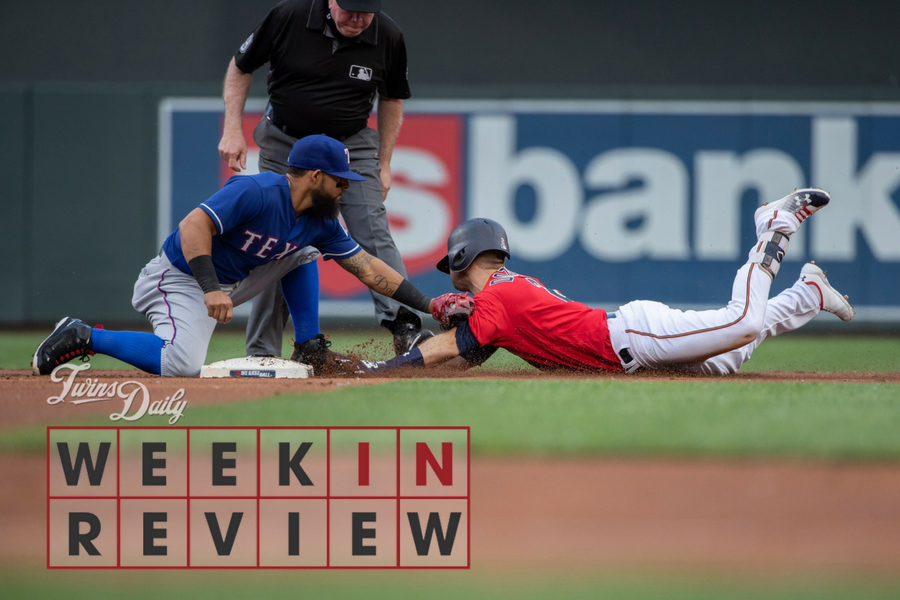 Weekly Snapshot: Mon, 6/18 through Sun, 6/24 *** Record Last Week: 3-3 (Overall: 34-40) Run Differential Last Week: -8 (Overall: -16) Standing: T-2nd Place in AL Central (8.0 GB) HIGHLIGHTS The Twins rotation has mostly been a pleasant surprise this year, and delivered one of its strongest showings over the first half of last week against Boston. Taking on arguably the most dangerous lineup in baseball, Minnesota fought its way to pitching-fueled victories on Tuesday and Wednesday; Jose Berrios and Lance Lynn teamed up with the bullpen to silence all those potent bats as the Red Sox were held to three runs total. Kyle Gibson followed with another fine effort on Thursday, but struggles from the offense and an implosion from the relief corps saddled him with a loss. On Sunday, Berrios delivered his second masterful outing of the week, firing seven shutout innings against Texas with 12 strikeouts. The trio of Berrios, Lynn and Gibson has combined to produce a 2.15 ERA across 13 total starts in June. They've been awesome. Unfortunately, they've been getting little help. It's a feeling that Eddie Rosario knows all too well. He went 6-for-20 with three extra-base hits last week, driving in four runs on Saturday while the surrounding hitters failed to provide much aid in a loss. On the relief front, Trevor Hildenberger continues to string together clean outings – four more last week, as he twirled 3 2/3 hitless innings. He hasn't allowed a run since May 18th and his ERA is down to 2.11 on the season. Fernando Rodney also came through with another spotless stretch, picking up his 16th and 17th saves while making three one-inning appearances and striking out the side in two of them. LOWLIGHTS At the end of May, I wrote about the all-around excellence of the Twins pitching staff through the first third of the season. In the bullpen, much praise was concentrated on Ryan Pressly, who'd been otherworldly to that point: Incidentally, the "odd tendency to get knocked around despite dazzling stuff" has suddenly reemerged. In nine appearances since that May 28th article was posted, Pressly has an 11.74 ERA with 12 hits and three home runs allowed in 7 1/3 innings. As amazing as Pressly's numbers looked through two months, he now sits with a sub par 4.17 ERA and 1.44 WHIP, joining the many laggards who have dragged this team to the brink of irrelevance. That group also includes: * Logan Morrison, whose two-run homer on Saturday was one of only three hits in 15 at-bats last week. He's slashing .191/.293/.347 on the year and a look of perpetual dejection has become etched into his face, but unfortunately, the Twins have had little choice but to keep running Morrison out in the middle of the lineup. * Brian Dozier, whose signature midseason surge just hasn't come to offset all the slumping. Granted, last week was better than most others for him, as it included three doubles, a home run and four walks, but he still batted just .238 while driving in one run. As Aaron Gleeman notes, we're past Dozier's usual slow-start territory: https://twitter.com/AaronGleeman/status/1010527091895488514 * Robbie Grossman, who has failed to execute his most reliable skill – getting on base – and therefore is providing little value for the Twins. To his credit, Grossman did collect as many extra-base hits last week (3) as he had in the previous five, but that speaks to the general lack of thunder in his bat, and he also failed to draw any walks. The 28-year-old has put up a punchless .232/.313/.346 line for the Twins and, per FanGraphs, his WAR ranks 205th out of 209 MLB hitters with 200+ PA. * Joe Mauer, who has resumed leadoff duties since returning to the lineup, but hasn't been able to find much of anything at the plate. Mauer went 3-for-18 (.167) in five games and is batting .195 since coming off the disabled list. Perhaps most perturbingly, he has drawn only one walk in 34 plate appearances after exhibiting such a keen eye in the early going. * The catcher duo of Mitch Garver and Bobby Wilson, which combined to produce five singles in 18 at-bats last week, and has primarily contributed to Minnesota's AL-worst .567 OPS at catcher. The position has become a total non-factor for this club and you've gotta think some kind of shakeup is imminent. Cameron Rupp has done nothing since joining Rochester (batting .154 with 1 HR and 20 K in 46 PA) but his teammate Willians Astudillo sure seems deserving of a shot – he has an .807 OPS for the Red Wings and is a .309 career hitter in the minors. I tend to think a more drastic move is warranted. * Jake Odorizzi, whose absolute clunker on Saturday (1.2 IP, 6 ER) was the low point in a season that's been progressively unraveling. Odorizzi hasn't completed six innings in a start since May 14th - eight turns ago. He has a 5.66 ERA over his last 10 starts, in which the Twins have gone 3-7. * Last and also least, there is newly acquired Matt Belisle, who has been outrageously bad since joining the Twins on a major-league deal after Cleveland cut him loose. The move, on its surface, was a bit mysterious since Minnesota had no real on-field need, but most understood that wasn't the real point. In any case, he's already worn out his welcome by coughing up seven runs on nine hits over two innings on Thursday and Friday, turning losses into embarrassing home blowouts. Belisle has been tasked simply with getting outs in games that are already decided, and is showing he can't fulfill even that modest role, so any perceived leadership qualities are moot. TRENDING STORYLINE With Pressly, Belisle and Addison Reed all looking shaky, Paul Molitor finds himself in a bind when it comes to right-handed relief options. Rodney's usage is restricted in the closer role, and Hildenberger is already being ridden hard with four appearances in the last six days. Matt Magill, while solid, is tough to trust in high leverage. So the manager was undoubtedly happy to see Alan Busenitz's face in the clubhouse on Sunday morning. The righty was recalled over the weekend, while Fernando Romero was demoted following another underwhelming start. We've remarked in this space several times about the sensational success Busenitz has experienced in Rochester, where he had a 1.27 ERA and 32-to-5 K/BB ratio in 28 frames. As his team heads out for a nine-game road trip, Molitor will be equipped with a deep and very well rested relief corps, thanks to the day off after Berrios went deep on Sunday. The Twins can run with a nine-man bullpen for a bit, but they'll need a fifth starter on Saturday, at which point they'll some interesting decisions. Which reliever goes out to make room? Frankly, it seems ludicrous at this point to keep Belisle around at the expense of anyone else, but the Twins did just hand him a guaranteed chunk of change. And which starter comes up? Aaron Slegers is a candidate – he continues to log quality innings for Rochester and will be roughly on schedule after starting this past Saturday. Zack Littell, who's been the only outsider to crack the Twins rotation (for a spot start in a double-header) since Phil Hughes was shipped out, is another possibility. And we'll touch on one more in the next section. DOWN ON THE FARM After leading our rundown of the system's hottest bats in this section last week, Alex Kirilloff participated in the Midwest League All-Star Game on Tuesday, batting third for the West and going 1-for-4. Two days later he was promoted to High-A Ft. Myers. Upon departing the Midwest League, Kirilloff ranked first in home runs (13), third in batting average (.333), and second in OPS (.999). This is a 20-year-old getting his first taste of full-season leagues after missing all of last year. Awfully impressive. More so when you account for his phenomenal start with the Miracle; Kirilloff has started 8-for-19 (.421) at the new level and drove in five runs in his second game. What a hitter. Royce Lewis hasn't gotten the call to join Kirilloff yet, but did accompany him at the MWL All-Star Game, starting at short and batting leadoff. He went 1-for-2 and swiped a base. Lewis has been battling through patellar tendinitis, and if you're wondering what that means, our resident orthopaedic specialist Heezy has the scoop for you. Meanwhile, in Triple-A... Adalberto Mejia. I know, I know (*extremely Obi Wan voice*) there's a name I've not heard in a long time. But on Thursday night, he fired seven shutout innings with eight strikeouts, allowing only three hits and one walk. The gem lowered his ERA to 2.91, including 1.38 over four June starts. Mejia made 21 starts for the Twins last year and looked altogether impressive. He's been excellent at Triple-A, and has the makings of a long-term rotation cog. If Romero's absence is expected to be a lengthy one, then Mejia strikes me as the obvious choice to replace him. LOOKING AHEAD The Twins will spend all of next week in the Windy City, and could really use the winds of fortune blowing in their favor. Now eight games behind Cleveland in the AL Central, the Twins basically need to be taking every series in order to keep their hopes alive. That'll be an easier ask in the South Side than the North. TUESDAY, 6/26: TWINS @ WHITE SOX – RHP Lance Lynn v. RHP Reynaldo Lopez WEDNESDAY, 6/27: TWINS @ WHITE SOX – RHP Kyle Gibson v. RHP Lucas Giolito THURSDAY, 6/28: TWINS @ WHITE SOX – RHP Jake Odorizzi v. RHP James Shields FRIDAY, 6/29: TWINS @ CUBS – RHP Jose Berrios v. RHP Tyler Chatwood SATURDAY, 6/30: TWINS @ CUBS – ??? v. LHP Mike Montgomery SUNDAY, 7/1: TWINS @ CUBS – RHP Lance Lynn v. LHP Jon Lester Catch Up On Twins Daily Game Recaps Game 69 | MIN 6, BOS 2: Bats Get to Boston Bullpen Game 70 | MIN 4, BOS 1: For Grossman and Kepler, The Price Was Right Game 71 | BOS 9, MIN 2: There Go Those Shiny Pitching Stats Game 72 | TEX 8, MIN 1: Circling the Drain Game 73 | TEX 9, MIN 6: Odorizzi Lays an Egg Game 74 | MIN 2, TEX 0: La MaKKKKKKKKKKKKina More on Twins Daily Jamie Cameron pondered the oddity that is Twins reliever Matt Magill Parker Hageman broke down Eduardo Escobar's evolution at the plate Ted Schwerzler wrote that Kyle Gibson's success is no mirage Rob Pannier pointed out that the St. Paul Saints have been tapping into the local college ranks for talent Andrew Thares argued that now that he's locked in, Lance Lynn was worth the wait
 -
Buxton was hitting .180/.263/.270 through the same number of games played in 2017, and this year was playing with a broken toe for the last several weeks.
-
Shortly after they hired Paul Molitor as manager in November of 2014, the Twins invited me to Target Field for a one-on-one interview with him. They had asked if I'd write a feature on the newly minted skipper for their season preview publication, and I gladly accepted. Upon meeting Molitor, I was impressed with the man. That continues to this day. But I've never really been able to figure out how impressed I am with the manager. Right now, it's difficult to assuage the nagging doubts.Molitor was still getting accustomed to his new office when we chatted in it that January afternoon. I don't think he'd done many media interviews yet, and his burgeoning excitement was easily detected. The hardball lifer genuinely enjoyed being asked thoughtful questions, and answering them thoroughly. I noticed – especially upon transcribing – that his responses were eloquent, intelligent, and enlightening. This would become a recurring trend in my experience with him. Molitor's intellect is undeniable. The term "baseball IQ" gets bandied around a lot but this Hall of Famer embodies it. In my first interaction, and many others I've had with him during spring training scrums since, he has always exuded a deep knowledge of the game. With no disrespect to his affable predecessor, I gain actual insight from talking to Molitor, in a way I never did before. As someone who coaches young kids during the summer, I'm beyond impressed with Molitor's ability to articulate concepts and break down strategic intricacies in a way that makes total sense. These are, seemingly, the hallmarks of an impactful coach. But unfortunately there is little evidence of Molitor being able to move the needle effectively while at the helm THAT FAMILIAR FEELING We all understood that Minnesota was taking a gamble when Molitor got the nod to replace Ron Gardenhire. The finalist he beat out for the job, Torey Lovullo, was a seasoned MLB coach who'd been serving as bench coach for John Farrell's Red Sox, one year removed from a championship. Molitor, on the other hand, offered little substantive experience. He briefly served on the coaching staffs for Minnesota and Seattle after retiring as a player, and he was in Gardy's dugout during the 92-loss 2014 season, but Molitor had never managed at any level. The Twins opted for their guy, a known favorite of the Pohlads. Hiring Molitor made sense in that, as a longtime roving minor-league instructor, he was very familiar to the organization's rising young core. But his lack of a track record was conspicuous. Lovullo ended up joining the Diamondbacks as manager two years later. From all appearances it's been a great move for Arizona. They made the playoffs as a wild-card last year, improving by 24 wins in Lovullo's first season, and are currently in first place. Molitor's tenure with the Twins thus far has been much more of a mixed bag. UP, DOWN, UP, DOWN This section is not an advertisement for one of my favorite spots in my Uptown (though I highly recommend Up-Down to fellow enjoyers of beer and video games). It is instead an apt description of this team under Paul Molitor the manager. So it goes, right? As Ernie Halwell put it so well: "Baseball is a lot like life. It's a day-to-day existence, full of ups and downs." The problem is that, under Molitor, Minnesota's "ups" haven't risen all that impressively high. And the "downs" have been harrowingly low. In 2015, Molitor led the Twins to their first winning season in five years. Miguel Sano and Byron Buxton debuted. Brian Dozier made his first All-Star team. The future was very bright. Then: Total. System. Failure. That 2016 campaign was an unmitigated disaster. A team that was expected to – at the very least – hang on the fringe of contention instead spiraled uncontrollably, losing 103 games in the franchise's worst season since transplanting from Washington. There's really no need to rehash it. We all remember. Because of that catastrophe, Minnesota's jump to 85 wins in 2017 looked like a momentous achievement, rather than a modest improvement from their 83 wins in 2015. And that drastic turnaround, punctuated by a brief postseason run, earned Molitor the distinction of AL Manager of the Year. (Naturally, Lovullo won it in the National League.) Then came the three-year contract extension, almost a formality at that point. And this context makes it strange to be discussing the possibility of Molitor's dismissal. A reigning Manager of the Year? Less than three months into a new deal? With forceful support from ownership? In many ways, the notion of firing Molitor seems absurd. But frankly, it would be more absurd not to seriously assess it as an option. The fact is that, as much as I may sympathize with the Pohlad family's affinity for Molitor, he just doesn't have much of a leg to stand on when it comes to managerial chops. IGNITING A FIRE Without question, Paul Molitor was one of the greatest baserunners in MLB history. Despite lacking elite speed he pilfered 504 bases with a 79% success rate in his playing career, and he stole home 10 times. I think anyone who's watched this 2018 team regularly would agree they run the bases as sloppily as any in memory. They've been thrown out, picked off, and caught adrift countless times. Molitor was a sharp and versatile fielder prior to becoming primarily a DH in his 30s. Miscues are all too common for this year's defensive unit, as they were in 2016. At the plate, Molitor's discipline was legendary, his power surprising, his bat relentless. He was known as "The Ignitor." This offense has most often failed to launch, with astoundingly mediocre numbers across the board. The Twins have hit fewer home runs than all but three AL teams, which seems unfathomable after the way they finished 2017. Suffice to say, knowledge and expertise don't transfer directly. We knew that. But if Molitor isn't – in some way – passing along his strengths, then what are we doing here? The jury is out on him as a tactician. Molitor's designed plays – steals, hit-and-runs, going on contact – haven't worked out very often. His bullpen, while capable, hasn't performed in leverage, as evidenced by mop-up longman Matt Magill leading the relief corps in WPA. Ryan Pressly has appeared in 36 of the team's first 68 games and has seen his performance decline. Meanwhile Magill works once a week, while looking perfectly capable of taking on more. The bullpen decisions have sometimes been baffling. I hesitate to attribute these things entirely to Molitor. He's not making decisions on an island. He receives input from his coaches, specialized pitching analyst Josh Kalk, and the players themselves. From my understanding, it is a more sophisticated system than one might assume. "Collaborative," as its mastermind Derek Falvey would undoubtedly say. And that's sorta the trouble with trying to gauge Molitor's culpability. He's only one piece in a very complex puzzle. Would making a change really be worthwhile? I do know this: It takes some contorting not to see him as part of the problem. In 2016 a reasonably talented team tanked to the dregs of franchise precedent. And right now a more talented team – built to win, with a record payroll – is sputtering along, incapable of capturing any kind of sustained momentum despite an incredible window of opportunity. There's no question that Molitor understands and – most endearingly, I think – continually studies the game to an obsessive degree. I trust his judgment on baseball decisions and could never really doubt his acumen. Few rightfully could. But given what we saw in 2016, and now are seeing in 2018, one must question his ability to rally the troops and become a uniting force. I'll be honest: typing that last sentence felt nauseatingly cliché. What does it even mean? These vague and intangible leadership platitudes in sports have always driven me crazy, but there's simply no denying their reality. Managers matter. Players aren't "quitting" on Molitor, as I've seen a few people ludicrously suggest. His bullpen management, if occasionally odd, isn't a fireable offense. And it'd be tough to make the case that Molitor has wrongfully alienated certain players, or the clubhouse at large. But something is out of whack with this team's engine, which simply hasn't been able to ignite. And while I fully believe the players bear the brunt of that burden... you can't fire the players. Speaking of fire, and ignition, maybe these words hint at what is amiss. As I pondered this subject, I went back and listened through that first interview I conducted with Molitor, still filed away in my phone's audio log. I had asked him to explain, from his view, what differentiated him from his predecessor and friend Ron Gardenhire. Naturally, Molitor opened with a complimentary remark about his general sameness with Gardy, but then addressed the question head-on: "If there's a difference that pops into my head, it would be that he wears his emotions on his sleeves. Whether it's protecting his players, going out on the field and dealing with umpires and things. And I have a tendency to be a little bit different in my demeanor in that regard. "Not to say one is better than the other, but again, you can't try to be someone you're not." A part of me wonders whether pushing this team to the next level requires something that Molitor – by his own earnest admission – is not. Another part of me thinks that's all a bunch of hooey. Needless to say, I'm conflicted. But I'm curious to hear what others think. Click here to view the article
-
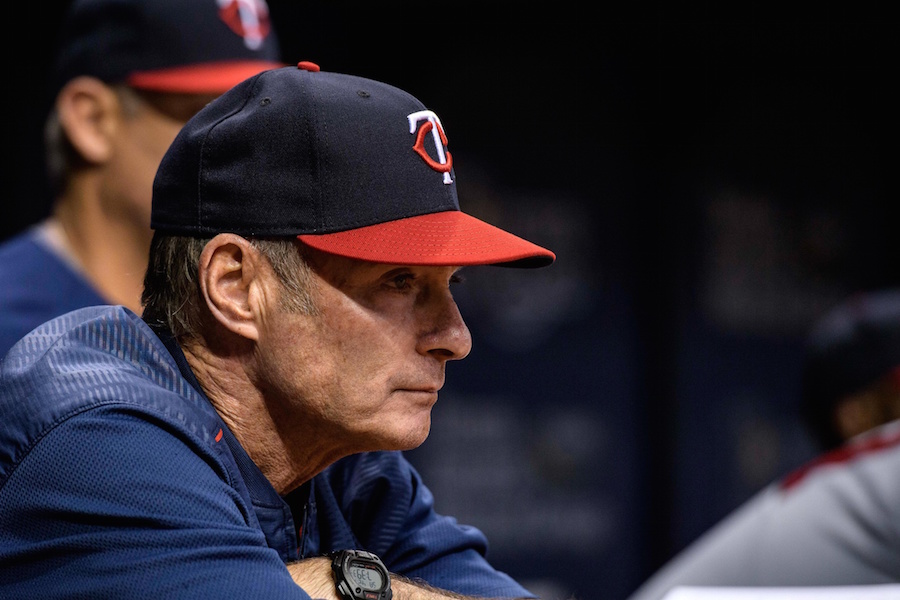 Molitor was still getting accustomed to his new office when we chatted in it that January afternoon. I don't think he'd done many media interviews yet, and his burgeoning excitement was easily detected. The hardball lifer genuinely enjoyed being asked thoughtful questions, and answering them thoroughly. I noticed – especially upon transcribing – that his responses were eloquent, intelligent, and enlightening. This would become a recurring trend in my experience with him. Molitor's intellect is undeniable. The term "baseball IQ" gets bandied around a lot but this Hall of Famer embodies it. In my first interaction, and many others I've had with him during spring training scrums since, he has always exuded a deep knowledge of the game. With no disrespect to his affable predecessor, I gain actual insight from talking to Molitor, in a way I never did before. As someone who coaches young kids during the summer, I'm beyond impressed with Molitor's ability to articulate concepts and break down strategic intricacies in a way that makes total sense. These are, seemingly, the hallmarks of an impactful coach. But unfortunately there is little evidence of Molitor being able to move the needle effectively while at the helm THAT FAMILIAR FEELING We all understood that Minnesota was taking a gamble when Molitor got the nod to replace Ron Gardenhire. The finalist he beat out for the job, Torey Lovullo, was a seasoned MLB coach who'd been serving as bench coach for John Farrell's Red Sox, one year removed from a championship. Molitor, on the other hand, offered little substantive experience. He briefly served on the coaching staffs for Minnesota and Seattle after retiring as a player, and he was in Gardy's dugout during the 92-loss 2014 season, but Molitor had never managed at any level. The Twins opted for their guy, a known favorite of the Pohlads. Hiring Molitor made sense in that, as a longtime roving minor-league instructor, he was very familiar to the organization's rising young core. But his lack of a track record was conspicuous. Lovullo ended up joining the Diamondbacks as manager two years later. From all appearances it's been a great move for Arizona. They made the playoffs as a wild-card last year, improving by 24 wins in Lovullo's first season, and are currently in first place. Molitor's tenure with the Twins thus far has been much more of a mixed bag. UP, DOWN, UP, DOWN This section is not an advertisement for one of my favorite spots in my Uptown (though I highly recommend Up-Down to fellow enjoyers of beer and video games). It is instead an apt description of this team under Paul Molitor the manager. So it goes, right? As Ernie Halwell put it so well: "Baseball is a lot like life. It's a day-to-day existence, full of ups and downs." The problem is that, under Molitor, Minnesota's "ups" haven't risen all that impressively high. And the "downs" have been harrowingly low. In 2015, Molitor led the Twins to their first winning season in five years. Miguel Sano and Byron Buxton debuted. Brian Dozier made his first All-Star team. The future was very bright. Then: Total. System. Failure. That 2016 campaign was an unmitigated disaster. A team that was expected to – at the very least – hang on the fringe of contention instead spiraled uncontrollably, losing 103 games in the franchise's worst season since transplanting from Washington. There's really no need to rehash it. We all remember. Because of that catastrophe, Minnesota's jump to 85 wins in 2017 looked like a momentous achievement, rather than a modest improvement from their 83 wins in 2015. And that drastic turnaround, punctuated by a brief postseason run, earned Molitor the distinction of AL Manager of the Year. (Naturally, Lovullo won it in the National League.) Then came the three-year contract extension, almost a formality at that point. And this context makes it strange to be discussing the possibility of Molitor's dismissal. A reigning Manager of the Year? Less than three months into a new deal? With forceful support from ownership? In many ways, the notion of firing Molitor seems absurd. But frankly, it would be more absurd not to seriously assess it as an option. The fact is that, as much as I may sympathize with the Pohlad family's affinity for Molitor, he just doesn't have much of a leg to stand on when it comes to managerial chops. IGNITING A FIRE Without question, Paul Molitor was one of the greatest baserunners in MLB history. Despite lacking elite speed he pilfered 504 bases with a 79% success rate in his playing career, and he stole home 10 times. I think anyone who's watched this 2018 team regularly would agree they run the bases as sloppily as any in memory. They've been thrown out, picked off, and caught adrift countless times. Molitor was a sharp and versatile fielder prior to becoming primarily a DH in his 30s. Miscues are all too common for this year's defensive unit, as they were in 2016. At the plate, Molitor's discipline was legendary, his power surprising, his bat relentless. He was known as "The Ignitor." This offense has most often failed to launch, with astoundingly mediocre numbers across the board. The Twins have hit fewer home runs than all but three AL teams, which seems unfathomable after the way they finished 2017. Suffice to say, knowledge and expertise don't transfer directly. We knew that. But if Molitor isn't – in some way – passing along his strengths, then what are we doing here? The jury is out on him as a tactician. Molitor's designed plays – steals, hit-and-runs, going on contact – haven't worked out very often. His bullpen, while capable, hasn't performed in leverage, as evidenced by mop-up longman Matt Magill leading the relief corps in WPA. Ryan Pressly has appeared in 36 of the team's first 68 games and has seen his performance decline. Meanwhile Magill works once a week, while looking perfectly capable of taking on more. The bullpen decisions have sometimes been baffling. I hesitate to attribute these things entirely to Molitor. He's not making decisions on an island. He receives input from his coaches, specialized pitching analyst Josh Kalk, and the players themselves. From my understanding, it is a more sophisticated system than one might assume. "Collaborative," as its mastermind Derek Falvey would undoubtedly say. And that's sorta the trouble with trying to gauge Molitor's culpability. He's only one piece in a very complex puzzle. Would making a change really be worthwhile? I do know this: It takes some contorting not to see him as part of the problem. In 2016 a reasonably talented team tanked to the dregs of franchise precedent. And right now a more talented team – built to win, with a record payroll – is sputtering along, incapable of capturing any kind of sustained momentum despite an incredible window of opportunity. There's no question that Molitor understands and – most endearingly, I think – continually studies the game to an obsessive degree. I trust his judgment on baseball decisions and could never really doubt his acumen. Few rightfully could. But given what we saw in 2016, and now are seeing in 2018, one must question his ability to rally the troops and become a uniting force. I'll be honest: typing that last sentence felt nauseatingly cliché. What does it even mean? These vague and intangible leadership platitudes in sports have always driven me crazy, but there's simply no denying their reality. Managers matter. Players aren't "quitting" on Molitor, as I've seen a few people ludicrously suggest. His bullpen management, if occasionally odd, isn't a fireable offense. And it'd be tough to make the case that Molitor has wrongfully alienated certain players, or the clubhouse at large. But something is out of whack with this team's engine, which simply hasn't been able to ignite. And while I fully believe the players bear the brunt of that burden... you can't fire the players. Speaking of fire, and ignition, maybe these words hint at what is amiss. As I pondered this subject, I went back and listened through that first interview I conducted with Molitor, still filed away in my phone's audio log. I had asked him to explain, from his view, what differentiated him from his predecessor and friend Ron Gardenhire. Naturally, Molitor opened with a complimentary remark about his general sameness with Gardy, but then addressed the question head-on: "If there's a difference that pops into my head, it would be that he wears his emotions on his sleeves. Whether it's protecting his players, going out on the field and dealing with umpires and things. And I have a tendency to be a little bit different in my demeanor in that regard. "Not to say one is better than the other, but again, you can't try to be someone you're not." A part of me wonders whether pushing this team to the next level requires something that Molitor – by his own earnest admission – is not. Another part of me thinks that's all a bunch of hooey. Needless to say, I'm conflicted. But I'm curious to hear what others think.
 -
Article: Week in Review: DEFCON 1
Nick Nelson replied to Nick Nelson's topic in Twins Daily Front Page News
As we discuss alternatives to Morrison at DH, I will note that Hanley Ramirez is still sitting out there in free agency. Seems inexplicable that he hasn't signed anywhere after Boston released him nearly three weeks ago. -
Article: Week in Review: DEFCON 1
Nick Nelson replied to Nick Nelson's topic in Twins Daily Front Page News
Rowson actually came aboard prior to last year. It was the pitching coach (Garvin Alston) who was hired this past winter, and so far his impact appears positive.- 85 replies
-
- 9
-
-
- miguel sano
- eddie rosario
- (and 3 more)
-
There's still time left for Minnesota to salvage this wayward campaign, but here in mid-June we're approaching a point of no return if the losses don't quit piling up. Accordingly, the Twins set into motion last week a series of moves aimed at saving their season. These included activating Joe Mauer from the disabled list, lining up Byron Buxton for a rehab stint, sliding Brian Dozier to a very unfamiliar lineup spot, and – most drastically – shipping Miguel Sano to Ft. Myers for a full-on professional and personal reboot. Weekly Snapshot: Mon, 6/11 through Sun, 6/17 *** Record Last Week: 3-3 (Overall: 31-37) Run Differential Last Week: +3 (Overall: -8) Standing: 3rd Place in AL Central (5.0 GB) HIGHLIGHTS Heading into the series opener against Minnesota on Friday, Corey Kluber was hot as could be, with a 5-0 record and 1.09 ERA in his past six starts. The first man to step into the box against him was Mauer, thankfully back after losing a month to a scary recurrence of concussion symptoms. Second was Eddie Rosario, who jumped on the first pitch he saw and launched it over the fence. It proved to be the tone-setter in a big game for the offense, which scored more runs against Kluber (4) than any other opponent has this year, while also becoming the first to send Klubot to the showers before reaching the sixth inning. Rosario followed up on Saturday with a four-hit game, which included his 16th home run. He finished the week as the 12th-best hitter in the majors by OPS. One spot behind him was Eduardo "Double or Nothing" Escobar, who tallied three two-baggers on Sunday but failed to score a single time thanks to the Nos. 4 and 5 hitters going 0-for-7. Escobar has collected an incredible 30 doubles through the team's first 68 games, putting him in rare territory: It was a good reminder of the 2015 third-round pick's innate power, which hasn't always shown up on the stat sheet; he hasn't hit a homer for the Miracle since May 11th. However, Blankenhorn is batting .333 with a .388 OBP in June. With first-round draft pick Trevor Larnach – considered one of the best college bats in the country – expected to sign soon, the organization's long-term offensive outlook is bright. LOOKING AHEAD After treading water again during their 3-3 road trip, the Twins return home and face a tall task with the 49-24 Red Sox coming to town. Last-place Texas theoretically presents an easier assignment over the weekend. The Indians are looking ahead to home series against the White Sox and Tigers, so if things go as one would expect this week, the Twins may find themselves in dire straits come next Sunday. They are already five games out, with the season's halfway mark approaching, after failing to seize a prime opportunity for the sweep in Cleveland. TUESDAY, 6/19: RED SOX @ TWINS – LHP Chris Sale v. RHP Jose Berrios WEDNESDAY, 6/20: RED SOX @ TWINS – LHP David Price v. RHP Lance Lynn THURSDAY, 6/21: RED SOX @ TWINS – RHP Rick Porcello v. RHP Kyle Gibson FRIDAY, 6/22: RANGERS @ TWINS – LHP Mike Minor v. RHP Fernando Romero SATURDAY, 6/23: RANGERS @ TWINS – RHP Yovani Gallardo v. RHP Jake Odorizzi SUNDAY, 6/24: RANGERS @ TWINS – RHP Bartolo Colon v. RHP Jose Berrios Catch Up On Twins Daily Game Recaps Game 63 | MIN 6, DET 4: More Grand Slams, PleaseGame 64 | DET 5, MIN 2: Bulldog Berrios and the Addison Reed ExperienceGame 65 | DET 3, MIN 1: Lynn Overexposed, Offense OvermatchedGame 66 | MIN 6, CLE 3: Anything is PossibleGame 67 | MIN 9, CLE 3: That’s Our EddieGame 68 | CLE 4, MIN 1: Lots of Traffic, Just One Run Click here to view the article
- 85 replies
-
- 5
-
-
- miguel sano
- eddie rosario
- (and 3 more)
-
 Weekly Snapshot: Mon, 6/11 through Sun, 6/17 *** Record Last Week: 3-3 (Overall: 31-37) Run Differential Last Week: +3 (Overall: -8) Standing: 3rd Place in AL Central (5.0 GB) HIGHLIGHTS Heading into the series opener against Minnesota on Friday, Corey Kluber was hot as could be, with a 5-0 record and 1.09 ERA in his past six starts. The first man to step into the box against him was Mauer, thankfully back after losing a month to a scary recurrence of concussion symptoms. Second was Eddie Rosario, who jumped on the first pitch he saw and launched it over the fence. It proved to be the tone-setter in a big game for the offense, which scored more runs against Kluber (4) than any other opponent has this year, while also becoming the first to send Klubot to the showers before reaching the sixth inning. Rosario followed up on Saturday with a four-hit game, which included his 16th home run. He finished the week as the 12th-best hitter in the majors by OPS. One spot behind him was Eduardo "Double or Nothing" Escobar, who tallied three two-baggers on Sunday but failed to score a single time thanks to the Nos. 4 and 5 hitters going 0-for-7. Escobar has collected an incredible 30 doubles through the team's first 68 games, putting him in rare territory: https://twitter.com/MillerStrib/status/1008423214689800196 He went 10-for-23 (.435) last week while driving in six runs in six games. Escobar's inability to cross the plate on Sunday epitomizes a flabbergasting trend: he leads the majors in extra-base hits, but ranks 68th – SIXTY-EIGHTH – in runs scored. The guy they call "Mighty Mouse" is doing everything he can to power this offense, and being let down tremendously by his teammates. But hey, let's stick to the highlights for now. Kyle Gibson provided his own. On a rare night where he didn't have much on his pitches, Gibby still motored through seven innings in Cleveland, allowing just one run on three hits in a victorious effort. He issued four walks, induced only seven swinging strikes, and tied a season-low with three strikeouts, but Gibson still came through. He has allowed more than three runs only once in his past nine starts, despite completing five or more innings in all of them. It might sound like hyperbole, but Gibson has legitimately been one of the AL's best pitchers, ranking among the top 20 starters in WAR while consistently giving his team a very good chance. (Of course, he's earned only two "wins," speaking to the offense's lackluster contributions, but again, we're covering highlights here.) Others in that category last week included Trevor Hildenberger, who delivered two scoreless outings and has quietly been lights-out in his past 20 appearances (1.14 ERA, 0.80 WHIP, .188 OBA). Lance Lynn logged his fifth straight quality start, although it ended in ugly fashion. And we've gotta give some props to Matt Magill, the rarely-used last man in the bullpen who continues to step up when called upon. After Fernando Romero's short start on Saturday, Magill tossed three hitless innings to help seal a W that was in question before he entered. Magill has pitched only three times in the past three weeks, throwing three or more innings in each appearance and allowing zero runs on one hit. As a low-leverage long man, he ranks first among Twins relievers – and third among all pitchers, after Gibson and Jose Berrios – in Win Probability Added. LOWLIGHTS That Magill leads the bullpen in WPA, and Escobar has been left standing on base approximately one billion times, both speak to the lack of execution we have seen from this team, time and time again. The trend carried on this week. Minnesota notched a big victory to open the series in Detroit and then laid down for two lifeless losses. In Cleveland, offensive breakthroughs against Kluber and Carlos Carrasco were followed by a puzzling dud against rookie Shane Bieber, making his second big-league start. The Twin just can't overcome a complete lack of output from so many contributors. Max Kepler's two-run double off the wall Saturday was nice to see, but it's the only extra-base hit he's mustered in his last 18 games dating back to late May. Logan Morrison's two-hit effort on the same night was helpful, but after turning in another 0-fer on Sunday he's batting .191 and slugging .344 for the season (still hitting cleanup daily, though). The club's biggest problem child was sent packing after Thursday's loss in Detroit. Confounded by his total collapse at the plate, the Twins have resorted to extreme measures with Sano, sending the 2017 All-Star down to Single A in what's being framed as essentially a second spring training. It is telling the front office found Sano's deficiencies so severe that a typical Triple-A demotion wasn't viewed as the solution. They feel he needs a complete rebuild, both on the field and off, so they've sent him to their developmental HQ in Ft. Myers. Who could argue with the decision? Since a strong showing in Minnesota's first three series of the season, Sano has been a black hole in the lineup, slashing .182/.237/.331 with 52 strikeouts and nine walks in 131 PA. Worse than the results were the process – ugly AB after ugly AB, marked by constant chases and check swings. Back in his rookie season, when he took the league by storm with a .916 OPS in 80 games, the most impressive aspect of Sano's performance was his ability to work counts and capitalize. He ran the count full in 28% of his 335 plate appearances, and hit .240/.581/.700 with seven of his 18 homers once he got there, reflecting a tremendously advanced approach. This year, Sano has reached a full count in only 30 of 163 PA (18%) and has collected two singles. That just about says it all. He took the demotion in stride, at least publicly, and now Sano will begin the (potentially lengthy) process of trying to find himself, as the Twins try to find themselves without him. TRENDING STORYLINE Buxton had a .156 average and .200 slugging percentage in 94 plate appearances before landing back on the disabled list at the end of May. The root of his offensive issues was apparent enough: a terrible approach full of guesses and whiffs. Fellow young outfielder Kepler, in his last 94 plate appearances, is batting .171 and slugging .268. That includes a .137 average and .157 SLG in June. Unlike Buxton, he doesn't have the unparallelled CF defense to offset his dearth at the dish. Nor does he have the broken toe, or broken plate approach, to help explain it. The 25-year-old is taking good at-bats. His 41/32 strikeout-to-walk ratio speaks to a discerning eye; Kepler's BB-rate is third-highest among active Twins and his K-rate is second-lowest. He doesn't get fooled easily. But when he puts the ball in play he's doing no damage. This club just can't afford to be getting nothing from Max with so many others slumping or sidelined. What to do? At this point there aren't a ton of appealing options. Send him to the minors, along with so many other members of the team's supposed core? Hardly a likable thought. Bump him down in the lineup? He already finds himself batting seventh now, even against righties. I welcome your opinions in the comments. Seems to me that Kepler's swing needs some serious work, given that it's not producing any kind of thunder upon contact. Is James Rowson ready to guide him toward the right path? And is Kepler willing to listen, after showing reluctance to alter his swing during spring training? DOWN ON THE FARM While Minnesota's bats have lagged this year, it's been encouraging to see so many promising developments with hitters in the minors. Let's take a quick run through some of the organization's top prospects: On Thursday, Alex Kirilloff put forth his best effort yet in a season full of strong ones, collecting four hits including a pair of home runs in his second 4-RBI game of June. After clubbing two more doubles on Sunday, he's now slashing .333/.391/.607 for Cedar Rapids, with 38 extra-base hits and 56 RBIs in 65 games, to put himself right back on the national radar following a lengthy absence. I'd expect to see him move up to Ft. Myers within the next month. Royce Lewis will likely be joining him. The team's No. 1 prospect enjoyed a monster week, going 10-for-24 with four doubles and a home run for the Kernels. We did learn over the weekend that Lewis has been dealing with patellar tendinitis in his knee for the past month, which only makes his resounding success all the more impressive. The rapid development of the teen phenom's power tool this summer has been extremely exciting. Speaking of power, Travis Blankenhorn won the Florida State League Home Run Derby on Friday by smashing 12 bombs in the final round. https://twitter.com/MiracleBaseball/status/1007767499549618176 It was a good reminder of the 2015 third-round pick's innate power, which hasn't always shown up on the stat sheet; he hasn't hit a homer for the Miracle since May 11th. However, Blankenhorn is batting .333 with a .388 OBP in June. With first-round draft pick Trevor Larnach – considered one of the best college bats in the country – expected to sign soon, the organization's long-term offensive outlook is bright. LOOKING AHEAD After treading water again during their 3-3 road trip, the Twins return home and face a tall task with the 49-24 Red Sox coming to town. Last-place Texas theoretically presents an easier assignment over the weekend. The Indians are looking ahead to home series against the White Sox and Tigers, so if things go as one would expect this week, the Twins may find themselves in dire straits come next Sunday. They are already five games out, with the season's halfway mark approaching, after failing to seize a prime opportunity for the sweep in Cleveland. TUESDAY, 6/19: RED SOX @ TWINS – LHP Chris Sale v. RHP Jose Berrios WEDNESDAY, 6/20: RED SOX @ TWINS – LHP David Price v. RHP Lance Lynn THURSDAY, 6/21: RED SOX @ TWINS – RHP Rick Porcello v. RHP Kyle Gibson FRIDAY, 6/22: RANGERS @ TWINS – LHP Mike Minor v. RHP Fernando Romero SATURDAY, 6/23: RANGERS @ TWINS – RHP Yovani Gallardo v. RHP Jake Odorizzi SUNDAY, 6/24: RANGERS @ TWINS – RHP Bartolo Colon v. RHP Jose Berrios Catch Up On Twins Daily Game Recaps Game 63 | MIN 6, DET 4: More Grand Slams, Please Game 64 | DET 5, MIN 2: Bulldog Berrios and the Addison Reed Experience Game 65 | DET 3, MIN 1: Lynn Overexposed, Offense Overmatched Game 66 | MIN 6, CLE 3: Anything is Possible Game 67 | MIN 9, CLE 3: That’s Our Eddie Game 68 | CLE 4, MIN 1: Lots of Traffic, Just One Run
 -
Article: Don't Give Up On These Twins Quite Yet
Nick Nelson replied to Nick Nelson's topic in Twins Daily Front Page News
I guess this is kind of the point I'm driving at though. On June 11th, 2006, when they were 28-34, was anyone looking at those Twins as a 96-win team? Right now this team isn't clicking. If that changes, I don't see them as being all that comparatively inferior. No, they don't have a star catcher. But they have a second baseman in Dozier whose impact over the last two years (according to WAR) has been on par with that version of Mauer. They don't have an MVP first baseman but they have a potentially top-tier slugger in Sano. They have a Gold Glove CF who hit last year. They don't have Johan or Liriano but Berrios and Romero are nothing to scoff at (nor Gibson) and this rotation is easily deeper than the '06 one. If a majority of these guys start playing up to their ability or close, I don't think it's ridiculous to say this can/should be a team capable of 95 wins.- 54 replies
-
- 2
-
-
- byron buxton
- joe mauer
- (and 1 more)
-
A little over a month ago, I posed this question: How good is Cleveland, really? At the time, they were dragging their feet with a .500 record and several laggards in the lineup. But over the past four weeks, the Indians have shown that they are, in fact, pretty damn good. Unfortunately, the Twins have made the opposite statement.Since I posted the aforementioned article on May 9th, Cleveland has gone 17-11, pushing its lead over Minnesota from 1.0 games to 6.0 games. The Indians have overcome some serious bullpen issues thanks to MVP contender Jose Ramirez powering the offense and runaway Cy Young front-runner Corey Kluber leading the rotation. On Monday, they called up Francisco Mejia, ranked by MLB.com as the 11th-best prospect in the game. This doesn't look like a club that'll be easily run down. Minnesota certainly doesn't appear equipped to make up all that ground, not presently anyway. They're coming off another lackluster week that saw their fledgling momentum dissolve before deflated fans at Target Field. Here on June 11th, Minnesota is 28-34 and reeling. But it's not quite time to give up on them yet. At the beginning of May I tried to shed some optimism following a crummy first month, by pointing out that in 2006 the Twins had also finished April with a 9-15 record. Here we are, almost six weeks later, and the parallel still fits. On June 11th, 2006, the Twins were 28-34, same as today. They faced a much larger deficit in the standings, 11 games. As you'll recall, that team finished with 96 wins and a division title. They didn't wait much longer, of course. The '06 Twins rattled off victories in 19 of their next 20 games, astoundingly making up only two games in the standings as first-place Detroit went on a coinciding tear. But in the second half, Minnesota gradually gained ground, finally surpassing the Tigers on the season's final day. What I'm getting at here is that we're still not in hopeless territory. Even if you don't buy the literal comparison between this year's Twins and the 2006 version (I'm not sure I do), the point is that things can change quickly in this game. And while one might be inclined to lament, "It's getting late early," the night ain't over yet. One thing you can say about these current Twins is that the pitching staff has been quite impressive. Starters are giving the team a chance to win every night and the bullpen has been mostly solid. Minnesota posted a 3.52 ERA in May and are at 3.50 in June. Combine that kind of performance with the Twins offense from last year's second half, when they averaged 5.6 runs per game, and you've got the recipe for a 20-win month. Needless to say, the current lineup hasn't resembled that one at all, but it soon might – at least in terms of personnel. Joe Mauer is on a rehab assignment and could be back as soon as Thursday. Byron Buxton is traveling with the team and taking positive steps. Jorge Polanco is suddenly only a few weeks from returning. Brian Dozier is approaching that point in the summer where a light bulb usually flicks on. Get all these guys clicking in the lineup together while Eddie Rosario and Eduardo Escobar keep clubbing away, and you can start to envision the Twins stringing together some lengthy winning streaks. I'll admit that right now it's difficult not to feel weighed down by pessimism. Mauer's concussion symptoms can re-emerge at any time. Buxton has looked abysmal at the plate when not sidelined. And Miguel Sano... yeesh. But as I said before, things can change quickly in this game. The '06 Twins are a good macro example and Polanco is a good micro example. Last July he had one of the worst months you'll ever see, slashing .078/.158/.115 while collecting only four hits in 17 games. Then, the calendar flipped and he was a suddenly a monster, putting up a .373/.413/.686 line in August. A few similar offensive outbreaks from players we know are capable, along with some desperately needed good fortune on the health front, would make a big difference for this year's squad. As we get deeper into the season, it grows harder to believe that these aren't the real Twins – this relentlessly disappointing bunch, constantly shrinking in big moments and fumbling away key opportunities. But I'm still not totally convinced that's who they are. Granted, at some point it won't really matter. The hole will become too deep and the Twins will have no choice but to approach the trade deadline as sellers. We're not there yet, though. Urgency grows as Minnesota heads out on a critical road trip that gets underway on Tuesday in Detroit. The Tigers likely remember that magical Twins turnaround in 2006. Their manager definitely does. Click here to view the article
- 54 replies
-
- 2
-
-
- byron buxton
- joe mauer
- (and 1 more)
-
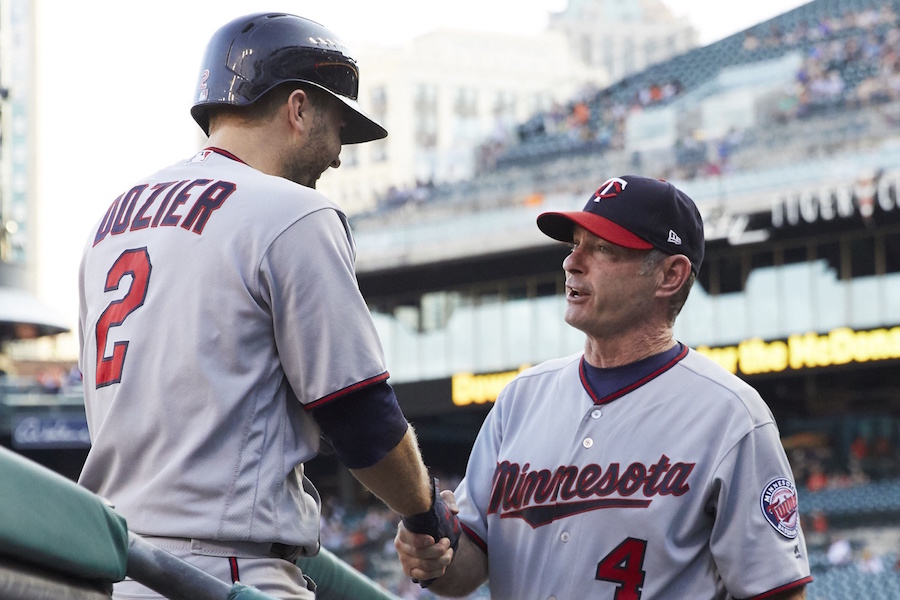 Since I posted the aforementioned article on May 9th, Cleveland has gone 17-11, pushing its lead over Minnesota from 1.0 games to 6.0 games. The Indians have overcome some serious bullpen issues thanks to MVP contender Jose Ramirez powering the offense and runaway Cy Young front-runner Corey Kluber leading the rotation. On Monday, they called up Francisco Mejia, ranked by MLB.com as the 11th-best prospect in the game. This doesn't look like a club that'll be easily run down. Minnesota certainly doesn't appear equipped to make up all that ground, not presently anyway. They're coming off another lackluster week that saw their fledgling momentum dissolve before deflated fans at Target Field. Here on June 11th, Minnesota is 28-34 and reeling. But it's not quite time to give up on them yet. At the beginning of May I tried to shed some optimism following a crummy first month, by pointing out that in 2006 the Twins had also finished April with a 9-15 record. Here we are, almost six weeks later, and the parallel still fits. On June 11th, 2006, the Twins were 28-34, same as today. They faced a much larger deficit in the standings, 11 games. As you'll recall, that team finished with 96 wins and a division title. They didn't wait much longer, of course. The '06 Twins rattled off victories in 19 of their next 20 games, astoundingly making up only two games in the standings as first-place Detroit went on a coinciding tear. But in the second half, Minnesota gradually gained ground, finally surpassing the Tigers on the season's final day. What I'm getting at here is that we're still not in hopeless territory. Even if you don't buy the literal comparison between this year's Twins and the 2006 version (I'm not sure I do), the point is that things can change quickly in this game. And while one might be inclined to lament, "It's getting late early," the night ain't over yet. One thing you can say about these current Twins is that the pitching staff has been quite impressive. Starters are giving the team a chance to win every night and the bullpen has been mostly solid. Minnesota posted a 3.52 ERA in May and are at 3.50 in June. Combine that kind of performance with the Twins offense from last year's second half, when they averaged 5.6 runs per game, and you've got the recipe for a 20-win month. Needless to say, the current lineup hasn't resembled that one at all, but it soon might – at least in terms of personnel. Joe Mauer is on a rehab assignment and could be back as soon as Thursday. Byron Buxton is traveling with the team and taking positive steps. Jorge Polanco is suddenly only a few weeks from returning. Brian Dozier is approaching that point in the summer where a light bulb usually flicks on. Get all these guys clicking in the lineup together while Eddie Rosario and Eduardo Escobar keep clubbing away, and you can start to envision the Twins stringing together some lengthy winning streaks. I'll admit that right now it's difficult not to feel weighed down by pessimism. Mauer's concussion symptoms can re-emerge at any time. Buxton has looked abysmal at the plate when not sidelined. And Miguel Sano... yeesh. But as I said before, things can change quickly in this game. The '06 Twins are a good macro example and Polanco is a good micro example. Last July he had one of the worst months you'll ever see, slashing .078/.158/.115 while collecting only four hits in 17 games. Then, the calendar flipped and he was a suddenly a monster, putting up a .373/.413/.686 line in August. A few similar offensive outbreaks from players we know are capable, along with some desperately needed good fortune on the health front, would make a big difference for this year's squad. As we get deeper into the season, it grows harder to believe that these aren't the real Twins – this relentlessly disappointing bunch, constantly shrinking in big moments and fumbling away key opportunities. But I'm still not totally convinced that's who they are. Granted, at some point it won't really matter. The hole will become too deep and the Twins will have no choice but to approach the trade deadline as sellers. We're not there yet, though. Urgency grows as Minnesota heads out on a critical road trip that gets underway on Tuesday in Detroit. The Tigers likely remember that magical Twins turnaround in 2006. Their manager definitely does.
 -
'Pretty much status quo,' was Paul Molitor's response Saturday when asked for an update on Joe Mauer. That's also a pretty apt description of his team, which turned in another uninspiring week that saw them further fade in a division race that represents their only real shot at reaching the postseason. On Sunday we learned that Mauer is headed for a rehab assignment. Things are hopefully headed in the right direction for him. Tougher to feel that way about the Twins in general. Weekly Snapshot: Mon, 6/4 through Sun, 6/10 *** Record Last Week: 3-4 (Overall: 28-34) Run Differential Last Week: 0 (Overall: -11) Standing: 3rd Place in AL Central (5.5 GB) HIGHLIGHTS While a few crucial players have failed to deliver on offense for the Twins this year, others have stepped up in a big way. Namely, I'm talking about Eddie Rosario and Eduardo Escobar. The continued growth of these two at the plate is invigorating to behold. Rosario and Escobar have not only been among the best power bats on the team, but in the league. Escobar had a monster week, collecting multiple hits in five of seven games and pushing his XBH total on the season to 39, tied for the major-league lead. Esco's late three-run homer in Tuesday's first game salvaged a victory and he added three more hits in the nightcap. He's slugging .895 this month and suddenly finds himself on track for the best power-hitting season in Twins history: The rotation also saw some notably strong performances last week, with Jose Berrios picking up a complete-game victory on Thursday, Lance Lynn turning in his fourth consecutive quality start on Friday, and Kyle Gibson firing seven strong innings on Saturday. LOWLIGHTS On days like Thursday, it's easy to dream on this squad and the kind of run they're capable of putting together. Berrios cruised through nine, Escobar and Rosario powered the offense with five RBIs, and Minnesota enjoyed a comfortable lopsided victory. But those types of games have been few and far between. Much more often, the Twins have been entangled in close battles, and they've usually come out on the losing end, as illustrated by a 3-13 record in one-run contests. Bullpen lapses have played their role of late, with Ryan Pressly suddenly getting clobbered and Addison Reed continually giving up gopher balls in key spots. But the biggest culprit is a punchless offense, which went back in the tank after seemingly breaking out the previous week. The Twins lineup was more or less shut down by every starter it faced other than James Shields and Nick Tropeano. Minnesota scored more than four times only twice in seven games, all played in their home park. Unless the Eds are doing heroic things, or someone like Jake Cave puts together a random outburst, it seems this offense can't muster much of anything. That kind of isolated production is the opposite of what we hoped to see from a unit that, late last year, was spectacular in its depth and relentlessness. While no one other than Rosario and Escobar is hitting much, the flabbergasting futility of Miguel Sano is most conspicuous and upsetting. As Sano came out of the gates this year striking out an egregious 40%+ rate, it stood to reason that he'd eventually shake off the rust and rein it in. The big man has always been K-prone – an acceptable consequence of swinging as hard as he does – but he's mostly kept it within reason. If he continued to fan at the same rate he did in 2017, Sano was probably going to lead the league in K% this year, and very possibly set the all-time record for strikeouts in a season. But you live with it, because all those whiffs were to be accompanied by lots of walks and thunderous power. Instead, his K-rate has climbed, maintaining at 40% after 11 strikeouts in 24 plate appearances last week. He drew one walk and has only seven on the season. Sano has lost any semblance of pitch recognition, lacking either the will or ability to lay off two-strike breaking balls well out of the zone. He has become remarkably easy to pitch to. This is a nightmarish situation with no clear solution. The Twins could justifiably send Sano down to Rochester, as he has two options remaining, but it'd be to send a message more than anything. Maybe that's necessary at this point. But he isn't going to learn to read MLB-caliber spin while facing inferior pitchers at Triple-A. Sano needs to wake up and get it together. It's hard to feel like this stagnation isn't stemming in some way from a lack of commitment on his part. Rust is no longer a credible excuse. Lingering hamstring tenderness wouldn't explain the consistently subpar quality of his at-bats. This is a 25-year-old at a crossroad in his career and life. Sadly the "what ifs" are louder now than ever before. TRENDING STORYLINE The Twins need to get more out of the catcher position. Bobby Wilson is playing like you'd expect from a 35-year-old journeyman who's never been able to find sustained work in the majors. Mitch Garver is batting .215 with five extra-base hits in 89 PA since Jason Castro went down, and hasn't been impressive defensively. Early last week, the Twins signed Cameron Rupp after he opted out of his minor-league deal with the Rangers. The 29-year-old backstop has a fair amount of experience in the majors, and was hitting very well in Class-AAA Round Rock with an .886 OPS. If he produces like that in Rochester it won't be long before he gets a chance in Minnesota. Of particular interest is Rupp's penchant for mashing left-handed pitching. He has at an .879 career OPS vs. southpaws in the big leagues, and was at 1.304 in Triple-A this year before coming over. The Twins are slugging just .381 against lefties as a team. DOWN ON THE FARM It's safe to say that Brent Rooker made a very strong impression on the crew here at Twins Daily. Coming into this season, we had him ranked as the No. 7 prospect in a fairly stacked system, which he'd only been part of for a few months after being drafted last June. Sure, he's a big powerful hitter who posted strong numbers in his pro debut. But what really stood out about Rooker was his studious mindset when it comes to hitting – his deep commitment to understanding and mastering the craft. It felt like whatever hurdles the Mississippi State University product encountered, he'd find a way to overcome them. His 2018 season has been a perfect demonstration of what makes Rooker so exciting. The Twins sent him to Double-A to open the year – a fairly aggressive assignment, but one the organization clearly thought he could handle. And they were right. Rooker endured his struggles in the early going, posting a brutal .213/.234/.320 line with 25 strikeouts and one walk. But, exactly as you'd hope, he started making gradual adjustments and getting things on track. Over his next 20 games he would hit .256/.300/.427. And now, after turning in a spectacular past week for the Lookouts (10 hits and 10 walks in 28 PA) he's at .342/.437/.698 over his past 19. Just as we hoped, Rooker is establishing himself as a potential late-season reinforcement for the Twins offense. If he keeps raking they way he has recently, his potent right-handed bat will begin to look very appealing around August – especially if Mauer has setbacks and/or Logan Morrison never finds a prolonged groove. Capable of making a more immediate impact, perhaps, is LaMonte Wade, who was promoted to Rochester over the weekend after hitting .298/.393/.444 over 46 games in Chattanooga. That those numbers very closely match his career line in the minors (.296/.402/.438) speaks to the consistency with which Wade has produced since joining the Twins as a ninth-round draft pick in 2015. He's a high-OBP, low-power corner outfielder in the mold of Robbie Grossman, which might not make him the sexiest prospect, but it's a nice piece to have around on the cheap. LOOKING AHEAD It's not over yet. If the Twins are able to put together a good week on the road, winning their series in Detroit and Cleveland, they'll be in much better position than they currently find themselves. I wish they'd done anything to make us confident that is going to happen. TUESDAY, 6/12: TWINS @ TIGERS – RHP Jake Odorizzi v. LHP Blaine Hardy WEDNESDAY, 6/13: TWINS @ TIGERS – RHP Jose Berrios v. LHP Matthew Boyd THURSDAY, 6/14: TWINS @ TIGERS – RHP Lance Lynn v. RHP Michael Fulmer FRIDAY, 6/15: TWINS @ INDIANS – RHP Kyle Gibson v. RHP Corey Kluber SATURDAY, 6/16: TWINS @ INDIANS – RHP Fernando Romero v. RHP Carlos Carrasco SUNDAY, 6/17: TWINS @ INDIANS – RHP Jake Odorizzi vs RHP Adam Plutko Catch Up On Twins Daily Game Recaps Game 56 + 57 | Escobar Hits Dramatic Home Run, Twins Split DoubleheaderGame 58 | CHW 5, MIN 2: Time is Running OutGame 59: MIN 7, CHW 2: Berrios CG, Power from the Eds Fuel Twins VictoryGame 60 | LAA 4, MIN 2: Bullpen, Bats Spoil Strong Start from LynnGame 61 | LAA 2, MIN 1: Is This a Rerun?Game 62 | MIN 7, LAA 5: Jake Cave Sparks a FireMore on Twins Daily The MLB Draft took place last week, and Andrew Thares covered it beautifully here at Twins Daily. Check out his Twins 2018 Draft recap, and find links to his write-ups on the top two picks and more within.In Cody Christie's latest roundtable piece, many TD contributors weighed in with a diverse range of opinions on which player contracts the Twins should be focused on extending.I took a look at the some potentially available targets and called out three potential catcher upgrades on the trade market. Click here to view the article
- 32 replies
-
- 3
-
-
- eddie rosario
- eduardo escobar
- (and 1 more)
-
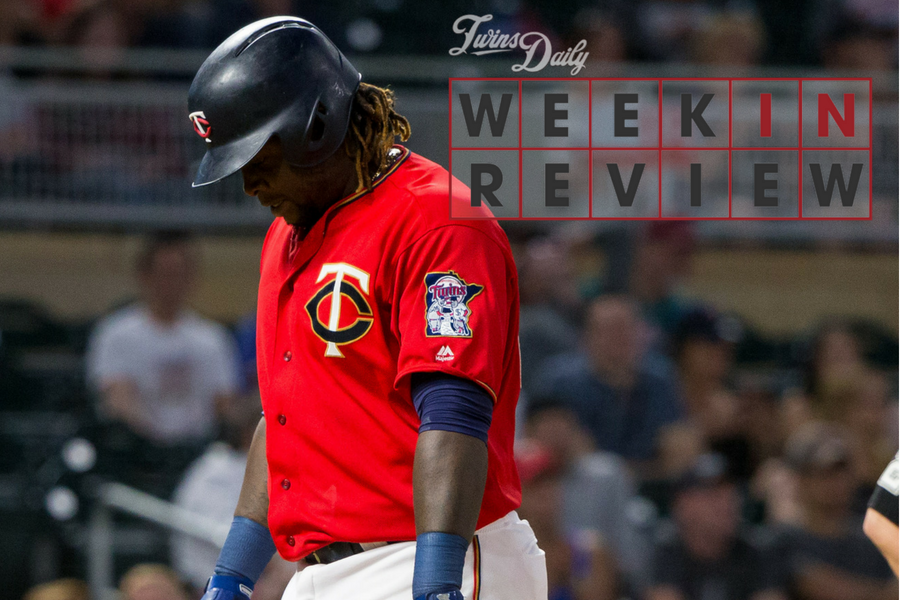 Weekly Snapshot: Mon, 6/4 through Sun, 6/10 *** Record Last Week: 3-4 (Overall: 28-34) Run Differential Last Week: 0 (Overall: -11) Standing: 3rd Place in AL Central (5.5 GB) HIGHLIGHTS While a few crucial players have failed to deliver on offense for the Twins this year, others have stepped up in a big way. Namely, I'm talking about Eddie Rosario and Eduardo Escobar. The continued growth of these two at the plate is invigorating to behold. Rosario and Escobar have not only been among the best power bats on the team, but in the league. Escobar had a monster week, collecting multiple hits in five of seven games and pushing his XBH total on the season to 39, tied for the major-league lead. Esco's late three-run homer in Tuesday's first game salvaged a victory and he added three more hits in the nightcap. He's slugging .895 this month and suddenly finds himself on track for the best power-hitting season in Twins history: https://twitter.com/AaronGleeman/status/1005452404333015040 At this point we should just call them Esc-tra base hits. Right? Rosario, meanwhile, stayed in the zone after capping last week with a three-homer game. He delivered four multi-hit games and one big home run. I mentioned last time that the most deeply encouraging part of his progression was the enhanced plate discipline. That continued as he drew three walks against three strikeouts. HIs improvements in this regard over the course of the year have been evident, and have bolstered his overall production: The rotation also saw some notably strong performances last week, with Jose Berrios picking up a complete-game victory on Thursday, Lance Lynn turning in his fourth consecutive quality start on Friday, and Kyle Gibson firing seven strong innings on Saturday. LOWLIGHTS On days like Thursday, it's easy to dream on this squad and the kind of run they're capable of putting together. Berrios cruised through nine, Escobar and Rosario powered the offense with five RBIs, and Minnesota enjoyed a comfortable lopsided victory. But those types of games have been few and far between. Much more often, the Twins have been entangled in close battles, and they've usually come out on the losing end, as illustrated by a 3-13 record in one-run contests. Bullpen lapses have played their role of late, with Ryan Pressly suddenly getting clobbered and Addison Reed continually giving up gopher balls in key spots. But the biggest culprit is a punchless offense, which went back in the tank after seemingly breaking out the previous week. The Twins lineup was more or less shut down by every starter it faced other than James Shields and Nick Tropeano. Minnesota scored more than four times only twice in seven games, all played in their home park. Unless the Eds are doing heroic things, or someone like Jake Cave puts together a random outburst, it seems this offense can't muster much of anything. That kind of isolated production is the opposite of what we hoped to see from a unit that, late last year, was spectacular in its depth and relentlessness. While no one other than Rosario and Escobar is hitting much, the flabbergasting futility of Miguel Sano is most conspicuous and upsetting. As Sano came out of the gates this year striking out an egregious 40%+ rate, it stood to reason that he'd eventually shake off the rust and rein it in. The big man has always been K-prone – an acceptable consequence of swinging as hard as he does – but he's mostly kept it within reason. If he continued to fan at the same rate he did in 2017, Sano was probably going to lead the league in K% this year, and very possibly set the all-time record for strikeouts in a season. But you live with it, because all those whiffs were to be accompanied by lots of walks and thunderous power. Instead, his K-rate has climbed, maintaining at 40% after 11 strikeouts in 24 plate appearances last week. He drew one walk and has only seven on the season. Sano has lost any semblance of pitch recognition, lacking either the will or ability to lay off two-strike breaking balls well out of the zone. He has become remarkably easy to pitch to. This is a nightmarish situation with no clear solution. The Twins could justifiably send Sano down to Rochester, as he has two options remaining, but it'd be to send a message more than anything. Maybe that's necessary at this point. But he isn't going to learn to read MLB-caliber spin while facing inferior pitchers at Triple-A. Sano needs to wake up and get it together. It's hard to feel like this stagnation isn't stemming in some way from a lack of commitment on his part. Rust is no longer a credible excuse. Lingering hamstring tenderness wouldn't explain the consistently subpar quality of his at-bats. This is a 25-year-old at a crossroad in his career and life. Sadly the "what ifs" are louder now than ever before. TRENDING STORYLINE The Twins need to get more out of the catcher position. Bobby Wilson is playing like you'd expect from a 35-year-old journeyman who's never been able to find sustained work in the majors. Mitch Garver is batting .215 with five extra-base hits in 89 PA since Jason Castro went down, and hasn't been impressive defensively. Early last week, the Twins signed Cameron Rupp after he opted out of his minor-league deal with the Rangers. The 29-year-old backstop has a fair amount of experience in the majors, and was hitting very well in Class-AAA Round Rock with an .886 OPS. If he produces like that in Rochester it won't be long before he gets a chance in Minnesota. Of particular interest is Rupp's penchant for mashing left-handed pitching. He has at an .879 career OPS vs. southpaws in the big leagues, and was at 1.304 in Triple-A this year before coming over. The Twins are slugging just .381 against lefties as a team. DOWN ON THE FARM It's safe to say that Brent Rooker made a very strong impression on the crew here at Twins Daily. Coming into this season, we had him ranked as the No. 7 prospect in a fairly stacked system, which he'd only been part of for a few months after being drafted last June. Sure, he's a big powerful hitter who posted strong numbers in his pro debut. But what really stood out about Rooker was his studious mindset when it comes to hitting – his deep commitment to understanding and mastering the craft. It felt like whatever hurdles the Mississippi State University product encountered, he'd find a way to overcome them. His 2018 season has been a perfect demonstration of what makes Rooker so exciting. The Twins sent him to Double-A to open the year – a fairly aggressive assignment, but one the organization clearly thought he could handle. And they were right. Rooker endured his struggles in the early going, posting a brutal .213/.234/.320 line with 25 strikeouts and one walk. But, exactly as you'd hope, he started making gradual adjustments and getting things on track. Over his next 20 games he would hit .256/.300/.427. And now, after turning in a spectacular past week for the Lookouts (10 hits and 10 walks in 28 PA) he's at .342/.437/.698 over his past 19. Just as we hoped, Rooker is establishing himself as a potential late-season reinforcement for the Twins offense. If he keeps raking they way he has recently, his potent right-handed bat will begin to look very appealing around August – especially if Mauer has setbacks and/or Logan Morrison never finds a prolonged groove. Capable of making a more immediate impact, perhaps, is LaMonte Wade, who was promoted to Rochester over the weekend after hitting .298/.393/.444 over 46 games in Chattanooga. That those numbers very closely match his career line in the minors (.296/.402/.438) speaks to the consistency with which Wade has produced since joining the Twins as a ninth-round draft pick in 2015. He's a high-OBP, low-power corner outfielder in the mold of Robbie Grossman, which might not make him the sexiest prospect, but it's a nice piece to have around on the cheap. LOOKING AHEAD It's not over yet. If the Twins are able to put together a good week on the road, winning their series in Detroit and Cleveland, they'll be in much better position than they currently find themselves. I wish they'd done anything to make us confident that is going to happen. TUESDAY, 6/12: TWINS @ TIGERS – RHP Jake Odorizzi v. LHP Blaine Hardy WEDNESDAY, 6/13: TWINS @ TIGERS – RHP Jose Berrios v. LHP Matthew Boyd THURSDAY, 6/14: TWINS @ TIGERS – RHP Lance Lynn v. RHP Michael Fulmer FRIDAY, 6/15: TWINS @ INDIANS – RHP Kyle Gibson v. RHP Corey Kluber SATURDAY, 6/16: TWINS @ INDIANS – RHP Fernando Romero v. RHP Carlos Carrasco SUNDAY, 6/17: TWINS @ INDIANS – RHP Jake Odorizzi vs RHP Adam Plutko Catch Up On Twins Daily Game Recaps Game 56 + 57 | Escobar Hits Dramatic Home Run, Twins Split Doubleheader Game 58 | CHW 5, MIN 2: Time is Running Out Game 59: MIN 7, CHW 2: Berrios CG, Power from the Eds Fuel Twins Victory Game 60 | LAA 4, MIN 2: Bullpen, Bats Spoil Strong Start from Lynn Game 61 | LAA 2, MIN 1: Is This a Rerun? Game 62 | MIN 7, LAA 5: Jake Cave Sparks a Fire More on Twins Daily The MLB Draft took place last week, and Andrew Thares covered it beautifully here at Twins Daily. Check out his Twins 2018 Draft recap, and find links to his write-ups on the top two picks and more within. In Cody Christie's latest roundtable piece, many TD contributors weighed in with a diverse range of opinions on which player contracts the Twins should be focused on extending. I took a look at the some potentially available targets and called out three potential catcher upgrades on the trade market.
 -
Of course. But we always knew a strong and high-powered offense would be essential to any winning model in 2018. The pitchers are doing their part and too many hitters aren't.
-
Thanks.For.The.Staccato.Analysis. The Twins had a 3.52 ERA in May and still went 13-15. Offense is the problem. The pitching staff is fine.
-
I mean, there's getting hot, and then there is what Buxton did. He was literally one of the most impactful players in the game over the final eight weeks last year, and probably THE single biggest reason for MIN's run to the playoffs. Also, this isn't some fantasy held by Twins fans. He was the unanimous #1 prospect in the game for multiple years. He's been hailed as a rising superstar by pretty much everyone. His K-rate progressively dropped month by month last season as he started to really straighten things out. To claim this is some narrative manufactured out of thin air ignores the reality of the matter. And even with all the streakiness, he IS an established successful big-leaguer. 1.4 WAR in 2016 and 3.5 WAR last year. The Twins need him to be a competent hitter, not a world beater (though that'd be nice). Shouldn't really be that much to ask.
