



Nick Nelson
-
Posts
8,326 -
Joined
-
Last visited
-
Days Won
56
Content Type
Profiles
News
Minnesota Twins Videos
2026 Minnesota Twins Top Prospects Ranking
2022 Minnesota Twins Draft Picks
Minnesota Twins Free Agent & Trade Rumors, Notes, & Tidbits
Guides & Resources
2023 Minnesota Twins Draft Picks
The Minnesota Twins Players Project
2024 Minnesota Twins Draft Picks
2025 Minnesota Twins Draft Pick Tracker
2026 Minnesota Twins Draft Tracker: Picks & Bonuses
Forums
Blogs
Events
Store
Downloads
Gallery
Everything posted by Nick Nelson
-
 I can't wait to check out that local craft beer mecca, looks like a fantastic addition.
 -
Article: Twins Rotation Is Starting Strong
Nick Nelson posted a topic in Twins Daily Front Page News
In 2016, when they lost 103 games, the Twins allowed 889 runs. That's 100 more than any other American League team – an astonishing average of 5.5 R/G. Minnesota's starters combined for a 5.39 ERA, worst in the majors by far. The rotation's dazzling performance in Baltimore during this season's opening series – 21 scoreless innings, punctuated by a complete game shutout on Sunday – is impressive on its own, but even more so against that backdrop.Needless to say, Derek Falvey and Thad Levine inherited a bit of a mess on the starting pitching front. The unit showed progress in 2017, moving from 30th to 19th in ERA, but now must take another step forward in order to solidify the club's status as a bona fide contender. Against the Orioles, three key components of the front office's recipe were personified: proactivity, polish, and patience. PROACTIVITY: Key Trade Acquisition Pays Immediate Dividends Jake Odorizzi wasn't among the Twins pitchers who reported to Fort Myers in mid-February. He wouldn't be acquired until camp was already underway. But by the time spring training ended, he had earned the billing of Opening Day starter. And boy, did he look up the challenge on Thursday. Unleashing a torrent of high four-seamers and low splitters, Odorizzi kept the Orioles off-balance and out-of-whack, allowing just two hits and two walks over six shutout frames while fanning seven. By all accounts, Odorizzi's availability this offseason was no secret. In October, Tampa Bay Times beat writer Marc Topkin called him the Rays player "most likely to be dealt this winter," and in the ensuing months, Odorizzi was connected to multiple teams – including the Twins. Tampa held out as long as possible, but ultimately, once camp started and they needed to finally pull the trigger, all they could extract was a mid-level infield prospect in Jermaine Palacios. It was enough to make you wonder just what red flags the rest of the league's teams saw in Odorizzi. Starting pitching is forever in-demand, and here we had a 27-year-old former first-round pick with a reasonable salary, and a successful track record in the AL East. No one was willing to pony up more than a future utility man in Single-A? What gives? Granted, injuries limited Odorizzi to 143 innings last year, and his peripherals were not pretty. But with his age and pedigree, he's the kind of guy you bet on, and so far the Twins look smart for doing so. The same basic question that surrounds Odorizzi – "Why did no one else want this guy??" – also apply to Monday's starter, Lance Lynn. We'll see if the front office's other proactive addition can make a similarly strong first impression in Pittsburgh. POLISH: Gibson's Improvements Carry Over Yes, Falvey and Levine needed to bring in some outside talent to bolster the rotation. But another key element of turning the unit around was getting more out of its existing assets. Kyle Gibson was a prime candidate for repair. In many ways, he's the prototype for an effective major-league starting pitcher: tall, lean and cerebral, with ample velocity and heavy sinking stuff. His sinker can be a grounder machine and his slider has bordered on elite at times. But shaky command, inconsistent mechanics, and health issues have continually plagued him. I'm not ready to say Gibson is out of the woods, but he looks like a different player these days. Somewhere around the middle of last summer, a light-bulb flickered for the right-hander. He made some noticeable tweaks – changing his arm slot, shifting on the rubber, altering his repertoire – and suddenly looked like the sturdy workhorse we've been waiting for all along. His reinvention carried over to the mound this spring, but that meant little, given his history of dominating the Grapefruit League before fizzling in the regular season. He knows that. "Too many times in the past I've had that approach in the spring, and then for whatever reason change it when I get into the season," Gibson said after an outstanding spring performance against the Rays in March. "I learned a lot toward the end of the year last year – how my pitches work and how using the fastball differently can help." He's referring, in part, to a tactic that Mr. Odorizzi specializes in – high four-seamers. Gibson has often in the past eschewed that pitch but used it heavily on Saturday, as he did throughout the latter weeks of 2017. Gibson's command was characteristically imperfect, but this time he made it work, firing six hitless innings despite five walks. He will need to keep it going before regaining the full confidence of fans at large, but according to Game Score, his first start of 2018 was better than any of his 29 in 2017. With new pitching coach Garvin Alston garnering positive early reviews, and a vaunted brain trust in baseball operations, it's easy to feel good about the Twins getting the most out of their arms. Phil Hughes will probably present their biggest challenge yet. We'll see how that goes. PATIENCE: Berrios Arrives Odorizzi was great on Thursday. Gibson was even better on Saturday. But on Easter Sunday, Jose Berrios blew them both away with his tour de force: an utterly dominant complete-game shutout. Sure, the Twins probably did some polishing with Berrios, but really, what was required in his case is patience. He dominated every level of the minors, but arrived in the big leagues as an undersized 21-year-old. His tumultuous rookie experience wasn't all that surprising, nor his massive improvement in Year 2. Now, as he enters his first full season as a big-leaguer, Berrios appears to be pulling it all together. Also not surprising. "Every year I get to know my body and myself more," Berrios told me this spring. His first start of 2018 was certainly reflective. The 23-year-old was in control from start to finish against the Orioles, deploying his devastating arsenal with more precision than we've ever seen before during his time in a Twins uniform. "What a clinic," said one scout in attendance. Patience might pay off in more way than one the Twins front office. Fernando Romero is expected to open the season at Class-AAA Rochester, and could wind up being one of the most impactful rookie additions to a major-league pitching staff this season. Stephen Gonsalves, Zack Littell, Lewis Thorpe and others are all verging on MLB-ready. It's natural to get overly excited about such a spectacular showing in the season's first three games. But what we saw from the Twins rotation in Baltimore was no fluke. This was by design. More on Twins Daily Tom Froemming's recap of Sunday's 7-0 win against the OriolesWhy I think Eddie Rosario might be one of the best power hitters, pound for pound in the game todayMatt Johnson's latest look at this week in Twins historyCody Christie's examination of Minnesota's early-season schedule Click here to view the article- 22 replies
-
- 2
-

-
- jake odorizzi
- jose berrios
- (and 1 more)
-
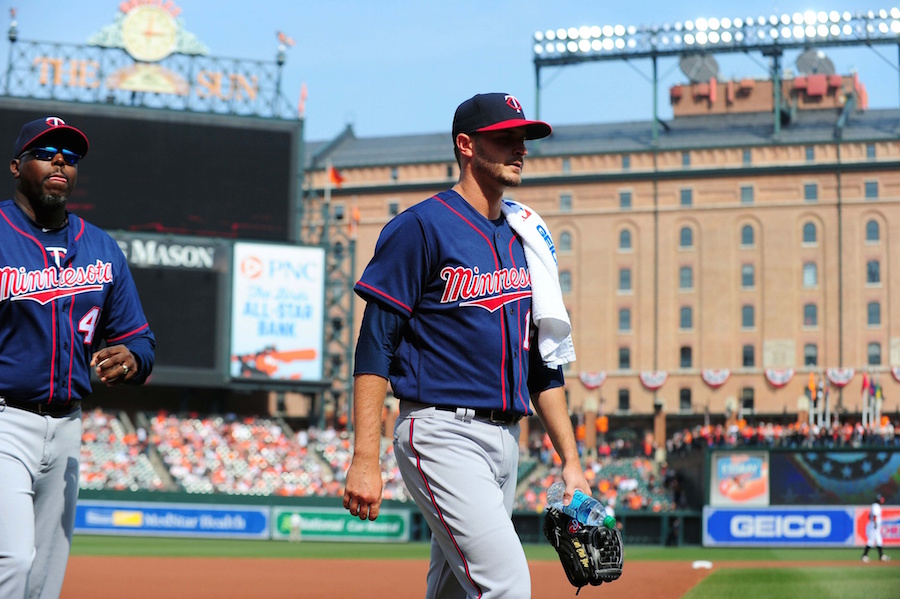 Needless to say, Derek Falvey and Thad Levine inherited a bit of a mess on the starting pitching front. The unit showed progress in 2017, moving from 30th to 19th in ERA, but now must take another step forward in order to solidify the club's status as a bona fide contender. Against the Orioles, three key components of the front office's recipe were personified: proactivity, polish, and patience. PROACTIVITY: Key Trade Acquisition Pays Immediate Dividends Jake Odorizzi wasn't among the Twins pitchers who reported to Fort Myers in mid-February. He wouldn't be acquired until camp was already underway. But by the time spring training ended, he had earned the billing of Opening Day starter. And boy, did he look up the challenge on Thursday. Unleashing a torrent of high four-seamers and low splitters, Odorizzi kept the Orioles off-balance and out-of-whack, allowing just two hits and two walks over six shutout frames while fanning seven. By all accounts, Odorizzi's availability this offseason was no secret. In October, Tampa Bay Times beat writer Marc Topkin called him the Rays player "most likely to be dealt this winter," and in the ensuing months, Odorizzi was connected to multiple teams – including the Twins. Tampa held out as long as possible, but ultimately, once camp started and they needed to finally pull the trigger, all they could extract was a mid-level infield prospect in Jermaine Palacios. It was enough to make you wonder just what red flags the rest of the league's teams saw in Odorizzi. Starting pitching is forever in-demand, and here we had a 27-year-old former first-round pick with a reasonable salary, and a successful track record in the AL East. No one was willing to pony up more than a future utility man in Single-A? What gives? Granted, injuries limited Odorizzi to 143 innings last year, and his peripherals were not pretty. But with his age and pedigree, he's the kind of guy you bet on, and so far the Twins look smart for doing so. The same basic question that surrounds Odorizzi – "Why did no one else want this guy??" – also apply to Monday's starter, Lance Lynn. We'll see if the front office's other proactive addition can make a similarly strong first impression in Pittsburgh. POLISH: Gibson's Improvements Carry Over Yes, Falvey and Levine needed to bring in some outside talent to bolster the rotation. But another key element of turning the unit around was getting more out of its existing assets. Kyle Gibson was a prime candidate for repair. In many ways, he's the prototype for an effective major-league starting pitcher: tall, lean and cerebral, with ample velocity and heavy sinking stuff. His sinker can be a grounder machine and his slider has bordered on elite at times. But shaky command, inconsistent mechanics, and health issues have continually plagued him. I'm not ready to say Gibson is out of the woods, but he looks like a different player these days. Somewhere around the middle of last summer, a light-bulb flickered for the right-hander. He made some noticeable tweaks – changing his arm slot, shifting on the rubber, altering his repertoire – and suddenly looked like the sturdy workhorse we've been waiting for all along. His reinvention carried over to the mound this spring, but that meant little, given his history of dominating the Grapefruit League before fizzling in the regular season. He knows that. "Too many times in the past I've had that approach in the spring, and then for whatever reason change it when I get into the season," Gibson said after an outstanding spring performance against the Rays in March. "I learned a lot toward the end of the year last year – how my pitches work and how using the fastball differently can help." He's referring, in part, to a tactic that Mr. Odorizzi specializes in – high four-seamers. Gibson has often in the past eschewed that pitch but used it heavily on Saturday, as he did throughout the latter weeks of 2017. Gibson's command was characteristically imperfect, but this time he made it work, firing six hitless innings despite five walks. He will need to keep it going before regaining the full confidence of fans at large, but according to Game Score, his first start of 2018 was better than any of his 29 in 2017. With new pitching coach Garvin Alston garnering positive early reviews, and a vaunted brain trust in baseball operations, it's easy to feel good about the Twins getting the most out of their arms. Phil Hughes will probably present their biggest challenge yet. We'll see how that goes. PATIENCE: Berrios Arrives Odorizzi was great on Thursday. Gibson was even better on Saturday. But on Easter Sunday, Jose Berrios blew them both away with his tour de force: an utterly dominant complete-game shutout. Sure, the Twins probably did some polishing with Berrios, but really, what was required in his case is patience. He dominated every level of the minors, but arrived in the big leagues as an undersized 21-year-old. His tumultuous rookie experience wasn't all that surprising, nor his massive improvement in Year 2. Now, as he enters his first full season as a big-leaguer, Berrios appears to be pulling it all together. Also not surprising. "Every year I get to know my body and myself more," Berrios told me this spring. His first start of 2018 was certainly reflective. The 23-year-old was in control from start to finish against the Orioles, deploying his devastating arsenal with more precision than we've ever seen before during his time in a Twins uniform. "What a clinic," said one scout in attendance. Patience might pay off in more way than one the Twins front office. Fernando Romero is expected to open the season at Class-AAA Rochester, and could wind up being one of the most impactful rookie additions to a major-league pitching staff this season. Stephen Gonsalves, Zack Littell, Lewis Thorpe and others are all verging on MLB-ready. It's natural to get overly excited about such a spectacular showing in the season's first three games. But what we saw from the Twins rotation in Baltimore was no fluke. This was by design. More on Twins Daily Tom Froemming's recap of Sunday's 7-0 win against the Orioles Why I think Eddie Rosario might be one of the best power hitters, pound for pound in the game today Matt Johnson's latest look at this week in Twins history Cody Christie's examination of Minnesota's early-season schedule
 -
Sometimes, power hitting comes in the package you'd expect. It's easy to see how Miguel Sano produces the strength to hit a ball into the third deck. Similarly, no one wonders how brawny Logan Morrison managed to poke 38 into the stands last year. But Eddie Rosario? Minnesota's unlikely cleanup hitter doesn't exactly fit the mold.Rosario had a quiet spring, spent mostly nursing a sore arm, but when the regular season kicked off on Thursday he pretty much picked up where he left off. We last saw the 26-year-old stepping up on the big stage in October, launching a two-run homer against New York's Luis Severino in the first inning of the AL Wild Card Game to give Minnesota a sizable (albeit short-lived) early lead. The clutch blast came on the heels of a breakout season in which Rosario went deep 27 times, surpassing his total from 2015 and '16 combined. In his first at-bat of the new campaign, Rosario lifted a drive to deep right-center field with enough distance to clear the fence. But Orioles right fielder Craig Gentry robbed him with a fantastic play, reaching over the Camden wall to pull it back. Later, in extra innings, the Rosario got into another one, slashing a 1-2 offering from Richard Bleier to the warning track in left, where it was caught. Though Rosario came up just short in both of his bids for a round-tripper, the message is already clear: last year's power surge, which saw him post a .568 slugging percentage in the final 95 games, was no fluke. It isn't hard to see why Paul Molitor has tabbed Rosario for the key designation of No. 4 hitter. Sandwiched between top-tier sluggers in Sano and Morrison, Rosario's physical contrast from those two is plain enough to see when they line up for the anthem – while the third baseman and DH weigh in at 250-plus, Rosario is listed at 6'1" and 180 lbs, an explosive bundle of wiry muscles. While his power did begin to fully manifest last year, its onset wasn't as sudden as that of a Brian Dozier. The tool has been evident for Rosario since he was a teenager pacing the Appalachian League with 21 home runs (he edged his teammate, the prodigious phenom Sano, by one). Rosario slugged .484 in the minors, where he was young for every level. He memorably homered in his first MLB plate appearance and tallied 46 extra-base hits in 122 games as a rookie. The pop has always been present for Minnesota's left fielder, and while he might not hit the ball as hard as the guys surrounding him in the lineup – Sano ranked 4th in average exit velocity last year, Morrison ranked 116th, Rosario ranked 278th – it's becoming clearer he's got what it takes to eclipse 30 HR. The combination of innate strength, lightning-quick wrists, and a compact uppercut swing – you can see it in action here on the would-be homer Gentry robbed – turns Rosario into a very impactful offensive weapon, especially when you factor in his uncommon aggressiveness. Cleaning up in Molitor's lineup is a crucial assignment that figures to yield a great deal of opportunity for producing runs. Brian Dozier, Joe Mauer and Sano all finished with OBPs north of .350 last year. Can Rosario reward his manager's show of faith by delivering? ~~~ More on Twins Daily: Matthew Lenz's breakdown of the 2018 outlook for Kyle Gibson, Saturday night's starter.Steve Lien's examination of the next wave of Minnesota Twins talent.Twins relief pitcher projections via Andrew Thares.Jamie Cameron's look at the disparity between Taylor Rogers' first and second halves in 2017. Click here to view the article
-
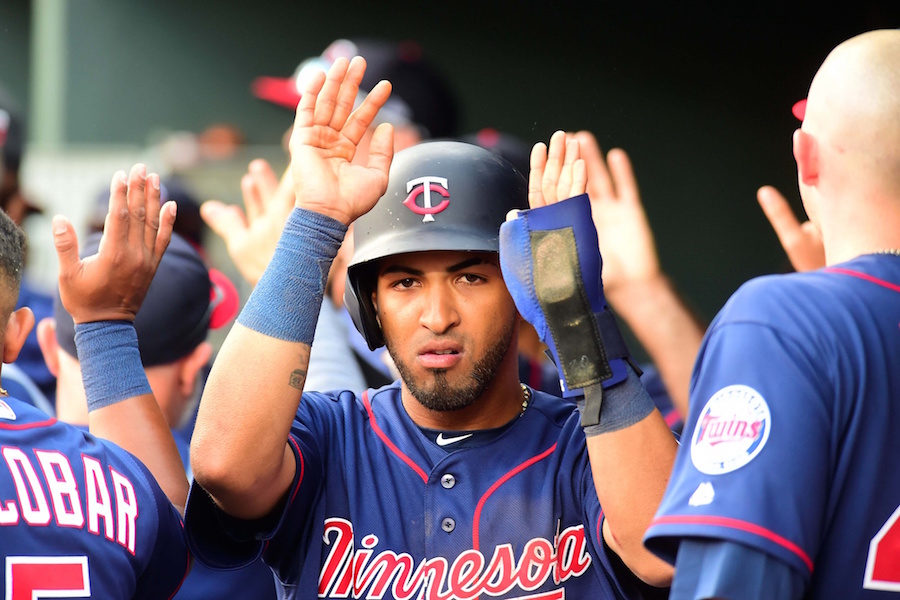 Rosario had a quiet spring, spent mostly nursing a sore arm, but when the regular season kicked off on Thursday he pretty much picked up where he left off. We last saw the 26-year-old stepping up on the big stage in October, launching a two-run homer against New York's Luis Severino in the first inning of the AL Wild Card Game to give Minnesota a sizable (albeit short-lived) early lead. The clutch blast came on the heels of a breakout season in which Rosario went deep 27 times, surpassing his total from 2015 and '16 combined. In his first at-bat of the new campaign, Rosario lifted a drive to deep right-center field with enough distance to clear the fence. But Orioles right fielder Craig Gentry robbed him with a fantastic play, reaching over the Camden wall to pull it back. Later, in extra innings, the Rosario got into another one, slashing a 1-2 offering from Richard Bleier to the warning track in left, where it was caught. Though Rosario came up just short in both of his bids for a round-tripper, the message is already clear: last year's power surge, which saw him post a .568 slugging percentage in the final 95 games, was no fluke. It isn't hard to see why Paul Molitor has tabbed Rosario for the key designation of No. 4 hitter. Sandwiched between top-tier sluggers in Sano and Morrison, Rosario's physical contrast from those two is plain enough to see when they line up for the anthem – while the third baseman and DH weigh in at 250-plus, Rosario is listed at 6'1" and 180 lbs, an explosive bundle of wiry muscles. While his power did begin to fully manifest last year, its onset wasn't as sudden as that of a Brian Dozier. The tool has been evident for Rosario since he was a teenager pacing the Appalachian League with 21 home runs (he edged his teammate, the prodigious phenom Sano, by one). Rosario slugged .484 in the minors, where he was young for every level. He memorably homered in his first MLB plate appearance and tallied 46 extra-base hits in 122 games as a rookie. The pop has always been present for Minnesota's left fielder, and while he might not hit the ball as hard as the guys surrounding him in the lineup – Sano ranked 4th in average exit velocity last year, Morrison ranked 116th, Rosario ranked 278th – it's becoming clearer he's got what it takes to eclipse 30 HR. The combination of innate strength, lightning-quick wrists, and a compact uppercut swing – you can see it in action here on the would-be homer Gentry robbed – turns Rosario into a very impactful offensive weapon, especially when you factor in his uncommon aggressiveness. Cleaning up in Molitor's lineup is a crucial assignment that figures to yield a great deal of opportunity for producing runs. Brian Dozier, Joe Mauer and Sano all finished with OBPs north of .350 last year. Can Rosario reward his manager's show of faith by delivering? ~~~ More on Twins Daily: Matthew Lenz's breakdown of the 2018 outlook for Kyle Gibson, Saturday night's starter. Steve Lien's examination of the next wave of Minnesota Twins talent. Twins relief pitcher projections via Andrew Thares. Jamie Cameron's look at the disparity between Taylor Rogers' first and second halves in 2017.
 -
Article: BAL 3, MIN 2: Opening D’oh!
Nick Nelson replied to Tom Froemming's topic in Twins Daily Front Page News
They generally took good ABs, had several deep drives caught at the warning track and a HR robbed. Process > results when we're analyzing a 1-game sample.- 109 replies
-
- 4
-
-
- jake odorizzi
- zach duke
- (and 3 more)
-
Article: BAL 3, MIN 2: Opening D’oh!
Nick Nelson replied to Tom Froemming's topic in Twins Daily Front Page News
Play like that, and you'll win more often than you lose.- 109 replies
-
- 8
-
-
- jake odorizzi
- zach duke
- (and 3 more)
-
As they crest what they hope will be a lengthy run of winning baseball, the Minnesota Twins are keeping their options open. There is a defined core in place – young, talented, and under control for several years to come. But the front office has surrounded this core with a remarkable number of players on short-term commitments. So in 2018, the message is clear. This franchise's long-cultivated championship vision is finally being set into motion, with most of the key pieces already in place. Anyone who wants to be part of the ride going forward will need to earn it.Change in baseball is rarely sudden. Since their all-out collapse in 2011, the Twins have been gradually working back toward their previous standing as a perennial playoff contender. The process got underway in earnest the following June, when they drafted Byron Buxton second overall. Like that of Buxton, Minnesota's rise has taken time, seeing its share of fits and starts. But it's no coincidence that just as he truly arrives – now established as a full-time major-leaguer, riding a sustained run of MVP-caliber performance down the stretch – the team appears ready to take off. With all due respect to Joe Mauer and Brian Dozier and their years of tenure, this is Buxton's team. Maybe not in the clubhouse, yet, but his ability to impact games on a nightly basis exceeds anyone on the roster and almost anyone in the league. The center fielder is, fittingly, the centerpiece. * READ: The (Temporary) Luxury of the Best Defender on Earth * But around him, the Twins have assembled a formidable collection of talent, so promising and well-rounded that it's hard not to feel optimistic about the club's chances for another trip to the playoffs. Especially when you consider this season's unique circumstances. Let's start there. Window of Opportunity The American League Central came into existence back in 1994. If you've been watching Twins baseball for that long, then I urge you to think for a moment about all the years between then and now. Over that duration, how many times can you remember three different teams in the division heading into a season where they were blatantly, transparently, unabashedly making zero effort to seriously contend? I'd argue that it's unprecedented, and in many ways unique to the present state of the game. At least one major-league exec has gone on record in suggesting more teams are competing for the 2019 No. 1 draft pick than a 2018 World Series trophy. * READ: Report From the Fort: How Weak is the AL Central? * This past offseason's free agent frigidity reflected a lack of urgency around the league. More than half of all MLB teams seem to be rebuilding in some capacity. The Twins themselves haven't entirely escaped from that designation, but they are a contender on the rise, to be sure. And they were able to strike on some incredible opportunities in this market of stagnation, adding a wealth of new player assets at stunningly low costs. The window is open, more so than we might see it again. An opportunistic front office led by Derek Falvey and Thad Levine has emphatically reacted by constructing a ballclub that appears up to the challenge. Partially by savvy maneuvering, and partially by fortunate inheritance, they've put the pieces in place. A Brain Trust With Brains Worth Trusting The impact of Falvey's behind-the-scenes reconfigurations is difficult to quantify in terms of wins and losses, but the improvement is unmistakable. In 2017, newly obtained hitting coach James Rowson and defensive guru Jeff Pickler both garnered rave reviews as key additions in the dugout. They left their imprints, on an offense that saw several young hitters take big steps forward, and a fielding unit that went from 29th to 12th in defensive efficiency. These successful hires inspire confidence in the selections of Garvin Alston and Derek Shelton, joining this season as pitching coach and bench coach. * READ: One Year In, Rebuilt Twins Front Office is Crushing It * In general, Falvey and his cohorts have shown a keen ability to identify sharp new-age thinkers and install them in roles where their intelligence and expertise can be most useful. Since taking over as chief baseball officer, Falvey has added Harvard grad Daniel Adler as director of baseball operations, as well as 27-year-old wunderkind Jeremy Zoll as director of minor-league operations, while populating the lower ranks with several reputed brainy analysts. Lest you think the human element is being overlooked, these additions have been balanced by infusions of practical experience and perspective. Michael Cuddyer, Torii Hunter, LaTroy Hawkins and most recently Justin Morneau were all brought on as recognizable and relatable special assistants. Jeremy Hefner, who was pitching in a Mets uniform less than five years ago, now serves as an advance scout and conduit of information from baseball research to the players on the field. The advancements in terms of organizational infrastructure under Falvey's leadership have been monumental. After about 16 months of gradually layering in handpicked candidates, the franchise's personnel makeup is finally coming to resemble what Falvey initially envisioned, and sold Twins ownership on. From the executive suite down to the coaching staff, pieces are in place to support a roster boasting enough talent, depth and experience to make some serious noise. Built to Win Paul Molitor has been on a nice run lately. After entering 2017 in the dreaded position of lame duck manager with new bosses, he reversed his dwindling fortunes with an exemplary year at the helm. Molitor led an upstart group to the postseason, was voted AL Manager of the Year, and secured a three-year contract. Now, the front office has gifted him with an offseason windfall, supplementing a roster that was already primed to win with a healthy influx. The club's uncharacteristic free agent shopping spree pushed payroll to a record $130 million, and down in Fort Myers the vibe was clear: expectations for this team are very high. This brings added pressure for Molitor, but I'm sure he'll happily take it in tandem with the bounty of talent he's setting out with in Baltimore on Thursday. You can argue that every position on the 2018 Twins is a strength – though admittedly, you have to strain a little on the pitching side. (Click on any position below to find a full in-depth analysis.) CATCHER: Reliably solid veteran Jason Castro pairs with rookie Mitch Garver, coming off a monster season in Triple-A and carrying plenty of confidence, to form a potentially formidable platoon. FIRST BASE: Joe Mauer sure looks to be back on his game. While even his optimal production won't stand out relative to peers at first, it certainly has value in this lineup, and he's as good as it gets with the glove. SECOND BASE: Over the past two years, Brian Dozier has been one of the best hitters in baseball. That shows no signs of changing as the pending free agent stares down a contract year with off-the-charts motivation. THIRD BASE: Miguel Sano did enough at the plate and in the field this spring to mostly silence concerns around his injury recovery and physical state. He still has much to prove, but the 2017 All-Star's game-changing ability should not be downplayed. SHORTSTOP: Losing Jorge Polanco to an 80-game suspension hurts, no doubt, but the Twins are fortunate in being able to fall back on the powerful Eduardo Escobar and the intriguing Ehire Adrianza in his stead. Oh, and their No. 3 prospect, verging on MLB-ready, plays the position (ostensibly). LEFT FIELD: Many Twins hitters seemed to turn a corner in 2017. No one did it quite as convincingly as Eddie Rosario, whose newfound selectiveness at the plate yielded big returns (27 HR, 78 RBI, .830 OPS). So long as the K/BB trends stick, Rosario should be one of the league's top producers in left field. If his approach evolves further? Look out. CENTER FIELD: Staying healthy and maintaining at the level he settled into last year after April would make Byron Buxton one of the biggest individual difference-makers in the major leagues: a hit-robbing, base-swiping, power-hitting force. RIGHT FIELD: Max Kepler was a below-average but respectable hitter last year. With his picturesque swing, innate athleticism and history of adjustments, it feels almost inevitable that the 25-year-old will find another gear. If so, this will be one of the game's most fearsome outfields. DESIGNATED HITTER: This spot didn't produce much thunder for the 2017 Twins, who ranked eighth out of 15 AL teams in OPS at the position. Logan Morrison should help with that; last year he outhomered the collective DH units for every team except Seattle (Nelson Cruz). STARTING PITCHING: It's a stretch to call this position an area of strength, but the late additions of Jake Odorizzi and Lance Lynn shored up the rotation significantly, and there are enough quality reinforcements in the pipeline (Ervin Santana, Adalberto Mejia, Trevor May, Fernando Romero and Stephen Gonsalves, to name a few) that it's not so easy to call it a weakness anymore. RELIEF PITCHING: If last year was any indication, contact-heavy bullpens don't cut it in today's MLB. Minnesota's front office has progressively taken steps to power up the pen, populating it with proven strikeout pitchers. The new-look relief corps could prove to be the most imposing to come along for the Twins in more than decade. I can't ever remember such a complete roster out of the gates for this team. Everywhere you look, pieces in place. From Total System Failure To All Systems Go The Twins made history by going from 103 losses in 2016 to a wild-card berth in 2017, and their momentum only continues to grow as we head into the new campaign. At a time where lackadaisical malaise has gripped many of the league's clubs, Falvey and Levine have built a culture of extreme urgency. Sure, the two top execs can afford to be patient – they've got their vital young core locked in, plus a prodigious minor-league pipeline – but it's a different vibe in the locker room. * READ: Twins Daily's Top 20 Minnesota Twins Prospects of 2018 * Of the 25 men on Minnesota's Opening Day active roster, only Jason Castro and Addison Reed have guaranteed contracts for 2019. Whether playing for a free agency payday or merely to build stock in a young career, almost every player on the Twins roster enters this season with enormous personal stakes. One could argue this doesn't create a particularly comfortable environment. But then, one can also argue that "comfort" became one of the central issues for this club during the latter years of Terry Ryan's regime. For the 2018 Twins, complacency is not an option. While all these pieces are now in place, the vast majority of them can are interchangeable. ~~~ This is setting up to be a truly exciting season. Make sure you're following along with Twins Daily all summer by following us on Twitter and Facebook, as well as entering your email address below to receive our newsletter! Click here to view the article
- 4 replies
-
- 2
-
-
- byron buxton
- joe mauer
- (and 3 more)
-
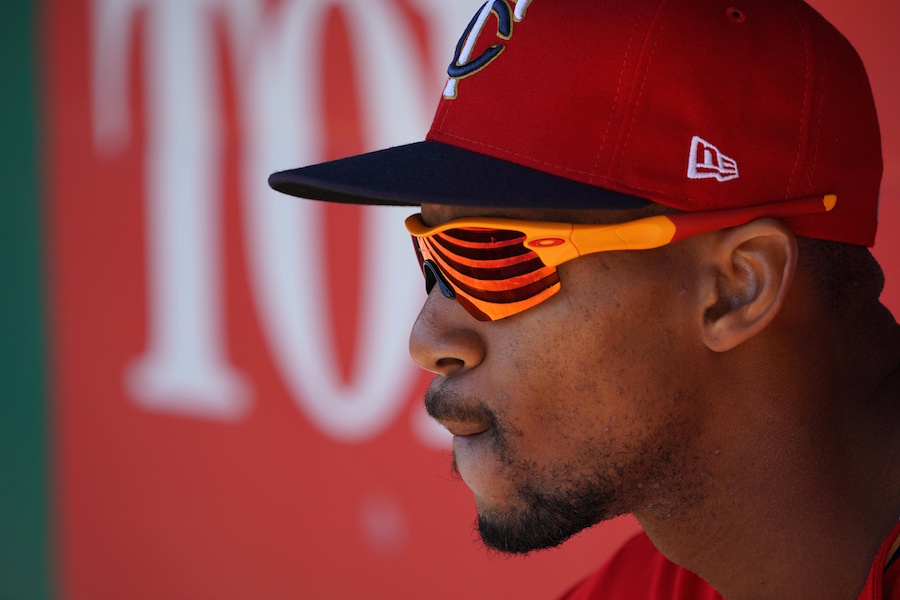 Change in baseball is rarely sudden. Since their all-out collapse in 2011, the Twins have been gradually working back toward their previous standing as a perennial playoff contender. The process got underway in earnest the following June, when they drafted Byron Buxton second overall. Like that of Buxton, Minnesota's rise has taken time, seeing its share of fits and starts. But it's no coincidence that just as he truly arrives – now established as a full-time major-leaguer, riding a sustained run of MVP-caliber performance down the stretch – the team appears ready to take off. With all due respect to Joe Mauer and Brian Dozier and their years of tenure, this is Buxton's team. Maybe not in the clubhouse, yet, but his ability to impact games on a nightly basis exceeds anyone on the roster and almost anyone in the league. The center fielder is, fittingly, the centerpiece. * READ: The (Temporary) Luxury of the Best Defender on Earth * But around him, the Twins have assembled a formidable collection of talent, so promising and well-rounded that it's hard not to feel optimistic about the club's chances for another trip to the playoffs. Especially when you consider this season's unique circumstances. Let's start there. Window of Opportunity The American League Central came into existence back in 1994. If you've been watching Twins baseball for that long, then I urge you to think for a moment about all the years between then and now. Over that duration, how many times can you remember three different teams in the division heading into a season where they were blatantly, transparently, unabashedly making zero effort to seriously contend? I'd argue that it's unprecedented, and in many ways unique to the present state of the game. At least one major-league exec has gone on record in suggesting more teams are competing for the 2019 No. 1 draft pick than a 2018 World Series trophy. * READ: Report From the Fort: How Weak is the AL Central? * This past offseason's free agent frigidity reflected a lack of urgency around the league. More than half of all MLB teams seem to be rebuilding in some capacity. The Twins themselves haven't entirely escaped from that designation, but they are a contender on the rise, to be sure. And they were able to strike on some incredible opportunities in this market of stagnation, adding a wealth of new player assets at stunningly low costs. The window is open, more so than we might see it again. An opportunistic front office led by Derek Falvey and Thad Levine has emphatically reacted by constructing a ballclub that appears up to the challenge. Partially by savvy maneuvering, and partially by fortunate inheritance, they've put the pieces in place. A Brain Trust With Brains Worth Trusting The impact of Falvey's behind-the-scenes reconfigurations is difficult to quantify in terms of wins and losses, but the improvement is unmistakable. In 2017, newly obtained hitting coach James Rowson and defensive guru Jeff Pickler both garnered rave reviews as key additions in the dugout. They left their imprints, on an offense that saw several young hitters take big steps forward, and a fielding unit that went from 29th to 12th in defensive efficiency. These successful hires inspire confidence in the selections of Garvin Alston and Derek Shelton, joining this season as pitching coach and bench coach. * READ: One Year In, Rebuilt Twins Front Office is Crushing It * In general, Falvey and his cohorts have shown a keen ability to identify sharp new-age thinkers and install them in roles where their intelligence and expertise can be most useful. Since taking over as chief baseball officer, Falvey has added Harvard grad Daniel Adler as director of baseball operations, as well as 27-year-old wunderkind Jeremy Zoll as director of minor-league operations, while populating the lower ranks with several reputed brainy analysts. Lest you think the human element is being overlooked, these additions have been balanced by infusions of practical experience and perspective. Michael Cuddyer, Torii Hunter, LaTroy Hawkins and most recently Justin Morneau were all brought on as recognizable and relatable special assistants. Jeremy Hefner, who was pitching in a Mets uniform less than five years ago, now serves as an advance scout and conduit of information from baseball research to the players on the field. The advancements in terms of organizational infrastructure under Falvey's leadership have been monumental. After about 16 months of gradually layering in handpicked candidates, the franchise's personnel makeup is finally coming to resemble what Falvey initially envisioned, and sold Twins ownership on. From the executive suite down to the coaching staff, pieces are in place to support a roster boasting enough talent, depth and experience to make some serious noise. Built to Win Paul Molitor has been on a nice run lately. After entering 2017 in the dreaded position of lame duck manager with new bosses, he reversed his dwindling fortunes with an exemplary year at the helm. Molitor led an upstart group to the postseason, was voted AL Manager of the Year, and secured a three-year contract. Now, the front office has gifted him with an offseason windfall, supplementing a roster that was already primed to win with a healthy influx. The club's uncharacteristic free agent shopping spree pushed payroll to a record $130 million, and down in Fort Myers the vibe was clear: expectations for this team are very high. This brings added pressure for Molitor, but I'm sure he'll happily take it in tandem with the bounty of talent he's setting out with in Baltimore on Thursday. You can argue that every position on the 2018 Twins is a strength – though admittedly, you have to strain a little on the pitching side. (Click on any position below to find a full in-depth analysis.) CATCHER: Reliably solid veteran Jason Castro pairs with rookie Mitch Garver, coming off a monster season in Triple-A and carrying plenty of confidence, to form a potentially formidable platoon. FIRST BASE: Joe Mauer sure looks to be back on his game. While even his optimal production won't stand out relative to peers at first, it certainly has value in this lineup, and he's as good as it gets with the glove. SECOND BASE: Over the past two years, Brian Dozier has been one of the best hitters in baseball. That shows no signs of changing as the pending free agent stares down a contract year with off-the-charts motivation. THIRD BASE: Miguel Sano did enough at the plate and in the field this spring to mostly silence concerns around his injury recovery and physical state. He still has much to prove, but the 2017 All-Star's game-changing ability should not be downplayed. SHORTSTOP: Losing Jorge Polanco to an 80-game suspension hurts, no doubt, but the Twins are fortunate in being able to fall back on the powerful Eduardo Escobar and the intriguing Ehire Adrianza in his stead. Oh, and their No. 3 prospect, verging on MLB-ready, plays the position (ostensibly). LEFT FIELD: Many Twins hitters seemed to turn a corner in 2017. No one did it quite as convincingly as Eddie Rosario, whose newfound selectiveness at the plate yielded big returns (27 HR, 78 RBI, .830 OPS). So long as the K/BB trends stick, Rosario should be one of the league's top producers in left field. If his approach evolves further? Look out. CENTER FIELD: Staying healthy and maintaining at the level he settled into last year after April would make Byron Buxton one of the biggest individual difference-makers in the major leagues: a hit-robbing, base-swiping, power-hitting force. RIGHT FIELD: Max Kepler was a below-average but respectable hitter last year. With his picturesque swing, innate athleticism and history of adjustments, it feels almost inevitable that the 25-year-old will find another gear. If so, this will be one of the game's most fearsome outfields. DESIGNATED HITTER: This spot didn't produce much thunder for the 2017 Twins, who ranked eighth out of 15 AL teams in OPS at the position. Logan Morrison should help with that; last year he outhomered the collective DH units for every team except Seattle (Nelson Cruz). STARTING PITCHING: It's a stretch to call this position an area of strength, but the late additions of Jake Odorizzi and Lance Lynn shored up the rotation significantly, and there are enough quality reinforcements in the pipeline (Ervin Santana, Adalberto Mejia, Trevor May, Fernando Romero and Stephen Gonsalves, to name a few) that it's not so easy to call it a weakness anymore. RELIEF PITCHING: If last year was any indication, contact-heavy bullpens don't cut it in today's MLB. Minnesota's front office has progressively taken steps to power up the pen, populating it with proven strikeout pitchers. The new-look relief corps could prove to be the most imposing to come along for the Twins in more than decade. I can't ever remember such a complete roster out of the gates for this team. Everywhere you look, pieces in place. From Total System Failure To All Systems Go The Twins made history by going from 103 losses in 2016 to a wild-card berth in 2017, and their momentum only continues to grow as we head into the new campaign. At a time where lackadaisical malaise has gripped many of the league's clubs, Falvey and Levine have built a culture of extreme urgency. Sure, the two top execs can afford to be patient – they've got their vital young core locked in, plus a prodigious minor-league pipeline – but it's a different vibe in the locker room. * READ: Twins Daily's Top 20 Minnesota Twins Prospects of 2018 * Of the 25 men on Minnesota's Opening Day active roster, only Jason Castro and Addison Reed have guaranteed contracts for 2019. Whether playing for a free agency payday or merely to build stock in a young career, almost every player on the Twins roster enters this season with enormous personal stakes. One could argue this doesn't create a particularly comfortable environment. But then, one can also argue that "comfort" became one of the central issues for this club during the latter years of Terry Ryan's regime. For the 2018 Twins, complacency is not an option. While all these pieces are now in place, the vast majority of them can are interchangeable. ~~~ This is setting up to be a truly exciting season. Make sure you're following along with Twins Daily all summer by following us on Twitter and Facebook, as well as entering your email address below to receive our newsletter!
 -
We wrap up our position-by-position breakdown of Minnesota's organizational depth today with an examination of relief pitching. I'm excited to dig in here because this reinvented bullpen is a fascinating unit for the Twins, characterized by high-profile additions, unpredictable youth, and bold gambles.Projected Relievers: Fernando Rodney, Addison Reed, Zach Duke, Ryan Pressly, Trevor Hildenberger, Taylor Rogers, Gabriel Moya, Tyler Kinley Depth: Tyler Duffey, Alan Busenitz, John Curtiss, Jake Reed, Zack Jones Prospects: Tyler Jay, Dietrich Enns, Mason Melotakis, Tyler Watson, Tom Hackimer THE GOOD Brandon Kintzler and Matt Belisle, who respectably held down closing duties for the 2017 team (albeit in unimposing fashion), are out. Replacing them are righties Fernando Rodney and Addison Reed, who better fit the traditional mold of dominant late-inning arms. Minnesota has also substantially upgraded its left-handed relief foundation from a year ago, replacing Craig Breslow and Buddy Boshers with the vastly higher upside of Zach Duke and Gabriel Moya, while retaining steady specialist Taylor Rogers. Though it lacks a true long reliever, the Twins bullpen is well constructed, giving Paul Molitor a diverse set of potent options leading up to one of the game's most experienced closers. The quality of this group is such that Tyler Duffey (3.72 FIP in 2017) and Alan Busenitz (1.99 ERA in 28 appearances) were sent down to open the season, and few could quibble with the decisions. Possessing power relievers who can come in and strike people out is critical in today's MLB. Last year's top five finishers in bullpen K/9 were the Yankees, Astros, Dodgers, Indians and Cubs. They were also five of the last teams standing. Minnesota, at 7.7 K/9, ranked 29th out of 30. The eight relievers slated to comprise this year's bullpen combined to average about a strikeout per inning in 2017. That calculation doesn't include Tyler Kinley, who of course didn't pitch in the majors but did average 12.2 K/9 in Single-A and Double-A, and barely accounts for Moya, who has averaged 11.5 K/9 in the minors. This is suddenly a bullpen filled with strikeout pitchers — a remarkable bit of roster wizardly, progressively carried out by the new front office. The first guys in line as call-ups or replacements? Duffey, who struck out 67 over 71 frames in his first season as a reliever. Busenitz, who brings upper-90s heat and has averaged 9.2 K/9 in Triple-A. And finally: John Curtiss, an unheralded prospect who warrants intrigue specifically because of his tremendous ability to miss bats in the Twins system, where he's struck out 245 over 195 frames (including 33 K over 24 IP at Triple-A). So, to summarize all that: Minnesota now has the indisputable makings of a power pen, even if things go amiss with the first wave. That's a status they really haven't been able to claim since 2006, when a unit led by Joe Nathan, Jesse Crain, Juan Rincon and Pat Neshek led the AL in bullpen K/9. That team also won 96 games – most in the franchise's modern history. Coincidence? THE BAD While they've equipped themselves with a bunch of capable new arms, the Twins have also let several promising ones get away. Luke Bard was snagged by the Angels in the Rule 5 draft and it appears he'll stick on their 25-man roster. If his massive improvements in Double-A and Triple-A last year prove legit, he could potentially be closing games for the Halos by midseason. Nick Burdi was also fished away in the Rule 5, by Pittsburgh, and he'll be stashed on the 60-day DL until completing Tommy John recovery. In late February, the Twins lost J.T. Chargois when we was claimed off waivers by the Dodgers. He is in line to make their team. Bard, Burdi and Chargois were all highly drafted stud relievers out of college with premium gas, and despite injury setbacks, each was on track to make an impact in the majors. Now, they're gone, lost to other organizations in exchange for nothing, because the Twins didn't deem them worth protecting. To be sure, these were measured, rational risks. Given the checkered health histories at play here, a reluctance to plan around these volatile fireballers is quite understandable. But elevating other pitchers as priorities – most notably, the Rule 5 pick Kinley, a relatively unaccomplished minor-leaguer who has occupied a 40-man spot since December – does have a cost. We'll have to wait and see whether the Twins made the right calls with all this shuffling, but there's a reasonable case to be made for every pitcher on the roster deserving his spot. And when it comes to evaluating hurlers, Derek Falvey and his crew have earned some trust. THE BOTTOM LINE The 2018 Twins bullpen will have a very different look, both because it features more new arrivals than incumbents and because it might be the most K-heavy unit Minnesota has assembled in over a decade. The front office chose to wager on its free agents and its Rule 5 selection rather than some homegrown arms that many of us expected to play a role at the big-league level. I'll be curious to see if their altogether logical gambles pan out. If so, the Twins will have shored up one of their most persistent disadvantages from years past. ~~~ Catch up on the rest of the series: Twins Daily Position Analysis: Catcher Twins Daily Position Analysis: First Base Twins Daily Position Analysis: Second Base Twins Daily Position Analysis: Third Base Twins Daily Position Analysis: Shortstop Twins Daily Position Analysis: Left Field Twins Daily Position Analysis: Center Field Twins Daily Position Analysis: Right Field Twins Daily Position Analysis: Designated Hitter Twins Daily Position Analysis: Starting Pitcher Click here to view the article
- 37 replies
-
- 1
-
-
- fernando rodney
- addison reed
- (and 3 more)
-
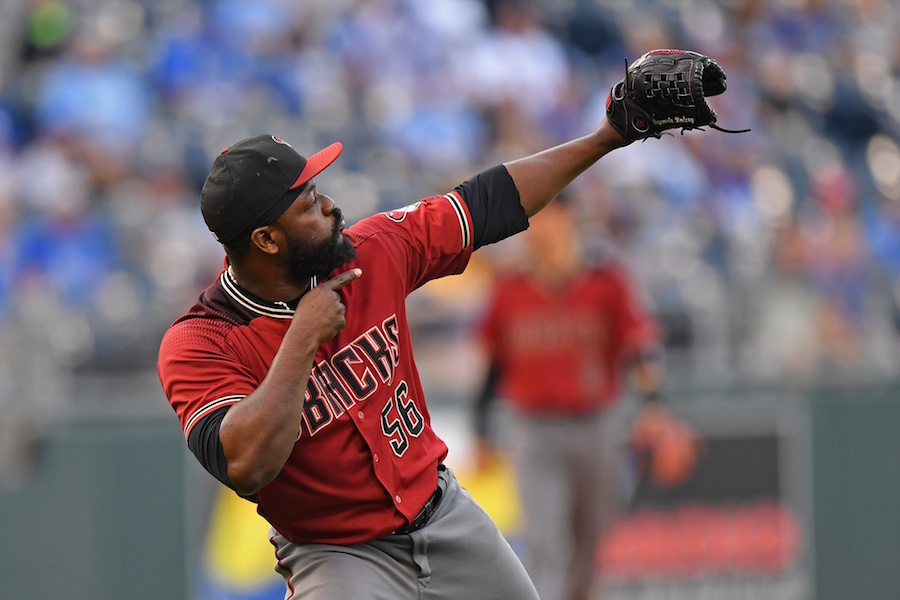 Projected Relievers: Fernando Rodney, Addison Reed, Zach Duke, Ryan Pressly, Trevor Hildenberger, Taylor Rogers, Gabriel Moya, Tyler Kinley Depth: Tyler Duffey, Alan Busenitz, John Curtiss, Jake Reed, Zack Jones Prospects: Tyler Jay, Dietrich Enns, Mason Melotakis, Tyler Watson, Tom Hackimer THE GOOD Brandon Kintzler and Matt Belisle, who respectably held down closing duties for the 2017 team (albeit in unimposing fashion), are out. Replacing them are righties Fernando Rodney and Addison Reed, who better fit the traditional mold of dominant late-inning arms. Minnesota has also substantially upgraded its left-handed relief foundation from a year ago, replacing Craig Breslow and Buddy Boshers with the vastly higher upside of Zach Duke and Gabriel Moya, while retaining steady specialist Taylor Rogers. Though it lacks a true long reliever, the Twins bullpen is well constructed, giving Paul Molitor a diverse set of potent options leading up to one of the game's most experienced closers. The quality of this group is such that Tyler Duffey (3.72 FIP in 2017) and Alan Busenitz (1.99 ERA in 28 appearances) were sent down to open the season, and few could quibble with the decisions. Possessing power relievers who can come in and strike people out is critical in today's MLB. Last year's top five finishers in bullpen K/9 were the Yankees, Astros, Dodgers, Indians and Cubs. They were also five of the last teams standing. Minnesota, at 7.7 K/9, ranked 29th out of 30. The eight relievers slated to comprise this year's bullpen combined to average about a strikeout per inning in 2017. That calculation doesn't include Tyler Kinley, who of course didn't pitch in the majors but did average 12.2 K/9 in Single-A and Double-A, and barely accounts for Moya, who has averaged 11.5 K/9 in the minors. This is suddenly a bullpen filled with strikeout pitchers — a remarkable bit of roster wizardly, progressively carried out by the new front office. The first guys in line as call-ups or replacements? Duffey, who struck out 67 over 71 frames in his first season as a reliever. Busenitz, who brings upper-90s heat and has averaged 9.2 K/9 in Triple-A. And finally: John Curtiss, an unheralded prospect who warrants intrigue specifically because of his tremendous ability to miss bats in the Twins system, where he's struck out 245 over 195 frames (including 33 K over 24 IP at Triple-A). So, to summarize all that: Minnesota now has the indisputable makings of a power pen, even if things go amiss with the first wave. That's a status they really haven't been able to claim since 2006, when a unit led by Joe Nathan, Jesse Crain, Juan Rincon and Pat Neshek led the AL in bullpen K/9. That team also won 96 games – most in the franchise's modern history. Coincidence? THE BAD While they've equipped themselves with a bunch of capable new arms, the Twins have also let several promising ones get away. Luke Bard was snagged by the Angels in the Rule 5 draft and it appears he'll stick on their 25-man roster. If his massive improvements in Double-A and Triple-A last year prove legit, he could potentially be closing games for the Halos by midseason. Nick Burdi was also fished away in the Rule 5, by Pittsburgh, and he'll be stashed on the 60-day DL until completing Tommy John recovery. In late February, the Twins lost J.T. Chargois when we was claimed off waivers by the Dodgers. He is in line to make their team. Bard, Burdi and Chargois were all highly drafted stud relievers out of college with premium gas, and despite injury setbacks, each was on track to make an impact in the majors. Now, they're gone, lost to other organizations in exchange for nothing, because the Twins didn't deem them worth protecting. To be sure, these were measured, rational risks. Given the checkered health histories at play here, a reluctance to plan around these volatile fireballers is quite understandable. But elevating other pitchers as priorities – most notably, the Rule 5 pick Kinley, a relatively unaccomplished minor-leaguer who has occupied a 40-man spot since December – does have a cost. We'll have to wait and see whether the Twins made the right calls with all this shuffling, but there's a reasonable case to be made for every pitcher on the roster deserving his spot. And when it comes to evaluating hurlers, Derek Falvey and his crew have earned some trust. THE BOTTOM LINE The 2018 Twins bullpen will have a very different look, both because it features more new arrivals than incumbents and because it might be the most K-heavy unit Minnesota has assembled in over a decade. The front office chose to wager on its free agents and its Rule 5 selection rather than some homegrown arms that many of us expected to play a role at the big-league level. I'll be curious to see if their altogether logical gambles pan out. If so, the Twins will have shored up one of their most persistent disadvantages from years past. ~~~ Catch up on the rest of the series: Twins Daily Position Analysis: Catcher Twins Daily Position Analysis: First Base Twins Daily Position Analysis: Second Base Twins Daily Position Analysis: Third Base Twins Daily Position Analysis: Shortstop Twins Daily Position Analysis: Left Field Twins Daily Position Analysis: Center Field Twins Daily Position Analysis: Right Field Twins Daily Position Analysis: Designated Hitter Twins Daily Position Analysis: Starting Pitcher
 -
All good points. I guess the real takeaway is this: Santana might not have primarily driven the improvement, but him delivering a quarter of the team's SP innings with a 3.28 ERA was a huge reason for whatever level of success they had in 2017. This year they won't be able to count on that again, both because he'll throw fewer innings and he's extremely unlikely to replicate that performance upon returning. So the statement laid out in the 2nd-to-last paragraph fully stands.
-
True, but Santana also threw 30 more innings than in 2016, with 5 complete games and 3 shutouts. He carried a big portion of the load. If not for his impact the staff would've ranked near the bottom of the league again.
- 52 replies
-
- 3
-
-
- lance lynn
- jose berrios
- (and 3 more)
-
It's been said often but bears repeating: building a rotation isn't about five starting pitchers. Sure, you want five good ones lined up at the top. But in 2016 the Twins had eight different hurlers make 10-plus starts. Last year 16 guys got the nod at least once. Sixteen! It's been common practice for Minnesota of late: inevitable injuries and underperformance leading to flimsy depth being tested. With underequipped fill-ins unable to answer the call, the Twins have gone through endless cycles of short-lived mediocrity. Injuries and underperformance remain inevitable here in 2018, as ever, but finally the front office has built up enough depth to where a 'next man up' philosophy doesn't sound all that foreboding. In fact, right now it's actually a little exciting.Projected Starting 5: Jose Berrios, Lance Lynn, Jake Odorizzi, Kyle Gibson, Phil Hughes Reinforcements: Ervin Santana, Adalberto Mejia, Trevor May, Aaron Slegers, Felix Jorge Prospects: Fernando Romero, Stephen Gonsalves, Zack Littell, Blayne Enlow, Brusdar Graterol THE GOOD Not so long ago, things looked quite grim for the Twins rotation. The club struck out in its pursuit of Yu Darvish and as spring training approached they hadn't added anyone of consequence. Then Ervin Santana's finger surgery was announced. Then... they signed Anibal Sanchez. It was a low point. But it didn't last long. Days after reaching agreement with Sanchez, the Twins pulled off a trade with Tampa to acquire Jake Odorizzi. Three weeks later they signed Lance Lynn, one of the top names on the free agent market. By the time the Twins cut loose Sanchez, less than a month after signing him to a non-guaranteed contract, their starting unit had been reshaped. That low point felt like a distant memory. With Odorizzi and Lynn in the fold, the rotation is solidified, and it features a revitalizing medley of established quantities, intriguing youth, and pending reinforcements. With Jose Berrios looking ready to take the next step, the Twins have a potential frontline type on hand, even with Santana set to miss the first month-plus. Odorizzi, Lynn and Kyle Gibson look more like mid-rotation cogs, but fairly reliable ones (your mileage may vary on Gibson). Phil Hughes currently slots in at No. 5 and is tough to trust, but he can be hidden for much of April and won't have a long leash. The rotation out of the gates doesn't boast a ton of upside beyond Berrios, but we find much more of that in the ensuing waves. Santana was of course Minnesota's top starter in 2017, and among the best in the American League. He should enter the picture sometime in May. Adalberto Mejia made 21 starts for the Twins as a 23/24-year-old in 2017 and showed he was capable. Trevor May has the stuff to make a real impact and will have plenty of time to sharpen up ahead of his June ETA. Those three alone provide more viable rotation depth than the Twins have had in years. Even pitchers further down the board like Aaron Slegers and Felix Jorge are more appealing as MLB-ready spot start candidates than the Quad-A retreads that have typically been available over the past decade. And then you start digging into the top prospects. Fernando Romero and Stephen Gonsalves, the organization's two best young arms that have yet to reach the majors, could be ready at any time. Zack Littell isn't far behind, nor is Lewis Thorpe. And promising teenagers Blayne Enlow and Brusdar Graterol figure to rise quickly. The Twins have come a long, long way since 2016 when their rotation was an abominable disaster. There is enough depth, now and going forward, that it's hard to see things devolving to that point or anywhere close again. THE BAD While there are enough proven starters and legit prospects to inspire confidence that things won't unravel completely, the Twins still lack a credible ace, and are short on the types of overpowering arms you'd want to trot out in a playoff series. Berrios showed major improvement last year but still profiled as more of a No. 3 on a championship contender. Lynn posted a 4.82 FIP in St. Louis. Odorizzi posted a 5.43 FIP in Tampa. We all recall how Gibson looked for much of the summer. And Hughes the finesse pitcher will be hard-pressed to get MLB hitters out consistently. You can dream on this rotation but objectively it looks rather mediocre. The impending returns of Santana and May are somewhat heartening, but it could be June before either is ready. Will the Twins have dug a deep hole by then? The team is sort of in a transitional period right now, with several veteran starters on short-term commitments and several prospects still needing to take their first lumps in the majors. Although Minnesota is likely on the verge of a true starting pitching breakthrough, it might realistically be another year away. THE BOTTOM LINE From 2016 to 2017, the Twins went from 30th to 19th in starting pitcher ERA, which is a hell of a step forward. But that was reliant on a Herculean effort from Santana, who is poised to miss a significant portion of the 2018 season. In order to take another step and graduate to the top half of the league, Minnesota will need some other players to find that extra gear like Erv did last year. They'll also need some young hurlers to join in and find immediate success, which has been rare. The pipeline is as strong and ripe as it's been in over a decade, but we still may need to wait just a little bit longer before it bears the fruit that can push this franchise over the hump. ~~~ Catch up on the rest of the series: Twins Daily Position Analysis: Catcher Twins Daily Position Analysis: First Base Twins Daily Position Analysis: Second Base Twins Daily Position Analysis: Third Base Twins Daily Position Analysis: Shortstop Twins Daily Position Analysis: Left Field Twins Daily Position Analysis: Center Field Twins Daily Position Analysis: Right Field Twins Daily Position Analysis: Designated Hitter Click here to view the article
- 52 replies
-
- 2
-
-
- lance lynn
- jose berrios
- (and 3 more)
-
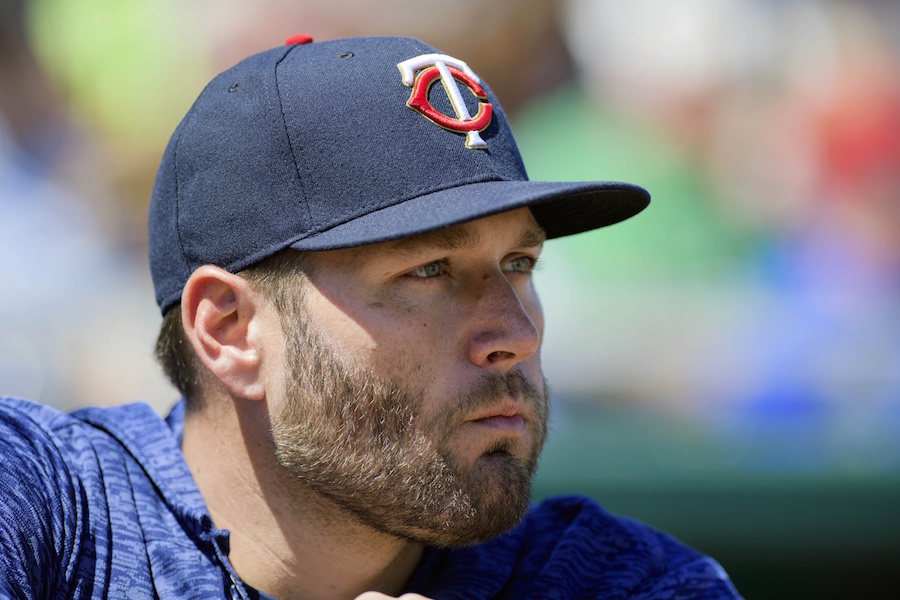 Projected Starting 5: Jose Berrios, Lance Lynn, Jake Odorizzi, Kyle Gibson, Phil Hughes Reinforcements: Ervin Santana, Adalberto Mejia, Trevor May, Aaron Slegers, Felix Jorge Prospects: Fernando Romero, Stephen Gonsalves, Zack Littell, Blayne Enlow, Brusdar Graterol THE GOOD Not so long ago, things looked quite grim for the Twins rotation. The club struck out in its pursuit of Yu Darvish and as spring training approached they hadn't added anyone of consequence. Then Ervin Santana's finger surgery was announced. Then... they signed Anibal Sanchez. It was a low point. But it didn't last long. Days after reaching agreement with Sanchez, the Twins pulled off a trade with Tampa to acquire Jake Odorizzi. Three weeks later they signed Lance Lynn, one of the top names on the free agent market. By the time the Twins cut loose Sanchez, less than a month after signing him to a non-guaranteed contract, their starting unit had been reshaped. That low point felt like a distant memory. With Odorizzi and Lynn in the fold, the rotation is solidified, and it features a revitalizing medley of established quantities, intriguing youth, and pending reinforcements. With Jose Berrios looking ready to take the next step, the Twins have a potential frontline type on hand, even with Santana set to miss the first month-plus. Odorizzi, Lynn and Kyle Gibson look more like mid-rotation cogs, but fairly reliable ones (your mileage may vary on Gibson). Phil Hughes currently slots in at No. 5 and is tough to trust, but he can be hidden for much of April and won't have a long leash. The rotation out of the gates doesn't boast a ton of upside beyond Berrios, but we find much more of that in the ensuing waves. Santana was of course Minnesota's top starter in 2017, and among the best in the American League. He should enter the picture sometime in May. Adalberto Mejia made 21 starts for the Twins as a 23/24-year-old in 2017 and showed he was capable. Trevor May has the stuff to make a real impact and will have plenty of time to sharpen up ahead of his June ETA. Those three alone provide more viable rotation depth than the Twins have had in years. Even pitchers further down the board like Aaron Slegers and Felix Jorge are more appealing as MLB-ready spot start candidates than the Quad-A retreads that have typically been available over the past decade. And then you start digging into the top prospects. Fernando Romero and Stephen Gonsalves, the organization's two best young arms that have yet to reach the majors, could be ready at any time. Zack Littell isn't far behind, nor is Lewis Thorpe. And promising teenagers Blayne Enlow and Brusdar Graterol figure to rise quickly. The Twins have come a long, long way since 2016 when their rotation was an abominable disaster. There is enough depth, now and going forward, that it's hard to see things devolving to that point or anywhere close again. THE BAD While there are enough proven starters and legit prospects to inspire confidence that things won't unravel completely, the Twins still lack a credible ace, and are short on the types of overpowering arms you'd want to trot out in a playoff series. Berrios showed major improvement last year but still profiled as more of a No. 3 on a championship contender. Lynn posted a 4.82 FIP in St. Louis. Odorizzi posted a 5.43 FIP in Tampa. We all recall how Gibson looked for much of the summer. And Hughes the finesse pitcher will be hard-pressed to get MLB hitters out consistently. You can dream on this rotation but objectively it looks rather mediocre. The impending returns of Santana and May are somewhat heartening, but it could be June before either is ready. Will the Twins have dug a deep hole by then? The team is sort of in a transitional period right now, with several veteran starters on short-term commitments and several prospects still needing to take their first lumps in the majors. Although Minnesota is likely on the verge of a true starting pitching breakthrough, it might realistically be another year away. THE BOTTOM LINE From 2016 to 2017, the Twins went from 30th to 19th in starting pitcher ERA, which is a hell of a step forward. But that was reliant on a Herculean effort from Santana, who is poised to miss a significant portion of the 2018 season. In order to take another step and graduate to the top half of the league, Minnesota will need some other players to find that extra gear like Erv did last year. They'll also need some young hurlers to join in and find immediate success, which has been rare. The pipeline is as strong and ripe as it's been in over a decade, but we still may need to wait just a little bit longer before it bears the fruit that can push this franchise over the hump. ~~~ Catch up on the rest of the series: Twins Daily Position Analysis: Catcher Twins Daily Position Analysis: First Base Twins Daily Position Analysis: Second Base Twins Daily Position Analysis: Third Base Twins Daily Position Analysis: Shortstop Twins Daily Position Analysis: Left Field Twins Daily Position Analysis: Center Field Twins Daily Position Analysis: Right Field Twins Daily Position Analysis: Designated Hitter
 -
Thanks for putting this together, Tom. I'm going to make it a point to catch up on everything here I haven't read before Opening Day. Also, seeing it listed here, I'd almost forgotten about this piece and all the angst it raised in the comments. Doesn't seem so ridiculous now, does it? For all the consternation we're seeing right now, it's important to keep in mind that Minnesota still has plenty of options left on the table for addressing its rotation. They have money to spend and prospects to dangle in trade talks. They won't get a pitcher as good as Darvish, probably, but they can still find a decisive upgrade who gives them more flexibility. Within a month, they had traded for Odorizzi and signed Lynn. Just calling this out as a reminder (even to myself) not to overreact when a couple things break wrong.
-
Ban the DH! All hail the DH! Whatever your stance on the matter, as an American League club Minnesota has the luxury of a designated hitter. And this year, they hope to take advantage for the first time since a Hall of Fame slugger helped propel them to the postseason in Target Field's inaugural season.Projected Starter: Logan Morrison Likely Backup: Robbie Grossman Depth: Miguel Sano, Joe Mauer, Eduardo Escobar Prospects: Lewin Diaz, Brent Rooker, Zander Wiel THE GOOD In 2010, Jim Thome started 78 games for the Twins at DH, and as we all know, it went really well. Since then, the position has been a blur of changing faces and failed experiments. From 2012 through 2017, no single player made even 70 starts in a season at DH for the Twins. The position mostly functioned as a revolving door, with folks like Ryan Doumit, Kendrys Morales, ByungHo Park and Robbie Grossman passing through. No one made much of an impression, except for Miguel Sano who soon moved to third (after a – *shudder* – detour in right). Can Logan Morrison end the cycle? Minnesota's front office is sure hoping so. They pounced on the slugging lefty in late February at a bargain too good to pass up. So instead of the usual endless carousel, the Twins figure to have a steady fixture at the spot for the first time in eight years. If he can approximate last season's production, Morrison will be an impact addition to the middle of the lineup, and his presence could greatly ease the loss of Jorge Polanco to suspension (LoMo's .868 OPS in 2017 was almost identical to Polanco's .870 mark in the second half when he took off). If Morrison regresses to his career norm – .245/.330/.433 – he'll be less of an asset, but it'd still be more production than Minnesota got from the DH cohort led by Grossman in 2017 (.237/.328/.383). Should Morrison go down for any reason the Twins would simply revert to their original plan at DH, which might've looked awfully similar to last year's distribution – minus the 30 starts for Kennys Vargas. In terms of pipeline, Lewin Diaz profiles as the heir apparent right now. If his bat takes a step forward, he could be in the DH picture as soon as next year. But as is the nature of this position, any number of good hitters who can't cut it defensively may end up in the mix. THE BAD Last week the Twins designated Vargas for assignment, and on Thursday he officially departed the organization when Cincinnati claimed him off waivers. It's an odd fit given that the Reds can't use him at DH and already have a superstar first baseman entrenched in Joey Votto. Alas, Minnesota lost a piece of its depth with the move. It would've been nice if Vargas had slipped through waivers to remain on hand in Triple-A. But, all things considered, the Twins should be feeling pretty good at designated hitter. There is no shortage of bats in the picture for this club, so theoretically, the position shouldn't be an issue any time soon. We'll see. THE BOTTOM LINE As currently constructed, the Twins have quite a few hitters, so finding one to designate on any given night shouldn't be an issue. The same is true going forward until further notice. It's hard to imagine this team lacking for players who can step up and swing the lumber at any time in the near future. The biggest question is if and when they'll need to set aside this spot for Sano. Hopefully not for a while, because they really need him to hold down third. ~~~ Catch up on the rest of the series: Twins Daily Position Analysis: Catcher Twins Daily Position Analysis: First Base Twins Daily Position Analysis: Second Base Twins Daily Position Analysis: Third Base Twins Daily Position Analysis: Shortstop Twins Daily Position Analysis: Left Field Twins Daily Position Analysis: Center Field Twins Daily Position Analysis: Right Field Click here to view the article
-
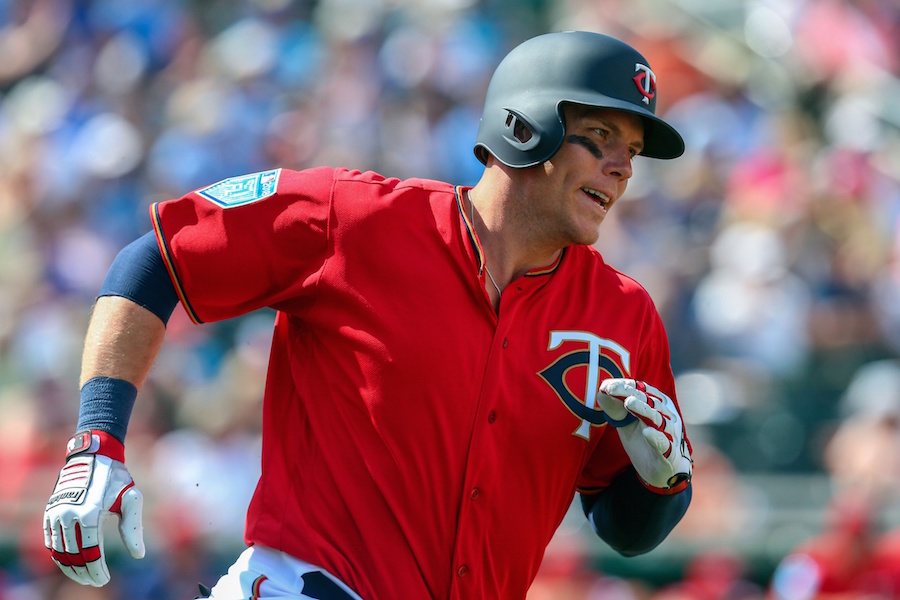 Projected Starter: Logan Morrison Likely Backup: Robbie Grossman Depth: Miguel Sano, Joe Mauer, Eduardo Escobar Prospects: Lewin Diaz, Brent Rooker, Zander Wiel THE GOOD In 2010, Jim Thome started 78 games for the Twins at DH, and as we all know, it went really well. Since then, the position has been a blur of changing faces and failed experiments. From 2012 through 2017, no single player made even 70 starts in a season at DH for the Twins. The position mostly functioned as a revolving door, with folks like Ryan Doumit, Kendrys Morales, ByungHo Park and Robbie Grossman passing through. No one made much of an impression, except for Miguel Sano who soon moved to third (after a – *shudder* – detour in right). Can Logan Morrison end the cycle? Minnesota's front office is sure hoping so. They pounced on the slugging lefty in late February at a bargain too good to pass up. So instead of the usual endless carousel, the Twins figure to have a steady fixture at the spot for the first time in eight years. If he can approximate last season's production, Morrison will be an impact addition to the middle of the lineup, and his presence could greatly ease the loss of Jorge Polanco to suspension (LoMo's .868 OPS in 2017 was almost identical to Polanco's .870 mark in the second half when he took off). If Morrison regresses to his career norm – .245/.330/.433 – he'll be less of an asset, but it'd still be more production than Minnesota got from the DH cohort led by Grossman in 2017 (.237/.328/.383). Should Morrison go down for any reason the Twins would simply revert to their original plan at DH, which might've looked awfully similar to last year's distribution – minus the 30 starts for Kennys Vargas. In terms of pipeline, Lewin Diaz profiles as the heir apparent right now. If his bat takes a step forward, he could be in the DH picture as soon as next year. But as is the nature of this position, any number of good hitters who can't cut it defensively may end up in the mix. THE BAD Last week the Twins designated Vargas for assignment, and on Thursday he officially departed the organization when Cincinnati claimed him off waivers. It's an odd fit given that the Reds can't use him at DH and already have a superstar first baseman entrenched in Joey Votto. Alas, Minnesota lost a piece of its depth with the move. It would've been nice if Vargas had slipped through waivers to remain on hand in Triple-A. But, all things considered, the Twins should be feeling pretty good at designated hitter. There is no shortage of bats in the picture for this club, so theoretically, the position shouldn't be an issue any time soon. We'll see. THE BOTTOM LINE As currently constructed, the Twins have quite a few hitters, so finding one to designate on any given night shouldn't be an issue. The same is true going forward until further notice. It's hard to imagine this team lacking for players who can step up and swing the lumber at any time in the near future. The biggest question is if and when they'll need to set aside this spot for Sano. Hopefully not for a while, because they really need him to hold down third. ~~~ Catch up on the rest of the series: Twins Daily Position Analysis: Catcher Twins Daily Position Analysis: First Base Twins Daily Position Analysis: Second Base Twins Daily Position Analysis: Third Base Twins Daily Position Analysis: Shortstop Twins Daily Position Analysis: Left Field Twins Daily Position Analysis: Center Field Twins Daily Position Analysis: Right Field
 -
Molitor mentioned when I was down there that he'd like to start lengthening Kinley out a bit, and they had him pitch into a third inning on Monday against Pittsburgh, so that probably tells us something. I don't really see the wisdom of trying to turn max-effort fireballers into long relievers personally, struck me as a misstep with Tonkin. But they're a bit short on options for that utility at the moment. There's definitely a lot of enthusiasm around the club regarding Kinley's velocity, especially that hard slider.
-
The sense I got in camp is that Kinley will make the team. Duffey and Busenitz being optioned today just about seals it.
-
Article: Twins 2018 Position Analysis: Right Field
Nick Nelson replied to Nick Nelson's topic in Twins Daily Front Page News
^ Good research. At this point they're both young enough and the sample sizes are small enough that I'm not inclined to put a ton of stock into the data, but it does seem to match the eye test. Rosario in general for whatever reason doesn't seem to get the most out of his solid speed. Questionable jumps/routes in the OF and a fairly poor steal rate on the bases.- 15 replies
-
- 1
-
-
- max kepler
- robbie grossman
- (and 1 more)
-
Is Max Kepler a full-time player, or destined for platoon duty? The jury is still out, and while he has time yet to prove his worth against left-handed pitchers, the Twins need to start thinking seriously about their course of action if he is unable to do so.Projected Starter: Max Kepler Likely Backup: Robbie Grossman Depth: Eddie Rosario, Jake Cave, Zack Granite Prospects: Alex Kirilloff, Akil Baddoo, Jaylin Davis THE GOOD Following a strong rookie showing as a 23-year-old in 2016, Kepler maintained in his sophomore season. Holding down right field from start to finish, he posted a .243/.312/.425 slash line with 19 home runs, 32 doubles, and six steals on seven tries. Sure, stagnation isn't great – Kepler's 96 OPS+ in 2017 was identical to his 2016 mark – but it's much better than regression, which is common for a second-year big-leaguer. The last time Kepler turned in consecutive seasons with such similar production was 2013 and 2014, between two levels of A-ball. At age 20 he registered a .736 OPS in Cedar Rapids, and he followed with a .726 OPS in Ft. Myers at 21. The next year was his big breakout, when Kepler put himself on the top prospect map by slashing a ridiculous .322/.416/.531 at Chattanooga to earn Southern League MVP honors. From an optimist's standpoint, the outfielder's minor-league track record could also be instructive with regard to his progression against left-handed pitching. No, he was not good in 2017 – and we'll get to that shortly – but Kepler also endured massive struggles against southpaws in Low-A (.365 OPS with the Kernels) before taking a step forward at High-A (.691 OPS with the Miracle) and turning the corner at Double-A (.893 OPS with the Lookouts). Kepler has always been a bit of a gradual adjuster; perfectly understandable for a player who signed at age 16 out of a continent that rarely produces major leaguers. He has barely crested 1,000 plate appearances in the majors, and turned 25 in February. His history points to there remaining growth potential, both against same-sided pitchers and offensively in general. On the defensive side, Kepler did make some significant strides last year. After a mistake-prone rookie campaign he cut down his error total from seven to two, while also improving his range metrics. Kepler even made eight starts in center and held his own. If he were to go down with an injury, Robbie Grossman would be in line to take over. Eddie Rosario could also move over from left, with Grossman or Zack Granite taking over in left. Some argue that Kepler and Rosario are best suited for a position swap, since Eddie has a better arm and covers less ground, but the difference isn't huge. In the larger scheme, the Twins have one bona fide right field prospect in their system, and at a glance you might confuse him with the current MLB occupant. Alex Kirilloff has an athletic build and sweet lefty swing that are both remindful of Kepler, though scouts see more power in his frame, which is noticeably bigger this spring after a year off due to Tommy John surgery. We'll be curious to see how Twins Daily's No. 5 prospect fares in his return to the field this year. But even with a strong showing back on the scene, Kirilloff is at least two or three years away, so the position belongs to Kepler for the foreseeable future. THE BAD Will it belong only to Kepler? Unless he can turn around his abysmal performance against lefties, the 25-year-old could be in line for a timeshare. Kepler did not fare well against portsiders as a rookie, hitting .203/.273/.322 in 2016, but last year it really got ugly as he dropped to .152/.213/.240. That kind of ineptitude will make it difficult to write his name in against lefty starters, potentially leading to a reduction in his 568 plate appearances from 2017. MLB right fielders posted a .798 OPS last season, second-highest of any position behind first base. That places Kepler, who finished at .737, well below average. If you could keep his .828 OPS versus righties, and plug in a platoon mate, you'd have yourself an admirable solution at the position. But unfortunately, the Twins lack viable candidates for such a setup at the moment. Grossman, a switch-hitter and Kepler's primary backup, went just .238/.376/.320 versus southpaws last year, though he did put up a .994 OPS against them in 2016. Fellow backup options Jake Cave and Zack Granite also swing from the left side, as does near-ready prospect LaMonte Wade. Ideally, the Twins would have a lefty-mashing corner outfielder on hand, but they didn't add one and perhaps that is by design. Kepler still has a chance to be a quality everyday player. He just may not have a ton more time to prove it. THE BOTTOM LINE Extreme platoon splits throw his ongoing status as an everyday player into question, but Kepler is a good outfielder whose ability to do damage against right-handers is not in doubt. He should get at least one more season to show he can right the ship against southpaws, and there's ample reason to believe he will. Even if the Twins end up adding a righty swinger to complement him at some point, Kepler will get the lion's share of playing time. He combines with Eddie Rosario and Byron Buxton to give Minnesota a trio capable of sticking together for the next several years. Few franchises in the game can boast a better all-around outlook in the outfield. ~~~ Catch up on the rest of the series: Twins Daily Position Analysis: Catcher Twins Daily Position Analysis: First Base Twins Daily Position Analysis: Second Base Twins Daily Position Analysis: Third Base Twins Daily Position Analysis: Shortstop Twins Daily Position Analysis: Left Field Twins Daily Position Analysis: Center Field Click here to view the article
-
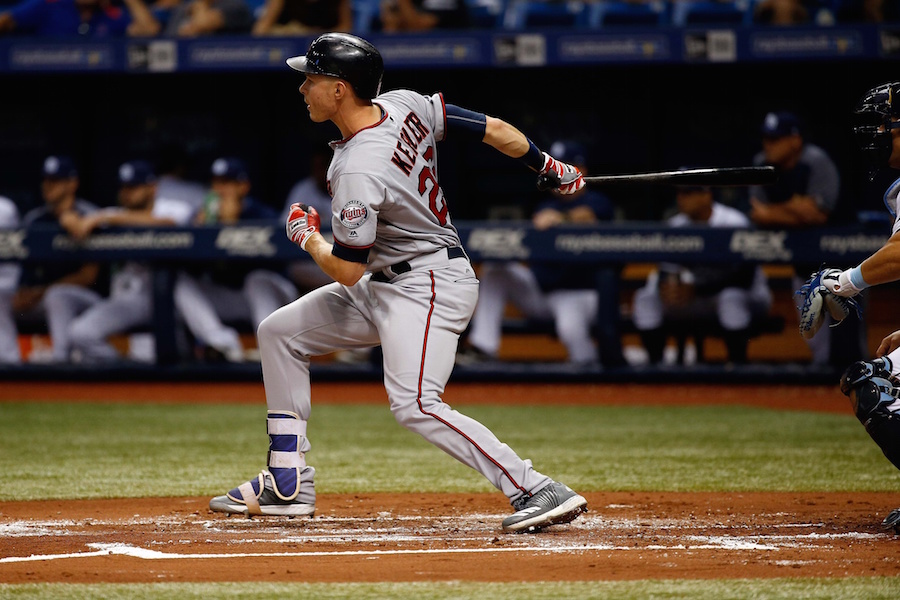 Projected Starter: Max Kepler Likely Backup: Robbie Grossman Depth: Eddie Rosario, Jake Cave, Zack Granite Prospects: Alex Kirilloff, Akil Baddoo, Jaylin Davis THE GOOD Following a strong rookie showing as a 23-year-old in 2016, Kepler maintained in his sophomore season. Holding down right field from start to finish, he posted a .243/.312/.425 slash line with 19 home runs, 32 doubles, and six steals on seven tries. Sure, stagnation isn't great – Kepler's 96 OPS+ in 2017 was identical to his 2016 mark – but it's much better than regression, which is common for a second-year big-leaguer. The last time Kepler turned in consecutive seasons with such similar production was 2013 and 2014, between two levels of A-ball. At age 20 he registered a .736 OPS in Cedar Rapids, and he followed with a .726 OPS in Ft. Myers at 21. The next year was his big breakout, when Kepler put himself on the top prospect map by slashing a ridiculous .322/.416/.531 at Chattanooga to earn Southern League MVP honors. From an optimist's standpoint, the outfielder's minor-league track record could also be instructive with regard to his progression against left-handed pitching. No, he was not good in 2017 – and we'll get to that shortly – but Kepler also endured massive struggles against southpaws in Low-A (.365 OPS with the Kernels) before taking a step forward at High-A (.691 OPS with the Miracle) and turning the corner at Double-A (.893 OPS with the Lookouts). Kepler has always been a bit of a gradual adjuster; perfectly understandable for a player who signed at age 16 out of a continent that rarely produces major leaguers. He has barely crested 1,000 plate appearances in the majors, and turned 25 in February. His history points to there remaining growth potential, both against same-sided pitchers and offensively in general. On the defensive side, Kepler did make some significant strides last year. After a mistake-prone rookie campaign he cut down his error total from seven to two, while also improving his range metrics. Kepler even made eight starts in center and held his own. If he were to go down with an injury, Robbie Grossman would be in line to take over. Eddie Rosario could also move over from left, with Grossman or Zack Granite taking over in left. Some argue that Kepler and Rosario are best suited for a position swap, since Eddie has a better arm and covers less ground, but the difference isn't huge. In the larger scheme, the Twins have one bona fide right field prospect in their system, and at a glance you might confuse him with the current MLB occupant. Alex Kirilloff has an athletic build and sweet lefty swing that are both remindful of Kepler, though scouts see more power in his frame, which is noticeably bigger this spring after a year off due to Tommy John surgery. We'll be curious to see how Twins Daily's No. 5 prospect fares in his return to the field this year. But even with a strong showing back on the scene, Kirilloff is at least two or three years away, so the position belongs to Kepler for the foreseeable future. THE BAD Will it belong only to Kepler? Unless he can turn around his abysmal performance against lefties, the 25-year-old could be in line for a timeshare. Kepler did not fare well against portsiders as a rookie, hitting .203/.273/.322 in 2016, but last year it really got ugly as he dropped to .152/.213/.240. That kind of ineptitude will make it difficult to write his name in against lefty starters, potentially leading to a reduction in his 568 plate appearances from 2017. MLB right fielders posted a .798 OPS last season, second-highest of any position behind first base. That places Kepler, who finished at .737, well below average. If you could keep his .828 OPS versus righties, and plug in a platoon mate, you'd have yourself an admirable solution at the position. But unfortunately, the Twins lack viable candidates for such a setup at the moment. Grossman, a switch-hitter and Kepler's primary backup, went just .238/.376/.320 versus southpaws last year, though he did put up a .994 OPS against them in 2016. Fellow backup options Jake Cave and Zack Granite also swing from the left side, as does near-ready prospect LaMonte Wade. Ideally, the Twins would have a lefty-mashing corner outfielder on hand, but they didn't add one and perhaps that is by design. Kepler still has a chance to be a quality everyday player. He just may not have a ton more time to prove it. THE BOTTOM LINE Extreme platoon splits throw his ongoing status as an everyday player into question, but Kepler is a good outfielder whose ability to do damage against right-handers is not in doubt. He should get at least one more season to show he can right the ship against southpaws, and there's ample reason to believe he will. Even if the Twins end up adding a righty swinger to complement him at some point, Kepler will get the lion's share of playing time. He combines with Eddie Rosario and Byron Buxton to give Minnesota a trio capable of sticking together for the next several years. Few franchises in the game can boast a better all-around outlook in the outfield. ~~~ Catch up on the rest of the series: Twins Daily Position Analysis: Catcher Twins Daily Position Analysis: First Base Twins Daily Position Analysis: Second Base Twins Daily Position Analysis: Third Base Twins Daily Position Analysis: Shortstop Twins Daily Position Analysis: Left Field Twins Daily Position Analysis: Center Field
 -
It comes down to this. What we saw last year was Escobar at his absolute offensive ceiling... we can all agree with that, right? And his defense at short clearly lags way behind Adrianza. Well, Escobar is one year removed from being a worse hitter than Adrianza, and he’s a year older. How far does the offensive gap need to close before they pass each other in value?
-
What Escobar was billed as 5-6 years ago isn't especially relevant today. He's not the same player at 29 as he was at 23 when the Twins got him. I'm mystified that you think those articles you linked are pertinent in 2018. Don't get me wrong, I like Esco, and argued in the past that he should get more of a shot at SS. But things change. He played poorly at the position in his most recent extensive time, and as a result the Twins became less comfortable using him there. That's why he made only a dozen starts at SS last year despite Polanco's massive struggles for much of the first half, and why I suspect Adrianza will get a lot of chances in Jorge's absence. We're all aware that Adrianza does not have a strong offensive track record, and that he needs to start driving the ball with more authority. But his K-rate would rank among the lowest in the majors and he's got some palpable momentum at the plate for probably the first time in his career. It's reasonable to dream a little.
