



Nick Nelson
-
Posts
8,326 -
Joined
-
Last visited
-
Days Won
56
Content Type
Profiles
News
Minnesota Twins Videos
2026 Minnesota Twins Top Prospects Ranking
2022 Minnesota Twins Draft Picks
Minnesota Twins Free Agent & Trade Rumors, Notes, & Tidbits
Guides & Resources
2023 Minnesota Twins Draft Picks
The Minnesota Twins Players Project
2024 Minnesota Twins Draft Picks
2025 Minnesota Twins Draft Pick Tracker
2026 Minnesota Twins Draft Tracker: Picks & Bonuses
Forums
Blogs
Events
Store
Downloads
Gallery
Everything posted by Nick Nelson
-
 When a vaunted young player arrives in the major leagues and initially struggles, it's easy – perhaps even automatic – to jump to an inescapable conclusion: He was rushed. ... Was he though?Jose Berrios arrived in the majors in 2016 at age 22. He went on to post an 8.02 ERA in 14 starts as a Twin. Must have been rushed. Byron Buxton reached the big leagues a year earlier in 2015, at age 21. He posted a brutal .576 OPS in 46 games with Minnesota. Had to be rushed. And last season, as Jorge Polanco slogged his way to the end of July, one of the worst hitters in baseball, we all found ourselves wondering: Should the 23-year-old really be playing at the highest level right now? (Not that the Twins had any choice in that case.) The "rushed" narrative is convenient. But not always accurate. Here's the problem: You send any of those guys back to Triple-A at the time they're flailing in the major leagues, and they dominate. Often to the point where you stop seeing any benefit. Buxton is a .331 career hitter at Triple-A. What's he learning if you send him back there? Minor-league batters waved at everything Berrios threw. How's he going to improve his command when 10 inches off the plate works perfectly well? Would Polanco have had the same epiphany last August if he hadn't endured the humbling stretch of failure that led up to it? These case studies hint toward a universal truth: Sometimes, the only way to become a successful big-leaguer is by working through your lumps in The Show. For a team like the Twins, deep into its rebuild-from-within, this presents a paradox. An Inefficient Market The immense value of an effective young starting pitcher in today's game is difficult to overstate. Successfully develop your own quality rotation staple, and you get optional control over (roughly) ages 24-through-30, most likely the best years his arm will ever see. All for a bit more than Jordan Zimmermann will earn this year alone in Detroit at age 32. Baseball's economics are out of whack, if you haven't noticed. If this was an elephant in the room, then the beast has now emerged into the sunlight. There's a reason Lance Lynn and Alex Cobb continue to wallow in free agency, their demands unmet. There's a reason the Rays are able to command a kingly sum for Chris Archer. Teams are finally seeing the lopsided value chasm across the free agency divide. Or at least, they're finally awakening to the extreme financial implications. My point here is that the Twins have every incentive to find out if Gonsalves or Romero – or Zack Littell, or Lewis Thorpe, or any number of other candidates – can become one of those treasured cheap young rotation staples. But finding out will require enduring some pain. Fits and Starts A few years ago, Peyton Manning retired with the most passing yards and touchdowns in NFL history. Nearly two decades prior, as a 22-year-old rookie, he threw a league-leading 28 interceptions as Colts fans endured a 3-13 death march. In many cases, even the greats require seasoning at the highest level to reach their potential. Not everyone is LeBron James or Randy Moss or Madison Bumgarner. It's unlikely such a rare specimen is currently in the Twins system. They have do have a number of guys capable of becoming quality big-league arms – perhaps even All-Stars. But history tells us it won't happen right away. Look back at virtually any big-name Minnesota pitcher you can think of from the past two decades – Francisco Liriano, Matt Garza, Johan Santana, Brad Radke – they all finished with ERAs over 5 in their first MLB seasons. They call the pitching mound a "hill" partially because of its shapely resemblance, but also because reaching the top can be a strenuous climb. Trouble with the Curves Gonsalves is going to open this season in Rochester. Romero is likely ticketed for Chattanooga, but with two dozen starts already under his belt there, he'll move up quickly. They're both still only 23, but Minnesota's top two pitching prospects could be making cases for promotions by July or so. We'll undoubtedly start hearing calls for them if anyone in the Twins rotation isn't pulling his weight. At that point, Twins decision-makers will need to weigh some difficult considerations. Do you leave these talented hurlers down on the farm, even if they're mowing down the International League, knowing the likely outcome of a call-up? There's always something to work on, always something to improve. Nothing wrong with waiting another year until they're 24 and a bit more refined, right? The problem here is that you might only be delaying the inevitable: a date with MLB's harsh learning curve. And there's another curve to think about here: aging. Pitchers generally experience their best years earlier than hitters. Velocity trends downward pretty much after age 20. If Gonsalves and Romero are healthy and throwing hard this summer, you don't necessarily want to waste a bunch of their bullets in the minors. Derek Falvey's analytically-minded pitching brain trust has access to far more data than me, and I trust them to take it seriously. It will be interesting to see how these realities weigh against a variety of other factors – a team in contention, a potentially crowded rotation scenario following returns of Ervin Santana and Trevor May, the unique ability of a stud like Romero to impact a division race if he can buck the trend and succeed immediately. Sometimes, you've gotta rush a little to get where you're going on time. Click here to view the article
- 52 replies
-
- 2
-

-
- jose berrios
- fernando romero
- (and 1 more)
-
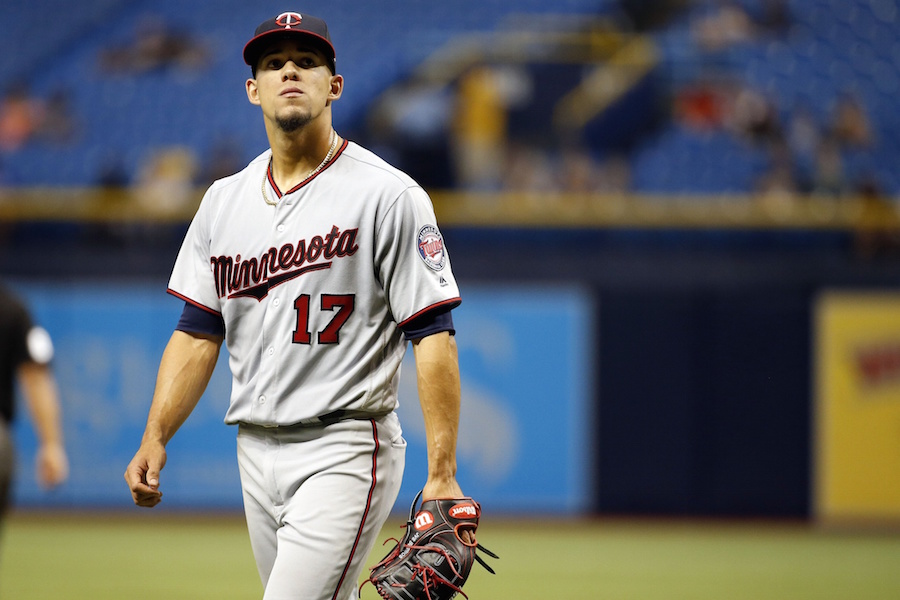 Jose Berrios arrived in the majors in 2016 at age 22. He went on to post an 8.02 ERA in 14 starts as a Twin. Must have been rushed. Byron Buxton reached the big leagues a year earlier in 2015, at age 21. He posted a brutal .576 OPS in 46 games with Minnesota. Had to be rushed. And last season, as Jorge Polanco slogged his way to the end of July, one of the worst hitters in baseball, we all found ourselves wondering: Should the 23-year-old really be playing at the highest level right now? (Not that the Twins had any choice in that case.) The "rushed" narrative is convenient. But not always accurate. Here's the problem: You send any of those guys back to Triple-A at the time they're flailing in the major leagues, and they dominate. Often to the point where you stop seeing any benefit. Buxton is a .331 career hitter at Triple-A. What's he learning if you send him back there? Minor-league batters waved at everything Berrios threw. How's he going to improve his command when 10 inches off the plate works perfectly well? Would Polanco have had the same epiphany last August if he hadn't endured the humbling stretch of failure that led up to it? These case studies hint toward a universal truth: Sometimes, the only way to become a successful big-leaguer is by working through your lumps in The Show. For a team like the Twins, deep into its rebuild-from-within, this presents a paradox. An Inefficient Market The immense value of an effective young starting pitcher in today's game is difficult to overstate. Successfully develop your own quality rotation staple, and you get optional control over (roughly) ages 24-through-30, most likely the best years his arm will ever see. All for a bit more than Jordan Zimmermann will earn this year alone in Detroit at age 32. Baseball's economics are out of whack, if you haven't noticed. If this was an elephant in the room, then the beast has now emerged into the sunlight. There's a reason Lance Lynn and Alex Cobb continue to wallow in free agency, their demands unmet. There's a reason the Rays are able to command a kingly sum for Chris Archer. Teams are finally seeing the lopsided value chasm across the free agency divide. Or at least, they're finally awakening to the extreme financial implications. My point here is that the Twins have every incentive to find out if Gonsalves or Romero – or Zack Littell, or Lewis Thorpe, or any number of other candidates – can become one of those treasured cheap young rotation staples. But finding out will require enduring some pain. Fits and Starts A few years ago, Peyton Manning retired with the most passing yards and touchdowns in NFL history. Nearly two decades prior, as a 22-year-old rookie, he threw a league-leading 28 interceptions as Colts fans endured a 3-13 death march. In many cases, even the greats require seasoning at the highest level to reach their potential. Not everyone is LeBron James or Randy Moss or Madison Bumgarner. It's unlikely such a rare specimen is currently in the Twins system. They have do have a number of guys capable of becoming quality big-league arms – perhaps even All-Stars. But history tells us it won't happen right away. Look back at virtually any big-name Minnesota pitcher you can think of from the past two decades – Francisco Liriano, Matt Garza, Johan Santana, Brad Radke – they all finished with ERAs over 5 in their first MLB seasons. They call the pitching mound a "hill" partially because of its shapely resemblance, but also because reaching the top can be a strenuous climb. Trouble with the Curves Gonsalves is going to open this season in Rochester. Romero is likely ticketed for Chattanooga, but with two dozen starts already under his belt there, he'll move up quickly. They're both still only 23, but Minnesota's top two pitching prospects could be making cases for promotions by July or so. We'll undoubtedly start hearing calls for them if anyone in the Twins rotation isn't pulling his weight. At that point, Twins decision-makers will need to weigh some difficult considerations. Do you leave these talented hurlers down on the farm, even if they're mowing down the International League, knowing the likely outcome of a call-up? There's always something to work on, always something to improve. Nothing wrong with waiting another year until they're 24 and a bit more refined, right? The problem here is that you might only be delaying the inevitable: a date with MLB's harsh learning curve. And there's another curve to think about here: aging. Pitchers generally experience their best years earlier than hitters. Velocity trends downward pretty much after age 20. If Gonsalves and Romero are healthy and throwing hard this summer, you don't necessarily want to waste a bunch of their bullets in the minors. Derek Falvey's analytically-minded pitching brain trust has access to far more data than me, and I trust them to take it seriously. It will be interesting to see how these realities weigh against a variety of other factors – a team in contention, a potentially crowded rotation scenario following returns of Ervin Santana and Trevor May, the unique ability of a stud like Romero to impact a division race if he can buck the trend and succeed immediately. Sometimes, you've gotta rush a little to get where you're going on time.
 -
Article: Twins To Sign DH Logan Morrison
Nick Nelson replied to Seth Stohs's topic in Twins Daily Front Page News
So with LoMo added, here's how the Twins could maybe line up against RHP: 1. Dozier 2. Mauer 3. Buxton 4. Morrison 5. Sano 6. Rosario 7. Kepler 8. Polanco 9. Castro And they'll have tons of flexibility for subs against lefties, or late in games, with three switch-hitters on the bench. Molitor's going to have a lot to work with offensively this year. -
Article: Twins To Sign DH Logan Morrison
Nick Nelson replied to Seth Stohs's topic in Twins Daily Front Page News
Yep, MLB's StatCast guy Daren Willman posted Morrison's HR spray chart overlaid at Target Field. Almost all of them would've been well beyond the fence. -
Article: Twins To Sign DH Logan Morrison
Nick Nelson replied to Seth Stohs's topic in Twins Daily Front Page News
Kennys Vargas, we hardly knew ye. For anyone interested, here are all of Morrison's 38 home runs in 2017. You can see him launch a pair of majestic bombs at Target Field (both off lefty Hector Santiago) a bit after the 3-minute mark: https://youtu.be/XzETJ1cFmiQ -
He was right on the fringe of our list. I believe a couple of us had him in the Top 20.
-
Over the past few weeks, we've counted down our choices for the Top 20 Minnesota Twins Prospects of 2018. Today, we'll recap our rankings and review in search of trends and takeaways.When recapping last year's list, I had to point out that we'd all been very spoiled by the likes of Byron Buxton, Miguel Sano and Jose Berrios anchoring the front of Minnesota's prospect rankings. With all these heralded young studs graduating to the majors, the system didn't offer quite the same palpable excitement. This was reflected in national rankings: Baseball America's organizational talent rankings dropped the Twins from second in 2015 to 10th in 2016 to 22nd in 2017. Baseball Prospectus also had them 22nd last year, a freefall from seventh in '16. Well, I think we can safely say that after some positive developments, including an excellent draft aided by the pole position in each round, Minnesota's pipeline is full of intrigue, and perhaps ready to spoil us once again. BA now has the Twins back up to 12th in its rankings. BP bumped them up from 22nd to 10th. ESPN's Keith Law never soured as much as others, ranking them 11th last year, but he too views theirs as a Top 10 system in the game. We have a consensus: the collective minor-league talent in this organization is solidly above average. And given that there's so much youth and upside permeating the list, an ascent to the highest tier could be in the offing. Let's unpack what this group tells us about the franchise's future. First, here's a recap of our Top 20 Twins prospect rankings, with links and synopses: 20. Felix Jorge, RHP: Polished and near-ready, but ceiling is 4th/5th starter in MLB 19. Tyler Jay, LHP: Shook off grave health concerns in AFL, but needs to keep it going 18. Yunior Severino, 2B: Switch-hitting teenage infielder offers long-term promise with bat 17. Travis Blankenhorn, 2B/3B: Stock down a bit, but big year would put him back on map 16. Ben Rortvedt, C: Quality receiver will jump into Top 10 if he can find it at the plate 15. Mitch Garver, C: Accomplished minor-leaguer must now prove bat and glove are legit 14. LaMonte Wade, OF: OBP machine must add pop to project as more than 4th OF 13. Lewin Diaz, 1B: Power potential is evident, but yet to manifest and clock's ticking 12. Lewis Thorpe, LHP: Returned strong from 2-year absence; would move fast as RP 11. Zack Littell, RHP: Lacks dominant stuff, but floor is backend SP or swingman in MLB 10. Akil Baddoo, OF: Muscle-bound teen will be a beast if he keeps developing hit tool 9. Brusdar Graterol, RHP: Blew away hitters in rookie ball last year, touching triple digits 8. Blayne Enlow, RHP: Premier curveball and projectible frame point to ace upside 7. Brent Rooker, OF: Studious batsman has makings of a middle-of-lineup thumper 6. Wander Javier, SS: Possesses tools to become a two-way star at short if it all gels 5. Alex Kirilloff, OF: Ready to remind us of his offensive capabilities after a year off 4. Stephen Gonsalves, LHP: We'll learn soon if lefty's brilliance in minors can translate 3. Nick Gordon, SS: Floor is a solid big-league regular at 2B, but ceiling in question 2. Fernando Romero, RHP: Only pitcher over 20 in MN's system with legit ace potential 1. Royce Lewis, SS: At 18, phenom offers rare combo of elite athleticism, skills, makeup POSITIONAL BREAKDOWN Catchers: 2 Infielders: 6 Outfielders: 4 RH Pitchers: 5 LH Pitchers: 3 Although the overall group has changed quite a bit since a year ago, the positional composition hasn't much. Out: shortstop Engelb Vielma. In: another one in Lewis. Out: right-handers Justin Haley, Nick Burdi, J.T. Chargois and Kohl Stewart. In: three more in Littell, Enlow and Graterol. There's a good sustaining balance in this system, but the notable area of concern is catcher. Garver will lose his prospect status with 48 more PAs in the majors. Rortvedt is 20 and raw. It would be helpful if David Banuelos, acquired from the Mariners for unneeded international cap money in a savvy December trade, could work his way onto next year's list. THE GREAT UNKNOWN One of the best parts about this collection of players is that you can really dream on it. Such youth and promise. But that's also the sticking point; so many of these kids haven't truly been challenged yet at the higher levels. Six players in this year's Top 20 are in their teens. The No. 1 pitching prospect (Romero) has thrown only 300 professional innings, while Nos. 3, 4 and 6 (Enlow, Graterol, Thorpe) have thrown fewer than that combined. Lots of young players look good in rookie ball and Single-A, only to fizzle on the advanced proving grounds thereafter. So, burnout risk weighs heavier than usual here. But when you see what guys like Lewis and Javier and Enlow are doing, at such early stages of development, it's impossible not to dream big. INJURY BUG REMOVAL? Injuries are a reality of the game. No organization avoids their pernicious sting. However, it sure feels like the Twins have been dealt an especially bad hand. Romero and Thorpe have both lost two full consecutive seasons. Kirilloff became the second Twins position player and Top-5 prospect to require Tommy John surgery within a span of three years. As recently as late last summer, it was looking like Jay – two years removed from being drafted sixth overall – might be ruined by shoulder issues. This system is about due for some good fortune with health, and not just because of a karmic swing. Pitchers don't often need TJ surgery twice, so one would hope Romero, Thorpe and Graterol are in the clear with their reconstructed elbows. (No assurances, of course.) Perennial DL denizens Burdi and Chargois (?) have moved on from the organization. Pretty much everyone on this list is presently trending in a good direction physically, and while that can change in a hurry, it's a nice feeling. PITCHER PARADE Why have the Twins been so reluctant to sign a free agent pitcher to a long-term deal? It might have something to do with the waves of young arms slated to come ashore over the next few several years. Here's when the eight pitchers on this list are expected to reach the majors, per our ETAs: 2018: Romero, Gonsalves, Littell, Jay, Jorge 2019: Thorpe 2021: Enlow, Graterol Five of Minnesota's top eight pitching prospects have realistic shots at pitching in the majors this year (Jorge already has), and even Thorpe isn't out of the question. Enlow and Graterol form a high-upside duo for the future and will surely be joined by other rising hurlers. No, these guys won't all be good right away – maybe none of them will – but they need innings to develop in the majors and that must be accounted for. FINAL THOUGHTS Not long ago, the Twins had the consensus No. 1 prospect in all of baseball. It would be no surprise to anyone paying attention if Lewis soon joined Buxton (and Mauer before them) in earning that distinction. Some would say it's hard to miss with the first or second pick in the entire draft, but plenty of teams have managed. Frankly I'd be satisfied solely with the exhilaration of getting to watch Lewis unleashed in his first full pro season, but this system offers so many more enthralling storylines. Are Romero and Gonsalves about ready to provide the internal boost this rotation badly needs? Will Kirilloff and Javier go from sleepers to sensations as they bring their vaunted games to Single-A? What might we see from the lefty arms of Thorpe and Jay if they can stay healthy for a full summer? Could Rooker make it to Minnesota this year? I can't wait to follow this group into 2018 and beyond. High-risk/high-reward would be a fair assessment, but at this time of year it's only natural to focus on the latter. Click here to view the article
-
 When recapping last year's list, I had to point out that we'd all been very spoiled by the likes of Byron Buxton, Miguel Sano and Jose Berrios anchoring the front of Minnesota's prospect rankings. With all these heralded young studs graduating to the majors, the system didn't offer quite the same palpable excitement. This was reflected in national rankings: Baseball America's organizational talent rankings dropped the Twins from second in 2015 to 10th in 2016 to 22nd in 2017. Baseball Prospectus also had them 22nd last year, a freefall from seventh in '16. Well, I think we can safely say that after some positive developments, including an excellent draft aided by the pole position in each round, Minnesota's pipeline is full of intrigue, and perhaps ready to spoil us once again. BA now has the Twins back up to 12th in its rankings. BP bumped them up from 22nd to 10th. ESPN's Keith Law never soured as much as others, ranking them 11th last year, but he too views theirs as a Top 10 system in the game. We have a consensus: the collective minor-league talent in this organization is solidly above average. And given that there's so much youth and upside permeating the list, an ascent to the highest tier could be in the offing. Let's unpack what this group tells us about the franchise's future. First, here's a recap of our Top 20 Twins prospect rankings, with links and synopses: 20. Felix Jorge, RHP: Polished and near-ready, but ceiling is 4th/5th starter in MLB 19. Tyler Jay, LHP: Shook off grave health concerns in AFL, but needs to keep it going 18. Yunior Severino, 2B: Switch-hitting teenage infielder offers long-term promise with bat 17. Travis Blankenhorn, 2B/3B: Stock down a bit, but big year would put him back on map 16. Ben Rortvedt, C: Quality receiver will jump into Top 10 if he can find it at the plate 15. Mitch Garver, C: Accomplished minor-leaguer must now prove bat and glove are legit 14. LaMonte Wade, OF: OBP machine must add pop to project as more than 4th OF 13. Lewin Diaz, 1B: Power potential is evident, but yet to manifest and clock's ticking 12. Lewis Thorpe, LHP: Returned strong from 2-year absence; would move fast as RP 11. Zack Littell, RHP: Lacks dominant stuff, but floor is backend SP or swingman in MLB 10. Akil Baddoo, OF: Muscle-bound teen will be a beast if he keeps developing hit tool 9. Brusdar Graterol, RHP: Blew away hitters in rookie ball last year, touching triple digits 8. Blayne Enlow, RHP: Premier curveball and projectible frame point to ace upside 7. Brent Rooker, OF: Studious batsman has makings of a middle-of-lineup thumper 6. Wander Javier, SS: Possesses tools to become a two-way star at short if it all gels 5. Alex Kirilloff, OF: Ready to remind us of his offensive capabilities after a year off 4. Stephen Gonsalves, LHP: We'll learn soon if lefty's brilliance in minors can translate 3. Nick Gordon, SS: Floor is a solid big-league regular at 2B, but ceiling in question 2. Fernando Romero, RHP: Only pitcher over 20 in MN's system with legit ace potential 1. Royce Lewis, SS: At 18, phenom offers rare combo of elite athleticism, skills, makeup POSITIONAL BREAKDOWN Catchers: 2 Infielders: 6 Outfielders: 4 RH Pitchers: 5 LH Pitchers: 3 Although the overall group has changed quite a bit since a year ago, the positional composition hasn't much. Out: shortstop Engelb Vielma. In: another one in Lewis. Out: right-handers Justin Haley, Nick Burdi, J.T. Chargois and Kohl Stewart. In: three more in Littell, Enlow and Graterol. There's a good sustaining balance in this system, but the notable area of concern is catcher. Garver will lose his prospect status with 48 more PAs in the majors. Rortvedt is 20 and raw. It would be helpful if David Banuelos, acquired from the Mariners for unneeded international cap money in a savvy December trade, could work his way onto next year's list. THE GREAT UNKNOWN One of the best parts about this collection of players is that you can really dream on it. Such youth and promise. But that's also the sticking point; so many of these kids haven't truly been challenged yet at the higher levels. Six players in this year's Top 20 are in their teens. The No. 1 pitching prospect (Romero) has thrown only 300 professional innings, while Nos. 3, 4 and 6 (Enlow, Graterol, Thorpe) have thrown fewer than that combined. Lots of young players look good in rookie ball and Single-A, only to fizzle on the advanced proving grounds thereafter. So, burnout risk weighs heavier than usual here. But when you see what guys like Lewis and Javier and Enlow are doing, at such early stages of development, it's impossible not to dream big. INJURY BUG REMOVAL? Injuries are a reality of the game. No organization avoids their pernicious sting. However, it sure feels like the Twins have been dealt an especially bad hand. Romero and Thorpe have both lost two full consecutive seasons. Kirilloff became the second Twins position player and Top-5 prospect to require Tommy John surgery within a span of three years. As recently as late last summer, it was looking like Jay – two years removed from being drafted sixth overall – might be ruined by shoulder issues. This system is about due for some good fortune with health, and not just because of a karmic swing. Pitchers don't often need TJ surgery twice, so one would hope Romero, Thorpe and Graterol are in the clear with their reconstructed elbows. (No assurances, of course.) Perennial DL denizens Burdi and Chargois (?) have moved on from the organization. Pretty much everyone on this list is presently trending in a good direction physically, and while that can change in a hurry, it's a nice feeling. PITCHER PARADE Why have the Twins been so reluctant to sign a free agent pitcher to a long-term deal? It might have something to do with the waves of young arms slated to come ashore over the next few several years. Here's when the eight pitchers on this list are expected to reach the majors, per our ETAs: 2018: Romero, Gonsalves, Littell, Jay, Jorge 2019: Thorpe 2021: Enlow, Graterol Five of Minnesota's top eight pitching prospects have realistic shots at pitching in the majors this year (Jorge already has), and even Thorpe isn't out of the question. Enlow and Graterol form a high-upside duo for the future and will surely be joined by other rising hurlers. No, these guys won't all be good right away – maybe none of them will – but they need innings to develop in the majors and that must be accounted for. FINAL THOUGHTS Not long ago, the Twins had the consensus No. 1 prospect in all of baseball. It would be no surprise to anyone paying attention if Lewis soon joined Buxton (and Mauer before them) in earning that distinction. Some would say it's hard to miss with the first or second pick in the entire draft, but plenty of teams have managed. Frankly I'd be satisfied solely with the exhilaration of getting to watch Lewis unleashed in his first full pro season, but this system offers so many more enthralling storylines. Are Romero and Gonsalves about ready to provide the internal boost this rotation badly needs? Will Kirilloff and Javier go from sleepers to sensations as they bring their vaunted games to Single-A? What might we see from the lefty arms of Thorpe and Jay if they can stay healthy for a full summer? Could Rooker make it to Minnesota this year? I can't wait to follow this group into 2018 and beyond. High-risk/high-reward would be a fair assessment, but at this time of year it's only natural to focus on the latter.
 -
It says a lot about Royce Lewis that he could probably write this profile about himself and it would be more accurate – encompassing all the good and bad – than anything I could hope to draft. Mature, wise, and self-aware beyond his years, Lewis possesses an extremely rare makeup that has many people (including myself) convinced he'll harness his incredible talent and turn into a big-league star. It's only a matter of when.Age: 18 (DOB: 6/5/99) 2017 Stats (Rookie/Low-A): 239 PA, .279/.381/.407, 4 HR, 27 RBI ETA: 2020 2017 Ranking: NA National Top 100 Rankings BA: 24 | MLB: 20 | ESPN: 25 | BP: 27 What's To Like It's tough to weigh things like disposition and character in prospect evaluations, especially from afar. Clearly they matter, but to to what extent? And how can you really quantify such intangible and subjective qualities? It's easier to focus on the concrete and palpable: skills, athleticism, body type. And in each of these areas, Lewis grades out beautifully. But you can't really talk about him as a player without mentioning his striking composure. You can plainly see from watching him talk that the 18-year-old, not a year removed from high school, is unusually sharp and eloquent for his age. He was invited to appear at TwinsFest in January, a rarity for freshly drafted teenagers but a no-brainer in his case. Upon being selected first overall last June, he stashed his $6.7 million signing bonus in a trust fund, opting to live off his modest minor-league wage and foregoing the typical flashy celebratory splurge. “This guy has a chance to change a franchise with his personality and charisma,” said Twins scouting director Sean Johnson upon selecting Lewis. “He’s a magnet. People want to be around him.” Count Lewis's first manager in the system, Ramon Borrego, as a believer. Er, unbeliever. “He’s unbelievable," said the Gulf Coast League skipper. "He knows how to focus. The good thing about him, is he’s very humble. This kid is different." Personality. Charisma. Focus. Humility. These are good traits in that they project a leader and high-caliber clubhouse presence. But they're also overprescribed and, at times, overblown. It's about what you can do on the field. Fortunately, Lewis's intellect and acumen extend there as well. He's lauded for his baseball IQ, grasping the game's complexities naturally. He recognizes his own weaknesses and limitations in a way you don't often see. When you ask around, you hear the same thing about Lewis repeatedly: He gets it. He's not presumptive or entitled, and anyone can see it. He's also a realist: "They told me to play at short until I prove I can't," Lewis said last month, candidly adding: "I know I can always transition to center field and play at a high level." Regardless of where he ends up defensively, he figures to be an asset with his top-end speed (he's no Byron Buxton, but he's not that far off) and smooth movements. Lewis's hitting tools are advanced, which was made obvious by his bat's seamless entry into the pro ranks. Lewis posted an .803 OPS in the GCL, with more walks than strikeouts, and impressed the organization so much he was promoted straight to Cedar Rapids in August. He ended up being the third-youngest player to take an AB in the Midwest League. Despite facing opponents nearly three years older on average, Lewis more than held his own, batting .296/.363/.394. He finished 18-for-21 on stolen bases between the two levels. The No. 1 pick is a speedy, selective, disciplined contact hitter, and prospect analysts are unanimous in believing that more power – perhaps much more – is on the way as he fills out. Once that element of his game arrives, Lewis could become the true embodiment of a five-tool player. What's Left To Work On Adding muscle mass will be a key area of focus in the next couple of seasons. Lewis checked in last year at 6'2" and under 190 lbs. "I feel like I haven't grown into any of my man strength yet," as he puts it. He's already well on his way to bulking up, having reportedly added around 15 pounds in the offseason. It would be no surprise to see a rapid uptick in power, which would place him on a mind-boggling trajectory offensively. The more interesting thing to track right now is his defensive development. The Cali native didn't play shortstop until his senior year of high school, and was – according to ESPN's Keith Law – "well-below-average" at the position as a prep. Lewis showed reasonably well at short in his pro debut, but the jury is out, to say the least. If his efforts in the weight room lead to improved arm strength, that could change this outlook. What's Next? "I'm patient. I'm still only 18 and don't turn 19 until June." More astute words from the man himself. Patience is warranted. Lewis is the best player on our Top 20 list but also the youngest. He finds himself on the fast track after tackling Low-A within three months of being drafted, but the Twins will probably take it somewhat slow with him, even if he forces the issue on his end. For comparison, Buxton – who hardly could have performed better during his rapid ascent through the minors – didn't reach the majors until three years and eight days after his draft date. That same timeline would put Lewis in a Twins uniform around June of 2020. However, Lewis is already ahead of Buxton's pace, and Buck also lost nearly an entire season in the minors to injury. So, who knows. Right now Lewis has a fair shot at beating the precedent set by Buxton, and possibly even fellow first overall pick Joe Mauer, who first donned a Minnesota uniform at age 20, on the third Opening Day after he was drafted. If Lewis remains on a fast track and moves to center along the way, as many expect, it's going to create an interesting dilemma given Buxton's presence. But that's a dilemma the Twins will be happy to have on their hands. TD Top Prospects: 16-20 TD Top Prospects: 11-15 TD Top Prospect: #10 Akil Baddoo TD Top Prospect: #9 Brusdar Graterol TD Top Prospects: #8 Blayne Enlow TD Top Prospects: #7 Brent Rooker TD Top Prospects: #6 Wander Javier TD Top Prospects: #5 Alex Kirilloff TD Top Prospects: #4 Stephen Gonsalves TD Top Prospects: #3 Nick Gordon TD Top Prospects: #2 Fernando Romero TD Top Prospects: #1 Royce Lewis Click here to view the article
-
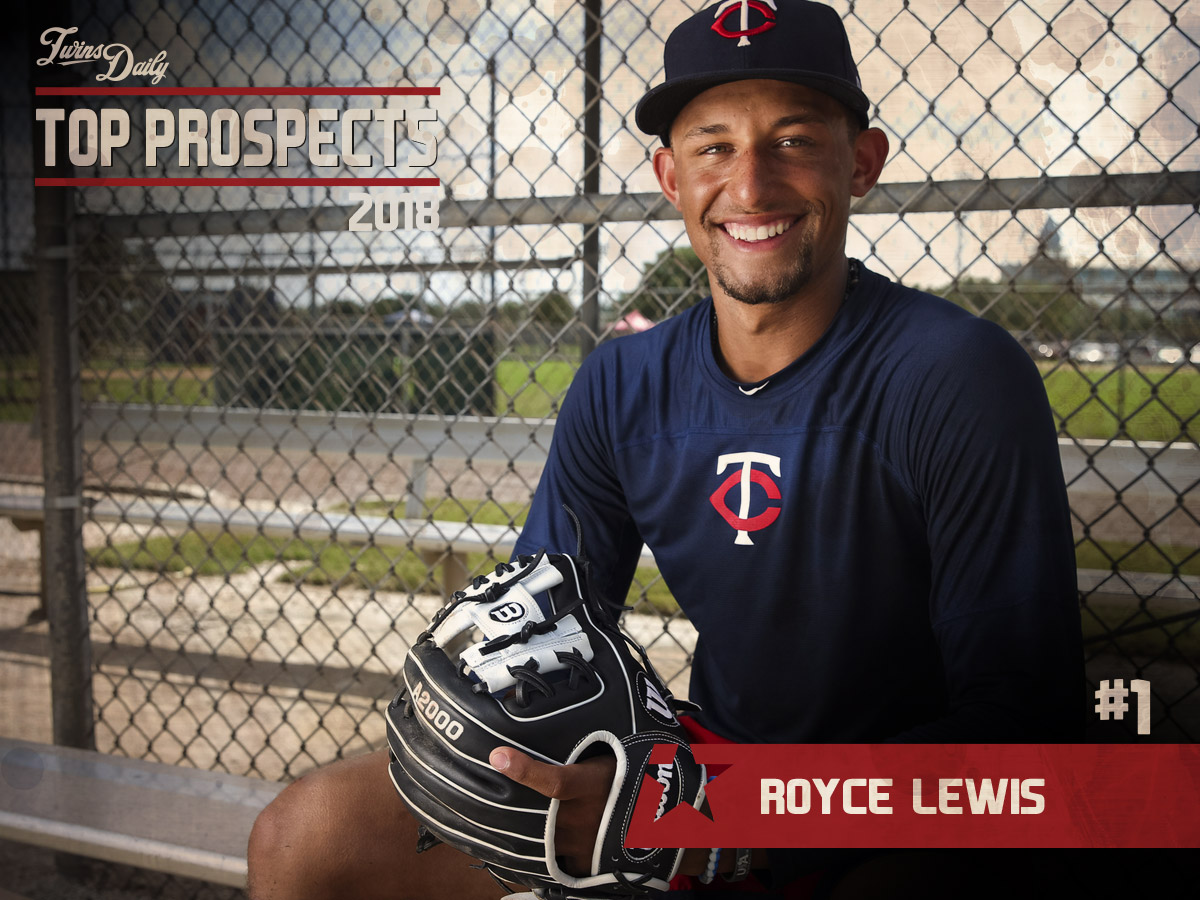 Age: 18 (DOB: 6/5/99) 2017 Stats (Rookie/Low-A): 239 PA, .279/.381/.407, 4 HR, 27 RBI ETA: 2020 2017 Ranking: NA National Top 100 Rankings BA: 24 | MLB: 20 | ESPN: 25 | BP: 27 What's To Like It's tough to weigh things like disposition and character in prospect evaluations, especially from afar. Clearly they matter, but to to what extent? And how can you really quantify such intangible and subjective qualities? It's easier to focus on the concrete and palpable: skills, athleticism, body type. And in each of these areas, Lewis grades out beautifully. But you can't really talk about him as a player without mentioning his striking composure. You can plainly see from watching him talk that the 18-year-old, not a year removed from high school, is unusually sharp and eloquent for his age. He was invited to appear at TwinsFest in January, a rarity for freshly drafted teenagers but a no-brainer in his case. Upon being selected first overall last June, he stashed his $6.7 million signing bonus in a trust fund, opting to live off his modest minor-league wage and foregoing the typical flashy celebratory splurge. “This guy has a chance to change a franchise with his personality and charisma,” said Twins scouting director Sean Johnson upon selecting Lewis. “He’s a magnet. People want to be around him.” Count Lewis's first manager in the system, Ramon Borrego, as a believer. Er, unbeliever. “He’s unbelievable," said the Gulf Coast League skipper. "He knows how to focus. The good thing about him, is he’s very humble. This kid is different." Personality. Charisma. Focus. Humility. These are good traits in that they project a leader and high-caliber clubhouse presence. But they're also overprescribed and, at times, overblown. It's about what you can do on the field. Fortunately, Lewis's intellect and acumen extend there as well. He's lauded for his baseball IQ, grasping the game's complexities naturally. He recognizes his own weaknesses and limitations in a way you don't often see. When you ask around, you hear the same thing about Lewis repeatedly: He gets it. He's not presumptive or entitled, and anyone can see it. He's also a realist: "They told me to play at short until I prove I can't," Lewis said last month, candidly adding: "I know I can always transition to center field and play at a high level." Regardless of where he ends up defensively, he figures to be an asset with his top-end speed (he's no Byron Buxton, but he's not that far off) and smooth movements. Lewis's hitting tools are advanced, which was made obvious by his bat's seamless entry into the pro ranks. Lewis posted an .803 OPS in the GCL, with more walks than strikeouts, and impressed the organization so much he was promoted straight to Cedar Rapids in August. He ended up being the third-youngest player to take an AB in the Midwest League. Despite facing opponents nearly three years older on average, Lewis more than held his own, batting .296/.363/.394. He finished 18-for-21 on stolen bases between the two levels. The No. 1 pick is a speedy, selective, disciplined contact hitter, and prospect analysts are unanimous in believing that more power – perhaps much more – is on the way as he fills out. Once that element of his game arrives, Lewis could become the true embodiment of a five-tool player. What's Left To Work On Adding muscle mass will be a key area of focus in the next couple of seasons. Lewis checked in last year at 6'2" and under 190 lbs. "I feel like I haven't grown into any of my man strength yet," as he puts it. He's already well on his way to bulking up, having reportedly added around 15 pounds in the offseason. It would be no surprise to see a rapid uptick in power, which would place him on a mind-boggling trajectory offensively. The more interesting thing to track right now is his defensive development. The Cali native didn't play shortstop until his senior year of high school, and was – according to ESPN's Keith Law – "well-below-average" at the position as a prep. Lewis showed reasonably well at short in his pro debut, but the jury is out, to say the least. If his efforts in the weight room lead to improved arm strength, that could change this outlook. What's Next? "I'm patient. I'm still only 18 and don't turn 19 until June." More astute words from the man himself. Patience is warranted. Lewis is the best player on our Top 20 list but also the youngest. He finds himself on the fast track after tackling Low-A within three months of being drafted, but the Twins will probably take it somewhat slow with him, even if he forces the issue on his end. For comparison, Buxton – who hardly could have performed better during his rapid ascent through the minors – didn't reach the majors until three years and eight days after his draft date. That same timeline would put Lewis in a Twins uniform around June of 2020. However, Lewis is already ahead of Buxton's pace, and Buck also lost nearly an entire season in the minors to injury. So, who knows. Right now Lewis has a fair shot at beating the precedent set by Buxton, and possibly even fellow first overall pick Joe Mauer, who first donned a Minnesota uniform at age 20, on the third Opening Day after he was drafted. If Lewis remains on a fast track and moves to center along the way, as many expect, it's going to create an interesting dilemma given Buxton's presence. But that's a dilemma the Twins will be happy to have on their hands. TD Top Prospects: 16-20 TD Top Prospects: 11-15 TD Top Prospect: #10 Akil Baddoo TD Top Prospect: #9 Brusdar Graterol TD Top Prospects: #8 Blayne Enlow TD Top Prospects: #7 Brent Rooker TD Top Prospects: #6 Wander Javier TD Top Prospects: #5 Alex Kirilloff TD Top Prospects: #4 Stephen Gonsalves TD Top Prospects: #3 Nick Gordon TD Top Prospects: #2 Fernando Romero TD Top Prospects: #1 Royce Lewis
 -
That was kind of what I was pondering after your first comment. Thanks for all the detail and images, good stuff. Btw, all this talk about splitter/changeups had me thinking back to Jared Burton and all the buzz around his "splangeup." Back then it was considered kind of a unique pitch. Now, not so much? Seemingly the hybrid has grown more common.
-
Interesting. The pitch is described as a splitter almost everywhere I've read -- MLB.com, Baseball Prospectus, Detroit's local newspaper...
-
We're about to find out. When Derek Falvey was hired to run Minnesota's baseball ops, he brought with him a rep as a pitching guru, partially responsible for constructing the enviable staff in Cleveland. That group, of course, wasn't assembled through big-money free agent signings, but through savvy trades and superior development strategies. So it comes as no surprise that he's attempting to apply this same model with the Twins. It's why he was hired.While Ivy League educations are now becoming the norm at 1 Twins Way, it didn't take a Harvard grad to see that Minnesota needed to seriously upgrade its rotation for 2018. Opinions differ on the seriousness of their attempts, but the Twins did take a shot at top names like Yu Darvish and Chris Archer this offseason. When they deemed the threshold for acquiring these potential aces too high for their liking, Falvey and GM Thad Levine lowered their gaze substantially and pivoted to a pair of extremely low-risk – and seemingly low-upside – options. On Friday, they signed free agent Anibal Sanchez to a non-guaranteed deal that will max out at $5 million if he sticks and earns incentives. A day later, they traded shortstop prospect Jermaine Palacios to the Tampa Bay Rays for right-hander Jake Odorizzi. These certainly aren't the kinds of authoritative, high-impact additions fans hoped to see. In terms of money, commitment length, and player capital, the Twins gave up very little to bring the two aboard. It appears Falvey is going all-in on his revamped department's ability to maximize these assets and extract hidden value. Between the two cases, there is a common thread worth keeping an eye on. Suite of Arms Ever since he arrived in 2016, Falvey has been systematically and continually building out the organization's baseball operations. His inspired outside hires have included Director of Baseball Operations Daniel Adler and Director of Minor League Operations Jeremy Zoll, both renowned for their intelligence and analytical chops. Falvey is a strong believer in collaboration, astutely understanding that successful execs surround themselves with the right people and listen to them. To this end, he has put a clear focus on pitching specializations. Last summer, the Twins brought in former big-league hurler Jeremy Hefner as a data-driven video scout. In December, they lured Josh Kalk – considered a pitching analytics expert – away from the Rays as a senior analyst. That latter name is interesting with regard to Minnesota's newest player acquisition. Kalk is of course very familiar with Odorizzi, who threw almost 700 innings in Tampa after being picked up in the 2012 James Shields trade. The right-hander was highly effective in 2015 and 2016, posting a 3.53 ERA and 3.98 FIP. With those kinds of numbers, he'd be a slam-dunk add for Minnesota – especially at the cost of Palacios, a good-not-great prospect who was buried on the org depth chart. Of course, Odorizzi wasn't that same pitcher in 2017, producing career-worsts in ERA (4.14 ERA) and FIP (5.43). But it stands to reason that Kalk and others see something fixable. Leveraging the very same PitchF/X data that Kalk is said to have excelled with using in Tampa Bay, Travis Sawchik of FanGraphs argued over the weekend that Odorizzi may be one adjustment away from turning the corner. The piece is worth reading, as Sawchik lays out pitch usage, location, release points and more to establish a fairly convincing case for Odorizzi's issues being correctable. The Anibal Challenge Turning around a pitcher like Odorizzi – a former first-rounder and top prospect who's still only 27 and has a recent track record of MLB success – isn't a monumental undertaking. Far more ambitious was the assignment Minnesota's brain trust took on a day earlier, with the signing of Sanchez. When news came down on Friday afternoon that the Twins had reached agreement with the embattled right-hander, it hit like a ton of bricks, for numerous reasons. Pent-up frustration of a long and unfulfilling winter, punctuated by the recent Darvish letdown, surely factored. But there's also this: Sanchez has been one of the worst starting pitchers in the league over the past few years. Twins fans have watched from up-close while his $80 million contract with the Tigers deteriorated into a liability they paid $5 million to cut loose after last season. In 2017 Sanchez faced the Twins far more than any other team, and posted an 8.69 ERA against them. In 2016 he went 0-4 with a 10.13 ERA in four starts against Falvey's Indians. This front office has has seen Sanchez at his worst, extensively, and they still wanted him. In an odd way, that kind of inspires confidence. While it's easy to draw parallels, this isn't in the same vein as ill-fated past investments like Kevin Correia or Jason Marquis. It could easily end up the same way, but the Sanchez signing wasn't simply an attempt to procure veteran innings, regardless of their quality. It's said to be an "analytically driven" move. And, at a glance, there is some validity to it. Last September, Tigers reporter Evan Woodbery wrote that while Sanchez's time in Detroit was assuredly coming to a close, "There will be a team (or perhaps several) enticed by his peripherals, which remain incredibly, absurdly, inexplicably strong for a pitcher with a 7-ish ERA." Sure enough, it would seem the Twins weren't alone in having interest. Although Sanchez's contract is non-guaranteed, it is a major-league deal, meaning that he will occupy a 40-man roster spot in camp and is entitled to more compensation if he gets cut than your typical non-roster invite (e.g. last year's nonconventional pet project, Craig Breslow). The fact that an MLB contract was required to get this done suggests Minnesota was not bidding against itself. Despite the ugly numbers, Sanchez has some legitimately appealing qualities. His 3.59 K/BB ratio in 2017 would've outranked every Twins starter. He induced a spectacular 15% swinging strike rate over his final four starts and averaged a strikeout per inning in the second half. Just like Odorizzi, the 34-year-old hurler's biggest weakness last year was the long ball. Although his fastball has gradually lost its oomph, becoming entirely too hittable in the process, Sanchez's splitter-changeup remains a powerful weapon. He also has that much in common with Odorizzi, who himself leans on a vaunted split-fingered change, having learned the grip from former Rays teammate (and current free agent) Alex Cobb. It's worth noting that Fernando Rodney, another newly minted member of the Twins pitching staff, features a "magic changeup" of his own. The changeup was said to be a key focus that Neil Allen brought over from Tampa's system when he came on as pitching coach, and while he has moved on, that emphasis evidently has not. The Big Gamble In acquiring Odorizzi and Sanchez, the Twins are minimizing their material risk. They've only given up an expendable prospect and about $11 million, tops. They're not tied to either pitcher beyond 2018 (though Odorizzi will be arbitration-eligible again in 2019). But in another sense, they're taking a huge risk, by betting so strongly on their own ability to help these pitchers cut down on long balls and reach another level of production. Misguided overconfidence would be hugely detrimental, because this pitching staff needed a much bigger jolt than the 2017 versions of Odorizzi or Sanchez would provide. Much bigger. The Breslow experiment, while carrying far lower stakes, went down as a whiff on Falvine's first analytically driven attempt to uncover a diamond in the rough. Will these ventures, overseen by a collection of brilliant minds in the front office and guided by a new pitching coach in Garvin Alston, turn out more favorably? For a team that's already making a number of precarious gambles in the rotation, with players like Kyle Gibson and Adalberto Mejia figuring to land spots, rounding out the mix with Odorizzi and Sanchez is a harrowing choice, even if the mindset behind it is sound and reasonable. Click here to view the article
-
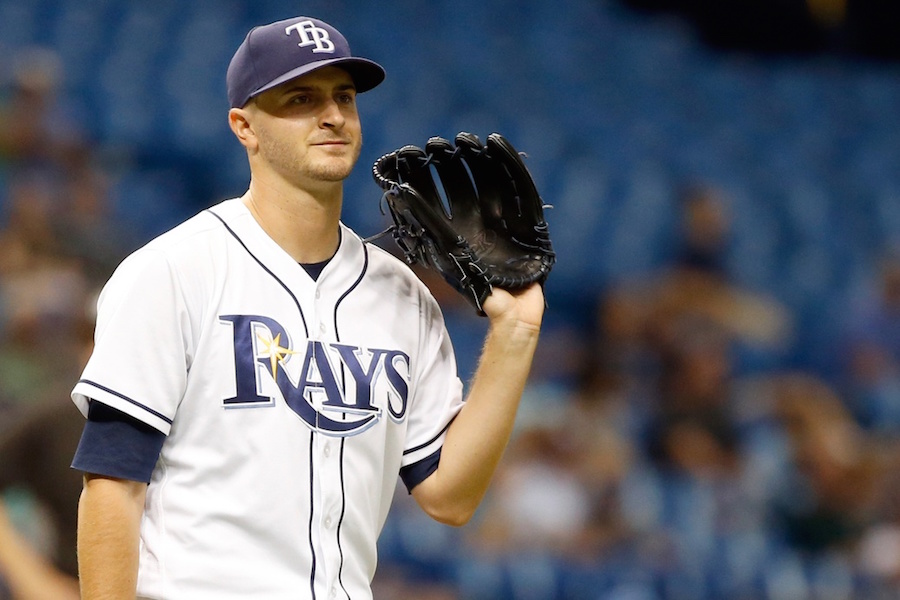 While Ivy League educations are now becoming the norm at 1 Twins Way, it didn't take a Harvard grad to see that Minnesota needed to seriously upgrade its rotation for 2018. Opinions differ on the seriousness of their attempts, but the Twins did take a shot at top names like Yu Darvish and Chris Archer this offseason. When they deemed the threshold for acquiring these potential aces too high for their liking, Falvey and GM Thad Levine lowered their gaze substantially and pivoted to a pair of extremely low-risk – and seemingly low-upside – options. On Friday, they signed free agent Anibal Sanchez to a non-guaranteed deal that will max out at $5 million if he sticks and earns incentives. A day later, they traded shortstop prospect Jermaine Palacios to the Tampa Bay Rays for right-hander Jake Odorizzi. These certainly aren't the kinds of authoritative, high-impact additions fans hoped to see. In terms of money, commitment length, and player capital, the Twins gave up very little to bring the two aboard. It appears Falvey is going all-in on his revamped department's ability to maximize these assets and extract hidden value. Between the two cases, there is a common thread worth keeping an eye on. Suite of Arms Ever since he arrived in 2016, Falvey has been systematically and continually building out the organization's baseball operations. His inspired outside hires have included Director of Baseball Operations Daniel Adler and Director of Minor League Operations Jeremy Zoll, both renowned for their intelligence and analytical chops. Falvey is a strong believer in collaboration, astutely understanding that successful execs surround themselves with the right people and listen to them. To this end, he has put a clear focus on pitching specializations. Last summer, the Twins brought in former big-league hurler Jeremy Hefner as a data-driven video scout. In December, they lured Josh Kalk – considered a pitching analytics expert – away from the Rays as a senior analyst. That latter name is interesting with regard to Minnesota's newest player acquisition. Kalk is of course very familiar with Odorizzi, who threw almost 700 innings in Tampa after being picked up in the 2012 James Shields trade. The right-hander was highly effective in 2015 and 2016, posting a 3.53 ERA and 3.98 FIP. With those kinds of numbers, he'd be a slam-dunk add for Minnesota – especially at the cost of Palacios, a good-not-great prospect who was buried on the org depth chart. Of course, Odorizzi wasn't that same pitcher in 2017, producing career-worsts in ERA (4.14 ERA) and FIP (5.43). But it stands to reason that Kalk and others see something fixable. Leveraging the very same PitchF/X data that Kalk is said to have excelled with using in Tampa Bay, Travis Sawchik of FanGraphs argued over the weekend that Odorizzi may be one adjustment away from turning the corner. The piece is worth reading, as Sawchik lays out pitch usage, location, release points and more to establish a fairly convincing case for Odorizzi's issues being correctable. The Anibal Challenge Turning around a pitcher like Odorizzi – a former first-rounder and top prospect who's still only 27 and has a recent track record of MLB success – isn't a monumental undertaking. Far more ambitious was the assignment Minnesota's brain trust took on a day earlier, with the signing of Sanchez. When news came down on Friday afternoon that the Twins had reached agreement with the embattled right-hander, it hit like a ton of bricks, for numerous reasons. Pent-up frustration of a long and unfulfilling winter, punctuated by the recent Darvish letdown, surely factored. But there's also this: Sanchez has been one of the worst starting pitchers in the league over the past few years. Twins fans have watched from up-close while his $80 million contract with the Tigers deteriorated into a liability they paid $5 million to cut loose after last season. In 2017 Sanchez faced the Twins far more than any other team, and posted an 8.69 ERA against them. In 2016 he went 0-4 with a 10.13 ERA in four starts against Falvey's Indians. This front office has has seen Sanchez at his worst, extensively, and they still wanted him. In an odd way, that kind of inspires confidence. While it's easy to draw parallels, this isn't in the same vein as ill-fated past investments like Kevin Correia or Jason Marquis. It could easily end up the same way, but the Sanchez signing wasn't simply an attempt to procure veteran innings, regardless of their quality. It's said to be an "analytically driven" move. And, at a glance, there is some validity to it. Last September, Tigers reporter Evan Woodbery wrote that while Sanchez's time in Detroit was assuredly coming to a close, "There will be a team (or perhaps several) enticed by his peripherals, which remain incredibly, absurdly, inexplicably strong for a pitcher with a 7-ish ERA." Sure enough, it would seem the Twins weren't alone in having interest. Although Sanchez's contract is non-guaranteed, it is a major-league deal, meaning that he will occupy a 40-man roster spot in camp and is entitled to more compensation if he gets cut than your typical non-roster invite (e.g. last year's nonconventional pet project, Craig Breslow). The fact that an MLB contract was required to get this done suggests Minnesota was not bidding against itself. Despite the ugly numbers, Sanchez has some legitimately appealing qualities. His 3.59 K/BB ratio in 2017 would've outranked every Twins starter. He induced a spectacular 15% swinging strike rate over his final four starts and averaged a strikeout per inning in the second half. Just like Odorizzi, the 34-year-old hurler's biggest weakness last year was the long ball. Although his fastball has gradually lost its oomph, becoming entirely too hittable in the process, Sanchez's splitter-changeup remains a powerful weapon. He also has that much in common with Odorizzi, who himself leans on a vaunted split-fingered change, having learned the grip from former Rays teammate (and current free agent) Alex Cobb. It's worth noting that Fernando Rodney, another newly minted member of the Twins pitching staff, features a "magic changeup" of his own. The changeup was said to be a key focus that Neil Allen brought over from Tampa's system when he came on as pitching coach, and while he has moved on, that emphasis evidently has not. The Big Gamble In acquiring Odorizzi and Sanchez, the Twins are minimizing their material risk. They've only given up an expendable prospect and about $11 million, tops. They're not tied to either pitcher beyond 2018 (though Odorizzi will be arbitration-eligible again in 2019). But in another sense, they're taking a huge risk, by betting so strongly on their own ability to help these pitchers cut down on long balls and reach another level of production. Misguided overconfidence would be hugely detrimental, because this pitching staff needed a much bigger jolt than the 2017 versions of Odorizzi or Sanchez would provide. Much bigger. The Breslow experiment, while carrying far lower stakes, went down as a whiff on Falvine's first analytically driven attempt to uncover a diamond in the rough. Will these ventures, overseen by a collection of brilliant minds in the front office and guided by a new pitching coach in Garvin Alston, turn out more favorably? For a team that's already making a number of precarious gambles in the rotation, with players like Kyle Gibson and Adalberto Mejia figuring to land spots, rounding out the mix with Odorizzi and Sanchez is a harrowing choice, even if the mindset behind it is sound and reasonable.
 -
At various points in the offseason, Twins fans have had ample reason for optimism. Shohei Ohtani? Not unthinkable. Yu Darvish? The stars felt aligned. Trade rumors have alternately connected Minnesota to Gerrit Cole, Jake Odorizzi and Chris Archer. But up to this point, each rising balloon of hope has popped and deflated with a whimper.The Twins have been edged for the likes of Ohtani, Darvish and Cole by the very teams they're trying to join in the game's top tier. While the front office has openly tried to run with the big boys in pursuit of high-impact additions, they've repeatedly come up short. They talk like a team that's ready to take the next step, at a moment of prime opportunity, but the Twins' actions haven't been compatible. At his introductory press conference upon being hired as Chief Baseball Officer for the Twins, Derek Falvey spoke on multiple occasions of his intent to build a "long-term, sustainable, championship-caliber team." Those first two descriptors appear to be ruling the team's strategy. It's been an unusual offseason to say the least, but the patience Falvey and his GM Thad Levine have shown borders on reckless. They've addressed the bullpen nicely, yet with a clear focus on maintaining flexibility. They added Michael Pineda on a savvy, but presently unfulfilling, two-year deal. They evidently were not willing to pony up the prospects for Cole, or the years for Darvish. Minnesota should theoretically be a playoff-minded team coming off an 85-win season. But if you want a seat at the table, you've gotta be ready to ante up. To this point, Falvey and Levine have been awfully protective of their chips. Many opportunities and avenues remain, but with spring camp officially underway, the Twins have a piecemeal rotation, set to open the season without its lone proven horse. Planning is made difficult by the enigmatic outlook for this unit. Once this season is over, it may well be obvious that Jose Berrios, Ervin Santana, Trevor May, Adalberto Mejia and Kyle Gibson all deserve to be 2019 rotation members (the team will have optional control over all five). Then you've got Pineda, plus the litany of prospects and minor-leaguers who appear to be a year or less away. While the front office leadership has changed, the franchise's guiding mantra has not. The model here is build from within, supplement from without. And, don't shoot the messenger here, but – the Twins might be placing a rather myopic focus on the former. Such a view wouldn't necessarily preclude them from adding a starter on a multi-year deal, but I sense it'll only happen if an obvious bargain falls in their laps (a la Reed and Pineda). Otherwise, a one-year commitment looks likely. In this category, an option known to be coveted by the Twins came off the board on Thursday. Jaime Garcia signed for $8 million with the Blue Jays, who will hold a team option for 2019. That contract is right up Minnesota's alley: good value, flexible, and a clear rotation immediate upgrade (at least over what's slotted for the back end). But once again they were beat out by a potential wild-card rival. Or else Garcia ultimately came up short of their discriminating taste. Either way, another day passes with no move to aide the rotation. For fans, it's largely been a winter of disappointment and letdowns. I hold out hope that a pleasant surprise lies in store, but if they end up with someone like Chris Tillman as the lone infusion for this needy starting pitching corps, my developing faith in this leadership will be shaken. Now is not the time to fall back into that comfortable, overly conservative mindset. Click here to view the article
-
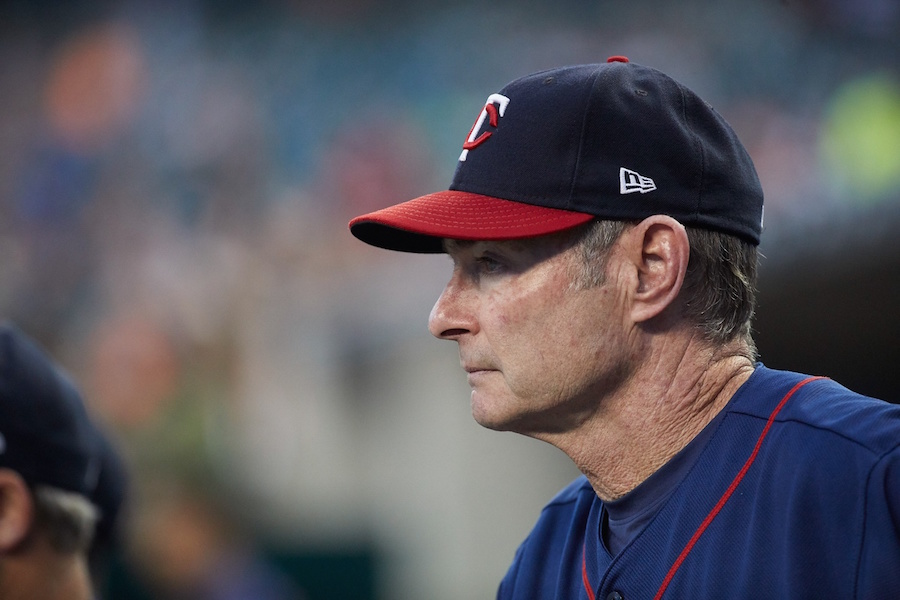 The Twins have been edged for the likes of Ohtani, Darvish and Cole by the very teams they're trying to join in the game's top tier. While the front office has openly tried to run with the big boys in pursuit of high-impact additions, they've repeatedly come up short. They talk like a team that's ready to take the next step, at a moment of prime opportunity, but the Twins' actions haven't been compatible. At his introductory press conference upon being hired as Chief Baseball Officer for the Twins, Derek Falvey spoke on multiple occasions of his intent to build a "long-term, sustainable, championship-caliber team." Those first two descriptors appear to be ruling the team's strategy. It's been an unusual offseason to say the least, but the patience Falvey and his GM Thad Levine have shown borders on reckless. They've addressed the bullpen nicely, yet with a clear focus on maintaining flexibility. They added Michael Pineda on a savvy, but presently unfulfilling, two-year deal. They evidently were not willing to pony up the prospects for Cole, or the years for Darvish. Minnesota should theoretically be a playoff-minded team coming off an 85-win season. But if you want a seat at the table, you've gotta be ready to ante up. To this point, Falvey and Levine have been awfully protective of their chips. Many opportunities and avenues remain, but with spring camp officially underway, the Twins have a piecemeal rotation, set to open the season without its lone proven horse. Planning is made difficult by the enigmatic outlook for this unit. Once this season is over, it may well be obvious that Jose Berrios, Ervin Santana, Trevor May, Adalberto Mejia and Kyle Gibson all deserve to be 2019 rotation members (the team will have optional control over all five). Then you've got Pineda, plus the litany of prospects and minor-leaguers who appear to be a year or less away. While the front office leadership has changed, the franchise's guiding mantra has not. The model here is build from within, supplement from without. And, don't shoot the messenger here, but – the Twins might be placing a rather myopic focus on the former. Such a view wouldn't necessarily preclude them from adding a starter on a multi-year deal, but I sense it'll only happen if an obvious bargain falls in their laps (a la Reed and Pineda). Otherwise, a one-year commitment looks likely. In this category, an option known to be coveted by the Twins came off the board on Thursday. Jaime Garcia signed for $8 million with the Blue Jays, who will hold a team option for 2019. That contract is right up Minnesota's alley: good value, flexible, and a clear rotation immediate upgrade (at least over what's slotted for the back end). But once again they were beat out by a potential wild-card rival. Or else Garcia ultimately came up short of their discriminating taste. Either way, another day passes with no move to aide the rotation. For fans, it's largely been a winter of disappointment and letdowns. I hold out hope that a pleasant surprise lies in store, but if they end up with someone like Chris Tillman as the lone infusion for this needy starting pitching corps, my developing faith in this leadership will be shaken. Now is not the time to fall back into that comfortable, overly conservative mindset.
 -
I don't think Javier falls in this category. He's a significantly better bet than Gordon, Lewis or Palacios to stick at SS.
-
When the Twins signed international free agent Wander Javier to a franchise-record $4 million bonus in 2015, they knew it would be a long road ahead for the 16-year-old. Although the immensely skilled infielder is still only beginning to embark upon that road, he's already leaving his imprint, and drawing national attention.Age: 19 (DOB: 12/29/98) 2017 Stats (Rookie): 180 PA, .299/.383/.471, 4 HR, 22 RBI ETA: 2021 2017 Ranking: 6 National Top 100 Rankings BA: 95 | MLB: NR | ESPN: NR | BP: NR What's To Like A lot. And national analysts everywhere are starting to see it. Javier made only one prominent Top 100 list this year – cracking Baseball America's rankings at 95 – but plenty of others have taken notice. MLB.com's Jonathan Mayo named Javier one of his "Just Missed" prospects, adding that he "could shoot up the top shortstops list in a hurry." FanGraphs cited Javier as one of the lower-ranked prospects they love, grouping him among "highly skilled infielders who should be top-100 prospects next year if they add physicality." The Baseball Prospectus team has encountered so much steam on the young Dominican that when inviting readers to ask prospect questions in a Top 101 chat, they implored "not about Wander Javier, we beg of you." The buzz around this young man is more than understandable. He was considered an elite talent when he made his way stateside three years ago, and has only backed that up with his performance on the field. As a pro, the 19-year-old has hit .301/.386/.497 with with six homers in 50 games between two levels of rookie ball. In 2016, Javier made only 30 plate appearances in the Dominican Summer League before a hamstring injury shut him down. Still, the Twins sent him straight to Elizabethton last summer in what was considered an aggressive promotion, pushing him past the Gulf Coast League entirely. Javier got off to a slow start – 3-for-19 with eight strikeouts and one walk in his first six games – but he tore it up the rest of the way, batting .319 with a .906 OPS. In October, Baseball America named Javier the second-best prospect in the 2017 Appalachian League, behind only fellow teen shortstop (and high-dollar international signee) Kevin Maitan. "He flashes an above-average feel for the barrel and should grow into more power as he gains weight," wrote BA's Justin Perline. "As he learns to recognize pitches better and strike out less, he should be able to hit at the top of the order." While it's almost impossible to tell at this point, Javier shows all the attributes of a guy who can stick at shortstop. He was raw and mistake-prone in 2017, but that's not unusual. His arm is excellent, enabling him to make plays deep in the hole. He's very quick and agile. What's Left To Work On A year ago in this section, Seth pointed to "Everything. I mean, come on… The kid is just 18 years old." Javier is 19 now, and considerably more accomplished, but that sentiment remains true. We ranked him in the same spot this year as we did last, just on the cusp of the the Top 5. In some ways that's a compliment: It isn't easy to hold ground in this upstart system. But in order to climb to that top tier, the shortstop must continue refining his heralded tools. He needs to get more consistent in the field. He needs to improve his pitch recognition and cut down on the whiffs. He needs to start reading pitchers better, and converting his solid speed into baserunning impact. What's Next Javier needs to do all the above against better competition than he's ever faced, while culturally acclimating from the (already unfamiliar) southeastern United States to midwestern Cedar Rapids and full-season baseball. And keep in mind: he is still three Christmases away from his first legal sip of spiked eggnog. In other words, patience is warranted with this exceedingly talented young infielder. If he catches on fast in the Midwest League, however, the hype train will hit overdrive and Minnesota's depth of upcoming shortstops will quickly become the envy of the league. TD Top Prospects: 16-20 TD Top Prospects: 11-15 TD Top Prospect: #10 Akil Baddoo TD Top Prospect: #9 Brusdar Graterol TD Top Prospects: #8 Blayne Enlow TD Top Prospects: #7 Brent Rooker TD Top Prospects: #6 Wander Javier TD Top Prospects: #6 (Coming Thursday!) Click here to view the article
-
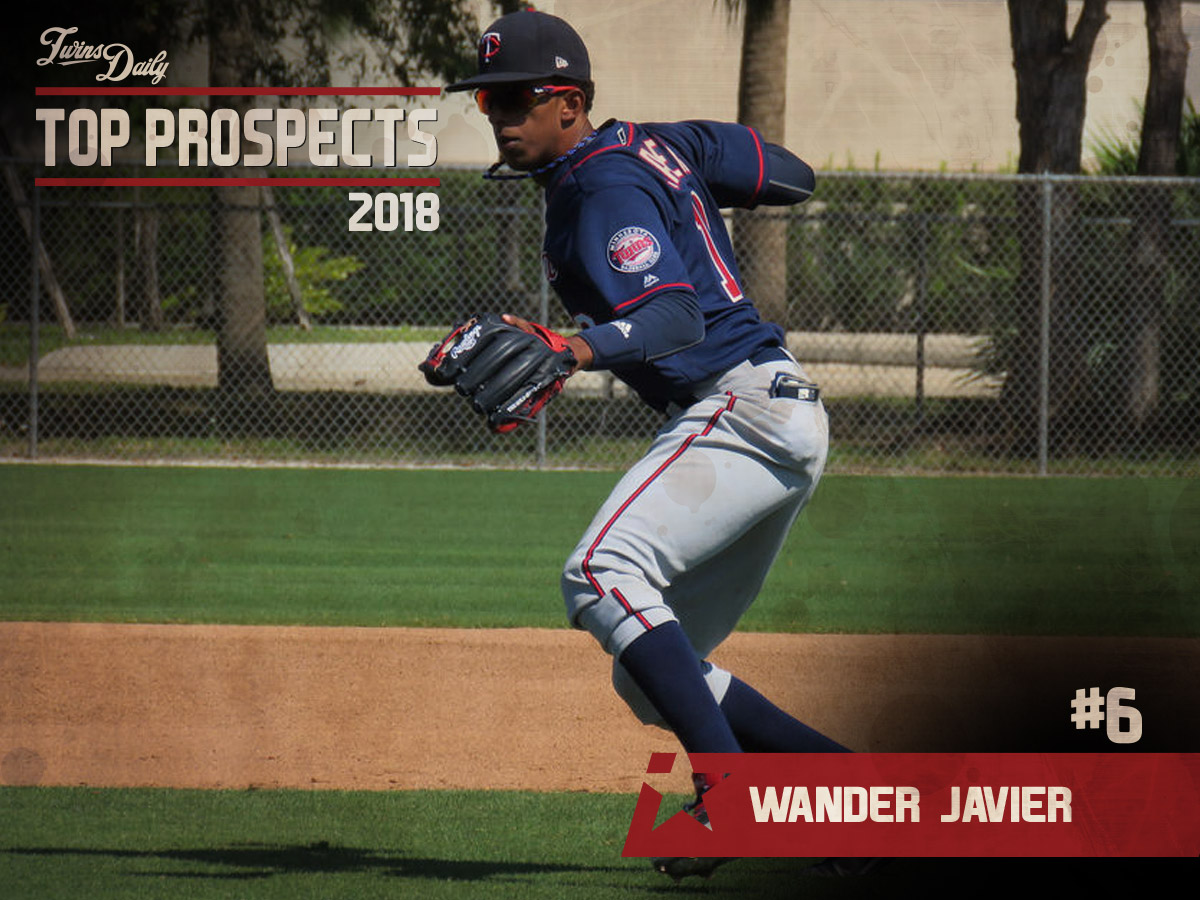 Age: 19 (DOB: 12/29/98) 2017 Stats (Rookie): 180 PA, .299/.383/.471, 4 HR, 22 RBI ETA: 2021 2017 Ranking: 6 National Top 100 Rankings BA: 95 | MLB: NR | ESPN: NR | BP: NR What's To Like A lot. And national analysts everywhere are starting to see it. Javier made only one prominent Top 100 list this year – cracking Baseball America's rankings at 95 – but plenty of others have taken notice. MLB.com's Jonathan Mayo named Javier one of his "Just Missed" prospects, adding that he "could shoot up the top shortstops list in a hurry." FanGraphs cited Javier as one of the lower-ranked prospects they love, grouping him among "highly skilled infielders who should be top-100 prospects next year if they add physicality." The Baseball Prospectus team has encountered so much steam on the young Dominican that when inviting readers to ask prospect questions in a Top 101 chat, they implored "not about Wander Javier, we beg of you." The buzz around this young man is more than understandable. He was considered an elite talent when he made his way stateside three years ago, and has only backed that up with his performance on the field. As a pro, the 19-year-old has hit .301/.386/.497 with with six homers in 50 games between two levels of rookie ball. In 2016, Javier made only 30 plate appearances in the Dominican Summer League before a hamstring injury shut him down. Still, the Twins sent him straight to Elizabethton last summer in what was considered an aggressive promotion, pushing him past the Gulf Coast League entirely. Javier got off to a slow start – 3-for-19 with eight strikeouts and one walk in his first six games – but he tore it up the rest of the way, batting .319 with a .906 OPS. In October, Baseball America named Javier the second-best prospect in the 2017 Appalachian League, behind only fellow teen shortstop (and high-dollar international signee) Kevin Maitan. "He flashes an above-average feel for the barrel and should grow into more power as he gains weight," wrote BA's Justin Perline. "As he learns to recognize pitches better and strike out less, he should be able to hit at the top of the order." While it's almost impossible to tell at this point, Javier shows all the attributes of a guy who can stick at shortstop. He was raw and mistake-prone in 2017, but that's not unusual. His arm is excellent, enabling him to make plays deep in the hole. He's very quick and agile. What's Left To Work On A year ago in this section, Seth pointed to "Everything. I mean, come on… The kid is just 18 years old." Javier is 19 now, and considerably more accomplished, but that sentiment remains true. We ranked him in the same spot this year as we did last, just on the cusp of the the Top 5. In some ways that's a compliment: It isn't easy to hold ground in this upstart system. But in order to climb to that top tier, the shortstop must continue refining his heralded tools. He needs to get more consistent in the field. He needs to improve his pitch recognition and cut down on the whiffs. He needs to start reading pitchers better, and converting his solid speed into baserunning impact. What's Next Javier needs to do all the above against better competition than he's ever faced, while culturally acclimating from the (already unfamiliar) southeastern United States to midwestern Cedar Rapids and full-season baseball. And keep in mind: he is still three Christmases away from his first legal sip of spiked eggnog. In other words, patience is warranted with this exceedingly talented young infielder. If he catches on fast in the Midwest League, however, the hype train will hit overdrive and Minnesota's depth of upcoming shortstops will quickly become the envy of the league. TD Top Prospects: 16-20 TD Top Prospects: 11-15 TD Top Prospect: #10 Akil Baddoo TD Top Prospect: #9 Brusdar Graterol TD Top Prospects: #8 Blayne Enlow TD Top Prospects: #7 Brent Rooker TD Top Prospects: #6 Wander Javier TD Top Prospects: #6 (Coming Thursday!)
 -
I'm bummed about it. I'm bummed about Santana getting hurt. I don't mean to give any other impression. Darvish signed, and I saw a forum thread here that was at almost 20 pages of pure frustration, and I just wanted to try to look at the other side. I do think Darvish would've been an excellent fit. But I didn't think he'd get 6 years. I would've done it, as I've said, but it's really not hard to see why an analytical assessment would deem that an unwise investment. And who even knows if the same terms or anything close were available to the Twins. I suggested they get him in the Offseason Handbook. I've been pushing it all winter. You all know this. But I recognize there are other fish in the sea, until the boats are ashore. We're not close to that point yet. If Darvish signed for 21M/yr, what are some of these other guys gonna get? There could be extreme bargains to be had.
-
I would suggest that your outrage is completely self-manufactured. Probably intentionally so. The article very explicitly described the Santana injury and Darvish non-signing as "bad breaks," in which I was seeking silver linings. I've reiterated that intent multiple times in this comment thread, including to you directly. And yet you're still out here on page 9 quoting me as saying Santana going out is a "good thing," a quote that has not appeared anywhere. Suggesting that there may be some positive outcomes to take forward from a generally negative situation is not the same thing as making excuses. And you know that. So I can only conclude you're deliberately misinterpreting -- and hanging on to that misinterpretation -- for the sake of being Mad on the Internet™ You mean the same Orlando Hudson that won four gold gloves? You're right, it does feel like that.
-
We don't know anything. "My own admission" is pretty irrelevant since I'm speculating just like everyone else. Maybe they offered 5/125, thinking/hoping he'd accept, and Darvish simply much preferred going to the Cubs on less AAV, knowing he'd be able to still make more long-term with the opt-out. All these hardwired "Twins are cheap" narratives seemingly prevent everyone from looking at very plausible scenarios such as this. I'm gonna check out on this convo but thanks for all the discussion, even if some of it has driven me crazy. Let's see what else happens.
-
Ok, fine. 23 starts/season averaged outside of the year lost entirely to TJ. Still not good. I'm sorry if that was disingenuous but is it really necessary to nitpick when the point still clearly stands? Darvish does NOT have proven record of durability. 200 innings once in 6 MLB seasons.
-
Again, this is ONE free agent off the board. Failing to sign him does not constitute "diving for scraps." The extent to which Darvish is being overblown on this board (and elsewhere) as some sort of be-all, end-all is almost comical. C'mon. We all like Darvish's strikeouts and flashes of brilliance but the man is 31 and has averaged less than 18 starts over the past 4 years. Let me know when the last time the Twins publicly offered a $100 million contract or made a trade attempt for a legit ace. I'll hang up and listen. Results matter, but so does effort and intent. It shows they are serious. If they haven't made any kinds of inspiring moves for the rotation by Opening Day I'll join you in your discontent but right now all the outrage is beyond silly. Do people realize how many teams across MLB still haven't made significant moves this offseason, and are sitting on mounds of unused payroll space? So, what you're really saying here is "Do whatever it takes to get the guy I want. Abandon all reason -- every risk model and valuation you've computed while undoubtedly analyzing this opportunity from many angles -- and outbid everyone else. Oh, and if the guy is unwilling to sign in MN, force him at gunpoint."
-
I appreciate the research and thought put into this comment but I'm just beyond tired of dwelling on what the Twins should spend. Falvey and Levine are working within an established framework and I'm more interested in seeing what they do within that framework than constantly lamenting the constraints. Those constraints shouldn't be an issue right now, and I don't know that they are. But the average fan isn't thinking about 2020-22, when Sano, Buxton, Rosario, Berrios, Kepler and Polanco are all deep in arbitration or hitting free agency. Falvey and Levine need to. Yes, Darvish signed for less than expected. Others probably will too. I see that as more of an opportunity than giving a 6-year deal to a guy who turns 32 this year.
