



Nick Nelson
-
Posts
8,326 -
Joined
-
Last visited
-
Days Won
56
Content Type
Profiles
News
Minnesota Twins Videos
2026 Minnesota Twins Top Prospects Ranking
2022 Minnesota Twins Draft Picks
Minnesota Twins Free Agent & Trade Rumors, Notes, & Tidbits
Guides & Resources
2023 Minnesota Twins Draft Picks
The Minnesota Twins Players Project
2024 Minnesota Twins Draft Picks
2025 Minnesota Twins Draft Pick Tracker
2026 Minnesota Twins Draft Tracker: Picks & Bonuses
Forums
Blogs
Events
Store
Downloads
Gallery
Everything posted by Nick Nelson
-
 FT. MYERS – Nick reports on how the Lance Lynn trade came together, why Paul Molitor's concerns about Miguel Sano are dissipating, what to make of Jorge Polanco's uneven defense at shortstop, and more. Listen here!If you haven't yet, you can find step-by-step instructions to subscribe via your iPhone podcast app here. If you have any suggestions for improving these nightly wrap-up mini-podcasts, please feel free to share them in the comments. I'm literally talking to myself so any outside guidance is much appreciated. We are down here to dig up and deliver the details you all want, so please don't hesitate to help shape this content! Click here to view the article
- 7 replies
-
- 2
-

-
- lance lynn
- miguel sano
- (and 1 more)
-
 If you haven't yet, you can find step-by-step instructions to subscribe via your iPhone podcast app here. If you have any suggestions for improving these nightly wrap-up mini-podcasts, please feel free to share them in the comments. I'm literally talking to myself so any outside guidance is much appreciated. We are down here to dig up and deliver the details you all want, so please don't hesitate to help shape this content!
 -
FT. MYERS – Tuesday was Lance Lynn Day at Hammond Stadium. The newly signed starter was formally introduced during a morning press conference, and took the hill to make his Twins debut about two hours later. What did we learn about Minnesota’s latest acquisition during a busy first official day with the club?"I'm just looking forward to pitching," Lynn said when kicking off his presser, adding that he'd been prepping for the occasion with live bullpens and sim games. Luckily he didn't have to wait long. Despite getting a late start to spring camp, the 30-year-old exhibited no signs of rust in a masterful Grapefruit League debut against the Orioles. He pounded the zone and on multiple occasions his fastball touched 94 MPH, a number rarely seen on the Hammond scoreboard this month. Lynn opened his outing with a pair of swinging strikeouts and wound up hanging K's on half of the 10 Baltimore batters he faced in three near-perfect innings. "I walked a guy, so that sucked," Lynn said with a smirk afterwards. "Other than that everything was about as smooth as possible." His new manager thought so too. Paul Molitor summarized the performance in one word: "Attack." "You're not sure how sharp his command was going to be, but he poured it in there pretty good and he just kept throwing it." Here are some of the key takeaways I distilled from talking to Lynn and others around the park. He’s a Notoriously Intense Competitor This is a reputation Lynn brings over from his days in St. Louis. He’s well known as a player who likes to win and – even more so – hates to lose. He has a fiery presence on the mound and is expressive when frustrated. "You wanna get out of his way," said Derek Falvey. Lynn is aware of the perception, and addressed it in Derrick Goold’s profile for the St. Louis Post-Dispatch last summer: “Early on in my career, it was my personality and my desire to win that looked like a bad attitude,” Lynn said. “Now, it looks like I’m a bulldog. I think the more success you have the more things are accepted in this sport. I would have high highs and low lows. I had to find a way to be in between, and then I could be myself.” In other words, he recognizes that being visibly upset when things go awry can come off as sulky if it's happening too often. Fortunately, Lynn hasn't experienced all that many downs in a career that's yielded a 3.38 ERA over six seasons – making his trouble finding work this winter all the more flummoxing. When asked if his slow offseason, which culminated in a deal much smaller than anyone initially expected, put a chip on his shoulder, the right-hander shrugged. “That chip on the shoulder has been there since the day I was born,” he said. But while he won’t admit it frontally, there’s little doubt that being snubbed by the market will add extra fuel to his motivation, as will the fact that he’s once again auditioning for his next contract. He Can Reach Back For Something Extra I was a little surprised to see Lynn flash 94 on the gun multiple times during his first spring start. He hasn't been in that range regularly with the four-seamer since 2014. "I've got a lot in there that I don't like to show unless I have to," he said after the outing. Given his heavy reliance on fastballs, even an extra sliver of velocity can make a big difference. It's probably no coincidence during that aforementioned 2014 campaign when he routinely operated at 93-94 with his four-seam and 92+ with his sinker, he worked a career-high 203 2/3 innings with career lows in ERA (2.74) and WHIP (1.26). He Doesn’t Mind the Cold The weather for Lynn’s first spring start was on the chilly side, at least by the standards of southwest Florida in March. Cool winds swirled throughout the morning, and the temperature barely eclipsed 60 degrees by game time. Of course, he’ll likely experience lower temps during the early and late parts of the season in Minnesota, where he has never pitched in his career. He embraces it. “I like the cold,” he quickly responded during his press conference when asked about what attracted him to the Twins. He added that growing up in Indianapolis instilled this in him. Lynn isn’t the first free agent acquisition to express an affinity for pitching in brisk conditions (Erv) but we’ve also seen it go the other way; Ricky Nolasco wasn't shy about voicing his displeasure about the cold. Unlike Santana, who grew up pitching in the Dominican Republic, and spent all but one season of his pre-Twins MLB career in Los Angeles and Atlanta, Lynn had formative experiences in cooler climates. That could play well for a team with aspirations of playing into October. His Arrival Erased Any Slim Hopes for a Rookie to Come North This isn't so much a fact about Lynn as the ripple effect of his signing. About an hour before his press conference got underway, the Twins announced they’d optioned five pitchers to the minors, including fringe rotation candidates Adalberto Mejia, Stephen Gonsalves, Fernando Romero and Aaron Slegers. Of that group, only Mejia had a realistic shot of breaking camp in the rotation – and he’s no rookie anymore. But Romero was making about as good a case as he possibly could for a spot on the staff, spreading eight hitless innings across four appearances with eight strikeouts and one walk. With his success throwing in short bursts, there was some thought the Twins might try to sneak him in as a reliever, but they are rightfully sending him back to Double-A to keep developing in his most impactful role. "We see him as a starter," Falvey said on Tuesday morning, repeating it for emphasis. "We see him as a starter, despite the 1-2 inning stints this spring that looked pretty good." The Twins are setting up to boast a rather loaded rotation at Triple-A, and figure to have no shortage of reinforcements on hand over the course of the summer with Santana and Trevor May factoring in as well as the prospects. That is, of course, by design. "Depth in the rotation is the goal," Molitor said. "I think we've achieved that with flying colors." Click here to view the article
-
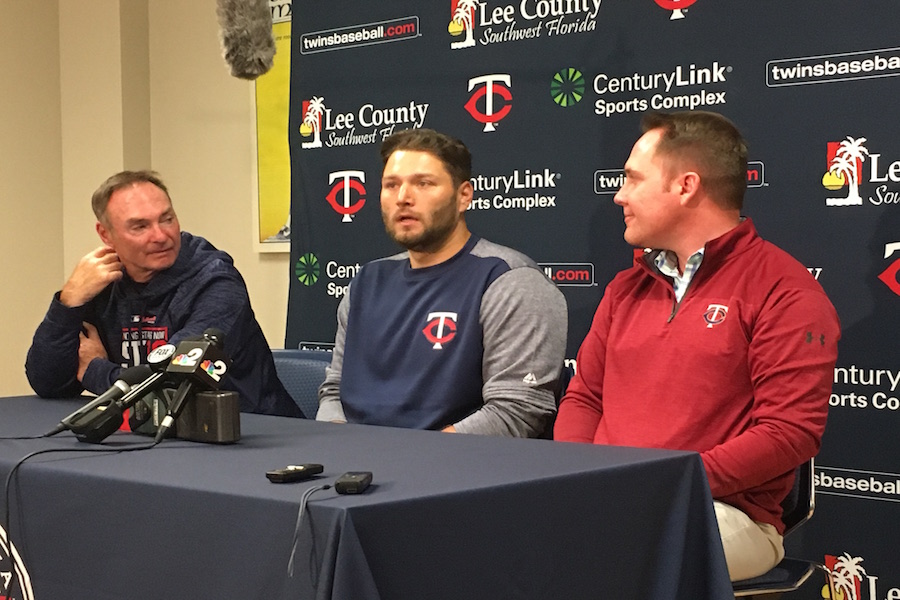 "I'm just looking forward to pitching," Lynn said when kicking off his presser, adding that he'd been prepping for the occasion with live bullpens and sim games. Luckily he didn't have to wait long. Despite getting a late start to spring camp, the 30-year-old exhibited no signs of rust in a masterful Grapefruit League debut against the Orioles. He pounded the zone and on multiple occasions his fastball touched 94 MPH, a number rarely seen on the Hammond scoreboard this month. Lynn opened his outing with a pair of swinging strikeouts and wound up hanging K's on half of the 10 Baltimore batters he faced in three near-perfect innings. "I walked a guy, so that sucked," Lynn said with a smirk afterwards. "Other than that everything was about as smooth as possible." His new manager thought so too. Paul Molitor summarized the performance in one word: "Attack." "You're not sure how sharp his command was going to be, but he poured it in there pretty good and he just kept throwing it." Here are some of the key takeaways I distilled from talking to Lynn and others around the park. He’s a Notoriously Intense Competitor This is a reputation Lynn brings over from his days in St. Louis. He’s well known as a player who likes to win and – even more so – hates to lose. He has a fiery presence on the mound and is expressive when frustrated. "You wanna get out of his way," said Derek Falvey. Lynn is aware of the perception, and addressed it in Derrick Goold’s profile for the St. Louis Post-Dispatch last summer: “Early on in my career, it was my personality and my desire to win that looked like a bad attitude,” Lynn said. “Now, it looks like I’m a bulldog. I think the more success you have the more things are accepted in this sport. I would have high highs and low lows. I had to find a way to be in between, and then I could be myself.” In other words, he recognizes that being visibly upset when things go awry can come off as sulky if it's happening too often. Fortunately, Lynn hasn't experienced all that many downs in a career that's yielded a 3.38 ERA over six seasons – making his trouble finding work this winter all the more flummoxing. When asked if his slow offseason, which culminated in a deal much smaller than anyone initially expected, put a chip on his shoulder, the right-hander shrugged. “That chip on the shoulder has been there since the day I was born,” he said. But while he won’t admit it frontally, there’s little doubt that being snubbed by the market will add extra fuel to his motivation, as will the fact that he’s once again auditioning for his next contract. He Can Reach Back For Something Extra I was a little surprised to see Lynn flash 94 on the gun multiple times during his first spring start. He hasn't been in that range regularly with the four-seamer since 2014. "I've got a lot in there that I don't like to show unless I have to," he said after the outing. Given his heavy reliance on fastballs, even an extra sliver of velocity can make a big difference. It's probably no coincidence during that aforementioned 2014 campaign when he routinely operated at 93-94 with his four-seam and 92+ with his sinker, he worked a career-high 203 2/3 innings with career lows in ERA (2.74) and WHIP (1.26). He Doesn’t Mind the Cold The weather for Lynn’s first spring start was on the chilly side, at least by the standards of southwest Florida in March. Cool winds swirled throughout the morning, and the temperature barely eclipsed 60 degrees by game time. Of course, he’ll likely experience lower temps during the early and late parts of the season in Minnesota, where he has never pitched in his career. He embraces it. “I like the cold,” he quickly responded during his press conference when asked about what attracted him to the Twins. He added that growing up in Indianapolis instilled this in him. Lynn isn’t the first free agent acquisition to express an affinity for pitching in brisk conditions (Erv) but we’ve also seen it go the other way; Ricky Nolasco wasn't shy about voicing his displeasure about the cold. Unlike Santana, who grew up pitching in the Dominican Republic, and spent all but one season of his pre-Twins MLB career in Los Angeles and Atlanta, Lynn had formative experiences in cooler climates. That could play well for a team with aspirations of playing into October. His Arrival Erased Any Slim Hopes for a Rookie to Come North This isn't so much a fact about Lynn as the ripple effect of his signing. About an hour before his press conference got underway, the Twins announced they’d optioned five pitchers to the minors, including fringe rotation candidates Adalberto Mejia, Stephen Gonsalves, Fernando Romero and Aaron Slegers. Of that group, only Mejia had a realistic shot of breaking camp in the rotation – and he’s no rookie anymore. But Romero was making about as good a case as he possibly could for a spot on the staff, spreading eight hitless innings across four appearances with eight strikeouts and one walk. With his success throwing in short bursts, there was some thought the Twins might try to sneak him in as a reliever, but they are rightfully sending him back to Double-A to keep developing in his most impactful role. "We see him as a starter," Falvey said on Tuesday morning, repeating it for emphasis. "We see him as a starter, despite the 1-2 inning stints this spring that looked pretty good." The Twins are setting up to boast a rather loaded rotation at Triple-A, and figure to have no shortage of reinforcements on hand over the course of the summer with Santana and Trevor May factoring in as well as the prospects. That is, of course, by design. "Depth in the rotation is the goal," Molitor said. "I think we've achieved that with flying colors."
 -
Article: Twins 2018 Position Analysis: Shortstop
Nick Nelson replied to Nick Nelson's topic in Twins Daily Front Page News
That's certainly possible, especially considering his ability to avoid strikeouts. I'm just trying to be objective as I can. Polanco hasn't yet hit .300 at any level above A ball.- 23 replies
-
- 4
-
-
- jorge polanco
- nick gordon
- (and 2 more)
-
In 2017, Jorge Polanco became the 11th player in 12 years to make an Opening Day start at shortstop for the Minnesota Twins. So long as he avoids injury for the rest of this month, he'll join Pedro Florimon (2013-14) as the only players to do so in consecutive seasons since Cristian Guzman left town. However, it is anything but assured that Polanco will be back at the position in 2019 and beyond.Projected Starter: Jorge Polanco Likely Backup: Ehire Adrianza Depth: Eduardo Escobar, Erick Aybar, Nick Gordon Prospects: Gordon, Royce Lewis, Wander Javier THE GOOD Around this time last year there was widespread skepticism surrounding Polanco's outlook as a major-league shortstop. By any fielding metric, his performance as a rookie in 2016 was brutal, magnifying the existing doubts tied to his defensive aptitude. From early on last year, Polanco softened the harshness of critiques by showing significant improvement at short. Although still far from a stellar defender, he was no longer a liability at the heart of the infield. His turnaround with the glove from 2016 to 2017 was overshadowed only by his emphatic rectification at the plate last summer following an utterly miserable first half. Up until the All-Star break, Polanco slashed .224/.273/.323. For a long stretch in the middle of the summer, he was one of baseball's least effective hitters. His .276 OPS in July was the worst monthly mark for any MLB player (50+ PA) in two years. Then, in August, Polanco went nuts, slashing a Troutian .373/.413/.686 with six homers to double his total from the previous fourth months combined. He came back to Earth in September with a .260/.345/.423 line that closely resembles his overall output in the majors (.266/.319/.415) and probably sets a fair baseline expectation going forward. That absurd August notwithstanding, the switch-hitting Polanco doesn't profile as significantly above-average with the stick. Baseball Prospectus' PECOTA system pegs him at .246/.322/.415, which is perfectly adequate if he keeps making all the plays he needs to. But very soon the shortstop will be pressed by rising quality depth within Minnesota's system. Twins Daily's 2018 top prospect list has three shortstops in the top 10: Royce Lewis (1), Nick Gordon (3) and Wander Javier (6). Teenagers Lewis and Javier aren't close to the majors yet, but have the makings of fast risers, and at 22 Gordon is knocking on the door. Even fierce Polanco advocates would have to admit his skill set is more ideally suited for second base than short. If one of the prospects behind him establishes himself as a superior defender at the position, the door will be wide open after this year for Polanco to slide to the other side of the bag. THE BAD You get the question of, "Don't you guys think you have too many shortstops?" My response is, "I also don't have too much money in the bank." No, I will work with this problem of having too many shortstops. General manager Thad Levine's response during an interview with Baseball Prospectus at Target Field last summer speaks to the luxury of possessing considerable depth at one of the most critical positions on the field. His remark rings true for two seasons: 1) Shortstops are always in demand, and good ones will forever hold trade value in the event of a logjam; 2) Many outstanding athletes begin their pro careers at short, but a large percentage move away from the position as they ascend the ranks and standards increase. That latter reality is weighing on Levine and the Twins even as they savor their present depth. Top-tier gloves at shortstop are huge difference-makers, and as discussed above, Polanco doesn't really have the upside to become one. Each of the upcoming talents in the system has his own set of question marks in this regard. Javier probably has the fewest as a tremendous athlete with natural infield mechanics and a great arm, but he is 19 and hasn't yet played above rookie ball. Scouts lean more heavily toward Lewis – who didn't play shortstop until his senior year of high school – ending up in center field unless he can make serious strides in the infield (certainly not out of the question given his abilities). Gordon is closest to the majors of the three but may have the slimmest chance of sticking at short in the majors. Mike Berardino of the Pioneer Press published an article last July, just ahead of Gordon's appearance in the All-Star Futures Game, that included plenty of lukewarm (at best) assessments of his defensive chops at short. His hands? "Good enough. Special? Probably not. But good enough? Yeah. Good enough,” said VP of Player Personnel Mike Radcliff. Levine's take: "There are some things about his game which belie your prototypical shortstop. It’s not well-above-average foot speed. The arm is, I think, consistent but it’s not explosive." An anonymous scout was less charitable: “Watching Gordon, he never seemed to get the good hop. For him, it was always the in-between hop. That’s instincts. That’s footwork. That’s hands ... For me, those things just aren’t there when I watch Nick Gordon." None of these unflattering evaluations rule out the still-growing Gordon as a future shortstop, but they're in line with the rap on him (no pun intended) going back a ways. For what it's worth, he has made more than twice as many appearances at second as at short for the Twins this spring. So while Minnesota technically has substantial depth at shortstop, we don't know that this is true in practical terms. In fact, it probably isn't. THE BOTTOM LINE Finding stability at the shortstop position has been a never-ending battle for the Twins. They've finally found at least some short-term steadiness with Polanco, but his hold on the job is only as strong his arm – which is to say not extremely. With Dozier likely on his way out after this year, Minnesota appears poised to go with a keystone combo of Polanco and Gordon in 2019. As far as how the two will line up, that could well be dictated by the way things play out this summer. With Javier and Lewis in the rearview, neither will be able to get too comfortable. Nothing is set in stone, but the organization's shortstop depth – for now – is rock solid. Click here to view the article
-
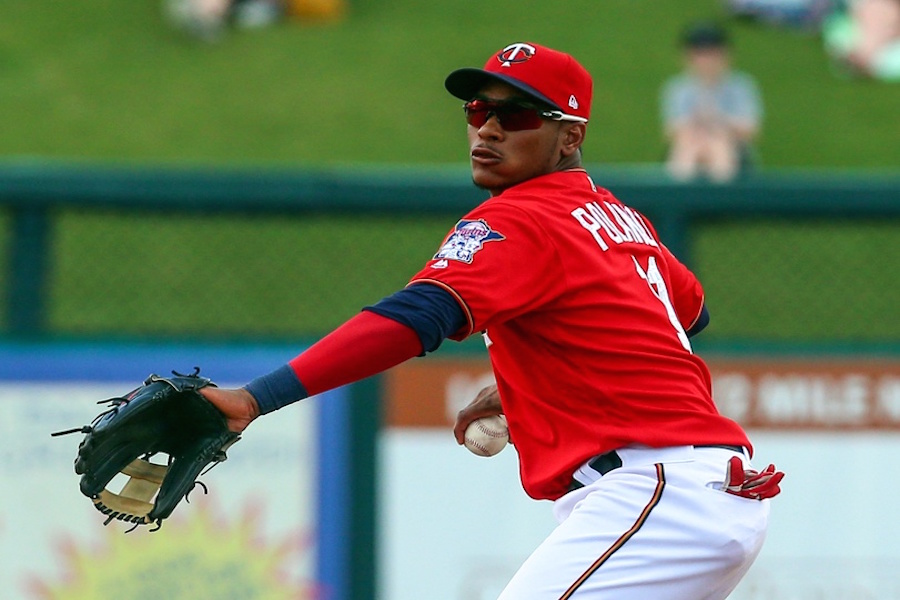 Projected Starter: Jorge Polanco Likely Backup: Ehire Adrianza Depth: Eduardo Escobar, Erick Aybar, Nick Gordon Prospects: Gordon, Royce Lewis, Wander Javier THE GOOD Around this time last year there was widespread skepticism surrounding Polanco's outlook as a major-league shortstop. By any fielding metric, his performance as a rookie in 2016 was brutal, magnifying the existing doubts tied to his defensive aptitude. From early on last year, Polanco softened the harshness of critiques by showing significant improvement at short. Although still far from a stellar defender, he was no longer a liability at the heart of the infield. His turnaround with the glove from 2016 to 2017 was overshadowed only by his emphatic rectification at the plate last summer following an utterly miserable first half. Up until the All-Star break, Polanco slashed .224/.273/.323. For a long stretch in the middle of the summer, he was one of baseball's least effective hitters. His .276 OPS in July was the worst monthly mark for any MLB player (50+ PA) in two years. Then, in August, Polanco went nuts, slashing a Troutian .373/.413/.686 with six homers to double his total from the previous fourth months combined. He came back to Earth in September with a .260/.345/.423 line that closely resembles his overall output in the majors (.266/.319/.415) and probably sets a fair baseline expectation going forward. That absurd August notwithstanding, the switch-hitting Polanco doesn't profile as significantly above-average with the stick. Baseball Prospectus' PECOTA system pegs him at .246/.322/.415, which is perfectly adequate if he keeps making all the plays he needs to. But very soon the shortstop will be pressed by rising quality depth within Minnesota's system. Twins Daily's 2018 top prospect list has three shortstops in the top 10: Royce Lewis (1), Nick Gordon (3) and Wander Javier (6). Teenagers Lewis and Javier aren't close to the majors yet, but have the makings of fast risers, and at 22 Gordon is knocking on the door. Even fierce Polanco advocates would have to admit his skill set is more ideally suited for second base than short. If one of the prospects behind him establishes himself as a superior defender at the position, the door will be wide open after this year for Polanco to slide to the other side of the bag. THE BAD You get the question of, "Don't you guys think you have too many shortstops?" My response is, "I also don't have too much money in the bank." No, I will work with this problem of having too many shortstops. General manager Thad Levine's response during an interview with Baseball Prospectus at Target Field last summer speaks to the luxury of possessing considerable depth at one of the most critical positions on the field. His remark rings true for two seasons: 1) Shortstops are always in demand, and good ones will forever hold trade value in the event of a logjam; 2) Many outstanding athletes begin their pro careers at short, but a large percentage move away from the position as they ascend the ranks and standards increase. That latter reality is weighing on Levine and the Twins even as they savor their present depth. Top-tier gloves at shortstop are huge difference-makers, and as discussed above, Polanco doesn't really have the upside to become one. Each of the upcoming talents in the system has his own set of question marks in this regard. Javier probably has the fewest as a tremendous athlete with natural infield mechanics and a great arm, but he is 19 and hasn't yet played above rookie ball. Scouts lean more heavily toward Lewis – who didn't play shortstop until his senior year of high school – ending up in center field unless he can make serious strides in the infield (certainly not out of the question given his abilities). Gordon is closest to the majors of the three but may have the slimmest chance of sticking at short in the majors. Mike Berardino of the Pioneer Press published an article last July, just ahead of Gordon's appearance in the All-Star Futures Game, that included plenty of lukewarm (at best) assessments of his defensive chops at short. His hands? "Good enough. Special? Probably not. But good enough? Yeah. Good enough,” said VP of Player Personnel Mike Radcliff. Levine's take: "There are some things about his game which belie your prototypical shortstop. It’s not well-above-average foot speed. The arm is, I think, consistent but it’s not explosive." An anonymous scout was less charitable: “Watching Gordon, he never seemed to get the good hop. For him, it was always the in-between hop. That’s instincts. That’s footwork. That’s hands ... For me, those things just aren’t there when I watch Nick Gordon." None of these unflattering evaluations rule out the still-growing Gordon as a future shortstop, but they're in line with the rap on him (no pun intended) going back a ways. For what it's worth, he has made more than twice as many appearances at second as at short for the Twins this spring. So while Minnesota technically has substantial depth at shortstop, we don't know that this is true in practical terms. In fact, it probably isn't. THE BOTTOM LINE Finding stability at the shortstop position has been a never-ending battle for the Twins. They've finally found at least some short-term steadiness with Polanco, but his hold on the job is only as strong his arm – which is to say not extremely. With Dozier likely on his way out after this year, Minnesota appears poised to go with a keystone combo of Polanco and Gordon in 2019. As far as how the two will line up, that could well be dictated by the way things play out this summer. With Javier and Lewis in the rearview, neither will be able to get too comfortable. Nothing is set in stone, but the organization's shortstop depth – for now – is rock solid.
 -
Article: Twins 2018 Position Analysis: Third Base
Nick Nelson replied to Nick Nelson's topic in Twins Daily Front Page News
Ok, so you've named one player who might weigh more (and is also 3-4 inches taller) and another who retired three years ago and was a notorious atrocity defensively. I said "fielders" in the excerpt you quoted, so Lynn and Colon aren't relevant. Also I suggest taking a look at some pictures of Puckett and Newman when they were Sano's age before bringing them up in this conversation. Not comparable cases.- 77 replies
-
- 1
-
-
- miguel sano
- eduardo escobar
- (and 2 more)
-
Article: Twins 2018 Position Analysis: Third Base
Nick Nelson replied to Nick Nelson's topic in Twins Daily Front Page News
People are going to believe what they want on this subject. I'll just say this much: Peterson and (my goodness ESPECIALLY) Bridgewater are not built like Miguel Sano. Genetically he is simply a big kid, and his size fuels his incredible power. Also, his rumored weigh-in this spring (per Reusse) is about the same as his exit physical in 2017 so it's not like he has added weight. It's just hard to lose a ton when you're unable to put in the physical conditioning work.- 77 replies
-
- 2
-
-
- miguel sano
- eduardo escobar
- (and 2 more)
-
A weighty issue. A giant question mark. An elephant in the room. Whatever hackneyed wordplay you want to use, Miguel Sano is a radiating source of mystery in Minnesota Twins camp, and his enigmatic aura extends to the position he inhabits.Projected Starter: Miguel Sano Likely Backup: Eduardo Escobar Depth: Ehire Adrianza, Erick Aybar, Taylor Featherston Prospects: Travis Blankenhorn, Andrew Bechtold, Jose Miranda THE GOOD It's all too easy to forget now, but just eight short months ago, Sano was the lone All Star rep from Minnesota's lineup. By the break, he already had 21 home runs with an OPS over 900, solidifying his status as long-term cog in the Twins infield. Though clearly playing above his listed weight of 260 pounds, he still respectably held his own at third base, making the majority of routine plays and occasionally flashing excellence with his cannon arm. Sano is an incredible talent. Let's not lose sight of that. He launched a pair of leisurely home runs on Friday in his sixth game of the spring, and that kind of thing should still be the expectation. If he's in the lineup, he's going to be a major threat. Even with his downslide after the All-Star break last year, the 24-year-old was on pace for 37 home runs before going down with a shin injury in August. With 71 career dingers in the books before age 25, he's on a rare pace. There are forces working against Sano – some of his own making, others not. But he is young enough to overcome them and put them in the rear view mirror. If it's always darkest before the dawn, then perhaps we're on the verge of a true breakthrough, which in Sano's case would simply mean a full season's worth of games (he's yet to play more than 116 in an MLB campaign) while realizing his 40 HR, 100+ RBI potential. In the event that Sano needs to miss time due to a suspension, setback with his leg, or some other affliction, the Twins are blessed with a pretty strong fallback option. Eduardo Escobar filled in brilliantly at the hot corner last year after the starter went down, slugging .529 with 10 bombs to basically mirror Sano's prodigious power output. Escobar finished with a .758 OPS overall, and has slashed .257/.304/.413 over the past four seasons. He's a better contingency than most teams have behind their best hitter, and his presence has been a big factor in mitigating the sense of alarm around Sano's ambiguity. THE BAD Optimism aside, the alarm is well warranted. Sano has an assault investigation floating over his head, a steel rod in his shin, and plenty of skeptics surrounding him in the organization. Those might include his manager. Always measured in his words, Paul Molitor conveyed some leeriness when talking to Brian Murphy of the Pioneer Press last month: “I think the trend has been [sano's] figuring some things out; some things have been a little harder to get through to him,” Molitor said. “At times I’ve tried to involve people that might be able to provide a voice that will penetrate. We’re just trying to get him to see the bigger picture. “He loves to play. It’s all in front of him. He, as much as anyone in that clubhouse, wants what’s in front of him, but I’m not sure he understands what is required to reap those rewards — of competing, winning, financial security, taking care of his family. We’re trying." Such sentiments toward Sano are nothing new, but it was easier to be sympathetic when he was a 22-year-old rookie. Today he's a 25-year-old who's shown up at camp with – in the kindest possible phrasing of his general manager – a "generous carriage." According to Pat Reusse, Sano is rumored to have weighed in this spring at 293 lbs. Where would that heft rank among all major-league players? It's almost impossible to say, given the sweeping inaccuracy of official listings (again, MLB's site still has Sano at 260), but I think we can safely say he's among the top handful of players. There's not likely a larger fielder outside of first base in the game. This isn't a knock against his all-around outlook as a big-leaguer, because I happen to believe that Sano can be a monster hitter even at three bucks, but the reality is that he's on the verge of becoming untenable at third base. A certain spryness requisite to the position becomes elusive for a man so large. Barring a reversal in physical development, which might be unrealistic given his genetic makeup, Sano appears destined for DH. The question is when. Minnesota's front office is hoping he can hold out as long as possible, because right now the system is thin on replacements. Yes, Escobar can fill in short-term. But he's eligible for free agency after this season. And the next in line behind him as a legit starting option at the position is... well, completely unclear. A trio of recent high draft picks stand out as the brightest long-term hopes: 2015 third-rounder Travis Blankenhorn (21), 2016 second-rounder Jose Miranda (19) and 2017 fifth-rounder Andrew Bechtold (21). But none will be arriving anytime soon. So suffice to say it would be really nice if Sano could hold it down at third for at least a couple more years. Which might help explain why the Twins haven't really entertained the idea of moving him off the position, and in fact delayed any possibility of such an outcome by signing Logan Morrison. THE BOTTOM LINE It's all about Sano. If he can make a statement by proving himself healthy and at least serviceable defensively, the Twins will be more than happy to stick with him at third indefinitely. Sano's agility has always been better than you'd expect for his size, so maybe he'll surprise us even at this weight. More likely, he'll need to put in work and slim down a bit to remain viable at the hot corner, but that's a perfectly feasible scenario. It's important to keep in mind that he was extremely limited in his ability to condition this past offseason. To pin the lack of weight loss on disinterest would be ignorant. If things go amiss for the star slugger this season, Escobar provides a solid security valve, for now. After 2018, the front office may need to look at building out some better long-term depth at the position. Hopefully someone like Blankenhorn or Bechtold can take a big step forward. Click here to view the article
- 77 replies
-
- 2
-
-
- miguel sano
- eduardo escobar
- (and 2 more)
-
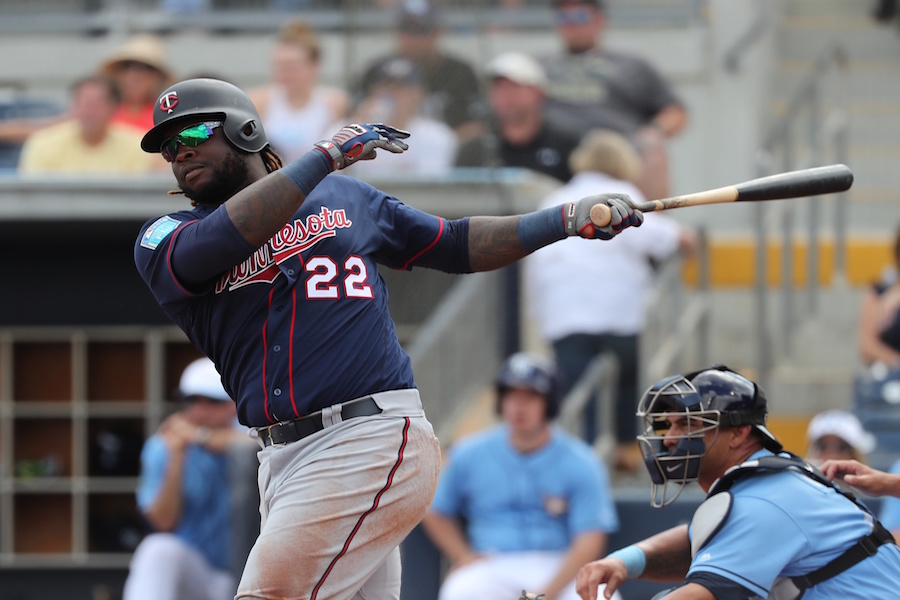 Projected Starter: Miguel Sano Likely Backup: Eduardo Escobar Depth: Ehire Adrianza, Erick Aybar, Taylor Featherston Prospects: Travis Blankenhorn, Andrew Bechtold, Jose Miranda THE GOOD It's all too easy to forget now, but just eight short months ago, Sano was the lone All Star rep from Minnesota's lineup. By the break, he already had 21 home runs with an OPS over 900, solidifying his status as long-term cog in the Twins infield. Though clearly playing above his listed weight of 260 pounds, he still respectably held his own at third base, making the majority of routine plays and occasionally flashing excellence with his cannon arm. Sano is an incredible talent. Let's not lose sight of that. He launched a pair of leisurely home runs on Friday in his sixth game of the spring, and that kind of thing should still be the expectation. If he's in the lineup, he's going to be a major threat. Even with his downslide after the All-Star break last year, the 24-year-old was on pace for 37 home runs before going down with a shin injury in August. With 71 career dingers in the books before age 25, he's on a rare pace. There are forces working against Sano – some of his own making, others not. But he is young enough to overcome them and put them in the rear view mirror. If it's always darkest before the dawn, then perhaps we're on the verge of a true breakthrough, which in Sano's case would simply mean a full season's worth of games (he's yet to play more than 116 in an MLB campaign) while realizing his 40 HR, 100+ RBI potential. In the event that Sano needs to miss time due to a suspension, setback with his leg, or some other affliction, the Twins are blessed with a pretty strong fallback option. Eduardo Escobar filled in brilliantly at the hot corner last year after the starter went down, slugging .529 with 10 bombs to basically mirror Sano's prodigious power output. Escobar finished with a .758 OPS overall, and has slashed .257/.304/.413 over the past four seasons. He's a better contingency than most teams have behind their best hitter, and his presence has been a big factor in mitigating the sense of alarm around Sano's ambiguity. THE BAD Optimism aside, the alarm is well warranted. Sano has an assault investigation floating over his head, a steel rod in his shin, and plenty of skeptics surrounding him in the organization. Those might include his manager. Always measured in his words, Paul Molitor conveyed some leeriness when talking to Brian Murphy of the Pioneer Press last month: “I think the trend has been [sano's] figuring some things out; some things have been a little harder to get through to him,” Molitor said. “At times I’ve tried to involve people that might be able to provide a voice that will penetrate. We’re just trying to get him to see the bigger picture. “He loves to play. It’s all in front of him. He, as much as anyone in that clubhouse, wants what’s in front of him, but I’m not sure he understands what is required to reap those rewards — of competing, winning, financial security, taking care of his family. We’re trying." Such sentiments toward Sano are nothing new, but it was easier to be sympathetic when he was a 22-year-old rookie. Today he's a 25-year-old who's shown up at camp with – in the kindest possible phrasing of his general manager – a "generous carriage." According to Pat Reusse, Sano is rumored to have weighed in this spring at 293 lbs. Where would that heft rank among all major-league players? It's almost impossible to say, given the sweeping inaccuracy of official listings (again, MLB's site still has Sano at 260), but I think we can safely say he's among the top handful of players. There's not likely a larger fielder outside of first base in the game. This isn't a knock against his all-around outlook as a big-leaguer, because I happen to believe that Sano can be a monster hitter even at three bucks, but the reality is that he's on the verge of becoming untenable at third base. A certain spryness requisite to the position becomes elusive for a man so large. Barring a reversal in physical development, which might be unrealistic given his genetic makeup, Sano appears destined for DH. The question is when. Minnesota's front office is hoping he can hold out as long as possible, because right now the system is thin on replacements. Yes, Escobar can fill in short-term. But he's eligible for free agency after this season. And the next in line behind him as a legit starting option at the position is... well, completely unclear. A trio of recent high draft picks stand out as the brightest long-term hopes: 2015 third-rounder Travis Blankenhorn (21), 2016 second-rounder Jose Miranda (19) and 2017 fifth-rounder Andrew Bechtold (21). But none will be arriving anytime soon. So suffice to say it would be really nice if Sano could hold it down at third for at least a couple more years. Which might help explain why the Twins haven't really entertained the idea of moving him off the position, and in fact delayed any possibility of such an outcome by signing Logan Morrison. THE BOTTOM LINE It's all about Sano. If he can make a statement by proving himself healthy and at least serviceable defensively, the Twins will be more than happy to stick with him at third indefinitely. Sano's agility has always been better than you'd expect for his size, so maybe he'll surprise us even at this weight. More likely, he'll need to put in work and slim down a bit to remain viable at the hot corner, but that's a perfectly feasible scenario. It's important to keep in mind that he was extremely limited in his ability to condition this past offseason. To pin the lack of weight loss on disinterest would be ignorant. If things go amiss for the star slugger this season, Escobar provides a solid security valve, for now. After 2018, the front office may need to look at building out some better long-term depth at the position. Hopefully someone like Blankenhorn or Bechtold can take a big step forward.
 -
Article: Twins 2018 Position Analysis: Second Base
Nick Nelson replied to Nick Nelson's topic in Twins Daily Front Page News
Fair points. We'll see I guess. Walker has never had a 5-WAR season, neither did Uggla. Dozier's done it two years back to back. And I think there's a good chance he makes it three straight. I'd be curious to see the recent history of free agent contracts signed by players coming off three consecutive seasons of 5+ WAR.- 45 replies
-
- 3
-
-
- brian dozier
- nick gordon
- (and 3 more)
-
Article: Twins 2018 Position Analysis: Second Base
Nick Nelson replied to Nick Nelson's topic in Twins Daily Front Page News
I found this excerpt from Souhan's column on Dozier earlier this week telling. “I think teams have gotten a lot smarter, and they really break down the numbers,” [Dozier] said. “The biggest thing in free agency is really making sure agents know their players’ value, and that their players understand that. “And how teams are evaluating players — that if you hit 30 home runs and drive in 80 and you’re one-dimensional and your WAR is a .8 you aren’t going to get paid like players used to. If you’ve had a high WAR for many years, I think you’ll do all right.” He gets it. Over the past two years Dozier has 10.8 WAR -- 13th most in baseball among hitters. The guys around him? Justin Turner, Nolan Arenado, Charlie Blackmon, Freddie Freeman. I don't think there's any question the latter three would be looking at deals in the 100M range as free agents. Turner got 4/64 from LA as a 32-year-old last offseason but he didn't have nearly the track record of Dozier, nor the entrenched rep as a leader and clubhouse staple. The landscape of free agency is changing, yes, but modern front offices still recognize and highly value WAR and other stats where Dozier rates well. And it'll probably be a different story once some of the big players reset their luxury tax penalties.- 45 replies
-
- 4
-
-
- brian dozier
- nick gordon
- (and 3 more)
-
Article: Twins 2018 Position Analysis: Second Base
Nick Nelson replied to Nick Nelson's topic in Twins Daily Front Page News
Can you give me an example of "the media" taking this kind of stance? I haven't seen it. Most people -- even Dozier fans -- seem to understand the validity of the team's thinking from what I've seen. Whoops, fixed. Thank you! Unless he has a big setback this year, Dozier is going to get a contract approaching 100M. I have no doubt. He'll be viewed as much more of a Hosmer type than a Moustakas type. IMO Lewis will end up at either SS or CF. I don't see second base in his future. Could be wrong. -
At first base for the Twins, a legacy might be coming to an end. Maybe not. A few dozen feet to the left, another legacy's looming closure feels more fated. Brian Dozier has already carved out distinction as one of the greatest second basemen in franchise history, and the best may well be yet to come, but his tenure in Minnesota is fleeting.Projected Starter: Brian Dozier Likely Backup: Ehire Adrianza Depth: Eduardo Escobar, Nick Gordon, Gregorio Petit Prospects: Gordon, Travis Blankenhorn, Yunior Severino THE GOOD It's one of the most obnoxious clichés in sports, but in this case it's too accurate not to acknowledge: Dozier has made a habit out of proving doubters wrong. He wasn't in great demand as a draft prospect out of the University of Southern Mississippi back in 2009, slipping to the eighth round despite batting .355 during a four-year collegiate career. In the Twins system, Dozier never graced the top end of prospect lists like the players who now follow him in the lineup. When drafted he was mostly viewed as a future utility player – a tweener in the middle infield without enough power to project as an impact hitter – and his early years in the minors followed suit. But Dozier just kept on improving. He broke out with a monster year at Double-A, reached the big leagues by age 25, and slowly blossomed into a premier power hitter in the game. His 2016 season seemed flukish, absurd, unrepeatable. Forty-two home runs? From a guy who previously hit 32 in eight years of college and minor-league ball combined?? How silly to doubt him. He brought it again in 2017, with arguably an even better overall performance. Dozier is the embodiment of a self-made star, and the definition of a leader by example. His production last year solidifies his status as a 5-WAR player, placing him comfortably in the top 15 percent of all qualified MLBers. Turning 31 in May, he's still in his physical prime. And beyond his natural competitive drive, Dozier has added incentive this year: the highest personal stakes of his life. For all his accomplishment, his career earnings amount to a relative pittance in the spectrum of Major League Baseball's upper echelon. Dozier is not only trying to lead an improving young team back to the playoffs this year; he's also showcasing himself for the league in hopes of earning a nine-digit paycheck he most certainly deserves, at a time where those are getting awfully hard to come by. If Dozier should stumble for some reason this year, we'll know for certain it wasn't due to a lack of effort, focus, or urgency. THE BAD Of course, the huge buzzkill of this whole deal is that Dozier's days in Minnesota appear to be numbered. He obviously has gotten the hint, and expressed his disappointment candidly earlier this week: "It's pretty much black and white from what I've been hearing, which is upsetting, but you turn the page and play to win." Dozier's got a spectacular record of durability. Were he to uncharacteristically miss time, Ehire Adrianza or Eduardo Escobar would figure to primarily fill in early on. Potentially Nick Gordon could emerge as an option somewhere along the way. Gordon's presence, in part, has contributed to the front office holding off on extension negotiations with Dozier. The 22-year-old ranks as Twins Daily's No. 3 prospect and will probably be playing short in Rochester by midsummer, if not from the outset. The tentative plan right now has him lining up with Jorge Polanco in the 2019 middle infield – assignments TBD. Neither has the makings of a stellar MLB shortstop and both currently are more ideally suited for second. Here's the rub: Polanco and Gordon both are more likely than Dozier to be manning second base beyond 2018, and neither is at all likely to ever reach Dozier's current level of top-tier production. THE BOTTOM LINE The short-term outlook at second base is blindingly bright. Dozier is a legit star player with more experience and motivation than ever before. Every sign points to another year as one of MLB's more impactful assets. After that, all bets are off. Gordon and Polanco seem almost equally likely to land at second as semi-permanent solutions. Travis Blankenhorn and Yunior Severino lurk in the lower levels. This will very likely be the last year we're able to watch Dozier dig in to lead off each game for the club that drafted him nearly a decade ago. Enjoy it while you can, Twins fans. But throughout the summer, keep an eye on movement behind him on the depth chart and in the system, because it may foretell the future of second base for the franchise. ~~~ Catch up on the rest of the series: Twins Position Analysis: Catcher Twins Position Analysis: First Base Click here to view the article
-
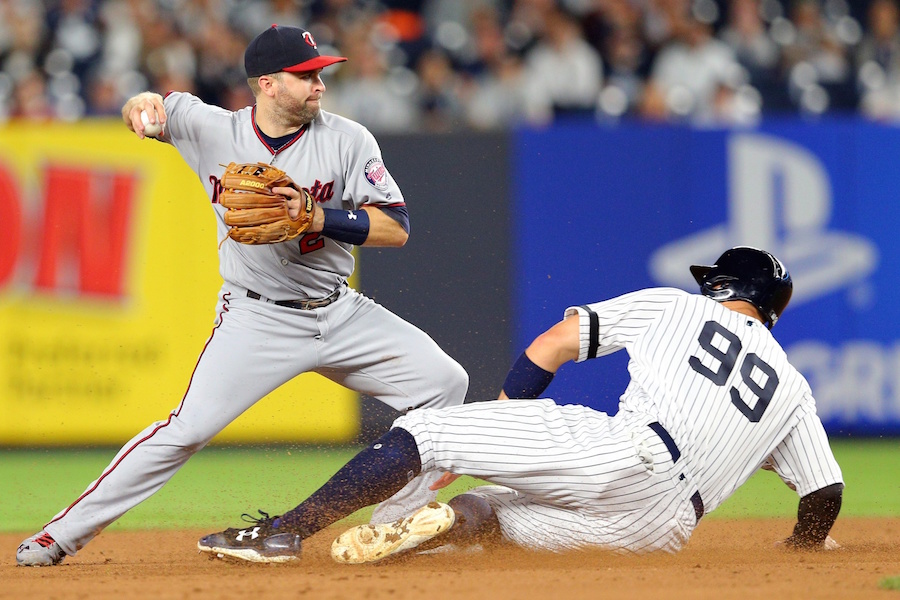 Projected Starter: Brian Dozier Likely Backup: Ehire Adrianza Depth: Eduardo Escobar, Nick Gordon, Gregorio Petit Prospects: Gordon, Travis Blankenhorn, Yunior Severino THE GOOD It's one of the most obnoxious clichés in sports, but in this case it's too accurate not to acknowledge: Dozier has made a habit out of proving doubters wrong. He wasn't in great demand as a draft prospect out of the University of Southern Mississippi back in 2009, slipping to the eighth round despite batting .355 during a four-year collegiate career. In the Twins system, Dozier never graced the top end of prospect lists like the players who now follow him in the lineup. When drafted he was mostly viewed as a future utility player – a tweener in the middle infield without enough power to project as an impact hitter – and his early years in the minors followed suit. But Dozier just kept on improving. He broke out with a monster year at Double-A, reached the big leagues by age 25, and slowly blossomed into a premier power hitter in the game. His 2016 season seemed flukish, absurd, unrepeatable. Forty-two home runs? From a guy who previously hit 32 in eight years of college and minor-league ball combined?? How silly to doubt him. He brought it again in 2017, with arguably an even better overall performance. Dozier is the embodiment of a self-made star, and the definition of a leader by example. His production last year solidifies his status as a 5-WAR player, placing him comfortably in the top 15 percent of all qualified MLBers. Turning 31 in May, he's still in his physical prime. And beyond his natural competitive drive, Dozier has added incentive this year: the highest personal stakes of his life. For all his accomplishment, his career earnings amount to a relative pittance in the spectrum of Major League Baseball's upper echelon. Dozier is not only trying to lead an improving young team back to the playoffs this year; he's also showcasing himself for the league in hopes of earning a nine-digit paycheck he most certainly deserves, at a time where those are getting awfully hard to come by. If Dozier should stumble for some reason this year, we'll know for certain it wasn't due to a lack of effort, focus, or urgency. THE BAD Of course, the huge buzzkill of this whole deal is that Dozier's days in Minnesota appear to be numbered. He obviously has gotten the hint, and expressed his disappointment candidly earlier this week: "It's pretty much black and white from what I've been hearing, which is upsetting, but you turn the page and play to win." Dozier's got a spectacular record of durability. Were he to uncharacteristically miss time, Ehire Adrianza or Eduardo Escobar would figure to primarily fill in early on. Potentially Nick Gordon could emerge as an option somewhere along the way. Gordon's presence, in part, has contributed to the front office holding off on extension negotiations with Dozier. The 22-year-old ranks as Twins Daily's No. 3 prospect and will probably be playing short in Rochester by midsummer, if not from the outset. The tentative plan right now has him lining up with Jorge Polanco in the 2019 middle infield – assignments TBD. Neither has the makings of a stellar MLB shortstop and both currently are more ideally suited for second. Here's the rub: Polanco and Gordon both are more likely than Dozier to be manning second base beyond 2018, and neither is at all likely to ever reach Dozier's current level of top-tier production. THE BOTTOM LINE The short-term outlook at second base is blindingly bright. Dozier is a legit star player with more experience and motivation than ever before. Every sign points to another year as one of MLB's more impactful assets. After that, all bets are off. Gordon and Polanco seem almost equally likely to land at second as semi-permanent solutions. Travis Blankenhorn and Yunior Severino lurk in the lower levels. This will very likely be the last year we're able to watch Dozier dig in to lead off each game for the club that drafted him nearly a decade ago. Enjoy it while you can, Twins fans. But throughout the summer, keep an eye on movement behind him on the depth chart and in the system, because it may foretell the future of second base for the franchise. ~~~ Catch up on the rest of the series: Twins Position Analysis: Catcher Twins Position Analysis: First Base
 -
Who is Minnesota's heir apparent at first base? The answer is unclear at this moment, but should come into focus by summer's end. As Joe Mauer approaches the finish line of an historic contract and faces an uncertain future, the question is indeed a pertinent one.Projected Starter: Joe Mauer Likely Backup: Logan Morrison Depth: Kennys Vargas, Mitch Garver, Brock Stassi Prospects: Lewin Diaz, Brent Rooker, Zander Wiel THE GOOD Mauer! It feels awesome to be able to once again apply that descriptor. After toiling in mediocrity for three seasons following his concussion-driven shift to first base, the six-time All-Star shook off a rough April and reverted to vintage form. From May 1st through the end of the 2017 season, Mauer hit .319/.402/.443. From 2010 through 2013, his post-MVP career at catcher, he hit .317/.400/.447. Basically the same guy. While less valuable at first than behind the plate, that production is still very useful, especially in a power-laden lineup like Minnesota's. Mauer was never going to be the prototypical slugging first baseman but last year he was a highly valuable contributor from the position in his own right. As long as that continues, he'll be a welcome fixture. Mauer is in line for his fifth consecutive Opening Day start at first base. He grabbed the torch from Justin Morneau, who had rattled off eight in a row. It's been a long time since that real estate has been primarily occupied by anybody other than the M&M boys (or, M&M&M if you want to add Mientkiewicz). Could Logan Morrison be next in the long and proud lineage of M's at first base? The surprise addition is set to step in for Minnesota mainly as a DH, but made 119 starts at first for the Rays last year and certainly is capable defensively. Mauer is, of course, several notches above "capable" with the glove, so he's the preferred option to have on the field at this time. If Morrison dramatically outperforms Mauer at the plate (he edged him in OPS by almost 70 points last year), it will be interesting to see how things play out next offseason, when the latter is a 35-year-old free agent, and the former a 31-year-old with an $8 million option for 2019. But I'm getting ahead of myself. Regardless of what happens down the road, the Twins are quite fortunate to have both players on hand for now. Morrison can frequently fill in at first, helping keep the veteran starter fresh throughout the summer, and he's a strong backup plan should Mauer miss any significant time. There is widespread belief that eventually Brent Rooker, the 2017 draft pick recently ranked as Twins Daily's No. 7 prospect, will become the next entrenched inhabitant at first base. His advanced college bat caught on quickly in the pros, and it's not unthinkable he could be approaching MLB-ready by year's end. Lewin Diaz, though further off, is another future possibility. The organization seems to have a pretty good road map laid out at the position, with Morrison's flexible contract helping out in the short term. This much is clear: Mauer needs to prove this year he's still the team's best option going forward. The starting job will not simply be handed back to him 2019. THE BAD Even though he returned to hitting at essentially the highest level one could expect, Mauer still was not a standout offensive first baseman in 2017. While his .349 wOBA was tops since switching positions, he still ranked 18th out of 28 qualified big-leaguers at his new home. That's the tough thing. With his lack of power, any age-related decline for Mauer in terms of plate vision or bat speed could send him hurtling back toward the lowest ranks of productivity. And while they'll likely have other options, realistically it is going to take a while for the Twins to turn away from their longtime franchise centerpiece as a regular. In a nutshell, that's the foreseeable downside here. Mauer was mostly a non-factor in the lineup from 2014 through 2016, and similar output would be tougher to stomach on a (hopefully) contending team with (hopefully) appealing alternatives. In the event Mauer gets hurt or merits replacement, theoretically the Twins could plug Morrison in at first base and revert to their original DH plan: Robbie Grossman plus a rotation of others like Miguel Sano and Eduardo Escobar. Kennys Vargas was also part of that original plan but if everyone's healthy he has no path to a 25-man roster spot. He's out of options and someone is all but certain to take a gamble on his switch-hitting power bat once he lands on waivers. Since the start of 2016, Vargas has launched 21 home runs in 440 MLB plate appearances (about two-thirds of a season's worth) with a very respectable .788 OPS. He's not an easy loss but the Twins aren't going to carry a second-string DH, knowing they'll need to get Sano semi-regular at-bats there also. I'd like to think there's some non-contender willing to trot Vargas out at first base or DH for 600 plate appearances to see if he could become a cheap and serviceable slugger in the middle of its lineup for a few years. However, Vargas may need to go mash in Korea for a bit to open that window. THE BOTTOM LINE Mauer had a good season, punctuated by a very strong finish, and is heading into a new campaign with palpable momentum for the first time in years. In Morrison, the Twins have also added last year's No. 11 finisher in WAR among MLB first basemen. So, they're looking quite healthy in terms of immediate depth. Rooker and Diaz give them a pair of quality pipeline pieces at the position. And any number of other marginal defenders throughout the system could ultimately land there. Minnesota may be on the verge of transition at first base, but the uncertainty – at a position that's seen ridiculous stability over the past couple of decades – is more intriguing than foreboding. Click here to view the article
- 20 replies
-
- 2
-
-
- joe mauer
- logan morrison
- (and 1 more)
-
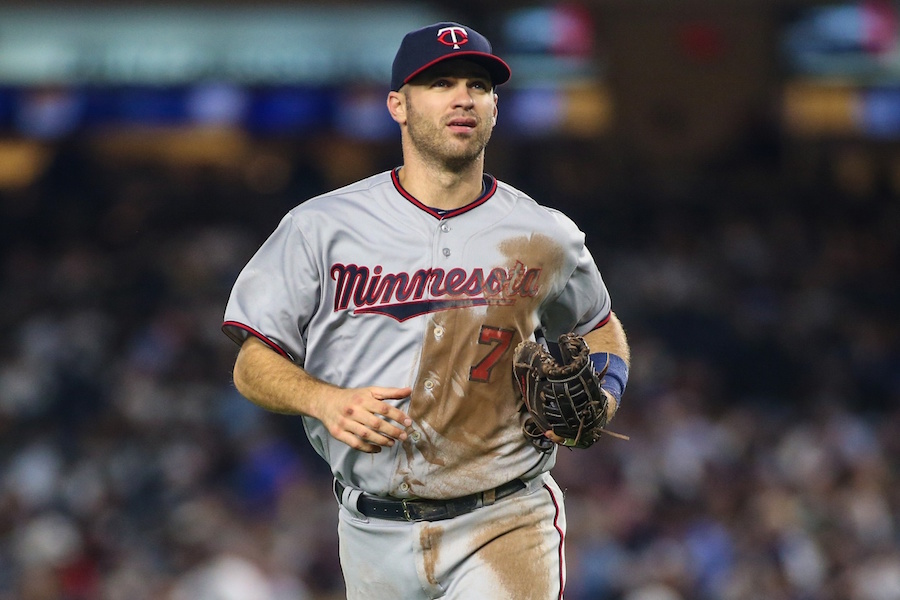 Projected Starter: Joe Mauer Likely Backup: Logan Morrison Depth: Kennys Vargas, Mitch Garver, Brock Stassi Prospects: Lewin Diaz, Brent Rooker, Zander Wiel THE GOOD Mauer! It feels awesome to be able to once again apply that descriptor. After toiling in mediocrity for three seasons following his concussion-driven shift to first base, the six-time All-Star shook off a rough April and reverted to vintage form. From May 1st through the end of the 2017 season, Mauer hit .319/.402/.443. From 2010 through 2013, his post-MVP career at catcher, he hit .317/.400/.447. Basically the same guy. While less valuable at first than behind the plate, that production is still very useful, especially in a power-laden lineup like Minnesota's. Mauer was never going to be the prototypical slugging first baseman but last year he was a highly valuable contributor from the position in his own right. As long as that continues, he'll be a welcome fixture. Mauer is in line for his fifth consecutive Opening Day start at first base. He grabbed the torch from Justin Morneau, who had rattled off eight in a row. It's been a long time since that real estate has been primarily occupied by anybody other than the M&M boys (or, M&M&M if you want to add Mientkiewicz). Could Logan Morrison be next in the long and proud lineage of M's at first base? The surprise addition is set to step in for Minnesota mainly as a DH, but made 119 starts at first for the Rays last year and certainly is capable defensively. Mauer is, of course, several notches above "capable" with the glove, so he's the preferred option to have on the field at this time. If Morrison dramatically outperforms Mauer at the plate (he edged him in OPS by almost 70 points last year), it will be interesting to see how things play out next offseason, when the latter is a 35-year-old free agent, and the former a 31-year-old with an $8 million option for 2019. But I'm getting ahead of myself. Regardless of what happens down the road, the Twins are quite fortunate to have both players on hand for now. Morrison can frequently fill in at first, helping keep the veteran starter fresh throughout the summer, and he's a strong backup plan should Mauer miss any significant time. There is widespread belief that eventually Brent Rooker, the 2017 draft pick recently ranked as Twins Daily's No. 7 prospect, will become the next entrenched inhabitant at first base. His advanced college bat caught on quickly in the pros, and it's not unthinkable he could be approaching MLB-ready by year's end. Lewin Diaz, though further off, is another future possibility. The organization seems to have a pretty good road map laid out at the position, with Morrison's flexible contract helping out in the short term. This much is clear: Mauer needs to prove this year he's still the team's best option going forward. The starting job will not simply be handed back to him 2019. THE BAD Even though he returned to hitting at essentially the highest level one could expect, Mauer still was not a standout offensive first baseman in 2017. While his .349 wOBA was tops since switching positions, he still ranked 18th out of 28 qualified big-leaguers at his new home. That's the tough thing. With his lack of power, any age-related decline for Mauer in terms of plate vision or bat speed could send him hurtling back toward the lowest ranks of productivity. And while they'll likely have other options, realistically it is going to take a while for the Twins to turn away from their longtime franchise centerpiece as a regular. In a nutshell, that's the foreseeable downside here. Mauer was mostly a non-factor in the lineup from 2014 through 2016, and similar output would be tougher to stomach on a (hopefully) contending team with (hopefully) appealing alternatives. In the event Mauer gets hurt or merits replacement, theoretically the Twins could plug Morrison in at first base and revert to their original DH plan: Robbie Grossman plus a rotation of others like Miguel Sano and Eduardo Escobar. Kennys Vargas was also part of that original plan but if everyone's healthy he has no path to a 25-man roster spot. He's out of options and someone is all but certain to take a gamble on his switch-hitting power bat once he lands on waivers. Since the start of 2016, Vargas has launched 21 home runs in 440 MLB plate appearances (about two-thirds of a season's worth) with a very respectable .788 OPS. He's not an easy loss but the Twins aren't going to carry a second-string DH, knowing they'll need to get Sano semi-regular at-bats there also. I'd like to think there's some non-contender willing to trot Vargas out at first base or DH for 600 plate appearances to see if he could become a cheap and serviceable slugger in the middle of its lineup for a few years. However, Vargas may need to go mash in Korea for a bit to open that window. THE BOTTOM LINE Mauer had a good season, punctuated by a very strong finish, and is heading into a new campaign with palpable momentum for the first time in years. In Morrison, the Twins have also added last year's No. 11 finisher in WAR among MLB first basemen. So, they're looking quite healthy in terms of immediate depth. Rooker and Diaz give them a pair of quality pipeline pieces at the position. And any number of other marginal defenders throughout the system could ultimately land there. Minnesota may be on the verge of transition at first base, but the uncertainty – at a position that's seen ridiculous stability over the past couple of decades – is more intriguing than foreboding.
 -
In the coming weeks, leading up to the start of the regular season, we'll take an in-depth look at every position for the 2018 Twins, breaking down the strengths, weaknesses, depth, and outlook for each. Today we kick off this new series by analyzing the catcher position, where Minnesota's reigning Minor League Player of the Year will be seeking to make a major impact.Projected Starter: Jason Castro Likely Backup: Mitch Garver Depth: Bobby Wilson, Willians Astudillo, Brian Navarreto Prospects: David Banuelos, Ben Rortvedt THE GOOD By signing Jason Castro to a three-year deal within his first few weeks on the job, GM Thad Levine was laying groundwork for a sustained platoon set-up at the catcher position. This year, we'll see that plan come to fruition. Mitch Garver, one of the best catching prospects developed by the Twins in some time, was nearing readiness a year ago but not quite there. Chris Gimenez was signed as a stopgap so Garver could continue growing in the minors. And grow he did. The 26-year-old enjoyed a breakout season at Rochester, with his offensive production elevating from good to great for the first time. He was especially effective against left-handed pitchers, slashing .290/.408/.530 with a 17% walk rate. That of course makes him an ideally suited complement to the lefty-hitting Twins incumbent. Castro actually didn't hit very well against right-handed pitchers in 2017, batting .234 with a .379 slugging percentage, but that's a departure from his career norm. And despite the overall struggles he still managed a 12.5% walk rate. In a potentially stacked Twins lineup, production at catcher figures to be a relative luxury. If Castro and Garver stay healthy, there's enough OBP floor here to suggest they'll at least keep the position from being a liability. Catcher is a punishing, brutal assignment however. The likelihood of both players avoiding the disabled list all summer is not high, and that's where things get a little dubious here. THE BAD The Twins are showing a ton of confidence in Garver, despite his .636 OPS during a brief MLB debut last year. They've given him a clear and unobstructed path to a roster spot as Castro's caddy – a significant role that should yield 200-300 plate appearances, and perhaps more if performance warrants. This is nice to see. The Twins are going all-in on a homegrown player who has absolutely earned the opportunity. But the degree to which they've put their eggs in the Garver basket borders on brazen. We're still in the first week of March, and both of Minnesota's top two catchers on the depth chart have already experienced minor health issues. Castro's been kept out of the lineup in recent days by migraines. Garver tweaked his knee last week seriously enough to require tests, but got good news from his scans, which showed no significant damage. If either player encounters a more substantial injury this month and needs to open the season on the disabled list, the Twins are presently lined up to go with Bobby Wilson on the 25-man roster. He's 34, hasn't surfaced in the majors since 2016, and owns a .587 big-league OPS. The two other guys getting reps in camp, Willians Astudillo and Brian Navarreto, have never played in the majors. Astudillo, I will say, is a little intriguing. He's never been much of a prospect but batted .342 in 36 games with Arizona's Triple-A affiliate last year, and more recently had an excellent showing in the Venezuelan Winter League. He never strikes out and is still only 26. Maybe there's something there. But, intrigue aside, the Twins have little in the way of established, viable MLB depth behind Castro and Garver. Navarreto has a .203 lifetime average in the minors, and the club's top upcoming prospects at the position – Rortvedt and Banuelos – have yet to reach Double-A. Possible injuries aren't the only concern stemming from Minnesota's lack of proven catching contingencies. Garver himself is unproven. He hit .196 in a month-long stint with the Twins last year and we hardly saw him tested defensively at the highest level. (He caught only 50 innings in six weeks with the club.) Because he'll have a low-pressure role, a high concentration of at-bats against southpaws, and plenty of days off from catching to rest his legs, Garver is being given almost ideal circumstances for a smooth transition into the majors. But he's still gotta do it. And if he's not up to the task, the Twins really don't have much in the way of fallback options at this point. THE BOTTOM LINE As you'll see throughout this series, the Twins have done well to build ample depth at almost every position. Catcher is an exception. If Garver gets overwhelmed, or gets hurt, or Castro gets hurt, this team could be in a tough spot. And, realistically, one of those things is probably going to happen at some point. At the same time, their ability to address this issue is limited. The Twins seem to be telling Garver, "The job is yours, you don't need to 'earn' it with your play in spring training, we're giving you a full shot here so go get it." Which is great! But it makes Minnesota an unappealing destination for any prospective addition who deserves to be in the majors. Even if a remaining free agent like Geovany Soto, Carlos Ruiz or Jonathan Lucroy reaches a point where he's willing to settle for a low-stakes minor-league contract, it won't be with a team that gives him almost zero opportunity to win even a backup job. Castro is a well established commodity at this point. He's a safe bet for an OPS around .700 with steady defense behind the plate. In 2017 he anchored a position that collectively finished with a .703 OPS, good for 10th in the American League. Garver represents the team's best chance to move the needle. He brings more to the table than Gimenez skill-wise, so if things click Garver could fuel big improvement for this unit. But right now, he's an unknown, and one of the biggest wild cards on the roster. Click here to view the article
-
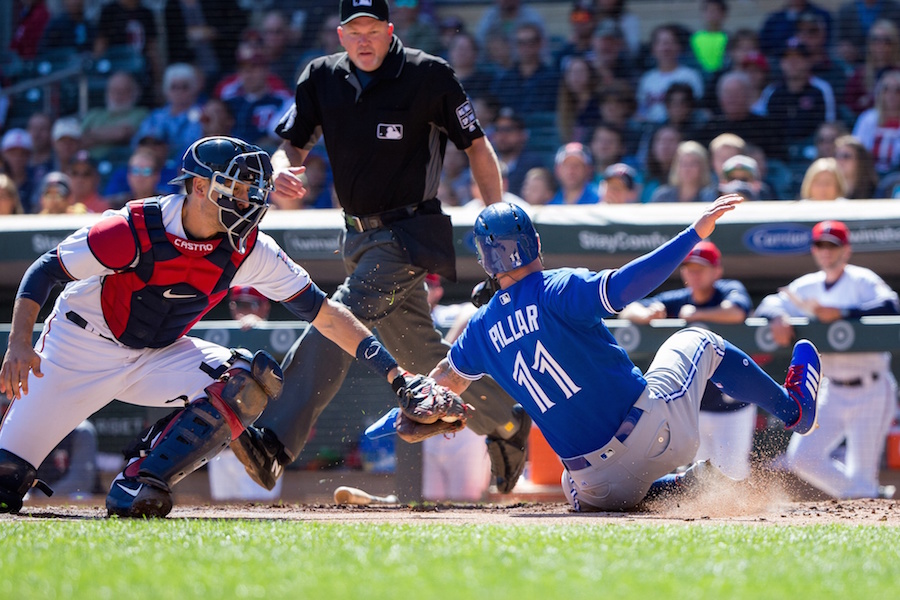 Projected Starter: Jason Castro Likely Backup: Mitch Garver Depth: Bobby Wilson, Willians Astudillo, Brian Navarreto Prospects: David Banuelos, Ben Rortvedt THE GOOD By signing Jason Castro to a three-year deal within his first few weeks on the job, GM Thad Levine was laying groundwork for a sustained platoon set-up at the catcher position. This year, we'll see that plan come to fruition. Mitch Garver, one of the best catching prospects developed by the Twins in some time, was nearing readiness a year ago but not quite there. Chris Gimenez was signed as a stopgap so Garver could continue growing in the minors. And grow he did. The 26-year-old enjoyed a breakout season at Rochester, with his offensive production elevating from good to great for the first time. He was especially effective against left-handed pitchers, slashing .290/.408/.530 with a 17% walk rate. That of course makes him an ideally suited complement to the lefty-hitting Twins incumbent. Castro actually didn't hit very well against right-handed pitchers in 2017, batting .234 with a .379 slugging percentage, but that's a departure from his career norm. And despite the overall struggles he still managed a 12.5% walk rate. In a potentially stacked Twins lineup, production at catcher figures to be a relative luxury. If Castro and Garver stay healthy, there's enough OBP floor here to suggest they'll at least keep the position from being a liability. Catcher is a punishing, brutal assignment however. The likelihood of both players avoiding the disabled list all summer is not high, and that's where things get a little dubious here. THE BAD The Twins are showing a ton of confidence in Garver, despite his .636 OPS during a brief MLB debut last year. They've given him a clear and unobstructed path to a roster spot as Castro's caddy – a significant role that should yield 200-300 plate appearances, and perhaps more if performance warrants. This is nice to see. The Twins are going all-in on a homegrown player who has absolutely earned the opportunity. But the degree to which they've put their eggs in the Garver basket borders on brazen. We're still in the first week of March, and both of Minnesota's top two catchers on the depth chart have already experienced minor health issues. Castro's been kept out of the lineup in recent days by migraines. Garver tweaked his knee last week seriously enough to require tests, but got good news from his scans, which showed no significant damage. If either player encounters a more substantial injury this month and needs to open the season on the disabled list, the Twins are presently lined up to go with Bobby Wilson on the 25-man roster. He's 34, hasn't surfaced in the majors since 2016, and owns a .587 big-league OPS. The two other guys getting reps in camp, Willians Astudillo and Brian Navarreto, have never played in the majors. Astudillo, I will say, is a little intriguing. He's never been much of a prospect but batted .342 in 36 games with Arizona's Triple-A affiliate last year, and more recently had an excellent showing in the Venezuelan Winter League. He never strikes out and is still only 26. Maybe there's something there. But, intrigue aside, the Twins have little in the way of established, viable MLB depth behind Castro and Garver. Navarreto has a .203 lifetime average in the minors, and the club's top upcoming prospects at the position – Rortvedt and Banuelos – have yet to reach Double-A. Possible injuries aren't the only concern stemming from Minnesota's lack of proven catching contingencies. Garver himself is unproven. He hit .196 in a month-long stint with the Twins last year and we hardly saw him tested defensively at the highest level. (He caught only 50 innings in six weeks with the club.) Because he'll have a low-pressure role, a high concentration of at-bats against southpaws, and plenty of days off from catching to rest his legs, Garver is being given almost ideal circumstances for a smooth transition into the majors. But he's still gotta do it. And if he's not up to the task, the Twins really don't have much in the way of fallback options at this point. THE BOTTOM LINE As you'll see throughout this series, the Twins have done well to build ample depth at almost every position. Catcher is an exception. If Garver gets overwhelmed, or gets hurt, or Castro gets hurt, this team could be in a tough spot. And, realistically, one of those things is probably going to happen at some point. At the same time, their ability to address this issue is limited. The Twins seem to be telling Garver, "The job is yours, you don't need to 'earn' it with your play in spring training, we're giving you a full shot here so go get it." Which is great! But it makes Minnesota an unappealing destination for any prospective addition who deserves to be in the majors. Even if a remaining free agent like Geovany Soto, Carlos Ruiz or Jonathan Lucroy reaches a point where he's willing to settle for a low-stakes minor-league contract, it won't be with a team that gives him almost zero opportunity to win even a backup job. Castro is a well established commodity at this point. He's a safe bet for an OPS around .700 with steady defense behind the plate. In 2017 he anchored a position that collectively finished with a .703 OPS, good for 10th in the American League. Garver represents the team's best chance to move the needle. He brings more to the table than Gimenez skill-wise, so if things click Garver could fuel big improvement for this unit. But right now, he's an unknown, and one of the biggest wild cards on the roster.
 -
March is underway and spring training is now in full swing. In fact, before we know it, the first round of camp cuts will already be upon us. As we wrap up the first full week of exhibition games, here's a look at three key Minnesota Twins storylines.* Heading into camp, it appeared the Twins were committed to keeping the designated hitter spot flexible this year, adhering to the revolving door approach that's basically been their norm. Not a bad idea for a team with a slow-footed fourth outfielder, an aging first baseman who benefits from rest, and a hefty third baseman coming off leg surgery. The arrival of Logan Morrison has flipped this dynamic on its side. Fresh off a 38-homer season with Tampa, Morrison is a big add for the offense, and figures to become a mainstay at DH. That will represent a change of course for the Twins, who haven't had a single player make 70+ starts at designated hitter since Jim Thome in 2010. In addition to stability, they'll hope Morrison can bring more production. Last year's DH cohort, led by Robbie Grossman, hit just .237/.328/.383 for a .711 OPS; only catchers (.703) yielded a worse mark among Twins position groups. Grossman appears to be thrust onto precarious ground by the new slugger's arrival. In 2017, 57% of his 456 plate appearances came as DH, and it's not clear the team is interested in shifting that balance toward the outfield. Last year Paul Molitor became very comfortable writing in the Rosario-Buxton-Kepler alignment almost every day, and there's no reason to expect him to deviate if all are healthy. Swapping in Grossman downgrades the defense, and it's not clear he's an offensive upgrade over any of the three. With that said, I have a really hard time envisioning Grossman being left off the roster. He led the team in on-base percentage in 2016 and ranked second last year. Even if he doesn't start frequently, there's plenty of value in a switch-hitter who can come off the bench and give you a disciplined AB from either side. One school of thought suggests the Twins could part with Grossman and carry Zack Granite as their fourth outfielder. I don't see it. Granite has multiple options remaining, so he can easily be stashed at Rochester until he's needed. He wouldn't serve much purpose on the Twins roster with all three starting outfielders healthy. And as for the forgotten man, Kennys Vargas? As Seth put it yesterday: "At this point, he's essentially getting at-bats to show 29 other teams what he can do." * Over the past few years, Brian Dozier has been known for launching bombs on the baseball field. Earlier this week, he dropped one in the clubhouse. Okay, that's a stretch. It's been clear for some time that Dozier was intent on testing the free agent market, and there've been zero rumors of contract negotiations with the Twins. Still, it was a bit surprising to see him so frontal and candid about his looming date with the open market. I respect it. Dozier might be going against the grain by dispelling the notion of a spring or in-season extension, but he's shutting it down as a talking point right off the bat and that's just fine. He insists it won't distract him this year and I believe it. Left unspoken by Dozier was this: He is very likely entering his final year as a Twin. We've seen how shrewd this new front office is; what are the chances they'd pay him the money he'll want as a 31-year-old, with Nick Gordon standing in line as a cheap long-term replacement? From the very start, Dozier's relationship with Minnesota's current baseball ops leadership has been lukewarm at best. The first thing Derek Falvey and Thad Levine did when they arrived was float him in highly publicized trade talks with the Dodgers. At the deadline Dozier openly took exception to the team's sudden pivot from buyer to seller. And the Twins haven't publicly hinted at any serious desire to hammer out a long-term deal with their best player. In the entirety of his MLB career up to this point, Dozier has pocketed about half of Joe Mauer's 2018 salary. If he's got a chip on his shoulder, and feels he's earned himself a windfall from whatever club is willing, I don't blame him in the least. Frankly, I can't wait to see how the added motivation manifests this season. * Speaking of Mauer, he too is heading into the final year of his contract, as you might have heard. Much like Dozier, he makes it no secret that he is going to let the 2018 season play out and go from there. But unlike his infield neighbor, Mauer won't be chasing a big payday in the fall – he'll be weighing retirement. Mauer, who turns 35 in a month, proved last year that he isn't cooked. (Before that, it was very much in question.) If he can continue at that 2017 level or better, it'd be an easy decision to invite him back on a short-term pact for around half his current salary. But if he reverts to something resembling his 2014-through-2016 form? Then things get interesting. These days, it isn't hard to find high-quality hitters who can play first base – Logan Morrison serving as case in point. In fact, by the end of this season, Morrison may have clearly established himself as the clearly superior offensive weapon, in which case he can be retained for $8 million in 2019. At that juncture, what's stopping the Twins from moving on? Well, there is Mauer's already mythical status within the franchise, and with at least some corners of the fanbase. Also: his phenomenal glove, familiarity in the clubhouse, and revered presence in the batter's box cannot be overlooked. But as we've seen with Dozier, the new brass ain't too sentimental. There's pretty much zero chance Mauer, with his deep Minnesota roots and young twin girls, is going to go play in another city for a year or two. He basically admitted as much: “This is where I want to be. This is where my family is, where my daughters are growing up. I have no intention of going anywhere else. Hopefully it doesn’t come to that.” So, if his play this year doesn't inspire the Twins to make a serious run at bringing him back, we could be looking at the end of the road for Joe Mauer. And if this winds up being the last year in a Minnesota uniform for both he and Dozier – the two longest-tenured Twins – that's 25 combined years in the organization, walking into the sunset. The last enduring links to bygone eras. Can the new wave combine with the final vestiges of the old to make an epic run? It almost feels like... destiny. Click here to view the article
- 26 replies
-
- 3
-
-
- brian dozier
- joe mauer
- (and 2 more)
-
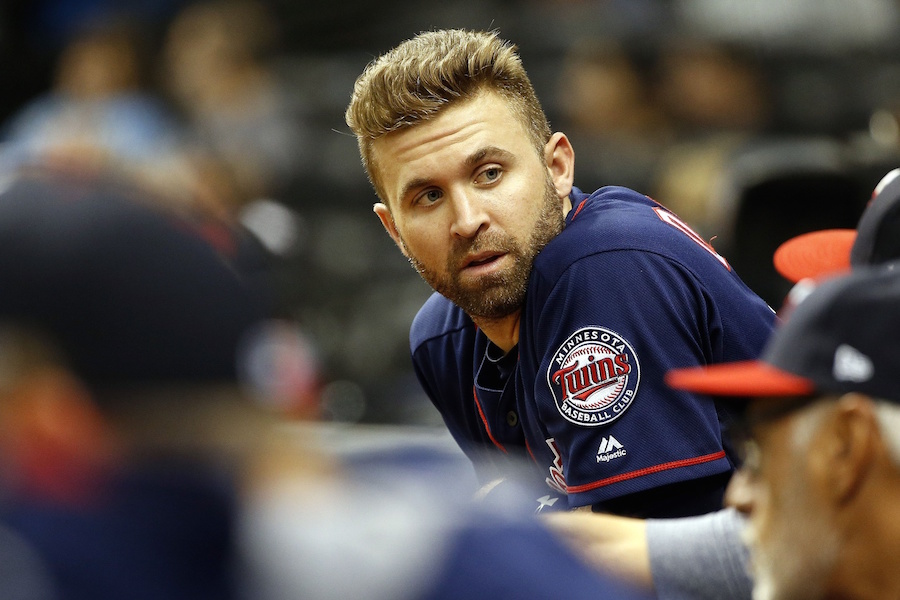 * Heading into camp, it appeared the Twins were committed to keeping the designated hitter spot flexible this year, adhering to the revolving door approach that's basically been their norm. Not a bad idea for a team with a slow-footed fourth outfielder, an aging first baseman who benefits from rest, and a hefty third baseman coming off leg surgery. The arrival of Logan Morrison has flipped this dynamic on its side. Fresh off a 38-homer season with Tampa, Morrison is a big add for the offense, and figures to become a mainstay at DH. That will represent a change of course for the Twins, who haven't had a single player make 70+ starts at designated hitter since Jim Thome in 2010. In addition to stability, they'll hope Morrison can bring more production. Last year's DH cohort, led by Robbie Grossman, hit just .237/.328/.383 for a .711 OPS; only catchers (.703) yielded a worse mark among Twins position groups. Grossman appears to be thrust onto precarious ground by the new slugger's arrival. In 2017, 57% of his 456 plate appearances came as DH, and it's not clear the team is interested in shifting that balance toward the outfield. Last year Paul Molitor became very comfortable writing in the Rosario-Buxton-Kepler alignment almost every day, and there's no reason to expect him to deviate if all are healthy. Swapping in Grossman downgrades the defense, and it's not clear he's an offensive upgrade over any of the three. With that said, I have a really hard time envisioning Grossman being left off the roster. He led the team in on-base percentage in 2016 and ranked second last year. Even if he doesn't start frequently, there's plenty of value in a switch-hitter who can come off the bench and give you a disciplined AB from either side. One school of thought suggests the Twins could part with Grossman and carry Zack Granite as their fourth outfielder. I don't see it. Granite has multiple options remaining, so he can easily be stashed at Rochester until he's needed. He wouldn't serve much purpose on the Twins roster with all three starting outfielders healthy. And as for the forgotten man, Kennys Vargas? As Seth put it yesterday: "At this point, he's essentially getting at-bats to show 29 other teams what he can do." * Over the past few years, Brian Dozier has been known for launching bombs on the baseball field. Earlier this week, he dropped one in the clubhouse. Okay, that's a stretch. It's been clear for some time that Dozier was intent on testing the free agent market, and there've been zero rumors of contract negotiations with the Twins. Still, it was a bit surprising to see him so frontal and candid about his looming date with the open market. I respect it. Dozier might be going against the grain by dispelling the notion of a spring or in-season extension, but he's shutting it down as a talking point right off the bat and that's just fine. He insists it won't distract him this year and I believe it. Left unspoken by Dozier was this: He is very likely entering his final year as a Twin. We've seen how shrewd this new front office is; what are the chances they'd pay him the money he'll want as a 31-year-old, with Nick Gordon standing in line as a cheap long-term replacement? From the very start, Dozier's relationship with Minnesota's current baseball ops leadership has been lukewarm at best. The first thing Derek Falvey and Thad Levine did when they arrived was float him in highly publicized trade talks with the Dodgers. At the deadline Dozier openly took exception to the team's sudden pivot from buyer to seller. And the Twins haven't publicly hinted at any serious desire to hammer out a long-term deal with their best player. In the entirety of his MLB career up to this point, Dozier has pocketed about half of Joe Mauer's 2018 salary. If he's got a chip on his shoulder, and feels he's earned himself a windfall from whatever club is willing, I don't blame him in the least. Frankly, I can't wait to see how the added motivation manifests this season. * Speaking of Mauer, he too is heading into the final year of his contract, as you might have heard. Much like Dozier, he makes it no secret that he is going to let the 2018 season play out and go from there. But unlike his infield neighbor, Mauer won't be chasing a big payday in the fall – he'll be weighing retirement. Mauer, who turns 35 in a month, proved last year that he isn't cooked. (Before that, it was very much in question.) If he can continue at that 2017 level or better, it'd be an easy decision to invite him back on a short-term pact for around half his current salary. But if he reverts to something resembling his 2014-through-2016 form? Then things get interesting. These days, it isn't hard to find high-quality hitters who can play first base – Logan Morrison serving as case in point. In fact, by the end of this season, Morrison may have clearly established himself as the clearly superior offensive weapon, in which case he can be retained for $8 million in 2019. At that juncture, what's stopping the Twins from moving on? Well, there is Mauer's already mythical status within the franchise, and with at least some corners of the fanbase. Also: his phenomenal glove, familiarity in the clubhouse, and revered presence in the batter's box cannot be overlooked. But as we've seen with Dozier, the new brass ain't too sentimental. There's pretty much zero chance Mauer, with his deep Minnesota roots and young twin girls, is going to go play in another city for a year or two. He basically admitted as much: “This is where I want to be. This is where my family is, where my daughters are growing up. I have no intention of going anywhere else. Hopefully it doesn’t come to that.” So, if his play this year doesn't inspire the Twins to make a serious run at bringing him back, we could be looking at the end of the road for Joe Mauer. And if this winds up being the last year in a Minnesota uniform for both he and Dozier – the two longest-tenured Twins – that's 25 combined years in the organization, walking into the sunset. The last enduring links to bygone eras. Can the new wave combine with the final vestiges of the old to make an epic run? It almost feels like... destiny.
 -
Article: On Rushing Pitchers And Taking Lumps
Nick Nelson replied to Nick Nelson's topic in Twins Daily Front Page News
Yeah, I didn't mean to say, 'be ready to throw these guys out there and let them flap in the wind regardless of results.' I meant more, 'from a planning standpoint, they should be leaving flexibility to get these guys opportunities if they're cruising in Triple-A.' Yes, it should be a case-by-case basis. But if they call someone up and he struggles, it doesn't mean they made the wrong call. You could certainly make an argument that guys like Berrios, Gibson and May ultimately benefited from the initial shellackings they took in the big leagues, as all looked significantly more prepared and comfortable on that stage the following season. In each case there was some debate around whether it was really the right time to call them up. The thing is that the Twins were never in serious contention when those pitchers arrived so there's an added dynamic now at play.- 52 replies
-
- 3
-
-
- jose berrios
- fernando romero
- (and 1 more)
-
Article: On Rushing Pitchers And Taking Lumps
Nick Nelson replied to Nick Nelson's topic in Twins Daily Front Page News
Not saying that's true in all cases by any means. And I do think a guy can keep improving at Triple-A especially in a case like Berrios or Buxton where they were able to get exposure against MLB hitters to have those weaknesses crystallized before going back to work on them. It isn't about being able to afford it, though. It's just a reality they need to plan around. And hopefully it won't take 2-3 years to get through the growing pains. And the flip side of this is that Romero will already be down to his last option year in 2019. So you want to be pretty comfortable he's figured things out in the majors by the end of that year.- 52 replies
-
- 3
-
-
- jose berrios
- fernando romero
- (and 1 more)
-
Article: On Rushing Pitchers And Taking Lumps
Nick Nelson replied to Nick Nelson's topic in Twins Daily Front Page News
Will you feel differently if we get deep into the summer and the Twins are angling for a postseason spot with a shaky 5th starter while Romero torches Triple-A?- 52 replies
-
- 4
-
-
- jose berrios
- fernando romero
- (and 1 more)
