



Nick Nelson
-
Posts
8,326 -
Joined
-
Last visited
-
Days Won
56
Content Type
Profiles
News
Minnesota Twins Videos
2026 Minnesota Twins Top Prospects Ranking
2022 Minnesota Twins Draft Picks
Minnesota Twins Free Agent & Trade Rumors, Notes, & Tidbits
Guides & Resources
2023 Minnesota Twins Draft Picks
The Minnesota Twins Players Project
2024 Minnesota Twins Draft Picks
2025 Minnesota Twins Draft Pick Tracker
2026 Minnesota Twins Draft Tracker: Picks & Bonuses
Forums
Blogs
Events
Store
Downloads
Gallery
Everything posted by Nick Nelson
-

Article: Twins Must Get Creative To Lure Darvish
Nick Nelson replied to Nick Nelson's topic in Twins Daily Front Page News
I don't think I implied that Darvish and his agent are not in complete control -- to me that's a reality that goes without saying. I was only suggesting that his decision to speak to MN later in the process could signal that they're higher on his list of preferences, rather than the other way around as many on this thread seem to believe. Using Apple/Microsoft/Google metaphors doesn't really work. This is MLB free agency. Different ballgame, so to speak. -
Article: Twins Must Get Creative To Lure Darvish
Nick Nelson replied to Nick Nelson's topic in Twins Daily Front Page News
Of course they are. Your suggestion of signing him before anyone else can talk to him is unrealistic. You don't really believe they were going to meet with the Twins early on, get one (likely unspectacular) offer and decide to sign without talking to other teams? -
Article: Twins Must Get Creative To Lure Darvish
Nick Nelson replied to Nick Nelson's topic in Twins Daily Front Page News
Here's what is playing out right now – from my hopeful view: Levine has a good enough relationship with Darvish and his agent that the two sides have kept an open line of communication. Thad signaled early on that his interest was very serious, and Darvish's camp indicated that the interest was mutual. So over the past couple of weeks, Darvish has been meeting with other legit suitors to hear their pitches and receive their offers. Now he'll be able to go into a meeting with the Twins knowing full well what else is out there, and what his options are. Meanwhile, Levine will know exactly what kind of bids he's up against. No matter how you look at it, I think Minnesota meeting with Darvish later in the process rather than earlier almost has to be viewed as a good thing... as long as it actually happens. -
This is probably true, but while the list as somewhat intended as a hierarchy of trade value, it's meant to be specific to the Twins. As alluded in the post, the lack of other clearcut MLB-ready catchers in the organization gave Castro a bit of a bump. And I think you're being a little disingenuous by comparing Castro and Gimenez solely on the basis of 2017. From my view, Duffey's curve was usually on point in 2017, in large part because it played off a far more effective fastball. It cannot be overstated how wretched Duffey's FB was in 2016. In terms of changes in movement and trajectory and all that -- I'm not the best at that sort of analysis so I'll leave it to others, but I will say that by most measures on PitchFX his curve really rebounded this year
- 12 replies
-
- 2
-

-
- alex kirilloff
- trevor may
- (and 3 more)
-
May and Duffey were hard to rank. Their results haven't borne out the underlying ability, I don't think, but they've both had things working against them – namely the team's inability to settle on a role for either. May came into camp in 2016 competing for a rotation job but ended up spending the entire year in the bullpen. Ditto for Duffey in 2017. It sure doesn't help a guy succeed when he's unable to properly prepare and train for a particular role, especially when it's a role he hasn't been in for quite a while.
- 12 replies
-
- 1
-
-
- alex kirilloff
- trevor may
- (and 3 more)
-
As we prepare to flip the calendar to a new year, it's a good time to take stock. That's exactly the idea behind this new series, which will rank the top 20 players in the Minnesota Twins organization – not by their talent or production necessarily, but by their value as assets. That means we'll be factoring in age, contracts, realistic upside, positional scarcity and other details contributing to the player's long-term indispensability to the Twins franchise. We'll kick off this four-part series with selections for Nos. 16 through 20 below the fold.20. Alex Kirilloff - OF (20) The pure hitting talent is unmistakable. It convinced the Twins to select Kirilloff with the 15th overall pick in the 2016 draft, and then to send him straight to advanced level rookie ball as an 18-year-old fresh out of high school. The Pittsburgh native answered the challenge, slashing .306/.341/.454 over 55 games in his first exposure to pro competition. But unfortunately, that's all we've seen from him so far. Kirilloff missed the entire 2017 season after undergoing Tommy John surgery, but he'll be back at full strength in 2018, still only 20 years old and ready to potentially climb the minor-league ranks in a hurry. 19. Trevor May - RHP (28) Like Kirilloff, May isn't fresh in our memories after sitting out all of 2017. But his ability and his track record earn him a place on this list. He has shown solid potential as a starter and posted a dominant strikeout rate out of the bullpen in 2016, although his results and health were inconsistent. Possessing some of the best stuff of anyone on the staff, May was on track to be a valuable rotation contributor last spring before the out-of-nowhere UCL tear in mid-March. There's little reason to think he won't pick up where he left off, even if it's a bit after Opening Day. The Twins need to determine his role and he needs to finally settle into one, but if/when that happens May will probably shoot up this list. Entering his first turn at arbitration, he's still under team control for three years. 18. Wander Javier - SS (18) The Twins signed Javier at age 16 with a $4 million bonus in the summer of 2015 and he has justified the investment ever since. In 50 pro games (between the Gulf Coast and Appalachian Leagues), the shortstop has slashed .301/.381/.497 with good patience, and his quickly developing power suggests he may have a significant ceiling in that department. Everything is looking good so far, but the fact remains that he's only 18 and hasn't played above rookie ball. Much can happen between now and his ETA in the majors, so uncertainty keeps the perceived ceiling of his tantalizing potential in check for now. 17. Jason Castro - C (30) The first major free agent signing from the Falvine Regime has proven to be a success thus far. At the plate, Castro's .720 OPS in 2017 surpassed his career mark by 20 points and was slightly above average for an American League catcher. Behind the plate, he controlled the running game reasonably well and ranked 20th out of 110 MLB backstops in pitch framing per Baseball Prospectus. He's under contract for $8 million each of the next two seasons, qualifying as a nice bargain. Though he's not necessarily a critical long-term cog, Castro is quite important to the Twins for the time being, especially since he's the only catcher who will appear on this list. 16. Tyler Duffey - RHP (27) Duffey has gone through his stumbles and speed bumps since joining the MLB ranks. He excelled during a late-summer debut in 2015 but then struggled mightily as a starter in 2016. This past season he moved over to the bullpen, which always seemed to be his most logical fit, but much like May in 2016 the uneven results belied his quality stuff and impressive whiff rate. Despite the all-too-frequent hiccups, Duffey has consistently had one thing going for him: a bona fide big-league out pitch in his curveball. And he's also got his youth – the righty turns 27 on Wednesday, and won't be eligible for free agency until 2022. After putting up a 3.72 FIP and adding two MPH to his fastball velo in his first year as a reliever since 2012, the future looks bright. Check back later this week when we run down assets 11 through 15 in Part 2. Click here to view the article
-
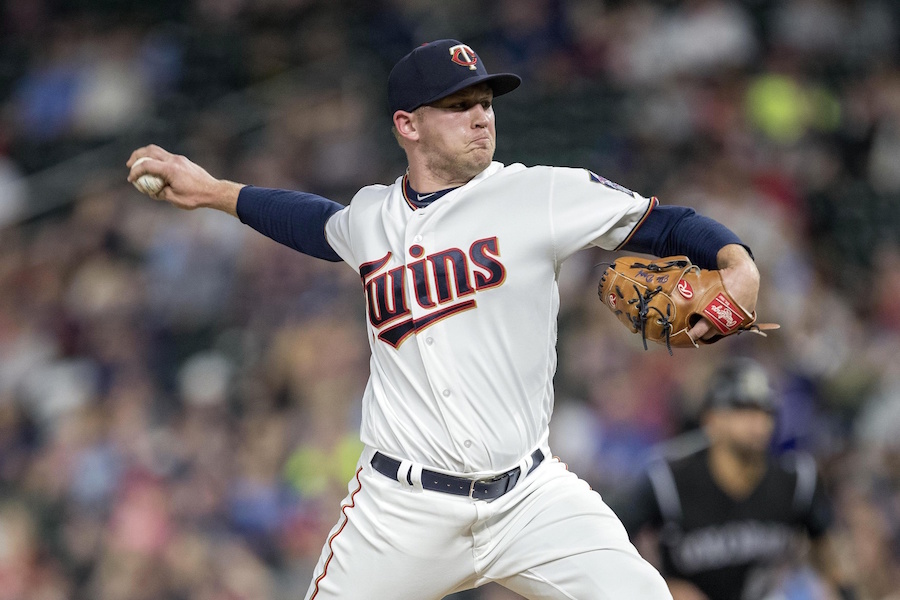 20. Alex Kirilloff - OF (20) The pure hitting talent is unmistakable. It convinced the Twins to select Kirilloff with the 15th overall pick in the 2016 draft, and then to send him straight to advanced level rookie ball as an 18-year-old fresh out of high school. The Pittsburgh native answered the challenge, slashing .306/.341/.454 over 55 games in his first exposure to pro competition. But unfortunately, that's all we've seen from him so far. Kirilloff missed the entire 2017 season after undergoing Tommy John surgery, but he'll be back at full strength in 2018, still only 20 years old and ready to potentially climb the minor-league ranks in a hurry. 19. Trevor May - RHP (28) Like Kirilloff, May isn't fresh in our memories after sitting out all of 2017. But his ability and his track record earn him a place on this list. He has shown solid potential as a starter and posted a dominant strikeout rate out of the bullpen in 2016, although his results and health were inconsistent. Possessing some of the best stuff of anyone on the staff, May was on track to be a valuable rotation contributor last spring before the out-of-nowhere UCL tear in mid-March. There's little reason to think he won't pick up where he left off, even if it's a bit after Opening Day. The Twins need to determine his role and he needs to finally settle into one, but if/when that happens May will probably shoot up this list. Entering his first turn at arbitration, he's still under team control for three years. 18. Wander Javier - SS (18) The Twins signed Javier at age 16 with a $4 million bonus in the summer of 2015 and he has justified the investment ever since. In 50 pro games (between the Gulf Coast and Appalachian Leagues), the shortstop has slashed .301/.381/.497 with good patience, and his quickly developing power suggests he may have a significant ceiling in that department. Everything is looking good so far, but the fact remains that he's only 18 and hasn't played above rookie ball. Much can happen between now and his ETA in the majors, so uncertainty keeps the perceived ceiling of his tantalizing potential in check for now. 17. Jason Castro - C (30) The first major free agent signing from the Falvine Regime has proven to be a success thus far. At the plate, Castro's .720 OPS in 2017 surpassed his career mark by 20 points and was slightly above average for an American League catcher. Behind the plate, he controlled the running game reasonably well and ranked 20th out of 110 MLB backstops in pitch framing per Baseball Prospectus. He's under contract for $8 million each of the next two seasons, qualifying as a nice bargain. Though he's not necessarily a critical long-term cog, Castro is quite important to the Twins for the time being, especially since he's the only catcher who will appear on this list. 16. Tyler Duffey - RHP (27) Duffey has gone through his stumbles and speed bumps since joining the MLB ranks. He excelled during a late-summer debut in 2015 but then struggled mightily as a starter in 2016. This past season he moved over to the bullpen, which always seemed to be his most logical fit, but much like May in 2016 the uneven results belied his quality stuff and impressive whiff rate. Despite the all-too-frequent hiccups, Duffey has consistently had one thing going for him: a bona fide big-league out pitch in his curveball. And he's also got his youth – the righty turns 27 on Wednesday, and won't be eligible for free agency until 2022. After putting up a 3.72 FIP and adding two MPH to his fastball velo in his first year as a reliever since 2012, the future looks bright. Check back later this week when we run down assets 11 through 15 in Part 2.
 -
Article: What Do The Twins See In Tyler Kinley?
Nick Nelson replied to Nick Nelson's topic in Twins Daily Front Page News
Is it? There's a real opportunity cost to letting someone like J.R. Graham or Justin Haley occupy a 25-man roster spot that could've been used another way. -
It's no secret around here that I have mostly been a fan of what Derek Falvey and Thad Levine have done since taking over the Twins front office. Their decisions seem to be consistently guided by good data, intel, and intuition. So when I see a perplexing course of action like this year's Rule 5 draft, I wonder what I'm missing.When the deadline arrived for teams to protect players from the Rule 5 draft, Minnesota conspicuously added only three, leaving a number of vulnerable prospects exposed. Among them were several hard-throwing relievers in their mid-20s, including Nick Burdi and Luke Bard, both of whom ended up being selected last week. The Twins, desperate for quality relievers and evidently playing the internal numbers game by signing a one-year plug, in the person of Fernando Rodney, might have let two essentially MLB-ready arms with real upside get away... for nothing. The Twins did need some space on the 40-man, so they could add Rodney (and hopefully Yu Darvish!), but one spot was clearly designated for a Rule 5 addition of their own. That ended up being Tyler Kinley, a 26-year-old right-hander plucked from the Marlins organization. What is it about Kinley that made him appealing enough for the Twins to lose Bard and especially Burdi, who could've been stashed back on the 60-day DL at the start of the season while rehabbing from Tommy John? On the surface, there's no obvious answer. Kinley was a 16th-round pick for Miami back in 2013, and has since put up a 3.83 ERA and 1.29 WHIP in 162 pro outings (all but three out of the bullpen). He has averaged slightly more than a strikeout per inning but his control has been mediocre, and terrible above Single-A. In 27 appearances with Class-AA Jacksonville in 2017, he posted a 5.19 ERA and 1.73 WHIP. Kinley wasn't among John Sickels's preseason top 20 Marlins prospects. He wasn't even an honorable mention. In fact, Kinley has never made any kind of prospect list I could find. The consensus seems to be that he's a big (6'4", 204) righty with a live fastball and quality slider, plus a history of control problems. That profile doesn't exactly differentiate him from a litany of minor-league relievers – much less a pair of high-performing high draft picks whose development the club had invested in significantly. Bard was the 42nd player taken in 2012 and signed for $1.2 million. Burdi was the 46th player taken in 2014 and also received a $1.2 million bonus. Both have mostly looked the part when healthy. Kinley, meanwhile, was drafted 472nd overall in 2013, and has been very inconsistent on the mound since then. The only thing that really stands out on the stat sheet is his performance this year in the Dominican Winter League, where he has allowed five hits in 18 2/3 innings with a whopping 31 strikeouts. However, he has also issued 11 walks. It bears noting that Justin Haley was also coming off a sterling performance in the DWL when the Twins took him a year ago, somewhat out of the blue. That selection didn't really pay any dividends, and it now seems clear that Minnesota could have found a better way to use its No. 1 pick in the 2016 Rule 5 draft, or just given the roster spot to someone else. I'm calling on you all to help me figure this out. What do the Twins see in Tyler Kinley? Click here to view the article
-
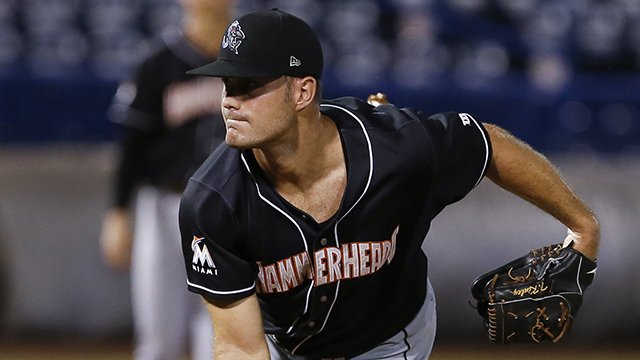 When the deadline arrived for teams to protect players from the Rule 5 draft, Minnesota conspicuously added only three, leaving a number of vulnerable prospects exposed. Among them were several hard-throwing relievers in their mid-20s, including Nick Burdi and Luke Bard, both of whom ended up being selected last week. The Twins, desperate for quality relievers and evidently playing the internal numbers game by signing a one-year plug, in the person of Fernando Rodney, might have let two essentially MLB-ready arms with real upside get away... for nothing. The Twins did need some space on the 40-man, so they could add Rodney (and hopefully Yu Darvish!), but one spot was clearly designated for a Rule 5 addition of their own. That ended up being Tyler Kinley, a 26-year-old right-hander plucked from the Marlins organization. What is it about Kinley that made him appealing enough for the Twins to lose Bard and especially Burdi, who could've been stashed back on the 60-day DL at the start of the season while rehabbing from Tommy John? On the surface, there's no obvious answer. Kinley was a 16th-round pick for Miami back in 2013, and has since put up a 3.83 ERA and 1.29 WHIP in 162 pro outings (all but three out of the bullpen). He has averaged slightly more than a strikeout per inning but his control has been mediocre, and terrible above Single-A. In 27 appearances with Class-AA Jacksonville in 2017, he posted a 5.19 ERA and 1.73 WHIP. Kinley wasn't among John Sickels's preseason top 20 Marlins prospects. He wasn't even an honorable mention. In fact, Kinley has never made any kind of prospect list I could find. The consensus seems to be that he's a big (6'4", 204) righty with a live fastball and quality slider, plus a history of control problems. That profile doesn't exactly differentiate him from a litany of minor-league relievers – much less a pair of high-performing high draft picks whose development the club had invested in significantly. Bard was the 42nd player taken in 2012 and signed for $1.2 million. Burdi was the 46th player taken in 2014 and also received a $1.2 million bonus. Both have mostly looked the part when healthy. Kinley, meanwhile, was drafted 472nd overall in 2013, and has been very inconsistent on the mound since then. The only thing that really stands out on the stat sheet is his performance this year in the Dominican Winter League, where he has allowed five hits in 18 2/3 innings with a whopping 31 strikeouts. However, he has also issued 11 walks. It bears noting that Justin Haley was also coming off a sterling performance in the DWL when the Twins took him a year ago, somewhat out of the blue. That selection didn't really pay any dividends, and it now seems clear that Minnesota could have found a better way to use its No. 1 pick in the 2016 Rule 5 draft, or just given the roster spot to someone else. I'm calling on you all to help me figure this out. What do the Twins see in Tyler Kinley?
 -
Article: Twins Must Get Creative To Lure Darvish
Nick Nelson replied to Nick Nelson's topic in Twins Daily Front Page News
But top free agents HAVE opted for an offer with slightly less money because there were other factors that swayed them. That's far from unprecedented. So that's what I'm angling for here. How might the Twins make it happen in this case? Not all of these scenarios necessarily equate to the Twins winning with a lower bid, either. The deferred money concept, for instance, could enable MN to offer the highest total money while staying within plausible payroll constraints during his contract. -
Article: Twins Must Get Creative To Lure Darvish
Nick Nelson replied to Nick Nelson's topic in Twins Daily Front Page News
I get that everyone wants the Twins to loosen up the purse strings but you realize there are basic fundamental realities at play when a mid-market team is vying against numerous large-market teams with virtually infinite budgets, right? -
If you're having a hard time wrapping your head around this, I can't blame you. But there is mounting evidence that the Minnesota Twins are indeed very serious about trying to sign Yu Darvish. Yes, the Twins – notoriously risk-averse in free agency – are making a run at the top name on the market. In their first full offseason at the helm, Derek Falvey and Thad Levine seemingly have the go-ahead to make an historical splash. But landing Darvish will take more than that.In the Offseason Handbook, we projected that Darvish would get a five-year contract worth $135 million. MLB Trade Rumors predicted six years, $160 million. So it seems there's agreement that $27 million annually sounds about right, and given the competitive market for his services, the right-hander shouldn't have trouble getting someone to offer it. Who knows, perhaps the Twins will outbid a number of large-market clubs and dangle the most money flat-out. I think we can all agree that's not very likely. This is a guy that pretty much every heavyweight contender would love to add. Even if Levine gets the sign-off on an offer in the $150 range (clearly a monumental IF) he could still easily be surpassed by another team that needn't concern itself with adding another 10 or 20 million to sweeten the pot. So if we operate under the assumption that Minnesota won't be able to match other suitors in terms of pure dollars, how might they get creative and entice him to sign here for less money? Sure, the Twins have some factors working in their favor. The bond between Darvish and Levine appears to be real. Any outside pitcher has to like the idea of throwing in front of Byron Buxton. And I've heard that the 31-year-old hurler doesn't necessarily gravitate toward playing in a big city. But, with prized free agents, sentimentality rarely wins out. The Twins need to figure out some tangible methods for overcoming heftier bankrolls and persuading Darvish. I see a few different avenues they could try: Opt-Out Clause These are becoming more and more common in contracts for top free agents. A lot of general managers don't like them because they're extremely one-sided, and offering one now would be a first for the Twins, but I think it'd almost be an obligatory component of any contract for Darvish that doesn't approach $30M/year. I'm sure Minnesota won't be the only team willing to include an opt-out clause, but maybe they're willing to let him trigger it earlier? Such a scenario would mitigate Darvish's risk in taking a smaller deal, because if he significantly out-pitches his pay he can hit the market again in two or three years, still shy of 35. It's not ideal for the Twins because they could easily lose Darvish right in the middle of a theoretical prime window of contention. But if that's what it takes to get him, you do it without a second thought. Deferred Money Here's an outside-the-box idea. Many baseball fans will immediately envision a Bobby Bonilla scenario where the Twins are paying Darvish a few million bucks in 2065, but Bonilla's infamous deal with the Mets is not the only example of this framework in action. In January of 2016, when the Baltimore Orioles signed slugger Chris Davis to a seven-year, $164 million contract, they deferred $42 million of it. He receives $3.5 million every year from 2023-32, and then $1.4 million annually through 2036. This reduced Baltimore's actual commitment on the ledgers to $119 million over the seven years, or $17 million AAV. The deferral is interest-free, which works in the club's favor, but Davis can look forward to steady income well into his retirement. That kind of distribution would make Darvish more palatable for the organization's bottom line. And while a perpetual $3-5 million payroll penalty for a decade-plus would hurt, the Twins are more than accustomed to carrying dead salary weight. That's a relative drop in the bucket. For a franchise-altering acquisition like this, it's worth considering. Personalized Experience We're veering back toward intangibles here to some extent, but not entirely. The most pervasive trend in business today is offering personalization. If you can tailor your solution to the specific needs and wants of the customer, you greatly increase your chances of closing a sale. To stick with that transactional metaphor, if the Twins are marketing themselves to Darvish, they may not be able to offer the best price, but could woo him with the most customized experience. Consider this: Chris Gimenez, who was Darvish's personal catcher in Texas, has been actively recruiting the righty to Minnesota despite his status as a free agent. Minnesota could easily bring Gimenez back if it'd be a draw. The Twins also recently signed Masa Abe, a Japan native who served as a trainer on the country's 2017 WBC team, as an assistant on the staff. With Gimenez indicating that Darvish was "not necessarily a fan" of some of the team rules during his time with the Rangers, Minnesota looks to have an experiential advantage over at least one other known suitor. And in fact, given the intel they have on Darvish's unique preferences, Levine and Co. have the ability to really appeal to the free agent on a deeper level. Money talks. But in the case of Darvish, it might not be alone at the podium. The Twins will probably have to hope that's true if they wish to defy the odds and win the ace they need. Click here to view the article
-
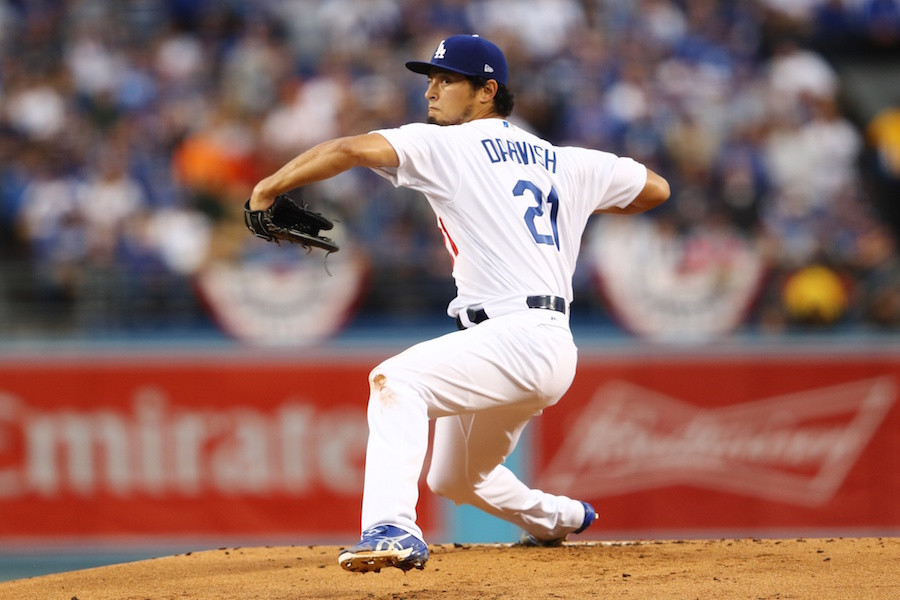 In the Offseason Handbook, we projected that Darvish would get a five-year contract worth $135 million. MLB Trade Rumors predicted six years, $160 million. So it seems there's agreement that $27 million annually sounds about right, and given the competitive market for his services, the right-hander shouldn't have trouble getting someone to offer it. Who knows, perhaps the Twins will outbid a number of large-market clubs and dangle the most money flat-out. I think we can all agree that's not very likely. This is a guy that pretty much every heavyweight contender would love to add. Even if Levine gets the sign-off on an offer in the $150 range (clearly a monumental IF) he could still easily be surpassed by another team that needn't concern itself with adding another 10 or 20 million to sweeten the pot. So if we operate under the assumption that Minnesota won't be able to match other suitors in terms of pure dollars, how might they get creative and entice him to sign here for less money? Sure, the Twins have some factors working in their favor. The bond between Darvish and Levine appears to be real. Any outside pitcher has to like the idea of throwing in front of Byron Buxton. And I've heard that the 31-year-old hurler doesn't necessarily gravitate toward playing in a big city. But, with prized free agents, sentimentality rarely wins out. The Twins need to figure out some tangible methods for overcoming heftier bankrolls and persuading Darvish. I see a few different avenues they could try: Opt-Out Clause These are becoming more and more common in contracts for top free agents. A lot of general managers don't like them because they're extremely one-sided, and offering one now would be a first for the Twins, but I think it'd almost be an obligatory component of any contract for Darvish that doesn't approach $30M/year. I'm sure Minnesota won't be the only team willing to include an opt-out clause, but maybe they're willing to let him trigger it earlier? Such a scenario would mitigate Darvish's risk in taking a smaller deal, because if he significantly out-pitches his pay he can hit the market again in two or three years, still shy of 35. It's not ideal for the Twins because they could easily lose Darvish right in the middle of a theoretical prime window of contention. But if that's what it takes to get him, you do it without a second thought. Deferred Money Here's an outside-the-box idea. Many baseball fans will immediately envision a Bobby Bonilla scenario where the Twins are paying Darvish a few million bucks in 2065, but Bonilla's infamous deal with the Mets is not the only example of this framework in action. In January of 2016, when the Baltimore Orioles signed slugger Chris Davis to a seven-year, $164 million contract, they deferred $42 million of it. He receives $3.5 million every year from 2023-32, and then $1.4 million annually through 2036. This reduced Baltimore's actual commitment on the ledgers to $119 million over the seven years, or $17 million AAV. The deferral is interest-free, which works in the club's favor, but Davis can look forward to steady income well into his retirement. That kind of distribution would make Darvish more palatable for the organization's bottom line. And while a perpetual $3-5 million payroll penalty for a decade-plus would hurt, the Twins are more than accustomed to carrying dead salary weight. That's a relative drop in the bucket. For a franchise-altering acquisition like this, it's worth considering. Personalized Experience We're veering back toward intangibles here to some extent, but not entirely. The most pervasive trend in business today is offering personalization. If you can tailor your solution to the specific needs and wants of the customer, you greatly increase your chances of closing a sale. To stick with that transactional metaphor, if the Twins are marketing themselves to Darvish, they may not be able to offer the best price, but could woo him with the most customized experience. Consider this: Chris Gimenez, who was Darvish's personal catcher in Texas, has been actively recruiting the righty to Minnesota despite his status as a free agent. Minnesota could easily bring Gimenez back if it'd be a draw. The Twins also recently signed Masa Abe, a Japan native who served as a trainer on the country's 2017 WBC team, as an assistant on the staff. With Gimenez indicating that Darvish was "not necessarily a fan" of some of the team rules during his time with the Rangers, Minnesota looks to have an experiential advantage over at least one other known suitor. And in fact, given the intel they have on Darvish's unique preferences, Levine and Co. have the ability to really appeal to the free agent on a deeper level. Money talks. But in the case of Darvish, it might not be alone at the podium. The Twins will probably have to hope that's true if they wish to defy the odds and win the ace they need.
 -
Article: Twins Sign Closer Rodney To One-Year Deal
Nick Nelson replied to Nick Nelson's topic in Twins Daily Front Page News
I don't know why anyone would take issue with Rodney being closer. They clearly signed him specifically for his experience in the role. It's where he is best suited, because his walks don't hurt as much when he always enters with a clean slate, and his strikeouts can help him get out of self-manufactured trouble. -
Article: Twins Sign Closer Rodney To One-Year Deal
Nick Nelson replied to Nick Nelson's topic in Twins Daily Front Page News
First, you had to watch Colon deliver (probably) the final surge of effectiveness in a Hall of Fame career, adding watchability to a rotation that severely lacked it in the middle of the season. At literally zero cost. Now you have to watch Rodney, who's been a successful closer for many contenders, including the D-backs last year, for whom he pitched quite well. On a small commitment that won't prevent them from doing anything else. And bye bye Burdi, who you've never watched in a Twins uniform and wouldn't have this season. The horrors. If you're going to continue making these smarmy "CRUSHING IT" remarks, and mocking my positive reviews of the front office, how about bringing some reasoned critique instead of just griping about your personal distaste for these players? For me, I find it quite enjoyable when an aging star comes here and gives one more strong effort at the end of a long and storied career. We saw it with Thome. We saw it with Hunter. We saw it with Colon, somewhat. It adds an additional dimension of historical significance to the season. I hope Rodney puts an exclamation point on a very impressive career next season. -
Article: Twins Sign Closer Rodney To One-Year Deal
Nick Nelson replied to Nick Nelson's topic in Twins Daily Front Page News
Didn't hit? His 720 OPS was above average and a healthy improvement over Suzuki's 680 mark as a Twin. Not sure exactly what you were expecting if Castro's production disappointed you. -
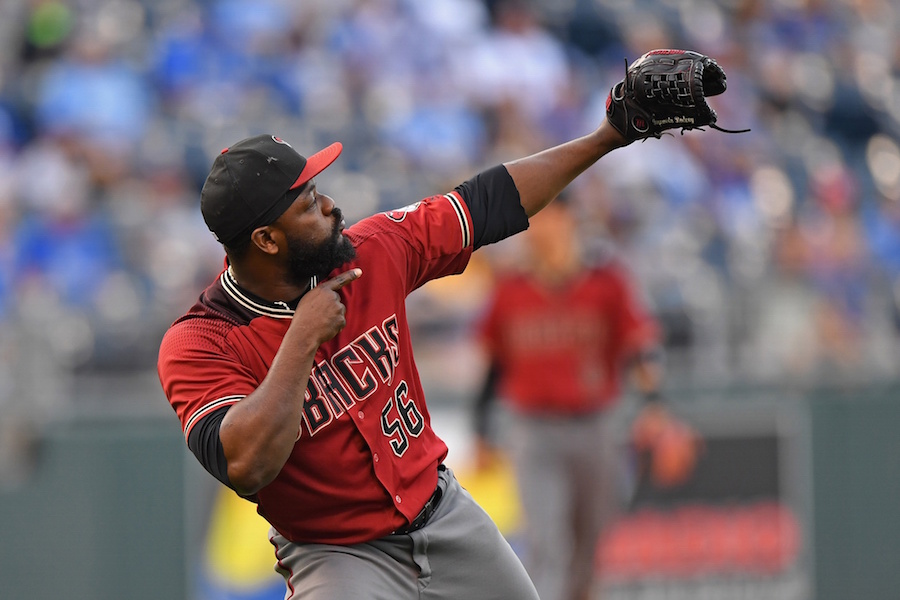
The Twins headed into the Winter Meetings with almost zero closing experience on their roster. They will exit with a wealth of it. On Thursday the team agreed to terms with veteran reliever Fernando Rodney, who ranks third among active major-league players with 300 career saves. Craig Mish reports that it’s a one-year, $6 million deal.Recently, Twins GM Thad Levine explained that he’s open-minded about his future closer already being on the roster, but made clear he wasn’t keen on throwing any of the internal options directly into that role. Based on this mindset, Rodney is a very logical fit. He doesn’t require an extensive commitment, allowing Minnesota to retain plenty of flexibility going forward. He adds a healthy infusion of veteran experience to a bullpen that clearly lacked it. And there are plenty of signs to suggest he’s capable of being a force in the late innings. One might look at Rodney’s 4.23 ERA from 2017 and presume he’s in decline. After all, he does turn 41 in March. But a closer look suggests that the right-hander significantly outperformed his inflated ERA. He posted a 3.03 FIP, registered his best strikeout rate since 2013 (10.6 K/9), and was dominant in the second half (17 out of 18 saves converted, 2.55 ERA, .189 BAA, 31-to-8 K/BB in 25 innings). Over the past six seasons, Rodney has been tremendously durable, making 61 or more appearances in each. He has also mostly been very effective, landing on three All Star teams while posting a 3.11 ERA, 3.22 FIP, and 1.23 WHIP. Known as much for his amusing style on the field as his performance (he wears his hat cocked to the side and shoots an imaginary arrow into the sky after every successful save), Rodney is sure to become a source of entertaining for fans, as well as anxiety. His clearest blemish is a lack of control (4.4 BB/9 career, 4.2 in 2017), so the Twins will need to hope he can continue keeping the contact in check. We’ll have further analysis of the move soon, but feel free to share your initial thoughts in the comments section below. Click here to view the article
-
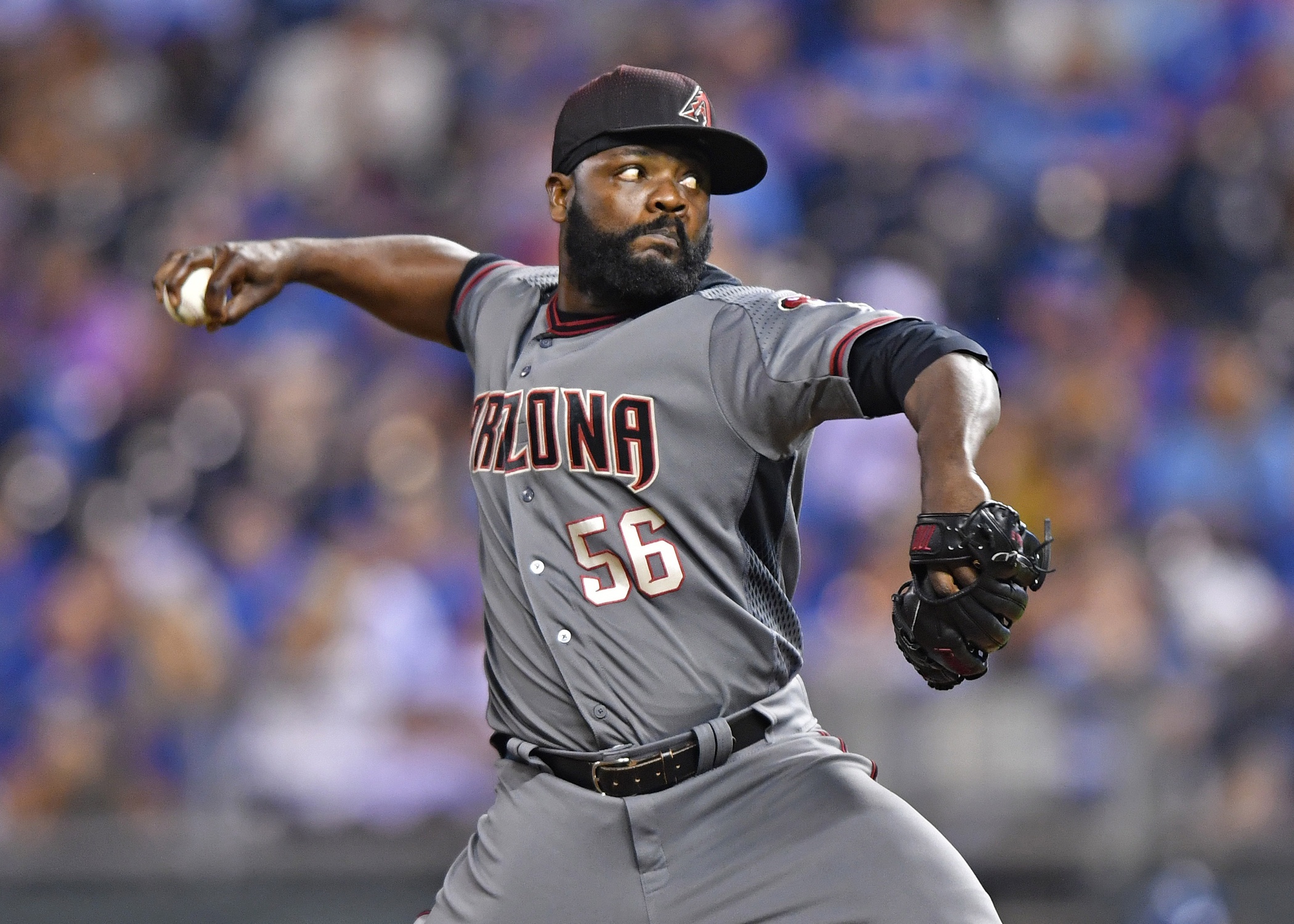 Recently, Twins GM Thad Levine explained that he’s open-minded about his future closer already being on the roster, but made clear he wasn’t keen on throwing any of the internal options directly into that role. Based on this mindset, Rodney is a very logical fit. He doesn’t require an extensive commitment, allowing Minnesota to retain plenty of flexibility going forward. He adds a healthy infusion of veteran experience to a bullpen that clearly lacked it. And there are plenty of signs to suggest he’s capable of being a force in the late innings. One might look at Rodney’s 4.23 ERA from 2017 and presume he’s in decline. After all, he does turn 41 in March. But a closer look suggests that the right-hander significantly outperformed his inflated ERA. He posted a 3.03 FIP, registered his best strikeout rate since 2013 (10.6 K/9), and was dominant in the second half (17 out of 18 saves converted, 2.55 ERA, .189 BAA, 31-to-8 K/BB in 25 innings). Over the past six seasons, Rodney has been tremendously durable, making 61 or more appearances in each. He has also mostly been very effective, landing on three All Star teams while posting a 3.11 ERA, 3.22 FIP, and 1.23 WHIP. Known as much for his amusing style on the field as his performance (he wears his hat cocked to the side and shoots an imaginary arrow into the sky after every successful save), Rodney is sure to become a source of entertaining for fans, as well as anxiety. His clearest blemish is a lack of control (4.4 BB/9 career, 4.2 in 2017), so the Twins will need to hope he can continue keeping the contact in check. We’ll have further analysis of the move soon, but feel free to share your initial thoughts in the comments section below.
 -
Article: Winter Meetings: Reliever Roulette
Nick Nelson replied to Nick Nelson's topic in Twins Daily Front Page News
FYI, Trevor Rosenthal is going to miss most or all of next season after undergoing TJ surgery at the end of August, so if they were to sign him it'd be a value play for 2019 (a la Pineda). Don't really see how that benefits them in their situation. I only included that detail for context as to how these salaries would look compared to existing players on the roster. -
The free agent relief market is finally beginning to take shape at the Winter Meetings. The Minnesota Twins, for now, are biding their time. And while they clearly have a need, early developments on this front are proving them wise to wait things out.A few popular Twins targets have come off the market this week, with Pat Neshek (Phillies), Brandon Morrow (Cubs), Bryan Shaw (Rockies) and Tommy Hunter (Phillies) all reaching agreements. And while you may be feeling bummed to miss out on some of these names – especially a hometown guy like Neshek, or a reliable stalwart like Shaw – it should be negated by these two facts: One, there are still plenty of options left in a deep class. And two, these particular hurlers signed at very steep rates. Morrow got $21 million over two years. Neshek got $16.25 million over the same term. Shaw is looking at "three years, somewhere in the range of $9 million annually." These are hefty prices to pay for relief pitchers, the most notoriously volatile of baseball assets. Brian Dozier will make $9 million in 2018 and is in line to be the fourth-highest paid player on the roster. The Twins are coming into some financial flexibility, but they still need to be thoughtful about how they're allocating payroll and committing money. While we'll all agree this bullpen could use some outside help, I don't think the Twins are well served in their current position to gamble on reliever roulette with those kinds of stakes. Dollars aren't the only finite resource for the Twins. There's also innings – this year and beyond. It seems safe to assume that (barring injury) Trevor Hildenberger, Ryan Pressly, Taylor Rogers and Tyler Duffey will be locks for the Opening Day pen. Gabriel Moya, Alan Busenitz and JT Chargois will all have very good cases for spots, if not at the start of the year then shortly after. Tyler Jay and John Curtiss are close. And then there are whichever members of the bloated starter mix end up converting to relief roles. This shouldn't preclude Minnesota from signing a veteran to a guaranteed contract, but it does temper the desire to hand out an expensive multi-year deal. The early action on the free agent market seems to reflect a growing trend – relievers are gaining prominence in the game, and their salaries are rising accordingly. As such, promising MLB-ready bullpen arms like the ones listed above are becoming especially valuable commodities. I honestly wouldn't feel terrible going into 2018 with the group they have, plus a few low-wattage signings with upside, but the primary issue is this: The Twins presently have no closing experience. While GM Thad Levine says he's "open-minded" that his closer of the future might be on the roster, he made clear he isn't keen on throwing any of his young arms directly into the fire. So the Twins are pursuing someone who can at least temporarily occupy the ninth inning from the outset next season. It's not going to be Wade Davis or Greg Holland. It probably won't even be someone in the range of Morrow and Shaw. A trade remains possible, but the same logic applies – are you going to forfeit significant assets for a piece you're not totally positive you need? The equation changes if we're talking about a potential bullpen ace like Raisel Iglesias, but I like to think the Twins are smart enough to avoid overpaying for, say, Alex Colome's 47 saves this year. At the Winter Meetings, Minnesota has been connected to three different veteran right-handed relievers, and all seem fairly sensible to me: 1) Brandon Kintzler. The familiarity factor is there, he has a strong bond with Paul Molitor, and he has proven he can handle the job. Kintzler isn't a prototypical closer, and I'd argue that he is more useful pitching earlier in games when his heavy sinker can be deployed on-demand in tough spots. But this is part of the reason he makes sense; he's a valuable bullpen piece even if someone else steps in as closer, and despite his All-Star showing this year he probably will cost less than the likes of Morrow, Shaw, and even Neshek. 2) Fernando Rodney. He ranks third among active pitchers in saves, and performed the job well enough as closer in Arizona this year, especially in the second half: 17/18 SV, 2.55 ERA, 11.3 K/9. Rodney's age (40) and history of wildness (career 4.4 B/9) make him a bit of a risky proposition but he can probably be had on a one-year deal and that's attractive to the Twins, even at an inflated cost. Multiple reports have connected Minnesota to Rodney, so there's definitely some smoke here. 3) Juan Nicasio. It sounds like the Twins have talked to Nicasio's agent, signaling distinct interest following a breakout year for the Dominican. Bringing mid-90s heat, he posted a 2.85 ERA and 72-to-20 K/BB over 72 innings. He doesn't have much closing experience but did finish the year in that role for the Cardinals and there's really no reason to think he wouldn't be up to the task. Given his momentum heading into free agency, Nicasio will not be cheap (Morrow money isn't unrealistic), but if the Twins believe his 2017 was legit he'd be a piece worth building around with the youngsters. Feel free to share your own thoughts on the veteran relief market in the comments section, as well as any updates and rumors as they arise on Wednesday. Click here to view the article
-
 A few popular Twins targets have come off the market this week, with Pat Neshek (Phillies), Brandon Morrow (Cubs), Bryan Shaw (Rockies) and Tommy Hunter (Phillies) all reaching agreements. And while you may be feeling bummed to miss out on some of these names – especially a hometown guy like Neshek, or a reliable stalwart like Shaw – it should be negated by these two facts: One, there are still plenty of options left in a deep class. And two, these particular hurlers signed at very steep rates. Morrow got $21 million over two years. Neshek got $16.25 million over the same term. Shaw is looking at "three years, somewhere in the range of $9 million annually." These are hefty prices to pay for relief pitchers, the most notoriously volatile of baseball assets. Brian Dozier will make $9 million in 2018 and is in line to be the fourth-highest paid player on the roster. The Twins are coming into some financial flexibility, but they still need to be thoughtful about how they're allocating payroll and committing money. While we'll all agree this bullpen could use some outside help, I don't think the Twins are well served in their current position to gamble on reliever roulette with those kinds of stakes. Dollars aren't the only finite resource for the Twins. There's also innings – this year and beyond. It seems safe to assume that (barring injury) Trevor Hildenberger, Ryan Pressly, Taylor Rogers and Tyler Duffey will be locks for the Opening Day pen. Gabriel Moya, Alan Busenitz and JT Chargois will all have very good cases for spots, if not at the start of the year then shortly after. Tyler Jay and John Curtiss are close. And then there are whichever members of the bloated starter mix end up converting to relief roles. This shouldn't preclude Minnesota from signing a veteran to a guaranteed contract, but it does temper the desire to hand out an expensive multi-year deal. The early action on the free agent market seems to reflect a growing trend – relievers are gaining prominence in the game, and their salaries are rising accordingly. As such, promising MLB-ready bullpen arms like the ones listed above are becoming especially valuable commodities. I honestly wouldn't feel terrible going into 2018 with the group they have, plus a few low-wattage signings with upside, but the primary issue is this: The Twins presently have no closing experience. While GM Thad Levine says he's "open-minded" that his closer of the future might be on the roster, he made clear he isn't keen on throwing any of his young arms directly into the fire. So the Twins are pursuing someone who can at least temporarily occupy the ninth inning from the outset next season. It's not going to be Wade Davis or Greg Holland. It probably won't even be someone in the range of Morrow and Shaw. A trade remains possible, but the same logic applies – are you going to forfeit significant assets for a piece you're not totally positive you need? The equation changes if we're talking about a potential bullpen ace like Raisel Iglesias, but I like to think the Twins are smart enough to avoid overpaying for, say, Alex Colome's 47 saves this year. At the Winter Meetings, Minnesota has been connected to three different veteran right-handed relievers, and all seem fairly sensible to me: 1) Brandon Kintzler. The familiarity factor is there, he has a strong bond with Paul Molitor, and he has proven he can handle the job. Kintzler isn't a prototypical closer, and I'd argue that he is more useful pitching earlier in games when his heavy sinker can be deployed on-demand in tough spots. But this is part of the reason he makes sense; he's a valuable bullpen piece even if someone else steps in as closer, and despite his All-Star showing this year he probably will cost less than the likes of Morrow, Shaw, and even Neshek. 2) Fernando Rodney. He ranks third among active pitchers in saves, and performed the job well enough as closer in Arizona this year, especially in the second half: 17/18 SV, 2.55 ERA, 11.3 K/9. Rodney's age (40) and history of wildness (career 4.4 B/9) make him a bit of a risky proposition but he can probably be had on a one-year deal and that's attractive to the Twins, even at an inflated cost. Multiple reports have connected Minnesota to Rodney, so there's definitely some smoke here. 3) Juan Nicasio. It sounds like the Twins have talked to Nicasio's agent, signaling distinct interest following a breakout year for the Dominican. Bringing mid-90s heat, he posted a 2.85 ERA and 72-to-20 K/BB over 72 innings. He doesn't have much closing experience but did finish the year in that role for the Cardinals and there's really no reason to think he wouldn't be up to the task. Given his momentum heading into free agency, Nicasio will not be cheap (Morrow money isn't unrealistic), but if the Twins believe his 2017 was legit he'd be a piece worth building around with the youngsters. Feel free to share your own thoughts on the veteran relief market in the comments section, as well as any updates and rumors as they arise on Wednesday.
 -
Article: 4 Stories To Watch At The Winter Meetings
Nick Nelson replied to Nick Nelson's topic in Twins Daily Front Page News
I've heard that Levine was very involved with the process of getting him signed, so the familiarity/affinity may be heightened. Berardino wrote the following in his latest at PiPress: Levine earned Darvish’s trust during and after the recruiting process, when the Rangers committed $111 million to signing him at age 25. That included a $51.7 million posting fee to the Hokkaido Nippon-Ham Fighters, a step that won’t be necessary this time. That bond between executive and player, Gimenez said, only grew stronger as Darvish made a “very seamless transition” to the majors, underwent Tommy John surgery and embarked on a lengthy rehabilitation process that saw him return to the mound in 2016. Levine was among Rangers’ front-office employees who took Japanese lessons and in general “offered a lot of different avenues for him to assimilate into our culture,” Gimenez said. Also it strikes me as really cool that Gimenez is apparently stumping for the Twins despite being a free agent. -
Article: Thank You Moderators!
Nick Nelson replied to John Bonnes's topic in Twins Daily Front Page News
Thank you all so much. Seriously. -
With Christmas only two weeks away, the Hot Stove has yet to heat up for Major League Baseball. But that's about to change. Two situations that have been holding up the offseason landscape – Shohei Ohtani and Giancarlo Stanton – have finally been resolved, and with the Winter Meetings set to get underway this week, the floodgates are going to open. Here are four (potentially) Twins-related storylines to track as the action unfolds.1) Darvish Market Heats Up In late November, Jim Bowden reported that there were six teams legitimately "in" on free agent starter Yu Darvish. It's reasonable to believe the Twins are one of those teams. Thad Levine, who has ties to the right-hander from his days in Texas, has called Darvish a priority. The 31-year-old makes plenty of sense as a fit for Minnesota. He'd fulfill their need for a frontline starter, and as one of the game's best strikeout pitchers, he aligns with the organization's growing emphasis on missing bats. But can the Twins swing it financially? Signing Darvish will likely require an investment roughly three times larger than the one Terry Ryan made in Ervin Santana, who became the franchise's biggest free agent splurge ever ($54 million) three years ago. But it's not like such commitments are unprecedented for the Twins; they did pony up $184 million to lock up Joe Mauer one year ahead of his free agency, and that contract is on the verge of expiring. The problem is that even if Levine is prepared to come to the table as a serious bidder, he'll face stiff competition for arguably the most coveted free agent on the market. However, it is worth noting that a few of the big-market heavy hitters seem limited or less urgent in their pursuit. The Yankees would be hard-pressed to go all in on Darvish after taking on Stanton's $250 million contract. The Dodgers must save up with an eye on re-signing Clayton Kershaw, who can opt out of his deal after next year. The Cubs appear to be focusing their attention on another free agent starter, Alex Cobb. 2) Rays Trade Talks Speaking of Cobb, Tampa doesn't appear to have any intention of trying to bring him back, and in fact, it sounds like a bit of a fire sale might be in the works. Bob Nightengale of USA Today wrote the following: "The Rays, who have seen the disparity grow even greater in the AL East with Stanton coming aboard, are listening to anyone and everyone." It was reported earlier this offseason that the Twins had discussed Jake Odorizzi with the Rays, and plenty of other intriguing names could be in play. Their closer Alex Colome led the American League in saves this season and has three years remaining of team control. And of course, their ace Chris Archer would be the prize of all prizes. Can Levine muster an offer to make that happen? If it means giving up four of the team's top ten prospects, should he? 3) Cole in the Stocking? Another noteworthy trade target is Pittsburgh's Gerrit Cole. The Twins have reportedly shown interest in the righty, who could conceivably slot ahead of Santana as Minnesota's No. 1 starter. He's two years away from free agency and in his prime at age 27. Because of these facts, Cole won't come cheaply, but he's more realistic than Archer. 4) Rule 5 Rumblings The Rule 5 draft will take place on Thursday morning, giving teams around the league an opportunity to poach unprotected players from other organizations. The Twins have a few prospects who are candidates to get taken (I have a suspicion someone's going to grab Nick Burdi and stash him on the DL while he rehabs from Tommy John Surgery), but they also have flexibility to acquire someone, with four open spots on the 40-man roster. J.J. Cooper of Baseball America listed his top five Rule 5 candidates and, unsurprisingly, the first three are relief pitchers. Burch Smith, Mason McCullough and Cale Coshow all have big fastballs, and could be impact additions. It also bears noting that Justin Haley, Minnesota's Rule 5 pick from a year ago, is once again available. He pitched very well at Pawtucket after being returned to the Red Sox organization this past summer, posting a 2.66 ERA and 0.96 WHIP in seven starts. Click here to view the article
