



Nick Nelson
-
Posts
8,326 -
Joined
-
Last visited
-
Days Won
56
Content Type
Profiles
News
Minnesota Twins Videos
2026 Minnesota Twins Top Prospects Ranking
2022 Minnesota Twins Draft Picks
Minnesota Twins Free Agent & Trade Rumors, Notes, & Tidbits
Guides & Resources
2023 Minnesota Twins Draft Picks
The Minnesota Twins Players Project
2024 Minnesota Twins Draft Picks
2025 Minnesota Twins Draft Pick Tracker
2026 Minnesota Twins Draft Tracker: Picks & Bonuses
Forums
Blogs
Events
Store
Downloads
Gallery
Everything posted by Nick Nelson
-
 Yes?
Yes? -
I don't think anyone's going to expect a 23-year-old with zero MLB experience to be their "de facto ace" right off the bat. But Ohtani might appreciate walking into a situation where he could potentially earn that label with relative ease.
-
Expectation is he'll be posted on Friday, then he has 21 days to choose a team, so he'll need decide by ~Dec 21st
-
Last week's renewal of the Nippon Professional Baseball posting system made it all but official: Japanese superstar Shohei Ohtani is coming to the major leagues. He's expected to be posted this weekend, opening a 21-day open negotiation window, and $20 million is all it will take to procure his rights from the Nippon Ham Fighters. Every team in baseball will rightfully want in on that action. Could the Minnesota Twins, unshy about their interest, somehow find a way to land the potentially game-changing phenom? For a number of reasons, they might actually be among his very most appealing options.Flexibility By all accounts, Ohtani is adamant about carrying on his legacy as a two-way player in the United States. Given his position of leverage in negotiations, he can make that a hard-line demand if he wishes, and plenty of teams will be ready to meet it. Sure, he'd be able to bat during starts and maybe draw semi-regular pinch-hitting appearances with a National League club. But is he looking for something more? The ability to start at DH a few times between his turns on the mound? That would be an AL-only option. Would the Twins be amenable to such an arrangement? Thad Levine says so. "I think we'd let him do whatever he damn well pleases," the Minnesota GM half-joked recently. And why not? His team is almost uniquely positioned to accommodate Ohtani. The Twins used the DH role as a rotating post in 2017 and could do so again next year. One thing that would typically hold a team back from being open to such usage is risk factor -- it's hard to justify exposing a young pitcher to such added injury hazard, and deviation in standard routine, when you're committed for $20-30 million per year long-term. But given the low up-front financial commitment for Ohtani, clubs like the Twins figure to be more open-minded. Speaking of finances, here's another area where Minnesota gains a relative edge: Cash By recently voiding their $3 million offer to Dominican infielder Jelfry Marte over a vision issue, the Twins bolstered their international pool. As things stand, only the Rangers or Yankees would be able to offer more, and not by much. On one hand, this isn't such a big deal. Ohtani could sign with a team other than those three, and while his bonus would be smaller, it's a pittance relative to what he figures to earn down the line and through endorsements. Then again, nothing in this life is guaranteed. The 23-year-old made about $2 million in annual salary while in Japan, so he has yet to really hit the jackpot and now he'll have to wait a while under MLB's service clock rules. Minnesota's ability to offer almost $2 million more up-front than, say, Seattle (said to be making a full-court press for Ohtani) could hold some serious weight. Of course, this is all subject to change because teams can trade for more international bonus pool money. The Twins acquired $500K from Washington in the Brandon Kintzler trade – part of the reason for their favorable current position. They could try to get more. Or they could trade from their copious stock and add pieces from another club looking to go all-out for Ohtani. Another wrinkle. Contention It's safe to say Ohtani will prioritize a winning club that holds realistic short-term championship aspirations. The Twins, fresh off a postseason appearance with one of the youngest and most talented offensive cores in the league, stack up well in this regard – albeit not as well as other suitors like the Dodgers, Cubs or Yankees. But they do check the box and right now Minnesota is one of the most pitching-friendly destinations in the world. Connections Joe Schmit reported that the Twins have hired a new trainer with Japanese ties. Mike Berardino notes that the Twins have a "strong working relationship" with Nez Balelo, hired on as Ohtani's agent, and Minnesota has worked recently with Ohtani's team in Japan, selling Michael Tonkin's rights to the Fighters a few weeks back. Now, is any of this necessarily meaningful? No. But they are tidbits worth keeping in mind. One tie that would really serve to lure Ohtani is signing free agent starter Yu Darvish. Ohtani has a known affinity for the right-hander, and wore his No. 11 in NPB as an homage. And for what it's worth, Levine is quite familiar with Darvish, as he was assistant GM in Texas when the Rangers brought him over from Japan six years ago. Over the weekend he said he's been in "active" conversations with Darvish's agent and called the righty a priority. Signing both Darvish and Ohtani would be a splash of almost unthinkable magnitude, but it's not an impossible thought. And what a way it would be to set this rotation up for the next five years. A Distant Second? With all the above being considered, I think you could make a reasonable argument for the Twins landing second on Ohtani's list of preferences, or at least in the top five (especially if they could land Darvish). But the problem is that No. 1 on that list feels overwhelmingly likely, if not inevitable. Ohtani is destined to be a Yankee. John Harper of the New York Daily News wrote as much last week and it's hard to disagree with his conclusion. The Yankees can offer everything the Twins can and then some. They can pay him (slightly) more. They can give him DH at-bats between starts. They're a bona fide championship contender. They already have Masahiro Tanaka, another former NPB superstar, locked into their rotation long-term. And of course there is the huge market of NYC and all it entails. His earning potential outside of game checks is vastly higher there, so as is usually the case when the Yankees are involved, money will talk. It's a David versus Goliath scenario and the Twins have typically not fared well against the Yanks in such contests historically. But it's fun to dream on and, up until a deal somewhere is officially announced within the next month, we can do so without being utterly delusional. Regardless of where he ends up signing, the Ohtani derby will be like nothing else we've seen before in the major leagues, and his game on the field figures to follow suit. Click here to view the article
-
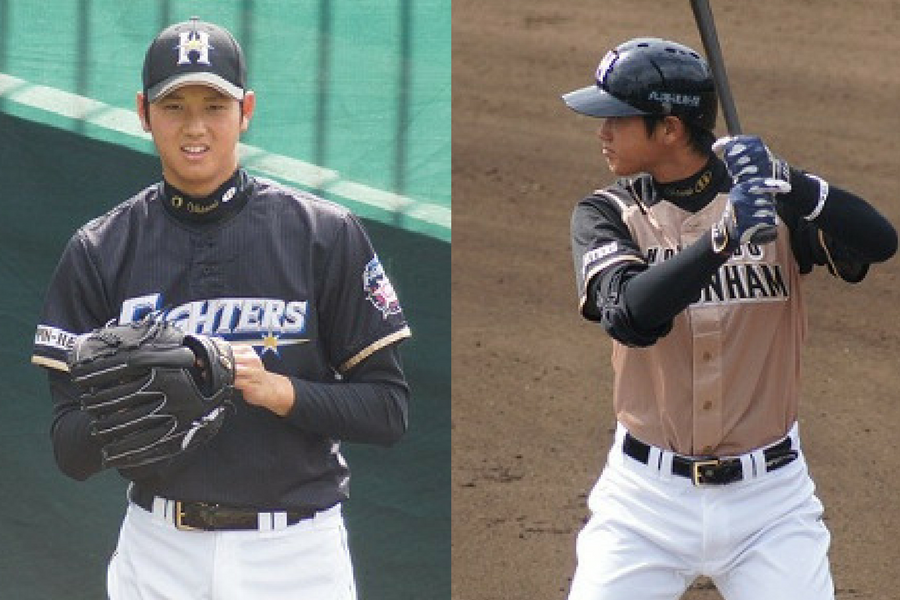 Flexibility By all accounts, Ohtani is adamant about carrying on his legacy as a two-way player in the United States. Given his position of leverage in negotiations, he can make that a hard-line demand if he wishes, and plenty of teams will be ready to meet it. Sure, he'd be able to bat during starts and maybe draw semi-regular pinch-hitting appearances with a National League club. But is he looking for something more? The ability to start at DH a few times between his turns on the mound? That would be an AL-only option. Would the Twins be amenable to such an arrangement? Thad Levine says so. "I think we'd let him do whatever he damn well pleases," the Minnesota GM half-joked recently. And why not? His team is almost uniquely positioned to accommodate Ohtani. The Twins used the DH role as a rotating post in 2017 and could do so again next year. One thing that would typically hold a team back from being open to such usage is risk factor -- it's hard to justify exposing a young pitcher to such added injury hazard, and deviation in standard routine, when you're committed for $20-30 million per year long-term. But given the low up-front financial commitment for Ohtani, clubs like the Twins figure to be more open-minded. Speaking of finances, here's another area where Minnesota gains a relative edge: Cash By recently voiding their $3 million offer to Dominican infielder Jelfry Marte over a vision issue, the Twins bolstered their international pool. As things stand, only the Rangers or Yankees would be able to offer more, and not by much. On one hand, this isn't such a big deal. Ohtani could sign with a team other than those three, and while his bonus would be smaller, it's a pittance relative to what he figures to earn down the line and through endorsements. Then again, nothing in this life is guaranteed. The 23-year-old made about $2 million in annual salary while in Japan, so he has yet to really hit the jackpot and now he'll have to wait a while under MLB's service clock rules. Minnesota's ability to offer almost $2 million more up-front than, say, Seattle (said to be making a full-court press for Ohtani) could hold some serious weight. Of course, this is all subject to change because teams can trade for more international bonus pool money. The Twins acquired $500K from Washington in the Brandon Kintzler trade – part of the reason for their favorable current position. They could try to get more. Or they could trade from their copious stock and add pieces from another club looking to go all-out for Ohtani. Another wrinkle. Contention It's safe to say Ohtani will prioritize a winning club that holds realistic short-term championship aspirations. The Twins, fresh off a postseason appearance with one of the youngest and most talented offensive cores in the league, stack up well in this regard – albeit not as well as other suitors like the Dodgers, Cubs or Yankees. But they do check the box and right now Minnesota is one of the most pitching-friendly destinations in the world. Connections Joe Schmit reported that the Twins have hired a new trainer with Japanese ties. Mike Berardino notes that the Twins have a "strong working relationship" with Nez Balelo, hired on as Ohtani's agent, and Minnesota has worked recently with Ohtani's team in Japan, selling Michael Tonkin's rights to the Fighters a few weeks back. Now, is any of this necessarily meaningful? No. But they are tidbits worth keeping in mind. One tie that would really serve to lure Ohtani is signing free agent starter Yu Darvish. Ohtani has a known affinity for the right-hander, and wore his No. 11 in NPB as an homage. And for what it's worth, Levine is quite familiar with Darvish, as he was assistant GM in Texas when the Rangers brought him over from Japan six years ago. Over the weekend he said he's been in "active" conversations with Darvish's agent and called the righty a priority. https://twitter.com/Jim_Duquette/status/934818685805584389 Signing both Darvish and Ohtani would be a splash of almost unthinkable magnitude, but it's not an impossible thought. And what a way it would be to set this rotation up for the next five years. A Distant Second? With all the above being considered, I think you could make a reasonable argument for the Twins landing second on Ohtani's list of preferences, or at least in the top five (especially if they could land Darvish). But the problem is that No. 1 on that list feels overwhelmingly likely, if not inevitable. Ohtani is destined to be a Yankee. John Harper of the New York Daily News wrote as much last week and it's hard to disagree with his conclusion. The Yankees can offer everything the Twins can and then some. They can pay him (slightly) more. They can give him DH at-bats between starts. They're a bona fide championship contender. They already have Masahiro Tanaka, another former NPB superstar, locked into their rotation long-term. And of course there is the huge market of NYC and all it entails. His earning potential outside of game checks is vastly higher there, so as is usually the case when the Yankees are involved, money will talk. It's a David versus Goliath scenario and the Twins have typically not fared well against the Yanks in such contests historically. But it's fun to dream on and, up until a deal somewhere is officially announced within the next month, we can do so without being utterly delusional. Regardless of where he ends up signing, the Ohtani derby will be like nothing else we've seen before in the major leagues, and his game on the field figures to follow suit.
 -
The Minnesota Twins shuffled their roster in preparation for the upcoming Rule 5 draft. Their manager is riding high after a remarkable rebound. And a potential budding bullpen ace just finished up in the Arizona Fall League. Here's some food for thought go along with the holiday feasting ahead.* Monday marked the deadline for MLB teams to protect prospects from exposure to the Rule 5 draft by adding them to the 40-man roster. The Twins, somewhat surprisingly, added only three: RHP Zack Littell, LHP Stephen Gonsalves and LHP Lewis Thorpe. The first two names were essentially givens. Littell and Gonsalves are among the organization's best pitching prospects and both are almost big-league ready. Either one could be up in the majors as soon as the first half of 2018, so they weren't going to make it through the Rule 5 untouched. Thorpe is a bit of a different case. He's 21 and has only made one appearance above Single-A. Injuries and illness wiped out his entire 2015 and 2016 seasons, so the left-hander has less than 200 innings of professional experience. However, he has been really, REALLY good in that small amount of playing time, posting a 2.94 ERA and 1.19 WHIP while averaging 10.6 K/9. It's not too difficult to envision another club trying to stash him in their bullpen all year, and that's a risk the Twins couldn't take. The tricky thing is that now Thorpe's option clock is set into motion, so they'll potentially have to roster him or lose him by age 25. Usually not too big of a deal, but with all the lost time Thorpe is behind on development and needs to get caught up in a hurry. The Twins left several prospects unprotected, with these pitchers being the most notable: Nick Burdi, Jake Reed, Kohl Stewart. The first two are fireballing relievers who could help a big-league bullpen now (well, for Burdi it's as soon as he completes rehab from mid-season Tommy John surgery). So they're at high risk. Stewart, the fourth overall draft pick just four years ago, has reached Triple-A and has a 3.10 ERA in the minors, though his secondary numbers haven't been good at all. It's conceivable someone gambles on his athleticism and heavy sinking stuff, but the righty just hasn't shown enough. I do wonder if the front office that drafted Stewart would've been bold enough to risk losing him for nothing right now. * Paul Molitor has only been a big-league manager for three years, but he's been around the game long enough to know how it goes. Coming off the worst season in franchise history, and with a regime of outsiders taking over baseball operations, he knew his outlook was grim despite the undying support of ownership. Anything less than a clearly and undeniably excellent year was going to give Derek Falvey and Thad Levine an easy excuse to install their own guy. But as it turned out, Molitor delivered nothing less. His season started on a note of redemption and ended on an even bigger one: The St. Paul native was named Manager of the Year last week after leading his team back to the postseason. Of course, by that point Molitor had already procured the prize he really wanted, a new contract. He inked a three-year deal one week after losing to New York in the AL Wild Card Game, meaning Minnesota is now entrusting the 61-year-old skipper to oversee its impending prime window of contention. It's a terrific story for a Hall of Famer who's never strayed far from home. Whatever you think of his tactical shortcomings, it's clear Molitor has the belief of his clubhouse, and it's also important to remember that in terms of total managerial experience, he remains one of the greenest in the game. He's still learning, and in 2017 he will have new hand-picked pitching and bench coaches to lend support. (Is Derek Shelton anti-bunt??) * If the past few years (and especially this latest postseason) are any indication, the new model for winning in baseball will call for dominant bullpens with multiple high-powered weapons who can consistently shut down the late innings. Cleveland's Andrew Miller is the prototype, but increasingly we are seeing teams deploy their best relievers outside of the closer role, often asking for more than three outs with games in the balance. It stands to reason that if MLB continues trending toward shorter starts and more relief innings, these kinds of bullpen aces will keep rising in value. We'll all be surprised if the Twins don't make a concerted effort to add someone who might fill this role externally, but as far as players already in the organization, one name stands out as a potential fit the mold. Things looked grim for Tyler Jay this summer, when he was again hampered by shoulder issues, and rumors of thoracic outlet syndrome began to circulate. However, those rumors proved false and he was able to return to the mound at Class-A Ft. Myers late in late August with a dominant display (6 IP, 4 H, 10 K, 0 BB). Still needing to build up his workload after all the missed time, Jay headed to the Arizona Fall League, which just wrapped up. His stuff impressed even though he struggled some with control (11/5 K/BB in 9 2/3 innings). Most importantly, he took the mound regularly, logged his innings, and reportedly felt good. It sounds like he hasn't yet regained his mid-90s fastball velocity but he has it in him, and when commanding that pitch along with his powerful slider and solid curveball he's got the makings of a valuable late-inning weapon. The 23-year-old southpaw will absolutely be one to watch next spring. Click here to view the article
- 18 replies
-
- 3
-

-
- tyler jay
- stephen gonsalves
- (and 2 more)
-
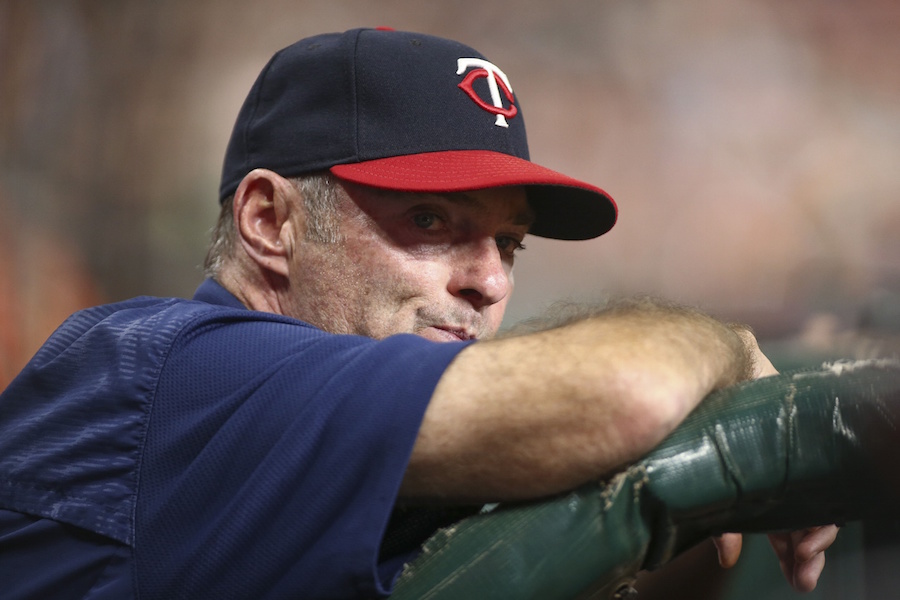 * Monday marked the deadline for MLB teams to protect prospects from exposure to the Rule 5 draft by adding them to the 40-man roster. The Twins, somewhat surprisingly, added only three: RHP Zack Littell, LHP Stephen Gonsalves and LHP Lewis Thorpe. The first two names were essentially givens. Littell and Gonsalves are among the organization's best pitching prospects and both are almost big-league ready. Either one could be up in the majors as soon as the first half of 2018, so they weren't going to make it through the Rule 5 untouched. Thorpe is a bit of a different case. He's 21 and has only made one appearance above Single-A. Injuries and illness wiped out his entire 2015 and 2016 seasons, so the left-hander has less than 200 innings of professional experience. However, he has been really, REALLY good in that small amount of playing time, posting a 2.94 ERA and 1.19 WHIP while averaging 10.6 K/9. It's not too difficult to envision another club trying to stash him in their bullpen all year, and that's a risk the Twins couldn't take. The tricky thing is that now Thorpe's option clock is set into motion, so they'll potentially have to roster him or lose him by age 25. Usually not too big of a deal, but with all the lost time Thorpe is behind on development and needs to get caught up in a hurry. The Twins left several prospects unprotected, with these pitchers being the most notable: Nick Burdi, Jake Reed, Kohl Stewart. The first two are fireballing relievers who could help a big-league bullpen now (well, for Burdi it's as soon as he completes rehab from mid-season Tommy John surgery). So they're at high risk. Stewart, the fourth overall draft pick just four years ago, has reached Triple-A and has a 3.10 ERA in the minors, though his secondary numbers haven't been good at all. It's conceivable someone gambles on his athleticism and heavy sinking stuff, but the righty just hasn't shown enough. I do wonder if the front office that drafted Stewart would've been bold enough to risk losing him for nothing right now. * Paul Molitor has only been a big-league manager for three years, but he's been around the game long enough to know how it goes. Coming off the worst season in franchise history, and with a regime of outsiders taking over baseball operations, he knew his outlook was grim despite the undying support of ownership. Anything less than a clearly and undeniably excellent year was going to give Derek Falvey and Thad Levine an easy excuse to install their own guy. But as it turned out, Molitor delivered nothing less. His season started on a note of redemption and ended on an even bigger one: The St. Paul native was named Manager of the Year last week after leading his team back to the postseason. Of course, by that point Molitor had already procured the prize he really wanted, a new contract. He inked a three-year deal one week after losing to New York in the AL Wild Card Game, meaning Minnesota is now entrusting the 61-year-old skipper to oversee its impending prime window of contention. It's a terrific story for a Hall of Famer who's never strayed far from home. Whatever you think of his tactical shortcomings, it's clear Molitor has the belief of his clubhouse, and it's also important to remember that in terms of total managerial experience, he remains one of the greenest in the game. He's still learning, and in 2017 he will have new hand-picked pitching and bench coaches to lend support. (Is Derek Shelton anti-bunt??) * If the past few years (and especially this latest postseason) are any indication, the new model for winning in baseball will call for dominant bullpens with multiple high-powered weapons who can consistently shut down the late innings. Cleveland's Andrew Miller is the prototype, but increasingly we are seeing teams deploy their best relievers outside of the closer role, often asking for more than three outs with games in the balance. It stands to reason that if MLB continues trending toward shorter starts and more relief innings, these kinds of bullpen aces will keep rising in value. We'll all be surprised if the Twins don't make a concerted effort to add someone who might fill this role externally, but as far as players already in the organization, one name stands out as a potential fit the mold. Things looked grim for Tyler Jay this summer, when he was again hampered by shoulder issues, and rumors of thoracic outlet syndrome began to circulate. However, those rumors proved false and he was able to return to the mound at Class-A Ft. Myers late in late August with a dominant display (6 IP, 4 H, 10 K, 0 BB). Still needing to build up his workload after all the missed time, Jay headed to the Arizona Fall League, which just wrapped up. His stuff impressed even though he struggled some with control (11/5 K/BB in 9 2/3 innings). Most importantly, he took the mound regularly, logged his innings, and reportedly felt good. It sounds like he hasn't yet regained his mid-90s fastball velocity but he has it in him, and when commanding that pitch along with his powerful slider and solid curveball he's got the makings of a valuable late-inning weapon. The 23-year-old southpaw will absolutely be one to watch next spring.
 -
Article: Miguel Sano And The Dread Of 'What If'
Nick Nelson replied to Nick Nelson's topic in Twins Daily Front Page News
Honest question: Could you point me to any examples of this? I do know there are concerns about his weight trends, in general, but I don't think I've ever seen a sourced remark about his diet in particular. In fact, the only thing I could dig up is this quote from Souhan's article: "I’ve seen clubhouse attendants carrying in large bags of fast food before games. The lifestyle dictates that players are often up late, while hungry and with lots of money to spend." That's not reporting. It's conjecture, from a man who speculated shortly thereafter that most "untethered" bloggers sit in their basements in Kimonos eating Cinnabon. -
Article: Miguel Sano And The Dread Of 'What If'
Nick Nelson replied to Nick Nelson's topic in Twins Daily Front Page News
Ok. Do you have a full, detailed breakdown of his eating habits, and the nutritional expertise to analyze their impact on his health and performance? Because that's something I might be interested in reading. Not vague disapproving allusions to his occasionally eating fast food in the clubhouse, a la Souhan. -
It can be hard not to get caught up in 'what ifs,' especially if you're a Minnesota Twins fan. What if Joe Mauer didn't shred up his knee meniscus in his second major-league game, setting the stage for a career hampered by chronic leg issues? What if Francisco Liriano didn't tear his UCL as a rookie? What if Justin Morneau didn't suffer that career-altering concussion in 2010 while charging toward MVP honors? And now? What if Miguel Sano is in the process of becoming this franchise's next painful 'what if' case study?This dynamic is already at play for the young slugger, to some extent. What if he hadn't torn his elbow ligament in 2014, forcing him to miss an entire season at the crux of his development? What if he'd been able to stay healthy through the second half this year? As he faces daunting rehab from an operation to address the injury that sidelined him, the scariest question is this: What if Sano is never the same? Stressful Circumstances Even in this age of technological enlightenment, medicine remains an inexact science. Much mystery surrounds the ailment that sidelined Sano during the final weeks, but the bottom line appears to be this: he suffered damage to his shin bone that, while vaguely diagnosed as a stress reaction, turned out to be something more nefarious. In theory, a stress reaction is less alarming than a fracture. It's the weakened precursor to a break, and the idea is that by catching it you can prevent something more serious from happening. The Twins did all the right things in this regard, giving Sano plenty of rest and treatment, but the thing just never seemed to heal. If we're being honest, Miggy probably did himself no favors in his eagerness to get back on the field. After initially sustaining the injury when he fouled a ball into his shin during a Friday night game, Sano tried playing through it on Saturday. He had to be removed when his severe limp made it obvious to everyone in the ballpark something was wrong. Six weeks later, he gave it another go in the final series of the regular season, desperate to help his team in a playoff push. Much like his decision to take the field a day after the injury, this one doesn't look good in retrospect. Do I hold either against him in the least? Absolutely not. But they likely contributed to our reaching this point: In Rod We Trust Last Monday, Sano underwent a procedure to have a titanium rod implanted in his lower leg. Make no mistake, this is a pretty serious deal and you will rarely see the technique called upon for a stress reaction. Most often these rods are inserted to help broken bones heal properly. He now faces a 6-to-8 week rehab window, and GM Thad Levine acknowledged that Sano might be "on a slow track at the beginning of spring training." There's reason for optimism that this solution will finally end his series of recovery roadblocks. The greater concern, at this point, may be the 24-year-old's ability to condition and prepare properly for the upcoming season as he looks to check his rising number on the scale. The Elephant in the Room Like many others, I felt Jim Souhan's column hinting at Sano's weight and conditioning issues, published just days after he first hit the disabled list, struck a bad note. And I still believe that piece could've been handled a lot better, but at this point it would be stubborn to not more seriously recognize Souhan's core points, and consider how they'll factor going forward. People within the Twins organization have long harbored concerns about Sano getting too big, too fast. These opinions have been filtered out to the public through multiple local columnists. And it's fair to be worried, especially in light of what's played out since Souhan first wrote that column. Without question, this injury has impacted Sano's ability to get on his feet, exercise and train. He'll be dealing with that for at least a while longer after the surgery. Sure, a guy can still find ways to break a sweat with one good leg, but obviously it's pretty limiting. Anyway, the prime focus for Sano this winter will rightfully be getting that shin back to 100 percent, with conditioning now secondary. So it's fair to wonder what kind of shape he'll be in when he arrives in camp three months from now. He surely played well above his listed weight of 260 this season. If he's in the 300 range at age 25 it's tough to see him playing a whole lot of third base. In fact, DH starts to feel imminently inevitable. I've always felt the consternation around Sano's weight was largely misguided – he's a big kid, and it's part of what makes him great. Nitpicking his diet, or tying his physique to an ostensible lack of commitment, is dumb. But it's not about any of that anymore. Sano's ability to bounce back from this and resume his ascending career arc as a 24-year-old All Star third baseman is now somewhat in doubt, for reasons that have nothing to do with desire. The amazingly talented batsman will no doubt continue to be a great hitter, but his lofty potential surpasses that unextraordinary description. As one of his biggest believers – one who has been more inclined to ask "What if he keeps getting better at the plate, cuts down the strikeouts, and becomes the game's best cleanup hitter?" – a question now creeps into my mind that never really has in the past: What if he never reaches that potential because these bad breaks keep piling up? Click here to view the article
-
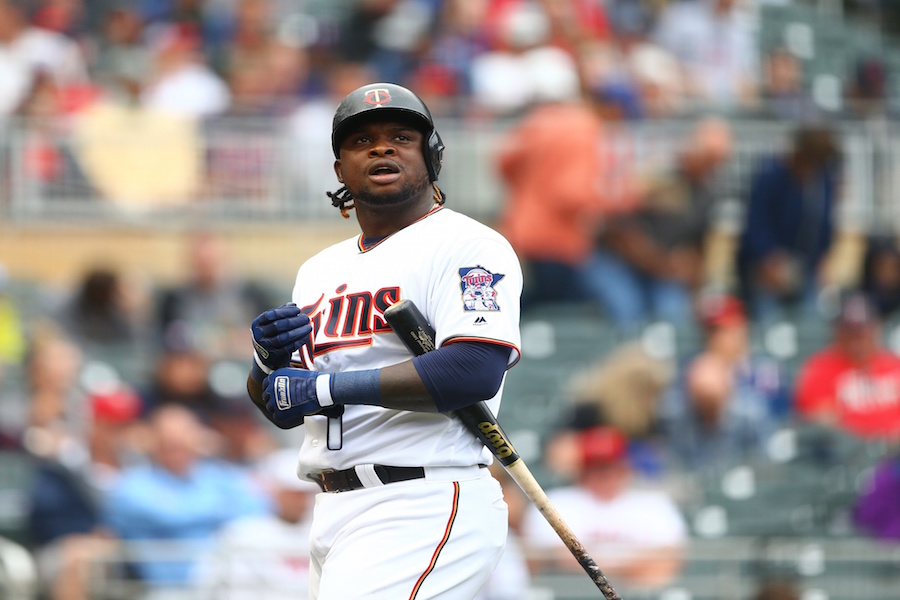 This dynamic is already at play for the young slugger, to some extent. What if he hadn't torn his elbow ligament in 2014, forcing him to miss an entire season at the crux of his development? What if he'd been able to stay healthy through the second half this year? As he faces daunting rehab from an operation to address the injury that sidelined him, the scariest question is this: What if Sano is never the same? Stressful Circumstances Even in this age of technological enlightenment, medicine remains an inexact science. Much mystery surrounds the ailment that sidelined Sano during the final weeks, but the bottom line appears to be this: he suffered damage to his shin bone that, while vaguely diagnosed as a stress reaction, turned out to be something more nefarious. In theory, a stress reaction is less alarming than a fracture. It's the weakened precursor to a break, and the idea is that by catching it you can prevent something more serious from happening. The Twins did all the right things in this regard, giving Sano plenty of rest and treatment, but the thing just never seemed to heal. If we're being honest, Miggy probably did himself no favors in his eagerness to get back on the field. After initially sustaining the injury when he fouled a ball into his shin during a Friday night game, Sano tried playing through it on Saturday. He had to be removed when his severe limp made it obvious to everyone in the ballpark something was wrong. Six weeks later, he gave it another go in the final series of the regular season, desperate to help his team in a playoff push. Much like his decision to take the field a day after the injury, this one doesn't look good in retrospect. Do I hold either against him in the least? Absolutely not. But they likely contributed to our reaching this point: In Rod We Trust Last Monday, Sano underwent a procedure to have a titanium rod implanted in his lower leg. Make no mistake, this is a pretty serious deal and you will rarely see the technique called upon for a stress reaction. Most often these rods are inserted to help broken bones heal properly. He now faces a 6-to-8 week rehab window, and GM Thad Levine acknowledged that Sano might be "on a slow track at the beginning of spring training." There's reason for optimism that this solution will finally end his series of recovery roadblocks. The greater concern, at this point, may be the 24-year-old's ability to condition and prepare properly for the upcoming season as he looks to check his rising number on the scale. The Elephant in the Room Like many others, I felt Jim Souhan's column hinting at Sano's weight and conditioning issues, published just days after he first hit the disabled list, struck a bad note. And I still believe that piece could've been handled a lot better, but at this point it would be stubborn to not more seriously recognize Souhan's core points, and consider how they'll factor going forward. People within the Twins organization have long harbored concerns about Sano getting too big, too fast. These opinions have been filtered out to the public through multiple local columnists. And it's fair to be worried, especially in light of what's played out since Souhan first wrote that column. Without question, this injury has impacted Sano's ability to get on his feet, exercise and train. He'll be dealing with that for at least a while longer after the surgery. Sure, a guy can still find ways to break a sweat with one good leg, but obviously it's pretty limiting. Anyway, the prime focus for Sano this winter will rightfully be getting that shin back to 100 percent, with conditioning now secondary. So it's fair to wonder what kind of shape he'll be in when he arrives in camp three months from now. He surely played well above his listed weight of 260 this season. If he's in the 300 range at age 25 it's tough to see him playing a whole lot of third base. In fact, DH starts to feel imminently inevitable. I've always felt the consternation around Sano's weight was largely misguided – he's a big kid, and it's part of what makes him great. Nitpicking his diet, or tying his physique to an ostensible lack of commitment, is dumb. But it's not about any of that anymore. Sano's ability to bounce back from this and resume his ascending career arc as a 24-year-old All Star third baseman is now somewhat in doubt, for reasons that have nothing to do with desire. The amazingly talented batsman will no doubt continue to be a great hitter, but his lofty potential surpasses that unextraordinary description. As one of his biggest believers – one who has been more inclined to ask "What if he keeps getting better at the plate, cuts down the strikeouts, and becomes the game's best cleanup hitter?" – a question now creeps into my mind that never really has in the past: What if he never reaches that potential because these bad breaks keep piling up?
 -
Article: From The Handbook: Free Agent Starters
Nick Nelson replied to John Bonnes's topic in Twins Daily Front Page News
As always, these are kind of shots in the dark, and I admit that one was probably quite a bit too high, but the thinking is this: He's younger than Arrieta or Darvish. He's been very consistent, never posting an ERA of 4.00 or higher (albeit in the NL). Outside of sitting out 2016 with TJ surgery, he's basically never missed a start. And he bounced back nicely from that setback this season, especially in the second half (2.99 ERA July-through-Sept). He's not the flashiest name on the market but he might be the safest. That could count for a lot. -
Yeah, the Twins didn't really make an active decision to let those guys go so they weren't included on this list.
-
Trying to pretend like your word is your bond But until you do right, all you do will go wrong Now some might mistake this just for simple song And some don't know what they have 'til it's gone Incredibly, we are coming up on the 20-year anniversary of 1998's classic 'The Miseducation of Lauryn Hill.' The song quoted above, titled Lost Ones, was named by Rolling Stone as one of the 50 greatest hip-hop tracks of all time – justifiably so. It's a scornful blast on someone who left her behind (Wyclef Jean, probs). It'd be no surprise if that song, still relatively fresh back in the winter of 2002/03, was banging in the headphones of David Ortiz while he steamed about his release from Minnesota. He'd go on to make his former team pay for its mistake, and as we all know, he hardly suppressed his frustration with the way things went down over the years.Releasing Ortiz sticks out as the singular worst decision in an overall highly respectable career for Terry Ryan as Twins GM. At the time, he was maneuvering to make room on the 40-man roster ahead of the Rule 5 draft. He ended up giving away a Hall of Fame player for nothing. Now, this is NOT meant to be yet another lamentation of a move we've all heard more than enough about. But the point is this: Oftentimes, front office execs will be judged more by the great players they let get away than the good ones they bring aboard. Entering their first full offseason at the helm, Derek Falvey and Thad Levine have been doing some 40-man shuffling of their own, parting ways with several players (some of them long-tenured members of the organization) in order to free up room for the Hot Stove Season ahead. Ortiz's still ghost lingers subtly, taking forms like Aaron Hicks and Anthony Swarzak. Will any of these new Lost Ones haunt the organization going forward? Let's examine each player who's been sent out, with a 1-5 score on the O.R.T.I.Z. (Odds of Regret due to Turnaround or Improvement... Zone) Scale, with Big Papi himself of course being an off-the-charts, beyond-a-5 case. Chris Gimenez (outrighted) To be honest, I thought there was a good chance Gimenez would be retained. He still might, I guess, but the Twins are letting him hit the market rather than bringing him back cheaply through arbitration. The 34-year-old was productive enough and genuinely seemed like an all-around asset – beloved in the clubhouse, sharer of knowledge, able to take the mound in a pinch. I wondered if the Twins trusted Mitch Garver's glove enough to give him the sole backup job, and that still remains to be seen, but with John Ryan Murphy gone they'll certainly be casting a net for other high-level options. As for Gimenez, what we saw was his ceiling. O.R.T.I.Z. Score: 1 Randy Rosario (claimed by Cubs) Rosario is one of those cases where the international development timelines can sting you. The Twins signed him young, at 16, all the way back in 2010 and consequently had to add him to the 40-man roster young. Circumstances dictated that the Twins basically needed to make a decision on him already at 23, and with so little experience above the high minors, they couldn't afford to wait him out anymore. The talent is there, and not hard to see, but he's too raw and uncertain to hold off a more usable piece. It wouldn't be surprising if he eventually became a late-inning weapon for Chicago. O.R.T.I.Z. Score: 3 Michael Tonkin (signed with Nippon Ham Fighters of NPB) The big flame-thrower got his chances in Minnesota. No one can deny him that. He made 141 appearances over three seasons and just never came close to replicating his mastery of Triple-A. Tonkin's two-year, $2.1 million deal in Japan is a wise move, and not just because he'll be earning twice what he'd expect here (and that's IF he made a 25-man roster). A guy with 97-MPH heat to go along with a 9.2 K/9 rate in the majors and decent enough control is going to flat-out dominate as a closer in that league. We've seen plenty of embattled big-leaguers raise their stock overseas and that could very well happen here. Maybe he'll even come back to Minnesota in a couple of years, though I suspect that bridge is burned. O.R.T.I.Z. Score: 2 Niko Goodrum (outrighted, signed with Tigers) Gardy influence? Goodrum was snapped up quickly by Detroit after the Twins dropped him, and there is zero doubt that the new Tigers manager (along with his partially reassembled staff from Minnesota) had a say in it. Ron Gardenhire saw him plenty as a youngster around camp prior to departing, and his new QA coach Joe Vavra has more recent experience. But the upside here is extremely minimal; Goodrum has a .712 career OPS in the minors and struck out in 10 of 18 appearances with the Twins. The good-not-great versatile glove doesn't make up for the 25-year-old's shortcomings at the plate. O.R.T.I.Z. Score: 1 Ryan O'Rourke (outrighted, signed with Orioles) I have little doubt that O'Rourke has a future as a quality MLB reliever. He has reliably decimated left-handed hitters everywhere he's pitched, including the majors, and there's no reason to think he won't continue doing so after rehabbing from Tommy John surgery at the end of April. He'll probably turn 30 (April 30th next year) before he pitches in the majors again, but likely has a lengthy career ahead of him in a game of increasingly specialized bullpens. One can argue that O'Rourke was worth keeping ahead of Buddy Boshers, but both are well behind the likes of Taylor Rogers and Gabriel Moya, and only one's healthy. O.R.T.I.Z. Score: 2 Nik Turley (claimed by Pirates) There's an enticing aura around Turley so it's not hard to see why the Pirates are taking a look at him. He last pitched with the Red Sox in 2016 before taking a detour through independent ball and then catching on with the Twins. During his time with Boston's Double-A affiliate, the big southpaw showed crazy stuff but was all over the place (48 K and 28 BB in 35 IP). Turley's mind-bending curveball was back on display during his time in Chattanooga and Rochester this summer, helping him procure a 2.05 ERA and 124-to-29 K/BB in 92 innings, but he looked utterly overmatched in 10 appearances with the Twins. I can see why they ran out of patience, but I do think there's something there. In an era where the curveball is becoming king, the 28-year-old has a future. I'm not going to say he's the best player on this list, but to me, he has the most O.R.T.I.Z. pain potential. O.R.T.I.Z. Score: 4 Daniel Palka (claimed by White Sox) In some ways, Palka resembles a young David Ortiz. He's a lefty slugger with immense power anyone can see, but he lacks a defensive position. Here's the thing, though: When the Twins released Ortiz at age 26 he had 58 homers and an .800 OPS in the big leagues. Palka, now 26, has yet to dominate Triple-A pitching. In today's MLB, Palka's profile is simply not a commodity – evidenced enough by Oswaldo Arcia (ALSO 26) posting a 1.000 OPS in 100 games for Arizona's Class-AAA affiliate without ever getting a call-up. To become a long-term asset out of this mold, you've got to basically hit at an Ortiz-like level (or close to it) and well, that just doesn't happen. The nothing-to-lose White Sox can afford to gamble on Palka figuring it out at the plate enough to harness his high-end pop, but the Twins have many more promising bats to vie for his vacant spot. O.R.T.I.Z. Score: 2 To summarize, none of these Lost Ones seem likely to be Superstars. But we haven't heard the last of any of them. Click here to view the article
-
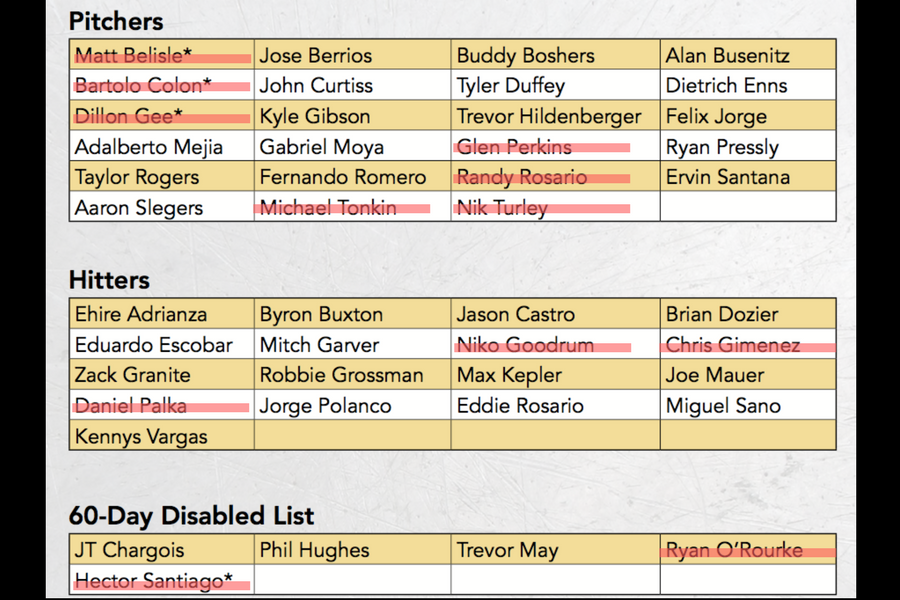 Releasing Ortiz sticks out as the singular worst decision in an overall highly respectable career for Terry Ryan as Twins GM. At the time, he was maneuvering to make room on the 40-man roster ahead of the Rule 5 draft. He ended up giving away a Hall of Fame player for nothing. Now, this is NOT meant to be yet another lamentation of a move we've all heard more than enough about. But the point is this: Oftentimes, front office execs will be judged more by the great players they let get away than the good ones they bring aboard. Entering their first full offseason at the helm, Derek Falvey and Thad Levine have been doing some 40-man shuffling of their own, parting ways with several players (some of them long-tenured members of the organization) in order to free up room for the Hot Stove Season ahead. Ortiz's still ghost lingers subtly, taking forms like Aaron Hicks and Anthony Swarzak. Will any of these new Lost Ones haunt the organization going forward? Let's examine each player who's been sent out, with a 1-5 score on the O.R.T.I.Z. (Odds of Regret due to Turnaround or Improvement... Zone) Scale, with Big Papi himself of course being an off-the-charts, beyond-a-5 case. Chris Gimenez (outrighted) To be honest, I thought there was a good chance Gimenez would be retained. He still might, I guess, but the Twins are letting him hit the market rather than bringing him back cheaply through arbitration. The 34-year-old was productive enough and genuinely seemed like an all-around asset – beloved in the clubhouse, sharer of knowledge, able to take the mound in a pinch. I wondered if the Twins trusted Mitch Garver's glove enough to give him the sole backup job, and that still remains to be seen, but with John Ryan Murphy gone they'll certainly be casting a net for other high-level options. As for Gimenez, what we saw was his ceiling. O.R.T.I.Z. Score: 1 Randy Rosario (claimed by Cubs) Rosario is one of those cases where the international development timelines can sting you. The Twins signed him young, at 16, all the way back in 2010 and consequently had to add him to the 40-man roster young. Circumstances dictated that the Twins basically needed to make a decision on him already at 23, and with so little experience above the high minors, they couldn't afford to wait him out anymore. The talent is there, and not hard to see, but he's too raw and uncertain to hold off a more usable piece. It wouldn't be surprising if he eventually became a late-inning weapon for Chicago. O.R.T.I.Z. Score: 3 Michael Tonkin (signed with Nippon Ham Fighters of NPB) The big flame-thrower got his chances in Minnesota. No one can deny him that. He made 141 appearances over three seasons and just never came close to replicating his mastery of Triple-A. Tonkin's two-year, $2.1 million deal in Japan is a wise move, and not just because he'll be earning twice what he'd expect here (and that's IF he made a 25-man roster). A guy with 97-MPH heat to go along with a 9.2 K/9 rate in the majors and decent enough control is going to flat-out dominate as a closer in that league. We've seen plenty of embattled big-leaguers raise their stock overseas and that could very well happen here. Maybe he'll even come back to Minnesota in a couple of years, though I suspect that bridge is burned. O.R.T.I.Z. Score: 2 Niko Goodrum (outrighted, signed with Tigers) Gardy influence? Goodrum was snapped up quickly by Detroit after the Twins dropped him, and there is zero doubt that the new Tigers manager (along with his partially reassembled staff from Minnesota) had a say in it. Ron Gardenhire saw him plenty as a youngster around camp prior to departing, and his new QA coach Joe Vavra has more recent experience. But the upside here is extremely minimal; Goodrum has a .712 career OPS in the minors and struck out in 10 of 18 appearances with the Twins. The good-not-great versatile glove doesn't make up for the 25-year-old's shortcomings at the plate. O.R.T.I.Z. Score: 1 Ryan O'Rourke (outrighted, signed with Orioles) I have little doubt that O'Rourke has a future as a quality MLB reliever. He has reliably decimated left-handed hitters everywhere he's pitched, including the majors, and there's no reason to think he won't continue doing so after rehabbing from Tommy John surgery at the end of April. He'll probably turn 30 (April 30th next year) before he pitches in the majors again, but likely has a lengthy career ahead of him in a game of increasingly specialized bullpens. One can argue that O'Rourke was worth keeping ahead of Buddy Boshers, but both are well behind the likes of Taylor Rogers and Gabriel Moya, and only one's healthy. O.R.T.I.Z. Score: 2 Nik Turley (claimed by Pirates) There's an enticing aura around Turley so it's not hard to see why the Pirates are taking a look at him. He last pitched with the Red Sox in 2016 before taking a detour through independent ball and then catching on with the Twins. During his time with Boston's Double-A affiliate, the big southpaw showed crazy stuff but was all over the place (48 K and 28 BB in 35 IP). Turley's mind-bending curveball was back on display during his time in Chattanooga and Rochester this summer, helping him procure a 2.05 ERA and 124-to-29 K/BB in 92 innings, but he looked utterly overmatched in 10 appearances with the Twins. I can see why they ran out of patience, but I do think there's something there. In an era where the curveball is becoming king, the 28-year-old has a future. I'm not going to say he's the best player on this list, but to me, he has the most O.R.T.I.Z. pain potential. O.R.T.I.Z. Score: 4 Daniel Palka (claimed by White Sox) In some ways, Palka resembles a young David Ortiz. He's a lefty slugger with immense power anyone can see, but he lacks a defensive position. Here's the thing, though: When the Twins released Ortiz at age 26 he had 58 homers and an .800 OPS in the big leagues. Palka, now 26, has yet to dominate Triple-A pitching. In today's MLB, Palka's profile is simply not a commodity – evidenced enough by Oswaldo Arcia (ALSO 26) posting a 1.000 OPS in 100 games for Arizona's Class-AAA affiliate without ever getting a call-up. To become a long-term asset out of this mold, you've got to basically hit at an Ortiz-like level (or close to it) and well, that just doesn't happen. The nothing-to-lose White Sox can afford to gamble on Palka figuring it out at the plate enough to harness his high-end pop, but the Twins have many more promising bats to vie for his vacant spot. O.R.T.I.Z. Score: 2 To summarize, none of these Lost Ones seem likely to be Superstars. But we haven't heard the last of any of them.
 -
Everyone around here knew it already, but now, Byron Buxton has the hardware and national recognition to firmly solidify his rep. Not only did he win a Gold Glove (which was never in doubt), he took home every other award you can think of: Platinum Glove, Overall Defensive Player of the Year, Fielding Bible, you name it. Fans, peers, analysts and metrics all seem to agree: Buxton is the most valuable defender in baseball. Maybe one of the best to come along in some time.It's safe to say nobody recognizes and appreciates Buxton's defensive impact more than Minnesota pitchers. Reaction shots of them exhaling with nervous chuckles, after spinning around to watch him take away extra-base hits in the outfield, became 2017 Twins canon. The pitching staff stands to benefit greatly from Buxton's prowess in center once again in 2018. And he will hopefully continue to be an asset out there for many years to come. But historical data suggests that his window for providing maximum value is fleeting. The Prime Directive It is generally accepted that a typical baseball player's "prime" falls somewhere in the age 25-29 range. Buxton, who turns 24 in December, is just entering that spectrum. But those prime production models tend to focus on offense. Download attachment: agingcurve.png The specific skill we're discussing here is defense, and there is mounting evidence that it has its own aging curve, which skews younger. Download attachment: defensecurve.png In Buck's particular case, that effect could be magnified. His ability to track down seemingly unreachable drives owes to virtually unparalleled speed. As Mike Petriello wrote this summer following a deep Statcast analysis: "We're adding more data points to what we were pretty sure we already knew: Speed peaks early." There is a good chance we are right now seeing the pinnacle of Buxton's impact in the outfield. At a certain point, his range will gradually begin to diminish. (Or maybe he'll become a little more discretionary about throwing his body into the wall.) Ideally, it'll be offset and then some by fulfillment of his potential at the plate. The upshot is that there's no reason to think the center fielder won't continue to play at this Herculean level for a couple more years, changing games on a regular basis by catching balls no one else can. Viewing things from this perspective brings about a number of offseason ripples, and might help the Twins take advantage of some market inefficiencies. For example: Fly ball pitchers are more appealing. All other things being equal, most front offices will – smartly – target ground ball pitchers, because they tend to be a safer profile. The Twins don't need to worry about this as much, so they can prioritize other strengths. The Twins have a great selling point for pitchers looking to recoup value. Last week we looked at some potential free-agent bargains that might be trying to boost their stock on one-year deals. The Twins can make a strong pitch to any of them by citing the positive influence Buxton's presence will have on their numbers. "Win now" urgency increases? The championship blueprint involves situating your efforts so everything aligns with the collective high point of your central building blocks. Bring in the right complementary pieces while that core group is peaking, and you have a World Series recipe. That's basically what we just saw the Astros do. It's quite possible that Buxton, the centerpiece of Minnesota's plan, will never deliver more all-around value than over these next one or two seasons while his greatest strength is at its strongest. Just another wrinkle to keep in mind as this offseason gets going, and as we look ahead to the coming years. Click here to view the article
-
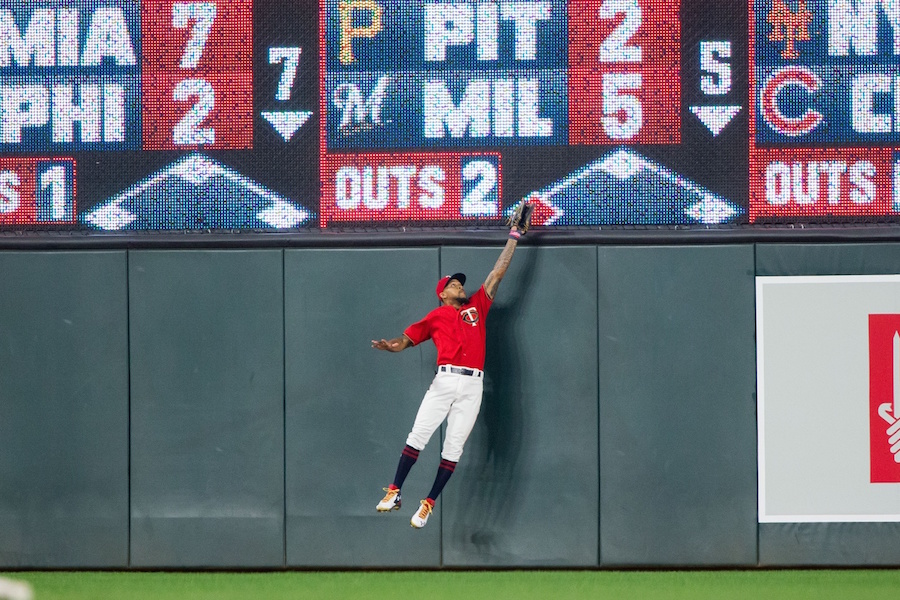 It's safe to say nobody recognizes and appreciates Buxton's defensive impact more than Minnesota pitchers. Reaction shots of them exhaling with nervous chuckles, after spinning around to watch him take away extra-base hits in the outfield, became 2017 Twins canon. The pitching staff stands to benefit greatly from Buxton's prowess in center once again in 2018. And he will hopefully continue to be an asset out there for many years to come. But historical data suggests that his window for providing maximum value is fleeting. The Prime Directive It is generally accepted that a typical baseball player's "prime" falls somewhere in the age 25-29 range. Buxton, who turns 24 in December, is just entering that spectrum. But those prime production models tend to focus on offense. The specific skill we're discussing here is defense, and there is mounting evidence that it has its own aging curve, which skews younger. In Buck's particular case, that effect could be magnified. His ability to track down seemingly unreachable drives owes to virtually unparalleled speed. As Mike Petriello wrote this summer following a deep Statcast analysis: "We're adding more data points to what we were pretty sure we already knew: Speed peaks early." There is a good chance we are right now seeing the pinnacle of Buxton's impact in the outfield. At a certain point, his range will gradually begin to diminish. (Or maybe he'll become a little more discretionary about throwing his body into the wall.) Ideally, it'll be offset and then some by fulfillment of his potential at the plate. The upshot is that there's no reason to think the center fielder won't continue to play at this Herculean level for a couple more years, changing games on a regular basis by catching balls no one else can. Viewing things from this perspective brings about a number of offseason ripples, and might help the Twins take advantage of some market inefficiencies. For example: Fly ball pitchers are more appealing. All other things being equal, most front offices will – smartly – target ground ball pitchers, because they tend to be a safer profile. The Twins don't need to worry about this as much, so they can prioritize other strengths. The Twins have a great selling point for pitchers looking to recoup value. Last week we looked at some potential free-agent bargains that might be trying to boost their stock on one-year deals. The Twins can make a strong pitch to any of them by citing the positive influence Buxton's presence will have on their numbers. "Win now" urgency increases? The championship blueprint involves situating your efforts so everything aligns with the collective high point of your central building blocks. Bring in the right complementary pieces while that core group is peaking, and you have a World Series recipe. That's basically what we just saw the Astros do. It's quite possible that Buxton, the centerpiece of Minnesota's plan, will never deliver more all-around value than over these next one or two seasons while his greatest strength is at its strongest. Just another wrinkle to keep in mind as this offseason gets going, and as we look ahead to the coming years.
 -
I mean, that doesn't really tell the story of his impact and I'm sure you're aware of it if you followed the team this year. Colon coming in and posting a 4.09 ERA while averaging over 6 IP/start in July & August was crucial for getting this team going and moving them into a position that, by the time he stunk in September, it hardly mattered. He was also repeatedly credited by teammates and coaches for benefiting the young guys a great deal with his experience. That was, in part, kind of the impetus behind this article. I do foresee the Twins looking to replicate that in some way.
-
Yes, but if he's 35 he's not available on a one-year deal. No one's saying this is some bona fide ace pickup. It's an idea for a potential upgrade that maintains flexibility, which seems to be an objective for these guys.
-
I get that. And agree to an extent. But it's all so speculative that it really doesn't seem worth discussing on a message board. Also, Lackey has been hired by three championship-caliber teams and model organizations over the past four years.
-
It is just the home runs. You realize those were the entire reason for his inflated ERA right? Lackey had a 20% K-rate, a solid walk rate & WHIP, held opponents to a .250 avg. If age was such an inhibiting factor for him, why wouldn't any of those other numbers be in serious decline? His HR/FB rate was 3rd-highest in baseball, and nearly twice his career norm. That's a fluke, not a trend. He does not have "literally zero upside"; his upside is that he goes back to being the pitcher he has been for most of the past 5 years, a solid #2/3 with heaps of playoff experience.
-
Exactly this. I'm interested in evaluating what these guys can do on the field. If there is meaningful evidence that they have a negative impact as teammates, I'll account for that. But comments like "he divorced his wife while she had cancer 6 years ago" have no place in this analysis IMO. We get it. How many times are you going to say "hard pass" on this thread? You know who allowed the second-most HR in the AL between 2012 and 2013? Phil Hughes. He did OK in 2014, his first year with the Twins, right? You know who was the only pitcher to give up more? Ervin Santana. When a guy has a fluky year with HR/FB ratio, it should be viewed as an opportunity not a red flag. In the case of Lackey, you're looking at a one-year deal so the risk is minimal.
-
John Lackey has a 3.57 ERA, 4.02 FIP and 1.20 WHIP over the past five seasons. If he pitches up to that baseline, he's not a #5 starter on the Twins. He's a #2 or #3. If you don't like the guy because you think he's a dink, that's OK, but let's not act as though he hasn't been a durable, quality performer.
-
Definitely sounds like Lackey's teammates hate him http://m.mlb.com/news/article/257178080/john-lackey-has-earned-love-of-cubs-teammates/
-
Wow. Y'all really don't like John Lackey! He can't be that detrimental of a teammate given that every club he's been on in the past four years has been extremely successful. We're COMPLAINING about the Colon signing now?? Do you folks have extremely short memories or are you just attached to your narratives? Again, a "cooked" Lackey would have been ranked second on the Twins in K-rate and third in WHIP. Opponents hit .248 against him. The home runs were his only major issue and that can change a lot from year to year (e.g. Phil Hughes). I feel somewhat confident that Lackey is not going to have an 18.4 HR/FB rate again.
