



Nick Nelson
-
Posts
8,326 -
Joined
-
Last visited
-
Days Won
56
Content Type
Profiles
News
Minnesota Twins Videos
2026 Minnesota Twins Top Prospects Ranking
2022 Minnesota Twins Draft Picks
Minnesota Twins Free Agent & Trade Rumors, Notes, & Tidbits
Guides & Resources
2023 Minnesota Twins Draft Picks
The Minnesota Twins Players Project
2024 Minnesota Twins Draft Picks
2025 Minnesota Twins Draft Pick Tracker
2026 Minnesota Twins Draft Tracker: Picks & Bonuses
Forums
Blogs
Events
Store
Downloads
Gallery
Everything posted by Nick Nelson
-

Article: Central Intelligence: Chicago White Sox
Nick Nelson replied to Nick Nelson's topic in Twins Daily Front Page News
I mean it sounds nice when your put those descriptors in front of their names, but they aren't really accurate. Todd Frazier was not an All Star last year, when he offered little offensive value outside of hitting a bunch of home runs. David Robertson was an All Star once, in 2011. Jose Abreu was a fairly average 1B last year. As I noted, there is still some talent on this roster, but I think it is apt to describe the offseason as a fire sale when they flipped their two leaders in WAR for a bunch of prospects who will all open the year in the minors. -
Following an incident last summer where White Sox ace Chris Sale busted out a pair of scissors and cut up a uniform he didn't want to wear, he was suspended and fined. It appeared that the relationship between him and the team was reaching a perilous point. They didn't fire Sale, but during the offseason they did trade him, setting off a roster fire sale that saw Chicago trade away its pitching and position WAR leaders for hefty prospect hauls while also making a managerial change.2016 At A Glance Record: 78-84 Runs Scored: 686 Runs Allowed: 715 Pythag W/L: 78-84 Pitching WAR Leader: Chris Sale Position WAR Leader: Adam Eaton Season Recap The 2016 campaign qualified as Chicago's best in four years, but that wasn't saying much. Another sub-.500 finish spelled the end of Robin Ventura's tenure, which produced only one finish above fourth place, back in 2012. The story for the Sox was much the same: offensive mediocrity and a pitching staff that lacked superior quality beyond the undoubtedly stellar 1-2 rotation punch of Sale and Jose Quintana. Finally, the front office grew fed up with a formula that seemed to be going nowhere. During the offseason, Chicago committed to an approach that many have lamented Minnesota's avoidance of during a half-decade of ineptitude: they tore it down. Sale was shipped to Boston in exchange for a premium package headlined by Yoan Moncada, arguably the game's top prospect. Adam Eaton, who was worth more than twice as many wins as any other position player on the team according to FanGraphs, went to Washington with three young pitchers coming back. Outside of the returns in these blockbusters, the White Sox made no significant additions other than signing Derek Holland – a mid-rotation starter at best – to a one-year deal. Why They'll Be Better Well, anything can happen I suppose. They didn't set a particularly high bar last year and it's not like the White Sox are lacking in talent. Moncada is Baseball America's No. 2 prospect, and he's basically MLB-ready after debuting for Boston last September. The second baseman will start the year in Triple-A (mostly for service time reasons) but should be up quickly to partner with shortstop Tim Anderson for one of the game's best young keystone combos. Right-hander Lucas Giolito, the hard-throwing centerpiece in the Eaton deal, is 25th on BA's prospect list and could soon join Quintana and Carlos Rodon for a potent trio atop the rotation. If the youth movement can push things along and jell in a hurry, the White Sox have a chance to surprise this summer. Why They'll Be Worse It goes without saying that when you take away a team's top two contributors, it's probably going to take a step backward. Chicago doesn't really have anyone on hand to replace Eaton in center field (the presumed starter, Charlie Tillson, has a stress reaction in his foot and is out indefinitely). Of course, no pitcher is going to match the departed dominance of Sale. In fact, the starting corps is shaping up to be a big old mess. With Rodon experiencing ominous biceps soreness, Chicago figures to open the season with a rotation featuring Quintana and then Holland, James Shields, Miguel Gonzalez and... Dylan Covey? The expectation is that GM Rick Hahn will shop Quintana around in his continuing efforts to rebuild, especially if things go south early. Closer David Robertson is also potentially on the table. If the White Sox take away the few remaining standout veterans and leave it all in the hands of inexperienced youngsters and marginal players, they could be looking at 100 losses. It probably wouldn't be the worst outcome. Part of rebuilding, and the part where the Sox have lagged with their habit of being bad-not-awful, is accruing high draft picks and hitting on them. Chicago has selected higher than eighth in the draft only once in the past decade, even with all of those non-competitive seasons. They used that pick (third overall in 2014) to take Rodon, who might be their best starter by year's end. They'll get the 11th selection this June, but could be on the clock much earlier in 2018. In fact, they're probably counting on it. ~~~ Check out the rest of our Central Intelligence series previewing Minnesota's division rivals: Cleveland Indians Detroit Tigers Kansas City Royals Click here to view the article
-
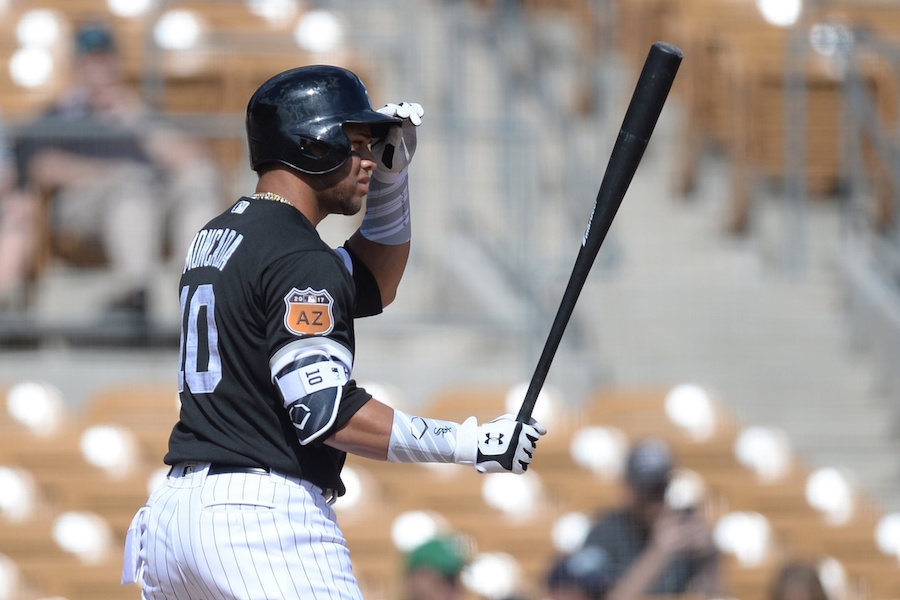 2016 At A Glance Record: 78-84 Runs Scored: 686 Runs Allowed: 715 Pythag W/L: 78-84 Pitching WAR Leader: Chris Sale Position WAR Leader: Adam Eaton Season Recap The 2016 campaign qualified as Chicago's best in four years, but that wasn't saying much. Another sub-.500 finish spelled the end of Robin Ventura's tenure, which produced only one finish above fourth place, back in 2012. The story for the Sox was much the same: offensive mediocrity and a pitching staff that lacked superior quality beyond the undoubtedly stellar 1-2 rotation punch of Sale and Jose Quintana. Finally, the front office grew fed up with a formula that seemed to be going nowhere. During the offseason, Chicago committed to an approach that many have lamented Minnesota's avoidance of during a half-decade of ineptitude: they tore it down. Sale was shipped to Boston in exchange for a premium package headlined by Yoan Moncada, arguably the game's top prospect. Adam Eaton, who was worth more than twice as many wins as any other position player on the team according to FanGraphs, went to Washington with three young pitchers coming back. Outside of the returns in these blockbusters, the White Sox made no significant additions other than signing Derek Holland – a mid-rotation starter at best – to a one-year deal. Why They'll Be Better Well, anything can happen I suppose. They didn't set a particularly high bar last year and it's not like the White Sox are lacking in talent. Moncada is Baseball America's No. 2 prospect, and he's basically MLB-ready after debuting for Boston last September. The second baseman will start the year in Triple-A (mostly for service time reasons) but should be up quickly to partner with shortstop Tim Anderson for one of the game's best young keystone combos. Right-hander Lucas Giolito, the hard-throwing centerpiece in the Eaton deal, is 25th on BA's prospect list and could soon join Quintana and Carlos Rodon for a potent trio atop the rotation. If the youth movement can push things along and jell in a hurry, the White Sox have a chance to surprise this summer. Why They'll Be Worse It goes without saying that when you take away a team's top two contributors, it's probably going to take a step backward. Chicago doesn't really have anyone on hand to replace Eaton in center field (the presumed starter, Charlie Tillson, has a stress reaction in his foot and is out indefinitely). Of course, no pitcher is going to match the departed dominance of Sale. In fact, the starting corps is shaping up to be a big old mess. With Rodon experiencing ominous biceps soreness, Chicago figures to open the season with a rotation featuring Quintana and then Holland, James Shields, Miguel Gonzalez and... Dylan Covey? The expectation is that GM Rick Hahn will shop Quintana around in his continuing efforts to rebuild, especially if things go south early. Closer David Robertson is also potentially on the table. If the White Sox take away the few remaining standout veterans and leave it all in the hands of inexperienced youngsters and marginal players, they could be looking at 100 losses. It probably wouldn't be the worst outcome. Part of rebuilding, and the part where the Sox have lagged with their habit of being bad-not-awful, is accruing high draft picks and hitting on them. Chicago has selected higher than eighth in the draft only once in the past decade, even with all of those non-competitive seasons. They used that pick (third overall in 2014) to take Rodon, who might be their best starter by year's end. They'll get the 11th selection this June, but could be on the clock much earlier in 2018. In fact, they're probably counting on it. ~~~ Check out the rest of our Central Intelligence series previewing Minnesota's division rivals: Cleveland Indians Detroit Tigers Kansas City Royals
 -
Article: Report From The Fort: Ups And Downs
Nick Nelson replied to John Bonnes's topic in Twins Daily Front Page News
I'd say Pressly is a 100% lock to make the bullpen and I wouldn't put too much stock into today's erratic outing as it was rather out of character. He hadn't issued a single walk in seven prior outings this spring.- 14 replies
-
- 1
-

-
- kyle gibson
- alex wimmers
- (and 3 more)
-
Article: Report From The Fort: Studying Santana
Nick Nelson replied to John Bonnes's topic in Twins Daily Front Page News
Yeah, he has a very good slider and that helps. But he also commands the fastball and mixes in the 2-seamer very well. He introduced that pitch to his arsenal in 2013 I believe and has had really good results ever since, with a notable improvement in terms of limiting home runs. -
Article: Report From The Fort: Studying Santana
Nick Nelson replied to John Bonnes's topic in Twins Daily Front Page News
Not exactly on topic, but here's one of the most bizarre stats of the 2016 Minnesota Twins season for me. Only four pitchers made 20+ starts for the Twins. Here's the team's record in those respective games started by each pitcher. Kyle Gibson starts: 12-13 Tyler Duffey starts: 11-15 Ricky Nolasco starts: 9-12 Ervin Santana starts: 8-22 Starting pitching was (rightfully) pointed to as the primary source of the team's woes. Yet, with their only half-decent starter on the mound, they were vastly worse than with greatly inferior options. Holy cow I can't believe they played .267 ball behind Erv with the way he pitched, that had to be frustrating. They owe him big-time this year. -
There was a time when Kansas City's .500 finish in 2016 would have felt like a commendable achievement. It's a modest threshold the franchise had failed to reach in nine consecutive seasons prior to 2013. Of course, coming off two straight World Series appearances, the most recent of which they won, it felt like a let-down. More disappointment may be in store for 2017.Record: 81-81 Runs Scored: 675 Runs Allowed: 712 Pythag W/L: 77-85 Pitching WAR Leader: Danny Duffy Position WAR Leader: Jarrod Dyson Season Recap In mid-June, the Royals completed a sweep of the Cleveland Indians at Kauffman Stadium to pull into a tie for first place in the division. Soon after, they went into a prolonged slump while the Tribe caught fire, and six weeks later they trailed Cleveland by double digits. KC rebounded with a strong month of August and made a run at a wild-card spot, but then fell into a September funk that dropped them out of contention. The Royals have been a charmed club for quite a while. They handily outperformed their Pythagorean W/L in each of the past three seasons, taking a total of 14 more games than you'd mathematically expect during that span. In 2016 they were fortunate to win as many as they lost while allowing 37 more runs than they scored. In some respects, their strengths are conducive to such outcomes. Their lockdown bullpen gives them an edge in close games, and their consistently elite defensive units help cover up some warts. But no team can run away from the laws of baseball forever, especially with mediocre starting pitching, and in a way Kansas City's late-season swoon felt like a long overdue regression to the mean. The bullpen, as usual, was excellent. Same goes for the defense. But the rotation was a weakness, with no one other than Danny Duffy and Ian Kennedy offering much. The lineup sputtered, scoring just 675 runs and ranking last in the American League in homers. The leader in that category, Kendrys Morales, departed over the winter to join Toronto. Why They'll Be Better Duffy is a legitimate top-of-the-rotation type, and midway through last year the Royals finally made the full commitment to him as a starter. They went 17-9 in his 28 turns after moving him out of the bullpen halfway through May. He's expected to be their Opening Day starter against the Twins on April 3rd after signing a five-year extension in January. While Morales and his powerful bat are gone, the Royals did acquire Jorge Soler from the Cubs, adding some much needed young upside to the offense. They also added free agent Brandon Moss, a reliable source of 20-30 bombs. Mix in the better expected output from Mike Moustakas, Lorenzo Cain and Alex Gordon, whose campaigns were marred by injuries, and the lineup should improve. That last name is particularly vital. Gordon is the beating heart of this team – he led the roster in WAR every year from 2011 through 2014 – and getting him back to a healthy productive state could make a huge difference. Then again, he's now 33 and his K-rate rocketed upward last year, so it's possible that peak-level Gordon won't reappear. Why They'll Be Worse The pitching staff lost two cornerstones during the offseason, and replacing what they brought to the table will prove excruciatingly tough. Davis, who was one of the most dominant and impactful relievers in the game over the past three seasons, went to Chicago in the Soler trade. With Greg Holland leaving for Colorado, Kelvin Herrera is now the only remaining member of a spectacular late-inning trio that helped make KC a championship-caliber club in 2014 and 2015. Herrera will be closing, leaving manager Ned Yost with much less firepower to work with in the sixth, seventh and eighth. And then there was the heartbreaking death of Yordano Ventura, just 25 years old, in January. He endured his worst season as a big-leaguer last year, but Ventura's ace upside was a constant source of vitalizing hope for the Royals rotation. No one will fill the void left by his big personality and intense passion for the game. And his tragic passing also leaves a talent void that newcomers Jason Hammel and Nate Karns can't hope to replenish. Beyond Duffy, there's not too much to like in Kansas City's starting corps. Kennedy is trying to back up his best season in seven years, in which his ERA was a full run lower than his FIP. KC's system lacks any kind of bona fide stud pitching prospects offering the real potential for a midseason jolt. This looks like a rebuilding year for the Royals. There's nothing wrong with that; they had a hell of a run. But it seems far more likely that they will be selling off pieces to bolster a depleted farm system at the deadline than shopping for another postseason push. ~~~ This is the third in our Central Intelligence series previewing Minnesota's division rivals. Make sure to check out our deep dives on the Cleveland Indians and Detroit Tigers. Click here to view the article
-
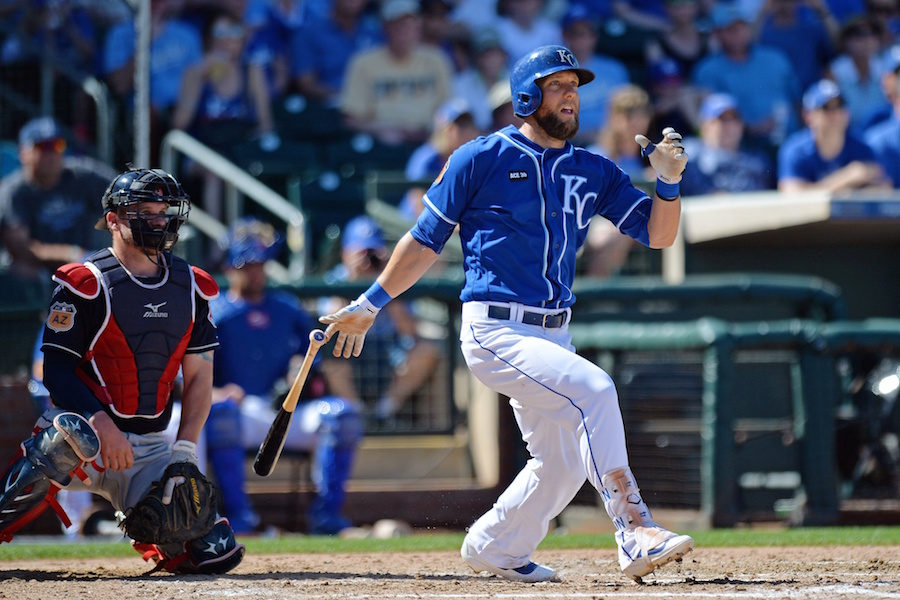 Record: 81-81 Runs Scored: 675 Runs Allowed: 712 Pythag W/L: 77-85 Pitching WAR Leader: Danny Duffy Position WAR Leader: Jarrod Dyson Season Recap In mid-June, the Royals completed a sweep of the Cleveland Indians at Kauffman Stadium to pull into a tie for first place in the division. Soon after, they went into a prolonged slump while the Tribe caught fire, and six weeks later they trailed Cleveland by double digits. KC rebounded with a strong month of August and made a run at a wild-card spot, but then fell into a September funk that dropped them out of contention. The Royals have been a charmed club for quite a while. They handily outperformed their Pythagorean W/L in each of the past three seasons, taking a total of 14 more games than you'd mathematically expect during that span. In 2016 they were fortunate to win as many as they lost while allowing 37 more runs than they scored. In some respects, their strengths are conducive to such outcomes. Their lockdown bullpen gives them an edge in close games, and their consistently elite defensive units help cover up some warts. But no team can run away from the laws of baseball forever, especially with mediocre starting pitching, and in a way Kansas City's late-season swoon felt like a long overdue regression to the mean. The bullpen, as usual, was excellent. Same goes for the defense. But the rotation was a weakness, with no one other than Danny Duffy and Ian Kennedy offering much. The lineup sputtered, scoring just 675 runs and ranking last in the American League in homers. The leader in that category, Kendrys Morales, departed over the winter to join Toronto. Why They'll Be Better Duffy is a legitimate top-of-the-rotation type, and midway through last year the Royals finally made the full commitment to him as a starter. They went 17-9 in his 28 turns after moving him out of the bullpen halfway through May. He's expected to be their Opening Day starter against the Twins on April 3rd after signing a five-year extension in January. While Morales and his powerful bat are gone, the Royals did acquire Jorge Soler from the Cubs, adding some much needed young upside to the offense. They also added free agent Brandon Moss, a reliable source of 20-30 bombs. Mix in the better expected output from Mike Moustakas, Lorenzo Cain and Alex Gordon, whose campaigns were marred by injuries, and the lineup should improve. That last name is particularly vital. Gordon is the beating heart of this team – he led the roster in WAR every year from 2011 through 2014 – and getting him back to a healthy productive state could make a huge difference. Then again, he's now 33 and his K-rate rocketed upward last year, so it's possible that peak-level Gordon won't reappear. Why They'll Be Worse The pitching staff lost two cornerstones during the offseason, and replacing what they brought to the table will prove excruciatingly tough. Davis, who was one of the most dominant and impactful relievers in the game over the past three seasons, went to Chicago in the Soler trade. With Greg Holland leaving for Colorado, Kelvin Herrera is now the only remaining member of a spectacular late-inning trio that helped make KC a championship-caliber club in 2014 and 2015. Herrera will be closing, leaving manager Ned Yost with much less firepower to work with in the sixth, seventh and eighth. And then there was the heartbreaking death of Yordano Ventura, just 25 years old, in January. He endured his worst season as a big-leaguer last year, but Ventura's ace upside was a constant source of vitalizing hope for the Royals rotation. No one will fill the void left by his big personality and intense passion for the game. And his tragic passing also leaves a talent void that newcomers Jason Hammel and Nate Karns can't hope to replenish. Beyond Duffy, there's not too much to like in Kansas City's starting corps. Kennedy is trying to back up his best season in seven years, in which his ERA was a full run lower than his FIP. KC's system lacks any kind of bona fide stud pitching prospects offering the real potential for a midseason jolt. This looks like a rebuilding year for the Royals. There's nothing wrong with that; they had a hell of a run. But it seems far more likely that they will be selling off pieces to bolster a depleted farm system at the deadline than shopping for another postseason push. ~~~ This is the third in our Central Intelligence series previewing Minnesota's division rivals. Make sure to check out our deep dives on the Cleveland Indians and Detroit Tigers.
 -
Mays and (possibly) Gonsalves being injured are not "decisions." Santiago is a solid pitcher whose presence does nothing but add SP depth. I don't necessarily agree with the projection that Danny Santana will break camp but we'll cross that bridge when we get to it. So the only actual decisions you're criticizing here are keeping Santiago (perfectly defensible) and changing Jay's role, which I would argue is a proactive move that does contrast against the previous leaders. Doogie was relaying a quote from Tyler Jay's agent. Take it with a grain of salt.
- 232 replies
-
- 1
-
-
- tyler jay
- lachlan wells
- (and 3 more)
-
It doesn't change it, but what good does it do for people to expend so much energy complaining about it? For the team to be formulating its view of how to handle Jay or what's best for him based on where the last regime drafted him would be the exact wrong approach. Frankly, you should be a lot more concerned about #4 overall pick from two years earlier showing few signs of being able to help in any meaningful way.
- 232 replies
-
- 1
-
-
- tyler jay
- lachlan wells
- (and 3 more)
-
um, yes? I would like to see them both up quickly. When have I said otherwise?
-
The point that people keep overlooking, I think, is that a big part of the reason he was drafted there (and a big part of the reason we ranked him as the org's #5 prospect) was because of his high floor as an impact late-inning reliever. You can argue that they're opting for that route too quickly, but this is not a worst-case scenario or even IMO an unexpected one. And the downside of continuing to push him along as a starter is that you endanger his health (his small frame did not hold up well to the workload last year) while also further acclimating him to a role and routine he probably won't permanently fill. Some guys only have so many bullets. How many do you want to waste on this experiment before unleashing his true potential?
- 232 replies
-
- 1
-
-
- tyler jay
- lachlan wells
- (and 3 more)
-
You realize the people making this decision are not the ones that drafted him, right? I think you'll find the entire ordeal less taxing if you come to terms with that. I was not a huge fan of this selection when it was made. I'm not calling it a good pick and I don't really see anyone else doing so. But the hand-wringing over what a big mistake it was is moot. And if Jay fulfills his potential in the bullpen it's not going to look like a terrible draft pick in hindsight. It's just not.
- 232 replies
-
- 4
-
-
- tyler jay
- lachlan wells
- (and 3 more)
-
Article: Cool Heat: Shaggy Is A Closer In Waiting
Nick Nelson replied to Nick Nelson's topic in Twins Daily Front Page News
I like it. Bayou Blaze? -
What evidence is there of this being true? Honest question. His numbers last year were OK for a college first-rounder in Single-A, nothing more. He has two excellent pitches – which played down in a starting role – and beyond that, meh. What gives him the makeup of a #1 or #2 starter in your mind? The Twins might be painting this publicly as a move toward getting him to the majors faster, or a capitulation to his desires, but they wouldn't be doing it if they believed he had a good chance to become a 1/2 starter. I guarantee you that.
- 232 replies
-
- 2
-
-
- tyler jay
- lachlan wells
- (and 3 more)
-
With his long curly locks and laid back attitude, JT Chargois fits the description you'd expect for a guy with the nickname Shaggy. On the surface, though, he doesn't quite match the prototype for an imposing late-inning reliever. At least, until he lets loose that incredible fastball.Back in October, I wrote about the righty's heater, which measured up against some of the game's best in 2016. A glance at what others on that list managed to achieve on the mound is beyond encouraging. Among those who were able to throw that hard while avoiding tons of walks, there was basically universal success. Hitters aren't going to do much with consistent 97 MPH fastballs that find the zone, especially if there's any secondary pitch to play them up. Chargois has that: a hard slider that registers in the upper-80s and keeps hitters from keying on his red-hot fastball. He also has shown the ability to keep both in the zone, though that wavers. His command certainly wasn't there in a disastrous MLB debut last June that saw him cough up five earned runs while recording only two outs and throwing less than half of his 30 pitches for strikes. Ask the righty about that Saturday afternoon, and his easygoing smile evaporates. "That kind of performance is not acceptable," Chargois said. "I don’t feel like that’s who I am, it’s not what I’m about." What went wrong? "Everything. Your dream’s coming true right in front of your eyes, and I have to do my job? That seems impossible." The moment Chargois had long dreamed of quickly turned into a nightmare as a loaded Red Sox lineup turned a one-run ninth-inning lead into a blowout. Following a brilliant two-month run in the minors that earned him his promotion, he couldn't find any answers. The 25-year-old faced eight batters and six reached base as a carousel spun around him on the Target Field mound: three singles, two walks, a hit batsman, a run-scoring wild pitch. Immediately after the game, he was optioned back to the minors. In Rochester, he picked up where he left off by limiting hits, missing bats and – most importantly – throwing strikes. In 17 outings after returning to the Red Wings, he walked only four of 93 batters faced. Two months later, he was back up in the big leagues and this time he was ready to show what he was about. Appearing 24 times the rest of the way, he posted a 2.82 ERA, and finished strong by allowing just one run on six hits in his final 13 trips to the hill. The impressive rebound put Chargois in a position where he now has a very realistic shot at winning a bullpen job this spring. But unsurprisingly, the manager wants to see more consistency and efficiency. "We saw a little bit of both sides of that last year," Paul Molitor noted. "Strike thrower and aggressive, and the results were usually pretty good. And other times, you look up and he’s at 28 pitches to get through an inning." This issue has nagged at Chargois at times in Grapefruit League play. Last Monday, he came on in relief of starter Justin Haley in the third inning and got two quick strikeouts, but things began to drag with several deep counts and an HBP before he finally wrapped it up. "We had him slated to pitch two today," Molitor said afterward, "but he had a long inning, so I didn’t send him back out there for just seven or eight pitches." Pitch economy was rarely a problem for Chargois after he made it his focus last year. Following that clunker debut, he averaged fewer than five pitches per out recorded the rest of the way, in both the minors and majors. That's where he wants to live. If he does, he can certainly set his sights on a late-inning role – perhaps the most coveted one. Glen Perkins is destined to start the year on the shelf. While there is a general assumption that incumbent Brandon Kintzler will open as closer, Molitor has been reluctant to make that official. "I'm not going there yet," the skipper responded when I asked him about it last weekend. One wonders if the door is being left open for Chargois. In one sense, his level of experience lags behind guys like Kintzler and Ryan Pressly, who've spent much more time in the majors. But in another sense, he has a significant edge. Kintzler had never recorded a big-league save prior to 2016 and his pitch repertoire is hardly tailored to the gig, though he performed admirably when called upon last summer. Pressly brings gas but has no closing experience and Molitor seems disinclined to mess with the setup role where he proved capable. Chargois, meanwhile, is a closer through and through. He dominated in that capacity as a junior for Rice University, and in the Cape Cod League, before the Twins made him the 72nd overall draft pick in 2012. Though he was selected during a time period where Minnesota was infatuated with trying to turn collegiate relievers into starters (they did so with Rice co-closer Tyler Duffey, whom they drafted three rounds later), there were never such inklings with Chargois. After signing, he went to Elizabethton and closed. Injuries cost him the next two seasons, but when he returned in 2015 he went to Fort Myers and closed, then moved up to Chattanooga and did the same. Last year, he recorded 16 saves in Double-A and Triple-A. So it was fitting that his ill-fated first taste of the majors came in the ninth inning. Sooner or later, it feels inevitable that Chargois will own the final frame for the Twins. And if the precedents set by other MLB closers who bring velocity in the same range – such as Aroldis Chapman, Craig Kimbrel, Edwin Diaz and Ken Giles – are any indication, he could become one of the league's best. But before he lands the job, he must prove that he can tame that big heat, and the key to doing so might be keeping his cool. Luckily, that seems to come naturally to Chargois. Click here to view the article
-
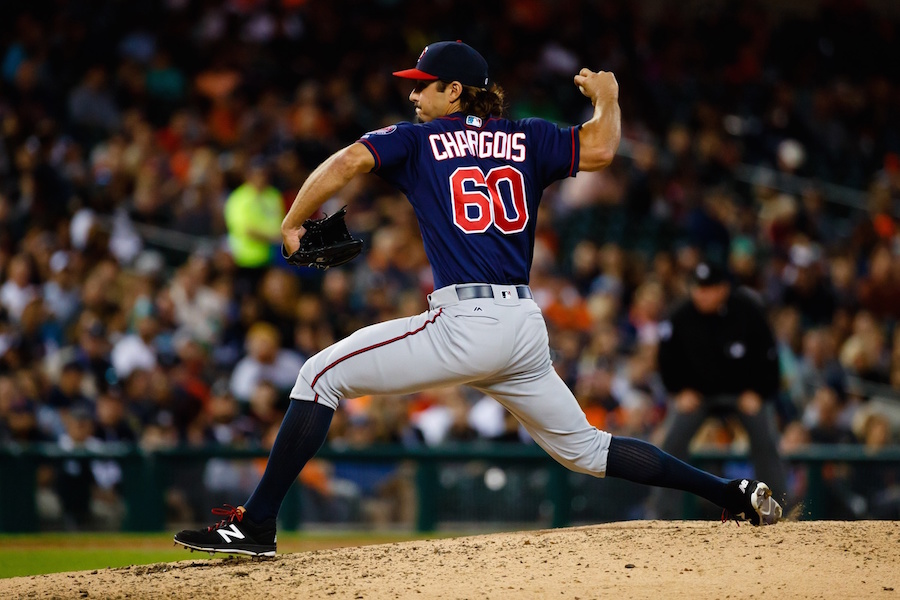 Back in October, I wrote about the righty's heater, which measured up against some of the game's best in 2016. A glance at what others on that list managed to achieve on the mound is beyond encouraging. Among those who were able to throw that hard while avoiding tons of walks, there was basically universal success. Hitters aren't going to do much with consistent 97 MPH fastballs that find the zone, especially if there's any secondary pitch to play them up. Chargois has that: a hard slider that registers in the upper-80s and keeps hitters from keying on his red-hot fastball. He also has shown the ability to keep both in the zone, though that wavers. His command certainly wasn't there in a disastrous MLB debut last June that saw him cough up five earned runs while recording only two outs and throwing less than half of his 30 pitches for strikes. Ask the righty about that Saturday afternoon, and his easygoing smile evaporates. "That kind of performance is not acceptable," Chargois said. "I don’t feel like that’s who I am, it’s not what I’m about." What went wrong? "Everything. Your dream’s coming true right in front of your eyes, and I have to do my job? That seems impossible." The moment Chargois had long dreamed of quickly turned into a nightmare as a loaded Red Sox lineup turned a one-run ninth-inning lead into a blowout. Following a brilliant two-month run in the minors that earned him his promotion, he couldn't find any answers. The 25-year-old faced eight batters and six reached base as a carousel spun around him on the Target Field mound: three singles, two walks, a hit batsman, a run-scoring wild pitch. Immediately after the game, he was optioned back to the minors. In Rochester, he picked up where he left off by limiting hits, missing bats and – most importantly – throwing strikes. In 17 outings after returning to the Red Wings, he walked only four of 93 batters faced. Two months later, he was back up in the big leagues and this time he was ready to show what he was about. Appearing 24 times the rest of the way, he posted a 2.82 ERA, and finished strong by allowing just one run on six hits in his final 13 trips to the hill. The impressive rebound put Chargois in a position where he now has a very realistic shot at winning a bullpen job this spring. But unsurprisingly, the manager wants to see more consistency and efficiency. "We saw a little bit of both sides of that last year," Paul Molitor noted. "Strike thrower and aggressive, and the results were usually pretty good. And other times, you look up and he’s at 28 pitches to get through an inning." This issue has nagged at Chargois at times in Grapefruit League play. Last Monday, he came on in relief of starter Justin Haley in the third inning and got two quick strikeouts, but things began to drag with several deep counts and an HBP before he finally wrapped it up. "We had him slated to pitch two today," Molitor said afterward, "but he had a long inning, so I didn’t send him back out there for just seven or eight pitches." Pitch economy was rarely a problem for Chargois after he made it his focus last year. Following that clunker debut, he averaged fewer than five pitches per out recorded the rest of the way, in both the minors and majors. That's where he wants to live. If he does, he can certainly set his sights on a late-inning role – perhaps the most coveted one. Glen Perkins is destined to start the year on the shelf. While there is a general assumption that incumbent Brandon Kintzler will open as closer, Molitor has been reluctant to make that official. "I'm not going there yet," the skipper responded when I asked him about it last weekend. One wonders if the door is being left open for Chargois. In one sense, his level of experience lags behind guys like Kintzler and Ryan Pressly, who've spent much more time in the majors. But in another sense, he has a significant edge. Kintzler had never recorded a big-league save prior to 2016 and his pitch repertoire is hardly tailored to the gig, though he performed admirably when called upon last summer. Pressly brings gas but has no closing experience and Molitor seems disinclined to mess with the setup role where he proved capable. Chargois, meanwhile, is a closer through and through. He dominated in that capacity as a junior for Rice University, and in the Cape Cod League, before the Twins made him the 72nd overall draft pick in 2012. Though he was selected during a time period where Minnesota was infatuated with trying to turn collegiate relievers into starters (they did so with Rice co-closer Tyler Duffey, whom they drafted three rounds later), there were never such inklings with Chargois. After signing, he went to Elizabethton and closed. Injuries cost him the next two seasons, but when he returned in 2015 he went to Fort Myers and closed, then moved up to Chattanooga and did the same. Last year, he recorded 16 saves in Double-A and Triple-A. So it was fitting that his ill-fated first taste of the majors came in the ninth inning. Sooner or later, it feels inevitable that Chargois will own the final frame for the Twins. And if the precedents set by other MLB closers who bring velocity in the same range – such as Aroldis Chapman, Craig Kimbrel, Edwin Diaz and Ken Giles – are any indication, he could become one of the league's best. But before he lands the job, he must prove that he can tame that big heat, and the key to doing so might be keeping his cool. Luckily, that seems to come naturally to Chargois.
 -
Ok, so you can say you don't like the SP depth in the minors. Fine. Calling this a "major setback" is false, it doesn't really change the outlook much.
- 232 replies
-
- 2
-
-
- tyler jay
- lachlan wells
- (and 3 more)
-
I can't vouch for what you're reading elsewhere, but the reassurances about the future rotation options at Twins Daily have never been particularly reliant on Tyler Jay. If you read the prospect profile on him that I wrote a month ago, it was quite clear that he was far more likely to end up in the bullpen than to pan as an SP: http://twinsdaily.com/_/minnesota-twins-news/minnesota-twins-minor-leagues/td-top-prospects-5-tyler-jay-r5367 That still leaves the Twins with Romero, Gonsalves, Mejia and Stewart in the Top 10, and I think all are pretty good bets to stick as starters.
- 232 replies
-
- 1
-
-
- tyler jay
- lachlan wells
- (and 3 more)
-
Yeesh, let's scale back the "wasted pick" grumbling. An overpowering lefty bullpen fireman is a very valuable piece. Did you all sleep through the playoffs last year? Is it an ideal outcome for a 6th overall draft pick? No, but I bet half of the others taken among the Top 10 of that draft will end up yielding less MLB value than Jay will if he reaches the level we're hoping he can. The story here isn't that the Twins blew it with a draft pick 2 years ago. It's a sunk cost and that GM is gone. The story is that the new regime is being proactive and making the right move to facilitate the fastest possible impact from Jay.
- 232 replies
-
- 15
-
-
- tyler jay
- lachlan wells
- (and 3 more)
-
Article: Risk Management: Backing Up Buck
Nick Nelson replied to Nick Nelson's topic in Twins Daily Front Page News
This is an interesting aspect. Hunter is now back in the organization, capable of once again serving as a mentor as he did during Buck's rookie year. Torii was, of course, known for the same kind of max-effort spectacular displays in center field. It was never really costly for him, with the exception of one fateful encounter with the wall at Fenway. Hopefully he can continue to enlighten Buxton on wall awareness and protecting his body while still going all-out.- 37 replies
-
- 1
-
-
- byron buxton
- zack granite
- (and 1 more)
-
Article: Risk Management: Backing Up Buck
Nick Nelson replied to Nick Nelson's topic in Twins Daily Front Page News
A few years ago when I was talking to a Twins pitcher in the clubhouse, I made the point about Santana's versatility and ability to play a bunch of positions, and the pitcher responded with an eye roll, "Yeah, but does he play any of em well?" That's what a pitcher playing in front of the guy thinks. It's not just fans that are mystified by the team's continuing allegiance to DS. And with new leadership in place, I do believe it ends. Unless it's truly Molitor's call.- 37 replies
-
- 8
-
-
- byron buxton
- zack granite
- (and 1 more)
-
In the fifth inning of last Wednesday's WBC tuneup exhibition, Team USA's Adam Jones got a hold of one from Ryan Vogelsong, sending a drive to the deepest part of center field in Hammond Stadium. Twins center fielder Byron Buxton raced back at full speed and leaped into the air, corralling the ball before crashing into the wall and landing with a thud. Applause erupted throughout the stadium, but Minnesota's new top baseball executive, recognizing that Buxton is perhaps the single most important asset he's inherited with his new organization, had a different reaction. "Everyone in the stands is clapping, and my reaction up in my seats is I’m holding my breath for about 10 seconds," Derek Falvey told me. Paul Molitor said much the same postgame.The CBO and skipper exhaled as the young outfielder sprung up and lobbed the ball back into the infield, but it was a play that highlights both Buxton's dynamic capabilities and his nerve-racking tendency to put his body in harm's way. Buxton has no plans to change. His credo is akin Popeye's: I yam what I yam. Unlike the cartoon sailor man, though, Buxton can't gain invincibility by chugging down a can of spinach. We've seen this reality play out more than once. ~~~ Buxton is a rare breed. That statement obviously applies to his freakish athleticism and uncommon aptitude for the game, but also to his demeanor. In the clubhouse, the outfielder can usually be found sitting quietly at his locker, occupying himself but remaining approachable. He speaks softly and politely, frequently deflecting praise onto others. Most strikingly, the prep superstar who went on to become a No. 2 overall draft pick before developing into the consensus top prospect in the game and centerpiece for a franchise, exhibits almost no trace of an ego. Maybe it's because he's still young, or because he hasn't yet turned the corner in the majors. But this genuinely seems to be his nature. That reserved disposition certainly doesn't manifest on the baseball field. Buxton is a ferocious force in all aspects: barreling around the base paths, careening through the expanses of center field, swinging the bat like he's trying to fell a tree with one hack. Asked about his approach this spring, Buxton said he's keeping it simple, which proved effective for him last year when he came back in September from a second minor league demotion and blasted nine home runs. "I can’t worry about where my foot’s landing, where my hands are. I just go up there and see the ball, hit the ball. As long as I’m comfortable, that’s all that matters to me. And that’s what I’m gonna stick with." "Just coming up there and being aggressive," he added, "ready to attack the baseball." Two days after I chatted him with him at his locker, Buxton led off a game against Baltimore by turning on a 93 MPH heater from Dylan Bundy and crushing it far over the wall in left-center. He later added a double. Afterwards, bench coach Joe Vavra used a familiar word to describe what he was observing: "He continues to be in attack mode." Yes, the unassuming kid from Georgia, whose tentativeness at the plate was a constant frustration while he struck out at a ludicrous 35 percent rate in his first two MLB seasons, is on the attack. That's true both at the plate and in the field. But of course, going on attack tends to mean leaving oneself vulnerable. The Twins are rightfully doing nothing to discourage Buxton's all-out mentality – "It’s hard to take away a guy’s aggressiveness, and I don’t think you ever want to," said Falvey – but the new regime is certainly aware of Buxton's history. ~~~ In June of 2015, a 21-year-old Buxton became the third-youngest player to ever debut in a Twins uniform. This was made all the more impressive by the fact that nearly his entire 2014 campaign had been wiped out by injuries. A trying season opened with a left wrist sprain suffered on a diving attempt in the outfield during spring training. He missed the first month, and then in his fifth game back, reaggravated the injury diving into third base. That cost him another two months. He returned to the field in July, received a promotion to Double-A after 30 games, and then in his first game with New Britain he collided violently with fellow outfielder Mike Kvasnicka at full speed, an extremely frightening incident that left the top prospect unconscious on the field for 10 minutes before he was carted out in an ambulance. Buxton was fortunate to come away with only a concussion, but his season was over. He did make it back for the Arizona Fall League, which was once again cut short, this time by a dislocated finger suffered while – you guessed it – diving for a ball in the outfield. The next summer, in his 10th game with Minnesota following a big-league promotion, Buxton sprained his thumb while sliding on a stolen base attempt. Undoubtedly frustrated after all he'd been through, he tried to push through, but struck out four times against Chris Sale the next afternoon and was placed on the disabled list. He wound up sidelined for another two months. All of this missed time during the crux of his development is probably an underrated contributor to the young outfielder's troubles finding his way at the plate. But now, he has finally been able to put together a sustained run of health. He played 141 total games last year and has reported no issues this spring. Still, the threat lurks, leading to justifiable anxiety amongst the team's brass each time he goes into the wall. But it's who he is. "I can’t really be worrying about getting hurt out here," Buxton said. "I'm focused on being myself between those lines instead of trying to be somebody I'm not." The Twins aren't asking him to be anyone else. But they are cognizant of the inherent risks presented by his style of play, and so it's important to have contingencies in place in case of emergency. ~~~ A desire to build quality depth behind Buxton may have played into the team's decision to sign Drew Stubbs to a minor-league contract during the offseason. Different people pointed to different attributes when discussing what the veteran outfielder brings to the table. Falvey, whose Indians rostered Stubbs in 2013, pointed to character and clubhouse impact. Molitor was interested in the potential for his right-handed bat on the bench with lefty swingers starting in both corner spots. But the 32-year-old recognizes a big part of his own appeal. "I’m a natural center fielder," Stubbs said, "and those are kind of hard to come by when you’re looking for a guy who can fill in." Of course, Eddie Rosario and Max Kepler can fill the spot in a pinch, but shouldn't be there for prolonged periods. Danny Santana was the primary backup last year but may not make the roster as his mistakes continue to pile up. Zack Granite is in big-league camp for the first time this year and has certainly been drawing some attention, including from the manager. On Saturday, Granite made a play in the center that was positively Buxton-esque, sprinting about 100 feet to the warning track in right-center to snag a ball that looked uncatchable coming off the bat. "He went a long way for that ball," Molitor said after the game with a hint of wonderment. Granite was the organization's Minor League Player of the Year in 2016 and clearly the team likes him. Eventually he could be an almost ideal backup for Buxton. But for now, the 24-year-old hasn't played above Double-A and needs everyday at-bats, so he'll get more time in the minors. In the present, Stubbs looks to be the front-runner to join Robbie Grossman in the outfield reserves and to serve as a backup if things should go amiss with Buxton. Of course, we're all hoping that the Buck never stops. But if they can install solid depth behind him, the Twins can breathe a little easier while Buxton stays in attack mode. Click here to view the article
- 37 replies
-
- 2
-
-
- byron buxton
- zack granite
- (and 1 more)
-
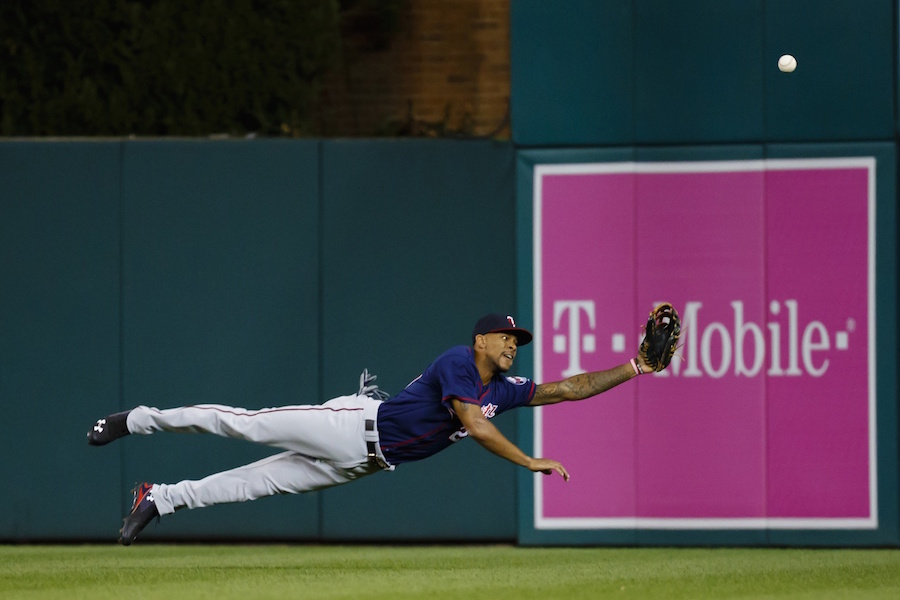 The CBO and skipper exhaled as the young outfielder sprung up and lobbed the ball back into the infield, but it was a play that highlights both Buxton's dynamic capabilities and his nerve-racking tendency to put his body in harm's way. Buxton has no plans to change. His credo is akin Popeye's: I yam what I yam. Unlike the cartoon sailor man, though, Buxton can't gain invincibility by chugging down a can of spinach. We've seen this reality play out more than once. ~~~ Buxton is a rare breed. That statement obviously applies to his freakish athleticism and uncommon aptitude for the game, but also to his demeanor. In the clubhouse, the outfielder can usually be found sitting quietly at his locker, occupying himself but remaining approachable. He speaks softly and politely, frequently deflecting praise onto others. Most strikingly, the prep superstar who went on to become a No. 2 overall draft pick before developing into the consensus top prospect in the game and centerpiece for a franchise, exhibits almost no trace of an ego. Maybe it's because he's still young, or because he hasn't yet turned the corner in the majors. But this genuinely seems to be his nature. That reserved disposition certainly doesn't manifest on the baseball field. Buxton is a ferocious force in all aspects: barreling around the base paths, careening through the expanses of center field, swinging the bat like he's trying to fell a tree with one hack. Asked about his approach this spring, Buxton said he's keeping it simple, which proved effective for him last year when he came back in September from a second minor league demotion and blasted nine home runs. "I can’t worry about where my foot’s landing, where my hands are. I just go up there and see the ball, hit the ball. As long as I’m comfortable, that’s all that matters to me. And that’s what I’m gonna stick with." "Just coming up there and being aggressive," he added, "ready to attack the baseball." Two days after I chatted him with him at his locker, Buxton led off a game against Baltimore by turning on a 93 MPH heater from Dylan Bundy and crushing it far over the wall in left-center. He later added a double. Afterwards, bench coach Joe Vavra used a familiar word to describe what he was observing: "He continues to be in attack mode." Yes, the unassuming kid from Georgia, whose tentativeness at the plate was a constant frustration while he struck out at a ludicrous 35 percent rate in his first two MLB seasons, is on the attack. That's true both at the plate and in the field. But of course, going on attack tends to mean leaving oneself vulnerable. The Twins are rightfully doing nothing to discourage Buxton's all-out mentality – "It’s hard to take away a guy’s aggressiveness, and I don’t think you ever want to," said Falvey – but the new regime is certainly aware of Buxton's history. ~~~ In June of 2015, a 21-year-old Buxton became the third-youngest player to ever debut in a Twins uniform. This was made all the more impressive by the fact that nearly his entire 2014 campaign had been wiped out by injuries. A trying season opened with a left wrist sprain suffered on a diving attempt in the outfield during spring training. He missed the first month, and then in his fifth game back, reaggravated the injury diving into third base. That cost him another two months. He returned to the field in July, received a promotion to Double-A after 30 games, and then in his first game with New Britain he collided violently with fellow outfielder Mike Kvasnicka at full speed, an extremely frightening incident that left the top prospect unconscious on the field for 10 minutes before he was carted out in an ambulance. Buxton was fortunate to come away with only a concussion, but his season was over. He did make it back for the Arizona Fall League, which was once again cut short, this time by a dislocated finger suffered while – you guessed it – diving for a ball in the outfield. The next summer, in his 10th game with Minnesota following a big-league promotion, Buxton sprained his thumb while sliding on a stolen base attempt. Undoubtedly frustrated after all he'd been through, he tried to push through, but struck out four times against Chris Sale the next afternoon and was placed on the disabled list. He wound up sidelined for another two months. All of this missed time during the crux of his development is probably an underrated contributor to the young outfielder's troubles finding his way at the plate. But now, he has finally been able to put together a sustained run of health. He played 141 total games last year and has reported no issues this spring. Still, the threat lurks, leading to justifiable anxiety amongst the team's brass each time he goes into the wall. But it's who he is. "I can’t really be worrying about getting hurt out here," Buxton said. "I'm focused on being myself between those lines instead of trying to be somebody I'm not." The Twins aren't asking him to be anyone else. But they are cognizant of the inherent risks presented by his style of play, and so it's important to have contingencies in place in case of emergency. ~~~ A desire to build quality depth behind Buxton may have played into the team's decision to sign Drew Stubbs to a minor-league contract during the offseason. Different people pointed to different attributes when discussing what the veteran outfielder brings to the table. Falvey, whose Indians rostered Stubbs in 2013, pointed to character and clubhouse impact. Molitor was interested in the potential for his right-handed bat on the bench with lefty swingers starting in both corner spots. But the 32-year-old recognizes a big part of his own appeal. "I’m a natural center fielder," Stubbs said, "and those are kind of hard to come by when you’re looking for a guy who can fill in." Of course, Eddie Rosario and Max Kepler can fill the spot in a pinch, but shouldn't be there for prolonged periods. Danny Santana was the primary backup last year but may not make the roster as his mistakes continue to pile up. Zack Granite is in big-league camp for the first time this year and has certainly been drawing some attention, including from the manager. On Saturday, Granite made a play in the center that was positively Buxton-esque, sprinting about 100 feet to the warning track in right-center to snag a ball that looked uncatchable coming off the bat. "He went a long way for that ball," Molitor said after the game with a hint of wonderment. Granite was the organization's Minor League Player of the Year in 2016 and clearly the team likes him. Eventually he could be an almost ideal backup for Buxton. But for now, the 24-year-old hasn't played above Double-A and needs everyday at-bats, so he'll get more time in the minors. In the present, Stubbs looks to be the front-runner to join Robbie Grossman in the outfield reserves and to serve as a backup if things should go amiss with Buxton. Of course, we're all hoping that the Buck never stops. But if they can install solid depth behind him, the Twins can breathe a little easier while Buxton stays in attack mode.
 -
Over the offseason, it came to light that Minnesota's slugging Korean first baseman wanted his first name written differently than it had been previously. No space. No dash. Just ByungHo. It's not the only difference we've seen with him this spring. *** I'll be handling this week's Write of Spring newsletter, a special in-depth report breaking down a particular topic from Twins camp, along with a notebook dump of quotes and rumblings. The only way to get it is by making sure you're on the mailing list. It's free! *** Park went from hitting long shots last March to becoming a longshot this time around after losing his 40-man roster spot. But with Kennys Vargas away at the World Baseball Classic, the 30-year-old is taking advantage of his opportunity to pile up at-bats. Sure, the thump has been there – he leads the team with three home runs (I mean, #ParkBangs). But that’s nothing new, as it was clear from the moment he arrived that his prodigious power was legit. Now, it’s the subtler things that are gaining notice. He drew yet another start on Sunday and once again made the most of it. No, there was no 500-foot moonshot. But Park did fight off a tough pitch for a bloop single over the second baseman’s head, and laid off a borderline offering on a full count to draw a walk. Therein lies the most conspicuous distinction between this spring and last. In his first camp, Park displayed plenty of pop but the ghastly plate discipline – evidenced by a 17-to-1 strikeout-to-walk ratio – was an unshakably ominous harbinger. This year, his improved approach at the dish is evident in a K/BB that stands at 6-to-4 following Sunday’s contest. Manager Paul Molitor has certainly taken notice of this adjustment. "I like that he’s swinging at a lot of strikes,” Molitor said over the weekend. "We haven’t seen the huge expansion of the zone, or the panic. It seems like there’s a lot more calmness to his at-bats and trust in his approach.” While he’s not one to make excuses on anyone’s behalf, Molitor noted that the foreign import faced a variety of exacerbating factors as an MLB rookie. “The microscope was fairly intense," as he put it. The Korean media throngs that swarmed through Hammond Field last year have now dissipated to a sparse contingent. The widespread attention and notoriety attached to a KBO superstar arriving in America have faded. Park has been humbled, first by a midseason demotion to the minors that proved season-long, and then by a trip through waivers – unclaimed – during the offseason. Setbacks like these can be a driving force in self-actualization. Add in the surgical repair of a finger tendon issue that hampered him for much of the summer, and there’s a strong basis for belief that some key circumstantial changes will make Park’s second go at it far more fruitful. But one thing that’s not going to change is the speed of those major-league fastballs. The data on Park’s lackluster production against pitches buzzing in 93+ MPH, which he rarely if ever saw in South Korea, is stark. "He was a little bit intimidated by last year,” bench coach Joe Vavra suggested. “The excessive velocity compared to what he’s used to, that was in his head.” Now? The former Twins batting instructor detects an unmistakable shift. While the blazing heaters won’t cool off, a mellower mental state could make them more manageable. "His mind has slowed down, if anything, and that really relaxes him at the plate,” said Vavra. "You don’t see him too anxious and overexcited in any one at-bat." Molitor opined that the relentless speed of the game at its highest level, in conjunction with the team’s horrendous season-opening slump, contributed to sending the first-year big-leaguer into a spiral. Park was one of five Twins appearing in an Opening Day MLB lineup for the first time last April, the manager pointed out, and "although he’s an experienced player, it was new for him.” The former KBO MVP had grown accustomed to carrying his club. “That’s the kind of guy he is,” Molitor said. "I think it’s part of his makeup and part of his culture that they have a huge accountability factor.” All the more reason to believe fierce efforts over the winter are playing into this early success. Park is visibly more comfortable in the batter’s box. But, then again, it’s spring training. When the games don’t matter and the pitchers aren’t going full bore, it’s much easier to manage emotions and stay on an even keel. Can he do it in the regular season? Will he get the chance, with the non-roster barrier now standing in his way? Even if he keeps doing encouraging things on the field, the Twins can still easily justify sending him to Triple-A, where he failed to distinguish himself last year. This would enable the front office to delay tough DFA decisions involved with re-adding him to the 40-man. He doesn't exactly have the largest obstacle blocking him though. Well, in the literal sense, yes, Vargas is a big man. But he isn't exactly doing much to stymie Park's advance. Vargas went 1-for-13 in Grapefruit play before reporting to Puerto Rico for the WBC, where he has started one of three games (and went hitless). Either way, it's starting to feel like it won't be long before Park is back... with a bang? Click here to view the article
