



Nick Nelson
-
Posts
8,326 -
Joined
-
Last visited
-
Days Won
56
Content Type
Profiles
News
Minnesota Twins Videos
2026 Minnesota Twins Top Prospects Ranking
2022 Minnesota Twins Draft Picks
Minnesota Twins Free Agent & Trade Rumors, Notes, & Tidbits
Guides & Resources
2023 Minnesota Twins Draft Picks
The Minnesota Twins Players Project
2024 Minnesota Twins Draft Picks
2025 Minnesota Twins Draft Pick Tracker
2026 Minnesota Twins Draft Tracker: Picks & Bonuses
Forums
Blogs
Events
Store
Downloads
Gallery
Everything posted by Nick Nelson
-
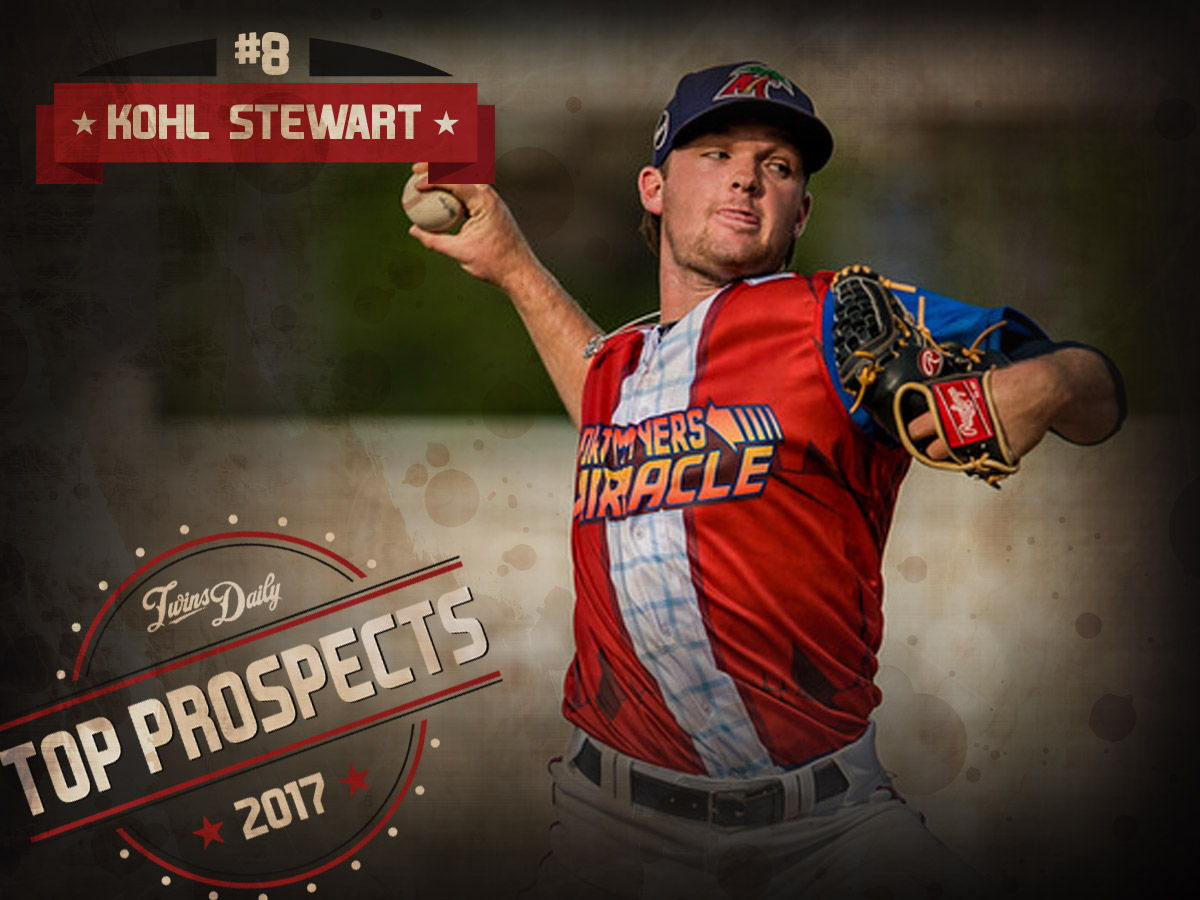 Age: 22 (DOB: 10/7/94) 2016 Stats (A+/AA): 143.2 IP, 2.88 ERA, 91/63 K/BB, 1.34 WHIP ETA: 2018 2016 Ranking: 9 National Top 100 Rankings BA: NR | MLB: NR | ESPN: 87 | BP: NR At St. Pius X High School in Houston, Stewart was a legendary athlete. A star quarterback, he was widely recruited before signing a letter of intent with Texas A&M. Calling signals on Saturday for the Aggies was undoubtedly a dream of his while growing up 90 minutes away from campus, but ultimately he decided to follow his golden right arm in another direction. When the Twins drafted Stewart fourth overall, the allure of a $4.5 million signing bonus was too much to pass up. It was a major leap of faith for Minnesota's draft department, which had long had its sights set on the prized pitching talent. Much has been made of the fact that Hunter Greene, a teenage phenom out of California, could be the first prep right-hander to ever be selected with the first overall pick this June. There's a reason for that; such players bring a relatively higher level of risk and uncertainty. But Stewart had all the requisites. A football player's build. A hard-moving fastball to go along with a potentially dominant slider. The prototypical bulldog demeanor on the mound. Ace upside. What's To Like Those aforementioned traits remain intact. Stewart has checked one very important box off the list by staying healthy and on the field. That is hardly a given for young kids who throw in mid-90s or above. Tyler Kolek, the fireballing righty selected second overall by the Marlins a year after Stewart's draft, just lost his entire 2016 campaign to Tommy John surgery. It's a major setback in a budding career. Stewart has avoided such pitfalls and thus has progressed about exactly as one would hope. Since starting full-season ball in 2014 he has ascended to a new level each year, finishing last season as a 21-year-old in the Class-AA Southern League, where the average player was about three years his elder. From year to year, the right-hander has increased his inning totals from 87 to 129 to 143, prepping his arm to be ready for 200 frames once he reaches the majors. You compare that to a guy like Jose De Leon, who at 24 still hasn't thrown even 120 innings in a season, and it's easy to see the value. While reliably taking his rotation turns, Stewart has produced. He has a shiny 2.84 ERA as a pro and hasn't finished above 3.20 at any level. Opponents have struggled to square him up, with only 12 home runs in 1,600 plate appearances. Last year he made what many consider the toughest jump in the minors, but hardly looked overmatched in Double-A, picking up wins in nine of his 16 starts while posting a 3.03 ERA. What's Left To Work On In the entirety of his minor-league career, Stewart has struck out 15.4 percent of the batters he has faced, and walked 8.4 percent. I couldn't figure out an efficient way to do the definitive research, but I can say with confidence that there are very few, if any, successful starting pitchers in the majors who registered such low rates in both categories as prospects. For a more manageable exercise, let's compare Stewart's established K and BB rates in the minors with those of each pitcher who made a start for the Twins last year. Kohl Stewart: 15.4% K / 8.4% BB Ervin Santana: 23.4% / 8.4% BB Kyle Gibson: 21.7% K / 6.7% BB Tyler Duffey: 20.2% K / 5.2% BB Ricky Nolasco: 23.3% K / 7.0% BB Tommy Milone: 22.7% K / 4.0% BB Jose Berrios: 25.3% K / 7.6% BB Pat Dean: 14.0% K / 4.8% BB Hector Santiago: 24.3% K / 10.7% BB Phil Hughes: 28.8% K / 6.4% BB Andrew Albers: 18.4% K / 5.3% BB Alex Meyer: 27.3% K / 10.0 % BB So, on an historically poor starting unit, only three players had minor-league walk rates worse than Stewart has (Santana, Santiago, Meyer) and each made up for it with plenty of missed bats. The only one with a lesser K-rate in the minors was soft-tossing lefty Pat Dean, who balanced the heavy contact with pinpoint control. Of course, this is an incomplete picture. Stewart is still a 22-year-old with, perhaps, multiple full minor-league seasons ahead of him yet. But up to this point he has logged 380 professional innings with a K/BB ratio below two. You just don't see effective big-league starters with that in their track record. The core tenet of pitching, in modern analysis, is that there are two things a guy can directly control, with no luck or external factors involved: how many he strikes out, and how many he walks. If you can't do either particularly well, it almost always ends up biting you. What's Next Stewart will likely start the season in Chattanooga, where he must prove that his sterling ERA was more legit than his underwhelming peripherals. It's not unthinkable he could continue to plow through lineups with pedestrian strikeout and walk numbers, given that his sharp bending pitches always seem to to miss the sweet spot. Perhaps he earns another midseason promotion and reaches Triple-A. But as you climb the ladder, eventually inducing weak contact stops being enough on its own. What he needs to do is start missing more bats. It isn't a huge stretch to believe he will. ESPN's prospect guru Keith Law suggested that Stewart could easily increase whiffs by leaning more heavily on his four-seamer and slider. The righty has mostly been a pitch-to-contact sinkerballer, and given the results it's hard to complain. So what if this has all been part of some ingenious plan by the organization to preserve his arm, and Stewart is getting ready to unleash the true extent of his arsenal as he approaches the majors? It sounds far-fetched, and I'll believe it when I see it. But the fact is this: many analysts – even those who emphasize statistics and recognize the red flag his K/BB ratio represents – still see Stewart as an eventual mid-rotation starter or better. Until someone actually starts hitting him, it's hard to disagree with that notion, in spite of the dubious underlying indicators. ~~~ Read up on our previous installments in the Twins Daily top prospects series: TD Top Prospects: #20-16 TD Top Prospects: #15-11 TD Top Prospects: #10 Lewin Diaz TD Top Prospects: #9 Travis Blankenhorn
 -

Article: Celebrating Five Years Of Twins Daily
Nick Nelson replied to Seth Stohs's topic in Twins Daily Front Page News
The original traffic streamed in from the four original blogs that we combined into TD (mine, Parker's, Seth's and John's). BYTO didn't get folded into the site until a year in or so, but it was certainly a huge boost for the forums, and obviously the addition of Brock was a huge boost for the design, as you can tell by that hideous day 1 layout. -
Article: Camp Opens: Twins News Rundown
Nick Nelson replied to Nick Nelson's topic in Twins Daily Front Page News
Definitely a good read, and you're right -- commendable strategy. Even in light of the market, I remain a LITTLE surprised no one claimed him. Basically they opened the door for anyone to take the same chance they did at less than half the financial commitment. And even through the struggles last year Park showed some things. He had a 900 OPS in mid-May. Some of those home runs were straight up majestic. -
Article: Camp Opens: Twins News Rundown
Nick Nelson replied to Nick Nelson's topic in Twins Daily Front Page News
Correcting one item from this piece: the official report date for Twins pitchers and catchers is tomorrow, not today. It had originally been scheduled for Feb 13th so I'm not sure why/when it was pushed back. Not that it really makes much difference. -
Article: Camp Opens: Twins News Rundown
Nick Nelson replied to Nick Nelson's topic in Twins Daily Front Page News
He's entering camp as a starter. -
Happy Pitchers and Catchers Report Day! It's an annual holiday on the baseball calendar, marking the official onset of this seven-week ramp-up to the regular season. On Monday, all Minnesota Twins battery members will check into camp, if they haven't already. On Tuesday, they will hold their first workouts. Then, this weekend, position players will join the fray and next Sunday will mark the first full team workout. Grapefruit League games commence in 11 days. As things get underway, let's run through some of the latest team news, with an eye to sizing up the most compelling early spring storylines.* Byung Ho Park passed through waivers so he will be among the non-roster invites in camp. Ostensibly he'll be competing with Kennys Vargas and others for the DH job, but it would seem that Park will have a tough hill to climb. When we were recording a podcast shortly after the new front office leadership was installed, I recall Parker making a point about how this regime will view certain players very differently from the last one. They didn't scout and acquire any of these assets, so Derek Falvey and Thad Levine have minimal personal investment.' Park appears to be a clear case of this. Last offseason, the Twins were so high on the Korean star they coughed up a $12.8 million posting fee, made a four-year contractual commitment, and ultimately pigeonholed one of their best young players out of position to make room for him. Now, after one season in the States, Park has evidently lost all luster in the eyes of team decision-makers. When the Twins signed veteran reliever Matt Belisle, they could have designated Michael Tonkin or Danny Santana, either of whom will be exposed to waivers at the end of March if they don't make the roster. Instead, they chose Park. If he were claimed it would have taken $9 million off the books, but also would have meant chalking up the $15 million upfront investment as a complete loss. That doesn't sound like something Terry Ryan would do, especially if he harbored a belief that Park's disappointing rookie season was hindered by a wrist injury that eventually required surgery. But we're not in Terry Ryan territory anymore. And Park passed through waivers, indicating that the rest of the league's teams share a similar view to Falvey and Levine. One wonders what the 30-year-old would need to do this spring to change it. * Rehabbing from last June's shoulder surgery, Glen Perkins was playing catch in Ft. Myers by January and hoped to take another important step last week: throwing from a mound. One day before the planned bullpen session, though, he and his trainers decided to push it back, citing renewed soreness. This development is not encouraging, but also not surprising. Labrum surgery can generally carry a lengthy recovery window of nine months or more; Perkins is a 33-year-old whose operation was more extensive than most. Bumps in the road are to be expected, and the southpaw himself acknowledges that. He'll give it a go on Tuesday and could generate some nice early-spring positivity if it goes well. On another note, whenever Perkins hangs up the cleats, he might have a future in writing. His foreword for the Baseball Prospectus 2017 Annual was an excellent read. The book also includes a Twins feature from Parker, and was all put together by our friend Aaron Gleeman, so I definitely recommend grabbing a copy to prep yourself for the coming season. * Speaking of strong writing, over the weekend the imitable Phil Miller had a great piece in the Star Tribune examining the odd dynamic between an aging lame duck manager and a fresh, young executive duo that is transparently future-focused. For Molitor, winning in 2017 is vital. For Falvey and Levine, this year is nothing but a step to where they want to get. It's a learning experience and an opportunity to actively assess all that they've inherited. One of those things is a manager on a one-year contract. When a team that, on paper, looks perfectly capable of competing and playing .500 ball goes on to lose 103 games... well, Molitor says it best in the story: "That doesn't reflect very well on the manager." But the truth is, it doesn't reflect well on anyone. And while some are flummoxed by Jim Pohlad's continuing allegiance to the Hall of Famer, I will say I'm glad that he and Falvey will have a chance to overlap. You can take issue with Molitor's managing from up close or afar, but if you spend any time talking to the man you will not doubt his intuition for the game. Pairing him with an analytical mind like Falvey on day-to-day operations – especially at a time where Molitor will necessarily be very open to new approaches – could yield fruitful results. I'm curious to see how it plays out. * Our 2017 Minnesota Twins Top Prospect series kicked off last week with my profiles of our choices for 16 through 20 and Seth's takes on 11 through 15. Today, Parker kicks off our one-by-one countdown of the Top 10 with a look at 20-year-old Dominican slugger Lewin Diaz. Make sure to give it a read, and tune in each day over the next two weeks to learn all about the organization's brightest upcoming talents. * For a fifth straight year, Twins Daily will be providing on-site coverage of Minnesota Twins spring training from Fort Myers, FL throughout the month of March. Parker, Seth, John and myself will alternately be on hand to cover games, snap photos/videos, and chat with players and personnel. Unrestrained by column inches or any concept of what is too minute or trivial to print, we promise to deliver the deepest and most comprehensive reporting from Twins camp that you will find anywhere. With temperatures rising and snow melting in Minnesota, it looks like Mother Nature is taking her cue from the baseball calendar. Spring is coming. Click here to view the article
-
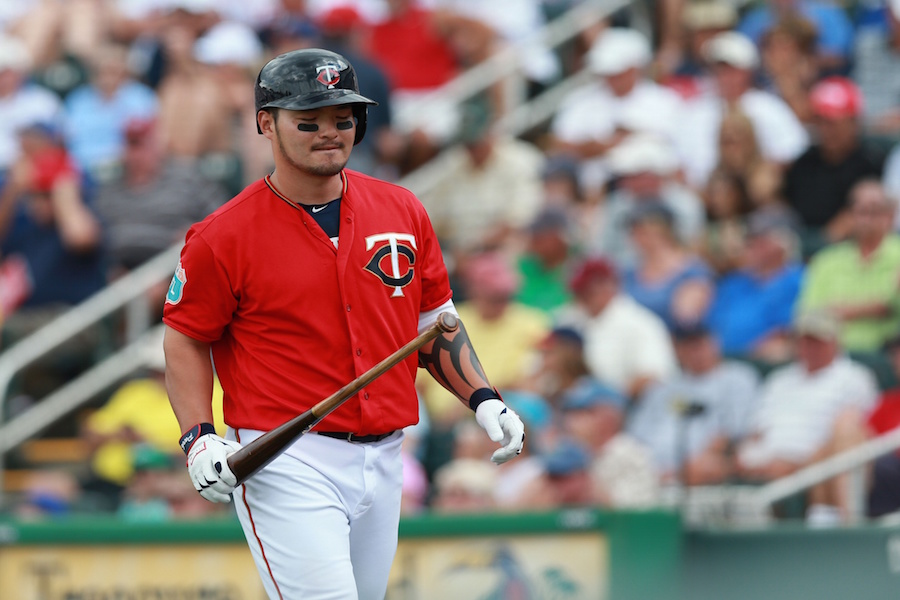 * Byung Ho Park passed through waivers so he will be among the non-roster invites in camp. Ostensibly he'll be competing with Kennys Vargas and others for the DH job, but it would seem that Park will have a tough hill to climb. When we were recording a podcast shortly after the new front office leadership was installed, I recall Parker making a point about how this regime will view certain players very differently from the last one. They didn't scout and acquire any of these assets, so Derek Falvey and Thad Levine have minimal personal investment.' Park appears to be a clear case of this. Last offseason, the Twins were so high on the Korean star they coughed up a $12.8 million posting fee, made a four-year contractual commitment, and ultimately pigeonholed one of their best young players out of position to make room for him. Now, after one season in the States, Park has evidently lost all luster in the eyes of team decision-makers. When the Twins signed veteran reliever Matt Belisle, they could have designated Michael Tonkin or Danny Santana, either of whom will be exposed to waivers at the end of March if they don't make the roster. Instead, they chose Park. If he were claimed it would have taken $9 million off the books, but also would have meant chalking up the $15 million upfront investment as a complete loss. That doesn't sound like something Terry Ryan would do, especially if he harbored a belief that Park's disappointing rookie season was hindered by a wrist injury that eventually required surgery. But we're not in Terry Ryan territory anymore. And Park passed through waivers, indicating that the rest of the league's teams share a similar view to Falvey and Levine. One wonders what the 30-year-old would need to do this spring to change it. * Rehabbing from last June's shoulder surgery, Glen Perkins was playing catch in Ft. Myers by January and hoped to take another important step last week: throwing from a mound. One day before the planned bullpen session, though, he and his trainers decided to push it back, citing renewed soreness. This development is not encouraging, but also not surprising. Labrum surgery can generally carry a lengthy recovery window of nine months or more; Perkins is a 33-year-old whose operation was more extensive than most. Bumps in the road are to be expected, and the southpaw himself acknowledges that. He'll give it a go on Tuesday and could generate some nice early-spring positivity if it goes well. On another note, whenever Perkins hangs up the cleats, he might have a future in writing. His foreword for the Baseball Prospectus 2017 Annual was an excellent read. The book also includes a Twins feature from Parker, and was all put together by our friend Aaron Gleeman, so I definitely recommend grabbing a copy to prep yourself for the coming season. * Speaking of strong writing, over the weekend the imitable Phil Miller had a great piece in the Star Tribune examining the odd dynamic between an aging lame duck manager and a fresh, young executive duo that is transparently future-focused. For Molitor, winning in 2017 is vital. For Falvey and Levine, this year is nothing but a step to where they want to get. It's a learning experience and an opportunity to actively assess all that they've inherited. One of those things is a manager on a one-year contract. When a team that, on paper, looks perfectly capable of competing and playing .500 ball goes on to lose 103 games... well, Molitor says it best in the story: "That doesn't reflect very well on the manager." But the truth is, it doesn't reflect well on anyone. And while some are flummoxed by Jim Pohlad's continuing allegiance to the Hall of Famer, I will say I'm glad that he and Falvey will have a chance to overlap. You can take issue with Molitor's managing from up close or afar, but if you spend any time talking to the man you will not doubt his intuition for the game. Pairing him with an analytical mind like Falvey on day-to-day operations – especially at a time where Molitor will necessarily be very open to new approaches – could yield fruitful results. I'm curious to see how it plays out. * Our 2017 Minnesota Twins Top Prospect series kicked off last week with my profiles of our choices for 16 through 20 and Seth's takes on 11 through 15. Today, Parker kicks off our one-by-one countdown of the Top 10 with a look at 20-year-old Dominican slugger Lewin Diaz. Make sure to give it a read, and tune in each day over the next two weeks to learn all about the organization's brightest upcoming talents. * For a fifth straight year, Twins Daily will be providing on-site coverage of Minnesota Twins spring training from Fort Myers, FL throughout the month of March. Parker, Seth, John and myself will alternately be on hand to cover games, snap photos/videos, and chat with players and personnel. Unrestrained by column inches or any concept of what is too minute or trivial to print, we promise to deliver the deepest and most comprehensive reporting from Twins camp that you will find anywhere. With temperatures rising and snow melting in Minnesota, it looks like Mother Nature is taking her cue from the baseball calendar. Spring is coming.
 -
It's that time of year. With spring training bearing down upon us, we're going to prep you for the upcoming season with a series of profiles highlighting the top prospects in the Minnesota Twins organization. Today, our choices for 20 through 16. On Friday, 15 through 11. Then we'll count down one by one over the next two weeks, leading right up to the start of Grapefruit League play. 20. Justin Haley, RHP Age: 25 2016 Stats (AA/AAA): 146.2 IP, 3.01 ERA, 126/45 K/BB, 1.12 WHIP ETA: 2017 Download attachment: JustinHaley_LMZ (1).jpg Photo courtesy Louriann Mardo-Zayat With the top pick in December's Rule 5 draft, the Twins selected Miguel Diaz, a hard-throwing righty from the Brewers system, but traded him for the player they really wanted. Justin Haley may not offer the fancy ceiling of some others you will read about in this series, but he's a polished MLB-ready product riding some serious momentum. A sixth-round draft pick by the Red Sox in 2012, Haley got his career off to a promising start, but hit a skid in 2015 when he went 5-16 with a 5.15 ERA at Double-A. For a college draftee with unexceptional stuff, it's the kind of setback that can spell doom. But Haley rebounded in a big way. He went to the Arizona Fall League and pitched brilliantly, albeit in only a handful of outings. The next year he conquered Double-A in the first half and then graduated to Triple-A where he didn't miss a beat. His last start was his best of the year – eight innings of shutout, two-hit ball. Then he returned to the AFL and was masterful again allowing just one run on 12 hits over 23 innings. He's coming to the Twins organization with a full head of steam and a fair shot at winning a roster spot in camp. Haley could make a impact sooner than anyone else we profile for this feature. 19. Ben Rortvedt, C Age: 19 2016 Stats (Rookie Leagues): .222/.306/.253, 0 HR, 10 RBI, 5 R ETA: 2021 Download attachment: B Rortvedt.jpg Photo courtesy David McQueen It's no secret that the Twins have a deep organizational need for more catching talent. They addressed it in last June's draft when they used their second pick on prep backstop Ben Rortvedt from Verona, a small Wisconsin town located about four hours from Target Field. Clearly the Twins scouted him heavily. They were bold in using the 56th overall selection on him and luring him away from a scholarship at Arkansas. Rortvedt was the only catcher from an American high school taken by any team in the first five rounds. That isn't to say that Minnesota reached; in pre-draft rankings, MLB.com had the teenager 51st in the talent pool and Baseball America had him 82nd. Rortvedt was touted for his receiving skills and offensive upside. His potential at the plate remains just that – the teen catcher didn't do much damage with the bat in two levels of rookie ball, though his 10/10 strikeout-to-walk ratio suggests he wasn't overwhelmed by the pitching. Listed at 5'10" and 190 lbs, he's got some growing to do and we'll see how that influences his development. At this point there is little to go on performance-wise but we do know that the tools are there. Unfortunately, as is the nature of raw high school draft picks, he's got a long way to go. 18. Engelb Vielma, SS Age: 22 2016 Stats (A+/AA): .271/.345/.318, 0 HR, 21 RBI, 47 R ETA: 2018 Download attachment: Engelb Vielma 2.jpg Photo courtesy Seth Stohs He has already established himself as a high-caliber defensive shortstop, but in order to take the next step as a player Engelb Vielma needs to show significant progress with the bat. That didn't really happen last year. In Chattanooga, where he spent most of his time, the slender infielder posted a .663 OPS that represented his best since 2012 in rookie ball but still failed to impress. As usual, Vielma proved capable of putting the bat on the ball, but rarely struck with authority. In 367 plate appearances he managed only 11 extra-base hits and never cleared the fence. His solid speed only translated to a 10-for-18 success rate on steals. While his glove work made him a sturdy regular at Double-A, Vielma added minimal value offensively. As he climbs the ladder and pitchers begin to challenge him more and more in the zone, the shortstop's inability to punish them will only grow more inhibiting. Unless he can make meaningful strides in terms of production at the plate he will remain limited in his ceiling as a potential backup in the majors. 17. Nick Burdi, RHP Age: 24 2016 Stats (AA): 3 IP, 9.00 ERA, 1/1 K/BB, 1.67 WHIP ETA: 2018 Download attachment: Nick Burdi 3.jpg Photo courtesy Seth Stohs When the Twins selected Nick Burdi with the 46th overall pick in the 2014 draft, he was considered perhaps the best collegiate relief arm in the nation. It is important to remember this amidst his stalling development as a pro. That innate high-end talent remains, making Burdi an intriguing wild-card in the organization's relief pitching pipeline, but right now he's nothing more than that. The 2016 season was a complete loss for the radar-rattling righty. He made only three appearances in Double-A before being sidelined by a bruised humerus he was never able to bounce back from. Now he's going to need to fight his way back into the picture, as he'll be heading to camp without a big-league invite. The good news is that scans identified no issues with Burdi's UCL, and he has had plenty of time to heal up his bone bruise. The bad news is that his injury is a rare one – likely resulting from stress caused by a high-effort delivery to produce his signature heat – and there is no certainty he'll get past it. Mike Berardino of the Pioneer Press recently reported that Burdi has made alterations to his mechanics with hopes of alleviating the issue. 16. Zack Granite, OF Age: 24 2016 Stats (AA): .295/.347/.382, 4 HR, 52 RBI, 86 R ETA: 2018 Download attachment: Zach Granite 4.jpg Photo courtesy Seth Stohs A tremendous 2016 in Chattanooga earned Zack Granite the organization's Minor League Player of the Year award. Keying a Lookouts lineup that ranked second among 10 Southern League teams in runs scored, he was the prototypical pesky spark plug atop atop the order. The lefty swinger constantly put the ball in play (7 percent K rate) and maximized his excellent wheels, legging out 18 doubles and eight triples to go along with 56 steals. He also provided outstanding defense in center field, rounding out a complete value offering that made him a fitting choice for farm system's top honor. If Granite can continue on this path and add a little more pop he could become a Brett Gardner type in the majors, and any team would love to have that. However, in the wider scope, he's a former 14th-round pick who hasn't put up even a .730 OPS at any level of the minors, so he's more likely to catch on as a fourth outfielder type in the big leagues. With his contact skill, speed and defense, he looks likely perfectly suited for that billing. Click here to view the article
- 17 replies
-
- 1
-

-
- zack granite
- engelb vielma
- (and 3 more)
-
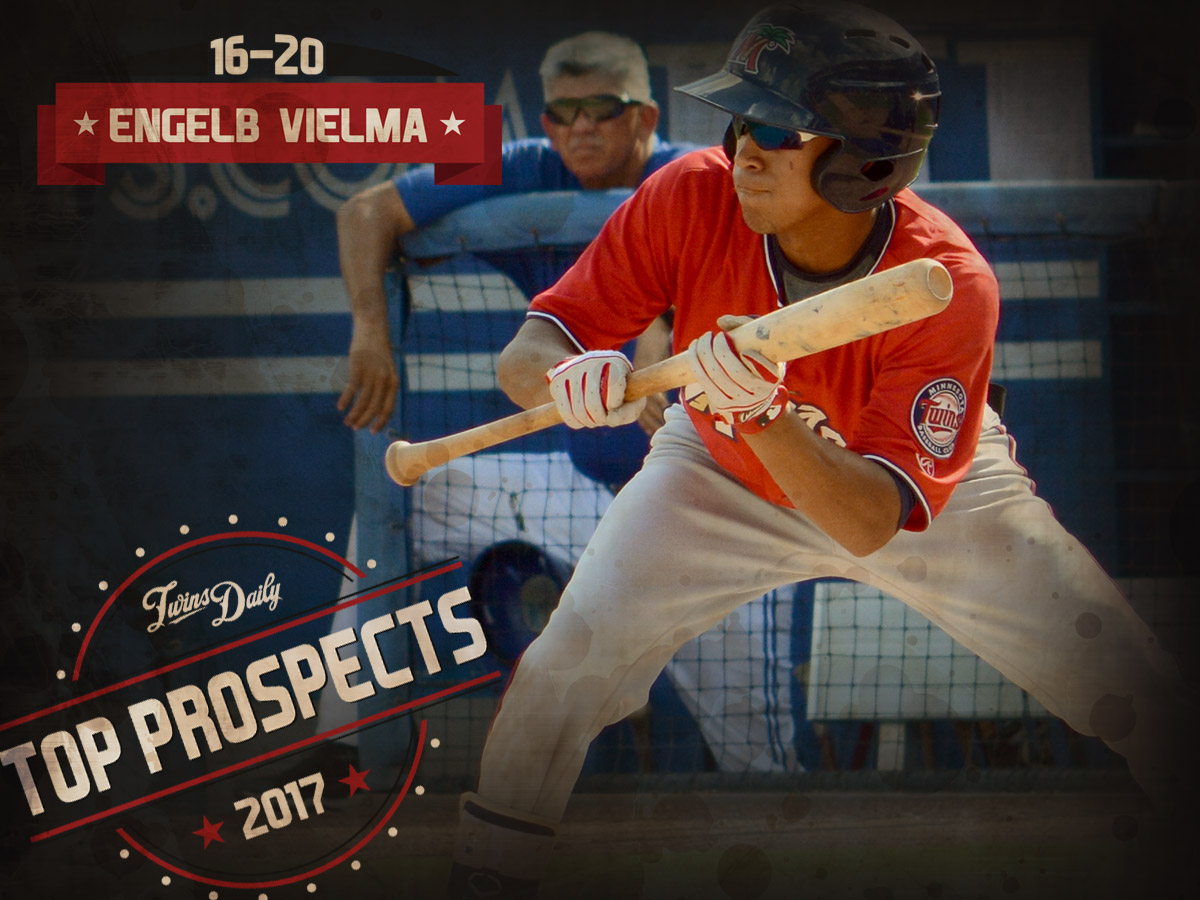 20. Justin Haley, RHP Age: 25 2016 Stats (AA/AAA): 146.2 IP, 3.01 ERA, 126/45 K/BB, 1.12 WHIP ETA: 2017 Photo courtesy Louriann Mardo-Zayat With the top pick in December's Rule 5 draft, the Twins selected Miguel Diaz, a hard-throwing righty from the Brewers system, but traded him for the player they really wanted. Justin Haley may not offer the fancy ceiling of some others you will read about in this series, but he's a polished MLB-ready product riding some serious momentum. A sixth-round draft pick by the Red Sox in 2012, Haley got his career off to a promising start, but hit a skid in 2015 when he went 5-16 with a 5.15 ERA at Double-A. For a college draftee with unexceptional stuff, it's the kind of setback that can spell doom. But Haley rebounded in a big way. He went to the Arizona Fall League and pitched brilliantly, albeit in only a handful of outings. The next year he conquered Double-A in the first half and then graduated to Triple-A where he didn't miss a beat. His last start was his best of the year – eight innings of shutout, two-hit ball. Then he returned to the AFL and was masterful again allowing just one run on 12 hits over 23 innings. He's coming to the Twins organization with a full head of steam and a fair shot at winning a roster spot in camp. Haley could make a impact sooner than anyone else we profile for this feature. 19. Ben Rortvedt, C Age: 19 2016 Stats (Rookie Leagues): .222/.306/.253, 0 HR, 10 RBI, 5 R ETA: 2021 Photo courtesy David McQueen It's no secret that the Twins have a deep organizational need for more catching talent. They addressed it in last June's draft when they used their second pick on prep backstop Ben Rortvedt from Verona, a small Wisconsin town located about four hours from Target Field. Clearly the Twins scouted him heavily. They were bold in using the 56th overall selection on him and luring him away from a scholarship at Arkansas. Rortvedt was the only catcher from an American high school taken by any team in the first five rounds. That isn't to say that Minnesota reached; in pre-draft rankings, MLB.com had the teenager 51st in the talent pool and Baseball America had him 82nd. Rortvedt was touted for his receiving skills and offensive upside. His potential at the plate remains just that – the teen catcher didn't do much damage with the bat in two levels of rookie ball, though his 10/10 strikeout-to-walk ratio suggests he wasn't overwhelmed by the pitching. Listed at 5'10" and 190 lbs, he's got some growing to do and we'll see how that influences his development. At this point there is little to go on performance-wise but we do know that the tools are there. Unfortunately, as is the nature of raw high school draft picks, he's got a long way to go. 18. Engelb Vielma, SS Age: 22 2016 Stats (A+/AA): .271/.345/.318, 0 HR, 21 RBI, 47 R ETA: 2018 Photo courtesy Seth Stohs He has already established himself as a high-caliber defensive shortstop, but in order to take the next step as a player Engelb Vielma needs to show significant progress with the bat. That didn't really happen last year. In Chattanooga, where he spent most of his time, the slender infielder posted a .663 OPS that represented his best since 2012 in rookie ball but still failed to impress. As usual, Vielma proved capable of putting the bat on the ball, but rarely struck with authority. In 367 plate appearances he managed only 11 extra-base hits and never cleared the fence. His solid speed only translated to a 10-for-18 success rate on steals. While his glove work made him a sturdy regular at Double-A, Vielma added minimal value offensively. As he climbs the ladder and pitchers begin to challenge him more and more in the zone, the shortstop's inability to punish them will only grow more inhibiting. Unless he can make meaningful strides in terms of production at the plate he will remain limited in his ceiling as a potential backup in the majors. 17. Nick Burdi, RHP Age: 24 2016 Stats (AA): 3 IP, 9.00 ERA, 1/1 K/BB, 1.67 WHIP ETA: 2018 Photo courtesy Seth Stohs When the Twins selected Nick Burdi with the 46th overall pick in the 2014 draft, he was considered perhaps the best collegiate relief arm in the nation. It is important to remember this amidst his stalling development as a pro. That innate high-end talent remains, making Burdi an intriguing wild-card in the organization's relief pitching pipeline, but right now he's nothing more than that. The 2016 season was a complete loss for the radar-rattling righty. He made only three appearances in Double-A before being sidelined by a bruised humerus he was never able to bounce back from. Now he's going to need to fight his way back into the picture, as he'll be heading to camp without a big-league invite. The good news is that scans identified no issues with Burdi's UCL, and he has had plenty of time to heal up his bone bruise. The bad news is that his injury is a rare one – likely resulting from stress caused by a high-effort delivery to produce his signature heat – and there is no certainty he'll get past it. Mike Berardino of the Pioneer Press recently reported that Burdi has made alterations to his mechanics with hopes of alleviating the issue. 16. Zack Granite, OF Age: 24 2016 Stats (AA): .295/.347/.382, 4 HR, 52 RBI, 86 R ETA: 2018 Photo courtesy Seth Stohs A tremendous 2016 in Chattanooga earned Zack Granite the organization's Minor League Player of the Year award. Keying a Lookouts lineup that ranked second among 10 Southern League teams in runs scored, he was the prototypical pesky spark plug atop atop the order. The lefty swinger constantly put the ball in play (7 percent K rate) and maximized his excellent wheels, legging out 18 doubles and eight triples to go along with 56 steals. He also provided outstanding defense in center field, rounding out a complete value offering that made him a fitting choice for farm system's top honor. If Granite can continue on this path and add a little more pop he could become a Brett Gardner type in the majors, and any team would love to have that. However, in the wider scope, he's a former 14th-round pick who hasn't put up even a .730 OPS at any level of the minors, so he's more likely to catch on as a fourth outfielder type in the big leagues. With his contact skill, speed and defense, he looks likely perfectly suited for that billing.
 -
Article: Defensive Reactions
Nick Nelson replied to Nick Nelson's topic in Twins Daily Front Page News
You think a guy with a .230 career average, who hasn't played 130 games in a season, got a $25 million deal solely because of one skill, eh? -
Article: Defensive Reactions
Nick Nelson replied to Nick Nelson's topic in Twins Daily Front Page News
I think my ideal usage for Polanco, at this point in time, would be sort of a roving infielder. Start at short with fly ball guys on the mound, start at third (with Sano at DH) with more GB-centric starters. Occasionally spell Dozier at second. Seems unlikely though because then what is Escobar doing on the roster. I get what you're saying but I don't see the downside to their strategy. All these guys are coming in on minor-league deals with no strings attached (ostensibly). It's just good to have quality gloves on hand, when there was clearly a shortage in that regard. -
Article: Defensive Reactions
Nick Nelson replied to Nick Nelson's topic in Twins Daily Front Page News
Well, speedster who can run around in the corners at least. He hasn't played 360 games in the majors because of his bat. Yeah, Stubbs another guy in a similar vein. Pretty much everyone they have brought in offers at least something defensively. -
Under newly installed leadership, the Minnesota Twins haven't been particularly active on the player acquisition front this offseason. What moves they have made, though, have carried a distinct pattern. In efforts to cut down on an obscene 889 runs allowed, the Twins are emphasizing defense.It started with Jason Castro, who netted a $25 million contract as a free agent despite a sub-.700 career OPS. The former Astro generated significant demand due largely to his receiving and framing capabilities. His upgrade behind the plate over Kurt Suzuki – whose $1.5 million deal with the last-place Braves, despite posting a better OPS than Castro in 2016, reflects the league's opinion of his defensive impact – is tough to overstate. It's the biggest splash the Twins have made, but hardly their only effort to incrementally supplement a fielding unit that last year converted balls into outs at the league's worst rate. Castro will likely be backed up – at least initially – by Chris Gimenez, a glove-first veteran backstop. He was brought in on a minor league contract with a spring invite, as was outfielder J.B. Shuck, another defensive specialist. As another example, when the Twins opened negotiations with the Dodgers, they were reportedly targeting Cody Bellinger, who some believe "could be elite" with the mitt at first base. Of course, those trade talks fell through, leaving the club stuck with a grossly overmatched Jorge Polanco at shortstop. On Monday, the front office made a move to create a contingency for this potentially grave weakness. The Twins claimed 27-year-old infielder Ehire Adrianza off waivers from Milwaukee. In order to make room, they designated right-hander Pat Light for assignment, meaning they may lose the asset they acquired only six months ago when they traded Fernando Abad. Despite his .605 OPS in 331 big-league plate appearances – all with San Francisco – it isn't hard to see why Minnesota would take a liking to Adrianza. A majority of his 650 defensive innings with the Giants came at shortstop, where he rated extremely well. (His UZR/150, albeit in a VERY small sample size, is in Andrelton Simmons territory for whatever that's worth.) Given what we saw from Polanco and Eduardo Escobar at the position last year, Adrianza may now be the only legitimate MLB shortstop on the 40-man roster aside from Engelb Vielma, the light-hitting 22-year-old with less than 100 games of experience above Single-A. Don't discount the possibility of this new addition becoming a dark horse contender for the starting shortstop gig. If he outshines Polanco and Escobar enough in the field, the Twins may decide they can live with his offensive shortcomings at the bottom of a lineup that could realistically feature above-average production everywhere else. With the way things played out in 2016, sacrificing defense for offense at one of the most crucial positions on the field is far from ideal, and there's no doubt the head decision-makers recognize this. Click here to view the article
-
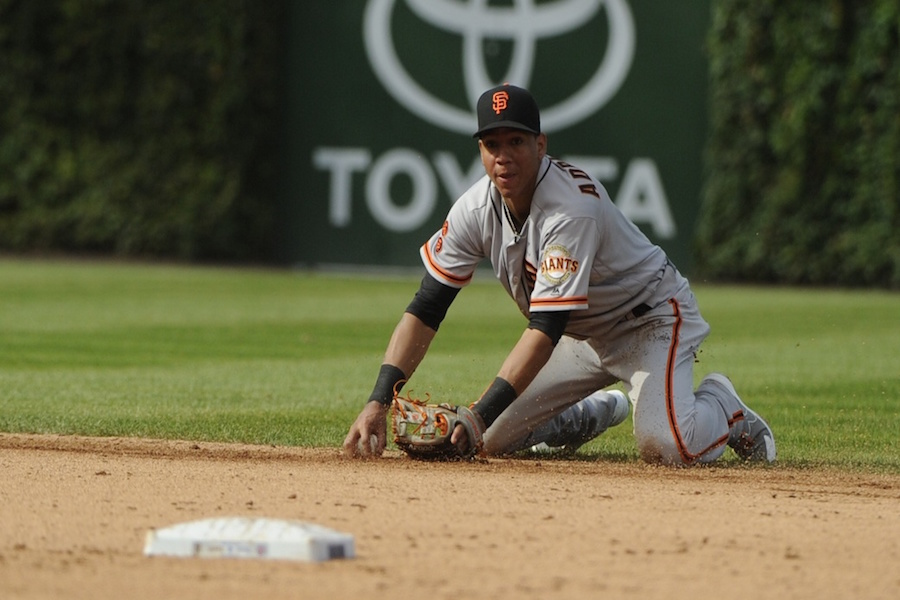 It started with Jason Castro, who netted a $25 million contract as a free agent despite a sub-.700 career OPS. The former Astro generated significant demand due largely to his receiving and framing capabilities. His upgrade behind the plate over Kurt Suzuki – whose $1.5 million deal with the last-place Braves, despite posting a better OPS than Castro in 2016, reflects the league's opinion of his defensive impact – is tough to overstate. It's the biggest splash the Twins have made, but hardly their only effort to incrementally supplement a fielding unit that last year converted balls into outs at the league's worst rate. Castro will likely be backed up – at least initially – by Chris Gimenez, a glove-first veteran backstop. He was brought in on a minor league contract with a spring invite, as was outfielder J.B. Shuck, another defensive specialist. As another example, when the Twins opened negotiations with the Dodgers, they were reportedly targeting Cody Bellinger, who some believe "could be elite" with the mitt at first base. Of course, those trade talks fell through, leaving the club stuck with a grossly overmatched Jorge Polanco at shortstop. On Monday, the front office made a move to create a contingency for this potentially grave weakness. The Twins claimed 27-year-old infielder Ehire Adrianza off waivers from Milwaukee. In order to make room, they designated right-hander Pat Light for assignment, meaning they may lose the asset they acquired only six months ago when they traded Fernando Abad. Despite his .605 OPS in 331 big-league plate appearances – all with San Francisco – it isn't hard to see why Minnesota would take a liking to Adrianza. A majority of his 650 defensive innings with the Giants came at shortstop, where he rated extremely well. (His UZR/150, albeit in a VERY small sample size, is in Andrelton Simmons territory for whatever that's worth.) Given what we saw from Polanco and Eduardo Escobar at the position last year, Adrianza may now be the only legitimate MLB shortstop on the 40-man roster aside from Engelb Vielma, the light-hitting 22-year-old with less than 100 games of experience above Single-A. Don't discount the possibility of this new addition becoming a dark horse contender for the starting shortstop gig. If he outshines Polanco and Escobar enough in the field, the Twins may decide they can live with his offensive shortcomings at the bottom of a lineup that could realistically feature above-average production everywhere else. With the way things played out in 2016, sacrificing defense for offense at one of the most crucial positions on the field is far from ideal, and there's no doubt the head decision-makers recognize this.
 -
Twins officials have been insistent throughout the offseason that they wished to bolster the bullpen by acquiring a veteran reliever. On Friday they got their guy, signing 36-year-old righty Matt Belisle to a one-year, $2.05 million deal. Let's take a look at how this addition alters the bullpen landscape, and who figures to be the odd man out.First, some words on Belisle and what he brings to the table. My hope going into this offseason was that the Twins would aim for higher upside, seeking to entice a late-inning weapon such as Neftali Feliz or Greg Holland by dangling a potentially open closer job. On a short-term contract, saves are money. Belisle doesn't fit that profile, but isn't a bad get by any means. Dating back to 2010 he has a 3.47 ERA, 3.08 FIP and 1.26 WHIP. His velocity and whiff rates don't scream "dominance" but he has been a very effective reliever for a long time. What he lacks in strikeouts he makes up for with sharp control and consistent ground ball tendencies. Over the past two years he has allowed only three home runs in 80 innings. The well-traveled vet has also spent those two seasons playing for division winners, which was undoubtedly a big part of his allure. In 2015 Belisle made 34 appearances for a 100-win Cardinals team. Last year, his Nationals won 95 games. Given all the talk we've heard about bringing in an experienced player with leadership qualities, it's clear this factor weighed heavily. Belisle looks like a trustworthy middle-innings guy who can give you multiple innings when needed. In essence he is a rich man's Tim Stauffer, and a good bet to fulfill the role Terry Ryan envisioned with that ill-fated signing two years ago. But his presence exacerbates a numbers crunch in the bullpen. There will be some interesting scenarios playing out when the pitching staff reports to Ft. Myers in a week. If we're working under the (probably safe) assumption that Glen Perkins will not be on the Opening Day roster, then these are the relievers we can basically consider locks: Brandon Kintzler, RHP Ryan Pressly, RHP Matt Belisle, RHP Taylor Rogers/Buddy Boshers/Ryan O'Rourke, LHP Barring injuries, those four will be there. Kintzler, Pressly and Belisle have guaranteed contracts and of course Paul Molitor will need a left-hander at his disposal. In fact, he'll probably want at least two in this age of specialized bullpens, and I would suggest that closer-in-training JT Chargois should be pretty close to a lock as well after finishing strong with the Twins in 2016. In a seven-man bullpen, those assumptions would leave one spot open. There are three different players who all have a fairly strong case, but two are likely to be left out - from the roster, and maybe even the organization. First, there's Michael Tonkin. We all recall his unfulfilling 2016 campaign, which yielded a 5.02 ERA and 1.45 WHIP. On the surface, he looks like the unfortunate but obvious underdog. At least, he would be if the old regime were still in charge. Tonkin barely made the roster last spring and did not perform well during his lengthy audition. I would argue, though, that his struggles were tied to misuse. Formerly a dominant Triple-A closer, the flame-throwing righty was thrust into a long relief role, and the extended outings seemed to take a take a toll as he wore down late in the year. I suspect (and hope) that Derek Falvey and Thad Levine are curious to see what Tonkin can do in shorter stints. His tremendous success in the minors and his established ability to strike out big-leaguers make him tough to give up on. The team's decision to make room for Belisle by designating Byung Ho Park for assignment confirms their enduring faith in Tonkin, who is out of options. It looks like they intend to give him a real chance this spring. But where would that leave Justin Haley? The Twins had the No. 1 selection in December's Rule 5 draft and decided that out of everyone available, the 25-year-old right-hander was the guy they wanted. Unless they can work out a trade, they must either keep him on the active roster or lose him. With the urgency to repair this pitching staff being as high as it is, the front office cannot get this wrong. If they expose Tonkin to waivers and he gets claimed only to excel in a more fitting role elsewhere, it looks bad. If they send Haley back to Boston and he turns out to be a quality big-league arm, it looks bad. These are the kinds of early missteps that Falvey and Levine can ill afford if they want to win the respect and trust of the fan base (not to mention lingering Ryan loyalists within the organization). So the stakes will be high as they evaluate these two players in Florida. And we haven't yet even mentioned one other name that should be in the discussion. Up to this point the team has been mum regarding its plans for Tyler Duffey. There is a common belief that he's best suited for the bullpen, based on his two-pitch arsenal and his background as a dominant closer in college. There hasn't been any indication that he'll be shifted to relief right away, but it looks like his best path since he's behind both Trevor May and Jose Berrios for the final rotation spot. The Twins have the luxury of taking it slow with Duffey, who has options remaining. They could send him to Rochester in April and allow him to hone his skills in relief. Though he's a likely candidate to succeed – especially if he can add a few ticks to his fastball – it has been a long time since he's pitched in that capacity. Then again, if they try this out in the Grapefruit League and he's firing bullets, how do you send him to the minors? He's a deep sleeper to ultimately take over the ninth-inning gig. Let's not forget how bad Perkins looked in his final run as a starter before almost immediately becoming a lights-out late inning asset. These are intriguing storylines, and there are a few others that could emerge. For instance, what if Perkins is healthy and strong enough to fill a role out of the gates? What if May's transition back to starting doesn't pan, and they opt to slide him back to relief? What if Phil Hughes needs some ramp-up time in the bullpen? There's also minor-league signing Ryan Vogelsong, who some feel is very likely to make the roster with a decent spring. Injuries happen, of course, and the Twins are setting themselves up well for that. But if this group can get through spring relatively healthy, it's going to set up some pivotal decisions at the end of March. Click here to view the article
- 62 replies
-
- 2
-
-
- matt belisle
- michael tonkin
- (and 2 more)
-
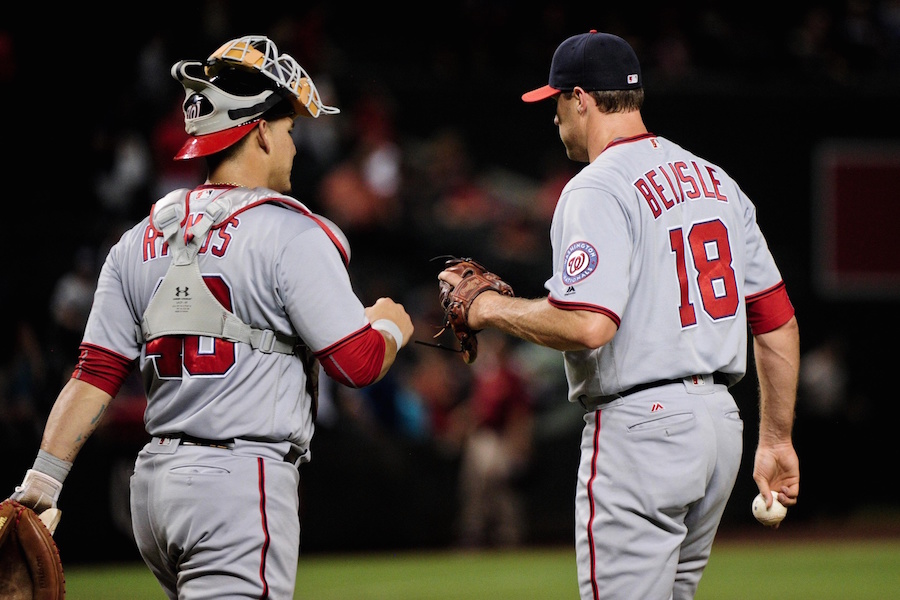 First, some words on Belisle and what he brings to the table. My hope going into this offseason was that the Twins would aim for higher upside, seeking to entice a late-inning weapon such as Neftali Feliz or Greg Holland by dangling a potentially open closer job. On a short-term contract, saves are money. Belisle doesn't fit that profile, but isn't a bad get by any means. Dating back to 2010 he has a 3.47 ERA, 3.08 FIP and 1.26 WHIP. His velocity and whiff rates don't scream "dominance" but he has been a very effective reliever for a long time. What he lacks in strikeouts he makes up for with sharp control and consistent ground ball tendencies. Over the past two years he has allowed only three home runs in 80 innings. The well-traveled vet has also spent those two seasons playing for division winners, which was undoubtedly a big part of his allure. In 2015 Belisle made 34 appearances for a 100-win Cardinals team. Last year, his Nationals won 95 games. Given all the talk we've heard about bringing in an experienced player with leadership qualities, it's clear this factor weighed heavily. Belisle looks like a trustworthy middle-innings guy who can give you multiple innings when needed. In essence he is a rich man's Tim Stauffer, and a good bet to fulfill the role Terry Ryan envisioned with that ill-fated signing two years ago. But his presence exacerbates a numbers crunch in the bullpen. There will be some interesting scenarios playing out when the pitching staff reports to Ft. Myers in a week. If we're working under the (probably safe) assumption that Glen Perkins will not be on the Opening Day roster, then these are the relievers we can basically consider locks: Brandon Kintzler, RHP Ryan Pressly, RHP Matt Belisle, RHP Taylor Rogers/Buddy Boshers/Ryan O'Rourke, LHP Barring injuries, those four will be there. Kintzler, Pressly and Belisle have guaranteed contracts and of course Paul Molitor will need a left-hander at his disposal. In fact, he'll probably want at least two in this age of specialized bullpens, and I would suggest that closer-in-training JT Chargois should be pretty close to a lock as well after finishing strong with the Twins in 2016. In a seven-man bullpen, those assumptions would leave one spot open. There are three different players who all have a fairly strong case, but two are likely to be left out - from the roster, and maybe even the organization. First, there's Michael Tonkin. We all recall his unfulfilling 2016 campaign, which yielded a 5.02 ERA and 1.45 WHIP. On the surface, he looks like the unfortunate but obvious underdog. At least, he would be if the old regime were still in charge. Tonkin barely made the roster last spring and did not perform well during his lengthy audition. I would argue, though, that his struggles were tied to misuse. Formerly a dominant Triple-A closer, the flame-throwing righty was thrust into a long relief role, and the extended outings seemed to take a take a toll as he wore down late in the year. I suspect (and hope) that Derek Falvey and Thad Levine are curious to see what Tonkin can do in shorter stints. His tremendous success in the minors and his established ability to strike out big-leaguers make him tough to give up on. The team's decision to make room for Belisle by designating Byung Ho Park for assignment confirms their enduring faith in Tonkin, who is out of options. It looks like they intend to give him a real chance this spring. But where would that leave Justin Haley? The Twins had the No. 1 selection in December's Rule 5 draft and decided that out of everyone available, the 25-year-old right-hander was the guy they wanted. Unless they can work out a trade, they must either keep him on the active roster or lose him. With the urgency to repair this pitching staff being as high as it is, the front office cannot get this wrong. If they expose Tonkin to waivers and he gets claimed only to excel in a more fitting role elsewhere, it looks bad. If they send Haley back to Boston and he turns out to be a quality big-league arm, it looks bad. These are the kinds of early missteps that Falvey and Levine can ill afford if they want to win the respect and trust of the fan base (not to mention lingering Ryan loyalists within the organization). So the stakes will be high as they evaluate these two players in Florida. And we haven't yet even mentioned one other name that should be in the discussion. Up to this point the team has been mum regarding its plans for Tyler Duffey. There is a common belief that he's best suited for the bullpen, based on his two-pitch arsenal and his background as a dominant closer in college. There hasn't been any indication that he'll be shifted to relief right away, but it looks like his best path since he's behind both Trevor May and Jose Berrios for the final rotation spot. The Twins have the luxury of taking it slow with Duffey, who has options remaining. They could send him to Rochester in April and allow him to hone his skills in relief. Though he's a likely candidate to succeed – especially if he can add a few ticks to his fastball – it has been a long time since he's pitched in that capacity. Then again, if they try this out in the Grapefruit League and he's firing bullets, how do you send him to the minors? He's a deep sleeper to ultimately take over the ninth-inning gig. Let's not forget how bad Perkins looked in his final run as a starter before almost immediately becoming a lights-out late inning asset. These are intriguing storylines, and there are a few others that could emerge. For instance, what if Perkins is healthy and strong enough to fill a role out of the gates? What if May's transition back to starting doesn't pan, and they opt to slide him back to relief? What if Phil Hughes needs some ramp-up time in the bullpen? There's also minor-league signing Ryan Vogelsong, who some feel is very likely to make the roster with a decent spring. Injuries happen, of course, and the Twins are setting themselves up well for that. But if this group can get through spring relatively healthy, it's going to set up some pivotal decisions at the end of March.
 -
Because... those things... weren't working?
-
Here's my take on this offseason. Going in, when I put together our blueprint for the Offseason Handbook, I suggested this series of moves: 1) Sign Castro 2) Trade Dozier for De Leon+ 3) Sign Aybar 4) Sign Feliz They did sign Castro. They tried to trade Dozier for De Leon but the "plus" wasn't enough to make it happen and that's OK. Keeping Dozier pretty much negates signing a veteran SS (though they still could). And while they didn't sign Feliz, I suspect they will still add someone similar. There are reports indicating such. So yes, I personally am content with their approach. If others feel differently that's fine, but we all know that making moves for the sake of making moves is a bad strategy and that seems to be what some folks are suggesting.
-
And the Twins don't? It's funny because if the Twins had simply held back the likes of Buxton, Sano and Berrios they'd all be top 20 prospects in the game and we'd be giddy about their ability to drive a turnaround this year. It's unfortunate that they've endured varying degrees of struggles in the majors, but the fact that they've gone through those learning experiences is a GOOD thing, not a bad thing. Failing to immediately break through at age 22/23 does not diminish your long-term outlook all that much. Sorry to break it to you, but the best names weren't going to sign with a 100-loss team. Twins weren't going to sign Chapman or Jansen. I would've liked someone like Feliz or Holland but there's no strong evidence those guys will be much better than someone like Blanton, Logan, Romo, Hernandez, or one of numerous other remaining free agents. And the Twins could score a big bargain due to their patience.
-
Joe Blanton and Boone Logan are both available and both have been tied to the Twins. They are both very good. I'm not sure if you've looked at the remaining relief market but there are still a lot of quality names out there.
-
I would bet good money that a move is still coming in this regard.
-
This was not a defense of their offseason decision-making. The point was that regardless of what you think about their moves (or lack thereof) there is plenty of reason to expect significant W/L improvement. 100 losses is not a fair baseline expectation. It's not a straw man. The comment I was responding to asked why the team would make a change in leadership if there wasn't a belief that a new regime could come in and immediately make personnel moves that would shift the needle. And the answer is that there's a lot more to this restructuring than making acquisitions aimed at winning five more games in 2017.
-
Man. People are grumpy this morning! Not apparently. It is, objectively. And losing 95 games would require basically the same performance as last year (again, they should have lost 96 based on RS/RA). So that would be a tiny step forward. I expect a larger one. Because they didn't hire these guys to completely turn the team around in one offseason? Well unfortunately Alvarez was never on the table. So let's stop playing make believe and hold this discussion based on reality.
- 179 replies
-
- 12
-
-
The bottom line is that any moves this offseason we're going to make a marginal impact, in isolation. Meaningful improvement needs to be driven by the likes of Buxton, Sano, Berrios, etc. If that doesn't happen, they've got bigger problems.
- 179 replies
-
- 21
-
-
There has been some hand-wringing, here and elsewhere, about an offseason that's leaving many feeling unfulfilled. We're less than two weeks from pitchers and catchers reporting to Ft. Myers, and the roster has barely been touched. It's easy to feel like we're headed toward another 100-loss slog. It's easy because we are cognitively wired to do so. But don't give in to recency bias. There is more here than meets the eye.No one can deny that 2016 was a disastrous season for the Minnesota Twins. Never before in this franchise's history have things gone so awry. But thankfully, last year is in the past. When the team congregates in Florida they will be doing so with a fresh outlook. Much can change in three months, especially when you're dealing with numerous maturing young players and a completely overhauled baseball operations unit. Last week, Tom Froemming outlined a realistic, though pessimistic, scenario in which the Twins once against lose 100 games. It could happen. But let's keep in mind that last year's team accomplished an historical feat of ineptitude. Making it happen took multiple major injuries to key players, immense struggles from youngsters, inexplicable personnel decisions and plain old bad luck (Pythagorean W/L tells us they should have won seven more games). What has been does not dictate what will be. Especially when you view the state of this Twins roster in context. They've clearly got the makings of an above-average offense. The lineup shined in the latter portion of 2016. As things stand, the only changes are Jason Castro replacing Kurt Suzuki and a designated hitter – probably Byung Ho Park or Kennys Vargas – replacing Trevor Plouffe. I think we can call those swaps a wash, at worst. Then there's the pitching staff. It was cover-your-eyes ugly last year, but this is where the recency bias sets in. For basically every starter except Ervin Santana, 2016 was a complete catastrophe. Kyle Gibson endured his worst season. Ditto Hector Santiago. Phil Hughes had his shoulder crap out. Things couldn't have gone much worse for Tyler Duffey and Jose Berrios. It was, essentially, a series of worst-case scenarios. And the thing about those kinds of lows is that there's nowhere to go but up. I'm not saying these guys are all going to turn around and be world-beaters, but several of them will improve. And with new decision-makers place, we can hope to see players put in better positions to succeed. With most of the organization's top pitching prospects approaching Triple-A, if not already there, contingencies will be on hand to prevent someone like Duffey or Hughes from being sent out start after start with no ability to get outs. After the 2015 season, the Twins themselves fell victim to recency bias. There were underlying signs that their 83-win total was inflated, but still they operated as if they intended to springboard into contention from it. It's hard to blame them, when you consider what a breath of fresh air the competitive baseball was for everyone. But even amid the horrendous results of 2016, the organization did manage to check several important boxes in their rebuilding process. Byron Buxton and Miguel Sano got more experience, stayed mostly healthy, and probably learned some hard lessons. Max Kepler successfully transitioned to the big leagues. Jose Berrios transitioned not-so-successfully but he got those all-important first licks out of the way. Several prospects took steps forward and another key one entered the mix when Eduardo Nunez was traded for Adalberto Mejia at the deadline. And most importantly the Twins picked up the No. 1 pick in the draft, which will give them their choice of any amateur player in the nation this June. If complacency was an issue heading into 2016, it sure won't be this time around. And if poor planning, ill-advised decision-making, or clouded judgment were exacerbating factors, it is fair to be cautiously optimistic that a revamped front office structure will avoid making the same mistakes. Realistically, Minnesota probably will not compete for a playoff spot. Many teams won't. But the Twins will take a step forward. The question is how big it will be. Quiet offseason and all (and I don't think they're quite done), I'm excited to find out. Click here to view the article
