



Nick Nelson
-
Posts
8,326 -
Joined
-
Last visited
-
Days Won
56
Content Type
Profiles
News
Minnesota Twins Videos
2026 Minnesota Twins Top Prospects Ranking
2022 Minnesota Twins Draft Picks
Minnesota Twins Free Agent & Trade Rumors, Notes, & Tidbits
Guides & Resources
2023 Minnesota Twins Draft Picks
The Minnesota Twins Players Project
2024 Minnesota Twins Draft Picks
2025 Minnesota Twins Draft Pick Tracker
2026 Minnesota Twins Draft Tracker: Picks & Bonuses
Forums
Blogs
Events
Store
Downloads
Gallery
Everything posted by Nick Nelson
-
 Where was the reach? I felt the enthusiasm was quite tempered.
- 71 replies
-
- 2
-

-
- jose berrios
- stephen gonsalves
- (and 2 more)
-
In the short-term, a return to respectability for the Minnesota Twins rotation will be dependent on veteran players like Ervin Santana, Phil Hughes, Kyle Gibson and Hector Santiago performing at a high level. However, in the big picture, a youthful wave of upcoming impact talent will make or break the fortunes of this critical unit. Fortunately, it's some quality talent.Presently, there are – by my estimation – four young pitchers in the Twins organization who figure to shape the success of the major-league rotation over the next five years. Each is either 21 or 22 years old, and potentially within a year of reaching the bigs. Let's take a look at each of them, in order of their estimated MLB arrival. ~~~ Jose Berrios, RHP Age: 22 ETA: Early 2017 Obviously, Berrios has already gotten his first taste of the majors. It was nothing short of disastrous. Routinely incapable of finding any semblance of command on the mound, the rookie took a beating over 14 starts with the Twins, registering a hideous 8.04 ERA and failing to reach the sixth inning in any of his last nine turns. There's nowhere to go from here but up, and there are plenty of reasons to believe Berrios will ascend in a hurry following this setback. His stuff, his consistently excellent minor-league results, and his relentless work ethic all make it difficult to believe the right-hander won't figure things out to some extent. With that being said, the gravity of some flaws we saw on display do lessen the likelihood of him turning into a true top-of-the-rotation arm, as we optimistically hoped. His reliance on tailing, spinning pitches around the edges of the zone will make it hard for him to ever develop an efficient approach to dispatching hitters, and Berrios could still easily wind up in the bullpen. But we'll see how he looks in 2017 after an offseason of adjustments. Stephen Gonsalves, LHP Age: 22 ETA: Late 2017 There's no denying the exceptional numbers Gonsalves has posted. In four minor-league seasons he owns a 32-12 record and 2.13 ERA, and he's coming off his best campaign yet. He also looks the part as a big 6'5" left-hander. Scouts and prospect analysts have been somewhat restrained in their enthusiasm for Gonsalves despite his statistical success on the hill. Even after his tremendous 2016 campaign, which ended with an 8-1 run over 13 starts in Double-A, John Sickels of Minor League Ball had the southpaw ranked just 85th, and Gonsalves didn't even appear on Baseball America's midseason top 100. (BA did, though, peg him as the club's second-best prospect behind Nick Gordon in November, following his brilliant showing in Chattanooga) . The dominating pitches and pinpoint command just aren't there to confidently project mastery over big-league hitters, but of course he's still continually improving. And right now he's certainly on track to be a factor for the Twins within the next year or two. Tyler Jay, LHP Age: 22 ETA: 2018 I'll admit that I'm probably lower than most on Jay, as I find it rather concerning that the collegiate reliever's arm couldn't even hold up through even 100 innings in his first year as a starter. With that said, he was the sixth overall draft pick in 2016 and is currently the team's No. 1 prospect according to both MLB.com and USA Today. He has some work to do, but if Jay can further develop a changeup to complement his plainly fantastic fastball/slider combo, while also building the endurance to withstand 30 starts, he still has a very high ceiling. Perhaps higher than either of the two listed above. Fernando Romero, RHP Age: 21 ETA: 2018 Romero is the least well known among this group, since injuries have kept him out of the picture for so long, but he is also the most exciting. He made only three starts above rookie ball (with Cedar Rapids in 2014) before being shut down and missing most of the next two years due to elbow and knee surgeries. Despite this detour, Romero was still only 21 this season and returned with a bang, carving up Low-A and then High-A to finish with a 1.89 ERA and 0.90 WHIP over 16 starts. Brice Zimmerman, who serves as Director of Broadcasting and Media Relations for Fort Myers, tweeted recently that Romero is the best arm he's seen in his six years watching Miracle games. His awe for the young Dominican is mirrored by many others inside and outside the organization. With a hard mid-90s fastball, a plus cutter and good breaking stuff to go along with sharp control, Romero has the recipe for a true top-of-rotation asset. But of course, it will be difficult to feel confident in that assessment until we've seen him put in a full season against upper-minors competition. ~~~ If your faith in the current assortment of veteran arms is iffy (and who could blame you), these four present a hopeful future for the Twins rotation. And I haven't touched on the likes of Adalberto Mejia or Kohl Stewart, who could quickly step into this conversation with hot starts in 2017. Each of these prospects borders on major-league ready, and if even a couple pan out as starters, that's a massive boost. There are these two factors to consider: 1) With a trade sending Brian Dozier to the Dodgers still seeming likely, Jose De Leon is the name that continues to be touted as the likely headliner. De Leon is older than each of the hurlers listed above but would rank above them all on a prospect list and fits the same general timeline. That would be another premium name added to the mix. 2) The Twins, of course, hold the No. 1 pick in next June's draft. If they take a pitcher, especially a college pitcher, it will assuredly be one of the nation's elite amateur talents, with the ability to rise fast. So, although the Twins are coming off one of the worst seasons ever in terms of run prevention, there is plenty of reason to expect much better things in the near future, particularly if the new baseball ops leaders are able to bolster the developmental process. An awful lot of high-caliber help is on the way. Giddy up. Click here to view the article
- 71 replies
-
- 5
-
-
- jose berrios
- stephen gonsalves
- (and 2 more)
-
 Presently, there are – by my estimation – four young pitchers in the Twins organization who figure to shape the success of the major-league rotation over the next five years. Each is either 21 or 22 years old, and potentially within a year of reaching the bigs. Let's take a look at each of them, in order of their estimated MLB arrival. ~~~ Jose Berrios, RHP Age: 22 ETA: Early 2017 Obviously, Berrios has already gotten his first taste of the majors. It was nothing short of disastrous. Routinely incapable of finding any semblance of command on the mound, the rookie took a beating over 14 starts with the Twins, registering a hideous 8.04 ERA and failing to reach the sixth inning in any of his last nine turns. There's nowhere to go from here but up, and there are plenty of reasons to believe Berrios will ascend in a hurry following this setback. His stuff, his consistently excellent minor-league results, and his relentless work ethic all make it difficult to believe the right-hander won't figure things out to some extent. With that being said, the gravity of some flaws we saw on display do lessen the likelihood of him turning into a true top-of-the-rotation arm, as we optimistically hoped. His reliance on tailing, spinning pitches around the edges of the zone will make it hard for him to ever develop an efficient approach to dispatching hitters, and Berrios could still easily wind up in the bullpen. But we'll see how he looks in 2017 after an offseason of adjustments. Stephen Gonsalves, LHP Age: 22 ETA: Late 2017 There's no denying the exceptional numbers Gonsalves has posted. In four minor-league seasons he owns a 32-12 record and 2.13 ERA, and he's coming off his best campaign yet. He also looks the part as a big 6'5" left-hander. Scouts and prospect analysts have been somewhat restrained in their enthusiasm for Gonsalves despite his statistical success on the hill. Even after his tremendous 2016 campaign, which ended with an 8-1 run over 13 starts in Double-A, John Sickels of Minor League Ball had the southpaw ranked just 85th, and Gonsalves didn't even appear on Baseball America's midseason top 100. (BA did, though, peg him as the club's second-best prospect behind Nick Gordon in November, following his brilliant showing in Chattanooga) . The dominating pitches and pinpoint command just aren't there to confidently project mastery over big-league hitters, but of course he's still continually improving. And right now he's certainly on track to be a factor for the Twins within the next year or two. Tyler Jay, LHP Age: 22 ETA: 2018 I'll admit that I'm probably lower than most on Jay, as I find it rather concerning that the collegiate reliever's arm couldn't even hold up through even 100 innings in his first year as a starter. With that said, he was the sixth overall draft pick in 2016 and is currently the team's No. 1 prospect according to both MLB.com and USA Today. He has some work to do, but if Jay can further develop a changeup to complement his plainly fantastic fastball/slider combo, while also building the endurance to withstand 30 starts, he still has a very high ceiling. Perhaps higher than either of the two listed above. Fernando Romero, RHP Age: 21 ETA: 2018 Romero is the least well known among this group, since injuries have kept him out of the picture for so long, but he is also the most exciting. He made only three starts above rookie ball (with Cedar Rapids in 2014) before being shut down and missing most of the next two years due to elbow and knee surgeries. Despite this detour, Romero was still only 21 this season and returned with a bang, carving up Low-A and then High-A to finish with a 1.89 ERA and 0.90 WHIP over 16 starts. Brice Zimmerman, who serves as Director of Broadcasting and Media Relations for Fort Myers, tweeted recently that Romero is the best arm he's seen in his six years watching Miracle games. His awe for the young Dominican is mirrored by many others inside and outside the organization. With a hard mid-90s fastball, a plus cutter and good breaking stuff to go along with sharp control, Romero has the recipe for a true top-of-rotation asset. But of course, it will be difficult to feel confident in that assessment until we've seen him put in a full season against upper-minors competition. ~~~ If your faith in the current assortment of veteran arms is iffy (and who could blame you), these four present a hopeful future for the Twins rotation. And I haven't touched on the likes of Adalberto Mejia or Kohl Stewart, who could quickly step into this conversation with hot starts in 2017. Each of these prospects borders on major-league ready, and if even a couple pan out as starters, that's a massive boost. There are these two factors to consider: 1) With a trade sending Brian Dozier to the Dodgers still seeming likely, Jose De Leon is the name that continues to be touted as the likely headliner. De Leon is older than each of the hurlers listed above but would rank above them all on a prospect list and fits the same general timeline. That would be another premium name added to the mix. 2) The Twins, of course, hold the No. 1 pick in next June's draft. If they take a pitcher, especially a college pitcher, it will assuredly be one of the nation's elite amateur talents, with the ability to rise fast. So, although the Twins are coming off one of the worst seasons ever in terms of run prevention, there is plenty of reason to expect much better things in the near future, particularly if the new baseball ops leaders are able to bolster the developmental process. An awful lot of high-caliber help is on the way. Giddy up.
 -
Article: How Will The New CBA Affect The Twins?
Nick Nelson replied to Nick Nelson's topic in Twins Daily Front Page News
I wasn't trying to say they'd game the system by putting a completely healthy pitcher on the disabled list. But MLB players are banged up to some extent at most times throughout the season. With the shorter DL minimum, I suspect players (esp pitchers) will be less opposed to going on it, while the commissioner's office will be less stringent about enforcing those rules you mentioned. Minor soreness, strains and aches are now more plausible causes for a DL trip since it only means missing a week and a half. Also, how many times have we seen it where the Twins wait several days to disable a guy because they don't think he needs it, then end up doing it anyway, thus playing at a shorthanded disadvantage in the interim? Hopefully this will help eliminate those kinds of missteps because there will be less reluctance to make a roster move. -
Article: How Will The New CBA Affect The Twins?
Nick Nelson replied to Nick Nelson's topic in Twins Daily Front Page News
This is my understanding. And therein lies the capitulation. -
Article: How Will The New CBA Affect The Twins?
Nick Nelson replied to Nick Nelson's topic in Twins Daily Front Page News
If the belief is that the money not being spent on amateur international talent will go toward the team's payroll, then sure. I think there's a general sense that it'll mostly just go back into owners' pockets. -
Just hours ahead of the December 1st deadline, Major League Baseball and its Players Association were able to agree on a restructured Collective Bargaining Agreement, ensuring labor peace through 2021. The new CBA is largely similar to the one it replaces, with a few distinct alterations. Today, we'll look at at some of those changes, and what impact they might have on the Minnesota Twins specifically.The exact details of the renewed agreement – reached under the watch of MLB commissioner Rob Manfred (pictured above) – aren't public, but plenty of details have trickled out. From what we know, here are the biggest changes: Luxury Tax Threshold Increases What Changed? In 2017, the spending threshold at which teams start getting penalized will rise from $189 million to $196 million. It will continue to jump each year until 2021 when it reaches $210 million. Twins Impact: It's a move that is conducive to higher player salaries, since big market clubs will have slightly less limitation on how much they can dole out. Unless the Pohlads suddenly decide to pump another $90 million into payroll, this won't directly affect the Twins, except that salary inflation league-wide may accelerate a little. Shorter Disabled List Stints What Changed? The minimum DL stint is being shortened from 15 days to 10 days. Twins Impact: The idea here is that when a player is a bit nicked up, his team will feel less handcuffed in making a DL move to get some extra help. It's particularly pertinent for starting pitchers, who stand to miss one less start by returning five days earlier than before. The Twins had no shortage of ailments and injuries on their staff, so this should prove helpful for them. (Some have suggested that teams could take advantage of this system by placing a starter on the DL and having him miss one turn – basically giving him a breather – while bringing on an extra reliever in the meantime. Will a Minnesota team that's been as arm-needy as any utilize this strategy? Would it be frowned upon?) New International Spending Caps What Changed? The previous system involved soft caps in the form of bonus pools. If exceeded, the offending team was penalized 100 percent on overages, with limits imposed the following year. Now, there are hard caps, which will vary by team but generally sit around $5 million. Twins Impact: Based on their previous international spending habits, the Twins won't have trouble staying under the limit, which greatly levels the playing field in that it prevents a team like the Dodgers from being able to say 'screw it' and splurge for $45 million to gather up all of the premier foreign young talent, damn the consequences. That's good news for teams like Minnesota, but not so much for these young men and their earning potential. (Boy, does this look like a major capitulation by MLBPA.) One other interesting element of this new arrangement is that teams can trade away percentages of their cap. If Derek Falvey and Thad Levine are committed to using the international free agency channel extensively, then don't be surprised to see them exercise this capability and acquire more flexibility. Or vice versa. (It's worth noting that international players become exempt from these rules when they turn 25, or they've played six years in a pro league. So this wouldn't alter the pursuit of a player like, say, Byung Ho Park.) Free Agent Compensation System Overhauled What Changed? Teams no longer must forfeit a first- or second-round draft pick in order to sign a free agent who rejected a qualifying offer. Twins Impact: Players HATED this rule, and with good reason. For all but the most elite qualifying free agents, it was a stifling burden. However, it worked out pretty damn well for the Twins over the years. As they watched homegrown stars leave via free agency, they stockpiled high picks, leading to the additions of players like Jose Berrios (comp for Michael Cuddyer) and Glen Perkins (Eddie Guardado). Now, the compensation will generally be a third-round pick. Only once did Minnesota sign a free agent with the draft penalty attached. Bringing in Ervin Santana cost them their second-rounder in 2015, but because of this they also got him for less than they otherwise would have. Maybe a lot less. Of course, you will also recall the situation in 2014 where Kendrys Morales elected not to sign until June due to a barren market, and Minnesota was able to eventually snag him. So, those kind of situations won't be happening anymore. Offensive Rookie Hazing Banned What Changed? When it comes to the age-old ritual of dressing up rookies in funny or embarrassing costumes, there have been some lines drawn. A new policy outlaws "dressing up as women or wearing costumes that may be offensive to individuals based on their race, sex, nationality, age, sexual orientation, gender identity or other characteristic." Twins Impact: We'll never see another picture like this one, of Pat Neshek: Download attachment: neshekrookiehaze.jpg That is not a complaint. No More All-Star Home Field Stipulation What Changed? The All-Star Game no longer decides World Series home field advantage. Twins Impact: Well, obviously, they now no longer need to worry about the outcome of a meaningless midsummer exhibition game dictating whether they play Game 1 at Target Field when they reach the big show this October. Or, some October. Hey, a guy can dream. Click here to view the article
-
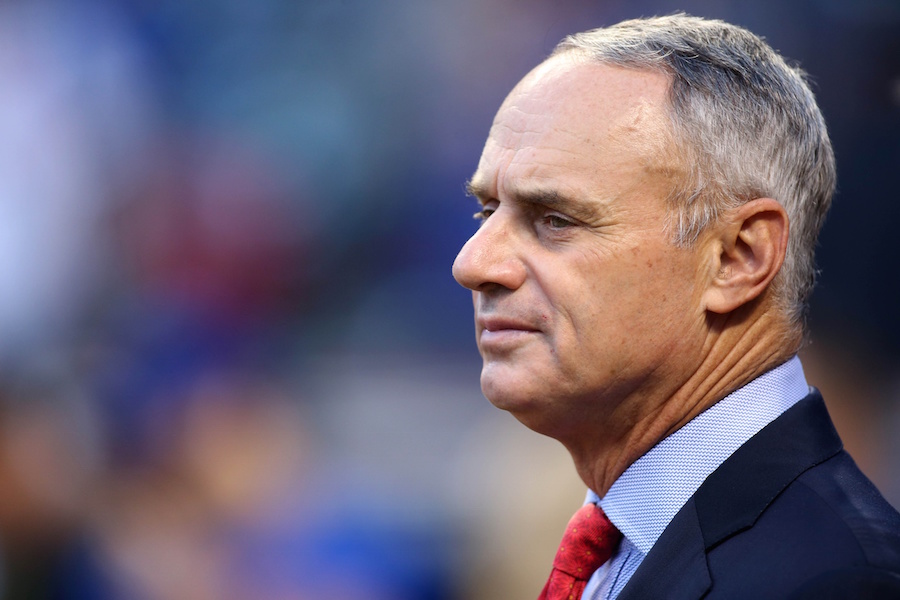 The exact details of the renewed agreement – reached under the watch of MLB commissioner Rob Manfred (pictured above) – aren't public, but plenty of details have trickled out. From what we know, here are the biggest changes: Luxury Tax Threshold Increases What Changed? In 2017, the spending threshold at which teams start getting penalized will rise from $189 million to $196 million. It will continue to jump each year until 2021 when it reaches $210 million. Twins Impact: It's a move that is conducive to higher player salaries, since big market clubs will have slightly less limitation on how much they can dole out. Unless the Pohlads suddenly decide to pump another $90 million into payroll, this won't directly affect the Twins, except that salary inflation league-wide may accelerate a little. Shorter Disabled List Stints What Changed? The minimum DL stint is being shortened from 15 days to 10 days. Twins Impact: The idea here is that when a player is a bit nicked up, his team will feel less handcuffed in making a DL move to get some extra help. It's particularly pertinent for starting pitchers, who stand to miss one less start by returning five days earlier than before. The Twins had no shortage of ailments and injuries on their staff, so this should prove helpful for them. (Some have suggested that teams could take advantage of this system by placing a starter on the DL and having him miss one turn – basically giving him a breather – while bringing on an extra reliever in the meantime. Will a Minnesota team that's been as arm-needy as any utilize this strategy? Would it be frowned upon?) New International Spending Caps What Changed? The previous system involved soft caps in the form of bonus pools. If exceeded, the offending team was penalized 100 percent on overages, with limits imposed the following year. Now, there are hard caps, which will vary by team but generally sit around $5 million. Twins Impact: Based on their previous international spending habits, the Twins won't have trouble staying under the limit, which greatly levels the playing field in that it prevents a team like the Dodgers from being able to say 'screw it' and splurge for $45 million to gather up all of the premier foreign young talent, damn the consequences. That's good news for teams like Minnesota, but not so much for these young men and their earning potential. (Boy, does this look like a major capitulation by MLBPA.) One other interesting element of this new arrangement is that teams can trade away percentages of their cap. If Derek Falvey and Thad Levine are committed to using the international free agency channel extensively, then don't be surprised to see them exercise this capability and acquire more flexibility. Or vice versa. (It's worth noting that international players become exempt from these rules when they turn 25, or they've played six years in a pro league. So this wouldn't alter the pursuit of a player like, say, Byung Ho Park.) Free Agent Compensation System Overhauled What Changed? Teams no longer must forfeit a first- or second-round draft pick in order to sign a free agent who rejected a qualifying offer. Twins Impact: Players HATED this rule, and with good reason. For all but the most elite qualifying free agents, it was a stifling burden. However, it worked out pretty damn well for the Twins over the years. As they watched homegrown stars leave via free agency, they stockpiled high picks, leading to the additions of players like Jose Berrios (comp for Michael Cuddyer) and Glen Perkins (Eddie Guardado). Now, the compensation will generally be a third-round pick. Only once did Minnesota sign a free agent with the draft penalty attached. Bringing in Ervin Santana cost them their second-rounder in 2015, but because of this they also got him for less than they otherwise would have. Maybe a lot less. Of course, you will also recall the situation in 2014 where Kendrys Morales elected not to sign until June due to a barren market, and Minnesota was able to eventually snag him. So, those kind of situations won't be happening anymore. Offensive Rookie Hazing Banned What Changed? When it comes to the age-old ritual of dressing up rookies in funny or embarrassing costumes, there have been some lines drawn. A new policy outlaws "dressing up as women or wearing costumes that may be offensive to individuals based on their race, sex, nationality, age, sexual orientation, gender identity or other characteristic." Twins Impact: We'll never see another picture like this one, of Pat Neshek: That is not a complaint. No More All-Star Home Field Stipulation What Changed? The All-Star Game no longer decides World Series home field advantage. Twins Impact: Well, obviously, they now no longer need to worry about the outcome of a meaningless midsummer exhibition game dictating whether they play Game 1 at Target Field when they reach the big show this October. Or, some October. Hey, a guy can dream.
 -
Article: Winter Meetings Are Over. Now What?
Nick Nelson replied to Nick Nelson's topic in Twins Daily Front Page News
I was remarking with genuine astonishment at how much conversation that thread generated. I'm not hating, it's good fodder. But I put "source" in quotes because until someone develops a track record for accurate reporting I'll always be skeptical of such claims. I'll also add that I have known Dave for a long time and consider him a friend. There's no animosity intended here. -
The busiest period of the Hot Stove season came and went with the Minnesota Twins making barely a peep. So, where do we go from here?We now have a little under two weeks remaining until the holiday season gets underway. During the time period surrounding Christmas and New Year's, major league front offices go mostly silent. You'll see a few moves announced during this stretch, but for the most part there will be minimal action. It's the dead zone of the MLB offseason. However, there's still some time left before we get there. The first two weeks of December are generally pretty active. During this stretch, many of the discussions that developed during the Winter Meetings reach completion. Free agents who don't want to end the year unemployed settle on their favorite offer. So, what are the next steps for the Minnesota Twins, who have been very quiet thus far outside of signing Jason Castro and acquiring minor-leaguer Justin Haley via trade? Ongoing Dozier Discussions Things have conspicuously been quiet on this front. There were many reports of advanced talks between the Twins and Dodgers last week, but recent days have produced little in the way of substantive buzz. Hunger for news on the topic has grown so insatiable that one user-initiated thread in our forums, with a "source" indicating a deal would be completed within 24 hours (that deadline passed last Thursday) has generated more than 1,200 replies. I personally believe a deal will go down, because the motivation on both sides is considerable. The most likely window for such an eventuality would be within the next 10 days or so, but that's not a given to occur. When the Twins made their last trade of this magnitude, sending Johan Santana to the Mets following the 2007 season, an announcement didn't come until late January. On the one hand, Derek Falvey and Thad Levine shouldn't feel rushed in getting this done. The leverage is on their side, because Dozier is a hell of a player with two affordable years remaining on his contract. While Minnesota's need for quality young pitching borders on desperate, it isn't as immediate as LA's need for an impact second baseman with offensive punch. On the other hand, they need to move forward with the rest of their plans, which would be significantly altered by removing Dozier from the equation while adding MLB-ready talent coming back in the swap. I'm expecting something to be finalized soon. Arbitration Haggling The official deadline for teams and unsigned arbitration-eligible players to submit figures doesn't come until mid-January, but there's no doubt that conversations are already taking place. The Twins already took care of business with their two position players, releasing Trevor Plouffe and reaching agreement with Eduardo Escobar on a one-year, $2.6 million pact. That leaves four pitchers: Hector Santiago, Kyle Gibson, Brandon Kintzler and Ryan Pressly. The latter three shouldn't be grounds for much drama. Each is expected to settle at less than $4 million, and each has a fairly secure spot on the 2017 pitching staff. Santiago could be trickier. He made $5 million this year and will be looking to maximize earnings in his final turn at arbitration. He stayed healthy enough to post career highs in starts (33) and innings (182), so there's a good case for a hefty raise. However, he also delivered a poor performance in 2016, and the Twins received the worst portion of it in the final months. He has some distinct weaknesses – particularly his propensity for allowing walks and home runs – that should make an analytically-inclined front office squirm a little. If he makes $8.6 million, as MLB Trade Rumors projects, then this veteran with a 103 career ERA+ would stand to be the fourth-highest paid player on the 2017 roster. It's a questionable investment for a rebuilding team with several young starters worth taking a look at, and more potentially on the way in a Dozier deal. I do wonder if we'll see the Twins float Santiago around to contenders seeking back-of-rotation reliability. Fishing For Free Agents The Twins have already made their biggest splash in free agency with the addition of Castro. I wouldn't be surprised if we don't see another multi-year contract. But we'll almost surely see more signings. Specifically, I anticipate the addition of one or two experienced relievers through this avenue. Kenley Jansen is the only member of the "big three" still out there now that Aroldis Chapman and Mark Melancon have signed lucrative deals, but there are many intriguing names still on the market. Among them are Neftali Feliz, Santiago Casilla, Greg Holland and Drew Storen. These guys all have closing experience but won't break the bank, and that's appealing with the uncertainty surrounding Glen Perkins. Looking past guaranteed deals, the Twins have historically had a tendency to sign at least one reliever to a minor-league contract and then give him a spot in the bullpen. Last year that was Kintzler, though it took him a month to reach the majors. The year before, it was Blaine Boyer. Previous examples include Casey Fien, Dennys Reyes and Jared Burton (who, incidentally, is trying to make a comeback after taking 2015 off). We don't know if this trend will carry over to the new regime, but as those names attest, it can be an effective strategy. One name to watch is Clayton Richard, who was connected to the club by Darren Wolfson last week. He's not the kind of arm that's going to generate much excitement, but Richard fits the mold of what the Twins should be seeking: a specialized lefty suppressor who has been around the block a few times. The bullpen is presently very short on southpaws with meaningful big-league track records. As far as left-handed relievers go, currently the 40-man roster includes (aside from Perkins) only Taylor Rogers, Buddy Boshers, Ryan O'Rourke, Mason Melotakis and Randy Rosario. No one amongst that quintet has made more than 62 appearances in the majors. What do you expect to see over the next couple of weeks? What do you hope to see? Click here to view the article
-
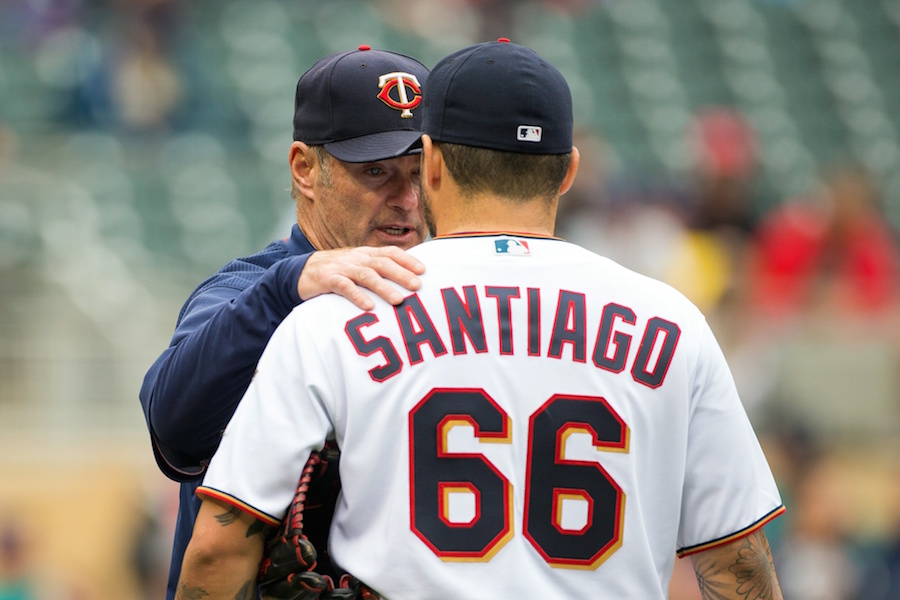 We now have a little under two weeks remaining until the holiday season gets underway. During the time period surrounding Christmas and New Year's, major league front offices go mostly silent. You'll see a few moves announced during this stretch, but for the most part there will be minimal action. It's the dead zone of the MLB offseason. However, there's still some time left before we get there. The first two weeks of December are generally pretty active. During this stretch, many of the discussions that developed during the Winter Meetings reach completion. Free agents who don't want to end the year unemployed settle on their favorite offer. So, what are the next steps for the Minnesota Twins, who have been very quiet thus far outside of signing Jason Castro and acquiring minor-leaguer Justin Haley via trade? Ongoing Dozier Discussions Things have conspicuously been quiet on this front. There were many reports of advanced talks between the Twins and Dodgers last week, but recent days have produced little in the way of substantive buzz. Hunger for news on the topic has grown so insatiable that one user-initiated thread in our forums, with a "source" indicating a deal would be completed within 24 hours (that deadline passed last Thursday) has generated more than 1,200 replies. I personally believe a deal will go down, because the motivation on both sides is considerable. The most likely window for such an eventuality would be within the next 10 days or so, but that's not a given to occur. When the Twins made their last trade of this magnitude, sending Johan Santana to the Mets following the 2007 season, an announcement didn't come until late January. On the one hand, Derek Falvey and Thad Levine shouldn't feel rushed in getting this done. The leverage is on their side, because Dozier is a hell of a player with two affordable years remaining on his contract. While Minnesota's need for quality young pitching borders on desperate, it isn't as immediate as LA's need for an impact second baseman with offensive punch. On the other hand, they need to move forward with the rest of their plans, which would be significantly altered by removing Dozier from the equation while adding MLB-ready talent coming back in the swap. I'm expecting something to be finalized soon. Arbitration Haggling The official deadline for teams and unsigned arbitration-eligible players to submit figures doesn't come until mid-January, but there's no doubt that conversations are already taking place. The Twins already took care of business with their two position players, releasing Trevor Plouffe and reaching agreement with Eduardo Escobar on a one-year, $2.6 million pact. That leaves four pitchers: Hector Santiago, Kyle Gibson, Brandon Kintzler and Ryan Pressly. The latter three shouldn't be grounds for much drama. Each is expected to settle at less than $4 million, and each has a fairly secure spot on the 2017 pitching staff. Santiago could be trickier. He made $5 million this year and will be looking to maximize earnings in his final turn at arbitration. He stayed healthy enough to post career highs in starts (33) and innings (182), so there's a good case for a hefty raise. However, he also delivered a poor performance in 2016, and the Twins received the worst portion of it in the final months. He has some distinct weaknesses – particularly his propensity for allowing walks and home runs – that should make an analytically-inclined front office squirm a little. If he makes $8.6 million, as MLB Trade Rumors projects, then this veteran with a 103 career ERA+ would stand to be the fourth-highest paid player on the 2017 roster. It's a questionable investment for a rebuilding team with several young starters worth taking a look at, and more potentially on the way in a Dozier deal. I do wonder if we'll see the Twins float Santiago around to contenders seeking back-of-rotation reliability. Fishing For Free Agents The Twins have already made their biggest splash in free agency with the addition of Castro. I wouldn't be surprised if we don't see another multi-year contract. But we'll almost surely see more signings. Specifically, I anticipate the addition of one or two experienced relievers through this avenue. Kenley Jansen is the only member of the "big three" still out there now that Aroldis Chapman and Mark Melancon have signed lucrative deals, but there are many intriguing names still on the market. Among them are Neftali Feliz, Santiago Casilla, Greg Holland and Drew Storen. These guys all have closing experience but won't break the bank, and that's appealing with the uncertainty surrounding Glen Perkins. Looking past guaranteed deals, the Twins have historically had a tendency to sign at least one reliever to a minor-league contract and then give him a spot in the bullpen. Last year that was Kintzler, though it took him a month to reach the majors. The year before, it was Blaine Boyer. Previous examples include Casey Fien, Dennys Reyes and Jared Burton (who, incidentally, is trying to make a comeback after taking 2015 off). We don't know if this trend will carry over to the new regime, but as those names attest, it can be an effective strategy. One name to watch is Clayton Richard, who was connected to the club by Darren Wolfson last week. He's not the kind of arm that's going to generate much excitement, but Richard fits the mold of what the Twins should be seeking: a specialized lefty suppressor who has been around the block a few times. The bullpen is presently very short on southpaws with meaningful big-league track records. As far as left-handed relievers go, currently the 40-man roster includes (aside from Perkins) only Taylor Rogers, Buddy Boshers, Ryan O'Rourke, Mason Melotakis and Randy Rosario. No one amongst that quintet has made more than 62 appearances in the majors. What do you expect to see over the next couple of weeks? What do you hope to see?
 -
Carrying the No. 1 pick in Thursday's Rule 5 draft, the Minnesota Twins got creative, selecting coveted flamethrower Miguel Diaz and immediately trading him to the Padres in exchange for right-hander Justin Haley. The maneuvering, and the thinking behind it, carried some distinctly familiar signatures of the previous regime, but also hints of fresh perspective from the new leadership.For Haley, Thursday morning was an unimaginable whirlwind. A former sixth-round draft pick of the Red Sox who had spent his entire career up to this point in Boston's system, Haley was the eighth player claimed in the Rule 5 when the Angels grabbed him. They then dealt the righty to the Padres, who immediately turned around and flipped him to the Twins along with cash for Diaz. The way this situation played out is reminiscent to 1999, when Minnesota also held the top pick. They selected Jared Camp from the Indians, but then traded him to the Marlins in exchange for Johan Santana plus cash. In that instance, the Twins got their guy along with some additional dollars. We all know how it ended up working out. The mindset here was likely the same, though obviously we're not expecting the same kind of results. In passing up Diaz (and other ferocious hard-throwers) for Haley, the Twins prioritized utility over upside with this pick. Santana was of course a special case. Haley looks more like a prototypical target of the Terry Ryan era. In fact, his build and statistical profile are comparable to Terry Doyle, who the Twins plucked from the White Sox system with a high pick in the 2011 Rule 5 draft before returning him a few months later in spring training. For those who recall, Doyle isn't a comp that's going to generate any kind of enthusiasm. It was an uninspired move that worked out rather predictably for a team that desperately needed to bolster its pitching corps with high-ceiling talent. Despite some similarities on the surface though, Haley is no Doyle. And as you learn about what the revamped front office likes about him, you start to see some of the aforementioned distinctions arise. Unlike the many high-velocity specimens that were available, Haley's fastball sits in the high 80s and low 90s. Delivering from a big 6'5" frame, he creates a downward plane that helps him keep the ball in yard; last year between Double-A and Triple-A he gave up only nine homers in 146 innings. Yet, among the things that general manager Thad Levine alluded to when discussing Haley was not his ability to attack the low part of the zone – a trademark mantra from Ryan and his disciples that was frequently echoed on the team's television broadcasts. Instead, Levine pointed out that the 25-year-old "pitches very effectively in the top of the zone with his fastball and then pairs it up with offspeed pitches that are more at the bottom of the zone." You can see this dynamic on display in the footage tweeted by Parker, wherein Haley burns high heaters past waving onlookers and then drops a few breaking balls at the knees. Despite those whiffs, and Levine referencing "swing and miss percentages," there is no illusion that Haley is going to be a dominant strikeout pitcher. He's a guy with a 7.8 K/9 rate through the minors, and one that Boston's organization – reputed for its evaluation and handling of prospect talent – didn't feel compelled to protect. Haley is simply a capable, major-league ready player who can serve a valuable role on the Twins staff. La Velle E. Neal III compared the hurler's likely function to former swingman Anthony Swarzak. Of course, Swarzak was never a great pitcher but he was definitely useful, flexibly eating up innings after (sadly plentiful) short outings and always ready to step in for a spot start. It appears that the Twins have similar designs for the newly acquired Haley, who stands out as an interesting bridge between the old and new versions of the Minnesota front office. My final takeaway from the move, though, is that it shares this commonality with much of the latter Ryan era: there's no 'sell out for the future' vibe here. The Twins could have gone with a raw power arm and stashed him in the back of the bullpen all summer, if they were of the mind that 2017 is already a lost cause. On the contrary, Haley's polish and readiness to contribute are atop his list of positives. This is how a team operates when it's got an eye on competing in the short term. Could hold-ups in the Dozier trade be related to that very same directive? On this week's Gleeman and the Geek podcast, we wondered aloud how much of a deal-breaker it would be to receive little in the way of MLB-ready talent from the Dodgers. Click here to view the article
-
 For Haley, Thursday morning was an unimaginable whirlwind. A former sixth-round draft pick of the Red Sox who had spent his entire career up to this point in Boston's system, Haley was the eighth player claimed in the Rule 5 when the Angels grabbed him. They then dealt the righty to the Padres, who immediately turned around and flipped him to the Twins along with cash for Diaz. The way this situation played out is reminiscent to 1999, when Minnesota also held the top pick. They selected Jared Camp from the Indians, but then traded him to the Marlins in exchange for Johan Santana plus cash. In that instance, the Twins got their guy along with some additional dollars. We all know how it ended up working out. The mindset here was likely the same, though obviously we're not expecting the same kind of results. In passing up Diaz (and other ferocious hard-throwers) for Haley, the Twins prioritized utility over upside with this pick. Santana was of course a special case. Haley looks more like a prototypical target of the Terry Ryan era. In fact, his build and statistical profile are comparable to Terry Doyle, who the Twins plucked from the White Sox system with a high pick in the 2011 Rule 5 draft before returning him a few months later in spring training. For those who recall, Doyle isn't a comp that's going to generate any kind of enthusiasm. It was an uninspired move that worked out rather predictably for a team that desperately needed to bolster its pitching corps with high-ceiling talent. Despite some similarities on the surface though, Haley is no Doyle. And as you learn about what the revamped front office likes about him, you start to see some of the aforementioned distinctions arise. Unlike the many high-velocity specimens that were available, Haley's fastball sits in the high 80s and low 90s. Delivering from a big 6'5" frame, he creates a downward plane that helps him keep the ball in yard; last year between Double-A and Triple-A he gave up only nine homers in 146 innings. Yet, among the things that general manager Thad Levine alluded to when discussing Haley was not his ability to attack the low part of the zone – a trademark mantra from Ryan and his disciples that was frequently echoed on the team's television broadcasts. Instead, Levine pointed out that the 25-year-old "pitches very effectively in the top of the zone with his fastball and then pairs it up with offspeed pitches that are more at the bottom of the zone." You can see this dynamic on display in the footage tweeted by Parker, wherein Haley burns high heaters past waving onlookers and then drops a few breaking balls at the knees. https://twitter.com/ParkerHageman/status/806892326224363520 Despite those whiffs, and Levine referencing "swing and miss percentages," there is no illusion that Haley is going to be a dominant strikeout pitcher. He's a guy with a 7.8 K/9 rate through the minors, and one that Boston's organization – reputed for its evaluation and handling of prospect talent – didn't feel compelled to protect. Haley is simply a capable, major-league ready player who can serve a valuable role on the Twins staff. La Velle E. Neal III compared the hurler's likely function to former swingman Anthony Swarzak. Of course, Swarzak was never a great pitcher but he was definitely useful, flexibly eating up innings after (sadly plentiful) short outings and always ready to step in for a spot start. It appears that the Twins have similar designs for the newly acquired Haley, who stands out as an interesting bridge between the old and new versions of the Minnesota front office. My final takeaway from the move, though, is that it shares this commonality with much of the latter Ryan era: there's no 'sell out for the future' vibe here. The Twins could have gone with a raw power arm and stashed him in the back of the bullpen all summer, if they were of the mind that 2017 is already a lost cause. On the contrary, Haley's polish and readiness to contribute are atop his list of positives. This is how a team operates when it's got an eye on competing in the short term. Could hold-ups in the Dozier trade be related to that very same directive? On this week's Gleeman and the Geek podcast, we wondered aloud how much of a deal-breaker it would be to receive little in the way of MLB-ready talent from the Dodgers.
 -
I don't think this is close to accurate as a blanket statement. I know plenty of casual fans who are eager for a complete overhaul. They would be more than happy with a Dozier trade if it brings back highly touted prospect talent.
-
Just outside the nation's capitol, the Hot Stove is fired up at baseball's Winter Meetings. The biggest bombshell of the offseason dropped on Tuesday when the White Sox shipped ace Chris Sale to Boston in exchange for Yoan Moncada, arguably the game's best prospect. The Minnesota Twins, however, have yet to take part in the festivities.The biggest Twins-related news to emerge recently has involved organizational housekeeping. Last week James Rowson was announced as the team's new hitting coach, and this week Minnesota shook up the scouting department with a pair of promotions. Outwardly, the front office has not been especially active in its roster construction efforts. There are reports of discussions between the Twins and Dodgers regarding Brian Dozier, but no indications of anything imminent. Minnesota hasn't been meaningfully connected to any free agents of note. This is reflective of the general state of affairs. Right now, Derek Falvey and Thad Levine are still amidst the process of getting their bearings. Hell, they just met Dozier in person for the first time. They are too busy gaining familiarity with the organization they've inherited to be fully focused on meeting with agents or engaging in constant trade talks. The Twins moved quickly on Jason Castro, because doing so was necessary to lock up the coveted catcher, but now there is little need for urgency. The team is wise not to rush a Dozier trade and clearly the knockout offer hasn't yet come. They're also better off waiting out free agency for values now that they've addressed their most blatant need. Plus, they need to plan around one roster spot being occupied by whomever they select in Thursday's Rule 5 draft. In dealing away Sale, the White Sox have apparently committed to a blow-up rebuild, with reports of Jose Quintana, Todd Frazier and Jose Abreu now being on the block. Some will look at this as the path the Twins should have taken, and maybe still should take. After all, the Sox lost 19 fewer games than Minnesota this year, and appeared far closer to contention. By taking a step backward for the moment, they are positioning themselves for a full thrust push in a few years. I don't think the Twins would necessarily be mimicking that approach by trading Dozier – their offense can sustain his loss and they'd likely be getting MLB-ready pitching back. However, if they were to deal Ervin Santana, I believe that would be much more of a step toward building for the future at the expense of 2017. Up to this point, we've heard no rumors of Santana being shopped, despite what is clearly a very receptive market for starting pitching. That might change, but it feels unlikely. One factor to account for is Paul Molitor's status as a lame duck manager. By all accounts the new CBO and GM have been working closely with the Hall of Famer, and they're surely empathetic to Molitor's desire to lead a rebound and keep his job. Whether he can do so remains to be seen. But something tells me the front office won't do much to hinder him. Their hesitance to part with Dozier, along with their evident lack of interest in making Santana available, only underscores this. ~~~ Falvey sat with Matt Vasgersian and Harold Reynolds for an interview on MLB Network earlier this week and it's certainly worth watching if you'd like to get a read on the new Twins baseball prez. Click here to view the article
-
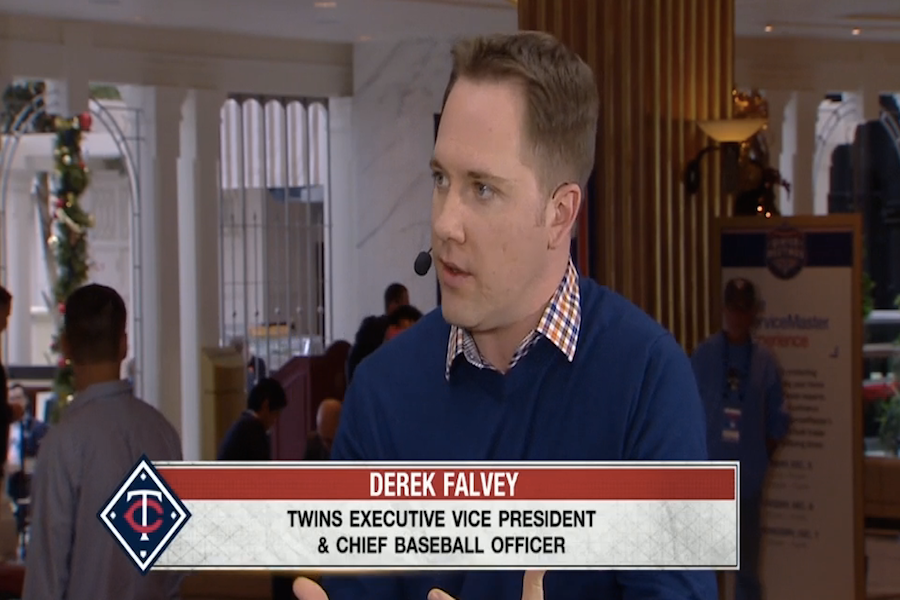 The biggest Twins-related news to emerge recently has involved organizational housekeeping. Last week James Rowson was announced as the team's new hitting coach, and this week Minnesota shook up the scouting department with a pair of promotions. Outwardly, the front office has not been especially active in its roster construction efforts. There are reports of discussions between the Twins and Dodgers regarding Brian Dozier, but no indications of anything imminent. Minnesota hasn't been meaningfully connected to any free agents of note. This is reflective of the general state of affairs. Right now, Derek Falvey and Thad Levine are still amidst the process of getting their bearings. Hell, they just met Dozier in person for the first time. They are too busy gaining familiarity with the organization they've inherited to be fully focused on meeting with agents or engaging in constant trade talks. The Twins moved quickly on Jason Castro, because doing so was necessary to lock up the coveted catcher, but now there is little need for urgency. The team is wise not to rush a Dozier trade and clearly the knockout offer hasn't yet come. They're also better off waiting out free agency for values now that they've addressed their most blatant need. Plus, they need to plan around one roster spot being occupied by whomever they select in Thursday's Rule 5 draft. In dealing away Sale, the White Sox have apparently committed to a blow-up rebuild, with reports of Jose Quintana, Todd Frazier and Jose Abreu now being on the block. Some will look at this as the path the Twins should have taken, and maybe still should take. After all, the Sox lost 19 fewer games than Minnesota this year, and appeared far closer to contention. By taking a step backward for the moment, they are positioning themselves for a full thrust push in a few years. I don't think the Twins would necessarily be mimicking that approach by trading Dozier – their offense can sustain his loss and they'd likely be getting MLB-ready pitching back. However, if they were to deal Ervin Santana, I believe that would be much more of a step toward building for the future at the expense of 2017. Up to this point, we've heard no rumors of Santana being shopped, despite what is clearly a very receptive market for starting pitching. That might change, but it feels unlikely. One factor to account for is Paul Molitor's status as a lame duck manager. By all accounts the new CBO and GM have been working closely with the Hall of Famer, and they're surely empathetic to Molitor's desire to lead a rebound and keep his job. Whether he can do so remains to be seen. But something tells me the front office won't do much to hinder him. Their hesitance to part with Dozier, along with their evident lack of interest in making Santana available, only underscores this. ~~~ Falvey sat with Matt Vasgersian and Harold Reynolds for an interview on MLB Network earlier this week and it's certainly worth watching if you'd like to get a read on the new Twins baseball prez.
 -
Article: Not-So-Premium Velocity
Nick Nelson replied to Nick Nelson's topic in Twins Daily Front Page News
True. All I'm saying is that the number of unprotected hard throwers, as well as Landa being dropped from the 40-man (and subsequently re-signed) indicates that top-tier velocity on its own isn't the draw it once was. -
Not so long ago, hard-throwing pitchers were in high demand. As triple-digit readings became increasingly common, the Minnesota Twins notoriously lagged far behind. The organization put no shortage of effort into correcting that issue, but with mostly subpar results. Now, the Twins have fireballers to spare. And so do the rest of the league's teams.On Sunday night, Parker and I subbed for Aaron on the Gleeman and the Geek podcast. Among the topics discussed was the club's decision to non-tender 22-year-old right-hander Yorman Landa, thus opening a spot on the 40-man roster in advance of this week's Rule 5 draft. Landa has a power arm that has touched 100 MPH. In the past, releasing such a specimen would be unthinkable for a franchise starving for special heat. But Landa's expendability is a sign of the times. In Baseball America's Rule 5 draft preview, JJ Cooper notes that "at least nine pitchers who touched 100 mph or better this year" will be available to the Twins when they select first on Thursday. You can bet that a big fastball alone won't entice the Twins. The past regime has been down that path too many times. Alex Meyer and Jim Hoey were seemingly acquired largely for their overpowering velocity, but the coinciding control issues never went away. J.R. Graham was Minnesota's Rule 5 selection after his velo uptick following a switch to the bullpen caught the eyes of scouts. His 95-MPH heater never translated to dominance. Relievers that can bring the zing are no longer rare commodities, so big radar results in isolation aren't going to generate a whole lot of excitement anymore. It will be interesting to see what other qualities the new decision-makers prioritize. They are all but certain to add a new player in the Rule 5 draft, and there will be plenty of opportunities to find talent through other avenues before and after. To find out which prospects the Twins will be choosing from on Thursday, I highly recommend checking out BA's write-up, which profiles several very intriguing names. Click here to view the article
- 13 replies
-
- 1
-
-
- yorman landa
- alex meyer
- (and 1 more)
-
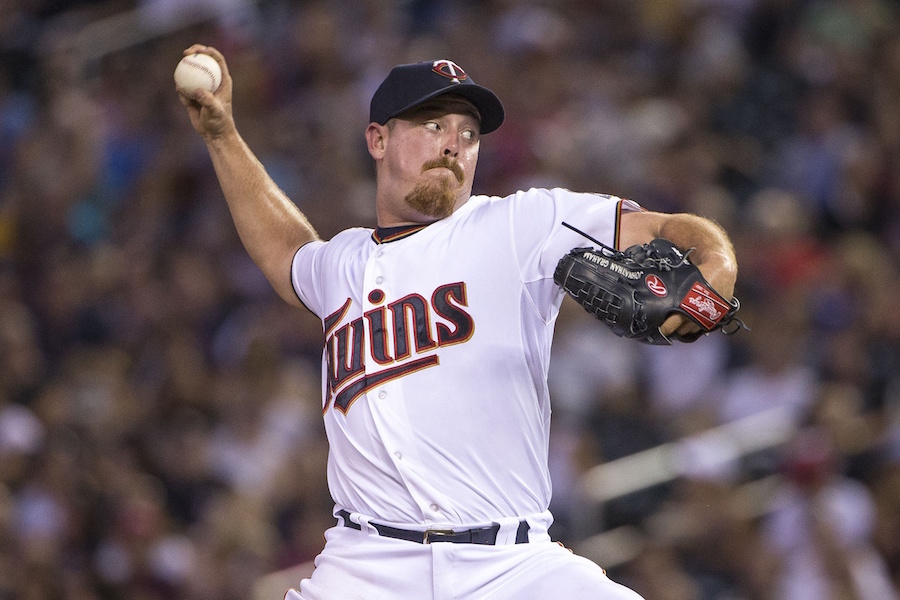 On Sunday night, Parker and I subbed for Aaron on the Gleeman and the Geek podcast. Among the topics discussed was the club's decision to non-tender 22-year-old right-hander Yorman Landa, thus opening a spot on the 40-man roster in advance of this week's Rule 5 draft. Landa has a power arm that has touched 100 MPH. In the past, releasing such a specimen would be unthinkable for a franchise starving for special heat. But Landa's expendability is a sign of the times. In Baseball America's Rule 5 draft preview, JJ Cooper notes that "at least nine pitchers who touched 100 mph or better this year" will be available to the Twins when they select first on Thursday. You can bet that a big fastball alone won't entice the Twins. The past regime has been down that path too many times. Alex Meyer and Jim Hoey were seemingly acquired largely for their overpowering velocity, but the coinciding control issues never went away. J.R. Graham was Minnesota's Rule 5 selection after his velo uptick following a switch to the bullpen caught the eyes of scouts. His 95-MPH heater never translated to dominance. Relievers that can bring the zing are no longer rare commodities, so big radar results in isolation aren't going to generate a whole lot of excitement anymore. It will be interesting to see what other qualities the new decision-makers prioritize. They are all but certain to add a new player in the Rule 5 draft, and there will be plenty of opportunities to find talent through other avenues before and after. To find out which prospects the Twins will be choosing from on Thursday, I highly recommend checking out BA's write-up, which profiles several very intriguing names.
 -
Article: Twins New Front Office Off To Strong Start
Nick Nelson replied to Nick Nelson's topic in Twins Daily Front Page News
Castro was the most heavily sought free agent catcher in the early going, with multiple offers on the table. The Twins competed and won the bidding, while other free agents continue to wait and let the market play out. You don't have to call it strong if you don't want but it is bold.- 96 replies
-
- 6
-
-
- jason castro
- derek falvey
- (and 1 more)
-
Article: Twins New Front Office Off To Strong Start
Nick Nelson replied to Nick Nelson's topic in Twins Daily Front Page News
Well. At least we're being realistic and reasonable in our expectations! 1) They didn't sign him for his bat. 2) He posted his highest OPS in 3 years this season.- 96 replies
-
- 5
-
-
- jason castro
- derek falvey
- (and 1 more)
-
Less than three weeks after being formally introduced in a press conference at Target Field, Derek Falvey and Thad Levine made their first major acquisition as heads of the Minnesota Twins baseball department. The Jason Castro signing was a bold stroke from the new front office, and one that sends some very positive signals regarding what we can expect from this new era of leadership.It has been evident that Castro was the team's top priority from the get-go. While serving as interim GM late in the summer, Rob Antony pointed to finding a starting catcher as Minnesota's primary offseason imperative, and as soon as free agency got underway the Twins were repeatedly tied to the former Astro by multiple sources. But wanting a free agent and being able to sign him are two different things, as we've seen many times over the years. During Terry Ryan's tenure, the Twins were frequently unable to lure coveted targets, too often beaten to the punch by more aggressive (and less risk-averse) suitors. Castro had no shortage of demand – his name was generating significant buzz and he had at least one other three-year offer on the table – but the Twins managed to strike quickly and lock him up by Thanksgiving, even with the disadvantage of posting baseball's worst record in 2016. That meant going above and beyond in terms of salary. While we don't know the specifics of what different clubs were proposing, it seems safe to say that the Twins offered the most money at $24.5 million, which surpassed Josh Willingham's contract to become Minnesota's largest commitment for a free agent position player in the last 25 years. On the surface, that's a tough number to justify for someone who has batted .210 as a part-time catcher over the past two seasons, especially when your team is amidst a rebuild. In fact, it's an expense that can only really be justified on the basis of advanced metrics and contemporary thinking. Castro derives much of his value from superior pitch-framing capabilities, and his left-handed bat provides a platoon advantage when paired with John Ryan Murphy or Mitch Garver. It is promising not only that Falvey and Levine appear to be heavily weighing such factors, but also that they were able to sell ownership on these merits. It's no easy task to come in and push for giving a historically large contract (in relative terms) to someone with Castro's track record. It's a great first step for Falvey and Levine, and the organization as a whole. But of course, their biggest test still lies ahead. Click here to view the article
- 96 replies
-
- 1
-
-
- jason castro
- derek falvey
- (and 1 more)
-
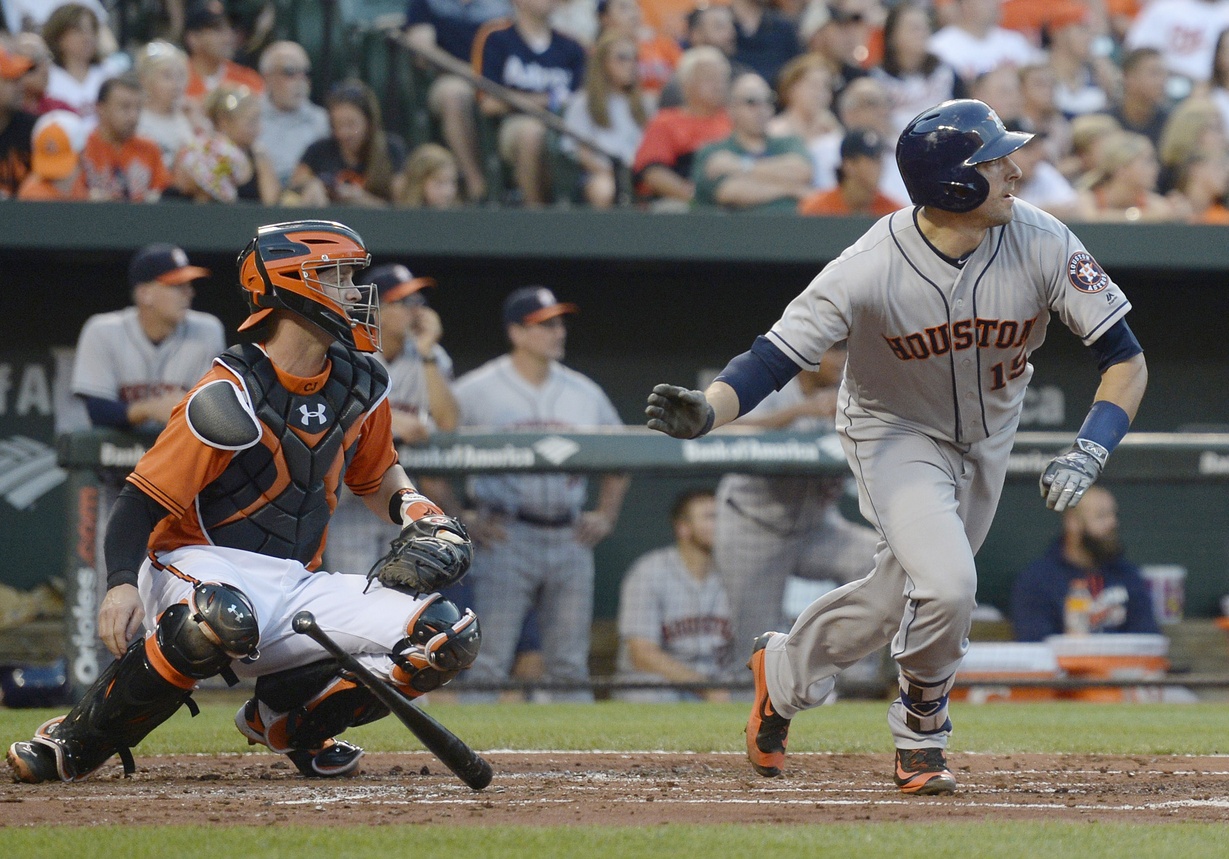 It has been evident that Castro was the team's top priority from the get-go. While serving as interim GM late in the summer, Rob Antony pointed to finding a starting catcher as Minnesota's primary offseason imperative, and as soon as free agency got underway the Twins were repeatedly tied to the former Astro by multiple sources. But wanting a free agent and being able to sign him are two different things, as we've seen many times over the years. During Terry Ryan's tenure, the Twins were frequently unable to lure coveted targets, too often beaten to the punch by more aggressive (and less risk-averse) suitors. Castro had no shortage of demand – his name was generating significant buzz and he had at least one other three-year offer on the table – but the Twins managed to strike quickly and lock him up by Thanksgiving, even with the disadvantage of posting baseball's worst record in 2016. That meant going above and beyond in terms of salary. While we don't know the specifics of what different clubs were proposing, it seems safe to say that the Twins offered the most money at $24.5 million, which surpassed Josh Willingham's contract to become Minnesota's largest commitment for a free agent position player in the last 25 years. On the surface, that's a tough number to justify for someone who has batted .210 as a part-time catcher over the past two seasons, especially when your team is amidst a rebuild. In fact, it's an expense that can only really be justified on the basis of advanced metrics and contemporary thinking. Castro derives much of his value from superior pitch-framing capabilities, and his left-handed bat provides a platoon advantage when paired with John Ryan Murphy or Mitch Garver. It is promising not only that Falvey and Levine appear to be heavily weighing such factors, but also that they were able to sell ownership on these merits. It's no easy task to come in and push for giving a historically large contract (in relative terms) to someone with Castro's track record. It's a great first step for Falvey and Levine, and the organization as a whole. But of course, their biggest test still lies ahead.
 -
Article: Dozier Trade Talk Heating Up?
Nick Nelson replied to Nick Nelson's topic in Twins Daily Front Page News
Look up the dictionary definition of "prospect" and you'll see synonyms listed such as likelihood, hope, odds, possibility. Prospects are never sure things (and I think you're getting carried away with the "hype" surrounding the current Twins pitching pipeline) so it's always beneficial to stack up more of them. As long as they don't trade Dozier for a pair of bad minor-league relievers I doubt there will be strong comparisons made. The Twins hit 200 home runs this year and lost 103 games so do you really think any knowledgeable experts are going to be lamenting a move that subtracts power hitting in exchange for power pitching? -
If history is any indication, then our likelihood of seeing the first trade executed by Minnesota's reconfigured front office within the next couple of weeks is pretty good. So let's sift through the latest rumors and rumblings.Now that kitchen stoves are cooling down after a long weekend of roasting and baking, baseball's Hot Stove is about to heat up. The Winter Meetings will get underway in Washington DC next week, and this is annually the most active period of the offseason. Last year, Terry Ryan and the front office struck unusually early, completing a trade for Yankees catcher John Ryan Murphy just 10 days after the conclusion of the World Series. But in 2012, the Denard Span deal went down on November 29th and Ben Revere was sent out a week later. Two years earlier, the regrettable JJ Hardy trade was announced on December 9th. With these precedents in mind, it's probably time to start honing our antennas for reports and tidbits relating to the Twins, and especially Brian Dozier. Unsurprisingly, the slugging second baseman's name has already been floating around in rumors. At the GM Meetings earlier this month, MLB Network's Jon Morosi reported that Dozier received interest from multiple teams. In the Offseason Handbook, we extensively examined Dozier's most likely trade suitors, focusing on three different clubs with a distinct need and the means to get something done. One of those teams is now likely out of the running. The Mets extended a qualifying offer to incumbent second baseman Neil Walker and he accepted it, so he'll be coming back on a one-year pact. Another team, the Pirates, could enter the bidding but I have seen no public reports indicating that has happened yet. It's the Los Angeles Dodgers that have been linked to the Twins and Dozier most substantially, and this comes as no surprise. They led off the "Dealing Dozier" section in the Handbook because they are clearly the most logical match. Why Dozier Makes Sense For The Dodgers Now that the Cubs have finally ended their infamous drought, you'd be hard pressed to find a club more desperate for a championship. The Dodgers fell just short of the World Series this year, and haven't appeared in the Fall Classic since 1988. They're bankrolling the highest payroll in baseball. Clayton Kershaw, the game's best pitcher, turns 29 next March and can opt out of his contract after the 2018 season. It's go-time, and Dozier represents exactly what LA needs. Howie Kendrick has been traded and Chase Utley is an aging free agent, leaving second wide open. Meanwhile, their best right-handed power hitter, third baseman Justin Turner, may land elsewhere as he explores the open market. For all of these reasons, the fit is unmistakable. There is also this wrinkle: facing a mandate to reduce debt, the Dodgers are apparently focused on cutting down spending significantly over the next couple of years. With his relatively affordable contract ($15 million through 2018), Dozier could carry added appeal. Why The Dodgers Make Sense For The Twins They are motivated buyers with some quality assets on hand. The Dodgers have reportedly had talks with the Tigers regarding Ian Kinsler, but Minnesota might be a preferable partner since they wouldn't require as much MLB-ready impact talent in return. Derek Falvey and Thad Levine are transparently taking a long-term view, which would enable them to justify flipping Dozier for prospects who are a bit further out. With that said, this trade can't happen without at least one player who is in the majors or extremely close. Who To Target In A Trade Mike Berardino (whose Twitter account has been a steady stream of Twins updates and notes, always appreciated during the slower stretches of winter), relayed a suggestion from an AL scout that Cody Bellinger might make sense as a centerpiece for a Dozier deal. The idea, evidently, is that the power-hitting prospect could eventually replace Joe Mauer at first base. Berardino has also dropped names like outfielder Yasiel Puig and shortstop Gavix Lux. They're intriguing possibilities. But, does it really make sense to build a Dozier return package around anything other than pitching? I would say no. In our Twins Daily offseason blueprint within the Handbook, one of the moves we suggested was trading Dozier to the Dodgers in exchange for a package featuring Jose De Leon. Presuming the Dodgers deem Julio Urias – who became the youngest pitcher ever to start a postseason game in October – untouchable, but De Leon is a worthy target. Like Jose Berrios, he is a Puerto Rican right-hander with a hard, spinning fastball and quality secondaries. Ideally, the two would form a potent young combo at the head of Minnesota's resurgent rotation. De Leon ranked 32nd on MLB.com's midseason top prospect update, and 25th per Baseball America. Berardino, for his part, opines that De Leon's shoulder inflammation scare this year presents too much risk. However, there is little reason to think those issues, which hindered his early-season workload and contributed to him totaling fewer than 100 innings, were still affecting him in any way by the latter portion of the summer, when De Leon was eviscerating Triple-A lineups prior to his first MLB call-up. Alas, finding a premium arm with zero health concerns might be impossible. If the Twins could strengthen their odds by adding a couple of other high-ceiling prospects to the mix, this move would seemingly be a no-brainer. But of course, it takes two to tango. So, just how motivated are the Dodgers? We might find out next week. Or even sooner. Click here to view the article

