



Nick Nelson
-
Posts
8,326 -
Joined
-
Last visited
-
Days Won
56
Content Type
Profiles
News
Minnesota Twins Videos
2026 Minnesota Twins Top Prospects Ranking
2022 Minnesota Twins Draft Picks
Minnesota Twins Free Agent & Trade Rumors, Notes, & Tidbits
Guides & Resources
2023 Minnesota Twins Draft Picks
The Minnesota Twins Players Project
2024 Minnesota Twins Draft Picks
2025 Minnesota Twins Draft Pick Tracker
2026 Minnesota Twins Draft Tracker: Picks & Bonuses
Forums
Blogs
Events
Store
Downloads
Gallery
Everything posted by Nick Nelson
-
 Stunningly severe struggles from the pitching staff, a surprising Arizona Fall League assignment, and a great September call-up story. We'll touch on all three trending Twins topics in the latest Three-Bagger.* The big story of the last month should be a lineup that continues to flex its muscles. The story should be a mind-boggling hitting clinic from Brian Dozier, and the electric return of Byron Buxton, and Trevor Plouffe reviving his season, and Miguel Sano closing in on 25 homers, and Max Kepler clamping down right field. All of those threads tie to an emerging offense that has crossed the plate 42 times through the first five contests of the current homestand, and is averaging nearly five runs per game since the All-Star break. That should be the story for a last place team that should be on an upward trajectory. Instead, the story is that in spite of all that prolific scoring – and in spite of Dozier putting forth one of the most incredible stretches of self-manufactured offense in recent history – the Twins have still managed to drop 21 of their last 26 games. Minnesota's miserable pitching staff has effectively sapped any enthusiasm these hitters have attempted to generate. Dozier can hit three bombs in a game, and the Twins still lose. Buxton can lift the club with a dramatic grand slam and they still ultimately fall short. The Twins are on track to surpass 750 runs scored for the first time since 2010, and they're going to lose 100 games. That's because they are also on track to allow more than 900 runs, which has never happened in Twins history. This staff, designed with postseason aspirations, has been hit with a few key injuries (Phil Hughes and Glen Perkins most notably) but nothing that should've been totally unforeseen. It's almost incomprehensible that they are on pace give up more runs than any of those porous units from the steroid era in the late '90s. Obviously, they need some help. * The best hope for providing that help, internally, is Stephen Gonsalves. He wrapped up a dazzling season last week, finishing with a 2.06 ERA and 1.02 WHIP between Ft. Myers and Chattanooga. The Twins announced on Monday that Gonsalves will be heading to the Arizona Fall League, joining the six who were already named (Nick Gordon, Mitch Garver, Tanner English, Randy Rosario, Mason Melotakis and John Curtiss). The decision to add Gonsalves is interesting, because it suggests the organization would like him to get a few more innings under his belt before settling down for the offseason. The lefty set a career high by logging 140 frames this year but it wasn't a huge step forward from last year's 134. Adding a few more in the fall league could put his arm in position to approach 200 next summer. * With rosters expanding over for the final month, the Twins tabbed three players from the minors as September call-ups. Two of them will face considerable pressure. Tyler Duffey is trying to make his case for the 2017 rotation as he winds down a season that has been horrendous. Kennys Vargas is trying to prove his bat is worth a roster spot despite the defensive limitations that may force him out. James Beresford, though? He'll just be enjoying the ride. It's been more than a decade since the Twins signed Beresford as a teenager out of Australia. He rose gradually through the system before settling at Triple-A, never a true prospect but always a valued player. The lefty-swinging middle infielder brings a soft bat (he has slugged .330 and hit four total home runs in 1,000 minor-league games) but a steady and reliable glove. Beresford turns 28 in January. He has played 382 games at Rochester over the past three seasons without showing any real signs of improvement. Paul Molitor basically acknowledged that the promotion was largely in recognition of Beresford's lengthy service in the organization. Presumably he won't play much and will merely serve as extra infield depth. Still, it'll be fun to see him don a big-league jersey for the final month. Click here to view the article
 -
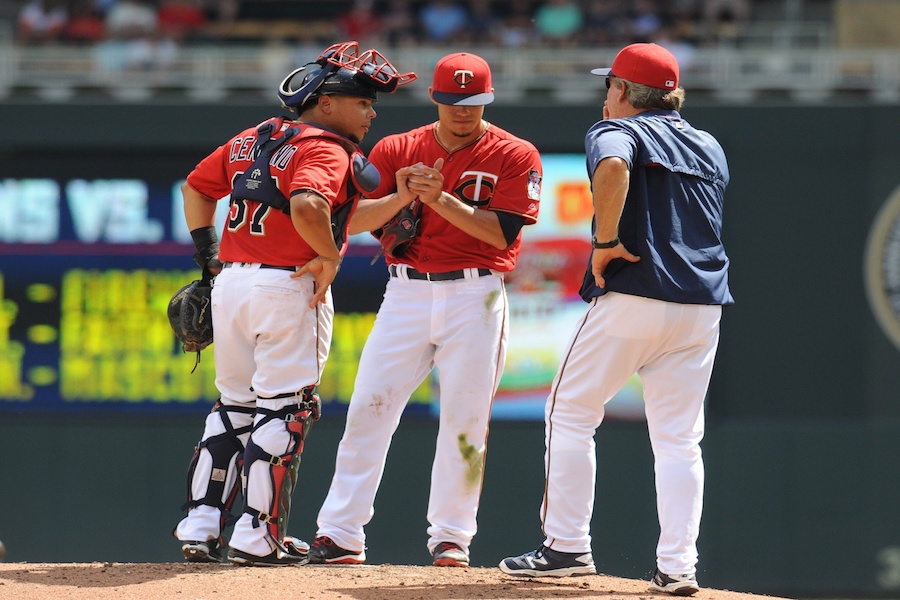 * The big story of the last month should be a lineup that continues to flex its muscles. The story should be a mind-boggling hitting clinic from Brian Dozier, and the electric return of Byron Buxton, and Trevor Plouffe reviving his season, and Miguel Sano closing in on 25 homers, and Max Kepler clamping down right field. All of those threads tie to an emerging offense that has crossed the plate 42 times through the first five contests of the current homestand, and is averaging nearly five runs per game since the All-Star break. That should be the story for a last place team that should be on an upward trajectory. Instead, the story is that in spite of all that prolific scoring – and in spite of Dozier putting forth one of the most incredible stretches of self-manufactured offense in recent history – the Twins have still managed to drop 21 of their last 26 games. Minnesota's miserable pitching staff has effectively sapped any enthusiasm these hitters have attempted to generate. Dozier can hit three bombs in a game, and the Twins still lose. Buxton can lift the club with a dramatic grand slam and they still ultimately fall short. The Twins are on track to surpass 750 runs scored for the first time since 2010, and they're going to lose 100 games. That's because they are also on track to allow more than 900 runs, which has never happened in Twins history. This staff, designed with postseason aspirations, has been hit with a few key injuries (Phil Hughes and Glen Perkins most notably) but nothing that should've been totally unforeseen. It's almost incomprehensible that they are on pace give up more runs than any of those porous units from the steroid era in the late '90s. Obviously, they need some help. * The best hope for providing that help, internally, is Stephen Gonsalves. He wrapped up a dazzling season last week, finishing with a 2.06 ERA and 1.02 WHIP between Ft. Myers and Chattanooga. The Twins announced on Monday that Gonsalves will be heading to the Arizona Fall League, joining the six who were already named (Nick Gordon, Mitch Garver, Tanner English, Randy Rosario, Mason Melotakis and John Curtiss). The decision to add Gonsalves is interesting, because it suggests the organization would like him to get a few more innings under his belt before settling down for the offseason. The lefty set a career high by logging 140 frames this year but it wasn't a huge step forward from last year's 134. Adding a few more in the fall league could put his arm in position to approach 200 next summer. * With rosters expanding over for the final month, the Twins tabbed three players from the minors as September call-ups. Two of them will face considerable pressure. Tyler Duffey is trying to make his case for the 2017 rotation as he winds down a season that has been horrendous. Kennys Vargas is trying to prove his bat is worth a roster spot despite the defensive limitations that may force him out. James Beresford, though? He'll just be enjoying the ride. It's been more than a decade since the Twins signed Beresford as a teenager out of Australia. He rose gradually through the system before settling at Triple-A, never a true prospect but always a valued player. The lefty-swinging middle infielder brings a soft bat (he has slugged .330 and hit four total home runs in 1,000 minor-league games) but a steady and reliable glove. Beresford turns 28 in January. He has played 382 games at Rochester over the past three seasons without showing any real signs of improvement. Paul Molitor basically acknowledged that the promotion was largely in recognition of Beresford's lengthy service in the organization. Presumably he won't play much and will merely serve as extra infield depth. Still, it'll be fun to see him don a big-league jersey for the final month.
 -
Article: Santana Shines Among Sad Starter Group
Nick Nelson replied to Nick Nelson's topic in Twins Daily Front Page News
Atlanta traded Miller (a VASTLY superior trade asset than Santana) to a pitching-needy team for a package headlined by a top position player prospect. Detroit traded Cespedes, a hitter, to an offense-needy team that was deep in pitching (this is the approach I've suggested with Dozier). The examples sort of highlight the hold-ups I have with a potential Santana deal. Where is the precedent for clubs trading impact young pitching in exchange for a good-not-great veteran starting pitcher? When the Twins traded Johan Santana, the best pitching prospect they got back was a teenager. And he didn't pan out. That case is very much worth keeping in mind as we mull this idea over. (By the way, how differently does the 2008 season, where many expected the Twins not to be competitive, turn out if the Twins keep Santana?) -
Article: Santana Shines Among Sad Starter Group
Nick Nelson replied to Nick Nelson's topic in Twins Daily Front Page News
In the eyes of the public, yes. I'm quite sure that trading both of them would be viewed that way. As you know I'm very supportive of trading Dozier for pitching. I just don't see how you deal Santana for any pitching that's going to help in the near future and in that case I don't see how you justify it. In the abstract Santana is certainly a tradeable asset but in a practical sense I just don't agree that it is, as you say, the right thing. Is it really that tough for you to envision a decent starting rotation next year that includes some combination of Santana, Gibson, May, Berrios, Santiago, Duffey, and whatever they get back for Dozier? -
Article: Santana Shines Among Sad Starter Group
Nick Nelson replied to Nick Nelson's topic in Twins Daily Front Page News
With respect, I think advocating for a blowout rebuild is the unrealistic view. You might think it's the best approach (and you might be right) but it's not going to happen. There is zero reason to think that ownership or the head execs have any desire to take this route. I can almost guarantee you that when they're interviewing candidates, they're not asking "How can you get this team contending in three years?" but rather "How are you going to get this thing back on track fast?" There are business realities at play here, and as I wrote, they likely played in to the decision to give TR the ax. They simply cannot afford to openly forfeit competitiveness next year. They're too far into this era of hideous play. They're too invested in young core players that have already entered the fold. They're losing too many fans and too much money as it is. Therefore, I write most of my content from that slant. What can the Twins do to position themselves well for the future without blatantly punting 2017? I'm not seeing a Santana trade scenario that accomplishes both. -
Article: Santana Shines Among Sad Starter Group
Nick Nelson replied to Nick Nelson's topic in Twins Daily Front Page News
We can all agree with that, but I've yet to be convinced that anyone is dealing those for an expensive 34-YO starter, even if he's coming off a great year. Trading Dozier to a team whose run scoring/prevention balance tips in the opposite direction is the way to get this done, IMO. This is essentially the same staff that finished in the middle of the pack last year. Gibson was a solid starter in 2015. Berrios was a top 5 pitching prospect in the game entering this season. Santana has been great. Mejia, Santiago, Duffey and others all offer reasonable potential to be decent. Saying that that "we've already given up on next year" because of the way things have played out this season seems very defeatist to me. And, I'll ask again, what happens if you blow up the pitching staff and a few guys rebound while the offense kicks ass? Missed opportunity. -
On Tuesday night, the Twins suffered their 12th loss in a row, as a league-worst pitching staff continues to drag them to new depths. Lost in the wreckage is the ongoing strong work from Ervin Santana, who has been a lone bright spot in the starting corps this year.Santana's latest pitching line, from Saturday's start in Toronto, doesn't really capture how well he pitched. The righty ended up being charged with six earned runs, but three crossed the plate after he came out of the game with two outs in the seventh inning. The stats from his previous 11 outings cast no such deception regarding the quality of his performance. During that stretch, Santana posted a 1.79 ERA and 0.92 WHIP while holding opponents to a .202/.241/.285 slash line. Though it didn't end well, he battled impressively against a locked and loaded Blue Jays lineup during Saturday's start. It marked his fourth in a row pitching into the seventh or beyond. Even with the runs charged after he left inflating his numbers a bit, Santana still ranks among the top 15 American League starting pitchers in both ERA (14th, 3.54) and WHIP (12th, 1.20). By those basic result-based measures, he has been a No. 1 starter this season. To say he's been the standout in a miserable rotation doesn't really do his excellent campaign justice. It started out inauspiciously enough, but Santana's contract has thus far proven to be a rare free agent hit for the Twins. In 41 starts with the club, he has outperformed his career numbers almost across the board, gobbling up innings and providing the veteran stability that Terry Ryan sought when he inked Santana to a franchise record FA deal two winters ago. The 33-year-old hurler figures to be an interesting factor in the organization's offseason planning. On the one hand, his trade value is undoubtedly as high as it will ever be and the Twins – descending toward one of the worst finishes in team history – may be facing a complete overhaul of the pitching staff. On the other hand, swapping him for prospects would signal pretty clearly that they don't expect to be competitive in 2017. Are they really willing to do that with an already tenuous hold on fan interest, which according to some was the driving force behind Ryan's dismissal? In my opinion, the Twins need to make a reasonable effort at repairing their broken pitching unit on the fly in efforts to bounce back strong next year. The only way they can really do that while trading Santana is if the return includes young impact arms that are big-league ready or close. But is that even realistic? What team is needy enough for pitching that they'd deal for Santana, but at the same time has good controllable young starters they're willing to give up? Perhaps a contender that is eyeing an all-in push for 2017, but it seems unlikely. Even if you don't expect Santana to keep up at this rate forever, it's still hard to envision a deal that helps the Twins more than it hurts them in the short-term. Unless they're willing to blow the whole thing up and surrender the next couple years, there probably isn't going to be an offer out there that makes sense. At least, that's my take. What would your approach be with Santana this offseason? Build around him, or ship him out and rebuild from the ground up? Click here to view the article
-
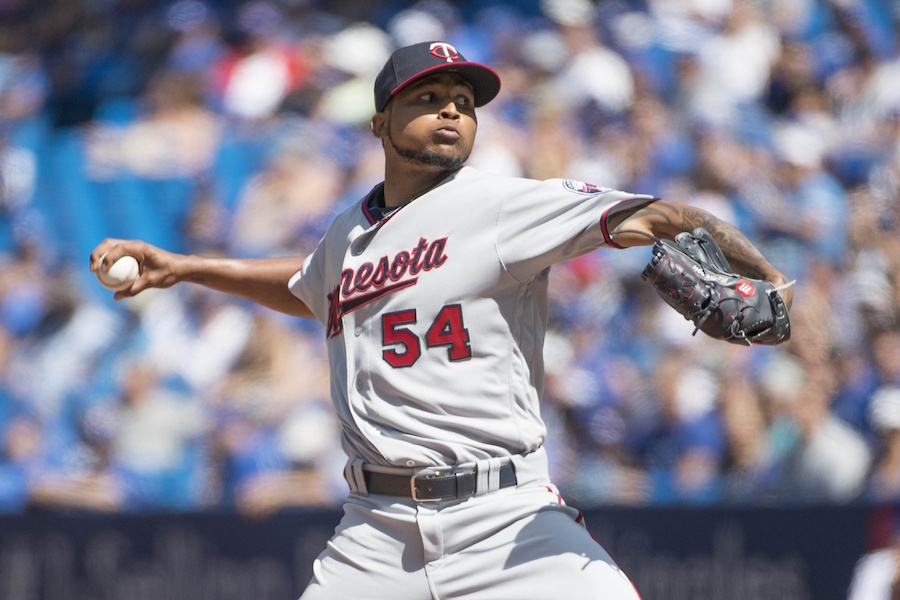 Santana's latest pitching line, from Saturday's start in Toronto, doesn't really capture how well he pitched. The righty ended up being charged with six earned runs, but three crossed the plate after he came out of the game with two outs in the seventh inning. The stats from his previous 11 outings cast no such deception regarding the quality of his performance. During that stretch, Santana posted a 1.79 ERA and 0.92 WHIP while holding opponents to a .202/.241/.285 slash line. Though it didn't end well, he battled impressively against a locked and loaded Blue Jays lineup during Saturday's start. It marked his fourth in a row pitching into the seventh or beyond. Even with the runs charged after he left inflating his numbers a bit, Santana still ranks among the top 15 American League starting pitchers in both ERA (14th, 3.54) and WHIP (12th, 1.20). By those basic result-based measures, he has been a No. 1 starter this season. To say he's been the standout in a miserable rotation doesn't really do his excellent campaign justice. It started out inauspiciously enough, but Santana's contract has thus far proven to be a rare free agent hit for the Twins. In 41 starts with the club, he has outperformed his career numbers almost across the board, gobbling up innings and providing the veteran stability that Terry Ryan sought when he inked Santana to a franchise record FA deal two winters ago. The 33-year-old hurler figures to be an interesting factor in the organization's offseason planning. On the one hand, his trade value is undoubtedly as high as it will ever be and the Twins – descending toward one of the worst finishes in team history – may be facing a complete overhaul of the pitching staff. On the other hand, swapping him for prospects would signal pretty clearly that they don't expect to be competitive in 2017. Are they really willing to do that with an already tenuous hold on fan interest, which according to some was the driving force behind Ryan's dismissal? In my opinion, the Twins need to make a reasonable effort at repairing their broken pitching unit on the fly in efforts to bounce back strong next year. The only way they can really do that while trading Santana is if the return includes young impact arms that are big-league ready or close. But is that even realistic? What team is needy enough for pitching that they'd deal for Santana, but at the same time has good controllable young starters they're willing to give up? Perhaps a contender that is eyeing an all-in push for 2017, but it seems unlikely. Even if you don't expect Santana to keep up at this rate forever, it's still hard to envision a deal that helps the Twins more than it hurts them in the short-term. Unless they're willing to blow the whole thing up and surrender the next couple years, there probably isn't going to be an offer out there that makes sense. At least, that's my take. What would your approach be with Santana this offseason? Build around him, or ship him out and rebuild from the ground up?
 -
What do you base that on? This team's infallible ability to identify and properly utilize relief talent?
-
I didn't say the Twins were clearly responsible for any lack of effectiveness. I said they didn't put him in position to succeed and I stand by that. They haven't used him in the way that he found immense success in Triple-A for several years in a row. They have him out here throwing 50 pitches in an outing, something he hasn't done in many years. This is part of a larger trend.
-
Remember when the Twins gave a combined 124 relief appearances to Tim Stauffer, J.R. Graham, Matt Guerrier and Anthony Swarzak over the last two years? And we've got people talking about how Tonkin proved his worthlessness by failing to flat-out dominate in his limited opportunities. Unreal.
-
I think you're misinterpreting the point. It's about the cumulative wear that this kind of unfamiliar usage has on him.
-
Where was any opinion stated as a fact in this article? Seriously, show me one example. The opening portion was phrased as a question to the reader. The conclusions states that it "seems" the Twins have been operating without a plan, at least without a half-decent one. This is how you express opinions. Not sure what else you want. Re: Tonkin. In 60 MLB appearances over the last 3 years he had a 3.35 ERA, 1.32 WHIP. Those are fine numbers from a young reliever learning his way in the majors, so your third point (which, I MUST SAY, appears to be an opinion stated as a fact!) isn't very accurate. He has done ok when given the chance but that has happened infrequently because the Twins have continually shown a preference for low-upside vets (Stauffer, Fien, Boyer, Burton, etc etc)
-
He's not treated like a god. But what good does it do to a publicly admonish him for the kinds of struggles and lapses that affect nearly every young player in MLB, especially one that's been yanked around as much as him? And why does he get these types of criticisms while someone like Danny Santana floats by as one of the worst players in the major leagues for multiple years, essentially unscathed?
-
Re: Joe. Ok, fair enough. I understand the general annoyance with people who are constantly negative and critical, but those exist in all walks of life and they're going to be more active at times like this. I simply disagree with the characterization of this site's content as slanting unnecessarily or unfairly negative. I really do not believe that's the case.
-
Appreciate you saying that, as I do make a concerted effort to balance the positive and negative. Finding the bright side gets a little tough when things are as dire as they are currently. Most people come to this site looking for open, independent and candid coverage. In times like these, that means calling out mistakes and criticizing processes that continue to lead the team in the wrong direction. Evidently some readers believe all of the content should be tailored to their own personal tastes and preferences.
-
I would suggest you aren't looking very hard. You realize Seth writes on this site even more than I do, right?
-
Also: Everyone is welcome to blog on this site, Joe. I see you have zero posts. If you want to change the tone of the conversation, then do it.
-
Reality? Reality is that this is one of the worst teams in baseball for half a decade running. Reality is that the Twins can't put people in the seats of their beautiful new stadium 5 years after it was built. Reality is a long-standing trend of poor planning and ineffective adaptations leading to the situation we are currently in. Reality is that interest in baseball around this town has dipped so low that I can't even engage friends and family members in conversations about the team anymore because they have stopped caring. Reality is that as a lifelong Twins fans, these things are extremely vexing to me, and I know I'm not alone. I realize that for most readers this sport is a hobby, and a pastime. Some people don't like any level of negativity involved in their enjoyment of the game and if that's the case for you (as it appears to be) there's plenty of stuff on this site for you to consume. Heck, there are plenty of fluff stories in the MSM pubs if that's your thing. If you find the site unreadable because the tone is dictated by the quality of the baseball being presented to paying customers, perhaps your frustration is misdirected?
-
I think that's a pretty harsh way to summarize my stance. My point was more, "If you want May to be a starter, he still ultimately can be, but there are very valid reasons for having him in the bullpen." As I mentioned in this piece, those reasons (rotation depth, May's value in a contending bullpen) were washed away pretty early, and the addition of the injuries should have made reversing the decision a no-brainer. Alas...
-
There's a problem with the Twins' plan. The problem is that, by all appearances, they don't really have one. What else are we supposed to make of the ongoing series of inexplicable decisions that have propelled the club toward another last-place finish?All too often, poor outcomes that have struck the Twins this year can be traced back to questionable judgment. Let's take a look at five particularly troublesome examples: 1. The handling of Miguel Sano. Sano has endured ups and downs, as most 23-year-olds do. That should be factored into the plan. Yet, the team's outward-facing actions regarding the slugger – from publicly questioning his work ethic to needless benchings and drops in the lineup – have projected disappointment and frustration. The kid does have an ego, which often comes with the territory of legendary talent. But I don't think it's a particularly harmful or provocative one, and to imply that he's not focused on being great is flatly absurd. Sano's defensive miscues are understandable with his lack of reps at the position in recent years, thanks to all the time spent at DH and right field. His alleged unwillingness to put in extra side work might be related to elbow pain that has relegated him to DH lately. Except, when an MRI on the elbow came up negative, he returned to third in his first game back, so the injury must not have been that bad? Right? Who knows. If there has been any real plan in place regarding Sano, at any point this year, it's hard to tell. 2. Signing Byung Ho Park The meandering trajectory of Sano was put into place by the signing of Byung Ho Park during the offseason. That moved seemed a bit perplexing at the time, and now with the benefit of hindsight it looks absolutely flabbergasting. Because they were compelled to outbid the competition and bring Park aboard while keeping Trevor Plouffe on, the Twins left Sano in the lurch. The idea of sending him to the outfield unsurprisingly didn't take, nor did Park's transition to the major leagues. Outside of the power, the KBO star's offensive dominance did not carry over. Park batted .191 with the Twins and .224 in Triple-A before having his season ended by wrist surgery last week. Meanwhile, Kenny Vargas – whom the Twins implicitly gave up on by signing Park – is proving to be worthy of a longer look. Unfortunately, with Joe Mauer entrenched at first and Sano in positional limbo, there's no room for the big switch-hitter. He was optioned to the minors despite a .955 OPS. So, the Twins will head into next year with Mauer at first, Sano lacking a defensive home, Vargas out of options, and Park making millions to play first base in Triple-A. 3. Michael Tonkin's odd role assignment. After first reaching the Triple-A level in 2013, Tonkin cemented his standing as one of the organization's top relief prospects by flat-out burying hitters there. In 118 innings with Rochester spread over three seasons, the lanky fireballer put up a 2.65 ERA, 1.05 WHIP and 128-to-25 K/BB ratio. He did so while throwing in short bursts. Tonkin was typically asked to get three outs or less, working in a setup or closer role. Of his 102 appearances at Triple-A, he threw 30-plus pitches in only 10. As a high-effort hurler who brings it in the mid-90s consistently, that approach made sense. So what did the Twins do this year? They decided to turn him into a long reliever, for some reason. Despite his superior performance in the minors, and solid results in past MLB chances, the right-hander has been largely used as a spare part and workload sponge in the bullpen. He has thrown 30-plus pitches in 11 of his 56 appearances, even pushing to 40 a couple of times and 50 once. Should we be surprised that his performance is deteriorating here as we head into the latter part of the season? Tonkin has a 9.75 ERA in August, with a 1.060 OPS allowed. It sure looks like he is worn down. As a result, he's turned from an encouraging relief story to a suspect fringe piece in a bullpen picture that is filled with them. Tonkin is another in a long line of players who simply wasn't put in a position to succeed by this club. 4. Trevor May's aimless path. In 2014, May emerged as an impact MLB-ready starting prospect with his brilliant efforts in Triple-A. Last year, he began fulfilling his promise as a starter before the Twins shifted him to the bullpen. They elected to send him back there this spring. The line of thinking made sense only under these conditions: the Twins were competitive enough to require a shutdown late-inning arm, and the rotation was strong enough not to require his upside as a starting pitcher. Neither of those things have been true. That became apparent very early, but the Twins have shown no urgency to stray from their course. May's body has not reacted well to the overhaul in a routine that had been set over many years in an exclusive starting role. He has spent two lengthy periods on the disabled list, with Paul Molitor only hinting that he'll revisit May's usage during the offseason. Next year the right-hander will probably be reacclimating to a different regimen, once again. Seems like a logical way to treat one of the best arms on an atrocious pitching staff. 5. Top prospect turmoil Where did the Twins go wrong with Byron Buxton and Jose Berrios? I can't purport to know. I don't think any of us can. But clearly, nothing is clicking for the club's two brightest young talents. While both have mastered the minors, the organization has been unable to help facilitate the next step. Buxton is the more disturbing case; he has failed to make any meaningful progress through 100 MLB games, spread across four different opportunities. Berrios is greener still, with only nine big-league starts under his belt, but none have even approximated excellence. When run prevention is far-and-away your biggest issue, the importance of ushering in your best pitching prospect and a ballhawk center fielder who catches everything in his zip code cannot be overstated. Given what we've seen from the team so far – bewildered remarks, hasty demotions, coaching overload – it's tough to have faith in things getting figured out. At least, with this current group. These are but five notable instances of poor planning that stand out among many. I haven't even touched on the curious decisions surrounding players like Jorge Polanco, Tyler Duffey and Eduardo Escobar, nor the complete lack of vision at the catcher position. There's an old saying that goes, "If you fail to plan, you plan to fail." That phrase seems to summarize this abject failure of a Twins season pretty well. Click here to view the article
-
 All too often, poor outcomes that have struck the Twins this year can be traced back to questionable judgment. Let's take a look at five particularly troublesome examples: 1. The handling of Miguel Sano. Sano has endured ups and downs, as most 23-year-olds do. That should be factored into the plan. Yet, the team's outward-facing actions regarding the slugger – from publicly questioning his work ethic to needless benchings and drops in the lineup – have projected disappointment and frustration. The kid does have an ego, which often comes with the territory of legendary talent. But I don't think it's a particularly harmful or provocative one, and to imply that he's not focused on being great is flatly absurd. Sano's defensive miscues are understandable with his lack of reps at the position in recent years, thanks to all the time spent at DH and right field. His alleged unwillingness to put in extra side work might be related to elbow pain that has relegated him to DH lately. Except, when an MRI on the elbow came up negative, he returned to third in his first game back, so the injury must not have been that bad? Right? Who knows. If there has been any real plan in place regarding Sano, at any point this year, it's hard to tell. 2. Signing Byung Ho Park The meandering trajectory of Sano was put into place by the signing of Byung Ho Park during the offseason. That moved seemed a bit perplexing at the time, and now with the benefit of hindsight it looks absolutely flabbergasting. Because they were compelled to outbid the competition and bring Park aboard while keeping Trevor Plouffe on, the Twins left Sano in the lurch. The idea of sending him to the outfield unsurprisingly didn't take, nor did Park's transition to the major leagues. Outside of the power, the KBO star's offensive dominance did not carry over. Park batted .191 with the Twins and .224 in Triple-A before having his season ended by wrist surgery last week. Meanwhile, Kenny Vargas – whom the Twins implicitly gave up on by signing Park – is proving to be worthy of a longer look. Unfortunately, with Joe Mauer entrenched at first and Sano in positional limbo, there's no room for the big switch-hitter. He was optioned to the minors despite a .955 OPS. So, the Twins will head into next year with Mauer at first, Sano lacking a defensive home, Vargas out of options, and Park making millions to play first base in Triple-A. 3. Michael Tonkin's odd role assignment. After first reaching the Triple-A level in 2013, Tonkin cemented his standing as one of the organization's top relief prospects by flat-out burying hitters there. In 118 innings with Rochester spread over three seasons, the lanky fireballer put up a 2.65 ERA, 1.05 WHIP and 128-to-25 K/BB ratio. He did so while throwing in short bursts. Tonkin was typically asked to get three outs or less, working in a setup or closer role. Of his 102 appearances at Triple-A, he threw 30-plus pitches in only 10. As a high-effort hurler who brings it in the mid-90s consistently, that approach made sense. So what did the Twins do this year? They decided to turn him into a long reliever, for some reason. Despite his superior performance in the minors, and solid results in past MLB chances, the right-hander has been largely used as a spare part and workload sponge in the bullpen. He has thrown 30-plus pitches in 11 of his 56 appearances, even pushing to 40 a couple of times and 50 once. Should we be surprised that his performance is deteriorating here as we head into the latter part of the season? Tonkin has a 9.75 ERA in August, with a 1.060 OPS allowed. It sure looks like he is worn down. As a result, he's turned from an encouraging relief story to a suspect fringe piece in a bullpen picture that is filled with them. Tonkin is another in a long line of players who simply wasn't put in a position to succeed by this club. 4. Trevor May's aimless path. In 2014, May emerged as an impact MLB-ready starting prospect with his brilliant efforts in Triple-A. Last year, he began fulfilling his promise as a starter before the Twins shifted him to the bullpen. They elected to send him back there this spring. The line of thinking made sense only under these conditions: the Twins were competitive enough to require a shutdown late-inning arm, and the rotation was strong enough not to require his upside as a starting pitcher. Neither of those things have been true. That became apparent very early, but the Twins have shown no urgency to stray from their course. May's body has not reacted well to the overhaul in a routine that had been set over many years in an exclusive starting role. He has spent two lengthy periods on the disabled list, with Paul Molitor only hinting that he'll revisit May's usage during the offseason. Next year the right-hander will probably be reacclimating to a different regimen, once again. Seems like a logical way to treat one of the best arms on an atrocious pitching staff. 5. Top prospect turmoil Where did the Twins go wrong with Byron Buxton and Jose Berrios? I can't purport to know. I don't think any of us can. But clearly, nothing is clicking for the club's two brightest young talents. While both have mastered the minors, the organization has been unable to help facilitate the next step. Buxton is the more disturbing case; he has failed to make any meaningful progress through 100 MLB games, spread across four different opportunities. Berrios is greener still, with only nine big-league starts under his belt, but none have even approximated excellence. When run prevention is far-and-away your biggest issue, the importance of ushering in your best pitching prospect and a ballhawk center fielder who catches everything in his zip code cannot be overstated. Given what we've seen from the team so far – bewildered remarks, hasty demotions, coaching overload – it's tough to have faith in things getting figured out. At least, with this current group. These are but five notable instances of poor planning that stand out among many. I haven't even touched on the curious decisions surrounding players like Jorge Polanco, Tyler Duffey and Eduardo Escobar, nor the complete lack of vision at the catcher position. There's an old saying that goes, "If you fail to plan, you plan to fail." That phrase seems to summarize this abject failure of a Twins season pretty well.
 -
On Tuesday night, the Tigers and Twins kicked off a series at Target Field. On the hill for Detroit was Matt Boyd, a 25-year-old lefty who owns a 2.38 ERA since the beginning of July. Along with Rookie of the Year frontrunner Michael Fulmer, Boyd is a key component in a resurgent rotation that ranks sixth in the AL in ERA after finishing last in 2015. Neither was in the organization 13 months ago.Fulmer, who the Twins will be lucky enough to avoid this week, has gone 10-4 with a league-leading 2.58 ERA in 20 starts since joining Detroit's rotation at the end of April. The Tigers got him back from the Mets in exchange for Yoenis Cespedes at last year's deadline. Boyd was acquired a day earlier, as part of the package that netted the Blue Jays David Price. Detroit made four straight postseason runs before spiraling to fifth place in 2015. They used the opportunity to bring in more young impact pitching talent than the Twins have during five years of futility, and now the Tigers are back in the playoff race again. Astonishing, really. Granted, it's not every day you have high-caliber rentals like Price and Cespedes to dangle. But neither Fulmer nor Boyd was an elite prospect. General manager Al Avila and his front office simply targeted the right guys. In order to get their woeful staff back on the track, the Twins must absolutely do the same. They may have found something in Adalberto Mejia, who came over from San Francisco in the Eduardo Nunez trade last month. But they need to keep adding to their pipeline in order to enhance their chances at striking. Watching Minnesota's pitchers get clubbed around on a regular basis, it feels like a return to respectability is far away. But the Tigers are showing that a turnaround can happen rather quickly. The Twins themselves have shown this, jumping from 15th in runs allowed in 2014 to eighth last year before falling back off a cliff. Run production is not a problem for this team. For a third straight season, they are at or above the league average in scoring. Preventing runs is the hold-up, and needs to be the primary focus heading into 2017. Pressure is growing with the postseason drought extending and the youthful offensive core gaining traction. Some of the improvement will need to come internally, of course. They can't really count on Phil Hughes coming off shoulder surgery but he's a possible factor. It sounds like Trevor May will get another shot at starting. Kyle Gibson ought to rebound from this strangely dismal season. Most importantly, Jose Berrios will hopefully find his way and become a force to be reckoned with. But relying solely upon those pieces to form a quality rotation around Ervin Santana is not an option. If the Twins actually have aspirations of returning to contention next year – and I truly believe they do – they need to add at least one more arm with high-end potential. They subtracted one, albeit one with fleeting appeal, when they sent Alex Meyer to the Angels. So, where to find such an arm? Free agency is probably not the answer. Even with some spending flexibility and Ricky Nolasco off the books, there just isn't a single name on the upcoming market that pops out. I would suggest that the best approach is following the same path the Tigers did to acquire Boyd and Fulmer, and the same one the Twins did with Meyer: trading established MLB players for fast-tracked minor-league pitching with sizable upside. There are a few different assets that could be considered for such a move, but when it comes to making a transformative splash, only one solution makes sense. That would be shopping Brian Dozier. While sitting in as co-host on the Gleeman and the Geek podcast on Sunday, I discussed the notion of dealing Dozier extensively with Aaron. I recommend clicking here and giving it a listen, if you haven't. But the bottom line is that, as a power-hitting second baseman who is under 30 with a favorable contract, Dozier is extremely valuable. He hit his 30th home run on Wednesday night and is enjoying a career year. This would be the definition of selling high. And as it happens, the Twins are equipped to replace him. Second base is Jorge Polanco's best position. While losing Dozier would obviously hurt, it's the kind of major shakeup that is warranted at the conclusion of another disastrous 90-loss season. Given the relatively lopsided nature of the offense and pitching staff at this point, it only makes sense to draw from one to help the other. Yet, this idea is contingent on targeting the right guys. Otherwise, it's a catastrophe in the making. If the Twins don't trust Rob Antony to do it, they need to find someone they do. The stakes are high. Click here to view the article
-
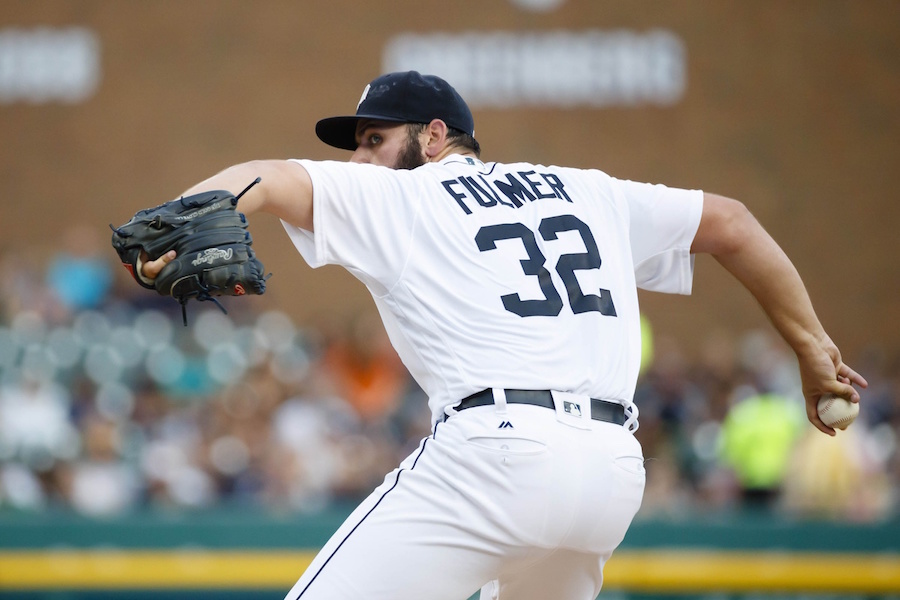 Fulmer, who the Twins will be lucky enough to avoid this week, has gone 10-4 with a league-leading 2.58 ERA in 20 starts since joining Detroit's rotation at the end of April. The Tigers got him back from the Mets in exchange for Yoenis Cespedes at last year's deadline. Boyd was acquired a day earlier, as part of the package that netted the Blue Jays David Price. Detroit made four straight postseason runs before spiraling to fifth place in 2015. They used the opportunity to bring in more young impact pitching talent than the Twins have during five years of futility, and now the Tigers are back in the playoff race again. Astonishing, really. Granted, it's not every day you have high-caliber rentals like Price and Cespedes to dangle. But neither Fulmer nor Boyd was an elite prospect. General manager Al Avila and his front office simply targeted the right guys. In order to get their woeful staff back on the track, the Twins must absolutely do the same. They may have found something in Adalberto Mejia, who came over from San Francisco in the Eduardo Nunez trade last month. But they need to keep adding to their pipeline in order to enhance their chances at striking. Watching Minnesota's pitchers get clubbed around on a regular basis, it feels like a return to respectability is far away. But the Tigers are showing that a turnaround can happen rather quickly. The Twins themselves have shown this, jumping from 15th in runs allowed in 2014 to eighth last year before falling back off a cliff. Run production is not a problem for this team. For a third straight season, they are at or above the league average in scoring. Preventing runs is the hold-up, and needs to be the primary focus heading into 2017. Pressure is growing with the postseason drought extending and the youthful offensive core gaining traction. Some of the improvement will need to come internally, of course. They can't really count on Phil Hughes coming off shoulder surgery but he's a possible factor. It sounds like Trevor May will get another shot at starting. Kyle Gibson ought to rebound from this strangely dismal season. Most importantly, Jose Berrios will hopefully find his way and become a force to be reckoned with. But relying solely upon those pieces to form a quality rotation around Ervin Santana is not an option. If the Twins actually have aspirations of returning to contention next year – and I truly believe they do – they need to add at least one more arm with high-end potential. They subtracted one, albeit one with fleeting appeal, when they sent Alex Meyer to the Angels. So, where to find such an arm? Free agency is probably not the answer. Even with some spending flexibility and Ricky Nolasco off the books, there just isn't a single name on the upcoming market that pops out. I would suggest that the best approach is following the same path the Tigers did to acquire Boyd and Fulmer, and the same one the Twins did with Meyer: trading established MLB players for fast-tracked minor-league pitching with sizable upside. There are a few different assets that could be considered for such a move, but when it comes to making a transformative splash, only one solution makes sense. That would be shopping Brian Dozier. While sitting in as co-host on the Gleeman and the Geek podcast on Sunday, I discussed the notion of dealing Dozier extensively with Aaron. I recommend clicking here and giving it a listen, if you haven't. But the bottom line is that, as a power-hitting second baseman who is under 30 with a favorable contract, Dozier is extremely valuable. He hit his 30th home run on Wednesday night and is enjoying a career year. This would be the definition of selling high. And as it happens, the Twins are equipped to replace him. Second base is Jorge Polanco's best position. While losing Dozier would obviously hurt, it's the kind of major shakeup that is warranted at the conclusion of another disastrous 90-loss season. Given the relatively lopsided nature of the offense and pitching staff at this point, it only makes sense to draw from one to help the other. Yet, this idea is contingent on targeting the right guys. Otherwise, it's a catastrophe in the making. If the Twins don't trust Rob Antony to do it, they need to find someone they do. The stakes are high.
 -
I don't think there's ever much risk in signing a guy to a one-year deal. It's not a hampering commitment. His strange struggles this month notwithstanding, Santiago has pretty consistently been the same guy over his five-year career. I say "low-risk" in comparison to someone with more upside and perhaps less of a stable track record.

