



Nick Nelson
-
Posts
8,325 -
Joined
-
Last visited
-
Days Won
56
Content Type
Profiles
News
Minnesota Twins Videos
2026 Minnesota Twins Top Prospects Ranking
2022 Minnesota Twins Draft Picks
Minnesota Twins Free Agent & Trade Rumors, Notes, & Tidbits
Guides & Resources
2023 Minnesota Twins Draft Picks
The Minnesota Twins Players Project
2024 Minnesota Twins Draft Picks
2025 Minnesota Twins Draft Pick Tracker
2026 Minnesota Twins Draft Tracker: Picks & Bonuses
Forums
Blogs
Events
Store
Downloads
Gallery
Everything posted by Nick Nelson
-
 He was Minnesota's lone representative at last Tuesday's All Star Game. He has been the team's leadoff hitter, almost exclusively, for two months. While others have endured slumps and demotions, he has kept hitting relentlessly, earning an entrenched status in the daily lineup. But is Eduardo Nunez really the answer at short for the Twins? And if he isn't, then what is the plan?The steady playing time for Nunez has come largely at the expense of Eduardo Escobar, who entered the season as starting shortstop. Some health issues have factored in, including a recent minor hamstring injury, but since the end of May, Escobar has started only 16 of 40 games. It's not like Escobar hasn't been hitting during that span. In his 70 plate appearances dating back to the start of June, he has a .774 OPS; during the same time period Nunez is at .754. There is also little doubt that Escobar is the superior defensive player. Nonetheless, Nunez has elevated himself to the top of the depth chart thanks to his hot start, his persisting effectiveness at the plate, and his dynamic work on the base paths. It's tough to argue with the approach at this time. Escobar has not done a whole lot to distinguish himself and the offense has been clicking nicely with Nunez at the top of the order. But with the trade deadline only two weeks away, the Twins need to determine whether they really think this is a long-term solution. If it's not, they should be trying to get whatever they can for Nunez, while recommitting to Escobar as their starting shortstop until Jorge Polanco, Nick Gordon or another long-term fixture emerges. It's difficult to gauge how the market views Nunez, but as a breakout spark plug type player who is under 30 and can play several positions, there is value. He's a nice asset for a contender. While Escobar hasn't been great this year, the muscle strains have slowed him somewhat, and he still hasn't been terrible. He has a solid track record of performance over the last three seasons, and is two years younger than Nunez. Given his superiority with the mitt and his lengthier window of team control, he is the one I would be betting on. Nunez looks like the definition of a guy that a rebuilding club like the Twins should sell high on. But will they? And what could realistically be expected as a return for such a player who finally seems to be reaching his offensive potential? Click here to view the article
 -
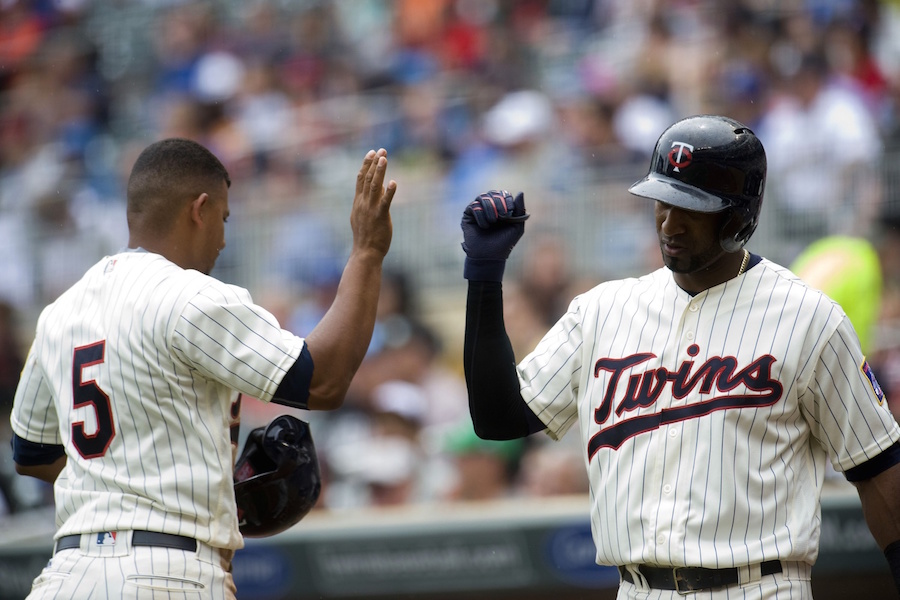 The steady playing time for Nunez has come largely at the expense of Eduardo Escobar, who entered the season as starting shortstop. Some health issues have factored in, including a recent minor hamstring injury, but since the end of May, Escobar has started only 16 of 40 games. It's not like Escobar hasn't been hitting during that span. In his 70 plate appearances dating back to the start of June, he has a .774 OPS; during the same time period Nunez is at .754. There is also little doubt that Escobar is the superior defensive player. Nonetheless, Nunez has elevated himself to the top of the depth chart thanks to his hot start, his persisting effectiveness at the plate, and his dynamic work on the base paths. It's tough to argue with the approach at this time. Escobar has not done a whole lot to distinguish himself and the offense has been clicking nicely with Nunez at the top of the order. But with the trade deadline only two weeks away, the Twins need to determine whether they really think this is a long-term solution. If it's not, they should be trying to get whatever they can for Nunez, while recommitting to Escobar as their starting shortstop until Jorge Polanco, Nick Gordon or another long-term fixture emerges. It's difficult to gauge how the market views Nunez, but as a breakout spark plug type player who is under 30 and can play several positions, there is value. He's a nice asset for a contender. While Escobar hasn't been great this year, the muscle strains have slowed him somewhat, and he still hasn't been terrible. He has a solid track record of performance over the last three seasons, and is two years younger than Nunez. Given his superiority with the mitt and his lengthier window of team control, he is the one I would be betting on. Nunez looks like the definition of a guy that a rebuilding club like the Twins should sell high on. But will they? And what could realistically be expected as a return for such a player who finally seems to be reaching his offensive potential?
 -
Article: Deadline Primer: Catcher On The Rise
Nick Nelson replied to Nick Nelson's topic in Twins Daily Front Page News
Murphy in the month of May following his demotion (74 PA): .154/.230/.169 Murphy since June 1st (113 PA): .228/.283/.356 :/ -
Article: Deadline Primer: Catcher On The Rise
Nick Nelson replied to Nick Nelson's topic in Twins Daily Front Page News
http://m.mlb.com/glossary/transactions/vesting-option "In most cases, a vesting option that fails to vest can still be exercised as a club option." I believe this to be the case. -
The All Star break is over. Now, with just over two weeks until the deadline, it’s trade season. That much was made clear on Thursday, when the Red Sox dealt a top pitching prospect to San Diego in exchange for impact starter Drew Pomeranz.Boston had been mentioned as a possible destination for Ervin Santana, who suddenly carries intriguing trade value, but is now off the board for starting pitching. And yet, one position where the Red Sox, along with many other contenders, could still use help is catcher. It's a source of offensive weakness across the league. American League catchers collectively have a .671 OPS, which is 60 points lower than the next-worst position (left field). This makes the timing of Kurt Suzuki's astonishing evolution with the bat quite fortuitous. It's difficult to comprehend, but after his scorching last six weeks Suzuki suddenly leads all AL catchers in batting average and ranks third in OPS. Given the generally subpar level of play that we've seen from him over the past two years, it's tempting to pass this off as a fluke. But Suzuki's torrid streak has sustained for quite a while and shows no signs of dissipating. What triggered this shocking turnaround? Optimal health at last? A new bat type? Plain and simple adjustments? Who knows, but this much is clear: Terry Ryan now stands at a point of great leverage. The Case For Trading Suzuki Boston's willingness to surrender Anderson Espinoza, one of the most highly regarded young arms in the minors, for Pomeranz signals that we're looking at a seller's market. The addition of a second wild-card slot means that 19 MLB teams are realistically in the postseason race, and looking for an edge. Picking up a catcher who is in the zone like Suzuki would provide just that. Some teams are flat-out desperate for any kind of offensive threat behind the plate. The Indians, who currently lead the AL Central, have had no choice but to stick with Yan Gomes as their regular despite his .166 average and .516 OPS. The Tigers are chasing them with James McCann – owner of a .208 average and .563 OPS – as their majority backstop. The third-place White Sox are trotting out Dioner Navarro, who is also batting .208. And that's just in this division. The aforementioned Red Sox, who have demonstrated an all-in type of aggressiveness, may fancy the idea of bringing in a well respected and red-hot veteran like Suzuki to bang liners off the Green Monster. He's inexpensive this year. He has a very reasonable $6 million option attached to his contract for next year. His unceasing toughness sets a good example, and pitchers love working with him. It isn't difficult to envision a scenario in which Suzuki garners some significant offers, especially if he keeps raking for a couple more weeks. Can the Twins, now thrust back into rebuilding mode, afford to pass them up? The Case For Keeping Suzuki The problem with giving up Suzuki is that the cupboard is completely bare for 2017. John Ryan Murphy is batting .208 with a .558 OPS in Triple-A, and he qualifies as the next most credible option in the organization as a starting catcher. If the Twins have aspirations of bouncing back and returning to contention next year – and it's not that far-fetched – they either need keep Suzuki and activate his option, or enter the offseason frantically searching for an answer. Are they ready to get into a high-stakes bidding war for Wilson Ramos or Matt Wieters, given the number of clubs seeking such players? Not likely. This team has stuck with Suzuki through some lean times. He stayed in the lineup steadily last year even while posting terrible numbers, and during the offseason, the front office brought in more of a caddy/protege than replacement. Now that he's finally playing up to his potential, and the organization is bereft of contingency plans, it won't be easy to pry Suzuki away. It all comes down to getting an offer that can't be refused. With 17 days remaining until the deadline, we'll see it if comes. Click here to view the article
-
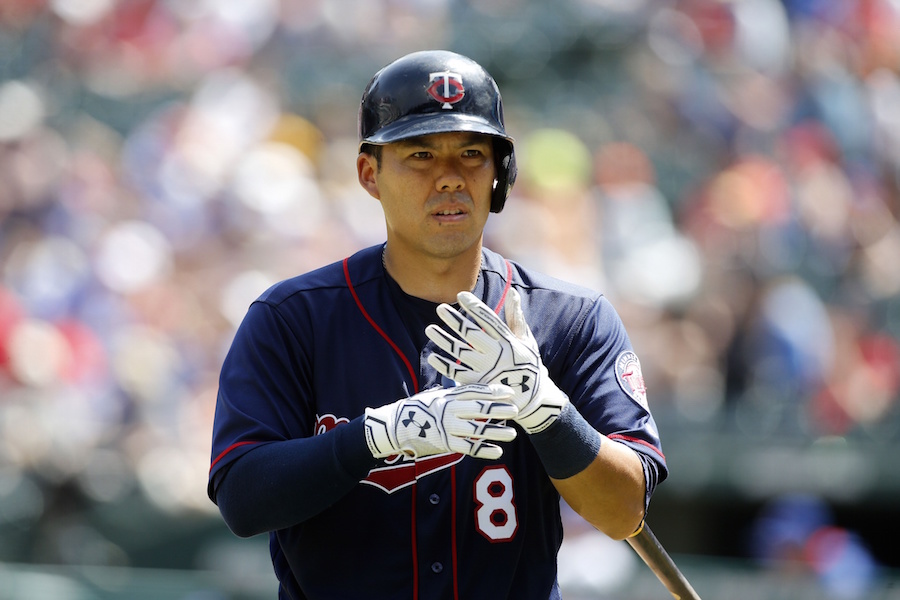 Boston had been mentioned as a possible destination for Ervin Santana, who suddenly carries intriguing trade value, but is now off the board for starting pitching. And yet, one position where the Red Sox, along with many other contenders, could still use help is catcher. It's a source of offensive weakness across the league. American League catchers collectively have a .671 OPS, which is 60 points lower than the next-worst position (left field). This makes the timing of Kurt Suzuki's astonishing evolution with the bat quite fortuitous. It's difficult to comprehend, but after his scorching last six weeks Suzuki suddenly leads all AL catchers in batting average and ranks third in OPS. Given the generally subpar level of play that we've seen from him over the past two years, it's tempting to pass this off as a fluke. But Suzuki's torrid streak has sustained for quite a while and shows no signs of dissipating. What triggered this shocking turnaround? Optimal health at last? A new bat type? Plain and simple adjustments? Who knows, but this much is clear: Terry Ryan now stands at a point of great leverage. The Case For Trading Suzuki Boston's willingness to surrender Anderson Espinoza, one of the most highly regarded young arms in the minors, for Pomeranz signals that we're looking at a seller's market. The addition of a second wild-card slot means that 19 MLB teams are realistically in the postseason race, and looking for an edge. Picking up a catcher who is in the zone like Suzuki would provide just that. Some teams are flat-out desperate for any kind of offensive threat behind the plate. The Indians, who currently lead the AL Central, have had no choice but to stick with Yan Gomes as their regular despite his .166 average and .516 OPS. The Tigers are chasing them with James McCann – owner of a .208 average and .563 OPS – as their majority backstop. The third-place White Sox are trotting out Dioner Navarro, who is also batting .208. And that's just in this division. The aforementioned Red Sox, who have demonstrated an all-in type of aggressiveness, may fancy the idea of bringing in a well respected and red-hot veteran like Suzuki to bang liners off the Green Monster. He's inexpensive this year. He has a very reasonable $6 million option attached to his contract for next year. His unceasing toughness sets a good example, and pitchers love working with him. It isn't difficult to envision a scenario in which Suzuki garners some significant offers, especially if he keeps raking for a couple more weeks. Can the Twins, now thrust back into rebuilding mode, afford to pass them up? The Case For Keeping Suzuki The problem with giving up Suzuki is that the cupboard is completely bare for 2017. John Ryan Murphy is batting .208 with a .558 OPS in Triple-A, and he qualifies as the next most credible option in the organization as a starting catcher. If the Twins have aspirations of bouncing back and returning to contention next year – and it's not that far-fetched – they either need keep Suzuki and activate his option, or enter the offseason frantically searching for an answer. Are they ready to get into a high-stakes bidding war for Wilson Ramos or Matt Wieters, given the number of clubs seeking such players? Not likely. This team has stuck with Suzuki through some lean times. He stayed in the lineup steadily last year even while posting terrible numbers, and during the offseason, the front office brought in more of a caddy/protege than replacement. Now that he's finally playing up to his potential, and the organization is bereft of contingency plans, it won't be easy to pry Suzuki away. It all comes down to getting an offer that can't be refused. With 17 days remaining until the deadline, we'll see it if comes.
 -
Article: Commitment Issues
Nick Nelson replied to Nick Nelson's topic in Twins Daily Front Page News
I think some people are missing the core point here. The problem, in my mind, is not that they traded a prospect for a midseason upgrade despite being a very borderline contender -- I commend that. The problem also was not a lopsided transaction. Hu was a fair price for ~1.5 years of Jepsen. The problem is in the flawed fundamental thinking. Should they have even been seeking ~1.5 years of any (non-elite) reliever, rather than seeking a straight-up two month rental? Teams that are out of the race don't need to be offered much for guys who are set to be free agents. Look at how much less it cost the Twins to acquire Brian Fuentes a few weeks after they got Capps in 2010. -
On Monday, the Twins officially released Kevin Jepsen following a miserable first half. The timing of the move is painful, coming one day after Chih-Wei Hu – the 22-year-old pitching prospect dealt for Jepsen last July – flashed outstanding stuff in the All Star Futures Game. Many will dwell on how bad the trade now looks. Few would have done so at the end of last September. But there is a valuable takeaway here, and it's one that this organization should already have taken away.Hu always had the makings of a nice young pitcher so it's no surprise to see him succeeding in Tampa's system. But Jepsen was also an accomplished veteran reliever with strong numbers, and you have to give up something to get something. It's not like Hu was an elite young talent by any stretch. Would Terry Ryan have needed to part with a prospect of even Hu's caliber, though, if he were merely acquiring a two-month rental of similar ability? Not a chance. The Twins had to step up their offer in order to bring in a player who remained under team control for an additional season. Jepsen's drastic drop-off, from sheer brilliance in 2015 to utter ineptitude in 2016, serves as a reminder that relief pitchers are extremely volatile assets. That is why it makes little sense to pay extra for added commitment. This misstep is made more frustrating because it's a lesson that the Twins have already learned the hard way, and also because it's completely inconsistent with the way Ryan operates otherwise. At the trade deadline in 2010, Minnesota was on the lookout for an established closer as they geared up for a postseason run. Bill Smith infamously gave up catching prospect Wilson Ramos in exchange for Nationals reliever Matt Capps. Ramos was a prized prospect at a high-value position, and seemed like a high price to pay for a good-not-great closer. But the appeal of Capps, and the factor that undoubtedly swayed Smith to surrender Ramos, was the extra year of control. The Twins didn't really know what to expect from Joe Nathan in 2011, when he'd be freshly rehabbed from Tommy John surgery, so they sought added stability in the late innings. The way things played out was essentially a mirror image of what we just witnessed with Jepsen. Capps did his part down the stretch in 2010, filling a key role in the bullpen, but was an unreliable mess the following year. This kind of fluctuation isn't uncommon. Again, relief pitchers are volatile. That trade is now widely viewed as the worst in modern franchise history, since the Twins are bereft of long-term catching options whereas Ramos appeared in last night's All-Star Game. Now, Ryan has fallen into the same trap, albeit to a lesser degree. Clearly, Jepsen's extended control was attractive as the GM looked ahead at an uncertain 2016 bullpen picture. Ryan may have had some inklings about the issues that were beginning to plague Glen Perkins, as well. But the proper approach would have been to pick up a true rental, which would demand a lower return, and regroup in the offseason. There, the trade market is less driven by timing and leverage, while free agents are also available. This brings me to the part that is most irksome. Throughout his tenure, Ryan has consistently eschewed the high-end free agent reliever market, and the reason is always the same. It's not the money, it's the term. He doesn't like making multi-year contract commitments to relief pitchers, given their mercurial nature. Hey, it makes sense. But if that's the mindset, why are you willing to give up prospects – a far more valuable commodity than money – in exchange for that very same thing? This costly inconsistent thinking stands out as a major blemish for the Twins front office. Mistakes happen, but they shouldn't happen twice. Click here to view the article
-
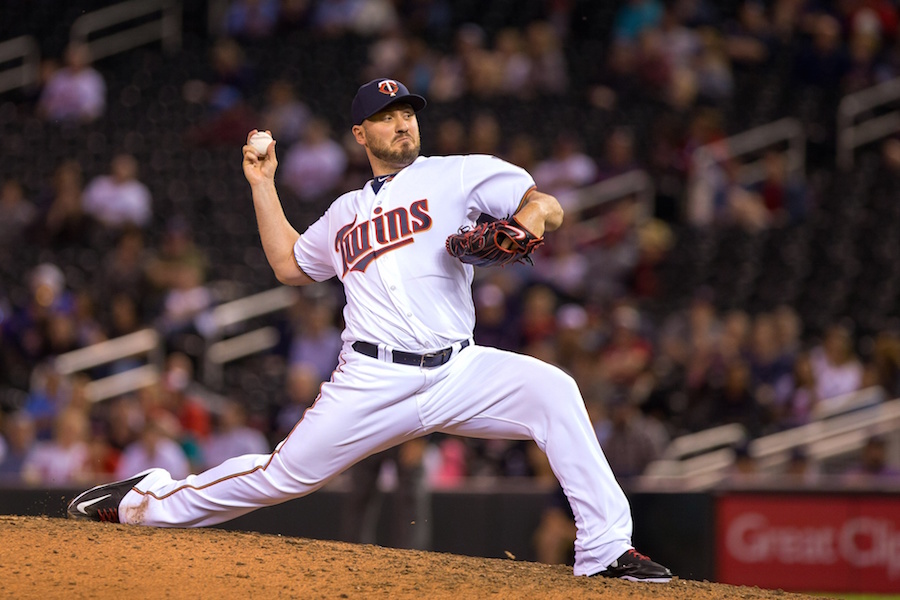 Hu always had the makings of a nice young pitcher so it's no surprise to see him succeeding in Tampa's system. But Jepsen was also an accomplished veteran reliever with strong numbers, and you have to give up something to get something. It's not like Hu was an elite young talent by any stretch. Would Terry Ryan have needed to part with a prospect of even Hu's caliber, though, if he were merely acquiring a two-month rental of similar ability? Not a chance. The Twins had to step up their offer in order to bring in a player who remained under team control for an additional season. Jepsen's drastic drop-off, from sheer brilliance in 2015 to utter ineptitude in 2016, serves as a reminder that relief pitchers are extremely volatile assets. That is why it makes little sense to pay extra for added commitment. This misstep is made more frustrating because it's a lesson that the Twins have already learned the hard way, and also because it's completely inconsistent with the way Ryan operates otherwise. At the trade deadline in 2010, Minnesota was on the lookout for an established closer as they geared up for a postseason run. Bill Smith infamously gave up catching prospect Wilson Ramos in exchange for Nationals reliever Matt Capps. Ramos was a prized prospect at a high-value position, and seemed like a high price to pay for a good-not-great closer. But the appeal of Capps, and the factor that undoubtedly swayed Smith to surrender Ramos, was the extra year of control. The Twins didn't really know what to expect from Joe Nathan in 2011, when he'd be freshly rehabbed from Tommy John surgery, so they sought added stability in the late innings. The way things played out was essentially a mirror image of what we just witnessed with Jepsen. Capps did his part down the stretch in 2010, filling a key role in the bullpen, but was an unreliable mess the following year. This kind of fluctuation isn't uncommon. Again, relief pitchers are volatile. That trade is now widely viewed as the worst in modern franchise history, since the Twins are bereft of long-term catching options whereas Ramos appeared in last night's All-Star Game. Now, Ryan has fallen into the same trap, albeit to a lesser degree. Clearly, Jepsen's extended control was attractive as the GM looked ahead at an uncertain 2016 bullpen picture. Ryan may have had some inklings about the issues that were beginning to plague Glen Perkins, as well. But the proper approach would have been to pick up a true rental, which would demand a lower return, and regroup in the offseason. There, the trade market is less driven by timing and leverage, while free agents are also available. This brings me to the part that is most irksome. Throughout his tenure, Ryan has consistently eschewed the high-end free agent reliever market, and the reason is always the same. It's not the money, it's the term. He doesn't like making multi-year contract commitments to relief pitchers, given their mercurial nature. Hey, it makes sense. But if that's the mindset, why are you willing to give up prospects – a far more valuable commodity than money – in exchange for that very same thing? This costly inconsistent thinking stands out as a major blemish for the Twins front office. Mistakes happen, but they shouldn't happen twice.
 -
Let's be clear on this: It's a team option that becomes guaranteed if he hits that PA total. The Twins have the choice of activating it if they please regardless of his playing time.
-
OK. So one of these is false (Duffey has pitched past the 6th in 5 of 14 starts), one is irrelevant (news flash: BABIP and K-rate tend to fluctuate over the season!) and one is made up. Very convincing.
-
The first three months of this 2016 season were forgettable to say the least. But here in July, as we head into the All-Star break, the Minnesota Twins are finally starting to show some positive signs. In fact, there are more than you might suspect. Let's run through some of the things we can feel good about during baseball's midsummer respite.1. The Twins are finally hitting like we hoped they would. The optimistic view of this team, entering the season, was that a powerful offense and adequate pitching staff could make them competitive. That did not come to fruition for much of the first half, but over the past few weeks it has. In their past 20 games, the Twins have gone 12-8 while averaging 6.7 runs, hitting .288/.357/.510 with 32 homers. Five of those wins have come against a Texas team with the AL's best record. It's too little, too late for this year's squad, already buried by 20 games in the AL Central, but splendid to see nonetheless. 2. No stopping Nunez. Regardless of how you view the sustainability of Eduardo Nunez's brilliance, this has clearly been a great development. Nunez was a non-tender candidate in the offseason as a decent hitter with no real defensive position, but now he'll represent Minnesota in the All Star Game on Tuesday. It's a well deserved honor, because the 29-year-old has been legitimately excellent and continues to show no signs of slowing down. He has turned himself into much more of an asset than anyone would have suspected. 3. Miguel Sano is back at third base and hitting. I don't think I'm going out on a limb when I say that Sano is the most important piece in the Twins lineup. He was heating up before going down with a hamstring strain at the end of May, with four homers in six games leading up to the injury, and has picked up nicely since returning by posting a .929 OPS with three homers and nine RBI in 10 games. Plus, he's back at the position where he belongs and making some slick plays. It'll be interesting to see what happens when Trevor Plouffe returns from the DL. 4. Max Kepler has been wunderbar! We've grown accustomed to introductory struggles from highly touted young talents. Maybe that's why Kepler's initial surge has been so shocking. Or maybe it's because it is truly astonishing to see a wiry 23-year-old teeing off against major-league pitchers the way he has. Through 46 games in his first real taste MLB competition, Kepler has an .802 OPS, with a 600-PA pace for 29 homers and 121 RBI. 5. Pitching reinforcements continue to reinforce readiness. Obviously, pitching is the area where Minnesota has the furthest to go in order to return to respectability. The jury is out on pretty much every one of their starters, and the bullpen is an amorphous mystery. So it is good news that the organization's best prospects for each unit are doing all the right things. J.T. Chargois pitched in the All-Star Futures Game on Sunday night at Petco Park. Jose Berrios will represent Rochester at the Triple-A All-Star Game on Wednesday in Charlotte. Each has fizzled during brief MLB stints this year, but they are showing every sign of mastery at the highest level of the minors. We will likely see both back in Minnesota soon, and the second half will a provide a relatively low-leverage setting to learn the ropes. If both catch on, the outlook for the 2017 team brightens immensely. 6. Robbie Grossman looks like a find. Grossman has now been with the Twins for nearly two full months. His initial hot-hitting period has long since worn off. Since a scorching first couple of weeks with the new club, his BABIP has come down to Earth and his average has dropped precipitously. Yet, after 195 plate appearances, the switch-hitting outfielder still has a .421 on-base percentage. He shows the ability to stay productive offensively even while his bat sags, and that's invaluable for a part-time/bench role. 7. Sophomore slump-busters? Following an impressive rookie showing in 2014, Kennys Vargas endured a dreadful second season that included a demotion straight to Double-A. He was never in consideration for a roster spot this spring and appeared to be on the verge of exiting Minnesota's plans. He wasn't hitting much at Triple-A this year, but he was showing a much improved approach, just as he did last year in Rochester. That has translated thus far during his latest stint in the majors, as Vargas has five walks and two strikeouts through 23 plate appearances. The 25-year-old's power is undeniable and has been on display with all eight of his hits going for extra bases. If he's controlling the strike zone he is a weapon with dominant offensive ability. Then, there's Eddie Rosario. He's still amidst his sophomore season, which started out with a thud as he limped to a .532 OPS in April and May. He went to Triple-A, raked to the tune of an .881 OPS in 41 games, and has gone 12-for-31 with five extra-base hits since being recalled. He is rarely whiffing. I know some people will forever be skeptical of Rosario due to his overt and often hazardous aggressiveness, but if you acknowledge that he'll never be a patient hitter he is doing everything you could ask for right now. 8. A fledgling power pen? If Trevor May, Ryan Pressly and Michael Tonkin hold their pre-break K paces through the end of the year, here's where they would finish on the Twins leaderboard for strikeouts by a reliever since 2009, Joe Nathan's last full season as closer: 1. Michael Tonkin: 98 2. Trevor May: 81 3. Ryan Pressly: 81 4. Glen Perkins, 2012: 78 5. Glen Perkins, 2013: 77 6. Casey Fien, 2013: 73 7. Anthony Swarzak, 2013: 69 8. Glen Perkins, 2011: 65 9. Jesse Crain, 2010: 62 10. Jared Burton, 2013: 61 There's been nothing fluky about the achievement of these impressive and, in recent history, unprecedented strikeout totals for the back-end relievers. May, Pressly and Tonkin all bring upper 90s gas, and blow people away when they're on. Obviously, the results for each have been uneven, but seeing the Twins rank in the top half of the majors in bullpen K/9 is a remarkable and much-needed turnaround. This unit actually might have the makings of a power pen, especially with arms like Chargois and Nick Burdi on the way. 9. Tyler Duffey looks to be straightened out. What to make of Duffey's month-long skid from May 20th through June 21st, in which he was clobbered for a 9.17 ERA over seven starts, pushing him to the brink of a demotion? It's hard to say, but it is the lone stretch of poor performance that he's had over the past two seasons, and he seems to have moved past it. Duffey has won three straight starts with a 2.25 ERA, averaging a strikeout per inning. His rebound certainly counters the narrative that he was a ticking time bomb once big-league hitters figured out his curve. 10. Something has gotten into Kurt Suzuki. After going 3-for-5 with a pair of doubles on Sunday, Suzuki is now hitting .294/.332/.447. Among AL catchers with 200 plate appearances, his .294 average ranks first and his .778 OPS third. If one of the catchers on the All-Star roster were to come up with an injury, Suzuki would have a very legit claim as the top replacement option. This from a guy who was one of the worst starting catchers in the game last year, and entered this June with a .559 OPS. The rejuvenation bolsters Suzuki's value as a trade chip, especially given the dire nature of the catcher position around the league. The Twins might not be inclined to move him though. They have nothing – and I mean nothing – in place behind the plate for 2017. The idea of activating Suzuki's $6 million option now suddenly seems rather appealing. Way more than it did a month ago, anyway. ~~~ This isn't merely scrounging for silver linings among the muck. These developments are truly encouraging and optimism inspiring. The first half was largely a grim spectacle for Twins fans but as we reflect here during the midway breather, there really are a lot of factors to feel pretty dang good about based on the way things are trending. What others would you add to the list? Click here to view the article
-
 1. The Twins are finally hitting like we hoped they would. The optimistic view of this team, entering the season, was that a powerful offense and adequate pitching staff could make them competitive. That did not come to fruition for much of the first half, but over the past few weeks it has. In their past 20 games, the Twins have gone 12-8 while averaging 6.7 runs, hitting .288/.357/.510 with 32 homers. Five of those wins have come against a Texas team with the AL's best record. It's too little, too late for this year's squad, already buried by 20 games in the AL Central, but splendid to see nonetheless. 2. No stopping Nunez. Regardless of how you view the sustainability of Eduardo Nunez's brilliance, this has clearly been a great development. Nunez was a non-tender candidate in the offseason as a decent hitter with no real defensive position, but now he'll represent Minnesota in the All Star Game on Tuesday. It's a well deserved honor, because the 29-year-old has been legitimately excellent and continues to show no signs of slowing down. He has turned himself into much more of an asset than anyone would have suspected. 3. Miguel Sano is back at third base and hitting. I don't think I'm going out on a limb when I say that Sano is the most important piece in the Twins lineup. He was heating up before going down with a hamstring strain at the end of May, with four homers in six games leading up to the injury, and has picked up nicely since returning by posting a .929 OPS with three homers and nine RBI in 10 games. Plus, he's back at the position where he belongs and making some slick plays. It'll be interesting to see what happens when Trevor Plouffe returns from the DL. 4. Max Kepler has been wunderbar! We've grown accustomed to introductory struggles from highly touted young talents. Maybe that's why Kepler's initial surge has been so shocking. Or maybe it's because it is truly astonishing to see a wiry 23-year-old teeing off against major-league pitchers the way he has. Through 46 games in his first real taste MLB competition, Kepler has an .802 OPS, with a 600-PA pace for 29 homers and 121 RBI. 5. Pitching reinforcements continue to reinforce readiness. Obviously, pitching is the area where Minnesota has the furthest to go in order to return to respectability. The jury is out on pretty much every one of their starters, and the bullpen is an amorphous mystery. So it is good news that the organization's best prospects for each unit are doing all the right things. J.T. Chargois pitched in the All-Star Futures Game on Sunday night at Petco Park. Jose Berrios will represent Rochester at the Triple-A All-Star Game on Wednesday in Charlotte. Each has fizzled during brief MLB stints this year, but they are showing every sign of mastery at the highest level of the minors. We will likely see both back in Minnesota soon, and the second half will a provide a relatively low-leverage setting to learn the ropes. If both catch on, the outlook for the 2017 team brightens immensely. 6. Robbie Grossman looks like a find. Grossman has now been with the Twins for nearly two full months. His initial hot-hitting period has long since worn off. Since a scorching first couple of weeks with the new club, his BABIP has come down to Earth and his average has dropped precipitously. Yet, after 195 plate appearances, the switch-hitting outfielder still has a .421 on-base percentage. He shows the ability to stay productive offensively even while his bat sags, and that's invaluable for a part-time/bench role. 7. Sophomore slump-busters? Following an impressive rookie showing in 2014, Kennys Vargas endured a dreadful second season that included a demotion straight to Double-A. He was never in consideration for a roster spot this spring and appeared to be on the verge of exiting Minnesota's plans. He wasn't hitting much at Triple-A this year, but he was showing a much improved approach, just as he did last year in Rochester. That has translated thus far during his latest stint in the majors, as Vargas has five walks and two strikeouts through 23 plate appearances. The 25-year-old's power is undeniable and has been on display with all eight of his hits going for extra bases. If he's controlling the strike zone he is a weapon with dominant offensive ability. Then, there's Eddie Rosario. He's still amidst his sophomore season, which started out with a thud as he limped to a .532 OPS in April and May. He went to Triple-A, raked to the tune of an .881 OPS in 41 games, and has gone 12-for-31 with five extra-base hits since being recalled. He is rarely whiffing. I know some people will forever be skeptical of Rosario due to his overt and often hazardous aggressiveness, but if you acknowledge that he'll never be a patient hitter he is doing everything you could ask for right now. 8. A fledgling power pen? If Trevor May, Ryan Pressly and Michael Tonkin hold their pre-break K paces through the end of the year, here's where they would finish on the Twins leaderboard for strikeouts by a reliever since 2009, Joe Nathan's last full season as closer: 1. Michael Tonkin: 98 2. Trevor May: 81 3. Ryan Pressly: 81 4. Glen Perkins, 2012: 78 5. Glen Perkins, 2013: 77 6. Casey Fien, 2013: 73 7. Anthony Swarzak, 2013: 69 8. Glen Perkins, 2011: 65 9. Jesse Crain, 2010: 62 10. Jared Burton, 2013: 61 There's been nothing fluky about the achievement of these impressive and, in recent history, unprecedented strikeout totals for the back-end relievers. May, Pressly and Tonkin all bring upper 90s gas, and blow people away when they're on. Obviously, the results for each have been uneven, but seeing the Twins rank in the top half of the majors in bullpen K/9 is a remarkable and much-needed turnaround. This unit actually might have the makings of a power pen, especially with arms like Chargois and Nick Burdi on the way. 9. Tyler Duffey looks to be straightened out. What to make of Duffey's month-long skid from May 20th through June 21st, in which he was clobbered for a 9.17 ERA over seven starts, pushing him to the brink of a demotion? It's hard to say, but it is the lone stretch of poor performance that he's had over the past two seasons, and he seems to have moved past it. Duffey has won three straight starts with a 2.25 ERA, averaging a strikeout per inning. His rebound certainly counters the narrative that he was a ticking time bomb once big-league hitters figured out his curve. 10. Something has gotten into Kurt Suzuki. After going 3-for-5 with a pair of doubles on Sunday, Suzuki is now hitting .294/.332/.447. Among AL catchers with 200 plate appearances, his .294 average ranks first and his .778 OPS third. If one of the catchers on the All-Star roster were to come up with an injury, Suzuki would have a very legit claim as the top replacement option. This from a guy who was one of the worst starting catchers in the game last year, and entered this June with a .559 OPS. The rejuvenation bolsters Suzuki's value as a trade chip, especially given the dire nature of the catcher position around the league. The Twins might not be inclined to move him though. They have nothing – and I mean nothing – in place behind the plate for 2017. The idea of activating Suzuki's $6 million option now suddenly seems rather appealing. Way more than it did a month ago, anyway. ~~~ This isn't merely scrounging for silver linings among the muck. These developments are truly encouraging and optimism inspiring. The first half was largely a grim spectacle for Twins fans but as we reflect here during the midway breather, there really are a lot of factors to feel pretty dang good about based on the way things are trending. What others would you add to the list?
 -
The trade deadline landscape can vary greatly from year to year. One thing, however, is universally true: impact starting pitching is always in demand. The Twins happen to possess one of the hottest starters in baseball. Can they leverage Ervin Santana as an arms race develops among contenders? Should they?Granted, it came at home against an Athletics team that ranks last in the AL in OPS, but Santana's 100-pitch shutout on Wednesday was a thing of beauty. He allowed only two hits with no walks, and struck out eight. It was a tantalizing reminder of what Santana is capable of at his best. He's been in fine form since mid-June, with a 2.41 ERA in his previous three outings. His latest stretch is a throwback to his final run last year, when he closed out his first season in Minnesota by going 5-1 with a 1.62 ERA in his final seven starts. But of course, that hot streak was preceded by a very cold one, and the same is true now. Santana is a talented pitcher capable of greatness, but he has a tendency to go in the tank for weeks at a time. That's always been his MO. General managers across the league know it. Whoever acquires him would be on the hook for $27 million in his age 34 and 35 seasons. Possibly $14 million in 2019, too, if he stays healthy. That's a lot of money, right? Well, it looks like the best long-term pitching contract the Twins have right now, which isn't saying much when the rest of the field is Ricky Nolasco, Phil Hughes and Glen Perkins. If $13 million is the going rate for an average pitcher – and that seems to be the case, as the Twins gave Santana his contract with a career ERA+ of 99 – then he's a fair value salary-wise. Of course, it's a little different when you're looking at the front and back ends of the contract. Santana's a guy with a lot of mileage on his arm, and a half-season drug ban on his recent record. These factors are going to play against any kind of significant return. I would surmise that unless they pick up a big chunk of the tab (unlikely since they're probably going to have to bite the bullet on Nolasco at some point), the best the Twins are going to do is a couple of mid-level prospects. Maybe. Is it worth making a move at that point? That's a good question for debate, I think. On the one hand, Santana stands as the only remotely stable veteran force in the rotation going forward. On the other hand, the Twins have the worst record in baseball and shouldn't be too concerned with retaining an expensive mid-rotation starter. Terry Ryan and the front office are wisely taking an open-minded approach to the deadline. As ESPN's Jayson Stark puts it, they're "Telling everyone, 'If you've got any ideas, throw them out there.' " What's your idea? What should it take to pry Santana loose? Click here to view the article
-
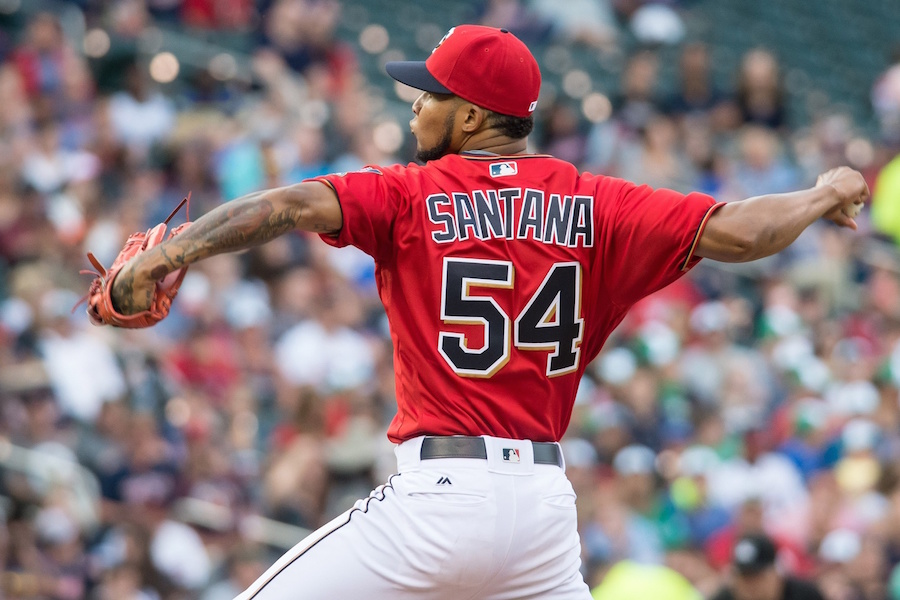 Granted, it came at home against an Athletics team that ranks last in the AL in OPS, but Santana's 100-pitch shutout on Wednesday was a thing of beauty. He allowed only two hits with no walks, and struck out eight. It was a tantalizing reminder of what Santana is capable of at his best. He's been in fine form since mid-June, with a 2.41 ERA in his previous three outings. His latest stretch is a throwback to his final run last year, when he closed out his first season in Minnesota by going 5-1 with a 1.62 ERA in his final seven starts. But of course, that hot streak was preceded by a very cold one, and the same is true now. Santana is a talented pitcher capable of greatness, but he has a tendency to go in the tank for weeks at a time. That's always been his MO. General managers across the league know it. Whoever acquires him would be on the hook for $27 million in his age 34 and 35 seasons. Possibly $14 million in 2019, too, if he stays healthy. That's a lot of money, right? Well, it looks like the best long-term pitching contract the Twins have right now, which isn't saying much when the rest of the field is Ricky Nolasco, Phil Hughes and Glen Perkins. If $13 million is the going rate for an average pitcher – and that seems to be the case, as the Twins gave Santana his contract with a career ERA+ of 99 – then he's a fair value salary-wise. Of course, it's a little different when you're looking at the front and back ends of the contract. Santana's a guy with a lot of mileage on his arm, and a half-season drug ban on his recent record. These factors are going to play against any kind of significant return. I would surmise that unless they pick up a big chunk of the tab (unlikely since they're probably going to have to bite the bullet on Nolasco at some point), the best the Twins are going to do is a couple of mid-level prospects. Maybe. Is it worth making a move at that point? That's a good question for debate, I think. On the one hand, Santana stands as the only remotely stable veteran force in the rotation going forward. On the other hand, the Twins have the worst record in baseball and shouldn't be too concerned with retaining an expensive mid-rotation starter. Terry Ryan and the front office are wisely taking an open-minded approach to the deadline. As ESPN's Jayson Stark puts it, they're "Telling everyone, 'If you've got any ideas, throw them out there.' " What's your idea? What should it take to pry Santana loose?
 -
The Twins played their 81st game on Sunday, marking the exact halfway point of the 2016 season. Around this time, I always find it interesting to project some final numbers based on first-half totals. Let's examine a few noteworthy and surprising on-pace numbers for the Minnesota Twins.For the purposes of keeping things tidy, I based these projections solely upon the first 81 games, meaning that Monday's and Tuesday's are not accounted for. Obviously, that small sample would not affect the numbers much anyway. The Twins are on pace to finish 54-108. It would be the most losses ever for a Twins team, and third-most in franchise history behind the Washington Senators of 1904 (113 losses) and 1909 (110 losses). Fifty-four wins would be the fewest for the franchise in a 162-game season, beating out the 1982 Twins (60 wins). Brian Dozier is on pace for 26 home runs, 32 doubles, six triples (64 XBH). A remarkable turnaround, considering that at the quarter-pole (41 games) he was on pace for only 40 extra-base hits. Now he's back on track with his production from 2014 (62 XBH) and 2015 (71 XBH), restoring his standing as one of the game's best power-hitting second basemen. If he could find a way to avoid these lengthy hitting slumps, Dozier could graduate to truly elite territory, but alas, he has yet to turn that corner. Joe Mauer is on pace for 14 doubles. Astounding. Outside of the 2011 season where he was limited to 82 games by leg problems, Mauer has never finished with fewer than 26 doubles. His 162-game average over the course of his career is 37. This number speaks to his decline more than any other, I think. Kurt Suzuki is on pace for 388 plate appearances. Worth noting because Suzuki's contract has a 2017 option that vests with 485 plate appearance this season. There's no way he's hitting that number. Byron Buxton is on pace to strike out 122 times. That's quite a number given the limited amount of time he has spent in the majors. Since the year 2000, the Twins have only had players post higher strikeout totals 11 times, and those guys all had a heck of a lot more plate appearances than the 310 Buxton is on pace for. Michael Tonkin is on pace for 96 strikeouts. Getting more K's from the bullpen was a priority this year after that unit ranked at the bottom of the league for the past several seasons. The Twins haven't had a reliever strike out 90-plus hitters since Joe Nathan fanned 95 back in 2008. Ryan Pressly and Trevor May are both on pace for more than 80 strikeouts, which is another feat no bullpen guy other than Nathan has achieved for the Twins in the past decade. The Twins are on pace to shatter their record of pitchers used in a season. At the the halfway point, the Twins have already used 23 different pitchers. The team record of 25 was set back in 2012. Eduardo Nunez is on pace to steal 38 bases with 22 homers. And he received an All-Star nod this week for his efforts. Nunez has had a fantastic season at the plate, and he's been a real treat for fantasy baseball players too. Max Kepler is on pace to finish with six fewer RBI than Joe Mauer. This actually understates things, because Kepler has 200 fewer plate appearances due to time spent in the minors. If the rookie continues to play regularly the rest of the way, he will decimate Mauer's RBI total. It's a big statement about the seasons both players are having. The Twins are on pace to allow 881 runs. Only twice since the franchise came to Minnesota have teams allowed more: 1995 and 1996, the height of the Steroid Era. The Twins are on pace to score 682 runs. And that's with Saturday's 17-run outburst pushing up the needle. It's fewer than they scored in 2015 or 2014; a dreadful disappointment for a club that focused so strongly on run-scoring when constructing its roster. Click here to view the article
-
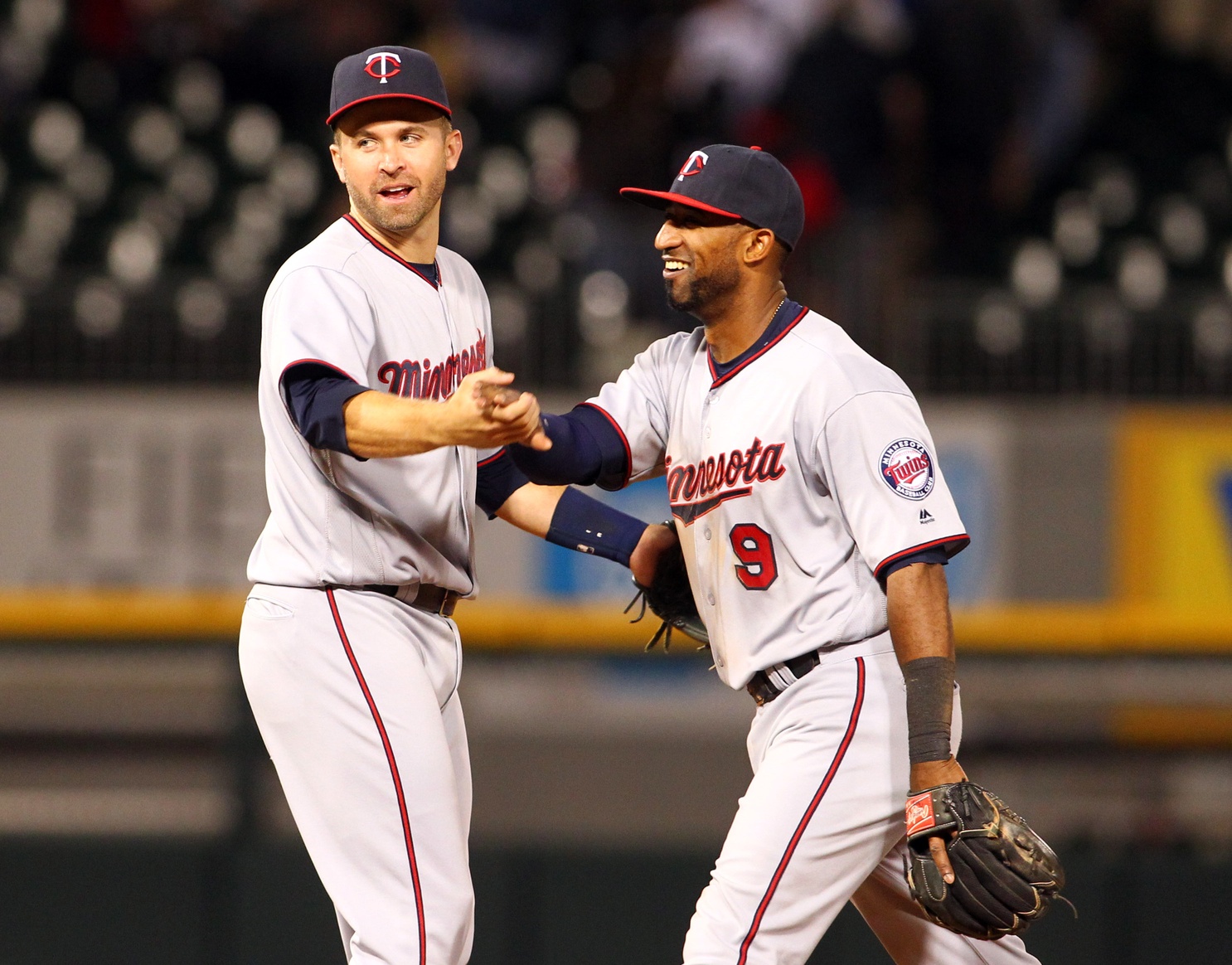 For the purposes of keeping things tidy, I based these projections solely upon the first 81 games, meaning that Monday's and Tuesday's are not accounted for. Obviously, that small sample would not affect the numbers much anyway. The Twins are on pace to finish 54-108. It would be the most losses ever for a Twins team, and third-most in franchise history behind the Washington Senators of 1904 (113 losses) and 1909 (110 losses). Fifty-four wins would be the fewest for the franchise in a 162-game season, beating out the 1982 Twins (60 wins). Brian Dozier is on pace for 26 home runs, 32 doubles, six triples (64 XBH). A remarkable turnaround, considering that at the quarter-pole (41 games) he was on pace for only 40 extra-base hits. Now he's back on track with his production from 2014 (62 XBH) and 2015 (71 XBH), restoring his standing as one of the game's best power-hitting second basemen. If he could find a way to avoid these lengthy hitting slumps, Dozier could graduate to truly elite territory, but alas, he has yet to turn that corner. Joe Mauer is on pace for 14 doubles. Astounding. Outside of the 2011 season where he was limited to 82 games by leg problems, Mauer has never finished with fewer than 26 doubles. His 162-game average over the course of his career is 37. This number speaks to his decline more than any other, I think. Kurt Suzuki is on pace for 388 plate appearances. Worth noting because Suzuki's contract has a 2017 option that vests with 485 plate appearance this season. There's no way he's hitting that number. Byron Buxton is on pace to strike out 122 times. That's quite a number given the limited amount of time he has spent in the majors. Since the year 2000, the Twins have only had players post higher strikeout totals 11 times, and those guys all had a heck of a lot more plate appearances than the 310 Buxton is on pace for. Michael Tonkin is on pace for 96 strikeouts. Getting more K's from the bullpen was a priority this year after that unit ranked at the bottom of the league for the past several seasons. The Twins haven't had a reliever strike out 90-plus hitters since Joe Nathan fanned 95 back in 2008. Ryan Pressly and Trevor May are both on pace for more than 80 strikeouts, which is another feat no bullpen guy other than Nathan has achieved for the Twins in the past decade. The Twins are on pace to shatter their record of pitchers used in a season. At the the halfway point, the Twins have already used 23 different pitchers. The team record of 25 was set back in 2012. Eduardo Nunez is on pace to steal 38 bases with 22 homers. And he received an All-Star nod this week for his efforts. Nunez has had a fantastic season at the plate, and he's been a real treat for fantasy baseball players too. Max Kepler is on pace to finish with six fewer RBI than Joe Mauer. This actually understates things, because Kepler has 200 fewer plate appearances due to time spent in the minors. If the rookie continues to play regularly the rest of the way, he will decimate Mauer's RBI total. It's a big statement about the seasons both players are having. The Twins are on pace to allow 881 runs. Only twice since the franchise came to Minnesota have teams allowed more: 1995 and 1996, the height of the Steroid Era. The Twins are on pace to score 682 runs. And that's with Saturday's 17-run outburst pushing up the needle. It's fewer than they scored in 2015 or 2014; a dreadful disappointment for a club that focused so strongly on run-scoring when constructing its roster.
 -
Article: The Independence Day Baseball Blackout
Nick Nelson replied to Nick Nelson's topic in Twins Daily Front Page News
It's not so much that I don't care to research, it's just a little out of my realm. The broadcast schedule system is a bit tricky to understand. The way I understand it is that many of these midweek day games are left unscheduled at the start of the season, and then picked up as the summer goes on. But, gawd, shouldn't July 4th be an absolute automatic? -
On Monday afternoon, the Minnesota Twins tweeted an invitation to fans: "Let's spend the afternoon with America's favorite pastime as the Twins host the A's." Only one problem: unless you were at Target Field, watching the action was nigh impossible. Incredibly, the July 4th Twins game was not televised locally, on any channel. In a year characterized by "Total System Failure" for the franchise, this misstep must rank quite highly among irredeemable moments.Naturally, the aforementioned tweet was met with scornful responses from individuals across Twins Territory, stunned to scroll through their TV guide only to learn that the game was nowhere to be found. July 4th is not only a patriotic national holiday and celebration of summer, but also a date where America's pastime takes center stage. Every single team in the majors plays. Flipping on the ballgame while grilling and enjoying time with family is an entrenched tradition for many fans of all stripes – one strong enough to outweigh the generally painful proposition of watching this Twins team play. This year, baseball enthusiasts in the Twin Cities were deprived of that opportunity. And why? Star Tribune beat man Phil Miller ties the absence of this broadcast – and all other midweek day games the rest of the way – to a lack of interest. As he puts it, "the price of going 27-54." In other words, because this club has scuffled to such a pitiful first half, fans are the ones who pay the price. As if it weren't enough to drop out of relevance before the season is six weeks old, and to deliver jolt after jolt to any long-term hopes, the Twins are now ruining annual rites of summer. Has this happened in the past? Were Independence Day matinees non-televised on other occasions during the past five years? It is possible; I certainly don't ever recall it, but don't feel like doing the research. And it doesn't really matter. All I know is that, in this season – with the Twins already driving nearly every loyalist to either anger or apathy – the terrible optics of this thing are impossible to ignore. Even without being able to watch the Twins limp to their 55th loss against another bad team on Sunday, I was able to enjoy my holiday. I hope that you all were too. In fact, maybe you didn't even notice the absence of baseball on your televisions. That, however, would strike me as the saddest part. Click here to view the article
-
 Naturally, the aforementioned tweet was met with scornful responses from individuals across Twins Territory, stunned to scroll through their TV guide only to learn that the game was nowhere to be found. July 4th is not only a patriotic national holiday and celebration of summer, but also a date where America's pastime takes center stage. Every single team in the majors plays. Flipping on the ballgame while grilling and enjoying time with family is an entrenched tradition for many fans of all stripes – one strong enough to outweigh the generally painful proposition of watching this Twins team play. This year, baseball enthusiasts in the Twin Cities were deprived of that opportunity. And why? Star Tribune beat man Phil Miller ties the absence of this broadcast – and all other midweek day games the rest of the way – to a lack of interest. As he puts it, "the price of going 27-54." In other words, because this club has scuffled to such a pitiful first half, fans are the ones who pay the price. As if it weren't enough to drop out of relevance before the season is six weeks old, and to deliver jolt after jolt to any long-term hopes, the Twins are now ruining annual rites of summer. Has this happened in the past? Were Independence Day matinees non-televised on other occasions during the past five years? It is possible; I certainly don't ever recall it, but don't feel like doing the research. And it doesn't really matter. All I know is that, in this season – with the Twins already driving nearly every loyalist to either anger or apathy – the terrible optics of this thing are impossible to ignore. Even without being able to watch the Twins limp to their 55th loss against another bad team on Sunday, I was able to enjoy my holiday. I hope that you all were too. In fact, maybe you didn't even notice the absence of baseball on your televisions. That, however, would strike me as the saddest part.
 -
This year's Minnesota Twins team is bad. Like, most losses in baseball bad. Like, less than half as many wins (25) as the Texas Rangers (51) bad. We've come to terms with this bitter reality. But what really stings about the ongoing setbacks here in 2016 is the long-term implications. Almost every week, it seems like a new development comes along to sap away any hope for a quick turnaround.Obviously, the young players who are being relied upon as the lifeblood of a return to contention have largely scuffled. Byron Buxton looks nowhere near taking competent major-league at-bats. Tyler Duffey has a 5.59 ERA. Eddie Rosario, John Ryan Murphy, Jose Berrios and JT Chargois are in Triple-A, with nothing to show for their MLB time this season. Miguel Sano has been all right, but far from the MVP-caliber player that some dummy stupidly predicted him to be. The severity and consistency of these youths' struggles call into question the organization's development and coaching processes. But, at the same time, this is sort of the nature of the beast. Sometimes, it takes a while. What really dulls any sense of enthusiasm relating to this team is the way things are playing out with entrenched veterans. Joe Mauer is reaffirming his status as a mediocrity who will continue to bat third indefinitely. It's getting harder and harder to believe that will change. Byung Ho Park is technically a rookie, but not, in the sense that he's a 29-year-old with four guaranteed years of salary on this contract. He's batting .191 and on the verge of a demotion to the minors. (UPDATE: Park was optioned to Triple-A on Friday.) Glen Perkins, the only member of the bullpen who could be considered a reliable commodity at this point, is out for the year with surgery for a torn labrum, his career now in doubt. Phil Hughes, who is under contract longer than anyone else on the roster (through 2019), is also undergoing shoulder surgery. He is three years younger than Perkins, and his operation is somewhat less serious, but a Beyond the Box Score writer who examined the history of thoracic outlet syndrome last year concluded that "counting on a pitcher who has been through this injury is a terrifying proposition." Since signing the largest free agent contract in franchise history, Ervin Santana has a 4.17 ERA, an 80-game PED ban, and a continually declining strikeout rate. Ricky Nolasco is Ricky Nolasco. Still on the payroll through next year. The resurgence of Brian Dozier (and, in fairness, what a freaking resurgence) is the only remote glimmer of optimism regarding any of the team's established players who are locked in. You can bet that there will be plenty of talk about trading him as the deadline approaches, which is understandable but also a statement on just how far this team may be from a return to relevance. The Twins have given us very little to celebrate as we head into the summer's foremost holiday weekend. On the bright side, there is still half a baseball season remaining, and plenty of time for some positive big-picture signs to emerge. Boy, could we use them. Click here to view the article
- 37 replies
-
- 1
-

-
- phil hughes
- glen perkins
- (and 1 more)
-
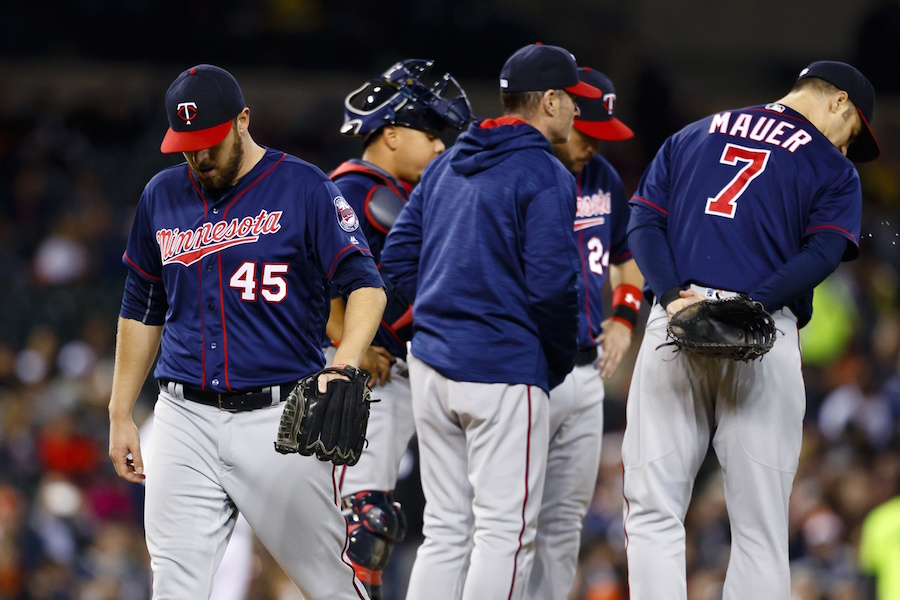 Obviously, the young players who are being relied upon as the lifeblood of a return to contention have largely scuffled. Byron Buxton looks nowhere near taking competent major-league at-bats. Tyler Duffey has a 5.59 ERA. Eddie Rosario, John Ryan Murphy, Jose Berrios and JT Chargois are in Triple-A, with nothing to show for their MLB time this season. Miguel Sano has been all right, but far from the MVP-caliber player that some dummy stupidly predicted him to be. The severity and consistency of these youths' struggles call into question the organization's development and coaching processes. But, at the same time, this is sort of the nature of the beast. Sometimes, it takes a while. What really dulls any sense of enthusiasm relating to this team is the way things are playing out with entrenched veterans. Joe Mauer is reaffirming his status as a mediocrity who will continue to bat third indefinitely. It's getting harder and harder to believe that will change. Byung Ho Park is technically a rookie, but not, in the sense that he's a 29-year-old with four guaranteed years of salary on this contract. He's batting .191 and on the verge of a demotion to the minors. (UPDATE: Park was optioned to Triple-A on Friday.) Glen Perkins, the only member of the bullpen who could be considered a reliable commodity at this point, is out for the year with surgery for a torn labrum, his career now in doubt. Phil Hughes, who is under contract longer than anyone else on the roster (through 2019), is also undergoing shoulder surgery. He is three years younger than Perkins, and his operation is somewhat less serious, but a Beyond the Box Score writer who examined the history of thoracic outlet syndrome last year concluded that "counting on a pitcher who has been through this injury is a terrifying proposition." Since signing the largest free agent contract in franchise history, Ervin Santana has a 4.17 ERA, an 80-game PED ban, and a continually declining strikeout rate. Ricky Nolasco is Ricky Nolasco. Still on the payroll through next year. The resurgence of Brian Dozier (and, in fairness, what a freaking resurgence) is the only remote glimmer of optimism regarding any of the team's established players who are locked in. You can bet that there will be plenty of talk about trading him as the deadline approaches, which is understandable but also a statement on just how far this team may be from a return to relevance. The Twins have given us very little to celebrate as we head into the summer's foremost holiday weekend. On the bright side, there is still half a baseball season remaining, and plenty of time for some positive big-picture signs to emerge. Boy, could we use them.
 -
If this performance weren't so closely in line with what we've seen over the past couple of years, I wouldn't be too worked up. Alas.
-
During the month of April, while the Minnesota Twins stumbled out of the gates with a nine-game losing streak and ultimately finished with a 7-17 record, one storyline broke through the overarching dreariness as a shining beacon of hope. It looked as though Joe Mauer, finally, was back.Many fans had understandably lost faith during two straight utterly mediocre seasons following the former MVP's move to first base. Maybe this simply was what he was, and what we'd have to live with it until his expensive contract wrapped up in 2018. This April represented a return to form. Mauer finished the month with a .321 average, ranking among the league leaders. He was spraying liners everywhere. Most encouragingly, he had regained his masterful control of the zone, walking more than twice as often as he struck out (20 to 9). But here in this accursed 2016 campaign, we're not allowed those types of positive developments. It's been all downhill for Mauer over the past two months. Since lifting his OPS to .920 with a three-hit game on May 1st, he has hit .234/.317/.354. He has struck out twice for every walk (46 to 23), a stark reversal from his reinvigorated approach in April. Here's a statistic that is truly incredible to me: In 208 plate appearances during that span, Mauer has hit ONE double. Slicing liners into the gaps and down the lines for two-baggers has always been a specialty, helping make up for his lack of home run power. Now, even that skill has betrayed him. His strong April, and his uncharacteristic homer binge in late May, have proven to be fleeting glimpses. Mauer has gone back to being an offensive liability who does nothing well. He isn't hitting for power. He isn't getting on base. For two months he has been a rather easy out, just as he was for most of last year. Strictly due to his reputation he continues to bat second or third every day, and that doesn't really matter for this season, but if things continue this way the Twins are going to need to re-examine where he fits as they look ahead. It's just another in a long line of headaches facing either this or a reconfigured front office, headaches which the leadership will be forced to tackle this coming offseason. Click here to view the article
-
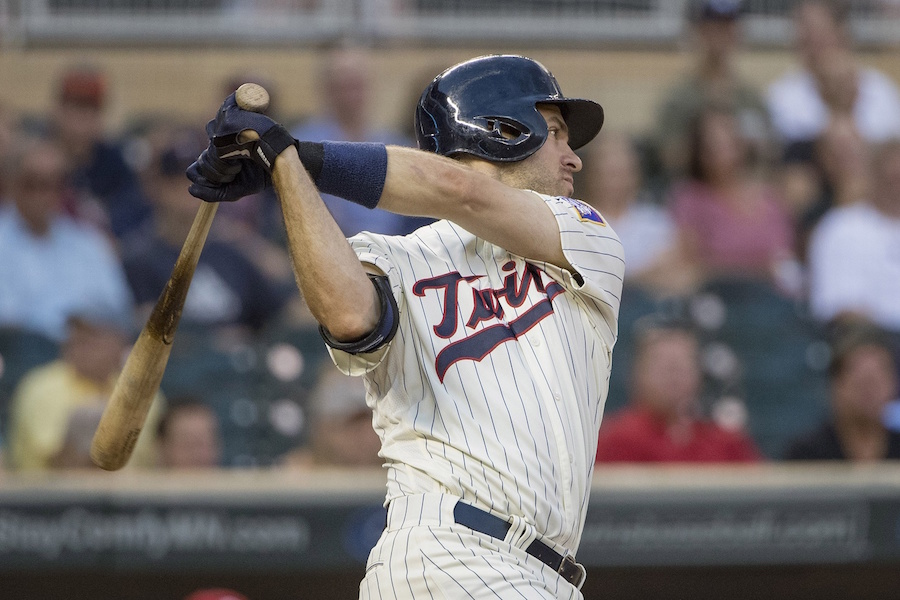 Many fans had understandably lost faith during two straight utterly mediocre seasons following the former MVP's move to first base. Maybe this simply was what he was, and what we'd have to live with it until his expensive contract wrapped up in 2018. This April represented a return to form. Mauer finished the month with a .321 average, ranking among the league leaders. He was spraying liners everywhere. Most encouragingly, he had regained his masterful control of the zone, walking more than twice as often as he struck out (20 to 9). But here in this accursed 2016 campaign, we're not allowed those types of positive developments. It's been all downhill for Mauer over the past two months. Since lifting his OPS to .920 with a three-hit game on May 1st, he has hit .234/.317/.354. He has struck out twice for every walk (46 to 23), a stark reversal from his reinvigorated approach in April. Here's a statistic that is truly incredible to me: In 208 plate appearances during that span, Mauer has hit ONE double. Slicing liners into the gaps and down the lines for two-baggers has always been a specialty, helping make up for his lack of home run power. Now, even that skill has betrayed him. His strong April, and his uncharacteristic homer binge in late May, have proven to be fleeting glimpses. Mauer has gone back to being an offensive liability who does nothing well. He isn't hitting for power. He isn't getting on base. For two months he has been a rather easy out, just as he was for most of last year. Strictly due to his reputation he continues to bat second or third every day, and that doesn't really matter for this season, but if things continue this way the Twins are going to need to re-examine where he fits as they look ahead. It's just another in a long line of headaches facing either this or a reconfigured front office, headaches which the leadership will be forced to tackle this coming offseason.

