



Nick Nelson
-
Posts
8,325 -
Joined
-
Last visited
-
Days Won
56
Content Type
Profiles
News
Minnesota Twins Videos
2026 Minnesota Twins Top Prospects Ranking
2022 Minnesota Twins Draft Picks
Minnesota Twins Free Agent & Trade Rumors, Notes, & Tidbits
Guides & Resources
2023 Minnesota Twins Draft Picks
The Minnesota Twins Players Project
2024 Minnesota Twins Draft Picks
2025 Minnesota Twins Draft Pick Tracker
2026 Minnesota Twins Draft Tracker: Picks & Bonuses
Forums
Blogs
Events
Store
Downloads
Gallery
Everything posted by Nick Nelson
-
 Over the weekend, Kennys Vargas was sent to the minors, the Twins called up two newly acquired pitching prospects, and Hector Santiago got rocked. Read on for analysis of each development.* The Twins needed pitching reinforcements after Friday night's marathon contest in Kansas City extended past bar close. The unfortunate victim in the ensuing roster shuffling was Kennys Vargas, who hasn't done much during his time with the team to deserve a demotion. Since coming up in early July, Vargas has posted a .955 OPS with six homers and 17 walks in 25 games, delivering both patience and power. The switch-hitter has cooled off here in August amidst sparse playing time. Therein lies the problem. Joe Mauer is locked in at first. Miguel Sano is relegated mostly to DH as long as Trevor Plouffe is here and maybe beyond, given the elbow issues. This leaves no path to immediate playing time for Vargas, and that didn't figure to change any time soon. The 26-year-old's offensive profile looks good in the middle of the order, but there's not a fit for him here. The same was true for Oswaldo Arcia, who was designated for assignment by the Rays over the weekend. Sometimes, being able to crush the ball simply isn't enough. * In the corresponding move when Vargas was optioned, the Twins called up Adalberto Mejia, who came over in the Eduardo Nunez trade. The lefty had been fairly sharp in his first three starts with Rochester, but got pushed into the big-league fold sooner than anyone expected, out of necessity. Mejia made his MLB debut in mop-up duty, handling the middle innings of a blowout loss. He didn't fare too well, yielding five hits and a walk over 2 1/3 innings, and was optioned following the game. It wasn't the most glamorous opportunity for his first chance, but the prospect did his thing and should be back in 10 days when rosters expand. Replacing him on the staff is Pat Light, who was acquired by the Twins a few days after Mejia. Rob Antony and the front office are wasting no time getting a look at their new additions. Light made a couple of inauspicious appearances in the Red Sox bullpen this year before being swapped for Fernando Abad on deadline day. He was still waiting for his first extended chance in the majors. Now, he should get it, albeit 10 days after it was supposed to happen. MLB.com's Rhett Bollinger explains the rookie's phantom call-up: You can only imagine how frustrating the experience must have been for the hard-throwing righty, so this opportunity must feel redeeming. Light has put up impressive numbers in Triple-A this year (2.37 ERA, 1.18 WHIP, 9.9 K/9) so I'm eager to see what he's got. * One player that has failed to impress in several chances for his new club is Hector Santiago. His horrendous outing at Kauffman Stadium on Saturday night paved the way for Mejia's long-relief outing. The veteran has been raked all over the yard whenever he has taken the hill for the Twins. His first impression feels similar to the one Tommy Milone gave after coming over from the West Coast two years ago. Of course, Milone shook off the slump and reverted back to his old self the following year. In 2015, he put up a 3.92 ERA and 1.28 WHIP in 128 innings, perfectly respectable numbers. We can reasonably expect the same from Santiago. The problem is that, like Milone, Santiago at his best is essentially an average pitcher. Do the Twins want to commit to such low-risk, low-reward gambles at a time when they need to be aiming high? Luckily, Santiago's contract status essentially gives Minnesota a team option for next year, so they can make that decision on its own merit. Click here to view the article
 -
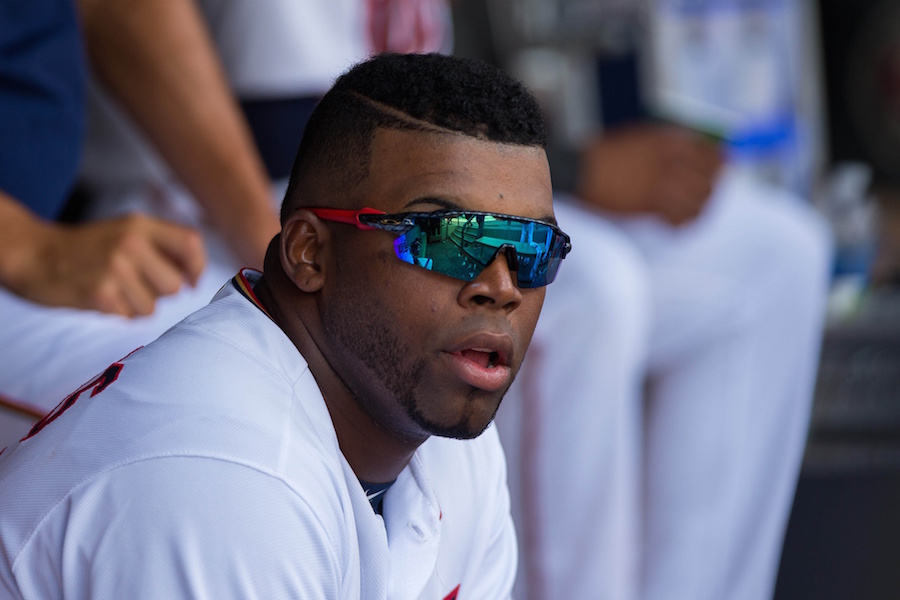 * The Twins needed pitching reinforcements after Friday night's marathon contest in Kansas City extended past bar close. The unfortunate victim in the ensuing roster shuffling was Kennys Vargas, who hasn't done much during his time with the team to deserve a demotion. Since coming up in early July, Vargas has posted a .955 OPS with six homers and 17 walks in 25 games, delivering both patience and power. The switch-hitter has cooled off here in August amidst sparse playing time. Therein lies the problem. Joe Mauer is locked in at first. Miguel Sano is relegated mostly to DH as long as Trevor Plouffe is here and maybe beyond, given the elbow issues. This leaves no path to immediate playing time for Vargas, and that didn't figure to change any time soon. The 26-year-old's offensive profile looks good in the middle of the order, but there's not a fit for him here. The same was true for Oswaldo Arcia, who was designated for assignment by the Rays over the weekend. Sometimes, being able to crush the ball simply isn't enough. * In the corresponding move when Vargas was optioned, the Twins called up Adalberto Mejia, who came over in the Eduardo Nunez trade. The lefty had been fairly sharp in his first three starts with Rochester, but got pushed into the big-league fold sooner than anyone expected, out of necessity. Mejia made his MLB debut in mop-up duty, handling the middle innings of a blowout loss. He didn't fare too well, yielding five hits and a walk over 2 1/3 innings, and was optioned following the game. It wasn't the most glamorous opportunity for his first chance, but the prospect did his thing and should be back in 10 days when rosters expand. Replacing him on the staff is Pat Light, who was acquired by the Twins a few days after Mejia. Rob Antony and the front office are wasting no time getting a look at their new additions. Light made a couple of inauspicious appearances in the Red Sox bullpen this year before being swapped for Fernando Abad on deadline day. He was still waiting for his first extended chance in the majors. Now, he should get it, albeit 10 days after it was supposed to happen. MLB.com's Rhett Bollinger explains the rookie's phantom call-up: You can only imagine how frustrating the experience must have been for the hard-throwing righty, so this opportunity must feel redeeming. Light has put up impressive numbers in Triple-A this year (2.37 ERA, 1.18 WHIP, 9.9 K/9) so I'm eager to see what he's got. * One player that has failed to impress in several chances for his new club is Hector Santiago. His horrendous outing at Kauffman Stadium on Saturday night paved the way for Mejia's long-relief outing. The veteran has been raked all over the yard whenever he has taken the hill for the Twins. His first impression feels similar to the one Tommy Milone gave after coming over from the West Coast two years ago. Of course, Milone shook off the slump and reverted back to his old self the following year. In 2015, he put up a 3.92 ERA and 1.28 WHIP in 128 innings, perfectly respectable numbers. We can reasonably expect the same from Santiago. The problem is that, like Milone, Santiago at his best is essentially an average pitcher. Do the Twins want to commit to such low-risk, low-reward gambles at a time when they need to be aiming high? Luckily, Santiago's contract status essentially gives Minnesota a team option for next year, so they can make that decision on its own merit.
 -
Article: Pitching Pipeline: What's Next?
Nick Nelson replied to Nick Nelson's topic in Twins Daily Front Page News
Again, the point here was more relating to workload progression and timelines than picking apart small-sample minor-league stats. Maybe both of these guys are bound for the bullpen. If so, then the Twins still passed up Benintendi, who has clearly developed into one of the game's better OF prospects. The pick just doesn't look very good right now. -
Article: Pitching Pipeline: What's Next?
Nick Nelson replied to Nick Nelson's topic in Twins Daily Front Page News
The same could have more or less been said about B.J. Hermsen, until his lack of ability to miss bats caught up with him. I'd honestly be curious to know how many pitchers that had a- 164 replies
-
- 3
-

-
- adalberto mejia
- tyler jay
- (and 3 more)
-
Article: Pitching Pipeline: What's Next?
Nick Nelson replied to Nick Nelson's topic in Twins Daily Front Page News
I'm not holding it against Jay, I'm holding it against the Twins. With a desperate need for starting pitching, they bypassed the top collegiate ace in the country in order to gamble on transitioning another reliever into a starter. Someone else brought up the Duffey comparison and I think that one is apt. He threw 70 innings in 2012, between his junior year at Rice and his rookie ball debut. The next year he made the starting transition and went up to 120 innings. Then 150 the next year. That's the progression you're looking for. Jay stalling out before 90 innings this year puts him behind, in a case where the stakes are much higher because he was a Top 10 pick not a 5th-rounder. And because Minnesota's era of ineptitude is extending well beyond a half-decade and they need reinforcements soon, not in 2-3 years when/if Jay is able to acclimate to the rigors of starting.- 164 replies
-
- 5
-
-
- adalberto mejia
- tyler jay
- (and 3 more)
-
Article: Pitching Pipeline: What's Next?
Nick Nelson replied to Nick Nelson's topic in Twins Daily Front Page News
If you're nitpicking Carson Fulmer based on his initial performance in the majors I think you're kind of missing the point. I'm not saying he's ready to be an ace, nor am I defending Chicago's handling of him, but the fact remains he reached the majors a year after being drafted, is still healthy, and is setting himself up to be a rotation option (if not a given) for 2017. I was skeptical of the decision to draft Jay over him from the very start so admittedly I have my own preconceptions about this situation. Agreed, and this was the redeeming quality of the pick in my mind. Still, when you're a team that needs pitching as badly as the Twins, ending up with a lefty reliever with the #6 pick in the draft is far from an ideal outcome.- 164 replies
-
- 2
-
-
- adalberto mejia
- tyler jay
- (and 3 more)
-
Article: Pitching Pipeline: What's Next?
Nick Nelson replied to Nick Nelson's topic in Twins Daily Front Page News
That's definitely an underestimate on his weight, probably based on several years ago. I'd guess he's carrying 20-30 more pounds. You can see in the image (or these highlights) he is far from a beanpole. The missed time in 2015 was due to a suspension for stimulants.- 164 replies
-
- 1
-
-
- adalberto mejia
- tyler jay
- (and 3 more)
-
Article: Pitching Pipeline: What's Next?
Nick Nelson replied to Nick Nelson's topic in Twins Daily Front Page News
You expected he would physically break down after a few months? Let's not imply that having your season end due to neck/shoulder problems is the same thing as being shut down by a team-imposed inning restriction (which I'm sure would've happened somewhat soon). He has done little to demonstrate his ability to effectively take on a starter's workload, which was basically his big test this year.- 164 replies
-
- 2
-
-
- adalberto mejia
- tyler jay
- (and 3 more)
-
Article: Pitching Pipeline: What's Next?
Nick Nelson replied to Nick Nelson's topic in Twins Daily Front Page News
1) I didn't not "basically" call Jay a bust. I pointed out factually that his physical transition to a starter's workload isn't going very well thus far, and the optics aren't great when you look at the pitchers taken after him. This article is a snapshot of where things stand with a bunch of 22-year-old pitchers so no one is being called a bust. 2) Not sure where you come away from my Gonsalves writeup with the view of it being negative. Saying a pitching prospect has the ceiling of "maybe a No. 1 or 2" is a compliment, not a disparagement. This isn't the be-all end-all, but heading into this year Gonsalves had never appeared on a Top 100 list from Baseball America, MLB.com or Baseball Prospectus. That's a lot of different prospects evaluators and scouts who haven't seen the ace-like potential despite the big numbers. If you think failing to inflate these guys with unrealistic hype makes me a "debbie downer" so be it, but I'd say you're the one who isn't seeing it clearly.- 164 replies
-
- 7
-
-
- adalberto mejia
- tyler jay
- (and 3 more)
-
It's not exactly a secret that the Twins need better pitching. They have allowed the most runs in the American League by a huge margin, hanging an above-average offense out to try. Now that Jose Berrios has joined the rotation (hopefully for good), what else is on the way?Berrios has been uneven, at best, in his initial exposure to the majors. Hopefully he'll find his way. Regardless of what happens with the electric youngster, the Twins are going to need much more quality pitching in order be considered a credible contender within the coming year or two. Here's an in-depth look at five prospects that could be considered the next wave, when combining closeness and caliber. At the end, we'll review some conclusions that can be drawn from where things stand with the foremost incoming arms. Adalberto Mejia, LHP (23) - Class-AAA Rochester Mejia, who came over in the Eduardo Nunez trade, was a particularly important addition because he slots into a Rochester rotation that is otherwise devoid of potential impact talent. Jason Wheeler, Pat Dean and Logan Darnell may get some looks but they are marginal big-leaguers. Mejia could really be something. He's a big, sturdy, durable left-hander with good breaking stuff and an improving strikeout rate. He has made 10 starts at at Triple-A and has mostly looked up to the task, commanding the zone and inducing plenty of swings and misses. He is closest to the majors among Minnesota's higher-tier pitching prospects. Most believe he'll end up being a mid-rotation type if he pans out, though. Stephen Gonsalves, LHP (22) - Class-AA Chattanooga While Mejia is closest to the big leagues, he is not Minnesota's top pitching prospect. That honor, almost indisputably, goes to Gonsalves at this point. The southpaw ranked sixth on our preseason Twins top prospect rankings and has done nothing but enhance his luster this summer. He made short work of the Florida State League in his second stint with the Miracle (2.33 ERA, 0.96 WHIP in 11 starts) before moving up to Chattanooga and not missing a beat (2.01 ERA, 1.19 WHIP in nine starts). The jump from Single-A to Double-A is considered perhaps the toughest for prospects, especially for a pitcher like Gonsalves who is said to lack a quality breaking ball. The lefty is simply dominating from his 6'5" frame and has been on an insane run lately with a 4-0 record and 0.80 ERA over his past seven starts. In total this year, he has held opponents to a .187 average with three homers in 119 innings. The fast-rising 22-year-old is prone to command issues that will likely become more pronounced as he starts regularly facing more patient hitters (by his own admission he got some help in his last outing – a complete game victory – because opponents "kept swinging at anything close to the zone") but that's not unusual for someone his age with his body type. Gonsalves is the kind of guy that scouts would describe early on as "projectable," meaning that he had big room for improvement with his tall lanky build and improving feel for pitching. He is now turning into exactly the pitcher that evaluators optimistically projected. His ceiling exceeds any other starter in the system and it wouldn't be a huge shock if he got a look this September. Tyler Jay, LHP (22) - Class-AA Chattanooga Jay was a gamble. With the sixth pick in last June's draft, the Twins took the Illinois closer just ahead of Andrew Benintendi, who is currently batting .350 for the Red Sox, and Carson Fulmer, who mowed through the minors and has been on the White Sox roster for a month. Rather than go after the dynamic offensive talent or the established collegiate starter, the Twins decided to pick Jay with hopes he could successfully transition into a rotation piece. The results, thus far, have not been great. After signing, Jay went to rookie ball and finished out his season in his familiar relief role. This year the switch to starting got underway, and right now there is no indication that it will stick. Jay pitched well, albeit not amazingly, for 13 starts in Fort Myers before moving up to Chattanooga. There, he made two starts and a few relief appearances before being shut down amidst some pain. He was diagnosed only with nerve irritation in his neck, which is mostly good news but still not entirely encouraging. In 15 starts between Single-A and Double-A this year, Jay pitched past the fifth only five times. He never exceeded 100 pitches. And at the end of July, with 83 total innings thrown, he came down with neck and shoulder problems. At the very least, this looks like it is going to be an extended project. Meanwhile, the players that Minnesota passed up to select Jay have rocketed to the big leagues and are already auditioning for prominent roles in 2017. Not ideal. Kohl Stewart, RHP (21) - Class-AA Chattanooga When the Twins made Stewart the top high school player selected in the 2012 draft, no one really balked at the decision. He was widely viewed as the best prep arm in the nation. He lived up to his billing with a nice debut in rookie ball, and with a little projection, one could envision the athletic teenager growing into a frontline starting stalwart. But he really hasn't developed. Sequencing, approach and fastball movement have enabled Stewart to continually achieve good results while climbing the minor-league ladder, but his peripherals have lagged behind. Strikeout-to-walk ratio isn't everything but it says a great deal about the sustainability of good performance and Stewart's 1.90 career mark is flat-out unimpressive, even when you ignore the expectations and pedigree. A 14.9 percent overall strikeout rate in full-season baseball just doesn't equate to a premium prospect, and that's mostly why Stewart has fallen off every list. He's still young – one of the younger starting pitchers in the Southern League at 21, in fact – so there is time for Stewart to improve and find a way to overpower pro hitters. The innate ability is there, I think. But he's not really one to count on at this point. Felix Jorge, RHP (22) - Class-AAA Chattanooga A skinny hurler who also has never missed many bats, Jorge is not any analyst's idea of a premier prospect talent, but he deserves mention because of his consistent penchant for getting outs. Like the three above him on this list, Jorge has reached the Double-A level by age 22, a noteworthy feat. He was fantastic earlier in Fort Myers, posting a 1.55 ERA in 14 starts, and has performed well enough with the Lookouts following a rocky debut. In the past, Terry Ryan has compared Jorge to current Twins starter Ervin Santana, noting similiarities in their build and fluid mechanics. Given his youth and sterling results – he has a 2.68 ERA in 278 innings dating back to the start of 2015 – Jorge demands some attention, but he has tallied a lackluster 213 strikeouts during that span. In order to become a real factor in the rotation conversation over the next couple of years, he's got to find a way to start missing some bats. SUMMARY Berrios was the clear prize of the Twins pitching prospect pool. The jury is still very much out on him based on his stunningly poor early results in the majors, but of course there is plenty of time left. His troubling transition increases the urgency of finding potential rotation-fronting talent. The Twins will head into 2017 with few reliable commodities. While the organization could certainly be worse off with their top upcoming pitching talent than the five names listed above, especially after graduating the top arm, none of them realistically boast No. 1 or No. 2 starter upside, other than maybe Gonsalves. The free agent market for starting pitching this winter is lacking at the high end, especially with Stephen Strasburg inking an extension in Washington. Options will be limited for finding true impact arms. This is why I feel that the Twins need to consider a major shakeup via trade – such as trading Brian Dozier this offseason – in order to infuse more pitching promise into the system. Click here to view the article
- 164 replies
-
- 2
-
-
- adalberto mejia
- tyler jay
- (and 3 more)
-
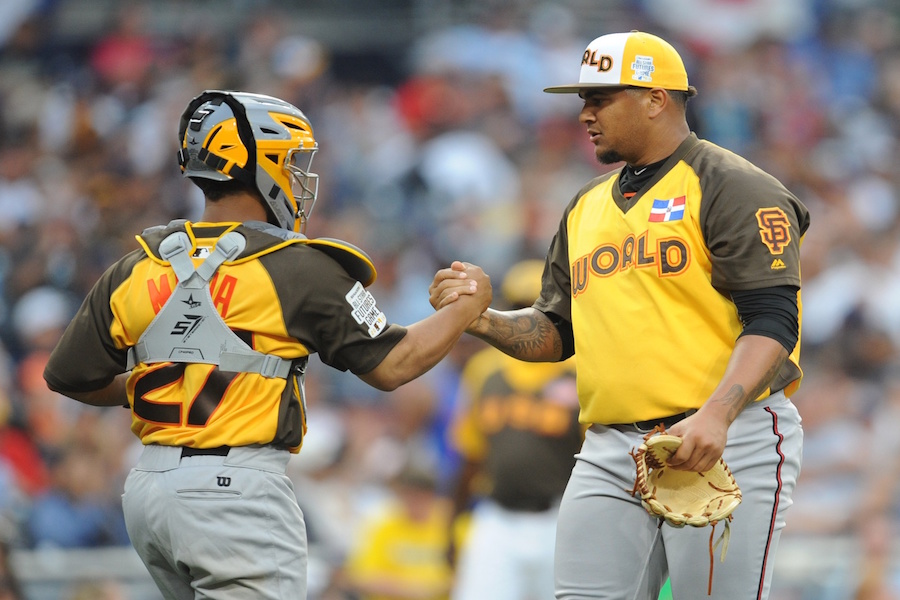 Berrios has been uneven, at best, in his initial exposure to the majors. Hopefully he'll find his way. Regardless of what happens with the electric youngster, the Twins are going to need much more quality pitching in order be considered a credible contender within the coming year or two. Here's an in-depth look at five prospects that could be considered the next wave, when combining closeness and caliber. At the end, we'll review some conclusions that can be drawn from where things stand with the foremost incoming arms. Adalberto Mejia, LHP (23) - Class-AAA Rochester Mejia, who came over in the Eduardo Nunez trade, was a particularly important addition because he slots into a Rochester rotation that is otherwise devoid of potential impact talent. Jason Wheeler, Pat Dean and Logan Darnell may get some looks but they are marginal big-leaguers. Mejia could really be something. He's a big, sturdy, durable left-hander with good breaking stuff and an improving strikeout rate. He has made 10 starts at at Triple-A and has mostly looked up to the task, commanding the zone and inducing plenty of swings and misses. He is closest to the majors among Minnesota's higher-tier pitching prospects. Most believe he'll end up being a mid-rotation type if he pans out, though. Stephen Gonsalves, LHP (22) - Class-AA Chattanooga While Mejia is closest to the big leagues, he is not Minnesota's top pitching prospect. That honor, almost indisputably, goes to Gonsalves at this point. The southpaw ranked sixth on our preseason Twins top prospect rankings and has done nothing but enhance his luster this summer. He made short work of the Florida State League in his second stint with the Miracle (2.33 ERA, 0.96 WHIP in 11 starts) before moving up to Chattanooga and not missing a beat (2.01 ERA, 1.19 WHIP in nine starts). The jump from Single-A to Double-A is considered perhaps the toughest for prospects, especially for a pitcher like Gonsalves who is said to lack a quality breaking ball. The lefty is simply dominating from his 6'5" frame and has been on an insane run lately with a 4-0 record and 0.80 ERA over his past seven starts. In total this year, he has held opponents to a .187 average with three homers in 119 innings. The fast-rising 22-year-old is prone to command issues that will likely become more pronounced as he starts regularly facing more patient hitters (by his own admission he got some help in his last outing – a complete game victory – because opponents "kept swinging at anything close to the zone") but that's not unusual for someone his age with his body type. Gonsalves is the kind of guy that scouts would describe early on as "projectable," meaning that he had big room for improvement with his tall lanky build and improving feel for pitching. He is now turning into exactly the pitcher that evaluators optimistically projected. His ceiling exceeds any other starter in the system and it wouldn't be a huge shock if he got a look this September. Tyler Jay, LHP (22) - Class-AA Chattanooga Jay was a gamble. With the sixth pick in last June's draft, the Twins took the Illinois closer just ahead of Andrew Benintendi, who is currently batting .350 for the Red Sox, and Carson Fulmer, who mowed through the minors and has been on the White Sox roster for a month. Rather than go after the dynamic offensive talent or the established collegiate starter, the Twins decided to pick Jay with hopes he could successfully transition into a rotation piece. The results, thus far, have not been great. After signing, Jay went to rookie ball and finished out his season in his familiar relief role. This year the switch to starting got underway, and right now there is no indication that it will stick. Jay pitched well, albeit not amazingly, for 13 starts in Fort Myers before moving up to Chattanooga. There, he made two starts and a few relief appearances before being shut down amidst some pain. He was diagnosed only with nerve irritation in his neck, which is mostly good news but still not entirely encouraging. In 15 starts between Single-A and Double-A this year, Jay pitched past the fifth only five times. He never exceeded 100 pitches. And at the end of July, with 83 total innings thrown, he came down with neck and shoulder problems. At the very least, this looks like it is going to be an extended project. Meanwhile, the players that Minnesota passed up to select Jay have rocketed to the big leagues and are already auditioning for prominent roles in 2017. Not ideal. Kohl Stewart, RHP (21) - Class-AA Chattanooga When the Twins made Stewart the top high school player selected in the 2012 draft, no one really balked at the decision. He was widely viewed as the best prep arm in the nation. He lived up to his billing with a nice debut in rookie ball, and with a little projection, one could envision the athletic teenager growing into a frontline starting stalwart. But he really hasn't developed. Sequencing, approach and fastball movement have enabled Stewart to continually achieve good results while climbing the minor-league ladder, but his peripherals have lagged behind. Strikeout-to-walk ratio isn't everything but it says a great deal about the sustainability of good performance and Stewart's 1.90 career mark is flat-out unimpressive, even when you ignore the expectations and pedigree. A 14.9 percent overall strikeout rate in full-season baseball just doesn't equate to a premium prospect, and that's mostly why Stewart has fallen off every list. He's still young – one of the younger starting pitchers in the Southern League at 21, in fact – so there is time for Stewart to improve and find a way to overpower pro hitters. The innate ability is there, I think. But he's not really one to count on at this point. Felix Jorge, RHP (22) - Class-AAA Chattanooga A skinny hurler who also has never missed many bats, Jorge is not any analyst's idea of a premier prospect talent, but he deserves mention because of his consistent penchant for getting outs. Like the three above him on this list, Jorge has reached the Double-A level by age 22, a noteworthy feat. He was fantastic earlier in Fort Myers, posting a 1.55 ERA in 14 starts, and has performed well enough with the Lookouts following a rocky debut. In the past, Terry Ryan has compared Jorge to current Twins starter Ervin Santana, noting similiarities in their build and fluid mechanics. Given his youth and sterling results – he has a 2.68 ERA in 278 innings dating back to the start of 2015 – Jorge demands some attention, but he has tallied a lackluster 213 strikeouts during that span. In order to become a real factor in the rotation conversation over the next couple of years, he's got to find a way to start missing some bats. SUMMARY Berrios was the clear prize of the Twins pitching prospect pool. The jury is still very much out on him based on his stunningly poor early results in the majors, but of course there is plenty of time left. His troubling transition increases the urgency of finding potential rotation-fronting talent. The Twins will head into 2017 with few reliable commodities. While the organization could certainly be worse off with their top upcoming pitching talent than the five names listed above, especially after graduating the top arm, none of them realistically boast No. 1 or No. 2 starter upside, other than maybe Gonsalves. The free agent market for starting pitching this winter is lacking at the high end, especially with Stephen Strasburg inking an extension in Washington. Options will be limited for finding true impact arms. This is why I feel that the Twins need to consider a major shakeup via trade – such as trading Brian Dozier this offseason – in order to infuse more pitching promise into the system.
 -
Article: Brian Dozier: Powerful Asset
Nick Nelson replied to Nick Nelson's topic in Twins Daily Front Page News
Let me put this out there, since some people seem skeptical of the return for Dozier. Last year during the season the Tigers traded Yoenis Cespedes for Michael Fulmer. Cespedes had lesser numbers than Dozier (as an OF not a 2B), was making $10.5M, and was two months away from free agency. Fulmer is, of course, now a RotY front-runner in Detroit's rotation. Do people really think that Dozier, an elite power-hitting 2B with an excellent clubhouse rep and 2 cheap remaining years of team control, is not vastly more valuable as a trade chip than Cespedes? -
Article: Brian Dozier: Powerful Asset
Nick Nelson replied to Nick Nelson's topic in Twins Daily Front Page News
On the flip side, maybe one of these times he won't slump horribly for a month or two, and he'll win an MVP award. His overall trend is upward, not downward. Dozier's power keeps growing while his strikeouts shrink... -
Article: Brian Dozier: Powerful Asset
Nick Nelson replied to Nick Nelson's topic in Twins Daily Front Page News
Then again: Brian Dozier, career: .244/.319/.432 Jeff Kent through 29 (Dozier's current age): .269/.324/.455 Kent didn't really turn the corner and fulfill his potential until after he turned 30. Granted, it helps that this was when he slid into the same lineup as Barry Bonds. But I liked that comment because it opened my eyes to the idea that Dozier may not be done improving. The fact that he's still trending upwards, cutting down his K's, getting a little bit better at using the whole field offers some promise to that end. As far as Dozier being "part of the problem"... uh, what? -
In the entirety of his minor-league career – 365 games and 1,600 plate appearances spanning four seasons – Brian Dozier hit a total of 16 home runs. In the past two calendar months, he has hit 18.Dozier's evolution as a power hitter is one of the most remarkable developments in modern Twins history. He is easily the game's most prolific home run hitter at his position; since 2014, he leads all second basemen, with 16 more than the next closest player (Robinson Cano). Even with his proneness to extended slumps, Dozier has established himself as one of baseball's top offensive middle infielders. His 2016 campaign, which started so poorly, is now on track to become his best. After going deep in a third straight game on Sunday, he's two homers short of his career high (28), set last year. He should approach triple digits in runs scored and batted in. He is striking out at his lowest rate ever (16.7%). If he stays hot the rest of the way, he could sneak onto some MVP ballots. Dozier is also still 29 years old with a contract that covers the next two years for only $15 million. His extension, signed last spring, didn't add any additional team control, but did put the Twins in position to save millions in the event he kept improving. That is just what's happened. In 2017 he'll be an elite second baseman coming off a 30+ homer season and he'll make $6 million. For all of these reasons, Dozier is going to be an extremely appealing trade target in the offseason. Many teams would welcome a slugging second baseman amidst his prime that they could slot into the middle of the lineup. Add in the veteran's impeccable durability and excellent rep as a teammate, and you've got a uniquely valuable piece to float. Of course, Dozier is also extremely valuable to the Twins. Clearly there is no reason to shop him around intently and settle for the best offer. But he's the kind of player that could bring back some serious impact talent. This dynamic might present the key to the entire offseason for Rob Antony or his successor. On the one hand, it's a tough thing to come in and shake up the core of the roster by dealing a staple guy. On the other hand, when you look at the lopsided makeup of this team – a dominant offense and a pitching staff that, many nights, simply can't compete – the logic in swapping Dozier for high-caliber arms is undeniable. The Twins have a very respectable fallback option in Jorge Polanco, who profiles best at second. While the next general manager stands to inherit a number of headaches, having an asset like Dozier on hand presents an enticing opportunity. I'm very curious to see how it's handled. Click here to view the article
-
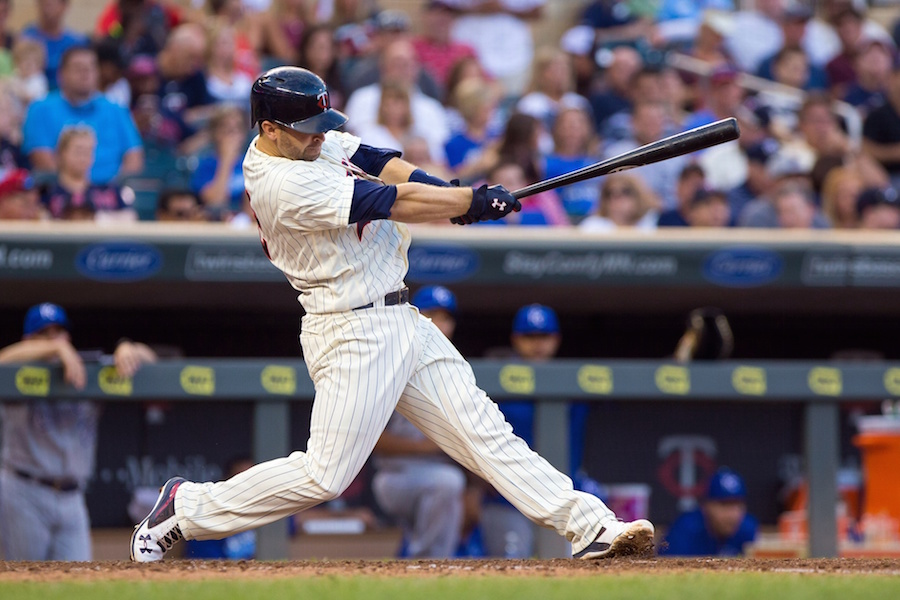 Dozier's evolution as a power hitter is one of the most remarkable developments in modern Twins history. He is easily the game's most prolific home run hitter at his position; since 2014, he leads all second basemen, with 16 more than the next closest player (Robinson Cano). Even with his proneness to extended slumps, Dozier has established himself as one of baseball's top offensive middle infielders. His 2016 campaign, which started so poorly, is now on track to become his best. After going deep in a third straight game on Sunday, he's two homers short of his career high (28), set last year. He should approach triple digits in runs scored and batted in. He is striking out at his lowest rate ever (16.7%). If he stays hot the rest of the way, he could sneak onto some MVP ballots. Dozier is also still 29 years old with a contract that covers the next two years for only $15 million. His extension, signed last spring, didn't add any additional team control, but did put the Twins in position to save millions in the event he kept improving. That is just what's happened. In 2017 he'll be an elite second baseman coming off a 30+ homer season and he'll make $6 million. For all of these reasons, Dozier is going to be an extremely appealing trade target in the offseason. Many teams would welcome a slugging second baseman amidst his prime that they could slot into the middle of the lineup. Add in the veteran's impeccable durability and excellent rep as a teammate, and you've got a uniquely valuable piece to float. Of course, Dozier is also extremely valuable to the Twins. Clearly there is no reason to shop him around intently and settle for the best offer. But he's the kind of player that could bring back some serious impact talent. This dynamic might present the key to the entire offseason for Rob Antony or his successor. On the one hand, it's a tough thing to come in and shake up the core of the roster by dealing a staple guy. On the other hand, when you look at the lopsided makeup of this team – a dominant offense and a pitching staff that, many nights, simply can't compete – the logic in swapping Dozier for high-caliber arms is undeniable. The Twins have a very respectable fallback option in Jorge Polanco, who profiles best at second. While the next general manager stands to inherit a number of headaches, having an asset like Dozier on hand presents an enticing opportunity. I'm very curious to see how it's handled.
 -
Article: A Tale Of Two Transitions
Nick Nelson replied to Nick Nelson's topic in Twins Daily Front Page News
Thing is, those guys were bad as starters, or had injury problems as starters. The decisions to move May and Slowey out of the rotation were based on a perceived overabundance of starting depth more so than their own situations. -
Turn the clock back with me, for a moment, to the year 2011. Yes, it was a long time ago, tracing to the beginning of this lengthy era of organizational ineptitude. At that time, the Twins were trying to shoehorn a proven starter into a relief role, resulting in all sorts of issues. Sound familiar?Kevin Slowey's 2010 campaign was decent, but not great. Coming back from a major wrist injury that cut short his 2009 season, the righty was bogged down by inconsistency but still managed to finish 13-6 with a respectable 4.45 record and 1.29 WHIP. He put up an impressive 116-to-29 K/BB ratio and stayed mostly healthy. Still only 26 years old, he was poised to become a reliable and cheap staple in Minnesota's rotation. Of course, that is not how things played out. The Twins decided to re-sign 35-year-old Carl Pavano to a two-year deal, crowding Slowey out of the rotation picture. Even though he posted the best numbers of any starter at camp in 2011, Ron Gardenhire and his staff elected to bump Slowey to the bullpen, opting instead for the likes of Brian Duensing and Nick Blackburn. We know how the rest of this story goes. Slowey grumbled publicly. He complained of injuries, which were basically treated by the team and media as imaginary. As you may recall, the people running the club were not especially fond of Slowey, nor were the media members who covered him. He was painted (perhaps accurately) as a smug and smarmy malcontent, and an excuse-maker. You won't see such attributes attached to Trevor May. He's a humble and friendly guy, who has earned the respect of coaches, teammates and reporters alike. Although he was dealt a very similar hand this year to Slowey's in 2011 -- banished to the bullpen despite having spent nearly his entire pro career as a starter, and making a pretty good case as one of the club's five best rotation options -- May did not pout. He chose to be a good organizational soldier and embraced the assignment. Still, the outcome has not been much different, in terms of the physical reaction. May pitched quite well in his relief role over the first month before struggling in the second and hitting the disabled list with back spasms. He returned in July, delivered another month's worth of strong performance, and is now back on the shelf with more back problems. Clearly, there is a better argument for using May as a reliever than Slowey. His stuff plays up much more in short stints, and he has proven to be a dominant force out of the bullpen when healthy. But he, too, seems to have untapped potential as a starter, and it's a laughable notion that this team is too rich in starting pitching depth to give him a try. Moreover, May's health needs to be viewed as a pre-eminent concern. For a pitcher who has followed the same routine for years and years, an abrupt switch can easily cause physical and mechanical issues. When May is suddenly pitching multiple times per week, and going full-bore every time he's on the mound, it takes a toll. According to Phil Miller of the Star Tribune, "changes to (May's) routine caused him to unconsciously lengthen his stride and put more torque on his back." The recurring injuries are a new thing for the 26-year-old. He has rarely missed a start during his pro career up until this season, making the ailments all the more more conspicuous and alarming. Paul Molitor has said only that he will consider the idea of another role switch for May. Hopefully the manager will think long and hard about it. May offers huge upside out of the bullpen but he's useless to the club when he is besieged by health problems that keep him off the mound. Click here to view the article
-
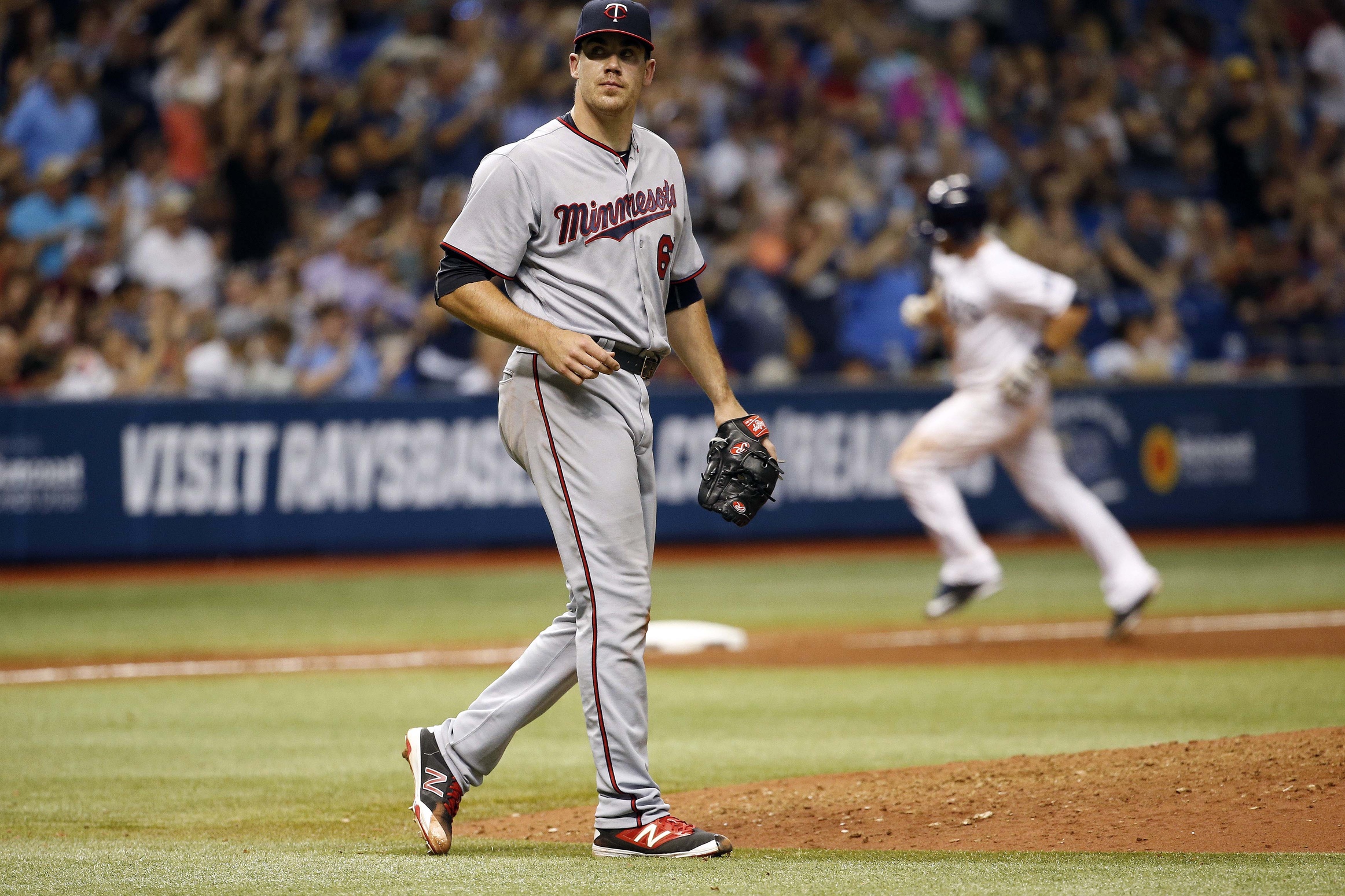 Kevin Slowey's 2010 campaign was decent, but not great. Coming back from a major wrist injury that cut short his 2009 season, the righty was bogged down by inconsistency but still managed to finish 13-6 with a respectable 4.45 record and 1.29 WHIP. He put up an impressive 116-to-29 K/BB ratio and stayed mostly healthy. Still only 26 years old, he was poised to become a reliable and cheap staple in Minnesota's rotation. Of course, that is not how things played out. The Twins decided to re-sign 35-year-old Carl Pavano to a two-year deal, crowding Slowey out of the rotation picture. Even though he posted the best numbers of any starter at camp in 2011, Ron Gardenhire and his staff elected to bump Slowey to the bullpen, opting instead for the likes of Brian Duensing and Nick Blackburn. We know how the rest of this story goes. Slowey grumbled publicly. He complained of injuries, which were basically treated by the team and media as imaginary. As you may recall, the people running the club were not especially fond of Slowey, nor were the media members who covered him. He was painted (perhaps accurately) as a smug and smarmy malcontent, and an excuse-maker. You won't see such attributes attached to Trevor May. He's a humble and friendly guy, who has earned the respect of coaches, teammates and reporters alike. Although he was dealt a very similar hand this year to Slowey's in 2011 -- banished to the bullpen despite having spent nearly his entire pro career as a starter, and making a pretty good case as one of the club's five best rotation options -- May did not pout. He chose to be a good organizational soldier and embraced the assignment. Still, the outcome has not been much different, in terms of the physical reaction. May pitched quite well in his relief role over the first month before struggling in the second and hitting the disabled list with back spasms. He returned in July, delivered another month's worth of strong performance, and is now back on the shelf with more back problems. Clearly, there is a better argument for using May as a reliever than Slowey. His stuff plays up much more in short stints, and he has proven to be a dominant force out of the bullpen when healthy. But he, too, seems to have untapped potential as a starter, and it's a laughable notion that this team is too rich in starting pitching depth to give him a try. Moreover, May's health needs to be viewed as a pre-eminent concern. For a pitcher who has followed the same routine for years and years, an abrupt switch can easily cause physical and mechanical issues. When May is suddenly pitching multiple times per week, and going full-bore every time he's on the mound, it takes a toll. According to Phil Miller of the Star Tribune, "changes to (May's) routine caused him to unconsciously lengthen his stride and put more torque on his back." The recurring injuries are a new thing for the 26-year-old. He has rarely missed a start during his pro career up until this season, making the ailments all the more more conspicuous and alarming. Paul Molitor has said only that he will consider the idea of another role switch for May. Hopefully the manager will think long and hard about it. May offers huge upside out of the bullpen but he's useless to the club when he is besieged by health problems that keep him off the mound.
 -
Well yeah, but he's been in pro ball half as long, and hasn't logged hundreds of plate appearances in the majors. They're at very different places on a development curve, was my point.
- 102 replies
-
- 1
-
-
- kurt suzuku
- john ryan murphy
- (and 1 more)
-
Terry Ryan and the Minnesota Twins foresaw the upcoming predicament at catcher. They knew they had only one more season on Kurt Suzuki's contract, with a bare cupboard in the minors. And so they made their move last November, acquiring John Ryan Murphy from the Yankees. Unfortunately, it was essentially their only move, and it has worked out about as poorly as one could imagine. Now, the club is once again scrambling for answers.When they swapped Aaron Hicks for him, the Twins spoke of Murphy's upside with the bat. Indeed, it was his offensive potential that made Murphy a second-round pick out of high school back in 2009, when questions still surrounded his defensive position. At the time of the trade, Murphy was coming off a season in which he posted a .734 OPS over 172 plate appearances as New York's backup catcher. He was also reasonably productive in the minors, so Murphy looked like a safe bet to at least hold his own in the batter's box. At no point since coming over to Minnesota has he even come close to doing so. Murphy endured an awful spring, going 5-for-36 with zero extra- base hits in the Grapefruit League. OK, only exhibition games, no reason for panic. Then, the season started, and he went 3-for-40 over the first month. A bit more concerning, but still a small sample for a guy maybe pressing with his new team. He was sent to Triple-A in early May, and his performance there is what truly saps any sense of enthusiasm surrounding his abilities. In 68 games with Rochester, Murphy owns a horrendous .209/.264/.279 slash line. In 239 plate appearances, he has mustered one homer and 12 doubles. After showing some signs of life in June (.802 OPS) he has gone back in the tank, with a .195 average and .438 OPS since July 1st. Because the Yankees kept Murphy up as their backup catcher for the entirety of 2015, he still has an option left for 2017, meaning the Twins can afford to be patient with him in terms of control. But, in other regards, they really can't. They've watched him flail away as a 25-year-old in the International League for four months now. And this week they promoted Mitch Garver to Rochester. Garver is one of the organization's most legit internal options and needs reps behind the plate, so he figures to get at least an equal timeshare the rest of the way. That leaves Murphy as an aging part-time minor-league catcher -- clearly not any kind of credible solution for next year. So what is Rob Antony, or whoever succeeds him at GM, to do? Kurt Suzuki has no chance at reaching the 465 PA threshold that would have activated his 2017 option, so he's set to become a free agent. If he finishes strong he'll be one of the better options in a thin catching market so he'll likely require another multi-year deal. Going down that road with a 33-year-old who has nearly 10,000 innings logged at the game's most punishing position would be unwise. Going all-out for one of the top free agents like Wilson Ramos or Matt Wieters would be out of character, but perhaps a nice opportunity for the newly arranged front office to make a statement. We'll see about that one. If there's one thing that has played out favorably with Minnesota's dire catching situation this year, it has been the emergence of Juan Centeno. The 26-year-old came up when Murphy was sent down and has shown all the traits of a quality backup. He's a solid receiver, he makes contact at the plate and he's even got a bit of pop. But a backup is not what the Twins are seeking. It's not what they were seeking when they dealt for Murphy. They were hoping to sneakily pluck away a starter from another organization, and sadly that approach fizzled. Now, it's back to the drawing board, with an even greater sense of urgency than they felt a year ago. Click here to view the article
- 102 replies
-
- 1
-
-
- kurt suzuku
- john ryan murphy
- (and 1 more)
-
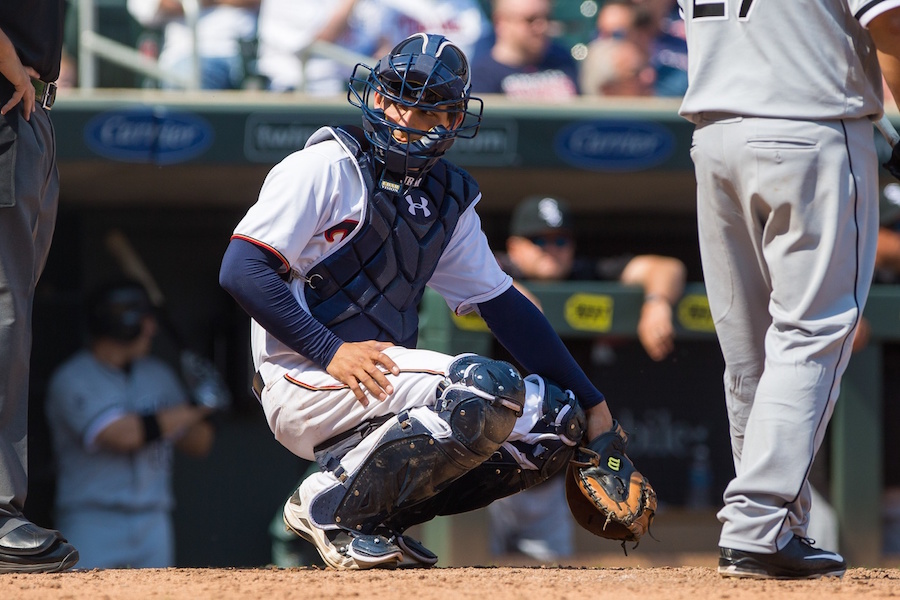 When they swapped Aaron Hicks for him, the Twins spoke of Murphy's upside with the bat. Indeed, it was his offensive potential that made Murphy a second-round pick out of high school back in 2009, when questions still surrounded his defensive position. At the time of the trade, Murphy was coming off a season in which he posted a .734 OPS over 172 plate appearances as New York's backup catcher. He was also reasonably productive in the minors, so Murphy looked like a safe bet to at least hold his own in the batter's box. At no point since coming over to Minnesota has he even come close to doing so. Murphy endured an awful spring, going 5-for-36 with zero extra- base hits in the Grapefruit League. OK, only exhibition games, no reason for panic. Then, the season started, and he went 3-for-40 over the first month. A bit more concerning, but still a small sample for a guy maybe pressing with his new team. He was sent to Triple-A in early May, and his performance there is what truly saps any sense of enthusiasm surrounding his abilities. In 68 games with Rochester, Murphy owns a horrendous .209/.264/.279 slash line. In 239 plate appearances, he has mustered one homer and 12 doubles. After showing some signs of life in June (.802 OPS) he has gone back in the tank, with a .195 average and .438 OPS since July 1st. Because the Yankees kept Murphy up as their backup catcher for the entirety of 2015, he still has an option left for 2017, meaning the Twins can afford to be patient with him in terms of control. But, in other regards, they really can't. They've watched him flail away as a 25-year-old in the International League for four months now. And this week they promoted Mitch Garver to Rochester. Garver is one of the organization's most legit internal options and needs reps behind the plate, so he figures to get at least an equal timeshare the rest of the way. That leaves Murphy as an aging part-time minor-league catcher -- clearly not any kind of credible solution for next year. So what is Rob Antony, or whoever succeeds him at GM, to do? Kurt Suzuki has no chance at reaching the 465 PA threshold that would have activated his 2017 option, so he's set to become a free agent. If he finishes strong he'll be one of the better options in a thin catching market so he'll likely require another multi-year deal. Going down that road with a 33-year-old who has nearly 10,000 innings logged at the game's most punishing position would be unwise. Going all-out for one of the top free agents like Wilson Ramos or Matt Wieters would be out of character, but perhaps a nice opportunity for the newly arranged front office to make a statement. We'll see about that one. If there's one thing that has played out favorably with Minnesota's dire catching situation this year, it has been the emergence of Juan Centeno. The 26-year-old came up when Murphy was sent down and has shown all the traits of a quality backup. He's a solid receiver, he makes contact at the plate and he's even got a bit of pop. But a backup is not what the Twins are seeking. It's not what they were seeking when they dealt for Murphy. They were hoping to sneakily pluck away a starter from another organization, and sadly that approach fizzled. Now, it's back to the drawing board, with an even greater sense of urgency than they felt a year ago.
 -
Article: Buxton Stalls Out, Again
Nick Nelson replied to Nick Nelson's topic in Twins Daily Front Page News
The better question is are you for real right now? No one has asked him to be Ken Griffey Jr, nor has anyone written him off as done. You're responding to non-existent arguments. -
Article: Buxton Stalls Out, Again
Nick Nelson replied to Nick Nelson's topic in Twins Daily Front Page News
But the injuries are part of the deal with Buxton. They have been for three years straight. That's not something you fix by sending him to the minors. If confidence is the concern, we're saying a second demotion to the minors in four months is helpful? -
The soft-spoken kid from Georgia's ascent to the major leagues was as blisteringly fast as his foot speed. His adaptation to the highest level, however, has been anything but. Byron Buxton still hasn't figured things out. He doesn't appear close to doing so. And it's becoming worrisome.With the Twins needing to open a roster spot for Trevor Plouffe's impending return from the disabled list, Buxton was optioned back to Triple-A on Sunday. He was sadly the obvious choice. The center fielder's latest stint in the majors was about as fruitless as all that preceded it. While we have seen brief glimpses of promise at times, they have always proven fleeting. Since the All-Star break, Buxton was 6-for-54 (.130) with one double, three runs scored and 19 strikeouts. His lack of progress at the plate is as obvious from watching him as it is from examining the numbers. After four separate tries with the Twins, and more than 350 plate appearances, Buxton continues to play into the hands of opposing hurlers. He routinely falls behind in counts and is doomed once he gets there. When Buxton is forced to protect the plate, he disintegrates. With the pitcher ahead this year, he has batted .064 and slugged .115. He has been one of the worst hitters in the majors since his debut, and isn't really showing signs of improvement other than a modestly improved contact rate. Now, he'll return to the International League, which he clobbered to the tune of a 1.007 OPS following his last demotion. Given that his confidence-building stretch in Rochester yielded no meaningful improvement at the MLB level, one wonders what might change this time around. On the one hand, you can hardly blame the Twins for choosing Buxton as the odd man out. He looks blatantly overwhelmed by big-league pitching. On the other hand, can we really expect him to make the necessary adjustments against lesser competition? The popular narrative is that Buxton was rushed, and maybe he was, but when he has a .357/.415/.585 hitting line at Triple-A, it's tough to fathom what he has left to gain there. Paul Molitor said after Sunday's game that Buxton would go down to work on "physical, mechanical things," which presumably means that the outfielder will attempt to shorten his swing to become competitive against tough pitches. Yet, when he's not facing a steady diet of tough major-league pitches, the learning experience can only go so far. Ideally, the Twins would keep all of their young pieces on roster and allow them to continue growing alongside one another. Plouffe's return threw a wrench into that blueprint because it essentially meant that one of Buxton, Jorge Polanco, Kennys Vargas or Miguel Sano needed to be removed. There was no argument for the others based on merit, so Buck is the guy. Ostensibly he's going to iron things out in a less pressure-packed environment, but in reality the only way he'll solve his problems is by conquering them here. Unlike others on the roster, there are no questions surrounding Buxton's work ethic, no doubts concerning his commitment to improving. Given the time, he will figure it out. Will this move accelerate or set back that eventuality? Are the Twins truly doing the right thing for their prized prospect's development, or are they simply sending him away to make room for an aging, mediocre veteran who is almost assuredly on his way out? Click here to view the article
