



Nick Nelson
-
Posts
8,325 -
Joined
-
Last visited
-
Days Won
56
Content Type
Profiles
News
Minnesota Twins Videos
2026 Minnesota Twins Top Prospects Ranking
2022 Minnesota Twins Draft Picks
Minnesota Twins Free Agent & Trade Rumors, Notes, & Tidbits
Guides & Resources
2023 Minnesota Twins Draft Picks
The Minnesota Twins Players Project
2024 Minnesota Twins Draft Picks
2025 Minnesota Twins Draft Pick Tracker
2026 Minnesota Twins Draft Tracker: Picks & Bonuses
Forums
Blogs
Events
Store
Downloads
Gallery
Everything posted by Nick Nelson
-

Article: Setting Up For The Second Half
Nick Nelson replied to Nick Nelson's topic in Twins Daily Front Page News
At least we're holding him to a fair standard.- 96 replies
-
- 1
-

-
- miguel sano
- eddie rosario
- (and 3 more)
-
Article: Setting Up For The Second Half
Nick Nelson replied to Nick Nelson's topic in Twins Daily Front Page News
You could sub in Arcia's name for Rosario there too. It's kind of odd to me that so many people are convinced Arcia will be a late bloomer while ruling out the same possibility for Grossman, who is the same age Oswaldo will be next year. They have very different standout skills. With Grossman, its patience and getting on base. With Arcia, it's power. Seems to be much more frequent that a guy develops additional pop in his mid-to-late 20s compared to developing patience. Perhaps we're seeing that with Grossman, whose 11 HR between MLB and AAA this year are already approaching his career high of 13?- 96 replies
-
- 4
-
-
- miguel sano
- eddie rosario
- (and 3 more)
-
Article: Setting Up For The Second Half
Nick Nelson replied to Nick Nelson's topic in Twins Daily Front Page News
The problem is that May has shown a tendency to go all-out, full bore in shortened relief stints. I heard reports that he was touching 95/96 in yesterday's appearance. I would prefer that he worked less intensely over longer outings.- 96 replies
-
- 3
-
-
- miguel sano
- eddie rosario
- (and 3 more)
-
Article: Setting Up For The Second Half
Nick Nelson replied to Nick Nelson's topic in Twins Daily Front Page News
Or Sano, or Arcia, or Kepler, or Grossman... ? How many better defensive Twins corner outfielders can you point to in the last decade better than Rosario? I really doubt it's more than a handful.- 96 replies
-
- 1
-
-
- miguel sano
- eddie rosario
- (and 3 more)
-
Article: Setting Up For The Second Half
Nick Nelson replied to Nick Nelson's topic in Twins Daily Front Page News
Good find. Yeah, getting rather hard to defend. -
On Sunday, the Minnesota Twins played their 75th game of the season. Quickly closing in on the halfway point, they are on pace for a 52-110 record. Even if the Twins manage to play .500 ball the rest of the way, they'll finish with 94 losses. It goes without saying that the remainder of this season needs to be focused on 2017 and beyond. Here are five steps that the Twins can take to better prepare themselves for the future. 1) Install Miguel Sano at third base. We've discussed this quite a bit around here, so I won't dwell. It is becoming increasingly clear that Sano should be in the team's plans as a third baseman and Trevor Plouffe – who is enduring a rough campaign – should not. Make the necessary moves to open up the hot corner for Sano, allowing him to regain his comfort level there ahead of next season when the games start mattering again. This, in turn, would keep right field open for Max Kepler, who has played well enough to stick. 2) Roll with Eddie Rosario. Rosario was undoubtedly deserving of the demotion he received five weeks ago, but he has responded in a big way. The outfielder has multiple hits in 14 of the 35 games he has played in Rochester, reining in his K-rate and getting back to smashing hard liners all over the field. He still isn't walking much, and never will. But even with his ultra-aggressive ways, Rosario can be an impact player and he showed that last year. Bring him up and let him play his game over the final months. Maybe he proves himself to be the clear choice for left field next year. Maybe he builds some trade value for the offseason. Or maybe he reinforces the notion that he's going to be a fourth outfielder at best. Incidentally, Rosario has been playing center field regularly in Triple-A, which might put him in line to bump Byron Buxton, who still appears unprepared for MLB pitching. 3) Return Trevor May to a starting role. Unlike many, I was not opposed to using May in a relief role this year. I felt he brought a much-needed strikeout mentality to the bullpen and could be a pivotal piece at the back end if the team contended. The most important factor, though, was that this decision was reversible if things didn't play out well. It is now safe to say that things have not played out well. During his first month in the bullpen, May was very much the dominating force we hoped he would be. Unfortunately, the fact that he was often Paul Molitor's only trustworthy option led to overuse. May appeared in 17 of Minnesota's first 32 games, seemingly throwing with max effort each time out. It's not clear that his unraveling performance and subsequent back issues were related to his usage, but given the fact that May had been operating under a starter's routine for essentially his entire career up until last July, that seems very plausible. Even looking past that element, the Twins are suddenly in need of quality starters given the dire state of their rotation, and May deserves a shot to bolster that unit. May made his first rehab appearance in Rochester as a reliever yesterday, which isn't the most promising sign, but hopefully the plan changes. 4) Recall John Ryan Murphy. Murphy's numbers in Triple-A are far from great: he's batting .216 with a .599 OPS, though he's been trending up. The need to get him back on the roster has more to do with the circumstances surrounding him. This team has no real answers behind the plate after this year. Kurt Suzuki will be a free agent and likely won't return. Juan Centeno is has been fine as an interim backup but he's not a big-league player. The organization's prospects are not close. Right now, Murphy is the only credible option for 2017, whether we're talking starter or backup. We'll have a better idea of his true credibility if he gets a couple hundred plate appearances in the second half. 5) Let J.T. Chargois loose in the bullpen. There's no way around it: Chargois' MLB debut was a complete and total disaster. In his lone big-league appearance on June 11th, he faced eight hitters and was charged with five earned runs on three hits, two walks and an HBP. He was understandably optioned immediately afterward, forced to sit on a 67.50 major-league ERA until he gets another chance. That chance ought to come soon. The level of dominance that the fireballing righty continues to display in Triple-A makes it hard to justify keeping him there. Chargois has a 0.48 ERA and 25-to-4 K/BB ratio in 18 2/3 innings with Rochester, and hasn't allowed a run or issued a walk in five appearances since being sent back down. Given the major question marks that the Twins now face at the closer spot, they need to begin auditioning potential options quickly. Presently, Chargois arguably has a better case than anyone else in the organization, but he needs to show he can get big-league hitters out. Call him up and lengthen the leash. What would be your top priorities for the second half of the season? Click here to view the article
- 96 replies
-
- 6
-
-
- miguel sano
- eddie rosario
- (and 3 more)
-
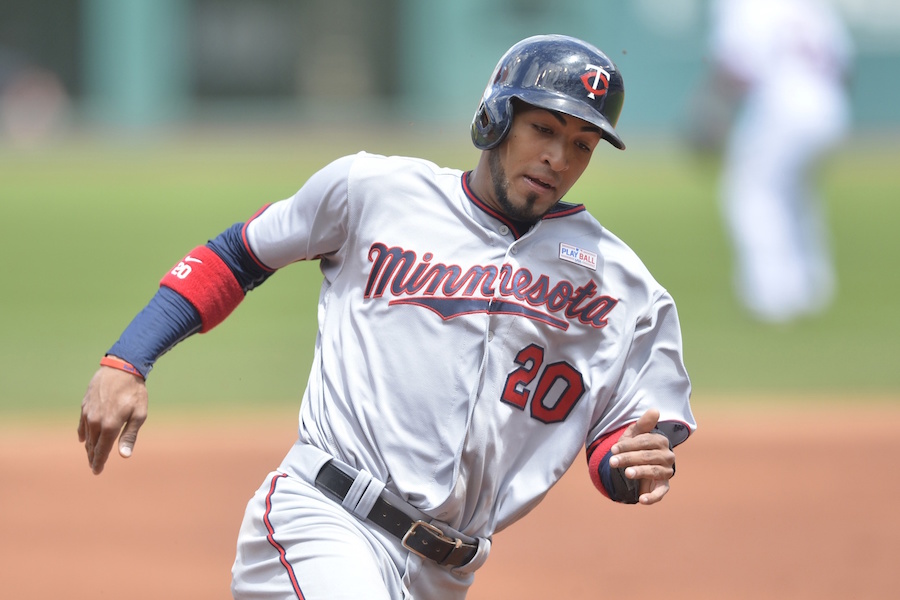 1) Install Miguel Sano at third base. We've discussed this quite a bit around here, so I won't dwell. It is becoming increasingly clear that Sano should be in the team's plans as a third baseman and Trevor Plouffe – who is enduring a rough campaign – should not. Make the necessary moves to open up the hot corner for Sano, allowing him to regain his comfort level there ahead of next season when the games start mattering again. This, in turn, would keep right field open for Max Kepler, who has played well enough to stick. 2) Roll with Eddie Rosario. Rosario was undoubtedly deserving of the demotion he received five weeks ago, but he has responded in a big way. The outfielder has multiple hits in 14 of the 35 games he has played in Rochester, reining in his K-rate and getting back to smashing hard liners all over the field. He still isn't walking much, and never will. But even with his ultra-aggressive ways, Rosario can be an impact player and he showed that last year. Bring him up and let him play his game over the final months. Maybe he proves himself to be the clear choice for left field next year. Maybe he builds some trade value for the offseason. Or maybe he reinforces the notion that he's going to be a fourth outfielder at best. Incidentally, Rosario has been playing center field regularly in Triple-A, which might put him in line to bump Byron Buxton, who still appears unprepared for MLB pitching. 3) Return Trevor May to a starting role. Unlike many, I was not opposed to using May in a relief role this year. I felt he brought a much-needed strikeout mentality to the bullpen and could be a pivotal piece at the back end if the team contended. The most important factor, though, was that this decision was reversible if things didn't play out well. It is now safe to say that things have not played out well. During his first month in the bullpen, May was very much the dominating force we hoped he would be. Unfortunately, the fact that he was often Paul Molitor's only trustworthy option led to overuse. May appeared in 17 of Minnesota's first 32 games, seemingly throwing with max effort each time out. It's not clear that his unraveling performance and subsequent back issues were related to his usage, but given the fact that May had been operating under a starter's routine for essentially his entire career up until last July, that seems very plausible. Even looking past that element, the Twins are suddenly in need of quality starters given the dire state of their rotation, and May deserves a shot to bolster that unit. May made his first rehab appearance in Rochester as a reliever yesterday, which isn't the most promising sign, but hopefully the plan changes. 4) Recall John Ryan Murphy. Murphy's numbers in Triple-A are far from great: he's batting .216 with a .599 OPS, though he's been trending up. The need to get him back on the roster has more to do with the circumstances surrounding him. This team has no real answers behind the plate after this year. Kurt Suzuki will be a free agent and likely won't return. Juan Centeno is has been fine as an interim backup but he's not a big-league player. The organization's prospects are not close. Right now, Murphy is the only credible option for 2017, whether we're talking starter or backup. We'll have a better idea of his true credibility if he gets a couple hundred plate appearances in the second half. 5) Let J.T. Chargois loose in the bullpen. There's no way around it: Chargois' MLB debut was a complete and total disaster. In his lone big-league appearance on June 11th, he faced eight hitters and was charged with five earned runs on three hits, two walks and an HBP. He was understandably optioned immediately afterward, forced to sit on a 67.50 major-league ERA until he gets another chance. That chance ought to come soon. The level of dominance that the fireballing righty continues to display in Triple-A makes it hard to justify keeping him there. Chargois has a 0.48 ERA and 25-to-4 K/BB ratio in 18 2/3 innings with Rochester, and hasn't allowed a run or issued a walk in five appearances since being sent back down. Given the major question marks that the Twins now face at the closer spot, they need to begin auditioning potential options quickly. Presently, Chargois arguably has a better case than anyone else in the organization, but he needs to show he can get big-league hitters out. Call him up and lengthen the leash. What would be your top priorities for the second half of the season?
 -
As Miguel Sano gets his rehab stint underway and prepares to return to the Twins, there is considerable focus on the imperative of getting him out of right field and back to third base. However, Sano is hardly the only piece that needs to be sorted out in a crowded infield situation.It is a rare thing when fans and analysts across Twins Territory reach a consensus on any subject, but we seem to have that on the issue of Sano's defensive position. The hazardous experiment of trotting him into the outfield needs to end, and really, it needs to happen as soon as he comes off the disabled list. Plouffe might miss a little time with a groin strain that he suffered on Thursday, and Byung-Ho Park may be in line for a demotion to Triple-A. These would potentially create short-term openings for Sano to escape from right field, but only that. Trading Plouffe and permanently opening the hot corner for the big young slugger should be a high priority for Terry Ryan right now. Unfortunately, that is just one of several predicaments that the general manager and his staff must untangle. While calls for change are rising in volume, Ryan is still in charge and this is his chance to make some smart moves and establish a clear plan for the roster going forward. But his task is not easy. Presently, it looks like Eduardo Nunez is going to be Minnesota's lone All-Star Game representative, even though he doesn't have a regular position. Nunez is already 29 and probably not a part of the long-term plan, but he should be playing regularly, if only on the basis of merit and bolstering trade value. Yet, we've already discussed the clogged situation at third base, and I can't see any good argument for starting Nunez over either of the middle infielders. Eduardo Escobar has clearly established himself as a better shortstop over the past couple of seasons, and he has been on an absolute tear in June, entering Thursday's game with a .394/.417/.727 line. He should be playing every day. Brian Dozier, too, has gotten it going after a slow start. Since being benched for a couple of days at the height of his slump in late May, the second baseman has rebounded tremendously, reaching base in 26 of 27 games and raising his OPS by 140 points. Even though Nunez lacks a true home on the field, Paul Molitor has found ways to keep him in the lineup, so it's not a big deal. The real problem is Jorge Polanco. The heralded 22-year-old prospect has shown promising signs whenever he's gotten a chance to play in the majors, with an .861 OPS and excellent plate discipline, but those chances have been few and far between, because the Twins can't find a place for him. Since his latest demotion to Triple-A, which coincided with Escobar's return from a hamstring injury, Polanco has hit .310/.372/.513. It continues to be blatantly obvious that he doesn't belong in the minors, especially when you consider that the Twins are running out of opportunities to send him there. This is Polanco's last option year, so next spring he'll either need to be carried on the MLB roster or lost to another club. The last thing this team wants is another Oswaldo Arcia situation, where they have to give up a former top prospect for basically nothing. Clearing out this logjam is undoubtedly going to require trading players away. But outside of Plouffe, these guys all have value that makes it difficult to justify losing them with no significant return. So in the scope of this rebuild, Ryan needs to find good opportunities and strike. Maybe Nunez will interest a contender as a versatile glove with a quality bat. Perhaps Escobar's hot streak, combined with his strong play over the past two years, will convince some team that he could be their answer at shortstop (though it's not clear that either Nunez or Polanco can play the position sufficiently). Heck, now that he has rebounded, maybe Dozier will draw some suitors, though I have my doubts about Ryan's willingness to give him up barring a huge return. Adding Polanco to any package – say, with Plouffe – could spice up the return. It seems counterintuitive for a team in Minnesota's position to be unloading prospects, but Polanco's option status makes this another instance where the Twins simply cannot afford to be patient and wait for his opportunity to arise. This much is certain, Ryan needs to be proactive and take action. The trade deadline is about five weeks away. If you were in the GM's shoes, what would be your approach as we head into July? Click here to view the article
- 64 replies
-
- 6
-
-
- eduardo escobar
- eduardo nunez
- (and 3 more)
-
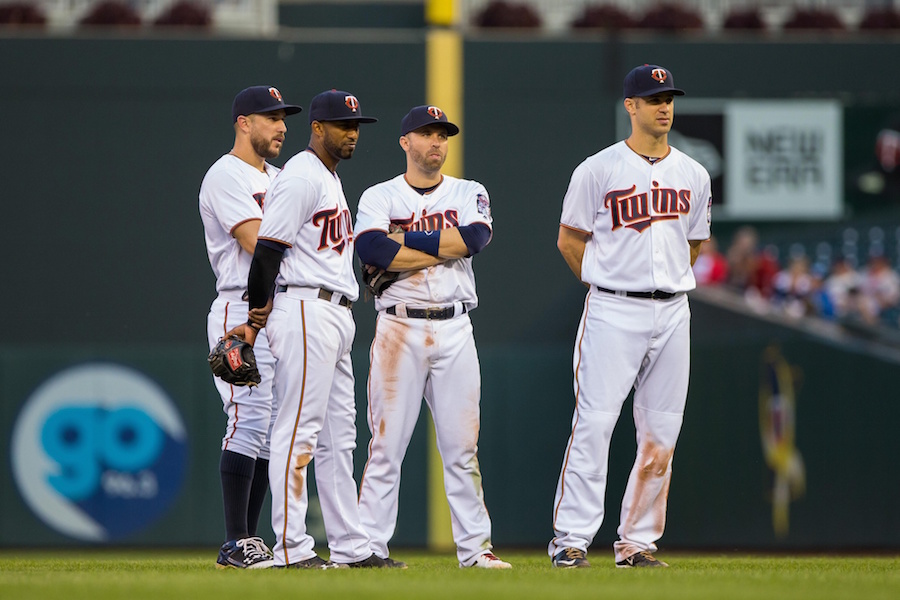 It is a rare thing when fans and analysts across Twins Territory reach a consensus on any subject, but we seem to have that on the issue of Sano's defensive position. The hazardous experiment of trotting him into the outfield needs to end, and really, it needs to happen as soon as he comes off the disabled list. Plouffe might miss a little time with a groin strain that he suffered on Thursday, and Byung-Ho Park may be in line for a demotion to Triple-A. These would potentially create short-term openings for Sano to escape from right field, but only that. Trading Plouffe and permanently opening the hot corner for the big young slugger should be a high priority for Terry Ryan right now. Unfortunately, that is just one of several predicaments that the general manager and his staff must untangle. While calls for change are rising in volume, Ryan is still in charge and this is his chance to make some smart moves and establish a clear plan for the roster going forward. But his task is not easy. Presently, it looks like Eduardo Nunez is going to be Minnesota's lone All-Star Game representative, even though he doesn't have a regular position. Nunez is already 29 and probably not a part of the long-term plan, but he should be playing regularly, if only on the basis of merit and bolstering trade value. Yet, we've already discussed the clogged situation at third base, and I can't see any good argument for starting Nunez over either of the middle infielders. Eduardo Escobar has clearly established himself as a better shortstop over the past couple of seasons, and he has been on an absolute tear in June, entering Thursday's game with a .394/.417/.727 line. He should be playing every day. Brian Dozier, too, has gotten it going after a slow start. Since being benched for a couple of days at the height of his slump in late May, the second baseman has rebounded tremendously, reaching base in 26 of 27 games and raising his OPS by 140 points. Even though Nunez lacks a true home on the field, Paul Molitor has found ways to keep him in the lineup, so it's not a big deal. The real problem is Jorge Polanco. The heralded 22-year-old prospect has shown promising signs whenever he's gotten a chance to play in the majors, with an .861 OPS and excellent plate discipline, but those chances have been few and far between, because the Twins can't find a place for him. Since his latest demotion to Triple-A, which coincided with Escobar's return from a hamstring injury, Polanco has hit .310/.372/.513. It continues to be blatantly obvious that he doesn't belong in the minors, especially when you consider that the Twins are running out of opportunities to send him there. This is Polanco's last option year, so next spring he'll either need to be carried on the MLB roster or lost to another club. The last thing this team wants is another Oswaldo Arcia situation, where they have to give up a former top prospect for basically nothing. Clearing out this logjam is undoubtedly going to require trading players away. But outside of Plouffe, these guys all have value that makes it difficult to justify losing them with no significant return. So in the scope of this rebuild, Ryan needs to find good opportunities and strike. Maybe Nunez will interest a contender as a versatile glove with a quality bat. Perhaps Escobar's hot streak, combined with his strong play over the past two years, will convince some team that he could be their answer at shortstop (though it's not clear that either Nunez or Polanco can play the position sufficiently). Heck, now that he has rebounded, maybe Dozier will draw some suitors, though I have my doubts about Ryan's willingness to give him up barring a huge return. Adding Polanco to any package – say, with Plouffe – could spice up the return. It seems counterintuitive for a team in Minnesota's position to be unloading prospects, but Polanco's option status makes this another instance where the Twins simply cannot afford to be patient and wait for his opportunity to arise. This much is certain, Ryan needs to be proactive and take action. The trade deadline is about five weeks away. If you were in the GM's shoes, what would be your approach as we head into July?
 -
Article: Reflecting On Hard Truths About Prospects
Nick Nelson replied to Nick Nelson's topic in Twins Daily Front Page News
I remember writing at the time about Hardy supposedly being "injury prone" http://twinsfanatnicks.blogspot.com/2010/12/myth-of-injury-prone.html Just a ludicrous notion. A guy hurts his wrist sliding into a base so he's injury prone? Nonsense. We saw how that worked out when he averaged 147 games over the next 4 years with Baltimore. The Gomez trade would have actually been a good one if they'd held on and gotten that production. Instead it was just a total disaster. Ugh. Why do you guys have to get me all riled up thinking about Hardy? -
Article: Reflecting On Hard Truths About Prospects
Nick Nelson replied to Nick Nelson's topic in Twins Daily Front Page News
Very true, Seth. The system is set up so that it's hard for teams to wait out late bloomers, unless you want to suffer through the extended growing pains. That's more palatable, though, when it's a stellar defensive center fielder like Gomez compared to a one-trick pony like Arcia or a fringy reliever like Guerra. -
Recently in Anaheim, a familiar figure took the mound to face the Twins. This particular player, like many others, serves to remind us of the fickleness of prospects in baseball. It's a reality that is weighing heavily on this rebuilding Minnesota club.One week ago, Deolis Guerra tossed the seventh and eighth innings for the Angels in a blowout loss against the Twins at home. You may recall that Guerra was once a key piece in the package given up by the Mets to acquire Johan Santana, all the way back in 2007. At the time, Guerra was only 18 years old. Coming off a solid season at Single-A, he was ranked by Baseball America as the 35th-best prospect in the game. With a big sturdy build, developing velocity and an already eye-catching changeup, Guerra oozed potential. Having already reached High-A as a teenager, the young righty was on an accelerated path to the majors. The hope was that he would become an impact addition to Minnesota's rotation within a few years, helping justify the loss of an elite pitcher. Of course, that's not how it played out. Guerra struggled, stalled, got hurt, switched roles, switched organizations multiple times. Nearly a decade after being sent to the Twins in the Santana blockbuster, Guerra is only now beginning to establish himself in the major leagues. He was knocked around last year during his first exposure to the big leagues as a member of Pittsburgh's bullpen, but is showing some very positive signs now as a reliever for the Angels, with a 3.00 ERA, 0.73 WHIP and 15-to-0 K/BB ratio in 15 innings. If Guerra continues on this path, it obviously won't turn out as a best-case scenario for a hurler who was once considered to have top-of-the-rotation upside. But it won't be a worst-case scenario. At least he will end up being a useful major league player, which is more than many highly rated prospects can ever say. Guerra is a case study in the volatility of prospects, and the length of time that it can sometimes take before they really figure it out at the highest level. Carlos Gomez, who came over to Minnesota in the same package as Guerra, is another example worth looking at. He eventually did fulfill his promise, becoming a borderline MVP caliber player in 2013 and 2014 with the Brewers, but not until a few years after he left the Twins. By the time Gomez reached his peak, he had accumulated more than 1500 MLB plate appearances and was 27. That's the same age Guerra is now. It's the same age David Ortiz was when he transformed into a superstar with the Red Sox. It's the age Oswaldo Arcia will turn in May of 2018. Plenty of top prospects catch on quickly and become instant big-league stars. Most do not. Development curves are varied and unpredictable. It really shouldn't be too surprising that Byron Buxton is overwhelmed by MLB pitching at age 22, nor that Jose Berrios got knocked around in his first taste at 21, nor that Eddie Rosario and Tyler Duffey have been stymied by the league's adjustments in their sophomore seasons. But just because these outcomes aren't particularly surprising doesn't mean they aren't problematic. The Twins are fully dependent on this young core to turn around their fledgling franchise. The fact that so many of them look so far from even approaching their potential is indeed perturbing. Click here to view the article
-
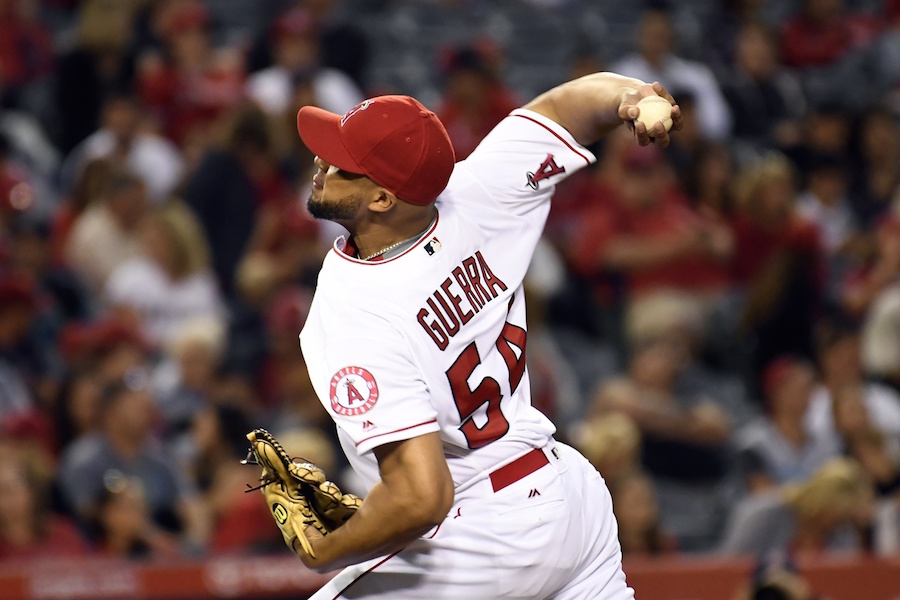 One week ago, Deolis Guerra tossed the seventh and eighth innings for the Angels in a blowout loss against the Twins at home. You may recall that Guerra was once a key piece in the package given up by the Mets to acquire Johan Santana, all the way back in 2007. At the time, Guerra was only 18 years old. Coming off a solid season at Single-A, he was ranked by Baseball America as the 35th-best prospect in the game. With a big sturdy build, developing velocity and an already eye-catching changeup, Guerra oozed potential. Having already reached High-A as a teenager, the young righty was on an accelerated path to the majors. The hope was that he would become an impact addition to Minnesota's rotation within a few years, helping justify the loss of an elite pitcher. Of course, that's not how it played out. Guerra struggled, stalled, got hurt, switched roles, switched organizations multiple times. Nearly a decade after being sent to the Twins in the Santana blockbuster, Guerra is only now beginning to establish himself in the major leagues. He was knocked around last year during his first exposure to the big leagues as a member of Pittsburgh's bullpen, but is showing some very positive signs now as a reliever for the Angels, with a 3.00 ERA, 0.73 WHIP and 15-to-0 K/BB ratio in 15 innings. If Guerra continues on this path, it obviously won't turn out as a best-case scenario for a hurler who was once considered to have top-of-the-rotation upside. But it won't be a worst-case scenario. At least he will end up being a useful major league player, which is more than many highly rated prospects can ever say. Guerra is a case study in the volatility of prospects, and the length of time that it can sometimes take before they really figure it out at the highest level. Carlos Gomez, who came over to Minnesota in the same package as Guerra, is another example worth looking at. He eventually did fulfill his promise, becoming a borderline MVP caliber player in 2013 and 2014 with the Brewers, but not until a few years after he left the Twins. By the time Gomez reached his peak, he had accumulated more than 1500 MLB plate appearances and was 27. That's the same age Guerra is now. It's the same age David Ortiz was when he transformed into a superstar with the Red Sox. It's the age Oswaldo Arcia will turn in May of 2018. Plenty of top prospects catch on quickly and become instant big-league stars. Most do not. Development curves are varied and unpredictable. It really shouldn't be too surprising that Byron Buxton is overwhelmed by MLB pitching at age 22, nor that Jose Berrios got knocked around in his first taste at 21, nor that Eddie Rosario and Tyler Duffey have been stymied by the league's adjustments in their sophomore seasons. But just because these outcomes aren't particularly surprising doesn't mean they aren't problematic. The Twins are fully dependent on this young core to turn around their fledgling franchise. The fact that so many of them look so far from even approaching their potential is indeed perturbing.
 -
Article: Teaching Patience (At The Plate)
Nick Nelson replied to Seth Stohs's topic in Twins Daily Front Page News
Rosario is never going to take a ton of walks. When he's going good, he is laying off the truly unhittable stuff, and putting good wood on tough pitches outside the zone. I do believe he can succeed with that approach because his wrists and hand/eye coordination are off the charts. But passing on pitches at his eyes or in the dirt will be the key. It's definitely encouraging to see him drawing a few free passes in Rochester.- 61 replies
-
- 4
-
-
- eddie rosario
- danny santana
- (and 3 more)
-
Article: Oswaldo Arcia And The Limits Of Patience
Nick Nelson replied to Nick Nelson's topic in Twins Daily Front Page News
No one has proclaimed to know that. We said it wasn't a valid excuse or justification if it was the case. -
Article: Oswaldo Arcia And The Limits Of Patience
Nick Nelson replied to Nick Nelson's topic in Twins Daily Front Page News
Right. I've seen people use the idea that he was "sulking" as an actual defense for his rotten performance in Triple-A last year. As if that's a quality you want from anyone on your baseball team. -
Article: Oswaldo Arcia And The Limits Of Patience
Nick Nelson replied to Nick Nelson's topic in Twins Daily Front Page News
Focusing on more recent events qualifies as playing "fast and loose"? Ok. Arcia IS a bench/part-time player. When you don't play defense, can't run, and can't hit LH pitchers, that's the way it is. He was not miscast in that role. Molitor played Arcia damn near exclusively against right-handed pitchers to try to get him going and it didn't happen. When I mentioned development issues I was referring to coaching and helping him make adjustments. His playing time has been fine. -
Article: Oswaldo Arcia And The Limits Of Patience
Nick Nelson replied to Nick Nelson's topic in Twins Daily Front Page News
I'm not spinning anything, You're simply incorrect in claiming that they were prioritizing Thomas over Arcia. Usually they were playing in the same outfield because Clete played CF. Arcia was sent down to the minors for a couple of weeks in late July because he was in a bad slump. That happens to 22-YO rookies sometimes. Also I don't really see how events that took place 3 years ago are really relevant to the decision to DFA him now. You can rip the Twins for how they developed him and I won't necessarily disagree, but as I said in the piece that's a separate discussion. As things currently stand, he is not a useful piece for this organization. When you're a RH-masher who is out of options and whiffing in half your PAs against RHPs after batting below .200 at AAA, the rope runs out. To blame Molitor's usage when he's getting 82% of his looks against righties is just silly. -
Article: Oswaldo Arcia And The Limits Of Patience
Nick Nelson replied to Nick Nelson's topic in Twins Daily Front Page News
I realize that bringing up Clete Thomas and Jason Kubel are easy ways to rile people up, but this is quite overblown. First, it all happened 2-3 years ago, under a different manager/coaching staff. Second, Arcia's lack of playing time was the result of his own injuries as much as anything. In 2014 he missed 5 weeks early on with a wrist injury. If not for that lengthy absence he'd have been over 500 PA, quite easily. In 2013 he was a 22-year-old rookie being eased in, and also dealt with wrist and knee problems. I'm sure the Twins would have liked to give him more playing time in the majors last year but unfortunately he never really gave them the option. Don't let the facts get in the way of the rancor though. -
Article: Oswaldo Arcia And The Limits Of Patience
Nick Nelson replied to Nick Nelson's topic in Twins Daily Front Page News
This thread is about Arcia. Did you miss that? Claiming a guy's OPS is bloated because he had so many extra-base hits is truly one of the most absurd angles I've ever seen taken around here. Congrats. Also, maybe you haven't seen Rosario's numbers in Rochester since his demotion. Take a look. -
Article: Oswaldo Arcia And The Limits Of Patience
Nick Nelson replied to Nick Nelson's topic in Twins Daily Front Page News
Yeah, if those triples would've just been doubles I'm sure his numbers would've been Arcia-like. Now Eddie's down in the minors padding his OPS with more unsustainable XBHs. What a bum. It's pretty amazing to me the extents people are willing to go to cover up for the fact that Arcia has been utter garbage, earning his way to the bottom of the depth chart. Are we really all that desperate to keep around another hacktastic power hitter with no defensive value? There ain't exactly a shortage. -
Article: Oswaldo Arcia And The Limits Of Patience
Nick Nelson replied to Nick Nelson's topic in Twins Daily Front Page News
Arcia had a .257 OBP in Triple-A last year while Rosario was finishing 6th in AL ROTY. Come on. -
Article: Oswaldo Arcia And The Limits Of Patience
Nick Nelson replied to Nick Nelson's topic in Twins Daily Front Page News
All of those things are true of Arcia, as well. Rosario at least can run and play defense, and has hit at some point in the last 2 years. Yet this concept is inexplicable to you? -
Article: Oswaldo Arcia And The Limits Of Patience
Nick Nelson replied to Nick Nelson's topic in Twins Daily Front Page News
I'm no Santana fan, but he serves a function on the roster. Arcia really didn't anymore. As I said, you can quibble with the timing but this move was imminent one way or another, with Sano's return and Rosario's recall closing in. -
Patience is a commodity in baseball. Each team can only have so much. More patience is warranted in certain circumstances, particularly for rebuilding teams, but it is never infinite. With Oswaldo Arcia, patience was a luxury the Minnesota Twins could no longer afford.There was much frustration amongst fans over the decision to designate Arcia for assignment last week in order to make room for Danny Santana. Plenty of commenters voiced their displeasure in a 13-page thread here on Twins Daily. It's understandable. These are the same fans that have watched so many players leave Minnesota and excel elsewhere. The "David Ortiz Complex" is very real as the legendary DH wraps up a Hall of Fame career that took off as soon as the Twins unwisely gave up on him. There are too many more recent examples currently on other rosters in the league. Seeing the youth, the raw power, and the seemingly untapped potential, it's tempting to lump Arcia with some of the organization's most painful past mistakes. Don't do it. Let's lay out a few of the facts with regard to Arcia. He has been utterly terrible this year. In 114 plate appearances, he has batted .214/.289/.369 with 46 strikeouts. That's a 40 percent K-rate. Guys who are above 40 percent do not belong in the majors. The only MLB player with a higher strikeout rate this year (min. 100 PAs) is Byron Buxton. It's debatable whether Buxton belongs in the bigs right now but he gains leeway because he's so young and brings so much to the table defensively. Arcia, conversely, is approaching 1,000 plate appearances in the majors, and offers almost no defensive value. If he isn't mashing he isn't really an asset, and it's been quite a while since he has mashed. Last year, as we all recall, the outfielder turned a short rehab assignment into a permanent banishment at Triple-A because he never got going there. Save for a brief power splurge in July, Arcia basically slumped for three months straight, finishing with a .199 average in 79 games at Rochester. For someone who had hit 20 homers with a 752 OPS in the majors a year before, it was embarrassing. The Twins gave him a chance to make it right. Despite being tempted by Carlos Quentin's veteran bat in spring training, they stuck with Arcia, who was out of options. And while I've seen some people complaining about the team not putting Arcia in a position to succeed, that just isn't true. Actually, Paul Molitor has been quite good about using the righty-mashing slugger in the most advantageous spots. Eighty-two percent of Arcia's plate appearances have come against right-handed pitchers, and in those appearances he has batted .202 with a 42 percent K-rate. Yuck. Arcia is still young, but he continues to head in the wrong direction and the Twins have too many other players ahead of him that they are rightfully prioritizing. Miguel Sano, as things stand, remains an outfielder and has nowhere else to play. Max Kepler himself will be out of options next year and needs to get comfortable in the majors. Eddie Rosario has been absolutely tearing up Triple-A since his demotion – not struggling and sulking, mind you – and should be back up soon. Even Robbie Grossman is making a case as a long-term piece in some capacity. There's no argument to be made for Arcia starting ahead of any of these guys that doesn't fall back on his production from two years ago. Keeping him on the bench was doing neither him nor the Twins any good. He played himself out of the team's plans and it isn't anyone's fault but his own. This is not an indictment of the 25-year-old's long-term outlook; it wouldn't surprise me if he falls into the right situation and hits 30 homers in a couple of years. It's not unusual for players to reach their late 20s before they really figure things out in the majors. This game is tough. Yet, to argue that the Twins should have perpetually kept Arcia planted on their 25-man roster until that day arrived is silly. You can quibble with the timing and specifics of the DFA move, since Danny Santana isn't necessarily a player worth giving up anything to make room for and it's only June. But there were no signs of positive change, and keeping Arcia around was only going to get tougher with more deserving players like Sano and Rosario returning to the fold. All of the hand-wringing over the decision to designate Arcia overlooks the basic realities of the situation. You need to earn things on merit in Major League Baseball and he wasn't doing it. There is certainly a discussion to be had about how the organization may be culpable in his failure to adjust and grow as a player, especially given how many different times we've seen it happen, but that is a separate discussion. As of this post going live on Sunday night, there is still no word that Arcia has been claimed off waivers by another club. Maybe this will all be moot. But even if he does land elsewhere, and even if he does finally turn a corner eventually, it won't be because the Twins screwed up and gave up too early. It will be because he exhausted every last bit of patience they could show him. Click here to view the article
