



Nick Nelson
-
Posts
8,322 -
Joined
-
Last visited
-
Days Won
56
Content Type
Profiles
News
Minnesota Twins Videos
2026 Minnesota Twins Top Prospects Ranking
2022 Minnesota Twins Draft Picks
Minnesota Twins Free Agent & Trade Rumors, Notes, & Tidbits
Guides & Resources
2023 Minnesota Twins Draft Picks
The Minnesota Twins Players Project
2024 Minnesota Twins Draft Picks
2025 Minnesota Twins Draft Pick Tracker
2026 Minnesota Twins Draft Tracker: Picks & Bonuses
Forums
Blogs
Events
Store
Downloads
Gallery
Everything posted by Nick Nelson
-
 While the depth and upside on the roster heading into the season positioned the Minnesota Twins as a fringe playoff contender, most fans came in with the understanding that this team remained a work in progress. The postseason was a nice dream, but above all, getting signs of positive progress from the core prospects was imperative. Instead, things have played out brutally for most of the organization's key young players, many of whom look nowhere near ready to compete at the major-league level despite their demonstrable mastery of the minors. This serves to exacerbate the miserable results on the field, leaving Twins fans with painfully little to feel good about. It was reasonable to expect further growing pains from Buxton as he continued to adapt to the MLB learning curve. But given his immense talent and his history of catching on quickly, few would have imagined that his play would plummet. From 2015 to 2016, Buxton's OPS dropped from 576 to 497 and his K-rate rose from 34 percent to an outrageous 49 percent. Hitting in the majors is hard. But it is exceedingly rare to see a player of any age or experience level flounder to the extent that Buxton has. In total he has whiffed in 36.4 percent of his 187 MLB plate appearances; since the year 2000, only four non-pitchers have struck out at a higher rate in 150-plus plate appearances and none had a lower walk rate than Buxton's 4.3 percent. As for Berrios, he had not been pitching well through three big-league starts, entering Monday's game with a 6.28 ERA and 989 opponents' OPS, but in Detroit he unraveled in a way that hasn't often been seen. The righty faced nine hitters and recorded only two outs, allowing a homer, a double, a single and four walks. According to Mike Berardino, Berrios became just the seventh starter in Twins history to allow seven earned runs while lasting less than one inning. To be clear, there's no reason to lose hope for either player. Both are very young and neither has accrued a whole lot of experience at Triple-A. But their initial exposure to the majors has been just about as bad as it possibly could be. And this is made more difficult to stomach by the ugly results from nearly every other top prospect entering the fray. Eddie Rosario became the latest victim on Thursday, when he received a long-deserved demotion to Triple-A following a terrible first six weeks. Like Danny Santana and Kennys Vargas before him, Rosario imploded following an impressive rookie showing, and showed little interest in adjusting his often out-of-control approach. John Ryan Murphy, acquired during the offseason as a hopeful heir at catcher, was shipped out earlier this month with an unspeakable 219 OPS. Alex Meyer has been a disaster in all four of his major-league appearances. Jorge Polanco has impressed in limited playing time but for some reason can't get on the field with any regularity. Miguel Sano has taken a sizable step backward after a great rookie year. The 10-30 record is horrendous, no doubt. But the more deeply disturbing development of this 2016 season is just how far away this young core collectively looks from turning a corner. Terry Ryan put his full faith into these kids and what he's received is a bitter reality check.
 -
One of the trends that I was most interested in following during spring training was the velocity readings from Phil Hughes. His drop-off in average fastball speed last year – down about 1.5 MPH from the previous season – was symptomatic of an overall reduction in effectiveness that turned him from the rotation's best contributor in 2014 to its worst in 2015. Unfortunately, this year Hughes is continuing to slide the wrong way in just about every regard. And that's an extremely disturbing development, given that he is under contract longer than any other player on the team.On Tuesday night, Hughes was gritty. It was an admirable outing, without question. One day after the worst start that the Twins have seen in many years, he took the ball and gave a hell of an effort, weaving his way through six shutout innings without having much bite on any of his pitches. The veteran hurler was crafty enough to cruise through the lineup twice but warned his manager before the seventh that he was running out of gas. At this point, he hadn't thrown 70 pitches. This is the most pronounced and clear-cut example of something that's been noticeable for some time: for whatever reason, the right-hander's arm strength is deteriorating. He admitted to shoulder fatigue after Tuesday's game, and this isn't a particularly new development. It's a situation that needs to be monitored and handled very carefully, given how deeply the Twins have invested in him. Terry Ryan went all-in on Hughes following a fantastic debut in Minnesota, signing the former Yankee to a three-year extension despite the fact that two seasons remained on his original deal. It was an odd move but was reflective of the sheer excellence Hughes displayed in 2014, when he pitched like a legitimate ace, and the dire need for any kind of sustained reliability in the starting corps. The favorable terms of Hughes' deal made it palatable to even those who felt he was very unlikely to repeat his sterling results from that first season with the Twins. His average annual salary in the reconfigured contract was less than $12 million, which is roughly the going rate for an average mid-rotation starter in free agency. With his pinpoint command and his history of missing bats at a reasonable clip, he seemed like almost a sure bet to at least maintain at that level, even if his historically incredible strikeout-to-walk ratio was bound to normalize a bit. The other point of reassurance in the Hughes extension was his age. Still amidst his theoretical prime, the righty would still be 33 at the end of his renewed pact. That's the same age that fellow free agent signings Ervin Santana and Ricky Nolasco are now. Yet, Hughes' arm is exhibiting the signs you might expect to see from someone that age. His velocity continues to decline – the fastball is now clocking at 90.4 MPH on average after registering last year at a career-low 90.7 MPH. He told reporters that his fatigue issue dates back about four starts but a glance at the chart below from Brooks Baseball shows a downward pitch speed trend dating back much, much further – basically to the start of his Twins tenure. http://s32.postimg.org/b6gbe7kzp/2016_05_17_2220.png Unsurprisingly, this drop has coincided with worsening results. To his credit, Hughes has been holding his own, owing almost entirely to his truly elite control, but now even that isn't getting him by. On a night where he finally managed to get outs (albeit several hard-hit ones), he couldn't get through 80 pitches. Sticking with the status quo doesn't seem to be an option here. Hughes is going to be here through 2019 and his long-term outlook is the foremost concern. If he's going through a dead arm period it's been gradually building up for quite a long time, and that doesn't seem to be a great sign. Given the growing irrelevance of this season, it might be wisest to shut him down for a while. The hits keep on coming. Click here to view the article
-
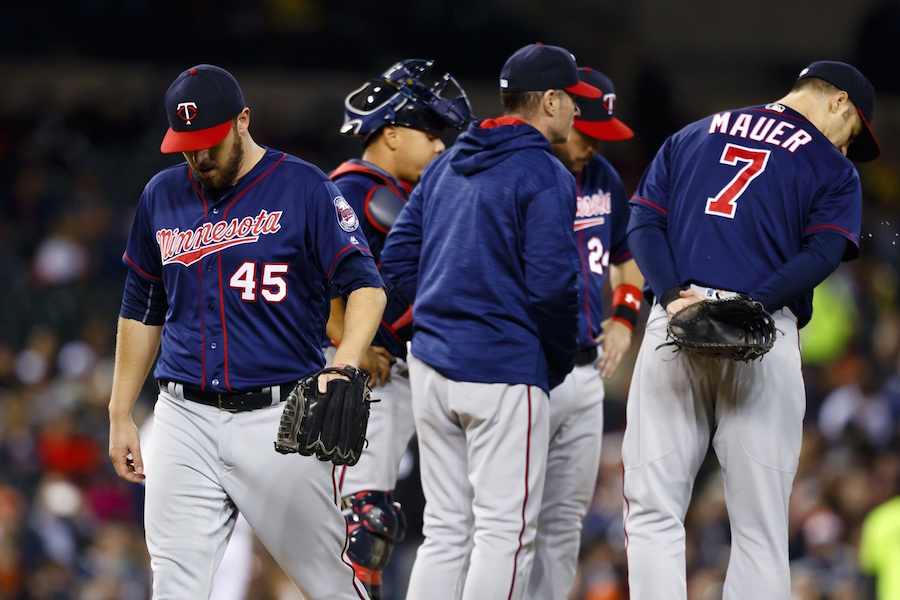 On Tuesday night, Hughes was gritty. It was an admirable outing, without question. One day after the worst start that the Twins have seen in many years, he took the ball and gave a hell of an effort, weaving his way through six shutout innings without having much bite on any of his pitches. The veteran hurler was crafty enough to cruise through the lineup twice but warned his manager before the seventh that he was running out of gas. At this point, he hadn't thrown 70 pitches. This is the most pronounced and clear-cut example of something that's been noticeable for some time: for whatever reason, the right-hander's arm strength is deteriorating. He admitted to shoulder fatigue after Tuesday's game, and this isn't a particularly new development. It's a situation that needs to be monitored and handled very carefully, given how deeply the Twins have invested in him. Terry Ryan went all-in on Hughes following a fantastic debut in Minnesota, signing the former Yankee to a three-year extension despite the fact that two seasons remained on his original deal. It was an odd move but was reflective of the sheer excellence Hughes displayed in 2014, when he pitched like a legitimate ace, and the dire need for any kind of sustained reliability in the starting corps. The favorable terms of Hughes' deal made it palatable to even those who felt he was very unlikely to repeat his sterling results from that first season with the Twins. His average annual salary in the reconfigured contract was less than $12 million, which is roughly the going rate for an average mid-rotation starter in free agency. With his pinpoint command and his history of missing bats at a reasonable clip, he seemed like almost a sure bet to at least maintain at that level, even if his historically incredible strikeout-to-walk ratio was bound to normalize a bit. The other point of reassurance in the Hughes extension was his age. Still amidst his theoretical prime, the righty would still be 33 at the end of his renewed pact. That's the same age that fellow free agent signings Ervin Santana and Ricky Nolasco are now. Yet, Hughes' arm is exhibiting the signs you might expect to see from someone that age. His velocity continues to decline – the fastball is now clocking at 90.4 MPH on average after registering last year at a career-low 90.7 MPH. He told reporters that his fatigue issue dates back about four starts but a glance at the chart below from Brooks Baseball shows a downward pitch speed trend dating back much, much further – basically to the start of his Twins tenure. http://s32.postimg.org/b6gbe7kzp/2016_05_17_2220.png Unsurprisingly, this drop has coincided with worsening results. To his credit, Hughes has been holding his own, owing almost entirely to his truly elite control, but now even that isn't getting him by. On a night where he finally managed to get outs (albeit several hard-hit ones), he couldn't get through 80 pitches. Sticking with the status quo doesn't seem to be an option here. Hughes is going to be here through 2019 and his long-term outlook is the foremost concern. If he's going through a dead arm period it's been gradually building up for quite a long time, and that doesn't seem to be a great sign. Given the growing irrelevance of this season, it might be wisest to shut him down for a while. The hits keep on coming.
 -
The catastrophic start to the Minnesota Twins season has led fans to ponder the fate of Terry Ryan, the general manager and architect of a team that appears headed for a fifth 90-loss season in six years. Recent comments from owner Jim Pohlad served to reinforce a notion that has long been held by followers of the team: Ryan isn’t going anywhere unless it’s on his own terms. But who is to say that day isn't drawing near?Pohlad has faith in Ryan. This much is obvious, and always has been. When you step back from the lens of a Twins fan who is frustrated with the woeful state of the big-league team, it isn’t all that hard to see why. Ryan has been a GM for two decades, and has been involved with the game professionally twice as long. He has seen everything there is to see. He has relationships with everyone in baseball. He receives effusive praise from his colleagues and peers. His passion and investment could never be questioned. With that being said, it's certainly reasonable to cast doubt on his adequacy for the head role at this point, given the way many of his key decisions are now playing out on the field. The fact that he’s a “baseball man” and oversaw the construction of a team that contended for many years at the turn of the century doesn’t mean that he’s the best person for the job in 2016. From this perspective, the bitterness stirred up by ownership’s deferment to Ryan in the face of major organizational turmoil is understandable. But it ignores the fact that Ryan’s tenure may be reaching an end in the relatively near future regardless. At 62, Ryan is approaching the standard retirement age. He’s the second-oldest general manager in baseball, behind Sandy Alderson of the Mets. He initially stepped aside following a losing 2007 season that took a toll and wore him down; this 2016 campaign is shaping up to be more tumultuous and gut-wrenching than that one in all regards. Even if it’s his call, how much longer is he really going to wait to make it? Focus turns to a line of succession, which presently looks quite insular. This is where it becomes problematic that the Twins have done so little to add fresh blood to their front office structure. Ryan’s right-hand men are longtime fixtures like Rob Antony, Mike Radcliff and Wayne Krivsky. If things continue down the path they’re going, I don’t think anyone would feel too inspired by Ryan’s replacement being promoted from within the current braintrust. It’s awfully hard to envision the Twins looking outside though, isn’t it? This is a franchise that hasn’t hired externally for a manager or general manager opening in my 30 years of life. The Twins’ decision to re-hire Ron Gardenhire last month as a special assistant to the GM was met with a few scoffs and snide jokes for obvious reasons, but it highlights a very real issue that is becoming magnified. Why are these kinds of positions being used to give jobs to old friends rather than grooming potential GM candidates that aren’t completely ingrained in the existing culture? I know many, if not most, will disagree, but I’m not all that bothered by the owner’s aversion to firing Ryan. The man is an MLB institution. Even amidst his rougher patches – and this is clearly one of them – I have faith in his competence and qualification. I can’t necessarily say the same for anyone who would be in line to take over internally, nor can I express any real confidence in the organization’s top decision-makers to comb all available avenues for a fitting successor. They’ve never done it before and they continually show minimal interest in bringing outside influences or ideas to the baseball operations department. The last time Ryan stepped down his job was handed to his second-in-command, and we got the underwhelming Bill Smith years. It's not upsetting that the Twins aren't considering firing their GM in May. That would be reactive and likely unproductive. It's upsetting that they aren't being proactive in laying out a roadmap for after he's gone. That lack of proactiveness could leave them in a very tough spot when their aging GM decides, again, that he doesn't have the heart for it anymore. Click here to view the article
-
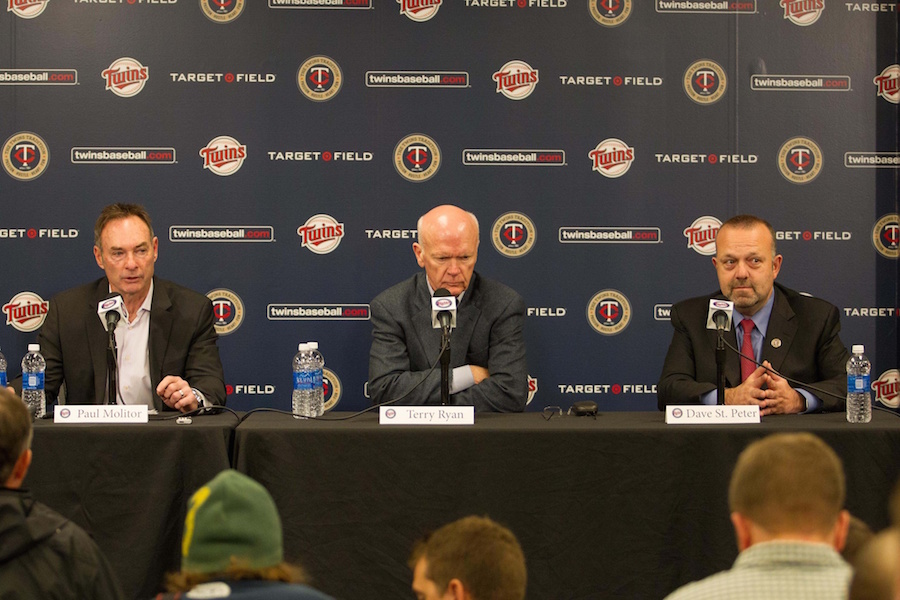 Pohlad has faith in Ryan. This much is obvious, and always has been. When you step back from the lens of a Twins fan who is frustrated with the woeful state of the big-league team, it isn’t all that hard to see why. Ryan has been a GM for two decades, and has been involved with the game professionally twice as long. He has seen everything there is to see. He has relationships with everyone in baseball. He receives effusive praise from his colleagues and peers. His passion and investment could never be questioned. With that being said, it's certainly reasonable to cast doubt on his adequacy for the head role at this point, given the way many of his key decisions are now playing out on the field. The fact that he’s a “baseball man” and oversaw the construction of a team that contended for many years at the turn of the century doesn’t mean that he’s the best person for the job in 2016. From this perspective, the bitterness stirred up by ownership’s deferment to Ryan in the face of major organizational turmoil is understandable. But it ignores the fact that Ryan’s tenure may be reaching an end in the relatively near future regardless. At 62, Ryan is approaching the standard retirement age. He’s the second-oldest general manager in baseball, behind Sandy Alderson of the Mets. He initially stepped aside following a losing 2007 season that took a toll and wore him down; this 2016 campaign is shaping up to be more tumultuous and gut-wrenching than that one in all regards. Even if it’s his call, how much longer is he really going to wait to make it? Focus turns to a line of succession, which presently looks quite insular. This is where it becomes problematic that the Twins have done so little to add fresh blood to their front office structure. Ryan’s right-hand men are longtime fixtures like Rob Antony, Mike Radcliff and Wayne Krivsky. If things continue down the path they’re going, I don’t think anyone would feel too inspired by Ryan’s replacement being promoted from within the current braintrust. It’s awfully hard to envision the Twins looking outside though, isn’t it? This is a franchise that hasn’t hired externally for a manager or general manager opening in my 30 years of life. The Twins’ decision to re-hire Ron Gardenhire last month as a special assistant to the GM was met with a few scoffs and snide jokes for obvious reasons, but it highlights a very real issue that is becoming magnified. Why are these kinds of positions being used to give jobs to old friends rather than grooming potential GM candidates that aren’t completely ingrained in the existing culture? I know many, if not most, will disagree, but I’m not all that bothered by the owner’s aversion to firing Ryan. The man is an MLB institution. Even amidst his rougher patches – and this is clearly one of them – I have faith in his competence and qualification. I can’t necessarily say the same for anyone who would be in line to take over internally, nor can I express any real confidence in the organization’s top decision-makers to comb all available avenues for a fitting successor. They’ve never done it before and they continually show minimal interest in bringing outside influences or ideas to the baseball operations department. The last time Ryan stepped down his job was handed to his second-in-command, and we got the underwhelming Bill Smith years. It's not upsetting that the Twins aren't considering firing their GM in May. That would be reactive and likely unproductive. It's upsetting that they aren't being proactive in laying out a roadmap for after he's gone. That lack of proactiveness could leave them in a very tough spot when their aging GM decides, again, that he doesn't have the heart for it anymore.
 -
 Are the players as bad as they are currently performing? That's a tough case to make. I named about 20 players in this article and a total of two (TWO) are playing up to their established career baseline or above. There's no "reality" that pointed toward a .250 winning percentage. I'm not sure how it's an inflated set of hope-fueled expectations to believe this team could hang around .500 this year after winning 83 last year. If the Twins were merely bad it would be a different story but this is beyond that.
 -
The quotes provided by Twins owner Jim Pohlad in a much-discussed Chip Scoggins column that appeared in the Star Tribune last week included some controversial and heavily scrutinized comments. In my mind, the general sense of bewilderment and cluelessness conveyed by the team owner in his answers was utterly uninspiring, and representative of leadership that is largely ambivalent to the product on the field. But to be fair, the core points Pohlad was making were not wrong.Expressing unequivocal confidence in the general manager who has already dropped four of the 25 players that were on his Opening Day roster, or the second-year manager whose team has looked remarkably unprepared to compete most nights, in the face of an 8-23 start is not a great look. However, it is understandable to an extent. As Dan Wade astutely pointed out here on Friday, the Twins aren’t really well served by putting anyone on the hot seat publicly right now. And really, trying to heap mountains of blame on either Terry Ryan or Paul Molitor misses the point. While there have been plenty of questionable decisions, this WAS a talent-laden roster. This WAS a team on the rise. This WAS unanimously viewed as one of the best prospect pipelines in the game. If even half the players on this club were playing up to their established ability level, things would not be nearly so dire. This is especially frustrating with the veterans, who were asked to fill a leadership void that emerged with Torii Hunter’s retirement. Instead they have helped set the tone for this miserable stretch of baseball with repeated gaffes and failures. Let’s take a look, position by position, at the contagious underperforming that has plagued this Twins roster. Catcher: The Twins have made their own bed here by continuously miscasting Kurt Suzuki as a starting player, but he’s playing drastically below this standard. The veteran has a .679 career OPS, and a .670 OPS in two years with the Twins. His current mark is .560, and he's hitting .176 with runners in scoring position. Of course, there’s no need to even remark on the subpar production from John Ryan Murphy prior to his demotion. First Base: The lone bright spot. Joe Mauer has had a sensational season and of course it’s going largely unnoticed because the team has been so crummy. The same goes for Byung Ho Park, although his novelty as a foreign star and rookie has enabled him to enjoy some nice attention. Second Base: Brian Dozier has picked up where he left off, and that's not a good thing. His current .220/.309/.385 slash line bears disconcerting resemblance to his .210/.280/.359 after the break last year. Fortunately, he has been showing signs of heating up lately. Shortstop: Eduardo Escobar landed on the disabled list after suffering a groin strain on Friday, and maybe that's just as well. He could use a reset after a first month that saw him fail at the key things that made him an effective player over the last two years. Specifically, I'm talking about hitting for power and playing reliable defense. His .289 slugging percentage is down 150 points from 2015 and he has already committed five errors at shortstop after totaling four last year. Third Base: Although Trevor Plouffe has been hitting for decent power when he's been on the field, his plate approach has deteriorated. The 29-year-old has drawn only two walks in 65 plate appearances, resulting in a hideous .277 on-base percentage. He's hardly stepping up in the way you'd hope as one of the roster's cornerstone vets. Left Field: A demotion can't be far off for Eddie Rosario, who is batting .196 with a .534 OPS. He's swinging at a whopping 40 percent of pitches outside the zone, and despite his reputation as a "bad ball hitter" he's not doing anything with the garbage he's hacking at, as illustrated by a .222 BABIP and only five extra-base hits in 98 trips. Center Field: What is there to be said about Byron Buxton? It was tough to set expectations for him coming into this year given his lack of experience, but no one could have anticipated a sub-.500 OPS with strikeouts in half of his plate appearances. Even accounting for the expected sophomore slumps and rookie learning curves, what we've seen from Rosario and Buxton at the plate has been disheartening. Right Field: Miguel Sano's .707 OPS is down more than 200 points from the mark he posted as a rookie. Oddly he hasn't been hitting for power even though he leads baseball in line drive percentage. I fully expect him to come around and get hot at some point soon but there's no doubt that he has let the team down thus far. Rotation: You've got Ervin Santana and Phil Hughes, two veterans who signed long-term contracts to be foundations in the rotation, failing to complete even four innings in their latest starts, at a time where the team is desperately in need of a spark. Tommy Milone was about as bad as he's ever been before his demotion. Kyle Gibson, a guy who was trending up in every way, pitched horrendously before going on the shelf. Bullpen: Glen Perkins has been unavailable. Kevin Jepsen has been ineffective. That 1-2 punch was the source of whatever confidence this unit could have justified. Multiple relievers (Casey Fien, Ryan O'Rourke, J.R. Graham) pitched poorly enough in one of month of the season to essentially erase themselves from the team's plans. Each year, invariably, some players step it up and excel to the max of their ability while others come up short. Right now the scale is tipped so far in the wrong direction for the Twins that they barely look like a competitive team most nights. While it's a cliche to point out that the manager can't go out and swing the bat or throw pitches from the mound, it's true. It might be tidier to pin these horrible results on the skipper, or the hitting/pitching coach, but the messy truth is that it's the players who are wearing this and only they can stem the tide. These guys know how to play ball. It's about damn time they started. Click here to view the article
-
 Expressing unequivocal confidence in the general manager who has already dropped four of the 25 players that were on his Opening Day roster, or the second-year manager whose team has looked remarkably unprepared to compete most nights, in the face of an 8-23 start is not a great look. However, it is understandable to an extent. As Dan Wade astutely pointed out here on Friday, the Twins aren’t really well served by putting anyone on the hot seat publicly right now. And really, trying to heap mountains of blame on either Terry Ryan or Paul Molitor misses the point. While there have been plenty of questionable decisions, this WAS a talent-laden roster. This WAS a team on the rise. This WAS unanimously viewed as one of the best prospect pipelines in the game. If even half the players on this club were playing up to their established ability level, things would not be nearly so dire. This is especially frustrating with the veterans, who were asked to fill a leadership void that emerged with Torii Hunter’s retirement. Instead they have helped set the tone for this miserable stretch of baseball with repeated gaffes and failures. Let’s take a look, position by position, at the contagious underperforming that has plagued this Twins roster. Catcher: The Twins have made their own bed here by continuously miscasting Kurt Suzuki as a starting player, but he’s playing drastically below this standard. The veteran has a .679 career OPS, and a .670 OPS in two years with the Twins. His current mark is .560, and he's hitting .176 with runners in scoring position. Of course, there’s no need to even remark on the subpar production from John Ryan Murphy prior to his demotion. First Base: The lone bright spot. Joe Mauer has had a sensational season and of course it’s going largely unnoticed because the team has been so crummy. The same goes for Byung Ho Park, although his novelty as a foreign star and rookie has enabled him to enjoy some nice attention. Second Base: Brian Dozier has picked up where he left off, and that's not a good thing. His current .220/.309/.385 slash line bears disconcerting resemblance to his .210/.280/.359 after the break last year. Fortunately, he has been showing signs of heating up lately. Shortstop: Eduardo Escobar landed on the disabled list after suffering a groin strain on Friday, and maybe that's just as well. He could use a reset after a first month that saw him fail at the key things that made him an effective player over the last two years. Specifically, I'm talking about hitting for power and playing reliable defense. His .289 slugging percentage is down 150 points from 2015 and he has already committed five errors at shortstop after totaling four last year. Third Base: Although Trevor Plouffe has been hitting for decent power when he's been on the field, his plate approach has deteriorated. The 29-year-old has drawn only two walks in 65 plate appearances, resulting in a hideous .277 on-base percentage. He's hardly stepping up in the way you'd hope as one of the roster's cornerstone vets. Left Field: A demotion can't be far off for Eddie Rosario, who is batting .196 with a .534 OPS. He's swinging at a whopping 40 percent of pitches outside the zone, and despite his reputation as a "bad ball hitter" he's not doing anything with the garbage he's hacking at, as illustrated by a .222 BABIP and only five extra-base hits in 98 trips. Center Field: What is there to be said about Byron Buxton? It was tough to set expectations for him coming into this year given his lack of experience, but no one could have anticipated a sub-.500 OPS with strikeouts in half of his plate appearances. Even accounting for the expected sophomore slumps and rookie learning curves, what we've seen from Rosario and Buxton at the plate has been disheartening. Right Field: Miguel Sano's .707 OPS is down more than 200 points from the mark he posted as a rookie. Oddly he hasn't been hitting for power even though he leads baseball in line drive percentage. I fully expect him to come around and get hot at some point soon but there's no doubt that he has let the team down thus far. Rotation: You've got Ervin Santana and Phil Hughes, two veterans who signed long-term contracts to be foundations in the rotation, failing to complete even four innings in their latest starts, at a time where the team is desperately in need of a spark. Tommy Milone was about as bad as he's ever been before his demotion. Kyle Gibson, a guy who was trending up in every way, pitched horrendously before going on the shelf. Bullpen: Glen Perkins has been unavailable. Kevin Jepsen has been ineffective. That 1-2 punch was the source of whatever confidence this unit could have justified. Multiple relievers (Casey Fien, Ryan O'Rourke, J.R. Graham) pitched poorly enough in one of month of the season to essentially erase themselves from the team's plans. Each year, invariably, some players step it up and excel to the max of their ability while others come up short. Right now the scale is tipped so far in the wrong direction for the Twins that they barely look like a competitive team most nights. While it's a cliche to point out that the manager can't go out and swing the bat or throw pitches from the mound, it's true. It might be tidier to pin these horrible results on the skipper, or the hitting/pitching coach, but the messy truth is that it's the players who are wearing this and only they can stem the tide. These guys know how to play ball. It's about damn time they started.
 -
Prior to the season, I wrote that Trevor May's strikeout mentality was sorely needed in a bullpen that had fallen drastically behind the rest of the league in terms of missing bats. Sure enough, the right-hander has been a revelation in that regard, helping to lead a stunning trend reversal that suggests this unit is moving in the right direction even if the results thus far have disappointed.Last year, the Twins ranked dead last in the majors in strikeouts by relievers, with 392. In 2014 they ranked third to last. With bullpens across the league loading up on hard-throwers and strikeout pitchers, Minnesota was on the outside looking in, especially after an offseason that was devoid of aggressive action. The hope was that this issue would be resolved on its own, with Kevin Jepsen around for a full year, Ryan Pressly emerging, and May making a full-time transition to relief. That is exactly what has happened. Entering play on Tuesday, the Twins ranked second in all of baseball in bullpen strikeouts, trailing only the Boston Red Sox. That's a little misleading since the Twins have also accrued a relatively high number of relief innings. Their 24.5 percent strikeout rate is 11th in the majors, which is a bit less astonishing but still a massive jump from the dismal 17.9 percent rate they finished at last season. May has predictably been a K machine while throwing hard in short bursts. He has fanned 23 of the 65 batters he has faced thus far for a 35.4 percent K-rate that places him among the league's elite. One could certainly argue that he has been throwing a little too hard, since he also has eight walks and an MLB-leading five wild pitches, but he has reined things in after an erratic start. May joins Pressly, Michael Tonkin, Fernando Abad and Glen Perkins (who has only made two appearances) as Twins relievers with a K-rate that falls above the league average for relievers. Kevin Jepsen and Casey Fien have both been disappointing in this regard (neither has even come close to a league-average rate) but both might be in their last years with the Twins. Young power arms coming up to replace them eventually, most notably J.T. Chargois and Nick Burdi. Of course, it's not a simple matter of more strikeouts equalling more effectiveness. That's an oversimplification and no reasonable person is naive enough to believe it. But as I mentioned in my spring writeup on May, missing bats "effectively eliminates bad luck, bloopers and bleeders from the equation, which can be particularly critical in close late-game situations." Jepsen is the case in point for this. His inability to put away hitters on his own (Jepsen's 14.4 percent K-rate is the lowest of all Twins relievers) has left him vulnerable to the negative outcomes that have struck him again and again at the most inopportune times. Meanwhile, guys like May and Abad are plowing through the opposition and leaving them with few chances to make noise. While the bullpen has certainly been an overall weakness up to this point, one that has been magnified by the close nature of almost every game and the rarity of instances in which starters have handed over leads leads, there are plenty of positives to be found, especially when you consider which guys are the ones trending up. As for Jepsen, he's probably due for a demotion from the closer role unless his contact-heavy ways take a turn quickly. May, with his intimidating presence and imposing arsenal, looks much more suited for the job right now. With Perkins being an enormous question mark, it may not be a temporary assignment. Click here to view the article
- 17 replies
-
- 1
-

-
- trevor may
- ryan pressly
- (and 1 more)
-
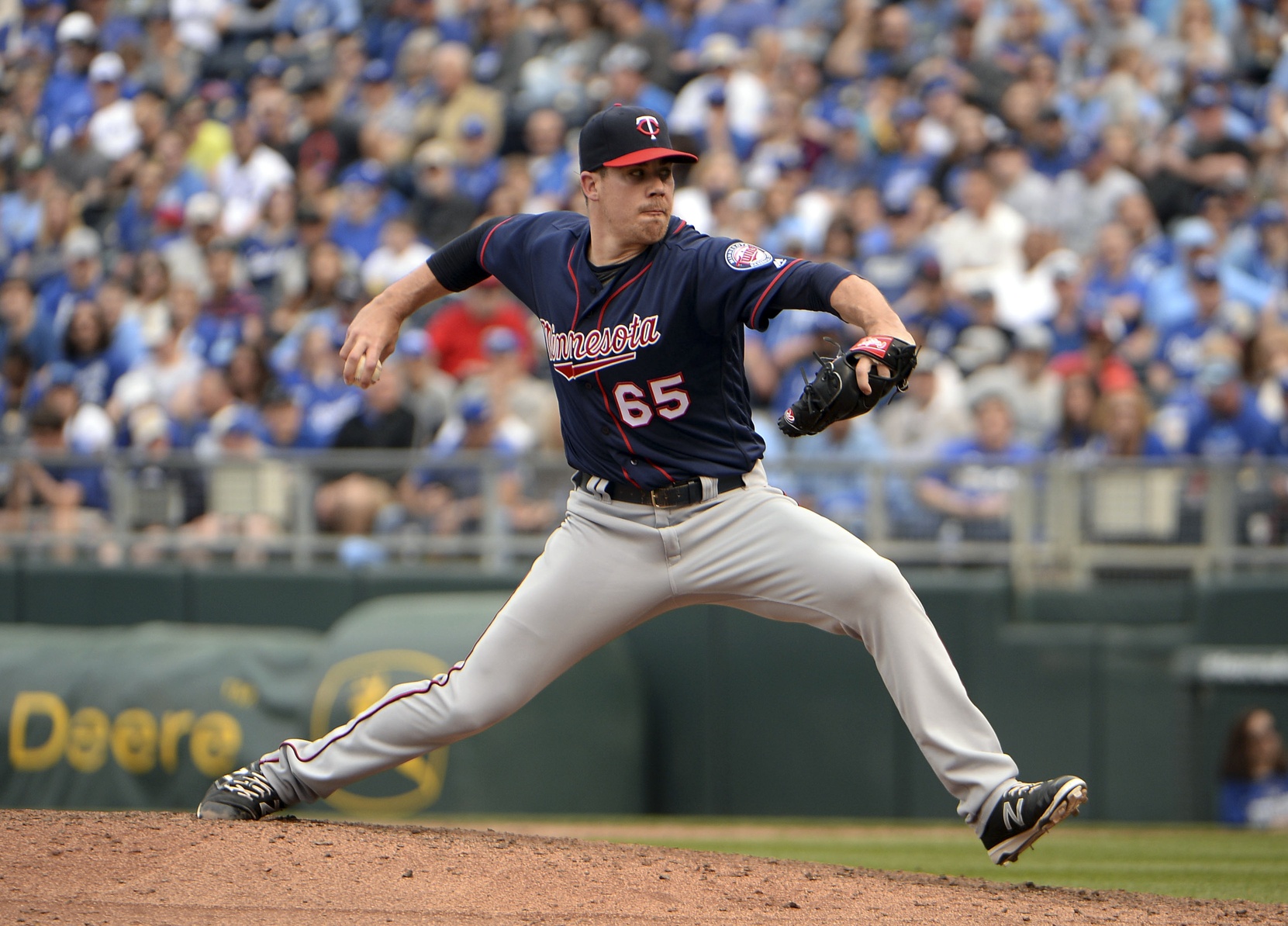 Last year, the Twins ranked dead last in the majors in strikeouts by relievers, with 392. In 2014 they ranked third to last. With bullpens across the league loading up on hard-throwers and strikeout pitchers, Minnesota was on the outside looking in, especially after an offseason that was devoid of aggressive action. The hope was that this issue would be resolved on its own, with Kevin Jepsen around for a full year, Ryan Pressly emerging, and May making a full-time transition to relief. That is exactly what has happened. Entering play on Tuesday, the Twins ranked second in all of baseball in bullpen strikeouts, trailing only the Boston Red Sox. That's a little misleading since the Twins have also accrued a relatively high number of relief innings. Their 24.5 percent strikeout rate is 11th in the majors, which is a bit less astonishing but still a massive jump from the dismal 17.9 percent rate they finished at last season. May has predictably been a K machine while throwing hard in short bursts. He has fanned 23 of the 65 batters he has faced thus far for a 35.4 percent K-rate that places him among the league's elite. One could certainly argue that he has been throwing a little too hard, since he also has eight walks and an MLB-leading five wild pitches, but he has reined things in after an erratic start. May joins Pressly, Michael Tonkin, Fernando Abad and Glen Perkins (who has only made two appearances) as Twins relievers with a K-rate that falls above the league average for relievers. Kevin Jepsen and Casey Fien have both been disappointing in this regard (neither has even come close to a league-average rate) but both might be in their last years with the Twins. Young power arms coming up to replace them eventually, most notably J.T. Chargois and Nick Burdi. Of course, it's not a simple matter of more strikeouts equalling more effectiveness. That's an oversimplification and no reasonable person is naive enough to believe it. But as I mentioned in my spring writeup on May, missing bats "effectively eliminates bad luck, bloopers and bleeders from the equation, which can be particularly critical in close late-game situations." Jepsen is the case in point for this. His inability to put away hitters on his own (Jepsen's 14.4 percent K-rate is the lowest of all Twins relievers) has left him vulnerable to the negative outcomes that have struck him again and again at the most inopportune times. Meanwhile, guys like May and Abad are plowing through the opposition and leaving them with few chances to make noise. While the bullpen has certainly been an overall weakness up to this point, one that has been magnified by the close nature of almost every game and the rarity of instances in which starters have handed over leads leads, there are plenty of positives to be found, especially when you consider which guys are the ones trending up. As for Jepsen, he's probably due for a demotion from the closer role unless his contact-heavy ways take a turn quickly. May, with his intimidating presence and imposing arsenal, looks much more suited for the job right now. With Perkins being an enormous question mark, it may not be a temporary assignment.
 -
The Twins had a glaring need to improve at the catcher position during the offseason. With no clear long-term solution in place, fans hoped to see Terry Ryan and the front office take aggressive action toward addressing this stark organizational weakness. The moves that the club ended up making probably would not be described as such. The Twins traded an expendable outfielder for a backup catcher from the Yankees, and grabbed a discarded backstop from the Mariners system off of waivers.They have already given up on the latter acquisition. John Hicks was placed on waivers to make room for Jose Berrios and was immediately claimed by the Tigers, leaving Minnesota with two catchers on the 40-man roster. One is Kurt Suzuki, who is likely in his last year with the Twins. The other is John Ryan Murphy, who is off to an utterly miserable start in his new uniform. When they traded Aaron Hicks for Murphy during the offseason, the Twins were hopeful that the improving 24-year-old backstop, a former prep star and second-round draft pick, could develop into a fixture behind the plate. Instead, he just looks like a player that badly needs to be fixed. Murphy was slow to get going in spring training. Given the lion's share of reps at catcher, he collected just five singles in 36 at-bats for a .139 average. "It's timing more than anything," said Joe Vavra, a former hitting instructor turned bench coach, when asked about the newcomer's struggles at the time. Timing still appears to be Murphy's primary issue, and I'm not talking about the poor timing of batting .086 in your first month when trying to make an impression on a new organization and fanbase. In April, Murphy put up a dreadful .225 OPS and it wasn't because opposing pitchers were flat-out overwhelming him. He struck out only five times in 38 plate appearances, but still managed just three hits – a pair of singles and a ground ball double. His BABIP currently stands at .100, meaning he is only getting a hit on one out of 10 balls he puts into play. It's not hard to see why when you look at his batted ball data; Murphy has hit a grounder or fly ball almost 90 percent of the time, with a meager 10.3 percent line drive rate. That is a rather blatant indication that his timing is off, and he's not quite squaring up the ball. The best way to resolve that problem is with regular at-bats. Murphy hasn't gotten those. Only once has he started consecutive games and usually he's been on the bench for multiple days between appearances. It's a bit of a hard sell to suggest that a guy whose batting average starts with zero should be playing more regularly, but I believe that would be the best course for Paul Molitor at this point. Murphy is bound to start collecting some hits and even if he doesn't you're not losing all that much by taking Kurt Suzuki's bat out of the lineup. Plus, additional rest could only be beneficial for the veteran, who has logged more than 9,000 MLB innings at catcher and routinely takes a beating. The other option for ramping up Murphy's at-bat count would be to send him to the minors, where he could start everyday, but unfortunately the aforementioned decision to waive Hicks leaves the Twins with no readily available replacement. In order to demote Murphy, another catcher would need to be added to the 40-man. Stuart Turner and Mitch Garver, the two best catching prospects in the system (faint praise), are both at Double-A and batting around .250. Neither belongs in the majors right now. The current starter in Rochester is Juan Centeno, a 26-year-old non-prospect with a .589 OPS at Triple-A. Unless Ryan can pull off a trade or salvage something off of the waiver wire, there's really no feasible option for replacing Murphy, not to mention Suzuki if he got injured. It's a bad situation, and there aren't any great options. But the Twins saw something in Murphy, and so now they might as well give him some more regular exposure to find out if it can emerge. Given the alternatives, they really need it to. Click here to view the article
-
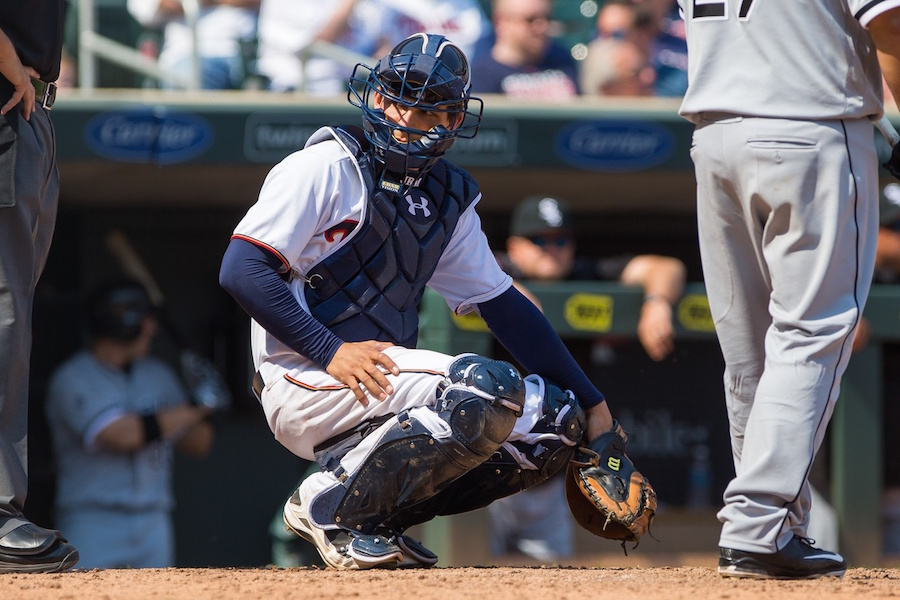 They have already given up on the latter acquisition. John Hicks was placed on waivers to make room for Jose Berrios and was immediately claimed by the Tigers, leaving Minnesota with two catchers on the 40-man roster. One is Kurt Suzuki, who is likely in his last year with the Twins. The other is John Ryan Murphy, who is off to an utterly miserable start in his new uniform. When they traded Aaron Hicks for Murphy during the offseason, the Twins were hopeful that the improving 24-year-old backstop, a former prep star and second-round draft pick, could develop into a fixture behind the plate. Instead, he just looks like a player that badly needs to be fixed. Murphy was slow to get going in spring training. Given the lion's share of reps at catcher, he collected just five singles in 36 at-bats for a .139 average. "It's timing more than anything," said Joe Vavra, a former hitting instructor turned bench coach, when asked about the newcomer's struggles at the time. Timing still appears to be Murphy's primary issue, and I'm not talking about the poor timing of batting .086 in your first month when trying to make an impression on a new organization and fanbase. In April, Murphy put up a dreadful .225 OPS and it wasn't because opposing pitchers were flat-out overwhelming him. He struck out only five times in 38 plate appearances, but still managed just three hits – a pair of singles and a ground ball double. His BABIP currently stands at .100, meaning he is only getting a hit on one out of 10 balls he puts into play. It's not hard to see why when you look at his batted ball data; Murphy has hit a grounder or fly ball almost 90 percent of the time, with a meager 10.3 percent line drive rate. That is a rather blatant indication that his timing is off, and he's not quite squaring up the ball. The best way to resolve that problem is with regular at-bats. Murphy hasn't gotten those. Only once has he started consecutive games and usually he's been on the bench for multiple days between appearances. It's a bit of a hard sell to suggest that a guy whose batting average starts with zero should be playing more regularly, but I believe that would be the best course for Paul Molitor at this point. Murphy is bound to start collecting some hits and even if he doesn't you're not losing all that much by taking Kurt Suzuki's bat out of the lineup. Plus, additional rest could only be beneficial for the veteran, who has logged more than 9,000 MLB innings at catcher and routinely takes a beating. The other option for ramping up Murphy's at-bat count would be to send him to the minors, where he could start everyday, but unfortunately the aforementioned decision to waive Hicks leaves the Twins with no readily available replacement. In order to demote Murphy, another catcher would need to be added to the 40-man. Stuart Turner and Mitch Garver, the two best catching prospects in the system (faint praise), are both at Double-A and batting around .250. Neither belongs in the majors right now. The current starter in Rochester is Juan Centeno, a 26-year-old non-prospect with a .589 OPS at Triple-A. Unless Ryan can pull off a trade or salvage something off of the waiver wire, there's really no feasible option for replacing Murphy, not to mention Suzuki if he got injured. It's a bad situation, and there aren't any great options. But the Twins saw something in Murphy, and so now they might as well give him some more regular exposure to find out if it can emerge. Given the alternatives, they really need it to.
 -
Article: Give Alex Meyer A Chance To Start
Nick Nelson replied to Nick Nelson's topic in Twins Daily Front Page News
La Velle's latest tweet offers some optimism with regards to this post's subject: -
Article: Give Alex Meyer A Chance To Start
Nick Nelson posted a topic in Twins Daily Front Page News
On Tuesday the Twins delivered some big news, announcing the long-awaited promotion of top pitching prospect Jose Berrios. He'll take the hill against the Indians on Wednesday night. A day earlier, another of the organization's most highly-rated young arms was promoted from Triple-A, albeit to much less fanfare. Despite a successful start to the season in Rochester's rotation, most believe that Alex Meyer will end up in the bullpen. It wouldn't be the worst thing in the world. But if he's going to get a chance to maximize his value in the majors, there's no better time than now to give him that opportunity.When the Twins sent Meyer to Triple-A in March, they decided they were going to give him one more shot as a starting pitcher. He spent the bulk of last year as a reliever and it appeared that might be his role going forward, but the promise he once showed as a starter has not totally been forgotten. Granted, it's two starts (and one long relief appearance), but Meyer went to Rochester and did absolutely everything that could have been asked of him. The big righty pitched to a 1.04 ERA in 17 1/3 innings, notching 19 strikeouts and – most importantly – only four walks. In each of his starts he worked at least into the seventh inning with good pitch economy. His sharp early performance draws a stark contrast against last year, when finding the strike zone was a constant challenge for Meyer from start to finish. Whether the 26-year-old has figured something out or is just on a nice run, it's worth taking a look. Finding room for Meyer to make at least a couple starts shouldn't be hard. Kyle Gibson and Ervin Santana were both placed on the disabled list Tuesday, and while Berrios and Tyler Duffey will fill their spots for now, there's another purportedly healthy starter in the rotation who could be bumped. Tommy Milone has failed to complete five innings in three of his four starts. Given his status as a 29-year-old with limited upside on a one-year contract, there isn't a whole lot to gain by continuing to run him out. Moving Milone to the bullpen as a long reliever would be prudent, especially with that unit taking a beating recently. Give Meyer a few starts and see what he can do. The 7-14 Twins don't have much to lose. If he catches on, and approximates what he was doing in the minors in any way, it could be crucial toward rallying Minnesota back into the mix, and it would also be a monumental development in the big picture. If he scuffles, then a return to the bullpen and a full commitment to that path would be in order. But why not run him out there and find out what you've got? At this point, defining the roles and true capabilities of the young incoming wave should be the top priority of 2016 for the Twins. Click here to view the article -
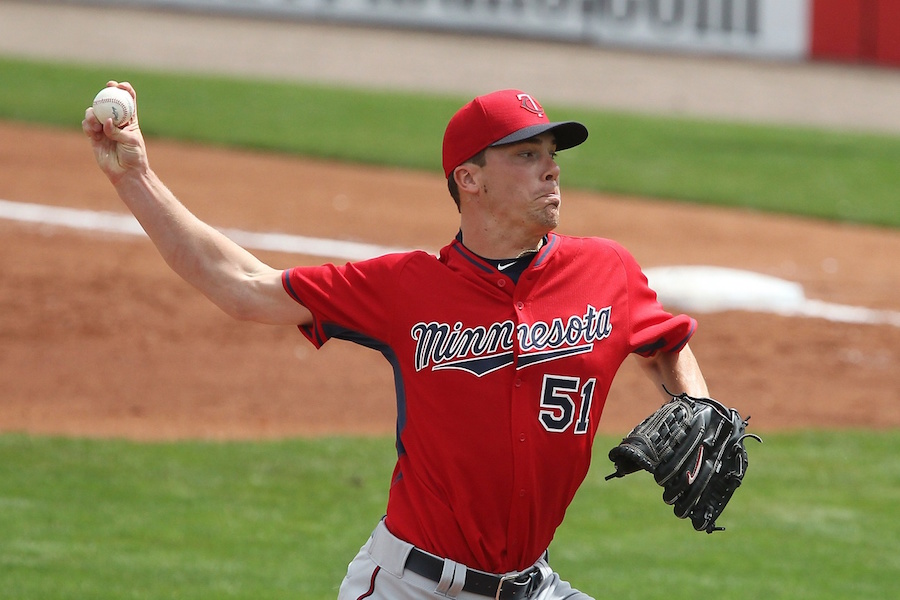 When the Twins sent Meyer to Triple-A in March, they decided they were going to give him one more shot as a starting pitcher. He spent the bulk of last year as a reliever and it appeared that might be his role going forward, but the promise he once showed as a starter has not totally been forgotten. Granted, it's two starts (and one long relief appearance), but Meyer went to Rochester and did absolutely everything that could have been asked of him. The big righty pitched to a 1.04 ERA in 17 1/3 innings, notching 19 strikeouts and – most importantly – only four walks. In each of his starts he worked at least into the seventh inning with good pitch economy. His sharp early performance draws a stark contrast against last year, when finding the strike zone was a constant challenge for Meyer from start to finish. Whether the 26-year-old has figured something out or is just on a nice run, it's worth taking a look. Finding room for Meyer to make at least a couple starts shouldn't be hard. Kyle Gibson and Ervin Santana were both placed on the disabled list Tuesday, and while Berrios and Tyler Duffey will fill their spots for now, there's another purportedly healthy starter in the rotation who could be bumped. Tommy Milone has failed to complete five innings in three of his four starts. Given his status as a 29-year-old with limited upside on a one-year contract, there isn't a whole lot to gain by continuing to run him out. Moving Milone to the bullpen as a long reliever would be prudent, especially with that unit taking a beating recently. Give Meyer a few starts and see what he can do. The 7-14 Twins don't have much to lose. If he catches on, and approximates what he was doing in the minors in any way, it could be crucial toward rallying Minnesota back into the mix, and it would also be a monumental development in the big picture. If he scuffles, then a return to the bullpen and a full commitment to that path would be in order. But why not run him out there and find out what you've got? At this point, defining the roles and true capabilities of the young incoming wave should be the top priority of 2016 for the Twins.
 -
The Minnesota Twins are promoting top pitching prospect Jose Berrios from Triple-A. He is expected to make his major-league debut on Wednesday night against the Indians. Occasional Twins Daily contributor Ted Schwerzler was first to break the news, which has since been confirmed by several sources.Berrios was ranked by Twins Daily as the organization's No. 2 prospect heading into the season. One day after the two players who surrounded him on that list -- No. 1 Byron Buxton and No. 3 Max Kepler -- were shipped from Minnesota to Rochester, Berrios makes a trip in the opposite direction. The 22-year-old right-hander has only cemented his status as one of the best pitching talents in the minors with a phenomenal start in Triple-A, going 2-0 with a 1.06 ERA over his first three starts. In 17 innings, he allowed only eight hits (seven of them singles) while striking out 20. Berrios has occasionally battled command problems, leading to some inefficiency and eight walks, but that's the only blemish you can point to in his otherwise dominant performance. Starting pitching hasn't exactly been the biggest weakness in Minnesota's 6-14 start, but Berrios is a transcendent talent who could give the club a much-needed jolt. It's not yet clear how the Twins will make room for Berrios, although one could venture that Ervin Santana may be headed to the disabled list. Barring poor results in his first couple outings, this doesn't appear to be a temporary promotion. It will be interesting to see how Paul Molitor uses his staff when he has six healthy starters. What are your expectations for Berrios? Click here to view the article
-
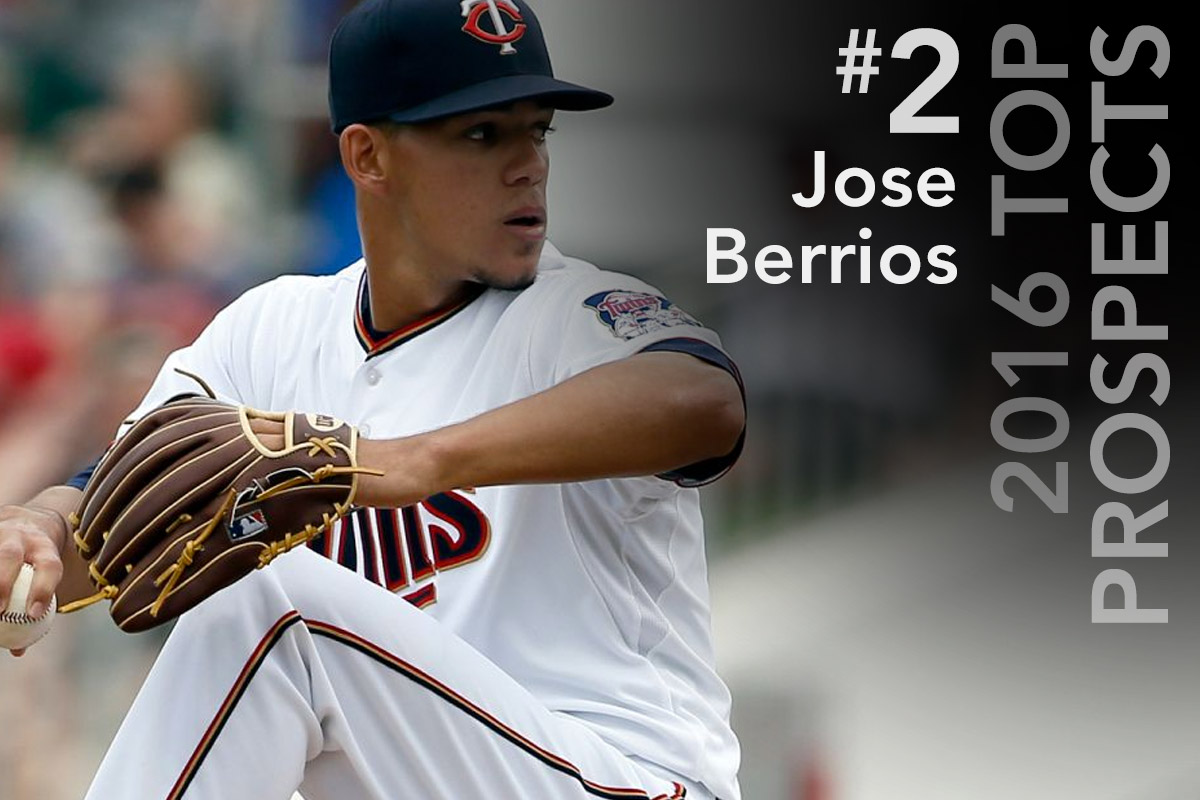 Berrios was ranked by Twins Daily as the organization's No. 2 prospect heading into the season. One day after the two players who surrounded him on that list -- No. 1 Byron Buxton and No. 3 Max Kepler -- were shipped from Minnesota to Rochester, Berrios makes a trip in the opposite direction. The 22-year-old right-hander has only cemented his status as one of the best pitching talents in the minors with a phenomenal start in Triple-A, going 2-0 with a 1.06 ERA over his first three starts. In 17 innings, he allowed only eight hits (seven of them singles) while striking out 20. Berrios has occasionally battled command problems, leading to some inefficiency and eight walks, but that's the only blemish you can point to in his otherwise dominant performance. Starting pitching hasn't exactly been the biggest weakness in Minnesota's 6-14 start, but Berrios is a transcendent talent who could give the club a much-needed jolt. It's not yet clear how the Twins will make room for Berrios, although one could venture that Ervin Santana may be headed to the disabled list. Barring poor results in his first couple outings, this doesn't appear to be a temporary promotion. It will be interesting to see how Paul Molitor uses his staff when he has six healthy starters. What are your expectations for Berrios?
 -
Welp. According to Mike Berardino, the move to outright John Hicks was made in order to make room for David Murphy, but then the Twins talked to Murphy and he informed them he wished to be released. Yep. Gonna be a tough to top this for worst roster move of the year. Horribly botched.
- 48 replies
-
- 2
-
-
- tyler duffey
- kyle gibson
- (and 3 more)
-
The Minnesota Twins announced a wave of roster moves this afternoon, altering their personnel as they head into a six-game AL Central homestand in which they badly need to rebound after a brutal weekend in Washington. Young outfielders Byron Buxton and Max Kepler were optioned to Class-AAA Rochester. Right-hander Alex Meyer was promoted to the majors, where he'll work out of the Minnesota bullpen. Danny Santana was also reinstated from the disabled list.Buxton, who won an Opening Day roster spot in spite of an unimpressive debut last year and spring this year, has started 13 of the Twins' 19 games in center field but has been flat-out overmatched by major-league pitching. As you can see below, he leads baseball in strikeout rate by a wide margin. Equally disturbing as the raw numbers was the quality of his at-bats, which were consistently poor. It's important to remember that Buxton is only 22, and has played only 13 games at Triple-A. The hope is that he'll be able to iron out his plate approach against lesser pitching and return within a couple of months. Meanwhile, Kepler will get the chance to play every day in the Rochester outfield after being unfortunately mired on the Twins bench for the past couple of weeks. Santana, who was activated following a minor-league rehab stint, will fill the vacancy in center field along with Eddie Rosario. Meanwhile, Meyer will join a beleaguered bullpen that was badly in need of reinforcements after Sunday's marathon 16-inning loss. There's a good chance we'll see him pitch tonight, and it will be interesting to see how his improved results at Triple-A, where he had a 1.04 ERA and 0.87 WHIP in three outings, translates to the majors his second time around. What do you think of these moves? Click here to view the article
- 165 replies
-
- 2
-
-
- byron buxton
- max kepler
- (and 2 more)
-
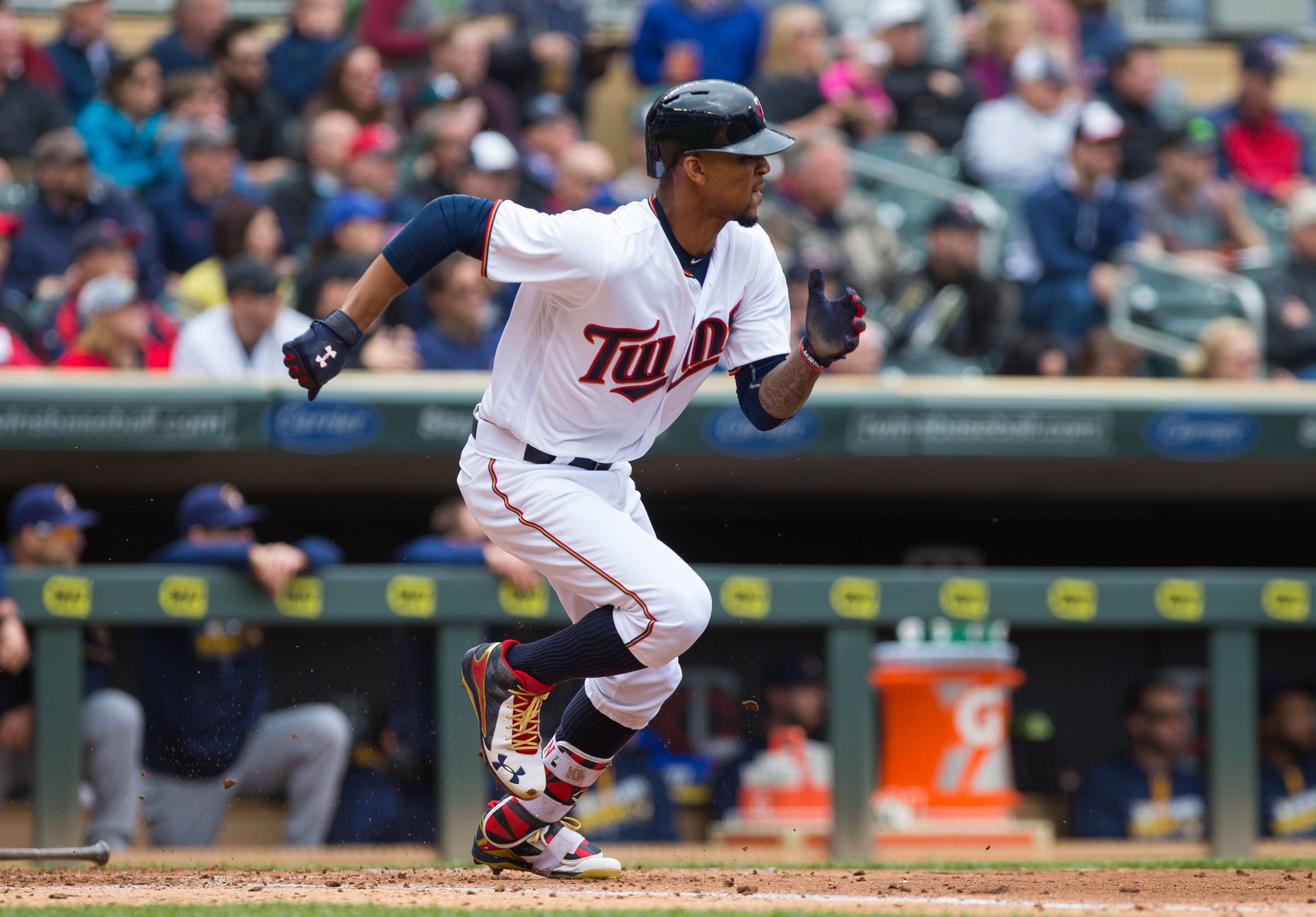 Buxton, who won an Opening Day roster spot in spite of an unimpressive debut last year and spring this year, has started 13 of the Twins' 19 games in center field but has been flat-out overmatched by major-league pitching. As you can see below, he leads baseball in strikeout rate by a wide margin. Equally disturbing as the raw numbers was the quality of his at-bats, which were consistently poor. https://twitter.com/NickNelsonMN/status/724616792371425281 It's important to remember that Buxton is only 22, and has played only 13 games at Triple-A. The hope is that he'll be able to iron out his plate approach against lesser pitching and return within a couple of months. Meanwhile, Kepler will get the chance to play every day in the Rochester outfield after being unfortunately mired on the Twins bench for the past couple of weeks. Santana, who was activated following a minor-league rehab stint, will fill the vacancy in center field along with Eddie Rosario. Meanwhile, Meyer will join a beleaguered bullpen that was badly in need of reinforcements after Sunday's marathon 16-inning loss. There's a good chance we'll see him pitch tonight, and it will be interesting to see how his improved results at Triple-A, where he had a 1.04 ERA and 0.87 WHIP in three outings, translates to the majors his second time around. What do you think of these moves?
 -
How did Tyler Duffey's 2016 debut go? Are struggling starting pitchers on the hot seat? Did the Twins make their worst roster move of the year this weekend? All covered below.* It came a bit later than expected, and might be a little more short-lived than expected (for now), but Tyler Duffey made his 2016 Twins debut on Sunday, starting in place of Ervin Santana who was sidelined by a sore back. Duffey drew the tough assignment of silencing a red-hot Nationals lineup as the Twins looked for just their second road win in 11 tries. The Doof did his part. He wasn't always hitting his spots, and batters were showing more of a penchant for laying off his curveball compared to what we typically law last year, but the right-hander nevertheless turned in a fine outing. He pitched into the fifth inning with only one run allowed before a comeback liner from Matt den Dekker nailed him in the pitching shoulder and forced him out of the ballgame. Duffey didn't appear to be in great pain and his removal was said to be precautionary. Hopefully that's the case because he definitely made an impression. * Duffey looked like he belongs. That, along with the resounding success of Jose Berrios and Alex Meyer in Triple-A, means that two Twins starters who might otherwise have lengthier ropes to work through early struggles could be on the hot seat. The poor performances of both Kyle Gibson and Tommy Milone over the first few weeks have been troubling, but less worrisome when you look at their track records. Gibson, who is 0-3 with a 6.10 ERA through four turns, has issued 12 walks with 11 strikeouts over his first four turns. That's horrible, obviously, but not really out of character for him in the first month of the season: April 2014: 29 IP, 15 K, 14 BB April 2015: 22.1 IP, 6 K, 12 BB April 2016: 20.1 IP, 11 K, 12 BB In 2014, he rebounded from the poor start to finish with solid overall numbers, and last year he ended up being Minnesota's best starter. It's not really an excuse, just a fact: Gibson has routinely displayed poor command early on for the Twins and has routinely figured it out. Milone's issues this year have conversely been extremely uncharacteristic. He has typically fared roughly the same against opposing lineups his first, second and third times through – one thing that makes him better suited for starting than relief. That has not been the case this year, to say the least. Tommy Milone, career 1st time through lineup: .270/.325/.443 2nd time through lineup: .265/.306/.417 3rd time through lineup: .270/.309/.433 Tommy Milone, 2016 1st time through lineup: .111/.111/.111 2nd time through lineup: .400/.423/.720 3rd time through lineup: .571/.700/1.571 Given the extreme nature of his splits in a small sample this month, and his career-long trends, I'm inclined to chalk this up as a fluke over three starts. It's reasonable to expect that both Gibson and Milone will get on track quickly. But the Twins don't have the luxury of being all that patient given their awful start, not to mention the presence of rotation reinforcements in Rochester that are proving to be ready. * We have our early favorite for most inexplicable Twins roster decision of 2016. Over the weekend, the team outrighted catcher John Hicks, presumably to open up a spot on the 40-man roster for an impending David Murphy call-up. Hicks was quickly claimed by the Tigers, so he's gone. Murphy was cut by the Red Sox in spring training and hasn't done anything at Rochester since signing a minor league deal a couple of weeks ago. If the Twins want a veteran outfielder on the roster, that's fine. The question is why on earth they would whittle down what little catching depth they have in order to make room. Hicks, claimed off waivers from the Mariners in the offseason, is a somewhat intriguing player. He's 26, has a good defensive rep, and has shown offensive potential at times. He was also the only backstop on the Twins' 40-man other than Kurt Suzuki and John Ryan Murphy. With neither of those players looking remotely good right now, it's befuddling to say the least that the Twins would let Hicks go when they have far more expendable 40-man players like Pat Dean, who is fifth in line among lefty relievers. Maybe other moves are coming that will make this one a bit easier to understand. I hope so. But as the Twins and many other teams have learned, catching talent is tough to come by these days. Click here to view the article
- 48 replies
-
- 1
-
-
- tyler duffey
- kyle gibson
- (and 3 more)
-
Three-Bagger: Duffey's Debut, Struggling Starters & Catching Depth
Nick Nelson posted an article in Twins
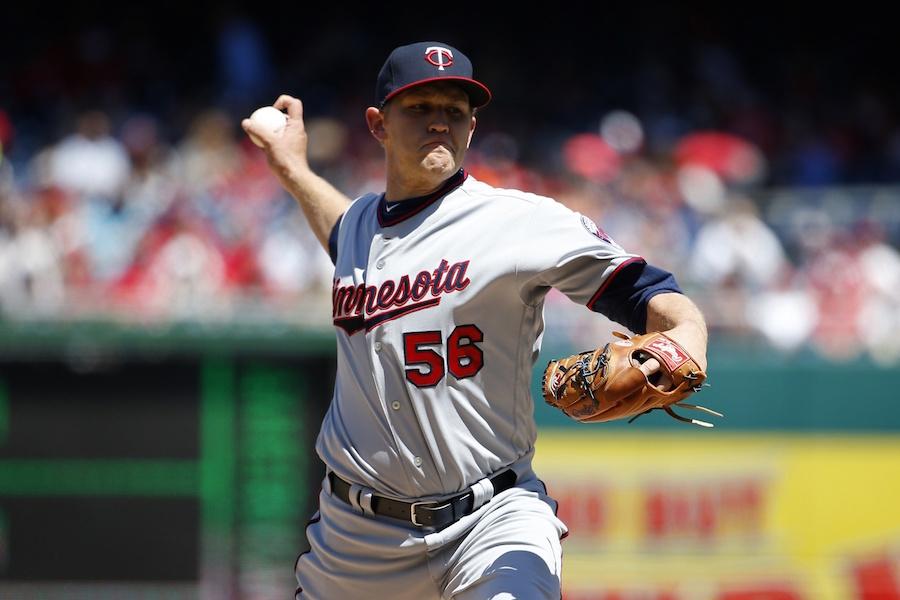 * It came a bit later than expected, and might be a little more short-lived than expected (for now), but Tyler Duffey made his 2016 Twins debut on Sunday, starting in place of Ervin Santana who was sidelined by a sore back. Duffey drew the tough assignment of silencing a red-hot Nationals lineup as the Twins looked for just their second road win in 11 tries. The Doof did his part. He wasn't always hitting his spots, and batters were showing more of a penchant for laying off his curveball compared to what we typically law last year, but the right-hander nevertheless turned in a fine outing. He pitched into the fifth inning with only one run allowed before a comeback liner from Matt den Dekker nailed him in the pitching shoulder and forced him out of the ballgame. Duffey didn't appear to be in great pain and his removal was said to be precautionary. Hopefully that's the case because he definitely made an impression. * Duffey looked like he belongs. That, along with the resounding success of Jose Berrios and Alex Meyer in Triple-A, means that two Twins starters who might otherwise have lengthier ropes to work through early struggles could be on the hot seat. The poor performances of both Kyle Gibson and Tommy Milone over the first few weeks have been troubling, but less worrisome when you look at their track records. Gibson, who is 0-3 with a 6.10 ERA through four turns, has issued 12 walks with 11 strikeouts over his first four turns. That's horrible, obviously, but not really out of character for him in the first month of the season: April 2014: 29 IP, 15 K, 14 BB April 2015: 22.1 IP, 6 K, 12 BB April 2016: 20.1 IP, 11 K, 12 BB In 2014, he rebounded from the poor start to finish with solid overall numbers, and last year he ended up being Minnesota's best starter. It's not really an excuse, just a fact: Gibson has routinely displayed poor command early on for the Twins and has routinely figured it out. Milone's issues this year have conversely been extremely uncharacteristic. He has typically fared roughly the same against opposing lineups his first, second and third times through – one thing that makes him better suited for starting than relief. That has not been the case this year, to say the least. Tommy Milone, career 1st time through lineup: .270/.325/.443 2nd time through lineup: .265/.306/.417 3rd time through lineup: .270/.309/.433 Tommy Milone, 2016 1st time through lineup: .111/.111/.111 2nd time through lineup: .400/.423/.720 3rd time through lineup: .571/.700/1.571 Given the extreme nature of his splits in a small sample this month, and his career-long trends, I'm inclined to chalk this up as a fluke over three starts. It's reasonable to expect that both Gibson and Milone will get on track quickly. But the Twins don't have the luxury of being all that patient given their awful start, not to mention the presence of rotation reinforcements in Rochester that are proving to be ready. * We have our early favorite for most inexplicable Twins roster decision of 2016. Over the weekend, the team outrighted catcher John Hicks, presumably to open up a spot on the 40-man roster for an impending David Murphy call-up. Hicks was quickly claimed by the Tigers, so he's gone. Murphy was cut by the Red Sox in spring training and hasn't done anything at Rochester since signing a minor league deal a couple of weeks ago. If the Twins want a veteran outfielder on the roster, that's fine. The question is why on earth they would whittle down what little catching depth they have in order to make room. Hicks, claimed off waivers from the Mariners in the offseason, is a somewhat intriguing player. He's 26, has a good defensive rep, and has shown offensive potential at times. He was also the only backstop on the Twins' 40-man other than Kurt Suzuki and John Ryan Murphy. With neither of those players looking remotely good right now, it's befuddling to say the least that the Twins would let Hicks go when they have far more expendable 40-man players like Pat Dean, who is fifth in line among lefty relievers. Maybe other moves are coming that will make this one a bit easier to understand. I hope so. But as the Twins and many other teams have learned, catching talent is tough to come by these days.
 -
Byung Ho Park has only played seven games at Target Field, his new home stadium. In that short time, he's made quite a mark.In just his last four games, Park has launched mammoth home runs to all fields. His epic blast to center off Joe Smith on Saturday was pegged by Home Run Tracker as the longest in the stadium's history. Two days later he became one of the few right-handed batters to ever clear the heightened right field fence with an oppo shot when he took Chase Anderson deep. And on Tuesday, Park got hold of a hanger and deposited it in the second deck in left. He leads the Twins with four home runs and not a single one of them has been remotely cheap. The South Korean import has jaw-dropping power. But of course, that was never really in question. The uncertainty with the 29-year-old always surrounded his ability to make enough contact to be a quality offensive player overall, rather than an out machine who occasionally gets a hold of one. On that matter, the jury was out after a spring training in which Park struck out 17 times with only one walk in 61 plate appearances. Concern grew during Minnesota's season-opening homestand, in which he struck out 11 times in 21 plate appearances. When the rookie put up a golden sombrero in the final game at Kansas City, it became reasonable to wonder if some time in the minors might be appropriate. Those contact issues subsided in a big way during the Twins' just-completed homestand. He hasn't had a game with multiple strikeouts since leaving KC. At Target Field he fanned only five times total in 27 trips. Sure, the team has been facing lighter opposition than in those first two series. But these are big-league pitchers and Park has had the look of a big-league hitter while standing in against them, which was not really the case in Week One. It appears that he's making some adjustments or at least getting more comfortable – an aspect of his game that initially drew the Twins to him. At the time of the signing, front office officials expressed confidence in Park's adaptability. This is a guy, after all, who improved in each of his five seasons with Nexen in the Korean Baseball Organization, going from solid slugger to MVP superstar. When asked about his impressions of the new acquisition in spring training, assistant general manager Rob Antony remarked that he was struck by Park's patience. "You see the strikeouts," Antony said, "so you think, OK, he takes a huge hack, or he chases a lot of bad pitches. I think he's been fairly disciplined." While his 16-to-4 K/BB ratio doesn't exactly illustrate it, Park has been better than expected in that area. He has swung at 26.8 percent of pitches outside the strike zone, placing him in the middle of the pack among Twins hitters and actually a tad below the major-league average. Inexperience has shone through for several pressing hitters in the lineup but the 29-year-old was unfazed by his challenging initial exposure to the majors. His aptitude for the game has been on display all over – solid defense at first, heads-up base running, even his celebratory handshakes are on point – and that it's all come to him so quickly is awfully impressive. Park has raw power that stands out even on a roster with Miguel Sano and Oswaldo Arcia, and he's demonstrated it, but we've also seen him slash a single between first and second to beat the shift, deliver in several clutch spots, and consistently work deep counts (he leads the team in pitches per plate appearance). The Twins might have found themselves a truly special player here. At the very least, Park appears to be pretty damn comfortable hitting at Target Field, which would seem to bode well for the next four years. Click here to view the article
-
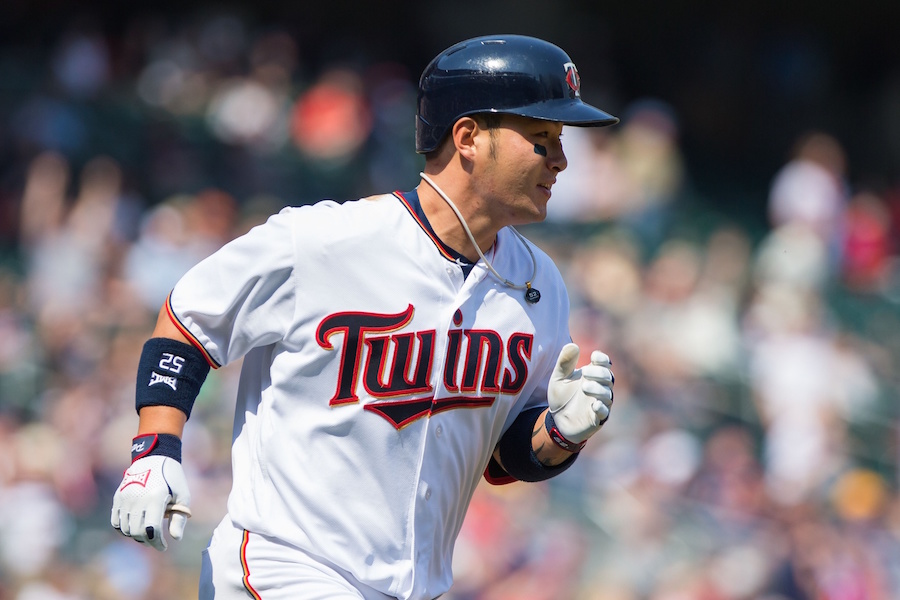 In just his last four games, Park has launched mammoth home runs to all fields. His epic blast to center off Joe Smith on Saturday was pegged by Home Run Tracker as the longest in the stadium's history. Two days later he became one of the few right-handed batters to ever clear the heightened right field fence with an oppo shot when he took Chase Anderson deep. And on Tuesday, Park got hold of a hanger and deposited it in the second deck in left. He leads the Twins with four home runs and not a single one of them has been remotely cheap. The South Korean import has jaw-dropping power. But of course, that was never really in question. The uncertainty with the 29-year-old always surrounded his ability to make enough contact to be a quality offensive player overall, rather than an out machine who occasionally gets a hold of one. On that matter, the jury was out after a spring training in which Park struck out 17 times with only one walk in 61 plate appearances. Concern grew during Minnesota's season-opening homestand, in which he struck out 11 times in 21 plate appearances. When the rookie put up a golden sombrero in the final game at Kansas City, it became reasonable to wonder if some time in the minors might be appropriate. Those contact issues subsided in a big way during the Twins' just-completed homestand. He hasn't had a game with multiple strikeouts since leaving KC. At Target Field he fanned only five times total in 27 trips. Sure, the team has been facing lighter opposition than in those first two series. But these are big-league pitchers and Park has had the look of a big-league hitter while standing in against them, which was not really the case in Week One. It appears that he's making some adjustments or at least getting more comfortable – an aspect of his game that initially drew the Twins to him. At the time of the signing, front office officials expressed confidence in Park's adaptability. This is a guy, after all, who improved in each of his five seasons with Nexen in the Korean Baseball Organization, going from solid slugger to MVP superstar. When asked about his impressions of the new acquisition in spring training, assistant general manager Rob Antony remarked that he was struck by Park's patience. "You see the strikeouts," Antony said, "so you think, OK, he takes a huge hack, or he chases a lot of bad pitches. I think he's been fairly disciplined." While his 16-to-4 K/BB ratio doesn't exactly illustrate it, Park has been better than expected in that area. He has swung at 26.8 percent of pitches outside the strike zone, placing him in the middle of the pack among Twins hitters and actually a tad below the major-league average. Inexperience has shone through for several pressing hitters in the lineup but the 29-year-old was unfazed by his challenging initial exposure to the majors. His aptitude for the game has been on display all over – solid defense at first, heads-up base running, even his celebratory handshakes are on point – and that it's all come to him so quickly is awfully impressive. Park has raw power that stands out even on a roster with Miguel Sano and Oswaldo Arcia, and he's demonstrated it, but we've also seen him slash a single between first and second to beat the shift, deliver in several clutch spots, and consistently work deep counts (he leads the team in pitches per plate appearance). The Twins might have found themselves a truly special player here. At the very least, Park appears to be pretty damn comfortable hitting at Target Field, which would seem to bode well for the next four years.
 -
Referring to Joe Mauer as "Average Joe" during the past two years has been a disparagement – a reference to his utterly pedestrian performance, which could only generously be described as mediocre in comparison to his peers at first base. But that's not how he earned the nickname. In his earlier days, and even all the way up until his tenure at catcher ended in 2013, it was a nod to his extraordinary, elite ability to hit for average. Mauer led the American League in that category three times in four years from 2006 through 2009, and his lifetime batting average (.313) ranks third among active players, trailing only surefire Hall of Famers Miguel Cabrera and Ichiro Suzuki. Obviously, that aspect of his game has been amiss these last two seasons, in which Mauer has batted .277 and .265 respectively. But this year we're seeing early signs that Average Joe might be back, and the positive implications of that would stretch well beyond the nostalgic charm of seeing his BA start with a three.Through the first two weeks of the season, Mauer ranks third in the AL with a .372 average. He already has his first home run – a feat he didn't accomplish last year until May 20th. Through 53 plate appearances, he has drawn eight walks with only four strikeouts. That last piece is the most encouraging. Batting averages can be fluky over short stretches and homers come at random times with him. But Mauer's control of the strike zone suggests that he is seeing the ball better than he has in years. Since his last full strong season in 2012, his walk rate has dropped (from 12.0 percent to 11.6 percent to 10.1 percent) while he has struck out at rates of 17.5 percent, 18.5 percent and 16.8 percent – his previous career rate was 10.4 percent. Over the first half of April, Mauer has been controlling the strike zone masterfully, signaling a return to his bread and butter. The result has been a phenomenal .472 on-base percentage, and to say that his skills in that department are sorely needed would be a tremendous understatement. The rest of the offense entered play Sunday with a .270 OBP, and all seven of Minnesota's home runs have been solo shots. The Twins need base-runners. Even when some of the other hitters get on track more, that will continue to be the case. It's an area that Average Joe specializes in, so if these early indicators prove legitimate, it will bode extremely well for the team's chances of continuing to win and dig out of this early hole. Heck, Mauer might even be on his way to earning a label that many have been reluctant to bestow upon him: Leader. How else can you frame his consistent quality at-bats and outstanding production while the youth-infused lineup has almost roundly struggled? Mauer factored heavily into Sunday's sweep-clinching victory, reaching base in four of six plate appearances. While Oswaldo Arcia gets the headlines – and Gatorade shower – for his walk-off hit, it was Mauer who sparked the 12th-inning rally with a leadoff walk. Two nights earlier, he made Byung Ho Park's go-ahead double in the eighth possible with a clutch two-out RBI single in the seventh. Average Joe is back to being the subtle, underrated, beating heart of the Twins offense, at least so far. It's a good look. Click here to view the article
