



Nick Nelson
-
Posts
8,322 -
Joined
-
Last visited
-
Days Won
56
Content Type
Profiles
News
Minnesota Twins Videos
2026 Minnesota Twins Top Prospects Ranking
2022 Minnesota Twins Draft Picks
Minnesota Twins Free Agent & Trade Rumors, Notes, & Tidbits
Guides & Resources
2023 Minnesota Twins Draft Picks
The Minnesota Twins Players Project
2024 Minnesota Twins Draft Picks
2025 Minnesota Twins Draft Pick Tracker
2026 Minnesota Twins Draft Tracker: Picks & Bonuses
Forums
Blogs
Events
Store
Downloads
Gallery
Everything posted by Nick Nelson
-
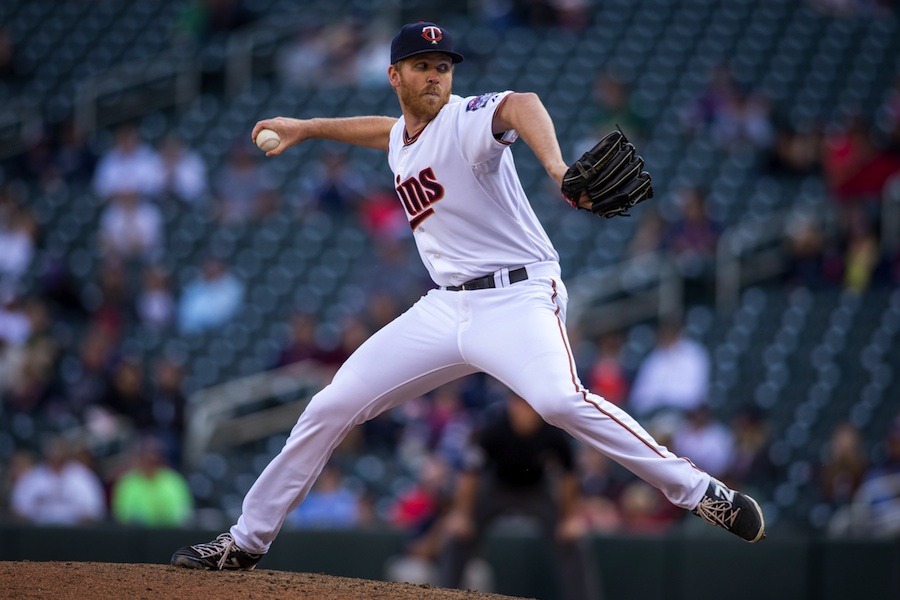 They let Blaine Boyer, Brian Duensing and Neal Cotts – who provided 25 percent of the team's total relief innings last year – walk as free agents, and replaced them with... nobody. Well, that's not entirely accurate. They signed several relievers to minor-league contracts. But here in the middle of February we still have not seen the Twins add one single pitcher on a major-league contract. Even for a team that routinely eschews free agency and opts for internal development, that is rare. It looks as though Minnesota will build around a back-end bullpen core of Glen Perkins, Kevin Jepsen, Casey Fien and Trevor May. In a seven-man unit, that leaves three remaining spots, with plenty of names competing to earn a job. Today we'll run through the various candidates to round out the relief corps, with the front-runners at the top of the list. Given the turnover that we're likely to see in the bullpen throughout this season, it's a good idea to familiarize yourself with all of these guys. Why Fernando Abad Will Win A Job I remain convinced that Terry Ryan will end up signing one of these free agent lefty relievers before the season gets underway, but as things stand, Abad is the only southpaw in the mix for the Twins with any kind of substantial experience in a big-league bullpen. He has 258 career appearances, and over the past three seasons with Oakland and Washington, the 30-year-old has put up a 2.90 ERA and 1.16 WHIP while averaging 8.1 K/9 and 2.8 BB/9. Those are all very solid numbers. His 2015 was not good, however, as he was plagued by the long ball and saw his velocity drop across the board. The A's went 16-46 in his appearances, suggesting that they didn't view him as a high-leverage arm to be deployed with a lead. Another particularly troubling aspect of Abad is that he has never been all that good against left-handed hitters, who have a .254/.304/.411 career line against him (by contrast, Duensing has a .238/.289/.325 career line against LH hitters). So while he may end up as the top lefty in the pen, Abad could hardly be viewed as a situational specialist. Why Michael Tonkin Will Win A Job He's out of options. The time has come for the Twins to finally give Tonkin a legitimate look in the majors, because if they don't, someone else is going to. Tonkin has been a top relief prospect in the system for many years, racking up tons of strikeouts in the minors with a power fastball that registers in the mid-90s. His numbers during a few short stints in the majors haven't been all that shabby, but for whatever reason, the Twins have never committed to letting him ride. Last year, they were busy prioritizing veteran journeymen like Blaine Boyer and Tim Stauffer. It was odd. One thing that will work in Tonkin's favor this time around is that there's no Rule 5 pick sitting at the end of the bullpen, as was the case with J.R. Graham last year. This means that even if the Twins don't feel confident enough in Tonkin to routinely use him in close games, they can hide him a little better while trying to help him polish his secondary pitches. Why Ricky Nolasco Will Win A Job I'm not sure the veteran Nolasco would consider this to be "winning" anything, but if he loses out in the rotation competition, where he appears to be at a distinct disadvantage, he will almost certainly open the season as a swing man in the bullpen. The Twins can't send him to the minors and still owe him too much money to simply cut him. Nolasco been a starter almost exclusively in his career, but the transition to long relief shouldn't be all that challenging. If he performs well, he can serve as a solid depth option when the Twins find themselves needing reinforcements in the rotation. Why Ryan O'Rourke Will Win A Job When you look at his overall numbers, O'Rourke doesn't stand out much as a prospect. A former 13th-round pick, he has a 4.15 career ERA in the minors and didn't debut in the majors until age 27. When you drill a little deeper, though, you find that throughout his pro career, O'Rourke has been flat-out lethal against left-handed hitters. In six minor-league seasons, he has struck out 40 percent that he has faced while often bordering on unhittable. Last year with the Twins, though his final numbers weren't very good, he still held lefty swingers to a .171 average with 19 strikeouts in 49 plate appearances. He needs to be used in a very specific way in order to be effective, but as a pure match-up southpaw, there's no better option in this group. Given Abad's weakness in that department, O'Rourke feels like a necessity. But can they find room for him? Why Ryan Pressly Will Win A Job Paul Molitor was apparently quite impressed with Pressly last year before the righty went down with a lat strain that cost him most of the season. "I don’t think people realize how well (Pressly) was throwing the ball before he got hurt last year, and now he’s healthy," the manager told Charley Walters of the Pioneer Press in January. Indeed, Pressly was averaging a career-high 94.2 MPH with his heater and flashing a sharp slider, although neither of those things manifested in a particularly impressive K/BB ratio. Pressly has been around the organization for three years now since being selected as a Rule 5 pick and it's time to take a good long look at him. However, if it comes down to a battle between him and Tonkin, I would guess that Pressly will open in Triple-A. Why Brandon Kintzler Will Win A Job Like Abad, Kintzler offers something that is in short supply among this group: experience. He has made 172 appearances for the Brewers over the past six years, and was at one point a pretty decent setup man. He's coming off injuries, though, and would need to be added to the 40-man roster. If he does well in Ft. Myers, I could see the final spot coming down to him and O'Rourke or another lefty. At that point it just depends on how comfortable Molitor is without a designated lefty suppressor in the late innings. (Though, to his credit, Kintzler has actually done quite well in that regard.) Why J.R. Graham Will Win A Job Injuries look to be Graham's only path to the roster. He hung around in the Twins bullpen for the entirety of last season thanks to his status as a Rule 5 draftee, but he was never all that impressive and now the Twins have no obligation to carry him. His stand-out velocity and ongoing adaptation to relieving make him interesting. It sounds like he really committed himself to getting fit during the offseason, shedding 30-plus pounds and thinning down to the point where one person who saw him at TwinsFest described him to me as looking "almost emaciated." Will Graham's transformed physique help him cut down on the amount of hard contact opponents are able to generate? We'll see, but regardless of how he performs in camp it's difficult to envision him surpassing both Tonkin and Pressly. Why Taylor Rogers Will Win A Job Rogers has come up through the minors as a starter, but he's more intriguing as a left-handed relief option thanks to his demolition of same-sided hitters. Last year in Triple-A, Rogers held lefties to a .177/.209/.193 line. The prior in Double-A it was .217/.268/.287. He hasn't thrown a pitch in the majors and hasn't really had a chance to adjust to a relief role, but he looks very equipped to fill a specific need for the Twins. He is also already on the 40-man roster after being added in November. Why Alex Meyer Will Win A Job Meyer's 2015 season was undeniably a huge mess, but it's important to remember that one year ago he was being ranked as a Top 30 prospect in all of baseball by both Baseball America and Baseball Prospectus. The premium velocity and filthy stuff that earned him such acclaim remain intact, so Meyer ought to be viewed as a major wild-card in the bullpen if and when he can straighten out his mechanics. The consistent struggles from start to finish last year suggest that he's not likely to have everything figured out in time for Opening Day, but Meyer should not be discounted as a potential impact call-up somewhere along the line in 2016. Why Nick Burdi Will Win A Job He's the best pure relief prospect in the system, capable of touching triple digits with his overpowering fastball that complements a nasty slider. But like Meyer, Burdi endured a tumultuous 2015 season. He opened the campaign as Chattanooga's closer, but control problems led to his being demoted back to Single-A about halfway through. Burdi did finish on a strong note, pitching well in the final month after returning to Double-A and then turning in a lights-out performance in the Arizona Fall League. Still, it's hard to see the Twins pushing him to the majors before he has demonstrably improved his command. Why Mike Strong Will Win A Job Given the depth of their system, space on the 40-man roster is at a premium for the Twins. In order to claim Strong off waivers from the Marlins, they risked losing another left-handed pitcher that they value in Logan Darnell. That alone says something for what they think of Strong. He has sometimes shown shaky control in the minors and has no meaningful experience above Double-A, but he does have this going for him: strikeouts. He has averaged 9.6 K/9 in the minors, differentiating him from the field somewhat in an area that ought to be a main focus. Others In The Mix: Mason Melotakis, Pat Dean, J.T. Chargois, Jake Reed, Aaron Thompson, Dan Runzler, Buddy Boshers Everybody in that group has better than a snowball's chance if he comes into camp and really opens some eyes, which speaks to the breadth of this competition. Melotakis, Chargois and Dean carry a slight edge since they're on the 40-man and wouldn't require a move, but they seem like long shots. Going over this list of 19 names, and considering them a little more deeply, it becomes easier to understand why the front office was so passive in its approach to the market. They're handcuffed to some extent with Tonkin and Nolasco, and once you account for the other four locks, that limits flexibility to evaluate a number of deserving candidates. This might turn out to be a rather experimental year for the Minnesota bullpen. That's probably not good news in the short term, but could pay off in 2017 and beyond.
 -
 The Twins have a firmly established trio of starters in place that they will build around. Barring injuries, you can bet that Ervin Santana, Phil Hughes and Kyle Gibson will all be in the rotation when Minnesota heads to Baltimore to open the season in April. Behind them, things are unsettled.After spending every recent offseason exhaustively searching all avenues for starting pitching help, Terry Ryan and the Twins have refreshingly been able to abstain this winter. Even with Mike Pelfrey departing and no significant additions coming aboard, there will be plenty of quality competition in-house for the final two spots. In 2015, the Twins had nine different players make starts, and that was their lowest total in four years. Chances are, every pitcher listed below will get his chance at some point this year, so the composition of the group that goes north only matters so much. In some ways, as we'll discuss, the club is actually incentivized not to carry their best talent from the very start of the regular season. By all accounts, though, the decision-makers are keeping an open mind about those available rotation spots, which should lead to some heated competition in March. This is undoubtedly by design. Let's take a look at the contenders that will be making their cases. Why Tommy Milone Will Win A Job With his low velocity and middling strikeout rates, Milone doesn't get a ton of love from the sabermetric crowd, but he has been a reliably solid back-of-the-rotation starter and there is value in that. The Twins settled with Milone on a $4.5 million salary for this season, and that's not the kind of money you pay for a reliever who has almost no experience pitching out of the bullpen. Be assured, the team is heading into camp with designs on him as a starter, just as they did last spring when the job was his to lose in a competition that included Trevor May, Alex Meyer and Mike Pelfrey. That is, no small part, because Milone is the lone left-hander in this entire picture. It's not an overriding factor, and if he looks flat-out crummy in camp or is blatantly surpassed by others, I could see Milone heading to the bullpen. But he's as close to a lock as you'll find on this list. Why Tyler Duffey Will Win A Job He earned it. With the way Duffey responded after being called up to the majors last August, the Twins will be hard-pressed not to put him in the rotation. Following a rough outing in a brutal match-up at Toronto for his MLB debut, Duffey went 5-0 with a 2.25 ERA in his final nine starts, and Minnesota went 8-1 in those games. During his introduction to the highest level, the right-hander checked all the boxes. He attacked the strike zone. He pitched deep into games. He missed bats and kept the ball in the park. Duffey deployed his spectacular curveball with deadly effectiveness and out-pitched all of his peers in the rotation. There are question marks attached to the 25-year-old hurler, however. Ultimately, 10 starts is still a small sample size and Duffey still has only 17 total starts at Triple-A. As good as he was in the minors last year, his long-term track record isn't quite as impressive, especially when it comes to strikeouts. And there is this: Duffey is essentially a two-pitch guy. He threw his fastball or curve 98 percent of the time as a rookie with the Twins. Some can make that work as a starter, but most don't. As Twins Daily community member gopherman23 recently pointed out, the righty's 39.8 percent usage rate with the hook was the highest in the majors since 2002. Could the Twins send Duffey back to the minors to work on polishing a third pitch? Why Ricky Nolasco Will Win A Job The obvious (and perhaps unsatisfactory) answer is that he's being paid $12 million this year and next. Twins officials have made it pretty clear that decisions regarding Nolasco won't be dictated by the money he's owed, but you can bet he will be given every chance to earn it. And he deserves that much. I realize that damn near every Twins fan is incredibly down on the veteran righty, understandably so, but the truth is that he has never had a sustained opportunity to show what he can do here while fully healthy. Both of his seasons in Minnesota have been marred by injury. Last year in limited duty he put up a 3.51 FIP and struck out 35 batters in 37 innings, so there is something to build on there. Compared to others on this list, Nolasco simply has no case based on his accomplishments with this team. He has an uphill battle in that regard, but I do think that if he's sharp in spring training the Twins will be inclined to jump him ahead in line because he can't be sent to the minors and he offers little in the bullpen other than long relief. And, yeah, they're paying him quite a bit of money to start games. Why Jose Berrios Will Win A Job He may very well be the most talented pitcher on this list, and the only one with true "ace" potential. Berrios obliterated the highest levels of the minors last year and was in position for a late-season call-up, though the Twins ultimately decided to pass. There is almost zero question that he is ready to pitch in the majors. His supremacy over Triple-A hitters in July and August left little doubt. But by starting him back in Rochester and waiting even a few weeks to call him up, the Twins stand to push back his free agency clock and gain a full extra year of team control down the line. Given that Berrios will be 27 – the midst of his theoretical prime – in six years, that extra season could be extremely valuable. Of course, this all becomes somewhat moot if the Twins lock him up with a contract extension at some point. And while there is a reasonable and logical argument against bringing him north regardless of how he performs, if he truly transcends the competition it's going to be a hard sell sending him back to a level that he has already mastered. Berrios, and the decisions surrounding him, will easily be among the most compelling storylines to follow this spring. Why Trevor May Will Win A Job He is as qualified as anybody. May was a good prospect as a starting pitcher rising through the minors and broke through last year with a strong first-half performance in the Twins rotation before circumstances forced him to the bullpen. Circumstances, unfortunately, continue to work against the young right-hander. His performance after shifting to relief was so impressive that it evidently convinced the Twins to bypass the relief market this offseason while viewing May as one of their core pieces at the back end of the bullpen. That means May's chances of winning a starting job, or even being a legit contender for one, are low. It would likely take injuries to more than one other guy on this list for the Twins to rearrange their plans so dramatically. They simply need May in the late innings. Others In The Mix: Taylor Rogers, Pat Dean, Alex Meyer With the five pitchers above vying for two spots, there isn't much of an opening for these fringe outsiders. Rogers and Dean were both added to the 40-man roster after impressive campaigns at Rochester last year, and they gain some extra points for being lefties. Meyer was ranked as one of the organization's best pitching prospects as recently as a year ago, but there have always been serious questions about his ability to remain a starter and his trainwreck 2015 season may have been the final straw pushing him to a reliever designation. All in all, though, the Twins have more quality starting pitching depth in place than they've had in at least half a decade. They really need one or two guys to step up and take over at the front of the rotation, but it's hugely refreshing to see such a wide array of hurlers in the mix with no Mike Pelfrey or Kevin Correia types clogging things up. More help is on the way, too, in the form of rising young arms like Stephen Gonsalves, Kohl Stewart and Tyler Jay. Click here to view the article
- 101 replies
-
- 1
-

-
- ervin santana
- phil hughes
- (and 1 more)
-
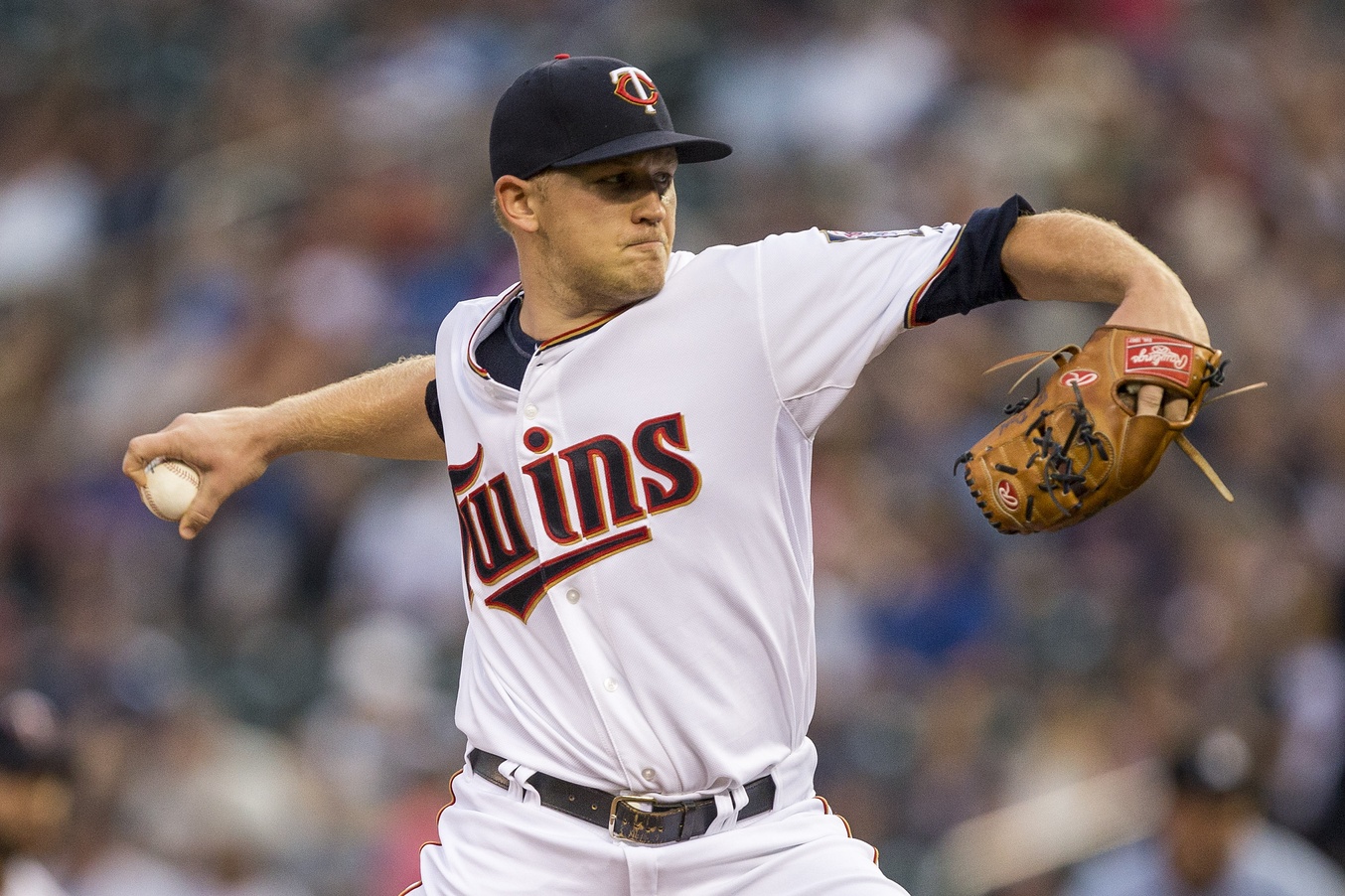 After spending every recent offseason exhaustively searching all avenues for starting pitching help, Terry Ryan and the Twins have refreshingly been able to abstain this winter. Even with Mike Pelfrey departing and no significant additions coming aboard, there will be plenty of quality competition in-house for the final two spots. In 2015, the Twins had nine different players make starts, and that was their lowest total in four years. Chances are, every pitcher listed below will get his chance at some point this year, so the composition of the group that goes north only matters so much. In some ways, as we'll discuss, the club is actually incentivized not to carry their best talent from the very start of the regular season. By all accounts, though, the decision-makers are keeping an open mind about those available rotation spots, which should lead to some heated competition in March. This is undoubtedly by design. Let's take a look at the contenders that will be making their cases. Why Tommy Milone Will Win A Job With his low velocity and middling strikeout rates, Milone doesn't get a ton of love from the sabermetric crowd, but he has been a reliably solid back-of-the-rotation starter and there is value in that. The Twins settled with Milone on a $4.5 million salary for this season, and that's not the kind of money you pay for a reliever who has almost no experience pitching out of the bullpen. Be assured, the team is heading into camp with designs on him as a starter, just as they did last spring when the job was his to lose in a competition that included Trevor May, Alex Meyer and Mike Pelfrey. That is, no small part, because Milone is the lone left-hander in this entire picture. It's not an overriding factor, and if he looks flat-out crummy in camp or is blatantly surpassed by others, I could see Milone heading to the bullpen. But he's as close to a lock as you'll find on this list. Why Tyler Duffey Will Win A Job He earned it. With the way Duffey responded after being called up to the majors last August, the Twins will be hard-pressed not to put him in the rotation. Following a rough outing in a brutal match-up at Toronto for his MLB debut, Duffey went 5-0 with a 2.25 ERA in his final nine starts, and Minnesota went 8-1 in those games. During his introduction to the highest level, the right-hander checked all the boxes. He attacked the strike zone. He pitched deep into games. He missed bats and kept the ball in the park. Duffey deployed his spectacular curveball with deadly effectiveness and out-pitched all of his peers in the rotation. There are question marks attached to the 25-year-old hurler, however. Ultimately, 10 starts is still a small sample size and Duffey still has only 17 total starts at Triple-A. As good as he was in the minors last year, his long-term track record isn't quite as impressive, especially when it comes to strikeouts. And there is this: Duffey is essentially a two-pitch guy. He threw his fastball or curve 98 percent of the time as a rookie with the Twins. Some can make that work as a starter, but most don't. As Twins Daily community member gopherman23 recently pointed out, the righty's 39.8 percent usage rate with the hook was the highest in the majors since 2002. Could the Twins send Duffey back to the minors to work on polishing a third pitch? Why Ricky Nolasco Will Win A Job The obvious (and perhaps unsatisfactory) answer is that he's being paid $12 million this year and next. Twins officials have made it pretty clear that decisions regarding Nolasco won't be dictated by the money he's owed, but you can bet he will be given every chance to earn it. And he deserves that much. I realize that damn near every Twins fan is incredibly down on the veteran righty, understandably so, but the truth is that he has never had a sustained opportunity to show what he can do here while fully healthy. Both of his seasons in Minnesota have been marred by injury. Last year in limited duty he put up a 3.51 FIP and struck out 35 batters in 37 innings, so there is something to build on there. Compared to others on this list, Nolasco simply has no case based on his accomplishments with this team. He has an uphill battle in that regard, but I do think that if he's sharp in spring training the Twins will be inclined to jump him ahead in line because he can't be sent to the minors and he offers little in the bullpen other than long relief. And, yeah, they're paying him quite a bit of money to start games. Why Jose Berrios Will Win A Job He may very well be the most talented pitcher on this list, and the only one with true "ace" potential. Berrios obliterated the highest levels of the minors last year and was in position for a late-season call-up, though the Twins ultimately decided to pass. There is almost zero question that he is ready to pitch in the majors. His supremacy over Triple-A hitters in July and August left little doubt. But by starting him back in Rochester and waiting even a few weeks to call him up, the Twins stand to push back his free agency clock and gain a full extra year of team control down the line. Given that Berrios will be 27 – the midst of his theoretical prime – in six years, that extra season could be extremely valuable. Of course, this all becomes somewhat moot if the Twins lock him up with a contract extension at some point. And while there is a reasonable and logical argument against bringing him north regardless of how he performs, if he truly transcends the competition it's going to be a hard sell sending him back to a level that he has already mastered. Berrios, and the decisions surrounding him, will easily be among the most compelling storylines to follow this spring. Why Trevor May Will Win A Job He is as qualified as anybody. May was a good prospect as a starting pitcher rising through the minors and broke through last year with a strong first-half performance in the Twins rotation before circumstances forced him to the bullpen. Circumstances, unfortunately, continue to work against the young right-hander. His performance after shifting to relief was so impressive that it evidently convinced the Twins to bypass the relief market this offseason while viewing May as one of their core pieces at the back end of the bullpen. That means May's chances of winning a starting job, or even being a legit contender for one, are low. It would likely take injuries to more than one other guy on this list for the Twins to rearrange their plans so dramatically. They simply need May in the late innings. Others In The Mix: Taylor Rogers, Pat Dean, Alex Meyer With the five pitchers above vying for two spots, there isn't much of an opening for these fringe outsiders. Rogers and Dean were both added to the 40-man roster after impressive campaigns at Rochester last year, and they gain some extra points for being lefties. Meyer was ranked as one of the organization's best pitching prospects as recently as a year ago, but there have always been serious questions about his ability to remain a starter and his trainwreck 2015 season may have been the final straw pushing him to a reliever designation. All in all, though, the Twins have more quality starting pitching depth in place than they've had in at least half a decade. They really need one or two guys to step up and take over at the front of the rotation, but it's hugely refreshing to see such a wide array of hurlers in the mix with no Mike Pelfrey or Kevin Correia types clogging things up. More help is on the way, too, in the form of rising young arms like Stephen Gonsalves, Kohl Stewart and Tyler Jay.
 -
Article: Position Battle: Center Field
Nick Nelson replied to Nick Nelson's topic in Twins Daily Front Page News
I'm simply referring to the fact that Rosario is better suited for a corner spot than center field defensively. That's not a novel statement; I think most scouts and team officials would agree.- 55 replies
-
- 1
-
-
- byron buxton
- danny santana
- (and 1 more)
-
From Denard Span to Aaron Hicks to Jordan Schafer, the Opening Day center field assignment has been a bit of a revolving door for the Twins in recent years. There will be a new name added to that list in 2016, and several contenders are lined up to take a shot at it in Ft. Myers. This figures to be the most compelling battle that will unfold in spring training.After turning a corner offensively and finally posting respectable numbers at the plate last year, Hicks appeared to be the front-runner to open the 2106 season in center field, unless Byron Buxton were to seize the job in spring training. With Hicks being traded to the Yankees back in November, the Twins are now prepared to enter camp with a wide open competition at the position. Today we will look at the relative strengths of each candidate. Why Byron Buxton Will Win The Job Because the Twins want him to. That much seems fairly clear. Historically, Buxton has endured a learning curve at each new level before adapting and thriving, and that's what the club is hoping to see here. Buxton remains ranked as the No. 2 prospect in all of baseball according to such outlets as MLB.com and Baseball Prospectus, showing that his rough debut as a 21-year-old in 2015 didn't too much to diminish his luster. Everyone still recognizes his transcendent skills, and the impact those skills can make on the baseball field. The Twins are counting on Buxton this year. Their quiet offseason was driven largely by the belief that improving young players will push the team forward, and Buxton is at the head of that movement. Ideally, he will demonstrate obvious adjustments in spring training and he'll be playing alongside fellow building block Miguel Sano in the outfield from Opening Day. One key here is that Buxton fills a role in the lineup where Minnesota lacks an obvious answer: leadoff. Presuming he makes the proper strides with his plate approach, Buck profiles perfectly for that spot, with his game-changing speed and .383 on-base percentage in the minors. Why Danny Santana Will Win The Job As much as the Twins (and the rest of us) may want Buxton to win the job, there simply wasn't much indication last year that he was ready for it. Terry Ryan admitted to calling up the top prospect sooner than he would have liked, and the 21-year-old was clearly overwhelmed by the challenge, batting .209 with an ugly 44-to-6 K/BB ratio. Buxton is still very young, and has only 13 games worth of experience at Triple-A, so I actually think the odds are higher that he opens in Rochester than Minnesota. In this scenario, Santana is probably the odds-on favorite to land the center field job on Opening Day. There are a number of factors feeding into this. Santana already has some experience playing center in the big leagues, having performed well there as a rookie in 2014. His dynamic speed would be welcome in the lineup with Buxton gone. And Santana is out of options, meaning the Twins need to find a place for him one way or another. Of course, Santana was also flat-out terrible last year, finishing with a .532 OPS that was actually substantially worse than Buxton's. But knowing that it's a temporary gig, and that Santana gives them arguably their best defensive outfield alignment in the absence of Buxton, I could easily see the Twins giving him a shot and hoping he can recapture some the production he yielded as a center fielder two years ago. Why Eddie Rosario Will Win The Job Last spring, Rosario lasted deep into camp as a contender for the center field job, as Paul Molitor viewed him as a very legitimate option at the position. It's where Rosario spent most of his time in the minors, and he certainly has the speed and range to hold his own there. Shifting him to center would allow Minnesota to surround him with bat-first players in the corner spots (say, Miguel Sano and Oswaldo Arcia), bolstering the lineup and also relieving the roster crunch a bit. But the problem is that Rosario isn't an ideal fit in center, and whoever replaces him in left will be a vast downgrade. The Twins would be making huge defensive sacrifices with this plan, and given that they're already experimenting with Sano in right, it's hard to see them going down that road. Those poor pitchers. Others In The Mix: Ryan Sweeney, Darin Mastroianni, Joe Benson Did the Twins sign all of these players to minor-league deals as organizational depth, or as backup plans in the event that none of the three options listed above work out? We'll find out, I guess. Last spring, both Rosario and Hicks were bypassed by a platoon of Jordan Schaefer and Shane Robinson in center field. Going with Mastroianni, Sweeney or Benson would represent a similar approach: stick a body out there with some experience who can run around and catch the ball, until one of the kids proves ready to take over. It would be disappointing to see the Twins go this route a second year in a row but it wouldn't be shocking. I would rate Sweeney as the front-runner from this group -- both as the long shot center field contender and as a candidate to make the roster as fifth outfielder -- because he has the most MLB experience by far. But he also didn't play last year and has barely hit in the last five. Who do you envision in center field on Opening Day? And where will they be hitting in the lineup? Click here to view the article
-
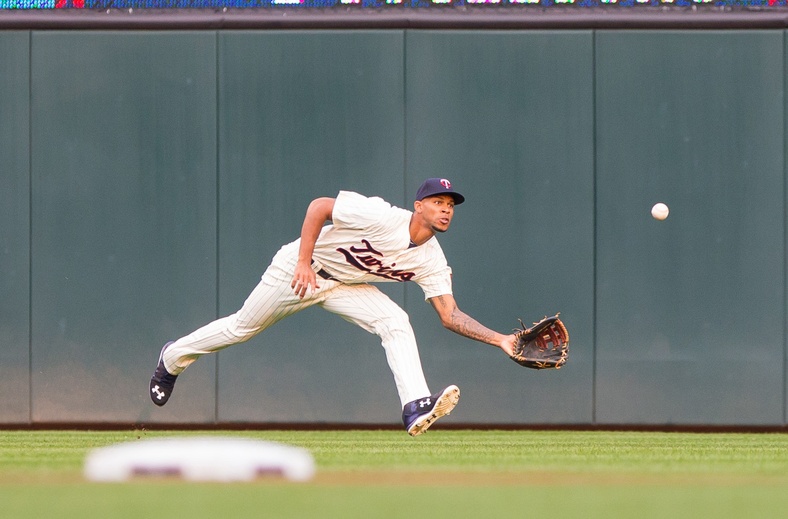 After turning a corner offensively and finally posting respectable numbers at the plate last year, Hicks appeared to be the front-runner to open the 2106 season in center field, unless Byron Buxton were to seize the job in spring training. With Hicks being traded to the Yankees back in November, the Twins are now prepared to enter camp with a wide open competition at the position. Today we will look at the relative strengths of each candidate. Why Byron Buxton Will Win The Job Because the Twins want him to. That much seems fairly clear. Historically, Buxton has endured a learning curve at each new level before adapting and thriving, and that's what the club is hoping to see here. Buxton remains ranked as the No. 2 prospect in all of baseball according to such outlets as MLB.com and Baseball Prospectus, showing that his rough debut as a 21-year-old in 2015 didn't too much to diminish his luster. Everyone still recognizes his transcendent skills, and the impact those skills can make on the baseball field. The Twins are counting on Buxton this year. Their quiet offseason was driven largely by the belief that improving young players will push the team forward, and Buxton is at the head of that movement. Ideally, he will demonstrate obvious adjustments in spring training and he'll be playing alongside fellow building block Miguel Sano in the outfield from Opening Day. One key here is that Buxton fills a role in the lineup where Minnesota lacks an obvious answer: leadoff. Presuming he makes the proper strides with his plate approach, Buck profiles perfectly for that spot, with his game-changing speed and .383 on-base percentage in the minors. Why Danny Santana Will Win The Job As much as the Twins (and the rest of us) may want Buxton to win the job, there simply wasn't much indication last year that he was ready for it. Terry Ryan admitted to calling up the top prospect sooner than he would have liked, and the 21-year-old was clearly overwhelmed by the challenge, batting .209 with an ugly 44-to-6 K/BB ratio. Buxton is still very young, and has only 13 games worth of experience at Triple-A, so I actually think the odds are higher that he opens in Rochester than Minnesota. In this scenario, Santana is probably the odds-on favorite to land the center field job on Opening Day. There are a number of factors feeding into this. Santana already has some experience playing center in the big leagues, having performed well there as a rookie in 2014. His dynamic speed would be welcome in the lineup with Buxton gone. And Santana is out of options, meaning the Twins need to find a place for him one way or another. Of course, Santana was also flat-out terrible last year, finishing with a .532 OPS that was actually substantially worse than Buxton's. But knowing that it's a temporary gig, and that Santana gives them arguably their best defensive outfield alignment in the absence of Buxton, I could easily see the Twins giving him a shot and hoping he can recapture some the production he yielded as a center fielder two years ago. Why Eddie Rosario Will Win The Job Last spring, Rosario lasted deep into camp as a contender for the center field job, as Paul Molitor viewed him as a very legitimate option at the position. It's where Rosario spent most of his time in the minors, and he certainly has the speed and range to hold his own there. Shifting him to center would allow Minnesota to surround him with bat-first players in the corner spots (say, Miguel Sano and Oswaldo Arcia), bolstering the lineup and also relieving the roster crunch a bit. But the problem is that Rosario isn't an ideal fit in center, and whoever replaces him in left will be a vast downgrade. The Twins would be making huge defensive sacrifices with this plan, and given that they're already experimenting with Sano in right, it's hard to see them going down that road. Those poor pitchers. Others In The Mix: Ryan Sweeney, Darin Mastroianni, Joe Benson Did the Twins sign all of these players to minor-league deals as organizational depth, or as backup plans in the event that none of the three options listed above work out? We'll find out, I guess. Last spring, both Rosario and Hicks were bypassed by a platoon of Jordan Schaefer and Shane Robinson in center field. Going with Mastroianni, Sweeney or Benson would represent a similar approach: stick a body out there with some experience who can run around and catch the ball, until one of the kids proves ready to take over. It would be disappointing to see the Twins go this route a second year in a row but it wouldn't be shocking. I would rate Sweeney as the front-runner from this group -- both as the long shot center field contender and as a candidate to make the roster as fifth outfielder -- because he has the most MLB experience by far. But he also didn't play last year and has barely hit in the last five. Who do you envision in center field on Opening Day? And where will they be hitting in the lineup?
 -
Article: Position Battle: Catcher
Nick Nelson replied to Nick Nelson's topic in Twins Daily Front Page News
Well, he WAS a good hitter. There's no denying that. He dominated in college, he was a second round pick, he hit well as a prospect and he had a quality bat for his first few years in the majors. The theory goes that cumulative wear took a toll after his first couple seasons and sent him into a multi-year slump. When he came to the Twins in 2014, he was coming off his lightest workload ever, and he rebounded. You don't have to buy this theory (I don't, really) but there is at least some evidence to back it up. -
Article: Position Battle: Catcher
Nick Nelson replied to Nick Nelson's topic in Twins Daily Front Page News
Seth touched on this in his comment as well, and there might be something to it. When Suzuki first arrived here, I remember overhearing a conversation in spring training about the belief that Suzuki's offensive decline was tied directly to his heavy workload. He did catch A LOT of games from 2008 through 2011 with Oakland -- the most in baseball, if I'm not mistaken. I think a 50/50 split would make sense in the early going, and might help facilitate a rebound for Suzuki. -
Now that TwinsFest and Winter Meltdown are in the rearview mirror and we've flipped the calendar to February, the countdown to spring training is under way. We're a little more than two weeks from pitchers and catchers reporting and soon after that a few compelling battles for starting jobs will get underway.Among the catchers who will be checking into camp on February 21st will be Kurt Suzuki and newly acquired John Ryan Murphy. Barring injuries in March, these will be the two backstops present on the big-league roster when the club heads north. There's little doubt which player will be the nominal starter at the outset of the season – that billing will belong to the veteran Suzuki – but we don't really have much of an idea as to how this timeshare will play out. That will be determined, to some extent, by how things progress in April and May, but the way these two catchers perform in Ft. Myers next month could help dictate the balance of this arrangement early on. Let's take a look at the relative merits of each heading into camp. Why Kurt Suzuki Will Win The Job Over the last two seasons, Suzuki has started 249 of Minnesota's 324 games behind the plate. While his offensive output has fluctuated, he has proven durable and reliable as a catcher, and he is considered to have a good rapport with the pitching staff. That staff remains almost totally incumbent heading into the 2016 campaign. In his interview with Parker Hageman for the Offseason Handbook, Terry Ryan stated that he expects Suzuki to settle in somewhere between his offensive numbers from 2014 and 2015. That's a reasonable stance; Suzuki's OPS in his first year with the Twins (.727) was nearly as far above his career mark of .681 as his second-year OPS (.610) was below. If the 32-year-old could rebound to the mid-point of his two years with the team and put up a .670 OPS, it would be right in line with what the average American League catcher produced last year (.678) and I think the Twins are willing to live with an average-hitting backstop at the bottom of the lineup. While pitch framing metrics and caught stealing percentages don't view Suzuki's defense all that kindly, he has mostly been able to avoid blatant gaffes and blunders, aside from the occasional passed ball. The coaching staff certainly appreciates many things that he brings to the table – not the least of them being his toughness. There's something to be said about a guy who takes the punishment he does, and reliably gets back out there day after day. It sets an example for players up and down the roster, and especially the young catcher who is being groomed behind him. Lastly, Suzuki is making $6 million this year (about 12 times as much as Murphy), and any team is going to try and squeeze value out of all that committed money if possible. Why John Ryan Murphy Will Win The Job Offensively, Murphy figures to be an immediate upgrade over Suzuki. He's eight years younger and has simply demonstrated more skill with the stick in recent years, excepting the veteran's outlier 2014 season. If the Twins are trying to garner more production from the catcher position – and that should certainly be a key consideration – making Murphy the primary starter is a step in that direction. There's no real reason to believe he'll be much above average this year, or even necessarily much above Suzuki, but he offers more upside and getting him regular at-bats is a way to help move him toward reaching that upside. Defense will be the crucial factor for Murphy. The reports from New York have been solid, and he is viewed as a guy who has been rapidly improving over the past few years. Still, the Twins have always placed a premium value on catchers who are able to build a comfort level with the staff. That tends to be a shortcoming for younger backstops, and especially one like Murphy who is brand new to the organization. If Murphy's work behind the plate earns high marks from his pitchers, it will help his case for increased playing time immensely. One final item to consider here is that Suzuki's $6 million vesting option for 2017 becomes guaranteed if he reaches 485 plate appearances this year, but I don't think that will come into play. He came up just short of that figure in 2015 despite no trips to the DL and no real competition for reps. Others In The Mix: John Hicks, Stuart Turner, Mitch Garver Beyond Suzuki and Murphy, there is almost no major-league catching experience in the entire organization, which makes Ryan's limited attention to the position over the offseason a bit frustrating. Hicks, claimed off waivers from Seattle in early December, leads the way with 34 MLB plate appearances (all in 2015) so he stands third in line behind the two top names. An injury to Suzuki or Murphy would likely lead to Hicks taking over as backup. That's unnerving since the 26-year-old put up a brutal .063/.091/.094 slash line in his first cup of tea with the Mariner's last year, but he has shown some offensive ability in the minors. Seth Stohs has an in-depth profile on John Hicks here. Turner and Garver are Minnesota's best hopes for an internally developed solution at catcher. Of the two, Garver has produced more in the minors but Stuart has advanced farther, having spent last year in Double-A. Neither seems close to the majors barring a big breakthrough in 2016. Click here to view the article
-
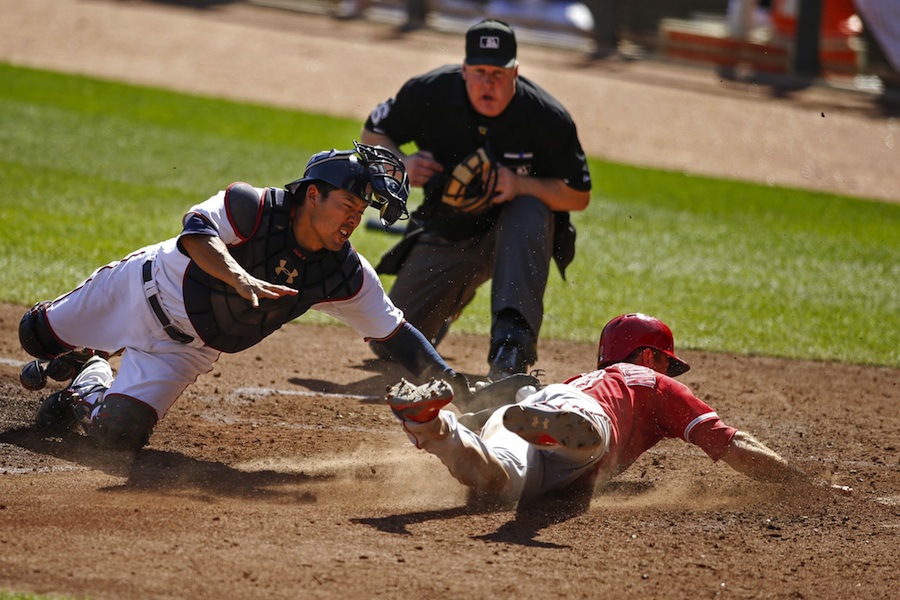 Among the catchers who will be checking into camp on February 21st will be Kurt Suzuki and newly acquired John Ryan Murphy. Barring injuries in March, these will be the two backstops present on the big-league roster when the club heads north. There's little doubt which player will be the nominal starter at the outset of the season – that billing will belong to the veteran Suzuki – but we don't really have much of an idea as to how this timeshare will play out. That will be determined, to some extent, by how things progress in April and May, but the way these two catchers perform in Ft. Myers next month could help dictate the balance of this arrangement early on. Let's take a look at the relative merits of each heading into camp. Why Kurt Suzuki Will Win The Job Over the last two seasons, Suzuki has started 249 of Minnesota's 324 games behind the plate. While his offensive output has fluctuated, he has proven durable and reliable as a catcher, and he is considered to have a good rapport with the pitching staff. That staff remains almost totally incumbent heading into the 2016 campaign. In his interview with Parker Hageman for the Offseason Handbook, Terry Ryan stated that he expects Suzuki to settle in somewhere between his offensive numbers from 2014 and 2015. That's a reasonable stance; Suzuki's OPS in his first year with the Twins (.727) was nearly as far above his career mark of .681 as his second-year OPS (.610) was below. If the 32-year-old could rebound to the mid-point of his two years with the team and put up a .670 OPS, it would be right in line with what the average American League catcher produced last year (.678) and I think the Twins are willing to live with an average-hitting backstop at the bottom of the lineup. While pitch framing metrics and caught stealing percentages don't view Suzuki's defense all that kindly, he has mostly been able to avoid blatant gaffes and blunders, aside from the occasional passed ball. The coaching staff certainly appreciates many things that he brings to the table – not the least of them being his toughness. There's something to be said about a guy who takes the punishment he does, and reliably gets back out there day after day. It sets an example for players up and down the roster, and especially the young catcher who is being groomed behind him. Lastly, Suzuki is making $6 million this year (about 12 times as much as Murphy), and any team is going to try and squeeze value out of all that committed money if possible. Why John Ryan Murphy Will Win The Job Offensively, Murphy figures to be an immediate upgrade over Suzuki. He's eight years younger and has simply demonstrated more skill with the stick in recent years, excepting the veteran's outlier 2014 season. If the Twins are trying to garner more production from the catcher position – and that should certainly be a key consideration – making Murphy the primary starter is a step in that direction. There's no real reason to believe he'll be much above average this year, or even necessarily much above Suzuki, but he offers more upside and getting him regular at-bats is a way to help move him toward reaching that upside. Defense will be the crucial factor for Murphy. The reports from New York have been solid, and he is viewed as a guy who has been rapidly improving over the past few years. Still, the Twins have always placed a premium value on catchers who are able to build a comfort level with the staff. That tends to be a shortcoming for younger backstops, and especially one like Murphy who is brand new to the organization. If Murphy's work behind the plate earns high marks from his pitchers, it will help his case for increased playing time immensely. One final item to consider here is that Suzuki's $6 million vesting option for 2017 becomes guaranteed if he reaches 485 plate appearances this year, but I don't think that will come into play. He came up just short of that figure in 2015 despite no trips to the DL and no real competition for reps. Others In The Mix: John Hicks, Stuart Turner, Mitch Garver Beyond Suzuki and Murphy, there is almost no major-league catching experience in the entire organization, which makes Ryan's limited attention to the position over the offseason a bit frustrating. Hicks, claimed off waivers from Seattle in early December, leads the way with 34 MLB plate appearances (all in 2015) so he stands third in line behind the two top names. An injury to Suzuki or Murphy would likely lead to Hicks taking over as backup. That's unnerving since the 26-year-old put up a brutal .063/.091/.094 slash line in his first cup of tea with the Mariner's last year, but he has shown some offensive ability in the minors. Seth Stohs has an in-depth profile on John Hicks here. Turner and Garver are Minnesota's best hopes for an internally developed solution at catcher. Of the two, Garver has produced more in the minors but Stuart has advanced farther, having spent last year in Double-A. Neither seems close to the majors barring a big breakthrough in 2016.
 -
Article: How Does Carlos Quentin Fit In?
Nick Nelson replied to Nick Nelson's topic in Twins Daily Front Page News
The Twins watched him work out last month, so they must have been satisfied with what they saw. Perhaps the extended rest has rejuvenated those balky knees. But when you combine those injuries with his age and his already suspect OF defense, it's tough to see how he really fits anywhere other than DH. That's why I'm hypothesizing about him as a backup option behind Park. -
It gets lost in the big posting fee, the long-term contract, the monster numbers in Korea... But at this point in time, Byung-Ho Park should be viewed as a minor-leaguer. A prospect. A total unknown. Perhaps Minnesota's latest free agent signing is, to some extent, a reflection of that reality.The level of competition in the Korean Baseball Organization, where Park turned himself into a superstar slugger before signing with the Twins this offseason, has been compared – perhaps generously – to Triple-A or Double-A, meaning that his resounding success should be viewed with at least the same degree of healthy skepticism that we apply a player's big numbers in the Eastern League or International League. They're encouraging, sure, but they don't come close to guaranteeing anything. And given the cultural and stylistic adaptations that Park will face as he acclimates to baseball in the United States, one can argue that his climb will be much steeper than any typical homegrown pro baseball prospect. So it might take more than six weeks of spring training exhibition games to bring the foreign masher up to speed. Pushing him into real big-league action too quickly could be a mistake with lasting ramifications, especially given the length of the commitment. When the Twins signed Tsuyoshi Nishioka, he did little to impress during his first spring training, but was nevertheless in the lineup on Opening Day, starting at second base and batting second. He was blatantly overmatched through a week of games and then broke his leg on a play that could very much be chalked up to lack of familiarity with the MLB style of play. Whether this incredibly brutal start to his career here played into Nishioka's ultimate inability to turn any kind of corner isn't clear, but you do have to believe it's a memory that remains imprinted in the heads of Twins officials. If Park appears overwhelmed to any extent in Ft. Myers, the club may want to consider sending him to Triple-A in order to build confidence before launching his big-league career with a head full of steam. Could that help explain why Carlos Quentin was signed to a minor-league deal on Tuesday? Quentin brings many of the same qualities to the table that attracted the Twins to Park. He is a bat-first player, best suited at DH, who offers proven power from the right side, having slugged .503 with 136 homers playing for the White Sox and Padres from 2008 through 2013. But like Park, Quentin is also a major uncertainty. The 33-year-old endured a miserable, injury-riddled campaign with San Diego in 2014 and announced his retirement last May. He told Jon Heyman of CBS Sports in November that he was going to attempt a comeback, but it took him until February to finally land somewhere. Accounting for all of these factors, Quentin is clearly a long shot to make the team out of camp. He has a June 1st opt-out date if sent to the minors, so the most likely outcome is that he heads to Rochester and becomes a nice depth option if his bat shows up. Still, the weathered veteran will be another piece in spring training with some intrigue and upside. The Twins have assembled quite a few of those, and given that they're building around so many ambiguities and question marks on the roster, it's always good to have backup plans on top of backup plans. With a risk-filled blueprint for the 2016 season, it looks like the Twins are trying to find safety in numbers. Click here to view the article
-
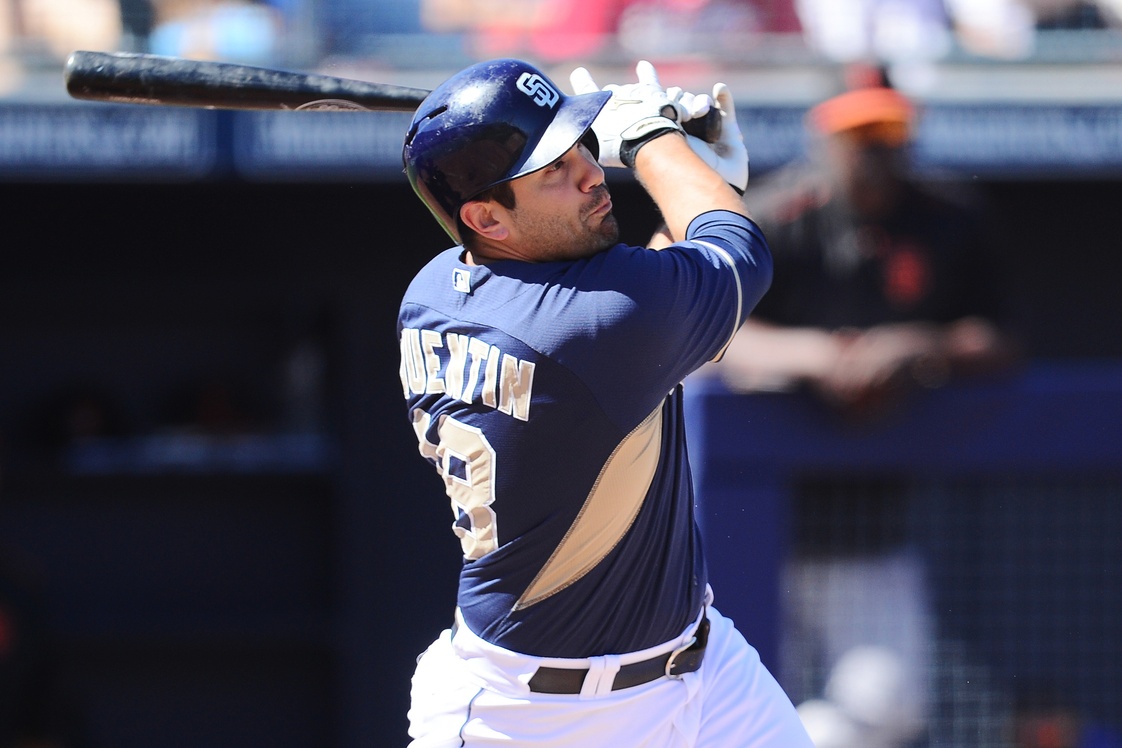 The level of competition in the Korean Baseball Organization, where Park turned himself into a superstar slugger before signing with the Twins this offseason, has been compared – perhaps generously – to Triple-A or Double-A, meaning that his resounding success should be viewed with at least the same degree of healthy skepticism that we apply a player's big numbers in the Eastern League or International League. They're encouraging, sure, but they don't come close to guaranteeing anything. And given the cultural and stylistic adaptations that Park will face as he acclimates to baseball in the United States, one can argue that his climb will be much steeper than any typical homegrown pro baseball prospect. So it might take more than six weeks of spring training exhibition games to bring the foreign masher up to speed. Pushing him into real big-league action too quickly could be a mistake with lasting ramifications, especially given the length of the commitment. When the Twins signed Tsuyoshi Nishioka, he did little to impress during his first spring training, but was nevertheless in the lineup on Opening Day, starting at second base and batting second. He was blatantly overmatched through a week of games and then broke his leg on a play that could very much be chalked up to lack of familiarity with the MLB style of play. Whether this incredibly brutal start to his career here played into Nishioka's ultimate inability to turn any kind of corner isn't clear, but you do have to believe it's a memory that remains imprinted in the heads of Twins officials. If Park appears overwhelmed to any extent in Ft. Myers, the club may want to consider sending him to Triple-A in order to build confidence before launching his big-league career with a head full of steam. Could that help explain why Carlos Quentin was signed to a minor-league deal on Tuesday? Quentin brings many of the same qualities to the table that attracted the Twins to Park. He is a bat-first player, best suited at DH, who offers proven power from the right side, having slugged .503 with 136 homers playing for the White Sox and Padres from 2008 through 2013. But like Park, Quentin is also a major uncertainty. The 33-year-old endured a miserable, injury-riddled campaign with San Diego in 2014 and announced his retirement last May. He told Jon Heyman of CBS Sports in November that he was going to attempt a comeback, but it took him until February to finally land somewhere. Accounting for all of these factors, Quentin is clearly a long shot to make the team out of camp. He has a June 1st opt-out date if sent to the minors, so the most likely outcome is that he heads to Rochester and becomes a nice depth option if his bat shows up. Still, the weathered veteran will be another piece in spring training with some intrigue and upside. The Twins have assembled quite a few of those, and given that they're building around so many ambiguities and question marks on the roster, it's always good to have backup plans on top of backup plans. With a risk-filled blueprint for the 2016 season, it looks like the Twins are trying to find safety in numbers.
 -
On Saturday night, more than 200 baseball fans assembled at The Pourhouse in Downtown Minneapolis for Twins Daily's third annual Winter Meltdown event. We're still three weeks away from the official commencement of spring training workouts, but the season felt a lot closer than that over the weekend.This was our first year holding the event at The Pourhouse, which proved to be a perfect venue thanks to its proximity to Target Field, its spacious confines, its excellent stage and audio set-up, and its friendly and accommodating staff. Carl Pavano, who was the planned first speaker, unfortunately did not make it into town for TwinsFest due to a family matter, but Mike Pagliarulo stepped up as a pinch-hitter and delivered in a big way. Pagliarulo was a very fitting guest, given that 2016 marks the 25-year anniversary of the 1991 World Championship he helped win. Speaking with John Bonnes and guest emcee Paul Lambert (aka "Meatsauce") of KFAN, Pags shared stories about that team, and reflected on the evolution that the game has undergone in a quarter-century since. Pagliarulo was followed by another World Series champ: Tim Laudner, who served as catcher on the 1987 club. Laudner is a natural on stage and in the spotlight, so he had no trouble captivating the audience with memories of that classic group. As a current Fox Sports North analyst, he also had plenty of thoughts and insights on the current club. He didn't miss the opportunity to make a few snarky remarks about sabermetricians. Download attachment: meltdownlaudner.jpg After the two featured guest speakers, Lambert moderated a blogger panel in which Bonnes, Seth Stohs, Aaron Gleeman and myself answered questions submitted by the audience. The topics ranged from Miguel Sano's transition to the outfield and the state of the bullpen to the real killer of Theresa Halbach and the quality of John's dance moves. The panel, and both former player Q&A sessions, were recorded and will be available on a special edition of Gleeman and the Geek this week, so keep your eyes peeled for that. In addition to the speaker sessions, we enjoyed delicious beers from the folks at 612 Brew and gave away a ton of great prizes, including starter kits from Harry's Razors, a unique art piece from S. Preston, big bags of 612 Brew swag, and Twins tickets courtesy of the Star Tribune's Howard Sinker. The turnout was amazing, the enthusiasm was palpable, and the setting was ideal. Huge thanks go out to The Pourhouse for hosting; to 612 Brew for supporting in so many ways; to Meatsauce for lending his skills on the mic; to our distinguished guests for sharing their stories and insights; to Gleeman for helping drive the event; and most of all to everyone who came out and made it such a good time. Twenty-one days until pitchers and catchers report. Click here to view the article
-
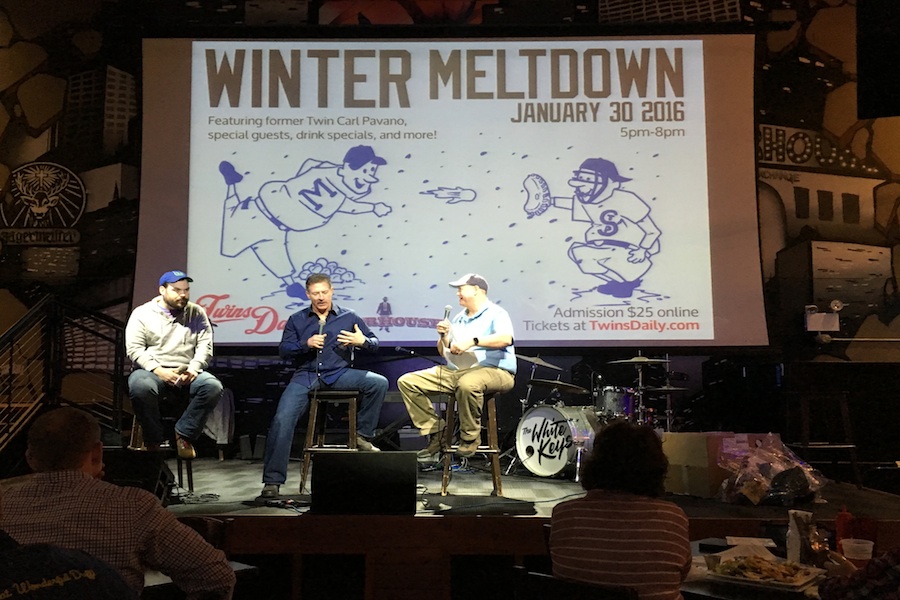 This was our first year holding the event at The Pourhouse, which proved to be a perfect venue thanks to its proximity to Target Field, its spacious confines, its excellent stage and audio set-up, and its friendly and accommodating staff. Carl Pavano, who was the planned first speaker, unfortunately did not make it into town for TwinsFest due to a family matter, but Mike Pagliarulo stepped up as a pinch-hitter and delivered in a big way. Pagliarulo was a very fitting guest, given that 2016 marks the 25-year anniversary of the 1991 World Championship he helped win. Speaking with John Bonnes and guest emcee Paul Lambert (aka "Meatsauce") of KFAN, Pags shared stories about that team, and reflected on the evolution that the game has undergone in a quarter-century since. Pagliarulo was followed by another World Series champ: Tim Laudner, who served as catcher on the 1987 club. Laudner is a natural on stage and in the spotlight, so he had no trouble captivating the audience with memories of that classic group. As a current Fox Sports North analyst, he also had plenty of thoughts and insights on the current club. He didn't miss the opportunity to make a few snarky remarks about sabermetricians. After the two featured guest speakers, Lambert moderated a blogger panel in which Bonnes, Seth Stohs, Aaron Gleeman and myself answered questions submitted by the audience. The topics ranged from Miguel Sano's transition to the outfield and the state of the bullpen to the real killer of Theresa Halbach and the quality of John's dance moves. The panel, and both former player Q&A sessions, were recorded and will be available on a special edition of Gleeman and the Geek this week, so keep your eyes peeled for that. In addition to the speaker sessions, we enjoyed delicious beers from the folks at 612 Brew and gave away a ton of great prizes, including starter kits from Harry's Razors, a unique art piece from S. Preston, big bags of 612 Brew swag, and Twins tickets courtesy of the Star Tribune's Howard Sinker. The turnout was amazing, the enthusiasm was palpable, and the setting was ideal. Huge thanks go out to The Pourhouse for hosting; to 612 Brew for supporting in so many ways; to Meatsauce for lending his skills on the mic; to our distinguished guests for sharing their stories and insights; to Gleeman for helping drive the event; and most of all to everyone who came out and made it such a good time. Twenty-one days until pitchers and catchers report.
 -
As we close in on the month of February, the Twins have remained quiet on the Hot Stove front. In terms of spending, it has been one of the most conservative offseasons we have seen from this franchise in some time. Byung Ho Park is the only addition that has really cost them anything. Outside of a few escalating contracts and arbitration raises, they haven't added payroll anywhere. With Torii Hunter and a couple others coming off the books, that leaves them slightly short of last year's Opening Day mark of $108 million, barring further moves.Following a season in which the Twins finally turned the corner and set their long-awaited contention blueprint into motion, the lack of aggressiveness on the market this winter has left many fans scratching their heads. An article by Jack Moore for Baseball Prospectus this week discussing Minnesota's misapplied label as a "small market" rankled plenty of folks, as evidenced by the nine pages of discussion on the topic in our forums. Personally, while I have been critical of the front office's timid approach at times in the past, I'm not too riled up by the sparsity of moves, for a couple of reasons. For one thing, there was Park's posting fee. At $12.85 million, it was very large, in the contexts of both this organization's past and the Korean market standards. While you might not technically construe this as a payroll expense, for all intents and purposes it is. They spent many millions of dollars to add immediate talent to the major-league roster. So if you prorate that money over the four years of Park's contract, the 2016 payroll figure jumps to about the exact same level it was at a year ago. That number ranked the Twins 18th in baseball last season, and while it might rank a bit lower this time around, it'll still be fairly close to the middle of the pack. It's not unreasonable for a club that falls on the lower end of the mid-market category in terms of revenue. The other thing is that the Twins seem to be committing to a more youth-focused approach. While it's difficult to have absolute confidence in the present bullpen array, I'd much rather allow the younger internal options to take jobs and run with them, as opposed to seeing them blocked by mediocrities like Tim Stauffer. Last year, he came in and had just about the worst spring you could possibly imagine, but still made the club and received a relatively long leash, on the basis of his guaranteed contract and veteran status. No more of that. But while we're on the subject, let's talk about Stauffer for a moment. Last offseason, he was Minnesota's most expensive bullpen addition, with his $2.2 million commitment ranking as the 23rd-largest given to a free agent relief pitcher by an MLB club (per MLB Trade Rumors). There is a "you get what you pay for" dynamic in play here. Nearly every reliever who signed a bigger deal than Stauffer last offseason performed better than he did. Given that the Twins missed the playoffs by only a few games, and given that Stauffer performed miserably almost literally every time he took the mound, you could certainly argue that aiming a little higher with their veteran bullpen upgrade might have made a big difference. But instead of aiming higher here in an offseason where the bullpen is an obvious area of need, the Twins haven't so much as set their sights, at least not with any urgent intention of pulling the trigger. We're getting the same explanatory arguments as usual: Terry Ryan and the Twins simply don't like any of the free agents that much. Tony Sipp? Too many years. Antonio Bastardo? Overpaid. This is about evaluation, not spending. It's a line that's being echoed by media members. But of course this overlooks the fact that, so many times in the past, those players that the Twins "haven't liked" ended up having successful seasons in which they could have been difference-makers for the club. Meanwhile, many of the players that they liked enough to sign, who invariably ended up being on the second or third tier in terms of monetary commitments, panned out as poor investments. These payroll arguments that come up every year (usually around this time) are tedious and frustrating in part because they become so repetitive but even more so because people on opposite sides tend to cling to outrageous extremes. The fact that the team isn't spending aggressively and adding big contracts does not necessarily indicate a lack of desire to win, nor is it a surefire sign that ownership is interested only in hoarding cash. At the same time, nobody is arguing that the Twins should "spend money just to spend money," and to dismiss the reality that it costs more to acquire more established and coveted players is ridiculous. So if we're going to have these discussions, let's at least try to be reasonable and realistic. I'm on board with what the Twins seem to be doing, but I'm also running out of patience with watching the same conservative strategies come up short. If the front office's decision to eschew the open market and look inward while their competitors pile up relief talent backfires, there needs to be some accountability. Click here to view the article
- 68 replies
-
- 2
-
-
- terry ryan
- tim stauffer
- (and 1 more)
-
 Following a season in which the Twins finally turned the corner and set their long-awaited contention blueprint into motion, the lack of aggressiveness on the market this winter has left many fans scratching their heads. An article by Jack Moore for Baseball Prospectus this week discussing Minnesota's misapplied label as a "small market" rankled plenty of folks, as evidenced by the nine pages of discussion on the topic in our forums. Personally, while I have been critical of the front office's timid approach at times in the past, I'm not too riled up by the sparsity of moves, for a couple of reasons. For one thing, there was Park's posting fee. At $12.85 million, it was very large, in the contexts of both this organization's past and the Korean market standards. While you might not technically construe this as a payroll expense, for all intents and purposes it is. They spent many millions of dollars to add immediate talent to the major-league roster. So if you prorate that money over the four years of Park's contract, the 2016 payroll figure jumps to about the exact same level it was at a year ago. That number ranked the Twins 18th in baseball last season, and while it might rank a bit lower this time around, it'll still be fairly close to the middle of the pack. It's not unreasonable for a club that falls on the lower end of the mid-market category in terms of revenue. The other thing is that the Twins seem to be committing to a more youth-focused approach. While it's difficult to have absolute confidence in the present bullpen array, I'd much rather allow the younger internal options to take jobs and run with them, as opposed to seeing them blocked by mediocrities like Tim Stauffer. Last year, he came in and had just about the worst spring you could possibly imagine, but still made the club and received a relatively long leash, on the basis of his guaranteed contract and veteran status. No more of that. But while we're on the subject, let's talk about Stauffer for a moment. Last offseason, he was Minnesota's most expensive bullpen addition, with his $2.2 million commitment ranking as the 23rd-largest given to a free agent relief pitcher by an MLB club (per MLB Trade Rumors). There is a "you get what you pay for" dynamic in play here. Nearly every reliever who signed a bigger deal than Stauffer last offseason performed better than he did. Given that the Twins missed the playoffs by only a few games, and given that Stauffer performed miserably almost literally every time he took the mound, you could certainly argue that aiming a little higher with their veteran bullpen upgrade might have made a big difference. But instead of aiming higher here in an offseason where the bullpen is an obvious area of need, the Twins haven't so much as set their sights, at least not with any urgent intention of pulling the trigger. We're getting the same explanatory arguments as usual: Terry Ryan and the Twins simply don't like any of the free agents that much. Tony Sipp? Too many years. Antonio Bastardo? Overpaid. This is about evaluation, not spending. It's a line that's being echoed by media members. But of course this overlooks the fact that, so many times in the past, those players that the Twins "haven't liked" ended up having successful seasons in which they could have been difference-makers for the club. Meanwhile, many of the players that they liked enough to sign, who invariably ended up being on the second or third tier in terms of monetary commitments, panned out as poor investments. These payroll arguments that come up every year (usually around this time) are tedious and frustrating in part because they become so repetitive but even more so because people on opposite sides tend to cling to outrageous extremes. The fact that the team isn't spending aggressively and adding big contracts does not necessarily indicate a lack of desire to win, nor is it a surefire sign that ownership is interested only in hoarding cash. At the same time, nobody is arguing that the Twins should "spend money just to spend money," and to dismiss the reality that it costs more to acquire more established and coveted players is ridiculous. So if we're going to have these discussions, let's at least try to be reasonable and realistic. I'm on board with what the Twins seem to be doing, but I'm also running out of patience with watching the same conservative strategies come up short. If the front office's decision to eschew the open market and look inward while their competitors pile up relief talent backfires, there needs to be some accountability.
 -
But O'Rourke is also an example of why this strategy is dangerous. He had all of the numbers in the minors to suggest he was more than capable. He started off smoothly, and Molitor even used him pretty well (more PA v. LH than RH), but things went off the rails and he had these horrible control spells based on, what we can only assume, were adjustments to the MLB stage and learning curve. This is something you have to factor in when looking at a rookie like Taylor Rogers who looks great for the role on paper.
-
I see number of people espousing the strategy of staying away from guaranteed free agent contracts, opting instead to head to camp with the present collection of non-roster invites and prospects, then choosing the best ones. Theoretically, I like this strategy, because it isn't THAT hard to find a lefty who gets lefties out, and it keeps you away from any monetary commitments that would block a younger player. However, it is also dependent on the Twins identifying the right players for the bullpen, often -- in this case -- based on minimal MLB data. I just haven't seen a lot in recent years that gives me confidence in that. There have been a lot of really head-scratching personnel decisions in that department that have taken far too long to correct. If you sign a guy like Thornton or Choate, you're taking that element out, because then you have a guy locked in, with everyone else operating as depth and backup plans. I'm confident those guys could both be effective if utilized properly. I'm not as confident they would be utilized properly.
-
I don't think this is really true at all. Bullpen is important and whatever reliability the Twins have there, it's all in the form of righties (excepting the closer Perkins). You need to have guys you can call on situationally to get LH hitters out in tough spots. Right now they have guys who might be able to do that, but outside of Abad, no one who has done it.
-
The Twins entered the offseason with a glaring need for left-handed relievers. Here we are nearing the end of January and they still have not signed one such player to a major-league contract.What Terry Ryan has done is assemble a group of intriguing arms with non-guaranteed commitments to go along with the (altogether decent) in-house options. Fernando Abad, who has been quite effective for the A's over the past three seasons, becomes the most established player in the mix, and appears to be the leading contender at this point for top lefty in the bullpen. He'll be joined in spring training by some other outside guys that offer intrigue. Buddy Boshers, inked to a minor-league contract in December, is coming off an eye-opening season in independent ball. Mike Strong, claimed off waivers from the Marlins on Friday, has piled up a lot of strikeouts in the minors. And then you have Ryan O'Rourke, Taylor Rogers, Pat Dean, Aaron Thompson, and maybe Tommy Milone. If that's the group that the Twins want to take to camp, they'll probably be able to head north with one or two adequate southpaws to complement closer Glen Perkins. But this is a collection that ultimately lacks experience in a very evident way. Aside from Abad, none of the pitchers competing for these important roles has made more than a few dozen relief appearances in the majors. And for those that have, the results haven't been there. As for Abad, while he looks fine on paper, there's a reason that no other club wanted to give him an MLB contract, so he is a gamble in his own right. Given their aspirations for this season, it would be surprising if the Twins didn't add one more veteran lefty. They are known to value the qualities that such a player brings to the table, and with Antonio Bastardo off the market, any remaining free agent can likely be had on a one-year deal. Here's a look at those remaining options, with a quick glance at the pros and cons for each. Matt Thornton Pros: Shuts down lefty hitters year after year. Held them to 484 OPS in 2015. Familiar to Twins, having spent many seasons with the White Sox. Tall, sturdy specimen at 6'6" with a long track record of durability (10 straight seasons with 60+ appearances). Cons: Turned 39 in September. Velocity has been declining along with his strikeout rates. Last year he averaged a career-low 5.0 strikeouts per nine innings – not exactly what this K-starved bullpen needs. Neal Cotts Pros: Spent time with the Twins last season, delivering solid performances down the stretch. Steady vet with 3.03 ERA over the past three years. Not overly vulnerable to right-handed hitters. Cons: Limited upside. He's had one season in the last decade (2013) that would truly be considered a stand-out. Occasional control problems. Turning 36 in March, he's not as old as Thornton, but he has seen a similar downward velo trend. Randy Choate Pros: Has been used as a true lefty specialist, making 196 appearances over the last three years with St. Louis and recording only 296 outs. He has been effective in that capacity, with a 1.12 WHIP and only four home runs allowed during that span. Fits the bill for experience; has played with six different teams, has pitched in the playoffs five times, and has led the league in appearances twice. Cons: At 40, he's the oldest player on this list. And while he has been very good as a lefty one out guy, do we really expect Paul Molitor to use him that way? The manager didn't really show a propensity for doing so last year. Franklin Morales Pros: He was the No. 1 lefty option last year in a bullpen that helped carry the Royals to a World Series title. Held left-handed hitters to a .192 average. At 30, far younger than the names listed above him here. Cons: Very inconsistent track record. Terrible against right-handed hitters. Has averaged more than four walks per nine innings in his career. Represented by Scott Boras. Sean Marshall Pros: From 2010 through 2013, he was one of the National League's finest left-handed relievers, posting a 2.44 ERA and 253/60 K/BB ratio in 221 innings. Would carry substantial upside on a minor-league deal. Cons: Recurring shoulder problems limited him to 16 appearances in 2013, 15 in 2014 and zero in 2015. Manny Parra Pros: Has been mostly effective in Cincinnati for the past three years. Cons: He's been fairly mediocre since a career year in 2013, and last year he battled elbow and bicep issues. Eric O'Flaherty Pros: Consistently exception from 2009 through 2014. During that span, he never posted an ERA above 3.04 or a WHIP above 1.25. Sharp command and very tough to hit. Cons: His 2015 was a disaster. In stints with the A's and Mets, O'Flaherty posted an 8.10 ERA and allowed 47 hits in 30 innings. He has generally had a hard time staying healthy in recent years. Craig Breslow Pros: Very fine reliever for many years after leaving Twins in 2009. Effective against both righties and lefties when he's on his game. Cons: He hasn't been very good over the past couple seasons and, at age 35, do we really expect that to turn around? Brian Duensing Pros: Drafted and developed by the Twins. Has held lefty hitters to .238/.289/.325 in his career. Turning 33 in a month, not as old as many others on this list. Cons: He was bad in 2015, even against lefties, and he has always been a liability against righties. Who would you choose from this group? Or would you be more comfortable sticking with what the Twins have? Click here to view the article
-
 What Terry Ryan has done is assemble a group of intriguing arms with non-guaranteed commitments to go along with the (altogether decent) in-house options. Fernando Abad, who has been quite effective for the A's over the past three seasons, becomes the most established player in the mix, and appears to be the leading contender at this point for top lefty in the bullpen. He'll be joined in spring training by some other outside guys that offer intrigue. Buddy Boshers, inked to a minor-league contract in December, is coming off an eye-opening season in independent ball. Mike Strong, claimed off waivers from the Marlins on Friday, has piled up a lot of strikeouts in the minors. And then you have Ryan O'Rourke, Taylor Rogers, Pat Dean, Aaron Thompson, and maybe Tommy Milone. If that's the group that the Twins want to take to camp, they'll probably be able to head north with one or two adequate southpaws to complement closer Glen Perkins. But this is a collection that ultimately lacks experience in a very evident way. Aside from Abad, none of the pitchers competing for these important roles has made more than a few dozen relief appearances in the majors. And for those that have, the results haven't been there. As for Abad, while he looks fine on paper, there's a reason that no other club wanted to give him an MLB contract, so he is a gamble in his own right. Given their aspirations for this season, it would be surprising if the Twins didn't add one more veteran lefty. They are known to value the qualities that such a player brings to the table, and with Antonio Bastardo off the market, any remaining free agent can likely be had on a one-year deal. Here's a look at those remaining options, with a quick glance at the pros and cons for each. Matt Thornton Pros: Shuts down lefty hitters year after year. Held them to 484 OPS in 2015. Familiar to Twins, having spent many seasons with the White Sox. Tall, sturdy specimen at 6'6" with a long track record of durability (10 straight seasons with 60+ appearances). Cons: Turned 39 in September. Velocity has been declining along with his strikeout rates. Last year he averaged a career-low 5.0 strikeouts per nine innings – not exactly what this K-starved bullpen needs. Neal Cotts Pros: Spent time with the Twins last season, delivering solid performances down the stretch. Steady vet with 3.03 ERA over the past three years. Not overly vulnerable to right-handed hitters. Cons: Limited upside. He's had one season in the last decade (2013) that would truly be considered a stand-out. Occasional control problems. Turning 36 in March, he's not as old as Thornton, but he has seen a similar downward velo trend. Randy Choate Pros: Has been used as a true lefty specialist, making 196 appearances over the last three years with St. Louis and recording only 296 outs. He has been effective in that capacity, with a 1.12 WHIP and only four home runs allowed during that span. Fits the bill for experience; has played with six different teams, has pitched in the playoffs five times, and has led the league in appearances twice. Cons: At 40, he's the oldest player on this list. And while he has been very good as a lefty one out guy, do we really expect Paul Molitor to use him that way? The manager didn't really show a propensity for doing so last year. Franklin Morales Pros: He was the No. 1 lefty option last year in a bullpen that helped carry the Royals to a World Series title. Held left-handed hitters to a .192 average. At 30, far younger than the names listed above him here. Cons: Very inconsistent track record. Terrible against right-handed hitters. Has averaged more than four walks per nine innings in his career. Represented by Scott Boras. Sean Marshall Pros: From 2010 through 2013, he was one of the National League's finest left-handed relievers, posting a 2.44 ERA and 253/60 K/BB ratio in 221 innings. Would carry substantial upside on a minor-league deal. Cons: Recurring shoulder problems limited him to 16 appearances in 2013, 15 in 2014 and zero in 2015. Manny Parra Pros: Has been mostly effective in Cincinnati for the past three years. Cons: He's been fairly mediocre since a career year in 2013, and last year he battled elbow and bicep issues. Eric O'Flaherty Pros: Consistently exception from 2009 through 2014. During that span, he never posted an ERA above 3.04 or a WHIP above 1.25. Sharp command and very tough to hit. Cons: His 2015 was a disaster. In stints with the A's and Mets, O'Flaherty posted an 8.10 ERA and allowed 47 hits in 30 innings. He has generally had a hard time staying healthy in recent years. Craig Breslow Pros: Very fine reliever for many years after leaving Twins in 2009. Effective against both righties and lefties when he's on his game. Cons: He hasn't been very good over the past couple seasons and, at age 35, do we really expect that to turn around? Brian Duensing Pros: Drafted and developed by the Twins. Has held lefty hitters to .238/.289/.325 in his career. Turning 33 in a month, not as old as many others on this list. Cons: He was bad in 2015, even against lefties, and he has always been a liability against righties. Who would you choose from this group? Or would you be more comfortable sticking with what the Twins have?
 -
Article: Charting The Competition: Detroit Tigers
Nick Nelson replied to Nick Nelson's topic in Twins Daily Front Page News
-
From 2011 through 2014, Detroit reigned over the AL Central, winning the division (and at least one postseason series) every year, with a lineup powered by Miguel Cabrera and a rotation led by Justin Verlander. In 2015, the Tigers suddenly sunk to last place in the division, failing to overcome reduced contributions from their erstwhile superstars and receiving minimal production from role players.Looking back, it's kind of amazing a team that had Yoenis Cespedes AND David Price, along with Cabrera hitting at an MVP level, in the first half was in position to sell everything by the end of July in a wide open American League. But that speaks to how badly things went off the rails elsewhere. Verlander missed the first 10 weeks and only sporadically looked like himself after returning. Outside of Price's sterling four months, the entire rotation was a mess around him. Cabrera missed a month with a calf injury. Victor Martinez, MVP runner-up a year earlier, hobbled around on a bad knee and posted career lows in batting average (.245) and OPS (.667). In many ways, it's tempting to count the Tigers out. Cabrera and Verlander aren't getting any younger, and Detroit's organizational talent was ranked 30th out of 30 clubs by Baseball America last March. However, their pipeline was reinfused quite a bit last summer by the Cespedes and Price trades. And whereas the Twins have taken a very passive approach this offseason, relying on their talented young core to keep improving and driving further progress, the Tigers have been proactive in reinforcing their aging roster. The signing of Justin Upton this week to a six-year, $132.75 million contract is an enormous move. Upton is a premium athlete who will thrive offensively in Detroit's park and is only 28. He drastically upgrades a Tigers lineup that will already be bringing back a healthy Cabrera and J.D. Martinez, who is coming off a 38-homer campaign. Jordan Zimmermann, one of the best free agent starters on the market, was signed to join Verlander at the top of the rotation and the Tigers are hopeful that our old friend Mike Pelfrey can add a little more reliability at the bottom. Meanwhile, the acquisition of All-Star closer Francisco Rodriguez from Milwaukee powers up the bullpen significantly. Even coming off a 74-win season, the Tigers are undeniably a threat, and they could be downright dangerous if Verlander's late-season resurgence (2.30 ERA in his final 10 starts) carries over while a few younger guys emerge. We'll see whether new general manager Al Avila's profound aggressiveness in the wake of a nosedive pays off. Click here to view the article
-
 Looking back, it's kind of amazing a team that had Yoenis Cespedes AND David Price, along with Cabrera hitting at an MVP level, in the first half was in position to sell everything by the end of July in a wide open American League. But that speaks to how badly things went off the rails elsewhere. Verlander missed the first 10 weeks and only sporadically looked like himself after returning. Outside of Price's sterling four months, the entire rotation was a mess around him. Cabrera missed a month with a calf injury. Victor Martinez, MVP runner-up a year earlier, hobbled around on a bad knee and posted career lows in batting average (.245) and OPS (.667). In many ways, it's tempting to count the Tigers out. Cabrera and Verlander aren't getting any younger, and Detroit's organizational talent was ranked 30th out of 30 clubs by Baseball America last March. However, their pipeline was reinfused quite a bit last summer by the Cespedes and Price trades. And whereas the Twins have taken a very passive approach this offseason, relying on their talented young core to keep improving and driving further progress, the Tigers have been proactive in reinforcing their aging roster. The signing of Justin Upton this week to a six-year, $132.75 million contract is an enormous move. Upton is a premium athlete who will thrive offensively in Detroit's park and is only 28. He drastically upgrades a Tigers lineup that will already be bringing back a healthy Cabrera and J.D. Martinez, who is coming off a 38-homer campaign. Jordan Zimmermann, one of the best free agent starters on the market, was signed to join Verlander at the top of the rotation and the Tigers are hopeful that our old friend Mike Pelfrey can add a little more reliability at the bottom. Meanwhile, the acquisition of All-Star closer Francisco Rodriguez from Milwaukee powers up the bullpen significantly. Even coming off a 74-win season, the Tigers are undeniably a threat, and they could be downright dangerous if Verlander's late-season resurgence (2.30 ERA in his final 10 starts) carries over while a few younger guys emerge. We'll see whether new general manager Al Avila's profound aggressiveness in the wake of a nosedive pays off.

