



Nick Nelson
-
Posts
8,322 -
Joined
-
Last visited
-
Days Won
56
Content Type
Profiles
News
Minnesota Twins Videos
2026 Minnesota Twins Top Prospects Ranking
2022 Minnesota Twins Draft Picks
Minnesota Twins Free Agent & Trade Rumors, Notes, & Tidbits
Guides & Resources
2023 Minnesota Twins Draft Picks
The Minnesota Twins Players Project
2024 Minnesota Twins Draft Picks
2025 Minnesota Twins Draft Pick Tracker
2026 Minnesota Twins Draft Tracker: Picks & Bonuses
Forums
Blogs
Events
Store
Downloads
Gallery
Everything posted by Nick Nelson
-
It was five years ago this month that the Twins were announced as top bidders for Tsuyoshi Nishioka, paving the way for what would pan out as one of the worst high-profile moves in recent franchise history. With Monday's news that the club has won negotiating rights to Byung-ho Park, some local fans are having flashbacks.To some extent, the comparisons are understandable. The two players do have a number of things in common. For instance: 1) They hail from the same general area of the planet. Well, actually, that's about it. Park is a sturdy 230 pound power-hitting first baseman from South Korea. Nishioka was a speedy 175 pound slap-hitting middle infielder from Japan. Park has spent his career playing in the Korea Baseball Organization (KBO). Nishioka played in Nippon Professional Baseball (NPB). They're completely different leagues, so their statistics are apples and oranges. They can't really be stacked against one another. And even if you wanted to, a quick glance shows that the two players have demonstrated radically different profiles while playing on the other side of the world. Park is a career .281/.387/.564 hitter in KBO and he has smashed 105 home runs while driving in 270 runs over the past two seasons. Nishioka was a career .293/.364/.426 hitter in NPB who was coming off a BABIP-fueled batting title when the Twins acquired him. He had never hit 15 home runs in a season and outside of the big year that preceded his arrival in the United States, he hadn't really been a dominant offensive player in his league. Park's numbers are the very definition of dominant. There's no guarantee that signing Park will work out better than signing Nishioka did, but if he fails it won't be for the same reasons. Nishioka was inadequate defensively and simply could not hit the ball with any kind of authority. Park likely won't play the field much and hitting the ball with authority has been his specialty. His ability to control the strike zone and handle MLB velocity may be in question, but his raw power is not. If there's any takeaway to be drawn from juxtaposing this duo, it would be a positive in my mind. The Twins were burnt badly by the Nishioka signing so you'd like to think they learned some lessons from that entire fiasco. It's hard to imagine that this historically frugal organization would put up $13 million just for the right to negotiate with Park unless they were convinced he was capable of making the transition to the major leagues in a way that Nishioka could not. It also bears noting that Terry Ryan is running the show now rather than Bill Smith. To me, that weighs heavily. If we want to make meaningful comparisons in an effort to predict how things might go for Park, we need to look at players who came from the same league. Unfortunately, the list of position players who have been posted from KBO and signed with an MLB team looks like this: Jung Ho Kang. That's it. The infielder signed last offseason with the Pirates, who posted $5 million and then inked him to a four-year, $11 million contract. Kang went on to hit .287/.355/.461 with 15 homers in 126 games and was in the NL Rookie of the Year conversation before going down with a season-ending injury in September. Obviously, that bodes well. There have been a few other South Korean position players in the majors – Shin-Soo Choo, Rob Refsnyder, Hee-Seop Choi – but all signed in the majors at a young age before playing in KBO. That last name, though, is an interesting one to look at, and not just because Twins fans might not-so-fondly remember him as the guy who took Brad Radke deep three times in a game back in 2005. Choi was somewhat similar to Park in that he was a big slugging first baseman. Although he didn't play in KBO before coming to the majors, he headed there at age 27 after putting up a .240/.349/.437 line with 40 homers in 363 MLB games. Since returning to his home league, Choi has hit .281/.388/.479 in eight seasons. Altogether that's not too much different from his production here, and for what it's worth Choi's strikeout rate in MLB (24 percent) was not all that much higher than it has been in KBO (20 percent). If Park were to lose only 40 points on his OBP and SLG from Korea while adding only four percentage points to his K-rate, he's going to be a hell of a player in the majors. But of course, his outcome won't be dictated by what happened with Choi, and certainly not by what happened with Nishioka. Park is his own player, with his own set of challenges, and he will forge his own path. Personally, I'm optimistic about where that path will lead. The Korean market is a relatively young and undeveloped one for Major League Baseball. Terry Ryan and the Twins might be striking at just the right time. Now let's see if they can get him signed. Click here to view the article
-
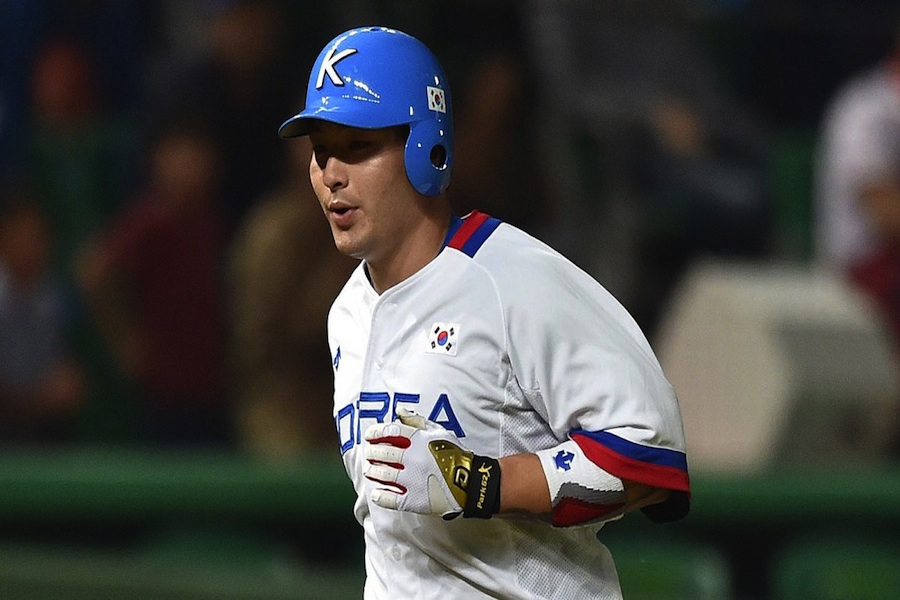 To some extent, the comparisons are understandable. The two players do have a number of things in common. For instance: 1) They hail from the same general area of the planet. Well, actually, that's about it. Park is a sturdy 230 pound power-hitting first baseman from South Korea. Nishioka was a speedy 175 pound slap-hitting middle infielder from Japan. Park has spent his career playing in the Korea Baseball Organization (KBO). Nishioka played in Nippon Professional Baseball (NPB). They're completely different leagues, so their statistics are apples and oranges. They can't really be stacked against one another. And even if you wanted to, a quick glance shows that the two players have demonstrated radically different profiles while playing on the other side of the world. Park is a career .281/.387/.564 hitter in KBO and he has smashed 105 home runs while driving in 270 runs over the past two seasons. Nishioka was a career .293/.364/.426 hitter in NPB who was coming off a BABIP-fueled batting title when the Twins acquired him. He had never hit 15 home runs in a season and outside of the big year that preceded his arrival in the United States, he hadn't really been a dominant offensive player in his league. Park's numbers are the very definition of dominant. There's no guarantee that signing Park will work out better than signing Nishioka did, but if he fails it won't be for the same reasons. Nishioka was inadequate defensively and simply could not hit the ball with any kind of authority. Park likely won't play the field much and hitting the ball with authority has been his specialty. His ability to control the strike zone and handle MLB velocity may be in question, but his raw power is not. If there's any takeaway to be drawn from juxtaposing this duo, it would be a positive in my mind. The Twins were burnt badly by the Nishioka signing so you'd like to think they learned some lessons from that entire fiasco. It's hard to imagine that this historically frugal organization would put up $13 million just for the right to negotiate with Park unless they were convinced he was capable of making the transition to the major leagues in a way that Nishioka could not. It also bears noting that Terry Ryan is running the show now rather than Bill Smith. To me, that weighs heavily. If we want to make meaningful comparisons in an effort to predict how things might go for Park, we need to look at players who came from the same league. Unfortunately, the list of position players who have been posted from KBO and signed with an MLB team looks like this: Jung Ho Kang. That's it. The infielder signed last offseason with the Pirates, who posted $5 million and then inked him to a four-year, $11 million contract. Kang went on to hit .287/.355/.461 with 15 homers in 126 games and was in the NL Rookie of the Year conversation before going down with a season-ending injury in September. Obviously, that bodes well. There have been a few other South Korean position players in the majors – Shin-Soo Choo, Rob Refsnyder, Hee-Seop Choi – but all signed in the majors at a young age before playing in KBO. That last name, though, is an interesting one to look at, and not just because Twins fans might not-so-fondly remember him as the guy who took Brad Radke deep three times in a game back in 2005. Choi was somewhat similar to Park in that he was a big slugging first baseman. Although he didn't play in KBO before coming to the majors, he headed there at age 27 after putting up a .240/.349/.437 line with 40 homers in 363 MLB games. Since returning to his home league, Choi has hit .281/.388/.479 in eight seasons. Altogether that's not too much different from his production here, and for what it's worth Choi's strikeout rate in MLB (24 percent) was not all that much higher than it has been in KBO (20 percent). If Park were to lose only 40 points on his OBP and SLG from Korea while adding only four percentage points to his K-rate, he's going to be a hell of a player in the majors. But of course, his outcome won't be dictated by what happened with Choi, and certainly not by what happened with Nishioka. Park is his own player, with his own set of challenges, and he will forge his own path. Personally, I'm optimistic about where that path will lead. The Korean market is a relatively young and undeveloped one for Major League Baseball. Terry Ryan and the Twins might be striking at just the right time. Now let's see if they can get him signed.
 -
 Trevor Plouffe is a key figure in the coming offseason for the Minnesota Twins, with the presence of Miguel Sano and the club's desire to get find him a spot in the field creating an interesting dynamic. I wouldn't say Plouffe is expendable – the Twins can't afford to simply give away a quality bat like his – but it would make sense to trade him this winter if the right opportunity presented itself. So what kind of return can we expect for Plouffe?Many have been skeptical of Sano's ability to excel at third base because of his size, but Twins officials continue to cite his underrated athleticism in saying he can be an asset there. He did look decent in limited duty at the hot corner as a rookie. This much is clear: Sano is much more valuable if he's playing in the field, and relegating him to DH duty this early in his career is less than ideal. He won't be playing first base any time soon, and he sure seems like a better bet at third than in the outfield, where the Twins are apparently going to take a look at him even though he's never played there before. Trading Plouffe would open up third base while also adding payroll flexibility, as the 29-year-old is expected to make somewhere around $8 million through arbitration next year. But he was a big piece for the Twins offense this season. He batted fourth or fifth in 78 percent of Minnesota's games and drove in a team-leading 86 runs. That production is not easily replaced, and his defense at third was very solid to boot. The problem is that from the outside, Plouffe might not look quite as valuable as he does from the inside. Among 21 qualified MLB third basemen, he ranked 15th in OPS, eighth in home runs and 14th in WAR. By the numbers, he was not a standout starter at his position. He was, however, a legitimate starter, as well as a credible threat in the middle of the lineup. That's something plenty of teams could use. So what might another GM be willing to give up in order to acquire Plouffe, who has two years of team control remaining? Working in Terry Ryan's favor is a very thin free agent market at third base. The top name available is David Freese, who is basically an older and inferior version of Plouffe. After that, there's nobody that could really be viewed as a viable starter. That means clubs in dire need of help at the hot corner will be facing limited options this offseason. Here's a look at four such clubs, with a glance at what could be on the table in a potential Plouffe trade. Milwaukee Brewers Aramis Ramirez was Milwaukee's regular at third through the first half, but they traded him to Pittsburgh in July. Hernan Perez got most of the starts thereafter, but did little to establish himself and has never really profiled as a big-league starter. The Brewers lack impact prospects at the position, and need to right the ship following a 94-loss season, so they will surely be aggressive in pursuit of upgrades. What Might a Deal Look Like? The Brewers recently exercised the $8 million option for 2016 on Adam Lind's contract. He'd make a lot of sense as a return piece in a Plouffe trade, because he could take over the freshly vacated DH spot and his powerful lefty bat would look even better than Plouffe's behind Sano. Milwaukee would maybe have to throw in an additional mid-level prospect since the Twins would be losing a year of team control in going from Plouffe to Lind. Atlanta Braves Atlanta had nine different players start at third base in 2015, with none drawing more than 41 starts. Nobody is coming up internally to help out at the position so they have a strong need to look outside. The Braves scored the fewest runs in baseball this year and had only one player surpass 10 home runs, so they could definitely use a power infusion. What Might a Deal Look Like? One arm that could be of great interest to the Twins is Arodys Vizcaino. The 24-year-old throws in the high 90s and took over as Atlanta's closer in September, finishing the year with a 1.60 ERA and 37 strikeouts in 33 innings. He missed the first half of this season after testing positive for the same drug as Ervin Santana, but bounced back nicely and finally showed signs of reining in the control issues that have been his limitation. Skilled young catcher Christian Bethancourt is another to watch. San Diego Padres The incumbent, Yangervis Solarte, is an overachiever who lacks the talent of a player like Plouffe. The Padres are always searching for offensive punch, and might be especially interested in a right-handed bat with Justin Upton likely to depart as a free agent. What Might a Deal Look Like? The most appealing player on the San Diego roster is Derek Norris, a 27-year-old catcher with a good bat. He's young and won't be a free agent until 2019 so he'd be a long-term answer at a position where the Twins sorely need one. Plouffe plus a prospect in the Jorge Polanco range might get it done. Chicago White Sox Trades within the division are rare, so this might be a long shot, but the White Sox are truly hopeless at third base. Tyler Saladino received the most starts for them this year, leading a bunch that also included Conor Gilaspie, Gordon Beckham and Mike Olt. No help from the farm is near. What Might a Deal Look Like? The White Sox have a number of very good right-handed pitching prospects, including Spencer Adams, Tyler Danish, Carson Fulmer and Frankie Montas. If the Twins could add any of those arms to their system, while finding a bat elsewhere to replace Plouffe's, it would be a savvy move for the long-term. Again: it's hard to see Chicago sending one of its better young arms to a division rival. Click here to view the article
 -
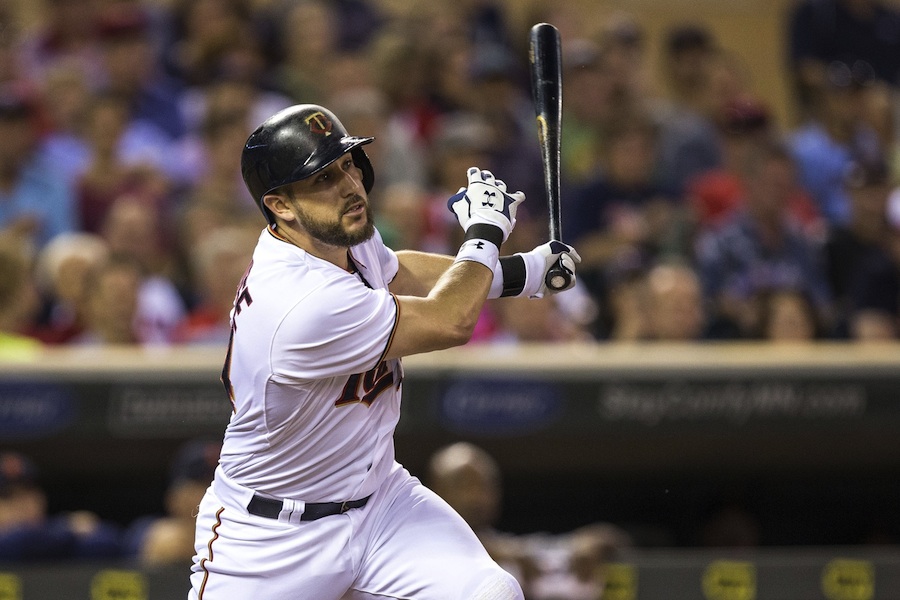 Many have been skeptical of Sano's ability to excel at third base because of his size, but Twins officials continue to cite his underrated athleticism in saying he can be an asset there. He did look decent in limited duty at the hot corner as a rookie. This much is clear: Sano is much more valuable if he's playing in the field, and relegating him to DH duty this early in his career is less than ideal. He won't be playing first base any time soon, and he sure seems like a better bet at third than in the outfield, where the Twins are apparently going to take a look at him even though he's never played there before. Trading Plouffe would open up third base while also adding payroll flexibility, as the 29-year-old is expected to make somewhere around $8 million through arbitration next year. But he was a big piece for the Twins offense this season. He batted fourth or fifth in 78 percent of Minnesota's games and drove in a team-leading 86 runs. That production is not easily replaced, and his defense at third was very solid to boot. The problem is that from the outside, Plouffe might not look quite as valuable as he does from the inside. Among 21 qualified MLB third basemen, he ranked 15th in OPS, eighth in home runs and 14th in WAR. By the numbers, he was not a standout starter at his position. He was, however, a legitimate starter, as well as a credible threat in the middle of the lineup. That's something plenty of teams could use. So what might another GM be willing to give up in order to acquire Plouffe, who has two years of team control remaining? Working in Terry Ryan's favor is a very thin free agent market at third base. The top name available is David Freese, who is basically an older and inferior version of Plouffe. After that, there's nobody that could really be viewed as a viable starter. That means clubs in dire need of help at the hot corner will be facing limited options this offseason. Here's a look at four such clubs, with a glance at what could be on the table in a potential Plouffe trade. Milwaukee Brewers Aramis Ramirez was Milwaukee's regular at third through the first half, but they traded him to Pittsburgh in July. Hernan Perez got most of the starts thereafter, but did little to establish himself and has never really profiled as a big-league starter. The Brewers lack impact prospects at the position, and need to right the ship following a 94-loss season, so they will surely be aggressive in pursuit of upgrades. What Might a Deal Look Like? The Brewers recently exercised the $8 million option for 2016 on Adam Lind's contract. He'd make a lot of sense as a return piece in a Plouffe trade, because he could take over the freshly vacated DH spot and his powerful lefty bat would look even better than Plouffe's behind Sano. Milwaukee would maybe have to throw in an additional mid-level prospect since the Twins would be losing a year of team control in going from Plouffe to Lind. Atlanta Braves Atlanta had nine different players start at third base in 2015, with none drawing more than 41 starts. Nobody is coming up internally to help out at the position so they have a strong need to look outside. The Braves scored the fewest runs in baseball this year and had only one player surpass 10 home runs, so they could definitely use a power infusion. What Might a Deal Look Like? One arm that could be of great interest to the Twins is Arodys Vizcaino. The 24-year-old throws in the high 90s and took over as Atlanta's closer in September, finishing the year with a 1.60 ERA and 37 strikeouts in 33 innings. He missed the first half of this season after testing positive for the same drug as Ervin Santana, but bounced back nicely and finally showed signs of reining in the control issues that have been his limitation. Skilled young catcher Christian Bethancourt is another to watch. San Diego Padres The incumbent, Yangervis Solarte, is an overachiever who lacks the talent of a player like Plouffe. The Padres are always searching for offensive punch, and might be especially interested in a right-handed bat with Justin Upton likely to depart as a free agent. What Might a Deal Look Like? The most appealing player on the San Diego roster is Derek Norris, a 27-year-old catcher with a good bat. He's young and won't be a free agent until 2019 so he'd be a long-term answer at a position where the Twins sorely need one. Plouffe plus a prospect in the Jorge Polanco range might get it done. Chicago White Sox Trades within the division are rare, so this might be a long shot, but the White Sox are truly hopeless at third base. Tyler Saladino received the most starts for them this year, leading a bunch that also included Conor Gilaspie, Gordon Beckham and Mike Olt. No help from the farm is near. What Might a Deal Look Like? The White Sox have a number of very good right-handed pitching prospects, including Spencer Adams, Tyler Danish, Carson Fulmer and Frankie Montas. If the Twins could add any of those arms to their system, while finding a bat elsewhere to replace Plouffe's, it would be a savvy move for the long-term. Again: it's hard to see Chicago sending one of its better young arms to a division rival.
 -
"Getting the band back together" was once a playful phrase that longtime Twins fans would nostalgically utter, with faux hopes of reuniting groups of players that found success together and earned a place in our hearts. But over the last couple years, it's been a very real and pronounced roster-building strategy for the Minnesota front office. So we'd be remiss not to look at this offseason's possibilities.In the past two offseasons alone, the Twins have re-enlisted five former players – Torii Hunter, Jason Kubel, Jason Bartlett, Matt Guerrier, Eddie Guardado (as a coach) – and the club always seems to be tied to a number of familiar old names. So today we'll look at some past team members who will be available in free agency, which officially opens on Saturday morning, and rate the likelihood of a reunion in each case. A.J. Pierzynski - C Years with Twins: 1998-2003 His name was definitely in the mix for the Twins two years ago, before they ended up signing Kurt Suzuki. Pierzynski went to Boston and was traded midway through the season to St. Louis. He finished 2014 with a .625 OPS, the lowest of his career, and it looked like the 37-year-old might be cooked. Then, he signed last offseason with Atlanta and went on to start 104 games behind the plate at age 38 while hitting .300/.339/.430. If he decides to continue his career the Twins will surely have strong interest, because he's a lefty-swinging veteran who would take a one-year deal and could complement Suzuki nicely. He enters this offseason as the odds-on favorite to be the Terry Ryan's pick-up at catcher. How Likely? 60% Joe Nathan - RP Years with Twins: 2004-2011 Nathan underwent his second Tommy John surgery in April, and it was a foregone conclusion that Detroit would decline his $10 million option for 2016 (they did so this week). Despite the fact that he turns 41 in a couple weeks, Nathan has vowed to attempt a comeback rather than retiring. On an incentive-laden deal with minimal guarantees, it would make sense for the Twins to give him that chance. He was well liked here, has tons of late-inning experience, and was still hitting the mid-90s on the gun before his elbow injury. Minnesota needs to keep bolstering the bullpen, but they could undoubtedly find more trustworthy options. How Likely? 30% Denard Span - OF Years with Twins: 2008-2012 Span missed a large chunk of this season due to his problematic left hip, which is a concern heading into free agency after requiring surgery in September, but outside of that he's been very good during his time in Washington, hitting .292/.345/.404 with 62 steals and consistently improving plate discipline. At age 31, he might settle for a one-year deal to eliminate the health questions and build up his value. In that case, it's not unthinkable the Twins could get in the mix. Span succeeding Torii Hunter in the outfield would stir some major deja vu, but he'd provide the steady lead-off presence they currently seem to lack. How Likely? 25% Justin Morneau - 1B Years with Twins: 2003-2013 On the surface, there's no fit here. Joe Mauer is locked in at first base and Miguel Sano was a revelation at DH. However, if the Twins were to trade Trevor Plouffe and move Sano to third, a Morneau reunion suddenly becomes very plausible. He has been a very solid hitter during his two years in Colorado, batting .316 with an .850 OPS. Plugging his veteran lefty bat behind Sano in the middle of the lineup could appeal to the Twins, and relegating Morneau to DH would somewhat downplay the concussion issues, which were frighteningly awakened this year when he dove for a ball in the field. No one would blame the former MVP if he were to hang it up, but if he doesn't, and the cards play out right, a return is conceivable. How Likely? 20% Craig Breslow - RP Years with Twins: 2008-2009 Breslow didn't have nearly the tenure here as others on this list, spending parts of two seasons in Minnesota, but he can't be ignored given the very evident need for an impact left-hander in the bullpen. Breslow was excellent for several years after leaving the Twins, but has really struggled over the past couple in Boston. The Twins could take a low-cost flyer but I'm guessing they'll look elsewhere. How Likely? 15% Johan Santana - SP Years with Twins: 2000-2007 Santana signed an incentive-filled deal with Toronto last February but never made it to the mound this year, announcing in June that he was suspending his comeback attempt until 2016. If he were to give it another go, the Twins would be as likely a destination as any, but he hasn't pitched since 2012 and he'll turn 37 in March. I've got to think this is it. How Likely? 10% Delmon Young - OF Years with Twins: 2008-2011 I believe our free agent blurb in the Offseason Handbook said it best: http://s3.postimg.org/kg7f6xu4j/delmoney.png Click here to view the article
-
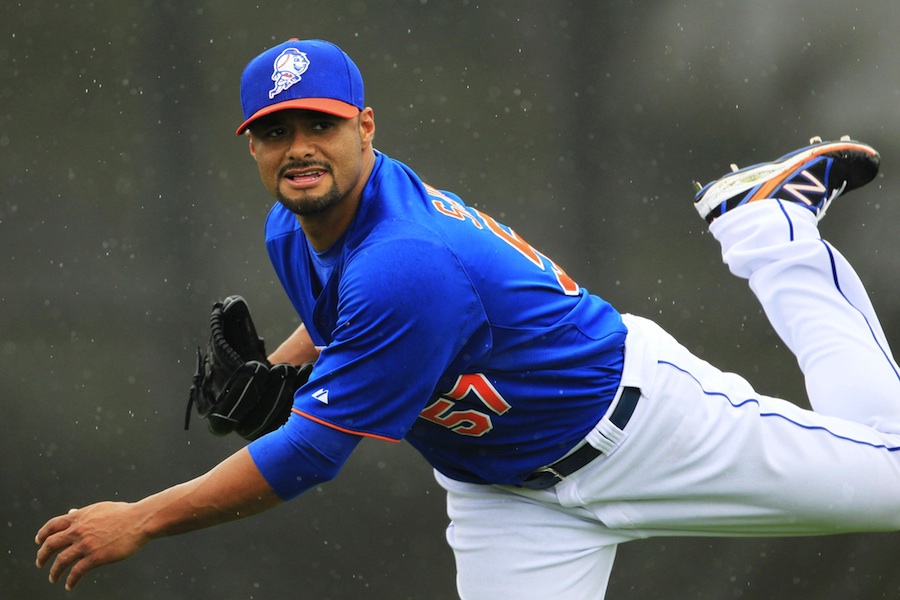 In the past two offseasons alone, the Twins have re-enlisted five former players – Torii Hunter, Jason Kubel, Jason Bartlett, Matt Guerrier, Eddie Guardado (as a coach) – and the club always seems to be tied to a number of familiar old names. So today we'll look at some past team members who will be available in free agency, which officially opens on Saturday morning, and rate the likelihood of a reunion in each case. A.J. Pierzynski - C Years with Twins: 1998-2003 His name was definitely in the mix for the Twins two years ago, before they ended up signing Kurt Suzuki. Pierzynski went to Boston and was traded midway through the season to St. Louis. He finished 2014 with a .625 OPS, the lowest of his career, and it looked like the 37-year-old might be cooked. Then, he signed last offseason with Atlanta and went on to start 104 games behind the plate at age 38 while hitting .300/.339/.430. If he decides to continue his career the Twins will surely have strong interest, because he's a lefty-swinging veteran who would take a one-year deal and could complement Suzuki nicely. He enters this offseason as the odds-on favorite to be the Terry Ryan's pick-up at catcher. How Likely? 60% Joe Nathan - RP Years with Twins: 2004-2011 Nathan underwent his second Tommy John surgery in April, and it was a foregone conclusion that Detroit would decline his $10 million option for 2016 (they did so this week). Despite the fact that he turns 41 in a couple weeks, Nathan has vowed to attempt a comeback rather than retiring. On an incentive-laden deal with minimal guarantees, it would make sense for the Twins to give him that chance. He was well liked here, has tons of late-inning experience, and was still hitting the mid-90s on the gun before his elbow injury. Minnesota needs to keep bolstering the bullpen, but they could undoubtedly find more trustworthy options. How Likely? 30% Denard Span - OF Years with Twins: 2008-2012 Span missed a large chunk of this season due to his problematic left hip, which is a concern heading into free agency after requiring surgery in September, but outside of that he's been very good during his time in Washington, hitting .292/.345/.404 with 62 steals and consistently improving plate discipline. At age 31, he might settle for a one-year deal to eliminate the health questions and build up his value. In that case, it's not unthinkable the Twins could get in the mix. Span succeeding Torii Hunter in the outfield would stir some major deja vu, but he'd provide the steady lead-off presence they currently seem to lack. How Likely? 25% Justin Morneau - 1B Years with Twins: 2003-2013 On the surface, there's no fit here. Joe Mauer is locked in at first base and Miguel Sano was a revelation at DH. However, if the Twins were to trade Trevor Plouffe and move Sano to third, a Morneau reunion suddenly becomes very plausible. He has been a very solid hitter during his two years in Colorado, batting .316 with an .850 OPS. Plugging his veteran lefty bat behind Sano in the middle of the lineup could appeal to the Twins, and relegating Morneau to DH would somewhat downplay the concussion issues, which were frighteningly awakened this year when he dove for a ball in the field. No one would blame the former MVP if he were to hang it up, but if he doesn't, and the cards play out right, a return is conceivable. How Likely? 20% Craig Breslow - RP Years with Twins: 2008-2009 Breslow didn't have nearly the tenure here as others on this list, spending parts of two seasons in Minnesota, but he can't be ignored given the very evident need for an impact left-hander in the bullpen. Breslow was excellent for several years after leaving the Twins, but has really struggled over the past couple in Boston. The Twins could take a low-cost flyer but I'm guessing they'll look elsewhere. How Likely? 15% Johan Santana - SP Years with Twins: 2000-2007 Santana signed an incentive-filled deal with Toronto last February but never made it to the mound this year, announcing in June that he was suspending his comeback attempt until 2016. If he were to give it another go, the Twins would be as likely a destination as any, but he hasn't pitched since 2012 and he'll turn 37 in March. I've got to think this is it. How Likely? 10% Delmon Young - OF Years with Twins: 2008-2011 I believe our free agent blurb in the Offseason Handbook said it best: http://s3.postimg.org/kg7f6xu4j/delmoney.png
 -
Article: Do The Twins Need To Acquire An Ace?
Nick Nelson replied to Seth Stohs's topic in Twins Daily Front Page News
It was kind of odd how in the interview Ryan sets an extremely high standard for an "ace," suggesting that there are only about 12 of them in the league, then goes on to use broad descriptors that could apply to tons of starters (quality innings, "pitchability," works into the 7th/8th frequently) and labels Radke as one. Radke was a great pitcher but I'm not sure how he could be categorized as an ace if we're talking about the absolute top tier.- 39 replies
-
- 3
-

-
- tyler duffey
- jose berrios
- (and 3 more)
-
I don't think that's a major issue. The PA total required to vest his 2017 option is 485 and he came short of that this year, even with no legitimate backups and no time spent on the disabled list. At the very least, the Twins are going to find someone to split time with him.
-
? Wieters underwent TJ surgery in June of 2014 and was back behind the plate on June 5th of this year. That's less than one year of recovery time. After returning, he threw out 31% of base stealers, which is right around league average. I'm not sure I understand the concerns about Wieters needing to move away from catcher anytime soon. I'm also not sure I understand the overall durability concerns. Prior to Tommy John he had started 120+ games at catcher for four straight seasons. The elbow surgery is in the past now.
-
Good point, I will tweak.
-
The Offseason Handbook was released on Monday, and is now available for immediate download. The ebook includes dozens of free agent profiles covering players available at every position, but one of the biggest focuses is catcher, which is perhaps Minnesota's most glaring need. The top name on the catcher market this winter is an intriguing one... Maybe the most intriguing we've seen in a long time.Matt Wieters was the fifth overall pick by the Orioles in 2007 draft, and within a couple of years he developed into the No. 1 prospect in baseball. A switch-hitting catcher boasting solid receiving skills to go along with power and plate discipline, Wieters looked like the whole package, and many viewed him as the player who would supplant Joe Mauer (who was enjoying his MVP season when Wieters came into the league in 2009) as the game's best backstop. He didn't quite fulfill that immense promise, but Wieters did hit .255/.319/.420 with 87 home runs while appearing in two All-Star Games over his first five seasons in the majors. Elbow problems in 2014 led to Tommy John surgery, and the recovery process limited him to 101 total games over the past two seasons. Still, he kept hitting when he was on the field, and his arm looked fine after he returned this summer. There are inherently going to be question marks surrounding a guy who has missed as much time as he has recently, but Wieters has done enough on the field to minimize those concerns. His market this winter is going to be interesting. He's hardly a superstar but he's really the only bona fide starting catcher in the free agent field. And it's just not very often that you see players of his pedigree and youth (he doesn't turn 30 until next May) openly available. The competitive bidding among clubs that are looking to improve at catcher could dissuade the Twins from pursuing him very seriously. But there's no doubt that it's something they need to consider. In the Offseason Handbook, we estimated a Wieters contract at four years and $60 million, which is roughly in line with the 4/64 estimate that MLB Trade Rumors laid out last week. In our Twins Daily Offseason Blueprint within the Handbook, we actually suggest signing Wieters, because his appeal is obvious. He's the rare example of a long-term core player that can be added at a somewhat reasonable price through free agency, and with the Twins organization sorely lacking for any kind of legitimate prospects at the position, his addition would shore up the most obvious weakness in the system. But in order to take the plunge on Wieters, Terry Ryan and the Twins would really, really have to be believers in him. He would require a substantial investment. For starters, his theoretical contract would be the largest ever given to a free agent by this franchise, surpassing Ervin Santana's $55 million deal last year. And even our (and MLBTR's) estimate might be on the low side, given that his agent is Scott Boras and Minnesota isn't necessarily viewed as the most desirable of destinations. Adding Wieters would also mean relegating Kurt Suzuki, who is owed $6 million in 2016, to strict backup status, and committing upwards of $20 million to the catcher position next year. That's a tough pill to swallow, but I think most (including Twins brass) would agree that Suzuki shouldn't be assured any kind of role based on his contract. He was a backup-caliber player this year, through and through, and that has largely been true throughout his career. The final impediment with Wieters is that signing him will cost the Twins a draft pick, since the Orioles are expected to make him a qualifying offer. In tandem with Santana last year, that would be two straight offseasons in which Ryan forfeited a high pick to sign a free agent to a long-term contract. This would be extremely uncharacteristic, but if the Twins are truly making an all-out push for contention mode, and are fully committed to addressing their hole at catcher with authority, all options need to be on the table. Fortunately, if the sacrifices necessary to land Wieters are deemed too great, there are plenty of other options out there. Nobody outside of him in free agency really projects as a reliable full-time starter, but there are some players who would be a strong fit in a time-sharing scenario with Suzuki, offering the potential to move into a more regular role. Those players – guys like Alex Avila, A.J. Pierzynski and Dioner Navarro – are probably the ones that Ryan and the Twins will target more aggressively. But there are also some rather compelling trade possibilities. We'll take a look at some of them in the coming days and weeks. If you want to learn more about Wieters, as well as the rest of the free agent crop and numerous trade targets, please consider picking up a copy of the Offseason Handbook today. With 101 pages of dynamite content, it's a must-have for Twins fans as Hot Stove season officially gets underway. Click here to view the article
-
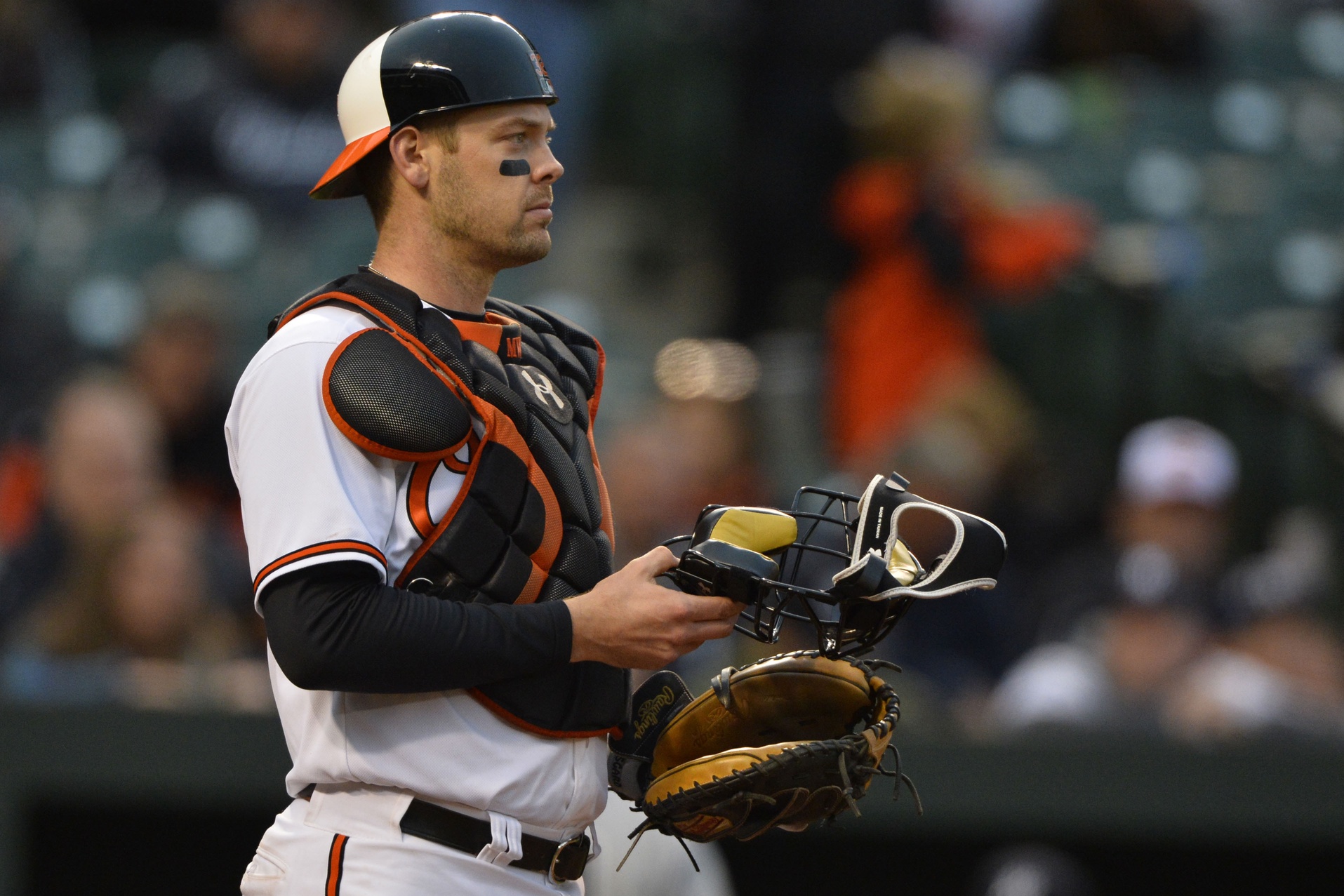 Matt Wieters was the fifth overall pick by the Orioles in 2007 draft, and within a couple of years he developed into the No. 1 prospect in baseball. A switch-hitting catcher boasting solid receiving skills to go along with power and plate discipline, Wieters looked like the whole package, and many viewed him as the player who would supplant Joe Mauer (who was enjoying his MVP season when Wieters came into the league in 2009) as the game's best backstop. He didn't quite fulfill that immense promise, but Wieters did hit .255/.319/.420 with 87 home runs while appearing in two All-Star Games over his first five seasons in the majors. Elbow problems in 2014 led to Tommy John surgery, and the recovery process limited him to 101 total games over the past two seasons. Still, he kept hitting when he was on the field, and his arm looked fine after he returned this summer. There are inherently going to be question marks surrounding a guy who has missed as much time as he has recently, but Wieters has done enough on the field to minimize those concerns. His market this winter is going to be interesting. He's hardly a superstar but he's really the only bona fide starting catcher in the free agent field. And it's just not very often that you see players of his pedigree and youth (he doesn't turn 30 until next May) openly available. The competitive bidding among clubs that are looking to improve at catcher could dissuade the Twins from pursuing him very seriously. But there's no doubt that it's something they need to consider. In the Offseason Handbook, we estimated a Wieters contract at four years and $60 million, which is roughly in line with the 4/64 estimate that MLB Trade Rumors laid out last week. In our Twins Daily Offseason Blueprint within the Handbook, we actually suggest signing Wieters, because his appeal is obvious. He's the rare example of a long-term core player that can be added at a somewhat reasonable price through free agency, and with the Twins organization sorely lacking for any kind of legitimate prospects at the position, his addition would shore up the most obvious weakness in the system. But in order to take the plunge on Wieters, Terry Ryan and the Twins would really, really have to be believers in him. He would require a substantial investment. For starters, his theoretical contract would be the largest ever given to a free agent by this franchise, surpassing Ervin Santana's $55 million deal last year. And even our (and MLBTR's) estimate might be on the low side, given that his agent is Scott Boras and Minnesota isn't necessarily viewed as the most desirable of destinations. Adding Wieters would also mean relegating Kurt Suzuki, who is owed $6 million in 2016, to strict backup status, and committing upwards of $20 million to the catcher position next year. That's a tough pill to swallow, but I think most (including Twins brass) would agree that Suzuki shouldn't be assured any kind of role based on his contract. He was a backup-caliber player this year, through and through, and that has largely been true throughout his career. The final impediment with Wieters is that signing him will cost the Twins a draft pick, since the Orioles are expected to make him a qualifying offer. In tandem with Santana last year, that would be two straight offseasons in which Ryan forfeited a high pick to sign a free agent to a long-term contract. This would be extremely uncharacteristic, but if the Twins are truly making an all-out push for contention mode, and are fully committed to addressing their hole at catcher with authority, all options need to be on the table. Fortunately, if the sacrifices necessary to land Wieters are deemed too great, there are plenty of other options out there. Nobody outside of him in free agency really projects as a reliable full-time starter, but there are some players who would be a strong fit in a time-sharing scenario with Suzuki, offering the potential to move into a more regular role. Those players – guys like Alex Avila, A.J. Pierzynski and Dioner Navarro – are probably the ones that Ryan and the Twins will target more aggressively. But there are also some rather compelling trade possibilities. We'll take a look at some of them in the coming days and weeks. If you want to learn more about Wieters, as well as the rest of the free agent crop and numerous trade targets, please consider picking up a copy of the Offseason Handbook today. With 101 pages of dynamite content, it's a must-have for Twins fans as Hot Stove season officially gets underway.
 -
On Sunday night, the Royals vanquished the Mets to capture the World Series. Sadly, that means the 2016 baseball season has officially reached an end. But on the bright side, it means Hot Stove season is just about to get going. You'll be fully prepared as a Twins fan with the Twins Daily 2016 Offseason Handbook, which is now available for download!If you preordered, you have already received an email notification for your download. If you did not preorder, you can follow this link to purchase your copy of the Handbook and download it immediately. This fully loaded, beautifully designed ebook contains 101 pages of content providing you with a comprehensive preview of the MLB offseason landscape delivered from a distinctly Twins-centric standpoint. It's perfect for reading on a computer or tablet, and can also be printed out. Among the sections that you'll find inside the Offseason Handbook: A lengthy, exclusive interview with Twins general manager Terry RyanBreakdowns of the organization's current depth and needsAn in-depth overview of payroll commitments and arbitration estimatesProfiles of available free agents for every positionsWriteups on trade candidates for the Twins, and players they could targetMuch more!DOWNLOAD THE HANDBOOK NOW http://s22.postimg.org/q13ddj2pd/hbsamp.png The Twins Daily Offseason Handbook puts you in the shoes of Twins GM, allowing you to use all of the information listed above to formulate your own educated opinions and build your offseason blueprint. If you'd like to get a peek at what's inside before buying, you can download this free seven-page sample with snapshots of various sections. By purchasing a copy of the 2016 Offseason Handbook, you are not only getting an awesome product that you'll love at a killer price, you're also supporting the free content that appears here on Twins Daily year-round. Thank you, as always, for your support. And enjoy! Buy and download the Handbook here. Click here to view the article
-
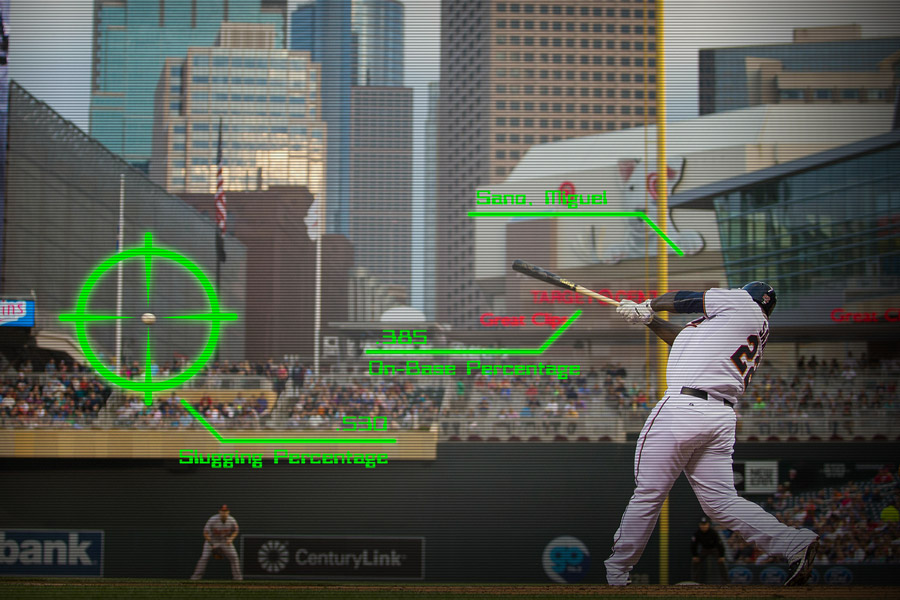 If you preordered, you have already received an email notification for your download. If you did not preorder, you can follow this link to purchase your copy of the Handbook and download it immediately. This fully loaded, beautifully designed ebook contains 101 pages of content providing you with a comprehensive preview of the MLB offseason landscape delivered from a distinctly Twins-centric standpoint. It's perfect for reading on a computer or tablet, and can also be printed out. Among the sections that you'll find inside the Offseason Handbook: A lengthy, exclusive interview with Twins general manager Terry Ryan Breakdowns of the organization's current depth and needs An in-depth overview of payroll commitments and arbitration estimates Profiles of available free agents for every positions Writeups on trade candidates for the Twins, and players they could target Much more! DOWNLOAD THE HANDBOOK NOW http://s22.postimg.org/q13ddj2pd/hbsamp.png The Twins Daily Offseason Handbook puts you in the shoes of Twins GM, allowing you to use all of the information listed above to formulate your own educated opinions and build your offseason blueprint. If you'd like to get a peek at what's inside before buying, you can download this free seven-page sample with snapshots of various sections. By purchasing a copy of the 2016 Offseason Handbook, you are not only getting an awesome product that you'll love at a killer price, you're also supporting the free content that appears here on Twins Daily year-round. Thank you, as always, for your support. And enjoy! Buy and download the Handbook here.
 -
Article: The End Of The Road
Nick Nelson replied to Nick Nelson's topic in Twins Daily Front Page News
That doesn't exactly clash with my phrasing. I never said that the loyalty and affinity were a one-way street. -
When Torii Hunter made his major-league debut for the Twins in August of 1997, Flip Saunders had recently completed his first full season as head coach of the Timberwolves, in which he led the team to its first ever playoff berth. That period marked the start of two careers in sport that would transform each man into a local legend. They followed their own distinct paths, branching out in different directions, but ultimately converged back where it all started so many years ago. As it turns out, that is also where both roads would come to an end.When Hunter was donning an MLB jersey for the first time and the Wolves were just getting started on a lengthy run of first-round playoff exits, I was an 11-year-old boy in his formative years as a sports fan. I became a Wolves fan while Flip was leading the team to (albeit fruitless) postseason berths year after year. I became a far more hardcore Twins fan while Hunter was entrenched as the one enduring constant on four division-winning clubs from 2002 through 2006. Needless to say, the last couple days have struck me with a lot of emotions. On Monday, Hunter announced that he has decided to end his career as a player, one day after Saunders' career as a coach and executive was tragically cut short. I have always been a huge Flip Saunders fan. He did big things for a Timberwolves franchise that lacked an identity until he (and a kid named Kevin Garnett) gave them one. And now, after returning, he has created the foundation for what could very well be an even better run. But what I truly admired was the fact that Flip was, at his core, a total rube. I'll never forget listening to sports talk radio while riding in the passenger seat of my dad's car and hearing some riled up host ranting on the Wolves, only to be refuted by an animated Saunders who had (of course) been listening, and called in to defend himself. It was amazing, and it was not an infrequent occurrence. That part of Flip never really went away. Up until the last few months, he was still doing weekly spots with Dan Barreiro; the "Friday Funkadelic" was my favorite thing on the radio, by far. Here you had the general manager AND head coach of the local pro basketball team, yukking it up on drivetime radio, sometimes deflecting Barreiro's probes for inside tidbits with a chuckle, and sometimes slyly dropping illuminating insights. Flip's death on Sunday was a profoundly sad event, and one that hit me hard personally as I look ahead to my 30th birthday on Thursday. He was only 60, and that sure doesn't seem as old to me as it once did now that I'm checking in at the halfway point. Hunter's retirement on Monday, conversely, brought out a vastly different set of feelings. It isn't a cause for somber reflection, but rather a cause for celebration. His career was exceptional, and he ended it on his terms. He probably did the Twins a favor, robbing them of the temptation to try and squeeze one more year out of a popular yet declining veteran, at a point where he really isn't a logical fit. Hunter's return this year, and this week's retirement announcement, stir up a strong cocktail of mixed emotions. On the one hand, I have always loved him as a player. He was an incredibly consistent force in center field as Minnesota ushered in a new era of competitive baseball. Every year, Hunter hit around 25 home runs and posted an OPS around .800. Every year he added another Gold Glove to his shelf, establishing himself as an all-time Web Gem king. And while I wasn't exactly enamored with his return this season from a purely baseball standpoint, there's just no denying that his decision to finish his career here is pretty damn cool. I mean, think about it. Through 18 big-league seasons and eight postseason appearances, Hunter has NEVER been to the World Series. He passed up a chance to play for the Royals, who went to the big dance last year and are back there now, opting instead for a blatantly rebuilding team coming off four straight 90-loss seasons, almost solely out of loyalty and deep-rooted affinity. But this is where the internal conflict arises. Because on the other hand, Hunter has said some things off the field that have really rubbed me the wrong way. And while I'm very much accustomed to setting aside the personal dispositions and quirks of professional athletes in order to enjoy them as performers, some of his outspoken remarks regarding gay marriage and homosexuality in general have been off-putting to me on a rather visceral level. But as the passing of Saunders on Sunday reminds, life is short. Too short for grudges, and for harping on negative traits. I may disagree with Hunter vehemently on a matter that I find important, but I don't presume his viewpoints stem from hatred – more likely a rigidly engrained belief system. Last Friday, when he interviewed Terry Ryan for the Offseason Handbook, our Parker Hageman asked the general manager about Hunter's impact, and the response was unsurprisingly filled with praise. As a follow-up, Parker asked whether Ryan would seek to replace Hunter's veteran presence in the event that the outfielder chose to retire. The GM fumbled for words a bit. "Well, we'll see what happens, I don't know," he said tersely. "Let's see what happens before we worry about replacing him." Ryan could not have been surprised by Monday's announcement – by all accounts, Hunter's leaning was no secret – but still it was a difficult reality to come to grips with, and not just for the GM, as this tweet from La Velle E. Neal alludes: The positive sentiment toward Hunter stretches well beyond the Twins' front office, extending to his teammates, his opponents, his coaches and the media members that cover him. He smiles infectiously, embraces a leadership role, and played the game awfully hard for nearly two decades. Hunter styled himself after Kirby Puckett, and he didn't come all that short of matching Puck's transcendent presence on the baseball field. But like Puckett, Hunter is not without flaws. My disagreeing with his views isn't going to change them. I hope that he becomes more enlightened over time in that regard but either way I'm not going to dwell on his opinion. Instead, I'll appreciate the spectacular things he did on the field, and the allegiance he ultimately showed to the Twins organization, while looking forward to seeing his next move in the game. Where one road ends, another begins. Click here to view the article
-
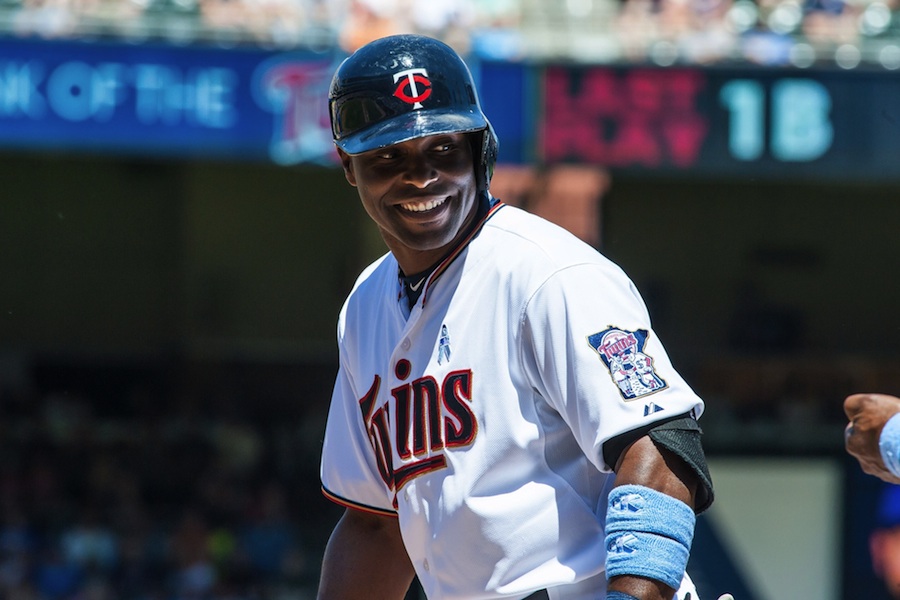 When Hunter was donning an MLB jersey for the first time and the Wolves were just getting started on a lengthy run of first-round playoff exits, I was an 11-year-old boy in his formative years as a sports fan. I became a Wolves fan while Flip was leading the team to (albeit fruitless) postseason berths year after year. I became a far more hardcore Twins fan while Hunter was entrenched as the one enduring constant on four division-winning clubs from 2002 through 2006. Needless to say, the last couple days have struck me with a lot of emotions. On Monday, Hunter announced that he has decided to end his career as a player, one day after Saunders' career as a coach and executive was tragically cut short. I have always been a huge Flip Saunders fan. He did big things for a Timberwolves franchise that lacked an identity until he (and a kid named Kevin Garnett) gave them one. And now, after returning, he has created the foundation for what could very well be an even better run. But what I truly admired was the fact that Flip was, at his core, a total rube. I'll never forget listening to sports talk radio while riding in the passenger seat of my dad's car and hearing some riled up host ranting on the Wolves, only to be refuted by an animated Saunders who had (of course) been listening, and called in to defend himself. It was amazing, and it was not an infrequent occurrence. That part of Flip never really went away. Up until the last few months, he was still doing weekly spots with Dan Barreiro; the "Friday Funkadelic" was my favorite thing on the radio, by far. Here you had the general manager AND head coach of the local pro basketball team, yukking it up on drivetime radio, sometimes deflecting Barreiro's probes for inside tidbits with a chuckle, and sometimes slyly dropping illuminating insights. Flip's death on Sunday was a profoundly sad event, and one that hit me hard personally as I look ahead to my 30th birthday on Thursday. He was only 60, and that sure doesn't seem as old to me as it once did now that I'm checking in at the halfway point. Hunter's retirement on Monday, conversely, brought out a vastly different set of feelings. It isn't a cause for somber reflection, but rather a cause for celebration. His career was exceptional, and he ended it on his terms. He probably did the Twins a favor, robbing them of the temptation to try and squeeze one more year out of a popular yet declining veteran, at a point where he really isn't a logical fit. Hunter's return this year, and this week's retirement announcement, stir up a strong cocktail of mixed emotions. On the one hand, I have always loved him as a player. He was an incredibly consistent force in center field as Minnesota ushered in a new era of competitive baseball. Every year, Hunter hit around 25 home runs and posted an OPS around .800. Every year he added another Gold Glove to his shelf, establishing himself as an all-time Web Gem king. And while I wasn't exactly enamored with his return this season from a purely baseball standpoint, there's just no denying that his decision to finish his career here is pretty damn cool. I mean, think about it. Through 18 big-league seasons and eight postseason appearances, Hunter has NEVER been to the World Series. He passed up a chance to play for the Royals, who went to the big dance last year and are back there now, opting instead for a blatantly rebuilding team coming off four straight 90-loss seasons, almost solely out of loyalty and deep-rooted affinity. But this is where the internal conflict arises. Because on the other hand, Hunter has said some things off the field that have really rubbed me the wrong way. And while I'm very much accustomed to setting aside the personal dispositions and quirks of professional athletes in order to enjoy them as performers, some of his outspoken remarks regarding gay marriage and homosexuality in general have been off-putting to me on a rather visceral level. But as the passing of Saunders on Sunday reminds, life is short. Too short for grudges, and for harping on negative traits. I may disagree with Hunter vehemently on a matter that I find important, but I don't presume his viewpoints stem from hatred – more likely a rigidly engrained belief system. Last Friday, when he interviewed Terry Ryan for the Offseason Handbook, our Parker Hageman asked the general manager about Hunter's impact, and the response was unsurprisingly filled with praise. As a follow-up, Parker asked whether Ryan would seek to replace Hunter's veteran presence in the event that the outfielder chose to retire. The GM fumbled for words a bit. "Well, we'll see what happens, I don't know," he said tersely. "Let's see what happens before we worry about replacing him." Ryan could not have been surprised by Monday's announcement – by all accounts, Hunter's leaning was no secret – but still it was a difficult reality to come to grips with, and not just for the GM, as this tweet from La Velle E. Neal alludes: https://twitter.com/LaVelleNeal/status/658827874393305088 The positive sentiment toward Hunter stretches well beyond the Twins' front office, extending to his teammates, his opponents, his coaches and the media members that cover him. He smiles infectiously, embraces a leadership role, and played the game awfully hard for nearly two decades. Hunter styled himself after Kirby Puckett, and he didn't come all that short of matching Puck's transcendent presence on the baseball field. But like Puckett, Hunter is not without flaws. My disagreeing with his views isn't going to change them. I hope that he becomes more enlightened over time in that regard but either way I'm not going to dwell on his opinion. Instead, I'll appreciate the spectacular things he did on the field, and the allegiance he ultimately showed to the Twins organization, while looking forward to seeing his next move in the game. Where one road ends, another begins.
 -
Last week, Twins general manager Terry Ryan sat down with Twins Daily's Parker Hageman for a lengthy in-depth interview that will appear in the Offseason Handbook, which you can preorder now for $4.99 ahead of its November 2nd release. The Q&A session lasted nearly an hour and covered an expansive range of topics. Among them was Kurt Suzuki and the catcher position.Parker put it out there bluntly: "Your catchers threw out 19 percent of base stealers, and had an OPS of .591, which was only better than the Mariners. Is addressing that a high priority this offseason?" Ryan, for his part, was equally blunt: "Yeah, yeah it is." "We've got to get better in that. Kurt, to his credit, he took the post. You know, durability and taking the field when you're called upon, there's something to be said about that. We got an extreme amount of production out of him two years ago. Nobody was expecting that level going forward because, alright he had an awful good year. But somewhere in between he should settle in. "But we also need to take a look at that position, we've got to do better. To some, the whole "he took the post" thing might sound like a lame cop-out, but in this case it holds weight. As far below average as he might have been, Suzuki was the only thing standing between Chris Herrmann or Eric Fryer being in the starting lineup on a regular basis. Obviously, the entire situation points a major flaw in the roster, and Ryan admits that right up front. There is no question that the Twins will be acquiring at least one catcher in the coming months. Will they seek a supplement for Suzuki, or a replacement starter? Ryan's acknowledgement that the true Suzuki is "somewhere in between" the 2014 and 2015 versions doesn't inspire a whole lot of confidence when you consider that his midpoint OPS in those two seasons (.668) would have ranked below all but two qualified MLB catchers this year. At the very least, the Twins need to bring in someone who can split time with Suzuki, and a lefty-swinging short-term caddy would make sense in that event. Last week, Jon Heyman of CBS Sports said that "Minnesota is expected to look to bring back veteran catcher A.J. Pierzynski," who would fit the bill for a variety of reasons. Here's the Free Agent blurb on Pierzynski from the Offseason Handbook: A.J. Pierzynski, ATL Age: 39 | Bats/Throws: L/R 2015 Stats: 113 G, .300/.339/.430, 9 HR, 49 RBI 2015 Salary: $2M Pierzynski is remarkable. While we've watched countless younger catchers wear down and get forced away from the position, here he was at age 38, catching more than 100 games and batting .300 in the process. He was pretty beat up at the end of the campaign, so it's unclear if he'll feel up to returning for another year, but he can still play. He and Suzuki could be a decent – if unexciting – combo for 2016. Estimated Contract: 1 year, $5 million Pieryznski is profiled in the Offseason Handbook alongside a number of other free agent catchers, ranging from Matt Wieters (top) to Geovany Soto (bottom). We also examine numerous potential trade targets while diving deep on payroll, arbitration, 40-man roster decisions, positional depth around the organization, and more. All of that is in addition to the exclusive interview with Terry Ryan, which touches on every offseason topic and is presented in its entirety within the ebook. If you're a Twins fan, you don't want to miss out on this. For a limited time, you can preorder your Offseason Handbook for a special price of $4.99, and you'll receive it the moment it releases on November 2nd. Order today, and get the full offseason experience. Click here to view the article
-
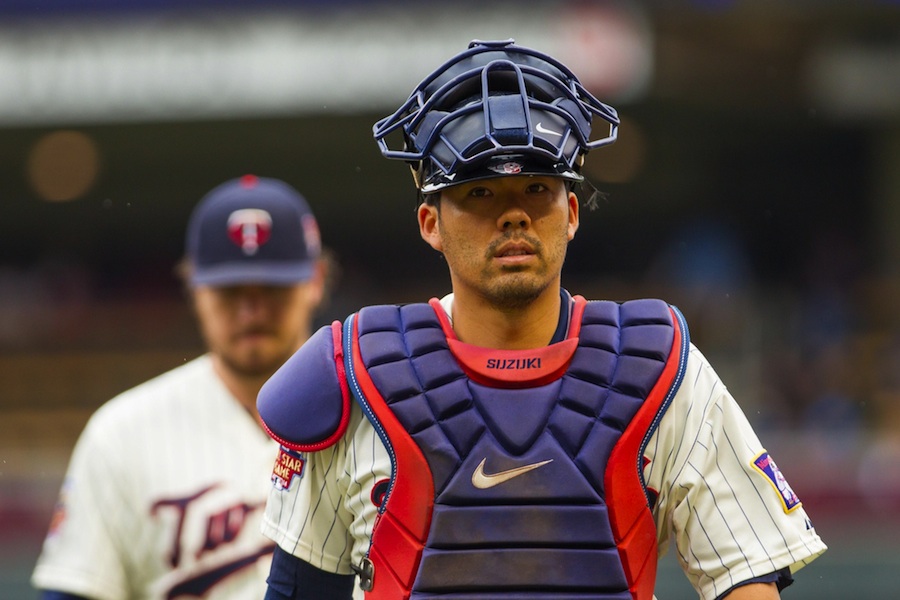 Parker put it out there bluntly: "Your catchers threw out 19 percent of base stealers, and had an OPS of .591, which was only better than the Mariners. Is addressing that a high priority this offseason?" Ryan, for his part, was equally blunt: "Yeah, yeah it is." "We've got to get better in that. Kurt, to his credit, he took the post. You know, durability and taking the field when you're called upon, there's something to be said about that. We got an extreme amount of production out of him two years ago. Nobody was expecting that level going forward because, alright he had an awful good year. But somewhere in between he should settle in. "But we also need to take a look at that position, we've got to do better. To some, the whole "he took the post" thing might sound like a lame cop-out, but in this case it holds weight. As far below average as he might have been, Suzuki was the only thing standing between Chris Herrmann or Eric Fryer being in the starting lineup on a regular basis. Obviously, the entire situation points a major flaw in the roster, and Ryan admits that right up front. There is no question that the Twins will be acquiring at least one catcher in the coming months. Will they seek a supplement for Suzuki, or a replacement starter? Ryan's acknowledgement that the true Suzuki is "somewhere in between" the 2014 and 2015 versions doesn't inspire a whole lot of confidence when you consider that his midpoint OPS in those two seasons (.668) would have ranked below all but two qualified MLB catchers this year. At the very least, the Twins need to bring in someone who can split time with Suzuki, and a lefty-swinging short-term caddy would make sense in that event. Last week, Jon Heyman of CBS Sports said that "Minnesota is expected to look to bring back veteran catcher A.J. Pierzynski," who would fit the bill for a variety of reasons. Here's the Free Agent blurb on Pierzynski from the Offseason Handbook: A.J. Pierzynski, ATL Age: 39 | Bats/Throws: L/R 2015 Stats: 113 G, .300/.339/.430, 9 HR, 49 RBI 2015 Salary: $2M Pierzynski is remarkable. While we've watched countless younger catchers wear down and get forced away from the position, here he was at age 38, catching more than 100 games and batting .300 in the process. He was pretty beat up at the end of the campaign, so it's unclear if he'll feel up to returning for another year, but he can still play. He and Suzuki could be a decent – if unexciting – combo for 2016. Estimated Contract: 1 year, $5 million Pieryznski is profiled in the Offseason Handbook alongside a number of other free agent catchers, ranging from Matt Wieters (top) to Geovany Soto (bottom). We also examine numerous potential trade targets while diving deep on payroll, arbitration, 40-man roster decisions, positional depth around the organization, and more. All of that is in addition to the exclusive interview with Terry Ryan, which touches on every offseason topic and is presented in its entirety within the ebook. If you're a Twins fan, you don't want to miss out on this. For a limited time, you can preorder your Offseason Handbook for a special price of $4.99, and you'll receive it the moment it releases on November 2nd. Order today, and get the full offseason experience.
 -
I was trying to find the right card-playing metaphor. I think you nailed it.
- 130 replies
-
- 2
-
-
- phil hughes
- ervin santana
- (and 1 more)
-
I look at Toronto's Marcus Stroman as an example of what a dominating pitcher who lacks height can look like. He's a few inches shorter than Berrios and he's a beast.
- 130 replies
-
- 2
-
-
- phil hughes
- ervin santana
- (and 1 more)
-
I'm not sure what the statistical correlation is, but scouts and analysts tend to feel that shorter pitchers can't get the same downward trajectory on their pitches, making them more susceptible to fly balls and especially home runs. Intuitively it makes sense and we've certainly seen it play out for many diminutive hurlers. We just haven't seen that with Berrios, at all. He's not a ground ball guy necessarily but he keeps the ball in the yard. He's given up only 25 homers in 440 innings, including just 12 last year in 27 starts as a 21-year-old in AA and AAA.
-
Are you arguing that Cueto was somehow instrumental in getting the Royals to the playoffs? He's been more of a negative than a positive since coming over. The Royals made it to the World Series last year without a real "ace." They'll probably do it this year with Cueto struggling. I don't think bringing them up as an example supports the point you're trying to make.
- 130 replies
-
- 3
-
-
- phil hughes
- ervin santana
- (and 1 more)
-
Last week, on Twitter and in the Twins Daily forum, I posed a hypothetical question: If you were the Twins GM, and you had the chance to trade Jose Berrios and Max Kepler for Oakland's Sonny Gray, would you do it? The responses varied widely – everywhere from "Yes, in a split-second" to "Not in a million years." But the uncomfortable proposition of parting with both the organization's reigning minor-league pitcher and hitter of the year highlights a dreary and relevant reality: Acquiring an "ace" pitcher is really, really difficult.Outlook for the 2016 Rotation The Twins had plenty of solid depth in their starting corps this season, with five different starters making 15-plus starts and posting an ERA that was close to or slightly above average. What was lacking, however, was a true standout No. 1. Kyle Gibson earned that billing by default, as he led the way in innings and ERA, but his ERA ranked 48th among big-league starters and his K-rate ranked 60th. A match-up between Gibson and someone like David Price, Cole Hamels or Dallas Keuchel in a Game 1 postseason tilt would have been tragically lopsided. So as the Twins try to solidify themselves as true contenders this offseason, the search for that top-tier arm to lead the rotation is a primary consideration, and one that we cover extensively in the upcoming Offseason Handbook (now available for preorder!). Before we dig into the topic here, let's ask ourselves a question: Does An Ace Really Matter That Much? It seems inherently obvious. Many teams have ridden their horse to October glory, with last year's Giants and Madison Bumgarner serving as a prime example. But having that premier starter at the front of your rotation doesn't come close to guaranteeing anything. This year, we saw the Royals ship out some great young talent to acquire Johnny Cueto from the Reds at the deadline, only to watch the righty post a 5.27 ERA in 16 starts between the regular season and postseason. Cueto was pretty much the definition of an ace starter when Kansas City acquired him. He'd been Cincinnati's No. 1 for years, had pitched in big postseason games, and had the second-lowest ERA among all MLB starters since 2011, trailing only the inimitable Clayton Kershaw. Yet, as the Royals learned, and as the Twins have learned on a smaller scale with Ervin Santana and Ricky Nolasco, you don't always know what you're getting. Even when a top starter does pitch up to his ability, it's not some magical elixir that assures postseason success. The Twins went to the playoffs four times from 2002 through 2006, and the only time they won a series was when Johan Santana was NOT in the rotation. Paying The Price In any case, clearly, having a high-end starter fronting the rotation makes a team better, both in the regular season and playoffs. So what would it cost for the Twins to reel in an elite pitching talent? The top name on the free agent market is David Price, who could land a record-setting deal coming off a Cy Young caliber season in which he had an enormous impact for the Blue Jays following a deadline trade. It seems safe to assume that the Twins won't go north of $200 million on any contract. Next in line are names like Zack Greinke, Cueto and Jordan Zimmermann, but each is likely to ink a nine-figure contract. That's probably too steep. In fact, almost any lucrative long-term deal for a starter is difficult to fathom when the Twins have committed a total of $170 to Santana, Nolasco and Phil Hughes over the past two offseasons. Those big commitments to middling veterans are really limiting the Twins' flexibility to make a meaningful plunge into the pitching market. It'd be nice if they could take all those deals back and put that combined sum toward one elite arm, but alas. Outside of free agency, the avenue for acquiring a big-name starter would be a trade. As the Berrios/Kepler-for-Gray scenario illustrates, going this route would require a painful exodus of high-caliber young talent. Still, it might be worth it. Gray has established himself at a level Berrios can only hope to reach, and will be controlled at a reasonable price for many years. He's only one example, but he's certainly the type of player that Terry Ryan should be targeting if he's willing to pony up with some of his top prospects. Searching Within The alternative to all this, of course, is to stand pat and hope that someone emerges from within to provide the Twins with a legitimate No. 1 starter. I see three paths to this outcome that aren't completely unrealistic: 1) Ervin Santana pitches like he did in September for most the season. When the Twins signed Santana to a franchise-record free agent deal last winter, they were hoping he could become that No. 1 guy for them. He certainly looked the part at times. In his first four starts and last seven starts, he combined to go 7-1 with a 1.97 ERA and 1.00 WHIP. That's ace type stuff, for sure. Of course, the problem was that in between those stretches he endured a miserable slump. That's always been the story for Santana: flashes of brilliance amidst consistent inconsistency. There's a reason he has only twice posted an ERA+ higher than 111. It's tough to believe he'll pull it together for a full year, especially as he ages into his mid-30s and surpasses 2,000 innings in career workload. 2) Phil Hughes reverts to 2014 form. It gets overlooked a bit since the Twins lost 92 games, but Hughes really was an ace-caliber starter in his first season with Minnesota. He set an MLB record for K/BB ratio, his 2.65 FIP was sixth-best in baseball, and he was "quality" in 20 of his 32 starts. This year, Hughes' HR-rate spiked while his strikeouts plummeted, but decreased fastball velocity (attributable to back problems?) appeared to be the main culprit. He did maintain his elite control, proving that 2014 was no fluke in that regard, so if he can regain the zip on his heater and start missing more bats he has a chance to get back to that level. Hughes doesn't turn 30 until next June. 3) Jose Berrios fulfills his promise. Since he lacks the prototypical frame of a front-end workhorse starter, Berrios' ability to develop into the pitcher that his spectacular minor-league numbers foretell has always been in question. Yet, the kid just continues to dominate older and more experienced competition at every stop. And he's the one pitcher in the mix for the Twins who, in terms of pure stuff, can match up to the top dogs on contending clubs. Personally, I think the chances of at least one of the three possibilities mentioned above coming to fruition are good enough that I'd forego taking the drastic steps necessary to acquire an established No. 1 starter externally. How about you? Click here to view the article
- 130 replies
-
- 3
-
-
- phil hughes
- ervin santana
- (and 1 more)
-
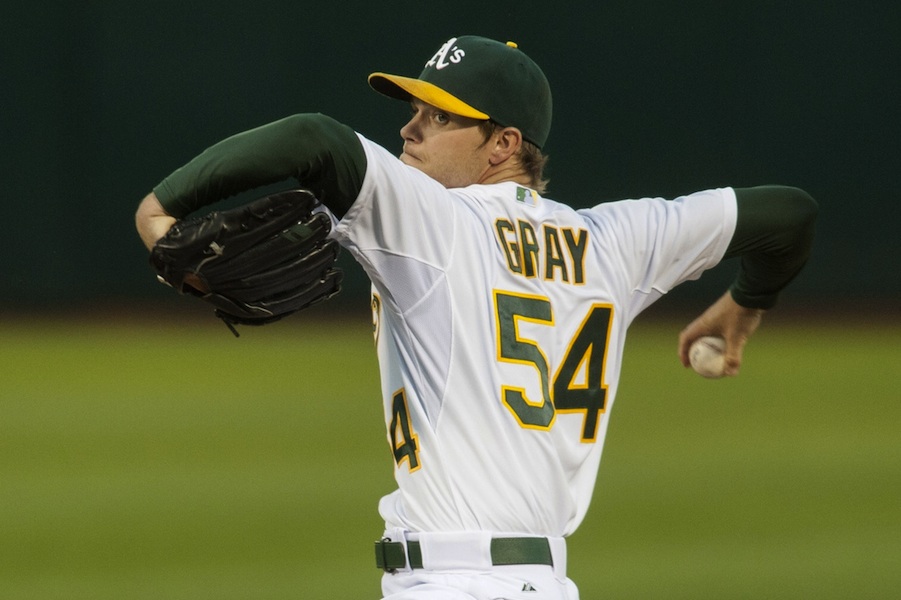 Outlook for the 2016 Rotation The Twins had plenty of solid depth in their starting corps this season, with five different starters making 15-plus starts and posting an ERA that was close to or slightly above average. What was lacking, however, was a true standout No. 1. Kyle Gibson earned that billing by default, as he led the way in innings and ERA, but his ERA ranked 48th among big-league starters and his K-rate ranked 60th. A match-up between Gibson and someone like David Price, Cole Hamels or Dallas Keuchel in a Game 1 postseason tilt would have been tragically lopsided. So as the Twins try to solidify themselves as true contenders this offseason, the search for that top-tier arm to lead the rotation is a primary consideration, and one that we cover extensively in the upcoming Offseason Handbook (now available for preorder!). Before we dig into the topic here, let's ask ourselves a question: Does An Ace Really Matter That Much? It seems inherently obvious. Many teams have ridden their horse to October glory, with last year's Giants and Madison Bumgarner serving as a prime example. But having that premier starter at the front of your rotation doesn't come close to guaranteeing anything. This year, we saw the Royals ship out some great young talent to acquire Johnny Cueto from the Reds at the deadline, only to watch the righty post a 5.27 ERA in 16 starts between the regular season and postseason. Cueto was pretty much the definition of an ace starter when Kansas City acquired him. He'd been Cincinnati's No. 1 for years, had pitched in big postseason games, and had the second-lowest ERA among all MLB starters since 2011, trailing only the inimitable Clayton Kershaw. Yet, as the Royals learned, and as the Twins have learned on a smaller scale with Ervin Santana and Ricky Nolasco, you don't always know what you're getting. Even when a top starter does pitch up to his ability, it's not some magical elixir that assures postseason success. The Twins went to the playoffs four times from 2002 through 2006, and the only time they won a series was when Johan Santana was NOT in the rotation. Paying The Price In any case, clearly, having a high-end starter fronting the rotation makes a team better, both in the regular season and playoffs. So what would it cost for the Twins to reel in an elite pitching talent? The top name on the free agent market is David Price, who could land a record-setting deal coming off a Cy Young caliber season in which he had an enormous impact for the Blue Jays following a deadline trade. It seems safe to assume that the Twins won't go north of $200 million on any contract. Next in line are names like Zack Greinke, Cueto and Jordan Zimmermann, but each is likely to ink a nine-figure contract. That's probably too steep. In fact, almost any lucrative long-term deal for a starter is difficult to fathom when the Twins have committed a total of $170 to Santana, Nolasco and Phil Hughes over the past two offseasons. Those big commitments to middling veterans are really limiting the Twins' flexibility to make a meaningful plunge into the pitching market. It'd be nice if they could take all those deals back and put that combined sum toward one elite arm, but alas. Outside of free agency, the avenue for acquiring a big-name starter would be a trade. As the Berrios/Kepler-for-Gray scenario illustrates, going this route would require a painful exodus of high-caliber young talent. Still, it might be worth it. Gray has established himself at a level Berrios can only hope to reach, and will be controlled at a reasonable price for many years. He's only one example, but he's certainly the type of player that Terry Ryan should be targeting if he's willing to pony up with some of his top prospects. Searching Within The alternative to all this, of course, is to stand pat and hope that someone emerges from within to provide the Twins with a legitimate No. 1 starter. I see three paths to this outcome that aren't completely unrealistic: 1) Ervin Santana pitches like he did in September for most the season. When the Twins signed Santana to a franchise-record free agent deal last winter, they were hoping he could become that No. 1 guy for them. He certainly looked the part at times. In his first four starts and last seven starts, he combined to go 7-1 with a 1.97 ERA and 1.00 WHIP. That's ace type stuff, for sure. Of course, the problem was that in between those stretches he endured a miserable slump. That's always been the story for Santana: flashes of brilliance amidst consistent inconsistency. There's a reason he has only twice posted an ERA+ higher than 111. It's tough to believe he'll pull it together for a full year, especially as he ages into his mid-30s and surpasses 2,000 innings in career workload. 2) Phil Hughes reverts to 2014 form. It gets overlooked a bit since the Twins lost 92 games, but Hughes really was an ace-caliber starter in his first season with Minnesota. He set an MLB record for K/BB ratio, his 2.65 FIP was sixth-best in baseball, and he was "quality" in 20 of his 32 starts. This year, Hughes' HR-rate spiked while his strikeouts plummeted, but decreased fastball velocity (attributable to back problems?) appeared to be the main culprit. He did maintain his elite control, proving that 2014 was no fluke in that regard, so if he can regain the zip on his heater and start missing more bats he has a chance to get back to that level. Hughes doesn't turn 30 until next June. 3) Jose Berrios fulfills his promise. Since he lacks the prototypical frame of a front-end workhorse starter, Berrios' ability to develop into the pitcher that his spectacular minor-league numbers foretell has always been in question. Yet, the kid just continues to dominate older and more experienced competition at every stop. And he's the one pitcher in the mix for the Twins who, in terms of pure stuff, can match up to the top dogs on contending clubs. Personally, I think the chances of at least one of the three possibilities mentioned above coming to fruition are good enough that I'd forego taking the drastic steps necessary to acquire an established No. 1 starter externally. How about you?
