



Nick Nelson
-
Posts
8,325 -
Joined
-
Last visited
-
Days Won
56
Content Type
Profiles
News
Minnesota Twins Videos
2026 Minnesota Twins Top Prospects Ranking
2022 Minnesota Twins Draft Picks
Minnesota Twins Free Agent & Trade Rumors, Notes, & Tidbits
Guides & Resources
2023 Minnesota Twins Draft Picks
The Minnesota Twins Players Project
2024 Minnesota Twins Draft Picks
2025 Minnesota Twins Draft Pick Tracker
2026 Minnesota Twins Draft Tracker: Picks & Bonuses
Forums
Blogs
Events
Store
Downloads
Gallery
Everything posted by Nick Nelson
-
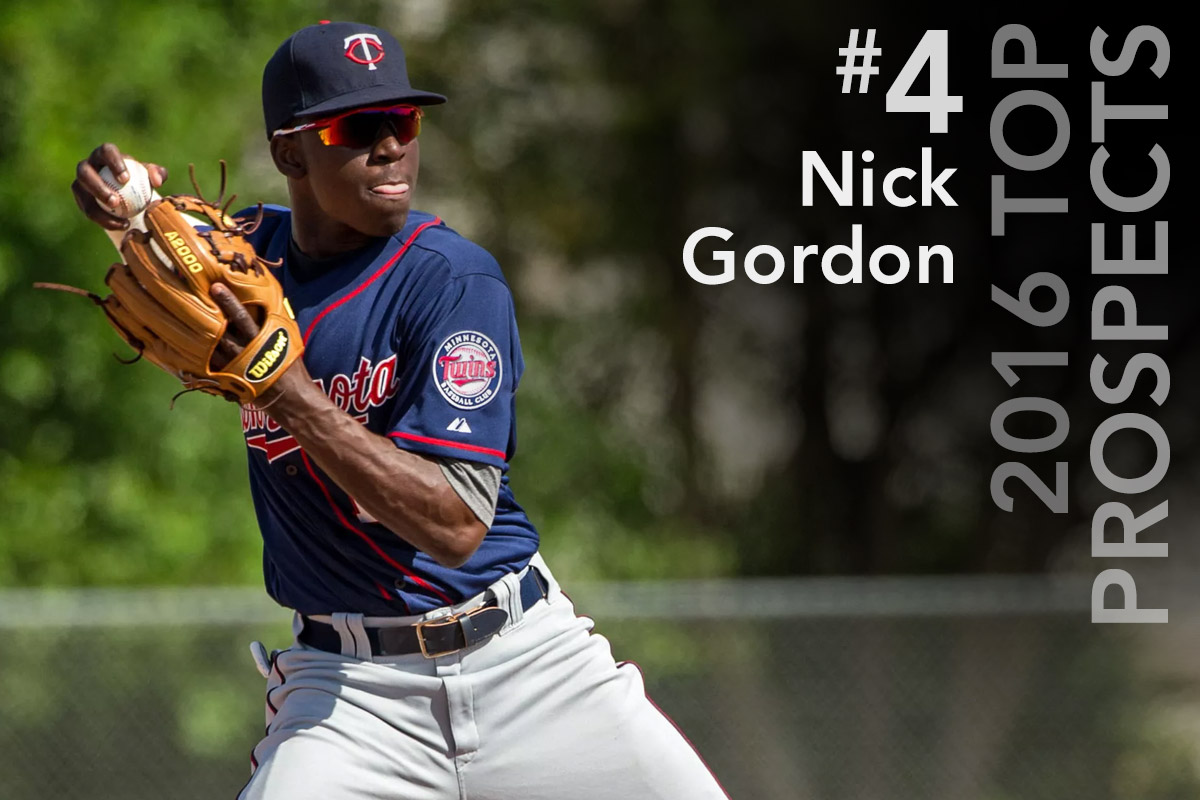 Twins Daily Top 20 Prospects For 2016 20. Jake Reed, RHP 19. Randy Rosario, LHP 18. Lewin Diaz, 1B 17. Engelb Vielma, SS 16. Taylor Rogers, LHP 15. JT Chargois, RHP 14. Jermaine Palacios, SS 13. Wander Javier, SS 12. Lewis Thorpe, LHP 11. Adam Brett Walker, OF 10. Nick Burdi, RHP 9. Kohl Stewart, RHP 8. Alex Meyer, RHP 7. Jorge Polanco, SS 6. Stephen Gonsalves, LHP 5. Tyler Jay, LHP 4. Nick Gordon, SS 3. Max Kepler, OF 2. Jose Berrios, RHP 1. Byron Buxton, OF Positional Breakdown Right-handed Pitchers: 6 Left-handed Pitchers: 5 Infielders: 6 Outfielders: 3 Catchers: 0 System Ranking Among MLB Baseball America: 10th out of 30 ESPN: 3rd out of 30 MLB.com: 5th out of 30 No Park? One thing that differentiates our top prospect listing from many other sources is that we elected not to include Byung Ho Park. We certainly could have, since he qualifies for this conversation based on his MLB rookie eligibility. Ultimately we decided that given his status as a 29-year-old longtime pro from Korea, and considering the lack of any common baseline to compare him against the prospects we were profiling, we'd be blindly guessing even more than usual by trying to rank him. John Bonnes wrote from Ft. Myers about Byung Ho Park's early progress. Reinforcements In The (Red) Wings The Twins are going to be heading into this season with their top three prospects on the verge of the major leagues. Buxton, Berrios and Kepler could all be reasonably written into the Opening Day lineup, even if two or all three are likely to open in Triple-A. Few if any other teams can boast that level of MLB-ready impact talent, and it bodes well for Minnesota's chances heading into a season with some question marks in the rotation and outfield. Glaring Weakness The one thing that sticks out from an otherwise fairly balanced positional breakdown is the lack of any catchers. Mitch Garver and Stuart Turner are viewed as the best prospective backstops on the farm but they would have appeared in the 20-30 range if we extended out our list. It's simply not a position that the Twins have prioritized; since 2010 they have drafted a catcher in the first five rounds only once (Turner was a third-rounder in 2013). This increases the pressure on the John Ryan Murphy move to pay off. John Hicks, claimed off waivers from Seattle in December, is also one to watch. He had been ranked by Baseball America as the best defensive catcher in the Mariners system and he has shown offensive ability at times in the minors. Strong At Short Of the 20 players on our list, four are shortstops – at least currently. Not all will stick there, but starting at the highest end of the defensive spectrum is a good thing. This represents a very welcome changing of the tide for a Twins organization that has been dreadfully ineffective at producing quality shortstops over the years. The fruitless pipeline has led to a revolving door on the big-league roster. Gordon, the most promising name among this group, is still multiple years away from the majors, but with Eduardo Escobar's emergence (and Polanco on hand at Triple-A), the Twins can afford to be patient. Heat Rising During his brief MLB debut last year, Alex Meyer's average fastball velocity of 95.3 MPH, per FanGraphs, was the highest for a Twins pitcher since Juan Morillo's 97.6 in 2009. Meyer's arrival was only a taste of what's to come. Nick Burdi (10) has reportedly been hitting 99 on the radar gun repeatedly here in the first week of spring training games. Jake Reed (20) can touch the upper 90s. Tyler Jay (5) and Lewis Thorpe (12) are rare lefties who can push it to 95-plus. Never before has this club seen an infusion of power arms quite like this. Arrival Timelines Based on our ETA projections, here's a loose timeline of when you can expect the top 20 prospects to start helping the big-league club. 2016: Buxton, Berrios, Kepler, Polanco, Meyer, Burdi, Walker, Chargois, Rogers 2017: Vielma, Rosario, Reed 2018: Gordon, Jay, Gonsalves, Stewart 2019: Thorpe, Palacios, Diaz 2021: Javier
 -
Max Kepler came over to the United States from Germany in 2009 as a scrawny 16-year-old with intriguing yet raw baseball skills. It was quite the contrast from the lean, muscular specimen that flat-out dominated the Southern League last summer before debuting in the majors in September.Age: 23 (DOB: 2/10/93) 2015 Stats (A+/AA): 118 G, .318/.410/.520 ETA: 2016 2015 Ranking: 12 National Rankings BA: 30 | MLB: 44 | BP: 60 What's To Like To me, Kepler has to be viewed as the most impressive international signing in franchise history. The Twins scouted and signed a kid at age 16 out of Germany, a country (and continent) that has yielded few major-league players. They gave him $800,000 on the hope that his small teenage frame would fill out into a powerful build, and that his premium innate athleticism and coordination would translate to results on the field. Regardless of what happens going forward, what he did last year at Chattanooga proved their assessment and investment astute. He has developed into exactly the type of player that the organization wishfully envisioned some seven years ago. At that point, Kepler was a smallish kid and his offensive numbers while adapting to the pro ranks reflected that. Between his first two seasons in rookie ball, he hit one home run in 87 games, posting a .356 slugging percentage. But he showed a good approach at the plate, especially for his age, and that remained true while he gradually climbed the ladder. Even with some promising signs and productive stretches, though, Kepler gave little hint in his first five seasons of what was coming in 2015. While making the jump from Single-A to Double-A, which many consider to be the toughest transition in the minors, Kepler thrived. Actually, that's putting it quite mildly. His .947 OPS led the Southern League by more than 40 points, and was almost 250 points above the league average. He batted .322 and filled the stat sheet with 32 doubles, 13 triples, nine homers and 18 steals on 22 attempts. He struck out only 63 times in 482 PA and drew 67 walks. Facing left-handers, previously a prominent weakness in his game, was no issue; he had an even better average against them than righties. Suddenly, Kepler was showing no real vulnerabilities at the plate, and it basically made him slump-proof. During one ridiculous 11-day stretch in June, he batted over .500 with five triples and five steals. This is a guy who has never really been known for his speed, mind you. The 22-year-old was just dominating on a level that is rarely seen. Granted, it's just one season. But for various reasons, it's hard to look at it as a fluke. This kid can play. What's Left To Work On It's tough to find any real flaws in Kepler's performance last year. He was constantly a steady force at the plate and his glove work received positive reviews at first base and all three outfield positions. What he needs to do now is back it up. If Kepler had consistently been hitting the way he did last year, he'd be one of the top prospects in the game. However, that is not the case. The only time prior to last year that he had topped a .736 OPS at any level was in 2012 when he was repeating at Elizabethton as a 19-year-old. He's very likely to open this season at Triple-A, the final stage he must master before graduating to the majors full-time. Then it's just a matter of proving it against big-league pitchers. If there's one thing that I've seen scouts continue to criticize regarding Kepler (and I think there might only be one thing), it's that he still sometimes has trouble picking up spin and reading breaking balls. This figures to be his biggest test at the highest level. What's Next Under different circumstances, Kepler would be heading to camp with a very real chance of winning a big-league job. But with Eddie Rosario and Miguel Sano lined up in the outfield corners (not to mention Oswaldo Arcia out of options), and with center not really being Kepler's ideal spot, he's most likely going to have to wait. Minnesota's depth in the outfield gives them the luxury of continuing to take it slow with the young outfielder. If we reach July and he's clobbering Triple-A pitching, though, it will create some urgency to make room for him... or to dangle him as trade bait for a major midseason upgrade. ----- TD Top Prospect #10: Nick Burdi TD Top Prospect #9: Kohl Stewart TD Top Prospect #8: Alex Meyer TD Top Prospect #7: Jorge Polanco TD Top Prospect #6: Stephen Gonsalves TD Top Prospect #5: Tyler Jay TD Top Prospect #4: Nick Gordon Click here to view the article
-
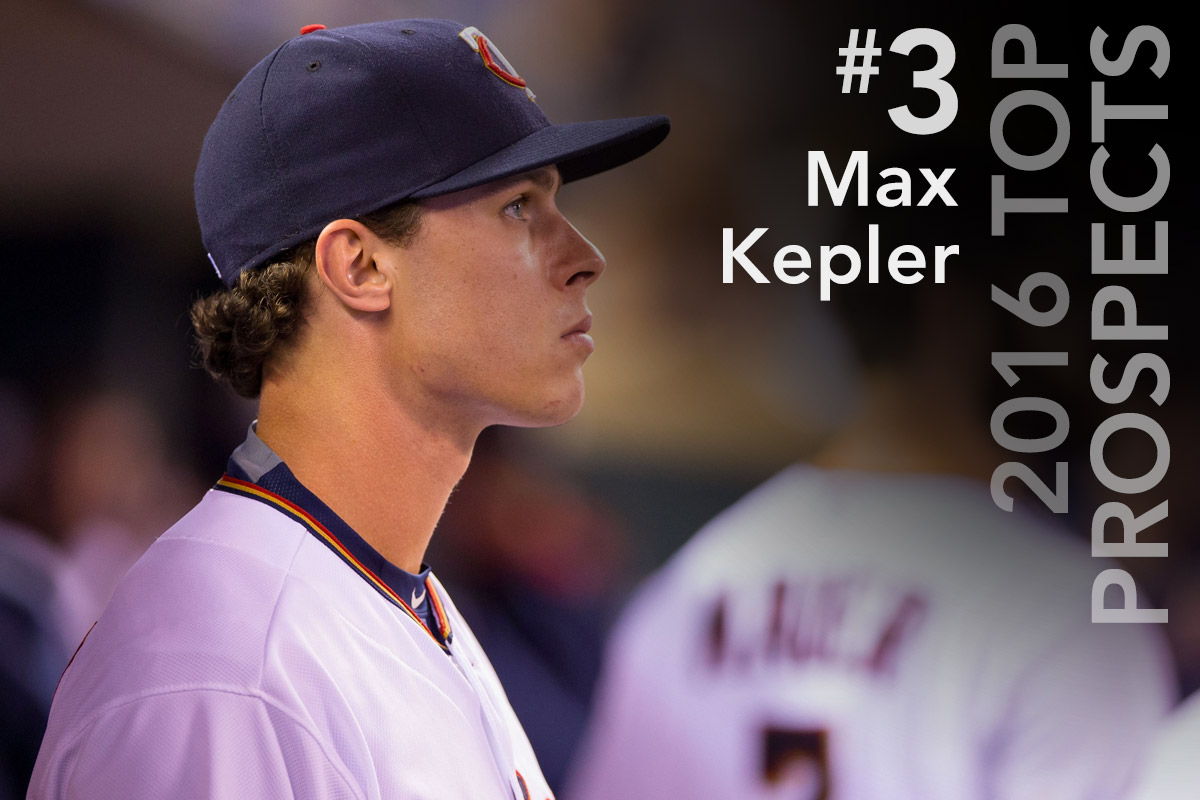 Age: 23 (DOB: 2/10/93) 2015 Stats (A+/AA): 118 G, .318/.410/.520 ETA: 2016 2015 Ranking: 12 National Rankings BA: 30 | MLB: 44 | BP: 60 What's To Like To me, Kepler has to be viewed as the most impressive international signing in franchise history. The Twins scouted and signed a kid at age 16 out of Germany, a country (and continent) that has yielded few major-league players. They gave him $800,000 on the hope that his small teenage frame would fill out into a powerful build, and that his premium innate athleticism and coordination would translate to results on the field. Regardless of what happens going forward, what he did last year at Chattanooga proved their assessment and investment astute. He has developed into exactly the type of player that the organization wishfully envisioned some seven years ago. At that point, Kepler was a smallish kid and his offensive numbers while adapting to the pro ranks reflected that. Between his first two seasons in rookie ball, he hit one home run in 87 games, posting a .356 slugging percentage. But he showed a good approach at the plate, especially for his age, and that remained true while he gradually climbed the ladder. Even with some promising signs and productive stretches, though, Kepler gave little hint in his first five seasons of what was coming in 2015. While making the jump from Single-A to Double-A, which many consider to be the toughest transition in the minors, Kepler thrived. Actually, that's putting it quite mildly. His .947 OPS led the Southern League by more than 40 points, and was almost 250 points above the league average. He batted .322 and filled the stat sheet with 32 doubles, 13 triples, nine homers and 18 steals on 22 attempts. He struck out only 63 times in 482 PA and drew 67 walks. Facing left-handers, previously a prominent weakness in his game, was no issue; he had an even better average against them than righties. Suddenly, Kepler was showing no real vulnerabilities at the plate, and it basically made him slump-proof. During one ridiculous 11-day stretch in June, he batted over .500 with five triples and five steals. This is a guy who has never really been known for his speed, mind you. The 22-year-old was just dominating on a level that is rarely seen. Granted, it's just one season. But for various reasons, it's hard to look at it as a fluke. This kid can play. What's Left To Work On It's tough to find any real flaws in Kepler's performance last year. He was constantly a steady force at the plate and his glove work received positive reviews at first base and all three outfield positions. What he needs to do now is back it up. If Kepler had consistently been hitting the way he did last year, he'd be one of the top prospects in the game. However, that is not the case. The only time prior to last year that he had topped a .736 OPS at any level was in 2012 when he was repeating at Elizabethton as a 19-year-old. He's very likely to open this season at Triple-A, the final stage he must master before graduating to the majors full-time. Then it's just a matter of proving it against big-league pitchers. If there's one thing that I've seen scouts continue to criticize regarding Kepler (and I think there might only be one thing), it's that he still sometimes has trouble picking up spin and reading breaking balls. This figures to be his biggest test at the highest level. What's Next Under different circumstances, Kepler would be heading to camp with a very real chance of winning a big-league job. But with Eddie Rosario and Miguel Sano lined up in the outfield corners (not to mention Oswaldo Arcia out of options), and with center not really being Kepler's ideal spot, he's most likely going to have to wait. Minnesota's depth in the outfield gives them the luxury of continuing to take it slow with the young outfielder. If we reach July and he's clobbering Triple-A pitching, though, it will create some urgency to make room for him... or to dangle him as trade bait for a major midseason upgrade. ----- TD Top Prospect #10: Nick Burdi TD Top Prospect #9: Kohl Stewart TD Top Prospect #8: Alex Meyer TD Top Prospect #7: Jorge Polanco TD Top Prospect #6: Stephen Gonsalves TD Top Prospect #5: Tyler Jay TD Top Prospect #4: Nick Gordon
 -

Article: 5 Must-Watch Storylines At Spring Training
Nick Nelson replied to Nick Nelson's topic in Twins Daily Front Page News
Not sure why Tonkin is being grouped in here. He's 26 with a mid-90s fastball and a 9.7 K/9 in Triple-A. They'd be foolish not to give him a real shot.- 27 replies
-
- 3
-

-
- miguel sano
- byron buxton
- (and 2 more)
-
The Lee County Sports Complex has sprung to life over the past week, with dozens of ballplayers reporting to the Twins' spring training home for the six-week ramp-up to the regular season. As usual, Twins Daily will be featuring on-site coverage from Ft. Myers throughout the month of March, starting this week with John Bonnes sharing stories and observations as the exhibition schedule gets underway on Wednesday. This is shaping up to be the most compelling spring training for the Twins in some time. Most of the roster spots are essentially decided going in, but the few that aren't loom large. Over the course of a month's worth of Grapefruit League games and camp activities, there will be a number of crucial experiments and auditions playing out. These five, in my mind, will be the most riveting. 1. Miguel Sano in right field. If you follow any Twins writers on Twitter, be prepared for a barrage of tweets every time a fly ball or liner is hit to right field this month. It only makes sense to pick apart every movement Sano makes when a ball is hit his way, because that's all the data we'll have to go on as he enters his first season, ever, as an outfielder. Sano has been working with last year's right fielder, Torii Hunter, as he embarks upon his one-month crash course on playing a position – and side of the field – where he has zero experience as a professional. Of course, no amount of tutelage or instruction can truly prepare you for the real thing, and when Sano trots out to the outfield it will be his first time doing so in a game since he signed as a 16-year-old back in 2009. Twins officials insist that he's going to surprise us, and so does Sano. Bill Parker expressed some optimism in his article here on Monday. Let's find out. 2. Byung Ho Park at the plate. While Sano is seeing line drives slice toward him in the outfield for the first time, Park will be getting introduced to his own uncharted territory: facing major-league pitchers. Paul Molitor says he is likely to give the newly signed Korean slugger a larger share of reps this month to aid his acclimation before the games start mattering. The Twins have publicly tried to downplay initial expectations a bit, and the manager isn't even sure if he's ready to view Park as an everyday player yet. Certainly, some patience is warranted as the 29-year-old makes this hugely challenging transition. But closely watching his at-bats this spring, seeing the types of reads he makes on outside sliders, and the quality of swings he puts on tough offspeed pitches, should give us valuable clues regarding his likelihood of success. I won't get too worked up if he doesn't hit much (though I'll be curious to see if that opens a door for someone like Carlos Quentin or Kennys Vargas). If Park starts hot and launches one or two into the pond that lies beyond Hammond Stadium's center field concourse, it'll be hard not to get a little excited. 3. Phil Hughes and his fastball velocity. During his Grapefruit League starts last year, Hughes showed noticeably diminished fastball velocity compared to the previous season, when he had ranked among the game's best starters and set an all-time MLB record for K/BB ratio. That's not terribly uncommon, as many pitchers need time to work up to their peak arm strength, but in this instance Hughes never got there. The righty went on to average just 90.7 MPH with his heater during the regular season – a career low. This was one symptom of an overall reduction in effectiveness that led to his strikeout rate plummeting and his home run rate skyrocketing. According to reports, Hughes has arrived at camp looking more fit after an intense offseason conditioning program aimed at improving flexibility and strengthening his back. He's lined up to start the team's preseason opener against the Red Sox on Wednesday. If he's topping out in the 80s in his first action of the year it won't be too alarming, but I'll be closely monitoring his radar gun readings as we inch toward April. Hughes is a pivotal figure in the rotation. He's still under 30. With his elite control, he has one key ingredient in the frontline starter equation. He has shown that when at full strength he can miss enough bats to offset his fly ball tendencies. The more we see hitters swinging late on his fastball or swinging over his slider this month, the better we can feel about Hughes' chances of returning somewhere close to that exceptional 2014 form. 4. The Jose Berrios Show. A year ago, many onlookers opined that Berrios had the best stuff of any pitcher in Twins camp. Unfortunately, he didn't get to stick around long. The 20-year-old had minimal experience above Single-A and wasn't a candidate to make the big-league club, so he was cut early on in order to get ample work on the minors side. But during his brief audition, which included two impressive starts, the electric right-hander turned plenty of heads. Now, he arrives with a very strong case for a starting job after shredding up the highest level of the minors in 2015. Granted, his odds of being in the Twins rotation on Opening Day are long, because waiting until late April or beyond could yield the team a full extra year of his services before free agency. That's not being cheap, it's just a logical cost/benefit equation, and a tactic frequently used by teams across the league. But at some point, if it becomes blindingly obvious that Berrios is the best starting pitcher in camp, all bets are off, right? Molitor is surely more interested in winning now than worrying about hypothetical scenarios six years down the line, and if Berrios is lights-out each time he takes the mound while some others fail to impress, the manager is going to want that arm. Who could blame him? Those circumstances add extra intrigue, but Berrios is also just plain fun to watch. His aggressive approach, sharp breaks and plentiful whiffs make him a joy to spectate on the mound in the same way as Francisco Liriano or Johan Santana. 5. Can Byron Buxton force the issue? The Twins have announced that they now view Danny Santana as a center fielder, and Terry Ryan has mentioned repeatedly that he feels as though he rushed Buxton to the majors last summer, so all indications at this point suggest Santana is in line to open the season between Eddie Rosario and Miguel Sano in the outfield. However, if Santana's ho-hum play from last year persists this spring while Buxton takes full advantage of his opportunities, that may very well change. Though he stumbled at the plate last year (not as badly as Santana, mind you), Buxton has made a habit of quickly adapting to new levels in the past so it'd be no shock to see him take this competition by storm. Molitor, who values aggressive baserunning and doesn't know what to expect defensively from his right fielder, is well aware of everything that Buxton can bring to the table with his unparalleled athleticism. He doesn't need to hit a ton to be a valuable piece, so if he's tearing the cover off the ball in convincing fashion it's pretty much a no-brainer, right? Click here to view the article
- 27 replies
-
- 1
-
-
- miguel sano
- byron buxton
- (and 2 more)
-
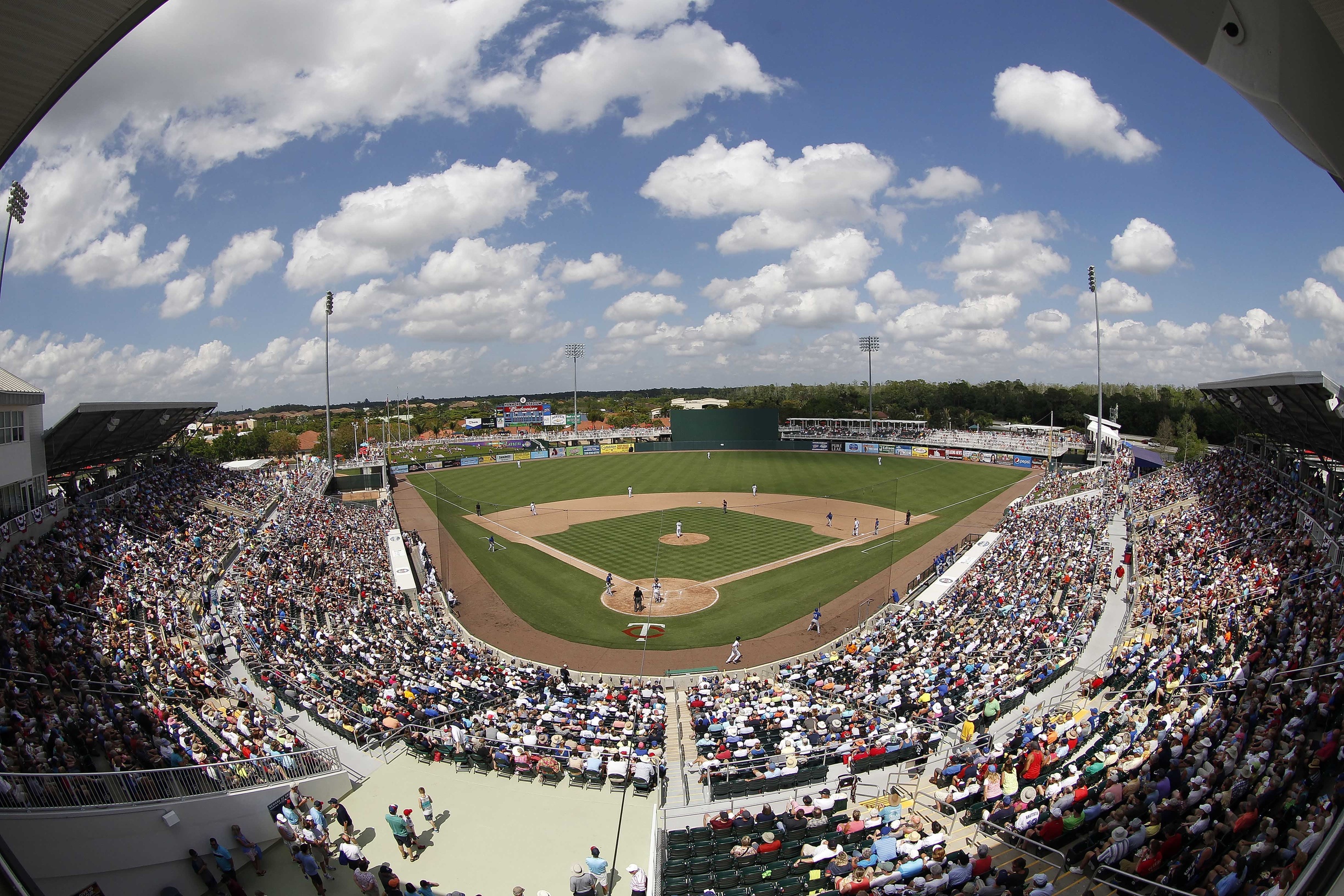 1. Miguel Sano in right field. If you follow any Twins writers on Twitter, be prepared for a barrage of tweets every time a fly ball or liner is hit to right field this month. It only makes sense to pick apart every movement Sano makes when a ball is hit his way, because that's all the data we'll have to go on as he enters his first season, ever, as an outfielder. Sano has been working with last year's right fielder, Torii Hunter, as he embarks upon his one-month crash course on playing a position – and side of the field – where he has zero experience as a professional. Of course, no amount of tutelage or instruction can truly prepare you for the real thing, and when Sano trots out to the outfield it will be his first time doing so in a game since he signed as a 16-year-old back in 2009. Twins officials insist that he's going to surprise us, and so does Sano. Bill Parker expressed some optimism in his article here on Monday. Let's find out. 2. Byung Ho Park at the plate. While Sano is seeing line drives slice toward him in the outfield for the first time, Park will be getting introduced to his own uncharted territory: facing major-league pitchers. Paul Molitor says he is likely to give the newly signed Korean slugger a larger share of reps this month to aid his acclimation before the games start mattering. The Twins have publicly tried to downplay initial expectations a bit, and the manager isn't even sure if he's ready to view Park as an everyday player yet. Certainly, some patience is warranted as the 29-year-old makes this hugely challenging transition. But closely watching his at-bats this spring, seeing the types of reads he makes on outside sliders, and the quality of swings he puts on tough offspeed pitches, should give us valuable clues regarding his likelihood of success. I won't get too worked up if he doesn't hit much (though I'll be curious to see if that opens a door for someone like Carlos Quentin or Kennys Vargas). If Park starts hot and launches one or two into the pond that lies beyond Hammond Stadium's center field concourse, it'll be hard not to get a little excited. 3. Phil Hughes and his fastball velocity. During his Grapefruit League starts last year, Hughes showed noticeably diminished fastball velocity compared to the previous season, when he had ranked among the game's best starters and set an all-time MLB record for K/BB ratio. That's not terribly uncommon, as many pitchers need time to work up to their peak arm strength, but in this instance Hughes never got there. The righty went on to average just 90.7 MPH with his heater during the regular season – a career low. This was one symptom of an overall reduction in effectiveness that led to his strikeout rate plummeting and his home run rate skyrocketing. According to reports, Hughes has arrived at camp looking more fit after an intense offseason conditioning program aimed at improving flexibility and strengthening his back. He's lined up to start the team's preseason opener against the Red Sox on Wednesday. If he's topping out in the 80s in his first action of the year it won't be too alarming, but I'll be closely monitoring his radar gun readings as we inch toward April. Hughes is a pivotal figure in the rotation. He's still under 30. With his elite control, he has one key ingredient in the frontline starter equation. He has shown that when at full strength he can miss enough bats to offset his fly ball tendencies. The more we see hitters swinging late on his fastball or swinging over his slider this month, the better we can feel about Hughes' chances of returning somewhere close to that exceptional 2014 form. 4. The Jose Berrios Show. A year ago, many onlookers opined that Berrios had the best stuff of any pitcher in Twins camp. Unfortunately, he didn't get to stick around long. The 20-year-old had minimal experience above Single-A and wasn't a candidate to make the big-league club, so he was cut early on in order to get ample work on the minors side. But during his brief audition, which included two impressive starts, the electric right-hander turned plenty of heads. Now, he arrives with a very strong case for a starting job after shredding up the highest level of the minors in 2015. Granted, his odds of being in the Twins rotation on Opening Day are long, because waiting until late April or beyond could yield the team a full extra year of his services before free agency. That's not being cheap, it's just a logical cost/benefit equation, and a tactic frequently used by teams across the league. But at some point, if it becomes blindingly obvious that Berrios is the best starting pitcher in camp, all bets are off, right? Molitor is surely more interested in winning now than worrying about hypothetical scenarios six years down the line, and if Berrios is lights-out each time he takes the mound while some others fail to impress, the manager is going to want that arm. Who could blame him? Those circumstances add extra intrigue, but Berrios is also just plain fun to watch. His aggressive approach, sharp breaks and plentiful whiffs make him a joy to spectate on the mound in the same way as Francisco Liriano or Johan Santana. 5. Can Byron Buxton force the issue? The Twins have announced that they now view Danny Santana as a center fielder, and Terry Ryan has mentioned repeatedly that he feels as though he rushed Buxton to the majors last summer, so all indications at this point suggest Santana is in line to open the season between Eddie Rosario and Miguel Sano in the outfield. However, if Santana's ho-hum play from last year persists this spring while Buxton takes full advantage of his opportunities, that may very well change. Though he stumbled at the plate last year (not as badly as Santana, mind you), Buxton has made a habit of quickly adapting to new levels in the past so it'd be no shock to see him take this competition by storm. Molitor, who values aggressive baserunning and doesn't know what to expect defensively from his right fielder, is well aware of everything that Buxton can bring to the table with his unparalleled athleticism. He doesn't need to hit a ton to be a valuable piece, so if he's tearing the cover off the ball in convincing fashion it's pretty much a no-brainer, right?
 -
In 2014, the Twins used their second draft pick to select the best collegiate closer in the nation, Nick Burdi, whom I profiled last week as our choice for the 10th-best prospect in the organization. A year later, they once again set their sights on the top closer in college baseball, this time taking Tyler Jay out of the University of Illinois at No. 6 overall.Age: 21 (DOB: 4/19/94) 2015 Stats (A+): 18.1 IP, 3.93 ERA, 22/8 K/BB, 1.42 WHIP ETA: 2018 2015 Ranking: N/A National Rankings BA: 80 | MLB: 60 | BP: NR What's To Like Read a few articles on Jay, dating back to the days when pro scouts were still evaluating him in college, and you'll see him repeatedly characterized as a "late-bloomer." He even describes himself as such. While attending high school in suburban Illinois, Jay was a talented yet gangly hurler at around 6'0" and 150 lbs. His fastball sat in the mid-80s and he didn't attract a whole lot of attention from big-name college programs. He ended up staying close to home, committing to the Fighting Illini after his senior year in 2012. Jay had a solid freshman season with Illinois but his coming-out party came as a sophomore. As he added weight and strength, he also added ticks of velocity, inching up into the mid-90s. He took over as the team's closer and posted stellar numbers, finishing the season with a 1.94 ERA, 0.98 WHIP and 47-to-13 K/BB ratio in 41 2/3 innings. That summer, the lefty was invited to join the U.S. National Team, and that's where he really burst onto the scene. Playing alongside the country's most elite collegiate talent, Jay made a team-high 15 appearances and didn't allow a run, striking out 21 and holding opponents to a .130 batting average. The next year he returned as closer for Illinois and enjoyed his best season, tallying 14 saves with a 1.08 ERA and 0.70 WHIP. By this point he was routinely hitting 95 from the left side with good command and strong secondary pitches, a combination that placed him squarely in the Top 10 discussion for the upcoming MLB draft. The question: Which team was going to gamble such a high pick on a relief pitcher? As it turns out, that team was Minnesota. The selection was based on the Twins' belief that Jay could develop into an impact starter as a pro, an opinion that is reinforced by many independent scouting reports. His frame, mechanics and assortment of different quality pitches all position him as a candidate for a successful transition to the rotation. For what it's worth, the decision to use him as closer instead of starter at Illinois was not based on Jay's limitations. Coach Dan Hartleb trusted the other starting options he had, and liked Jay's makeup at the end of games. Evidently it was a good decision because the Fighting Illini enjoyed their best season in program history. But another major thing to like about Jay is his relatively high floor. Because even if he doesn't take as a starter, he looks like almost a lock to be an impact lefty relief arm in the majors, given the way he has thoroughly dominated in that role at even the highest levels of collegiate competition. What's Left To Work On We can talk all day about how Jay has the skills and traits required to become a starter, but at this point, the fact is that he hasn't done it. Of the 71 appearances he made over three years with the Illini, only two were starts, and all 19 of his outings with the Ft. Myers Miracle after signing last year came out of the bullpen. We simply don't know how his body will adjust to the rigors of throwing 90-100 pitches every fifth day, or whether taking something off the pitches that he's been able to maximize by throwing in short stints will dramatically alter his effectiveness. What's Next More than any other prospect profiled on this list, the 2016 season is immensely important for Jay, because he'll finally be making the big leap to starting after being eased in at Single-A as a reliever last summer. The 21-year-old will presumably open the year back at Ft. Myers, because moving up a level while also adapting to an unfamiliar role is quite a bit to ask. If Jay comes out as a starter throwing in the mid-90s, missing bats and getting sterling results, he'll probably finish the year in Double-A and by this time next year he'll be viewed as one of the best left-handed pitching prospects in the minors. If the transition does not go smoothly, the Twins are going to have to ask themselves just how long they want to screw around with trying to make it work, especially in light of the fact that he could likely be fast-tracked to the majors as a reliever. -------- Previous Installments: TD Top Prospects: 16-20 TD Top Prospects: 11-15 TD Top Prospects: #10 Nick Burdi TD Top Prospects: #9 Kohl Stewart TD Top Prospects: #8 Alex Meyer TD Top Prospects: #7 Jorge Polanco TD Top Prospects: #6 Stephen Gonsalves Click here to view the article
-
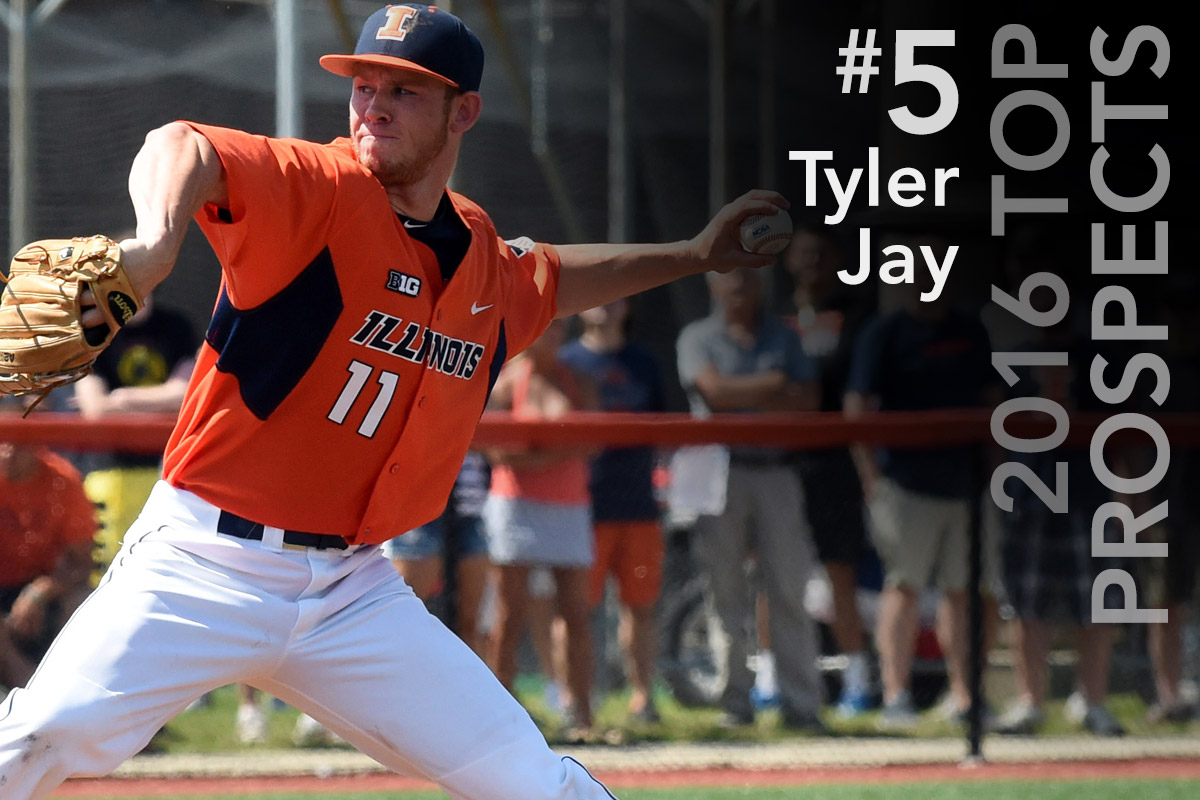 Age: 21 (DOB: 4/19/94) 2015 Stats (A+): 18.1 IP, 3.93 ERA, 22/8 K/BB, 1.42 WHIP ETA: 2018 2015 Ranking: N/A National Rankings BA: 80 | MLB: 60 | BP: NR What's To Like Read a few articles on Jay, dating back to the days when pro scouts were still evaluating him in college, and you'll see him repeatedly characterized as a "late-bloomer." He even describes himself as such. While attending high school in suburban Illinois, Jay was a talented yet gangly hurler at around 6'0" and 150 lbs. His fastball sat in the mid-80s and he didn't attract a whole lot of attention from big-name college programs. He ended up staying close to home, committing to the Fighting Illini after his senior year in 2012. Jay had a solid freshman season with Illinois but his coming-out party came as a sophomore. As he added weight and strength, he also added ticks of velocity, inching up into the mid-90s. He took over as the team's closer and posted stellar numbers, finishing the season with a 1.94 ERA, 0.98 WHIP and 47-to-13 K/BB ratio in 41 2/3 innings. That summer, the lefty was invited to join the U.S. National Team, and that's where he really burst onto the scene. Playing alongside the country's most elite collegiate talent, Jay made a team-high 15 appearances and didn't allow a run, striking out 21 and holding opponents to a .130 batting average. The next year he returned as closer for Illinois and enjoyed his best season, tallying 14 saves with a 1.08 ERA and 0.70 WHIP. By this point he was routinely hitting 95 from the left side with good command and strong secondary pitches, a combination that placed him squarely in the Top 10 discussion for the upcoming MLB draft. The question: Which team was going to gamble such a high pick on a relief pitcher? As it turns out, that team was Minnesota. The selection was based on the Twins' belief that Jay could develop into an impact starter as a pro, an opinion that is reinforced by many independent scouting reports. His frame, mechanics and assortment of different quality pitches all position him as a candidate for a successful transition to the rotation. For what it's worth, the decision to use him as closer instead of starter at Illinois was not based on Jay's limitations. Coach Dan Hartleb trusted the other starting options he had, and liked Jay's makeup at the end of games. Evidently it was a good decision because the Fighting Illini enjoyed their best season in program history. But another major thing to like about Jay is his relatively high floor. Because even if he doesn't take as a starter, he looks like almost a lock to be an impact lefty relief arm in the majors, given the way he has thoroughly dominated in that role at even the highest levels of collegiate competition. What's Left To Work On We can talk all day about how Jay has the skills and traits required to become a starter, but at this point, the fact is that he hasn't done it. Of the 71 appearances he made over three years with the Illini, only two were starts, and all 19 of his outings with the Ft. Myers Miracle after signing last year came out of the bullpen. We simply don't know how his body will adjust to the rigors of throwing 90-100 pitches every fifth day, or whether taking something off the pitches that he's been able to maximize by throwing in short stints will dramatically alter his effectiveness. What's Next More than any other prospect profiled on this list, the 2016 season is immensely important for Jay, because he'll finally be making the big leap to starting after being eased in at Single-A as a reliever last summer. The 21-year-old will presumably open the year back at Ft. Myers, because moving up a level while also adapting to an unfamiliar role is quite a bit to ask. If Jay comes out as a starter throwing in the mid-90s, missing bats and getting sterling results, he'll probably finish the year in Double-A and by this time next year he'll be viewed as one of the best left-handed pitching prospects in the minors. If the transition does not go smoothly, the Twins are going to have to ask themselves just how long they want to screw around with trying to make it work, especially in light of the fact that he could likely be fast-tracked to the majors as a reliever. -------- Previous Installments: TD Top Prospects: 16-20 TD Top Prospects: 11-15 TD Top Prospects: #10 Nick Burdi TD Top Prospects: #9 Kohl Stewart TD Top Prospects: #8 Alex Meyer TD Top Prospects: #7 Jorge Polanco TD Top Prospects: #6 Stephen Gonsalves
 -
Article: Early Camp Tidbits
Nick Nelson replied to Nick Nelson's topic in Twins Daily Front Page News
Vargas was added to the 40-man roster after the 2013 season, so I believe this is his last option year. That's the only question there that is remotely easy to answer. It's really hard to figure out what's going to happen with Vargas. As you mentioned, the only way he's getting into the lineup is injuries. There seemed to be some real frustration with him last year with the demotion to Double-A. I don't know that there's anything he can do in Triple-A that will boost his trade value by a ton. His only skill is hitting and until he proves that he can reliably do that in the majors there's not a lot of incentive to give up anything for him. It'd be a shame to lose him for nothing though. I do think that he's going to eventually figure it out and be a quality MLB slugger. Maybe an opportunity will arise this year and he'll take advantage. -
Pitchers and catchers officially reported to Ft. Myers on Sunday, and today is the deadline for position players to show up, so spring training is officially underway in full force. The Twins will have their first full team workout on Saturday and the exhibition schedule gets underway next Wednesday when the club travels across town to face the Red Sox. Here's some of the noteworthy buzz from the first week of preliminary spring action.* Mike Berardino of the Pioneer Press writes that reliever J.R. Graham is down more than 30 pounds after finishing the 2015 season at 210. The difference is noticeable, evidently, as Terry Ryan stated that Graham "looked like a different human being." It will be interesting to see how the weight loss affects his performance on the mound. Velocity was the righty's calling card last season -- his 94.7 MPH average fastball speed ranked second only to Alex Meyer, who made two appearances -- but throwing hard isn't everything, as evidenced by his underwhelming final numbers. If Graham trades in a few ticks of velo in exchange for improved command and effectiveness with his secondary offerings, that'd be just fine. He faces long odds to make the big-league bullpen out of spring training though. * Graham isn't the only player who has shown up to camp noticeably lighter. Phil Miller notes that Kennys Vargas has trimmed down by 14 pounds after playing almost 40 games this winter between the Puerto Rican winter league and the Caribbean World Series. Vargas is aiming for a bench spot this spring but has a steep uphill battle ahead of him with another slugging DH type (Oswaldo Arcia) ahead in line and the Twins likely to be targeting flexibility from backups. * Rhett Bollinger writes that the Twins are "all in" on Miguel Sano's move to the outfield, as Paul Molitor has stated that the young slugger will not be playing any third base this year barring injury. There are already 12 pages of discussion on this development in our forum, so I won't dwell on it too much. Suffice to say that if the still-developing Sano played almost no third base in the second half of last season and isn't going to play it at all this year, the writing is on the wall: he's not going to play the position in the major leagues. Of course, that much seemed clear to some of us three years ago. * Two relievers who could play into the Twins' 2016 bullpen plans are toying with split-finger pitches in order to give hitters a different look this year. Berardino reports that righty Nick Burdi is tinkering with a split-finger fastball while Ryan O'Rourke has spent the offseason working on a split-change he learned from Eddie Guardado. In both cases, the thought process makes a lot of sense. Burdi's splitter is said to register in the low 80s, almost 20 MPH slower than his average fastball velocity. This would give hitters a significantly different look compared to the barrage of scalding heaters and sliders. Meanwhile, O'Rourke's new offering is intended to keep right-handed hitters off-balance, a high priority given his historical troubles with them. * Neal Cotts, who spent the final months of last season in Minnesota, signed a minor-league deal with the Astros earlier today. The Twins never showed much interest in him as a free agent and that's probably the right call given that he's not a clear upgrade over anything they currently have in camp. Still, I remain surprised that Terry Ryan hasn't sought out another experienced lefty for the bullpen, and I continue to be curious about Matt Thornton, who is coming off a very solid season in Washington and remains a free agent as we prepare to flip the calendar to March. He's got to land somewhere soon. Click here to view the article
-
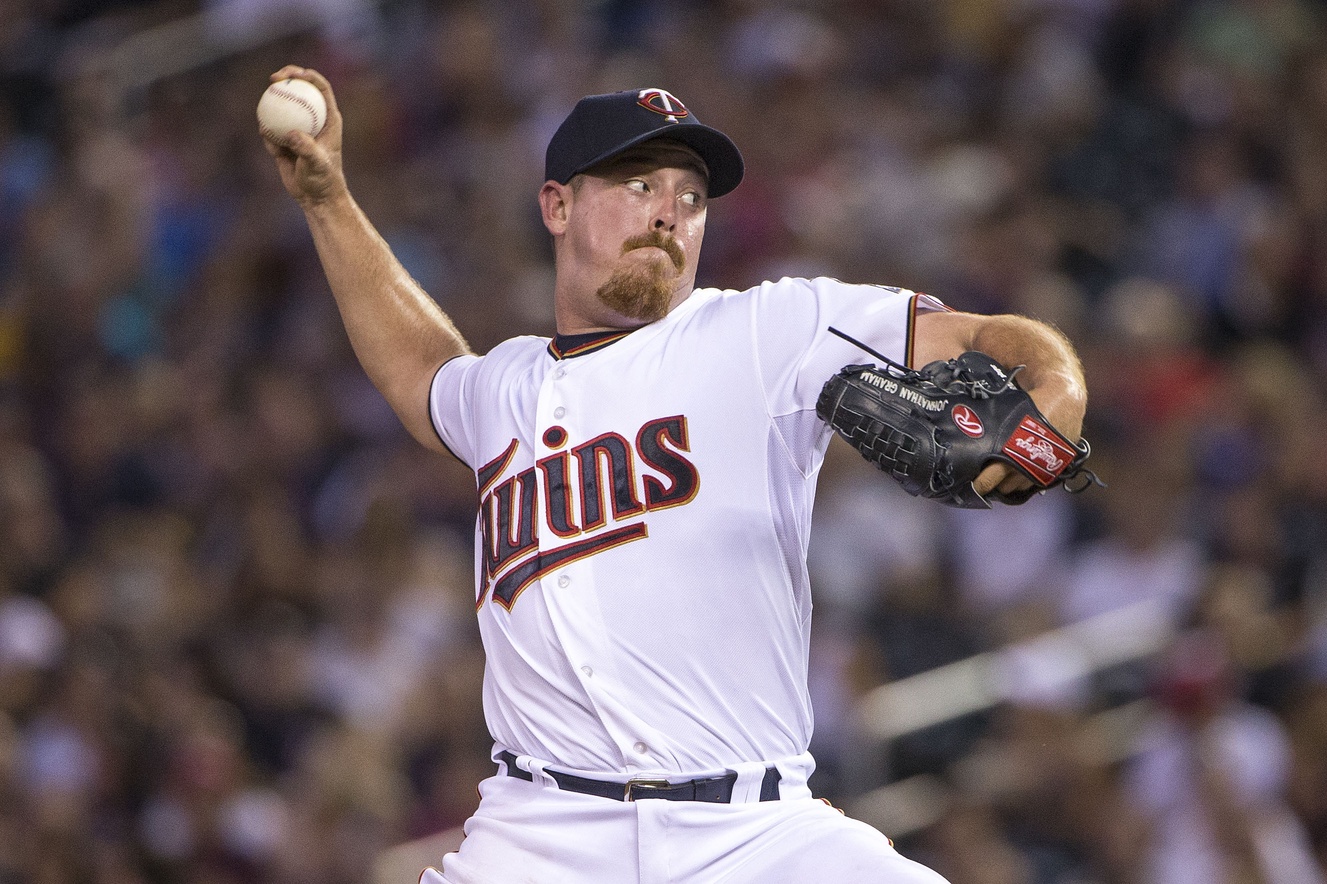 * Mike Berardino of the Pioneer Press writes that reliever J.R. Graham is down more than 30 pounds after finishing the 2015 season at 210. The difference is noticeable, evidently, as Terry Ryan stated that Graham "looked like a different human being." It will be interesting to see how the weight loss affects his performance on the mound. Velocity was the righty's calling card last season -- his 94.7 MPH average fastball speed ranked second only to Alex Meyer, who made two appearances -- but throwing hard isn't everything, as evidenced by his underwhelming final numbers. If Graham trades in a few ticks of velo in exchange for improved command and effectiveness with his secondary offerings, that'd be just fine. He faces long odds to make the big-league bullpen out of spring training though. * Graham isn't the only player who has shown up to camp noticeably lighter. Phil Miller notes that Kennys Vargas has trimmed down by 14 pounds after playing almost 40 games this winter between the Puerto Rican winter league and the Caribbean World Series. Vargas is aiming for a bench spot this spring but has a steep uphill battle ahead of him with another slugging DH type (Oswaldo Arcia) ahead in line and the Twins likely to be targeting flexibility from backups. * Rhett Bollinger writes that the Twins are "all in" on Miguel Sano's move to the outfield, as Paul Molitor has stated that the young slugger will not be playing any third base this year barring injury. There are already 12 pages of discussion on this development in our forum, so I won't dwell on it too much. Suffice to say that if the still-developing Sano played almost no third base in the second half of last season and isn't going to play it at all this year, the writing is on the wall: he's not going to play the position in the major leagues. Of course, that much seemed clear to some of us three years ago. * Two relievers who could play into the Twins' 2016 bullpen plans are toying with split-finger pitches in order to give hitters a different look this year. Berardino reports that righty Nick Burdi is tinkering with a split-finger fastball while Ryan O'Rourke has spent the offseason working on a split-change he learned from Eddie Guardado. In both cases, the thought process makes a lot of sense. Burdi's splitter is said to register in the low 80s, almost 20 MPH slower than his average fastball velocity. This would give hitters a significantly different look compared to the barrage of scalding heaters and sliders. Meanwhile, O'Rourke's new offering is intended to keep right-handed hitters off-balance, a high priority given his historical troubles with them. * Neal Cotts, who spent the final months of last season in Minnesota, signed a minor-league deal with the Astros earlier today. The Twins never showed much interest in him as a free agent and that's probably the right call given that he's not a clear upgrade over anything they currently have in camp. Still, I remain surprised that Terry Ryan hasn't sought out another experienced lefty for the bullpen, and I continue to be curious about Matt Thornton, who is coming off a very solid season in Washington and remains a free agent as we prepare to flip the calendar to March. He's got to land somewhere soon.
 -
You don't see a lot of pure relievers taken within the first 50 picks of the MLB draft, but the Twins used their second pick in 2014 – 46th overall – to select Nick Burdi. They had big plans for him and his dominating fastball, which had first caught their attention several years earlier. Those big plans still remain in place, even if a rather tumultuous 2015 season has set them back a little bit.Age: 23 (DOB: 1/19/93) 2015 Stats (A+/AA): 63.2 IP, 3.82 ERA, 83/35 K/BB, 1.37 WHIP ETA: 2016 2015 Ranking: 10 National Top 100 Rankings BA: NR | MLB: NR | BP: NR What's To Like Burdi started gaining national attention when he was touching 95 MPH with his fastball as a high schooler, a rare feat. He entered the draft after his senior year, expecting to be selected between the third and fifth rounds, but his well known signing bonus demands scared teams away. He fell all the way to the 24th, where the Twins – developing a heightened interest in big-velo power arms – took a shot on him. As expected, Burdi elected not to sign. He honored his commitment to the University of Louisville, where he played three seasons and turned into one of the nation's top closers. In 2014, his junior year, he notched 18 saves with a 0.49 ERA and ridiculous 65-to-10 K/BB ratio in 37 innings. When the 6-foot-5 right-hander re-entered the draft, the Twins took him again, 22 rounds higher, and this time signed him with a $1.2 million bonus. By the end of his collegiate career, Burdi's fastball was touching triple digits. With his premium velocity and absurd numbers at Louisville, he had the looks of a late-inning weapon and very possibly an eventual MLB closer. Unlike many other college relievers that the Twins drafted highly with designs on converting them to starters, there was never any real thought of changing Burdi's role. He reported straight to Single-A after signing in 2014 and made impressive stops at both Cedar Rapids and Ft. Myers, piling up 38 strikeouts in 20 innings. What's Left To Work On Burdi opened the 2015 season as the closer for a stacked Chattanooga team managed by Doug Mientkiewicz. Just two steps away from the majors at the outset of his first full professional season, the 22-year-old righty was very much on the fast track. But it was here that Burdi's control issues, which had mostly gone missing since he walked all four batters he faced in his pro debut, flared up again. In his first outing for the Lookouts, he came on to close out a 3-0 lead in the season-opener and was charged with four runs on four walks and a hit, costing Chattanooga the game. Things didn't get a whole lot smoother after that. Burdi totaled 12 walks in his first seven appearances, then found himself demoted from the closer role and – at the end of June – from Double-A altogether. Frustrated by his continued struggles, the Twins sent Burdi back to Class-A Ft. Myers. For a young pitcher whose extreme confidence would be labeled by some as cocky, it was perhaps a needed dose of humility. Burdi quickly turned things around at Single-A, posting a phenomenal 29-to-3 K/BB ratio in 20 innings, and moved back up six weeks later. He finished with a clean month at Chattanooga, then headed to the Arizona Fall League, where he was nearly perfect in eight scoreless outings. It seems safe to say that whatever momentum was lost during that ugly first half of 2015 has now been regained. What's Next Burdi still hasn't shown that he can keep the walks in check at Double-A. Even during his successful return to the Lookouts bullpen in August, he handed out multiple free passes in four of eight appearances. Until he can sustainably keep it in the zone at that level, it's hard to see him being moved up to the majors or even Triple-A. Most likely he'll start the year back in Chattanooga, and if he can get off to a better start this time around he'll be well positioned for in-season promotions to Rochester and maybe Minnesota. Mike Berardino reported earlier this week that the right-hander is experimenting with adding a split-finger to his fastball/slider mix, which would give hitters a significantly different look. I suspect that a strong belief in Burdi's ability and impending readiness played a large part in Terry Ryan's decision to mostly skip the free agent relief market this offseason. Click here to view the article
-
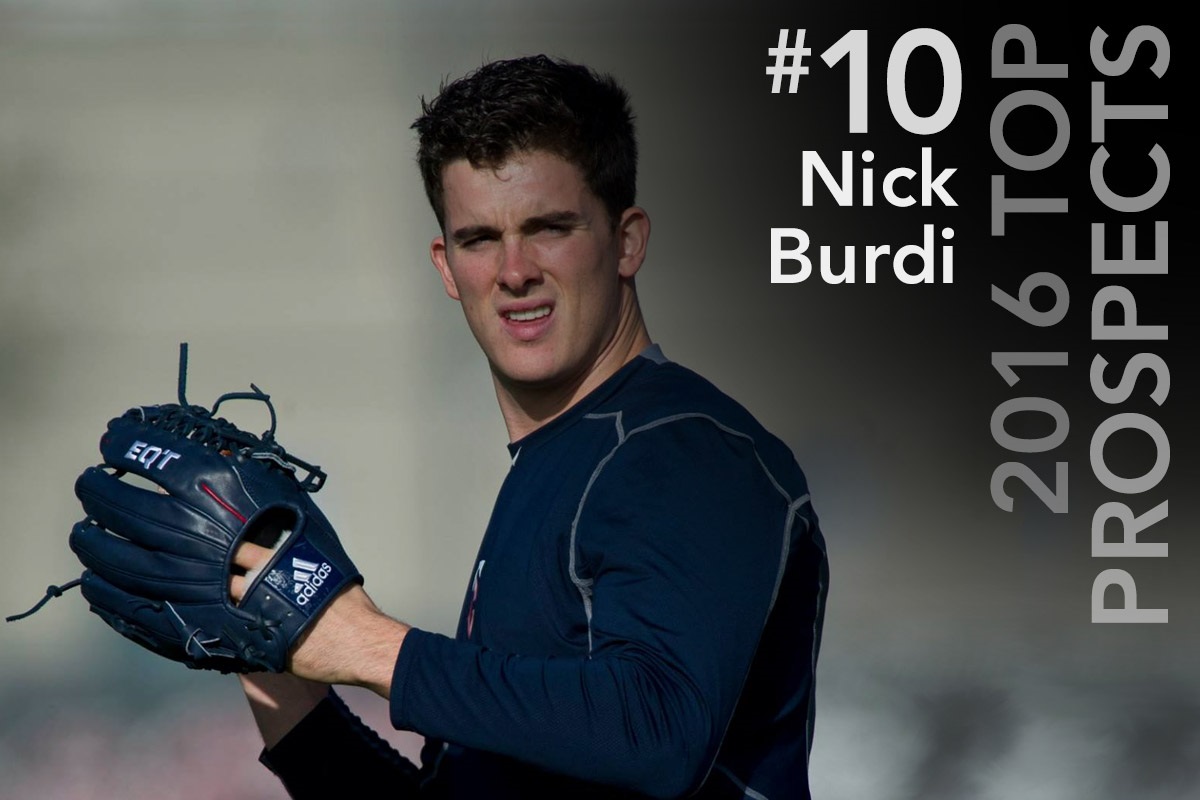 Age: 23 (DOB: 1/19/93) 2015 Stats (A+/AA): 63.2 IP, 3.82 ERA, 83/35 K/BB, 1.37 WHIP ETA: 2016 2015 Ranking: 10 National Top 100 Rankings BA: NR | MLB: NR | BP: NR What's To Like Burdi started gaining national attention when he was touching 95 MPH with his fastball as a high schooler, a rare feat. He entered the draft after his senior year, expecting to be selected between the third and fifth rounds, but his well known signing bonus demands scared teams away. He fell all the way to the 24th, where the Twins – developing a heightened interest in big-velo power arms – took a shot on him. As expected, Burdi elected not to sign. He honored his commitment to the University of Louisville, where he played three seasons and turned into one of the nation's top closers. In 2014, his junior year, he notched 18 saves with a 0.49 ERA and ridiculous 65-to-10 K/BB ratio in 37 innings. When the 6-foot-5 right-hander re-entered the draft, the Twins took him again, 22 rounds higher, and this time signed him with a $1.2 million bonus. By the end of his collegiate career, Burdi's fastball was touching triple digits. With his premium velocity and absurd numbers at Louisville, he had the looks of a late-inning weapon and very possibly an eventual MLB closer. Unlike many other college relievers that the Twins drafted highly with designs on converting them to starters, there was never any real thought of changing Burdi's role. He reported straight to Single-A after signing in 2014 and made impressive stops at both Cedar Rapids and Ft. Myers, piling up 38 strikeouts in 20 innings. What's Left To Work On Burdi opened the 2015 season as the closer for a stacked Chattanooga team managed by Doug Mientkiewicz. Just two steps away from the majors at the outset of his first full professional season, the 22-year-old righty was very much on the fast track. But it was here that Burdi's control issues, which had mostly gone missing since he walked all four batters he faced in his pro debut, flared up again. In his first outing for the Lookouts, he came on to close out a 3-0 lead in the season-opener and was charged with four runs on four walks and a hit, costing Chattanooga the game. Things didn't get a whole lot smoother after that. Burdi totaled 12 walks in his first seven appearances, then found himself demoted from the closer role and – at the end of June – from Double-A altogether. Frustrated by his continued struggles, the Twins sent Burdi back to Class-A Ft. Myers. For a young pitcher whose extreme confidence would be labeled by some as cocky, it was perhaps a needed dose of humility. Burdi quickly turned things around at Single-A, posting a phenomenal 29-to-3 K/BB ratio in 20 innings, and moved back up six weeks later. He finished with a clean month at Chattanooga, then headed to the Arizona Fall League, where he was nearly perfect in eight scoreless outings. It seems safe to say that whatever momentum was lost during that ugly first half of 2015 has now been regained. What's Next Burdi still hasn't shown that he can keep the walks in check at Double-A. Even during his successful return to the Lookouts bullpen in August, he handed out multiple free passes in four of eight appearances. Until he can sustainably keep it in the zone at that level, it's hard to see him being moved up to the majors or even Triple-A. Most likely he'll start the year back in Chattanooga, and if he can get off to a better start this time around he'll be well positioned for in-season promotions to Rochester and maybe Minnesota. Mike Berardino reported earlier this week that the right-hander is experimenting with adding a split-finger to his fastball/slider mix, which would give hitters a significantly different look. I suspect that a strong belief in Burdi's ability and impending readiness played a large part in Terry Ryan's decision to mostly skip the free agent relief market this offseason.
 -
It's that time of year. Pitchers and catchers officially reported to spring training on Sunday, and now things will begin ramping up toward the start of exhibition action in 10 days. As usual, Twins Daily will be on-site in Ft. Myers with in-depth coverage of camp throughout the month of March. Over the next couple of weeks, we'll lead up to that coverage by listing and profiling our choices for the Top 20 prospects in the organization.20. Jake Reed - RHP Age: 23 2015 Stats (A+/AA): 59.1 IP, 5.01 ERA, 46/22 K/BB, 1.43 WHIP ETA: 2017 After a career at the University of Oregon that featured big success after converting from starter to closer his senior year, Jake Reed was selected by the Twins in the fifth round of the 2014 draft. After signing, he made 20 appearances between rookie-level Elizabethton and Low-A Cedar Rapids and dominated with his scorching heater, piling up 39 strikeouts while allowing only 11 hits and three walks over 31 innings. The Twins jumped Reed straight to Double-A for his first full season in the system, and the righty struggled immensely with the transition, allowing 28 earned runs on 50 hits in 45 innings before being demoted to Ft. Myers in August. His poor performance as a 22-year-old at Chattanooga raises alarms, but to some extent Reed was thrown right into fire. This will be a crucial year for him. If he bounces back strongly there's a chance he could enter the MLB bullpen picture in August or September. 19. Randy Rosario - LHP Age: 21 2015 Stats (Rookie/A): 61.2 IP, 4.52 ERA, 54/20 K/BB, 1.30 WHIP ETA: 2017 When the Twins made a wave of 40-man roster additions at the end of the 2015 season, the most interesting and unexpected name in the mix may have been Randy Rosario. On the surface, there's nothing in his numbers or progression that would suggest he was at risk of being stolen away if left unprotected. Rosario has made only 48 total appearances in the minors, and at age 21 still hasn't pitched above Low-A. But the lefty, who was signed by the Twins out of the Dominican Republic as a teenager in 2010, has an arm that would appeal to any baseball team. Before undergoing Tommy John surgery in 2014, he was touching the upper 90s with his fastball and complementing that with a nasty slider. His lack of in-game experience (he hasn't pitched more than 13 games in a pro season) makes him a major unknown, but Rosario offers a great deal of upside and the Twins recognize that. He'll probably open the season in Ft. Myers but he's in position to rise fast if he can stay healthy. 18. Lewin Diaz - 1B Age: 19 2015 Stats (Rookie): 47 G, .233/.322/.371, 4 HR, 19 R, 20 RBI ETA: 2019 The Twins signed the Dominican Lewin Diaz as a 16-year-old back in July of 2013. With a $1.4 million bonus, he became the organization's biggest amateur international signing since Miguel Sano, whom they had reeled in four years earlier. At the time of the acquisition, MLB.com had Diaz ranked as the 10th-best prospect on the international market, lauding the raw power and advanced swing mechanics for his age. Diaz has spent two seasons playing pro ball here in the States, and his performance gives us little to go on; the numbers have been rather ordinary (.244/.353/.409 between two levels of rookie ball) but he has also been a teenager facing largely older competition and growing into his body. Keep in mind that Max Kepler, who also signed originally as a 16-year-old from a foreign country, hit only one home run total over his first two seasons in the rookie leagues. Patience is required with these kids. Ultimately, power is going to be the defining trait for Diaz, who plays first base and doesn't move especially well. We should get a better idea of his true potential in that department over the next couple of years. 17. Engelb Vielma - SS Age: 21 2015 Stats (A+): 120 G, .270/.323/.306, 1 HR, 49 R, 29 RBI ETA: 2017 We'll start with the bad: he can't hit. OK, that's not exactly true. Engelb Vielma can put the bat on the ball, and his contact-plus-speed combination was enough to result in a respectable .270 average at Ft. Myers last year. But the 21-year-old, listed at a diminutive 5'11" and 150 lbs, doesn't hit the ball with any kind of authority. In 324 minor-league games, he has managed two home runs and 40 total extra-base hits. His career Isolated Power (SLG minus BA) in the minors is .046; for comparison, Ben Revere, one of the least powerful hitters in the majors, had a .078 mark as a minor-leaguer. Vielma's .627 OPS in the Florida State League was well below average. So why does he rank so highly among Twins prospects? Vielma plays premium defense at a premium position. He is the best shortstop in the system – minors or majors – and I don't think it's especially close. When you're excellent with the glove at such a crucial spot in the field, the offensive bar is lowered substantially, thus the reason that players like Andrelton Simmons and Alcides Escobar are so highly valued even though they offer little with the bat. Even accounting for that reality, Vielma doesn't look right now like a guy who will hit enough to justify a starting role in the big leagues, no matter how good he is with the mitt. But he's still young and growing, so it's reasonable to hope for some development on that front. Eduardo Escobar hit four home runs total over his first four seasons in the minors, and last year he was one of MLB's best slugging shortstops. 16. Taylor Rogers - LHP Age: 25 2015 Stats (AAA): 174 IP, 3.98 ERA, 126/44 K/BB, 1.35 WHIP ETA: 2016 Rogers has outperformed expectations since being selected out of the University of Kentucky in the 11th round of the 2012 draft. He experienced some success immediately after joining the pro ranks, and unlike many college pitchers, his numbers haven't fallen off too much as he has climbed the minor-league ladder. Last year, in his first turn at Triple-A, the lefty posted a 3.98 ERA, 1.35 WHIP, 6.5 K/9 and 2.3 BB/9 – all more or less in line with his career marks. The problem with Rogers, like many southpaws, is his extreme susceptibility against right-handed batters. At Rochester they clubbed him around to the tune of .326/.374/.457, and that doesn't exactly bode well for his chances of excelling against MLB starting lineups stacked with righties. The good news is that the 25-year-old has been utterly lethal against lefty swingers, holding them to OPS figures of .402, .555, .524 and .520 in his four seasons as a pro. He looks to have a good future ahead of him as situational reliever at the very least, and could very well be a member of the Twins bullpen on Opening Day. Click here to view the article
-
 20. Jake Reed - RHP Age: 23 2015 Stats (A+/AA): 59.1 IP, 5.01 ERA, 46/22 K/BB, 1.43 WHIP ETA: 2017 After a career at the University of Oregon that featured big success after converting from starter to closer his senior year, Jake Reed was selected by the Twins in the fifth round of the 2014 draft. After signing, he made 20 appearances between rookie-level Elizabethton and Low-A Cedar Rapids and dominated with his scorching heater, piling up 39 strikeouts while allowing only 11 hits and three walks over 31 innings. The Twins jumped Reed straight to Double-A for his first full season in the system, and the righty struggled immensely with the transition, allowing 28 earned runs on 50 hits in 45 innings before being demoted to Ft. Myers in August. His poor performance as a 22-year-old at Chattanooga raises alarms, but to some extent Reed was thrown right into fire. This will be a crucial year for him. If he bounces back strongly there's a chance he could enter the MLB bullpen picture in August or September. 19. Randy Rosario - LHP Age: 21 2015 Stats (Rookie/A): 61.2 IP, 4.52 ERA, 54/20 K/BB, 1.30 WHIP ETA: 2017 When the Twins made a wave of 40-man roster additions at the end of the 2015 season, the most interesting and unexpected name in the mix may have been Randy Rosario. On the surface, there's nothing in his numbers or progression that would suggest he was at risk of being stolen away if left unprotected. Rosario has made only 48 total appearances in the minors, and at age 21 still hasn't pitched above Low-A. But the lefty, who was signed by the Twins out of the Dominican Republic as a teenager in 2010, has an arm that would appeal to any baseball team. Before undergoing Tommy John surgery in 2014, he was touching the upper 90s with his fastball and complementing that with a nasty slider. His lack of in-game experience (he hasn't pitched more than 13 games in a pro season) makes him a major unknown, but Rosario offers a great deal of upside and the Twins recognize that. He'll probably open the season in Ft. Myers but he's in position to rise fast if he can stay healthy. 18. Lewin Diaz - 1B Age: 19 2015 Stats (Rookie): 47 G, .233/.322/.371, 4 HR, 19 R, 20 RBI ETA: 2019 The Twins signed the Dominican Lewin Diaz as a 16-year-old back in July of 2013. With a $1.4 million bonus, he became the organization's biggest amateur international signing since Miguel Sano, whom they had reeled in four years earlier. At the time of the acquisition, MLB.com had Diaz ranked as the 10th-best prospect on the international market, lauding the raw power and advanced swing mechanics for his age. Diaz has spent two seasons playing pro ball here in the States, and his performance gives us little to go on; the numbers have been rather ordinary (.244/.353/.409 between two levels of rookie ball) but he has also been a teenager facing largely older competition and growing into his body. Keep in mind that Max Kepler, who also signed originally as a 16-year-old from a foreign country, hit only one home run total over his first two seasons in the rookie leagues. Patience is required with these kids. Ultimately, power is going to be the defining trait for Diaz, who plays first base and doesn't move especially well. We should get a better idea of his true potential in that department over the next couple of years. 17. Engelb Vielma - SS Age: 21 2015 Stats (A+): 120 G, .270/.323/.306, 1 HR, 49 R, 29 RBI ETA: 2017 We'll start with the bad: he can't hit. OK, that's not exactly true. Engelb Vielma can put the bat on the ball, and his contact-plus-speed combination was enough to result in a respectable .270 average at Ft. Myers last year. But the 21-year-old, listed at a diminutive 5'11" and 150 lbs, doesn't hit the ball with any kind of authority. In 324 minor-league games, he has managed two home runs and 40 total extra-base hits. His career Isolated Power (SLG minus BA) in the minors is .046; for comparison, Ben Revere, one of the least powerful hitters in the majors, had a .078 mark as a minor-leaguer. Vielma's .627 OPS in the Florida State League was well below average. So why does he rank so highly among Twins prospects? Vielma plays premium defense at a premium position. He is the best shortstop in the system – minors or majors – and I don't think it's especially close. When you're excellent with the glove at such a crucial spot in the field, the offensive bar is lowered substantially, thus the reason that players like Andrelton Simmons and Alcides Escobar are so highly valued even though they offer little with the bat. Even accounting for that reality, Vielma doesn't look right now like a guy who will hit enough to justify a starting role in the big leagues, no matter how good he is with the mitt. But he's still young and growing, so it's reasonable to hope for some development on that front. Eduardo Escobar hit four home runs total over his first four seasons in the minors, and last year he was one of MLB's best slugging shortstops. 16. Taylor Rogers - LHP Age: 25 2015 Stats (AAA): 174 IP, 3.98 ERA, 126/44 K/BB, 1.35 WHIP ETA: 2016 Rogers has outperformed expectations since being selected out of the University of Kentucky in the 11th round of the 2012 draft. He experienced some success immediately after joining the pro ranks, and unlike many college pitchers, his numbers haven't fallen off too much as he has climbed the minor-league ladder. Last year, in his first turn at Triple-A, the lefty posted a 3.98 ERA, 1.35 WHIP, 6.5 K/9 and 2.3 BB/9 – all more or less in line with his career marks. The problem with Rogers, like many southpaws, is his extreme susceptibility against right-handed batters. At Rochester they clubbed him around to the tune of .326/.374/.457, and that doesn't exactly bode well for his chances of excelling against MLB starting lineups stacked with righties. The good news is that the 25-year-old has been utterly lethal against lefty swingers, holding them to OPS figures of .402, .555, .524 and .520 in his four seasons as a pro. He looks to have a good future ahead of him as situational reliever at the very least, and could very well be a member of the Twins bullpen on Opening Day.
 -
Article: Dreaming Of 200 Home Runs
Nick Nelson replied to Nick Nelson's topic in Twins Daily Front Page News
People were also certain that Dozier's power was going to fade after 2014, when he hit 5 HR post-ASG after hitting 23 before. Then he came back and hit 28 jacks in 2015. Do not underestimate this guy's ability to make his own adjustments. He's made a heck of a career out of just that.- 71 replies
-
- 1
-
-
- miguel sano
- byungho park
- (and 1 more)
-
Article: Dreaming Of 200 Home Runs
Nick Nelson replied to Nick Nelson's topic in Twins Daily Front Page News
Holy cow, how did I forget to write his name down? -
With the shift from power hitting toward power pitching that baseball has seen over the past couple decades, it has become quite a bit more rare to see offenses pile up 200 home runs. It was a feat accomplished by 11 teams in 2000 and by only five in 2015. To find the last Twins squad that went deep 200 times, you have to go all the way back to 1964, when Harmon Killebrew, Bob Allison and Tony Oliva were leading the way. For this year's club it is an unlikely yet not unfeasible possibility.I'll start by saying that, obviously, a lot of things would need to go right for the Twins to reach such a number. Almost every starter in the lineup would need to stay mostly healthy and perform. But if we set fairly reasonable – though in some cases slightly optimistic – home run totals for each projected regular, we can get pretty dang close. Observe: Miguel Sano: 35 Not much of a stretch here. He hit 35 during his last full season in the minors (2013) and launched 33 last year in 146 games between Double-A and the majors. Byung Ho Park: 30 He's coming off back-to-back 50-homer campaigns in Korea, and ZiPS projects him to hit 27 as a rookie. We'll say he catches on quickly and manages to surpass that by a little. Brian Dozier: 25 He has hit 51 over the last two seasons and will be 29. Trevor Plouffe: 20 His 150-game average in four years since becoming a full-time big-leaguer is just a tick above 20, so this is exactly what you'd expect if he stays on the field. Eduardo Escobar: 15 This is the first one that feels like a bit of a reach. There's not much in his long-term track record that would suggest this is realistic (he hit only 19 total in the minors) but Escobar went deep 12 times in 127 games last year and his power is clearly trending upward at age 27. Eddie Rosario: 15 As a rookie he homered 13 times in 122 games while also racking up 15 doubles and 13 triples. It's easy to envision Rosario muscling up a bit at age 24 and pushing a few more over the wall. Byron Buxton: 15 Buxton's power is hard to peg, because almost every scout opines that we really haven't seen what he's capable of, and he's just finally starting to fill out his frame a little bit. Last year he totaled nine homers in 118 games between the minors and majors. Joe Mauer: 10 He hit 10 last year, 11 in 2013 and 10 in 2012. Kurt Suzuki: 5 This is pretty consistently where he has been at in recent years. Between these nine starters alone, we already have 170 home runs. That's not accounting for the contributions from backups, fill-ins and call-ups, who figure to produce somewhere around 15-20 and maybe more if someone like Oswaldo Arcia, Kennys Vargas or Daniel Palka plays a more prominent role than expected. Admittedly, 200 might be setting the bar too high. But the story is that we can reasonably project two players for 30-plus homers (that has happened twice in the last three decades) and a team total that may very well rank among the top five in franchise history. Here's what it would take to break into that rarified category: 1. 1963: 225 HR 2. 1964: 221 HR 3. 1987: 196 HR 4. 1986: 196 HR 5. 2004: 191 HR 6. 1962: 185 HR 7. 2009: 162 HR 8. 2002: 167 HR 9. 1961: 167 HR 10. 2001: 164 HR Even by conservative estimates, this year's offense should end up being the second-most powerful that the Twins have fielded since '87, and it's not tough to imagine this group surpassing that '04 club fueled by the likes of Corey Koskie, Jacque Jones, Torii Hunter and Justin Morneau. The 2009, 2004 and 2002 teams were all division-winners, and in the case of '09 they did it without a particularly strong pitching staff, so you can certainly make the argument that this is a sensible approach for a team with question marks at the front of the rotation and in the bullpen. How many long balls do you predict the Twins will hit this year? Click here to view the article
- 71 replies
-
- 2
-
-
- miguel sano
- byungho park
- (and 1 more)
-
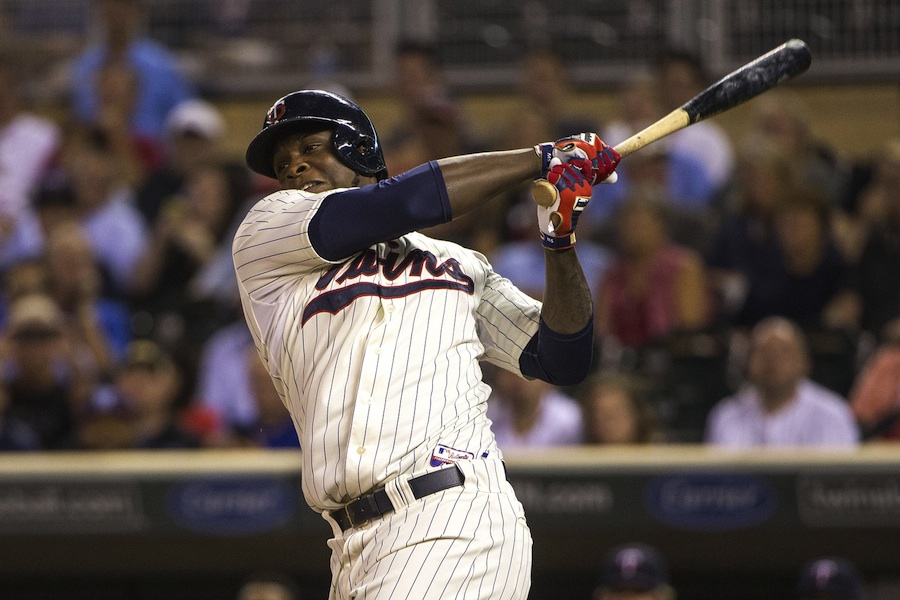 I'll start by saying that, obviously, a lot of things would need to go right for the Twins to reach such a number. Almost every starter in the lineup would need to stay mostly healthy and perform. But if we set fairly reasonable – though in some cases slightly optimistic – home run totals for each projected regular, we can get pretty dang close. Observe: Miguel Sano: 35 Not much of a stretch here. He hit 35 during his last full season in the minors (2013) and launched 33 last year in 146 games between Double-A and the majors. Byung Ho Park: 30 He's coming off back-to-back 50-homer campaigns in Korea, and ZiPS projects him to hit 27 as a rookie. We'll say he catches on quickly and manages to surpass that by a little. Brian Dozier: 25 He has hit 51 over the last two seasons and will be 29. Trevor Plouffe: 20 His 150-game average in four years since becoming a full-time big-leaguer is just a tick above 20, so this is exactly what you'd expect if he stays on the field. Eduardo Escobar: 15 This is the first one that feels like a bit of a reach. There's not much in his long-term track record that would suggest this is realistic (he hit only 19 total in the minors) but Escobar went deep 12 times in 127 games last year and his power is clearly trending upward at age 27. Eddie Rosario: 15 As a rookie he homered 13 times in 122 games while also racking up 15 doubles and 13 triples. It's easy to envision Rosario muscling up a bit at age 24 and pushing a few more over the wall. Byron Buxton: 15 Buxton's power is hard to peg, because almost every scout opines that we really haven't seen what he's capable of, and he's just finally starting to fill out his frame a little bit. Last year he totaled nine homers in 118 games between the minors and majors. Joe Mauer: 10 He hit 10 last year, 11 in 2013 and 10 in 2012. Kurt Suzuki: 5 This is pretty consistently where he has been at in recent years. Between these nine starters alone, we already have 170 home runs. That's not accounting for the contributions from backups, fill-ins and call-ups, who figure to produce somewhere around 15-20 and maybe more if someone like Oswaldo Arcia, Kennys Vargas or Daniel Palka plays a more prominent role than expected. Admittedly, 200 might be setting the bar too high. But the story is that we can reasonably project two players for 30-plus homers (that has happened twice in the last three decades) and a team total that may very well rank among the top five in franchise history. Here's what it would take to break into that rarified category: 1. 1963: 225 HR 2. 1964: 221 HR 3. 1987: 196 HR 4. 1986: 196 HR 5. 2004: 191 HR 6. 1962: 185 HR 7. 2009: 162 HR 8. 2002: 167 HR 9. 1961: 167 HR 10. 2001: 164 HR Even by conservative estimates, this year's offense should end up being the second-most powerful that the Twins have fielded since '87, and it's not tough to imagine this group surpassing that '04 club fueled by the likes of Corey Koskie, Jacque Jones, Torii Hunter and Justin Morneau. The 2009, 2004 and 2002 teams were all division-winners, and in the case of '09 they did it without a particularly strong pitching staff, so you can certainly make the argument that this is a sensible approach for a team with question marks at the front of the rotation and in the bullpen. How many long balls do you predict the Twins will hit this year?
 -
For the past five years, this team has been there, lurking. The Indians have won 80 or more games in four of those seasons, almost constantly remaining within reach of first place, but all that this stretch has yielded is one single postseason game – a loss to Tampa Bay in the 2013 wild card.Cleveland has a good young core entrenched, with a potentially (likely?) elite rotation, but their fans are feeling quite similar to those in Minnesota, waiting for an offseason splash that still hasn't come. The Indians are on the brink – they won just two fewer games than the Twins last year – but their only substantial moves this winter have been the signings of Rajai Davis and Mike Napoli, both to one-year deals. It's a lukewarm approach to addressing an offense that scored only 669 runs last year and ranked third-to-last in the American League in OPS+. Much like Terry Ryan, it appears that GM Chris Antonetti is committed to relying mostly on what he already has in place. In some ways, that's more than understandable. Cleveland's starting pitching situation is the envy of the entire AL, with Corey Kluber leading the way for a young and inexpensive slate of talented hurlers who all possess strikeout stuff. The front of the rotation is filthy with the combination of Kluber, Carlos Carrasco and Danny Salazar leading the way. Each of those three made 30-plus starts last year and held opponents to an OPS below .680, which is pretty ridiculous. If those guys keep rolling and Trevor Bauer takes the next step at age 25, this is a contender for the best unit in the majors. The bullpen is solid, anchored by underrated closer Cody Allen with support from Zach McAllister, Bryan Shaw, Tommy Hunter and old friend Jeff Manship, among others. Like the Twins, the Indians probably could have benefited from a more potent infusion to the relief corps, but instead have opted mostly for gambles on guys like Craig Stammen and Joba Chamberlain through minor-league deals. All in all, though, the Cleveland pitching staff looks promising. This team's fate will most likely rest on what the offense can do, and that's hard to predict. Davis and Napoli aren't high-impact additions, and the unit will be hurt by missing Michael Brantley for at least the first month following shoulder surgery. In the same way that the Twins are hoping that Miguel Sano and Byron Buxton will be transformative figures in their lineup, the Indians are leaning on 22-year-old shortstop Francisco Lindor, who will be in the MVP race if he repeats his rookie production over a full season. And like the Twins, they Indians are hoping that their formerly premier offensive catcher turned ordinary first baseman can once again emerge as a true asset at the plate. Carlos Santana remains one of the best in the game at controlling the strike zone and drawing walks, but last year he batted just .231 with a .395 slugging percentage. Cleveland has a wide range of possible outcomes for the 2016 season. With their rotation setup, they can't be discounted as legitimate World Series contenders, but with an offense that wasn't good last year and displays no obvious avenues for significant improvement, they may not score enough to finally get over that hump. It's surprising that they haven't landed an upgrade over the light-hitting Giovanny Urshela at third base, but it sounds like the Indians are still in talks with free agent David Freese, who would give them a bit of a nudge in the right direction. ~~~ This wraps up our series looking at Minnesota's divisional opponents and where they stand heading into the 2016 season. To get caught up, make sure you check out: Chicago White Sox Detroit Tigers Kansas City Royals Click here to view the article
-
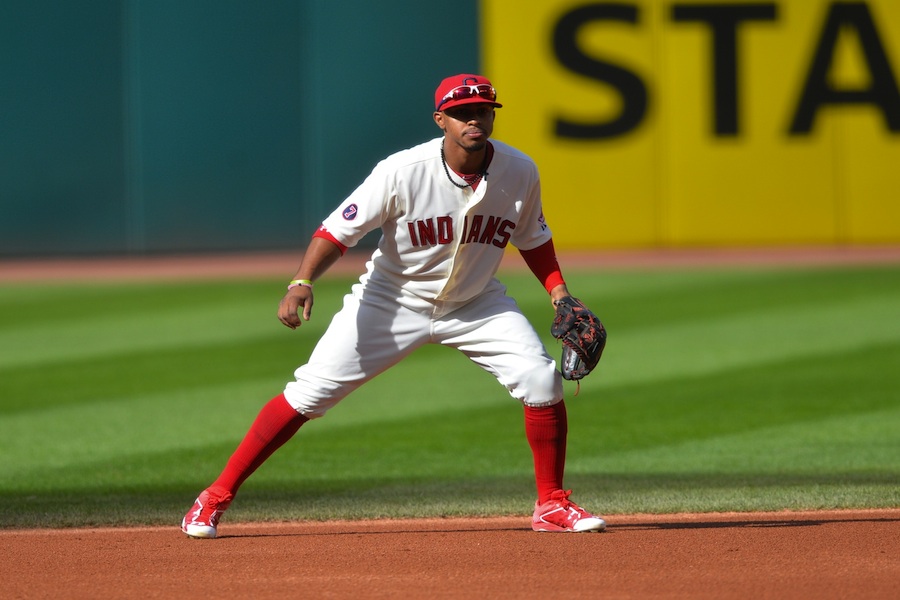 Cleveland has a good young core entrenched, with a potentially (likely?) elite rotation, but their fans are feeling quite similar to those in Minnesota, waiting for an offseason splash that still hasn't come. The Indians are on the brink – they won just two fewer games than the Twins last year – but their only substantial moves this winter have been the signings of Rajai Davis and Mike Napoli, both to one-year deals. It's a lukewarm approach to addressing an offense that scored only 669 runs last year and ranked third-to-last in the American League in OPS+. Much like Terry Ryan, it appears that GM Chris Antonetti is committed to relying mostly on what he already has in place. In some ways, that's more than understandable. Cleveland's starting pitching situation is the envy of the entire AL, with Corey Kluber leading the way for a young and inexpensive slate of talented hurlers who all possess strikeout stuff. The front of the rotation is filthy with the combination of Kluber, Carlos Carrasco and Danny Salazar leading the way. Each of those three made 30-plus starts last year and held opponents to an OPS below .680, which is pretty ridiculous. If those guys keep rolling and Trevor Bauer takes the next step at age 25, this is a contender for the best unit in the majors. The bullpen is solid, anchored by underrated closer Cody Allen with support from Zach McAllister, Bryan Shaw, Tommy Hunter and old friend Jeff Manship, among others. Like the Twins, the Indians probably could have benefited from a more potent infusion to the relief corps, but instead have opted mostly for gambles on guys like Craig Stammen and Joba Chamberlain through minor-league deals. All in all, though, the Cleveland pitching staff looks promising. This team's fate will most likely rest on what the offense can do, and that's hard to predict. Davis and Napoli aren't high-impact additions, and the unit will be hurt by missing Michael Brantley for at least the first month following shoulder surgery. In the same way that the Twins are hoping that Miguel Sano and Byron Buxton will be transformative figures in their lineup, the Indians are leaning on 22-year-old shortstop Francisco Lindor, who will be in the MVP race if he repeats his rookie production over a full season. And like the Twins, they Indians are hoping that their formerly premier offensive catcher turned ordinary first baseman can once again emerge as a true asset at the plate. Carlos Santana remains one of the best in the game at controlling the strike zone and drawing walks, but last year he batted just .231 with a .395 slugging percentage. Cleveland has a wide range of possible outcomes for the 2016 season. With their rotation setup, they can't be discounted as legitimate World Series contenders, but with an offense that wasn't good last year and displays no obvious avenues for significant improvement, they may not score enough to finally get over that hump. It's surprising that they haven't landed an upgrade over the light-hitting Giovanny Urshela at third base, but it sounds like the Indians are still in talks with free agent David Freese, who would give them a bit of a nudge in the right direction. ~~~ This wraps up our series looking at Minnesota's divisional opponents and where they stand heading into the 2016 season. To get caught up, make sure you check out: Chicago White Sox Detroit Tigers Kansas City Royals
 -
Last year, the White Sox went 76-86, finishing fourth in the AL Central with the league's lowest-scoring offense. Their offseason was pretty quiet, featuring the addition of third baseman Todd Frazier but little else of note. With Jeff Samardzija departing as a free agent, it appeared that the Sox were poised for a rebuilding year of sorts, but this week USA Today picked them to come out on top of a tough division with 90 wins.These kinds of predictions are ultimately rather meaningless, and USA Today's 90-win guess isn't worth any more than FanGraphs projecting Chicago to win 81 or Bleacher Report pegging them in last place with 73 wins. But the nod does serve as a reminder that some of us might be sleeping too much on a White Sox club that undeniably has a solid foundation in place, even after a relatively quiet offseason. It all begins with Chris Sale. He's one of the best pitchers in baseball -- a true ace by every definition of the word -- and he was on top of his game last year, even if many of his teammates weren't. For the four straight season, Sale was an All-Star and top six Cy Young finisher. He led the American League in strikeouts (274), K/BB ratio (6.52) and FIP (2.73). Entering his age 27 season, Sale is the primary reason that the White Sox cannot be ignored, but he's hardly the only one. The loss of Samardzija, whose career-worst season was a big part of Chicago's problems, should be more than offset by the continued development of electric young lefty Carlos Rodon and the reliable steadiness of Jose Quintana. A number of arms will compete to join this fearsome trio of southpaws in the rotation, including the recently signed Mat Latos. Of course, offense is the preeminent concern for a club that last year ranked last in the AL in runs, homers and OPS. In that regard, the addition of Frazier through a blockbuster three-way trade back in December looms large. Chicago got a miserable .226/.277/.345 hitting line from the hot corner last year, and now upgrades massively by bringing aboard a two-time All Star who bashed 35 homers with the Reds in 2015. Frazier joins a core at the middle of the lineup powered by the intimidating Jose Abreu, who quietly enjoyed a nice follow-up to his Rookie of the Year campaign, and the Sox also added Brett Lawrie to address their deficiency at second base. Adam Eaton is an underrated leadoff man and 24-year-old Avisail Garcia seems destined to turn a corner and become an impact guy one of these years. Ultimately, however, improvement for the White Sox offense is very highly dependent on players like Garcia making a big leap. Last year Abreu was the only player on the roster to exceed 14 home runs or a .450 slugging percentage, and outside of Frazier the acquisitions to bolster this unit were modest in nature. With one big offseason splash to add power to the lineup, and a lot of hope invested in internal solutions. Chicago's offseason plan looks quite similar to the one we've seen from the Twins, and it puts them on roughly the same plane of expectation heading into the season. ~~~ This is the third installment in our series examining the offseasons and outlooks for AL Central opponents. Check out the Detroit Tigers and Kansas City Royals. Click here to view the article
-
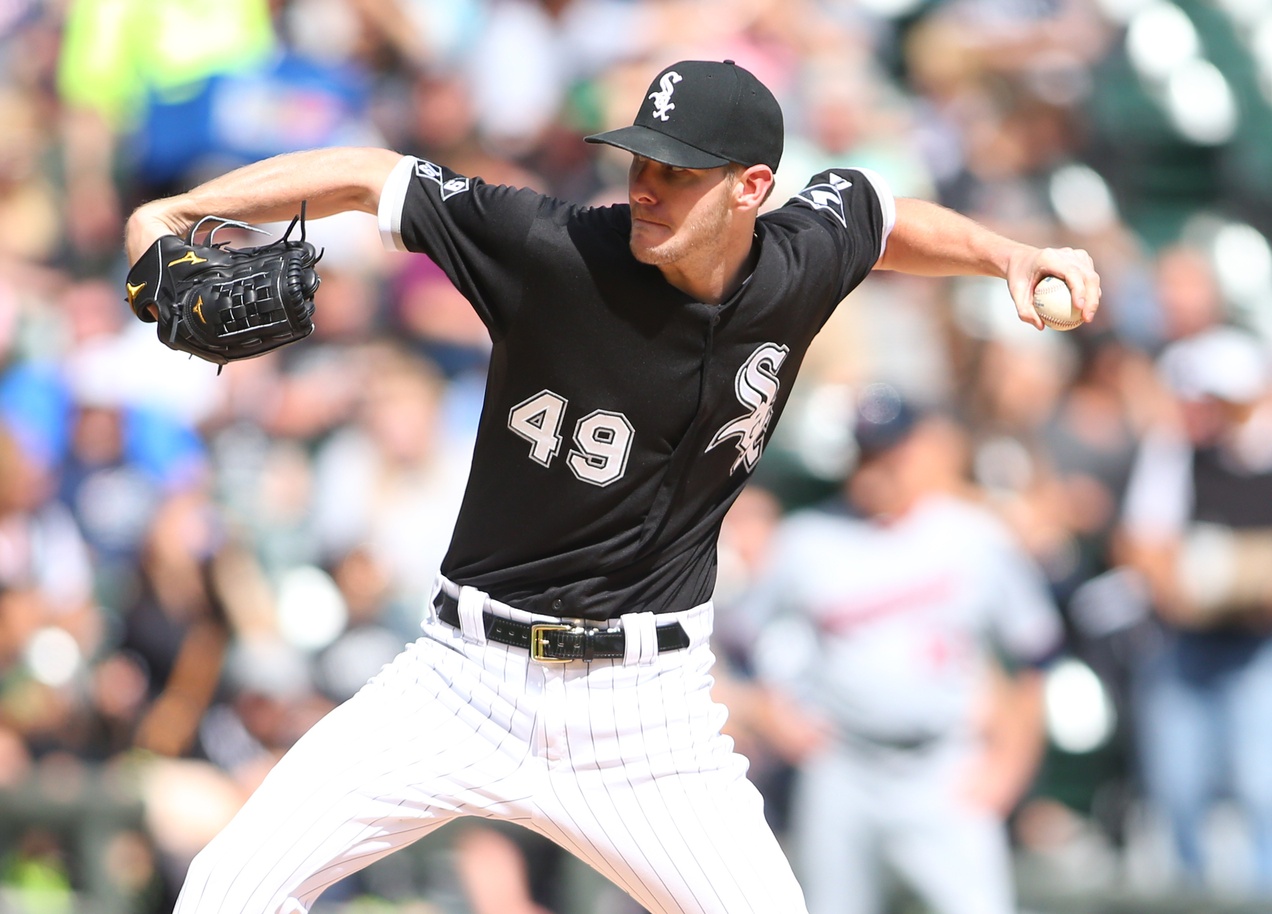 These kinds of predictions are ultimately rather meaningless, and USA Today's 90-win guess isn't worth any more than FanGraphs projecting Chicago to win 81 or Bleacher Report pegging them in last place with 73 wins. But the nod does serve as a reminder that some of us might be sleeping too much on a White Sox club that undeniably has a solid foundation in place, even after a relatively quiet offseason. It all begins with Chris Sale. He's one of the best pitchers in baseball -- a true ace by every definition of the word -- and he was on top of his game last year, even if many of his teammates weren't. For the four straight season, Sale was an All-Star and top six Cy Young finisher. He led the American League in strikeouts (274), K/BB ratio (6.52) and FIP (2.73). Entering his age 27 season, Sale is the primary reason that the White Sox cannot be ignored, but he's hardly the only one. The loss of Samardzija, whose career-worst season was a big part of Chicago's problems, should be more than offset by the continued development of electric young lefty Carlos Rodon and the reliable steadiness of Jose Quintana. A number of arms will compete to join this fearsome trio of southpaws in the rotation, including the recently signed Mat Latos. Of course, offense is the preeminent concern for a club that last year ranked last in the AL in runs, homers and OPS. In that regard, the addition of Frazier through a blockbuster three-way trade back in December looms large. Chicago got a miserable .226/.277/.345 hitting line from the hot corner last year, and now upgrades massively by bringing aboard a two-time All Star who bashed 35 homers with the Reds in 2015. Frazier joins a core at the middle of the lineup powered by the intimidating Jose Abreu, who quietly enjoyed a nice follow-up to his Rookie of the Year campaign, and the Sox also added Brett Lawrie to address their deficiency at second base. Adam Eaton is an underrated leadoff man and 24-year-old Avisail Garcia seems destined to turn a corner and become an impact guy one of these years. Ultimately, however, improvement for the White Sox offense is very highly dependent on players like Garcia making a big leap. Last year Abreu was the only player on the roster to exceed 14 home runs or a .450 slugging percentage, and outside of Frazier the acquisitions to bolster this unit were modest in nature. With one big offseason splash to add power to the lineup, and a lot of hope invested in internal solutions. Chicago's offseason plan looks quite similar to the one we've seen from the Twins, and it puts them on roughly the same plane of expectation heading into the season. ~~~ This is the third installment in our series examining the offseasons and outlooks for AL Central opponents. Check out the Detroit Tigers and Kansas City Royals.
 -
Article: Blurred Lines: Can Mauer Return To Form?
Nick Nelson replied to Nick Nelson's topic in Twins Daily Front Page News
Drop-off in BABIP (and average as a result). His K% and BB% were more or less the same. -
Article: Blurred Lines: Can Mauer Return To Form?
Nick Nelson replied to Nick Nelson's topic in Twins Daily Front Page News
It's possible. Baseball players don't typically start wearing down from age as soon as they turn 30 though, especially those with the natural ability and athleticism of Mauer.
