



Nick Nelson
-
Posts
8,322 -
Joined
-
Last visited
-
Days Won
56
Content Type
Profiles
News
Minnesota Twins Videos
2026 Minnesota Twins Top Prospects Ranking
2022 Minnesota Twins Draft Picks
Minnesota Twins Free Agent & Trade Rumors, Notes, & Tidbits
Guides & Resources
2023 Minnesota Twins Draft Picks
The Minnesota Twins Players Project
2024 Minnesota Twins Draft Picks
2025 Minnesota Twins Draft Pick Tracker
2026 Minnesota Twins Draft Tracker: Picks & Bonuses
Forums
Blogs
Events
Store
Downloads
Gallery
Everything posted by Nick Nelson
-
 TBD. We're working on it but schedules for team execs are very tricky in the weeks following the end of the season and we work around a tight timeline to get this out as quickly as possible. I promise you'll love this thing with or without the interview though!
 -
The newest edition of Twins Daily's flagship digital product will become available on November 2nd, and it is going to be our best yet. Preorder today and you can get the Offseason Handbook at a great discount!There're no two ways about it: The coming offseason is going to be one of the most important for this Minnesota Twins franchise in many years. Now that a substantial step forward was finally taken in 2015, the focus turns to building a true championship-caliber club. The 2016 Twins Daily Offseason Handbook puts you in the shoes of the general manager and equips you with all of the information necessary to craft your own blueprint for turning the Twins into a World Series contender. In this beautiful, colorful and hefty ebook, you'll find analysis of the team's greatest needs, a breakdown of payroll commitments, an overview of the organization's depth at every position, listings and descriptions for dozens of free agents, plausible trade scenarios, and much more. The Handbook also includes an exclusive, in-depth interview with Twins general manager Terry Ryan that covers every major offseason topic. By preordering your copy today, you can get the Offseason Handbook for $4.99, discounted from the original price of $6.99, and you'll receive the PDF file in your email box as soon as it becomes available on November 2nd. It's perfect for reading on a computer or tablet, or you can print out a physical copy to take with you. This will be your go-to resource for everything related to this pivotal Twins offseason. Buying an Offseason Handbook not only provides you with a tremendous product at a great value, it also supports the free content that appears on Twins Daily each day. This ebook is a must-have for any Twins fan. If you're not completely satisfied with the Offseason Handbook, we will happily refund your purchase. The next few months are going to be absolutely critical for the Twins franchise. Make sure you're fully prepared. Preorder your Twins Daily Offseason Handbook now. As always, thank you for your support, and for making fun projects like this possible. Click here to view the article
-
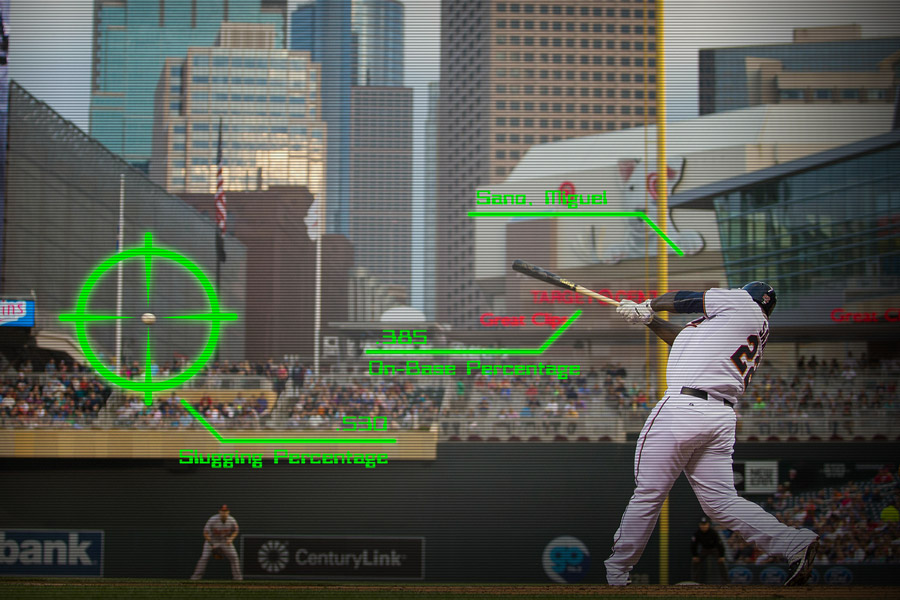 There're no two ways about it: The coming offseason is going to be one of the most important for this Minnesota Twins franchise in many years. Now that a substantial step forward was finally taken in 2015, the focus turns to building a true championship-caliber club. The 2016 Twins Daily Offseason Handbook puts you in the shoes of the general manager and equips you with all of the information necessary to craft your own blueprint for turning the Twins into a World Series contender. In this beautiful, colorful and hefty ebook, you'll find analysis of the team's greatest needs, a breakdown of payroll commitments, an overview of the organization's depth at every position, listings and descriptions for dozens of free agents, plausible trade scenarios, and much more. The Handbook also includes an exclusive, in-depth interview with Twins general manager Terry Ryan that covers every major offseason topic. By preordering your copy today, you can get the Offseason Handbook for $4.99, discounted from the original price of $6.99, and you'll receive the PDF file in your email box as soon as it becomes available on November 2nd. It's perfect for reading on a computer or tablet, or you can print out a physical copy to take with you. This will be your go-to resource for everything related to this pivotal Twins offseason. Buying an Offseason Handbook not only provides you with a tremendous product at a great value, it also supports the free content that appears on Twins Daily each day. This ebook is a must-have for any Twins fan. If you're not completely satisfied with the Offseason Handbook, we will happily refund your purchase. The next few months are going to be absolutely critical for the Twins franchise. Make sure you're fully prepared. Preorder your Twins Daily Offseason Handbook now. As always, thank you for your support, and for making fun projects like this possible.
 -
As the offseason gets underway and the Hot Stove prepares to heat up, the first step for Terry Ryan and the Minnesota Twins is to evaluate what they have, and what they need. One key figure in their planning process is Aaron Hicks, whose mixed-bag 2015 season leaves the Twins in a state of uncertainty going forward.In some respects, Hicks' season could be viewed as a breakout year. His .256 batting average was a massive step up from the .201 he put up between 2013 and 2014, he cut down substantially on strikeouts, and he notched 25 extra-base hits in 97 games. His .721 OPS was 115 points higher than his mark entering the campaign. After rejoining the club in early July following a stint on the disabled list, Hicks looked like a different player than the one who had constantly struggled against big-league pitching, posting a monstrous .320/.378/.531 slash line with six homers in his first 35 games back. The problem is that it's not clear whether Hicks truly turned the corner this season, or simply enjoyed a nice five-week hot streak. Because outside of the aforementioned stretch, his performance was really not all that different from those disappointing first couple seasons with the Twins. Hicks opened the season in Triple-A and was called up in mid-May. In the month before he landed on the DL with a sore elbow, he hit .247/.293/.301, which was pretty much in line with his past production. And following that 35-game hot streak, he limped to a .198/.291/.336 finish in his final 34 contests. If the 26-year-old outfielder had sustained his success over a prolonged period of time, it would be easier to look at him as a reliable building block heading into 2016. As things stand, I'm not sure that the Twins can. He will surely have a spot on the Opening Day roster – he's earned that much, and he'll be out of options so another start in the minors isn't on the table anyway – but in what capacity should the Twins plan to utilize Hicks? It's becoming increasingly clear that in order to maximize his effectiveness, they'll need to use him as a part-time player. Even with all of his improvements at the plate this season, the switch-hitting Hicks continued to struggle when swinging from the left side, batting just .235/.302/.359 against right-handed pitchers. Since righties comprise the vast majority of the league's pitchers, that is not ideal. At the very least, the Twins need to have a left-handed hitting outfielder on the roster who can fill in occasionally and offset Hicks' weakness in this area. A straight platoon would make a great deal of sense in terms of maximizing run production, although I'm not sure Paul Molitor is ready to go that far since Hicks remains relatively young and is a big asset defensively. Regardless, he should be shielded against righties to some extent. One option, in the event that Hicks is in right field, is to platoon him with Oswaldo Arcia. I know that might not sound appealing in light of his awful 2015 season, but Arcia was consistently an offensive force for many years prior. He needs to work his way back into the mix and he'll be out of options next spring so a return to Triple-A isn't happening. Deploying him strategically against righties, against whom he has been very effective in the majors (.807 OPS), is a good way to accomplish just that. Another possibility? Max Kepler, the lefty-swinging star prospect who debuted briefly in September. But the 22-year-old will probably not be in the running for a roster spot coming out of spring training and I doubt the Twins will want to limit him to part-time duty when he comes up. Eddie Rosario would fit the bill as well but will likely head into 2016 as an entrenched regular. If the Twins elect to use Hicks in center field, with Byron Buxton starting in the minors, they narrow down their options somewhat. There's not a good lefty-swinging center field option at their disposal presently. Among pending free agents, the only name that really stands out is our old friend Denard Span, who probably isn't looking for a part-time gig. Span was absolutely stellar against the righties this year though (.330/.393/.486). What do you think? What's your view of Hicks heading into the offseason, and how would you work him into your 2016 plans? Click here to view the article
-
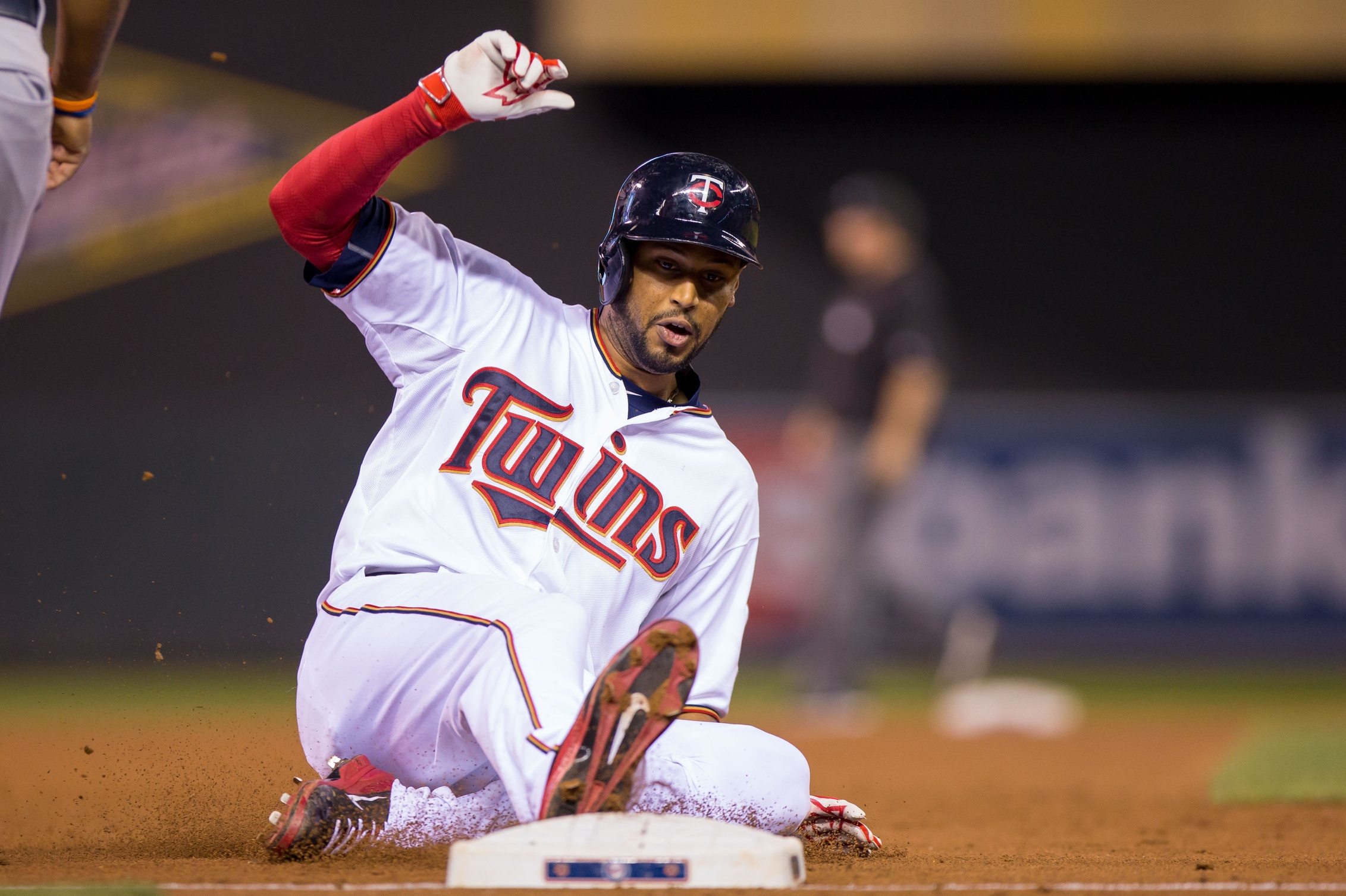 In some respects, Hicks' season could be viewed as a breakout year. His .256 batting average was a massive step up from the .201 he put up between 2013 and 2014, he cut down substantially on strikeouts, and he notched 25 extra-base hits in 97 games. His .721 OPS was 115 points higher than his mark entering the campaign. After rejoining the club in early July following a stint on the disabled list, Hicks looked like a different player than the one who had constantly struggled against big-league pitching, posting a monstrous .320/.378/.531 slash line with six homers in his first 35 games back. The problem is that it's not clear whether Hicks truly turned the corner this season, or simply enjoyed a nice five-week hot streak. Because outside of the aforementioned stretch, his performance was really not all that different from those disappointing first couple seasons with the Twins. Hicks opened the season in Triple-A and was called up in mid-May. In the month before he landed on the DL with a sore elbow, he hit .247/.293/.301, which was pretty much in line with his past production. And following that 35-game hot streak, he limped to a .198/.291/.336 finish in his final 34 contests. If the 26-year-old outfielder had sustained his success over a prolonged period of time, it would be easier to look at him as a reliable building block heading into 2016. As things stand, I'm not sure that the Twins can. He will surely have a spot on the Opening Day roster – he's earned that much, and he'll be out of options so another start in the minors isn't on the table anyway – but in what capacity should the Twins plan to utilize Hicks? It's becoming increasingly clear that in order to maximize his effectiveness, they'll need to use him as a part-time player. Even with all of his improvements at the plate this season, the switch-hitting Hicks continued to struggle when swinging from the left side, batting just .235/.302/.359 against right-handed pitchers. Since righties comprise the vast majority of the league's pitchers, that is not ideal. At the very least, the Twins need to have a left-handed hitting outfielder on the roster who can fill in occasionally and offset Hicks' weakness in this area. A straight platoon would make a great deal of sense in terms of maximizing run production, although I'm not sure Paul Molitor is ready to go that far since Hicks remains relatively young and is a big asset defensively. Regardless, he should be shielded against righties to some extent. One option, in the event that Hicks is in right field, is to platoon him with Oswaldo Arcia. I know that might not sound appealing in light of his awful 2015 season, but Arcia was consistently an offensive force for many years prior. He needs to work his way back into the mix and he'll be out of options next spring so a return to Triple-A isn't happening. Deploying him strategically against righties, against whom he has been very effective in the majors (.807 OPS), is a good way to accomplish just that. Another possibility? Max Kepler, the lefty-swinging star prospect who debuted briefly in September. But the 22-year-old will probably not be in the running for a roster spot coming out of spring training and I doubt the Twins will want to limit him to part-time duty when he comes up. Eddie Rosario would fit the bill as well but will likely head into 2016 as an entrenched regular. If the Twins elect to use Hicks in center field, with Byron Buxton starting in the minors, they narrow down their options somewhat. There's not a good lefty-swinging center field option at their disposal presently. Among pending free agents, the only name that really stands out is our old friend Denard Span, who probably isn't looking for a part-time gig. Span was absolutely stellar against the righties this year though (.330/.393/.486). What do you think? What's your view of Hicks heading into the offseason, and how would you work him into your 2016 plans?
 -
Across baseball, 2015 was The Year of the Rookie. A majority of the game's highest rated prospects debuted this season, and in most cases they made that transition with notable success. The Twins were a microcosm of this trend, graduating several of the best young players in their system and receiving numerous highly impactful rookie performances. But while there were a few different names deserving of consideration, the choice here was pretty easy.Voting Results 1. Miguel Sano: 24 points 2. Eddie Rosario: 13.5 points 3. Tyler Duffey: 6 points 4. Trevor May: 4.5 points There were eight voters and points were awarded on a three-point scale, meaning that Sano received first-place votes from every participant (Seth Stohs, Cody Christie, Jeremy Nygaard, Steve Lein, Eric Pleiss, John Bonnes, Parker Hageman and myself). I mean, what choice did we really have? Sano's season was not only head-and-shoulders above the rest of this year's class, it was also one of the best rookie campaigns in franchise history. Playing in 80 games following his early-July promotion from Double-A, Sano hit .269/.385/.530 with 18 home runs and 52 RBI. He became an intimidating force at the cleanup spot and completely changed the complexion of the Twins lineup during the second half of the season. Among Twins players to make 300 or more plate appearances as a rookie, Sano's .916 OPS ties him with Tony Oliva (1964) for best all-time, beating Bobby Kielty (.890 in 2002) and Justin Morneau (.875 in 2004). He has the most home runs, walks and RBI for any Twin through 80 games. In his first taste of the majors, Sano struck out at an exorbitant rate of 35.5 percent; the leader among qualified MLB hitters was Baltimore's Chris Davis at 31 percent. However, the young Dominican slugger made up for the whiffs by drawing tons of walks and batting .468 with a .925 slugging percentage in at-bats where he didn't strike out. The huge numbers on balls in play were driven by an AL-leading hard-hit percentage of 43.2 percent. Only Miami's Giancarlo Stanton had a higher rate, at 49.7 percent. Sano's ability to absolute smash the baseball every time he made contact was certainly impressive, but what might have been most encouraging was the consistent quality of his at-bats as a 22-year-old getting his initial exposure to the big leagues. He ran the count full in 28 percent of his plate appearances and batted .240/.581/.700 when he did so. That mature and advanced plate approach set Sano apart from the No. 2 finisher on this list, Eddie Rosario, whose advantages over Sano included providing substantial defensive value where Sano provided none, and playing in about three-quarters of the team's games where Sano played only half. Rosario was a solid hitter in his own right, piling up 46 extra-base hits in 474 plate appearances, including a league-leading 15 triples. His plate discipline issues proved problematic, leading to an ugly 118-to-15 K/BB ratio and .289 on-base percentage, and ultimately his .748 OPS was only a shade above the MLB average for a left fielder (.736). That's not exactly a bad thing. Delivering average offensive production while mixing in excellent defense and dynamic speed on the base paths made Rosario a highly valuable asset at age 23. His ability to cover ground in the outfield, contrasted against slow-footed predecessors like Oswaldo Arcia and Josh Willingham, can hardly be overstated and he ranked second in the majors with 16 outfield assists. Opponents ran on Rosario's arm and he made them pay, repeatedly. Rosario placed second on six of eight ballots but was edged on a couple by Tyler Duffey, who made his 10 starts count in a big way. The 24-year-old curveball connoisseur went 5-1 with a 3.10 ERA after joining the team in early August, including 5-0 with a 2.25 ERA following his rocky debut in Toronto. By the end of the season, Duffey had essentially established himself as the rotation's most trustworthy starter, firing quality starts in each of his last five turns, all of which carried significant importance. Trevor May appeared on only a few ballots, probably because most didn't think of him as a rookie since he pitched a fair amount last year. However, May came a few innings short of the rookie cutoff in 2014 and did qualify this season. He looked good as a starter in the first half and great as a reliever in the second half. His performance should not be overlooked in this discussion. Click here to view the article
- 22 replies
-
- 1
-

-
- miguel sano
- eddie rosario
- (and 2 more)
-
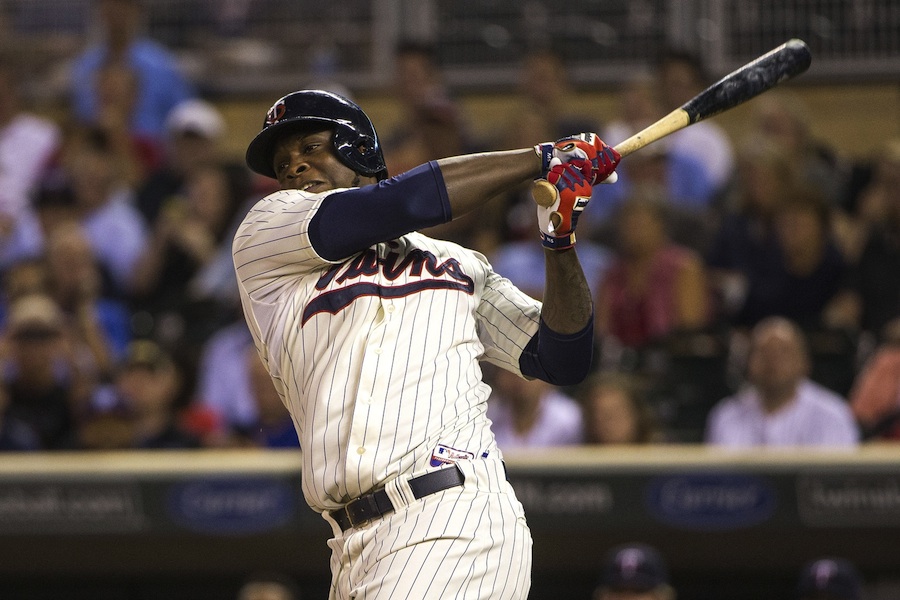 Voting Results 1. Miguel Sano: 24 points 2. Eddie Rosario: 13.5 points 3. Tyler Duffey: 6 points 4. Trevor May: 4.5 points There were eight voters and points were awarded on a three-point scale, meaning that Sano received first-place votes from every participant (Seth Stohs, Cody Christie, Jeremy Nygaard, Steve Lein, Eric Pleiss, John Bonnes, Parker Hageman and myself). I mean, what choice did we really have? Sano's season was not only head-and-shoulders above the rest of this year's class, it was also one of the best rookie campaigns in franchise history. Playing in 80 games following his early-July promotion from Double-A, Sano hit .269/.385/.530 with 18 home runs and 52 RBI. He became an intimidating force at the cleanup spot and completely changed the complexion of the Twins lineup during the second half of the season. Among Twins players to make 300 or more plate appearances as a rookie, Sano's .916 OPS ties him with Tony Oliva (1964) for best all-time, beating Bobby Kielty (.890 in 2002) and Justin Morneau (.875 in 2004). He has the most home runs, walks and RBI for any Twin through 80 games. In his first taste of the majors, Sano struck out at an exorbitant rate of 35.5 percent; the leader among qualified MLB hitters was Baltimore's Chris Davis at 31 percent. However, the young Dominican slugger made up for the whiffs by drawing tons of walks and batting .468 with a .925 slugging percentage in at-bats where he didn't strike out. The huge numbers on balls in play were driven by an AL-leading hard-hit percentage of 43.2 percent. Only Miami's Giancarlo Stanton had a higher rate, at 49.7 percent. Sano's ability to absolute smash the baseball every time he made contact was certainly impressive, but what might have been most encouraging was the consistent quality of his at-bats as a 22-year-old getting his initial exposure to the big leagues. He ran the count full in 28 percent of his plate appearances and batted .240/.581/.700 when he did so. That mature and advanced plate approach set Sano apart from the No. 2 finisher on this list, Eddie Rosario, whose advantages over Sano included providing substantial defensive value where Sano provided none, and playing in about three-quarters of the team's games where Sano played only half. Rosario was a solid hitter in his own right, piling up 46 extra-base hits in 474 plate appearances, including a league-leading 15 triples. His plate discipline issues proved problematic, leading to an ugly 118-to-15 K/BB ratio and .289 on-base percentage, and ultimately his .748 OPS was only a shade above the MLB average for a left fielder (.736). That's not exactly a bad thing. Delivering average offensive production while mixing in excellent defense and dynamic speed on the base paths made Rosario a highly valuable asset at age 23. His ability to cover ground in the outfield, contrasted against slow-footed predecessors like Oswaldo Arcia and Josh Willingham, can hardly be overstated and he ranked second in the majors with 16 outfield assists. Opponents ran on Rosario's arm and he made them pay, repeatedly. Rosario placed second on six of eight ballots but was edged on a couple by Tyler Duffey, who made his 10 starts count in a big way. The 24-year-old curveball connoisseur went 5-1 with a 3.10 ERA after joining the team in early August, including 5-0 with a 2.25 ERA following his rocky debut in Toronto. By the end of the season, Duffey had essentially established himself as the rotation's most trustworthy starter, firing quality starts in each of his last five turns, all of which carried significant importance. Trevor May appeared on only a few ballots, probably because most didn't think of him as a rookie since he pitched a fair amount last year. However, May came a few innings short of the rookie cutoff in 2014 and did qualify this season. He looked good as a starter in the first half and great as a reliever in the second half. His performance should not be overlooked in this discussion.
 -
What a ride. The Twins came up just short in their surprising run at a playoff spot thanks to a disappointingly flat effort at Target Field over the weekend, but nonetheless the 2015 season has to be viewed as a profoundly positive one for the organization.After four straight 90-loss campaigns, the Twins posted a winning record this year while ushering several of their top prospects into the mix – as key contributors, even – and have set themselves up to be a top dog in the AL Central once again. Nothing is guaranteed going forward, but for all intents and purposes, the rebuilding process is over. This team is now in contention mode. That's something that we haven't really experienced during the life of Twins Daily. This site launched in March of 2012, heading into the second of four consecutive non-competitive seasons. This year marked the first time we've been able to cover and discuss meaningful baseball into the late summer and early autumn. With how passionate and knowledgeable the community here had proven to be over the first three years of the site's existence, the Twins Daily crew often speculated about how fun this place would be when the team returned to contending, as they did for most of the decade preceding 2012. You all delivered. More than 80,000 unique visitors stopped by Twins Daily in the month of September – twice as many as the same period last year. It was evident from the activeness and fervor of our commenters and message board contributors that life was being pumped back into a fan base that had understandably gone comatose to some extent. I was struck, in particular, by this tweet that ESPN senior baseball writer Keith Law sent to the @TwinsDaily Twitter account a couple of weeks ago: Law is a guy who has ventured into plenty of comment sections and encountered plenty of trolling, so that compliment means a lot coming from him. And it encapsulates a facet of this site that makes me love it. So often, internet comment sections are cesspools of humanity, where people use the mask of anonymity to insult, degrade and provide little in the way of useful input. That has never been the case here and Law is hardly the first to marvel about it. Even my dad has remarked multiple times about how much more he gets out of reading my articles when he reads the added insights within the comments. My dad! I didn't even know my dad knew what a comment section was! This environment is made possible by a few things. First and foremost, we have a tireless group of moderators who charitably volunteer to keep things in line. Second, we are lucky enough to attract a readership that – for the most part – knows its stuff and engages in smart, entertaining banter rather than flame wars and idiocy. And third, we have a ton of great content that invites thoughtful feedback and ignites lively conversations. Only a fraction of that content comes from Parker, John, Seth and myself. That was always the goal. So, we'd all like to say THANK YOU from the bottom of our hearts to everyone who visited, published, assisted and interacted on the site this year. You helped to make a fun season all the more enjoyable and immersive, and you continue to make this little experiment a success. But we're not done yet. Although the Twins are finished playing in 2015, the show will go on here at Twins Daily. This week we'll take some retrospective looks at the season that was, and soon we'll begin our offseason coverage as the front office prepares to navigate a very important winter. Plenty of articles on the site will explore the coming months from every angle, and of course when the postseason comes to a close, you'll be able to grab our annual release of the Offseason Handbook, an ebook that covers the offseason landscape with unparalleled depth. If you haven't yet, we strongly encourage you to register for an account and join in on the awesome conversations that are sure to take place regarding free agency, trades, roster decisions and more. Take the opportunity to write your first blog. And as always, if there's something you think we could be doing better, don't hesitate to let us know. What a ride. And it's only just beginning. Click here to view the article
-
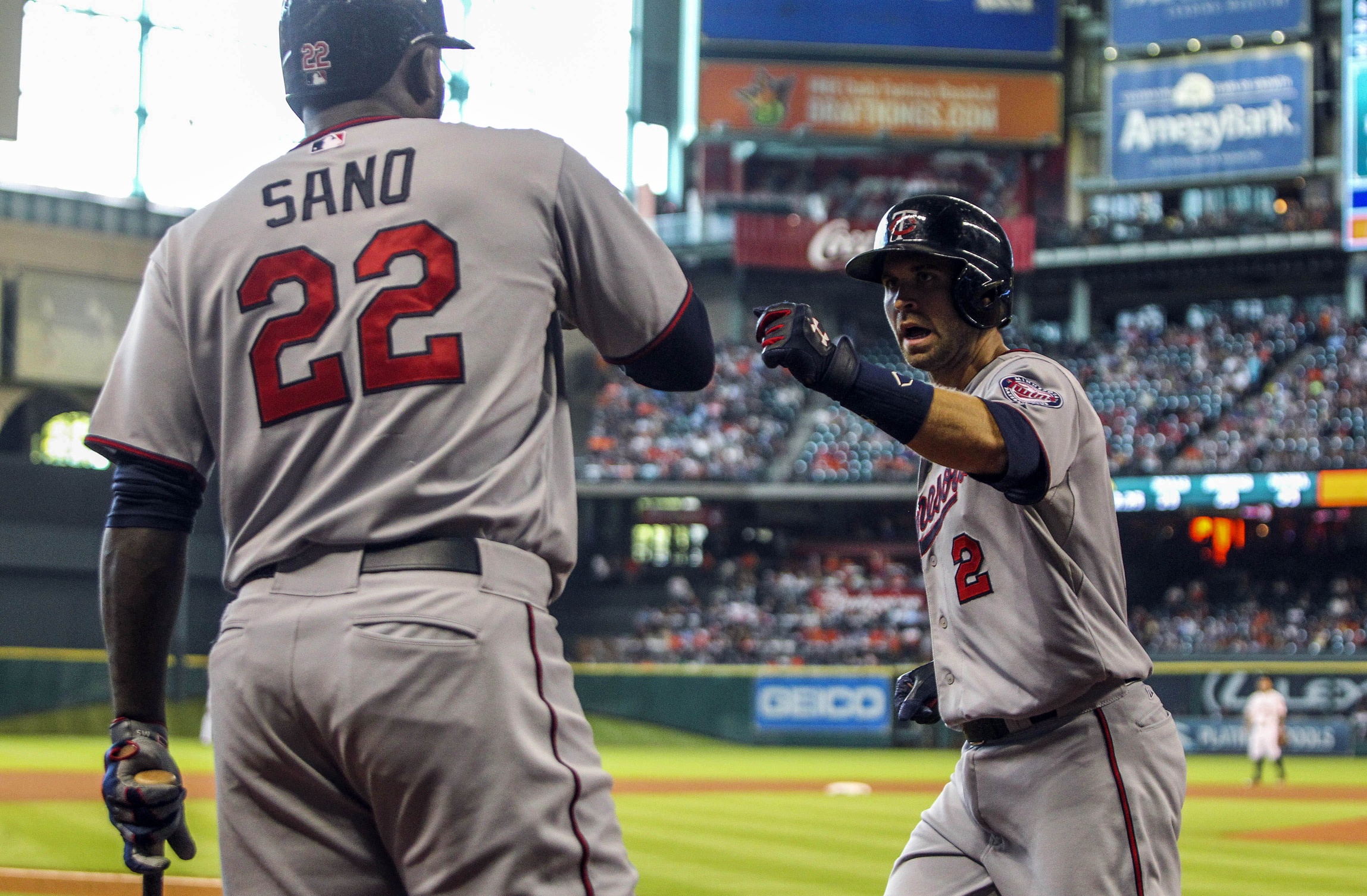 After four straight 90-loss campaigns, the Twins posted a winning record this year while ushering several of their top prospects into the mix – as key contributors, even – and have set themselves up to be a top dog in the AL Central once again. Nothing is guaranteed going forward, but for all intents and purposes, the rebuilding process is over. This team is now in contention mode. That's something that we haven't really experienced during the life of Twins Daily. This site launched in March of 2012, heading into the second of four consecutive non-competitive seasons. This year marked the first time we've been able to cover and discuss meaningful baseball into the late summer and early autumn. With how passionate and knowledgeable the community here had proven to be over the first three years of the site's existence, the Twins Daily crew often speculated about how fun this place would be when the team returned to contending, as they did for most of the decade preceding 2012. You all delivered. More than 80,000 unique visitors stopped by Twins Daily in the month of September – twice as many as the same period last year. It was evident from the activeness and fervor of our commenters and message board contributors that life was being pumped back into a fan base that had understandably gone comatose to some extent. I was struck, in particular, by this tweet that ESPN senior baseball writer Keith Law sent to the @TwinsDaily Twitter account a couple of weeks ago: https://twitter.com/keithlaw/status/647541408983814144 Law is a guy who has ventured into plenty of comment sections and encountered plenty of trolling, so that compliment means a lot coming from him. And it encapsulates a facet of this site that makes me love it. So often, internet comment sections are cesspools of humanity, where people use the mask of anonymity to insult, degrade and provide little in the way of useful input. That has never been the case here and Law is hardly the first to marvel about it. Even my dad has remarked multiple times about how much more he gets out of reading my articles when he reads the added insights within the comments. My dad! I didn't even know my dad knew what a comment section was! This environment is made possible by a few things. First and foremost, we have a tireless group of moderators who charitably volunteer to keep things in line. Second, we are lucky enough to attract a readership that – for the most part – knows its stuff and engages in smart, entertaining banter rather than flame wars and idiocy. And third, we have a ton of great content that invites thoughtful feedback and ignites lively conversations. Only a fraction of that content comes from Parker, John, Seth and myself. That was always the goal. So, we'd all like to say THANK YOU from the bottom of our hearts to everyone who visited, published, assisted and interacted on the site this year. You helped to make a fun season all the more enjoyable and immersive, and you continue to make this little experiment a success. But we're not done yet. Although the Twins are finished playing in 2015, the show will go on here at Twins Daily. This week we'll take some retrospective looks at the season that was, and soon we'll begin our offseason coverage as the front office prepares to navigate a very important winter. Plenty of articles on the site will explore the coming months from every angle, and of course when the postseason comes to a close, you'll be able to grab our annual release of the Offseason Handbook, an ebook that covers the offseason landscape with unparalleled depth. If you haven't yet, we strongly encourage you to register for an account and join in on the awesome conversations that are sure to take place regarding free agency, trades, roster decisions and more. Take the opportunity to write your first blog. And as always, if there's something you think we could be doing better, don't hesitate to let us know. What a ride. And it's only just beginning.
 -
Article: Resiliency Defines 2015 Minnesota Twins
Nick Nelson replied to Nick Nelson's topic in Twins Daily Front Page News
"As cliche as it sounds, Gardy's late-tenure groups really didn't seem to have much fight in them." -
Article: My Twins Award Ballot
Nick Nelson replied to John Bonnes's topic in Twins Daily Front Page News
And in a close race, Mauer gets the wild card last spot, because, he has been clutch this year, more than any player besides Sano. And that’s objective, not subjective. If you don’t recognize it, maybe that’s on you. I mean, the flip side of his big numbers with runners on that is he hit .227/.282/.335 with nobody on, and had more than twice as many plate appearances with the bases empty. The fact that he was so nonfunctional as a table setter while hitting at the top of the lineup certainly offsets the value of his clutch hitting to a large degree. I don't think WPA fully encapsulates that. How can you acknowledge at one point in the article that Escobar has the second-highest OPS on the team as a shortstop, yet have him below Mauer and Hunter on your ballot?- 23 replies
-
- 2
-
-
- miguel sano
- kyle gibson
- (and 3 more)
-
This season for the Twins started on just about the flattest note possible. The club's prized free agency acquisition was nailed for steroids and suspended for half the year three days before the opener, then the team went 1-6 in its first week of games, getting outscored 45-16 by division rivals in the process. Few would have guessed that almost six months later, the Twins would be angling for a playoff spot with a win total in the 80s.The Twins are enjoying their best season in half a decade and hanging with the big boys even though their roster doesn't exactly stack up to the teams they're racing against. The Astros are led by likely Cy Young winner Dallas Keuchel and Rookie of the Year shoe-in Carlos Correa. They're a Top 5 American League offense in OPS and they lead the league in team ERA. The Angels, while less impressive on paper than Houston, are anchored by two-time reigning MVP Mike Trout and have gotten 38 homers from Albert Pujols. Their rotation features an assortment of youthful standouts such as Garrett Richards, Hector Santiago and Andrew Heaney. The Twins, meanwhile, have gotten subpar production from nearly all of their highest-paid players, haven't had a significantly above-average starter in the rotation (excepting Tyler Duffey's late-season performance) and have endured instability in the bullpen all year. Yet they're going to finish in the top half of the AL in wins, and they're still clinging to legitimate postseason hopes with six games remaining. I don't know how to quantify or explain it, but the resiliency that this Twins team has shown again and again has been a defining factor in their success. It started with the rebound from that horrible start. Following the 1-6 run to open the year, the Twins won three straight and 31 of their next 46 to move 11 games above .500 by early June. It was a remarkable turnaround and there have been several tribulations in the months since then that they have been able to overcome. Remember that deflating four-game series in Kansas City back in early July where the Twins – within four games of first place at the time – had a chance to sweep but instead took two losses on 10th-inning walk-offs? Maybe not, because they immediately bounced back to take six of seven at home against the Orioles and Tigers. How about that heartbreaking sweep at Yankee Stadium in August that included a gut-punch grand slam from A-Rod? The Twins followed that series by winning six straight games and four straight series. More recently, there was the five-game slide at Target Field in mid-September that seemingly sucked every trace of wind from the team's sails. All they did was take six of their next eight to climb right back into the playoff picture. Even on an individual level, we've seen this propensity for overcoming adversity. There are plenty of examples within the past few weeks alone. Glen Perkins, amidst a brutal stretch and coming off perhaps his low point in Detroit, entered with a two-run lead against Cleveland on Monday night and gave up a hard-hit leadoff single on an 0-2 count, creating a "Here we go again" type of feeling. Then he struck out two straight hitters and escaped the inning unscathed. Phil Hughes, battling back issues and decreased velocity, followed up his worst start as a Twin with a huge performance last week against the Indians, navigating his way through five scoreless innings. And Tommy Milone, who was needed to replace an ill Hughes as emergency starter in a crucial game on Monday, shook off two rotten outings to deliver a strong performance and pick up a win. The resilient quality that we have consistently seen from this year's Twins team really differentiates them in my mind from Ron Gardenhire's squads over the past four years. During that era, bad losses turned into losing streaks, and losing streaks turned into extended spells of misery. If you want to see how those teams reacted to getting knocked down, take a look at their records in August and September. As cliche as it sounds, Gardy's late-tenure groups really didn't seem to have much fight in them. Regardless of what happens over the next five days, no one will be able to say that about the 2015 Twins, and to me, that's an extremely encouraging sign for a youth-led team overseen by a first-year manager. Click here to view the article
-
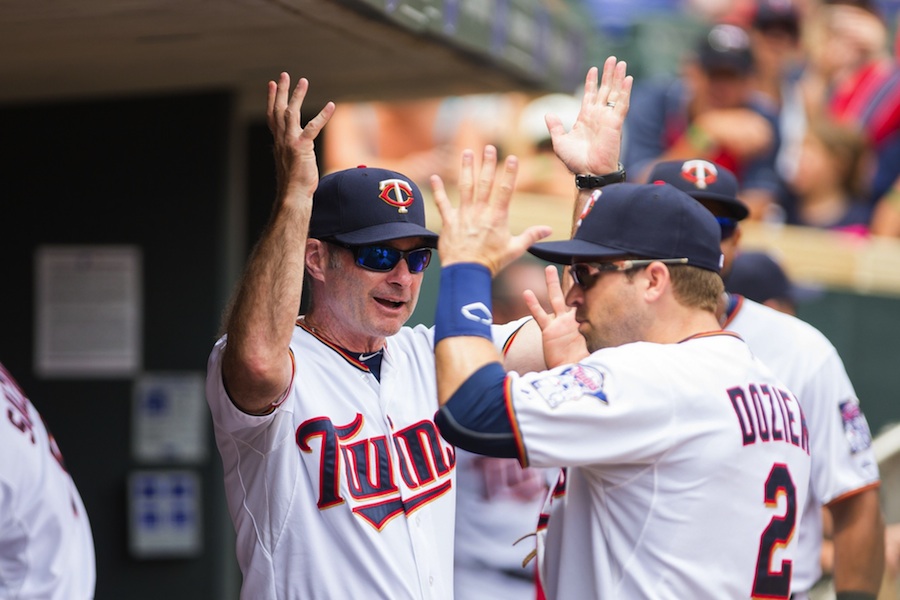 The Twins are enjoying their best season in half a decade and hanging with the big boys even though their roster doesn't exactly stack up to the teams they're racing against. The Astros are led by likely Cy Young winner Dallas Keuchel and Rookie of the Year shoe-in Carlos Correa. They're a Top 5 American League offense in OPS and they lead the league in team ERA. The Angels, while less impressive on paper than Houston, are anchored by two-time reigning MVP Mike Trout and have gotten 38 homers from Albert Pujols. Their rotation features an assortment of youthful standouts such as Garrett Richards, Hector Santiago and Andrew Heaney. The Twins, meanwhile, have gotten subpar production from nearly all of their highest-paid players, haven't had a significantly above-average starter in the rotation (excepting Tyler Duffey's late-season performance) and have endured instability in the bullpen all year. Yet they're going to finish in the top half of the AL in wins, and they're still clinging to legitimate postseason hopes with six games remaining. I don't know how to quantify or explain it, but the resiliency that this Twins team has shown again and again has been a defining factor in their success. It started with the rebound from that horrible start. Following the 1-6 run to open the year, the Twins won three straight and 31 of their next 46 to move 11 games above .500 by early June. It was a remarkable turnaround and there have been several tribulations in the months since then that they have been able to overcome. Remember that deflating four-game series in Kansas City back in early July where the Twins – within four games of first place at the time – had a chance to sweep but instead took two losses on 10th-inning walk-offs? Maybe not, because they immediately bounced back to take six of seven at home against the Orioles and Tigers. How about that heartbreaking sweep at Yankee Stadium in August that included a gut-punch grand slam from A-Rod? The Twins followed that series by winning six straight games and four straight series. More recently, there was the five-game slide at Target Field in mid-September that seemingly sucked every trace of wind from the team's sails. All they did was take six of their next eight to climb right back into the playoff picture. Even on an individual level, we've seen this propensity for overcoming adversity. There are plenty of examples within the past few weeks alone. Glen Perkins, amidst a brutal stretch and coming off perhaps his low point in Detroit, entered with a two-run lead against Cleveland on Monday night and gave up a hard-hit leadoff single on an 0-2 count, creating a "Here we go again" type of feeling. Then he struck out two straight hitters and escaped the inning unscathed. Phil Hughes, battling back issues and decreased velocity, followed up his worst start as a Twin with a huge performance last week against the Indians, navigating his way through five scoreless innings. And Tommy Milone, who was needed to replace an ill Hughes as emergency starter in a crucial game on Monday, shook off two rotten outings to deliver a strong performance and pick up a win. The resilient quality that we have consistently seen from this year's Twins team really differentiates them in my mind from Ron Gardenhire's squads over the past four years. During that era, bad losses turned into losing streaks, and losing streaks turned into extended spells of misery. If you want to see how those teams reacted to getting knocked down, take a look at their records in August and September. As cliche as it sounds, Gardy's late-tenure groups really didn't seem to have much fight in them. Regardless of what happens over the next five days, no one will be able to say that about the 2015 Twins, and to me, that's an extremely encouraging sign for a youth-led team overseen by a first-year manager.
 -
For the Indians, it's an opportunity to leapfrog Minnesota in the AL Central standings and make a late push for a longshot playoff berth. For the Twins, it's a chance to remain within striking distance of the Angels and Astros, setting up a potentially crucial series at home against the Royals this weekend. Whichever side you're viewing it from, the four-game series that gets underway in Cleveland on Monday night carries huge implications.State of the Indians In their third year under manager Terry Francona, the Indians have basically been as expected, pairing great pitching and defense with an occasionally suspect offense. In Kansas City on Sunday, they didn't manage to get a hit on the board until Francisco Lindor bunted for a single in the seventh inning. Prior to that, Cleveland had won three straight contests. They have played a whopping 22 consecutive games against AL Central opponents, and their 13-9 record during that stretch has enabled them to climb back into the race. As you'll see in the pitching match-up breakdowns, they've got some starters that are rolling along nicely at this point. Rookie Rumble Some years, Eddie Rosario's numbers would make him a Rookie of the Year front-runner. But not in 2015, the Year of the Rookie. Rosario will finish behind his teammate, Miguel Sano, in the voting, and both will likely end up below the Indians shortstop Lindor. The eighth overall pick in the 2011 draft, Lindor has developed just as Cleveland had hoped, rapidly ascending the minors and debuting in the majors at age 21. He has flashed his dynamic athleticism in all phases of the game, batting .320/.358/.485 with 10 homers, 21 doubles, four triples and nine steals on 11 attempts. He's pesky. Manship Sailing Along In the first six seasons of his big-league career, including four with Minnesota, Jeff Manship posted a 6.46 ERA and 1.62 WHIP. But now he has found new life in the Indians bullpen. The righty has allowed only 20 hits in 37 innings of work, and owns a 0.97 ERA. He hasn't given up a run since August 22nd. No Place Like Home? The Indians have home field advantage this week, but that hasn't really been much of an advantage for them this year. They are 35-38 with a 4.12 team ERA at Progressive Field, compared to 42-39 and 3.39 on the road. The Twins, conversely, have played much better at home but have won three straight series on the road. PITCHING MATCH-UPS Monday, 6:10 PM: Phil Hughes vs. Corey Kluber These two faced off last Wednesday, in a game that the Twins won after ambushing Kluber for four runs in the fourth inning. Hughes was at his best in that game, making up for diminished velocity by consistently hitting his spots and peppering the fringes of the strike zone. The reigning AL Cy Young winner, Kluber is enjoying another excellent season, but he hasn't looked particularly sharp in either of his outings since returning from a two-week absence due to a hamstring strain. Tuesday, 6:10 PM: Kyle Gibson vs. Cody Anderson Gibson did not rise to the challenge in his biggest start of the year last week, coughing up six runs in 2 2/3 innings, but now he'll get another shot. He had a 2.75 ERA with zero homers allowed in his previous six starts, so he'll need to rediscover that form. Anderson has had a very nice month of September, with a 4-0 record and 1.69 ERA. He held the Twins to one run over 6 2/3 innings last Thursday, though he flirted with trouble by allowing 10 hits. The rookie has allowed two or fewer runs in 10 of his 14 starts for Cleveland. Wednesday, 6:10 PM: Mike Pelfrey vs. Carlos Carrasco This match-up is a scary one for the Twins. Pelfrey came up big in his last start, holding the Tigers to one run over five innings in Detroit, but in general he's been terrible on the road this year, with a 5.60 ERA and 1.74 WHIP. Pelf was shelled in his last start at Cleveland back in early August, surrendering seven runs on nine hits in 3 2/3 innings Carrasco has quietly emerged as one of the best starting pitchers in the American League. His numbers (180 IP, 14-10, 3.44 ERA, 1.05 WHIP, 211/41 K/BB) ought to put him in the Cy Young conversation. He's coming off the best start of his career, a one-hit shutout over the Royals in which he tallied 15 strikeouts. Thursday, 6:10 PM: Tyler Duffey vs. Josh Tomlin Tomlin joined the Indians rotation in mid-August and has picked up wins in six of his nine starts since, registering a 3.03 ERA and 0.89 WHIP. Duffey has had a similarly dramatic impact on the Twins' rotation since stepping in around the same time, notching victories in five of his nine starts. Their formulas are quite different – Tomlin a control artist who leans heavily on his fastball and cutter, Duffey unleashing his big curveball at an MLB-leading 37.8 percent clip – but their results have been similar. This should be a good tilt, and depending on what happens in the three games preceding it, the stakes could be very high. Click here to view the article
-
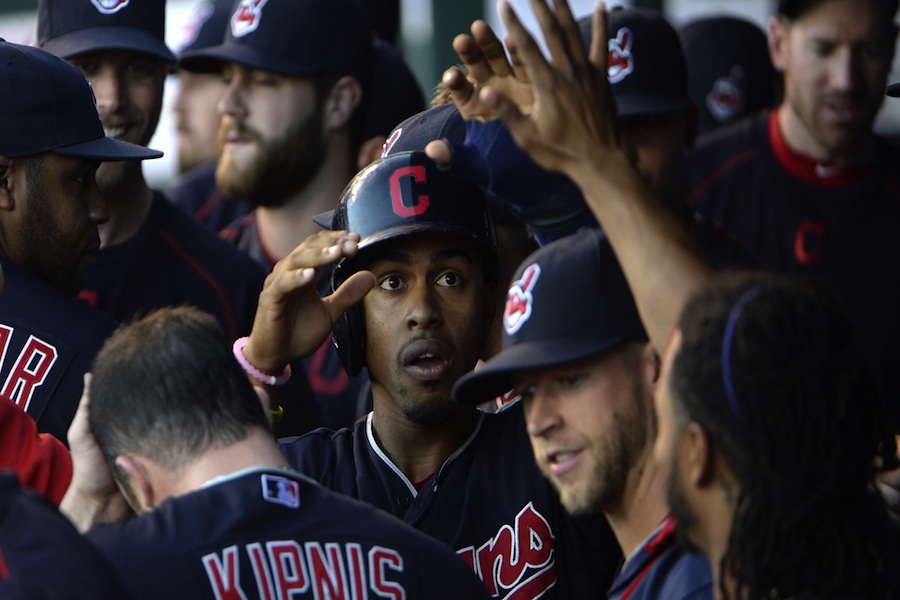 State of the Indians In their third year under manager Terry Francona, the Indians have basically been as expected, pairing great pitching and defense with an occasionally suspect offense. In Kansas City on Sunday, they didn't manage to get a hit on the board until Francisco Lindor bunted for a single in the seventh inning. Prior to that, Cleveland had won three straight contests. They have played a whopping 22 consecutive games against AL Central opponents, and their 13-9 record during that stretch has enabled them to climb back into the race. As you'll see in the pitching match-up breakdowns, they've got some starters that are rolling along nicely at this point. Rookie Rumble Some years, Eddie Rosario's numbers would make him a Rookie of the Year front-runner. But not in 2015, the Year of the Rookie. Rosario will finish behind his teammate, Miguel Sano, in the voting, and both will likely end up below the Indians shortstop Lindor. The eighth overall pick in the 2011 draft, Lindor has developed just as Cleveland had hoped, rapidly ascending the minors and debuting in the majors at age 21. He has flashed his dynamic athleticism in all phases of the game, batting .320/.358/.485 with 10 homers, 21 doubles, four triples and nine steals on 11 attempts. He's pesky. Manship Sailing Along In the first six seasons of his big-league career, including four with Minnesota, Jeff Manship posted a 6.46 ERA and 1.62 WHIP. But now he has found new life in the Indians bullpen. The righty has allowed only 20 hits in 37 innings of work, and owns a 0.97 ERA. He hasn't given up a run since August 22nd. No Place Like Home? The Indians have home field advantage this week, but that hasn't really been much of an advantage for them this year. They are 35-38 with a 4.12 team ERA at Progressive Field, compared to 42-39 and 3.39 on the road. The Twins, conversely, have played much better at home but have won three straight series on the road. PITCHING MATCH-UPS Monday, 6:10 PM: Phil Hughes vs. Corey Kluber These two faced off last Wednesday, in a game that the Twins won after ambushing Kluber for four runs in the fourth inning. Hughes was at his best in that game, making up for diminished velocity by consistently hitting his spots and peppering the fringes of the strike zone. The reigning AL Cy Young winner, Kluber is enjoying another excellent season, but he hasn't looked particularly sharp in either of his outings since returning from a two-week absence due to a hamstring strain. Tuesday, 6:10 PM: Kyle Gibson vs. Cody Anderson Gibson did not rise to the challenge in his biggest start of the year last week, coughing up six runs in 2 2/3 innings, but now he'll get another shot. He had a 2.75 ERA with zero homers allowed in his previous six starts, so he'll need to rediscover that form. Anderson has had a very nice month of September, with a 4-0 record and 1.69 ERA. He held the Twins to one run over 6 2/3 innings last Thursday, though he flirted with trouble by allowing 10 hits. The rookie has allowed two or fewer runs in 10 of his 14 starts for Cleveland. Wednesday, 6:10 PM: Mike Pelfrey vs. Carlos Carrasco This match-up is a scary one for the Twins. Pelfrey came up big in his last start, holding the Tigers to one run over five innings in Detroit, but in general he's been terrible on the road this year, with a 5.60 ERA and 1.74 WHIP. Pelf was shelled in his last start at Cleveland back in early August, surrendering seven runs on nine hits in 3 2/3 innings Carrasco has quietly emerged as one of the best starting pitchers in the American League. His numbers (180 IP, 14-10, 3.44 ERA, 1.05 WHIP, 211/41 K/BB) ought to put him in the Cy Young conversation. He's coming off the best start of his career, a one-hit shutout over the Royals in which he tallied 15 strikeouts. Thursday, 6:10 PM: Tyler Duffey vs. Josh Tomlin Tomlin joined the Indians rotation in mid-August and has picked up wins in six of his nine starts since, registering a 3.03 ERA and 0.89 WHIP. Duffey has had a similarly dramatic impact on the Twins' rotation since stepping in around the same time, notching victories in five of his nine starts. Their formulas are quite different – Tomlin a control artist who leans heavily on his fastball and cutter, Duffey unleashing his big curveball at an MLB-leading 37.8 percent clip – but their results have been similar. This should be a good tilt, and depending on what happens in the three games preceding it, the stakes could be very high.
 -
That quote to Berardino seems like Dozier is subtly hinting that something is physically wrong.
-
Over the first half of the season, Glen Perkins was about as close to being the Twins' team MVP as you could possibly expect from a reliever relegated to pitching a few innings a week. Since the All-Star break, it's been a different story entirely. How much can Paul Molitor trust his longtime closer as the season winds down and every game carries enormous weight?Up until he successfully closed out a victory for the American League in the Midsummer Classic, Perkins had essentially been perfect in his ninth-inning role for the Twins. He converted all 28 of his save chances, held opponents to a .188 batting average, and allowed only four total extra-base hits in 37 innings of work. During Minnesota's 20-win month of May, which put them into position to contend into the late days of September, Perkins was a constant force, closing out 14 of the Twins' 20 victories and picking up saves in 13 of his 15 appearances. As good as he was that month, he only got better afterward. From the end of May through the All-Star break, he rattled off 13 straight scoreless appearances, allowing only three hits and two walks total. Perk's last two outings of the first half were the model of excellence and efficiency: he retired all six batters he faced on a total of 14 pitches. Then, something went very wrong, and very suddenly. Ever since he pitched the final inning in the All-Star Game, Perkins just hasn't been the same guy. He blew his first save of the year in his first outing after the break, and since then he hasn't been able to string together three consecutive appearances without allowing a run. In 18 second-half trips to the mound, the lefty has posted a 7.16 ERA while opponents have raked him to the tune of .356/.382/.658. Wednesday night was just the latest example of Perkins' new found shakiness. He came in with a four-run lead in the ninth and let the Indians back into the game, coughing up two runs and allowing the tying run into the on-deck circle before finally retiring Yan Gomes on a pop-up to end it. This is a level of struggle we haven't seen from the three-time All Star since he became closer, and it's clearly been tied to his health to some degree. But it leaves us to wonder: Can the Twins trust their most talented reliever here in the stretch run as they pursue the final wild-card spot in the American League? Based on his numbers and his ongoing troubles on the mound, the obvious answer is no. But I'm not ready to go that far. First, I would point out that one night prior to his scare on Wednesday, Perkins relieved Ervin Santana with two on and nobody out in the eighth inning. He retired three straight batters -- including All Star Jason Kipnis and Rookie of the Year contender Francisco Lindor -- to protect a two-run lead. It might have been the biggest relief appearance the Twins have had all year. And in general, even though things haven't exactly been smooth for Perkins lately, he has looked better, providing indications that his achy back is on the upswing. His velocity is basically in line with where it's been all year and he's still getting strikeouts while avoiding walks. In 10 2/3 innings over his last 12 appearances dating back to August 7th, he has 11 strikeouts and two walks. His .326 opponents' batting average and 5.06 ERA during that span can largely be tied to an egregious .394 batting average on balls in play. That simply won't sustain. This also seems like a good opportunity to direct some credit to the Twins' manager and general manager. Paul Molitor has altered his usage of Perkins in response to the reliever's lessened effectiveness, keeping him out of tight save situations and often inserting him in lower-leverage spots. As a result, the Twins have gone 10-2 in Perk's last 12 appearances in spite of his struggles. Molitor's flexibility in this regard has been made possible by Terry Ryan's deadline acquisition of Kevin Jepsen, who provided another legitimate late-inning arm capable of stepping in and closing. The presence of Jepsen means that the Twins don't need to lean quite as hard on Perkins, but there's no doubt that they'll need him pitching well if they're going to make a run at this thing. Do you trust him? Click here to view the article
-
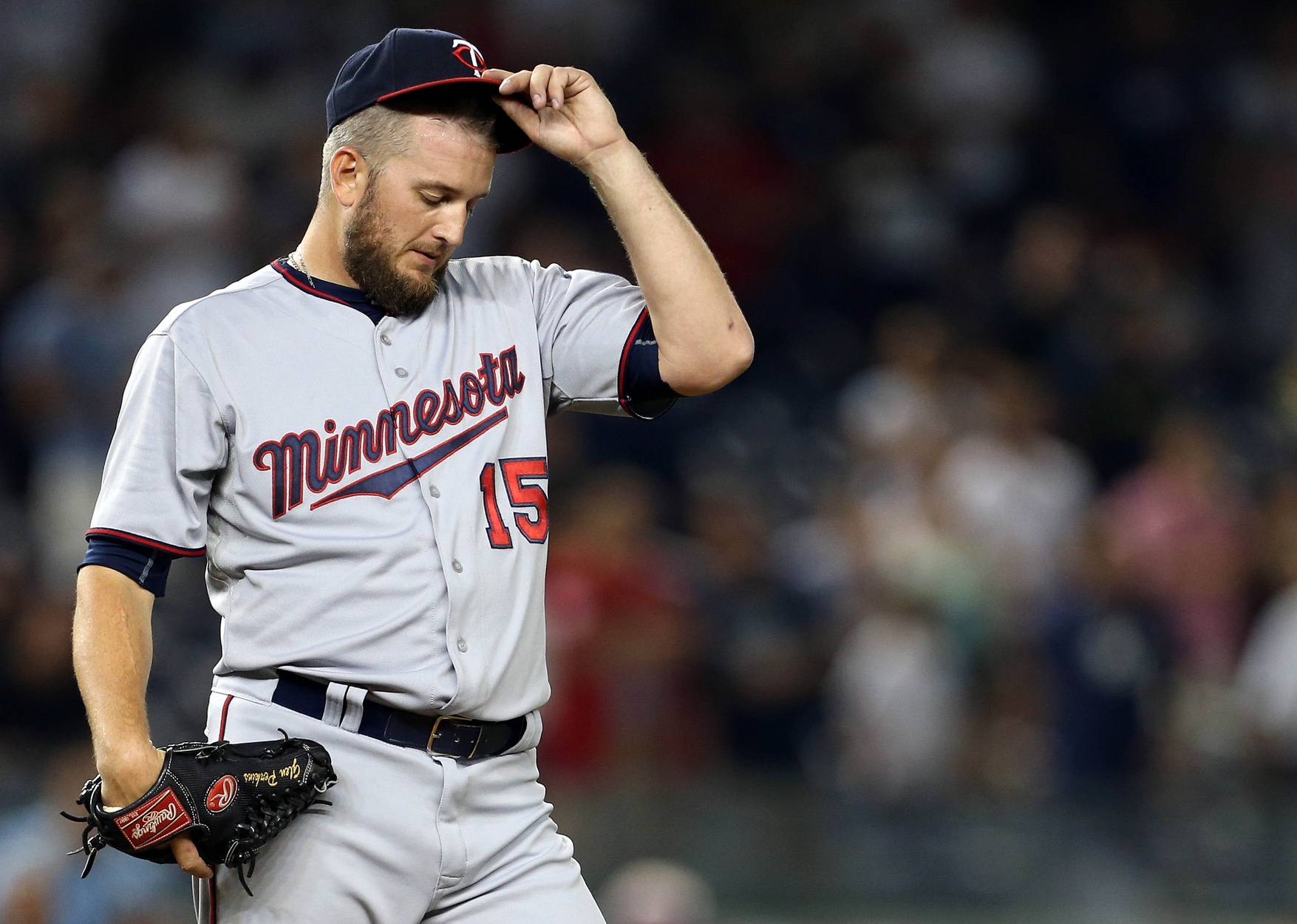 Up until he successfully closed out a victory for the American League in the Midsummer Classic, Perkins had essentially been perfect in his ninth-inning role for the Twins. He converted all 28 of his save chances, held opponents to a .188 batting average, and allowed only four total extra-base hits in 37 innings of work. During Minnesota's 20-win month of May, which put them into position to contend into the late days of September, Perkins was a constant force, closing out 14 of the Twins' 20 victories and picking up saves in 13 of his 15 appearances. As good as he was that month, he only got better afterward. From the end of May through the All-Star break, he rattled off 13 straight scoreless appearances, allowing only three hits and two walks total. Perk's last two outings of the first half were the model of excellence and efficiency: he retired all six batters he faced on a total of 14 pitches. Then, something went very wrong, and very suddenly. Ever since he pitched the final inning in the All-Star Game, Perkins just hasn't been the same guy. He blew his first save of the year in his first outing after the break, and since then he hasn't been able to string together three consecutive appearances without allowing a run. In 18 second-half trips to the mound, the lefty has posted a 7.16 ERA while opponents have raked him to the tune of .356/.382/.658. Wednesday night was just the latest example of Perkins' new found shakiness. He came in with a four-run lead in the ninth and let the Indians back into the game, coughing up two runs and allowing the tying run into the on-deck circle before finally retiring Yan Gomes on a pop-up to end it. This is a level of struggle we haven't seen from the three-time All Star since he became closer, and it's clearly been tied to his health to some degree. But it leaves us to wonder: Can the Twins trust their most talented reliever here in the stretch run as they pursue the final wild-card spot in the American League? Based on his numbers and his ongoing troubles on the mound, the obvious answer is no. But I'm not ready to go that far. First, I would point out that one night prior to his scare on Wednesday, Perkins relieved Ervin Santana with two on and nobody out in the eighth inning. He retired three straight batters -- including All Star Jason Kipnis and Rookie of the Year contender Francisco Lindor -- to protect a two-run lead. It might have been the biggest relief appearance the Twins have had all year. And in general, even though things haven't exactly been smooth for Perkins lately, he has looked better, providing indications that his achy back is on the upswing. His velocity is basically in line with where it's been all year and he's still getting strikeouts while avoiding walks. In 10 2/3 innings over his last 12 appearances dating back to August 7th, he has 11 strikeouts and two walks. His .326 opponents' batting average and 5.06 ERA during that span can largely be tied to an egregious .394 batting average on balls in play. That simply won't sustain. This also seems like a good opportunity to direct some credit to the Twins' manager and general manager. Paul Molitor has altered his usage of Perkins in response to the reliever's lessened effectiveness, keeping him out of tight save situations and often inserting him in lower-leverage spots. As a result, the Twins have gone 10-2 in Perk's last 12 appearances in spite of his struggles. Molitor's flexibility in this regard has been made possible by Terry Ryan's deadline acquisition of Kevin Jepsen, who provided another legitimate late-inning arm capable of stepping in and closing. The presence of Jepsen means that the Twins don't need to lean quite as hard on Perkins, but there's no doubt that they'll need him pitching well if they're going to make a run at this thing. Do you trust him?
 -
While a top Twins pitching prospect dominated multiple levels of the minors this summer, fans hoped that he might be able to join the big-league club late in the season to make an impact during a race for the playoffs. That is exactly what has happened. It's just not the guy we thought it would be.Jose Berrios was the most buzzworthy arm in Minnesota's system this year, and with good reason. He was named Minor League Starting Pitcher of the Year by Twins Daily and will surely receive the official nod for a second time in a row when it's announced by the Twins soon. Berrios might be the most talented pitcher in the organization, and in spring training many felt that he had better stuff than anyone slated for the MLB rotation. So pressure built for a call-up over the course of the season while the young righty dominated Double-A and Triple-A, posting a 2.87 ERA and 1.05 WHIP while averaging more than a strikeout per inning. With the Twins emerging as surprise contenders, many fans hoped to see the electric hurler promoted to help during the stretch push in some capacity. That didn't happen. Berrios finished up his year at Rochester and the front office elected to shut him down. However, another pitching prospect has entered the fold and has given the team as much of a boost as the Twins could have possibly hoped to receive from Berrios. On Sunday, Tyler Duffey picked up a win in what could be framed as a season-saving victory. With the team having dropped the first three games of a four-game set, and in danger of falling behind the Angels in the wild-card race with another loss, Duffey played the role of stopper, firing seven shutout innings to end a five-game losing streak. As we all remember, Duffey was shelled in his first start for the Twins, coughing up six runs in two innings, but that was pretty easy to excuse given that it was his major-league debut in the league's toughest current pitching environment. Since that outing, the right-hander has been nothing short of spectacular, going 4-0 with a 2.06 ERA and 43-to-16 K/BB ratio in 43 2/3 innings. Leaning heavily on a standout curveball, Duffey has largely had his way with big-league hitters, who have been unable to adjust. The 24-year-old's last three starts have been his most impressive; he has pitched at least into the seventh every time out, allowing a total of three runs on 16 hits in 20 innings with 22 strikeouts and four walks. And this at a time where the Twins are in dire need of quality outings. Duffey's calling card in the minors was his ability to keep the ball in yard. Prior to his call-up, he had allowed just one home run in 22 starts between Chattanooga and Rochester. This strength has been on display in the majors as well. Since giving up two bombs against the dominating Jays lineup in his first start, Duffey has allowed only one homer in seven turns. His current HR/9 rate with the Twins (0.6) is identical to his mark over 477 innings on the farm. He has also been missing bats, averaging nearly a strikeout per inning overall (8.7 K/9) with the big club. The combination of piling up strikeouts while limiting home runs is a promising one, as you can see based on this list: Qualified MLB Starters With >8.0 K/9 & Tyson Ross, SD: 3.18 ERA Jake Arrieta, CHC: 1.96 ERA Gio Gonzalez, WAS: 3.83 ERA Gerrit Cole, PIT: 2.64 ERA Zack Greinke, LAD: 1.64 ERA Clayton Kershaw, LAD: 2.18 ERA Carlos Martinez, STL: 3.01 ERA Dallas Keuchel, HOU, 2.51 ERA David Price, DET: 2.34 ERA Francisco Liriano, PIT: 3.41 ERA Lance Lynn, STL: 3.28 ERA Madison Bumgarner, SF: 2.84 ERA Chris Archer, TB: 2.92 ERA Jon Lester, CHC: 3.46 ERA Jacob deGrom, NYM: 2.64 ERA Corey Kluber, CLE: 3.44 ERA Carlos Carrasco, CLE: 3.62 ERA Cole Hamels, TEX: 3.67 ERA Matt Harvey, NYM: 2.80 ERA Chris Sale, CWS: 3.47 ERA Those are some of the biggest names among starting pitchers in the game, and almost without exception, they're all having excellent years. Obviously, their success and their commonality in the K and HR categories are not coincidentally tied – these are foundational components of good pitching. It remains to be seen whether Duffey can maintain his effectiveness in both regards. In particular, his strikeout rate is a bit out of line with his track record, although given the sheer beauty of his hook and the way he has continually elevated his game as a pro, it's not that hard to buy. Back before he debuted, I wrote about how the former college closer and fifth round pick was proving to be a draft gem for the Twins, and that only rings more true in light of his resounding initial success at the highest level. What his future holds is difficult to say at this point, but for now he's proving to be a vital cog in the rotation. Duffey is going to be an interesting piece in an upcoming offseason where Minnesota must make some decisions on a rotation that is shaping up to be a bit overcrowded heading into 2016. Click here to view the article
-
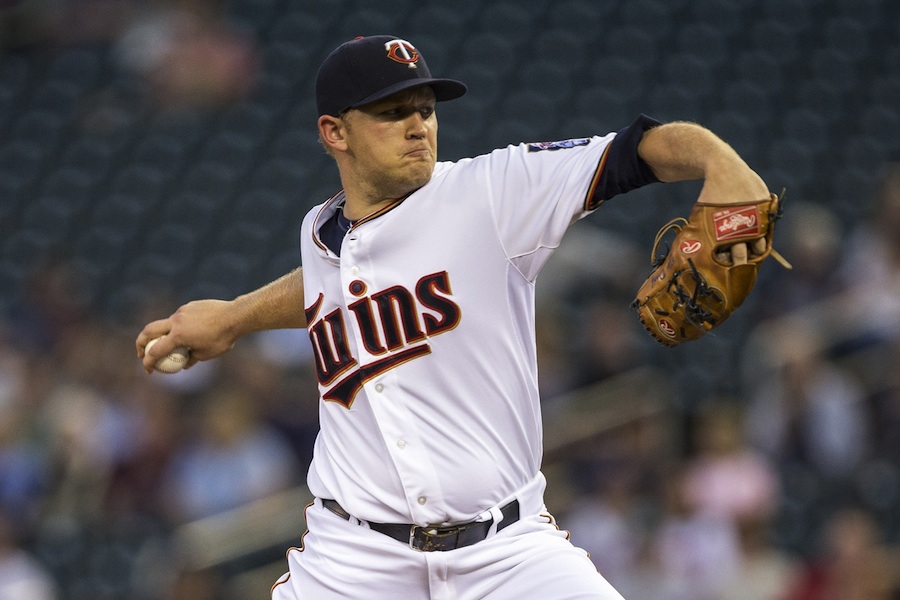 Jose Berrios was the most buzzworthy arm in Minnesota's system this year, and with good reason. He was named Minor League Starting Pitcher of the Year by Twins Daily and will surely receive the official nod for a second time in a row when it's announced by the Twins soon. Berrios might be the most talented pitcher in the organization, and in spring training many felt that he had better stuff than anyone slated for the MLB rotation. So pressure built for a call-up over the course of the season while the young righty dominated Double-A and Triple-A, posting a 2.87 ERA and 1.05 WHIP while averaging more than a strikeout per inning. With the Twins emerging as surprise contenders, many fans hoped to see the electric hurler promoted to help during the stretch push in some capacity. That didn't happen. Berrios finished up his year at Rochester and the front office elected to shut him down. However, another pitching prospect has entered the fold and has given the team as much of a boost as the Twins could have possibly hoped to receive from Berrios. On Sunday, Tyler Duffey picked up a win in what could be framed as a season-saving victory. With the team having dropped the first three games of a four-game set, and in danger of falling behind the Angels in the wild-card race with another loss, Duffey played the role of stopper, firing seven shutout innings to end a five-game losing streak. As we all remember, Duffey was shelled in his first start for the Twins, coughing up six runs in two innings, but that was pretty easy to excuse given that it was his major-league debut in the league's toughest current pitching environment. Since that outing, the right-hander has been nothing short of spectacular, going 4-0 with a 2.06 ERA and 43-to-16 K/BB ratio in 43 2/3 innings. Leaning heavily on a standout curveball, Duffey has largely had his way with big-league hitters, who have been unable to adjust. The 24-year-old's last three starts have been his most impressive; he has pitched at least into the seventh every time out, allowing a total of three runs on 16 hits in 20 innings with 22 strikeouts and four walks. And this at a time where the Twins are in dire need of quality outings. Duffey's calling card in the minors was his ability to keep the ball in yard. Prior to his call-up, he had allowed just one home run in 22 starts between Chattanooga and Rochester. This strength has been on display in the majors as well. Since giving up two bombs against the dominating Jays lineup in his first start, Duffey has allowed only one homer in seven turns. His current HR/9 rate with the Twins (0.6) is identical to his mark over 477 innings on the farm. He has also been missing bats, averaging nearly a strikeout per inning overall (8.7 K/9) with the big club. The combination of piling up strikeouts while limiting home runs is a promising one, as you can see based on this list: Qualified MLB Starters With >8.0 K/9 & Tyson Ross, SD: 3.18 ERA Jake Arrieta, CHC: 1.96 ERA Gio Gonzalez, WAS: 3.83 ERA Gerrit Cole, PIT: 2.64 ERA Zack Greinke, LAD: 1.64 ERA Clayton Kershaw, LAD: 2.18 ERA Carlos Martinez, STL: 3.01 ERA Dallas Keuchel, HOU, 2.51 ERA David Price, DET: 2.34 ERA Francisco Liriano, PIT: 3.41 ERA Lance Lynn, STL: 3.28 ERA Madison Bumgarner, SF: 2.84 ERA Chris Archer, TB: 2.92 ERA Jon Lester, CHC: 3.46 ERA Jacob deGrom, NYM: 2.64 ERA Corey Kluber, CLE: 3.44 ERA Carlos Carrasco, CLE: 3.62 ERA Cole Hamels, TEX: 3.67 ERA Matt Harvey, NYM: 2.80 ERA Chris Sale, CWS: 3.47 ERA Those are some of the biggest names among starting pitchers in the game, and almost without exception, they're all having excellent years. Obviously, their success and their commonality in the K and HR categories are not coincidentally tied – these are foundational components of good pitching. It remains to be seen whether Duffey can maintain his effectiveness in both regards. In particular, his strikeout rate is a bit out of line with his track record, although given the sheer beauty of his hook and the way he has continually elevated his game as a pro, it's not that hard to buy. Back before he debuted, I wrote about how the former college closer and fifth round pick was proving to be a draft gem for the Twins, and that only rings more true in light of his resounding initial success at the highest level. What his future holds is difficult to say at this point, but for now he's proving to be a vital cog in the rotation. Duffey is going to be an interesting piece in an upcoming offseason where Minnesota must make some decisions on a rotation that is shaping up to be a bit overcrowded heading into 2016.
 -
Article: That's The Ticket: Star Power
Nick Nelson replied to Nick Nelson's topic in Twins Daily Front Page News
Yep, you're right, I missed that news. Probably a positive development for anyone thinking about attending Sunday's game. -
A debate began stirring last week surrounding the National League MVP race, spurred by a column from Jon Morosi of FOX Sports arguing that Yoenis Cespedes deserves consideration for the honor despite spending more than half of the season in the AL. It's a rather ludicrous take, considering Bryce Harper's unparalleled body of work this season, but it does raise an interesting question -- how should we weigh the impact of tremendous production over a short span against a full season's worth of output? With the Angels coming into town for a showdown between two of the game's best young power hitters, it's a relevant subject.The Harper vs. Cespedes argument can be mirrored, in some ways, on the AL side by Mike Trout and Miguel Sano. Trout is by no means the runaway candidate that Harper is, but he has a good shot at capturing his second straight MVP. He's hitting .292/.393/.572 and his next home run (No. 37) will surpass his 2014 total and set a career high. Trout's main drawback, right or wrong, might be the state of his team. At 73-72, the Angels trail both Minnesota and Houston in the race for the second wild-card, and unless they can do some major damage at Target Field this week, they'll be extreme longshots for the postseason. Making it to October has often been a decisive factor in close MVP races of the past. Now, to be clear, I don't expect Sano to gather any real MVP steam. Although his power has revitalized the Twins lineup, his impact can't even be compared to Cespedes, whose unbelievable performance since arriving in New York has coincided with a complete turnaround of the Mets' once hapless offense. However, if he can help push the Twins to their first playoff berth in five years, I would be curious to see if Sano receives any down-ballot votes. And I'd also be very curious to see if it would enable him to edge Carlos Correa and Francisco Lindor in the Rookie of the Year race. A big series this weekend would do much to help his case. Power Couple Fans at Target Field this week will be witness to a rare display of young power-hitting talent. Dating back to his rookie year in 2012, the 24-year-old Trout ranks fifth in all of baseball with 129 home runs. Meanwhile, Sano has the most home runs through 63 games for any player in Minnesota history, and his .571 slugging percentage is seventh-highest in the majors among players with 250 or more plate appearances. These kids are both going to hit a lot of homers over the next decade. How many will they hit in this crucial four-game set? Let's take a look at the hurlers they'll be going up against. PITCHING MATCH-UPS Thursday, 7:10 PM: LHP Hector Santiago vs. LHP Tommy Milone Coming off a pair of tremendous outings to start the month of September, Milone was once again cruising his last time out, holding the White Sox scoreless through the first three innings. Then, everything fell apart. Six straight batters reached to open the fourth and by the time all was said and done, Milone was charged with seven runs (four earned) and the Twins were blown out. He'll be looking to rebound, and fortunately his chances to do so are good, as Milone has a 2.66 ERA in his last seven turns at Target Field. He'll have a tough opponent in Santiago, who has been one of the league's more underrated starters this season with a 3.21 ERA, 1.22 WHIP and 148-to-59 K/BB ratio over 165 innings. The good news is that the lefty has been struggling since the All-Star break (4.89 ERA, 11 homers allowed) and has more walks than strikeouts in his last five starts. His current innings total represents a career-high workload so it's possible Santiago is wearing down. Friday, 7:10 PM: LHP Andrew Heaney vs. RHP Kyle Gibson Heaney was taken by the Marlins with the ninth overall pick in the 2012 draft and he's already switched places twice since, first heading to the Dodgers in last December's Dan Haren deal before immediately being flipped to the Angels for Howie Kendrick. He's enjoying an excellent rookie year, with a 3.32 ERA and 1.19 WHIP in 15 starts. Like Santiago, though, Heaney has scuffled in recent weeks. He started his MLB career with six straight quality starts but has just three in nine tries since. Gibson is a guy the Twins are going to be leaning on heavily in this tight wild-card race. They need him to bring it every time he takes the mound, and he certainly delivered last time, taking a shutout into the eighth in Chicago. Gibson hasn't given up a home run in a calendar month (five starts) but he'll need to tread carefully with the likes of Trout and Albert Pujols, who are tied for fourth in the AL with 35 jacks apiece. Saturday, 6:10 PM: RHP Garrett Richards vs. RHP Mike Pelfrey Pelfrey is the weak link in the Minnesota rotation at this point, with the lowest K-rate and the highest WHIP among Twins starters. He has failed to complete six innings in any of his past five starts. The hitters are going to need to bring it against the hard-throwing Richards, who has been solid yet inconsistent for the Halos following a breakout 2014 campaign. Richards leads the majors in wild pitches after doing the same last year, so that's worth keeping an eye on. Sunday, 1:10 PM: RHP Matt Shoemaker vs. RHP Phil Hughes Shoemaker's seven starts since the break: 7/21 vs. MIN: 6.0 IP, 2 H, 0 R, 10 K 7/30 @ HOU: 7.0 IP, 3 H, 0 R, 7 K 8/4 vs. CLE: 6.0 IP, 5 H, 0 R, 10 K 8/10 @ CWS: 5.2 IP, 9 H, 7 R, 3 K 8/15 @ KC: 1.2 IP, 7 H, 6 R, 0 K 8/27 @ DET: 7.1 IP, 1 H, 0 R, 5 K 9/1 @ OAK: 7.0 IP, 5 H, 1 R, 5 K When he's been on – and that's been frequent lately – he's been nearly unhittable. But both of his duds during that span came on the road against AL Central opponents. And as you can see, he hasn't pitched since September 1st due to a forearm strain, so it's tough to know what to expect. Right now it looks like he'll be facing another starter freshly returned from injury hiatus. Hughes wasn't terribly effective in his first start off the DL on Wednesday, requiring 65 pitches to get through three innings, but the hope is that he'll be stronger and sharper as he regains his groove. The Twins need him to do so badly right now. Paul Molitor has left open the possibility that Tyler Duffey could pitch this game as well, though his workload is becoming a consideration. Click here to view the article
-
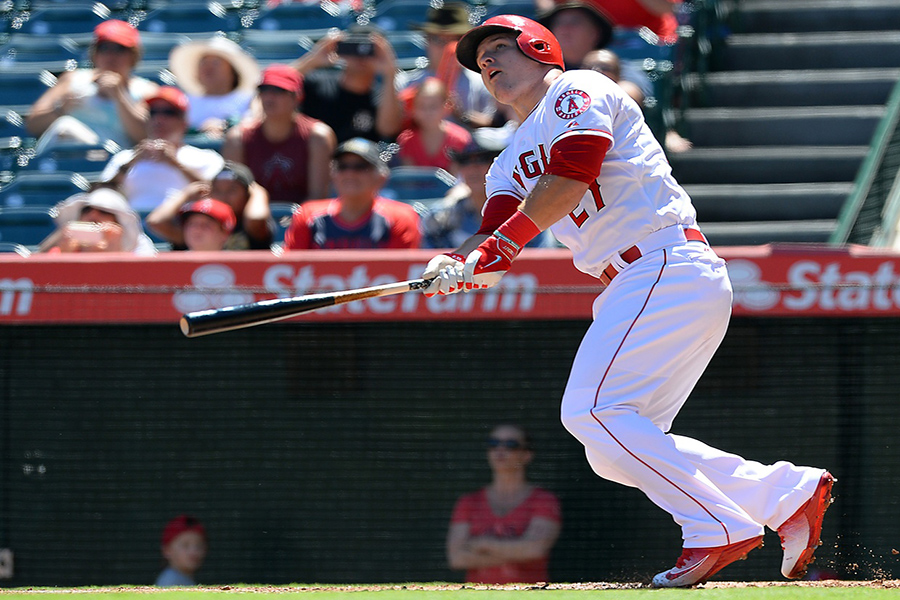 The Harper vs. Cespedes argument can be mirrored, in some ways, on the AL side by Mike Trout and Miguel Sano. Trout is by no means the runaway candidate that Harper is, but he has a good shot at capturing his second straight MVP. He's hitting .292/.393/.572 and his next home run (No. 37) will surpass his 2014 total and set a career high. Trout's main drawback, right or wrong, might be the state of his team. At 73-72, the Angels trail both Minnesota and Houston in the race for the second wild-card, and unless they can do some major damage at Target Field this week, they'll be extreme longshots for the postseason. Making it to October has often been a decisive factor in close MVP races of the past. Now, to be clear, I don't expect Sano to gather any real MVP steam. Although his power has revitalized the Twins lineup, his impact can't even be compared to Cespedes, whose unbelievable performance since arriving in New York has coincided with a complete turnaround of the Mets' once hapless offense. However, if he can help push the Twins to their first playoff berth in five years, I would be curious to see if Sano receives any down-ballot votes. And I'd also be very curious to see if it would enable him to edge Carlos Correa and Francisco Lindor in the Rookie of the Year race. A big series this weekend would do much to help his case. Power Couple Fans at Target Field this week will be witness to a rare display of young power-hitting talent. Dating back to his rookie year in 2012, the 24-year-old Trout ranks fifth in all of baseball with 129 home runs. Meanwhile, Sano has the most home runs through 63 games for any player in Minnesota history, and his .571 slugging percentage is seventh-highest in the majors among players with 250 or more plate appearances. These kids are both going to hit a lot of homers over the next decade. How many will they hit in this crucial four-game set? Let's take a look at the hurlers they'll be going up against. PITCHING MATCH-UPS Thursday, 7:10 PM: LHP Hector Santiago vs. LHP Tommy Milone Coming off a pair of tremendous outings to start the month of September, Milone was once again cruising his last time out, holding the White Sox scoreless through the first three innings. Then, everything fell apart. Six straight batters reached to open the fourth and by the time all was said and done, Milone was charged with seven runs (four earned) and the Twins were blown out. He'll be looking to rebound, and fortunately his chances to do so are good, as Milone has a 2.66 ERA in his last seven turns at Target Field. He'll have a tough opponent in Santiago, who has been one of the league's more underrated starters this season with a 3.21 ERA, 1.22 WHIP and 148-to-59 K/BB ratio over 165 innings. The good news is that the lefty has been struggling since the All-Star break (4.89 ERA, 11 homers allowed) and has more walks than strikeouts in his last five starts. His current innings total represents a career-high workload so it's possible Santiago is wearing down. Friday, 7:10 PM: LHP Andrew Heaney vs. RHP Kyle Gibson Heaney was taken by the Marlins with the ninth overall pick in the 2012 draft and he's already switched places twice since, first heading to the Dodgers in last December's Dan Haren deal before immediately being flipped to the Angels for Howie Kendrick. He's enjoying an excellent rookie year, with a 3.32 ERA and 1.19 WHIP in 15 starts. Like Santiago, though, Heaney has scuffled in recent weeks. He started his MLB career with six straight quality starts but has just three in nine tries since. Gibson is a guy the Twins are going to be leaning on heavily in this tight wild-card race. They need him to bring it every time he takes the mound, and he certainly delivered last time, taking a shutout into the eighth in Chicago. Gibson hasn't given up a home run in a calendar month (five starts) but he'll need to tread carefully with the likes of Trout and Albert Pujols, who are tied for fourth in the AL with 35 jacks apiece. Saturday, 6:10 PM: RHP Garrett Richards vs. RHP Mike Pelfrey Pelfrey is the weak link in the Minnesota rotation at this point, with the lowest K-rate and the highest WHIP among Twins starters. He has failed to complete six innings in any of his past five starts. The hitters are going to need to bring it against the hard-throwing Richards, who has been solid yet inconsistent for the Halos following a breakout 2014 campaign. Richards leads the majors in wild pitches after doing the same last year, so that's worth keeping an eye on. Sunday, 1:10 PM: RHP Matt Shoemaker vs. RHP Phil Hughes Shoemaker's seven starts since the break: 7/21 vs. MIN: 6.0 IP, 2 H, 0 R, 10 K 7/30 @ HOU: 7.0 IP, 3 H, 0 R, 7 K 8/4 vs. CLE: 6.0 IP, 5 H, 0 R, 10 K 8/10 @ CWS: 5.2 IP, 9 H, 7 R, 3 K 8/15 @ KC: 1.2 IP, 7 H, 6 R, 0 K 8/27 @ DET: 7.1 IP, 1 H, 0 R, 5 K 9/1 @ OAK: 7.0 IP, 5 H, 1 R, 5 K When he's been on – and that's been frequent lately – he's been nearly unhittable. But both of his duds during that span came on the road against AL Central opponents. And as you can see, he hasn't pitched since September 1st due to a forearm strain, so it's tough to know what to expect. Right now it looks like he'll be facing another starter freshly returned from injury hiatus. Hughes wasn't terribly effective in his first start off the DL on Wednesday, requiring 65 pitches to get through three innings, but the hope is that he'll be stronger and sharper as he regains his groove. The Twins need him to do so badly right now. Paul Molitor has left open the possibility that Tyler Duffey could pitch this game as well, though his workload is becoming a consideration.
 -
Shortly before ending his lengthy tenure as Commissioner of Major League Baseball, Bud Selig made a controversial change to the foundational setup of the game's playoff format. The 2012 season became the first in which a second wild-card team was added for both leagues, pushing the number of postseason entrants from eight to 10.It was no surprise that there was widespread backlash to this major reconfiguration. More than most, baseball is a sport that is resistant to change. The difficulty of achieving a postseason berth at the end of a 162-game marathon was one of MLB's differentiators, with the NFL sending 12 teams to the playoffs and the NBA letting in more than half of its squads. Traditionalists had a hard enough time accepting the idea of a single wild-card team when Selig oversaw its implementation back in 1995. Now another one was being added, with the wrinkle that the two wild-card winners would face off in a single game that decided which club would move on. It sort of flew in the face of the league's underlying mechanics. "This change increases the rewards of a division championship and allows two additional markets to experience playoff baseball each year," Selig stated when he initially announced the creation of the Wild Card Round. Whether you like the change or not, you can't deny that both those things are true, and as fans in Minnesota are now learning, the benefits of this new format stretch even further. Because while the Twins may or may not overcome the Astros (or Rangers) and earn a chance to participate in the wild-card play-in, we're still getting to experience the excitement of contention in September, adding a level of drama that previously would have been missing. If not for this new setup, the Twins – who obviously have no shot at winning the division – would currently be trailing the Yankees by four games for the American League's lone wild-card opening, with the Astros also standing in front of them and with 18 games remaining and no head-to-head match-ups against either. That's not an impossible hill to climb but it's an awfully steep one. Instead, Minnesota is within a game and a half of Houston, and at this juncture in mid-September every game carries huge significance. That's a level of late-season drama that we haven't had around here in a long time. On Tuesday night, I found myself flipping the channel frequently from Fox Sports North to ESPN, where the Rangers/Astros game was being nationally televised. Scoreboard watching! Hypothesizing about playoff rotations! The highs and lows attached to individual victories and losses that can dramatically alter the playoff picture! We've missed these exercises and emotions over the last four years – at least I know I have. So I'm awfully glad that the new format enables us to have them now. Then again, I've never had a problem with the added wild-card teams, nor with interleague play, nor the All Star Game dictating home field for the World Series, nor instant replay, nor any of the innovations that took place under Selig. I'll always harbor some resentment for the man over that whole contraction fiasco, but in general I believe that he did a lot of good for the game, and now I'm getting to appreciate one of the final touches of his legacy first-hand, along with my fellow Twins fans. I'm curious to hear the viewpoints of some readers on this topic. Do you like the new playoff structure? Has your opinion shifted now that you're experiencing its perks? What alterations would you make to the setup, if any? Click here to view the article
-
 It was no surprise that there was widespread backlash to this major reconfiguration. More than most, baseball is a sport that is resistant to change. The difficulty of achieving a postseason berth at the end of a 162-game marathon was one of MLB's differentiators, with the NFL sending 12 teams to the playoffs and the NBA letting in more than half of its squads. Traditionalists had a hard enough time accepting the idea of a single wild-card team when Selig oversaw its implementation back in 1995. Now another one was being added, with the wrinkle that the two wild-card winners would face off in a single game that decided which club would move on. It sort of flew in the face of the league's underlying mechanics. "This change increases the rewards of a division championship and allows two additional markets to experience playoff baseball each year," Selig stated when he initially announced the creation of the Wild Card Round. Whether you like the change or not, you can't deny that both those things are true, and as fans in Minnesota are now learning, the benefits of this new format stretch even further. Because while the Twins may or may not overcome the Astros (or Rangers) and earn a chance to participate in the wild-card play-in, we're still getting to experience the excitement of contention in September, adding a level of drama that previously would have been missing. If not for this new setup, the Twins – who obviously have no shot at winning the division – would currently be trailing the Yankees by four games for the American League's lone wild-card opening, with the Astros also standing in front of them and with 18 games remaining and no head-to-head match-ups against either. That's not an impossible hill to climb but it's an awfully steep one. Instead, Minnesota is within a game and a half of Houston, and at this juncture in mid-September every game carries huge significance. That's a level of late-season drama that we haven't had around here in a long time. On Tuesday night, I found myself flipping the channel frequently from Fox Sports North to ESPN, where the Rangers/Astros game was being nationally televised. Scoreboard watching! Hypothesizing about playoff rotations! The highs and lows attached to individual victories and losses that can dramatically alter the playoff picture! We've missed these exercises and emotions over the last four years – at least I know I have. So I'm awfully glad that the new format enables us to have them now. Then again, I've never had a problem with the added wild-card teams, nor with interleague play, nor the All Star Game dictating home field for the World Series, nor instant replay, nor any of the innovations that took place under Selig. I'll always harbor some resentment for the man over that whole contraction fiasco, but in general I believe that he did a lot of good for the game, and now I'm getting to appreciate one of the final touches of his legacy first-hand, along with my fellow Twins fans. I'm curious to hear the viewpoints of some readers on this topic. Do you like the new playoff structure? Has your opinion shifted now that you're experiencing its perks? What alterations would you make to the setup, if any?
