



Nick Nelson
-
Posts
8,327 -
Joined
-
Last visited
-
Days Won
56
Content Type
Profiles
News
Minnesota Twins Videos
2026 Minnesota Twins Top Prospects Ranking
2022 Minnesota Twins Draft Picks
Minnesota Twins Free Agent & Trade Rumors, Notes, & Tidbits
Guides & Resources
2023 Minnesota Twins Draft Picks
The Minnesota Twins Players Project
2024 Minnesota Twins Draft Picks
2025 Minnesota Twins Draft Pick Tracker
2026 Minnesota Twins Draft Tracker: Picks & Bonuses
Forums
Blogs
Events
Store
Downloads
Gallery
Everything posted by Nick Nelson
-
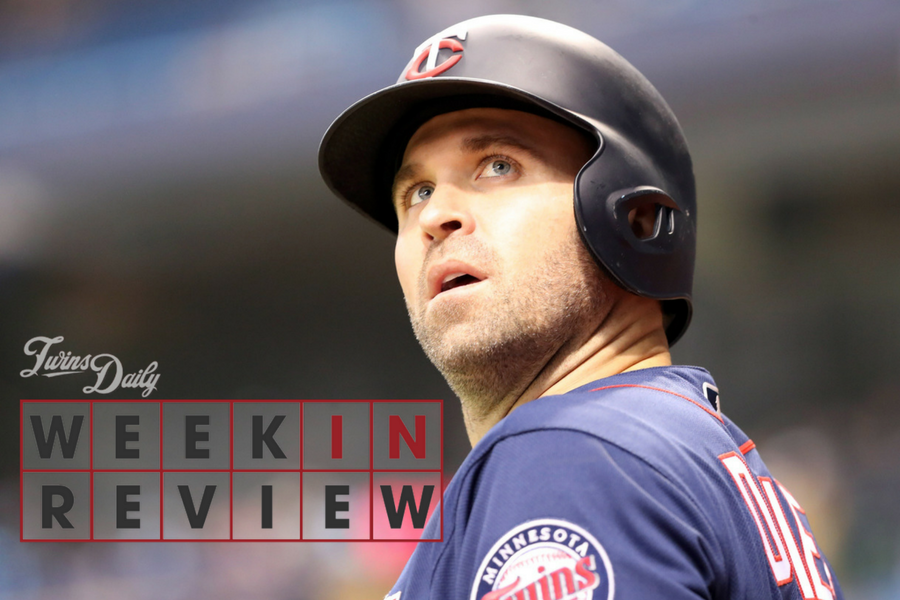 Weekly Snapshot: Mon, 5/14 through Sun, 5/20 *** Record Last Week: 2-4 (Overall: 19-23) Run Differential Last Week: -4 (Overall: -21) Standing: 2nd Place in AL Central (2.5 GB) Before we dive into the usual highlights, lowlights, storylines and minor-league updates, let's just get this out there: the Twins are in disarray, and it is the guys who are supposed to be leading that are in fact dragging them down. Prior to the season, my bold and optimistic prediction was that Dozier and Buxton would both be Top 5 finishers in the American League MVP voting: https://twitter.com/NickNelsonMN/status/978109572304048128 Call it homerish or pollyannaish if you please, but the take wasn't without solid founding. Dozier and Buxton were among the league's most impactful players in the latter portion of 2017, each earning down-ballot MVP votes. This year, circumstances favored big seasons for both: Dozier in a walk year staring down free agency; Buxton with 1,000 MLB plate appearances in the bank, appearing to have legitimately turned a corner with his approach. Instead, both players have fallen back into their most frustrating patterns at the plate – Dozier skidding through lengthy stretches of unproductivity with an exploitable swing, Buxton resembling an overwhelmed A-baller trying to fend off peak Pedro Martinez in pretty much every AB. Over the past week, the two combined to go 3-for-37 with 13 strikeouts. Dozier is batting .175 in 26 games since the start of the Yankees series. Buxton's OPS is teetering around .400. Meanwhile, other top contributors from 2017 who were hoped to be integral cogs in a contending effort – Miguel Sano, Ervin Santana, Jorge Polanco – have been either mostly or entirely absent. And now another is sidelined with Joe Mauer hitting the disabled list this week following an ominous return of concussion symptoms. Granted, you can't plan for all the injuries and attrition; I'm sure no one foresaw the Twins with Jake Cave, Ehire Adrianza and Bobby Wilson comprising one-third of their lineup for an important Saturday night game in mid-May. But times like this are when you need your leaders to step up. Right now Dozier and Buxton keep falling down. Since moving to 8-5 with an extra-inning victory over Cleveland in Puerto Rico, the Twins have gone 11-18 over the past calendar month. They've been outscored by 31 runs. That's an extended run of performance suggesting this team just isn't very good, which is distressing at a time of such ripe opportunity. More than a dozen clubs are actively trying to tank. The Twins conversely have pushed their payroll past historical thresholds in an effort to contend, and they're coming up empty, being outpaced by acknowledged non-factors. The good news is there's a lot of season left. The ripeness of this opportunity won't go away too soon. Cleveland has yet to take off, and Minnesota still has plenty of games remaining against the division's dregs to help fuel a rapid climb. But before we can even re-enter discussions about their merits as a contender, the Twins actually must first prove they're a quality team. Right now it's very much in question, and urgency is building if they're to prove these aren't their true colors. It's time for the leaders to stop lagging and start leading. HIGHLIGHTS Because he endured such a prolonged slump to open the campaign, it's going to be a while before Logan Morrison's overall numbers broadcast on the Target Field scoreboard look any good. But over the past month he has quietly transformed into the powerful offensive infusion we all hoped he would be. Morrison's low point came in April's 16-inning marathon against the Indians, when he went 0-for-7 to drop his average to .068, his OPS to .271. The next game, in Tampa, brought the slugger's first home run as a Twin, and that sparked a healthy uptick. Since going hitless in Puerto Rico, Morrison is slashing .281/.385/.517 with five home runs and 15 RBIs in 27 games. Over the last week he went 6-for-17 and delivered key hits in both victories, a rare bright spot for this sputtering offense. (Of course, as things are going, even Morrison couldn't escape the infectious jinx plaguing the team; he was picked off at second after a leadoff double on Saturday night, an absolutely critical error.) Now that he's playing up to his ability, we can appreciate the 30-year-old's addition for the majorly impactful move it was by the front office. With Dozier dragging along, Sano absent, and now Mauer gone, Morrison's bat has been life-saving for the lineup. This is especially true when you consider Kennys Vargas, who'd have been counted on for the same role if not for LoMo's spring training sign-on, is batting .213 at Triple-A. LOWLIGHTS While Morrison has come around, another late-offseason free agent addition continues to flounder. What is the freaking deal with Lance Lynn?? After a horrendous month of April the veteran righty appeared to be finally getting on track with his first start of May, picking up his first win on six innings of two-run ball against the White Sox. Most notably, he issued zero walks and threw 73% strikes. But Lynn regressed in his next start, and further unraveled in his latest effort, lasting only three innings against St. Louis on Wednesday while issuing four walks and throwing only 46 of his egregious 82 pitches in the zone. There's a school of thought suggesting the starter's struggles can be attributed to his late start in spring training, and I was sympathetic to that notion for a time, but at this point it's out the window. We're now seven weeks into the season and Lynn has made eight starts. Plus, he came out of the gates firing in his first Grapefruit start, making it clear he was taking care of things on his end while waiting to sign a contract. It's possible, maybe even probable, that being thrown out of his routine contributed to Lynn stumbling out of the gates this year. But this no longer qualifies as a viable excuse. With each successive inexplicably erratic dud, it's becoming easier to see why he was forced to settle for a one-year contract in mid-March, despite his impressive career numbers. At least to some extent, the league saw this coming. Another thing that wasn't too hard to see coming: Jason Castro's absence, like those of so many Twins players to go down with injuries this season, extending beyond than the team's initial timeline. In this case, however, the news is especially bad: upon going under the knife last week, it was determined that Castro needed more extensive surgery than anticipated, and he'll miss the rest of the season. This is a bigger loss for the pitching staff than the lineup, but it's a painful one on that front. Castro brought excellent framing skills along with a good arm, and had developed trust and rapport with the staff. Now, the Twins are forced to rely on still-unproven Mitch Garver and 35-year-old minor-league journeyman Bobby Wilson. Not a situation that inspires a lot of confidence. TRENDING STORYLINE It seems the best hope for the Twins right now is Sano returning to provide a serious jolt that electrifies this sleepwalking lineup. He's on the rehab trail, having played at Rochester on Saturday and Sunday. In those games, Sano went a combined 0-for-4 with three walks and two strikeouts. He committed an error on one of his three chances in the field. Rust is understandably a factor, particularly since Sano wasn't looking very sharp before the injury. But as long as that hamstring is sound, the Twins need to get him back in the fold ASAP to try and ignite something, anything, for the offense. It sounds like the plan is to take it slow with Sano, who will be in Triple-A at least through Wednesday. Ideally he'll show promising signs in LeHigh Valley early this week, then join the Twins in Seattle next weekend when they kick off a six-game road trip. Meanwhile, Trevor May is almost back. The righty stretched out to 58 pitches in a solid four-inning start at Rochester on Thursday. He'll likely work up to ~80 pitches this week and should basically be ready to start in the majors on May 28th, when he's eligible to come off the disabled list. Incidentally, that date (next Monday) coincides exactly with Lynn's turn in the rotation. DOWN ON THE FARM Things are happening in Cedar Rapids. While the most imminent wave of high-caliber young talent is either in the majors (Fernando Romero) or soon to arrive (Stephen Gonsalves, Nick Gordon), the slightly more distant group terrorizing the Midwest League should have Twins fans licking their chops. Right-hander Brusdar Graterol is the most exciting pitcher in the system right now and one of the most exciting in baseball. He dazzled everyone in attendance last Monday with 5 2/3 innings of shutout, two-hit ball. Unleashing numerous 100-MPH heaters, he racked up 10 strikeouts on 21 batters faced. In Twins Daily's profile on Graterol when we ranked him as the organization's No. 9 prospect before the season, Tom Froemming laid it out like this: "Graterol is one of the highest ceiling/lowest floor prospects in all of baseball, let alone the Twins’ system. He definitely has true ace potential, already possessing two plus pitches." We're seeing the ceiling early on from the 19-year-old flamethrower, and it is towering. We saw the floor a little bit in his fourth start on Sunday, when Graterol issued five walks in five innings, but nonetheless he has a 0.93 ERA and 27-to-6 K/BB ratio through 19 1/3 frames. On the same day of Graterol's 10-K masterpiece, Alex Kirilloff was firing up another big week at the plate with a two-hit game. He went on to collect 13 hits in 30 at-bats, and on the season he's batting .324 with seven home runs and a system-leading 34 RBI. Much like Graterol, Kirilloff is finding his stride quickly after losing major time to injury, quickly reaffirming his status as one of the farm's elite talents. LOOKING AHEAD We'll get our first look at Ron Gardenhire and the Tigers to start the week, then it's off to Seattle for late-night West Coast baseball on Memorial Day Weekend. Afterward, the Twins will head to Kansas City for three games before returning home to face Cleveland four times. That has the potential to be a pivotal mid-season series. Will the Twins be within striking distance by the time it arrives? Not if they keep playing the way they have. MONDAY, 5/21: TIGERS @ TWINS – LHP Blaine Hardy v. RHP Jose Berrios TUESDAY, 5/22: TIGERS @ TWINS – LHP Matthew Boyd v. RHP Lance Lynn WEDNESDAY, 5/23: TIGERS @ TWINS – RHP Michael Fulmer v. RHP Kyle Gibson FRIDAY, 5/25: TWINS @ MARINERS – RHP Fernando Romero v. LHP James Paxton SATURDAY, 5/26: TWINS @ MARINERS – RHP Jake Odorizzi v. LHP Wade LeBlanc SUNDAY, 5/27: TWINS @ MARINERS – RHP Jose Berrios v. RHP Mike Leake Catch Up On Twins Daily Game Recaps Game 37 | SEA 1, MIN 0: Twins Get LeBlanc'ed Game 38 | MIN 4, STL 1: Berrios is Back Game 39 | STL 7, MIN 5: Lynn with a Dud Again Game 40 | MIL 8, MIN 3: Gibson Falters, Mauer Exits Due to Neck Injury Game 41 | MIL 5, MIN 4: Jake Cave Homers in MLB Debut Game 42 | MIN 3, MIL 1: Odorizzi Ks 10, LoMo Delivers Go-Ahead Hit More on Twins Daily Tickets are available now for our "Picnic with the Saints" event, coming up on June 8th. It's an excellent value and a perfect outing for the family. Make sure to sign up before we sell out! Jamie Cameron looked at the evolution of Jose Berrios, highlighting the many adaptations and alterations he's made along the way. Twins Daily user and orthopaedic surgeon Heezy1323 shared some helpful information on knee surgeries and what may have happened with Castro.
 -
Another great piece. Thanks for sharing your insights!
-
 That the Twins are playing mediocre baseball here in the early portion of the season is disappointing, but not entirely surprising. We knew this was still a young club on the rise, not a bona fide contender. Slumps and downspells are to be expected. But it was the pitching staff that figured to take lumps. A lineup stacked with established hitters and solid depth seemed to be the least of Paul Molitor's worries. And yet, as the Twins have fallen back into a listless spell after being revived by a five-game winning streak, it is the bats that are lagging and languishing.For a time, scorching hot streaks from Eduardo Escobar and Eddie Rosario served to cover up for an offense that was just never really clicking. The Twins scored at least four runs in each of their first 11 games in May but never more than eight. We still haven't seen a double-digit run total all year. The anticipated explosiveness hasn't been there for this unit. A team that led the American League in scoring down the stretch last season entered play on Tuesday ranked 10th in runs/game and 12th in OPS. While the AL's prime contenders are doing their things – New York, Boston, Los Angeles and Cleveland rank first through fourth in R/G – the Twins offense has sputtered, showing only sporadic flashes of its dazzling upside. What's to be done? Well, to a large extent, all we can do is wait. If this group is gonna turn around it will be because Brian Dozier discovers his next gear, and Miguel Sano comes back to mash, and Joe Mauer finds some semblance of power, and Byron Buxton snaps out of his typical early-season funk, and Eddie Rosario settles into a sustainable approach at the plate. History tells us at least some of these things will happen. But as the Central continues to look eminently winnable, patience is starting to wear thin. At some point the Twins need to take action in an effort to jolt this offense awake. Here are a few options they could consider. Note that I'm not endorsing all of these solutions, only suggesting they should be on the table. Call Up Nick Gordon and LaMonte Wade from Class-AA Chattanooga The Twins pitching staff was in a freefall before Fernando Romero arrived on May 2nd and propelled the team to a shutout victory, snapping a losing streak and sparking a 7-1 run. Since then, the rotation and bullpen have both had a noticeably renewed swagger, and results have reflected it. It's not a simple cause-and-effect, but there is something to be said about the contagious energy that a talented and highly motivated young talent can infuse. Granted, Romero was in Triple-A and not Double-A, but the argument can easily be made that Gordon and Wade should've started in Rochester as well. At Chattanooga, 22-year-old shortstop Gordon entered play Tuesday slashing .350/.392/.526 while the 24-year-old outfielder Wade was at .300/.401/.442. Both prospects need to be added to the 40-man roster, complicating matters, but each offers something the Twins could really use. Gordon brings sneaky power from a wiry athletic frame and would represent a big upgrade over the scuffling Ehire Adrianza (whose play has arguably earned him a DFA). Wade is one of the most disciplined hitters in the system and has consistently been a .400 OBP guy in the minors. These are the two most MLB-ready hitting prospects in the high minors, and each has been making his case since spring training, where Gordon batted .417 and Wade had a .441 OBP. Option Byron Buxton to Triple-A As much as Molitor – and all of us, really – would love to believe otherwise, it's clear that Buxton is not a naturally adept hitter who can quickly acclimate and get rolling at the plate. Not at this stage of his career anyway. Despite his tremendous finish in 2017, the center fielder once again came out of the gates flat this season. Then he had a bout with migraines. Then he broke his toe. Now, the Twins have curiously activated him directly from the disabled list, so he can try and play with a bum digit and a month's worth of rust. I guess we shouldn't be surprised by the outcome. Since returning, Buxton has been at his worst offensively, which is an exceedingly low bar. In five games, he is 2-for-16 with six strikeouts. The two hits, while both big, came in the form of a bloop double off the end of the bat and a bunt single that traveled five feet. Even with a bad toe, Buxton's defense is irreplaceable, and he's probably just as well trying to solve his hitting woes against MLB pitching. But if you're looking to quickly jump-start the lineup, there's no more obvious candidate for removal. He has been an almost automatic out. To replace him, you could call up Wade and shift Rosario or Max Kepler to center. Or you could call up Ryan LaMarre or Jake Cave or Zack Granite from Rochester as short-term plugs. Acquire a Catcher Jason Castro underwent surgery on Tuesday and is expected to miss 4-for-6 weeks (or, as this team's estimations have gone, 8-to-12). Mitch Garver and Bobby Wilson don't present the kind of catcher duo that inspires huge confidence offensively. It is obviously slim pickings out there among the remaining free agents. Carlos Ruiz is 39 and put up a .665 OPS in 53 games with Seattle last year. He went unsigned during the offseason despite expressing an interest in continuing to play. If he's stayed in shape he might be worth a flier. Geovany Soto, 35, is also still out there. Neither of these guys are enticing options, and they'd also take time to ramp up, potentially pushing an arrival close to Castro's return. But it's no given that Castro will be able to come back strong; he's nine years older than a spry young Mauer whose rookie season at catcher was ruined by a torn knee meniscus. * UPDATE: The Twins announced on Wednesday that Castro will miss the rest of the season after his surgery proved more extensive than expected. Go figure. * This is where the organization's lack of high-level catching depth is quickly becoming an issue, which isn't entire surprising. It wouldn't hurt to add someone capable, even if that means giving up a bit in trade. Considering that two-thirds of the league are in blatant tanking mode, it shouldn't be all that hard to find a seller. Shake Up the Batting Order Get weird. Try Kepler in the leadoff spot. Move Dozier to cleanup. Escobar in the two-hole. Whatever. Perhaps a different type of sequencing or dynamic will stir something up. It couldn't really hurt at this point. I'd like to hear some other ideas. What would you do to inject life into a Twins offense that simply isn't getting it done? Click here to view the article
- 61 replies
-
- 1
-

-
- byron buxton
- nick gordon
- (and 1 more)
-
 For a time, scorching hot streaks from Eduardo Escobar and Eddie Rosario served to cover up for an offense that was just never really clicking. The Twins scored at least four runs in each of their first 11 games in May but never more than eight. We still haven't seen a double-digit run total all year. The anticipated explosiveness hasn't been there for this unit. A team that led the American League in scoring down the stretch last season entered play on Tuesday ranked 10th in runs/game and 12th in OPS. While the AL's prime contenders are doing their things – New York, Boston, Los Angeles and Cleveland rank first through fourth in R/G – the Twins offense has sputtered, showing only sporadic flashes of its dazzling upside. What's to be done? Well, to a large extent, all we can do is wait. If this group is gonna turn around it will be because Brian Dozier discovers his next gear, and Miguel Sano comes back to mash, and Joe Mauer finds some semblance of power, and Byron Buxton snaps out of his typical early-season funk, and Eddie Rosario settles into a sustainable approach at the plate. History tells us at least some of these things will happen. But as the Central continues to look eminently winnable, patience is starting to wear thin. At some point the Twins need to take action in an effort to jolt this offense awake. Here are a few options they could consider. Note that I'm not endorsing all of these solutions, only suggesting they should be on the table. Call Up Nick Gordon and LaMonte Wade from Class-AA Chattanooga The Twins pitching staff was in a freefall before Fernando Romero arrived on May 2nd and propelled the team to a shutout victory, snapping a losing streak and sparking a 7-1 run. Since then, the rotation and bullpen have both had a noticeably renewed swagger, and results have reflected it. It's not a simple cause-and-effect, but there is something to be said about the contagious energy that a talented and highly motivated young talent can infuse. Granted, Romero was in Triple-A and not Double-A, but the argument can easily be made that Gordon and Wade should've started in Rochester as well. At Chattanooga, 22-year-old shortstop Gordon entered play Tuesday slashing .350/.392/.526 while the 24-year-old outfielder Wade was at .300/.401/.442. Both prospects need to be added to the 40-man roster, complicating matters, but each offers something the Twins could really use. Gordon brings sneaky power from a wiry athletic frame and would represent a big upgrade over the scuffling Ehire Adrianza (whose play has arguably earned him a DFA). Wade is one of the most disciplined hitters in the system and has consistently been a .400 OBP guy in the minors. These are the two most MLB-ready hitting prospects in the high minors, and each has been making his case since spring training, where Gordon batted .417 and Wade had a .441 OBP. Option Byron Buxton to Triple-A As much as Molitor – and all of us, really – would love to believe otherwise, it's clear that Buxton is not a naturally adept hitter who can quickly acclimate and get rolling at the plate. Not at this stage of his career anyway. Despite his tremendous finish in 2017, the center fielder once again came out of the gates flat this season. Then he had a bout with migraines. Then he broke his toe. Now, the Twins have curiously activated him directly from the disabled list, so he can try and play with a bum digit and a month's worth of rust. I guess we shouldn't be surprised by the outcome. Since returning, Buxton has been at his worst offensively, which is an exceedingly low bar. In five games, he is 2-for-16 with six strikeouts. The two hits, while both big, came in the form of a bloop double off the end of the bat and a bunt single that traveled five feet. Even with a bad toe, Buxton's defense is irreplaceable, and he's probably just as well trying to solve his hitting woes against MLB pitching. But if you're looking to quickly jump-start the lineup, there's no more obvious candidate for removal. He has been an almost automatic out. To replace him, you could call up Wade and shift Rosario or Max Kepler to center. Or you could call up Ryan LaMarre or Jake Cave or Zack Granite from Rochester as short-term plugs. Acquire a Catcher Jason Castro underwent surgery on Tuesday and is expected to miss 4-for-6 weeks (or, as this team's estimations have gone, 8-to-12). Mitch Garver and Bobby Wilson don't present the kind of catcher duo that inspires huge confidence offensively. It is obviously slim pickings out there among the remaining free agents. Carlos Ruiz is 39 and put up a .665 OPS in 53 games with Seattle last year. He went unsigned during the offseason despite expressing an interest in continuing to play. If he's stayed in shape he might be worth a flier. Geovany Soto, 35, is also still out there. Neither of these guys are enticing options, and they'd also take time to ramp up, potentially pushing an arrival close to Castro's return. But it's no given that Castro will be able to come back strong; he's nine years older than a spry young Mauer whose rookie season at catcher was ruined by a torn knee meniscus. * UPDATE: The Twins announced on Wednesday that Castro will miss the rest of the season after his surgery proved more extensive than expected. Go figure. * This is where the organization's lack of high-level catching depth is quickly becoming an issue, which isn't entire surprising. It wouldn't hurt to add someone capable, even if that means giving up a bit in trade. Considering that two-thirds of the league are in blatant tanking mode, it shouldn't be all that hard to find a seller. Shake Up the Batting Order Get weird. Try Kepler in the leadoff spot. Move Dozier to cleanup. Escobar in the two-hole. Whatever. Perhaps a different type of sequencing or dynamic will stir something up. It couldn't really hurt at this point. I'd like to hear some other ideas. What would you do to inject life into a Twins offense that simply isn't getting it done?
 -
Article: Week in Review: Back in the Swing
Nick Nelson replied to Nick Nelson's topic in Twins Daily Front Page News
Yeah, the money owed becomes doubly restraining if they're letting it compel them to waste a roster spot on him indefinitely. Hughes has thrown 8 pitches in the last 9 days; meanwhile Hildenberger and Duke both appeared in three straight games during the Angels series. Would've really been nice to have a Busenitz around on Sunday.- 7 replies
-
- 1
-
-
- eddie rosario
- fernando romero
- (and 3 more)
-
Article: Week in Review: Back in the Swing
Nick Nelson posted a topic in Twins Daily Front Page News
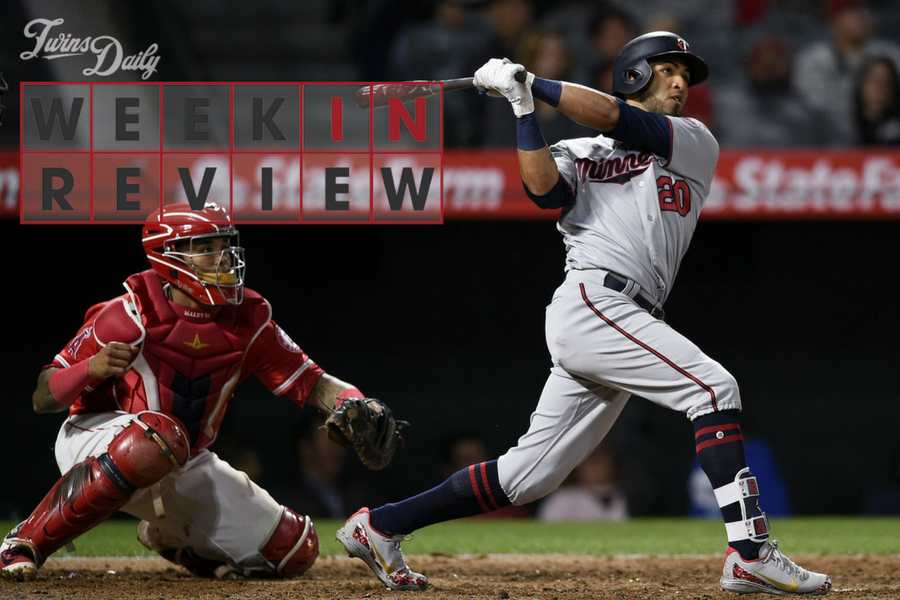
The Twins thoroughly dismantled the Cardinals during a two-game sweep in St. Louis, then headed out west and earned a hard-fought road split in Anaheim. With their winning week, Minnesota will carry some momentum back to Target Field for a nine-game homestand. Read on for a recap of highlights, lowlights, key updates, and noteworthy developments in the minors. Weekly Snapshot: Mon, 5/7 through Sun, 5/13 *** Record Last Week: 4-2 (Overall: 17-19) Run Differential Last Week: +11 (Overall: -17) Standing: 2nd Place in AL Central (1.5 GB) HIGHLIGHTS Well, Fernando Romero finally allowed his first run as a Twin. But it came in the fifth inning of another sterling performance, in which he went toe-to-toe with fellow rookie Shohei Ohtani (whom Logan Morrison dubbed "probably the best player in the world"), and remains the only one that Romero has surrendered in 16 2/3 innings since his promotion. The 23-year-old made two starts over the past week and continued to show signs of becoming a rotation mainstay, with his formidable arsenal racking up 15 more strikeouts in 11 frames. Over three starts, Romero has yielded only 11 hits – eight of them singles. He has issued three walks in each turn and hasn't been terribly efficient, but that's really the only quibble one can muster with regards to Romero's spectacular arrival in the big leagues. This kid is the real deal. Also: Stay hot, Eddie Rosario! After a big series in St. Louis (4-for-10 with two doubles), Rosario went hitless on Thursday for just the second time in two weeks. He followed with two home runs on Friday, the second of which sparked a big ninth-inning comeback. With an elite .559 slugging percentage through 36 games, Rosario's sneaky power has been on display once again here in 2018. Heading into the season, it seemed as though sustaining his offensive dominance would be reliant on continuing his positive K/BB trends, but instead Eddie's been in vintage swing-at-everything mode. He hasn't drawn a walk in May but is batting .385 with an .846 slugging percentage. The man is simply locked in, and finding something he can drive in almost every at-bat. Eventually he'll cool off and stop obliterating every pitch he fancies. At that point we'll find out if Rosario can re-incorporate some of the disciplinary improvements we saw in the latter portion of 2017. Swinging at more than 40% of pitches outside the zone just won't cut it long-term. But for now, I'm gonna enjoy the hell out of the ride. Meanwhile, it's nice to see Minnesota's bullpen settling in after a brutal stretch as the team slumped in April. True, Zack Duke gave up the walk-off hit on Sunday while pitching in a third straight game, but he generally seems to be past his early struggles. Sunday's appearance marked the first in which he's been charged with an earned run since April 7th. He has also allowed only two walks in his past 10 trips to the mound. Trevor Hildenberger has righted the ship after raising some concerns in April. His lone blemish of the week was a bomb off the bat of Ohtani – hey, it happens – but the right-hander was otherwise nearly flawless in four appearances. He issued two walks on Saturday night, but both were intentional – a tactical gambit by Paul Molitor in extra innings that worked out. Addison Reed worked three scoreless innings in Anaheim. Ryan Pressly added six more strikeouts in his four appearances; he now sports a 1.61 ERA and 32.6% K-rate this year. Fernando Rodney converted both his save chances against the Angels and hasn't allowed a run in seven appearances since the ninth-inning meltdown in New York. Even 28-year-old journeyman Matt Magill is cruising (four scoreless innings last week) and looks legitimately intriguing. The Minnesota bullpen is currently firing on all cylinders. That's a relief. LOWLIGHTS Through his first four starts, Jose Berrios could not have been pitching any better. His control was impeccable. His pitches flashed incredible life. Hitters were consistently either whiffing or making meager contact. Three of his starts were epic gems, the other a somewhat unlucky clunker. Since then, the right-hander has been nothing short of disastrous, and the mess unfortunately spilled over into this week against the Angels. Berrios fell to 3-4 on Thursday with another gravely disappointing performance, coughing up five runs on seven hits over 5 1/3 innings. It marked the fourth consecutive start in which Berrios allowed 4+ ER. Last year he never did so more than twice in a row (and only seven times total). Berrios also struck out only two hitters on Thursday – the third straight outing in which he failed to register even three Ks. Last year he struck out fewer than three hitters only three times total in 25 starts with the Twins. The velocity and spin rates haven't really dropped off, which is mildly encouraging, but at this point it's clear that either something is physically wrong with Berrios, or his mechanics and/or mental approach are out of whack. Hopefully it's the latter, and pitching coach Garvin Alston can help the righty find himself again. This is purely speculative, but worth noting: On April 18th, Berrios threw his heart out over seven innings against Cleveland in Puerto Rico, a game with tremendous personal significance to him. He hasn't been the same since. On the same night of Berrios' latest dud, Byron Buxton made his long-awaited return to the field. While the team's eagerness to get Buck back in the fold was understandable, activating him with no rehab stint after a month-long layoff was a dubious decision, and one that has looked ill-advised early on. Buxton's plate approach was not particularly good before the lengthy absence, and has been completely broken since his return. He went 1-for-11 with five strikeouts during his three games in Anaheim, and while his RBI double in the third inning on Saturday was big, it wasn't exactly a great piece of hitting. I can't get overly worked up about Buxton's lagging bat, since we've seen him figure things out deeper into the season on multiple occasions (and he still does things like this), but the dream of a full-fledged MVP-caliber campaign is disappearing. I'd settle for another all-around dominant second half, but it's tough to see this coming to fruition before his fractured toe – clearly sapping away some of his speed – completely heals. Will that happen as he continues to play through the injury? TRENDING STORYLINE On Saturday, Trevor May made his first official regular-season appearance since September of 2016, a rehab start with Ft. Myers against Toronto's Single-A affiliate. He understandably had some challenges with control, throwing only 30 of 58 pitches for strikes and issuing three walks over three innings. However, he also struck out five and allowed only a single, reportedly touching 93 with his fastball. May was beaming the next morning: That'll bring Lewis one step closer to the majors, but he's still got a ways to go. In Rochester, MLB-ready starting pitching depth is solidifying. Stephen Gonsalves got knocked around in his third turn at Triple-A but that doesn't take the luster off his supremely impressive first two starts with the Red Wings. Meanwhile, Zack Littell has been brilliant in two starts since joining Rochester, allowing one run on four hits over 12 innings with 14 strikeouts. Aaron Slegers is also excelling with a 2.41 ERA and 1.02 WHIP; he tossed seven innings of one-run ball in his latest turn on Tuesday. The Twins are brimming with pitching reinforcements, at a time where they suddenly have little need. Of course, we all know that won't last forever. Speaking of Rochester reinforcements, Alan Busenitz is making a hell of a case for a recall. Since his demotion in late April, Busenitz has allowed no runs and only six hits (all singles) over 7 1/3 innings. He has struck out 13 and walked two. Domination. The thing is, right now nobody in the Minnesota bullpen is a candidate for removal. It's a little strange to see a Twins pitching staff functioning so well that plainly deserving players are being kept out, but certainly speaks well to the direction Derek Falvey and Thad Levine have this thing moving. On a down note, we learned this week that 19-year-old shortstop Wander Javier, Twins Daily's No. 6 prospect, would require season-ending surgery for a torn labrum in his non-throwing shoulder. It's a tough setback for a tremendous athlete who appeared poised for a big year. The good news, I guess, is that the Twins have some middle-infield depth in their system with Lewis and Nick Gordon, who is batting .346 at Chattanooga. Javier should be fully recovered by next spring, at which point he'll still only be 20 years old. Twins Daily member Heezy1323, an orthopaedic surgeon who regularly shares illuminating medical insights here on the site, wrote up an excellent article detailing the specifics of Javier's injury and surgery. LOOKING AHEAD The Mariners return for a day to make up a washed-out game from early April, and then the Twins get to try and replicate last week's whupping of the Cards in their home park. The coming weekend should be a fun one, with the Milwaukee Brewers – and, undoubtedly, hundreds of Wisconsinites – heading to Target Field for a border battle showdown. MONDAY, 5/14: MARINERS @ TWINS – LHP Wade LeBlanc v. RHP Jake Odorizzi TUESDAY, 5/15: CARDINALS @ TWINS – RHP Jack Flaherty v. RHP Jose Berrios WEDNESDAY, 5/16: CARDINALS @ TWINS – RHP Miles Mikolas v. RHP Lance Lynn FRIDAY, 5/18: BREWERS @ TWINS – RHP Chase Anderson v. RHP Kyle Gibson SATURDAY, 5/19: BREWERS @ TWINS – LHP Brent Suter v. RHP Fernando Romero SUNDAY, 5/20: BREWERS @ TWINS – RHP Junior Guerra v. RHP Jake Odorizzi Catch Up On Twins Daily Game Recaps Game 31 | MIN 6, STL 0: Fernand0 R0mer0!!!!Game 32 | MIN 7, STL 1: Five AliveGame 33 | LAA 7, MIN 4: What’s Up With Berrios?Game 34 | MIN 5, LAA 4: Rally RosieGame 35 | MIN 5, LAA 3: Twins Outlast Angels in Gutsy VictoryGame 36 | LAA 2, MIN 1: Ohtani Excellent as Angels Walk Off TwinsMore on Twins Daily Sunday's anticipated matchup between Romero and Ohtani lived up to its billing, with the two rookies dueling admirably. Prior to the game, Cody Christie took a look at some similarities in the recipes these 23-year-olds have utilized to stymy MLB hitters.Speaking of recipes, Ted Schwerzler pointed out that Brian Dozier has been relying on a new one in the early going this season.Kevin Luckow, who will be providing some St. Paul Saints coverage on TD this summer, published a review of For the Love of the Game, a new documentary telling the independent minor-league team's story. Good read.Acknowledging the obvious – that the AL Central is going to be a two-team race – I posed a question for discussion: How good is Cleveland, really? Click here to view the article -
 Weekly Snapshot: Mon, 5/7 through Sun, 5/13 *** Record Last Week: 4-2 (Overall: 17-19) Run Differential Last Week: +11 (Overall: -17) Standing: 2nd Place in AL Central (1.5 GB) HIGHLIGHTS Well, Fernando Romero finally allowed his first run as a Twin. But it came in the fifth inning of another sterling performance, in which he went toe-to-toe with fellow rookie Shohei Ohtani (whom Logan Morrison dubbed "probably the best player in the world"), and remains the only one that Romero has surrendered in 16 2/3 innings since his promotion. The 23-year-old made two starts over the past week and continued to show signs of becoming a rotation mainstay, with his formidable arsenal racking up 15 more strikeouts in 11 frames. Over three starts, Romero has yielded only 11 hits – eight of them singles. He has issued three walks in each turn and hasn't been terribly efficient, but that's really the only quibble one can muster with regards to Romero's spectacular arrival in the big leagues. This kid is the real deal. Also: Stay hot, Eddie Rosario! After a big series in St. Louis (4-for-10 with two doubles), Rosario went hitless on Thursday for just the second time in two weeks. He followed with two home runs on Friday, the second of which sparked a big ninth-inning comeback. With an elite .559 slugging percentage through 36 games, Rosario's sneaky power has been on display once again here in 2018. Heading into the season, it seemed as though sustaining his offensive dominance would be reliant on continuing his positive K/BB trends, but instead Eddie's been in vintage swing-at-everything mode. He hasn't drawn a walk in May but is batting .385 with an .846 slugging percentage. The man is simply locked in, and finding something he can drive in almost every at-bat. Eventually he'll cool off and stop obliterating every pitch he fancies. At that point we'll find out if Rosario can re-incorporate some of the disciplinary improvements we saw in the latter portion of 2017. Swinging at more than 40% of pitches outside the zone just won't cut it long-term. But for now, I'm gonna enjoy the hell out of the ride. Meanwhile, it's nice to see Minnesota's bullpen settling in after a brutal stretch as the team slumped in April. True, Zack Duke gave up the walk-off hit on Sunday while pitching in a third straight game, but he generally seems to be past his early struggles. Sunday's appearance marked the first in which he's been charged with an earned run since April 7th. He has also allowed only two walks in his past 10 trips to the mound. Trevor Hildenberger has righted the ship after raising some concerns in April. His lone blemish of the week was a bomb off the bat of Ohtani – hey, it happens – but the right-hander was otherwise nearly flawless in four appearances. He issued two walks on Saturday night, but both were intentional – a tactical gambit by Paul Molitor in extra innings that worked out. Addison Reed worked three scoreless innings in Anaheim. Ryan Pressly added six more strikeouts in his four appearances; he now sports a 1.61 ERA and 32.6% K-rate this year. Fernando Rodney converted both his save chances against the Angels and hasn't allowed a run in seven appearances since the ninth-inning meltdown in New York. Even 28-year-old journeyman Matt Magill is cruising (four scoreless innings last week) and looks legitimately intriguing. The Minnesota bullpen is currently firing on all cylinders. That's a relief. LOWLIGHTS Through his first four starts, Jose Berrios could not have been pitching any better. His control was impeccable. His pitches flashed incredible life. Hitters were consistently either whiffing or making meager contact. Three of his starts were epic gems, the other a somewhat unlucky clunker. Since then, the right-hander has been nothing short of disastrous, and the mess unfortunately spilled over into this week against the Angels. Berrios fell to 3-4 on Thursday with another gravely disappointing performance, coughing up five runs on seven hits over 5 1/3 innings. It marked the fourth consecutive start in which Berrios allowed 4+ ER. Last year he never did so more than twice in a row (and only seven times total). Berrios also struck out only two hitters on Thursday – the third straight outing in which he failed to register even three Ks. Last year he struck out fewer than three hitters only three times total in 25 starts with the Twins. The velocity and spin rates haven't really dropped off, which is mildly encouraging, but at this point it's clear that either something is physically wrong with Berrios, or his mechanics and/or mental approach are out of whack. Hopefully it's the latter, and pitching coach Garvin Alston can help the righty find himself again. This is purely speculative, but worth noting: On April 18th, Berrios threw his heart out over seven innings against Cleveland in Puerto Rico, a game with tremendous personal significance to him. He hasn't been the same since. On the same night of Berrios' latest dud, Byron Buxton made his long-awaited return to the field. While the team's eagerness to get Buck back in the fold was understandable, activating him with no rehab stint after a month-long layoff was a dubious decision, and one that has looked ill-advised early on. Buxton's plate approach was not particularly good before the lengthy absence, and has been completely broken since his return. He went 1-for-11 with five strikeouts during his three games in Anaheim, and while his RBI double in the third inning on Saturday was big, it wasn't exactly a great piece of hitting. I can't get overly worked up about Buxton's lagging bat, since we've seen him figure things out deeper into the season on multiple occasions (and he still does things like this), but the dream of a full-fledged MVP-caliber campaign is disappearing. I'd settle for another all-around dominant second half, but it's tough to see this coming to fruition before his fractured toe – clearly sapping away some of his speed – completely heals. Will that happen as he continues to play through the injury? TRENDING STORYLINE On Saturday, Trevor May made his first official regular-season appearance since September of 2016, a rehab start with Ft. Myers against Toronto's Single-A affiliate. He understandably had some challenges with control, throwing only 30 of 58 pitches for strikes and issuing three walks over three innings. However, he also struck out five and allowed only a single, reportedly touching 93 with his fastball. May was beaming the next morning: https://twitter.com/trevmay65/status/995677753788813312 With his arm appearing to be in very good shape, May is now on a clear path back toward the major-league roster. Many have wondered what'll happen when Ervin Santana returns to the fold, but he's not slated to make his first rehab start until May 26th so May figures to force a decision much sooner. He is eligible to come off the 60-day disabled list on May 28th, and is now on track to be very close, if not ready to roll, by that date. What will the Twins do with him? May has an option, so sending him to Triple-A (or leaving him there, assuming his rehab stint takes him to Rochester) would be in play. It might be the most likely course of action. But he was flashing some of the best stuff on the staff before going down last spring, and his season debut on Saturday was very encouraging. Chances are they'll want him back on the MLB roster soon after he's ready. Will it be as a starter or reliever? DOWN ON THE FARM Plenty of people expected Royce Lewis to receive a bump to High-A around the minor-league All Star break, which arrives shortly after he turns 19 in June. But the young wonder is forcing the issue. Lewis' bat has gone into hyperdrive here in May, where he's batting .395 for the Kernels. So I guess it's not too surprising that Jeff Johnson, a Cedar Rapids based sportswriter who's plugged into the team, tweeted over the weekend that he hears rumblings of a promotion being imminent for the No. 1 Twins prospect: https://twitter.com/jeje66/status/995401526964293632 That'll bring Lewis one step closer to the majors, but he's still got a ways to go. In Rochester, MLB-ready starting pitching depth is solidifying. Stephen Gonsalves got knocked around in his third turn at Triple-A but that doesn't take the luster off his supremely impressive first two starts with the Red Wings. Meanwhile, Zack Littell has been brilliant in two starts since joining Rochester, allowing one run on four hits over 12 innings with 14 strikeouts. Aaron Slegers is also excelling with a 2.41 ERA and 1.02 WHIP; he tossed seven innings of one-run ball in his latest turn on Tuesday. The Twins are brimming with pitching reinforcements, at a time where they suddenly have little need. Of course, we all know that won't last forever. Speaking of Rochester reinforcements, Alan Busenitz is making a hell of a case for a recall. Since his demotion in late April, Busenitz has allowed no runs and only six hits (all singles) over 7 1/3 innings. He has struck out 13 and walked two. Domination. The thing is, right now nobody in the Minnesota bullpen is a candidate for removal. It's a little strange to see a Twins pitching staff functioning so well that plainly deserving players are being kept out, but certainly speaks well to the direction Derek Falvey and Thad Levine have this thing moving. On a down note, we learned this week that 19-year-old shortstop Wander Javier, Twins Daily's No. 6 prospect, would require season-ending surgery for a torn labrum in his non-throwing shoulder. It's a tough setback for a tremendous athlete who appeared poised for a big year. The good news, I guess, is that the Twins have some middle-infield depth in their system with Lewis and Nick Gordon, who is batting .346 at Chattanooga. Javier should be fully recovered by next spring, at which point he'll still only be 20 years old. Twins Daily member Heezy1323, an orthopaedic surgeon who regularly shares illuminating medical insights here on the site, wrote up an excellent article detailing the specifics of Javier's injury and surgery. LOOKING AHEAD The Mariners return for a day to make up a washed-out game from early April, and then the Twins get to try and replicate last week's whupping of the Cards in their home park. The coming weekend should be a fun one, with the Milwaukee Brewers – and, undoubtedly, hundreds of Wisconsinites – heading to Target Field for a border battle showdown. MONDAY, 5/14: MARINERS @ TWINS – LHP Wade LeBlanc v. RHP Jake Odorizzi TUESDAY, 5/15: CARDINALS @ TWINS – RHP Jack Flaherty v. RHP Jose Berrios WEDNESDAY, 5/16: CARDINALS @ TWINS – RHP Miles Mikolas v. RHP Lance Lynn FRIDAY, 5/18: BREWERS @ TWINS – RHP Chase Anderson v. RHP Kyle Gibson SATURDAY, 5/19: BREWERS @ TWINS – LHP Brent Suter v. RHP Fernando Romero SUNDAY, 5/20: BREWERS @ TWINS – RHP Junior Guerra v. RHP Jake Odorizzi Catch Up On Twins Daily Game Recaps Game 31 | MIN 6, STL 0: Fernand0 R0mer0!!!! Game 32 | MIN 7, STL 1: Five Alive Game 33 | LAA 7, MIN 4: What’s Up With Berrios? Game 34 | MIN 5, LAA 4: Rally Rosie Game 35 | MIN 5, LAA 3: Twins Outlast Angels in Gutsy Victory Game 36 | LAA 2, MIN 1: Ohtani Excellent as Angels Walk Off Twins More on Twins Daily Sunday's anticipated matchup between Romero and Ohtani lived up to its billing, with the two rookies dueling admirably. Prior to the game, Cody Christie took a look at some similarities in the recipes these 23-year-olds have utilized to stymy MLB hitters. Speaking of recipes, Ted Schwerzler pointed out that Brian Dozier has been relying on a new one in the early going this season. Kevin Luckow, who will be providing some St. Paul Saints coverage on TD this summer, published a review of For the Love of the Game, a new documentary telling the independent minor-league team's story. Good read. Acknowledging the obvious – that the AL Central is going to be a two-team race – I posed a question for discussion: How good is Cleveland, really?
 -
Article: How Good is Cleveland, Really?
Nick Nelson replied to Nick Nelson's topic in Twins Daily Front Page News
This is good context, and helps substantiate how consistent and excellent Cleveland's rotation has been. But I'll add this nugget: Cleveland Starters by FIP: Clevinger - 2.95 Bauer - 3.17 Carrasco - 3.32 Kluber - 3.95 Tomlin - 9.71 Minnesota Starters by FIP: Romero - 2.82 Gibson - 3.11 Berrios - 3.56 Lynn - 5.46 Odorizzi - 5.55 Not the hugest disparity, and the Twins still have Erv, Gonsalves and May in the offing. The Indians don't really have those kinds of reinforcements on deck. Personally I have very little confidence Salazar is going to return with any kind of effectiveness for Cleveland this summer; his shoulder is messed up. -
Article: How Good is Cleveland, Really?
Nick Nelson replied to Nick Nelson's topic in Twins Daily Front Page News
He was also playing through the knee injury for a couple weeks before going on the DL, which no doubt affected his production. -
Article: How Good is Cleveland, Really?
Nick Nelson replied to Nick Nelson's topic in Twins Daily Front Page News
You may be right, but accounting for the Mariners and Blue Jays as well, I just don't like the Central's chances of nabbing a WC slot. And the more important thing is that, in order to have hopes of playing in the ALDS, the Twins probably need to win the division regardless. The thought of another play-in game in the Bronx sounds nightmarish. -
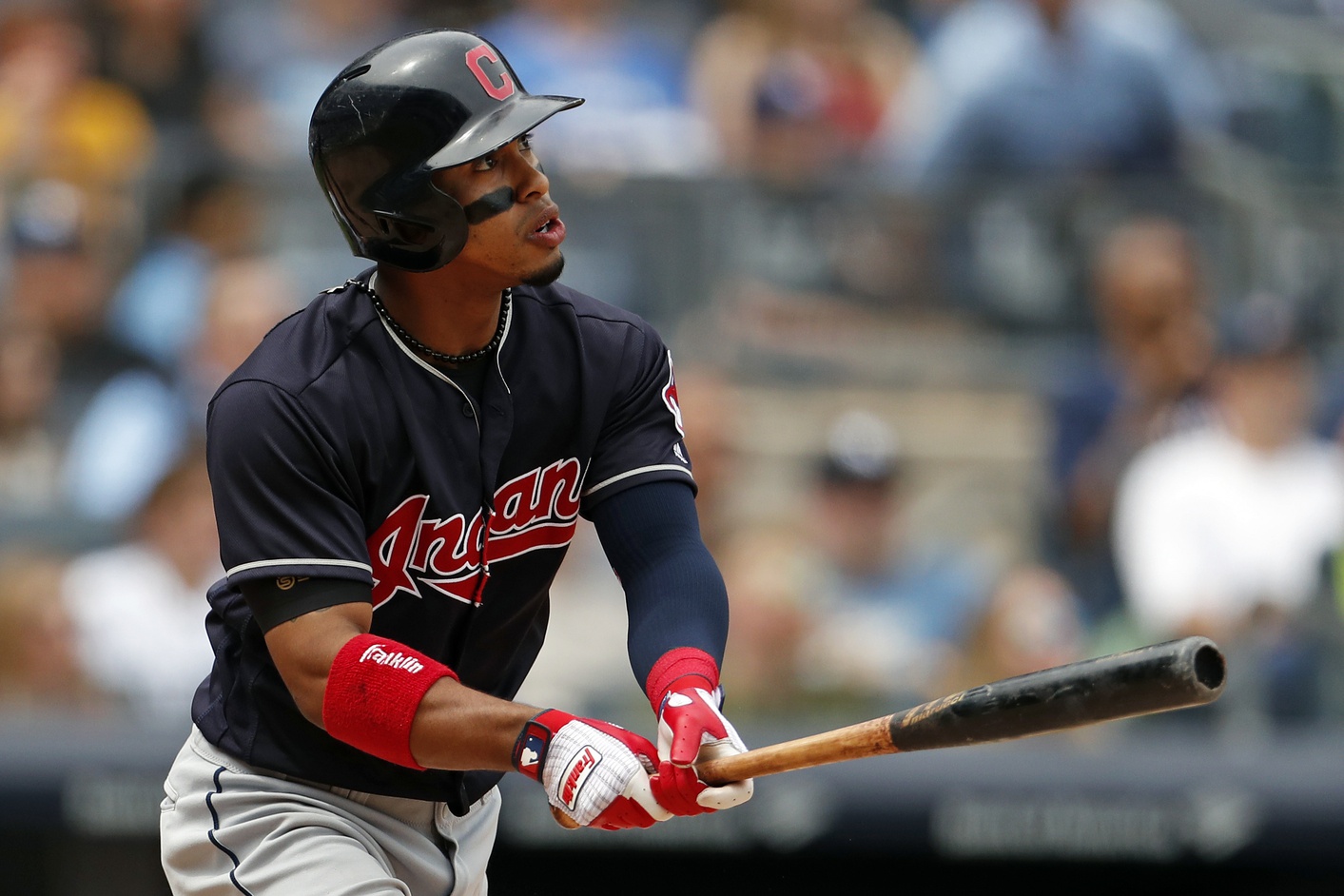
We're six weeks into the season and we still don't know what to make of the Minnesota Twins, who have shown the ability to cruise when it all clicks and spiral when things go awry. We also don't know what to make of the Cleveland Indians, who have failed to take advantage of Minnesota's slump and build any kind of comfortable lead in the AL Central. What we can say, with relative confidence, is that only one one of these teams is going to make the postseason.The Yankees springboarded off their four-game sweep of the Twins – they've won 10 of 11 games since, and that only ties them with Mookie Betts and the dazzling Red Sox for first place. It'd be a staggering upset if the loser in that AL East slugfest didn't procure a wild-card berth. Toronto is even looking like a factor early on. In the West, the Astros and Angels are living up to their billings. Both are currently on track for around 100 wins, and there's not much reason to view the success of either club as a mirage (though the Halos could become vulnerable if MIke Trout or Shohei Ohtani were to go down). Seattle looms as a credible threat there as well. Meanwhile, Cleveland leads the Central by a game with a ho-hum 18-18 record. While the Twins have generated some doubt early on, they have also had a number of key contributors – Byron Buxton, Miguel Sano, Ervin Santana, Jorge Polanco, and now Jason Castro – miss time. The Indians have mostly had their stalwarts on the field, minus Andrew Miller who's been sidelined by a hamstring injury. Fans in Cleveland are probably fretting more right now than those in Minny, and reasonably so. The Twins have shown their warts, to be sure, but the pervasive ineptitude that haunted them for two weeks doesn't seem reflective of any crippling long-term weakness. The offense and pitching staff both look capable, and have shown it enough to inspire some confidence. As for the Indians? Their offense has scuffled even with Jose Ramirez and Francisco Lindor hitting well. Jason Kipnis, who hasn't been a significantly above-average hitter since 2015, sports an OPS 90 points lower than Logan Morrison's. Edwin Encarnacion (.696 OPS) will probably come around, but then again, he is easily their oldest regular, at 35. In the rotation, it's true Danny Salazar has been amiss, but the Indians might need to grow accustomed to that reality. And besides, his replacement Mike Clevinger has given as much (2.76 ERA, 1.07 WHIP) as you could hope to get from Salazar. In the bullpen, even Miller's absence can't come close to excusing the woes that have haunted Cleveland recently. In terms of direct points of comparison, the Twins and Indians appear quite evenly matched. They played neck-and-neck during their two games in Puerto Rico, with the second stretching for 16 innings before a victor emerged. Just as Minnesota suffered a demoralizing sweep at Yankee Stadium, so did Cleveland this past weekend, getting walked off twice in three days. And while the Twins have pulled themselves out of a dreadful early-season slump, the Indians are now trying to steer clear of a lesser one – Wednesday's victory over Milwaukee was just their fourth in 12 games. Of course, slumps happen. I'm not going to cast judgment or draw conclusions in the middle of one for Cleveland, especially after the Twins just showed us how quickly things can turn around. But whereas this upstart Minnesota club was expected to have its flaws, setbacks and tribulations – especially early – the defending Central champs were supposed to run like a well-oiled machine. While the other bona fide AL contenders have all solidified their top-tier statuses, Cleveland sits with the league's seventh-best record as the season's quarter-point approaches. They're still the division favorites but the Indians appear far less formidable than many feared. If winning the Central is Minnesota's only path to the postseason, at least it looks eminently surmountable. This is shaping up be a fun and competitive race that twists and turns throughout the summer. Both teams will have the advantage of copious matchups against the White Sox, Royals and Tigers, so it may very well come down to who takes care of business. The Twins did so in Chicago over the weekend, and will get their first looks at Kansas City and Detroit later this month. The four-game set between Minnesota and Cleveland coming up in three weeks is already one worth circling on the calendar. Click here to view the article
-
 The Yankees springboarded off their four-game sweep of the Twins – they've won 10 of 11 games since, and that only ties them with Mookie Betts and the dazzling Red Sox for first place. It'd be a staggering upset if the loser in that AL East slugfest didn't procure a wild-card berth. Toronto is even looking like a factor early on. In the West, the Astros and Angels are living up to their billings. Both are currently on track for around 100 wins, and there's not much reason to view the success of either club as a mirage (though the Halos could become vulnerable if MIke Trout or Shohei Ohtani were to go down). Seattle looms as a credible threat there as well. Meanwhile, Cleveland leads the Central by a game with a ho-hum 18-18 record. While the Twins have generated some doubt early on, they have also had a number of key contributors – Byron Buxton, Miguel Sano, Ervin Santana, Jorge Polanco, and now Jason Castro – miss time. The Indians have mostly had their stalwarts on the field, minus Andrew Miller who's been sidelined by a hamstring injury. Fans in Cleveland are probably fretting more right now than those in Minny, and reasonably so. The Twins have shown their warts, to be sure, but the pervasive ineptitude that haunted them for two weeks doesn't seem reflective of any crippling long-term weakness. The offense and pitching staff both look capable, and have shown it enough to inspire some confidence. As for the Indians? Their offense has scuffled even with Jose Ramirez and Francisco Lindor hitting well. Jason Kipnis, who hasn't been a significantly above-average hitter since 2015, sports an OPS 90 points lower than Logan Morrison's. Edwin Encarnacion (.696 OPS) will probably come around, but then again, he is easily their oldest regular, at 35. In the rotation, it's true Danny Salazar has been amiss, but the Indians might need to grow accustomed to that reality. And besides, his replacement Mike Clevinger has given as much (2.76 ERA, 1.07 WHIP) as you could hope to get from Salazar. In the bullpen, even Miller's absence can't come close to excusing the woes that have haunted Cleveland recently. In terms of direct points of comparison, the Twins and Indians appear quite evenly matched. They played neck-and-neck during their two games in Puerto Rico, with the second stretching for 16 innings before a victor emerged. Just as Minnesota suffered a demoralizing sweep at Yankee Stadium, so did Cleveland this past weekend, getting walked off twice in three days. And while the Twins have pulled themselves out of a dreadful early-season slump, the Indians are now trying to steer clear of a lesser one – Wednesday's victory over Milwaukee was just their fourth in 12 games. Of course, slumps happen. I'm not going to cast judgment or draw conclusions in the middle of one for Cleveland, especially after the Twins just showed us how quickly things can turn around. But whereas this upstart Minnesota club was expected to have its flaws, setbacks and tribulations – especially early – the defending Central champs were supposed to run like a well-oiled machine. While the other bona fide AL contenders have all solidified their top-tier statuses, Cleveland sits with the league's seventh-best record as the season's quarter-point approaches. They're still the division favorites but the Indians appear far less formidable than many feared. If winning the Central is Minnesota's only path to the postseason, at least it looks eminently surmountable. This is shaping up be a fun and competitive race that twists and turns throughout the summer. Both teams will have the advantage of copious matchups against the White Sox, Royals and Tigers, so it may very well come down to who takes care of business. The Twins did so in Chicago over the weekend, and will get their first looks at Kansas City and Detroit later this month. The four-game set between Minnesota and Cleveland coming up in three weeks is already one worth circling on the calendar.
 -
Up is down. Black is white. And Twins pitchers are striking everyone out. We've come a long way since the days of 'pitch to contact.' A perfect storm of circumstances has led to a stunning transformation for a Minnesota staff that throughout recent history has reliably – VERY reliably – been among the game's most contact-heavy.With 31 games in the books, Twins pitchers are averaging 9.4 K/9 and striking out 23.5% of batters faced. Such numbers are unheard of around these parts. Now, first, a little context: as you're probably aware, swings and misses are off the charts throughout baseball. April marked the first month in MLB history with more strikeouts than hits. In 2006, the last time Minnesota boasted a true power pitching staff, the team's 7.3 K/9 rate and 19.2 K% both ranked second in the majors. Currently those marks would both be in the bottom five. Even when you account for the seismic shift taking place across the game, though, the Twins' relative standing has improved to a ridiculous degree. Compare their present rankings in K/9, K% and swinging strike rate to the past three seasons: Download attachment: Kgraph.JPG What's driving this spike in strikeouts? Well, in part, it is by the design of Minnesota's new front office. Derek Falvey and Thad Levine made power arms a clear emphasis when reshaping the bullpen this offseason; Fernando Rodney, Addison Reed and Zach Duke are all unsurprisingly averaging more than a strikeout per inning. Each have been among Paul Molitor's most oft-used options, as has Ryan Pressly who is blowing people away. That helps. But the real story here is in the rotation, suddenly brimming with strikeout artists. How'd we get here? Through a combination of several factors. In some ways, this is just a reflection of the state of the game. Lance Lynn is the most conspicuous example. Despite his overall struggles, the veteran has been generating plenty of whiffs with an 11.4% swinging strike rate that would've led all Twins starters in any of the past five years. Lynn has never posted a whiff rate of even 10% in the past. Meanwhile, Jake Odorizzi has been doing his normal thing, with a 21.9% K-rate and 10.9% swinging strikes — both very much in line with his career baselines but well above the local norm. So here too, additions from the front office have played role. But there's also this: Kyle Gibson has harnessed the improvements he made in the latter half of 2017 and is now a bat-missing machine. Jose Berrios continues to take steps forward in his development. And of course, Fernando Romero has now arrived with some of the best stuff we've seen from any Twins pitcher in years. Add it all up, and you've got a staff that can actually strike fear into opposing lineups, retiring hitters without constantly relying on the defense to make plays (a luxury that will prove critical if Byron Buxton misses much more time this summer). For those of us who've been watching Twins players consistently induce contact over the past decade-plus, it's a jarring change, but a very welcome one. Click here to view the article
- 21 replies
-
- 3
-
-
- fernando romero
- jose berrios
- (and 2 more)
-
 With 31 games in the books, Twins pitchers are averaging 9.4 K/9 and striking out 23.5% of batters faced. Such numbers are unheard of around these parts. Now, first, a little context: as you're probably aware, swings and misses are off the charts throughout baseball. April marked the first month in MLB history with more strikeouts than hits. In 2006, the last time Minnesota boasted a true power pitching staff, the team's 7.3 K/9 rate and 19.2 K% both ranked second in the majors. Currently those marks would both be in the bottom five. Even when you account for the seismic shift taking place across the game, though, the Twins' relative standing has improved to a ridiculous degree. Compare their present rankings in K/9, K% and swinging strike rate to the past three seasons: What's driving this spike in strikeouts? Well, in part, it is by the design of Minnesota's new front office. Derek Falvey and Thad Levine made power arms a clear emphasis when reshaping the bullpen this offseason; Fernando Rodney, Addison Reed and Zach Duke are all unsurprisingly averaging more than a strikeout per inning. Each have been among Paul Molitor's most oft-used options, as has Ryan Pressly who is blowing people away. That helps. But the real story here is in the rotation, suddenly brimming with strikeout artists. How'd we get here? Through a combination of several factors. In some ways, this is just a reflection of the state of the game. Lance Lynn is the most conspicuous example. Despite his overall struggles, the veteran has been generating plenty of whiffs with an 11.4% swinging strike rate that would've led all Twins starters in any of the past five years. Lynn has never posted a whiff rate of even 10% in the past. Meanwhile, Jake Odorizzi has been doing his normal thing, with a 21.9% K-rate and 10.9% swinging strikes — both very much in line with his career baselines but well above the local norm. So here too, additions from the front office have played role. But there's also this: Kyle Gibson has harnessed the improvements he made in the latter half of 2017 and is now a bat-missing machine. Jose Berrios continues to take steps forward in his development. And of course, Fernando Romero has now arrived with some of the best stuff we've seen from any Twins pitcher in years. Add it all up, and you've got a staff that can actually strike fear into opposing lineups, retiring hitters without constantly relying on the defense to make plays (a luxury that will prove critical if Byron Buxton misses much more time this summer). For those of us who've been watching Twins players consistently induce contact over the past decade-plus, it's a jarring change, but a very welcome one.
 -
Article: Week in Review: Baby Steps
Nick Nelson replied to Nick Nelson's topic in Twins Daily Front Page News
It's not just you -- 24 of his 26 hits have been singles. But I wouldn't be concerned. He's so young. The strength and power will come. -
It was a week that saw more low points, including a couple of painful home losses to the Blue Jays and an even more painful walk-off loss to the White Sox. But the Twins finished with three straight wins and finally seem to be back on track. Oh, and after all that turmoil, they're still only two games out of first place in the division. Weekly Snapshot: Mon, 4/30 through Sun, 5/6 *** Record Last Week: 4-3 (Overall: 13-17) Run Differential Last Week: +6 (Overall: -28) Standing: 2nd Place in AL Central (2.0 GB) Programming note: I co-hosted the Gleeman & The Geek podcast with Aaron this week while our guy John was out of town. Give it a listen if you so please! We discussed many of the topics you'll read about here. HIGHLIGHTS It's safe to say Eduardo Escobar wasn't feeling any sense of joy upon learning in March that his friend and teammate Jorge Polanco had tested positive for PEDs and been hit with an 80-game suspension. But there's no denying the situation stood to directly benefit Escobar, who was slated for sporadic utilityman duty before Polanco's ban. Instead, the 29-year-old has been a staple in the lineup, and is taking advantage of his opportunity while looking ahead to his first date with free agency. Escobar was the everyday shortstop for most of April, but has shifted to third lately with Miguel Sano on the disabled list. Regardless of his placement in the field, Escobar's bat has consistently delivered; he posted a .926 OPS in April and is off to a red-hot start in May, where he's 8-for-23 with two home runs and four doubles in his first six games. Both those homers came on Friday night, when he carried the Twins offense with a magnificent performance. LOOKING AHEAD It's going to be an interesting week. The Twins first head to St. Louis for a quick interleague series – "Welcome to the big leagues, Romero! Now grab a bat" – then out west for a four-game set against the Angels. Like that ill-fated four-gamer in the Bronx, this matchup will pit the Twins against a team they figure to be potentially racing against for a wild-card berth It's an opportunity to show they can stack up against the league's top-tier squads. We'll see Shohei Ohtani on the mound Saturday, and I'm guessing we'll probably see him at the plate sometime as well. MONDAY, 5/7: TWINS @ CARDINALS – RHP Fernando Romero v. RHP John Gant TUESDAY, 5/8: TWINS @ CARDINALS – RHP Jake Odorizzi v. RHP Carlos Martinez THURSDAY, 5/10: TWINS @ ANGELS – RHP Jose Berrios v. RHP Garrett Richards FRIDAY, 5/11: TWINS @ ANGELS – RHP Lance Lynn v. LHP Tyler Skaggs SATURDAY, 5/12: TWINS @ ANGELS – RHP Kyle Gibson v. RHP Shohei Ohtani SUNDAY, 5/13: TWINS @ ANGELS – RHP Fernando Romero v. LHP Andrew Heaney Catch Up On Twins Daily Game Recaps Game 24 | TOR 7, MIN 5: Twins Can't Recover From Another Poor Start by LynnGame 25 | TOR 7, MIN 4: WHAT IS HAPPENING!?!?!?Game 26 | MIN 4, TOR 0: Fernandomania!Game 27 | CHW 6, MIN 5: Twins Blow 5-1 LeadGame 28 | MIN 6, CHW 4: Twins Slug Four Homers in VictoryGame 29 | MIN 8, CHW 4: Rosario Drives in FiveGame 30 | MIN 5, CHW 3: Rosario Lifts Twins to Third Straight Victory Click here to view the article
-
 Weekly Snapshot: Mon, 4/30 through Sun, 5/6 *** Record Last Week: 4-3 (Overall: 13-17) Run Differential Last Week: +6 (Overall: -28) Standing: 2nd Place in AL Central (2.0 GB) Programming note: I co-hosted the Gleeman & The Geek podcast with Aaron this week while our guy John was out of town. Give it a listen if you so please! We discussed many of the topics you'll read about here. HIGHLIGHTS It's safe to say Eduardo Escobar wasn't feeling any sense of joy upon learning in March that his friend and teammate Jorge Polanco had tested positive for PEDs and been hit with an 80-game suspension. But there's no denying the situation stood to directly benefit Escobar, who was slated for sporadic utilityman duty before Polanco's ban. Instead, the 29-year-old has been a staple in the lineup, and is taking advantage of his opportunity while looking ahead to his first date with free agency. Escobar was the everyday shortstop for most of April, but has shifted to third lately with Miguel Sano on the disabled list. Regardless of his placement in the field, Escobar's bat has consistently delivered; he posted a .926 OPS in April and is off to a red-hot start in May, where he's 8-for-23 with two home runs and four doubles in his first six games. Both those homers came on Friday night, when he carried the Twins offense with a magnificent performance. https://twitter.com/TwinsHighlights/status/992618827992260608 He'll be an interesting free agent case. Surely Minnesota would like to keep him around, with his clubhouse popularity only adding to the tremendous value he's providing on the field, but if he keeps up at this rate Escobar will move out of a price range that makes any sense for the Twins and their long-term plans. Unless they choose to do something like trade Sano... Speaking of long-term plans, a big part of Minnesota's blueprint for building a contending rotation was set into motion last week: Fernando Romero made his triumphant MLB debut on Wednesday. It was a hell of an introduction. Facing a potent Toronto lineup, the 23-year-old steered his team clear of a sweep by shutting the Jays down over 5 2/3 frames. He allowed four hits and three walks while striking out five, unleashing a barrage of tailing fastballs in the upper-90s and physics-defying 92 MPH "changeups." https://twitter.com/PitcherList/status/991727855615840257 The arsenal is good enough for Romero to be an enduring force in the Twins rotation. His ability to maintain command and physical stamina are the only question marks. The righty hasn't yet thrown more than 125 innings in a pro season. Romero's arrival provides a critical boost for a club that seems to have several laggards turning around. Logan Morrison finished April with a .503 OPS but is finally pulling it together here in May, where he is 7-for-23 with two homers through six games. His two-run double on Sunday was decisive. Trevor Hildenberger, alarmingly out of whack early, was on his game this week, making three scoreless appearances and hammering the strike zone with quality pitches. Taylor Rogers, another key bullpen piece from 2017 mired in an early slump this year, was at his best on Thursday, recording five outs on 17 pitches with three Ks. Zach Duke pitched four times and looked much better, lowering his ERA from 5.19 to 3.86. Fernando Rodney tossed four scoreless frames and converted two saves without incident. With Ryan Pressly continuing to be remarkably effective, things are looking up for the Twins relief corps. Last but absolutely NOT least, we have to call out Eddie Rosario, whose scorching bat powered the Minnesota offense over the past week. Playing in all seven games, Rosario went 13-for-30 (.433) with four home runs and 12 RBI. Plate discipline is negligible, but it doesn't matter. He's in his zone again, crushing anything that strikes his fancy. LOWLIGHTS Even if you were down on Lance Lynn this offseason – and clearly most teams were, since he had to settle for a one-year contract in March – I don't think anyone could have foreseen the tumult he'd experience throughout the month of April. https://twitter.com/MillerStrib/status/991152106437513216 Monday brought us another brutal start from the right-hander, who was again completely unable to find the strike zone in a game where he yielded five walks and six runs over five innings. Punctuating his first month with that clunker, Lynn finished April with an 0-3 record and 8.37 ERA. Luckily, May is off to a better start for the veteran, who delivered his finest work of the season in Chicago on Saturday night with six innings of two-run ball and seven strikeouts. Most importantly, he issued zero walks and threw 73% strikes. Hopefully this is a sign that Lynn is turning a corner with his control. The stuff has been there; his 11.6% whiff rate trails Kyle Gibson only slightly for the team lead among starters, and would've led the rotation last year. Brian Dozier carried a slump into the week and it continued to snowball, as the leadoff man went 0-for-15 in Minnesota's first four games. Following a hitless showing in the series opener against Chicago, Paul Molitor slid Dozier down to second in the lineup, and the second baseman responded with a three-hit breakout that included his first home run in a month. With Joe Mauer swapping into the leadoff spot, and continuing to get on base at a stellar rate (he reached four times on Saturday), this looks like a switch that could and should stick. While it was nice to see some players get it going on the field over the past week, we continue to receive unpromising signals regarding injured players and their timelines. The Twins placed Jason Castro on the disabled list with a "slight" right knee meniscus tear, which is "not considered serious." Those quotations represent the language team officials are choosing to use, in what has become a characteristic downplay of injury severity. Kinda hard to accept a meniscus tear for a catcher as anything less than serious, especially considering that Castro had evidently been dealing with soreness for weeks. In a sense, this doesn't look like a huge loss, given that Castro was hitting just .143 with a .495 OPS (maybe the knee issue helps explain that) but he's an asset defensively and there is undoubtedly a big drop-off to Bobby Wilson, the 35-year-old journeyman called up to replace him. To make room on the 40-man for Wilson, Ervin Santana was moved to the 60-day disabled list, thus assuring he won't make it back before the end of May. This was already ordained, given that Erv still isn't even throwing sliders off the mound and still appears weeks away from starting a rehab assignment. But the team's original 10-to-12 week timeframe, which would have put him on the mound May 1st at the latest, is obviously out the window. Meanwhile, Dick Bremer said during Sunday's broadcast that there is "no imminent return in sight" for Sano, whose supposedly minor hamstring tweak continues to become a greater source of mystery. Byron Buxton has done some light running on the field and taken batting practice. He might return soon, but it's hard to imagine his dynamic play not being diminished by a broken toe. Putting him in position to exacerbate that injury would be unforgivable. TRENDING STORYLINE So uhhh... what's going on with Sano? As far as I can tell, no one seems to know when he hurt his hamstring. What was initially deemed a "day to day injury" now has him on the shelf indefinitely. Before he got hurt, he frankly looked terrible at the plate, flailing away with no sense of discernment. It's beyond frustrating to see a generational talent and core fixture languishing in this way. The days of Sano being a 24-year-old All-Star, and Home Run Derby runner-up, suddenly seem so distant. Can he return and redeem himself? Technically, he's eligible to return on Tuesday. DOWN ON THE FARM Although things have been less than peachy with the big-league club, developments in the Twins system are resoundingly positive. Each of Twins Daily's top three prospects had huge weeks, so we'll start there: * Royce Lewis continues to show the qualities of a rising superstar. He still doesn't turn 19 for another month but is quickly starting to look too advanced for the Midwest League. After going 6-for-18 this week, he's now slashing .356/.405/.411 at Cedar Rapids. Since breaking out with a four-hit game against Kane County on April 21st, Lewis is batting .435 with a .458 OBP and seven steals on eight attempts. Presumably the Twins won't rush their prized young talent, but it's getting hard to imagine him lasting more than another month or two in the Midwest before being bumped to Ft. Myers. Plan your trips to Iowa accordingly. * Last week in this space I mentioned that Stephen Gonsalves was promoted to Triple A. He made his first start for Rochester on Tuesday and was absolutely brilliant, firing 7 2/3 innings of scoreless, one-hit ball while striking out five and walking one. Then he followed with 6 2/3 innings of one-run ball on Sunday, striking out nine and walking one. His ERA sits at 0.63. With No. 2 prospect Romero already in the Twins rotation and looking to establish himself as a fixture, Gonsalves may not be far behind. * Our No. 11 prospect, Zack Littell, also made his Triple-A debut this week, replacing Romero in the Red Wings rotation. He took the hill on Saturday against Lehigh Valley, and also arrived on the scene with a gem, logging six shutout innings. Littell did issue four walks, and threw only 58% of his pitches for strikes, so it wasn't all rainbows, but he's emerging as an additional quality piece of MLB-ready pitching depth. * Yet another top pitching prospect acclimating to a new level of competition: Brusdar Graterol enjoyed an exquisite second start with the Kernels on Friday, blanking West Michigan over five innings while reportedly touching 100 MPH multiple times with his fastball. He also flashed his outstanding athleticism with this impressive play: https://twitter.com/CRKernels/status/992767118931210240 LOOKING AHEAD It's going to be an interesting week. The Twins first head to St. Louis for a quick interleague series – "Welcome to the big leagues, Romero! Now grab a bat" – then out west for a four-game set against the Angels. Like that ill-fated four-gamer in the Bronx, this matchup will pit the Twins against a team they figure to be potentially racing against for a wild-card berth It's an opportunity to show they can stack up against the league's top-tier squads. We'll see Shohei Ohtani on the mound Saturday, and I'm guessing we'll probably see him at the plate sometime as well. MONDAY, 5/7: TWINS @ CARDINALS – RHP Fernando Romero v. RHP John Gant TUESDAY, 5/8: TWINS @ CARDINALS – RHP Jake Odorizzi v. RHP Carlos Martinez THURSDAY, 5/10: TWINS @ ANGELS – RHP Jose Berrios v. RHP Garrett Richards FRIDAY, 5/11: TWINS @ ANGELS – RHP Lance Lynn v. LHP Tyler Skaggs SATURDAY, 5/12: TWINS @ ANGELS – RHP Kyle Gibson v. RHP Shohei Ohtani SUNDAY, 5/13: TWINS @ ANGELS – RHP Fernando Romero v. LHP Andrew Heaney Catch Up On Twins Daily Game Recaps Game 24 | TOR 7, MIN 5: Twins Can't Recover From Another Poor Start by Lynn Game 25 | TOR 7, MIN 4: WHAT IS HAPPENING!?!?!? Game 26 | MIN 4, TOR 0: Fernandomania! Game 27 | CHW 6, MIN 5: Twins Blow 5-1 Lead Game 28 | MIN 6, CHW 4: Twins Slug Four Homers in Victory Game 29 | MIN 8, CHW 4: Rosario Drives in Five Game 30 | MIN 5, CHW 3: Rosario Lifts Twins to Third Straight Victory
 -
The Twins are in bad shape right now. They've lost 11 of their last 12 games and their postseason odds have taken a nosedive. Given the various concerning issues cropping up, it might feel difficult to envision a turnaround that puts this team back on a contending track. But doing so would hardly be unprecedented. If you're seeking a concrete basis upon which to stake your hopes, all you need to do is turn the clock back a dozen years.This year's Twins finished April with a 9-15 record, which puts the team on pace for more than 100 losses. Of course, as you may recall, Minnesota also finished with a 9-15 April record in 2006. That team eventually kicked things into gear around midsummer, and wound up taking the division with 96 wins, most in modern Twins history. Can this year's iteration orchestrate a similar reversal? Let's take a look at some of the ingredients that fed the 2006 club's rise from the ashes, and see where the current Twins might be able to strike a similar note. An Ace Atop the Rotation Then: Johan Santana picked up his second Cy Young award with a phenomenal season, winning 19 games with a 2.77 ERA while leading the league in strikeouts. He was in his absolute prime. The Twins went 22-12 in his starts, including 20-3 from June through September while mounting their charge. Now: Jose Berrios is the team's best hope for anything resembling a Johan to lead the rotation. He certainly looked the part in his first few starts but has obviously taken a major downturn in the past couple. I remain confident that the talented young righty will settle in at a level that, while solidly below 2004 Santana, is still as good as than anything the Twins have featured since Santana left town. Of course, there's another Santana set to join the current rotation within the next month. And while Erv is certainly no Johan, he does give the Twins another legit No. 1/2 type if he's throwing the way he has over the past two years. Rookie Sensation Enters the Starting Fold Then: After spending his first six weeks in the bullpen, Francisco Liriano joined the rotation in mid-May. From then until the end of July, he put together about as dominant a stretch as you'll see from a starting pitcher, going 11-2 with a 1.65 ERA and 105-to-28 K/BB ratio over 93 innings in 14 starts. We know how the rest of the story goes: he felt elbow discomfort in his first start of August, landed on the DL, came back for one try in September and went down with a torn UCL. But during that brilliant midsummer stretch Liriano was a fortune-altering force, with an infectious electricity that seemed to energize the team. Now: Can Fernando Romero make a similar impact? It's certainly not unthinkable. The hard-throwing right-hander is set to make his Twins debut on Wednesday and could stick if he looks good. I've heard from multiple longtime followers of the Twins system who've suggested Romero has the best stuff they've seen from a Twins prospect since Liriano. We ranked him as our No. 1 Twins prospect last year and No. 2 this year (only unseated to the arrival of teen phenom Royce Lewis). Rochester pitching coach Stan Cliburn calls Romero's a "golden arm." We'll see if it can give Minnesota's rotation the Midas touch. High-Octane Bullpen Then: Peak Joe Nathan as closer. Juan Rincon and Jesse Crain as quality setup men. Dennys Reyes as a supremely effective southpaw specialist. Pat Neshek as the critical midseason reinforcement. That was a hell of a unit – one that went 72-1 when taking a lead into the eighth inning. Now: This area of comparison feels like a major stretch based on what we've seen. Fernando Rodney has already blown more saves in April (3) than Nathan did in all of 2006 (2), and plenty of others are struggling. BUT... Rodney was also really bad in April last year, before turning it on with a – dare I say? – Nathanesque performance in the final five months. Granted, he's now 41 and the past does not predict the future. But on the whole, you can make a case this bullpen has the ability to stack up against that '06 corps if more guys start playing to their ability. Especially if they can get a Neshek-like infusion sometime this summer. Maybe Luke Bard or Tyler Jay? This current unit is averaging 9.3 K/9. It's the first time since 2006 (when Twins relievers led the league in K/9 rate) that Minnesota has legitimately boasted a power pen. MVP-Caliber Slugger Then: On the offensive side, Justin Morneau was a driving force in the emergence of the 2006 Twins. He slashed .352/.403/.598 with 24 home runs and 94 RBI over the final four months to power the lineup and earning himself an MVP award. Now: Miguel Sano is capable of being a similarly fearsome force at the heart of the order, and we've seen it in flashes, but he has yet to put it all together the way Morneau did in '06. Maybe it's still coming? The contextual similarities are hard to ignore. Morneau entered that campaign coming off a disappointing season, facing questions about whether he'd ever reach his lofty potential. He hit .208/.274/.416 in April before starting to get it going in May (when he turned 25) and fully exploding from June onward. This year, Sano hit .213/.289/.450 in April. He's currently sidelined by a hamstring injury but should be back next week. He turns 25 this month. Excellence Up the Middle Then: Morneau was a big factor as a top-tier slugging first baseman, but that team's strength up the middle – Joe Mauer at catcher, Luis Castillo at second, Jason Bartlett (eventually) at short, and Torii Hunter in center – was also instrumental. That quartet combined for 13.4 WAR, helping to make up for some weaknesses elsewhere. Now: This current group is capable of approximating that kind of impact. Rather than Mauer and Hunter as the stars, with Castillo and Bartlett as quality role players, it's Brian Dozier and Byron Buxton as the stars with Eduardo Escobar/Jorge Polanco and Jason Castro/Mitch Garver lending solid support. Last year Dozier, Buxton, Escobar and Castro combined for 11.7 WAR. Not too far off. SOME CLOSING THOUGHTS... I've got to admit, I found this exercise reassuring. These parallels are fairly compelling to me. Yes, this year's Twins have their troubles, but man, so did that '06 squad in the early going. Remember the Rondell White free agent bust? Remember being subjected to almost half-a-season of Tony Batista? Remember Carlos Silva, Scott Baker, Kyle Lohse and Matt Garza combining to make 64 starts despite all being some level of disastrous? Oh and by the way, that 2006 AL Central featured three 90-game winners, whereas this year's will probably have three 90-game losers. If there's one takeaway that sticks out more than any when looking back at '06, it is this: the baseball season is long. Those Twins were not only 9-15 in April, but 25-33 and 11.5 games out of first place as late as June 7th. They still ended up winning almost 100 games. Of course, it's not often that even a superb team is going to play .660 baseball over four months. But hopefully this year's Twins won't put themselves in such a corner. Despite the miserable stretch over the past couple weeks, they're still not there yet. They soon will be if they can't get healthy and out of this funk in a relative hurry. Click here to view the article
-
 This year's Twins finished April with a 9-15 record, which puts the team on pace for more than 100 losses. Of course, as you may recall, Minnesota also finished with a 9-15 April record in 2006. That team eventually kicked things into gear around midsummer, and wound up taking the division with 96 wins, most in modern Twins history. Can this year's iteration orchestrate a similar reversal? Let's take a look at some of the ingredients that fed the 2006 club's rise from the ashes, and see where the current Twins might be able to strike a similar note. An Ace Atop the Rotation Then: Johan Santana picked up his second Cy Young award with a phenomenal season, winning 19 games with a 2.77 ERA while leading the league in strikeouts. He was in his absolute prime. The Twins went 22-12 in his starts, including 20-3 from June through September while mounting their charge. Now: Jose Berrios is the team's best hope for anything resembling a Johan to lead the rotation. He certainly looked the part in his first few starts but has obviously taken a major downturn in the past couple. I remain confident that the talented young righty will settle in at a level that, while solidly below 2004 Santana, is still as good as than anything the Twins have featured since Santana left town. Of course, there's another Santana set to join the current rotation within the next month. And while Erv is certainly no Johan, he does give the Twins another legit No. 1/2 type if he's throwing the way he has over the past two years. Rookie Sensation Enters the Starting Fold Then: After spending his first six weeks in the bullpen, Francisco Liriano joined the rotation in mid-May. From then until the end of July, he put together about as dominant a stretch as you'll see from a starting pitcher, going 11-2 with a 1.65 ERA and 105-to-28 K/BB ratio over 93 innings in 14 starts. We know how the rest of the story goes: he felt elbow discomfort in his first start of August, landed on the DL, came back for one try in September and went down with a torn UCL. But during that brilliant midsummer stretch Liriano was a fortune-altering force, with an infectious electricity that seemed to energize the team. Now: Can Fernando Romero make a similar impact? It's certainly not unthinkable. The hard-throwing right-hander is set to make his Twins debut on Wednesday and could stick if he looks good. I've heard from multiple longtime followers of the Twins system who've suggested Romero has the best stuff they've seen from a Twins prospect since Liriano. We ranked him as our No. 1 Twins prospect last year and No. 2 this year (only unseated to the arrival of teen phenom Royce Lewis). Rochester pitching coach Stan Cliburn calls Romero's a "golden arm." We'll see if it can give Minnesota's rotation the Midas touch. High-Octane Bullpen Then: Peak Joe Nathan as closer. Juan Rincon and Jesse Crain as quality setup men. Dennys Reyes as a supremely effective southpaw specialist. Pat Neshek as the critical midseason reinforcement. That was a hell of a unit – one that went 72-1 when taking a lead into the eighth inning. Now: This area of comparison feels like a major stretch based on what we've seen. Fernando Rodney has already blown more saves in April (3) than Nathan did in all of 2006 (2), and plenty of others are struggling. BUT... Rodney was also really bad in April last year, before turning it on with a – dare I say? – Nathanesque performance in the final five months. Granted, he's now 41 and the past does not predict the future. But on the whole, you can make a case this bullpen has the ability to stack up against that '06 corps if more guys start playing to their ability. Especially if they can get a Neshek-like infusion sometime this summer. Maybe Luke Bard or Tyler Jay? This current unit is averaging 9.3 K/9. It's the first time since 2006 (when Twins relievers led the league in K/9 rate) that Minnesota has legitimately boasted a power pen. MVP-Caliber Slugger Then: On the offensive side, Justin Morneau was a driving force in the emergence of the 2006 Twins. He slashed .352/.403/.598 with 24 home runs and 94 RBI over the final four months to power the lineup and earning himself an MVP award. Now: Miguel Sano is capable of being a similarly fearsome force at the heart of the order, and we've seen it in flashes, but he has yet to put it all together the way Morneau did in '06. Maybe it's still coming? The contextual similarities are hard to ignore. Morneau entered that campaign coming off a disappointing season, facing questions about whether he'd ever reach his lofty potential. He hit .208/.274/.416 in April before starting to get it going in May (when he turned 25) and fully exploding from June onward. This year, Sano hit .213/.289/.450 in April. He's currently sidelined by a hamstring injury but should be back next week. He turns 25 this month. Excellence Up the Middle Then: Morneau was a big factor as a top-tier slugging first baseman, but that team's strength up the middle – Joe Mauer at catcher, Luis Castillo at second, Jason Bartlett (eventually) at short, and Torii Hunter in center – was also instrumental. That quartet combined for 13.4 WAR, helping to make up for some weaknesses elsewhere. Now: This current group is capable of approximating that kind of impact. Rather than Mauer and Hunter as the stars, with Castillo and Bartlett as quality role players, it's Brian Dozier and Byron Buxton as the stars with Eduardo Escobar/Jorge Polanco and Jason Castro/Mitch Garver lending solid support. Last year Dozier, Buxton, Escobar and Castro combined for 11.7 WAR. Not too far off. SOME CLOSING THOUGHTS... I've got to admit, I found this exercise reassuring. These parallels are fairly compelling to me. Yes, this year's Twins have their troubles, but man, so did that '06 squad in the early going. Remember the Rondell White free agent bust? Remember being subjected to almost half-a-season of Tony Batista? Remember Carlos Silva, Scott Baker, Kyle Lohse and Matt Garza combining to make 64 starts despite all being some level of disastrous? Oh and by the way, that 2006 AL Central featured three 90-game winners, whereas this year's will probably have three 90-game losers. If there's one takeaway that sticks out more than any when looking back at '06, it is this: the baseball season is long. Those Twins were not only 9-15 in April, but 25-33 and 11.5 games out of first place as late as June 7th. They still ended up winning almost 100 games. Of course, it's not often that even a superb team is going to play .660 baseball over four months. But hopefully this year's Twins won't put themselves in such a corner. Despite the miserable stretch over the past couple weeks, they're still not there yet. They soon will be if they can't get healthy and out of this funk in a relative hurry.
 -
Article: Week in Review: Down in the Dumps
Nick Nelson posted a topic in Twins Daily Front Page News
What. A. Slump. While going 2-10 over the past two weeks, Minnesota has mostly abided by Murphy's law: whatever can go wrong, will go wrong. There have been plenty of ugly short starts. When a starter managed to turn in a quality outing, the bullpen reliably melted down behind him. Bats have been all too silent. Throw in some questionable decision-making and a healthy dosage of voodoo-hex level bad luck, and you've got a stretch of cover-your-eyes baseball that could only be described as a... (gulp) ... Total System Failure? Weekly Snapshot: Mon, 4/23 through Sun, 4/29 *** Record Last Week: 1-6 (Overall: 9-14) Run Differential Last Week: -32 (Overall: -34) Standing: 3rd Place in AL Central (3.5 GB) HIGHLIGHTS Kyle Gibson's fantastic performance down the stretch last season earned him another shot with the Twins, but there was understandably a great deal of skepticism around him heading into 2018. We've seen flashes like this from the right-hander before, and they've never sustained. But his breakout in the latter part of 2017 did feel different. Gibson made some key adjustments that allowed his stuff to play up, and the result was a stark improvement in whiff rate. "I learned a lot toward the end of the year last year, how my pitches work and how using the fastball differently can help," Gibson said following a spring start in Port Charlotte. His increasedusage of a four-seam has been huge, but on that particular day his slider happened to be a dominant pitch – "probably as good as it's been all spring," by his estimation – and that weapon's been doing work for him in the regular season. This was especially true on Thursday, when he delivered perhaps the best start of his career at Yankee Stadium. Gibson carried a no-hitter into the fifth on his way to six scoreless, striking out 10 and shutting down a lineup that had destroyed the Twins for three games. He impressively induced 18 swinging strikes – 11 of them with the slider, as Tom noted in his recap. Gibson has now tallied 15-plus whiffs in three of his first four turns; last year, he reached that number twice in 29 total starts. What once seemed like a fading pipe dream is now a reality: Gibson is finally harnessing his stuff and unleashing it on opposing hitters with devastating effectiveness. He has a 13% swinging strike rate in 16 starts dating back to the beginning of last August, which is sensational. For reference, here are the qualified starters who finished 2017 with a whiff rate of 13% or higher: Kluber, Scherzer, Tanaka, Sale, Ray, Kershaw, Archer, Carrasco, deGrom, Strasburg, Severino. It's obviously a stretch to label Gibson a top-of-rotation starter in that class, mainly because his control still leaves much to be desired with a 59% strike rate and 4.7 BB/9 average, but his arsenal is operating at an elite level and has been for some time. That's huge. Jake Odorizzi also had a very nice start against Cincy on Saturday in Minnesota's lone victory of the week. That's about the extent of the positives. LOWLIGHTS Last year, the Twins found themselves so thin on pitching depth so quickly that by the time May rolled around, they were claiming journeymen off waivers out of desperation for bodies on the staff. (Remember Adam Wilk?) In their second go round, Derek Falvey and Thad Levine seemed to determined to avoid such a pitfall. They built out their starting depth with the late-offseason additions of Odorizzi and Lance Lynn. They brought in three veteran relievers on major-league free agent deals, and acquired another through the Rule 5. Even with Ervin Santana and Trevor May on delayed timelines, the Twins had numbers. Yet here in 2018 they find themselves once again scouring the wire for usable arms – somehow even sooner this time around, despite the perceived depth and all the early off days. This time it was David Hale, who threw three crummy innings on Friday and was then sent packing. The offense's slump (averaging only 3.5 runs in 12 games over the past two weeks, despite two series against bottom-tier teams and one in Yankee Stadium) could theoretically be explained in part by unexpected long layoffs, including a four-day respite during the Snowmageddon. But these circumstances should be benefitting the pitchers. Unlike starting position players, it's not unusual for MLB hurlers to go several days without getting into a game. One would think the extra rest would help keep them fresh and strong. That makes these struggles all the more baffling and alarming. Despite the rotation bright spots mentioned above, this was a staggeringly bad week for the pitching staff. In a miserable effort against the Yankees, Lynn coughed up six runs in 3 2/3 innings – his third time in four starts allowing 5+ ER. On Friday, Phil Hughes melted down after the offense scored him five in the first inning, opening the floodgates on one of the most hideous games from a Twins staff in memory. Jose Berrios turned in two terrible starts, derailing his early momentum while relapsing into the same old patterns of erratic inconsistency. And the bullpen? Woof. Around the middle of last week I started looking at some numbers on Trevor Hildenberger and working on a story. By the time I published it on Thursday night, it almost felt irrelevant. Yeah, Hildenberger is broken right now, but his misfires are getting lost in a sea of relief malfunction. Tayler Rogers allowed seven hits and three walks in three innings after looking brutal in the Tampa Bay series. Fernando Rodney blew his second consecutive save on Thursday and narrowly avoided another one on Saturday with his control completely amiss. Tyler Kinley looked bad enough in his lone appearance against New York that the Twins finally ended their ill-advised experiment, designating him for assignment on Thursday. Last week in this space I wrote that swapping Kinley out for Tyler Duffey felt imminent, given the latter's tremendous early success at Triple-A, and this was essentially the outcome of some roster shuffling that took place. But I don't think anyone could have predicted how mind-bogglingly bad Duffey would be in his first two major-league appearances of the season. On Tuesday, Duffey entered as a reliever in the sixth inning against New York, trying to keep a 5-1 game within reach. He proceeded to give up three runs on a pair of homers. He next appeared on Friday night against Cincinnati, and managed to give up five runs (four earned) on four hits while recording one out. He poured gasoline on the fire Hughes had started. Duffey's latest appearance on Sunday counted as an improvement but included another monster home run. He was shipped back to Triple-A following the Reds series. Outside of Ryan Pressly and Addison Reed, there's really not a single Minnesota reliever inspiring any kind of confidence right now. But really, the true lowlight of the week was the bad news on Byron Buxton. We learned on Saturday that the center fielder suffered a hairline fracture in his big toe when he fouled a ball off his foot during a curious rehab stint in Ft. Myers. As of now he's "out indefinitely," with the club hoping he can make it back within a week or two. We'll see. The Twins were 7-4 before Buxton went down with migraines ahead of the Puerto Rico series. They are 2-10 since. It's not a simple cause-and-effect equation, but this team needs Buck. That's become more obvious now than ever before. TRENDING STORYLINE There are a lot of reasons to feel down about the Twins, but from my view, the outlook for the rotation is relatively favorable, and that's a big reason for optimism that this club will get things turned around and start rattling off wins. Gibson's convincing transformation was noted above. Odorizzi has had ups and downs, but generally looks like a quality mid-rotation starter. Berrios has shown what he's capable of, and I've got to believe/hope he's just going through a temporary downturn. Lynn is certainly the most frustrating enigma at this point, but it's important to keep in mind that he went through an abnormal spring training routine and has a long track record of getting it done. At least he's inducing whiffs (double-digit swinging strikes in all four starts). He's bound to settle in. Hughes is the elephant in the room. He hasn't made it through even four innings in either of his first two starts. The righty has a 1.58 WHIP and 1.8 HR/9 rate dating back to 2016, and there is just no evidence suggesting he's going to be able to find a way to be effective again. The substantial money owed to him through next year is a complicating factor, and may compel the team to give him just slightly more time to figure something out, but one way or another it feels like Hughes' days in Minny are numbered. Santana is said to be nearing a bullpen session, which would put him on a concrete timeframe. May is already making rehab starts at extended spring training. Fernando Romero and Stephen Gonsalves are both now a step away at Triple-A. Help is on the way for this unit. We'll just have to see how quick the Twins will be to call on it. For now, it appears Hughes will get at least one more start. How much longer can a spiraling club keep running out a pitcher who gives them so little chance to compete? DOWN ON THE FARM * Finally, Gonsalves received his overdue promotion to Triple-A, after going 19-4 with a 2.23 ERA in the equivalent of a full MLB season at Chattanooga (32 starts, 182 innings). His debut for the Red Wings should come in Pawtucket this week. * Meanwhile, Nick Gordon is still awaiting his Triple-A nod but it can't be too far off with the way he's been hitting. The shortstop owns a .341 batting average at Chattanooga and already has eight extra-base hits in 21 games. * Twins Daily's No. 9 prospect Brusdar Graterol made a big leap this week with the move to full-season ball. In his first start at Low-A on Friday he showed dominant stuff, flashing 96-99 MPH with his fastball while striking out seven of the 17 batters he faced. * Another good week for Royce Lewis at Cedar Rapids. The organization's top prospect went 7-for-21 with five RBI in six games, and stole three bases. He's slashing .333/.382/.412 for the Kernels. * John Curtiss figures to joining the big-league club any day now. He's already on the 40-man roster, and is making a clear case for a promotion with his 2.89 ERA and 0.97 WHIP at Rochester. Curtiss has struck out 17 of the 38 batters he's faced, including five over 2 1/3 in a dazzling outing on Friday. There's a good chance he gets the call on Monday to replace Duffey. LOOKING AHEAD There's no respite on the horizon. With their bullpen already running thin, the Twins still have nine straight days of games ahead. The first three will come against a Toronto team that has historically tormented them to a degree only the Yankees can top. With Lynn and Hughes both scheduled to throw, Minnesota's lineup will need to step up and score some runs after a thoroughly disappointing final two days against Cincinnati, one of baseball's worst staffs. Luckily, it looks like the Twins will avoid Josh Donaldson, who's expected to come off the disabled list next weekend. MONDAY, 4/30: BLUE JAYS @ TWINS – RHP Aaron Sanchez v. RHP Lance Lynn TUESDAY, 5/1: BLUE JAYS @ TWINS – RHP Marco Estrada v. RHP Kyle Gibson WEDNESDAY, 5/2: BLUE JAYS @ TWINS – RHP Marcus Stroman v. RHP Phil Hughes THURSDAY, 5/3: TWINS @ WHITE SOX – RHP Jake Odorizzi v RHP Reynaldo Lopez FRIDAY, 5/4: TWINS @ WHITE SOX – RHP Jose Berrios v. RHP Carson Fulmer SATURDAY, 5/5: TWINS @ WHITE SOX – RHP Lance Lynn v. LHP Hector Santiago SUNDAY, 5/6: TWINS @ WHITE SOX – RHP Kyle Gibson v. RHP James Shields Catch Up On Twins Daily Game Recaps Game 17 | NYY 14, MIN 1: What Did We Expect?Game 18 | NYY 8, MIN 3: Resistance is FutileGame 19 | NYY 7, MIN 4: Lance Lynn is a Dumpster Fire Right NowGame 20 | NYY 4, MIN 3: Rodney Spoils Great Gibby Start, Twins SweptGame 21 | CIN 15, MIN 9: It Got Even WorseGame 22 | MIN 3, CIN 1: Losing Streak Snapped as Odorizzi Delivers Quality StartGame 23 | CIN 8, MIN 2: Berrios Bombs as Twins Drop Series to CincyMore on Twins Daily What is driving Pressly's success here in April? Jamie Cameron called out the righty's release point consistency and slider location as two key contributorsTed Schwerzler took a look at the Fernando Rodney experience, which thus far hasn't been all the pleasant for Twins fans as the veteran has blown as many saves as he's converted.Parker Hageman asked: What's going on with Logan Morrison? He attempted to answer the question with one of his patented mechanical breakdowns. Click here to view the article- 51 replies
-
- 1
-
-
- kyle gibson
- lance lynn
- (and 2 more)
-
 Weekly Snapshot: Mon, 4/23 through Sun, 4/29 *** Record Last Week: 1-6 (Overall: 9-14) Run Differential Last Week: -32 (Overall: -34) Standing: 3rd Place in AL Central (3.5 GB) HIGHLIGHTS Kyle Gibson's fantastic performance down the stretch last season earned him another shot with the Twins, but there was understandably a great deal of skepticism around him heading into 2018. We've seen flashes like this from the right-hander before, and they've never sustained. But his breakout in the latter part of 2017 did feel different. Gibson made some key adjustments that allowed his stuff to play up, and the result was a stark improvement in whiff rate. "I learned a lot toward the end of the year last year, how my pitches work and how using the fastball differently can help," Gibson said following a spring start in Port Charlotte. His increasedusage of a four-seam has been huge, but on that particular day his slider happened to be a dominant pitch – "probably as good as it's been all spring," by his estimation – and that weapon's been doing work for him in the regular season. This was especially true on Thursday, when he delivered perhaps the best start of his career at Yankee Stadium. Gibson carried a no-hitter into the fifth on his way to six scoreless, striking out 10 and shutting down a lineup that had destroyed the Twins for three games. He impressively induced 18 swinging strikes – 11 of them with the slider, as Tom noted in his recap. Gibson has now tallied 15-plus whiffs in three of his first four turns; last year, he reached that number twice in 29 total starts. What once seemed like a fading pipe dream is now a reality: Gibson is finally harnessing his stuff and unleashing it on opposing hitters with devastating effectiveness. He has a 13% swinging strike rate in 16 starts dating back to the beginning of last August, which is sensational. For reference, here are the qualified starters who finished 2017 with a whiff rate of 13% or higher: Kluber, Scherzer, Tanaka, Sale, Ray, Kershaw, Archer, Carrasco, deGrom, Strasburg, Severino. It's obviously a stretch to label Gibson a top-of-rotation starter in that class, mainly because his control still leaves much to be desired with a 59% strike rate and 4.7 BB/9 average, but his arsenal is operating at an elite level and has been for some time. That's huge. Jake Odorizzi also had a very nice start against Cincy on Saturday in Minnesota's lone victory of the week. That's about the extent of the positives. LOWLIGHTS Last year, the Twins found themselves so thin on pitching depth so quickly that by the time May rolled around, they were claiming journeymen off waivers out of desperation for bodies on the staff. (Remember Adam Wilk?) In their second go round, Derek Falvey and Thad Levine seemed to determined to avoid such a pitfall. They built out their starting depth with the late-offseason additions of Odorizzi and Lance Lynn. They brought in three veteran relievers on major-league free agent deals, and acquired another through the Rule 5. Even with Ervin Santana and Trevor May on delayed timelines, the Twins had numbers. Yet here in 2018 they find themselves once again scouring the wire for usable arms – somehow even sooner this time around, despite the perceived depth and all the early off days. This time it was David Hale, who threw three crummy innings on Friday and was then sent packing. The offense's slump (averaging only 3.5 runs in 12 games over the past two weeks, despite two series against bottom-tier teams and one in Yankee Stadium) could theoretically be explained in part by unexpected long layoffs, including a four-day respite during the Snowmageddon. But these circumstances should be benefitting the pitchers. Unlike starting position players, it's not unusual for MLB hurlers to go several days without getting into a game. One would think the extra rest would help keep them fresh and strong. That makes these struggles all the more baffling and alarming. Despite the rotation bright spots mentioned above, this was a staggeringly bad week for the pitching staff. In a miserable effort against the Yankees, Lynn coughed up six runs in 3 2/3 innings – his third time in four starts allowing 5+ ER. On Friday, Phil Hughes melted down after the offense scored him five in the first inning, opening the floodgates on one of the most hideous games from a Twins staff in memory. Jose Berrios turned in two terrible starts, derailing his early momentum while relapsing into the same old patterns of erratic inconsistency. And the bullpen? Woof. Around the middle of last week I started looking at some numbers on Trevor Hildenberger and working on a story. By the time I published it on Thursday night, it almost felt irrelevant. Yeah, Hildenberger is broken right now, but his misfires are getting lost in a sea of relief malfunction. Tayler Rogers allowed seven hits and three walks in three innings after looking brutal in the Tampa Bay series. Fernando Rodney blew his second consecutive save on Thursday and narrowly avoided another one on Saturday with his control completely amiss. Tyler Kinley looked bad enough in his lone appearance against New York that the Twins finally ended their ill-advised experiment, designating him for assignment on Thursday. Last week in this space I wrote that swapping Kinley out for Tyler Duffey felt imminent, given the latter's tremendous early success at Triple-A, and this was essentially the outcome of some roster shuffling that took place. But I don't think anyone could have predicted how mind-bogglingly bad Duffey would be in his first two major-league appearances of the season. On Tuesday, Duffey entered as a reliever in the sixth inning against New York, trying to keep a 5-1 game within reach. He proceeded to give up three runs on a pair of homers. He next appeared on Friday night against Cincinnati, and managed to give up five runs (four earned) on four hits while recording one out. He poured gasoline on the fire Hughes had started. Duffey's latest appearance on Sunday counted as an improvement but included another monster home run. He was shipped back to Triple-A following the Reds series. Outside of Ryan Pressly and Addison Reed, there's really not a single Minnesota reliever inspiring any kind of confidence right now. But really, the true lowlight of the week was the bad news on Byron Buxton. We learned on Saturday that the center fielder suffered a hairline fracture in his big toe when he fouled a ball off his foot during a curious rehab stint in Ft. Myers. As of now he's "out indefinitely," with the club hoping he can make it back within a week or two. We'll see. The Twins were 7-4 before Buxton went down with migraines ahead of the Puerto Rico series. They are 2-10 since. It's not a simple cause-and-effect equation, but this team needs Buck. That's become more obvious now than ever before. TRENDING STORYLINE There are a lot of reasons to feel down about the Twins, but from my view, the outlook for the rotation is relatively favorable, and that's a big reason for optimism that this club will get things turned around and start rattling off wins. Gibson's convincing transformation was noted above. Odorizzi has had ups and downs, but generally looks like a quality mid-rotation starter. Berrios has shown what he's capable of, and I've got to believe/hope he's just going through a temporary downturn. Lynn is certainly the most frustrating enigma at this point, but it's important to keep in mind that he went through an abnormal spring training routine and has a long track record of getting it done. At least he's inducing whiffs (double-digit swinging strikes in all four starts). He's bound to settle in. Hughes is the elephant in the room. He hasn't made it through even four innings in either of his first two starts. The righty has a 1.58 WHIP and 1.8 HR/9 rate dating back to 2016, and there is just no evidence suggesting he's going to be able to find a way to be effective again. The substantial money owed to him through next year is a complicating factor, and may compel the team to give him just slightly more time to figure something out, but one way or another it feels like Hughes' days in Minny are numbered. Santana is said to be nearing a bullpen session, which would put him on a concrete timeframe. May is already making rehab starts at extended spring training. Fernando Romero and Stephen Gonsalves are both now a step away at Triple-A. Help is on the way for this unit. We'll just have to see how quick the Twins will be to call on it. For now, it appears Hughes will get at least one more start. How much longer can a spiraling club keep running out a pitcher who gives them so little chance to compete? DOWN ON THE FARM * Finally, Gonsalves received his overdue promotion to Triple-A, after going 19-4 with a 2.23 ERA in the equivalent of a full MLB season at Chattanooga (32 starts, 182 innings). His debut for the Red Wings should come in Pawtucket this week. * Meanwhile, Nick Gordon is still awaiting his Triple-A nod but it can't be too far off with the way he's been hitting. The shortstop owns a .341 batting average at Chattanooga and already has eight extra-base hits in 21 games. * Twins Daily's No. 9 prospect Brusdar Graterol made a big leap this week with the move to full-season ball. In his first start at Low-A on Friday he showed dominant stuff, flashing 96-99 MPH with his fastball while striking out seven of the 17 batters he faced. * Another good week for Royce Lewis at Cedar Rapids. The organization's top prospect went 7-for-21 with five RBI in six games, and stole three bases. He's slashing .333/.382/.412 for the Kernels. * John Curtiss figures to joining the big-league club any day now. He's already on the 40-man roster, and is making a clear case for a promotion with his 2.89 ERA and 0.97 WHIP at Rochester. Curtiss has struck out 17 of the 38 batters he's faced, including five over 2 1/3 in a dazzling outing on Friday. There's a good chance he gets the call on Monday to replace Duffey. LOOKING AHEAD There's no respite on the horizon. With their bullpen already running thin, the Twins still have nine straight days of games ahead. The first three will come against a Toronto team that has historically tormented them to a degree only the Yankees can top. With Lynn and Hughes both scheduled to throw, Minnesota's lineup will need to step up and score some runs after a thoroughly disappointing final two days against Cincinnati, one of baseball's worst staffs. Luckily, it looks like the Twins will avoid Josh Donaldson, who's expected to come off the disabled list next weekend. MONDAY, 4/30: BLUE JAYS @ TWINS – RHP Aaron Sanchez v. RHP Lance Lynn TUESDAY, 5/1: BLUE JAYS @ TWINS – RHP Marco Estrada v. RHP Kyle Gibson WEDNESDAY, 5/2: BLUE JAYS @ TWINS – RHP Marcus Stroman v. RHP Phil Hughes THURSDAY, 5/3: TWINS @ WHITE SOX – RHP Jake Odorizzi v RHP Reynaldo Lopez FRIDAY, 5/4: TWINS @ WHITE SOX – RHP Jose Berrios v. RHP Carson Fulmer SATURDAY, 5/5: TWINS @ WHITE SOX – RHP Lance Lynn v. LHP Hector Santiago SUNDAY, 5/6: TWINS @ WHITE SOX – RHP Kyle Gibson v. RHP James Shields Catch Up On Twins Daily Game Recaps Game 17 | NYY 14, MIN 1: What Did We Expect? Game 18 | NYY 8, MIN 3: Resistance is Futile Game 19 | NYY 7, MIN 4: Lance Lynn is a Dumpster Fire Right Now Game 20 | NYY 4, MIN 3: Rodney Spoils Great Gibby Start, Twins Swept Game 21 | CIN 15, MIN 9: It Got Even Worse Game 22 | MIN 3, CIN 1: Losing Streak Snapped as Odorizzi Delivers Quality Start Game 23 | CIN 8, MIN 2: Berrios Bombs as Twins Drop Series to Cincy More on Twins Daily What is driving Pressly's success here in April? Jamie Cameron called out the righty's release point consistency and slider location as two key contributors Ted Schwerzler took a look at the Fernando Rodney experience, which thus far hasn't been all the pleasant for Twins fans as the veteran has blown as many saves as he's converted. Parker Hageman asked: What's going on with Logan Morrison? He attempted to answer the question with one of his patented mechanical breakdowns.
 -
There has understandably been much hand-wringing over the Twins bullpen here in April. The unit has not performed, with fresh additions like Zach Duke and Fernando Rodney proving problematic in the early going. Another newcomer, Tyler Kinley, has already been shipped out. But in my mind, the most alarming development in Minnesota's relief corps is the striking and inexplicable regression of a player who seemed to be its safest bet. If Trevor Hildenberger can't find it again, and soon, the Twins are in real trouble.Coming into the season, there were plenty of question marks surrounding the Twins bullpen, rebuilt in the wake of an unimpressive 2017 campaign. Hildenberger didn't seem to be one of them, at least not from my view. The formula he deployed very successfully as a rookie was an extremely reliable one: ground balls (58.8% GB), strikeouts (9.4 K/9) and control (1.3 BB/9). Combine these three components, and you've got an almost unassailable recipe for consistently getting hitters out. These are the same strengths that carried Hildenberger through the minors, where he posted a 1.57 ERA in four seasons. The right-hander's signature skills were noticeably amiss in spring training, where he walked four hitters and surrendered five homers in 12 innings. Last year with the Twins, he allowed only four homers and four unintentional walks in 42 innings. But, it's spring training. Struggles during the exhibition slate don't always — or even often — transfer to the regular season. Following one of the righty's rough Grapefruit League outings, I asked Paul Molitor if something seemed off to him about Hildenberger, given the sudden and odd tendency to cough up free passes and long balls. The manager acknowledged that his staff had noticed issues in the sidearmer's delivery. "He's trying really hard to make some adjustments," Molitor said. "I think there have been some things that Garvin (Alston) and Eddie (Guardado) have been looking at to try to get him back mechanically to where he was last year. I think there are some things that are a little bit off. If you're out there thinking about mechanics you're probably not going to make very good pitches." Despite Hildenberger's 7.50 ERA and 1.92 WHIP in 12 Grapefruit League appearances, the Twins never seemed to give much thought to leaving him off the roster, which isn't surprising. He was one of Molitor's most vital and trusted weapons after joining the roster in 2017, accruing the second-highest WPA of all relievers on the staff. And hey, it was only spring training. Unfortunately, in this case, the distressing aspects of an ugly spring have carried over into the games that matter. It is apparent that Hildenberger is out of whack. In just 10 innings, he has already allowed three homers and three unintentional walks — again, he totaled four of each in in 42 frames with Minnesota last year. His ground ball rate is down from 58.8% to 39.4%. Swinging strikes are down from 11.8% to 9.0%. In some ways, the Twins have bigger fish to fry — as of now, Rodney is the lunker of the day. But whereas most members of the bullpen are merely short-term cogs, Hildenberger is key to the big picture. What he brings when he's on his game is extremely difficult to replace. The Twins need him to become entrenched as a quality option in their pen. Right now he's a far cry from that. What would you do? Send him to Triple-A to work out the kinks? Let him keep trying and fight through it in the majors, with help from Alston and Guardado? Click here to view the article
-
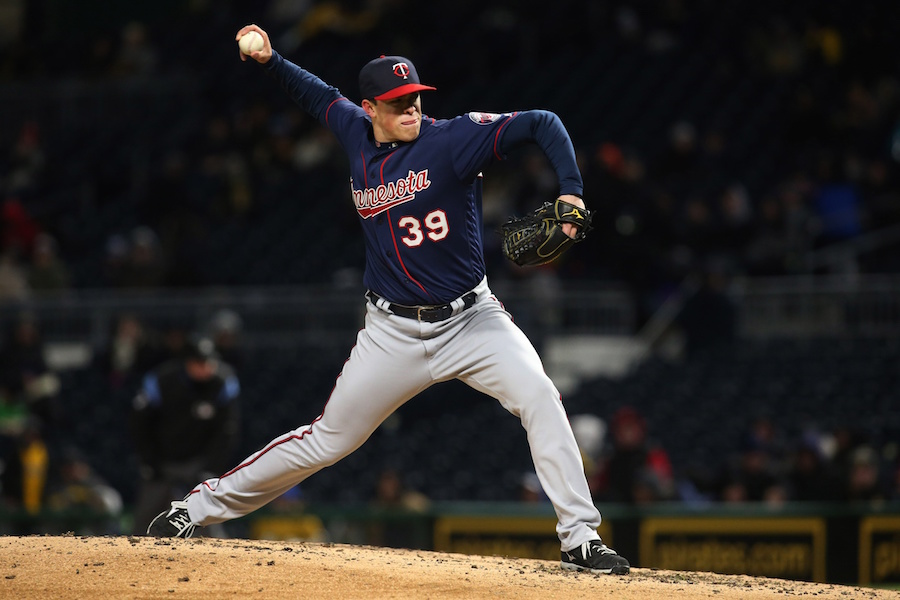 Coming into the season, there were plenty of question marks surrounding the Twins bullpen, rebuilt in the wake of an unimpressive 2017 campaign. Hildenberger didn't seem to be one of them, at least not from my view. The formula he deployed very successfully as a rookie was an extremely reliable one: ground balls (58.8% GB), strikeouts (9.4 K/9) and control (1.3 BB/9). Combine these three components, and you've got an almost unassailable recipe for consistently getting hitters out. These are the same strengths that carried Hildenberger through the minors, where he posted a 1.57 ERA in four seasons. The right-hander's signature skills were noticeably amiss in spring training, where he walked four hitters and surrendered five homers in 12 innings. Last year with the Twins, he allowed only four homers and four unintentional walks in 42 innings. But, it's spring training. Struggles during the exhibition slate don't always — or even often — transfer to the regular season. Following one of the righty's rough Grapefruit League outings, I asked Paul Molitor if something seemed off to him about Hildenberger, given the sudden and odd tendency to cough up free passes and long balls. The manager acknowledged that his staff had noticed issues in the sidearmer's delivery. "He's trying really hard to make some adjustments," Molitor said. "I think there have been some things that Garvin (Alston) and Eddie (Guardado) have been looking at to try to get him back mechanically to where he was last year. I think there are some things that are a little bit off. If you're out there thinking about mechanics you're probably not going to make very good pitches." Despite Hildenberger's 7.50 ERA and 1.92 WHIP in 12 Grapefruit League appearances, the Twins never seemed to give much thought to leaving him off the roster, which isn't surprising. He was one of Molitor's most vital and trusted weapons after joining the roster in 2017, accruing the second-highest WPA of all relievers on the staff. And hey, it was only spring training. Unfortunately, in this case, the distressing aspects of an ugly spring have carried over into the games that matter. It is apparent that Hildenberger is out of whack. In just 10 innings, he has already allowed three homers and three unintentional walks — again, he totaled four of each in in 42 frames with Minnesota last year. His ground ball rate is down from 58.8% to 39.4%. Swinging strikes are down from 11.8% to 9.0%. In some ways, the Twins have bigger fish to fry — as of now, Rodney is the lunker of the day. But whereas most members of the bullpen are merely short-term cogs, Hildenberger is key to the big picture. What he brings when he's on his game is extremely difficult to replace. The Twins need him to become entrenched as a quality option in their pen. Right now he's a far cry from that. What would you do? Send him to Triple-A to work out the kinks? Let him keep trying and fight through it in the majors, with help from Alston and Guardado?
 -
All three of those guys have track records of major-league success. Kinley didn't have a track record of Double-A success. The signings of LoMo, Lynn and Duke were very defensible moves, I'm not going to rip them after three bad weeks. But the Kinley addition was inexplicable from the start, and there was serious opportunity cost from having him clog up a 40-man spot for four months while quality players slipped away. Mistakes happen, and hopefully you learn from them. This was a big one.
-
Maybe you want to delete this comment since its abject falseness has been pointed out by multiple people? xFIP normalizes HR rate, that is its purpose.
