



Hans Birkeland
-
Posts
458 -
Joined
-
Days Won
1
Content Type
Profiles
News
Minnesota Twins Videos
2026 Minnesota Twins Top Prospects Ranking
2022 Minnesota Twins Draft Picks
Minnesota Twins Free Agent & Trade Rumors, Notes, & Tidbits
Guides & Resources
2023 Minnesota Twins Draft Picks
The Minnesota Twins Players Project
2024 Minnesota Twins Draft Picks
2025 Minnesota Twins Draft Pick Tracker
2026 Minnesota Twins Draft Tracker: Picks & Bonuses
Forums
Blogs
Events
Store
Downloads
Gallery
Everything posted by Hans Birkeland
-
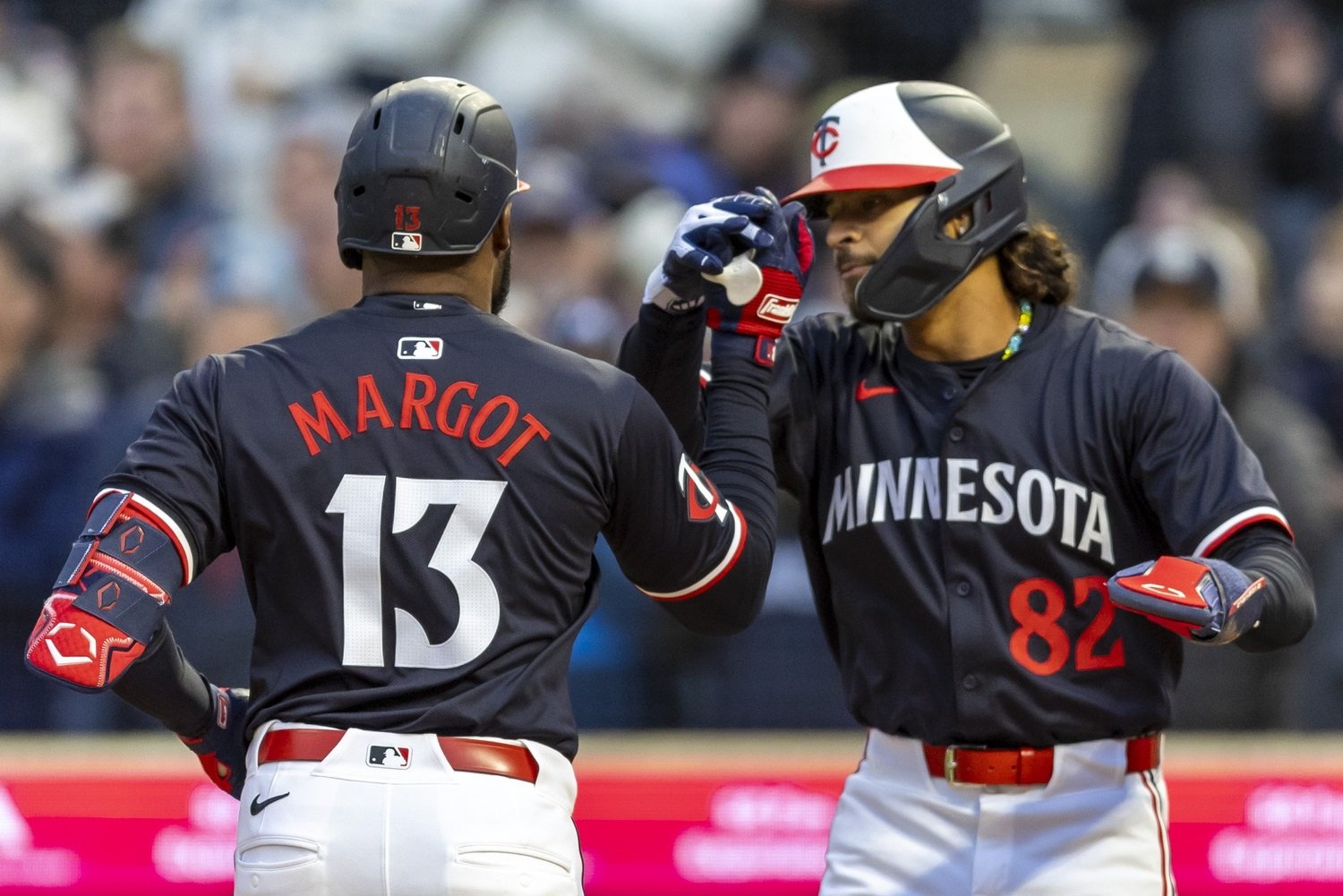 Box Score: Starting Pitcher: Bailey Ober: 5 IP, 3 H, 1 ER, 2 BB, 7 K (68 Pitches, 43 Strikes, 63.2%) Home Runs: Manuel Margot (1) Bottom 3 WPA: Jay Jackson (-.286), Carlos Correa (-.130), Ryan Jeffers (-.093) Win Probability Chart (Via Fangraphs): After a weekend of ruminating about strikeout totals and Bailey Ober tipping his pitches, the Twins had to shake off any lingering doubts about themselves, because the most star-powered roster in baseball rolled into town. The LA Dodgers boast a lineup of three MVPs and future Hall of Famers at the top; perhaps the best all-around catcher in baseball, in Will Smith; the power of Max Muncy and Teoscar Hernández; and some young star potential in James Outman and Gavin Lux, for good measure. Taylor Trammell also plays for them. The Twins turned to Ober, who had just given up eight earned runs to the Royals. They featured a lineup averaging three runs per game in the early going. They started José Miranda at third base, and no one is quite sure why, since Twins officials have publicly labeled Miranda as a first baseman and DH. He didn't look bad, though, taking some good at-bats while not being a factor defensively. The day started disturbingly, as Mookie Betts took a pitch in the zone that was called ball four (that evened out with Betts on the short end of several calls later on). Shohei Ohtani then scorched a double over Byron Buxton's head, and Freddie Freeman hit a sacrifice fly to one of the deepest parts of the park, on which Buxton made an incredible play (more to come on that). Surprisingly, Ober settled down from there, retiring the next two hitters fairly easily, showing a nice changeup and cutter, with his fastball showing a bit of arm-side run. In fact, he retired the next nine hitters following Ohtani's double, with very little hard contact. James Paxton was on the mound for the Dodgers, and looked okay at first. Twins fans might remember the "Big Maple" from his outing in Game One of the 2019 ALDS, in which he briefly gave the Twins hope with a fairly shaky start. Today, he gave up a single to Manuel Margot, who was curiously put in the leadoff spot, and then had Carlos Correa and Ryan Jeffers just miss hittable fastballs before striking out Buxton on an elevated heater. He, too, cruised through the second inning, but he ran into some trouble at a surprising point in the Twins lineup. He walked Austin Martin and then served up a no-doubt home run to Margot, perhaps revitalized by facing the team that gave up on him in favor of Enrique Hernández just a few weeks ago. It was a hanging slider from Paxton that came across as a cutter via Statcast. Regardless, he didn't throw the pitch again. Ober danced around some trouble in the fourth, including two singles and a walk, but looked in control regardless. He used his new cutter much more often than his slider and got a lot of weak contact with it, including striking out Betts with it to end his outing. It's worth noting that Ober had one of his best starts against the Dodgers in LA last year, going six innings and not allowing a run until Michael A. Taylor dropped a fly ball in Ober's final inning. The Twins started letting Paxton off the hook following Margot's home run, making outs early in counts that resulted in some quick innings. Ober also had an efficient outing, but was removed after the fifth at 68 pitches. The reasoning was that lefties Ohtani and Freeman were due up, but my counterpoint is that it doesn't really matter who you throw against those two, as Steven Okert isn't making them adjust their approach or anything. Three soft hits later and the game was tied. It stayed that way for a while, thanks to this catch. The Twins were not able to add on, however, and that is not a sustainable strategy against the Dodgers. Jay Jackson came in to pitch the seventh, and hung two sliders for homers, one to Outman for the lead and then Ohtani for the insurance. The Good: Ober was at his best, locating his pitches and avoiding barrels with his three and a half pitch mix. Buxton made a classic Buxton grab up against the wall in right center in the first. He then made a heady play tagging up to second base in the fourth by reading left fielder Trammell's throw. perfectly It seemed like a normal play but I don't think I've seen it in my 25 years watching baseball. Then he made the aforementioned, even better play as Okert struggled in the sixth. Margot was among the most worried-about of all Twins hitters going into the game. Was he cooked? Maybe not; he is now one of the Twins leaders in OPS. The Bad: Twins Twitter will surely love the decision to pull Ober for Okert to start the sixth. I don't hate the move if it's Caleb Thielbar coming in, but I just don't think a guy we traded out-of-options Nick Gordon for is the matchup you want against Ohtani and Freeman. The righty bats looked a little better, but overall didn't do much against Paxton. The last 18 Twins were retired. The Twins bullpen, which had been the team's saving grace thus far, finally showed some cracks, with Okert and Jackson put into much higher-leverage roles than anyone would have anticipated a month ago. What’s Next: Louie Varland (0-1, 6.75 ERA) goes against the Dodger's third biggest off-season pickup, Tyler Glasnow (2-0, 3.18 ERA). Glasnow is prone to a bad start here or there, but his stuff is electric and could pose a huge problem as the Twins try to get off the mat in the early going. Postgame Interviews: Bullpen Usage Chart: THU FRI SAT SUN MON TOT Funderburk 39 0 0 0 13 52 Alcalá 0 0 25 0 0 25 Sands 22 0 0 0 0 22 Jackson 0 0 20 0 22 42 Okert 0 0 0 0 16 16 Jax 0 0 0 0 21 21 Stewart 0 0 0 0 0 0
- 57 comments
-
- 1
-

-
- bailey ober
- byron buxton
- (and 3 more)
-
After being dinked and dunked to death by the scrappy Guardians, the Minnesota Twins had the bad fortune of facing a team with real hitting talent and a high payroll to boot. While Bailey Ober was very effective, the offense was again (largely) sleepwalking through the game, and this time, the bullpen didn't bail them out. Image courtesy of © Jesse Johnson-USA TODAY Sports After being dinked and dunked to death by the scrappy Guardians, the Minnesota Twins had the bad fortune of facing a team with real hitting talent and a high payroll to boot. While Bailey Ober was very effective, the offense was again (largely) sleepwalking through the game, and this time, the bullpen didn't bail them out. Box Score: Starting Pitcher: Bailey Ober: 5 IP, 3 H, 1 ER, 2 BB, 7 K (68 Pitches, 43 Strikes, 63.2%) Home Runs: Manuel Margot (1) Bottom 3 WPA: Jay Jackson (-.286), Carlos Correa (-.130), Ryan Jeffers (-.093) Win Probability Chart (Via Fangraphs): After a weekend of ruminating about strikeout totals and Bailey Ober tipping his pitches, the Twins had to shake off any lingering doubts about themselves, because the most star-powered roster in baseball rolled into town. The LA Dodgers boast a lineup of three MVPs and future Hall of Famers at the top; perhaps the best all-around catcher in baseball, in Will Smith; the power of Max Muncy and Teoscar Hernández; and some young star potential in James Outman and Gavin Lux, for good measure. Taylor Trammell also plays for them. The Twins turned to Ober, who had just given up eight earned runs to the Royals. They featured a lineup averaging three runs per game in the early going. They started José Miranda at third base, and no one is quite sure why, since Twins officials have publicly labeled Miranda as a first baseman and DH. He didn't look bad, though, taking some good at-bats while not being a factor defensively. The day started disturbingly, as Mookie Betts took a pitch in the zone that was called ball four (that evened out with Betts on the short end of several calls later on). Shohei Ohtani then scorched a double over Byron Buxton's head, and Freddie Freeman hit a sacrifice fly to one of the deepest parts of the park, on which Buxton made an incredible play (more to come on that). Surprisingly, Ober settled down from there, retiring the next two hitters fairly easily, showing a nice changeup and cutter, with his fastball showing a bit of arm-side run. In fact, he retired the next nine hitters following Ohtani's double, with very little hard contact. James Paxton was on the mound for the Dodgers, and looked okay at first. Twins fans might remember the "Big Maple" from his outing in Game One of the 2019 ALDS, in which he briefly gave the Twins hope with a fairly shaky start. Today, he gave up a single to Manuel Margot, who was curiously put in the leadoff spot, and then had Carlos Correa and Ryan Jeffers just miss hittable fastballs before striking out Buxton on an elevated heater. He, too, cruised through the second inning, but he ran into some trouble at a surprising point in the Twins lineup. He walked Austin Martin and then served up a no-doubt home run to Margot, perhaps revitalized by facing the team that gave up on him in favor of Enrique Hernández just a few weeks ago. It was a hanging slider from Paxton that came across as a cutter via Statcast. Regardless, he didn't throw the pitch again. Ober danced around some trouble in the fourth, including two singles and a walk, but looked in control regardless. He used his new cutter much more often than his slider and got a lot of weak contact with it, including striking out Betts with it to end his outing. It's worth noting that Ober had one of his best starts against the Dodgers in LA last year, going six innings and not allowing a run until Michael A. Taylor dropped a fly ball in Ober's final inning. The Twins started letting Paxton off the hook following Margot's home run, making outs early in counts that resulted in some quick innings. Ober also had an efficient outing, but was removed after the fifth at 68 pitches. The reasoning was that lefties Ohtani and Freeman were due up, but my counterpoint is that it doesn't really matter who you throw against those two, as Steven Okert isn't making them adjust their approach or anything. Three soft hits later and the game was tied. It stayed that way for a while, thanks to this catch. The Twins were not able to add on, however, and that is not a sustainable strategy against the Dodgers. Jay Jackson came in to pitch the seventh, and hung two sliders for homers, one to Outman for the lead and then Ohtani for the insurance. The Good: Ober was at his best, locating his pitches and avoiding barrels with his three and a half pitch mix. Buxton made a classic Buxton grab up against the wall in right center in the first. He then made a heady play tagging up to second base in the fourth by reading left fielder Trammell's throw. perfectly It seemed like a normal play but I don't think I've seen it in my 25 years watching baseball. Then he made the aforementioned, even better play as Okert struggled in the sixth. Margot was among the most worried-about of all Twins hitters going into the game. Was he cooked? Maybe not; he is now one of the Twins leaders in OPS. The Bad: Twins Twitter will surely love the decision to pull Ober for Okert to start the sixth. I don't hate the move if it's Caleb Thielbar coming in, but I just don't think a guy we traded out-of-options Nick Gordon for is the matchup you want against Ohtani and Freeman. The righty bats looked a little better, but overall didn't do much against Paxton. The last 18 Twins were retired. The Twins bullpen, which had been the team's saving grace thus far, finally showed some cracks, with Okert and Jackson put into much higher-leverage roles than anyone would have anticipated a month ago. What’s Next: Louie Varland (0-1, 6.75 ERA) goes against the Dodger's third biggest off-season pickup, Tyler Glasnow (2-0, 3.18 ERA). Glasnow is prone to a bad start here or there, but his stuff is electric and could pose a huge problem as the Twins try to get off the mat in the early going. Postgame Interviews: Bullpen Usage Chart: THU FRI SAT SUN MON TOT Funderburk 39 0 0 0 13 52 Alcalá 0 0 25 0 0 25 Sands 22 0 0 0 0 22 Jackson 0 0 20 0 22 42 Okert 0 0 0 0 16 16 Jax 0 0 0 0 21 21 Stewart 0 0 0 0 0 0 View full article
- 57 replies
-
- 1
-
-
- bailey ober
- byron buxton
- (and 3 more)
-
Royals 11, Twins 0: Ober Struggles as Twins Fall Flat in Pursuit of Sweep
Hans Birkeland posted an article in Twins
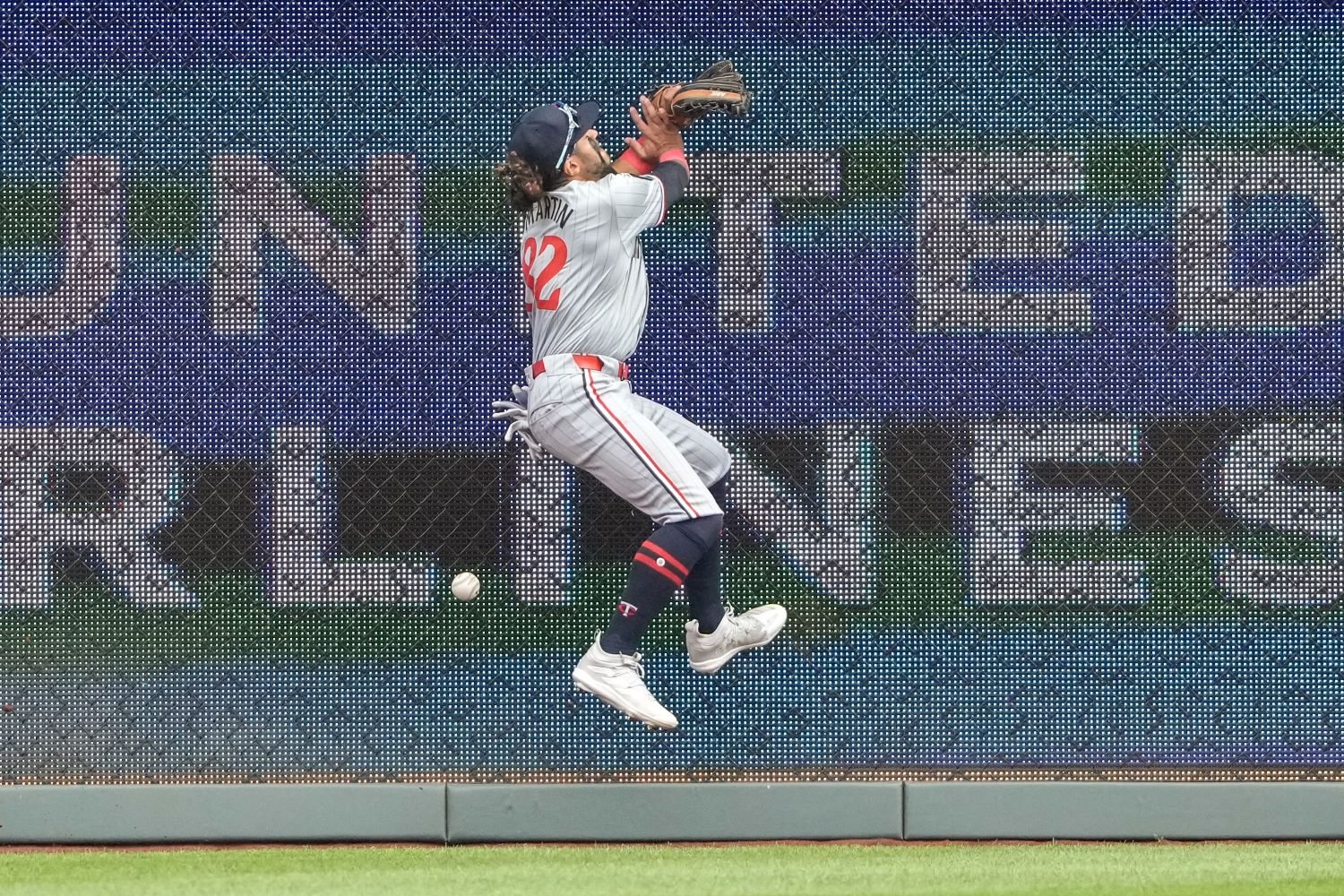 Following a pair of wins in which the Twins were held in check by Royals starting pitchers, only to rally against the underbelly of the Kansas City bullpen, the Twins were up against on-again off-again functional pitcher Brady Singer. Minnesota turned to Bailey Ober in his season debut, coming off of a season in which he was effective, but in which workload concerns caused him to be, for lack of a better term, jerked around a bit. He features a new cutter this year, but it was a hanging change-up (or two, or three) that hurt him today. Box Score: Starting Pitcher: Bailey Ober: 1 1/3 IP 9 H, 8 ER 1 BB 1 K (55 P, 35 Strikes, 63.6%) Home Runs: None Bottom 3 WPA: Ober (-.362), Ryan Jeffers (-.039), Kody Funderburk (-.028) Win Probability Chart (Via Fangraphs): The game started (and ended) as if a "getaway day loss" was scheduled and circled on a bulletin board. In the first, Edouard Julien was out on one pitch, Alex Kirilloff was called out on two pitches (a pitch clock violation was called before the third), and Byron Buxton grounded out to end it. That would become a theme. Ober was a trending name during Spring Training, his perpetual underratedness having a bit of a Streisand effect on his name in baseball circles. He has been consistent when healthy and has used his elite extension to do things to hitters other pitchers with similar raw arm strength simply can't. Increased velocity and the promise of a hard cutter made him a prime breakout candidate for baseball fans and bettors alike. Well, that's why they play the games. Ober was in the zone in his half of the first, and facing a Royals squad with a lot of free swingers, that hurt him. Bobby Witt Jr., looking to cement his status as an ascendant superstar, tomahawked a high fastball (110 MPH EV) into left field for a single. First baseman Vinnie Pasquantino blooped a single and Salvador Perez, mired in a concerning slump to start the year, got a hanging changeup that his declining bat speed had no problem depositing in the left-field stands. The Twins' gameplan was to be aggressive against Singer, knowing he has struggled to develop a third pitch besides his fastball and slider, and needs to work ahead to be successful. He also has a propensity to be a tad emotional on the mound, so he has always been susceptible to an ambush. That led to a lot of outs early in the count for Twins hitters, who couldn't quite put the barrel on Singer's sinker. Speaking of ambushing a starting pitcher, Ober gave up a second home run on a changeup, this time to light-hitting outfielder Kyle Isbel, in the second, and the fun wouldn't end there. Maikel García homered in the next at-bat on a middle-in fastball, and Witt nearly made it three in a row, settling for an electrifying triple off the wall in right-center. Perez then drove in Witt for the game's sixth run, After an M.J. Melendez double (homer in 11/30 ballparks) Ober's day was done. Funderburk wasn't able to keep things in range, giving up a two-run single to Adam Frazier and bungling a flip from Carlos Santana at first that led to the ninth run of the game. Only then was Austin Martin able to take his first major-league at-bat, which finishes up quite a rollercoaster for him since the start of spring training. First, there was buzz about him making the team out of camp, then the Twins traded for Manuel Margot, pushing Martin back to Triple-A to start the year. One day in, the baseball gods decided to flesh out the Greek tragedy of Royce Lewis's career even further, and Martin got his call-up after all. He made an appearance on Saturday as a pinch-runner, but was lifted for a pinch-hitter when his spot in the lineup came around. Daniel Duarte also made his Twins debut, relieving Funderburk to start the fourth. His slider looked good, and he stayed in the zone, in defiance of his primary weakness in his career thus far. From there, the game was mainly about seeing players make their debuts, and Witt's attempt at a cycle, which looked like a promising campaign after his homer in the third. The Good: Duarte looked pretty good and gave the Twins some needed length. He also struck out Witt on a nice slider as the shortstop was trying to complete the cycle. Matt Wallner got his first hit of the year, a ringing double behind in the count. Kirilloff continues to sting the ball, doubling today after game-altering plate appearances in each of the first two games. Cole Sands got to pitch! That's usually not a good sign for a mop-up guy, but he spent long stretches of 2023 available but not getting into any games. The Bad: Ober wasn't fooling anyone, and his velocity was down just a tick, allowing the Royals to be aggressive and jump all over his fastball and change-up. Julien saw four pitches over his first three at-bats combined. That's likely an aberration, but Ryan Jeffers looks lost at the plate, which might not be. Actually, almost the entire lineup looked like they were ready to jump on a flight. The strike zone was massive, leading to quite a few generous strike calls (maybe Ober could have taken advantage of that..). What’s Next: The Twins are off Monday, and head to Milwaukee for a two-game series against the Brewers starting Tuesday, Louie Varland (5-5, 4.40 ERA in 2023) makes his season debut opposing former Royal Jakob Junis (4-3, 3.87 ERA in 2023). Junis has operated as a swingman for the Giants since leaving Kansas City. He has flashed some effective breaking stuff in his career, but is only in the Milwaukee rotation because of injuries and the departure of Corbin Burnes. Varland, like Ober, had some helium this Spring. Keys for him will be his effectiveness against righties (reverse splits have been an issue) and his ability to limit the home run. Postgame Interviews: Bullpen Usage Chart: THU SAT SUN MON TUE TOT Alcala 0 10 0 0 0 10 Duarte 0 0 31 0 0 31 Funderburk 0 0 34 0 0 34 Jackson 0 0 13 0 0 13 Jax 18 12 0 0 0 30 Okert 0 16 0 0 0 16 Sands 0 0 22 0 0 22 Stewart 17 22 0 0 0 39
 -
Going for a season-opening sweep in Kansas City for a second straight year, the Twins instead fell behind early and let the mercurial Brady Singer settle into a groove in a blowout loss. Bailey Ober simply didn't have it, and the game was more notable for the debuts of depth pieces Austin Martin, Daniel Duarte, Kody Funderburk and Jay Jackson, as well as the brilliance of Bobby Witt Jr. Image courtesy of © Denny Medley-USA TODAY Sports Going for a season-opening sweep in Kansas City for a second straight year, the Twins instead fell behind early and let the mercurial Brady Singer settle into a groove in a blowout loss. Bailey Ober simply didn't have it, and the game was more notable for the debuts of depth pieces Austin Martin, Daniel Duarte, Kody Funderburk and Jay Jackson, as well as the brilliance of Bobby Witt Jr. Following a pair of wins in which the Twins were held in check by Royals starting pitchers, only to rally against the underbelly of the Kansas City bullpen, the Twins were up against on-again off-again functional pitcher Brady Singer. Minnesota turned to Bailey Ober in his season debut, coming off of a season in which he was effective, but in which workload concerns caused him to be, for lack of a better term, jerked around a bit. He features a new cutter this year, but it was a hanging change-up (or two, or three) that hurt him today. Box Score: Starting Pitcher: Bailey Ober: 1 1/3 IP 9 H, 8 ER 1 BB 1 K (55 P, 35 Strikes, 63.6%) Home Runs: None Bottom 3 WPA: Ober (-.362), Ryan Jeffers (-.039), Kody Funderburk (-.028) Win Probability Chart (Via Fangraphs): The game started (and ended) as if a "getaway day loss" was scheduled and circled on a bulletin board. In the first, Edouard Julien was out on one pitch, Alex Kirilloff was called out on two pitches (a pitch clock violation was called before the third), and Byron Buxton grounded out to end it. That would become a theme. Ober was a trending name during Spring Training, his perpetual underratedness having a bit of a Streisand effect on his name in baseball circles. He has been consistent when healthy and has used his elite extension to do things to hitters other pitchers with similar raw arm strength simply can't. Increased velocity and the promise of a hard cutter made him a prime breakout candidate for baseball fans and bettors alike. Well, that's why they play the games. Ober was in the zone in his half of the first, and facing a Royals squad with a lot of free swingers, that hurt him. Bobby Witt Jr., looking to cement his status as an ascendant superstar, tomahawked a high fastball (110 MPH EV) into left field for a single. First baseman Vinnie Pasquantino blooped a single and Salvador Perez, mired in a concerning slump to start the year, got a hanging changeup that his declining bat speed had no problem depositing in the left-field stands. The Twins' gameplan was to be aggressive against Singer, knowing he has struggled to develop a third pitch besides his fastball and slider, and needs to work ahead to be successful. He also has a propensity to be a tad emotional on the mound, so he has always been susceptible to an ambush. That led to a lot of outs early in the count for Twins hitters, who couldn't quite put the barrel on Singer's sinker. Speaking of ambushing a starting pitcher, Ober gave up a second home run on a changeup, this time to light-hitting outfielder Kyle Isbel, in the second, and the fun wouldn't end there. Maikel García homered in the next at-bat on a middle-in fastball, and Witt nearly made it three in a row, settling for an electrifying triple off the wall in right-center. Perez then drove in Witt for the game's sixth run, After an M.J. Melendez double (homer in 11/30 ballparks) Ober's day was done. Funderburk wasn't able to keep things in range, giving up a two-run single to Adam Frazier and bungling a flip from Carlos Santana at first that led to the ninth run of the game. Only then was Austin Martin able to take his first major-league at-bat, which finishes up quite a rollercoaster for him since the start of spring training. First, there was buzz about him making the team out of camp, then the Twins traded for Manuel Margot, pushing Martin back to Triple-A to start the year. One day in, the baseball gods decided to flesh out the Greek tragedy of Royce Lewis's career even further, and Martin got his call-up after all. He made an appearance on Saturday as a pinch-runner, but was lifted for a pinch-hitter when his spot in the lineup came around. Daniel Duarte also made his Twins debut, relieving Funderburk to start the fourth. His slider looked good, and he stayed in the zone, in defiance of his primary weakness in his career thus far. From there, the game was mainly about seeing players make their debuts, and Witt's attempt at a cycle, which looked like a promising campaign after his homer in the third. The Good: Duarte looked pretty good and gave the Twins some needed length. He also struck out Witt on a nice slider as the shortstop was trying to complete the cycle. Matt Wallner got his first hit of the year, a ringing double behind in the count. Kirilloff continues to sting the ball, doubling today after game-altering plate appearances in each of the first two games. Cole Sands got to pitch! That's usually not a good sign for a mop-up guy, but he spent long stretches of 2023 available but not getting into any games. The Bad: Ober wasn't fooling anyone, and his velocity was down just a tick, allowing the Royals to be aggressive and jump all over his fastball and change-up. Julien saw four pitches over his first three at-bats combined. That's likely an aberration, but Ryan Jeffers looks lost at the plate, which might not be. Actually, almost the entire lineup looked like they were ready to jump on a flight. The strike zone was massive, leading to quite a few generous strike calls (maybe Ober could have taken advantage of that..). What’s Next: The Twins are off Monday, and head to Milwaukee for a two-game series against the Brewers starting Tuesday, Louie Varland (5-5, 4.40 ERA in 2023) makes his season debut opposing former Royal Jakob Junis (4-3, 3.87 ERA in 2023). Junis has operated as a swingman for the Giants since leaving Kansas City. He has flashed some effective breaking stuff in his career, but is only in the Milwaukee rotation because of injuries and the departure of Corbin Burnes. Varland, like Ober, had some helium this Spring. Keys for him will be his effectiveness against righties (reverse splits have been an issue) and his ability to limit the home run. Postgame Interviews: Bullpen Usage Chart: THU SAT SUN MON TUE TOT Alcala 0 10 0 0 0 10 Duarte 0 0 31 0 0 31 Funderburk 0 0 34 0 0 34 Jackson 0 0 13 0 0 13 Jax 18 12 0 0 0 30 Okert 0 16 0 0 0 16 Sands 0 0 22 0 0 22 Stewart 17 22 0 0 0 39 View full article
-
The offseason tends to consolidate around narratives. Certain moves seem to scratch the itches of specific analysts, and depending on the volume they project their voice at, the vibes around said team will grow or shrink accordingly. For example, the MLB zeitgeist loved the Yankees acquiring Juan Soto, and hated the Mariners trading Eugenio Suarez. They hate that the Red Sox cut payroll, and loved that the Diamondbacks increased theirs. The true talent level of a team is often hard to see. If an analyst or a network wants a narrative to be true, they will gloss over any potential weakness of a team, and if they are vague enough in their critique, they can argue the opposite of what logic or even anecdotal evidence would deem true. For example, one of the boneheads on Foul Territory loves the Braves bullpen, because it feels like they would have a great bullpen (Its not, and may prove to be a weakness). Giancarlo Stanton had a great spring so it feels like he isn't a negative WAR player anymore. We even had old friend Aaron Gleeman say he likes the top end of the Yankee lineup because they have Judge, Soto and, trying to think of a third he landed on Gleyber Torres, who's a solid player but nothing more. Last year the dicsussion was on if the Yankees should trade Torres, he increased his OPS+ by 5, and now he is the third leg of a new murderers row. Contrary and spicy-brained as I am, here are my picks for the three teams most over-hyped despite evidence to the contrary, and three teams that have been slept on. Keep in mind I was 100% right in questioning the legitimacy of the 2023 Guardians (lucky in '22), Yankees (couldn't hit), Orioles (too cute by half, would fall short in October), Rays (too injured, would fall short in October) and Braves (no depth, would fall short in October). 3 Teams that will surprise: Seattle Mariners The Mariners began the offseason by trading away one of their few sources of power in 2023, Eugenio Suarez, and made little effort to resign Teoscar Hernandez. They supplemented those (high-strikeout) losses with Jorge Polanco, Mitch Garver, the return of Mitch Haniger and Luke Raley, who quietly became a solid righty-crusher last year in Tampa. Seattle also features the best rotation in the AL, and perhaps in all of baseball. Both George Kirby and Luis Castillo profile as aces, Logan Gilbert would be a solid number two in most rotations, while Bryce Miller and Bryan Woo are promising young starters with big stuff who have already flashed success in the majors. I worry a little about their bullpen, as it relies a lot on Andres Munoz to function as expected following the departures of Pat Sewald, Justin Topa and Isaiah Campbell, with dominant setup-man Matt Brash on the shelf with an arm injury. They acquired flame-throwing Gregory Santos from the White Sox, but he too, will start the year on the IL with a lat strain.\ Boston Red Sox Boston always seems to be able to produce hard-hitting lineups, and this year should prove as no exception. Rafael Devers, Triston Casas, Trevor Story, and Masitaka Yoshida will anchor the lineup, and if any of Conor Wong, Tyler O’Neill, Cedane Rafaela or Jaren Duran steps forward, they should be able to match up with well with most pitching staffs. The pitching is much more suspect, but the quintet of Bryan Bello, Kutter Crawford, Nick Pivetta, Tanner Houck and Garrett Whitlock all have mid-rotation upside or better. Kenley Janssen and Chris Martin are in their late-30’s but still effective in the back of the bullpen. It is surprising to see the Red Sox scale back their payroll to such an extent, but given their boom-or-bust tendencies of recent seasons, I would say they are overdue for an over-performance. San Diego Padres Like the Twins, the Padres were forced to cut payroll due to their TV rights situation. In fact, their games will be broadcast by MLB this year. As a result, Juan Soto, Trent Grisham, Josh Hader, Michael Wacha and Seth Lugo are no longer with the team. However, like the Twins, they still boast an impressive core despite the spending cuts. Fernando Tatis Jr., Manny Machado, Ha-Seon Kim and Xander Bogaerts still represent a solid offensive core, while Yu Darvish and Joe Musgrove remain a strong 1-2 punch at the top of the rotation. If top prospect Jackson Merrill thrives immediately and the team experiences relative health, they should not be underestimated. Last year, despite missing the playoffs, their Pythagorean record was a hearty 92-70. 3 teams that will disappoint: New York Yankees Adding Juan Soto would be a massive upgrade for any team, and the Yankees are no exception. The problem they face is that their core is a year older, their pitching depth is depleted from the Soto trade, and Gerrit Cole will miss at least the first two months of the year with an ominous elbow injury. Outside of Judge and Soto, their lineup is highly suspect. If you believe Giancarlo Stanton has anything left, that Anthony Rizzo will bounce back from a career-threatening head injury or that DJ LeMahieu will provide anything in his age-35 season, the team could still contend for a playoff spot. If you’re sane, you will bet the under. Baltimore Orioles Corbin Burnes was a massive acquisition for an Oriole team that won over 100 games last year. Not mentioned in any of the glowing analysis’ of that trade is that Burnes’ FIP has risen from 1.63 in his Cy Young-winning 2021 season, to 3.14 in 2022, to 3.81 last year. His strikeout rate has plummeted from 35.6% to 25.5% in that time. Behind Burnes is Kyle Bradish, out with an elbow injury, and Grayson Rodriguez is talented but unproven in the third spot. John Means is also battling injury, while stud closer Félix Bautista is out for the year. The lineup has no true stars unless Gunnar Henderson and Adley Rutschmann both take steps forward, which is no guarantee for young players, even as highly-touted as those two are. Given the talent level of their reinforcements Coby Mayo, Heston Kjerstad, Colton Cowser and Jordan Westburg, I envision Baltimore still making the playoffs. But a lot can go wrong with this team. Atlanta Braves I have opined previously that the Braves have no depth, and in fact, the one young player who could have stepped in to the lineup in the event of injury, Vaughn Grissom, was traded for Chris Sale. Their lineup will still be a force, but it simply cannot stay as healthy as 2023, when they resembled the 2022 Guardians in terms of injury luck. They still lack a true shortstop, and left field remains a question with Jared Kelenic having a tumultuous career thus far. I struggle to see the hype in their bullpen, where Raisel Iglesias is a fairly mid-tier closer, and I don’t see how Joe Jimenez and A.J. Minter make up for that. The rotation looks great at the top, but after Max Fried, Spencer Strider and Sale are more question marks, with not much help available on the farm. They will contend, but the Phillies are a more complete team.
-
Kepler is now the longest tenured Twin, and following a rebound offensively, is entering the final year of his contract. Extending players as they enter their 30's in generally frowned upon in analytic circles, but there is precedent for a talented, yet up-and-down, hitter finding something in the second half of their career. Image courtesy of © Matt Blewett-USA TODAY Sports Kepler is now the longest tenured Twin, and following a rebound offensively, is entering the final year of his contract. Extending players as they enter their 30's in generally frowned upon in analytic circles, but there is precedent for a talented, yet up-and-down, hitter finding something in the second half of their career. Max Kepler has been a lot of things in his long tenure as a Twin: A 36-homer leadoff man, smooth defender, and the posterchild for why looking at BABIP to project future performance is better left in 2012. He’s had injuries, stretches of historically poor contact quality, and countless trade rumors. It’s been a ride, and people have certainly had opinions about it. Last year, Kepler reversed a years-long downtrend in performance by saying “Screw it, I’ll just swing harder and live with a few more strikeouts.” As a result, he had the second best year of his career and the Twins picked up his 2024 club option. They also traded his draft-mate from 2009, Jorge Polanco to the Mariners (where playing second base is like being a drummer for Spinal Tap). It appears that Kepler will play out the final year of his contract with the Twins, which is good news, because unlike in mid-2023, they don’t have anyone to replace him (unless you still believe in Trevor Larnach). A lot of Twins fans have been done with Kepler for years now, but given his unique career arc and the team’s flimsier than expected outfield depth, it may make sense to extend him, rather than watch him leave in free agency following this year. Here’s why. As Kepler enters his age 31 season, I wondered if there are any other players with similar trajectories in their careers. Someone who started solid enough, peaked to a point they got MVP votes, then leveled off before finding something at age 30. That got me thinking about Adrian Beltre, newly enshrined first-ballot Hall of Famer. Stay with me here. They play different positions and hit from different sides, but let’s remember who Beltre was through his first decade or so in the majors. He got to the major leagues as an uber prospect, debuting at the age of 19 for a much more dysfunctional Dodgers team than we are used to these days. He acclimated himself well at the start, posting a 102 OPS+ in his first full season at age 20. Baseball fans love players who can’t legally drink but can post league average numbers- Imagine what they can do once they fill out and learn the league! Well, Beltre didn’t really take off from there, producing four middling seasons leading up to his walk year in 2004. He busted out that year, hitting 48 home runs, playing stellar defense and finishing second in the MVP voting to perhaps the greatest hitting season of Barry Bonds’ (or anyone’s) career. There it was! The talent that lay dormant for so long was finally translating to impact production. He secured a big contract from the Seattle Mariners… and then resumed being a roughly league-average hitter with good defense. I don’t have to tell you how Max Keplery that is. In fact, through their age 30 seasons, Beltre had produced a 105 OPS+ for his career, while Kepler is at 104. The lows were lower for Kepler, and the highs were higher for Beltre, but the overall career arc is fairly similar. Neither struck out a lot, both played through injuries that sometimes sapped their performance, and both were revered as strong, yet somewhat odd, clubhouse presences. Had Beltre continued to produce as he had in LA and Seattle, he would have fallen off the HOF ballot by now. But starting with a one year stop in Boston (which prompted agent Scott Boras to invent the term “pillow contract”), Beltre found a sweet spot in performance that didn’t quite reach his 2004 breakout peak, but was far more productive than his other years to that point. From that point forward, he hit for a 133 OPS+, played in a World Series, went viral countless times for his humorous exchanges with friend/nemesis Elvis Andrus, and waltzed into the Hall of Fame. No one is predicting that for Kepler, but then again no one was counting on sustained dominance from Beltre 13 years ago, either. What if Max has figured something out and his 124 OPS+ from 2023 is repeatable? My guess is that Kepler felt that the Twins’ brass were fed up with him in June of last year and that shook him up. He stopped caring about avoiding strikeouts, or taking walks, and became more process-oriented. He had the highest strikeout percentage of his career, and his lowest walk rate since 2017. Whatever the catalyst was, it worked, as his OPS the final three months was .840, 1.008, and .851. His Baseball Savant page was even more encouraging. Ask any Red Sox fan (or executive) and they will tell you that not keeping Beltre after his 2010 re-emergence was a huge regret. Losing Polanco removes a ton of continuity from the clubhouse, so keeping Kepler around on an extension would make sense on a corporate level (as well as a human one). If he goes back to hitting for the league average and neither Emmanuel Rodríguez or Walker Jenkins displace him immediately, you just bank on the clubhouse pluses and the worry-free defense. Judging by the Twins’ inability to trade him the past three-to-four offseasons, he may not even cost that much to retain. It all depends on how you project him going forward. His top Baseball-reference.com comparable is Colby Rasmus, a soft-spoken former top ten global prospect who performed in fits and starts throughout his career and was out of the league following his age 31 season. He did make a few postseason memories. Another comp further down is Darrell Evans, who followed Beltre’s exact career path of immediately being decent, being great for one year, flatlining, and then being a top 20 hitter in baseball for six years (123 OPS+ after age 35). Which camp will Kepler fall into? There’s a very fine line as a 30-year-old position player between being a candidate for a three year, 45M contract, or a four year 80M one. I suspect the Twins would consider the former but scoff at the latter, and I would agree. Kepler is a guy who falls out of whack a lot at the plate, but usually figures it out somewhere along the line. He’ll end up with 20 home runs, an OPS below his talent level, and the sort of defense that, while not electrifying, acts as a security blanket preventing other outfield options from navigating right field at the Targe. That’s a solid investment at 15M annually. Additionally, the Twins surest things after him are Byron Buxton and Matt Wallner in the outfield, and there are contact-related questions for outfield prospects Rodríguez (too little) and the newly acquired Gabriel González (too much). The Twins brass are having these discussions. If Kepler departs after this year, they will likely be in the market for a corner outfielder who can hit and defend, especially if Wallner can’t legitimize his 2023 breakout. Another angle is that If Kepler produces another 120 OPS+ in 2024, he may receive a qualifying offer, which would depress his market elsewhere, or even lead to him accepting and returning for 2025 at a roughly 20M salary. That may be the Goldilocks scenario, as Rodríguez, González and Jenkins should all be in play for the 2026 season. To be sure, the overwhelming odds are that Kepler will play out this last year with the Twins and become a free agent. Mid-market teams like the Twins, especially ones with analytic-leaning front offices, don't often extend players of his type. Indeed, it would have been ludicrous at the All-Star break to even have this conversation. But Kepler pivoted at that point, and the Twins front office has shown they're capable of pivoting too. If they believed enough to keep starting Kepler through mid-2023, perhaps they can believe enough to believe that his late 2023 wasn't a mirage. Maybe Kepler's journey with the Twins doesn't need to end just yet. What do you think? Would you sign up for three to four more years of Kepler, or roll the dice with the Twins’ minor-league outfielders and Wallner? View full article
-
Could the Next Step in Max Kepler's Long Journey Be a Contract Extension?
Hans Birkeland posted an article in Twins
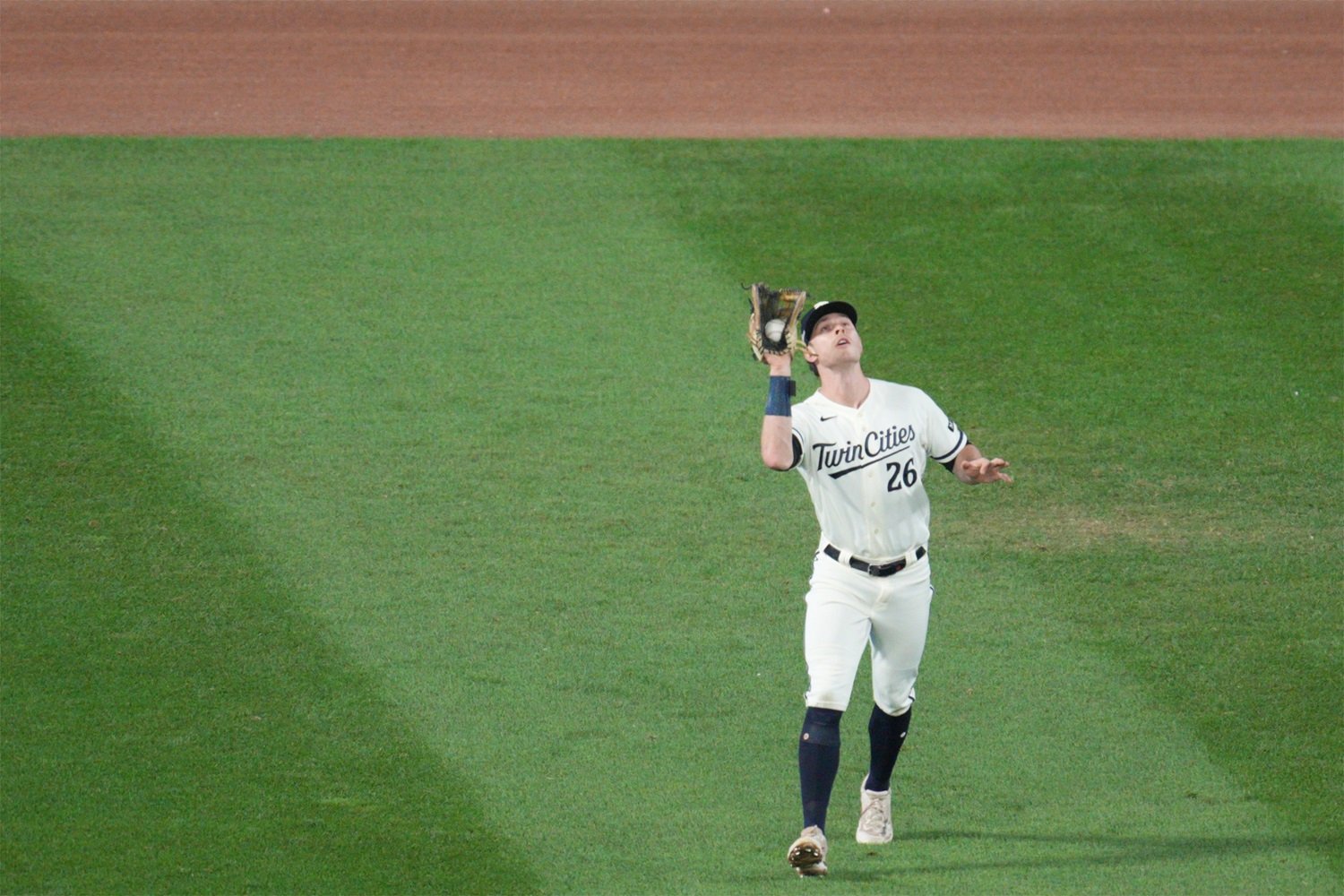 Max Kepler has been a lot of things in his long tenure as a Twin: A 36-homer leadoff man, smooth defender, and the posterchild for why looking at BABIP to project future performance is better left in 2012. He’s had injuries, stretches of historically poor contact quality, and countless trade rumors. It’s been a ride, and people have certainly had opinions about it. Last year, Kepler reversed a years-long downtrend in performance by saying “Screw it, I’ll just swing harder and live with a few more strikeouts.” As a result, he had the second best year of his career and the Twins picked up his 2024 club option. They also traded his draft-mate from 2009, Jorge Polanco to the Mariners (where playing second base is like being a drummer for Spinal Tap). It appears that Kepler will play out the final year of his contract with the Twins, which is good news, because unlike in mid-2023, they don’t have anyone to replace him (unless you still believe in Trevor Larnach). A lot of Twins fans have been done with Kepler for years now, but given his unique career arc and the team’s flimsier than expected outfield depth, it may make sense to extend him, rather than watch him leave in free agency following this year. Here’s why. As Kepler enters his age 31 season, I wondered if there are any other players with similar trajectories in their careers. Someone who started solid enough, peaked to a point they got MVP votes, then leveled off before finding something at age 30. That got me thinking about Adrian Beltre, newly enshrined first-ballot Hall of Famer. Stay with me here. They play different positions and hit from different sides, but let’s remember who Beltre was through his first decade or so in the majors. He got to the major leagues as an uber prospect, debuting at the age of 19 for a much more dysfunctional Dodgers team than we are used to these days. He acclimated himself well at the start, posting a 102 OPS+ in his first full season at age 20. Baseball fans love players who can’t legally drink but can post league average numbers- Imagine what they can do once they fill out and learn the league! Well, Beltre didn’t really take off from there, producing four middling seasons leading up to his walk year in 2004. He busted out that year, hitting 48 home runs, playing stellar defense and finishing second in the MVP voting to perhaps the greatest hitting season of Barry Bonds’ (or anyone’s) career. There it was! The talent that lay dormant for so long was finally translating to impact production. He secured a big contract from the Seattle Mariners… and then resumed being a roughly league-average hitter with good defense. I don’t have to tell you how Max Keplery that is. In fact, through their age 30 seasons, Beltre had produced a 105 OPS+ for his career, while Kepler is at 104. The lows were lower for Kepler, and the highs were higher for Beltre, but the overall career arc is fairly similar. Neither struck out a lot, both played through injuries that sometimes sapped their performance, and both were revered as strong, yet somewhat odd, clubhouse presences. Had Beltre continued to produce as he had in LA and Seattle, he would have fallen off the HOF ballot by now. But starting with a one year stop in Boston (which prompted agent Scott Boras to invent the term “pillow contract”), Beltre found a sweet spot in performance that didn’t quite reach his 2004 breakout peak, but was far more productive than his other years to that point. From that point forward, he hit for a 133 OPS+, played in a World Series, went viral countless times for his humorous exchanges with friend/nemesis Elvis Andrus, and waltzed into the Hall of Fame. No one is predicting that for Kepler, but then again no one was counting on sustained dominance from Beltre 13 years ago, either. What if Max has figured something out and his 124 OPS+ from 2023 is repeatable? My guess is that Kepler felt that the Twins’ brass were fed up with him in June of last year and that shook him up. He stopped caring about avoiding strikeouts, or taking walks, and became more process-oriented. He had the highest strikeout percentage of his career, and his lowest walk rate since 2017. Whatever the catalyst was, it worked, as his OPS the final three months was .840, 1.008, and .851. His Baseball Savant page was even more encouraging. Ask any Red Sox fan (or executive) and they will tell you that not keeping Beltre after his 2010 re-emergence was a huge regret. Losing Polanco removes a ton of continuity from the clubhouse, so keeping Kepler around on an extension would make sense on a corporate level (as well as a human one). If he goes back to hitting for the league average and neither Emmanuel Rodríguez or Walker Jenkins displace him immediately, you just bank on the clubhouse pluses and the worry-free defense. Judging by the Twins’ inability to trade him the past three-to-four offseasons, he may not even cost that much to retain. It all depends on how you project him going forward. His top Baseball-reference.com comparable is Colby Rasmus, a soft-spoken former top ten global prospect who performed in fits and starts throughout his career and was out of the league following his age 31 season. He did make a few postseason memories. Another comp further down is Darrell Evans, who followed Beltre’s exact career path of immediately being decent, being great for one year, flatlining, and then being a top 20 hitter in baseball for six years (123 OPS+ after age 35). Which camp will Kepler fall into? There’s a very fine line as a 30-year-old position player between being a candidate for a three year, 45M contract, or a four year 80M one. I suspect the Twins would consider the former but scoff at the latter, and I would agree. Kepler is a guy who falls out of whack a lot at the plate, but usually figures it out somewhere along the line. He’ll end up with 20 home runs, an OPS below his talent level, and the sort of defense that, while not electrifying, acts as a security blanket preventing other outfield options from navigating right field at the Targe. That’s a solid investment at 15M annually. Additionally, the Twins surest things after him are Byron Buxton and Matt Wallner in the outfield, and there are contact-related questions for outfield prospects Rodríguez (too little) and the newly acquired Gabriel González (too much). The Twins brass are having these discussions. If Kepler departs after this year, they will likely be in the market for a corner outfielder who can hit and defend, especially if Wallner can’t legitimize his 2023 breakout. Another angle is that If Kepler produces another 120 OPS+ in 2024, he may receive a qualifying offer, which would depress his market elsewhere, or even lead to him accepting and returning for 2025 at a roughly 20M salary. That may be the Goldilocks scenario, as Rodríguez, González and Jenkins should all be in play for the 2026 season. To be sure, the overwhelming odds are that Kepler will play out this last year with the Twins and become a free agent. Mid-market teams like the Twins, especially ones with analytic-leaning front offices, don't often extend players of his type. Indeed, it would have been ludicrous at the All-Star break to even have this conversation. But Kepler pivoted at that point, and the Twins front office has shown they're capable of pivoting too. If they believed enough to keep starting Kepler through mid-2023, perhaps they can believe enough to believe that his late 2023 wasn't a mirage. Maybe Kepler's journey with the Twins doesn't need to end just yet. What do you think? Would you sign up for three to four more years of Kepler, or roll the dice with the Twins’ minor-league outfielders and Wallner?
- 68 comments
-
- 5
-
-
- max kepler
- jorge polanco
- (and 4 more)
-
The Twins front office is looking to trade hitters for pitchers this offseason. But do they really have a hitting surplus? If not, and if trades are made, their competitive window could close quicker than one might think. Image courtesy of © Jesse Johnson-USA TODAY Sports The Twins front office is looking to trade hitters for pitchers this offseason. But do they really have a hitting surplus? If not, and if trades are made, their competitive window could close quicker than one might think. Good teams are hard to sustain in baseball. The Padres, for instance, got to the NLCS in 2022 and added Xander Bogaerts, got Fernando Tatis Jr. back from suspension, and missed the playoffs entirely in 2023. You just never know what a new season will bring. The Twins were one of the best teams in the American League in the second half of 2023, and actually did a little something in the playoffs. They have an ace, a lineup star and a fearsome closer. Well, so did the Padres. Having the three biggest boxes of a contending team's checklist filled doesn’t guarantee success, especially if some items further down the list are neglected. With little payroll flexibility (given the Twins' uncertain TV rights situation), the front office has indicated that they will try to beef up the roster via trading position players for pitching. They would sit at roughly $120 million in payroll if the season started today, leaving them with a maximum of $20 million in space for upgrades--and a minimum of zilch. There is a reason that payroll levels correlate strongly to year-over-year winning: free agents only cost money, not prospect capital. The Dodgers adding Shohei Ohtani is pure added value for a team with an already-strong farm system. They'll give up a couple of non-premium draft picks and the right to spend some money in the international free-agent market, but those are negligible losses compared to the gain of Ohtani. Teams like the Guardians and Twins (at least this year) need to "win" trades in order to improve without spending money on free agents. The Twins could, like last year with Gio Urshela, trade an expensive player for a low-minors prospect. That appears to be the goal with Christian Vazquez and Kyle Farmer. But if one or both of those players are traded, and a $15-million-per-year pitcher is signed on a one-year deal, that pitcher has to equal the 2-3 WAR lost by subtracting those veterans, which is no easy feat at that price point. For instance, former Cardinals starter Jack Flaherty has accumulated 1.4 bWAR total over the last four years, and just signed for $14 million with the Tigers. A reclamation project like Frankie Montas or Hyun-Jin Ryu might be the only other worthwhile options within the Twins' budget, and even they (projected to get $12-18 million or so on a one-year deal) could stretch the payroll to its limit. While I would be inclined to make a bid for one of those former stars, historically, one would expect the Twins to trade some of their hitters for pitching; it's what they do. But trading hitters for pitchers is nothing like the inverse. Trading starting pitching means you are down a starter. You either replace him, or live with the consequences. Trading from the position player pool means assuming greater risk. The Twins don’t have superstars up and down the lineup; many of their guys are platoon or mix-and-match options. In order for the lineup to click, the group has to work as a unit and truly buy in to whatever hitting philosophy the team chooses to use. It’s like trading for James Harden in basketball. He might be a Hall of Famer given his ability to score, but if he doesn’t gel with Russell Westbrook, Kevin Durant, Kyrie Irving, Joel Embiid, Paul George, et al, your team got worse, in addition to losing the young players and draft picks it took to acquire him. Further, let’s be clear: In order to take another step forward next year, the lineup needs to get better, not just hold their level. And if you’re talking about non-tangible value, trading one or both of Max Kepler and Jorge Polanco certainly seems like a risky bet, given their tenure and respect in the clubhouse. On the other hand, perhaps trading one or both of them allows for greater lineup flexibility while one of Brooks Lee and Austin Martin bursts onto the scene and takes the lineup to another level themselves. Maybe José Miranda or Trevor Larnach takes advantage of an opportunity that wouldn’t have been there, had the vets stayed in Minnesota. Still, if they are going to trade position players, they have to get this right, even if it is impossible to know which players it is best to buy or sell high on from an analytical or scouting perspective. Tyler Mahle, for instance, was an excellent target, given his track record and untapped potential pitching in Great American Ballpark. But that trade was a disaster, and so was the Jorge López one. Imagine the trade capital the Twins would have to work with this offseason, if Cade Povich could be a rotation option in 2024, or if Spencer Steer and Christian Encarnacion-Strand were in position to compete with Lee and Martin for playing time behind Royce Lewis, Edouard Julien and Alex Kirilloff. They would almost have to make a trade just to give some guys an opportunity. A team is always two injuries away from having to lean heavily on depth. We saw with Cleveland last year what can happen when a team goes from the 99th percentile in the injury luck department to the 50th. If Lee and Kepler are flipped to the Mariners for one of their young starters, for instance, think about how tenuous the situation could be if Polanco, Lewis or Julien miss time. Martin or Nick Gordon are playing everyday at second base, Miranda is at third, and you’re praying a Yunior Severino/Kirilloff platoon is working out at first base. In this scenario, you’re also relying on an outfield of Matt Wallner, Larnach and Byron Buxton/Willi Castro. Do we know yet whether Wallner can hit quality pitching? Was 2023 a career year for Castro? Will Larnach improve against offspeed pitches? Will Buxton (fill in the blank)? I’m not sure if you’ve noticed, but the outfield cupboard is pretty bare beyond those guys, unless Emmanuel Rodriguez really forces the issue and solves all of his contact issues in Double A. If Michael Helman and DaShawn Keirsey Jr. are getting meaningful at-bats in a pennant chase, you may really regret trading Kepler. We were spoiled as fans last year, because for every injury sustained, there was a high-ceiling prospect ready to take over (Lewis, Julien, Wallner). That likely will not be the case in 2024 if the team makes a trade for a playoff-caliber starter. Things can flip quickly in baseball. Consider the 2022 White Sox, coming off an easy division win and with every position on the diamond (except second base) occupied by stars. They didn’t even know Dylan Cease would break out that year. Yet, over 2,000 plate appearances ended up going to Josh Harrison, Gavin Sheets, Leury García, Adam Engel, Seby Zavala, Elvis Andrus, Romy González, Danny Mendick and Lenyn Sosa. That was enough to torpedo their season. Something needs to be done on the pitching side, too. Pitchers get injured, and once you pass Louie Varland down the starter pecking order, you get the mid-rotation upside of David Festa and then a lot of guys with underwhelming stuff. There is a misconception that this team just opened its competitive window. They didn’t. It opened in 2019. They've just had a couple unlucky and/or poorly planned years during that period, and are, arguably, approaching the closing of that window as their arbitration guys get more expensive and the talent at the top of the minor-league system dries up. The Twins front office likely takes a different view, seeing Rodríguez, Festa, Marco Raya and Walker Jenkins as the next wave of impact prospects to supplement a contending core. I'm not so sure. Bad trades like the Mahle and López ones can be shrugged off with the success of 2023, but those chickens will come home to roost at some point. Perhaps Chris Paddack, a healthy Carlos Correa and someone like Severino can paper over some of that, but if the front office thinks they can thread the needle of improving the 2024 club via trade without compromising 2025 and 2026, we all better hope they’re right. View full article
- 74 replies
-
- 2
-
-
- brooks lee
- austin martin
- (and 5 more)
-
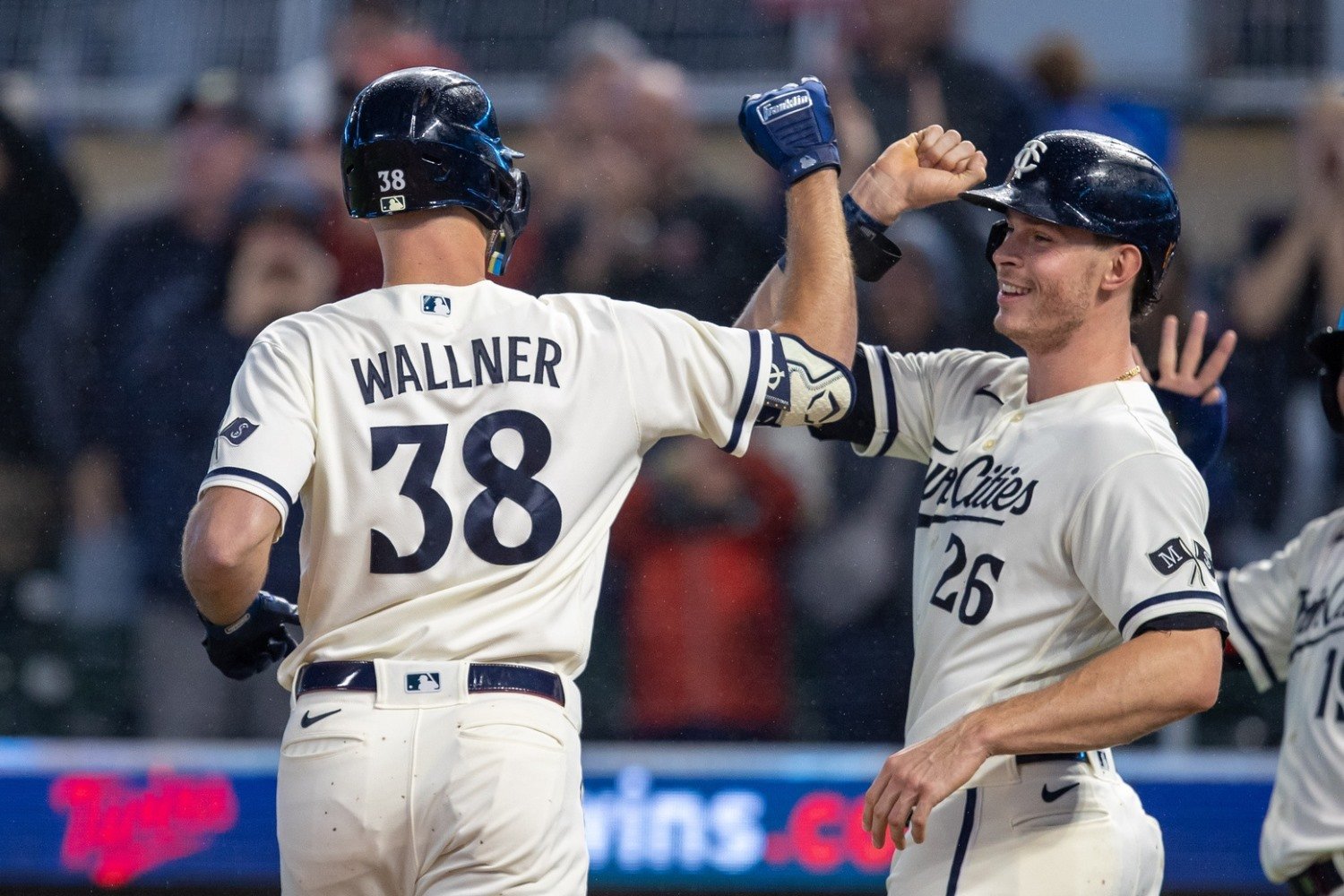 Good teams are hard to sustain in baseball. The Padres, for instance, got to the NLCS in 2022 and added Xander Bogaerts, got Fernando Tatis Jr. back from suspension, and missed the playoffs entirely in 2023. You just never know what a new season will bring. The Twins were one of the best teams in the American League in the second half of 2023, and actually did a little something in the playoffs. They have an ace, a lineup star and a fearsome closer. Well, so did the Padres. Having the three biggest boxes of a contending team's checklist filled doesn’t guarantee success, especially if some items further down the list are neglected. With little payroll flexibility (given the Twins' uncertain TV rights situation), the front office has indicated that they will try to beef up the roster via trading position players for pitching. They would sit at roughly $120 million in payroll if the season started today, leaving them with a maximum of $20 million in space for upgrades--and a minimum of zilch. There is a reason that payroll levels correlate strongly to year-over-year winning: free agents only cost money, not prospect capital. The Dodgers adding Shohei Ohtani is pure added value for a team with an already-strong farm system. They'll give up a couple of non-premium draft picks and the right to spend some money in the international free-agent market, but those are negligible losses compared to the gain of Ohtani. Teams like the Guardians and Twins (at least this year) need to "win" trades in order to improve without spending money on free agents. The Twins could, like last year with Gio Urshela, trade an expensive player for a low-minors prospect. That appears to be the goal with Christian Vazquez and Kyle Farmer. But if one or both of those players are traded, and a $15-million-per-year pitcher is signed on a one-year deal, that pitcher has to equal the 2-3 WAR lost by subtracting those veterans, which is no easy feat at that price point. For instance, former Cardinals starter Jack Flaherty has accumulated 1.4 bWAR total over the last four years, and just signed for $14 million with the Tigers. A reclamation project like Frankie Montas or Hyun-Jin Ryu might be the only other worthwhile options within the Twins' budget, and even they (projected to get $12-18 million or so on a one-year deal) could stretch the payroll to its limit. While I would be inclined to make a bid for one of those former stars, historically, one would expect the Twins to trade some of their hitters for pitching; it's what they do. But trading hitters for pitchers is nothing like the inverse. Trading starting pitching means you are down a starter. You either replace him, or live with the consequences. Trading from the position player pool means assuming greater risk. The Twins don’t have superstars up and down the lineup; many of their guys are platoon or mix-and-match options. In order for the lineup to click, the group has to work as a unit and truly buy in to whatever hitting philosophy the team chooses to use. It’s like trading for James Harden in basketball. He might be a Hall of Famer given his ability to score, but if he doesn’t gel with Russell Westbrook, Kevin Durant, Kyrie Irving, Joel Embiid, Paul George, et al, your team got worse, in addition to losing the young players and draft picks it took to acquire him. Further, let’s be clear: In order to take another step forward next year, the lineup needs to get better, not just hold their level. And if you’re talking about non-tangible value, trading one or both of Max Kepler and Jorge Polanco certainly seems like a risky bet, given their tenure and respect in the clubhouse. On the other hand, perhaps trading one or both of them allows for greater lineup flexibility while one of Brooks Lee and Austin Martin bursts onto the scene and takes the lineup to another level themselves. Maybe José Miranda or Trevor Larnach takes advantage of an opportunity that wouldn’t have been there, had the vets stayed in Minnesota. Still, if they are going to trade position players, they have to get this right, even if it is impossible to know which players it is best to buy or sell high on from an analytical or scouting perspective. Tyler Mahle, for instance, was an excellent target, given his track record and untapped potential pitching in Great American Ballpark. But that trade was a disaster, and so was the Jorge López one. Imagine the trade capital the Twins would have to work with this offseason, if Cade Povich could be a rotation option in 2024, or if Spencer Steer and Christian Encarnacion-Strand were in position to compete with Lee and Martin for playing time behind Royce Lewis, Edouard Julien and Alex Kirilloff. They would almost have to make a trade just to give some guys an opportunity. A team is always two injuries away from having to lean heavily on depth. We saw with Cleveland last year what can happen when a team goes from the 99th percentile in the injury luck department to the 50th. If Lee and Kepler are flipped to the Mariners for one of their young starters, for instance, think about how tenuous the situation could be if Polanco, Lewis or Julien miss time. Martin or Nick Gordon are playing everyday at second base, Miranda is at third, and you’re praying a Yunior Severino/Kirilloff platoon is working out at first base. In this scenario, you’re also relying on an outfield of Matt Wallner, Larnach and Byron Buxton/Willi Castro. Do we know yet whether Wallner can hit quality pitching? Was 2023 a career year for Castro? Will Larnach improve against offspeed pitches? Will Buxton (fill in the blank)? I’m not sure if you’ve noticed, but the outfield cupboard is pretty bare beyond those guys, unless Emmanuel Rodriguez really forces the issue and solves all of his contact issues in Double A. If Michael Helman and DaShawn Keirsey Jr. are getting meaningful at-bats in a pennant chase, you may really regret trading Kepler. We were spoiled as fans last year, because for every injury sustained, there was a high-ceiling prospect ready to take over (Lewis, Julien, Wallner). That likely will not be the case in 2024 if the team makes a trade for a playoff-caliber starter. Things can flip quickly in baseball. Consider the 2022 White Sox, coming off an easy division win and with every position on the diamond (except second base) occupied by stars. They didn’t even know Dylan Cease would break out that year. Yet, over 2,000 plate appearances ended up going to Josh Harrison, Gavin Sheets, Leury García, Adam Engel, Seby Zavala, Elvis Andrus, Romy González, Danny Mendick and Lenyn Sosa. That was enough to torpedo their season. Something needs to be done on the pitching side, too. Pitchers get injured, and once you pass Louie Varland down the starter pecking order, you get the mid-rotation upside of David Festa and then a lot of guys with underwhelming stuff. There is a misconception that this team just opened its competitive window. They didn’t. It opened in 2019. They've just had a couple unlucky and/or poorly planned years during that period, and are, arguably, approaching the closing of that window as their arbitration guys get more expensive and the talent at the top of the minor-league system dries up. The Twins front office likely takes a different view, seeing Rodríguez, Festa, Marco Raya and Walker Jenkins as the next wave of impact prospects to supplement a contending core. I'm not so sure. Bad trades like the Mahle and López ones can be shrugged off with the success of 2023, but those chickens will come home to roost at some point. Perhaps Chris Paddack, a healthy Carlos Correa and someone like Severino can paper over some of that, but if the front office thinks they can thread the needle of improving the 2024 club via trade without compromising 2025 and 2026, we all better hope they’re right.
- 74 comments
-
- 15
-
-

-
- brooks lee
- austin martin
- (and 5 more)
-
The Detroit Tigers have been waiting on the fruits of their rebuild. Few of their young players have smoothly launched into stardom, but the talent remains there. Riley Greene and Spencer Torkelson have shown flashes of brilliance, more blue-chip prospects are on the way, and the new front office led by Scott Harris has some payroll flexibility. Could they put a scare into the Twins next season? Image courtesy of © David Reginek-USA TODAY Sports. The Detroit Tigers have been waiting on the fruits of their rebuild. Few of their young players have smoothly launched into stardom, but the talent remains there. Riley Greene and Spencer Torkelson have shown flashes of brilliance, more blue-chip prospects are on the way, and the new front office led by Scott Harris has some payroll flexibility. Could they put a scare into the Twins next season? The Tigers have been a bit of a punchline for a few years, now. Last season’s .481 winning percentage their best since 2016. Despite that improvement, they never threatened the Twins in the American League Central, despite leapfrogging the Guardians to finish in second place, nine games behind Minnesota. They did win the season series against the Twins, however, going 8-5 behind some opportunistic hitting, baffling starting pitching and a lock-down bullpen. There's an episode of Seinfeld where Jerry discovers that his heavyset nemesis, Newman, once dated the woman Jerry was currently seeing. Not only that, Newman was the one to break up with her. "What could she see in Newman?" Jerry asks. "Perhaps there is more to Newman than meets the eye," offers Elaine. "There's less," is Jerry's retort. But Newman holds a steady job, is a talented poet, has many friends and dislikes Jerry Seinfeld. What's so bad about that? Maybe that's Detroit Tigers baseball. There are multiple reasons why they finished six games under .500 last year, but the biggest was a lackluster offense. The campaign saw them post 4.08 runs per game, 25th in the majors. Still, it was an improvement on 2022, when they finished a distant 30th, with 3.55 runs per game. That number should continue to trend upward. Their best hitter, 23-year-old Riley Greene, had some injuries, but he still posted a 117 OPS+, showing a dynamic combination of power, speed, batting average and playable center-field defense. He strikes out a lot and has had his share of injuries, but he seems likely to torment Central division pitching for years to come. They also have former No. 1 overall pick, 24-year-old Spencer Torkelson, slowly learning the league and becoming (if not the next Mark Teixeira, as some projected) a decent hitter with power and upside beyond what he has shown. He did hit 31 home runs while playing his home games at pitcher-friendly Comerica Park. Then there's scrap-heap find Kerry Carpenter, who has a handsome 121 OPS+ his first two years in the majors. He doesn’t offer much defensively and can be streaky at the plate, but his overall body of work points to him being a good five-hole hitter for the foreseeable future. Detroit's catcher is Jake Rogers, who represents the last chance for Detroit to get anything out of the Justin Verlander trade to Houston six years ago. Fortunately for Detroit, Rogers started to produce in 2023, with 21 home runs, a .224 ISO, decreasing (though still high) strikeout numbers and a solid defensive reputation, at age 28. Colt Keith, the Tigers' fifth-round pick in 2020, has blossomed into a top-20 global prospect despite questionable defense. Some scouts grade his power as a 70 on the 20-80 scouting scale, and he has hit over .300 in each of his minor-league years. He would figure to debut sometime in 2024. Meanwhile, Rangers rookie and playoff hero Josh Jung happens to have a little brother, Jace, in the Tigers system. The younger Jung projects as a plus offensive second baseman after being drafted 12th overall in 2022 out of Texas Tech, and he also figures to get a chance very soon. Then there is Javy Baez, who has no idea what he's doing at the plate anymore, but is always a threat to figure it out at any moment. To be clear, this doesn't constitute an amazing lineup, but their ballpark will always suppress counting stats and (as a group) they certainly look more promising than the Royals, White Sox and Guardians. The pitching is intriguing, as well. Jason Foley is lockdown at the back end of the bullpen, with a 98-MPH turbo sinker he can command, while Alex Lange is pretty unhittable (despite frequent bouts of wildness). Tyler Holton has been nails as a late-inning lefty who can get six or seven outs, which Twins hitters are certainly aware of (against the Twins he pitched 11 ⅔ innings, allowing one run and striking out 16). On the starting side, lefty Tarik Skubal returned from injury to post a 2.00 FIP in 15 starts, and righty Reese Olson quietly had an excellent rookie year, holding opponents to a .215 batting average with strong peripherals over 103 innings. Former first overall pick (yes, they've got two of them, just like the Twins) Casey Mize is coming back from Tommy John surgery; Matt Manning has shown flashes; and they have top prospects Wilmer Flores and Jackson Jobe waiting in the wings. In other words, Kenta Maeda may have been the perfect signing for Detroit. If healthy, he stabilizes the middle of their rotation, and if he misses time, it opens up opportunities for some of their young pitching. They also have an excellent manager, though how much of A.J. Hinch's success was due to the Astros' cheating scandal is unknowable. But he clearly knows how to get his guys to play hard, and in particular, how to attack the Twins on both sides of the ball. The other potential contender in the Central, the Cleveland Guardians, have arguably the best pitching rotation in the division but remain short on hitting as they pray for the immediate emergence of Kyle Manzardo and Chase DeLauter. And they no longer have the steady hand of Tito Francona piloting the ship. Winning the Draft Lottery was a nice bit of news for them, but it's likely to pay dividends in a few years, rather than immediately. The same can probably be said of Manzardo and DeLauter. The White Sox are claiming they are in a "retool" mode, rather than undergoing a full rebuild. But whatever they call it, they don't have enough talent to compete at the top of the division, and are allegedly dangling their only good pitcher in Dylan Cease. The Royals have Bobby Witt Jr., Vinnie Pasquantino Salvador Perez, and a shrug where their farm system should be. Meanwhile, while the Baez contract is a regrettable one, the Tigers no longer have to rely on him to anchor the lineup. That responsibility now falls to Torkelson, Greene, and Carpenter, with Jung, Keith, Parker Meadows and Justyn Henry-Malloy all percolating at the top levels of their minor-league system. And with Miguel Cabrera no longer commanding 20 percent of their payroll, a Teoscar Hernandez-type signing would not be out of the question. They may even be a sleeper team for Cody Bellinger. Cleveland and the Twins, with more uncertain payroll situations, can only dream of that type of free-agent pickup. When competitive, the Tigers have shown they can be aggressive with big-name free agents, and even in the darkest doldrums of their recent dark ages, they spent $217 million on Báez and Eduardo Rodríguez. They currently have only $75.1 million committed to their 2024 payroll, after spending $122 million last year, but have spent nearly $200 million as recently as 2017. Part of that spending spree was related to owner Mike Ilitch's failing health, but they also drew more than 3 million fans per year in those days. I could see the Tigers getting to 85 wins next year, even without everything breaking right for them. The Twins should have no problem eclipsing that mark on paper, but injuries and regression could make this a race. What do you think? Are the Tigers a team on the rise, or is Cleveland still the main rival for the Twins in the Central? Sound off in the comments. View full article
-
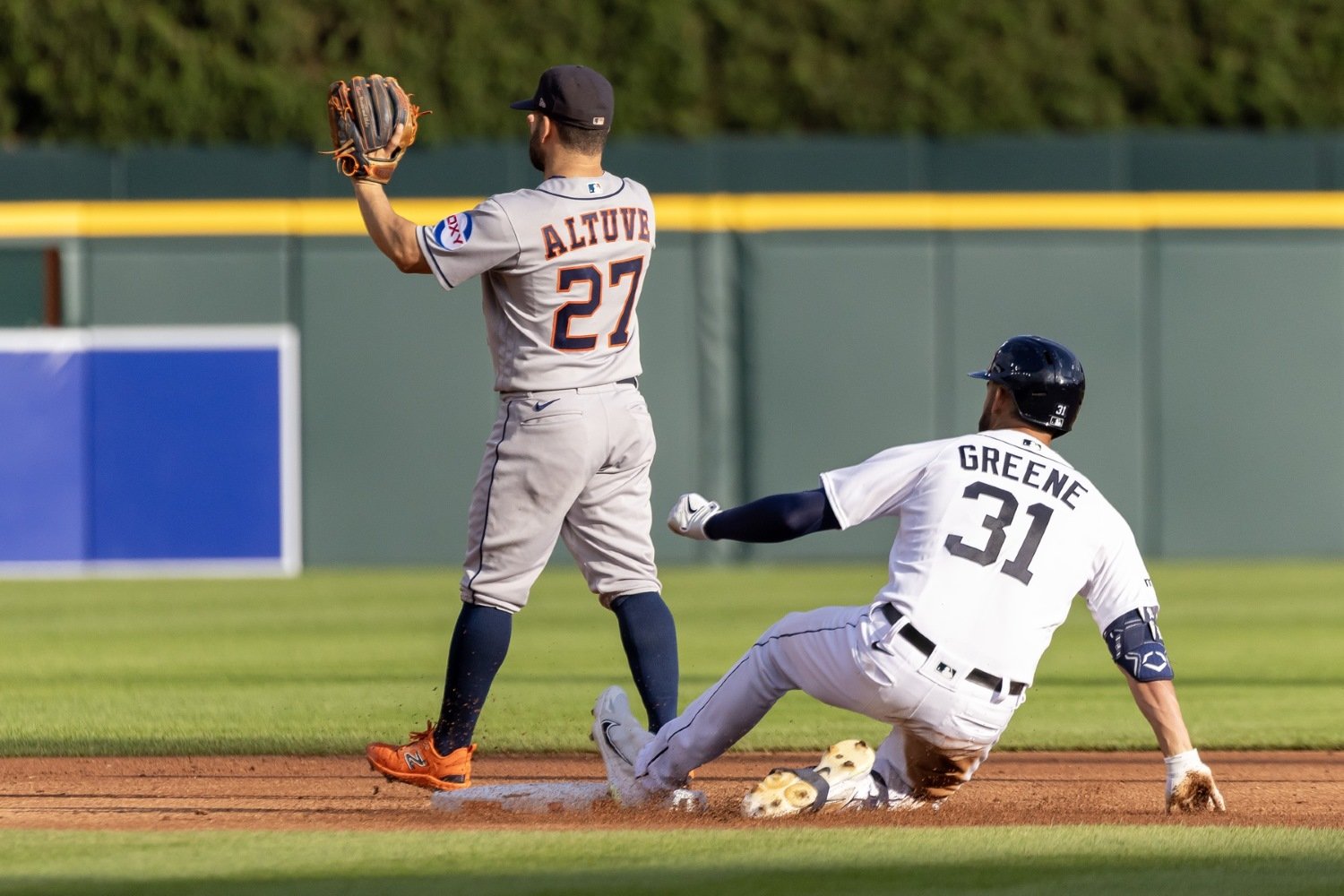 The Tigers have been a bit of a punchline for a few years, now. Last season’s .481 winning percentage their best since 2016. Despite that improvement, they never threatened the Twins in the American League Central, despite leapfrogging the Guardians to finish in second place, nine games behind Minnesota. They did win the season series against the Twins, however, going 8-5 behind some opportunistic hitting, baffling starting pitching and a lock-down bullpen. There's an episode of Seinfeld where Jerry discovers that his heavyset nemesis, Newman, once dated the woman Jerry was currently seeing. Not only that, Newman was the one to break up with her. "What could she see in Newman?" Jerry asks. "Perhaps there is more to Newman than meets the eye," offers Elaine. "There's less," is Jerry's retort. But Newman holds a steady job, is a talented poet, has many friends and dislikes Jerry Seinfeld. What's so bad about that? Maybe that's Detroit Tigers baseball. There are multiple reasons why they finished six games under .500 last year, but the biggest was a lackluster offense. The campaign saw them post 4.08 runs per game, 25th in the majors. Still, it was an improvement on 2022, when they finished a distant 30th, with 3.55 runs per game. That number should continue to trend upward. Their best hitter, 23-year-old Riley Greene, had some injuries, but he still posted a 117 OPS+, showing a dynamic combination of power, speed, batting average and playable center-field defense. He strikes out a lot and has had his share of injuries, but he seems likely to torment Central division pitching for years to come. They also have former No. 1 overall pick, 24-year-old Spencer Torkelson, slowly learning the league and becoming (if not the next Mark Teixeira, as some projected) a decent hitter with power and upside beyond what he has shown. He did hit 31 home runs while playing his home games at pitcher-friendly Comerica Park. Then there's scrap-heap find Kerry Carpenter, who has a handsome 121 OPS+ his first two years in the majors. He doesn’t offer much defensively and can be streaky at the plate, but his overall body of work points to him being a good five-hole hitter for the foreseeable future. Detroit's catcher is Jake Rogers, who represents the last chance for Detroit to get anything out of the Justin Verlander trade to Houston six years ago. Fortunately for Detroit, Rogers started to produce in 2023, with 21 home runs, a .224 ISO, decreasing (though still high) strikeout numbers and a solid defensive reputation, at age 28. Colt Keith, the Tigers' fifth-round pick in 2020, has blossomed into a top-20 global prospect despite questionable defense. Some scouts grade his power as a 70 on the 20-80 scouting scale, and he has hit over .300 in each of his minor-league years. He would figure to debut sometime in 2024. Meanwhile, Rangers rookie and playoff hero Josh Jung happens to have a little brother, Jace, in the Tigers system. The younger Jung projects as a plus offensive second baseman after being drafted 12th overall in 2022 out of Texas Tech, and he also figures to get a chance very soon. Then there is Javy Baez, who has no idea what he's doing at the plate anymore, but is always a threat to figure it out at any moment. To be clear, this doesn't constitute an amazing lineup, but their ballpark will always suppress counting stats and (as a group) they certainly look more promising than the Royals, White Sox and Guardians. The pitching is intriguing, as well. Jason Foley is lockdown at the back end of the bullpen, with a 98-MPH turbo sinker he can command, while Alex Lange is pretty unhittable (despite frequent bouts of wildness). Tyler Holton has been nails as a late-inning lefty who can get six or seven outs, which Twins hitters are certainly aware of (against the Twins he pitched 11 ⅔ innings, allowing one run and striking out 16). On the starting side, lefty Tarik Skubal returned from injury to post a 2.00 FIP in 15 starts, and righty Reese Olson quietly had an excellent rookie year, holding opponents to a .215 batting average with strong peripherals over 103 innings. Former first overall pick (yes, they've got two of them, just like the Twins) Casey Mize is coming back from Tommy John surgery; Matt Manning has shown flashes; and they have top prospects Wilmer Flores and Jackson Jobe waiting in the wings. In other words, Kenta Maeda may have been the perfect signing for Detroit. If healthy, he stabilizes the middle of their rotation, and if he misses time, it opens up opportunities for some of their young pitching. They also have an excellent manager, though how much of A.J. Hinch's success was due to the Astros' cheating scandal is unknowable. But he clearly knows how to get his guys to play hard, and in particular, how to attack the Twins on both sides of the ball. The other potential contender in the Central, the Cleveland Guardians, have arguably the best pitching rotation in the division but remain short on hitting as they pray for the immediate emergence of Kyle Manzardo and Chase DeLauter. And they no longer have the steady hand of Tito Francona piloting the ship. Winning the Draft Lottery was a nice bit of news for them, but it's likely to pay dividends in a few years, rather than immediately. The same can probably be said of Manzardo and DeLauter. The White Sox are claiming they are in a "retool" mode, rather than undergoing a full rebuild. But whatever they call it, they don't have enough talent to compete at the top of the division, and are allegedly dangling their only good pitcher in Dylan Cease. The Royals have Bobby Witt Jr., Vinnie Pasquantino Salvador Perez, and a shrug where their farm system should be. Meanwhile, while the Baez contract is a regrettable one, the Tigers no longer have to rely on him to anchor the lineup. That responsibility now falls to Torkelson, Greene, and Carpenter, with Jung, Keith, Parker Meadows and Justyn Henry-Malloy all percolating at the top levels of their minor-league system. And with Miguel Cabrera no longer commanding 20 percent of their payroll, a Teoscar Hernandez-type signing would not be out of the question. They may even be a sleeper team for Cody Bellinger. Cleveland and the Twins, with more uncertain payroll situations, can only dream of that type of free-agent pickup. When competitive, the Tigers have shown they can be aggressive with big-name free agents, and even in the darkest doldrums of their recent dark ages, they spent $217 million on Báez and Eduardo Rodríguez. They currently have only $75.1 million committed to their 2024 payroll, after spending $122 million last year, but have spent nearly $200 million as recently as 2017. Part of that spending spree was related to owner Mike Ilitch's failing health, but they also drew more than 3 million fans per year in those days. I could see the Tigers getting to 85 wins next year, even without everything breaking right for them. The Twins should have no problem eclipsing that mark on paper, but injuries and regression could make this a race. What do you think? Are the Tigers a team on the rise, or is Cleveland still the main rival for the Twins in the Central? Sound off in the comments.
- 16 comments
-
- 10
-
-
- offseason
- kenta maeda
- (and 2 more)
-
He was considered a fairly average shortstop prior to this year. Probably better than Polanco as a shortstop (more range, better arm, a few more mistakes), and Polanco now has the reputation of being a solid 2B. He also volunteered to move to 2B to make room for White Sox SS prospect Colson Montgomery. That's pretty mature and self-aware and also pretty sad that they cut him anyway.
- 29 replies
-
- 2
-
-
-
- tim anderson
- carlos correa
- (and 1 more)
-
Tim Anderson is pretty talented and has had an excellent career thus far. Outside of 2023, that is, when he played a role that mixed a little Charlie Brown, Frank Grimes, and Cory & Trevor into one godawful baseball experience. The Twins are set in the middle infield, but if they are looking for value, Anderson is it. Image courtesy of Kamil Krzaczynski-USA TODAY Sports Tim Anderson is pretty talented and has had an excellent career thus far. Outside of 2023, that is, when he played a role that mixed a little Charlie Brown, Frank Grimes, and Cory & Trevor into one godawful baseball experience. The Twins are set in the middle infield, but if they are looking for value, Anderson is it. The White Sox just had one of the crummiest seasons you'll ever see. Given the results and future outlook, they may have still had a better year than the Angels, but we’re splitting hairs in that case. The Sox thought themselves contenders, and signed Mike Clevinger and Andrew Benintendi to decent-sized contracts. In fact, Benintendi’s was the largest free agent contract given out by the franchise in its history. Like the Twins going into 2023, the Sox figured that poor injury luck and underperforming their talent level in 2022 would course-correct into a contending season. Despite being less injured than the prior year, nothing went right from a performance, cohesion and soft skills standpoint. They lost 101 games, their PBO, GM and allegedly the entire clubhouse. They also lost Tim Anderson in more ways than one. He was their All-Star shortstop who up until this year played a decent shortstop while hitting .300 in his sleep. But in trying to play through an injury, his defense slipped and his hitting cratered, with only a single home run hit. He did manage to post 523 plate appearances. Speaking to MLB.com reporter Scott Merkin, Anderson offered the following assessment of 2023: A hitter's front leg is crucial to generating any sort of power. It's the same idea for golfers: the front leg acts as a brace so that the player can deliver the most force at the fullest extension without losing balance. So with an unstable lead leg, Anderson’s power dried up. His career average is 18 home runs per 162 games. We all know what happens to hitters that pitchers know can’t drive the ball. They bust them inside until they make a pitcher pay, which Anderson never really did. That is the easiest explanation as to Anderson’s fall off. The White Sox cut him a few weeks ago, declining a 14M option on his contract for 2024. I don’t know about you, but when I see the White Sox make a decision on something borderline, I make the assumption that they’re wrong. Anderson is a proud player, and Chicago is so dysfunctional that they turned that into a weakness. He played through an injury that everyone could tell was limiting him, and yet when the team was asked who their leaders were, all prominent players lowered their heads and pleaded the fifth. He got slapped by Yasmani Grandal when he criticized the catcher for skipping meetings. He then got punched out in front of the whole world by Jose Ramirez for daring to pull a Kent Hrbek on a young Guardians player the night before. He took the shot like a champ, and yet, the whole world renewed its adoration for Ramirez afterwards. Which struck me as weird, because Ramirez was the hostile actor in this case. He (or perhaps the entire Guardians clubhouse) is the one who took exception to the play the night before. He is the one who started jawing after a light tag on the butt from Anderson as he slid into second base. He was looking for some action, and although unbridled macho-ism is on the decline in baseball, it certainly reared its ugly head here. There was a thousand times more breathless coverage of Tom Hamilton’s radio call of the incident, than the fact that the face of the White Sox had been assaulted for the crime of trying to make some plays for a talented team that needed a big-time spark or seven. Anderson even got a longer suspension than Ramirez! (Also why are we in love with Ramirez when he's a hot head, chews tobacco, and left about 100M on the table to sign an extension with Cleveland. The MLBPA should hate this guy!) So let’s review: Anderson got hurt, and played through the injury. When that goes well, we call those players ‘warriors.” The clubhouse culture was clearly a problem. Anderson called out one of the worst perpetrators and got slapped. Rather than be lionized for his attempts to restore some order in Chicagoland, everyone just shrugged. He got punched and everyone took Jose Ramirez’s side. Anderson gave the White Sox 123 games despite being hurt, playing for a sorry team, and getting no support from seemingly anyone in the game. He could have lashed out. At the media, at the White Sox, at Ramirez. But he mostly stayed silent. Anderson has always been a head-down, focused and passionate player. If anyone stands a higher percent chance to rebound from the conditions they played in in 2023, it's Anderson (provided his knee is healthy next year). It would seem likely that Anderson will sign for a one year, 10M deal, or something similar. Perhaps he might want to join a division favorite with a shortstop used to being maligned by Twitter while he plays through an injury for almost an entire year. Maybe he might want to join a hard working clubhouse that would actually listen when he had something to say. The fit is not obvious in Minnesota. It would require the Twins to trade from their infield depth, although that is something they have indicated they will do. But beyond fit, it would seem to me that Anderson stands an excellent chance of getting to qualifying offer territory next year if he joins a team with a good, or at least a neutral, culture. He’s also right-handed with a palatable strikeout rate, and has offered to convert to second base. Any late inning heroics from him at Progressive Field will hit like a playoff win. What do you think? Should the Twins take a flier on their old rival? Sound off in the comments. View full article
-
 The White Sox just had one of the crummiest seasons you'll ever see. Given the results and future outlook, they may have still had a better year than the Angels, but we’re splitting hairs in that case. The Sox thought themselves contenders, and signed Mike Clevinger and Andrew Benintendi to decent-sized contracts. In fact, Benintendi’s was the largest free agent contract given out by the franchise in its history. Like the Twins going into 2023, the Sox figured that poor injury luck and underperforming their talent level in 2022 would course-correct into a contending season. Despite being less injured than the prior year, nothing went right from a performance, cohesion and soft skills standpoint. They lost 101 games, their PBO, GM and allegedly the entire clubhouse. They also lost Tim Anderson in more ways than one. He was their All-Star shortstop who up until this year played a decent shortstop while hitting .300 in his sleep. But in trying to play through an injury, his defense slipped and his hitting cratered, with only a single home run hit. He did manage to post 523 plate appearances. Speaking to MLB.com reporter Scott Merkin, Anderson offered the following assessment of 2023: A hitter's front leg is crucial to generating any sort of power. It's the same idea for golfers: the front leg acts as a brace so that the player can deliver the most force at the fullest extension without losing balance. So with an unstable lead leg, Anderson’s power dried up. His career average is 18 home runs per 162 games. We all know what happens to hitters that pitchers know can’t drive the ball. They bust them inside until they make a pitcher pay, which Anderson never really did. That is the easiest explanation as to Anderson’s fall off. The White Sox cut him a few weeks ago, declining a 14M option on his contract for 2024. I don’t know about you, but when I see the White Sox make a decision on something borderline, I make the assumption that they’re wrong. Anderson is a proud player, and Chicago is so dysfunctional that they turned that into a weakness. He played through an injury that everyone could tell was limiting him, and yet when the team was asked who their leaders were, all prominent players lowered their heads and pleaded the fifth. He got slapped by Yasmani Grandal when he criticized the catcher for skipping meetings. He then got punched out in front of the whole world by Jose Ramirez for daring to pull a Kent Hrbek on a young Guardians player the night before. He took the shot like a champ, and yet, the whole world renewed its adoration for Ramirez afterwards. Which struck me as weird, because Ramirez was the hostile actor in this case. He (or perhaps the entire Guardians clubhouse) is the one who took exception to the play the night before. He is the one who started jawing after a light tag on the butt from Anderson as he slid into second base. He was looking for some action, and although unbridled macho-ism is on the decline in baseball, it certainly reared its ugly head here. There was a thousand times more breathless coverage of Tom Hamilton’s radio call of the incident, than the fact that the face of the White Sox had been assaulted for the crime of trying to make some plays for a talented team that needed a big-time spark or seven. Anderson even got a longer suspension than Ramirez! (Also why are we in love with Ramirez when he's a hot head, chews tobacco, and left about 100M on the table to sign an extension with Cleveland. The MLBPA should hate this guy!) So let’s review: Anderson got hurt, and played through the injury. When that goes well, we call those players ‘warriors.” The clubhouse culture was clearly a problem. Anderson called out one of the worst perpetrators and got slapped. Rather than be lionized for his attempts to restore some order in Chicagoland, everyone just shrugged. He got punched and everyone took Jose Ramirez’s side. Anderson gave the White Sox 123 games despite being hurt, playing for a sorry team, and getting no support from seemingly anyone in the game. He could have lashed out. At the media, at the White Sox, at Ramirez. But he mostly stayed silent. Anderson has always been a head-down, focused and passionate player. If anyone stands a higher percent chance to rebound from the conditions they played in in 2023, it's Anderson (provided his knee is healthy next year). It would seem likely that Anderson will sign for a one year, 10M deal, or something similar. Perhaps he might want to join a division favorite with a shortstop used to being maligned by Twitter while he plays through an injury for almost an entire year. Maybe he might want to join a hard working clubhouse that would actually listen when he had something to say. The fit is not obvious in Minnesota. It would require the Twins to trade from their infield depth, although that is something they have indicated they will do. But beyond fit, it would seem to me that Anderson stands an excellent chance of getting to qualifying offer territory next year if he joins a team with a good, or at least a neutral, culture. He’s also right-handed with a palatable strikeout rate, and has offered to convert to second base. Any late inning heroics from him at Progressive Field will hit like a playoff win. What do you think? Should the Twins take a flier on their old rival? Sound off in the comments.
 -
The Twins have a good roster, but with potentially very little money to spend, as they start preparing for 2024. The Mets happen to be owned by a fellow with a lot of money who loves dynamic outfield prospects. Could a trade of Emmanuel Rodriguez for Pete Alonso make sense? Image courtesy of © Bill Streicher-USA TODAY Sports The Twins have a good roster, but with potentially very little money to spend, as they start preparing for 2024. The Mets happen to be owned by a fellow with a lot of money who loves dynamic outfield prospects. Could a trade of Emmanuel Rodriguez for Pete Alonso make sense? The Twins have a real team here. However, they fell short against the Astros, outclassed in their ability to take a professional at-bat. In addition to replacing the likely departing Sonny Gray, the Twins will have to decide whether adding a middle-of-the-lineup bat is worth pursuing. They could, and perhaps should, decide to allow the needed offensive improvement to come from within. Brooks Lee and Austin Martin will hopefully steal at-bats away from whatever middling veterans the Twins sign/retain. They will get a full season from Royce Lewis, Edouard Julien and Matt Wallner. Byron Buxton might reemerge, and there isn’t much reason to doubt Carlos Correa’s track record. Maybe we’ll see more of catcher-OPS-leader Ryan Jeffers. Still, that doesn’t sound particularly imposing unless all of those players play to their 85th percentile or so of performance, while all staying healthy. So it might make sense to add an established, durable bat. The problem is, the Twins may not have any money to spend, given their uncertain TV-rights situation. So they would either need to drop significant salary by trading Max Kepler or Jorge Polanco, or acquire a cheaper player that may cost a ransom in prospect capital from their middling farm system. Or maybe there is another way. Steve Cohen is still owner of the Mets, and may have a solution to the Twins conundrum that comes cheap salary-wise, while not costing their entire collection of top 100 prospects. The established bat in question is first baseman Pete Alonso. All five of his seasons have resulted in an OPS+ over 120. His lowest number of games played is 152 (he played 57 in 2020). His career platoon splits are separated by one hundredth of a percent. He has averaged 45 home runs per 162 games for his career, and while that may lead you to believe he is strikeout prone, that isn’t entirely true. His career strikeout rate is below the league average at 22.3% (vs 22.9% for the league). He has had multiple seasons in which he struck out under 20% of the time, pretty impressive for someone with that kind of power. Alonso will be 29 next year, in his final arbitration season. MLB Trade Rumors projects him for a hefty 22M salary. How would the cash-strapped Twins absorb that kind of salary? By trading away a prospect that catches Cohen’s eye. You see, Cohen is obsessed with building up his farm system, and has shown he is okay with throwing tens of millions of dollars to expedite the process, focusing on quality over quantity. He paid the Rangers 64M to take on the last year and a half of Max Scherzer’s contract in exchange for top prospect Luisangel Acuna, and the Astros got another 64M in exchange for Justin Verlander and their best prospect, Drew Gilbert. According to MLB.com, Gilbert ranks as the 52nd best overall prospect, while Acuna ranks 38th. In between them at 48th sits Emmanuel Rodriguez, the Twins’ third best prospect. It would seem to me that Cohen and his new PBO David Stearns, would be interested in acquiring a potential superstar slugger in Rodriguez in exchange for a player they don’t appear to be building around on an expiring salary. Chipping in 15M to make it happen would be pretty on brand, as well. Publicly, the Mets have expressed a desire to keep Alonso, however they were very direct towards Scherzer and Verlander in saying that 2024 will constitute a "competitive rebuild", leading to both pitchers agreeing to a trade. With Alonso a free agent in a year, he should be available. Rodriguez for one year of Alonso is still pretty risky. It's possible the “Polar Bear” would love playing for the Twins and be open to an extension a la Paul Goldschmidt with the Cardinals. But the reality is that any Alonso acquisition would likely be a one year pit stop for the slugger, while Rodriguez could debut as soon as 2024. And Rodriguez may be underrated at 48th best. Other publications have him ranked closer to the top 25, with immense power potential and elite strike zone recognition. His defense probably won’t be a major strength, but he runs pretty well and hit a huge grand slam in Cedar Rapids’ championship-clinching win a month ago. He’s been described as having a Max Muncy-type offensive profile, which paired with any sort of serviceable outfield defense and speed would be hugely valuable. But it probably means a batting average in the .210s, and that’s if things break right. If Rodriguez doesn’t adjust to the league and can’t get to his power, he’ll join a long list of failed power prospects who dominated the minor leagues but just had too many holes in their swing to thrive at the major league level. Brooks Lee is pretty much assured of being at least as good as, say, Gordon Beckham (terrible outcome, but rosterable), while Walker Jenkins could be Bryce Harper for all we know. We know prospects like Rodriguez flame out a lot, regardless of how great the farm system is. Some of the Muncy types make too little contact to matter, like the most recent iterations of Miguel Sano and Joey Gallo. Some guys are too passive at the plate, like the Twins were worried about with Edouard Julien. We also know the Twins have a somewhat similar player to Rodriguez in Matt Wallner, who has shown he can make at least some adjustments in the majors. To be clear, players like Rodriguez should be close to untouchable, but given the Mets' focus on stocking their minor league system with talent quickly, it might make more sense in this moment then it ever has to dangle him for a hitter like Alonso. What do you think? Would you pull the trigger on a trade like this one? View full article
-
Prospect Dilemma: Should the Twins Roll the Dice on a Pete Alonso Trade?
Hans Birkeland posted an article in Twins
 The Twins have a real team here. However, they fell short against the Astros, outclassed in their ability to take a professional at-bat. In addition to replacing the likely departing Sonny Gray, the Twins will have to decide whether adding a middle-of-the-lineup bat is worth pursuing. They could, and perhaps should, decide to allow the needed offensive improvement to come from within. Brooks Lee and Austin Martin will hopefully steal at-bats away from whatever middling veterans the Twins sign/retain. They will get a full season from Royce Lewis, Edouard Julien and Matt Wallner. Byron Buxton might reemerge, and there isn’t much reason to doubt Carlos Correa’s track record. Maybe we’ll see more of catcher-OPS-leader Ryan Jeffers. Still, that doesn’t sound particularly imposing unless all of those players play to their 85th percentile or so of performance, while all staying healthy. So it might make sense to add an established, durable bat. The problem is, the Twins may not have any money to spend, given their uncertain TV-rights situation. So they would either need to drop significant salary by trading Max Kepler or Jorge Polanco, or acquire a cheaper player that may cost a ransom in prospect capital from their middling farm system. Or maybe there is another way. Steve Cohen is still owner of the Mets, and may have a solution to the Twins conundrum that comes cheap salary-wise, while not costing their entire collection of top 100 prospects. The established bat in question is first baseman Pete Alonso. All five of his seasons have resulted in an OPS+ over 120. His lowest number of games played is 152 (he played 57 in 2020). His career platoon splits are separated by one hundredth of a percent. He has averaged 45 home runs per 162 games for his career, and while that may lead you to believe he is strikeout prone, that isn’t entirely true. His career strikeout rate is below the league average at 22.3% (vs 22.9% for the league). He has had multiple seasons in which he struck out under 20% of the time, pretty impressive for someone with that kind of power. Alonso will be 29 next year, in his final arbitration season. MLB Trade Rumors projects him for a hefty 22M salary. How would the cash-strapped Twins absorb that kind of salary? By trading away a prospect that catches Cohen’s eye. You see, Cohen is obsessed with building up his farm system, and has shown he is okay with throwing tens of millions of dollars to expedite the process, focusing on quality over quantity. He paid the Rangers 64M to take on the last year and a half of Max Scherzer’s contract in exchange for top prospect Luisangel Acuna, and the Astros got another 64M in exchange for Justin Verlander and their best prospect, Drew Gilbert. According to MLB.com, Gilbert ranks as the 52nd best overall prospect, while Acuna ranks 38th. In between them at 48th sits Emmanuel Rodriguez, the Twins’ third best prospect. It would seem to me that Cohen and his new PBO David Stearns, would be interested in acquiring a potential superstar slugger in Rodriguez in exchange for a player they don’t appear to be building around on an expiring salary. Chipping in 15M to make it happen would be pretty on brand, as well. Publicly, the Mets have expressed a desire to keep Alonso, however they were very direct towards Scherzer and Verlander in saying that 2024 will constitute a "competitive rebuild", leading to both pitchers agreeing to a trade. With Alonso a free agent in a year, he should be available. Rodriguez for one year of Alonso is still pretty risky. It's possible the “Polar Bear” would love playing for the Twins and be open to an extension a la Paul Goldschmidt with the Cardinals. But the reality is that any Alonso acquisition would likely be a one year pit stop for the slugger, while Rodriguez could debut as soon as 2024. And Rodriguez may be underrated at 48th best. Other publications have him ranked closer to the top 25, with immense power potential and elite strike zone recognition. His defense probably won’t be a major strength, but he runs pretty well and hit a huge grand slam in Cedar Rapids’ championship-clinching win a month ago. He’s been described as having a Max Muncy-type offensive profile, which paired with any sort of serviceable outfield defense and speed would be hugely valuable. But it probably means a batting average in the .210s, and that’s if things break right. If Rodriguez doesn’t adjust to the league and can’t get to his power, he’ll join a long list of failed power prospects who dominated the minor leagues but just had too many holes in their swing to thrive at the major league level. Brooks Lee is pretty much assured of being at least as good as, say, Gordon Beckham (terrible outcome, but rosterable), while Walker Jenkins could be Bryce Harper for all we know. We know prospects like Rodriguez flame out a lot, regardless of how great the farm system is. Some of the Muncy types make too little contact to matter, like the most recent iterations of Miguel Sano and Joey Gallo. Some guys are too passive at the plate, like the Twins were worried about with Edouard Julien. We also know the Twins have a somewhat similar player to Rodriguez in Matt Wallner, who has shown he can make at least some adjustments in the majors. To be clear, players like Rodriguez should be close to untouchable, but given the Mets' focus on stocking their minor league system with talent quickly, it might make more sense in this moment then it ever has to dangle him for a hitter like Alonso. What do you think? Would you pull the trigger on a trade like this one?
 -
My feeling is that the analytical side will cover what needs to be covered. Lewis and Correa were ready for the moment in a way that isn't quantifiable.
-
The Twins fell short in the postseason, mainly due to a lack of hitting. Some players stepped up and established themselves as playoff threats, and others wilted under the pressure. Will the lineup be able to take the next step in 2024? Image courtesy of © Matt Blewett-USA TODAY Sports The Twins fell short in the postseason, mainly due to a lack of hitting. Some players stepped up and established themselves as playoff threats, and others wilted under the pressure. Will the lineup be able to take the next step in 2024? In 2023, the conversation for the Twins in the playoffs finally changed. There were media outlets in September suggesting it would be good for the five seed to “tank” in order to face three-seeded Minnesota in the Wild Card round since “bulletin board material” didn’t apply to such a cursed franchise. But no longer can the Twins’ chances be reduced to a hand wave and a chuckle – they won as many games as they lost, including nearly handing the Astros a loss in the ALDS for the first time since the Obama administration. Now the conversation has to be (as with all playoff teams) what the Twins need in order to go further in 2024. They didn’t hit much against the Astros (or the Blue Jays for that matter), with a number of their hitters failing to eclipse the .600 mark in OPS for the two rounds. However, we did see evidence of a few guys who could terrify future playoff opponents by virtue of what they did in October 2023. Edouard Julien: He drew five walks in the six games, with three extra base hits and zero errors/misplays on defense. His OPS for the playoffs was a stout 1.043. He did make two baserunning errors, one ghastly (game one of the ALDS), and one a product of bad luck (game four). Julien showed that his blend of power and patience will play in the postseason. His home run and double in game four gave the Twins some life, and his pinch-hit, bases loaded, two-out single in game two sealed a win. He is a playoff caliber leadoff hitter. Royce Lewis: He posted an OPS over 1.100 in the playoffs, with four home runs that put him on the precipice of setting the Twins’ all-time playoff record. After six games. He appeared to press at times, swinging at some spiked breaking balls in crucial moments, but he’s also played in only 76 career games to this point, including the playoffs. Seeing more pitchers and how they attack him should make him even more of a threat next October. Carlos Correa: He also eclipsed a 1.000 OPS, and threw in some of the savviest shortstop play I have ever seen with his pickoff of Vladimir Guerrero Jr. and deke of Jose Abreu. His performance sealed his reputation as a known quantity in the playoffs, regardless of how his regular season goes. In 2020, he posted an OPS lower than what he posted in 2023 sans any plantar fasciitis issues. In the playoffs he hit for a 1.209 OPS and six home runs in twelve games that year. That isn’t to say he is automatic in the playoffs, but he will be ready. Jorge Polanco: This one is borderline. Polanco’s .653 2023 playoff OPS doesn’t stand out, except when you compare it to the rest of the Twins’ lineup. He drew four walks and popped a key three-run home run in game one of the ALDS that drew a collective gulp from everyone in the stadium that day. Polanco has proven he can hit in the playoffs. He was one of the few players to show up for the 2019 ALDS, hitting a first inning homer in game one, then tying the game with a single in the fifth. His defense is another matter. He went about 1-4 in fielding chances against Toronto and the specter of his missed flip in 2020 still haunts me to this day. Outside of those hitters and Kyle Farmer, the rest of the position player group didn’t inspire much confidence. Playoff pitching just doesn’t compare to the regular season. It rewards superstars (Yordan Alvarez) and guys who play within themselves (Martin Maldonado). It can be hard to identify who will play the Jason Kubel (1-29 career in the postseason) role in a given playoff series, and the Twins had a few this year. Chief among those was Ryan Jeffers. Outside of two hits in game one of the ALDS, Jeffers contributed nothing offensively. Two walks and a lot of strikeouts. He hit some balls hard, but he also made you wonder if keeping the playoff-tested Christian Vazquez on the bench for every game was the right move. Watching Vazquez’s at-bats down the stretch compared to Jeffers’ catcher-leading OPS made it a justifiable decision, but giving Vazquez a start or two may have butterfly-effected an extra scoring opportunity. We’ll never know. Matt Wallner went hitless in twelve plate appearances for the playoffs, although he did contribute three walks and a key hit-by-pitch. His inability to make contact against jumpy fastballs was exposed, and he’ll have to work and adjust in order to avoid a reputation as a mistake crusher who wilts against good pitching. Max Kepler was victimized by two terrible strike three calls against Houston, and he did collect a hit in his first five games of the playoffs. But even at his best, Kepler isn’t a cleanup hitter for a serious playoff lineup. He struck out 14 times in the six games and was worth -1.6% cWPA (championship win probability added) against the Astros. As a seven hole hitter, his skill set would play a lot better. Alex Kirilloff was playing through a torn labrum in his lead hitting shoulder, and performed as such. He is a little jumpy at the plate, even when healthy (taking strikes, then swinging at balls). But his elite plate coverage and all-fields power could be a major asset on future playoff teams. Now, having only three hitters clicking at the same time can certainly play in the playoffs. The 2019 Nationals provided proof of that concept with Juan Soto, Howie Kendrick and Anthony Rendon delivering a World Series championship that year. But ideally, you would want more lineup depth than that. Wallner has shown an ability to make adjustments, Jeffers has shown an ability to hit good pitching, Byron Buxton is always a wild card, and Kirilloff has shown the skill set to succeed in October. But if the front office doesn’t add another big bat this offseason, that may be a decision they could come to regret, especially given that the pitching will be hard-pressed to match this year's production. What do you think? Is the projected 2024 lineup good enough to take the next step as is, or does it need another piece? Sound off in the comments. View full article
-
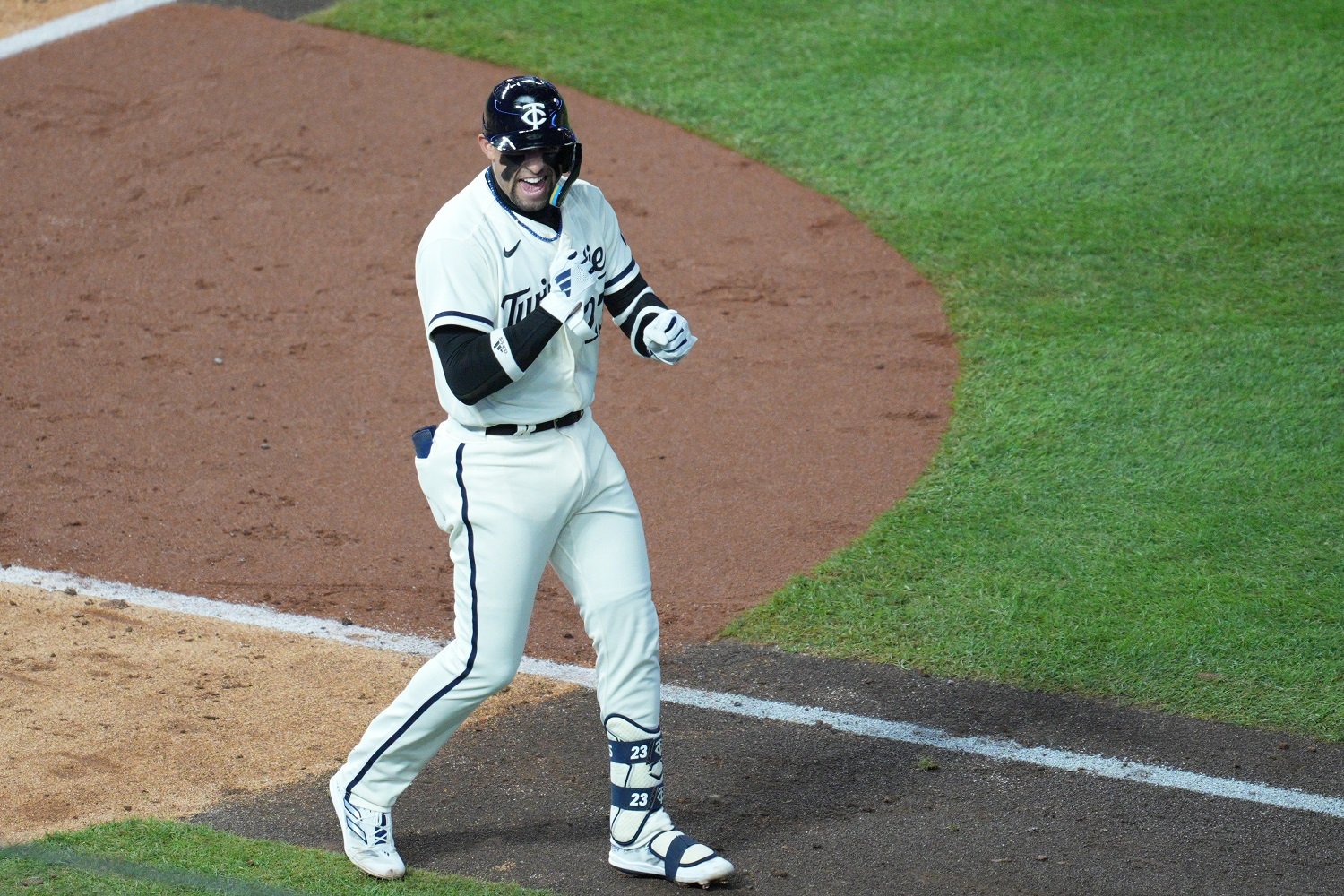 In 2023, the conversation for the Twins in the playoffs finally changed. There were media outlets in September suggesting it would be good for the five seed to “tank” in order to face three-seeded Minnesota in the Wild Card round since “bulletin board material” didn’t apply to such a cursed franchise. But no longer can the Twins’ chances be reduced to a hand wave and a chuckle – they won as many games as they lost, including nearly handing the Astros a loss in the ALDS for the first time since the Obama administration. Now the conversation has to be (as with all playoff teams) what the Twins need in order to go further in 2024. They didn’t hit much against the Astros (or the Blue Jays for that matter), with a number of their hitters failing to eclipse the .600 mark in OPS for the two rounds. However, we did see evidence of a few guys who could terrify future playoff opponents by virtue of what they did in October 2023. Edouard Julien: He drew five walks in the six games, with three extra base hits and zero errors/misplays on defense. His OPS for the playoffs was a stout 1.043. He did make two baserunning errors, one ghastly (game one of the ALDS), and one a product of bad luck (game four). Julien showed that his blend of power and patience will play in the postseason. His home run and double in game four gave the Twins some life, and his pinch-hit, bases loaded, two-out single in game two sealed a win. He is a playoff caliber leadoff hitter. Royce Lewis: He posted an OPS over 1.100 in the playoffs, with four home runs that put him on the precipice of setting the Twins’ all-time playoff record. After six games. He appeared to press at times, swinging at some spiked breaking balls in crucial moments, but he’s also played in only 76 career games to this point, including the playoffs. Seeing more pitchers and how they attack him should make him even more of a threat next October. Carlos Correa: He also eclipsed a 1.000 OPS, and threw in some of the savviest shortstop play I have ever seen with his pickoff of Vladimir Guerrero Jr. and deke of Jose Abreu. His performance sealed his reputation as a known quantity in the playoffs, regardless of how his regular season goes. In 2020, he posted an OPS lower than what he posted in 2023 sans any plantar fasciitis issues. In the playoffs he hit for a 1.209 OPS and six home runs in twelve games that year. That isn’t to say he is automatic in the playoffs, but he will be ready. Jorge Polanco: This one is borderline. Polanco’s .653 2023 playoff OPS doesn’t stand out, except when you compare it to the rest of the Twins’ lineup. He drew four walks and popped a key three-run home run in game one of the ALDS that drew a collective gulp from everyone in the stadium that day. Polanco has proven he can hit in the playoffs. He was one of the few players to show up for the 2019 ALDS, hitting a first inning homer in game one, then tying the game with a single in the fifth. His defense is another matter. He went about 1-4 in fielding chances against Toronto and the specter of his missed flip in 2020 still haunts me to this day. Outside of those hitters and Kyle Farmer, the rest of the position player group didn’t inspire much confidence. Playoff pitching just doesn’t compare to the regular season. It rewards superstars (Yordan Alvarez) and guys who play within themselves (Martin Maldonado). It can be hard to identify who will play the Jason Kubel (1-29 career in the postseason) role in a given playoff series, and the Twins had a few this year. Chief among those was Ryan Jeffers. Outside of two hits in game one of the ALDS, Jeffers contributed nothing offensively. Two walks and a lot of strikeouts. He hit some balls hard, but he also made you wonder if keeping the playoff-tested Christian Vazquez on the bench for every game was the right move. Watching Vazquez’s at-bats down the stretch compared to Jeffers’ catcher-leading OPS made it a justifiable decision, but giving Vazquez a start or two may have butterfly-effected an extra scoring opportunity. We’ll never know. Matt Wallner went hitless in twelve plate appearances for the playoffs, although he did contribute three walks and a key hit-by-pitch. His inability to make contact against jumpy fastballs was exposed, and he’ll have to work and adjust in order to avoid a reputation as a mistake crusher who wilts against good pitching. Max Kepler was victimized by two terrible strike three calls against Houston, and he did collect a hit in his first five games of the playoffs. But even at his best, Kepler isn’t a cleanup hitter for a serious playoff lineup. He struck out 14 times in the six games and was worth -1.6% cWPA (championship win probability added) against the Astros. As a seven hole hitter, his skill set would play a lot better. Alex Kirilloff was playing through a torn labrum in his lead hitting shoulder, and performed as such. He is a little jumpy at the plate, even when healthy (taking strikes, then swinging at balls). But his elite plate coverage and all-fields power could be a major asset on future playoff teams. Now, having only three hitters clicking at the same time can certainly play in the playoffs. The 2019 Nationals provided proof of that concept with Juan Soto, Howie Kendrick and Anthony Rendon delivering a World Series championship that year. But ideally, you would want more lineup depth than that. Wallner has shown an ability to make adjustments, Jeffers has shown an ability to hit good pitching, Byron Buxton is always a wild card, and Kirilloff has shown the skill set to succeed in October. But if the front office doesn’t add another big bat this offseason, that may be a decision they could come to regret, especially given that the pitching will be hard-pressed to match this year's production. What do you think? Is the projected 2024 lineup good enough to take the next step as is, or does it need another piece? Sound off in the comments.
- 90 comments
-
- 5
-
-
- carlos correa
- royce lewis
- (and 3 more)
-
The Top 13 Home Runs of the Twins 2023 Season
Hans Birkeland replied to Peter Labuza's topic in Twins Daily Front Page News
I really liked the August 24th home run Jeffers hit against the Rangers. Completed the comeback, he was prepping against Will Smith's slider, Mitch Garver was really salty about it. But I have no qualms going with the one he hit against Abreu in Houston. I said out loud at the time that was the worst possible matchup Jeffers could face and them bam we steal the game. I think Abreu has given up 3-4 runs since that time.- 8 replies
-
- 1
-
-
- royce lewis
- carlos correa
- (and 3 more)
-
Second best team in the second half, third best by playoff results. Its not how you start its how you finish.
- 49 replies
-
- 5
-
-

-
- rocco baldelli
- max kepler
- (and 3 more)
-
It feels odd to say, but his managing moves have largely worked, and his team broke the most exhausting streak in sports. Most of the criticisms he's faced are unfounded. Could Rocco Baldelli actually be an asset as manager? Image courtesy of Jordan Johnson-USA TODAY Sports It feels odd to say, but his managing moves have largely worked, and his team broke the most exhausting streak in sports. Most of the criticisms he's faced are unfounded. Could Rocco Baldelli actually be an asset as manager? One thing to know about baseball fans is that they all hold the firm belief that their team’s manager is terrible and holding their team back from limitless success. Plenty of Yankees fans hate Aaron Boone, thinking he’s too soft on his players. Blue Jays fans think John Schneider is too beholden to analytics. Astros fans think Dusty Baker is too beholden to Martin Maldonado. Even Guardians fans liked to roast Terry "Tito" Francona for insisting on playing Myles Straw, Cam Gallagher and Amed Rosario. Torey Lovullo and Dave Roberts? Bad in-game moves. Kevin Cash and Craig Counsell? Patsies for the front office. And a vocal (at least on social media) segment of Twins fandom think that Rocco Baldelli is complete trash. They think he focuses too much on analytics, resulting in an over-reliance on platoon matchups, and quick hooks for his starters. It doesn’t seem to matter much that Twins starters were second in baseball in innings pitched. It doesn’t seem to matter that the Twins' use of platoons in the second half likely saved their season. For the year the Twins ranked sixth in baseball in wRC+ for pinch hitters, including being third in all of baseball with a 124 wRC+ in the second half. They were also third in hitting lefties during the second half. It also doesn’t seem to matter that Baldelli has altered his approach to match his personnel: In 2022, with a flammable pitching staff that struggled across the board to pitch effective innings deep in games, Twins starters ranked 20th in innings pitched. In 2019 with the bomba squad, the Twins had the eighth fewest pinch hitters. In 2023, with guys like Alex Kirilloff, Matt Wallner and Edouard Julien all major liabilities against lefties, the Twins had the third most pinch hitters. Fans criticize Baldelli for Twins hitters striking out too much, not hitting situationally, and not bunting to move runners over. The truth is that the Twins ranked eleventh in baseball in bunt hits, with 13, and 19th in sacrifice bunts, with twelve. This despite an offense that led the American League in home runs. More importantly, they also ranked fourth in wRC+ with runners in scoring position. The strikeouts were historically high, and contributed to Houston pitching shutting them down in games three and four of the ALDS, but for one, Baldelli wasn’t telling them to do that. Two, when the Twins were struggling offensively in the first half, their strikeout rate was 26.8%, most in baseball. In the second half, when the Twins were the third most productive offense in baseball, their strikeout rate was 26.4%. And three, it is on the front office to add more contact to the lineup in 2024, but they don’t have to do much. Michael A. Taylor and Joey Gallo are free agents and struck out 33.5% and 42.8% of the time respectively, both incredibly high numbers. The Twins young hitters can hopefully improve, particularly Wallner and Julien. And the reinforcements at Triple A, Brooks Lee and Austin Martin, struck out 16% and 16.3%, respectively. The team that Carlos Correa compares this team to, the 2015 Astros, had the second highest strikeout rate in baseball that year. I don't have to tell you how it's gone since then. The main takeaway I have about Baldelli is that his team ended the playoff futility streak. You can claim that the team won despite him, but the reality is that the streak presented more of a mental challenge than any sort of game strategy hurdles (Although he graded out pretty well there, too). For 19 years, the Twins played tight in the playoffs. They started that way this year, too. Game 1 of the Wild Card series began with Kirilloff whiffing on a foul ball, then Jorge Polanco making a throwing error to the same batter. But from that point on, the Twins were solid defensively, played smart, and although their hitting wasn’t great, they got the W. And then two more. Players did not criticize Baldelli at any point, even when they were at their lowest in May and June. Sonny Gray was rumored to be miffed about Baldelli removing him from games before he wanted to, but he pitched his most innings since 2015. It has been reported that he wants to return, as well. Joe Ryan had opportunity to blast Baldelli and the coaching staff for removing him after two innings on Wednesday, but he didn’t. He understood that the best chance the Twins had to win that game was to throw all of their high-octane relievers, and not only did the Twins hold Houston to three runs, they didn’t allow any add-on runs after Jose Abreu’s home run in the fourth. If you have watched any Twins postseason games in the past 22 years, you know that may be a first. Baldelli won division titles his first two years. In 2021, Josh Donaldson, JA Happ, Matt Shoemaker and Alex Colome made sure there wouldn’t be a three-peat. In 2022, the team entered the trade deadline fairly healthy and leading the division. Then 19 players went down with season-ending injuries. The Twins made noise for the first time in decades these past few weeks, and some credit has to go to Baldelli. It’s hard to quantify, but I’ll try. Being considered an elite manager is part luck, part pure longevity and part skill. And you either need a lot of skill or a lot of luck to reach the longevity part. It took Bruce Bochy winning a championship in 2010 before he was given credit for pulling the right strings and uniting clubhouses. After 16 years of managing. Francona ended the Red Sox curse his first year on the job, so he was playing with house money. That made it easier to believe that his players loved him and would run through brick walls for him. Brandon Hyde took his Orioles through an entire rebuild. Most of the time, managers that lead rebuilding clubs are replaced once the team gets good (poor Rick Renteria). Hyde was allowed to see his team through to success, and now is regarded as a manager of the year candidate. Whether his newfound reputation as a hard nosed but smart manager is due to opportunity, or due to merit, is impossible to know. Baldelli is polished and professional to the media, but an uncouth New Englander behind the scenes. Gabe Kapler in the streets, Tommy Lasorda in the sheets, if you will. Time after time, when pressed about what caused the turnaround this season, players referred to an energetic, close-knit clubhouse where guys were communicative and accountable (compare that to the White Sox clubhouse). That’s on Baldelli. Sure the personnel was responsible for the offense coming to life in the second half. But Wallner, Julien and Royce Lewis were still rookies, and it takes a certain vibe to get young players acclimated to the big leagues quickly and productively. That’s partly on veterans like Kyle Farmer, Kepler, Gray and Correa creating that atmosphere. But keeping veterans bought in and happy with their situation, even if they aren’t playing as much as they would like, is on Baldelli. There’s also what he didn’t do. Baldelli never lashed out at the media, he never threw his players under the bus (except once for Kepler, but that tactic had the desired effect), and he never gave away game plans or strategies other teams could exploit. He also has had zero off-the-field issues. His players never showed him up, and the main criticisms he faced were from the very nuanced gang over at SKOR North trying to drive up engagement by citing the same disproven tropes I mentioned earlier. It’s still possible that Baldelli is more of a neutral-ish manager overall, but one more division title and a little more playoff noise in 2024 (his sixth year as manager) will cement him as not just an asset, but a franchise-altering presence. If that happens, we should worry less about who wants him fired, and more about him jumping ship for a higher-profile job somewhere else. When was the last time that was a possibility? View full article
-
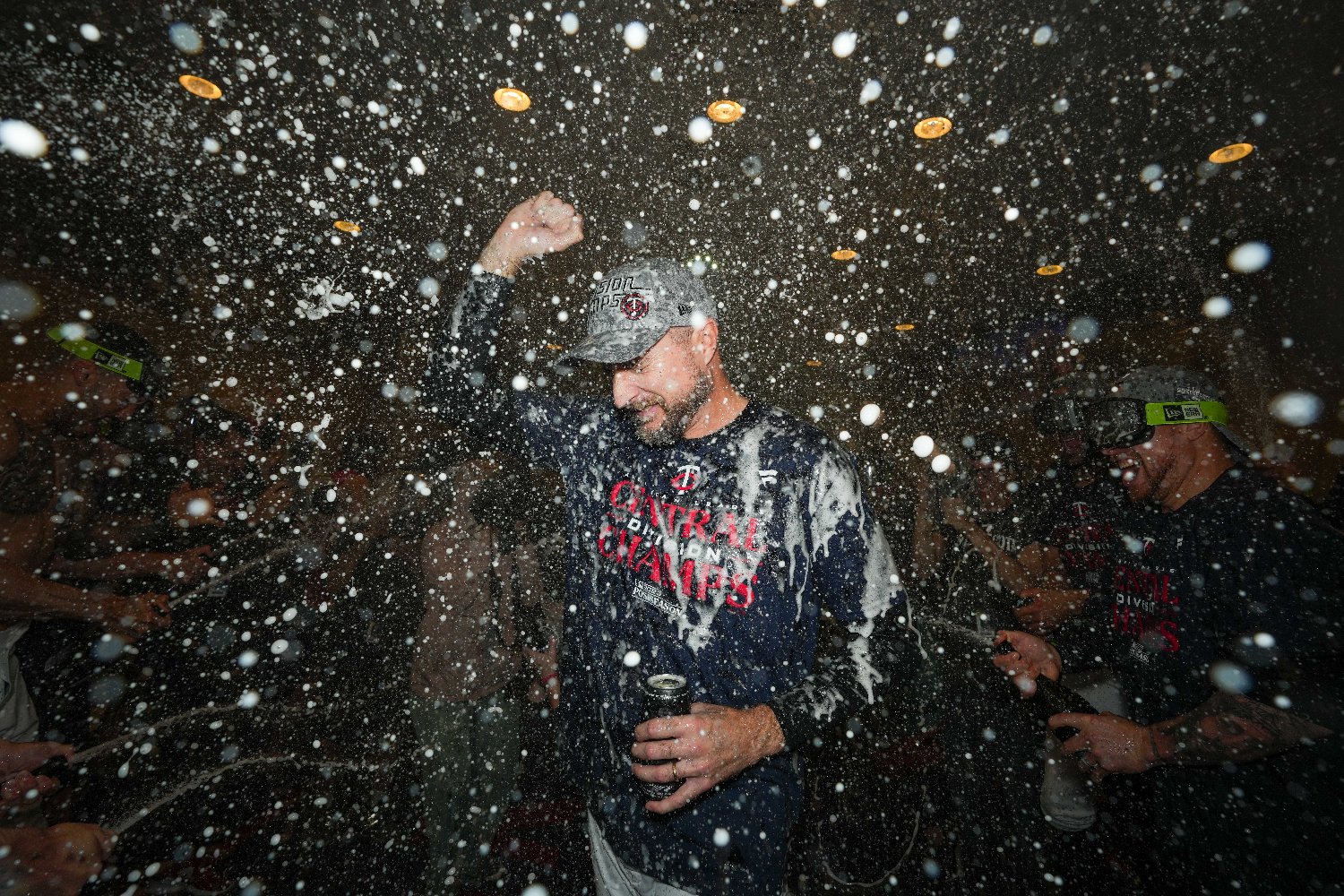 One thing to know about baseball fans is that they all hold the firm belief that their team’s manager is terrible and holding their team back from limitless success. Plenty of Yankees fans hate Aaron Boone, thinking he’s too soft on his players. Blue Jays fans think John Schneider is too beholden to analytics. Astros fans think Dusty Baker is too beholden to Martin Maldonado. Even Guardians fans liked to roast Terry "Tito" Francona for insisting on playing Myles Straw, Cam Gallagher and Amed Rosario. Torey Lovullo and Dave Roberts? Bad in-game moves. Kevin Cash and Craig Counsell? Patsies for the front office. And a vocal (at least on social media) segment of Twins fandom think that Rocco Baldelli is complete trash. They think he focuses too much on analytics, resulting in an over-reliance on platoon matchups, and quick hooks for his starters. It doesn’t seem to matter much that Twins starters were second in baseball in innings pitched. It doesn’t seem to matter that the Twins' use of platoons in the second half likely saved their season. For the year the Twins ranked sixth in baseball in wRC+ for pinch hitters, including being third in all of baseball with a 124 wRC+ in the second half. They were also third in hitting lefties during the second half. It also doesn’t seem to matter that Baldelli has altered his approach to match his personnel: In 2022, with a flammable pitching staff that struggled across the board to pitch effective innings deep in games, Twins starters ranked 20th in innings pitched. In 2019 with the bomba squad, the Twins had the eighth fewest pinch hitters. In 2023, with guys like Alex Kirilloff, Matt Wallner and Edouard Julien all major liabilities against lefties, the Twins had the third most pinch hitters. Fans criticize Baldelli for Twins hitters striking out too much, not hitting situationally, and not bunting to move runners over. The truth is that the Twins ranked eleventh in baseball in bunt hits, with 13, and 19th in sacrifice bunts, with twelve. This despite an offense that led the American League in home runs. More importantly, they also ranked fourth in wRC+ with runners in scoring position. The strikeouts were historically high, and contributed to Houston pitching shutting them down in games three and four of the ALDS, but for one, Baldelli wasn’t telling them to do that. Two, when the Twins were struggling offensively in the first half, their strikeout rate was 26.8%, most in baseball. In the second half, when the Twins were the third most productive offense in baseball, their strikeout rate was 26.4%. And three, it is on the front office to add more contact to the lineup in 2024, but they don’t have to do much. Michael A. Taylor and Joey Gallo are free agents and struck out 33.5% and 42.8% of the time respectively, both incredibly high numbers. The Twins young hitters can hopefully improve, particularly Wallner and Julien. And the reinforcements at Triple A, Brooks Lee and Austin Martin, struck out 16% and 16.3%, respectively. The team that Carlos Correa compares this team to, the 2015 Astros, had the second highest strikeout rate in baseball that year. I don't have to tell you how it's gone since then. The main takeaway I have about Baldelli is that his team ended the playoff futility streak. You can claim that the team won despite him, but the reality is that the streak presented more of a mental challenge than any sort of game strategy hurdles (Although he graded out pretty well there, too). For 19 years, the Twins played tight in the playoffs. They started that way this year, too. Game 1 of the Wild Card series began with Kirilloff whiffing on a foul ball, then Jorge Polanco making a throwing error to the same batter. But from that point on, the Twins were solid defensively, played smart, and although their hitting wasn’t great, they got the W. And then two more. Players did not criticize Baldelli at any point, even when they were at their lowest in May and June. Sonny Gray was rumored to be miffed about Baldelli removing him from games before he wanted to, but he pitched his most innings since 2015. It has been reported that he wants to return, as well. Joe Ryan had opportunity to blast Baldelli and the coaching staff for removing him after two innings on Wednesday, but he didn’t. He understood that the best chance the Twins had to win that game was to throw all of their high-octane relievers, and not only did the Twins hold Houston to three runs, they didn’t allow any add-on runs after Jose Abreu’s home run in the fourth. If you have watched any Twins postseason games in the past 22 years, you know that may be a first. Baldelli won division titles his first two years. In 2021, Josh Donaldson, JA Happ, Matt Shoemaker and Alex Colome made sure there wouldn’t be a three-peat. In 2022, the team entered the trade deadline fairly healthy and leading the division. Then 19 players went down with season-ending injuries. The Twins made noise for the first time in decades these past few weeks, and some credit has to go to Baldelli. It’s hard to quantify, but I’ll try. Being considered an elite manager is part luck, part pure longevity and part skill. And you either need a lot of skill or a lot of luck to reach the longevity part. It took Bruce Bochy winning a championship in 2010 before he was given credit for pulling the right strings and uniting clubhouses. After 16 years of managing. Francona ended the Red Sox curse his first year on the job, so he was playing with house money. That made it easier to believe that his players loved him and would run through brick walls for him. Brandon Hyde took his Orioles through an entire rebuild. Most of the time, managers that lead rebuilding clubs are replaced once the team gets good (poor Rick Renteria). Hyde was allowed to see his team through to success, and now is regarded as a manager of the year candidate. Whether his newfound reputation as a hard nosed but smart manager is due to opportunity, or due to merit, is impossible to know. Baldelli is polished and professional to the media, but an uncouth New Englander behind the scenes. Gabe Kapler in the streets, Tommy Lasorda in the sheets, if you will. Time after time, when pressed about what caused the turnaround this season, players referred to an energetic, close-knit clubhouse where guys were communicative and accountable (compare that to the White Sox clubhouse). That’s on Baldelli. Sure the personnel was responsible for the offense coming to life in the second half. But Wallner, Julien and Royce Lewis were still rookies, and it takes a certain vibe to get young players acclimated to the big leagues quickly and productively. That’s partly on veterans like Kyle Farmer, Kepler, Gray and Correa creating that atmosphere. But keeping veterans bought in and happy with their situation, even if they aren’t playing as much as they would like, is on Baldelli. There’s also what he didn’t do. Baldelli never lashed out at the media, he never threw his players under the bus (except once for Kepler, but that tactic had the desired effect), and he never gave away game plans or strategies other teams could exploit. He also has had zero off-the-field issues. His players never showed him up, and the main criticisms he faced were from the very nuanced gang over at SKOR North trying to drive up engagement by citing the same disproven tropes I mentioned earlier. It’s still possible that Baldelli is more of a neutral-ish manager overall, but one more division title and a little more playoff noise in 2024 (his sixth year as manager) will cement him as not just an asset, but a franchise-altering presence. If that happens, we should worry less about who wants him fired, and more about him jumping ship for a higher-profile job somewhere else. When was the last time that was a possibility?
- 49 comments
-
- 4
-
-
-
- rocco baldelli
- max kepler
- (and 3 more)
-
Just wanted to point out, the Braves 9th inning rally fell short last night with Pillar, Rosario and Grissom all having non-competitive at-bats to end their season.
-
Good point, and honestly at full strength I think I would prefer the Rays over the Braves. The way they had half of their roster get injured and still play well down the stretch was pretty impressive and underscores how they are better built to withstand adversity than Atlanta, which is built to withstand none. If only Tampa remembered they were a good defensive team against Texas.
- 6 replies
-
- 1
-
-
- walker jenkins
- royce lewis
- (and 2 more)

