



Hans Birkeland
-
Posts
458 -
Joined
-
Days Won
1
Content Type
Profiles
News
Minnesota Twins Videos
2026 Minnesota Twins Top Prospects Ranking
2022 Minnesota Twins Draft Picks
Minnesota Twins Free Agent & Trade Rumors, Notes, & Tidbits
Guides & Resources
2023 Minnesota Twins Draft Picks
The Minnesota Twins Players Project
2024 Minnesota Twins Draft Picks
2025 Minnesota Twins Draft Pick Tracker
2026 Minnesota Twins Draft Tracker: Picks & Bonuses
Forums
Blogs
Events
Store
Downloads
Gallery
Everything posted by Hans Birkeland
-
When you see the fans' hivemind agreeing about anything, it pays to be extra cautious. Image courtesy of Rob Thompson, St. Paul Saints When you see the fans' hivemind agreeing about anything, it pays to be extra cautious. Front offices have jobs to do. Whether the fanbase likes whatever moves they make is secondary to them putting a winning product on the field, barring a rebuild. But in recent years it seems like front offices are succumbing to some combination of their own impulses and fanbase pressure and making rash (but popular) moves. Whenever a fanbase is clamoring for a young, exciting player, it seems like they are making their debuts within weeks. Look at uber-prospects Anthony Volpe of the Yankees , Eury Perez of the Marlins, or Jordan Walker of the Cardinals. Of those, only Volpe had any Triple-A experience prior to his call-up, and he didn’t do well there in 99 at-bats. None of them have been great in the big leagues, as of yet. These impulsive (or desperate) moves can manifest in other ways, as well. I wrote on this site that when Alex Kirilloff finished his rehab assignment, he would be optioned to Triple A. That happened, but for less than a week. After seeing Trevor Larnach struggle for, let's be honest, one series, the Twins optioned him in favor of Kirilloff, despite him having rarely played back-to-back days in the minors recovering from his wrist injury. Didn’t that work out? Well, he is hitting well. Would it have helped if he had gradually worked his way into playing more back-to-back games before being recalled, from a long term, wrist-health perspective? We may never know. And that’s what I question. The easy answer was to call him up ASAP. The hard answer isn’t worth answering because it's unknowable. Restraint is boring, unsexy and impossible to evaluate in hindsight. We don’t pay much attention to a bridge that doesn’t collapse. In related news, the Tyler Mahle trade was a disaster. We got nine starts out of the guy while Christian Encarnacion-Strand is lighting Triple-A on fire and Spencer Steer is settling in as a solid regular for the Reds. But was the front office impulsive in making the move? Mahle had just missed time with an injured shoulder and the Twins rotation was a mess at the time, despite being in first place. Was there an element of “f- it, let’s go for it, it's what the fans want anyway”? Maybe. Maybe not. I loved the trade at the time, and so did you. But that wasn’t because it was a smart trade. We loved it because Mahle was the best deadline acquisition starting pitcher in Twins history, unless you’re a rabid Rick Reed fan. In that context, it's easy to push the danger signs, like Mahle’s shoulder, to the background. It's like being a kid waiting for Christmas in 2001 and hoping for the latest Crash Bandicoot game. But then everyone in your fifth grade class said it's the worst game ever and what follows is a brief time period where you kind’ve hoped you didn’t get the game so that you didn’t go through the pain of seeing it suck. However, when you saw it under the tree the next morning, all that doubt went out the window because now it's yours and two days ago it was all you ever hoped for (I’m of course referring to Crash Bandicoot: The Wrath of Cortex). On August first, Mahle was an injury risk. On August second, he was the key to our impending playoff success. Fifteen days later, he was injured. Which is why I’m always skeptical when the front office does exactly what the fan hivemind wants it to do. They make plenty of mistakes, but on the whole have more information, more experience, and they have more at stake than you. Their jobs are more important than your vibes, generally. We can’t know how much fan pressure impacts decision making, but when Aaron Hicks was hitting leadoff on opening day for the 2013 Twins, I got a little pit in my stomach like, “Oh God, they listened to us.” It happened again with signing Logan Morrison and Addison Reed, along with starting Randy Dobnak in game two of the ALDS in 2019. That brings me to Royce Lewis. He is eligible to return to the Twins on June 1st, and fans are already clamoring for his immediate return. The man has played 48 games total over the past four years, is recovering from a second torn ACL, and has twelve games of major league experience. We have no idea what he’ll be at this point. What we do know is that the last time he was both good and healthy was in A-Ball as a nineteen-year-old, five years ago. I can feel the seething, impulsive bloodlust that wants the 2017 first overall pick starting at third base in two weeks. It is a festering, bile-spitting demon that lurks in the back of all of our minds like a child that can’t handle watching other kids open presents on their birthday without getting a present of their own. It projects the image of Lewis hitting that game-breaking grand slam against Cleveland for his first big-league home run over and over like a Soviet propaganda film. It’s in Derek Falvey’s mind, and it’s in my mind, too. I can picture the lineup he lengthens: The postseason pedigree of Correa, the power/speed combo of Buxton, the reliability of Polanco and the line-to-line authority Kirilloff hits with coalesced around the “aw shucks” ultra-dynamism of a fully formed Lewis. But none of that is real if Lewis isn’t ready (and the injury gods don’t smile upon us). Whenever I’m not sure whether I’ve shown enough restraint in my life, I just try to picture what legendary cartoon dad and king of measured approaches, Hank Hill, would say. Thanks to OpenAI, we can ask him about calling up Royce Lewis: “You see, bringing up a young player too soon can be detrimental to their development. They need the opportunity to face different levels of competition, learn from experienced players, and mature both physically and mentally. It's like letting a steak rest after grilling so that the juices can redistribute and the flavors can fully develop. So, my advice would be to evaluate Royce Lewis's performance in the minors, consider his readiness both on and off the field, and make a decision based on what's best for his long-term development. Just like grilling a steak to perfection, you want to ensure that all the elements are in place before you serve it up.” That’s the unexciting, non-appeasing, wet blanket logic we need. Lewis will be ready when he’s ready. It could be June 1st or August 1st. As fans, it's our right to be excited and push to see him as soon as humanly possible. As a front office, the Twins need to ignore everything we say and make sure he is ready for production, and not rushed like a certain Playstation 2 game that ruined my winter break those many moons ago. View full article
-
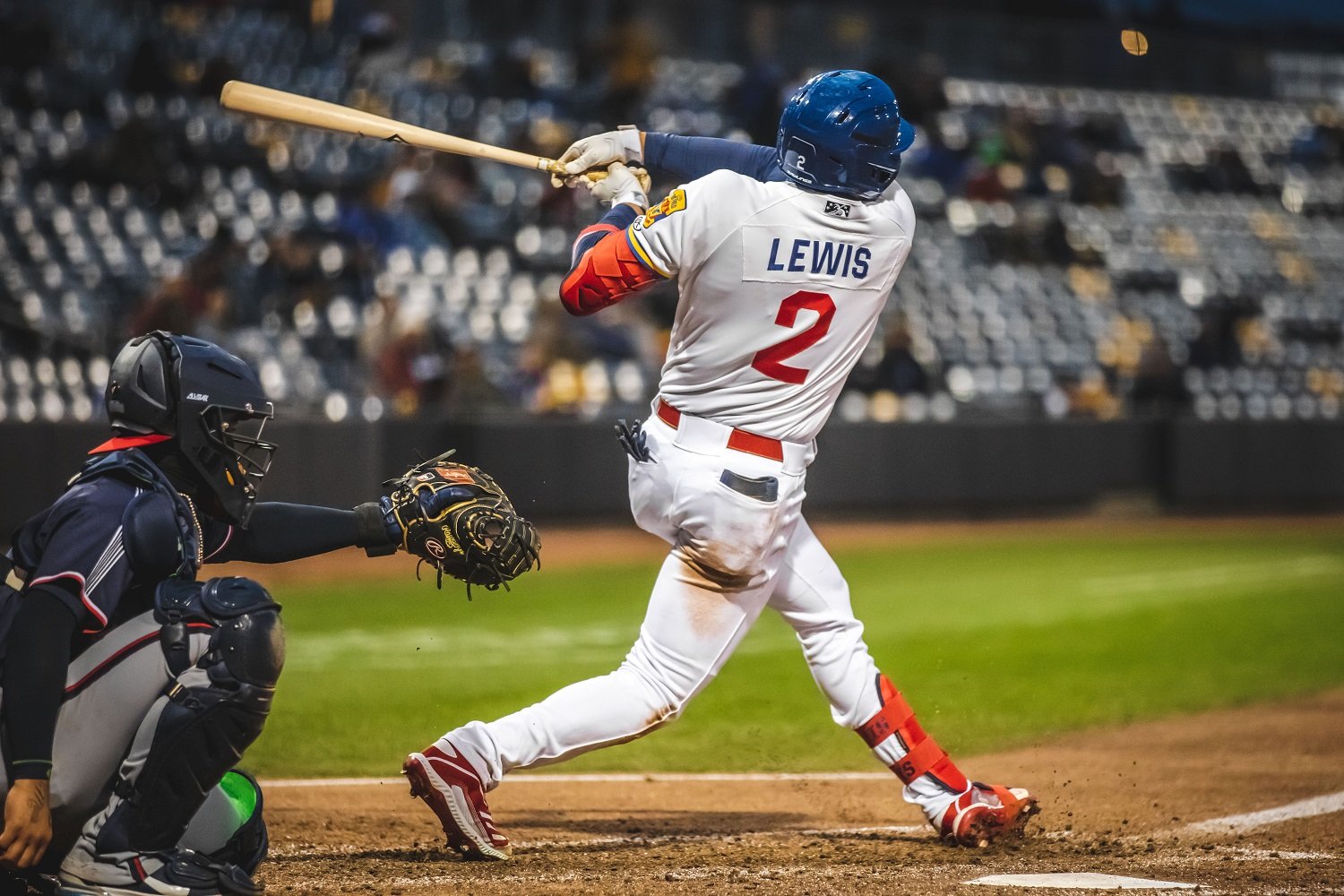 Front offices have jobs to do. Whether the fanbase likes whatever moves they make is secondary to them putting a winning product on the field, barring a rebuild. But in recent years it seems like front offices are succumbing to some combination of their own impulses and fanbase pressure and making rash (but popular) moves. Whenever a fanbase is clamoring for a young, exciting player, it seems like they are making their debuts within weeks. Look at uber-prospects Anthony Volpe of the Yankees , Eury Perez of the Marlins, or Jordan Walker of the Cardinals. Of those, only Volpe had any Triple-A experience prior to his call-up, and he didn’t do well there in 99 at-bats. None of them have been great in the big leagues, as of yet. These impulsive (or desperate) moves can manifest in other ways, as well. I wrote on this site that when Alex Kirilloff finished his rehab assignment, he would be optioned to Triple A. That happened, but for less than a week. After seeing Trevor Larnach struggle for, let's be honest, one series, the Twins optioned him in favor of Kirilloff, despite him having rarely played back-to-back days in the minors recovering from his wrist injury. Didn’t that work out? Well, he is hitting well. Would it have helped if he had gradually worked his way into playing more back-to-back games before being recalled, from a long term, wrist-health perspective? We may never know. And that’s what I question. The easy answer was to call him up ASAP. The hard answer isn’t worth answering because it's unknowable. Restraint is boring, unsexy and impossible to evaluate in hindsight. We don’t pay much attention to a bridge that doesn’t collapse. In related news, the Tyler Mahle trade was a disaster. We got nine starts out of the guy while Christian Encarnacion-Strand is lighting Triple-A on fire and Spencer Steer is settling in as a solid regular for the Reds. But was the front office impulsive in making the move? Mahle had just missed time with an injured shoulder and the Twins rotation was a mess at the time, despite being in first place. Was there an element of “f- it, let’s go for it, it's what the fans want anyway”? Maybe. Maybe not. I loved the trade at the time, and so did you. But that wasn’t because it was a smart trade. We loved it because Mahle was the best deadline acquisition starting pitcher in Twins history, unless you’re a rabid Rick Reed fan. In that context, it's easy to push the danger signs, like Mahle’s shoulder, to the background. It's like being a kid waiting for Christmas in 2001 and hoping for the latest Crash Bandicoot game. But then everyone in your fifth grade class said it's the worst game ever and what follows is a brief time period where you kind’ve hoped you didn’t get the game so that you didn’t go through the pain of seeing it suck. However, when you saw it under the tree the next morning, all that doubt went out the window because now it's yours and two days ago it was all you ever hoped for (I’m of course referring to Crash Bandicoot: The Wrath of Cortex). On August first, Mahle was an injury risk. On August second, he was the key to our impending playoff success. Fifteen days later, he was injured. Which is why I’m always skeptical when the front office does exactly what the fan hivemind wants it to do. They make plenty of mistakes, but on the whole have more information, more experience, and they have more at stake than you. Their jobs are more important than your vibes, generally. We can’t know how much fan pressure impacts decision making, but when Aaron Hicks was hitting leadoff on opening day for the 2013 Twins, I got a little pit in my stomach like, “Oh God, they listened to us.” It happened again with signing Logan Morrison and Addison Reed, along with starting Randy Dobnak in game two of the ALDS in 2019. That brings me to Royce Lewis. He is eligible to return to the Twins on June 1st, and fans are already clamoring for his immediate return. The man has played 48 games total over the past four years, is recovering from a second torn ACL, and has twelve games of major league experience. We have no idea what he’ll be at this point. What we do know is that the last time he was both good and healthy was in A-Ball as a nineteen-year-old, five years ago. I can feel the seething, impulsive bloodlust that wants the 2017 first overall pick starting at third base in two weeks. It is a festering, bile-spitting demon that lurks in the back of all of our minds like a child that can’t handle watching other kids open presents on their birthday without getting a present of their own. It projects the image of Lewis hitting that game-breaking grand slam against Cleveland for his first big-league home run over and over like a Soviet propaganda film. It’s in Derek Falvey’s mind, and it’s in my mind, too. I can picture the lineup he lengthens: The postseason pedigree of Correa, the power/speed combo of Buxton, the reliability of Polanco and the line-to-line authority Kirilloff hits with coalesced around the “aw shucks” ultra-dynamism of a fully formed Lewis. But none of that is real if Lewis isn’t ready (and the injury gods don’t smile upon us). Whenever I’m not sure whether I’ve shown enough restraint in my life, I just try to picture what legendary cartoon dad and king of measured approaches, Hank Hill, would say. Thanks to OpenAI, we can ask him about calling up Royce Lewis: “You see, bringing up a young player too soon can be detrimental to their development. They need the opportunity to face different levels of competition, learn from experienced players, and mature both physically and mentally. It's like letting a steak rest after grilling so that the juices can redistribute and the flavors can fully develop. So, my advice would be to evaluate Royce Lewis's performance in the minors, consider his readiness both on and off the field, and make a decision based on what's best for his long-term development. Just like grilling a steak to perfection, you want to ensure that all the elements are in place before you serve it up.” That’s the unexciting, non-appeasing, wet blanket logic we need. Lewis will be ready when he’s ready. It could be June 1st or August 1st. As fans, it's our right to be excited and push to see him as soon as humanly possible. As a front office, the Twins need to ignore everything we say and make sure he is ready for production, and not rushed like a certain Playstation 2 game that ruined my winter break those many moons ago.
 -
The Twins hit a lefty, the bullpen holds serve, but Buxton leaves the game early. Image courtesy of © Jonathan Hui-USA TODAY Sports The Twins hit a lefty, the bullpen holds serve, but Buxton leaves the game early. Box Score Starting Pitcher: Louis Varland: 5 IP 6 H 2 ER 1 BB 4 SO (92 P, 62 Strikes, 65.2%) Home Runs: Gallo (11), Top 3 WPA: Jovani Moran (0.226), Kyle Farmer (0.119), Trevor Larnach (0.10) Win Probability Chart (Via Fangraphs): Buxton Uses Speed, Then Leaves Game Byron Buxton was all over the bases in the early innings, going first to third by way of deking the outfielder on two separate occasions, pretending to slow down as he approached second base before turning on the jets and reaching third easily. Both times, as well as after beating out a double play, Buxton got up slowly while grimacing. This has been a common occurrence this year, although Buxton has made numerous game changing plays with his speed despite the pain. Today may have been a bridge too far, as he was removed for a pinch hitter in the sixth, with the initial diagnosis being “leg tightness.” The Buxton-playing-center-field train retreats deeper back into the station. Varland Holds it Together, Continues Run of Success Coming off of two excellent outings against the Padres and Cubs, Louie Varland was solid for the most part. He got off to an auspicious start, with both his pitchcomm and backup pitchcomm devices malfunctioning and home plate umpire Roberto Ortiz gesticulating like he was just told his plane was overbooked. Varland kept his composure and even struck out Shohei Ohtani looking to end the first, although the pitch was a fastball right where Ohtani likes it. Varland settled in and continued to dot the edges of the strike zone with his fastball while working in some decent cutters. A misplaced slider and cutter to the middle of the Angel’s order in the fourth led to an Angels run, and a fat fastball in the sixth allowed Ohtani to get extended and make the game 4-2 with a long home run to right center. Twins Hit a Lefty? The Twins have struggled against left-handed starters all year, and were thoroughly deconstructed by lefty Reid Detmers on Friday. On Saturday, the Twins faced a more accomplished lefty in Patrick Sandoval, who finished with a sub 3.00 ERA in 2022 and is off to a good start this year. Armed with an effective changeup and slider, Sandoval struggled to spot his fastball in the first, allowing the Twins to work deep counts, and for Kyle Garlick and Farmer to contribute RBI singles. Sandoval settled in after that, but Twins batters still worked him hard and he was done after striking out Garlick with two outs in the fifth. Bullpen Pitches Four Scoreless Starting with Jovani Moran’s great effort cleaning up Varland’s mess in the sixth, Jorge Lopez, Brock Stewart, and Jhoan Duran made quick work of the powerful Angels lineup, looking dominant and delivering a relatively stress-free win after struggling as a unit for the first four games of the current west coast road trip. Rocco Biffs His Challenge There was a curious play in the first inning, when, after Garlick’s single made the game 2-0, Willi Castro was asked to sacrifice and did so successfully, bringing in Farmer for the third run of the inning. Castro hustled down the line and was close enough to being safe that Rocco Baldelli decided to challenge the call. The replays were pretty inconclusive so the decision was potentially damaging. Jared Walsh Returns, Doesn’t Kill Twins Wisconsin native Jared Walsh, an All-Star in 2021, made his return to the Angels' active roster after recovering from a disturbing neurological disorder in which he lost depth perception, experienced intense tremors, and was unable to sleep with any regularity. He also underwent surgery for thoracic outlet syndrome, a difficult condition to come back from in its own right, during his recovery. He went 0-4 and popped out a bunt attempt, but it is good to see him back. What’s Next: Pablo López (2-2, 4.00 ERA) will try to deliver the Twins a road series win opposing wunderkind Shohei Ohtani (5-1, 3.23 ERA). López has been inconsistent since signing his extension, logging a 6.11 ERA in five starts. Ohtano has been human on the mound lately, giving up five runs to the Orioles in his most recent start. Postgame Interviews: Bullpen Usage Chart View full article
-
Twins 6, Angels 2: Bullpen Bounces Back but Buxton Leaves Game
Hans Birkeland posted an article in Twins
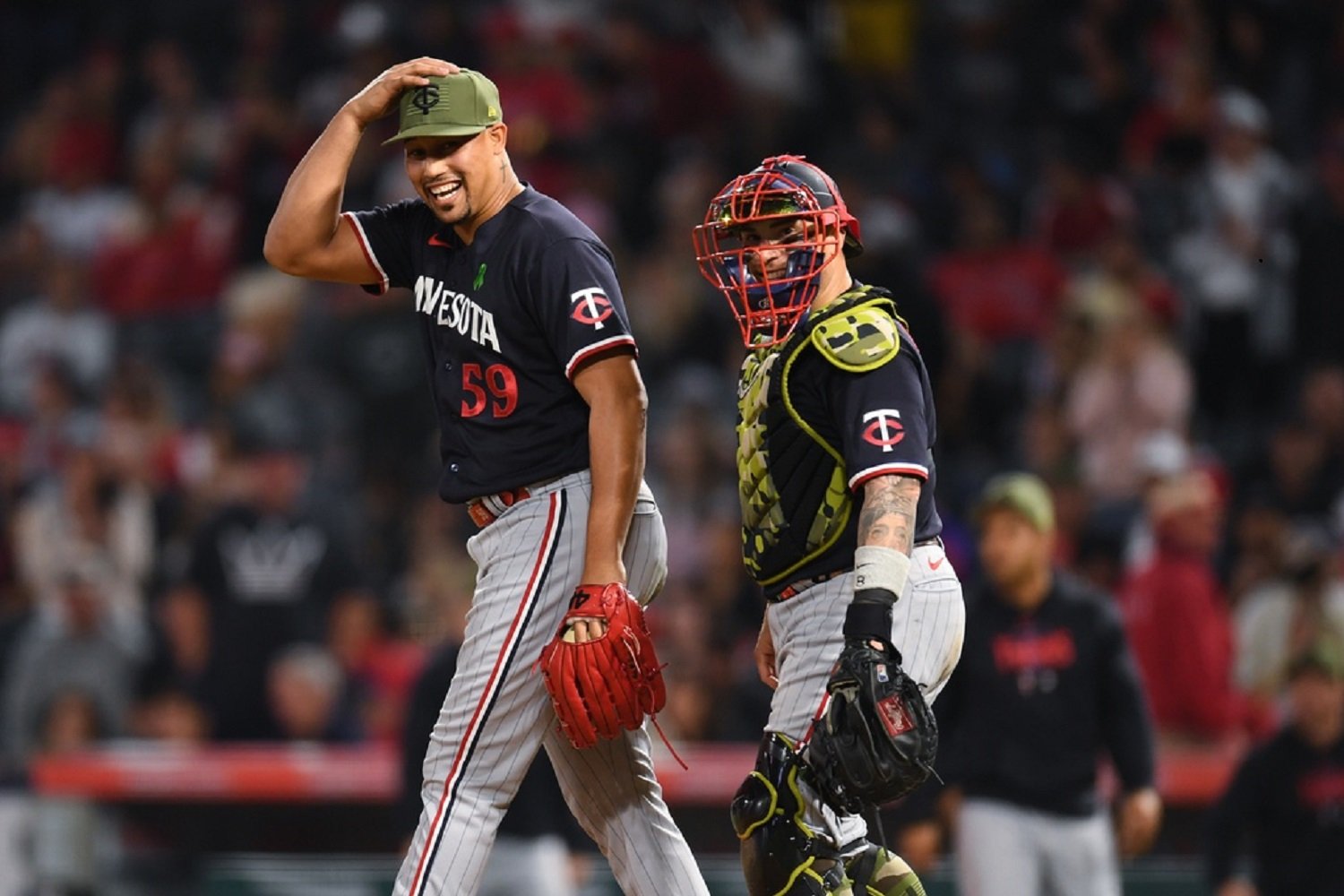 Box Score Starting Pitcher: Louis Varland: 5 IP 6 H 2 ER 1 BB 4 SO (92 P, 62 Strikes, 65.2%) Home Runs: Gallo (11), Top 3 WPA: Jovani Moran (0.226), Kyle Farmer (0.119), Trevor Larnach (0.10) Win Probability Chart (Via Fangraphs): Buxton Uses Speed, Then Leaves Game Byron Buxton was all over the bases in the early innings, going first to third by way of deking the outfielder on two separate occasions, pretending to slow down as he approached second base before turning on the jets and reaching third easily. Both times, as well as after beating out a double play, Buxton got up slowly while grimacing. This has been a common occurrence this year, although Buxton has made numerous game changing plays with his speed despite the pain. Today may have been a bridge too far, as he was removed for a pinch hitter in the sixth, with the initial diagnosis being “leg tightness.” The Buxton-playing-center-field train retreats deeper back into the station. Varland Holds it Together, Continues Run of Success Coming off of two excellent outings against the Padres and Cubs, Louie Varland was solid for the most part. He got off to an auspicious start, with both his pitchcomm and backup pitchcomm devices malfunctioning and home plate umpire Roberto Ortiz gesticulating like he was just told his plane was overbooked. Varland kept his composure and even struck out Shohei Ohtani looking to end the first, although the pitch was a fastball right where Ohtani likes it. Varland settled in and continued to dot the edges of the strike zone with his fastball while working in some decent cutters. A misplaced slider and cutter to the middle of the Angel’s order in the fourth led to an Angels run, and a fat fastball in the sixth allowed Ohtani to get extended and make the game 4-2 with a long home run to right center. Twins Hit a Lefty? The Twins have struggled against left-handed starters all year, and were thoroughly deconstructed by lefty Reid Detmers on Friday. On Saturday, the Twins faced a more accomplished lefty in Patrick Sandoval, who finished with a sub 3.00 ERA in 2022 and is off to a good start this year. Armed with an effective changeup and slider, Sandoval struggled to spot his fastball in the first, allowing the Twins to work deep counts, and for Kyle Garlick and Farmer to contribute RBI singles. Sandoval settled in after that, but Twins batters still worked him hard and he was done after striking out Garlick with two outs in the fifth. Bullpen Pitches Four Scoreless Starting with Jovani Moran’s great effort cleaning up Varland’s mess in the sixth, Jorge Lopez, Brock Stewart, and Jhoan Duran made quick work of the powerful Angels lineup, looking dominant and delivering a relatively stress-free win after struggling as a unit for the first four games of the current west coast road trip. Rocco Biffs His Challenge There was a curious play in the first inning, when, after Garlick’s single made the game 2-0, Willi Castro was asked to sacrifice and did so successfully, bringing in Farmer for the third run of the inning. Castro hustled down the line and was close enough to being safe that Rocco Baldelli decided to challenge the call. The replays were pretty inconclusive so the decision was potentially damaging. Jared Walsh Returns, Doesn’t Kill Twins Wisconsin native Jared Walsh, an All-Star in 2021, made his return to the Angels' active roster after recovering from a disturbing neurological disorder in which he lost depth perception, experienced intense tremors, and was unable to sleep with any regularity. He also underwent surgery for thoracic outlet syndrome, a difficult condition to come back from in its own right, during his recovery. He went 0-4 and popped out a bunt attempt, but it is good to see him back. What’s Next: Pablo López (2-2, 4.00 ERA) will try to deliver the Twins a road series win opposing wunderkind Shohei Ohtani (5-1, 3.23 ERA). López has been inconsistent since signing his extension, logging a 6.11 ERA in five starts. Ohtano has been human on the mound lately, giving up five runs to the Orioles in his most recent start. Postgame Interviews: Bullpen Usage Chart
- 38 comments
-
- 3
-

-
- byron buxton
- louis varland
- (and 3 more)
-
Twins 11, Cubs 1: Twins Power Past Cubs
Hans Birkeland replied to Hans Birkeland's topic in Twins Daily Front Page News
I think anyone who has played 14 straight and gone 0 for 25 deserves a day off.- 34 replies
-
- 3
-
-
- alex kirilloff
- joey gallo
- (and 3 more)
-
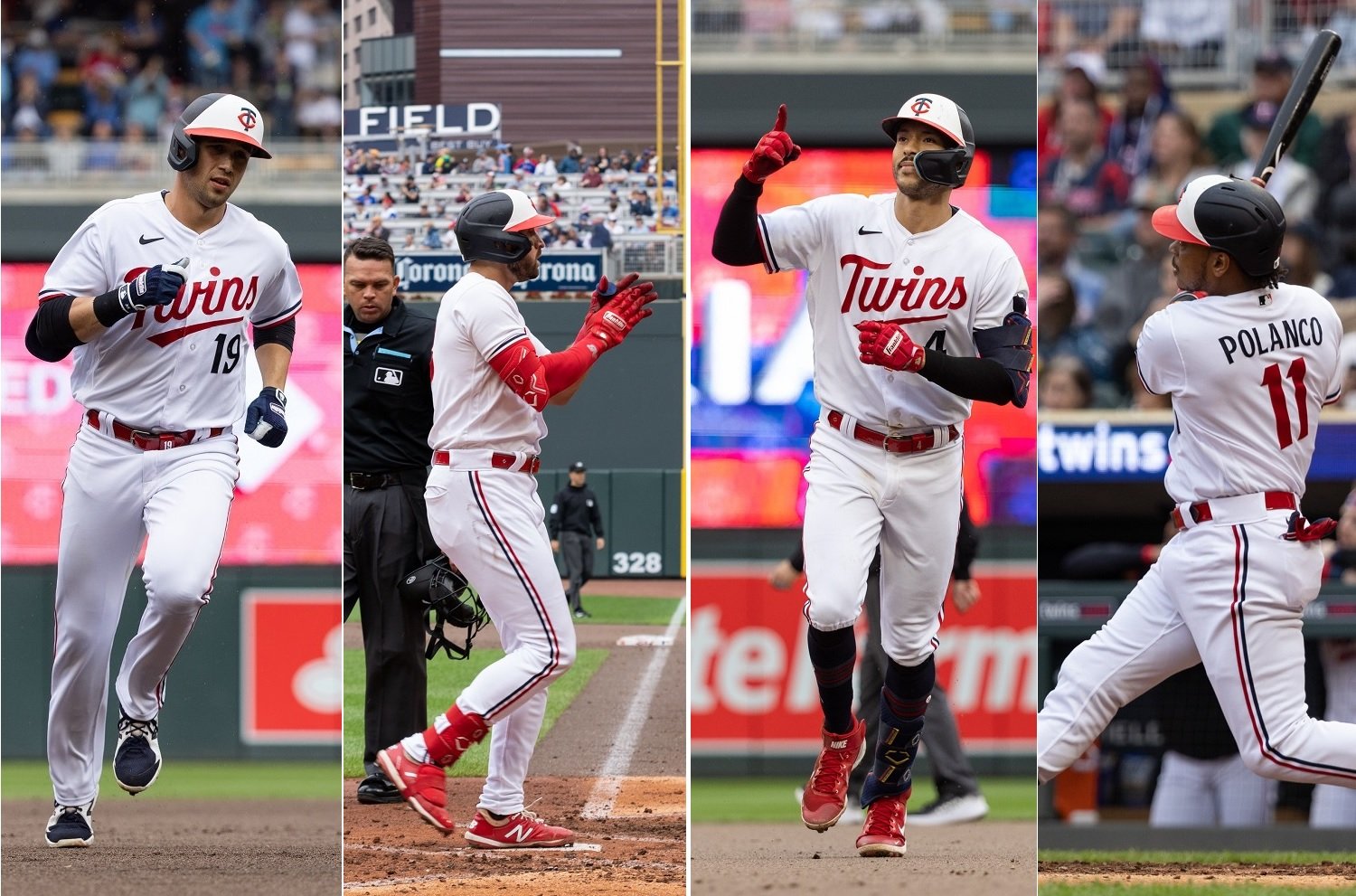 Box Score Starting Pitcher: Joe Ryan 6 IP 4 H 0 ER 1 BB 10 K (102 Pitches, 76 Strikes, 74.5%) Home Runs: Kirilloff, 2 (2), Gallo (8), Polanco (3), Correa (6) Top 3 WPA: Ryan (0.203), Kirilloff (0.149), Gallo (0.124) Win Probability Chart (Via Fangraphs): Joe Ryan navigates pesky Cubs lineup Coming off of two straight non-wins, Joe Ryan was in decent form, establishing his fastball early and showing his usual excellent command. He allowed the leadoff hitter to reach in the second, third and fourth, but pitched around trouble with some key strikeouts, most of them on the fastball. Ryan finished strong, including striking out Ian Happ, Cody Bellinger and Seiya Suzuki consecutively in his final inning. Maybe he’s really good? Toward the middle of Ryan’s outing, Cubs’ hitters were able to get on top of his fastball on a few occasions, with Eric Hosmer demolishing a high fastball for a foul ball in the second, Bellinger just missing a home run in the third and Christopher Morel flying out to deep left in the fourth. It may have seemed that a stiff breeze at Target Field was suppressing fly balls, but a couple of Twins surely disproved that theory. An atypical 1-2 punch With Max Kepler hitting the injured list, and Byron Buxton taking a much-needed day off, the Twins were left with an interesting decision on who would lead off the game. Joey Gallo ended up being the choice, with the resurgent Alex Kirilloff behind him. Gallo absolutely demolished a high fastball 110 MPH to lead off the game, but hit it way too high in the air, eventually settling in right fielder Suzuki’s glove. Kirilloff continued his run of quality at-bats while looking at his most vintage in the first inning, lacing an outside fastball to the opposite field for a 102 MPH home run to start the scoring. That would count for his first extra base hit of the year. Not to be outdone, Gallo made up for his near miss by crushing a three-run bomb in the third that apparently broke statcast, because no exit velocity was provided on Baseball Savant. Kirilloff made sure to get the last word by depositing a Wesneski slider over the center field wall for his second home run, this one at 101 MPH. He added a fifth-inning double for good measure to raise his slugging percentage to .875. He may not be 100% with his wrist, but he sure looks like a lineup savior at this point. Trevor Larnach makes his return You could have blinked and missed Trevor Larnach’s demotion to Triple-A St. Paul. Returning to the lineup, Larnach resumed his struggles identifying pitches. In the first, Hayden Wesneski went sweeper, slider, cutter, cutter to strike Larnach out. In the third, he fisted a Wesneski fastball over a drawn-in shortstop for a broken bat single. In the fifth he battled a tiring Wesneski for seven pitches and ended up striking out on a well-located cutter. Willi Castro starts rally by not being aggressive The Twins four run third inning was almost snuffed out before it started, as Willi Castro golfed a line drive down the right field line and was smelling a triple. With Suzuki picking the ball up quickly, his throw was almost to second base as Castro was rounding it. He smartly picked up Tommy Watkins' stop sign and retreated back for a leadoff double. Ryan Jeffers (now hitting .292 after going 2-2 with a walk and hit-by-pitch) then walked before Gallo broke the game open with his three-run bomb to right-center. What’s Next Louie Varland (0-0, 4.32 ERA) tries to get the Twins a series win facing veteran Marcus Stroman (2-3, 2.28 ERA). Varland is coming off his best outing of the year, holding the talented Padres lineup to one run over six innings on Tuesday. Postgame Interviews Bullpen Usage Chart: TUE WED THU FRI SAT TOT Jax 18 17 0 26 0 61 Alcala 23 0 0 33 0 56 Sands 0 0 0 0 54 54 Pagán 24 0 12 0 0 36 Stewart 0 9 25 0 0 34 Morán 0 0 0 9 24 33 Lopez 0 17 15 0 0 32 Durán 0 17 0 0 0 17
- 34 comments
-
- 2
-
-
- alex kirilloff
- joey gallo
- (and 3 more)
-
Twins 11, Cubs 1: Twins Power Past Cubs
Hans Birkeland posted a topic in Twins Daily Front Page News
After losing a late inning lead the night before, the Twins needed to get a lead early against second year starter Hayden Wesneski, a “quirky” pitcher with a lot of east-west in his game. They accomplished that and then some, hanging seven runs on Wesneski, including four home runs. Joe Ryan went six scoreless for the win. Image courtesy of Jordan Johnson-USA TODAY Sports After losing a late inning lead the night before, the Twins needed to get a lead early against second year starter Hayden Wesneski, a “quirky” pitcher with a lot of east-west in his game. They accomplished that and then some, hanging seven runs on Wesneski, including four home runs. Joe Ryan went six scoreless for the win. Box Score Starting Pitcher: Joe Ryan 6 IP 4 H 0 ER 1 BB 10 K (102 Pitches, 76 Strikes, 74.5%) Home Runs: Kirilloff, 2 (2), Gallo (8), Polanco (3), Correa (6) Top 3 WPA: Ryan (0.203), Kirilloff (0.149), Gallo (0.124) Win Probability Chart (Via Fangraphs): Joe Ryan navigates pesky Cubs lineup Coming off of two straight non-wins, Joe Ryan was in decent form, establishing his fastball early and showing his usual excellent command. He allowed the leadoff hitter to reach in the second, third and fourth, but pitched around trouble with some key strikeouts, most of them on the fastball. Ryan finished strong, including striking out Ian Happ, Cody Bellinger and Seiya Suzuki consecutively in his final inning. Maybe he’s really good? Toward the middle of Ryan’s outing, Cubs’ hitters were able to get on top of his fastball on a few occasions, with Eric Hosmer demolishing a high fastball for a foul ball in the second, Bellinger just missing a home run in the third and Christopher Morel flying out to deep left in the fourth. It may have seemed that a stiff breeze at Target Field was suppressing fly balls, but a couple of Twins surely disproved that theory. An atypical 1-2 punch With Max Kepler hitting the injured list, and Byron Buxton taking a much-needed day off, the Twins were left with an interesting decision on who would lead off the game. Joey Gallo ended up being the choice, with the resurgent Alex Kirilloff behind him. Gallo absolutely demolished a high fastball 110 MPH to lead off the game, but hit it way too high in the air, eventually settling in right fielder Suzuki’s glove. Kirilloff continued his run of quality at-bats while looking at his most vintage in the first inning, lacing an outside fastball to the opposite field for a 102 MPH home run to start the scoring. That would count for his first extra base hit of the year. Not to be outdone, Gallo made up for his near miss by crushing a three-run bomb in the third that apparently broke statcast, because no exit velocity was provided on Baseball Savant. Kirilloff made sure to get the last word by depositing a Wesneski slider over the center field wall for his second home run, this one at 101 MPH. He added a fifth-inning double for good measure to raise his slugging percentage to .875. He may not be 100% with his wrist, but he sure looks like a lineup savior at this point. Trevor Larnach makes his return You could have blinked and missed Trevor Larnach’s demotion to Triple-A St. Paul. Returning to the lineup, Larnach resumed his struggles identifying pitches. In the first, Hayden Wesneski went sweeper, slider, cutter, cutter to strike Larnach out. In the third, he fisted a Wesneski fastball over a drawn-in shortstop for a broken bat single. In the fifth he battled a tiring Wesneski for seven pitches and ended up striking out on a well-located cutter. Willi Castro starts rally by not being aggressive The Twins four run third inning was almost snuffed out before it started, as Willi Castro golfed a line drive down the right field line and was smelling a triple. With Suzuki picking the ball up quickly, his throw was almost to second base as Castro was rounding it. He smartly picked up Tommy Watkins' stop sign and retreated back for a leadoff double. Ryan Jeffers (now hitting .292 after going 2-2 with a walk and hit-by-pitch) then walked before Gallo broke the game open with his three-run bomb to right-center. What’s Next Louie Varland (0-0, 4.32 ERA) tries to get the Twins a series win facing veteran Marcus Stroman (2-3, 2.28 ERA). Varland is coming off his best outing of the year, holding the talented Padres lineup to one run over six innings on Tuesday. Postgame Interviews Bullpen Usage Chart: TUE WED THU FRI SAT TOT Jax 18 17 0 26 0 61 Alcala 23 0 0 33 0 56 Sands 0 0 0 0 54 54 Pagán 24 0 12 0 0 36 Stewart 0 9 25 0 0 34 Morán 0 0 0 9 24 33 Lopez 0 17 15 0 0 32 Durán 0 17 0 0 0 17 View full article- 34 replies
-
- 1
-
-
- alex kirilloff
- joey gallo
- (and 3 more)
-
What If Joe Ryan is Actually This Good?
Hans Birkeland posted a topic in Twins Daily Front Page News
He's young and keeps getting better. Are we watching the ascension of an Ace? Image courtesy of © Jeffrey Becker-USA TODAY Sports He's young and keeps getting better. Are we watching the ascension of an Ace? The Twins entered the season low on the national media’s must watch list. Lip service was paid to their rotation improvements and the return of Carlos Correa, but most analysts had the Twins as an 81-83 win team. They’re a nice team but why did they improve enough on a 79-win team to matter? They added pitching but did they add enough pitching? Smarter analysts and less biased projection models had the Twins closer to 88 wins, citing the return to something resembling the mean as far as WAR lost to injuries, as well as the tangible and obvious improvements to the roster that was in first place on Labor Day before Arm/Knee-ageddon happened. But one thing that both the meatheads at MLB Network and the computer simulations at Baseball Prospectus agreed on is that the Twins lacked an ace coming into 2023; a true top-of-the-rotation-game-one-of-the-playoffs type of ubermensch. The Twins’ brass had a different opinion, and believed that Pablo López was a couple of tweaks from ascending to that level. Of course that’s just spring training talk, akin to everyone being in “the best shape of their life.” But López started out so well with a new, tantalizing third pitch to pair with his crisp fastball and elite changeup, that the Twins locked him up for his first three free agent years. But López has also been spotty with his command at times, and on several occasions has scrapped his much ballyhooed “sweeper” mid-outing in favor of his tried-and-true fastball-changeup combination. I still think López was worth giving up Luis Arraez, and even more so with his extension in place, but he doesn’t strike me as someone who starts game one of a playoff series his team expects to win. He’s more the best pitcher on a fun team that won the division going away and then gets crushed in the Division Series. He’s mild-mannered, soft-spoken, and generally just too nice to be a starting pitcher, a position usually reserved for obsessive jerkoffs who enjoy nothing more than making fools out of their competitors and spitting. His stuff is good, but it so often comes and goes, particularly in cold weather, that you wonder about him starting an important game in October. Which brings me to Sonny Gray , a man so devoted to his craft he can’t speak without gesticulating as if a baseball was in his hand. He talks about pitching like an eight-year-old talks about his Legos, and compulsively tinkers and prepares so as to stay ahead of the adjustments and trends hitters employ and follow. In a recent interview accepting the “Pitch Hand” award from the MLB Central morning show, he mentioned that early in his career he just threw hard and let his stuff dominate hitters, and that he doesn’t have that luxury today. He throws 91-92 MPH with his fastball now, and relies more on his variety of pitches rather than sheer stuff. Consequently, his Stuff+ rating, a new metric that gauges a pitcher’s overall quality in terms of break and velocity, has been fairly middling (four percent above average in 2022). But as David Ortiz put it, facing Gray is frustrating for an elite hitter because of how many pitches he can throw you in any situation. It's hard to eliminate pitches against him, and he is good at thinking along with you to know what pitch will be the least expected. That’s valuable, but at the end of the day Gray doesn’t throw that hard and his stuff isn’t overly exceptional. There is a ceiling to that type of pitcher, and he’s reaching it in the early-going this year. Gray also has been susceptible to nagging injuries in the back half of his career, and put a lot of mileage on his arm in his early years in Oakland. Which brings me to Joe Ryan . I was not particularly high on Ryan coming into the season because of his dramatic splits from 2022. Basically, he was Cy Young caliber against the Royals and Tigers, but Kevin Correia against everyone else. He tinkered with a new slider down the stretch and had some success, leading to some optimism about a step forward this year. Although even then, the level of competition affected his results. The last six starts of 2022 went as follows: Boston: 5 IP 5 ER NY Yankees: 4 IP 4 ER Kansas City: 7 IP 0 ER Cleveland 7 ⅔ IP 0 ER LA Angels 4 IP 3 ER Detroit 6 IP 0 ER You may be asking yourself if the Angels were really much of a test last year. Well, Mike Trout and Shohei Ohtani, possibly the best two players in the game, drove in all three runs in that outing. You get the picture. Ryan had enough stuff to obliterate rebuilding lineups, but against elite hitters he couldn’t skip his fastball past their bats up in the zone; they would just foul it off. Part of that is because hitters didn’t have to worry about any of Ryan’s other pitches. He threw his fastball 60% of the time and it rated as one of the most effective pitches in all of baseball in terms of run value, ranking just ahead of Corbin Burnes’ cutter at ninth overall. Ryan’s other pitches, as we all know, left a lot to be desired. His slider was awful and his changeup wasn’t much better. He went to Driveline over the offseason and settled on a sweeper and split-changeup as replacements. The early returns aren’t just good, they could change the entire outlook for the Twins’ competitive window. Ryan’s fastball is dominant, and he has thrown it even harder this year, averaging 92.7 MPH. His sweeper has been okay, giving right-handed hitters something to think about besides the fastball, generating some swings and misses but also allowing the hardest contact of Ryan’s pitches with a .508 expected slugging percentage (xSLG). The split-change, however, has been a revelation, and the eye-test confirms that. The pitch falls away from left handed hitters, but also can get whiffs from righties. It also seems like he can command it around the zone. The numbers back it up too, as the pitch is rated as the 44th most effective pitch in baseball, while his fastball has remained in the top 30. (Someone who is better at Baseball Savant than me, please let me know if anyone else has two pitches in the top 50, because I can’t find them.) As a one-pitch pitcher, Joe Ryan was pretty good. As a two-and-a-half pitch pitcher, he looks dominant. He’s durable, doesn’t give up walks, and is fairly platoon neutral (.491 OPS against righties, .487 against lefties). He’s been able to pitch deep into games, and thus far, hasn’t pitched appreciably worse against good lineups. He shut down the Yankees twice (but is their lineup really a test?), pitched well outside of one mistake against the Astros, and threw a quality start against the Red Sox. He’s been tested, and his ERA is 2.37 with a Verlanderish .76 WHIP. Gray is a former ace, and López is the presumptive ace, but Joe Ryan has a chance to outperform each of them. He is no longer a novelty throwing 80% fastballs for the Rays’ Triple A affiliate. He has better stuff than Gray, and is more consistent (this year and historically) than López. It’s still early, but it sure does appear that he has found an off-speed pitch that complements his unique arm slot with the split-changeup. He is the Twins’ most emotive and marketable pitcher already, which is nice and not unimportant, but if he pushes Gray and López to the second and third slots in the rotation, the Twins’ playoff prospects look almost.. promising? The next test will be in facing the adjustments that teams make facing Ryan. Last year, opposing hitters liked to disrupt his rhythm by stepping out of the box, fouling pitches off, and generally getting under his skin. With the pitch clock he has been able to stay in his tempo, and perhaps that is part of his success thus far in 2023. But Tim Anderson showed last week that you can still beat the Twins with Ryan on the mound by wearing him down. If he dictates the game, he’ll go seven scoreless in the blink of an eye. But if a lineup is composed of a bunch of grinders with contact ability, they could get Ryan out of the game after the fifth, or force him into some fatigue-related mistakes. Is that the new key to attacking Ryan? The next step in ascending to Ace level is to see how the league adjusts to the new Joe Ryan. View full article -
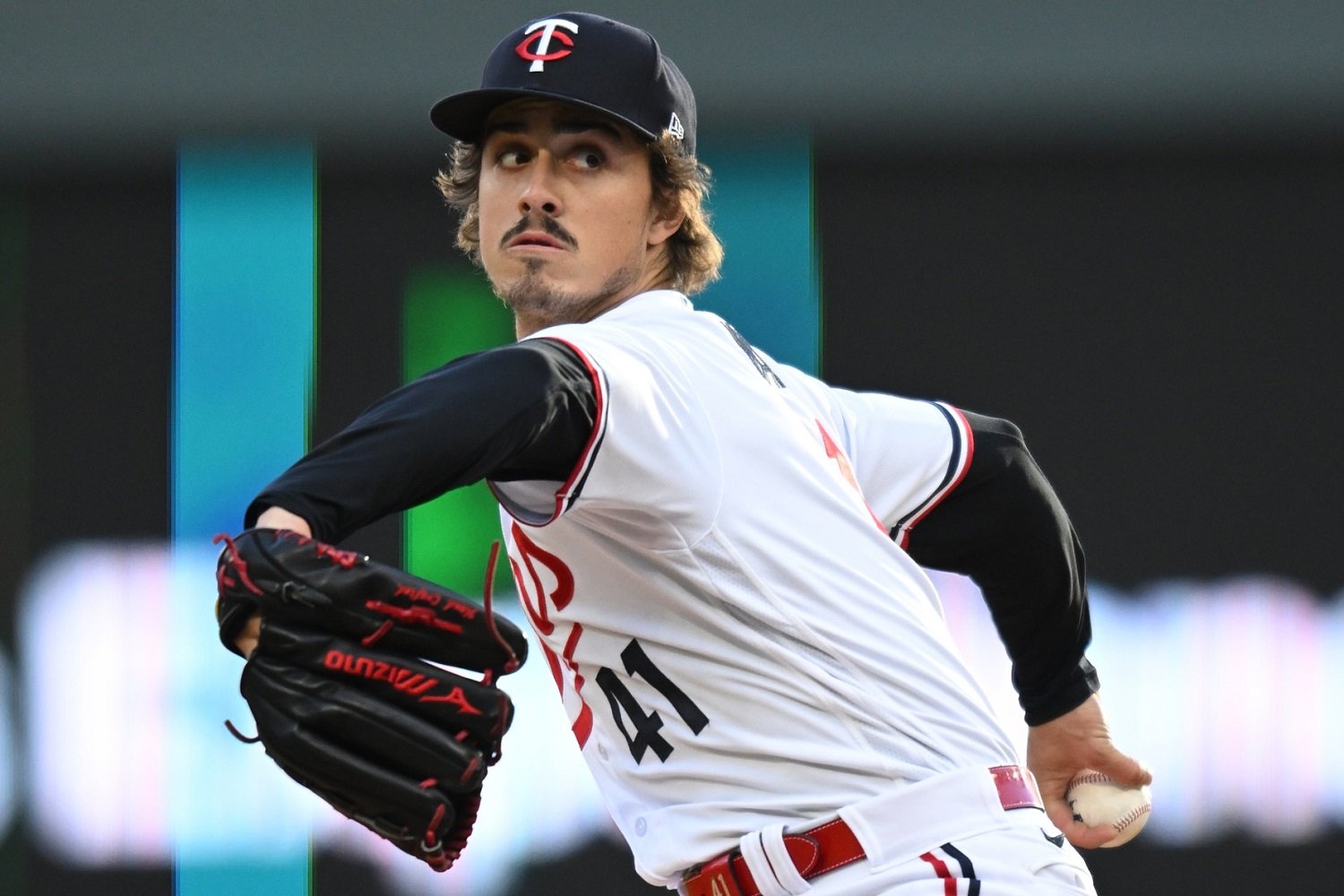 The Twins entered the season low on the national media’s must watch list. Lip service was paid to their rotation improvements and the return of Carlos Correa, but most analysts had the Twins as an 81-83 win team. They’re a nice team but why did they improve enough on a 79-win team to matter? They added pitching but did they add enough pitching? Smarter analysts and less biased projection models had the Twins closer to 88 wins, citing the return to something resembling the mean as far as WAR lost to injuries, as well as the tangible and obvious improvements to the roster that was in first place on Labor Day before Arm/Knee-ageddon happened. But one thing that both the meatheads at MLB Network and the computer simulations at Baseball Prospectus agreed on is that the Twins lacked an ace coming into 2023; a true top-of-the-rotation-game-one-of-the-playoffs type of ubermensch. The Twins’ brass had a different opinion, and believed that Pablo López was a couple of tweaks from ascending to that level. Of course that’s just spring training talk, akin to everyone being in “the best shape of their life.” But López started out so well with a new, tantalizing third pitch to pair with his crisp fastball and elite changeup, that the Twins locked him up for his first three free agent years. But López has also been spotty with his command at times, and on several occasions has scrapped his much ballyhooed “sweeper” mid-outing in favor of his tried-and-true fastball-changeup combination. I still think López was worth giving up Luis Arraez, and even more so with his extension in place, but he doesn’t strike me as someone who starts game one of a playoff series his team expects to win. He’s more the best pitcher on a fun team that won the division going away and then gets crushed in the Division Series. He’s mild-mannered, soft-spoken, and generally just too nice to be a starting pitcher, a position usually reserved for obsessive jerkoffs who enjoy nothing more than making fools out of their competitors and spitting. His stuff is good, but it so often comes and goes, particularly in cold weather, that you wonder about him starting an important game in October. Which brings me to Sonny Gray , a man so devoted to his craft he can’t speak without gesticulating as if a baseball was in his hand. He talks about pitching like an eight-year-old talks about his Legos, and compulsively tinkers and prepares so as to stay ahead of the adjustments and trends hitters employ and follow. In a recent interview accepting the “Pitch Hand” award from the MLB Central morning show, he mentioned that early in his career he just threw hard and let his stuff dominate hitters, and that he doesn’t have that luxury today. He throws 91-92 MPH with his fastball now, and relies more on his variety of pitches rather than sheer stuff. Consequently, his Stuff+ rating, a new metric that gauges a pitcher’s overall quality in terms of break and velocity, has been fairly middling (four percent above average in 2022). But as David Ortiz put it, facing Gray is frustrating for an elite hitter because of how many pitches he can throw you in any situation. It's hard to eliminate pitches against him, and he is good at thinking along with you to know what pitch will be the least expected. That’s valuable, but at the end of the day Gray doesn’t throw that hard and his stuff isn’t overly exceptional. There is a ceiling to that type of pitcher, and he’s reaching it in the early-going this year. Gray also has been susceptible to nagging injuries in the back half of his career, and put a lot of mileage on his arm in his early years in Oakland. Which brings me to Joe Ryan . I was not particularly high on Ryan coming into the season because of his dramatic splits from 2022. Basically, he was Cy Young caliber against the Royals and Tigers, but Kevin Correia against everyone else. He tinkered with a new slider down the stretch and had some success, leading to some optimism about a step forward this year. Although even then, the level of competition affected his results. The last six starts of 2022 went as follows: Boston: 5 IP 5 ER NY Yankees: 4 IP 4 ER Kansas City: 7 IP 0 ER Cleveland 7 ⅔ IP 0 ER LA Angels 4 IP 3 ER Detroit 6 IP 0 ER You may be asking yourself if the Angels were really much of a test last year. Well, Mike Trout and Shohei Ohtani, possibly the best two players in the game, drove in all three runs in that outing. You get the picture. Ryan had enough stuff to obliterate rebuilding lineups, but against elite hitters he couldn’t skip his fastball past their bats up in the zone; they would just foul it off. Part of that is because hitters didn’t have to worry about any of Ryan’s other pitches. He threw his fastball 60% of the time and it rated as one of the most effective pitches in all of baseball in terms of run value, ranking just ahead of Corbin Burnes’ cutter at ninth overall. Ryan’s other pitches, as we all know, left a lot to be desired. His slider was awful and his changeup wasn’t much better. He went to Driveline over the offseason and settled on a sweeper and split-changeup as replacements. The early returns aren’t just good, they could change the entire outlook for the Twins’ competitive window. Ryan’s fastball is dominant, and he has thrown it even harder this year, averaging 92.7 MPH. His sweeper has been okay, giving right-handed hitters something to think about besides the fastball, generating some swings and misses but also allowing the hardest contact of Ryan’s pitches with a .508 expected slugging percentage (xSLG). The split-change, however, has been a revelation, and the eye-test confirms that. The pitch falls away from left handed hitters, but also can get whiffs from righties. It also seems like he can command it around the zone. The numbers back it up too, as the pitch is rated as the 44th most effective pitch in baseball, while his fastball has remained in the top 30. (Someone who is better at Baseball Savant than me, please let me know if anyone else has two pitches in the top 50, because I can’t find them.) As a one-pitch pitcher, Joe Ryan was pretty good. As a two-and-a-half pitch pitcher, he looks dominant. He’s durable, doesn’t give up walks, and is fairly platoon neutral (.491 OPS against righties, .487 against lefties). He’s been able to pitch deep into games, and thus far, hasn’t pitched appreciably worse against good lineups. He shut down the Yankees twice (but is their lineup really a test?), pitched well outside of one mistake against the Astros, and threw a quality start against the Red Sox. He’s been tested, and his ERA is 2.37 with a Verlanderish .76 WHIP. Gray is a former ace, and López is the presumptive ace, but Joe Ryan has a chance to outperform each of them. He is no longer a novelty throwing 80% fastballs for the Rays’ Triple A affiliate. He has better stuff than Gray, and is more consistent (this year and historically) than López. It’s still early, but it sure does appear that he has found an off-speed pitch that complements his unique arm slot with the split-changeup. He is the Twins’ most emotive and marketable pitcher already, which is nice and not unimportant, but if he pushes Gray and López to the second and third slots in the rotation, the Twins’ playoff prospects look almost.. promising? The next test will be in facing the adjustments that teams make facing Ryan. Last year, opposing hitters liked to disrupt his rhythm by stepping out of the box, fouling pitches off, and generally getting under his skin. With the pitch clock he has been able to stay in his tempo, and perhaps that is part of his success thus far in 2023. But Tim Anderson showed last week that you can still beat the Twins with Ryan on the mound by wearing him down. If he dictates the game, he’ll go seven scoreless in the blink of an eye. But if a lineup is composed of a bunch of grinders with contact ability, they could get Ryan out of the game after the fifth, or force him into some fatigue-related mistakes. Is that the new key to attacking Ryan? The next step in ascending to Ace level is to see how the league adjusts to the new Joe Ryan.
 -
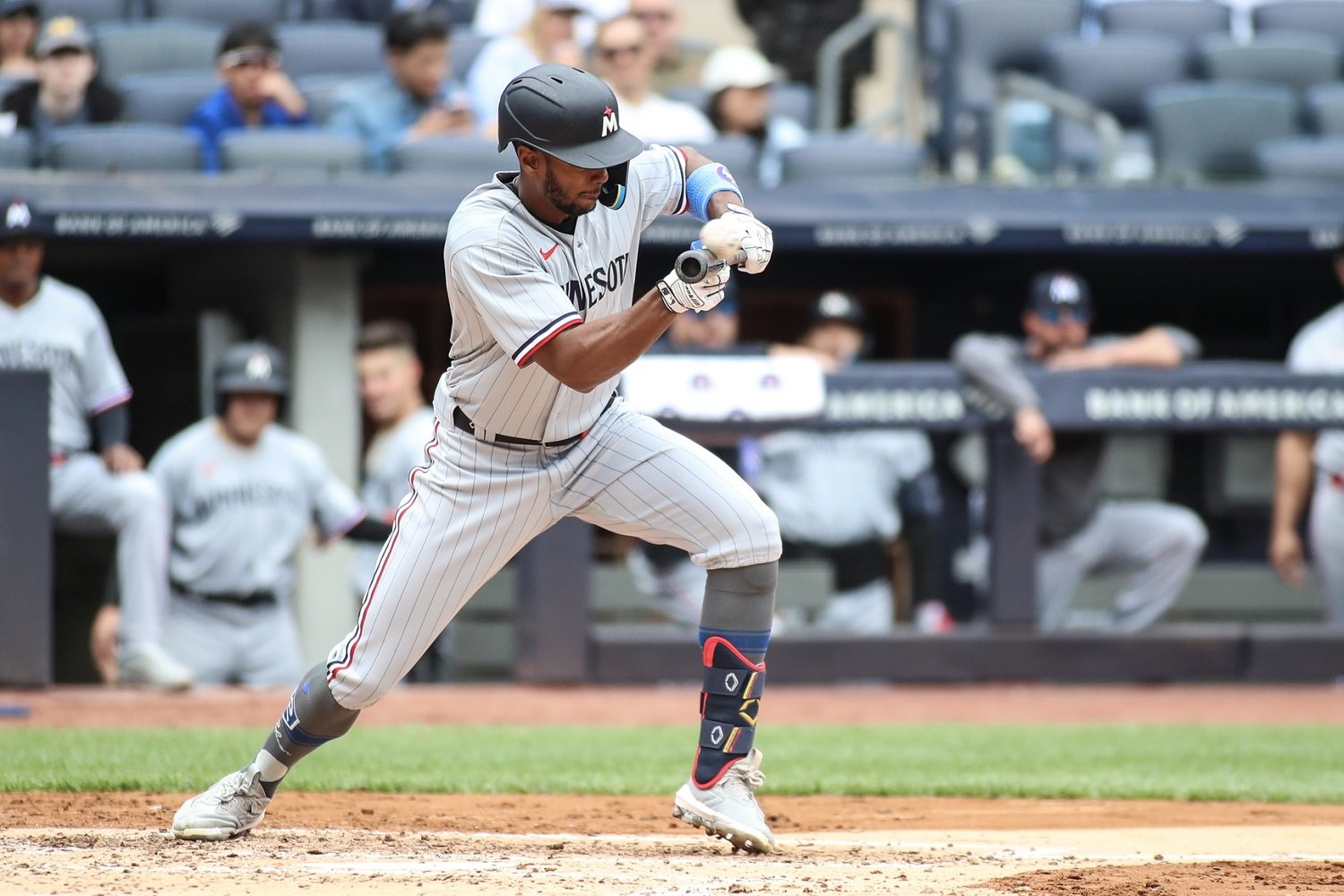 I feel like baseball statistics are measured in half lives. Originally, the landscape of pitcher evaluation, for instance, started out so broad that we gave one pitcher per game credit for an entire win. Then we sliced that up into how many runs he gave up. Some guys were better at that metric but they didn’t pitch as long or as often, so we divided runs by innings pitched. That was fine but some guys who give up the same number of runs per nine innings seem a lot more susceptible to bad luck, so what if we cared about how many strikeouts a guy had? In fact, what if we had a stat that measured how good a pitcher was if you took luck completely out of it? Cool, but what about just having better pitches? What if we could measure effective velocity, horizontal and vertical break, and how the pitch path diverges from the expected path of a different pitch? And now we’re here. What the hell kind of halving can you do of Statcast data for pitches? You can’t. It’s over. Once hitters perfect using full VR bodysuits that can simulate facing a perfect sim of any pitcher, they’re done too. At some point, the margins of finding a competitive advantage in data become so small, that they just aren’t worth the effort, like we did with openers. I’ve advocated that the next market inefficiency in baseball was scouting player’s mental games, but it could also be found in evaluating a player not on his total performance, but in his ability in the different approaches he takes in game situations. A diversity in what a hitter or pitcher intends to do, sprinkled throughout a lineup, can make a team equal more than the sum of its parts. The most obvious example of this would be bunting. Many dinosaurs-turned-broadcasters lament the decline of the sacrifice bunt, or any bunt for that matter. Statistical models show that bunting is rarely, if ever, the prudent choice from a probability perspective. But some guys are better at it than others, and on a micro level that can be a huge advantage in a given game. What about the ability to hit the ball to a particular side of the field? Some guys can, and usually will do so with a man on second and no outs, in a game where one run may mean the difference. This wouldn’t seem like a huge thing, but imagine a team with thirteen guys that couldn’t control where they hit the ball, and another team where they all could. Who would be sweating more in the 10th inning with the Manfred-man in play? We talk a lot about pitchers who get strike one consistently, and we can measure that. But we can’t measure how a pitcher performs if, in his mind, he decides to challenge a hitter. We can’t measure if he is attempting to induce a ground ball, or a pop up (we can guess, though, as well as measuring the results). Unlike in pool, baseball does not require a shot to be called, so we have no way of knowing how well a pitch was executed toward a specific intention. How often do we see a pitcher throw a backup slider to a same-handed hitter only for them to swing through the pitch, because they anticipated the pitch not being so poorly thrown. And then there are the two-strike-approach hitters, who cut down their swing, sacrificing power for contact so as to avoid striking out. Would a team of those guys be better in the long run than a team of guys who only give their “A” swing on every pitch? My hypothesis, and it isn’t a controversial one, is that it is good to have a team with all sorts of different skillsets. While other teams are digging deeper into programming a pitcher’s arm with AI to always repeat perfect mechanics, a forward thinking front office could get a couple “gameplan guys” they could plug in to torment a particular pitcher. It's entirely possible a hitter could be at Mike Trout’s level as a hitter, roughly 75% better than average, and still be a liability in certain spots. Imagine the Angels in the bottom of the 10th inning with Trout at the plate. If we’re being honest, they might want a subpar hitter with good contact/bunting skills up in that situation. Because Trout will do what he’s done his entire career and look for a pitch to crush. But a line out to deep left field, for instance, would be a bad result in that situation, since the runner at second could not advance, and you only need one run. Whether Trout can bunt or not is irrelevant because that won’t be what he’s looking to do, because of some combination of ego and analytics. Hopefully the Twins are exploring this arena. I wrote about how important Jorge Polanco was to this lineup, and that follows the same vein of having some diversity of approach. Polanco can bunt, go the other way, steal a bag if he knows no one is expecting him to, and avoid striking out if the situation warrants it. Michael Taylor can bunt pretty well and that has proven impactful a handful of times already. Joe Ryan is pretty good pitching with a lead, and Caleb Thielbar is particularly effective when he enters in the middle of an inning. It cuts both ways, though. Jose Miranda has struggled to put the ball in the air; is that something he is conscious of? One advantage the Guardians have had in the past two seasons was a lineup chock-full of contact oriented hitters without the prestige or ego to use the same approach, especially in key situations. They didn’t execute all that well in their series against the Twins, all told, but the Twins certainly showed a lack of situational execution, and that made all the difference.
 -
Are in-game nuances the next big step in player development and evaluation? Image courtesy of © Wendell Cruz-USA TODAY Sports Are in-game nuances the next big step in player development and evaluation? I feel like baseball statistics are measured in half lives. Originally, the landscape of pitcher evaluation, for instance, started out so broad that we gave one pitcher per game credit for an entire win. Then we sliced that up into how many runs he gave up. Some guys were better at that metric but they didn’t pitch as long or as often, so we divided runs by innings pitched. That was fine but some guys who give up the same number of runs per nine innings seem a lot more susceptible to bad luck, so what if we cared about how many strikeouts a guy had? In fact, what if we had a stat that measured how good a pitcher was if you took luck completely out of it? Cool, but what about just having better pitches? What if we could measure effective velocity, horizontal and vertical break, and how the pitch path diverges from the expected path of a different pitch? And now we’re here. What the hell kind of halving can you do of Statcast data for pitches? You can’t. It’s over. Once hitters perfect using full VR bodysuits that can simulate facing a perfect sim of any pitcher, they’re done too. At some point, the margins of finding a competitive advantage in data become so small, that they just aren’t worth the effort, like we did with openers. I’ve advocated that the next market inefficiency in baseball was scouting player’s mental games, but it could also be found in evaluating a player not on his total performance, but in his ability in the different approaches he takes in game situations. A diversity in what a hitter or pitcher intends to do, sprinkled throughout a lineup, can make a team equal more than the sum of its parts. The most obvious example of this would be bunting. Many dinosaurs-turned-broadcasters lament the decline of the sacrifice bunt, or any bunt for that matter. Statistical models show that bunting is rarely, if ever, the prudent choice from a probability perspective. But some guys are better at it than others, and on a micro level that can be a huge advantage in a given game. What about the ability to hit the ball to a particular side of the field? Some guys can, and usually will do so with a man on second and no outs, in a game where one run may mean the difference. This wouldn’t seem like a huge thing, but imagine a team with thirteen guys that couldn’t control where they hit the ball, and another team where they all could. Who would be sweating more in the 10th inning with the Manfred-man in play? We talk a lot about pitchers who get strike one consistently, and we can measure that. But we can’t measure how a pitcher performs if, in his mind, he decides to challenge a hitter. We can’t measure if he is attempting to induce a ground ball, or a pop up (we can guess, though, as well as measuring the results). Unlike in pool, baseball does not require a shot to be called, so we have no way of knowing how well a pitch was executed toward a specific intention. How often do we see a pitcher throw a backup slider to a same-handed hitter only for them to swing through the pitch, because they anticipated the pitch not being so poorly thrown. And then there are the two-strike-approach hitters, who cut down their swing, sacrificing power for contact so as to avoid striking out. Would a team of those guys be better in the long run than a team of guys who only give their “A” swing on every pitch? My hypothesis, and it isn’t a controversial one, is that it is good to have a team with all sorts of different skillsets. While other teams are digging deeper into programming a pitcher’s arm with AI to always repeat perfect mechanics, a forward thinking front office could get a couple “gameplan guys” they could plug in to torment a particular pitcher. It's entirely possible a hitter could be at Mike Trout’s level as a hitter, roughly 75% better than average, and still be a liability in certain spots. Imagine the Angels in the bottom of the 10th inning with Trout at the plate. If we’re being honest, they might want a subpar hitter with good contact/bunting skills up in that situation. Because Trout will do what he’s done his entire career and look for a pitch to crush. But a line out to deep left field, for instance, would be a bad result in that situation, since the runner at second could not advance, and you only need one run. Whether Trout can bunt or not is irrelevant because that won’t be what he’s looking to do, because of some combination of ego and analytics. Hopefully the Twins are exploring this arena. I wrote about how important Jorge Polanco was to this lineup, and that follows the same vein of having some diversity of approach. Polanco can bunt, go the other way, steal a bag if he knows no one is expecting him to, and avoid striking out if the situation warrants it. Michael Taylor can bunt pretty well and that has proven impactful a handful of times already. Joe Ryan is pretty good pitching with a lead, and Caleb Thielbar is particularly effective when he enters in the middle of an inning. It cuts both ways, though. Jose Miranda has struggled to put the ball in the air; is that something he is conscious of? One advantage the Guardians have had in the past two seasons was a lineup chock-full of contact oriented hitters without the prestige or ego to use the same approach, especially in key situations. They didn’t execute all that well in their series against the Twins, all told, but the Twins certainly showed a lack of situational execution, and that made all the difference. View full article
-
Despite some late home runs that made it interesting and even briefly tied the game, the Twins fell to the Guardians due to a brutal stretch of infield defense and failing to build anything against rookie starter Logan Allen despite traffic on the base paths. Image courtesy of © David Richard / USA Today Despite some late home runs that made it interesting and even briefly tied the game, the Twins fell to the Guardians due to a brutal stretch of infield defense and failing to build anything against rookie starter Logan Allen despite traffic on the base paths. Box Score: Sonny Gray: 5 IP 4 H 3 ER 3 BB 6 SO (90 Pitches, 55 Strikes, 61%) Home Runs: Kepler (5), Correa (5) Bottom 3 WPA: Jorge Alcalá (-0.121), Byron Buxton (-0.121), Sonny Gray (-0.115) Win Probability Chart (Via Fangraphs): Sonny Gray struggles with control but holds it together despite his defense. Coming off one of the finest months of his career, Gray was in command at the start, spotting his curveball, fastball, and two-seamer where he wanted and generally staying ahead of hitters. However, he completely lost control in the fourth inning, walking the unwalkable (and worst number two hitter in baseball) Amed Rosario and falling behind Jose Ramirez 3-0. Gray got Ramirez to hit a grounder, but Donovan Solano booted it, allowing Rosario to reach third. Josh Naylor then grounded to Miranda, who booted his third ball of the game, fell over, and allowed Ramirez to move up to third. Fighting his mechanics, Gray then allowed an RBI single to Josh Bell and walked Gabriel Arias and Myles Straw to force in another. How he retained his composure to finish the inning and pitch a scoreless fifth is a minor miracle. Logan T. Allen keeps Twins off balance, minimizes damage Gray’s counterpart consistently worked at a blistering pace with his fastball on the outside corner, getting a lot of weak contact early in counts. He allowed some traffic on the basepaths but made good pitches when he had to, throwing his fastball, cutter/sweeper, and change-up for strikes. If not for one Max Kepler, he likely would have worked six scoreless innings and left with a three-run lead. More Kepler Magic With the Twins lineup in a deep lull against Allen, Max Kepler followed an excuse-me single by Miranda by launching yet another home run, making the score 3-2 and justifying being in the lineup against a lefty. Baldelli tossed, Bremer takes his side Baldelli disputed the play, believing Ramirez was outside the base path as he averted Miranda’s tag. Announcer Dick Bremer voiced his support of Baldelli, despite it not being a reviewable call. Umpires usually don’t make that call for more egregious baserunning ventures. In this writer’s opinion, the argument was a hollow excuse for the fourth fielding mistake in two innings for the increasingly error-prone Miranda and Solano. If this trend continues, Willi Castro has to feel more secure in his status on the active roster, even as Kyle Farmer and Royce Lewis get closer to returning to the team. Alcalá returns and looks back to form...mostly Jorge Alcalá returned from his brief banishment to Triple-A, pitching a scoreless sixth inning with two strikeouts. He showed improved command, throwing strikes with his slider and change-up. He got the first two outs of the seventh with little issue but tried to sneak a get-me-over slider by the homerless Steven Kwan, who deposited the pitch 402 feet to give Cleveland back the lead. What’s Next: Joe Ryan (5-0, 2.37 ERA) goes up against Cal Quantrill (1-2, 4.73 ERA) as the Twins go for a series win in Cleveland. Postgame Interviews: Bullpen Usage Chart: MON TUE WED THU FRI SAT TOT López 0 15 0 16 10 0 41 Stewart 0 24 0 16 0 0 40 Pagán 0 0 18 20 0 0 38 Morán 0 0 9 15 0 12 36 Durán 0 0 0 16 18 0 34 Alcala 0 0 0 0 0 29 29 Jax 0 9 15 0 0 0 24 Rodriguez 0 0 0 0 0 0 0 View full article
-
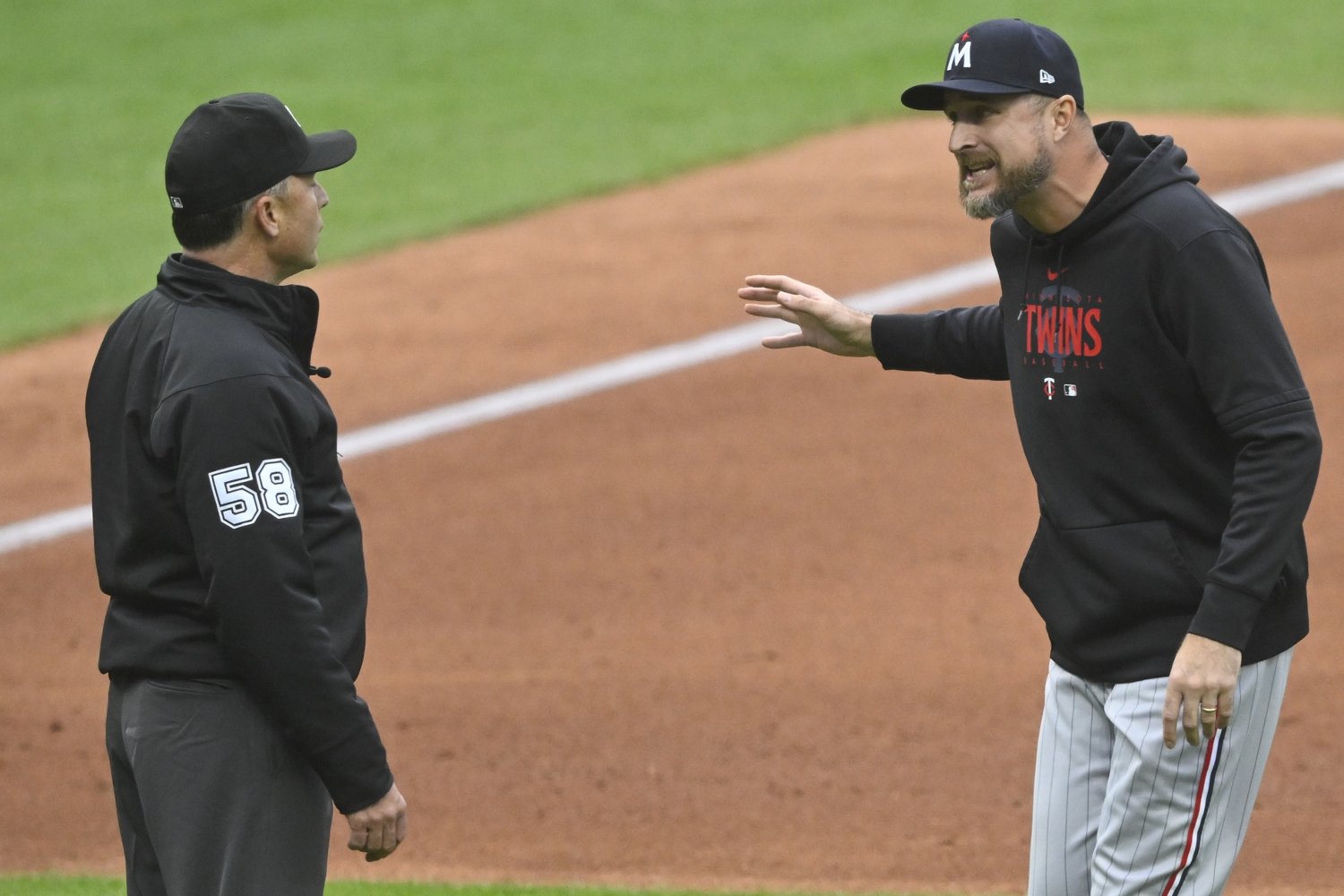 Box Score: Sonny Gray: 5 IP 4 H 3 ER 3 BB 6 SO (90 Pitches, 55 Strikes, 61%) Home Runs: Kepler (5), Correa (5) Bottom 3 WPA: Jorge Alcalá (-0.121), Byron Buxton (-0.121), Sonny Gray (-0.115) Win Probability Chart (Via Fangraphs): Sonny Gray struggles with control but holds it together despite his defense. Coming off one of the finest months of his career, Gray was in command at the start, spotting his curveball, fastball, and two-seamer where he wanted and generally staying ahead of hitters. However, he completely lost control in the fourth inning, walking the unwalkable (and worst number two hitter in baseball) Amed Rosario and falling behind Jose Ramirez 3-0. Gray got Ramirez to hit a grounder, but Donovan Solano booted it, allowing Rosario to reach third. Josh Naylor then grounded to Miranda, who booted his third ball of the game, fell over, and allowed Ramirez to move up to third. Fighting his mechanics, Gray then allowed an RBI single to Josh Bell and walked Gabriel Arias and Myles Straw to force in another. How he retained his composure to finish the inning and pitch a scoreless fifth is a minor miracle. Logan T. Allen keeps Twins off balance, minimizes damage Gray’s counterpart consistently worked at a blistering pace with his fastball on the outside corner, getting a lot of weak contact early in counts. He allowed some traffic on the basepaths but made good pitches when he had to, throwing his fastball, cutter/sweeper, and change-up for strikes. If not for one Max Kepler, he likely would have worked six scoreless innings and left with a three-run lead. More Kepler Magic With the Twins lineup in a deep lull against Allen, Max Kepler followed an excuse-me single by Miranda by launching yet another home run, making the score 3-2 and justifying being in the lineup against a lefty. Baldelli tossed, Bremer takes his side Baldelli disputed the play, believing Ramirez was outside the base path as he averted Miranda’s tag. Announcer Dick Bremer voiced his support of Baldelli, despite it not being a reviewable call. Umpires usually don’t make that call for more egregious baserunning ventures. In this writer’s opinion, the argument was a hollow excuse for the fourth fielding mistake in two innings for the increasingly error-prone Miranda and Solano. If this trend continues, Willi Castro has to feel more secure in his status on the active roster, even as Kyle Farmer and Royce Lewis get closer to returning to the team. Alcalá returns and looks back to form...mostly Jorge Alcalá returned from his brief banishment to Triple-A, pitching a scoreless sixth inning with two strikeouts. He showed improved command, throwing strikes with his slider and change-up. He got the first two outs of the seventh with little issue but tried to sneak a get-me-over slider by the homerless Steven Kwan, who deposited the pitch 402 feet to give Cleveland back the lead. What’s Next: Joe Ryan (5-0, 2.37 ERA) goes up against Cal Quantrill (1-2, 4.73 ERA) as the Twins go for a series win in Cleveland. Postgame Interviews: Bullpen Usage Chart: MON TUE WED THU FRI SAT TOT López 0 15 0 16 10 0 41 Stewart 0 24 0 16 0 0 40 Pagán 0 0 18 20 0 0 38 Morán 0 0 9 15 0 12 36 Durán 0 0 0 16 18 0 34 Alcala 0 0 0 0 0 29 29 Jax 0 9 15 0 0 0 24 Rodriguez 0 0 0 0 0 0 0
 -
Here's How to Make Room for Alex Kirilloff
Hans Birkeland replied to Hans Birkeland's topic in Twins Daily Front Page News
The question of who goes down is real tricky. Because yes you want Farmer and Solano over Gordon but what about next year? DFA'ing a guy with upside and five years of control is real dumb. I think if you can't rotate phantom (or real) injuries you cut Solano and eat his 2M. Or MAYBE we run out a 12 man pitching staff for a while. -
Here's How to Make Room for Alex Kirilloff
Hans Birkeland replied to Hans Birkeland's topic in Twins Daily Front Page News
I think you go with the ol' fashioned phantom IL stint just to give a guy a rest. Maybe Taylor with his back?- 43 replies
-
- 2
-
-
- alex kirilloff
- joey gallo
- (and 3 more)
-
Here's How to Make Room for Alex Kirilloff
Hans Birkeland replied to Hans Birkeland's topic in Twins Daily Front Page News
I'm sure all sorts of variables are at play, mental and physical, but if Gallo is neutral in both positions and Kepler is great in right and neutral in center you maximize the defense with Gallo in center. Or maybe they could do some sort of rotation,- 43 replies
-
- 3
-
-
- alex kirilloff
- joey gallo
- (and 3 more)
-
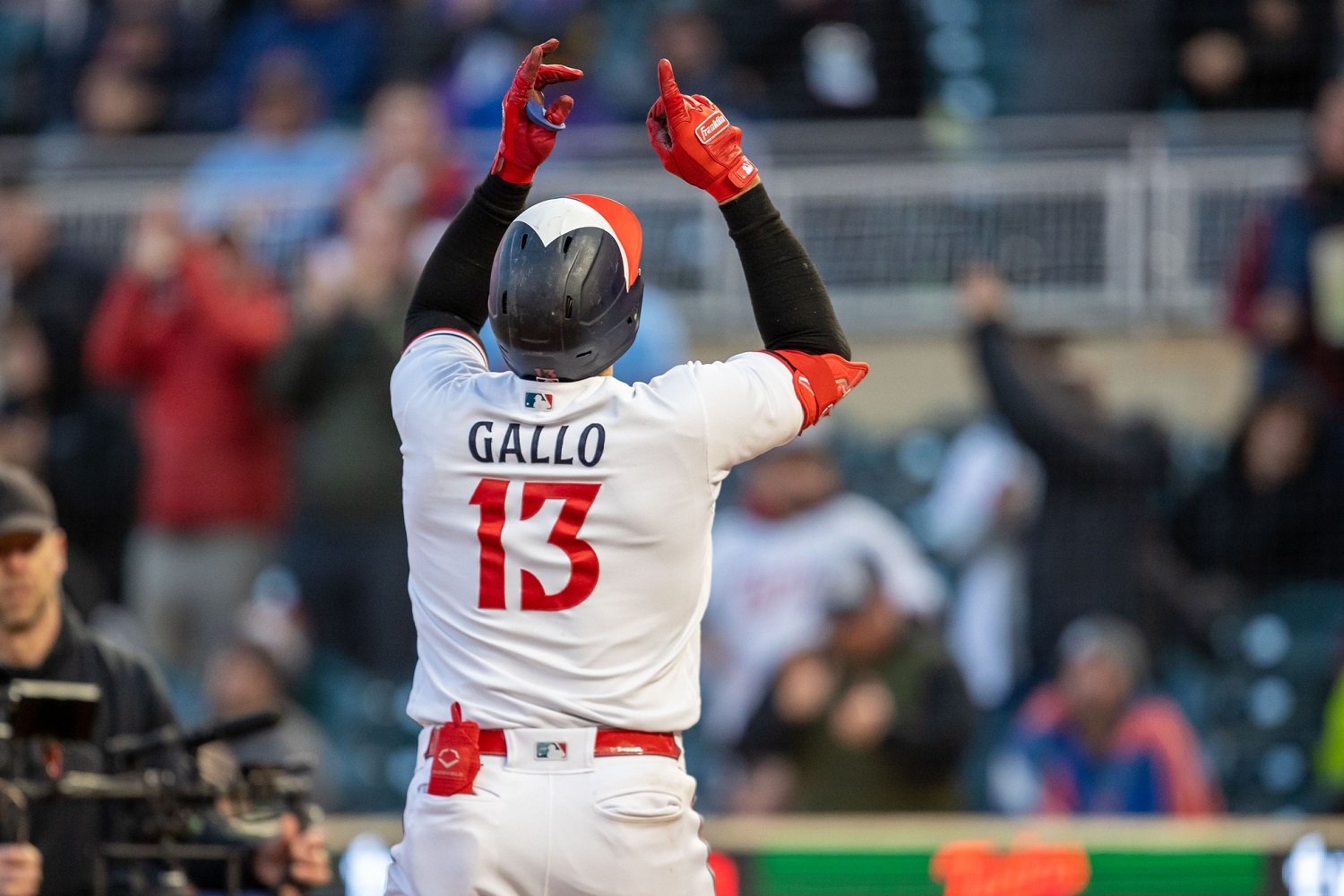 It sucks for everyone when prospects get called up late. They hit free agency in their thirties when in a lot of cases, their performance is already starting to diminish. They get paid less, and there is also less to enjoy in the fan experience when all you see of a guy’s peak career is his late twenties. Michael Cuddyer is a good example, as he did not become a full-time player until his age-27 season and his defense was atrocious by the time he hit free agency. You especially want to give a young player runway at a young age if they have any chance to be a transcendent talent, and Alex Kirilloff’s hitting ability has been described as such. That said, he is 25 and the sheen over him owes a lot to what is unknown about him. Trevor Larnach is a good counterpoint. He’s generally been playing well but we’ve seen the ups and downs of what he can do as a hitter. Pitchers have increasingly attacked him with offspeed and breaking pitches and he has had to make adjustments (though hadn’t he made that adjustment at the start of 2022?). The main point is, if Larnach can hit breaking stuff he will be a good to great hitter in the big leagues. For Kirilloff, we don’t even know what adjustments he will have to make to reach his uncertain, but probably high, ceiling. Does anyone remember how pitchers attack him? What bad hitting habits does he fall into when he’s healthy? Is he more of a .270/.310/.450 hitter due to an overly aggressive hitting approach? We have no idea. We have to find out. It’s too far into his career. As soon as he gets through a couple back-to-backs in Triple A, get him up here and get him in the lineup five times a week. That will require some lineup and defensive shuffling. With Byron Buxton continuing to require the DH slot, that means Joey Gallo needs to play center field. This isn’t conventional, and would result in worse defense in center, at least until Buxton returns to center field. It also would mean fewer at-bats, at least against righties, for Michael A. Taylor, who has been somewhat of a spark plug at the bottom of the lineup while contributing excellent center field defense. But Gallo hasn’t rated badly in center field in his career (zero outs above average, or OAA, in 58 career games), and Larnach deserves to continue his chance to prove himself. There are some strong opinions about what the Twins should do with their other starting outfielder, but cutting bait with Max Kepler right now would be incredibly unwise, for a couple reasons. One, Kepler is kind of hitting, especially since returning from his IL stint earlier in the month. His slugging percentage is up to .483 on the year after a two-hit showing in Saturday’s loss to the Royals. Second, the decline in defense going from Kepler to Gallo isn’t major, but it is significant. Kepler is one of the smoothest right fielders in Twins history, while Gallo is just really good. In terms of OAA, Kepler has been nineteen runs above average the past two years, while Gallo has been fairly neutral, albeit with a better throwing arm. Third, Kepler was kind of hitting last year before his toe injury. His line on June 1st was .260/.365/.440, and while it dipped before the injury occurred, his OPS was still above league average before he went on to post a .466 OPS while playing through a broken toe in August and September. If he’s a league-average hitter, that’s a three WAR player when you factor in his defense. With his club option for 2024, Kepler is basically under contract for two years, 18.5M. That is a tremendously valuable player, if even relatively healthy. The downside to letting Kepler keep starting in right field against righties would be if he gets hurt or falls off even further in performance. But if either of those things happen, the solution would be to install Taylor or Buxton back in center, and move Gallo to right. Problem solved. A much worse scenario would be to give up on Kepler and then see Kirilloff get hurt or not perform, resulting in a lot more Donovan Solano at first base. So let’s make it happen. Put Gallo in the middle of the field. It would be unfortunate for Michael A. Taylor, and a few more balls might fall in the gaps, but if Kepler, Gallo, and Larnach are going to remain among your top five or six hitters, you need to find a way to keep them in the lineup against righties. Moving Gallo to center also allows the team to gather the data they need to determine what Kirilloff (and Larnach) are going to be for them in this competitive window. Are they foundational pieces, platoon guys or trade bait? Of course injuries could solve every roster crunch the Twins face and then some. But while it's important to build depth in case of injury, it's also important to find out what kind of players you have. Fortunately for the Twins, the Texas Rangers found out Gallo could play center while trying to work in at-bats for Willie Calhoun and Nomar Mazara in 2019. Hopefully, every one of the Twins' young hitters end up with better careers than those one-tool journeymen, but there’s only one way to find out, and it could turn this team into an offensive juggernaut.
- 43 comments
-
- 4
-

-
-
- alex kirilloff
- joey gallo
- (and 3 more)
-
There isn't a perfect solution, but his potential is worth shuffling some players around. Image courtesy of © Jesse Johnson-USA TODAY Sports There isn't a perfect solution, but his potential is worth shuffling some players around. It sucks for everyone when prospects get called up late. They hit free agency in their thirties when in a lot of cases, their performance is already starting to diminish. They get paid less, and there is also less to enjoy in the fan experience when all you see of a guy’s peak career is his late twenties. Michael Cuddyer is a good example, as he did not become a full-time player until his age-27 season and his defense was atrocious by the time he hit free agency. You especially want to give a young player runway at a young age if they have any chance to be a transcendent talent, and Alex Kirilloff’s hitting ability has been described as such. That said, he is 25 and the sheen over him owes a lot to what is unknown about him. Trevor Larnach is a good counterpoint. He’s generally been playing well but we’ve seen the ups and downs of what he can do as a hitter. Pitchers have increasingly attacked him with offspeed and breaking pitches and he has had to make adjustments (though hadn’t he made that adjustment at the start of 2022?). The main point is, if Larnach can hit breaking stuff he will be a good to great hitter in the big leagues. For Kirilloff, we don’t even know what adjustments he will have to make to reach his uncertain, but probably high, ceiling. Does anyone remember how pitchers attack him? What bad hitting habits does he fall into when he’s healthy? Is he more of a .270/.310/.450 hitter due to an overly aggressive hitting approach? We have no idea. We have to find out. It’s too far into his career. As soon as he gets through a couple back-to-backs in Triple A, get him up here and get him in the lineup five times a week. That will require some lineup and defensive shuffling. With Byron Buxton continuing to require the DH slot, that means Joey Gallo needs to play center field. This isn’t conventional, and would result in worse defense in center, at least until Buxton returns to center field. It also would mean fewer at-bats, at least against righties, for Michael A. Taylor, who has been somewhat of a spark plug at the bottom of the lineup while contributing excellent center field defense. But Gallo hasn’t rated badly in center field in his career (zero outs above average, or OAA, in 58 career games), and Larnach deserves to continue his chance to prove himself. There are some strong opinions about what the Twins should do with their other starting outfielder, but cutting bait with Max Kepler right now would be incredibly unwise, for a couple reasons. One, Kepler is kind of hitting, especially since returning from his IL stint earlier in the month. His slugging percentage is up to .483 on the year after a two-hit showing in Saturday’s loss to the Royals. Second, the decline in defense going from Kepler to Gallo isn’t major, but it is significant. Kepler is one of the smoothest right fielders in Twins history, while Gallo is just really good. In terms of OAA, Kepler has been nineteen runs above average the past two years, while Gallo has been fairly neutral, albeit with a better throwing arm. Third, Kepler was kind of hitting last year before his toe injury. His line on June 1st was .260/.365/.440, and while it dipped before the injury occurred, his OPS was still above league average before he went on to post a .466 OPS while playing through a broken toe in August and September. If he’s a league-average hitter, that’s a three WAR player when you factor in his defense. With his club option for 2024, Kepler is basically under contract for two years, 18.5M. That is a tremendously valuable player, if even relatively healthy. The downside to letting Kepler keep starting in right field against righties would be if he gets hurt or falls off even further in performance. But if either of those things happen, the solution would be to install Taylor or Buxton back in center, and move Gallo to right. Problem solved. A much worse scenario would be to give up on Kepler and then see Kirilloff get hurt or not perform, resulting in a lot more Donovan Solano at first base. So let’s make it happen. Put Gallo in the middle of the field. It would be unfortunate for Michael A. Taylor, and a few more balls might fall in the gaps, but if Kepler, Gallo, and Larnach are going to remain among your top five or six hitters, you need to find a way to keep them in the lineup against righties. Moving Gallo to center also allows the team to gather the data they need to determine what Kirilloff (and Larnach) are going to be for them in this competitive window. Are they foundational pieces, platoon guys or trade bait? Of course injuries could solve every roster crunch the Twins face and then some. But while it's important to build depth in case of injury, it's also important to find out what kind of players you have. Fortunately for the Twins, the Texas Rangers found out Gallo could play center while trying to work in at-bats for Willie Calhoun and Nomar Mazara in 2019. Hopefully, every one of the Twins' young hitters end up with better careers than those one-tool journeymen, but there’s only one way to find out, and it could turn this team into an offensive juggernaut. View full article
- 43 replies
-
- 1
-
-
- alex kirilloff
- joey gallo
- (and 3 more)
-
A rare bout of wildness from Jhoan Duran costs the Twins a game they led in the eighth as Royals steal game three from the Twins, ending their nine game losing streak at Target Field. Image courtesy of Jeffrey Becker-USA TODAY Sports A rare bout of wildness from Jhoan Duran costs the Twins a game they led in the eighth as Royals steal game three from the Twins, ending their nine game losing streak at Target Field. Box Score SP: Bailey Ober 5.2 IP 4 H 1 ER 2 BB 6 SO (88 pitches, 55 strikes 62.5%) Home Runs: Buxton (6) Bottom 3 WPA: Jhoan Duran (-0.311), Trevor Larnach (-.230), Joey Gallo and Jorge López (-0.180) Win Probability Chart (Via Fangraphs): Bailey Ober makes another solid cold weather start Called up to replace the injured Kenta Maeda, Ober started off the game by tying Bobby Witt Jr. up with a high-and-tight fastball, striking out in comical fashion. Not to be outdone, Sal Perez went down swinging on a slider two feet outside to finish the inning. Throughout the outing, his changeup was floating outside of the zone, or hanging in the top portion of the strike zone, leading to some hard contact from left handed batters. That eventually hurt him in the fifth when he gave up a hard single to Nicky Lopez for the Royal’s first run. He was lifted after a two-out single to another lefty, Nick Pratto in the fifth. The Royals are the worst offense in the league by runs scored, so it will be telling to see how Ober fares against a collection of better lefties. Max Kepler continues to show why he should be a part of the team’s plans Ignoring the pleas of one Aaron Gleeman, the Twins have held on to Max Kepler despite their plethora of promising left-handed corner bats. Kepler’s OPS is now solidly over .800 after adding two hits, a hit-by-pitch and a walk today, while continuing to play excellent defense in right field. If he remains healthy, a three WAR season seems quite attainable which suddenly makes his 8.5M salary look positively valuable. Let us not forget Kepler was a league average hitter in 2022 before attempting to play through a broken toe that tanked his season numbers, a fact conveniently forgotten by.. everyone? Royals’ starter Brad Keller faces his control demons, sort of wins Coming into play with a solid-looking 3.96 ERA, Keller quickly showed why his walk rate is over seventeen percent, walking Max Kepler to lead off the game. Kepler was erased on a Carlos Correa double play, though, and Keller began his hi-wire act from there, stranding runners in scoring position in the second and third before starting to unravel in the fourth when he walked two and unleashed a wild pitch that allowed Buxton to score the game’s first run. He ended up walking five on the night in addition to five hits and the aforementioned wild pitch, channeling a little Sam Deduno magic to avoid giving up any significant damage. Jorge Polanco stays hot but confusion leads to baserunning blunder Ahead in the count to the wild Keller, Polanco ripped a 3-1 fastball deep to the right field corner, where the ball landed on top of the wall’s edge, inconceivably bouncing back into play where a trotting Polanco was tagged out at second base. He then ripped a line drive (106.6 MPH) to right field with men on in the fifth, only for the suddenly ascendant Nick Pratto to make a great diving catch. Decision to have Jorge López face Salvador Perez in the eighth backfires Griffin Jax had thrown 15 pitches in the eighth inning, giving up just a walk to Bobby Witt Jr. Rocco Baldelli came and got him anyway, bringing in Jorge López to face noted Twin-killer Salvador Perez. After getting ahead 0-2 with high fastballs, López threw another high fastball that Perez got on top of, lining a single to center to tie the game. It is fair to question whether Jax may have been a better matchup given his elite slider paired with the fact that Perez got a hit off of López the night before. Buxton draws another walk, remains above league-average in walk rate Drawing his tenth walk in his 25th game would have been a preposterous stat for Buxton just a few years ago. Although he was known to have good strike zone control as a prospect, his actual walk rates were abysmal the first few years of his career, and plummeted to 1.5% during the 2020 season that also represented his power breakout. He is now over nine percent after walking 8.9% of the time last year (league average is 8.8%). Buxton’s timing still seems a little off this year despite his big home run in today’s game, but if he has added a modicum of selectivity to his game that should put the league on notice. What’s Next MLB ERA leader Sonny Gray (3-0, 0.62 ERA) wraps up the series facing Royals “ace” Brady Singer (2-2, 6.67 ERA) with the Twins hoping to avoid what would be a disappointing split with the bottom-feeding Royals. Postgame Interviews Bullpen Usage Chart TUE WED THU FRI SAT TOT Durán 15 0 15 0 25 55 Thielbar 0 0 0 25 22 47 J López 10 0 0 20 16 46 Jax 0 0 0 16 15 31 Morán 0 0 29 0 0 29 Stewart 0 0 28 0 0 28 Pagán 0 10 0 0 0 10 Winder 0 0 0 0 0 0 View full article
- 41 replies
-
- 1
-
-
- jorge polanco
- byron buxton
- (and 3 more)
-
 Box Score SP: Bailey Ober 5.2 IP 4 H 1 ER 2 BB 6 SO (88 pitches, 55 strikes 62.5%) Home Runs: Buxton (6) Bottom 3 WPA: Jhoan Duran (-0.311), Trevor Larnach (-.230), Joey Gallo and Jorge López (-0.180) Win Probability Chart (Via Fangraphs): Bailey Ober makes another solid cold weather start Called up to replace the injured Kenta Maeda, Ober started off the game by tying Bobby Witt Jr. up with a high-and-tight fastball, striking out in comical fashion. Not to be outdone, Sal Perez went down swinging on a slider two feet outside to finish the inning. Throughout the outing, his changeup was floating outside of the zone, or hanging in the top portion of the strike zone, leading to some hard contact from left handed batters. That eventually hurt him in the fifth when he gave up a hard single to Nicky Lopez for the Royal’s first run. He was lifted after a two-out single to another lefty, Nick Pratto in the fifth. The Royals are the worst offense in the league by runs scored, so it will be telling to see how Ober fares against a collection of better lefties. Max Kepler continues to show why he should be a part of the team’s plans Ignoring the pleas of one Aaron Gleeman, the Twins have held on to Max Kepler despite their plethora of promising left-handed corner bats. Kepler’s OPS is now solidly over .800 after adding two hits, a hit-by-pitch and a walk today, while continuing to play excellent defense in right field. If he remains healthy, a three WAR season seems quite attainable which suddenly makes his 8.5M salary look positively valuable. Let us not forget Kepler was a league average hitter in 2022 before attempting to play through a broken toe that tanked his season numbers, a fact conveniently forgotten by.. everyone? Royals’ starter Brad Keller faces his control demons, sort of wins Coming into play with a solid-looking 3.96 ERA, Keller quickly showed why his walk rate is over seventeen percent, walking Max Kepler to lead off the game. Kepler was erased on a Carlos Correa double play, though, and Keller began his hi-wire act from there, stranding runners in scoring position in the second and third before starting to unravel in the fourth when he walked two and unleashed a wild pitch that allowed Buxton to score the game’s first run. He ended up walking five on the night in addition to five hits and the aforementioned wild pitch, channeling a little Sam Deduno magic to avoid giving up any significant damage. Jorge Polanco stays hot but confusion leads to baserunning blunder Ahead in the count to the wild Keller, Polanco ripped a 3-1 fastball deep to the right field corner, where the ball landed on top of the wall’s edge, inconceivably bouncing back into play where a trotting Polanco was tagged out at second base. He then ripped a line drive (106.6 MPH) to right field with men on in the fifth, only for the suddenly ascendant Nick Pratto to make a great diving catch. Decision to have Jorge López face Salvador Perez in the eighth backfires Griffin Jax had thrown 15 pitches in the eighth inning, giving up just a walk to Bobby Witt Jr. Rocco Baldelli came and got him anyway, bringing in Jorge López to face noted Twin-killer Salvador Perez. After getting ahead 0-2 with high fastballs, López threw another high fastball that Perez got on top of, lining a single to center to tie the game. It is fair to question whether Jax may have been a better matchup given his elite slider paired with the fact that Perez got a hit off of López the night before. Buxton draws another walk, remains above league-average in walk rate Drawing his tenth walk in his 25th game would have been a preposterous stat for Buxton just a few years ago. Although he was known to have good strike zone control as a prospect, his actual walk rates were abysmal the first few years of his career, and plummeted to 1.5% during the 2020 season that also represented his power breakout. He is now over nine percent after walking 8.9% of the time last year (league average is 8.8%). Buxton’s timing still seems a little off this year despite his big home run in today’s game, but if he has added a modicum of selectivity to his game that should put the league on notice. What’s Next MLB ERA leader Sonny Gray (3-0, 0.62 ERA) wraps up the series facing Royals “ace” Brady Singer (2-2, 6.67 ERA) with the Twins hoping to avoid what would be a disappointing split with the bottom-feeding Royals. Postgame Interviews Bullpen Usage Chart TUE WED THU FRI SAT TOT Durán 15 0 15 0 25 55 Thielbar 0 0 0 25 22 47 J López 10 0 0 20 16 46 Jax 0 0 0 16 15 31 Morán 0 0 29 0 0 29 Stewart 0 0 28 0 0 28 Pagán 0 10 0 0 0 10 Winder 0 0 0 0 0 0
- 41 comments
-
- 1
-
-
- jorge polanco
- byron buxton
- (and 3 more)
-
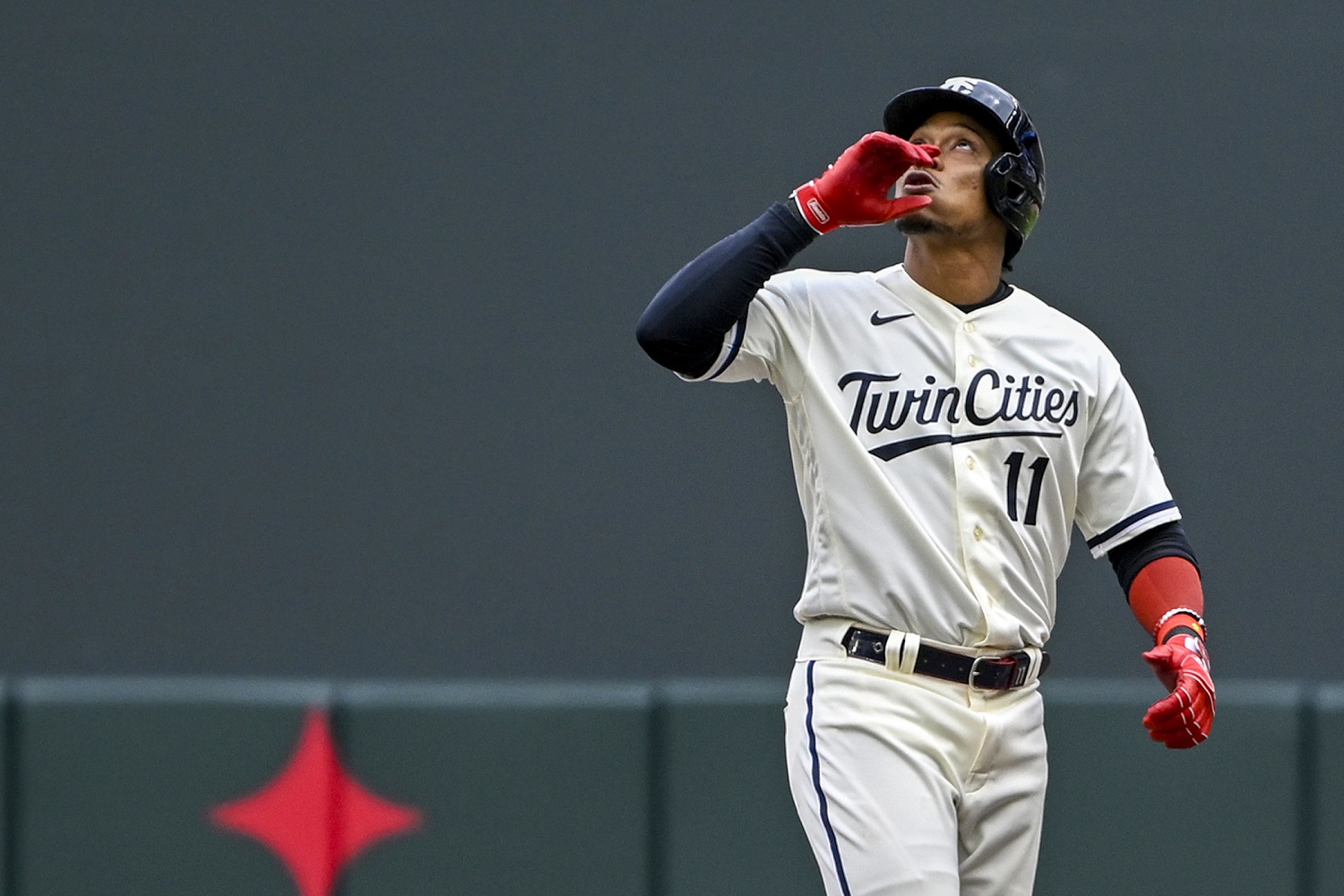 Coming off of a brutal series loss to the lowly Washington Nationals, the Twins are in an odd predicament. They are pitching quite well, and were delivered two more excellent outings by Tyler Mahle and Bailey Ober in the Nats series. But they can’t hit themselves out of a paper bag, scoring two, four, and three runs against a team with nothing to play for. I mean, Patrick Corbin is still making starts for them, and even he didn’t look bad against the Twins’ hitters. They’re in need of a spark, and despite little fanfare, they got one in the return of Jorge Polanco, who had been sidelined by a knee injury he sustained last August. That is arguable based on Polanco’s 2022 results. He had a much lower batting average than usual at .236, and his defensive metrics weren’t great, either. He also had the highest strikeout percentage of his career, going down on strikes 21.4% of the time. That may have been part of a shift in approach, as he also walked a career high 14.4% of the time, while his isolated power numbers were in line with his career totals at 17.1%. So what’s so great about that? For starters, striking out 21.4% of the time is still better than league average, while a walk rate of 14.4% is elite. Two things the Twins are struggling with offensively are striking out way too much and hardly drawing any walks, ranking 24th in walks drawn, with the fifth most strikeouts in baseball. Maybe Polanco won’t be a savior for this lineup, but in terms of what he provides and what the team has been lacking, he is a perfect fit. On Sunday he proved that, going 3-4 with a game-tying home run and an opposite field single to score the team’s final run. All of this came from the right side of the plate, which has historically been his weaker side. His defense has been okay in the early going, with a bobble on a double-play ball and a ground ball under his glove on Saturday showing he still has rust to shake off. With Polanco, his performance goes as his health does. If he tries to play through something, both his power and his defense suffer, as evidenced last year when he fought through back and knee issues during the second half. Another guy who frequently tries to play through maladies that shouldn’t is Trevor Larnach, who was open about that tendency to the detriment of both his performance and his health. Much was made about how this year he made a concerted effort to tell the training staff what he was dealing with early. Hopefully Polanco is following that same gameplan, with his knee setback in spring training serving as a positive example. While the team’s public relations insisted there was no setback well into March, Polanco openly admitted there was. This choice, intentional or not, provided transparency to a fanbase that might have wondered why a player who had eight months to recover from an injury that didn’t require surgery, needed just a few extra weeks to prepare for the season without any setbacks. Now Polanco looks like he’s running well, at least from the eye test of seeing him run out ground balls. The knee may still be an underlying issue for him, and we have no way of knowing otherwise. But the early returns suggest the extra time in spring training and on his rehab assignment did him some good. As he has spent the better part of four seasons banged up to some degree, it is encouraging to see a player so determined to play through anything, take his time ramping up for the season and start contributing to the lineup right out of the gate. The other aspect of Polanco that makes him so valuable is his role in the Twins clubhouse. He is generally quiet and non-effusive, but nonetheless commands the respect of his teammates. He’s earned that by being the longest tenured Twin while having a warrior’s reputation on the field. He is without question one of the most important leaders on the team, and certainly a leader of the Spanish-speaking contingent, especially with the departures of Nelson Cruz, Jose Berrios, Luis Arraez, Gary Sanchez and Gio Urshela in recent years. That’s hard to quantify and even harder to confirm, but cohesive teams generally need one or more leaders who speak Spanish and one or more who speak English. The Twins are well represented in this regard with, in addition to Polanco, the hard-nosed and reserved Byron Buxton and the outspoken, bi-lingual Carlos Correa. Maybe having that trio in place will unlock some of the offense beyond what Polanco provides individually. Or maybe not. Clubhouse leadership can be over-emphasized, and perhaps I am guilty of falling into that trap. You can have the greatest clubhouse chemistry in the world but if all that means is you can score three runs off Patrick Corbin, maybe you’re lacking elsewhere. But leadership can also be under-emphasized, with our friends the Chicago White Sox serving as a good example. With a great lineup, great starters and a pretty good bullpen, why have they been so thoroughly mediocre the past thirteen months? Does Lance Lynn’s crotch-grabbing testosterone show wear thin when it comes with a Emilio Pagán-esque 1.6 HR/9? Was Jose Abreu holding that team together this whole time? How difficult has it been working with known jerk, distraction-heavy and below-average pitcher Mike Clevinger? Definitive answers won’t be available, but ask any current Twin about Polanco’s impact, and they will gush about his preparedness, seriousness, and the way he can impact the game in so many ways, whether by popping a homer from both sides of the plate, stealing a base, or making a tough throw from second base that appears to come from underneath his feet. His teammates believe in him, and as George Costanza once said, “It’s not a lie, if you believe it.” He isn’t perfect, and that is confirmed both by his 2018 PED suspension and his cursed flip to Luis Arraez in the 2020 playoffs. But with Arraez now gone, name me one Twin who you would rather have up with the game on the line. It won’t be the boom-or-bust Byron Buxton, or the jumpy double-play machine Jose Miranda. It could be Correa, but definitely not in April. It isn’t Trevor Larnach, who the book is out on regarding his ability to hit offspeed. Donovan Solano can really hit, but he isn’t selective. Joey Gallo has been good, but there’s also a 40% chance his at-bat ends in a strikeout. The answer is Polanco, the gold standard in reliability, clutch genetics, heart and soul. His injury issues may be chronic, he’s pushing 30, and he only has two team option years left on his contract, so his time in Minnesota may be drawing near. Let’s appreciate him while we can.
 -
Let's list the reasons that make him so essential to this lineup right now. Image courtesy of © Nick Wosika-USA TODAY Sports Let's list the reasons that make him so essential to this lineup right now. Coming off of a brutal series loss to the lowly Washington Nationals, the Twins are in an odd predicament. They are pitching quite well, and were delivered two more excellent outings by Tyler Mahle and Bailey Ober in the Nats series. But they can’t hit themselves out of a paper bag, scoring two, four, and three runs against a team with nothing to play for. I mean, Patrick Corbin is still making starts for them, and even he didn’t look bad against the Twins’ hitters. They’re in need of a spark, and despite little fanfare, they got one in the return of Jorge Polanco, who had been sidelined by a knee injury he sustained last August. That is arguable based on Polanco’s 2022 results. He had a much lower batting average than usual at .236, and his defensive metrics weren’t great, either. He also had the highest strikeout percentage of his career, going down on strikes 21.4% of the time. That may have been part of a shift in approach, as he also walked a career high 14.4% of the time, while his isolated power numbers were in line with his career totals at 17.1%. So what’s so great about that? For starters, striking out 21.4% of the time is still better than league average, while a walk rate of 14.4% is elite. Two things the Twins are struggling with offensively are striking out way too much and hardly drawing any walks, ranking 24th in walks drawn, with the fifth most strikeouts in baseball. Maybe Polanco won’t be a savior for this lineup, but in terms of what he provides and what the team has been lacking, he is a perfect fit. On Sunday he proved that, going 3-4 with a game-tying home run and an opposite field single to score the team’s final run. All of this came from the right side of the plate, which has historically been his weaker side. His defense has been okay in the early going, with a bobble on a double-play ball and a ground ball under his glove on Saturday showing he still has rust to shake off. With Polanco, his performance goes as his health does. If he tries to play through something, both his power and his defense suffer, as evidenced last year when he fought through back and knee issues during the second half. Another guy who frequently tries to play through maladies that shouldn’t is Trevor Larnach, who was open about that tendency to the detriment of both his performance and his health. Much was made about how this year he made a concerted effort to tell the training staff what he was dealing with early. Hopefully Polanco is following that same gameplan, with his knee setback in spring training serving as a positive example. While the team’s public relations insisted there was no setback well into March, Polanco openly admitted there was. This choice, intentional or not, provided transparency to a fanbase that might have wondered why a player who had eight months to recover from an injury that didn’t require surgery, needed just a few extra weeks to prepare for the season without any setbacks. Now Polanco looks like he’s running well, at least from the eye test of seeing him run out ground balls. The knee may still be an underlying issue for him, and we have no way of knowing otherwise. But the early returns suggest the extra time in spring training and on his rehab assignment did him some good. As he has spent the better part of four seasons banged up to some degree, it is encouraging to see a player so determined to play through anything, take his time ramping up for the season and start contributing to the lineup right out of the gate. The other aspect of Polanco that makes him so valuable is his role in the Twins clubhouse. He is generally quiet and non-effusive, but nonetheless commands the respect of his teammates. He’s earned that by being the longest tenured Twin while having a warrior’s reputation on the field. He is without question one of the most important leaders on the team, and certainly a leader of the Spanish-speaking contingent, especially with the departures of Nelson Cruz, Jose Berrios, Luis Arraez, Gary Sanchez and Gio Urshela in recent years. That’s hard to quantify and even harder to confirm, but cohesive teams generally need one or more leaders who speak Spanish and one or more who speak English. The Twins are well represented in this regard with, in addition to Polanco, the hard-nosed and reserved Byron Buxton and the outspoken, bi-lingual Carlos Correa. Maybe having that trio in place will unlock some of the offense beyond what Polanco provides individually. Or maybe not. Clubhouse leadership can be over-emphasized, and perhaps I am guilty of falling into that trap. You can have the greatest clubhouse chemistry in the world but if all that means is you can score three runs off Patrick Corbin, maybe you’re lacking elsewhere. But leadership can also be under-emphasized, with our friends the Chicago White Sox serving as a good example. With a great lineup, great starters and a pretty good bullpen, why have they been so thoroughly mediocre the past thirteen months? Does Lance Lynn’s crotch-grabbing testosterone show wear thin when it comes with a Emilio Pagán-esque 1.6 HR/9? Was Jose Abreu holding that team together this whole time? How difficult has it been working with known jerk, distraction-heavy and below-average pitcher Mike Clevinger? Definitive answers won’t be available, but ask any current Twin about Polanco’s impact, and they will gush about his preparedness, seriousness, and the way he can impact the game in so many ways, whether by popping a homer from both sides of the plate, stealing a base, or making a tough throw from second base that appears to come from underneath his feet. His teammates believe in him, and as George Costanza once said, “It’s not a lie, if you believe it.” He isn’t perfect, and that is confirmed both by his 2018 PED suspension and his cursed flip to Luis Arraez in the 2020 playoffs. But with Arraez now gone, name me one Twin who you would rather have up with the game on the line. It won’t be the boom-or-bust Byron Buxton, or the jumpy double-play machine Jose Miranda. It could be Correa, but definitely not in April. It isn’t Trevor Larnach, who the book is out on regarding his ability to hit offspeed. Donovan Solano can really hit, but he isn’t selective. Joey Gallo has been good, but there’s also a 40% chance his at-bat ends in a strikeout. The answer is Polanco, the gold standard in reliability, clutch genetics, heart and soul. His injury issues may be chronic, he’s pushing 30, and he only has two team option years left on his contract, so his time in Minnesota may be drawing near. Let’s appreciate him while we can. View full article
-
The Twins came out flat against a talent-deprived Washington offense, allowing fourteen, mostly soft, hits and never truly getting back in the game. Image courtesy of Jesse Johnson, USA Today The Twins came out flat against a talent-deprived Washington offense, allowing fourteen, mostly soft, hits and never truly getting back in the game. Box Score SP: Pablo Lopez: 4 IP, 8 H, 5 R, 2 BB, 6 K, 83 pitches (60 strikes, 37 strikes 72.2%) Home Runs: Buxton (3) Bottom 3 WPA: Lopez (-0.313), Jorge Polanco (-0.096), Max Kepler (-0.73) Win Probability Chart (via Fangraphs): Pablo López falls victim to the Washington Piranhas The first inning got off to an auspicious start, as López got ahead of the leadoff hitter 0-2 before running an inside fastball too far inside for a hit-by-pitch. The next hitter doubled which may have been the only real mistake López made in the inning. Joey Meneses then hit a grounder that Jose Miranda ranged far to his left but made an off balance throw to first, failing to record an out, although the runner at third would have scored regardless. A walk followed, then two dominating strikeouts. Side Note: The game time temperature at Target Field today was 35 degrees. Pablo Lopez's previous coldest first-pitch temperature was 56 degrees in Cleveland in 2019. López then threw one of his better sweepers that Christian Vázquez couldn’t handle, resulting in a wild pitch and a 2-0 deficit. López had good stuff and decent command, spotting his fastball up in the zone and his changeup below the zone. He did seem to make an adjustment following the lone walk, getting a visit from Pete Maki and challenging the National’s crop of underwhelming hitters. It did seem as though championship-winning manager Davey Martinez had the Nats ready to play, despite the dearth of talent on his roster. They dinked and dunked on a pitcher they were familiar with from López’s days in the NL East, selling out for contact and building a 4-0 lead by the second inning despite only one hard hit ball. The “death by a thousand paper cuts” attack continued in the fourth, with Victor Robles doubling off Michael A. Taylor’s glove and taking third because he assumed Taylor would struggle to make a good throw back to the infield. He was correct, and made that same assumption on a short fly ball to Taylor in the next at-bat, scoring the Nat’s fifth run. It begs the question of whether a more competent offense trying to get off more “A” swings may have been, ironically, easier to pitch to given Saturday’s weather. Lopez was removed after 83 pitches in what had to be one of the more frustrating outings of his career. Chad Kuhl doesn’t lose his cool, or the game Kuhl isn’t devoid of ability, as his complete game shutout against the Dodgers at Coors Field last summer may indicate. He threw plenty of sliders that the Twins didn’t do much damage off of, but overall lacked command, walking four and unleashing a wild pitch. He was worked hard and was not efficient, throwing 96 pitches while failing to complete four innings. The Nationals’ bullpen kept the lead intact, as Mason Thompson, Hobie Harris, Carl Edwards Jr. and Anthony Banda combined to allow just three additional runs over five and a third innings. Buxton continues to improve Byron Buxton was in an extended strikeout stretch following his collision at second base in the White Sox series. Things have turned around a bit since then, with Buxton entering the game not striking out in 14 straight plate appearances. Making a dedicated effort to avoid striking out, Byron Buxton continues to look better and better, drawing a walk in the first and crushing an inside fastball for a home run in the third. He just missed a pitch with two men on in the fourth, flying out to center to end the inning. Woods Richardson makes his 2023 debut Simeon Woods Richardson, called up to provide length after the Boston series depleted the back end of the bullpen, was sharp, hitting 93 MPH on his fastball and pairing it with an effective change-up. The questions with SWR have been, can he be effective in the lower 90’s after sitting in the mid-90’s with the fastball earlier in his minor league career, and is his changeup a plus pitch or just an average offering. His stuff looked good against the Nationals, but its hard to draw any definitive conclusions facing a team whose best hitter, Jeimer Candelario, was released by the Tigers over the offseason. The Nat’s highest upside hitter, CJ Abrams, delivered the big blow, waiting on a changeup down and in and golfing it for a three-run home run to put the game away in the seventh. Trying to stretch his outing out and complete the game, SWR was clearly gassed in the ninth, losing his command and allowing some hard contact, resulting in giving up the last two runs of the game. Joey Gallo hitting second Imagine this scenario playing out two months ago. No one who writes about the Twins was especially keen on the Gallo signing, but to Gallo’s and hitting coach David Popkins’ credit, he looks like the only force in the Twins lineup. Health may be a factor, as Gallo was in the midst of a breakout season in 2019 when he fractured his wrist, hitting for a .253 batting average and .986 OPS while playing the majority of his games in center-field. He followed with a terrible 2020 season, a wildly inconsistent 2021, and a brutal 2022 where he hit .160. Maybe the wrist injury changed his mechanics and Popkins helped him restore his 2019 form, or maybe Gallo is simply getting fat off of mediocre pitching thus far in 2023. Either way, his insertion into the two-hole is more than justified given the underperformance from all the other Twins hitters. He didn’t have his best day, going 0-4 with two strikeouts. Larnach averages 97.1 exit velocity against offspeed Trevor Larnach, much maligned for his inability to hit breaking/offspeed pitches, did quite well against them today, not recording a strikeout and posting exit velocities of 98.1 MPH against a Chad Kuhl slider in the second, 97.6 MPH against a Kuhl slider in the fourth, and hitting a two RBI single in the seventh at 95.3 MPH against a Hobie Harris split-changeup. Adjustments have been made, but it will be interesting to see if those hold against stiffer competition. What’s Next Bailey Ober will make his first start for the Twins this season on Sunday as the Twins try to prevent what would be an embarrassing home sweep against the Nationals. Ober will face off against Patrick Corbin (1-2, 6.30 ERA) whose contract pays him $24.4M this year and $35.4M next year. He has specialized in waking up dormant offenses the past few years, so we’ll see what the Twins can do. Postgame Interviews Bullpen Usage Chart TUE WED THU FRI SAT TOT Woods Richardson 0 0 0 0 97 97 Moran 26 0 44 0 0 70 Jax 26 0 0 31 0 57 Headrick 0 47 0 0 3 50 Pagan 0 0 42 0 0 42 Thielbar 17 0 0 12 0 29 López 10 0 0 16 0 26 Durán 19 0 0 0 0 19 View full article
- 40 replies
-
- 1
-
-
- pablo lopez
- simeon woods richardson
- (and 3 more)
-
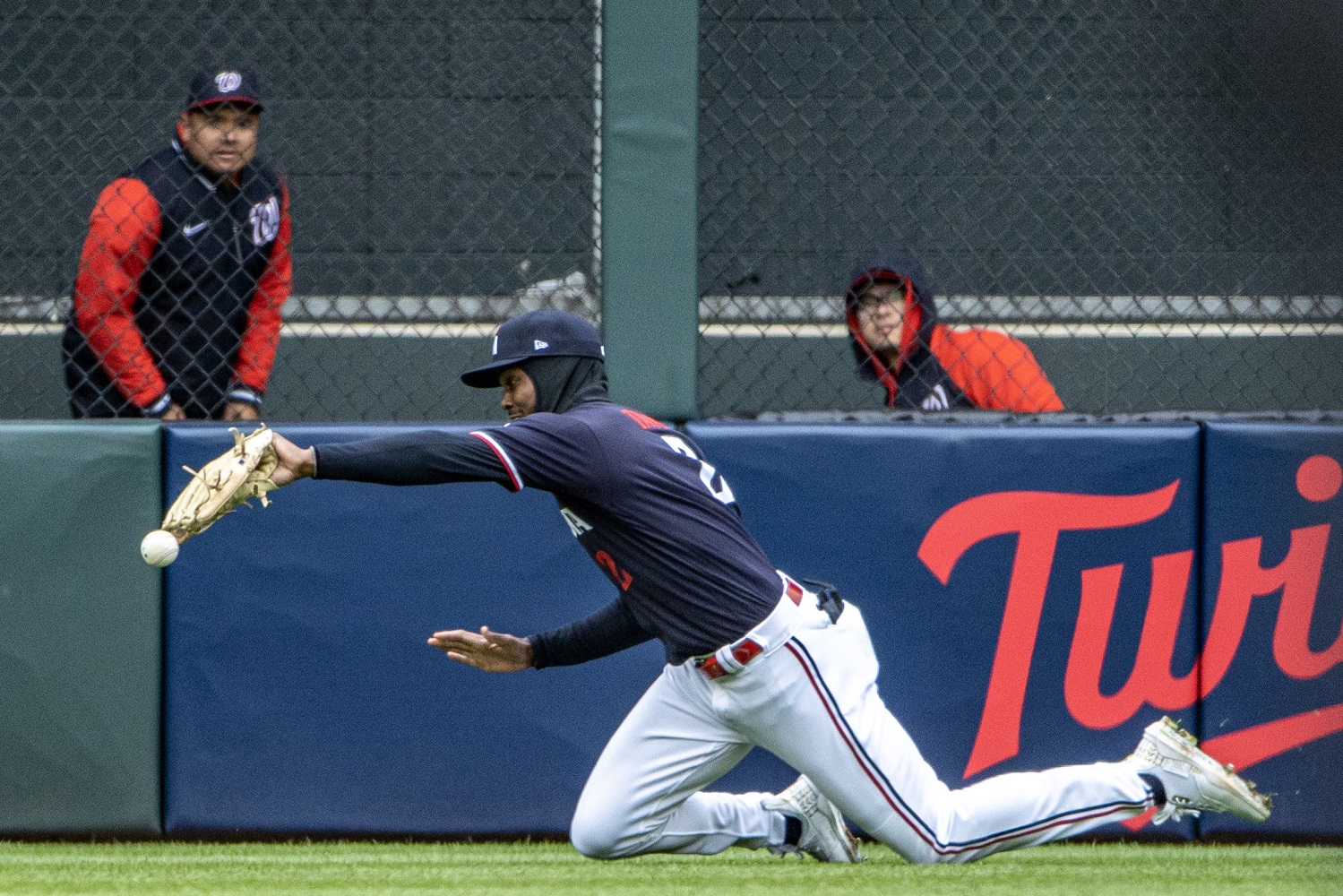 Box Score SP: Pablo Lopez: 4 IP, 8 H, 5 R, 2 BB, 6 K, 83 pitches (60 strikes, 37 strikes 72.2%) Home Runs: Buxton (3) Bottom 3 WPA: Lopez (-0.313), Jorge Polanco (-0.096), Max Kepler (-0.73) Win Probability Chart (via Fangraphs): Pablo López falls victim to the Washington Piranhas The first inning got off to an auspicious start, as López got ahead of the leadoff hitter 0-2 before running an inside fastball too far inside for a hit-by-pitch. The next hitter doubled which may have been the only real mistake López made in the inning. Joey Meneses then hit a grounder that Jose Miranda ranged far to his left but made an off balance throw to first, failing to record an out, although the runner at third would have scored regardless. A walk followed, then two dominating strikeouts. Side Note: The game time temperature at Target Field today was 35 degrees. Pablo Lopez's previous coldest first-pitch temperature was 56 degrees in Cleveland in 2019. López then threw one of his better sweepers that Christian Vázquez couldn’t handle, resulting in a wild pitch and a 2-0 deficit. López had good stuff and decent command, spotting his fastball up in the zone and his changeup below the zone. He did seem to make an adjustment following the lone walk, getting a visit from Pete Maki and challenging the National’s crop of underwhelming hitters. It did seem as though championship-winning manager Davey Martinez had the Nats ready to play, despite the dearth of talent on his roster. They dinked and dunked on a pitcher they were familiar with from López’s days in the NL East, selling out for contact and building a 4-0 lead by the second inning despite only one hard hit ball. The “death by a thousand paper cuts” attack continued in the fourth, with Victor Robles doubling off Michael A. Taylor’s glove and taking third because he assumed Taylor would struggle to make a good throw back to the infield. He was correct, and made that same assumption on a short fly ball to Taylor in the next at-bat, scoring the Nat’s fifth run. It begs the question of whether a more competent offense trying to get off more “A” swings may have been, ironically, easier to pitch to given Saturday’s weather. Lopez was removed after 83 pitches in what had to be one of the more frustrating outings of his career. Chad Kuhl doesn’t lose his cool, or the game Kuhl isn’t devoid of ability, as his complete game shutout against the Dodgers at Coors Field last summer may indicate. He threw plenty of sliders that the Twins didn’t do much damage off of, but overall lacked command, walking four and unleashing a wild pitch. He was worked hard and was not efficient, throwing 96 pitches while failing to complete four innings. The Nationals’ bullpen kept the lead intact, as Mason Thompson, Hobie Harris, Carl Edwards Jr. and Anthony Banda combined to allow just three additional runs over five and a third innings. Buxton continues to improve Byron Buxton was in an extended strikeout stretch following his collision at second base in the White Sox series. Things have turned around a bit since then, with Buxton entering the game not striking out in 14 straight plate appearances. Making a dedicated effort to avoid striking out, Byron Buxton continues to look better and better, drawing a walk in the first and crushing an inside fastball for a home run in the third. He just missed a pitch with two men on in the fourth, flying out to center to end the inning. Woods Richardson makes his 2023 debut Simeon Woods Richardson, called up to provide length after the Boston series depleted the back end of the bullpen, was sharp, hitting 93 MPH on his fastball and pairing it with an effective change-up. The questions with SWR have been, can he be effective in the lower 90’s after sitting in the mid-90’s with the fastball earlier in his minor league career, and is his changeup a plus pitch or just an average offering. His stuff looked good against the Nationals, but its hard to draw any definitive conclusions facing a team whose best hitter, Jeimer Candelario, was released by the Tigers over the offseason. The Nat’s highest upside hitter, CJ Abrams, delivered the big blow, waiting on a changeup down and in and golfing it for a three-run home run to put the game away in the seventh. Trying to stretch his outing out and complete the game, SWR was clearly gassed in the ninth, losing his command and allowing some hard contact, resulting in giving up the last two runs of the game. Joey Gallo hitting second Imagine this scenario playing out two months ago. No one who writes about the Twins was especially keen on the Gallo signing, but to Gallo’s and hitting coach David Popkins’ credit, he looks like the only force in the Twins lineup. Health may be a factor, as Gallo was in the midst of a breakout season in 2019 when he fractured his wrist, hitting for a .253 batting average and .986 OPS while playing the majority of his games in center-field. He followed with a terrible 2020 season, a wildly inconsistent 2021, and a brutal 2022 where he hit .160. Maybe the wrist injury changed his mechanics and Popkins helped him restore his 2019 form, or maybe Gallo is simply getting fat off of mediocre pitching thus far in 2023. Either way, his insertion into the two-hole is more than justified given the underperformance from all the other Twins hitters. He didn’t have his best day, going 0-4 with two strikeouts. Larnach averages 97.1 exit velocity against offspeed Trevor Larnach, much maligned for his inability to hit breaking/offspeed pitches, did quite well against them today, not recording a strikeout and posting exit velocities of 98.1 MPH against a Chad Kuhl slider in the second, 97.6 MPH against a Kuhl slider in the fourth, and hitting a two RBI single in the seventh at 95.3 MPH against a Hobie Harris split-changeup. Adjustments have been made, but it will be interesting to see if those hold against stiffer competition. What’s Next Bailey Ober will make his first start for the Twins this season on Sunday as the Twins try to prevent what would be an embarrassing home sweep against the Nationals. Ober will face off against Patrick Corbin (1-2, 6.30 ERA) whose contract pays him $24.4M this year and $35.4M next year. He has specialized in waking up dormant offenses the past few years, so we’ll see what the Twins can do. Postgame Interviews Bullpen Usage Chart TUE WED THU FRI SAT TOT Woods Richardson 0 0 0 0 97 97 Moran 26 0 44 0 0 70 Jax 26 0 0 31 0 57 Headrick 0 47 0 0 3 50 Pagan 0 0 42 0 0 42 Thielbar 17 0 0 12 0 29 López 10 0 0 16 0 26 Durán 19 0 0 0 0 19
- 40 comments
-
- 4
-
-
- pablo lopez
- simeon woods richardson
- (and 3 more)



