



Matthew Lenz
-
Posts
1,465 -
Joined
-
Last visited
-
Days Won
3
Content Type
Profiles
News
Minnesota Twins Videos
2026 Minnesota Twins Top Prospects Ranking
2022 Minnesota Twins Draft Picks
Minnesota Twins Free Agent & Trade Rumors, Notes, & Tidbits
Guides & Resources
2023 Minnesota Twins Draft Picks
The Minnesota Twins Players Project
2024 Minnesota Twins Draft Picks
2025 Minnesota Twins Draft Pick Tracker
2026 Minnesota Twins Draft Tracker: Picks & Bonuses
Forums
Blogs
Events
Store
Downloads
Gallery
Everything posted by Matthew Lenz
-
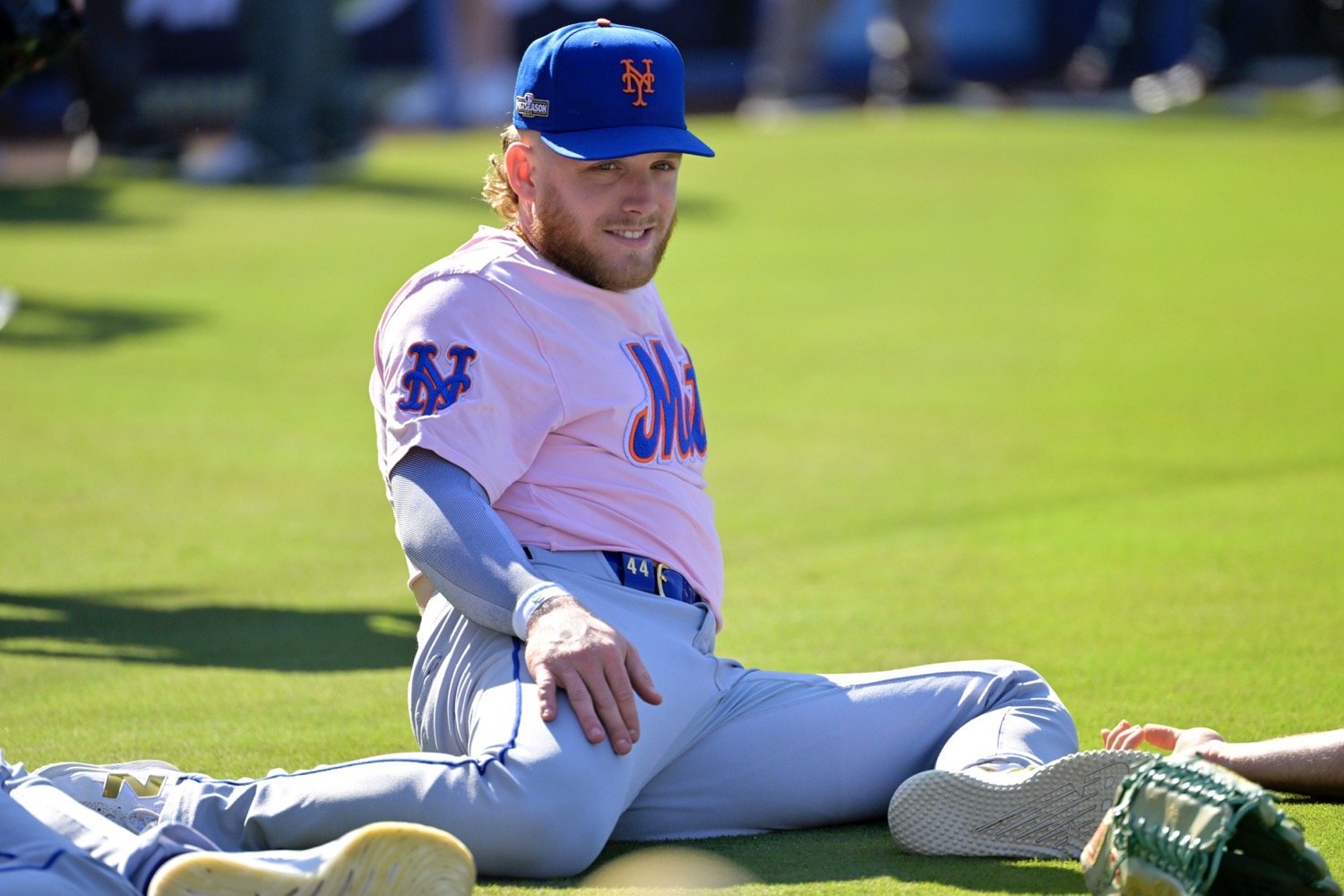 Since waiving Jake Cave following the 2022 season, the Twins have rotated their fourth outfield role, trading for Michael A. Taylor to be that guy in 2023 and Manuel Margot to do the same in 2024. Now, they're signing Harrison Bader ahead of the 2025 season. Like each of those moves, prioritizing defense over offense, Bader represents another glove-first outfielder off the bench. Taylor and Margot entered each of their respective seasons with the club with similar expectations—namely, that they would provide above-average defense and a passable bat. Despite that, their contributions to those seasons couldn’t have been more different. Taylor more than held up his side of the deal, having one of the best seasons of his career at the plate and providing solid defense across 129 games. In fact, he exceeded fans' expectations—so much so that many wanted him back in a Twins uniform (which was quickly poo-poo'ed when the Twins announced payroll cuts). For what it’s worth, the Twins made the right call in moving on, as he produced a 50 wRC+ in 2024 with the Pittsburgh Pirates. Unfortunately, their Taylor replacement didn’t perform much better. For the first time in his career, Margot wasn’t even replacement level, being a black hole at the plate while providing below-average defense. Now, the Twins take another shot at recreating Taylor by adding Bader. Should we have similar expectations for him as we did with Taylor and Margot? In short, yes. He profiles similarly, as a strong defender with a passable (albeit below-average) bat but a long history of injuries. Fortunately, Bader had the healthiest year of his career in 2024, playing in 143 games. Prior to 2024, Bader averaged 91 games a season dealing with various injuries, but most concerning are the multiple injuries to the lower half of his body (two hamstring strains, plantar fasciitis, and a groin strain). In 2023 alone, three separate strains put him on the injured list and out of the Yankees' reach when they needed him. On the positive side of things, he differs from Taylor and Margot by having produced multiple seasons as an above-average contributor at the plate. Unfortunately, it’s been three years since he’s had such a season, but his career 90 wRC+ is the highest of the three being compared. That said, he should be in a role that allows him to perform well at the plate. I would expect Bader to draw most of the at-bats against left-handed pitching at one of the corner outfield positions. Both Trevor Larnach and Matt Wallner have struggled mightily against left-handed pitching early on in their careers and, while they deserve a chance to prove otherwise, one of the two will likely give way to Bader when a southpaw starts or is brought in as a reliever. Of course, he will also relieve Byron Buxton in center field on occasion, regardless of who is on the mound. PECOTA projects Bader for 406 plate appearances and a .234/.283/.357 line, with 9 homers and 19 steals. His ZiPS-projected line is similar. While those numbers don’t jump off the page, he’s carried a .775 OPS and a 109 wRC+ against left-handed pitching over his entire career (although he struggled against lefties in 2024). He experienced better success against righties last season, but has generally been a below-average producer at the plate. More importantly, because both systems forecast Bader to be an above-average defender and runner, they still peg him for around 1.5 wins above replacement in less than a full-time role. Although their offensive production projects similarly, this signing probably points towards a reduction in at-bats (and maybe even the loss of a roster spot) for super-utility Michael Helman. Where he falls short compared to Bader is that he’s not a particularly strong defender, despite his ostensible versatility. If Helman finds a role on this team, it’s likely as the last man on the bench, left for pinch-running duties. Of the four most recent fourth outfielders (including Cave), I have to say I’m the most excited about Bader. I’m tempering expectations given his injury history and how he struggled against lefties in 2024. I think his floor is assuredly higher than what the team got from Margot, and his ceiling can be higher than they got out of Taylor. I think the biggest concern is whether he can have back-to-back healthy campaigns. What are your thoughts on this addition by the Twins? Join the conversation in the comments!
 -
 The very Minnesotan outfielder has a legitimate cannon attached to his right shoulder, yet baserunners attempt to take extra bases against him at the third-highest rate (advance attempt rate) of all outfielders. One diminutive teammate, meanwhile, had the second-weakest arm at the position in 2024, yet tied for the lowest advance attempt rate. Make it make sense! Image courtesy of © Jesse Johnson-Imagn Images The very Minnesotan outfielder has a legitimate cannon attached to his right shoulder, yet baserunners attempt to take extra bases against him at the third-highest rate (advance attempt rate) of all outfielders. One diminutive teammate, meanwhile, had the second-weakest arm at the position in 2024, yet tied for the lowest advance attempt rate. Make it make sense! It would be natural to assume a strong correlation between the strength of an outfielder's arm and the advance attempt rate against that defender. That is to say, we might assume that the stronger the outfield arm, the more conservative baserunners will be. However, while that might prove mostly true, Matt Wallner and Manuel Margot are counterexamples, reminding us that there is more to throwing runners out than having a Howitzer. As Wallner looks to be the heir apparent to Max Kepler in right field, I felt it would be worthwhile to look at what might be the reason for this discrepancy. Naturally, my first thought was to consider the accuracy of his throws. Arm Accuracy This isn't quantified publicly (yet), so I put on my amateur scouting goggles, watched a few dozen plays, and found nine where Wallner was attempting to throw out an advancing base runner. Of those nine, I determined that six of those were inaccurate throws. That's not to say that the runner would have been out had the throw been better, but it is to say that Wallner made a legitimate attempt to throw out a runner and the throw was off-line. Maybe I was too harsh, but even if the throw was simply on the wrong side of the bag (like this one), I deemed it inaccurate. To be fair, I don’t have a good idea of what percentage of outfield throws are accurate, but my gut tells me that it’s better than 33.3% for some of the best arms in the game. Regardless, this subjective analysis alone wasn’t enough to make a strong conclusion on why runners are particularly aggressive against Wallner. One thing that did stand out as I was reviewing all the videos was the number of times Wallner was close to catching a ball hit over his head but just missed, like in the highlight below. This led me to another important aspect of throwing as a fielder, which is how you approach the ball. Approach While I initially noticed this when reviewing videos for arm accuracy, the way he approaches a ball is something Baseball Savant has quantified. First, I looked at his starting position relative to the rest of the league, in case he’s positioning himself differently than most of his counterparts. Alas, on average right fielders positioned themselves 295 feet away from home plate, while Wallner averaged 293. That’s pretty negligible. Then, I moved on to what happens after the ball is hit. That’s when things started to make more sense. Wallner’s Outs Above Average (OAA) was -3 in 2024, and he covered nearly four fewer feet on batted balls than did the average right fielder, which put him tied for last with Yordan Alvarez. Digging a little deeper, Baseball Savant breaks apart an outfielder's jump into three areas: reaction, burst, and route. What you find is that, while Wallner’s routes are considered a strength, his reaction and burst times are considerably below average (his data point is directly to the left of the brim of his hat in the picture below). Not only does this impact his ability to catch baseballs, but it impacts his ability to approach the ball in a way that is going to set him up for a good throw. In fact, more often than not, the most direct route to a baseball (remember, that’s his strength as a fielder) is not the best way to approach a baseball to set yourself up for a throw. Instead, you often want to take an indirect route so your momentum is bringing you toward your intended target before you field the ball. A good example of this is shown in the highlight below, where Willi Castro sets himself up (7-8 second mark) to throw out one of the fastest players in baseball. NjQxbDRfV0ZRVkV3dEdEUT09X1VsTllBVllNVmdNQVdWc0VCd0FBVkZKWEFGa0dVMVVBVmdaVFVsY0hBbFZVQXdFQQ==.mp4 While Wallner’s top-end speed is fine (55th percentile), his five-foot running splits further support what may be the underlying reason why runners are willing to test his arm. Given his size, it takes him longer to get going, which inherently impacts his reaction and burst times. This has a chain effect on his overall approach to the ball, which then mitigates his ability to consistently take advantage of the 97 mile-per-hour velocity he averages on his throws. Whether this is an area of his game Wallner can improve remains to be seen, but it at least provides us with a theory as to why runners tend to be so aggressive, despite his arm. View full article
 -
Why Are Runners So Aggressive Against Matt Wallner's 99th-Percentile Arm?
Matthew Lenz posted an article in Twins
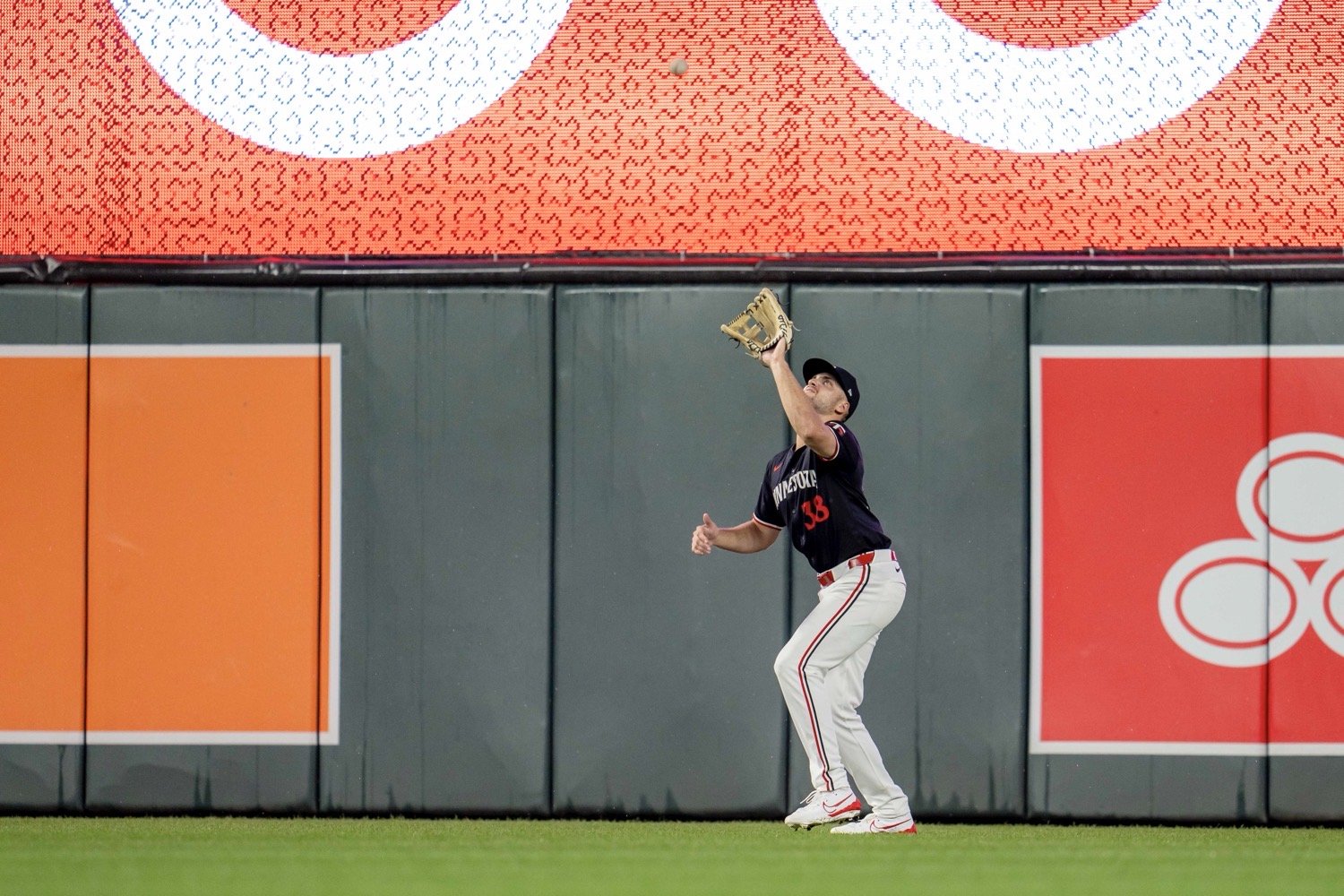 It would be natural to assume a strong correlation between the strength of an outfielder's arm and the advance attempt rate against that defender. That is to say, we might assume that the stronger the outfield arm, the more conservative baserunners will be. However, while that might prove mostly true, Matt Wallner and Manuel Margot are counterexamples, reminding us that there is more to throwing runners out than having a Howitzer. As Wallner looks to be the heir apparent to Max Kepler in right field, I felt it would be worthwhile to look at what might be the reason for this discrepancy. Naturally, my first thought was to consider the accuracy of his throws. Arm Accuracy This isn't quantified publicly (yet), so I put on my amateur scouting goggles, watched a few dozen plays, and found nine where Wallner was attempting to throw out an advancing base runner. Of those nine, I determined that six of those were inaccurate throws. That's not to say that the runner would have been out had the throw been better, but it is to say that Wallner made a legitimate attempt to throw out a runner and the throw was off-line. Maybe I was too harsh, but even if the throw was simply on the wrong side of the bag (like this one), I deemed it inaccurate. To be fair, I don’t have a good idea of what percentage of outfield throws are accurate, but my gut tells me that it’s better than 33.3% for some of the best arms in the game. Regardless, this subjective analysis alone wasn’t enough to make a strong conclusion on why runners are particularly aggressive against Wallner. One thing that did stand out as I was reviewing all the videos was the number of times Wallner was close to catching a ball hit over his head but just missed, like in the highlight below. This led me to another important aspect of throwing as a fielder, which is how you approach the ball. Approach While I initially noticed this when reviewing videos for arm accuracy, the way he approaches a ball is something Baseball Savant has quantified. First, I looked at his starting position relative to the rest of the league, in case he’s positioning himself differently than most of his counterparts. Alas, on average right fielders positioned themselves 295 feet away from home plate, while Wallner averaged 293. That’s pretty negligible. Then, I moved on to what happens after the ball is hit. That’s when things started to make more sense. Wallner’s Outs Above Average (OAA) was -3 in 2024, and he covered nearly four fewer feet on batted balls than did the average right fielder, which put him tied for last with Yordan Alvarez. Digging a little deeper, Baseball Savant breaks apart an outfielder's jump into three areas: reaction, burst, and route. What you find is that, while Wallner’s routes are considered a strength, his reaction and burst times are considerably below average (his data point is directly to the left of the brim of his hat in the picture below). Not only does this impact his ability to catch baseballs, but it impacts his ability to approach the ball in a way that is going to set him up for a good throw. In fact, more often than not, the most direct route to a baseball (remember, that’s his strength as a fielder) is not the best way to approach a baseball to set yourself up for a throw. Instead, you often want to take an indirect route so your momentum is bringing you toward your intended target before you field the ball. A good example of this is shown in the highlight below, where Willi Castro sets himself up (7-8 second mark) to throw out one of the fastest players in baseball. NjQxbDRfV0ZRVkV3dEdEUT09X1VsTllBVllNVmdNQVdWc0VCd0FBVkZKWEFGa0dVMVVBVmdaVFVsY0hBbFZVQXdFQQ==.mp4 While Wallner’s top-end speed is fine (55th percentile), his five-foot running splits further support what may be the underlying reason why runners are willing to test his arm. Given his size, it takes him longer to get going, which inherently impacts his reaction and burst times. This has a chain effect on his overall approach to the ball, which then mitigates his ability to consistently take advantage of the 97 mile-per-hour velocity he averages on his throws. Whether this is an area of his game Wallner can improve remains to be seen, but it at least provides us with a theory as to why runners tend to be so aggressive, despite his arm.
 -
Minnesota Twins Sign Old Friend Danny Coulombe
Matthew Lenz posted a video in Minnesota Twins Videos
The Minnesota Twins have brought back southpaw reliever Danny Coulombe on a one year, $2.5 million deal. After being traded to the Baltimore Orioles in 2023, Coulombe had a successful run as the Orioles primary left reliever over the past two seasons. The turnaround was in part due to his change in his pitch repertoire and mix. Will the Twins follow the Orioles lead? What are your thoughts on the signing? Join the conversation in the comments! -
The Minnesota Twins have brought back southpaw reliever Danny Coulombe on a one year, $2.5 million deal. After being traded to the Baltimore Orioles in 2023, Coulombe had a successful run as the Orioles primary left reliever over the past two seasons. The turnaround was in part due to his change in his pitch repertoire and mix. Will the Twins follow the Orioles lead? What are your thoughts on the signing? Join the conversation in the comments! View full video
-
While not as deep as the divisions hitting prospects, the American League Central boasts some of the top end pitching prospects in all of baseball. Get to know them and find out where the Minnesota Twins top pitching prospects ranks within the group.
-
While not as deep as the divisions hitting prospects, the American League Central boasts some of the top end pitching prospects in all of baseball. Get to know them and find out where the Minnesota Twins top pitching prospects ranks within the group. View full video
-
Dan Hayes of The Athletic reported that the Minnesota Twins have about $5 million in leeway left for the 2025 offseason. The Twins could use a left-handed reliever and a corner outfielder who can hit left-handed pitching. How should the Derek Falvey prioritize their $5 million?
-
Dan Hayes of The Athletic reported that the Minnesota Twins have about $5 million in leeway left for the 2025 offseason. The Twins could use a left-handed reliever and a corner outfielder who can hit left-handed pitching. How should the Derek Falvey prioritize their $5 million? View full video
-
After three authors delved into the promises and pitfalls of various approaches to bridging the gaps between small- and large-market teams last week across our websites, tonight, we offer a discussion among them about what was learned. Image courtesy of © Brad Rempel-Imagn Images After three authors delved into the promises and pitfalls of various approaches to bridging the gaps between small- and large-market teams last week across our websites, tonight, we offer a discussion among them about what was learned. Matt Trueblood: So, first of all, I want to hear whether any of you changed what policy prescriptions (if any) you advocate or oppose now that you didn’t before digging into this. Did anyone see a new dynamic in the positions of big- and small-market teams or the union that they could particularly appreciate, or an unintended consequence of a change they didn’t expect? Brandon Glick: I went into this project expecting to advocate—hard—for a salary cap and floor. The NFL operates pretty strongly with it, and the NBA is probably the paradigm example of a league that has year-round player movement and strong parity sourcing from a (soft) salary cap. What I found was that not only does baseball have much stronger parity, both in terms of playoff performers and champion variety, but that it also spawns more trade and free-agent activity thanks to its existing systems that make up for not having a salary cap and floor (like the qualifying offer and prospect industry). There’s obviously a push and pull with this discussion—owners would want a hard cap with no floor, while the players would want the opposite—and that extends to the players as well, where superstar players are willing to give up the safety of a floor for the avoidance of a cap, while role players would suggest the opposite. Now, I feel pretty strongly that baseball needs tweaking, rather than a seismic overhaul to its economics. Matthew Lenz: This project required me to adopt a more objective perspective, moving away from a fan's viewpoint. Before my research, I was of the (partially educated… and that might be generous) opinion that there needed to be a complete overhaul of MLB's Competitive Balance Tax (CBT) and revenue-sharing systems. My perspective was dually flawed, as I was only thinking of the implications of any change from a fan’s point of view and, moreover, as a fan of a small- to mid-market team. Now, after my research and reading Brandon and Jake’s articles, my (more educated) opinion is that the current system just needs some tweaks, specifically related to stiffer CBT penalties and deferrals. Like Brandon, I think the parity in the league speaks for itself. That said, while deferrals aren’t new, the amount being deferred in some cases is unprecedented. We also have back-to-back seasons where there have been a record number of teams willing to pay the luxury tax, so my question back to the group would be: how long can we expect this parity to last, and will only minor tweaks maintain this level of it? BG: Look, spending money DOES help you win. Objectively speaking, buying better talent makes your team more talented. And when your team is more talented, you can start to attract guys like Roki Sasaki, who is very talented and also very cheap. I think the parity of baseball exists mostly because of the randomness of it. No matter how good a pitcher on a mound is, any hitter can run into one against him. And even the best hitters can get unlucky against the worst pitchers. Unlike the NBA, where singular stars can fundamentally alter the course of an entire franchise, and the NFL, where the “haves” and “have-nots” are separated merely by the quality of their quarterback, individual stars cannot propel teams to championships in baseball. Over a 162-game season, they absolutely do—given a large enough sample size, the cream of the crop will rise to the top. But in a seven-game series, there’s just too much randomness to ever guarantee an outcome. I think a reckoning is coming for baseball, not in terms of parity, but in terms of fan interest. There’s a palpable sense of burnout among fans this offseason as they watch the Dodgers nab every superstar on the market. If revenues start to dip, or television ratings start to decline, the league may be forced into action. MT: Let’s imagine that we do achieve a measure of financial parity, where spending power differences between teams shrink significantly. We’d still want a way to discourage players from forming super-teams and clustering up to chase rings at the expense of everyone else, right? Does anyone have an interesting idea in that vein? Jake McKibbin: One of the beautiful things about baseball is that any team can win on any given day. I have no problems with players chasing rings in free agency. This can be offset by strong drafting and development of players. Six or seven seasons of team control is a lot to work with, if you have the right talent coming through, so the main thing I’d want to see is every team have the ability to have three players locked into $20-million AAV deals and beyond. That’s not a huge sum, in this market, but I think it’s an achievable one. If players want to take reduced/deferred salaries to join one particular organization, that should be their right, but the cyclical nature of baseball powerhouses will likely result in a period in which these teams are paying heavily for aging, underperforming veterans. ML: Totally agree with Jake here. An idyllic world in sports, as unachievable as it might be, is one where nobody cares about money and everyone just cares about winning. At the end of the day, there will be some balance between players who prioritize money and those who prioritize winning. While that balance may not be even close to 50/50, I don’t think we can force players into a spot where they have to go play for poverty organizations like the Chicago White Sox because the Los Angeles Dodgers and New York City teams are too stacked. I think the other thing that will help balance is that these guys are competitors and want to play ball. Unless their skills are worsening and a smaller role is warranted, their ego and natural competitive edge aren’t going to allow them to join a super team just to sit on the bench—although the Dodgers' starting rotation may be a counterpoint to this argument. MT: To have a cap and floor, we’d have to define the baseball revenues of the game to the satisfaction of both the owners and the union. Can the owners be trusted to honestly report what they make, and how, such that players would accept their estimates? Should owners have to count money made from real estate and other investments whose value clearly derives from the baseball venture as revenue of which a percentage must go to players? Would certain teams demand that, at the expense of others who make especially gaudy amounts outside the gates of the park? How do you solve that problem? BG: Yet again, Matt throws me a curveball while I’m sitting on the heater (clearly, Matt never played for Lou Brown). I could wax poetic about this topic for a while, but the short of it is, no, you obviously cannot trust owners to properly report what they’re making, whether it’s purely team revenue or their entire portfolio. By day I’m a sportswriter, but by night I moonlight as a filmmaker, so trust me when I say this: There is no industry more corrupt than “Hollywood Accounting”. Those studio executives are the greediest people to ever walk the face of the earth. They make the biblical version of avarice look like a child who won’t share his Play-Doh. Behind them are politicians, and in a close third in the greedy column are sports team owners. As a Cubs fan, I know all too well about Tom Ricketts’s habit of claiming that all team revenue is funneled back into baseball operations. No, it isn’t. The Cubs have an annual payroll in the $200-$250 million range. Their revenue exceeded $500 million last year. Accounting for all the other expenses that go into owning a baseball team, like paying employee salaries and upkeep for the stadium,, doesn’t come close to making up that $250-300 million gap. Insofar as a salary cap and floor would require revenue reports—which they would, seeing as the figures for those parameters are percentages of the total league revenue—there just isn’t a good way to implement them into the modern age of baseball, where owners have made a business out of lying to their fans. JM: A revenue report would be fascinating. In the UK, all entities above a certain size are required to submit annual accounts to Companies House, where it can be accessed free of charge by anyone. Sports teams are held accountable, and it prevents any of the siphoning of funds that we suspect happens in baseball while giving a true cost of the operations of running an organization. This system obviously isn’t in place in the US. Brandon, can you see any way in which the owners could be tempted to air their dirty laundry in public? Or even to an independent adjudicator, perhaps, who reviews total revenue, its source, and dictates how much each team is liable for into the revenue-sharing pool? BG: Putting aside my (some would say staunch) beliefs that billionaires should be the most public people about their finances, rather than the most private, I want to believe that it’s possible that the league could coerce each owner into sharing information, at least between each other. Here’s the thing, though: I don’t actually know that a salary cap would be of benefit to baseball in the way some think. Think of what your reaction was when you saw Juan Soto’s contract with the Mets this offseason. If I were to look into my crystal ball and guess, it was probably some variation of “Holy S**t!”. If Soto was locked into signing a max contract of, for example, 10 years and $400 million, it would still boggle the mind, but it wouldn’t come as a surprise. Baseball’s current system is flawed, but I don’t think implementing a salary cap would’ve pushed Soto to the Athletics or Rays or anything, even if there was a maximum he was allowed to earn on his contract. If anything, it may have even led him back to the Yankees or even (gulp) the Dodgers. Unless a wave of benevolence washes over the ruling class of MLB, I don’t anticipate that we (or even the league) will ever have enough information to properly assess where a cap and floor should lie, and which teams should be responsible for paying what. In that case, I guess we can all just enjoy the funniness of watching people with more money than the human mind can comprehend measure which of their wallets can stretch wider. MT: Expanding revenue sharing is always easier to swallow when revenues are growing, but because of the slow deflation of the regional sports TV bubble, that hasn’t been the case—or at least, it hasn’t clearly been the case, with a robust and impressive rate of growth—over the last handful of years. Do you think a change in how money is distributed throughout the league has to wait until teams have a clearer collective picture of their future earnings from broadcasts—or should those revenues be shaped and their path forward be set based on a known arrangement with regard to revenue sharing? ML: Based on what Jake laid out in his article, I think that any changes to the revenue-sharing system need to wait until teams have a better understanding of their revenue from broadcasts. Another miscalculation of team revenue, like the one that has happened before, risks a hundreds-of-millions shortfall for teams to share. While that was in part to bail out a team facing bankruptcy, it’s baffling to me that the situation has never been fully rectified by MLB, in what will end up being a multi-billion dollar blunder. MT: A major factor in the future financial structure of the game will be the league’s efforts to expand. Now that the A’s are out of Oakland and (they hope) en route to Las Vegas, there’s a bit more certainty to that situation, but the Rays’ sticky stadium situation could create another relocation fight in the near future. Expansion would bring billions to the sport in new franchise expansion fees and increased earnings from televising an expanded postseason, but it will probably also create two new small-market teams. Should that future consideration shape decisions about whether or how to change the fundamental financial structure of the sport? JM: I think it’s a very apt point, but they should be treated as two separate issues. The challenges of a startup franchise, and the volatility they’ll face (which should ease as they develop their fan base, infrastructure, drafting, etc) are almost entirely separate from creating a balanced ecosystem in the here and now. Exceptional items will need to be made to facilitate any expansion plans, but the benefits of tweaking the revenue-sharing setup at the next CBA to create a more balanced playing field should help those newer, small-market franchises after their initial growth phase. ML: I agree with Jake. Regardless of the sport and its financial structure, start-up franchises face hurdles that they must overcome through development and time. I don’t know that the financial structure of the league, especially in baseball, has a major impact on the short-term success of a new organization. While you don’t want to make long-term success so much of an uphill battle that it deters new owners from investing, I think you need to prioritize making the best version of the game you can with the existing franchises. MT: Finally, we know that all of this conversation is happening in the shadow of the next CBA negotiations. A lockout seems likely; lost games seem possible. Which of these possible approaches reduces the friction in labor negotiations best? Would leaning into one approach make it more likely that all parties find something palatable on which to agree and spare us a long, quiet, nervous winter? And is that an overweening consideration, or is getting to the best solution worth big labor trouble? ML: Referencing my first comment in this roundtable, while the fan in me thought a major overhaul would be best, I think the more objective opinion of “minor tweaks” is the best solution to avoid or minimize a work stoppage. I don’t see how two parties with financial goals on opposite sides of the spectrum would ever be able to come to an agreement to move quickly from where we are to that grand destination, even if it’s the “best solution” for baseball. I do think change needs to happen, but I think everyone (owners, players, fans) needs to be realistic about how much change will actually happen, if the priority is to play ball on Opening Day 2027. BG: I agree wholeheartedly with Matt (Lenz) here, and I want to remind readers what happened during the last CBA lockout and the COVID-induced “lockout” in 2020. The players go into negotiations with specific goals, and the owners refuse to budge. It’s only once the threat of losing revenue starts to hit home that their side begins to negotiate in “good faith”—and, from the players’ perspective, the threat of losing salary convinces them to move the goalposts on their own wishes. Unless baseball is willing to punt on an entire season (or more), there just isn’t the time and space to completely revamp how the system works. And while that may sound defeatist to those hoping to see significant change, that’s also the reason why we won’t see baseball cancel a season or postseason again, like it did in 1994. This conversation is, ultimately, about money, and both sides want it. They may not see eye-to-eye on most things, but they do understand each other on that matter. Needling and prodding the status quo may not be in the best interests of the long-term health of the game, but in an effort to keep eyes focused on the field rather than risk ears pressed up against the closed doors of the CBA negotiations, I firmly believe both sides will continue to kick this timebomb of a can down the road. View full article
-
DiamondCentric Roundtable: What Do We Do About Financial Inequality in MLB?
Matthew Lenz posted an article in Twins
 Matt Trueblood: So, first of all, I want to hear whether any of you changed what policy prescriptions (if any) you advocate or oppose now that you didn’t before digging into this. Did anyone see a new dynamic in the positions of big- and small-market teams or the union that they could particularly appreciate, or an unintended consequence of a change they didn’t expect? Brandon Glick: I went into this project expecting to advocate—hard—for a salary cap and floor. The NFL operates pretty strongly with it, and the NBA is probably the paradigm example of a league that has year-round player movement and strong parity sourcing from a (soft) salary cap. What I found was that not only does baseball have much stronger parity, both in terms of playoff performers and champion variety, but that it also spawns more trade and free-agent activity thanks to its existing systems that make up for not having a salary cap and floor (like the qualifying offer and prospect industry). There’s obviously a push and pull with this discussion—owners would want a hard cap with no floor, while the players would want the opposite—and that extends to the players as well, where superstar players are willing to give up the safety of a floor for the avoidance of a cap, while role players would suggest the opposite. Now, I feel pretty strongly that baseball needs tweaking, rather than a seismic overhaul to its economics. Matthew Lenz: This project required me to adopt a more objective perspective, moving away from a fan's viewpoint. Before my research, I was of the (partially educated… and that might be generous) opinion that there needed to be a complete overhaul of MLB's Competitive Balance Tax (CBT) and revenue-sharing systems. My perspective was dually flawed, as I was only thinking of the implications of any change from a fan’s point of view and, moreover, as a fan of a small- to mid-market team. Now, after my research and reading Brandon and Jake’s articles, my (more educated) opinion is that the current system just needs some tweaks, specifically related to stiffer CBT penalties and deferrals. Like Brandon, I think the parity in the league speaks for itself. That said, while deferrals aren’t new, the amount being deferred in some cases is unprecedented. We also have back-to-back seasons where there have been a record number of teams willing to pay the luxury tax, so my question back to the group would be: how long can we expect this parity to last, and will only minor tweaks maintain this level of it? BG: Look, spending money DOES help you win. Objectively speaking, buying better talent makes your team more talented. And when your team is more talented, you can start to attract guys like Roki Sasaki, who is very talented and also very cheap. I think the parity of baseball exists mostly because of the randomness of it. No matter how good a pitcher on a mound is, any hitter can run into one against him. And even the best hitters can get unlucky against the worst pitchers. Unlike the NBA, where singular stars can fundamentally alter the course of an entire franchise, and the NFL, where the “haves” and “have-nots” are separated merely by the quality of their quarterback, individual stars cannot propel teams to championships in baseball. Over a 162-game season, they absolutely do—given a large enough sample size, the cream of the crop will rise to the top. But in a seven-game series, there’s just too much randomness to ever guarantee an outcome. I think a reckoning is coming for baseball, not in terms of parity, but in terms of fan interest. There’s a palpable sense of burnout among fans this offseason as they watch the Dodgers nab every superstar on the market. If revenues start to dip, or television ratings start to decline, the league may be forced into action. MT: Let’s imagine that we do achieve a measure of financial parity, where spending power differences between teams shrink significantly. We’d still want a way to discourage players from forming super-teams and clustering up to chase rings at the expense of everyone else, right? Does anyone have an interesting idea in that vein? Jake McKibbin: One of the beautiful things about baseball is that any team can win on any given day. I have no problems with players chasing rings in free agency. This can be offset by strong drafting and development of players. Six or seven seasons of team control is a lot to work with, if you have the right talent coming through, so the main thing I’d want to see is every team have the ability to have three players locked into $20-million AAV deals and beyond. That’s not a huge sum, in this market, but I think it’s an achievable one. If players want to take reduced/deferred salaries to join one particular organization, that should be their right, but the cyclical nature of baseball powerhouses will likely result in a period in which these teams are paying heavily for aging, underperforming veterans. ML: Totally agree with Jake here. An idyllic world in sports, as unachievable as it might be, is one where nobody cares about money and everyone just cares about winning. At the end of the day, there will be some balance between players who prioritize money and those who prioritize winning. While that balance may not be even close to 50/50, I don’t think we can force players into a spot where they have to go play for poverty organizations like the Chicago White Sox because the Los Angeles Dodgers and New York City teams are too stacked. I think the other thing that will help balance is that these guys are competitors and want to play ball. Unless their skills are worsening and a smaller role is warranted, their ego and natural competitive edge aren’t going to allow them to join a super team just to sit on the bench—although the Dodgers' starting rotation may be a counterpoint to this argument. MT: To have a cap and floor, we’d have to define the baseball revenues of the game to the satisfaction of both the owners and the union. Can the owners be trusted to honestly report what they make, and how, such that players would accept their estimates? Should owners have to count money made from real estate and other investments whose value clearly derives from the baseball venture as revenue of which a percentage must go to players? Would certain teams demand that, at the expense of others who make especially gaudy amounts outside the gates of the park? How do you solve that problem? BG: Yet again, Matt throws me a curveball while I’m sitting on the heater (clearly, Matt never played for Lou Brown). I could wax poetic about this topic for a while, but the short of it is, no, you obviously cannot trust owners to properly report what they’re making, whether it’s purely team revenue or their entire portfolio. By day I’m a sportswriter, but by night I moonlight as a filmmaker, so trust me when I say this: There is no industry more corrupt than “Hollywood Accounting”. Those studio executives are the greediest people to ever walk the face of the earth. They make the biblical version of avarice look like a child who won’t share his Play-Doh. Behind them are politicians, and in a close third in the greedy column are sports team owners. As a Cubs fan, I know all too well about Tom Ricketts’s habit of claiming that all team revenue is funneled back into baseball operations. No, it isn’t. The Cubs have an annual payroll in the $200-$250 million range. Their revenue exceeded $500 million last year. Accounting for all the other expenses that go into owning a baseball team, like paying employee salaries and upkeep for the stadium,, doesn’t come close to making up that $250-300 million gap. Insofar as a salary cap and floor would require revenue reports—which they would, seeing as the figures for those parameters are percentages of the total league revenue—there just isn’t a good way to implement them into the modern age of baseball, where owners have made a business out of lying to their fans. JM: A revenue report would be fascinating. In the UK, all entities above a certain size are required to submit annual accounts to Companies House, where it can be accessed free of charge by anyone. Sports teams are held accountable, and it prevents any of the siphoning of funds that we suspect happens in baseball while giving a true cost of the operations of running an organization. This system obviously isn’t in place in the US. Brandon, can you see any way in which the owners could be tempted to air their dirty laundry in public? Or even to an independent adjudicator, perhaps, who reviews total revenue, its source, and dictates how much each team is liable for into the revenue-sharing pool? BG: Putting aside my (some would say staunch) beliefs that billionaires should be the most public people about their finances, rather than the most private, I want to believe that it’s possible that the league could coerce each owner into sharing information, at least between each other. Here’s the thing, though: I don’t actually know that a salary cap would be of benefit to baseball in the way some think. Think of what your reaction was when you saw Juan Soto’s contract with the Mets this offseason. If I were to look into my crystal ball and guess, it was probably some variation of “Holy S**t!”. If Soto was locked into signing a max contract of, for example, 10 years and $400 million, it would still boggle the mind, but it wouldn’t come as a surprise. Baseball’s current system is flawed, but I don’t think implementing a salary cap would’ve pushed Soto to the Athletics or Rays or anything, even if there was a maximum he was allowed to earn on his contract. If anything, it may have even led him back to the Yankees or even (gulp) the Dodgers. Unless a wave of benevolence washes over the ruling class of MLB, I don’t anticipate that we (or even the league) will ever have enough information to properly assess where a cap and floor should lie, and which teams should be responsible for paying what. In that case, I guess we can all just enjoy the funniness of watching people with more money than the human mind can comprehend measure which of their wallets can stretch wider. MT: Expanding revenue sharing is always easier to swallow when revenues are growing, but because of the slow deflation of the regional sports TV bubble, that hasn’t been the case—or at least, it hasn’t clearly been the case, with a robust and impressive rate of growth—over the last handful of years. Do you think a change in how money is distributed throughout the league has to wait until teams have a clearer collective picture of their future earnings from broadcasts—or should those revenues be shaped and their path forward be set based on a known arrangement with regard to revenue sharing? ML: Based on what Jake laid out in his article, I think that any changes to the revenue-sharing system need to wait until teams have a better understanding of their revenue from broadcasts. Another miscalculation of team revenue, like the one that has happened before, risks a hundreds-of-millions shortfall for teams to share. While that was in part to bail out a team facing bankruptcy, it’s baffling to me that the situation has never been fully rectified by MLB, in what will end up being a multi-billion dollar blunder. MT: A major factor in the future financial structure of the game will be the league’s efforts to expand. Now that the A’s are out of Oakland and (they hope) en route to Las Vegas, there’s a bit more certainty to that situation, but the Rays’ sticky stadium situation could create another relocation fight in the near future. Expansion would bring billions to the sport in new franchise expansion fees and increased earnings from televising an expanded postseason, but it will probably also create two new small-market teams. Should that future consideration shape decisions about whether or how to change the fundamental financial structure of the sport? JM: I think it’s a very apt point, but they should be treated as two separate issues. The challenges of a startup franchise, and the volatility they’ll face (which should ease as they develop their fan base, infrastructure, drafting, etc) are almost entirely separate from creating a balanced ecosystem in the here and now. Exceptional items will need to be made to facilitate any expansion plans, but the benefits of tweaking the revenue-sharing setup at the next CBA to create a more balanced playing field should help those newer, small-market franchises after their initial growth phase. ML: I agree with Jake. Regardless of the sport and its financial structure, start-up franchises face hurdles that they must overcome through development and time. I don’t know that the financial structure of the league, especially in baseball, has a major impact on the short-term success of a new organization. While you don’t want to make long-term success so much of an uphill battle that it deters new owners from investing, I think you need to prioritize making the best version of the game you can with the existing franchises. MT: Finally, we know that all of this conversation is happening in the shadow of the next CBA negotiations. A lockout seems likely; lost games seem possible. Which of these possible approaches reduces the friction in labor negotiations best? Would leaning into one approach make it more likely that all parties find something palatable on which to agree and spare us a long, quiet, nervous winter? And is that an overweening consideration, or is getting to the best solution worth big labor trouble? ML: Referencing my first comment in this roundtable, while the fan in me thought a major overhaul would be best, I think the more objective opinion of “minor tweaks” is the best solution to avoid or minimize a work stoppage. I don’t see how two parties with financial goals on opposite sides of the spectrum would ever be able to come to an agreement to move quickly from where we are to that grand destination, even if it’s the “best solution” for baseball. I do think change needs to happen, but I think everyone (owners, players, fans) needs to be realistic about how much change will actually happen, if the priority is to play ball on Opening Day 2027. BG: I agree wholeheartedly with Matt (Lenz) here, and I want to remind readers what happened during the last CBA lockout and the COVID-induced “lockout” in 2020. The players go into negotiations with specific goals, and the owners refuse to budge. It’s only once the threat of losing revenue starts to hit home that their side begins to negotiate in “good faith”—and, from the players’ perspective, the threat of losing salary convinces them to move the goalposts on their own wishes. Unless baseball is willing to punt on an entire season (or more), there just isn’t the time and space to completely revamp how the system works. And while that may sound defeatist to those hoping to see significant change, that’s also the reason why we won’t see baseball cancel a season or postseason again, like it did in 1994. This conversation is, ultimately, about money, and both sides want it. They may not see eye-to-eye on most things, but they do understand each other on that matter. Needling and prodding the status quo may not be in the best interests of the long-term health of the game, but in an effort to keep eyes focused on the field rather than risk ears pressed up against the closed doors of the CBA negotiations, I firmly believe both sides will continue to kick this timebomb of a can down the road.
 -
Happy PECOTA Day, Twins fans! And, boy, is it a day to celebrate. Image courtesy of © John Froschauer-Imagn Images Happy PECOTA Day, Twins fans! And, boy, is it a day to celebrate. Baseball Prospectus (BP) has released their PECOTA projections for the 2025 season, and their thousands of simulations project the Minnesota Twins to win the American League Central with 86 wins (5th in AL, 11th in MLB), five more than the second place Kansas City Royals. PECOTA gives the Twins a 62.9% chance to make the playoffs, a 45.3% chance to reach the divisional round, and a 4.7% chance to win the World Series. For context, that’s the ninth-highest percentage in baseball. (Of course, the Los Angeles Dodgers have the highest percentage, at a whopping 20.7%.) If you don’t focus tightly on the last month and a half of the 2024 season, the win total shouldn’t be all that surprising—although the prospect of winning the division by five games may be. The Twins have a young core of players who should continue developing; a bounce-back candidate atop their rotation; and other pitchers who hope to have a healthier 2025 season. While the offseason has been lackluster (to say the least), this group was on a 92-win pace halfway through last August, and the front office looks to bring back a vast majority of that team. Let’s dig a little deeper to see exactly what BP likes (and doesn’t like) about the 2025 version of this club. Hitters BP projects the Twins to feature seven above-average hitters, based on their Deserved Runs Created rates (DRC+, where 100 is average and higher is better): Carlos Correa, Royce Lewis, Matt Wallner, Byron Buxton, Trevor Larnach, José Miranda, and Ryan Jeffers. The most notable name missing from that list is fan favorite super-utility Willi Castro, who projects to carry a 92 DRC+ while slashing .231/.308/.358. Those numbers are all significantly lower than we’ve seen him produce with the Twins, but this is a good reminder that Castro did have a robust (and discouraging) track record with the Tigers before coming to Minnesota. On the other hand, BP has Edouard Julien producing something closer to his rookie season than his sophomore campaign. They like Brooks Lee to be a slightly below-average hitter (98 DRC+), and Austin Martin to build off a solid rookie year. Overall, the Twins are projected to have a roughly average offense (102 DRC+) and to score about 4.5 runs per game. Starting Rotation Like last season, PECOTA projects Pablo López, Joe Ryan, and Bailey Ober to be a solid 1-2-3 punch in 2025. That said, the model’s projection seems to be a little confused on whether or not it believes in a López bounceback. While most would agree López had a lackluster 2024, the model projects his Deserved Runs Against Minus (DRA-) and Wins Above Replacement Player (WARP) to worsen, while projecting a 0.6 run improvement in his ERA. In short, it's telling us that his 2024 line was unlucky—but that he is more likely to get better in those surface-level areas than in terms of real performance. The four starters who will compete for the final two rotation spots (Simeon Woods Richardson, Chris Paddack, Zebby Matthews, and David Festa) all project to be roughly league-average performers, with Festa leading the way (96 DRA-, where lower is better) and Woods Richardson at the bottom of the group (102). One thing to note is that DRA- is relative to the rest of the league irrespective of rotation spot, which I find to be pretty encouraging: PECOTA likes even the bottom of the Twins rotation to be around the average for all pitchers. Bullpen Naturally, all bullpens seem to face more scrutiny than any other position group. Unlike any other position, when the bullpen blows a hold or save resulting in a loss, they’re often the primary scapegoat regardless of what unfolded throughout the entirety of the game. While this isn’t unique to Twins fans, there is no better example of this than to read the comments and social media replies to FanGraphs's recent projections that have the Minnesota bullpen as one of the best in baseball. PECOTA projects Griffin Jax to be the Twins’ most effective reliever by a wide margin, with a sub-3.00 ERA and a 73 DRA-. Moreover, it projects the majority of the bullpen innings to be better than average, including those thrown by Jorge Alcalá, Jhoan Durán, Cole Sands, Kody Funderburk, and Michael Tonkin. In spite of what @Twinsfan6535438919 thinks, we have multiple reputable data models projecting the Twins to have one of the best bullpens in baseball (again) in 2025. Yes, it’s hard to overlook the last 40 games of the 2024 season, and that stretch shouldn’t be completely ignored. Yes, it’s hard to overlook the lack of impact moves the Pohlads have allowed in the offseason. Yes, those two things together make it easy to overlook the influence player development can have on an organization. However, the 2025 Twins (largely made up of homegrown players and former castoffs) cannot be overlooked, and are absolutely contenders to win the American League Central. In fact, we can fairly call them the clear favorites. What do you think of the projection model? Are you taking over or under 85.5 wins? View full article
-
PECOTA 2025: Minnesota Twins Take the American League Central Crown
Matthew Lenz posted an article in Twins
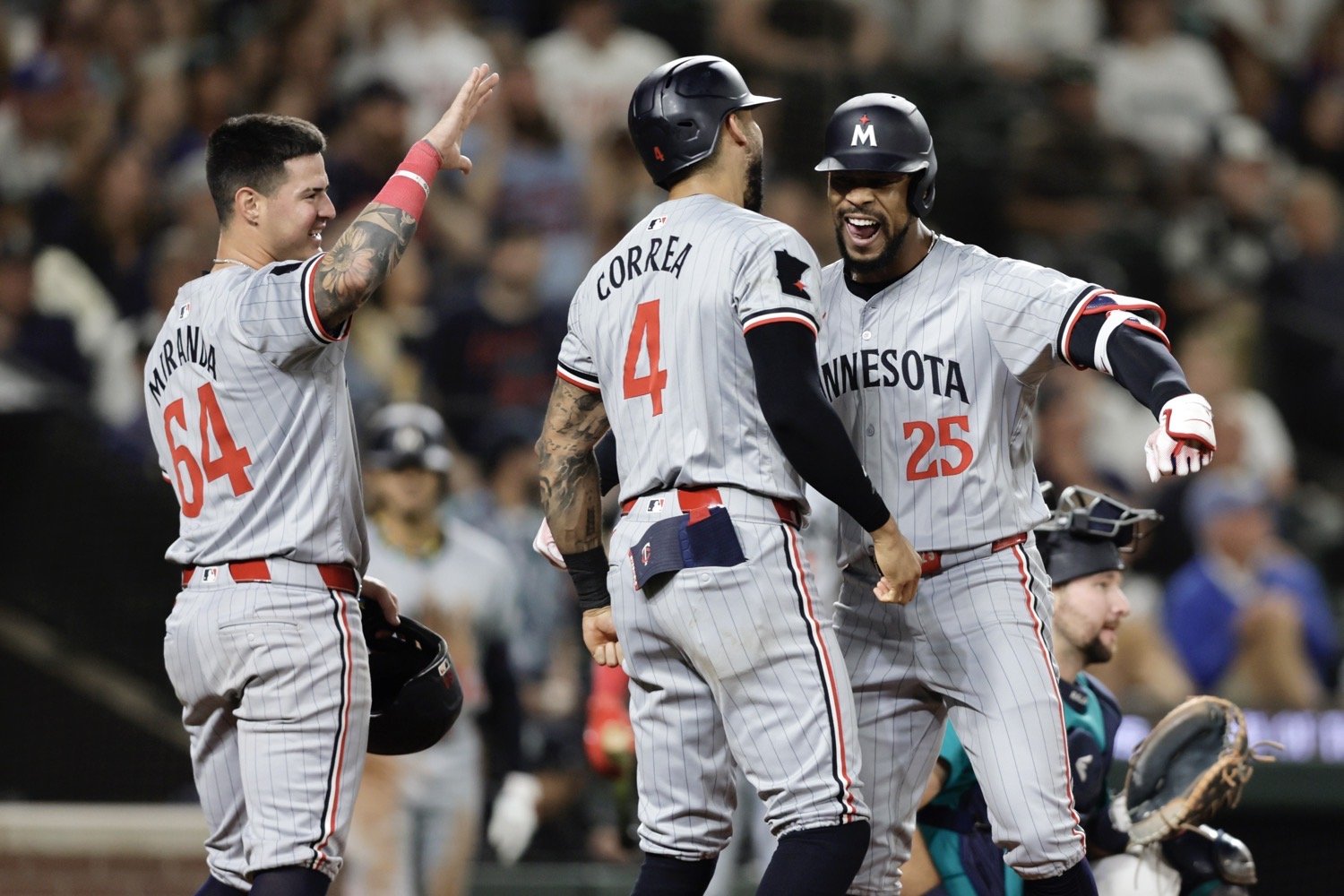 Baseball Prospectus (BP) has released their PECOTA projections for the 2025 season, and their thousands of simulations project the Minnesota Twins to win the American League Central with 86 wins (5th in AL, 11th in MLB), five more than the second place Kansas City Royals. PECOTA gives the Twins a 62.9% chance to make the playoffs, a 45.3% chance to reach the divisional round, and a 4.7% chance to win the World Series. For context, that’s the ninth-highest percentage in baseball. (Of course, the Los Angeles Dodgers have the highest percentage, at a whopping 20.7%.) If you don’t focus tightly on the last month and a half of the 2024 season, the win total shouldn’t be all that surprising—although the prospect of winning the division by five games may be. The Twins have a young core of players who should continue developing; a bounce-back candidate atop their rotation; and other pitchers who hope to have a healthier 2025 season. While the offseason has been lackluster (to say the least), this group was on a 92-win pace halfway through last August, and the front office looks to bring back a vast majority of that team. Let’s dig a little deeper to see exactly what BP likes (and doesn’t like) about the 2025 version of this club. Hitters BP projects the Twins to feature seven above-average hitters, based on their Deserved Runs Created rates (DRC+, where 100 is average and higher is better): Carlos Correa, Royce Lewis, Matt Wallner, Byron Buxton, Trevor Larnach, José Miranda, and Ryan Jeffers. The most notable name missing from that list is fan favorite super-utility Willi Castro, who projects to carry a 92 DRC+ while slashing .231/.308/.358. Those numbers are all significantly lower than we’ve seen him produce with the Twins, but this is a good reminder that Castro did have a robust (and discouraging) track record with the Tigers before coming to Minnesota. On the other hand, BP has Edouard Julien producing something closer to his rookie season than his sophomore campaign. They like Brooks Lee to be a slightly below-average hitter (98 DRC+), and Austin Martin to build off a solid rookie year. Overall, the Twins are projected to have a roughly average offense (102 DRC+) and to score about 4.5 runs per game. Starting Rotation Like last season, PECOTA projects Pablo López, Joe Ryan, and Bailey Ober to be a solid 1-2-3 punch in 2025. That said, the model’s projection seems to be a little confused on whether or not it believes in a López bounceback. While most would agree López had a lackluster 2024, the model projects his Deserved Runs Against Minus (DRA-) and Wins Above Replacement Player (WARP) to worsen, while projecting a 0.6 run improvement in his ERA. In short, it's telling us that his 2024 line was unlucky—but that he is more likely to get better in those surface-level areas than in terms of real performance. The four starters who will compete for the final two rotation spots (Simeon Woods Richardson, Chris Paddack, Zebby Matthews, and David Festa) all project to be roughly league-average performers, with Festa leading the way (96 DRA-, where lower is better) and Woods Richardson at the bottom of the group (102). One thing to note is that DRA- is relative to the rest of the league irrespective of rotation spot, which I find to be pretty encouraging: PECOTA likes even the bottom of the Twins rotation to be around the average for all pitchers. Bullpen Naturally, all bullpens seem to face more scrutiny than any other position group. Unlike any other position, when the bullpen blows a hold or save resulting in a loss, they’re often the primary scapegoat regardless of what unfolded throughout the entirety of the game. While this isn’t unique to Twins fans, there is no better example of this than to read the comments and social media replies to FanGraphs's recent projections that have the Minnesota bullpen as one of the best in baseball. PECOTA projects Griffin Jax to be the Twins’ most effective reliever by a wide margin, with a sub-3.00 ERA and a 73 DRA-. Moreover, it projects the majority of the bullpen innings to be better than average, including those thrown by Jorge Alcalá, Jhoan Durán, Cole Sands, Kody Funderburk, and Michael Tonkin. In spite of what @Twinsfan6535438919 thinks, we have multiple reputable data models projecting the Twins to have one of the best bullpens in baseball (again) in 2025. Yes, it’s hard to overlook the last 40 games of the 2024 season, and that stretch shouldn’t be completely ignored. Yes, it’s hard to overlook the lack of impact moves the Pohlads have allowed in the offseason. Yes, those two things together make it easy to overlook the influence player development can have on an organization. However, the 2025 Twins (largely made up of homegrown players and former castoffs) cannot be overlooked, and are absolutely contenders to win the American League Central. In fact, we can fairly call them the clear favorites. What do you think of the projection model? Are you taking over or under 85.5 wins?
 -
![More information about "Hayes: "Minnesota Twins are believed to have $5 million [to spend]""](//dtb3yzl0vm3pr.cloudfront.net/monthly_2025_01/USATSI_22530267.jpeg.cff05a3ba967668caac713fa9c18049c.jpeg) It sounds like the Pohlad's may be ripping open their pocket books! *Dramatic pause for audience eyeroll* Seriously though, Dan Hayes of The Athletic just reported that "the Twins are believed to have some financial leeway, perhaps $5 million in the 2025 payroll" in his latest report. While $5 million won't net them much, it's about $5 million more than we originally thought Derek Falvey had left to play with. Coincidentally, the report comes around the time of the offseason where the "Falvine" regime has tended to cook, as the kids say. In fact, that topic was just broached today here at Twins Daily. The timing of Hayes' report and Twins Daily speculation cannot be overlooked. Might Falvey be prepping the meal and just waiting for his moment to cook? Only time will tell. How do you think the Twins should spend the $5 million?
It sounds like the Pohlad's may be ripping open their pocket books! *Dramatic pause for audience eyeroll* Seriously though, Dan Hayes of The Athletic just reported that "the Twins are believed to have some financial leeway, perhaps $5 million in the 2025 payroll" in his latest report. While $5 million won't net them much, it's about $5 million more than we originally thought Derek Falvey had left to play with. Coincidentally, the report comes around the time of the offseason where the "Falvine" regime has tended to cook, as the kids say. In fact, that topic was just broached today here at Twins Daily. The timing of Hayes' report and Twins Daily speculation cannot be overlooked. Might Falvey be prepping the meal and just waiting for his moment to cook? Only time will tell. How do you think the Twins should spend the $5 million? -
It sounds like the Pohlad's may be ripping open their pocket books! *Dramatic pause for audience eyeroll* Seriously though, Dan Hayes of The Athletic just reported that "the Twins are believed to have some financial leeway, perhaps $5 million in the 2025 payroll" in his latest report. While $5 million won't net them much, it's about $5 million more than we originally thought Derek Falvey had left to play with. Coincidentally, the report comes around the time of the offseason where the "Falvine" regime has tended to cook, as the kids say. In fact, that topic was just broached today here at Twins Daily. The timing of Hayes' report and Twins Daily speculation cannot be overlooked. Might Falvey be prepping the meal and just waiting for his moment to cook? Only time will tell. How do you think the Twins should spend the $5 million? View full rumor
-
Mo’ money, mo' problems. The rich get richer. The more you have, the more you get. All of these idioms have one thing in common: they aptly reflect Major League Baseball’s current payroll model. Let’s explore the history of the existing model, the pros and cons, and whether or not it needs to be changed. Image courtesy of © Brad Penner-Imagn Images Mo’ money, mo' problems. The rich get richer. The more you have, the more you get. All of these idioms have one thing in common: they aptly reflect Major League Baseball’s current payroll model. Let’s explore the history of the existing model, the pros and cons, and whether or not it needs to be changed. The goal here is to consider the various possible solutions to the big financial problems facing MLB in the coming years. To do that, we'd better start by getting our arms around the history of the current system, to see how we got here. Believe it or not, Major League Baseball has had some form of revenue sharing since its inception. Until 1995, teams were required to share a fixed dollar amount from that season's gate. Then, over the next half-decade, they experimented with different revenue-sharing models, before landing on the current model in 2002—whereby teams are each required to contribute a big chunk of their local revenue to a pool that is then split evenly among the league's 30 teams. That model was slightly modified in the 2007 Collective Bargaining Agreement (CBA), when the share dropped from 34% to 31%, before reverting back to 34% in the 2012 CBA. In the latest CBA, however, it's a fairly huge 48%. This article is one in a four-piece collaboration across three DiamondCentric sites. For more on the possible future of a salary cap in the sport, see Brandon Glick's article at North Side Baseball today. Meanwhile, at Brewer Fanatic, Jake McKibbin offers the case for more comprehensive revenue sharing. Later this week, we'll share a roundtable between Matthew Lenz, Glick and McKibbin, about what they learned from this process and what they think ought to be done moving forward. If we back up to 1997, we are introduced to the inception of the Competitive Balance Tax (CBT), also known as “Luxury Tax”. The CBT has had a couple of revisions in its lifetime, but has remained the same since the 2022 CBA. Currently, teams face the following penalties when they exceed the tax threshold: They’re taxed based on four escalating surcharge thresholds ($) Their highest draft pick is dropped 10 spots if they're above the third threshold; and The tax rates increase for consecutive seasons over the lowest threshold Aside from the obvious callout of the Los Angeles Dodgers, this has not even really slowed down other teams, as MLB has had a record-breaking number of teams surpass the luxury tax thresholds in back-to-back seasons (eight in 2023, nine in 2024). The proceeds from the CBT are then distributed in various ways: The first $3.5 million per team funds player benefits 50% of the remaining proceeds go to players' retirement accounts The remaining 50% go to the Commissioner’s Discretionary Fund, where they dispense the funds “to teams who are working to increase attendance, fan engagement and improve marketing and promotions. Pros & Cons While it might be hard to see any pros to this model right now, we can at least agree it's better than nothing. Revenue sharing helps balance the financial disparities between small- and large-market organizations. This allows the small-market team to compete (if they choose to) with large-market teams when bidding on high-priced players, if only because many of those bigger spenders are effectively paying 50% more for those players than small-market, small-budget clubs. Whether we think it's working or not, the CBT is meant to discourage teams from excessively spending and hoarding the top players in the league. While revenue sharing is a start, the large-market teams with massive local television deals still have a significant leg up on the competition. The Dodgers' TV deal pays them nearly $200 million per year, meaning that even after they ship 48% of their gross local broadcast revenue to the league, they could pay the payrolls of any of the eight lowest-spending teams in the league before clicking a turnstile. After paying their 48%, the Twins' local broadcast money for 2025 might not cover Byron Buxton's salary. Do We Need Change, or Just Want It? Simply put, we do need change. Unfortunately, it's not going to be that simple. At the end of the day, there isn't a perfect plan that will appease the owners and the players. Future articles will dive into more significant changes, but at a minimum, there need to be restrictions on deferrals (an easier financial tool to deploy for teams with richer ownership groups and more revenue flowing in each year) and stiffer penalties for exceeding the CBT thresholds. For deferrals, it could be something as simple as capping deferrals at a certain percentage of the value of the contract being, or limiting the number of years you can defer full payment. Whatever changes may (or may not) happen won’t be established until the current CBA expires following the 2026 season. Keep in mind that the owners and the players union need to come to an agreement and, at the end of the day, each group will likely prioritize their own bottom line. Due to the challenges of aligning two parties with two very different financial perspectives and goals, many people are already assuming that there will be a lockout that would potentially delay the start of the 2027 season. While it sounds nice in theory, it’s not as simple as doing what’s best for the league. Maybe the Notorious B.I.G. was right - “It's like the more money we come across, the more problems we see.” View full article
-
 The goal here is to consider the various possible solutions to the big financial problems facing MLB in the coming years. To do that, we'd better start by getting our arms around the history of the current system, to see how we got here. Believe it or not, Major League Baseball has had some form of revenue sharing since its inception. Until 1995, teams were required to share a fixed dollar amount from that season's gate. Then, over the next half-decade, they experimented with different revenue-sharing models, before landing on the current model in 2002—whereby teams are each required to contribute a big chunk of their local revenue to a pool that is then split evenly among the league's 30 teams. That model was slightly modified in the 2007 Collective Bargaining Agreement (CBA), when the share dropped from 34% to 31%, before reverting back to 34% in the 2012 CBA. In the latest CBA, however, it's a fairly huge 48%. This article is one in a four-piece collaboration across three DiamondCentric sites. For more on the possible future of a salary cap in the sport, see Brandon Glick's article at North Side Baseball today. Meanwhile, at Brewer Fanatic, Jake McKibbin offers the case for more comprehensive revenue sharing. Later this week, we'll share a roundtable between Matthew Lenz, Glick and McKibbin, about what they learned from this process and what they think ought to be done moving forward. If we back up to 1997, we are introduced to the inception of the Competitive Balance Tax (CBT), also known as “Luxury Tax”. The CBT has had a couple of revisions in its lifetime, but has remained the same since the 2022 CBA. Currently, teams face the following penalties when they exceed the tax threshold: They’re taxed based on four escalating surcharge thresholds ($) Their highest draft pick is dropped 10 spots if they're above the third threshold; and The tax rates increase for consecutive seasons over the lowest threshold Aside from the obvious callout of the Los Angeles Dodgers, this has not even really slowed down other teams, as MLB has had a record-breaking number of teams surpass the luxury tax thresholds in back-to-back seasons (eight in 2023, nine in 2024). The proceeds from the CBT are then distributed in various ways: The first $3.5 million per team funds player benefits 50% of the remaining proceeds go to players' retirement accounts The remaining 50% go to the Commissioner’s Discretionary Fund, where they dispense the funds “to teams who are working to increase attendance, fan engagement and improve marketing and promotions. Pros & Cons While it might be hard to see any pros to this model right now, we can at least agree it's better than nothing. Revenue sharing helps balance the financial disparities between small- and large-market organizations. This allows the small-market team to compete (if they choose to) with large-market teams when bidding on high-priced players, if only because many of those bigger spenders are effectively paying 50% more for those players than small-market, small-budget clubs. Whether we think it's working or not, the CBT is meant to discourage teams from excessively spending and hoarding the top players in the league. While revenue sharing is a start, the large-market teams with massive local television deals still have a significant leg up on the competition. The Dodgers' TV deal pays them nearly $200 million per year, meaning that even after they ship 48% of their gross local broadcast revenue to the league, they could pay the payrolls of any of the eight lowest-spending teams in the league before clicking a turnstile. After paying their 48%, the Twins' local broadcast money for 2025 might not cover Byron Buxton's salary. Do We Need Change, or Just Want It? Simply put, we do need change. Unfortunately, it's not going to be that simple. At the end of the day, there isn't a perfect plan that will appease the owners and the players. Future articles will dive into more significant changes, but at a minimum, there need to be restrictions on deferrals (an easier financial tool to deploy for teams with richer ownership groups and more revenue flowing in each year) and stiffer penalties for exceeding the CBT thresholds. For deferrals, it could be something as simple as capping deferrals at a certain percentage of the value of the contract being, or limiting the number of years you can defer full payment. Whatever changes may (or may not) happen won’t be established until the current CBA expires following the 2026 season. Keep in mind that the owners and the players union need to come to an agreement and, at the end of the day, each group will likely prioritize their own bottom line. Due to the challenges of aligning two parties with two very different financial perspectives and goals, many people are already assuming that there will be a lockout that would potentially delay the start of the 2027 season. While it sounds nice in theory, it’s not as simple as doing what’s best for the league. Maybe the Notorious B.I.G. was right - “It's like the more money we come across, the more problems we see.”
 -
What would a world look like where there were no trades, and no free agency? What would the 2025 version of the Minnesota Twins look like? Where would some current Twins players be? Let’s explore this hypothetical world. Image courtesy of © Brad Rempel-Imagn Images What would a world look like where there were no trades, and no free agency? What would the 2025 version of the Minnesota Twins look like? Where would some current Twins players be? Let’s explore this hypothetical world. Recently, Bradford Doolittle of ESPN wrote an article ($) that answered these exact questions, wherein he ranked each of the 30 MLB teams after running 10,000 simulations using 2025 player forecasts. Only players originally drafted or signed by a team via international amateur free agency counted toward their ratings. Through his methodology, the Twins ranked 17th overall and third in the American League Central behind the Cleveland Guardians (8th) and Chicago White Sox (14th). This hypothetical version of the Twins consists of nine position players, five starters, and three relievers, and just three are currently on the Twins. Position Players: LaMonte Wade Jr. (1B), Jorge Polanco (2B), Royce Lewis (SS), José Miranda (3B), Mitch Garver (C), Brent Rooker (LF), Byron Buxton (CF), Max Kepler (RF), Luis Arraez (DH) With the exception of Rooker, Buxton, and Miranda, it’s not surprising that this hitter group ranked 17th in Doolittle’s 10,000 simulations. The rest of the names are projected to be roughly average in 2025, which mostly aligns with their most recent seasons. The biggest concern with this lineup would be durability, as Lewis, Polanco, Garver (as a catcher) and Buxton have all suffered their fair share of injuries throughout their careers. If we had to build a bench following the same rules (minus the 10,000 simulations, of course), I’d add Ryan Jeffers at catcher, Christian Encarnacion-Strand and Spencer Steer as super-utility options, and Nick Gordon as the fourth outfielder and Buxton insurance. Rotation: José Berríos, Bailey Ober, Luis Gil, Kyle Gibson, Cade Povich Initially, I was pretty underwhelmed by this rotation, but I actually think it has solid depth—despite not having a true “ace”. It’s a bit of a wild card outside of Berríos and Ober, as Gil and Povich are unproven and Gibson is entering his age-37 season. If we were to add a spot starter or long man to this pitching staff, it would have to be David Festa or Zebby Matthews. Bullpen: Griffin Jax, Yennier Canó, Liam Hendriks This bullpen (like the rotation options above) is evidence of just how poorly the Twins drafted and developed pitching for much of the 2010s and 2020s. The most suitable bullpen options beyond the three relief names above are Taylor Rogers, Cole Sands, Michael Tonkin, and Kody Funderburk. Somewhat surprisingly, the pitching staff Doolittle put together ranked 15th in his 10,000 simulations. This hypothetical version of the Twins projects for 80 wins, which is about six fewer than the real Twins are projected for. They would have 30.3% odds to make the playoffs and 0.6% odds to win the World Series. As far as real-life Twins on the active roster, the following players would be sent back to the following organizations: Willi Castro to the Guardians Carlos Correa and Jorge Alcalá to the Houston Astros Christian Vázquez to the Boston Red Sox Austin Martin to the Toronto Blue Jays Pablo López to the Seattle Mariners Joe Ryan to the Tampa Bay Rays Simeon Woods Richardson to the New York Mets Chris Paddack to the Miami Marlins Jhoan Durán to the Arizona Diamondbacks Brock Stewart to the Los Angeles Dodgers Eiberson Castellano to the Philadelphia Phillies That leaves the following players to remain somewhere in the Twins organization: Trevor Larnach, Matt Wallner, Brooks Lee, Edouard Julien, and Michael Helman. This is an interesting exercise, as it provides an opportunity to reflect on transactions that have helped build the 2025 version of the Twins. Some of us think we should never trade prospects, but in that world, the Twins would finish with an average of 80 wins after 10,000 simulations. On the other hand, the Twins have moved some prospects in recent years (Povich, Steer, Encarnacion-Strand) and have a few division titles and a playoff series win to show for it. It surely will be interesting to revisit this exercise in the next five years, when the current wave of Twins prospects turned big-league regulars reach the end of their arbitration years. Which player from the hypothetical Twins do you wish they still rostered? Which one(s) did the Twins make the right call on? Join the conversation in the comments View full article
-
The 2025 Minnesota Twins, If Trades and Free Agency Didn't Exist
Matthew Lenz posted an article in Twins
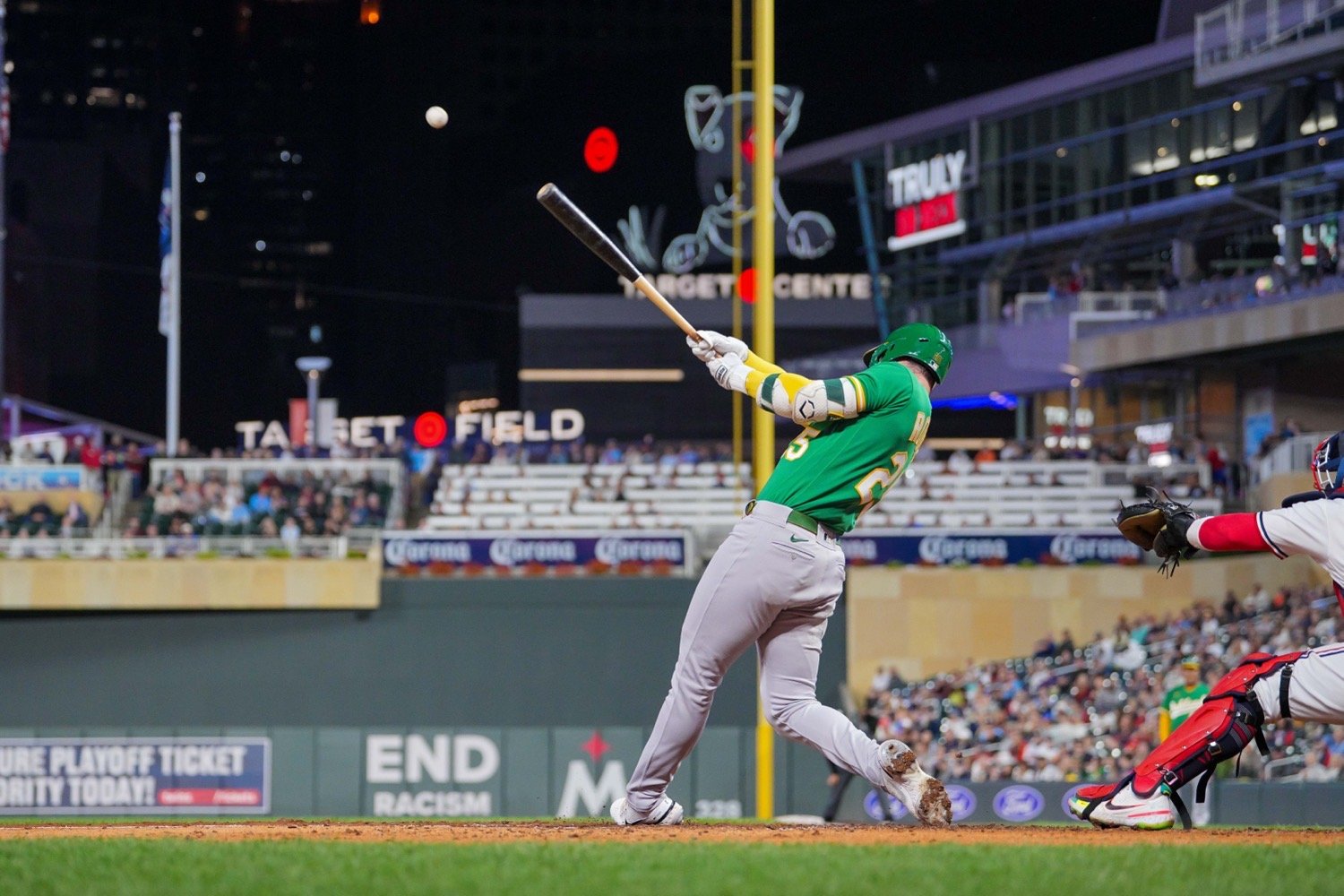 Recently, Bradford Doolittle of ESPN wrote an article ($) that answered these exact questions, wherein he ranked each of the 30 MLB teams after running 10,000 simulations using 2025 player forecasts. Only players originally drafted or signed by a team via international amateur free agency counted toward their ratings. Through his methodology, the Twins ranked 17th overall and third in the American League Central behind the Cleveland Guardians (8th) and Chicago White Sox (14th). This hypothetical version of the Twins consists of nine position players, five starters, and three relievers, and just three are currently on the Twins. Position Players: LaMonte Wade Jr. (1B), Jorge Polanco (2B), Royce Lewis (SS), José Miranda (3B), Mitch Garver (C), Brent Rooker (LF), Byron Buxton (CF), Max Kepler (RF), Luis Arraez (DH) With the exception of Rooker, Buxton, and Miranda, it’s not surprising that this hitter group ranked 17th in Doolittle’s 10,000 simulations. The rest of the names are projected to be roughly average in 2025, which mostly aligns with their most recent seasons. The biggest concern with this lineup would be durability, as Lewis, Polanco, Garver (as a catcher) and Buxton have all suffered their fair share of injuries throughout their careers. If we had to build a bench following the same rules (minus the 10,000 simulations, of course), I’d add Ryan Jeffers at catcher, Christian Encarnacion-Strand and Spencer Steer as super-utility options, and Nick Gordon as the fourth outfielder and Buxton insurance. Rotation: José Berríos, Bailey Ober, Luis Gil, Kyle Gibson, Cade Povich Initially, I was pretty underwhelmed by this rotation, but I actually think it has solid depth—despite not having a true “ace”. It’s a bit of a wild card outside of Berríos and Ober, as Gil and Povich are unproven and Gibson is entering his age-37 season. If we were to add a spot starter or long man to this pitching staff, it would have to be David Festa or Zebby Matthews. Bullpen: Griffin Jax, Yennier Canó, Liam Hendriks This bullpen (like the rotation options above) is evidence of just how poorly the Twins drafted and developed pitching for much of the 2010s and 2020s. The most suitable bullpen options beyond the three relief names above are Taylor Rogers, Cole Sands, Michael Tonkin, and Kody Funderburk. Somewhat surprisingly, the pitching staff Doolittle put together ranked 15th in his 10,000 simulations. This hypothetical version of the Twins projects for 80 wins, which is about six fewer than the real Twins are projected for. They would have 30.3% odds to make the playoffs and 0.6% odds to win the World Series. As far as real-life Twins on the active roster, the following players would be sent back to the following organizations: Willi Castro to the Guardians Carlos Correa and Jorge Alcalá to the Houston Astros Christian Vázquez to the Boston Red Sox Austin Martin to the Toronto Blue Jays Pablo López to the Seattle Mariners Joe Ryan to the Tampa Bay Rays Simeon Woods Richardson to the New York Mets Chris Paddack to the Miami Marlins Jhoan Durán to the Arizona Diamondbacks Brock Stewart to the Los Angeles Dodgers Eiberson Castellano to the Philadelphia Phillies That leaves the following players to remain somewhere in the Twins organization: Trevor Larnach, Matt Wallner, Brooks Lee, Edouard Julien, and Michael Helman. This is an interesting exercise, as it provides an opportunity to reflect on transactions that have helped build the 2025 version of the Twins. Some of us think we should never trade prospects, but in that world, the Twins would finish with an average of 80 wins after 10,000 simulations. On the other hand, the Twins have moved some prospects in recent years (Povich, Steer, Encarnacion-Strand) and have a few division titles and a playoff series win to show for it. It surely will be interesting to revisit this exercise in the next five years, when the current wave of Twins prospects turned big-league regulars reach the end of their arbitration years. Which player from the hypothetical Twins do you wish they still rostered? Which one(s) did the Twins make the right call on? Join the conversation in the comments
 -
The American League Central is loaded with top end hitting talent in the Minor Leagues. Get to know the top prospect from each team and how they rank against one another.
-
The American League Central is loaded with top end hitting talent in the Minor Leagues. Get to know the top prospect from each team and how they rank against one another. View full video
-
The Minnesota Twins are in need of a corner outfielder that can handle left-handed pitching. Right now, Trevor Larnach and Matt Wallner figure to be the Opening Day corner outfielders but both struggle mightily against left-handed pitching. What do the 2025 ZiPS projections tell us about the future for these two, and should one of them be traded?
-
The Minnesota Twins are in need of a corner outfielder that can handle left-handed pitching. Right now, Trevor Larnach and Matt Wallner figure to be the Opening Day corner outfielders but both struggle mightily against left-handed pitching. What do the 2025 ZiPS projections tell us about the future for these two, and should one of them be traded? View full video
-
Your comment on winning the fans back is fair and interesting. I think that timeframe could be expedited if the next owner invests in the club.
- 43 replies
-
- 1
-

-
- walker jenkins
- emmanuel rodriguez
- (and 1 more)
-
Ahhh Wallner! I even had a second pair of eyes look at it. Thanks for pointing it out...he's being added now.
- 43 replies
-
- 1
-
-
- walker jenkins
- emmanuel rodriguez
- (and 1 more)


![More information about "Hayes: "Minnesota Twins are believed to have $5 million [to spend]""](http://dtb3yzl0vm3pr.cloudfront.net/monthly_2025_01/USATSI_22530267.jpeg.cff05a3ba967668caac713fa9c18049c.jpeg)

