


Twins Video
Ranking prospects is a difficult task and everyone has a bit of a different methodology. This series isn’t meant to be critical of any of the other lists out there, it’s all about presenting a positive case for the featured player. We’re starting at the bottom of my list and working up from there. Here’s a look at what’s on deck:
Range 41-50 spotlight: Zander Wiel
Range 31-40 spotlight: Tom Hackimer
Range 21-30 spotlight: Lachlan Wells
Range 11-20 spotlight: Ben Rortvedt, No. 11
Range 1-10 spotlight: Coming Dec. 19
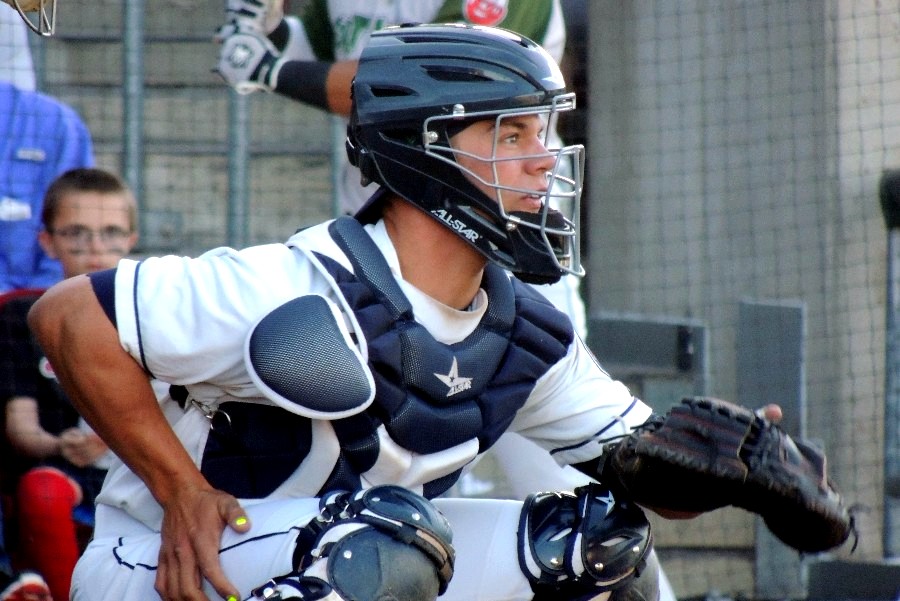
Yes, I have Ben Rortvedt just outside my top 10. I’d argue that no player in the Twins organization had the opportunity to grow more in 2017. Also, he is a catcher. There is no question about his ability to stick at the position or about how his personal and physical attributes will translate there. He’s already getting great reviews on his presence and leadership. At the time of the draft, Derron Johnson told Rhett Bollinger of MLB.com “the kid was born to catch.”
Being sent to Cedar Rapids to start the year was a challenging assignment. Not only was he tasked with trying to hit against a level of pitching much higher than he’d ever faced, but the pitching staff he handled was light years ahead of anything he had worked with. A lot of the pitchers he formed a battery with were college guys four or five years older than he is. I’m sure Rortvedt benefited greatly from being around those more experienced teammates, as well as having an entire summer under the wing of Tommy Watkins, J.P. Martinez and Brian Dinkelman.
It’s very rare to see a catcher this young play a full season. Here’s a quick look back at the Kernels primary catcher each year since becoming a Twins affiliate:
2017: Ben Rortvedt, age 19 season, 86 games caught
2016: A. J. Murray, 23, 45 games
2015: Brian Navarreto, 20, 84 games
2014: Mitch Garver, 23, 63 games
2013: Michael Quesada, 23, 51 games
So what about the bat? Well, don’t even bother looking at Rortvedt’s full-year stat line. Through May he was hitting just .139/.214/.174 (.388 OPS). Two months of absolutely horrendous hitting and the Twins let him endure that slump because they believed in him. Things eventually clicked, and he hit .273/.324/.397 (.721 OPS) over his final 54 games. Seth went down to Cedar Rapids and caught up with Rortvedt shortly after that turnaround started. That piece is well worth your time.
If that slash line above doesn’t catch your eye, consider this: That’s the exact same OPS teammate Lewin Diaz posted over the same stretch, and you don’t really see anybody questioning his future offensive potential. From June forward, Diaz hit .291/.328/.393. There’s also the fact that Rortvedt played the entire season at just 19-years-old. Other than Royce Lewis, he was the youngest player to appear for the Kernels last year. He and faced a pitcher younger than he was just eight times.
Rortvedt was a little older than the typical high school player in the 2016 draft class, but he still entered 2017 with roughly the same amount of professional experience as fellow ‘16 high school draftees Jose Miranda and Akil Baddoo. While Rortvedt played 89 games for Cedar Rapids, Miranda was at Elizabethton for 54 games and Baddoo split his season between the E-Twins (33 games) and the GCL (20 games). And those two obviously play much less demanding positions. I loved seeing how much confidence the Twins showed in Rortvedt and how he broke loose from that awful start with the bat. Here’s a video from the Kernels YouTube account where Rortvedt talks about the grind of the season and that breakout:
A big part of what moves the needle for me is definitely the fact that he’s a legit catcher, one who hits left-handed and has offensive upside, but I’m also encouraged about his physique and reports on his work ethic. Jeff Johnson, an excellent reporter for the Cedar Rapids Gazette, wrote this about Rortvedt in early April:
“The first thing you notice about him are his forearms. They’re huge.
He’s too young to understand the comparisons, but think Popeye or Steve Garvey here. Those kind of forearms.
‘I don’t know. I’m kind of a gym rat,’ Ben Rortvedt said with a sheepish smile. ‘I’m smaller, so I’ve always taken pride in being strong. Not being outworked in that way.’”
And here’s what Rortvedt’s former high school coach Brad D’Orazio told 2080 Baseball when asked what makes him so special:
“If he wasn’t sleeping, he was hitting the gym, hitting off of a tee, or harassing people to throw to him.”
It’s a good thing he’s developed that work ethic, because there are obviously a lot of things Rortvedt still needs to work on. Some of the numbers may not look like it, but I think he’s off to a great start. He threw out 36 percent of base stealers, only struck out in 17.9 percent of his plate appearances and crushed same-sided pitching, posting a .311/.400/.393 line (.793 OPS) against lefties.
For more on Ben Rortvedt and about 170 other Twins minor leaguers, be sure to pick up a copy of the 2018 Twins Prospect Handbook, which will be available later this winter.
Do you approve of the job the Twins front office is doing?

Interested in learning more about the Minnesota Twins' top prospects? Check out our comprehensive top prospects list that includes up-to-date stats, articles and videos about every prospect, scouting reports, and more!
View Twins Top Prospects




Recommended Comments
Create an account or sign in to comment
You need to be a member in order to leave a comment
Create an account
Sign up for a new account in our community. It's easy!
Register a new accountSign in
Already have an account? Sign in here.
Sign In Now