

Jump to content
Twins Daily
  • Create Account
  • Twins News & Analysis

    Who Solidified Themselves as Playoff Hitters for the Twins, and Who Didn't


    Hans Birkeland

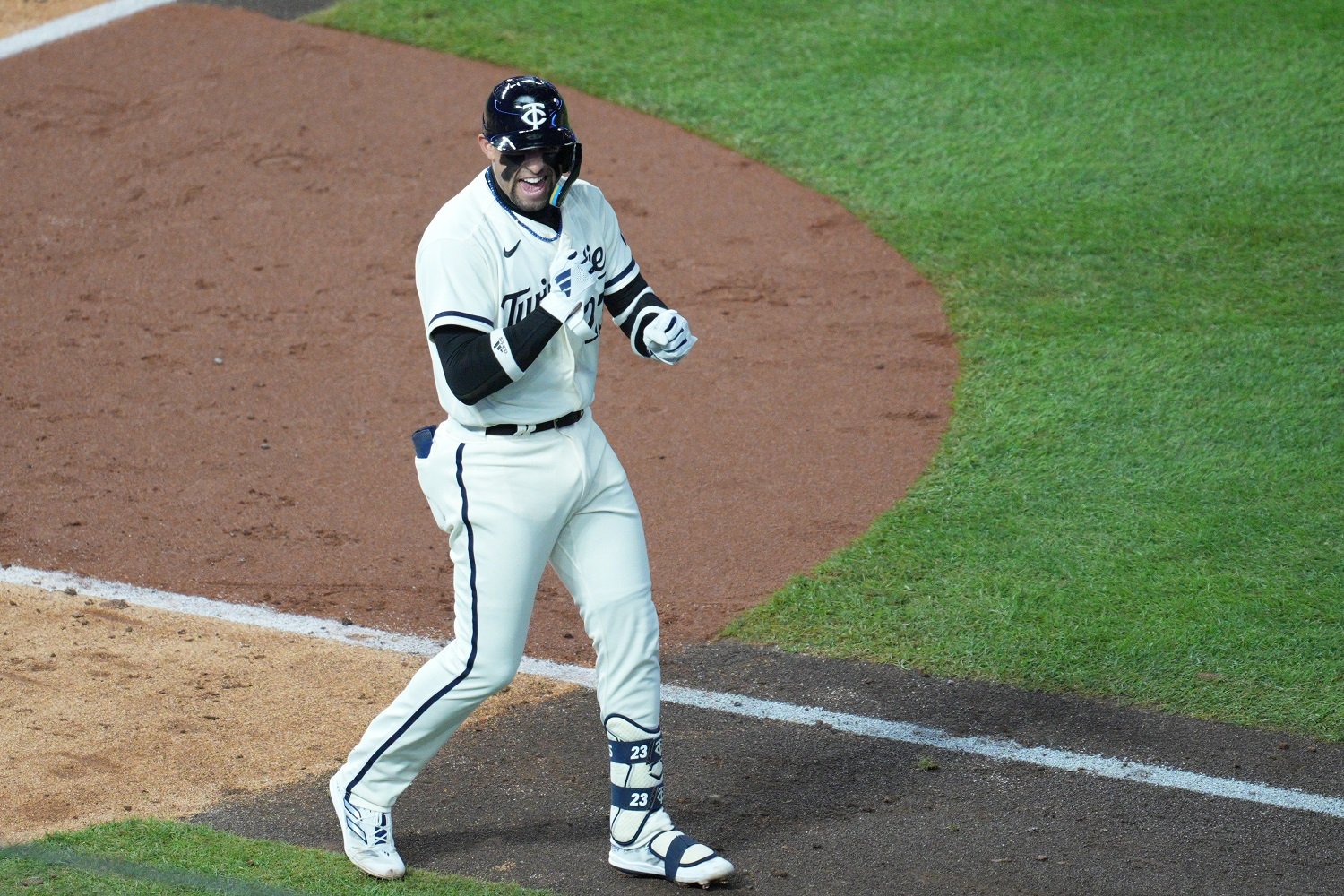
    The Twins fell short in the postseason, mainly due to a lack of hitting. Some players stepped up and established themselves as playoff threats, and others wilted under the pressure. Will the lineup be able to take the next step in 2024?

    Image courtesy of © Matt Blewett-USA TODAY Sports

    Twins Video

    In 2023, the conversation for the Twins in the playoffs finally changed. There were media outlets in September suggesting it would be good for the five seed to “tank” in order to face three-seeded Minnesota in the Wild Card round since “bulletin board material” didn’t apply to such a cursed franchise.

    But no longer can the Twins’ chances be reduced to a hand wave and a chuckle – they won as many games as they lost, including nearly handing the Astros a loss in the ALDS for the first time since the Obama administration.

    Now the conversation has to be (as with all playoff teams) what the Twins need in order to go further in 2024. They didn’t hit much against the Astros (or the Blue Jays for that matter), with a number of their hitters failing to eclipse the .600 mark in OPS for the two rounds. However, we did see evidence of a few guys who could terrify future playoff opponents by virtue of what they did in October 2023.

    Edouard Julien: He drew five walks in the six games, with three extra base hits and zero errors/misplays on defense. His OPS for the playoffs was a stout 1.043. He did make two baserunning errors, one ghastly (game one of the ALDS), and one a product of bad luck (game four).

    Julien showed that his blend of power and patience will play in the postseason. His home run and double in game four gave the Twins some life, and his pinch-hit, bases loaded, two-out single in game two sealed a win. He is a playoff caliber leadoff hitter.

    Royce Lewis: He posted an OPS over 1.100 in the playoffs, with four home runs that put him on the precipice of setting the Twins’ all-time playoff record. After six games. He appeared to press at times, swinging at some spiked breaking balls in crucial moments, but he’s also played in only 76 career games to this point, including the playoffs. Seeing more pitchers and how they attack him should make him even more of a threat next October.

    Carlos Correa: He also eclipsed a 1.000 OPS, and threw in some of the savviest shortstop play I have ever seen with his pickoff of Vladimir Guerrero Jr. and deke of Jose Abreu. His performance sealed his reputation as a known quantity in the playoffs, regardless of how his regular season goes. In 2020, he posted an OPS lower than what he posted in 2023 sans any plantar fasciitis issues. In the playoffs he hit for a 1.209 OPS and six home runs in twelve games that year. That isn’t to say he is automatic in the playoffs, but he will be ready.

    Jorge Polanco: This one is borderline. Polanco’s .653 2023 playoff OPS doesn’t stand out, except when you compare it to the rest of the Twins’ lineup. He drew four walks and popped a key three-run home run in game one of the ALDS that drew a collective gulp from everyone in the stadium that day.

    Polanco has proven he can hit in the playoffs. He was one of the few players to show up for the 2019 ALDS, hitting a first inning homer in game one, then tying the game with a single in the fifth.

    His defense is another matter. He went about 1-4 in fielding chances against Toronto and the specter of his missed flip in 2020 still haunts me to this day.

    Outside of those hitters and Kyle Farmer, the rest of the position player group didn’t inspire much confidence. Playoff pitching just doesn’t compare to the regular season. It rewards superstars (Yordan Alvarez) and guys who play within themselves (Martin Maldonado). It can be hard to identify who will play the Jason Kubel (1-29 career in the postseason) role in a given playoff series, and the Twins had a few this year.

    Chief among those was Ryan Jeffers. Outside of two hits in game one of the ALDS, Jeffers contributed nothing offensively. Two walks and a lot of strikeouts. He hit some balls hard, but he also made you wonder if keeping the playoff-tested Christian Vazquez on the bench for every game was the right move. Watching Vazquez’s at-bats down the stretch compared to Jeffers’ catcher-leading OPS made it a justifiable decision, but giving Vazquez a start or two may have butterfly-effected an extra scoring opportunity. We’ll never know.

    Matt Wallner went hitless in twelve plate appearances for the playoffs, although he did contribute three walks and a key hit-by-pitch. His inability to make contact against jumpy fastballs was exposed, and he’ll have to work and adjust in order to avoid a reputation as a mistake crusher who wilts against good pitching.

    Max Kepler was victimized by two terrible strike three calls against Houston, and he did collect a hit in his first five games of the playoffs. But even at his best, Kepler isn’t a cleanup hitter for a serious playoff lineup. He struck out 14 times in the six games and was worth -1.6% cWPA (championship win probability added) against the Astros. As a seven hole hitter, his skill set would play a lot better.

    Alex Kirilloff was playing through a torn labrum in his lead hitting shoulder, and performed as such. He is a little jumpy at the plate, even when healthy (taking strikes, then swinging at balls). But his elite plate coverage and all-fields power could be a major asset on future playoff teams.

    Now, having only three hitters clicking at the same time can certainly play in the playoffs. The 2019 Nationals provided proof of that concept with Juan Soto, Howie Kendrick and Anthony Rendon delivering a World Series championship that year.

    But ideally, you would want more lineup depth than that. Wallner has shown an ability to make adjustments, Jeffers has shown an ability to hit good pitching, Byron Buxton is always a wild card, and Kirilloff has shown the skill set to succeed in October. But if the front office doesn’t add another big bat this offseason, that may be a decision they could come to regret, especially given that the pitching will be hard-pressed to match this year's production.

    What do you think? Is the projected 2024 lineup good enough to take the next step as is, or does it need another piece? Sound off in the comments.

    Follow Twins Daily For Minnesota Twins News & Analysis

    Recent Twins Articles

    Recent Twins Videos

    Twins Top Prospects

    Marek Houston

    Cedar Rapids Kernels - A+, SS
    The 22-year-old went 2-for-5 on Friday night, his fourth straight multi-hit game. Heading into the week, he was hitting .246/.328/.404 (.732). Four games later, he is hitting .303/.361/.447 (.808).

    User Feedback

    Recommended Comments


    Featured Comments

    1 minute ago, Bodie said:

    I agree that power is better than no power, but I am  speaking of approach.  And the Twins DO teach a swing hard as you can approach at the plate.  That isn't a debatable point, they are loud and proud about it.  Then end result is team that does not produce regularly, and seems unworried that the team has the same approach in a 0-2 counts as a 2-0 count.

    If you think I'm mistaken about this, take a couple hours this weekend to read "The Art of Hitting".  You might have heard of the author...

    Do you work for the Twins? How do you know what they're teaching? They speak about a hard contact approach publicly, yes. But so do most teams. Remember those top 5 scoring offenses? They were also 1st, 2nd, 3rd, 4th, and 5th in slugging with 2 strikes. 1st, 2nd, 3rd, 5th, and 6th in ISO with 2 strikes. They kept hitting for power with 2 strikes. You may not like it, but it's the strategy the best offenses use. The Twins absolutely need to cut down the Ks, no doubt about it, but that's more about the quality of hitter that they have than their approach (in my opinion).

    The Art of Hitting is 25 years old. The game has changed. Time to accept that, sorry. Pitchers aren't throwing 2-0 fastballs anymore. Tony Gwynn would still be great. He'd be Luis Arraez, actually. But the stuff guys are throwing, and the pitch selections, are way different now than in 1998. They just are.

    After the All Star break, Twins runs scored in games (not counting post season):

    0 - 5
    1 - 3
    2 - 6
    3 - 8
    4 - 5
    5 - 13
    6 - 4
    7 - 9
    8 - 4
    9 - 4
    10 - 5
    11 - 1
    12 - 2
    13 - 1 
    14 - 1
    20 - 1 (the silly game where Cleveland offered up batting pitching the last few innings)

    Five or over gives you a great chance to win, as the median team runs scored per team in MLB this year was 4.55. In the second half, the Twins scored 5 or over 47 times and 4 or less 27 times.  Doesn't sound that awful to me.

    On 10/24/2023 at 8:36 AM, arby58 said:

    Short of Kirk Gibson, there aren't many 'one hit' stars of post-season baseball. The author isn't asking for a team full of Altuve's - he was mostly asking for just one more. Seems like a reasonable ask. 

    Kepler last two at bats were extremely disappointing for me. In a key playoff situation with runners on base he needed to be aggressive and swing at the first pitch- which was a breaking ball right down the middle! Then he failed at a high inside fastball that he had no chance to hit and didn't protect the plate on tough close pitches and went down looking. 

    As far as HR's - the Phillys hit 47, but none in the last two games and are out!

    Meanwhile the D backs stole 8 bases, putting pressure on the pitcher and defense and hit the ball the opposite way numerous times to drive in thise runs. Same way Houston beat the Twins in 2019 - three seeing eye grounders through the shift - opposite field- did us in then, while we swung for the fences and missed.

    Yes HR's are big, but if you can't put the ball in play and strikeout 40% of the time, you will NEVER win.

    Joe Mauers ground ball singles up the middle with two strikes look awfully good right now.

    We do need a RH power hitter though - Juan Soto via trade anyone??

    1 hour ago, KBJ1 said:

    As far as HR's - the Phillys hit 47, but none in the last two games and are out!

    Here are the home runs by team/games played. There is a clear trend here:

    Phillies 24/13 = 1.84 per game
    Rangers 22/12 = 1.83 per game
    Astros 20/11 = 1.81 per game
    Diamondbacks 18/12 = 1.5 per game
    Twins 7/6 = 1.16 per game
    Orioles 3/3 = 1.00 per game
    Braves 3/4 = 0.75 per game
    Brewers 1/2 = 0.50 per game
    Dodgers 1/3 = 0.33 per game
    Blue Jays 0/2 = 0.00 per game
    Marlins 0/2 = 0.00 per game
    Rays = 0/2 = 0.00 per game

    1 hour ago, arby58 said:

    After the All Star break, Twins runs scored in games (not counting post season):

    0 - 5
    1 - 3
    2 - 6
    3 - 8
    4 - 5
    5 - 13
    6 - 4
    7 - 9
    8 - 4
    9 - 4
    10 - 5
    11 - 1
    12 - 2
    13 - 1 
    14 - 1
    20 - 1 (the silly game where Cleveland offered up batting pitching the last few innings)

    Five or over gives you a great chance to win, as the median team runs scored per team in MLB this year was 4.55. In the second half, the Twins scored 5 or over 47 times and 4 or less 27 times.  Doesn't sound that awful to me.

    Thank you for this. That is encouraging! I'm still not sold on their offense being what it needs to be, but the improvement is nice. They had an incredibly weak schedule the second half, but they got the kids experience, those kids succeeded so likely gained confidence, and they put together a very nice second half offensively. Hopefully the kids take the next step, and they can add at least 1 more big bat to the top of the order.

    46 minutes ago, arby58 said:

    Here are the home runs by team/games played. There is a clear trend here:

    Phillies 24/13 = 1.84 per game
    Rangers 22/12 = 1.83 per game
    Astros 20/11 = 1.81 per game
    Diamondbacks 18/12 = 1.5 per game
    Twins 7/6 = 1.16 per game
    Orioles 3/3 = 1.00 per game
    Braves 3/4 = 0.75 per game
    Brewers 1/2 = 0.50 per game
    Dodgers 1/3 = 0.33 per game
    Blue Jays 0/2 = 0.00 per game
    Marlines 0/2 = 0.00 per game
    Rays = 0/2 = 0.00 per game

    You have a valid point (damn analytics).

    Sadly the best pitching staffs are NOT in the WS and two of the top 4 HR hitting clubs in the playoffs are. 

    Still doesn't mean a "swing for the fences" philosophy is the only philosophy that will win it all. It is after all Baseball and defense, baserunning,  putting the ball in play, luck all have a part.

    Without Correa's two great defensive plays, we likely lose. Toronto came within 3ft twice of beating the Twins and the D backs running game was there when the Phillys HR bats went silent. A good running game and the ability to NOT strikeout and put the ball in play will always be there, while HR's may not be. You cannot get to the promised land if you ignore and fail at the other facets of the game.

    So yeah, sign a pitcher (take a flyer on the young Japanese Free Agent coming here?)

    Get a RH 4 tool homerun hitter (Juan Soto?- the Padres need to dump payroll)

    Bring up Austin Martin for speed, Defensive ability, and batting  average with the ability to hit to all fields.

    Lee & Julien = trade Polanco.

    Walner & Lanarch = trade Kepler.

    Frees up $20M for what's needed above.

    No brainer. Quit playing safe and coming up short!

    Sign Castro, then figure out who can backup 3B/SS & 1B. Farmer makes sense, then maybe an in house option for 1B over Solano.

    Lastly, one more proven bullpen stud.

    All this without Buxton. If he can play in the field, he can platoon with Martin & DH when hit, sit when cold.

    You have to trust your young players and help them flourish. If they struggle, we have depth to get by, but no team can buy superstars at every position. The Mets tried & failed miserably. It's a team - not fantasy roster.

    1 hour ago, KBJ1 said:

    Kepler last two at bats were extremely disappointing for me. In a key playoff situation with runners on base he needed to be aggressive and swing at the first pitch- which was a breaking ball right down the middle! Then he failed at a high inside fastball that he had no chance to hit and didn't protect the plate on tough close pitches and went down looking. 

    As far as HR's - the Phillys hit 47, but none in the last two games and are out!

    Meanwhile the D backs stole 8 bases, putting pressure on the pitcher and defense and hit the ball the opposite way numerous times to drive in thise runs. Same way Houston beat the Twins in 2019 - three seeing eye grounders through the shift - opposite field- did us in then, while we swung for the fences and missed.

    Yes HR's are big, but if you can't put the ball in play and strikeout 40% of the time, you will NEVER win.

    Joe Mauers ground ball singles up the middle with two strikes look awfully good right now.

    We do need a RH power hitter though - Juan Soto via trade anyone??

    As far as HR's - the Phillys hit 47, but none in the last two games and are out!

    This is so funny to me. "HRs are not the way to in the playoffs because the Phillies hit (1) HR in their last two games and lost them both."

    Also super funny to me that all of the small ball/station-to-station enthusiasts from 1932 just completely ignore the Rangers. If Bruce Bochy, one of the oldest and most respected managers in the game, has his team swinging for moonshots in the playoffs, it's because HRs work. I will take advice on strategy from an elite manager rather than a guy who does not know the handedness of a top-10 player in baseball.


    Joe Mauers ground ball singles up the middle with two strikes look awfully good right now.

    How many playoff wins does Mauer have? Just asking for a friend. Those ground balls up the middle must have made a huge impact on the playoff games he was a part of.

    33 minutes ago, KBJ1 said:


    Get a RH 4 tool homerun hitter (Juan Soto?- the Padres need to dump payroll)


    All this without Buxton. If he can play in the field, he can platoon with Martin & DH when hit, sit when cold.


    FYI, Juan Soto is left handed. Still well worth it because he's an elite hitter all around, but he's not a righty.

    And Buxton and Martin are both righties so not sure platoon is the right word to use there.

    1 hour ago, KBJ1 said:

    You have a valid point (damn analytics).

    Sadly the best pitching staffs are NOT in the WS and two of the top 4 HR hitting clubs in the playoffs are. 

    Still doesn't mean a "swing for the fences" philosophy is the only philosophy that will win it all. It is after all Baseball and defense, baserunning,  putting the ball in play, luck all have a part.

    Without Correa's two great defensive plays, we likely lose. Toronto came within 3ft twice of beating the Twins and the D backs running game was there when the Phillys HR bats went silent. A good running game and the ability to NOT strikeout and put the ball in play will always be there, while HR's may not be. You cannot get to the promised land if you ignore and fail at the other facets of the game.

    So yeah, sign a pitcher (take a flyer on the young Japanese Free Agent coming here?)

    Get a RH 4 tool homerun hitter (Juan Soto?- the Padres need to dump payroll)

    Bring up Austin Martin for speed, Defensive ability, and batting  average with the ability to hit to all fields.

    Lee & Julien = trade Polanco.

    Walner & Lanarch = trade Kepler.

    Frees up $20M for what's needed above.

    No brainer. Quit playing safe and coming up short!

    Sign Castro, then figure out who can backup 3B/SS & 1B. Farmer makes sense, then maybe an in house option for 1B over Solano.

    Lastly, one more proven bullpen stud.

    All this without Buxton. If he can play in the field, he can platoon with Martin & DH when hit, sit when cold.

    You have to trust your young players and help them flourish. If they struggle, we have depth to get by, but no team can buy superstars at every position. The Mets tried & failed miserably. It's a team - not fantasy roster.

    Hicks, Rooker, Cave, Celestino....

    4 hours ago, chpettit19 said:

    Do you work for the Twins? How do you know what they're teaching? They speak about a hard contact approach publicly, yes. But so do most teams. Remember those top 5 scoring offenses? They were also 1st, 2nd, 3rd, 4th, and 5th in slugging with 2 strikes. 1st, 2nd, 3rd, 5th, and 6th in ISO with 2 strikes. They kept hitting for power with 2 strikes. You may not like it, but it's the strategy the best offenses use. The Twins absolutely need to cut down the Ks, no doubt about it, but that's more about the quality of hitter that they have than their approach (in my opinion).

    The Art of Hitting is 25 years old. The game has changed. Time to accept that, sorry. Pitchers aren't throwing 2-0 fastballs anymore. Tony Gwynn would still be great. He'd be Luis Arraez, actually. But the stuff guys are throwing, and the pitch selections, are way different now than in 1998. They just are.

    I keep this short.

    If, contrary to every bit of public info, from GM to the last man on the bench, they are coaching hitters to make contact first,  then the coaching isn't taking.  If you lead the majors in Ks (and set a MLB record!) you have to admit that there is a MAJOR failure. 

    51 minutes ago, Bodie said:

    And the author I'm referring to is Ted Williams...

    Then maybe go read the book "The Art of Hitting" and start at the cover where it says "Tony Gwynn." "The Science of Hitting" was a nicely written book by Ted Williams, though. And that book is 53 years old so that's not a better argument. The revision of it is 37 years old. At least with "The Art" you were only at 25 years old.

    59 minutes ago, Bodie said:

    I keep this short.

    If, contrary to every bit of public info, from GM to the last man on the bench, they are coaching hitters to make contact first,  then the coaching isn't taking.  If you lead the majors in Ks (and set a MLB record!) you have to admit that there is a MAJOR failure. 

    I haven't seen anyone suggest the Ks are ok. My point is that they are teaching the same things that the best offenses in baseball teach. Hit the ball hard. The Guardians and Nationals had the lowest K% in baseball. They were all about your "make contact first" idea. They finished 27th and 21st in runs scored. They were 22nd and 23rd in OBP. 29th and 23rd in SLG. Would you rather the Twins had their offenses?

    I'll keep this short: hitting the ball hard, even with 2 strikes, is the best way to score runs whether you like it or not.

    9 minutes ago, chpettit19 said:

    I haven't seen anyone suggest the Ks are ok. My point is that they are teaching the same things that the best offenses in baseball teach. Hit the ball hard. The Guardians and Nationals had the lowest K% in baseball. They were all about your "make contact first" idea. They finished 27th and 21st in runs scored. They were 22nd and 23rd in OBP. 29th and 23rd in SLG. Would you rather the Twins had their offenses?

    I'll keep this short: hitting the ball hard, even with 2 strikes, is the best way to score runs whether you like it or not.

    You lost me at "even with 2 strikes."


    1 minute ago, chpettit19 said:

    I haven't seen anyone suggest the Ks are ok. My point is that they are teaching the same things that the best offenses in baseball teach. Hit the ball hard. The Guardians and Nationals had the lowest K% in baseball. They were all about your "make contact first" idea. They finished 27th and 21st in runs scored. They were 22nd and 23rd in OBP. 29th and 23rd in SLG. Would you rather the Twins had their offenses?

    I'll keep this short: hitting the ball hard, even with 2 strikes, is the best way to score runs whether you like it or not.

    You are right on the money in my opinion.

    That ole' choking up bit is so 1980's unfortunately many of us are still in the 80's and try to apply to today even though it is clearly gone. 😉

    Major league pitchers are very very very good. The good ones make a living getting batters to make contact or swinging at pitches that they want you to make contact with.

    Major league hitters are also very good and the best ones don't swing at the pitches that pitchers want you to swing at and that can bring them to the two strike brink often. Major league hitters have amazing strike zone awareness. They will get rung up on that two strike pitch dotting the black because they are still looking for that pitch to drive with two strikes.  

    The best hitters don't miss the mistakes at whatever count they are thrown. The worst hitters they miss those mistakes more often than they should and the numbers will reflect that. 

    With all that said... Man... The Twins have got to cut back on those K's. 

    Oh and one more thing. Catch the ball with two hands is something that is still being tossed out from the 80's. 


    5 minutes ago, chpettit19 said:

    hitting the ball hard, even with 2 strikes, is the best way to score runs

    This isn't central to your comment, but discussion about 2 strikes deserves more nuance, and probably study, than this. 

    Across the majors in 2023, there were about 184 thousand plate appearances.  Of those, approximately 98 thousand reached a two strike count.  The aggregate OPS for plate appearances that were decided after two strikes? .523.  Not zero, maybe - not technically hopeless at that point - but pretty darn low. 

    And that's more than half of all plate appearances.  If my quick and dirty calculation is correct, the OPS on PA that don't reach two strikes is about .976.

    It's fair to say that the best way to score runs has to be not to reach two strikes if you can help it - with two strikes the contribution to run scoring is pretty small.  (The only exception seems to be if you claw your way to a full count, then as batter you are back to having a decent shot, with OPS .779.)

    I don't know what this has to say about whether there is a better approach at the plate for certain hitters.  Maybe shortening up one's swing should occur at 1 strike, not at 2.

    Source: https://www.baseball-reference.com/leagues/split.cgi?t=b&lg=MLB&year=2023#all_count

    Anyway, very much a tangent, but it's been on my mind a while.

    18 minutes ago, USAFChief said:

    You lost me at "even with 2 strikes."


    You need to have a reasonable K%, and good to great OBP, but the top 5 scoring teams were also the top 5 slugging teams with 2 strikes (according to my fangraphs splits at least). There's obviously way more that goes into things than this very simple look at things, but the idea of just choking up and putting the ball in play because good things happen even on weak contact is incredibly overblown. It's not as fun to watch, and it's not what the majority of us were taught, but it's pretty clear that the best strategy is to try to hit the ball hard all the time, even if it leads to some extra Ks. Because the number of times that weak contact actually leads to a hit is outweighed by the damage done by the times you make hard contact.

    I think the change in approach that is needed for the Twins is getting to 2 strikes less often. Stop taking first pitch fastballs down the middle. Be ready to drive the ball from the second you step in the box. Julien has a great approach this way.

    Edit: @ashbury, you posted my second paragraph, with far better detail, while I was typing. But I agree with that take. Not getting to 2 strikes is a wonderful strategy.

    12 minutes ago, Riverbrian said:

    You are right on the money in my opinion.

    That ole' choking up bit is so 1980's unfortunately many of us are still in the 80's and try to apply to today even though it is clearly gone. 😉

    Major league pitchers are very very very good. The good ones make a living getting batters to make contact or swinging at pitches that they want you to make contact with.

    Major league hitters are also very good and the best ones don't swing at the pitches that pitchers want you to swing at and that can bring them to the two strike brink often. Major league hitters have amazing strike zone awareness. They will get rung up on that two strike pitch dotting the black because they are still looking for that pitch to drive with two strikes.  

    The best hitters don't miss the mistakes at whatever count they are thrown. The worst hitters they miss those mistakes more often than they should and the numbers will reflect that. 

    With all that said... Man... The Twins have got to cut back on those K's. 

    Oh and one more thing. Catch the ball with two hands is something that is still being tossed out from the 80's. 


    The 80s were a simpler time! Although, I was born in '85 so I don't really have any personal knowledge of that. It's just what people say.

    Just now, chpettit19 said:

    The 80s were a simpler time! Although, I was born in '85 so I don't really have any personal knowledge of that. It's just what people say.

    Amen Old Man... Amen. 

    I could work every single aspect of my phone in the 80's. 

    14 minutes ago, ashbury said:

    This isn't central to your comment, but discussion about 2 strikes deserves more nuance, and probably study, than this. 

    Across the majors in 2023, there were about 184 thousand plate appearances.  Of those, approximately 98 thousand reached a two strike count.  The aggregate OPS for plate appearances that were decided after two strikes? .523.  Not zero, maybe - not technically hopeless at that point - but pretty darn low. 

    And that's more than half of all plate appearances.  If my quick and dirty calculation is correct, the OPS on PA that don't reach two strikes is about .976.

    It's fair to say that the best way to score runs has to be not to reach two strikes if you can help it - with two strikes the contribution to run scoring is pretty small.  (The only exception seems to be if you claw your way to a full count, then as batter you are back to having a decent shot, with OPS .779.)

    I don't know what this has to say about whether there is a better approach at the plate for certain hitters.  Maybe shortening up one's swing should occur at 1 strike, not at 2.

    Source: https://www.baseball-reference.com/leagues/split.cgi?t=b&lg=MLB&year=2023#all_count

    Anyway, very much a tangent, but it's been on my mind a while.

    I can condense this into legendary brevity. Here it comes:

    When you get your pitch... Hit that ****er!!! 


    21 minutes ago, chpettit19 said:

    You need to have a reasonable K%, and good to great OBP, but the top 5 scoring teams were also the top 5 slugging teams with 2 strikes (according to my fangraphs splits at least).

    Just because it's turning out to be interesting....

    If by top 5 you mean slugging percentage, then this is compelling by itself.  But it may not even be the most important thing.  On that page of Major-league splits I provided the URL to, there is an under-appreciated feature that you can click on a stat of interest and see how the teams fared in that situation.  For "Two Strikes", yes, the top slugging percentage team is Atlanta.  Their OPS is a mighty .596, also tops.  All well and good.  But if you click on PA to sort teams by plate appearance, ATL shows up at #15.  This, despite their being fourth the majors in total plate appearances.  Is the key more to do with what they do with 2 strikes, or not getting there?  (Chief, I'll save you the trouble: YES.)

    Results aside, guess which team led the majors in PA reaching 2 strikes? Our Twins.  And their OPS in those situations was close to league-worst.  Despite decent run-scoring totals (and I don't have a handy way to break these league splits down to just the second half, when our run scoring was higher), it may account for some fan frustration with our offense.

    I'm sure our FO is aware of these kinds of numbers, but I'd love to have a conversation with them about trying to emulate what appears to be a qualitatively different, and successful, approach.

    16 minutes ago, Riverbrian said:

    I can condense this into legendary brevity. Here it comes:

    When you get your pitch... Hit that ****er!!! 


    I can tell how thrilled you are that there are numbers that back you up. :)

    3 minutes ago, ashbury said:

    Just because it's turning out to be interesting....

    If by top 5 you mean slugging percentage, then this is compelling by itself.  But it may not be the most important thing.  On that page of splits I provided the URL to, there is an under-appreciated feature that you can click on a stat of interest and see how the teams fared in that situation.  For "Two Strikes", yes, the top slugging percentage team is Atlanta.  All well and good.  But if you click on PA to sort teams by plate appearance, ATL shows up at #15.  This, despite their being fourth the majors in total plate appearances.

    Results aside, guess which team led the majors in PA reaching 2 strikes? Our Twins.  And their OPS in those situations was close to league-worst.  Despite decent run-scoring totals (and I don't have a handy way to break these numbers down to just the second half, when our run scoring was higher), it may account for some fan frustration with our offense.

    I'm sure our FO is aware of these kinds of numbers, but I'd love to have a conversation with them about trying to emulate what appears to be a qualitatively different, and successful, approach.

    That is a very fascinating look at things, and I had meant to look up PAs w/2 strikes so I'm glad you provided some context there. I think that was the key to the 2019 offensive success as well (at least that's how it felt). Just don't get to 2 strikes, especially if you get a good pitch to hit early. I'd love to know what their approach was stepping into the box AB to AB this year (I suspect some paralysis by analysis early on with receiving too much info pregame). 

    I know the number of times they watched a fastball down the middle for strike 1 was likely very low, but that's one of my biggest pet peeves so my emotional reaction to those make them stick out to me. And I don't just mean on 0-0 counts. 3-0 fastballs down the middle, in the majors, that hitters watch are super frustrating to me as well. Unless you're a bad hitter and it's been like 6, 7, 8 straight balls from the pitcher swing the bat. I'm a big believer in the idea that you get 1 pitch to hit, and you can't miss it or you're in trouble. MLB pitchers are too good to ever watch a fastball down the middle because they can turn 3-0 into 3-3 real quick.

    I'd be interested to know if their approach is more pitcher based or hitter based. As in, are they going up looking for what the pitcher is most likely to throw or what they want to hit? Or do they get caught in between trying to marry the 2 approaches? I'd guess watching fastballs down the middle, early in counts, comes a lot from being pitcher based. Hitting is incredibly hard, but I'd wonder if there's some tweaks in these approaches that could lead to them having more success. Jose Altuve has never seen a first pitch fastball in the zone he didn't like. I think we should be closer to that approach.

    8 minutes ago, chpettit19 said:

    As in, are they going up looking for what the pitcher is most likely to throw or what they want to hit?

    Lacking anything constructive to add to what you said, I'll just go to the same well again, and answer "YES" to this one.

    Okay, one more thing and then I think I'm done (yeah right).  For those who don't trust OPS to tell them the truth, how about this nugget?  22434 runs were scored in 2023.  How many were scored during PA that reached 2 strikes?  7807.  Even though more than half of PA went to 2 strikes, only a little more than a third of runs were scored when that happened.  Brutal odds if you're trying to field a competitive offense.  I have a feeling that there is some kind of conditional probability paradox that I'm overlooking, but if I'm not, then it's really as simple as that.

    37 minutes ago, ashbury said:

    I have a feeling that there is some kind of conditional probability paradox that I'm overlooking, but if I'm not, then it's really as simple as that.

    You are missing an X Factor or conditional probability paradox. It's going to bring this discussion around full circle. 

    Are you ready. Here it comes: 

    The two strike count is the only time that you can... Bum - Tah - Bum.

    (Dramatic Pause)

    Strike Out!!! 

    It's the introduction of a new way of getting out that didn't exist in earlier counts. Zero Strikes, One Strike... You must put the ball in play in order to record an out. 

    We are now back where we started.  

    1 hour ago, chpettit19 said:

    I haven't seen anyone suggest the Ks are ok. My point is that they are teaching the same things that the best offenses in baseball teach. Hit the ball hard. The Guardians and Nationals had the lowest K% in baseball. They were all about your "make contact first" idea. They finished 27th and 21st in runs scored. They were 22nd and 23rd in OBP. 29th and 23rd in SLG. Would you rather the Twins had their offenses?

    I'll keep this short: hitting the ball hard, even with 2 strikes, is the best way to score runs whether you like it or not.

    The teaching and execution led to an inconsistent and bad offense.  Simple as that.  And this isn't a one year thing.  It has been a steady downhill regression. 

    If you can't/don't make contact, it doesn't matter how hard you are swinging.

    Maybe there needs to be an advanced metric/stat so we can hail those corkscrew strikeouts. After all, you supposedly should swing as hard as possible all the time and falling down strikeouts are kinda funny (assuming it is a White Sox "highlight").


    Create an account or sign in to comment

    You need to be a member in order to leave a comment

    Create an account

    Sign up for a new account in our community. It's easy!

    Register a new account

    Sign in

    Already have an account? Sign in here.

    Sign In Now

×
×
  • Create New...

