Jump to content
Twins Daily
  • Create Account
  • Twins News & Analysis

    What Last Year's Fire Sale (Better Have) Taught the Twins

    A stronger farm system came at a price, and one year later the Twins are still paying for some of those decisions.

    Cody Christie
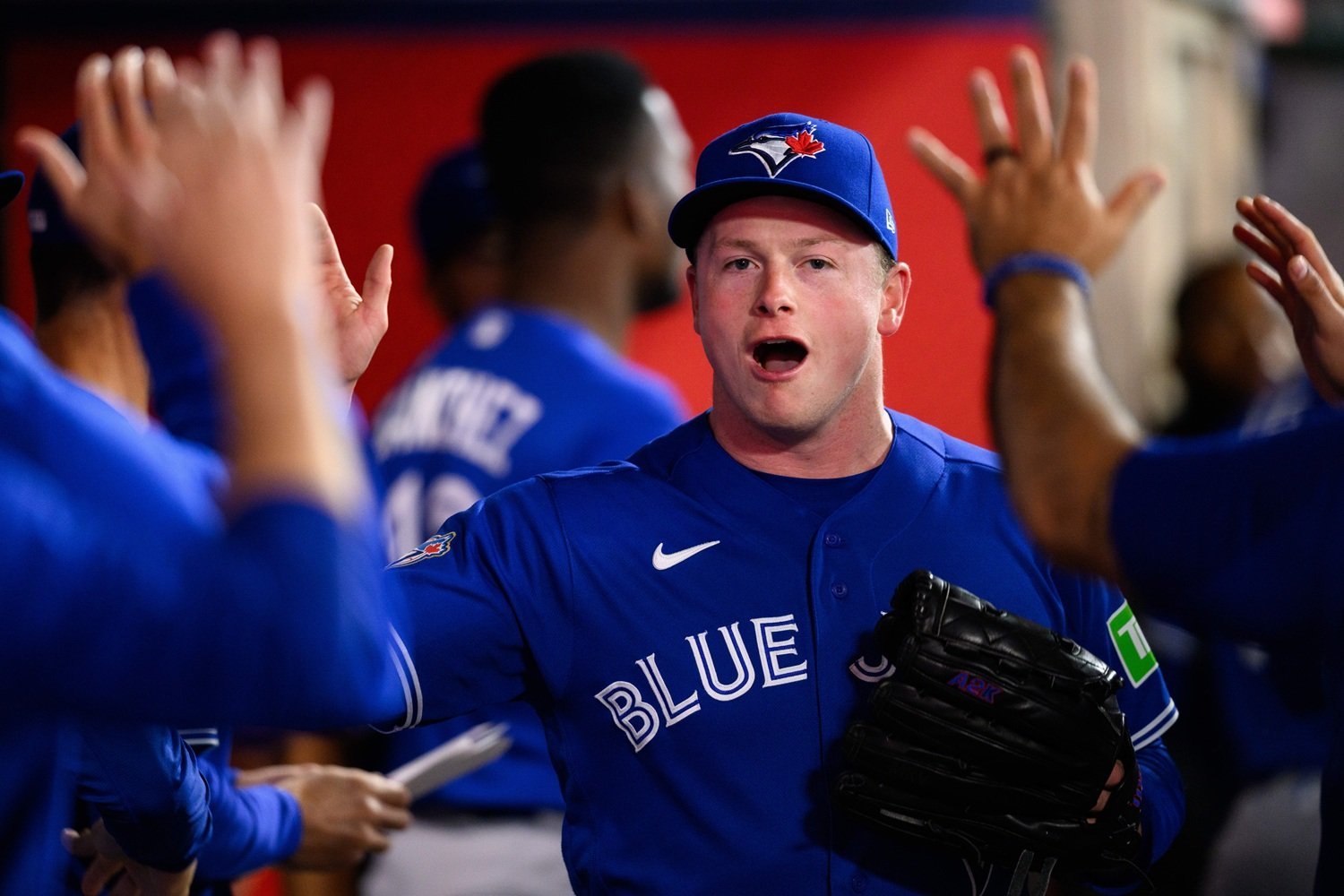
    Image courtesy of © William Liang-Imagn Images

    Twins Video

    The 2025 trade deadline was one of the most dramatic turning points in recent Minnesota Twins history. In a matter of days, the front office dismantled much of the major-league roster, moving established veterans for a wave of prospects and younger talent while resetting both the payroll and the organization's timeline.

    Some of those deals already look like clear successes. The Twins replenished their farm system, adding high-upside talent that dramatically changed the long-term outlook of the organization. Others, however, have exposed just how difficult it is to project player development, replace elite major-league production, or assume payroll flexibility will eventually translate into roster improvements.

    One year later, the Twins find themselves back in the playoff race. Ironically, many of the same needs that existed entering last year's deadline remain unresolved. Looking back, three important lessons have emerged from the organization's aggressive sell-off.

    Lesson 1: Building a Bullpen Isn't Easy

    One of the biggest assumptions behind last year's deadline appeared to be that rebuilding the bullpen would be relatively straightforward. Elite relievers are volatile, and Minnesota's front office seemed confident it could identify undervalued arms through waivers, minor trades, cash-consideration deals, and internal development. Every organization believes it can find the next breakout reliever.

    The Twins have learned that that isn't nearly as easy as it sounds. Andrew Morris has been the organization's biggest internal success story this season, establishing himself as a reliable late-inning option. Beyond him, however, the front office has spent much of the year cycling through waiver claims, minor acquisitions, and depth pieces while searching for consistent production. Instead of entering the season with an established ninth-inning option, the Twins have been forced to piece together leverage innings on a nightly basis.

    Meanwhile, Louis Varland has developed into exactly the type of reliever every contender covets. The former Twin has emerged as one of baseball's premier bullpen arms, handling high-leverage situations with swing-and-miss stuff while remaining under inexpensive pre-arbitration control. Those are precisely the types of players championship-caliber teams spend years trying to develop.

    Looking back, it's becoming increasingly difficult to justify moving a high-leverage reliever with multiple years of team control remaining. Building a bullpen on paper is one thing. Actually replacing elite bullpen production is another.

    Lesson 2: Trading for MLB-Ready Players Doesn't Ensure They're MLB-Ready

    Prospect rankings often focus on upside, but last year's deadline also emphasized acquiring players who could contribute quickly. On paper, that strategy made plenty of sense. Alan Roden, Kendry Rojas, Mick Abel, and James Outman all had major-league experience or appeared ready to make the jump entering 2026. The expectation was that several would quickly become meaningful contributors. Instead, reality has been much messier. 

    Outman struggled badly, producing negative WAR before ultimately being designated for assignment. Roden opened the season at Triple-A before suffering an injury that delayed his opportunity. He's only recently joined the Twins after finally getting healthy. 

    On the pitching side, Abel showed flashes of why the Twins targeted him, but injuries once again interrupted his development. After several encouraging starts, he now appears likely to miss the remainder of the season following surgery to shave bone in his throwing elbow. Rojas has bounced between Triple-A and Minnesota in a multi-inning relief role. His stuff remains intriguing, but inconsistent command has prevented him from establishing himself as a dependable option.

    None of those players should be considered finished products. Several still possess the talent to become important contributors over the next few seasons. However, the past year has reinforced a valuable lesson. Being close to the major leagues isn't the same as being ready to consistently succeed in the major leagues. Development rarely follows a straight line.

    Lesson 3: Carlos Correa's Dumped Contract Was Never Going to Be Reinvested

    Perhaps the biggest misconception surrounding last year's deadline centered around payroll. When the Twins moved Correa and a significant portion of his remaining contract, it was reasonable for many fans to assume those savings would eventually be redirected toward improving the major-league roster. Instead, the opposite happened. Minnesota's payroll has continued to decline, dropping from roughly $160 million in 2024 to approximately $130 million in 2025 before falling again to roughly $105 million in 2026. Complicating matters further, more than $21 million of this year's payroll is tied up in Pablo López, who is sidelined after undergoing Tommy John surgery.

    Correa himself is out for the season with an ankle injury, while the Twins are still paying the Astros $10 million for him to play elsewhere. The payroll flexibility created by last summer's trade never materialized into meaningful roster additions. Imagine how different this year's club might look with another $20-30 million available.

    The Twins could have aggressively pursued multiple late-inning relievers, added another dependable back-end starter, or strengthened the bench with proven veterans. Instead, those remain the organization's biggest needs as another trade deadline approaches. Financial flexibility only creates value if ownership chooses to spend it. Otherwise, it's simply a smaller payroll.

    Looking Back While Looking Ahead

    It's still too early to declare winners and losers from the 2025 deadline. Several prospects acquired during the fire sale could become impact players over the next few seasons, and rebuilding the farm system was an important organizational objective. That part of the strategy has largely been successful.

    But one year later, the Twins also have a clearer understanding of what was lost. Elite relievers aren't easily replaced. MLB-ready players often require more development than expected. And payroll flexibility doesn't automatically become roster improvement.

    As Minnesota approaches another trade deadline with postseason aspirations, those lessons should be fresh in the minds of the front office. The decisions made this July will determine whether the organization truly learned from last summer, or simply repeats the same mistakes.


    Do you agree with these lessons from last year's fire sale? Leave a comment and start the discussion.

    Follow Twins Daily For Minnesota Twins News & Analysis

    Recent Twins Articles

    Recent Twins Videos

    Twins Top Prospects

    Emmanuel Rodriguez

    St. Paul Saints - AAA, OF
    Finally!! Emmanuel Rodriguez is off of the 60-Day Injured List. He is rejoining the Saints in time to play at the Field of Dreams site on Tuesday night.

    User Feedback

    Recommended Comments


    Featured Comments

    7 hours ago, DocBauer said:

    And he brought the FO in to the 21st Century in regard to analysts and scouting.

    He cut the staff of pro scouts from 5 to 1 last September to focus on analytics and more video scouting.  Most teams average around 10 pro scouts.  I am not sure how that is bringing the organization into the 21st century.  I am not a fan of analytics when it is not used as a tool but as the driving force of decision making.  There needs to be a balance and with Falvey we tipped way too far to the analytics side.

    I agree with most everything else you wrote but that is one point I felt the need to comment on.  I do think Zoll is not the one to lead this organization and Tom P.  needs to be looking now and make a change the day after the season ends.

    14 hours ago, weitz41 said:

    The poor corpse of the Varland trade..I mean, can we kick that damn horse a few more times? Varland was a borderline set up guy in the 2025 pen. Jax was always the 1st choice to bridge to Duran. Is the Bluejays BP coach on the Twins staff this year and last year to get him to where he is now? There are so many variables to players having success. CAN we please move on. 

    Roden has 21 AB in MLB this season. Rojas has pitched a total of 19.1 MLB innings this season. Abel 20.1 innings in MLB. Outman is a part of the fire sale? Stewart has managed what? 20 innings since the trade?

    If you can't move on there's a gallon of sour milk in the fridge, help yourself....

    agreed ..Varland was very avg when traded... didnt look like much of a loss to me . Jax and Duran hurt though..they cant be replaced..and havent been with the current lot we have . not a single one could be trusted with a 3 run lead

    1 hour ago, HarmonK03 said:

    He cut the staff of pro scouts from 5 to 1 last September to focus on analytics and more video scouting.  Most teams average around 10 pro scouts.  I am not sure how that is bringing the organization into the 21st century.  I am not a fan of analytics when it is not used as a tool but as the driving force of decision making.  There needs to be a balance and with Falvey we tipped way too far to the analytics side.

    I agree with most everything else you wrote but that is one point I felt the need to comment on.  I do think Zoll is not the one to lead this organization and Tom P.  needs to be looking now and make a change the day after the season ends.

    Brian Cashman was asked what role analytics plays in the Yankees decision making. Im paraphrasing but he said it’s the foundation for forming their team. After that adjustments are made based on what they see is happening on the field. This approach feels different than the Twins, especially under Falvey. 

    3 minutes ago, Linus said:

    Brian Cashman was asked what role analytics plays in the Yankees decision making. Im paraphrasing but he said it’s the foundation for forming their team. After that adjustments are made based on what they see is happening on the field. This approach feels different than the Twins, especially under Falvey. 

    I agree, the only reason I can see that Gray started as much as he did is analytics.  This is where they really lose me on the use.  I get there is a place for them but adjust when the eyes tell you something different.

    1) Bullpens are easy to build. Just have to spend a little money. Guess what the Twins learned for the scenario? Falvey needed to go, now. It was the most important lesson this franchise could have learned as Falvey was the single biggest problem in the organization.

    2) "Prospects aren't guaranteed" isn't a new lesson. Everybody in baseball knows this. I feel like the writer should also know this? What was guaranteed is a high degree of likelihood what the Twins got back in their trades made them better this year.

    3) Correa's trade savings were 100% reinvested. The budget for 2026 was established before the end of 2025. If Correa was still here, the Twins would still be spending $105MM or whatever it is. Correa would just be eating $32MM or whatever.


    1 hour ago, bean5302 said:

    1) Bullpens are easy to build. Just have to spend a little money. Guess what the Twins learned for the scenario? Falvey needed to go, now. It was the most important lesson this franchise could have learned as Falvey was the single biggest problem in the organization.

    2) "Prospects aren't guaranteed" isn't a new lesson. Everybody in baseball knows this. I feel like the writer should also know this? What was guaranteed is a high degree of likelihood what the Twins got back in their trades made them better this year.

    3) Correa's trade savings were 100% reinvested. The budget for 2026 was established before the end of 2025. If Correa was still here, the Twins would still be spending $105MM or whatever it is. Correa would just be eating $32MM or whatever.


    Bean - You know what the biggest lesson is?  That the Twins were needing to do a full rebuild rather than continuing the mediocrity.   If we can string together multiple years of good draft picks,  get some good talent in from trades,   it will open up the next window for the Twins to really compete.   

    I could argue the Twins are showing you can rebuild a bullpen on the fly from scratch.   The bullpen is trending toward solid.  It still needs some work but if the pitching and hitting can hold on the bullpen only needs 1-2 more legit arms to be above average.   For a small market team that you sold something that could be in all reality rebuilt fairly cheaply its a win.  There is no other position you can do that with.  Starting pitching - no,  Catcher no,  Shortstop - no.   They have to know an area they can excel in to get outperformance for minimal investment.   I think this stays with the Twins long term.  

    18 hours ago, IndianaTwin said:

    Savings on Correa: $21.5M

    Free agent signings:
    Bell: $7M
    Caratini: $10M
    Rogers: $2M

    I guess I'm not following the logic that says they didn't redeploy the savings from the Correa trade. True, they didn't explicitly link the Correa savings when announcing any of these signings (they never do), but that's $19M in free agent spending that seems unlikely to have happened if they still had Correa's full salary on the books.

    That also doesn't count signing Larnach for $4.475M when he was strongly considered to be a non-tender candidate. Add that and they more than redeployed the Correa savings.

    Imagine how different this year's club would look without those four available. 

    EDIT to add: I note that elsewhere you have a post pleading for an extension on Bradley. Depending on terms, I would potentially support that. Having moved $21.5M of Correa's salary for future years makes that a much more viable option.  


    This is all meaningful and I would add that if they were not able to move Correa's $21M off the books, they might have attempted to move different money off the books in the offseason (Ryan, Lopez, Buxton, etc). Correa's $21M staying on the books doesn't magically make ownership OK with a payroll that is $21M higher. 

    22 hours ago, h2oface said:

    Abel now out for the year. Got about 20 innings of about 4 ERA this year and 4 “forgettable” outings last year. Tait will become an afterthought with Lackey drafted. The Duran trade becomes more despised as time goes on. 

    While I agree that moving Duran for such light talent is egregious, nothing compares to the Varland Trade for absolute idiocy!  Someone had a total brain collapse when they accept that trade!  Imagine if we had Varland today.....instead of Roden and Rojas?  No wonder Falvey got fired!

    7 hours ago, amjgt said:

    This is all meaningful and I would add that if they were not able to move Correa's $21M off the books, they might have attempted to move different money off the books in the offseason (Ryan, Lopez, Buxton, etc). Correa's $21M staying on the books doesn't magically make ownership OK with a payroll that is $21M higher. 

    I wasn’t making any statement on whether I thought this was the best way to spend it (though it might appear that way with my attempt to parrot the OP with my “Imagine how…” sentence). 

    And I wasn’t saying they shouldn’t have done more. Rather, I was trying to rebut the notion that the FO did nothing with the money saved on Correa. 

    On 7/21/2026 at 6:49 PM, Sjoski said:

    I keep hearing the Twins have a "log-jam" of outfielders.

    A true "logjam" is when two guys are hitting .290 with 20 homers and someone gets squeezed onto the bench.

    In reality,  outside of Buxton,  all the Twins actually have right now is just a rotation of unproven MLB players and or mediocre ones at that. 

    You're confusing the problem.  It absolutely is a logjam.  You seem to be taking issue with framing it as a "surplus".  That's fine, but there is undoubtedly a logjam.  The 40 man roster simply isn't balanced proportionally at that position.

    Which is all the more reason to free up LF and DH so that we can continue to find out if the logjam can actually become a surplus.

    Last year's trade deadline was mostly understandable up until Louis Varland. Hated the trade when it happened and hate it ever more now. 

    Jax trade. Love it. So glad hes no longer on the team. 

    Duran trade. Not a fan of the return, bit I understand why the trade was made. 

    Correa was a cancer. He needed to go. 

    Outman for an injured reliever. Terrible return but no longer our problem. 

    Paddack trade. Im surprised we got anything. Kudos

    This deadline should hopefully be better. We have prospects that can be traded to strengthen our team. Tait comes to mind after drafting Lackey. Tons of AAA OFers. It can be done. 


    Create an account or sign in to comment

    You need to be a member in order to leave a comment

    Create an account

    Sign up for a new account in our community. It's easy!

    Register a new account

    Sign in

    Already have an account? Sign in here.

    Sign In Now

×
×
  • Create New...