


Twins Video
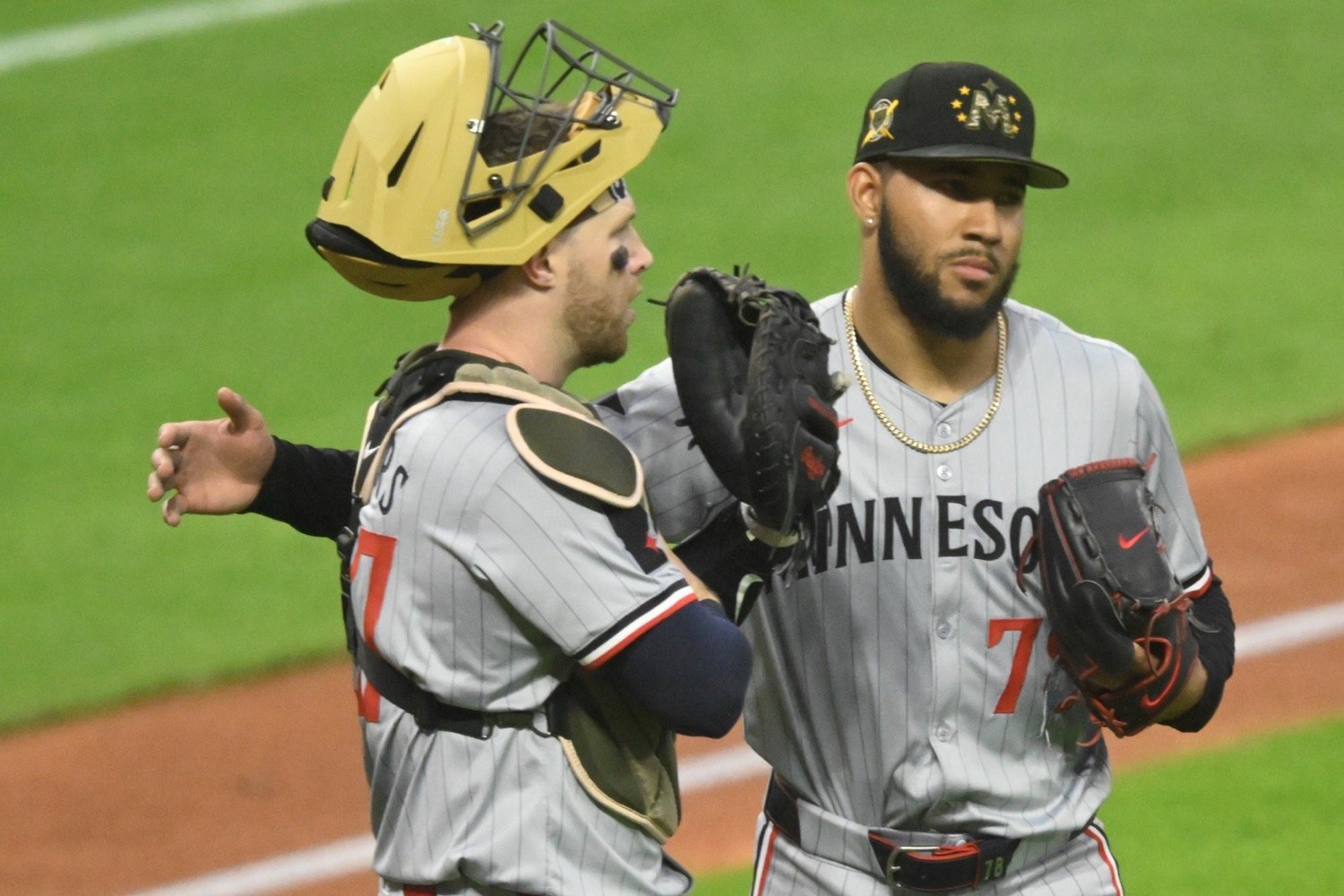
This very topic came up when Aaron Gleeman of The Athletic and our own John Bonnes were interviewing Ryan Jeffers at the Twins Daily Winter Meltdown.
Gleeman was specifically asking Jeffers about learning new pitchers (i.e. when David Festa was promoted) and how the game plan is formed when each player is still getting to know the other. Jeffers pointed out that it's a collaborative effort between the players and coaching staff, but also revealed that the team uses a “sticking to the plan” stat. Jeffers revealed that an intern will track pitches and after the game will determine how well they stuck with the pre-game plan.
While we don't know the details of how this is exactly calculated (and there's some indication that it's more of a tabulated but flexible feedback system than a true stat), it's a fascinating aspect of the game to discuss. It's one of the few things that aren't formally quantified, at least in the public sphere. Regardless, we can use some thoughtful conjecture to hypothesize what this stat may look like.
When game planning, there are two sets of strengths and weaknesses to consider: your pitcher’s and the opposing hitter’s. Of course, you always prefer to lean into your pitcher's strengths, as that is where they are most comfortable, but that's not always the best plan. Not only do opposing hitters have the scouting report on that game’s pitcher, but their strengths may coincide with the pitcher’s. For example, Simeon Woods Richardson’s slider performed really well last year. At the same time, Kansas City's Salvador Perez had a solid .331 expected weighted on-base average (xwOBA) and hit six home runs on sliders from righties in 2024. When those two match up in 2025, should Woods Richardson avoid throwing his slider? That's where the next layer of the plan comes into play.
Pitchers and hitters alike have tendencies and preferences that impact the game plan. Pitchers like to throw certain pitches in certain counts, and that may even vary depending on the handedness of the hitter.

From Pablo López’s Brooks Baseball page, you can see his tendencies based on the count as well as hitter split. Generally speaking, left-handed hitters should look for more vertical movement, while their right-handed counterparts will look for more horizontal movement. (This is pretty typical: horizontal movement tends to deceive same-handed batters better than opposite-handed ones. Vertical movement is best leveraged when the hitter has the platoon advantage.) Specifically, in a two-strike count, right-handed hitters have four pitches to stay on, while left-handed hitters can more or less throw out the slider (that's his sweeper; Brooks Baseball just doesn't distinguish sliders from sweepers yet). On the other hand, hitters have their own swing tendencies that will be part of the game plan as well. Check out Byron Buxton’s swing tendencies and outcomes on two-strike counts. Where are you attacking him?
If you said underneath the zone, I would absolutely agree. If you play around on his Brooks Baseball page, you’ll find that while he does relatively well against sinkers and sliders regardless of count, locating well with those offerings can confound him. While the numbers shared are for their careers, it’s also important to consider recent tendencies as well. Has the hitter struggled against a certain type of pitch over the last two weeks? Is the hitter dealing with a nagging injury that may impact their ability to get around on a ball or extend their hands to the outside part of the zone? While quantifiable trends are the most important thing to go into a game plan, it’s also important to have a feel for the game.
“You have to constantly weigh that battle of what you see, what your eyes are telling you versus what the numbers are saying,” Jeffers said at the Meltdown. To supplement what the data is telling you, pitchers and catchers can leverage film to help identify weaknesses in a hitter’s swing. Moreover, in-game observations at the at-bat level can impact how you set hitters up later in the count or in future at-bats. That a player generally struggles with a certain pitch doesn’t necessarily mean it's wise to pummel the zone with that pitch; getting them out still requires a thoughtful approach on how you set that player up for that pitch type.
While we don’t know how the Twins exactly quantify “sticking to the plan,” quantifying this internally is an important part of pitcher and catcher development and deepening the relationship there. Reflecting on the game plan can lead to invaluable discussions and learning opportunities, such as the thought process behind deviating from the plan; why a pitcher may have shaken off the catcher (something that is encouraged by Jeffers); or why the plan may or may not have worked on a particular day. Especially in the early stages of a pitcher-catcher relationship, these discussions can help the two better understand each other’s tendencies, as well as when or how the pitcher prefers to deviate from those tendencies.







Recommended Comments
Create an account or sign in to comment
You need to be a member in order to leave a comment
Create an account
Sign up for a new account in our community. It's easy!
Register a new accountSign in
Already have an account? Sign in here.
Sign In Now