Jump to content
Twins Daily
  • Create Account
  • Twins News & Analysis

    Is the Ty France Deal Riskier Than It Seems for the Twins?


    Cody Pirkl

    The Twins spent a meager $1 million to bring in a new first-base candidate, on a non-guaranteed deal. It feels like the investment of playing time and faith will be greater than that, though. Should we be concerned about how the Twins are handling first base?

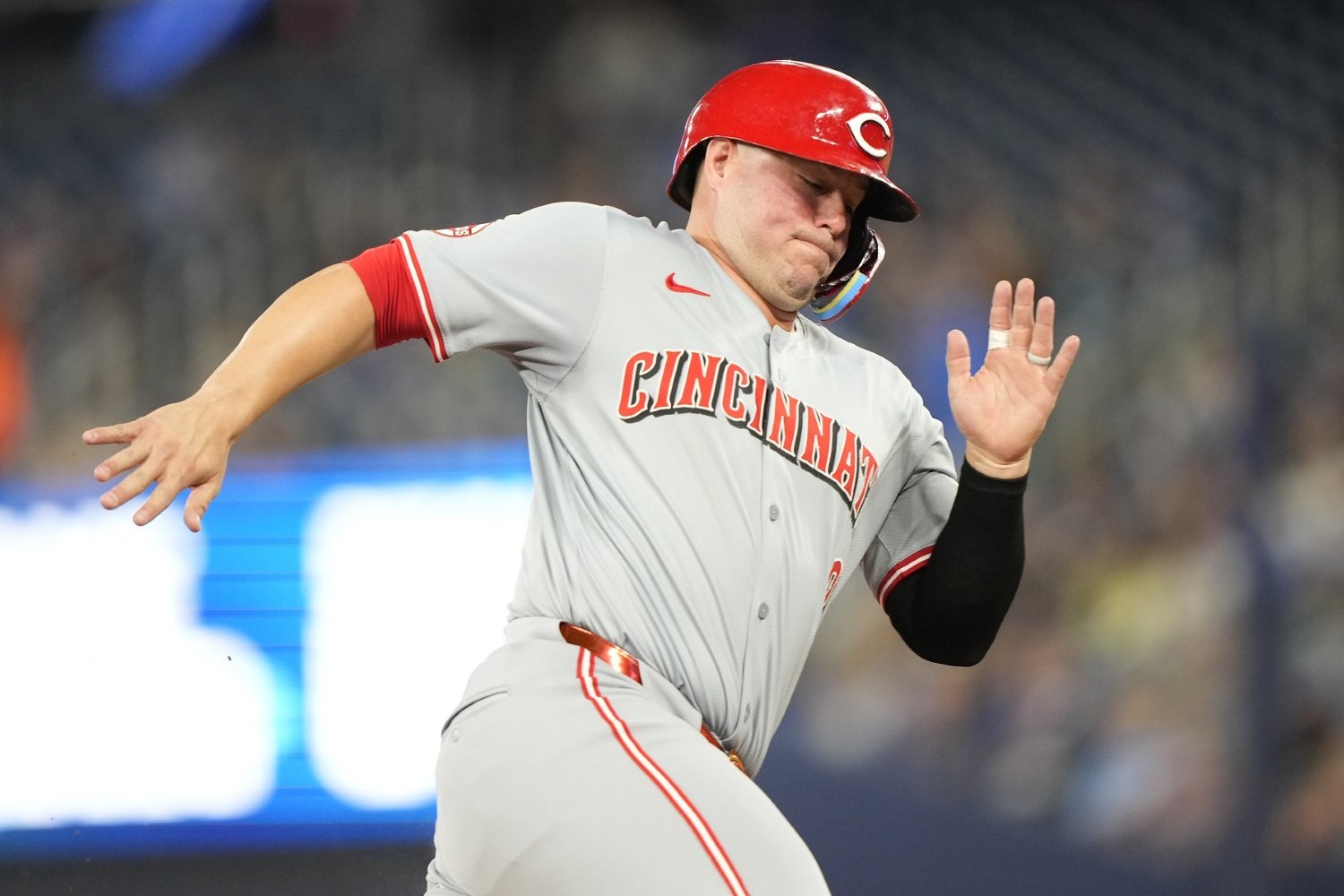
    Image courtesy of © John E. Sokolowski-Imagn Images

    Twins Video

    The last time Ty France put up a strong offensive stat line for a first baseman was in 2022. When the Twins signed him to a minuscule, non-guaranteed deal this week, it made good sense. At 30 years old, France could have a bounce-back performance, and the Twins needed some competition for José Miranda at first base. Now that more information is coming out, it seems as though the Twins are enormous fans of France. That could be a problem.

    It sounds like France’s non-guaranteed deal was only classified that way as a formality. After France couldn’t find a job all offseason and 29 other teams declined to guarantee him a deal, the Twins see him as a near-everyday player. It’s great that the Twins have high hopes for France, but him being a perceived veteran option could turn out to be a problem, based on the track record of the Derek Falvey regime.

    At this point, it’s safe to say that the Twins value veteran status exceptionally highly. Having strong leadership and a wealth of experience is undoubtedly valuable, but the Twins have taken it a bit too far at times. It seems that every season, there are at least a few veterans who receive opportunities beyond what they’ve earned through their performance. These occasions often come at the expense of younger players with more hypothetical upside, or just wind up feeling like poor uses of roster spots. 

    To be clear, there’s nothing wrong with giving France an opportunity. The problem is in the Twins' history of handling these types of players. There is little evidence of this regime being able to have a quick hook when it comes to poor-performing veterans. In France’s case, it sounds like he’s already been awarded a significant role with the team, despite being two full seasons removed from being an impact player. Miranda, admittedly, doesn't have a wealth of experience playing first base. Still, many defensive metrics indicate that France is a worse defender.

    The Twins must turn a new leaf and be well prepared to make a difficult decision if France isn’t right to begin the season. His experience and the team’s lack of a well-prepared alternative would make it difficult for them. Getting poor offensive and defensive output at first base for a significant chunk of the season would simply be too damaging to a roster that didn’t have the capital to make major additions elsewhere this winter. 

    We do have to wonder, too, whether this amounts to an important schism between Baldelli and the front office. There's no way for an executive to more clearly send the message that a player is fungible than by signing them to a rare, uniquely low-ceiling and team-friendly contract. For Baldelli to signal an expectation of plugging in such a player every day creates some unavoidable cognitive dissonance. How much of this problem, over the years, has been about the front office—and how much has been Baldelli cleaving too tightly to veterans, perhaps using his own influence to fight off Falvey's efforts to move out non-producers? Is this a source of real or potential friction between the skipper and his bosses?

    Hopefully, France will have a resurgent season, and the Twins' belief in him will be justified. If that isn’t the case, the team needs to do what they’ve struggled to do in the past and not let their miscalculation cost them too significantly. Whether that comes down to the manager or the front office, however, is hard to discern—and that makes it hard to feel much confidence that they'll break their pattern if things go poorly.


    Follow Twins Daily For Minnesota Twins News & Analysis

    Recent Twins Articles

    Recent Twins Videos

    Twins Top Prospects

    Marek Houston

    Cedar Rapids Kernels - A+, SS
    The 22-year-old went 2-for-5 on Friday night, his fourth straight multi-hit game. Heading into the week, he was hitting .246/.328/.404 (.732). Four games later, he is hitting .303/.361/.447 (.808).

    User Feedback

    Recommended Comments


    Featured Comments

    12 hours ago, Bodie said:

    You're correct.  We wouldn't be having this discussion. 

    If Miranda played 1B regularly we would gladly welcome ANY competent 1B to man the position!

    Absolute.butcher on defense, seemingly ignored because he isn't as truly horrendous as Julien...

    Jim Thome had more of a reason to bring a glove in his last season than either Miranda or (even more so!) Julien do!

    At least according to baseball savant, France makes Miranda look like a gold glove at first.

    France has a cumulative -17 outs above average over 5 seasons, or -3.4 per season compared to Miranda’s -4 over two seasons.

    17 minutes ago, Richie the Rally Goat said:

    At least according to baseball savant, France makes Miranda look like a gold glove at first.

    France has a cumulative -17 outs above average over 5 seasons, or -3.4 per season compared to Miranda’s -4 over two seasons.

    This would say they did not sign him for his glove.

    image.png.fc1543b109b23929eba3bcb02b0c246a.png

    On 2/17/2025 at 5:47 PM, Major League Ready said:

    I look at the 5 Twins you list and I would only consider two of them (SWR / Martin) to be considered MLB level players. 

    My original post only consisted of the projected 26 man rosters as of February 17, 2025 based on projections on roster resource.

    I'm only doing that to show that teams are not dying with pre-arb players. Some are actually thriving. If they can thrive... why can't we?

    The discussion got expanded to 40 man by Nurse. Which is fine by me.

    In the case of the other 3 players that you won't consider. That's fine but I still think it's important to say yet in all three cases. 

    On 2/17/2025 at 5:47 PM, Major League Ready said:

    In other words, the others have provided no value so why include them?  The quantification is obviously open for interpretation.  I would suggest that every team has 14 players (without considering the IL) on the 40 man.  Including any player that makes the 40 man considerably erodes this measure in terms of measuring value.  Many of the players that make the 40 man provide little or no value.  Therefore, making the 40-man roster is a very poor indicator or the value derived in an acquisition (draft or trade) measure of value IMO.   

    When collecting and organizing this data, I look at the total WAR produced sorted by acquisition method.   Players that have not produced are not of consequence.  don't even consider them.   Do we care about the relative impact on the major league team or how many make it on to the 40 man?  

    You'd have to consider Corey Kluber. In your data over the past 20 years he was probably a big part of the positive WAR number that Cleveland accumulated via trade. Corey was in the Padres system and not ranked in their top 30 prospect list when acquired by Cleveland in a three team trade in 2010. He reported to AA.

    At that point... he is a player that "has not produced and not of consequence" which is the same boat that Camargo, Cartaya and Gasper are in right now.

    Kluber got rocked for 4 innings total in 2011.  Made 12 starts in 2012 producing a 5.14 ERA. Finally arriving for good in 2013 3 years after the trade at age 27. Kluber ended up being a prime example of what you are advocating. What you are advocating is a fair point. He ended up being a large career WAR number that drives the data you have collected to make your point. There was a time when he had not produced and not of consequence. In regards to my point... I can't make my point that a pre-arb player can produce what we are paying for low tier free agents... or trading for lower tier players if they have not produced anything and of no consequence. 

    On 2/17/2025 at 5:47 PM, Major League Ready said:

     I think it was you (and others) that pointed out they have produced a fair number of players the last few years but very few high contributing players.  Great point.  Is it better to produce 20 players that produce 20 WAR in a given season or 15 players that produce 30 WAR?  I don't care how many they produce. I care about the total production of the players they produce. 

    I also care about the total production of the players that they produce. I also care about the total production of the players they buy. This kinda brings us back to the discussion we had last year around this time that went horribly wrong. Forget the names involved in that discussion. The question was at the time. Is it better to have 1 bigger name or is it better to divide that 1 bigger player into 4 lesser players? I honestly wasn't sure when I originally asked that question. I'm more sure now... I'd rather have the bigger name. But in order to have the 1 bigger name... the other roster spots will have to go to players of no consequence and then hope that they can turn into a Kluber so you don't have to sign a Bundy in the future. 

    4 hours ago, old nurse said:

    Cleveland has only 5 players of the 23 prearb players as being from a trade.  1 each from trading Clevinger, Civale and Naylor. The pitchers were from deadline deals.  When the Twins haven’t been in the playoff hunt, what did the Twins have that would have been similar to those 2? Clevinger was coming off from 2 seasons of more than 4 Bwar 

    The risk/reward of selling high. When it works, you can do what Cleveland is doing. When it doesn’t you get Pittsburgh.

    8 hours ago, Mike Sixel said:

    This is why, IMO, Larnach should be the 1B......but that ship does not appear to ever be likely to sail. 

    Their best prospects are all OF...all of them.....unless Keashcell becomes a 1B. 

    As I said in another OP post, it's possible either of Larnach or Wallner MIGHT be able to adapt to 1B. The problem is we're talking career OF who might not have played on the dirt since college or HS! And now they have to scoop, as well as adjust to odd throws, as well as learning the basics of handling a ground ball at 1B.

    IMO, the FO has taken "position less defense" one step too far when it comes to 1B. And it IS the least valuable defensive position overall, and always has been. But 1B has been handled average-ish with the likes of Sano and Arraez and Solano before Santana last season. The difference is those guys were INF and more used to playing in the dirt.

    Sabato was the ONE GUY the drafted as a pure 1B and that's tured out to be a bust! 

    But 1B SHOULD still be considered an important position, and not JUST due to offense. Better defense is better defense. Larnach or Wallner are far down my 1B option spectrum. I'd bet real $...and I'm not a betting man...that Julien would be a better defensive 1B than Larnach because he's simply USED to playing in the dirt.

    But I'm also anti-conventional when it comes to roster construction. I despise the "he's too good of an athlete to be played at 1B" mantra because it's ridiculous. There is NOTHING wrong with Keaschall being able to play 2B, AND being able to play a good CF/LF and maybe even some SS/3B if his arm recovers 100%. He could be an even better version of Castro! 

    But why couldn't he just be an outstanding 1B? Being a great athlete means what, that he could be really good defensively at 1B vs a statue? And how does playing 1B decrease his potential offensively from being a potentially good hitter, OB%, good XB hitter, and a guy who can steal bases?

    Erstad of the Angels a few years ago and Cody Bellinger were true CF who also played 1B because THEY COULD, and the offense was the same.

    So no to Larnach. And very much a YES to making Keaschall a stud 1B with great offense. 

    6 hours ago, Fire Dan Gladden said:

    I agree with you.  As someone who is not an MiLB insider, I would be curious to know if there is anyone on the farm that they are looking at moving to 1B

    There's a very real chance that Keaschall settles in at 1B if Lee takes over 2B. Forget arguements he's too talented and athletic to be placed at 1B. There is an opening, he's athletically talented enough to be a quality defender there, and bring really good offense. Just because he's not a 30HR bopper doesn't change the fact that he can be a very good offensive producer.

    Amick, drafted last year, has a chance to be a very good power producer and decent hitter. He's probably not going to stick at 3B.

    That's the top 2, right now IMO.

    21 hours ago, Vanimal46 said:

    What injury did he have? A low back strain for 10 days? 

    I posted that injuries suck. France had a broken heel as a result of being hit by a pitch. I've never had a broken heel, but I suspect that might affect performance. I have had a bad back, as Miranda had. I absolutely know that can mess you up really bad.

    1 hour ago, Twins_Fan_For_Life said:

    I posted that injuries suck. France had a broken heel as a result of being hit by a pitch. I've never had a broken heel, but I suspect that might affect performance. I have had a bad back, as Miranda had. I absolutely know that can mess you up really bad.

    If his low back strain was that bad he probably wouldn’t have played 45 games after that? He was 25 years old with world class healthcare behind him. Come on. 

    13 hours ago, Riverbrian said:

    My original post only consisted of the projected 26 man rosters as of February 17, 2025 based on projections on roster resource.

    I'm only doing that to show that teams are not dying with pre-arb players. Some are actually thriving. If they can thrive... why can't we?

    The discussion got expanded to 40 man by Nurse. Which is fine by me.

    In the case of the other 3 players that you won't consider. That's fine but I still think it's important to say yet in all three cases. 

    You'd have to consider Corey Kluber. In your data over the past 20 years he was probably a big part of the positive WAR number that Cleveland accumulated via trade. Corey was in the Padres system and not ranked in their top 30 prospect list when acquired by Cleveland in a three team trade in 2010. He reported to AA.

    At that point... he is a player that "has not produced and not of consequence" which is the same boat that Camargo, Cartaya and Gasper are in right now.

    Kluber got rocked for 4 innings total in 2011.  Made 12 starts in 2012 producing a 5.14 ERA. Finally arriving for good in 2013 3 years after the trade at age 27. Kluber ended up being a prime example of what you are advocating. What you are advocating is a fair point. He ended up being a large career WAR number that drives the data you have collected to make your point. There was a time when he had not produced and not of consequence. In regards to my point... I can't make my point that a pre-arb player can produce what we are paying for low tier free agents... or trading for lower tier players if they have not produced anything and of no consequence. 

    I also care about the total production of the players that they produce. I also care about the total production of the players they buy. This kinda brings us back to the discussion we had last year around this time that went horribly wrong. Forget the names involved in that discussion. The question was at the time. Is it better to have 1 bigger name or is it better to divide that 1 bigger player into 4 lesser players? I honestly wasn't sure when I originally asked that question. I'm more sure now... I'd rather have the bigger name. But in order to have the 1 bigger name... the other roster spots will have to go players of no consequence and then hope that they can turn into a Kluber so you don't have to sign a Bundy in the future. 

    I mostly agree with you and completely agree that producing prearb players is the key to creating payroll availability for free agents.  Obviously, this is relative to revenue.  In other words, it's a lot more important to the Guardians than the Dodgers. 

    What motivated me to collect all the data was statements in the past just as you made above where fans advocate a given acquisition strategy.   I wondered what history would tell us about the relative importance of various acquisition strategies.   That curiosity compelled me to collect the data and organized it by acquisition method for teams with 90+ wins.  I did not collect data from lesser teams becasue I was specifically interested in how winnings teams were built.  Trading for prospects and trading for established players are very different strategically so I separated them.  I didn't separate free agents based on high end vs low end.  However, I did collect the years and AAV for all of them.  What stands out when looking at these successful teams is that generally speaking they produced 1 WAR for about $3M in spend.  The $20M type free agents are pretty rare.  There are many more teams that got over production from $1-$10M free agents.  You will find a lot more overall production from these players than the higher end players.  

    Obviously, the ideal situation is to produce so many good prospects that you only have one or two holes to fill and the prearb players make it feasible to spend bigger on one or two players.  We did that with Correa and Lopez.  I am sure we all agree we would have rather filled our other holes with Alonso, Tanner Scott and Teoscar Hernandez.  t's just financial reality that an average or below average team can't fill that many roster spots with high dollar players.   We also agree that playing the prospects has upside.  We spent roughly $10M on Bader, Columbe, and Franz.  Would we have been better off spending $10M on one player.  I seriously doubt it.  

    1 hour ago, Major League Ready said:

    I mostly agree with you and completely agree that producing prearb players is the key to creating payroll availability for free agents.  Obviously, this is relative to revenue.  In other words, it's a lot more important to the Guardians than the Dodgers. 

    Yet the Dodgers might be the best at development out of all 30 teams. 

    21 hours ago, Major League Ready said:

    We also agree that playing the prospects has upside.  We spent roughly $10M on Bader, Columbe, and Franz.  Would we have been better off spending $10M on one player.  I seriously doubt it.  

    We do agree although I'd say that the term prospects is limiting. Let's just go with pre-arb or minimally priced.

    France for example is no prospect but he costs 1 million... he is minimally priced. His presence doesn't move the financial needle. You can't take the France money and combine it with others of similar ilk to go for a bigger fish because it's barely over the minimum. A France that returns to his earlier form is a home run at that price point. 

    If he doesn't... that's where the question becomes did we let France take opportunity because France won't be here in 2026.  

    My general point is... The more pre-arb players that you have on your roster... the more money available to sign bigger free agents if you'd like. More Pre-arb opportunity... the better the odds of improving your pre-arb players for 2026 and 2027 and lessening the need to sign lower tier free agents in 2026 and 2027.

    It's how you get off this thing and be more like Milwaukee and Cleveland. 

    We need to up our pre-arb numbers. We need to develop... that need will never go away... even if you are the Dodgers but yes... You and I both know... especially if you are the Twins, Brewers or Royals.  


    1 hour ago, Mike Sixel said:

    Only looking at cases where strategy works seems like a weird analysis....

    This is not predictive.  It's a measure of what happened.  In other words, how were winning teams constructed. We are not talking about looking at anecdotal evidence but looking at every 90 win team, determining the percentage of WAR produced from each acquisition strategy.   We can then look at how any individual organization constructed their best teams or we can consolidate the data and determine the percentage of WAR produced by each strategy across all teams.   That's about as conclusive as you can get on this topic.

    Why do you want to know how the worst (rebuilding) teams produced WAR.   They are very unlikely to invest in free agents or trade for established players.  That data would be utterly useless in determining what strategies have contributed the most to winning teams.   

    To be fair... Let's talk about a wildly successful Ty France. 

    Let say for discussion sake that he goes nuts and produces a .900 OPS over 600 Plate Appearances and leads us to the playoffs. 

    I hope he does that... it would certainly be a wonderful thing for the 2025 Twins... and for Ty France. 

    After this type of year is complete. Can we afford to bring him back next year?

    Good Year... Bad Year... In Between Year. He's gone. 


    6 hours ago, Mike Sixel said:

    Only looking at cases where strategy works seems like a weird analysis....

    It's a good first step.  You want to find the strategery that has a chance of succeeding.

    But, it's incomplete.  "What happens when you try the strategery? What are the odds that it actually works?"  That's the necessary second step.

    15 minutes ago, ashbury said:

    It's a good first step.  You want to find the strategery that has a chance of succeeding.

    But, it's incomplete.  "What happens when you try the strategery? What are the odds that it actually works?"  That's the necessary second step.

    "What happens if you dont follow the strategy?" seems like an important control, too. Lest you conclude it's safe to stick your tongue on the metal pole because you only looked at those who did so in July 

    14 minutes ago, USAFChief said:

    "What happens if you dont follow the strategy?" seems like an important control, too. Lest you conclude it's safe to stick your tongue on the metal pole because you only looked at those who did so in July 

    I'm putting you in charge of Quality Control when I buy a factory.

    29 minutes ago, ashbury said:

    It's a good first step.  You want to find the strategery that has a chance of succeeding.

    But, it's incomplete.  "What happens when you try the strategery? What are the odds that it actually works?"  That's the necessary second step.

    Loosing / rebuilding teams follow very different strategies.  Are they signing serious free agents?  No.  How about trading prospects for established players.  Of course not.  

    The fact that you can fail using the same strategy goes without saying.   Let me ask you this .... If you measure the productivity of each acquisition strategy for every 90+ win team, would that indicate the relative impact of each one of those strategies?  Of course it does.  If drafting produces 40% and acquiring prospects is 40%, and trading for established players is 10%, and free agents contribute 10%. these are facts not projections. 

    This is a measure of what has worked.  If the odds of success were increased using a different mix of acquisition strategies, that would definitely show up in the data.  For example, trading for prospects would be 10% and trading for established players would be 40% instead of vice versa.  The odds while not directly measured are inherent in the data.

    1 hour ago, USAFChief said:

    "What happens if you dont follow the strategy?" seems like an important control, too. Lest you conclude it's safe to stick your tongue on the metal pole because you only looked at those who did so in July 

    We flavored all of the poles in Grand Forks either Cherry and Grape. 

    It wasn't long after... A day in mid-December that teachers in our elementary schools were noticing that a lot of students were all of sudden having trouble speaking clearly.  

    2 hours ago, USAFChief said:

    I doubt you can afford me.

    The factory's not going to be especially impressive, either.

    Quote

    What flavor were the Swedes? The Germans?

    Was it over when the Swedes bombed the Germans at Pearl Harbor???

    Signing Ty France for $1M doesn't interfere with the budget and his production will determine whether it is a mistake. If he repeats his work from the last two years, not good. If he puts up a 4.4 WAR, good.

    Earlier, it was noted that there isn't really a $10M FA out there that makes much of a difference and thus the additions of Bader, Coulombe, and France are fine. Makes sense. Then again, the Twins are close, depending on source, to a $150M payroll after thousands of angst-filled comments. The question France raises for me is the same question that has existed for several years - what is the plan? 

    Is there a plan that anyone can identify? I don't need to repeat words that Riverbrain has articulated on numerous occasions regarding roster construction. I will only add that I am very much waiting for a new ownership group for the Twins and my interest has nothing whatsoever to do with the Pohlads.


    Create an account or sign in to comment

    You need to be a member in order to leave a comment

    Create an account

    Sign up for a new account in our community. It's easy!

    Register a new account

    Sign in

    Already have an account? Sign in here.

    Sign In Now

×
×
  • Create New...