Jump to content
Twins Daily
  • Create Account
  • Twins News & Analysis

    2018 MLB Draft Day 1 Thread


    Andrew Thares

    The Twins will only have two picks on Day 1 of the 2018 draft — Nos. 20 and 59 overall — but that doesn’t mean there is any lack of storylines to follow. How might the Twins navigate the draft? Considering their modest bonus pool, will they prioritize more signable college players over high-upside high schoolers? Come join in on the discussion as we gear up for the draft.

    Image courtesy of © Brad Rempel-USA TODAY Sports

    Twins Video

    The 2018 MLB Draft starts Monday night, and is available to watch on MLB Network or MLB.com starting at 5 pm CT. Day 1 includes the first two rounds (including the comp picks), so 78 total players will be drafted. Rounds 3-10 continue Tuesday before the draft concludes Wednesday with rounds 11-40.

    We'll get into some strategic moves the Twins may be considering a little later, but for now here is some additional pre-draft coverage from Twins Daily that you’ll want to check out:

    2018 MLB Draft Top 50 Prospects: 1-10

    2018 MLB Draft Top 50 Prospects: 11-20

    2018 MLB Draft Top 50 Prospects: 21-30

    2018 MLB Draft Top 50 Prospects: 31-40

    2018 MLB Draft Top 50 Prospects: 41-50

    2018 MLB Draft: Minnesota Connections

    While many of you have followed the MLB Draft for years and know what to expect going in, I am sure there are some that are not as familiar with the draft process and how it works. So, here is a brief breakdown of some of the things you need to know before the draft.

    The draft itself is made up of 40 rounds with a competitive balance round and a compensation round after both the first and second rounds. With the exception of the Competitive Balance picks, teams are not allowed to trade their draft picks. This means that that Twins, who have the 20th pick in the draft, will have the 20th pick in each subsequent round of the draft.

    Another wrinkle to the MLB Draft is that each team is awarded a certain amount of money (referred to as a bonus pool) that they can use to pay out to their picks in the first ten rounds of the draft. A team’s total bonus pool is based on which picks they have in the first ten rounds, as each pick has a dollar value attached to it.

    Teams can spend above or below that value for each pick, but the total value spent must remain below the total allotted amount or they will be assigned a penalty. If a team fails to sign one of their picks in the first ten rounds they lose the money that is attached to that pick. Also, if a team signs a player after round ten to a bonus of more than $100K, the extra amount comes out of their bonus pool.

    Here is a breakdown of each pick that the Twins have in the first ten rounds and the bonus pool money assigned to that pick.

    1st Round: 20th Overall - $3,120,000

    2nd Round: 59th Overall - $1,140,600

    4th Round: 124th Overall - $442,600

    5th Round: 154th Overall - $330,400

    6th Round: 184th Overall - $253,700

    7th Round: 214th Overall - $198,700

    8th Round: 244th Overall - $162,100

    9th Round: 274th Overall - $146,500

    10th Round: 304th Overall - $138,400

    Total Bonus Pool: $5,933,000

    You may have noticed that the Twins do not have a pick in round three. This is a result of the Lance Lynn signing this offseason as he had turned down a qualifying offer from the St. Louis Cardinals before the Twins signed him.

    Additionally, the Twins initially had a pick in competitive balance round B (between rounds two and three). However, as part of the Phil Hughes trade from a week ago, that pick was sent to the San Diego Padres.

    UPDATE 1, 8:20 AM CT

    Here are links to some of the mock drafts that have been recently updated and the info on who the Twins are being projected to take at No. 20.

    Jonathan Mayo and Jim Callis of MLB.com:

    20. Twins

    Mayo: Shane McClanahan, LHP, South Florida -- The Twins are said to be mostly looking at college arms or high school bats, so they could opt for someone like Naylor or Schnell in this spot. But we'll stick with college pitching and McClanahan, who has slid a bit because of command issues, but still has a plus-plus fastball from the left side.

    Callis: Jackson Kowar, RHP, Florida -- Minnesota could grab the last college pitcher from the second tier before they're all gone. The Twins could be the lone team to make California shortstop Osiris Johnson a first-rounder, and Denaburg, Larnach and Naylor also are possibilities.

    Baseball America staff:

    20. Twins

    Ethan Hankins

    Forsyth Central HS, Cumming, Ga. RHP

    Notes: Hankins figures to be in play starting around No. 20 and shouldn’t get past 30, though if it weren’t for an injury this spring there would be no chance he makes it this far down the board. The Twins could be thrilled to get a pitcher with the best fastball in the prep class and advanced command of the pitch as well.

    Eric Longenhagen and Kiley McDaniel of Fangraphs:

    20. Minnesota Twins – Brice Turang, SS, Santiago HS (CA)

    The Twins have been tied to all kinds of players but figure to be more value-oriented than focused on a specific demographic. Turang looked like a potential 1-1 guy a year ago, and he’s in play at a number of picks before and after this one.

    Mike Axisa of CBS Sports:

    20. Minnesota Twins: OF Connor Scott, Plant HS (Florida)

    The Twins have gone heavy on high school players in recent years and, at this point, Scott is the best prep hitter still on the board. He's a potential four-tool player -- there are some questions about his long-term power potential -- with the kind of high-end tools and athleticism Minnesota has been targeting in recent years.

    Previous Mock Selection: LHP Ryan Weathers, Loretto HS (Tennessee)

    UPDATE 2, 9:25 AM CT

    The Twins have just the 26th largest bonus pool to work with in this year’s draft. This means that they won’t have a lot of flexibility when making their picks in the first few rounds. This drastically changes their draft strategy from a year ago when the Twins had the largest bonus pool to work with among all 30 teams.

    So, let’s take a look at a couple potential draft strategies that the Twins could employ this year.

    The Portfolio Approach

    The portfolio approach is a draft strategy that is based around the idea of trying to build depth from within your draft class by more evenly dispersing your bonus pool. The could mean that the Twins opt to pass on the best player available in the earlier rounds, and instead elect to draft a different player that they like whom will sign for a more economical dollar amount.

    This was the strategy that the Twins went with last year, and they pulled it off beautifully. For all we know, Royce Lewis may have been the highest rated player on the Twins board going in, but he wasn’t thought of that way on the national stage before-hand. This allowed the Twins to sign Lewis for a full $1 million below his slot value. The Twins then saved another $450K when they drafted Landon Leach with the first pick in the second round.

    These moves allowed the Twins to turn around and sign third round pick Blayne Enlow to a bonus of roughly $1.25 million above his slot value. Enlow was originally pegged as a first-round talent, but slipped in the draft when teams thought they would have difficulty signing him.

    If the Twins wish to take a similar approach this year, it will most likely mean that they will try to focus on the college ranks, as these players are often easier to sign at or below their slot value, as opposed to top tier high school players who usually take a little bit more money to sign.

    The Best Player Available Approach

    Unlike the portfolio approach, the best player available approach is centered around taking the player you think is most talented with the first few picks in the draft, even if that means spending more than your slot value in order to sign him.

    With the surplus of high school pitching that is available in the first round of this year’s draft, it’s quite possible that the highest rated player that the Twins have on their board when they make their selection at pick 20 is one of them.

    While it’s entirely possible that the Twins could sign one of them to a bonus at or around their slot value, it will most likely take more than the $3.1 million they have in the first round to get him to pass on an opportunity to pitch in college where he could continue to build his stock.

    If the Twins wish to go after one of these players, they will need to look to save money during some of their other picks in the first ten rounds. One of the more common ways that teams do this is by drafting college seniors as they can usually be signed at a bargain. This is because they don’t have the leverage of going back to college during the negotiation process.

    While most teams don’t begin taking college seniors until their ninth and tenth round picks, the Twins could try to select a couple college seniors in rounds 5-7 when the savings on their bonus pool is greater.

    UPDATE 3, 11:05 AM CT

    Twins Daily draft guru Jeremy Nygaard has been busy molding young minds both on and off the basketball court, so he's had to take a step back in his coverage this year. Thankfully, he found some time this morning to share some thoughts on Twitter.

    His prediction for the No. 20 pick is Canadian prep catcher Noah Naylor. Here's the string of Jeremy's Tweets below:

    https://twitter.com/jeremynygaard/status/1003665404932132864?s=19

    UPDATE 4, 12:57 PM CT

    Perfect Game just released its most recent mock draft. Back on April 20, they were projecting the Twins would take high school right-hander Cole Winn out of California, then on May 10 they flipped to Ole Miss lefty Ryan Rolison. Their most recent mock prior to today was on May 24, where they had California high school shortstop Brice Turang going to Minnesota. They’ve got a new pick tabbed for the Twins in their final mock posted just a few minutes ago.

    20. Minnesota Twins | Jackson Kowar, rhp, Florida

    Kowar is viewed as potentially having higher upside than teammate Brady Singer, but also a significantly lower floor and higher risk. This also may be a spot for SoCal prep shortstop Brice Turang, as well.

    UPDATE 5, 2:55 PM CT

    Baseball America just released its final mock draft, and has also now listed Kowar as the Twins' pick.
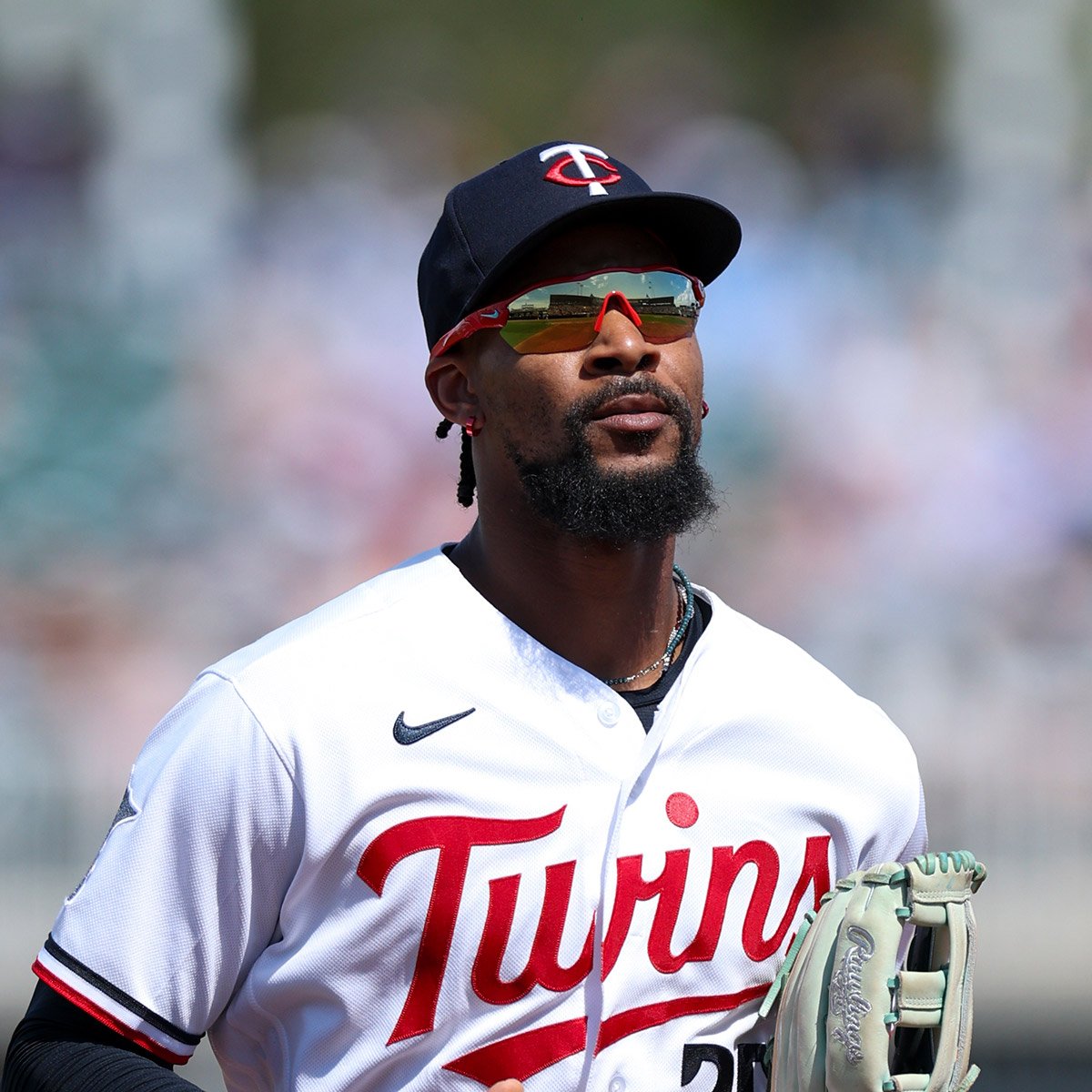
    20. Twins

    Jackson Kowar

    Florida RHP

    Notes: The Twins could go with Gilbert if he gets here, but Kowar fits as well. They’d presumably also look long and hard before letting Mississippi lefthander Ryan Rolison get passed them, and there are still a number of high-upside prep arms Minnesota could target in this spot.

    Follow Twins Daily For Minnesota Twins News & Analysis

    Recent Twins Articles

    Recent Twins Videos


    User Feedback

    Recommended Comments


    Featured Comments


    Sure, it happens. The bottomline is that it is so hard to find great pitching in today's game while you can piece together a lineup relatively easy. I am a firm believer that you draft as much pitching as possible and finding missing pieces among positions players through trades and FA is the way to go.


    Depends on the market. If you're in LA, NY, Bos etc., I think you have more latitude to bring in free agent pitching and reclamation projects.


    In a small market like the TC though, you need high-upside ace potential.


    We did that in 2009 and ended up passing on Trout for Gibson

    Trout had also floated out a 4M signing bonus at the time, so teams just didn't pass on him to pass on him. Luckily the scout, Greg Morhardt, who had watched him repeatedly knew the family as he played minor league ball with Mike's dad, Jeff, in the Twins system in the 80s.


    And truth be told at the time, Gibson was considered a Top 5 pick before hurting his forearm (stress fracture) at the end of his college season.


    I'll take another SS!  About 80% of the position players worth taking this high were shortstops for their HS and/or college teams.  They can project to be average to plus defensively at several other positions if/when that time comes.

    Yeah most of your present day MLB 3B and 2B were SS back in HS and even in college.  Either outgrowing the position and unable to keep up with the defensive demand.


    More seriously, I'd go BPA unless there's an unusually good college catcher available at 20. So BPA is most likely, which will probably turn out to be some HS pitcher.

    Yeah the only college catcher worthy of a first round pick is Joey Bart and he's not getting past the Top 5.  After him, Raleigh from FSU and Koch from Arkansas and Williams from Clemson and I guess JJ Schwarz from Florida if you still count him as a catcher but most of those are probably Day 2 picks.


    20th overall picks...


    1993 - Torii Hunter (of)

    1994 - Terrence Long (1b)

    1995 - David Yocum (p)

    1996 - Eric Milton (p)

    1997 - Adam Kennedy (ss)

    1998 - CC Sabathia (p)

    1999 - Vince Faison (of)

    2000 - Chris Bootcheck (p)

    2001 - Jeremy Sowers (p)

    2002 - Denard Span (of)

    2003 - Chad Cordero (p)

    2004 - Trevor Plouffe (ss)

    2005 - Mark Pawelek (p)

    2006 - Chris Parmelee (of)

    2007 - Chris Withrow (p)

    2008 - Josh Fields (p)

    2009 - Chad Jenkins (p)

    2010 - Kolbrin Vitek (2b)

    2011 - Tyler Anderson (p)

    2012 - Chris Stratton (p)

    2013 - Jonathan Crawford (p)

    2014 - Casey Gillaspie (1b)

    2015 - Richie Martin (ss)

    2016 - Gavin Lux (ss)

    2017 - David Peterson (p)


    Note, the Eric Milton pick was by the Yankees, the other Twins players, were Twins picks.  Most of the pitchers were college arms, especially the recent years.  Milton and Sabathia were HS arms.


    Hmm, looks like about 8 or so of the 25 players listed here amounted to anything at all, and half of those players were selected by the Twins. Kinda throws water on the idea that the team has been worse than average as talent evaluators over time.


    Maybe 20 is their lucky number.


    And in Gibson's draft class, of the 49 players selected in the first round, only 9 players have accumulated more WAR than Gibson, and Gibson most likely will shoot past a couple of them as well.


    The Trout stuff gets old, since most every team passed on a him, some more than once.


    Gibson, as hard as he can be on the eyes sometimes, has turned out to be a high-quality decision.

    Edited by birdwatcher

    A strategy that might be effective is to take the best ths player that fell. If they do not sign the pick and money carries over to the next year.  Same for the second round pick.  That gives the team far more room to play with in 2019. If a college player falls that the team loves that changes things. The rukes of the draft are such that a team has to consider the following year in their planning.


    This is more anecdotal than anything, but I've noticed that teams have had some decent success selecting college pitchers in the early-20s. There usually are one or two college starters than fall for some reason and yet have provided good value for their teams. As some recent examples, Stroman, Wacha, Weaver, Beuhler were all drafted in the 20s. All could have been drafted higher, but each had an issue (size, lake of third pitch, injury concerns) that caused them to slip. Even going back further into Twins history, Gibson - as much of a roller-coaster ride it has been with him - has provided excellent value for the #22 overall pick.


    I hate to nitpick, but Wacha went 19th overall, not in the 20's.

    But I'm seeing some comparisons between him & Kowar.  Wacha supposedly fell because he had a limited repertoire, I believe the same as Kowar-fastball/changeup.


    And I lied.  I LOVE to nitpick :-). 

    I have been seeing a lot of people wanting the Twins to take a college catcher with their first round pick. While I would like that too, there just won't be anybody worth taking at pick 20.


    Joey Bart is the only college catcher that I think even deserves to be looked at for a first round pick, and he will most likely be off the board by pick #5. After that you get a few guys like Cal Raleigh, Grant Koch or JJ Schwarz, but those guys are all more like 3-5 round picks not 1st rounders.


    If the Twins do go catcher at pick 20, there are some great options in the high school ranks like Anthony Seigler, Noah Naylor or Will Banfield that I could see them taking.


    I would be pretty pleased if they came away with one of the following:


    Gilbert

    Kowar

    McClanahan

    Grayson Rodriguez

    Ethan Hankins

    Turang

    Great read on the Top 10 college pitchers and their use/abuse over their college career. Which is even more of a reason to take Kowar.


    I have been seeing a lot of people wanting the Twins to take a college catcher with their first round pick. While I would like that too, there just won't be anybody worth taking at pick 20.


    Joey Bart is the only college catcher that I think even deserves to be looked at for a first round pick, and he will most likely be off the board by pick #5. After that you get a few guys like Cal Raleigh, Grant Koch or JJ Schwarz, but those guys are all more like 3-5 round picks not 1st rounders.


    If the Twins do go catcher at pick 20, there are some great options in the high school ranks like Anthony Seigler, Noah Naylor or Will Banfield that I could see them taking.

    Agreed.  (Other than Bart) it's highly questionable that any of the college catchers would get to the majors before Rortvedt.  This is Rortvedt's 3rd year of professional ball.  He was a number 56 pick, and so far, he's far from failing...with a very good chance of being at AA Chattanooga by next year at 21.


    I'd take a catcher, don't get me wrong, but given what's there, I'd almost rather it be a very-high topside HS kid.  All-in-all, BPA...I like the position guys better than pitchers, all other things being equal (which they never are). 


    Hmm, looks like about 8 or so of the 25 players listed here amounted to anything at all, and half of those players were selected by the Twins. Kinda throws water on the idea that the team has been worse than average as talent evaluators over time.


    Maybe 20 is their lucky number.


    And in Gibson's draft class, of the 49 players selected in the first round, only 9 players have accumulated more WAR than Gibson, and Gibson most likely will shoot past a couple of them as well.


    The Trout stuff gets old, since most every team passed on a him, some more than once.


    Gibson, as hard as he can be on the eyes sometimes, has turned out to be a high-quality decision.


    If you do all of the players over for the whole draft, you get Gibson at 29th in WAR. That's not too shabby. If you redid the draft with hindsight, the National would have Harper and Trout. Wow.


    Yeah the only college catcher worthy of a first round pick is Joey Bart and he's not getting past the Top 5.  After him, Raleigh from FSU and Koch from Arkansas and Williams from Clemson and I guess JJ Schwarz from Florida if you still count him as a catcher but most of those are probably Day 2 picks.

    Any of them break a leg lately? Grasping at straws...

    Trout had also floated out a 4M signing bonus at the time, so teams just didn't pass on him to pass on him. Luckily the scout, Greg Morhardt, who had watched him repeatedly knew the family as he played minor league ball with Mike's dad, Jeff, in the Twins system in the 80s.


    And truth be told at the time, Gibson was considered a Top 5 pick before hurting his forearm (stress fracture) at the end of his college season.

    I'm aware of the circumstances at the time, my point was from the previous poster's comment that it's not as simple as "take the best pitcher," you never wanna pass on a possible generational talent because you need pitching

    I suspect the FO will NOT go for BPA since it would not allow them a chance to show off how "clever" they are.  Look for them to sign a college pitcher below slot.  Then they will use the money to try to sign someone with "signability" issues in rounds 2 and 4.


    I don't think we will look back at this draft as a banner year.  But who knows, maybe we'll be able to trade Lynn at the deadline for a competitive balance pick and (ha ha ha) maybe the Pohlad's will use the $7 million saved on Phil Hughes' contract to improve.... ah, who am I kidding.

    I find the "best player available," cliche to be kind of absurd.


    1). How is that even something you can quantify, given the multitude of positions? What metric do you use to determine this SS is better than that SP in the first place?


    2). There is no consensus for BPA, probably even within the same front office.


    3) There are sign-ability considerations. Within those sign-ability considerations, every pick is made under the pretense that the selection is the best player available for that team.


    4). If a front office passes on a player B that they can sign, that is better than player A, just for the hell of taking player A, they wouldn't have a job long.


    5). Position fluidity makes it nearly impossible to determine where these guys will end up, anyway. Tons of guys get drafted as Short stops and catchers and move to different positions. When do you ever see a high school pitcher drafted as a reliever (they're all starters). How do you put a value on that? You have no way of know if player A will be blocked by player B in rookie ball.


    My point: Everyone thinks they are drafting BPA. Nobody has to be reminded to take BPA, and there is no other viable draft strategy that has ever existed. Nobody walks away from the war room saying, "we did good job of staying away from the better players this year boys, we should be set for 2022."


    Only fans think "Royce Lewis when we already have Nick Gordon? What the hell?"

    Edited by Darius


    What does BPA even mean for everyone? 

    Bisphenol A?


    I find the "best player available," cliche to be kind of absurd.


    ...


    My point: Everyone thinks they are drafting BPA. Nobody has to be reminded to take BPA, and there is no other viable draft strategy that has ever existed. Nobody walks away from the war room saying, "we did good job of staying away from the better players this year boys, we should be set for 2022."

    Only fans think "Royce Lewis when we already have Nick Gordon? What the hell?"

    I don't really think that's true. I think your third point, about signability, is a bigger factor than you're giving credit.


    The top player on the Twins' board when they pick may not be the guy they draft because, as Andrew laid out, the draft bonus pools add an extra element of strategy. Maybe your top guy requires an over slot deal to keep him from going to college and you can get the third guy on your board for an under-slot deal and there's no signability concerns. Maybe the difference in your perception of their overall future value is a smaller margin than that gap in expected signing bonus. Allowing you to take the cheaper guy at 20 would then open up doors to potentially land a player at 59 who most teams were avoiding due to signability concerns. 


    The Twins didn't pay Blayne Enlow, the 76th pick last year, the 33d highest signing bonus just for fun. But, comparing last year's options to this year's for the Twins is like comparing apples to dinosaurs. There's just not much they can do with such a shallow bonus pool.


    someday we can watch a game together.....

    The Cubs short season affiliate is out of Eugene, so I plan on going to a couple of games in Hillsboro (Dbacks affiliate).  Elsewise I'll be watching the Portland Pickles in the wooden bat West Coast League (college kids from OSU, Pepperdine, USC, Portland State, etc).


    The Cubs short season affiliate is out of Eugene, so I plan on going to a couple of games in Hillsboro (Dbacks affiliate).  Elsewise I'll be watching the Portland Pickles in the wooden bat West Coast League (college kids from OSU, Pepperdine, USC, Portland State, etc).


    I lived in walking distance in Hillsboro year 1....was too busy wiht work, beer fests, wineries and hiking to ever go.....but I'd happily head out there sometime if you want. Or not. Either works.

    I'm aware of the circumstances at the time, my point was from the previous poster's comment that it's not as simple as "take the best pitcher," you never wanna pass on a possible generational talent because you need pitching

    If people knew Trout would be Trout, he'd have gone 1 overall. No one knew he was generational talent when he was drafted. He was a toolsy OF.


    Create an account or sign in to comment

    You need to be a member in order to leave a comment

    Create an account

    Sign up for a new account in our community. It's easy!

    Register a new account

    Sign in

    Already have an account? Sign in here.

    Sign In Now

×
×
  • Create New...