Jump to content
Twins Daily
  • Create Account

Recommended Posts

Posted

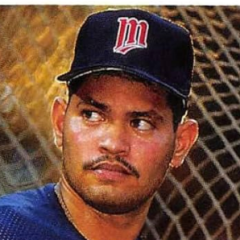
The Twins had three remarkably good starting pitchers on their 1991 World Series-winning team, each with exceptional seasons. The veteran leader, Jack Morris, came home and had one spectacular season capped by a tremendous 4-0 postseason and the infamous Game Seven 10-inning shutout. The rising youngster, Scott Erickson, debuted with little fanfare in 1990 for the last-place club but followed that by winning 20 games in 1991. I feel the third guy who led that team in ERA was perhaps a little overshadowed. Let’s take a closer look at Kevin Tapani.

Kevin Tapani was born February 18, 1964, in Des Moines, Iowa, while his father, Ray, played minor league hockey there. Following Ray’s minor league hockey career and US Army career in Germany, the Tapani family returned to their roots in Michigan’s Upper Peninsula. Kevin Tapani would grow up in the UP and graduate from Escanaba High School. Kevin is one of only 14 Yoopers (people born or raised in Michigan’s Upper Peninsula) to have played Major League Baseball. Despite not playing high school baseball because of the UP’s long winters, Kevin would play college baseball at Central Michigan University. Kevin said he liked baseball the most but played it the least because he grew up in that climate. He achieved some notoriety as a state championship quarterback for Escanaba High School.

Tapani was drafted twice: first by the Chicago Cubs in the ninth round of the 1985 MLB draft and then, a year later, by the Oakland Athletics in the second round of the 1986 draft. He signed with Oakland but was traded a year later as part of a complicated three-team trade that sent Tapani to the New York Mets.

Tapani played in parts of three more seasons in the minor leagues before being summoned to the big leagues in 1989 and pitching parts of three games for the Mets. He was a mop-up pitcher who ate innings in those three games, all losses by the Mets. His debut came on Independence Day after a horrendous Bob Ojeda start. Ojeda had given up eight runs and did not get out of the first inning. Tapani came in and pitched 4.1 innings and allowed only one run. Amusingly, Tapani committed a balk to the first batter he ever faced in MLB, allowing a runner to score. But he got the next batter to end the inning. Tapani was probably excited to be part of a Mets team in second place in the tight National League East. Little did he know he would not be part of the pennant race. 

A mere 27 days after his Mets debut, Tapani was traded in a blockbuster that sent him and four others, including future All-Star reliever Rick Aguilera, to the Twins for reigning Cy Young Award winner Frank Viola. After six minor league starts in Portland, Tapani debuted for the Twins in September and, from then on out, took a regular turn as a starting rotation member. Averaging more than six innings per start, he looked like a young player the Twins could build around.

In 1990, Tapani proved his worth and ability as a major league pitcher. He started 28 games and finished with a 12-8 record for a last-place team. He finished fifth in Rookie of the Year voting.

By 1991, Kevin Tapani was at his peak. He started the season with a 7-hit shutout against the California Angels. Despite it being his best season, there were struggles. He had a stretch in May where he amazingly went 0-6. He gave up 23 earned runs in 38.2 innings – a 5.35 ERA. After that tough patch, he turned things around. After his ERA peaked (in a bad way) at the end of May, it went down almost every start for the rest of the season, finishing at a career-best 2.99 – the best of the Twins’ starting staff that season. He won American League Pitcher of the Month in August after going 5-0 and giving up only 14 earned runs in 48 innings, a 2.63 ERA. He won nine of his last 11 decisions to finish 16-9. The number of wins established his personal best in a Twins uniform. His 244.0 innings pitched were a career-high, and he was only 2.2 innings behind the workhorse Jack Morris. Tapani’s ERA+ of 143 was a career-best, as was his 1.086 WHIP. He finished seventh in voting for the Cy Young Award (Erickson finished second, and Morris finished fourth).

The Twins were fortunate in that they clinched the American League West early and won the American League Championship Series quickly. This allowed the team to rest its starting pitchers and schedule them optimally. Tapani pitched Games Two and Five of both the ALCS and World Series. 

In Game Two of the ALCS against the Toronto Blue Jays, Tapani allowed four runs on eight hits and two walks over 6.1 innings. The Blue Jays jumped out front early with a run in the first inning and added two more in the third. Tapani would walk a batter in the eighth inning (who would come around to score) before being lifted for relief pitcher Steve Bedrosian. The Twins scored only two runs on five hits, as the Blue Jays won their only game of the series, 5-2. 

In Game Five, the Twins scored early with single runs in the first and second innings. However, the Blue Jays came back strongly, scoring a combined five runs over the fourth and fifth innings. Tapani was taken out after the fourth inning, allowing all five runs on eight hits and a walk. Tapani was replaced by another piece added from the Viola trade. David West came in and shut the Blue Jays down over three innings, while the Twins bats got to work, scoring three runs in the sixth inning and three more in the eighth. Rick Aguilera got the save as the Twins won the game 8-5 and the series 4-1.

Next came the Atlanta Braves in the World Series. In Game Two, Tapani was excellent. He pitched eight innings, allowing two runs on seven hits and no walks. Throughout his career, Tapani was a good fielding pitcher. He posted a 1.000% fielding percentage over three seasons. That expertise came in handy during the third inning of Game Two, which ended with the famous Ron Gant/Kent Hrbek play (was it momentum or a pull?). Lonnie Smith was on first with two outs and was off with the pitch. Gant singled to left fielder Dan Gladden, who tried to throw out Smith at third. However, the throw was a little off, got by Scott Leius, but Tapani was backing up the play. Smith had slid into third and was not going anywhere, so Tapani immediately fired to first base, where the famous play occurred, resulting in an out for the Braves and the end of the inning. The game continued with little offense and was tied 2-2 after the top of the eighth inning. Leius led off the bottom of the eighth with the biggest hit of his life – a home run to left off future Hall of Famer Tom Glavine – to give the Twins a late lead. Aguilera again came in for the ninth and got the save for Tapani’s lone career playoff win. 

Game Five in Atlanta was a debacle, to say the least. Tapani kept the Braves off the scoreboard until the fourth inning, but it got ugly quickly as Tapani allowed the first six batters to reach base during a four-run inning. He finished the inning, but that was it for his night. The Braves would continue the pounding against the bullpen and ultimately won 14-5, taking a 3-2 series lead and sending it back to Minnesota for Games Six and Seven. We all know how those games turned out.

So, Kevin Tapani was not especially good in his Minnesota postseason career. He started four games and pitched 22.1 innings to an ERA of 6.04. But he had one great game in Game Two of the World Series, an excellent regular season, and was a key piece to the 1991 championship season.

Tapani would continue with good, steady, reliable pitching for the Twins for the next four seasons. He would never be as good as he was in 1991 (but hey, isn’t that how teams win championships, lots of guys having career seasons at once?), but he was nice and steady. The Twins as a team slowly deteriorated. Their win totals went from 95 in 1991 and dropped to 90 in 1992, 71 in 1993, and 53 in 113 games in 1994 (strike-shortened season). 1995 was ugly again. At the trade deadline on July 31, their record stood at 30-56. 

In July of 1995, Twins fans knew trades were coming. Several guys were on the last years of contracts; the team was bad and needed to be re-energized. I was almost excited thinking maybe the team could end up with a transformative trade that changes the team in the way the 1989 Viola trade seemed to be a turning point that culminated with the 1991 World Series. Boy, was I wrong. In July of 1995, the Twins traded Rick Aguilera, Scott Erickson, Kevin Tapani, and Mark Guthrie – all key members of the 1991 championship team. That should generate some talented players in return, right? Uh, no. The only player who proved to have any sort of value was Ron Coomer, one of four players received from the Dodgers for Tapani and Guthrie on July 31 (the others being José Parra, Greg Hansell, and Chris Latham). The Aguilera and Erickson trades were even worse. In my opinion, the trades made in July 1995 leading up to the deadline had a large effect on lengthening the team’s ineptitude through the late 1990s, delaying any possible resurgence until the early 2000s. With the 1995 trades, the Twins vastly screwed up the start of the rebuild. 

Kevin Tapani would pitch in MLB for six more seasons. He continued to be mostly good or average. He reached the postseason again with the Dodgers in 1995 and the Cubs in 1998. Unfortunately for Tapani, both teams were swept out of the playoffs. 2001 was Tapani’s final season. His career record finished at 143-125. His ERA (which spanned one of the higher-scoring periods of baseball) was 4.35. His ERA+ was 101. In 2,265 innings, he struck out 1482 batters. 

After retirement, Kevin returned to the Twin Cities and lives there with his wife. They have three children, one of whom, Ryan, was also a pitcher the Washington Nationals drafted in the 21st round of the 2018 draft. He did not reach MLB. Kevin has been inducted into the Upper Peninsula Sports Hall of Fame and the Central Michigan Athletics Hall of Fame.

Kevin Tapani’s number of wins (75) and WAR (19.1) for his Twins career are both eighth-best since the team moved from Washington. Do you think he’ll be selected for induction into the Twins Hall of Fame? Add your opinion in the comments below.


View full article

Create an account or sign in to comment

You need to be a member in order to leave a comment

Create an account

Sign up for a new account in our community. It's easy!

Register a new account

Sign in

Already have an account? Sign in here.

Sign In Now
The Twins Daily Caretaker Fund

You all care about this site. The next step is caring for it. We’re asking you to caretake this site so it can remain the premier Twins community on the internet.

×
×
  • Create New...