



Matthew Trueblood
-
Posts
1,033 -
Joined
-
Last visited
Content Type
Profiles
News
Minnesota Twins Videos
2026 Minnesota Twins Top Prospects Ranking
2022 Minnesota Twins Draft Picks
Minnesota Twins Free Agent & Trade Rumors, Notes, & Tidbits
Guides & Resources
2023 Minnesota Twins Draft Picks
The Minnesota Twins Players Project
2024 Minnesota Twins Draft Picks
2025 Minnesota Twins Draft Pick Tracker
2026 Minnesota Twins Draft Tracker: Picks & Bonuses
Forums
Blogs
Events
Store
Downloads
Gallery
Everything posted by Matthew Trueblood
-
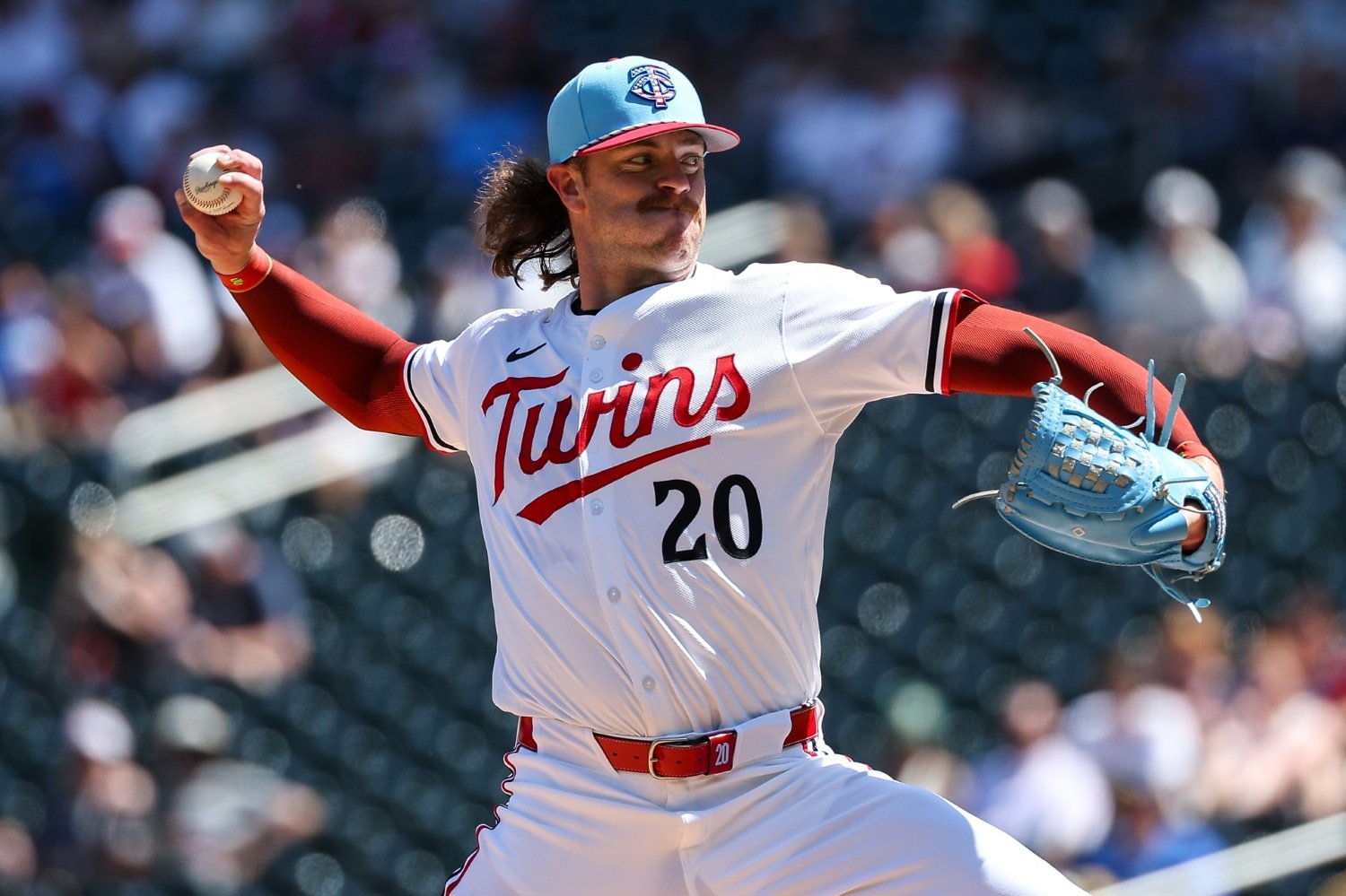 "Yeah, it’s pretty simple," Chris Paddack began, as he tried to answer my question about the introduction of a true slider into his mix this summer. Those are the first four of over 1,300 words I transcribed from an interview with Paddack Sunday, in which I left out anything I said. Paddack is an eager, thoughtful, verbose ball-talker, and it's not just a way of ingratiating himself to the media. He can't help himself. Every pitcher is really two different pitchers: the guy he is, and the guy he thinks he is. How married one is to the second affects the caliber of the first, not only because every pitcher has to make adjustments over the course of a start, a season or a career, but because being locked into a certain identity or mindset often means missing opportunities to improve. In his younger days, Paddack has probably fallen into the trap of being too confident in what he already had. This year, he's leaning hard into the idea of finding new things in his bag of tricks. Take that slider, for instance. It wasn't a pitch he threw when the season began, but it turned out to be relatively easy to mix into his arsenal, so he's done it. "I have the cutter grip that we kind of brought into the season, had some really good success," Paddack said, rolling a baseball in his hands to find and demonstrate the grip. "Then we noticed we tried to use it late to some guys, and it was more of just a foul ball or a show-me pitch, so then I was like, ‘Man, now that I have that cutter, I need some swing-and-miss,’ something that I can go east and west with, to lefties, righties. That’s where I’m basically just putting the fingers together"—the ball, still cradled in what had been the cutter grip, shifted slightly as he brought his first two fingers together over the seam—"and it’s same thought, same mentality, same focus at release to get that slider. But the cutter’s gonna be 88 to 90, the slider’s anywhere between 83 to 86." Pitch-classification systems still call both pitches a slider, but if you analyze each individual pitch, you can see the differences. Here's a plot of all the so-called sliders Paddack has thrown this year, charted by horizontal and vertical movement and colored by velocity. I've highlighted six pitches from his most recent start, against the Rays, to show the two different shapes and speeds he's now utilizing even within the same outing. Paddack has also (cautiously) introduced a sinker to his mix this year, which makes two additions to the mix this year. Doing that is highly unorthodox, but Paddack has elected to give it a shot. "Usually that’s something you do in the offseason, but it’s something that I know that I need in my arsenal," Paddack said of those changes. "And the fact that [pitching coach Pete Maki]’s given me some good advice, talking to some players that have different grips, different focuses when they release that pitch, that’s helped me a lot. I’m excited to take that into the second half, probably not add another pitch, but just focus on the tools we have—the execution." Lately, of course, Paddack has taken a beating. He had a 3.53 ERA over his first 13 starts, but that number has jumped to 7.99 over his last five. Some of that was bad luck, but some was giving up crooked numbers, especially via the home run. His start against the Rays on July 4 was a good step back in the right direction, though. He held Tampa Bay to two runs over five innings, striking out five (including two with that new slider) and neither walking anyone nor allowing a homer. He's had growing pains, but remains excited about where he is after these new installations. "I have been guilty of trusting it too much, of leaning on those pitches that I’m trying to find it in-game, and I end up falling behind in counts, or end up letting up some slug on those [new] pitches," he said. "So it’s hurt me, too, but it’s also helped me. Now, it’s blending them." As he experiments, even failure can be a good teacher—but success is the best one. Once Christian Vázquez and Ryan Jeffers see what success with the slider and the sinker look like, they can call those pitches more often or with more conviction. "I’m a fastball-changeup guy. I know that. Hitters know that," Paddack said, "So being able to play the cat-and-mouse game at times, throwing that pitch when I need to, trusting our catchers to call that pitch, has definitely helped me mentally. Not overthinking on the mound, have those guys call those pitches. If they’re looking at their cheat sheet and that’s the putaway pitch for our option, I’m not gonna shake. I’m gonna go with it. I think it’s definitely helped, it’s adding some different looks for lefties and righties for me this year." One ancillary benefit Paddack talked about, with a deeper repertoire, is protecting that fastball and changeup (and even his curve, long the third pitch in his mix but never a dominant one) longer. Many pitchers—especially those who have always had their arsenal, as opposed to those (like Paddack) who add more after they've established themselves or even within a campaign—prefer to lead with and establish their strongest offerings, and mix in tertiary weapons later. Paddack flips that idea on its head a bit, trying to introduce his varied arsenal early and keep hitters from being able to sit on his fastball or changeup the second time through, having already gotten a look at them. The third time through the order is one thing, but Paddack ran into big trouble the second time through in 2024, with opponents running an .871 OPS against him. This year, that number is down to .733, which is far more manageable. At times, because he still only has two plus offerings in that six-pitch gallimaufry, Paddack does get hit hard. He's learned, however, how to keep one bad inning from turning into two or three—and he's passionate about helping his teammates do the same thing. "I try to teach that to some of our younger guys, too, making those in-game adjustments," he said. "A perfect example is [David Festa] in Miami. He’s a fastball-slider guy, started mixing in the changeup, got some swing-and-misses, Vazqy started calling it more. He ended up, I think he had two or three punchies through 3? He ended up going six, with seven punch. He struck out four in the last three innings, and in some big counts, some big situations. Him and Vazqy made that in-game adjustment of, ‘hey, the changeup’s working. Let’s get them off the fastball-slider. We can maybe go to that late, or go to it early to get ahead and then we can put away guys with the changeup.' And that gives him confidence for the next outing, knowing that he already got some swings and misses the start prior." Sure enough, Festa leaned hard on the changeup again against the Cubs Wednesday night, throwing 21 of them. He got five whiffs on 13 swings and gave up no damage on that pitch. Finding some success with a pitch one doesn't yet fully trust can help a pitcher find the best version of that weapon, and thus, of themselves. Absorbing those tough innings and then chaining together zeroes to keep the team in the game is hugely valuable, and Paddack is preaching that to everyone who will listen. "Save the bullpen, but also, I think something I’ve learned in my career is that if I let up a crooked number early in the game—say I let up a 3-spot or a 4-spot in the second inning—if I put up zeroes in the third, fourth, fifth and sixth, those four zeroes add up," he said. "Over the course of a season, that’s 12 innings of zero runs. We can’t let that snowball effect happen, because then, if you put up a 3- or 4-spot in the second, a 2-spot in the fifth, now next thing I know, I didn’t shut the door." While most people outside the game see the forward march of analytics as a boon to pitchers, Paddack is a big believer in the power of that kind of information for hitters—which means that he (and all hurlers) have to keep innovating, to stay ahead of well-prepared and very talented batsmen. "Just trust your gut, trust your catchers. It’s more weapons," he said. "More weapons to attack big-league hitters, who have incredible hand-eye coordination, are able to have a feel for the zone. They have all their data, they know what we’re gonna throw and when we’re gonna throw it. You have to be able to constantly mix, unless you’re like a Skubal, where you could tell guys what’s coming and they still have no chance. Not many of those. You’ve gotta continue to never settle. I’m never gonna settle. There’s always something to improve, something to gain from every outing. And for me, this year, it’s taking a couple pitches that we worked on in spring and start mixing it in on the back of my baseball card, when it counts." Despite the uneven recent results, Paddack believes he's found some things that work. He's embracing discomfort on the mound and leadership away from it. He knows he might be a trade candidate this month, but is focusing on how he can best dominate each time he takes the mound and contribute as a mentor and vocal leader between turns in the rotation. "I’m excited, man. It’s given me a lot of confidence. It’s actually changed the way I pitch to certain guys. Fastball-changeup had success coming up, and then got hit around a little bit, got hit in the mouth. Had some injuries that kind of put my career on hold. So it’s like, now I have a couple weapons that I can throw the kitchen sink at guys for longer at-bats. If I face them two or three times in a game, it gives me options. Kudos to our pitchers, from the bullpen all the way to our starting staff, picking their brain and giving me good positive feedback." As tough as the season has been, for both team and player, there's hope yet. Paddack, especially, feels he's unlocked something, and that (like this team) he can achieve more in the second half after making some crucial adjustments.
 -
Welp: Byron Buxton Leaves in 2nd Inning After Being Hit on Hand in 1st
Matthew Trueblood posted an article in Twins
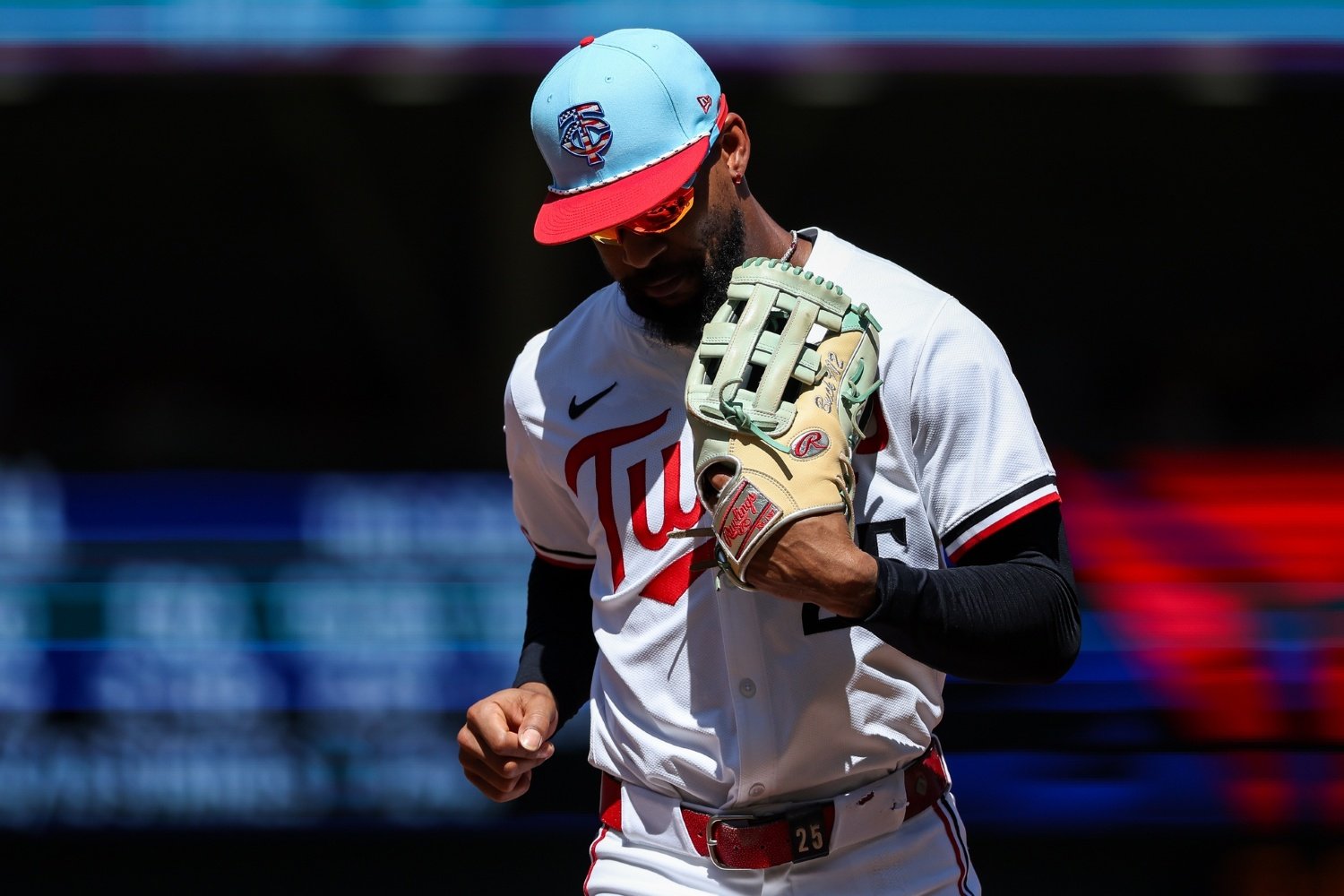 There is no development the Twins would have welcomed less Wednesday night than a potential injury problem for All-Star center fielder Byron Buxton. He's been the linchpin of an already wobbly lineup and the heartbeat of the team all season, and he's set to represent the American League in both the Home Run Derby and the All-Star Game next week in his native Georgia. Alas, an errant Cade Horton fastball left Buxton's hand hurting, and he was removed when his spot in the order came back around in the second. Buxton did stay in to run the bases, stealing one and scoring on a Ryan Jeffers single. He played defense in the top of the second, making a fine catch on a long drive by Pete Crow-Armstrong. However, it surprised no one when he was lifted at the next opportunity. We'll share more updates here when the Twins make them available, including any comments from manager Rocco Baldelli (or Buxton himself) postgame. In the meantime, see below for our lively game thread and join the discussion. The good news: the Twins did jump out to a quick 2-0 lead on the NL Central-leading Cubs, for the second night in a row, and they extended that lead in the second via a skyscraping Matt Wallner home run. UPDATE: The Twins announced that Buxton left the game with a left hand contusion. That's what we'd hear almost regardless of severity, at this stage, so expect further discussion and questions about X-rays after the game. For now, though, it's a relief not to immediately hear of a break. If Buxton just needs time for the swelling on the hand to come down, he could still participate in All-Star festivities, or even play this weekend against Pittsburgh. POSTGAME: Manager Rocco Baldelli said it looks as though Buxton has avoided the worst possible damage. "Buck looks like he'll be ok, he had some imaging done and it looks pretty good," Baldelli said. Indeed, X-rays on the hand were negative. Baldelli did say, however, that his star slugger is "pretty sore". It seems a safe bet that he'll be absent from the lineup Thursday, but he's day-to-day, and the team is not ruling anything out.
 -
Great News: Joe Ryan is an American League All-Star, After All
Matthew Trueblood posted an article in Twins
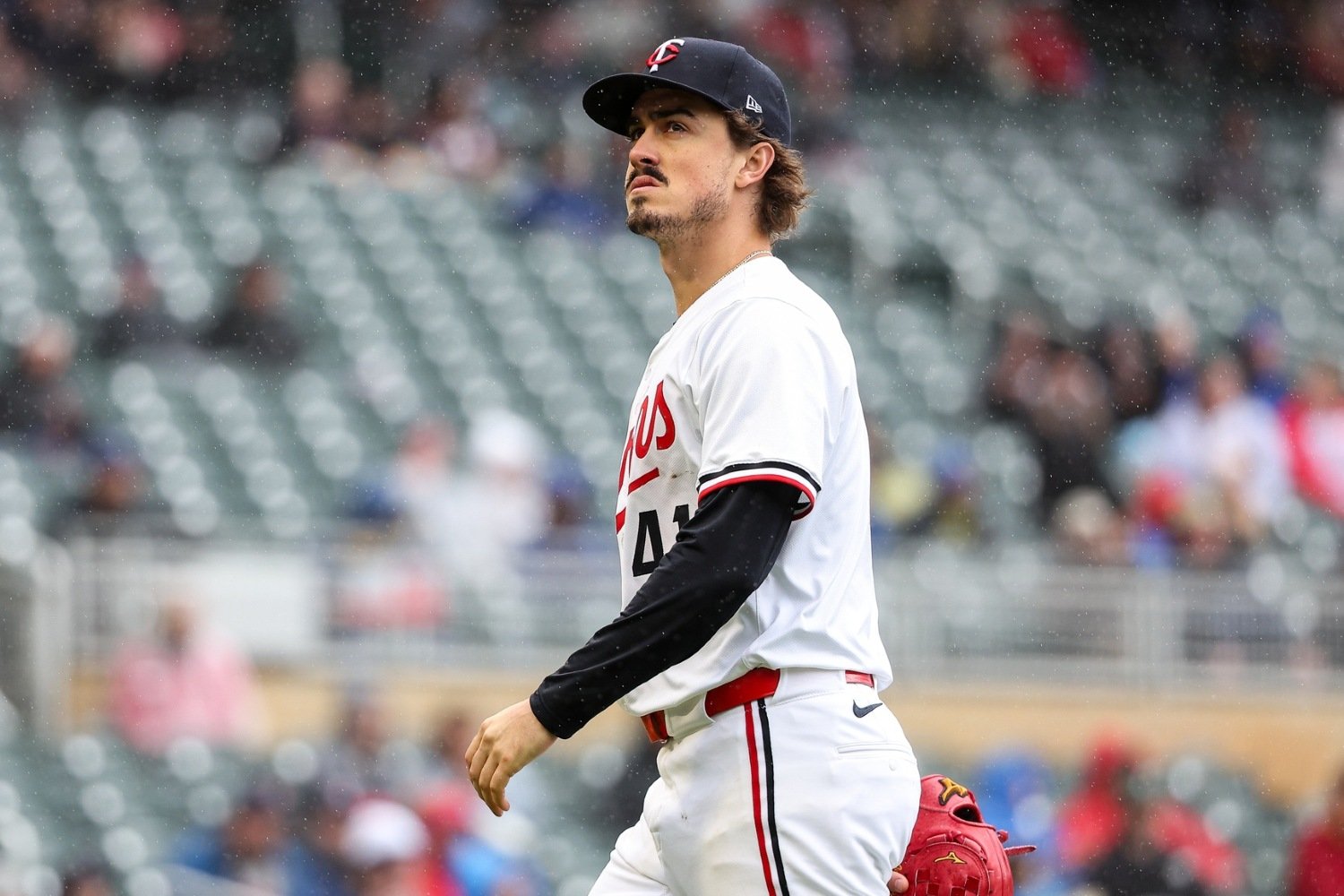 Joe Ryan felt he had done everything he could to earn inclusion at next week’s All-Star festivities. Now, the league has acknowledged that fact. With Hunter Brown unavailable to pitch in the game due to a start this weekend, Ryan got the nod as a replacement selectee. He’ll slide up in the Twins’ injury-ravaged rotation and pitch Friday’s series opener with the Pirates against fellow All-Star Paul Skenes, ensuring that he can pitch for the AL if the chance comes Tuesday. “Yeah, I was just super excited. I don't know,” Ryan said after learning the news. “The first thought that came to me was just being excited for [Byron Buxton] and being able to watch the Home Run Derby and him be at his home ballpark. I think that's such a cool aspect of this game, that I get to share that experience with him.” For Buxton, who was briefly the only Twin tabbed for the game, the feeling was mutual. "It means a lot," Buxton said. "I don't think it's something he had on his radar at the beginning of the year. It's just about coming out, pitching well, and he's done everything that you could possibly ask to get to this spot. It's definitely good to see him get rewarded. He definitely needs to be in." This will be Ryan’s first trip to the Midsummer Classic, but he’s made good cases for selection in each of the last three first halves. To get over that hump required [player reason], but that doesn’t diminish what Ryan has accomplished. Even beyond his sparkling 2.76 ERA, the numbers are exceptional. Baseball Reference offers a step-by-step layout of the way they compare a pitcher’s actual runs allowed (RA9, or runs allowed per nine innings, earned or otherwise) to their expected ones. The key adjustments are quality of opponent, defensive support, and park factors. Ryan’s opponents have been stronger than average this year; the Twins defenses aligned behind him have been below-average; and he’s pitched in a mix of parks that favors hitters, overall. His 2,85 RA9 is dramatically lower than the 5.17 RA9 Baseball Reference’s model estimates an average hurler would have allowed. Only the following four pitchers have more Runs Above Average, following this framework, than Ryan has this year: Zack Wheeler Paul Skenes Tarik Skubal Cristopher Sánchez In the past, for various reasons, Ryan’s ERA and RA9—his actual run prevention indices—have sometimes failed to match what his skills suggested he deserved. He would let adversity snowball and end up giving up big innings, or let up too many home runs. This year, though, he’s been every bit as good at keeping runs off the board as at striking batters out and limiting baserunners. Perhaps he’s gotten an assist from a slightly deadened baseball, but he’s also been better at managing difficult situations—and his arsenal has gotten deeper and more varied, making it harder for opponents to square him up. Here's what his mix looked like, in terms of movement and velocity, in 2024. And here's what he's done to alter the picture in 2025. Ryan has added a curveball to his main breaking ball, the sweeper, and subtly subdivided his slider. It was one pitch; now it's almost two distinct ones. Of late, a harder, more cutter-like version of the pitch is prevailing for him. He's also more fully embraced the sinker he started throwing last year, including going to the pitch against left-handed batters at times. That pitch, in particular, has helped him run a career-high 38.6% ground-ball rate, and it's even earned him a gratifying, unexpected nunber of whiffs. "I've gone to it a lot," Ryan said. "The spin is so similar, it's the same spin as my split, so that's kind of nice. Just having another weapon to go to, I mean, you watch the best guys in the game, they have the two fastballs—aside from deGrom, I'd say, most guys that are doing it at that level have a sinker, have a four-seamer. It's just such a tough look for hitters. We started throwing to lefties a bit more, too." With those small changes, Ryan has unlocked the damage suppression that was the lone missing ingredient from his game until now. It's been enough to open a few more eyes, even in a game obsessed with the strikeouts he was already racking up at an admirable rate. Now, while it's unlikely he needs or decides to show off all six (or seven) of his pitches next week, he'll at least get to mingle with the rest of the All-Star hurlers who have proved to be that well-rounded. It's an honor for which he doesn't mind having had to wait. He mentioned being glad to get a chance to talk to Wheeler, who helped him hone his sinker last year. He also took time to praise the process of between-starts adjustment and preparation with the coaching staff. "The work with Pete and Matt Daniels and Luis and everybody has been a tremendous help to get everything honed in," he said. "We're working on stuff every week. Even if I have a great outing, we're still trying to get better each time, and add more, and subtract in areas volume wise usually. Just trying to be the pitcher I can be and always working to get better and always working to make some adjustments. I would say the arsenal is at a pretty good spot right now." That competitive drive has finally resulted in the recognition Ryan's teammates and manager long felt he deserved. "He’s had some other first halves that were good and probably was in consideration for something like this in the past," Rocco Baldelli said Wednesday. "But he just has continued to go out there and just do the work. You have to do the work. You have to have the success and put up the numbers and be just continuously really good. And he has. He seemed so happy when we told him. I feel like you could feel it off of him, you could see it in his face. He’s worked really hard for it, and now he gets to be acknowledged the way he should. It was great news for all of us."
 -
Image courtesy of © Matt Krohn-Imagn Images Joe Ryan felt he had done everything he could to earn inclusion at next week’s All-Star festivities. Now, the league has acknowledged that fact. With Hunter Brown unavailable to pitch in the game due to a start this weekend, Ryan got the nod as a replacement selectee. He’ll slide up in the Twins’ injury-ravaged rotation and pitch Friday’s series opener with the Pirates against fellow All-Star Paul Skenes, ensuring that he can pitch for the AL if the chance comes Tuesday. “Yeah, I was just super excited. I don't know,” Ryan said after learning the news. “The first thought that came to me was just being excited for [Byron Buxton] and being able to watch the Home Run Derby and him be at his home ballpark. I think that's such a cool aspect of this game, that I get to share that experience with him.” For Buxton, who was briefly the only Twin tabbed for the game, the feeling was mutual. "It means a lot," Buxton said. "I don't think it's something he had on his radar at the beginning of the year. It's just about coming out, pitching well, and he's done everything that you could possibly ask to get to this spot. It's definitely good to see him get rewarded. He definitely needs to be in." This will be Ryan’s first trip to the Midsummer Classic, but he’s made good cases for selection in each of the last three first halves. To get over that hump required [player reason], but that doesn’t diminish what Ryan has accomplished. Even beyond his sparkling 2.76 ERA, the numbers are exceptional. Baseball Reference offers a step-by-step layout of the way they compare a pitcher’s actual runs allowed (RA9, or runs allowed per nine innings, earned or otherwise) to their expected ones. The key adjustments are quality of opponent, defensive support, and park factors. Ryan’s opponents have been stronger than average this year; the Twins defenses aligned behind him have been below-average; and he’s pitched in a mix of parks that favors hitters, overall. His 2,85 RA9 is dramatically lower than the 5.17 RA9 Baseball Reference’s model estimates an average hurler would have allowed. Only the following four pitchers have more Runs Above Average, following this framework, than Ryan has this year: Zack Wheeler Paul Skenes Tarik Skubal Cristopher Sánchez In the past, for various reasons, Ryan’s ERA and RA9—his actual run prevention indices—have sometimes failed to match what his skills suggested he deserved. He would let adversity snowball and end up giving up big innings, or let up too many home runs. This year, though, he’s been every bit as good at keeping runs off the board as at striking batters out and limiting baserunners. Perhaps he’s gotten an assist from a slightly deadened baseball, but he’s also been better at managing difficult situations—and his arsenal has gotten deeper and more varied, making it harder for opponents to square him up. Here's what his mix looked like, in terms of movement and velocity, in 2024. And here's what he's done to alter the picture in 2025. Ryan has added a curveball to his main breaking ball, the sweeper, and subtly subdivided his slider. It was one pitch; now it's almost two distinct ones. Of late, a harder, more cutter-like version of the pitch is prevailing for him. He's also more fully embraced the sinker he started throwing last year, including going to the pitch against left-handed batters at times. That pitch, in particular, has helped him run a career-high 38.6% ground-ball rate, and it's even earned him a gratifying, unexpected nunber of whiffs. "I've gone to it a lot," Ryan said. "The spin is so similar, it's the same spin as my split, so that's kind of nice. Just having another weapon to go to, I mean, you watch the best guys in the game, they have the two fastballs—aside from deGrom, I'd say, most guys that are doing it at that level have a sinker, have a four-seamer. It's just such a tough look for hitters. We started throwing to lefties a bit more, too." With those small changes, Ryan has unlocked the damage suppression that was the lone missing ingredient from his game until now. It's been enough to open a few more eyes, even in a game obsessed with the strikeouts he was already racking up at an admirable rate. Now, while it's unlikely he needs or decides to show off all six (or seven) of his pitches next week, he'll at least get to mingle with the rest of the All-Star hurlers who have proved to be that well-rounded. It's an honor for which he doesn't mind having had to wait. He mentioned being glad to get a chance to talk to Wheeler, who helped him hone his sinker last year. He also took time to praise the process of between-starts adjustment and preparation with the coaching staff. "The work with Pete and Matt Daniels and Luis and everybody has been a tremendous help to get everything honed in," he said. "We're working on stuff every week. Even if I have a great outing, we're still trying to get better each time, and add more, and subtract in areas volume wise usually. Just trying to be the pitcher I can be and always working to get better and always working to make some adjustments. I would say the arsenal is at a pretty good spot right now." That competitive drive has finally resulted in the recognition Ryan's teammates and manager long felt he deserved. "He’s had some other first halves that were good and probably was in consideration for something like this in the past," Rocco Baldelli said Wednesday. "But he just has continued to go out there and just do the work. You have to do the work. You have to have the success and put up the numbers and be just continuously really good. And he has. He seemed so happy when we told him. I feel like you could feel it off of him, you could see it in his face. He’s worked really hard for it, and now he gets to be acknowledged the way he should. It was great news for all of us." View full article
-
.png.5e828c88d7ff9e7700116f8aedf846b8.png) By the time the Minnesota Twins visited Wrigley Field last August, Pete Crow-Armstrong had begun the breakout that has made him one of the main characters of Major League Baseball in 2025. He wasn't yet the player he's been this season, but he'd made an important change to his mechanics that had unlocked some power, and that made it easier for him to stay in the lineup—where his defense and baserunning could lend him major value. That week, though, Byron Buxton was sidelined by back tightness, after he'd slammed into a wall making a catch in the previous series. The Twins' star center fielder missed the whole series. Thus, Tuesday night will be the first time that the same center field is graced by both Crow-Armstrong and Buxton on the same day. It's an exhilarating moment, for fans of each of the teams involved and for the game itself. When the All-Star Game begins in Georgia one week from now, Crow-Armstrong will be in center field for the National League. It's very likely that, before that game is over, Buxton will take over in center for the American League, the local product made good. This week, however, the two get to put on their own exhibition, taking center stage in one of the game's most dazzling jewel-box ballparks. Not only are these baseball's two best center fielders so far, but any argument for anyone else feels a bit faint—a bit pale and silly. Julio Rodríguez and Jackson Chourio have the kind of talent to keep pace with these two, but neither is having that kind of season. Jackson Merrill has been diminished by injuries after an extraordinary rookie season, but his tools don't match those of Crow-Armstrong and Buxton. If you buy unreservedly into the defense of Ceddanne Rafaela or Jake Meyers, you can put them almost on the same level for this year, alone, but eventually, you have to reconcile the numbers with what you see when the players all take the field. Nothing any of these others have done, this year or in the past, quite allows you o do that the way you can with Buxton and Crow-Armstrong. The version of the game these two play is pulsing, sizzling, searing. It transcends their numbers—although, this year, their numbers are sterling. They take over games in ways no other players seem capable of, thanks to a rare combination of tools, skills, and baseball IQ. In many ways, they're mirror images of one another, sharing obvious similarities but defined by some of their differences. Buxton is a strapping 6-foot-2, listed at 189 pounds (but probably lighter) when he came up in 2015, but now a sturdy 210 pounds (probably heavier, though only slightly). He's a Black man from small-town southeast Georgia, and a right-handed hitter, wearing No. 25 on his back. Crow-Armstrong is a flat 6 feet, and is listed at 190 pounds. Unlike the version of Buxton who weighed that much a decade ago, though, he looks almost maxed-out at that weight; his frame doesn't imply forthcoming growth the way Buxton's did. The son of two actors, he's a White man from a wealthy section of Los Angeles, and a left-handed hitter. He switched to No. 4 this year, but came up wearing 52—Buxton's number, flipped. Once the game begins, though, their similarities take over. Both have the same, lonely rough edge on their games: an extremely aggressive approach at the plate. Both have major power, beyond what you'd expect—especially from Crow-Armstrong, but even from the broad-shouldered Buxton. Both have explosive speed, which shows up in the near-impossibility of turning double plays against them and in their ability to steal bases almost without risk. (Indeed, their efficiency on steal attempts is as notable as the volume of bases they take.) Both also have the rare gifts that make up an exceptional defensive center fielder. There's the speed, of course, but also great arm strength, tremendous reads and the ability to adjust in whatever way is necessary to make the play at the last moment. Each player takes pride in their glovework, but each also takes such immense pleasure in a clutch hit that they neither can nor attempt to hide it. Each plays with an intensity and a fearlessness that occasionally imperils them, but that also colors in their game with the detail and dimension that turns a very good player into a great one. Buxton has stretched his body past its breaking point many times, either by colliding with things too recklessly or by moving so ferociously that his ligaments and tendons simply couldn't keep up. At times, it's looked like Crow-Armstrong would do the same thing, but his great jumps in the outfield have gotten him to most balls with time to spare, and he's been wise enough not to try to run through the bricks and ivy at Wrigley Field. Playing every aspect of the game well. Pushing the capacity of one player to become the focal point of an entire game past its usual limits. The frisson of danger that runs up your spine each time they vault themselves after a drive into the gap; the shockwave they send through the ball when they catch it clean. Although Aaron Judge and Shohei Ohtani are the best players in baseball, and although it might be wiser to invest in Bobby Witt Jr. or Juan Soto than in either Buxton or Crow-Armstrong, none of those players are as vividly great—as sparking with ways to win games that don't both to hide themselves—as these two are. Buxton leads MLB with six games this year in which he's both hit a home run and stolen a base. Crow-Armstrong uses his balletic footwork to stop and thwart baserunners, turning a strong arm up to maybe the game's most useful. Buxton robbed White Sox outfielder Andrew Benintendi of a game-flipping gapper and sealed a Twins win in April, on a play even the other center fielders all around him marveled at. Crow-Armstrong created a run last month when he stole third base, then caught the third baseman in a tractor beam, froze him and beat him back to the base on a ground ball, setting up a rally. Each player had a sequence in mid-June in which they made a rally-stopping, diving catch on a play in left-center field, then hit their longest home run of the season in the next half-inning. Buxton did it on June 11, taking runs off the board for the visiting Rangers with a catch to end the top of the third: ek1MajlfWGw0TUFRPT1fQWxSU1hGMVJVVkFBQ0ZwV1VBQUhWUWRWQUFBQ0FBVUFVMTBDQkZZRFZBRUdCRmNE.mp4 He then hit a ball 479 feet with two on in the bottom half of that frame. ek1MajlfWGw0TUFRPT1fQmdKUVYxd01VbFFBWFZFR0J3QUhDUVJmQUZsV1ZsQUFBRkJUQmdFRlZRZGNWVkZm.mp4 Six days later, Crow-Armstrong turned a hit that would have put the tying run on base in the top of the eighth into an out. akQ5Z0FfWGw0TUFRPT1fVjFKV1VnQUhWMVlBV2xjRVh3QUhBRlVDQUFOUVV3TUFDMUlIVVFkVVYxWUVDQUlD.mp4 Leading off the bottom of that frame, he hit one high off the video board above the right-field wall. akQ5Z0FfWGw0TUFRPT1fVUZWWkJ3QlZCUUlBWEZ0UUF3QUhDQTRFQUZrREIxSUFWZ1FHVWxFQ1ZGY0RBUUZU.mp4 Each of these two can turn a run or two for the opponents into none, and then create runs for their own team in the blink of an eye. Each has a good chance to hit 30 or more homers and steal 30 or more bases this year. Crow-Armstrong and Buxton are superstars, at their best. This might be the end of Buxton's prime, and Crow-Armstrong might go through plenty of rough patches in years ahead. That's why this matchup is so special. Two uniquely brilliant players will take the field in turns this week, at their absolute best. More than just a trailer for it, this could be the game's best center fielders' own private version of the All-Star Game.
By the time the Minnesota Twins visited Wrigley Field last August, Pete Crow-Armstrong had begun the breakout that has made him one of the main characters of Major League Baseball in 2025. He wasn't yet the player he's been this season, but he'd made an important change to his mechanics that had unlocked some power, and that made it easier for him to stay in the lineup—where his defense and baserunning could lend him major value. That week, though, Byron Buxton was sidelined by back tightness, after he'd slammed into a wall making a catch in the previous series. The Twins' star center fielder missed the whole series. Thus, Tuesday night will be the first time that the same center field is graced by both Crow-Armstrong and Buxton on the same day. It's an exhilarating moment, for fans of each of the teams involved and for the game itself. When the All-Star Game begins in Georgia one week from now, Crow-Armstrong will be in center field for the National League. It's very likely that, before that game is over, Buxton will take over in center for the American League, the local product made good. This week, however, the two get to put on their own exhibition, taking center stage in one of the game's most dazzling jewel-box ballparks. Not only are these baseball's two best center fielders so far, but any argument for anyone else feels a bit faint—a bit pale and silly. Julio Rodríguez and Jackson Chourio have the kind of talent to keep pace with these two, but neither is having that kind of season. Jackson Merrill has been diminished by injuries after an extraordinary rookie season, but his tools don't match those of Crow-Armstrong and Buxton. If you buy unreservedly into the defense of Ceddanne Rafaela or Jake Meyers, you can put them almost on the same level for this year, alone, but eventually, you have to reconcile the numbers with what you see when the players all take the field. Nothing any of these others have done, this year or in the past, quite allows you o do that the way you can with Buxton and Crow-Armstrong. The version of the game these two play is pulsing, sizzling, searing. It transcends their numbers—although, this year, their numbers are sterling. They take over games in ways no other players seem capable of, thanks to a rare combination of tools, skills, and baseball IQ. In many ways, they're mirror images of one another, sharing obvious similarities but defined by some of their differences. Buxton is a strapping 6-foot-2, listed at 189 pounds (but probably lighter) when he came up in 2015, but now a sturdy 210 pounds (probably heavier, though only slightly). He's a Black man from small-town southeast Georgia, and a right-handed hitter, wearing No. 25 on his back. Crow-Armstrong is a flat 6 feet, and is listed at 190 pounds. Unlike the version of Buxton who weighed that much a decade ago, though, he looks almost maxed-out at that weight; his frame doesn't imply forthcoming growth the way Buxton's did. The son of two actors, he's a White man from a wealthy section of Los Angeles, and a left-handed hitter. He switched to No. 4 this year, but came up wearing 52—Buxton's number, flipped. Once the game begins, though, their similarities take over. Both have the same, lonely rough edge on their games: an extremely aggressive approach at the plate. Both have major power, beyond what you'd expect—especially from Crow-Armstrong, but even from the broad-shouldered Buxton. Both have explosive speed, which shows up in the near-impossibility of turning double plays against them and in their ability to steal bases almost without risk. (Indeed, their efficiency on steal attempts is as notable as the volume of bases they take.) Both also have the rare gifts that make up an exceptional defensive center fielder. There's the speed, of course, but also great arm strength, tremendous reads and the ability to adjust in whatever way is necessary to make the play at the last moment. Each player takes pride in their glovework, but each also takes such immense pleasure in a clutch hit that they neither can nor attempt to hide it. Each plays with an intensity and a fearlessness that occasionally imperils them, but that also colors in their game with the detail and dimension that turns a very good player into a great one. Buxton has stretched his body past its breaking point many times, either by colliding with things too recklessly or by moving so ferociously that his ligaments and tendons simply couldn't keep up. At times, it's looked like Crow-Armstrong would do the same thing, but his great jumps in the outfield have gotten him to most balls with time to spare, and he's been wise enough not to try to run through the bricks and ivy at Wrigley Field. Playing every aspect of the game well. Pushing the capacity of one player to become the focal point of an entire game past its usual limits. The frisson of danger that runs up your spine each time they vault themselves after a drive into the gap; the shockwave they send through the ball when they catch it clean. Although Aaron Judge and Shohei Ohtani are the best players in baseball, and although it might be wiser to invest in Bobby Witt Jr. or Juan Soto than in either Buxton or Crow-Armstrong, none of those players are as vividly great—as sparking with ways to win games that don't both to hide themselves—as these two are. Buxton leads MLB with six games this year in which he's both hit a home run and stolen a base. Crow-Armstrong uses his balletic footwork to stop and thwart baserunners, turning a strong arm up to maybe the game's most useful. Buxton robbed White Sox outfielder Andrew Benintendi of a game-flipping gapper and sealed a Twins win in April, on a play even the other center fielders all around him marveled at. Crow-Armstrong created a run last month when he stole third base, then caught the third baseman in a tractor beam, froze him and beat him back to the base on a ground ball, setting up a rally. Each player had a sequence in mid-June in which they made a rally-stopping, diving catch on a play in left-center field, then hit their longest home run of the season in the next half-inning. Buxton did it on June 11, taking runs off the board for the visiting Rangers with a catch to end the top of the third: ek1MajlfWGw0TUFRPT1fQWxSU1hGMVJVVkFBQ0ZwV1VBQUhWUWRWQUFBQ0FBVUFVMTBDQkZZRFZBRUdCRmNE.mp4 He then hit a ball 479 feet with two on in the bottom half of that frame. ek1MajlfWGw0TUFRPT1fQmdKUVYxd01VbFFBWFZFR0J3QUhDUVJmQUZsV1ZsQUFBRkJUQmdFRlZRZGNWVkZm.mp4 Six days later, Crow-Armstrong turned a hit that would have put the tying run on base in the top of the eighth into an out. akQ5Z0FfWGw0TUFRPT1fVjFKV1VnQUhWMVlBV2xjRVh3QUhBRlVDQUFOUVV3TUFDMUlIVVFkVVYxWUVDQUlD.mp4 Leading off the bottom of that frame, he hit one high off the video board above the right-field wall. akQ5Z0FfWGw0TUFRPT1fVUZWWkJ3QlZCUUlBWEZ0UUF3QUhDQTRFQUZrREIxSUFWZ1FHVWxFQ1ZGY0RBUUZU.mp4 Each of these two can turn a run or two for the opponents into none, and then create runs for their own team in the blink of an eye. Each has a good chance to hit 30 or more homers and steal 30 or more bases this year. Crow-Armstrong and Buxton are superstars, at their best. This might be the end of Buxton's prime, and Crow-Armstrong might go through plenty of rough patches in years ahead. That's why this matchup is so special. Two uniquely brilliant players will take the field in turns this week, at their absolute best. More than just a trailer for it, this could be the game's best center fielders' own private version of the All-Star Game. -
Image courtesy of © Jordan Johnson-Imagn Images, © Katie Stratman-Imagn Images By the time the Minnesota Twins visited Wrigley Field last August, Pete Crow-Armstrong had begun the breakout that has made him one of the main characters of Major League Baseball in 2025. He wasn't yet the player he's been this season, but he'd made an important change to his mechanics that had unlocked some power, and that made it easier for him to stay in the lineup—where his defense and baserunning could lend him major value. That week, though, Byron Buxton was sidelined by back tightness, after he'd slammed into a wall making a catch in the previous series. The Twins' star center fielder missed the whole series. Thus, Tuesday night will be the first time that the same center field is graced by both Crow-Armstrong and Buxton on the same day. It's an exhilarating moment, for fans of each of the teams involved and for the game itself. When the All-Star Game begins in Georgia one week from now, Crow-Armstrong will be in center field for the National League. It's very likely that, before that game is over, Buxton will take over in center for the American League, the local product made good. This week, however, the two get to put on their own exhibition, taking center stage in one of the game's most dazzling jewel-box ballparks. Not only are these baseball's two best center fielders so far, but any argument for anyone else feels a bit faint—a bit pale and silly. Julio Rodríguez and Jackson Chourio have the kind of talent to keep pace with these two, but neither is having that kind of season. Jackson Merrill has been diminished by injuries after an extraordinary rookie season, but his tools don't match those of Crow-Armstrong and Buxton. If you buy unreservedly into the defense of Ceddanne Rafaela or Jake Meyers, you can put them almost on the same level for this year, alone, but eventually, you have to reconcile the numbers with what you see when the players all take the field. Nothing any of these others have done, this year or in the past, quite allows you o do that the way you can with Buxton and Crow-Armstrong. The version of the game these two play is pulsing, sizzling, searing. It transcends their numbers—although, this year, their numbers are sterling. They take over games in ways no other players seem capable of, thanks to a rare combination of tools, skills, and baseball IQ. In many ways, they're mirror images of one another, sharing obvious similarities but defined by some of their differences. Buxton is a strapping 6-foot-2, listed at 189 pounds (but probably lighter) when he came up in 2015, but now a sturdy 210 pounds (probably heavier, though only slightly). He's a Black man from small-town southeast Georgia, and a right-handed hitter, wearing No. 25 on his back. Crow-Armstrong is a flat 6 feet, and is listed at 190 pounds. Unlike the version of Buxton who weighed that much a decade ago, though, he looks almost maxed-out at that weight; his frame doesn't imply forthcoming growth the way Buxton's did. The son of two actors, he's a White man from a wealthy section of Los Angeles, and a left-handed hitter. He switched to No. 4 this year, but came up wearing 52—Buxton's number, flipped. Once the game begins, though, their similarities take over. Both have the same, lonely rough edge on their games: an extremely aggressive approach at the plate. Both have major power, beyond what you'd expect—especially from Crow-Armstrong, but even from the broad-shouldered Buxton. Both have explosive speed, which shows up in the near-impossibility of turning double plays against them and in their ability to steal bases almost without risk. (Indeed, their efficiency on steal attempts is as notable as the volume of bases they take.) Both also have the rare gifts that make up an exceptional defensive center fielder. There's the speed, of course, but also great arm strength, tremendous reads and the ability to adjust in whatever way is necessary to make the play at the last moment. Each player takes pride in their glovework, but each also takes such immense pleasure in a clutch hit that they neither can nor attempt to hide it. Each plays with an intensity and a fearlessness that occasionally imperils them, but that also colors in their game with the detail and dimension that turns a very good player into a great one. Buxton has stretched his body past its breaking point many times, either by colliding with things too recklessly or by moving so ferociously that his ligaments and tendons simply couldn't keep up. At times, it's looked like Crow-Armstrong would do the same thing, but his great jumps in the outfield have gotten him to most balls with time to spare, and he's been wise enough not to try to run through the bricks and ivy at Wrigley Field. Playing every aspect of the game well. Pushing the capacity of one player to become the focal point of an entire game past its usual limits. The frisson of danger that runs up your spine each time they vault themselves after a drive into the gap; the shockwave they send through the ball when they catch it clean. Although Aaron Judge and Shohei Ohtani are the best players in baseball, and although it might be wiser to invest in Bobby Witt Jr. or Juan Soto than in either Buxton or Crow-Armstrong, none of those players are as vividly great—as sparking with ways to win games that don't both to hide themselves—as these two are. Buxton leads MLB with six games this year in which he's both hit a home run and stolen a base. Crow-Armstrong uses his balletic footwork to stop and thwart baserunners, turning a strong arm up to maybe the game's most useful. Buxton robbed White Sox outfielder Andrew Benintendi of a game-flipping gapper and sealed a Twins win in April, on a play even the other center fielders all around him marveled at. Crow-Armstrong created a run last month when he stole third base, then caught the third baseman in a tractor beam, froze him and beat him back to the base on a ground ball, setting up a rally. Each player had a sequence in mid-June in which they made a rally-stopping, diving catch on a play in left-center field, then hit their longest home run of the season in the next half-inning. Buxton did it on June 11, taking runs off the board for the visiting Rangers with a catch to end the top of the third: ek1MajlfWGw0TUFRPT1fQWxSU1hGMVJVVkFBQ0ZwV1VBQUhWUWRWQUFBQ0FBVUFVMTBDQkZZRFZBRUdCRmNE.mp4 He then hit a ball 479 feet with two on in the bottom half of that frame. ek1MajlfWGw0TUFRPT1fQmdKUVYxd01VbFFBWFZFR0J3QUhDUVJmQUZsV1ZsQUFBRkJUQmdFRlZRZGNWVkZm.mp4 Six days later, Crow-Armstrong turned a hit that would have put the tying run on base in the top of the eighth into an out. akQ5Z0FfWGw0TUFRPT1fVjFKV1VnQUhWMVlBV2xjRVh3QUhBRlVDQUFOUVV3TUFDMUlIVVFkVVYxWUVDQUlD.mp4 Leading off the bottom of that frame, he hit one high off the video board above the right-field wall. akQ5Z0FfWGw0TUFRPT1fVUZWWkJ3QlZCUUlBWEZ0UUF3QUhDQTRFQUZrREIxSUFWZ1FHVWxFQ1ZGY0RBUUZU.mp4 Each of these two can turn a run or two for the opponents into none, and then create runs for their own team in the blink of an eye. Each has a good chance to hit 30 or more homers and steal 30 or more bases this year. Crow-Armstrong and Buxton are superstars, at their best. This might be the end of Buxton's prime, and Crow-Armstrong might go through plenty of rough patches in years ahead. That's why this matchup is so special. Two uniquely brilliant players will take the field in turns this week, at their absolute best. More than just a trailer for it, this could be the game's best center fielders' own private version of the All-Star Game. View full article
-
Image courtesy of © Troy Taormina-Imagn Images You could hear the scraped note in Joe Ryan's voice, at last, when a columnist who had misunderstood him asked to clarify how All-Star selections seem to be based on more than stats. "No, no," said the Twins righthander, certainly a star but not quite an All-Star, yet again. "It's NOT on stats." In other words, while Ryan claimed not to have dived too deeply into his own numbers, he's aware of them. He feels as though he's earned his place at next week's All-Star Game in Georgia, and he's at a loss to explain or defend himself in the wake of the fact that the game didn't make room for him. "Yeah, I mean, another year," he had said when the subject was first raised, letting listeners feel the gathering weight that had hit him when he was informed that he had missed out again this summer, "but at the same time, it's not based on stats, so it is what it is. And I'll leave it there." Ryan, 29, has been one of the best first-half pitchers in baseball for each of the last four seasons—especially the last three. Here are his numbers for each of those campaigns, at the All-Star break: 2023: 18 starts, 107 innings, 3.70 ERA, 8-6, 124 strikeouts, 18 walks, .636 opponent OPS 2024: 19 starts, 114 2/3 innings, 3.53 ERA, 6-6, 124 strikeouts, 19 walks, .668 opponent OPS 2025: 18 starts, 104 1/3 innings, 2.76 ERA, 8-4, 116 strikeouts, 21 walks, .589 opponent OPS As things stand now, Ryan is slated to make one more start before this year's break, on Saturday against the Pirates. Though the righty didn't want to make it about himself Sunday, his frustration with the process that has denied him the recognition that he belongs among the game's elite was palpable. If voters were paying close enough attention, they might even have given him extra credit for bearing up so well in a campaign that has seen his partners at the front end of the Twins rotation (Pablo López and Bailey Ober) felled by injuries. He can't do much more to earn that status, but so far, it hasn't been conferred on him. Nor did he seem especially hopeful when asked whether the possibility of being named as a replacement player due to injuries or unavailability was on his mind. "I mean, it's beyond me now, so I have no control over that," Ryan said. "That's all, I guess. Just trying to win games." Ryan didn't seek to make the moment about himself, and the team is unanimously happy for Byron Buxton (who was named to the team Sunday). The hurler even went out of his way to mention the support he's gotten from teammates. "I mean, I just try to pitch well," he said. "We've had really good defense all year that put me in a really good spot to be considered, so I don't know." In truth, if the Twins were having a better season, Ryan might well have gotten over the hump this time. He's pitched in and out of trouble at times, but his control is superb, and his strikeout rates have been uniformly impressive over the last few years, especially early in seasons. He's doing better at keeping the ball in the park in 2025. He just can't seem to catch the eye of fellow players or coaches, to gain the selection he clearly craves—and arguably deserves. Ryan was upbeat about his outing Sunday, in which he pitched a solid six innings and kept the Twins in the game to set up a late comeback. Minnesota dropped the final contest of their series against the Rays in 10 innings, but Ryan's work helped them get that far, and he said the team took some solace in having bounced back enough to push the game into extras. "I think it's a good sign whenever you can come back, even if it falls apart," Ryan said. "Obviously, that's not what you want, and you want to win the game, and hold that there. Our bullpen's been really solid, so I think we have that potential to just keep going. We had two really good wins this weekend, so just ride those, and keep playing good baseball. It'll come together." That's what he's hoping, now: that he and his team can keep playing good baseball, and it'll come together. He has to wait another year for the possibility of being named an All-Star, but in the meantime, he can set the goal of pitching a full season without an injury or a prolonged (perhaps injury-driven) period of struggle. He can also keep trying to help his team shake off their bouts of inconsistency and play solid enough baseball throughout the second half to avoid becoming trade deadline sellers—in which case, of course, he might be making next year's All-Star case in different colors. View full article
-
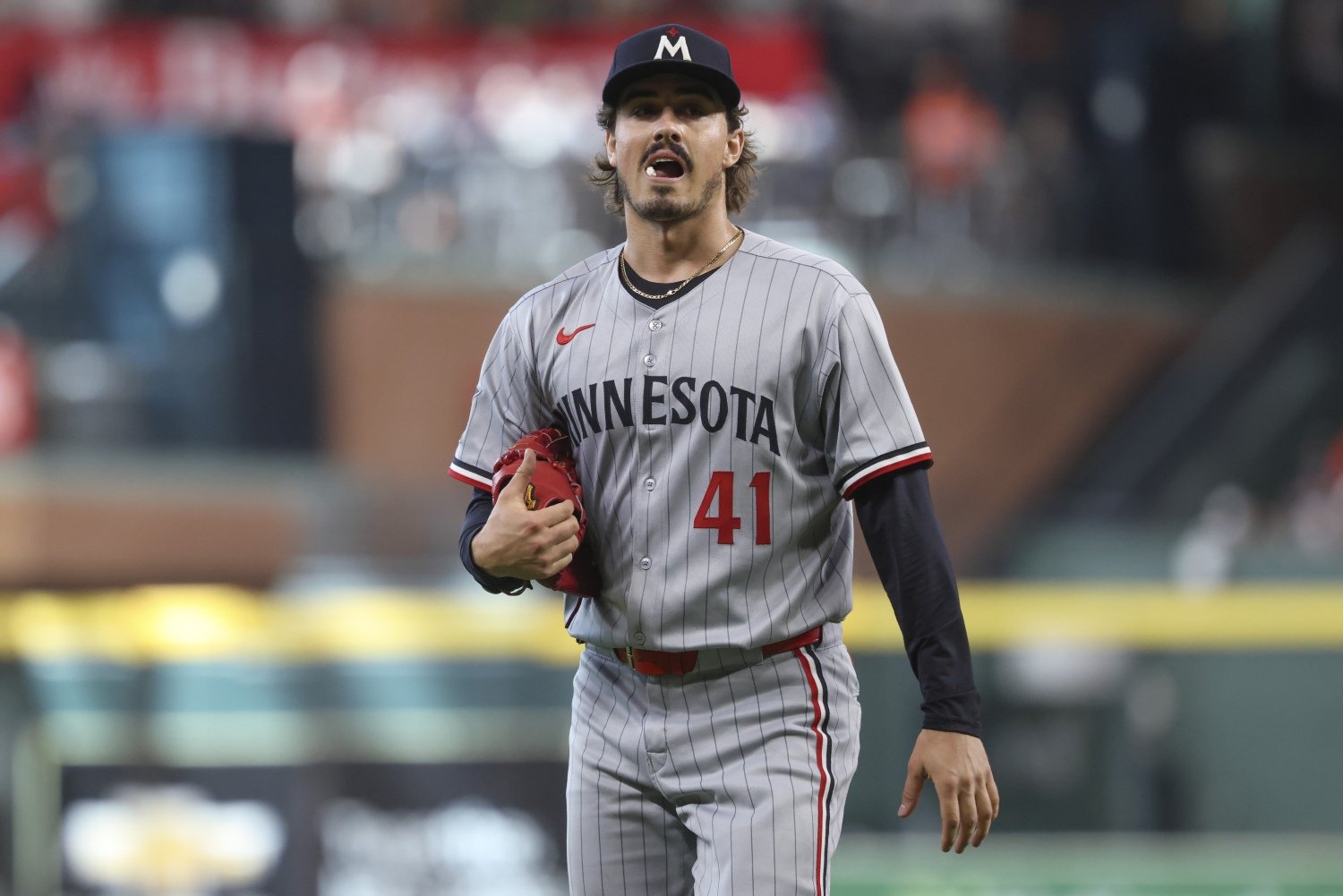 You could hear the scraped note in Joe Ryan's voice, at last, when a columnist who had misunderstood him asked to clarify how All-Star selections seem to be based on more than stats. "No, no," said the Twins righthander, certainly a star but not quite an All-Star, yet again. "It's NOT on stats." In other words, while Ryan claimed not to have dived too deeply into his own numbers, he's aware of them. He feels as though he's earned his place at next week's All-Star Game in Georgia, and he's at a loss to explain or defend himself in the wake of the fact that the game didn't make room for him. "Yeah, I mean, another year," he had said when the subject was first raised, letting listeners feel the gathering weight that had hit him when he was informed that he had missed out again this summer, "but at the same time, it's not based on stats, so it is what it is. And I'll leave it there." Ryan, 29, has been one of the best first-half pitchers in baseball for each of the last four seasons—especially the last three. Here are his numbers for each of those campaigns, at the All-Star break: 2023: 18 starts, 107 innings, 3.70 ERA, 8-6, 124 strikeouts, 18 walks, .636 opponent OPS 2024: 19 starts, 114 2/3 innings, 3.53 ERA, 6-6, 124 strikeouts, 19 walks, .668 opponent OPS 2025: 18 starts, 104 1/3 innings, 2.76 ERA, 8-4, 116 strikeouts, 21 walks, .589 opponent OPS As things stand now, Ryan is slated to make one more start before this year's break, on Saturday against the Pirates. Though the righty didn't want to make it about himself Sunday, his frustration with the process that has denied him the recognition that he belongs among the game's elite was palpable. If voters were paying close enough attention, they might even have given him extra credit for bearing up so well in a campaign that has seen his partners at the front end of the Twins rotation (Pablo López and Bailey Ober) felled by injuries. He can't do much more to earn that status, but so far, it hasn't been conferred on him. Nor did he seem especially hopeful when asked whether the possibility of being named as a replacement player due to injuries or unavailability was on his mind. "I mean, it's beyond me now, so I have no control over that," Ryan said. "That's all, I guess. Just trying to win games." Ryan didn't seek to make the moment about himself, and the team is unanimously happy for Byron Buxton (who was named to the team Sunday). The hurler even went out of his way to mention the support he's gotten from teammates. "I mean, I just try to pitch well," he said. "We've had really good defense all year that put me in a really good spot to be considered, so I don't know." In truth, if the Twins were having a better season, Ryan might well have gotten over the hump this time. He's pitched in and out of trouble at times, but his control is superb, and his strikeout rates have been uniformly impressive over the last few years, especially early in seasons. He's doing better at keeping the ball in the park in 2025. He just can't seem to catch the eye of fellow players or coaches, to gain the selection he clearly craves—and arguably deserves. Ryan was upbeat about his outing Sunday, in which he pitched a solid six innings and kept the Twins in the game to set up a late comeback. Minnesota dropped the final contest of their series against the Rays in 10 innings, but Ryan's work helped them get that far, and he said the team took some solace in having bounced back enough to push the game into extras. "I think it's a good sign whenever you can come back, even if it falls apart," Ryan said. "Obviously, that's not what you want, and you want to win the game, and hold that there. Our bullpen's been really solid, so I think we have that potential to just keep going. We had two really good wins this weekend, so just ride those, and keep playing good baseball. It'll come together." That's what he's hoping, now: that he and his team can keep playing good baseball, and it'll come together. He has to wait another year for the possibility of being named an All-Star, but in the meantime, he can set the goal of pitching a full season without an injury or a prolonged (perhaps injury-driven) period of struggle. He can also keep trying to help his team shake off their bouts of inconsistency and play solid enough baseball throughout the second half to avoid becoming trade deadline sellers—in which case, of course, he might be making next year's All-Star case in different colors.
 -
Image courtesy of © Bruce Kluckhohn-Imagn Images In addition to being named an All-Star reserve outfielder Sunday, Byron Buxton received an invitation from the league to participate in next week's Home Run Derby at Truist Park in the suburbs outside Atlanta. For Buxton, the second-time All-Star who will be playing before a home crowd in his native state, that was too good a chance to miss. "When you're healthy, and you have the opportunity come across to be able to do things like this, you don't pass them up," Buxton told reporters in a conference call Sunday. "And just having conversations with everybody that needed to know and that was important to me, it was something that I wanted to do, and they supported me plenty." Few players who receive the honor of an All-Star selection are less likely to take it for granted than Buxton. Despite his status as a former No. 2 overall pick and one of the top prospects in the game before his debut, he's intimately familiar with the ways the game can dangle your talent before you, holding it just out of reach. He's the kind of player who could make the trip to the annual exhibition almost every year, but injuries stunted his development at several points and have stopped him from showcasing his talent for much of his decade-long career. To overcome that in a season that offers the chance to play in a national event before his local people is especially exciting for Buxton, whose family has grown since he was last given this chance—and who will be able to enjoy a break back home even while embracing the hoopla of All-Star Week. "It means a lot. I think the biggest thing for me is, the last time I went to the game, as far as family-wise, there were four of us, and we didn't have any kids," he reflected. "So being able to make it back, with my whole family this time, is very special—and to do it back home, with this Twins uniform on, it's a blessing. Everybody doesn't get to play as many years as I did, and to be able to do it with the Twins and know I'm gonna do it with the Twins every year I make it, is something special to me and my family." The tenacious pride he takes in representing his team should seize the attention of fans, as much as his affable attempts to deflect attention from himself. If there were any lingering questions about whether he would accept a trade to any other team this summer, comments like the above should put them to rest. Buxton has made a true home in the Twin Cities, too. That he has put down such meaningful roots in Minnesota, in a way, compounds the special feeling of returning to his roots in the South for this occasion. "Going back home to do something like this, it's a once-in-a-lifetime thing," he said. "I know I'm not gonna play 30 more years for it to come back to Atlanta, so it's that once-in-a-lifetime kind of opportunity. I talked about it with some close people, some guys on the team, some friends, family, everybody got excited. It's one of those things where, they didn't want me to pass up this opportunity." With the combination of an unbroken body and an unbroken string of everyday at-bats, Buxton has steadily worked his way into greater consistency and power production over the last two seasons. This year, he's slugging .544, and his 20 home runs put him easily on pace to best his career high of 28. Better yet, he's done it largely while tamping down the massive strikeout rate that came with his previous high in 2022. He's a more well-rounded slugger than ever. Rocco Baldelli said the change to his overall offensive game has been real and tangible this year, and perhaps is a product of simply being able to get into a daily routine. "It is true. You're not gonna be able to put in as much work if you're battling things," Baldelli said, at the end of the team's last homestand. "He's been able to get a full day's work pregame, and then play in the game, pretty much every day this year. I think that definitely can take your game to different places." That's included more walks, more stolen bases, and a greater usage of the opposite field. It's also meant hitting the ball hard more often, even with a slightly more compact swing than he's used in the past. He'll get to put all of that on full display next week. His ability to hit genuine moonshots has never been in doubt, and he's displayed it more often than ever this year. His children are especially excited. Buxton is not one to clamor for (or, sometimes, even to accept) the spotlight, but his family's exhortations and the chance to embrace both his family's home and his adopted one at once will make next week unique and wonderful for him. For Twins fans, amid a season of aggravation and with the trade deadline hanging over everything like a dark cloud, Buxton—loudly asserting that his place is this one, playing the best baseball of his illustrious career, and getting to show off what he can do on ESPN—remains the warm ray of sunlight. View full article
-
Byron Buxton Will Participate in the Home Run Derby in Atlanta
Matthew Trueblood posted an article in Twins
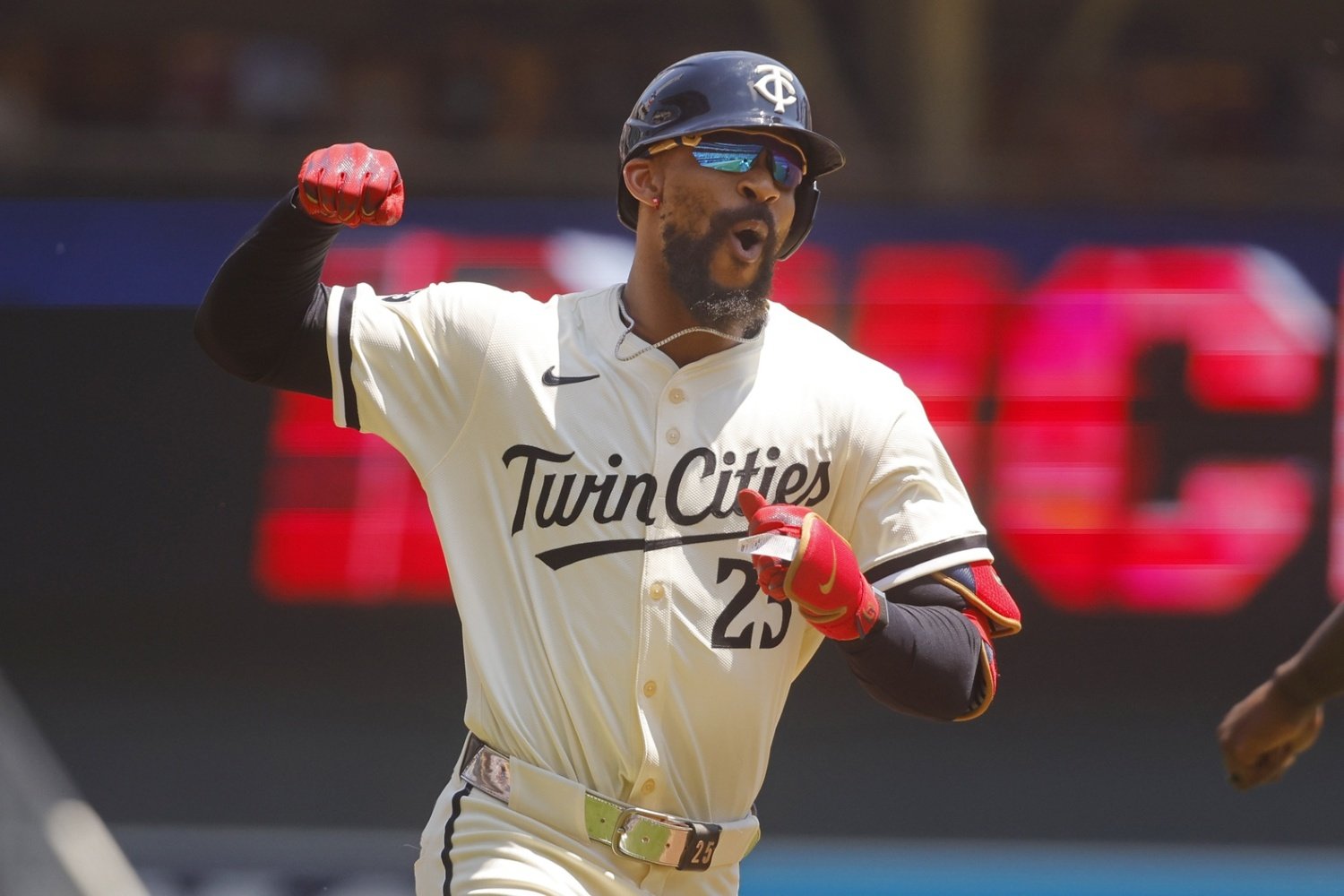 In addition to being named an All-Star reserve outfielder Sunday, Byron Buxton received an invitation from the league to participate in next week's Home Run Derby at Truist Park in the suburbs outside Atlanta. For Buxton, the second-time All-Star who will be playing before a home crowd in his native state, that was too good a chance to miss. "When you're healthy, and you have the opportunity come across to be able to do things like this, you don't pass them up," Buxton told reporters in a conference call Sunday. "And just having conversations with everybody that needed to know and that was important to me, it was something that I wanted to do, and they supported me plenty." Few players who receive the honor of an All-Star selection are less likely to take it for granted than Buxton. Despite his status as a former No. 2 overall pick and one of the top prospects in the game before his debut, he's intimately familiar with the ways the game can dangle your talent before you, holding it just out of reach. He's the kind of player who could make the trip to the annual exhibition almost every year, but injuries stunted his development at several points and have stopped him from showcasing his talent for much of his decade-long career. To overcome that in a season that offers the chance to play in a national event before his local people is especially exciting for Buxton, whose family has grown since he was last given this chance—and who will be able to enjoy a break back home even while embracing the hoopla of All-Star Week. "It means a lot. I think the biggest thing for me is, the last time I went to the game, as far as family-wise, there were four of us, and we didn't have any kids," he reflected. "So being able to make it back, with my whole family this time, is very special—and to do it back home, with this Twins uniform on, it's a blessing. Everybody doesn't get to play as many years as I did, and to be able to do it with the Twins and know I'm gonna do it with the Twins every year I make it, is something special to me and my family." The tenacious pride he takes in representing his team should seize the attention of fans, as much as his affable attempts to deflect attention from himself. If there were any lingering questions about whether he would accept a trade to any other team this summer, comments like the above should put them to rest. Buxton has made a true home in the Twin Cities, too. That he has put down such meaningful roots in Minnesota, in a way, compounds the special feeling of returning to his roots in the South for this occasion. "Going back home to do something like this, it's a once-in-a-lifetime thing," he said. "I know I'm not gonna play 30 more years for it to come back to Atlanta, so it's that once-in-a-lifetime kind of opportunity. I talked about it with some close people, some guys on the team, some friends, family, everybody got excited. It's one of those things where, they didn't want me to pass up this opportunity." With the combination of an unbroken body and an unbroken string of everyday at-bats, Buxton has steadily worked his way into greater consistency and power production over the last two seasons. This year, he's slugging .544, and his 20 home runs put him easily on pace to best his career high of 28. Better yet, he's done it largely while tamping down the massive strikeout rate that came with his previous high in 2022. He's a more well-rounded slugger than ever. Rocco Baldelli said the change to his overall offensive game has been real and tangible this year, and perhaps is a product of simply being able to get into a daily routine. "It is true. You're not gonna be able to put in as much work if you're battling things," Baldelli said, at the end of the team's last homestand. "He's been able to get a full day's work pregame, and then play in the game, pretty much every day this year. I think that definitely can take your game to different places." That's included more walks, more stolen bases, and a greater usage of the opposite field. It's also meant hitting the ball hard more often, even with a slightly more compact swing than he's used in the past. He'll get to put all of that on full display next week. His ability to hit genuine moonshots has never been in doubt, and he's displayed it more often than ever this year. His children are especially excited. Buxton is not one to clamor for (or, sometimes, even to accept) the spotlight, but his family's exhortations and the chance to embrace both his family's home and his adopted one at once will make next week unique and wonderful for him. For Twins fans, amid a season of aggravation and with the trade deadline hanging over everything like a dark cloud, Buxton—loudly asserting that his place is this one, playing the best baseball of his illustrious career, and getting to show off what he can do on ESPN—remains the warm ray of sunlight.
 -
Image courtesy of © Lon Horwedel-Imagn Images The Twins placed righthander Bailey Ober on the injured list Wednesday, citing a left hip impingement. That Ober was dealing with pain and/or a compromised range of motion in that hip has been no secret for a solid month, but because the issue began to flare just when Pablo López and Zebby Matthews were felled by shoulder trouble, Ober pitched through it for as long as possible. It was a noble and necessary gamble on his part. Teammates respected his willingness to do it, and the organization would have had to scramble furiously to fill his rotation spot in the aftermath of the López and Matthews injuries. However, the results were hideous. Ober's starts became increasingly non-competitive, with uncharacteristic bouts of wildness and far, far too many home runs by opposing batters. That Ober continued to absorb innings and take pressure off the bullpen in most of those discouraging outings added another layer of value for the team, but it was untenable. Now, the scramble they briefly delayed is on. Kody Funderburk will become a ninth man in the team's bullpen for the final two games of their road trip, but the question is who will take Ober's place in the starting rotation on Friday—and, in all likelihood, for the one start left between that game and the All-Star break. The most likely candidates are Marco Raya and Travis Adams, each of whom is on the 40-man roster and each of whom have pitched bulk innings all year for the St. Paul Saints. Raya is the one on schedule for a Friday appearance, although the team could always use a bullpen day or shuffle their rotation a bit. This is also why the team acquired Connor Gillispie and José Ureña in recent days. Gillispie is also on the 40-man roster, and since none stand out based on performance or short-term upside, Gillispie, Adams and Raya can all be considered co-favorites for that spot in the rotation over the next fortnight. If, as seems likely, the Twins slouch out of the playoff race entirely and become sellers this month, there could be opportunities for more than one of that quartet, as the team would be more likely to handle Ober, López and Matthews carefully—and could field calls on both Chris Paddack and Joe Ryan before the trade deadline. Ober has become a walking symbol of the team's season. He made a valiant effort to work through adversity and find success, but he's been unable to do his best work almost all year, and now, it looks like it'll be a lost year for him. It might well be so for the team, too. Hopefully, at the very least, some rest will bring relief and help Ober get back into a groove near the end of this year, and he can return to his previous form in 2026. Nothing is guaranteed, though, especially for 6-foot-9 pitchers. View full article
-
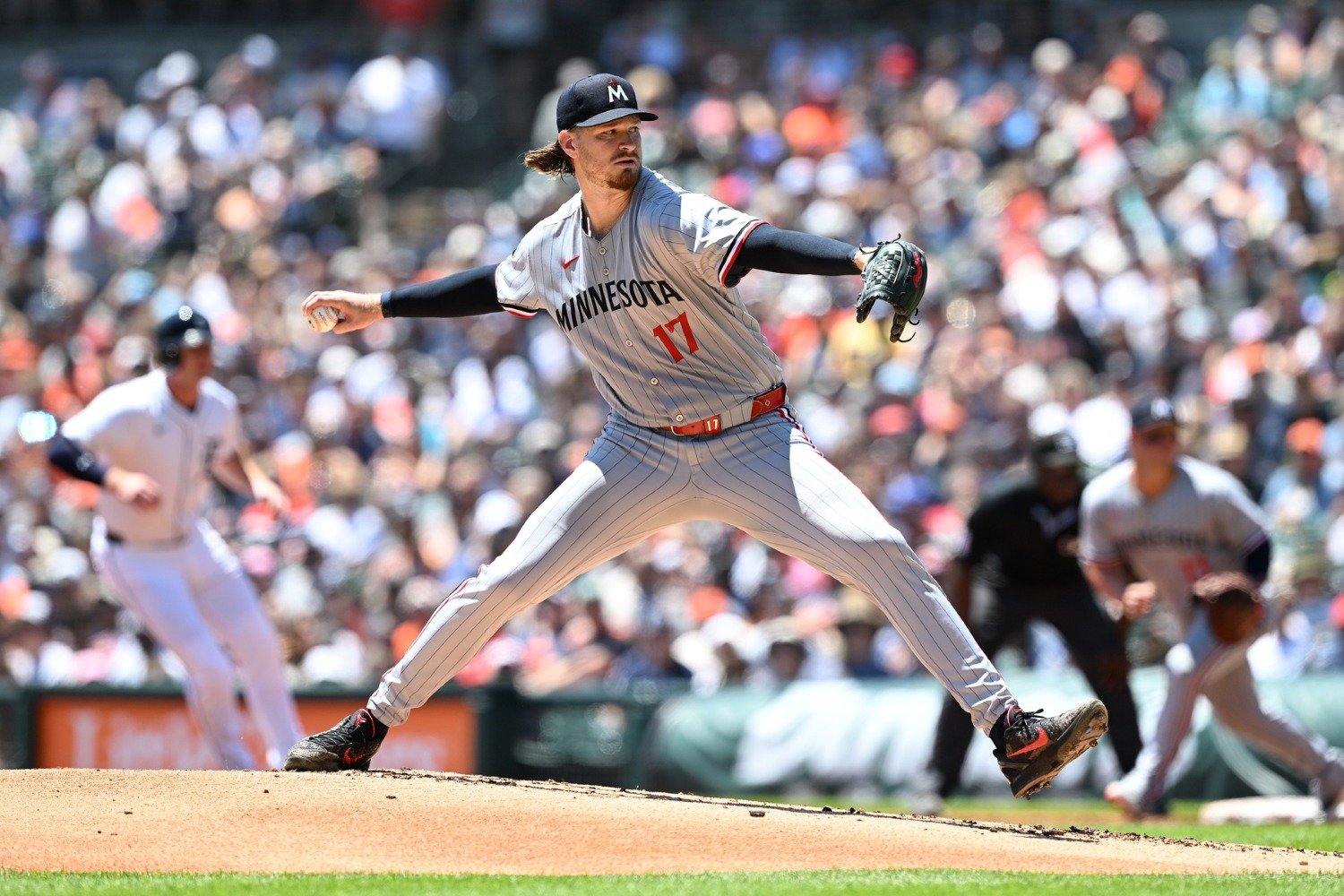 The Twins placed righthander Bailey Ober on the injured list Wednesday, citing a left hip impingement. That Ober was dealing with pain and/or a compromised range of motion in that hip has been no secret for a solid month, but because the issue began to flare just when Pablo López and Zebby Matthews were felled by shoulder trouble, Ober pitched through it for as long as possible. It was a noble and necessary gamble on his part. Teammates respected his willingness to do it, and the organization would have had to scramble furiously to fill his rotation spot in the aftermath of the López and Matthews injuries. However, the results were hideous. Ober's starts became increasingly non-competitive, with uncharacteristic bouts of wildness and far, far too many home runs by opposing batters. That Ober continued to absorb innings and take pressure off the bullpen in most of those discouraging outings added another layer of value for the team, but it was untenable. Now, the scramble they briefly delayed is on. Kody Funderburk will become a ninth man in the team's bullpen for the final two games of their road trip, but the question is who will take Ober's place in the starting rotation on Friday—and, in all likelihood, for the one start left between that game and the All-Star break. The most likely candidates are Marco Raya and Travis Adams, each of whom is on the 40-man roster and each of whom have pitched bulk innings all year for the St. Paul Saints. Raya is the one on schedule for a Friday appearance, although the team could always use a bullpen day or shuffle their rotation a bit. This is also why the team acquired Connor Gillispie and José Ureña in recent days. Gillispie is also on the 40-man roster, and since none stand out based on performance or short-term upside, Gillispie, Adams and Raya can all be considered co-favorites for that spot in the rotation over the next fortnight. If, as seems likely, the Twins slouch out of the playoff race entirely and become sellers this month, there could be opportunities for more than one of that quartet, as the team would be more likely to handle Ober, López and Matthews carefully—and could field calls on both Chris Paddack and Joe Ryan before the trade deadline. Ober has become a walking symbol of the team's season. He made a valiant effort to work through adversity and find success, but he's been unable to do his best work almost all year, and now, it looks like it'll be a lost year for him. It might well be so for the team, too. Hopefully, at the very least, some rest will bring relief and help Ober get back into a groove near the end of this year, and he can return to his previous form in 2026. Nothing is guaranteed, though, especially for 6-foot-9 pitchers.
- 47 comments
-
- 5
-

-

-
- bailey ober
- kody funderburk
- (and 1 more)
-
It's certainly not hurting anything, but that attempt rate—twice as high as in any of the last three seasons—tells us he's running more per opportunity, not just stealing more total bases because of increased playing time or an improved OBP.
-
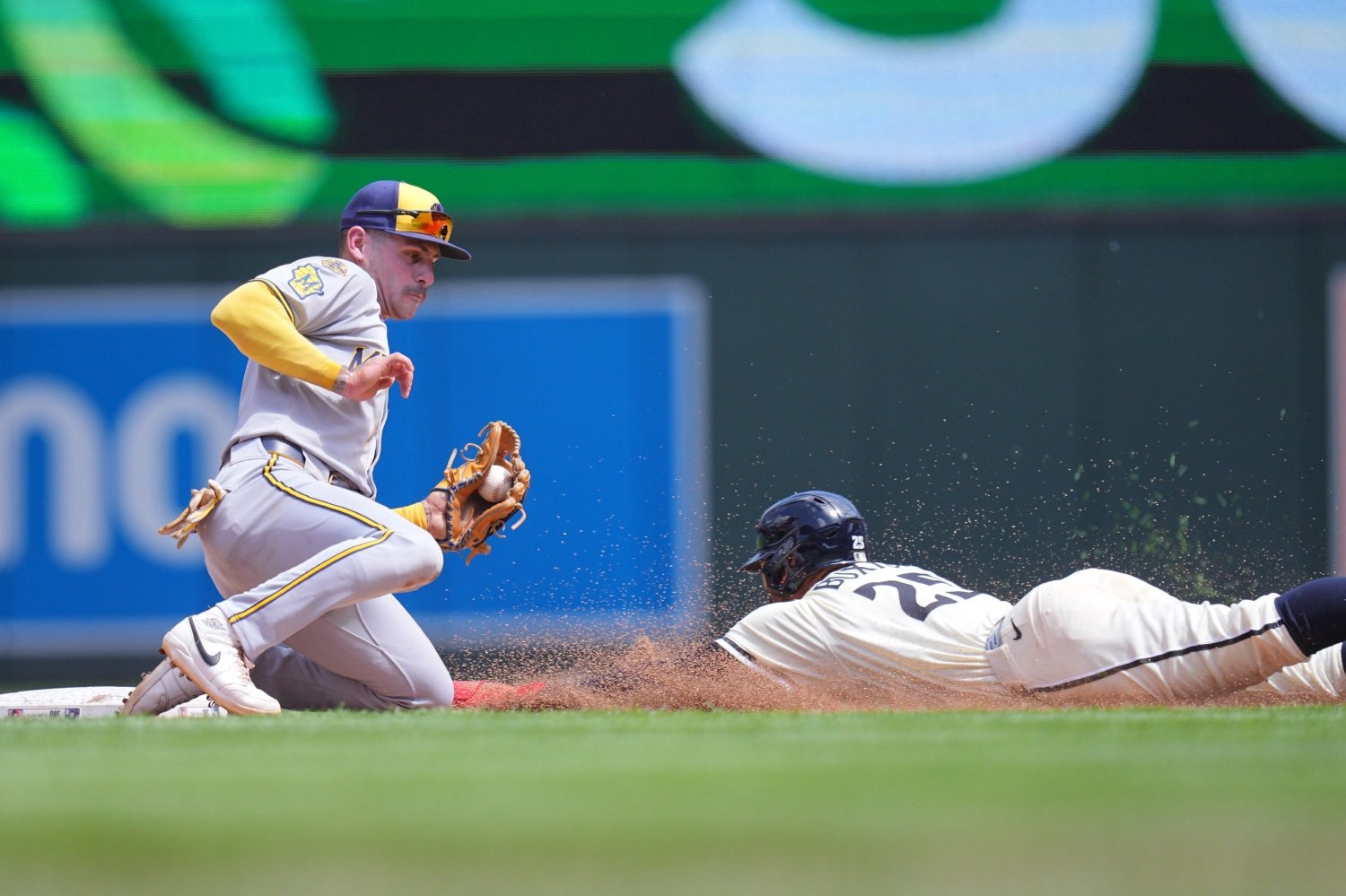 If (like me) you're a long-time listener to Gleeman and the Geek, the mountain that grew from a molehill in Monday's Patreon episode probably felt familiar. As a listener since 2011 (although not quite as consistent a one as I used to be), I can describe it pretty neatly, in broad strokes. We'll get down to the details of this latest one in just a moment. Here's what happens, and happened. Aaron says something, usually on a topic he had plotted as part of the outline of the episode. John responds and muses about something related to that topic. Aaron hears something more than John actually says, and away we go. The whole thing goes off the rails as Aaron tries to debunk or rebut an argument John was never really making. This is not, of course, a complaint. The above makes for good radio, because Aaron is probably at his best when he's worked up over nothing, and John is excellent at laughing along and not really defusing Aaron, even when (if the goal were to do a tight hour of focused Twins talk) he probably should. This happens about once a quarter, or at least, that's how often I hear it; I don't catch every episode now that they make a few of them each week. I caught Monday's show, though, and we got a real humdinger of a sequence out of these two on the subject of Byron Buxton's basestealing. Aaron was trying (as he later explicitly said) to recite some facts about Buxton's superb 2025 campaign and elicit from John a simple co-sign. John had clearly been thinking, independently, about how nice it was to see Buxton running so much more, and specifically, running more right after he reached base. He mentioned as much, including saying he hoped to study this soon and see whether the trend was gaining steam. (This article is me betting John's not going to get to that soon. @John Bonnes, if I'm stealing your thunder, sorry.) It's classic sports podcasting, and classic improv. He was trying to "yes, and" Aaron's take on Buxton. Aaron, not having gotten quite the unvarnished agreement he was seeking and worried that the message ("Byron Buxton: good") was getting lost, heard in John's tangential observation a note of criticism or mitigation, which John didn't intend. The whole thing went off the rails as Aaron tried to debunk John's criticism of Buxton and, in fact, to rebut the idea that it's even good to steal bases, or at least to steal them early in counts. Well, look. John is a busy guy. In fact, as an employee of John's, I happen to know that John had an editorial meeting and a radio appearance yesterday afternoon and has a bunch of payroll stuff to do this week, before the holiday on Friday. And in theory, I'm a busy guy, too, but I have no control over payroll and my job has a lot to do with, you know, answering questions about baseball—questions like, "Is Byron Buxton running more early in counts?" So, let's do that. Yes. He is. Alright, it's more complicated than that. But if you wanted to get a quick-dry answer, that would be the right one. From 2022-24, Byron Buxton stole four total bases on the first pitch of at-bats, and one base on a 1-0 count. This year, in just half a season, he's already equaled both of those figures. He did steal four bases in 0-1 counts and five in 1-1 counts over the last three seasons, and he has just one total steal across those two counts this year, but right away, on the first pitch, he's going much more this year than in the past. John specifically noted that he sensed Buxton running more right away in the last month or so. So noted, so confirmed. Buxton did steal on a 2-2 pitch (and that to the second batter after he'd reached first) Saturday against the Tigers, but his steal on Friday came on the first pitch of a plate appearance. So did one against the Brewers last Sunday. As John said, counting only steals is an imperfect approach, because Buxton will somewhat often take off on pitches the batter fouls off, but there's at least a modicum of evidence that he's running earlier in counts. Of course, running "early" means more than just running before the hitter gets deep in the count. It's also much more valuable to advance to second base (or, if one is already on second, to third) with nobody or one out than with two. For some reason, Aaron cast some doubt on this premise during the show; he was really thrown off by John taking the conversation in this direction. But the premise is unassailable. Here's a run expectancy table for 2025, courtesy of the great Ben Clemens at FanGraphs. Because there are more chances to be driven in (and the risk of a double play is drastically reduced, and the potential for a manufactured run is greater), getting from first to second with nobody out is worth about 0.25 runs. With one out, it's worth about 0.19 runs. With two outs, it's worth just 0.10 runs. Assuming the odds of being caught are about the same regardless of the number of outs (and, in Buxton's case, assuming the odds of being caught are quite low, no matter what), you absolutely want to make your move early. Buxton is doing that this year, to a degree he hasn't even approximated since 2017. He's already stolen six bases with nobody out in the inning this season. He only stole a total of four bases with nobody out from 2022-24, and the only other campaign in which he's stolen more than three bases with zero outs was 2017, when he stole 10. All of this is, of course, an outgrowth of Buxton being more aggressive overall. He's attempted steals in 3.2% of his opportunities this year, according to Statcast, up from 1.5% in 2024 and 1.6% in 2023. Here, "opportunities" are defined as pitches thrown while the player is on base, without a runner in front of them on the bases, so while this isn't isolating early counts, the fact that his attempt rate has doubled means Buxton is sticking around for fewer pitches before taking off. He's also making a bigger difference by running than ever before; his five high-leverage steals this year are already the most he's logged since 2019. I can't quite document that Buxton is being disproportionately more aggressive early in counts than later, but I don't think that's what John was saying, anyway. The claim, it seems to me, was that Buxton's improved health and new role as the leadoff man has led him to take off more promptly once he reaches base, trying to press the issue; avoid double plays; get into scoring position for the fairly low-power heart of the Twins order; and create a spark. Those things do matter, and indeed, Buxton is doing them more this year—perhaps especially since he moved to the top of the batting order. He's taking off before teammates can fall behind in counts trying to give him a pitch on which to run, and he's doing so while the inning is young enough that they might bring him around via well-placed ground balls or flyouts. Taken together (and accounting for other runners, the batter striking out during one of his steals, and his advancing on a throwing error on another), Buxton's steals have been worth 2.8 runs to the Twins this year. From 2022-24, due both to lower volume and running in less advantageous situations, he added just 1 total run with his steals. Stealing bases is no longer the exclusive work of young players, but stealing early does seem like a young man's game. It's wonderful to see Buxton taking an extra 90 feet by force, here and there, at the earliest opportunity and when it will open the most chances for his team to create a run. It's even cooler to see it happen at an age when most players have to start being more wily and relying more on the pitcher forgetting about them. It truly does seem as though getting his knee fully cleaned up has given Buxton a rare reset—a second chance at the career that seemed doomed to be perennially blunted by injuries. This time, though Aaron wasn't exactly wrong (on the major points), John was right.
 -
Image courtesy of © Brad Rempel-Imagn Images If (like me) you're a long-time listener to Gleeman and the Geek, the mountain that grew from a molehill in Monday's Patreon episode probably felt familiar. As a listener since 2011 (although not quite as consistent a one as I used to be), I can describe it pretty neatly, in broad strokes. We'll get down to the details of this latest one in just a moment. Here's what happens, and happened. Aaron says something, usually on a topic he had plotted as part of the outline of the episode. John responds and muses about something related to that topic. Aaron hears something more than John actually says, and away we go. The whole thing goes off the rails as Aaron tries to debunk or rebut an argument John was never really making. This is not, of course, a complaint. The above makes for good radio, because Aaron is probably at his best when he's worked up over nothing, and John is excellent at laughing along and not really defusing Aaron, even when (if the goal were to do a tight hour of focused Twins talk) he probably should. This happens about once a quarter, or at least, that's how often I hear it; I don't catch every episode now that they make a few of them each week. I caught Monday's show, though, and we got a real humdinger of a sequence out of these two on the subject of Byron Buxton's basestealing. Aaron was trying (as he later explicitly said) to recite some facts about Buxton's superb 2025 campaign and elicit from John a simple co-sign. John had clearly been thinking, independently, about how nice it was to see Buxton running so much more, and specifically, running more right after he reached base. He mentioned as much, including saying he hoped to study this soon and see whether the trend was gaining steam. (This article is me betting John's not going to get to that soon. @John Bonnes, if I'm stealing your thunder, sorry.) It's classic sports podcasting, and classic improv. He was trying to "yes, and" Aaron's take on Buxton. Aaron, not having gotten quite the unvarnished agreement he was seeking and worried that the message ("Byron Buxton: good") was getting lost, heard in John's tangential observation a note of criticism or mitigation, which John didn't intend. The whole thing went off the rails as Aaron tried to debunk John's criticism of Buxton and, in fact, to rebut the idea that it's even good to steal bases, or at least to steal them early in counts. Well, look. John is a busy guy. In fact, as an employee of John's, I happen to know that John had an editorial meeting and a radio appearance yesterday afternoon and has a bunch of payroll stuff to do this week, before the holiday on Friday. And in theory, I'm a busy guy, too, but I have no control over payroll and my job has a lot to do with, you know, answering questions about baseball—questions like, "Is Byron Buxton running more early in counts?" So, let's do that. Yes. He is. Alright, it's more complicated than that. But if you wanted to get a quick-dry answer, that would be the right one. From 2022-24, Byron Buxton stole four total bases on the first pitch of at-bats, and one base on a 1-0 count. This year, in just half a season, he's already equaled both of those figures. He did steal four bases in 0-1 counts and five in 1-1 counts over the last three seasons, and he has just one total steal across those two counts this year, but right away, on the first pitch, he's going much more this year than in the past. John specifically noted that he sensed Buxton running more right away in the last month or so. So noted, so confirmed. Buxton did steal on a 2-2 pitch (and that to the second batter after he'd reached first) Saturday against the Tigers, but his steal on Friday came on the first pitch of a plate appearance. So did one against the Brewers last Sunday. As John said, counting only steals is an imperfect approach, because Buxton will somewhat often take off on pitches the batter fouls off, but there's at least a modicum of evidence that he's running earlier in counts. Of course, running "early" means more than just running before the hitter gets deep in the count. It's also much more valuable to advance to second base (or, if one is already on second, to third) with nobody or one out than with two. For some reason, Aaron cast some doubt on this premise during the show; he was really thrown off by John taking the conversation in this direction. But the premise is unassailable. Here's a run expectancy table for 2025, courtesy of the great Ben Clemens at FanGraphs. Because there are more chances to be driven in (and the risk of a double play is drastically reduced, and the potential for a manufactured run is greater), getting from first to second with nobody out is worth about 0.25 runs. With one out, it's worth about 0.19 runs. With two outs, it's worth just 0.10 runs. Assuming the odds of being caught are about the same regardless of the number of outs (and, in Buxton's case, assuming the odds of being caught are quite low, no matter what), you absolutely want to make your move early. Buxton is doing that this year, to a degree he hasn't even approximated since 2017. He's already stolen six bases with nobody out in the inning this season. He only stole a total of four bases with nobody out from 2022-24, and the only other campaign in which he's stolen more than three bases with zero outs was 2017, when he stole 10. All of this is, of course, an outgrowth of Buxton being more aggressive overall. He's attempted steals in 3.2% of his opportunities this year, according to Statcast, up from 1.5% in 2024 and 1.6% in 2023. Here, "opportunities" are defined as pitches thrown while the player is on base, without a runner in front of them on the bases, so while this isn't isolating early counts, the fact that his attempt rate has doubled means Buxton is sticking around for fewer pitches before taking off. He's also making a bigger difference by running than ever before; his five high-leverage steals this year are already the most he's logged since 2019. I can't quite document that Buxton is being disproportionately more aggressive early in counts than later, but I don't think that's what John was saying, anyway. The claim, it seems to me, was that Buxton's improved health and new role as the leadoff man has led him to take off more promptly once he reaches base, trying to press the issue; avoid double plays; get into scoring position for the fairly low-power heart of the Twins order; and create a spark. Those things do matter, and indeed, Buxton is doing them more this year—perhaps especially since he moved to the top of the batting order. He's taking off before teammates can fall behind in counts trying to give him a pitch on which to run, and he's doing so while the inning is young enough that they might bring him around via well-placed ground balls or flyouts. Taken together (and accounting for other runners, the batter striking out during one of his steals, and his advancing on a throwing error on another), Buxton's steals have been worth 2.8 runs to the Twins this year. From 2022-24, due both to lower volume and running in less advantageous situations, he added just 1 total run with his steals. Stealing bases is no longer the exclusive work of young players, but stealing early does seem like a young man's game. It's wonderful to see Buxton taking an extra 90 feet by force, here and there, at the earliest opportunity and when it will open the most chances for his team to create a run. It's even cooler to see it happen at an age when most players have to start being more wily and relying more on the pitcher forgetting about them. It truly does seem as though getting his knee fully cleaned up has given Buxton a rare reset—a second chance at the career that seemed doomed to be perennially blunted by injuries. This time, though Aaron wasn't exactly wrong (on the major points), John was right. View full article
-
No offense, man, and I fully understand that we can't all subscribe to everything, but you don't know what I've proven. You're not a Caretaker, so you haven't read like 65% of this article.
-
Well, short-term, Lee is the guy who fills in, but yes, they need to add a talented shortstop to their system. That should be a focus, and is part of what I'm saying here. I also think, though, that they'd be wise to move Correa ASAP; get him accustomed to the hot corner; and force themselves to become more decisive in the way they build their roster over the next few years than they have been in building it over the last few years. Culpepper is the medium-term answer, and you can try to upgrade from there, but the point is that Correa's not viable there. You have to set a higher bar for infield defense than they've been able to this year.
-
Image courtesy of © Katie Stratman-Imagn Images It was not a good week for Carlos Correa at shortstop. In fact, it hasn't been a good month, and (despite a few strong plays and his ironclad reputation) it hasn't been a good year, either. At 30 years old, the Twins' star shortstop is looking less and less like one—a shortstop, that is, although since he's not hitting well, he's also looking less and less like a star. Last week, Baseball Prospectus released an expansion and update to its model for fielding evaluation. Prospectus's value metric for fielders is called Defensive Runs Prevented (DRP), and its backbone is Range Defense Added (RDA). The latter is meant to capture the number of balls a player reaches and converts to outs, above or below the number an average defender would be expected to reach and convert in the same array of opportunities. Along with a move to expand one of the components of RDA—Attempt Range, a measurement of how many balls a player gets to, above or below average—to all infielders, the update also corrected some former biases in apportioning responsibility to infielders based on the reported location of batted balls. On the other side of all that, here are Correa's RDA, Attempt Range, and DRP totals for each season since 2021: Season Attempt Range RDA Outs DRP 2021 3 7.5 5.5 2022 -3 2.6 1.9 2023 -10 0 0 2024 -2 -1 -1.7 2025 -11 -3.4 -2.4 That's about as clear a linear trend as you could ask for. Keep in mind, too, that these are counting stats. For instance, if we prorated Correa's 2024 performance to about the same number of innings he played in each of the previous three years, he'd have been closer to 2.5 runs worse than average. If he plays all season the way he has so far, he'll be about 5 runs worse than average, in similar playing time to that over which he was better than average in 2022 and exactly average in 2023. Specifically, the Attempt Range column is telling us that Correa is getting worse at getting to the ball. He still has a very strong arm, a good internal clock, and a certain brilliance when it comes to taking a lead runner or converting a tough chopper into a double play. He just doesn't have the range you need from a shortstop in the majors. That probably hits you funny, because Correa is still widely praised for his glovework. That's not entirely without merit. You can, indeed, see him make very good plays from time to time, and he rarely makes an ugly mistake. According to Sports Info Solutions and their Defensive Runs Saved evaluation framework, he's had a neutral or positive rating when it comes to Good Fielding Plays versus Defensive Misplays and Errors for every season since 2019. However, even DRS shows him nosing steeply downward, including this year. He's struggled going to his left for a few years, now, but in 2025, he's also not getting outs on balls to his right as well as he used to. Numbers—especially defensive numbers—can be hard to take at face value, though. Let's take a walk through the last week (just one week) of defense for Correa, to see this problem in a more undeniable form. View full article
-
 It was not a good week for Carlos Correa at shortstop. In fact, it hasn't been a good month, and (despite a few strong plays and his ironclad reputation) it hasn't been a good year, either. At 30 years old, the Twins' star shortstop is looking less and less like one—a shortstop, that is, although since he's not hitting well, he's also looking less and less like a star. Last week, Baseball Prospectus released an expansion and update to its model for fielding evaluation. Prospectus's value metric for fielders is called Defensive Runs Prevented (DRP), and its backbone is Range Defense Added (RDA). The latter is meant to capture the number of balls a player reaches and converts to outs, above or below the number an average defender would be expected to reach and convert in the same array of opportunities. Along with a move to expand one of the components of RDA—Attempt Range, a measurement of how many balls a player gets to, above or below average—to all infielders, the update also corrected some former biases in apportioning responsibility to infielders based on the reported location of batted balls. On the other side of all that, here are Correa's RDA, Attempt Range, and DRP totals for each season since 2021: Season Attempt Range RDA Outs DRP 2021 3 7.5 5.5 2022 -3 2.6 1.9 2023 -10 0 0 2024 -2 -1 -1.7 2025 -11 -3.4 -2.4 That's about as clear a linear trend as you could ask for. Keep in mind, too, that these are counting stats. For instance, if we prorated Correa's 2024 performance to about the same number of innings he played in each of the previous three years, he'd have been closer to 2.5 runs worse than average. If he plays all season the way he has so far, he'll be about 5 runs worse than average, in similar playing time to that over which he was better than average in 2022 and exactly average in 2023. Specifically, the Attempt Range column is telling us that Correa is getting worse at getting to the ball. He still has a very strong arm, a good internal clock, and a certain brilliance when it comes to taking a lead runner or converting a tough chopper into a double play. He just doesn't have the range you need from a shortstop in the majors. That probably hits you funny, because Correa is still widely praised for his glovework. That's not entirely without merit. You can, indeed, see him make very good plays from time to time, and he rarely makes an ugly mistake. According to Sports Info Solutions and their Defensive Runs Saved evaluation framework, he's had a neutral or positive rating when it comes to Good Fielding Plays versus Defensive Misplays and Errors for every season since 2019. However, even DRS shows him nosing steeply downward, including this year. He's struggled going to his left for a few years, now, but in 2025, he's also not getting outs on balls to his right as well as he used to. Numbers—especially defensive numbers—can be hard to take at face value, though. Let's take a walk through the last week (just one week) of defense for Correa, to see this problem in a more undeniable form.
 -
Image courtesy of © Jesse Johnson-Imagn Images In the ninth inning of the Twins' latest demoralizing loss, the Milwaukee Brewers issued Byron Buxton an intentional walk. They put the winning run on base and gave up the platoon advantage, just to trade having to face Buxton for getting to face Matt Wallner. It was, in a sense, a risky maneuver. With Buxton's speed, a double by Wallner would have ended the game, and the chances of a double-steal by Harrison Bader and Buxton were not insignificant. Right-handed Brewers closer Trevor Megill is, like most righties, better against right-handed batters. Yet, the visitors felt comfortable going after Wallner instead of Buxton. It paid off. On a 2-0 pitch, Megill threw a fastball on the inner third at 98.7 miles per hour. It's never easy to hit 99, but as such pitches go, this one was manageable. It's the kind of pitch you need your elite power guy to hit a long way, especially in that situation—and especially with the benefit of a count in which he could look for that pitch and try to gear up for it. Unfortunately, Wallner popped it up, harmlessly, for the second out of the inning. M3k0M3lfWGw0TUFRPT1fQWdOWFZsQlNWZ1lBV1FOV0J3QUhVZ0JRQUFOVUFRQUFBQUZXVkFVQ0J3VmNDUWRT.mp4 This is a pattern, lately. Wallner is hitting an atrocious .164/.243/.418 since his return from the injured list on May 31. Though his strikeout rate this year is a career-best 29.1%, he's become more all-or-nothing than ever at the plate, because he's popping the ball up- or hitting it weakly more often than in the past. The problem lies in his swing path. Here are the average swing tilt, bat speed, attack angle, attack direction and contact point numbers for Wallner, in each month in which he's had substantial playing time since the start of 2024. Month Year Bat Speed (MPH) Swing Tilt (°) Attack Angle (°) Attack Dir. (°) Ideal Att. Ang. % Contact Pt. v. Batter July 2024 77.1 31.1 9.7 -1.5 46.2% 33.8 August 2024 77.4 31.9 12.1 -4.9 53.4% 37.3 September 2024 77.2 33.1 13.4 -3.7 44.8% 36.8 April 2025 76.6 29.9 11.2 -1.4 57.4% 34.9 June 2025 76.0 26.4 12.0 -8.6 56.7% 39.0 Wallner has lost a little bit of sheer bat speed, but he had that to give, and then some. What he couldn't afford to lose, however, was the tilt on his swing. The way his body and bat are working, now, he's getting out around the ball far too much, and catching it too far out in front of himself to get the ball flush on the barrel. Instead, though he's often able to make contact, he's frequently hitting it straight up in the air. It might initially surprise you to hear that a flatter bat makes for more pop-ups, but if you think about it a bit, it's easy to see how it happens. Consider some side-by-side screenshots of Wallner at the contact point. Here's a comparison between a pitch on which he homered last August, and one on which he popped up to the middle of the infield in Seattle this year. As you can see, the ball on the left was a few inches lower. That's key. Wallner's adjustment appears to be an effort to cover the top of the zone better, because his higher-tilt swing did lead to lots of whiffs on fastballs up around the letters. Equally obvious, though, is the tradeoff. A tilted swing path means that if you're slightly off on timing, you can still hit the ball on a productive trajectory: a high line drive, or a fly ball that will carry. It might go foul, or slice oddly to the opposite field, but it's likely to be a ball that goes forward more than up or down. A flat swing puts you at greater risk of hitting the top or bottom of the ball, though it makes it more likely that you make contact with it at all. Here's another side-by-side. One shows a home run Wallner hit against the White Sox last summer; the other shows a ball on which he flew out to right this April. Here, too, the ball he crushed was a bit lower, and your temptation might be to decide that he just needs to set his sights lower with this new swing—or even that the only reason why his swing looks flatter is because he's swinging at higher pitches. It's not that, though. From the center-field camera, it's hard to tell, but he's also too early on the ball on the right. That means both that he's getting to it a hair sooner, before it has time to drop those precious few millimeters; and that he's less able to manipulate the barrel of his bat to find the ball. The change in his average tilt (and the other metrics) still shows up if you isolate pitches in particular locations, but just to prove that location isn't the sole issue, here's a ball from this month on which he caught the top half, rather than the bottom. ek1MajlfWGw0TUFRPT1fQUFZRFZWTlJWUU1BRDFjRlVnQUhCVklIQUFOVVVsa0FBVk5YQ0ZkVUFnZFRBbEFD.mp4 That's a pretty fat fastball, below the belt and with plenty of plate around it. The Twins need Wallner to elevate that ball, especially with a runner on third and one out. Unfortunately, this version of his swing makes his barrel much less accurate than it used to be. To see a bit of the biomechanics involved, here's a side-by-side set of screenshots from Baseball Savant's visualization tool for the new swing path metrics they provide. These are both from the frame of the animation where Wallner starts to get on plane with the incoming pitch—where the bat stops its downward travel from above his shoulder to the hitting zone and begins tracking uphill, to find the incoming pitch. As you can see, that change is happening a bit earlier in the arc of his swing this year. Wallner's getting on plane while his left arm is still roughly level with his back leg, whereas in 2024, he was already steering forward and opening his front shoulder more by that point. Were his swing tilt the same, that could (plausibly) be a good thing, but there are two problems here: Early Bat Speed: In the image on the left, from last year, you can see that the momentary speed of his barrel is already 73 miles per hour, an extraordinary number. For a hitter to generate that much speed that early in their swing, they have to have generated some tilt, to give their body and their implement room to get moving. On the right, he's only at 70 mph. Remember, though he's slightly down this year, he gets to nearly the same final swing speed at contact—but this means that more of that speed is coming in the final phase of the swing this year, so he can't control his barrel at all as it flies through the hitting zone. It also means that if he's slightly late, this year, he's unable to hit it as hard as he could if he was slightly late last year. The Flattening: The stills don't reveal it, but we know it, and you can see it for yourself if you visit the Savant tool and watch the full animations. Wallner's swing isn't much steeper early, while the bat is behind him. That all comes as he brings it around, staying a bit more upright and reaching more. Remember how he's also catching the ball farther out front, in terms of contact point? That's because his swing sweeps long and flat through the area just in front of him, over the plate. He's less prone to whiffs, in theory, but his timing is so off that he's whiffing more than in the past, anyway. He's hitting some balls he would have missed last year, but he's also mishitting some balls he crushed last year. The late acceleration of his swing means trying to get around the ball more, and doing that means not staying through it as well. Wallner could figure this all out fairly quickly and get right back to being an elite hitter. He has a fairly solid understanding of the strike zone; exceptional bat speed; less loop and hitch in his attack than many hitters with similarly vicious hacks; and sneaky secondary skills, like his speed. However, he seems to be making an intentional evolution aimed at becoming more complete at the plate. If that's his goal, so far, it's been a noble but doomed attempt. In all likelihood, the right thing for his profile is to get back to getting more tilt in his swing path. There will be other necessary adjustments once he achieves that, but without it, he might continue to miss hittable pitches at times when the Twins desperately need his power to play. View full article
-
 In the ninth inning of the Twins' latest demoralizing loss, the Milwaukee Brewers issued Byron Buxton an intentional walk. They put the winning run on base and gave up the platoon advantage, just to trade having to face Buxton for getting to face Matt Wallner. It was, in a sense, a risky maneuver. With Buxton's speed, a double by Wallner would have ended the game, and the chances of a double-steal by Harrison Bader and Buxton were not insignificant. Right-handed Brewers closer Trevor Megill is, like most righties, better against right-handed batters. Yet, the visitors felt comfortable going after Wallner instead of Buxton. It paid off. On a 2-0 pitch, Megill threw a fastball on the inner third at 98.7 miles per hour. It's never easy to hit 99, but as such pitches go, this one was manageable. It's the kind of pitch you need your elite power guy to hit a long way, especially in that situation—and especially with the benefit of a count in which he could look for that pitch and try to gear up for it. Unfortunately, Wallner popped it up, harmlessly, for the second out of the inning. M3k0M3lfWGw0TUFRPT1fQWdOWFZsQlNWZ1lBV1FOV0J3QUhVZ0JRQUFOVUFRQUFBQUZXVkFVQ0J3VmNDUWRT.mp4 This is a pattern, lately. Wallner is hitting an atrocious .164/.243/.418 since his return from the injured list on May 31. Though his strikeout rate this year is a career-best 29.1%, he's become more all-or-nothing than ever at the plate, because he's popping the ball up- or hitting it weakly more often than in the past. The problem lies in his swing path. Here are the average swing tilt, bat speed, attack angle, attack direction and contact point numbers for Wallner, in each month in which he's had substantial playing time since the start of 2024. Month Year Bat Speed (MPH) Swing Tilt (°) Attack Angle (°) Attack Dir. (°) Ideal Att. Ang. % Contact Pt. v. Batter July 2024 77.1 31.1 9.7 -1.5 46.2% 33.8 August 2024 77.4 31.9 12.1 -4.9 53.4% 37.3 September 2024 77.2 33.1 13.4 -3.7 44.8% 36.8 April 2025 76.6 29.9 11.2 -1.4 57.4% 34.9 June 2025 76.0 26.4 12.0 -8.6 56.7% 39.0 Wallner has lost a little bit of sheer bat speed, but he had that to give, and then some. What he couldn't afford to lose, however, was the tilt on his swing. The way his body and bat are working, now, he's getting out around the ball far too much, and catching it too far out in front of himself to get the ball flush on the barrel. Instead, though he's often able to make contact, he's frequently hitting it straight up in the air. It might initially surprise you to hear that a flatter bat makes for more pop-ups, but if you think about it a bit, it's easy to see how it happens. Consider some side-by-side screenshots of Wallner at the contact point. Here's a comparison between a pitch on which he homered last August, and one on which he popped up to the middle of the infield in Seattle this year. As you can see, the ball on the left was a few inches lower. That's key. Wallner's adjustment appears to be an effort to cover the top of the zone better, because his higher-tilt swing did lead to lots of whiffs on fastballs up around the letters. Equally obvious, though, is the tradeoff. A tilted swing path means that if you're slightly off on timing, you can still hit the ball on a productive trajectory: a high line drive, or a fly ball that will carry. It might go foul, or slice oddly to the opposite field, but it's likely to be a ball that goes forward more than up or down. A flat swing puts you at greater risk of hitting the top or bottom of the ball, though it makes it more likely that you make contact with it at all. Here's another side-by-side. One shows a home run Wallner hit against the White Sox last summer; the other shows a ball on which he flew out to right this April. Here, too, the ball he crushed was a bit lower, and your temptation might be to decide that he just needs to set his sights lower with this new swing—or even that the only reason why his swing looks flatter is because he's swinging at higher pitches. It's not that, though. From the center-field camera, it's hard to tell, but he's also too early on the ball on the right. That means both that he's getting to it a hair sooner, before it has time to drop those precious few millimeters; and that he's less able to manipulate the barrel of his bat to find the ball. The change in his average tilt (and the other metrics) still shows up if you isolate pitches in particular locations, but just to prove that location isn't the sole issue, here's a ball from this month on which he caught the top half, rather than the bottom. ek1MajlfWGw0TUFRPT1fQUFZRFZWTlJWUU1BRDFjRlVnQUhCVklIQUFOVVVsa0FBVk5YQ0ZkVUFnZFRBbEFD.mp4 That's a pretty fat fastball, below the belt and with plenty of plate around it. The Twins need Wallner to elevate that ball, especially with a runner on third and one out. Unfortunately, this version of his swing makes his barrel much less accurate than it used to be. To see a bit of the biomechanics involved, here's a side-by-side set of screenshots from Baseball Savant's visualization tool for the new swing path metrics they provide. These are both from the frame of the animation where Wallner starts to get on plane with the incoming pitch—where the bat stops its downward travel from above his shoulder to the hitting zone and begins tracking uphill, to find the incoming pitch. As you can see, that change is happening a bit earlier in the arc of his swing this year. Wallner's getting on plane while his left arm is still roughly level with his back leg, whereas in 2024, he was already steering forward and opening his front shoulder more by that point. Were his swing tilt the same, that could (plausibly) be a good thing, but there are two problems here: Early Bat Speed: In the image on the left, from last year, you can see that the momentary speed of his barrel is already 73 miles per hour, an extraordinary number. For a hitter to generate that much speed that early in their swing, they have to have generated some tilt, to give their body and their implement room to get moving. On the right, he's only at 70 mph. Remember, though he's slightly down this year, he gets to nearly the same final swing speed at contact—but this means that more of that speed is coming in the final phase of the swing this year, so he can't control his barrel at all as it flies through the hitting zone. It also means that if he's slightly late, this year, he's unable to hit it as hard as he could if he was slightly late last year. The Flattening: The stills don't reveal it, but we know it, and you can see it for yourself if you visit the Savant tool and watch the full animations. Wallner's swing isn't much steeper early, while the bat is behind him. That all comes as he brings it around, staying a bit more upright and reaching more. Remember how he's also catching the ball farther out front, in terms of contact point? That's because his swing sweeps long and flat through the area just in front of him, over the plate. He's less prone to whiffs, in theory, but his timing is so off that he's whiffing more than in the past, anyway. He's hitting some balls he would have missed last year, but he's also mishitting some balls he crushed last year. The late acceleration of his swing means trying to get around the ball more, and doing that means not staying through it as well. Wallner could figure this all out fairly quickly and get right back to being an elite hitter. He has a fairly solid understanding of the strike zone; exceptional bat speed; less loop and hitch in his attack than many hitters with similarly vicious hacks; and sneaky secondary skills, like his speed. However, he seems to be making an intentional evolution aimed at becoming more complete at the plate. If that's his goal, so far, it's been a noble but doomed attempt. In all likelihood, the right thing for his profile is to get back to getting more tilt in his swing path. There will be other necessary adjustments once he achieves that, but without it, he might continue to miss hittable pitches at times when the Twins desperately need his power to play.
 -
Appreciate the respectful approach here, Mark. Speaking as the editor who gave Cody's piece the green light, the reason we did so is this: While we DO hope to provide readers with a respite from the thornier aspects of life on a daily basis, we also believe that baseball is enmeshed with the world around it. Sports and society are in constant interaction and conversation, and while sports are important for their own sake (i.e., we spend 80% or more of our time focused only on what's contributing to wins and losses, who's doing something interesting, what prospects are coming), it does a disservice to all of us if we refuse to acknowledge the times when the real world sweeps in through Gate 34 and perches somewhere in Target Field. It might make some uncomfortable, but what Cody wrote was an appropriate message about the community response to Castro's eye black and why that response was so strong. It was worth making clear why so many feelings were stirred up by the mere colors of a player's fashion choice. We're not going to pivot toward writing about social issues instead of baseball, but there will continue to be the occasional piece that nods to and comments on important intersections between baseball and the wider world.
-
 The idea of America is, arguably, the greatest in human history. Iterating on the ideas of philosophers like John Locke and Jean-Jacques Rousseau, Thomas Jefferson laid down a mission statement for a country that was, at that moment, no more than a dream: From those founding phrases came the concept of the American dream, which has taken many forms over the two and a half centuries since but never changed in its essentials. If all people are created equal, then differences between them can be not only tolerated, but celebrated. Worth need not be anchored to one's wealth, one's religion, one's skin color or one's gender. Nor must we cloister ourselves in communities of people who think, look, dress, or act alike. The seed from which all right-minded American thought grows is the idea of our essential equality with one another. If it's truly grown from that seed, the American dream blossoms into a lush and beautiful tree, branching endlessly and reaching upward, providing space for everyone to find the sun at just the angle they need and sharing the nourishment each leaf and twig draws therefrom throughout the organism, as needed. On Juneteenth, though, we are forcefully reminded that it was nearly 90 years after Jefferson and his cadre of white male landowners wrote down those ideas that they first bore any real fruit. On this date in 1865, the final enforcement order of the Emancipation Proclamation was delivered in Texas, liberating the enslaved people held there past the legal end of slavery in the newly reunited nation. Until then, plainly, America had not made good on its promises to itself or to the world. In many ways, of course, it still hasn't. That's part of why observing Juneteenth remains profoundly important. In the history of the world, there had never been a society built on the idea that it is possible to live and work alongside people with fundamentally different lifestyles, beliefs and traditions than your own, until this one. Indeed, before the founding of the United States of America, the basic definition of a nation included shared linguistic, religious, ethnic and (sometimes) racial identities. To believe we can all enjoy each other's proximity, if not each other's company, is to dream quite big—so far, too big. There's no nobility in a dream. The American dream is that anyone can start from the bottom and rise to the top, but that's not true, so the dream is fluff. It's meaningless. Just as we must comfort our children, sometimes, by reassuring them that the nightmare that sent them screaming into our beds was just a figment of imagination, we must discomfit ourselves by admitting that the American dream is just some words, not yet backed up by enough actions to make them real. We can only ennoble ourselves by doing real work—by taking the next, often viciously hard step to make that dream a reality. What, you might fairly ask, does this have to do with baseball? Well, for one thing, baseball is uniquely American, and one of America's most defining characteristics is how much Americans love their games. We use sports to forge community; to mend relationships; to tell stories; and to understand ourselves better, both individually and collectively. The Egyptians did that, too. So did the Romans, and the Ottomans and the Brits. With better technology, more security, more wealth and more discretionary time than any of those cultures enjoyed, though, we've pushed the love and the edifying influence of sport to new heights. Sports aren't just diversion, here. Sports matter. Baseball, with the longest and richest history of any American sport, matters most of all, in this particular sense, even though it's not as prominent in terms of viewership or screen time on ESPN as football. It's not as radical as it sounds—certainly, it's not as radical as it should be—to suggest that the day Jackie Robinson broke baseball's color barrier was the most important moment in the advancement toward racial equality that had happened since Juneteenth. Robinson's arrival in (and immediate dominance of) the formerly all-White National League galvanized the Civil Rights Movement. That's the kind of power baseball has, even now. It connects us to our past, for better (all the moments of hope and glory) and for worse (all the broken promises and failures), and that urges us toward our future. Baseball brings us together. For many of us, it is one of the surest pursuits of happiness we can undertake. It fills fans' hearts with enough joy to bring down some of the barriers we keep up the rest of the time, and it breaks our hearts frequently enough to keep us from getting spoiled or insensitive to the suffering of our fellow humans. You can look out across a packed Target Field and see lots of ways that the American dream is still unrealized, from the disproportionate Whiteness of the fans to the relative lack of Black players to the pulsing, often directionless commercialism, crushing in on the game and occasionally obscuring it. However, you can also see that dream being pulled, inch by inch, toward our real world. Fans from different races and cultures do attend, and often sit side-by-side, and sometimes strike up friendly conversations. There are rules to the game, and they're non-negotiable. Each team gets a chance to win on merit, and the on-field authorities ensure that the fight is fair. Racism didn't end with slavery, 160 years ago. It remains one of several things standing between us and the noble realization of the dream set forth for this country before it was even a country. It's still visible even on a ball diamond. However, on this Juneteenth, let's celebrate the fact that we're closer to making the dream a reality than we were even 160 years ago, or even 88 years ago, and endeavor to make sure that we're closer still tomorrow. If we're to celebrate our freedom, we can only do it by recognizing how much longer some had to wait for that freedom, and that for many, that freedom is still incomplete. Happily, baseball is an everyday game, and an everyday celebration. As we do the everyday work of making that freedom more widespread and more complete, we can lean on the game as an example of how change happens; an inspiration to keep grinding during slumps; and a source of the happiness that makes all that work worthwhile.
 -
Image courtesy of © Matt Krohn-Imagn Images The idea of America is, arguably, the greatest in human history. Iterating on the ideas of philosophers like John Locke and Jean-Jacques Rousseau, Thomas Jefferson laid down a mission statement for a country that was, at that moment, no more than a dream: From those founding phrases came the concept of the American dream, which has taken many forms over the two and a half centuries since but never changed in its essentials. If all people are created equal, then differences between them can be not only tolerated, but celebrated. Worth need not be anchored to one's wealth, one's religion, one's skin color or one's gender. Nor must we cloister ourselves in communities of people who think, look, dress, or act alike. The seed from which all right-minded American thought grows is the idea of our essential equality with one another. If it's truly grown from that seed, the American dream blossoms into a lush and beautiful tree, branching endlessly and reaching upward, providing space for everyone to find the sun at just the angle they need and sharing the nourishment each leaf and twig draws therefrom throughout the organism, as needed. On Juneteenth, though, we are forcefully reminded that it was nearly 90 years after Jefferson and his cadre of white male landowners wrote down those ideas that they first bore any real fruit. On this date in 1865, the final enforcement order of the Emancipation Proclamation was delivered in Texas, liberating the enslaved people held there past the legal end of slavery in the newly reunited nation. Until then, plainly, America had not made good on its promises to itself or to the world. In many ways, of course, it still hasn't. That's part of why observing Juneteenth remains profoundly important. In the history of the world, there had never been a society built on the idea that it is possible to live and work alongside people with fundamentally different lifestyles, beliefs and traditions than your own, until this one. Indeed, before the founding of the United States of America, the basic definition of a nation included shared linguistic, religious, ethnic and (sometimes) racial identities. To believe we can all enjoy each other's proximity, if not each other's company, is to dream quite big—so far, too big. There's no nobility in a dream. The American dream is that anyone can start from the bottom and rise to the top, but that's not true, so the dream is fluff. It's meaningless. Just as we must comfort our children, sometimes, by reassuring them that the nightmare that sent them screaming into our beds was just a figment of imagination, we must discomfit ourselves by admitting that the American dream is just some words, not yet backed up by enough actions to make them real. We can only ennoble ourselves by doing real work—by taking the next, often viciously hard step to make that dream a reality. What, you might fairly ask, does this have to do with baseball? Well, for one thing, baseball is uniquely American, and one of America's most defining characteristics is how much Americans love their games. We use sports to forge community; to mend relationships; to tell stories; and to understand ourselves better, both individually and collectively. The Egyptians did that, too. So did the Romans, and the Ottomans and the Brits. With better technology, more security, more wealth and more discretionary time than any of those cultures enjoyed, though, we've pushed the love and the edifying influence of sport to new heights. Sports aren't just diversion, here. Sports matter. Baseball, with the longest and richest history of any American sport, matters most of all, in this particular sense, even though it's not as prominent in terms of viewership or screen time on ESPN as football. It's not as radical as it sounds—certainly, it's not as radical as it should be—to suggest that the day Jackie Robinson broke baseball's color barrier was the most important moment in the advancement toward racial equality that had happened since Juneteenth. Robinson's arrival in (and immediate dominance of) the formerly all-White National League galvanized the Civil Rights Movement. That's the kind of power baseball has, even now. It connects us to our past, for better (all the moments of hope and glory) and for worse (all the broken promises and failures), and that urges us toward our future. Baseball brings us together. For many of us, it is one of the surest pursuits of happiness we can undertake. It fills fans' hearts with enough joy to bring down some of the barriers we keep up the rest of the time, and it breaks our hearts frequently enough to keep us from getting spoiled or insensitive to the suffering of our fellow humans. You can look out across a packed Target Field and see lots of ways that the American dream is still unrealized, from the disproportionate Whiteness of the fans to the relative lack of Black players to the pulsing, often directionless commercialism, crushing in on the game and occasionally obscuring it. However, you can also see that dream being pulled, inch by inch, toward our real world. Fans from different races and cultures do attend, and often sit side-by-side, and sometimes strike up friendly conversations. There are rules to the game, and they're non-negotiable. Each team gets a chance to win on merit, and the on-field authorities ensure that the fight is fair. Racism didn't end with slavery, 160 years ago. It remains one of several things standing between us and the noble realization of the dream set forth for this country before it was even a country. It's still visible even on a ball diamond. However, on this Juneteenth, let's celebrate the fact that we're closer to making the dream a reality than we were even 160 years ago, or even 88 years ago, and endeavor to make sure that we're closer still tomorrow. If we're to celebrate our freedom, we can only do it by recognizing how much longer some had to wait for that freedom, and that for many, that freedom is still incomplete. Happily, baseball is an everyday game, and an everyday celebration. As we do the everyday work of making that freedom more widespread and more complete, we can lean on the game as an example of how change happens; an inspiration to keep grinding during slumps; and a source of the happiness that makes all that work worthwhile. View full article
-
Image courtesy of © Albert Cesare/The Enquirer / USA TODAY NETWORK via Imagn Images Early on, it looked like this could be another in the recent string of starts by Bailey Ober that have steadily raised the concern level around him from non-existent to very high. Byron Buxton staked his starter to a 1-0 lead with a leadoff home run, trying to burn off the humidity that lingered behind a two-hour rain delay with a rocket over the high wall in left-center field. We'll discuss Buxton a bit more later, because his continued brilliance is the best thing going on in Twins Territory right now. Right away, though, Ober gave up that lead—and then some. All season, the narrative has been there. Ober's velocity has been down since spring training, which was more notable even then than it would be for many pitchers, for multiple reasons. Firstly, of course, Ober had less margin for error, as it were; he's never been a hard thrower. Secondly, though, Ober is usually at his strongest (and his velocity is usually highest) early in the season. That he came into spring struggling to hit his usual numbers was worrisome, and indeed, he's been fighting to stay above 90 miles per hour with his heater almost all season. For several starts, he pitched around that problem, but even when his ERA didn't show the strain of his diminished speed, his strikeout rate did. In 11 starts across the months of April and May, Ober posted a 2.43 ERA, and the Twins won eight of those games. However, he only punched out 18.8% of opposing batters even during that span. After Wednesday night, he has three starts in June, and his ERA has skyrocketed to 8.31. Not missing bats has caught up to him, and we can point to an obvious reason for that inability to induce whiffs: the lost velocity. In the first inning against the Reds, he made the mistake of trying to establish his heater, and work off of it. All year, he's been (wisely) ratcheting down the usage of his fastball. With a lefty-heavy top of the lineup for the Reds, however, he tried to go after them a bit with it, so that he'd be able to go to his changeup more against the same hitters the second and third times he saw them. Try though he might, he's often been unable to find a satisfactory feel for his breaking stuff this year, which has led to slight reductions in his use of those offerings. That makes it more important that he find spots to make use of the heater to lefties, so they can't sit on his changeup. TJ Friedl singled to lead off the bottom of the first, though, and after Ober managed to get both Gavin Lux and Elly De La Cruz out, former Twins farmhand Spencer Steer stepped to the plate. Ober went after him, too, with fastballs. Big mistake. Steer saw three pitches, all of them fastballs. Ober was sitting 91-92 at that early stage of the game, but Steer rode the third pitch (a 1-1 test of the outer edge) out of the park to the opposite field, flipping the scoreboard. It was 2-1 Reds, and the Twins would never catch them. That mistake and its grave consequences illustrate the lack of a margin for error for Ober right now, but to his credit, he recovered fairly well. As the game wore on, he tweaked his approach, and perhaps his mechanics. Ober's fastball still lost velocity as the game went along, but he also began changing the way he attacked hitters. Here's a chart showing his pitch mix based on the count, for this full season. Even as he's reduced his overall fastball usage, I can make a strong case that he's leaned too much on the heater early in counts this year. On occasion, when the scouting report says that a hitter is a bit passive in a given count, he should try to sneak one by hitters, but by and large, it's time for the towering hurler to start pitching backward. It's encouraging, then, that he did just that on Wednesday night, especially after the first inning. The Reds are a very patient team, so Ober still picked spots to throw them fastballs. In fact, he tied a career high with 12 called strikes on the heater. (The other time he did so was way back in early August 2023.) As the game progressed, though, he started far more hitters with soft stuff, and used the fastball either to buy back strikes or to catch hitters looking for an offspeed pitch in a deep count. Cincinnati did put up runs in the second and third, but Ober largely regained control of the game after that Steer homer. He'd record all 17 Twins outs for the evening, before the second round of rain came and washed out the contest. His final line (5 2/3 innings, 9 hits, 4 runs, 5 strikeouts, 0 walks) is unimpressive, but he took a small step toward something viable. It appeared that he also made a slight mechanical change during the game, and there's evidence of that in the data, too. It's hard to see what he did differently from the default center-field cameras on the TV broadcasts, but Ober appeared to be more balanced as he finished his deliveries later in the game, and for the first time since roughly last July, his extension (the distance, in feet, from the front edge of the rubber to his actual release point, capturing the amount by which he shortens the distance from himself to the plate) plummeted. Interestingly, extension has not always mapped well to overall effectiveness or health for Ober, whose height and unique amount of extension have been an advantage and one way to mitigate the problem of having below-average velocity for most of his career. Whether it had to do with mound conditions, was an experiment in managing the left hip issue that has plagued him this year, or just allowed him to feel his landing foot better and stay more stable throughout his delivery, Ober seemed not to be launching himself quite as far down the mound later in his appearance, and it worked. His command of (especially) his breaking stuff improved, and so did the results. Unfortunately, for one game, that was all too little, too late. The Twins never meaningfully answered the Reds' initial volley. A pair of singles and an RBI groundout pushed across a second run against Nick Lodolo in the fourth, but the Cincinnati lefty neutralized the visitors fairly easily around that. This offense just isn't generating the kind of dangerous contact that became their trademark for most of Rocco Baldelli's tenure. It's beginning to look like a major restructuring of the offense will be required to change their fortunes, and that probably has to wait until the offseason. For now, they need to keep finding ways to create runs one or two at a time, but they should also continue working with their young core to produce the power that was expected of them just a few years ago. Buxton is the blessed exception to all of that. He hit that first-pitch home run, but he also had hard-hit balls in each of his other two plate appearances. Both were outs, but they were very well-struck air balls to the outfield. It seems like every time he steps into the box, he's hitting the ball hard. That 100-mph flyout to right field, by the way, was Buxton's 13th hard-hit ball to the opposite field this season. That's the most such batted balls he's ever had in a season, tying 2023 and 2024. It took him over 100 fewer plate appearances to get there this year than in either of the last two. He's become a pole-to-pole power threat and a better situational hitter than ever, and he's drawing walks. The Twins need several other players to follow his lead, and so far, they haven't. Nonetheless, Wednesday was a demonstration of his immense value. What's Next The good news is that the Twins didn't need their bullpen at all Wednesday night. After David Festa's start Tuesday night threatened to burn it out at the front end of a stretch in which they play 13 games without a day off, the rain gave them a nice reprieve. Chris Paddack will try to compound that relief by working deep and dominating the light-hitting Reds, while Cincinnati will trot out veteran right-hander Nick Martinez. The game starts early, at 11:40 AM Central, as the Twins wrap a miserable road trip and try to avoid having it be a winless one. View full article

.png.5e828c88d7ff9e7700116f8aedf846b8.png)


