


Twins Video
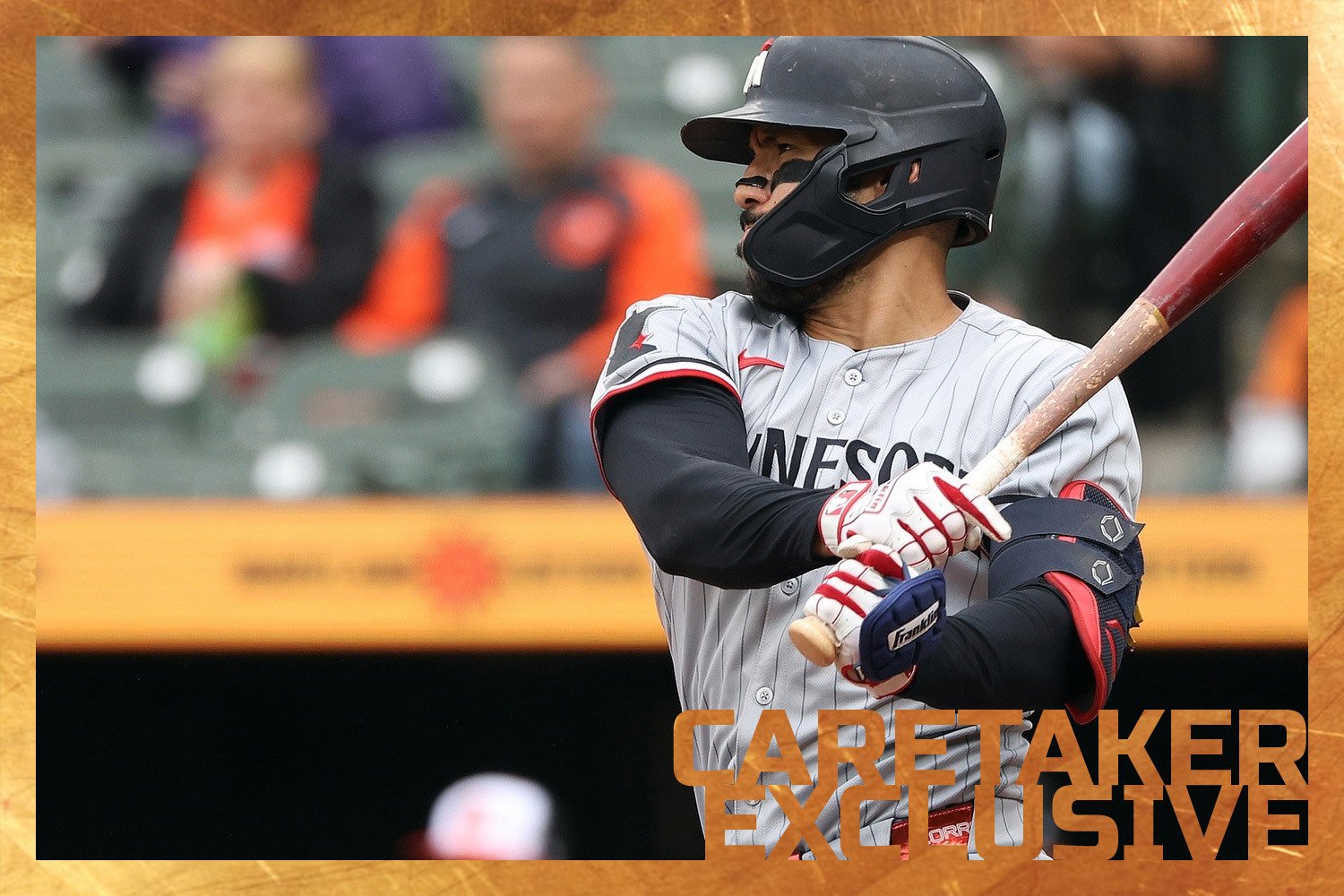
Carlos Correa isn't right at the plate. This much, you already know. Last year, though his season was effectively cut in half by plantar fasciitis, the Twins' superstar shortstop batted .310/.388/.517, earning his third All-Star nod and powering the lineup until his feet betrayed him and he had to go on the shelf at the break. This season, he had been (nominally) healthy, until his head ran into Byron Buxton's head in Baltimore, but the numbers told a clear story even while Correa was on the field. He's hitting .236/.274/.331 for the year, barely outslugging last year's batting average.
It looks every bit as bad when you shift from the numbers on the page to the player in the batter's box, too. Correa left one game in April with left wrist soreness, and wasn't available to play the following day. He's been a different hitter this year, and not at all in a good way.
The temptation, given all the tools we have these days, is to hunt the topline numerical differences and point at them as the clear sources of the problem. To wit: Correa's bat speed is down 1.2 miles per hour this season, and his average exit velocity has dipped by 1.4 mph. He's hitting fewer balls hard, lifting the ball less often, and chasing more outside the zone. That's a potent cocktail, if your goal is to produce failure at the plate in the major leagues.
Thanks to the latest batch of new metrics from Statcast, though, we don't have to content ourselves with seeing these things and drawing assumptions about Correa's health, or (worse) wonder about what mystical problems of timing or mentality might be wrecking him despite physical fitness for the job. A whole new suite of tools is available to us, and it allows us to drill all the way to the bedrock of the issues.
So, first of all: yes, Correa's wrist is affecting him. It's slowing down his swing, and it's contributing to the tendency to hit the ball on the ground more. How do I know? I'm glad you asked. One of the new tools available at Baseball Savant is a visualizer for the entire swing, from the moment the hitter's bat begins its arc toward the ball through the moments just after contact. It's not just the bat, either. We can actually see a hitter's animated skeletal avatar, and watch the way they transfer their weight and energy throughout the swing. We can notice their posture and their hand position, in addition to their bat path itself. Here's Correa just before the contact point (left) and at the contact point (right) in 2024.

I'm inviting you to look at some very granular details here, but don't be intimidated by them. The thrill of these new data is that they can make us all experts on hitting, with enough time and careful study. Right now, focus in with me on that troublesome left wrist on Correa's pseudo-skeleton. (Each white ball on the seafoam figures, of course, represents a joint. We can "see" each player's shoulders, elbows, wrists and hands at work throughout the swing. Please, by all means, visit Baseball Savant and play with this tool yourself, to see the fluid motion of it all, but stills serve our analytical needs nicely right now.) See the crook of it—the way he has his hand turned toward his pinky even just before contact? By the time he gets to the contact point, however, he's extended that wrist, using it to keep the barrel whipping through the hitting zone.
Meanwhile, notice how his right wrist—leading into the top hand, the one that steers the bat through the zone—stays ever-so-slightly curled through contact. That sustains bat control and the capacity to manipulate the barrel. It also means that when he meets the ball, that wrist isn't yet rolling over, which is important. You know what rolling over means: a ground ball, or if you're lucky, a topspin liner. If you're especially early, which rolling over before contact usually indicates, you're also at more risk of a whiff. Most misses on swings come because of timing, not because the batter simply aimed for the wrong spot.
Now, here's Correa's swing just before and at contact (the animated ball looks more like it's gotten all the way to the barrel in the righthand image, here, but functionally, we're seeing the same two moments within the swing) in 2025:

He's extending his arms a bit more by the contact point, this year. Shouldn't that be a good thing? Don't we always hear about hitters trying to get extended on the ball? Well, there are two problems.
- Look at the wrists again—especially the right one, this time. With a bit less strength and stability coming from that left hand, Correa's using the top hand to try to catch up, but that means that the wrist is more fully extended at contact this year—which means more of a risk that he's rolling over; and
- These aren't captures of any one swing. They're composites. So, yes. on average, Correa seems to be meeting the ball cleanly here. The problem is that baseball isn't scored in composites. Every hitter needs to have an adaptable swing, to address pitches at different speeds and locations differently, and every hitter will experience a distribution of successes and failures within and across those buckets and those swing modes. Just as a pitcher who averages six inches of run on a 94-mph fastball often throws one with several inches' difference in movement and a tick or two of difference in velocity, hitters aren't replicating swings perfectly. Correa has run into trouble because of specific faults within his adaptable swing modes, rather than in a way we can see by examining a single visual or a set of averages.
Here's where I offer a bit of a twist: yes, Correa's wrist seems to be a problem, feeding into multiple inefficiencies in his swing. But no, it's not doing so by diminishing his swing speed. In fact, his bat speed isn't really the problem, at all. Let's dig a layer deeper.
Do you approve of the job Derek Shelton is doing as Twins manager?

Follow Twins Daily For Minnesota Twins News & Analysis



- DJL44 and thelanges5
-
 2
2



Recommended Comments
Create an account or sign in to comment
You need to be a member in order to leave a comment
Create an account
Sign up for a new account in our community. It's easy!
Register a new accountSign in
Already have an account? Sign in here.
Sign In Now