



Cody Christie
-
Posts
7,819 -
Joined
-
Last visited
-
Days Won
5
Content Type
Profiles
News
Minnesota Twins Videos
2026 Minnesota Twins Top Prospects Ranking
2022 Minnesota Twins Draft Picks
Minnesota Twins Free Agent & Trade Rumors, Notes, & Tidbits
Guides & Resources
2023 Minnesota Twins Draft Picks
The Minnesota Twins Players Project
2024 Minnesota Twins Draft Picks
2025 Minnesota Twins Draft Pick Tracker
2026 Minnesota Twins Draft Tracker: Picks & Bonuses
Forums
Blogs
Events
Store
Downloads
Gallery
Everything posted by Cody Christie
-
 The 2024 MLB Trade Deadline is at the end of July, which means teams are self-evaluating to decide the proper next steps. Here are five questions the Twins must answer over the next month, so they can go into the fortnight before the deadline with a clear action plan. Image courtesy of © Bruce Kluckhohn-USA TODAY Sports The 2024 MLB Trade Deadline is at the end of July, which means teams are self-evaluating to decide the proper next steps. Here are five questions the Twins must answer over the next month, so they can go into the fortnight before the deadline with a clear action plan. MLB’s trade deadline has taken on a different vibe in recent years, with more playoff spots in both leagues resulting in more teams being in contention. According to FanGraphs’s updated playoff odds, fourteen teams have at least a 30% chance of making the playoffs, with 11 teams having better odds than 50%. One way to increase those odds is to fill holes at the trade deadline, and the Twins will have that opportunity in the coming weeks. Let’s look at the questions facing the front office as they decide on an appropriate trade deadline approach. Are the Twins buyers or sellers? Minnesota entered play this weekend with over a 60% chance to make the playoffs and a 22.2% chance of winning the AL Central. Projection models view the team as a playoff contender, even with the team’s up-and-down first half of the season. In baseball, the key is to make the playoffs, because that is when anything can happen--as fans remember with the 1987 and 1991 World Series teams. Playoff baseball can be very inconsistent, with the best regular season team rarely winning the World Series. The Texas Rangers stumbled into the playoffs last season and got hot enough to win the title. The Los Angeles Dodgers won 111 games in 2022 and failed to make it out of the divisional round. Atlanta had the fifth-best record in the NL during the 2021 season and bunched together wins when it mattered the most. The Twins have flaws; the trade deadline allows the team to be buyers and fill those holes. Does the team need to add a playoff-caliber starter? Joe Ryan and Simeon Woods Richardson have been the team’s top-performing starters this season, but it is yet to be seen if the team will trust them in October. Ryan performed well in the first half last season, before a groin injury significantly impacted his performance. The Twins didn’t trust him to start a playoff game until it was completely necessary, and even then, he was only allowed to go through the lineup once. Woods Richardson has shown plenty of positive signs this season and is on an upward trend, but the prospect of relying on a 23-year-old rookie in October can give a team pause. Pablo López needs to return to his previous form to be ready for the playoffs, though his peripheral numbers point to him being better than he has been in 2024. López fits into a group of starters for whom the front office has traded in recent years while preferring that the players have multiple years of team control. Front-line pitching comes at a high cost, so the front office must balance the current and future value of all players involved in a deal. Where does the lineup need to be upgraded? The Twins have three positions that have seen below-average production this season: second base, designated hitter, and first base. Edouard Julien, the team’s primary second baseman, posted a 95 OPS+ before being demoted to Triple-A in May. Minnesota has turned the position over to Willi Castro, with top prospects Brooks Lee and Austin Martin as options for the second half. Royce Lewis recently returned from the injured list, and his addition has helped multiple spots in the lineup. He pushes José Miranda to first base and/or DH, while Lewis will need time at DH, too. Minnesota can target some of the best available bats to slide into first base, designated hitter, or a corner outfield spot. Pete Alonso is a name that will garner plenty of interest at the trade deadline since he is a pending free agent. The Twins and Mets might have a unique way to match up on a trade agreement. Some other potential bats that could be available include Vladimir Guerrero Jr., Christian Walker, Josh Bell, and J.D. Martinez. The Twins aren’t going to overspend on a rental player, but their need should be easy to fill with the available options. What needs are there in the bullpen? Minnesota used a unique strategy last season when preparing the bullpen for October. Instead of overspending on expensive relievers via trade, the team focused on internal options to join the bullpen. Louie Varland shifted from starter to reliever, and Chris Paddack joined the bullpen after returning from Tommy John surgery. It was a strategy that worked well (in a small sample size). Teams need multiple high-leverage relief options in October, and the Twins could always use an upgrade. Jhoan Durán and Griffin Jax are locked into late-inning roles, and the team hopes Brock Stewart can join them in the second half. Varland is an option to switch back to a bullpen role, where he looked dominant last season. Caleb Thielbar has been a mess, but nothing is stopping him from making adjustments in the weeks ahead. Over the next month, the team can decide their level of trust in Steven Okert, Jorge Alcalá, and Cole Sands. There are questions with the team’s bullpen, but adding to this group shouldn’t be a priority at the trade deadline. What prospects can the team trade? The Twins’ front office must surrender prospect capital to acquire top trade targets, and there are clear prospect tiers for the organization. Players like Walker Jenkins and Brooks Lee are considered untouchable in potential deals. Other names, like Emmanuel Rodríguez and David Festa, are likely only available in blockbuster deals. Some prospects have seen their stock rise this season, which is the type of player other organizations target. If the team follows the trend from recent trades, Luke Keaschall, Brandon Winokur, and Zebby Matthews might have their names connected to trade rumors. During the 2023 season, the Twins decided to stand pat and not make any moves before the trade deadline. There were places on the roster that could have been upgraded, and the front office made calls on deals, but nothing came to fruition. It seems likely that the team will follow a similar plan of attack this season. If a deal develops, the club will pursue it, but it doesn’t seem likely that the front office will go all-in on the 2024 campaign. How will the Twins’ front office answer these questions? Are there any other questions to add to the list? Leave a comment and start the discussion. View full article
 -
Revisiting the Minnesota Twins' Choice: Royce Lewis and the 2017 MLB Draft
Cody Christie posted an article in Twins
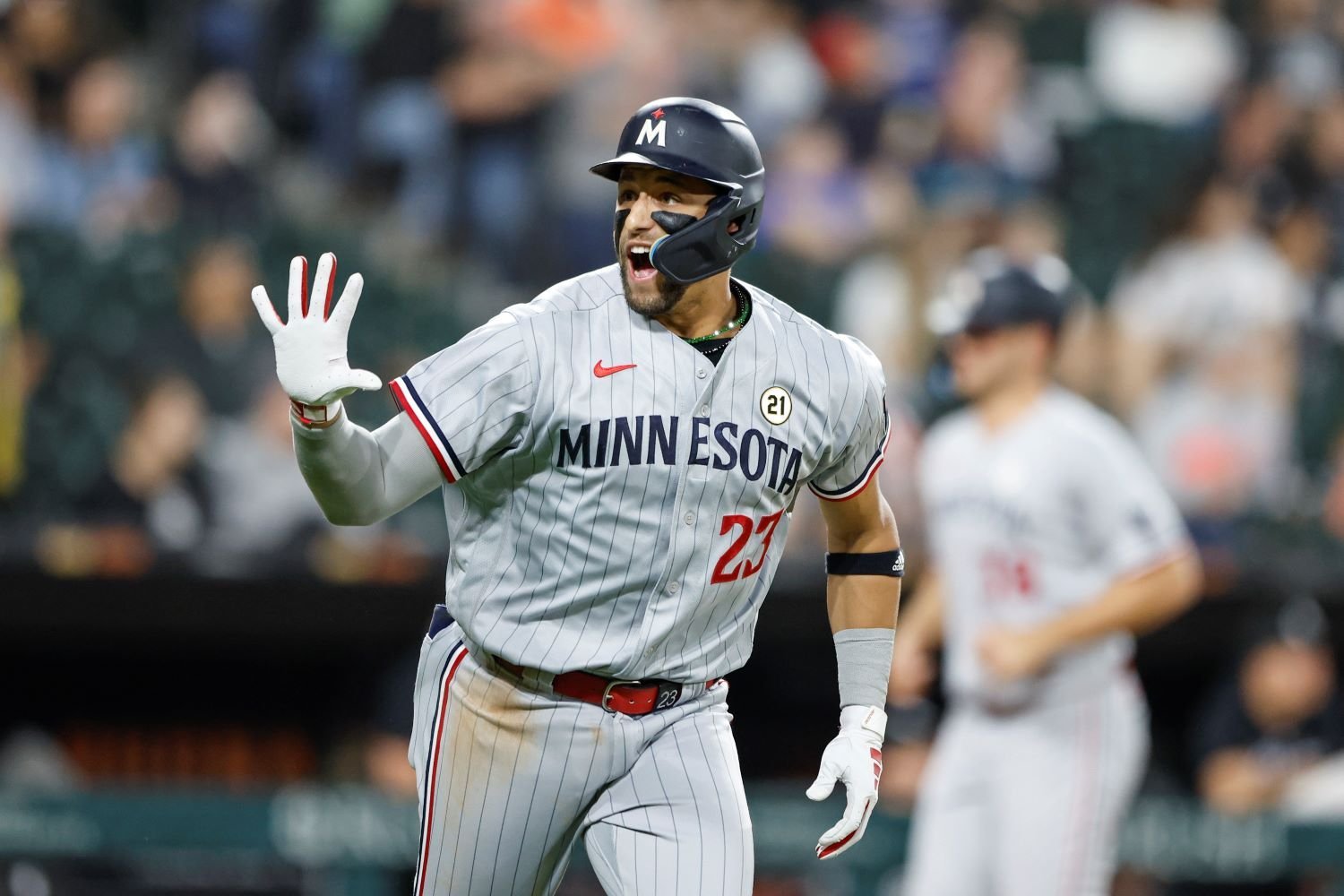 The MLB Draft is an intricate combination of talent evaluation with high stakes that are only magnified when a team has the number one overall pick. In 2017, the Minnesota Twins transitioned to a new front office and were tasked with identifying the best player at the top of the draft. Their choice? Royce Lewis, a dynamic shortstop from JSerra Catholic High School in San Juan Capistrano, California. Three years into his big-league career, it's time to dissect the Twins' decision and assess whether they made the right call amidst the talented pool of prospects available. Lewis wasn’t the consensus pick at the top of the 2017 MLB Draft. MLB.com’s experts, Jonathan Mayo and Jim Callis thought the Twins would select Louisville two-way phenom Brendan McKay with the top pick. John Manuel from Baseball America projected the Twins to pick Kyle Wright, the top college pitching prospect from Vanderbilt. ESPN’s Keith Law also had the Twins leaning toward Wright with a caveat that the team was looking at four players, including McKay, and high school pitchers MacKenzie Gore and Hunter Greene. There was a talented group of players for the Twins to pick from, but Lewis wasn’t projected to be the first pick. Lewis became the top pick because he possessed a compelling blend of tools and intangibles that scouts drool over. His athleticism was evident, with blazing speed, smooth fielding, and a compact swing that pointed to future power potential. Moreover, his makeup and work ethic were lauded, suggesting a player with the drive to maximize his abilities. His positive attitude has been front-and-center throughout his time with the Twins, even when facing setbacks. Lewis was projected as a five-tool player, a rare commodity in baseball, and a potential franchise cornerstone. Fast-forward to the present, Lewis progressed steadily through the Twins' minor league system while ranking as a consensus top-100 prospect. The top three national prospect rankings all had Lewis in their top 10 overall prospects entering the 2019 season. He fluctuated from there but was a top-50 prospect as he entered his rookie season. However, it's important to acknowledge his hurdles, including injuries and periods of inconsistency, which have tempered some of the initial hype. Lewis has been electric in his time at the big-league level while impacting the game on both sides of the ball. Unfortunately, he tore his ACL twice over the last three seasons, significantly hampering his ability to impact the lineup. In 79 career games, he has hit .314/.367/.589 (.956) with a 162 OPS+, 13 doubles, and 22 home runs. His 22 home runs are two more than any other player in Twins/Senators history in his first 80 games. He set the Twins' single-season record with four grand slams in 2023 and helped the club win their first playoff series in two decades. More and more Lewis jerseys are popping up at Target Field as he quickly becomes the face of the franchise. However, the Twins' decision is accurately measured not just by Lewis's performance but also by the other players the club passed over. Looking at the players selected after Lewis in the first round offers a comparative lens through which to evaluate their choice. One notable name drafted immediately after Lewis was Greene, a right-handed pitcher selected by the Cincinnati Reds. Greene dazzled scouts with his electric fastball that touched triple digits and polished secondary offerings. However, injuries have hampered his development, underscoring the inherent risk in investing in high school pitchers. Greene has collected the second most rWAR (5.2) among 2017 first-round picks, trailing only Boston’s Tanner Houck (8.7 rWAR), who was never considered for the top pick. While Greene's potential remains tantalizing, his path has been fraught with uncertainty, a reminder of the pitfalls of the draft. Another intriguing prospect in the first round was McKay, a two-way player drafted by the Tampa Bay Rays. McKay boasted exceptional skills on the mound and at the plate, a rarity in modern baseball outside Shohei Ohtani. Like Greene, McKay's journey has been hindered by injuries, raising questions about the feasibility of excelling in both roles at the highest level. He has been limited to just 13 career major league appearances and is currently on the injured list in the minor leagues with a flexor/pronator strain and an accompanying UCL sprain. He’s already had Tommy John surgery and surgery for thoracic outlet syndrome. Clearly, the Twins were correct in passing over McKay. Among other notable selections were Gore (San Diego Padres), a left-handed pitcher heralded for his advanced repertoire and polish, and Wright (Atlanta Braves), another promising arm with a potent fastball and promising secondary offerings. Both players have been traded from the team that drafted them. Gore has made 56 big-league appearances with the Padres and Nationals while posting a 4.20 ERA with a 1.41 WHIP and a 25.7 K%. Wright led all of baseball with 21 wins in 2022 and finished in the top-10 for the NL Cy Young. Outside of that season, his big-league time has been limited, including missing the entire 2024 season due to shoulder surgery. In hindsight, the Twins' decision to draft Lewis appears more than justified, especially if he can overcome his lengthy injury history. While Lewis hasn't fully reached the lofty heights envisioned for a number one overall pick, his potential remains tantalizing. The challenges he's faced are not uncommon for young prospects navigating the development pathway associated with big-league players. Moreover, the risks associated with drafting pitchers, as exemplified by the experiences outlined above, underscore the reasons why teams prefer to select a position player with Lewis's skill set. However, it's essential to acknowledge that the true verdict on the Twins' decision is still pending. Baseball is a game of patience and uncertainty, and the journey from draft day to stardom is fraught with twists and turns. As Royce Lewis continues his development and the players drafted alongside him carve out their paths, only time will tell whether the Twins made the correct pick. But for now, Lewis's promise and potential offer hope to a franchise and fanbase. Was Lewis the correct choice? Should the Twins have drafted one of the top available pitchers? Leave a COMMENT and start the discussion.
- 19 comments
-
- 4
-

-

-
- royce lewis
- hunter greene
- (and 3 more)
-
It’s been seven years since the Twins took Royce Lewis with the number one overall pick. Let’s look back at the 2017 MLB Draft to see if Minnesota’s front office made the correct choice. Image courtesy of Kamil Krzaczynski-USA TODAY Sports It’s been seven years since the Twins took Royce Lewis with the number one overall pick. Let’s look back at the 2017 MLB Draft to see if Minnesota’s front office made the correct choice. The MLB Draft is an intricate combination of talent evaluation with high stakes that are only magnified when a team has the number one overall pick. In 2017, the Minnesota Twins transitioned to a new front office and were tasked with identifying the best player at the top of the draft. Their choice? Royce Lewis, a dynamic shortstop from JSerra Catholic High School in San Juan Capistrano, California. Three years into his big-league career, it's time to dissect the Twins' decision and assess whether they made the right call amidst the talented pool of prospects available. Lewis wasn’t the consensus pick at the top of the 2017 MLB Draft. MLB.com’s experts, Jonathan Mayo and Jim Callis thought the Twins would select Louisville two-way phenom Brendan McKay with the top pick. John Manuel from Baseball America projected the Twins to pick Kyle Wright, the top college pitching prospect from Vanderbilt. ESPN’s Keith Law also had the Twins leaning toward Wright with a caveat that the team was looking at four players, including McKay, and high school pitchers MacKenzie Gore and Hunter Greene. There was a talented group of players for the Twins to pick from, but Lewis wasn’t projected to be the first pick. Lewis became the top pick because he possessed a compelling blend of tools and intangibles that scouts drool over. His athleticism was evident, with blazing speed, smooth fielding, and a compact swing that pointed to future power potential. Moreover, his makeup and work ethic were lauded, suggesting a player with the drive to maximize his abilities. His positive attitude has been front-and-center throughout his time with the Twins, even when facing setbacks. Lewis was projected as a five-tool player, a rare commodity in baseball, and a potential franchise cornerstone. Fast-forward to the present, Lewis progressed steadily through the Twins' minor league system while ranking as a consensus top-100 prospect. The top three national prospect rankings all had Lewis in their top 10 overall prospects entering the 2019 season. He fluctuated from there but was a top-50 prospect as he entered his rookie season. However, it's important to acknowledge his hurdles, including injuries and periods of inconsistency, which have tempered some of the initial hype. Lewis has been electric in his time at the big-league level while impacting the game on both sides of the ball. Unfortunately, he tore his ACL twice over the last three seasons, significantly hampering his ability to impact the lineup. In 79 career games, he has hit .314/.367/.589 (.956) with a 162 OPS+, 13 doubles, and 22 home runs. His 22 home runs are two more than any other player in Twins/Senators history in his first 80 games. He set the Twins' single-season record with four grand slams in 2023 and helped the club win their first playoff series in two decades. More and more Lewis jerseys are popping up at Target Field as he quickly becomes the face of the franchise. However, the Twins' decision is accurately measured not just by Lewis's performance but also by the other players the club passed over. Looking at the players selected after Lewis in the first round offers a comparative lens through which to evaluate their choice. One notable name drafted immediately after Lewis was Greene, a right-handed pitcher selected by the Cincinnati Reds. Greene dazzled scouts with his electric fastball that touched triple digits and polished secondary offerings. However, injuries have hampered his development, underscoring the inherent risk in investing in high school pitchers. Greene has collected the second most rWAR (5.2) among 2017 first-round picks, trailing only Boston’s Tanner Houck (8.7 rWAR), who was never considered for the top pick. While Greene's potential remains tantalizing, his path has been fraught with uncertainty, a reminder of the pitfalls of the draft. Another intriguing prospect in the first round was McKay, a two-way player drafted by the Tampa Bay Rays. McKay boasted exceptional skills on the mound and at the plate, a rarity in modern baseball outside Shohei Ohtani. Like Greene, McKay's journey has been hindered by injuries, raising questions about the feasibility of excelling in both roles at the highest level. He has been limited to just 13 career major league appearances and is currently on the injured list in the minor leagues with a flexor/pronator strain and an accompanying UCL sprain. He’s already had Tommy John surgery and surgery for thoracic outlet syndrome. Clearly, the Twins were correct in passing over McKay. Among other notable selections were Gore (San Diego Padres), a left-handed pitcher heralded for his advanced repertoire and polish, and Wright (Atlanta Braves), another promising arm with a potent fastball and promising secondary offerings. Both players have been traded from the team that drafted them. Gore has made 56 big-league appearances with the Padres and Nationals while posting a 4.20 ERA with a 1.41 WHIP and a 25.7 K%. Wright led all of baseball with 21 wins in 2022 and finished in the top-10 for the NL Cy Young. Outside of that season, his big-league time has been limited, including missing the entire 2024 season due to shoulder surgery. In hindsight, the Twins' decision to draft Lewis appears more than justified, especially if he can overcome his lengthy injury history. While Lewis hasn't fully reached the lofty heights envisioned for a number one overall pick, his potential remains tantalizing. The challenges he's faced are not uncommon for young prospects navigating the development pathway associated with big-league players. Moreover, the risks associated with drafting pitchers, as exemplified by the experiences outlined above, underscore the reasons why teams prefer to select a position player with Lewis's skill set. However, it's essential to acknowledge that the true verdict on the Twins' decision is still pending. Baseball is a game of patience and uncertainty, and the journey from draft day to stardom is fraught with twists and turns. As Royce Lewis continues his development and the players drafted alongside him carve out their paths, only time will tell whether the Twins made the correct pick. But for now, Lewis's promise and potential offer hope to a franchise and fanbase. Was Lewis the correct choice? Should the Twins have drafted one of the top available pitchers? Leave a COMMENT and start the discussion. View full article
- 19 replies
-
- 1
-
-
- royce lewis
- hunter greene
- (and 3 more)
-
The "You Happier" Best Buy add in the background is perfect for this article.
-
The Twins' starting rotation has failed to live up to preseason projections. However, Simeon Woods Richardson’s upgraded pitch mix has made up for a few disappointing developments. Image courtesy of Charles LeClaire-USA TODAY Sports The Twins' starting rotation has failed to live up to preseason projections. However, Simeon Woods Richardson’s upgraded pitch mix has made up for a few disappointing developments. Simeon Woods Richardson finished the 2023 campaign at a low point. He pitched most of the season at Triple-A, posting a 4.91 ERA with a 1.50 WHIP and 19.3% strikeout rate. His mechanics were out of whack, to the point where his fastball struggled to crack 90 mph. Woods Richardson saw his prospect stock drop significantly, and something needed to change to get his career back on track. Otherwise, he would never be a usable pitcher at the big-league level. In the offseason, Minnesota's coaches collaborated with Woods Richardson to tweak his delivery, including a subtle adjustment to lower his arm slot. "It was from both parties," Woods Richardson told Twins Daily's John Bonnes at spring training. "I wanted to change for the better, and why not? And they said, 'OK, let's sit down. Let's talk about this.' And we came up with a couple of things, working on mechanical stuff. Let's see if we can drop the slot a little bit and see where it goes." This seemingly minor tweak brought him closer to where he was when he joined the Twins organization, and it's a more natural and athletic position for the pitcher. So, how has that switch helped his pitch mix through his first 10 starts? His four-seam fastball averages 93.1 mph this season, up nearly three miles per hour compared to his big-league starts last season. In his last appearance, Woods Richardson topped 97 mph for the first time in his career, and his average spin rate has increased from 2,109 in 2023 to 2,211 this season. Opponents have posted a .306 SLG versus his fastball, with a 19.3 Whiff% and a 16.5 Put Away%. His fastball will continue to be a weapon, given his newfound velocity and lower arm slot. His fastball isn’t the only pitch that has changed for Woods Richardson in 2024, though, and many of his other pitches are getting better results because of his velocity increase. His slider jumped from 83.1 mph last season to 86.7 mph in 2024, with a 23.6 Whiff%. Woods Richardson is using his slider more regularly this season (up 16.2% from 2023), and he’s held batters to a .202 xBA and a .253 xSLG. His changeup remains a work in progress, but having some horizontal separation between the fastball and his two breaking balls has made a world of difference. Here's how his pitches moved in 2023, including the extraordinary amount of cut on his fastball. Here's the 2024 data, with the switch from an overhand to a high three-quarters slot effecting a different movement relationship between his offerings, in addition to the increased effectiveness stemming from throwing harder. No matter the pitch, he’s seeing remarkable improvement compared to last season, and continues to put zeros on the scoreboard. Woods Richardson’s improved performance is catching the eye of the team’s coaches. Twins manager Rocco Baldelli is running out of adjectives, because he has called him phenomenal after multiple starts. “Sim was phenomenal,” Baldelli told reporters after his young righty’s most recent start. “I thought he was on top of his game. He went out there and just put up zero after zero. And he makes you want to keep him out there. Even later in the game, his stuff held really well. That’s a winning start. That’s a start you want to get every time.” It’s hard to imagine where the Twins’ rotation would be without Woods Richardson. Pablo López hasn’t pitched like the ace he was expected to be, with a 5.45 ERA and -0.2 WAR. Bailey Ober and Chris Paddack have provided mixed results, varying from outstanding to nearly unplayable. Louie Varland pitched five shutout innings in a spot start against the Rockies this week, but was terrible to begin the year; the team was forced to demote him to Triple-A. If Woods Richardson struggled, the Twins likely would have to turn a rotation spot over to a veteran Triple-A pitcher or rush a prospect like David Festa to the big leagues. Not everything has gone right for the Twins this season, but Woods Richardson’s emergence has saved the team in the first half. What stands out about Woods Richardson’s upgraded pitch mix? What is his ceiling? Leave a comment and start the discussion. View full article
-
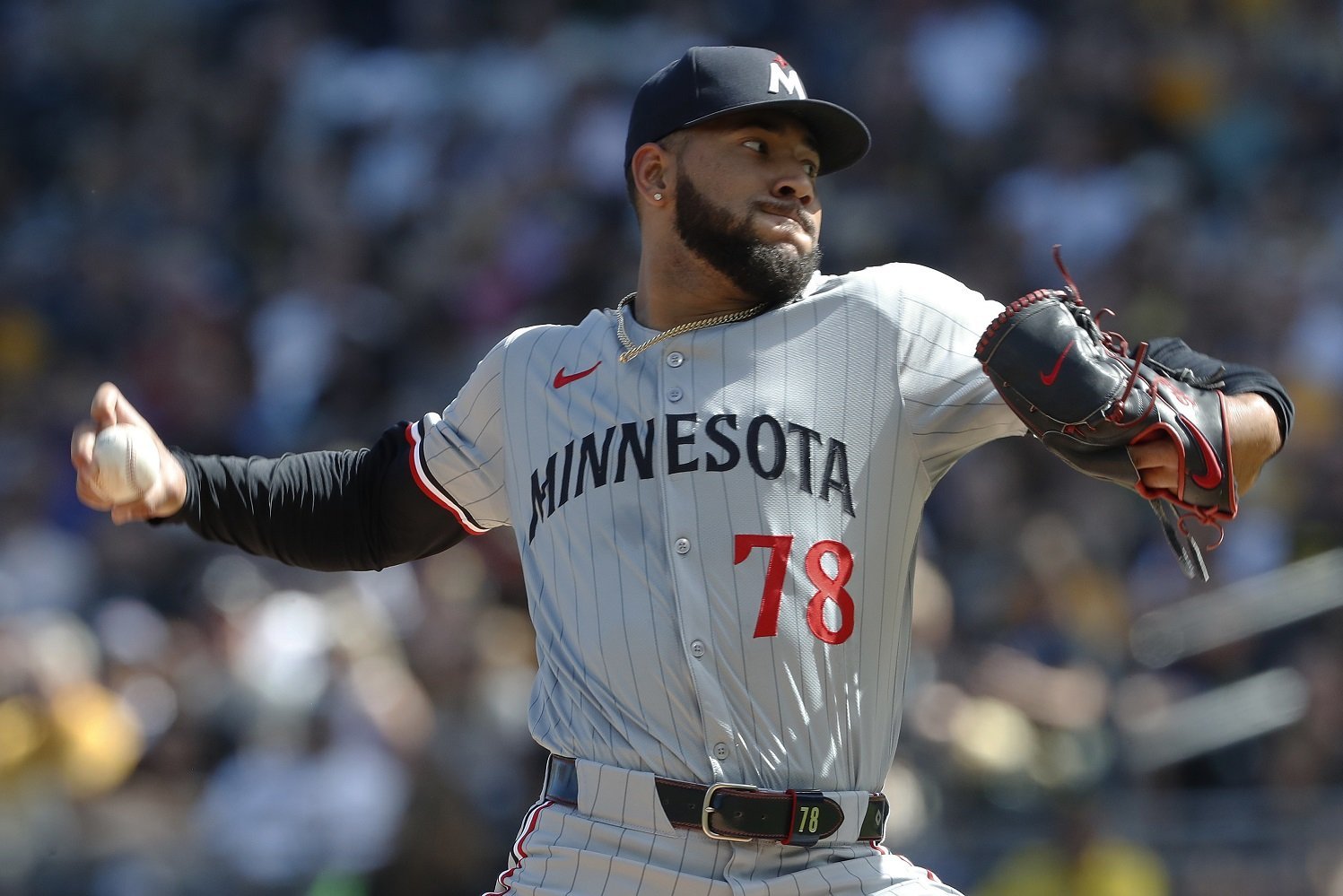 Simeon Woods Richardson finished the 2023 campaign at a low point. He pitched most of the season at Triple-A, posting a 4.91 ERA with a 1.50 WHIP and 19.3% strikeout rate. His mechanics were out of whack, to the point where his fastball struggled to crack 90 mph. Woods Richardson saw his prospect stock drop significantly, and something needed to change to get his career back on track. Otherwise, he would never be a usable pitcher at the big-league level. In the offseason, Minnesota's coaches collaborated with Woods Richardson to tweak his delivery, including a subtle adjustment to lower his arm slot. "It was from both parties," Woods Richardson told Twins Daily's John Bonnes at spring training. "I wanted to change for the better, and why not? And they said, 'OK, let's sit down. Let's talk about this.' And we came up with a couple of things, working on mechanical stuff. Let's see if we can drop the slot a little bit and see where it goes." This seemingly minor tweak brought him closer to where he was when he joined the Twins organization, and it's a more natural and athletic position for the pitcher. So, how has that switch helped his pitch mix through his first 10 starts? His four-seam fastball averages 93.1 mph this season, up nearly three miles per hour compared to his big-league starts last season. In his last appearance, Woods Richardson topped 97 mph for the first time in his career, and his average spin rate has increased from 2,109 in 2023 to 2,211 this season. Opponents have posted a .306 SLG versus his fastball, with a 19.3 Whiff% and a 16.5 Put Away%. His fastball will continue to be a weapon, given his newfound velocity and lower arm slot. His fastball isn’t the only pitch that has changed for Woods Richardson in 2024, though, and many of his other pitches are getting better results because of his velocity increase. His slider jumped from 83.1 mph last season to 86.7 mph in 2024, with a 23.6 Whiff%. Woods Richardson is using his slider more regularly this season (up 16.2% from 2023), and he’s held batters to a .202 xBA and a .253 xSLG. His changeup remains a work in progress, but having some horizontal separation between the fastball and his two breaking balls has made a world of difference. Here's how his pitches moved in 2023, including the extraordinary amount of cut on his fastball. Here's the 2024 data, with the switch from an overhand to a high three-quarters slot effecting a different movement relationship between his offerings, in addition to the increased effectiveness stemming from throwing harder. No matter the pitch, he’s seeing remarkable improvement compared to last season, and continues to put zeros on the scoreboard. Woods Richardson’s improved performance is catching the eye of the team’s coaches. Twins manager Rocco Baldelli is running out of adjectives, because he has called him phenomenal after multiple starts. “Sim was phenomenal,” Baldelli told reporters after his young righty’s most recent start. “I thought he was on top of his game. He went out there and just put up zero after zero. And he makes you want to keep him out there. Even later in the game, his stuff held really well. That’s a winning start. That’s a start you want to get every time.” It’s hard to imagine where the Twins’ rotation would be without Woods Richardson. Pablo López hasn’t pitched like the ace he was expected to be, with a 5.45 ERA and -0.2 WAR. Bailey Ober and Chris Paddack have provided mixed results, varying from outstanding to nearly unplayable. Louie Varland pitched five shutout innings in a spot start against the Rockies this week, but was terrible to begin the year; the team was forced to demote him to Triple-A. If Woods Richardson struggled, the Twins likely would have to turn a rotation spot over to a veteran Triple-A pitcher or rush a prospect like David Festa to the big leagues. Not everything has gone right for the Twins this season, but Woods Richardson’s emergence has saved the team in the first half. What stands out about Woods Richardson’s upgraded pitch mix? What is his ceiling? Leave a comment and start the discussion.
 -
4 More Triple-A Hitters Who Could Upgrade the Twins' Offense
Cody Christie posted an article in Minor Leagues
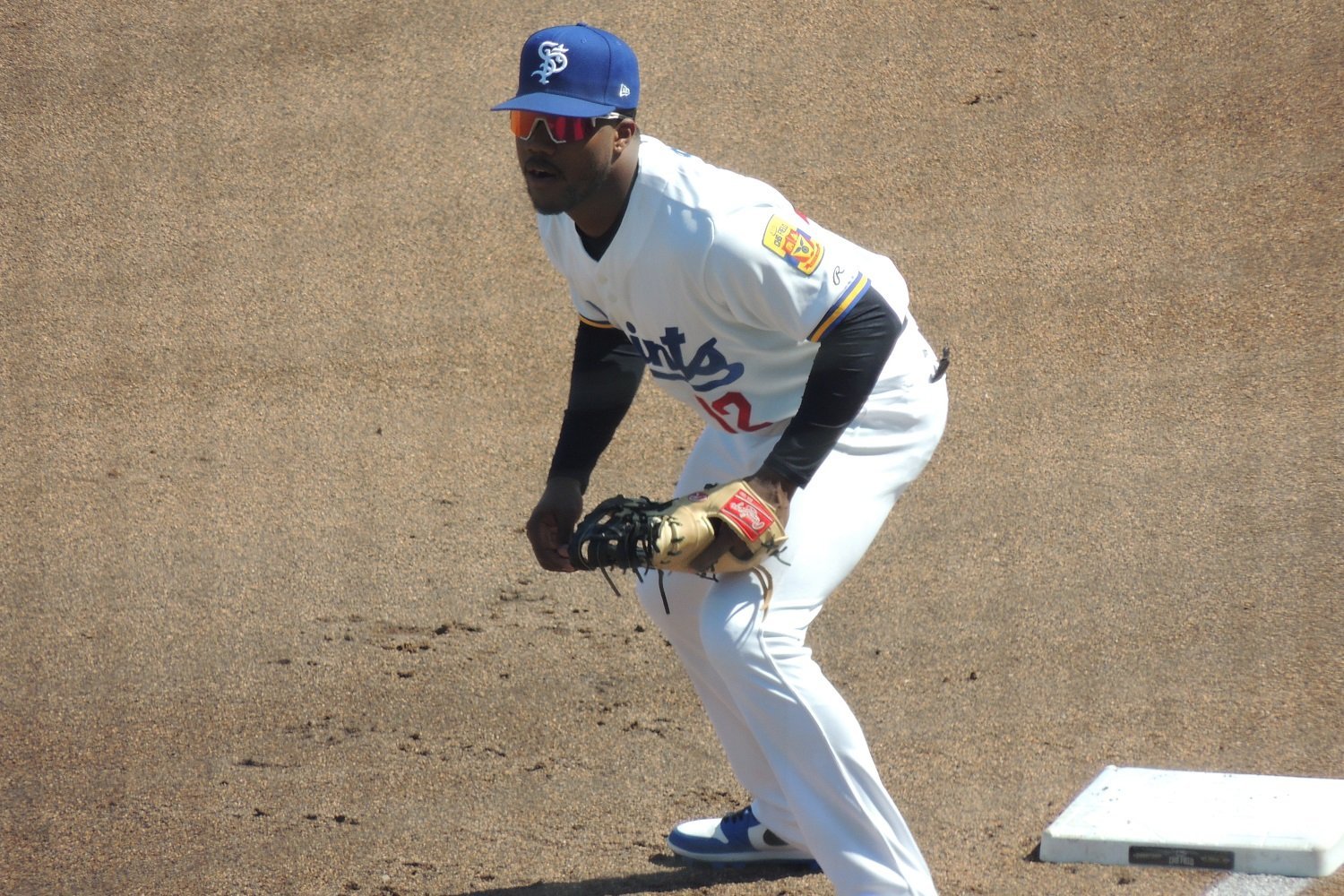 The Twins offense has been hit-or-miss for much of the season. Minnesota got out of the gate slowly, averaging fewer than four runs per game in the season’s early weeks. The team got hot from there and averaged over 6.5 runs per game in a stretch that included their 12-game winning streak. In recent weeks, the team’s offense has returned to its early-season form, an even more disappointing proposition since Royce Lewis rejoined the lineup. It's evident the team needs a spark to get the offense back on track, so here are four names for the team to consider, in addition to Austin Martin, who's coming back up Thursday. Matt Wallner, OF Wallner was part of the team’s offensive woes to start the season, as he went 2-for-25 (.080 BA) with a 51.5 K% in 13 games. Initially, after his demotion, he continued to struggle at the plate. However, he seems to have rediscovered his stroke over the last month. In 35 games, he has posted an .859 OPS with 17 extra-base hits, including 10 home runs. He’s already on the 40-man roster, making it easy for him to replace an underperforming player. Replacement Options: Manuel Margot Brooks Lee, SS/2B Twins Daily ranks Lee as the organization’s second-best prospect, and he’s back in Triple-A after starting the year on the injured list. In recent memory, Lee has one of the best hit tools of any prospect to come through the Twins organization. He has slowly been working back into game action, so it probably isn’t an immediate solution for the Twins roster. However, Lee will be an option in the coming weeks, especially if the big-league roster continues to flounder offensively. Replacement Options: Kyle Farmer, Carlos Santana Yunior Severino, INF Severino lacks the defensive flexibility of other options on this list, but he’s a big bat who can impact the lineup in multiple ways. Last season, he finished tied for the most home runs in the minor leagues, and that’s one of the reasons the Twins added him to the 40-man roster. He’s a switch-hitter whose OPS is over 100 points higher from the left side this season. His overall season totals don’t look great, because he started slowly with a .556 OPS in his first 23 games. Since the calendar flipped to May, though, he is starting to hit like the player he was last season with a .790 OPS. Replacement Options: Farmer, Santana, Margot Will Holland, UTIL Holland is 26 years old and is having his best professional season. In 29 games, he has hit .256/.404/.526, with 10 extra-base hits and a career-low 24.2 K%. Defensively, Holland has experience playing in the infield and outfield, with the majority of his innings coming at shortstop this season. Throughout his professional career, he has logged over 1,000 innings at two positions, shortstop and center field. His jump in power this season is an encouraging sign for a player who might be putting it all together. Replacement Options: Margot, Farmer DaShawn Keirsey is another name to watch for the Saints, since he leads the team in many offensive categories. Unfortunately, he suffered a calf injury at the end of last month and is on the injured list. Keirsey will be an option in the second half because of his strong offensive performance and his ability to play all three outfield positions. Some tough decisions must be made to get these players on the roster. Kirilloff got the hook to make room for Martin. However, there is little left for him to prove at Triple-A, and Martin will get the first crack at taking his place. Dropping one of the veteran players has other long-term ramifications, because it involves the team eating salary and losing roster depth. It might be time for a radical change to get the offense back on track. Will the Twins add any of these players in the coming weeks? What players do they replace on the active roster? Leave a comment and start the discussion.
- 37 comments
-
- 5
-
-
- matt wallner
- brooks lee
- (and 3 more)
-
Are Surveyed Players Right to Call Carlos Correa Overrated?
Cody Christie posted an article in Twins
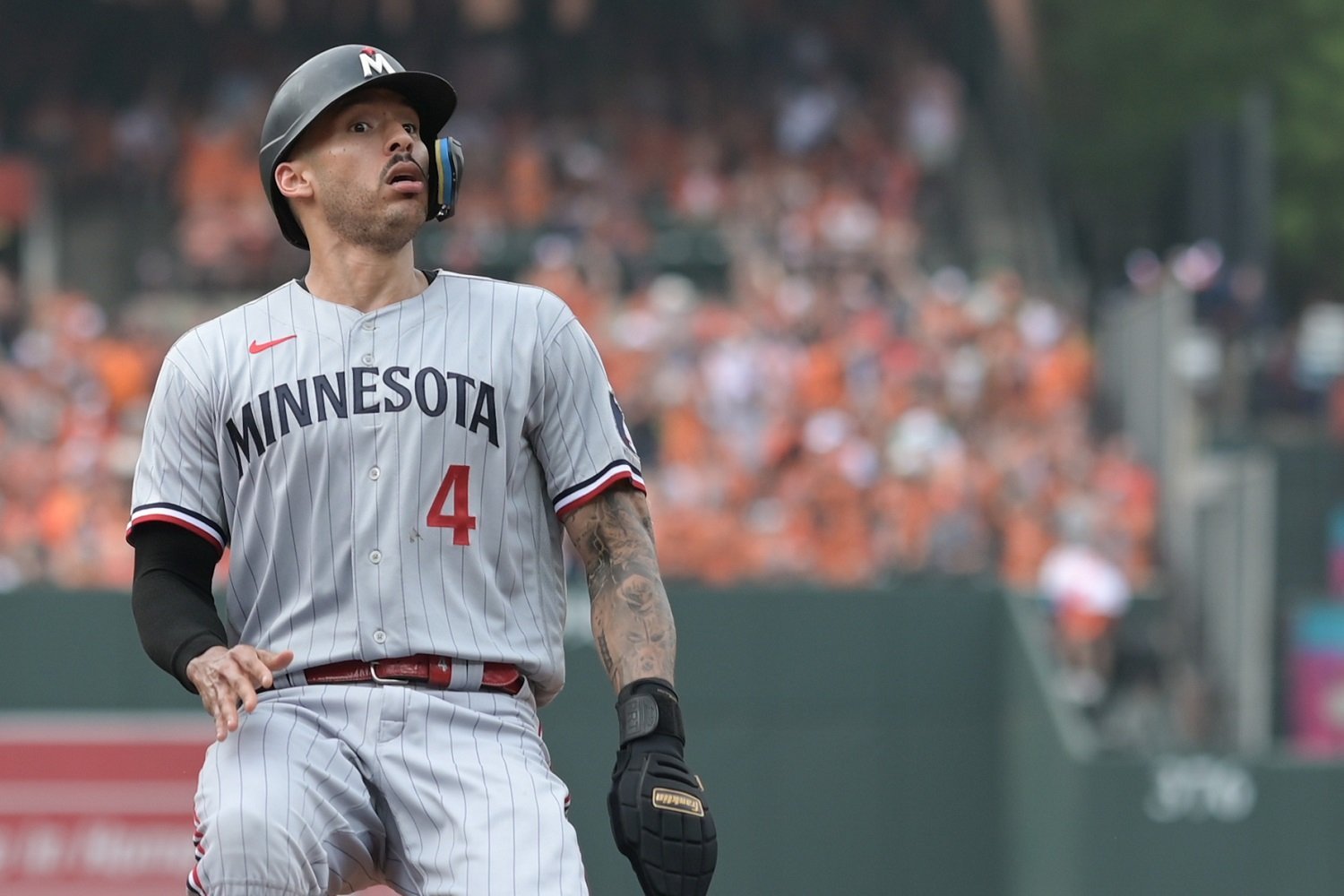 Sports debates have been part of water cooler and barstool discussions for generations. Who is the GOAT? Who makes your favorite team’s Mount Rushmore? Media can drive the conversation in many of these areas, for better and worse. Current players fall into similar traps as fans, with the media and significant storylines shaping their opinions. Earlier this week, The Athletic posted the results of their annual player poll, which included a look at the game’s best players, best organizations, and various other topics. One question asked on the survey had mixed results, because some players hesitated to answer. Over 100 players were interviewed, but only 59 were willing to name someone as baseball’s most overrated player. Jazz Chisholm Jr.(20.3%), Anthony Rendon (10.2%), and Carlos Correa (6.7%) were the top three finishers. Mathematically, four players voted for Correa, while Chisholm Jr. (12) and Rendon (10) received double-digit votes. Chisholm is near the top of the list, with many questioning why he was picked as the cover athlete for MLB The Show 23. Rendon finishes second, after comments earlier this year about not enjoying playing baseball. Let’s look into why Correa is featured so highly on the list, though, and discuss how he can move down the list in future years. The Face of the Cheating Scandal Correa’s final year in Houston was when reports surfaced about the Astros' elaborate sign-stealing system, which helped them win the World Series. Some Astros players stood before the media and refused to answer questions. Correa took the opposite approach, and made himself available to the media to answer the tough questions. He was part of one of baseball’s biggest scandals, but he didn’t shy away from the mistakes made by that Houston team. Correa is a very smart player and is well-spoken in media interviews. It might have helped him more to take the approach some of his teammates adopted, but he understood the long-term ramifications. Fans mercilessly booed the Astros in the aftermath of the cheating scandal being revealed. Correa and other current/former Astros are still booed at stadiums, even by some fans who likely don’t know why they are displeased with the star shortstop. Other players hear the boos, and it is hard to ignore, which is one of the big reasons he’s viewed as overrated. Free Agency Saga and Subsequent Poor Performance Another reason he is featured highly on this list is that Correa’s name was dragged through the muddied waters of free agency in back-to-back seasons. He headed to free agency after the 2021 season as one of the top players on the market. MLB owners locked out the players, and Correa was forced to wait until spring training to sign with a club. He was so frustrated with the process that he switched agents and joined Scott Boras’s growing group. Minnesota signed him to a record-breaking deal, with him fully intending to hit the open market following the 2022 campaign. Correa performed well in his first year with the Twins and hoped his second free-agent stint would improve. He agreed to massive contracts with the San Francisco Giants and New York Mets, but both deals collapsed because of concerns over his surgically repaired ankle. Eventually, the Twins re-signed him to a six-year, $200 million contract. Other players must have followed his free agency saga closely, and it was another knock against Correa. The first year of his new massive deal was marred by a plantar fasciitis injury that impacted him on both sides of the ball. He showed up big in October for the Twins, but other players might not pay as close of attention when their season ends. In the end, it was a small sample size of voters, and it speaks volumes that some players refused to answer this question. The prominence of Correa's mention in the subsequent article oversells the real extent to which the survey showed any resentment or doubt in his talent on the part of his counterparts throughout the league. Factors largely beyond his control (teams backing out of deals to which he had agreed and the injury-driven struggles in the first year of the deal that was finally consummated) set him up for this kind of list appearance, but it's a safe bet that just as many players (or more) quietly think of the smart, well-rounded Correa as underrated. Correa will get further away from the cheating scandal and his free agent debacle, which should remove him from the list in subsequent years. Other players behind him deserve more attention for their performance (or lack thereof). Correa can help his own narrative by performing well in the regular season and helping the Twins to win games in October. Is Correa one of baseball’s most overrated players? Who is the most overrated player on the Twins? Leave a comment and start the discussion,
- 37 comments
-
- 1
-
-
- carlos correa
- anthony rendon
- (and 1 more)
-
Carlos Correa has been a polarizing figure throughout his career, from Houston’s cheating scandal to his multi-offseason free agency saga. Fans and players view him through different lenses. Does that make him one of baseball's most overrated players? Image courtesy of Tommy Gilligan-USA TODAY Sports Carlos Correa has been a polarizing figure throughout his career, from Houston’s cheating scandal to his multi-offseason free agency saga. Fans and players view him through different lenses. Does that make him one of baseball's most overrated players? Sports debates have been part of water cooler and barstool discussions for generations. Who is the GOAT? Who makes your favorite team’s Mount Rushmore? Media can drive the conversation in many of these areas, for better and worse. Current players fall into similar traps as fans, with the media and significant storylines shaping their opinions. Earlier this week, The Athletic posted the results of their annual player poll, which included a look at the game’s best players, best organizations, and various other topics. One question asked on the survey had mixed results, because some players hesitated to answer. Over 100 players were interviewed, but only 59 were willing to name someone as baseball’s most overrated player. Jazz Chisholm Jr.(20.3%), Anthony Rendon (10.2%), and Carlos Correa (6.7%) were the top three finishers. Mathematically, four players voted for Correa, while Chisholm Jr. (12) and Rendon (10) received double-digit votes. Chisholm is near the top of the list, with many questioning why he was picked as the cover athlete for MLB The Show 23. Rendon finishes second, after comments earlier this year about not enjoying playing baseball. Let’s look into why Correa is featured so highly on the list, though, and discuss how he can move down the list in future years. The Face of the Cheating Scandal Correa’s final year in Houston was when reports surfaced about the Astros' elaborate sign-stealing system, which helped them win the World Series. Some Astros players stood before the media and refused to answer questions. Correa took the opposite approach, and made himself available to the media to answer the tough questions. He was part of one of baseball’s biggest scandals, but he didn’t shy away from the mistakes made by that Houston team. Correa is a very smart player and is well-spoken in media interviews. It might have helped him more to take the approach some of his teammates adopted, but he understood the long-term ramifications. Fans mercilessly booed the Astros in the aftermath of the cheating scandal being revealed. Correa and other current/former Astros are still booed at stadiums, even by some fans who likely don’t know why they are displeased with the star shortstop. Other players hear the boos, and it is hard to ignore, which is one of the big reasons he’s viewed as overrated. Free Agency Saga and Subsequent Poor Performance Another reason he is featured highly on this list is that Correa’s name was dragged through the muddied waters of free agency in back-to-back seasons. He headed to free agency after the 2021 season as one of the top players on the market. MLB owners locked out the players, and Correa was forced to wait until spring training to sign with a club. He was so frustrated with the process that he switched agents and joined Scott Boras’s growing group. Minnesota signed him to a record-breaking deal, with him fully intending to hit the open market following the 2022 campaign. Correa performed well in his first year with the Twins and hoped his second free-agent stint would improve. He agreed to massive contracts with the San Francisco Giants and New York Mets, but both deals collapsed because of concerns over his surgically repaired ankle. Eventually, the Twins re-signed him to a six-year, $200 million contract. Other players must have followed his free agency saga closely, and it was another knock against Correa. The first year of his new massive deal was marred by a plantar fasciitis injury that impacted him on both sides of the ball. He showed up big in October for the Twins, but other players might not pay as close of attention when their season ends. In the end, it was a small sample size of voters, and it speaks volumes that some players refused to answer this question. The prominence of Correa's mention in the subsequent article oversells the real extent to which the survey showed any resentment or doubt in his talent on the part of his counterparts throughout the league. Factors largely beyond his control (teams backing out of deals to which he had agreed and the injury-driven struggles in the first year of the deal that was finally consummated) set him up for this kind of list appearance, but it's a safe bet that just as many players (or more) quietly think of the smart, well-rounded Correa as underrated. Correa will get further away from the cheating scandal and his free agent debacle, which should remove him from the list in subsequent years. Other players behind him deserve more attention for their performance (or lack thereof). Correa can help his own narrative by performing well in the regular season and helping the Twins to win games in October. Is Correa one of baseball’s most overrated players? Who is the most overrated player on the Twins? Leave a comment and start the discussion, View full article
-
Minnesota’s offense has scuffled in multiple stretches during the still-young 2024 campaign. Are there any options at Triple-A to bolster the lineup? Image courtesy of Seth Stohs, Twins Daily (photo of Yunior Severino) Minnesota’s offense has scuffled in multiple stretches during the still-young 2024 campaign. Are there any options at Triple-A to bolster the lineup? The Twins offense has been hit-or-miss for much of the season. Minnesota got out of the gate slowly, averaging fewer than four runs per game in the season’s early weeks. The team got hot from there and averaged over 6.5 runs per game in a stretch that included their 12-game winning streak. In recent weeks, the team’s offense has returned to its early-season form, an even more disappointing proposition since Royce Lewis rejoined the lineup. It's evident the team needs a spark to get the offense back on track, so here are four names for the team to consider, in addition to Austin Martin, who's coming back up Thursday. Matt Wallner, OF Wallner was part of the team’s offensive woes to start the season, as he went 2-for-25 (.080 BA) with a 51.5 K% in 13 games. Initially, after his demotion, he continued to struggle at the plate. However, he seems to have rediscovered his stroke over the last month. In 35 games, he has posted an .859 OPS with 17 extra-base hits, including 10 home runs. He’s already on the 40-man roster, making it easy for him to replace an underperforming player. Replacement Options: Manuel Margot Brooks Lee, SS/2B Twins Daily ranks Lee as the organization’s second-best prospect, and he’s back in Triple-A after starting the year on the injured list. In recent memory, Lee has one of the best hit tools of any prospect to come through the Twins organization. He has slowly been working back into game action, so it probably isn’t an immediate solution for the Twins roster. However, Lee will be an option in the coming weeks, especially if the big-league roster continues to flounder offensively. Replacement Options: Kyle Farmer, Carlos Santana Yunior Severino, INF Severino lacks the defensive flexibility of other options on this list, but he’s a big bat who can impact the lineup in multiple ways. Last season, he finished tied for the most home runs in the minor leagues, and that’s one of the reasons the Twins added him to the 40-man roster. He’s a switch-hitter whose OPS is over 100 points higher from the left side this season. His overall season totals don’t look great, because he started slowly with a .556 OPS in his first 23 games. Since the calendar flipped to May, though, he is starting to hit like the player he was last season with a .790 OPS. Replacement Options: Farmer, Santana, Margot Will Holland, UTIL Holland is 26 years old and is having his best professional season. In 29 games, he has hit .256/.404/.526, with 10 extra-base hits and a career-low 24.2 K%. Defensively, Holland has experience playing in the infield and outfield, with the majority of his innings coming at shortstop this season. Throughout his professional career, he has logged over 1,000 innings at two positions, shortstop and center field. His jump in power this season is an encouraging sign for a player who might be putting it all together. Replacement Options: Margot, Farmer DaShawn Keirsey is another name to watch for the Saints, since he leads the team in many offensive categories. Unfortunately, he suffered a calf injury at the end of last month and is on the injured list. Keirsey will be an option in the second half because of his strong offensive performance and his ability to play all three outfield positions. Some tough decisions must be made to get these players on the roster. Kirilloff got the hook to make room for Martin. However, there is little left for him to prove at Triple-A, and Martin will get the first crack at taking his place. Dropping one of the veteran players has other long-term ramifications, because it involves the team eating salary and losing roster depth. It might be time for a radical change to get the offense back on track. Will the Twins add any of these players in the coming weeks? What players do they replace on the active roster? Leave a comment and start the discussion. View full article
- 37 replies
-
- 2
-
-

-
- matt wallner
- brooks lee
- (and 3 more)
-
In recent years, the Twins’ front office has used prospect depth to make multiple trades. Here’s a look at the team’s top 20 prospects and the different tiers into which each of them fit before the 2024 trade deadline. Image courtesy of William Parmeter (Fort Myers photos), Ed Bailey (Wichita photos) In recent years, the Twins’ front office has used prospect depth to make multiple trades. Here’s a look at the team’s top 20 prospects and the different tiers into which each of them fit before the 2024 trade deadline. Many organizations value prospect depth to supplement a big-league roster and extend a team’s winning window. In recent years, the Twins front office has used some of the organization’s top prospects to trade for players like Sonny Gray, Tyler Mahle, and Jorge López. Obviously, some of those trades worked out well for the Twins, while others will live in infamy. Below is a tiered ranking of Twins Daily’s top 20 Twins prospects--with two players (Austin Martin and Simeon Woods Richardson) being removed because they will shortly graduate from prospect lists. The team’s top prospects are divided into five tiers. Tier 1: The Untouchables Walker Jenkins, Brooks Lee The Twins probably aren’t trading either of these players. Both are among the game’s best prospects. Jenkins has a chance to be a superstar who will be the face of the Minnesota Twins for a decade or more. Lee doesn’t have as high of a ceiling, but he is close to impacting the big-league level. The Twins will probably need Lee in the second half, and may have already called him up if he weren’t injured to start the year. Tier 2: Only Available in Blockbusters Emmanuel Rodríguez, David Festa, Charlee Soto The Twins will only include these prospects in a deal if they acquire a big name with multiple years of team control, or who can at least make a significant impact on their chances in a playoff series this fall. Rodríguez has missed time this year at Double-A, but remains a five-tool talent. Festa, like Lee, is already at Triple-A and looks big-league-ready. He will start games for the Twins in the second half, and is part of the team’s long-term starting rotation. Soto is far from the big leagues, but is an anomaly for this front office. They have rarely targeted high-school pitchers high in the draft, because of the volatility associated with this player type. Soto would only be included in a trade for controllable starting pitching, as the Twins did in the Chase Petty-for-Gray swap. Tier 3: Rising Stock and Trade Bait Luke Keaschall, Brandon Winokur, Zebby Matthews The Tier 3 players are the most likely to be traded out of the five tiers. Each of these prospects has seen their stock rise this season, which is something other organizations will prize. The Twins have tended to trade from this prospect type in the past, including Spencer Steer, Christian Encarnacion-Strand, and Cade Povich in the Mahle and López deals. Neither of those trades worked out in favor of the Twins, so maybe the front office should reconsider dealing out of this group. Tier 4: Dropping Stock Gabriel González, Marco Raya, Tanner Schobel, Cory Lewis, Connor Prielipp For various reasons, these players have seen their stock drop slightly in 2024, which likely means the Twins will value them more than other teams will. González was acquired as the main trade piece in the Jorge Polanco deal. He’s missed time this season with a back strain, and has been limited to a .771 OPS when on the field. The Twins continue to be extremely careful with Raya, as he hasn’t thrown more than 60 pitches in an outing. He has a high ceiling, but it’s hard to envision him as a starter at the big-league level without being stretched out. Schobel destroyed High-A last season with a .859 OPS, but has seen a 225-point OPS drop after being promoted to Double-A. He must prove he can hit for consistent power against upper-minors pitching in order to restore his prospect status. Lewis spent the beginning of the year on the IL with a right shoulder impingement. It seems likely that other teams will be interested in him once he proves he is healthy. Prielipp has dealt with injuries for nearly his entire professional career, so it seems highly unlikely for him to be included in a trade of any consequence. Tier 5: Supplemental Players to Sweeten a Deal Danny De Andrade, Yunior Severino, C.J. Culpepper, Ricardo Olivar These four players are near the back end of Twins Daily’s Top 20 list, and can be added to a deal to increase the overall value. De Andrade missed time this season with an ankle injury, so he must show he is healthy. Severino was added to the team’s 40-man roster this winter, after leading the minor leagues in home runs last season. He has struggled this year with an OPS under .675, and his player type might not fit with the Twins' big-league roster. Culpepper was a breakout prospect for the Twins last season, with a 3.56 ERA and 1.20 WHIP across 86 innings. He is also on the injured list with a right forearm strain, but he’s seen a slight uptick in his strikeout rate. Olivar posted a .855 OPS with Fort Myers last season and is hitting even better with Cedar Rapids in 2024. His ability to play catcher while posting power numbers makes him an intriguing trade target. The Twins have a roughly average farm system, with a bit less in the way of high-quality depth than some organizations. Still, if they position themselves as buyers this summer, they have enough prospect capital to acquire some helpful players for a pennant race. Which players would you deem untouchable? Would you add any other tiers? Leave a COMMENT and start the discussion. View full article
- 59 replies
-
- 1
-
-
- walker jenkins
- brooks lee
- (and 5 more)
-
Minnesota Twins Prospect Tiers for the 2024 Trade Deadline
Cody Christie posted an article in Minor Leagues
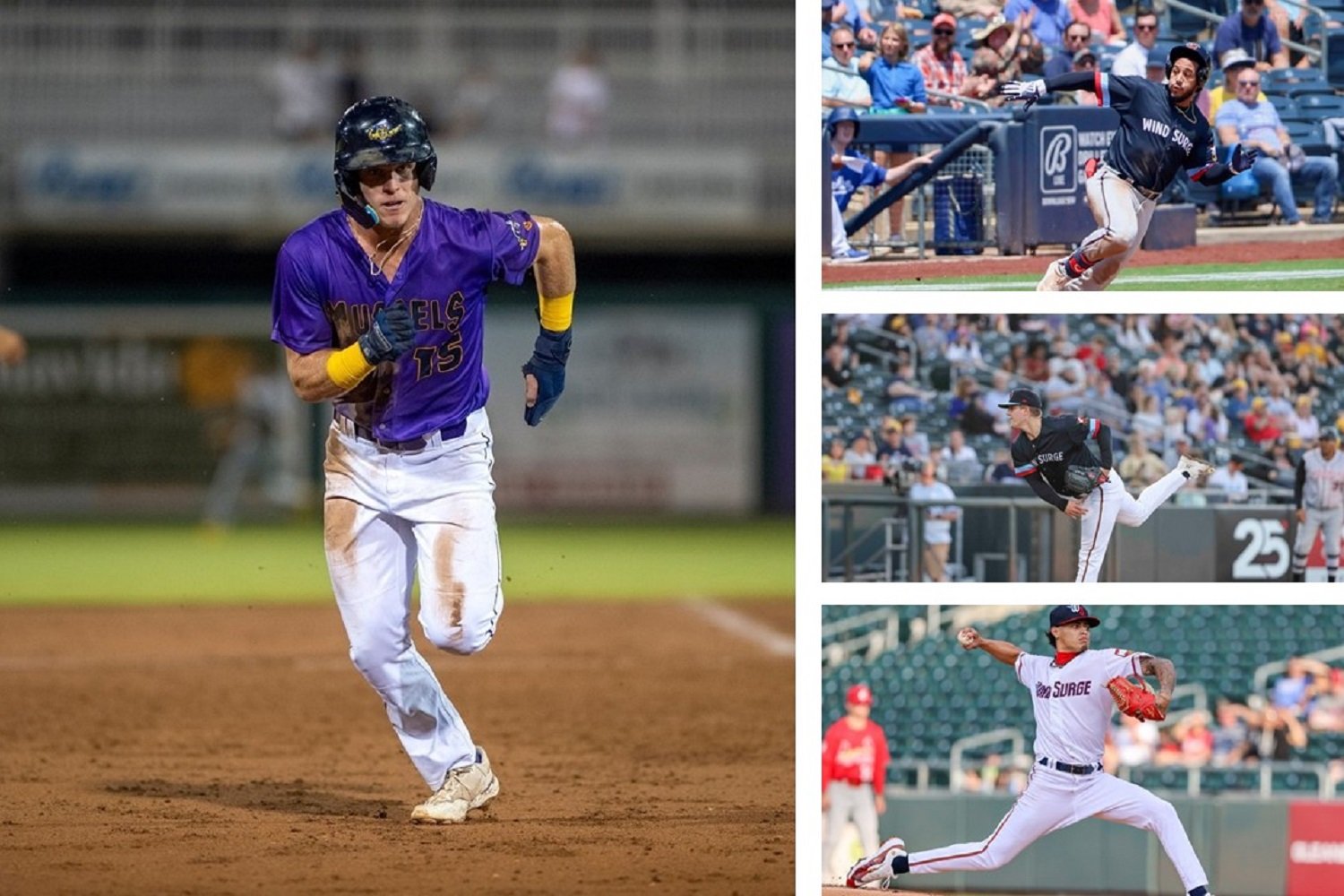 Many organizations value prospect depth to supplement a big-league roster and extend a team’s winning window. In recent years, the Twins front office has used some of the organization’s top prospects to trade for players like Sonny Gray, Tyler Mahle, and Jorge López. Obviously, some of those trades worked out well for the Twins, while others will live in infamy. Below is a tiered ranking of Twins Daily’s top 20 Twins prospects--with two players (Austin Martin and Simeon Woods Richardson) being removed because they will shortly graduate from prospect lists. The team’s top prospects are divided into five tiers. Tier 1: The Untouchables Walker Jenkins, Brooks Lee The Twins probably aren’t trading either of these players. Both are among the game’s best prospects. Jenkins has a chance to be a superstar who will be the face of the Minnesota Twins for a decade or more. Lee doesn’t have as high of a ceiling, but he is close to impacting the big-league level. The Twins will probably need Lee in the second half, and may have already called him up if he weren’t injured to start the year. Tier 2: Only Available in Blockbusters Emmanuel Rodríguez, David Festa, Charlee Soto The Twins will only include these prospects in a deal if they acquire a big name with multiple years of team control, or who can at least make a significant impact on their chances in a playoff series this fall. Rodríguez has missed time this year at Double-A, but remains a five-tool talent. Festa, like Lee, is already at Triple-A and looks big-league-ready. He will start games for the Twins in the second half, and is part of the team’s long-term starting rotation. Soto is far from the big leagues, but is an anomaly for this front office. They have rarely targeted high-school pitchers high in the draft, because of the volatility associated with this player type. Soto would only be included in a trade for controllable starting pitching, as the Twins did in the Chase Petty-for-Gray swap. Tier 3: Rising Stock and Trade Bait Luke Keaschall, Brandon Winokur, Zebby Matthews The Tier 3 players are the most likely to be traded out of the five tiers. Each of these prospects has seen their stock rise this season, which is something other organizations will prize. The Twins have tended to trade from this prospect type in the past, including Spencer Steer, Christian Encarnacion-Strand, and Cade Povich in the Mahle and López deals. Neither of those trades worked out in favor of the Twins, so maybe the front office should reconsider dealing out of this group. Tier 4: Dropping Stock Gabriel González, Marco Raya, Tanner Schobel, Cory Lewis, Connor Prielipp For various reasons, these players have seen their stock drop slightly in 2024, which likely means the Twins will value them more than other teams will. González was acquired as the main trade piece in the Jorge Polanco deal. He’s missed time this season with a back strain, and has been limited to a .771 OPS when on the field. The Twins continue to be extremely careful with Raya, as he hasn’t thrown more than 60 pitches in an outing. He has a high ceiling, but it’s hard to envision him as a starter at the big-league level without being stretched out. Schobel destroyed High-A last season with a .859 OPS, but has seen a 225-point OPS drop after being promoted to Double-A. He must prove he can hit for consistent power against upper-minors pitching in order to restore his prospect status. Lewis spent the beginning of the year on the IL with a right shoulder impingement. It seems likely that other teams will be interested in him once he proves he is healthy. Prielipp has dealt with injuries for nearly his entire professional career, so it seems highly unlikely for him to be included in a trade of any consequence. Tier 5: Supplemental Players to Sweeten a Deal Danny De Andrade, Yunior Severino, C.J. Culpepper, Ricardo Olivar These four players are near the back end of Twins Daily’s Top 20 list, and can be added to a deal to increase the overall value. De Andrade missed time this season with an ankle injury, so he must show he is healthy. Severino was added to the team’s 40-man roster this winter, after leading the minor leagues in home runs last season. He has struggled this year with an OPS under .675, and his player type might not fit with the Twins' big-league roster. Culpepper was a breakout prospect for the Twins last season, with a 3.56 ERA and 1.20 WHIP across 86 innings. He is also on the injured list with a right forearm strain, but he’s seen a slight uptick in his strikeout rate. Olivar posted a .855 OPS with Fort Myers last season and is hitting even better with Cedar Rapids in 2024. His ability to play catcher while posting power numbers makes him an intriguing trade target. The Twins have a roughly average farm system, with a bit less in the way of high-quality depth than some organizations. Still, if they position themselves as buyers this summer, they have enough prospect capital to acquire some helpful players for a pennant race. Which players would you deem untouchable? Would you add any other tiers? Leave a COMMENT and start the discussion.
- 59 comments
-
- 5
-
-
- walker jenkins
- brooks lee
- (and 5 more)
-
Let’s Make a Deal: What Players Could the Twins Acquire from the Angels?
Cody Christie posted an article in Twins
 The Los Angeles Angels had two of the world’s best players (Mike Trout and Shohei Ohtani) for multiple seasons, but were unable to field a winning team. Ohtani left in free agency this winter, and Trout has been hurt increasingly often for the last half-decade. The Angels also have one of baseball’s lowest-ranked farm systems, due to poor drafting and development. ESPN’s Jeff Passan recently reported that the Angels "need to improve the worst-in-baseball farm system that they gutted last summer in an ill-advised spree intended to show Shohei Ohtani that Anaheim was the sort of place he wanted to stay for the remainder of his career." Los Angeles is a franchise with plenty of holes, but there is more than one helpful trade target for contending teams. Hitters Luis Rengifo is an intriguing hitter. He’s been used in a utility role for the Angels, while averaging a 111 OPS+ over the last three seasons. Rengifo is off to a hot start in 2024, with the team’s highest rWAR among position players and a 130 OPS+. He has one more year of arbitration eligibility, so the Angels may want to trade him while his value is at a high point. The Twins have other players in a similar role, so he’s likely not a trade candidate for the front office, but the picture could be shaken up by an injury or further struggles on the part of infielder Kyle Farmer. Jo Adell is a former top prospect whose name has swirled in the rumor mill in recent seasons. He’s hitting below .200 this season, but that’s partially a result of the Angels using him semi-regularly. Adell destroys left-handed pitching, with an OPS above 1.100 this season. Minnesota has posted a .712 OPS versus lefties this season, so Adell could be a platoon option with the ability to play multiple outfield positions. (Notably, however, he's only played center field twice this season, and 13 times in his big-league career. He would be a higher-ceiling, but perhaps not actually better, version of Manuel Margot.) Another outfielder, Taylor Ward, is expected to draw more widespread and eager trade interest, since he is under team control for two more seasons. Over the last three years, he has averaged a 120 OPS+, so his asking price will be high. As a right-handed hitter, Ward has improved against lefties this season. His .871 OPS versus lefties is 76 points higher than his career mark. Patient and excellent at lifting the ball with some steam behind it, Ward ranks eighth of 244 hitters in weighted sweet-spot exit velocity, created by TD managing editor Matthew Trueblood to estimate the overall ability to make high-value contact. He could be the most high-impact addition in this group. Kevin Pillar is another veteran name who will draw some trade interest. At the beginning of the season, he was terrible with the White Sox (85 OPS+), so the team designated him for assignment. Pillar elected free agency and signed with Los Angeles. He’s had a stunning turnaround with the Angels, with an OPS of 1.089 while playing all three outfield spots. He won’t cost much to acquire, and would be a better outfield option than Manuel Margot. Former Twin Miguel Sanó is also on the Angels roster, but likely won’t draw significant trade interest. He started the year strongly, with a .788 OPS in his first 18 games. Sanó was placed on the injured list with left knee inflammation on May 1, and suffered a setback after he left a heating pad on his knee for too long and was burned by the device. Few teams were interested in adding Sanó last season, and his latest injury might push down any chance of him joining a winning club in 2024. Certainly, that door is long closed for the Twins. Pitchers On the pitching side, left-hander Tyler Anderson has been the team’s best starting pitcher this season, and he is signed through 2025, which makes him even more intriguing. In 12 starts, he has posted a 2.37 ERA with a 1.13 WHIP. However, his 16.3 K% is low, and his 4.66 FIP suggests he's been more lucky than good this season. Minnesota’s front office likes to acquire pitchers with team control, but Anderson’s peripheral numbers wouldn’t necessarily make him a rotational upgrade for the Twins. It sounds like the Angels have a high asking price for Anderson at this point. Hunter Strickland was terrible last season at Triple-A for the Reds and Angels organizations. In his age-35 season, he has rebuilt himself into a solid late-inning relief option. In 26 appearances, he owns a 1.73 ERA and a 0.81 WHIP. His xERA and Barrel % rank in the 94th percentile or higher, but his K% and Whiff% are below average. Strickland would fit a low-leverage role with the Twins, but strikeouts are the name of the game for relievers, especially in the playoffs. Which player(s) should the Twins target? Is there an under-the-radar trade candidate beneath the Big A? Leave a comment and start the discussion.
- 27 comments
-
- 1
-
-
- jo adell
- taylor ward
- (and 5 more)
-
The Angels have been one of the American League’s worst teams in recent years. So, do they have any usable pieces the Twins can attempt to acquire before the trade deadline? Image courtesy of Kirby Lee, USA Today Sports The Angels have been one of the American League’s worst teams in recent years. So, do they have any usable pieces the Twins can attempt to acquire before the trade deadline? The Los Angeles Angels had two of the world’s best players (Mike Trout and Shohei Ohtani) for multiple seasons, but were unable to field a winning team. Ohtani left in free agency this winter, and Trout has been hurt increasingly often for the last half-decade. The Angels also have one of baseball’s lowest-ranked farm systems, due to poor drafting and development. ESPN’s Jeff Passan recently reported that the Angels "need to improve the worst-in-baseball farm system that they gutted last summer in an ill-advised spree intended to show Shohei Ohtani that Anaheim was the sort of place he wanted to stay for the remainder of his career." Los Angeles is a franchise with plenty of holes, but there is more than one helpful trade target for contending teams. Hitters Luis Rengifo is an intriguing hitter. He’s been used in a utility role for the Angels, while averaging a 111 OPS+ over the last three seasons. Rengifo is off to a hot start in 2024, with the team’s highest rWAR among position players and a 130 OPS+. He has one more year of arbitration eligibility, so the Angels may want to trade him while his value is at a high point. The Twins have other players in a similar role, so he’s likely not a trade candidate for the front office, but the picture could be shaken up by an injury or further struggles on the part of infielder Kyle Farmer. Jo Adell is a former top prospect whose name has swirled in the rumor mill in recent seasons. He’s hitting below .200 this season, but that’s partially a result of the Angels using him semi-regularly. Adell destroys left-handed pitching, with an OPS above 1.100 this season. Minnesota has posted a .712 OPS versus lefties this season, so Adell could be a platoon option with the ability to play multiple outfield positions. (Notably, however, he's only played center field twice this season, and 13 times in his big-league career. He would be a higher-ceiling, but perhaps not actually better, version of Manuel Margot.) Another outfielder, Taylor Ward, is expected to draw more widespread and eager trade interest, since he is under team control for two more seasons. Over the last three years, he has averaged a 120 OPS+, so his asking price will be high. As a right-handed hitter, Ward has improved against lefties this season. His .871 OPS versus lefties is 76 points higher than his career mark. Patient and excellent at lifting the ball with some steam behind it, Ward ranks eighth of 244 hitters in weighted sweet-spot exit velocity, created by TD managing editor Matthew Trueblood to estimate the overall ability to make high-value contact. He could be the most high-impact addition in this group. Kevin Pillar is another veteran name who will draw some trade interest. At the beginning of the season, he was terrible with the White Sox (85 OPS+), so the team designated him for assignment. Pillar elected free agency and signed with Los Angeles. He’s had a stunning turnaround with the Angels, with an OPS of 1.089 while playing all three outfield spots. He won’t cost much to acquire, and would be a better outfield option than Manuel Margot. Former Twin Miguel Sanó is also on the Angels roster, but likely won’t draw significant trade interest. He started the year strongly, with a .788 OPS in his first 18 games. Sanó was placed on the injured list with left knee inflammation on May 1, and suffered a setback after he left a heating pad on his knee for too long and was burned by the device. Few teams were interested in adding Sanó last season, and his latest injury might push down any chance of him joining a winning club in 2024. Certainly, that door is long closed for the Twins. Pitchers On the pitching side, left-hander Tyler Anderson has been the team’s best starting pitcher this season, and he is signed through 2025, which makes him even more intriguing. In 12 starts, he has posted a 2.37 ERA with a 1.13 WHIP. However, his 16.3 K% is low, and his 4.66 FIP suggests he's been more lucky than good this season. Minnesota’s front office likes to acquire pitchers with team control, but Anderson’s peripheral numbers wouldn’t necessarily make him a rotational upgrade for the Twins. It sounds like the Angels have a high asking price for Anderson at this point. Hunter Strickland was terrible last season at Triple-A for the Reds and Angels organizations. In his age-35 season, he has rebuilt himself into a solid late-inning relief option. In 26 appearances, he owns a 1.73 ERA and a 0.81 WHIP. His xERA and Barrel % rank in the 94th percentile or higher, but his K% and Whiff% are below average. Strickland would fit a low-leverage role with the Twins, but strikeouts are the name of the game for relievers, especially in the playoffs. Which player(s) should the Twins target? Is there an under-the-radar trade candidate beneath the Big A? Leave a comment and start the discussion. View full article
-
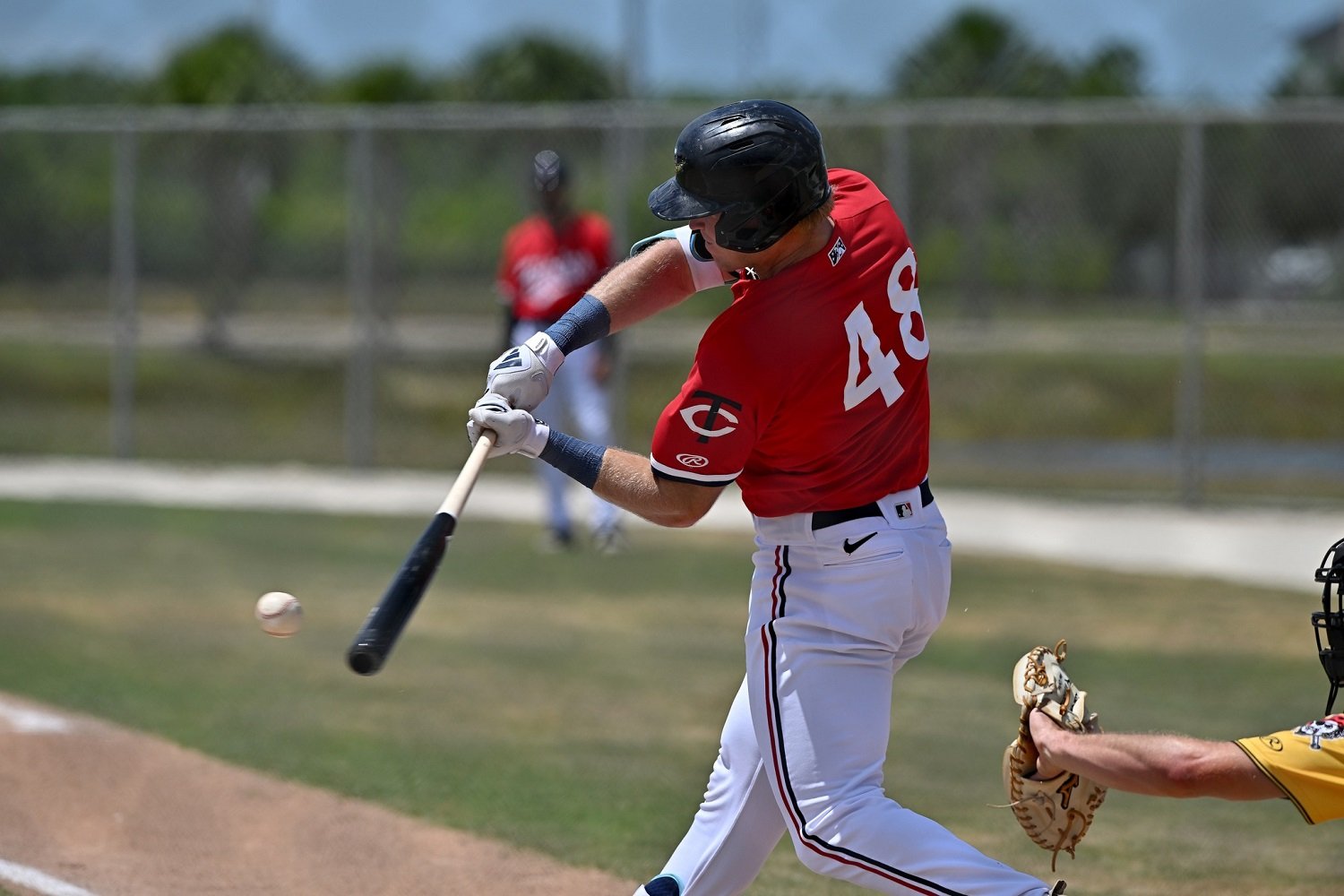 Expectations were high for Walker Jenkins entering the season, even though he is 19 years old and had fewer than 120 professional plate appearances. Some evaluators felt he could have a meteoric rise similar to Jackson Holliday, baseball’s top prospect who moved from Low-A to Triple-A last season. Jenkins injured his hamstring during his first game of the season and was sidelined for multiple weeks, so it seems unlikely he will reach the Saints this season. Still, he is one of the best prospects to come through the Twins system over the last decade, and expectations will continue to be high. So, what should fans watch as Jenkins returns? What does he need to work on before being promoted to Cedar Rapids? Power vs. Hit Tool Jenkins has been known for his advanced approach at the plate throughout his amateur career. He’s dominated while facing players his own age, including a .362/.417/.571 (.989) slash line during his professional debut. His OPS was even higher than that during his rehab stint, so now it’s about his ability to hit in the Florida State League. His hit tool has always been vital, so fans can keep an eye on his in-game power. Can he continue to drive the ball to all fields? How does he fare against more advanced pitchers? Those are the questions the Twins hope he can answer in the coming months. Running Wild Jenkins has been known as a strong base runner, but a hamstring injury can slow him down on the bases. He went 3-for-3 in stolen base attempts during his rehab stint, including a two-steal game. Interestingly, the Twins were distraught with Royce Lewis stealing bases during his rehab stint with the Saints. However, Jenkins isn’t on pace to impact the big-league roster this season, so the organization must be fine with him being aggressive on the bases. Ideally, he will be hitting more extra-base hits so that steals won’t come into the picture, but he will continue to draw walks. Do the Twins want their star prospect running wild on the bases? No Body Puts Jenkins in the Corner The Twins have continued to use Jenkins in center field despite some evaluators believing he will move to a corner spot at some point in his career. The Mighty Mussels may start giving Jenkins reps in the corner outfield, but it makes sense for him to stay in center field for as long as possible. Minnesota follows a similar plan with Brooks Lee, who has played shortstop throughout his professional career even though Carlos Correa is blocking him at the big-league level. Teams value depth at up-the-middle positions, so there is no reason to move Jenkins until he adds more to his frame and grows out of the position (if that ever happens). Avoiding the Twins' Top Prospect Injury Curse Minnesota’s top prospects for most of the last decade have been bitten by the injury bug, including Royce Lewis, Byron Buxton, Alex Kirilloff, and Austin Martin. Jenkins missed time to start the 2024 campaign, and his previous injury history is something to consider. As a freshman in high school, he had surgery for a hip impingement, and he broke his hamate bone during his last year before the draft. All of Twins Territory hopes he can put his previous injuries behind him and get back to playing baseball. Jenkins has the potential to be a generational talent, but he is a long way from Target Field. Fans can have fun watching his progress this season, especially now that he can attempt to live up to the lofty hype surrounding his prospect status. What will you be watching with Jenkins? What should his goals be for the remainder of the season? Leave a COMMENT and start the discussion.
 -
Walker Jenkins is widely considered one of baseball’s top prospects. So now that he’s returned from the injured list, what must he prove in Fort Myers to be promoted to High-A? Image courtesy of William Parmeter Walker Jenkins is widely considered one of baseball’s top prospects. So now that he’s returned from the injured list, what must he prove in Fort Myers to be promoted to High-A? Expectations were high for Walker Jenkins entering the season, even though he is 19 years old and had fewer than 120 professional plate appearances. Some evaluators felt he could have a meteoric rise similar to Jackson Holliday, baseball’s top prospect who moved from Low-A to Triple-A last season. Jenkins injured his hamstring during his first game of the season and was sidelined for multiple weeks, so it seems unlikely he will reach the Saints this season. Still, he is one of the best prospects to come through the Twins system over the last decade, and expectations will continue to be high. So, what should fans watch as Jenkins returns? What does he need to work on before being promoted to Cedar Rapids? Power vs. Hit Tool Jenkins has been known for his advanced approach at the plate throughout his amateur career. He’s dominated while facing players his own age, including a .362/.417/.571 (.989) slash line during his professional debut. His OPS was even higher than that during his rehab stint, so now it’s about his ability to hit in the Florida State League. His hit tool has always been vital, so fans can keep an eye on his in-game power. Can he continue to drive the ball to all fields? How does he fare against more advanced pitchers? Those are the questions the Twins hope he can answer in the coming months. Running Wild Jenkins has been known as a strong base runner, but a hamstring injury can slow him down on the bases. He went 3-for-3 in stolen base attempts during his rehab stint, including a two-steal game. Interestingly, the Twins were distraught with Royce Lewis stealing bases during his rehab stint with the Saints. However, Jenkins isn’t on pace to impact the big-league roster this season, so the organization must be fine with him being aggressive on the bases. Ideally, he will be hitting more extra-base hits so that steals won’t come into the picture, but he will continue to draw walks. Do the Twins want their star prospect running wild on the bases? No Body Puts Jenkins in the Corner The Twins have continued to use Jenkins in center field despite some evaluators believing he will move to a corner spot at some point in his career. The Mighty Mussels may start giving Jenkins reps in the corner outfield, but it makes sense for him to stay in center field for as long as possible. Minnesota follows a similar plan with Brooks Lee, who has played shortstop throughout his professional career even though Carlos Correa is blocking him at the big-league level. Teams value depth at up-the-middle positions, so there is no reason to move Jenkins until he adds more to his frame and grows out of the position (if that ever happens). Avoiding the Twins' Top Prospect Injury Curse Minnesota’s top prospects for most of the last decade have been bitten by the injury bug, including Royce Lewis, Byron Buxton, Alex Kirilloff, and Austin Martin. Jenkins missed time to start the 2024 campaign, and his previous injury history is something to consider. As a freshman in high school, he had surgery for a hip impingement, and he broke his hamate bone during his last year before the draft. All of Twins Territory hopes he can put his previous injuries behind him and get back to playing baseball. Jenkins has the potential to be a generational talent, but he is a long way from Target Field. Fans can have fun watching his progress this season, especially now that he can attempt to live up to the lofty hype surrounding his prospect status. What will you be watching with Jenkins? What should his goals be for the remainder of the season? Leave a COMMENT and start the discussion. View full article
-
Buyers or Sellers: Can the Twins Be Both at the 2024 Trade Deadline?
Cody Christie posted an article in Twins
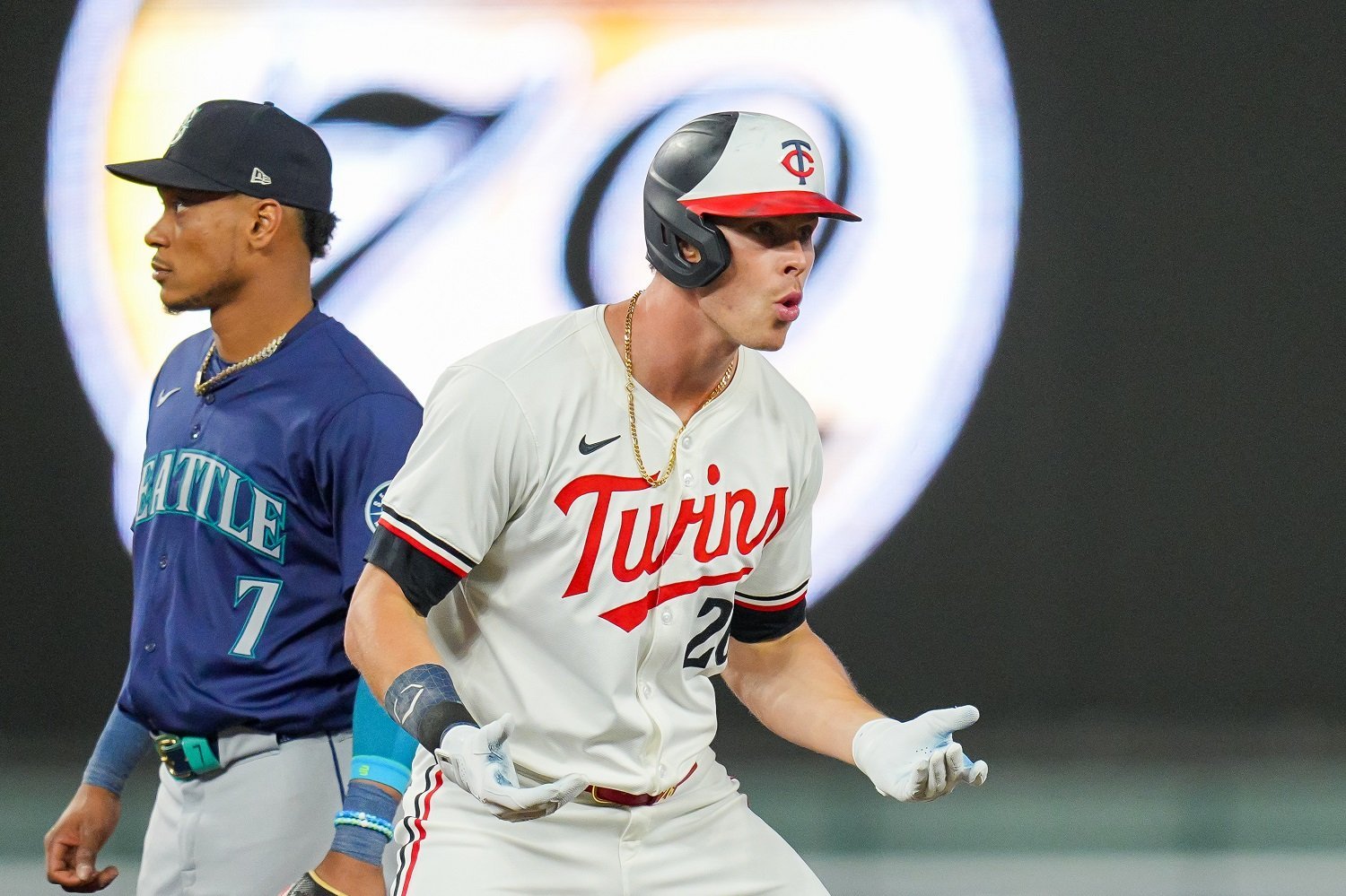 Because of irrational ownership-mandated payroll reductions, Minnesota’s front office was forced to be creative this winter when searching for pieces to complete their 2024 roster. The resulting roster has underperforming players and other holes that must be addressed at the trade deadline. The Twins currently hold the final Wild Card spot in the American League and are on pace to win roughly 90 games, so it seems logical for the team to want to be buyers. However, the club might have room to trade away veteran pieces to maximize any remaining value. Like many ownership groups, Twins ownership has previously pointed to other organizations with lower payrolls and on-field success. “I think in today's game, you can see there are a number of different ways to win,” executive chair Joe Pohlad told reporters earlier this spring. “You see that both with the Tampa Bay Rays, with the Baltimore Orioles, having lower payrolls and turning out very successful products on the field, but also investing in other areas of the business." Tampa is an organization that isn’t afraid to deal away a veteran player and replace that player with a younger, more cost-effective option. However, that strategy only works if the replacement player can produce. The Twins' needs before the deadline still need to be determined. Many of the team’s right-handed bats have underperformed, combining for a 94 wRC+, but the Twins hope that the return of Royce Lewis will help those numbers come back up. Matt Wallner and Edouard Julien were expected to build off their tremendous rookie seasons. Instead, they are both at Triple-A, hoping to rediscover their swings. Overall pitching depth is also something all contending teams attempt to acquire at the trade deadline. It seems unlikely for this front office to add a playoff-caliber starter, so any upgrades should be relief arms. So, how can the Twins thread the needle between buyers and sellers? Minnesota’s front office attempted to trade veteran pieces this winter, but other options remain on the roster. Max Kepler has seen his name in the rumor mill for multiple seasons. There is a possibility that the Twins can extend him a qualifying offer after the season, but that seems unlikely, given the aforementioned payroll limitations. Kepler is likely headed to a multi-year free-agent deal out of the Twins’ price range. The front office could trade Kepler’s expiring contract If Wallner or Emmanuel Rodriguez were deemed ready to step into a full-time role in right field. Kepler isn’t the only veteran trade option, either. Another way the Twins can get creative this summer is by using veteran players to balance money in a trade. Earlier this week, I wrote about Minnesota targeting Pete Alonso in a trade with the Mets. He is owed over $10 million for the remainder of the season, so the Mets could agree to take on the salary of a player like Christian Vázquez to make the deal work. Carlos Santana and Kyle Farmer can be used similarly, if the Twins feel comfortable with other players stepping into their roles on the club. Caleb Thielbar is another who might draw some trade interest, because many contending teams are looking for left-handed relievers. He’s the most expensive player in the bullpen, and the Twins have other lefty options. Many of the team’s veteran players have underperformed to this point in the season, so there may be minimal trade value associated with their contracts. To be clear, the strategy of trading someone like Kepler will not sit well with a fan base that was dragged along during the sluggish, maddening offseason. At the same time, the front office doesn’t make moves based on how the fans will react. If that were the case, Luis Arráez and Jorge Polanco would still be on the roster. Derek Falvey and Thad Levine have shown the ability to be aggressive at the trade deadline, but that might mean a combination of buying and selling for 2024. Can any team successfully buy and sell at the trade deadline? Do the veteran pieces have any trade value left on the bone? Leave a comment and start the discussion.
- 34 comments
-
- 2
-
-
- max kepler
- christian vazquez
- (and 2 more)
-
Many fans hope the Twins add a big bat or an impact pitcher before the trade deadline, but the front office has an opportunity for a unique strategy. Can the club find a way to buy and sell at the same time? Image courtesy of Brad Rempel-USA TODAY Sports Many fans hope the Twins add a big bat or an impact pitcher before the trade deadline, but the front office has an opportunity for a unique strategy. Can the club find a way to buy and sell at the same time? Because of irrational ownership-mandated payroll reductions, Minnesota’s front office was forced to be creative this winter when searching for pieces to complete their 2024 roster. The resulting roster has underperforming players and other holes that must be addressed at the trade deadline. The Twins currently hold the final Wild Card spot in the American League and are on pace to win roughly 90 games, so it seems logical for the team to want to be buyers. However, the club might have room to trade away veteran pieces to maximize any remaining value. Like many ownership groups, Twins ownership has previously pointed to other organizations with lower payrolls and on-field success. “I think in today's game, you can see there are a number of different ways to win,” executive chair Joe Pohlad told reporters earlier this spring. “You see that both with the Tampa Bay Rays, with the Baltimore Orioles, having lower payrolls and turning out very successful products on the field, but also investing in other areas of the business." Tampa is an organization that isn’t afraid to deal away a veteran player and replace that player with a younger, more cost-effective option. However, that strategy only works if the replacement player can produce. The Twins' needs before the deadline still need to be determined. Many of the team’s right-handed bats have underperformed, combining for a 94 wRC+, but the Twins hope that the return of Royce Lewis will help those numbers come back up. Matt Wallner and Edouard Julien were expected to build off their tremendous rookie seasons. Instead, they are both at Triple-A, hoping to rediscover their swings. Overall pitching depth is also something all contending teams attempt to acquire at the trade deadline. It seems unlikely for this front office to add a playoff-caliber starter, so any upgrades should be relief arms. So, how can the Twins thread the needle between buyers and sellers? Minnesota’s front office attempted to trade veteran pieces this winter, but other options remain on the roster. Max Kepler has seen his name in the rumor mill for multiple seasons. There is a possibility that the Twins can extend him a qualifying offer after the season, but that seems unlikely, given the aforementioned payroll limitations. Kepler is likely headed to a multi-year free-agent deal out of the Twins’ price range. The front office could trade Kepler’s expiring contract If Wallner or Emmanuel Rodriguez were deemed ready to step into a full-time role in right field. Kepler isn’t the only veteran trade option, either. Another way the Twins can get creative this summer is by using veteran players to balance money in a trade. Earlier this week, I wrote about Minnesota targeting Pete Alonso in a trade with the Mets. He is owed over $10 million for the remainder of the season, so the Mets could agree to take on the salary of a player like Christian Vázquez to make the deal work. Carlos Santana and Kyle Farmer can be used similarly, if the Twins feel comfortable with other players stepping into their roles on the club. Caleb Thielbar is another who might draw some trade interest, because many contending teams are looking for left-handed relievers. He’s the most expensive player in the bullpen, and the Twins have other lefty options. Many of the team’s veteran players have underperformed to this point in the season, so there may be minimal trade value associated with their contracts. To be clear, the strategy of trading someone like Kepler will not sit well with a fan base that was dragged along during the sluggish, maddening offseason. At the same time, the front office doesn’t make moves based on how the fans will react. If that were the case, Luis Arráez and Jorge Polanco would still be on the roster. Derek Falvey and Thad Levine have shown the ability to be aggressive at the trade deadline, but that might mean a combination of buying and selling for 2024. Can any team successfully buy and sell at the trade deadline? Do the veteran pieces have any trade value left on the bone? Leave a comment and start the discussion. View full article
-
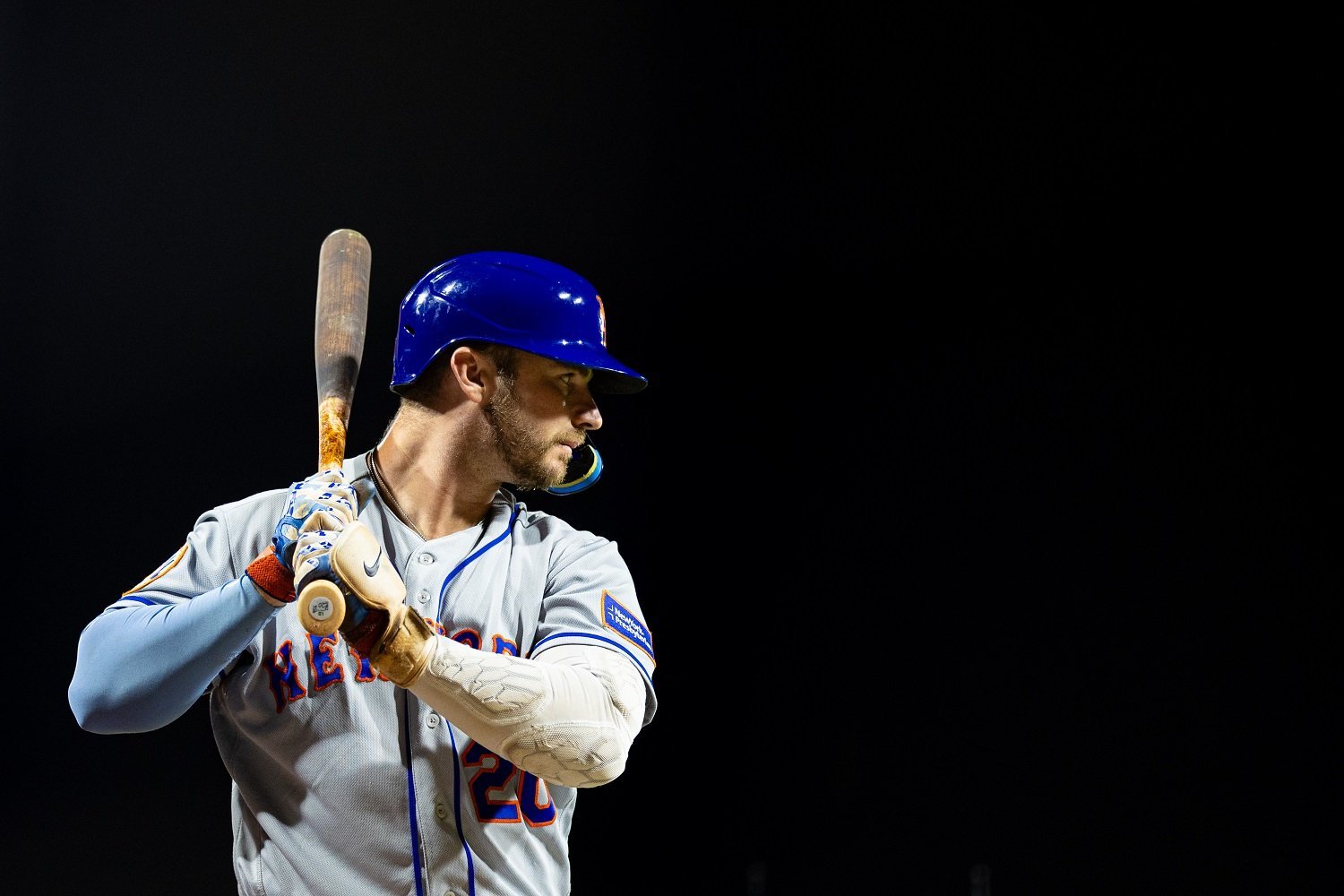 The New York Mets have struggled this season, sitting well below .500 despite baseball’s highest payroll. It seems likely that the club will shed salaries by the trade deadline, and Pete Alonso is a logical trade candidate. He is being paid $20.5 million in his last year of arbitration eligibility, and then he'll become a free agent, so he will be a rental piece for an acquiring team. There are extra layers to acquiring Alonso, especially for a team like the Twins. So, what will it cost, and can the Twins find a way to add one of baseball’s biggest sluggers? What will it cost to acquire Pete Alonso? Other teams (besides the Twins) will be interested in adding Alonso for a potential playoff run, so the acquiring team must offer the right prospect package. Would the Twins offer one of their top five prospects to acquire him? Twins Daily’s top prospects include Walker Jenkins, Brooks Lee, Emmanuel Rodriguez, David Festa, and Gabriel Gonzalez. From the team perspective, Jenkins and Lee are likely untouchable, while Rodriguez and Festa have seen their stock rise during the 2024 campaign. Gonzalez or another top-10 pitching prospect like Marco Raya might be enough to headline a package. There would likely need to be other players involved from outside the team’s top prospects, though. The Mets can also leverage the qualifying offer process in any deal for Alonso. If New York keeps Alonso, they will assuredly extend him the qualifying offer, which comes with draft pick compensation if a player signs with another team. A compensation-round pick is valuable, including more money added to a team’s draft pool. A team trading for Alonso must provide New York something worth more than the potential draft pick they would acquire if he leaves. It’s also worth noting that an acquiring team can’t extend a qualifying offer to Alonso, because of the rules in place as part of the collective bargaining agreement. What are other trade considerations? New York is paying Alonso over $20 million this season, so he will still be due close to $7 million for the season’s final two months. Minnesota cut payroll this winter because of the uncertainty surrounding their television rights. There might not be room to add Alonso’s contract, absent the Mets sending some money to pay down the end of the deal. To do this, the Twins might have to send more value in prospects to make up the difference. However, there is another way to make the money work. To balance the money, the Twins could include a veteran player with a higher salary. Minnesota shopped their veterans this winter, and Jorge Polanco was the only player traded. Christian Vázquez would be due a little over $3 million for the season’s last two months, plus the $10 million remaining on his contract for next season. Vázquez’s offensive performance has dipped in 2024, but he continues to provide strong defense, with a Fielding Run Value and framing in the 82nd percentile or higher. Perhaps New York would be interested in adding catching depth to offset Alonso’s contract; they did recently DFA catcher Omar Narváez. However, the Twins would still need to include multiple prospects to make a competitive offer. How does Alonso fit with the Twins? Alonso has seen a slight drop in his home run production this season, after averaging more than 40 home runs in the five full seasons played since he came to the big leagues in 2019. He’s been an All-Star the last two seasons, including finishing in the top eight for the NL MVP in 2022. In 58 games this season, he is hitting .239/.315/.477, with a 130 OPS+. Carlos Santana has been the Twins’ primary first baseman this season, posting a 92 OPS+ in 54 games. However, his bat has improved recently, with an .841 OPS since Apr. 25. One of Minnesota’s most significant weaknesses this season has been the struggles of the team’s left-handed bats. Alonso is a right-handed hitter with almost identical splits against lefties (.867 OPS) and righties (.862 OPS) for his career. His OPS has dropped to .778 this season versus right-handed pitchers, but it’s 33 points higher against right-handed starters. He’s an impact bat who can make a difference for the stretch run. Home runs help to win games in October, but Alonso has been limited to three playoff games with the Mets. New York lost the Wild Card Series to San Diego in 2022, but the club won the middle game when Alonso hit a homer. Minnesota needs to be creative at the upcoming trade deadline, and adding Alonso can bolster the lineup. However, he might be one of the biggest bats moved this year, and plenty of teams will be interested in his services. Should the Twins try to add Alonso? What should the team be willing to give up? Leave a comment and start the discussion.
 -
The MLB trade deadline is eight weeks away, and according to both the current and projected standings, the Twins are borderline to make the playoffs. Can Pete Alonso power Minnesota to a second-half surge? Image courtesy of Bill Streicher-USA TODAY Sports The MLB trade deadline is eight weeks away, and according to both the current and projected standings, the Twins are borderline to make the playoffs. Can Pete Alonso power Minnesota to a second-half surge? The New York Mets have struggled this season, sitting well below .500 despite baseball’s highest payroll. It seems likely that the club will shed salaries by the trade deadline, and Pete Alonso is a logical trade candidate. He is being paid $20.5 million in his last year of arbitration eligibility, and then he'll become a free agent, so he will be a rental piece for an acquiring team. There are extra layers to acquiring Alonso, especially for a team like the Twins. So, what will it cost, and can the Twins find a way to add one of baseball’s biggest sluggers? What will it cost to acquire Pete Alonso? Other teams (besides the Twins) will be interested in adding Alonso for a potential playoff run, so the acquiring team must offer the right prospect package. Would the Twins offer one of their top five prospects to acquire him? Twins Daily’s top prospects include Walker Jenkins, Brooks Lee, Emmanuel Rodriguez, David Festa, and Gabriel Gonzalez. From the team perspective, Jenkins and Lee are likely untouchable, while Rodriguez and Festa have seen their stock rise during the 2024 campaign. Gonzalez or another top-10 pitching prospect like Marco Raya might be enough to headline a package. There would likely need to be other players involved from outside the team’s top prospects, though. The Mets can also leverage the qualifying offer process in any deal for Alonso. If New York keeps Alonso, they will assuredly extend him the qualifying offer, which comes with draft pick compensation if a player signs with another team. A compensation-round pick is valuable, including more money added to a team’s draft pool. A team trading for Alonso must provide New York something worth more than the potential draft pick they would acquire if he leaves. It’s also worth noting that an acquiring team can’t extend a qualifying offer to Alonso, because of the rules in place as part of the collective bargaining agreement. What are other trade considerations? New York is paying Alonso over $20 million this season, so he will still be due close to $7 million for the season’s final two months. Minnesota cut payroll this winter because of the uncertainty surrounding their television rights. There might not be room to add Alonso’s contract, absent the Mets sending some money to pay down the end of the deal. To do this, the Twins might have to send more value in prospects to make up the difference. However, there is another way to make the money work. To balance the money, the Twins could include a veteran player with a higher salary. Minnesota shopped their veterans this winter, and Jorge Polanco was the only player traded. Christian Vázquez would be due a little over $3 million for the season’s last two months, plus the $10 million remaining on his contract for next season. Vázquez’s offensive performance has dipped in 2024, but he continues to provide strong defense, with a Fielding Run Value and framing in the 82nd percentile or higher. Perhaps New York would be interested in adding catching depth to offset Alonso’s contract; they did recently DFA catcher Omar Narváez. However, the Twins would still need to include multiple prospects to make a competitive offer. How does Alonso fit with the Twins? Alonso has seen a slight drop in his home run production this season, after averaging more than 40 home runs in the five full seasons played since he came to the big leagues in 2019. He’s been an All-Star the last two seasons, including finishing in the top eight for the NL MVP in 2022. In 58 games this season, he is hitting .239/.315/.477, with a 130 OPS+. Carlos Santana has been the Twins’ primary first baseman this season, posting a 92 OPS+ in 54 games. However, his bat has improved recently, with an .841 OPS since Apr. 25. One of Minnesota’s most significant weaknesses this season has been the struggles of the team’s left-handed bats. Alonso is a right-handed hitter with almost identical splits against lefties (.867 OPS) and righties (.862 OPS) for his career. His OPS has dropped to .778 this season versus right-handed pitchers, but it’s 33 points higher against right-handed starters. He’s an impact bat who can make a difference for the stretch run. Home runs help to win games in October, but Alonso has been limited to three playoff games with the Mets. New York lost the Wild Card Series to San Diego in 2022, but the club won the middle game when Alonso hit a homer. Minnesota needs to be creative at the upcoming trade deadline, and adding Alonso can bolster the lineup. However, he might be one of the biggest bats moved this year, and plenty of teams will be interested in his services. Should the Twins try to add Alonso? What should the team be willing to give up? Leave a comment and start the discussion. View full article
-
The Twins had an inconsistent on-field performance during May, but multiple pitchers compiled strong totals for the month. Who had the best performance in May? The answer may surprise you. The Twins had an inconsistent on-field performance during May, but multiple pitchers compiled strong totals for the month. Who had the best performance in May? The answer may surprise you. Minnesota’s bullpen carried the team through the season’s first month, with three relievers finishing in the top five for Twins Daily’s top pitchers of the month. Brock Stewart, Griffin Jax, and Cole Sands were vital to many of the Twins’ early successes. Stewart has been on the injured list, and Sands has seen a decline in performance, so May has seen some different names move up the rankings. One starting pitcher has stood out compared to the rest, so let’s jump into this month’s rankings. May Pitchers of the Month #4 – Chris Paddack – 6 G, 3.60 ERA, 1.14 WHIP, 35.0 IP, 6 BB, 33 K, 0.20 WPA Paddack is in his first full season back from Tommy John surgery, so there is always concern about how many innings a pitcher can throw. He’s thrown 95 pitches or more in three of his starts this month, including an eight-inning gem at Cleveland, where he limited the Guardians to two earned runs on three hits. His velocity has dropped in recent starts, so it will be interesting to see if the Twins find a way to give him extra days off throughout the season. #3 – Griffin Jax – 12 G, 2.19 ERA, 0.81 WHIP, 12.1 IP, 3 BB, 16 K, 0.70 WPA Jax had a rough patch earlier this month, allowing earned runs in three straight appearances. Since then, he has made seven straight scoreless appearances with ten strikeouts across 6 2/3 innings. Jax has seven holds and a save while ranking second on the team in WPA behind the next player on this list. His 32.6 K% and 25.6 K-BB% were the highest totals among the team’s bullpen. Jax ranks in the 95th percentile for K% and Whiff%, and he’s struck out 38% of the right-handed hitters he has faced, which ranks in the top five among AL relievers. Other relievers struggled during May, so it’s hard to imagine where the team would be without Jax. #2 – Simeon Woods Richardson – 5 G, 2.84 ERA, 0.95 WHIP, 25.1 IP, 5 BB, 17 K, 0.87 WPA Woods Richardson has been critical to the team’s rotation during May. The team was hoping not to need him until later in the season, but he’s proving he can get hitters out at the big-league level. He allowed two earned runs or fewer in four of his five starts this month. Here’s where Woods Richardson ranks among MLB rookies with 35.0 or more innings pitched this season: ERA (3rd), BB/9 (4th), HR/9 (3rd), and Opponent SLG (3rd). SWR went six straight starts without factoring into the decision, which was the second-longest streak in Twins history. He picked up his second win at the final start of the month and brought notes about the team’s performance to his postgame interview. Winner – Joe Ryan – 5 G, 2.51 ERA, 0.84 WHIP, 32.1 IP, 4 BB, 32 K, 0.64 WPA Ryan is putting up first-half totals that will put him in the conversation to make the AL All-Star team. In May, he held opponents to a .193/.220/.319 (.539) slash line while pitching into the sixth inning in all five starts. His best start of the month came in his final appearance against the Royals on May 27th. In seven innings, he held Kansas City to one earned run on four hits with nine strikeouts and no walks. With the performance, his season ERA dropped under 3.00 for the first time since his third start of the year. He recorded six straight quality starts from April 24 to May 27, leading the Twins with eight quality starts this season. He has allowed three or fewer earned runs in ten of his 11 starts. Among qualified AL pitchers, he ranks in the top 10 in WHIP (3rd), BB/9 (3rd), K/9 (9th), IP (7th), K/BB (4th), FIP (5th), and Situational Wins Saved (8th). According to Baseball-Reference, Max Kepler is the lone Twins player with more WAR than Ryan this season. With Pablo Lopez struggling, Ryan has looked like the staff's ace during the past month. Congrats to Joe Ryan on his strong performance over the last month. To make his first All-Star team, he must continue to pitch well in June. What do you think? How would you rank the top Twins pitchers based on their April performance? Leave a COMMENT and start the discussion. View full article
-
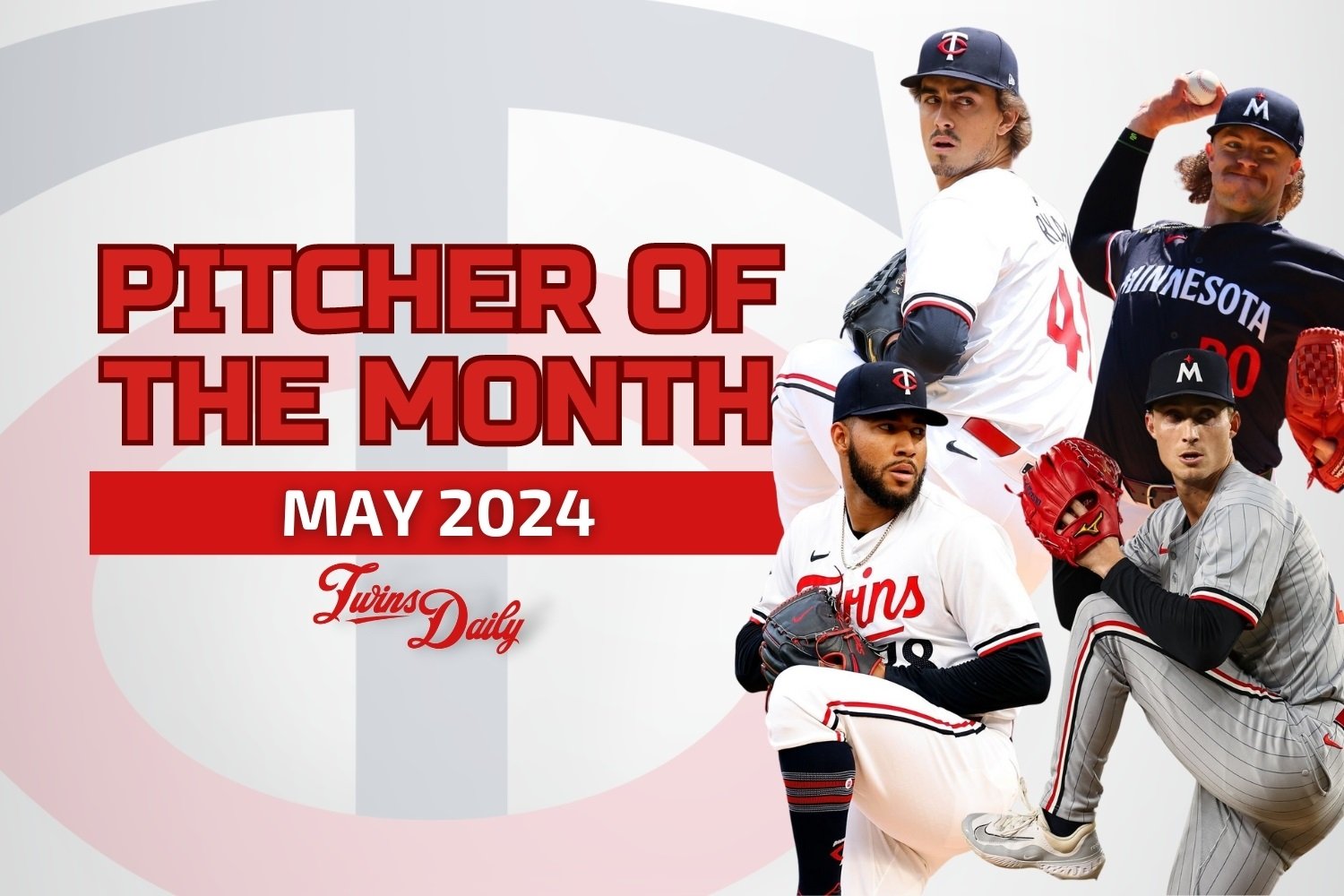 Minnesota’s bullpen carried the team through the season’s first month, with three relievers finishing in the top five for Twins Daily’s top pitchers of the month. Brock Stewart, Griffin Jax, and Cole Sands were vital to many of the Twins’ early successes. Stewart has been on the injured list, and Sands has seen a decline in performance, so May has seen some different names move up the rankings. One starting pitcher has stood out compared to the rest, so let’s jump into this month’s rankings. May Pitchers of the Month #4 – Chris Paddack – 6 G, 3.60 ERA, 1.14 WHIP, 35.0 IP, 6 BB, 33 K, 0.20 WPA Paddack is in his first full season back from Tommy John surgery, so there is always concern about how many innings a pitcher can throw. He’s thrown 95 pitches or more in three of his starts this month, including an eight-inning gem at Cleveland, where he limited the Guardians to two earned runs on three hits. His velocity has dropped in recent starts, so it will be interesting to see if the Twins find a way to give him extra days off throughout the season. #3 – Griffin Jax – 12 G, 2.19 ERA, 0.81 WHIP, 12.1 IP, 3 BB, 16 K, 0.70 WPA Jax had a rough patch earlier this month, allowing earned runs in three straight appearances. Since then, he has made seven straight scoreless appearances with ten strikeouts across 6 2/3 innings. Jax has seven holds and a save while ranking second on the team in WPA behind the next player on this list. His 32.6 K% and 25.6 K-BB% were the highest totals among the team’s bullpen. Jax ranks in the 95th percentile for K% and Whiff%, and he’s struck out 38% of the right-handed hitters he has faced, which ranks in the top five among AL relievers. Other relievers struggled during May, so it’s hard to imagine where the team would be without Jax. #2 – Simeon Woods Richardson – 5 G, 2.84 ERA, 0.95 WHIP, 25.1 IP, 5 BB, 17 K, 0.87 WPA Woods Richardson has been critical to the team’s rotation during May. The team was hoping not to need him until later in the season, but he’s proving he can get hitters out at the big-league level. He allowed two earned runs or fewer in four of his five starts this month. Here’s where Woods Richardson ranks among MLB rookies with 35.0 or more innings pitched this season: ERA (3rd), BB/9 (4th), HR/9 (3rd), and Opponent SLG (3rd). SWR went six straight starts without factoring into the decision, which was the second-longest streak in Twins history. He picked up his second win at the final start of the month and brought notes about the team’s performance to his postgame interview. Winner – Joe Ryan – 5 G, 2.51 ERA, 0.84 WHIP, 32.1 IP, 4 BB, 32 K, 0.64 WPA Ryan is putting up first-half totals that will put him in the conversation to make the AL All-Star team. In May, he held opponents to a .193/.220/.319 (.539) slash line while pitching into the sixth inning in all five starts. His best start of the month came in his final appearance against the Royals on May 27th. In seven innings, he held Kansas City to one earned run on four hits with nine strikeouts and no walks. With the performance, his season ERA dropped under 3.00 for the first time since his third start of the year. He recorded six straight quality starts from April 24 to May 27, leading the Twins with eight quality starts this season. He has allowed three or fewer earned runs in ten of his 11 starts. Among qualified AL pitchers, he ranks in the top 10 in WHIP (3rd), BB/9 (3rd), K/9 (9th), IP (7th), K/BB (4th), FIP (5th), and Situational Wins Saved (8th). According to Baseball-Reference, Max Kepler is the lone Twins player with more WAR than Ryan this season. With Pablo Lopez struggling, Ryan has looked like the staff's ace during the past month. Congrats to Joe Ryan on his strong performance over the last month. To make his first All-Star team, he must continue to pitch well in June. What do you think? How would you rank the top Twins pitchers based on their April performance? Leave a COMMENT and start the discussion.
- 5 comments
-
- 3
-
-
- joe ryan
- griffin jax
- (and 2 more)
-
Ranking the Worst Free Agent Signings for the Minnesota Twins Since 2017
Cody Christie posted an article in Twins
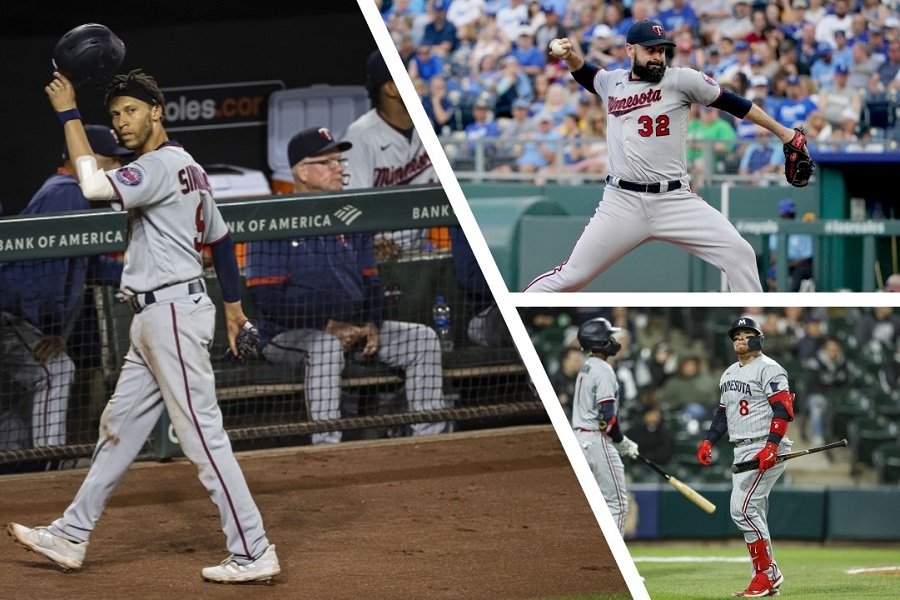 Christian Vázquez is nearly halfway done with his three-year, $30 million contract, and his performance has been subpar in a Twins uniform. At the time, it was easy to see the reasoning behind the front office targeting one of the best free-agent catchers. Ryan Jeffers had struggled in 2022 (86 OPS+), so the club wanted someone who could step into a regular catching role. Hindsight is 20/20, and the team would likely want to be out from under his contract at this point. Where does the Vázquez contract rank among this front-office regime's worst free-agent signings? Honorable Mention: Dylan Bundy (-0.2 rWAR), Addison Reed (0.0 rWAR), Lance Lynn (0.1 rWAR), Logan Morrison (-0.2 rWAR), J.A. Happ (-1.8 rWAR) 5. Josh Donaldson rWAR: 3.7 The Twins signed Donaldson to a four-year, $92 million contract in January 2020. He provided the most value out of the players on this list, but he wasn’t worth $21.75 million per season. Minnesota’s front office had initially planned to target front-line starting pitching with the team’s payroll flexibility and pivoted to Donaldson after the top-tier starters had already signed. Thankfully, the Twins were able to dump the final two years of the contract on the Yankees, including the $8 million buyout of his contract option. The front office thought Donaldson could be a veteran presence to push the team to the next level, but that never came to fruition. 4. Andrelton Simmons rWAR: -0.1 Simmons is one of the best defensive shortstops in MLB history, and the Twins hoped he could bring that elite skillset to the team. He signed a one-year, $10.5 million deal leading into the 2021 season. His offensive performance had typically been slightly below average, but it fell off a cliff with Minnesota to the point he was nearly unplayable. In 131 games, he posted a 57 OPS+ and saw his defense take a step back too. Also, he became a clubhouse distraction for his vocal stance against the COVID-19 vaccine before testing positive himself. The Twins hoped Simmons could be a one-year stopgap at shortstop, but there were better ways to spend his contract. 3. Christian Vázquez rWAR: -0.7 Vázquez still has a year and a half left on his three-year, $30 million deal, so there is time for him to accumulate value and fall off this list. He continues to provide solid defensive numbers, including ranking in the 79th percentile or higher in Fielding Run Value and Framing. During the offseason, rumors circulated that the Twins attempted to trade veteran players to cut payroll. However, the front office loves to use a two-catcher rotation, which has continued this season despite Vázquez’s poor offensive performance. He has caught a lot of innings during his career, and the end of his contract might not be pretty. 2. Alex Colomé rWAR: -0.7 Hopes were high for the 2021 Twins after back-to-back AL Central titles, and the front office added Colomé to be a veteran presence in the bullpen. He combined for a 2.27 ERA (201 ERA+) and a 1.03 WHIP in the two seasons before signing with the Twins. His first month was a disaster as he allowed eight earned runs in 8 2/3 innings while being charged with three blown saves. He had a -2.2 WPA in April as he nearly single-handedly took the Twins out of contention by the month’s end. Colomé settled in after the first month with a 3.51 ERA and a 1.05 WPA for the remainder of the season, but the damage had already been done. 1. Matt Shoemaker rWAR: -1.8 Minnesota’s failure to develop starting pitching forced the front office to sign cheap veteran options to fill rotation holes. Shoemaker and J.A. Happ were brought in during the same offseason and posted the exact rWAR total, but Shoemaker ranks higher for multiple reasons. He had an 11-game stretch from April 11- June 11, where he posted an 8.10 ERA with opponents combining for a .905 OPS. He was removed from the rotation before struggling as a reliever, too. Minnesota demoted him to Triple-A where he voiced his concerns about the alterations the coaches attempted with him during the season. The Twins released him on August 2, and his big-league career ended abruptly. Nearly every player on this list fit a specific role for the Twins when the team targeted them in free agency. Unfortunately, Minnesota is rarely in the market for the best available players, especially with ownership's self-imposed payroll limits. Free agency can force some teams to make poor investments, but those chances are even higher when a front office is forced to shop in the bargain bin. Who should rank in the top five for worst free agent signings by this regime? Does someone else need to make the list? Leave a COMMENT and start the discussion.
- 36 comments
-
- 3
-
-
- josh donaldson
- andrelton simmons
- (and 3 more)
-
The Twins hired Derek Falvey and Thad Levine in November 2016, and their stamp is clearly on the organization. So, what have been the club’s worst free agent signings under their tenure? Image courtesy of Kamil Krzaczynski, Scott Taetsch, Denny Medley -USA TODAY Sports The Twins hired Derek Falvey and Thad Levine in November 2016, and their stamp is clearly on the organization. So, what have been the club’s worst free agent signings under their tenure? Christian Vázquez is nearly halfway done with his three-year, $30 million contract, and his performance has been subpar in a Twins uniform. At the time, it was easy to see the reasoning behind the front office targeting one of the best free-agent catchers. Ryan Jeffers had struggled in 2022 (86 OPS+), so the club wanted someone who could step into a regular catching role. Hindsight is 20/20, and the team would likely want to be out from under his contract at this point. Where does the Vázquez contract rank among this front-office regime's worst free-agent signings? Honorable Mention: Dylan Bundy (-0.2 rWAR), Addison Reed (0.0 rWAR), Lance Lynn (0.1 rWAR), Logan Morrison (-0.2 rWAR), J.A. Happ (-1.8 rWAR) 5. Josh Donaldson rWAR: 3.7 The Twins signed Donaldson to a four-year, $92 million contract in January 2020. He provided the most value out of the players on this list, but he wasn’t worth $21.75 million per season. Minnesota’s front office had initially planned to target front-line starting pitching with the team’s payroll flexibility and pivoted to Donaldson after the top-tier starters had already signed. Thankfully, the Twins were able to dump the final two years of the contract on the Yankees, including the $8 million buyout of his contract option. The front office thought Donaldson could be a veteran presence to push the team to the next level, but that never came to fruition. 4. Andrelton Simmons rWAR: -0.1 Simmons is one of the best defensive shortstops in MLB history, and the Twins hoped he could bring that elite skillset to the team. He signed a one-year, $10.5 million deal leading into the 2021 season. His offensive performance had typically been slightly below average, but it fell off a cliff with Minnesota to the point he was nearly unplayable. In 131 games, he posted a 57 OPS+ and saw his defense take a step back too. Also, he became a clubhouse distraction for his vocal stance against the COVID-19 vaccine before testing positive himself. The Twins hoped Simmons could be a one-year stopgap at shortstop, but there were better ways to spend his contract. 3. Christian Vázquez rWAR: -0.7 Vázquez still has a year and a half left on his three-year, $30 million deal, so there is time for him to accumulate value and fall off this list. He continues to provide solid defensive numbers, including ranking in the 79th percentile or higher in Fielding Run Value and Framing. During the offseason, rumors circulated that the Twins attempted to trade veteran players to cut payroll. However, the front office loves to use a two-catcher rotation, which has continued this season despite Vázquez’s poor offensive performance. He has caught a lot of innings during his career, and the end of his contract might not be pretty. 2. Alex Colomé rWAR: -0.7 Hopes were high for the 2021 Twins after back-to-back AL Central titles, and the front office added Colomé to be a veteran presence in the bullpen. He combined for a 2.27 ERA (201 ERA+) and a 1.03 WHIP in the two seasons before signing with the Twins. His first month was a disaster as he allowed eight earned runs in 8 2/3 innings while being charged with three blown saves. He had a -2.2 WPA in April as he nearly single-handedly took the Twins out of contention by the month’s end. Colomé settled in after the first month with a 3.51 ERA and a 1.05 WPA for the remainder of the season, but the damage had already been done. 1. Matt Shoemaker rWAR: -1.8 Minnesota’s failure to develop starting pitching forced the front office to sign cheap veteran options to fill rotation holes. Shoemaker and J.A. Happ were brought in during the same offseason and posted the exact rWAR total, but Shoemaker ranks higher for multiple reasons. He had an 11-game stretch from April 11- June 11, where he posted an 8.10 ERA with opponents combining for a .905 OPS. He was removed from the rotation before struggling as a reliever, too. Minnesota demoted him to Triple-A where he voiced his concerns about the alterations the coaches attempted with him during the season. The Twins released him on August 2, and his big-league career ended abruptly. Nearly every player on this list fit a specific role for the Twins when the team targeted them in free agency. Unfortunately, Minnesota is rarely in the market for the best available players, especially with ownership's self-imposed payroll limits. Free agency can force some teams to make poor investments, but those chances are even higher when a front office is forced to shop in the bargain bin. Who should rank in the top five for worst free agent signings by this regime? Does someone else need to make the list? Leave a COMMENT and start the discussion. View full article
-
Major League Baseball is an international game, played in a country where English is the primary language. For many players, this environment can result in parts of interviews being lost in translation. Former Twins pitcher Jorge López made headlines this week, and other players have recently dealt with similar issues. Image courtesy of Nick Wosika-USA TODAY Sports Major League Baseball is an international game, played in a country where English is the primary language. For many players, this environment can result in parts of interviews being lost in translation. Former Twins pitcher Jorge López made headlines this week, and other players have recently dealt with similar issues. Jorge López will be remembered in Twins circles because of the lopsided trade that brought him to the organization. The Twins sent four prospects, including Yennier Canó and Cade Povich, to Baltimore, and López lasted less than a year in the organization. In parts of two seasons, he posted a 4.81 ERA (86 ERA+) with a 1.41 WHIP, while being worth -0.2 WAR. Things couldn’t have gone much worse in Minnesota, but the end of his tenure with the Mets has become even more memorable--for all the wrong reasons. On Wednesday, López pitched for the Mets in their 10-3 loss against the Los Angeles Dodgers. He was ejected by third-base umpire Ramon De Jesús, and threw his glove into the stands on his way off the field. Mets Manager Carlos Mendoza referred to the glove toss as “unacceptable.” Mendoza and David Stearns, the Mets' president of baseball operations, spoke with López after the game and decided to designate him for assignment. Drama also followed López into his postgame interview, during which emotions were still high from the on-field incident and his meeting with team officials. One of the quotes garnering the most attention was when López appeared to say the Mets were “the worst team in, probably in the whole f------ MLB.” Asked to clarify whether he was saying he was on the worst team, he said, "Yeah, probably, it look like." However, the words could be clearer, as evident in the video below. English is not his first language, so there may have been a misinterpretation. Some interpreted it as López actually saying, “I think I been looking (like) the worst teammate probably in the whole f—ing MLB.” It’s also easy to notice that he is doing the entire interview without help from the Mets' communication department. López might have made this choice, but having an interpreter there can ease some of the burden for players who do not have English as their first language. The Twins may have had a similar situation recently, without the big-market drama associated with López and the Mets. Minnesota was on a seven-game losing streak, and frustrations started mounting for the players and manager. Some quotes came out after a frustrating loss that might have been tied to a translation error for someone who is not a native English speaker. The Twins lost versus Cleveland on a walk-off home run, a tough pill to swallow, especially with the team’s star closer on the mound. Jhoan Durán threw a first-pitch curveball to Will Brennan, but stated after the game that he disagreed with that call. "It's not my decision," Durán told reporters. "I thought that [Brennan] wasn't good with fastballs. I'm an employee here, so whatever I need to throw, I need to throw it." Some Twins fans were upset with Durán’s comments, because it felt like he was not taking full responsibility or was throwing the coaches and other players under the bus. Durán has been attempting to do more frequent interviews in English, but there can still be errors with phrases or finding the appropriate words. Twins manager Rocco Baldelli was asked about Durán’s comments before the next game. "I think he's just frustrated and was looking for a way to vent," Baldelli said, "I thought it was unusual. I wasn't expecting it. I like to handle our stuff here with a conversation in the clubhouse." Sometimes, it is abundantly clear what a player means by a specific quote. However, there are instances, like López and Durán, where quotes might not match what the player was genuinely trying to say. MLB continues to grow and become more international, so it is vital to support players so their quotes aren't skewed to grab headlines. After a spate of issues like these littered over the first decade of the 21st century, MLB took steps about 10 years ago to make interpreters available to more players, on a more robust basis. Whatever was meant and whatever was actually relayed in each of these cases, we can be grateful for that progress, but perhaps even more support and care is necessary, on all sides of such situations. Should teams do a better job of ensuring players are supported during postgame interviews? What’s the best approach for situations like this in the future? Leave a COMMENT and start the discussion. View full article


