Cody Schoenmann
-
Posts
768 -
Joined
-
Last visited
-
Days Won
1
Content Type
Profiles
News
Minnesota Twins Videos
2026 Minnesota Twins Top Prospects Ranking
2022 Minnesota Twins Draft Picks
Minnesota Twins Free Agent & Trade Rumors, Notes, & Tidbits
Guides & Resources
2023 Minnesota Twins Draft Picks
The Minnesota Twins Players Project
2024 Minnesota Twins Draft Picks
2025 Minnesota Twins Draft Pick Tracker
2026 Minnesota Twins Draft Tracker: Picks & Bonuses
Forums
Blogs
Events
Store
Downloads
Gallery
Everything posted by Cody Schoenmann
-
 The Twins' star shortstop has gone hitless to begin the season—but things should soon change for the better. Image courtesy of © Matt Marton-Imagn Images Through 18 plate appearances, Minnesota Twins shortstop Carlos Correa has been held hitless to begin his 2025 campaign. In addition to being unable to muster a hit at the plate, the star veteran has reached base only once, generating a walk in the final game of Minnesota's three-game opening series against the St. Louis Cardinals. Now, Correa hasn't been alone in his offensive ineptitude. Before manufacturing five runs in the sixth inning of Tuesday night's win against the Chicago White Sox, the Twins had been sporting the worst offense in MLB, generating a 23 wRC+ over 136 combined plate appearances. Every position player but Willi Castro has been underwhelming at the plate. Correa's lack of production has been particularly troublesome, considering he has been a steady force on whom the team has relied in times of extreme volatility. That said, Correa's struggles have taken place within an exceptionally small sample, and his underlying metrics suggest he is nearing a breakthrough at the plate. Over his first 18 plate appearances, Correa has generated a 76.7 MPH bat speed (96th percentile) and 43.8% squared-up rate (97th percentile). All that bat speed would have tied Correa with Angels outfielder Jo Adell for the fifth-highest average bat speed in the majors last season. Adell has been a below-average offensive contributor over his career, but the four players behind Adell in average bat speed last season were Yordan Alvarez, Matt Chapman, Shohei Ohtani, and Gunnar Henderson. The four ahead of him were Aaron Judge, Kyle Schwarber, Oneil Cruz, and Giancarlo Stanton. Outliers aside, bat speed is highly indicative of effectiveness at the plate, and Correa is more similar to players like Chapman and Henderson than Adell or Cruz. If Correa can continue to generate that kind of bat speed, hard contact will follow and balls will begin to drop, lending merit to the idea that he can produce at the rate he did the first half last season. Squared-up rate is a more convoluted advanced metric than assessing how fast a player swings their bat. The metric measures how much of the highest possible exit velocity a batter could obtain (based on a hitter's swing speed and the speed of the incoming pitch) they actually achieve; it expresses how often they make truly solid contact. Any swing that is at least 80% efficient in this regard is considered a squared-up swing by Statcast measurements. Correa has squared up 43.8% of the balls he has put in play. If he finished last season at that rate, he would have finished with the second-best squared-up rate, behind only Luis Arráez. Arráez, of course, has the league's slowest swing, preferring extreme control of the bat (and the resulting ability to make more contact than anyone else) to power. It's very rare to have both excellent bat speed and a high rate of squaring up the ball. That Correa is doing so implies that his slump will be very short-lived. He's a standout among American League hitters with at least 10 swings this season, when it comes to the combination of bat speed and the capacity to square it up. Now, it would be malpractice to make any definitive assessments over 18 plate appearances. However, considering the 11-year veteran has always hit the ball hard while displaying a keen eye at the plate, there is reason to suspect he will quickly begin producing at the rate that led to him earning his first All-Star nod as a Twin last season. Correa's inability to produce at the plate early this season has played a significant role in the club's offensive struggles. That said, his underlying metrics suggest he is on the verge of breaking through—and yet again becoming a near-elite offensive contributor at the top of Minnesota's lineup. View full article
 -
Carlos Correa is on the Precipice of Breaking Through at the Plate
Cody Schoenmann posted an article in Twins
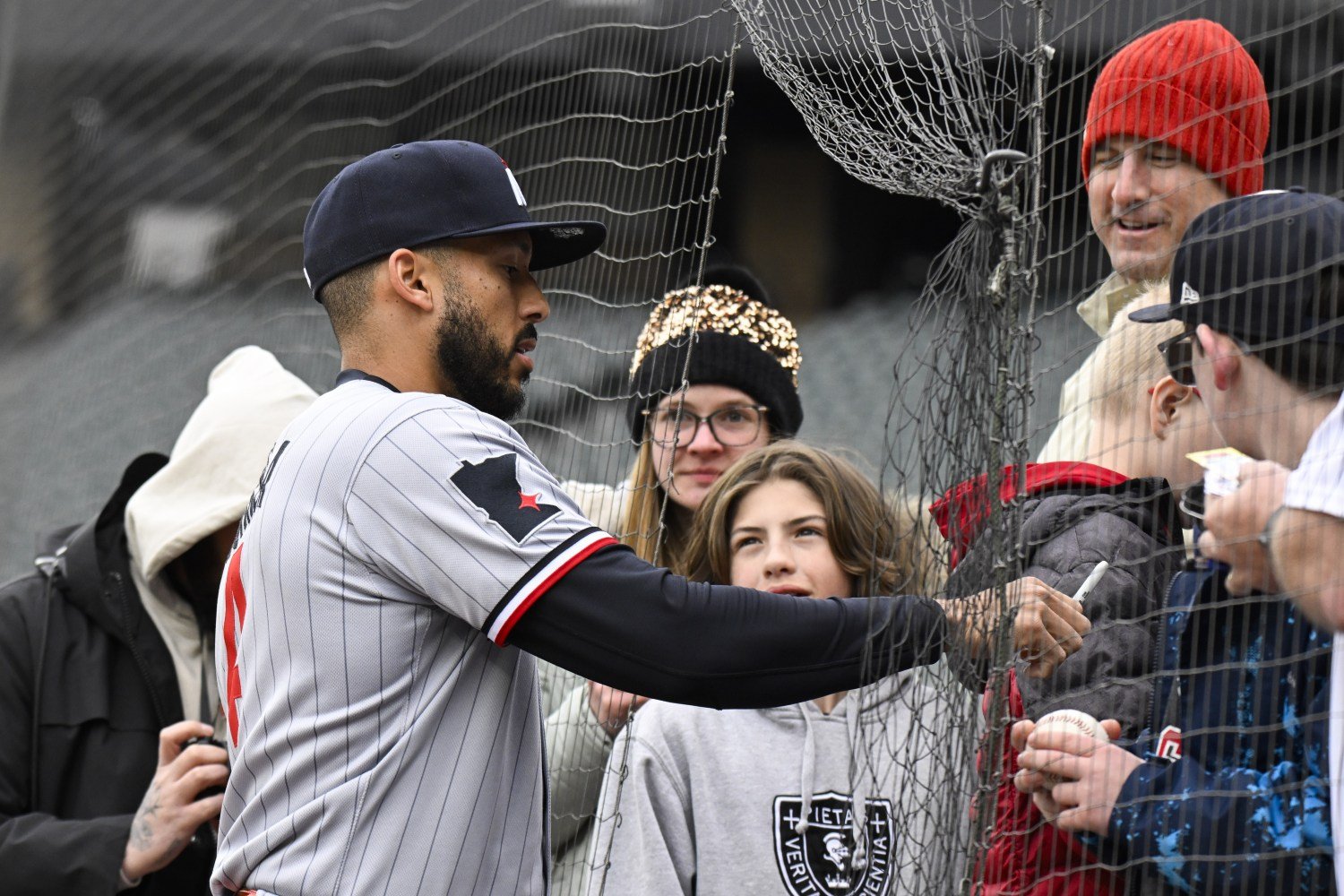 Through 18 plate appearances, Minnesota Twins shortstop Carlos Correa has been held hitless to begin his 2025 campaign. In addition to being unable to muster a hit at the plate, the star veteran has reached base only once, generating a walk in the final game of Minnesota's three-game opening series against the St. Louis Cardinals. Now, Correa hasn't been alone in his offensive ineptitude. Before manufacturing five runs in the sixth inning of Tuesday night's win against the Chicago White Sox, the Twins had been sporting the worst offense in MLB, generating a 23 wRC+ over 136 combined plate appearances. Every position player but Willi Castro has been underwhelming at the plate. Correa's lack of production has been particularly troublesome, considering he has been a steady force on whom the team has relied in times of extreme volatility. That said, Correa's struggles have taken place within an exceptionally small sample, and his underlying metrics suggest he is nearing a breakthrough at the plate. Over his first 18 plate appearances, Correa has generated a 76.7 MPH bat speed (96th percentile) and 43.8% squared-up rate (97th percentile). All that bat speed would have tied Correa with Angels outfielder Jo Adell for the fifth-highest average bat speed in the majors last season. Adell has been a below-average offensive contributor over his career, but the four players behind Adell in average bat speed last season were Yordan Alvarez, Matt Chapman, Shohei Ohtani, and Gunnar Henderson. The four ahead of him were Aaron Judge, Kyle Schwarber, Oneil Cruz, and Giancarlo Stanton. Outliers aside, bat speed is highly indicative of effectiveness at the plate, and Correa is more similar to players like Chapman and Henderson than Adell or Cruz. If Correa can continue to generate that kind of bat speed, hard contact will follow and balls will begin to drop, lending merit to the idea that he can produce at the rate he did the first half last season. Squared-up rate is a more convoluted advanced metric than assessing how fast a player swings their bat. The metric measures how much of the highest possible exit velocity a batter could obtain (based on a hitter's swing speed and the speed of the incoming pitch) they actually achieve; it expresses how often they make truly solid contact. Any swing that is at least 80% efficient in this regard is considered a squared-up swing by Statcast measurements. Correa has squared up 43.8% of the balls he has put in play. If he finished last season at that rate, he would have finished with the second-best squared-up rate, behind only Luis Arráez. Arráez, of course, has the league's slowest swing, preferring extreme control of the bat (and the resulting ability to make more contact than anyone else) to power. It's very rare to have both excellent bat speed and a high rate of squaring up the ball. That Correa is doing so implies that his slump will be very short-lived. He's a standout among American League hitters with at least 10 swings this season, when it comes to the combination of bat speed and the capacity to square it up. Now, it would be malpractice to make any definitive assessments over 18 plate appearances. However, considering the 11-year veteran has always hit the ball hard while displaying a keen eye at the plate, there is reason to suspect he will quickly begin producing at the rate that led to him earning his first All-Star nod as a Twin last season. Correa's inability to produce at the plate early this season has played a significant role in the club's offensive struggles. That said, his underlying metrics suggest he is on the verge of breaking through—and yet again becoming a near-elite offensive contributor at the top of Minnesota's lineup.
 -
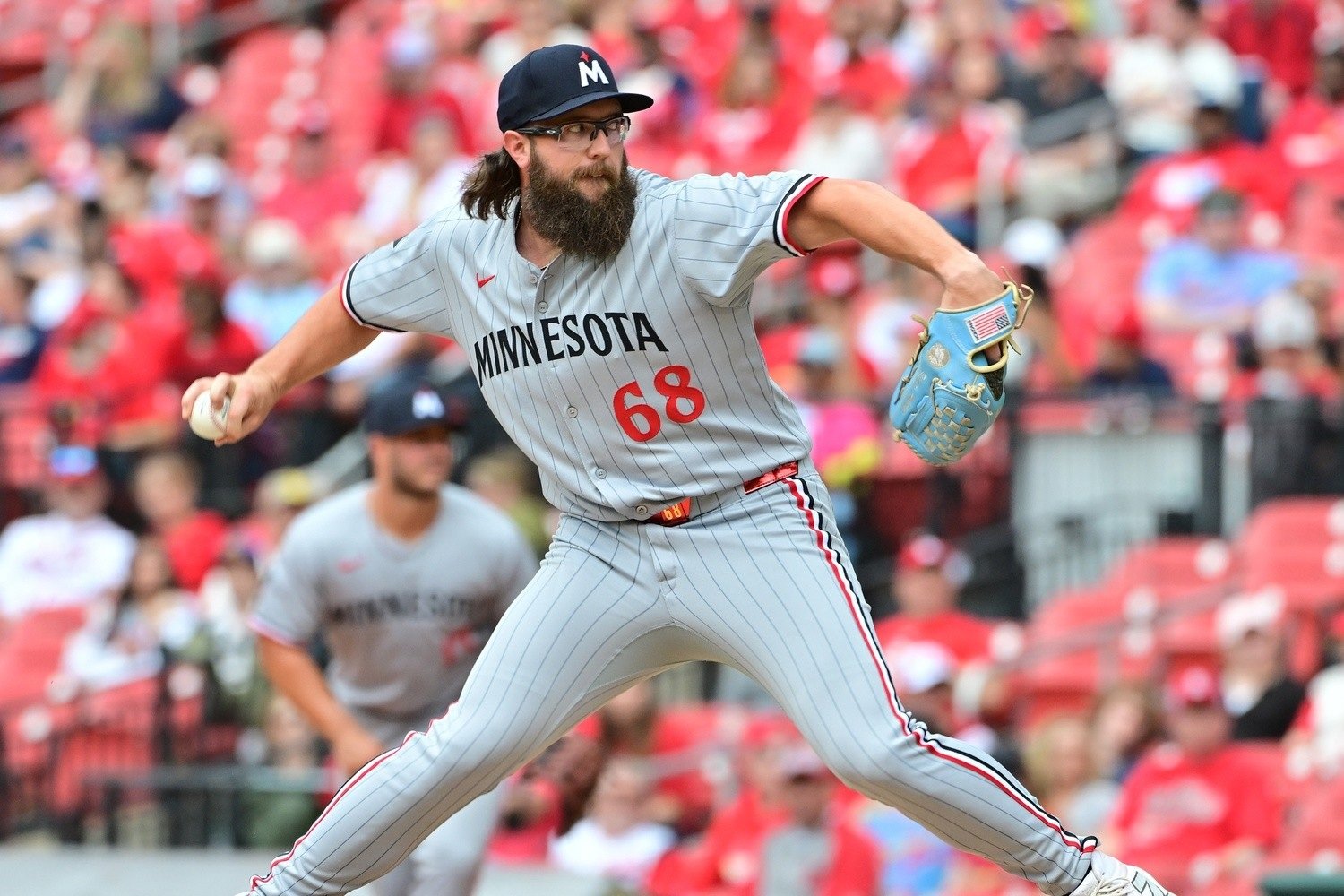 Despite losing their first three games to begin the 2025 campaign, Minnesota Twins starting pitchers Pablo López and Joe Ryan cobbled together respectable starts against the St. Louis Cardinals, netting an 8-to-0 strikeout-to-walk ratio while allowing just two earned runs over a combined 10 innings pitched. The club's fortunes changed Sunday, when a virus-stricken Bailey Ober imploded, allowing eight earned runs over 2 2/3 innings. Ober's truncated outing paved the way for fan-favorite right-handed reliever Randy Dobnak to make his first appearance of the season. Dobnak entered the game with a runner on first and two outs. He was quickly able to escape the inning, getting designated hitter Willson Contreras to line out to left fielder Harrison Bader. The game would then be delayed for roughly an hour, due to a rain delay. Instead of deferring to a different reliever, however, Minnesota trotted Dobnak out for the bottom of the fourth, suggesting they were prepared to have the 30-year-old eat innings. The former Indy ball star did just that, allowing one run over 5 1/3 innings to complete the contest. Stretching Dobnak out for 79 pitches allowed Minnesota to rest their seven other relievers. That being the case, manager Rocco Baldelli should have access to most of his relievers as the club seeks their first win of the 2025 MLB season against the Chicago White Sox Tuesday. Minnesota's ability to avoid taxing its bullpen (particularly its high-leverage arms) early in the season was a favorable outcome. That said, Dobnak eating extended innings means he must be sidelined for the next two to three games. If the club had kept him on the 26-man roster, they would have been shorthanded in their upcoming three-game set on the South Side of Chicago. However, they elected to designate him for assignment and select the contract of Darren McCaughan. Designating Dobnak for assignment makes sense from a roster construction perspective, particularly considering that Chris Paddack lasted only 3 1/3 innings during his start Monday. If Dobnak were still occupying a roster spot, the club would have been forced to stretch out medium- to high-leverage arms like Jorge Alcalá and Louis Varland for multiple innings, which is an undesirable outcome—especially this early in the season. Evidently, that threat was eradicated with the purchase of McCaughan's contract. That said, the decision doesn't sit right from a labor perspective. Now, to be critical of the Twins themselves would be mildly unfair. Minnesota needed a fresh bullpen arm. Despite Dobnak's laborious, depth-saving performance, league rule permits the club to designate him for assignment. Also, no other club will want to claim the $4 million remaining in the last year of his deal, suggesting he will stay with the organization. Twins decision-makers are acting reasonably, even if their measures are ultimately cold and callous. That said, there is reason to advocate that MLB should implement a rule prohibiting teams from demoting or releasing stretch relievers after tossing multiple innings in a mop-up role. Quantifying how many innings and/or pitches thrown would make a reliever immune from demotion or being cut would be complicated. Three innings pitched and/or 50 pitches thrown is a rational starting point. Dobnak is a unique case, in that he will continue to earn his salary if he accepts an outright assignment. However, the money earned from staying on the roster for as little as two to three extra days could be life-altering for a journeyman reliever like McCaughan, or young arms yet to make their major-league debut (like Travis Adams or Marco Raya). More importantly, if there were a protective period after a long relief outing to prevent a team from profiting by casting off a player in the wake of a valued service, they would be less likely to cut or option those players at all. By the time they'd be allowed to part ways with the hurler, that pitcher would be available again. It would apply more pressure to teams to get length from their starters and to manage the workloads of their relievers, but it would also stabilize their pitching staffs by preventing some of the most manipulative churn-and-burn toward which most organizations strongly lean. It would force a plan for using and compensating pitchers that better reflects their value to the franchise, as individuals, and it would eventually be better for the teams, too.
 -
Yes, MLB is a business. Still, clubs should treat their fringe 26-man roster players more respectfully. Despite losing their first two games to begin their 2025 campaign, Minnesota Twins starting pitchers Pablo López and Joe Ryan manufactured respectable starts against the (daunting?) St. Louis Cardinals, netting an 8-to-0 strikeout-to-walk ratio while allowing just two earned runs over a combined ten innings pitched. That said, the club's fortunes changed Sunday when a virus-stricken Bailey Ober imploded, allowing eight earned runs over 2 2/3 innings pitched. Ober could not get out of the third inning, lending way to fan-favorite right-handed reliever Randy Dobnak making his first appearance of the season. Dobnak entered the game with a runner on first with two outs. However, he was quickly able to wiggle his way out of the inning, getting designating hitter Willson Contreras to line out to left fielder Harrison Bader in just three pitches. The game would be suspended for roughly an hour due to a rain delay. Instead of deferring to a different reliever, however, Minnesota trotted Dobnak out for the bottom of the fourth, suggesting they were prepared to have the 30-year-old eat innings. The former Indy ball star would do just that, allowing up one run over 5 1/3 innings of the contest. Stretching Dobnak out for 79 pitches allowed Minnesota to rest their seven other relievers. That being the case, Manager Rocco Baldelli should have full access to the collective as the club seeks their first win of the 2025 MLB season against the Chicago White Sox this Monday. Minnesota's ability to avoid taxing its bullpen (particularly its high-leverage arms) early in the season was a favorable outcome. That said, Dobnak eating extended innings means he must be sidelined for the next two to three games. If the club had kept him on the 26-man roster, they would have been shorthanded in their upcoming three-game set on the Southside. However, they elected to designate him for assignment and select the contract of Darren McCaughan. Designating Dobnak for assignment makes sense from a roster construction perspective. Chris Paddack or Simeon Woods Richardson could similarly splinter in their upcoming starts against Chicago. If Dobnak were still occupying a roster spot, the club would have been forced to stretch out mid-to-high-leverage arms like Jorge Alcalá and Louis Varland for multiple innings, which is an undesirable outcome, especially this early in the season. Yet, that threat has been eradicated with the purchase of McCaughan's contract. That said, the decision doesn't sit right from a labor perspective. Now, to be critical of the Twins themselves would be misplaced. Minnesota needs a fresh bullpen arm. Despite Dobnak's laborious, depth-saving performance, league rule permits the club to designate him for assignment. Also, Dobnak understandably won't reject his outright assignment, and a different club won't want to claim the $4 million remaining in the last year of his deal, suggesting he will stay with the organization. Nevertheless, Twins decision-makers are acting reasonably, even if their measures are ultimately cold and callous. That said, there is reason to advocate that MLB should implement a rule prohibiting teams from demoting or DFAing stretch relievers after tossing multiple innings in a mop-up role. Quantifying how many innings and/or pitches thrown would make a reliever immune from demotion or being DFA'd would be complicated to calculate and enforce. That said, three innings pitched and/or 50 pitches thrown is a rational starting point. Now, Dobnak is a unique case in that he will continue to earn his $4 million salary if he accepts his outright assignment to Triple-A. However, the money earned from staying on the roster for as little as two to three extra days could be life-altering for a journeyman reliever like McCaughan or young arms yet to make their major league debut in Travis Adams or Marco Raya. Given MLB's willingness to capitulate to the current presidential administration's anti-DEI initiatives, there is reason to assume the league taking a pro-labor stance on any issue (even on an uncontroversial issue like this one) is unlikely. That said, the league would be shrewd to buck the trend and consider restricting clubs' ability to demote or DFA stretch relievers after shouldering load-barring loads in mop-up roles. Teams will understandably continue to manipulate this depth-preserving form of in-season bullpen construction. That said, fringe 26-man roster relievers deserve to be rewarded for their services, even if it thins the club’s bullpen depth for two to three games. View full article
-
I don't seem to understand your comment. This is very serious reporting from a very serious reporter (me). Could you not tell by the AP style dateline at the beginning of the article?
-
Twins recently acquired fourth outfielder is making a shocking career change. How will this affect the club's outfield depth? Image courtesy of Jonathan Dyer-Imagn Images FORT MYERS — Minnesota Twins outfielder Harrison Bader—signed to a one-year, $6.25 million contract in early February—told reporters Saturday he is exiting Major League Baseball to join indie ska band Vampire Weekend on their upcoming tour. "It's always been a dream of mine," proclaimed an ecstatic Bader. "I reached out to my cousin (Chris) Baio after they announced the second leg of their 'Only God Was Above Us' tour and asked if I could tag along." "I told him I've never played an instrument my entire life but that I have the work ethic necessary to become a multi-instrumentalist in less than two months," he continued, adding, "Baio told me he'd talk to Ezra (Koenig) and Chris (Tomson) and that he'd get back to me before spring training ended. Luckily, he called me this past Thursday and told me I was in so, yeah, I'm an indie artist now, man!" Bader had been performing well for Minnesota this spring, hitting .286/.390/.429 with 10 hits, two doubles, one home run, and a 120 wRC+ over 41 plate appearances. The 30-year-old had also netted playing time at all three outfield positions, signaling what his role with the playoff-hopeful club would have been this upcoming season. "I mean, no offense to the Twins and their fanbase, but I could give three s***s about baseball now. Have you listened to their most recent album? It's fantastic." Vampire Weekend's upcoming tour begins May 10 at the Just Like Heaven Festival in Pasadena, CA, and ends on Sept. 27 in Ocean City, MD, at the Oceans Calling Festival. The tour is primarily US-based. However, the alternative group will travel abroad to Japan and across Europe in August. Twins Daily reached out to Koenig for specifics on Bader's role with the group, to which he replied: "Yeah, Harrison's going to do a lot for us. Right now, we plan for him to be the guy who shouts 'Hey, hey, hey, hey' to the crowd during 'A-Punk.' We also plan for him to break out into interpretative dance during the sax solo in 'Classical' and dabble with playing the Baio family out-of-tune balalaika during 'Pravda,' assuming he can learn the instrument in less than two months." "I think this is really cool, actually," exclaimed Twins Executive Vice President Joe Pohlad. "I mean, I haven't listened to Vampire Weekend since, like, 2009, but I loved their early aesthetic of being prep school kids and hanging out on the beach at Cape Cod. It reminded me of my childhood." When asked about Bader's unexpected departure, Twins President of Baseball and Business Operations Derek Falvey told reporters, "Yeah, I mean, I'm stoked for Harrison. I also think this is really cool. And, glass half full, maybe Harrison can help us contend for a championship once the tour ends in late September. Nevertheless, this type of development touches our creative approach to roster construction in a literal sense. We love guys who appreciate the arts." Bader's departure will thin the club's outfield depth, especially from the right side of the plate. That said, the organization is excited to provide Austin Martin an opportunity while going to great lengths not to award an ever-deserving DaShawn Keirsey Jr. his shot. Tune in to Twins Daily for updates on Bader's role in the tour and how the club's outfield depth shakes out as the 2025 season begins next Thursday in St. Louis. View full article
-
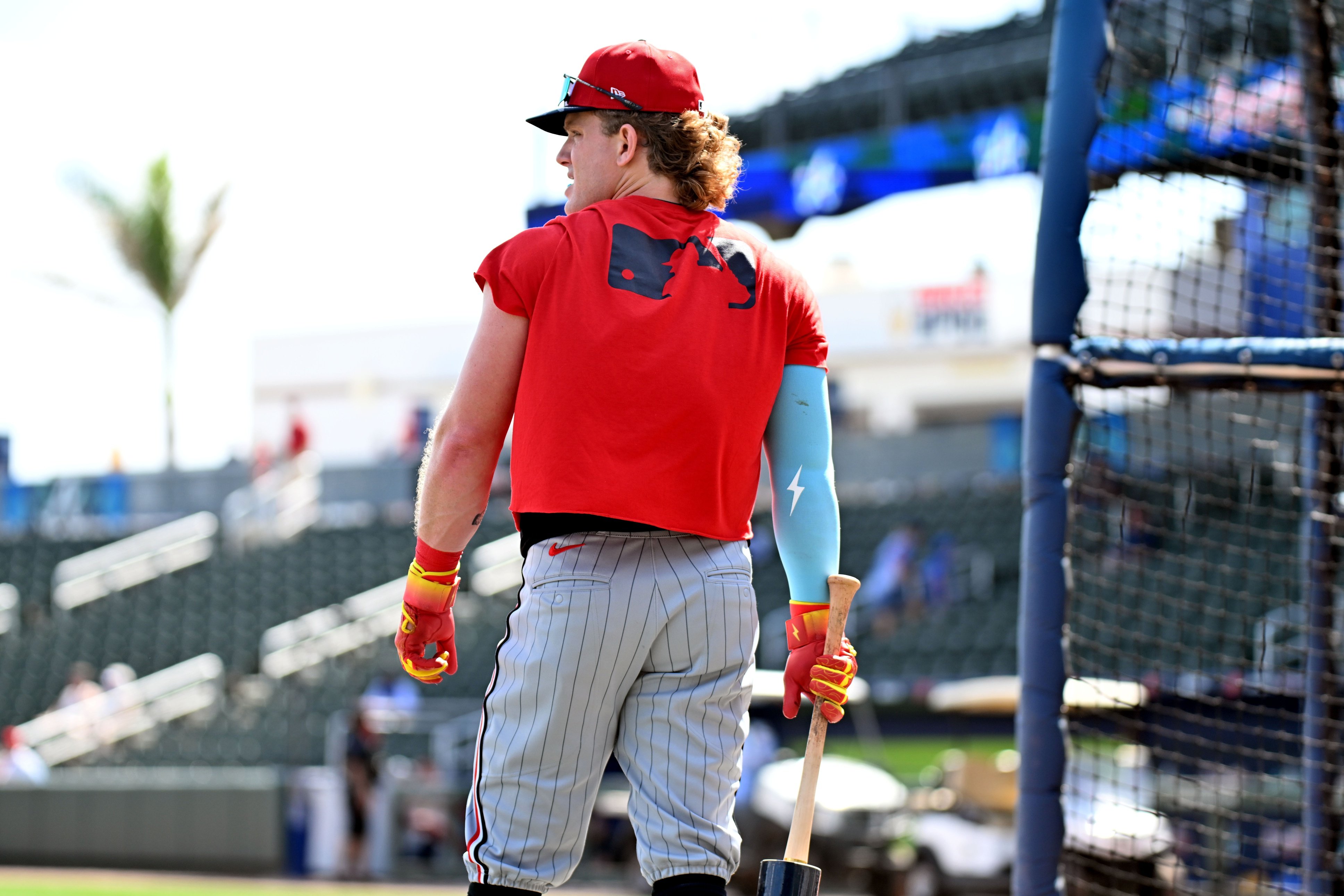 FORT MYERS — Minnesota Twins outfielder Harrison Bader—signed to a one-year, $6.25 million contract in early February—told reporters Saturday he is exiting Major League Baseball to join indie ska band Vampire Weekend on their upcoming tour. "It's always been a dream of mine," proclaimed an ecstatic Bader. "I reached out to my cousin (Chris) Baio after they announced the second leg of their 'Only God Was Above Us' tour and asked if I could tag along." "I told him I've never played an instrument my entire life but that I have the work ethic necessary to become a multi-instrumentalist in less than two months," he continued, adding, "Baio told me he'd talk to Ezra (Koenig) and Chris (Tomson) and that he'd get back to me before spring training ended. Luckily, he called me this past Thursday and told me I was in so, yeah, I'm an indie artist now, man!" Bader had been performing well for Minnesota this spring, hitting .286/.390/.429 with 10 hits, two doubles, one home run, and a 120 wRC+ over 41 plate appearances. The 30-year-old had also netted playing time at all three outfield positions, signaling what his role with the playoff-hopeful club would have been this upcoming season. "I mean, no offense to the Twins and their fanbase, but I could give three s***s about baseball now. Have you listened to their most recent album? It's fantastic." Vampire Weekend's upcoming tour begins May 10 at the Just Like Heaven Festival in Pasadena, CA, and ends on Sept. 27 in Ocean City, MD, at the Oceans Calling Festival. The tour is primarily US-based. However, the alternative group will travel abroad to Japan and across Europe in August. Twins Daily reached out to Koenig for specifics on Bader's role with the group, to which he replied: "Yeah, Harrison's going to do a lot for us. Right now, we plan for him to be the guy who shouts 'Hey, hey, hey, hey' to the crowd during 'A-Punk.' We also plan for him to break out into interpretative dance during the sax solo in 'Classical' and dabble with playing the Baio family out-of-tune balalaika during 'Pravda,' assuming he can learn the instrument in less than two months." "I think this is really cool, actually," exclaimed Twins Executive Vice President Joe Pohlad. "I mean, I haven't listened to Vampire Weekend since, like, 2009, but I loved their early aesthetic of being prep school kids and hanging out on the beach at Cape Cod. It reminded me of my childhood." When asked about Bader's unexpected departure, Twins President of Baseball and Business Operations Derek Falvey told reporters, "Yeah, I mean, I'm stoked for Harrison. I also think this is really cool. And, glass half full, maybe Harrison can help us contend for a championship once the tour ends in late September. Nevertheless, this type of development touches our creative approach to roster construction in a literal sense. We love guys who appreciate the arts." Bader's departure will thin the club's outfield depth, especially from the right side of the plate. That said, the organization is excited to provide Austin Martin an opportunity while going to great lengths not to award an ever-deserving DaShawn Keirsey Jr. his shot. Tune in to Twins Daily for updates on Bader's role in the tour and how the club's outfield depth shakes out as the 2025 season begins next Thursday in St. Louis.
 -
After suffering another soft-tissue injury, the should-be star third baseman will begin his 2025 campaign on the 10-day injured list. Given his injury-prone nature, should the Twins stop planning on Royce Lewis being a primary offensive contributor? Image courtesy of William Parmeter On Sunday, Minnesota Twins third baseman Royce Lewis pulled up while running out a groundball to dep third base, in the second inning of a spring training exhibition game against the Boston Red Sox. Lewis underwent an MRI and was diagnosed with a "moderate" hamstring strain that will keep him out for Opening Day—and perhaps for the first month or more of the season. Those who follow the club have familiarized themselves with Lewis needing to miss time due to soft-tissue injuries. He's had four separate IL stints over the past two seasons, due to straining his quadriceps, adductor, hamstring, and oblique. Lewis, 25, has blossomed into a core member of Minnesota's position player corps. He functions as a high-OBP, power-hitting cog in the middle of the club's lineup, alongside fellow above-average bats Matt Wallner, Carlos Correa, Byron Buxton, and Trevor Larnach. However, his frequent, extended absences create a significant vacancy, forcing the club to provide ample plate appearances to role players like José Miranda, Willi Castro, and Austin Martin. From a depth perspective, Minnesota is prepared to handle Lewis's current and potential future absences. As noted, Miranda and Castro possess the skillset necessary to fill the position for an extended stretch. Former top prospect Brooks Lee is an intriguing candidate to fill in at the position, too, though he could begin the season entrenched as the everyday second baseman. Since Lewis made his MLB debut in 2022, the Twins have rostered players like Miranda, Castro, Jorge Polanco, Kyle Farmer, Donovan Solano, and others who could fill in at third base when the injury-prone young star missed time. However, their roster construction process was less about rostering viable Lewis replacements and more about overall infield flexibility. Minnesota’s ability to succeed in 2025 will depend on Correa, Buxton, and Lewis’s ability to stay healthy and perform at or above their career rates. Relying on Correa and Buxton is a sound decision. Despite missing significant time in recent seasons, the two can be trusted to perform at an above-average rate in the field and at the plate when healthy. Just as importantly, the team has no choice. They've already made big, long-term financial commitments to both Correa and Buxton. Given the lack of durability for all three players, though, it's hard to justify making a third investment (even if it's mostly of playing time, for now) of the same kind. It's also easier to accept Buxton and Correa's injury frustrations, because they're such well-rounded players: good hitters and strong defenders at premium positions. On the other hand, Lewis has long possessed limited range and a lackluster glove in the hot corner. Still, the club could always count on him to thrive at the plate in limited sample sizes—until the second half of last season. Over 226 plate appearances from Jul. 26 through Sept. 29, Lewis hit .207/.270/.350, with 42 hits, 11 doubles, six home runs, a 24.8% strikeout rate, and 74 wRC+. The 25-year-old’s underwhelming performance at the plate resulted in a -0.77 Win Probability Added and being a driving force in the lineup’s late-season collapse. Since he has netted only 605 total plate appearances heading into his fourth major-league season, it’s nearly impossible to know what type of contributor Lewis is. Is he the star who led the organization to their first postseason victory in 19 years; the middling bat who performed at a well-below-league average rate (particularly against same-handed pitching) for months last season; or something in-between? Given his age, limited plate appearances, and substantial injury history, it would be malpractice to provide a declarative answer. Twins Territory has grown enamored with Lewis and his potential. But at times, it feels like that’s all it is: potential. His exceptionality exists more in theory than in reality. Acknowledging this uncertainty and his inability to stay on the field, Lewis must be decentered from the Twins' plans. Instead of penciling him as the everyday third baseman, the club should instead treat any contribution they receive from him as a welcome bonus, and make him win a spot (third base, second base, or potentially first base/designated hitter) when he performs at an average-plus rate offensively or demonstrates some semblance of durability. Minnesota’s core position players are Correa, Buxton, Wallner, Larnach, Castro, and Ryan Jeffers. They have earned that honor by consistently performing well and/or providing volume, versatility and defensive value. High-upside players like Lee, Miranda, Edouard Julien, Luke Keaschall, Emmanuel Rodriguez, and Walker Jenkins could join the mix soon. The Twins' position-player talent pool is rich. Obviously, Lewis could be a key figure in that group. When performing at his best, he is a dynamic power bat and a genuine difference-maker. Alas, he's rarely performing at all, and even when he is, it's not always at his best. View full article
-
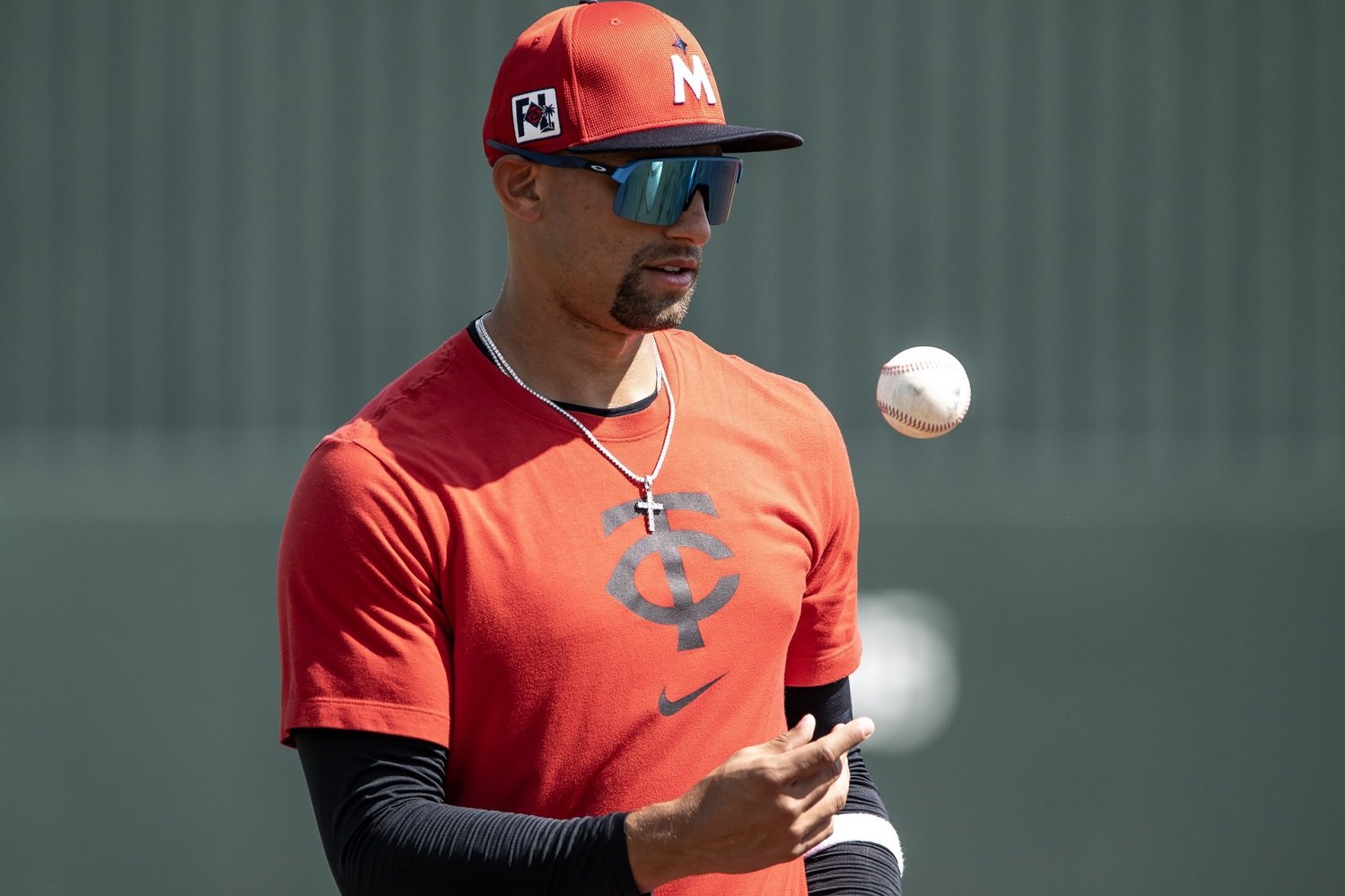 On Sunday, Minnesota Twins third baseman Royce Lewis pulled up while running out a groundball to dep third base, in the second inning of a spring training exhibition game against the Boston Red Sox. Lewis underwent an MRI and was diagnosed with a "moderate" hamstring strain that will keep him out for Opening Day—and perhaps for the first month or more of the season. Those who follow the club have familiarized themselves with Lewis needing to miss time due to soft-tissue injuries. He's had four separate IL stints over the past two seasons, due to straining his quadriceps, adductor, hamstring, and oblique. Lewis, 25, has blossomed into a core member of Minnesota's position player corps. He functions as a high-OBP, power-hitting cog in the middle of the club's lineup, alongside fellow above-average bats Matt Wallner, Carlos Correa, Byron Buxton, and Trevor Larnach. However, his frequent, extended absences create a significant vacancy, forcing the club to provide ample plate appearances to role players like José Miranda, Willi Castro, and Austin Martin. From a depth perspective, Minnesota is prepared to handle Lewis's current and potential future absences. As noted, Miranda and Castro possess the skillset necessary to fill the position for an extended stretch. Former top prospect Brooks Lee is an intriguing candidate to fill in at the position, too, though he could begin the season entrenched as the everyday second baseman. Since Lewis made his MLB debut in 2022, the Twins have rostered players like Miranda, Castro, Jorge Polanco, Kyle Farmer, Donovan Solano, and others who could fill in at third base when the injury-prone young star missed time. However, their roster construction process was less about rostering viable Lewis replacements and more about overall infield flexibility. Minnesota’s ability to succeed in 2025 will depend on Correa, Buxton, and Lewis’s ability to stay healthy and perform at or above their career rates. Relying on Correa and Buxton is a sound decision. Despite missing significant time in recent seasons, the two can be trusted to perform at an above-average rate in the field and at the plate when healthy. Just as importantly, the team has no choice. They've already made big, long-term financial commitments to both Correa and Buxton. Given the lack of durability for all three players, though, it's hard to justify making a third investment (even if it's mostly of playing time, for now) of the same kind. It's also easier to accept Buxton and Correa's injury frustrations, because they're such well-rounded players: good hitters and strong defenders at premium positions. On the other hand, Lewis has long possessed limited range and a lackluster glove in the hot corner. Still, the club could always count on him to thrive at the plate in limited sample sizes—until the second half of last season. Over 226 plate appearances from Jul. 26 through Sept. 29, Lewis hit .207/.270/.350, with 42 hits, 11 doubles, six home runs, a 24.8% strikeout rate, and 74 wRC+. The 25-year-old’s underwhelming performance at the plate resulted in a -0.77 Win Probability Added and being a driving force in the lineup’s late-season collapse. Since he has netted only 605 total plate appearances heading into his fourth major-league season, it’s nearly impossible to know what type of contributor Lewis is. Is he the star who led the organization to their first postseason victory in 19 years; the middling bat who performed at a well-below-league average rate (particularly against same-handed pitching) for months last season; or something in-between? Given his age, limited plate appearances, and substantial injury history, it would be malpractice to provide a declarative answer. Twins Territory has grown enamored with Lewis and his potential. But at times, it feels like that’s all it is: potential. His exceptionality exists more in theory than in reality. Acknowledging this uncertainty and his inability to stay on the field, Lewis must be decentered from the Twins' plans. Instead of penciling him as the everyday third baseman, the club should instead treat any contribution they receive from him as a welcome bonus, and make him win a spot (third base, second base, or potentially first base/designated hitter) when he performs at an average-plus rate offensively or demonstrates some semblance of durability. Minnesota’s core position players are Correa, Buxton, Wallner, Larnach, Castro, and Ryan Jeffers. They have earned that honor by consistently performing well and/or providing volume, versatility and defensive value. High-upside players like Lee, Miranda, Edouard Julien, Luke Keaschall, Emmanuel Rodriguez, and Walker Jenkins could join the mix soon. The Twins' position-player talent pool is rich. Obviously, Lewis could be a key figure in that group. When performing at his best, he is a dynamic power bat and a genuine difference-maker. Alas, he's rarely performing at all, and even when he is, it's not always at his best.
 -
How will the Twins' Opening Day 26-man roster shake out, now that their should-be star third baseman is expected to miss time due to a hamstring injury? Image courtesy of © Chris Tilley-Imagn Images Projecting 26-man rosters is a thankless practice. What looks like a sound prediction one day can be proven moot by a twinge or a sproing the next. Regardless, we here at Twins Daily persevere. Although our hard work is under a perpetual threat of being deemed meaningless and outdated, we still want to keep you, valued reader, informed on what your favorite team could look like as the 162-game season begins in less than two weeks. The Twins had been relatively lucky in the injury department for most of camp, as relievers Matt Canterino, Michael Tonkin, and Erasmo Ramírez were the only potential contributors who sustained significant injuries. Unfortunately, those fortunes changed when star third baseman Royce Lewis sustained a left hamstring strain in the process of grounding out to third base in the second inning of Sunday's exhibition game against the Boston Red Sox. Lewis will undergo an MRI on Monday and will almost certainly begin his 2025 campaign on the 10-day IL. What implications will his presumed absence have on the club's Opening Day 26-man roster? Let's take a look. Catchers (2): Ryan Jeffers, Christian Vázquez Minnesota will field Jeffers and Vázquez behind the plate for the third consecutive season. Last season, the two veterans started 81 games each at that spot, a perfect 50/50 split. Although generating a perfect split presumably won't happen again this season—it's nearly impossible to do that, from a logistical standpoint; props to you, Rocco Baldelli—the tandem will try again to maintain a near-perfect timeshare, with Vázquez potentially earning more time behind the plate due to his defensive superiority. The Twins have one of the best catching duos in the AL. Those who follow the team should find comfort in that reality, despite many vocally advocating for Vázquez's departure over the past five months. Jair Camargo will serve as the primary depth option at Triple A, with recently acquired post-hype prospect Diego Cartaya serving as a high-upside fourth option alongside Camargo in St. Paul. Infielders (7): Ty France, Brooks Lee, José Miranda, Carlos Correa, Willi Castro, Edouard Julien, Mickey Gasper This is going to be a little controversial, but hear me out. The Twins will exercise France's $1 million contract. Crazy! I know. Here I come with the hot takes on what's supposed to be a strictly informative 26-man roster projection. Arguably, Lewis's subtraction affects the right side of the infield more than his primary position, third base. The trio of Miranda, Lee, and Castro can sufficiently replace his production at the hot corner, with Miranda likely receiving the bulk of those opportunities. However, with Miranda and Lee needing to slide over to third base more than expected, depth becomes more of a concern at second and first. That being the case, I project Julien and Gasper (both of whom can play each of those spots) to be rewarded with spots on the 26-man roster. Their skill sets are redundant. However, Julien and Gasper being able to slot in at first base, second base, designated hitter, or a bench role on a game-to-game basis provides the club the flexibility necessary to navigate the early months of a 162-game marathon. Castro will remain in the second base, third base, and shortstop (and first base?) mix, but play plenty of outfield, too. Also, it should be noted that Correa is still an exceptional shortstop whose health will play an integral role in Minnesota's ability to return to the postseason. Outfielders (4): Trevor Larnach, Byron Buxton, Matt Wallner, Harrison Bader Aside from catcher, the Twins' outfield is their most stable position-player unit. Larnach and Wallner will handle the corners against right-handed pitching, with Buxton operating as a cog in center field. When the team faces left-handed starting pitchers, Bader could slot into left or right field, with Castro or one of Larnach or Wallner occupying the other corner. Like Lewis and Correa, Buxton's health will significantly affect how productive Minnesota's outfield can be. However, if Buxton does miss extended time, Bader or left-handed hitting outfield prospect DaShawn Keirsey could deliver the defensive prowess necessary to mimic his production in center field. Starting Rotation (5): Pablo López, Joe Ryan, Bailey Ober, Chris Paddack, Simeon Woods Richardson The organization optioning starting pitchers David Festa and Zebby Matthews to Triple-A this past Sunday solidifies Woods Richardson's standing in the club's five-pitcher starting rotation. Twins decision-makers awarding Woods Richardson the final rotation spot over Festa and Matthews isn't surprising, considering his contributions to the team in desperate times last season. However, there is reason to believe that Festa and Matthews will be the better pitchers in the long term. If Festa and Matthews perform well at Triple-A to begin the season (which is the expectation), it will be interesting to see if they usurp Woods Richardson or Paddack for one of the back-of-the-rotation spots. Alas, injuries will probably make that kind of speculation moot. López, Ryan, and Ober form one of the strongest starting pitching trios in baseball, and their ability to perform at or above their career rates will be a driving force in Minnesota's ability to bounce back from last season's drastic late-season collapse. Bullpen (8): Jhoan Durán, Griffin Jax, Cole Sands, Brock Stewart, Danny Coulombe, Jorge Alcalá, Louis Varland, Eiberson Castellano Did you know that FanGraphs projects the Twins to have the game's best bullpen? What?! I know! That's how I responded, too. Even if you follow the club closely, you are probably learning this information for the first time. I understand if some of you reading this need to regroup after exposure to the shocking truth I just dropped on you. Snark aside, yes, Minnesota's bullpen could be exceptional. However, injuries have made depth a concern. Tonkin and Ramírez won't be ready for Opening Day, and there is reason to suspect medium- to high-leverage reliever Justin Topa will also begin the season on the 15-day IL. That being the case, Alcalá and Varland are seemingly locked into the bullpen's sixth and seventh roles. Injuries should never be celebrated. However, it will be interesting to see Alcalá and (more notably) Varland receive extended opportunities in the bullpen. Both could blossom into fire-throwing high-leverage arms, which would be a welcome development. Despite a concerning 12-to-8 strikeout-to-walk ratio over eight innings pitched, Castellano's four-seam fastball and curveball have impressed this spring, lending merit to the possibility that team decision-makers will provide the 23-year-old Rule 5 Draft selection an opportunity with the major-league club out of camp. Nevertheless, Durán, Jax, Sands, Stewart, and Coulombe will be the driving force behind the bullpen's ability to succeed this season. Uncertainty and volatility are part of every bullpen. However, there is reason to believe this unit could be one the most hard-throwing and effective bullpens in baseball this season. View full article
-
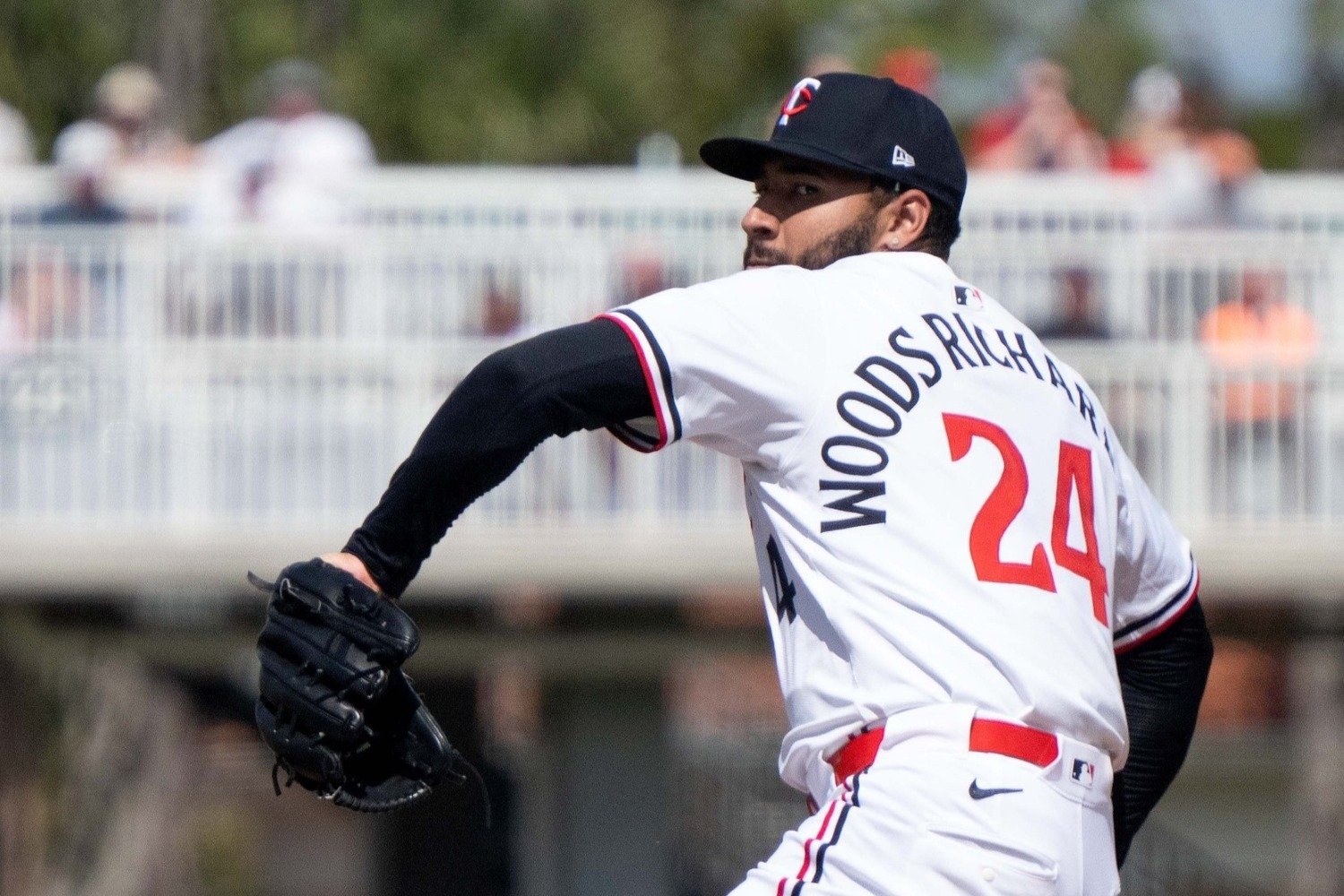 Projecting 26-man rosters is a thankless practice. What looks like a sound prediction one day can be proven moot by a twinge or a sproing the next. Regardless, we here at Twins Daily persevere. Although our hard work is under a perpetual threat of being deemed meaningless and outdated, we still want to keep you, valued reader, informed on what your favorite team could look like as the 162-game season begins in less than two weeks. The Twins had been relatively lucky in the injury department for most of camp, as relievers Matt Canterino, Michael Tonkin, and Erasmo Ramírez were the only potential contributors who sustained significant injuries. Unfortunately, those fortunes changed when star third baseman Royce Lewis sustained a left hamstring strain in the process of grounding out to third base in the second inning of Sunday's exhibition game against the Boston Red Sox. Lewis will undergo an MRI on Monday and will almost certainly begin his 2025 campaign on the 10-day IL. What implications will his presumed absence have on the club's Opening Day 26-man roster? Let's take a look. Catchers (2): Ryan Jeffers, Christian Vázquez Minnesota will field Jeffers and Vázquez behind the plate for the third consecutive season. Last season, the two veterans started 81 games each at that spot, a perfect 50/50 split. Although generating a perfect split presumably won't happen again this season—it's nearly impossible to do that, from a logistical standpoint; props to you, Rocco Baldelli—the tandem will try again to maintain a near-perfect timeshare, with Vázquez potentially earning more time behind the plate due to his defensive superiority. The Twins have one of the best catching duos in the AL. Those who follow the team should find comfort in that reality, despite many vocally advocating for Vázquez's departure over the past five months. Jair Camargo will serve as the primary depth option at Triple A, with recently acquired post-hype prospect Diego Cartaya serving as a high-upside fourth option alongside Camargo in St. Paul. Infielders (7): Ty France, Brooks Lee, José Miranda, Carlos Correa, Willi Castro, Edouard Julien, Mickey Gasper This is going to be a little controversial, but hear me out. The Twins will exercise France's $1 million contract. Crazy! I know. Here I come with the hot takes on what's supposed to be a strictly informative 26-man roster projection. Arguably, Lewis's subtraction affects the right side of the infield more than his primary position, third base. The trio of Miranda, Lee, and Castro can sufficiently replace his production at the hot corner, with Miranda likely receiving the bulk of those opportunities. However, with Miranda and Lee needing to slide over to third base more than expected, depth becomes more of a concern at second and first. That being the case, I project Julien and Gasper (both of whom can play each of those spots) to be rewarded with spots on the 26-man roster. Their skill sets are redundant. However, Julien and Gasper being able to slot in at first base, second base, designated hitter, or a bench role on a game-to-game basis provides the club the flexibility necessary to navigate the early months of a 162-game marathon. Castro will remain in the second base, third base, and shortstop (and first base?) mix, but play plenty of outfield, too. Also, it should be noted that Correa is still an exceptional shortstop whose health will play an integral role in Minnesota's ability to return to the postseason. Outfielders (4): Trevor Larnach, Byron Buxton, Matt Wallner, Harrison Bader Aside from catcher, the Twins' outfield is their most stable position-player unit. Larnach and Wallner will handle the corners against right-handed pitching, with Buxton operating as a cog in center field. When the team faces left-handed starting pitchers, Bader could slot into left or right field, with Castro or one of Larnach or Wallner occupying the other corner. Like Lewis and Correa, Buxton's health will significantly affect how productive Minnesota's outfield can be. However, if Buxton does miss extended time, Bader or left-handed hitting outfield prospect DaShawn Keirsey could deliver the defensive prowess necessary to mimic his production in center field. Starting Rotation (5): Pablo López, Joe Ryan, Bailey Ober, Chris Paddack, Simeon Woods Richardson The organization optioning starting pitchers David Festa and Zebby Matthews to Triple-A this past Sunday solidifies Woods Richardson's standing in the club's five-pitcher starting rotation. Twins decision-makers awarding Woods Richardson the final rotation spot over Festa and Matthews isn't surprising, considering his contributions to the team in desperate times last season. However, there is reason to believe that Festa and Matthews will be the better pitchers in the long term. If Festa and Matthews perform well at Triple-A to begin the season (which is the expectation), it will be interesting to see if they usurp Woods Richardson or Paddack for one of the back-of-the-rotation spots. Alas, injuries will probably make that kind of speculation moot. López, Ryan, and Ober form one of the strongest starting pitching trios in baseball, and their ability to perform at or above their career rates will be a driving force in Minnesota's ability to bounce back from last season's drastic late-season collapse. Bullpen (8): Jhoan Durán, Griffin Jax, Cole Sands, Brock Stewart, Danny Coulombe, Jorge Alcalá, Louis Varland, Eiberson Castellano Did you know that FanGraphs projects the Twins to have the game's best bullpen? What?! I know! That's how I responded, too. Even if you follow the club closely, you are probably learning this information for the first time. I understand if some of you reading this need to regroup after exposure to the shocking truth I just dropped on you. Snark aside, yes, Minnesota's bullpen could be exceptional. However, injuries have made depth a concern. Tonkin and Ramírez won't be ready for Opening Day, and there is reason to suspect medium- to high-leverage reliever Justin Topa will also begin the season on the 15-day IL. That being the case, Alcalá and Varland are seemingly locked into the bullpen's sixth and seventh roles. Injuries should never be celebrated. However, it will be interesting to see Alcalá and (more notably) Varland receive extended opportunities in the bullpen. Both could blossom into fire-throwing high-leverage arms, which would be a welcome development. Despite a concerning 12-to-8 strikeout-to-walk ratio over eight innings pitched, Castellano's four-seam fastball and curveball have impressed this spring, lending merit to the possibility that team decision-makers will provide the 23-year-old Rule 5 Draft selection an opportunity with the major-league club out of camp. Nevertheless, Durán, Jax, Sands, Stewart, and Coulombe will be the driving force behind the bullpen's ability to succeed this season. Uncertainty and volatility are part of every bullpen. However, there is reason to believe this unit could be one the most hard-throwing and effective bullpens in baseball this season.
- 75 comments
-
- 12
-

-
- royce lewis
- edouard julien
- (and 5 more)
-
Wednesday's lineup signaled that the Twins might have more options than we thought at a spot where depth was very much in question. Image courtesy of © Jonathan Dyer-Imagn Images This Wednesday, manager Rocco Baldelli constructed a unique lineup, in what was otherwise a conventional Grapefruit League exhibition game between the Minnesota Twins and Boston Red Sox. Facing right-handed starting pitcher Tanner Houck, left-handed hitting Matt Wallner remained in the leadoff spot, a role he has occupied often this spring. However, instead of playing right field (the position he occupied in his previous 10 starts), the power-hitting lefty started at designated hitter. Those who follow the team had wondered how the lineup would be constructed when the team was facing a right-handed starting pitcher and Wallner wasn’t in right field. (Presumably, such days will be rare once the season starts, but it's still important to get the answer to that question.) Would Trevor Larnach shift over from left field? Would Willi Castro be thrown into a position at which he has rarely played over his major-league career? Interestingly, neither of those happened Wednesday. Instead, right-handed hitting Harrison Bader got the nod. Now, on the surface, there shouldn’t be much surprise over a plus defensive outfielder playing a corner spot, but doing so seemingly ran counter to club decision-makers' messaging when Minnesota signed Bader in early February. In an article from Star-Tribune Twins beat writer Phil Miller on Feb. 18, Baldelli discussed which position the erstwhile Cardinal would play. Unsurprisingly, the skipper said that Bader would function as Byron Buxton’s primary backup in center field. Yet, he also shared that the club plans to provide Bader extended opportunities in left field. “At our ballpark, when you’re talking about the corners, [left field] is a much bigger playing surface than right field," Baldelli said. So I think putting one of the best outfielders in the game in left field, as opposed to right, makes some sense.” The last time Bader played left field in the majors was in 2018, when he netted 29 ⅔ innings over six appearances at the position for the St. Louis Cardinals. He played the position in 2017, too, with a nearly identical 29 innings played over seven appearances. Despite limited playing time at the position, though, Bader should thrive in left, given his ability to thrive defensively in center field. That being the case, there is reason to believe he could also perform at an above-average rate in right, where he has spent more time over his career. Like left field, the last time the Florida product played right field was in 2018 with St. Louis. However, he accumulated significantly more playing at the position that season, generating 270 innings over 38 appearances. He also played 7 ⅔ innings at the position in 2017. Right field is slightly roomier at Busch Stadium. So, like Baldelli, St. Louis decision-makers were purposely placing Bader in the more spacious corner. That said, he has more experience at the position, meaning Minnesota doesn’t need to limit him to just left field, and starting him in right field this past Wednesday seemingly validates that notion. When Baldelli announced that the club would provide Bader opportunities primarily in center and left field, those following the team began speculating about who would play right field when Wallner was out of the lineup or starting at designated hitter. If Wednesday’s lineup signals extended opportunities for Bader in right field, though, the picture becomes much more apparent. When Minnesota faces a left-handed starting pitcher, Bader could play right field, and Castro could slot into left, a position he is much more familiar with. When Wallner is starting at designated hitter against right-handed starting pitchers, Bader could also slot into right field, with Larnach staying in left. Providing Bader playing time at right field is wise, especially considering the lack of options at the position after Wallner and Larnach. Although Baldelli’s initial comments signaled Bader would primarily play center or left field, the club has seemingly yielded to its own preference for flexibility. View full article
-
Harrison Bader Might Have a Role in Right Field, After All
Cody Schoenmann posted an article in Twins
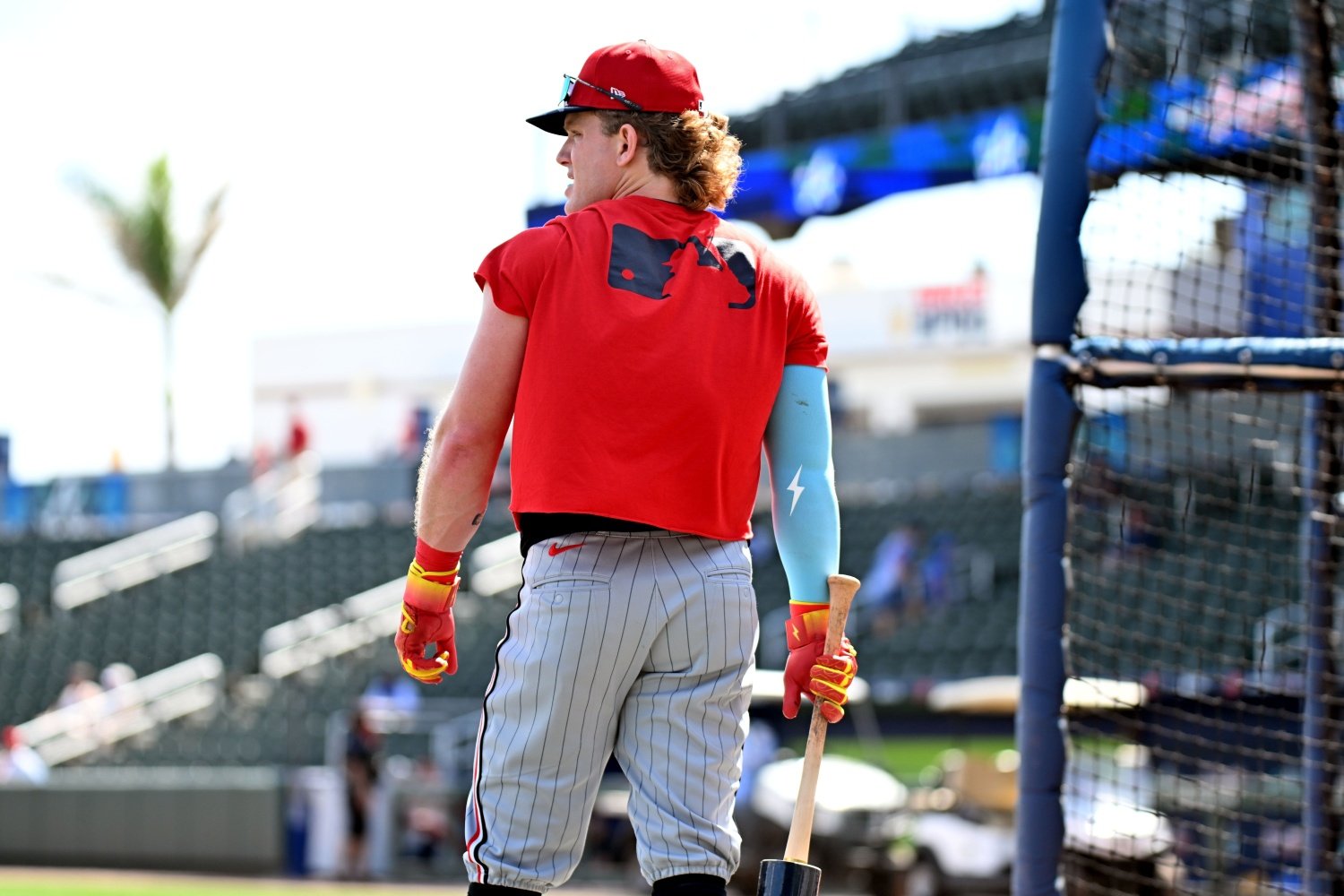 This Wednesday, manager Rocco Baldelli constructed a unique lineup, in what was otherwise a conventional Grapefruit League exhibition game between the Minnesota Twins and Boston Red Sox. Facing right-handed starting pitcher Tanner Houck, left-handed hitting Matt Wallner remained in the leadoff spot, a role he has occupied often this spring. However, instead of playing right field (the position he occupied in his previous 10 starts), the power-hitting lefty started at designated hitter. Those who follow the team had wondered how the lineup would be constructed when the team was facing a right-handed starting pitcher and Wallner wasn’t in right field. (Presumably, such days will be rare once the season starts, but it's still important to get the answer to that question.) Would Trevor Larnach shift over from left field? Would Willi Castro be thrown into a position at which he has rarely played over his major-league career? Interestingly, neither of those happened Wednesday. Instead, right-handed hitting Harrison Bader got the nod. Now, on the surface, there shouldn’t be much surprise over a plus defensive outfielder playing a corner spot, but doing so seemingly ran counter to club decision-makers' messaging when Minnesota signed Bader in early February. In an article from Star-Tribune Twins beat writer Phil Miller on Feb. 18, Baldelli discussed which position the erstwhile Cardinal would play. Unsurprisingly, the skipper said that Bader would function as Byron Buxton’s primary backup in center field. Yet, he also shared that the club plans to provide Bader extended opportunities in left field. “At our ballpark, when you’re talking about the corners, [left field] is a much bigger playing surface than right field," Baldelli said. So I think putting one of the best outfielders in the game in left field, as opposed to right, makes some sense.” The last time Bader played left field in the majors was in 2018, when he netted 29 ⅔ innings over six appearances at the position for the St. Louis Cardinals. He played the position in 2017, too, with a nearly identical 29 innings played over seven appearances. Despite limited playing time at the position, though, Bader should thrive in left, given his ability to thrive defensively in center field. That being the case, there is reason to believe he could also perform at an above-average rate in right, where he has spent more time over his career. Like left field, the last time the Florida product played right field was in 2018 with St. Louis. However, he accumulated significantly more playing at the position that season, generating 270 innings over 38 appearances. He also played 7 ⅔ innings at the position in 2017. Right field is slightly roomier at Busch Stadium. So, like Baldelli, St. Louis decision-makers were purposely placing Bader in the more spacious corner. That said, he has more experience at the position, meaning Minnesota doesn’t need to limit him to just left field, and starting him in right field this past Wednesday seemingly validates that notion. When Baldelli announced that the club would provide Bader opportunities primarily in center and left field, those following the team began speculating about who would play right field when Wallner was out of the lineup or starting at designated hitter. If Wednesday’s lineup signals extended opportunities for Bader in right field, though, the picture becomes much more apparent. When Minnesota faces a left-handed starting pitcher, Bader could play right field, and Castro could slot into left, a position he is much more familiar with. When Wallner is starting at designated hitter against right-handed starting pitchers, Bader could also slot into right field, with Larnach staying in left. Providing Bader playing time at right field is wise, especially considering the lack of options at the position after Wallner and Larnach. Although Baldelli’s initial comments signaled Bader would primarily play center or left field, the club has seemingly yielded to its own preference for flexibility.
 -
Another Schoenmann touch whopper :/
-
He was one of the best AL starting pitchers last season, before suffering a season-ending Grade 2 teres major strain in early August. Could 2025 be a career year for the 28-year-old, despite returning from a serious injury? Image courtesy of William Parmeter When discussing starting pitcher Joe Ryan's progress with reporters in Fort Myers last weekend, Minnesota Twins manager Rocco Baldelli sounded not only unconcerned, but excited. "In regards to (Ryan's) build-up, he is completely on the path of what the pitching coaches want to do with him," the skipper said. Baldelli then affirmed that the 28-year-old righty is on a standard pitching plan and is no longer operating under rehabilitation protocols. That's a welcome development for a club struck by multiple injuries to pitchers. Ryan appears on track to be a member of the starting rotation on Opening Day. Before sustaining the shoulder injury while pitching against the Chicago Cubs last summer, Ryan was one of the most exciting starting pitchers in the American League, generating a 3.60 ERA, 3.44 FIP, and a 147-to-23 strikeout-to-walk-ratio. He's an integral part of Minnesota's success. His absence significantly contributed to the club's late-season collapse, and his ability to return and perform at an above-average rate in 2025 will drive the club's ability to return to the postseason. Luckily, signs point to him picking up where he left off, with the opportunity to take a considerable step forward in his fifth major-league season. Driven by him throwing his four-seam fastball high in the zone at a 71% strike rate last season, Ryan was one of the most effective starting pitchers at suppressing walks. He maintained a preposterously good 4.3% walk rate over 135 innings pitched. The Cal State-Stanislaus product has sustained this approach his entire career, which is wise: it's a strong foundation that leads to him getting ahead in counts early and often. Throughout his career, his fastball's gradual velocity increase has made the pitch even more effective, and the pitch should be similarly dominant in 2025. While his fastball and zone command are among the strongest in the league, he had long been searching for consistently effective secondary pitches. Interestingly, he seemingly discovered his ideal pitch-mix last season. Ryan's most-used non-fastball was his splitter, which he threw 22% of the time. He mainly relied on it against left-handed hitters. That was a wise decision, as he could find strikes low in the zone with his splitter against lefties, which increased the efficacy of his already-elite fastball. His tertiary pitch was his sweeper, which he primarily used against right-handed hitters. He also threw his gyro slider 8% of the time, which functioned as an effective faster, tighter breaking pitch against same-handed hitters. His splitter, sweeper, and gyro slider netted a combined .204 opponent batting average, demonstrating that the pitches complemented his fastball exceptionally well. He also tinkered with a sinker last season, which could blossom into an adequate fastball variant that can run in on right-handed hitters. Ryan has a unique fastball, three compelling secondary pitches that work well against hitters of either handedness, and the ability to pound the zone as well as any starting pitcher in the majors. What more could one want from a starting pitcher? Despite undergoing a significant dip in performance while hiding a left groin strain from the Twins' trainers in 2023, Ryan has improved every season since joining the Minnesota organization. He was the best starting pitcher on a playoff-hopeful club for a substantial portion of last season, and should have been an All-Star. Given a clean bill of health, while showing signs of further bolstering his secondary pitches to complement his indomitable fastball, there is reason to expect Ryan to have his best season yet and propel himself to ace status. Making 1-to-1 comparisons to pitchers of seasons past is often a fool's errand. However, there is reason to suspect Ryan could put together a season similar to Sonny Gray's Cy Young-deserving 2023 campaign. This season, Ryan should net a better strikeout rate, walk rate, hard-hit rate, WHIP, BABIP, and opponent batting average than Gray did in 2023. Given that Ryan attacks up in the zone with a flat fastball, it will be nearly impossible for him to come close to emulating Gray's 0.39 home runs per nine (HR/9) in 2023. However, there is reason to expect his refined pitch mix and increased four-seam fastball velocity will aid in his ability to suppress home runs. Ryan has demonstrated the ingredients necessary to become an optimized version of himself on the mound this season. If he does, he could become the first Twins starting pitcher to win the AL Cy Young award since Johan Santana in 2006. Twins Daily's John Bonnes contributed on-site reporting. View full article
-
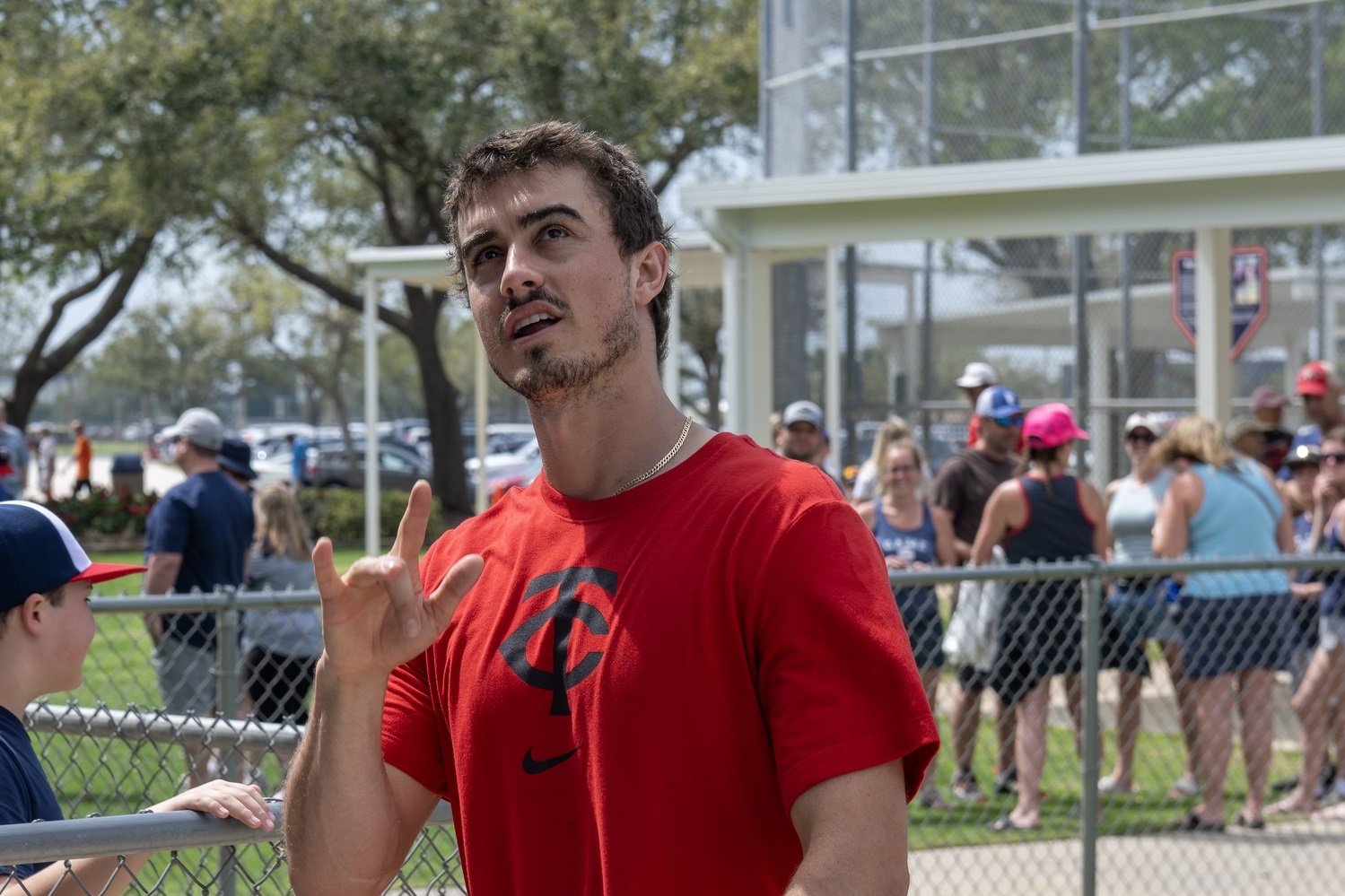 When discussing starting pitcher Joe Ryan's progress with reporters in Fort Myers last weekend, Minnesota Twins manager Rocco Baldelli sounded not only unconcerned, but excited. "In regards to (Ryan's) build-up, he is completely on the path of what the pitching coaches want to do with him," the skipper said. Baldelli then affirmed that the 28-year-old righty is on a standard pitching plan and is no longer operating under rehabilitation protocols. That's a welcome development for a club struck by multiple injuries to pitchers. Ryan appears on track to be a member of the starting rotation on Opening Day. Before sustaining the shoulder injury while pitching against the Chicago Cubs last summer, Ryan was one of the most exciting starting pitchers in the American League, generating a 3.60 ERA, 3.44 FIP, and a 147-to-23 strikeout-to-walk-ratio. He's an integral part of Minnesota's success. His absence significantly contributed to the club's late-season collapse, and his ability to return and perform at an above-average rate in 2025 will drive the club's ability to return to the postseason. Luckily, signs point to him picking up where he left off, with the opportunity to take a considerable step forward in his fifth major-league season. Driven by him throwing his four-seam fastball high in the zone at a 71% strike rate last season, Ryan was one of the most effective starting pitchers at suppressing walks. He maintained a preposterously good 4.3% walk rate over 135 innings pitched. The Cal State-Stanislaus product has sustained this approach his entire career, which is wise: it's a strong foundation that leads to him getting ahead in counts early and often. Throughout his career, his fastball's gradual velocity increase has made the pitch even more effective, and the pitch should be similarly dominant in 2025. While his fastball and zone command are among the strongest in the league, he had long been searching for consistently effective secondary pitches. Interestingly, he seemingly discovered his ideal pitch-mix last season. Ryan's most-used non-fastball was his splitter, which he threw 22% of the time. He mainly relied on it against left-handed hitters. That was a wise decision, as he could find strikes low in the zone with his splitter against lefties, which increased the efficacy of his already-elite fastball. His tertiary pitch was his sweeper, which he primarily used against right-handed hitters. He also threw his gyro slider 8% of the time, which functioned as an effective faster, tighter breaking pitch against same-handed hitters. His splitter, sweeper, and gyro slider netted a combined .204 opponent batting average, demonstrating that the pitches complemented his fastball exceptionally well. He also tinkered with a sinker last season, which could blossom into an adequate fastball variant that can run in on right-handed hitters. Ryan has a unique fastball, three compelling secondary pitches that work well against hitters of either handedness, and the ability to pound the zone as well as any starting pitcher in the majors. What more could one want from a starting pitcher? Despite undergoing a significant dip in performance while hiding a left groin strain from the Twins' trainers in 2023, Ryan has improved every season since joining the Minnesota organization. He was the best starting pitcher on a playoff-hopeful club for a substantial portion of last season, and should have been an All-Star. Given a clean bill of health, while showing signs of further bolstering his secondary pitches to complement his indomitable fastball, there is reason to expect Ryan to have his best season yet and propel himself to ace status. Making 1-to-1 comparisons to pitchers of seasons past is often a fool's errand. However, there is reason to suspect Ryan could put together a season similar to Sonny Gray's Cy Young-deserving 2023 campaign. This season, Ryan should net a better strikeout rate, walk rate, hard-hit rate, WHIP, BABIP, and opponent batting average than Gray did in 2023. Given that Ryan attacks up in the zone with a flat fastball, it will be nearly impossible for him to come close to emulating Gray's 0.39 home runs per nine (HR/9) in 2023. However, there is reason to expect his refined pitch mix and increased four-seam fastball velocity will aid in his ability to suppress home runs. Ryan has demonstrated the ingredients necessary to become an optimized version of himself on the mound this season. If he does, he could become the first Twins starting pitcher to win the AL Cy Young award since Johan Santana in 2006. Twins Daily's John Bonnes contributed on-site reporting.
 -
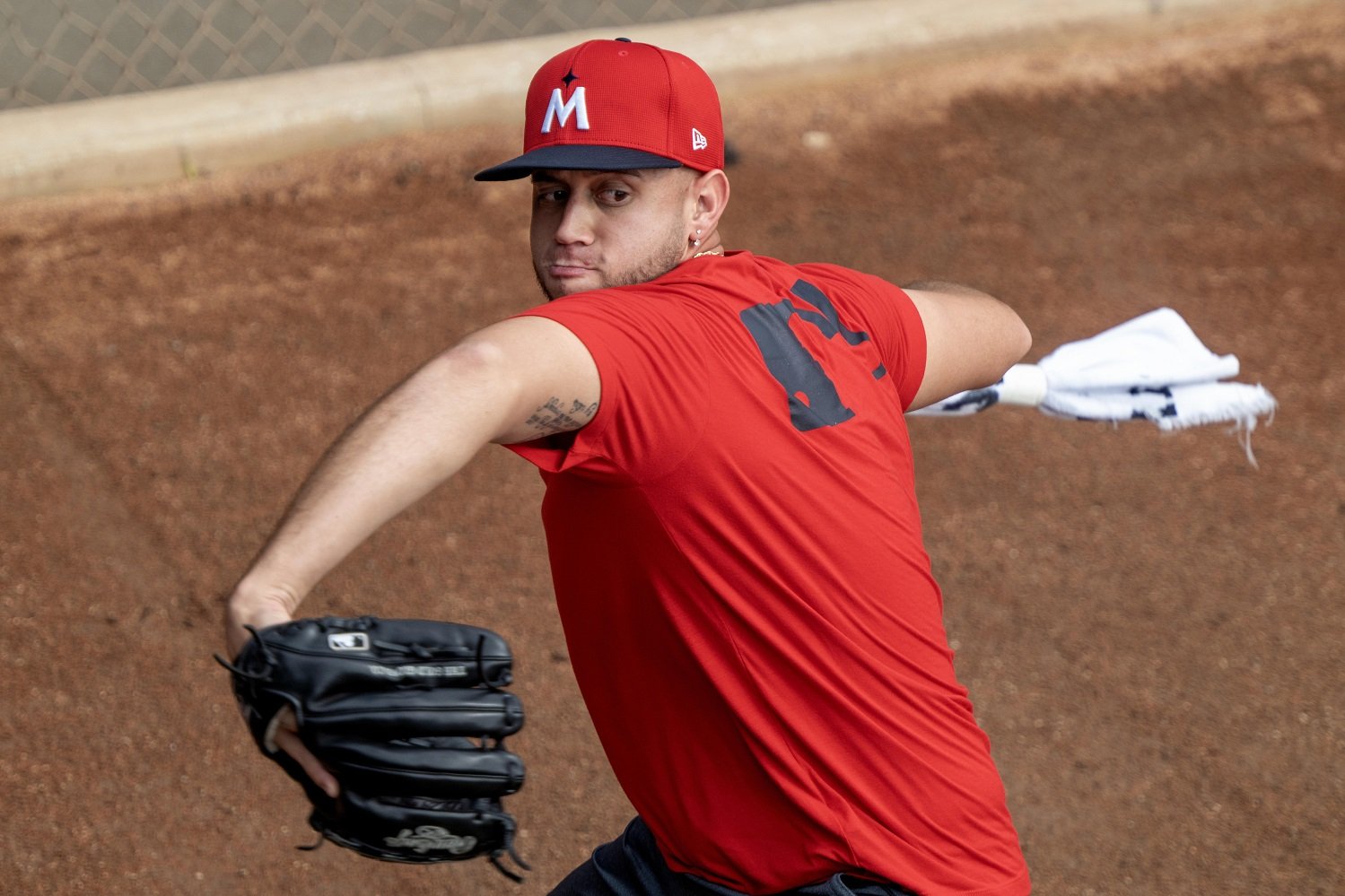 Rule 5 Draft selection Eiberson Castellano has impressed early this spring training. Showcasing a four-seam fastball hovering around 96-97 MPH with a plus curveball and serviceable changeup, the 23-year-old right-handed hurler has netted a 31.3% strikeout rate and a .167 opponent batting average over just four 2/3 innings pitched. His 7.71 ERA, 6.36 FIP, and modest seven-to-five strikeout-to-walk ratio needn't raise alarm; spring results mostly don't matter. His plus stuff and 4.59 xFIP suggest he is demonstrating flashes of the potential that prompted Twins decision-makers to take a flier on the relatively unknown arm. Veterans Jhoan Durán, Griffin Jax, Cole Sands, Brock Stewart, Danny Coulombe, and Michael Tonkin are locked into bullpen roles as the season nears. Louis Varland has impressed early in camp while pitching in one-inning bursts, giving the flame-throwing righty (perhaps) the inside track for the seventh spot in the bullpen. That leaves Castellano competing with Justin Topa, Jorge Alcalá, and Kody Funderburk for the eighth and final role in the unit. Topa is already nursing a shoulder injury, which could force the team to shelve him for the start of the season and ease this crunch, but only slightly. Nevertheless, spring training is still in its infancy. More injuries or significant performance concerns could arise over the next three weeks, making today's speculation moot. For now, though, Castellano being returned to Philadelphia to award Topa, Alcalá, or Funderburk the final bullpen spot is a reasonable outcome. That being the case, Twins decision-makers could attempt to work out a trade with the Phillies front office to avoid losing the promising righty altogether. While post-Rule 5 Draft trades are rare, they aren't entirely unchartered waters; the two clubs could come to a deal before the season begins. So, what could it look like? Let's take a look at the most recent examples. Clubs immediately trading players selected in the Rule 5 Draft to different organizations is a common occurrence. However, these transactions will be omitted, as they don't accurately represent what would occur between Minnesota and Philadelphia. With this stipulation in place, we must travel back to 2019, where three trades occurred between the drafting team and the prospect's original organization. The first instance involves the Kansas City Royals and Tampa Bay Rays. Kansas City selected pitcher Stephen Woods Jr. with the fourth pick in the 2019 Rule 5 Draft. The Royals were likely to return Woods Jr. to Tampa Bay. However, the two organizations quickly worked out a trade to remove the restrictions on his roster status with Kansas City. In return, the Royals sent outfield prospect Michael Gigliotti (ranked 13th on MLB Pipeline) to Tampa Bay. Interestingly, Woods Jr. was absent from the MLB Pipeline's Rays' Top 30 prospect list; it's fair to say that Tampa's farm system was much better than the Royals' at the time. Neither player ever appeared in a major-league game. However, this swap sets a precedent for what a player-for-player swap might look like for Minnesota and Philadelphia. Castellano ranks 16th on MLB Pipeline's Twins Top 30 Prospects list. Here are the four prospects positioned closest to Castellano on MLB Pipeline's list: 14th - Infield prospect Billy Amick 15th- Infield prospect Rayne Doncon 17th - Catcher/outfield prospect Ricardo Olivar 18th - Outfield prospect Gabriel Gonzalez Like every top prospect ranking list, MLB Pipeline is flawed. Nevertheless, it accurately represents which players could be involved in a prospect-for-prospect swap. Doncon, Olivar, or Gonzalez are reasonable candidates to be sent back to Philadelphia. Pitching prospects Travis Adams, Christian MacLeod, and Jose Olivares are viable candidates, too, with C.J. Culpepper being the upper echelon of what the organization should be comfortable parting ways with. Nevertheless, a prospect-for-prospect swap is an unlikely outcome, evidenced by the other two post-Rule 5 trades that occurred in 2019. Later in the 2019 Rule 5 Draft, the Cincinnati Reds poached outfield prospect Mark Payton from the Oakland Athletics. Cincinnati returned Payton to Oakland. Like Kansas City and Tampa, though, the two clubs then struck a deal, sending Payton back to Cincinnati for cash considerations or a player to be named later. It turned out to be the former. Two picks later, the Chicago Cubs grabbed right-handed pitching prospect Trevor Megill from the clutches (or lack thereof) of the San Diego Padres. Chicago returned Megill to San Diego. However, San Diego also sent him back in exchange for cash considerations or a player to be named later. San Diego, too, chose the cash. Given what occurred in 2019, the Twins could reasonably acquire Castellano for cash considerations or a player to be named later. However, the prospects made available to Philadelphia would undoubtedly possess less present-day value than Castellano. The wrinkle is that the process of returning Castellano to Philadelphia comes with a separate set of risks. He has to clear waivers first, and there might well be other teams who would be more able and willing to carry him after seeing how he's looked this spring—teams without the Twins' exceptional depth in the relief corps. Now that he's been taken in the Rule 5, a trade can't lift the Rule 5 roster restrictions unless every other team passes on having him with those restrictions in place. Acquiring Castellano from Philadelphia would be a wise decision for Minnesota, as they could continue to develop him as a starting pitching prospect rather than wedging him into the eighth reliever spot for an entire season with the risk of losing him. Castellano had yet to pitch past Double A in the Phillies system. Yet, he was named the organization's Minor League Pitcher of the Year after generating a 3.99 ERA, 3.40 FIP, and a 136-to-29 strikeout-to-walk ratio over 103 2/3 innings pitched between High A and Double A last season. Allowing Castellano to continue to develop as a starter in the minors under the Twins' superb pitching development program would be the ideal outcome, as the young righty could quickly join Marco Raya, Andrew Morris, and Cory Lewis as the organization's most intriguing starting pitching prospects in the high minors. It's just a tough needle to thread.
 -
The Rule 5 Draft pick has impressed early in spring training. However, the Twins bullpen is filled with high-leverage talent and depth. Castellano could be the odd pitcher out. That said, it doesn't mean he must be returned to the Philadelphia Phillies. What would it take to acquire the 23-year-old's services unconditionally? Rule 5 Draft selection Eiberson Castellano has impressed early this spring training. Showcasing a four-seam fastball hovering around 96-97 MPH with a plus curveball and serviceable changeup, the 23-year-old right-handed hurler has netted a 33.3% strikeout rate and a .100 opponent batting average over just three innings pitched. His 6.00 ERA, 7.37 FIP, and modest four-to-two strikeout-to-walk ratio cause some alarm. That said, his plus stuff and 3.59 xFIP suggest he is demonstrating flashes of the potential that prompted Twins decision-makers to take a flier on the relatively unknown arm. Veterans Jhoan Durán, Griffin Jax, Cole Sands, Brock Stewart, Danny Coulombe, and Michael Tonkin are locked into bullpen roles as the season nears. Louis Varland has impressed early in camp while pitching in one-inning bursts, indicating the fire-throwing righty has the inside track for the seventh spot in the bullpen. That being the case, Castellano is seemingly competing with Justin Topa, Jorge Alcalá, and Kody Funderburk for the eighth and final role in the unit. Nevertheless, spring training is still in its infancy. Injuries or significant performance concerns could arise over the three weeks, making today's speculation a moot point. For now, though, Castellano being returned to Philadelphia to award Topa, Alcalá, or Funderburk the final bullpen spot is a reasonable outcome. That being the case, Twins decision-makers could attempt to manufacture a trade with the Phillies front office to avoid losing the promising righty altogether. While post-Rule 5 Draft trades are rare, they aren't entirely unchartered waters, meaning the two clubs could come to a deal before the season begins. So, what could it look like? Let's take a look at the most recent examples. Clubs immediately trading players selected in the Rule 5 Draft to different organizations is a common occurrence. However, these transactions will be omitted, as they don't accurately represent what would occur between Minnesota and Philadelphia. With this stipulation in place, we must travel back to 2019, where three trades occurred between the drafting team and the prospect's original organization. The first instance involves the Kansas City Royals and Tampa Bay Rays. Kansas City selected pitcher Stephen Woods Jr. with the fourth pick in the 2019 Rule 5 Draft. The Royals elected to return Woods Jr. to Tampa Bay. However, the two organizations quickly worked out a trade to send the right-handed reliever back to the City of Fountains. In return, the Royals sent outfield prospect Michael Gigliotti (ranked 13th on MLB Pipeline) to Tampa Bay. Interestingly, Woods Jr. was absent from the MLB Pipeline's Rays' Top 30 prospect list. Neither player appeared in a major league baseball game. However, this swap sets a precedent for what a player-for-player swap might look like for Minnesota and Philadelphia. Castellano is Minnesota ranked 16th on MLB Pipeline's Twins Top 30 Prospects list. Here are the four prospects positioned closest to Castellano on MLB Pipeline's list: 14th - Infield prospect Billy Amick 15th- Infield prospect Rayne Doncon 17th - Catcher/outfield prospect Ricardo Olivar 18th - Outfield prospect Gabriel Gonzalez Like every top prospect ranking list, MLB Pipeline is flawed. Nevertheless, it accurately represents which players could be involved in a prospect-for-prospect swap. Doncon, Olivar, or Gonzalez are reasonable candidates to be sent back to Philadelphia. Pitching prospects Travis Adams, Christian MacLeod, and Jose Olivares are viable candidates, too, with CJ Culpepper being the upper echelon of what the organization should be comfortable parting ways with. Nevertheless, a prospect-for-prospect swap is an unlikely outcome, evidenced by the other two post-Rule 5 trades that occurred in 2019. Later in the 2019 Rule 5 Draft, the Cincinnati Reds poached outfield prospect Mark Payton from the Oakland Athletics. Cincinnati returned Payton to Oakland. Like Kansas City and Oakland, though, the two clubs quickly manufactured a deal, sending Payton back to Cincinnati for cash considerations or a player to be named later. Oakland eventually elected cash considerations. Two picks later, the Chicago Cubs grasped right-handed pitching prospect Trevor Megill from the clutches (or lack thereof) of the San Diego Padres. Chicago returned Megill to San Diego. However, San Diego also sent him back in exchange for cash considerations or a player to be named later. San Diego, too, chose cash considerations. Given what occurred in 2019, the Twins could reasonably acquire Castellano for cash considerations or a player to be named later. Whether Philadelphia would elect cash considerations or the player to be named later is uncertain. However, the prospects made available to Philadelphia would undoubtedly possess less present-day value than Castellano. Acquiring Castellano from Philadelphia would be a wise decision for Minnesota as they could continue to develop him as a starting pitching prospect rather than wedging him into the eighth-reliever spot for an entire season with the risk of losing him. Castellano had yet to pitch past Double-A in the Phillies system. Yet, he was named the organization's minor league Pitcher of the Year after generating a 3.99 ERA, 3.40 FIP, and a 136-to-29 strikeout-to-walk ratio over 103 2/3 innings pitched between High-A and Double-A last season. Allowing Castellano to continue to develop as a starter in the minors under the Twins superb pitching development program would be a wise move for both parties, as the young righty could quickly join Marco Raya, Andrew Morris, and Cory Lewis as the organization's most intriguing starting pitching prospects in the high minors. View full article
-
He's still fairly young at 25 and his raw power is truly elite. Obviously, there should be no expectations at this point, but he will be a fun player to monitor as long as he stays in the Twins system.
-
 Familiar faces have the kindest eyes. It is a pleasure to watch Byron Buxton, Carlos Correa, and Joe Ryan, among others, grace the friendly confines of the Lee Health Sports Complex every February. Yet, it is equally delightful to watch highly touted prospects and new additions make their first appearance with the organization in Fort Myers. Top prospects Luke Keaschall and Zebby Matthews and offseason additions Harrison Bader, Danny Coulombe, and Ty France have rightfully garnered much attention. However, one player type largely flies under the radar: minor-league free agents. There is a reason those who follow the team elect to give these players little-to-no attention. The reality is that almost none of them will make the Opening Day roster. Also, if any of them need to make substantial appearances for the club, it is likely because something has gone wrong on a performance or injury front. Fans want to avoid speculating about worst-case scenarios; it's just human nature. That said, these marginal contributors deserve the time of day, even if seeing them appear at the major-league level likely indicates the club's performance or health is trending the wrong way. This offseason, the organization brought in recognizable names Mike Ford, Huascar Ynoa, and Alex Speas on minor-league contracts. Various less-recognizable names also joined the organization. Yet, one new addition is particularly intriguing: Allan Cerda. Signed by the Cincinnati Reds as an international free agent from the Dominican Republic in 2017, the young outfielder quickly progressed through Cincinnati's minor-league system, becoming the organization's 14th-ranked prospect entering the 2020 season, according to FanGraphs's Eric Longenhagen. Cerda continued to fly up Longenhagen's list, earning the fifth spot in his and Tess Taruskin's 2022 Reds prospects rankings, only two spots behind now-superstar Elly De La Cruz. The authors noted Cerda's exceptional talent, large frame, and near-elite raw power as reasons for ranking him so high. Unfortunately, the gigantic outfield prospect plummeted to the 36th spot in Longenhagen's list in 2023—interestingly, one spot ahead of fellow Twin Daniel Duarte. Longenhagen cited his continued issues with a "very immature approach to hitting" as the reason for Cerda falling 31 spots in just one year. Unfortunately, his performance didn't improve, as he struck out 34.6% of the time over 155 plate appearances at Double A that season. The former top prospect left the organization the following offseason, joining the San Francisco Giants on a minor-league contract. His woes at the plate continued, as he struck out in 32.7% of his 38 plate appearances between High A and Double A before being released by San Francisco. He re-joined the Reds' Double-A club for 23 games to close out the season, then elected free agency in November and signed a minor-league contract with the Twins in early December. The 25-year-old is looking to rejuvenate his career in what might be his final opportunity in affiliated baseball. Cerda has taken advantage of his minimal opportunities early this offseason, crushing a two-run home run off an 88-MPH slider from Detroit Tigers pitcher Brendan White in the eighth inning of an exhibition game last week. His home run traveled 414 feet, with a 106-mph exit velocity. Cerda demolished that ball, as evidenced by the sound it made off his bat, showing flashes of what once made him a prized prospect in Cincinnati's robust system. He has generated two doubles and a single over his next five at-bats, staying hot. Obviously, nothing of substance can be taken away from seven plate appearances against primarily minor-league pitchers, and he could easily go 0-3 with a strikeout in his next game. That said, if he continues to impress this spring, a real opportunity could arise in Cerda's future. If he stays with Minnesota, he could begin the season in the Triple-A St. Paul Saints' outfield mix, alongside DaShawn Keirsey Jr., Emmanuel Rodriguez, Will Holland, Carson McCusker, and others. There are no expectations for him to contribute to the 2025 Twins. If he were to be promoted, that would mean something went catastrophically wrong with the parent club, or he performed at an exceptionally above-average rate over an extended period with St. Paul. If he can re-establish himself in the high minors, there is reason to suspect Cerda could blossom into the viable major-league contributor Longenhagen once projected him to be. He will need to demonstrate significant approach adjustments (and sustain them for an extended period) to make that happen. That said, Minnesota's player development department has demonstrated the ability to assist talented yet flawed young hitters in refining their swing and approach and reinvigorating their once-waning potential. Cerda and his near-elite raw power could flourish into their next success story. His performance this spring and early this minor-league season will be a fascinating storyline.
 -
This young, power-hitting outfielder might be the most intriguing new face at Twins camp this spring training, if you're into that sort of thing. Image courtesy of © Chris Tilley-Imagn Images Familiar faces have the kindest eyes. It is a pleasure to watch Byron Buxton, Carlos Correa, and Joe Ryan, among others, grace the friendly confines of the Lee Health Sports Complex every February. Yet, it is equally delightful to watch highly touted prospects and new additions make their first appearance with the organization in Fort Myers. Top prospects Luke Keaschall and Zebby Matthews and offseason additions Harrison Bader, Danny Coulombe, and Ty France have rightfully garnered much attention. However, one player type largely flies under the radar: minor-league free agents. There is a reason those who follow the team elect to give these players little-to-no attention. The reality is that almost none of them will make the Opening Day roster. Also, if any of them need to make substantial appearances for the club, it is likely because something has gone wrong on a performance or injury front. Fans want to avoid speculating about worst-case scenarios; it's just human nature. That said, these marginal contributors deserve the time of day, even if seeing them appear at the major-league level likely indicates the club's performance or health is trending the wrong way. This offseason, the organization brought in recognizable names Mike Ford, Huascar Ynoa, and Alex Speas on minor-league contracts. Various less-recognizable names also joined the organization. Yet, one new addition is particularly intriguing: Allan Cerda. Signed by the Cincinnati Reds as an international free agent from the Dominican Republic in 2017, the young outfielder quickly progressed through Cincinnati's minor-league system, becoming the organization's 14th-ranked prospect entering the 2020 season, according to FanGraphs's Eric Longenhagen. Cerda continued to fly up Longenhagen's list, earning the fifth spot in his and Tess Taruskin's 2022 Reds prospects rankings, only two spots behind now-superstar Elly De La Cruz. The authors noted Cerda's exceptional talent, large frame, and near-elite raw power as reasons for ranking him so high. Unfortunately, the gigantic outfield prospect plummeted to the 36th spot in Longenhagen's list in 2023—interestingly, one spot ahead of fellow Twin Daniel Duarte. Longenhagen cited his continued issues with a "very immature approach to hitting" as the reason for Cerda falling 31 spots in just one year. Unfortunately, his performance didn't improve, as he struck out 34.6% of the time over 155 plate appearances at Double A that season. The former top prospect left the organization the following offseason, joining the San Francisco Giants on a minor-league contract. His woes at the plate continued, as he struck out in 32.7% of his 38 plate appearances between High A and Double A before being released by San Francisco. He re-joined the Reds' Double-A club for 23 games to close out the season, then elected free agency in November and signed a minor-league contract with the Twins in early December. The 25-year-old is looking to rejuvenate his career in what might be his final opportunity in affiliated baseball. Cerda has taken advantage of his minimal opportunities early this offseason, crushing a two-run home run off an 88-MPH slider from Detroit Tigers pitcher Brendan White in the eighth inning of an exhibition game last week. His home run traveled 414 feet, with a 106-mph exit velocity. Cerda demolished that ball, as evidenced by the sound it made off his bat, showing flashes of what once made him a prized prospect in Cincinnati's robust system. He has generated two doubles and a single over his next five at-bats, staying hot. Obviously, nothing of substance can be taken away from seven plate appearances against primarily minor-league pitchers, and he could easily go 0-3 with a strikeout in his next game. That said, if he continues to impress this spring, a real opportunity could arise in Cerda's future. If he stays with Minnesota, he could begin the season in the Triple-A St. Paul Saints' outfield mix, alongside DaShawn Keirsey Jr., Emmanuel Rodriguez, Will Holland, Carson McCusker, and others. There are no expectations for him to contribute to the 2025 Twins. If he were to be promoted, that would mean something went catastrophically wrong with the parent club, or he performed at an exceptionally above-average rate over an extended period with St. Paul. If he can re-establish himself in the high minors, there is reason to suspect Cerda could blossom into the viable major-league contributor Longenhagen once projected him to be. He will need to demonstrate significant approach adjustments (and sustain them for an extended period) to make that happen. That said, Minnesota's player development department has demonstrated the ability to assist talented yet flawed young hitters in refining their swing and approach and reinvigorating their once-waning potential. Cerda and his near-elite raw power could flourish into their next success story. His performance this spring and early this minor-league season will be a fascinating storyline. View full article
-
Matt Braun and Cody Schoenmann Predict the 2025 MLB Award Winners
Cody Schoenmann posted an article in Twins
 Spring training has begun, and the Twins have played multiple games this week. The season draws nigh. So, why not predict the winners of the game's most prestigious awards for the upcoming season? American League Award Predictions AL MVP Matt - Bobby Witt Jr., Kansas City Royals Obscured in the Aaron Judge bonanza from last year was Bobby Witt Jr. having the best shortstop season since prime A-Rod. “In any other year” has become a go-to phrase in recent years to describe otherwise deserving MVPs, but I think we have to realize something: this is an era of freak shows. Absolute outliers. We have a guy who pitches putting up the greatest DH season ever, and a 6’7” goliath destroying baseballs like Barry Bonds while playing adequate center field defense. And—in Witt’s case—a 24-year-old baserunning demon hitting the ball like Hank Aaron, while playing excellent defense at short. The talent is overwhelming and unique. Witt is something of a strategic pick, as well. For starters, Cody picked him to win last year—and I think it would be hilarious if he won the season I chose him. But, also, Juan Soto flipping to the NL leaves Judge and Gunnar Henderson as his strongest competition. Judge will move to a corner spot, which caps his value more than in previous seasons, making the Baltimore shortstop the man most likely to overtake Witt. With respect to Henderson, a tremendous talent, I just like Witt more. Cody: Corey Seager, Texas Rangers Out of the gate, Matt is stealing my whole flow, word for word, bar for bar. You know what, I’m fine with it, really. Me being high on Witt last season led to Kansas City undergoing a magical run and earning a spot in the ALDS. I will gladly pick another player if it means the Royals have a below-.500 record, and the Twins make the playoffs again. Okay, I have no control over anything; it is time to get to my pick. Speaking of being high on players and teams, I expect the Texas Rangers to flourish this season, with Seager leading them to an AL West title. Like Realtor.com, Seager left California for Texas years ago. Unlike the housing market, however, the 30-year-old shortstop has performed exceptionally well in Texas, generating a 143 wRC+ over 1,732 plate appearances and winning the 2023 World Series. That season, Seager manufactured a 171 wRC+ while hitting 33 home runs over 536 plate appearances. I expect him to dominate similarly in 2025, earning his first MVP honors in his 11th major-league season. AL Cy Young Matt: Logan Gilbert, Seattle Mariners Starting pitching is in a weird place. The stars of the early to mid-2010s have largely declined, leading to a vast chasm filled by almost no one. Gerrit Cole and Chris Sale are still here, but outside of them, the Cy Young winners these days are often breakthrough youngsters. In this context, I love Logan Gilbert. He’s been a workhorse since debuting in 2021, tossing at least 180 frames in his first three full seasons. A power pitcher by nature, Gilbert also understands the modern game, tinkering relentlessly to improve, resulting in an unpredictable ace as crafty as he is dominant. Cody: Joe Ryan, Minnesota Twins You know what? I have operated in a logical manner for far too long. "Pick this extremely productive player, Cody, he will win the award." "Yeah, pick the guy who generated a 171 wRC+ two seasons ago, he’s for sure going to do that again." I’m done being a simp. I’m leaning into my emotions and diving headfirst into the Joe Ryan experience—and boy, does that experience smell like Dr. Bronner’s peppermint pure-castile liquid soap. Nevertheless, I genuinely think Ryan will be incredible for the Twins and put together a season adjacent to Sonny Gray’s 2023 campaign. Except this season, there will be no Gerrit Cole (or Logan Gilbert, Matt!). Reigning AL Cy Young Award winner Tarik Skubal and prized lefty Cole Ragans are strong selections, too. But, again, I’m operating off my emotions, meaning I obviously can’t select a pitcher whose demise I’m rooting for (not actually; I am very pro-labor). AL Rookie of the Year Matt - Kyle Teel, Chicago White Sox Yeah, sure, why not? The White Sox are in a valley of despair, so let’s throw them a bone. Kyle Teel was one of the best pieces Chicago received in the Garrett Crochet trade. A former first-round college catcher, he destroyed the minors and shouldn’t see any resistance in battling for the starting backstop job for the Pale Hose. He would be the first catcher to win the award since 2010, and the first AL catcher to win since Sandy Alomar in 1990. Cody - Kristian Campbell, Boston Red Sox I was going to make a joke along the lines of, “Predicting the AL ROTY winner is my Roman Empire, but I am not selecting Mr. Anthony to win the award.’ But I didn’t want to subject you, valued reader, to that. Also, I never understood the trend of cishet women asking their cishet boyfriends and/or husbands if they ever thought about the Roman Empire. Who thinks about the Roman Empire? I never have. I always and only meditate on Suleiman the Magnificent. Does that mean I have Low T? Regardless, I am all about the Kristian Empire in 2025. Wait, that reads controversially. Uhm, okay, I think Kristian Campbell will win the AL ROTY Award! There, be direct Cody, it’s not that hard. Campbell was incredible in Boston’s farm system last season, generating a 183 wRC+ over 517 plate appearances while skyrocketing from High-A to Triple-A. The 22-year-old phenom might not be on the initial 26-man roster, especially considering that Alex Bregman appears destined to be the club’s Opening Day second baseman (Campbell’s primary position). Nevertheless, Campbell will get run with the playoff-contending Red Sox this season, and I expect him to thrive once opportunity knocks. Jacob Wilson is an intriguing candidate, too. [Ed. note: This is cheating. You can't just throw in another name at the end of your prediction, hoping to sound half-smart in nine months. Two points will be deducted from Cody's score.] National League Awards Predictions NL MVP Matt - Elly De La Cruz, Cincinnati Reds That whole “freak show” comment from the previous write-up also applies here. Shohei Ohtani is a hell of an incumbent. He’s like Ronald Reagan in 1984. Like, the guy who unanimously won the MVP as a DH is also likely to pitch again this year? How could you pick anyone else? You can’t. At least not honestly. But going with the overdog is fascist (and bad content, to boot), so let’s select the fountain of talent that is Elly De La Cruz. He’s awesome; he swiped 67 bases while hitting at a solidly above-average level in his first full season in the majors. Oh, and he grades out as a strong defender at short. His approach needs work—he often made Miguel Sanó look like Rod Carew—but he’s adjusted before and I’m banking on the talented 23-year-old doing so again. Cody - Fernando Tatis Jr., San Diego Padres I was tempted to pick Kyle Tucker for this award, but I think Tatis will edge him out by a hair. After an offseason in which prized contributors Jurickson Profar, Ha-Seong Kim, Tanner Scott, Kyle Higashioka, and Donovan Solano departed in free agency, San Diego will need more out of Xander Bogaerts, Manny Machado, and Tatis if they want to return to the postseason. Luckily, I think Tatis will step up the occasion in a significant way, posting career-best numbers in his sixth season (not counting 2022). As Matt noted, Ohtani is the obvious pick, but he nor I have picked him for the second consecutive season. Evidently, game recognizes game, and that game is incorrectly predicting nearly every award winner. NL Cy Young Matt - Zack Wheeler, Philadelphia Phillies We’ve had two straight years of a guy who should have won a Cy Young by now finally claiming the ultimate prize, so let's extend that streak to three and hand Wheeler—twice the runner-up for the award—some much-deserved hardware. Something about the field for the NL just feels weird to me. I don’t trust Sale to dominate again. Paul Skenes is a human supernova, but does he fully ascend this year or does he need more time? Following those three is a collection of talented hurlers solidly in a tier below. It would be shocking if anyone else won—although I really do like Michael King. Cody - Zac Gallen, Arizona Diamondbacks Predicting the NL Cy Young Award winner is incredibly difficult. There are legitimately five Dodgers starters who could win it. Also, fellow NL West starting pitchers Dylan Cease, Logan Webb, and Corbin Burnes are outstanding. NOT TO MENTION PAUL SKENES, MATT. But, I am once again going out on a limb, and selecting the impending free agent in Gallen will receive NL Cy Young honors. How can I be so brave, yet so bold? Gallen has always possessed Cy Young-caliber stuff. Unfortunately, he has never been able to put everything together for an entire season. It has long been speculated that players are motivated to perform at their best in walk seasons. I expect Gallen to take advantage of his situation, solidify himself as one of the best starting pitchers in baseball, and subsequently earn a $200+ million contract next offseason. NL Rookie of the Year Matt - Dylan Crews, Washington Nationals Choosing the guy who went 1st overall in the 2023 draft went well for me last year, so why not go with the 2nd overall selection? Dylan Crews is already anointed as a starter in 2025, and he should slot in as Washington’s No. 2 hitter—perfect for racking up juicy counting stats. The only problem with Crews is that it's unclear just how good of a professional he is. He didn’t blaze through the minors like you would expect, and his game power hasn’t yet matched up with his raw power. The tools are there, though, and I think he’ll figure it out quickly. Cody - Matt Shaw, Chicago Cubs Wow, Matt Braun was so original and cool for picking Paul Skenes last year. Who could have seen that coming? Regardless, I thought I would have the chance to redeem myself and pick this season’s highly touted Pirates rookie starting pitcher, Bubba Chandler. Then, Matt Trueblood told me he wouldn’t approve this article unless I picked Matt Shaw to win NL Rookie of the Year. He first threatened to doxx me. I informed him I already did that to myself on the Twins Off-Daily Podcast, and instead of practicing empathy, he threatened to email DOGE and inform them I haven’t been productive enough the last week. BLOGGERS CANNOT WIN. Jokes aside, I genuinely think Shaw will win NL ROTY in 2025. Unfortunately, he suffered an oblique injury that will hold him back from being on Chicago’s initial 26-man roster. That said, he is expected to usurp Jon Berti and Gage Workman on the third base depth chart upon returning from the IL. Being a platoon-proof, hard-hitting bat, the 23-year-old possesses the offensive skillset necessary to immediately produce at an above-average rate. That being the case, Shaw could reasonably hit 15 or more home runs, generate a wRC+ above 110, and become the first Cub to win NL ROTY since Kris Bryant 10 seasons ago. [Ed. note: I'm a fair bit higher on Chandler than Shaw, to be honest. But in the spirit of our times, I shall lean into craven self-interest. Two bonus points for Cody. He's back to even. May the better prognosticator win.]
- 3 comments
-
- 1
-
-
- bobby witt jr
- corey seager
- (and 5 more)
-
Matt Braun and Cody Schoenmann are yet again predicting MLB Award winners. Will they have better fortunes in 2025? Spring training has begun and the Twins have played multiple games this week. So, why not predict the winners of the game's most prestigious awards for the upcoming season? American League Award Predictions AL MVP Matt - Bobby Witt Jr., Kansas City Royals Obscured in the Aaron Judge bonanza from last year was Bobby Witt Jr. having the best SS season since prime A-Rod. “In any other year” has become a go-to phrase in recent years to describe otherwise deserving MVPs, but I think we have to realize something: this is an era of freak shows. Absolute outliers. We have a guy who pitches putting up the greatest DH season ever and a 6’7” goliath destroying baseballs like Barry Bonds while playing adequate centerfield defense. And—in Witt’s case—a 24-year-old baserunning demon hitting the ball like Hank Aaron while playing excellent defense at short. The talent is overwhelming and unique. Witt Jr. is something of a strategic pick, as well. For starters, Cody picked him to win last year—and I think it would be hilarious if he won the season I chose him. But, also, Juan Soto flipping to the NL leaves Judge and Gunnar Henderson as his strongest competition. Judge will move to a corner spot, which caps his value more than in previous seasons, making the Baltimore shortstop the man most likely to overtake Witt. With respect to Henderson, a tremendous talent, I just like Witt more. Cody: Corey Seager, Texas Rangers Out the gate, Matt is stealing my whole flow, word for word, bar for bar. You know what, I’m fine with it, really. Me being high on Witt Jr. last season led to Kansas City undergoing a magical run and earning a spot in the ALDS. I will gladly pick another player if it means the Royals have a below .500 record, and the Twins make the playoffs again. Okay, I have no control over anything; it is time to get to my pick. Speaking of being high on players and teams, I expect the Texas Rangers to flourish this season, with Seager leading them to an AL West title. Like Realtor.com, Seager left California for Texas years ago. Unlike the housing market, however, the 30-year-old shortstop has performed exceptionally well in Texas, generating a 143 wRC+ over 1,732 and winning the 2023 World Series. That season, Seager manufactured a 171 wRC+ while hitting 33 home runs over 536 plate appearances. I expect him to dominate similarly in 2025, earning his first MVP honors in his eleventh major league season. AL Cy Young Matt: Logan Gilbert, Seattle Mariners Starting pitching is in a weird place. The stars of the early to mid 2010’s have largely declined, leading to a vast chasm filled by almost no one. Gerrit Cole and Chris Sale are still here, but outside of them, the Cy Young winners these days are often breakthrough youngsters. In this context, I love Logan Gilbert. He’s been a workhorse since debuting in 2021, tossing at least 180 frames in his first three full seasons. A power pitcher in nature, Gilbert also understands the modern game, tinkering relentlessly to improve his game, resulting in an unpredictable ace as crafty as he is dominant. Cody: Joe Ryan, Minnesota Twins You know what? I have operated in a logical manner for far too long. Pick this extremely productive player, Cody, he will win the award. Yeah, pick the guy who generated a 171 wRC+ two seasons ago, he’s for sure going to do that again. I’m done being a simp. I’m leaning into my emotions and diving head first into the Joe Ryan experience, and boy does that experience smell like Dr. Bronner’s peppermint pure-castile liquid soap. Nevertheless, I genuinely think Ryan will be incredible for the Twins and put together a season adjacent to Sonny Gray’s 2023 campaign. Except this season, there will be no Gerrit Cole (or Logan Gilbert, Matt!). Reigning AL Cy Young Award winner Tarik Skubal and prized lefty Cole Ragans are strong selections, too. But, again, I’m operating off my emotions, meaning I obviously can’t select a pitcher whose demise I’m rooting for (not actually; I am very pro-labor). AL Rookie of the Year Matt - Kyle Teel, Chicago White Sox Yeah, sure, why not. The White Sox are in a valley of patheticness, so let’s throw them a bone. Kyle Teel was one of the best pieces Chicago received in the Garrett Crochet trade. A former first-round college catcher, he destroyed his way through the minors and shouldn’t see any resistence in battling for the starting backstop job for the Pale Hose. He would be the first catcher to win the award since 2010, and the first AL catcher to win since Sandy Alomar in 1990. Cody - Kristian Campbell, Boston Red Sox I was going to make a joke along the lines of, “Predicting the AL ROTY winner is my Roman Empire but I am not selecting Mr. Anthony to win the award.’ Yet, I didn’t want to subject you, valued reader, to that. Also, I never understood the trend of cishet women asking their cishet boyfriends and/or husbands if they ever thought about the Roman Empire. Who thinks about the Roman Empire? I never have. Am I not neurodivergent enough? Regardless, I am all about the Kristian Empire in 2025. Wait, that reads controversially. Uhm, okay, I think Kristian Campbell will win the AL ROTY Award! There, be direct Cody, it’s not that hard. Campbell was incredible in Boston’s minor league system last season, generating a 183 wRC+ over 517 plate appearances while skyrocketing from High-A to Triple-A. The 22-year-old phenom might not be on the Red Sox’ initial 26-man roster, especially considering that Alex Bregman appears destined to be the club’s Opening Day second baseman (Campbell’s primary position). Nevertheless, Campbell will get run with the playoff-contending Red Sox this season, and I expect him to thrive once opportunity knocks. Jacob Wilson is an intriguing candidate, too. National League Awards Predictions NL MVP Matt - Elly De La Cruz, Cincinnati Reds That whole “freak show” comment from the previous write-up also applies here. Shohei Ohtani is a hell of an incumbent. He’s like Ronald Reagan in 1984. Like, the guy who unanimously won the MVP as a DH is also likely to pitch again this year? How could you pick anyone else? You can’t. At least not honestly. But going with the overdog is fascist and bad content, so let’s select the fountain of talent that is Elly De La Cruz. He’s awesome; he swiped 67 bases while hitting at a solidly above-average level in his first full season in the majors. Oh, and he grades out as an overwhelming defender at short. His approach needs work—he often made Miguel Sanó look like Rod Carew—but he’s adjusted before and I’m banking on the talented 23-year-old doing so again. Cody - Fernando Tatis Jr., San Diego Padres I was tempted to pick Kyle Tucker for this award, but I think Tatis Jr. will edge him out by a hair. After an offseason in which prized contributors Jurickson Profar, Ha-Seong Kim, Tanner Scott, Kyle Higashioka, and Donovan Solano departed in free agency, San Diego will need more out of Xander Bogaerts, Manny Machado, and Tatis Jr. if they want to return to the postseason. Luckily, I think Tatis Jr. will step up the occasion in a significant way, posting career-best numbers in his sixth season (not counting 2022). As Matt noted, Ohtani is the obvious pick, but he nor I have picked him for the second consecutive season. Evidently, game recognizes game, and that game is incorrectly predicting nearly every award winner. NL Cy Young Matt - Zack Wheeler, Philadelphia Phillies We’ve had two straight years of a guy who should have won a Cy Young by now finally claiming the ultimate prize, so let's extend that streak to three and hand Zack Wheeler—twice the runner-up for the award—some much deserved hardware. Something about the field for the NL just feels weird to me. I don’t trust Chris Sale to dominate again. Paul Skenes is a human supernova, but does he fully ascend this year or does he need more time? Following those three is a collection of talented hurlers solidly in a tier below. It would be shocking if anyone else won—although I really do like Michael King. Cody - Zac Gallen, Arizona Diamondbacks Predicting the NL Cy Young Award winner is incredibly difficult. There are legit five Dodgers starters who could win it. Also, fellow AL West starting pitchers Dylan Cease, Logan Webb, and Corbin Burnes are outstanding. NOT TO MENTION PAUL SKENES, MATT. But, I am once again going out on a limb, and selecting the impending free agent in Gallen will receive NL Cy Young honors. Gallen has always possessed Cy Young-caliber stuff. Unfortunately, he has never been able to put everything together for an entire season. It has long been speculated that players are motivated to perform at their best in walk seasons. I expect Gallen to take advantage of his situation, solidify himself as one of the best starting pitchers in baseball, and subsequently earn a $200+ million contract next offseason. NL Rookie of the Year Matt - Dylan Crews, Washington Nationals Choosing the guy who went 1st overall in the 2023 draft went well for me last year, so why not go with the 2nd overall selection? Dylan Crews is already anointed as a starter in 2025, and he should slot in as Washington’s #2 hitter—perfect for racking up juicy counting stats. The only problem with Crews is that it's unclear just how good of a professional he is. He didn’t blaze through the minors like you would expect, and his game power hasn’t yet matched up with his raw power. The tools are there, though, and I think he’ll figure it out quickly. Cody - Matt Shaw, Chicago Cubs Wow, Matt Braun was so original and cool for picking Paul Skenes last year. Who could have seen that coming? Regardless, I thought I would have the chance to redeem myself and pick this season’s highly touted Pirates rookie starting pitcher Bubba Chandler. Then, Matt Trueblood told me he wouldn’t approve this article unless I picked Matt Shaw to win NL Rookie of the Year. He first threatened to doxx me. I informed him I already did that to myself on the Twins Off-Daily Podcast, and instead of practicing empathy, he threatened to email DOGE and inform them I haven’t been productive enough the last week. BLOGGERS CANNOT WIN. Jokes aside, I genuinely think Shaw will win NL ROTY in 2025. He unfortunately suffered an oblique injury that will hold him back from being on Chicago’s initial 26-man roster. That said, he is expected to usurp Jon Berti and Gage Workman on the third base depth chart upon returning from the IL. Being a platoon-proof, hard-hitting bat, the 23-year-old possesses the offensive skillset necessary to immediately produce at an above-average rate. That being the case, Shaw could reasonably hit 15 or more home runs, generate a wRC+ above 110, and become the first Cub to win NL ROTY since Kris Bryant ten seasons ago. View full article
-
Consensus top-100 prospect Luke Keaschall has impressed early in spring training. Where could the 22-year-old make the most significant impact this season? Image courtesy of © Chris Tilley-Imagn Images Drafted with the 49th pick of the 2023 MLB Draft, Luke Keaschall has flourished in the Minnesota Twins farm system. Progressing from the Florida Complex League (FCL) to High-A during his first partial season in the Twins farm system, Keaschall hit .288/.414/.477, proving himself a legitimate pro. The Arizona State product also demonstrated a knack for wreaking havoc on the basepaths, netting 11 stolen bases over that stretch. The then-21-year-old improved further in his second season in Minnesota’s system, slashing .303/.420/.483 for a 158 wRC+ over 464 plate appearances between High A and Double A in 2024. His speed and aggression on the bases continued to impress, as he racked up 23 stolen bases last season. As he begins play in the Grapefruit League this spring, Keaschall ranks third (behind outfield prospects Emmanuel Rodriguez and Walker Jenkins) on pretty much everyone's Twins prospect lists, and he's solidly within the top 100 on all of the major global lists. He's managed this ascent even while managing a major elbow injury, which truncated his first full pro season when he underwent Tommy John surgery last August. Minnesota possesses a formidable core of position-player prospects. Yet, with Jenkins needing to undergo prolonged development in the minors and Rodriguez currently stuck behind Byron Buxton, Harrison Bader, Trevor Larnach, Matt Wallner, and (for now) DaShawn Keirsey Jr. on the organization's outfield depth chart, Keaschall could make the most significant contribution to the 2025 club. Last season, Keaschall made starts at the following positions: Second base - 20 starts Center field - 16 starts First base - 13 starts Designated hitter - 53 starts Though tough adjustments to big-league pitching are unavoidable, Keaschall has already proved himself adept at that process of learning and holding his own. He posted a stellar 19.1% strikeout rate at Double A last year, and he's flashed good pop to go with that great feel for contact. Given the high-variance, predominately left-handed-hitting nature of their lineup last season, Minnesota would benefit from inserting a player with Keaschall's profile into the fold in 2025. There just might be an early opening for him, too. Brooks Lee, Edouard Julien, and Willi Castro are receiving the bulk of opportunities at second base to begin spring training. However, if Julien and Lee struggle to perform or sustain a significant injury, team decision-makers could be forced to provide Keaschall an opportunity at the position, considering that installing Castro as the primary starter at one position is an undesirable option. Despite signing veteran Ty France to a one-year, $1-million non-guaranteed contract earlier this month to compete with José Miranda for playing time at first base, the club hasn't exactly found a surefire solution there, either. If Miranda performs well at the plate but France struggles, the front office would be greatly incentivized to roster a player who could play significant innings at the position (but also find time elsewhere). If Miranda sustains an injury that forces him to miss extended time, Keaschall could also take his spot on the roster. He could split time with France at first base, while netting starts at second base and designated hitter. If Lee inhabits a 26-man roster spot, he could absorb more playing time at third base as Royce Lewis's primary backup. To justify calling upon Keaschall so soon, though, the Twins would surely want to have some room for him (and trust in him) at designated hitter, too. They already have several good hitters who figure to rotate through that position. Keaschall could still fit into the mix, particularly against right-handed starting pitchers. Like Miranda, Keaschall generated reverse splits in the minors last season: v. LHP: .281/.416/.404, 113 PA, 2 HR, 20 BB, 20 SO v. RHP: .310/.422/.507, 351 PA, 13 HR, 42 BB, 60 SO Manager Rocco Baldelli won't be able to platoon to the degree he did in 2024. That said, the club can still deploy predominately left-handed hitting lineups against right-handed starting pitching. Matt Wallner, Trevor Larnach, Julien, and the switch-hitting Castro and Lee will receive significant opportunities against righties, alongside lineup mainstays Buxton, Lewis, and Carlos Correa. The club might benefit from inserting another player who hits right-handed at an above-average rate into the mix, to thwart mid-game pitching substitutions by the opposing skipper. If he can perform at a similar rate next season, Keaschall (and his ability to hit for power against righties) could be the component that makes the team's lineup against right-handed starting pitching unparalleled. His path to an early debut is full of obstacles, but if he stays healthy, Keaschall should play in the majors this season. If and when he does, he could help the Twins in a number of ways. View full article
-
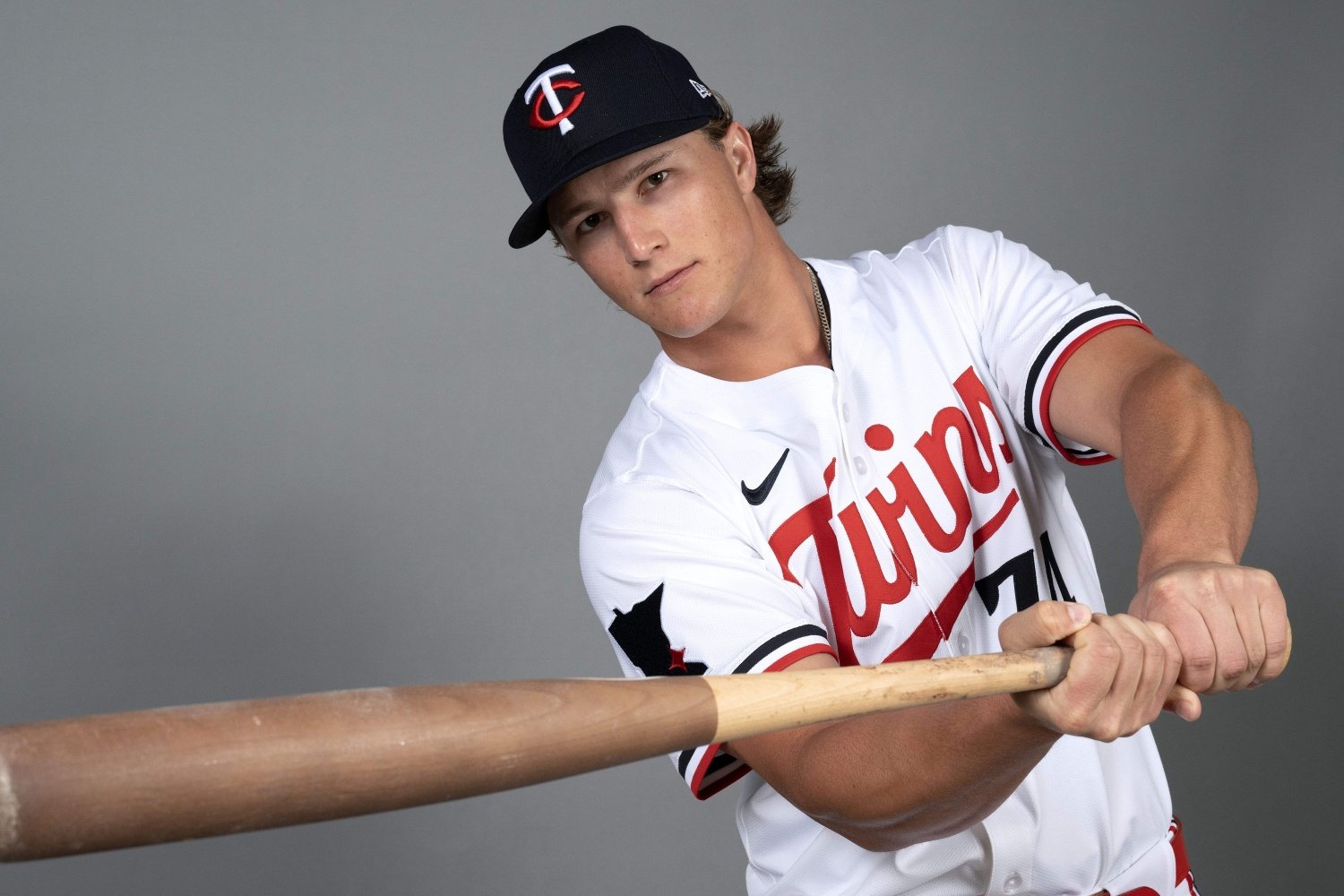 Drafted with the 49th pick of the 2023 MLB Draft, Luke Keaschall has flourished in the Minnesota Twins farm system. Progressing from the Florida Complex League (FCL) to High-A during his first partial season in the Twins farm system, Keaschall hit .288/.414/.477, proving himself a legitimate pro. The Arizona State product also demonstrated a knack for wreaking havoc on the basepaths, netting 11 stolen bases over that stretch. The then-21-year-old improved further in his second season in Minnesota’s system, slashing .303/.420/.483 for a 158 wRC+ over 464 plate appearances between High A and Double A in 2024. His speed and aggression on the bases continued to impress, as he racked up 23 stolen bases last season. As he begins play in the Grapefruit League this spring, Keaschall ranks third (behind outfield prospects Emmanuel Rodriguez and Walker Jenkins) on pretty much everyone's Twins prospect lists, and he's solidly within the top 100 on all of the major global lists. He's managed this ascent even while managing a major elbow injury, which truncated his first full pro season when he underwent Tommy John surgery last August. Minnesota possesses a formidable core of position-player prospects. Yet, with Jenkins needing to undergo prolonged development in the minors and Rodriguez currently stuck behind Byron Buxton, Harrison Bader, Trevor Larnach, Matt Wallner, and (for now) DaShawn Keirsey Jr. on the organization's outfield depth chart, Keaschall could make the most significant contribution to the 2025 club. Last season, Keaschall made starts at the following positions: Second base - 20 starts Center field - 16 starts First base - 13 starts Designated hitter - 53 starts Though tough adjustments to big-league pitching are unavoidable, Keaschall has already proved himself adept at that process of learning and holding his own. He posted a stellar 19.1% strikeout rate at Double A last year, and he's flashed good pop to go with that great feel for contact. Given the high-variance, predominately left-handed-hitting nature of their lineup last season, Minnesota would benefit from inserting a player with Keaschall's profile into the fold in 2025. There just might be an early opening for him, too. Brooks Lee, Edouard Julien, and Willi Castro are receiving the bulk of opportunities at second base to begin spring training. However, if Julien and Lee struggle to perform or sustain a significant injury, team decision-makers could be forced to provide Keaschall an opportunity at the position, considering that installing Castro as the primary starter at one position is an undesirable option. Despite signing veteran Ty France to a one-year, $1-million non-guaranteed contract earlier this month to compete with José Miranda for playing time at first base, the club hasn't exactly found a surefire solution there, either. If Miranda performs well at the plate but France struggles, the front office would be greatly incentivized to roster a player who could play significant innings at the position (but also find time elsewhere). If Miranda sustains an injury that forces him to miss extended time, Keaschall could also take his spot on the roster. He could split time with France at first base, while netting starts at second base and designated hitter. If Lee inhabits a 26-man roster spot, he could absorb more playing time at third base as Royce Lewis's primary backup. To justify calling upon Keaschall so soon, though, the Twins would surely want to have some room for him (and trust in him) at designated hitter, too. They already have several good hitters who figure to rotate through that position. Keaschall could still fit into the mix, particularly against right-handed starting pitchers. Like Miranda, Keaschall generated reverse splits in the minors last season: v. LHP: .281/.416/.404, 113 PA, 2 HR, 20 BB, 20 SO v. RHP: .310/.422/.507, 351 PA, 13 HR, 42 BB, 60 SO Manager Rocco Baldelli won't be able to platoon to the degree he did in 2024. That said, the club can still deploy predominately left-handed hitting lineups against right-handed starting pitching. Matt Wallner, Trevor Larnach, Julien, and the switch-hitting Castro and Lee will receive significant opportunities against righties, alongside lineup mainstays Buxton, Lewis, and Carlos Correa. The club might benefit from inserting another player who hits right-handed at an above-average rate into the mix, to thwart mid-game pitching substitutions by the opposing skipper. If he can perform at a similar rate next season, Keaschall (and his ability to hit for power against righties) could be the component that makes the team's lineup against right-handed starting pitching unparalleled. His path to an early debut is full of obstacles, but if he stays healthy, Keaschall should play in the majors this season. If and when he does, he could help the Twins in a number of ways.