



Nick Nelson
-
Posts
8,315 -
Joined
-
Last visited
-
Days Won
56
Content Type
Profiles
News
Minnesota Twins Videos
2026 Minnesota Twins Top Prospects Ranking
2022 Minnesota Twins Draft Picks
Minnesota Twins Free Agent & Trade Rumors, Notes, & Tidbits
Guides & Resources
2023 Minnesota Twins Draft Picks
The Minnesota Twins Players Project
2024 Minnesota Twins Draft Picks
2025 Minnesota Twins Draft Pick Tracker
2026 Minnesota Twins Draft Tracker: Picks & Bonuses
Forums
Blogs
Events
Store
Downloads
Gallery
Everything posted by Nick Nelson
-
 The Minnesota Twins provided an update on injured third baseman Royce Lewis on Monday after imaging on his hamstring provided more clarity. Here's what we know. Image courtesy of Kim Klement Neitzel-Imagn Images Royce Lewis exited Sunday's spring training game after he pulled up while running out a grounder, limping into first base as he grabbed at the back of his left leg. The team initially announced the injury as a hamstring strain, and on Monday they shared more details following an MRI scan. Lewis has been diagnosed with a moderate left hamstring strain and he's been ruled out for Opening Day, which is not surprising with the start of the season just 10 days away. Here's something else you probably won't find surprising: Lewis himself is downplaying the severity of the injury, saying it's "not even close" to being as serious as the quad strain he suffered on Opening Day last year, per Phil Miller of the Star Tribune. Take that for what it's worth. We all know how Lewis's relentless positivity tends to shade his own evaluation of situations like these, and the reality is that a moderate (or Grade 2) hamstring strain indicates partial tearing, which requires significant time to heal. The Twins weren't ready to share a timetable at this point, but fans should gear up for an absence of at least a month, and potentially closer to two. On the bright side, the team's official characterization seems to align with Lewis's take. They described this hamstring strain as moderate whereas last year's quad injury, which sidelined Lewis until June 4th, was described as severe. You may recall that Lewis strained this same left hamstring late in the 2023 season, putting his availability for the playoffs in doubt. In that case he suffered the injury on September 19th and was in the lineup as DH for Game 1 of the ALWC Series two weeks later. However, that was seemingly a milder strain, and also it goes without saying that there needs to be a much more forward-thinking lens applied when a guy gets hurt in spring training versus the end of the year. The Twins need to play it safe, and for that reason it should be fully expected that he opens on the injured list and takes his time getting back to 100 percent. But the upshot is that there's plenty of reason to believe, based on initial details, that Lewis will miss less time with this season-opening injury than last year's, and hopefully a lot less time. View full article
 -
Royce Lewis Has "Moderate" Hamstring Strain, Out for Opening Day
Nick Nelson posted an article in Twins
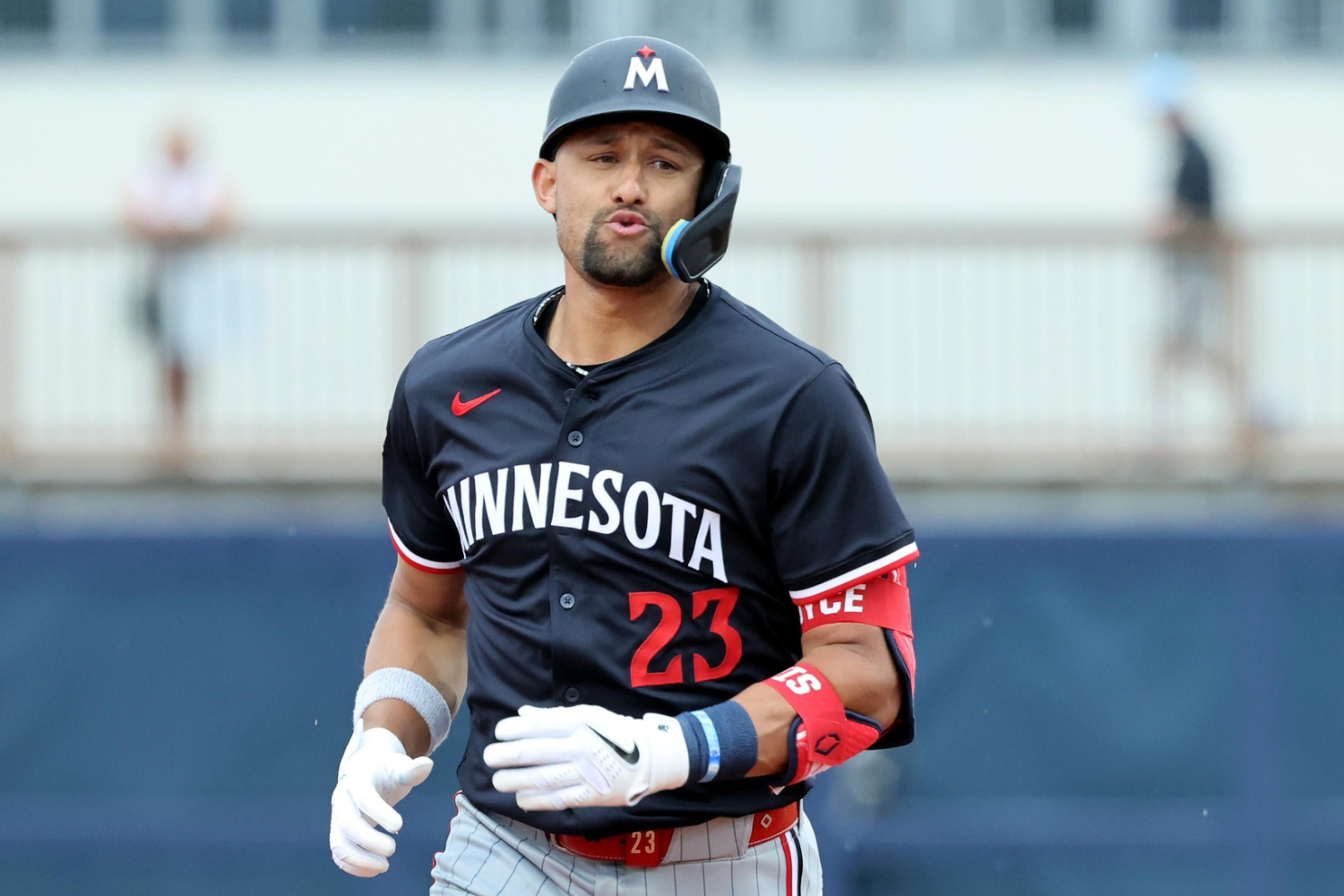 Royce Lewis exited Sunday's spring training game after he pulled up while running out a grounder, limping into first base as he grabbed at the back of his left leg. The team initially announced the injury as a hamstring strain, and on Monday they shared more details following an MRI scan. Lewis has been diagnosed with a moderate left hamstring strain and he's been ruled out for Opening Day, which is not surprising with the start of the season just 10 days away. Here's something else you probably won't find surprising: Lewis himself is downplaying the severity of the injury, saying it's "not even close" to being as serious as the quad strain he suffered on Opening Day last year, per Phil Miller of the Star Tribune. Take that for what it's worth. We all know how Lewis's relentless positivity tends to shade his own evaluation of situations like these, and the reality is that a moderate (or Grade 2) hamstring strain indicates partial tearing, which requires significant time to heal. The Twins weren't ready to share a timetable at this point, but fans should gear up for an absence of at least a month, and potentially closer to two. On the bright side, the team's official characterization seems to align with Lewis's take. They described this hamstring strain as moderate whereas last year's quad injury, which sidelined Lewis until June 4th, was described as severe. You may recall that Lewis strained this same left hamstring late in the 2023 season, putting his availability for the playoffs in doubt. In that case he suffered the injury on September 19th and was in the lineup as DH for Game 1 of the ALWC Series two weeks later. However, that was seemingly a milder strain, and also it goes without saying that there needs to be a much more forward-thinking lens applied when a guy gets hurt in spring training versus the end of the year. The Twins need to play it safe, and for that reason it should be fully expected that he opens on the injured list and takes his time getting back to 100 percent. But the upshot is that there's plenty of reason to believe, based on initial details, that Lewis will miss less time with this season-opening injury than last year's, and hopefully a lot less time.
 -
I didn't mention Lopez's ERA in 14 innings this spring because I find it irrelevant to his outlook this season. He's healthy, that's what matters. Same is true for SWR and his 0.82 ERA on the flip side.
- 35 replies
-
- 5
-

-
- pablo lopez
- joe ryan
- (and 1 more)
-
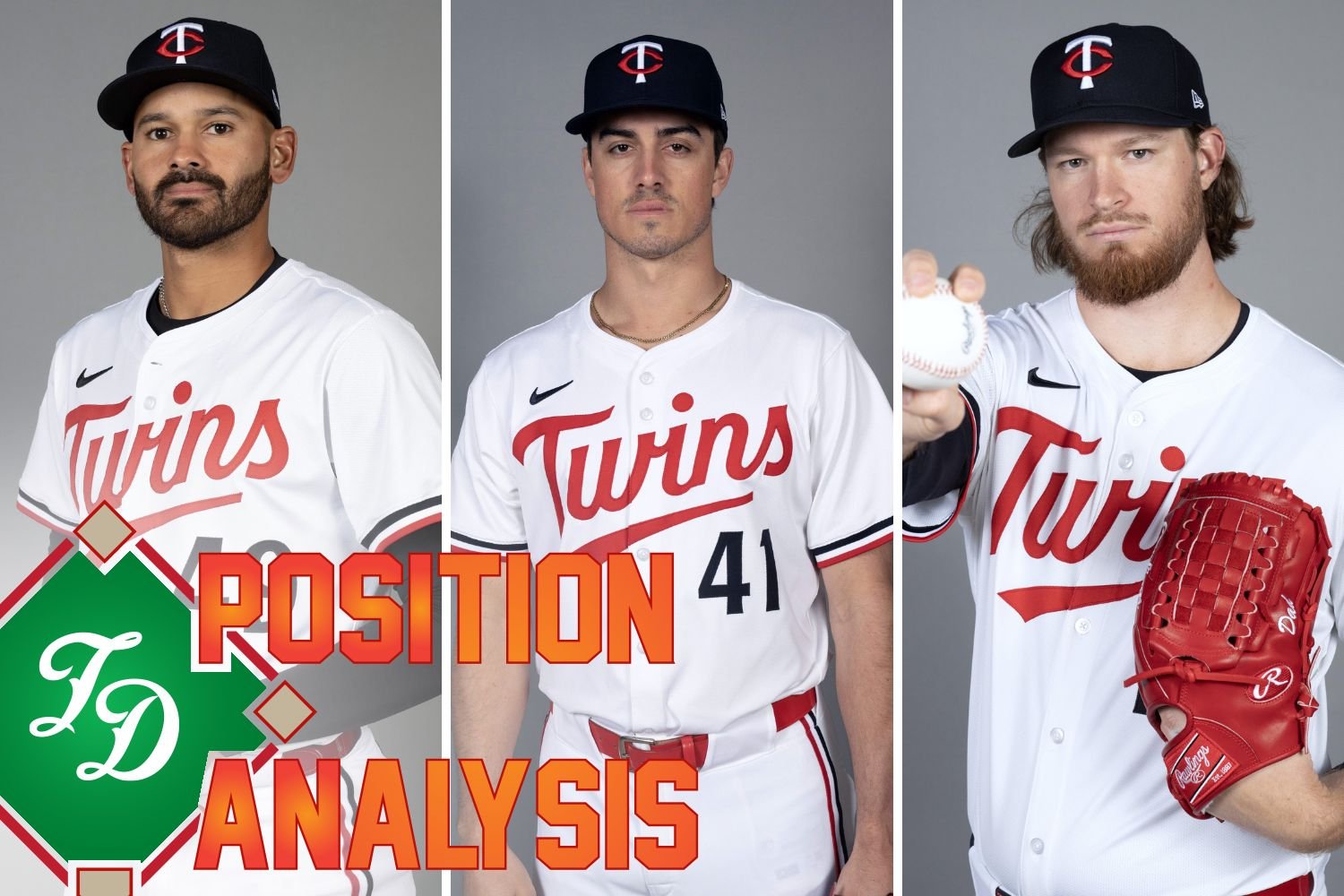 Last season, Pablo López took a step backward, Joe Ryan missed the last two months, Chris Paddack missed the whole second half, and a bunch of rookies were thrown into the fire for a team attempting to contend. Through all of this, plus Sonny Gray exiting via free agency, Twins starters still finished with a top-five FIP in the American League, and they had the highest strikeout rate. Here in 2025, they Twins are bringing back the whole gang, including a (hopefully) healthy Ryan and Paddack. Meanwhile, talented young hurlers will look to gain traction in the majors after getting their first taste, while prospects continue to progress toward big-league debuts. It's an exciting time for the Twins rotation. Let's break it down. TWINS STARTING PITCHERS AT A GLANCE Rotation: Pablo López, Joe Ryan, Bailey Ober, Chris Paddack, Simeon Woods Richardson Depth: David Festa, Zebby Matthews, Travis Adams, Randy Dobnak Prospects: Andrew Morris, Marco Raya, Charlee Soto, Cory Lewis, C.J. Culpepper Twins fWAR Ranking Last Year: 9th out of 30 Twins fWAR Projection This Year: 7th out of 30 THE GOOD Between López, Ryan and Bailey Ober, the Twins are heading into the season with a trio of legitimate frontline starters who could be counted on to pitch in a playoff scenario. It wouldn't be surprising if any of them were All-Stars. There aren't many teams around the league that can go three-deep in the rotation with this kind of quality and proven performance. It all starts with Pablo at the top. Preparing for his third consecutive Opening Day appearance, López has starred during his time in a Twins uniform, ranking ninth among MLB starters in fWAR since the start of 2023 with a pair of masterful postseason gems under his belt. López's results were down a bit last year but the stuff and underlying metrics were outstanding. He's locked in as a No. 1 starter, although it remains to be seen whether he get back on his previous track toward true "ace" billing. Ober was consistently excellent last year, blossoming into the pitcher we all hoped he could become. While a few major clunkers scuffed up his overall numbers a bit, the big right-hander was usually very effective on the mound, posting an identical 3.60 ERA and FIP in 30 starts following his season-opening blow-up in Kansas City. Ryan was even better than Ober, and arguably the Twins' best pitcher when his season was cut short by a shoulder strain suffered in early August. At that time he was cruising along, with a 3.60 ERA of his own through 135 innings. His exceptional control helped Ryan hold opponents to a .257 on-base percentage, and his 3.1 fWAR ranked among the top 35 MLB starters even though he missed almost one-third of the season. Health for pitchers is always precarious, but these three give ample reason for confidence on the durability front. López and Ober have not missed a start over the past two years, putting previous injury woes behind them. Ryan is coming off a season-ending teres major strain, but had a clear record of health before that, and appears to be fully recovered. He has nine strikeouts and two walks in 4 ⅔ innings this spring. The team's fourth veteran starter, Chris Paddack, is much more of a question mark from a health standpoint. He's been limited to 115 innings across three seasons with the Twins due to elbow issues that required surgery in 2022 and flared up again last year. He does have good stuff and considerable upside when he's able to pitch, but the team can hardly count on him being available for even a majority of the season. Which is okay because they've got a robust stable of young arms who are either ready or almost ready to enter the fold. Several have already gotten their feet wet in the big leagues. That includes fifth starter Simeon Woods Richardson, who accrued significant experience by making 28 starts with the Twins last year. His experience gave him an edge over David Festa and Zebby Matthews, both of whom were optioned to Triple-A on Sunday but made their impressions in major-league camp. Matthews in particular has drawn rave reviews for the improvement he's already showing over last year, when he was the biggest breakout player in the Twins system. Festa and Matthews will lead a loaded St. Paul rotation that also figures to include Andrew Morris, Cory Lewis and Travis Adams, giving Minnesota an enviable level of high-level minor-league talent to draw from when needed. Further down the line, prospect Charlee Soto is the one to watch – a sturdily built 19-year-old with upper-90s velocity and a stellar changeup. He's got the makings of a front-of-rotation workhorse. THE BAD Young starters may find themselves put to the test for the Twins this year, and that's always a risky proposition. We saw this play out in the late stage of 2024 after Ryan went down. The dependability of the rotation was greatly diminished as Woods Richardson posted a 5.23 second-half ERA, Matthews took his lumps, and starters generally struggled to get through five innings on a regular basis, increasing the bullpen's burden. If the Twins are forced to go without, say, Paddack and one member of their rotation-fronting trio, we'll see some relatively untested arms thrown into the fire. That's not necessarily a bad thing, because as mentioned above, there's much to like about the young stable of starting pitchers. But again, there's risk. I think this unit has a relatively high floor, barring a massive wave of injuries, so really the big question is how high their ceiling is. The Twins have a good rotation – can it be great? That really depends on their veterans staying mostly healthy and finding ways to elevate. Can López lock in some consistency and assert himself as a true standout No. 1, or will he again post an ERA in the 4 range? Can Ryan and Ober replicate or improve on their 2024 campaigns? Will Paddack finally be able to tap into the upside that is continually associated with him? Is the Derek Falvey pipeline ready to deliver? These questions will determine the true quality of the Twins starting pitching corps, which could just as easily be elite as pretty good. THE BOTTOM LINE This has the potential to be a top-three rotation in all of baseball, but that'll require good health and some breakthroughs from the younger crop of MLB-ready arms. If things click the way the Twins are hoping, with their quality depth setting up a dependable starter to take the mound for nearly every game, they're going to be a tough team to beat. You just don't find that many teams with actually good pitchers in the back of their rotation and the Twins are arguably about eight-deep in that regard right now. Share your thoughts on the outlook at starting pitcher below and check out the rest of our Position Analysis Series: Twins 2025 Position Analysis: Catcher Twins 2025 Position Analysis: First Base Twins 2025 Position Analysis: Second Base Twins 2025 Position Analysis: Third Base Twins 2025 Position Analysis: Shortstop Twins 2025 Position Analysis: Left Field Twins 2025 Position Analysis: Center Field Twins 2025 Position Analysis: Right Field Twins 2025 Position Analysis: Designated Hitter
- 35 comments
-
- 10
-
-
- pablo lopez
- joe ryan
- (and 1 more)
-
The clear strength of this year's Twins team lies in its pitching staff, and their rotation — led by a three-headed monster and backed by plenty of depth — is one of the biggest reasons to believe. Image courtesy of Chris Tilley-Imagn Images Last season, Pablo López took a step backward, Joe Ryan missed the last two months, Chris Paddack missed the whole second half, and a bunch of rookies were thrown into the fire for a team attempting to contend. Through all of this, plus Sonny Gray exiting via free agency, Twins starters still finished with a top-five FIP in the American League, and they had the highest strikeout rate. Here in 2025, they Twins are bringing back the whole gang, including a (hopefully) healthy Ryan and Paddack. Meanwhile, talented young hurlers will look to gain traction in the majors after getting their first taste, while prospects continue to progress toward big-league debuts. It's an exciting time for the Twins rotation. Let's break it down. TWINS STARTING PITCHERS AT A GLANCE Rotation: Pablo López, Joe Ryan, Bailey Ober, Chris Paddack, Simeon Woods Richardson Depth: David Festa, Zebby Matthews, Travis Adams, Randy Dobnak Prospects: Andrew Morris, Marco Raya, Charlee Soto, Cory Lewis, C.J. Culpepper Twins fWAR Ranking Last Year: 9th out of 30 Twins fWAR Projection This Year: 7th out of 30 THE GOOD Between López, Ryan and Bailey Ober, the Twins are heading into the season with a trio of legitimate frontline starters who could be counted on to pitch in a playoff scenario. It wouldn't be surprising if any of them were All-Stars. There aren't many teams around the league that can go three-deep in the rotation with this kind of quality and proven performance. It all starts with Pablo at the top. Preparing for his third consecutive Opening Day appearance, López has starred during his time in a Twins uniform, ranking ninth among MLB starters in fWAR since the start of 2023 with a pair of masterful postseason gems under his belt. López's results were down a bit last year but the stuff and underlying metrics were outstanding. He's locked in as a No. 1 starter, although it remains to be seen whether he get back on his previous track toward true "ace" billing. Ober was consistently excellent last year, blossoming into the pitcher we all hoped he could become. While a few major clunkers scuffed up his overall numbers a bit, the big right-hander was usually very effective on the mound, posting an identical 3.60 ERA and FIP in 30 starts following his season-opening blow-up in Kansas City. Ryan was even better than Ober, and arguably the Twins' best pitcher when his season was cut short by a shoulder strain suffered in early August. At that time he was cruising along, with a 3.60 ERA of his own through 135 innings. His exceptional control helped Ryan hold opponents to a .257 on-base percentage, and his 3.1 fWAR ranked among the top 35 MLB starters even though he missed almost one-third of the season. Health for pitchers is always precarious, but these three give ample reason for confidence on the durability front. López and Ober have not missed a start over the past two years, putting previous injury woes behind them. Ryan is coming off a season-ending teres major strain, but had a clear record of health before that, and appears to be fully recovered. He has nine strikeouts and two walks in 4 ⅔ innings this spring. The team's fourth veteran starter, Chris Paddack, is much more of a question mark from a health standpoint. He's been limited to 115 innings across three seasons with the Twins due to elbow issues that required surgery in 2022 and flared up again last year. He does have good stuff and considerable upside when he's able to pitch, but the team can hardly count on him being available for even a majority of the season. Which is okay because they've got a robust stable of young arms who are either ready or almost ready to enter the fold. Several have already gotten their feet wet in the big leagues. That includes fifth starter Simeon Woods Richardson, who accrued significant experience by making 28 starts with the Twins last year. His experience gave him an edge over David Festa and Zebby Matthews, both of whom were optioned to Triple-A on Sunday but made their impressions in major-league camp. Matthews in particular has drawn rave reviews for the improvement he's already showing over last year, when he was the biggest breakout player in the Twins system. Festa and Matthews will lead a loaded St. Paul rotation that also figures to include Andrew Morris, Cory Lewis and Travis Adams, giving Minnesota an enviable level of high-level minor-league talent to draw from when needed. Further down the line, prospect Charlee Soto is the one to watch – a sturdily built 19-year-old with upper-90s velocity and a stellar changeup. He's got the makings of a front-of-rotation workhorse. THE BAD Young starters may find themselves put to the test for the Twins this year, and that's always a risky proposition. We saw this play out in the late stage of 2024 after Ryan went down. The dependability of the rotation was greatly diminished as Woods Richardson posted a 5.23 second-half ERA, Matthews took his lumps, and starters generally struggled to get through five innings on a regular basis, increasing the bullpen's burden. If the Twins are forced to go without, say, Paddack and one member of their rotation-fronting trio, we'll see some relatively untested arms thrown into the fire. That's not necessarily a bad thing, because as mentioned above, there's much to like about the young stable of starting pitchers. But again, there's risk. I think this unit has a relatively high floor, barring a massive wave of injuries, so really the big question is how high their ceiling is. The Twins have a good rotation – can it be great? That really depends on their veterans staying mostly healthy and finding ways to elevate. Can López lock in some consistency and assert himself as a true standout No. 1, or will he again post an ERA in the 4 range? Can Ryan and Ober replicate or improve on their 2024 campaigns? Will Paddack finally be able to tap into the upside that is continually associated with him? Is the Derek Falvey pipeline ready to deliver? These questions will determine the true quality of the Twins starting pitching corps, which could just as easily be elite as pretty good. THE BOTTOM LINE This has the potential to be a top-three rotation in all of baseball, but that'll require good health and some breakthroughs from the younger crop of MLB-ready arms. If things click the way the Twins are hoping, with their quality depth setting up a dependable starter to take the mound for nearly every game, they're going to be a tough team to beat. You just don't find that many teams with actually good pitchers in the back of their rotation and the Twins are arguably about eight-deep in that regard right now. Share your thoughts on the outlook at starting pitcher below and check out the rest of our Position Analysis Series: Twins 2025 Position Analysis: Catcher Twins 2025 Position Analysis: First Base Twins 2025 Position Analysis: Second Base Twins 2025 Position Analysis: Third Base Twins 2025 Position Analysis: Shortstop Twins 2025 Position Analysis: Left Field Twins 2025 Position Analysis: Center Field Twins 2025 Position Analysis: Right Field Twins 2025 Position Analysis: Designated Hitter View full article
-
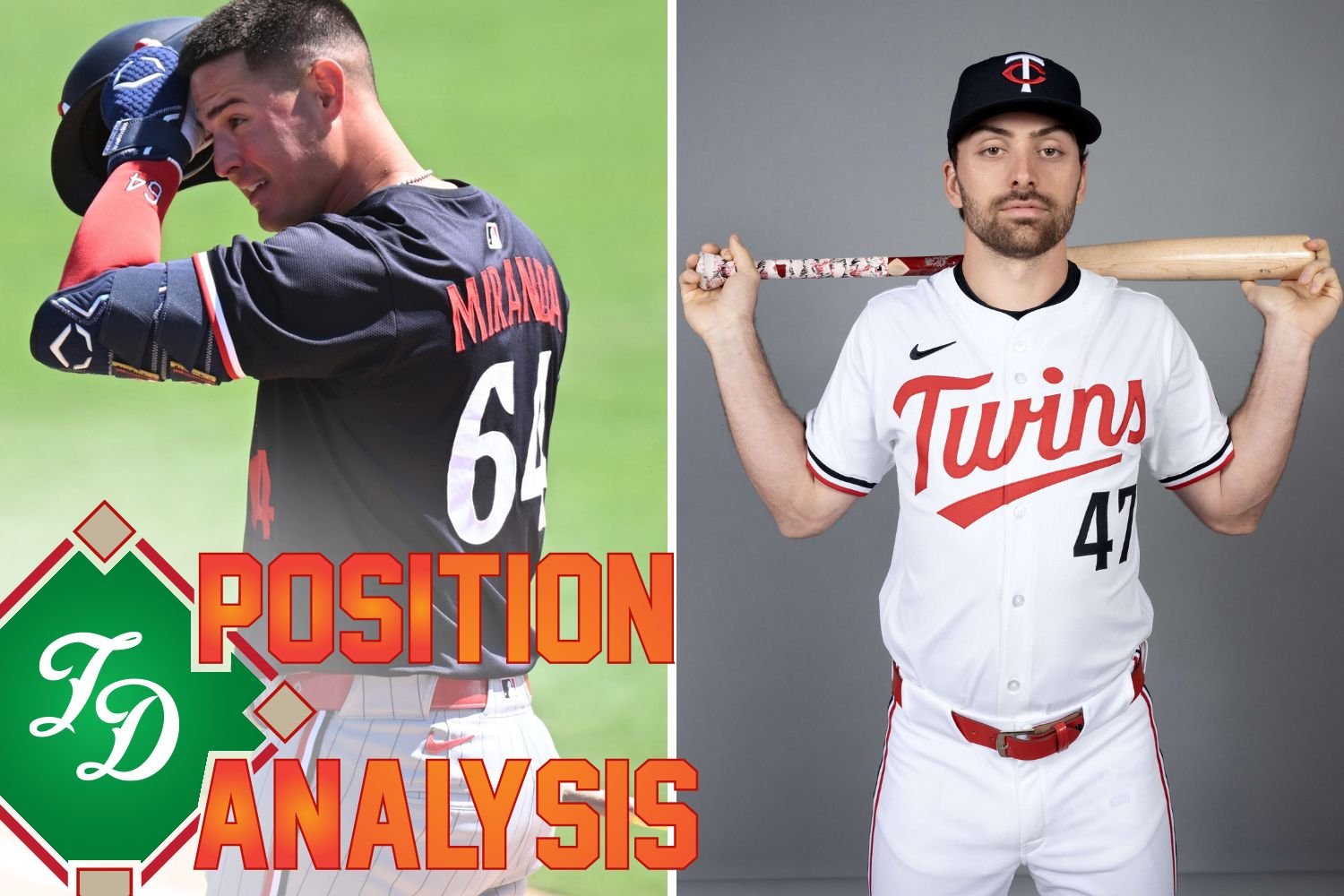 Over the past 13 years, the Twins have used 11 different players at designated hitter on Opening Day. It's an illustrious group that includes names like Ryan Doumit, Chris Colabello, Kennys Vargas, Byung-Ho Park, Robbie Grossman, Logan Morrison and Manuel Margot. During this span, only one player has made multiple Opening Day appearances at DH: Nelson Cruz, which is fitting since he's the rare example of a player used by the Twins as a true everyday fixture at the position. Get ready for plenty more day-to-day variety at DH from the Twins this year. Here we'll do our best to map out the potential plan. TWINS DESIGNATED HITTERS AT A GLANCE Starter: Edouard Julien Backup: Jose Miranda Depth: Trevor Larnach, Byron Buxton, Royce Lewis Prospects: Kala'i Rosario, Gabriel Gonzalez, Dameury Pena Twins fWAR Ranking Last Year: 20th out of 30 Twins fWAR Projection This Year: 12th out of 30 THE GOOD In trying to get a read on how Rocco Baldelli plans to use the designated hitter spot this season, I've been tracking the starters there each day in spring training. In 19 games (including the Feb. 24th contest that was rained out shortly after beginning), here's the usage chart so far: Mike Ford: 5 starts Trevor Larnach, Matt Wallner: 3 starts Luke Keaschall: 2 starts Edouard Julien, Royce Lewis, José Miranda, Ryan Jeffers, Ty France, Mickey Gasper: 1 start This tells us ... not much at all. Ford and Keaschall are non-roster invites at camp, unlikely to make the team. We already knew that both corner outfield starters, Larnach and Wallner, were likely to see occasional days at DH with Harrison Bader aboard as a defensive specialist. Beyond these four, Baldelli has signaled no clear preference toward using any particular player at the position. We should probably get used to that. Last year 15 different players made appearances at DH for the Twins, and the over/under for this year can be set in a similar range. Expect to see defensively limited hitters like Julien and Miranda there on certain days, maybe most days, and starters from other positions giving their legs a break on others. Notably, Byron Buxton and Carlos Correa are not among the players to receive starts at DH this spring, but I would bet on them both rotating through on a semi-regular basis in the name of physical maintenance. Same goes for Lewis, who might see a higher share than both because of his heightened durability concerns and his relative lack of defensive value. Having those bats in the lineup is good. The Twins should have little trouble fielding a quality hitter at DH on any given day, with the availability of both righty and lefty bats giving Baldelli ample opportunity to platoon at the position. THE BAD The downside of using players like Larnach or Buxton or Lewis at DH is that it generally requires using a lesser player at their regular position. For this reason, the Twins' A-lineup should feature more of a dedicated fixture (or platoon) at the position, and right now you have to think they're hoping it'll be Julien and Miranda. These are bat-first players who have shown at least flashes of considerable offensive ability in the majors, but neither really has a position, especially if Brooks Lee is starting at second and Ty France at first. In theory a combination of Julien and Miranda at DH would be a good way to maximize the strengths of both while feeding them at-bats. Of course, this idea is predicated on both players hitting. Julien didn't do much of that last year, and neither did Miranda in the second half. Given where these players are at in their careers, the Twins might be compelled to let them sink or swim for a bit, which could lead to substandard production from the position for a stretch of the season if we don't see major rebounds. On the flip side, there is an opportunity for either to claim regular playing time at DH if their performance merits. THE BOTTOM LINE I'd be fairly surprised if any single player makes more than 50 starts at designated hitter this year, with the Twins likely to stick to the same plan as last year. If that's the case, expect slightly above-average output from the position, as FanGraphs projects. If someone ends up taking over as the true primary starter at DH, that could signify a negative (e.g. Buxton's body not allowing him to play the field, like in 2023) or a positive (e.g. Julien regains his offensive groove and takes over against righties). We'll just have to see. Share your thoughts on the outlook at designated hitter below and check out the rest of our Position Analysis Series: Twins 2025 Position Analysis: Catcher Twins 2025 Position Analysis: First Base Twins 2025 Position Analysis: Second Base Twins 2025 Position Analysis: Third Base Twins 2025 Position Analysis: Shortstop Twins 2025 Position Analysis: Left Field Twins 2025 Position Analysis: Center Field Twins 2025 Position Analysis: Right Field
 -
With no clearly defined starter, the Minnesota Twins figure to once again rotate a variety of bats through designated hitter this year. For a team with several players who can hit but lack clear defensive fits, there will be no shortage of options. Image courtesy of Chris Tilley, Jonathan Dyer-Imagn Images Over the past 13 years, the Twins have used 11 different players at designated hitter on Opening Day. It's an illustrious group that includes names like Ryan Doumit, Chris Colabello, Kennys Vargas, Byung-Ho Park, Robbie Grossman, Logan Morrison and Manuel Margot. During this span, only one player has made multiple Opening Day appearances at DH: Nelson Cruz, which is fitting since he's the rare example of a player used by the Twins as a true everyday fixture at the position. Get ready for plenty more day-to-day variety at DH from the Twins this year. Here we'll do our best to map out the potential plan. TWINS DESIGNATED HITTERS AT A GLANCE Starter: Edouard Julien Backup: Jose Miranda Depth: Trevor Larnach, Byron Buxton, Royce Lewis Prospects: Kala'i Rosario, Gabriel Gonzalez, Dameury Pena Twins fWAR Ranking Last Year: 20th out of 30 Twins fWAR Projection This Year: 12th out of 30 THE GOOD In trying to get a read on how Rocco Baldelli plans to use the designated hitter spot this season, I've been tracking the starters there each day in spring training. In 19 games (including the Feb. 24th contest that was rained out shortly after beginning), here's the usage chart so far: Mike Ford: 5 starts Trevor Larnach, Matt Wallner: 3 starts Luke Keaschall: 2 starts Edouard Julien, Royce Lewis, José Miranda, Ryan Jeffers, Ty France, Mickey Gasper: 1 start This tells us ... not much at all. Ford and Keaschall are non-roster invites at camp, unlikely to make the team. We already knew that both corner outfield starters, Larnach and Wallner, were likely to see occasional days at DH with Harrison Bader aboard as a defensive specialist. Beyond these four, Baldelli has signaled no clear preference toward using any particular player at the position. We should probably get used to that. Last year 15 different players made appearances at DH for the Twins, and the over/under for this year can be set in a similar range. Expect to see defensively limited hitters like Julien and Miranda there on certain days, maybe most days, and starters from other positions giving their legs a break on others. Notably, Byron Buxton and Carlos Correa are not among the players to receive starts at DH this spring, but I would bet on them both rotating through on a semi-regular basis in the name of physical maintenance. Same goes for Lewis, who might see a higher share than both because of his heightened durability concerns and his relative lack of defensive value. Having those bats in the lineup is good. The Twins should have little trouble fielding a quality hitter at DH on any given day, with the availability of both righty and lefty bats giving Baldelli ample opportunity to platoon at the position. THE BAD The downside of using players like Larnach or Buxton or Lewis at DH is that it generally requires using a lesser player at their regular position. For this reason, the Twins' A-lineup should feature more of a dedicated fixture (or platoon) at the position, and right now you have to think they're hoping it'll be Julien and Miranda. These are bat-first players who have shown at least flashes of considerable offensive ability in the majors, but neither really has a position, especially if Brooks Lee is starting at second and Ty France at first. In theory a combination of Julien and Miranda at DH would be a good way to maximize the strengths of both while feeding them at-bats. Of course, this idea is predicated on both players hitting. Julien didn't do much of that last year, and neither did Miranda in the second half. Given where these players are at in their careers, the Twins might be compelled to let them sink or swim for a bit, which could lead to substandard production from the position for a stretch of the season if we don't see major rebounds. On the flip side, there is an opportunity for either to claim regular playing time at DH if their performance merits. THE BOTTOM LINE I'd be fairly surprised if any single player makes more than 50 starts at designated hitter this year, with the Twins likely to stick to the same plan as last year. If that's the case, expect slightly above-average output from the position, as FanGraphs projects. If someone ends up taking over as the true primary starter at DH, that could signify a negative (e.g. Buxton's body not allowing him to play the field, like in 2023) or a positive (e.g. Julien regains his offensive groove and takes over against righties). We'll just have to see. Share your thoughts on the outlook at designated hitter below and check out the rest of our Position Analysis Series: Twins 2025 Position Analysis: Catcher Twins 2025 Position Analysis: First Base Twins 2025 Position Analysis: Second Base Twins 2025 Position Analysis: Third Base Twins 2025 Position Analysis: Shortstop Twins 2025 Position Analysis: Left Field Twins 2025 Position Analysis: Center Field Twins 2025 Position Analysis: Right Field View full article
-
Minnesota Twins 2025 Position Analysis: Right Field
Nick Nelson replied to Nick Nelson's topic in Twins Daily Front Page News
What you quoted is not what was actually written so maybe that's the cause for confusion. Consistently premium contact quality. Avg exit velo, barrel %, hard-hit%, sweet-spot % ... all top tier. Thus he can be expected to have better results relative to a typical hitter when he does put the ball in play. Albeit not a .390 BABIP. -
The departure of Max Kepler via free agency represented the end of an era in right field for the Minnesota Twins. Now the stage is set for homegrown slugger Matt Wallner to dawn an era of his own. Image courtesy of Dave Nelson-Imagn Images Every year from 2017 through 2024, Max Kepler was in right field for the Twins on Opening Day, a run of eight consecutive seasons. To find another example of a Twins player starting at the same spot on Opening Day that many times in a row, you have to go all the way back to first baseman Kent Hrbek from 1982 to 1991. Matt Wallner is on track to be Minnesota's Opening Day starter in right field this year, relocating from last year's temporary stay in left. Will it be the start of his own streak? At age 27, coming off an outstanding season, Wallner is poised to make the position his own. TWINS RIGHT FIELDERS AT A GLANCE Starter: Matt Wallner Backup: Harrison Bader Depth: Willi Castro, Trevor Larnach, DaShawn Keirsey Jr. Prospects: Walker Jenkins, Brandon Winokur, Gabriel Gonzalez Twins fWAR Ranking Last Year: 13th out of 30 Twins fWAR Projection This Year: 10th out of 30 THE GOOD Since the start of the 2023 season, Wallner's .381 wOBA ranks 12th-best among all major-leaguers with more than 500 plate appearances. The 11 names in front of him on that list represent a who's-who of All-Stars and MVP contenders. So far in his young career he's been one of the best overall hitters in baseball, and at an offense-oriented position like right field, that's what you want. Yes, he's an imposing power hitter who produces some of the loudest contact and longest drives of any player in MLB. With a big swing and sky-high strikeout rates, he fits the traditional prototype for a right field slugger. But Wallner is also just a very effective hitter overall, with solid patience and a tendency for drawing HBPs helping him post a team-leading .371 on-base percentage over the past two seasons. In recognition of his all-around offensive impact, Rocco Baldelli has been routinely batting Wallner in the leadoff spot this spring, an arrangement the manager seems open to sticking with in the regular season. On the surface Wallner is anything BUT the traditional prototype for the leadoff role, as a slow-running power threat who whiffs as much as anyone in the league. But it's hard to argue with setting up your best hitter to get the most plate appearances, and on paper, Wallner has been exactly that. “He not only was our best hitter in the second half of the season, there was a long stretch where he was one of the five best hitters in the league," Baldelli told Phil Miller of the Star Tribune for a recent article. The depth behind Wallner in right field is similar to left field, with a number of capable corner options ready to step in, including Harrison Bader, Willi Castro and DaShawn Keirsey Jr. But in contrast to nearly every other key player on the Twins, Wallner has a sturdy history of durability. Old "Cement Bones" manages to come away from every scary collision or HBP intact; he played 142 games between Triple-A and the majors last year, and 143 the year before. THE BAD The threat to Wallner's progression than an injury is another prolonged slump at the plate, or worse yet, a bunch of them. Last year he flailed away in spring and then stumbled out of the gates in the regular season, earning him a ticket to Triple-A for nearly three months. There's no doubt he'll have much more rope going forward, following an emphatic second-half statement, but Wallner is going to be susceptible to some ugly stretches, so strap in. While few players have outproduced Wallner in the past two seasons, even fewer have struck out more often. The 27-year-old has demonstrated an ability to outpace his sky-high K rate with stellar output, thanks to his consistently premium contact quality and ancillary on-base skills, but it will be a constant battle to maintain at this level. Last year Wallner's batting average on balls in play (BABIP) was .389, second-highest out of the 324 MLB players who made 250 or more plate appearances. That number is unsustainable, and it fueled a .259 batting average that is frankly higher than anyone should expect going forward. The strikeouts are going to come in bunches and sometimes the hits are not going to fall in, which will likely lead to multiple slumps akin to last year's season-opening 2-for-25. How will the team react? How will he react? Navigating these production droughts will be an important focus for Wallner and the Twins. On his end, the right fielder needs to make sure he's paying them off with corresponding hot streaks and game-changing moments on a fairly regular basis. He's proven he can do it. THE BOTTOM LINE As the post-Kepler era gets underway for the Twins in right field, there's an excellent candidate in place ready to take the reins: a strong-armed slugger capable of posting upper-echelon production at the plate. Wallner needs to walk the tightrope of maintaining strong numbers while striking out in more than a third of his plate appearances, and preventing pitchers from capitalizing on holes in his high-intensity swing. At this point he's shown enough that there isn't much reason to doubt him, even during times where those inevitable dry spells are underway. I'll try to keep that in mind while they're happening. Share your thoughts on the outlook at right field below and check out the rest of our Position Analysis Series: Twins 2025 Position Analysis: Catcher Twins 2025 Position Analysis: First Base Twins 2025 Position Analysis: Second Base Twins 2025 Position Analysis: Third Base Twins 2025 Position Analysis: Shortstop Twins 2025 Position Analysis: Left Field Twins 2025 Position Analysis: Center Field View full article
-
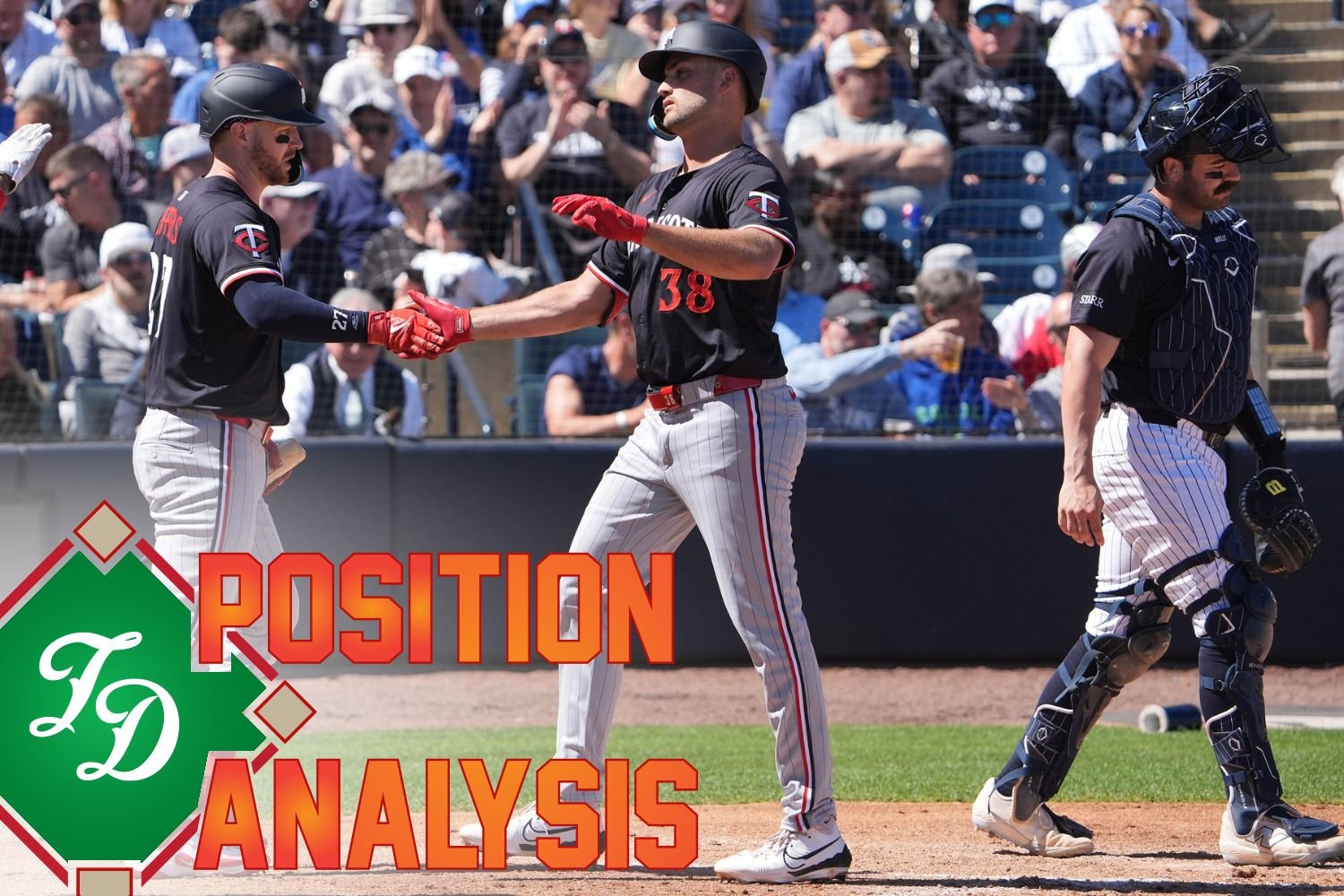 Every year from 2017 through 2024, Max Kepler was in right field for the Twins on Opening Day, a run of eight consecutive seasons. To find another example of a Twins player starting at the same spot on Opening Day that many times in a row, you have to go all the way back to first baseman Kent Hrbek from 1982 to 1991. Matt Wallner is on track to be Minnesota's Opening Day starter in right field this year, relocating from last year's temporary stay in left. Will it be the start of his own streak? At age 27, coming off an outstanding season, Wallner is poised to make the position his own. TWINS RIGHT FIELDERS AT A GLANCE Starter: Matt Wallner Backup: Harrison Bader Depth: Willi Castro, Trevor Larnach, DaShawn Keirsey Jr. Prospects: Walker Jenkins, Brandon Winokur, Gabriel Gonzalez Twins fWAR Ranking Last Year: 13th out of 30 Twins fWAR Projection This Year: 10th out of 30 THE GOOD Since the start of the 2023 season, Wallner's .381 wOBA ranks 12th-best among all major-leaguers with more than 500 plate appearances. The 11 names in front of him on that list represent a who's-who of All-Stars and MVP contenders. So far in his young career he's been one of the best overall hitters in baseball, and at an offense-oriented position like right field, that's what you want. Yes, he's an imposing power hitter who produces some of the loudest contact and longest drives of any player in MLB. With a big swing and sky-high strikeout rates, he fits the traditional prototype for a right field slugger. But Wallner is also just a very effective hitter overall, with solid patience and a tendency for drawing HBPs helping him post a team-leading .371 on-base percentage over the past two seasons. In recognition of his all-around offensive impact, Rocco Baldelli has been routinely batting Wallner in the leadoff spot this spring, an arrangement the manager seems open to sticking with in the regular season. On the surface Wallner is anything BUT the traditional prototype for the leadoff role, as a slow-running power threat who whiffs as much as anyone in the league. But it's hard to argue with setting up your best hitter to get the most plate appearances, and on paper, Wallner has been exactly that. “He not only was our best hitter in the second half of the season, there was a long stretch where he was one of the five best hitters in the league," Baldelli told Phil Miller of the Star Tribune for a recent article. The depth behind Wallner in right field is similar to left field, with a number of capable corner options ready to step in, including Harrison Bader, Willi Castro and DaShawn Keirsey Jr. But in contrast to nearly every other key player on the Twins, Wallner has a sturdy history of durability. Old "Cement Bones" manages to come away from every scary collision or HBP intact; he played 142 games between Triple-A and the majors last year, and 143 the year before. THE BAD The threat to Wallner's progression than an injury is another prolonged slump at the plate, or worse yet, a bunch of them. Last year he flailed away in spring and then stumbled out of the gates in the regular season, earning him a ticket to Triple-A for nearly three months. There's no doubt he'll have much more rope going forward, following an emphatic second-half statement, but Wallner is going to be susceptible to some ugly stretches, so strap in. While few players have outproduced Wallner in the past two seasons, even fewer have struck out more often. The 27-year-old has demonstrated an ability to outpace his sky-high K rate with stellar output, thanks to his consistently premium contact quality and ancillary on-base skills, but it will be a constant battle to maintain at this level. Last year Wallner's batting average on balls in play (BABIP) was .389, second-highest out of the 324 MLB players who made 250 or more plate appearances. That number is unsustainable, and it fueled a .259 batting average that is frankly higher than anyone should expect going forward. The strikeouts are going to come in bunches and sometimes the hits are not going to fall in, which will likely lead to multiple slumps akin to last year's season-opening 2-for-25. How will the team react? How will he react? Navigating these production droughts will be an important focus for Wallner and the Twins. On his end, the right fielder needs to make sure he's paying them off with corresponding hot streaks and game-changing moments on a fairly regular basis. He's proven he can do it. THE BOTTOM LINE As the post-Kepler era gets underway for the Twins in right field, there's an excellent candidate in place ready to take the reins: a strong-armed slugger capable of posting upper-echelon production at the plate. Wallner needs to walk the tightrope of maintaining strong numbers while striking out in more than a third of his plate appearances, and preventing pitchers from capitalizing on holes in his high-intensity swing. At this point he's shown enough that there isn't much reason to doubt him, even during times where those inevitable dry spells are underway. I'll try to keep that in mind while they're happening. Share your thoughts on the outlook at right field below and check out the rest of our Position Analysis Series: Twins 2025 Position Analysis: Catcher Twins 2025 Position Analysis: First Base Twins 2025 Position Analysis: Second Base Twins 2025 Position Analysis: Third Base Twins 2025 Position Analysis: Shortstop Twins 2025 Position Analysis: Left Field Twins 2025 Position Analysis: Center Field
 -
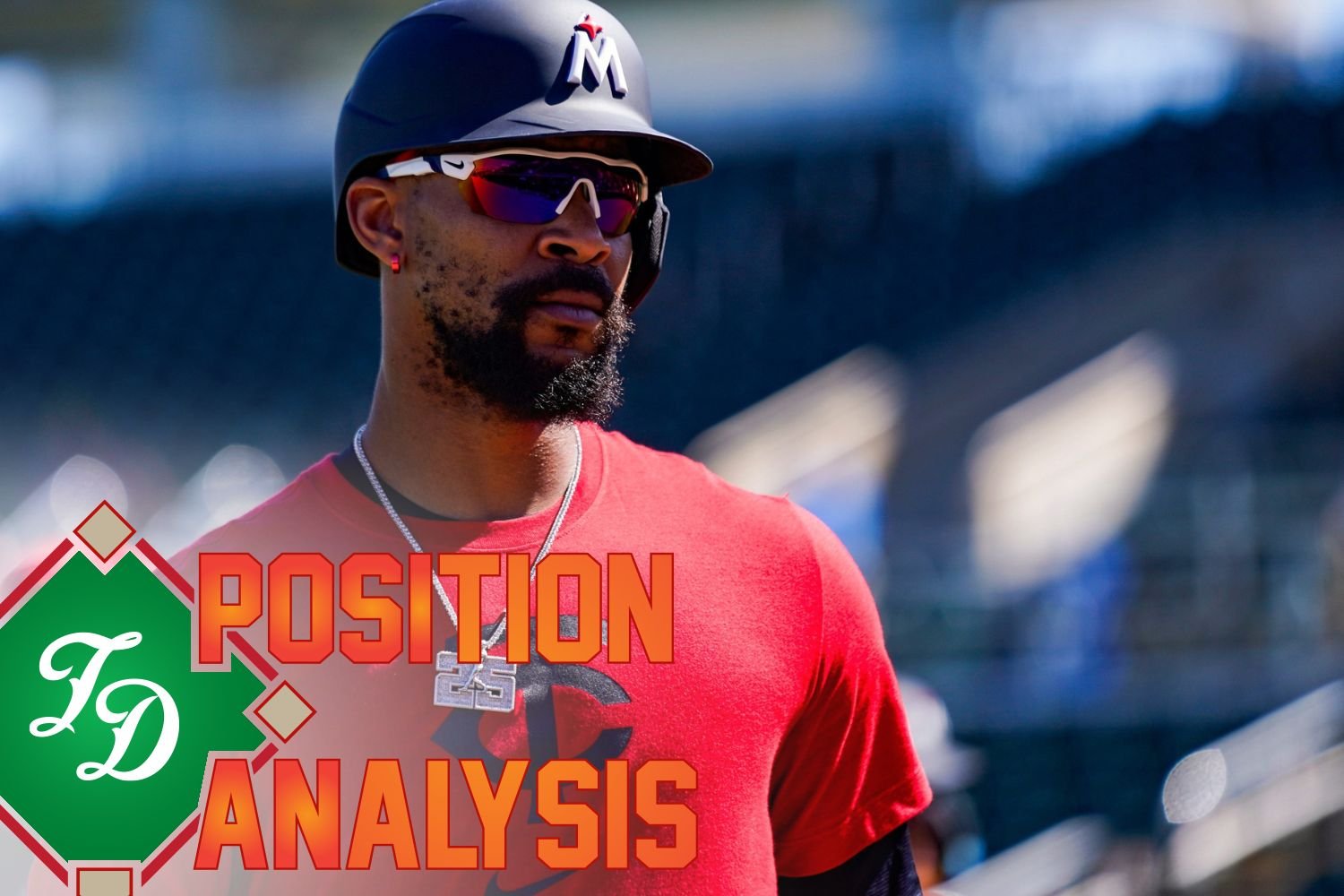 Only once prior to last year had Byron Buxton played more 100 games in a major-league season. That was back in 2017, when he was 23 years old. Since then, the outfielder has spent nearly every offseason rehabbing or recovering from a malady of some sort, leading to skepticism each spring about how much the Twins can rely on him to be available. Sadly, that skepticism has proven to be well warranted. And the injury clouds will inevitably keep looming over Buxton given his history. But for a change, he is coming off a healthy offseason and entered camp with no limitations. This might be our last, best chance to see Buxton perform as a superstar center fielder. TWINS CENTER FIELDERS AT A GLANCE Starter: Byron Buxton Backup: Harrison Bader Depth: Willi Castro, Austin Martin, DaShawn Keirsey Jr. Prospects: Walker Jenkins, Emmanuel Rodriguez, Brandon Winokur Twins fWAR Ranking Last Year: 6th out of 30 Twins fWAR Projection This Year: 4th out of 30 THE GOOD Since 2019, Buxton ranks third among all major-league center fielders in fWAR (14.9), despite the fact that he has constantly dealt with injuries. In 2024, he was top-10 at the position while barely eclipsing 100 games. On a rate basis, Buxton is measurably one of the biggest difference-makers in baseball, at center field or any other position for that matter. His resurgent campaign last year saw Buxton return to playing center field while posting a 137 OPS+ with 27 doubles and 18 home runs in 388 plate appearances. He fully embraced his strength as an aggressive, pull-heavy power hitter and posted premium contact metrics across the board. Buxton's athleticism remained exceptional at age 30; he swings harder and throws harder than a majority of MLB players, and still runs faster than all but a few. Last month, on February 22nd, the Twins played their first official spring game against the Atlanta Braves. Buxton was in the lineup, batting third, playing center field. It sent a message that all the positive talk about his healthy offseason and renewed mindset entering camp wasn't just lip service. Buxton is ready to go and he's having an excellent spring, with a .917 OPS and more walks than strikeouts. He's even stolen a couple bases, including third, which he's never done before in a game. Regardless of current optimism levels, it is understood by everyone that Buxton's status can change at any moment. The team still needs to plan around his absence, Even in his second-healthiest season ever the Twins had to find another starter for 77 games in center field. Recognizing this, the front office made Harrison Bader its biggest offseason acquisition, signing the veteran outfielder to a $6.25 million contract last month. Bader might be the most sound and sturdy contingency plan the Twins have had in center during Buxton's entire career. He's akin to Michael A. Taylor – a former Gold Glover who brings speed to the outfield and base paths – but he's younger at age 30 and has a moderately better record of hitting than Taylor did, albeit not lately. The players who were primary backup options last year – Willi Castro, Austin Martin, DaShawn Keirsey Jr. – now represent additional layers of depth after Bader. If Buxton were to go down, the concept of a semi-platoon between Bader and Keirsey could be interesting, and there remains hope that Martin could end up being a dependable option out there. Down on the farm, all three of Minnesota's top prospects can handle center field, with two of them (Walker Jenkins and Emmanuel Rodriguez) playing there almost exclusively so far in their pro careers. The future is bright. THE BAD We may be reaching the final stage of Byron Buxton's career as a center fielder. He still rated reasonably well at the position last year, but as Matthew Trueblood shared late in the season, there are signs that Buxton's days at the position may be numbered, with metrics trending in the wrong direction. "Buxton's body has broken down and his athleticism has faded, even at age 30," Matthew wrote. "This December, he'll turn 31, and his defense is in decline." FanGraphs graded Buxton as barely above average defensively last year, and as the article pointed out, some range-based stats actually viewed him as below average. I don't think anyone who watched Buxton would describe his performance in the field as bad, but he definitely missed a number of plays that he would've been made in the past. That's no knock on Buck. Age and injuries take a toll. He's entering his 11th year in the majors. At some point his ability to excel in center field was going to dry up. Maybe we're getting there now. The team no doubt plans to use Buxton at designated hitter with some frequency this year, and that played a role in the decision to invest in Bader. I do wonder, in the event Bader looks significantly better defensively or Buxton's knee starts barking again, if the Twins might elect to shift toward something closer to the arrangement they had in 2023. Spending most of his time at DH would somewhat reduce the value of Buxton's impact with the bat, but might improve his chances of staying in the lineup, and the Twins have put themselves in a position where they can still feature stellar defense in center field when he's not out there. That said, too much Bader against right-handed pitching would be a notable negative for an offense that needs to improve. THE BOTTOM LINE Center field is pretty easily the Twins organization's strongest non-pitching position. They have a superstar-caliber starter, a starting-caliber backup, and premier top prospects quickly rising through the minors. The idea of Buxton potentially reaching the end of his time as a center fielder makes me sad, but the team is well prepared to confront that eventuality. Share your thoughts on the outlook at center field below and check out the rest of our Position Analysis Series: Twins 2025 Position Analysis: Catcher Twins 2025 Position Analysis: First Base Twins 2025 Position Analysis: Second Base Twins 2025 Position Analysis: Third Base Twins 2025 Position Analysis: Shortstop Twins 2025 Position Analysis: Left Field
- 12 comments
-
- 8
-
-
- byron buxton
- harrison bader
- (and 2 more)
-
For the first time in many years, there is cause for genuine, unfettered optimism around Byron Buxton heading into the season. With that being the case, Minnesota's top-tier projection in center field seems legit and achievable. Image courtesy of Jonah Hinebaugh via Imagn Images Only once prior to last year had Byron Buxton played more 100 games in a major-league season. That was back in 2017, when he was 23 years old. Since then, the outfielder has spent nearly every offseason rehabbing or recovering from a malady of some sort, leading to skepticism each spring about how much the Twins can rely on him to be available. Sadly, that skepticism has proven to be well warranted. And the injury clouds will inevitably keep looming over Buxton given his history. But for a change, he is coming off a healthy offseason and entered camp with no limitations. This might be our last, best chance to see Buxton perform as a superstar center fielder. TWINS CENTER FIELDERS AT A GLANCE Starter: Byron Buxton Backup: Harrison Bader Depth: Willi Castro, Austin Martin, DaShawn Keirsey Jr. Prospects: Walker Jenkins, Emmanuel Rodriguez, Brandon Winokur Twins fWAR Ranking Last Year: 6th out of 30 Twins fWAR Projection This Year: 4th out of 30 THE GOOD Since 2019, Buxton ranks third among all major-league center fielders in fWAR (14.9), despite the fact that he has constantly dealt with injuries. In 2024, he was top-10 at the position while barely eclipsing 100 games. On a rate basis, Buxton is measurably one of the biggest difference-makers in baseball, at center field or any other position for that matter. His resurgent campaign last year saw Buxton return to playing center field while posting a 137 OPS+ with 27 doubles and 18 home runs in 388 plate appearances. He fully embraced his strength as an aggressive, pull-heavy power hitter and posted premium contact metrics across the board. Buxton's athleticism remained exceptional at age 30; he swings harder and throws harder than a majority of MLB players, and still runs faster than all but a few. Last month, on February 22nd, the Twins played their first official spring game against the Atlanta Braves. Buxton was in the lineup, batting third, playing center field. It sent a message that all the positive talk about his healthy offseason and renewed mindset entering camp wasn't just lip service. Buxton is ready to go and he's having an excellent spring, with a .917 OPS and more walks than strikeouts. He's even stolen a couple bases, including third, which he's never done before in a game. Regardless of current optimism levels, it is understood by everyone that Buxton's status can change at any moment. The team still needs to plan around his absence, Even in his second-healthiest season ever the Twins had to find another starter for 77 games in center field. Recognizing this, the front office made Harrison Bader its biggest offseason acquisition, signing the veteran outfielder to a $6.25 million contract last month. Bader might be the most sound and sturdy contingency plan the Twins have had in center during Buxton's entire career. He's akin to Michael A. Taylor – a former Gold Glover who brings speed to the outfield and base paths – but he's younger at age 30 and has a moderately better record of hitting than Taylor did, albeit not lately. The players who were primary backup options last year – Willi Castro, Austin Martin, DaShawn Keirsey Jr. – now represent additional layers of depth after Bader. If Buxton were to go down, the concept of a semi-platoon between Bader and Keirsey could be interesting, and there remains hope that Martin could end up being a dependable option out there. Down on the farm, all three of Minnesota's top prospects can handle center field, with two of them (Walker Jenkins and Emmanuel Rodriguez) playing there almost exclusively so far in their pro careers. The future is bright. THE BAD We may be reaching the final stage of Byron Buxton's career as a center fielder. He still rated reasonably well at the position last year, but as Matthew Trueblood shared late in the season, there are signs that Buxton's days at the position may be numbered, with metrics trending in the wrong direction. "Buxton's body has broken down and his athleticism has faded, even at age 30," Matthew wrote. "This December, he'll turn 31, and his defense is in decline." FanGraphs graded Buxton as barely above average defensively last year, and as the article pointed out, some range-based stats actually viewed him as below average. I don't think anyone who watched Buxton would describe his performance in the field as bad, but he definitely missed a number of plays that he would've been made in the past. That's no knock on Buck. Age and injuries take a toll. He's entering his 11th year in the majors. At some point his ability to excel in center field was going to dry up. Maybe we're getting there now. The team no doubt plans to use Buxton at designated hitter with some frequency this year, and that played a role in the decision to invest in Bader. I do wonder, in the event Bader looks significantly better defensively or Buxton's knee starts barking again, if the Twins might elect to shift toward something closer to the arrangement they had in 2023. Spending most of his time at DH would somewhat reduce the value of Buxton's impact with the bat, but might improve his chances of staying in the lineup, and the Twins have put themselves in a position where they can still feature stellar defense in center field when he's not out there. That said, too much Bader against right-handed pitching would be a notable negative for an offense that needs to improve. THE BOTTOM LINE Center field is pretty easily the Twins organization's strongest non-pitching position. They have a superstar-caliber starter, a starting-caliber backup, and premier top prospects quickly rising through the minors. The idea of Buxton potentially reaching the end of his time as a center fielder makes me sad, but the team is well prepared to confront that eventuality. Share your thoughts on the outlook at center field below and check out the rest of our Position Analysis Series: Twins 2025 Position Analysis: Catcher Twins 2025 Position Analysis: First Base Twins 2025 Position Analysis: Second Base Twins 2025 Position Analysis: Third Base Twins 2025 Position Analysis: Shortstop Twins 2025 Position Analysis: Left Field View full article
-
From Brooks Lee's exit velocities to David Festa's walk rate, these are the potentially meaningful spring trends that should have Twins fans feeling excited. Image courtesy of Chris Tilley, Jonathan Dyer-Imagn Images We're a little over halfway through the six-week "marathon before the marathon" that is spring training. It's a well known truth that spring stats don't matter much, but at the same time, there are plenty of consequential developments at camp that can end up mattering very much. Here are five positive storylines that have caught my attention through the first three weeks of Twins spring training, all of which are strengthening my confidence in the team and its outlook for 2025. Eight different players have started at DH. Carlos Correa and Byron Buxton are not among them. The beginning of spring tends to bring a lot of optimism and platitudes, but actions are more indicative. While both Correa and Buxton arrived at camp raving about their physical conditions, the handling of these star players once the games started was going to tell the story. And that story has been: Correa and Buxton appear completely healthy, with no limitations or special restrictions. Both players were in the lineup for Minnesota's first spring game, batting second and third, playing shortstop and center. They've since been rotating into the lineup regularly, and it's noteworthy that Rocco Baldelli hasn't felt compelled to lighten either one's load with a "partial day off" at designated hitter. I don't take it to mean they'll never start at DH during the regular season, but this usage suggests Baldelli is feeling very good about the state of Correa's feet and Buxton's knee. Ty France is batting .550 with a team-leading 1.641 OPS. Ample skepticism surrounded this scrap-heap signing, but France's performance in the Grapefruit League is providing early validation for the front office's belief in the embattled first baseman. Through eight games, he's 11-for-20 with four doubles, two homers and only three strikeouts. Is this small sample of excellent production in an exhibition setting meaningful? No, not really. But it's sure better than the alternative, especially for a player who really struggled last year. Brock Stewart has already touched 97.5 MPH. There was a general expectation that Stewart might be slowly eased into action this spring, coming off shoulder surgery, but instead he's been off to the races. The right-hander threw a bullpen session within days of reporting to camp, and has made two appearances in Grapefruit League games. In the first of those appearances, last Wednesday, Stewart averaged 96.5 MPH with his fastball and reached as high as 97.5. Head trainer Nick Paparesta told media over the weekend that Stewart is essentially on a standard build-up plan, and all is progressing smoothly. "Obviously, Brock is a little bit more of a daily check-in to make sure everything's going well and he's feeling good," Paparesta said. "It's been all thumbs up since his outing the other day, which was really nice and good to see." The Twins bullpen could be absolutely lethal with a healthy Stewart. Brooks Lee is making loud contact. A failure to drive the ball with authority was the prime culprit in Lee's offensive struggles as a rookie. His average exit velocity of 85.3 MPH was lowest on the team. He slugged .320 with just 10 extra-base hits in 185 plate appearances. Improving his quality of contact was going to be instrumental to Lee establishing himself as a quality big-league hitter. His performance in spring action is making a statement. Lee is batting .308 with a .538 SLG in nine games, shaking off last year's ending slump with a hot start in 2025. Against the Yankees last Thursday, he ripped a 107 MPH single in his first at-bat, nearly matching the highest exit velocity he posted in 50 games with the Twins last year. In his next at-bat he launched a homer over the right field wall. Granted, these hits came against an apparently injured Gerrit Cole, but we'll take it. As long as he keeps making noise at the plate, Lee is a lock to make the roster. David Festa has walked one of 36 batters faced. I don't care too much about the 10.13 ERA in eight innings. I'm confident that if Festa throws the ball in the zone consistently, he's going to have success, and I know the Twins feel the same way. That's why they have to be very pleased by the way Festa is pounding the strike zone this spring, with a 9-to-1 K/BB ratio in his three appearances. Festa is likely on the outside looking in for a rotation spot because Simeon Woods Richardson has been very good in his own right (1 ER in 7 IP) but Festa's going to make himself very difficult to option back to Triple-A if he can keep the BB column clean. Let's from you all. What have you seen so far this spring that has you feeling most encouraged about the Twins? Sound off in the comments! View full article
-
The 5 Most Encouraging Stats and Trends from Twins Spring Training So Far
Nick Nelson posted an article in Twins
 We're a little over halfway through the six-week "marathon before the marathon" that is spring training. It's a well known truth that spring stats don't matter much, but at the same time, there are plenty of consequential developments at camp that can end up mattering very much. Here are five positive storylines that have caught my attention through the first three weeks of Twins spring training, all of which are strengthening my confidence in the team and its outlook for 2025. Eight different players have started at DH. Carlos Correa and Byron Buxton are not among them. The beginning of spring tends to bring a lot of optimism and platitudes, but actions are more indicative. While both Correa and Buxton arrived at camp raving about their physical conditions, the handling of these star players once the games started was going to tell the story. And that story has been: Correa and Buxton appear completely healthy, with no limitations or special restrictions. Both players were in the lineup for Minnesota's first spring game, batting second and third, playing shortstop and center. They've since been rotating into the lineup regularly, and it's noteworthy that Rocco Baldelli hasn't felt compelled to lighten either one's load with a "partial day off" at designated hitter. I don't take it to mean they'll never start at DH during the regular season, but this usage suggests Baldelli is feeling very good about the state of Correa's feet and Buxton's knee. Ty France is batting .550 with a team-leading 1.641 OPS. Ample skepticism surrounded this scrap-heap signing, but France's performance in the Grapefruit League is providing early validation for the front office's belief in the embattled first baseman. Through eight games, he's 11-for-20 with four doubles, two homers and only three strikeouts. Is this small sample of excellent production in an exhibition setting meaningful? No, not really. But it's sure better than the alternative, especially for a player who really struggled last year. Brock Stewart has already touched 97.5 MPH. There was a general expectation that Stewart might be slowly eased into action this spring, coming off shoulder surgery, but instead he's been off to the races. The right-hander threw a bullpen session within days of reporting to camp, and has made two appearances in Grapefruit League games. In the first of those appearances, last Wednesday, Stewart averaged 96.5 MPH with his fastball and reached as high as 97.5. Head trainer Nick Paparesta told media over the weekend that Stewart is essentially on a standard build-up plan, and all is progressing smoothly. "Obviously, Brock is a little bit more of a daily check-in to make sure everything's going well and he's feeling good," Paparesta said. "It's been all thumbs up since his outing the other day, which was really nice and good to see." The Twins bullpen could be absolutely lethal with a healthy Stewart. Brooks Lee is making loud contact. A failure to drive the ball with authority was the prime culprit in Lee's offensive struggles as a rookie. His average exit velocity of 85.3 MPH was lowest on the team. He slugged .320 with just 10 extra-base hits in 185 plate appearances. Improving his quality of contact was going to be instrumental to Lee establishing himself as a quality big-league hitter. His performance in spring action is making a statement. Lee is batting .308 with a .538 SLG in nine games, shaking off last year's ending slump with a hot start in 2025. Against the Yankees last Thursday, he ripped a 107 MPH single in his first at-bat, nearly matching the highest exit velocity he posted in 50 games with the Twins last year. In his next at-bat he launched a homer over the right field wall. Granted, these hits came against an apparently injured Gerrit Cole, but we'll take it. As long as he keeps making noise at the plate, Lee is a lock to make the roster. David Festa has walked one of 36 batters faced. I don't care too much about the 10.13 ERA in eight innings. I'm confident that if Festa throws the ball in the zone consistently, he's going to have success, and I know the Twins feel the same way. That's why they have to be very pleased by the way Festa is pounding the strike zone this spring, with a 9-to-1 K/BB ratio in his three appearances. Festa is likely on the outside looking in for a rotation spot because Simeon Woods Richardson has been very good in his own right (1 ER in 7 IP) but Festa's going to make himself very difficult to option back to Triple-A if he can keep the BB column clean. Let's from you all. What have you seen so far this spring that has you feeling most encouraged about the Twins? Sound off in the comments!
- 45 comments
-
- 19
-
-

-
- david festa
- ty france
- (and 2 more)
-
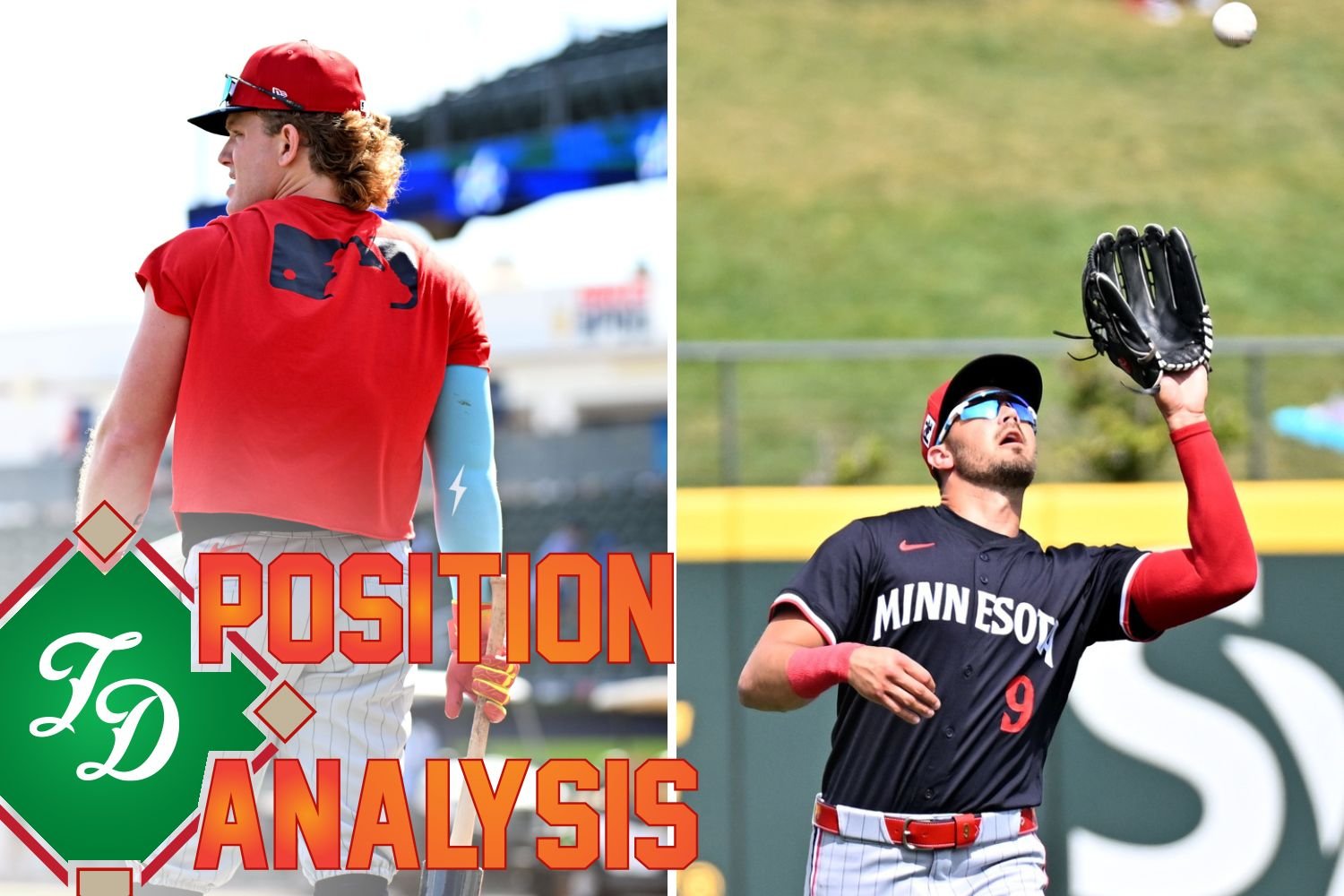 The Twins have a little bit of everything in left field: a bat-first starter, a glove-first backup, multifaceted depth, and prospects waiting in the wings. This position has the makings of a strength for Minnesota, despite some skepticism from projection systems. TWINS LEFT FIELDERS AT A GLANCE Starter: Trevor Larnach Backup: Harrison Bader Depth: Willi Castro, Austin Martin, DaShawn Keirsey Jr. Prospects: Emmanuel Rodriguez, Kala'i Rosario, Jeferson Morales Twins fWAR Ranking Last Year: 13th out of 30 Twins fWAR Projection This Year: 21st out of 30 THE GOOD After three seasons of failing to break through and establish himself in the big leagues, Trevor Larnach finally had it click last year. He didn't make the Twins out of camp but was called up quickly, and before long he was consistently batting near the top of the order against right-handed pitchers. Over the course of the season, he was one of Minnesota's most dependable hitters, and one of the few who didn't utterly collapse in the second half. Relative to some of the unknowns and question marks in the Twins lineup, Larnach seems like someone we can count on to hit this year. Always known for making quality contact, his success in 2024 was driven by a drastic reduction in strikeout rate, which maintained throughout the season. He produced a 116 OPS+ with an above-average walk rate and 90th-percentile exit velocity. "He was someone that would put the ball in play when we needed him to," Rocco Baldelli told reporters this spring. "He does a little bit of everything. He hits the ball hard. He can put some balls in the seats, which is still something that you’re looking for from your team." The manager mentioned that the team has "pretty high aspirations" for Larnach in his age-28 season. Indeed, Larnach's bat will be crucial to the Twins as they look to rejuvenate their offense following the meltdown last August and September. And while his glove rated poorly in 2024, this likely owed in part to a turf toe issue that bothered him throughout the year – he reportedly "solved" it by shaving the spike underneath his big toe. Even if his defense improves, Larnach will likely see a fair amount of time at designated hitter; last year he led the team in starts at both LF (47) and DH (49). He'll also probably sit frequently versus left-handers, against whom he made just 23 of his 400 plate appearances. When Larnach is not in left field, the top choice figures to be newcomer Harrison Bader. A former Gold Glover in center field, Bader should be an elite defensive asset when playing left, giving Twins pitchers a big advantage on days where he's out there alongside Byron Buxton. Bader hasn't played in an outfield corner since 2018 because he's so good in center, but if things go to plan this year we should see plenty of his skills on display in left. The downside of Bader is that he's not much of a hitter, but if he mostly starts against southpaws this weakness is mitigated. Naturally, there's also a chance Bader will be needed to take over in center field for the oft-injured Buxton, which is a big part of the reason the Twins signed him for more than $6 million. Fortunately, there's plenty of secondary depth in left field. Utilityman Willi Castro was Minnesota's Opening Day starter there last year, and it might be his best position. Left is also probably Austin Martin's best position. DaShawn Keirsey Jr. will be a handy outfield valve at Triple-A. The prospect to watch here is Emmanuel Rodriguez. Sidelined in camp by an ankle injury, he probably starts the season in St. Paul, where a strong first half could put him in play for a call-up, especially if attrition strikes in the Twins outfield or Larnach struggles. Luke Keaschall could also potentially factor in. THE BAD There is seemingly a lot to like at this position for the Twins: good starter, proven depth, high-upside prospects. Yet FanGraphs projects Minnesota to rank 21st out of 30 teams in WAR from left fielders. Why the muted expectations? Much of it comes down to Larnach and his track record. There were plenty of positives in his performance last year, but the fact remains: Larnach has produced a mediocre 2.6 fWAR through 300 major-league games, and he's now 28. He still hasn't shown he can shake the nagging injuries, which affected him last year though he played through them. Even if his toe is healthy he might be best suited for DH. If Larnach gets hurt or plays a bunch at designated hitter, the Twins could find offensive production in left field difficult to come by. Bader was a solid hitter at one point but slashed .239/.284/.360 over the past three seasons and posted an 86 OPS+ with the Mets in 2024, floundering in the second half like so many Twins players. Castro and Austin Martin can hold their own defensively in the outfield but aren't likely to be standout bats. Keirsey, Rodriguez and Keaschall are intriguing but none have any MLB experience. THE BOTTOM LINE The drop-off in offensive impact from using Larnach against right-handers compared to Bader, or really any of the team's other left field options, is substantial. That's why it's vital for Larnach to stay healthy and show enough with his glove to make the team feel comfortable playing him in the outfield regularly. If those things don't happen, the Twins should have no trouble running out capable starters in left, but their ceiling at the position will be capped – unless a rising prospect like Rodriguez or Keaschall can enter the scene and make noise. Share your thoughts on the outlook at left field below and check out the rest of our Position Analysis series: Twins 2025 Position Analysis: Catcher Twins 2025 Position Analysis: First Base Twins 2025 Position Analysis: Second Base Twins 2025 Position Analysis: Third Base Twins 2025 Position Analysis: Shortstop
- 33 comments
-
- 6
-
-

-
- trevor larnach
- harrison bader
- (and 1 more)
-
Trevor Larnach is looking to build off last year's success and clamp down left field. But he'll also probably play a fair amount of DH and sit frequently against lefties, leaving plenty of playing time for others at this intriguing position. Image courtesy of Jonathan Dyer-Imagn Images The Twins have a little bit of everything in left field: a bat-first starter, a glove-first backup, multifaceted depth, and prospects waiting in the wings. This position has the makings of a strength for Minnesota, despite some skepticism from projection systems. TWINS LEFT FIELDERS AT A GLANCE Starter: Trevor Larnach Backup: Harrison Bader Depth: Willi Castro, Austin Martin, DaShawn Keirsey Jr. Prospects: Emmanuel Rodriguez, Kala'i Rosario, Jeferson Morales Twins fWAR Ranking Last Year: 13th out of 30 Twins fWAR Projection This Year: 21st out of 30 THE GOOD After three seasons of failing to break through and establish himself in the big leagues, Trevor Larnach finally had it click last year. He didn't make the Twins out of camp but was called up quickly, and before long he was consistently batting near the top of the order against right-handed pitchers. Over the course of the season, he was one of Minnesota's most dependable hitters, and one of the few who didn't utterly collapse in the second half. Relative to some of the unknowns and question marks in the Twins lineup, Larnach seems like someone we can count on to hit this year. Always known for making quality contact, his success in 2024 was driven by a drastic reduction in strikeout rate, which maintained throughout the season. He produced a 116 OPS+ with an above-average walk rate and 90th-percentile exit velocity. "He was someone that would put the ball in play when we needed him to," Rocco Baldelli told reporters this spring. "He does a little bit of everything. He hits the ball hard. He can put some balls in the seats, which is still something that you’re looking for from your team." The manager mentioned that the team has "pretty high aspirations" for Larnach in his age-28 season. Indeed, Larnach's bat will be crucial to the Twins as they look to rejuvenate their offense following the meltdown last August and September. And while his glove rated poorly in 2024, this likely owed in part to a turf toe issue that bothered him throughout the year – he reportedly "solved" it by shaving the spike underneath his big toe. Even if his defense improves, Larnach will likely see a fair amount of time at designated hitter; last year he led the team in starts at both LF (47) and DH (49). He'll also probably sit frequently versus left-handers, against whom he made just 23 of his 400 plate appearances. When Larnach is not in left field, the top choice figures to be newcomer Harrison Bader. A former Gold Glover in center field, Bader should be an elite defensive asset when playing left, giving Twins pitchers a big advantage on days where he's out there alongside Byron Buxton. Bader hasn't played in an outfield corner since 2018 because he's so good in center, but if things go to plan this year we should see plenty of his skills on display in left. The downside of Bader is that he's not much of a hitter, but if he mostly starts against southpaws this weakness is mitigated. Naturally, there's also a chance Bader will be needed to take over in center field for the oft-injured Buxton, which is a big part of the reason the Twins signed him for more than $6 million. Fortunately, there's plenty of secondary depth in left field. Utilityman Willi Castro was Minnesota's Opening Day starter there last year, and it might be his best position. Left is also probably Austin Martin's best position. DaShawn Keirsey Jr. will be a handy outfield valve at Triple-A. The prospect to watch here is Emmanuel Rodriguez. Sidelined in camp by an ankle injury, he probably starts the season in St. Paul, where a strong first half could put him in play for a call-up, especially if attrition strikes in the Twins outfield or Larnach struggles. Luke Keaschall could also potentially factor in. THE BAD There is seemingly a lot to like at this position for the Twins: good starter, proven depth, high-upside prospects. Yet FanGraphs projects Minnesota to rank 21st out of 30 teams in WAR from left fielders. Why the muted expectations? Much of it comes down to Larnach and his track record. There were plenty of positives in his performance last year, but the fact remains: Larnach has produced a mediocre 2.6 fWAR through 300 major-league games, and he's now 28. He still hasn't shown he can shake the nagging injuries, which affected him last year though he played through them. Even if his toe is healthy he might be best suited for DH. If Larnach gets hurt or plays a bunch at designated hitter, the Twins could find offensive production in left field difficult to come by. Bader was a solid hitter at one point but slashed .239/.284/.360 over the past three seasons and posted an 86 OPS+ with the Mets in 2024, floundering in the second half like so many Twins players. Castro and Austin Martin can hold their own defensively in the outfield but aren't likely to be standout bats. Keirsey, Rodriguez and Keaschall are intriguing but none have any MLB experience. THE BOTTOM LINE The drop-off in offensive impact from using Larnach against right-handers compared to Bader, or really any of the team's other left field options, is substantial. That's why it's vital for Larnach to stay healthy and show enough with his glove to make the team feel comfortable playing him in the outfield regularly. If those things don't happen, the Twins should have no trouble running out capable starters in left, but their ceiling at the position will be capped – unless a rising prospect like Rodriguez or Keaschall can enter the scene and make noise. Share your thoughts on the outlook at left field below and check out the rest of our Position Analysis series: Twins 2025 Position Analysis: Catcher Twins 2025 Position Analysis: First Base Twins 2025 Position Analysis: Second Base Twins 2025 Position Analysis: Third Base Twins 2025 Position Analysis: Shortstop View full article
-
With the start of the regular season less than three weeks away, the Twins shared health updates for a number of players on Saturday. Here's what you need to know. Image courtesy of Dave Nelson, Jesse Johnson-Imagn Images Twins head trainer Nick Paparesta shared a series of health updates on Saturday at Hammond Stadium in Ft. Myers. Most concern the pitching staff, and several of these situations could have implications on the Opening Day roster. Here's a quick rundown of the fresh updates — as relayed by Twins Daily's John Bonnes, who is on the scene in Florida — and the potential ramifications for the team's rotation, bullpen and depth this season. We'll start with some good news. Zebby Matthews has a right hip flexor strain but is improving quickly, slated to throw a bullpen on Sunday. Implication: The injury, suffered when Matthews was fielding a ball in Thursday's game, looked a bit scary in the moment but it sounds like he dodged a bullet. If the bullpen goes well he should be back on track for the start of the regular season, but remains on track to open in St. Paul. Matt Canterino has a significant shoulder injury, similar to the one that cost him his entire 2024 season. Implication: Horrible news. Canterino's specific injury was described as "a little bit of a milder subscap [compared to last year] with a more moderate strain of his teres major and latissimus dorsi." Paparesta added that this "seems to be the soup du jour if you read any MLB news on injuries lately with pitchers." Canterino will be sidelined for months, at least, and now the question is whether the Twins will finally open up his 40-man roster spot. The righty is going to miss much of his age-27 season and still has only thrown 85 innings as a pro. Michael Tonkin has a right shoulder strain, will be re-evaluated in 7-10 days. Implication: This was the most surprising revelation of the day, as Tonkin was not previously known to be dealing with an injury. "Just wasn’t bouncing back the way he wanted to," explained Paparesta. Fortunately an MRI scan showed no structural damage, but Tonkin now faces a tough timeline to be ready for Opening Day. He's been prescribed rest and medication for the time being with a reevaluation coming in 7-10 days. Justin Topa is in a holding pattern with his "shoulder tightness." Implication: Topa exited a game earlier this week due to shoulder discomfort after showing diminished velocity in early spring appearances. It sounds like the team is still trying to get a read on the situation but they haven't done imaging so concern doesn't seem terribly high. The team mentioned has he's made "steady progress" in the past 48 hours. Still, like Tonkin the clock is ticking on Topa to be ready for the start of the season. The door is opening wider for Louie Varland and Eiberson Castellano. And if Canterino's 40-man roster spot opens up, that could create even more possibilities. Brock Stewart and Joe Ryan are all systems go. Implication: Both of these key hurlers finished the 2024 season on the injured list, and Stewart spent his offseason rehabbing from shoulder surgery. But right now neither are being treated as injured players. They are on normal pitching plans and both seem to be responding well to their outings. This bodes well for the bullpen and rotation. There's currently no reason to doubt either pitcher's status for Opening Day. Emmanuel Rodriguez took batting practice on Friday for the first time since thumb surgery, and it went well. Implication: Rodriguez is the Twins' No. 2 prospect and one of the most exciting young talents in baseball. A thumb injury derailed his 2024 season, requiring offseason surgery, and checked off a big milestone this week. Rodriguez commented that swinging and missing "didn't hurt for the first time in seven months." He's still being slowed by an ankle injury and could be a little late to start his season in the minors, but it sounds like he could see game action before spring training is over. If he can stay on the field he absolutely has a chance to debut in the majors this summer. Marco Raya is ready to return. Implication: This intriguing arm from the Twins pitching pipeline has been held back by a quad injury this spring, that appears to have now been resolved. Raya is expected to pitch in Saturday's game. Erasmo Ramirez has a significant shoulder injury. Implication: The veteran joined the team on a minor-league deal once camp was already underway, with the Twins hoping to add another experienced bullpen arm to their depth. But he's been bothered by shoulder pain and has been diagnosed with a shoulder injury that Paparesta described as "a Joe Ryan type of injury from last year." Expect Ramirez to miss half the season if not more. View full article
- 29 replies
-
- 2
-
-
- matt canterino
- michael tonkin
- (and 2 more)
-
 Twins head trainer Nick Paparesta shared a series of health updates on Saturday at Hammond Stadium in Ft. Myers. Most concern the pitching staff, and several of these situations could have implications on the Opening Day roster. Here's a quick rundown of the fresh updates — as relayed by Twins Daily's John Bonnes, who is on the scene in Florida — and the potential ramifications for the team's rotation, bullpen and depth this season. We'll start with some good news. Zebby Matthews has a right hip flexor strain but is improving quickly, slated to throw a bullpen on Sunday. Implication: The injury, suffered when Matthews was fielding a ball in Thursday's game, looked a bit scary in the moment but it sounds like he dodged a bullet. If the bullpen goes well he should be back on track for the start of the regular season, but remains on track to open in St. Paul. Matt Canterino has a significant shoulder injury, similar to the one that cost him his entire 2024 season. Implication: Horrible news. Canterino's specific injury was described as "a little bit of a milder subscap [compared to last year] with a more moderate strain of his teres major and latissimus dorsi." Paparesta added that this "seems to be the soup du jour if you read any MLB news on injuries lately with pitchers." Canterino will be sidelined for months, at least, and now the question is whether the Twins will finally open up his 40-man roster spot. The righty is going to miss much of his age-27 season and still has only thrown 85 innings as a pro. Michael Tonkin has a right shoulder strain, will be re-evaluated in 7-10 days. Implication: This was the most surprising revelation of the day, as Tonkin was not previously known to be dealing with an injury. "Just wasn’t bouncing back the way he wanted to," explained Paparesta. Fortunately an MRI scan showed no structural damage, but Tonkin now faces a tough timeline to be ready for Opening Day. He's been prescribed rest and medication for the time being with a reevaluation coming in 7-10 days. Justin Topa is in a holding pattern with his "shoulder tightness." Implication: Topa exited a game earlier this week due to shoulder discomfort after showing diminished velocity in early spring appearances. It sounds like the team is still trying to get a read on the situation but they haven't done imaging so concern doesn't seem terribly high. The team mentioned has he's made "steady progress" in the past 48 hours. Still, like Tonkin the clock is ticking on Topa to be ready for the start of the season. The door is opening wider for Louie Varland and Eiberson Castellano. And if Canterino's 40-man roster spot opens up, that could create even more possibilities. Brock Stewart and Joe Ryan are all systems go. Implication: Both of these key hurlers finished the 2024 season on the injured list, and Stewart spent his offseason rehabbing from shoulder surgery. But right now neither are being treated as injured players. They are on normal pitching plans and both seem to be responding well to their outings. This bodes well for the bullpen and rotation. There's currently no reason to doubt either pitcher's status for Opening Day. Emmanuel Rodriguez took batting practice on Friday for the first time since thumb surgery, and it went well. Implication: Rodriguez is the Twins' No. 2 prospect and one of the most exciting young talents in baseball. A thumb injury derailed his 2024 season, requiring offseason surgery, and checked off a big milestone this week. Rodriguez commented that swinging and missing "didn't hurt for the first time in seven months." He's still being slowed by an ankle injury and could be a little late to start his season in the minors, but it sounds like he could see game action before spring training is over. If he can stay on the field he absolutely has a chance to debut in the majors this summer. Marco Raya is ready to return. Implication: This intriguing arm from the Twins pitching pipeline has been held back by a quad injury this spring, that appears to have now been resolved. Raya is expected to pitch in Saturday's game. Erasmo Ramirez has a significant shoulder injury. Implication: The veteran joined the team on a minor-league deal once camp was already underway, with the Twins hoping to add another experienced bullpen arm to their depth. But he's been bothered by shoulder pain and has been diagnosed with a shoulder injury that Paparesta described as "a Joe Ryan type of injury from last year." Expect Ramirez to miss half the season if not more.
- 29 comments
-
- 11
-
-
- matt canterino
- michael tonkin
- (and 2 more)
-
 The impact of a star performer at shortstop is hard to match in baseball. As a case in point: The Twins finished sixth in fWAR at the position last year. Of the five teams ahead of them (KC, NYM, BAL, CIN, LAD), four made the postseason, including the eventual World Series champs. It's fair to say that Bobby Witt Jr. and Francisco Lindor were THE singular differentiators in their teams making the playoffs. That is the degree of team-lifting potential Carlos Correa brings to the table, and Minnesota is paying handsomely for it: $37 million in the third year of a six-year contract. Correa has shown he can be worth every penny when on the field as starting shortstop. But with his salary inhibiting flexibility for the now-constrained front office, there isn't much in terms of supporting depth at this critical position. This team's broader range of outcomes is shaped by Correa's ability to stay on the field – a scary proposition. TWINS SHORTSTOPS AT A GLANCE Starter: Carlos Correa Backup: Brooks Lee Depth: Willi Castro, Austin Martin Prospects: Kaelen Culpepper, Kyle DeBarge, Danny De Andrade Twins fWAR Ranking Last Year: 6th out of 30 Twins fWAR Projection This Year: 8th out of 30 THE GOOD On the fateful date he was scratched from the lineup in San Francisco last summer, July 13th, Correa ranked ninth among all major-league players with 3.6 fWAR. He was an All-Star and he might have been in the MVP conversation if there weren't three players, including two shortstops (Witt and Gunnar Henderson), separating themselves from the field in the American League. Shaking off his injury-rooted struggles from the previous season, Correa was a two-way force in the first half, taking great at-bats and crushing the ball routinely while excelling at short. He was only heating up as the summer unfolded; in the month before landing on the injured list, Correa slashed .344/.417/.635 with eight home runs, 19 RBIs, nine walks and only 12 strikeouts in 25 games. The Twins went 16-9. Such is the level of impact Correa can offer, and it's why the Twins were willing to hand him a free-agent contract two years ago that blew away their previous record. He's the total package, starring on offense and defense while also drawing rave reviews for his influence off the field and behind the scenes. The number of players who have ever come through the Twins organization with a commensurate combination of talent, leadership and baseball IQ can probably be counted on one hand. Yes, there is ample reason for concern about his ability to hold up. If Correa never made it back to the field last year after his plantar fasciitis issues surfaced at the All-Star break, that concern would be magnified. But he was able to make it back into the Twins lineup in mid-September, and he played very well upon returning, batting .325 with a .960 OPS and more walks (10) than strikeouts (8) in 11 games. Correa's finishing flourish set him into the offseason on the right foot, so to speak, and he spent his winter focusing on developing a maintenance plan to keep the pesky heel afflictions at bay. So far, so good. He reportedly showed up to camp pain-free and was thrust right into exhibition lineups after easing his way into action last spring. Still 30 years old, Correa remains in his physical prime and he sure looked it while on the field last year. If he's healthy and doing his thing, it's hard to imagine the Twins missing the playoffs unless things really unravel elsewhere. But if Correa is once again unavailable for a large portion of the season, the Twins will be left scrambling. THE BAD It's been quite a journey for Carlos Correa and his embattled body. First there were the multiple free-agent contracts rescinded over worries about his ankle that surfaced in medical scans. Then, after finally landing (back) with the Twins, his first season was hampered by a lengthy ordeal with plantar fasciitis in his left foot. He rebounded in the first half of 2024, posting peak production up until another extended bout of plantar fasciitis ensued, this time in his right foot. Numerous significant health concerns hover over Correa as he enters his 30s, all seemingly threatening to become relevant again at any time. I haven't even touched on the back problems that previously plagued him. The risk level is sky-high, and there's not much the Twins can do about it other than prepare for scenarios where Correa gets sidelined. In this regard, the organization seems woefully ill equipped. Theoretically Correa's top backup is Brooks Lee. He's played shortstop throughout the minors and he made 23 starts there for the Twins as a rookie. Rocco Baldelli seems to trust the 24-year-old at this crucial, difficult position, and with good cause: Lee is a crisp fielder with good instincts and enough arm to make tough throws. The problem is that he's currently penciled in as the starter at second, and also, it's not entirely clear Lee is ready for the big leagues after floundering at the plate last year. He's got his own injury issues to overcome, too. From there, the depth at shortstop becomes very flimsy. Willi Castro is next in line despite the team making it known they don't really want him playing there, at least not regularly. Late in the offseason, the front office reportedly went shopping for a veteran backup infielder capable of handling short, but ended up pivoting to Ty France at first base instead. That leaves them pretty bare on contingency layers. Outside of Lee and Castro, who is even able to step in at shortstop? Austin Martin played the position in college and the minors, but it's hard to believe the Twins would want him playing there in the majors outside of an emergency. Their top prospects at the position are years away. THE BOTTOM LINE Correa has the ability to lift the Twins in a way that few other individual players could possibly equal. On the flip side, C4 going down would have a dramatically negative impact on the team and its outlook; there's no replacing what he can do, and Minnesota is especially vulnerable to his loss based on their roster makeup, which is severely lacking in adept fielders at shortstop. So yes, all things considered, it's not too big of a leap to say that the realistic upside of this Twins team hinges fundamentally on Correa and his health. No pressure or anything. Share your thoughts on the outlook at shortstop below and check out the rest of our Position Analysis series: Twins 2025 Position Analysis: Catcher Twins 2025 Position Analysis: First Base Twins 2025 Position Analysis: Second Base Twins 2025 Position Analysis: Third Base
- 14 comments
-
- 7
-
-
- carlos correa
- brooks lee
- (and 1 more)
-
Is it an exaggeration to say the entire season hinges on Carlos Correa staying healthy? Yeah, probably. But not by much. The Twins desperately need their star shortstop to shine brightly if they are to fulfill their potential. Image courtesy of Kim Klement Neitzel-Imagn Images The impact of a star performer at shortstop is hard to match in baseball. As a case in point: The Twins finished sixth in fWAR at the position last year. Of the five teams ahead of them (KC, NYM, BAL, CIN, LAD), four made the postseason, including the eventual World Series champs. It's fair to say that Bobby Witt Jr. and Francisco Lindor were THE singular differentiators in their teams making the playoffs. That is the degree of team-lifting potential Carlos Correa brings to the table, and Minnesota is paying handsomely for it: $37 million in the third year of a six-year contract. Correa has shown he can be worth every penny when on the field as starting shortstop. But with his salary inhibiting flexibility for the now-constrained front office, there isn't much in terms of supporting depth at this critical position. This team's broader range of outcomes is shaped by Correa's ability to stay on the field – a scary proposition. TWINS SHORTSTOPS AT A GLANCE Starter: Carlos Correa Backup: Brooks Lee Depth: Willi Castro, Austin Martin Prospects: Kaelen Culpepper, Kyle DeBarge, Danny De Andrade Twins fWAR Ranking Last Year: 6th out of 30 Twins fWAR Projection This Year: 8th out of 30 THE GOOD On the fateful date he was scratched from the lineup in San Francisco last summer, July 13th, Correa ranked ninth among all major-league players with 3.6 fWAR. He was an All-Star and he might have been in the MVP conversation if there weren't three players, including two shortstops (Witt and Gunnar Henderson), separating themselves from the field in the American League. Shaking off his injury-rooted struggles from the previous season, Correa was a two-way force in the first half, taking great at-bats and crushing the ball routinely while excelling at short. He was only heating up as the summer unfolded; in the month before landing on the injured list, Correa slashed .344/.417/.635 with eight home runs, 19 RBIs, nine walks and only 12 strikeouts in 25 games. The Twins went 16-9. Such is the level of impact Correa can offer, and it's why the Twins were willing to hand him a free-agent contract two years ago that blew away their previous record. He's the total package, starring on offense and defense while also drawing rave reviews for his influence off the field and behind the scenes. The number of players who have ever come through the Twins organization with a commensurate combination of talent, leadership and baseball IQ can probably be counted on one hand. Yes, there is ample reason for concern about his ability to hold up. If Correa never made it back to the field last year after his plantar fasciitis issues surfaced at the All-Star break, that concern would be magnified. But he was able to make it back into the Twins lineup in mid-September, and he played very well upon returning, batting .325 with a .960 OPS and more walks (10) than strikeouts (8) in 11 games. Correa's finishing flourish set him into the offseason on the right foot, so to speak, and he spent his winter focusing on developing a maintenance plan to keep the pesky heel afflictions at bay. So far, so good. He reportedly showed up to camp pain-free and was thrust right into exhibition lineups after easing his way into action last spring. Still 30 years old, Correa remains in his physical prime and he sure looked it while on the field last year. If he's healthy and doing his thing, it's hard to imagine the Twins missing the playoffs unless things really unravel elsewhere. But if Correa is once again unavailable for a large portion of the season, the Twins will be left scrambling. THE BAD It's been quite a journey for Carlos Correa and his embattled body. First there were the multiple free-agent contracts rescinded over worries about his ankle that surfaced in medical scans. Then, after finally landing (back) with the Twins, his first season was hampered by a lengthy ordeal with plantar fasciitis in his left foot. He rebounded in the first half of 2024, posting peak production up until another extended bout of plantar fasciitis ensued, this time in his right foot. Numerous significant health concerns hover over Correa as he enters his 30s, all seemingly threatening to become relevant again at any time. I haven't even touched on the back problems that previously plagued him. The risk level is sky-high, and there's not much the Twins can do about it other than prepare for scenarios where Correa gets sidelined. In this regard, the organization seems woefully ill equipped. Theoretically Correa's top backup is Brooks Lee. He's played shortstop throughout the minors and he made 23 starts there for the Twins as a rookie. Rocco Baldelli seems to trust the 24-year-old at this crucial, difficult position, and with good cause: Lee is a crisp fielder with good instincts and enough arm to make tough throws. The problem is that he's currently penciled in as the starter at second, and also, it's not entirely clear Lee is ready for the big leagues after floundering at the plate last year. He's got his own injury issues to overcome, too. From there, the depth at shortstop becomes very flimsy. Willi Castro is next in line despite the team making it known they don't really want him playing there, at least not regularly. Late in the offseason, the front office reportedly went shopping for a veteran backup infielder capable of handling short, but ended up pivoting to Ty France at first base instead. That leaves them pretty bare on contingency layers. Outside of Lee and Castro, who is even able to step in at shortstop? Austin Martin played the position in college and the minors, but it's hard to believe the Twins would want him playing there in the majors outside of an emergency. Their top prospects at the position are years away. THE BOTTOM LINE Correa has the ability to lift the Twins in a way that few other individual players could possibly equal. On the flip side, C4 going down would have a dramatically negative impact on the team and its outlook; there's no replacing what he can do, and Minnesota is especially vulnerable to his loss based on their roster makeup, which is severely lacking in adept fielders at shortstop. So yes, all things considered, it's not too big of a leap to say that the realistic upside of this Twins team hinges fundamentally on Correa and his health. No pressure or anything. Share your thoughts on the outlook at shortstop below and check out the rest of our Position Analysis series: Twins 2025 Position Analysis: Catcher Twins 2025 Position Analysis: First Base Twins 2025 Position Analysis: Second Base Twins 2025 Position Analysis: Third Base View full article
-
.jpg.e4b590342bf7ec1fcf946614830746f5.jpg) Since he was drafted nearly eight years ago out of high school, Royce Lewis has gone from being a wiry, agile speedster to a hulking slugger. Multiple major knee injuries and an apparently hardcore gym regimen have transformed the 25-year-old's player profile, but it's generally hard to argue with the results. The Twins have openly pondered the idea of working him in at second base and there's reason to believe he could be destined for first, but in 2025, Lewis has a chance to convince the team he's built for the hot corner. Above all, though, he just needs to stay healthy. TWINS THIRD BASEMEN AT A GLANCE Starter: Royce Lewis Backup: Willi Castro Depth: Brooks Lee, José Miranda, Armando Alvarez (NRI) Prospects: Kaelen Culpepper, Tanner Schobel Twins fWAR Ranking Last Year: 16th out of 30 Twins fWAR Projection This Year: 8th out of 30 THE GOOD Lewis has a career 126 OPS+ in the majors and has already immortalized himself in franchise lore with his transcendent performance in the postseason. The former top draft pick has totaled 33 home runs and 104 RBIs in about one full season's worth of MLB action (152 games). When he's feeling it, Lewis has a rare ability to make the game look easy. He reminded us of such when he casually launched his first spring homer far beyond the left field wall last Monday. Lewis's massive second-half slump last year can't be discounted entirely, but there's simply no question the guy was running on fumes physically. His contact metrics nose-dived as the third baseman struggled to summon his customary strength and ferocity at the plate. Lewis homering in his second game of spring training is an encouraging sign that he's got his juice back. He's got to stay healthy and show he can endure the marathon of a major-league season, but Lewis spent his winter focused on this essential goal. The idea of finally getting our first semi-full season of Royce Lewis in a Twins uniform is beyond tantalizing. He has shown game-altering offensive ability like we've rarely seen, offering genuinely MVP-caliber upside. As long as he's healthy, Lewis will be a centerpiece of the lineup, and likely one of the league's most impactful hitters at third base. If he's not healthy, the Twins are fairly well equipped with contingency options at third base between Willi Castro, José Miranda and Brooks Lee. THE BAD It can't be taken for granted that Lewis will stay on the field for any length of time. He has been limited to one season's worth of games since 2022 because he has repeatedly been derailed by injuries, ranging from total flukes (slipping on ice during the offseason) to wall collisions to strains suffered while swinging and running the bases. The inevitable cloud of doubt surrounding Lewis's availability makes the depth behind him all the more important. And luckily, as mentioned, the Twins are in solid shape here. You're not going to replace what Royce can offer as an offensive force, but the team shouldn't have trouble fielding a capable hitter and defender at third base, whether the absence happens to be days or months. The main downside is how such a scenario would affect other positions — Castro, Miranda and Lee all have key roles to play elsewhere on this team, and they'd be getting pulled away from those roles to cover third. Setting aside health, which will obviously be the prevailing narrative for Lewis this season, his defense figures to be under a microscope when he's on the field. Last season he struggled frequently with throwing, too often misfiring across the diamond on routine plays. These lapses likely played a role in the team working Lewis out at second base late in the year. The Twins have backed off from that notion this spring, and they seem committed to sticking with Lewis at third base for the time being. It's fair to wonder how long that arrangement will remain, especially if he keeps airmailing throws. Given the way his physique has evolved, and the lack of a clear roadmap for Minnesota at first base, it wouldn't surprise me if Lewis found himself relocated there within the next year or two. THE BOTTOM LINE We're all hoping Lewis can put together a full, healthy season while asserting himself as a high-caliber third baseman, digging in his heels at the position for the foreseeable future. Is it realistic? The 25-year-old has challenges to overcome in terms of health, stamina and defense. But he's an incredibly talented athlete and certainly should have what it takes to check all three boxes. Heading into 2025, third base belongs to Royce Lewis and is one of the team's highest-ceiling positions for that reason. How things will look heading into 2026 could be a different matter, but we'll worry about that then. Share your thoughts on the outlook at third base below and check out the rest of our Position Analysis series: Twins 2025 Position Analysis: Catcher Twins 2025 Position Analysis: First Base Twins 2025 Position Analysis: Second Base
Since he was drafted nearly eight years ago out of high school, Royce Lewis has gone from being a wiry, agile speedster to a hulking slugger. Multiple major knee injuries and an apparently hardcore gym regimen have transformed the 25-year-old's player profile, but it's generally hard to argue with the results. The Twins have openly pondered the idea of working him in at second base and there's reason to believe he could be destined for first, but in 2025, Lewis has a chance to convince the team he's built for the hot corner. Above all, though, he just needs to stay healthy. TWINS THIRD BASEMEN AT A GLANCE Starter: Royce Lewis Backup: Willi Castro Depth: Brooks Lee, José Miranda, Armando Alvarez (NRI) Prospects: Kaelen Culpepper, Tanner Schobel Twins fWAR Ranking Last Year: 16th out of 30 Twins fWAR Projection This Year: 8th out of 30 THE GOOD Lewis has a career 126 OPS+ in the majors and has already immortalized himself in franchise lore with his transcendent performance in the postseason. The former top draft pick has totaled 33 home runs and 104 RBIs in about one full season's worth of MLB action (152 games). When he's feeling it, Lewis has a rare ability to make the game look easy. He reminded us of such when he casually launched his first spring homer far beyond the left field wall last Monday. Lewis's massive second-half slump last year can't be discounted entirely, but there's simply no question the guy was running on fumes physically. His contact metrics nose-dived as the third baseman struggled to summon his customary strength and ferocity at the plate. Lewis homering in his second game of spring training is an encouraging sign that he's got his juice back. He's got to stay healthy and show he can endure the marathon of a major-league season, but Lewis spent his winter focused on this essential goal. The idea of finally getting our first semi-full season of Royce Lewis in a Twins uniform is beyond tantalizing. He has shown game-altering offensive ability like we've rarely seen, offering genuinely MVP-caliber upside. As long as he's healthy, Lewis will be a centerpiece of the lineup, and likely one of the league's most impactful hitters at third base. If he's not healthy, the Twins are fairly well equipped with contingency options at third base between Willi Castro, José Miranda and Brooks Lee. THE BAD It can't be taken for granted that Lewis will stay on the field for any length of time. He has been limited to one season's worth of games since 2022 because he has repeatedly been derailed by injuries, ranging from total flukes (slipping on ice during the offseason) to wall collisions to strains suffered while swinging and running the bases. The inevitable cloud of doubt surrounding Lewis's availability makes the depth behind him all the more important. And luckily, as mentioned, the Twins are in solid shape here. You're not going to replace what Royce can offer as an offensive force, but the team shouldn't have trouble fielding a capable hitter and defender at third base, whether the absence happens to be days or months. The main downside is how such a scenario would affect other positions — Castro, Miranda and Lee all have key roles to play elsewhere on this team, and they'd be getting pulled away from those roles to cover third. Setting aside health, which will obviously be the prevailing narrative for Lewis this season, his defense figures to be under a microscope when he's on the field. Last season he struggled frequently with throwing, too often misfiring across the diamond on routine plays. These lapses likely played a role in the team working Lewis out at second base late in the year. The Twins have backed off from that notion this spring, and they seem committed to sticking with Lewis at third base for the time being. It's fair to wonder how long that arrangement will remain, especially if he keeps airmailing throws. Given the way his physique has evolved, and the lack of a clear roadmap for Minnesota at first base, it wouldn't surprise me if Lewis found himself relocated there within the next year or two. THE BOTTOM LINE We're all hoping Lewis can put together a full, healthy season while asserting himself as a high-caliber third baseman, digging in his heels at the position for the foreseeable future. Is it realistic? The 25-year-old has challenges to overcome in terms of health, stamina and defense. But he's an incredibly talented athlete and certainly should have what it takes to check all three boxes. Heading into 2025, third base belongs to Royce Lewis and is one of the team's highest-ceiling positions for that reason. How things will look heading into 2026 could be a different matter, but we'll worry about that then. Share your thoughts on the outlook at third base below and check out the rest of our Position Analysis series: Twins 2025 Position Analysis: Catcher Twins 2025 Position Analysis: First Base Twins 2025 Position Analysis: Second Base- 12 comments
-
- 8
-
-
- royce lewis
- brooks lee
- (and 1 more)
-
Royce Lewis is the Twins' third baseman, for now. Will this be a lasting destination or just a passing stop on his journey down the defensive spectrum? The 2025 season might dictate. Image courtesy of Kim Klement Neitzel-Imagn Images Since he was drafted nearly eight years ago out of high school, Royce Lewis has gone from being a wiry, agile speedster to a hulking slugger. Multiple major knee injuries and an apparently hardcore gym regimen have transformed the 25-year-old's player profile, but it's generally hard to argue with the results. The Twins have openly pondered the idea of working him in at second base and there's reason to believe he could be destined for first, but in 2025, Lewis has a chance to convince the team he's built for the hot corner. Above all, though, he just needs to stay healthy. TWINS THIRD BASEMEN AT A GLANCE Starter: Royce Lewis Backup: Willi Castro Depth: Brooks Lee, José Miranda, Armando Alvarez (NRI) Prospects: Kaelen Culpepper, Tanner Schobel Twins fWAR Ranking Last Year: 16th out of 30 Twins fWAR Projection This Year: 8th out of 30 THE GOOD Lewis has a career 126 OPS+ in the majors and has already immortalized himself in franchise lore with his transcendent performance in the postseason. The former top draft pick has totaled 33 home runs and 104 RBIs in about one full season's worth of MLB action (152 games). When he's feeling it, Lewis has a rare ability to make the game look easy. He reminded us of such when he casually launched his first spring homer far beyond the left field wall last Monday. Lewis's massive second-half slump last year can't be discounted entirely, but there's simply no question the guy was running on fumes physically. His contact metrics nose-dived as the third baseman struggled to summon his customary strength and ferocity at the plate. Lewis homering in his second game of spring training is an encouraging sign that he's got his juice back. He's got to stay healthy and show he can endure the marathon of a major-league season, but Lewis spent his winter focused on this essential goal. The idea of finally getting our first semi-full season of Royce Lewis in a Twins uniform is beyond tantalizing. He has shown game-altering offensive ability like we've rarely seen, offering genuinely MVP-caliber upside. As long as he's healthy, Lewis will be a centerpiece of the lineup, and likely one of the league's most impactful hitters at third base. If he's not healthy, the Twins are fairly well equipped with contingency options at third base between Willi Castro, José Miranda and Brooks Lee. THE BAD It can't be taken for granted that Lewis will stay on the field for any length of time. He has been limited to one season's worth of games since 2022 because he has repeatedly been derailed by injuries, ranging from total flukes (slipping on ice during the offseason) to wall collisions to strains suffered while swinging and running the bases. The inevitable cloud of doubt surrounding Lewis's availability makes the depth behind him all the more important. And luckily, as mentioned, the Twins are in solid shape here. You're not going to replace what Royce can offer as an offensive force, but the team shouldn't have trouble fielding a capable hitter and defender at third base, whether the absence happens to be days or months. The main downside is how such a scenario would affect other positions — Castro, Miranda and Lee all have key roles to play elsewhere on this team, and they'd be getting pulled away from those roles to cover third. Setting aside health, which will obviously be the prevailing narrative for Lewis this season, his defense figures to be under a microscope when he's on the field. Last season he struggled frequently with throwing, too often misfiring across the diamond on routine plays. These lapses likely played a role in the team working Lewis out at second base late in the year. The Twins have backed off from that notion this spring, and they seem committed to sticking with Lewis at third base for the time being. It's fair to wonder how long that arrangement will remain, especially if he keeps airmailing throws. Given the way his physique has evolved, and the lack of a clear roadmap for Minnesota at first base, it wouldn't surprise me if Lewis found himself relocated there within the next year or two. THE BOTTOM LINE We're all hoping Lewis can put together a full, healthy season while asserting himself as a high-caliber third baseman, digging in his heels at the position for the foreseeable future. Is it realistic? The 25-year-old has challenges to overcome in terms of health, stamina and defense. But he's an incredibly talented athlete and certainly should have what it takes to check all three boxes. Heading into 2025, third base belongs to Royce Lewis and is one of the team's highest-ceiling positions for that reason. How things will look heading into 2026 could be a different matter, but we'll worry about that then. Share your thoughts on the outlook at third base below and check out the rest of our Position Analysis series: Twins 2025 Position Analysis: Catcher Twins 2025 Position Analysis: First Base Twins 2025 Position Analysis: Second Base View full article
-
Minnesota Twins 2025 Position Analysis: Second Base
Nick Nelson replied to Nick Nelson's topic in Twins Daily Front Page News
Lots of comments about Eeles. I thought about invoking him in this discussion but honestly I'm not sure what to make of him and how the team perceives him. Seems very odd to me he didn't get a camp invite as a 25-year-old coming off a really good season at Triple-A.- 37 replies
-
- 5
-
-
- brooks lee
- edouard julien
- (and 2 more)
-
 When longtime Twins second baseman Jorge Polanco departed via free agency a year ago, Edouard Julien looked to be heir apparent coming off a stellar rookie campaign. Julien had emerged as the team's leadoff hitter in 2023, and his improvement with the glove that season inspired hope he could entrench himself as Minnesota's fixture at second base for years. Unfortunately, the 2024 campaign was an all-around flop for Julien, who posted replacement-level production and now finds himself trying to battle his way back into the picture, with current and former top prospects also making their cases in spring training. TWINS SECOND BASEMEN AT A GLANCE Starter: Brooks Lee Backup: Edouard Julien Depth: Willi Castro, Austin Martin, Royce Lewis Prospects: Luke Keaschall (NRI), Kyle DeBarge, Tanner Schobel Twins fWAR Ranking Last Year: 25th out of 30 Twins fWAR Projection This Year: 19th out of 30 THE GOOD During his time as manager, Ron Gardenhire famously loved to place middle infielders at the top of the batting order, regardless of the suitability of their skill sets. He would be delighted by all the legit leadoff-type profiles comprising Minnesota's current group of second base options. Julien was a prototypical fit as lineup catalyst in 2023, thanks to his exceptional discipline and on-base skills. He eventually gave way last year to Willi Castro, who might be the default starter at second base coming out of camp if no one else proves ready. The speedy switch-hitter led all Twins in starts as leadoff man last year, with 48. He's a nice floor-setting option at second base. But the Twins are surely hoping that Brooks Lee can step up and plant a flag at second base this spring. Lee too offers a leadoff profile, with his switch-hitting ability, competitive at-bats and high contact rates. Enthusiasm around Lee's offensive potential made him a top-10 draft pick in 2022 and a top-20 global prospect last year ahead of his debut. He has an .841 OPS in the minors and slashed .308/.368/.606 at Triple-A last year, forcing the issue for a big-league call-up. Lee flashed his A-game out of the gates after joining the Twins last year, driving in nine runs with a .950 OPS in his first eight contests before injuries and opponent adjustments stymied his production the rest of the way. While his prolonged second-half slump was concerning to a degree, Lee's season was promising overall for a 23-year-old and now he's primed to fully establish himself in the majors. Even if his bat is still not quite living up to its potential, Lee's defensive chops should give him an edge. Unlike most former shortstops who are playing second, he isn't on the right side because he wasn't good enough for short. Some guy named Carlos Correa just happens to occupy that position for the Twins. Lee is probably Minnesota's second-best defensive shortstop and their best defender at second and third. This underscores why I believe Lee is very likely to make the roster, barring a completely barren offensive showing this spring. But it also underscores why I don't think he'll be an everyday second baseman, even if that's where he starts on Opening Day. To maximize the team's defensive strength, he should be the top choice to fill in at short or third when Correa or Royce Lewis need a break, or get hurt, and Lee himself will need days off. In other words, there should still be plenty of playing time available at second for Julien to claim, if he's up to the task. Personally, I'm bullish. The 25-year-old had an astonishingly consistent track record of hitting prior to last season; things really seemed to spiral and snowball on him over the course of the summer. I'm curious to see how he looks following an offseason to reflect and reset. The clock is ticking on Julien to regain a foothold at second base, because Lee isn't the only impressive young infielder pushing his way into the team's plans. Top prospect Luke Keaschall, yet another leadoff prototype, is back from elbow surgery and participating in big-league camp, following a fantastic season in the minors that saw him slash .303/.420/.483 while reaching Double-A. He's played around the field but second base may be his most likely landing spot in the majors. THE BAD While there's more promise at second base than first, the same fundamental thing is true here: The Twins are counting on people to rebound from failure rather than build on success. Julien was a mess for almost the entire season last year, and looked more lost than ever in September, when he posted a .361 OPS with 16 strikeouts and one walk. He was unrecognizable in comparison to the dominating force we saw in 2023. His struggles against breaking balls worsened to the point where Julien had almost no chance of success at the plate against pitchers who were ready to exploit his tendencies. Lee was an even worse hitter than Julien on balance, finishing with a .585 OPS that barely edged Christian Vázquez. The most concerning part of Lee's performance is that his most renowned offensive skills were actually on display — he controlled the strike zone, rarely struck out, squared the ball up frequently. He simply didn't make contact with any authority, producing an 85-MPH average exit velocity and managing only 10 extra-base hits in 185 plate appearances. Sure, there are reasons to think either or both can rebound, but at last sight, these guys were awful hitters. If the Twins don't become convinced that at least one is ready to shake off his second half in short order, we could see Castro playing regularly at second in the early going. That's not the worst thing, but it takes away from the utilityman's value as a flexible piece to move around the field, and also, if Minnesota can't count on Julien or Lee to be an asset to their lineup, it's probably a bad sign for the club's offensive outlook. THE BOTTOM LINE I'm not sure I'd feel confident betting right now on which player will make the most starts at second base for the Twins this year, but I would in feel confident in betting that second basemen will lead the team in leadoff appearances. That speaks to the offensive prowess brewing within candidates like Julien, Lee and Keaschall, although all have their own hurdles and setbacks to overcome. Castro is on hand as a fallback option (at second base and leadoff), with Royce Lewis evidently being kept ready as an emergency valve. The Twins should be able to avoid downright horrible production at second, but their middling projection reflects the lack of assurance within their collective mix. They need Julien or Lee to step up, because the team's drop-off at second base, from ranking No. 3 in fWAR in 2023 to 25th in 2024, was one of the most easily isolated culprits in Minnesota's overall regression. A swing back in the right direction would do much to bolster the Twins' fortunes. Share your thoughts on the outlook at second base below and check out the rest of our Position Analysis series: Twins 2025 Position Analysis: Catcher Twins 2025 Position Analysis: First Base
- 37 comments
-
- 14
-
-
- brooks lee
- edouard julien
- (and 2 more)
-
As with first base, the starting job at second for the Twins is currently unsettled. But here we find a great deal more potential and promise in the cast of contenders. Image courtesy of Chris Tilley, Bruce Kluckhohn-Imagn Images When longtime Twins second baseman Jorge Polanco departed via free agency a year ago, Edouard Julien looked to be heir apparent coming off a stellar rookie campaign. Julien had emerged as the team's leadoff hitter in 2023, and his improvement with the glove that season inspired hope he could entrench himself as Minnesota's fixture at second base for years. Unfortunately, the 2024 campaign was an all-around flop for Julien, who posted replacement-level production and now finds himself trying to battle his way back into the picture, with current and former top prospects also making their cases in spring training. TWINS SECOND BASEMEN AT A GLANCE Starter: Brooks Lee Backup: Edouard Julien Depth: Willi Castro, Austin Martin, Royce Lewis Prospects: Luke Keaschall (NRI), Kyle DeBarge, Tanner Schobel Twins fWAR Ranking Last Year: 25th out of 30 Twins fWAR Projection This Year: 19th out of 30 THE GOOD During his time as manager, Ron Gardenhire famously loved to place middle infielders at the top of the batting order, regardless of the suitability of their skill sets. He would be delighted by all the legit leadoff-type profiles comprising Minnesota's current group of second base options. Julien was a prototypical fit as lineup catalyst in 2023, thanks to his exceptional discipline and on-base skills. He eventually gave way last year to Willi Castro, who might be the default starter at second base coming out of camp if no one else proves ready. The speedy switch-hitter led all Twins in starts as leadoff man last year, with 48. He's a nice floor-setting option at second base. But the Twins are surely hoping that Brooks Lee can step up and plant a flag at second base this spring. Lee too offers a leadoff profile, with his switch-hitting ability, competitive at-bats and high contact rates. Enthusiasm around Lee's offensive potential made him a top-10 draft pick in 2022 and a top-20 global prospect last year ahead of his debut. He has an .841 OPS in the minors and slashed .308/.368/.606 at Triple-A last year, forcing the issue for a big-league call-up. Lee flashed his A-game out of the gates after joining the Twins last year, driving in nine runs with a .950 OPS in his first eight contests before injuries and opponent adjustments stymied his production the rest of the way. While his prolonged second-half slump was concerning to a degree, Lee's season was promising overall for a 23-year-old and now he's primed to fully establish himself in the majors. Even if his bat is still not quite living up to its potential, Lee's defensive chops should give him an edge. Unlike most former shortstops who are playing second, he isn't on the right side because he wasn't good enough for short. Some guy named Carlos Correa just happens to occupy that position for the Twins. Lee is probably Minnesota's second-best defensive shortstop and their best defender at second and third. This underscores why I believe Lee is very likely to make the roster, barring a completely barren offensive showing this spring. But it also underscores why I don't think he'll be an everyday second baseman, even if that's where he starts on Opening Day. To maximize the team's defensive strength, he should be the top choice to fill in at short or third when Correa or Royce Lewis need a break, or get hurt, and Lee himself will need days off. In other words, there should still be plenty of playing time available at second for Julien to claim, if he's up to the task. Personally, I'm bullish. The 25-year-old had an astonishingly consistent track record of hitting prior to last season; things really seemed to spiral and snowball on him over the course of the summer. I'm curious to see how he looks following an offseason to reflect and reset. The clock is ticking on Julien to regain a foothold at second base, because Lee isn't the only impressive young infielder pushing his way into the team's plans. Top prospect Luke Keaschall, yet another leadoff prototype, is back from elbow surgery and participating in big-league camp, following a fantastic season in the minors that saw him slash .303/.420/.483 while reaching Double-A. He's played around the field but second base may be his most likely landing spot in the majors. THE BAD While there's more promise at second base than first, the same fundamental thing is true here: The Twins are counting on people to rebound from failure rather than build on success. Julien was a mess for almost the entire season last year, and looked more lost than ever in September, when he posted a .361 OPS with 16 strikeouts and one walk. He was unrecognizable in comparison to the dominating force we saw in 2023. His struggles against breaking balls worsened to the point where Julien had almost no chance of success at the plate against pitchers who were ready to exploit his tendencies. Lee was an even worse hitter than Julien on balance, finishing with a .585 OPS that barely edged Christian Vázquez. The most concerning part of Lee's performance is that his most renowned offensive skills were actually on display — he controlled the strike zone, rarely struck out, squared the ball up frequently. He simply didn't make contact with any authority, producing an 85-MPH average exit velocity and managing only 10 extra-base hits in 185 plate appearances. Sure, there are reasons to think either or both can rebound, but at last sight, these guys were awful hitters. If the Twins don't become convinced that at least one is ready to shake off his second half in short order, we could see Castro playing regularly at second in the early going. That's not the worst thing, but it takes away from the utilityman's value as a flexible piece to move around the field, and also, if Minnesota can't count on Julien or Lee to be an asset to their lineup, it's probably a bad sign for the club's offensive outlook. THE BOTTOM LINE I'm not sure I'd feel confident betting right now on which player will make the most starts at second base for the Twins this year, but I would in feel confident in betting that second basemen will lead the team in leadoff appearances. That speaks to the offensive prowess brewing within candidates like Julien, Lee and Keaschall, although all have their own hurdles and setbacks to overcome. Castro is on hand as a fallback option (at second base and leadoff), with Royce Lewis evidently being kept ready as an emergency valve. The Twins should be able to avoid downright horrible production at second, but their middling projection reflects the lack of assurance within their collective mix. They need Julien or Lee to step up, because the team's drop-off at second base, from ranking No. 3 in fWAR in 2023 to 25th in 2024, was one of the most easily isolated culprits in Minnesota's overall regression. A swing back in the right direction would do much to bolster the Twins' fortunes. Share your thoughts on the outlook at second base below and check out the rest of our Position Analysis series: Twins 2025 Position Analysis: Catcher Twins 2025 Position Analysis: First Base View full article


.jpg.e4b590342bf7ec1fcf946614830746f5.jpg)
