



Nick Nelson
-
Posts
8,327 -
Joined
-
Last visited
-
Days Won
56
Content Type
Profiles
News
Minnesota Twins Videos
2026 Minnesota Twins Top Prospects Ranking
2022 Minnesota Twins Draft Picks
Minnesota Twins Free Agent & Trade Rumors, Notes, & Tidbits
Guides & Resources
2023 Minnesota Twins Draft Picks
The Minnesota Twins Players Project
2024 Minnesota Twins Draft Picks
2025 Minnesota Twins Draft Pick Tracker
2026 Minnesota Twins Draft Tracker: Picks & Bonuses
Forums
Blogs
Events
Store
Downloads
Gallery
Everything posted by Nick Nelson
-
 This is fair. I didn't mean to come off as condescending, but to see Twins fans deferring to the wisdom of BBWAA was astonishing to me. This is the body that awarded a Cy Young to Bartolo Colon over Johan Santana in '05. They've progressed since then, but not by a whole lot, which was a point made in the article. Where did the article advocate for giving him away, much less than for nothing?
 -
Well said
-
I never said he didn't bring a lot to the table. In fact, I made sure to start off the article by pointing out that he does. You can say my opinion is subjective and immaterial, that's fine. But what I'm trying to get across here is that the Twins' front office, and others across the league, are likely to share it. Do you disagree? To invoke the reference from the article, all these things being said here about Rosario can also be said about Jose Abreu -- to a greater extent, in fact -- and there's a reason he elected not to test the open market at a seemingly prime opportunity.
-
How bout pointing out what you felt was so unfair of off-base in the analysis? The harshest things I said here were that he had a "complicated" and "very ordinary season." WHOA, BRING OUT THE PITCHFORKS!
-
Where is this "Eddie was playing hurt" narrative coming from? Honest question. I can almost guarantee that several players on the team (including Kepler) were playing through more significant health impediments for long portions of the season. My frustration with Rosario is that his plate approach has completely devolved. When at his best he had developed a semblance of patience, but it disappeared entirely over the course of this season (see Cooper's article for specifics). That seems very willful to me, like overconfidence is getting the best of him. Talk about leadership all you want but when I watched an inning where Kepler, Polanco and Cruz built a rally by grinding out tough at-bats, only to watch Rosario pop out on the first pitch at his ankles, that was frustrating. That's not leadership in any form. It's bad baseball. And it's the kind of thing that happened often.
-
Lol. No. Have you paid attention to MVP/Cy Young voting in the past? I can say with great confidence that BBWAA as a whole does not know baseball, or the Twins, better than a majority of writers/commenters on this site. A panel of 18 Twins Daily contributors voted independently on team MVP at the end of the season and Rosario received ONE sixth-place vote. Imma go ahead and lend a lot more credence to that than a bunch of outsiders who get googly-eyed about RBI totals. Rosario has a reputation. I get that. And it's something the Twins will have to reckon with as they attempt to reconcile the likely difference in perceived value. It's amazing to me that people can read a detailed, evidenced article like this that opens with a genuine series of compliments about the player, and reduce it to "Rosario bashing." Why are people so sensitive about him??
-
It is not an "opinion" to suggest that creating outs at an almost unparalleled rate on offense, and giving up outs at an almost unparalleled rate on defense, are detrimental to winning baseball games. It is statistically proven. Opinions about a player are shaped by what we see and what we remember. The big flashy highlights and bat flips tend to stick in our heads. Which was basically the point of this article.
-
Objective, evidenced analysis = "attacking." ok
-
I shouldn't be surprised anymore. I really shouldn't. Baseball's award voters have overemphasized traditional baseball-card numbers like wins and saves and RBIs as indicators of value since long before I was born. By no means should I have been shocked to see Eddie Rosario receive two eighth-place votes in the American League MVP balloting results, released on Thursday. Still, I couldn't help but be taken aback. Maybe because I view this as a harbinger of what lies ahead for Rosario and the Twins this winter.I like Eddie Rosario. I consider myself a big fan. He is talented and electric and entertainingly brash. His ability to crush pitches anywhere within reach is amazing. Rosie brings a unique element to the Twins lineup and clubhouse, without a doubt. But I'm not gonna let these things blind me to the fact that he had a down year in some very essential ways. Whenever I broach this subject, I seem to find myself accused of being a "hater," but an honest analysis cannot avoid the conclusion that Rosario was a very ordinary player in 2019. True: Rosario batted cleanup all year long for an historically powerful offense. He hit 32 homers and drove in a team-leading 109 runs. Also true: He posted a .300 on-base percentage, lower than all but seven qualified major leaguers. And depending on which metric you look at, he was either sub par defensively, or the worst left fielder in the league. His Statcast measures were generally below average. Granted, a pinch-hit walk-off home run sticks in the viewer's mind more than that steady stream of outs, which blend into the game's general rhythm over a long season. The same is true for a flashy game-ending outfield assist, in comparison with the litany of missed plays stemming from diminishing range, bad routes, and poor decisions. But the central tenets of modern baseball analysis pronounce that outs are a precious commodity. Low OBPs are suppressive, even when attached to solid power. On the flip side, giving up outs defensively is detrimental to the utmost for run prevention. In these two categories, Rosario was among the league's worst performers. And he's not trending well on either. I realize that not everyone shares my perspective here. Clearly not the MVP voters, who collectively deemed Rosario more valuable than – say – Max Kepler, who received one single ninth-place vote despite his superior OBP, SLG, and home run total. That's not even broaching the vast chasm in defensive value. Kepler ranked 11th among AL position players in fWAR; Rosario ranked 50th! I get it. This is the lagging nature of award voting, which has grown only mildly more sophisticated over the years. (To their credit, BBWAA did get it right by crowning Mike Trout.) Moving at a more advanced pace in player evaluation? MLB's front offices. The shift has been evident in recent years, with home runs and RBIs decreasingly translating into dollars on their own merit. This helps explain why Jose Abreu (who finished in between Rosario and Kepler on the MVP ballots) opted to accept a qualifying offer from the White Sox, rather than test the market following an All-Star, 123-RBI season. This brings us to the crux of the matter. Rosario is due for his second turn at arbitration this year, after earning $4.2 million in Year 1. He and his agent have grounds to request a substantial raise in 2020 – their case now bolstered by a dash of MVP recognition. The Twins will submit their own salary figure, and based on all we've just discussed, it's likely to be a good bit lower. Even at the highest extremes, these gaps are never all that significant, but then again, the Twins took Kyle Gibson (every bit the entrenched franchise stalwart Rosario is) to arbitration in 2018 over a mere $300K difference in exchanged numbers. This front office is all about setting precedent. Should the case go before a panel, it'll be interesting to see which way it goes. Arbitrators have traditionally been very... traditional in their judgments, aligning more so with the sentiments of BBWAA voters than Billy Beane. But in theory, salaries determined through this process should reflect larger trends around the league. What's 1.2 fWAR worth? Anyway, all of that is beside the point. Determining Rosario's salary is a microcosm of the larger narrative: He's two years from free agency, and coming off a complicated season. This juncture is prime for either an extension or trade, as the Twins may never have better leverage on either front. If they choose to stay on the year-to-year plan, then arbitration awaits, and whatever that entails. One way or another, we figure to learn a lot about Rosario's future in Minnesota over the next couple months. Click here to view the article
-
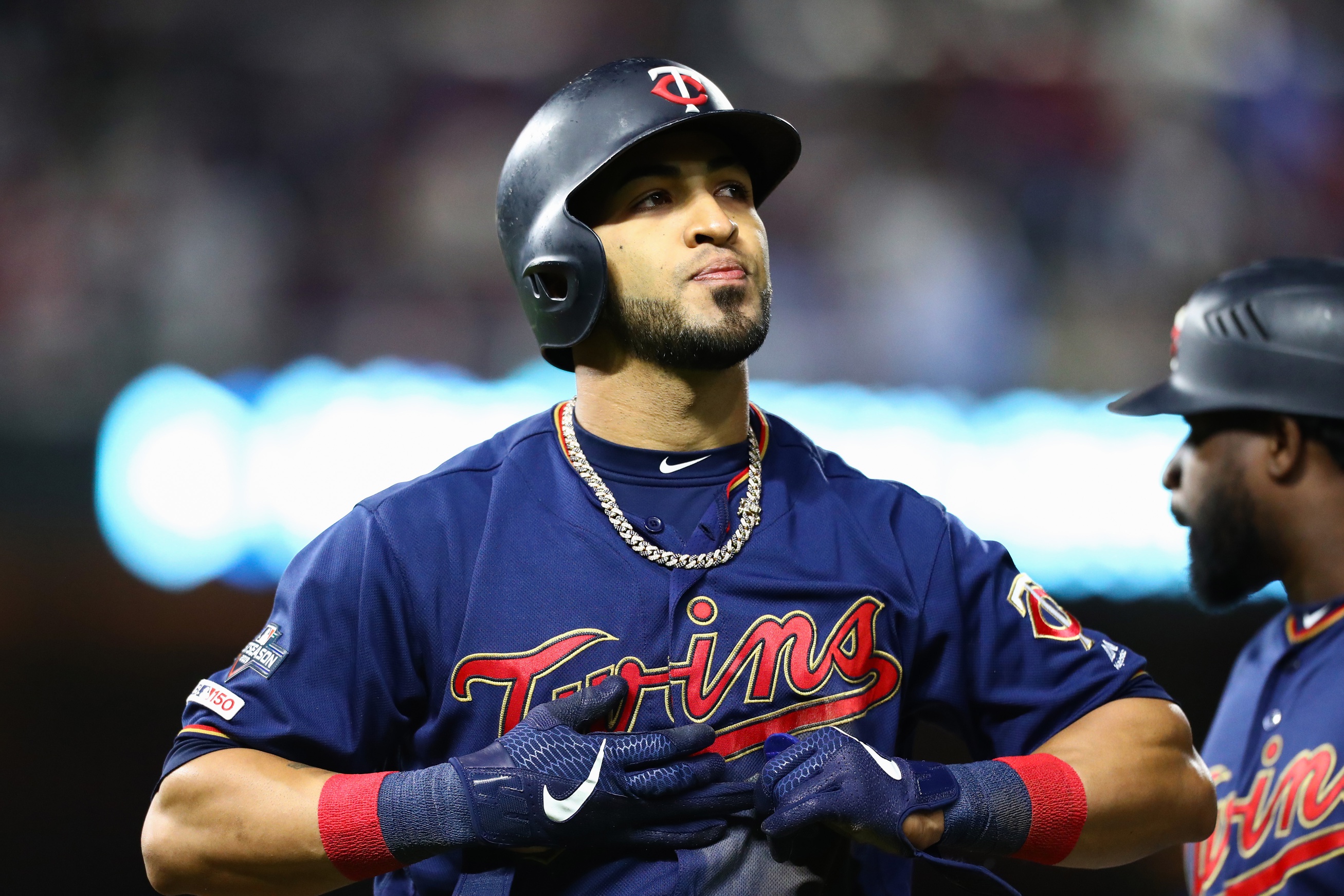 I like Eddie Rosario. I consider myself a big fan. He is talented and electric and entertainingly brash. His ability to crush pitches anywhere within reach is amazing. Rosie brings a unique element to the Twins lineup and clubhouse, without a doubt. But I'm not gonna let these things blind me to the fact that he had a down year in some very essential ways. Whenever I broach this subject, I seem to find myself accused of being a "hater," but an honest analysis cannot avoid the conclusion that Rosario was a very ordinary player in 2019. True: Rosario batted cleanup all year long for an historically powerful offense. He hit 32 homers and drove in a team-leading 109 runs. Also true: He posted a .300 on-base percentage, lower than all but seven qualified major leaguers. And depending on which metric you look at, he was either sub par defensively, or the worst left fielder in the league. His Statcast measures were generally below average. Granted, a pinch-hit walk-off home run sticks in the viewer's mind more than that steady stream of outs, which blend into the game's general rhythm over a long season. The same is true for a flashy game-ending outfield assist, in comparison with the litany of missed plays stemming from diminishing range, bad routes, and poor decisions. But the central tenets of modern baseball analysis pronounce that outs are a precious commodity. Low OBPs are suppressive, even when attached to solid power. On the flip side, giving up outs defensively is detrimental to the utmost for run prevention. In these two categories, Rosario was among the league's worst performers. And he's not trending well on either. I realize that not everyone shares my perspective here. Clearly not the MVP voters, who collectively deemed Rosario more valuable than – say – Max Kepler, who received one single ninth-place vote despite his superior OBP, SLG, and home run total. That's not even broaching the vast chasm in defensive value. Kepler ranked 11th among AL position players in fWAR; Rosario ranked 50th! I get it. This is the lagging nature of award voting, which has grown only mildly more sophisticated over the years. (To their credit, BBWAA did get it right by crowning Mike Trout.) Moving at a more advanced pace in player evaluation? MLB's front offices. The shift has been evident in recent years, with home runs and RBIs decreasingly translating into dollars on their own merit. This helps explain why Jose Abreu (who finished in between Rosario and Kepler on the MVP ballots) opted to accept a qualifying offer from the White Sox, rather than test the market following an All-Star, 123-RBI season. This brings us to the crux of the matter. Rosario is due for his second turn at arbitration this year, after earning $4.2 million in Year 1. He and his agent have grounds to request a substantial raise in 2020 – their case now bolstered by a dash of MVP recognition. The Twins will submit their own salary figure, and based on all we've just discussed, it's likely to be a good bit lower. Even at the highest extremes, these gaps are never all that significant, but then again, the Twins took Kyle Gibson (every bit the entrenched franchise stalwart Rosario is) to arbitration in 2018 over a mere $300K difference in exchanged numbers. This front office is all about setting precedent. Should the case go before a panel, it'll be interesting to see which way it goes. Arbitrators have traditionally been very... traditional in their judgments, aligning more so with the sentiments of BBWAA voters than Billy Beane. But in theory, salaries determined through this process should reflect larger trends around the league. What's 1.2 fWAR worth? Anyway, all of that is beside the point. Determining Rosario's salary is a microcosm of the larger narrative: He's two years from free agency, and coming off a complicated season. This juncture is prime for either an extension or trade, as the Twins may never have better leverage on either front. If they choose to stay on the year-to-year plan, then arbitration awaits, and whatever that entails. One way or another, we figure to learn a lot about Rosario's future in Minnesota over the next couple months.
 -
Last weekend, as University of Minnesota football coach P.J. Fleck surfed across a sea of rejoicing players in the locker room following a landmark victory, I couldn't help but think back to Rocco Baldelli addressing his Twins team (albeit in more subdued fashion) after they clinched the AL Central. The parallels between Fleck and Baldelli – millennial leaders who espouse positivity and empathy over a traditional bulldog mentality – cannot be ignored. Nor can the results their approaches have yielded. On Saturday, Fleck notched the biggest victory for a Gophers team in decades, and on Tuesday, Baldelli was named AL Manager of the Year following an inspired first year on the job.Ahead of his selection as the 14th manager in Twins history, Baldelli was described in the Tampa Bay Times as "young, bright, sharp, communicative, confident, humble, versed in analytics." All of these traits came to fruition during his award-winning debut as Minnesota's skipper. Tom Froemming wrote an article here in late May, entitled Baldelli Is More Coddling Millennial Than Field General, and I think it pretty well summarizes the 38-year-old's staunch departure from managerial norms. Baldelli is a quiet commander. Articulate and tactful, he navigates interviews in a way that mostly avoids single-out critiques. He runs his program in a very player-centric manner, sometimes bucking entrenched norms in the name of comfort and convenience for his guys. I think Dan Hayes of The Athletic has captured this best: For example, his piece explaining Baldelli's "LAF" acronym (a designation for days where players are allowed to come to the park "Late as [eff]"), and his contribution to the Offseason Handbook, where Hayes details the rest-and-recovery model that helped produce an historic year from Minnesota's catchers. In my limited interactions with Baldelli, I've been incredibly impressed. Ron Gardenhire and Paul Molitor were plenty likable, in their own ways, but the new Twins manager is connective. This story of his heartwarming encounter with a young fan at a restaurant won't surprise anyone who's spent time with Rocco. He is an authentic person – sharp and knowledgeable, yet perceptive and open-minded. These traits helped him build instant rapport within the clubhouse, despite being younger than his team MVP, and clearly Baldelli's presence was conducive to successful results. In his first year the helm, he oversaw the biggest surprise in baseball: a record-setting, 101-win team that immediately cements itself among the three or four best in franchise history. This was a slam-dunk hire by the front office, in what has now become a trend. Granted, the trend has its downsides; Jeremy Hefner has become the latest in a line of coaches targeted for poaching by other teams. But Baldelli isn't going anywhere, much to the dismay of the numerous teams now turning over managers this offseason. His return next year, alongside what figures to be a largely intact roster, provides all the more reason to be confident in a sustainable winning product. The standard for Twins managerial debuts has been set high. Tom Kelly won a World Series in 1987. Ron Gardenhire reached the ALCS in 2002. Paul Molitor guided the franchise out of four straight 90-loss seasons with a winning record in 2015. Baldelli has picked up the mantle with a worthy effort, and now has already joined that trio as recipients of a Manager of the Year award. Cheers, Rocco. We're all excited to see where you take it from here. Click here to view the article
-
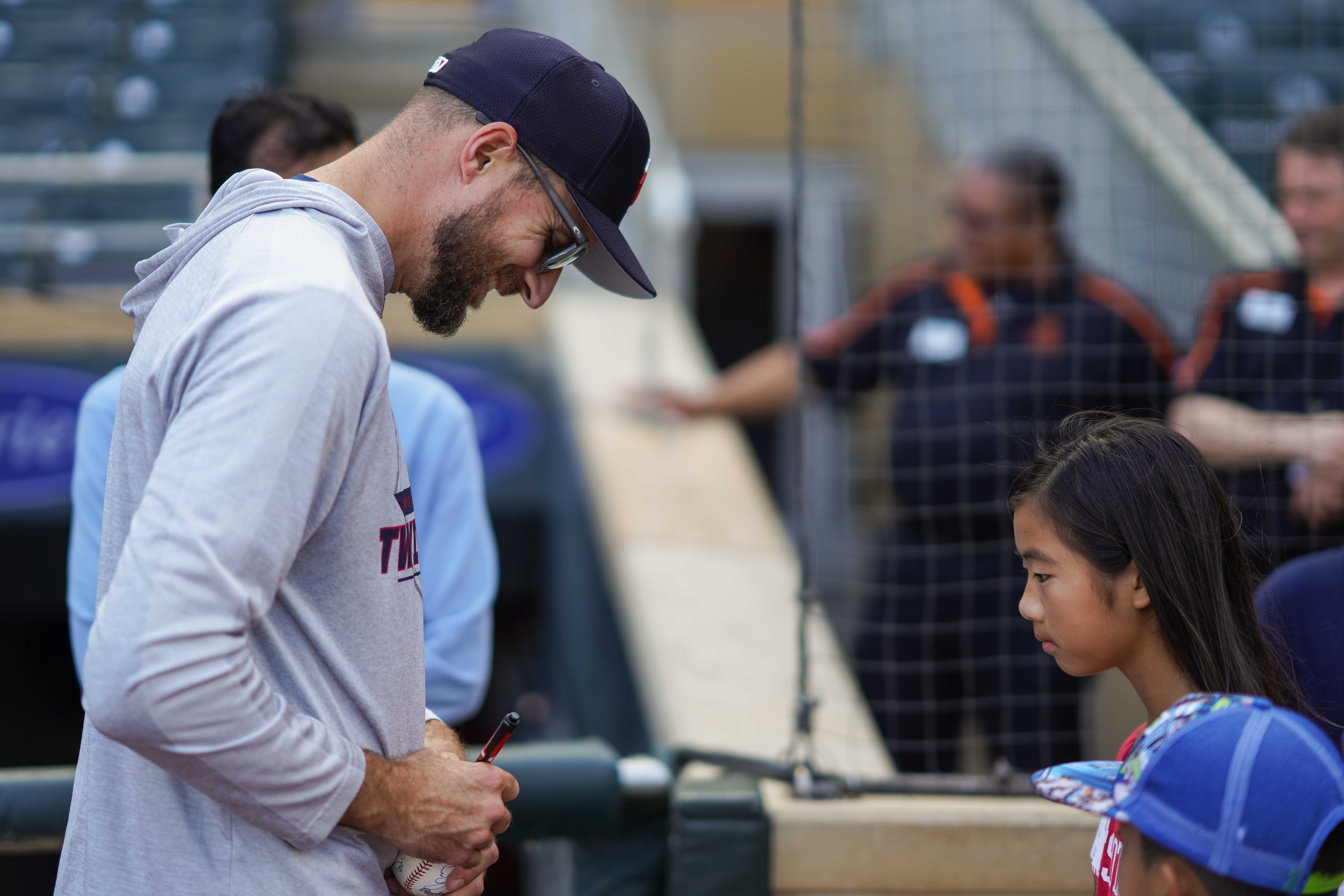 Ahead of his selection as the 14th manager in Twins history, Baldelli was described in the Tampa Bay Times as "young, bright, sharp, communicative, confident, humble, versed in analytics." All of these traits came to fruition during his award-winning debut as Minnesota's skipper. https://twitter.com/MLB/status/1194394490934575109 Tom Froemming wrote an article here in late May, entitled Baldelli Is More Coddling Millennial Than Field General, and I think it pretty well summarizes the 38-year-old's staunch departure from managerial norms. Baldelli is a quiet commander. Articulate and tactful, he navigates interviews in a way that mostly avoids single-out critiques. He runs his program in a very player-centric manner, sometimes bucking entrenched norms in the name of comfort and convenience for his guys. I think Dan Hayes of The Athletic has captured this best: For example, his piece explaining Baldelli's "LAF" acronym (a designation for days where players are allowed to come to the park "Late as [eff]"), and his contribution to the Offseason Handbook, where Hayes details the rest-and-recovery model that helped produce an historic year from Minnesota's catchers. In my limited interactions with Baldelli, I've been incredibly impressed. Ron Gardenhire and Paul Molitor were plenty likable, in their own ways, but the new Twins manager is connective. This story of his heartwarming encounter with a young fan at a restaurant won't surprise anyone who's spent time with Rocco. He is an authentic person – sharp and knowledgeable, yet perceptive and open-minded. These traits helped him build instant rapport within the clubhouse, despite being younger than his team MVP, and clearly Baldelli's presence was conducive to successful results. In his first year the helm, he oversaw the biggest surprise in baseball: a record-setting, 101-win team that immediately cements itself among the three or four best in franchise history. This was a slam-dunk hire by the front office, in what has now become a trend. Granted, the trend has its downsides; Jeremy Hefner has become the latest in a line of coaches targeted for poaching by other teams. But Baldelli isn't going anywhere, much to the dismay of the numerous teams now turning over managers this offseason. His return next year, alongside what figures to be a largely intact roster, provides all the more reason to be confident in a sustainable winning product. The standard for Twins managerial debuts has been set high. Tom Kelly won a World Series in 1987. Ron Gardenhire reached the ALCS in 2002. Paul Molitor guided the franchise out of four straight 90-loss seasons with a winning record in 2015. Baldelli has picked up the mantle with a worthy effort, and now has already joined that trio as recipients of a Manager of the Year award. Cheers, Rocco. We're all excited to see where you take it from here.
 -
Foot, Meet Throat: A 2020 Offseason Blueprint
Nick Nelson commented on Andrew Luedtke's blog entry in Thoughts from The Catch
I love this plan. Realistic yet assertive. Great work! -
Dedicated bullpen games would not be a set regular occurrence, but rather a convenient option when needed. You can use them to fill in the gaps while Pineda is suspended, or to give starters extra rest during a long stretch with no off-days, or to handle the bulk of a 3-IP start from someone like Graterol (whose pitch counts I believe should be tightly managed, especially early on). Might even make sense to run an opener ahead of Graterol.
-
I agree as a general principle. However, the Yankees ranked second in reliever fWAR this year (behind Tampa) and three of their top 5 RPs, including the top two, were high-end free agent signings -- two of 'em signed last offseason. We saw how much of an advantage NYY's deep, experienced, proven pen was against the Twins in the ALDS. If the Twins can't spend that money productively elsewhere, why not use it on short-term deals for relievers with monster upside?
-
I didn't mean specifically pairing pitchers with personalized catchers or anything. I just meant that in the quest to drive quality pitching results, it's important to have good receivers. My premise is that Rosario's worth more than his 2019 numbers suggest on the surface. I don't think it's a huge reach to believe. I discussed the matter in detail here. Should go without saying that Balazovic is the key to making the deal I proposed work. (And I'm not sure the Twins would even need to go quite that high; Iglesias is coming off a down year.)
-
Could definitely swapped in for Betances with the same overall impact. My assumption is that Smith will accept the QO from San Fran. I had thought so too, but we determined that he's qualified for a fourth option in 2020, which is a huge relief (no pun intended).
-
If we're being honest with ourselves, the Minnesota Twins probably aren't going to go out and sign Gerrit Cole or Stephen Strasburg this winter. Based on its history and tendencies, the front office will more likely explore creative ways to strike favorable values, while aiming to gain an edge through innovation. The bullpenning trend has seen fledgling traction around baseball, but has yet to fully take root. The Twins, for several reasons, are uniquely positioned to lean into a bullpen-focused mindset as they fill the numerous gaps in their pitching staff.First, let's establish why it makes sense for Minnesota to fully embrace "bullpenning" as a general philosophy and team-building guideline: There is going to be a ton of money thrown around at the top end of the starting pitching market. Even with aggressive spending intentions, the Twins may have a hard time hanging with big-market powerhouses in the rotation bidding wars.The addition of a 26th major-league roster spot, starting in 2020, makes it easier to carry eight relievers at all times.Minnesota is already off to a head-start with the bullpen, after seeing a quality core emerge convincingly in the second half.In essence, the Twins would be following Tampa Bay's lead. The Rays had only one pitcher, Charlie Morton, make 25+ starts in traditional fashion this year (Ryne Stanek made 27 as an opener). They had 10 different relievers make 30+ appearances (the Twins had four). Tampa ranked sixth among MLB teams in starting pitcher fWAR, but led the way in reliever fWAR. It all added up to 96 wins and a wild-card berth in the rough-and-tumble AL East, despite a paltry $52 million payroll. The Twins, with ample resources at hand and free rein to build upon a strong foundation, should theoretically be able to do it better. Here's how I'm assembling a 2020 roster capable of taking the next step in October, while following a bullpen-first strategy and staying within comfortably realistic spending constraints. 1. Tender all arbitration-eligible players. Sam Dyson is already out, but each of the nine remaining arbitration-eligible players comes back, amounting to somewhere around $35 million total. 2. Sign Jason Castro to a one-year, $6 million contract. Pairing pitchers with the right batterymates is critical. Castro was a perfect complement for Garver this year, and he's still only 32, so a one-year reunion makes plenty of sense. Castro has an established rapport with the incumbent pitchers, and the veteran confidence to quickly build it with newcomers. 3. Sign Madison Bumgarner to a four-year, $80 million contract. While this rotation will mostly be tailored to accommodate heavy relief usage, we do need one more horse at the top alongside Jose Berrios. Bumgarner fills that role and checks off plenty of important boxes: experience, durability, ace upside, postseason pedigree. 4. Sign RHP Jake Odorizzi to a three-year, $36 million contract. This contract estimate, via the Offseason Handbook, works under the assumption that Odorizzi declines his qualifying offer, but finds a lukewarm market while tethered to a draft pick, and comes back to negotiate a multi-year pact. He's only 29 and coming off an All-Star season, and Odorizzi's biggest weakness (lack of length – he completed six innings in only 10 of his 30 starts) is negated by the bullpenning model. 5. Sign RHP Michael Pineda to a one-year, $10 million contract. He looked very good before the suspension, and from the perspective of the team signing him, there are silver linings to be found in that unfortunate development. You don't have to pay for the 39 games he'll miss, and a late start means Pineda – whose workload will forever be a consideration – can keep his innings total in check, remaining strong into October. The Twins, with some young rotation depth and the ability to simply run bullpen games once a week if needed, are equipped to get by until Pineda can join at the end of May. 6. Trade OF Eddie Rosario and RHP Jordan Balazovic to Cincinnati Reds for RHP Raisel Iglesias. "We want to be able to maximize the value of Iglesias," said Reds' president of baseball ops Dick Williams last year after signing the Cincinnati closer to a three-year contract, buying out his arbitration. What if the best way to maximize Iglesias's value is to deal him right now? The Cuban native is a very good pitcher, with a 3.17 ERA and 10.4 K/9 rate over 388 major-league innings. He turns 30 in January. The Reds surely won't be eager to part with him, but this is a team that's finished in fourth or fifth place for six straight seasons. A great closer making $18 million over the next two years is a needless luxury for a team that can't escape the cellar. My proposed package here sends back immediate major-league help in Rosario, and also a legitimate top-line pitching prospect in Balazovic, who isn't all that far off. It's a tough ante for the Twins, but Iglesias adds a key piece alongside Taylor Rogers at the back end of the bullpen. And we're not done yet. 7. Sign RHP Dellin Betances to a two-year, $25 million contract. There are question marks surrounding Betances: he gives up walks in bunches, he missed virtually all of 2019 due to injury, and he'll be returning from Achilles surgery next spring. These factors all figure to keep his price tag in check, to an extent. But the right-hander is still gonna get paid based on his electric upside and dominant stuff. In this blueprint, we can afford the risk with the relief depth we're building, and if he returns to form Betances will add an elite weapon to Rocco Baldelli's late-inning repertoire. In seven seasons since joining the Yankees bullpen full-time, the 6-foot-8 righty owns a 2.21 ERA, 1.02 WHIP and 14.7 K/9 rate. 8. Sign LHP Drew Pomeranz to a two-year, $7 million contract. Here's our blurb on Pomeranz from the Handbook: "The overall numbers are undeniably ugly, but they don’t tell the whole story. After going 2-9 with a 6.10 ERA in 17 starts, Pomeranz moved to the bullpen, where he posted a 1.99 ERA and 53-to-9 K/BB ratio over his final 31.2 IP, experiencing a big uptick in velocity. He has also held lefty hitters to a .625 OPS in his career." We had a hard time pegging his projected contract. If enough teams zero in on his relief upside, he could get considerably more than $7 million guaranteed. Then again, the reality is that he's 4-16 with a 5.36 ERA over the past two years, and was traded for a modest return in July. If he costs more, I'm ponying up. Pomeranz looks like a great fit for the Twins: at worst, the solid situational left-hander they need; at best, another reliable all-purpose weapon in high leverage. SUMMARY With the lineup, my approach was, "If it ain't broke, don't fix it." The Twins can bring back their record-setting offense in its entirety, and I chose to do so minus Rosario. His spot will be filled by Gonzalez, Cave, and Wade Jr. until someone from the Alex Kirilloff/Trevor Larnach/Brent Rooker group is ready. Download attachment: offense.png Download attachment: bench.png On the pitching side, I'm calling for a fundamental shift. Bumgarner and Berrios are your two traditional starters, aiming for 200 innings and 20 wins. Meanwhile, Odorizzi will have a 5-to-6 inning routine, asking him only to continue the formula he excelled with this year. That'll roughly be the plan for Pineda as well once he joins, after having his spot filled by someone like Randy Dobnak for two months. In the final rotation spot I've penciled in Brusdar Graterol. I'm of the opinion that you need to leverage an arm like this while at its peak strength. Unleashing him as a regulated starter with restricted pitch counts seems like a happy compromise between relieving, which reduces his impact, and starting, which may be too physically demanding. Download attachment: rotation.png The deep and versatile bullpen is the straw stirring this drink. With 26 roster spots, the Twins can perpetually carry an eight-man unit. And if they use the final spot as a rotating door, like they did throughout 2019, it's essentially nine. This enables the team to plan around routinely short starts from Odorizzi, Pineda and Graterol. It also sets the stage for frequent bullpen games. Rocco Baldelli will never have a shortage of fresh arms, and the addition of multiple high-caliber backend relievers prevents overuse of any one guy in big spots. Meanwhile, with developing options like Stashak, Sean Poppen, Lewis Thorpe and Fernando Romero opening in the minors, the Twins will have reinforcements at the ready. Download attachment: bullpen.png We end up with a final payroll of around $140 million, which is well within reason. If Odorizzi accepts the QO, or the free agents cost a little more than we've guessed, bump that number up $5-10 million, but the core premise remains valid. Long-term spending flexibility is mostly preserved, and in 2020, you've got a roster that (in my opinion) is well poised to succeed in the regular season and playoffs. ~~~ What would your blueprint look like for the Twins this winter? Download your copy of the Offseason Handbook and use it to construct a champion. Share your vision for discussion in our Create a Blueprint forum thread. Meanwhile, stay tuned to TD as our writers will be formulating offseason plans from different perspectives all week long. Click here to view the article
-
 First, let's establish why it makes sense for Minnesota to fully embrace "bullpenning" as a general philosophy and team-building guideline: There is going to be a ton of money thrown around at the top end of the starting pitching market. Even with aggressive spending intentions, the Twins may have a hard time hanging with big-market powerhouses in the rotation bidding wars. The addition of a 26th major-league roster spot, starting in 2020, makes it easier to carry eight relievers at all times. Minnesota is already off to a head-start with the bullpen, after seeing a quality core emerge convincingly in the second half. In essence, the Twins would be following Tampa Bay's lead. The Rays had only one pitcher, Charlie Morton, make 25+ starts in traditional fashion this year (Ryne Stanek made 27 as an opener). They had 10 different relievers make 30+ appearances (the Twins had four). Tampa ranked sixth among MLB teams in starting pitcher fWAR, but led the way in reliever fWAR. It all added up to 96 wins and a wild-card berth in the rough-and-tumble AL East, despite a paltry $52 million payroll. The Twins, with ample resources at hand and free rein to build upon a strong foundation, should theoretically be able to do it better. Here's how I'm assembling a 2020 roster capable of taking the next step in October, while following a bullpen-first strategy and staying within comfortably realistic spending constraints. 1. Tender all arbitration-eligible players. Sam Dyson is already out, but each of the nine remaining arbitration-eligible players comes back, amounting to somewhere around $35 million total. 2. Sign Jason Castro to a one-year, $6 million contract. Pairing pitchers with the right batterymates is critical. Castro was a perfect complement for Garver this year, and he's still only 32, so a one-year reunion makes plenty of sense. Castro has an established rapport with the incumbent pitchers, and the veteran confidence to quickly build it with newcomers. 3. Sign Madison Bumgarner to a four-year, $80 million contract. While this rotation will mostly be tailored to accommodate heavy relief usage, we do need one more horse at the top alongside Jose Berrios. Bumgarner fills that role and checks off plenty of important boxes: experience, durability, ace upside, postseason pedigree. 4. Sign RHP Jake Odorizzi to a three-year, $36 million contract. This contract estimate, via the Offseason Handbook, works under the assumption that Odorizzi declines his qualifying offer, but finds a lukewarm market while tethered to a draft pick, and comes back to negotiate a multi-year pact. He's only 29 and coming off an All-Star season, and Odorizzi's biggest weakness (lack of length – he completed six innings in only 10 of his 30 starts) is negated by the bullpenning model. 5. Sign RHP Michael Pineda to a one-year, $10 million contract. He looked very good before the suspension, and from the perspective of the team signing him, there are silver linings to be found in that unfortunate development. You don't have to pay for the 39 games he'll miss, and a late start means Pineda – whose workload will forever be a consideration – can keep his innings total in check, remaining strong into October. The Twins, with some young rotation depth and the ability to simply run bullpen games once a week if needed, are equipped to get by until Pineda can join at the end of May. 6. Trade OF Eddie Rosario and RHP Jordan Balazovic to Cincinnati Reds for RHP Raisel Iglesias. "We want to be able to maximize the value of Iglesias," said Reds' president of baseball ops Dick Williams last year after signing the Cincinnati closer to a three-year contract, buying out his arbitration. What if the best way to maximize Iglesias's value is to deal him right now? The Cuban native is a very good pitcher, with a 3.17 ERA and 10.4 K/9 rate over 388 major-league innings. He turns 30 in January. The Reds surely won't be eager to part with him, but this is a team that's finished in fourth or fifth place for six straight seasons. A great closer making $18 million over the next two years is a needless luxury for a team that can't escape the cellar. My proposed package here sends back immediate major-league help in Rosario, and also a legitimate top-line pitching prospect in Balazovic, who isn't all that far off. It's a tough ante for the Twins, but Iglesias adds a key piece alongside Taylor Rogers at the back end of the bullpen. And we're not done yet. 7. Sign RHP Dellin Betances to a two-year, $25 million contract. There are question marks surrounding Betances: he gives up walks in bunches, he missed virtually all of 2019 due to injury, and he'll be returning from Achilles surgery next spring. These factors all figure to keep his price tag in check, to an extent. But the right-hander is still gonna get paid based on his electric upside and dominant stuff. In this blueprint, we can afford the risk with the relief depth we're building, and if he returns to form Betances will add an elite weapon to Rocco Baldelli's late-inning repertoire. In seven seasons since joining the Yankees bullpen full-time, the 6-foot-8 righty owns a 2.21 ERA, 1.02 WHIP and 14.7 K/9 rate. 8. Sign LHP Drew Pomeranz to a two-year, $7 million contract. Here's our blurb on Pomeranz from the Handbook: "The overall numbers are undeniably ugly, but they don’t tell the whole story. After going 2-9 with a 6.10 ERA in 17 starts, Pomeranz moved to the bullpen, where he posted a 1.99 ERA and 53-to-9 K/BB ratio over his final 31.2 IP, experiencing a big uptick in velocity. He has also held lefty hitters to a .625 OPS in his career."We had a hard time pegging his projected contract. If enough teams zero in on his relief upside, he could get considerably more than $7 million guaranteed. Then again, the reality is that he's 4-16 with a 5.36 ERA over the past two years, and was traded for a modest return in July. If he costs more, I'm ponying up. Pomeranz looks like a great fit for the Twins: at worst, the solid situational left-hander they need; at best, another reliable all-purpose weapon in high leverage. SUMMARY With the lineup, my approach was, "If it ain't broke, don't fix it." The Twins can bring back their record-setting offense in its entirety, and I chose to do so minus Rosario. His spot will be filled by Gonzalez, Cave, and Wade Jr. until someone from the Alex Kirilloff/Trevor Larnach/Brent Rooker group is ready. On the pitching side, I'm calling for a fundamental shift. Bumgarner and Berrios are your two traditional starters, aiming for 200 innings and 20 wins. Meanwhile, Odorizzi will have a 5-to-6 inning routine, asking him only to continue the formula he excelled with this year. That'll roughly be the plan for Pineda as well once he joins, after having his spot filled by someone like Randy Dobnak for two months. In the final rotation spot I've penciled in Brusdar Graterol. I'm of the opinion that you need to leverage an arm like this while at its peak strength. Unleashing him as a regulated starter with restricted pitch counts seems like a happy compromise between relieving, which reduces his impact, and starting, which may be too physically demanding. The deep and versatile bullpen is the straw stirring this drink. With 26 roster spots, the Twins can perpetually carry an eight-man unit. And if they use the final spot as a rotating door, like they did throughout 2019, it's essentially nine. This enables the team to plan around routinely short starts from Odorizzi, Pineda and Graterol. It also sets the stage for frequent bullpen games. Rocco Baldelli will never have a shortage of fresh arms, and the addition of multiple high-caliber backend relievers prevents overuse of any one guy in big spots. Meanwhile, with developing options like Stashak, Sean Poppen, Lewis Thorpe and Fernando Romero opening in the minors, the Twins will have reinforcements at the ready. We end up with a final payroll of around $140 million, which is well within reason. If Odorizzi accepts the QO, or the free agents cost a little more than we've guessed, bump that number up $5-10 million, but the core premise remains valid. Long-term spending flexibility is mostly preserved, and in 2020, you've got a roster that (in my opinion) is well poised to succeed in the regular season and playoffs. ~~~ What would your blueprint look like for the Twins this winter? Download your copy of the Offseason Handbook and use it to construct a champion. Share your vision for discussion in our Create a Blueprint forum thread. Meanwhile, stay tuned to TD as our writers will be formulating offseason plans from different perspectives all week long.
 -
Yes, this is the downside you have to deal with in order to play in FA at this level. If you could sign Bumgarner to a 2-year, $60M contract I'm sure teams would be lining up to do it. But adding that security blanket is what makes it work. At $12M/yr, you could comfortably afford to do something like move him to the bullpen, or deal with him being just an okay mid-rotation SP. I have to think the odds that he's completely useless by age 32 are very low. (But high enough that he'd value that security; this is a guy who nearly had his career derailed by a freak dirtbike incident.)
- 34 replies
-
- 1
-

-
- jose berrios
- madison bumgarner
- (and 2 more)
-
The Twins find themselves with a lot of freed up money to burn this offseason. What we've learned about this front office is that they don't mind spending, but strongly prefer to avoid long-term commitments and backloaded contracts. Which... can make it kinda hard to spend on premium talent. Thinking beyond your typical high-profile free agent contract, however, there are a number of interesting possibilities.In his Payroll Analysis feature for the Offseason Handbook, John Bonnes surmises that the Twins could plausibly push payroll to around $140 million this winter, giving them up to $70 million in spending flexibility. That total would push them past their 2018 and 2017 payrolls, but only modestly so. It's a reasonable target for a team that's in championship contention and experiencing a wave of renewed fan investment. In three shorts years since taking over as general manager under Derek Falvey, Thad Levine has already made some of the boldest free agent splashes in Twins history. The contracts given to Jason Castro, Addison Reed, Lance Lynn, Nelson Cruz and Marwin Gonzalez may not be lofty signings relative to the rest of the league, but judged against the standard set by Terry Ryan, they were tremendously aggressive signings. With the exception of Castro, however, none of these pacts were for more than two years. The Twins reportedly backed out of the Yu Darvish derby two winters ago because of his contract length demands. Minnesota epitomizes baseball's general aversion to bulky free agent deals, and to committing enormous guaranteed sums to players in their 30s. You know what? It's undeniably smart, especially for a team with finite payroll constraints. Ongoing flexibility is a worthy aspiration and directive for this front office. Let's explore some ways the Twins could maximize their present cash surplus while staying true to their strategically prudent ways. Frontload a Free Agent Contract Are the Twins going to sign Gerrit Cole to a deal pays him $40 million as a 34-year-old in 2025? Probably not. In fact, they're likely aiming to avoid any huge financial obligations down the line. But let me throw a theoretical scenario at you. Say Minnesota is targeting Madison Bumgarner. (You can insert the name of another high-end free agent starter as you please.) He has a five-year, $100 million offer in hand from another team, with salaries evenly dispersed across the length of the contract, maybe even backloaded. Pretty standard framework. Okay, Twins might not want to go there. But what if they proposed this contract: five years and $96 million, with $30 million salaries in each of the first two seasons, followed by an opt-out clause, and then $12 million salaries in each of the final three seasons. This gives Bumgarner the ability to make an extra $20+ million over the next two years, then hit free agency again at age 32 for another big payday. Meanwhile, if things fall apart on him, he still has three years of solid paychecks guaranteed. Basically it gives him the ability to bet on himself while maintaining security. From Minnesota's perspective, the extra money up-front doesn't matter much, and they ensure they won't be saddled with a major payroll drain just as guys like Jose Berrios, Miguel Sano, Byron Buxton and Taylor Rogers are getting expensive or reaching free agency. You can tinker around with the specific terms and numbers, but in general I think the heavily front-loaded opt-out contract is a model that could help the Twins compete for prime talent in free agency while remaining nimble. Trade for a Hefty Salary Teams that are willing to take on a burdensome contract often give up less in prospect capital to acquire a player. As it happens, there are several teams looking to shed payroll this winter, even – if rumblings are to be believed – heavy hitters like the Red Sox and Cubs. With considerable short-term flexibility, might the Twins be able to land a player like David Price ($32M/yr owed through 2023) or Kris Bryant (due around $40 million his final two years of arbitration, pending his service time grievance) for a relatively light return? Frontload Internal Contract Extensions This might not be as exciting as flashy outside pickups, but team-friendly extensions for core players – like the ones inked with Jorge Polanco and Max Kepler in the spring – are critical to the franchise's long-term health, enabling the front office to making impactful additions year after year. In the cases of both Polanco and Kepler, the Twins gave large immediate raises in exchange for reasonable rates and team options during the latter portions (which also happen to encompass the players' primes). It'd be great to see the front office take a similar approach this offseason, maybe even bringing it a step further. Earlier this week, Cody Christie looked at five extension candidates, and of course Berrios was at the top of the list. The 25-year-old is projected to make somewhere around $5 million in his first turn at arbitration this offseason, but what if the Twins bumped that up to – say – $9 million, with an ensuant raise the following year? What kind of discount might that score for his first few years of free agency? The bottom line is that Minnesota has a ton of spending flexibility right now, but it's a fleeting reality if the Twins hope to keep their core intact. They have at least seven key players in the arbitration process now, which puts those fixtures on a rapidly rising pay scale. Moves like the ones above will serve the team's short-term and long-term goals, aggressively pursuing a winning window while maintaining the freedom to keep the band together. Click here to view the article
- 34 replies
-
- 1
-
-
- jose berrios
- madison bumgarner
- (and 2 more)
-
3 Creative Ways for Twins to Leverage Their Spending Flexibility
Nick Nelson posted an article in Twins
 In his Payroll Analysis feature for the Offseason Handbook, John Bonnes surmises that the Twins could plausibly push payroll to around $140 million this winter, giving them up to $70 million in spending flexibility. That total would push them past their 2018 and 2017 payrolls, but only modestly so. It's a reasonable target for a team that's in championship contention and experiencing a wave of renewed fan investment. In three shorts years since taking over as general manager under Derek Falvey, Thad Levine has already made some of the boldest free agent splashes in Twins history. The contracts given to Jason Castro, Addison Reed, Lance Lynn, Nelson Cruz and Marwin Gonzalez may not be lofty signings relative to the rest of the league, but judged against the standard set by Terry Ryan, they were tremendously aggressive signings. With the exception of Castro, however, none of these pacts were for more than two years. The Twins reportedly backed out of the Yu Darvish derby two winters ago because of his contract length demands. Minnesota epitomizes baseball's general aversion to bulky free agent deals, and to committing enormous guaranteed sums to players in their 30s. You know what? It's undeniably smart, especially for a team with finite payroll constraints. Ongoing flexibility is a worthy aspiration and directive for this front office. Let's explore some ways the Twins could maximize their present cash surplus while staying true to their strategically prudent ways. Frontload a Free Agent Contract Are the Twins going to sign Gerrit Cole to a deal pays him $40 million as a 34-year-old in 2025? Probably not. In fact, they're likely aiming to avoid any huge financial obligations down the line. But let me throw a theoretical scenario at you. Say Minnesota is targeting Madison Bumgarner. (You can insert the name of another high-end free agent starter as you please.) He has a five-year, $100 million offer in hand from another team, with salaries evenly dispersed across the length of the contract, maybe even backloaded. Pretty standard framework. Okay, Twins might not want to go there. But what if they proposed this contract: five years and $96 million, with $30 million salaries in each of the first two seasons, followed by an opt-out clause, and then $12 million salaries in each of the final three seasons. This gives Bumgarner the ability to make an extra $20+ million over the next two years, then hit free agency again at age 32 for another big payday. Meanwhile, if things fall apart on him, he still has three years of solid paychecks guaranteed. Basically it gives him the ability to bet on himself while maintaining security. From Minnesota's perspective, the extra money up-front doesn't matter much, and they ensure they won't be saddled with a major payroll drain just as guys like Jose Berrios, Miguel Sano, Byron Buxton and Taylor Rogers are getting expensive or reaching free agency. You can tinker around with the specific terms and numbers, but in general I think the heavily front-loaded opt-out contract is a model that could help the Twins compete for prime talent in free agency while remaining nimble. Trade for a Hefty Salary Teams that are willing to take on a burdensome contract often give up less in prospect capital to acquire a player. As it happens, there are several teams looking to shed payroll this winter, even – if rumblings are to be believed – heavy hitters like the Red Sox and Cubs. With considerable short-term flexibility, might the Twins be able to land a player like David Price ($32M/yr owed through 2023) or Kris Bryant (due around $40 million his final two years of arbitration, pending his service time grievance) for a relatively light return? Frontload Internal Contract Extensions This might not be as exciting as flashy outside pickups, but team-friendly extensions for core players – like the ones inked with Jorge Polanco and Max Kepler in the spring – are critical to the franchise's long-term health, enabling the front office to making impactful additions year after year. In the cases of both Polanco and Kepler, the Twins gave large immediate raises in exchange for reasonable rates and team options during the latter portions (which also happen to encompass the players' primes). It'd be great to see the front office take a similar approach this offseason, maybe even bringing it a step further. Earlier this week, Cody Christie looked at five extension candidates, and of course Berrios was at the top of the list. The 25-year-old is projected to make somewhere around $5 million in his first turn at arbitration this offseason, but what if the Twins bumped that up to – say – $9 million, with an ensuant raise the following year? What kind of discount might that score for his first few years of free agency? The bottom line is that Minnesota has a ton of spending flexibility right now, but it's a fleeting reality if the Twins hope to keep their core intact. They have at least seven key players in the arbitration process now, which puts those fixtures on a rapidly rising pay scale. Moves like the ones above will serve the team's short-term and long-term goals, aggressively pursuing a winning window while maintaining the freedom to keep the band together.
 -
That's strange that it won't accept yours. Did you choose it on the dropdown menu? I just checked out with an AmEx and it went through. You can set the price to zero and checkout for free, we don't mind at all, please enjoy!
-
What's not working? We haven't heard about any persistent issues.
-
As I look over the free agent starting pitcher landscape (charted in detail within the 2020 Offseason Handbook, now available for instant download), there is one single name that stands out to me as a clear value opportunity – a relatively young and accomplished lefty offering front-end potential at a likely bargain. Could the Twins land Alex Wood, the most intriguing player in this year's robust class of available starters?When I use the word "intriguing," I mean it in a specific way. Gerrit Cole and Stephen Strasburg are of course far more appealing, because both are at the peak of their powers and coming off excellent seasons. The same is more or less true of the next starter tier – Hyun-Jin Ryu, Zack Wheeler, Madison Bumgarner, Jake Odorizzi, etc. That's why they're all going to get paid handsomely. As he enters free agency for the first time, Wood does not find himself in such a favorable position. Here are some things to know about the southpaw and his crooked path to the present: A second-round pick out of college by Atlanta in 2012, Wood immediately thrived in the minors and reached the big leagues less than one year after being drafted. At age 22 he posted a 3.13 ERA and 77-to-27 K/BB ratio, allowing only three homers in 78 innings for the Braves. He followed up with a 2.78 ERA and 1.14 WHIP in 172 innings as a sophomore.In July of 2015, he was shipped to the Dodgers as part of a massive three-team, 13-player deal dubbed by Minor League Ball as "one of the crazier trades in baseball history." Atlanta's motivation in the deal was to get Cuban star Hector Olivera, but he quickly proved to be a total bust.As Atlanta looked on regretfully, Wood continued to excel in SoCal. Over the next three seasons he posted a 3.29 ERA, 3.38 FIP and 1.15 WHIP over 364 1/3 innings in 74 appearances (62 starts). During that span he averaged 8.7 K/9 and 2.4 BB/9 while allowing just 34 homers total. In his career year of 2017, he won 16 games, made the All-Star team, and finished ninth in Cy Young voting.Wood's greatest challenge in LA (other than some occasional injuries) was consistently staying in the rotation fold, pressed by the Dodgers' enviable depth of established high-quality starters. This ultimately prompted Los Angeles to deal him to Cincinnati last winter, one year ahead of his free agency. The trade, mostly designed to shift salaries around as the Dodgers sought to get under the luxury tax threshold, also sent Yasiel Puig and Matt Kemp the Reds.Wood's lone year in Cincy was simply a loss. Plagued by back issues, he was limited to seven starts and 35 innings, in which he posted a 5.80 ERA and 1.40 WHIP – both the worst marks of his career. He didn't pitch until the end of July and was shut down again a month later.Clearly, Wood is a medical enigma, and assessments made on that front will ultimately dictate whether he is a target worthy of pursuing. But assuming there is reasonable confidence in a few months of rest getting his back right, Wood looks like a major value buy, and he should attract his own competitive market for that reason. His circumstances remind me of Phil Hughes back in the 2013-14 offseason. Like Wood, Hughes hit free agency at a relatively young age, by virtue of debuting in the majors early (Hughes was a free agent at 27, Wood is 28). Like Wood, Hughes had enjoyed quite a bit of success for one of baseball's perennial powerhouses, making an All-Star team and pitching well in the postseason to boot. And like Wood, Hughes headed into FA with a thud, struggling to a 4-14 record and 5.19 ERA in his final season with the Yankees. With this stock down, Hughes settled for a three-year, $24 million contract with the Twins – one of Terry Ryan's finest signings ever, as the right-hander delivered an historic first season in Minnesota. Degenerative shoulder issues and a needless extension turned the narrative around on his tenure, but the thought process behind Hughes's acquisition was more than sound. If he doesn't take a one-year deal to rebuild value and try again next year, Wood will likely end up with a contract similar to the one Hughes signed back then. In the Offseason Handbook, we projected three years and $33 million. Were the Twins to get him at that price, and make him their second- or third-biggest starting pitching addition of the winter, fans would have to be feeling pretty good about the effort. His strong track record, October pedigree, and relative youth all make him a nice fit for a team staring into its contention window. Who strikes you as the top value target on this year's free agent market? Click here to view the article
