



Nick Nelson
-
Posts
8,327 -
Joined
-
Last visited
-
Days Won
56
Content Type
Profiles
News
Minnesota Twins Videos
2026 Minnesota Twins Top Prospects Ranking
2022 Minnesota Twins Draft Picks
Minnesota Twins Free Agent & Trade Rumors, Notes, & Tidbits
Guides & Resources
2023 Minnesota Twins Draft Picks
The Minnesota Twins Players Project
2024 Minnesota Twins Draft Picks
2025 Minnesota Twins Draft Pick Tracker
2026 Minnesota Twins Draft Tracker: Picks & Bonuses
Forums
Blogs
Events
Store
Downloads
Gallery
Everything posted by Nick Nelson
-
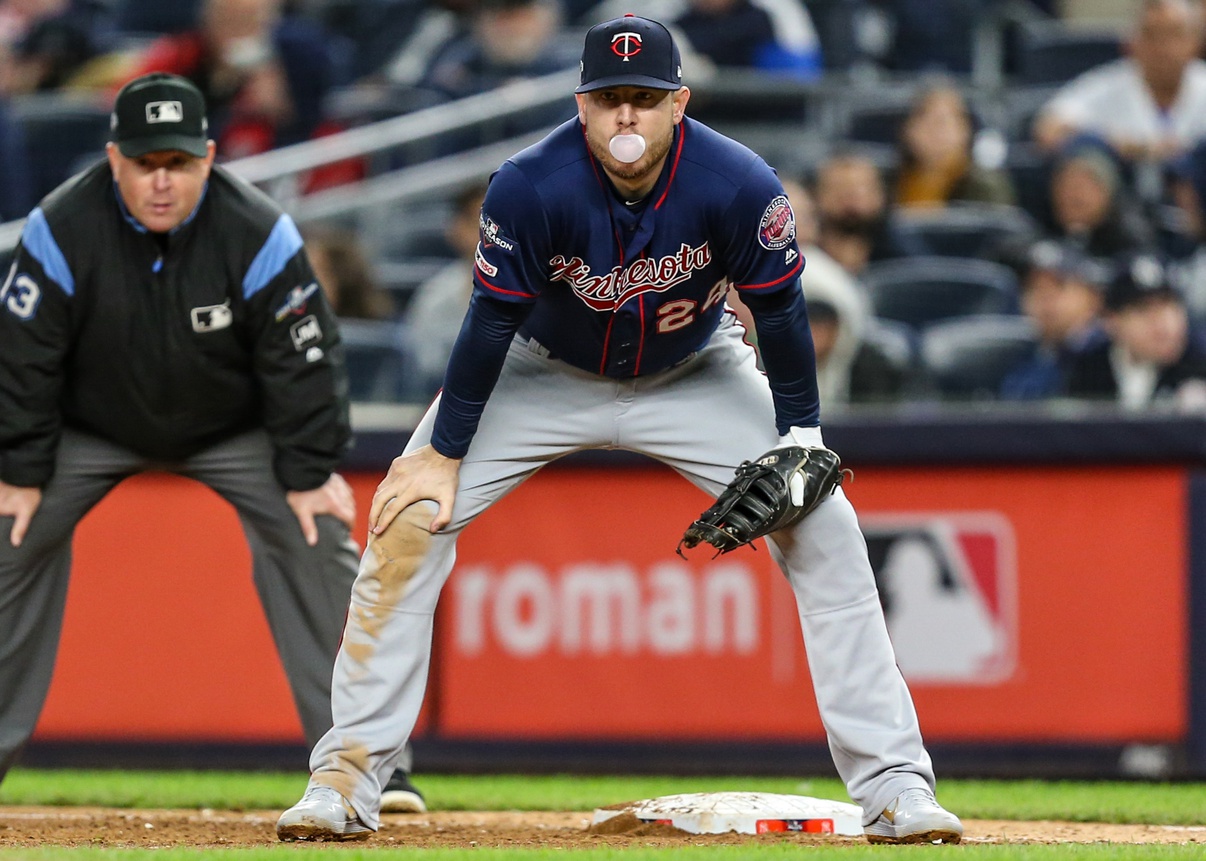 Cron, who was projected to earn around $7.5 million next year via his final turn at arbitration, was always a dubious bet to be locked in at that rate, despite the solid production in his first year with the Twins. His fate seemingly became sealed in recent weeks, with GM Thad Levine noting that the 29-year-old's postseason wrist surgery was "significant." https://twitter.com/DanHayesMLB/status/1201652308079067138 Minnesota still has the option of bringing back Cron at a lower rate, and they may very well explore it, but for now, a wealth of possibilities open up. Among them: shifting Miguel Sano to first base and adding a new third baseman (or going with Marwin Gonzalez at one of those spots). Meanwhile, the decision to non-tender Hildenberger falls into a different category. He wasn't eligible for arbitration, but the Twins elected not to tender him a 2020 contract, thus making him a free agent and clearing his spot on the 40-man roster. Like with Cron, the Twins have the option of pursuing Hildenberger on the open market (and I personally hope they do). The rest of the arbitration-eligible pack was tendered, including: Trevor May, Eddie Rosario, Miguel Sano, Byron Buxton, Taylor Rogers, Jose Berrios, Tyler Duffey, Matt Wisler, and Ehire Adrianza. The latter, Adrianza, inked a one-year deal worth $1.6 million – a modest $300K raise for a versatile player coming off his best offensive season. We'll now have to wait and see how salaries shake out for those other players, who can exchange numbers with the club up until the January 10th submission deadline. Usually teams and players find middle ground smoothly (we estimated where those figures might land in the Offseason Handbook), but differences in perceived value can emerge and cause friction. I've suggested this may happen with the Twins and Rosario. We'll see. Intriguing non-tenders from elsewhere around the league include A's reliever Blake Treinen and D-backs starter Taijuan Walker. With Cron and Hildenberger removed, the Twins now have five open spots on the 40-man roster.
 -
 Outside of Jake Odorizzi accepting his qualifying offer, and thereby filling one of several 2020 rotation vacancies, the first month of Minnesota's offseason was quiet – at least, in terms of real action. But there's been no shortage of reported rumors involving the Twins. Let's read between the lines and see if we can find substantive takeaways behind these rumblings, as well as developing storylines elsewhere.Here are five conclusions I've drawn based on signals rising from the offseason landscape. 1: The Twins will need to pay a hefty premium to sign Zack Wheeler The team's interest in Wheeler is no secret. It's also clear they have company in this regard. Corey Kluber is on the same timeline (FA after 2021) and his name came up in rumors last winter, so I fully expect to see it happen again. Trading either Lindor or Kluber would signal a pseudo-rebuild for Cleveland. Click here to view the article
- 84 replies
-
- 6
-

-
- miguel sano
- jason castro
- (and 1 more)
-
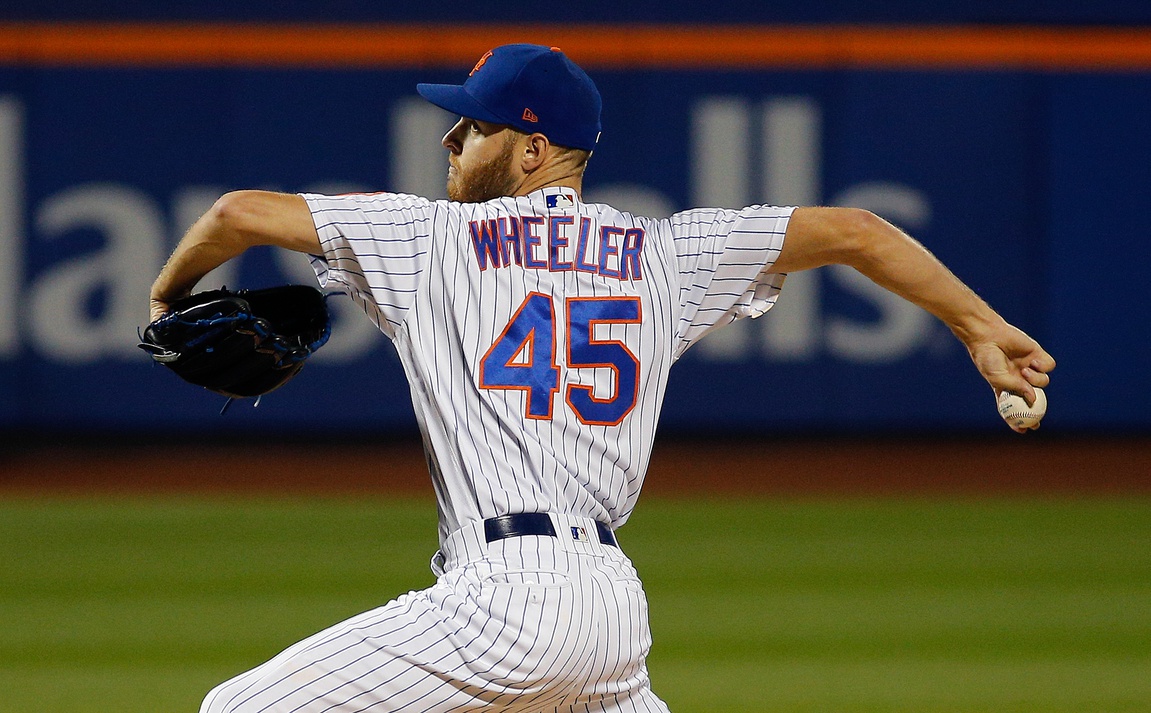 Here are five conclusions I've drawn based on signals rising from the offseason landscape. 1: The Twins will need to pay a hefty premium to sign Zack Wheeler The team's interest in Wheeler is no secret. It's also clear they have company in this regard. https://twitter.com/JonHeyman/status/1199127284185288705 The appeal of Wheeler heading into this offseason was easy enough to see: He's got rotation-fronting ability, but it never fully manifested in New York for various reasons. In seven seasons with the Mets he never threw 200 innings, while totaling a 3.71 FIP and 100 ERA+. In other words, his overall performance was almost exactly average. This backdrop set the stage for a team to acquire the 29-year-old's untapped potential at a relative discount, but when virtually every other front office has the same idea, the whole "discount" proposition goes out the window. To wit: Dan Hayes of The Athletic is hearing Wheeler could land something in the range of five years at $20-22 million per. https://twitter.com/DanHayesMLB/status/1199791067123666945 That seems astounding for a guy with Wheeler's track record, but it reflects something we're seeing elsewhere on this offseason's pitching market, and more broadly as well: front offices are paying for the future, not the past. It sounds obvious, but has hardly been the norm throughout the history of free agency. Players got paid based on their accomplishments. It's basically what makes the service-time system work – to the extent it does. We're seeing a clear shift though. It's evident when Drew Pomeranz, owner of a 4-16 record and 5.36 ERA over the past two seasons, signs with San Diego for four years and $34 million guaranteed. It's evident when Kyle Gibson, who possesses a 4.52 career ERA and torpedoed late in a turbulent 2019 campaign with Minnesota, scores a $30 million payday with Texas (a team that previously executed similar plans with Lance Lynn and Mike Minor, with great success). And it's evident in the relative buzz around Wheeler, compared to other second-tier options like Madison Bumgarner and Hyun-Jun Ryu. Bumgarner is a four-time All-Star, a former World Series MVP, and fourth among active pitchers in ERA. Ryu finished second in NL Cy Young balloting this year, led the league in ERA, and owns a 2.98 career mark. Both hurlers have ample postseason experience. Wheeler is lacking in all of these credentials, but nevertheless, the preference of teams around the league seemingly aligns with that of Twins Daily's Twitter following: https://twitter.com/twinsdaily/status/1198098254916775936 So if the Twins want to add Wheeler, they're surely going to have to go well beyond the "bargain" realm. And if they truly believe in his ability to be that linchpin force atop the rotation, they should be comfortable doing just that. 2: The Twins aren't dead-set on bringing back Jason Castro If they were, they would've already done it. At least, that's my read. The free agent catching market has been active early, and another name came off the market last week with Yan Gomes re-upping in Washington. Castro is still out there, and a reunion remains very much in play, but the more time passes, the more likely it seems that both sides are seriously exploring other options. Given how well he fits, as a lefty-swinging veteran presence with strong defensive chops and a built-in rapport, I figured the Twins might just lock Castro down quickly and check that need off the list. Instead, they're taking their time. 3: More projects are coming to the bullpen As much as I'd love to see the Twins take an aggressive approach in powering up an already-potent bullpen, it always seemed more likely they'd focus the majority of available resources on the rotation. Uncovering hidden gems and converting previous starters has been the recipe for building this current unit into an asset, so why not stick with it? The claim of left-hander Matt Wisler, a former starter who saw his K/9 rate skyrocket to 11.5 as a reliever this year, fits that bill. As does the more recent addition of Mitch Horacek, who is himself finding his way in the minors as a hard-throwing reliever, after transitioning from a previous starting role. Blaine Hardy, signed to a minors deal last week alongside Horacek, brings another lefty arm to the mix with MLB experience and depressed stock. https://twitter.com/beckjason/status/1199364879234277379 The Twins are piling up "maybes" in a way that might negate their need to spend on ostensible "sure things." I'd still like to see at least one clear high-impact acquisition for the back end of the bullpen, though. I find myself wondering if the Twins fancy Blake Treinen, who's reportedly being made very available by the A's, as an opportunistic addition in that realm. The Yankees are said to be moving in. 4: Moving Miguel Sano to first base is on the table The Twins face a fairly important deadline on Monday, when they must make decisions on all of their arbitration-eligible players. The biggest question mark among that group is C.J. Cron, who was a key piece of their lineup in the first half, largely a nonfactor in the second half, and is now coming off thumb surgery. The possibility of sliding Sano, who was generally a negative with the glove at third base, across the diamond has been broached by fans often, and it does appear to be something the team is considering. https://twitter.com/DWolfsonKSTP/status/1198658195394310146 The idea of pairing Donaldson with Sano at the infield corners is beyond tantalizing. Mike Moustakas would also be a good fit in this capacity. (Todd Frazier though? Eh.) 5: The White Sox mean business. (And the Indians might not?) Minnesota will likely enter the 2020 season as favorites in the AL Central, but they won't have the luxury of three teams making zero meaningful effort to compete. The White Sox registered a statement with their bold signing of Yasmani Grandal to a $73 million contract, and they also reached a new deal with slugger Jose Abreu to keep him at the heart of their lineup for three more years. Chicago's talent pipeline is about ready to start delivering. Nick Madrigal might be their Opening Day second baseman, with the release of Yolmer Sanchez paving way. Meanwhile, Lucas Giolito is arguably the best starter in the division, and the Sox are reportedly looking to add another piece alongside him atop the rotation: https://twitter.com/BNightengale/status/1197663148100050944? Potentially offsetting this development: Cleveland sure doesn't seem intent on making a push to retake the division. I haven't heard the Indians connected to any big names, and in fact, they've have been more prominently framed as sellers. Francisco Lindor, two years away from free agency, is apparently drawing interest. https://twitter.com/JonHeyman/status/1194402612990185472 Corey Kluber is on the same timeline (FA after 2021) and his name came up in rumors last winter, so I fully expect to see it happen again. Trading either Lindor or Kluber would signal a pseudo-rebuild for Cleveland.
 -
I heard much the same but Jeffers appears to be impressing people on the defensive side. Hayes also mentioned in his Handbook story that he has developed a strong rep as a game caller. I will note, for what it's worth, that Jeffers has not thus far shown a strong ability to throw out base stealers in the minors. (26% CS rate, compared to 43% for Rortvedt.)
- 34 replies
-
- 3
-
-
- jason castro
- mitch garver
- (and 1 more)
-
It's just a page from the Offseason Handbook. You can download it and get the whole thing in high-res, mobile-friendly format To answer your question, I lean toward Castro or Avila. Vogt is a sneaky option because his LH pop and versatility would be useful in a three-catcher scenario.
-
I like Rortvedt! Very nice prospect. I just think he's rawer and further away than Jeffers. If Jeffers is truly as special with pitch-framing as suggested, and his bat keeps rolling, he could be up by midseason. Rortvedt's ETA imo is 2021 or later.
- 34 replies
-
- 5
-
-
- jason castro
- mitch garver
- (and 1 more)
-
While free agency in general is off to a now-customary slow start, that hasn't been the case at catcher. Already the position's top name is off the market – Yasmani Grandal signed a four-year, $73 million deal with the White Sox last week – and on Sunday, Travis d'Arnaud inked a surprisingly lucrative deal with Atlanta. This is a clear area of need for the Twins, and if they hope to land their preferred target(s), they may need to act quickly.When putting together the Offseason Handbook, our presumption was that a crowded and relatively undifferentiated free agent catcher class would suppress salaries at the position, creating a buyer-friendly market. Early developments throw this premise into doubt. Untethered to draft pick compensation, Grandal quickly found a home this time around, agreeing with Chicago on a hefty deal that exceeded our Handbook projection (4 years, $60M). That said, it was always clear Grandal was gonna get paid. Atlanta's contract with d'Arnaud is more eyebrow-raising. On the surface, there wasn't much to separate d'Arnaud from any number of other middling backstops in free agency. He turns 31 in February, has generally been a part-time player, and hasn't posted an fWAR higher than 1.6 since 2015. The 2019 season alone saw him designated for assignment and released by the Mets, then signed by the Dodgers, and promptly traded to Tampa for cash. These aren't transactions that scream "valued commodity." Yet, here we are. Six months after being cast aside by the Mets, d'Arnaud has secured a $16 million payday. His contract is noteworthy because it is basically the same one a much more accomplished Jason Castro signed with the Twins back in 2017, minus one year. Castro, now back on the open market, is another from the mid-tier group with d'Arnaud, seemingly not in a position of leverage. He's 32, coming off an unspectacular campaign following a lost one. But then again, he's a good defender, and a veteran with a strong rep. If the early deals are any indication, Castro's probably going to require more than the one-year, $6 million commitment we guessed in the Handbook. Download attachment: Screen Shot 2019-11-25 at 7.49.42 PM.png (From the Offseason Handbook. Get your copy.) If early free agency action is indeed indicative of heightened demand at catcher, Castro could price himself out of the Twins' comfort zone. As a natural platoon fit with Mitch Garver, and a solid game caller familiar to the pitching staff, Castro is appealing as a reunion candidate – but only up to a certain point. There are many other interesting names on the market, including: Robinson Chirinos, Austin Romine, Stephen Vogt, Martin Maldonado, Yan Gomes, and Alex Avila. Download attachment: Screen Shot 2019-11-25 at 8.00.48 PM.png The decision here bears more importance than your standard backup catcher pickup, because the Twins appear committed to a balanced timeshare. Dan Hayes of The Athletic wrote a story for the Handbook detailing the strategy behind Garver's limited usage this year, and it doesn't sound as though the team intends to change course. While I suspect we'll see more of Garver in 2020 as a first baseman or DH, with the 26th roster spot making it easier to carry three catchers, there are still going to be at least 70-80 starts up for grabs at catcher. Willians Astudillo could take some of them. But he was sadly none too inspiring this year. The Twins have a real opportunity to upgrade what was already a stellar position player corps. If they feel Castro is the best available option, they can afford him, even in a seller's market. But is he? The other key question at play is whether the Twins feel they're in need of a stopgap or a longer-term solution. Garver is under control for four more seasons, but the system is otherwise thin at the top levels. That is, until you get to Ryan Jeffers, who may be closer than we realize. Added in the second round of the 2018 draft, Jeffers has raked since joining the pro ranks, with a .296/.383/.453 slash line in his first 167 games. By the end of his first full season, he'd already reached Double-A, posting an .856 OPS in 24 games there. Clearly, the 22-year-old can hit. But what really intrigues me is his defensive tool kit. Hayes noted in his Handbook article that "Jeffers is an outstanding pitch framer – some within the organization think he’s among the top 15 in pro ball right now." High praise. If the Twins are especially high on Jeffers, they may prefer to avoid a multi-year deal in free agency. Would that rule out Castro? Possibly. The best path for the front office might be a high-dollar one-year contract to sew up the only clear gap in their 2020 roster with some short-term quality. And if they want it to be one of their preferred options, they might need to claim him soon. Click here to view the article
-
Hot Commodities: Catching Up on the Free Agent Catcher Market
Nick Nelson posted an article in Twins
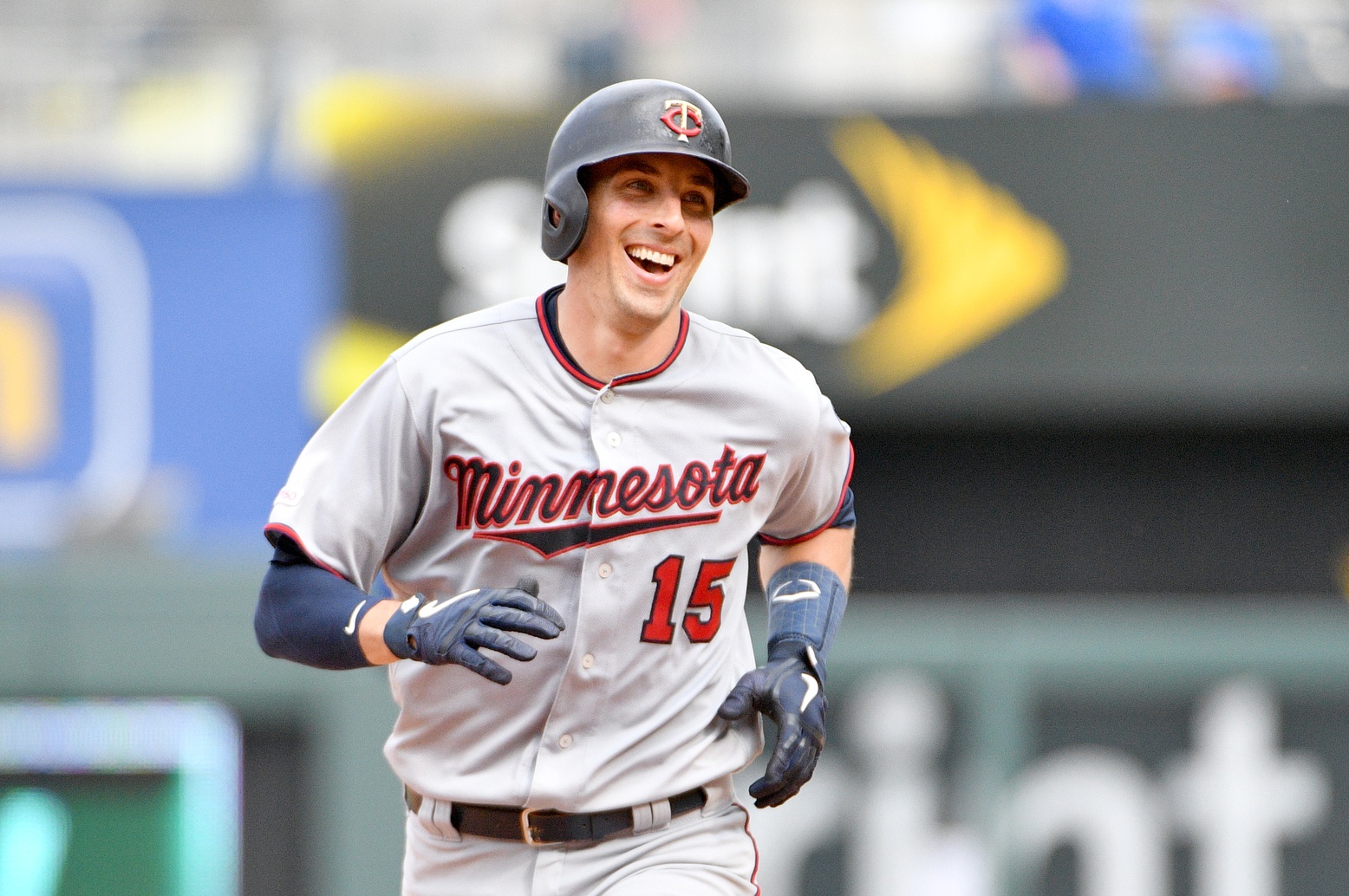 When putting together the Offseason Handbook, our presumption was that a crowded and relatively undifferentiated free agent catcher class would suppress salaries at the position, creating a buyer-friendly market. Early developments throw this premise into doubt. Untethered to draft pick compensation, Grandal quickly found a home this time around, agreeing with Chicago on a hefty deal that exceeded our Handbook projection (4 years, $60M). That said, it was always clear Grandal was gonna get paid. Atlanta's contract with d'Arnaud is more eyebrow-raising. On the surface, there wasn't much to separate d'Arnaud from any number of other middling backstops in free agency. He turns 31 in February, has generally been a part-time player, and hasn't posted an fWAR higher than 1.6 since 2015. The 2019 season alone saw him designated for assignment and released by the Mets, then signed by the Dodgers, and promptly traded to Tampa for cash. These aren't transactions that scream "valued commodity." Yet, here we are. Six months after being cast aside by the Mets, d'Arnaud has secured a $16 million payday. His contract is noteworthy because it is basically the same one a much more accomplished Jason Castro signed with the Twins back in 2017, minus one year. Castro, now back on the open market, is another from the mid-tier group with d'Arnaud, seemingly not in a position of leverage. He's 32, coming off an unspectacular campaign following a lost one. But then again, he's a good defender, and a veteran with a strong rep. If the early deals are any indication, Castro's probably going to require more than the one-year, $6 million commitment we guessed in the Handbook. (From the Offseason Handbook. Get your copy.) If early free agency action is indeed indicative of heightened demand at catcher, Castro could price himself out of the Twins' comfort zone. As a natural platoon fit with Mitch Garver, and a solid game caller familiar to the pitching staff, Castro is appealing as a reunion candidate – but only up to a certain point. There are many other interesting names on the market, including: Robinson Chirinos, Austin Romine, Stephen Vogt, Martin Maldonado, Yan Gomes, and Alex Avila. The decision here bears more importance than your standard backup catcher pickup, because the Twins appear committed to a balanced timeshare. Dan Hayes of The Athletic wrote a story for the Handbook detailing the strategy behind Garver's limited usage this year, and it doesn't sound as though the team intends to change course. While I suspect we'll see more of Garver in 2020 as a first baseman or DH, with the 26th roster spot making it easier to carry three catchers, there are still going to be at least 70-80 starts up for grabs at catcher. Willians Astudillo could take some of them. But he was sadly none too inspiring this year. The Twins have a real opportunity to upgrade what was already a stellar position player corps. If they feel Castro is the best available option, they can afford him, even in a seller's market. But is he? The other key question at play is whether the Twins feel they're in need of a stopgap or a longer-term solution. Garver is under control for four more seasons, but the system is otherwise thin at the top levels. That is, until you get to Ryan Jeffers, who may be closer than we realize. Added in the second round of the 2018 draft, Jeffers has raked since joining the pro ranks, with a .296/.383/.453 slash line in his first 167 games. By the end of his first full season, he'd already reached Double-A, posting an .856 OPS in 24 games there. Clearly, the 22-year-old can hit. But what really intrigues me is his defensive tool kit. Hayes noted in his Handbook article that "Jeffers is an outstanding pitch framer – some within the organization think he’s among the top 15 in pro ball right now." High praise. If the Twins are especially high on Jeffers, they may prefer to avoid a multi-year deal in free agency. Would that rule out Castro? Possibly. The best path for the front office might be a high-dollar one-year contract to sew up the only clear gap in their 2020 roster with some short-term quality. And if they want it to be one of their preferred options, they might need to claim him soon.
 -
Ok, I should correct that to say he was never much of a prospect on the basis of anything other than his draft position. When you're a top 10 overall pick you're probably going to appear on top prospect lists for at least a year or two afterward. Duran's perceived value, conversely, is based entirely on his performance so it's a bit of a different matter for me. Obviously "floors" go out the window when a guy wrecks his shoulder. I think it was reasonable to assume Jay would've been, at minimum, a decent MLB reliever if not for that.
-
This may be true. But over the past three years he has transitioned from playing primarily 3B, to barely playing it at all (only two starts there in 2019, none above Single-A). So I'm not sure what's up with that.
- 24 replies
-
- 2
-
-
- jhoan duran
- dakota chalmers
- (and 3 more)
-
Sure seems that way. Since taking over, this front office has appeared increasingly intent on building around their own guys (both in terms of players and coaches/FO personnel). Past decisions to move on from relief arms drafted/acquired by the previous regime (Chargois, Bard, Burdi, etc.) served as evidence of this, and these additions even more so. I don't think we have enough data to make a determination on the last item. Raley has a lot more experience at 1B, that's for sure. Can't speak definitively to the matter of Raley in CF but my understanding is he doesn't have the speed to be viable there other than in a pinch.
- 24 replies
-
- 2
-
-
- jhoan duran
- dakota chalmers
- (and 3 more)
-
Jay was never much of a prospect. Certainly not at the level of Duran. Romero is still only 24 so, in the spirit of not jumping to conclusions, let's ease up on citing him as a bust example.
- 24 replies
-
- 3
-
-
- jhoan duran
- dakota chalmers
- (and 3 more)
-
A 40-man roster spot is a precious commodity, especially for a contenting team. When prospects are added during the offseason, it says something about the organization's belief in those talents, and their potential MLB impact. As we size up the five newly rostered players, what types of roles might they play in the franchise's near future?By nature, entering the 40-man roster puts prospects in position for a somewhat imminent arrival in the big leagues. Once added, a player can only be optioned in three different seasons before the club is essentially forced to keep him in the majors or lose him. So the clock is now ticking for Jhoan Duran, Dakota Chalmers, Luke Raley, Gilberto Celestino, and Travis Blankenhorn. Technically, the Twins could keep all five in the minors through 2023 without risk of losing them, but recent history tells us they'll be arriving much sooner. Last year, Minnesota's 40-man additions ahead of the Rule 5 protection deadline were Luis Arraez, LaMonte Wade Jr., and Nick Gordon. Two of those guys reached the majors in 2019, with one breaking out as a rookie, and Gordon is poised to do so in early 2020. The prior year's wave of additions – Stephen Gonsalves, Zack Littell, and Lewis Thorpe – all received call-ups within two years of being selected. As I look at the pivotal impacts made by Arraez and Littell this year, I can't help but ponder how soon, and to what extent, this new class might begin to factor in. None are premier, nationally touted prospects at this point, but then, neither were the aforementioned duo. Peering through an optimistic lens, here's a look at what these five new 40-man roster additions could potentially bring to the table: Jhoan Duran, RHP Age: 21 2019 Stats (A+/AA): 115 IP, 3.76 ERA, 10.6 K/9, 3.1 BB/9, 1.19 WHIP There was a lot of buzz around Duran and his standout changeup in spring training. He lived up to the hype during his first full season in the Twins system, piling up strikeouts with an overpowering arsenal and finishing the year in Double-A as a 21-year-old. Like Brusdar Graterol, the right-hander can touch triple digits, and he has developed his "splinker" into a weapon along with the quality change-piece. The depth of his arsenal and relatively advanced workload build (he's thrown 100+ innings in each of the past two years without showing obvious wear) keep him on a starter's track. In that capacity, he truly does have front-of-rotation potential – and if he reaches it, oh MAN what a get for renting Eduardo Escobar to the D-backs last year – but he might take a bit longer to enter the MLB mix. If the Twins elect to slide him into a bullpen role, temporarily or permanently, his arrival could come early in the 2020 campaign. Dominant back-end reliever looks like his floor right now. Dakota Chalmers, RHP Age: 23 2019 Stats (A+/Rk): 34.2 IP, 3.63 ERA, 12.5 K/9, 6.0 BB/9, 1.24 WHIP Dominant back-end reliever is more realistically the ceiling for Chalmers, but it's an achievable one in the short term. This hard-throwing right-hander was even more of a coup than Duran, having been acquired in August of 2018 for aging Fernando Rodney. It was a little surprising to see the A's give up on Chalmers, who they went significantly overslot to sign out of high school as a third-round draft pick in 2015, but not that much. He hasn't been too effective in the minors, besieged by injuries and erratic control, and the latter has definitely been present since he switched organizations. Still, the Twins felt compelled to protect him because the potency of his arm is easy to see. Clearly they felt another team might be inclined to give him a shot in their bullpen straightaway. It only stands to reason that Minnesota might take a look soon, should Chalmers come out firing at Double-A next year. Thus far he's worked exclusively as a starter in the Twins system, but that feels like a fanciful plan for a guy who has worked 35+ IP once in five seasons since being drafted, and never anywhere close to 100. If he switches to relieving, he could be on the fast-track, with closer potential if he can stay healthy and rein in his command. Luke Raley, OF Age: 25 2019 Stats (AAA/Rk): 158 PA, .310/.361/.517, 8 HR, 23 RBI, 29 R Raley isn't a guy that screams "upside" but he exudes plenty of "useful" vibes. Acquired alongside Devin Smeltzer at the 2018 deadline for Brian Dozier, Raley has been a steady offensive force since the trade. There's nothing flashy about his skill set – a decent corner outfielder who can hit for average with a bit of pop from the left side – but he's polished and basically MLB-ready. In fact, he likely would've already debuted in 2019, had he not suffered an ankle injury requiring surgery in May. Raley is a seemingly redundant presence on the roster, stuck behind two lefty-swinging corner outfielders (Wade and Jake Cave) who are stuck behind two lefty-swinging corner outfielders (Max Kepler and Eddie Rosario). But the Twins saw fit to add him anyway, which says something. Of note: Raley has considerable experience at first base, which could quickly come into play should the Twins bring back C.J. Cron, who put up a .685 OPS against right-handed pitchers this year. With benches getting deeper in 2020, it's not hard to envision Raley making a fast impact in a platoon role. Gilberto Celestino, OF Age: 20 2019 Stats (A/A+): 536 PA, .315/.385/.491, 8 HR, 54 RBI, 58 R Perhaps the most surprising and intriguing addition of this batch, given that Celestino is 20 and has played only eight games above the Low-A level. In a sense it's hard to imagine any MLB club rostering such a young and raw player, but then again maybe not: Celestino is a toolsy center fielder with good speed who flashed his offensive upside during a spectacular second half at Cedar Rapids. Hitting just .219/.299/.290 at the end of May, he upgraded to .315/.385/.491 over the next 69 games before earning a late-season promotion to High-A. Although Minnesota justifiably felt the need to shield Celestino from a bottom-rung team that might've tried to Rule 5 him and stash him, he's the only one on this list that doesn't realistically have a shot at figuring into the semi-immediate picture. His potential down the line, however, is enormous. Around the same time Oakland invested heavily in Chalmers out of high school, the Astros spent $2.5 million to sign a teenaged Celestino out of the Dominican Republic. His tools and athleticism have long been lauded and they all came together last summer at Cedar Rapids. Travis Blankenhorn, IF Age: 23 2019 Stats (A+/AA): 471 PA, .277/.321/.466, 19 HR, 54 RBI, 56 R Among the five players on this list, Blankenhorn is the only one who wasn't brought in by the new front office – in fact, he's the only one who wasn't added around the deadline last year. He's an increasingly rare remnant of the previous regime, but one that could stick for some time. Drafted in the third round out of a Pennsylvania high school in 2015, Blankenhorn didn't storm the minors, following a more traditional progressive curve. His production has consistently been solid, outside of a rough 2018 in the pitcher-friendly FSL, but never outstanding enough to merit top prospect status; in our latest midseason rankings at Twins Daily, we had him at No. 20, and he peaked on our list at No. 9 in 2017. But that doesn't mean much. Arraez never gained much traction on top prospect lists either, up until he burst onto the scene as a Rookie of the Year contender for the Twins this season. Blankenhorn's circumstances are somewhat similar to those of Arraez a year ago: somewhat fringey prospect still learning the ropes in Double-A. Blankenhorn hasn't posted an .800 OPS anywhere north of rookie ball. But the decision to protect him, amidst a slew of their own guys, tells us not only that this front office is high on the blatantly athletic 23-year-old, but that they suspect others are too. His innate strength has always been evident – Blanknhorn won the FSL Home Run Derby in 2018, amidst a season where he struggled to a .686 OPS – and is now starting to transfer into games. He launched 18 homers in 93 games at Double-A this year, while bouncing capably between second base and left field. The defensive versatility, and blossoming power, set him up to provide value in the near future. He's a very different player than Arraez, but it's not implausible Blankenhorn could be a functionally similar rookie asset – left-handed bat that you want in the lineup, capable of being used at second, third, or left – as soon as 2020. Click here to view the article
- 24 replies
-
- 2
-
-
- jhoan duran
- dakota chalmers
- (and 3 more)
-
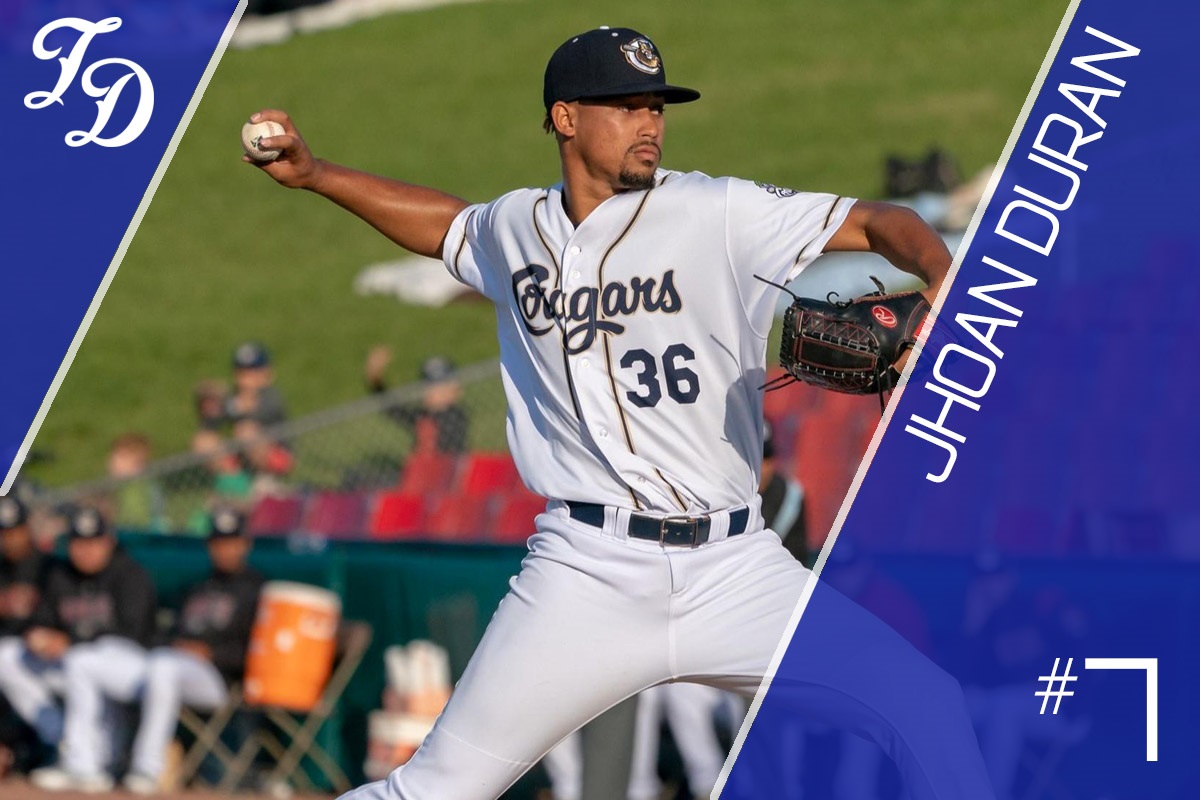 By nature, entering the 40-man roster puts prospects in position for a somewhat imminent arrival in the big leagues. Once added, a player can only be optioned in three different seasons before the club is essentially forced to keep him in the majors or lose him. So the clock is now ticking for Jhoan Duran, Dakota Chalmers, Luke Raley, Gilberto Celestino, and Travis Blankenhorn. Technically, the Twins could keep all five in the minors through 2023 without risk of losing them, but recent history tells us they'll be arriving much sooner. Last year, Minnesota's 40-man additions ahead of the Rule 5 protection deadline were Luis Arraez, LaMonte Wade Jr., and Nick Gordon. Two of those guys reached the majors in 2019, with one breaking out as a rookie, and Gordon is poised to do so in early 2020. The prior year's wave of additions – Stephen Gonsalves, Zack Littell, and Lewis Thorpe – all received call-ups within two years of being selected. As I look at the pivotal impacts made by Arraez and Littell this year, I can't help but ponder how soon, and to what extent, this new class might begin to factor in. None are premier, nationally touted prospects at this point, but then, neither were the aforementioned duo. Peering through an optimistic lens, here's a look at what these five new 40-man roster additions could potentially bring to the table: Jhoan Duran, RHP Age: 21 2019 Stats (A+/AA): 115 IP, 3.76 ERA, 10.6 K/9, 3.1 BB/9, 1.19 WHIP There was a lot of buzz around Duran and his standout changeup in spring training. He lived up to the hype during his first full season in the Twins system, piling up strikeouts with an overpowering arsenal and finishing the year in Double-A as a 21-year-old. Like Brusdar Graterol, the right-hander can touch triple digits, and he has developed his "splinker" into a weapon along with the quality change-piece. The depth of his arsenal and relatively advanced workload build (he's thrown 100+ innings in each of the past two years without showing obvious wear) keep him on a starter's track. In that capacity, he truly does have front-of-rotation potential – and if he reaches it, oh MAN what a get for renting Eduardo Escobar to the D-backs last year – but he might take a bit longer to enter the MLB mix. If the Twins elect to slide him into a bullpen role, temporarily or permanently, his arrival could come early in the 2020 campaign. Dominant back-end reliever looks like his floor right now. Dakota Chalmers, RHP Age: 23 2019 Stats (A+/Rk): 34.2 IP, 3.63 ERA, 12.5 K/9, 6.0 BB/9, 1.24 WHIP Dominant back-end reliever is more realistically the ceiling for Chalmers, but it's an achievable one in the short term. This hard-throwing right-hander was even more of a coup than Duran, having been acquired in August of 2018 for aging Fernando Rodney. It was a little surprising to see the A's give up on Chalmers, who they went significantly overslot to sign out of high school as a third-round draft pick in 2015, but not that much. He hasn't been too effective in the minors, besieged by injuries and erratic control, and the latter has definitely been present since he switched organizations. Still, the Twins felt compelled to protect him because the potency of his arm is easy to see. Clearly they felt another team might be inclined to give him a shot in their bullpen straightaway. It only stands to reason that Minnesota might take a look soon, should Chalmers come out firing at Double-A next year. Thus far he's worked exclusively as a starter in the Twins system, but that feels like a fanciful plan for a guy who has worked 35+ IP once in five seasons since being drafted, and never anywhere close to 100. If he switches to relieving, he could be on the fast-track, with closer potential if he can stay healthy and rein in his command. Luke Raley, OF Age: 25 2019 Stats (AAA/Rk): 158 PA, .310/.361/.517, 8 HR, 23 RBI, 29 R Raley isn't a guy that screams "upside" but he exudes plenty of "useful" vibes. Acquired alongside Devin Smeltzer at the 2018 deadline for Brian Dozier, Raley has been a steady offensive force since the trade. There's nothing flashy about his skill set – a decent corner outfielder who can hit for average with a bit of pop from the left side – but he's polished and basically MLB-ready. In fact, he likely would've already debuted in 2019, had he not suffered an ankle injury requiring surgery in May. Raley is a seemingly redundant presence on the roster, stuck behind two lefty-swinging corner outfielders (Wade and Jake Cave) who are stuck behind two lefty-swinging corner outfielders (Max Kepler and Eddie Rosario). But the Twins saw fit to add him anyway, which says something. Of note: Raley has considerable experience at first base, which could quickly come into play should the Twins bring back C.J. Cron, who put up a .685 OPS against right-handed pitchers this year. With benches getting deeper in 2020, it's not hard to envision Raley making a fast impact in a platoon role. Gilberto Celestino, OF Age: 20 2019 Stats (A/A+): 536 PA, .315/.385/.491, 8 HR, 54 RBI, 58 R Perhaps the most surprising and intriguing addition of this batch, given that Celestino is 20 and has played only eight games above the Low-A level. In a sense it's hard to imagine any MLB club rostering such a young and raw player, but then again maybe not: Celestino is a toolsy center fielder with good speed who flashed his offensive upside during a spectacular second half at Cedar Rapids. Hitting just .219/.299/.290 at the end of May, he upgraded to .315/.385/.491 over the next 69 games before earning a late-season promotion to High-A. Although Minnesota justifiably felt the need to shield Celestino from a bottom-rung team that might've tried to Rule 5 him and stash him, he's the only one on this list that doesn't realistically have a shot at figuring into the semi-immediate picture. His potential down the line, however, is enormous. Around the same time Oakland invested heavily in Chalmers out of high school, the Astros spent $2.5 million to sign a teenaged Celestino out of the Dominican Republic. His tools and athleticism have long been lauded and they all came together last summer at Cedar Rapids. Travis Blankenhorn, IF Age: 23 2019 Stats (A+/AA): 471 PA, .277/.321/.466, 19 HR, 54 RBI, 56 R Among the five players on this list, Blankenhorn is the only one who wasn't brought in by the new front office – in fact, he's the only one who wasn't added around the deadline last year. He's an increasingly rare remnant of the previous regime, but one that could stick for some time. Drafted in the third round out of a Pennsylvania high school in 2015, Blankenhorn didn't storm the minors, following a more traditional progressive curve. His production has consistently been solid, outside of a rough 2018 in the pitcher-friendly FSL, but never outstanding enough to merit top prospect status; in our latest midseason rankings at Twins Daily, we had him at No. 20, and he peaked on our list at No. 9 in 2017. But that doesn't mean much. Arraez never gained much traction on top prospect lists either, up until he burst onto the scene as a Rookie of the Year contender for the Twins this season. Blankenhorn's circumstances are somewhat similar to those of Arraez a year ago: somewhat fringey prospect still learning the ropes in Double-A. Blankenhorn hasn't posted an .800 OPS anywhere north of rookie ball. But the decision to protect him, amidst a slew of their own guys, tells us not only that this front office is high on the blatantly athletic 23-year-old, but that they suspect others are too. His innate strength has always been evident – Blanknhorn won the FSL Home Run Derby in 2018, amidst a season where he struggled to a .686 OPS – and is now starting to transfer into games. He launched 18 homers in 93 games at Double-A this year, while bouncing capably between second base and left field. The defensive versatility, and blossoming power, set him up to provide value in the near future. He's a very different player than Arraez, but it's not implausible Blankenhorn could be a functionally similar rookie asset – left-handed bat that you want in the lineup, capable of being used at second, third, or left – as soon as 2020.
 -
The last two offseasons haven't featured a free agent starter remotely in Cole's class. Accounting for momentum, he might legitimately be the best free agent starting pitcher in history. I think the Twins would have to go at least $35m/yr to win a bidding war for him, yea. Darvish's checkered health history worked against him (as it should've, turns out). Who's saying that? Not me. I'm all in favor of spending aggressively in free agency. I'd be very annoyed if they didn't. Problem is that there's nothing close to a sure-thing ace on the market after Cole and Strasburg, and everyone wants those guys. Trading is frankly a more proven avenue for acquiring legitimate rotation fronters, regardless of salary. Cole and Verlander? Both acquired via trade. Ace of last year's WS champs, Sale? Acquired via trade. Take a look at the lineage of division-winning aces in the AL Central alone: Kluber, Scherzer, Shields... all acquired via trade. And how many of those guys were brought in at a time where their value was anywhere near its peak? The idea here is to look beyond what is readily evident. I dunno why you think anyone's arguing against signing good free agents. The purpose of this exercise was to think a little more creatively, that's all.
-
All very relevant and pertinent examples, thank you. I must say you've made me rethink my confidence in Terry Ryan's ability to uncover an overlooked talent this offseason. And how would that've worked out for them? They need to acquire good pitching, we're all agreed on that. But it can come through many different channels. Trading for a player is not mutually exclusive from signing one. The only thing I took issue with in your remarks is that financial flexibility is a farce and just a "cover for ownership." It actually does need to be a consideration when looking at lucrative long-term deals for players that are aging past their prime, which is what makes the avenue I'm suggesting here more appealing. IMO.
-
@markos: It certainly won't be as cheap as it once was. But the Twins have the bullets to pony up for a guy they can believe in. @diehardtwinsfan: Don't get me wrong, I'm in favor of spending some money on a free agent pitcher. I just don't see Cole as especially realistic, nor do I view the avenue as being all that reliable in general. (Yu Darvish looked like a slam dunk when the Cubs signed him, but it took him much longer to get right in a Cubs uni than Odo here.) So this is mainly presented as a complementary measure to acquire potential top-end pitching. @Mike Sixel: "They have fifty million in budget. Seriously." It's not quite that simple. When you lock into a Gerrit Cole for $35M in 2024, that meaningfully affects your ability or retain core players that are getting more expensive or hitting FA at that point -- Berrios, Buxton, Sano, etc. We can't look at these kinds of things in a single-year scope. Huge long-term deals are scary; there's a reason the Twins aren't the only team moving away from them.
-
This is what I was driving at when closing the article with this: "The question is whether they can now level-up, expending more resources to add a player capable of even greater impact." So what I'm wondering is if the Twins can now do something more akin to Houston with Cole -- even though they bought low, the Astros did give up a legit haul to acquire him, whereas Odorizzi was just a salary dump for TB more or less. So the challenge for MIN is to target a higher-caliber arm with higher upside, who can be more quickly turned around, while not having to pay the premium of buying at their absolute peak value. That's the issue with Cole. Setting aside the unlikelihood of the Twins ponying up $250M, it's just not ideal team-building strategy for a club with finite spending resources to commit so much money to one guy for 7 years. The key is finding them before their breakout and their true prime. Archer and Gray both strike me as guys who, like Cole, could flip a switch immediately and reach that No. 1/2 status with good health and the right tweaks.
-
Correction: He was a completely different pitcher in July, when he dealt with a blister issue and his mechanics got slightly out of wack. His performance in August/Sept was on par with the first half. I'd actually trace his turnaround with the Twins back to midway through 2018. In August and September he allowed a .202 avg and just 3 HR. They didn't help him connect the dots instantly, it took about half a season, but since then he's been an excellent starter. No one single case is going to prove anything about pitcher development capabilities (though I'd toss the success of Pineda, Dobnak, Smeltzer, & various relievers into the pile as well). Still, I'm not sure how people can look at the overall progress of Odorizzi and not conclude that it reflects extremely well on the org.
-
K/9 this year: 10.1 Highest K/9 in Tampa: 9.3 (as a rookie in 2014) FIP this year: 3.36 Lowest FIP in Tampa: 3.61 Whiff rate this year: 12.7% Highest whiff rate in Tampa: 11.2% Avg FB velo this year: 92.9 MPH Highest avg FB velo in Tampa: 91.6 MPH fWAR this year: 4.3 Highest fWAR in Tampa: 2.9 The list goes on. And we also need to consider he was at his lowest point when the Twins acquired him. Nearly all of those high marks in Tampa came years before the trade. Suffice to say, if the Rays had any notion of Odorizzi turning into a pitcher of this caliber, he wouldn't have been dealt for a relative non-prospect. He has progressively turned into a top-tier pitcher in MN, largely because the team helped him maximize his arsenal and cut down drastically on HRs (which is borderline miraculous given his lofty FB rate).
-
Gray definitely belongs in this convo. Many of the same traits as Cole/Odo and will probably cost less than Archer to acquire.
-
6 of those 9 pitchers were acquired by the previous front office and are, thus, completely irrelevant. Sanchez never pitched here (and his ensuing breakout actually suggests the team was quite smart to target him) so, also irrelevant, if not contrary to your intended point. Lynn was not a player in need of "fixing." I'm not even sure why you listed him with this group. I actually didn't bury that lede. In the second paragraph, above the fold, it clearly states that the Twins did the same thing "to a lesser extent" with Odorizzi. I think it goes without saying that Odorizzi is no Cole. But both pitchers tapped new levels of performance, velo, and dominance with the new clubs. That is a noteworthy parallel. And one can argue what the Twins did was more impressive because they made an All-Star, $18M pitcher out of something much less. Cole's fWAR in 2019 was 45% higher than his highest mark with Pittsburgh. Odo's 2019 fWAR was 48% higher than his highest mark with Tampa.
-
Perez was an entirely different situation. That was a free agent flyer on a mediocre bottom of the rotation starter, not trading for a guy who's shown flashes of greatness and had two years of control remaining with his team. If you can find me an actual similar situation where they're come up short trying to turn around a player in this kind of scenario, I'm all ears. Yes, I'm sure it was random coincidence that he immediately unlocked his potential as soon as he arrived in Houston, much like Charlie Morton, Ryan Pressly, and others. All happenstance. Crazy! I'll just leave a few articles here... https://www.post-gazette.com/sports/pirates/2019/10/15/How-Astros-analytics-transformed-ex-Pirate-Gerrit-Cole/stories/201910150105 https://www.sfgate.com/sports/article/Gerrit-Cole-unbeaten-since-May-transformed-by-14522509.php https://www.mlb.com/news/how-astros-analytics-improved-their-pitchers-c297698084
-
Fresh off a Cy Young-caliber campaign and dominant postseason run, Gerrit Cole hits the free agent market as top prize among starting pitchers. Jake Odorizzi wouldn't have been too far behind him, had he not accepted a qualifying offer from the Twins last week. While the Astros rightfully receive endless praise for their acquisition and activation of Cole, the Twins deserve more credit for doing the same thing – albeit it a lesser extent – with Odorizzi.The paths of Cole and Odorizzi have actually been pretty closely intertwined. Both were first-round draft picks out of high school in 2008 – in fact, Odorizzi went just four picks after Cole. Only difference was, Odorizzi signed with the Brewers, while Cole rebuffed the Yankees and wisely opted for college, becoming the first overall pick three years later. Odorizzi endured a hectic first few years as a pro, getting moved twice as a prospect in trades for established aces (Zack Greinke and James Shields) before landing in Tampa Bay, where he emerged as a 24-year-old rookie in 2014. During four full seasons with the Rays, Odorizzi was good, but short of great: 668 IP, 3.81 ERA, 1.22 WHIP, 8.3 K/9, 3.0 BB/9. He flirted occasionally with rotation-fronting potential but was held back by a few critical flaws (proneness to home runs among them). After he put forth a career-worst season in 2017, the Rays threw their hands up, trading him to Minnesota the following spring for a middling prospect. One month and five days before Odorizzi went to the Twins, Cole had been dealt by the Pirates to Houston. The return was far more substantial, but in similar fashion, the Astros were buying low. Cole's numbers over five seasons in Pittsburgh were quite like those of Odorizzi in Tampa: 782 IP, 3.50 ERA, 1.22 WHIP, 8.4 K/9, 2.3 BB/9. Take out his fantastic 2015 campaign, and Cole's tenure in Pittsburgh was almost identical to Odorizzi's in Tampa, filled with glimpses of largely unrealized potential. We all know where the story goes from there. Cole immediately turned a corner in Houston, blossoming almost instantly into an ace while unlocking new levels of velocity and performance. Odorizzi's emergence in Minnesota wasn't nearly so spectacular, but it shouldn't be overlooked, either. The Twins took a player who required only shortstop Jermaine Palacios (owner of a sub-.600 OPS since switching organizations) to acquire, and turned Odorizzi into a major asset for a needy rotation. In 2019 he was a first-time All-Star while obliterating his career highs in velocity, strikeout rate, whiff percentage, and WAR. The decision to offer a QO was a no-brainer, and his acceptance is a big positive for next year's outlook (meanwhile, the Astros are figuring out how they'll replace their departing ace). For all the hopeful talk about the Twins wooing Cole with an historic contract offer – the fanciful blueprints published here over the past week have been fun to read, – we all know that it's an unlikely path for this franchise. Derek Falvey and Thad Levine had their contracts proactively extended last week not because they can throw ungodly sums of money at the best free agent, but because they can savvily build and develop through a world-class operation (which is, consequently, now being raided by opponents). In the Offseason Handbook, Tom Froemming has an excellent piece titled "Could the Twins Find the Next Gerrit Cole"? I wouldn't bet against it. Odorizzi is no Cole. Obviously. But the Twins have proven they can execute the same formula. The question is whether they can now level-up, expending more resources to add a player capable of even greater impact. As I look around the league, there is one clear candidate who stands out to me in this mold: Chris Archer, one of four outside-the-box trade targets I profiled here. He's got some of the same ingredients as Odorizzi and Cole did: standout stuff, glimmers of greatness, two years of control remaining (via team options). Oh, and coming off a career-worst season. Could the Twins pirate the Pirates like Houston did? ~~~ Who strikes you as a similar buy-low opportunity on the trade market with untapped upside? It's a likely spot for the Twins to set their gaze. Click here to view the article
-
 The paths of Cole and Odorizzi have actually been pretty closely intertwined. Both were first-round draft picks out of high school in 2008 – in fact, Odorizzi went just four picks after Cole. Only difference was, Odorizzi signed with the Brewers, while Cole rebuffed the Yankees and wisely opted for college, becoming the first overall pick three years later. Odorizzi endured a hectic first few years as a pro, getting moved twice as a prospect in trades for established aces (Zack Greinke and James Shields) before landing in Tampa Bay, where he emerged as a 24-year-old rookie in 2014. During four full seasons with the Rays, Odorizzi was good, but short of great: 668 IP, 3.81 ERA, 1.22 WHIP, 8.3 K/9, 3.0 BB/9. He flirted occasionally with rotation-fronting potential but was held back by a few critical flaws (proneness to home runs among them). After he put forth a career-worst season in 2017, the Rays threw their hands up, trading him to Minnesota the following spring for a middling prospect. One month and five days before Odorizzi went to the Twins, Cole had been dealt by the Pirates to Houston. The return was far more substantial, but in similar fashion, the Astros were buying low. Cole's numbers over five seasons in Pittsburgh were quite like those of Odorizzi in Tampa: 782 IP, 3.50 ERA, 1.22 WHIP, 8.4 K/9, 2.3 BB/9. Take out his fantastic 2015 campaign, and Cole's tenure in Pittsburgh was almost identical to Odorizzi's in Tampa, filled with glimpses of largely unrealized potential. We all know where the story goes from there. Cole immediately turned a corner in Houston, blossoming almost instantly into an ace while unlocking new levels of velocity and performance. Odorizzi's emergence in Minnesota wasn't nearly so spectacular, but it shouldn't be overlooked, either. The Twins took a player who required only shortstop Jermaine Palacios (owner of a sub-.600 OPS since switching organizations) to acquire, and turned Odorizzi into a major asset for a needy rotation. In 2019 he was a first-time All-Star while obliterating his career highs in velocity, strikeout rate, whiff percentage, and WAR. The decision to offer a QO was a no-brainer, and his acceptance is a big positive for next year's outlook (meanwhile, the Astros are figuring out how they'll replace their departing ace). For all the hopeful talk about the Twins wooing Cole with an historic contract offer – the fanciful blueprints published here over the past week have been fun to read, – we all know that it's an unlikely path for this franchise. Derek Falvey and Thad Levine had their contracts proactively extended last week not because they can throw ungodly sums of money at the best free agent, but because they can savvily build and develop through a world-class operation (which is, consequently, now being raided by opponents). In the Offseason Handbook, Tom Froemming has an excellent piece titled "Could the Twins Find the Next Gerrit Cole"? I wouldn't bet against it. Odorizzi is no Cole. Obviously. But the Twins have proven they can execute the same formula. The question is whether they can now level-up, expending more resources to add a player capable of even greater impact. As I look around the league, there is one clear candidate who stands out to me in this mold: Chris Archer, one of four outside-the-box trade targets I profiled here. He's got some of the same ingredients as Odorizzi and Cole did: standout stuff, glimmers of greatness, two years of control remaining (via team options). Oh, and coming off a career-worst season. Could the Twins pirate the Pirates like Houston did? ~~~ Who strikes you as a similar buy-low opportunity on the trade market with untapped upside? It's a likely spot for the Twins to set their gaze.
