



Matthew Taylor
-
Posts
973 -
Joined
-
Last visited
Content Type
Profiles
News
Minnesota Twins Videos
2026 Minnesota Twins Top Prospects Ranking
2022 Minnesota Twins Draft Picks
Minnesota Twins Free Agent & Trade Rumors, Notes, & Tidbits
Guides & Resources
2023 Minnesota Twins Draft Picks
The Minnesota Twins Players Project
2024 Minnesota Twins Draft Picks
2025 Minnesota Twins Draft Pick Tracker
2026 Minnesota Twins Draft Tracker: Picks & Bonuses
Forums
Blogs
Events
Store
Downloads
Gallery
Everything posted by Matthew Taylor
-
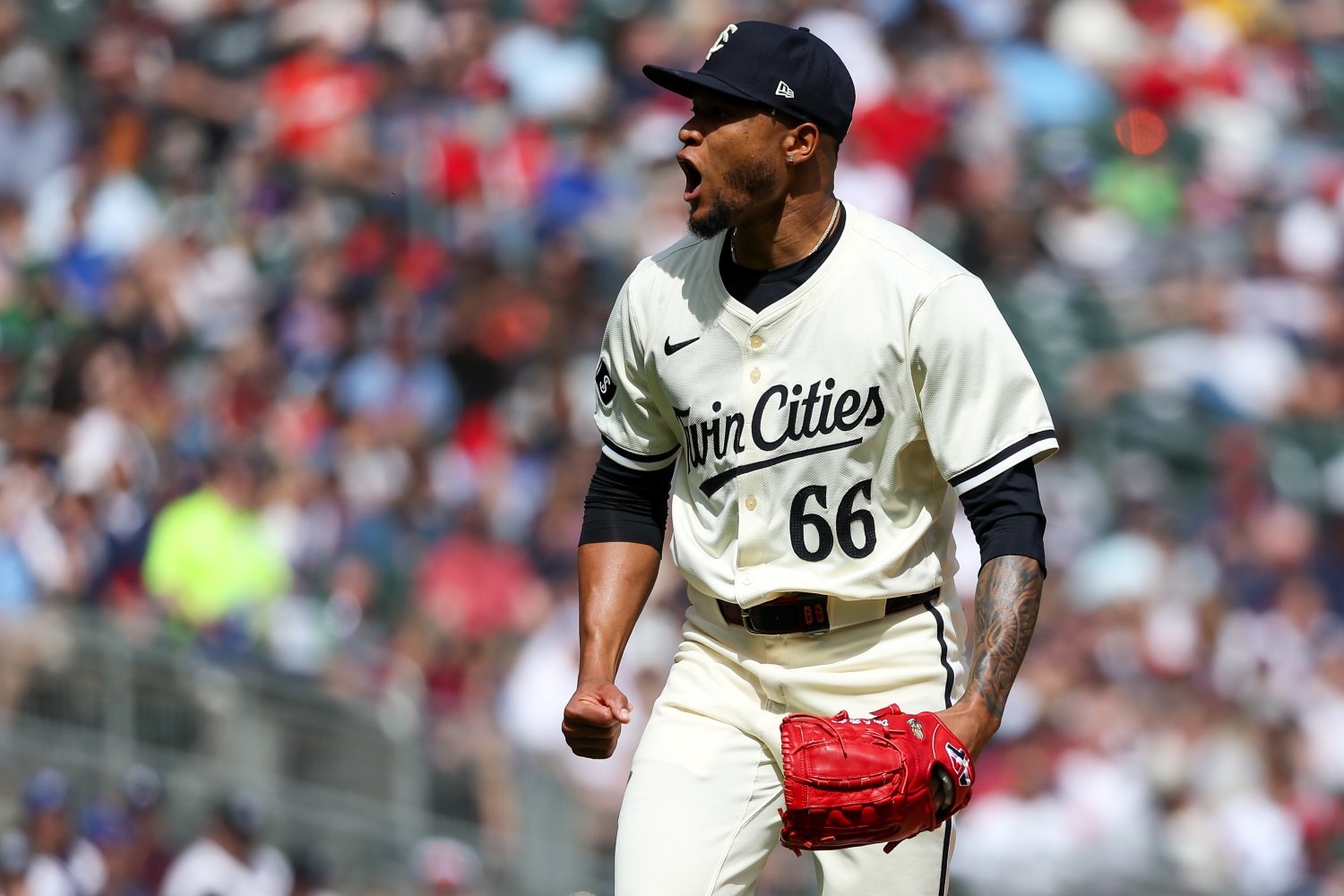 Jorge Alcalá’s career with the Twins to this point has been filled with ups and downs--in terms of performance, in terms of health, and in terms of roster status. Bursting onto the scene in 2020, Alcalá quickly worked his way into a middle- to high-leverage role with the club and thrived, posting ERAs of 2.63 and 3.92 in 2020 and 2021, respectively. Unfortunately, injuries kept him from building upon the nice start to his career. In 2022 and 2023, the righthander only threw a combined 19 2⁄3 innings before running into arm issues in each season. Coming into the 2024 season, though, Alcalá was feeling good about where he was from a health standpoint, and his stuff looked strong in Spring Training. The Dominican native looked primed for a bounce-back season. To begin the season, it sure looked like the preseason optimism from Alcalá and the Twins was warranted. Alcalá was immediately utilized in the second game of the season in the seventh inning of a one-run game, and he looked back to his old self. From there, though, the handling of the right-handed reliever got really weird. While Alcalá started the season looking like one of the best arms in the Twins’ bullpen, the workload that the Twins put on the reliever was curious. Over the course of the first six appearances on the season, the Twins asked Alcalá to throw multiple innings on three separate occasions, along with throwing on back-to-back days on another occasion. Alcalá did all of this without allowing a single run and striking out batters at a career-high rate. Considering the fact that each of the previous two seasons were marred by arm injuries, that kind of workload just didn’t seem to be prudent. Rather than limiting his workload at the major-league level, the Twins decided to send Alcalá down to Triple-A, despite his having a 0.00 ERA and coming off his best performance of the season. Rocco Baldelli cited performance for the demotion. Did I mention that he had a 0.00 ERA with a career-high strikeout rate at the time? Alcalá’s usage remained odd in Triple-A, where his first appearance for the Saints was a two-inning outing in which he threw 34 pitches. After three weeks in St. Paul, Alcalá re-joined the Twins. After (another) scoreless outing against Boston in his first appearance back with the Twins came perhaps the most mind-boggling deployment of the reliever yet. Last Tuesday, the Twins opted to have Alcalá throw multiple innings again, the fourth time in his eight big-league appearances. This time, he was asked to throw a career-high 48 pitches. It ended up being a rough outing for Alcalá, who allowed four runs on four hits and two walks, but it’s worth calling out that all four of those runs came in the second inning of his outing. Following the performance, Alcalá was once again sent to the minors, where he remains. The entire situation has been befuddling. Why did the Twins send down Alcalá with a 0.00 ERA and point to performance, when all of his metrics were career bests? Why are the Twins insisting on using Alcalá as a multi-inning reliever, when he is more effective in one inning and comes with giant health question marks? All of this has been extremely confusing, with no great answers. To make matters worse, the Twins bullpen is a bit in flux right now, with depth needed behind Jhoan Durán and Griffin Jax. If the Twins can bring back Alcalá in the same one-inning role to which they assign all of their other relievers, I’m confident that Alcalá could have a huge impact on this bullpen. It’s up to Baldelli and the rest of the decision-makers, though, to realize that their use of Alcalá up to this point has been misguided and that it’s time for a change.
- 47 comments
-
- 12
-

-

-
- jorge alcala
- jhoan duran
- (and 1 more)
-
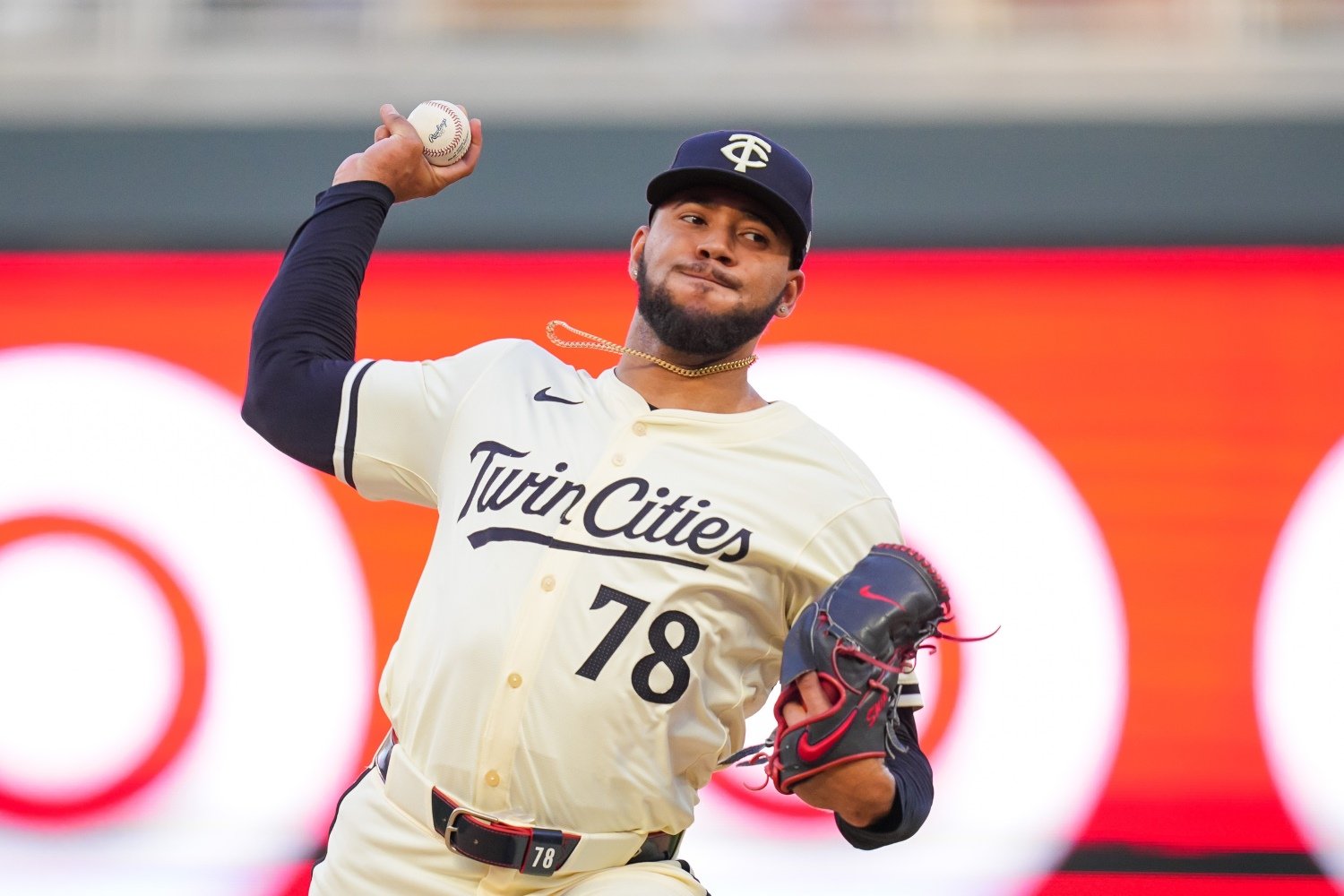 Most people think of Austin Martin as the prize for the Twins in the 2021 José Berríos trade. While Martin was certainly the headliner of the deal, Simeon Woods Richardson was also a highly-touted, top-100 prospect at the time, and someone about whom the Twins were excited. At the time of his acquisition, Woods Richardson was just 20 years old and already pitching in Double-A, aggressively moving through the Toronto minor-league system. After arriving in Minnesota, though, Woods Richardson saw his prospect status dip, with a drop in velocity and (consequently) strikeout rate. That was followed by a terrible year on the mound in 2023, wherein the righthander posted a 4.91 ERA in 113 ⅔ innings. Fans were starting to wonder whether he was better suited for the bullpen, or if he was even long for the roster at all. Coming into the 2024 season, though, Woods Richardson and the coaching staff were bullish. The velocity numbers in Spring Training were up from 89-90 MPH the previous year to 93-94 MPH, after a tweak to his arm slot gave Woods Richardson the extra boost that had been missing. Woods Richardson started the season in Triple-A, but after a poor start from fifth starter Louie Varland, the new and improved hurler was thrust into MLB action. In the short time since, Woods Richardson has been nothing short of incredible. In four starts, he has allowed just four earned runs in 20 ⅔ innings, with a 21/5 strikeout-to-walk ratio. The Twins have recorded a win in every appearance. The most impressive outing from the 23-year-old came on Monday night against Seattle. The Twins were coming off their first loss in nearly two weeks, and Woods Richardson drew the start against perennial Cy Young Award candidate, Luis Castillo. Woods Richardson twirled a gem, striking out the first five batters he faced and tossing six shutout innings while only allowing one hit on the night. The increased velocity has certainly contributed to his better performance. In MLB, the mid-90s is a night-and-day difference from the high 80s, and can make the difference between a mid-rotation starter and a minor-league washout. Apart from pure velocity, what makes Woods Richardson such an intriguing prospect is the velocity differential between his pitches, which really mess with a batters’ timing. Successful pitchers want to have a large velocity difference between their fastball and their curveball and changeup, while many have a small velocity difference between their fastball and their slider. Woods Richardson checks all of those boxes. His fastball and changeup have a 9.9-MPH difference (86th percentile in MLB) on average, and his fastball and curveball have an 18.2-MPH difference (92nd percentile). His slider, on the other hand, only has a 5.5-MPH difference, which is in the 6th percentile. These are big gaps on the pitches that depend most heavily on that characteristic, and a small one on the pitch where more power is a good thing and movement makes the difference. Woods Richardson is throwing the ball harder than he ever has before, and constantly keeping batters off-balance by tunneling his fastball/slider and demonstrating massive velocity differences with his two offspeed pitches. What has gone into Woods Richardson getting to this point, as a legit starting pitcher in the Majors? “A lot of work.” he said after winning his duel against Castillo on Monday night. “It’s really easy to get sidetracked … but at the end of the day, the best players in this game are still working every day. Putting (my) head down and trying to be the best version of myself is what I’m trying to do.” His hard work has paid massive dividends for the Twins thus far in 2024. After the team failed to build sufficient starting pitching depth this offseason, Varland’s poor start put them in a tough position, needing to rely on Woods Richardson so early. Strong performance from him was imperative, as the Twins really don’t have any other options on the depth chart. The campaign that Woods Richardson is putting together has been nothing short of a season-saver. Between scouting and player development, it's now fair to say that the pipeline is flowing. It took a few years to get there, but seeing what Falvey has done with guys like Joe Ryan and Bailey Ober in the rotation and Jhoan Duran and Griffin Jax in the bullpen has laid the foundation, and now, with Woods Richardson pitching like we all hoped he would when he was acquired in 2021, the value of that new infrastructure is shining through.
 -
Bad starting pitching derailed much of the 2010s for the Minnesota Twins. They brought in Derek Falvey to create a reliable pipeline of young pitching, and this week has brought confirmation that the project is succeeding. Image courtesy of © Brad Rempel-USA TODAY Sports Most people think of Austin Martin as the prize for the Twins in the 2021 José Berríos trade. While Martin was certainly the headliner of the deal, Simeon Woods Richardson was also a highly-touted, top-100 prospect at the time, and someone about whom the Twins were excited. At the time of his acquisition, Woods Richardson was just 20 years old and already pitching in Double-A, aggressively moving through the Toronto minor-league system. After arriving in Minnesota, though, Woods Richardson saw his prospect status dip, with a drop in velocity and (consequently) strikeout rate. That was followed by a terrible year on the mound in 2023, wherein the righthander posted a 4.91 ERA in 113 ⅔ innings. Fans were starting to wonder whether he was better suited for the bullpen, or if he was even long for the roster at all. Coming into the 2024 season, though, Woods Richardson and the coaching staff were bullish. The velocity numbers in Spring Training were up from 89-90 MPH the previous year to 93-94 MPH, after a tweak to his arm slot gave Woods Richardson the extra boost that had been missing. Woods Richardson started the season in Triple-A, but after a poor start from fifth starter Louie Varland, the new and improved hurler was thrust into MLB action. In the short time since, Woods Richardson has been nothing short of incredible. In four starts, he has allowed just four earned runs in 20 ⅔ innings, with a 21/5 strikeout-to-walk ratio. The Twins have recorded a win in every appearance. The most impressive outing from the 23-year-old came on Monday night against Seattle. The Twins were coming off their first loss in nearly two weeks, and Woods Richardson drew the start against perennial Cy Young Award candidate, Luis Castillo. Woods Richardson twirled a gem, striking out the first five batters he faced and tossing six shutout innings while only allowing one hit on the night. The increased velocity has certainly contributed to his better performance. In MLB, the mid-90s is a night-and-day difference from the high 80s, and can make the difference between a mid-rotation starter and a minor-league washout. Apart from pure velocity, what makes Woods Richardson such an intriguing prospect is the velocity differential between his pitches, which really mess with a batters’ timing. Successful pitchers want to have a large velocity difference between their fastball and their curveball and changeup, while many have a small velocity difference between their fastball and their slider. Woods Richardson checks all of those boxes. His fastball and changeup have a 9.9-MPH difference (86th percentile in MLB) on average, and his fastball and curveball have an 18.2-MPH difference (92nd percentile). His slider, on the other hand, only has a 5.5-MPH difference, which is in the 6th percentile. These are big gaps on the pitches that depend most heavily on that characteristic, and a small one on the pitch where more power is a good thing and movement makes the difference. Woods Richardson is throwing the ball harder than he ever has before, and constantly keeping batters off-balance by tunneling his fastball/slider and demonstrating massive velocity differences with his two offspeed pitches. What has gone into Woods Richardson getting to this point, as a legit starting pitcher in the Majors? “A lot of work.” he said after winning his duel against Castillo on Monday night. “It’s really easy to get sidetracked … but at the end of the day, the best players in this game are still working every day. Putting (my) head down and trying to be the best version of myself is what I’m trying to do.” His hard work has paid massive dividends for the Twins thus far in 2024. After the team failed to build sufficient starting pitching depth this offseason, Varland’s poor start put them in a tough position, needing to rely on Woods Richardson so early. Strong performance from him was imperative, as the Twins really don’t have any other options on the depth chart. The campaign that Woods Richardson is putting together has been nothing short of a season-saver. Between scouting and player development, it's now fair to say that the pipeline is flowing. It took a few years to get there, but seeing what Falvey has done with guys like Joe Ryan and Bailey Ober in the rotation and Jhoan Duran and Griffin Jax in the bullpen has laid the foundation, and now, with Woods Richardson pitching like we all hoped he would when he was acquired in 2021, the value of that new infrastructure is shining through. View full article
-
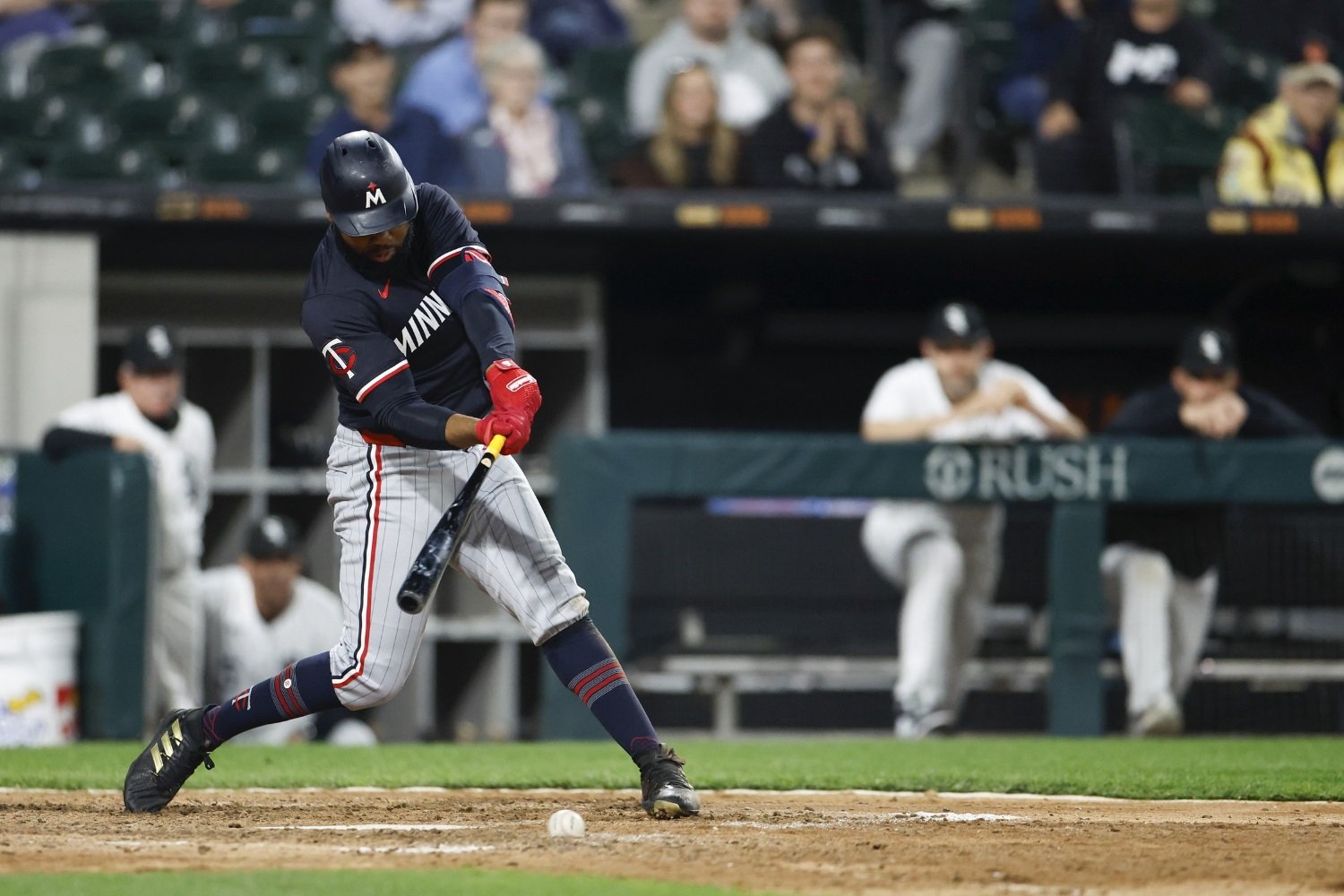 One of the Twins’ greatest needs this offseason was a replacement for Michael A. Taylor--a right-handed outfielder who could crush left-handed pitching and fill in at center field for the oft-injured Byron Buxton. While the front office tried to simply bring back Taylor, they were unable to come to terms. They opted to trade for outfielder Manuel Margot. Even at the time of the trade, the Margot acquisition wasn’t super inspiring. He was a career 91 OPS+ hitter and was coming off a 2023 season in which his OPS was a mere .686. The signing was justified, though, based on the fact that Margot could indeed fill the role that the Twins needed. He was a career .760 OPS hitter against lefties, could run the bases well, and (unlike other free-agent options, like Tommy Pham), was an above-average defender who could fill in at center field whenever needed. A month and a half into the season, the pickup has been a bad one by just about any metric. On the season, Margot has a lowly 46 OPS+, with just two extra-base hits and an on-base percentage of .258. The 29-year-old has a career-low xSLG of .286 and the second-lowest average exit velocity of his career, at 85.7 MPH. Both numbers are near the bottom in all of baseball. But, hey, Margot wasn’t brought in to be a Silver Slugger winner. He was brought in to crush lefties, run the bases, and play solid defense all over the outfield. He’s at least doing those things, right? Not quite. Against southpaws, Margot is hitting slightly better than against righthanders, but it's still a .685 OPS. Margot hasn’t provided any value on the bases, either. He has just one stolen base on the season, after averaging 12 stolen bases per season over the past seven years. Even more concerning is his sharp decrease in sprint speed. After posting a season in the 75th percentile in sprint speed in 2023, Margot has clocked an average sprint speed in just the 50th percentile so far in 2024. The most frustrating part of the Margot experience in 2024, though, has been his usage and performance in the field. Although the Twins have needed a center-field glove this season with a hobbled Byron Buxton, Margot didn't get his first start in center until May 6. Based on their actions, the Twins have shown that Margot is (at best) fourth in line for center-field action, behind Buxton, Austin Martin and Willi Castro, despite his ability to play center field being a key reason why they decided to prioritize him over someone like Adam Duvall, who has an .868 OPS against lefties this season. When he is in the field in a corner outfield spot, Margot’s defense there has been less than stellar. The Dominican native has posted -2 Outs Above Average, with poor range and a propensity for making some generally horrible plays, like the one against Boston on Sunday. The Twins are in a tough spot when it comes to Margot’s place on the roster, however, as most of the promising bats in the organization are left-handed bats, whereas the Twins really need a presence on the right side of the plate. As poor as Margot has looked at all three facets of the game, though, the Twins should not be handcuffing themselves by keeping him on the roster just because he stands in the right batter's box. Some potential replacements for Margot on the roster, should the Twins decide to go that direction, could be: Tony Kemp, whom the Twins brought in on a minor-league deal and who can play infield or corner outfield Matt Wallner, who has shown some signs of progress at Triple-A since getting sent down DaShawn Kiersey Jr., a promising prospect with the Saints who hits left-handed but has an .882 OPS so far on the season. The Margot move has gone just about as badly as possible for the Twins. Whether they decide to wait until Royce Lewis comes back or to make a move sooner, the Twins need to start thinking about what it could look like to move on from this misstep.
 -
In an offseason full of disappointing additions amid artificial financial constraints, none has gone worse for Minnesota than the trade for Manuel Margot. What went wrong with that move, and when might the Twins consider replacing him? Image courtesy of © Kamil Krzaczynski-USA TODAY Sports One of the Twins’ greatest needs this offseason was a replacement for Michael A. Taylor--a right-handed outfielder who could crush left-handed pitching and fill in at center field for the oft-injured Byron Buxton. While the front office tried to simply bring back Taylor, they were unable to come to terms. They opted to trade for outfielder Manuel Margot. Even at the time of the trade, the Margot acquisition wasn’t super inspiring. He was a career 91 OPS+ hitter and was coming off a 2023 season in which his OPS was a mere .686. The signing was justified, though, based on the fact that Margot could indeed fill the role that the Twins needed. He was a career .760 OPS hitter against lefties, could run the bases well, and (unlike other free-agent options, like Tommy Pham), was an above-average defender who could fill in at center field whenever needed. A month and a half into the season, the pickup has been a bad one by just about any metric. On the season, Margot has a lowly 46 OPS+, with just two extra-base hits and an on-base percentage of .258. The 29-year-old has a career-low xSLG of .286 and the second-lowest average exit velocity of his career, at 85.7 MPH. Both numbers are near the bottom in all of baseball. But, hey, Margot wasn’t brought in to be a Silver Slugger winner. He was brought in to crush lefties, run the bases, and play solid defense all over the outfield. He’s at least doing those things, right? Not quite. Against southpaws, Margot is hitting slightly better than against righthanders, but it's still a .685 OPS. Margot hasn’t provided any value on the bases, either. He has just one stolen base on the season, after averaging 12 stolen bases per season over the past seven years. Even more concerning is his sharp decrease in sprint speed. After posting a season in the 75th percentile in sprint speed in 2023, Margot has clocked an average sprint speed in just the 50th percentile so far in 2024. The most frustrating part of the Margot experience in 2024, though, has been his usage and performance in the field. Although the Twins have needed a center-field glove this season with a hobbled Byron Buxton, Margot didn't get his first start in center until May 6. Based on their actions, the Twins have shown that Margot is (at best) fourth in line for center-field action, behind Buxton, Austin Martin and Willi Castro, despite his ability to play center field being a key reason why they decided to prioritize him over someone like Adam Duvall, who has an .868 OPS against lefties this season. When he is in the field in a corner outfield spot, Margot’s defense there has been less than stellar. The Dominican native has posted -2 Outs Above Average, with poor range and a propensity for making some generally horrible plays, like the one against Boston on Sunday. The Twins are in a tough spot when it comes to Margot’s place on the roster, however, as most of the promising bats in the organization are left-handed bats, whereas the Twins really need a presence on the right side of the plate. As poor as Margot has looked at all three facets of the game, though, the Twins should not be handcuffing themselves by keeping him on the roster just because he stands in the right batter's box. Some potential replacements for Margot on the roster, should the Twins decide to go that direction, could be: Tony Kemp, whom the Twins brought in on a minor-league deal and who can play infield or corner outfield Matt Wallner, who has shown some signs of progress at Triple-A since getting sent down DaShawn Kiersey Jr., a promising prospect with the Saints who hits left-handed but has an .882 OPS so far on the season. The Margot move has gone just about as badly as possible for the Twins. Whether they decide to wait until Royce Lewis comes back or to make a move sooner, the Twins need to start thinking about what it could look like to move on from this misstep. View full article
-
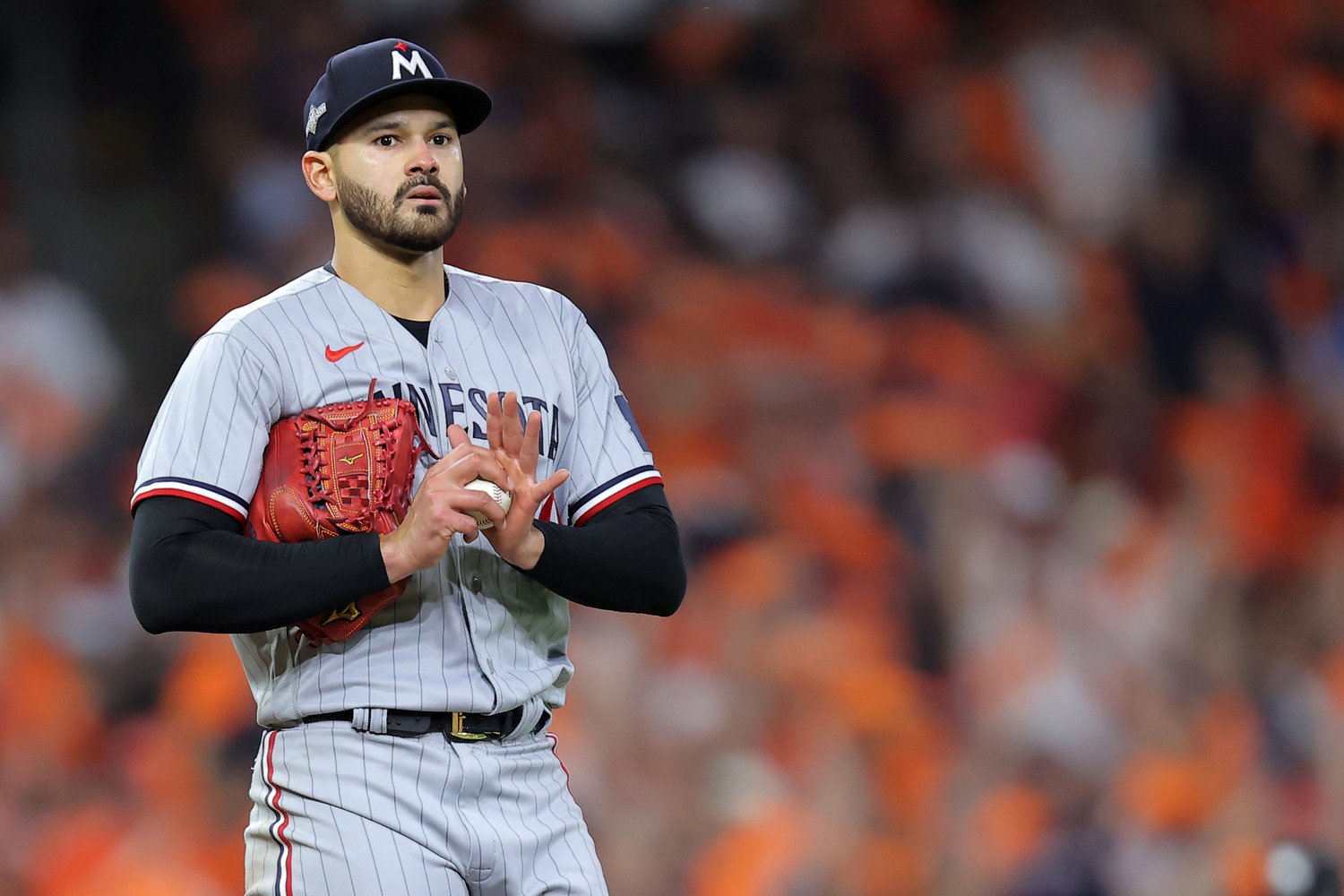 Ever since the Minnesota Twins traded away Johan Santana they have been in the long pursuit of another ace starting pitcher. They tried the path of developing their own ace through the draft like José Berríos or Kyle Gibson. They tried trading for prospects on other teams like Alex Meyer. They tried trading for veteran starters to get ace-level production like they did with Tyler Mahle. And they tried signing free agent starting pitchers like Phil Hughes or Ervin Santana. Though some of those pitchers turned out to be very good, year after year the Twins ended each season still without that ace level starting pitcher. The kind of pitcher who could pitch them out of losing streaks. The kind of pitcher who could thrive under the brightest of lights. The kind of pitcher who could take the ball in game one of a playoff series and deliver a victory. That is what separates a great pitcher from an ace. And that’s someone that the Twins had been missing ever since Johan. Enter Pablo López. While the Twins acquired Pablo López in a controversial deal this offseason for fan-favorite Luis Arraez, López quickly pitched his way into Twins fans’ hearts this season, posting a 3.66 ERA in 194 innings while finishing second in the American League and strikeouts at the age of 27. While his numbers this season were excellent, what seemed to most sell Twins fans on the Venezuelan right hander was his mental makeup. Since arriving in Minnesota, López has always displayed the confidence and calmness that you see in an ace starting pitcher. His combination of ability and attitude is exactly the mix that you expect to thrive in the postseason. Turning the page to October, and that combination of ability and attitude has been on display. Starting with Game 1 of the Wild Card series and López walking into the stadium wearing a Johan Santana #57 jersey, you could just sense the swagger oozing off of the right hander before he even threw the first pitch. He then followed up that swaggy entrance with a lights-out pitching performance, throwing 5 ⅔ innings and only allowing one earned run. López’s start was the best playoff in the franchise’s history since Johan Santana and delivered the first win since Johan and ended the streak that hung over the heads of Twins fans across the land of 10,000 lakes. Then, when you hear Pablo’s quotes postgame and hear about how he embraced the pressure that came with trying to be the guy who broke the 0-18 streak and how “pressure is a privilege”, you once again see the makeup of an ace level starting pitcher. In order to truly cement his place as an ace starting pitcher, though, we needed to see Pablo back up his performance against the Blue Jays and do it against the defending champions, in their house, down 0-1 in a five game series with our backs against the wall. Under circumstances where many starting pitchers would have crumbled under the pressure, the Venezuelan took the ball in Game 2 and delivered one of the three greatest postseason pitching performances in Minnesota Twins history, tossing seven shutout innings against an Astros team which led the American League in runs scored in the second half of the season. In what was essentially a must-win game for the Twins, López gave the Twins exactly the performance they needed and completely flipped the ALDS on its head. That is what ace pitchers do. While Pablo López was great for the Minnesota Twins all season, ace level pitchers do it in October and López has stepped up his game this postseason with his play, his moxie and his leadership. López has earned the trust of the locker room and the fanbase and is still just 27 years old with a four year contract with the Twins ahead of him. After years and years and years of searching, the Minnesota Twins finally have their ace. Don’t take it for granted. Do you agree that the Minnesota Twins finally have their ace in Pablo López? Leave a comment below and start the conversation!
- 11 comments
-
- 5
-
-
- pablo lopez
- johan santana
- (and 1 more)
-
For 15 years the Minnesota Twins have tried to add an ace to their starting rotation to no avail. On Sunday night, after another dominant playoff start, Pablo López announced to Twins Territory that they finally have their ace. Image courtesy of © Erik Williams-USA TODAY Sports Ever since the Minnesota Twins traded away Johan Santana they have been in the long pursuit of another ace starting pitcher. They tried the path of developing their own ace through the draft like José Berríos or Kyle Gibson. They tried trading for prospects on other teams like Alex Meyer. They tried trading for veteran starters to get ace-level production like they did with Tyler Mahle. And they tried signing free agent starting pitchers like Phil Hughes or Ervin Santana. Though some of those pitchers turned out to be very good, year after year the Twins ended each season still without that ace level starting pitcher. The kind of pitcher who could pitch them out of losing streaks. The kind of pitcher who could thrive under the brightest of lights. The kind of pitcher who could take the ball in game one of a playoff series and deliver a victory. That is what separates a great pitcher from an ace. And that’s someone that the Twins had been missing ever since Johan. Enter Pablo López. While the Twins acquired Pablo López in a controversial deal this offseason for fan-favorite Luis Arraez, López quickly pitched his way into Twins fans’ hearts this season, posting a 3.66 ERA in 194 innings while finishing second in the American League and strikeouts at the age of 27. While his numbers this season were excellent, what seemed to most sell Twins fans on the Venezuelan right hander was his mental makeup. Since arriving in Minnesota, López has always displayed the confidence and calmness that you see in an ace starting pitcher. His combination of ability and attitude is exactly the mix that you expect to thrive in the postseason. Turning the page to October, and that combination of ability and attitude has been on display. Starting with Game 1 of the Wild Card series and López walking into the stadium wearing a Johan Santana #57 jersey, you could just sense the swagger oozing off of the right hander before he even threw the first pitch. He then followed up that swaggy entrance with a lights-out pitching performance, throwing 5 ⅔ innings and only allowing one earned run. López’s start was the best playoff in the franchise’s history since Johan Santana and delivered the first win since Johan and ended the streak that hung over the heads of Twins fans across the land of 10,000 lakes. Then, when you hear Pablo’s quotes postgame and hear about how he embraced the pressure that came with trying to be the guy who broke the 0-18 streak and how “pressure is a privilege”, you once again see the makeup of an ace level starting pitcher. In order to truly cement his place as an ace starting pitcher, though, we needed to see Pablo back up his performance against the Blue Jays and do it against the defending champions, in their house, down 0-1 in a five game series with our backs against the wall. Under circumstances where many starting pitchers would have crumbled under the pressure, the Venezuelan took the ball in Game 2 and delivered one of the three greatest postseason pitching performances in Minnesota Twins history, tossing seven shutout innings against an Astros team which led the American League in runs scored in the second half of the season. In what was essentially a must-win game for the Twins, López gave the Twins exactly the performance they needed and completely flipped the ALDS on its head. That is what ace pitchers do. While Pablo López was great for the Minnesota Twins all season, ace level pitchers do it in October and López has stepped up his game this postseason with his play, his moxie and his leadership. López has earned the trust of the locker room and the fanbase and is still just 27 years old with a four year contract with the Twins ahead of him. After years and years and years of searching, the Minnesota Twins finally have their ace. Don’t take it for granted. Do you agree that the Minnesota Twins finally have their ace in Pablo López? Leave a comment below and start the conversation! View full article
- 11 replies
-
- 1
-
-
- pablo lopez
- johan santana
- (and 1 more)
-
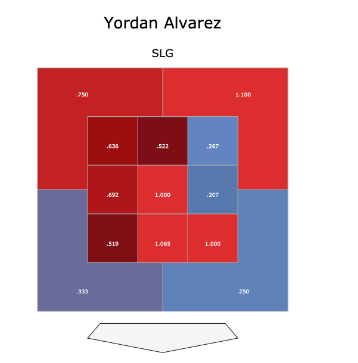
The four outer boxes are outside the strikezone. Yordan is left handed. So the middle inside strike and upper inside strike are both cold areas for him. As well as the low and inside zone.
-
Yordan Álvarez has destroyed the Twins through the first three games of the American League Division Series. How can the Twins limit the powerful left hander? Image courtesy of © Jesse Johnson-USA TODAY Sports Coming into the American League Division Series, we all expected that the most challenging bat in the Houston Astros lineup would be Yordan Álvarez. Álvarez is a tremendous hitter in the prime of his career, and is a left hander. With a playoff roster full of right handed arms, Alvarez’s elite power from the left side of the plate would surely give the Twins a handful. Yordan Álvarez has been more impressive this series than even the most aggressive predictions. Through the first three games in the ALDS, Álvarez is 6-for-12 with four home runs, two doubles and six RBI. Álvarez has done damage against right handed pitchers and southpaws alike and has knocked the ball all across the yard, in Houston and in Minneapolis. Up to this point, the Minnesota Twins have not approached Álvarez any differently than they have approached any other batter. They have pitched to the left hander in each of his plate appearances and thrown him plenty of hittable pitchers (obviously). It’s clear that that approach has not been working, as Álvarez has completely taken over this playoff series from the plate. So what can the Minnesota Twins do to limit the left hander? The first option is the most obvious one and one that the Minnesota Twins should and most likely will employ in Game 4 – don’t pitch to Yordan at all. Up to this point the Minnesota Twins have not given Álvarez the Barry Bonds treatment, but with the consistent damage that he has been causing against Twins’ pitching, intentionally walking the 26-year-old and only allowing him to reach first base is something that makes way too much sense for them not to try. What makes this strategy difficult, and why the Twins haven’t tried it yet, is that the Astros have Kyle Tucker and José Abreu hitting directly behind Yordan. By intentionally walking the left hander, you’re putting a person on base for the 2023 American League RBI leader (Tucker) and the player who just hit two 440-foot home runs against the Twins on Tuesday afternoon. The Twins won’t be able to employ this strategy in every situation, but in scenarios where first base is open, the Twins should certainly give Álvarez a free pass and make Houston’s other players beat them. In the scenarios that the Twins aren’t able to intentionally walk Álvarez, like when there are runners on first and second, for example, the Twins need to do a better job attacking Álvarez with inside pitches. Each of Álvarez’s four home runs in this series have come on outside pitches or pitches in the middle of the zone. Outside and middle pitches are where Álvarez does most of his damage. With his large frame and huge arms, when he’s able to get extension he can hit the ball a long way. While he can still hit tanks on inside pitches, it’s clear that’s where he’s most vulnerable. Take a look at his heat map below to see. What’s been made most clear through the first three games of the ALDS is that the Minnesota Twins cannot continue pitching the same way to Yordan Álvarez. They need to switch things up. By intentionally walking him where they can, and attacking him on the inside of the plate when they need to attack him, the Twins can hopefully limit the damage that the Cuban can do against them. How do you think the Twins should attack Yordan Álvarez? Leave a comment below and start the conversation! View full article
-
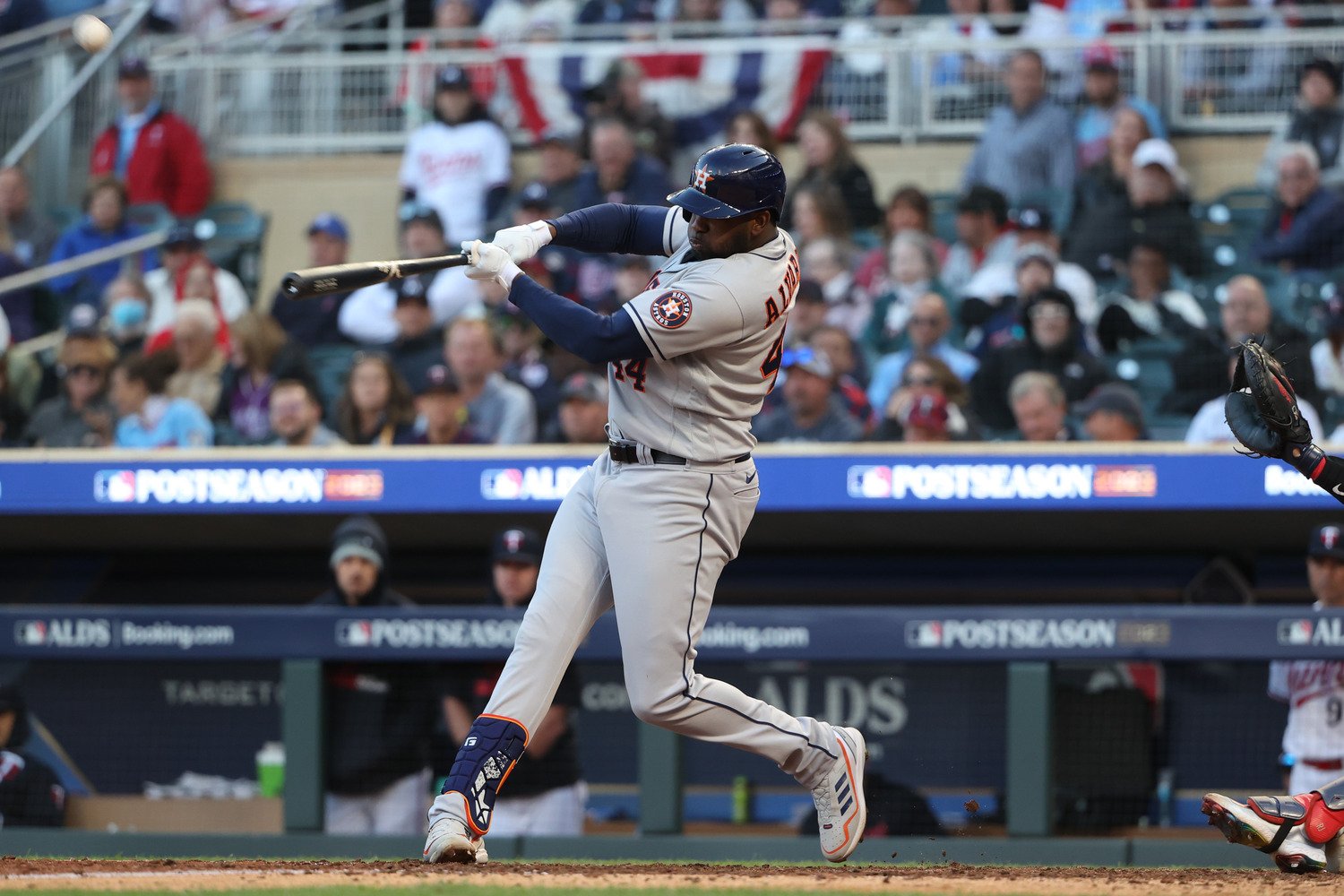 Coming into the American League Division Series, we all expected that the most challenging bat in the Houston Astros lineup would be Yordan Álvarez. Álvarez is a tremendous hitter in the prime of his career, and is a left hander. With a playoff roster full of right handed arms, Alvarez’s elite power from the left side of the plate would surely give the Twins a handful. Yordan Álvarez has been more impressive this series than even the most aggressive predictions. Through the first three games in the ALDS, Álvarez is 6-for-12 with four home runs, two doubles and six RBI. Álvarez has done damage against right handed pitchers and southpaws alike and has knocked the ball all across the yard, in Houston and in Minneapolis. Up to this point, the Minnesota Twins have not approached Álvarez any differently than they have approached any other batter. They have pitched to the left hander in each of his plate appearances and thrown him plenty of hittable pitchers (obviously). It’s clear that that approach has not been working, as Álvarez has completely taken over this playoff series from the plate. So what can the Minnesota Twins do to limit the left hander? The first option is the most obvious one and one that the Minnesota Twins should and most likely will employ in Game 4 – don’t pitch to Yordan at all. Up to this point the Minnesota Twins have not given Álvarez the Barry Bonds treatment, but with the consistent damage that he has been causing against Twins’ pitching, intentionally walking the 26-year-old and only allowing him to reach first base is something that makes way too much sense for them not to try. What makes this strategy difficult, and why the Twins haven’t tried it yet, is that the Astros have Kyle Tucker and José Abreu hitting directly behind Yordan. By intentionally walking the left hander, you’re putting a person on base for the 2023 American League RBI leader (Tucker) and the player who just hit two 440-foot home runs against the Twins on Tuesday afternoon. The Twins won’t be able to employ this strategy in every situation, but in scenarios where first base is open, the Twins should certainly give Álvarez a free pass and make Houston’s other players beat them. In the scenarios that the Twins aren’t able to intentionally walk Álvarez, like when there are runners on first and second, for example, the Twins need to do a better job attacking Álvarez with inside pitches. Each of Álvarez’s four home runs in this series have come on outside pitches or pitches in the middle of the zone. Outside and middle pitches are where Álvarez does most of his damage. With his large frame and huge arms, when he’s able to get extension he can hit the ball a long way. While he can still hit tanks on inside pitches, it’s clear that’s where he’s most vulnerable. Take a look at his heat map below to see. What’s been made most clear through the first three games of the ALDS is that the Minnesota Twins cannot continue pitching the same way to Yordan Álvarez. They need to switch things up. By intentionally walking him where they can, and attacking him on the inside of the plate when they need to attack him, the Twins can hopefully limit the damage that the Cuban can do against them. How do you think the Twins should attack Yordan Álvarez? Leave a comment below and start the conversation!
 -
After two days of speculation of who would start game one of the American League Division Series, the Minnesota Twins made it official: Bailey Ober will be taking the mound in Houston on Saturday afternoon. Image courtesy of Jordan Johnson-USA TODAY Sports Coming off of the Wild Card round sweep of the Toronto Blue Jays earlier this week, there was no clear answer on who would be the game one starter for the divisional round. Joe Ryan made the most logical sense at first, as he was the one slated to start a game three, should that have been necessary earlier this week. There was a growing sense, though, that due to Joe Ryan’s style, he might not be the best fit to pitch in Houston. Joe Ryan is notably a fly ball pitcher, allowing nearly 50% of all batted balls to be launched into the air. As a result, Ryan was very home run prone this season, allowing 32 home runs in 29 appearances in 2023. In a ballpark like Houston, with the power alley to left field, a homer-prone pitcher like Ryan is a recipe for disaster. Additionally, Joe Ryan has struggled mightily since his groin strain in Atlanta at the end of June. Since June 27, Ryan has a 6.62 ERA with 24 allowed home runs in 14 games. Going away from Ryan in Game 1 made a lot of sense. Taking Joe Ryan out of the picture, Baldelli’s choices really came down to Kenta Maeda and Bailey Ober. With Maeda now positioned into a hybrid-bullpen role, Ober just made the most sense. Though he didn’t make the Opening Day roster, Bailey Ober has been a steady force for the Twins all season, tossing a 3.43 ERA. While Ober also allows his fair share of fly balls (49%), he has done a better job keeping the ball in the ballpark, allowing less than a home run per nine innings. Ober is coming into game one on a bit of a roll, as he posted a 2.08 ERA in the month of September with 26 strikeouts compared to just three walks. Game 1 will be Ober’s first ever postseason appearance, but he does have some experience against the Houston Astros, with a 4.50 ERA in 10 innings back in 2021. How do you feel about Bailey Ober being named the Game 1 starter? Leave a comment below and start the conversation. View full article
-
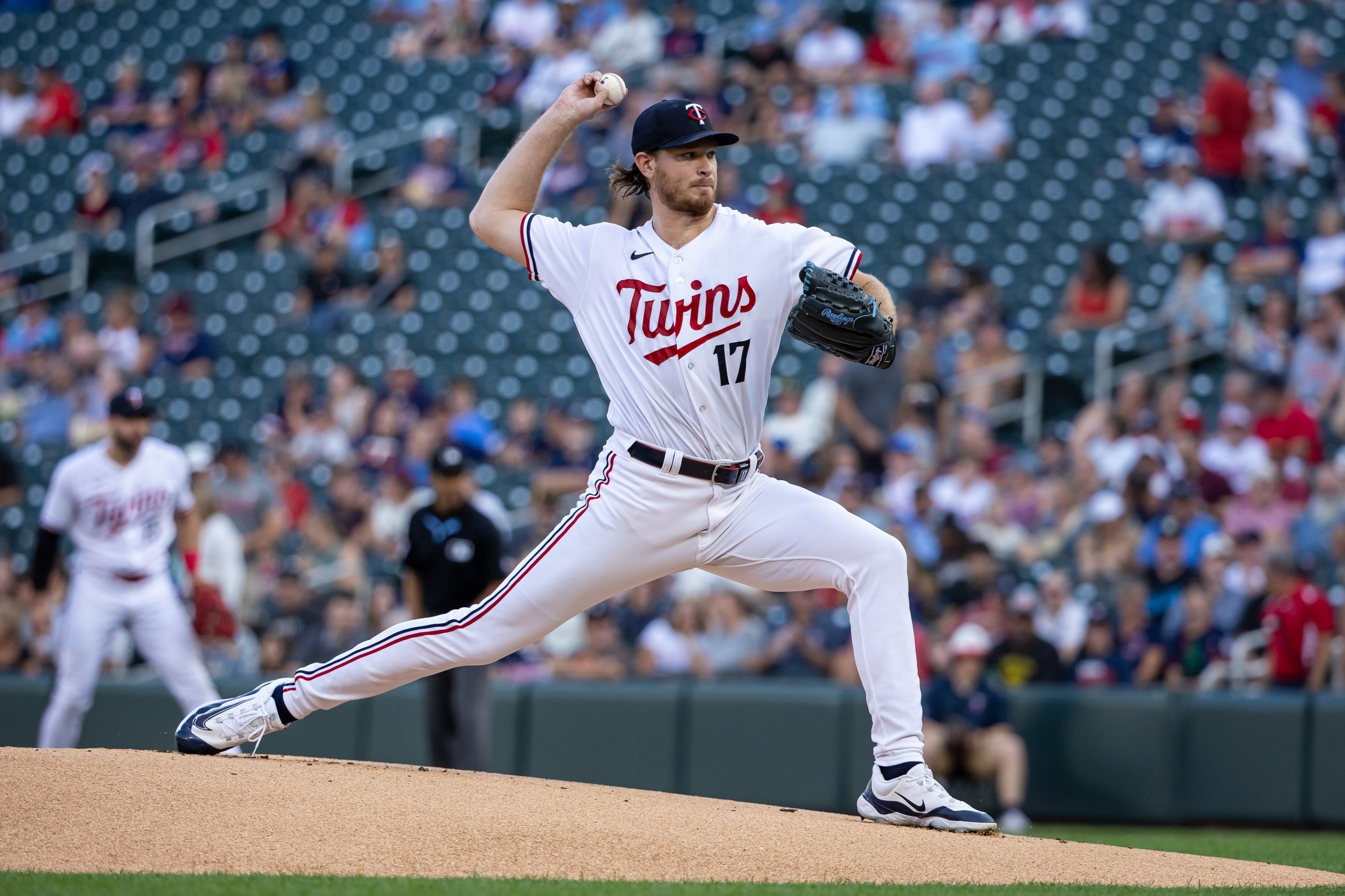 Coming off of the Wild Card round sweep of the Toronto Blue Jays earlier this week, there was no clear answer on who would be the game one starter for the divisional round. Joe Ryan made the most logical sense at first, as he was the one slated to start a game three, should that have been necessary earlier this week. There was a growing sense, though, that due to Joe Ryan’s style, he might not be the best fit to pitch in Houston. Joe Ryan is notably a fly ball pitcher, allowing nearly 50% of all batted balls to be launched into the air. As a result, Ryan was very home run prone this season, allowing 32 home runs in 29 appearances in 2023. In a ballpark like Houston, with the power alley to left field, a homer-prone pitcher like Ryan is a recipe for disaster. Additionally, Joe Ryan has struggled mightily since his groin strain in Atlanta at the end of June. Since June 27, Ryan has a 6.62 ERA with 24 allowed home runs in 14 games. Going away from Ryan in Game 1 made a lot of sense. Taking Joe Ryan out of the picture, Baldelli’s choices really came down to Kenta Maeda and Bailey Ober. With Maeda now positioned into a hybrid-bullpen role, Ober just made the most sense. Though he didn’t make the Opening Day roster, Bailey Ober has been a steady force for the Twins all season, tossing a 3.43 ERA. While Ober also allows his fair share of fly balls (49%), he has done a better job keeping the ball in the ballpark, allowing less than a home run per nine innings. Ober is coming into game one on a bit of a roll, as he posted a 2.08 ERA in the month of September with 26 strikeouts compared to just three walks. Game 1 will be Ober’s first ever postseason appearance, but he does have some experience against the Houston Astros, with a 4.50 ERA in 10 innings back in 2021. How do you feel about Bailey Ober being named the Game 1 starter? Leave a comment below and start the conversation.
 -
You don’t win a playoff round without big performances from players in big moments. Let’s look at the five best performances from Twins players in the Wild Card Round. Image courtesy of © Jesse Johnson-USA TODAY Sports Plenty has already been written about the incredible Wild Card series victory by the Minnesota Twins over the Toronto Blue Jays. There were countless great moments, clutch hits, big throws, and game-saving pitches. So many great moments were provided by so many different players. Let’s count down the biggest performances from an unforgettable Wild Card round. 5. Griffin Jax Griffin Jax had an up-and-down season for the Minnesota Twins all year. Posting months like May and August with sky-high ERAs while also showing lights-out potential in other months, like June and September. In the Wild Card round, Jax was given one of the toughest assignments that you can ask of a relief pitcher. Come into the eighth inning of a two-run game with Vladimir Guerrero Jr., Bo Bichette, and Cavan Biggio due up. And he had to do it twice. Jax survived a leadoff double from Guerrero Jr. in game one and escaped with no damage before a 1-2-3 appearance in game two. Both times, Jax protected a close lead against the Blue Jays best players, allowing the Twins to deploy Jhoan Duran in the ninth inning to win both games. 4. Sonny Gray Fourth on the list is Sonny Gray, who started Game 2 trying to match Pablo López’s excellent start in Game 1. Gray didn’t disappoint as he was able to complete five shutout innings and five strikeouts. against the usually-potent Blue Jays lineup. Several times Sonny Gray found himself in trouble, like when he survived runners on second and third in the second and fifth innings, managing to strand runners even when he might not have been perfect on the mound. And of course the pickoff. Sonny Gray was the Twins’ best starting pitcher all season and he proved his worth once again in game one with an excellent start in a game where the Twins needed it, only scoring two runs all game. 3. Pablo López Pablo López might not have gone scoreless like Sonny Gray went in Game 2, but his start ranks ahead because of the stakes that Pablo was going up against. López embraced the role of the pitcher who was finally going to break the Twins streak. In fact, he showed up to Game 1 wearing Johan Santana’s jersey, the starting pitcher who threw in a playoff game that the Minnesota Twins won. Pablo thrived under the immense pressure that was on him and delivered an unforgettable performance in game one, lasting 5 2/3 innings and only allowing one run. 2. Carlos Correa Number two on the list is the man that the Twins brought onto the team because of his ability to perform when the lights shine the brightest, and that is exactly what Carlos Correa did in the Wild Card round. Correa provided three moments that played a huge role in delivering the Twins first playoff series win in twenty years. In game one, Correa made the defensive play of the game when he bailed out a misplayed grounder from Jorge Polanco to drill Bo Bichette at home plate. Then in Game 2, Correa delivered the game-winning RBI before orchestrating the momentum-swinging pickoff play that killed the Blue Jays best rally of the series. Carlos Correa was paid $200 million to make big plays in the biggest moments and that was exactly what he did in the Wild Card round. But he ended up in second place to… 1. Royce Lewis What more can be said about Royce Lewis. The man who almost single-handedly ended Minnesota Twins fans’ 19 years of misery when he delivered home runs in the first and third innings of Game 1 which counted as all three runs that the Twins scored in the game. What makes the effort even more impressive is that Lewis did it on an injured hamstring, where it was no guarantee that he would even make the playoff roster at all. Lewis is just 24 years old but became a forever legend after his performance in Game One. A performance that allowed Twins fans to believe again and a performance that set the tone for what has the potential to be a magical playoff run. Do you agree with the list above? Leave a comment below and start the conversation! View full article
-
Ranking the Top 5 Twins Performances in the Wild Card Round
Matthew Taylor posted an article in Twins
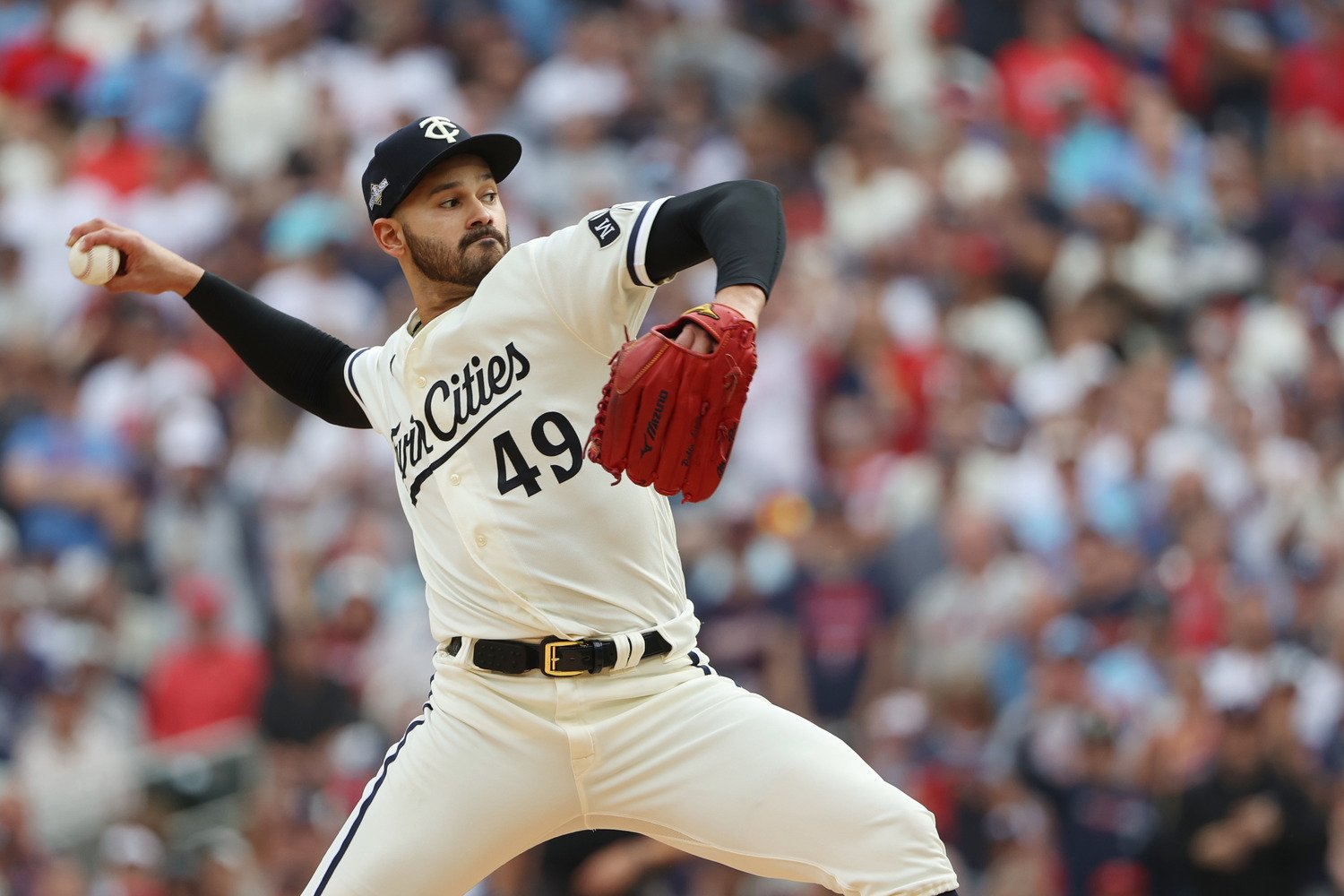 Plenty has already been written about the incredible Wild Card series victory by the Minnesota Twins over the Toronto Blue Jays. There were countless great moments, clutch hits, big throws, and game-saving pitches. So many great moments were provided by so many different players. Let’s count down the biggest performances from an unforgettable Wild Card round. 5. Griffin Jax Griffin Jax had an up-and-down season for the Minnesota Twins all year. Posting months like May and August with sky-high ERAs while also showing lights-out potential in other months, like June and September. In the Wild Card round, Jax was given one of the toughest assignments that you can ask of a relief pitcher. Come into the eighth inning of a two-run game with Vladimir Guerrero Jr., Bo Bichette, and Cavan Biggio due up. And he had to do it twice. Jax survived a leadoff double from Guerrero Jr. in game one and escaped with no damage before a 1-2-3 appearance in game two. Both times, Jax protected a close lead against the Blue Jays best players, allowing the Twins to deploy Jhoan Duran in the ninth inning to win both games. 4. Sonny Gray Fourth on the list is Sonny Gray, who started Game 2 trying to match Pablo López’s excellent start in Game 1. Gray didn’t disappoint as he was able to complete five shutout innings and five strikeouts. against the usually-potent Blue Jays lineup. Several times Sonny Gray found himself in trouble, like when he survived runners on second and third in the second and fifth innings, managing to strand runners even when he might not have been perfect on the mound. And of course the pickoff. Sonny Gray was the Twins’ best starting pitcher all season and he proved his worth once again in game one with an excellent start in a game where the Twins needed it, only scoring two runs all game. 3. Pablo López Pablo López might not have gone scoreless like Sonny Gray went in Game 2, but his start ranks ahead because of the stakes that Pablo was going up against. López embraced the role of the pitcher who was finally going to break the Twins streak. In fact, he showed up to Game 1 wearing Johan Santana’s jersey, the starting pitcher who threw in a playoff game that the Minnesota Twins won. Pablo thrived under the immense pressure that was on him and delivered an unforgettable performance in game one, lasting 5 2/3 innings and only allowing one run. 2. Carlos Correa Number two on the list is the man that the Twins brought onto the team because of his ability to perform when the lights shine the brightest, and that is exactly what Carlos Correa did in the Wild Card round. Correa provided three moments that played a huge role in delivering the Twins first playoff series win in twenty years. In game one, Correa made the defensive play of the game when he bailed out a misplayed grounder from Jorge Polanco to drill Bo Bichette at home plate. Then in Game 2, Correa delivered the game-winning RBI before orchestrating the momentum-swinging pickoff play that killed the Blue Jays best rally of the series. Carlos Correa was paid $200 million to make big plays in the biggest moments and that was exactly what he did in the Wild Card round. But he ended up in second place to… 1. Royce Lewis What more can be said about Royce Lewis. The man who almost single-handedly ended Minnesota Twins fans’ 19 years of misery when he delivered home runs in the first and third innings of Game 1 which counted as all three runs that the Twins scored in the game. What makes the effort even more impressive is that Lewis did it on an injured hamstring, where it was no guarantee that he would even make the playoff roster at all. Lewis is just 24 years old but became a forever legend after his performance in Game One. A performance that allowed Twins fans to believe again and a performance that set the tone for what has the potential to be a magical playoff run. Do you agree with the list above? Leave a comment below and start the conversation!
- 10 comments
-
- 1
-
-
- royce lewis
- carlos correa
- (and 2 more)
-
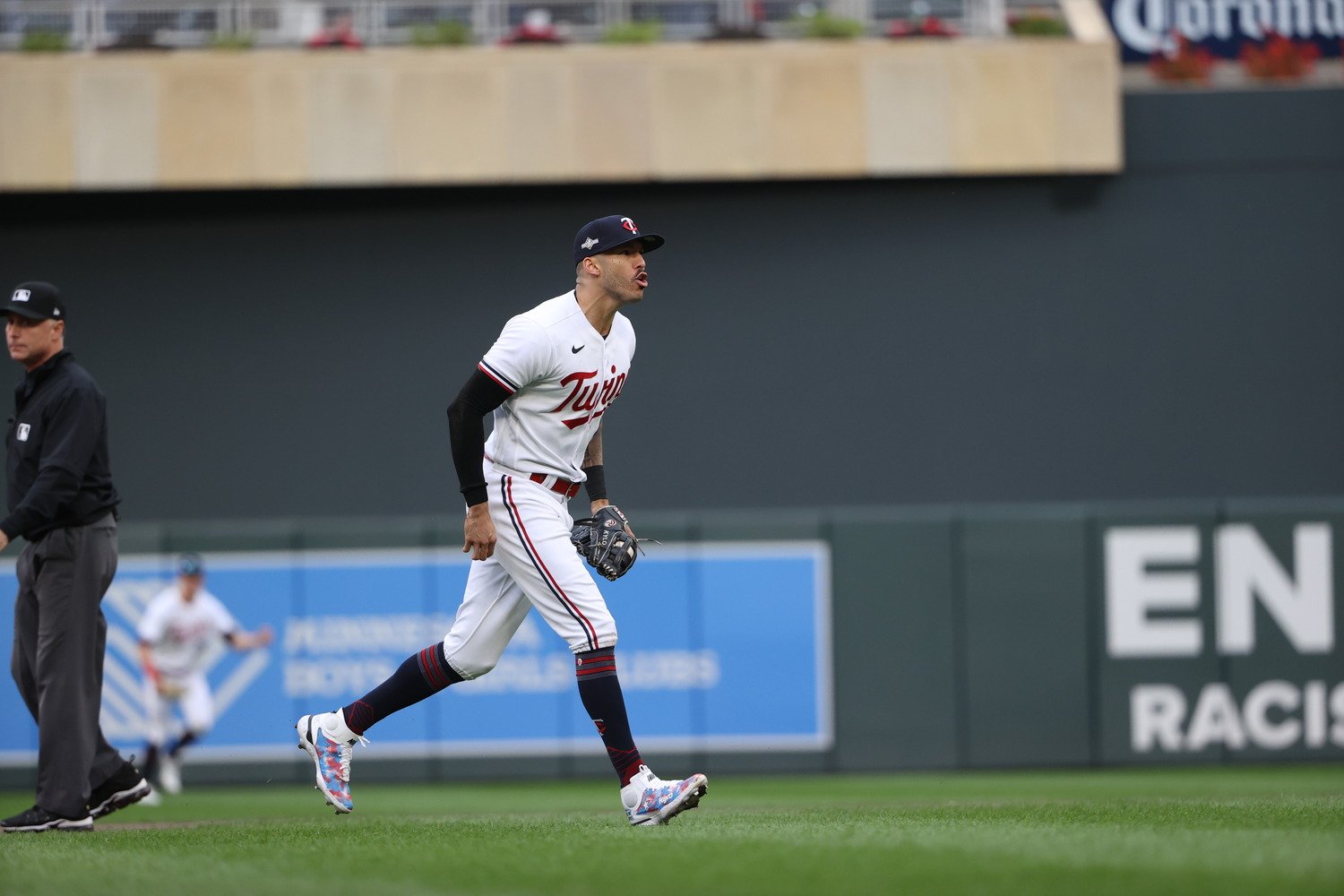 Heading into the postseason, Carlos Correa was coming off of the worst regular season of his professional career. In 135 games, Correa posted just a .711 OPS with a league-leading 30 double plays. Statcast’s defensive numbers didn’t love his 2023 season either, as he finished in the 34th percentile with negative one outs above average. Correa finished the 2023 season with a career-low 1.1 fWAR, even lower than he provided in the shortened 2020 COVID season in which he only appeared in 58 games. The thing with Carlos Correa, though, is that you don’t give him $200 million for him to win you games in the regular season. You sign Carlos Correa to a $200 million contract for him to win you games in October. Carlos Correa has playoff experience unlike anyone who has ever donned a Minnesota Twins jersey before. Through his time with the Houston Astros, Carlos Correa has racked up 79 games of playoff experience. Correa has been in every key moment and has shown the ability to deliver when the pressure is at its highest. It was that playoff experience and that clutch ability that the Minnesota Twins were looking for when they signed the shortstop to a six-year deal. It didn’t take long for Correa to show that the Twins were correct in their expectations for Correa, as he has played in just two postseason games with the Minnesota Twins and has delivered in three massive moments that helped drive the team to their first playoff series victory in twenty years. The first moment came in Game 1 when Correa nailed Bo Bichette at home plate in an extraordinary display of baseball wit and incredible arm strength. Then in Game 2, Correa delivered once again. The first came at the plate when Correa started the scoring when he ripped a bases-loaded single which gave the Twins a 1-0 lead. Then again, Carlos Correa delivered an unforgettable moment with his glove (and baseball mind), when he orchestrated a pickoff play of Vladimir Guerrero Jr. at second base with runners on second and third and the dangerous Bo Bichette at the plate. A play that we later learned was drawn up by Correa when he realized that the crowd noise would keep the baserunner at second baseman from being able to hear Toronto’s third base coach. Each of Carlos’s spectacular plays played a key role in delivering victories in games one and two. Without Correa, there’s no telling how either of those games would have gone. Outside of the incredible plays in the field, Carlos Correa has also provided the unquantifiable, yet still invaluable leadership and confidence to a locker room that has never experienced postseason success before. We have heard from countless players that Correa’s experience and leadership has played a key role in galvanizing the locker room and preparing the team to make a postseason run. Whether it’s on or off the field, Carlos Correa has proven to everyone why you invest in a player with the talent, experience and leadership like he possesses. Correa is proving himself to be worth his $200 million contract, and he is on the path to proving himself to be worth so much more.
 -
While his regular season didn’t exactly meet expectations, the past two days have shown exactly why you sign Carlos Correa to a $200 million contract. Image courtesy of Jesse Johnson-USA TODAY Sports Heading into the postseason, Carlos Correa was coming off of the worst regular season of his professional career. In 135 games, Correa posted just a .711 OPS with a league-leading 30 double plays. Statcast’s defensive numbers didn’t love his 2023 season either, as he finished in the 34th percentile with negative one outs above average. Correa finished the 2023 season with a career-low 1.1 fWAR, even lower than he provided in the shortened 2020 COVID season in which he only appeared in 58 games. The thing with Carlos Correa, though, is that you don’t give him $200 million for him to win you games in the regular season. You sign Carlos Correa to a $200 million contract for him to win you games in October. Carlos Correa has playoff experience unlike anyone who has ever donned a Minnesota Twins jersey before. Through his time with the Houston Astros, Carlos Correa has racked up 79 games of playoff experience. Correa has been in every key moment and has shown the ability to deliver when the pressure is at its highest. It was that playoff experience and that clutch ability that the Minnesota Twins were looking for when they signed the shortstop to a six-year deal. It didn’t take long for Correa to show that the Twins were correct in their expectations for Correa, as he has played in just two postseason games with the Minnesota Twins and has delivered in three massive moments that helped drive the team to their first playoff series victory in twenty years. The first moment came in Game 1 when Correa nailed Bo Bichette at home plate in an extraordinary display of baseball wit and incredible arm strength. Then in Game 2, Correa delivered once again. The first came at the plate when Correa started the scoring when he ripped a bases-loaded single which gave the Twins a 1-0 lead. Then again, Carlos Correa delivered an unforgettable moment with his glove (and baseball mind), when he orchestrated a pickoff play of Vladimir Guerrero Jr. at second base with runners on second and third and the dangerous Bo Bichette at the plate. A play that we later learned was drawn up by Correa when he realized that the crowd noise would keep the baserunner at second baseman from being able to hear Toronto’s third base coach. Each of Carlos’s spectacular plays played a key role in delivering victories in games one and two. Without Correa, there’s no telling how either of those games would have gone. Outside of the incredible plays in the field, Carlos Correa has also provided the unquantifiable, yet still invaluable leadership and confidence to a locker room that has never experienced postseason success before. We have heard from countless players that Correa’s experience and leadership has played a key role in galvanizing the locker room and preparing the team to make a postseason run. Whether it’s on or off the field, Carlos Correa has proven to everyone why you invest in a player with the talent, experience and leadership like he possesses. Correa is proving himself to be worth his $200 million contract, and he is on the path to proving himself to be worth so much more. View full article
-
Frank Viola. Jack Morris. Kirby Puckett. Royce Lewis. On Tuesday night, Royce Lewis etched his name into Minnesota Twins lore and became a legend for life. Image courtesy of Jesse Johnson-USA TODAY Sports Heading into the 2023 postseason there were plenty of questions surrounding the availability of Royce Lewis. Less than two weeks ago, Lewis had suffered a hamstring injury that was deemed a three to four week injury. As he usually does, Lewis beat the odds, made the roster, and was named as the starting designated hitter for the Minnesota Twins in Game 1 of the Wild Card series. Coming into the series. 24-year-old knew all too well about the 0-18 playoff losing streak that Twins fans had suffered through for the last 19 years. And if anyone was going to help the Twins break out of that losing streak, Lewis was the top choice to play the hero. After all, Lewis has been the one to be that hero throughout the season. Lewis has been the one coming through with big plays, clutch hits, and grand slams and never seeming to be afraid of a moment, no matter how big. It didn’t take long for Lewis to show the believers that their faith in the right-hander was well warranted. In the bottom of the first inning, a hobbling Royce Lewis labored his way into the batter’s box, forcing a full count, before turning on a Kevin Gausman four-seamer for a blast into the left field bleachers to give the Twins an early 2-0 lead. The home run set the tone early and energized a crowd that needed to see its hometown nine get off to a fast start, as an early deficit would have surely made Target Field go anxious and silent. As the game went on, though, it became pretty clear that this was going to be a close game and that the Twins could use some additional run support. After a trip through the order didn’t provide much of any offense, Lewis decided to take matters into his own hands once again, blasting another Gausman four-seamer, this time to the opposite field right-center, to put the Twins up 3-0 with a rolling Pablo López. In the end, Royce’s two home runs provided the only three runs contributed for the Minnesota Twins en route to their Tuesday win. Royce contributed .243 WPA (Win Probability Added) to the Twins efforts and played an enormous role in bringing a victory to Minnesota. While the stat line was impressive, what made the performance legendary was the context behind the stat line. We all know about the 0-18: the heartbreak, the missed calls, the underwhelming performances. The Minnesota fanbase has suffered more than any other fanbase in baseball over the past twenty years and has been waiting for a player to step up, say "no more" and end the streak. This fanbase was waiting for a player who not only was unafraid by the big moment but one who reveled in the big moment, demanded the bat in those scenarios and delivered when the moment was the biggest. And for that player to be one who has overcome as much as Lewis has overcome makes the legendary status all that much more impressive. Lewis overcame two ACL tears, overcame a late-season hamstring injury, overcame proclamations of a bust of a number one overall pick, and so much more. Royce Lewis is still just 24 years old. He still has an entire postseason in 2023 and an entire career to play out. But tonight, Royce Lewis ended the longest playoff losing streak in professional sports history. He grabbed the giant gorilla off of the back of the entire Minnesota fanbase and threw it into the Mighty Mississippi. Tonight, Royce Lewis put his name up there with the greatest legends in Minnesota Twins history. And he's just getting started. View full article
-
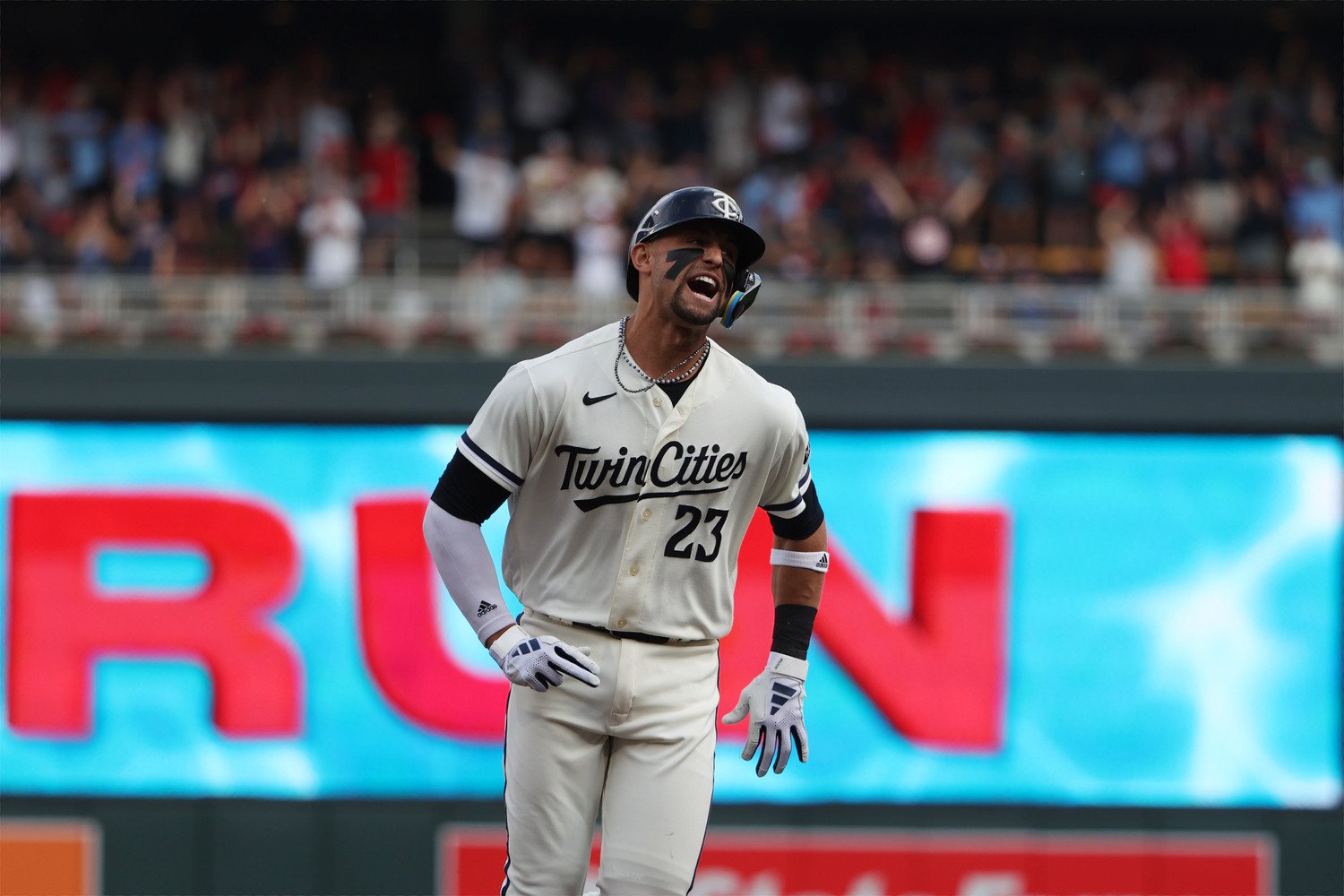 Heading into the 2023 postseason there were plenty of questions surrounding the availability of Royce Lewis. Less than two weeks ago, Lewis had suffered a hamstring injury that was deemed a three to four week injury. As he usually does, Lewis beat the odds, made the roster, and was named as the starting designated hitter for the Minnesota Twins in Game 1 of the Wild Card series. Coming into the series. 24-year-old knew all too well about the 0-18 playoff losing streak that Twins fans had suffered through for the last 19 years. And if anyone was going to help the Twins break out of that losing streak, Lewis was the top choice to play the hero. After all, Lewis has been the one to be that hero throughout the season. Lewis has been the one coming through with big plays, clutch hits, and grand slams and never seeming to be afraid of a moment, no matter how big. It didn’t take long for Lewis to show the believers that their faith in the right-hander was well warranted. In the bottom of the first inning, a hobbling Royce Lewis labored his way into the batter’s box, forcing a full count, before turning on a Kevin Gausman four-seamer for a blast into the left field bleachers to give the Twins an early 2-0 lead. The home run set the tone early and energized a crowd that needed to see its hometown nine get off to a fast start, as an early deficit would have surely made Target Field go anxious and silent. As the game went on, though, it became pretty clear that this was going to be a close game and that the Twins could use some additional run support. After a trip through the order didn’t provide much of any offense, Lewis decided to take matters into his own hands once again, blasting another Gausman four-seamer, this time to the opposite field right-center, to put the Twins up 3-0 with a rolling Pablo López. In the end, Royce’s two home runs provided the only three runs contributed for the Minnesota Twins en route to their Tuesday win. Royce contributed .243 WPA (Win Probability Added) to the Twins efforts and played an enormous role in bringing a victory to Minnesota. While the stat line was impressive, what made the performance legendary was the context behind the stat line. We all know about the 0-18: the heartbreak, the missed calls, the underwhelming performances. The Minnesota fanbase has suffered more than any other fanbase in baseball over the past twenty years and has been waiting for a player to step up, say "no more" and end the streak. This fanbase was waiting for a player who not only was unafraid by the big moment but one who reveled in the big moment, demanded the bat in those scenarios and delivered when the moment was the biggest. And for that player to be one who has overcome as much as Lewis has overcome makes the legendary status all that much more impressive. Lewis overcame two ACL tears, overcame a late-season hamstring injury, overcame proclamations of a bust of a number one overall pick, and so much more. Royce Lewis is still just 24 years old. He still has an entire postseason in 2023 and an entire career to play out. But tonight, Royce Lewis ended the longest playoff losing streak in professional sports history. He grabbed the giant gorilla off of the back of the entire Minnesota fanbase and threw it into the Mighty Mississippi. Tonight, Royce Lewis put his name up there with the greatest legends in Minnesota Twins history. And he's just getting started.
 -
Jhoan Duran had about as dominant of a rookie season as you can have as a reliever. After an equally strong start to 2023, Duran’s numbers have been slipping as of late. Should Twins fans be concerned? Image courtesy of © Steven Bisig-USA TODAY Sports After posting a dominant 1.86 ERA in 67 ⅔ inning as a high-leverage reliever for the Minnesota Twins in 2022, Jhoan Duran came out of the gates on fire in 2023 in what looked like an equally dominant sophomore season. Through the first three months of the season, Jhoan Duran posted a 1.45 ERA, with opponents hitting just .147 against the right-hander. Since the calendar changed from May to June, however, there has been a noticeable dip in Duran's numbers. Since June 1, Duran has a 4.26 ERA, and opponents are hitting at a clip of .265. Duran has allowed twice as many home runs in six fewer innings and has yet to put together a perfect outing in over a month. The table below shows the stark difference in numbers before and after June 1. While BABIP points to poor luck causing much of Duran's disappointing numbers this summer, underlying metrics also show a genuine reason for concern with the 25-year-old. In addition to his high FIP, Duran's average allowed exit velocity is up, and his xWOBA allowed is way up. One potential reason for the poor numbers comes from Pitch Profiler, who points out that Duran's induced vertical break is way down. This decrease in vertical break makes Duran's pitch paths more predictable, leading to more hits and a higher potential for home runs. Another potential reason for Duran's poor late results is that he's overworked. With the top-heavy bullpen that the Twins have, in addition to their poor offense putting them in lots of close games, Duran not only has had to pitch many innings, but he has also had to pitch in many high-stress innings. While he is just 83rd in innings pitched as a reliever, Duran ranks third in all of baseball in average leverage index. Combining that with Duran's sky-high pitch velocities and fatigue is a more-than-reasonable explanation for much of the dip in performance. Jhoan Duran still has the talent and ability to be one of the best relievers in the game. Some underlying metrics point to him being the victim of bad luck, with others pointing to a dip in performance. What appears to be clear, though, is that Duran is overworked. He's throwing high-stress innings consistently and has been doing so for the past two years. With the American League Central race all but locked up, the Twins should consider getting Duran some time off to be back in form in time for the playoffs because the Twins will need that right arm in October. Are you worried about Jhoan Duran's dip in numbers lately? Leave a comment below and start the conversation! View full article
-
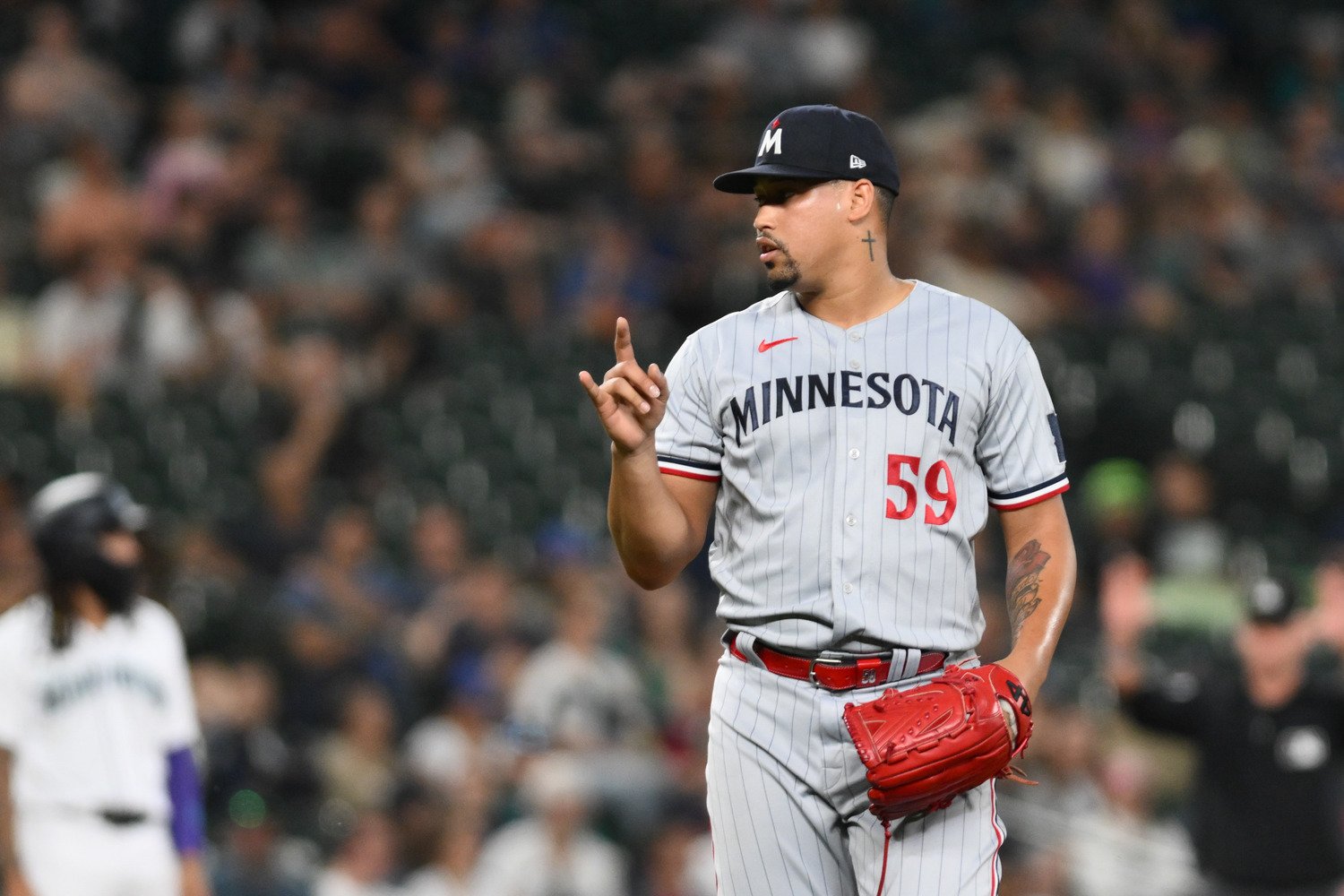 After posting a dominant 1.86 ERA in 67 ⅔ inning as a high-leverage reliever for the Minnesota Twins in 2022, Jhoan Duran came out of the gates on fire in 2023 in what looked like an equally dominant sophomore season. Through the first three months of the season, Jhoan Duran posted a 1.45 ERA, with opponents hitting just .147 against the right-hander. Since the calendar changed from May to June, however, there has been a noticeable dip in Duran's numbers. Since June 1, Duran has a 4.26 ERA, and opponents are hitting at a clip of .265. Duran has allowed twice as many home runs in six fewer innings and has yet to put together a perfect outing in over a month. The table below shows the stark difference in numbers before and after June 1. While BABIP points to poor luck causing much of Duran's disappointing numbers this summer, underlying metrics also show a genuine reason for concern with the 25-year-old. In addition to his high FIP, Duran's average allowed exit velocity is up, and his xWOBA allowed is way up. One potential reason for the poor numbers comes from Pitch Profiler, who points out that Duran's induced vertical break is way down. This decrease in vertical break makes Duran's pitch paths more predictable, leading to more hits and a higher potential for home runs. Another potential reason for Duran's poor late results is that he's overworked. With the top-heavy bullpen that the Twins have, in addition to their poor offense putting them in lots of close games, Duran not only has had to pitch many innings, but he has also had to pitch in many high-stress innings. While he is just 83rd in innings pitched as a reliever, Duran ranks third in all of baseball in average leverage index. Combining that with Duran's sky-high pitch velocities and fatigue is a more-than-reasonable explanation for much of the dip in performance. Jhoan Duran still has the talent and ability to be one of the best relievers in the game. Some underlying metrics point to him being the victim of bad luck, with others pointing to a dip in performance. What appears to be clear, though, is that Duran is overworked. He's throwing high-stress innings consistently and has been doing so for the past two years. With the American League Central race all but locked up, the Twins should consider getting Duran some time off to be back in form in time for the playoffs because the Twins will need that right arm in October. Are you worried about Jhoan Duran's dip in numbers lately? Leave a comment below and start the conversation!
 -
Why on Earth Won't the Twins Move Edouard Julien to First Base?
Matthew Taylor posted an article in Twins
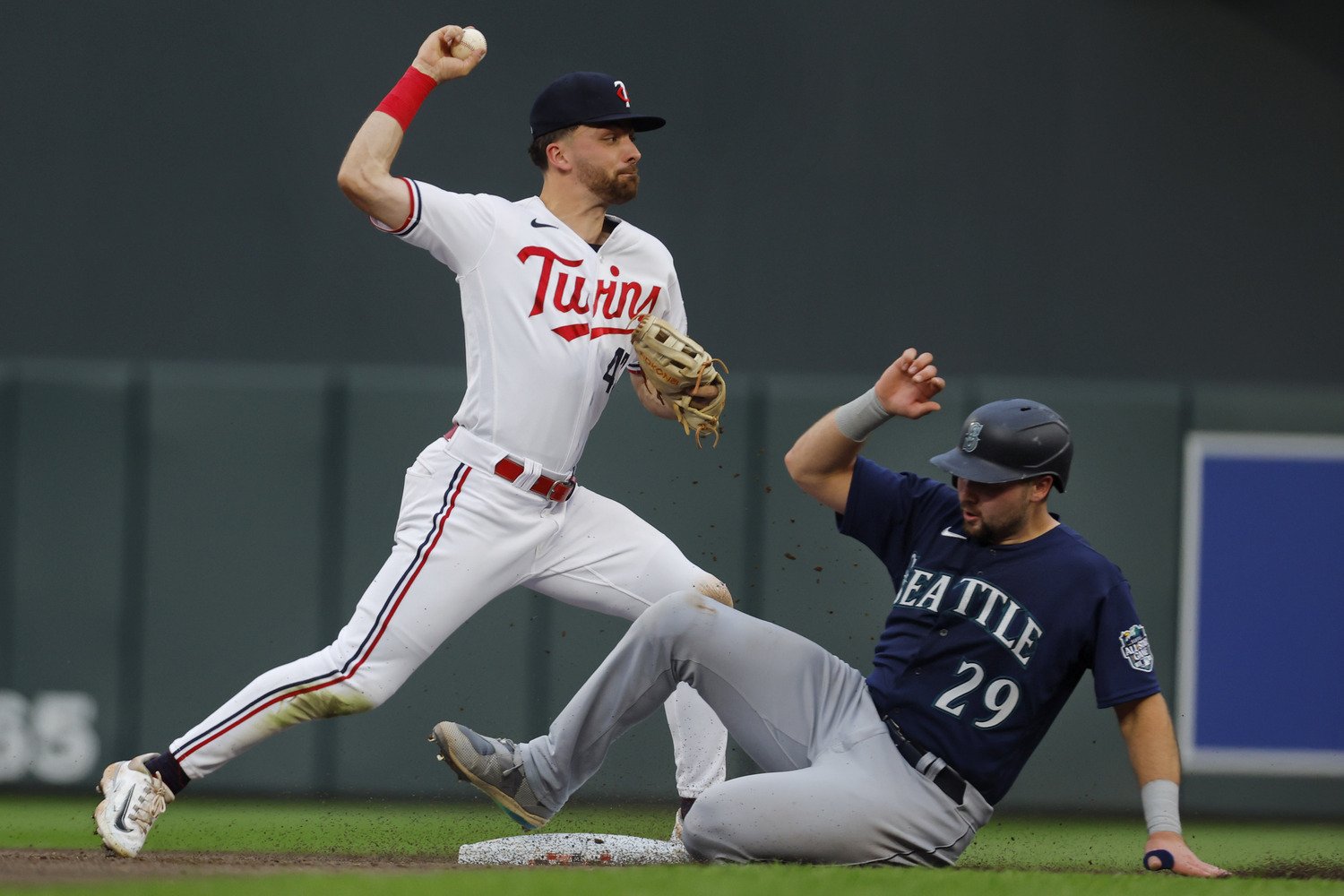 Edouard Julien has been better than anyone could have expected him to be at the plate in his rookie season with the Minnesota Twins. Through his first 67 games with the Twins, Julien is slashing .286/.377/.490 (.867) with 22 extra-base hits. Where Julien has not excelled, though, has been on the defensive side of the ball. Upon his call up to the majors, Julien was viewed as a poor defender at second base, and even those poor projections underestimated just how big of a struggle the position has been for the rookie. Julien currently ranks in the 15th percentile in Outs Above Average with -5 defensive runs saved at second base. The Canadian has unfortunately shown that he is extremely stretched at second and lacks the range and twitchiness to succeed there. Julien’s struggles at second base, especially now with Jorge Polanco back from injury, have put the Twins in a difficult spot. Polanco has not proven to be as solid at third base as he is at second base, but in order to keep Julien’s bat in the lineup, their choices are to use the designated hitter spot on Polanco or Julien, or play with a far-below average defensive alignment with Polanco at third and Julien at second. The pickle that the Twins have found themselves in will only prove more challenging once Royce Lewis returns to the lineup in the coming week. Once Lewis comes back and overtakes the third base position, the Twins will have no choice but to play one of Jorge Polanco or Edouard Julien at designated hitter every day. (And soon after, Byron Buxton will return and make the situation even more complex.) There is one easy way for the Twins to fix the issue that they’re having in their defensive alignment, however it’s a defensive move that the Twins have refused to try out all season — playing Julien at first base. First base is inherently an easier position to play than second base, as it is five steps below second base on the defensive spectrum. Additionally, Julien does have 181 innings of minor-league experience at the position. Maybe Julien won’t be great at first base, but he certainly hasn’t been good at second base. Additionally, moving Julien to first base makes a ton of sense because of the poor production that the Twins have been getting from the position, mainly from Joey Gallo. Since Matt Wallner has come on as the everyday starting left fielder for the Twins, Gallo has become the everyday first baseman for the Twins. A problem when he’s struggled so mightily on the season, batting .152 since June 1. Moving Julien to first base would improve their defense by moving Polanco back to everyday second base, improve their offense by replacing Gallo’s bat with Julien’s, and free up the designated hitter spot for a platoon rotation or Alex Kirilloff when he returns. Moving Edouard Julien to first base makes all the sense in the world, and it is puzzling that the Twins refuse to make the move, or at least try it. Do you think the Twins should move Edouard Julien to first base? Leave a comment below and start the conversation!
- 94 comments
-
- 9
-
-
- eduoard julien
- joey gallo
- (and 1 more)
-
Edouard Julien is now more than 65 games into his MLB career. Despite Julien’s poor defense at second base, and the Twins’ continuously poor offense, the Twins inexplicably refuse to try the rookie at first base. Image courtesy of Bruce Kluckhohn-USA TODAY Sports Edouard Julien has been better than anyone could have expected him to be at the plate in his rookie season with the Minnesota Twins. Through his first 67 games with the Twins, Julien is slashing .286/.377/.490 (.867) with 22 extra-base hits. Where Julien has not excelled, though, has been on the defensive side of the ball. Upon his call up to the majors, Julien was viewed as a poor defender at second base, and even those poor projections underestimated just how big of a struggle the position has been for the rookie. Julien currently ranks in the 15th percentile in Outs Above Average with -5 defensive runs saved at second base. The Canadian has unfortunately shown that he is extremely stretched at second and lacks the range and twitchiness to succeed there. Julien’s struggles at second base, especially now with Jorge Polanco back from injury, have put the Twins in a difficult spot. Polanco has not proven to be as solid at third base as he is at second base, but in order to keep Julien’s bat in the lineup, their choices are to use the designated hitter spot on Polanco or Julien, or play with a far-below average defensive alignment with Polanco at third and Julien at second. The pickle that the Twins have found themselves in will only prove more challenging once Royce Lewis returns to the lineup in the coming week. Once Lewis comes back and overtakes the third base position, the Twins will have no choice but to play one of Jorge Polanco or Edouard Julien at designated hitter every day. (And soon after, Byron Buxton will return and make the situation even more complex.) There is one easy way for the Twins to fix the issue that they’re having in their defensive alignment, however it’s a defensive move that the Twins have refused to try out all season — playing Julien at first base. First base is inherently an easier position to play than second base, as it is five steps below second base on the defensive spectrum. Additionally, Julien does have 181 innings of minor-league experience at the position. Maybe Julien won’t be great at first base, but he certainly hasn’t been good at second base. Additionally, moving Julien to first base makes a ton of sense because of the poor production that the Twins have been getting from the position, mainly from Joey Gallo. Since Matt Wallner has come on as the everyday starting left fielder for the Twins, Gallo has become the everyday first baseman for the Twins. A problem when he’s struggled so mightily on the season, batting .152 since June 1. Moving Julien to first base would improve their defense by moving Polanco back to everyday second base, improve their offense by replacing Gallo’s bat with Julien’s, and free up the designated hitter spot for a platoon rotation or Alex Kirilloff when he returns. Moving Edouard Julien to first base makes all the sense in the world, and it is puzzling that the Twins refuse to make the move, or at least try it. Do you think the Twins should move Edouard Julien to first base? Leave a comment below and start the conversation! View full article
-
Max Kepler and Emilio Pagán were left for dead by most Twins fans just a month ago. They have both been proving fans wrong and providing immeasurable value to a team that desperately needs it. Image courtesy of Nick Wosika-USA TODAY Sports The day was June 11th, and the Minnesota Twins had just suffered what was arguably their worst loss of the season, a 7-6 loss to the Toronto Blue Jays after blowing a two-run lead in the eighth inning. The primary culprit for the loss? Emilio Pagán, who served up a three-run home run to Cavan Biggio to give the game away. The three-run home run was just the latest in a run of meltdowns for Pagán in his time with the Minnesota Twins, this time pushing his ERA on the 2023 season up to 4.61. Following the game, many in Twins territory were (understandably) pushing for the reliever to be DFA’d. Including this author. Emilio Pagán was on his fourth consecutive season of terrible performances and showed no signs of it getting better. Pagán continuously served up home runs at inopportune times that would absolutely crush the team for which he was pitching. The other reason for getting rid of Emilio Pagán was that his upside was so limited. Even if Pagán were to “turn things around”, how high would his ceiling actually be? Well, since that back-breaking home run that he allowed on that June night in Toronto, Pagán has shown what his ceiling can be. In the 23 appearances since that game, Pagán has posted a 1.59 ERA with 21 strikeouts and eight walks. This elite stretch of pitching has brought Pagán’s ERA on the season down to 3.24 in 50 innings. Perhaps most importantly, the right-hander has shown the ability to limit the home runs that have haunted his teams for years. After allowing 28 home runs over his previous two seasons, Pagán has only allowed four home runs this season. That ability to keep the ball in the ballpark has been the biggest development for Pagán and will be what keeps him as a trusted reliever down the stretch for the Minnesota Twins. On the same day that Emilio Pagán served up the home run that gave the Twins the loss, Max Kepler similarly had a miserable day at the office going 0-for-4 and dropping his OPS to a lowly .637. Like Pagán, many Twins fans were urging the front office to move on from Max Kepler as he was continuing his run of failure at the plate ever since his breakout in 2019. Additionally, with the Twins so flush with talent in left-handed corner outfielders, there was little utility seen in keeping Kepler on the roster. Similar to Pagán, Kepler didn’t appear to have the upside that was worth hanging onto Kepler through his downsides. But also similar to Pagán, Kepler has shown that he does possess that upside. Since the 0-for-4 performance on June 11, Kepler owns a .853 OPS in 48 games with 11 home runs and 26 RBI in 168 plate appearances. Kepler’s bat has propelled the Twins offense in a time when they needed it most and his defense has similarly been great. Additionally, with the injury of Alex Kirilloff and the poor play from Joey Gallo, the Twins have needed production from Kepler’s left-handed bat, and he has provided. So, Max and Emilio, on behalf of all of Twins Territory… We are sorry! Most of us wanted you gone, and you have proven us wrong. We just hope that you continue to prove us wrong, because the Twins will need you both down the stretch. Would you like to apologize to Max Kepler and Emilio Pagán? Leave your apology in the comments below. View full article
-
 The day was June 11th, and the Minnesota Twins had just suffered what was arguably their worst loss of the season, a 7-6 loss to the Toronto Blue Jays after blowing a two-run lead in the eighth inning. The primary culprit for the loss? Emilio Pagán, who served up a three-run home run to Cavan Biggio to give the game away. The three-run home run was just the latest in a run of meltdowns for Pagán in his time with the Minnesota Twins, this time pushing his ERA on the 2023 season up to 4.61. Following the game, many in Twins territory were (understandably) pushing for the reliever to be DFA’d. Including this author. Emilio Pagán was on his fourth consecutive season of terrible performances and showed no signs of it getting better. Pagán continuously served up home runs at inopportune times that would absolutely crush the team for which he was pitching. The other reason for getting rid of Emilio Pagán was that his upside was so limited. Even if Pagán were to “turn things around”, how high would his ceiling actually be? Well, since that back-breaking home run that he allowed on that June night in Toronto, Pagán has shown what his ceiling can be. In the 23 appearances since that game, Pagán has posted a 1.59 ERA with 21 strikeouts and eight walks. This elite stretch of pitching has brought Pagán’s ERA on the season down to 3.24 in 50 innings. Perhaps most importantly, the right-hander has shown the ability to limit the home runs that have haunted his teams for years. After allowing 28 home runs over his previous two seasons, Pagán has only allowed four home runs this season. That ability to keep the ball in the ballpark has been the biggest development for Pagán and will be what keeps him as a trusted reliever down the stretch for the Minnesota Twins. On the same day that Emilio Pagán served up the home run that gave the Twins the loss, Max Kepler similarly had a miserable day at the office going 0-for-4 and dropping his OPS to a lowly .637. Like Pagán, many Twins fans were urging the front office to move on from Max Kepler as he was continuing his run of failure at the plate ever since his breakout in 2019. Additionally, with the Twins so flush with talent in left-handed corner outfielders, there was little utility seen in keeping Kepler on the roster. Similar to Pagán, Kepler didn’t appear to have the upside that was worth hanging onto Kepler through his downsides. But also similar to Pagán, Kepler has shown that he does possess that upside. Since the 0-for-4 performance on June 11, Kepler owns a .853 OPS in 48 games with 11 home runs and 26 RBI in 168 plate appearances. Kepler’s bat has propelled the Twins offense in a time when they needed it most and his defense has similarly been great. Additionally, with the injury of Alex Kirilloff and the poor play from Joey Gallo, the Twins have needed production from Kepler’s left-handed bat, and he has provided. So, Max and Emilio, on behalf of all of Twins Territory… We are sorry! Most of us wanted you gone, and you have proven us wrong. We just hope that you continue to prove us wrong, because the Twins will need you both down the stretch. Would you like to apologize to Max Kepler and Emilio Pagán? Leave your apology in the comments below.
 -
The Minnesota Twins’ playoff odds are now up over 85%. Without jinxing them, let’s look at who the Twins could be facing in the playoffs and rank their potential opponents. Image courtesy of © Kamil Krzaczynski-USA TODAY Sports Coming out of the trade deadline, the Minnesota Twins have been on a tear (pre-Tigers series), while the Cleveland Guardians had been on a slide. With the now 3 ½ game lead and the Guardians' poor outlook after selling at the trade deadline, the division looks like more of a formality than a competition over the last two months of the season. Should the Minnesota Twins avoid a massive collapse and win the American League Central as they should, they will be looking at a three-game playoff series against the sixth seed in the American League, the lowest-ranked Wild Card team. In looking at the current American League standings, the Orioles, Rays, Rangers, and Astros appear locked into the top four records in the American League. That leaves the Twins likely to face the Blue Jays, Yankees, Red Sox, or Mariners. Let's rank those potential opponents based on difficulty for the Twins from easiest (4) to most difficult (1). 4. Boston Red Sox Of their four likeliest playoff opponents, Twins fans should root for Minnesota to get matched against the Boston Red Sox this October. The Red Sox currently rank 18th and 19th, respectively, in team batting and pitching fWAR. While its starting rotation in a playoff series would consist of three pitchers with sub-4 ERAs, the Red Sox lack the top-end starting pitching that can steal a playoff game and, ultimately, a series. 3. Seattle Mariners Next on the list is the Seattle Mariners, 2 ½ games out of the final Wild Card spot in the American League. After falling to .500 towards the end of July and looking like they might become sellers at the trade deadline, the Mariners are now 6-1 since the start of August and 61-52 on the season. The Mariners currently rank 11th in batting fWAR and 2nd in pitching fWAR, thanks to elite starting pitching and relievers. Even though the Mariners have such strong pitching, they have so much youth and playoff inexperience, with pitchers like Logan Gilbert and George Kirby leaving the Mariners as the third most difficult potential playoff matchup for the Twins. 2. Toronto Blue Jays Coming in second on the list of most difficult playoff matchups for the Minnesota Twins in 2023 are the Toronto Blue Jays, who the Twins are most likely to face in the first round. The Blue Jays currently have the fifth-best run differential in the American League and have a well-rounded team that ranks eighth in batting fWAR and seventh in pitching fWAR. The amount of star talent they possess makes the Blue Jays extra scary in a playoff format. From Vladimir Guerrero, Jr. and Bo Bichette on the hitting side of the ball to Kevin Gausman and José Berríos on the pitching side, Toronto has the elite top-end talent that can take over a playoff series. 1. New York Yankees The number one team on the list of most difficult potential playoff opponents for the Minnesota Twins in 2023 is the New York Yankees, who will hold this spot until the Twins can prove that they shouldn't. The Yankees' playoff success against the Minnesota Twins is unmatched. While the Yankees are different from the powerhouse that the Twins have grown accustomed to, they still have plenty of talent to make for a challenging series in a playoff round. The biggest asset that the Yankees have in a potential playoff series is ace Gerrit Cole, who has a career 5-0 record with a 2.43 ERA against the Twins. A game one matchup against Cole could quickly put the Twins in a 0-1 series hole and bring back all of the ghosts that have haunted the Twins for the past twenty years. If there were any year that the Twins would be best suited to conquer their demons in the New York Yankees, this would be the season, but until they do it, they should always be considered the most difficult potential playoff matchup. Which potential playoff opponent would be the most challenging for the Minnesota Twins? Leave a comment below and start the conversation! View full article

